
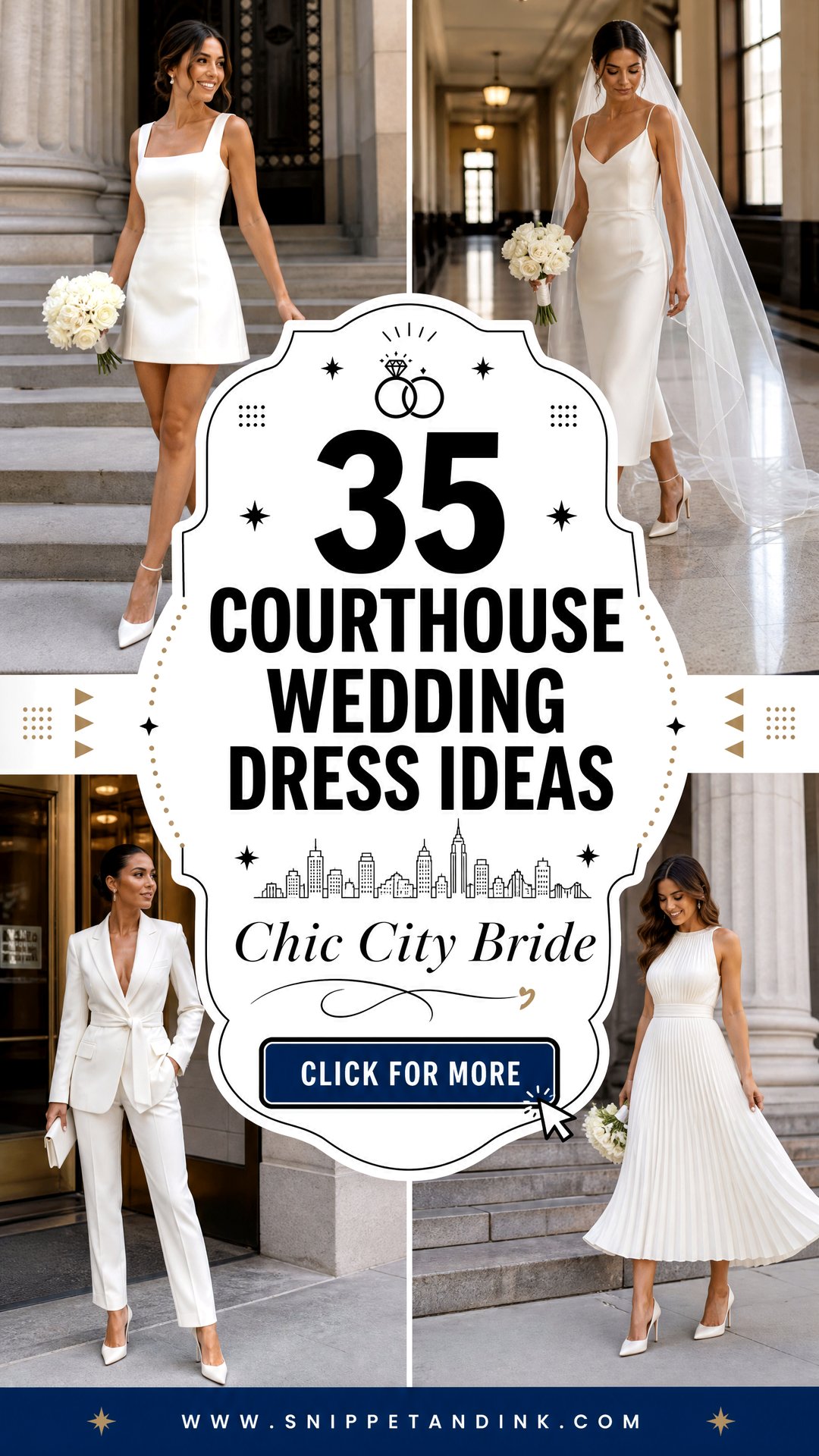
A courthouse ceremony is short, but the outfit still has to work hard. You’ll queue at security, sit on a wooden bench, sign at a counter and then stand on stone steps in whatever light the city gives you. When I style a civil ceremony bride, I’m dressing her for that sequence as much as for the photos. The ideas below cover satin midis, suits, jumpsuits, lace minis, column gowns and separates, and for each one I’ve noted how it behaves in a real courthouse day and who it suits.
Security Trays, Wooden Benches and Strip Lighting
A city hall wedding asks things of an outfit that a ballroom never does. Before I suggest any silhouette, I walk a bride through the actual day, because the building itself sets the rules.
- Security screening. Most courthouses have a metal detector and a tray for bags. Heavy metal belts, boning-heavy corsets with metal hardware and stacked bangles slow you down. I keep jewelry simple until you’re through.
- The wait. Ceremony slots often run late, and you may sit on a bench for longer than the ceremony itself. Do a sitting test at home for ten minutes, then stand up and look at the lap and back of the skirt.
- The light. Many hallways and ceremony rooms are lit with overhead fluorescents, which flatten matte fabrics and turn some ivories greenish. A fabric with gentle sheen holds up better, and the best photos usually happen outside afterward.
- The steps. Older courthouses have wide stone stairs. Long hems and stiletto heels are the combination I’d avoid; midi lengths and block heels or pointed flats are far easier to manage.
Check your courthouse’s own rules too. Some limit guest numbers, ban confetti or petals inside, or require shoulders to be covered in certain rooms. A quick call before you buy saves a last-minute layer.
1. Courthouse Wedding Satin Midi Dress
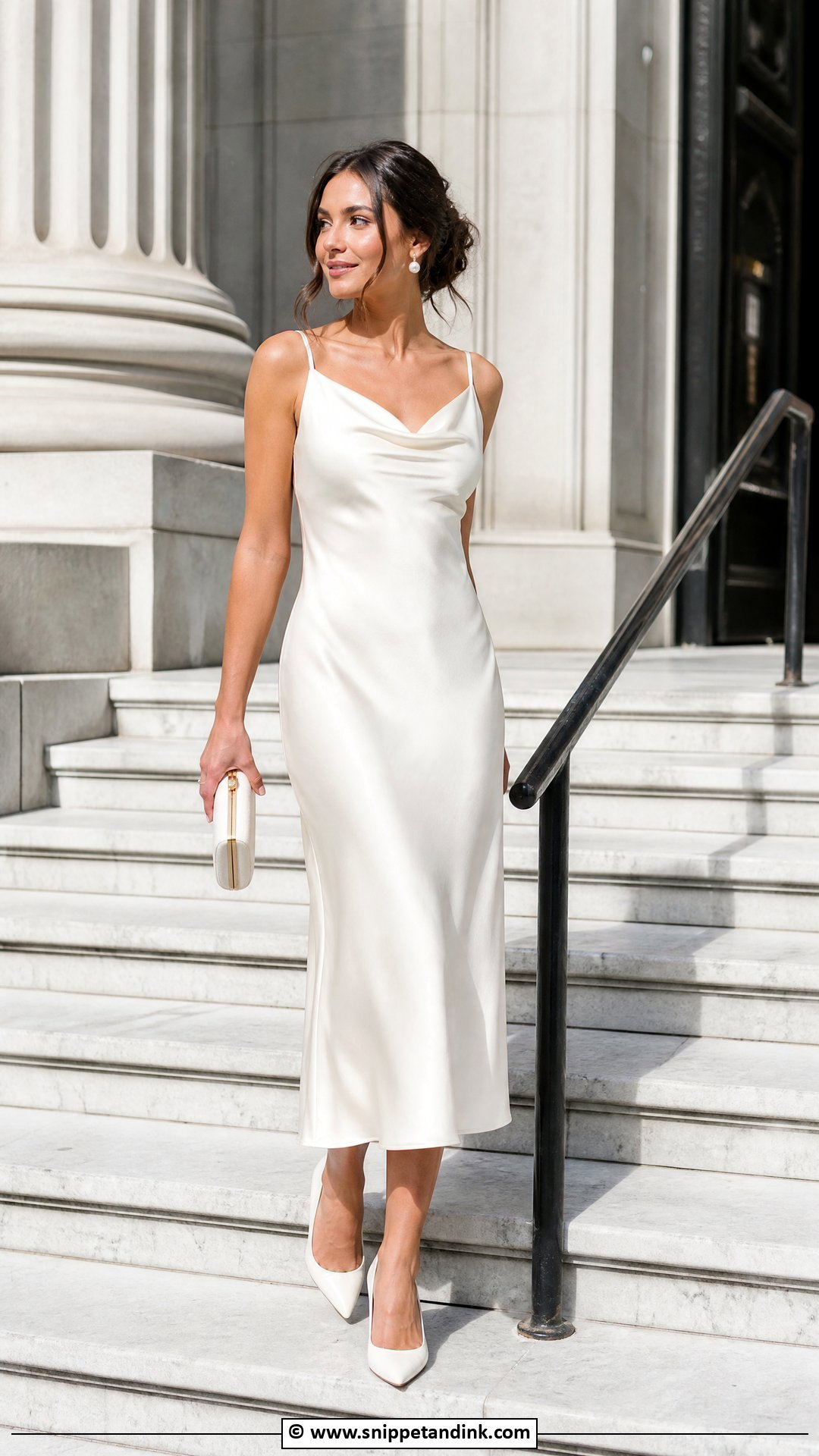
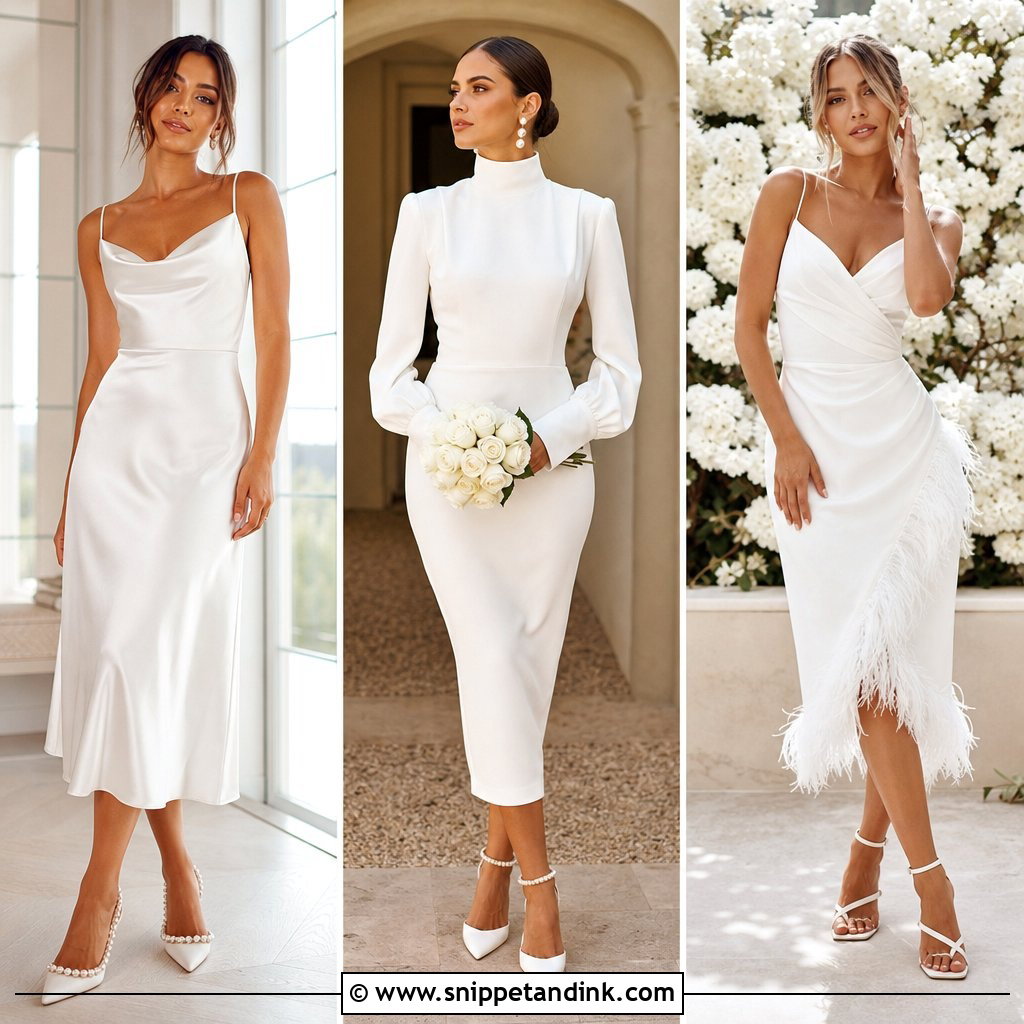
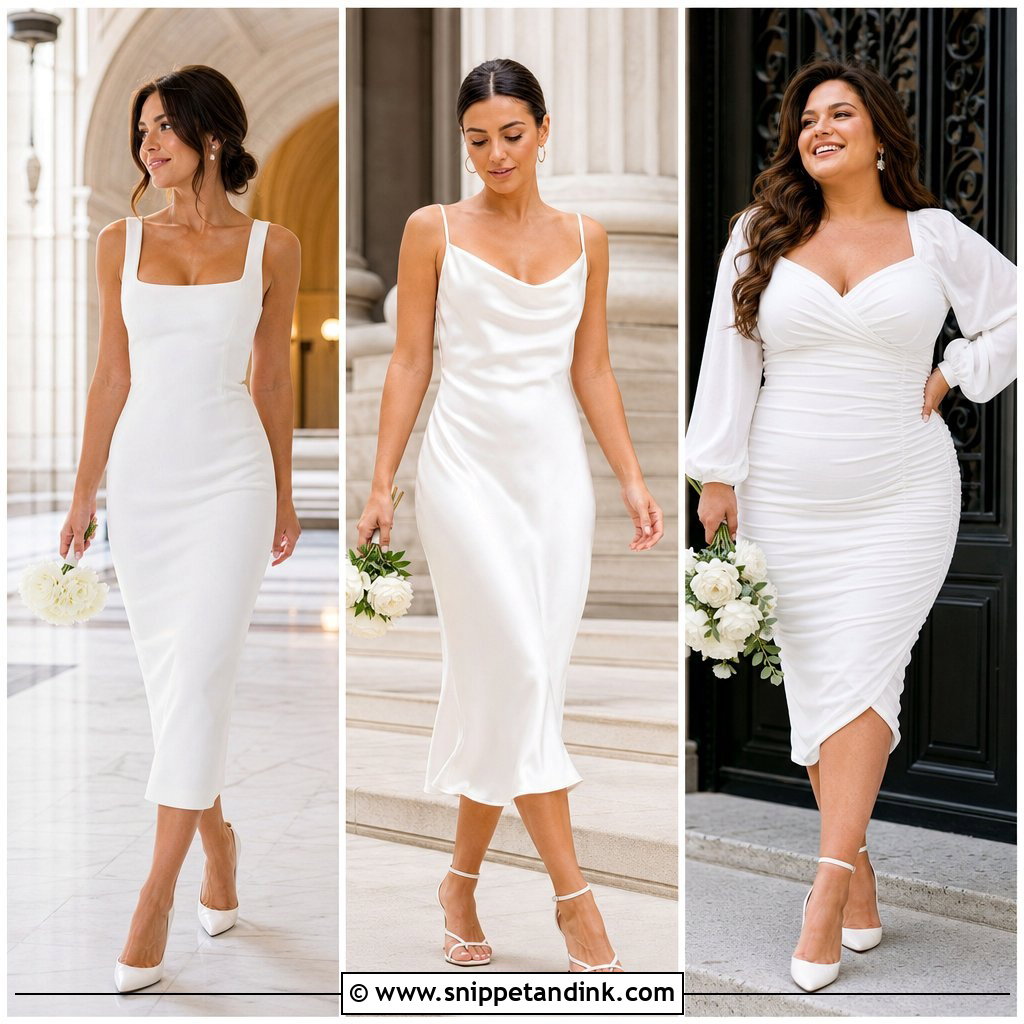
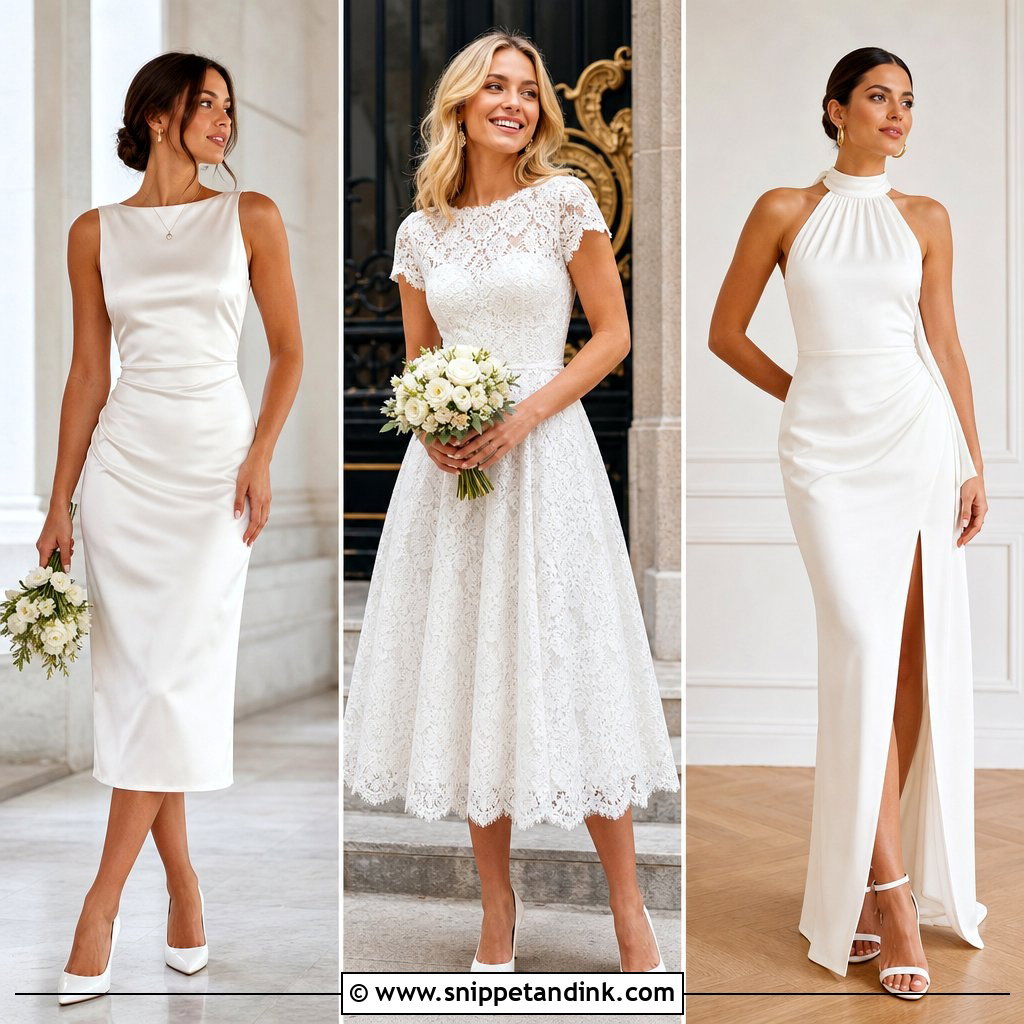
Satin is the fabric I reach for first when a bride wants to look clearly bridal in a small room, because the sheen reads as special even under office lighting. The catch is that satin shows every seat crease. A bias cut moves well and wrinkles less across the lap than a stiff duchess satin, so I’d choose bias if you’ll be waiting on benches. Ivory and champagne are kinder to most skin than optical white. Pearl earrings, pointed pumps and a low bun are all it needs.
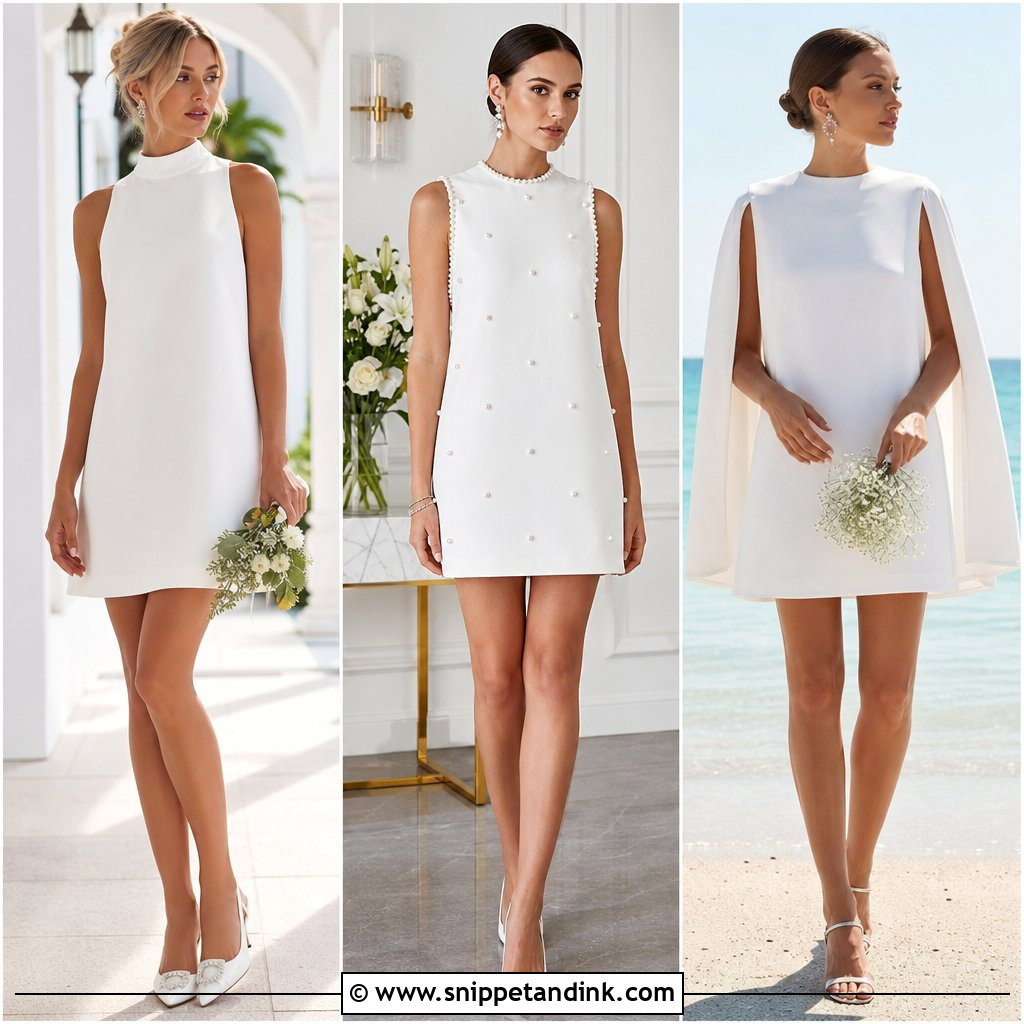
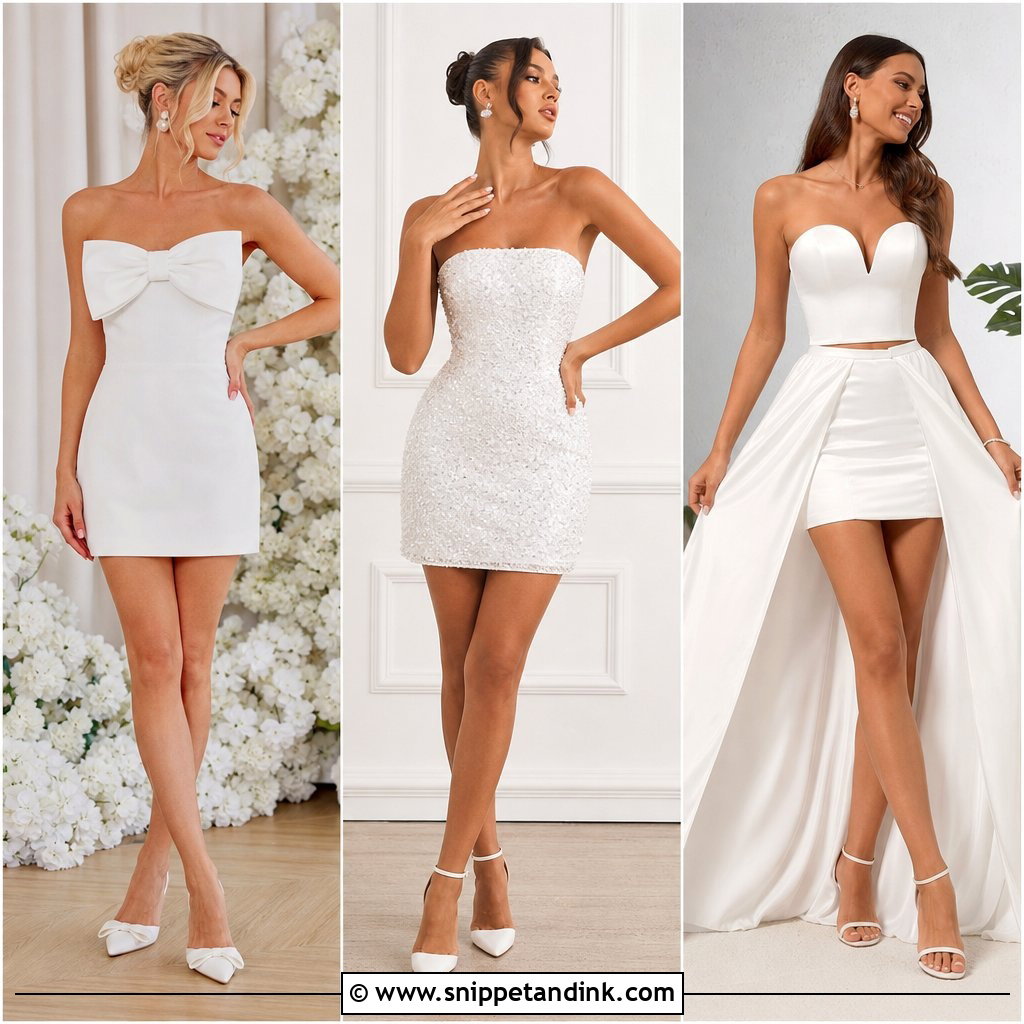
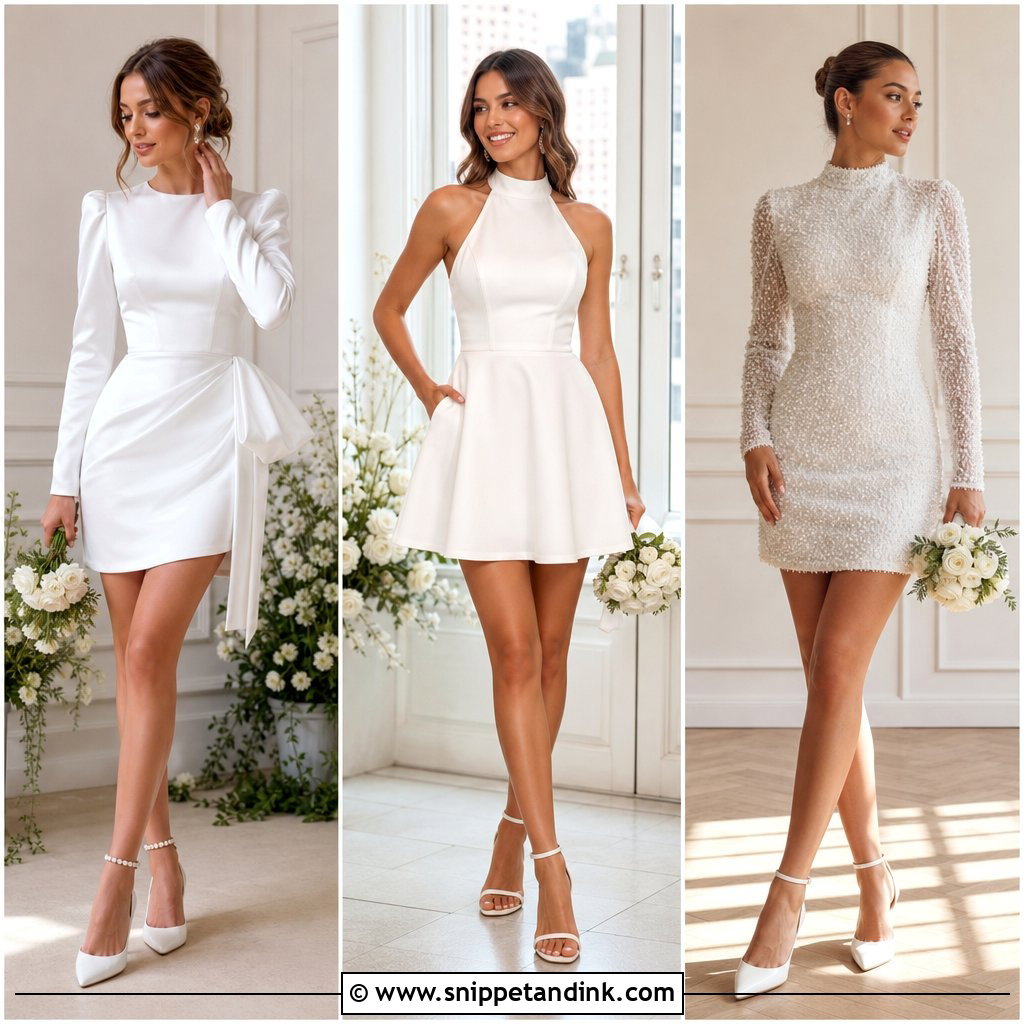
2. Courthouse Wedding Mini Dress
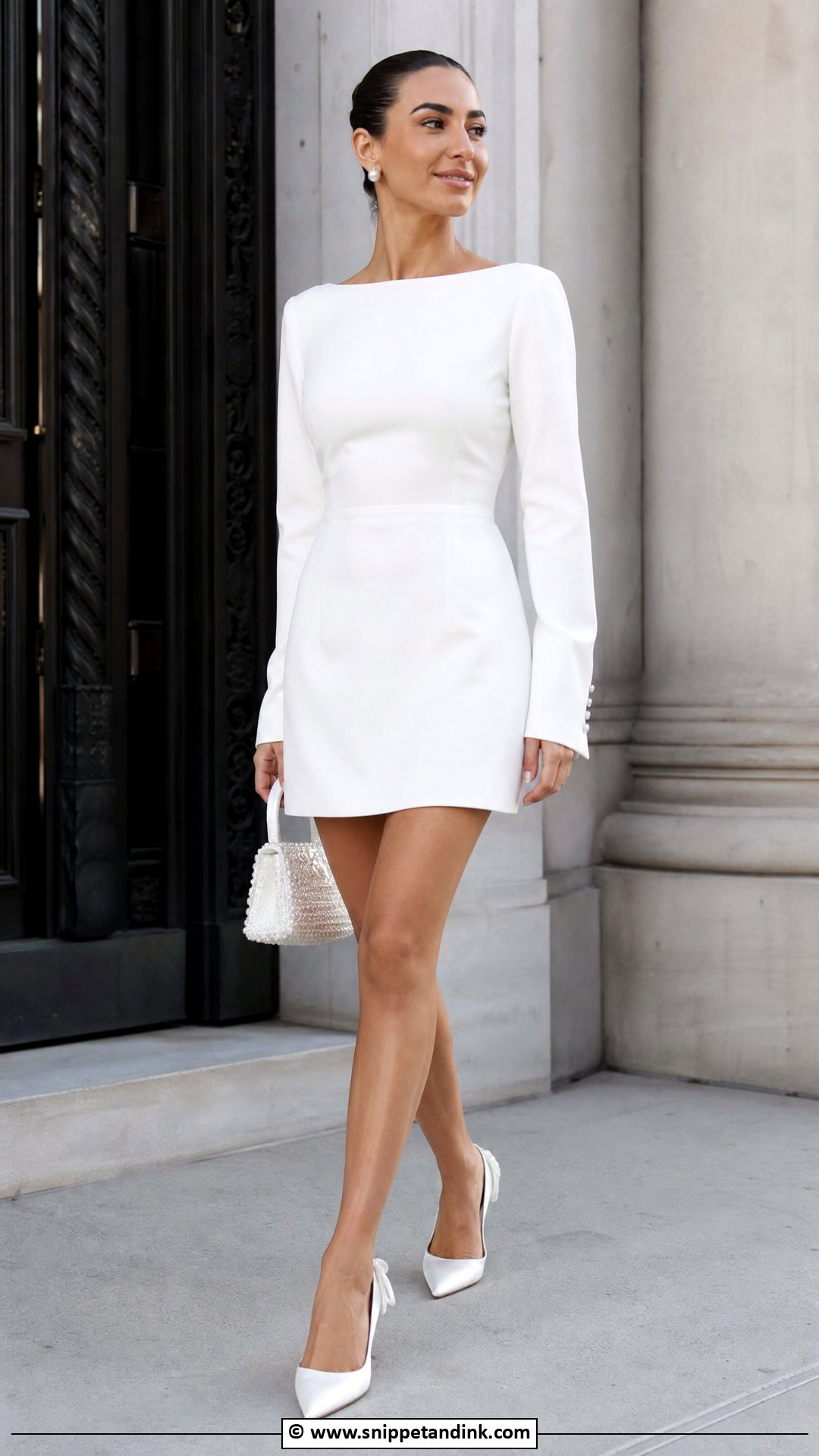
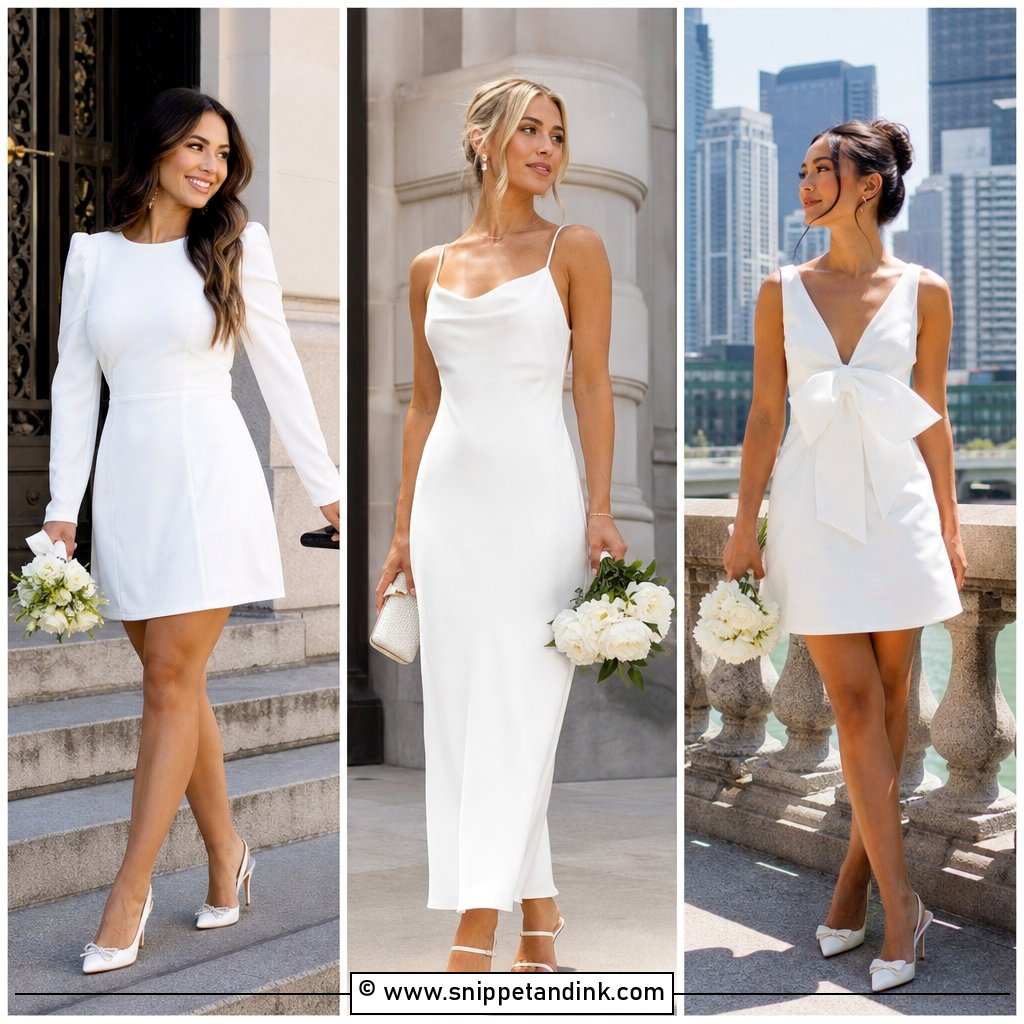
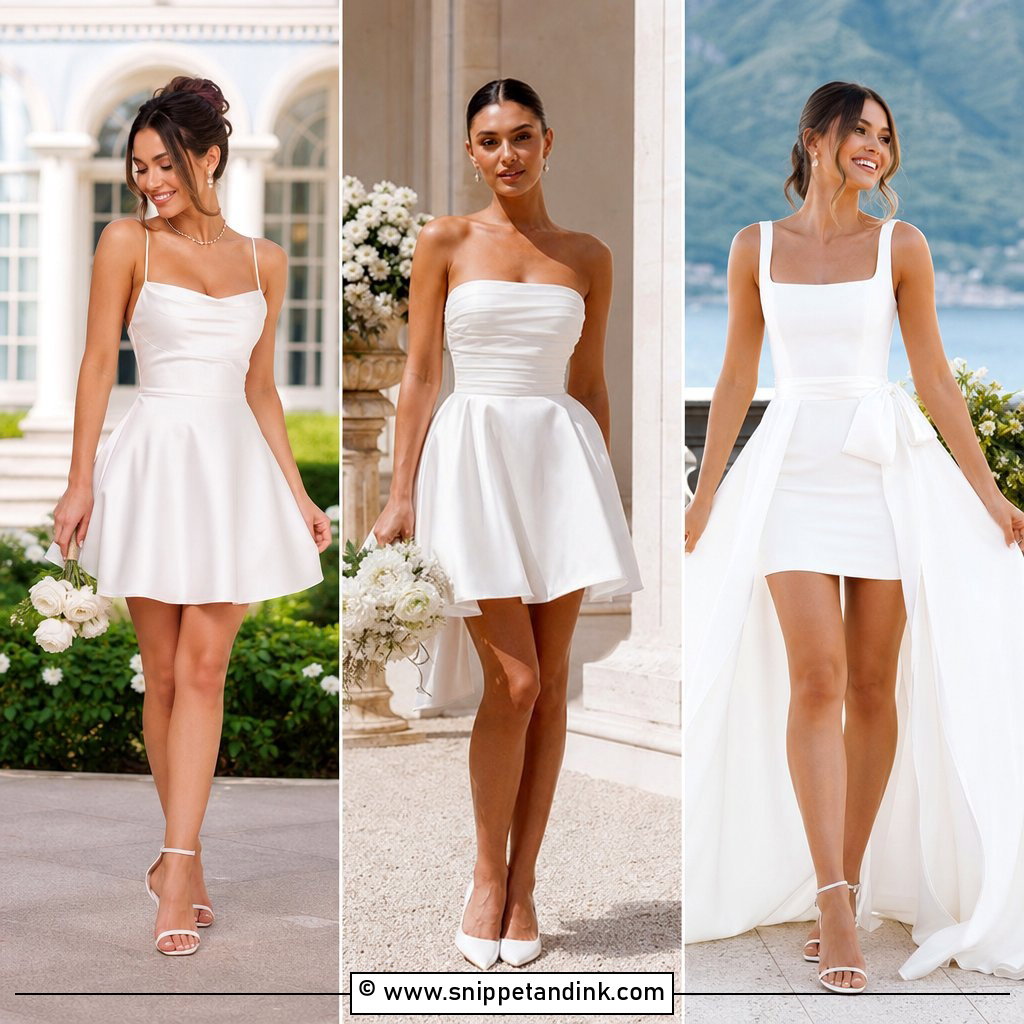
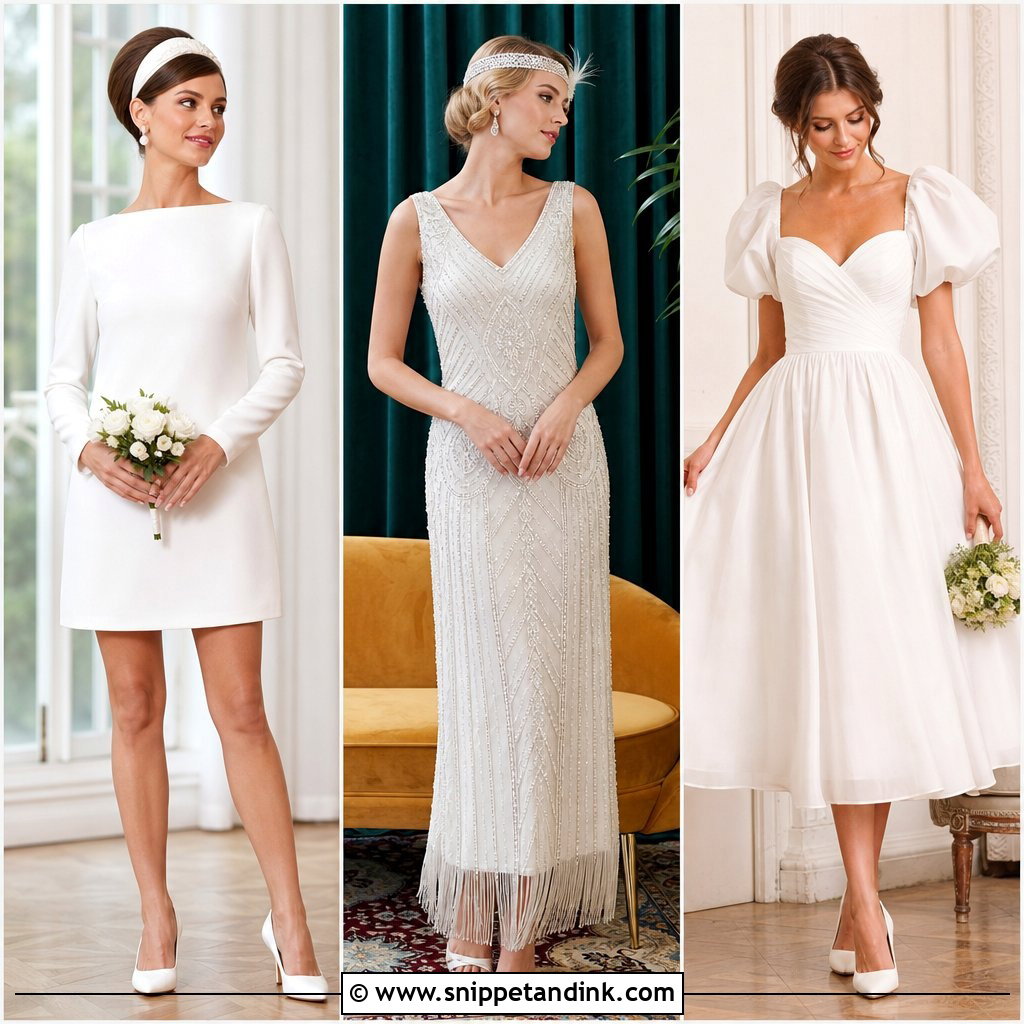
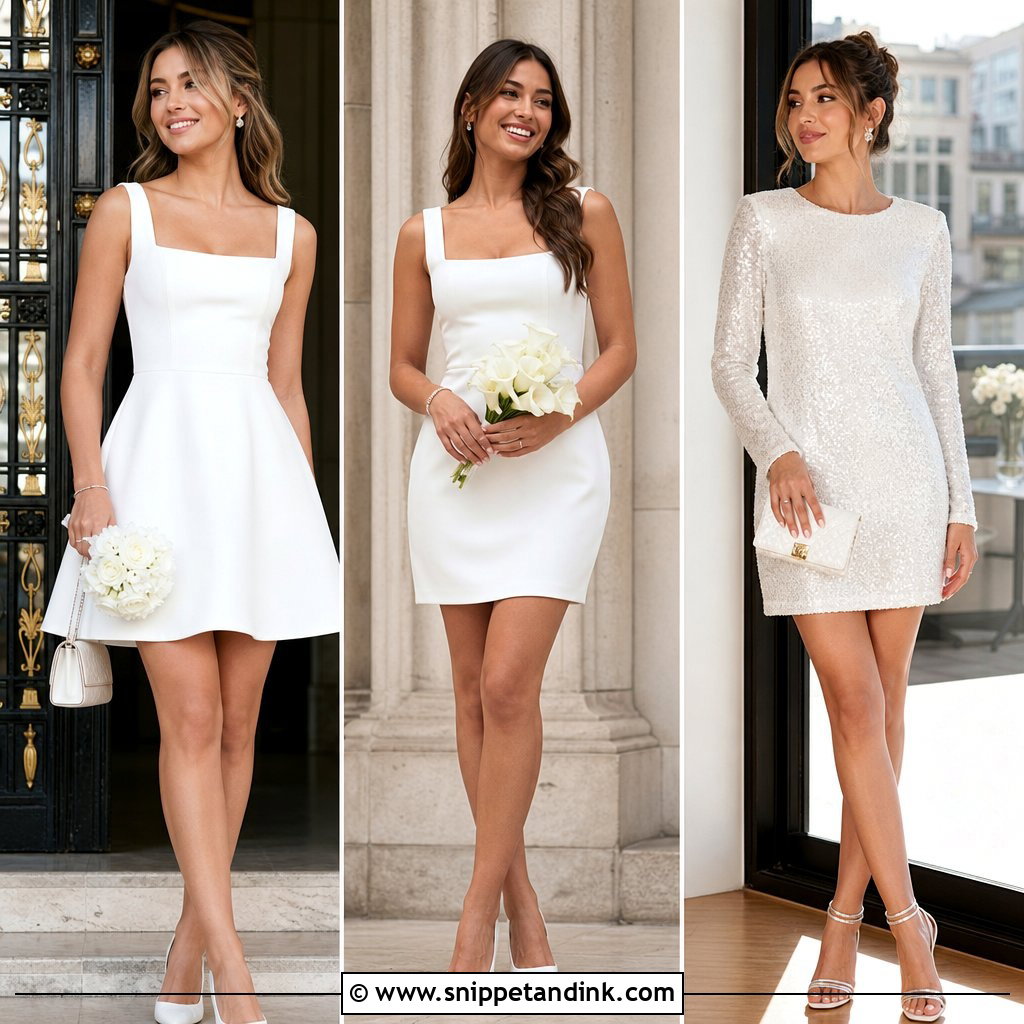
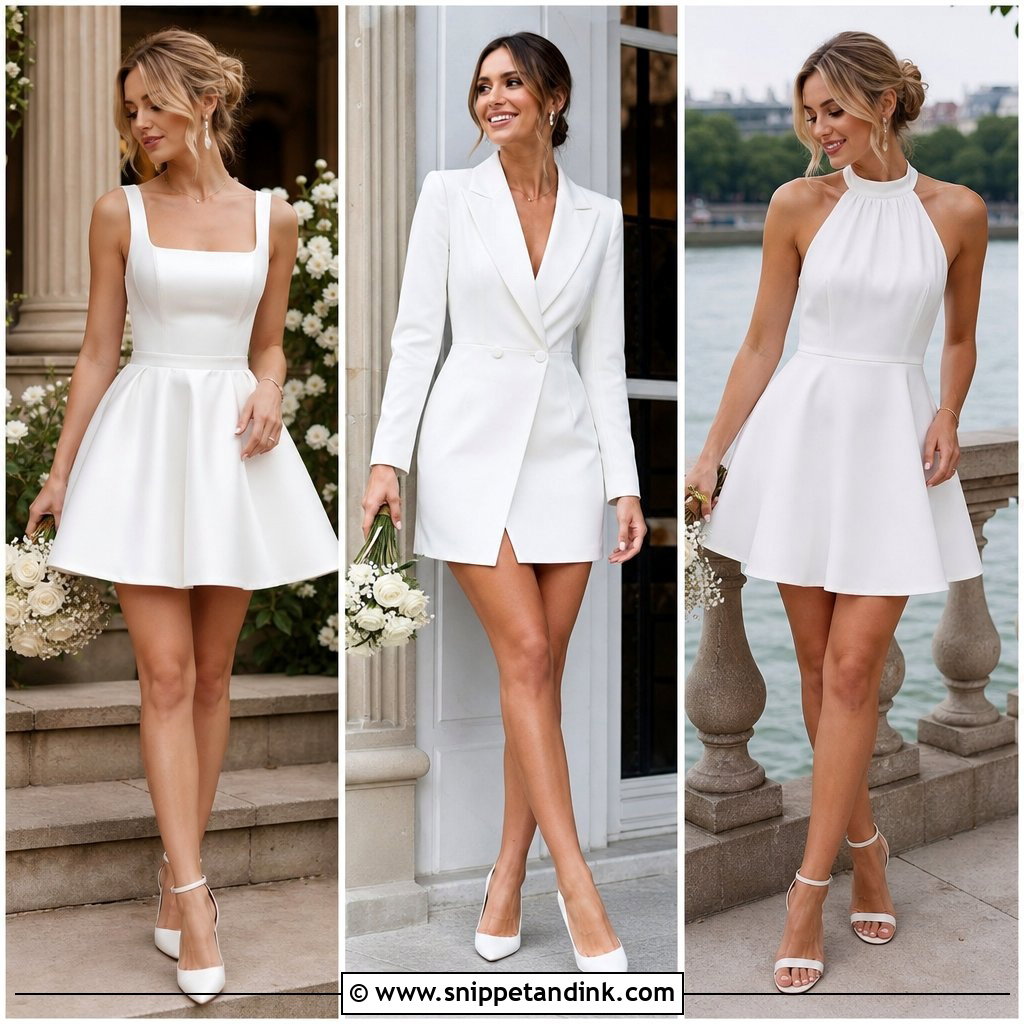
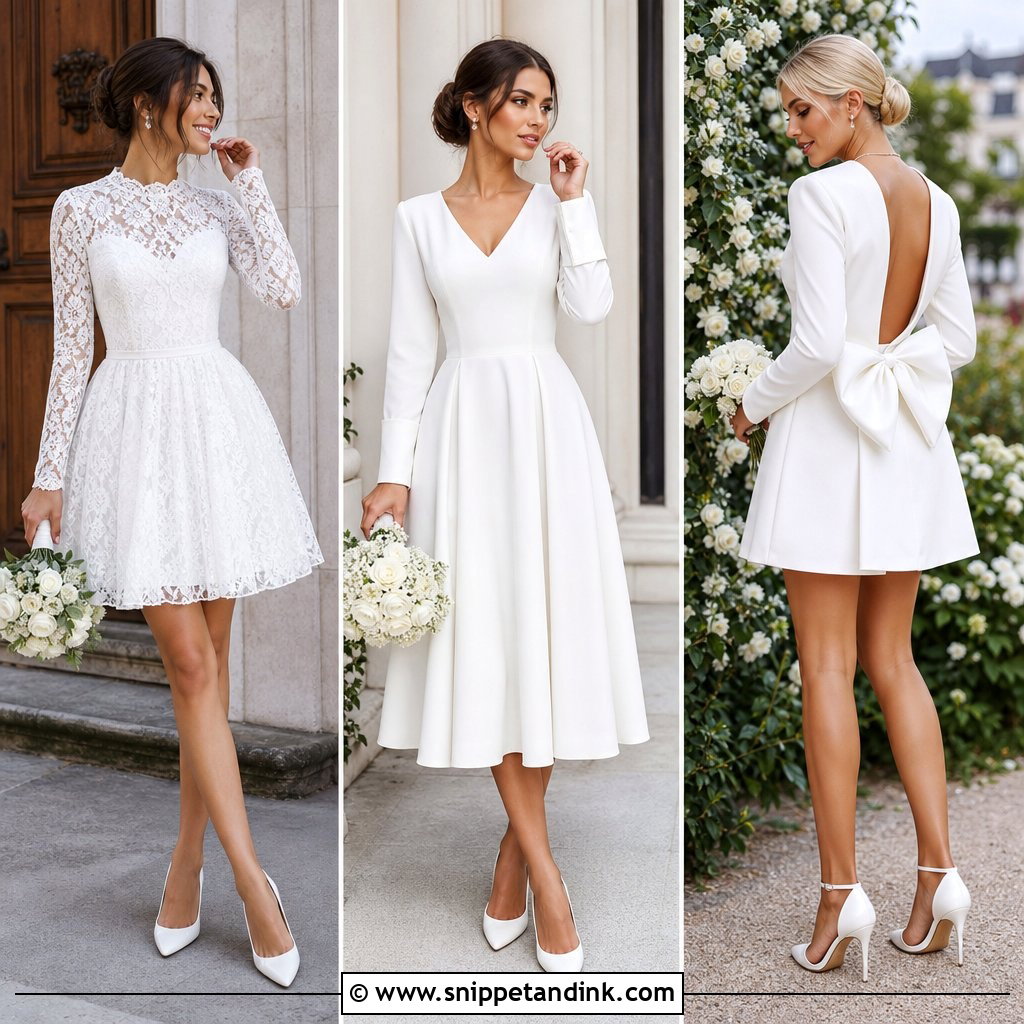
A white mini is the easiest thing to move in, and that matters when you’re climbing courthouse stairs and dashing to lunch. Short hems need a little more thought up top, so I usually pair them with a square neckline or long sleeves to keep the outfit reading as bridal rather than party. Details like a bow back or fine lace give the eye somewhere to land. Before buying, sit down in it in the fitting room: some minis ride up far more than you’d expect when you sign the register.
3. Courthouse Wedding Blazer Dress
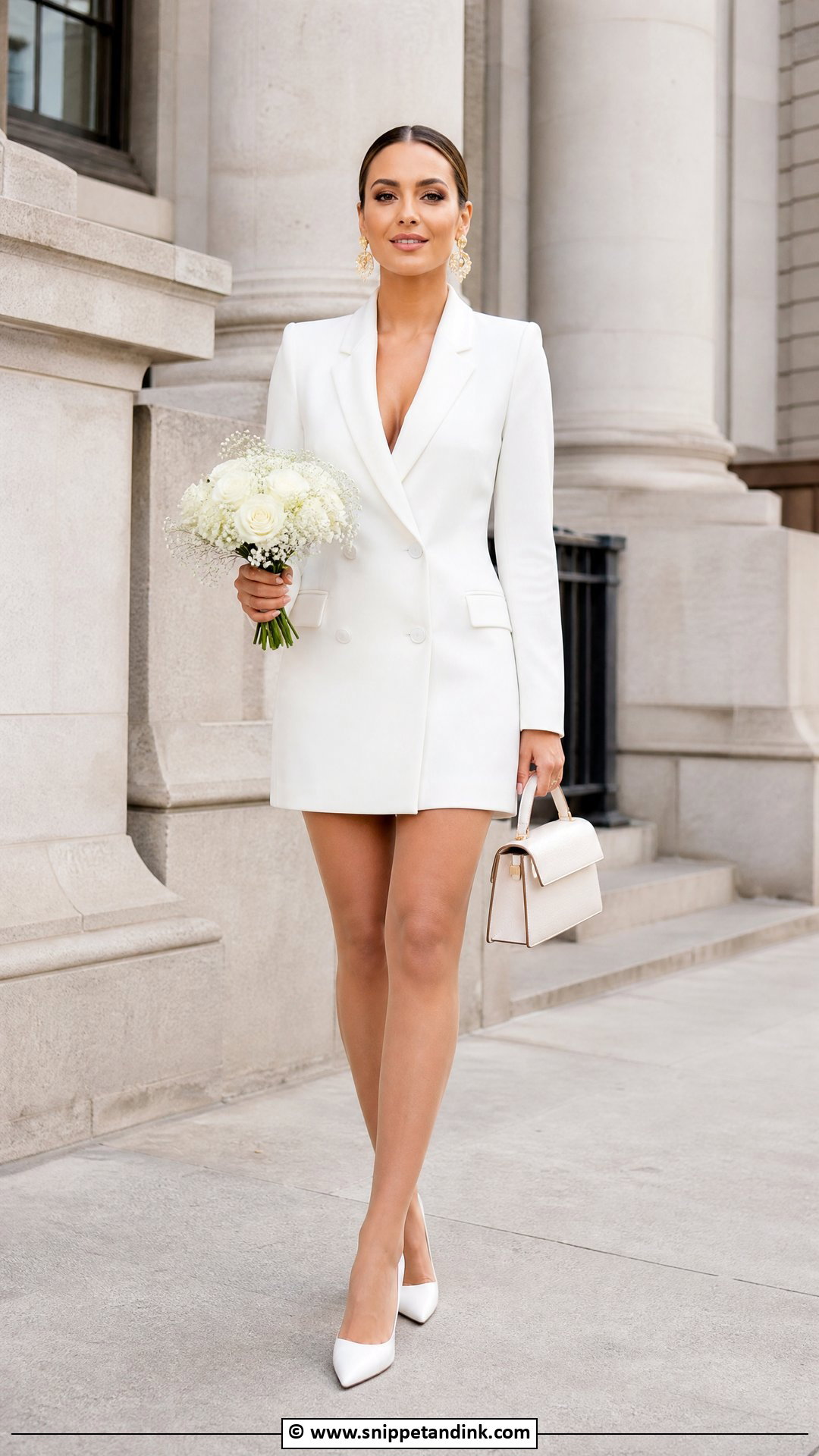
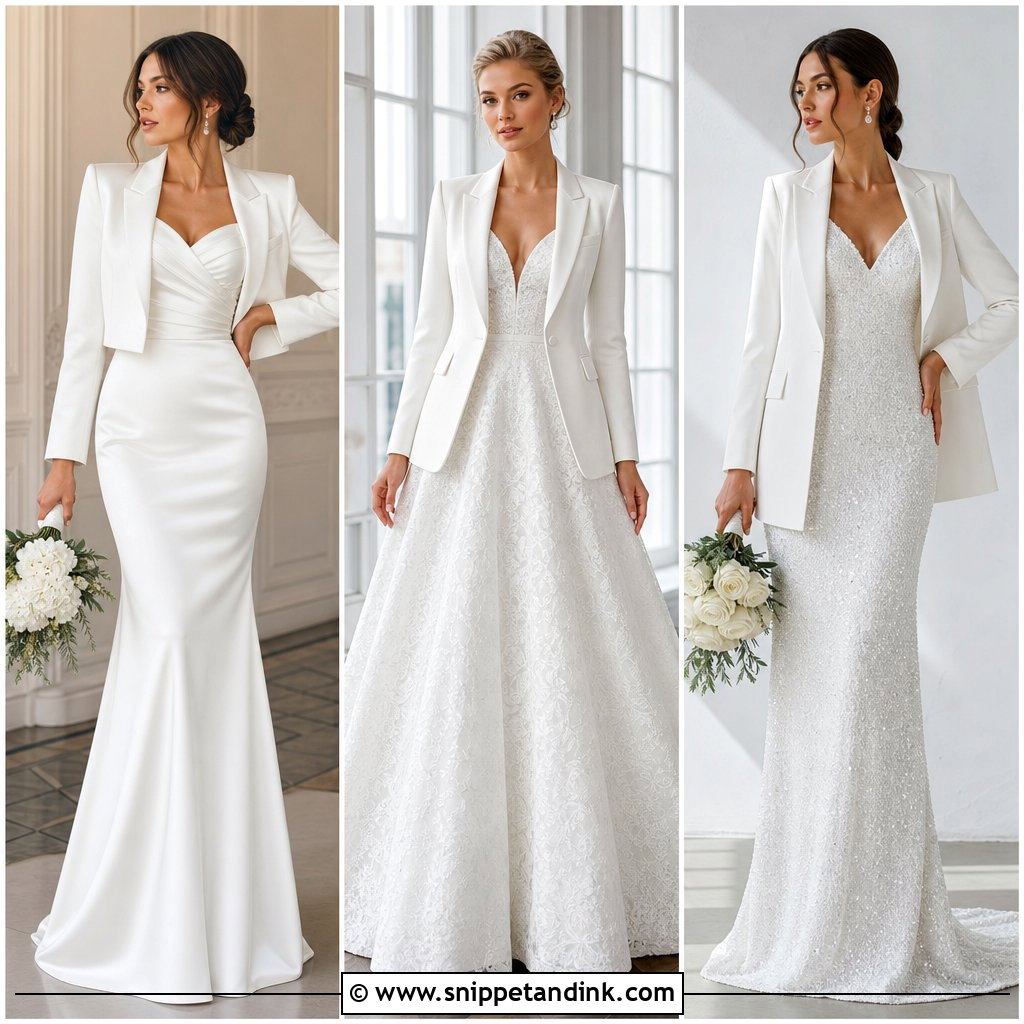
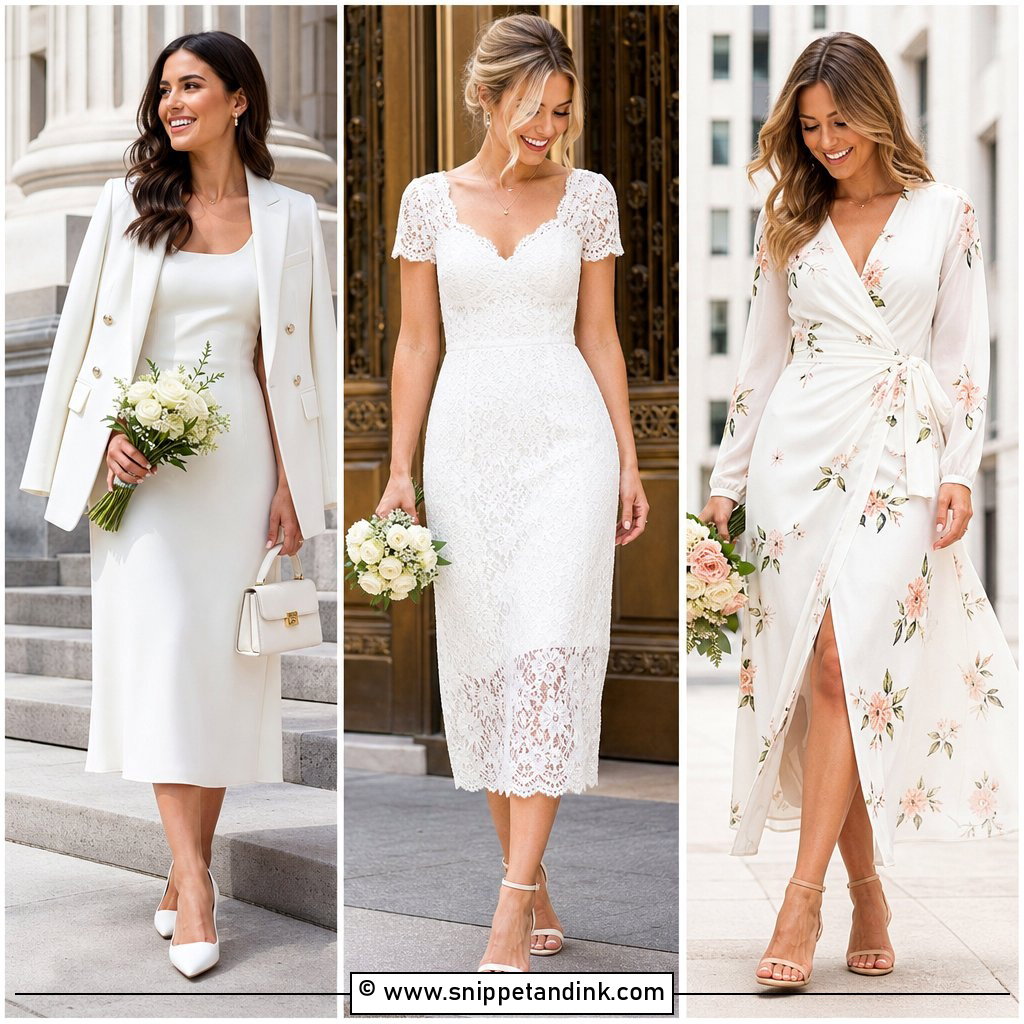
City hall is a building full of suits, so a blazer dress fits the setting naturally while the ivory keeps it yours. Double-breasted versions hold their shape best through a long day. A tuxedo-inspired lapel gives a sharper line if you love tailoring. The one thing I check at a fitting is the button stance: if it pulls into an X across the bust when you sit, it needs letting out or a size up. Sheer tights and gold hoops finish it.
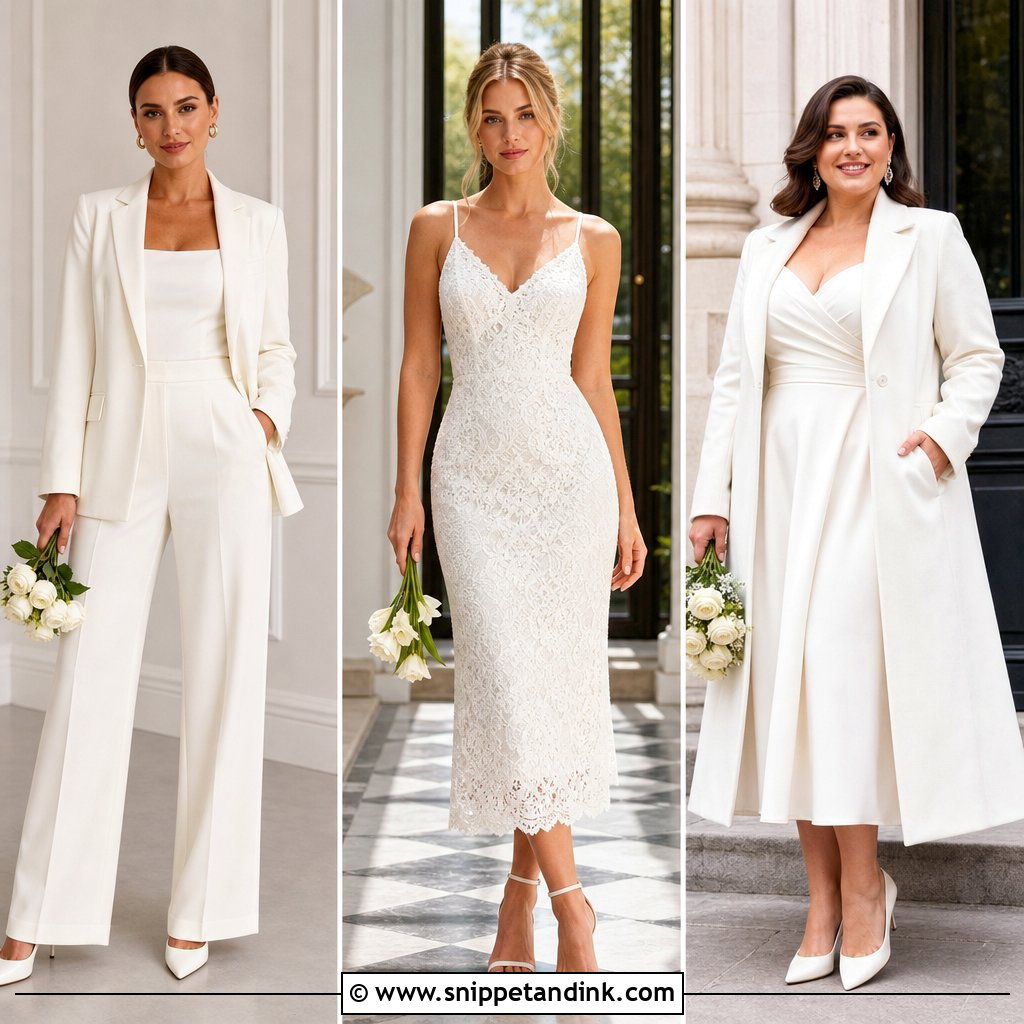
4. Courthouse Wedding Lace Midi Dress
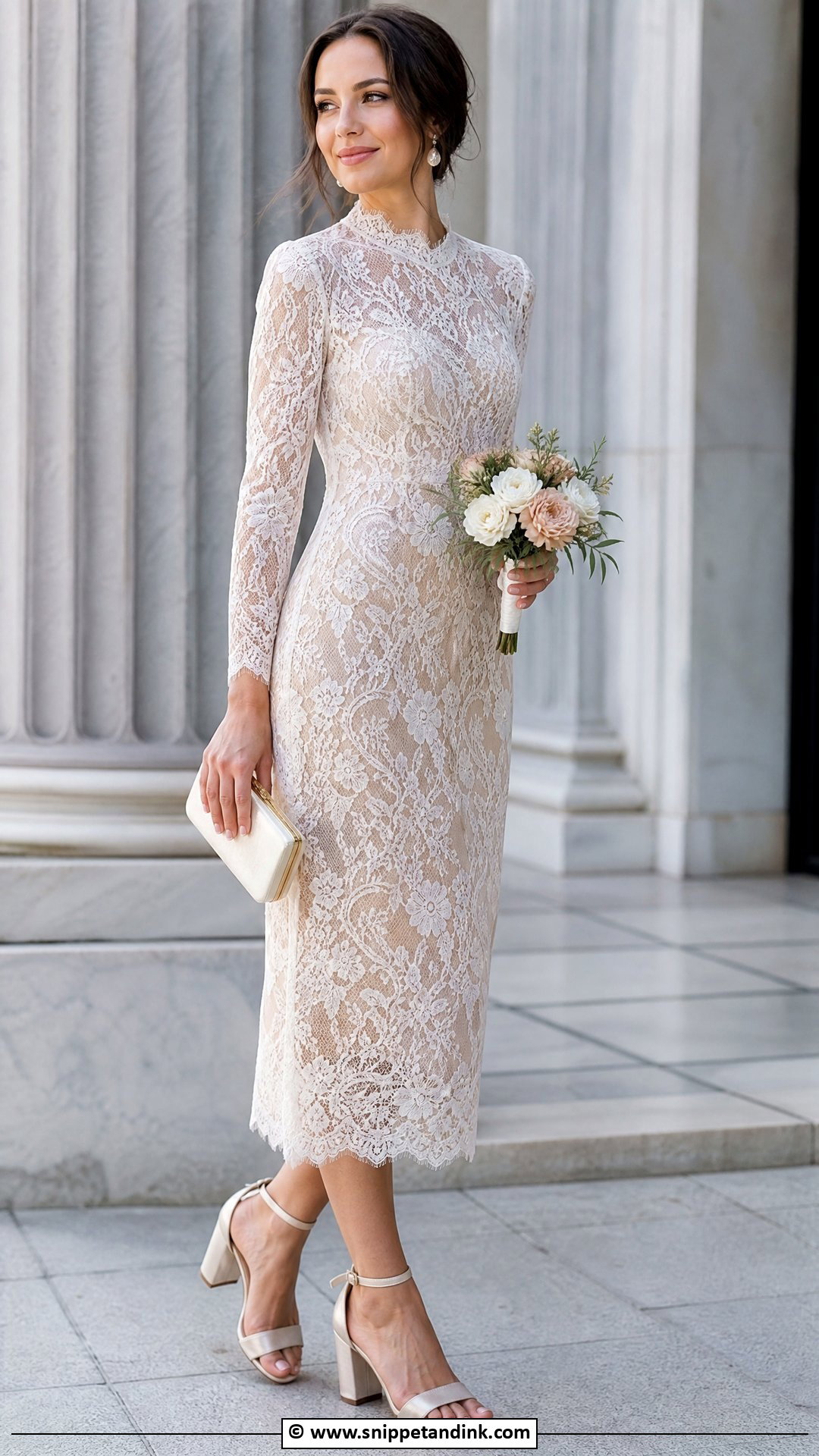
Lace is where courthouse brides most often overdo it. Heavy corded lace on a full skirt can look like a gown that wandered into the wrong building. I steer people toward a fine Chantilly or a light guipure on a slim sheath or a modest A-line, with nude or ivory lining so the pattern shows in photos. A midi length suits most figures and keeps the hem clear of steps. Block heels make sense here, as lace hems catch on stiletto tips.
5. Courthouse Wedding White Suit
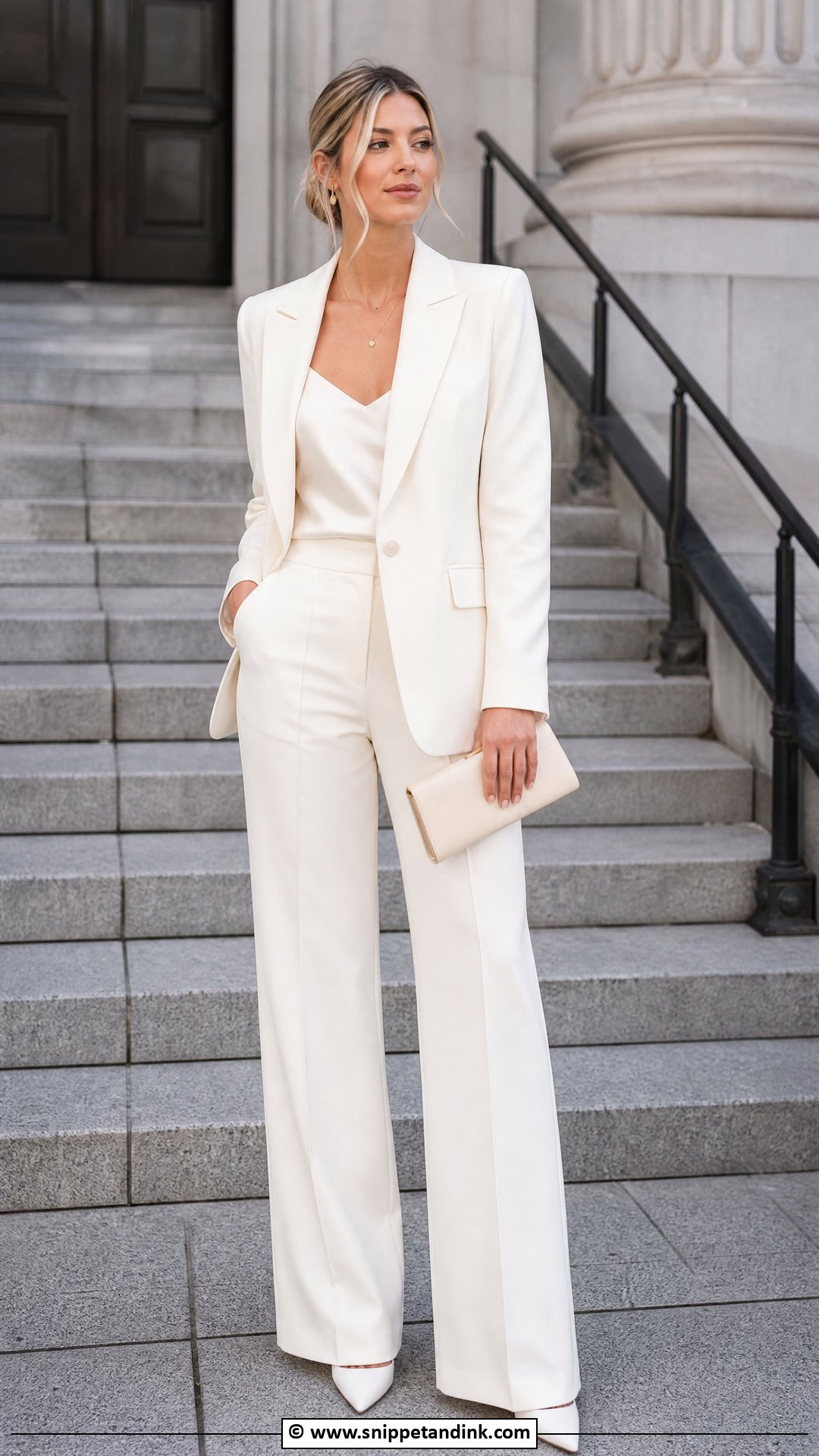
Some brides never feel like themselves in a dress, and for them a white suit is the answer I’d suggest first. wide-leg trousers give a relaxed line and hide a bit of creasing, while slim trousers look crisper but show every wrinkle at the knee. Under the blazer, a silk camisole or a lace top adds the bridal note. My rule with white tailoring is to have the jacket fitted at the shoulder first, since that’s the one alteration that’s costly to fix later. It moves straight on to a rooftop drink without a change.
6. Courthouse Wedding Jumpsuit
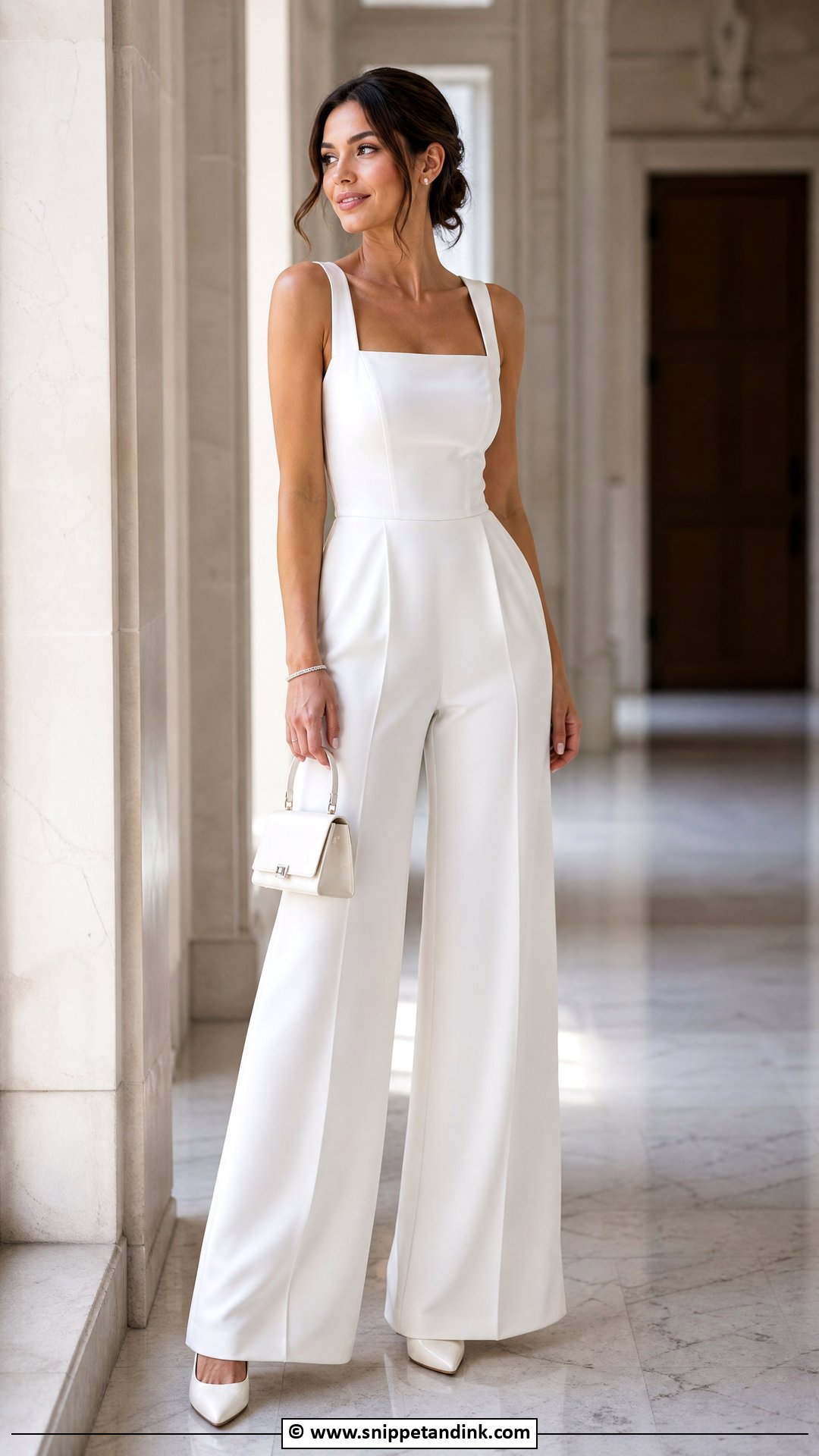
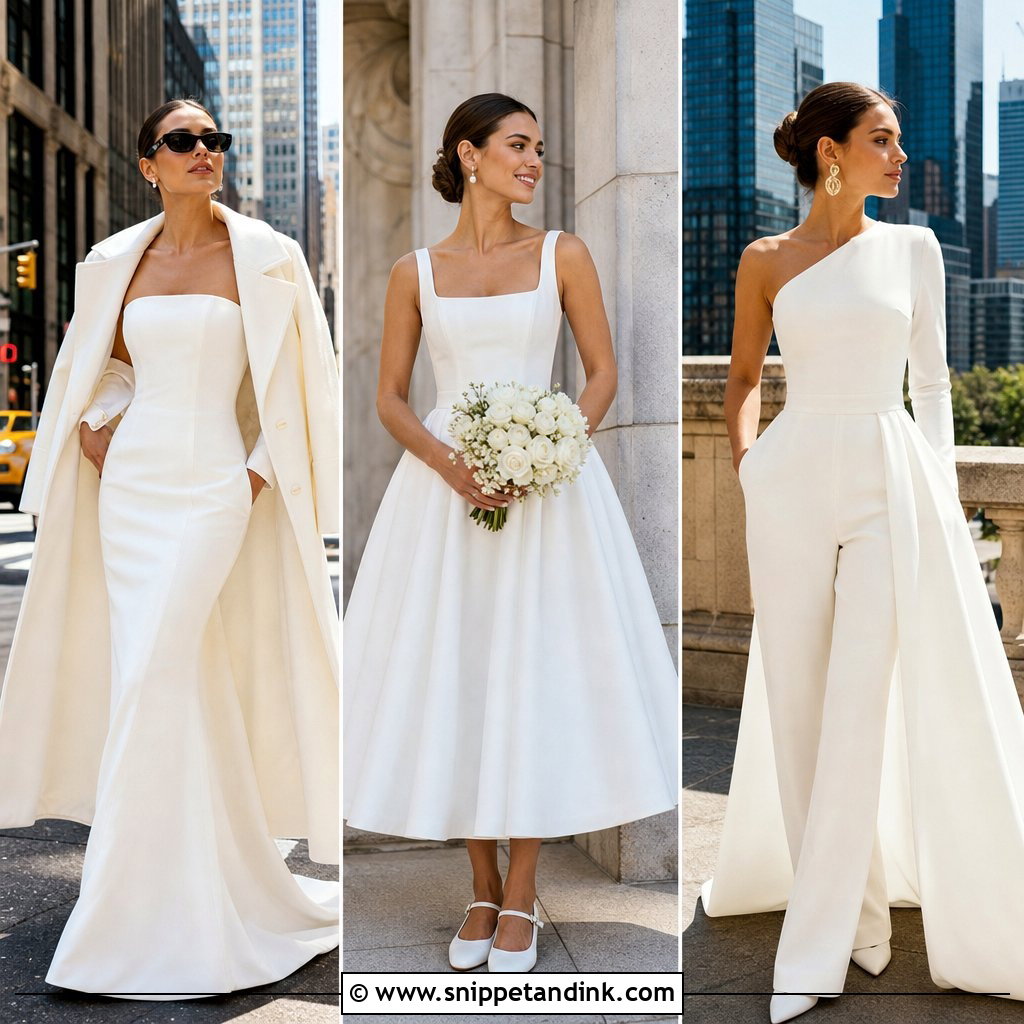
Jumpsuits are the practical winner on a courthouse day: no worrying about how you sit, how you climb, or how the wind catches a skirt outside. The trade-off is the bathroom, which is worth thinking about honestly if your ceremony slot comes after a long wait. A back zip you can reach yourself, or a wrap front, helps. White crepe hangs better than thin satin and hides lines underneath. A fitted waist and a wide leg give the longest line.
7. Courthouse Wedding Column Dress
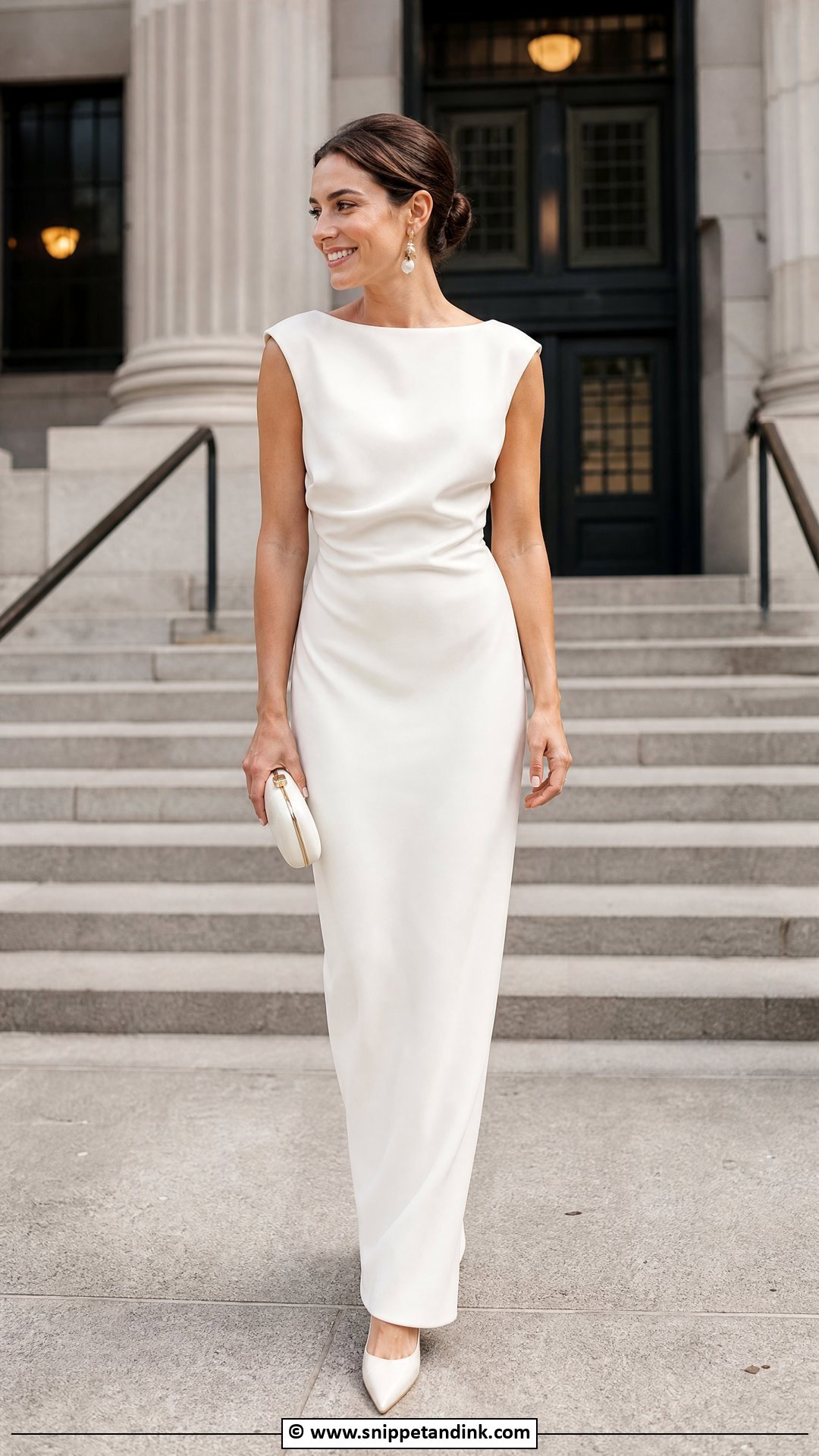
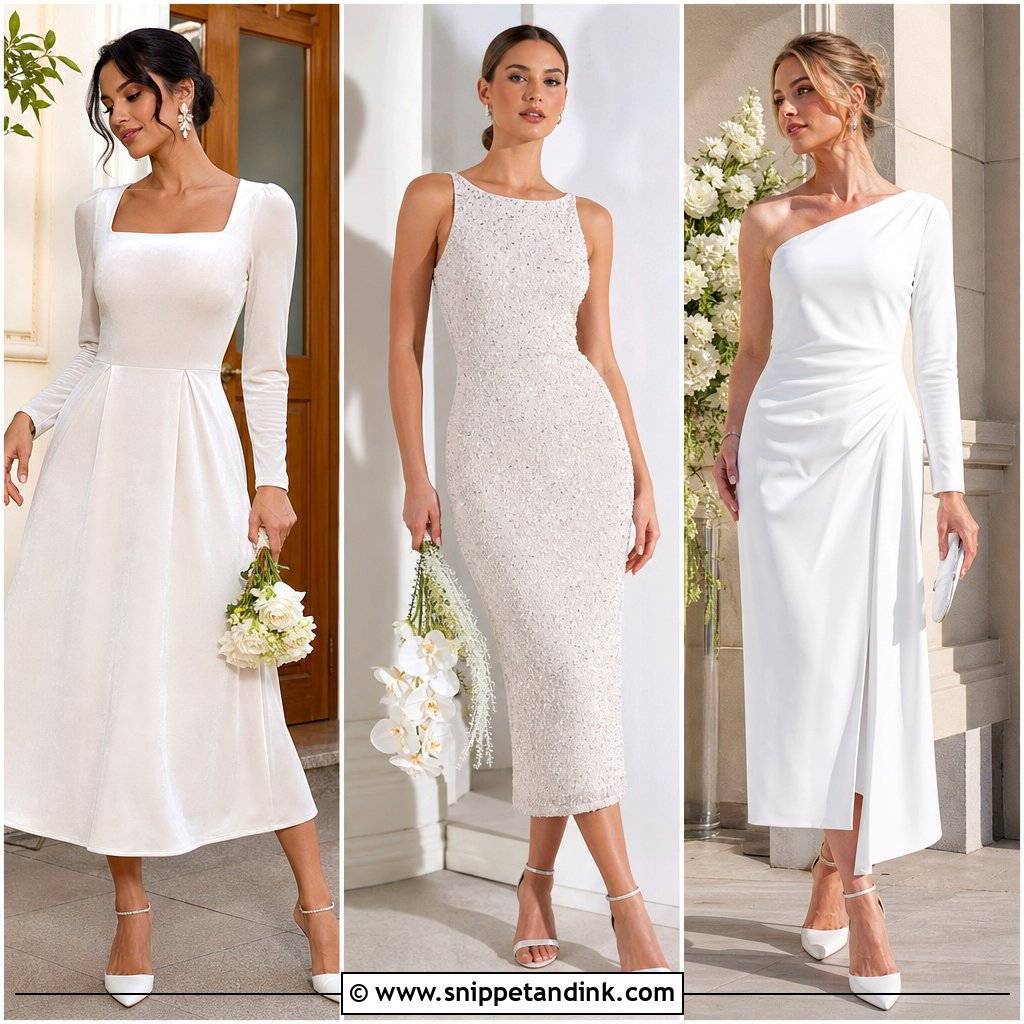
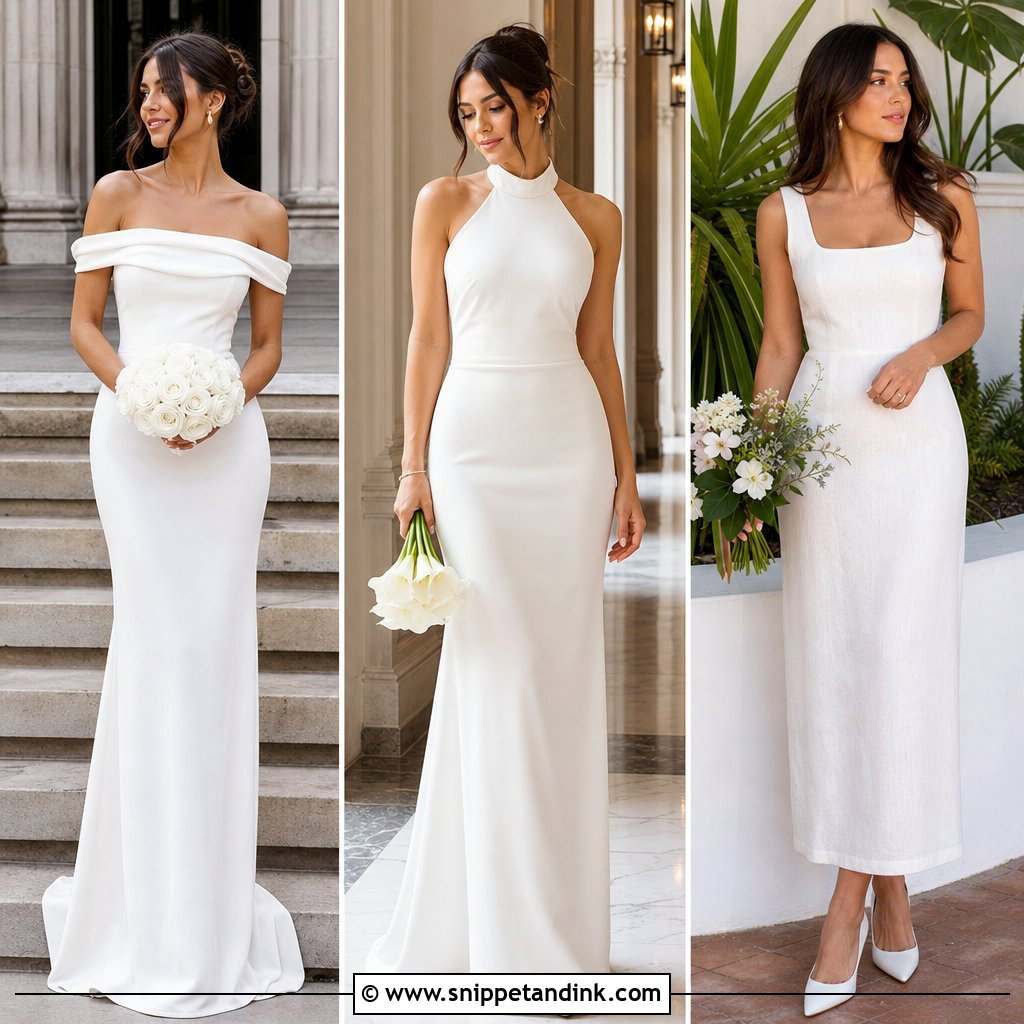
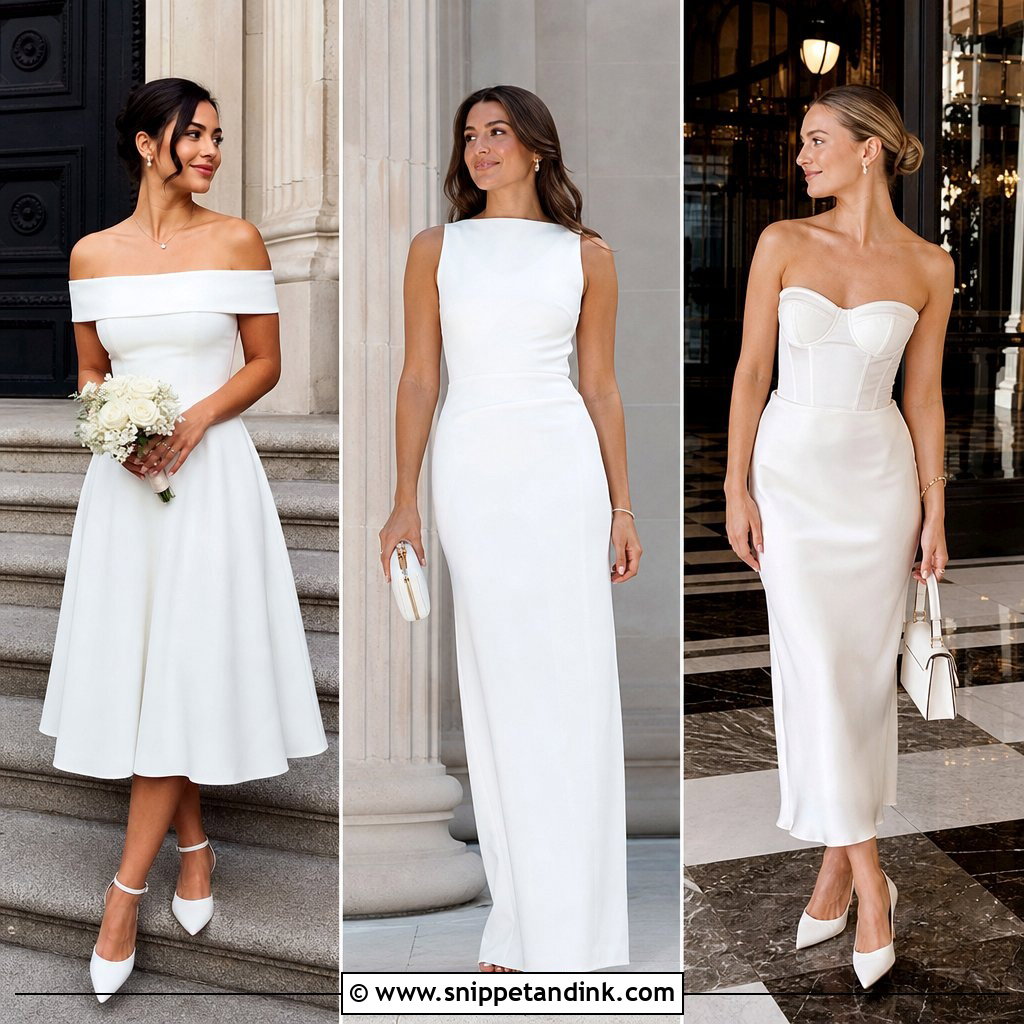
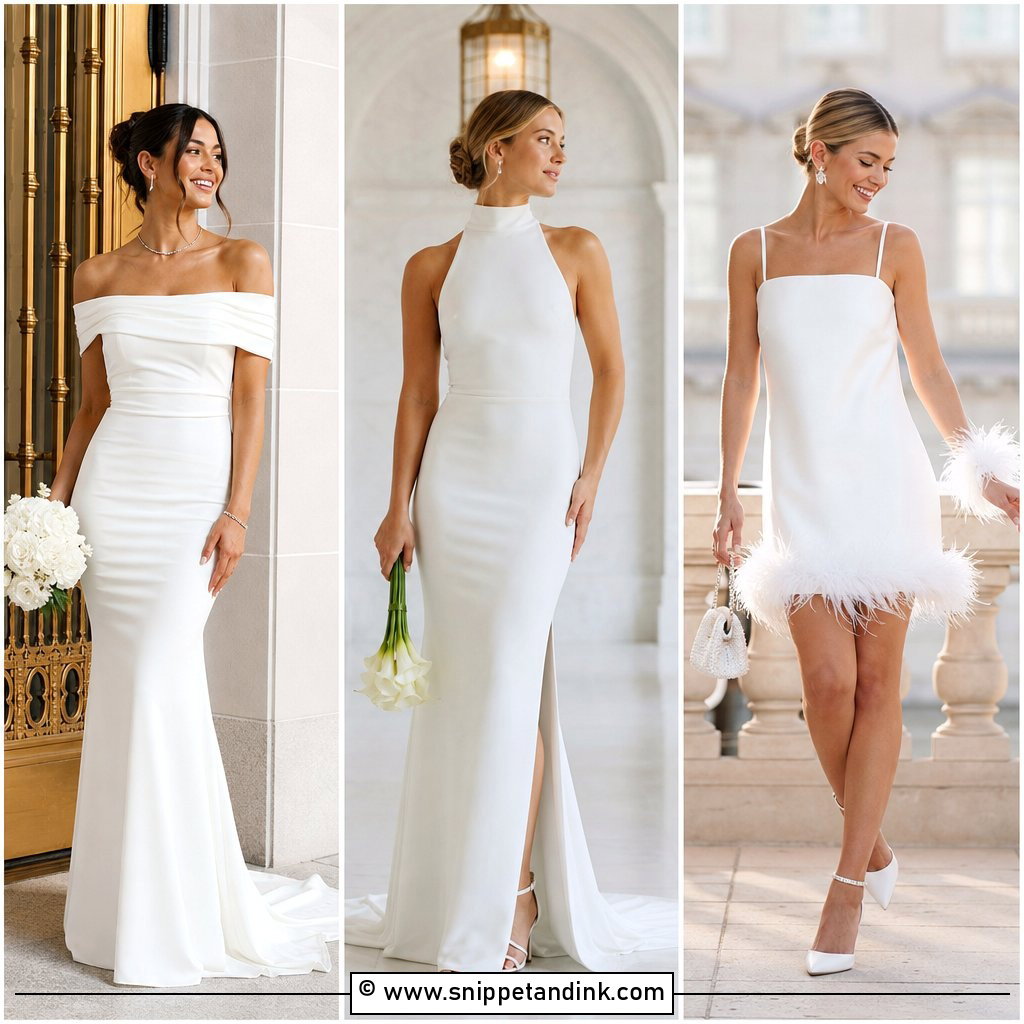
A column dress suits a small ceremony because it carries no extra volume to manage in a narrow corridor or a crowded elevator. Matte crepe is my usual pick; it photographs clean and doesn’t throw glare under strip lights. Stretch fabrics are comfortable, but cheaper ones can show seams and lines from underwear, so try it on in daylight. Choose the neckline you’re happiest in, add a sculptural earring and a smooth bun, and bring a cropped jacket if the courtroom runs cold.
8. Courthouse Wedding Slip Dress
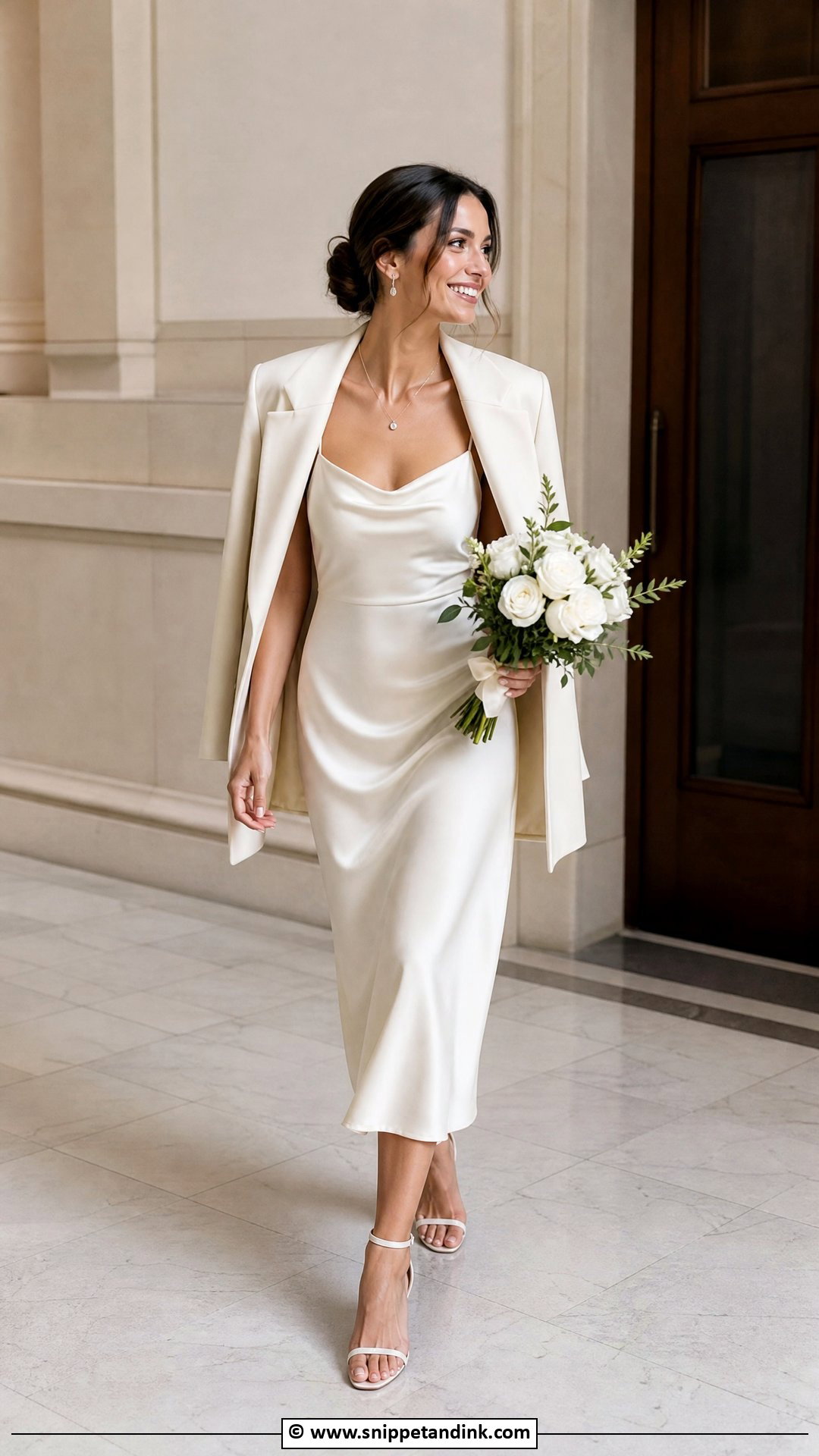
A slip dress lives or dies by fit, because the fabric skims everything. I’d only recommend one if you’re willing to get it tailored at the straps and hips, and if you’ll wear smooth, no-line underwear. A cowl neck or a bias cut adds shape without structure. Silk or a good satin-look fabric drapes; thin polyester clings and creases. It’s my favorite option for warm-weather ceremonies, with a soft wrap or a blazer on top for the building itself.
9. Courthouse Wedding Tea Length Dress
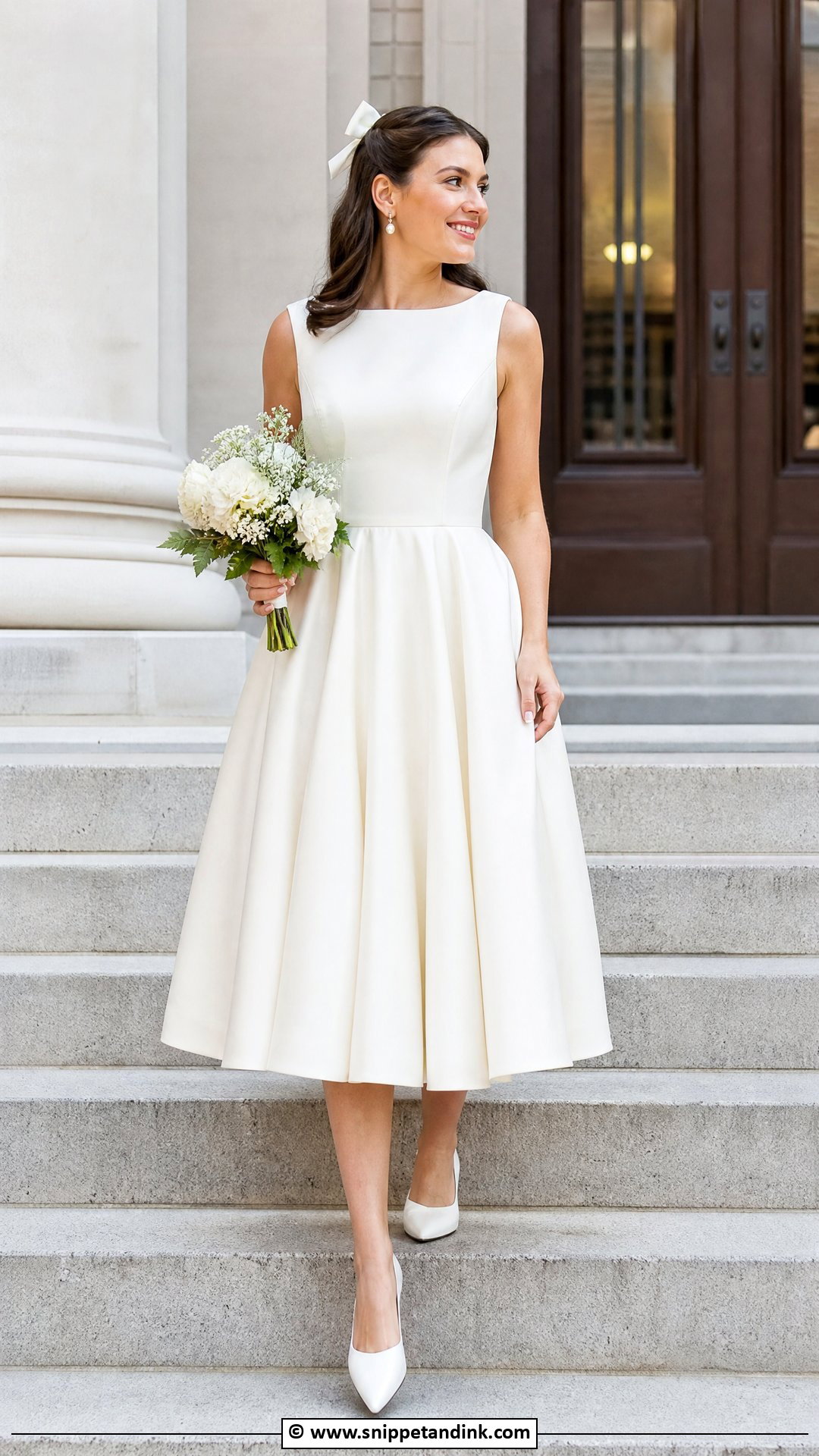
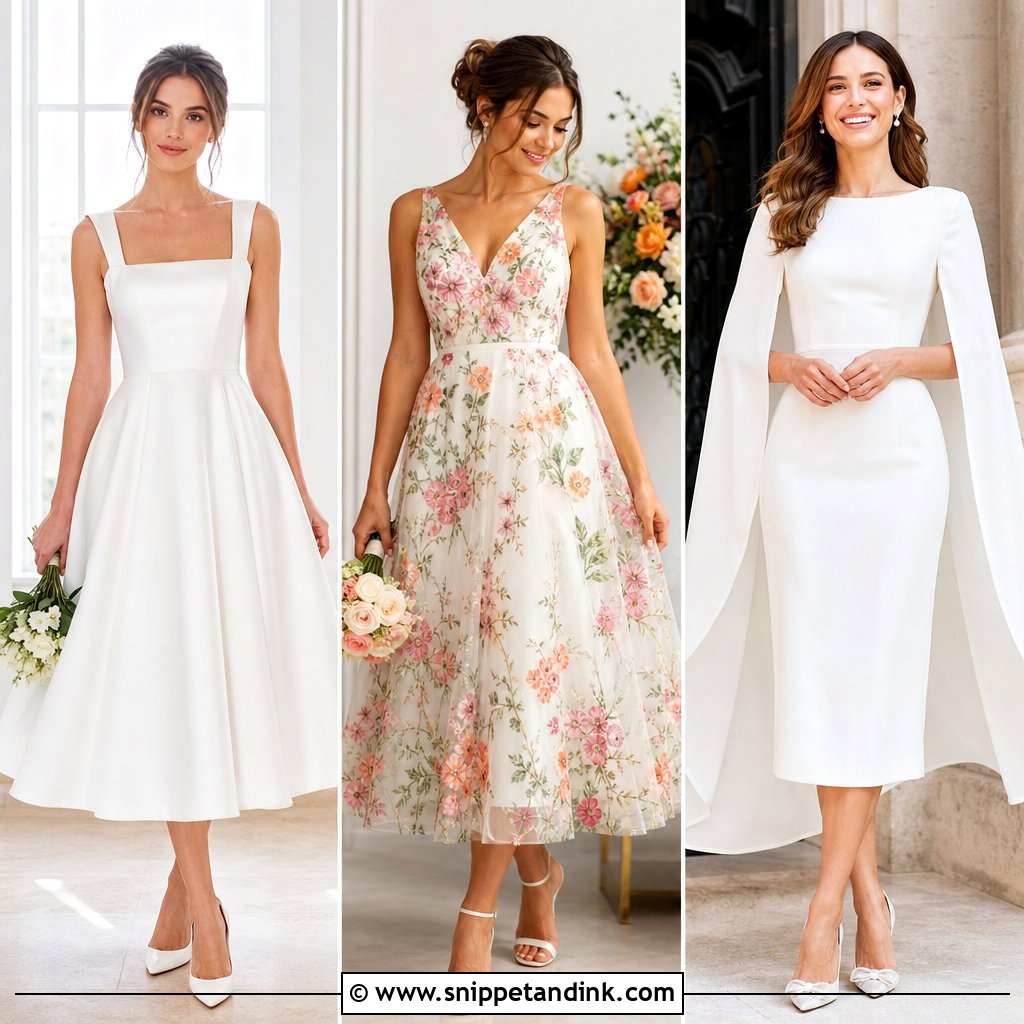
Tea length lands between the knee and the ankle, which keeps it clear of stair edges and still feels like a wedding dress. A full skirt over a fitted bodice reads vintage; a slimmer cut feels current. The skirt is what makes stair photos work, since it moves when you walk down. If you go full-skirted, try it on with the petticoat you’ll actually wear, because volume changes how you fit through a doorway or into a car. A small veil or a hair bow finishes it.
10. Courthouse Wedding Long Sleeve Dress
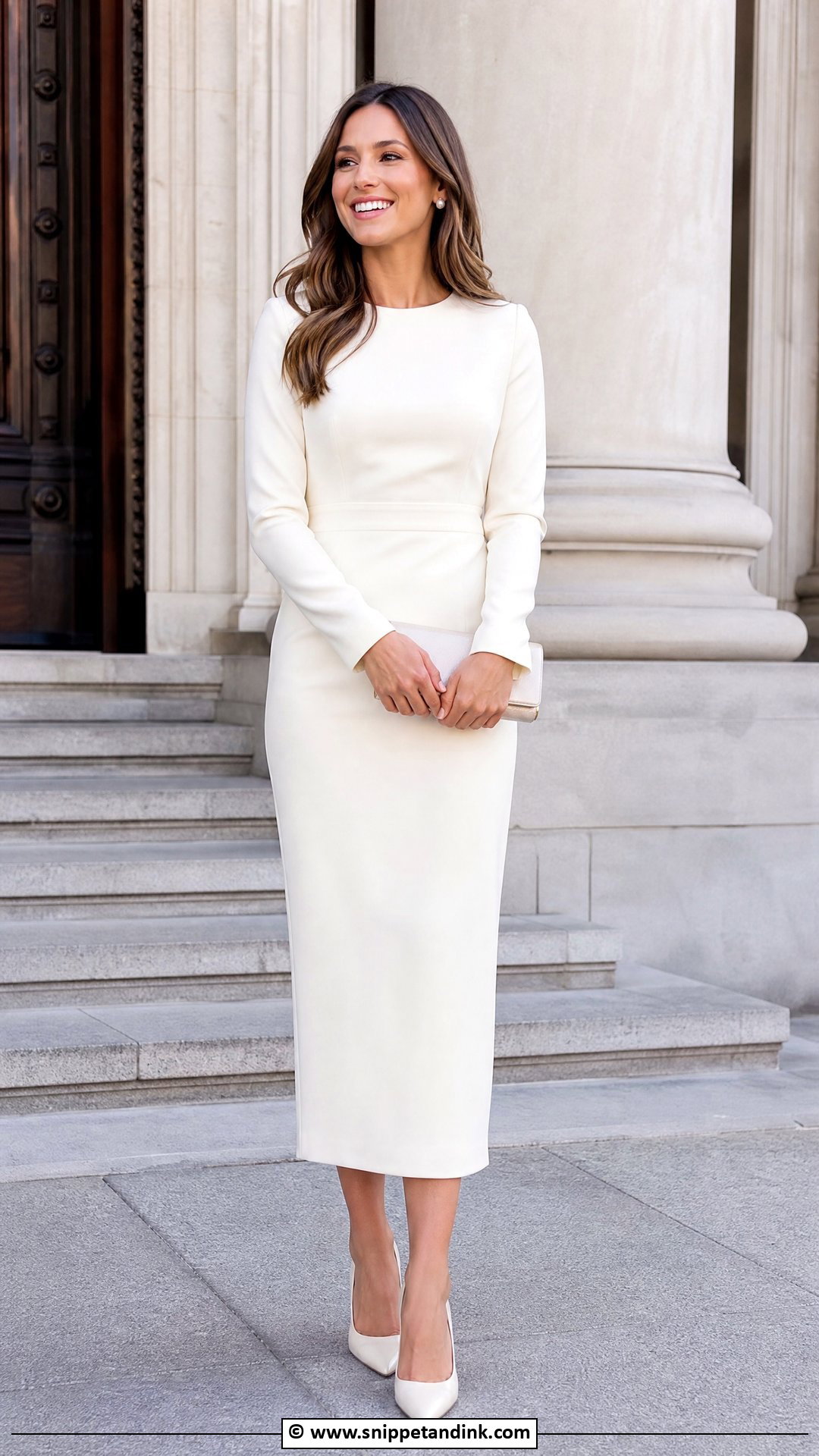
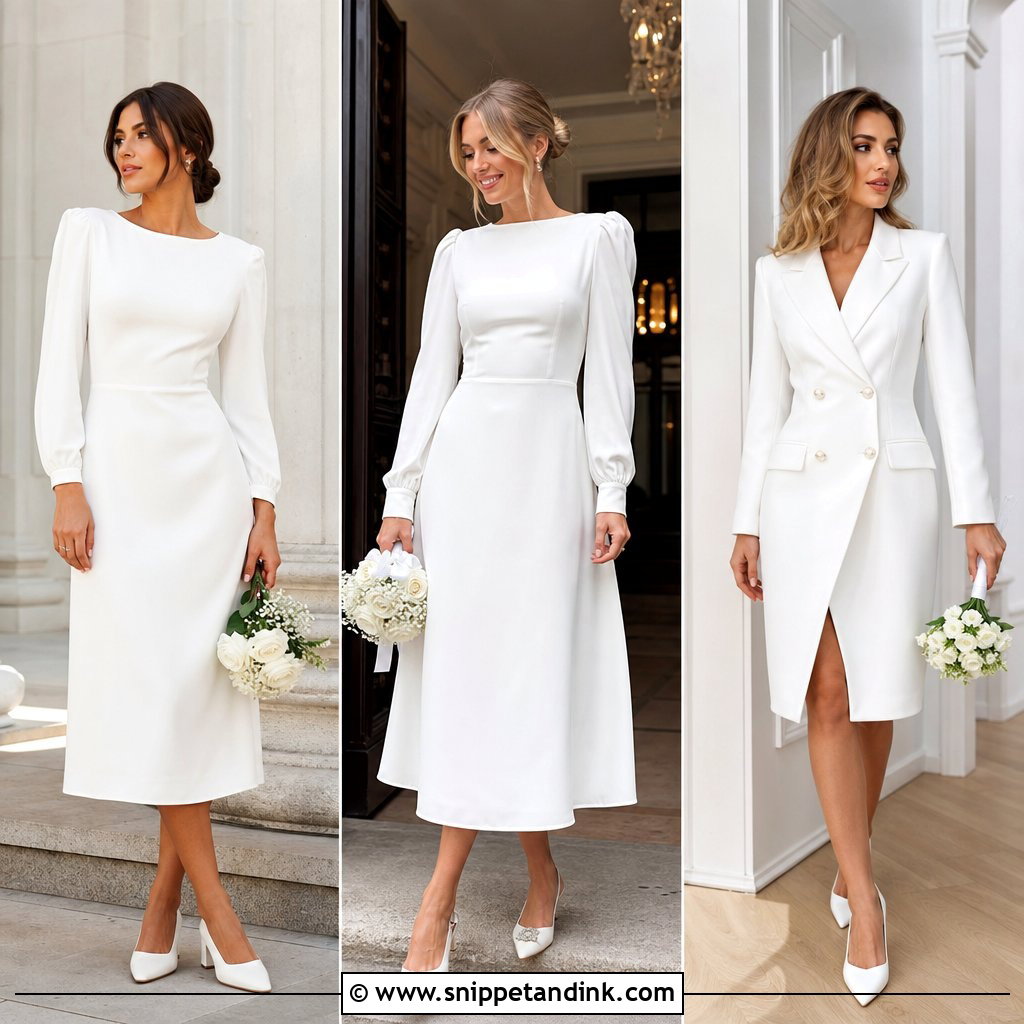
Long sleeves are a sensible choice for a government building, where the air conditioning can be fierce in summer and the heating unreliable in winter. They also balance a shorter hem or a deeper neckline if you want the outfit to feel measured in a public space. Crepe and lace sleeves are the most comfortable; chiffon can twist. I always ask brides to raise their arms in the fitting room, since a tight sleeve can lift the whole dress when you hug someone. Add a tailored coat in the colder months.
11. Courthouse Wedding Off Shoulder Dress
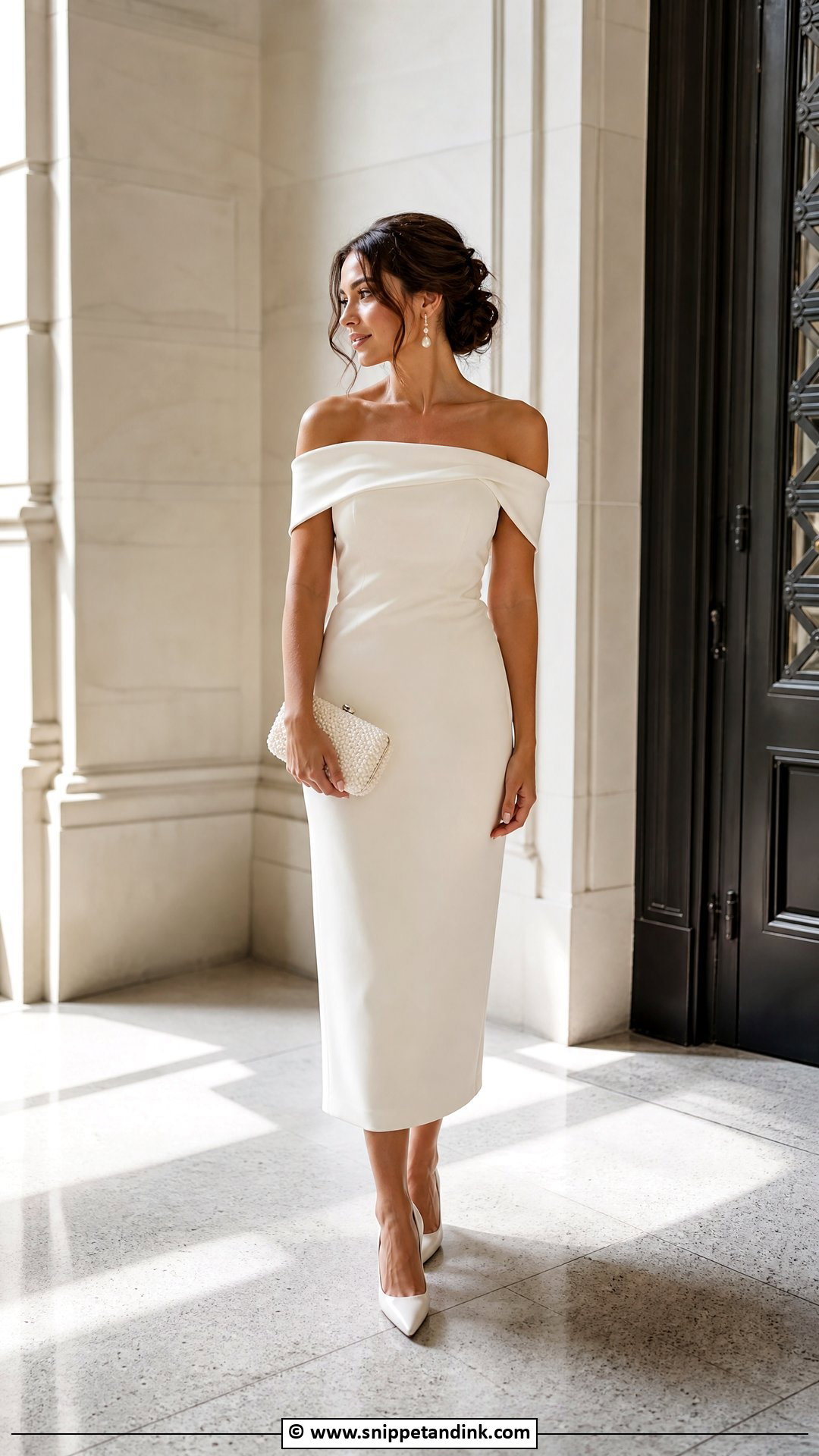
An off-shoulder neckline frames the collarbone and makes a simple dress look bridal. In practice it also limits how freely you move your arms, and you’ll be signing papers and hugging guests. I look for a version with a hidden elastic or a silicone grip band inside the neckline so it stays put. Skip a necklace entirely. Drop earrings and a smooth updo keep the shoulders clear, and pointed heels finish the line.
12. Courthouse Wedding Square Neck Dress
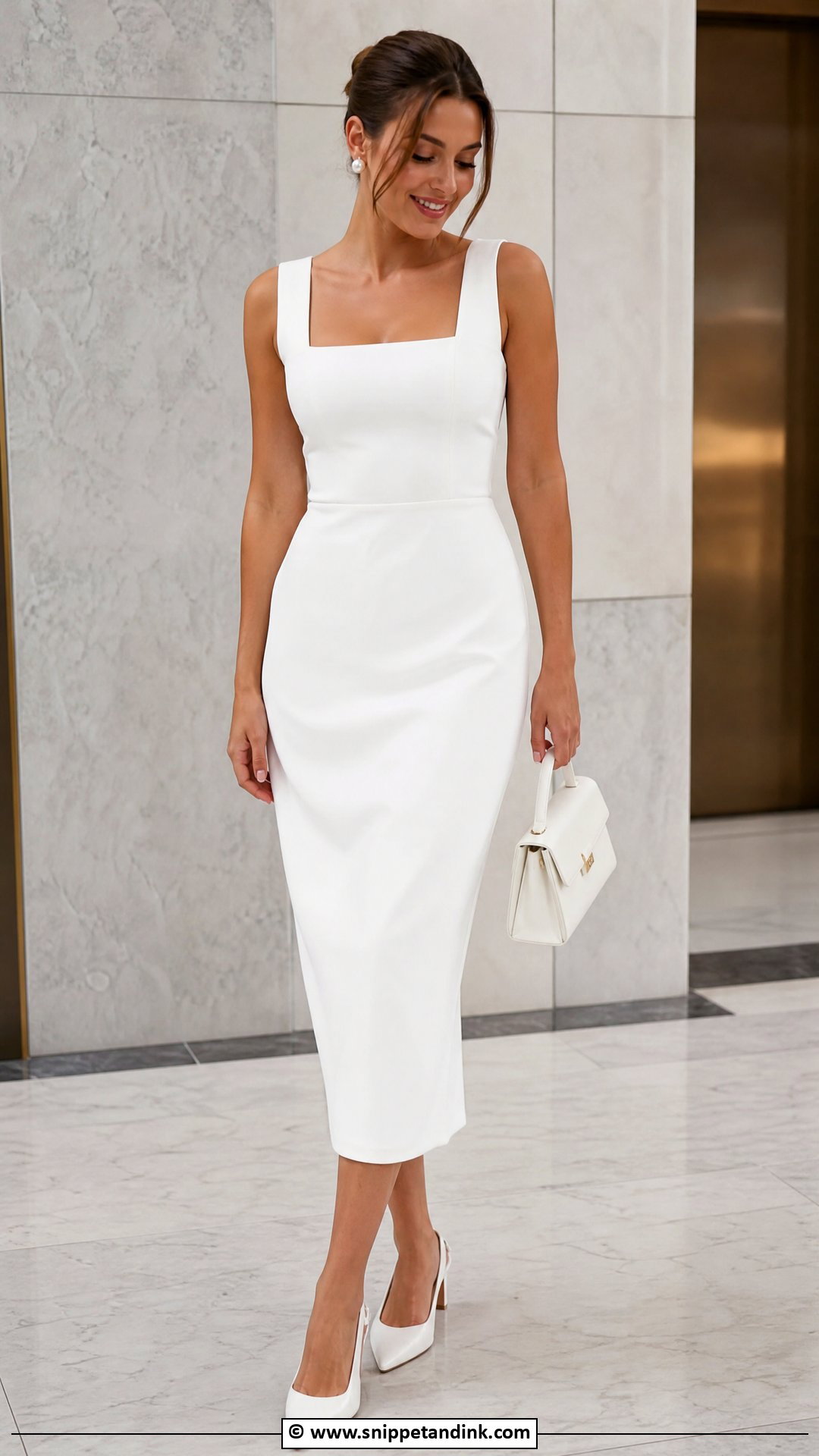
The square neck is one of the easiest necklines to fit on most figures, and it works across minis, midis and columns. Ivory crepe gives the most polished version. If you want more coverage, wider straps or a short sleeve help, and they make it easier to wear a supportive bra underneath. Slingbacks, pearl studs and a small handbag are all the styling I’d add. The neckline itself is the detail, so the rest can stay quiet.
13. Courthouse Wedding Puff Sleeve Dress
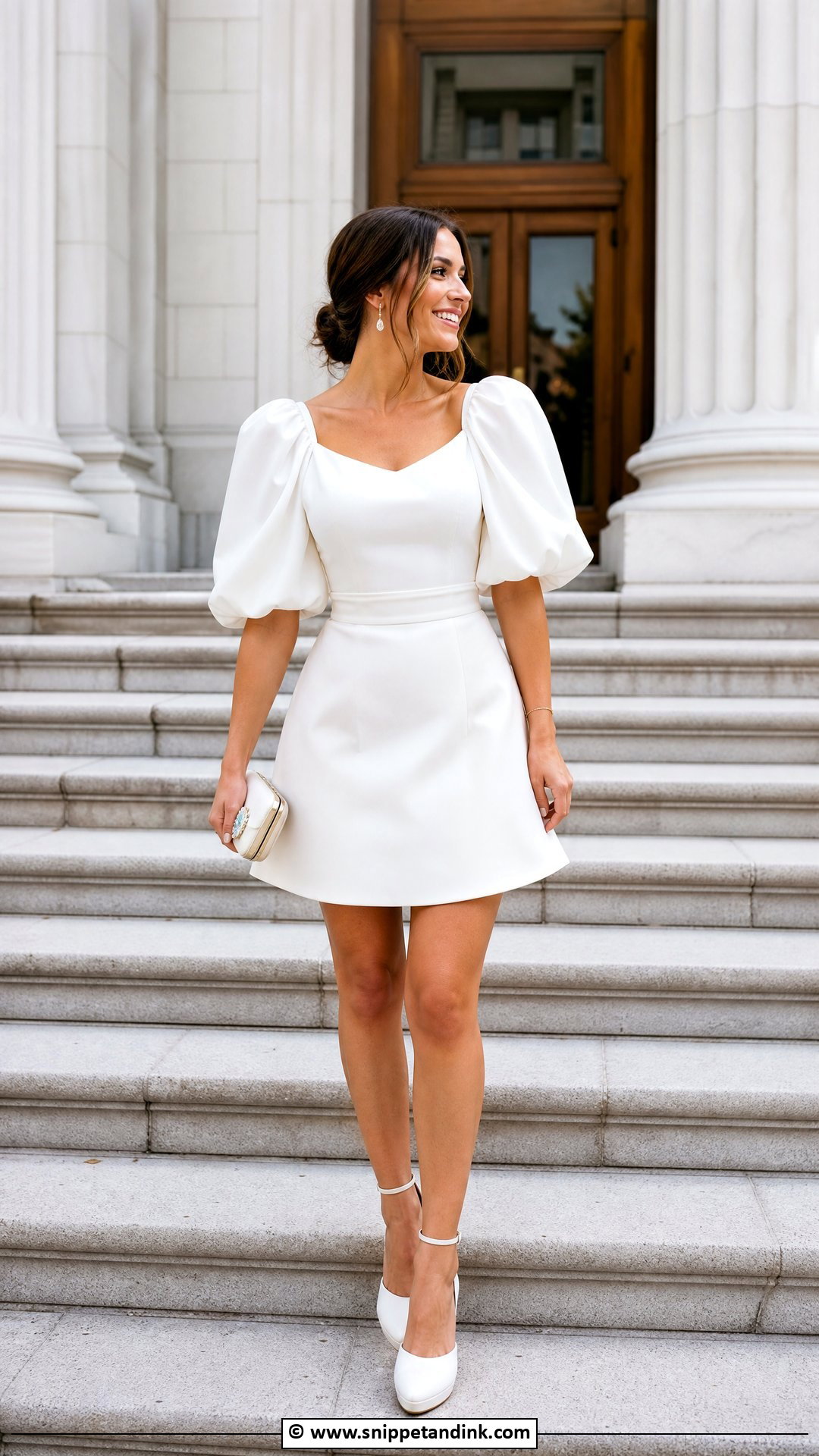
Puff sleeves bring character to a plain dress, and they’re one of the few details that still read clearly in a distant shot from the bottom of the steps. Proportion is the thing I watch: on a petite frame a large sleeve can swallow the shoulders, so a smaller puff in a crisp cotton or organza holds better than a floppy chiffon. Keep shoes and bag streamlined. A fitted waist below the sleeves stops the whole look going boxy.
14. Courthouse Wedding High Neck Dress
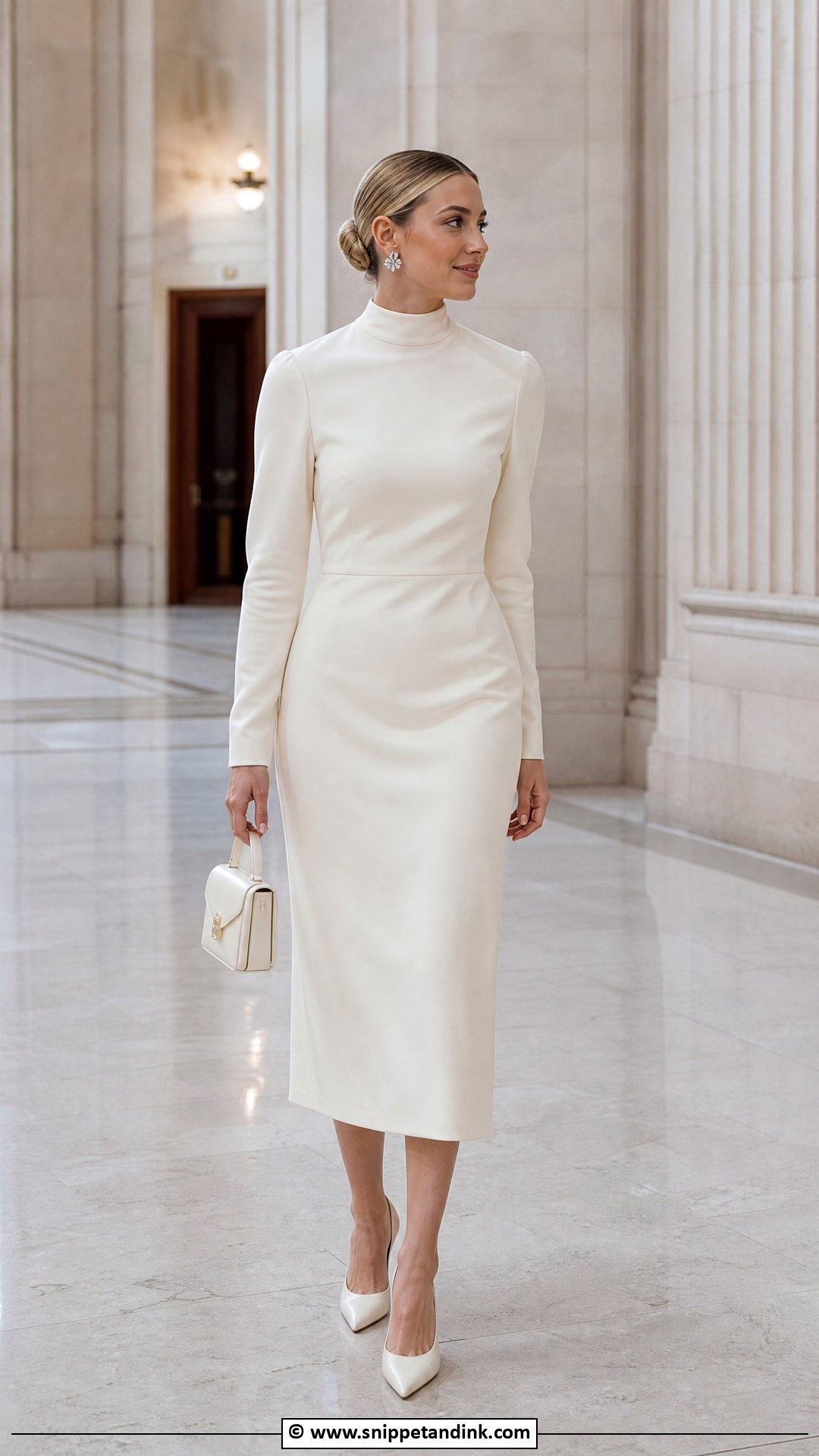
A high neck gives a courthouse look a modest, composed feel, and it frees you to choose a shorter hem or an open back. Statement earrings do more here than any necklace, which would only fight the neckline. One caution: high necks in thick fabric can feel hot by the afternoon, so I’d choose a lightweight crepe or a lined lace for summer. A low bun keeps the neck and earrings visible in photos.
15. Courthouse Wedding Wrap Dress
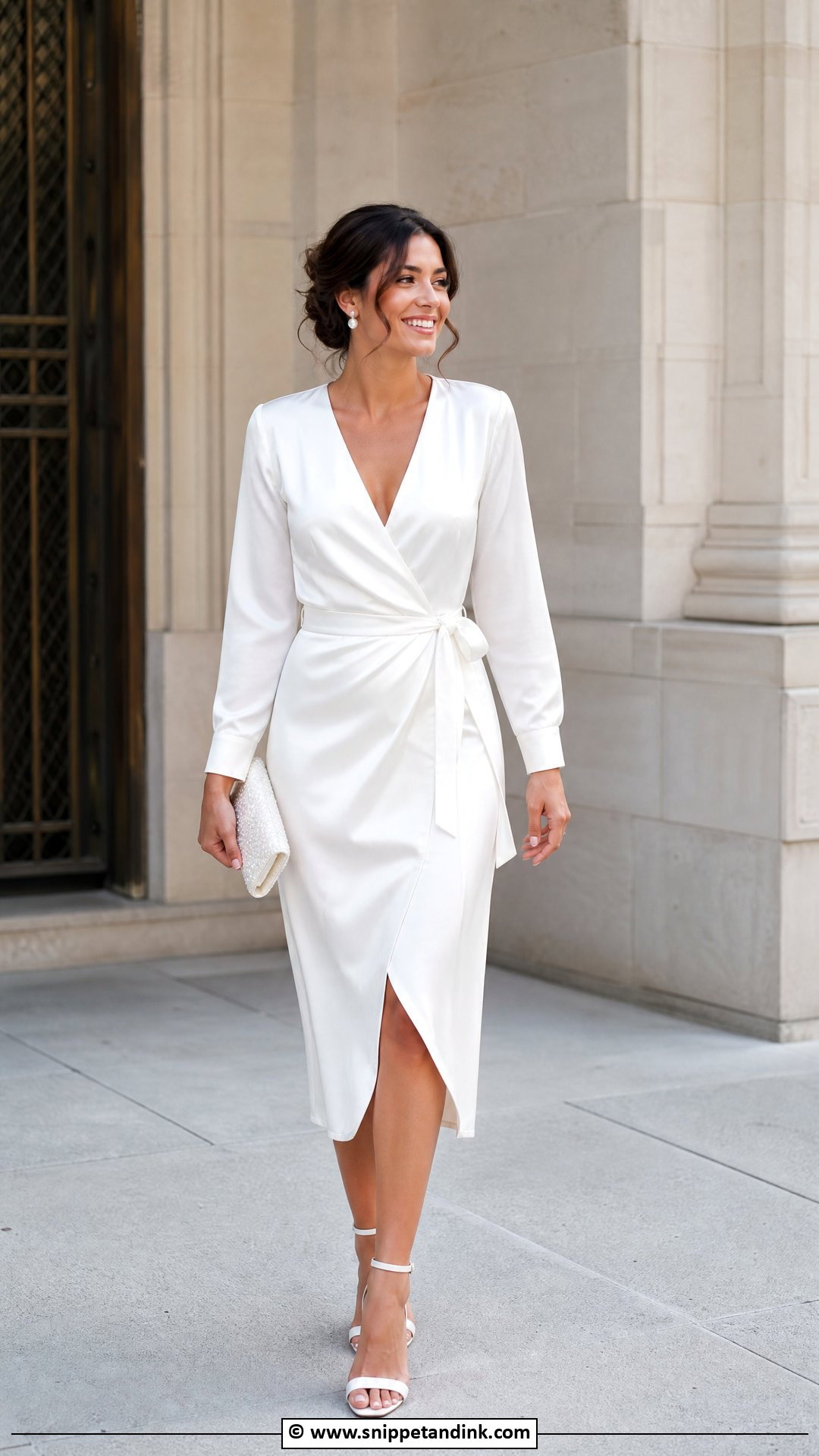
Wrap dresses forgive changes in weight between buying and the wedding, which is why I suggest them to brides ordering months ahead. The adjustable tie lets you set the waist on the day. The weak point is the neckline, which can gape when you lean forward to sign, so add a hidden snap or a strip of fashion tape. Satin feels dressier, crepe more relaxed. Heeled sandals and a compact clutch keep it simple from ceremony to lunch.
16. Courthouse Wedding A Line Dress
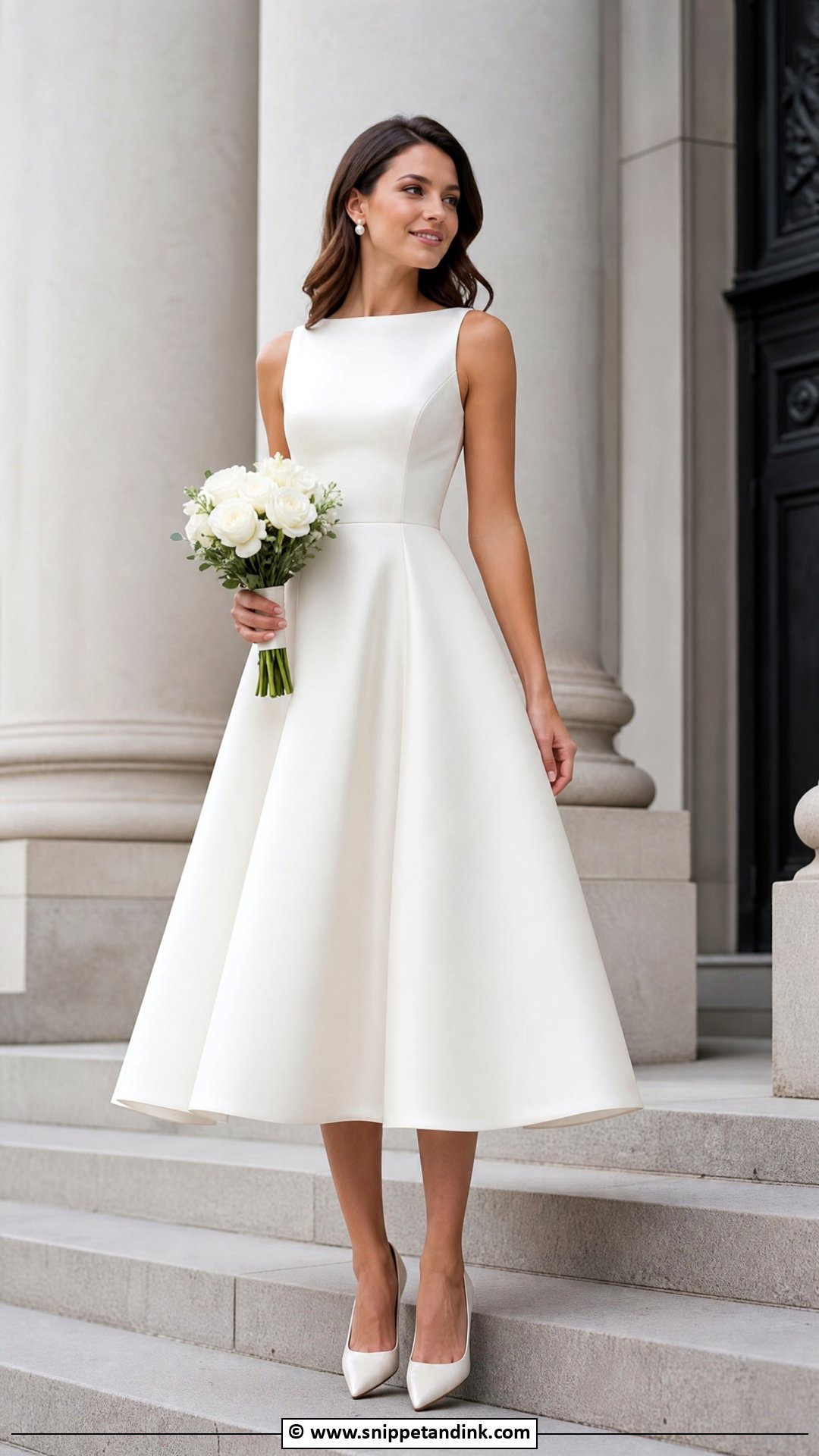
A-line is the shape I suggest most often to brides who feel unsure, because it marks the waist and moves well without bulk. Knee or midi length suits a civil ceremony best. Fabric sets the formality: crisp cotton reads daytime, mikado reads more formal, lace sits between them. Mikado is heavy, so it holds a clean shape in photos but needs a cool room. A short veil or a bow bag adds a bridal touch without overwhelming the dress.
17. Courthouse Wedding Tuxedo Dress
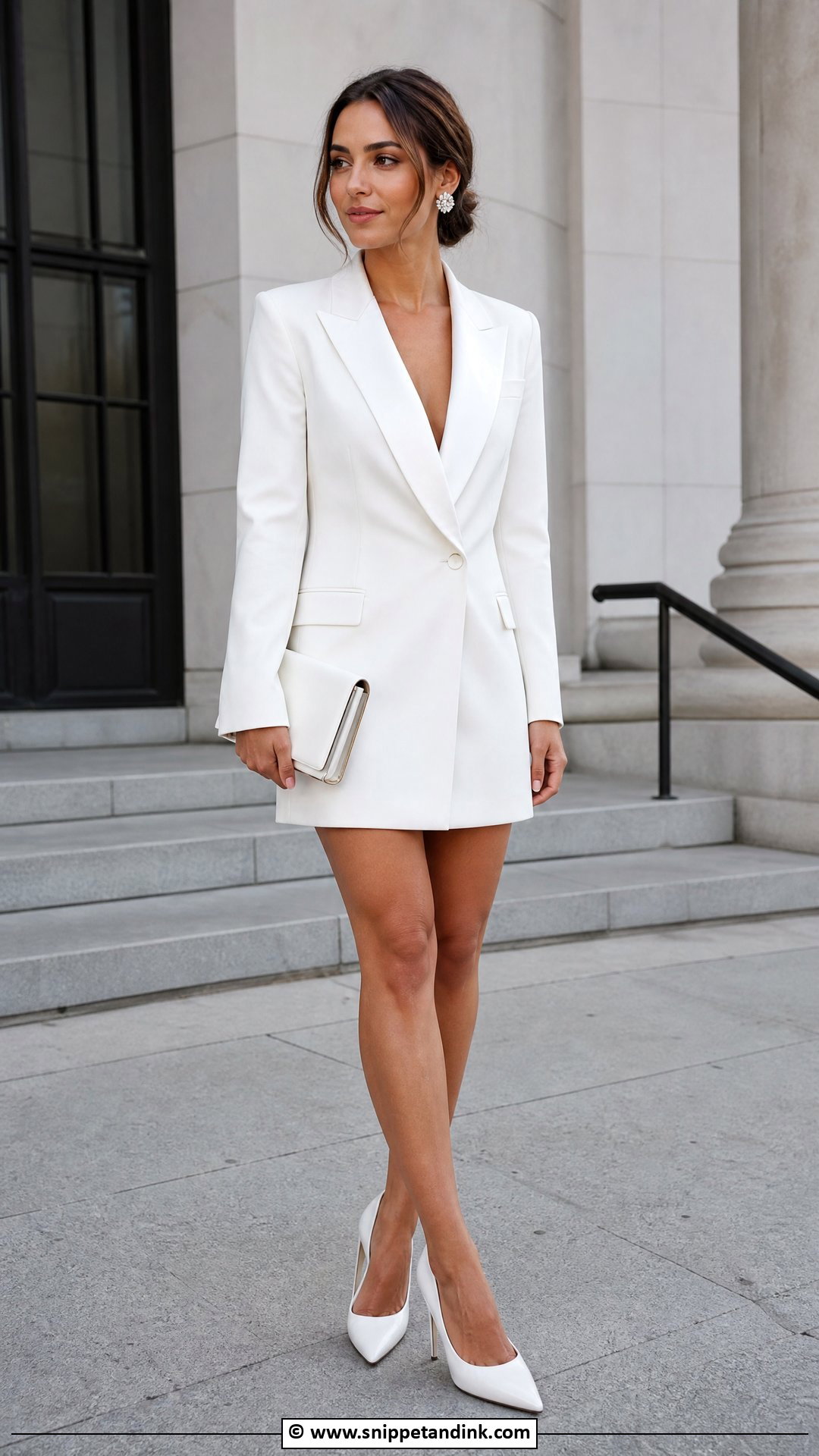
The tuxedo dress is a step more formal than a blazer dress, usually with satin lapels or a wrap front. It’s a strong choice for a bride who wants something sharp and quick to wear. With mini lengths, I make sure the jacket body is structured enough that it doesn’t flip open when you sit. Polished jewelry and a low ponytail keep the lines clean, and the outfit moves easily through a busy city hall.
18. Courthouse Wedding Two Piece Set
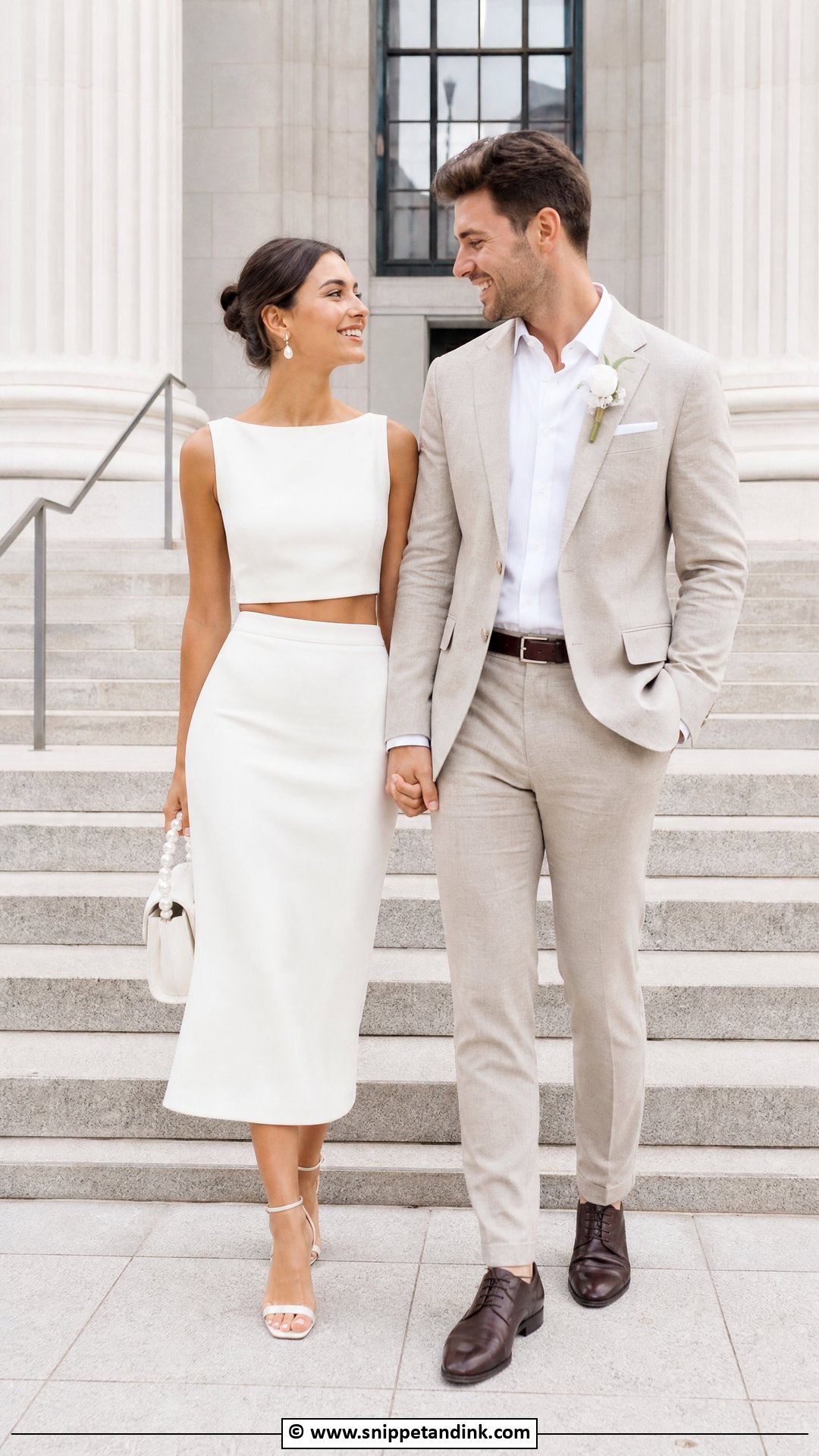
Separates give you the most flexibility, and they’re easier to alter because top and bottom are fitted independently. A cropped top with a midi skirt feels fresh; a blouse with wide-leg trousers feels more grown-up. The test I use is whether the two pieces look made for each other in daylight. Whites vary a lot between brands, and an ivory top beside a bright-white skirt looks accidental in photos. Buy them as a set, or check the shades side by side by a window.
19. Courthouse Wedding Skirt Suit
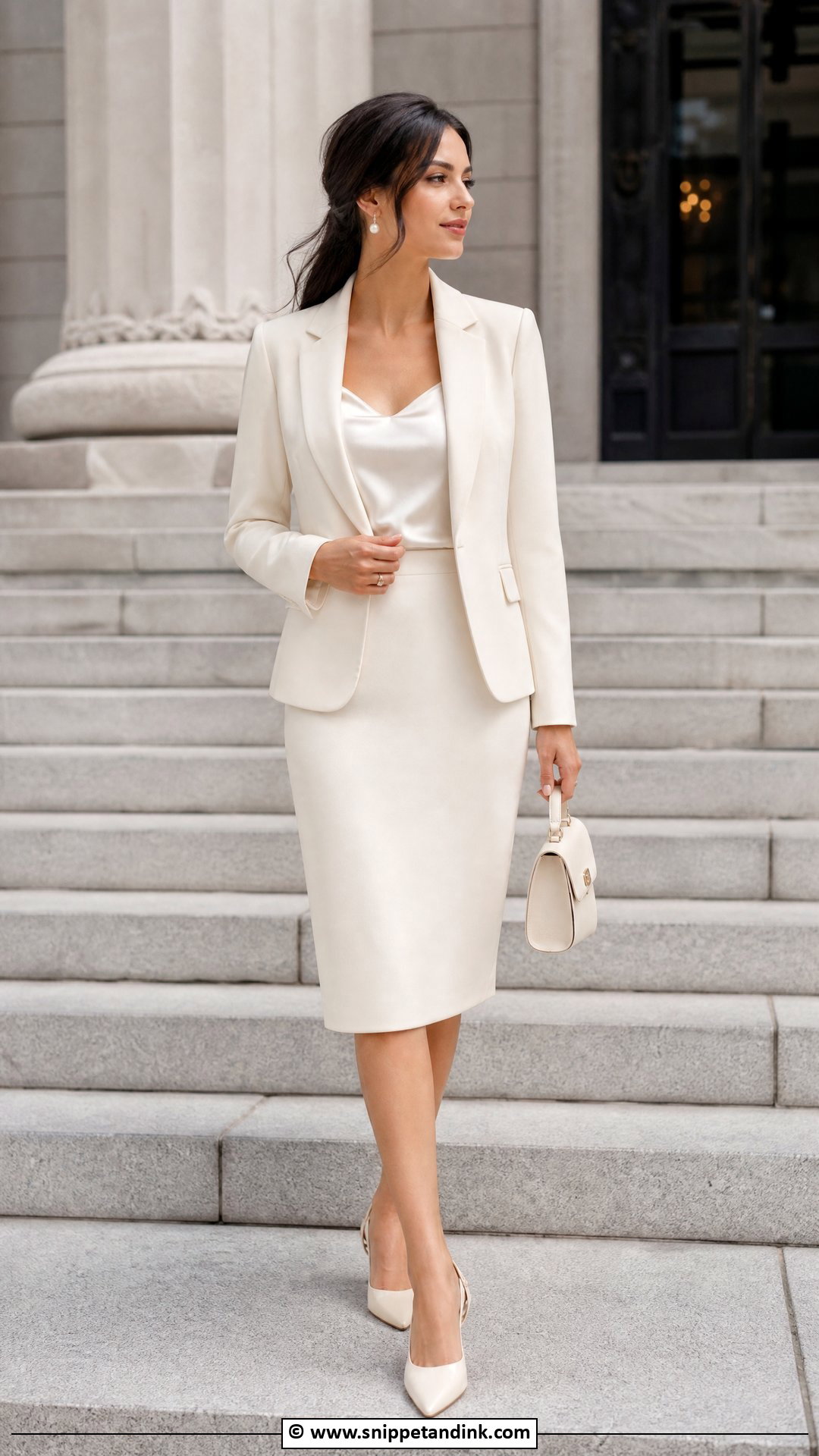
A skirt suit suits the official setting better than almost anything else, and it looks neat from every camera angle. A fitted jacket with a pencil skirt is the formal version; a boxy jacket with an A-line skirt is softer. Ivory bouclé looks bridal on its own but sheds threads and snags on rough bench edges, so be careful where you sit. Underneath, a silk camisole or a simple bodysuit stays smooth. Slingbacks and pearls finish it.
20. Courthouse Wedding Short Lace Dress
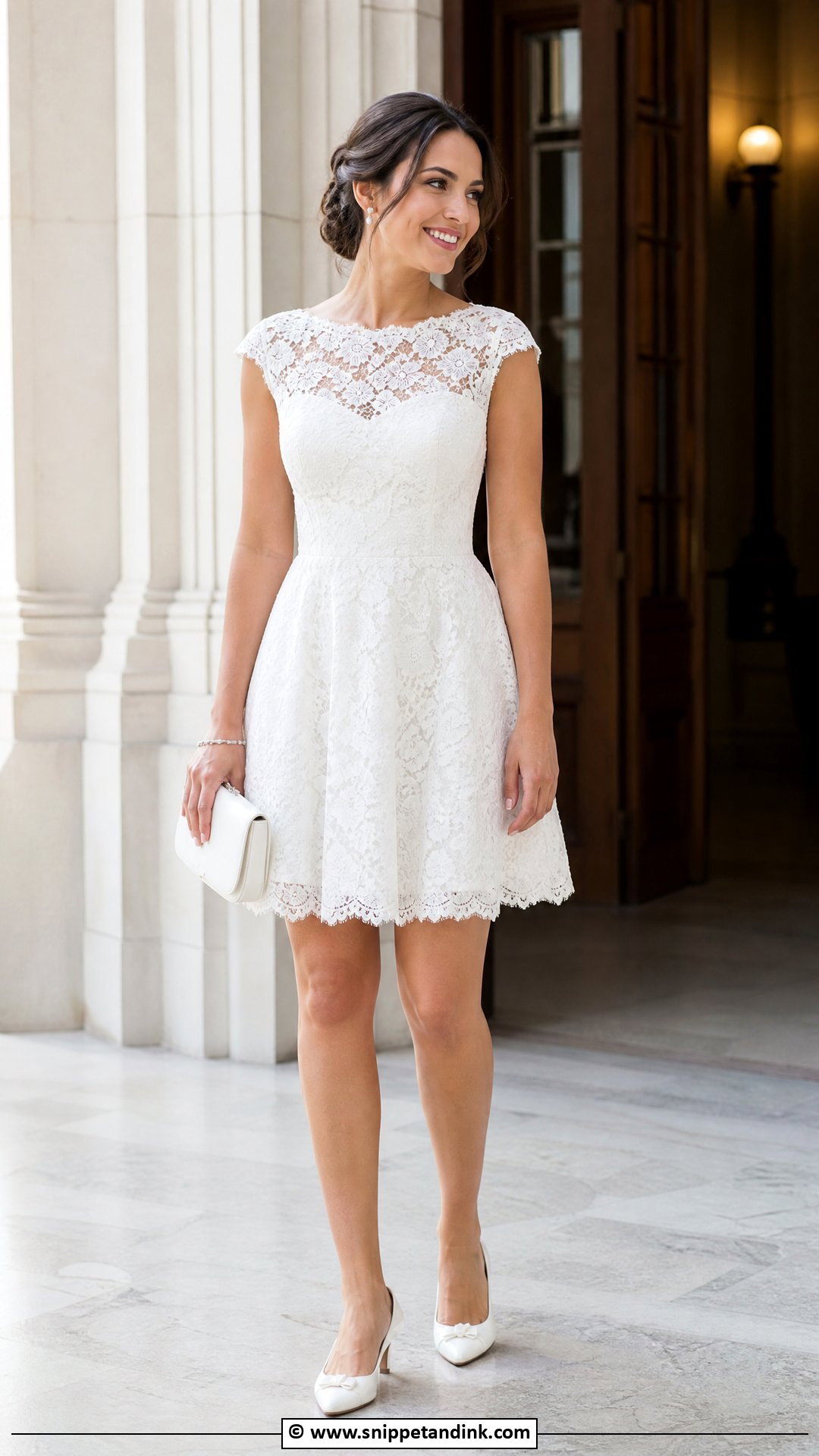
A short lace dress gives you tradition without length. I keep the silhouette clean, a shift, a fit-and-flare or a long-sleeve mini, so the lace is the only busy element. Nude or ivory lining lets the pattern show. In warm weather, check the lining fabric: polyester linings trap heat, while cotton or silk linings breathe through a long day. Low heels and a small white bag keep it light.
21. Courthouse Wedding Midi Dress With Veil
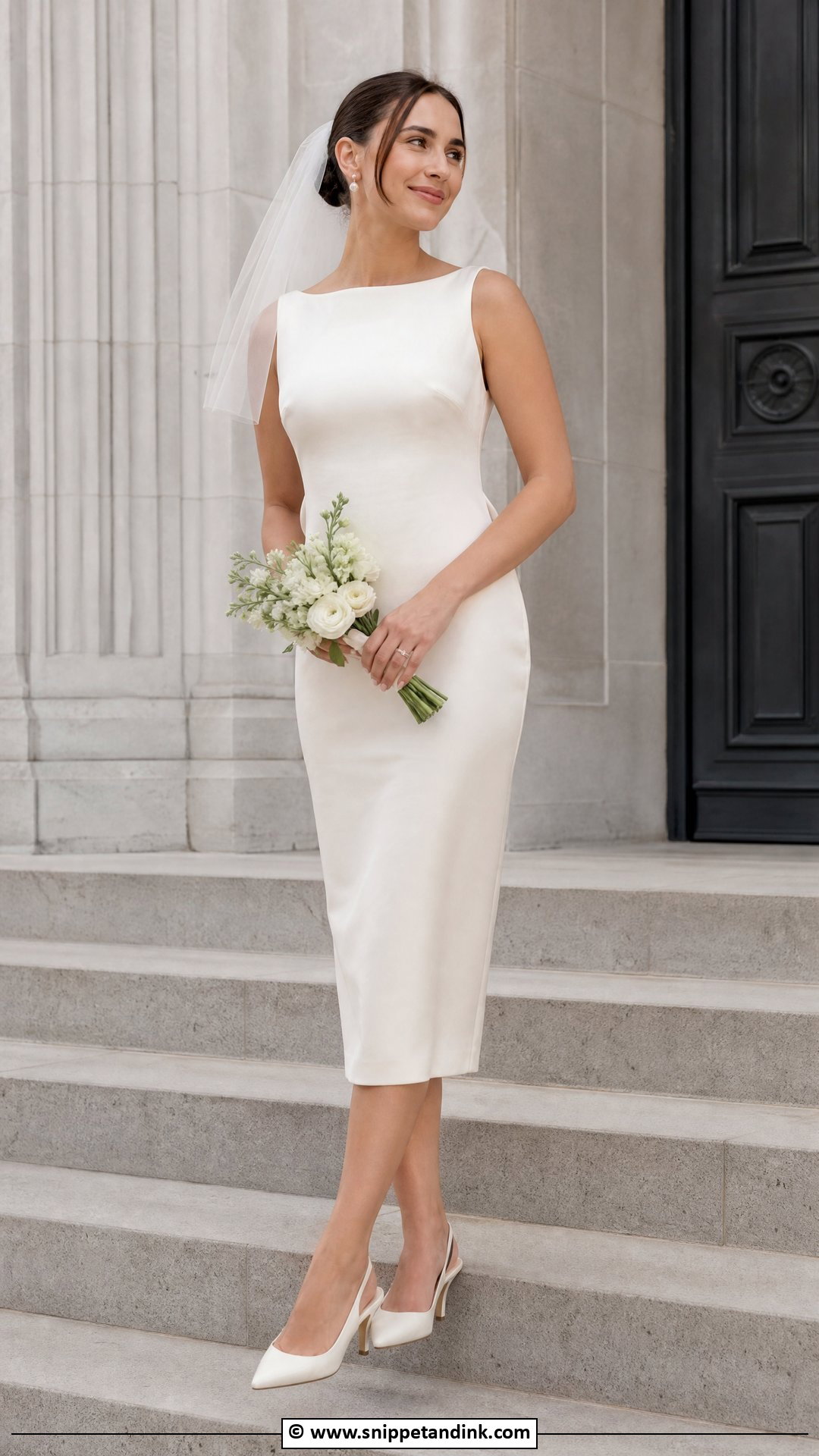
If the dress itself is plain, a veil is the quickest way to tell everyone in the building that you’re the bride. A sheath, a satin midi or an A-line all work underneath. Birdcage and short veils suit a courthouse best, because a fingertip veil can catch on door handles and security trays. I anchor a veil with two crossed pins into a small hidden bun so it survives wind on the steps. A small bouquet completes it.
22. Courthouse Wedding Dress With Coat
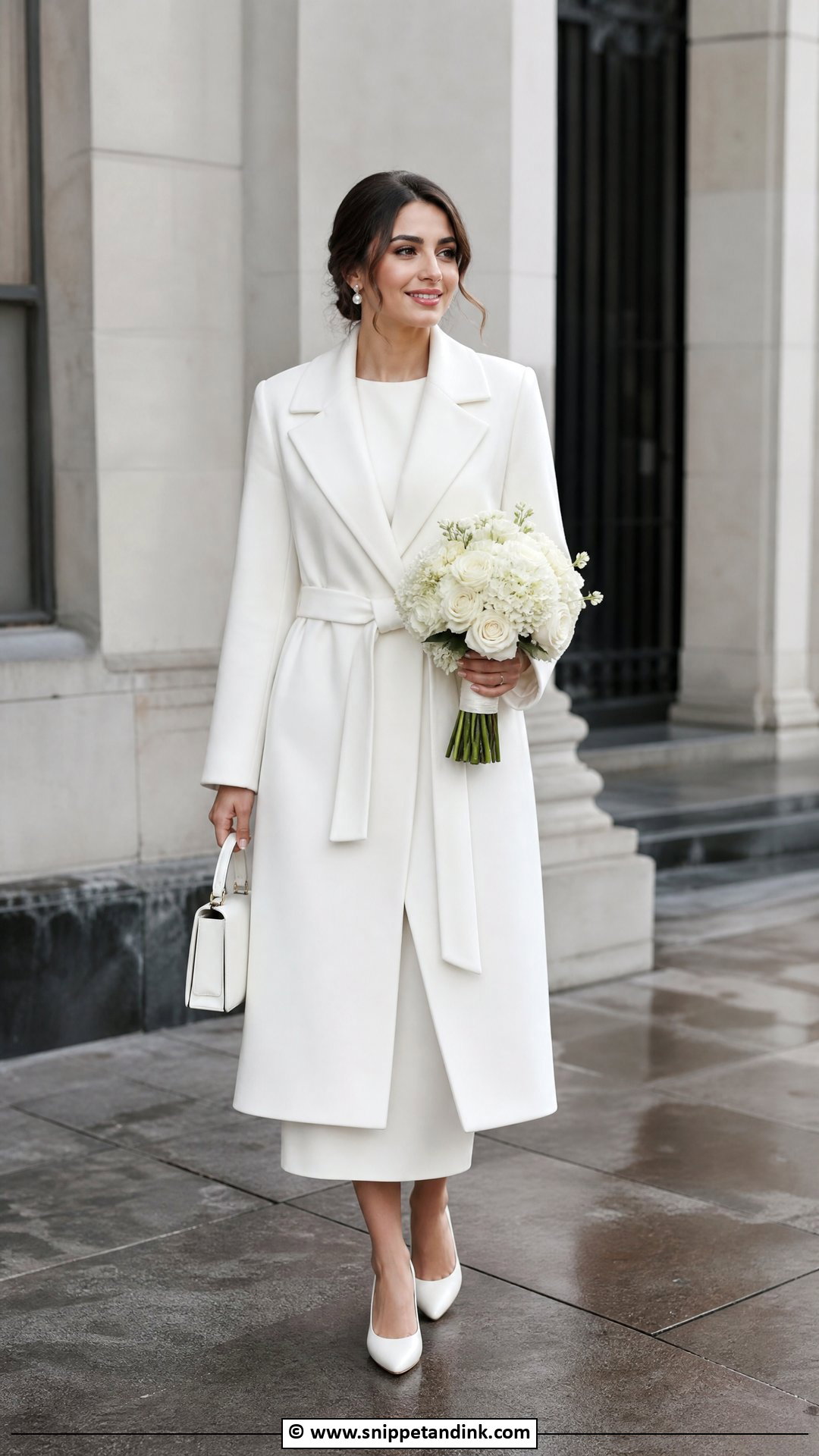
For a winter ceremony, the coat is the outfit for half the day, so I treat it as part of the look rather than an afterthought. A white or ivory wool coat over a simple midi or column dress feels elegant and keeps you warm between the building and the photo spots. Pale wool marks easily, so carry it rather than piling it onto a bench. Clean lines, good buttons or a wrap belt make the difference. Closed-toe heels and a structured bag suit the season.
23. Courthouse Wedding Dress With Cape
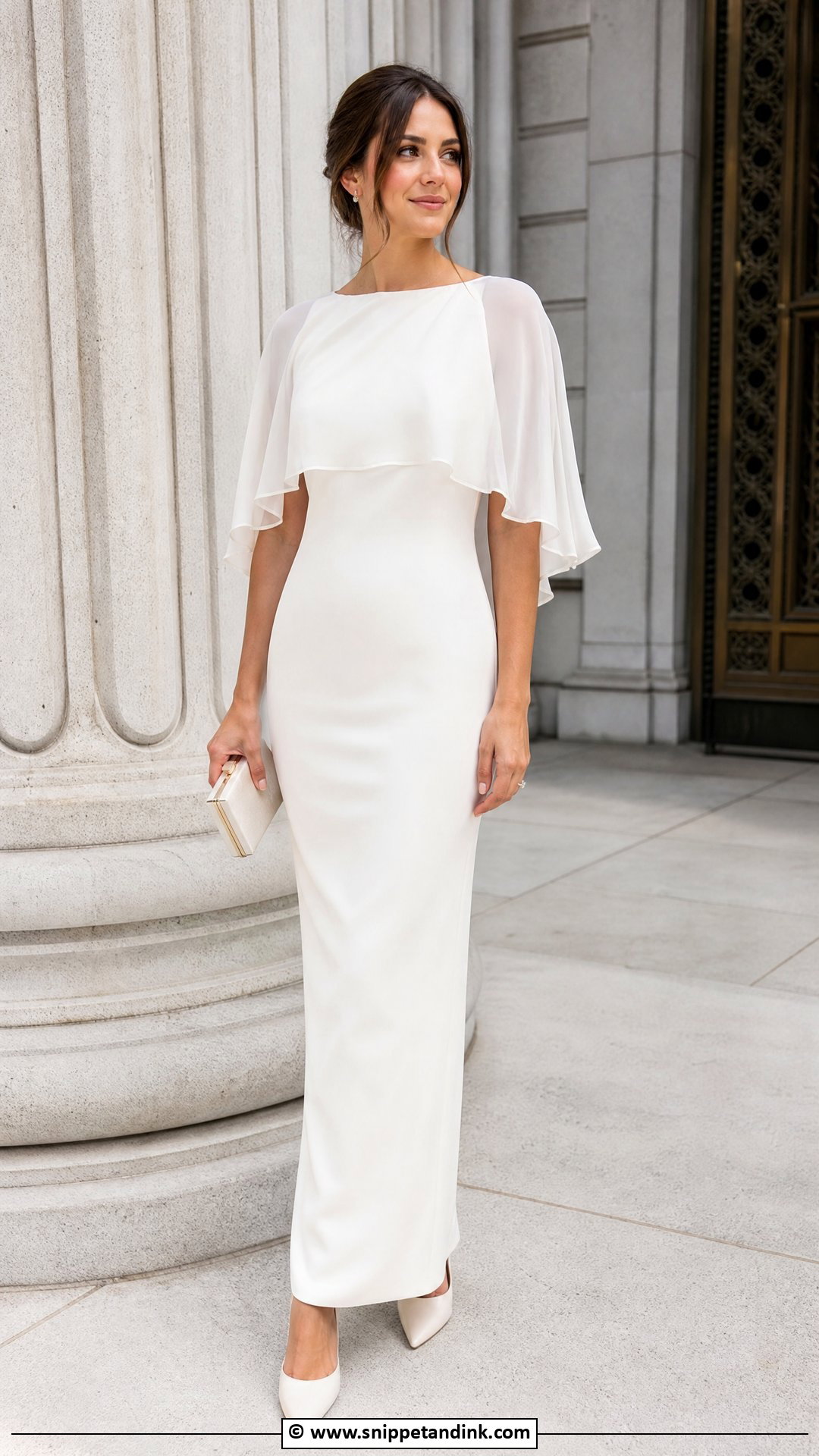
A cape adds drama with none of the handling a train requires. A short cape over a mini, a sheer one over a column, or a structured one over a satin midi all work, as long as the base dress stays plain. Sheer capes are the ones I warn about outdoors: in a city wind they wrap around your face, so I’d add small wrist loops or weighted hems. In stillness the cape gives shape; in a breeze, it gives movement on camera.
24. Courthouse Wedding Floral Dress
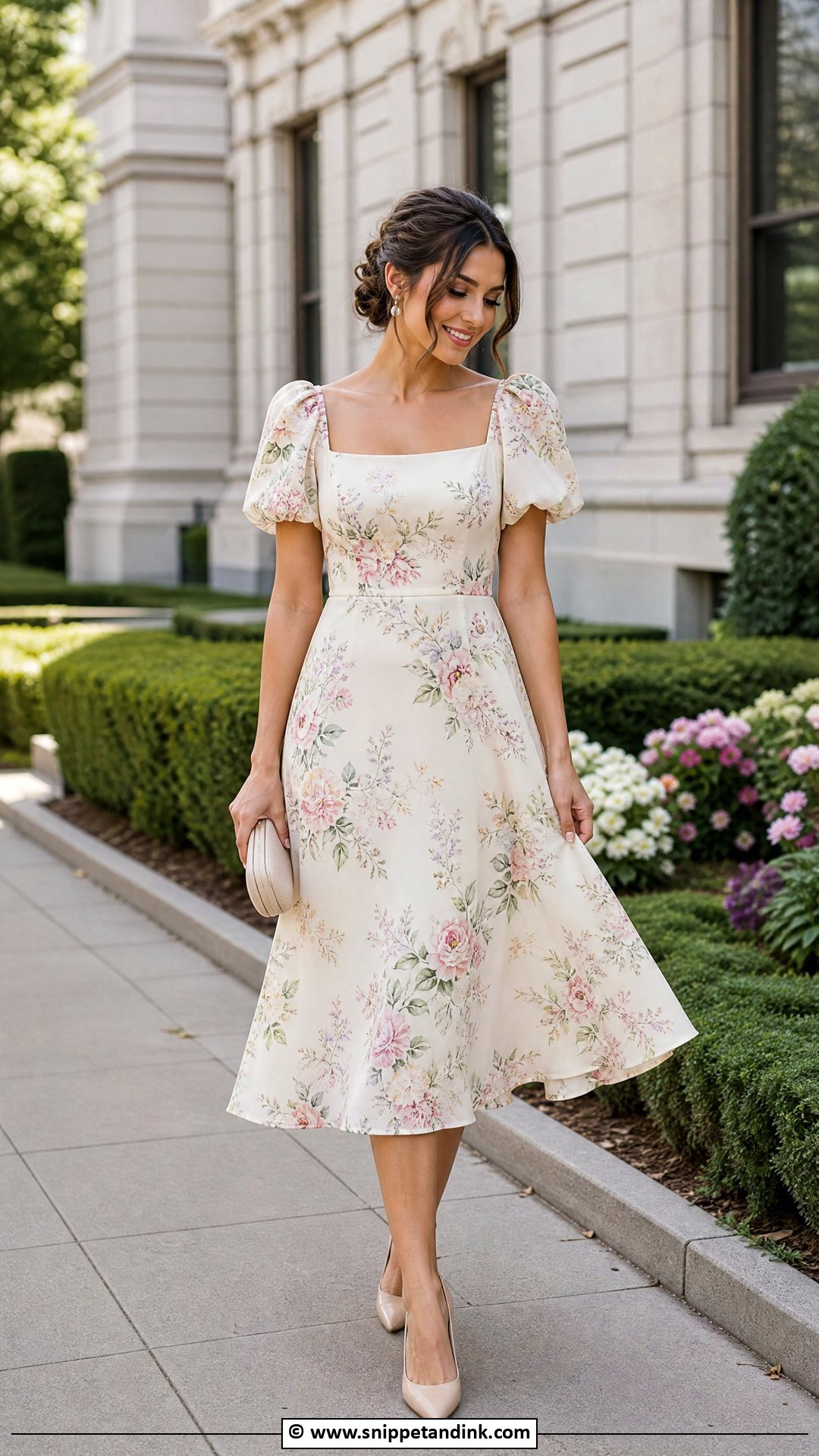
A floral dress is a good answer for the bride who doesn’t want white at all. Ivory, blush or pale blue backgrounds with fine prints or embroidery keep it clearly occasion wear. A midi in a wrap or A-line shape is the easiest to wear. With a bold print, I skip heavy jewelry completely and let the dress lead. It suits spring and summer ceremonies, and it’s the outfit on this list you’re most likely to wear again.

25. Courthouse Wedding Champagne Dress
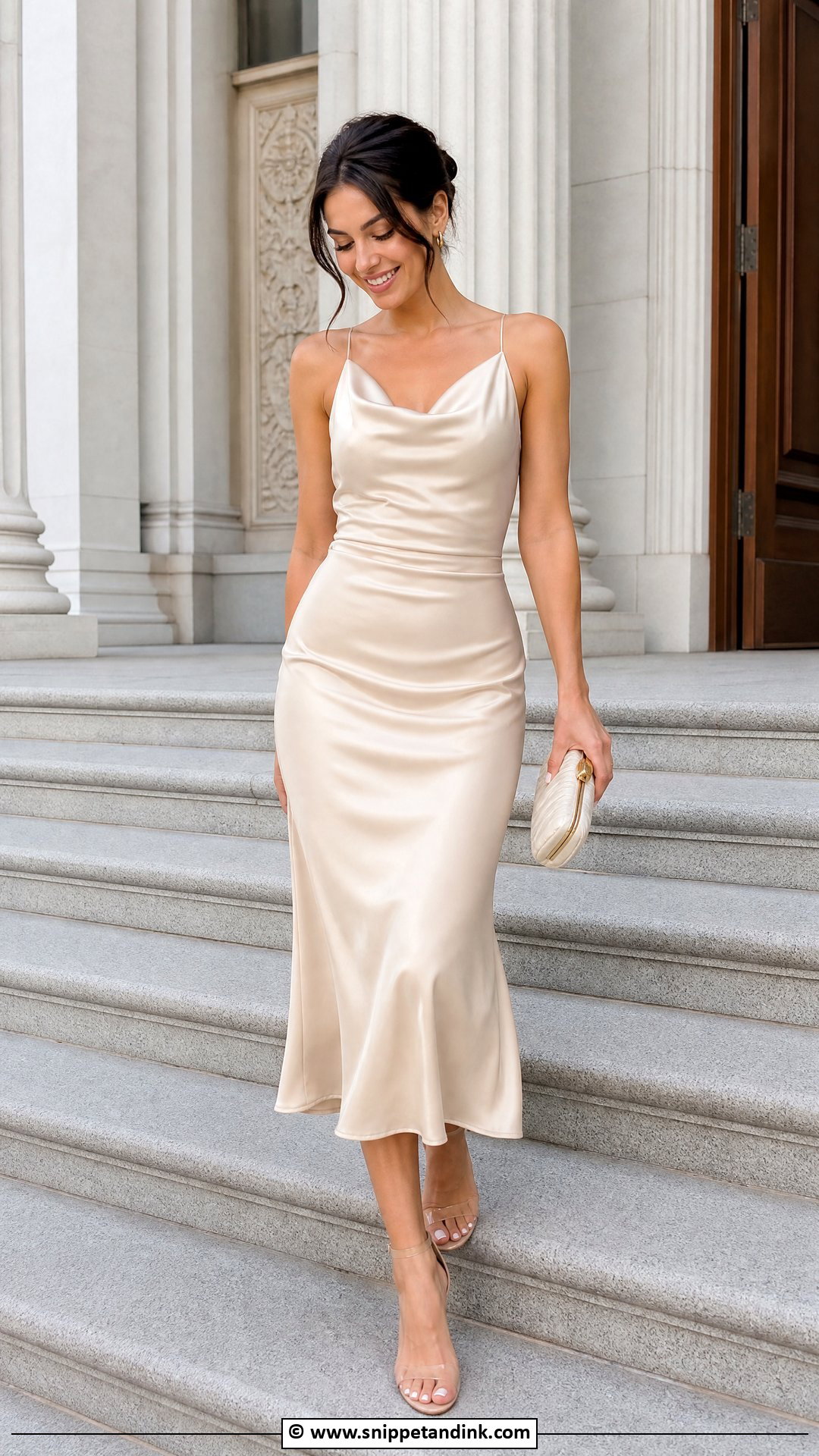
Champagne is warmer than white and, in my experience, flatters more skin tones because it doesn’t sit stark against the face. It shows best in satin, silk or beading, where the tone catches light. A midi slip dress keeps it minimal, while a column or an A-line gives more shape. Under some indoor lighting champagne can look grey or beige, so view it near a window before you commit. Soft gold jewelry suits it better than silver.
26. Courthouse Wedding Ivory Pantsuit
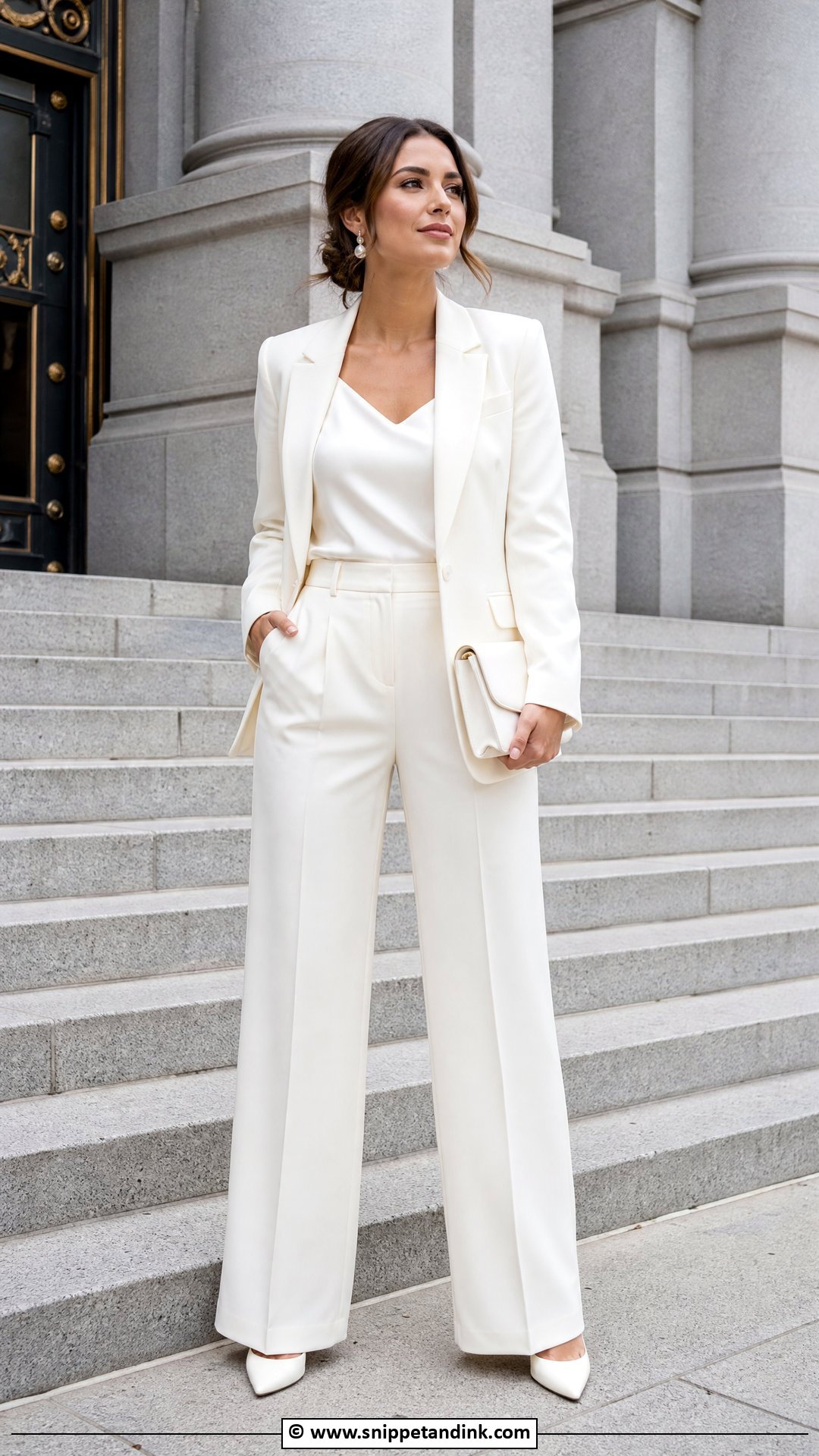
An ivory pantsuit gives coverage and ease, and the softer tone reads bridal without the glare of bright white. Fit at the shoulder is everything: if the blazer is right there, a tailor can handle the rest. Trousers should skim rather than pull across the hip. Wide legs look modern; cropped trousers show off special shoes. A silk shell or lace camisole underneath, plus pointed heels, and you’re ready for portraits in the street afterward.
27. Courthouse Wedding Sheath Dress
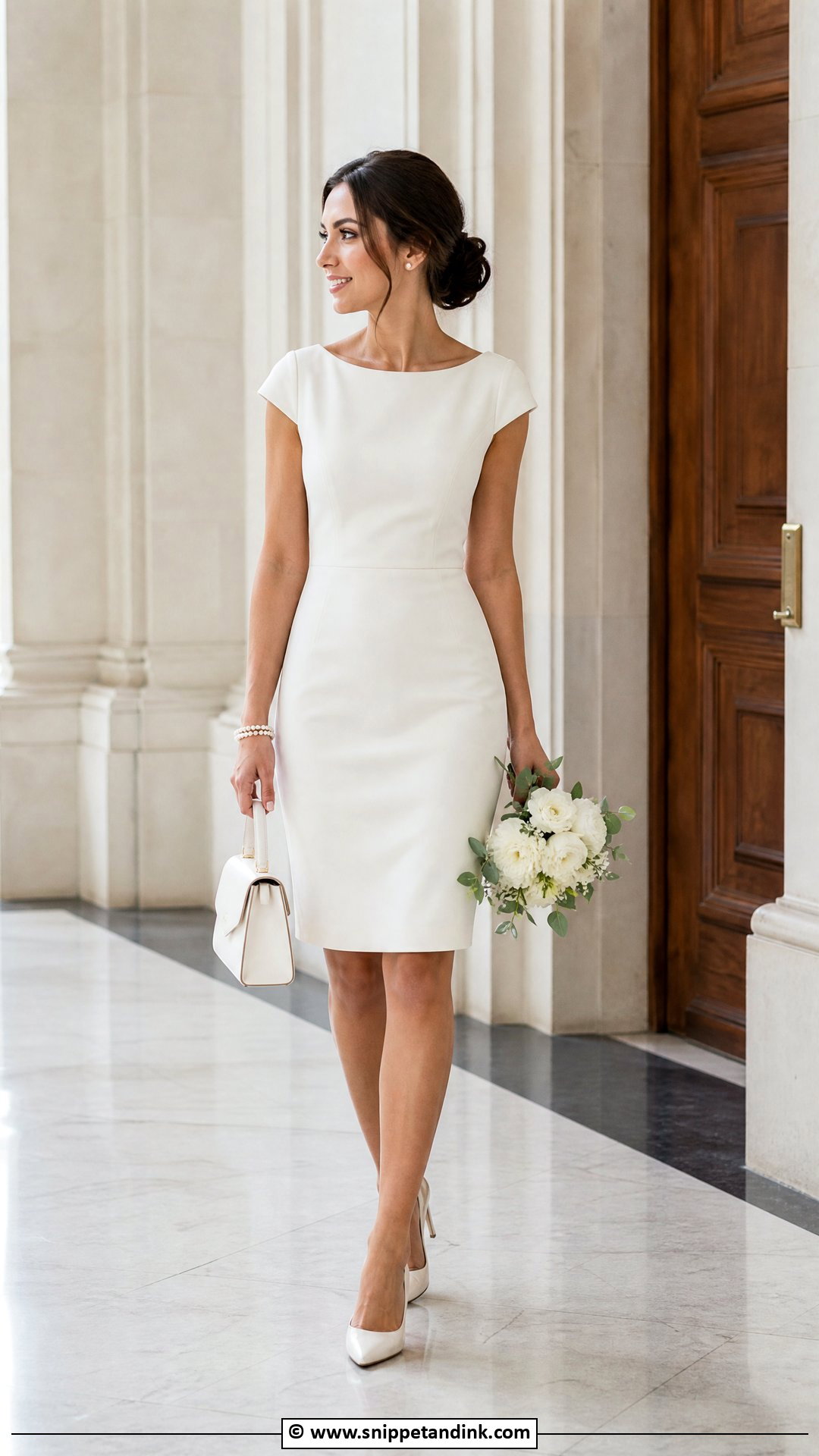
A sheath follows the body without volume and fits the official setting easily. White or ivory crepe looks clean; satin gives a soft glow but shows creases. A knee-length or midi sheath with pumps or slingbacks is the easiest to wear. Because a sheath is fitted through the hip, I always have brides sit and stand a few times at the fitting. If it rides up or strains, the hem needs a small walking slit. Pearl earrings and a structured bag complete it.
28. Courthouse Wedding Bow Dress
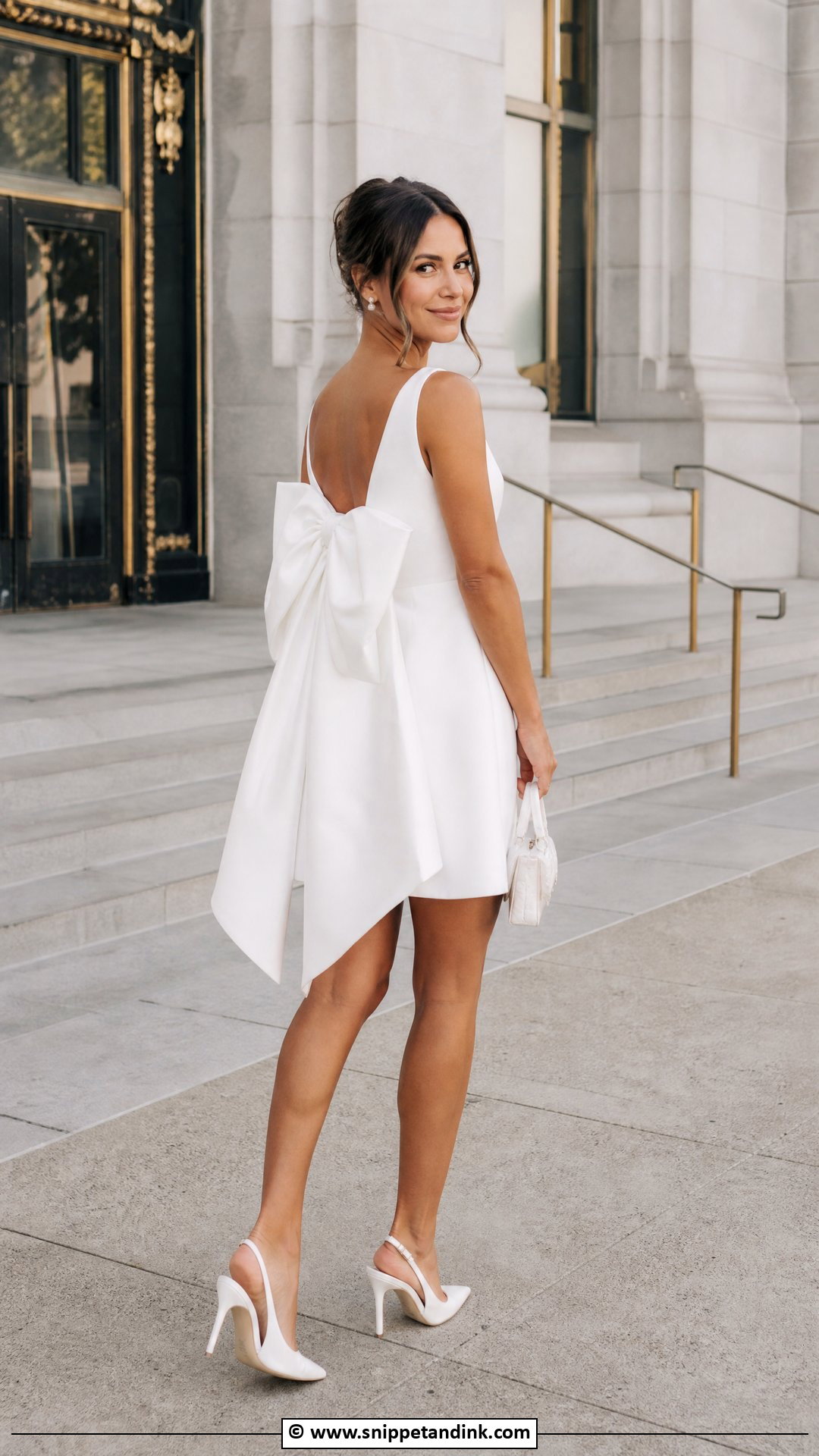
A bow is a single sweet detail that does the job sparkle or lace would otherwise do. It can sit at the back, the shoulder, the neckline or the waist. A back bow on a mini feels playful; a waist bow on a midi feels classic. Remember that a back bow is what guests see during the ceremony itself, and a large one gets crushed when you sit, so a flatter or detachable bow is the safer buy. Keep everything else plain.
29. Courthouse Wedding Pleated Dress
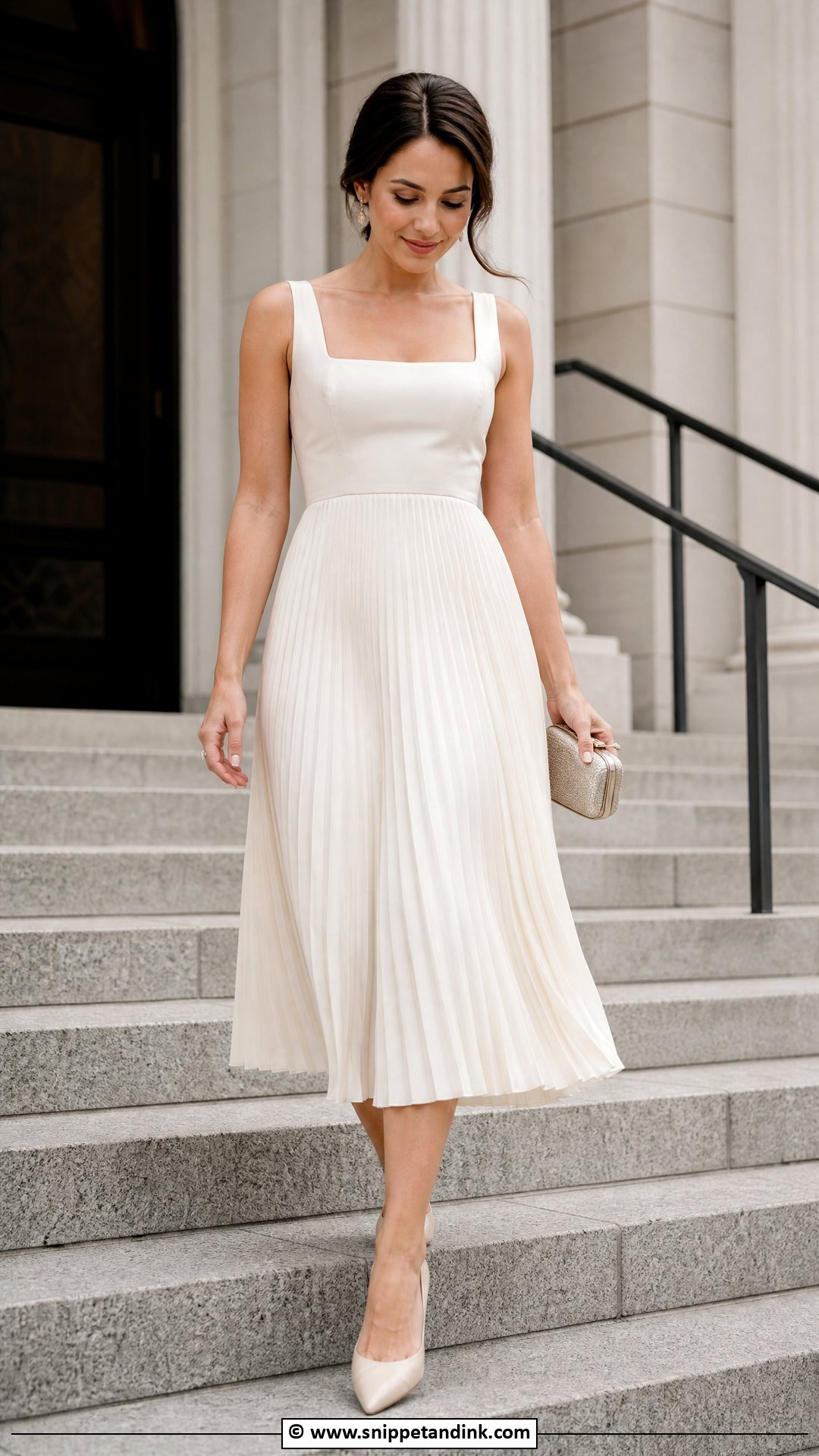
Pleats move well when you walk, which makes them a good choice for stair photos and a stroll after. Soft chiffon pleats feel romantic; crisp satin or crepe pleats are more modern. Before you pack it, know that permanent pleats survive travel fine but chiffon pleats can lose their set if steamed too hard, so hang the dress and let it drop instead. Ivory, blush or champagne suit it. A low bun complements the movement in the skirt.
30. Courthouse Wedding Button Front Dress
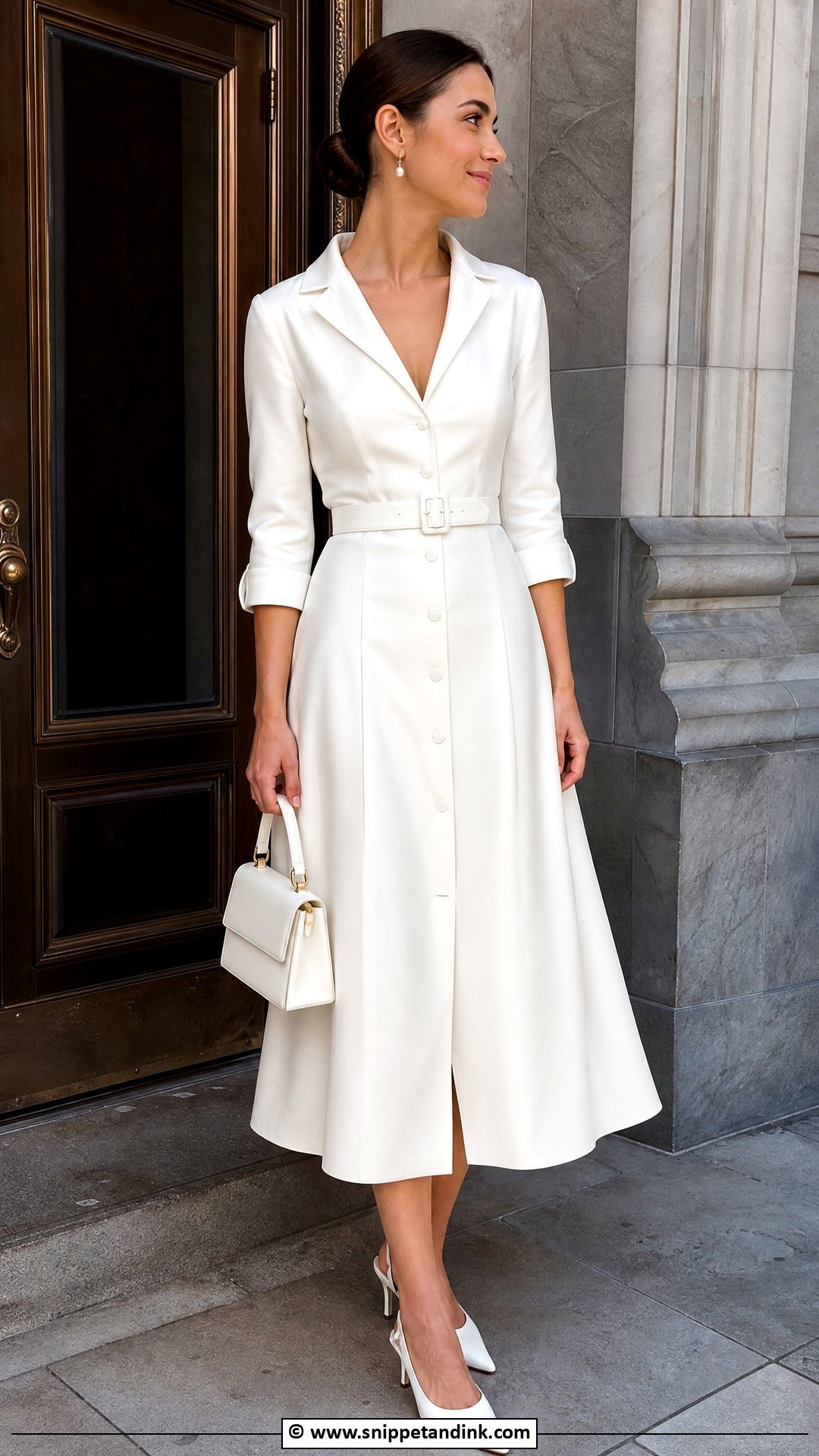
Covered buttons give a plain silhouette a vintage, tailored feel. A white midi, a shirt dress or a fitted sheath with fine buttons works, provided the buttons themselves look refined rather than casual. Check the gaps between buttons across the bust when you sit, as that’s where button fronts most often pull open. A belted waist adds shape and a clean collar adds polish. Slingbacks and a structured bag suit it.
31. Courthouse Wedding Simple White Dress
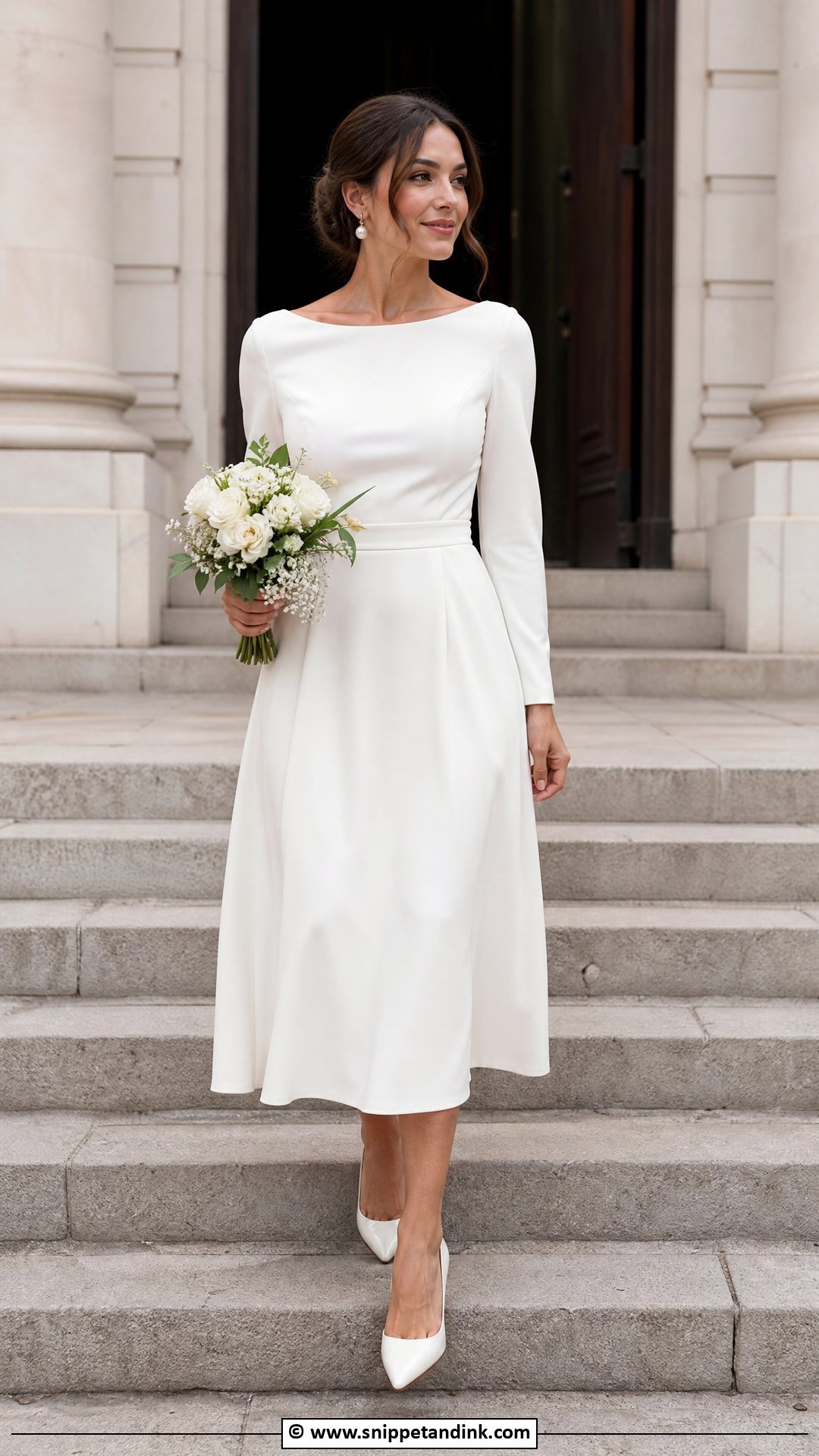
Sometimes the simplest white dress is the right one, because it lets the vows lead. The detail that matters is fit and fabric, so I’d spend money on alterations before trims. Pick the shape you’re most comfortable in and avoid anything heavy for a small room. Then add one or two bridal touches: pearl earrings, a short veil, a bouquet or a good heel. It’s the least stressful route on this list.
32. Courthouse Wedding Modest Dress
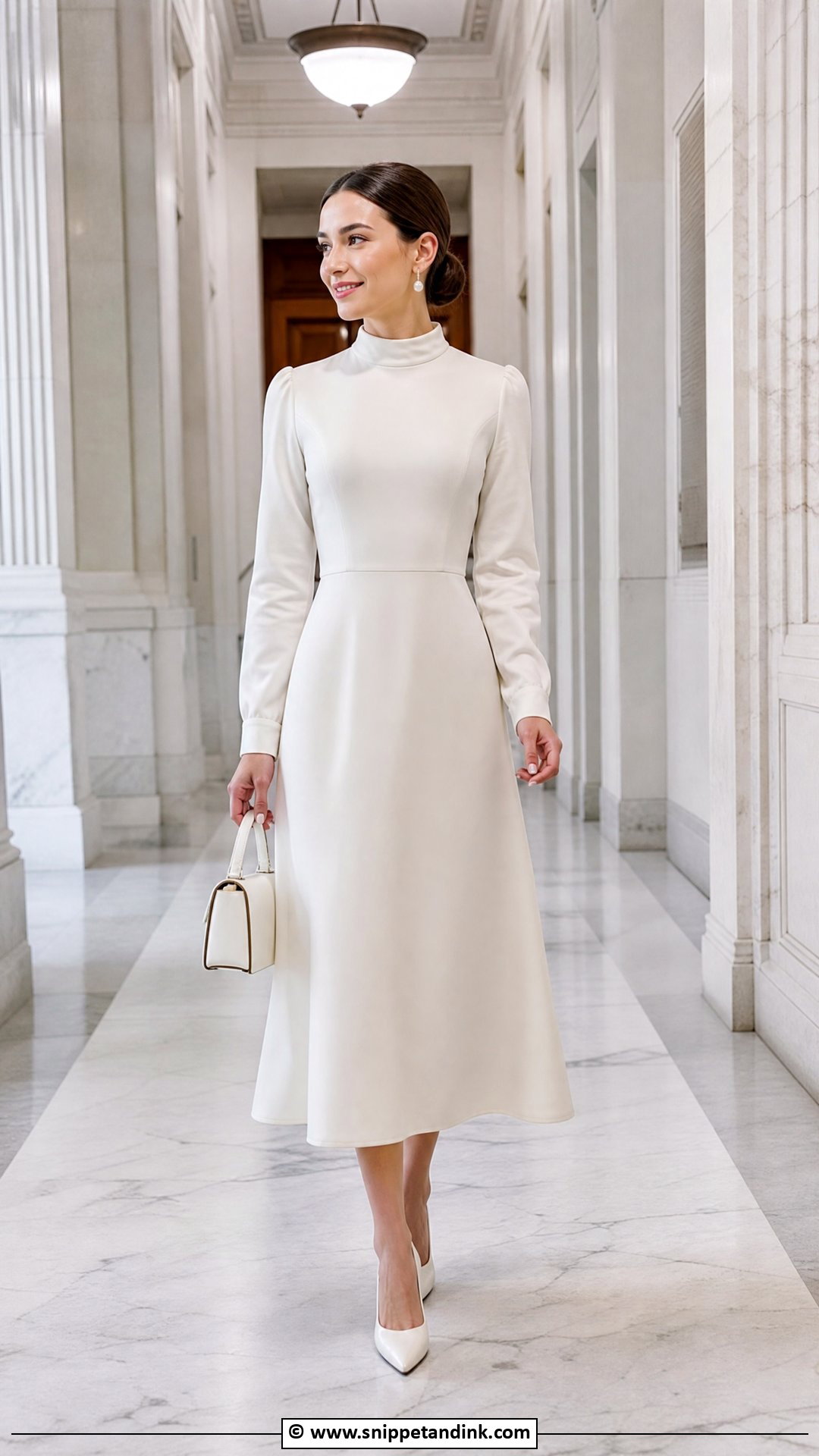
A modest courthouse wedding dress can look modern and sharp. Higher necklines, longer sleeves, midi or maxi hems and fabrics with some structure carry the look. A long-sleeve lace midi or a high-neck crepe dress both work well. My concern with full coverage is that the outfit can look shapeless, so I add a defined waist or clean tailoring to give it a line. Closed-toe heels, pearls and a small handbag complete a refined result.
33. Courthouse Wedding Plus Size Dress
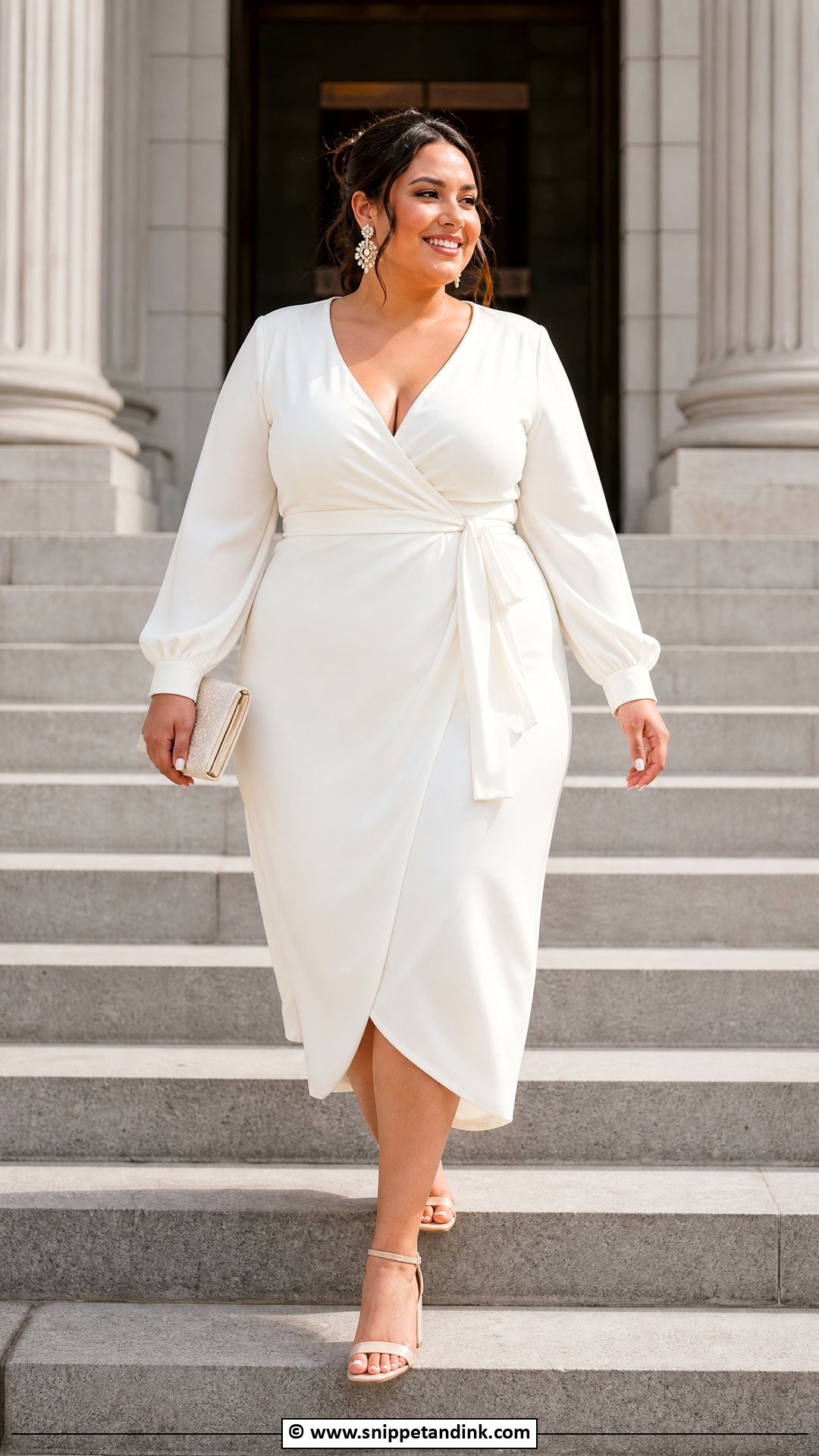
For plus size brides, structure is what I look for first: a fabric with enough body to shape without feeling stiff. Wrap dresses, A-line midis, structured sheaths, fit-and-flare shapes and wide-leg jumpsuits all work. A V-neck or square neck frames the upper body, and a defined waist adds balance. Bra support matters more than the label size, so build it into the dress where you can. Comfortable heels or dressy flats help, because you’ll be standing more than you expect.
34. Courthouse Wedding Petite Dress
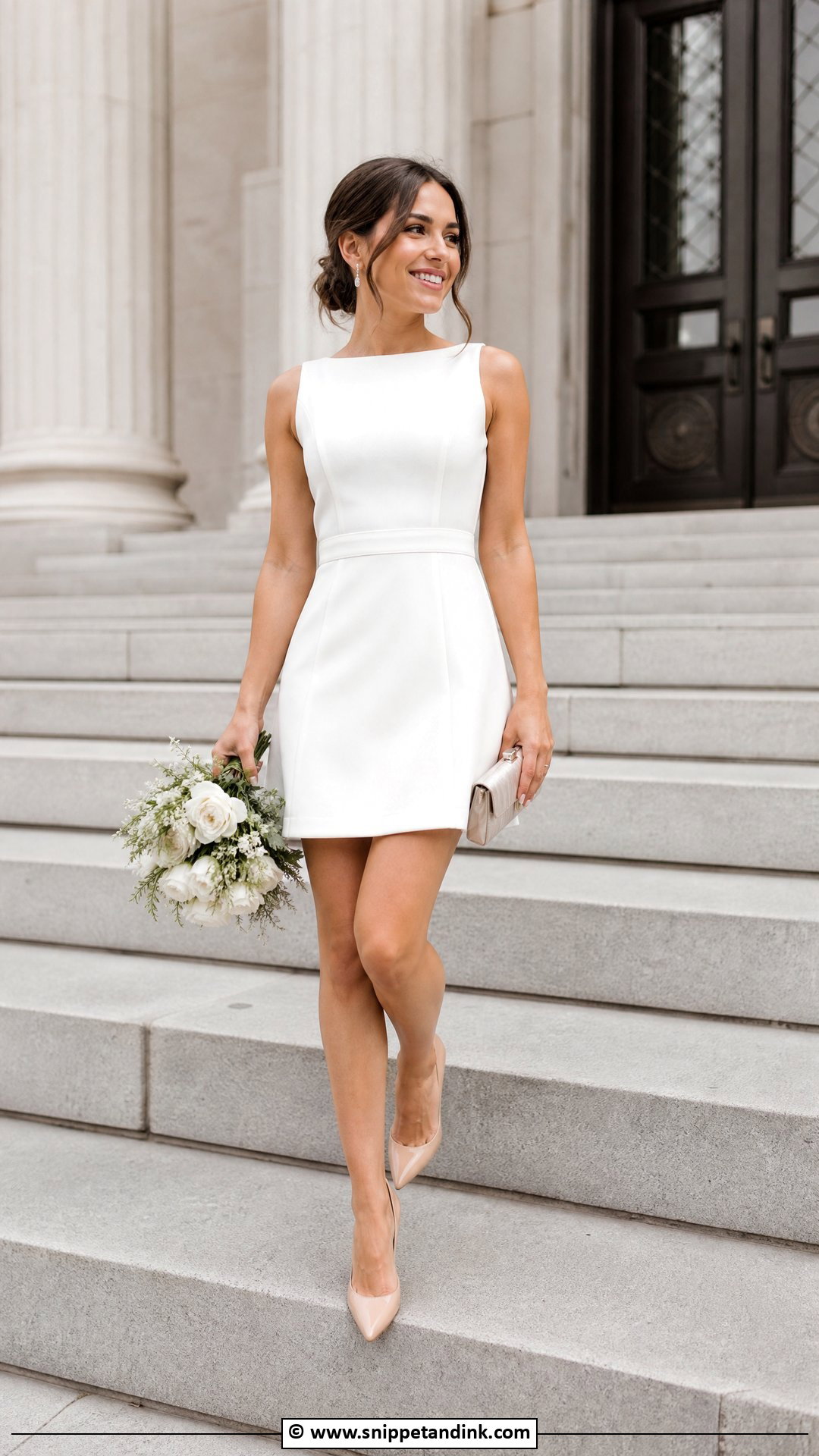
On a petite frame, the aim is length without too much fabric. Minis, knee-length sheaths, high-waist midis and slim columns all help; heavy trains and bulky layers shorten you in photos. A square neckline, vertical seams, a front slit or nude-toned heels elongate the line. Even a small change at the shoulder or hem makes a petite outfit look custom, so I’d always budget for a tailor. Keep the clutch and earrings proportional.
35. Courthouse Wedding Maternity Dress
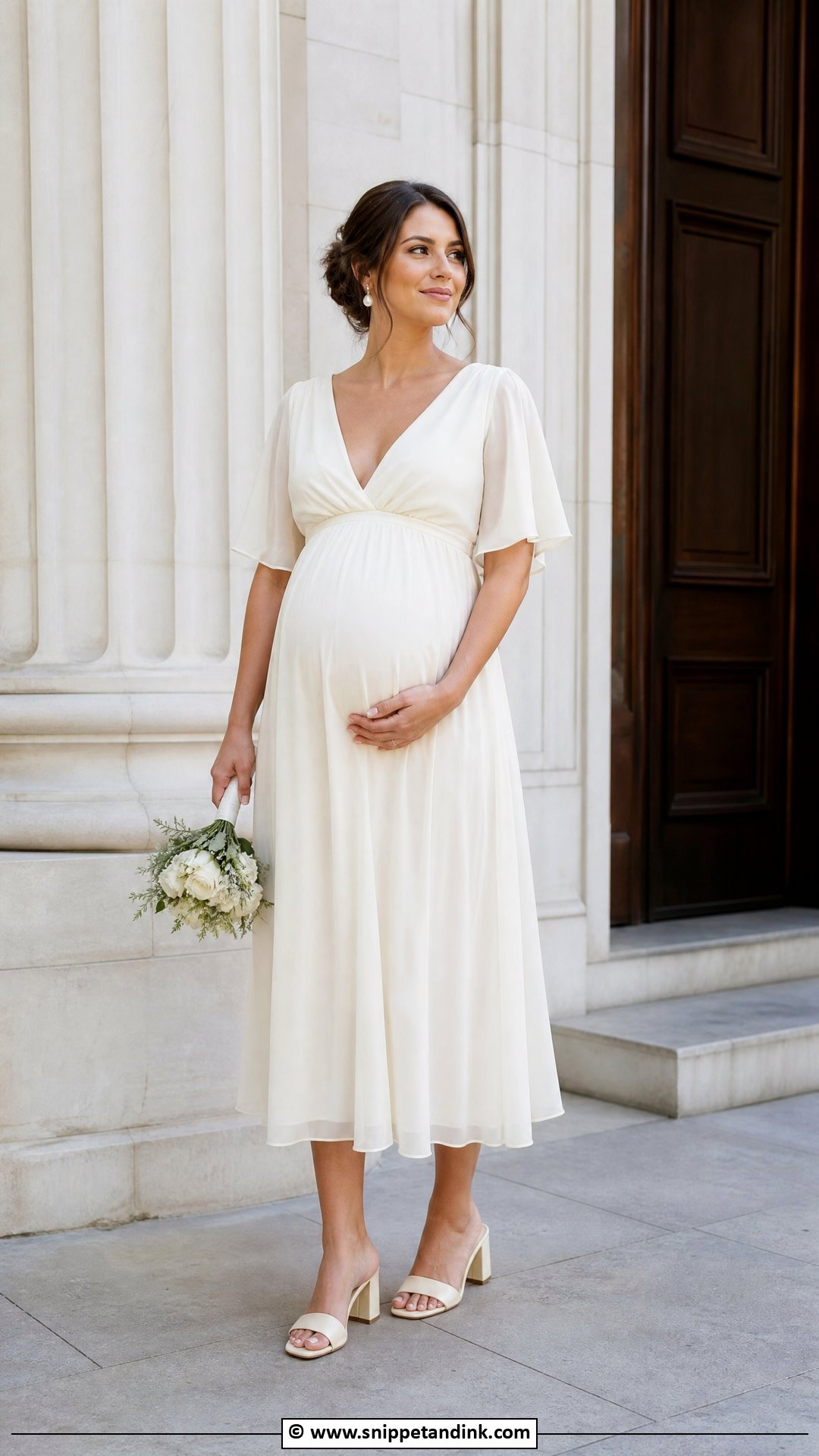
A maternity courthouse wedding dress should support you and stay comfortable through waiting, standing and sitting. Empire waists, wrap midis, soft A-lines and stretchy columns all work. Breathable fabrics like crepe, chiffon or jersey help, especially if the building is warm. Bodies change quickly in pregnancy, so I’d leave the final fitting as close to the date as your tailor allows. Low block heels or dressy flats, pearl earrings and a small bouquet finish it.
Off the Rack, Then Straight to a Tailor
Most courthouse outfits are bought ready to wear, which is a real advantage: no six-month order window. The part brides underestimate is alterations. I’d have the outfit in hand at least four to six weeks before the date so a tailor has time for a hem, a strap adjustment or a waist take-in, plus a second fitting. Rush work exists, but it costs more and leaves no room for a fix if something goes wrong.
What I’d ask the tailor to look at
- Hem length measured in the exact shoes you’ll wear on the day.
- Shoulders and straps first, since every other adjustment depends on them.
- A sit, stand and arm-raise check, so nothing pulls when you sign or hug.
- Hidden snaps or fashion tape at wrap fronts and gaping necklines.
The Small Bag That Saves the Afternoon
Without a getting-ready suite or a planner, you’re your own emergency kit. I pack a small pouch for every courthouse bride, and it fits inside a clutch or a partner’s pocket: a lint roller for ivory fabric, a white chalk stick to cover small marks, fashion tape, a few safety pins, blister plasters and a pair of flat foldable shoes for the walk to lunch.
Steam the outfit the morning of, never the night before, and travel with it on a hanger rather than folded. If it rains, a clear umbrella keeps you visible in photos and keeps water spots off satin, which shows them more than any other fabric.
Dress for the Bench, the Counter and the Steps
Courthouse bridal style isn’t limited to one plain white dress anymore. From satin midis and lace minis to suits, jumpsuits, coats and capes, there are plenty of directions to take. The outfit that works is the one that fits your ceremony, your comfort and your photos. If I had to reduce my advice to a sentence, it would be this: spend on fit and fabric, wear shoes you can climb stairs in, and add one or two bridal accessories. A city hall wedding can feel every bit as meaningful as a large one.
You'll Like These Ideas:


Leave a Reply