
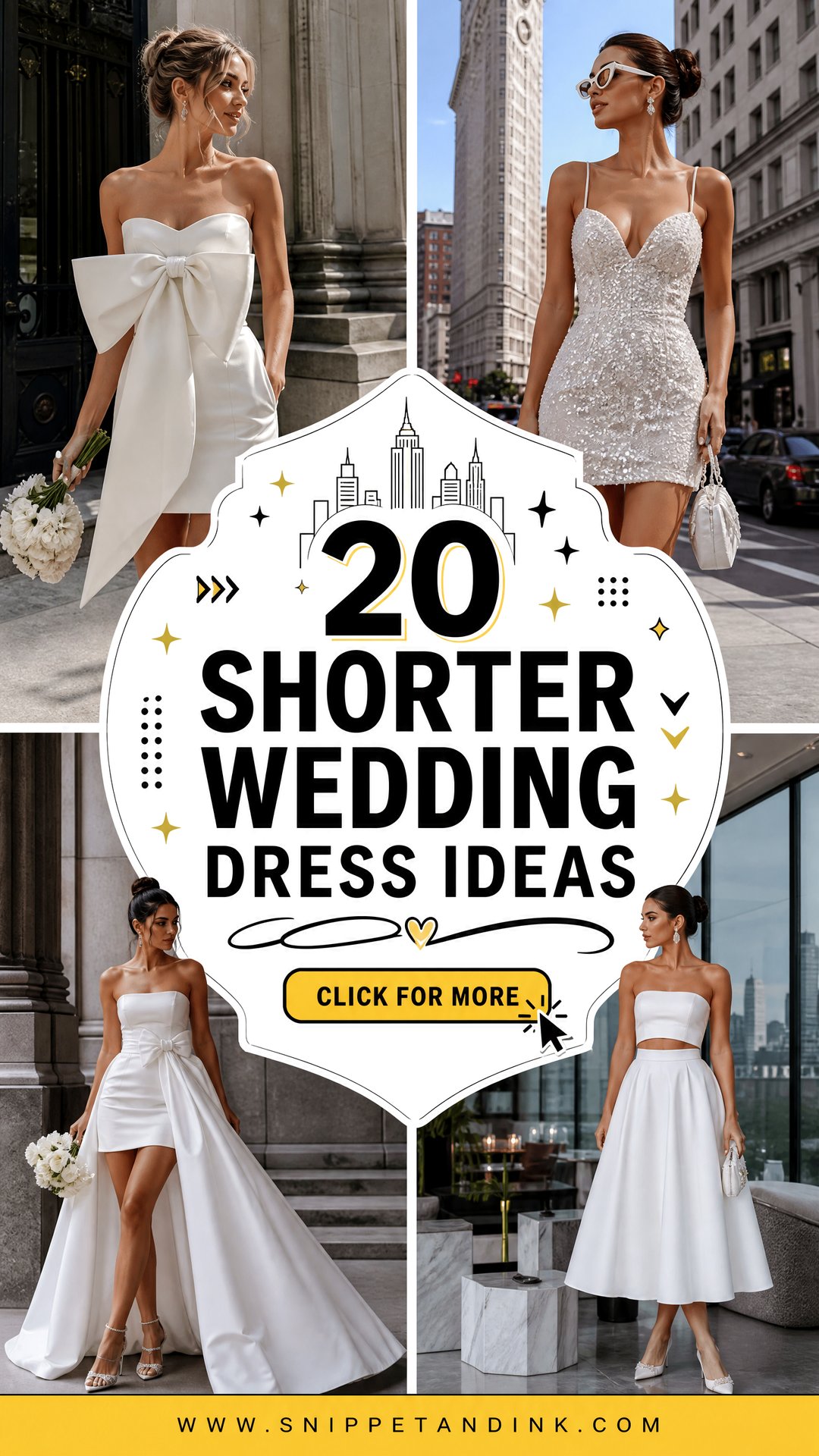
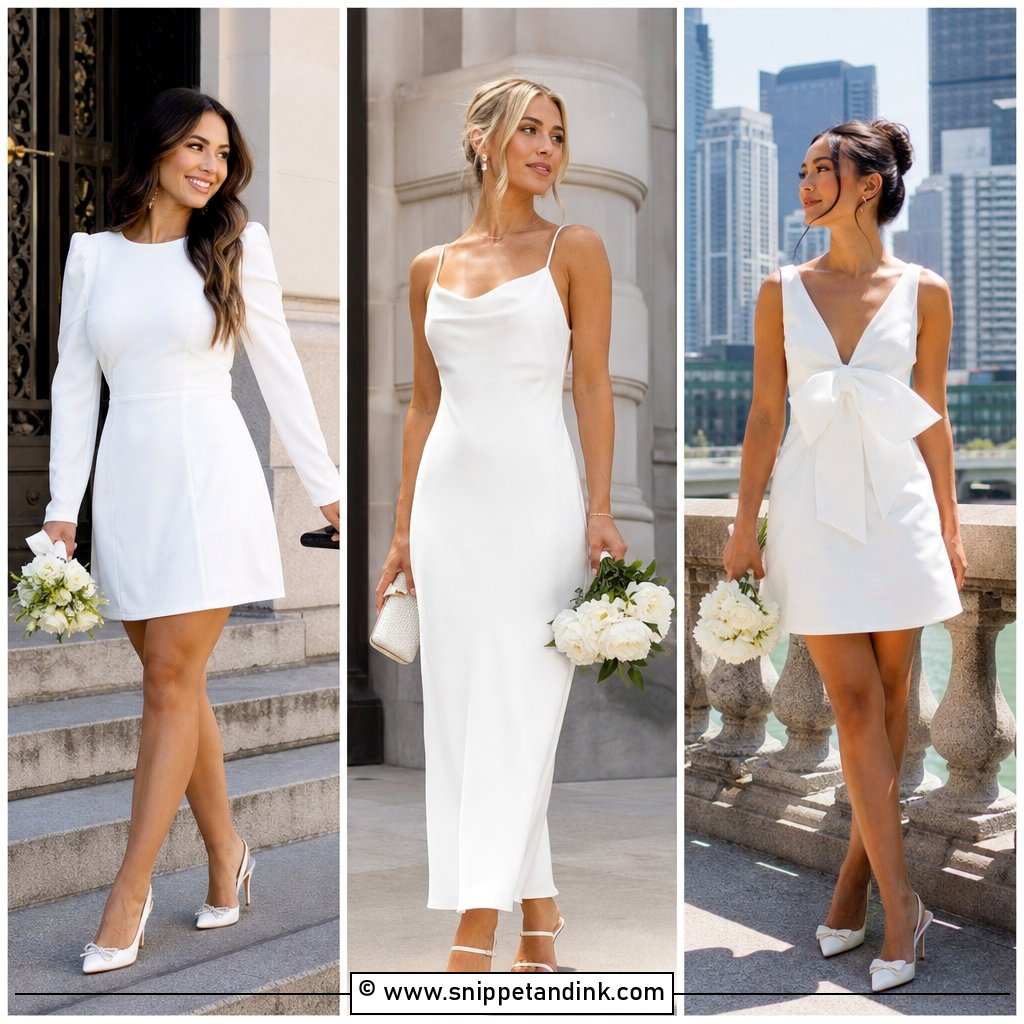
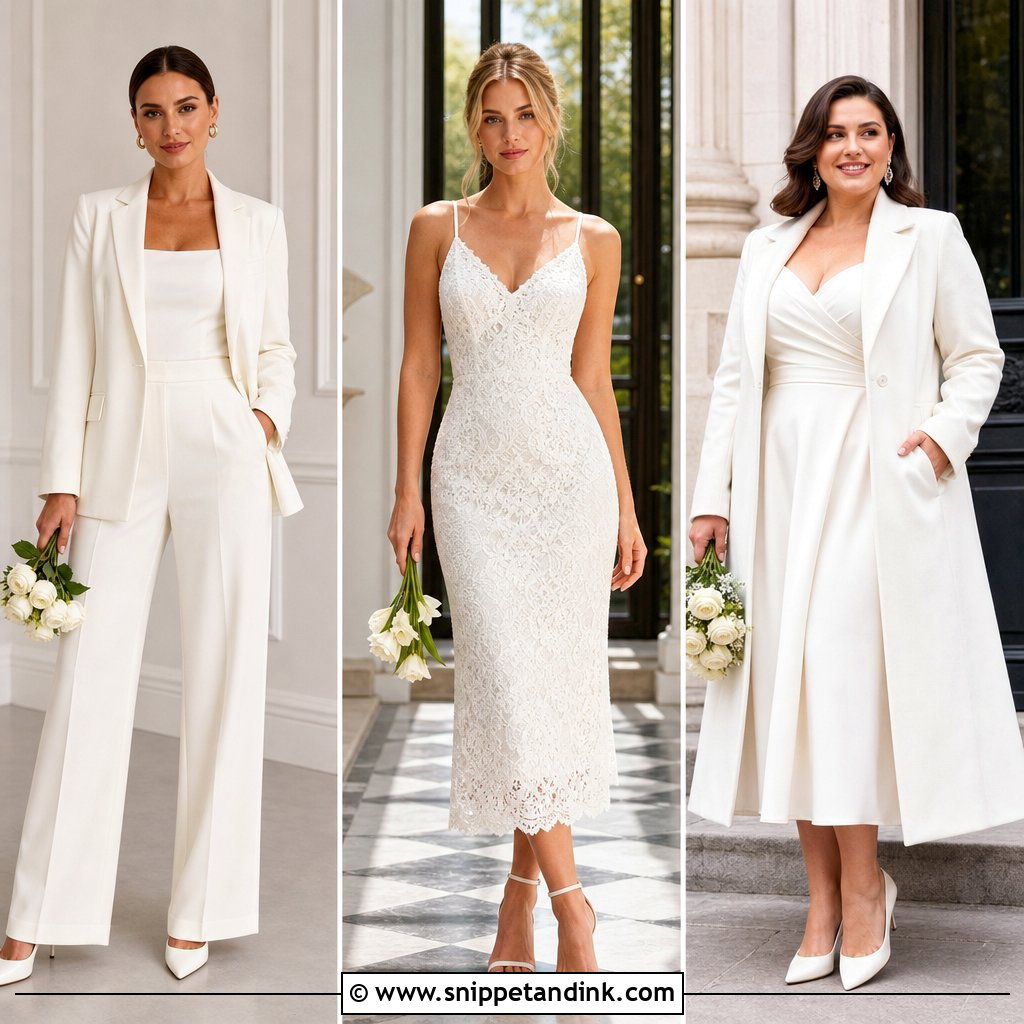
A shorter wedding dress solves problems a full gown creates in a city: stairs, taxis, crowded pavements and a reception in a restaurant with tables a foot apart. Below I’ve gathered minis, knee-lengths, tea-lengths and midis, from plain satin to feathers, detachable overskirts and the return of the bridal midi. What keeps any of them from looking like a party dress is the styling: the veil, the shoes and how the dress is built inside. A long veil instantly reads as ceremony, and because the shoes now show, they become part of the look rather than an afterthought. Think first about where you’ll be walking and how formal the day is, then pick the length.
Where Your Hem Should Land, From Mini to Midi
Short isn’t one length. A few centimetres change the whole look, so I measure from the floor in your actual shoes, not from the waist on a hanger.
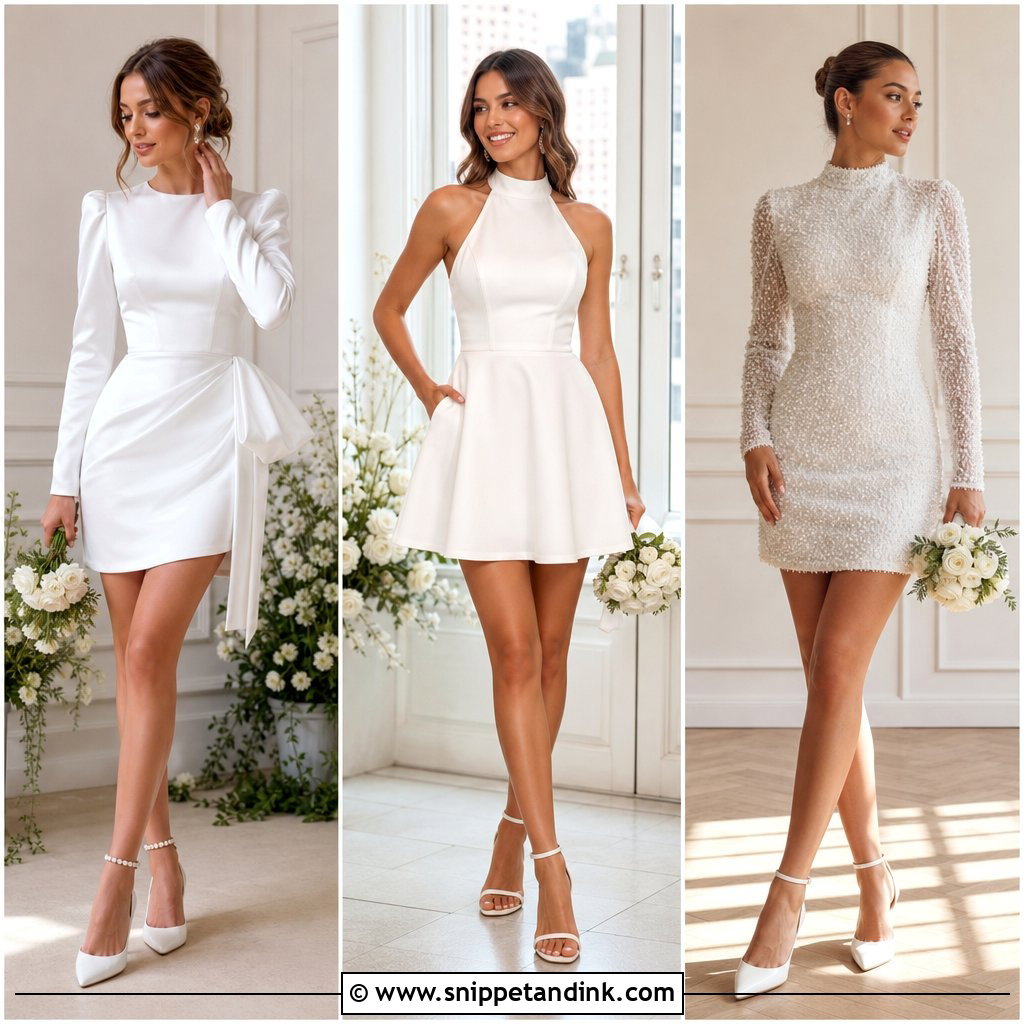
- Mini ends mid-thigh. It’s the most playful and the hardest to keep bridal, so it leans on the veil and the shoes to look like a wedding dress.
- Knee-length sits just above or on the knee. It’s the easiest length for petite brides because it shows enough leg to lengthen the line.
- Tea length falls between the bottom of the calf and the ankle. It needs shoes chosen with care, since the eye goes straight to the gap.
- Midi lands mid-calf. It’s the most formal of the short options, but it can cut the leg if it stops at the widest part of the calf.
Heel height moves all of these. A block heel and a stiletto give different proportions with the same hem, which is why I ask brides to bring their wedding shoes to the first fitting, not the last.
Matching the Veil to a Shorter Hem
A veil that stops at the same height as the dress hem makes both look unfinished. I either go clearly shorter, shoulder or elbow, or clearly longer, a long plain cathedral that trails behind the short skirt. The contrast is what makes a mini look like a wedding dress rather than a cocktail dress.
1. Satin Mini Wedding Dress
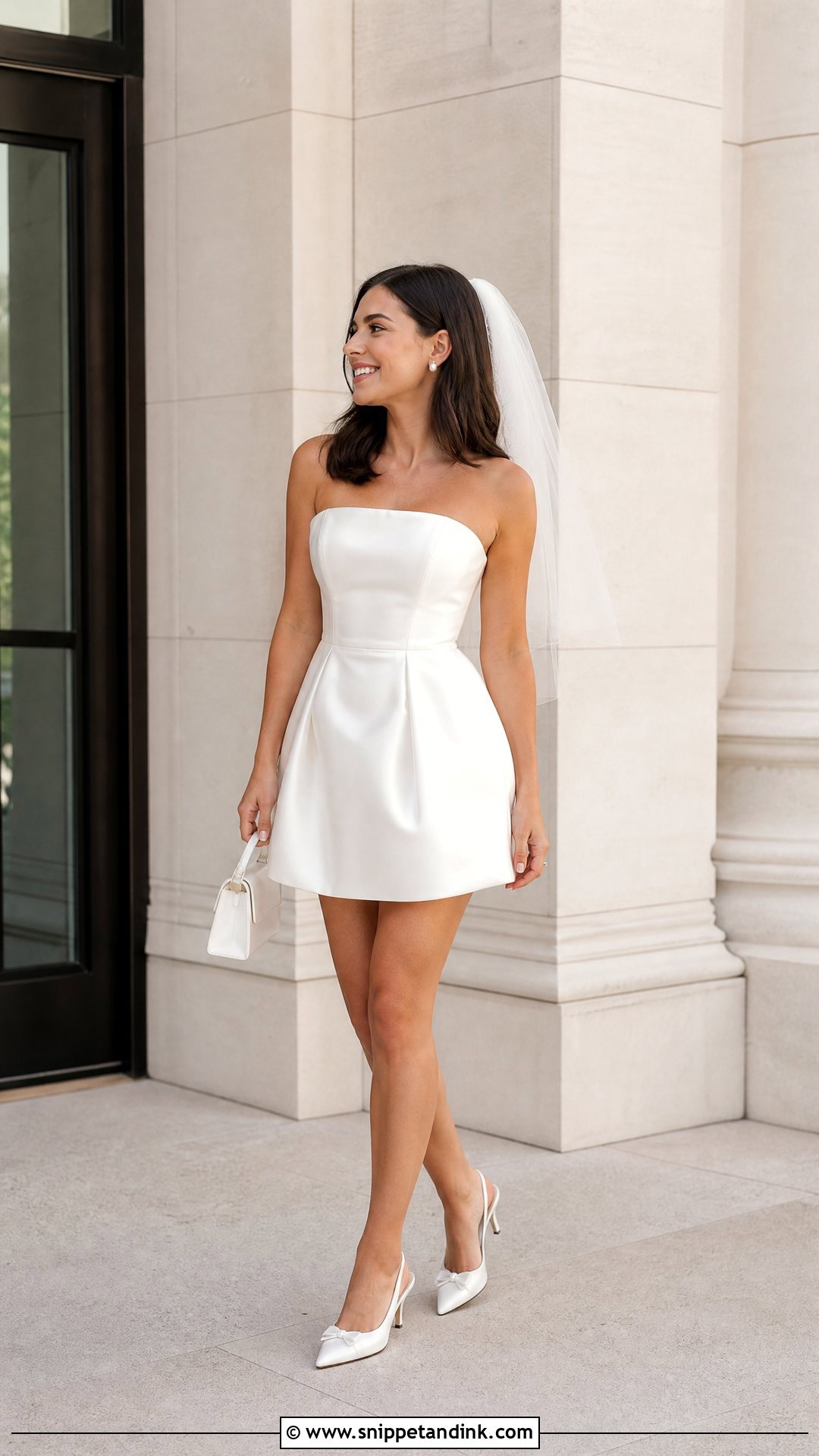
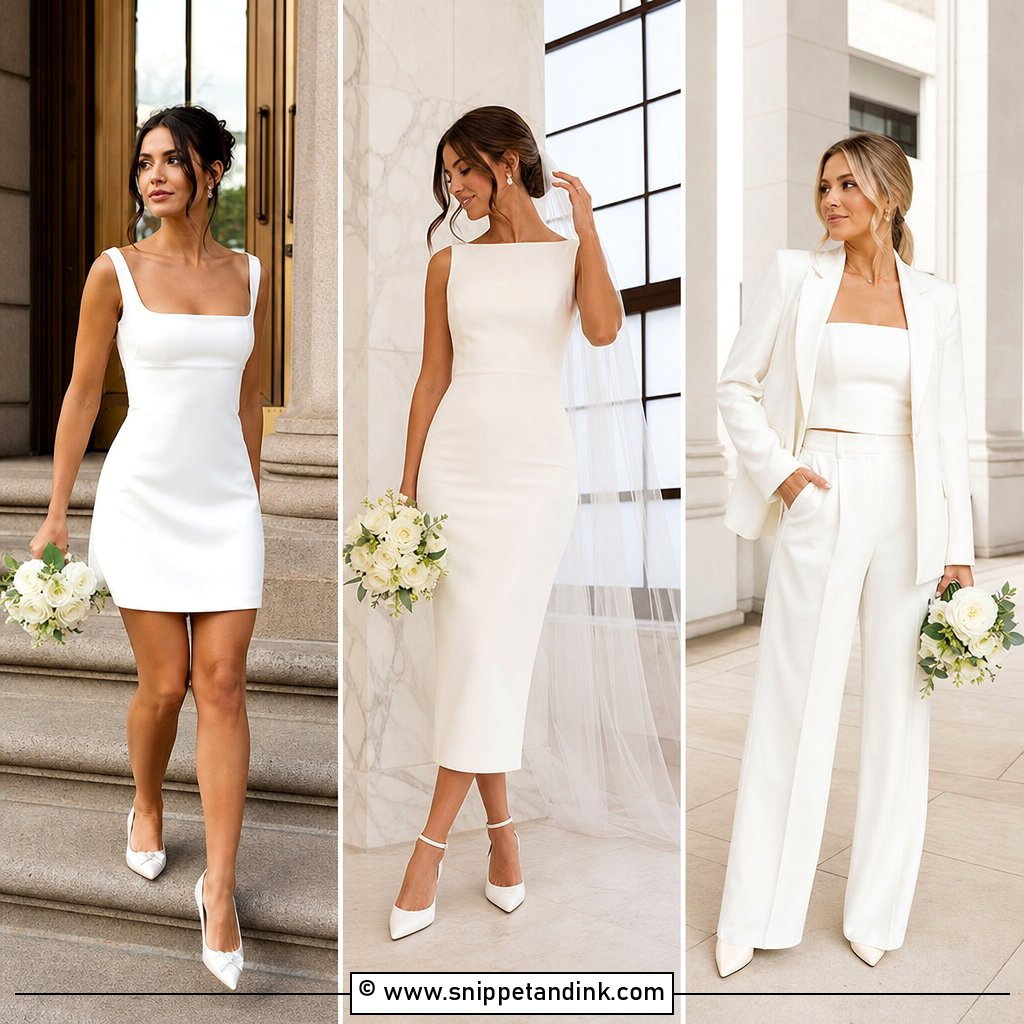
Satin minis are the most honest bridal dress there is: no lace, no beading, just fabric and fit, which means every flaw shows. Pick a structured shift, a fitted sheath or a soft flare depending on how much you’ll move. Ivory is warmer; pearl white looks crisper next to most skin. I always check the lining and the inner structure on a light satin, because unlined satin wrinkles across the lap the first time you sit in a car. Pointed slingbacks, pearl studs, a top-handle bag and a shoulder-length veil finish it. Later, swap the veil for coloured heels and wear it again.
2. Lace Mini Wedding Dress With Sleeves
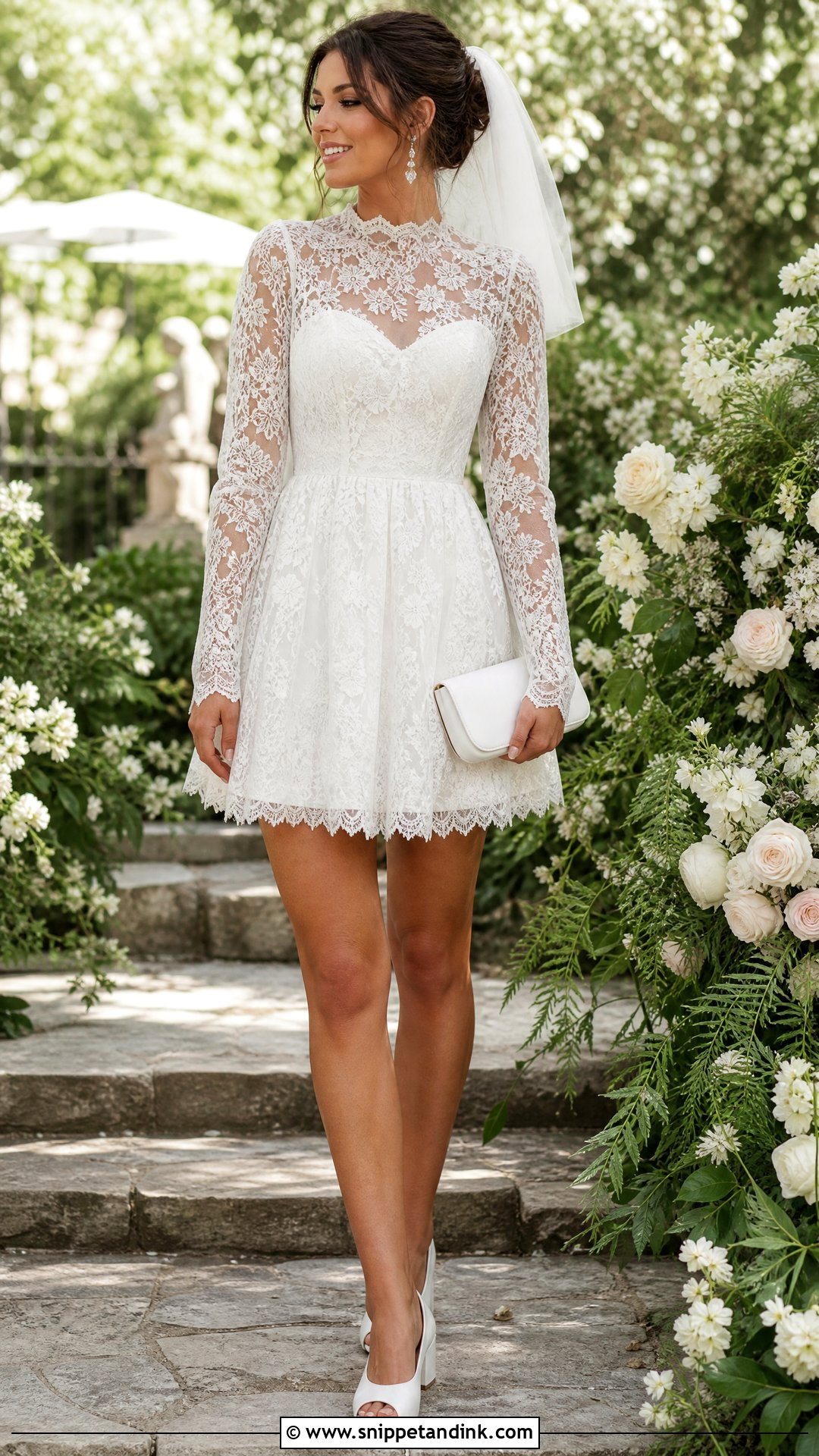
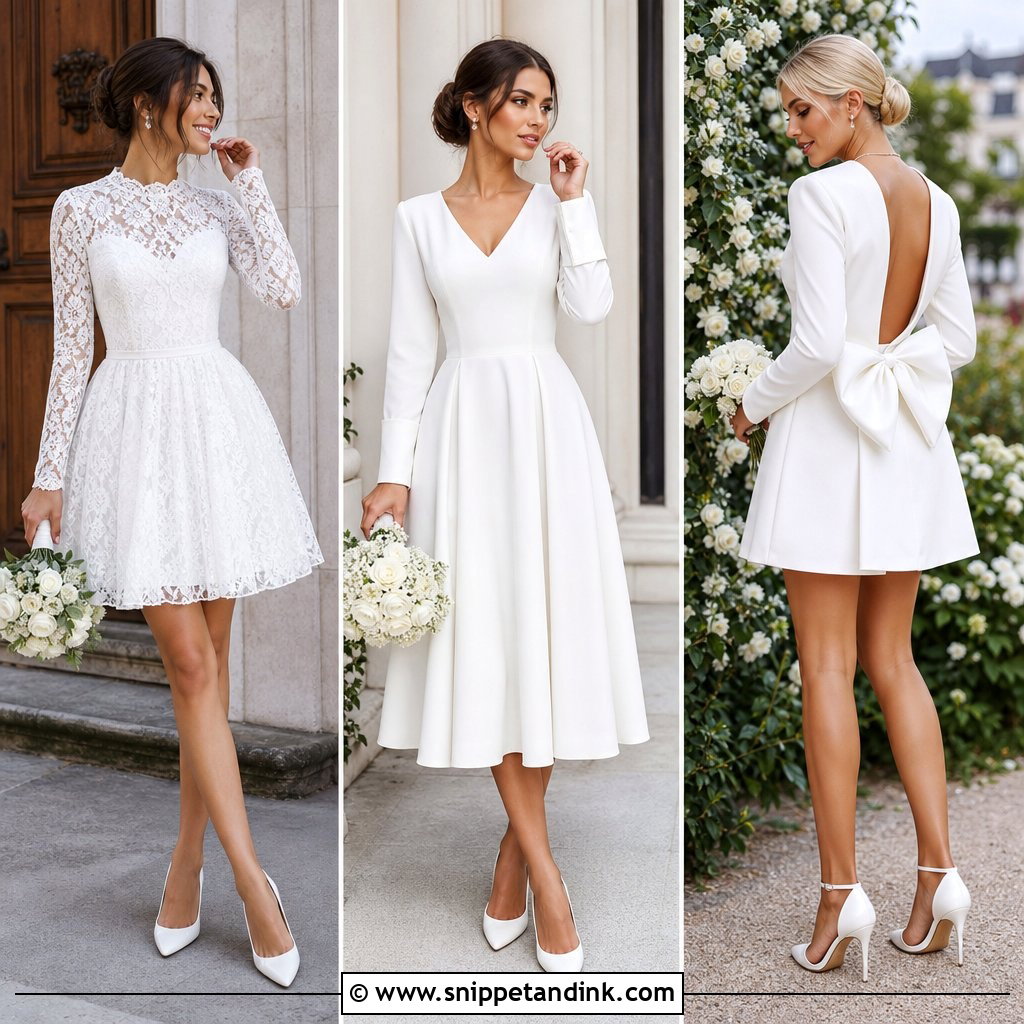
Lace sleeves on a short dress keep a traditional feel while the hem stays practical. Fitted sheer sleeves, a lined bodice and a gently shaped skirt are the formula. Floral lace is classic; geometric lace looks more current next to concrete and glass. Ivory block heels are my pick for gravel paths, park lawns or old cobbles. Keep the rest small: a hair ribbon, little drops and a satin clutch. If you want more coverage, go for wrist-length sleeves and a higher neck. A plain veil is the right call; lace on lace muddles the pattern in photos.
3. Strapless Bow Mini Wedding Dress
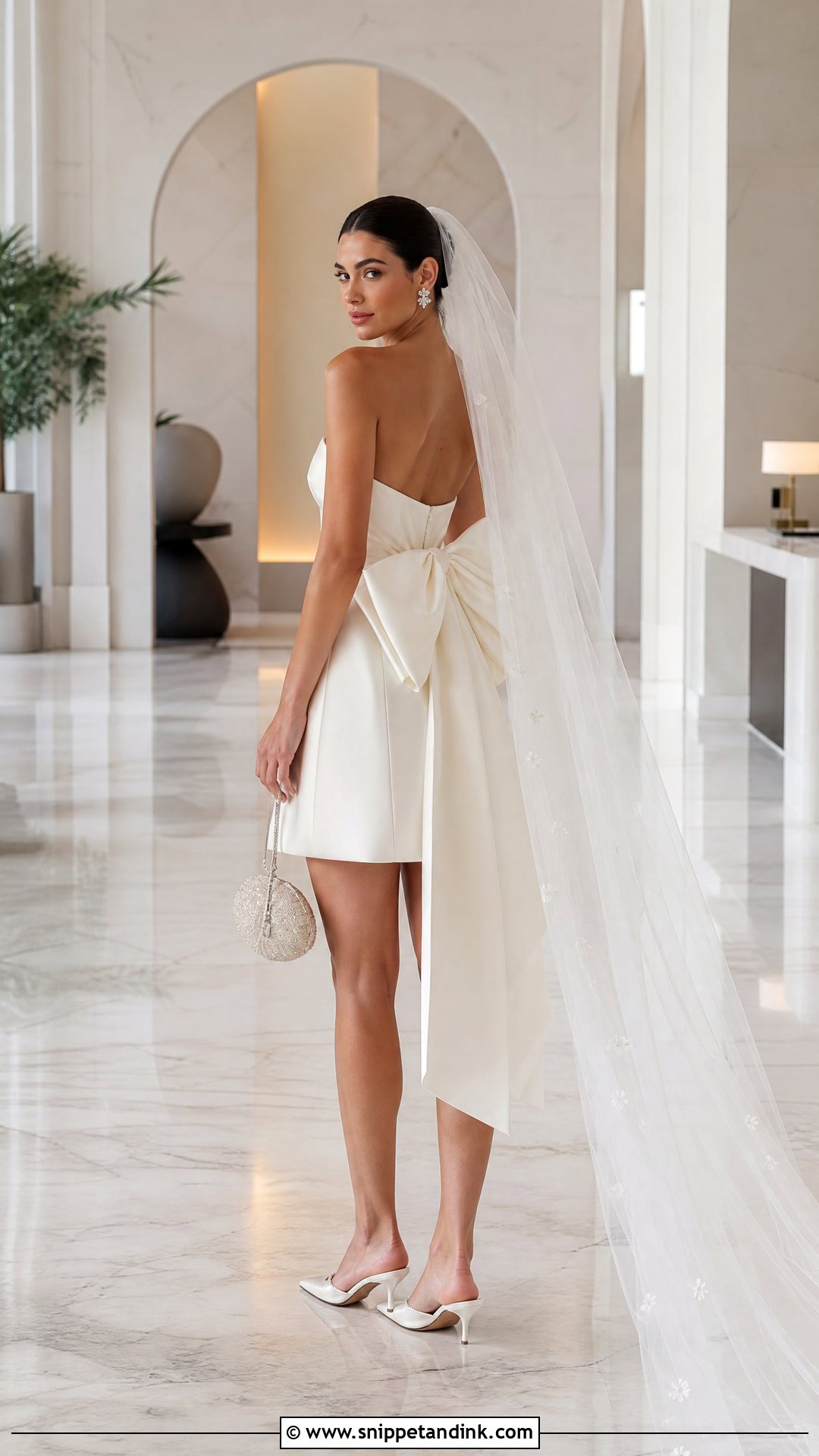
A bow on a strapless mini is a strong choice, and its position changes the mood: across the neckline it’s playful, at the waist it’s ladylike, on the back it’s for the walk away. What I insist on is internal boning and a waist stay, because a big bow adds weight to one spot and pulls a loose bodice down. Pointed kitten heels, crystal earrings and a structured mini bag work, with a sleek bun and a long, light veil for contrast against the short skirt. If the bow is large, everything else stays quiet.
4. Off Shoulder Draped Mini Wedding Dress
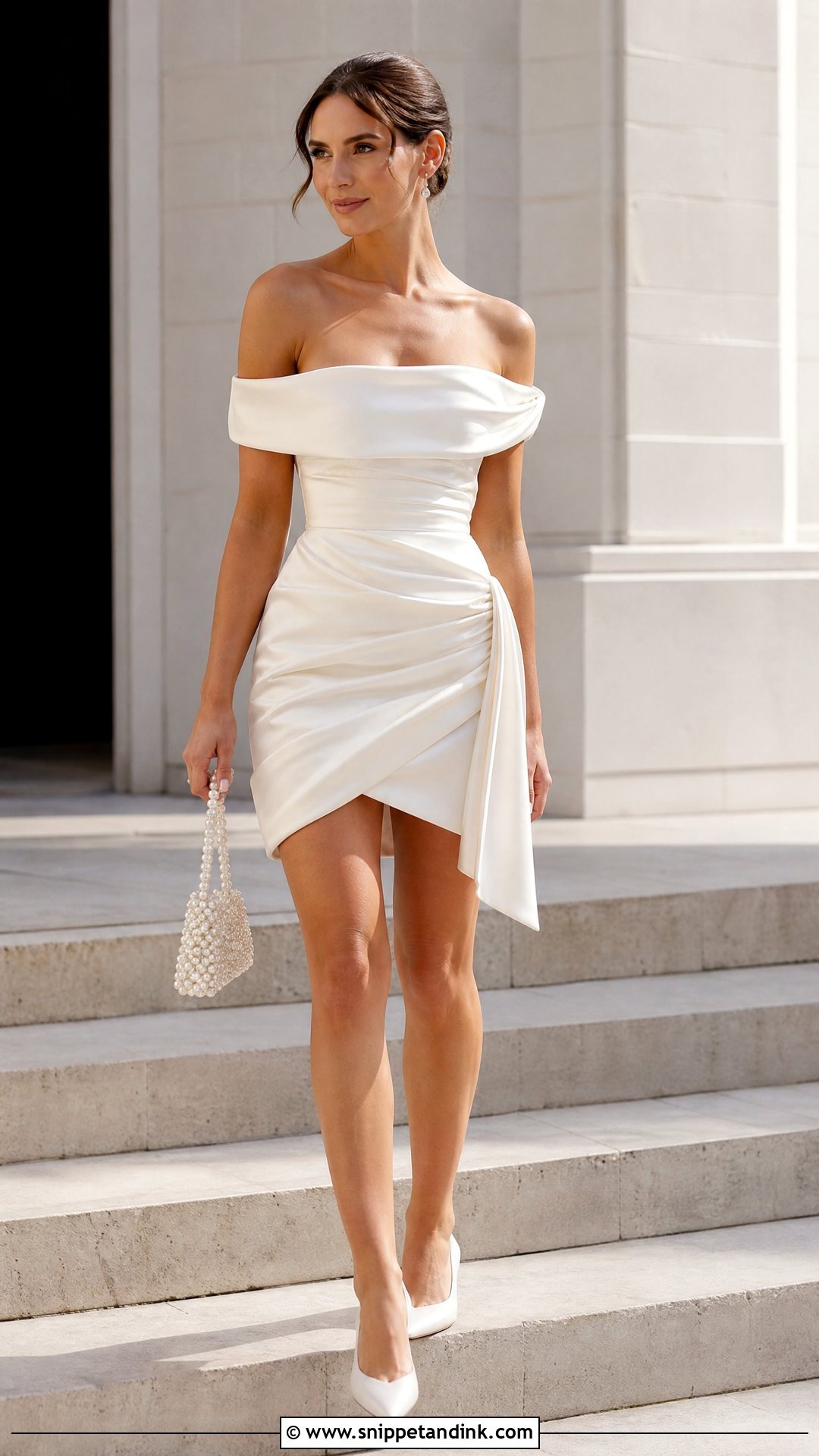
A draped off-shoulder mini forgives a lot. Ruching at the waist or hip hides the small things you’re worrying about and stretches with you through dinner. A folded neckline frames the shoulders, and an asymmetric skirt adds movement without making stairs awkward. Low satin pumps, a small pearl bag and delicate earrings are enough; a soft updo stops hair tangling in the folds. In autumn or winter, a tailored ivory coat that ends at the hem of the dress looks deliberate. Put fashion tape inside the neckline before you leave, because draped jersey slides as you walk.
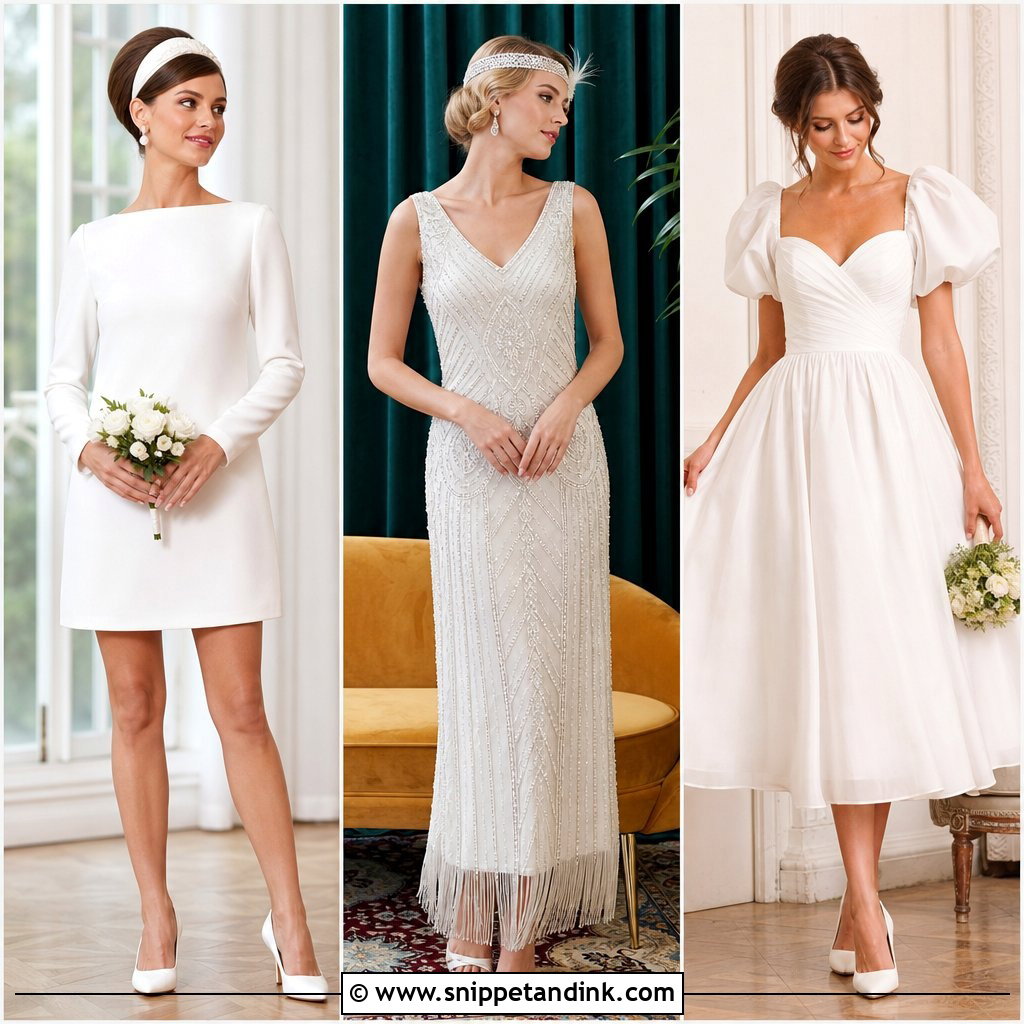
5. Long Sleeve Mini Wedding Dress
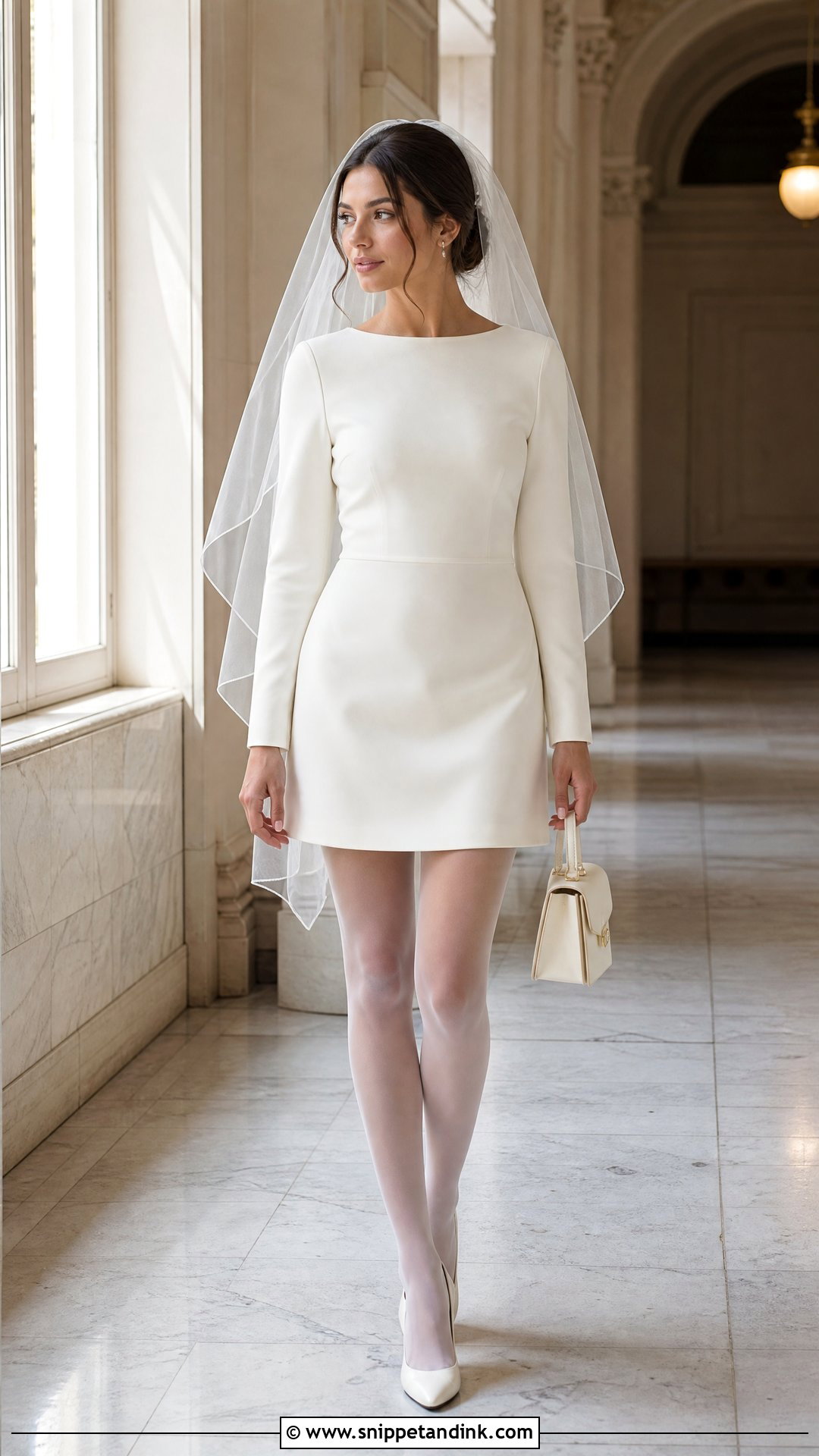
Cold-weather city weddings are where a long-sleeve mini comes into its own. Crepe looks tailored, while lace, satin or jacquard give more texture. A high neck is sophisticated; a V-neck or open back keeps it from feeling buttoned up. Closed pumps or slim ankle boots suit the season, with sheer ivory tights for warmth and a structured bag. A fingertip veil adds length without hiding the short shape. I’d only add a belt if the dress has no waist shaping of its own. Sheer tights in ivory, not white, avoid the nurse-uniform effect in flash photos.
6. Halter Neck Mini Wedding Dress
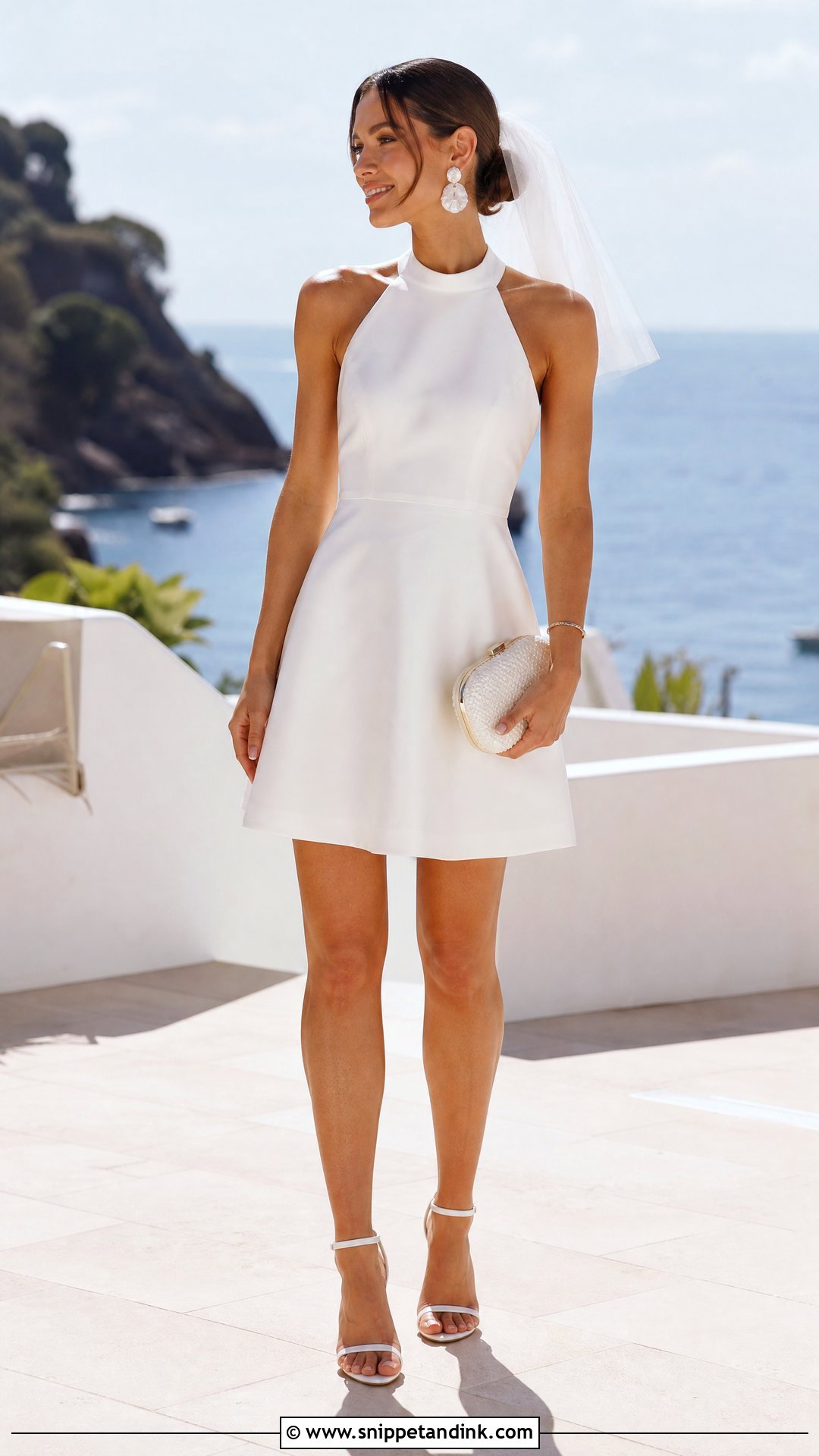
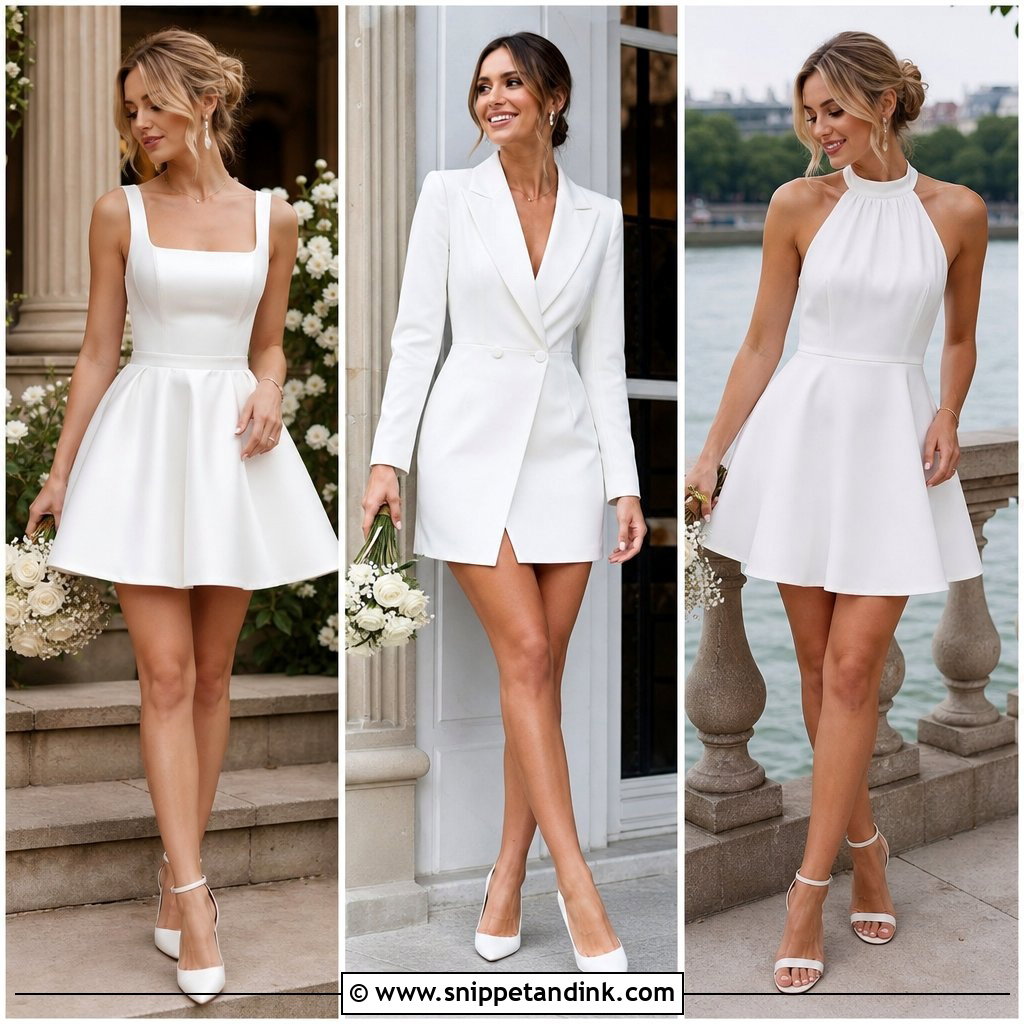
A halter pulls the eye up and makes you look taller, which is useful in a short dress. Satin and crepe hold a clean neck strap without bulk. Go for a column if you like minimal, an A-line if you’ll be dancing. Slim ankle-strap sandals, sculptural earrings and a compact clutch suit it, with hair in a low bun or ponytail so the neckline shows. Halters already carry plenty of interest, so a plain tulle veil or a small birdcage is enough. If the strap ties at the neck, ask for a hook closure instead; ties loosen over a long evening and the bodice drops with them.
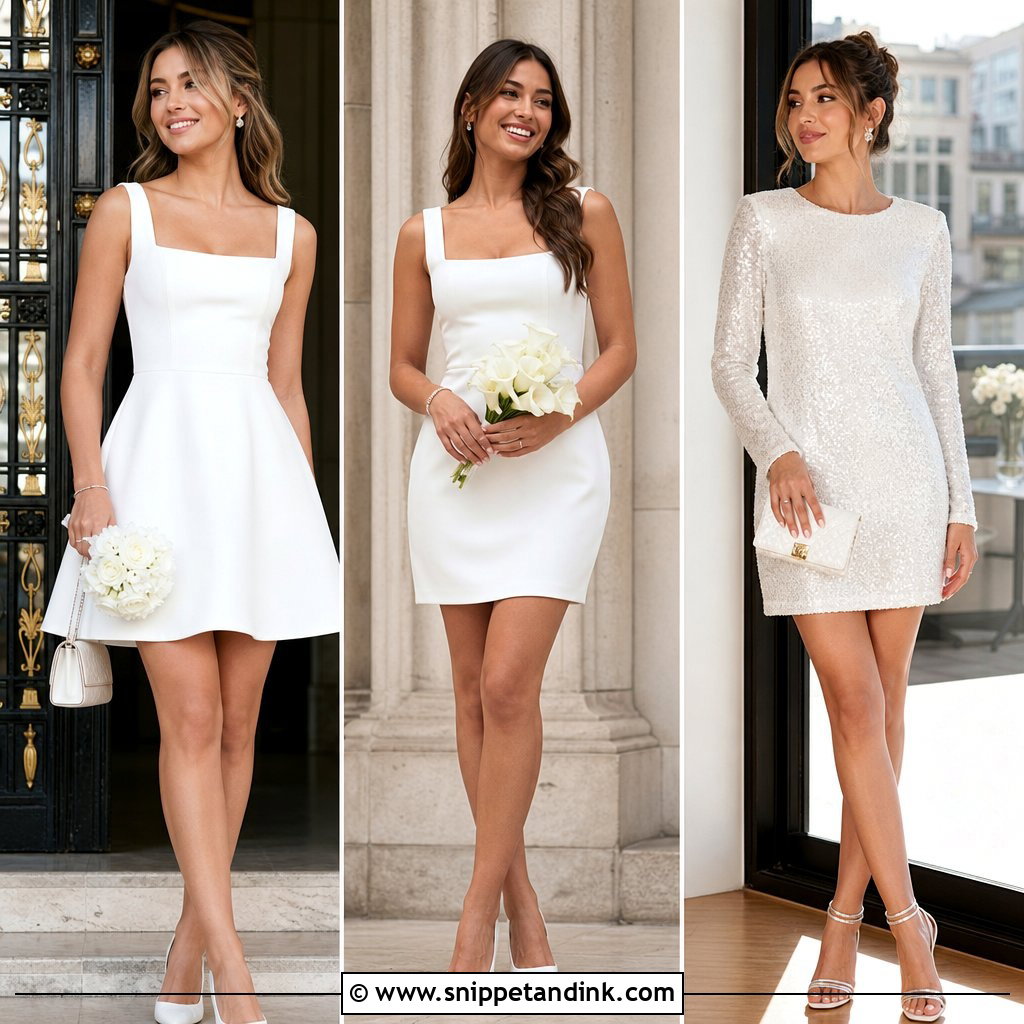
7. Square Neck A-Line Mini Wedding Dress
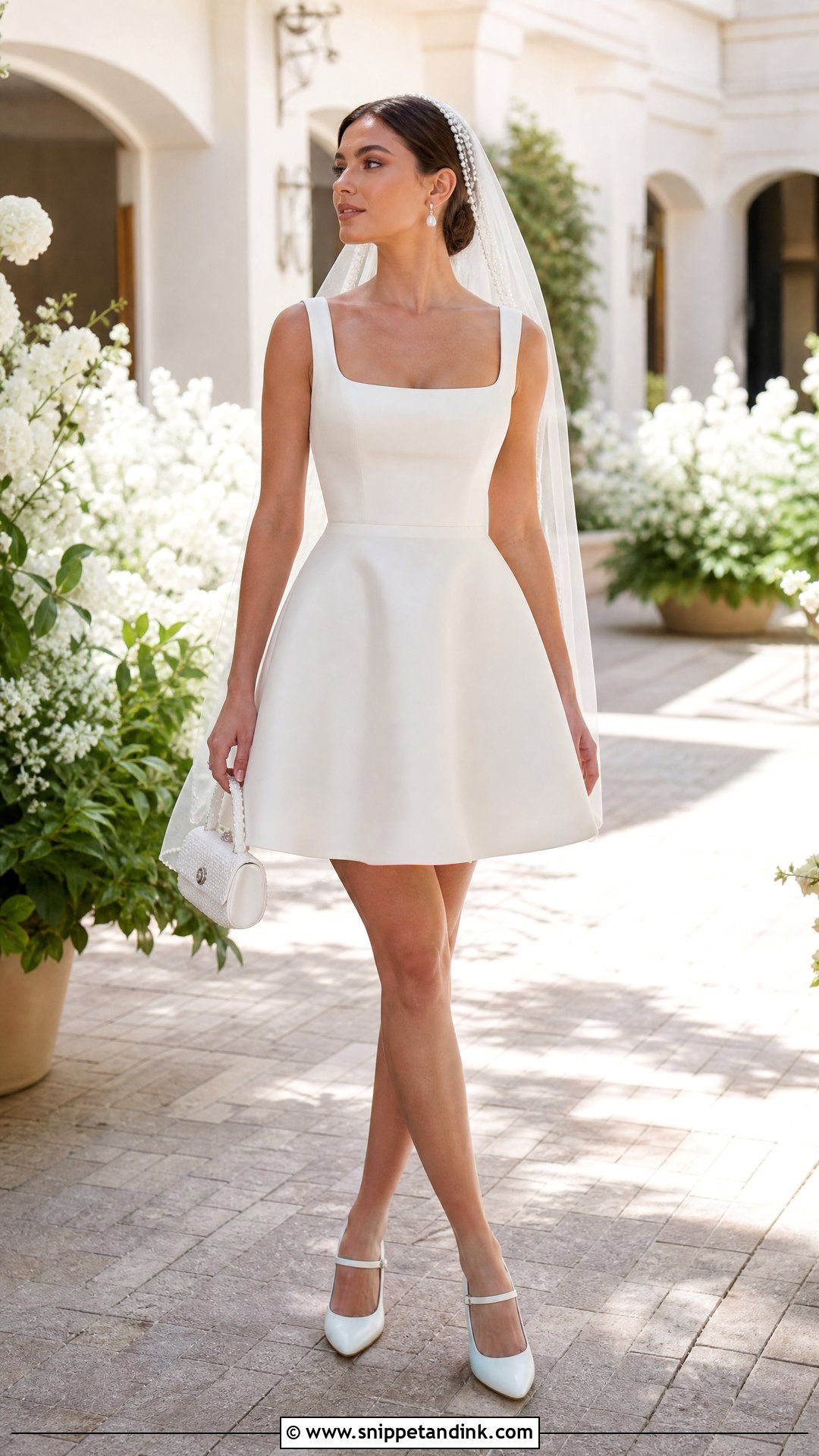
Square neck plus A-line is the shape I suggest when a bride wants structure without a corset. The neckline frames the collarbone, and the skirt moves away from the hips. Mikado, faille or a heavy crepe hold the shape; thin fabric droops at the corners of the neckline. Mary Jane heels, a pearl-trimmed veil and small gold or silver earrings give it a slightly retro feel. A defined waist seam helps petite brides most. Wide straps or short sleeves let you wear a normal supportive bra, a real advantage over strapless shapes for a long daytime wedding.
8. Blazer Mini Wedding Dress
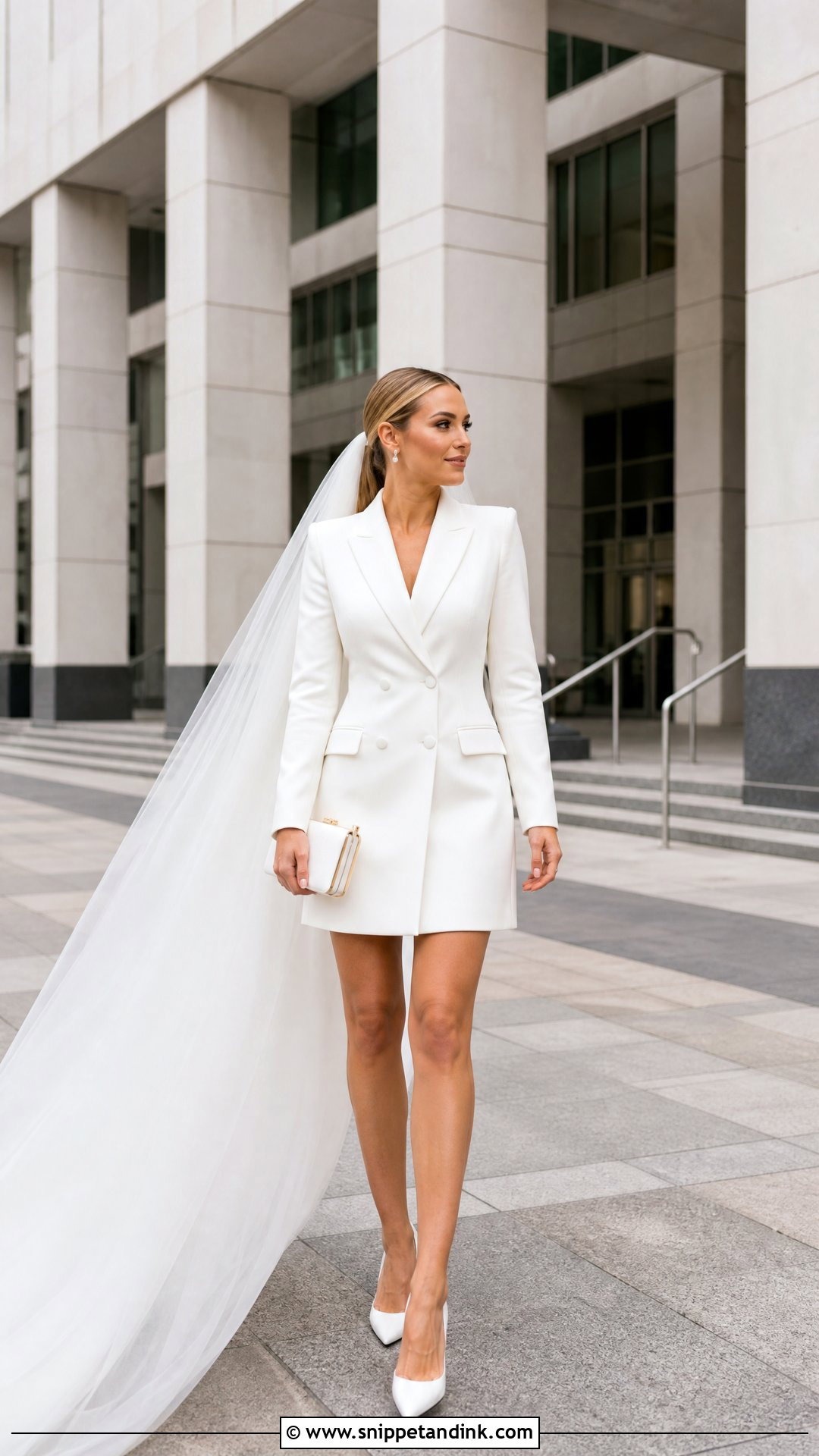
A blazer mini wedding dress is for the bride who’d rather wear tailoring than tulle. Double-breasted gives structure; a wrap front lets you adjust the waist. Hem length is the risk with a blazer dress, because it rises when you sit, so take a photo of yourself seated and from below before buying. Pointed pumps, a small box clutch and streamlined earrings suit a low ponytail or polished bun. A birdcage veil feels vintage; a long plain veil is dramatic. For a low neckline, a lace camisole or a sewn-in modesty panel looks neater than tape.
9. Feather Trim Mini Wedding Dress
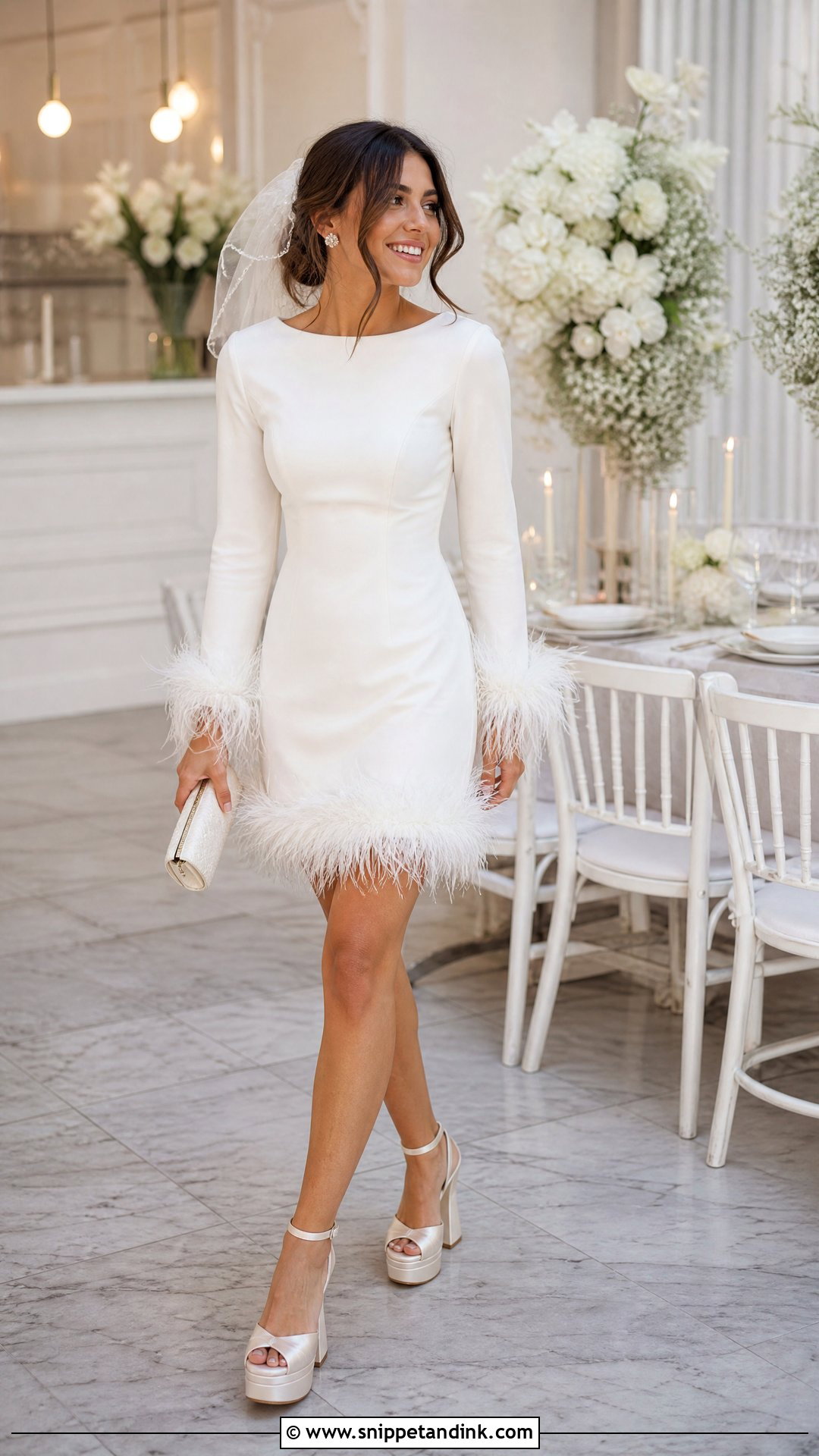
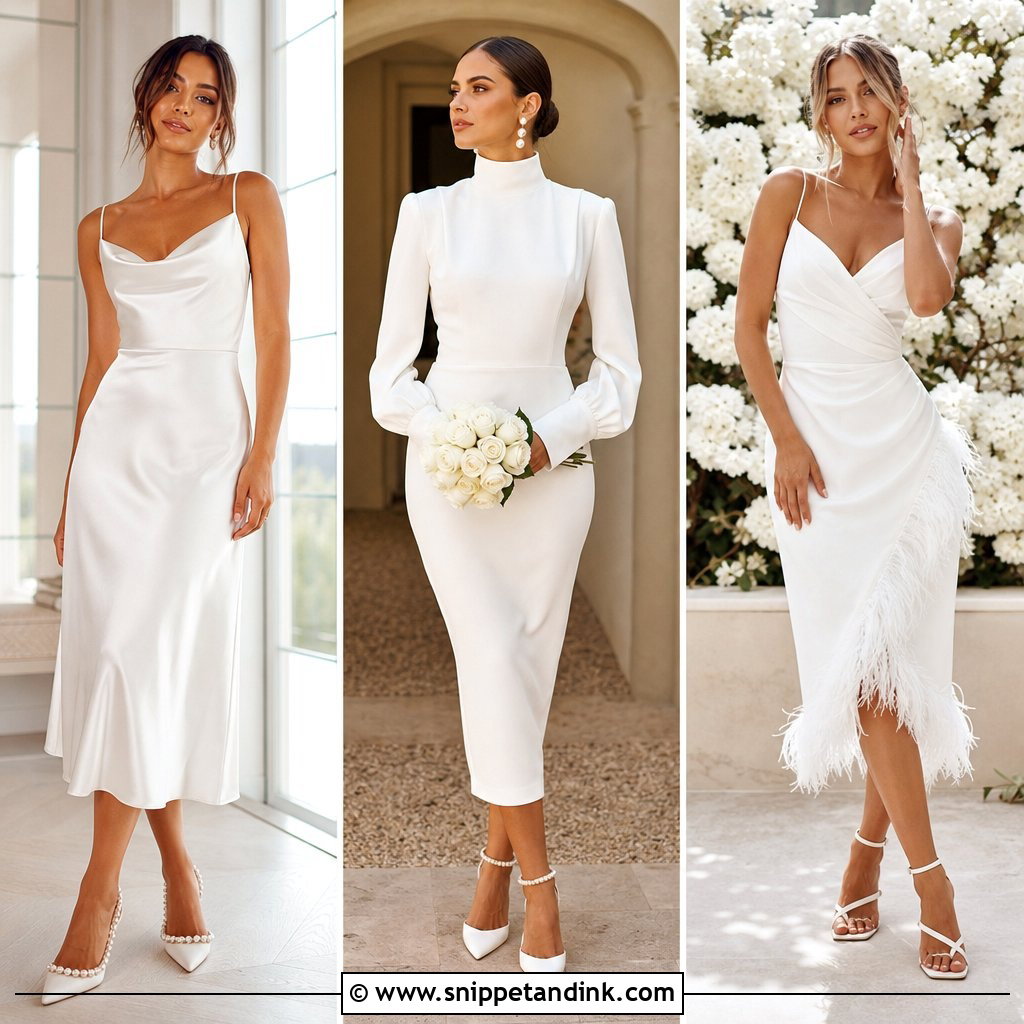
Feather trim gives a short dress movement without heavy embellishment. I like feathers only at the cuffs, neckline or hem on a simple shift or crepe base; a dress covered in them sheds everywhere and is hard to sit in. Satin platforms, crystal studs and a smooth clutch suit it, and jewelry should stay plain. A short veil keeps the proportions playful; a long one makes it more ceremonial. Feathers flatten in rain and drizzle, so on a city wedding day with any risk of weather, carry a large umbrella and keep the trim covered between venues.
10. Sequin Mini Wedding Dress
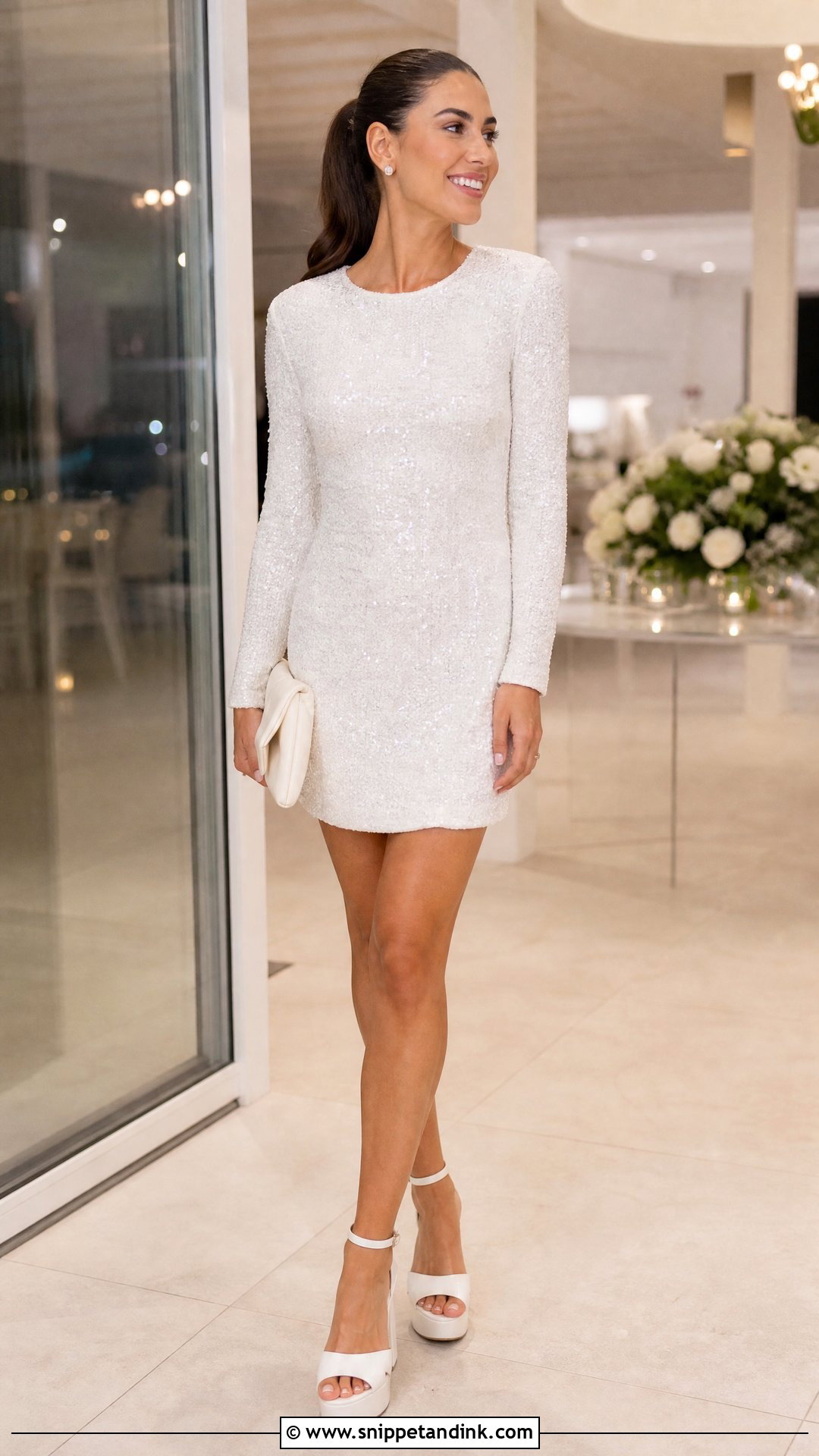
When the lights go down, a sequin mini wedding dress is the change that gets noticed. Clear, silver or ivory sequins keep it bridal. Simple shapes, a long-sleeve shift or fitted tank, stop the shine from taking over. Block heels or platforms let you dance, with small earrings and a plain satin clutch. A sleek ponytail or soft waves suit the mood. Run your inner arm along the side seam before buying; sequins that scratch there will leave you raw by midnight. Lining should cover all the stitching, right down to the armhole.
11. Pearl Embellished Mini Wedding Dress
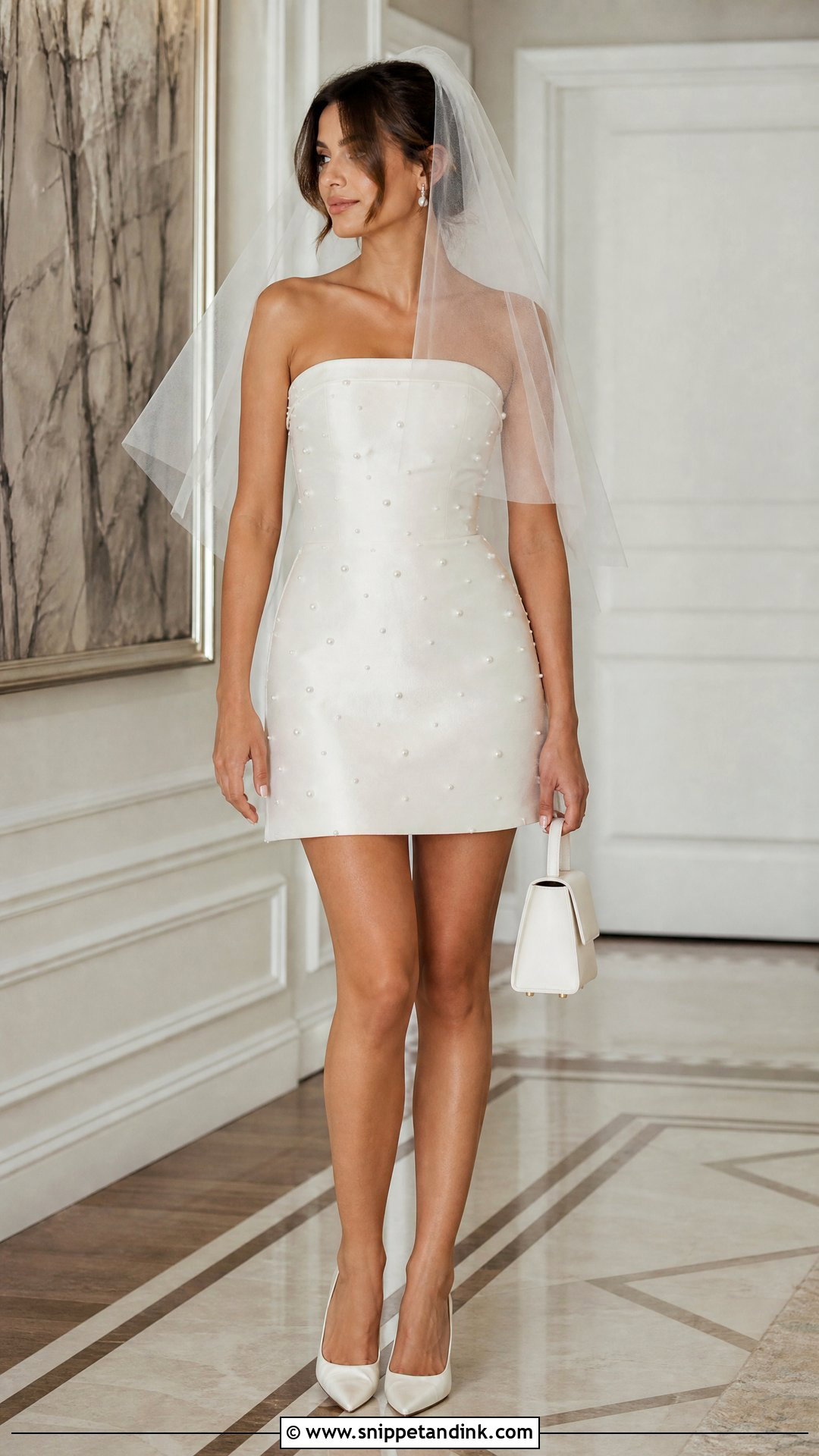
Pearls make a plain mini instantly bridal. Scattered pearls over tulle, a band at the neckline or pearl-covered straps each give a different level of drama. A neutral lining makes the pearls stand out rather than blending into the white. Smooth satin pumps, pearl earrings and a plain structured bag work; with a short hem the shoes show, so keep them simple. A clean fingertip veil lets the embellishment show through. Pearl overlays need a solid base, ideally crepe or satin, because tulle alone sags under the weight.
12. High Low Wedding Dress With Train
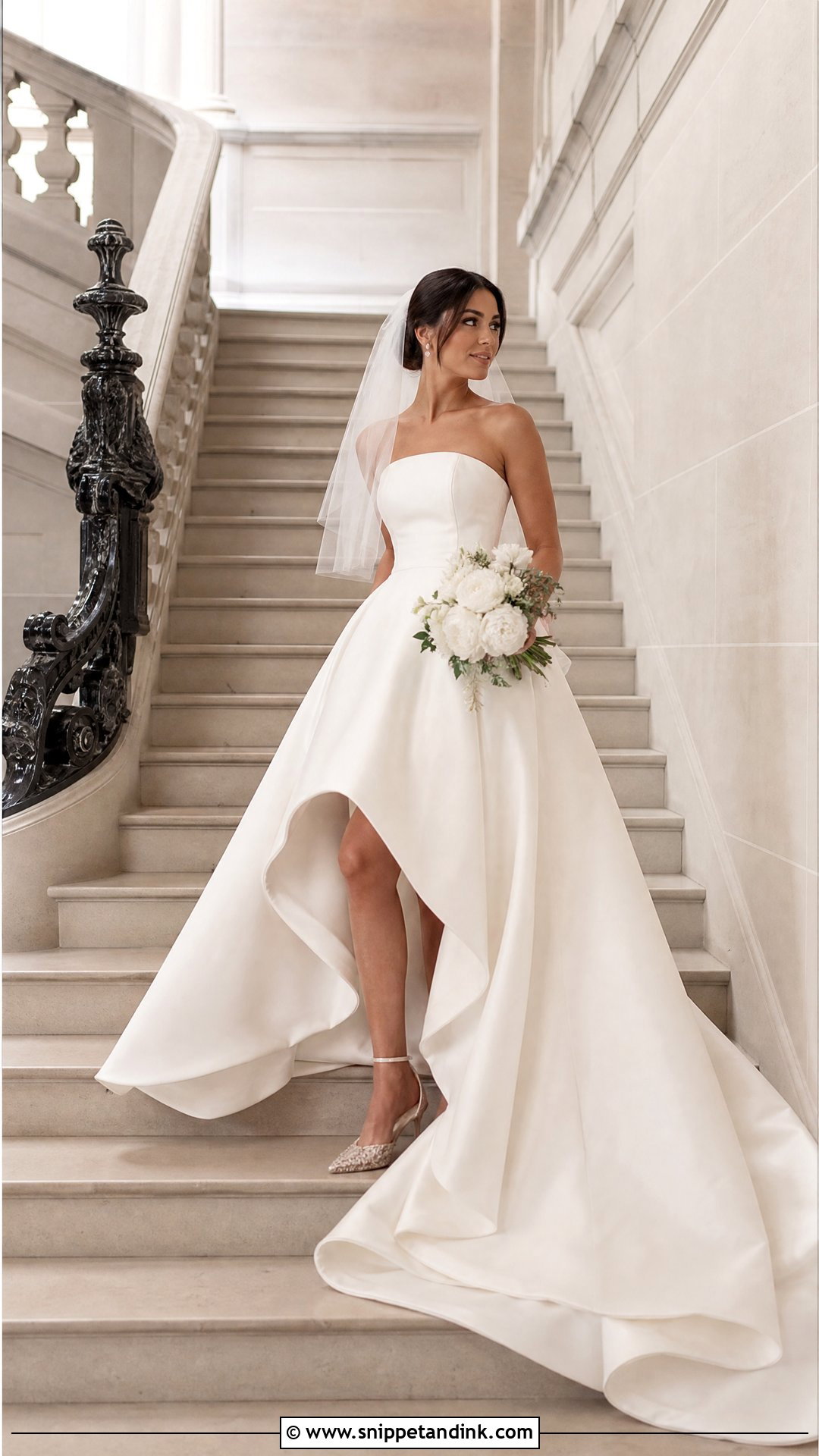
Can’t decide between short and long? A high-low dress shows the legs at the front and keeps a longer back or train. Structured skirts give volume; chiffon gives float. The front hem puts the shoes on show, so choose them before the alterations, embellished pumps, metallic sandals or slingbacks, and bring that exact pair to every fitting, because a change of heel height of even a few centimetres throws the hem out of balance. Simple earrings and a medium veil that ends above the train keep it clean. It’s a strong pick for a grand staircase or a long aisle.
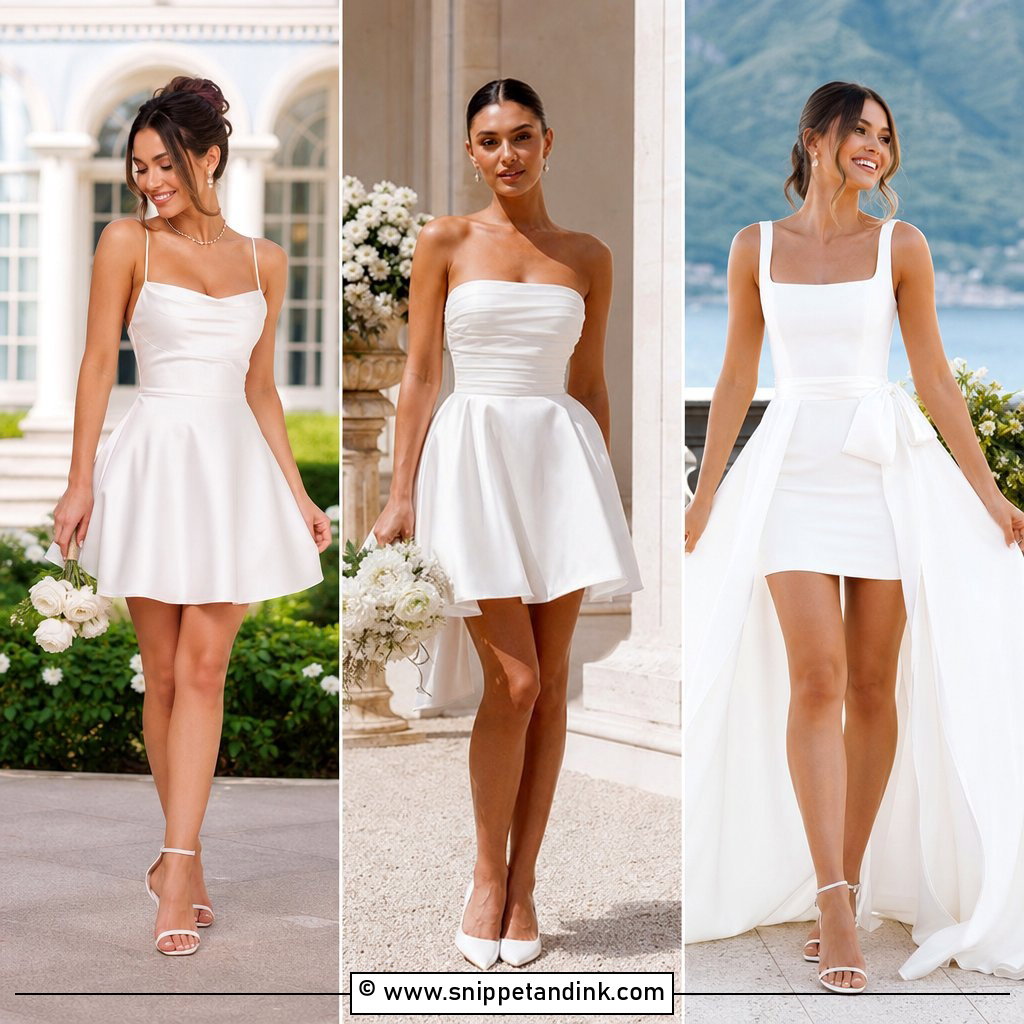
13. Detachable Overskirt Mini Wedding Dress
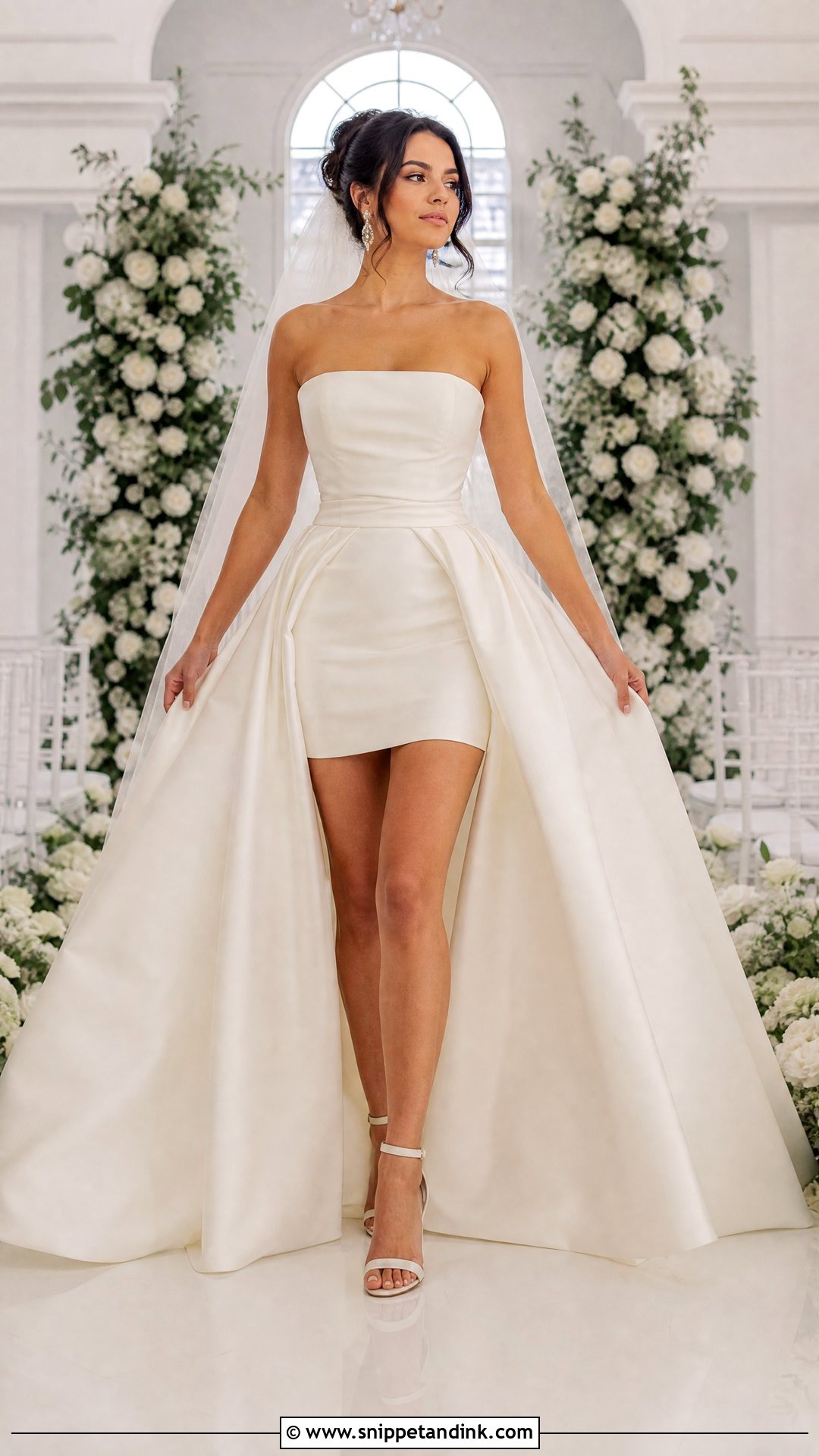
A detachable overskirt gives you a full ceremony silhouette and a mini for dinner. Satin, mikado and layered tulle give the clearest contrast between the two looks. The attachment should sit at the natural waist and stay invisible from the front; I prefer hidden hooks under a waistband, since snaps can show through thin satin. Comfortable heels, statement earrings and a long veil for the ceremony; then lose the veil and overskirt and add a small clutch or hair piece. Practise the change with whoever is helping, because removing a skirt in a cramped city restaurant bathroom is harder than it looks.
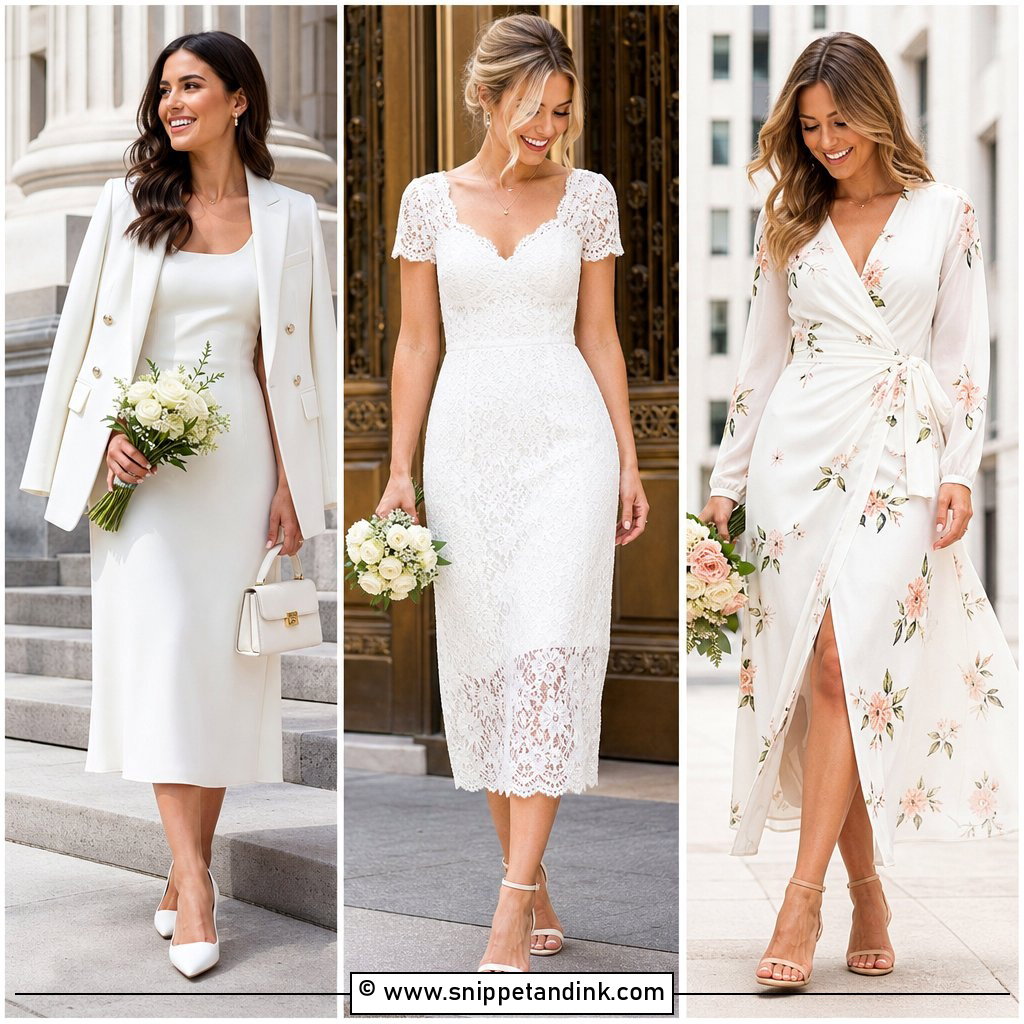
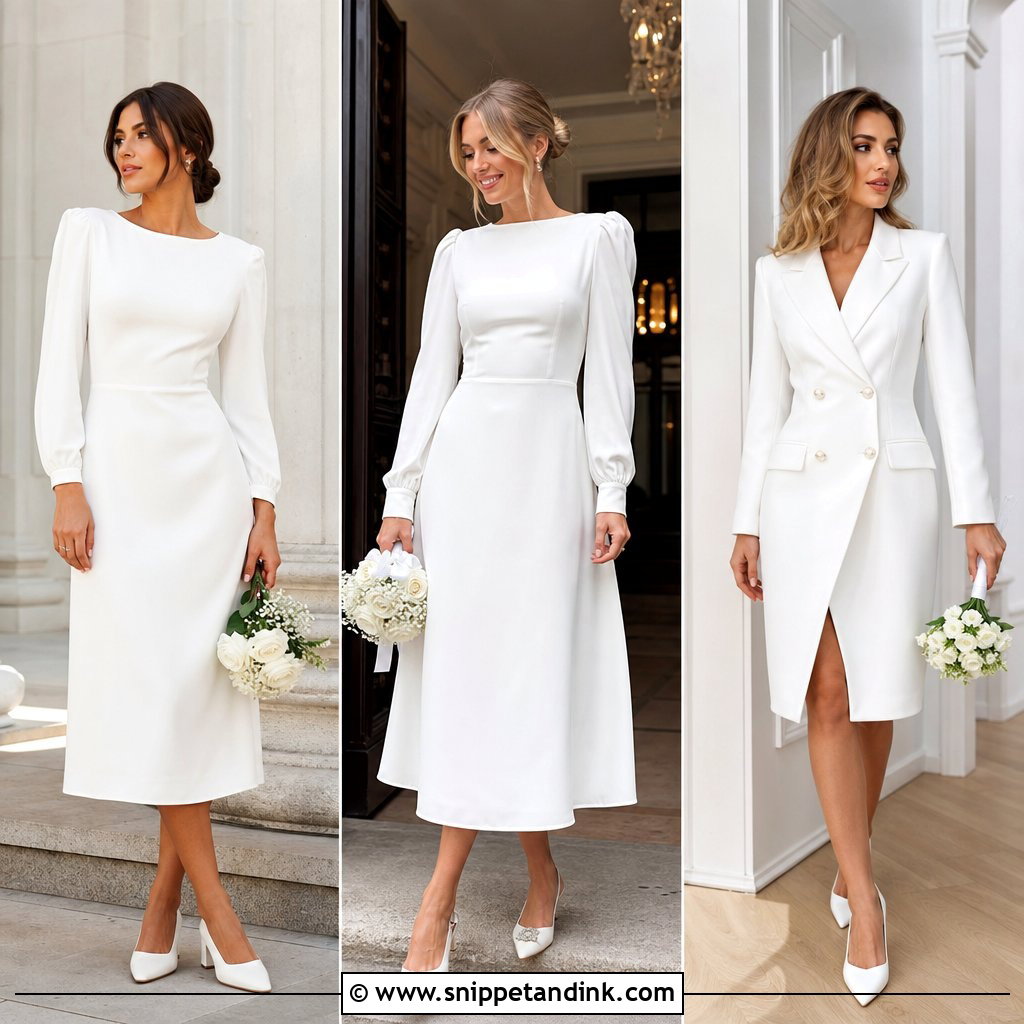
14. Tea Length A-Line Wedding Dress
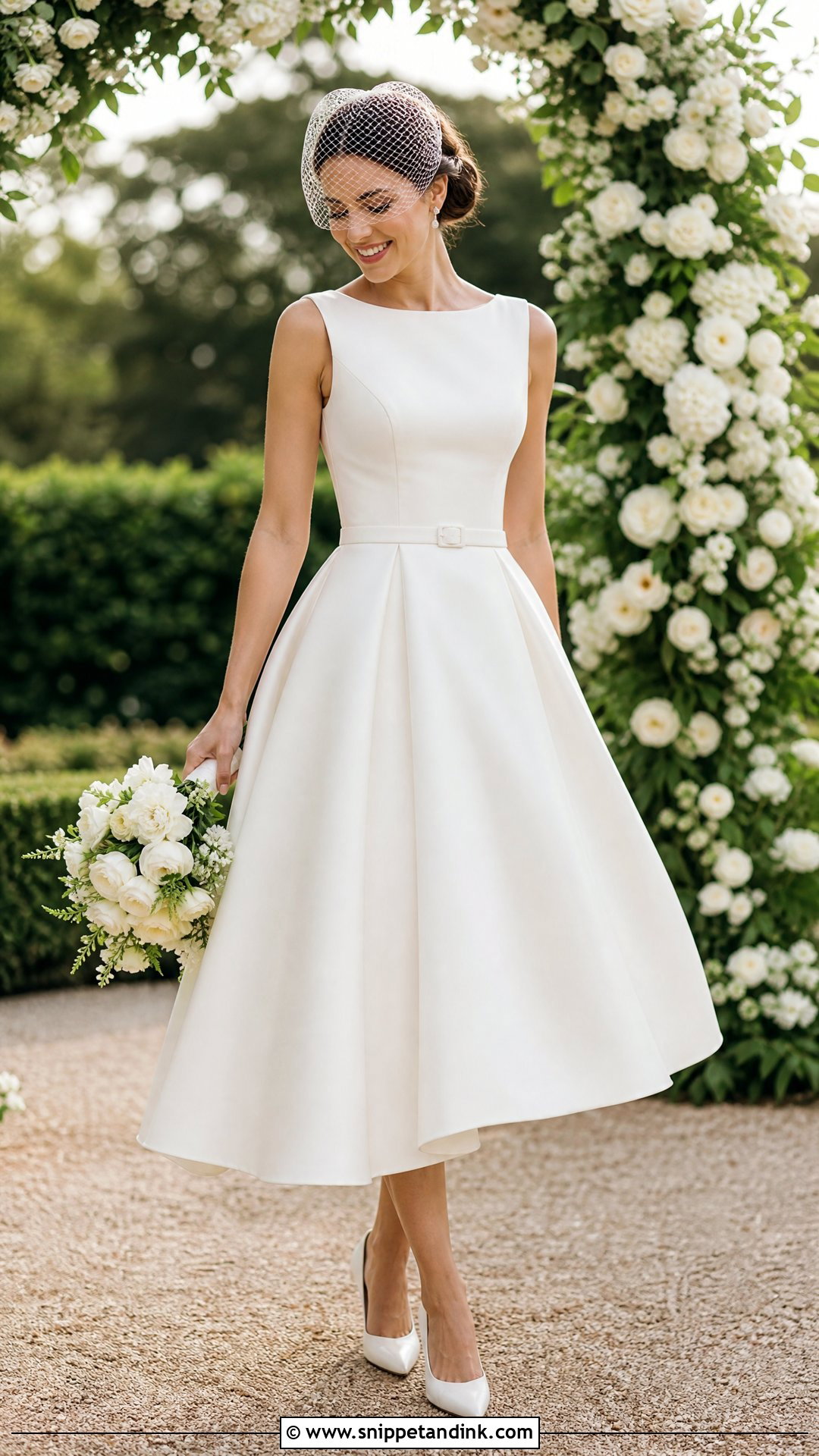
Tea length sits between the knee and the ankle and has a graceful, slightly vintage line. The shoes get real attention here. A fitted bodice with a full but manageable skirt lets you walk and dance easily. Mikado gives crisp shape, tulle a softer one. Pointed pumps, a slim belt and a birdcage or shoulder veil suit it. On shorter frames I raise the hem to show more lower leg; taller brides can wear it longer. A light petticoat adds volume if the skirt looks flat. Hem placement matters most: tea length should never stop at the widest part of the calf.
15. Tea Length Lace Wedding Dress
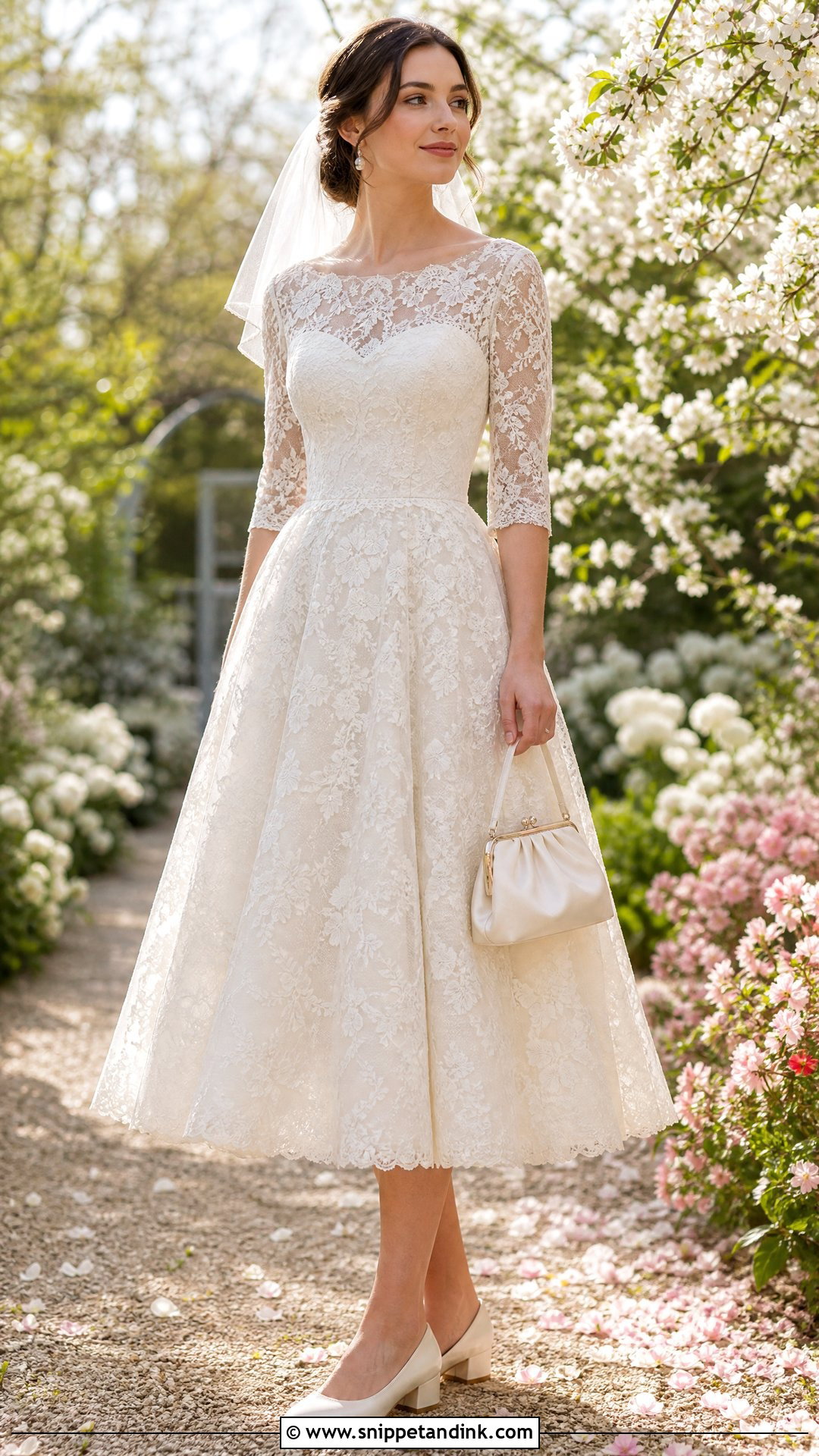
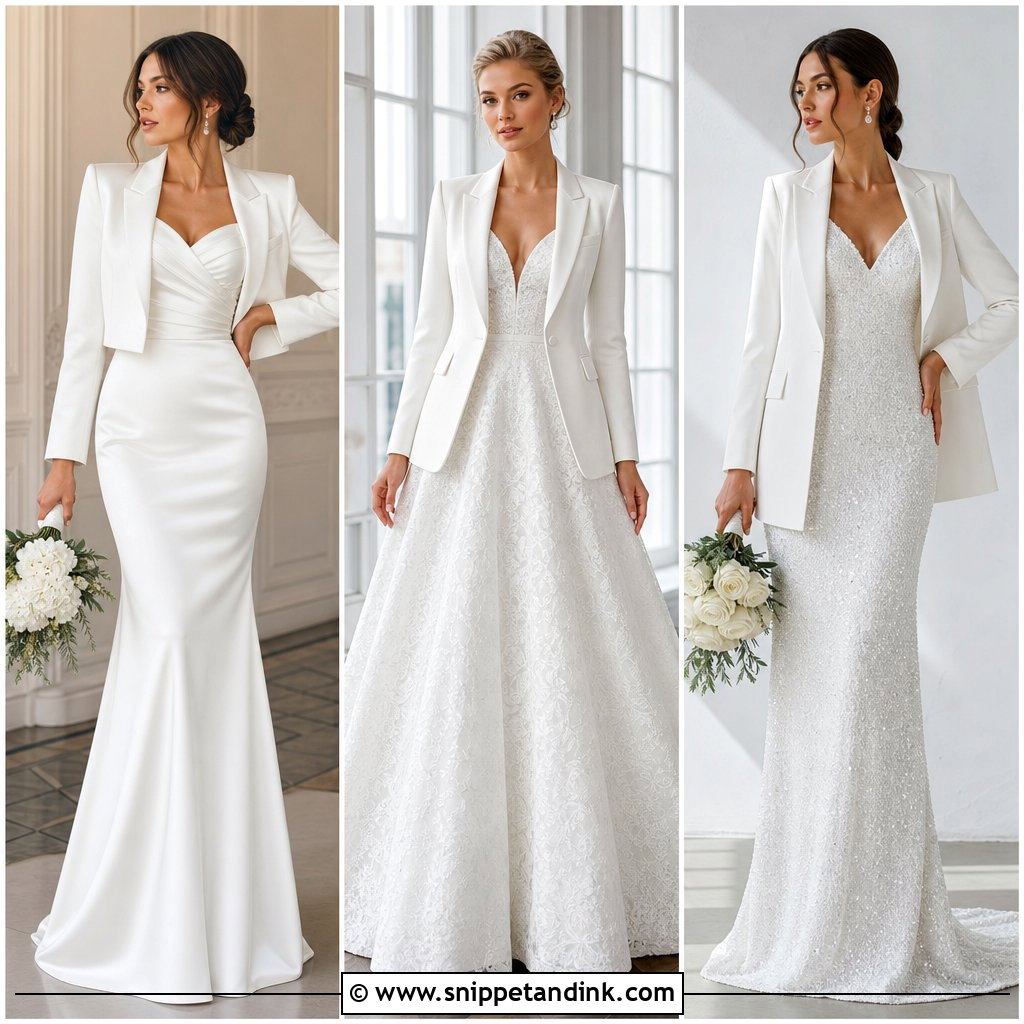
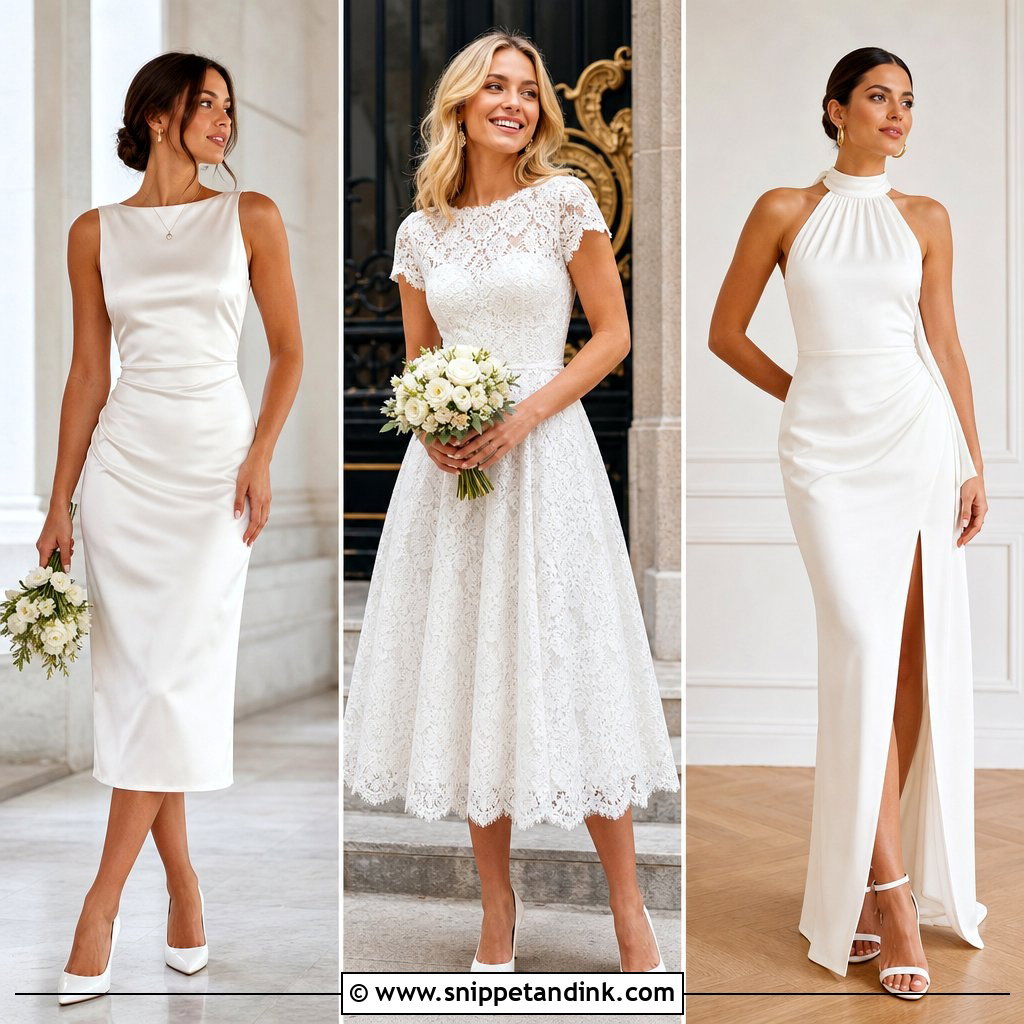
Lace and tea length are a natural vintage pairing. A fitted bodice and soft flare give shape and leave room to move. Small floral lace looks classic; large botanical motifs look bolder. A skin-tone lining shows off the texture, while an ivory one looks more traditional. Low block heels, pearl drops and a small satin bag are enough. A short veil keeps the lace visible and the proportions balanced. With lace sleeves, reach forward and up at the fitting, since lace has little give and can tear at the underarm seam.
16. Strapless Midi Wedding Dress
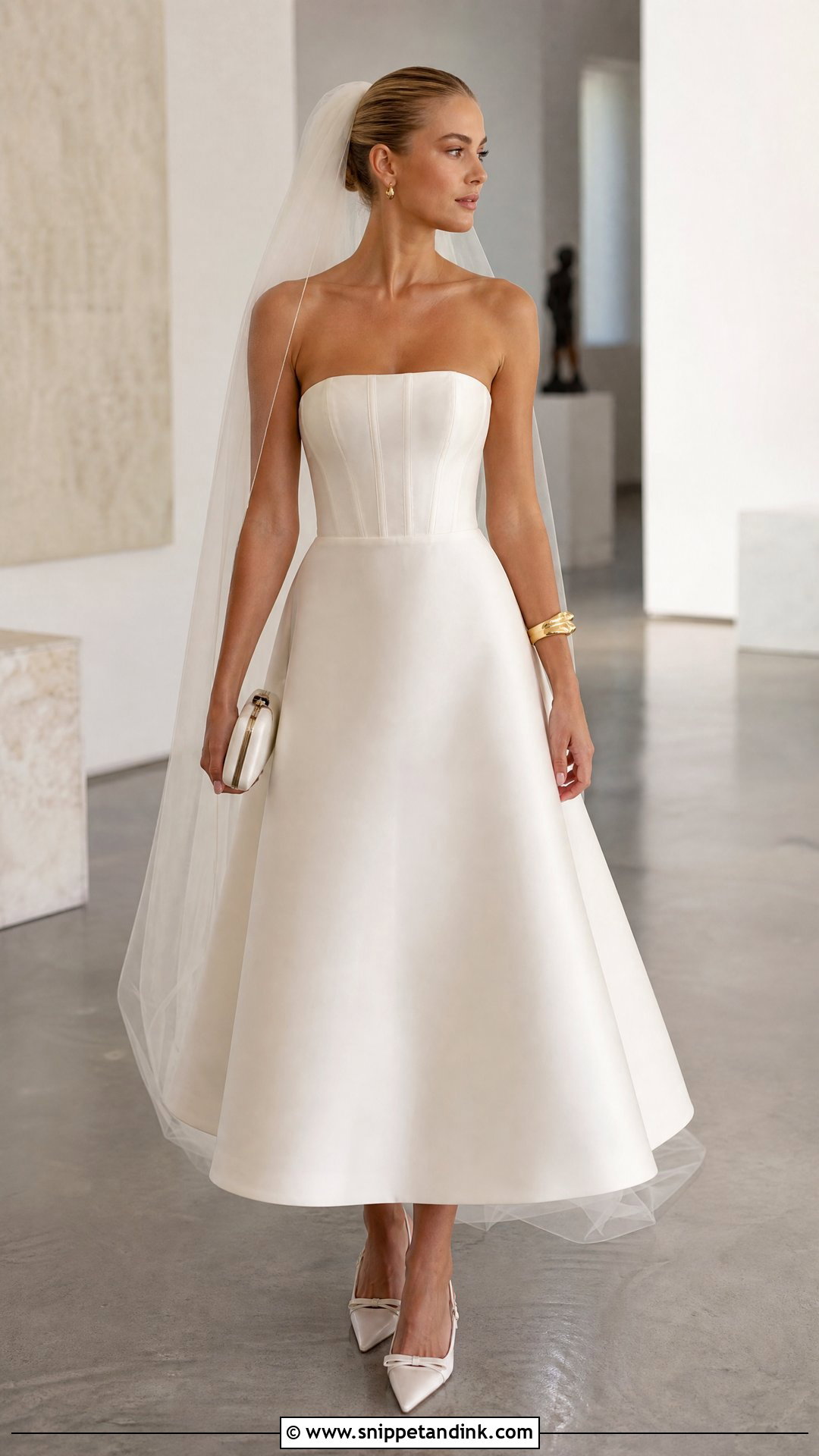
A strapless midi wedding dress is formal enough for a ceremony and easy to live in all day. I look for boning, secure closures and the option of removable straps for brides who need the extra support. Column skirts are sleek; A-line gives more room through the hips. Pointed slingbacks, a sculptural bracelet and a simple clutch pair with a long veil for the ceremony; later, drop the veil and add bold earrings. Where the hem lands matters, so try it in front of a full-length mirror in your shoes and have it moved above or below the widest part of the calf.
17. Slip Midi Wedding Dress
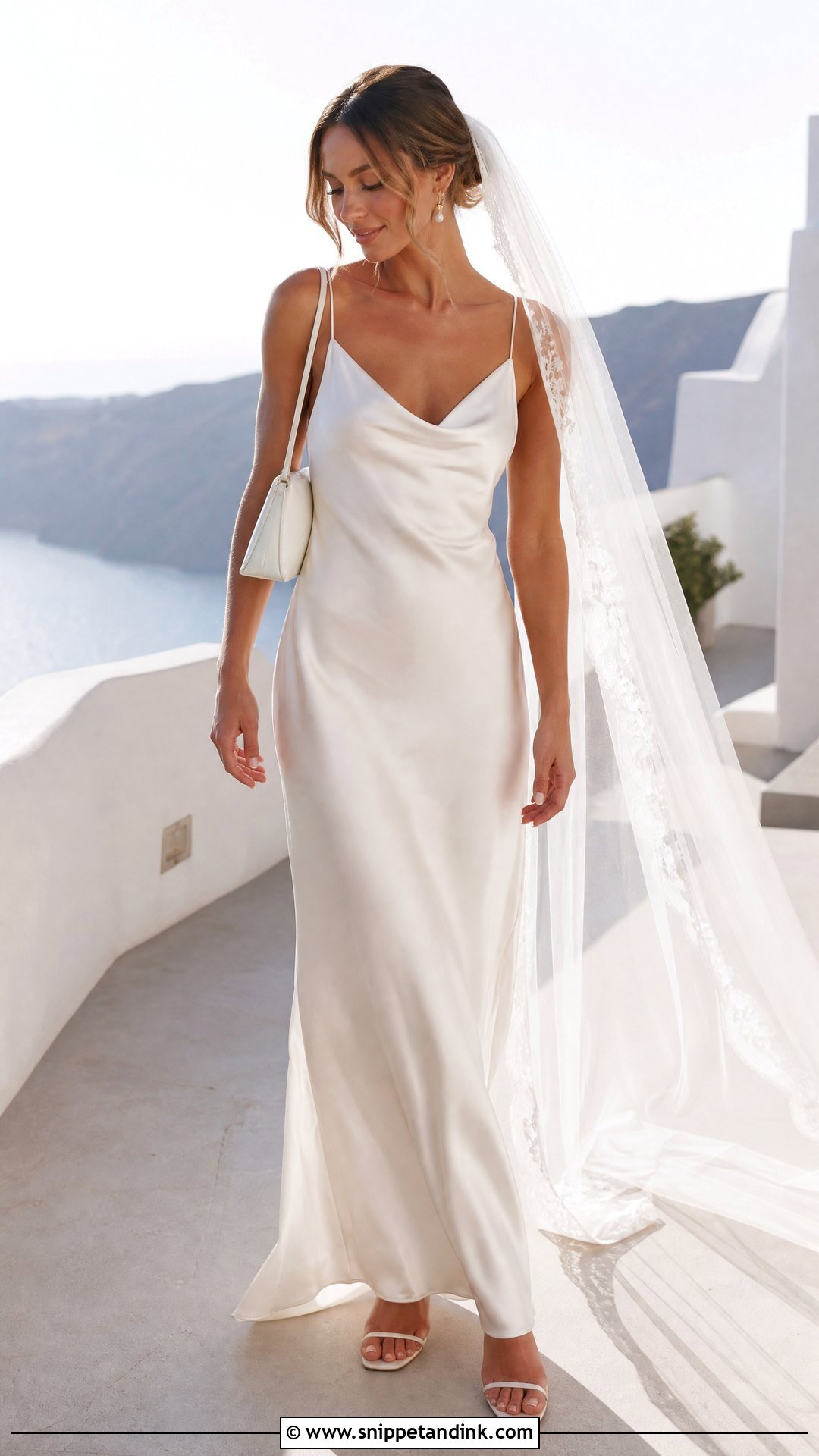
A slip midi is relaxed and easy to restyle afterward. Bias-cut satin skims and moves, but it also shows everything underneath; a straighter slip is less revealing. I check three things: adjustable straps, a lined bodice, and whether the fabric goes see-through in daylight. Delicate sandals, a small shoulder bag and drop earrings suit it, and a lace-edged veil adds bridal texture. A cropped jacket or light wrap covers the arms for a ceremony. Bring two or three underwear options to the fitting, since bias satin is the most unforgiving fabric for lines.
18. Puff Sleeve Midi Wedding Dress
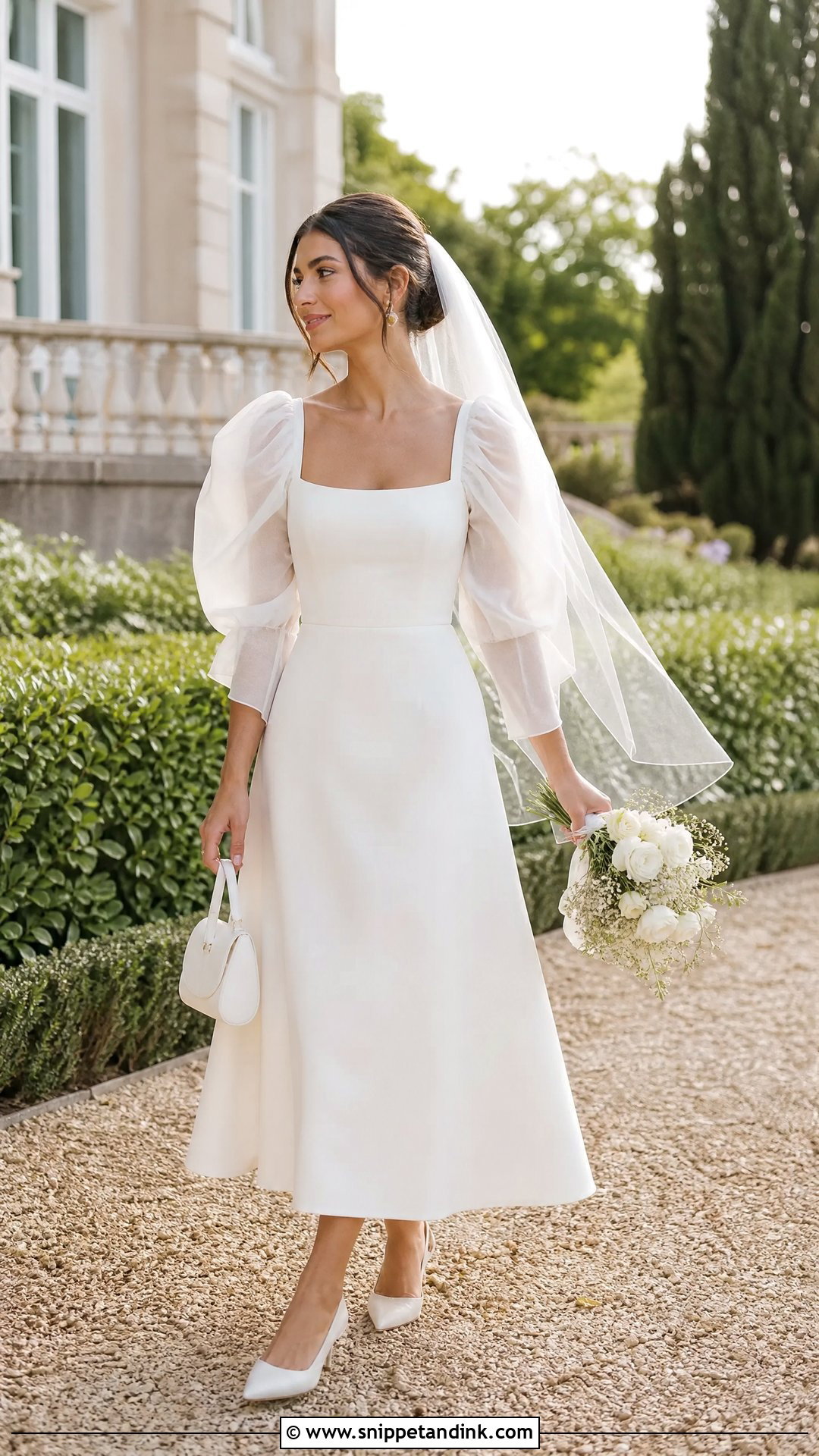
Puff sleeves on a midi look romantic and balanced, because the longer hem offsets the volume at the shoulder. Organza is airy; firmer fabric holds a stronger shape. Keep the waist fitted and the skirt simple. Low pumps, delicate earrings and a small top-handle bag suit it, with a light, plain veil. If you’ll wear it all night, test your arms: big sleeves set too high limit how far you can reach. Removable sleeves are worth asking for if you’d like a sleeker evening look. It suits a spring garden or an old house with a terrace.
19. Two Piece Midi Wedding Dress
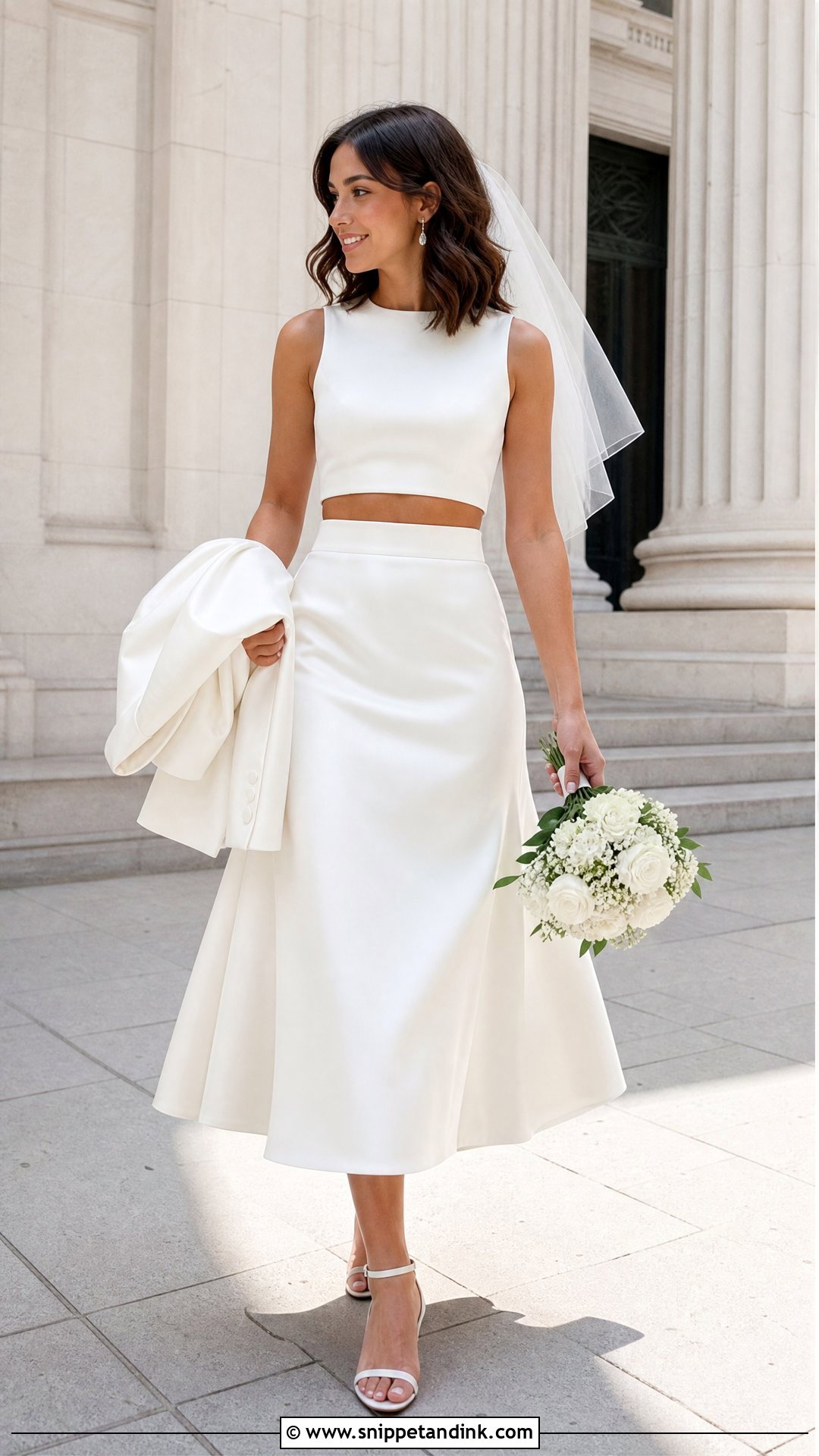
Two-piece midis are flexible, and they’re the answer when you’re a different size on top and bottom. Pair a structured crop top with a high-waisted A-line skirt, or a fitted lace top with smooth satin. You only need to show a sliver of waist, and the pieces can overlap if you’d rather not. Match the ivories in daylight, not under shop lights, since lace and satin can look like two different whites in photos. Block-heel sandals, small earrings and a shoulder-length veil work, and a cropped blazer covers you for the ceremony.
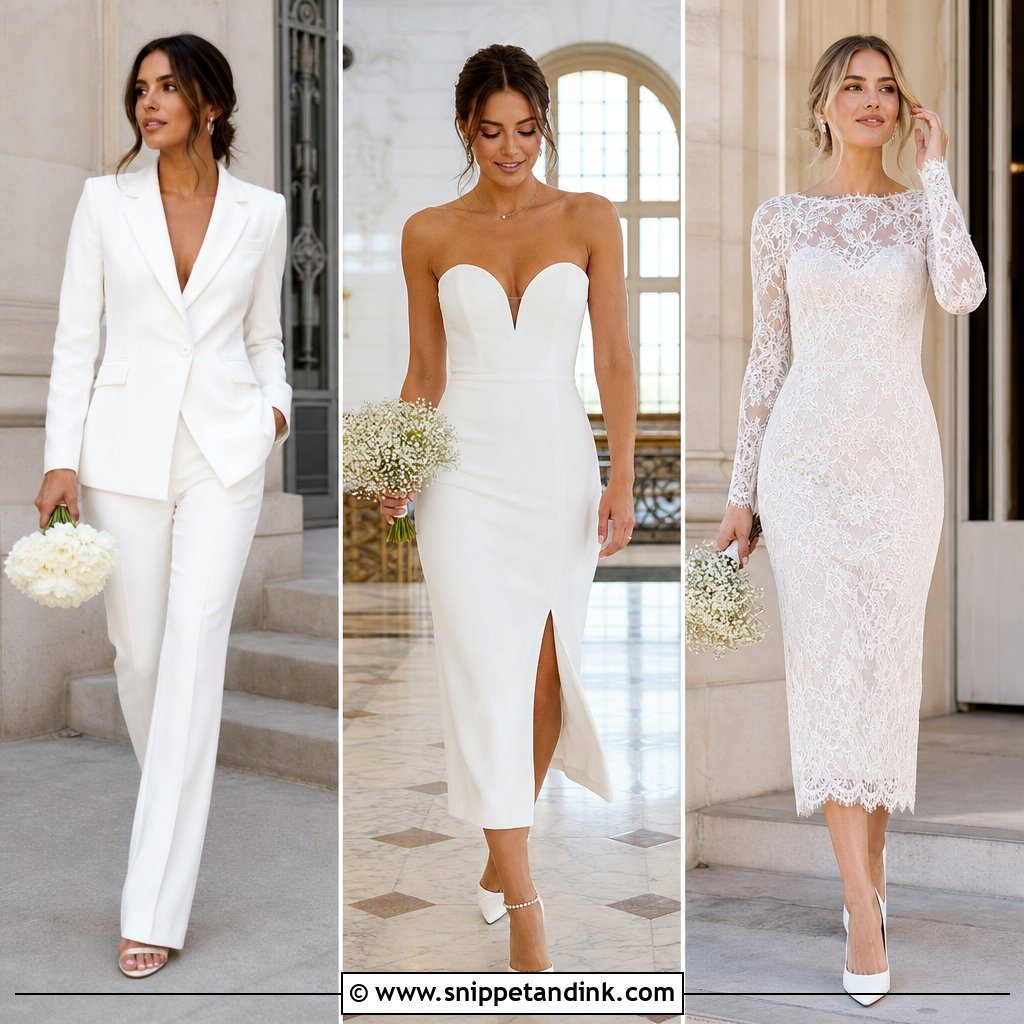
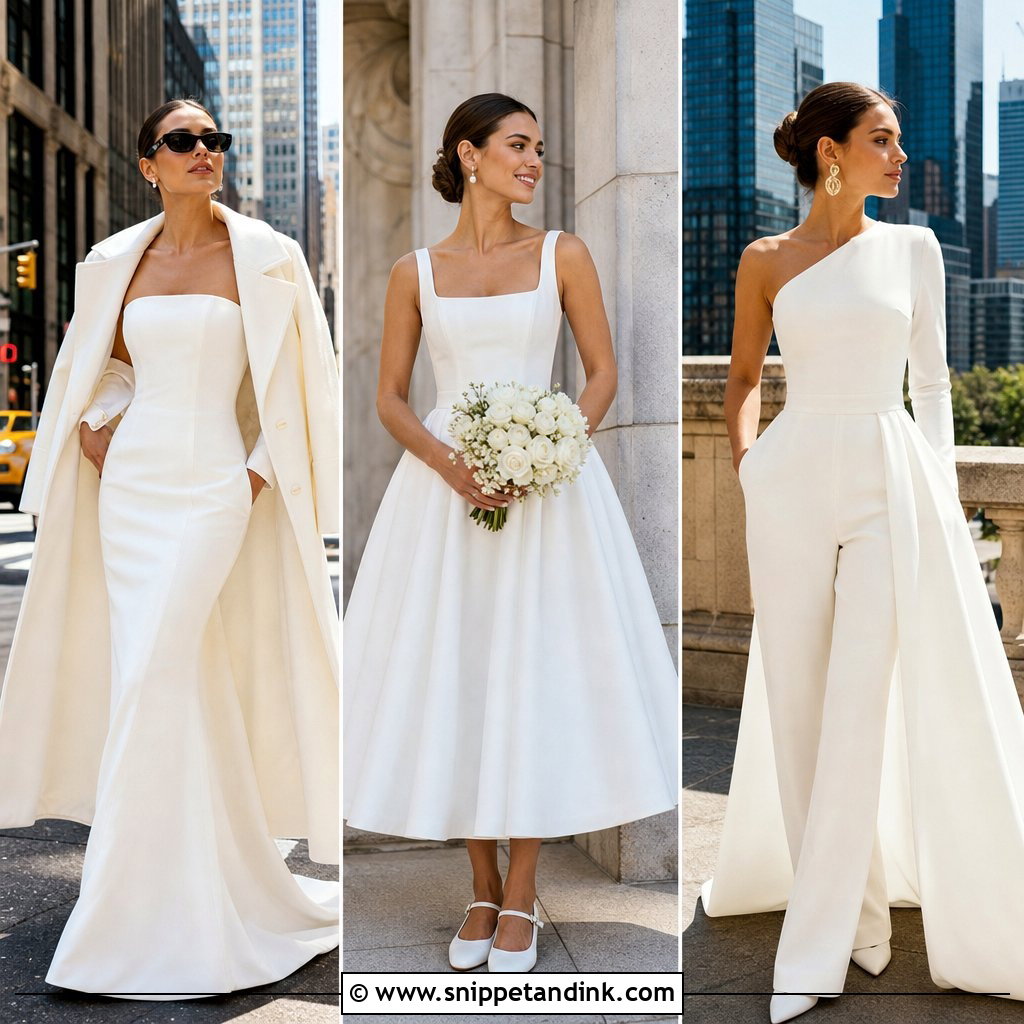
20. One Shoulder Asymmetrical Wedding Dress
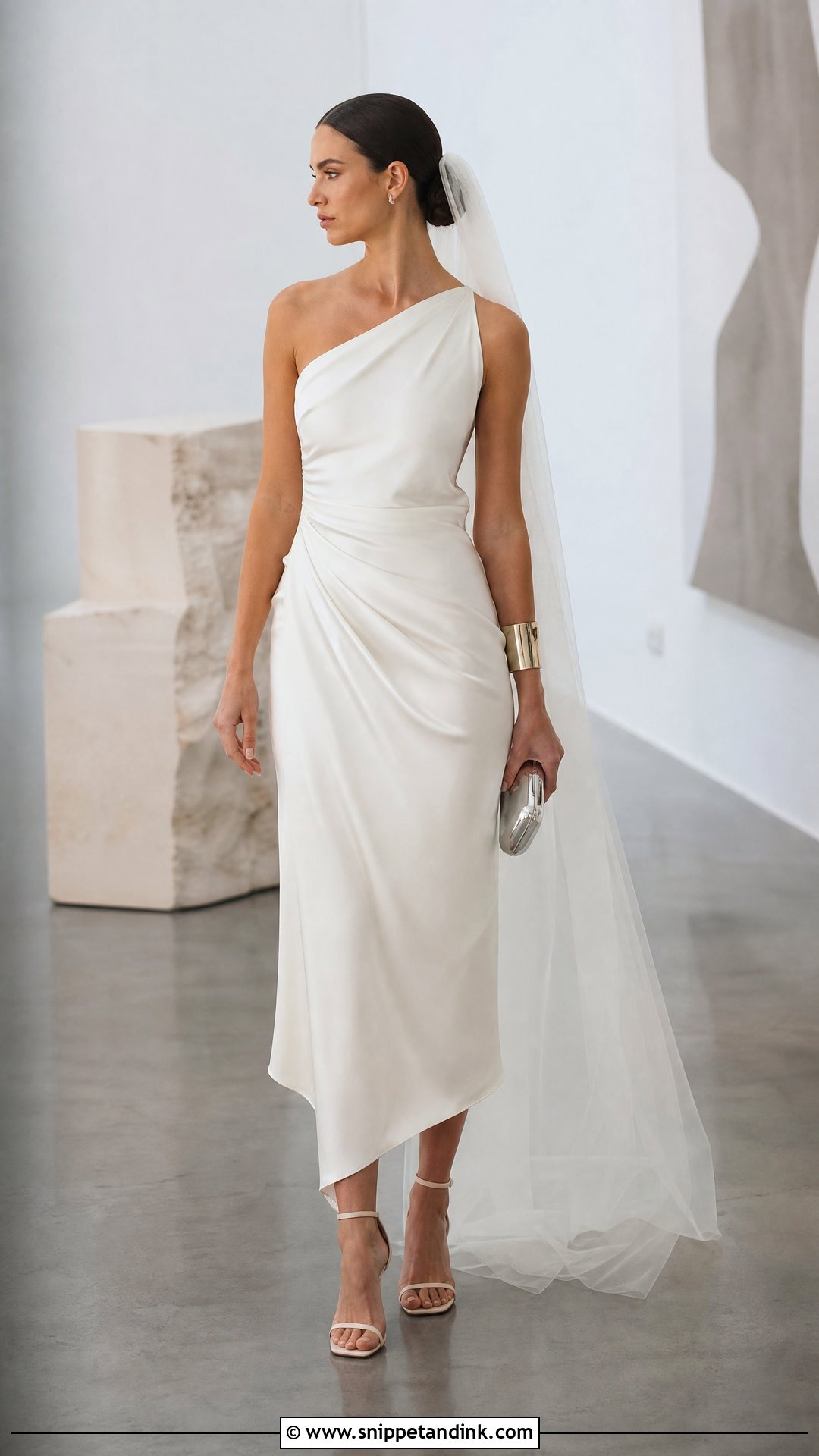
A one-shoulder neckline gives a short dress interest without any decoration. It works with a mini, knee or midi hem, depending on your coverage. Structured crepe looks clean; draped satin is softer. Slim heels, a cuff on the bare arm and a compact clutch suit it; skip the necklace. A low bun or side-swept hair shows the shoulder. For drama, pin a long plain veil beneath the bun. On asymmetric dresses I check the bare-side armhole, which should lie flat against the ribs without gaping when you turn.
Wearing a Short Dress Through Taxis, Steps and Street Portraits
City weddings mean moving around: a registry office, a quick photo walk, a restaurant. That shapes the dress in ways a church-and-hall wedding doesn’t.
Practise getting into a car at home. Sit first, then swing both knees in together, and do it in the dress before the day. Pavement grates and cobbles catch stiletto tips, so a block heel or a pointed flat saves you, and photographers often prefer you upright and steady anyway. Street corners and rooftops are windy; a light mini or slip skirt lifts in a gust, so ask for a weighted hem or wear fitted shorts underneath.
Carry a small kit in a friend’s bag: blister plasters, safety pins, fashion tape, a stain pen and a fold-up umbrella. For colder months, plan a real coat rather than a pashmina; a tailored ivory coat looks good in photos and you won’t be shivering on the steps.
Shorter Hems Still Read as Bridal
Shorter wedding dresses can be just as romantic, formal or playful as a floor-length gown. Minis make great reception outfits, while tea-length and midi designs give more coverage and still move easily. At every fitting, look hard at construction, where the hem falls, what you’ll wear underneath and the shoe height. The shoes are on show all day, so they need to be both right for the dress and comfortable for hours. Keep accessories in line with the mood you want rather than adding more. Done with care, a shorter hem looks every bit as bridal as a train.
You'll Like These Ideas:



Leave a Reply