
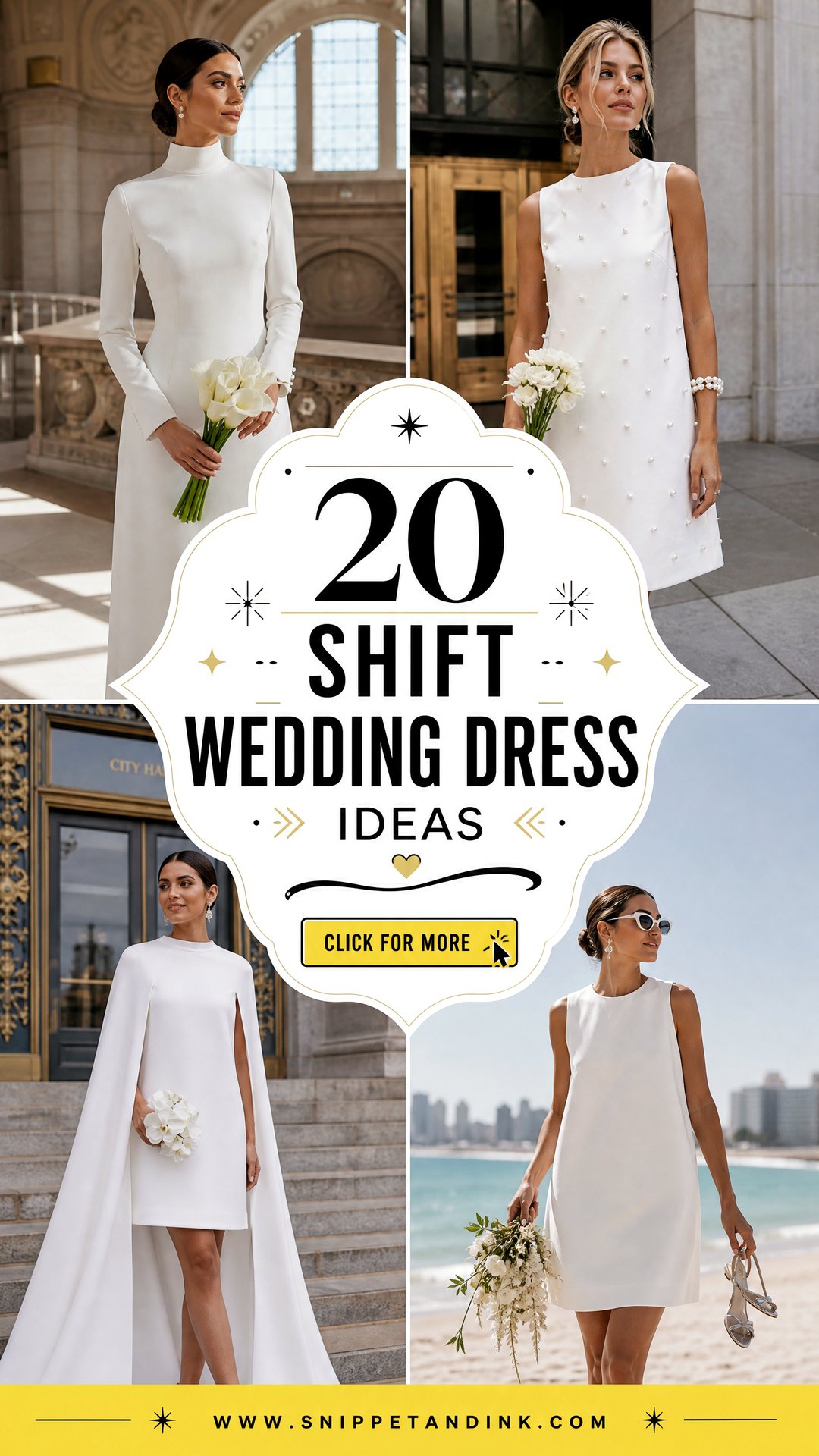
A shift is the dress I suggest most often to brides who want to forget what they’re wearing by the second hour. It drops straight from the shoulders with no fitted waist and no skirt to manage, so the cut does its work at the shoulder seam and the bust rather than at the ribs. That makes fabric the whole story: structured satin looks spare and modern, lace softens it, and a short version turns into a reception dress. Because the outline is so plain, it leaves room for one strong accessory, a pair of gloves or a dramatic veil, without the look tipping into costume. It suits a courthouse ceremony as easily as a garden or an indoor dinner, and the twenty looks below show how far that range goes.
Fitting a Shift So It Falls Straight Instead of Boxy
A shift has nowhere to hide a poor fit. With no waist seam and no skirt, everything rests on three points: the shoulders, the bust and the hips. When I fit one, those are the only places I pin first, and I ignore the waist entirely.
- Shoulders: the seam should sit right at the edge of your shoulder bone. Too wide and the whole dress looks borrowed, and it’s one of the harder alterations, so get this right when you buy.
- Bust: the fabric should touch the fullest point of the bust and then fall. If it pulls into diagonal lines toward the armpit, a bust dart needs letting out or adding.
- Hips: you want roughly two fingers of ease while standing. Any less and the dress rides up and creases across the lap every time you sit.
- Length: hem it last, in your wedding shoes, once everything else is settled.
Then do what I call the city hall test. Sit on a hard chair, lean forward as if signing a register, stand up and climb a flight of stairs. If the hem climbs, the back pulls tight or the neckline gapes when you bend, it needs another fitting. A simple shift rarely needs more than two appointments, but book the first one about six weeks out so there’s time for a second pass.
Petite and tall frames
On a petite bride, knee or midi length keeps the proportions right; a floor-length shift can swamp a short frame unless the hem is taken up exactly. Tall brides often find off-the-rack minis too short once seated, so check the length sitting down before you order.
1. Simple Satin Shift Wedding Dress
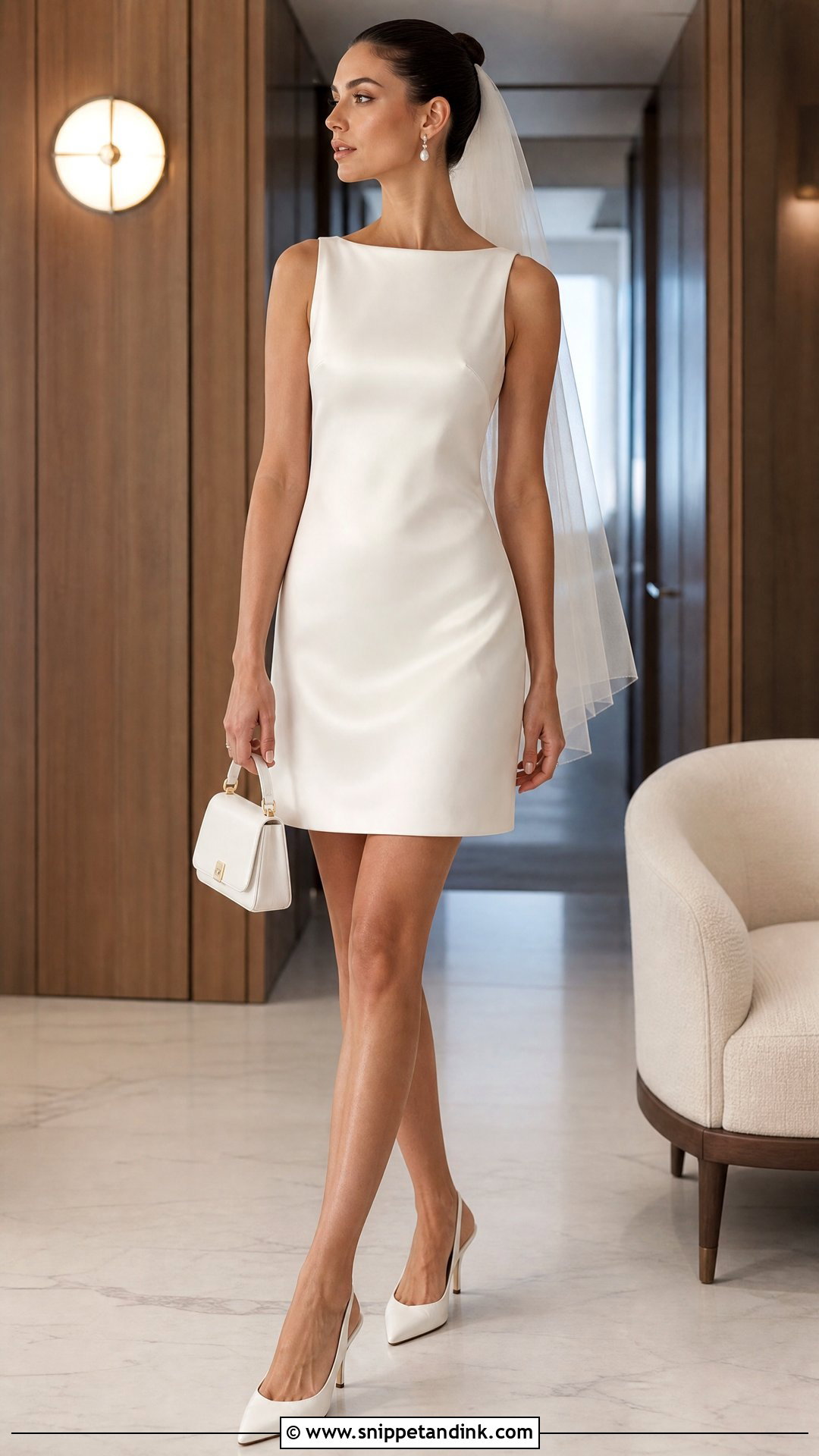
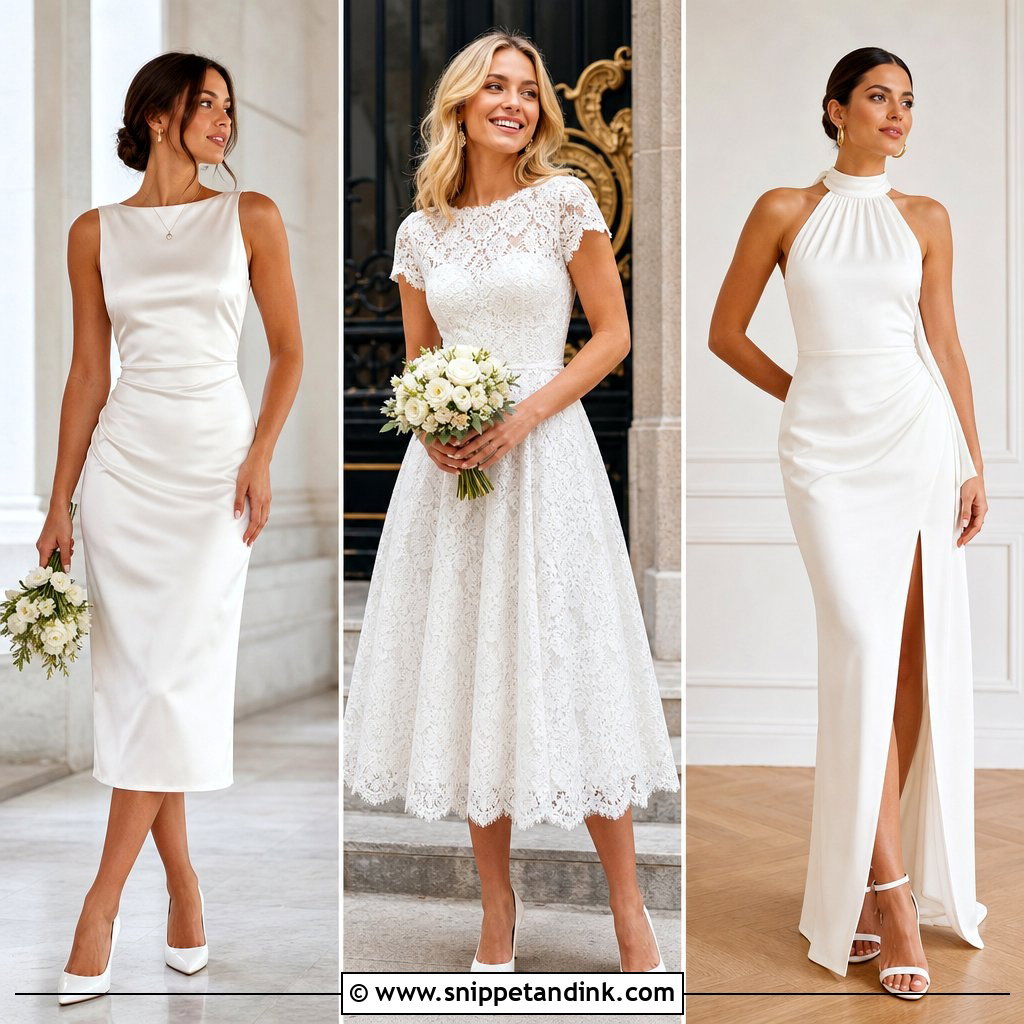
Satin is the fabric I reach for first on a shift, but weight matters more than shine. A thin charmeuse clings and shows every line underneath; a medium-weight duchess or crepe-back satin hangs away from the body and stays opaque under flash. A sleeveless ivory design with a bateau neckline is the cleanest starting point, and a low back adds interest for the walk away. I keep the rest quiet: pointed slingbacks, small pearl drops, a structured mini bag and a fingertip veil. Hair goes sleek, a low bun or polished ponytail, because loose curls fight the straight lines of the dress.
2. Lace Shift Wedding Dress
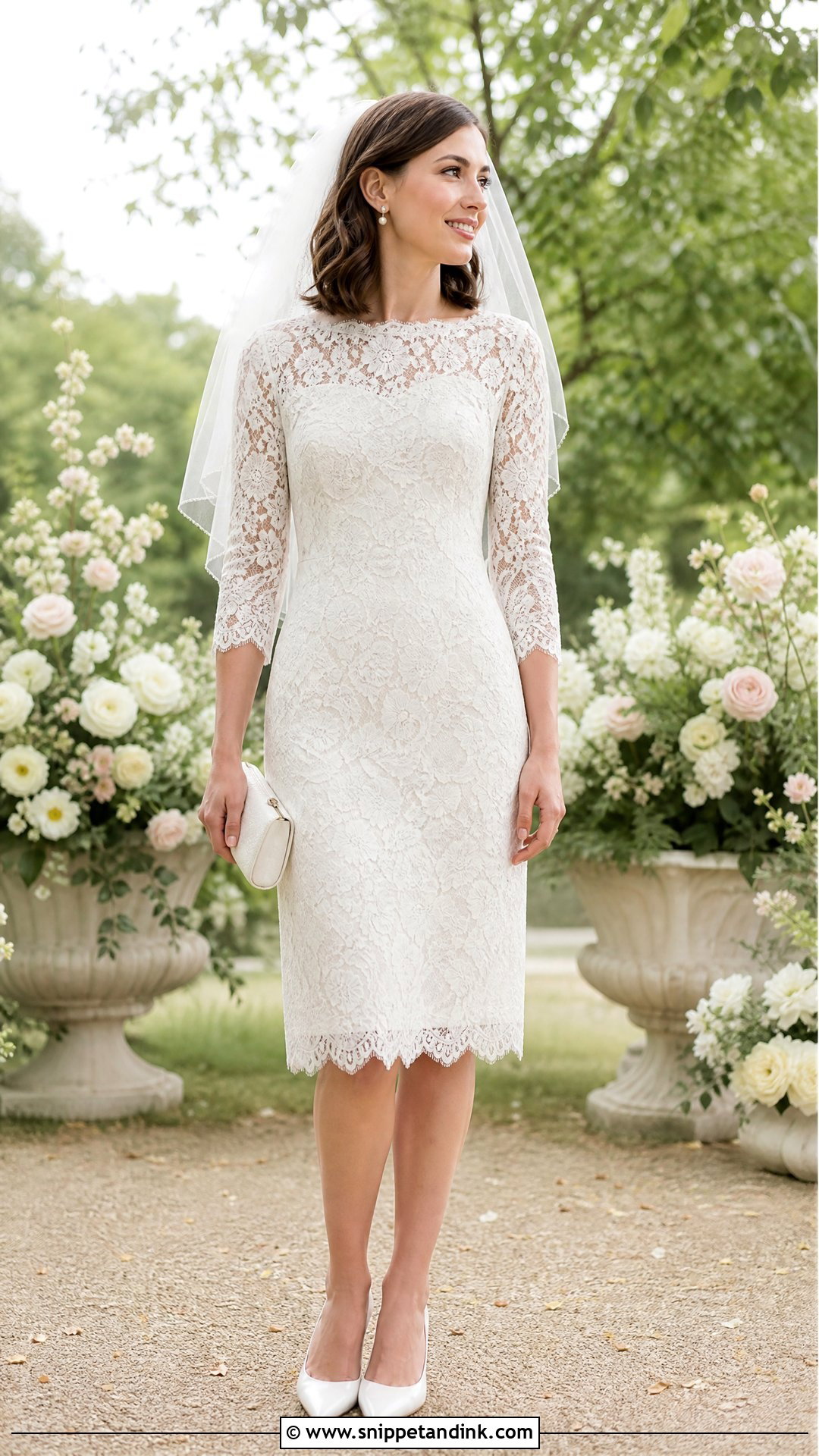
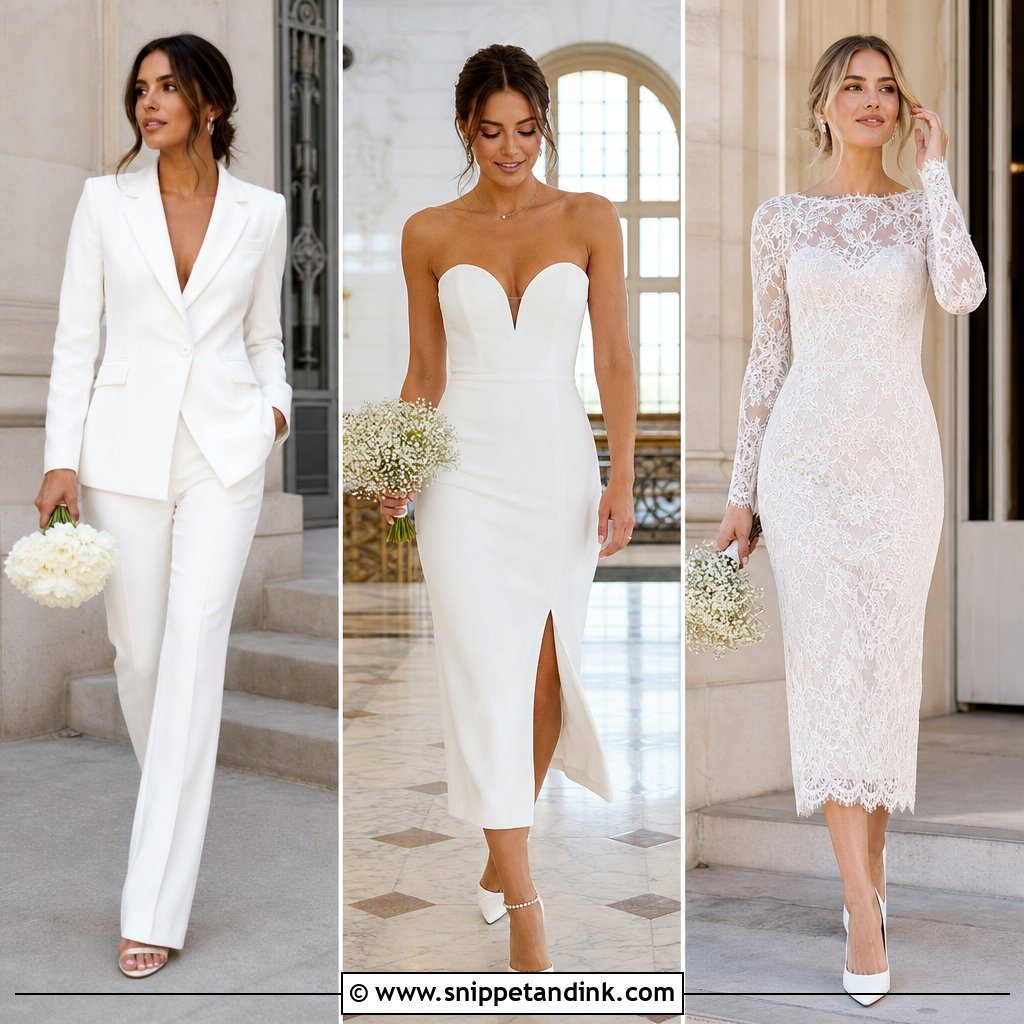
Lace changes how a shift moves, and not always in your favour. Unlined lace tends to cling at the hip and bunch over the stomach when you sit, so I only recommend lace shifts that are lined through the body, with the sheer layer kept to the neckline or sleeves. Floral lace reads romantic; geometric lace looks sharper. I’d pair it with pointed pumps, pearl studs and a slim satin clutch, then keep the veil at shoulder length so the pattern still shows in photos. Loose waves or a relaxed chignon and a compact white bouquet suit a garden, a historic building or a spring afternoon.
3. Long Sleeve Shift Wedding Dress
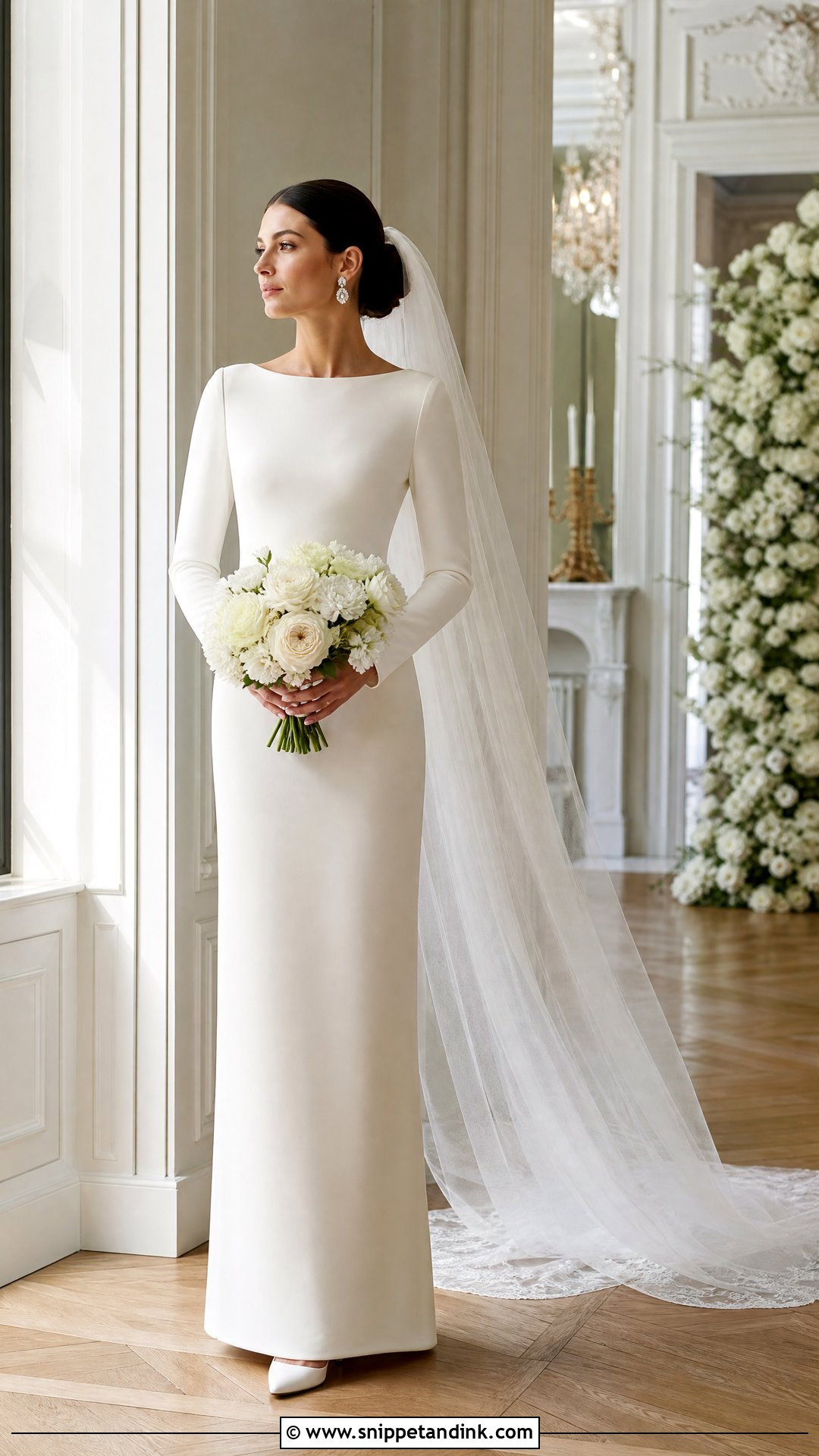
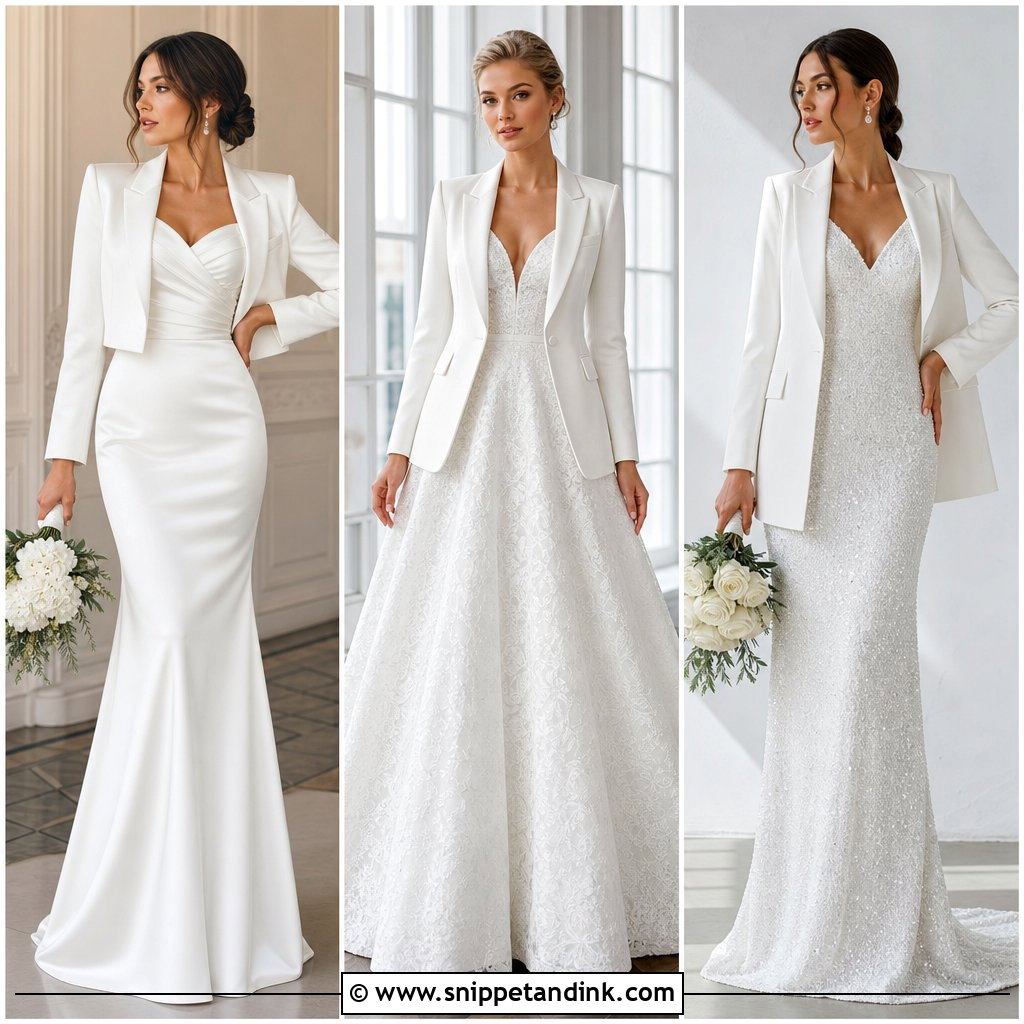
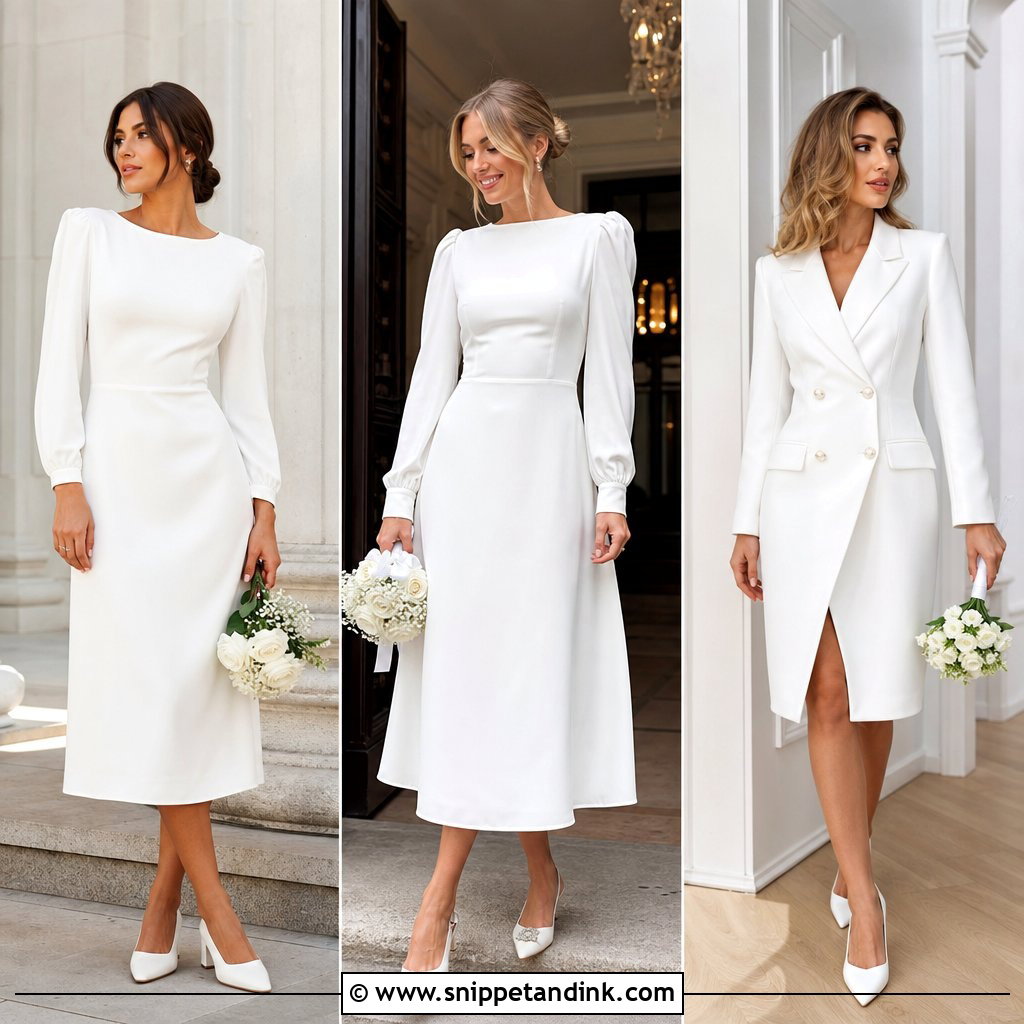
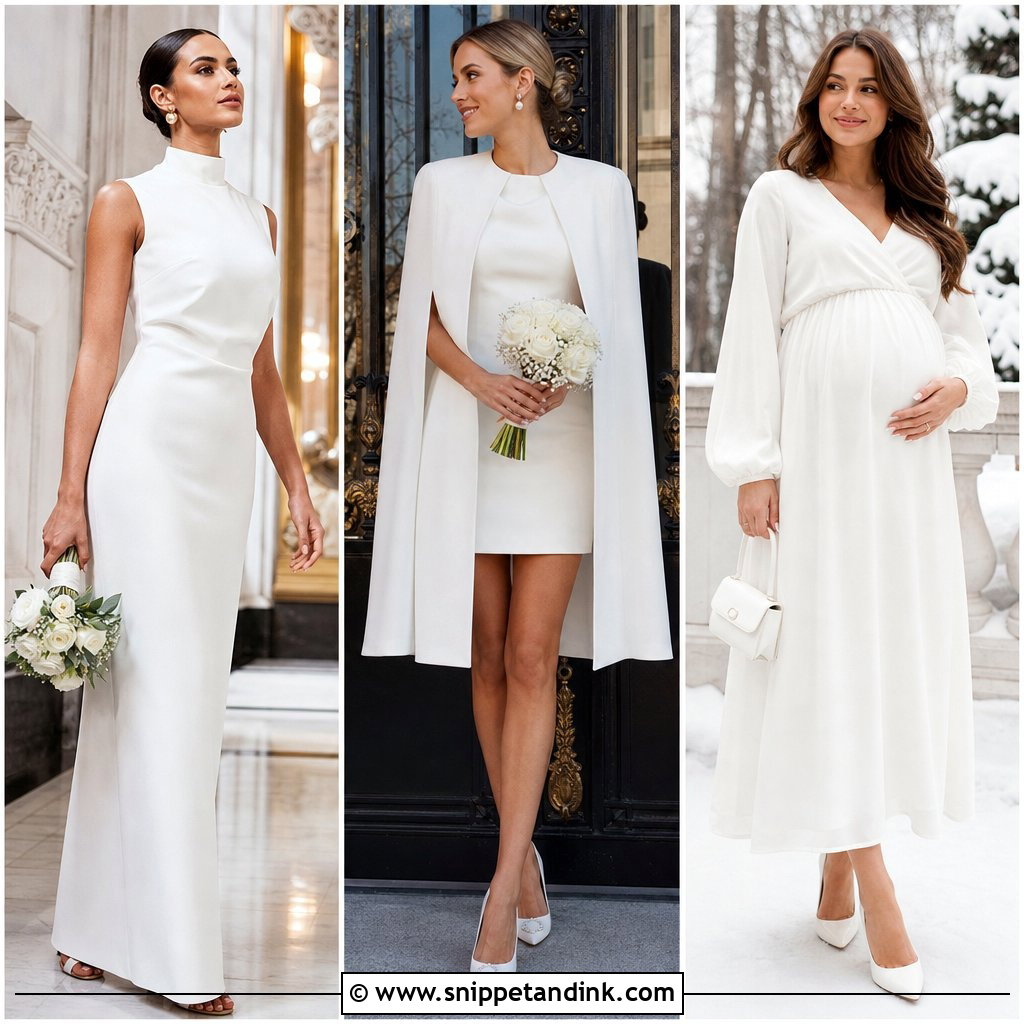
Sleeves are where shifts most often fail at the fitting. If the armhole is cut low, raising your arm lifts the whole dress, so I always ask a bride to reach up as if hugging someone tall before we pin anything. Crepe, satin and lined chiffon all work without adding volume. Narrow sleeves look streamlined; a slightly flared cuff hints at the sixties. For a formal ceremony I’d add closed-toe ivory heels, crystal earrings and a simple cathedral veil, with a low bun so the neckline stays clear. In cold months, a tailored white coat gives you outdoor portraits without hiding the dress under a borrowed jacket.
4. Sleeveless Shift Wedding Dress
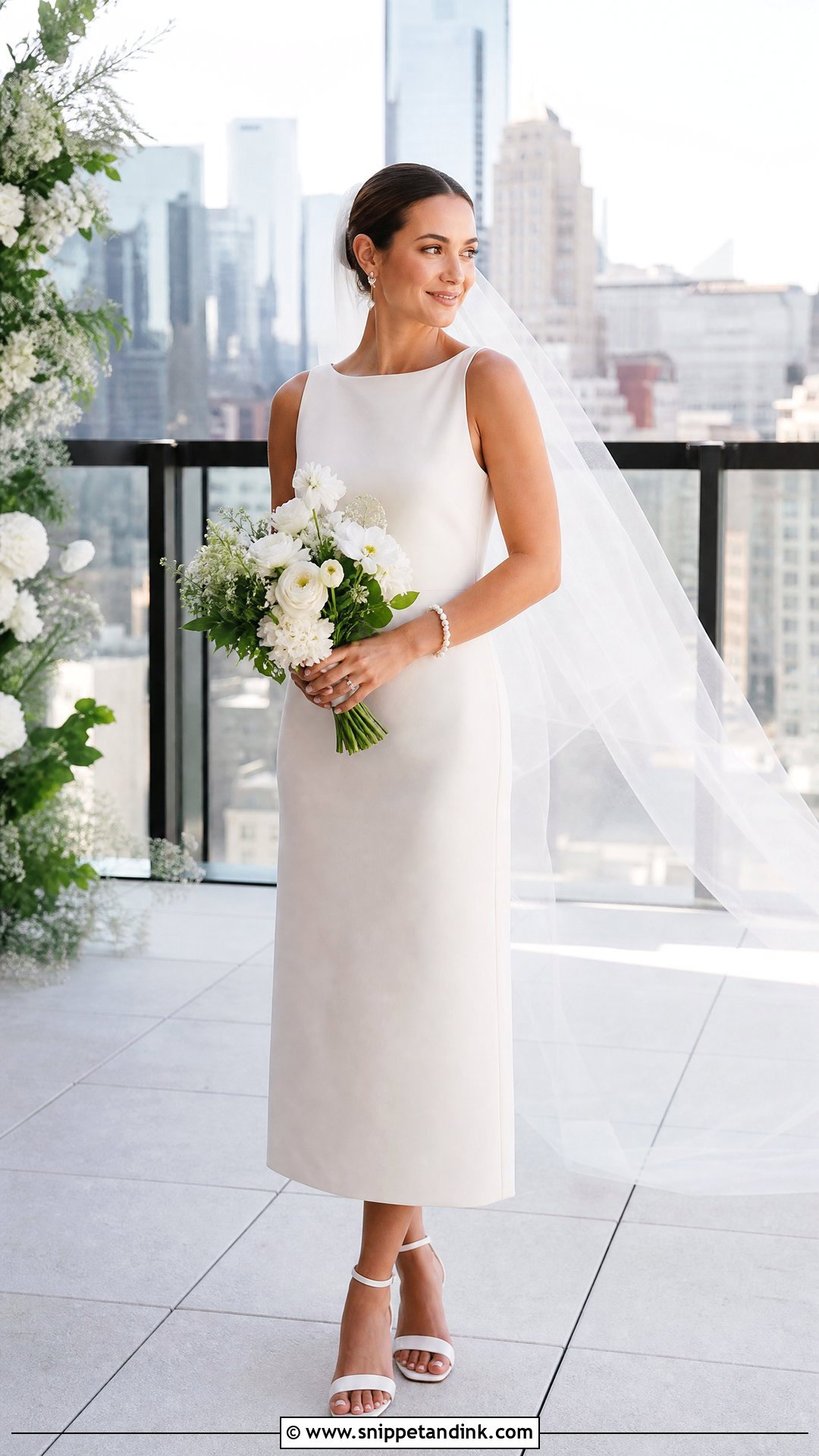
Bare shoulders make this the warm-weather shift, though strap width decides what you can wear underneath. Wider straps cover a regular bra and give the bust real support; narrow ones mean a strapless or stick-on option, which some brides find miserable by evening. Structured crepe or silk keeps its shape as you move. I add strappy block heels for grass or rooftops, a pearl bracelet, small earrings and a light veil. An updo shows the neckline best, but shoulder-length waves feel more relaxed at a casual venue. Keep the bouquet modest so it doesn’t sit in front of the one detail the dress has.
5. High Neck Shift Wedding Dress
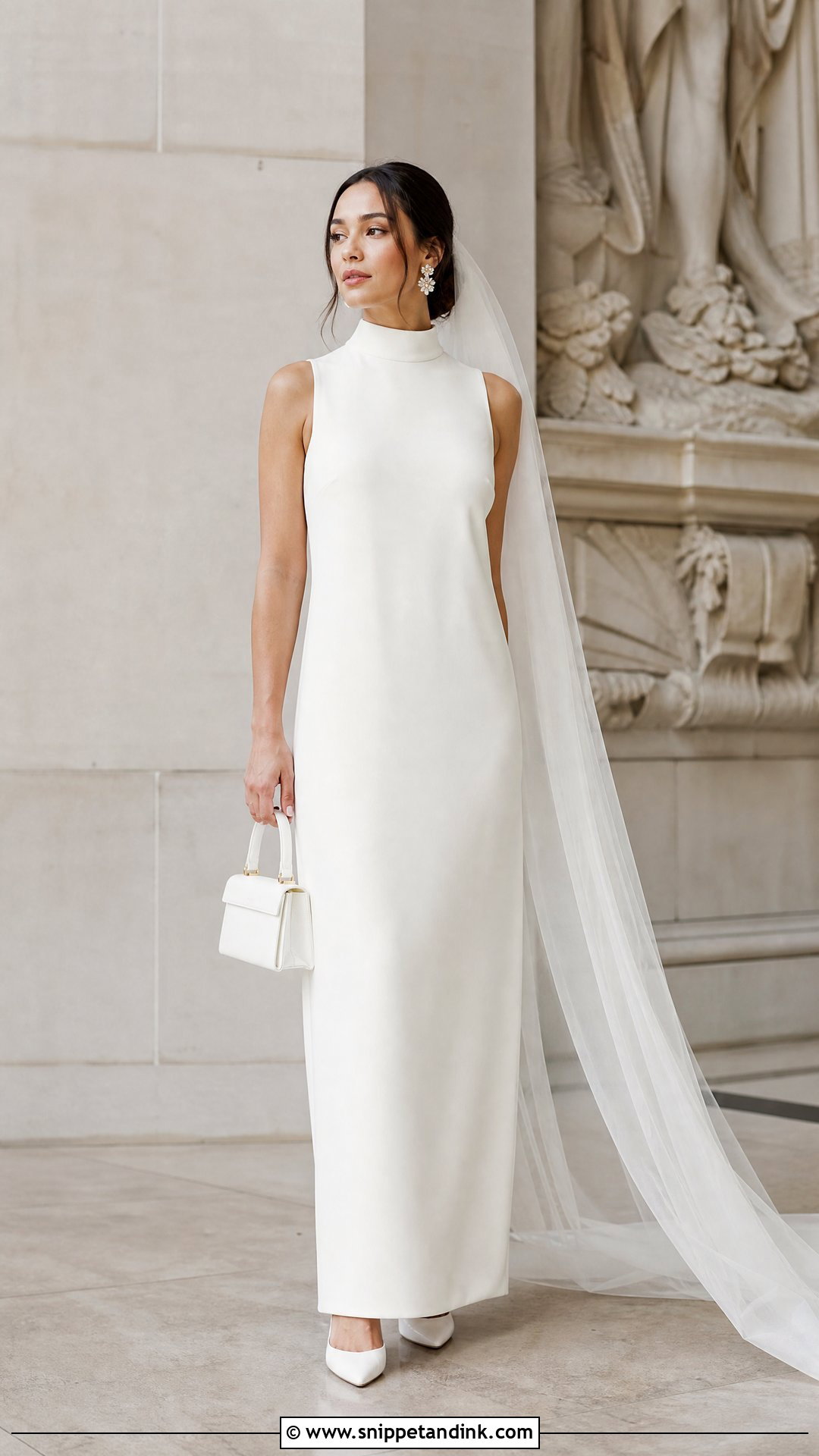
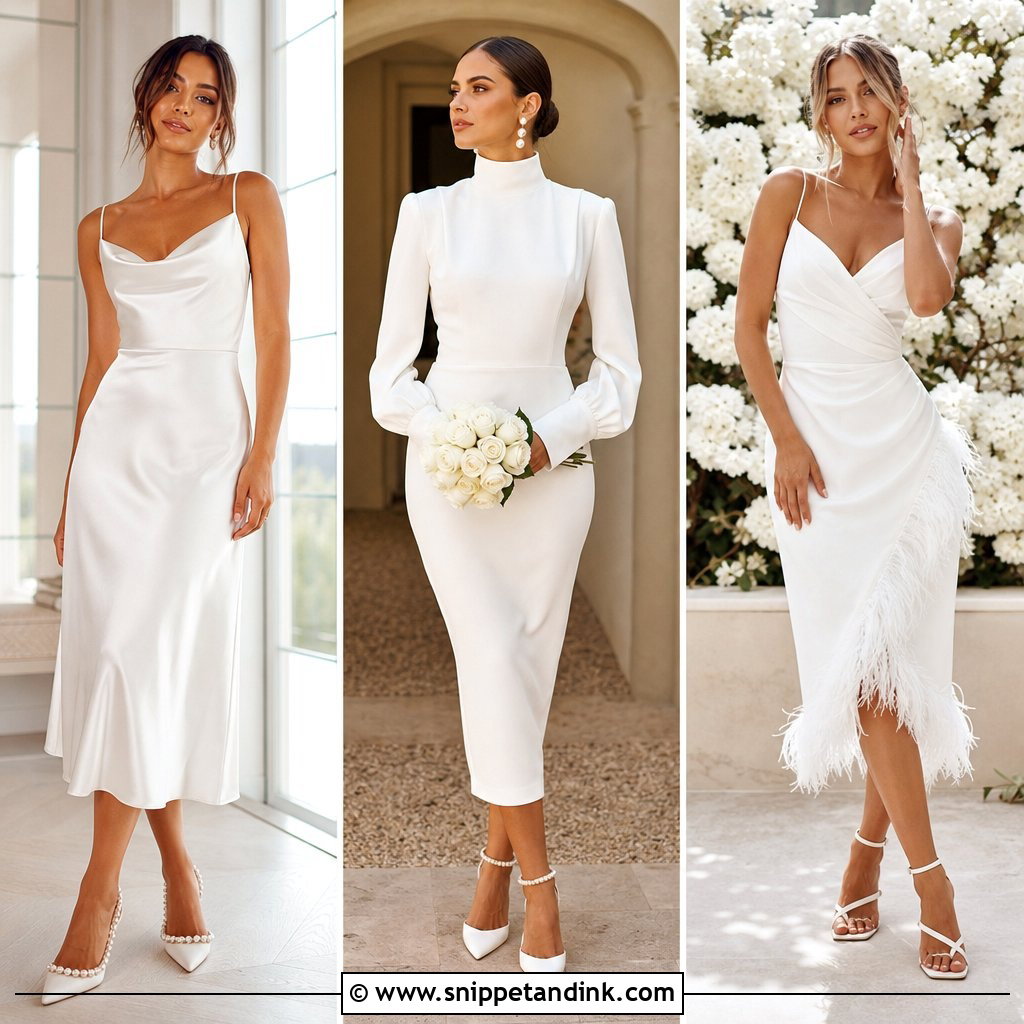
A high neck pulls the eye up to the face, which is exactly why I tell brides to plan their earrings before anything else. A necklace has nowhere to sit, so skip it. In smooth crepe, satin or embroidered fabric, the raised neckline looks strongest sleeveless or with a cap sleeve, and an open back or side slit stops the coverage feeling heavy. Sleek pointed heels and a compact top-handle bag finish it. A low braided bun or neat chignon echoes the line of the collar, and a long veil adds movement behind a dress that otherwise stays very still. Museums, city ceremonies and winter dinners suit it well.
6. Boat Neck Shift Wedding Dress
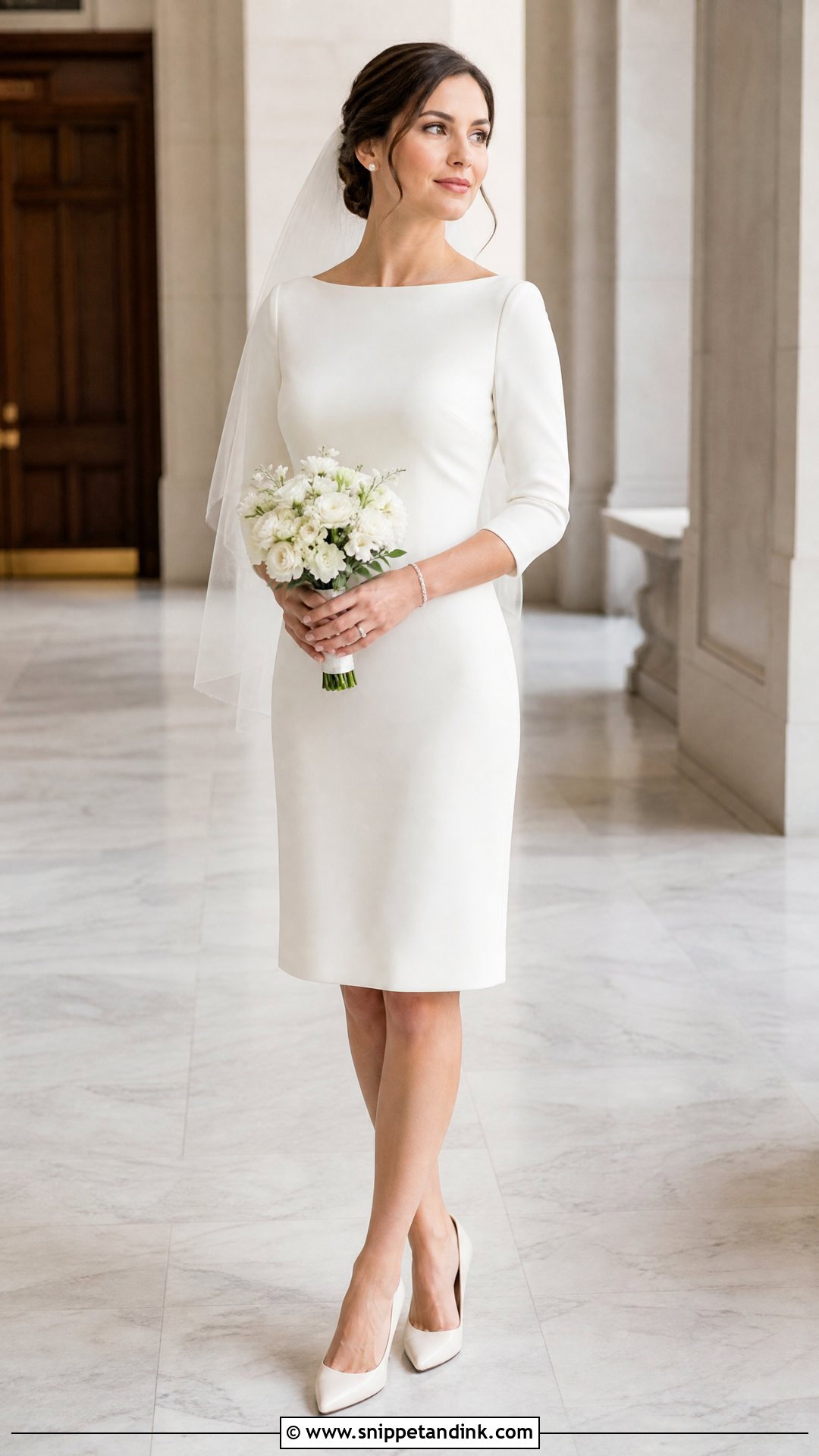
The boat neck shift wedding dress is a favourite of mine for brides with narrow shoulders, because the horizontal line across the collarbone adds width up top and balances the straight drop below. It works with three-quarter sleeves, cap sleeves or none. Matte crepe looks understated; satin feels more formal. One thing to check: a wide boat neck can slide off the shoulder, so ask for lingerie loops or a small snap at the shoulder seam. Low pointed pumps, pearl studs and a tulle veil set beneath a smooth bun finish it, with covered buttons down the back if the front is plain.
7. Square Neck Shift Wedding Dress
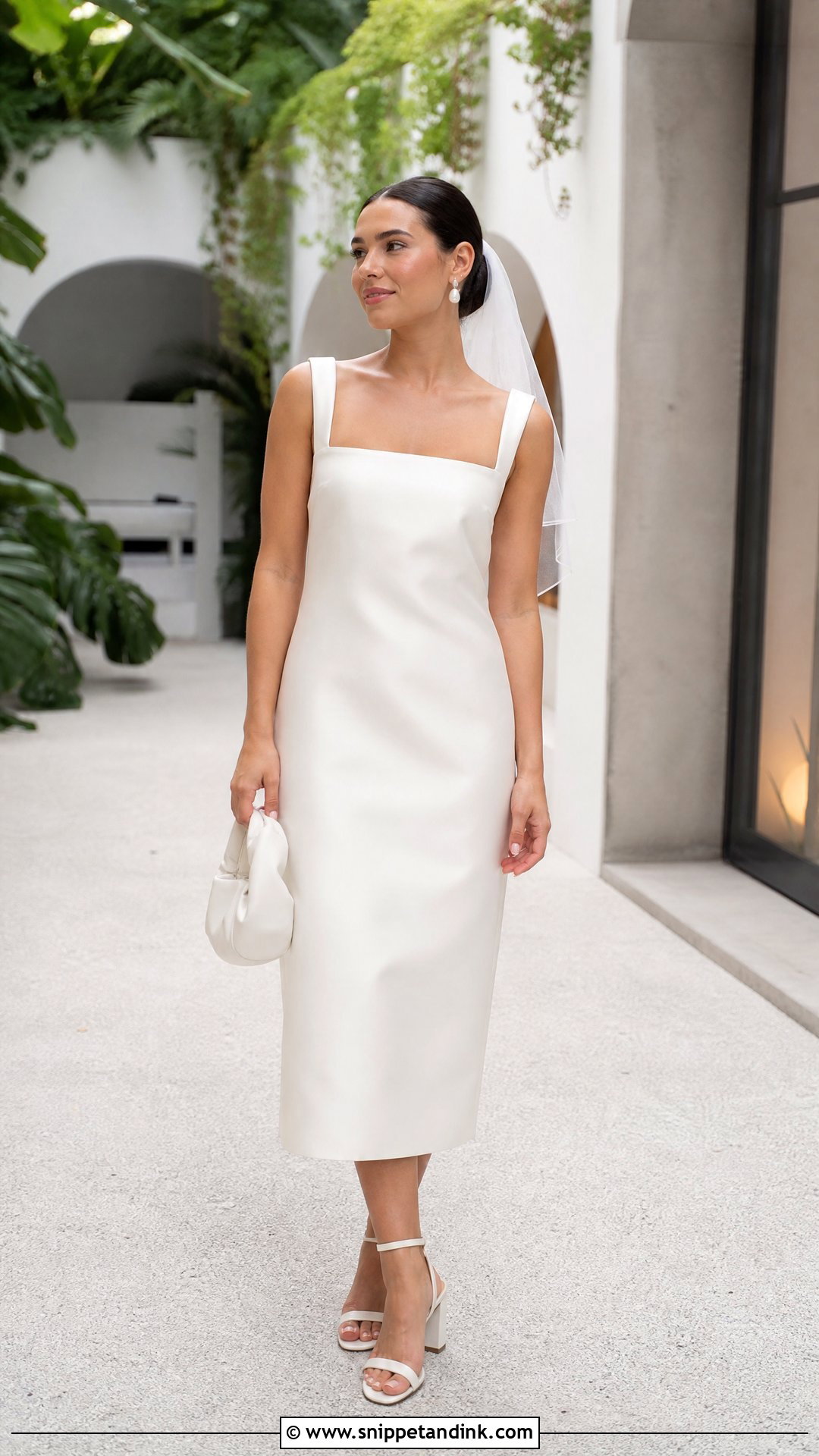
Square necklines need structure to stay square. In a soft fabric the corners collapse and the neckline starts to look rounded by the reception, so I’d choose mikado, structured crepe or heavier satin, with wide straps or short sleeves holding the frame. Block-heel sandals, a short veil and pearl earrings keep the geometry clean. How much neckline you want visible should decide the hair: a low bun shows all of it, a half-up style frames it, loose waves cover the corners. Keep the bouquet small. It feels right in architectural venues and at daytime garden weddings.
8. V Neck Shift Wedding Dress
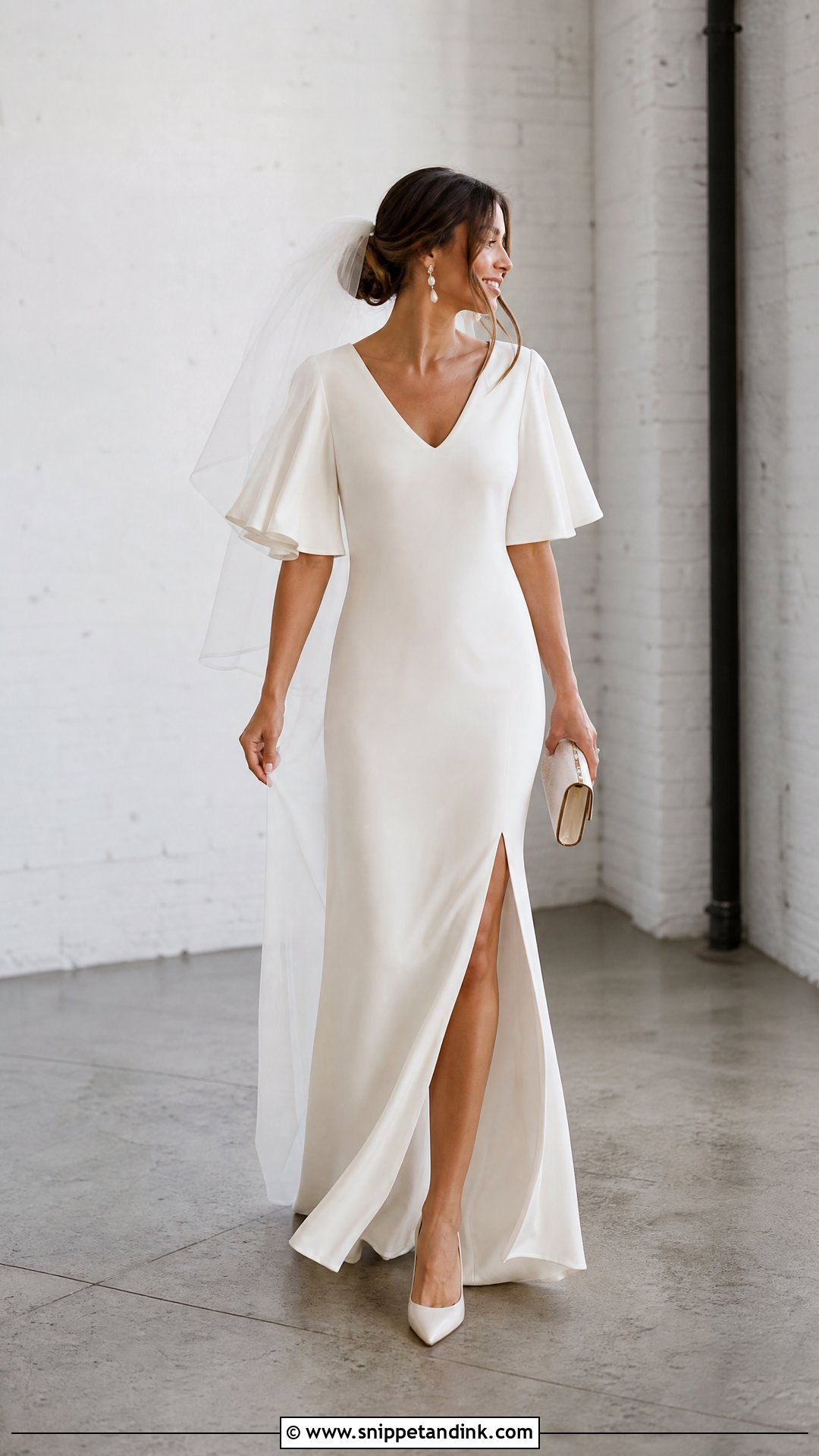
A V neck lengthens the torso on a dress that has no waist to do that job. Depth is the real decision. A shallow V needs no support beyond the bodice itself, while a deep one needs boning, a modesty mesh or clear tape, and I test it by having the bride bend forward to sign a register, which is exactly what happens at a civil ceremony. Drop earrings, pointed heels and a narrow ivory clutch suit it, with a simple veil fixed below a low bun so the neckline stays open. Flutter sleeves or a sheer lace insert add coverage if you want it.
9. Mini Shift Wedding Dress
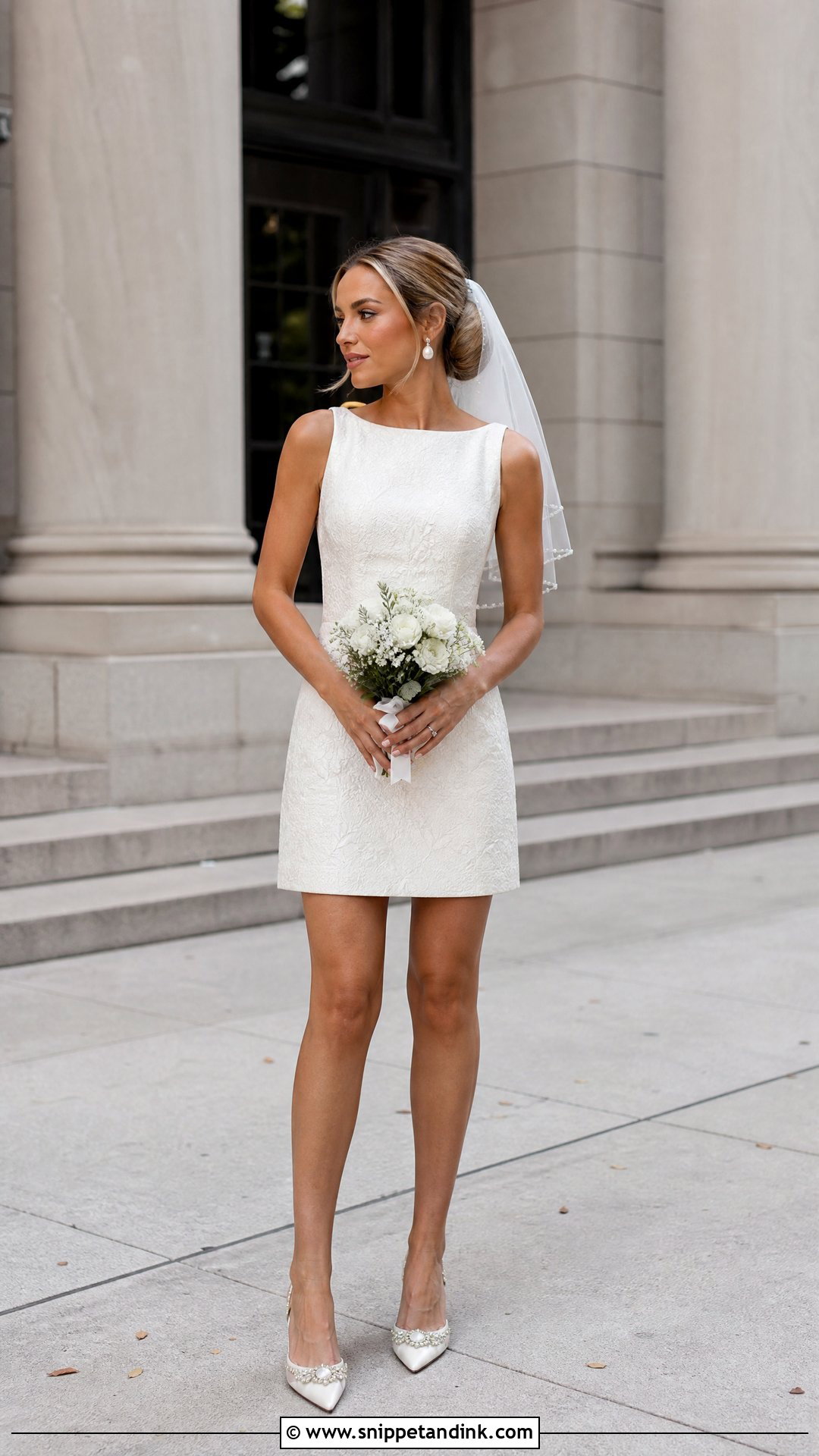
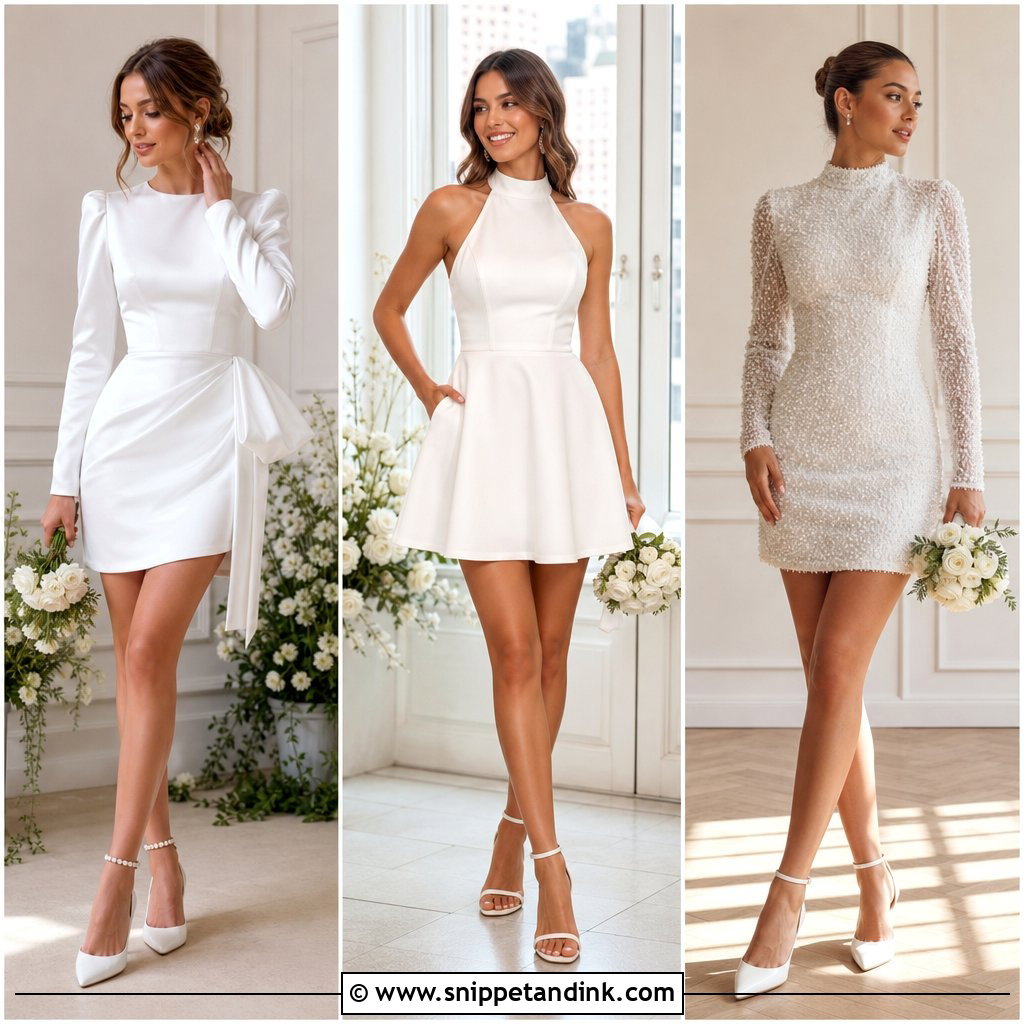
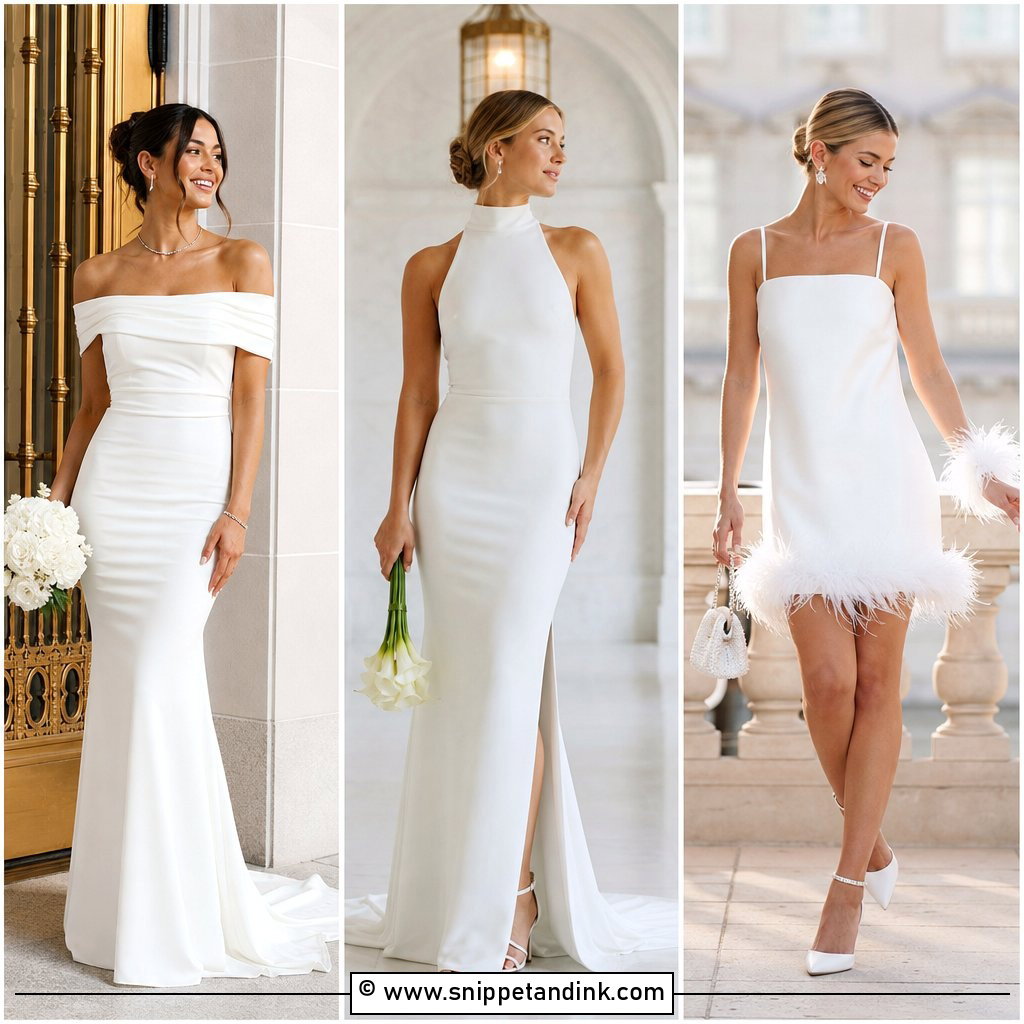
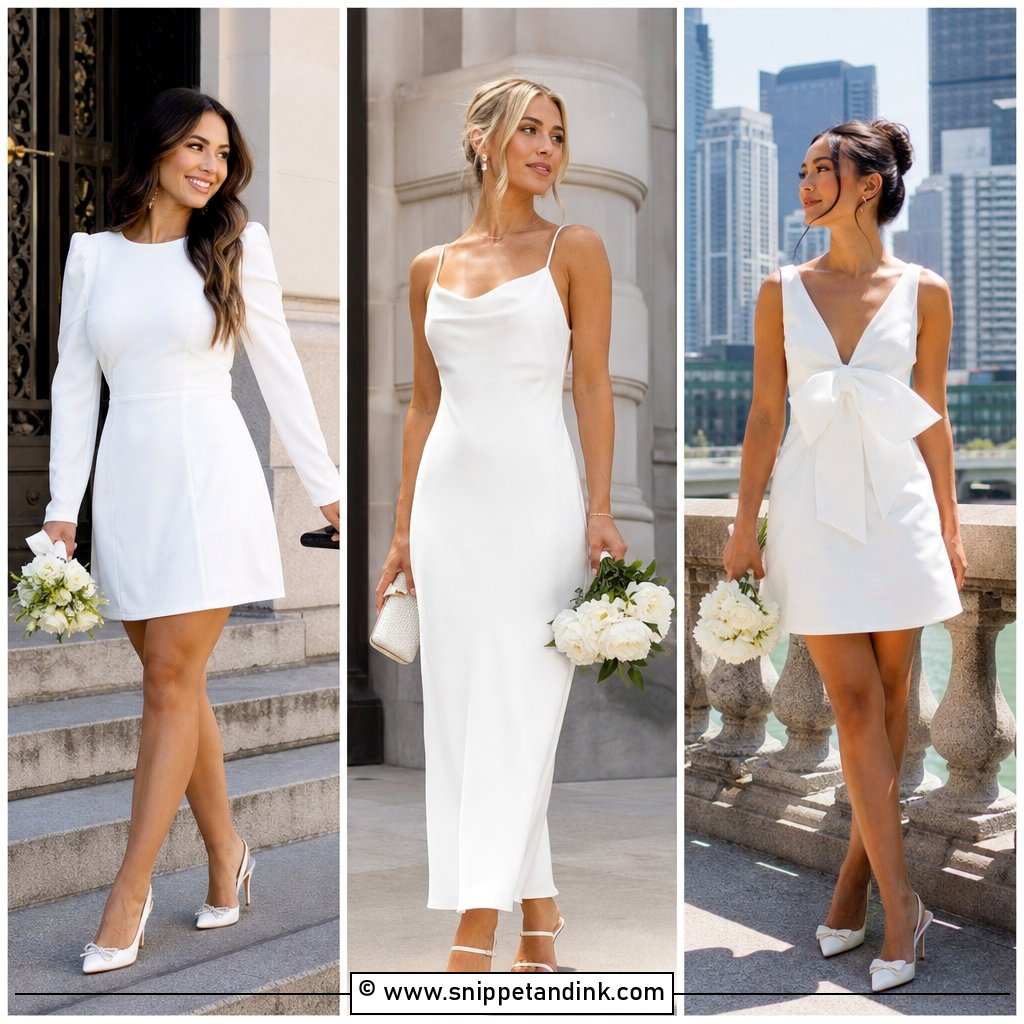
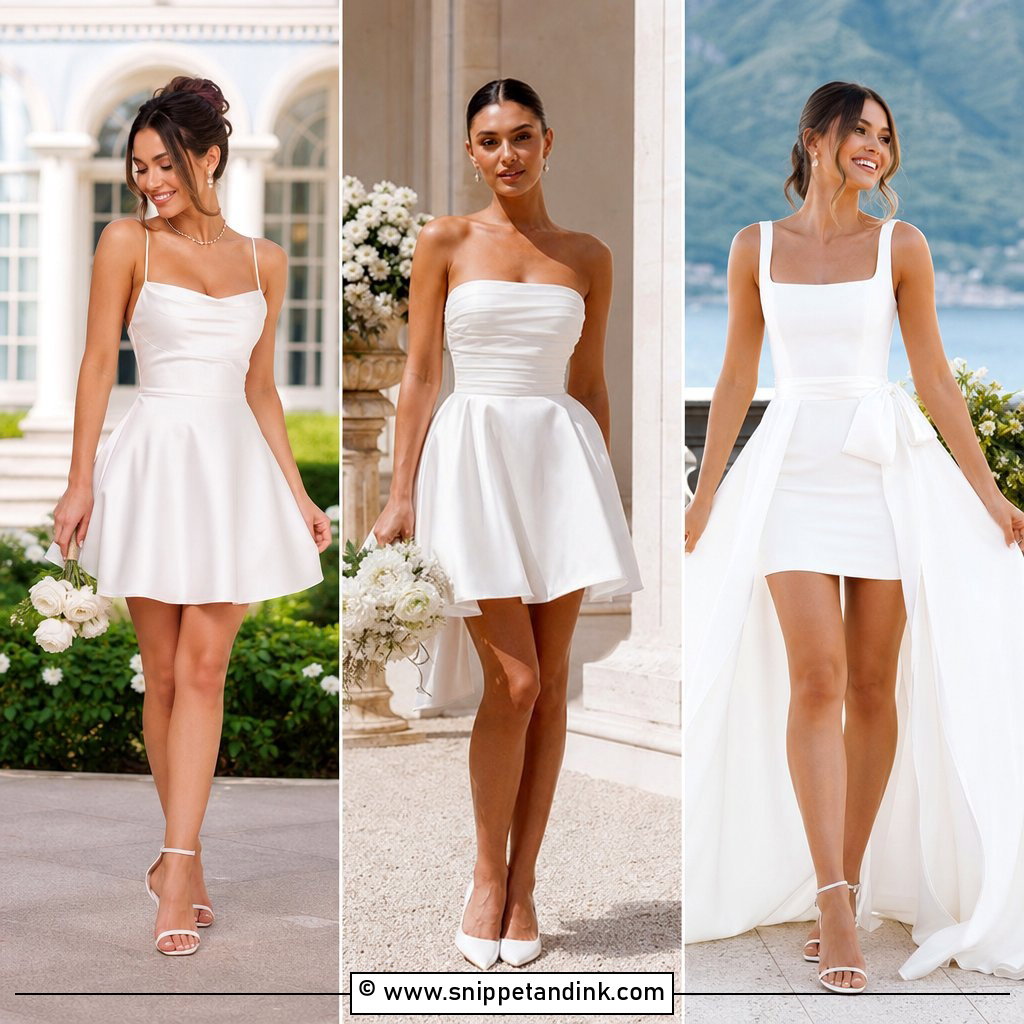
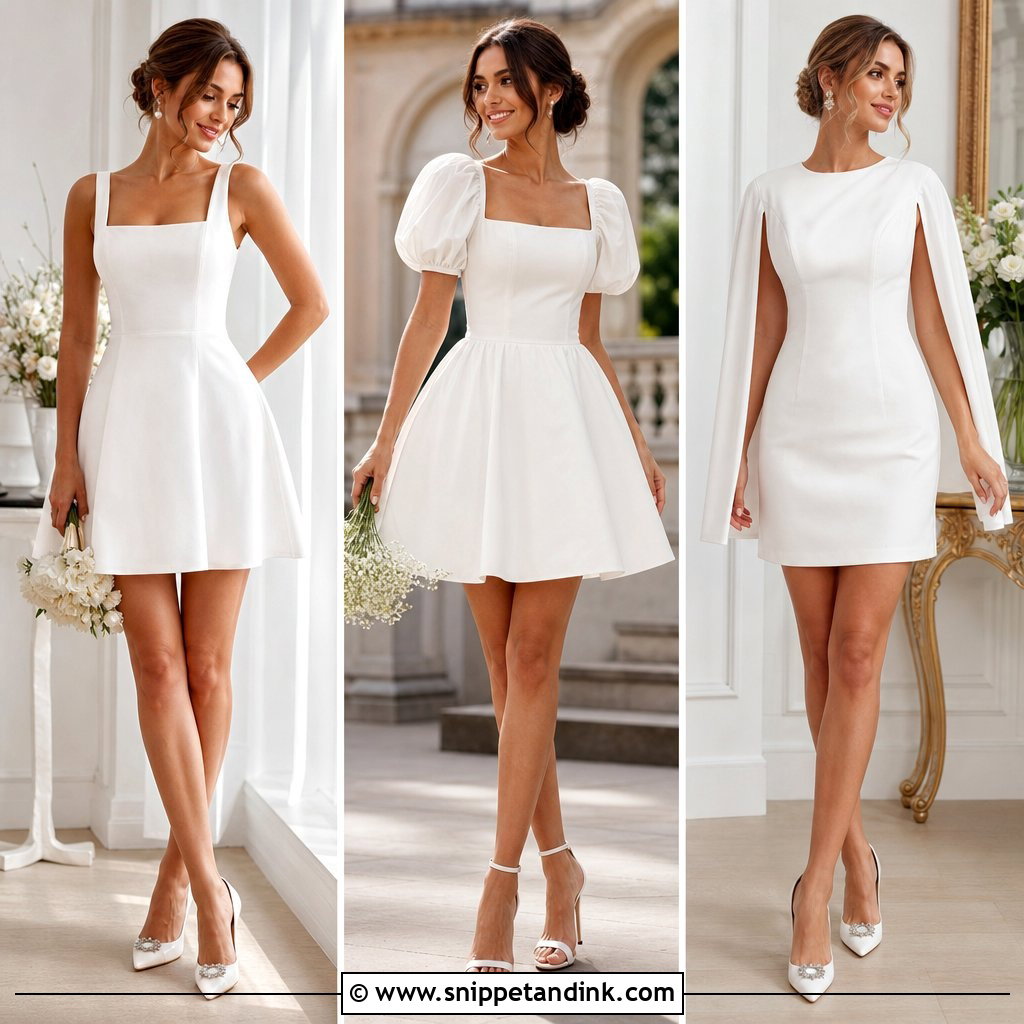
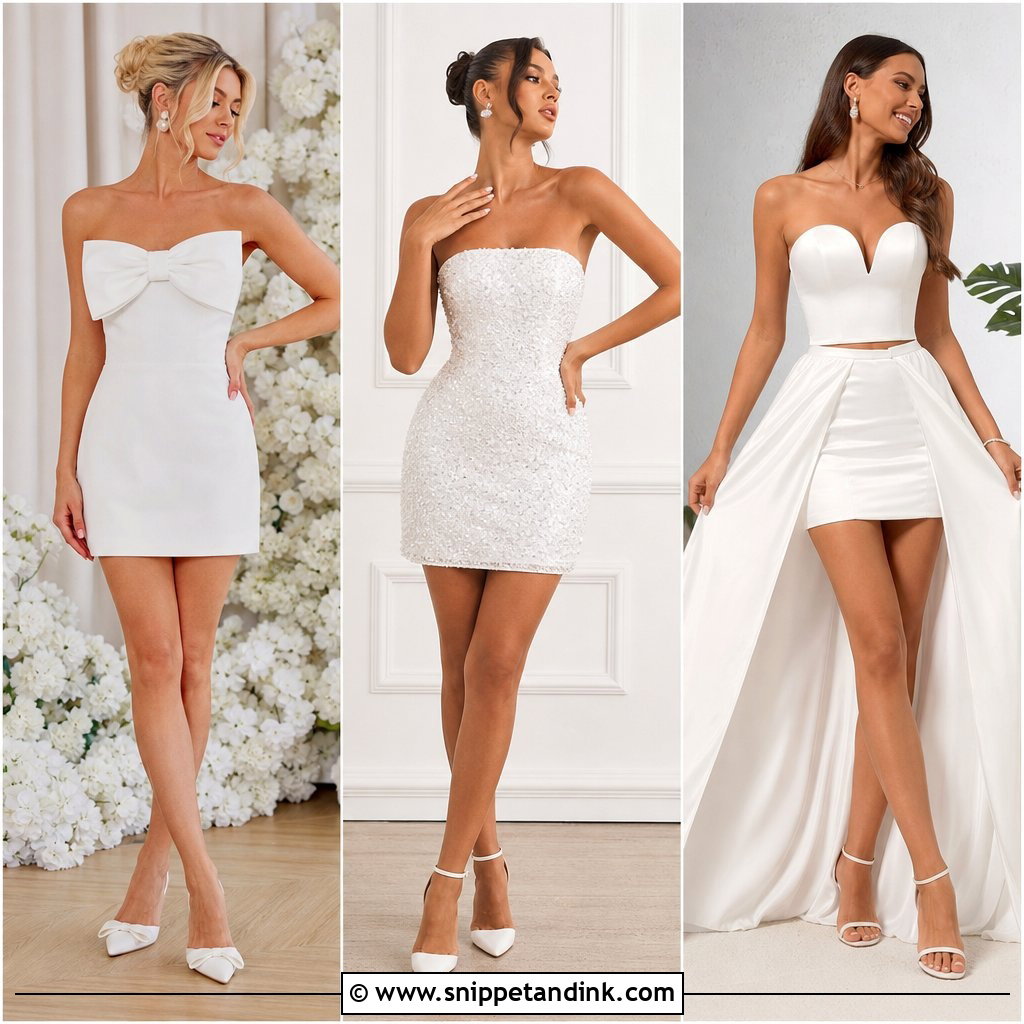
A mini shows off your shoes, and it’s also the length that most needs a stiff fabric. In soft crepe a short straight dress can pass for a day dress; in mikado, jacquard or heavy crepe it holds a crisp outline and reads as bridal. I check the hem with the bride seated, since a shift rides up more than you expect once you sit. A few inches above the knee looks youthful; just above it is easier to wear all day. Add embellished slingbacks, pearl earrings and a short veil or headband, or sheer tights and closed pumps in winter. It suits courthouse vows, micro weddings and reception changes.
10. Midi Shift Wedding Dress
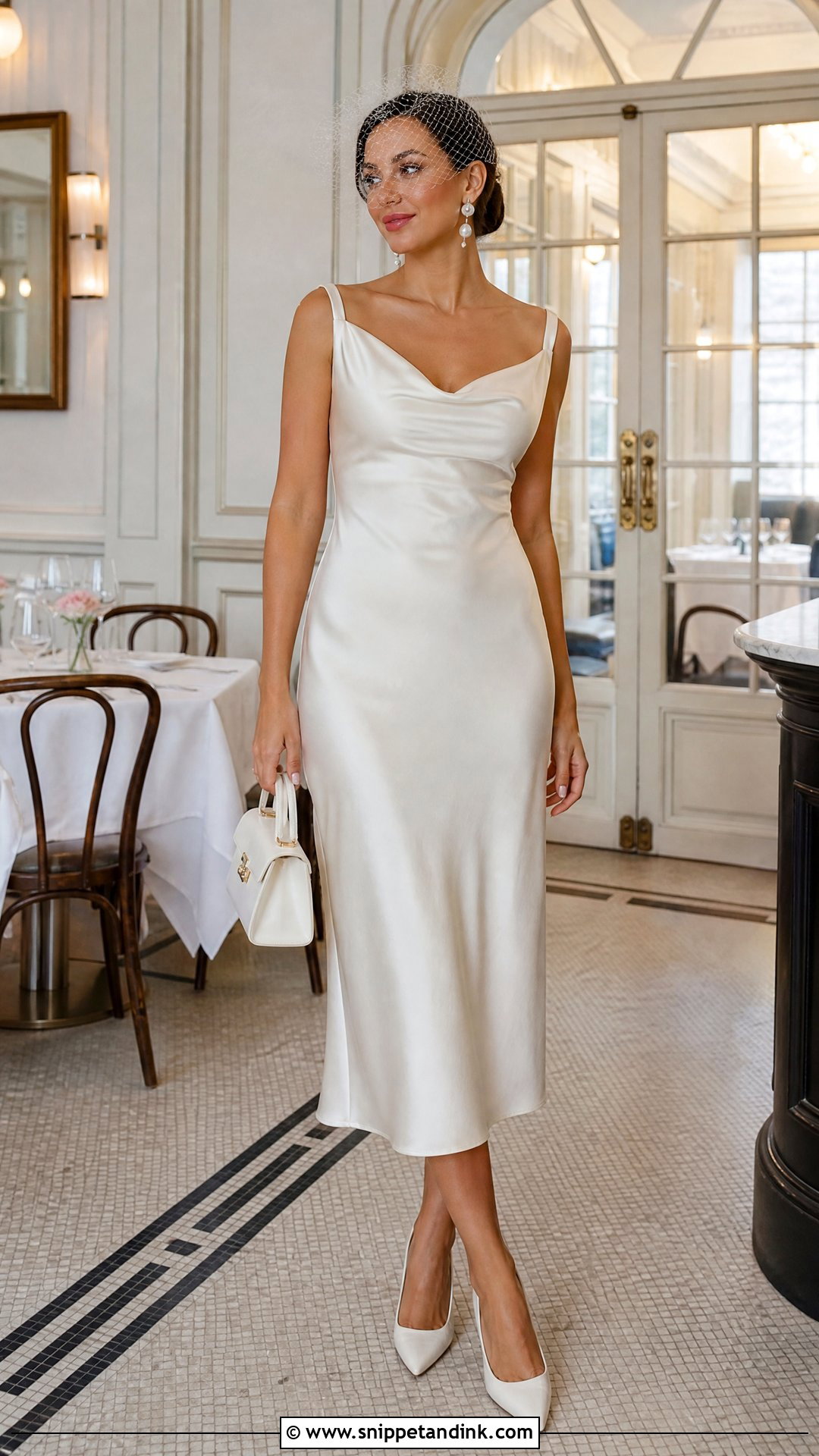
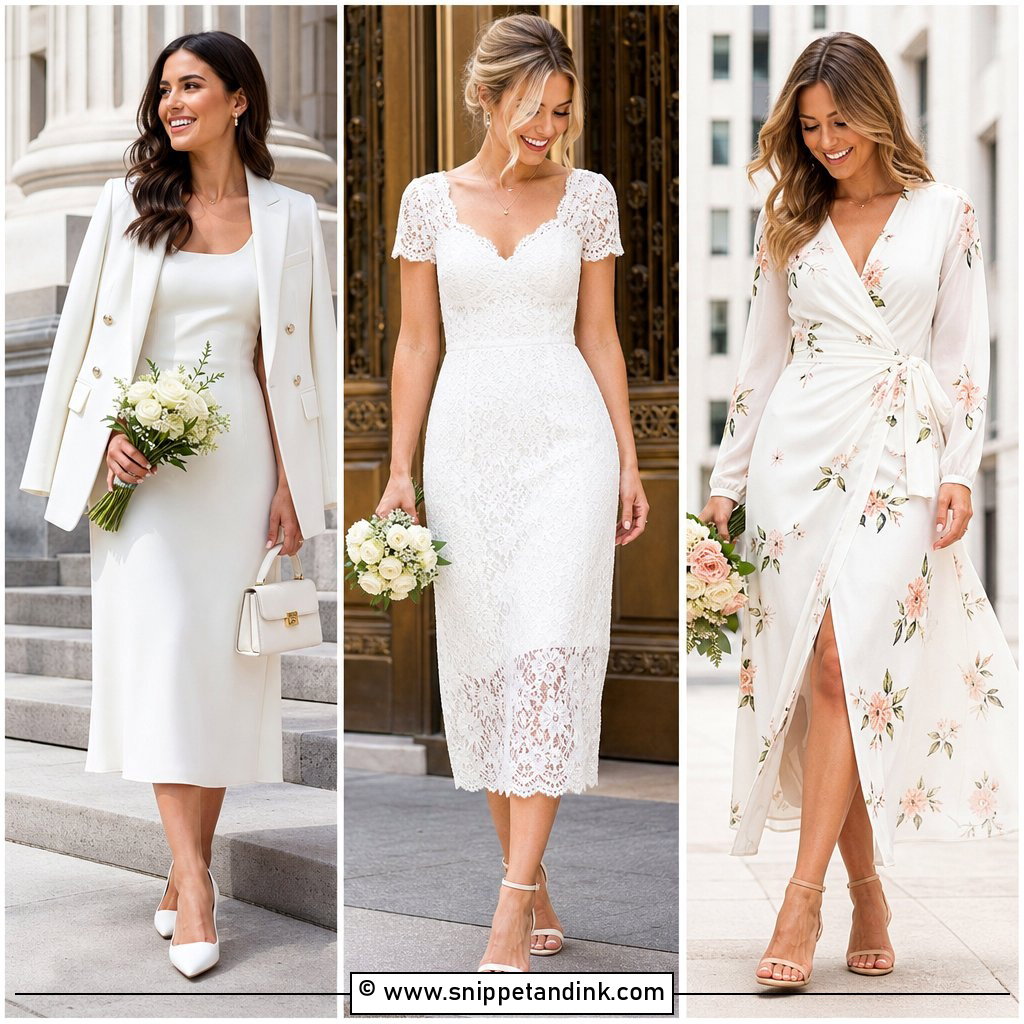
Midi is the length I recommend most for city hall: no hem to lift on the steps, and enough fabric that it still feels like a wedding dress. Ivory satin with a soft cowl neckline is one route; structured crepe with short sleeves is another. A cowl needs a weighty, fluid satin to fall in soft folds, since a stiff one just juts out at the chest. Pointed pumps, pearl drops and a small structured handbag finish it. A birdcage veil gives it a vintage note, a fingertip veil a more traditional one. Keep the bouquet narrow.
11. Floor Length Shift Wedding Dress
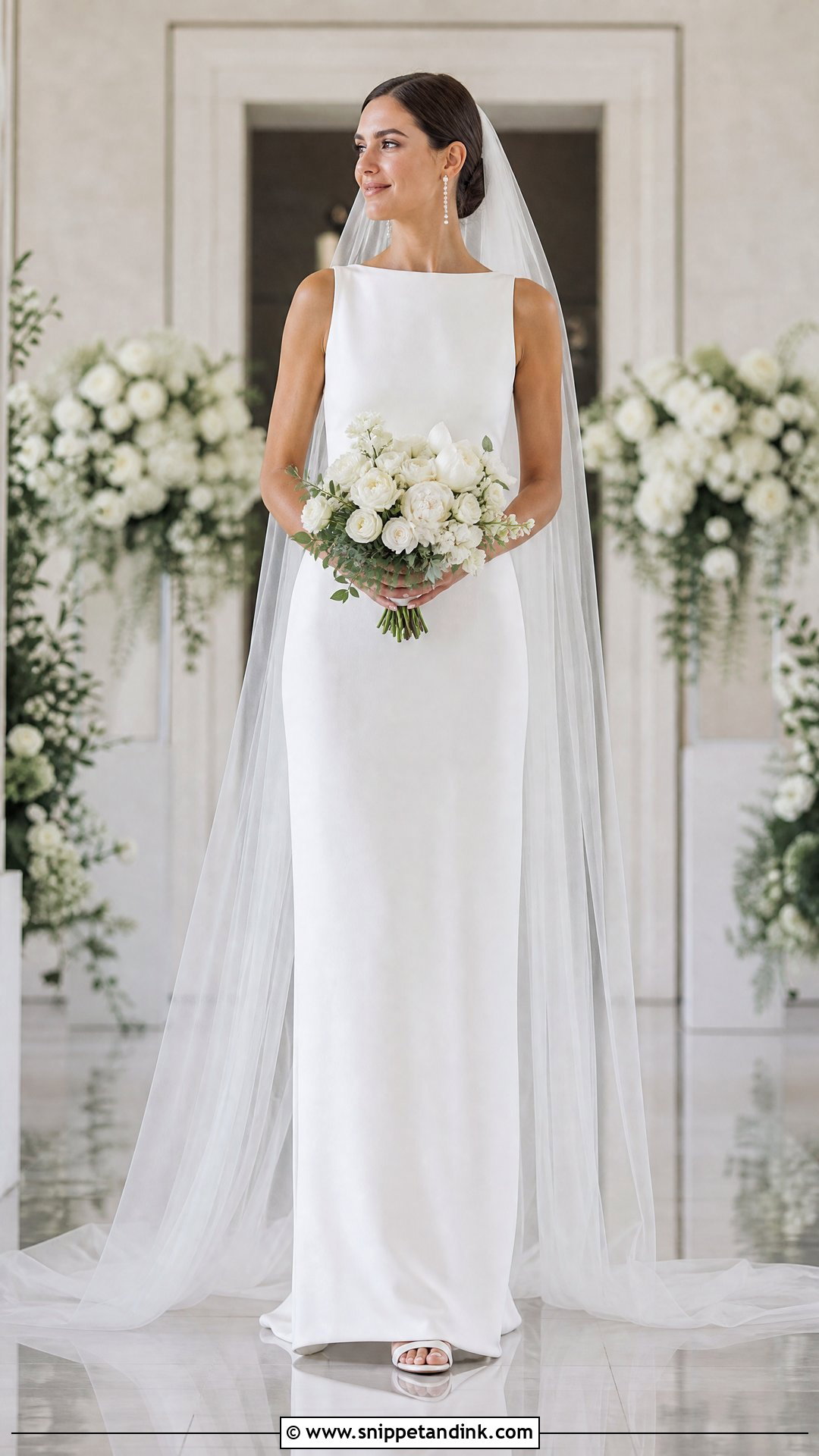
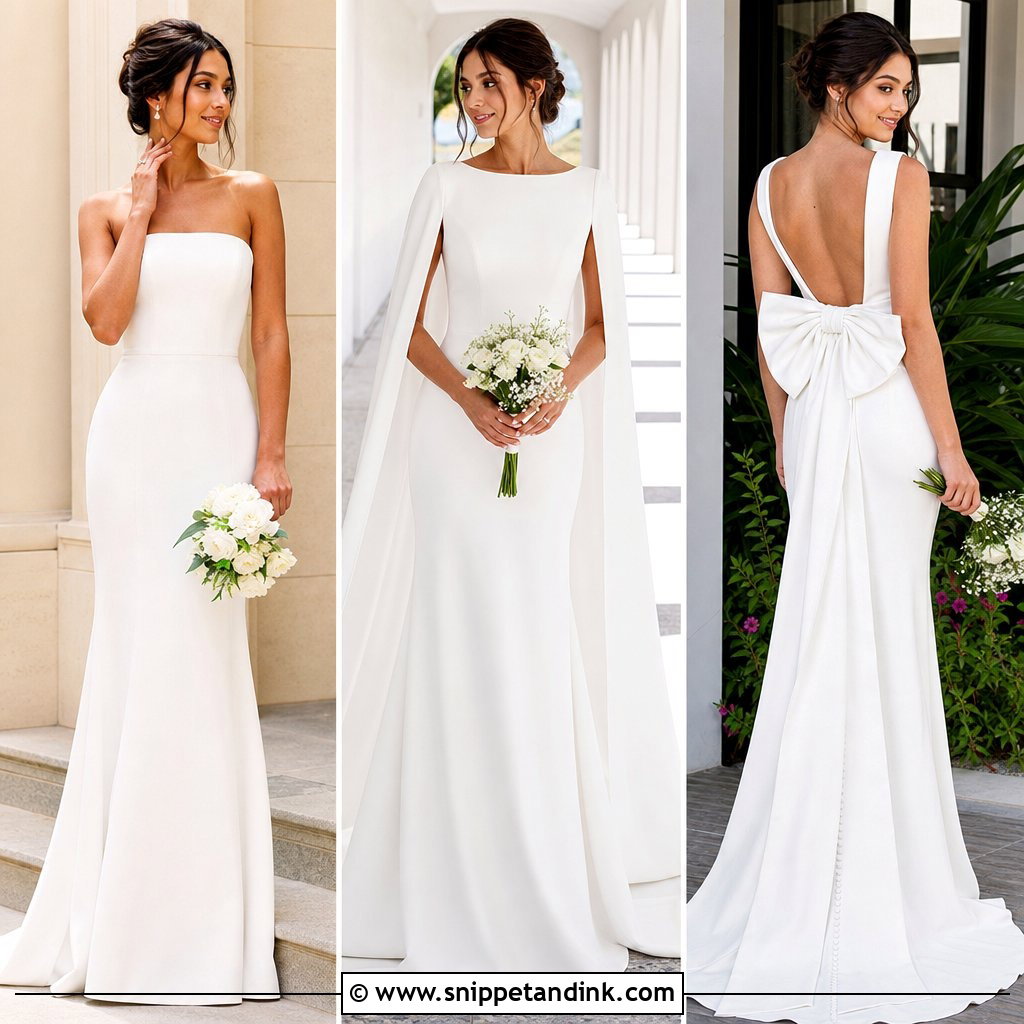
A floor-length shift is harder to get right than it looks. The fabric has to skim the body and drop straight to the floor, which only fluid crepe, silk satin and draped chiffon really do; stiff fabrics stand away from you and turn the column into a tube. Have it hemmed in the exact shoes you’ll wear, and choose comfortable ones, since nobody sees them. Long earrings and a chapel veil add length, and a narrow train gives the aisle some ceremony. I’d keep the hair in a neat updo and the bouquet medium-sized. In a minimalist ballroom or at an evening ceremony, this is the shift that looks deliberate rather than plain.
12. Beaded Shift Wedding Dress
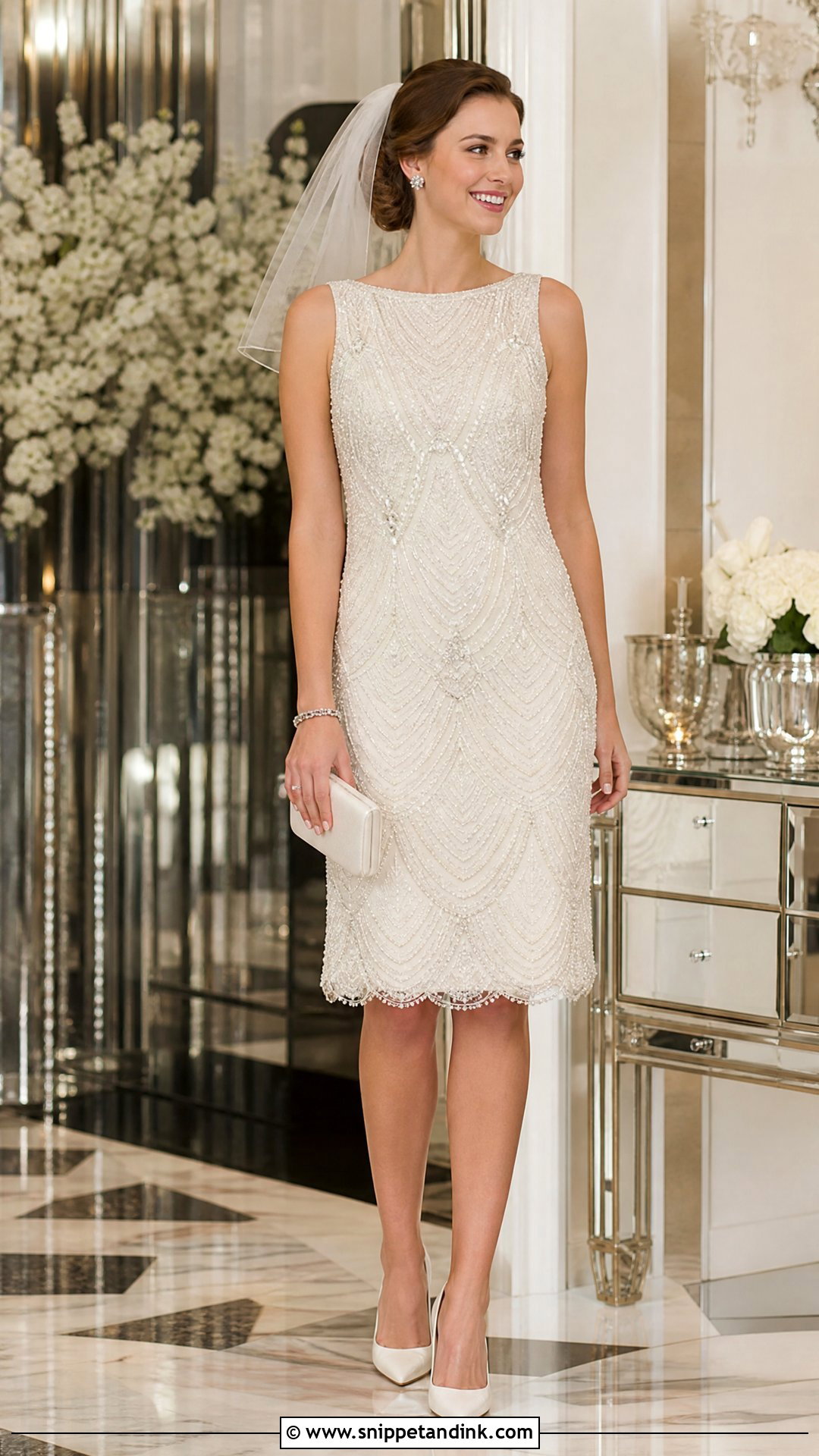
Beadwork adds weight, and on a shift all of it hangs from the shoulders. Before I’d recommend a beaded shift, I check the shoulder seams and the lining: if the straps are thin or the lining is loose, the dress drags forward and the neckline gapes by evening. Scattered beads give a light sparkle; an Art Deco pattern is louder. Keep everything else plain: satin pumps, crystal studs, an unembellished clutch and a short veil with no trim. Smooth waves or a low bun and glowing makeup let the dress carry the light. It shines at evening receptions and as a second outfit for dancing.
13. Pearl Shift Wedding Dress
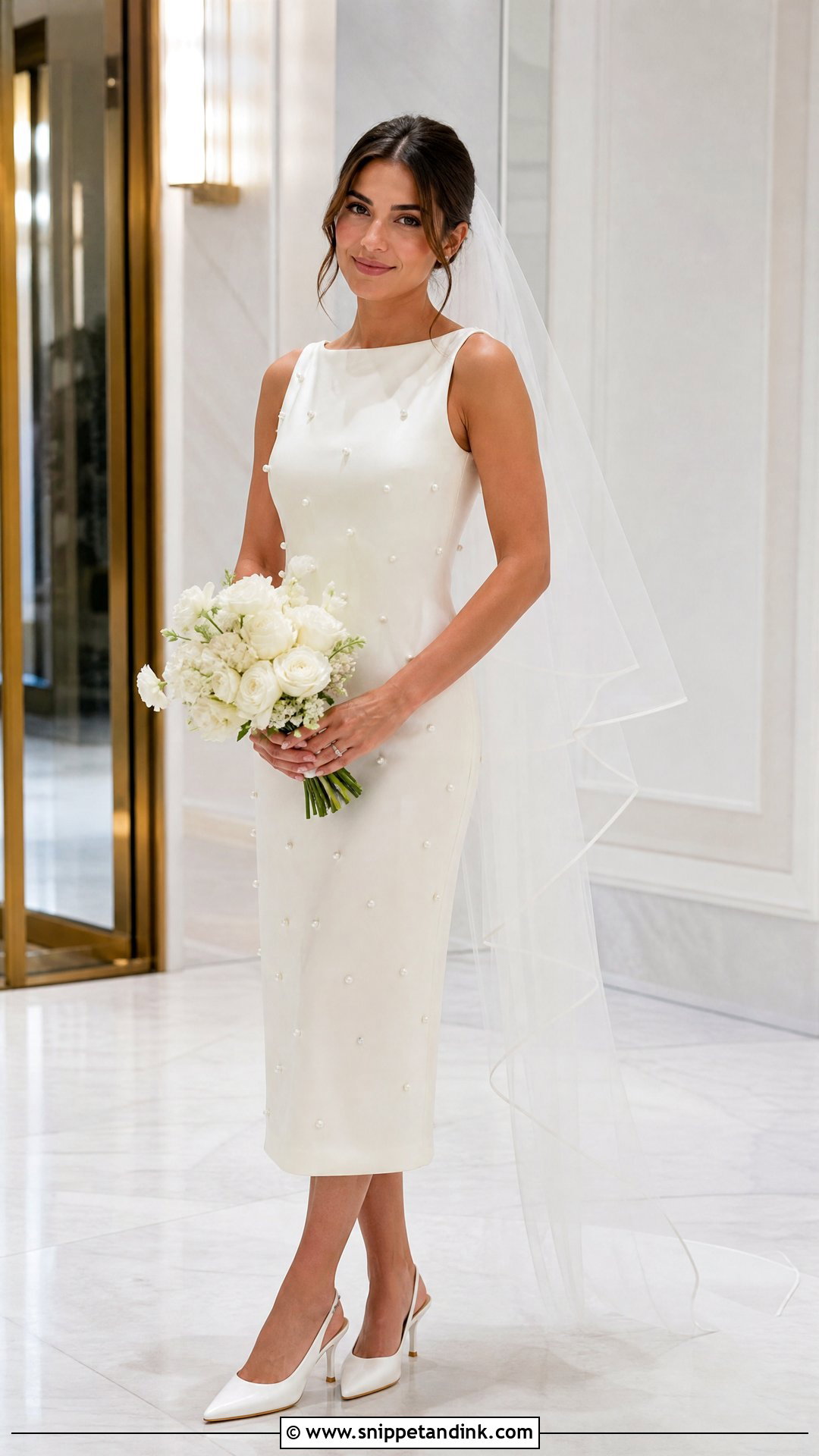
Pearls look delicate, but they’re the embellishment most likely to snag: on lace, on a veil’s edge, on the wire of a bouquet. If pearls run down the sleeves, I suggest a veil with a clean cut edge rather than a lace trim. A fully lined dress keeps the backs of the beads off your skin. Satin slingbacks and small pearl studs repeat the detail without doubling it; resist pearl pins, a pearl bag and pearl shoes all at once. A sleek bun, natural makeup and a small white or greenery bouquet suit hotel ceremonies, smart civil weddings and modern indoor venues.
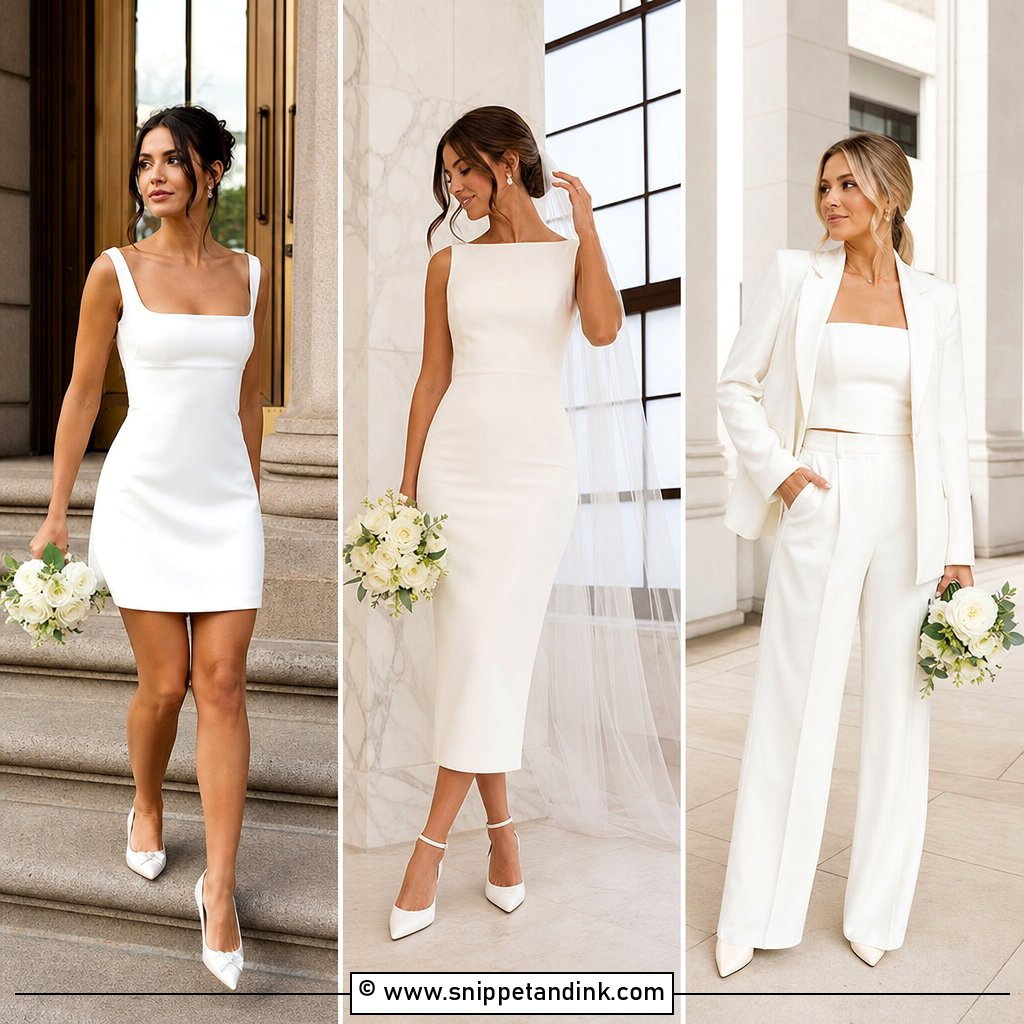
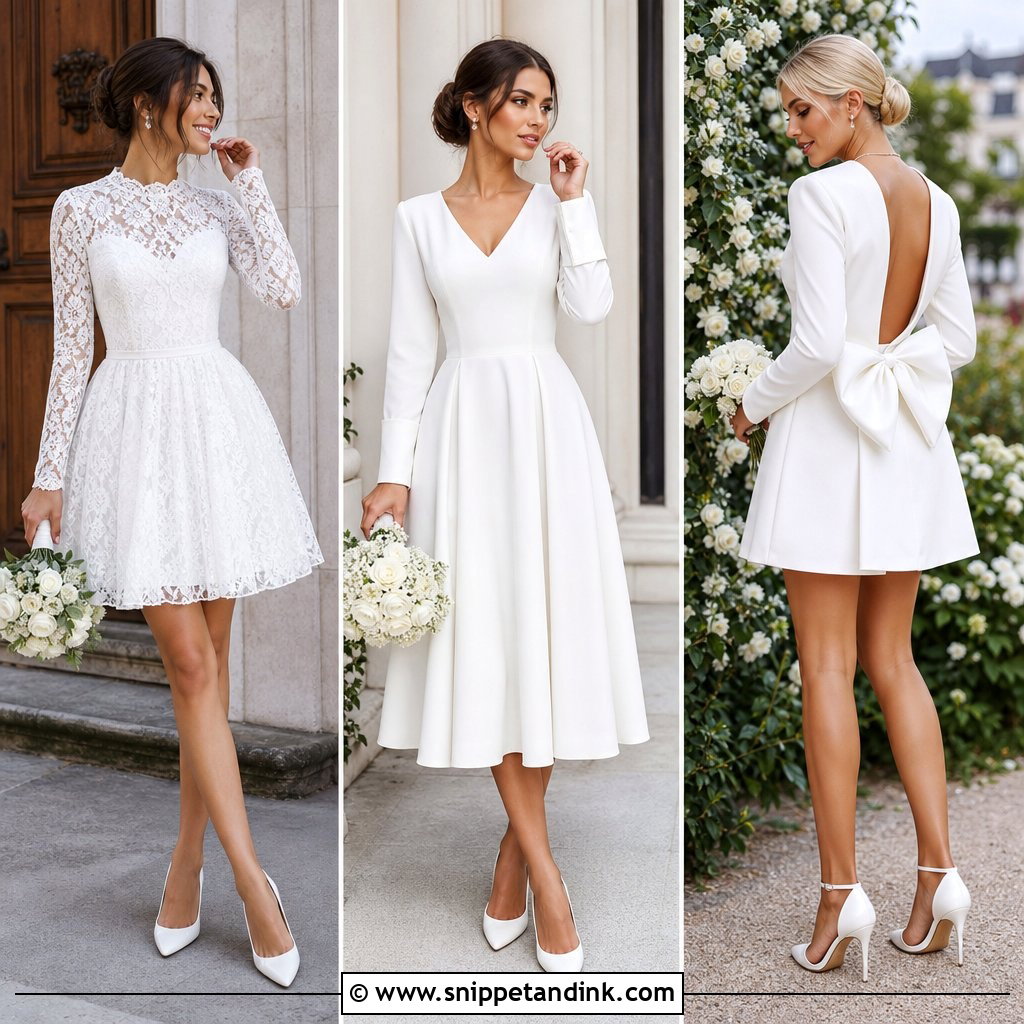
14. Bow Detail Shift Wedding Dress
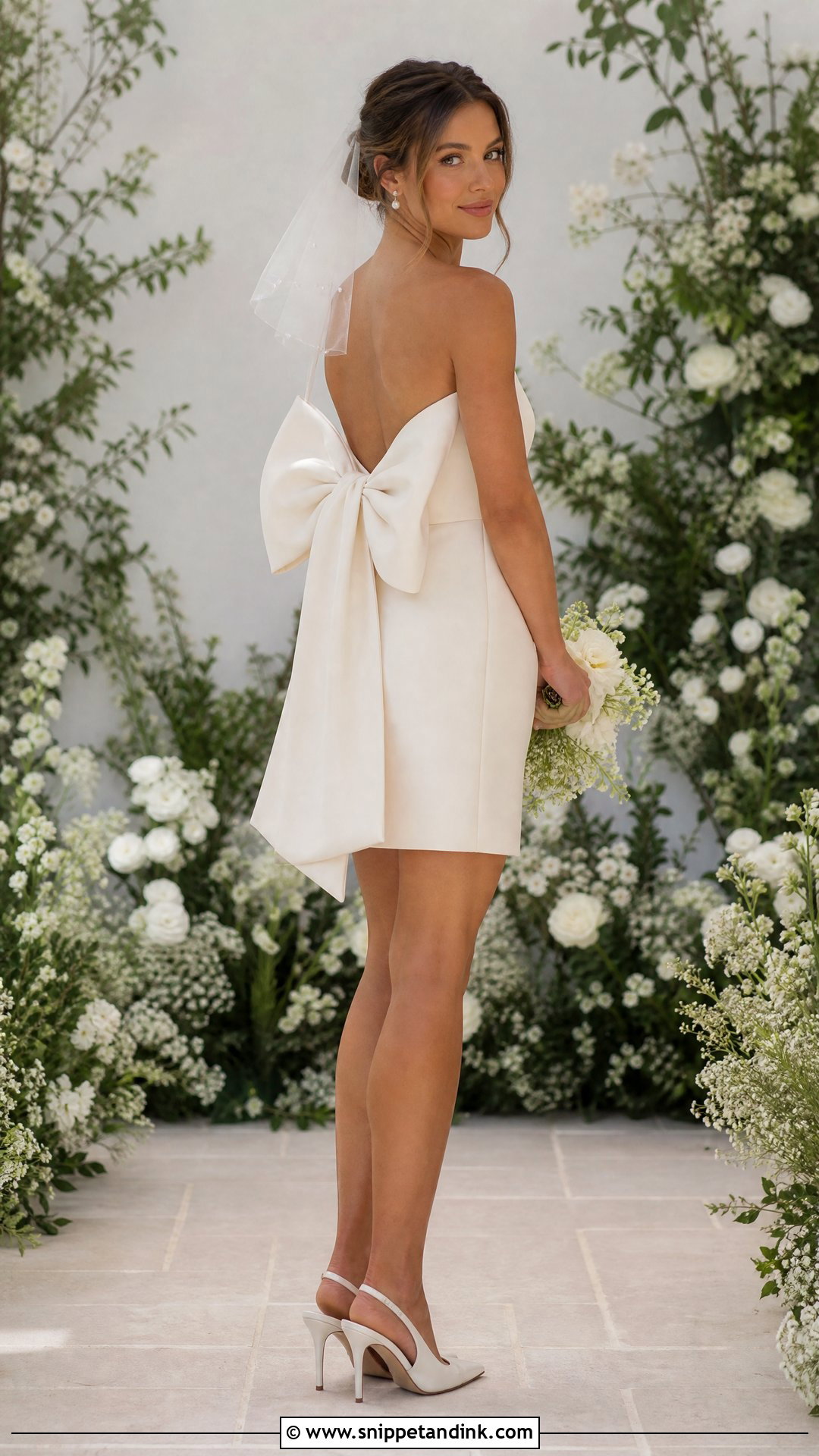
A bow gives a plain shift one place for the eye to land, so its position matters. At the neckline it reads classic; at one shoulder it’s asymmetric and a little playful; a large back bow is made for the recessional photo. Let the bow decide where the veil ends: stop it above a back bow or let it fall well past, never resting on it, because tulle flattens a fabric bow within minutes. Pointed ivory heels, small earrings, a neat ponytail or low bun and a structured mini bag after the ceremony keep it tidy.
15. Cape Shift Wedding Dress
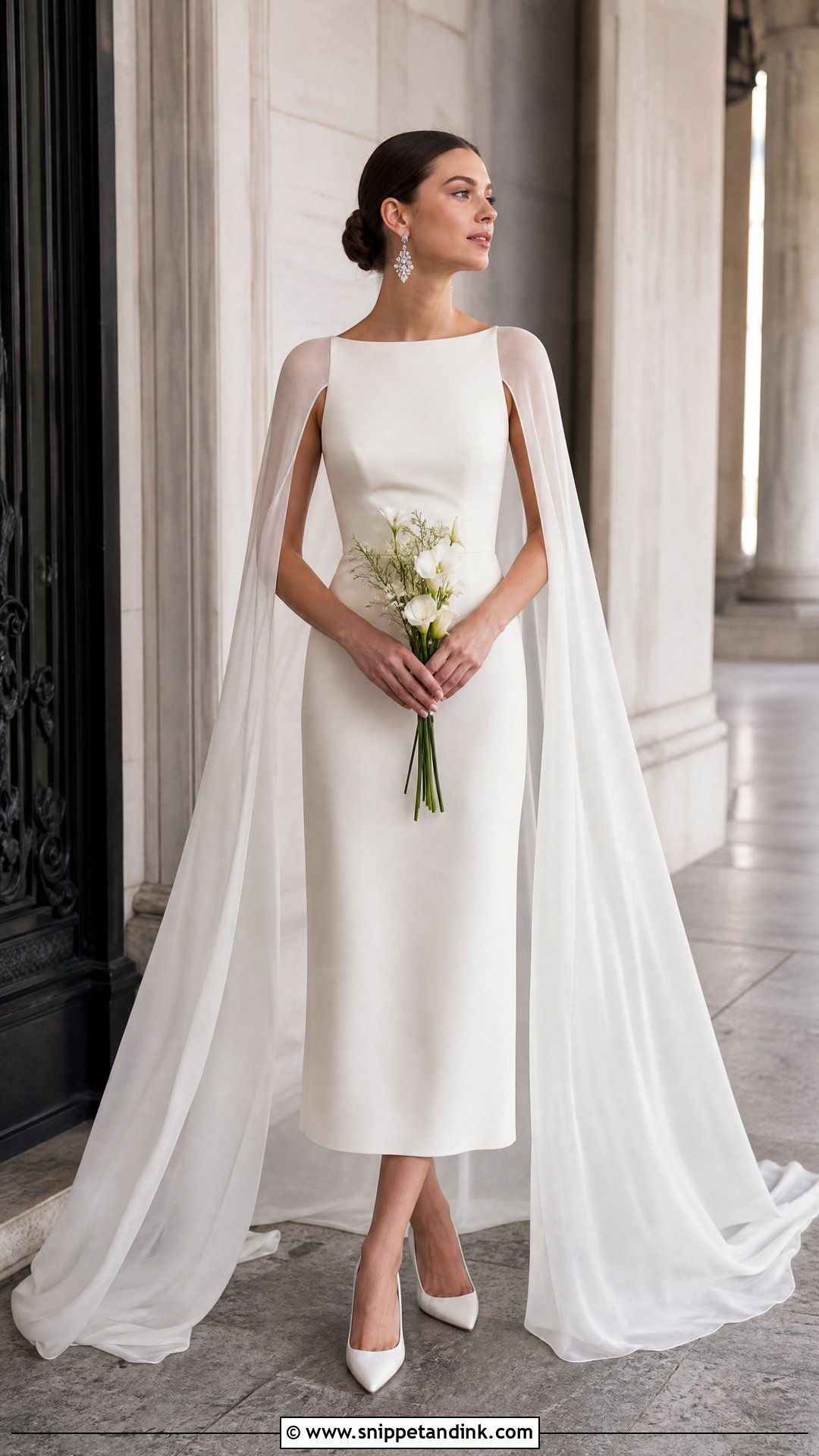
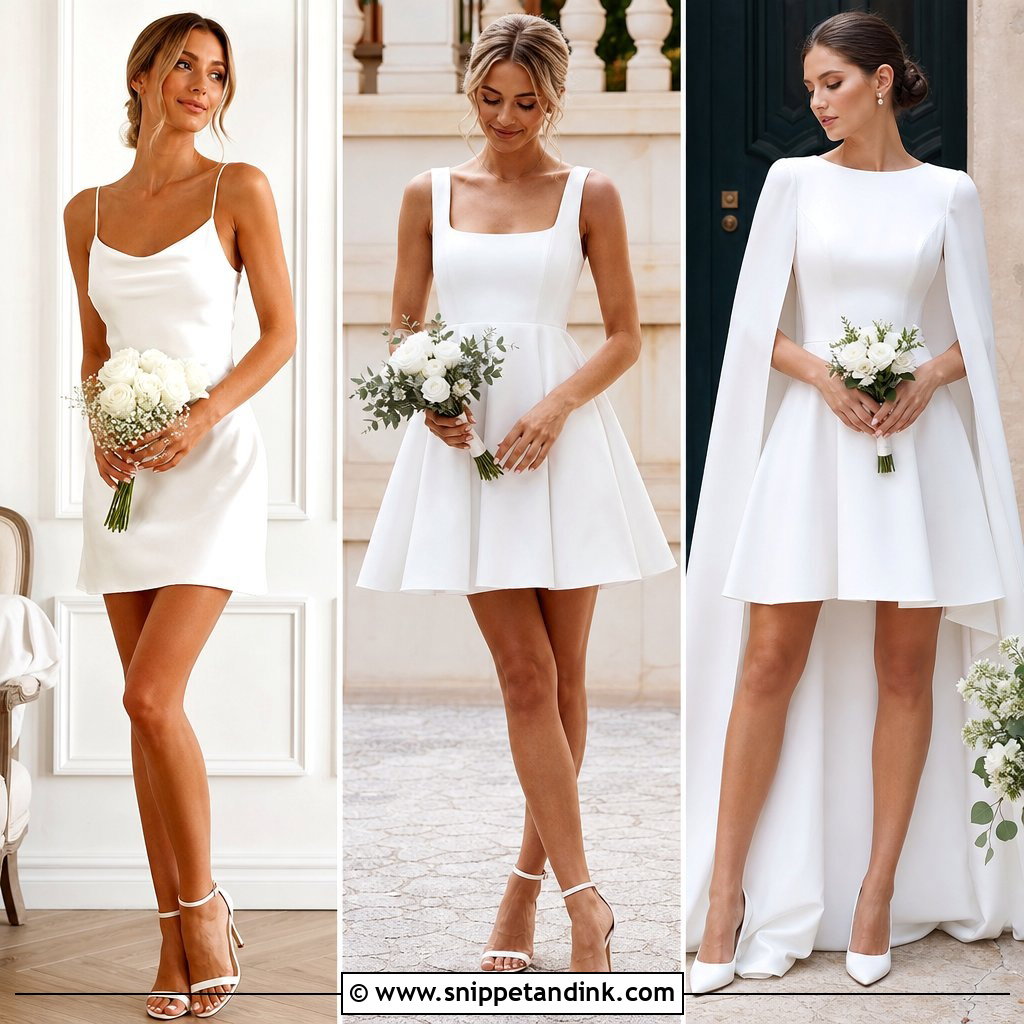
A cape gives a shift the drama most brides think they’ll miss without a full skirt. Start with a sleeveless crepe or satin base, then add a sheer shoulder cape, a structured capelet or a floor-length detachable layer. It can stand in for a veil or come off after the ceremony. I always check how a cape fastens: hooks at the shoulder are easy to undo alone, while buttons at the back of the neck need a second pair of hands. Pointed pumps, crystal earrings and a smooth low bun keep the neckline clear, and a narrow bouquet follows the long vertical line. It’s especially good in cold weather.
16. Shift Wedding Dress With Detachable Overskirt
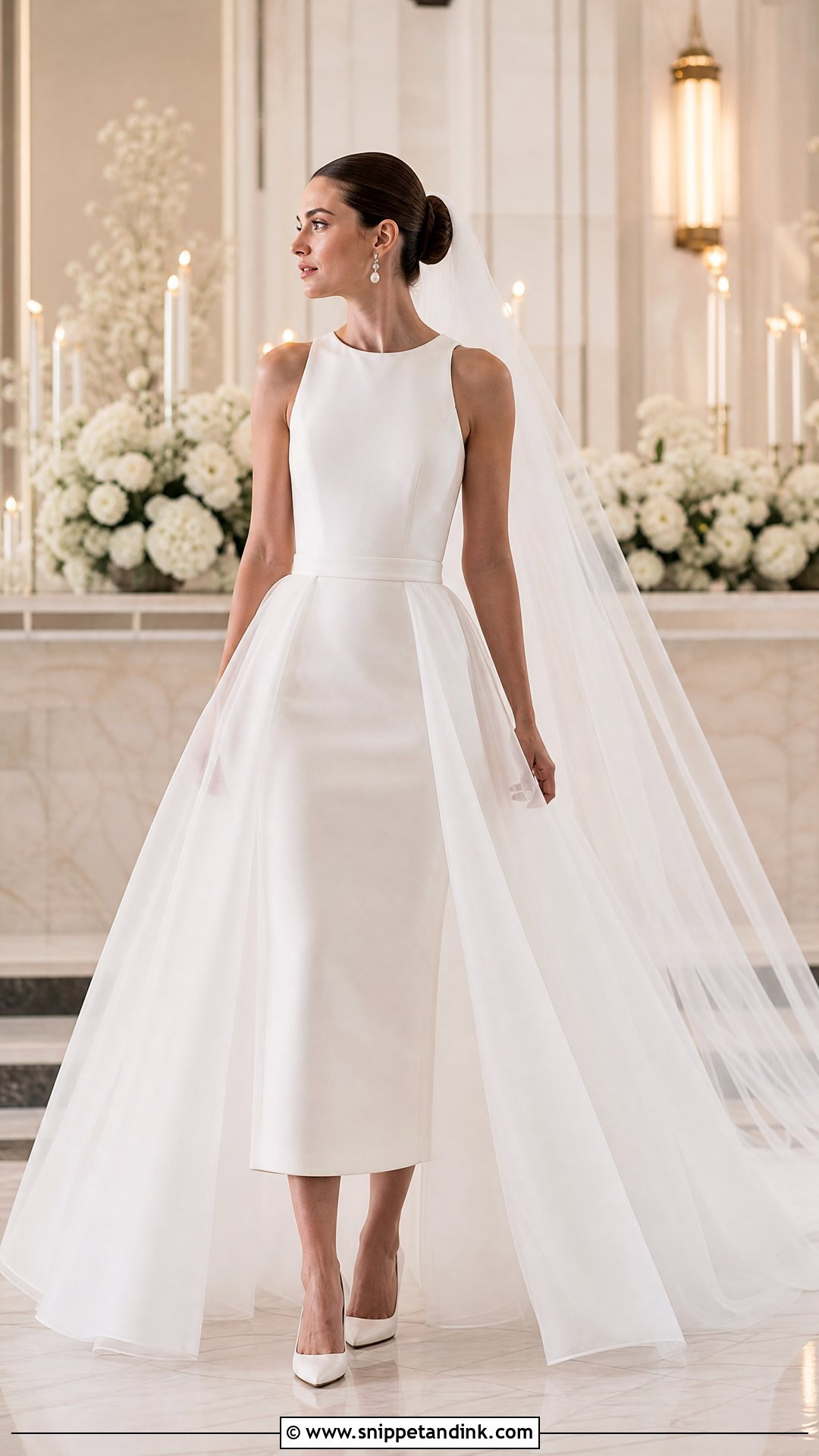
Want the comfort of a shift and the entrance of a full gown? A detachable overskirt gives you both. Start from a straight satin or crepe dress, then add tulle, organza or mikado for the ceremony. The attachment point is what I check most carefully: an overskirt that cinches at the waist pinches the shift underneath and creates a waistline the dress never had. Ask for a wide, flat waistband with hooks. Wear a long veil, drop earrings and elegant pumps for the ceremony, then remove the skirt and veil and pick up a small bag for the reception. Practise taking it off at your last fitting.
17. Courthouse Shift Wedding Dress
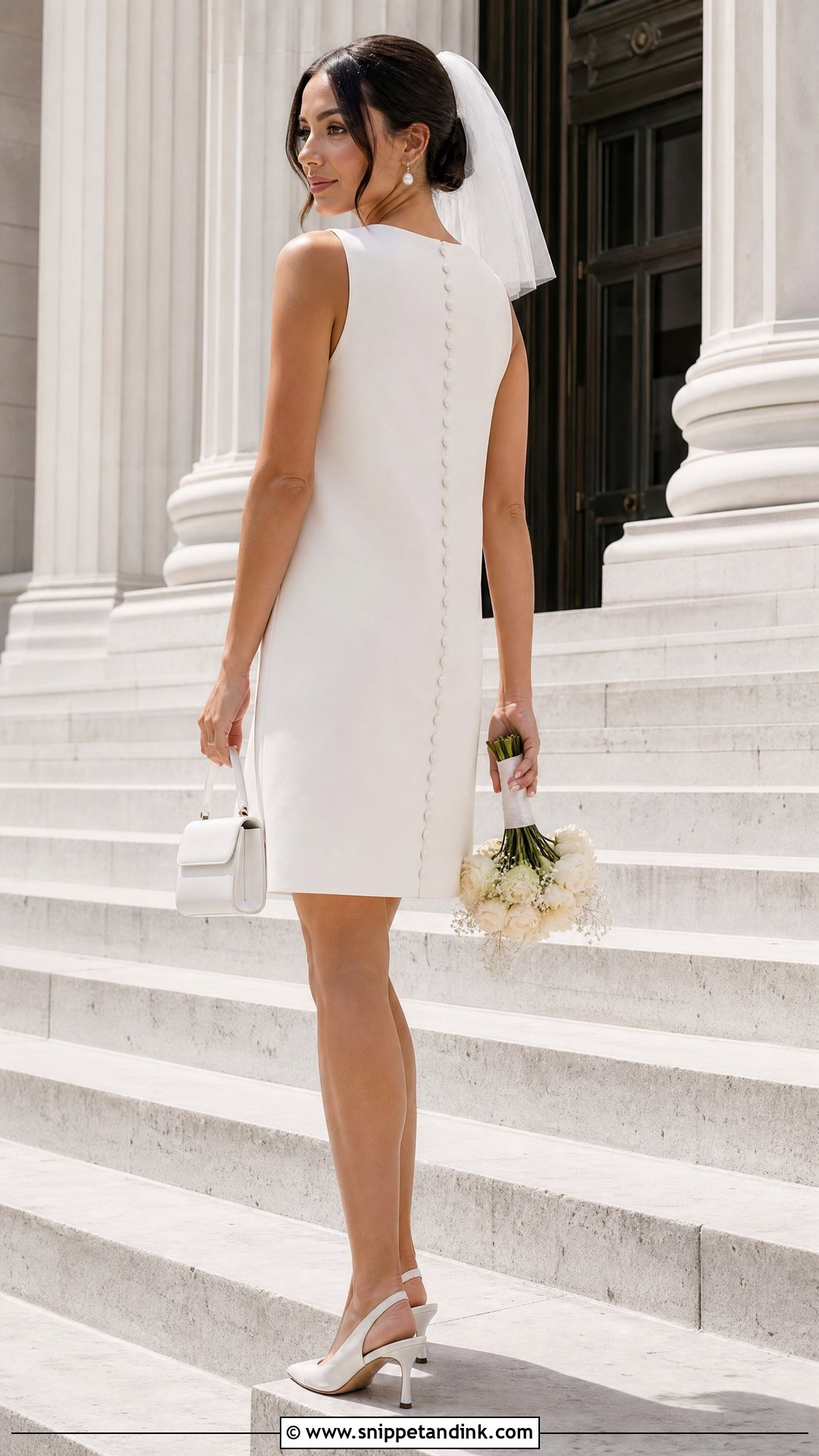
A courthouse day usually involves a car, a waiting room, a set of steps and a restaurant, so the dress has to travel. A knee-length or midi shift in crepe, satin or textured jacquard handles all of it, and crepe creases far less than satin after an hour seated. Pick a clean neckline and one detail, such as covered buttons, puff sleeves or a low back. Comfortable slingbacks, pearl earrings and a small top-handle bag finish it, with a short veil, headband or hair bow for a bridal note. A compact bouquet is easier to hold while you sign and walk between locations.
18. Beach Shift Wedding Dress
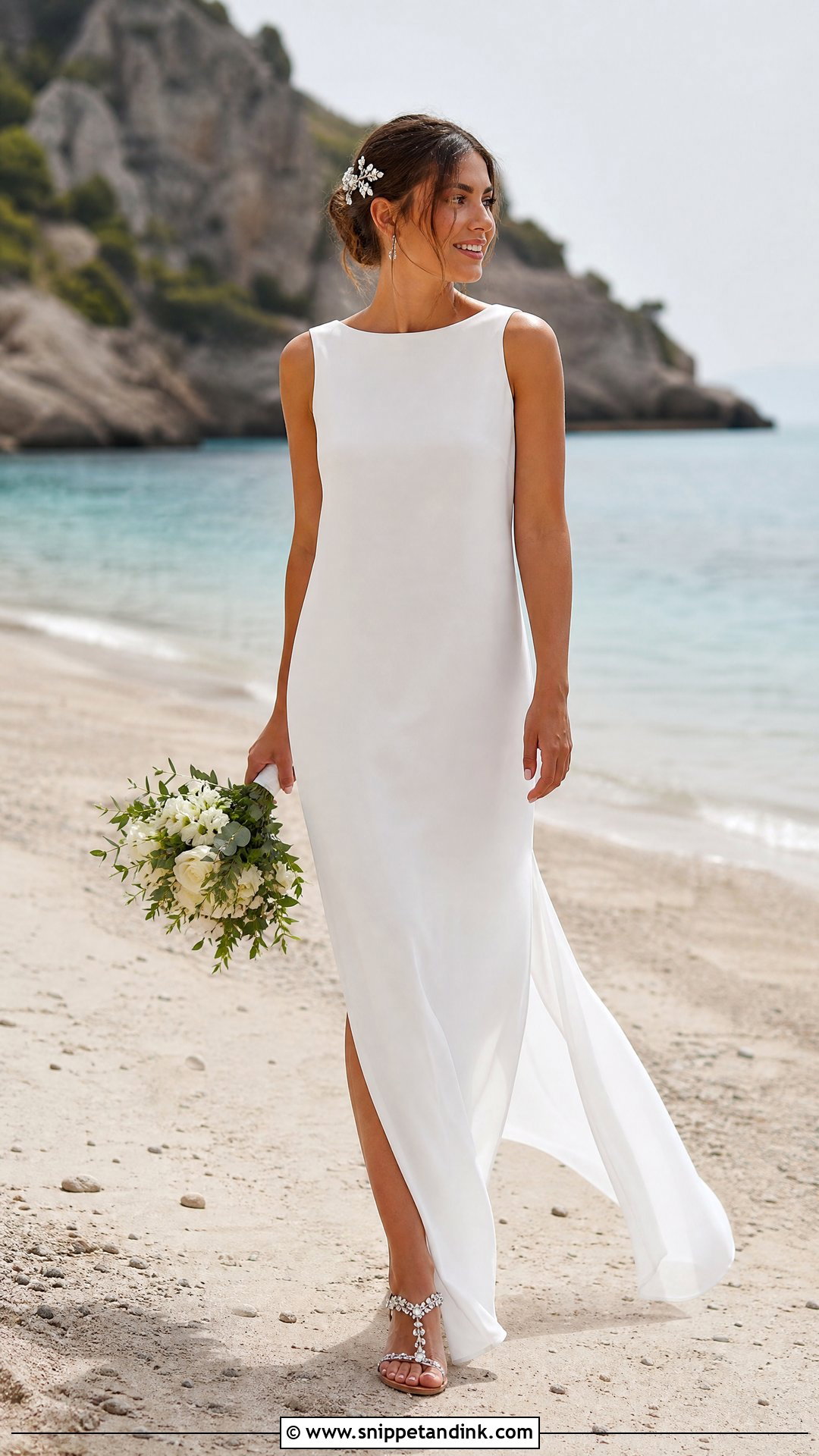
On a beach, the wind decides more than the dress does. A long veil will wrap around your face in coastal gusts, so I’d swap it for a hair comb or flowers pinned into a secure low bun or textured ponytail. Lightweight crepe, silk or lined chiffon falls cleanly without a train to drag wet sand, and a side slit makes walking on soft sand much easier. Unlined chiffon turns see-through against a bright sky, so check it outdoors in daylight before you commit. Flat embellished sandals, delicate earrings and a loose bouquet of pale flowers and greenery suit the setting.
19. Garden Shift Wedding Dress
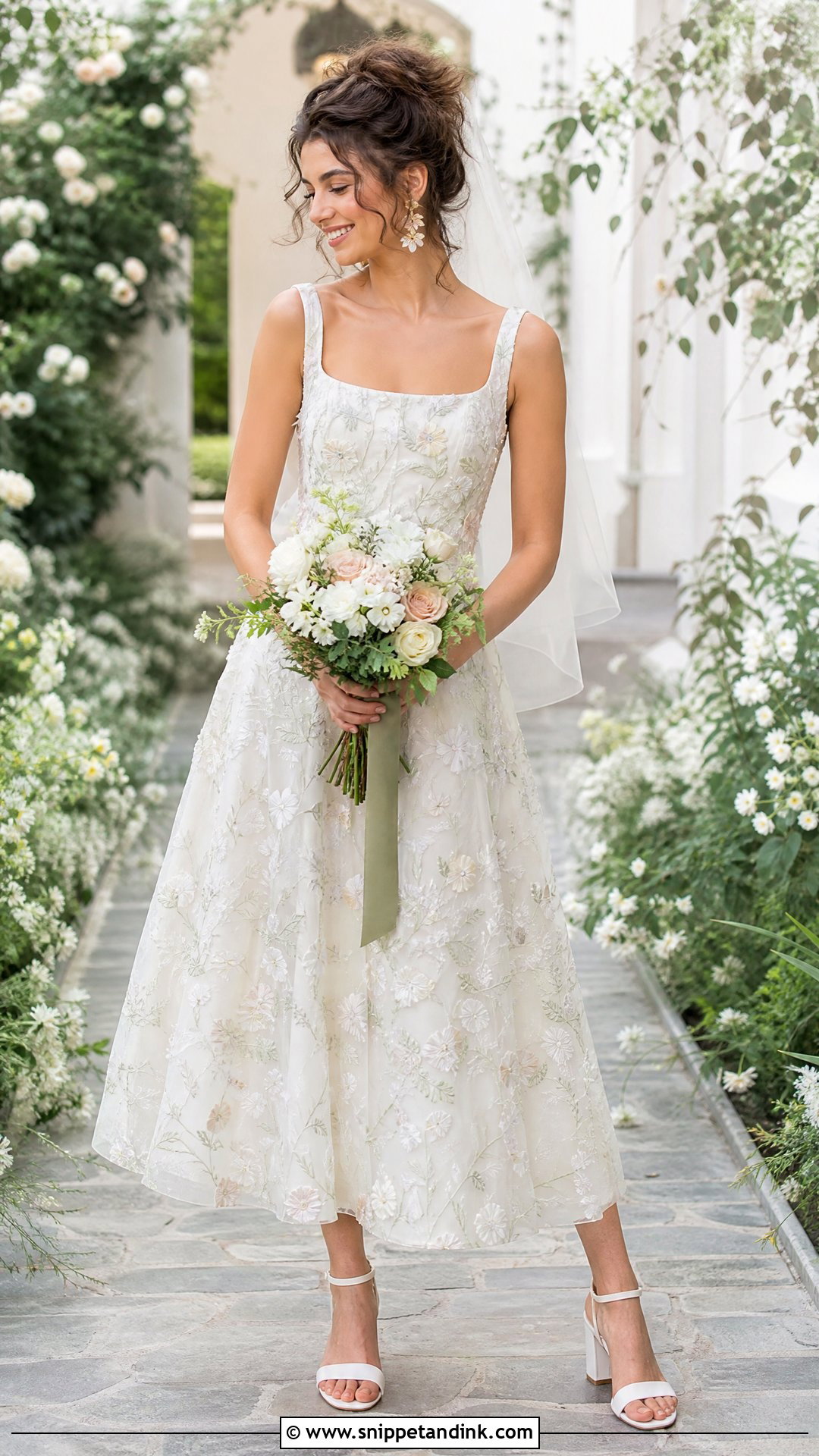
Gardens bring two practical problems for a shift: grass and temperature. A midi hem stays clear of damp lawn, while a floor-length dress works only on a paved aisle, and block heels won’t sink the way stilettos do. To tie a plain silhouette to the setting, look at floral lace, embroidered organza or a soft jacquard. Botanical earrings, a soft veil and loose waves or a textured updo finish it, with a bouquet of seasonal flowers. I always pack a light wrap for garden weddings, because the air cools quickly once the sun drops behind the trees.
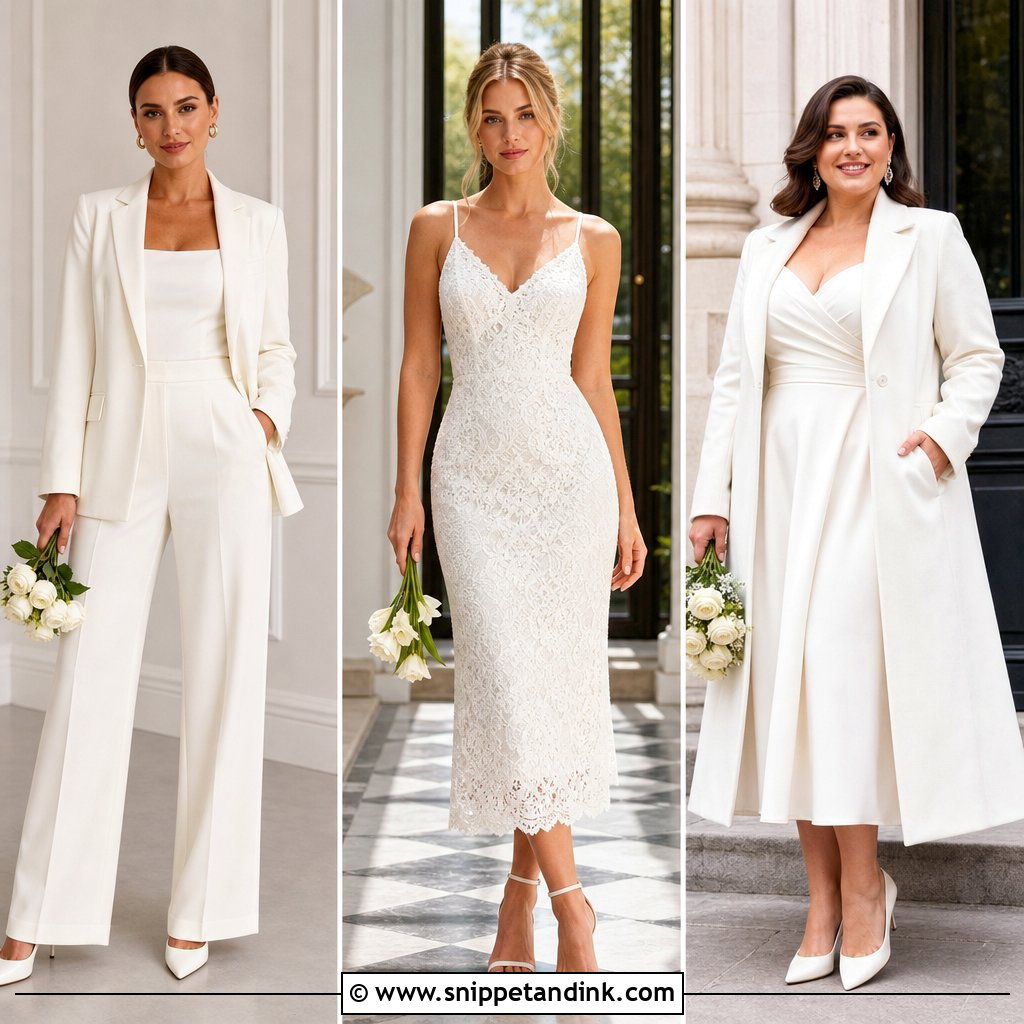
20. Reception Shift Wedding Dress
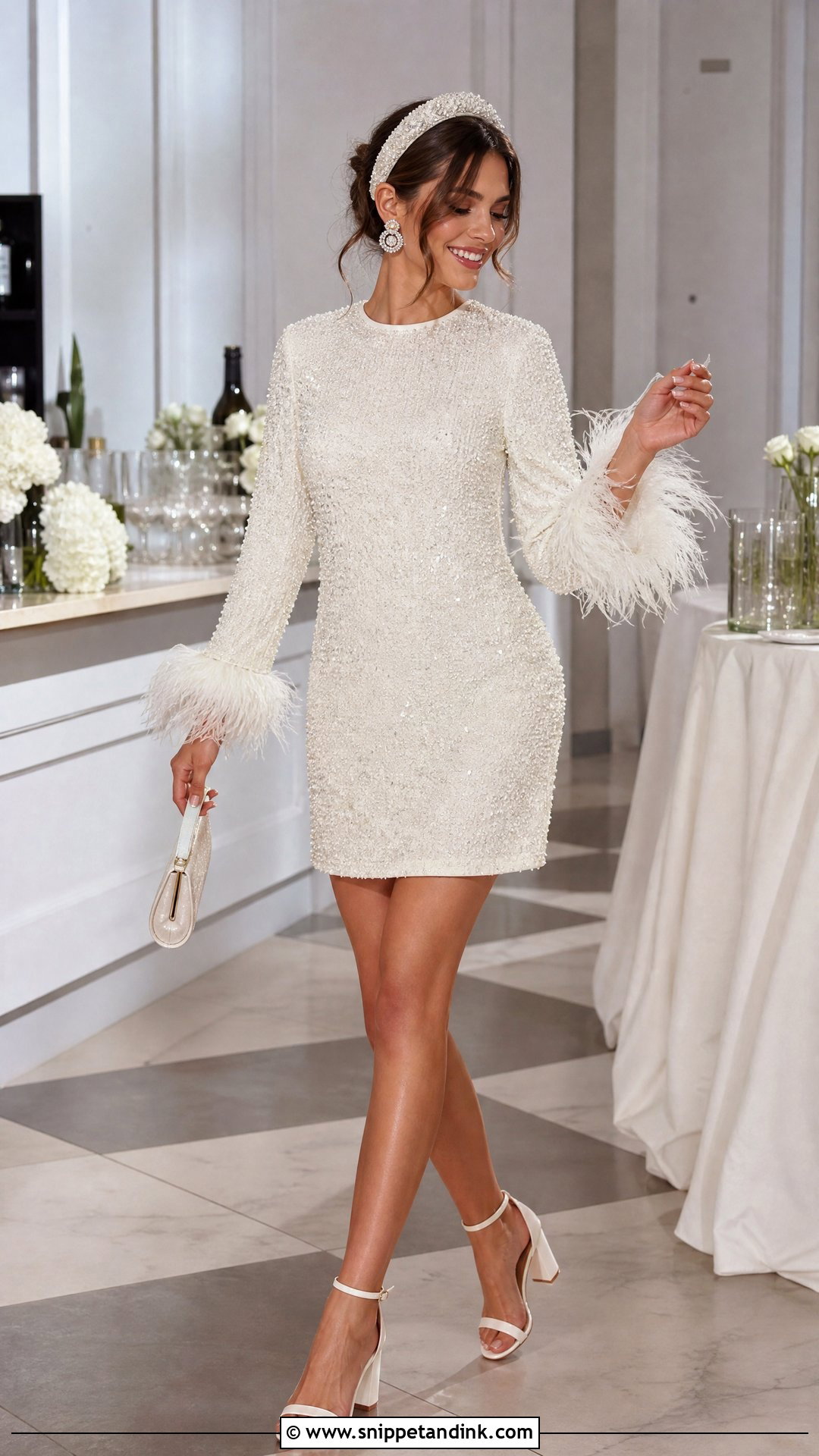
A short reception shift wedding dress is the easiest second outfit to change into, since there’s no corset to lace and nothing to bustle. Beads, sequined embroidery, satin and feather-trimmed crepe all suit it, but sit down in it at the fitting: feathers at the hem crush when you sit, and sequins can scratch the inside of your arms while you dance. Stable block heels or embellished flats, statement earrings and a compact wristlet are enough. Swap the veil for a headband, a sleek ponytail or decorative pins, and keep the shoes plain if the dress is busy.
What a Shift Goes Through Between the Taxi and the Registry Desk
Civil ceremonies are short, but the day around them isn’t. You’ll probably sit in a car, wait in a corridor, stand for photos outside and then sit through a long lunch. Fabric decides how the dress looks by the time you reach the restaurant.
How each fabric handles a seated hour
- Crepe and heavy jacquard: the most forgiving. Creases from a car ride usually drop out within minutes of standing.
- Satin: shows every seated crease across the lap and the back. Smooth the back of the skirt flat before you sit, and bring a small handheld steamer if your portraits come after lunch.
- Linen blends: crease almost at once. The texture is lovely, but only if you’re happy with a lived-in look.
- Lace over lining: the lace hides creases, the lining doesn’t, so check the hem where the lining shows.
I’d also tuck a few things into your bag: clear tape for a neckline that slips, a stain pen that’s safe on silk, safety pins and blotting papers. Steam the dress the night before rather than that morning, and hang it away from the bathroom so shower steam doesn’t undo the work. If rain is forecast, an ivory umbrella and a pair of flats for the steps will save both the hem and your feet.
Why a Shift Works From the Registry Desk to the Dance Floor
A shift lets you stay comfortable all day without giving up a bridal look. The same straight line works short, midi or floor-length, and satin, lace, crepe, beads or pearls each change its mood completely. Settle the venue, season and hem length first, then the fabric weight, because weight is what makes a shift hang well or badly. Let accessories follow the silhouette: a veil for tradition, or a cape, statement shoes or an overskirt for something less expected. From a courthouse to a formal dinner, the twenty looks above show this simple dress can carry a whole wedding day.
You'll Like These Ideas:



Leave a Reply