
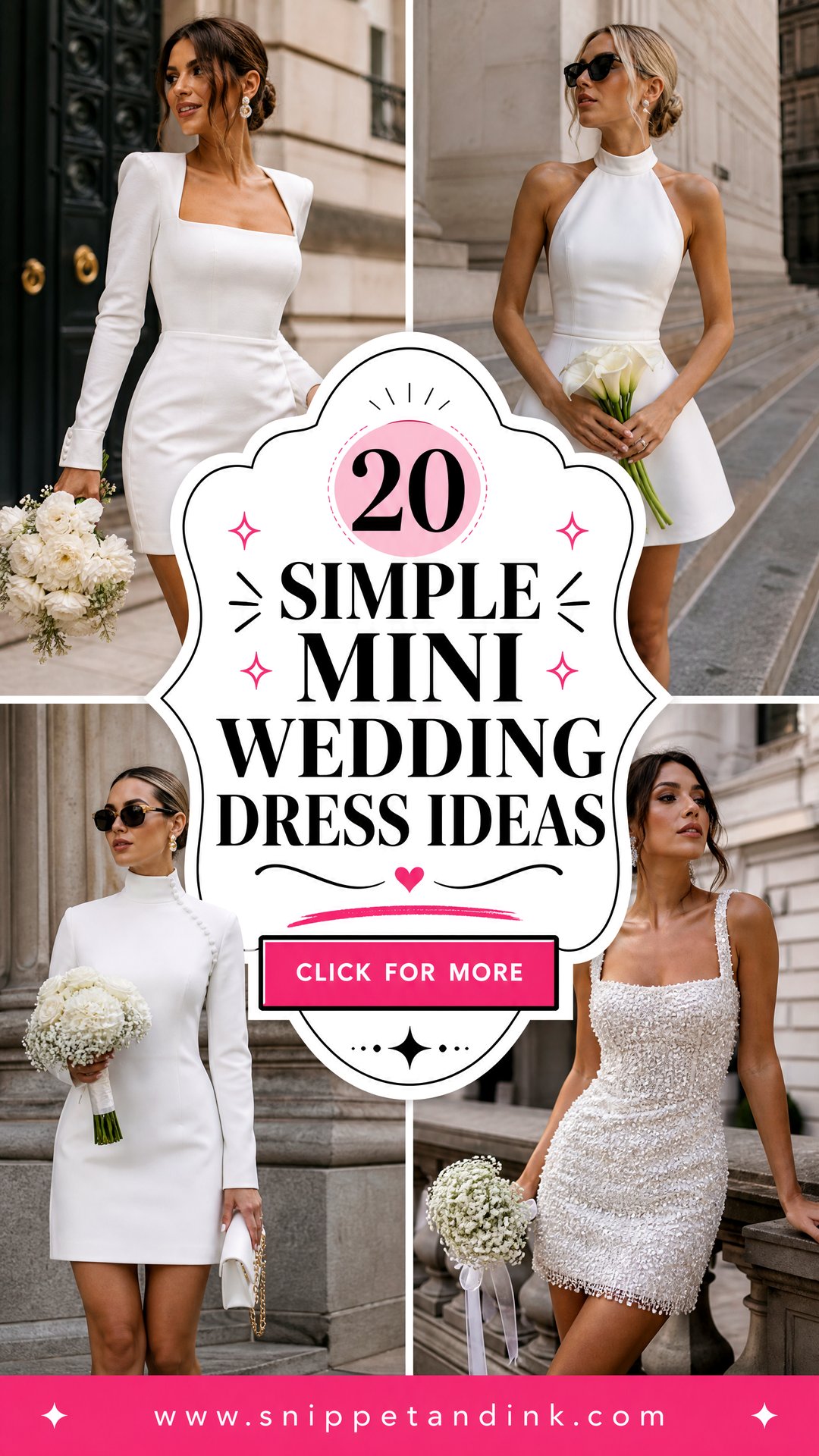
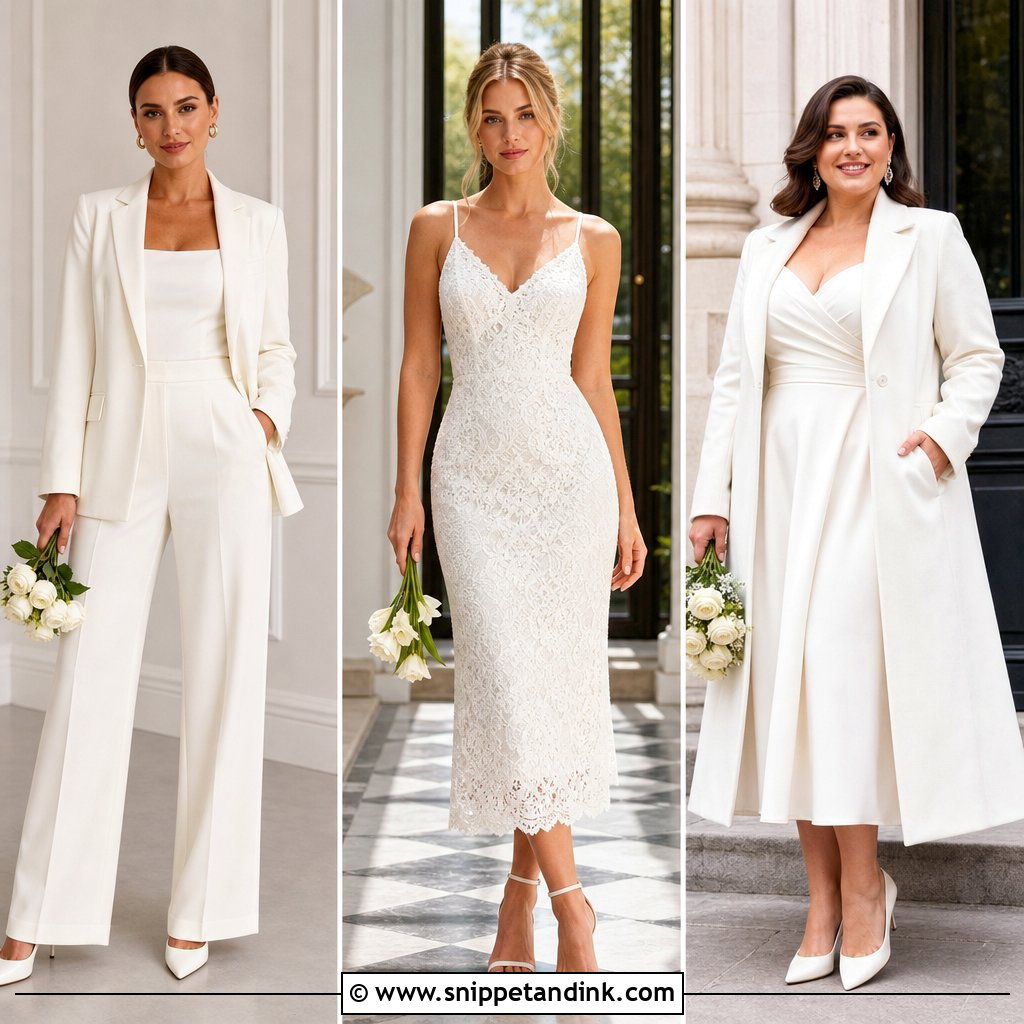
A short wedding dress asks more of its details than a long one does. With half the fabric gone, the fit, the shoes and the hem length are all on show, and that is exactly why I enjoy dressing brides in minis. They turn up at courthouse ceremonies, small restaurant dinners, destination weddings and as the second look after a long gown, mostly because you can walk, sit on a city hall bench and dance without gathering up a train. Below are twenty simple shapes, each styled from shoes to hair, with the fit points I check before a bride commits to one.
Where a Mini Hem Should Land on Your Leg
Most of the decisions with a short dress come down to one measurement: where the hem ends. I measure it with the bride standing in the actual wedding shoes, because two extra inches of heel changes how the leg reads and how high the skirt rides when you walk.
- Mid-thigh looks the most fashion-led and suits a reception or after-party. It needs a lining with a little weight so it doesn’t lift on a breezy street.
- Just above the knee is where I put most ceremony minis. It shows the shoes, survives sitting on a registry bench and still feels modern.
- On the knee works for brides who feel exposed in shorter lengths, and it pairs well with long sleeves or a high neck.
Then do the sitting test. Sit in a low chair, cross your legs and stand up again, and check how far the hem travels. A fitted skirt rises much more than an A-line, so a sheath often needs to be cut an inch longer than looks right when standing. Climb a few stairs too, since many city halls and restaurants have them, and photographers often shoot from below.
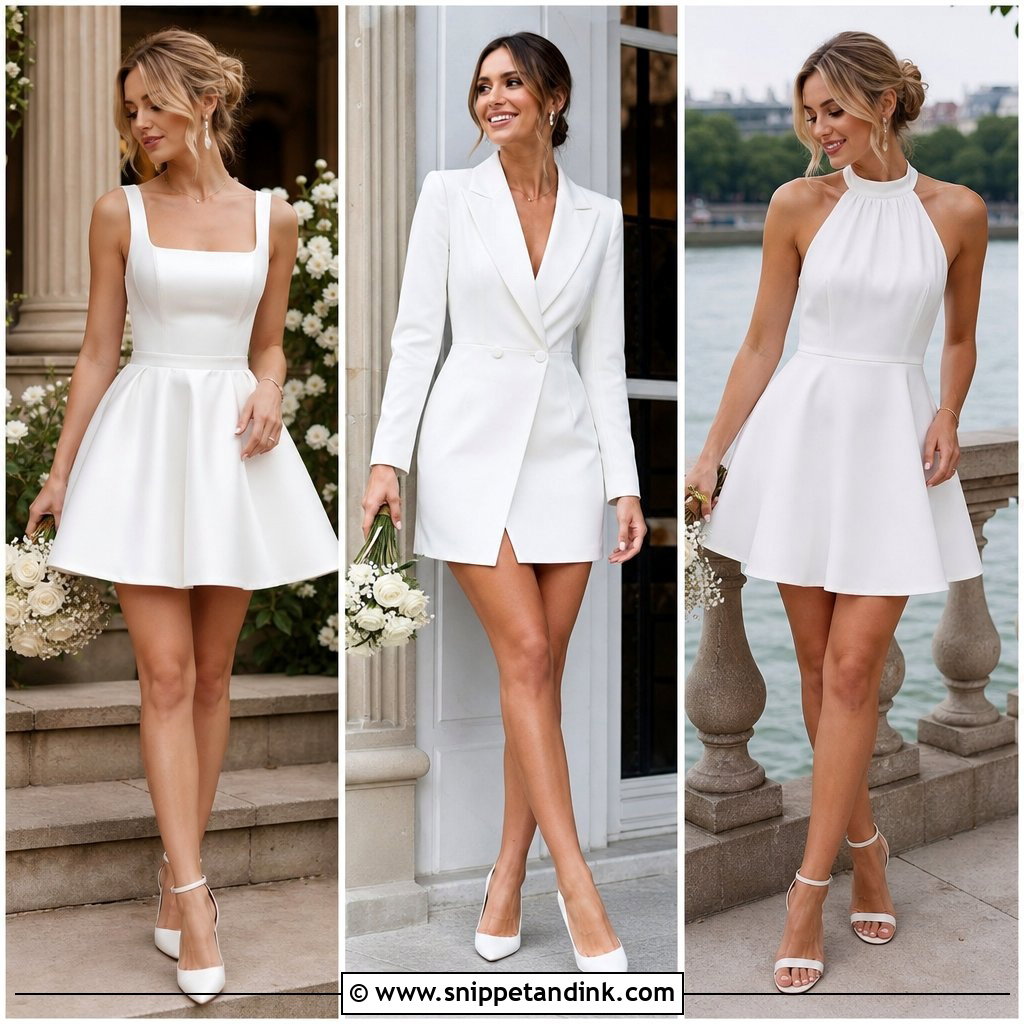
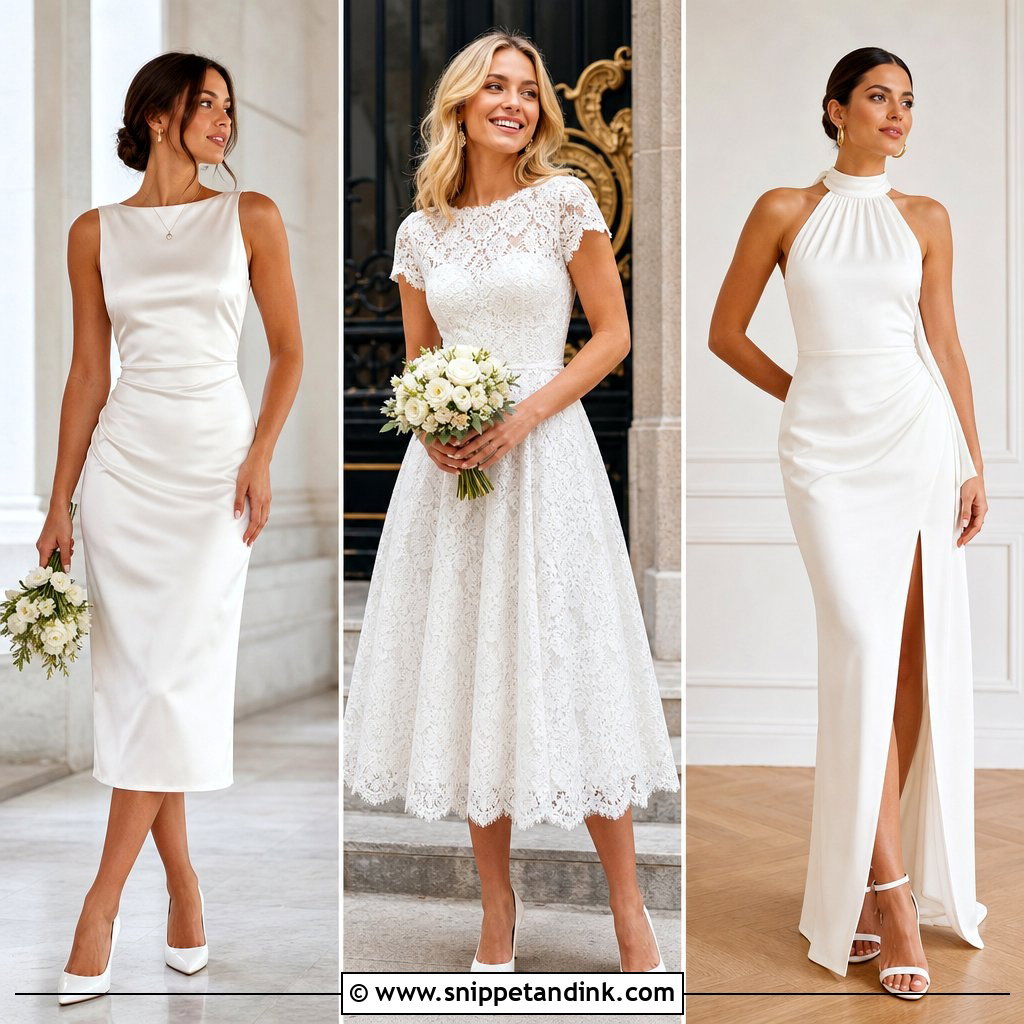
1. Simple Satin Mini Wedding Dress
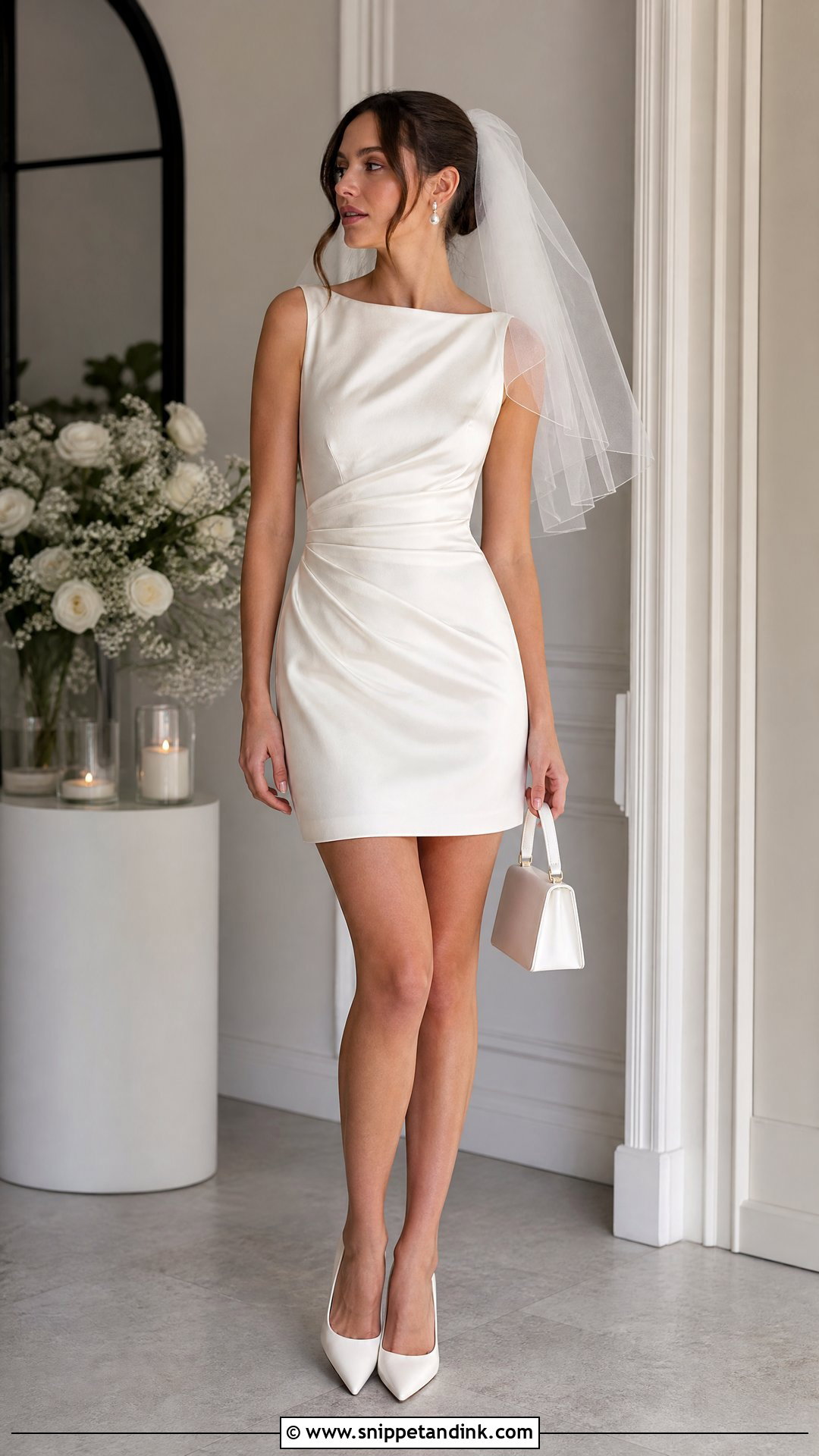
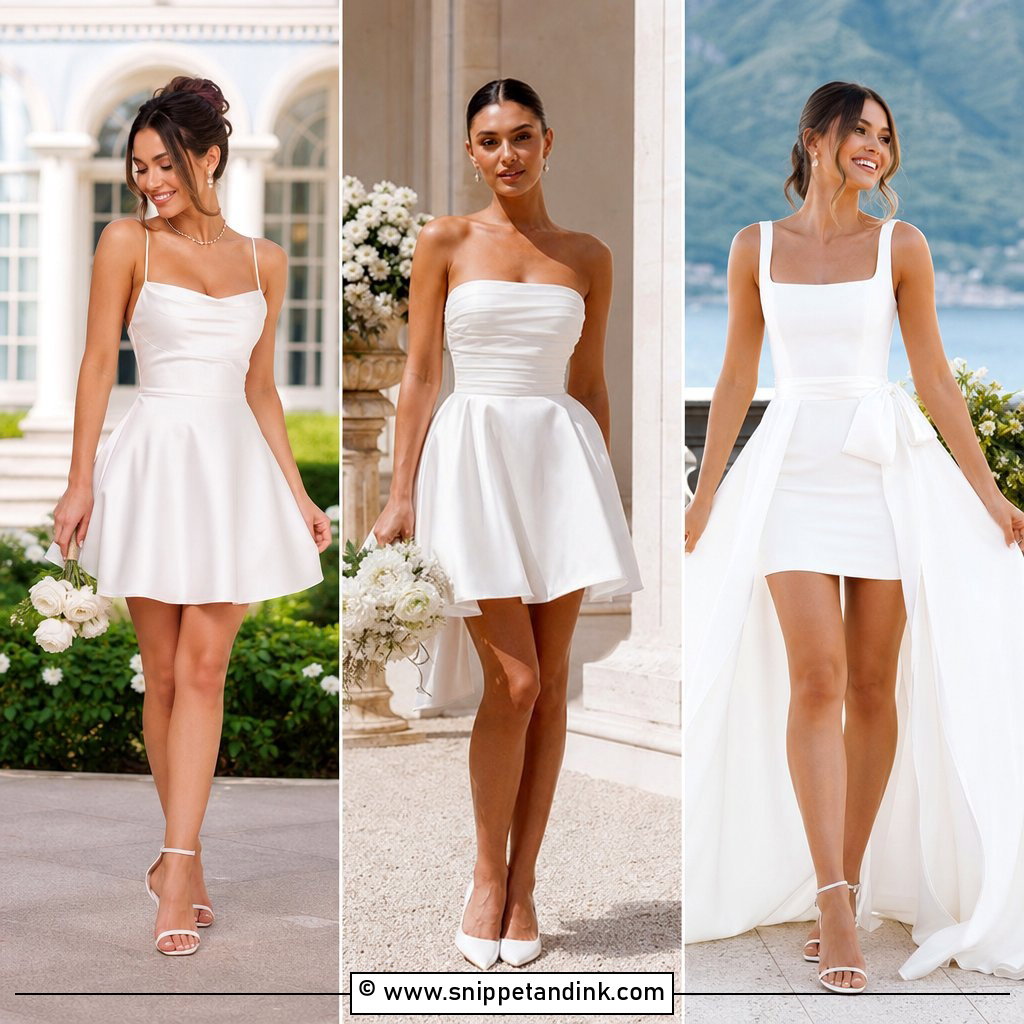
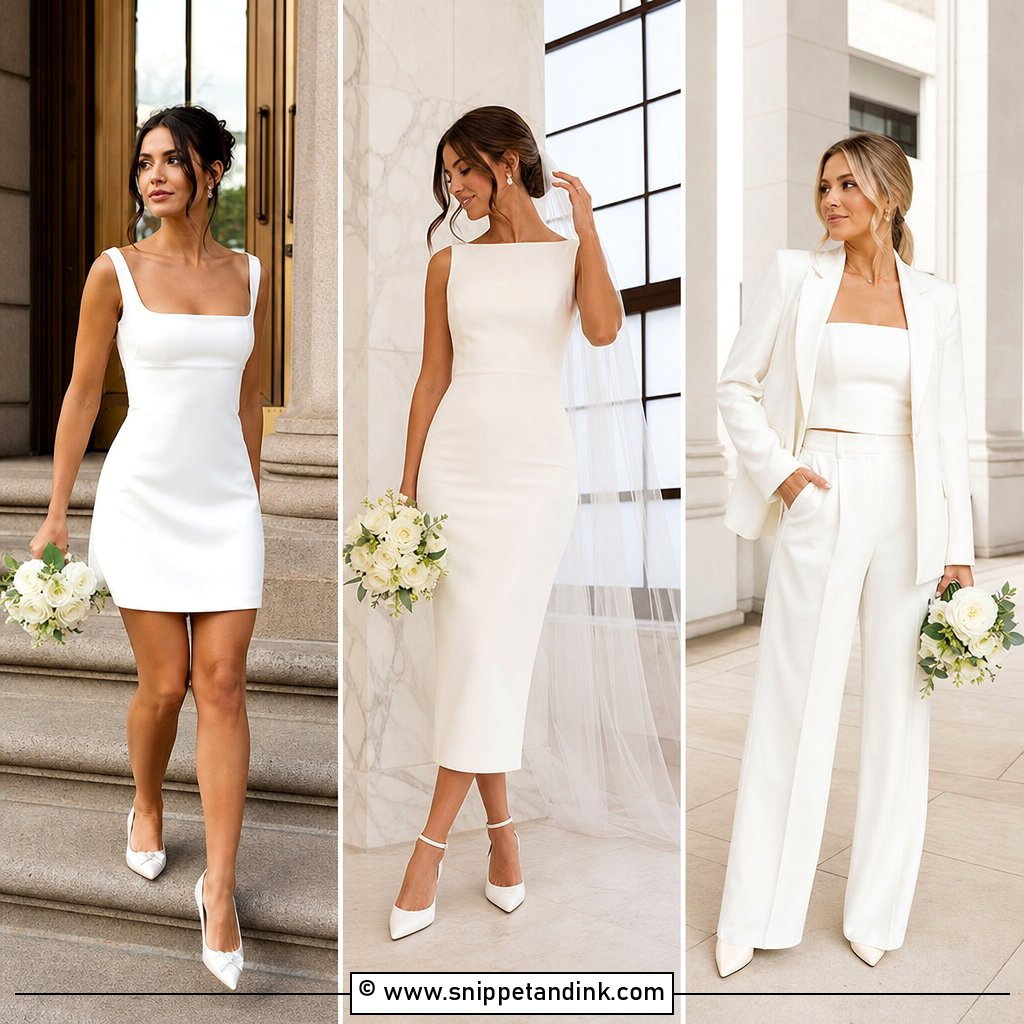
Satin is the purest version of a simple mini, and also the least forgiving. It reflects light off every seam and every crease from the car seat, so I always look at the dress after the bride has sat down for ten minutes, not just standing in the mirror. A softly fitted shape with a straight or barely flared skirt suits it, and a square, scoop, or gentle cowl neckline keeps attention near your face. Ivory pointed pumps, a small structured bag and pearl or crystal earrings are plenty. A sleek low bun shows off the neckline, and a fingertip veil with a raw edge reads modern rather than fussy. Courthouses, restaurant receptions and plain indoor rooms suit it best.
2. Square Neck Mini Wedding Dress
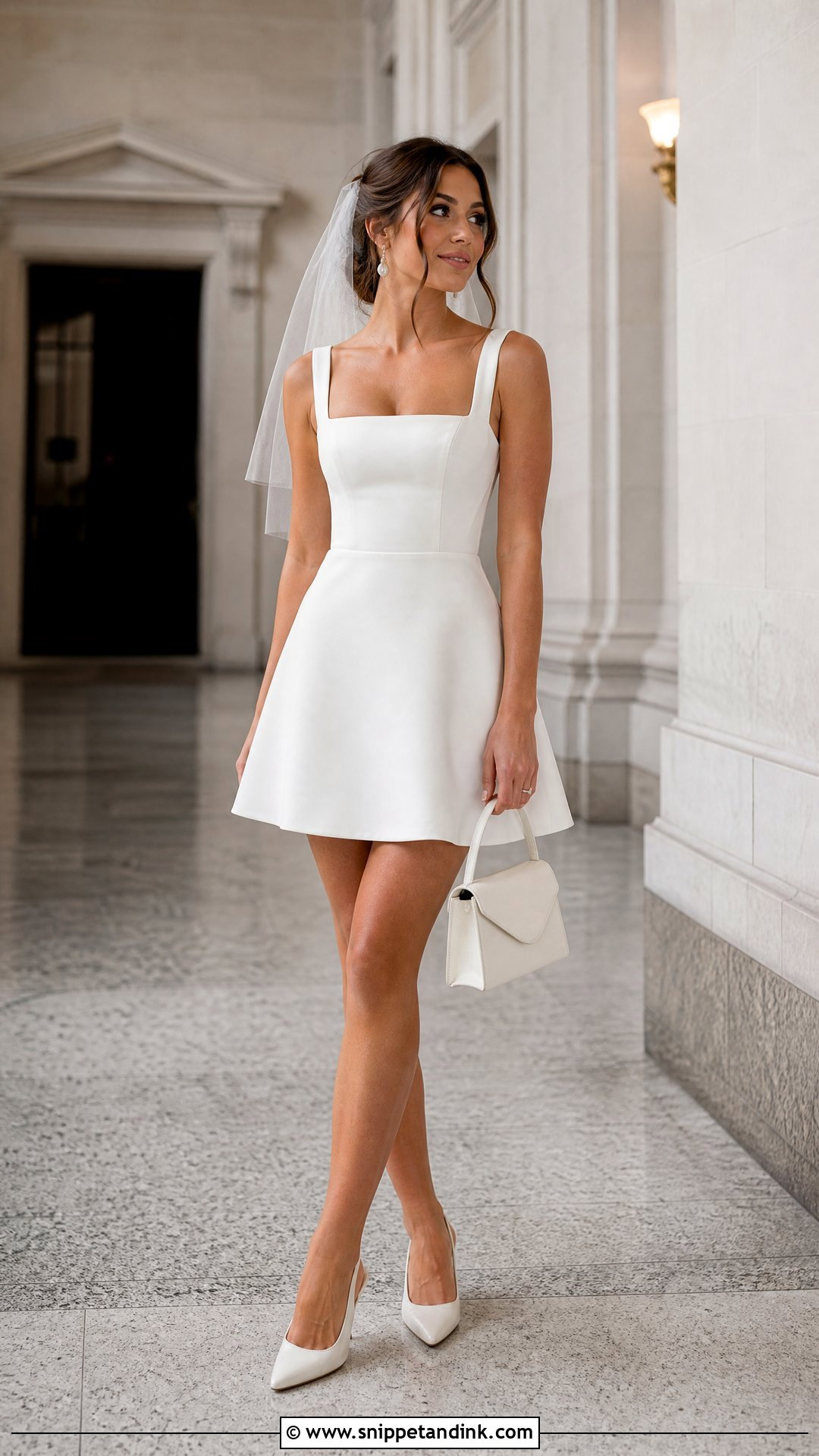
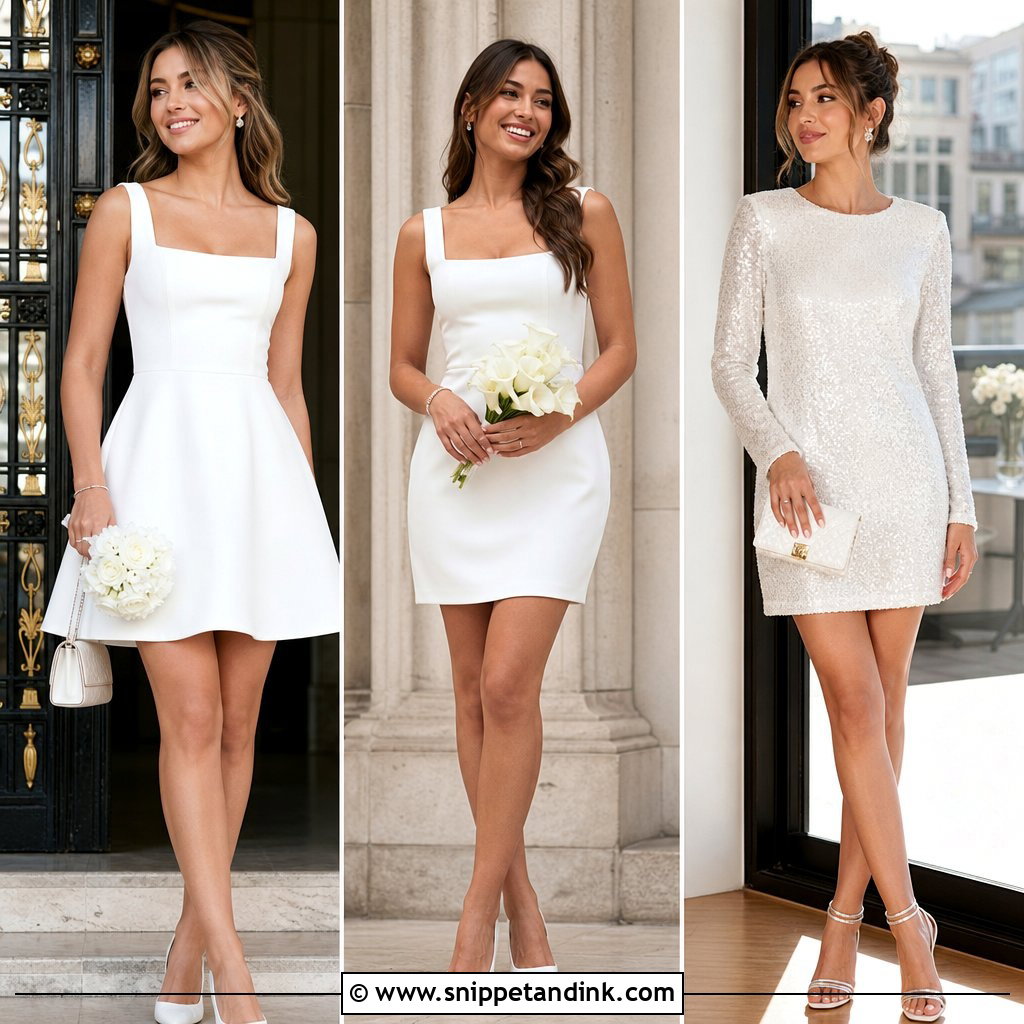
A square neckline frames the collarbones and shoulders in a way few other cuts do. I like it on a structured bodice with wide straps and a modest A-line skirt, because the straps take weight off the bust and you stop tugging at it by lunchtime. The neckline is already the feature, so earrings or a fine pendant are as far as I’d go. Pointed slingbacks and a small top-handle bag in ivory or a soft metallic finish it. A short tulle veil adds the bridal note. The corners of a square neck can gape on a smaller bust, so ask the seamstress to pin them while you lean forward.
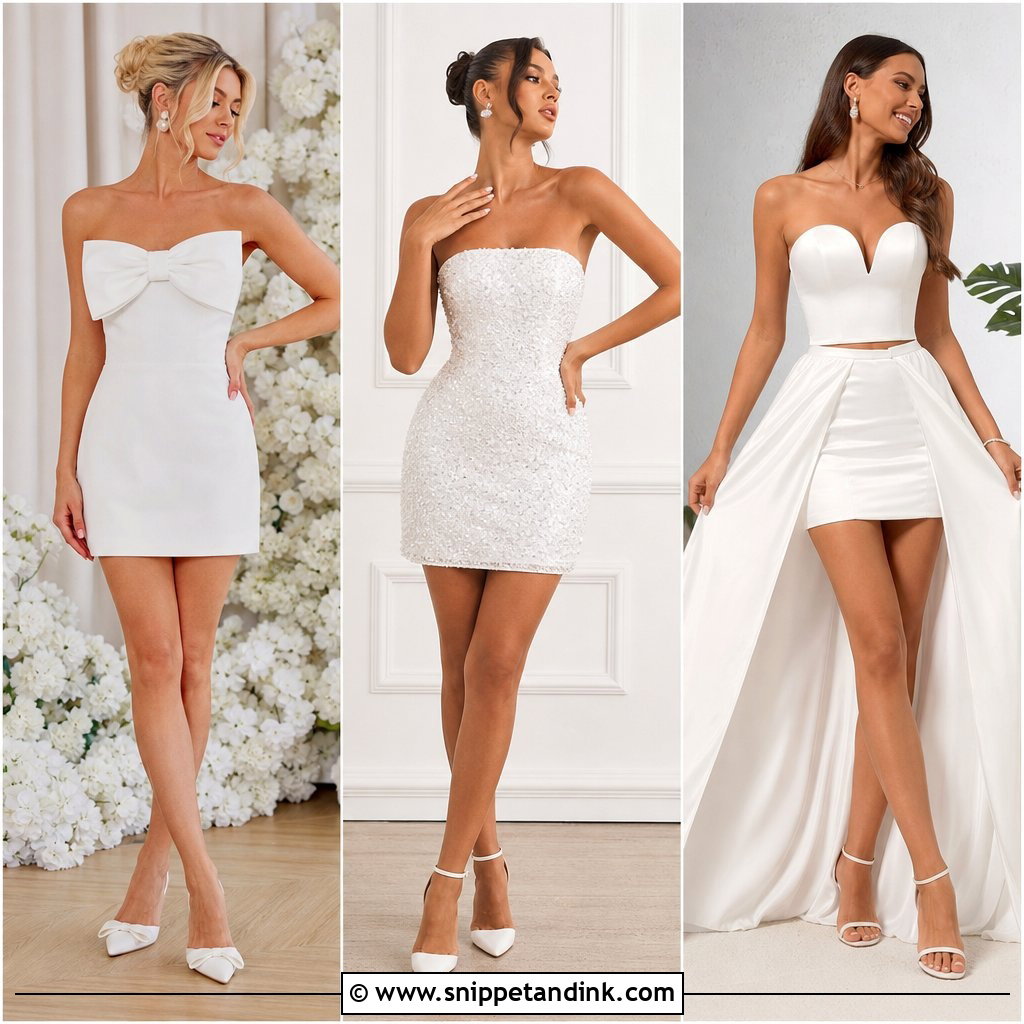
3. Strapless A-Line Mini Wedding Dress
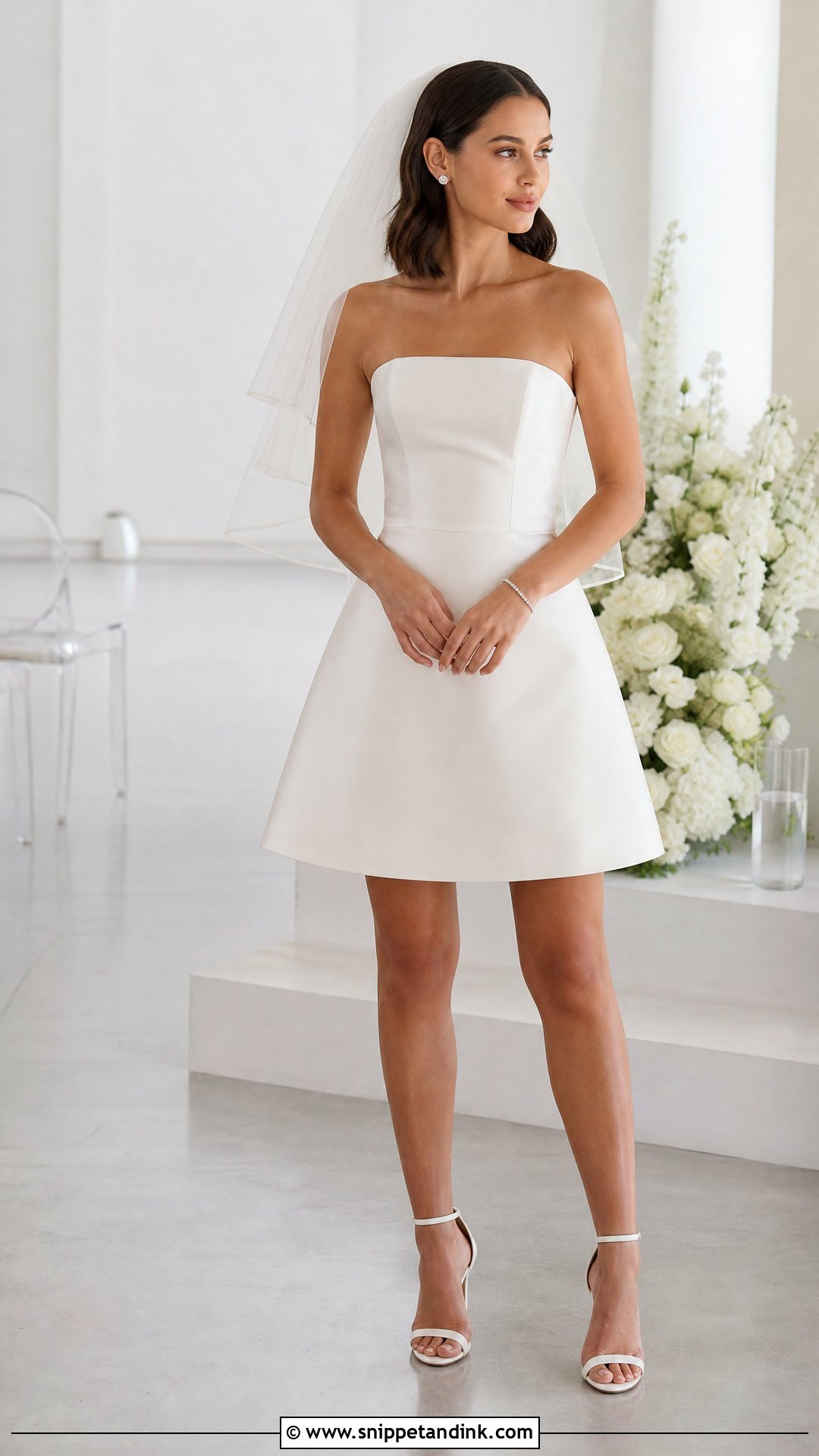
Strapless with an A-line skirt is the most playful shape here. The fitted bodice marks the waist and the flared skirt gives you room to dance. I’d only choose it in a fabric with body, such as structured satin, mikado or crepe, since a limp fabric loses the flare by the reception. Ankle-strap heels or pointed pumps in a matching ivory keep the leg line long. A tennis bracelet, small studs and a shoulder-length veil add sparkle without clutter. Bring a light cropped jacket for outdoor photos in spring or autumn. A neat bun or brushed waves finishes it. It suits a city wedding, a summer ceremony or a second look.
4. Long Sleeve Mini Wedding Dress
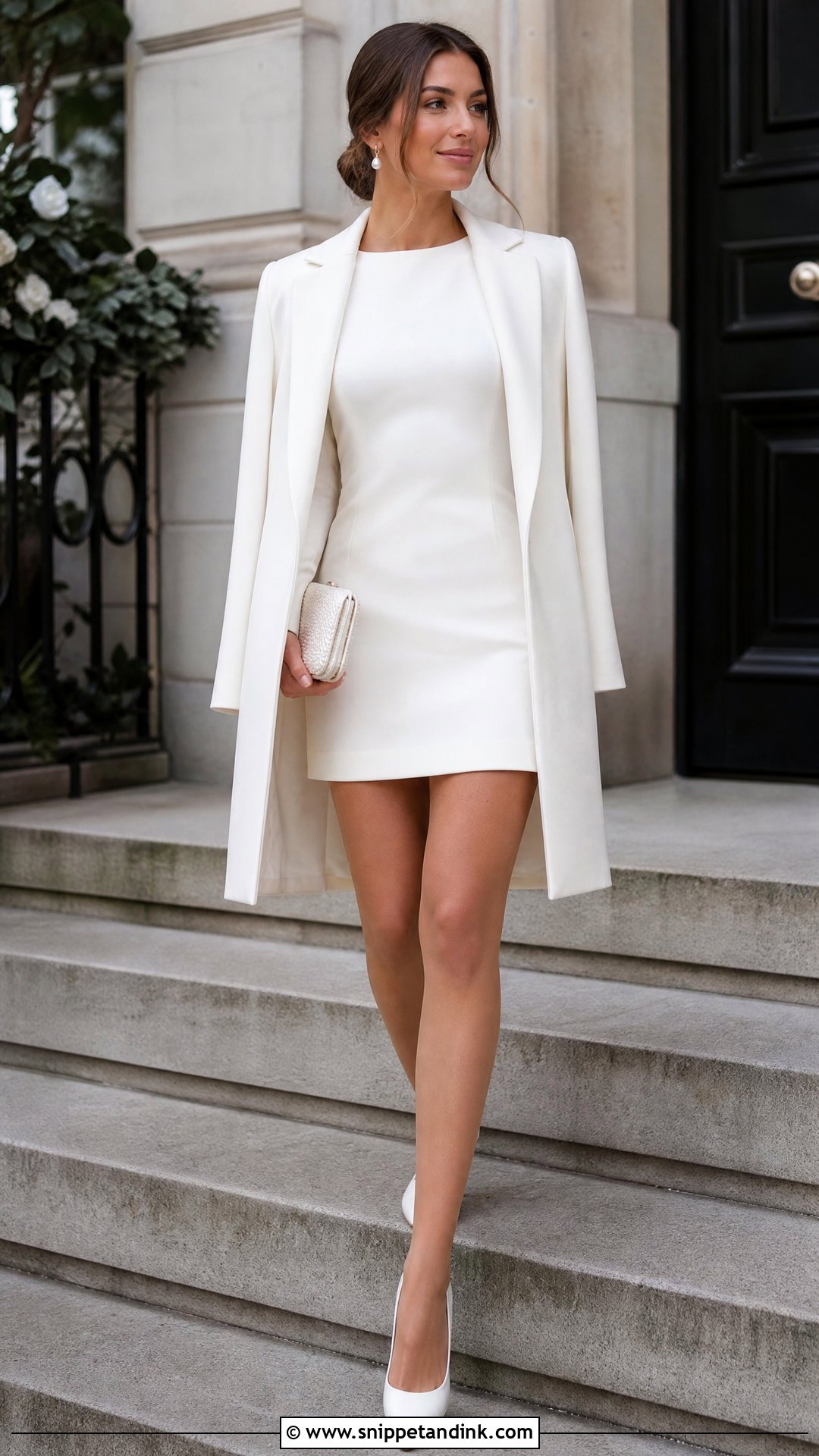
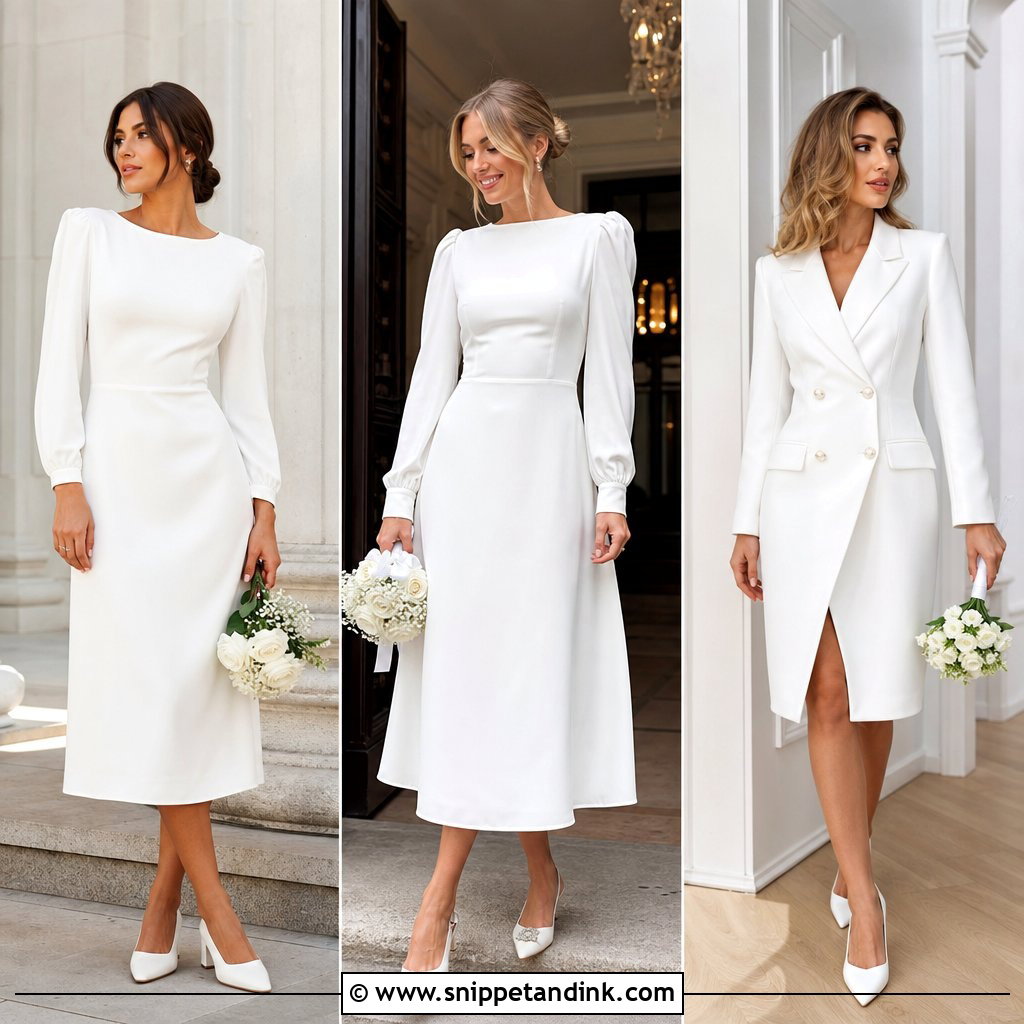
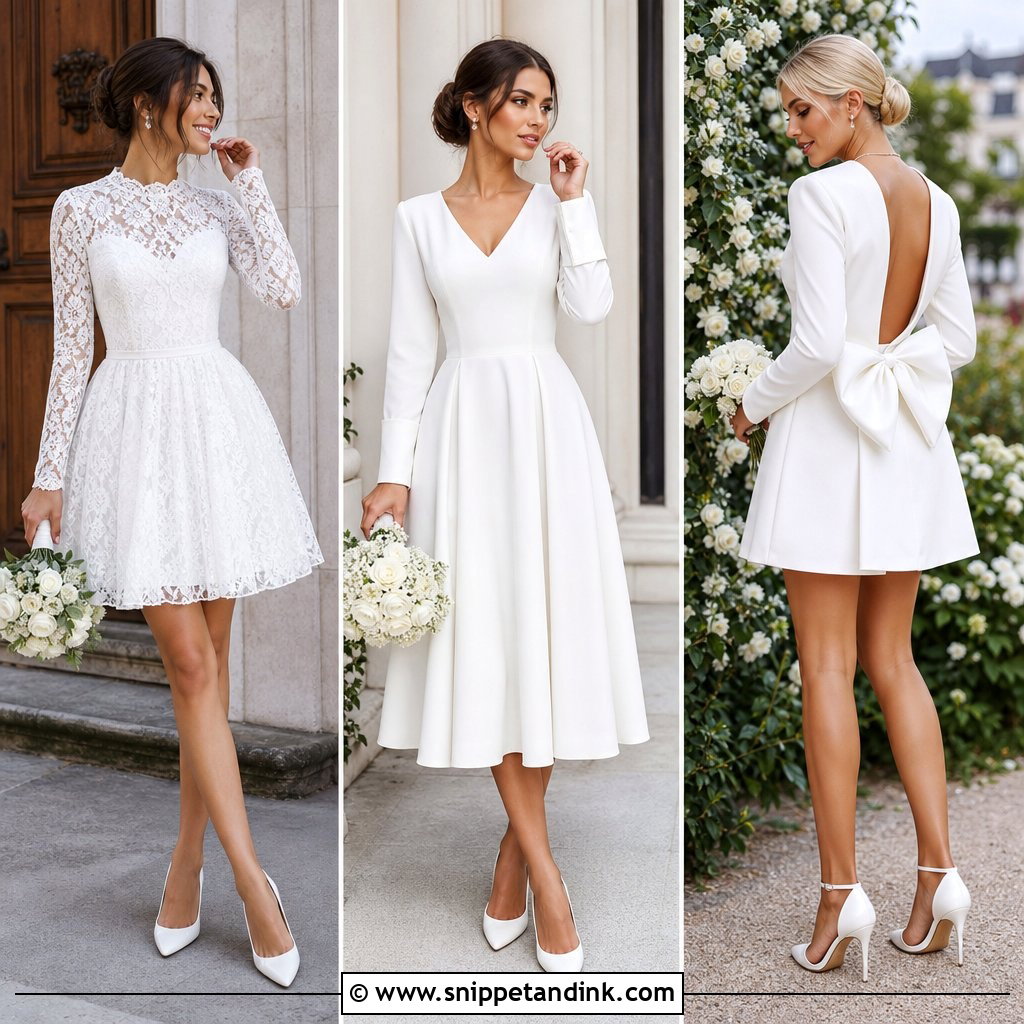
Long sleeves and a short skirt balance each other well: coverage on top, leg on show below. Fitted crepe sleeves read minimalist, while sheer lace sleeves are softer. The sleeve has to let you lift your arms for a hug, so I always do the arms-up test at the fitting; a tight sleeve head pulls the whole dress upward. A high neck gives a streamlined line and a V-neck lightens it. Closed-toe pumps, a simple clutch and pearl drops complete it. For cold days, sheer neutral tights and a tailored ivory coat cut a little longer than the dress look deliberate. A low ponytail or smooth chignon keeps it neat. Autumn and winter courthouse weddings are where I’d use it most.
5. Lace A-Line Mini Wedding Dress
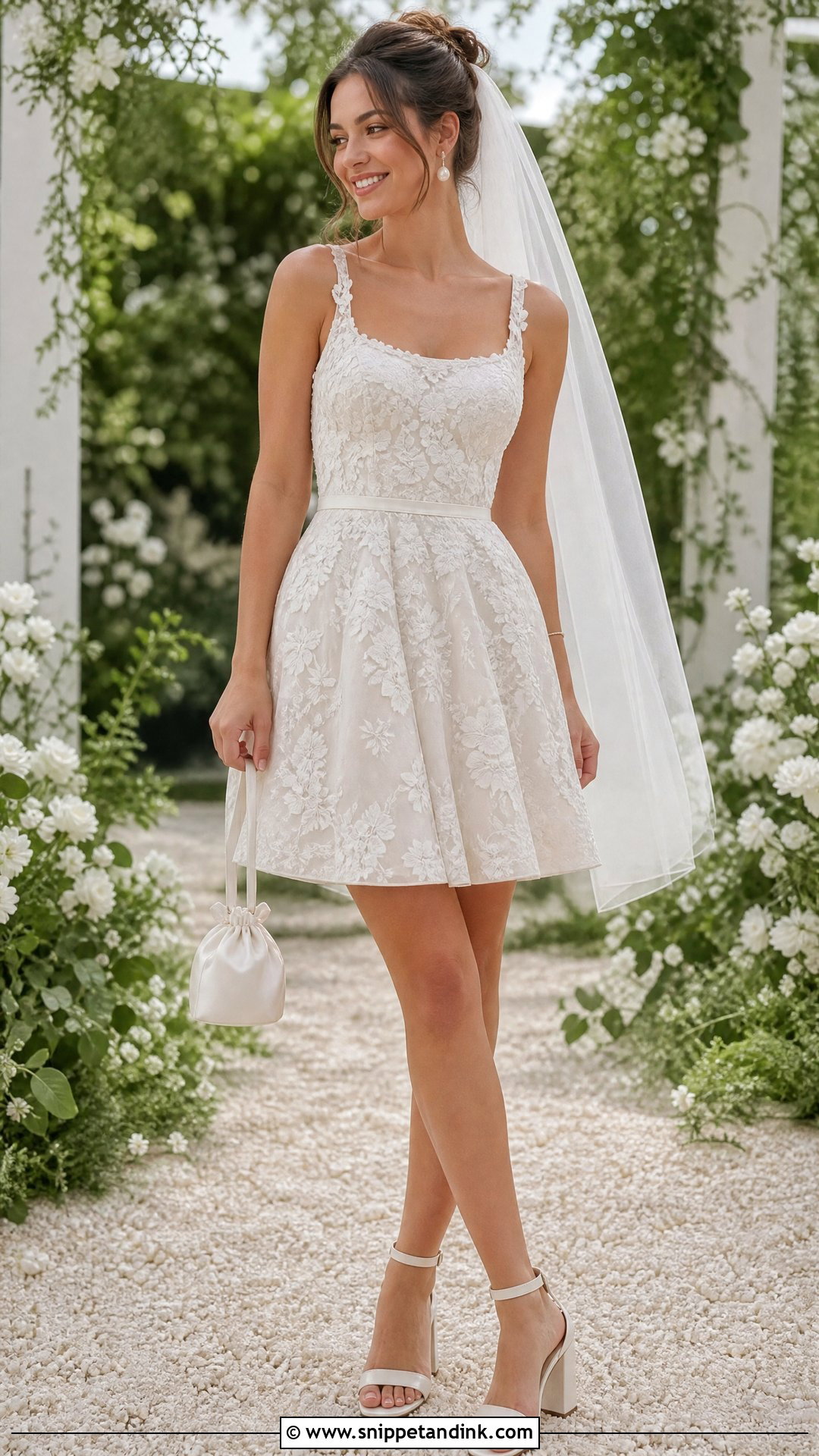
Lace makes a short dress unmistakably bridal while keeping it light. Choose an A-line with a lined bodice, modest skirt volume and a clear waist. Floral lace reads romantic and geometric lace reads cleaner. One thing I check: lace on a short hem tends to have a scalloped edge, and if a seamstress shortens it she has to lift and reapply that border, which takes longer and costs more than a plain hem. Ivory block heels, pearl earrings and a small satin bag work. Keep the veil plain so it doesn’t fight the pattern. Soft curls or a half-up style suit the texture, and it settles naturally into garden ceremonies and relaxed receptions.
6. Blazer Mini Wedding Dress
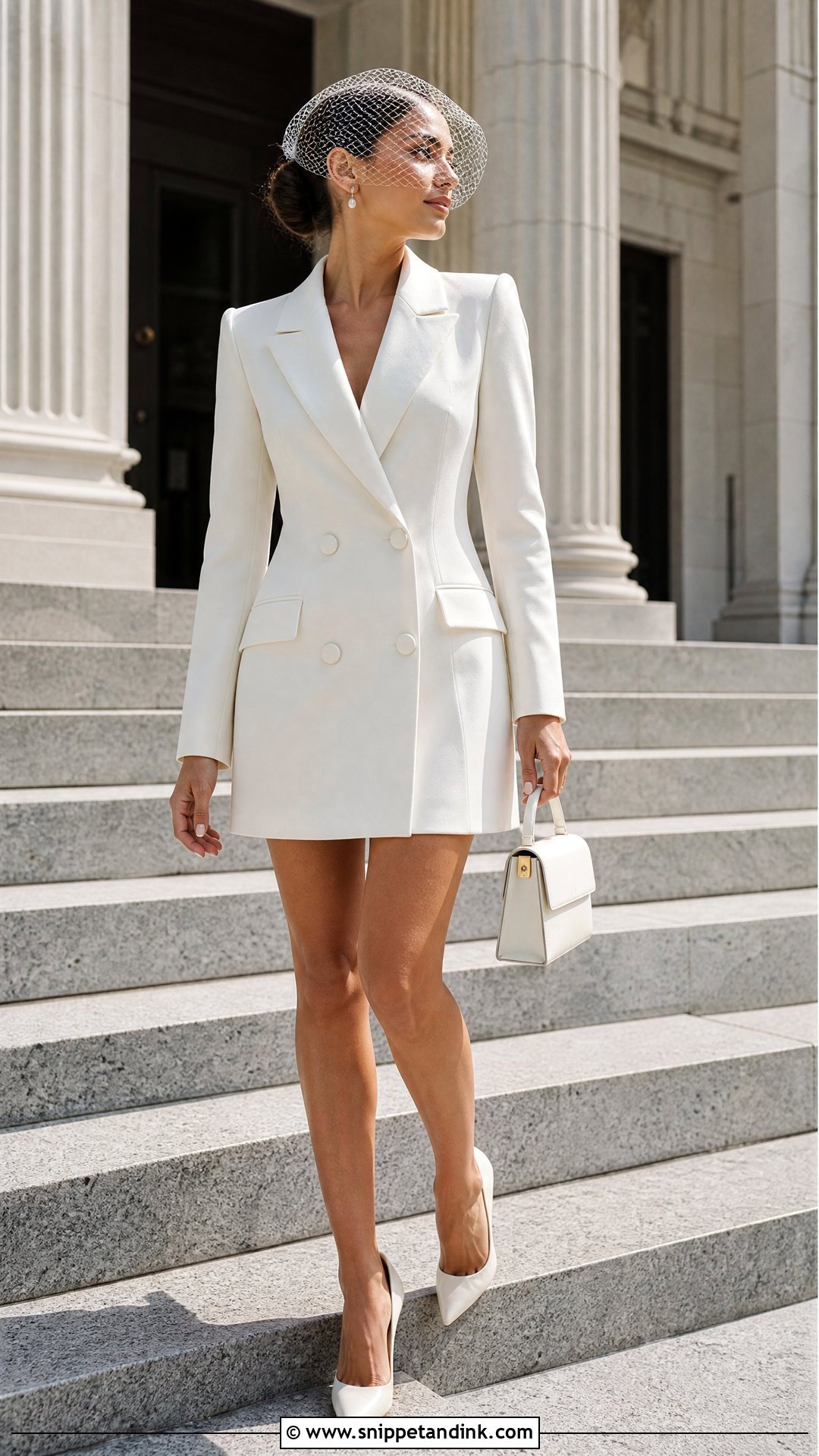
A blazer mini wedding dress gives you tailoring with a bridal finish. Look for a double-breasted or wrap front with a defined waist and a closure that stays shut when you sit, because a blazer dress gapes at the button more than any other style here. Crepe or structured suiting gives a crisp edge, and satin-covered buttons add a quiet detail. Pointed pumps, minimal earrings and a structured mini bag go with it. A birdcage veil or sleek bow softens the sharp lines. A low bun or polished waves. City halls, rooftops and stylish receptions where a full gown would feel too much.
7. Off Shoulder Mini Wedding Dress
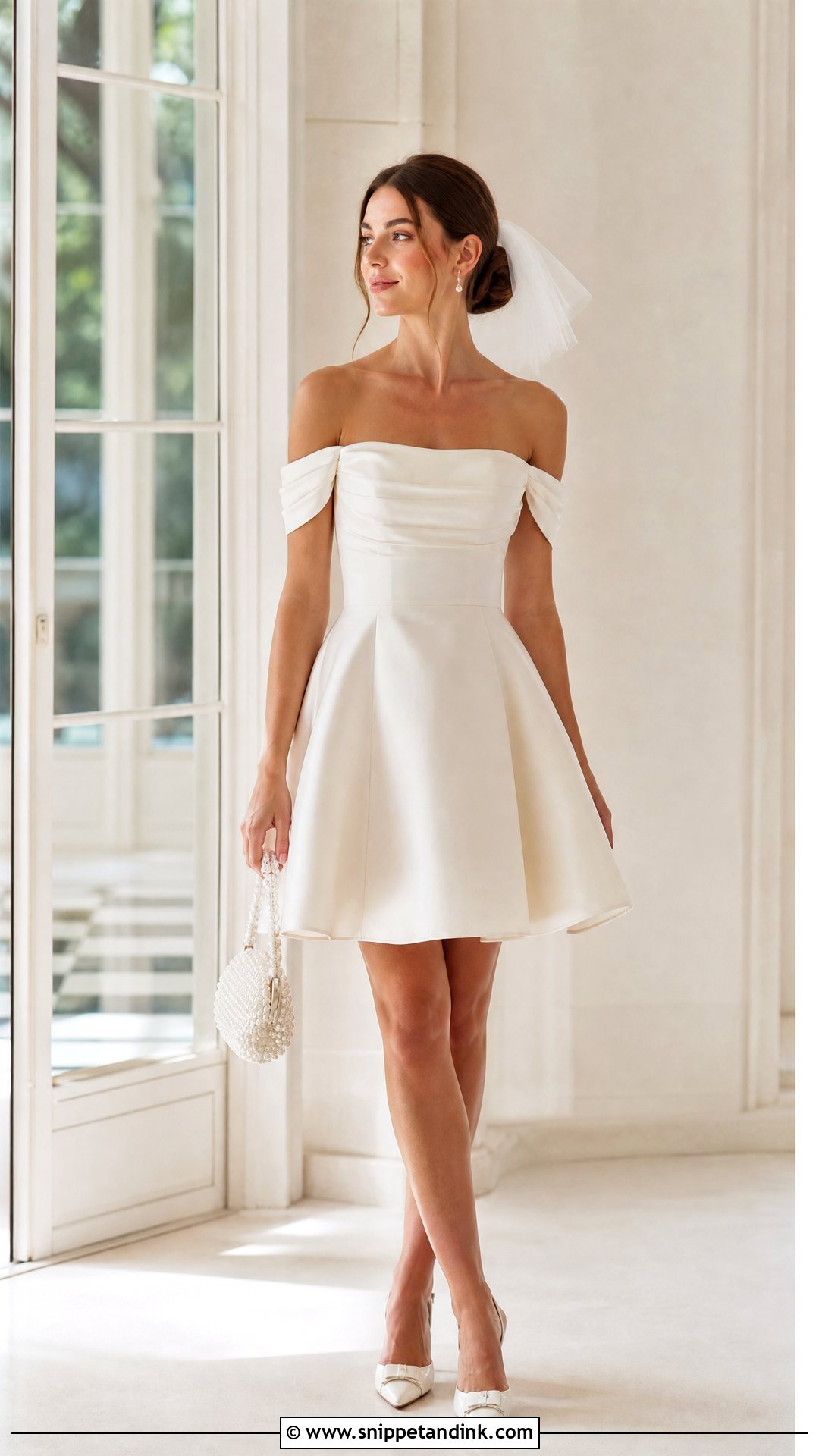
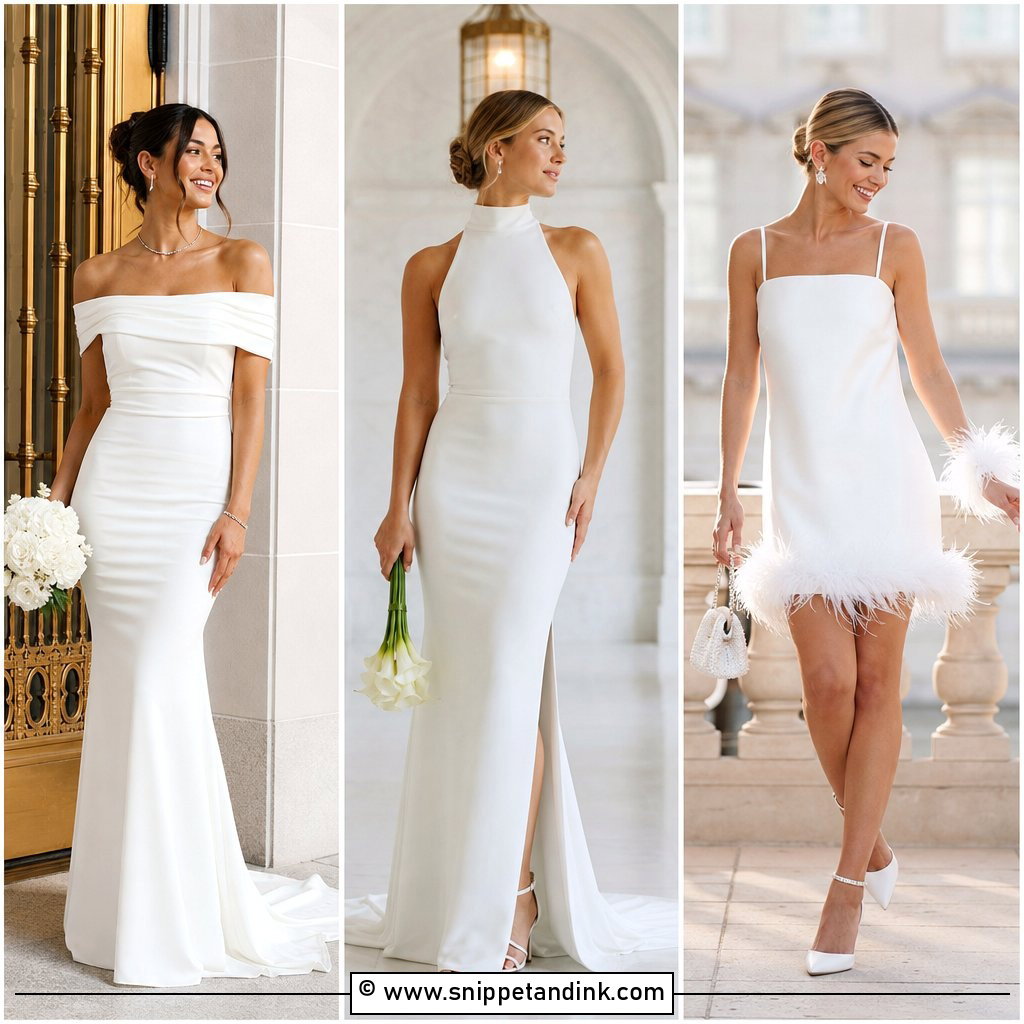
Off the shoulder shows the neckline and keeps the whole outfit soft. The risk is movement: a fold-over neckline that sits nicely at rest can climb or slip once you raise your arms. I’d ask for silicone grip tape sewn inside the band and test it by hugging someone at the fitting. A straight or lightly flared skirt balances the bare shoulders. Low slingbacks, delicate earrings and a small pearl bag, with no necklace. A short veil tucked under a low bun keeps the shoulders clear. Warm-weather ceremonies and reception changes suit it.
8. Halter Neck Mini Wedding Dress
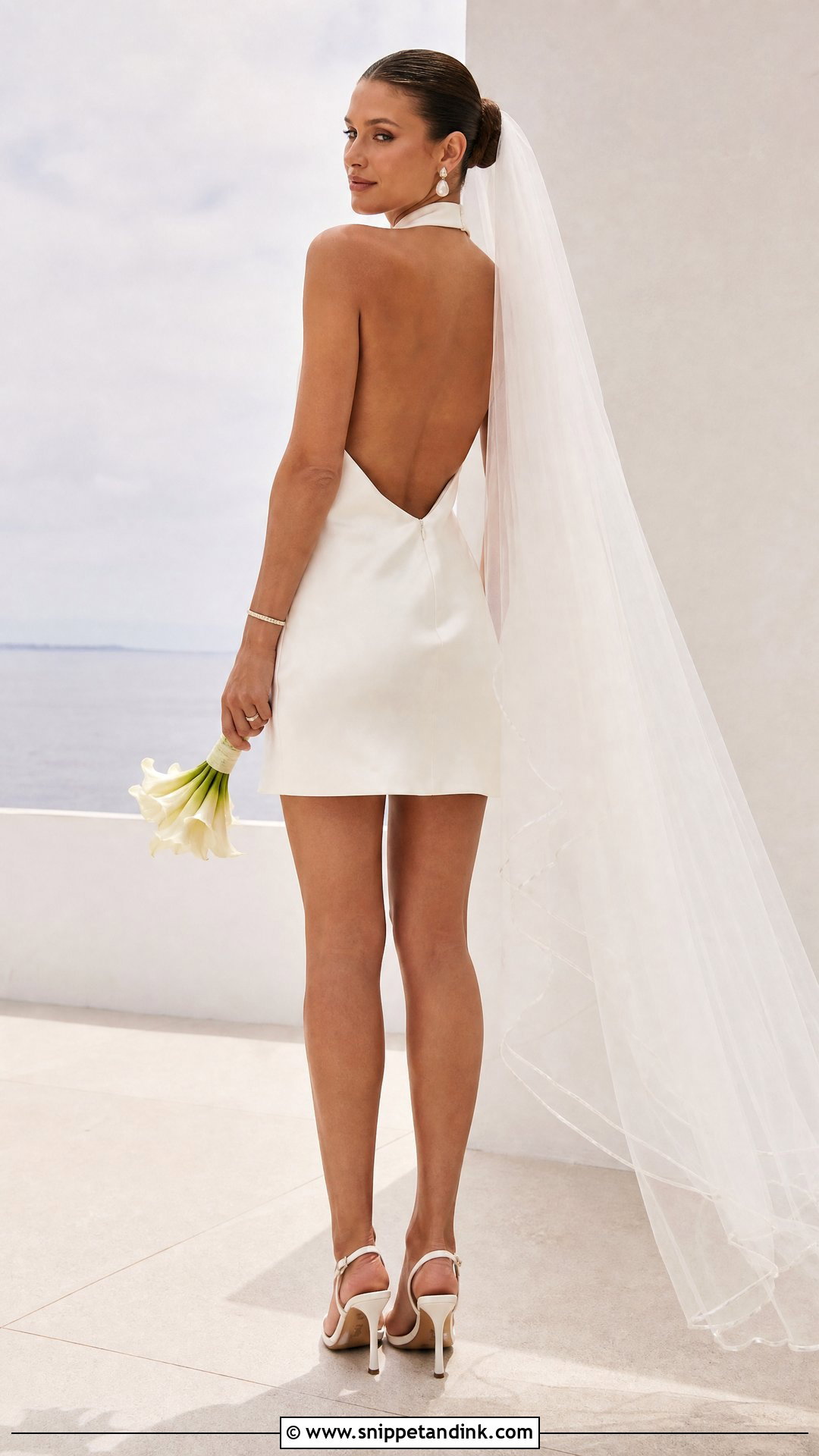
A halter mini is clean lines and an open back. Look for a softly fitted bodice and a higher neckline, in crepe, satin or a light textured fabric that follows the cut. Simple drops, a slim bracelet and ivory heeled sandals; no necklace, since the halter already frames you. Halters put all the weight on the neck strap, which some brides find tiring after a few hours, so I suggest a hook closure rather than a tie, and wearing it for a full evening at home first. A smooth bun or high ponytail shows the back. Add a long, narrow veil for ceremony drama. Destination weddings and modern venues.
9. Bow Back Mini Wedding Dress
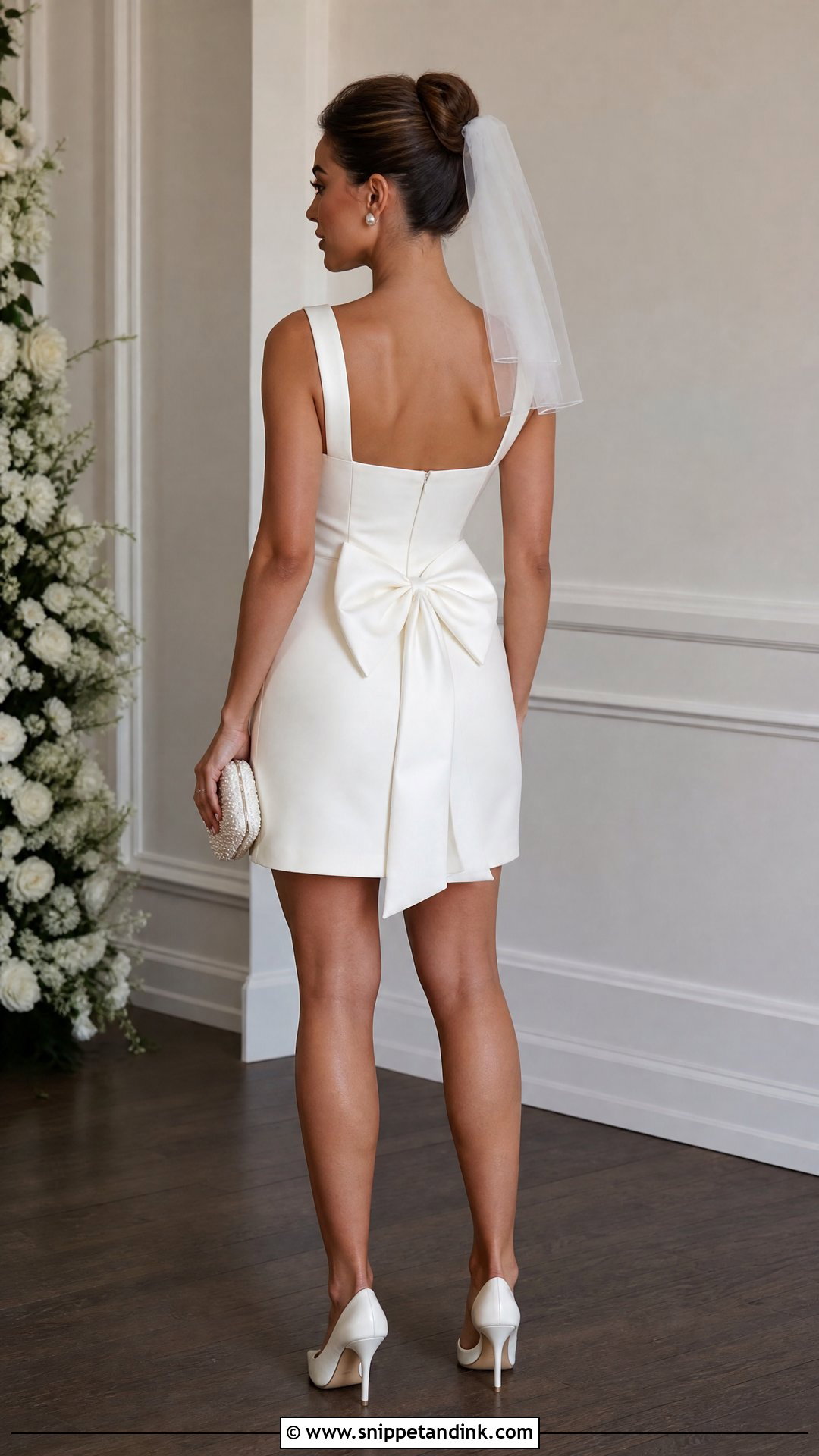
Putting the detail on the back makes sense, because guests watch the back of your dress during most of the ceremony. Keep the front plain, with a square, scoop or high neckline. A structured mid-sized bow looks polished; long ribbon tails move more. Pointed ivory pumps, pearl studs and a smooth satin clutch. Wear your hair up or swept to one side so the bow stays visible. If you add a short veil, it should end above the bow, otherwise the two details sit on top of each other. Courthouses and smaller receptions.
10. Puff Sleeve Mini Wedding Dress
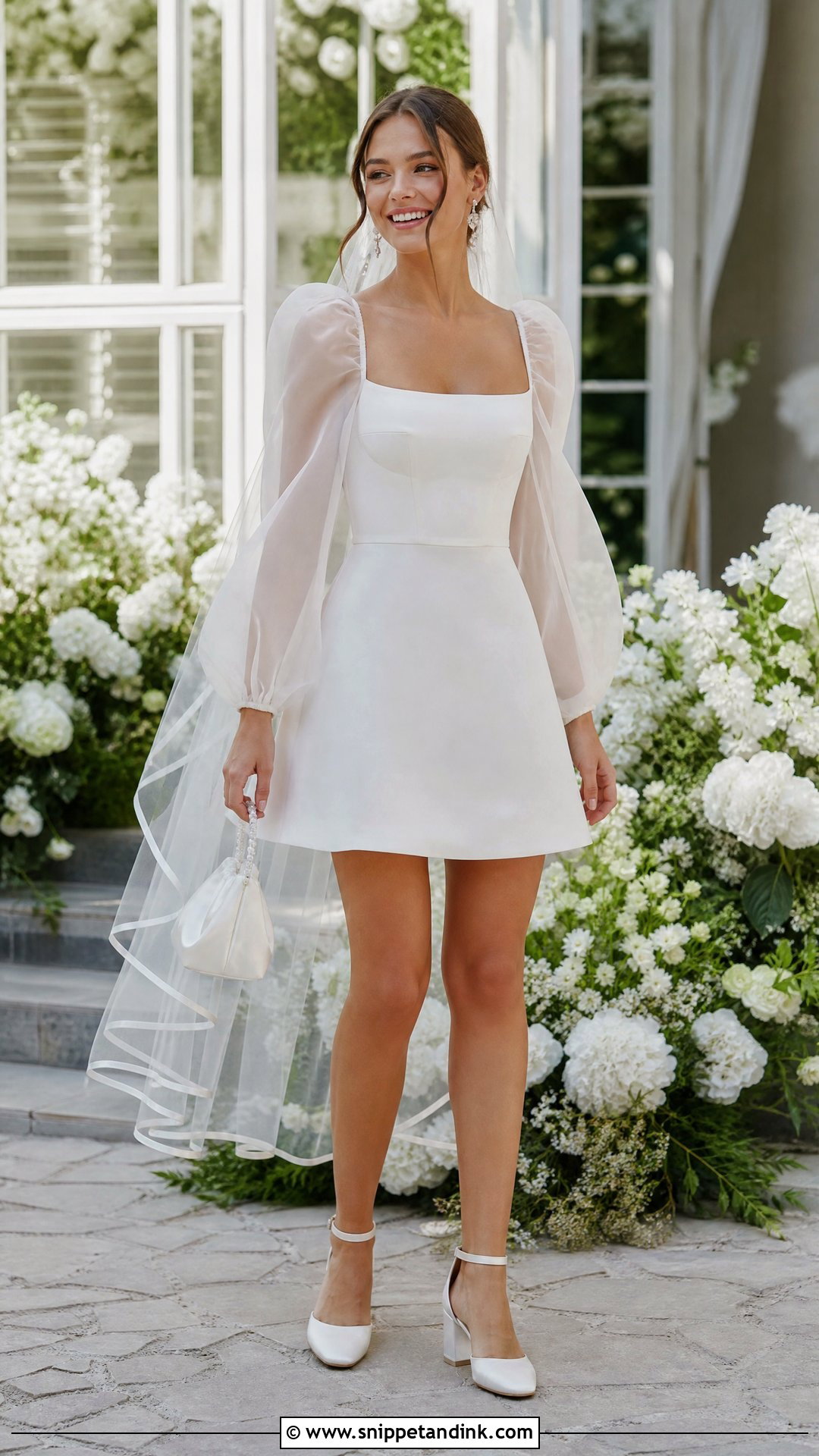
Puff sleeves add volume without needing embellishment. Short organza puffs suit summer, while fitted three-quarter sleeves with a rounded shoulder give more coverage. Keep the bodice simple and the A-line skirt narrow so the silhouette doesn’t widen at both ends. Organza sleeves crush in a garment bag, so I stuff them with tissue for transport and steam them on the morning. Low block heels, a small bag and pearl or crystal earrings. A ribbon-trimmed veil echoes the softness and an updo balances the shoulders. Broader-shouldered brides do better with smaller, softer puffs. Gardens and bright indoor rooms.
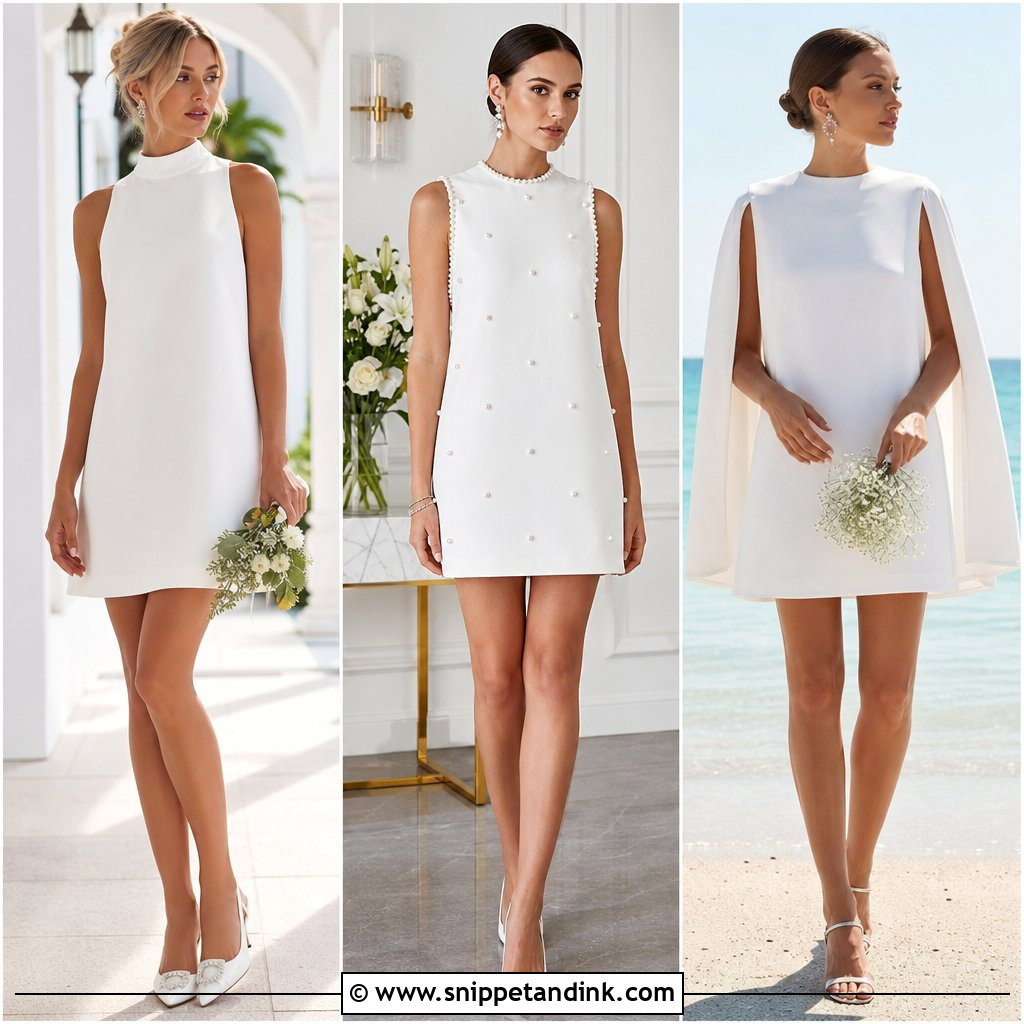
11. Simple Shift Mini Wedding Dress
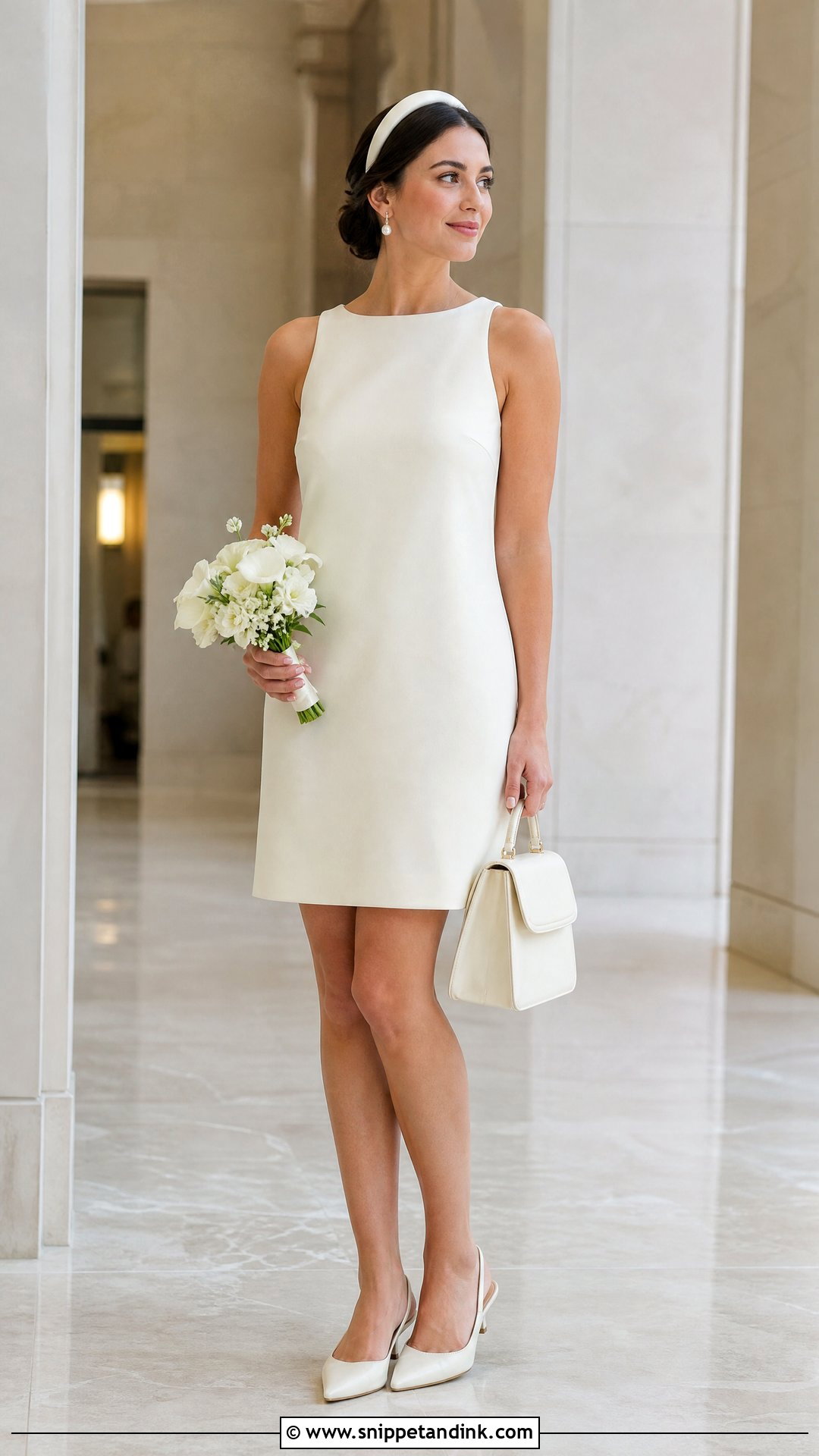
A shift mini wedding dress doesn’t depend on a fitted waist, which makes it easy to wear and hard to fake. It should skim the body, not hang, and the shoulder seam must sit exactly on your shoulder point. I’d spend the alterations budget there, since a shift has nowhere else to hide a fit problem. A jewel neckline, sleeveless cut and crisp crepe look clean. Pointed kitten heels, a structured top-handle bag and one accent piece, either pearl drops or a wide satin headband. A short veil or a pillbox-style hat for a 1960s note. Courthouse weddings and daytime parties.
12. Corset Mini Wedding Dress
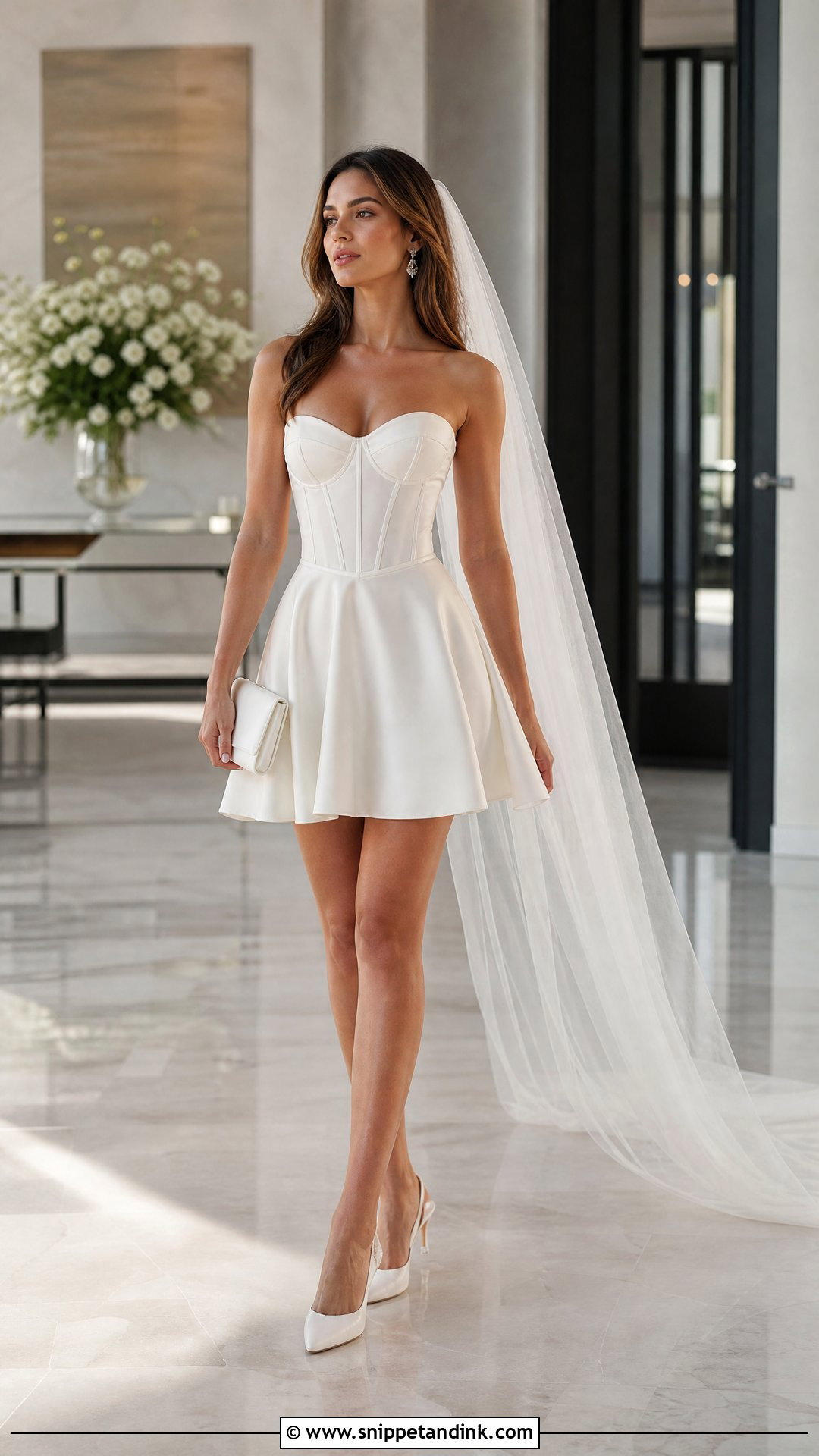
A corset mini can be simple if the construction is clean: plain seams, light boning and a straight or gently curved neckline. Pair the fitted top with an A-line or softly gathered skirt so you can move. The corset decides how comfortable your whole day is, so at every alteration appointment I have the bride sit, walk and reach up, and I watch the top edge. It should not dig in or lift away. Ivory slingbacks, a satin clutch and small crystal earrings. A plain cathedral veil makes a dramatic contrast with the short hem; a shoulder-length one keeps it relaxed. Hair up shows the structure.
13. High Neck Mini Wedding Dress
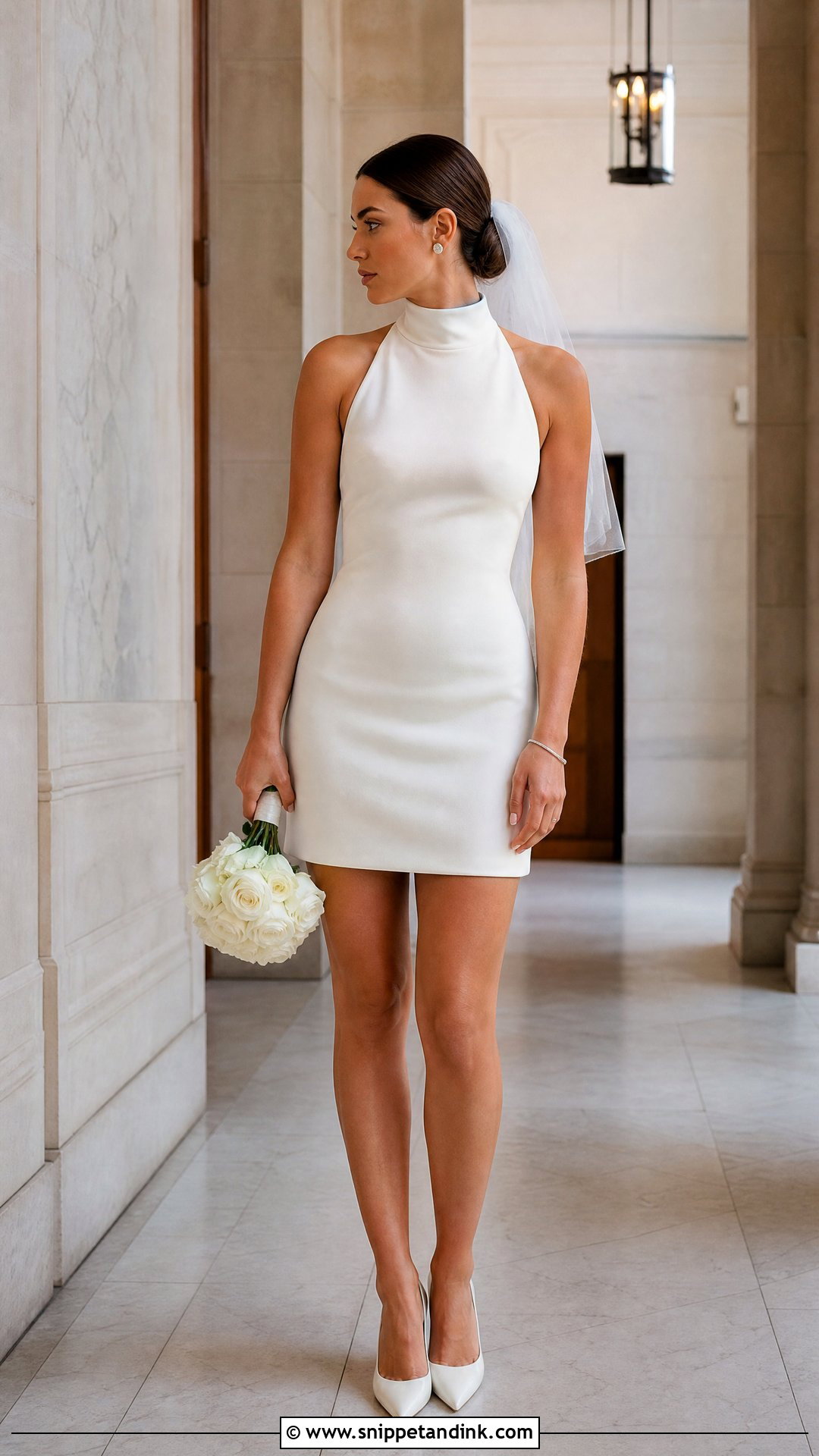
A high neck with a short hem offers coverage above and lightness below. Smooth crepe, satin or light lace with a fitted shoulder line and clean bodice works. Sleeveless versions suit warm months, and long sleeves suit cooler ones. Pointed pumps, small studs and a narrow bracelet, with no necklace. A high neck needs the hair off it, so a low bun, sleek ponytail or tucked waves. If your neck is short, I’d look at a slightly lower mock neck instead of a true high collar so it doesn’t feel tight. Add a short veil or a small bow. Indoor ceremonies and formal courthouse settings.
14. One Shoulder Mini Wedding Dress
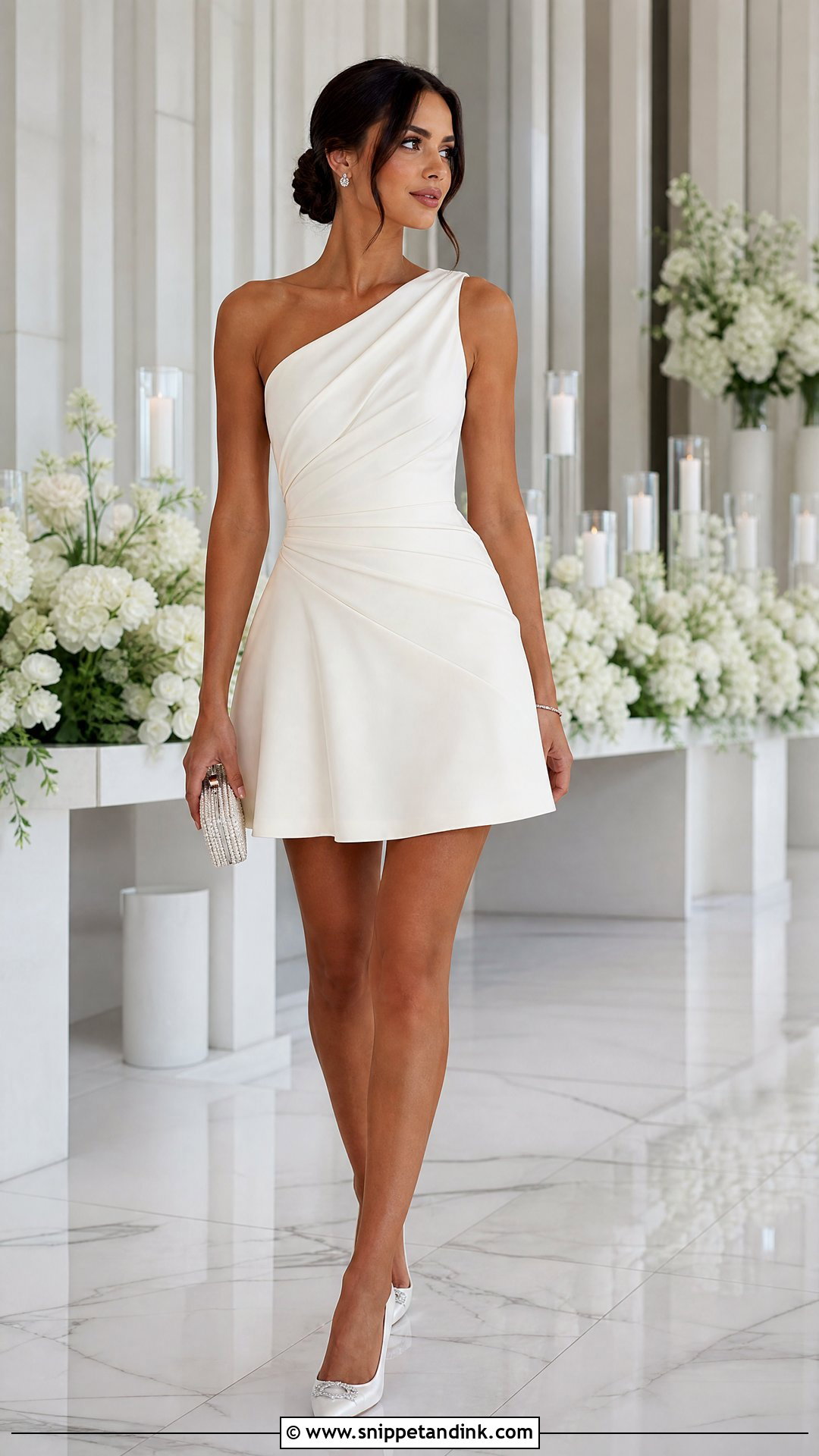
One shoulder gets its interest from the neckline alone. Look for a firmly fitted bodice and a straight or lightly flared skirt. A draped sleeve is softer, and a clean wide strap looks architectural. Simple studs, a slim bracelet and pointed ivory heels; a necklace just breaks the diagonal line. I carry the clutch on the bare side so the outfit balances in photos. The single strap takes all the weight, so if it slides toward your arm the neckline twists; have it fitted snugly. A smooth low bun or side-parted ponytail. Contemporary ceremonies, reception changes and destination weddings.
15. Drop Waist Mini Wedding Dress
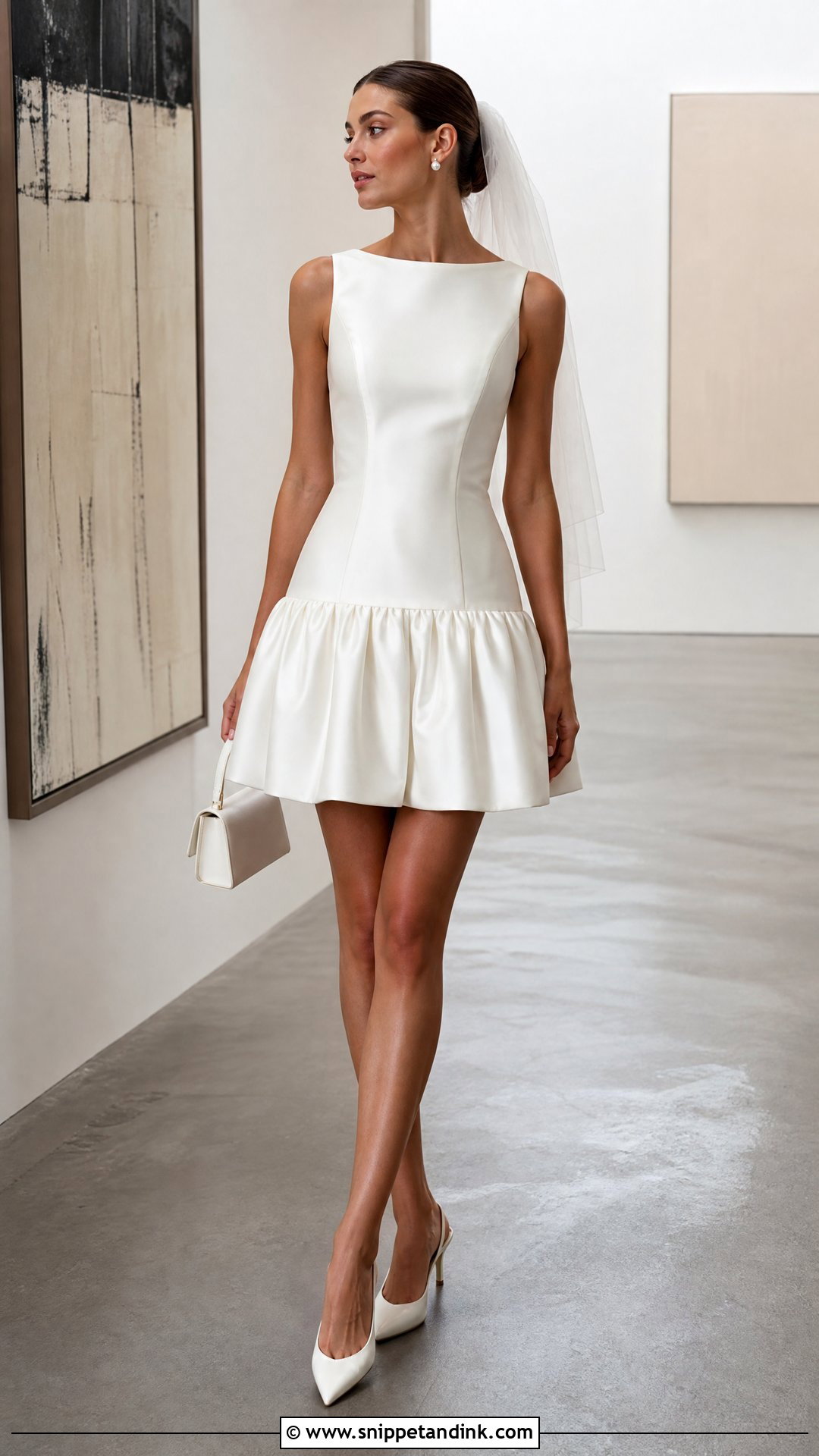
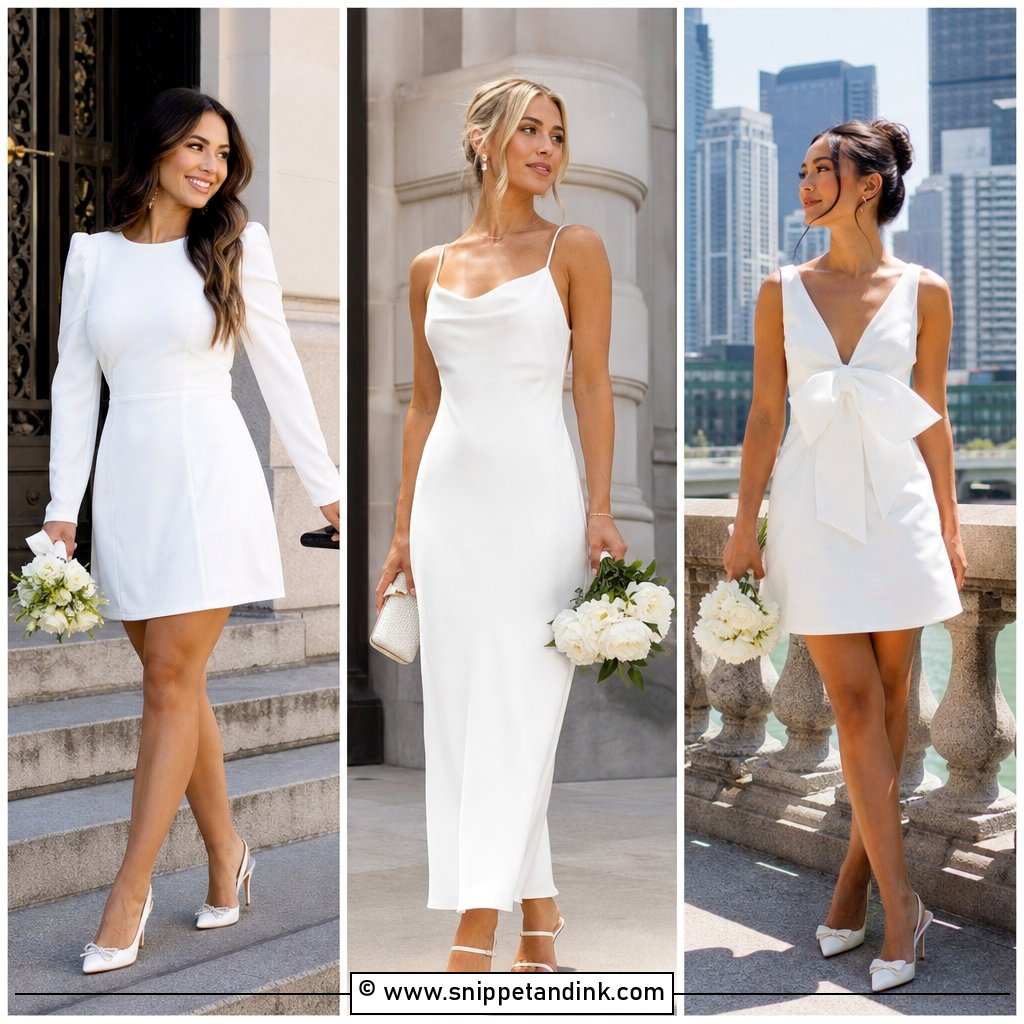
A drop waist stretches the bodice and opens into a short flared skirt. In plain satin, crepe or structured taffeta it stays simple. Where the waist seam lands is everything: it should sit at the top of the hip without pulling or bunching when you sit. On petite brides I often move it up a little, and on tall brides down, so take the alterations seriously with this one. Pointed pumps or low slingbacks continue the long line. Small pearl earrings, a compact bag and a narrow, lightly trimmed veil. A sleek updo. Gallery venues and fashion-led courthouse ceremonies.
16. Bubble Hem Mini Wedding Dress
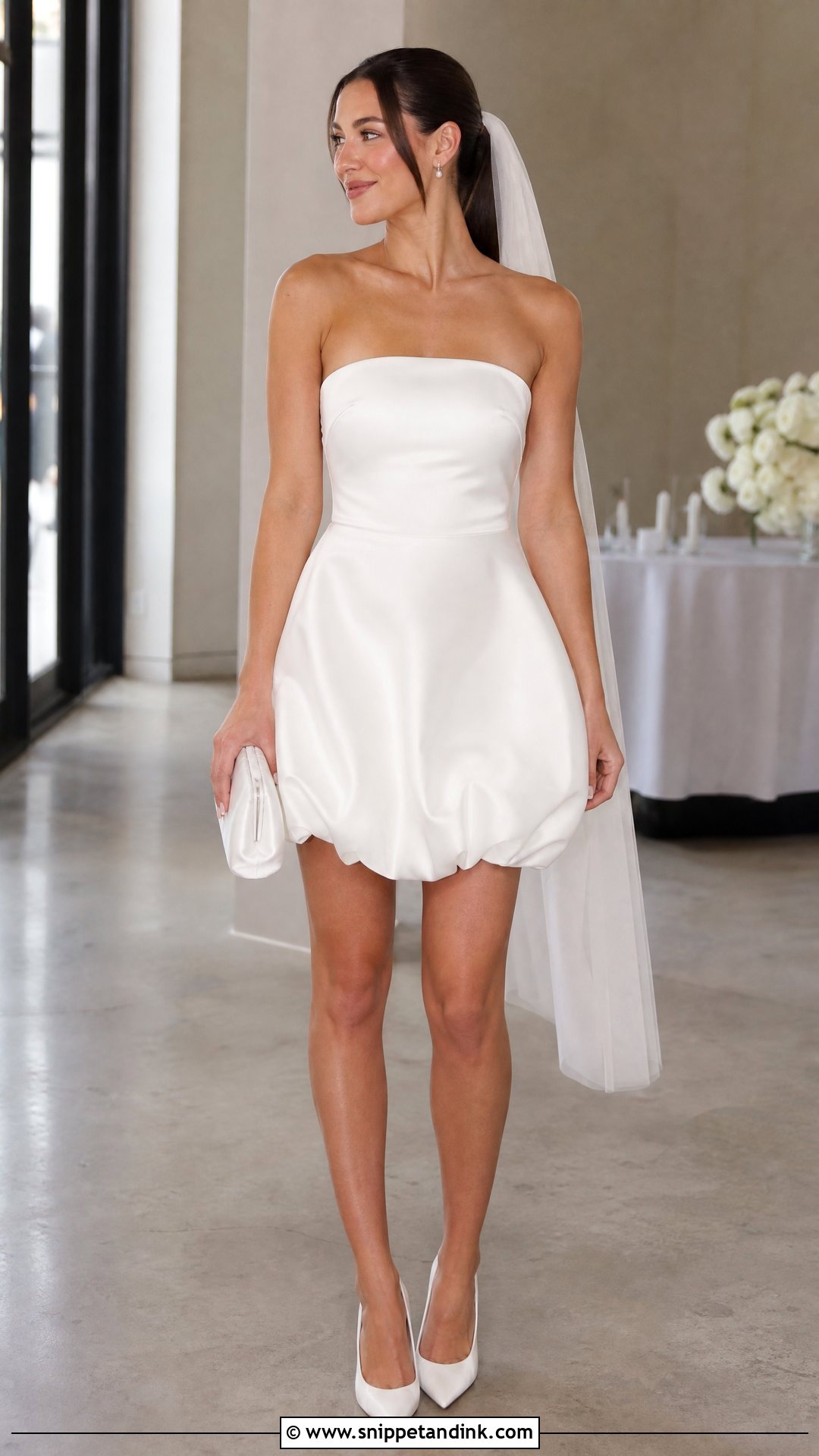
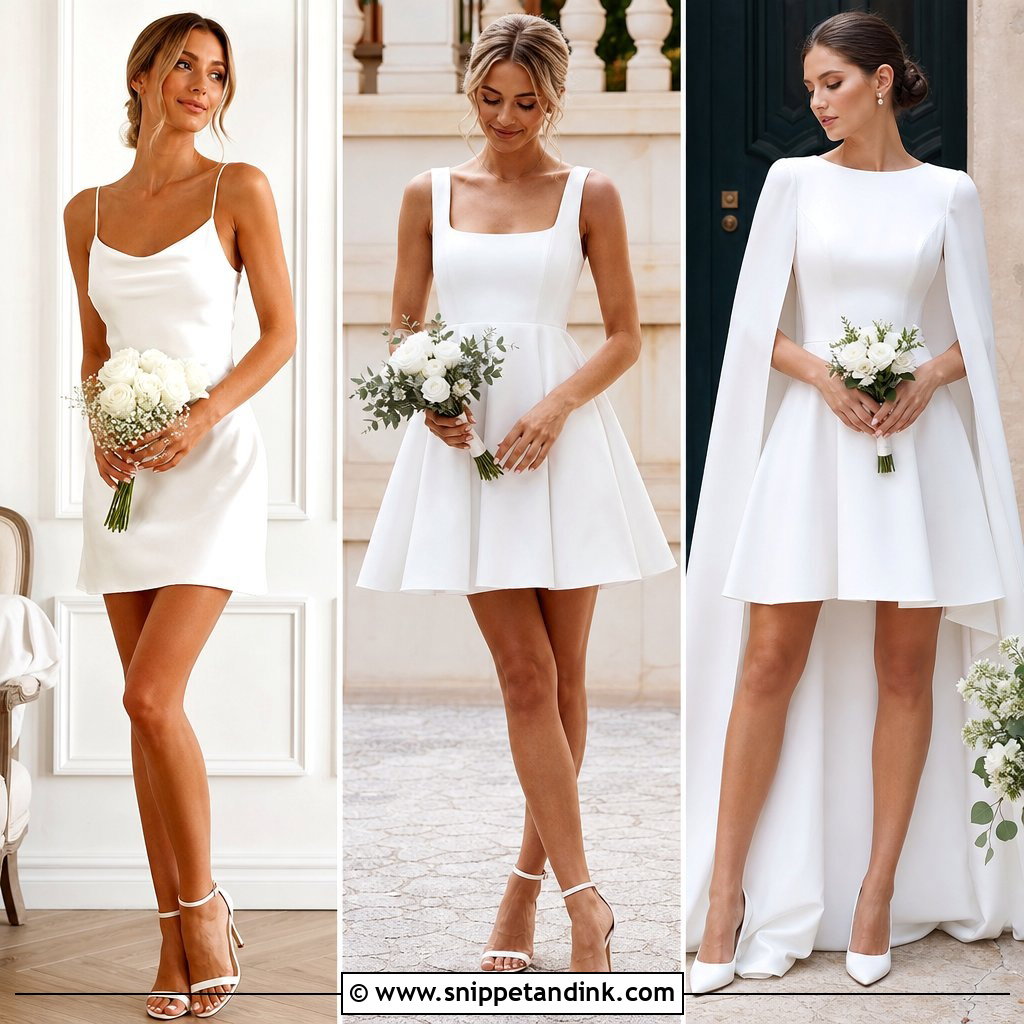
A bubble hem mini wedding dress puts the volume in a rounded skirt and keeps the bodice fitted. A plain strapless, square neck or sleeveless top balances it. The skirt should feel light, with just enough inner structure to keep its shape; a stiff bubble pops outward when you sit and can show more leg than you’d planned, so I always check it seated. Simple pointed pumps or slim ankle-strap heels. Understated earrings and a small satin clutch. A plain veil adds the bridal touch. A low bun or polished ponytail. Reception changes and modern ceremonies, and it dances well.
17. Cape Mini Wedding Dress
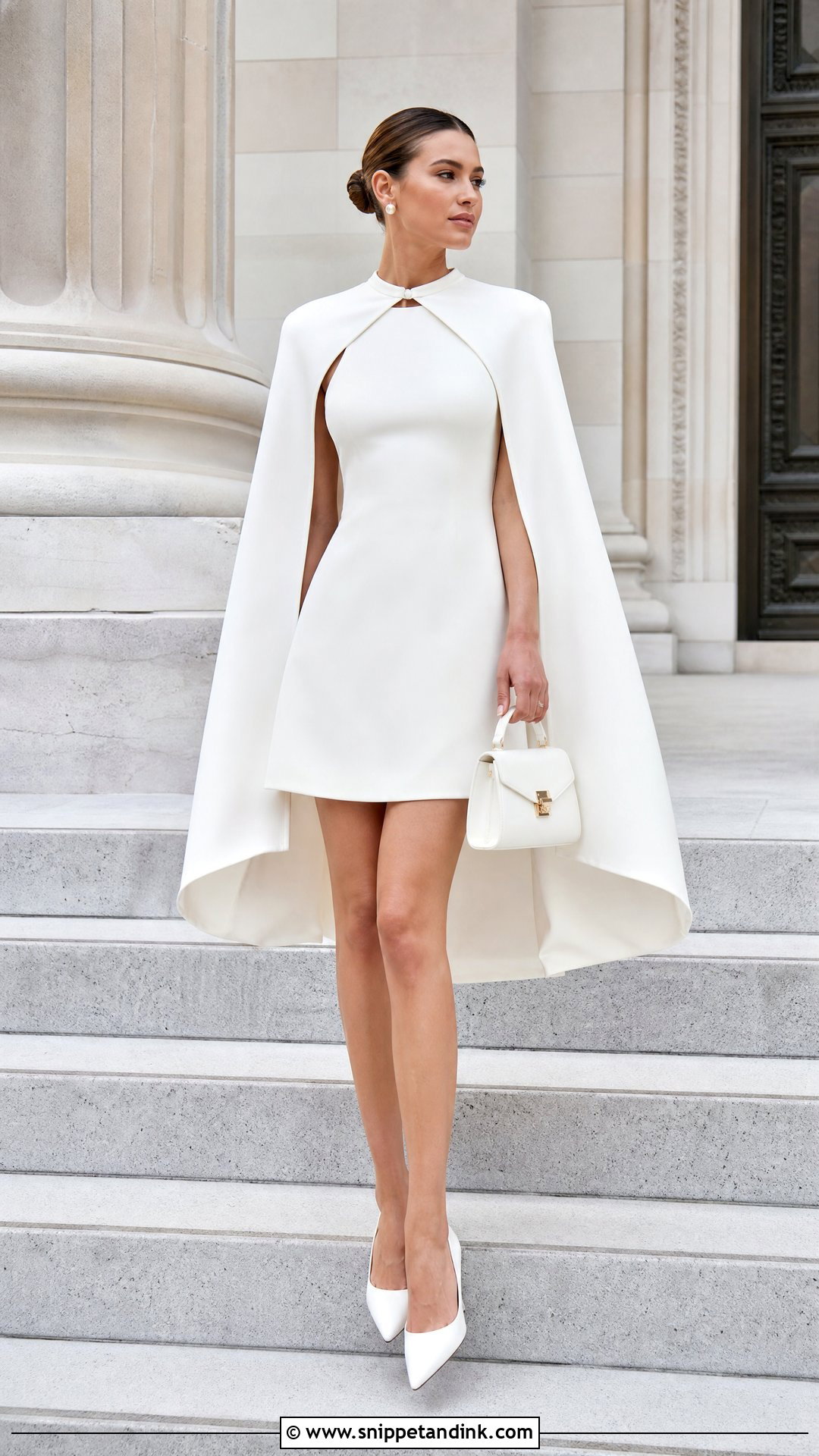
A cape adds ceremony drama to a streamlined base. Start with a sleeveless sheath or A-line mini in smooth crepe or satin, then add a light cape that stops at the elbow, waist or hem. Detachable is the version I recommend, because a cape gets in the way of eating and dancing. Pointed heels, pearl studs and a small structured bag. Sleek hair lets the cape fall cleanly, and a veil is optional since the cape already moves. Keep the cape fabric light; a heavy one overwhelms a short dress. Cool-weather ceremonies, courthouse steps and modern indoor venues.
18. Mini Wedding Dress With Detachable Train
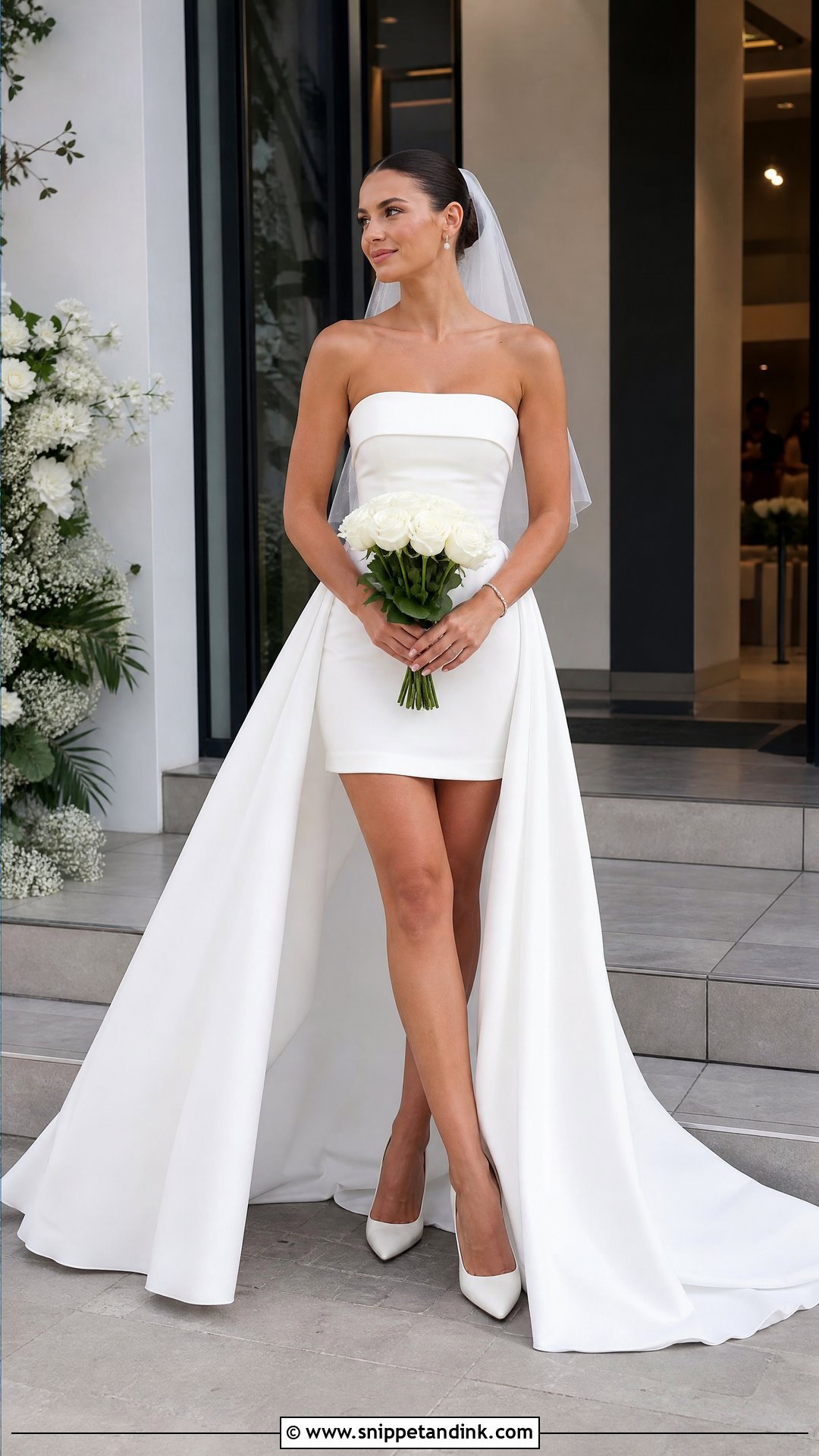
A detachable train gives a mini two moods without a full outfit change. Choose a simple fitted or A-line mini and add a light overskirt or back train for the ceremony. The fastening is what matters: hooks or snaps at the waist that hold through the aisle and open in under a minute. I make the bride practise removing it with whoever will help on the day. Ivory pumps, small drops and a delicate bracelet. A short veil is enough, since the train brings the length. After the ceremony, switch to block heels and a compact bag for dancing.
19. Beaded Mini Wedding Dress
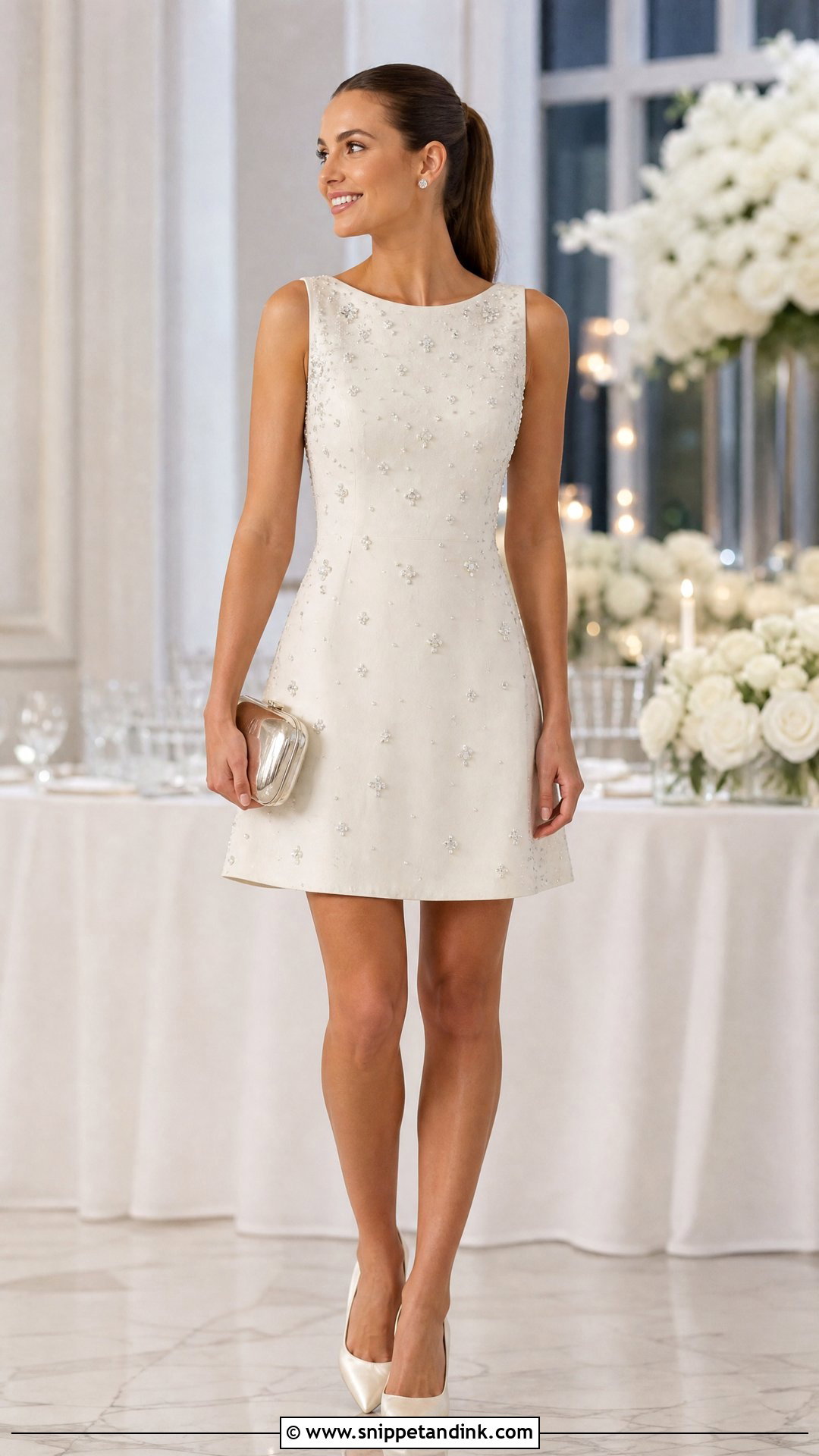
Light beading gives a mini some evening sparkle and keeps it simple. Scattered crystals, small pearls or tonal beads rather than dense work, on a sleeveless shift or fitted A-line. Plain satin pumps, small studs and a little metallic or ivory clutch. Skip an ornate necklace and a decorated veil, since the dress already catches light. A sleek ponytail, soft waves or a low bun. Turn the dress inside out before buying and run your hand over the lining. Beadwork backs can scratch the skin at the underarm and waist, and you’ll feel it by the speeches. Evening receptions and outfit changes.
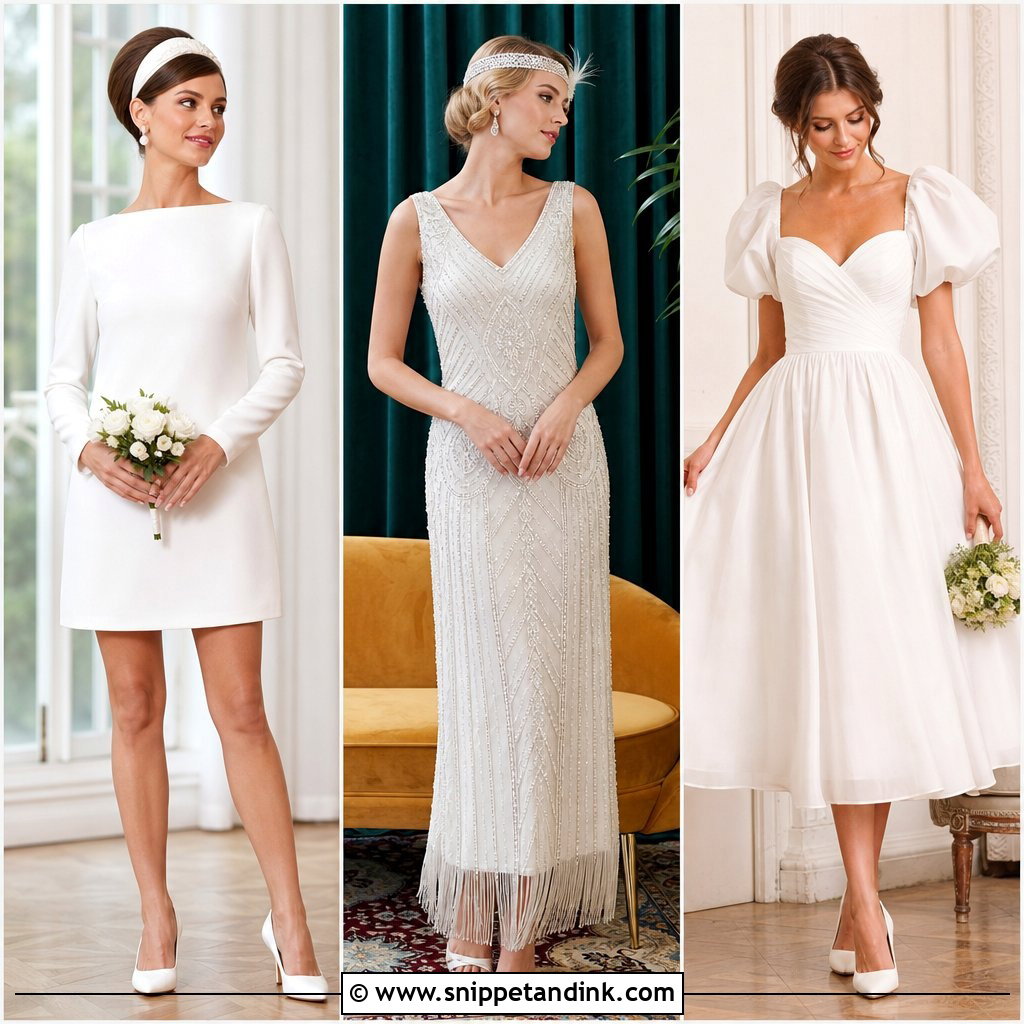
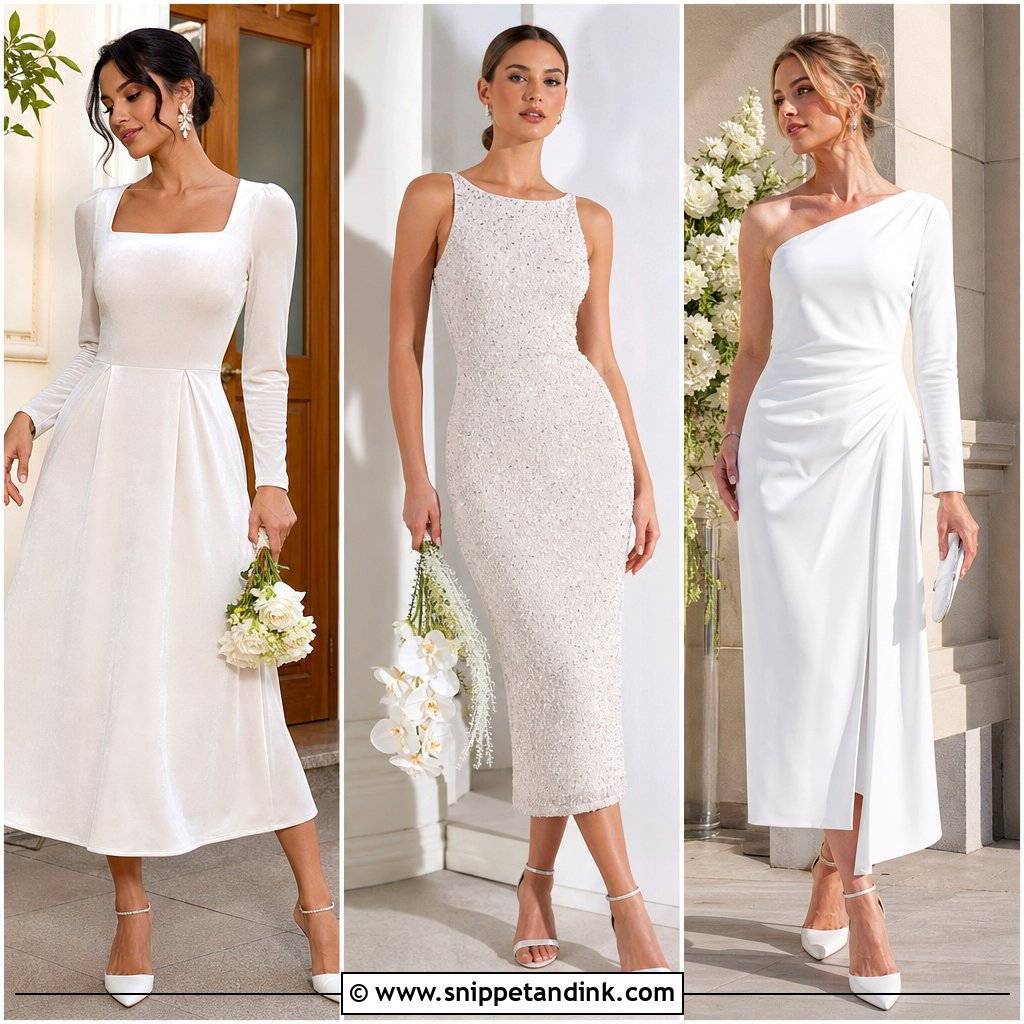

20. Feather Trim Mini Wedding Dress
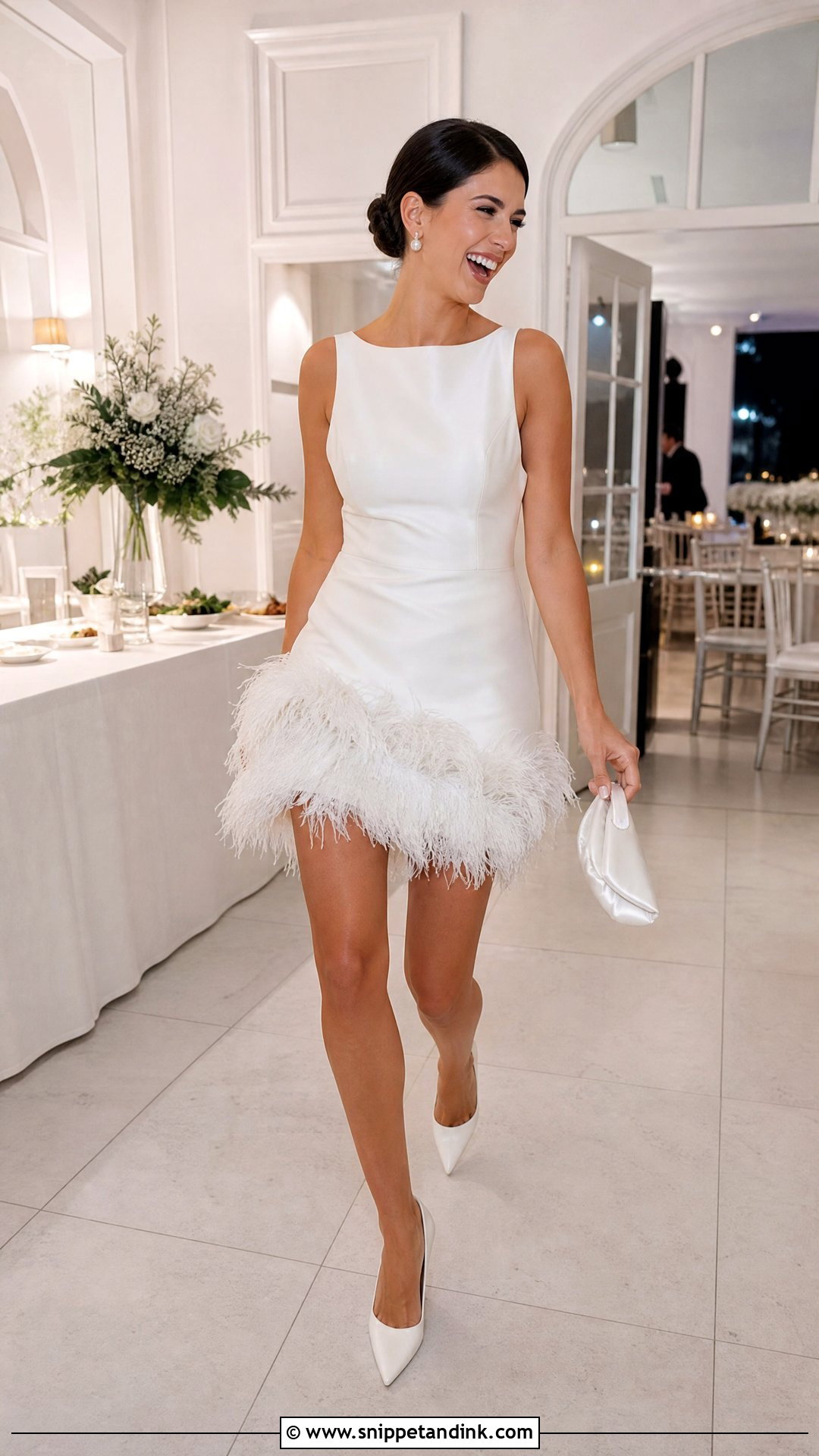
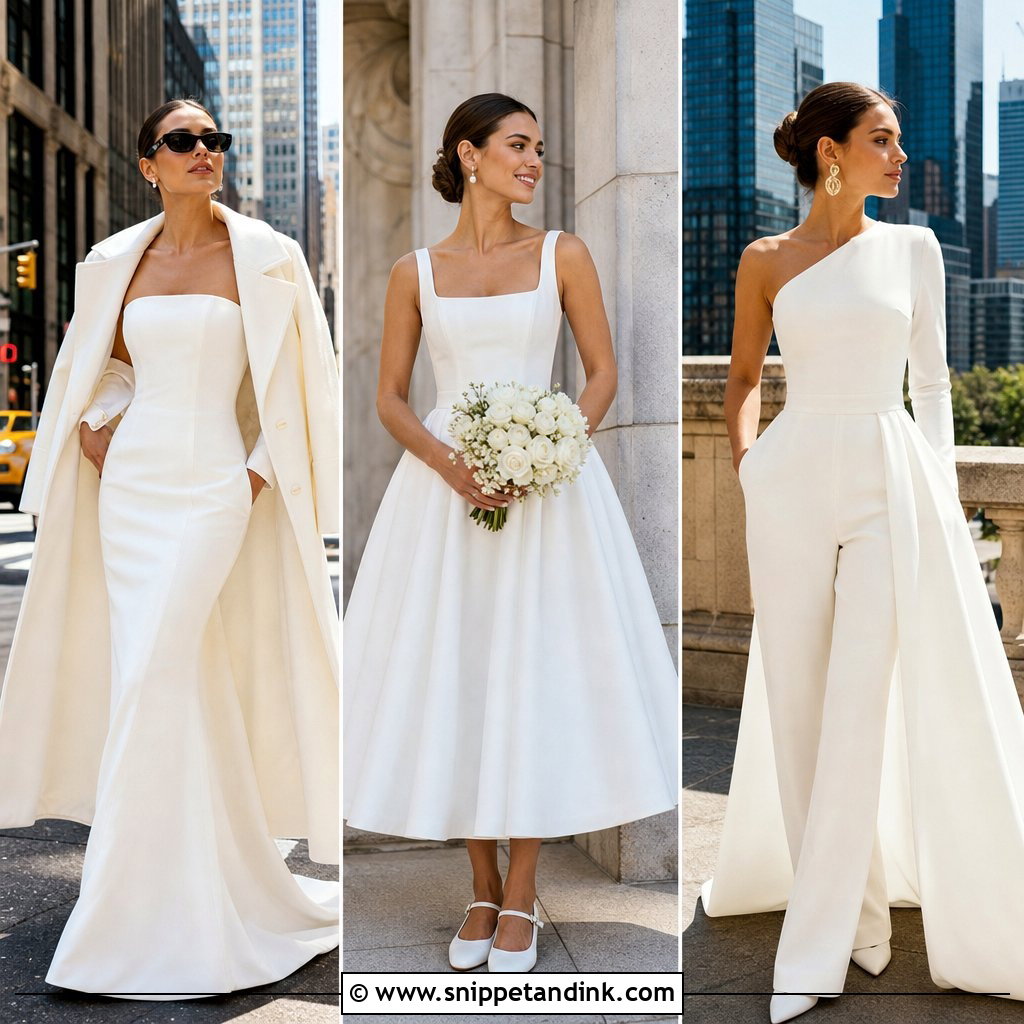
A feather trim mini wedding dress adds movement and fun with very little decoration. Keep the dress clean crepe or satin with a narrow feather border at the hem, cuffs or neckline, and only in one place. Pointed pumps, pearl studs and a small satin bag. A neat bun or softly waved bob. Wear a plain veil for the ceremony and take it off later so the feathers show. Shake the dress gently over a dark towel before buying; some trims shed, and loose fluff ends up on lipstick, suits and every photo of the dance floor.
Weather, Tights and Coats for a Short Wedding Dress
Short dresses get chosen for spring and summer, but a lot of courthouse weddings happen on a grey Tuesday in November. I plan the outer layer at the same time as the dress, not the week before, so it fits over the sleeves and doesn’t crush the skirt.
Cold days
Sheer tights close to your skin tone, around 10 to 15 denier, keep you warmer without looking wintry. A tailored ivory coat that ends a little below the hem looks finished in photos. Cropped faux fur or a boxy wool jacket works too, but try it over the dress so puff sleeves or a bow don’t get flattened.
Hot days
Satin shows sweat marks under the arms and at the lower back, and crepe hides them far better. If your ceremony is outdoors in summer, I’d lean toward crepe or a lined lace and pack blotting papers. Anti-chafe balm on the inner thighs matters more in a mini than in a long gown, since there is no slip layer between your legs.
Wind and rain
A light A-line skirt can blow up on a street corner. A few small weights sewn into the hem or a slightly heavier lining fix that. Pack a clear umbrella, since it lets light through for photos, and a pair of flats for wet pavements between the car and the door.
A Short Dress Has Nowhere to Hide, So Fit Comes First
A good short wedding dress feels comfortable, suits your shape and fits the kind of day you have planned. Plain satin is the simplest route, while lace, bows, capes, bubble hems and light beading add personality without tipping into excess. Try every dress with the actual shoes, veil, jewellery and outer layer, because on a short dress these pieces are half the outfit. Alterations matter more than the price tag here, since a short hem and simple construction show every proportion. If you can walk, sit, raise your arms and dance in it without thinking, you have the right one.
You'll Like These Ideas:


Leave a Reply