
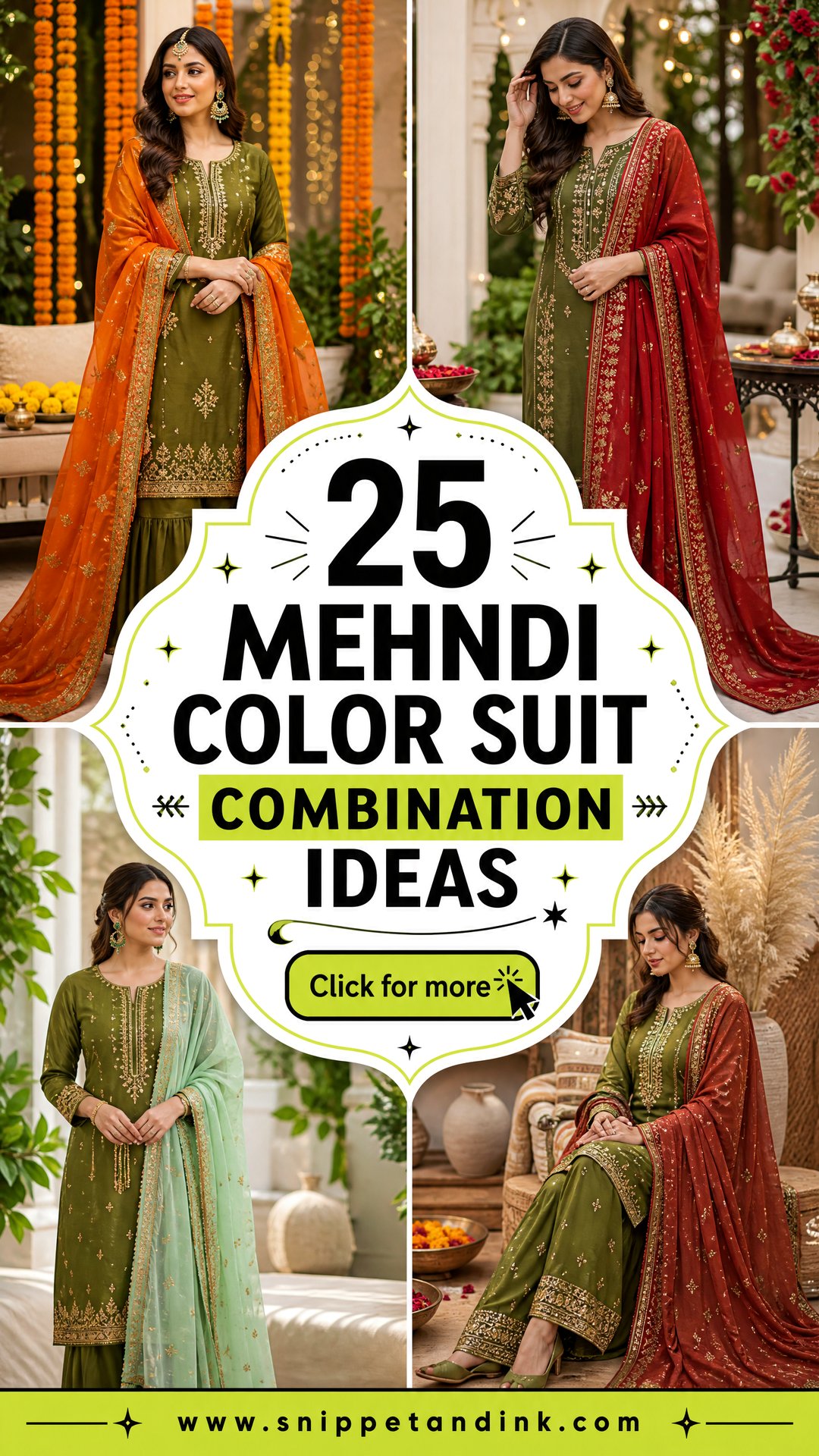
Mehndi green sits somewhere between olive, moss and the color of fresh henna paste, and that in-between quality is exactly why it pairs with so much. I dress cousins, sisters and guests for mehndi nights, sangeets, Eid lunches and daytime functions, and the suit is rarely the hard part. The dupatta, the bottoms and the metal of the jewelry decide whether the outfit looks finished or flat. Current ethnic wear trends lean on contrast dupattas, mirror work, gota patti and organza layers, so I’ve written each pairing below the way I’d talk it through at a fitting: what the color does near your face, which fabric behaves, and where it tends to go wrong.
Reading the Undertone of Your Green Suit
The name covers a wide range. Some mehndi green suits lean yellow, close to olive or fresh henna paste; others lean grey, closer to moss or sage. Before I suggest a single dupatta, I take the kurta to a window and look at it in daylight next to something pure white. If the green turns slightly yellow, warm partners like marigold, rust, coral and gold sit easily. If it turns grey, brighter or cooler partners like fuchsia, turquoise and silver stop it from looking dull.
Take the kurta shopping with you
Phone photos misreport green more than almost any other color, because the camera’s white balance shifts it. Carry the kurta, or a swatch from your tailor, and drape the dupatta over it in the shop, standing near the door if the lighting inside is yellow. Then run through a few quick checks:
- Hold the dupatta at your collarbone, not your waist. That’s where it will sit and where it reflects color onto your face.
- Turn embroidered dupattas over. Loose threads behind mirror work and gota catch on bangles within the first hour.
- Feel the weight. A heavy dupatta over a light kurta drags the neckline backward all night.
- Ask whether the dye bleeds. Strong reds, maroons and fuchsias in cheaper dyes can run onto a paler kurta on the first humid evening.
1. Mehndi Green Suit With Yellow Dupatta
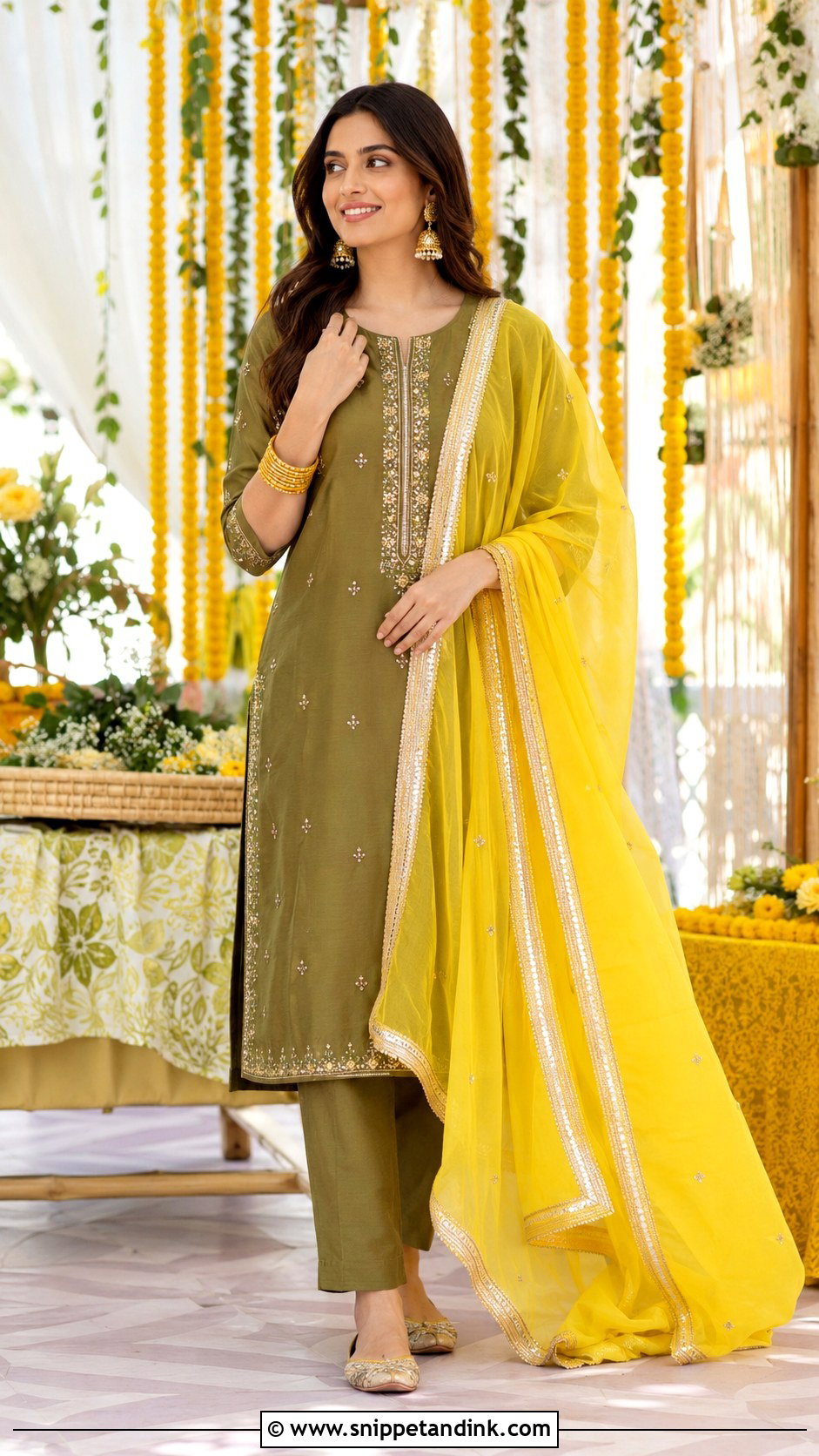
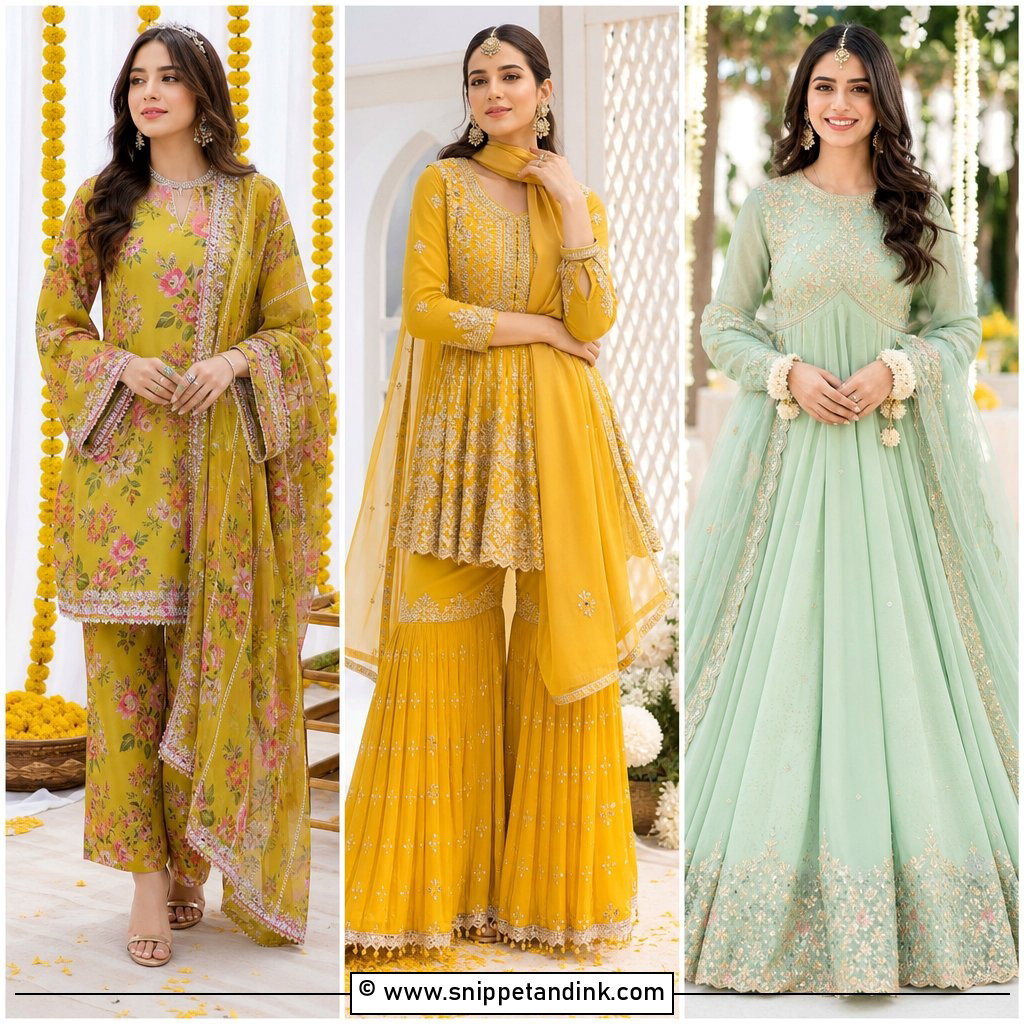
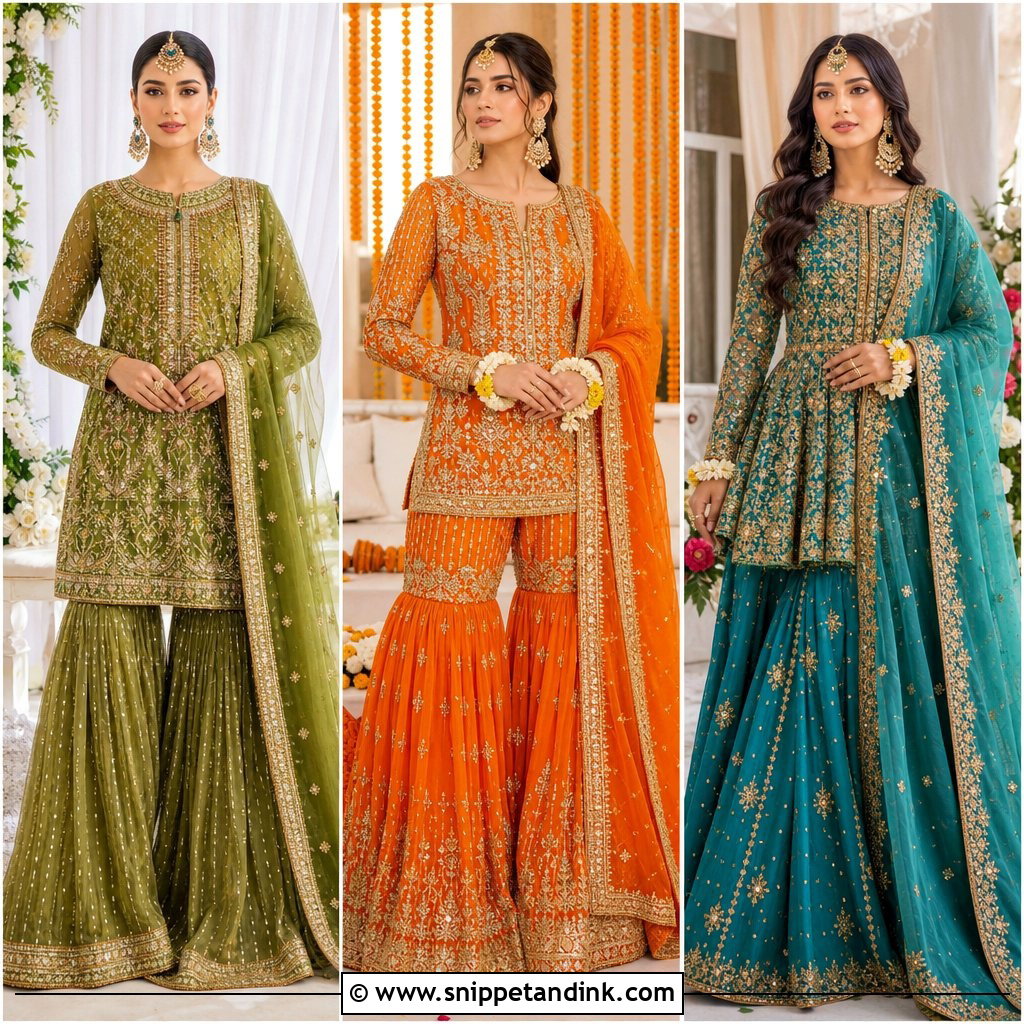
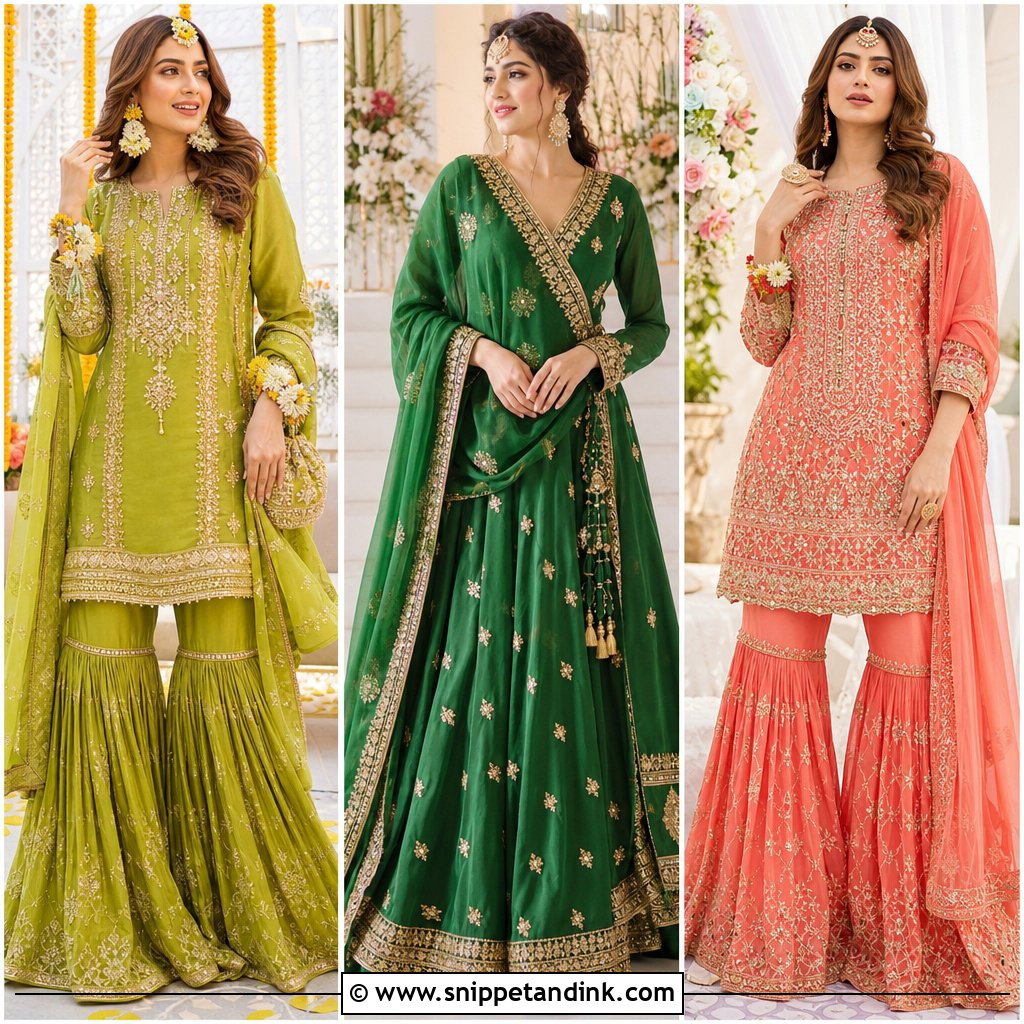
Yellow is the pairing I reach for first when a family wants something unmistakably mehndi. The shade matters more than people expect. A lemon yellow can make olive green look slightly grey, while marigold or turmeric yellow warms it up and sits better against most skin. I’d build it on a straight kurta with matching cigarette pants or a soft palazzo, then add a chiffon or organza dupatta with a gota border, which is light enough that the drape survives. Gold jhumkas, stacked bangles and embroidered juttis finish it. In daylight both colors read clearly on camera; under warm tent bulbs a pale yellow washes toward cream, so keep the dupatta saturated.
2. Mehndi Green Suit With Fuchsia Dupatta
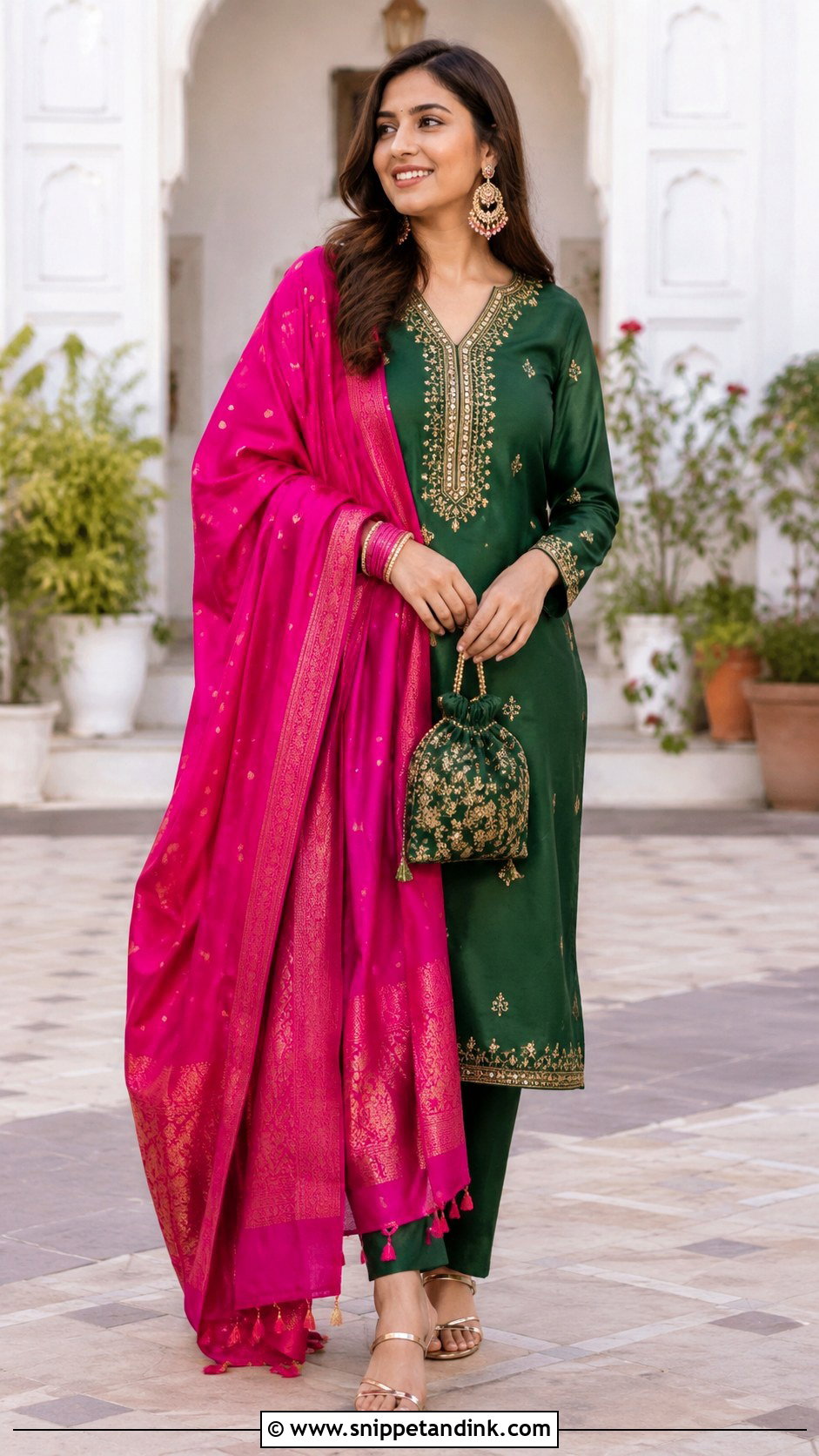
Fuchsia is the loudest contrast in this list, and that is its strength. Green and pink sit opposite each other on the color wheel, so even a plain kurta looks festive the second the dupatta goes on. Keep the kurta quiet, with fine thread work and matching trousers, and let a fuchsia organza or georgette carry the mirror work or sequins. One thing I always check at a fitting: strong pink throws a color cast onto the jaw in close-up photos, so hold it to your face in daylight before you commit. Pink bangles, gold chandbalis, metallic sandals and a sleek bun with fresh flowers are all it needs.
3. Mehndi Green Suit With Orange Dupatta
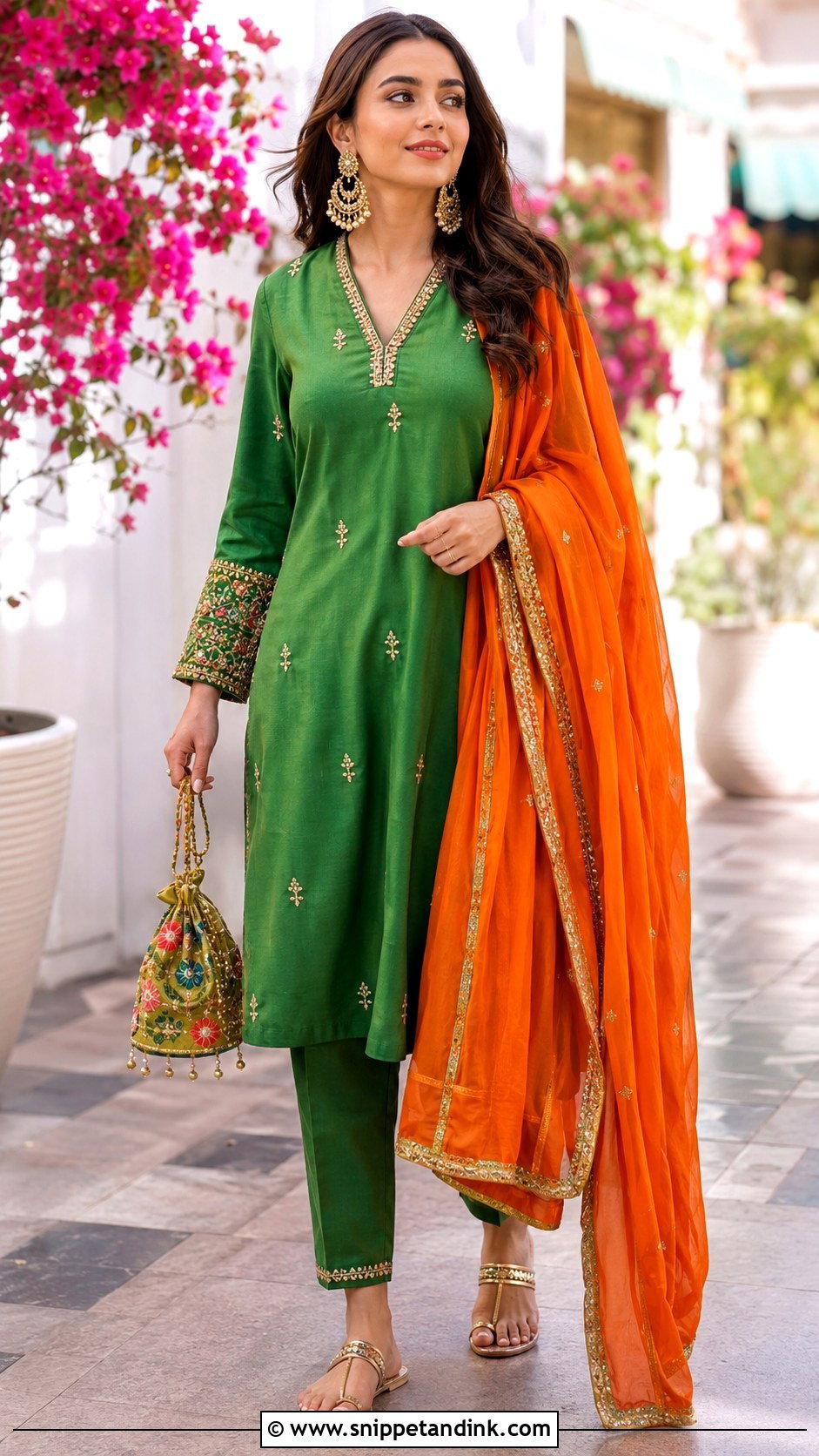
Orange warms mehndi green the way haldi warms skin, which is why the two feel so natural together at daytime functions. Gold embroidery or mirror work on the dupatta adds the glow. Silhouette changes the mood: a short kurta with sharara pants reads playful, a long straight kurta with slim pants reads composed. Add gold kolhapuri sandals, a potli bag and kundan earrings. If bright orange feels like too much on you, burnt orange is my usual swap; it sits closer to the earthy side of the green. And if the haldi and mehndi run into each other, pick a washable fabric, because turmeric marks orange silk just as happily as white.
4. Mehndi Green Suit With Ivory Dupatta
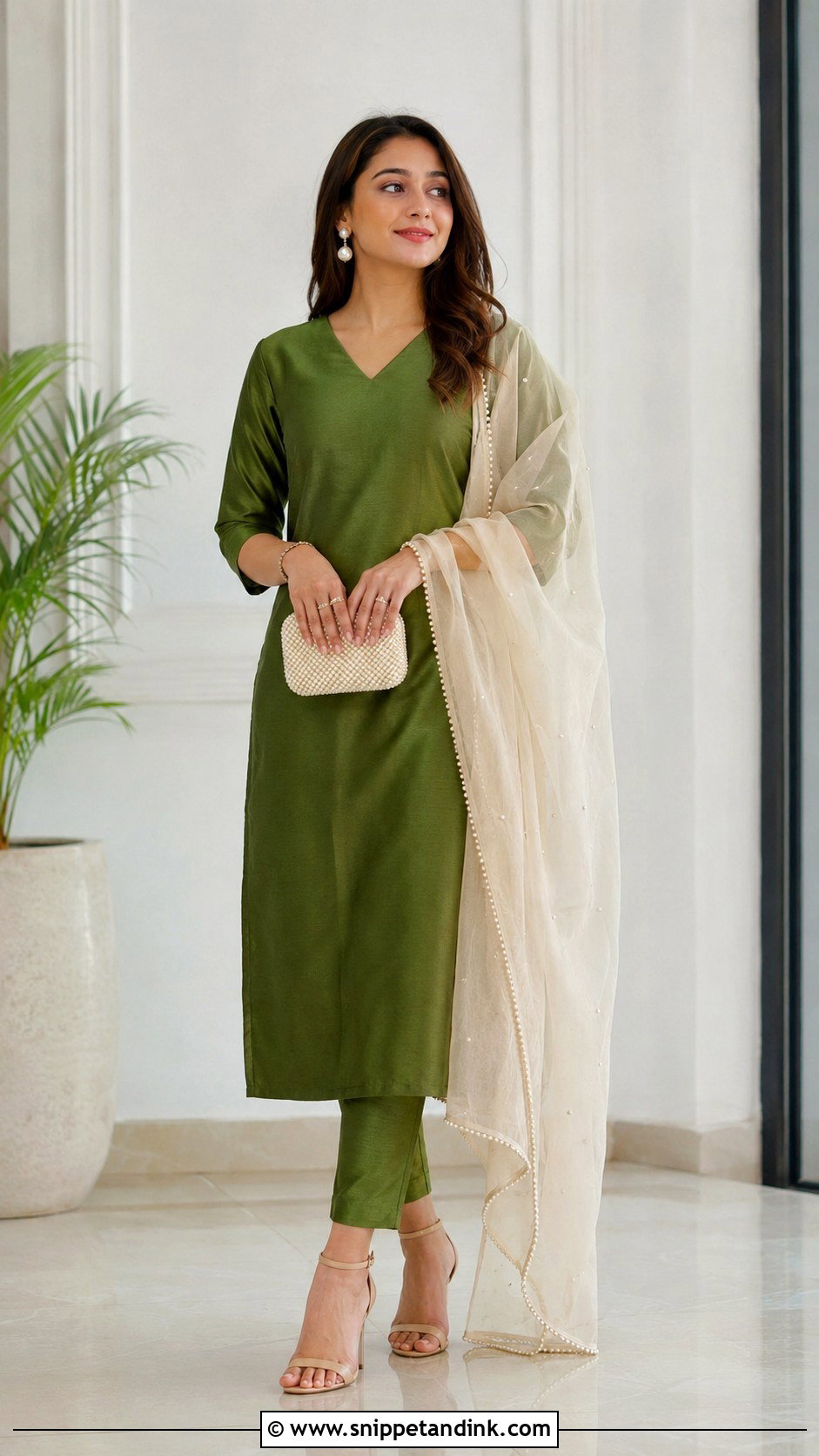
Ivory is what I suggest to anyone who tells me they don’t want to look like they’re trying too hard. Start with a mehndi green silk, cotton-silk or chanderi kurta, ivory palazzos or matching green bottoms, then an ivory dupatta with gold edging, pearl detail or light embroidery. Chanderi has a slight sheen that makes the green look richer than plain cotton does. Nude heels, pearl earrings and a small gold clutch keep it quiet. The practical warning: ivory and wet henna do not mix. If you’re having your hands done, pin the dupatta well away from your palms until the paste comes off.
5. Mehndi Green Suit With Gold Dupatta
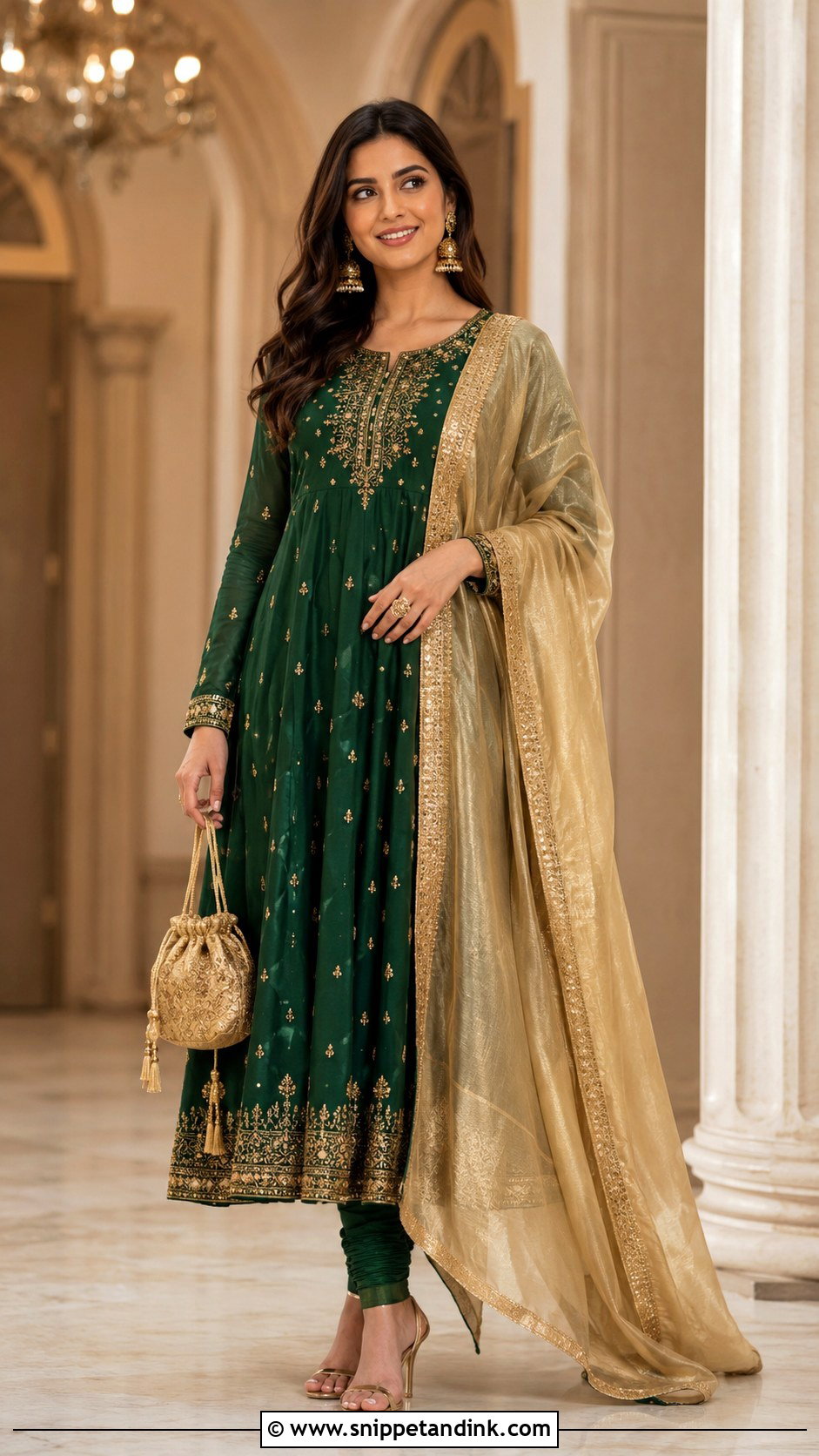
Gold turns mehndi green dressy almost on contact. Under evening lighting the metallic threads catch every bulb and bounce that warmth back into the green, which deepens it. I’d put a tissue, brocade or organza gold dupatta over an anarkali, a straight suit or a kurta with palazzos. Brocade is heavy, though. If the dupatta is densely woven, keep the kurta embroidery light, or you’ll spend the night hitching it back onto your shoulder. Gold heels, a matching potli and traditional jewelry tie it together, and a soft wing with bronze lids picks up the metal without adding another color.
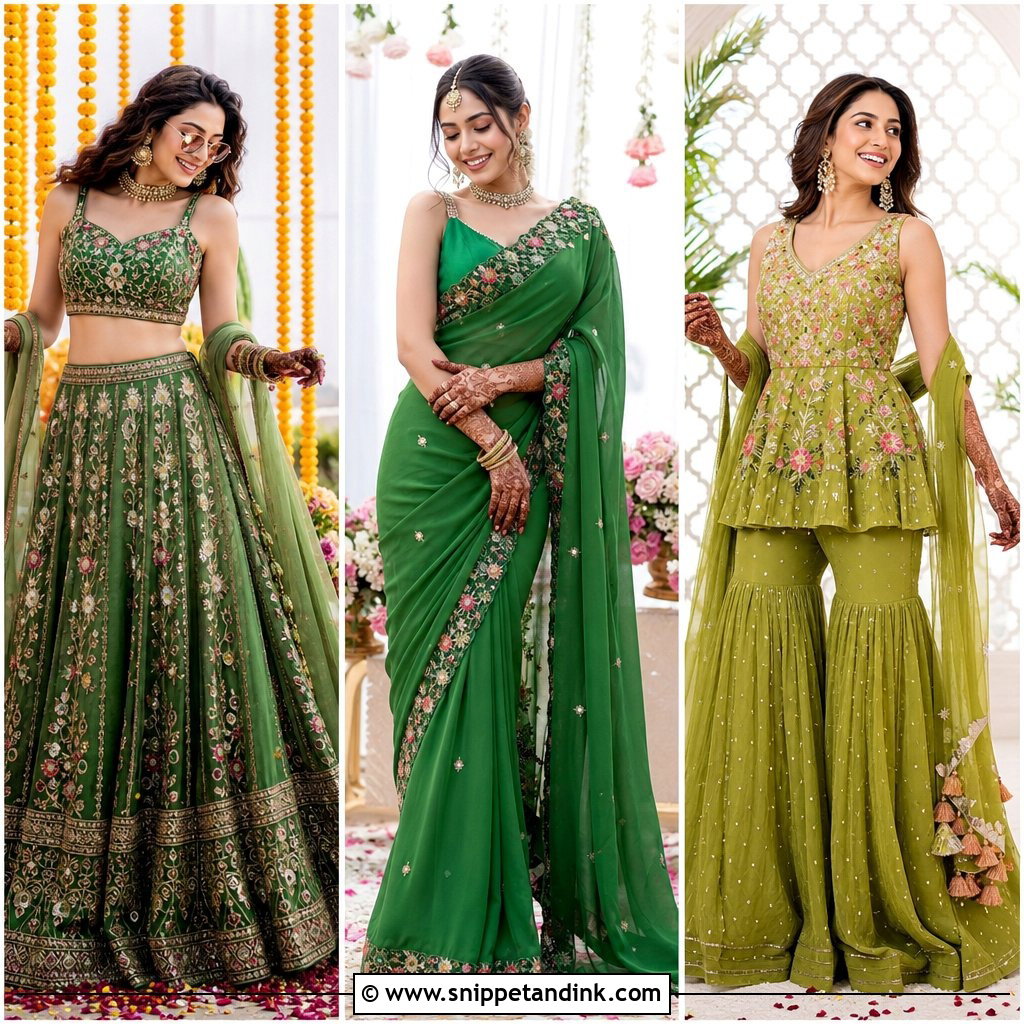
6. Mehndi Green Suit With Pink Pants
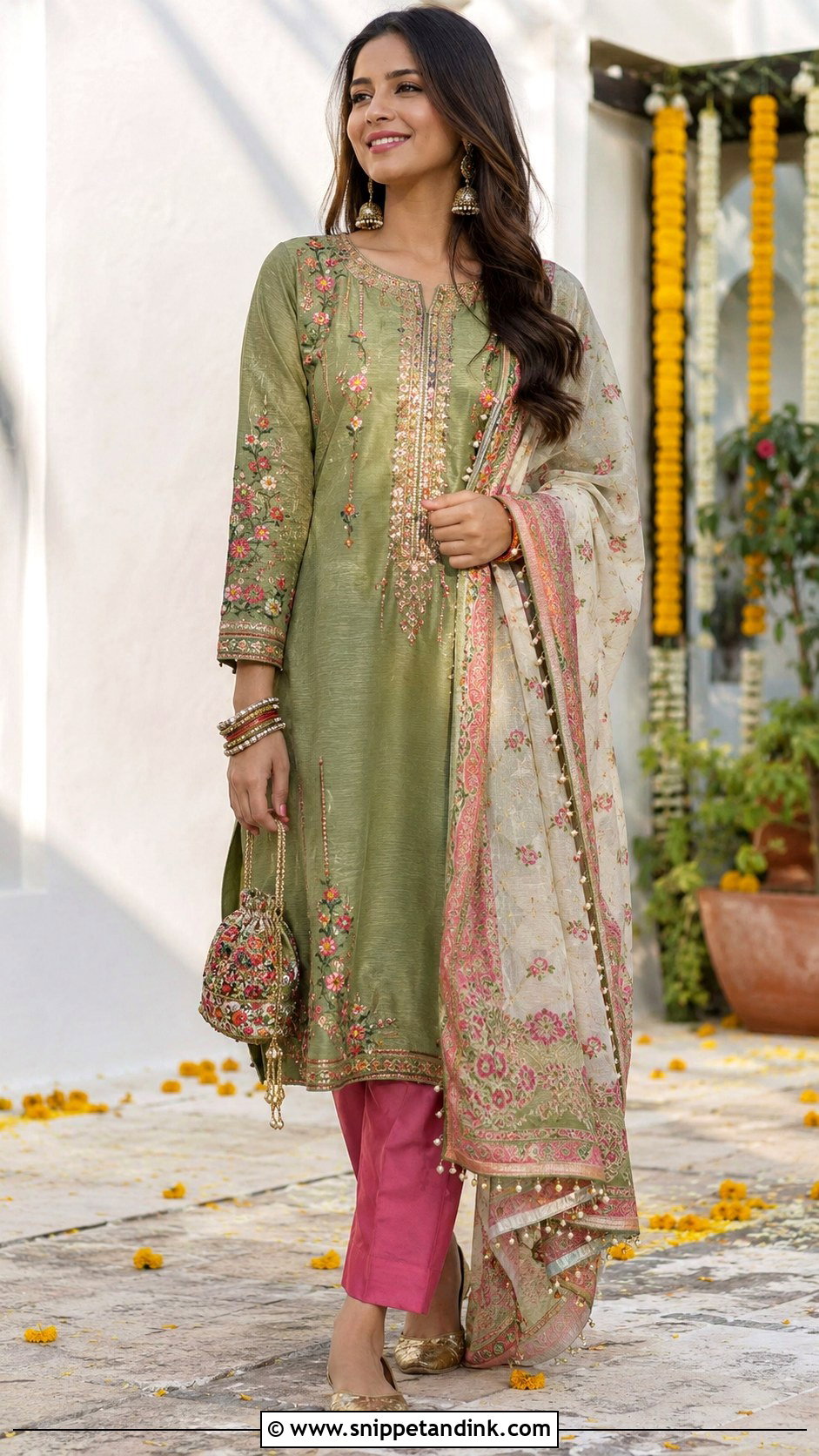
Moving the contrast into the bottoms is the quickest way to make a mehndi suit look current. A straight or A-line green kurta over rose pink cigarette pants, palazzos or a sharara gives a clean color block at the hip. The bridge piece matters most: an ivory dupatta embroidered with both pink and green ties the halves together, while a plain green one can make it look like two separate sets. Sit down in it before you buy. A short A-line kurta rides up and shows more pink than you planned. Gold flats, a few bangles and a small embroidered bag are plenty.
7. Mehndi Green Suit With Maroon Dupatta
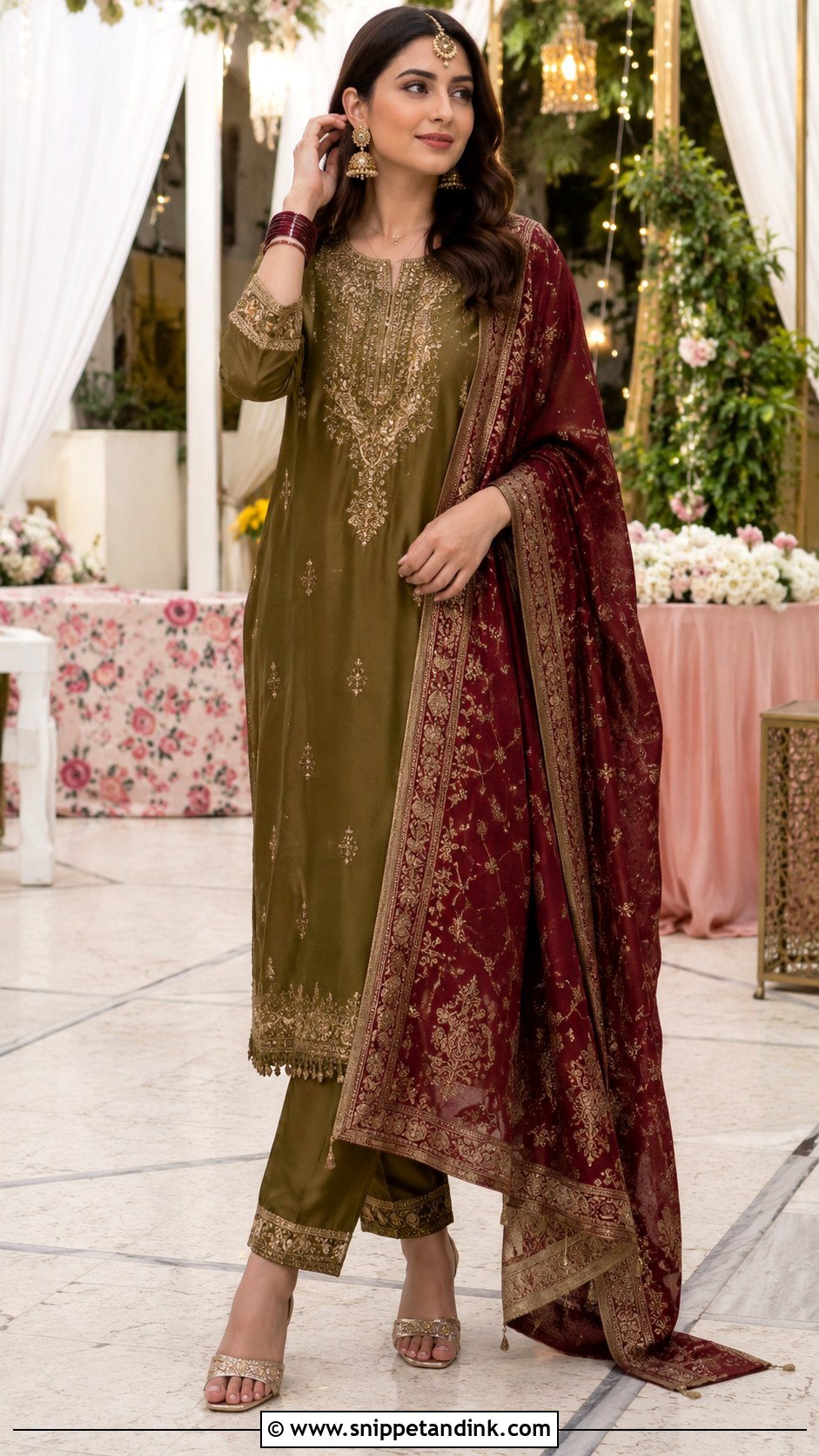
Maroon is the grown-up version of red with green, and it reads more formal than any pastel here. Try a long green kurta with gold embroidery, matching pants and a maroon dupatta with zari or gota work. In velvet or brocade this becomes a winter evening outfit; in georgette it carries into spring. I don’t put velvet on anyone who’ll be dancing in a crowded tent in June, because it traps heat. Antique gold jewelry, maroon bangles and embellished heels finish it. Wine or berry is the gentler alternative if deep maroon looks too dark beside your skin.
8. Mehndi Green Suit With Peach Dupatta
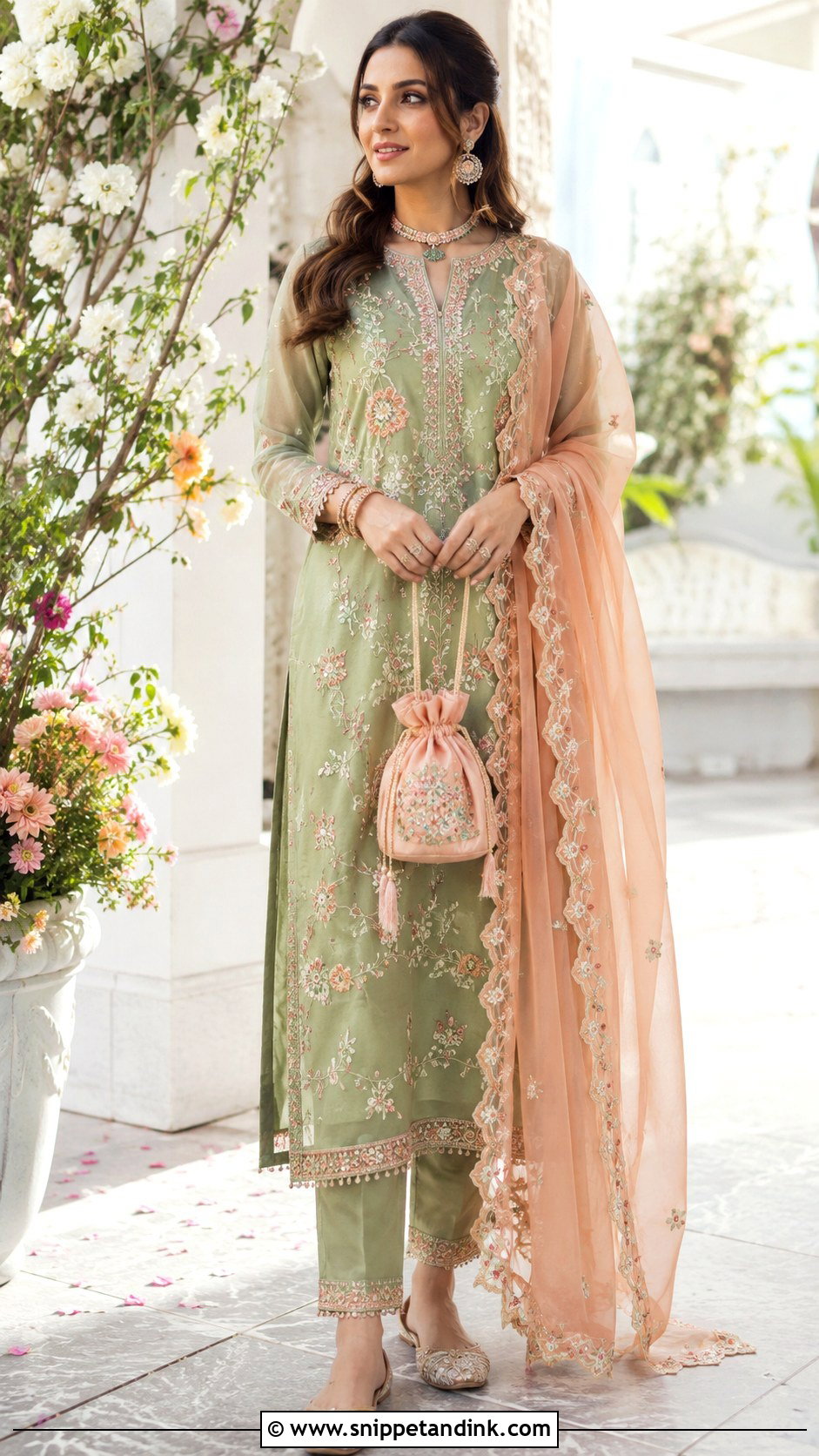
Peach softens mehndi green without draining it. Against an olive base, a peach organza dupatta with thread work or a scalloped border looks light and daytime-ready. Pair a kurta with delicate floral embroidery with matching trousers or peach palazzos. Organza holds its shape, which is why scallops sit crisp on it, but the same stiffness can scratch bare arms after a few hours, so I prefer a sleeve that reaches at least the elbow underneath. Rose gold jewelry, beige juttis and a pastel potli suit the palette, with coral blush and a peachy lip keeping the face in the same warm family.
9. Mehndi Green Suit With Coral Dupatta
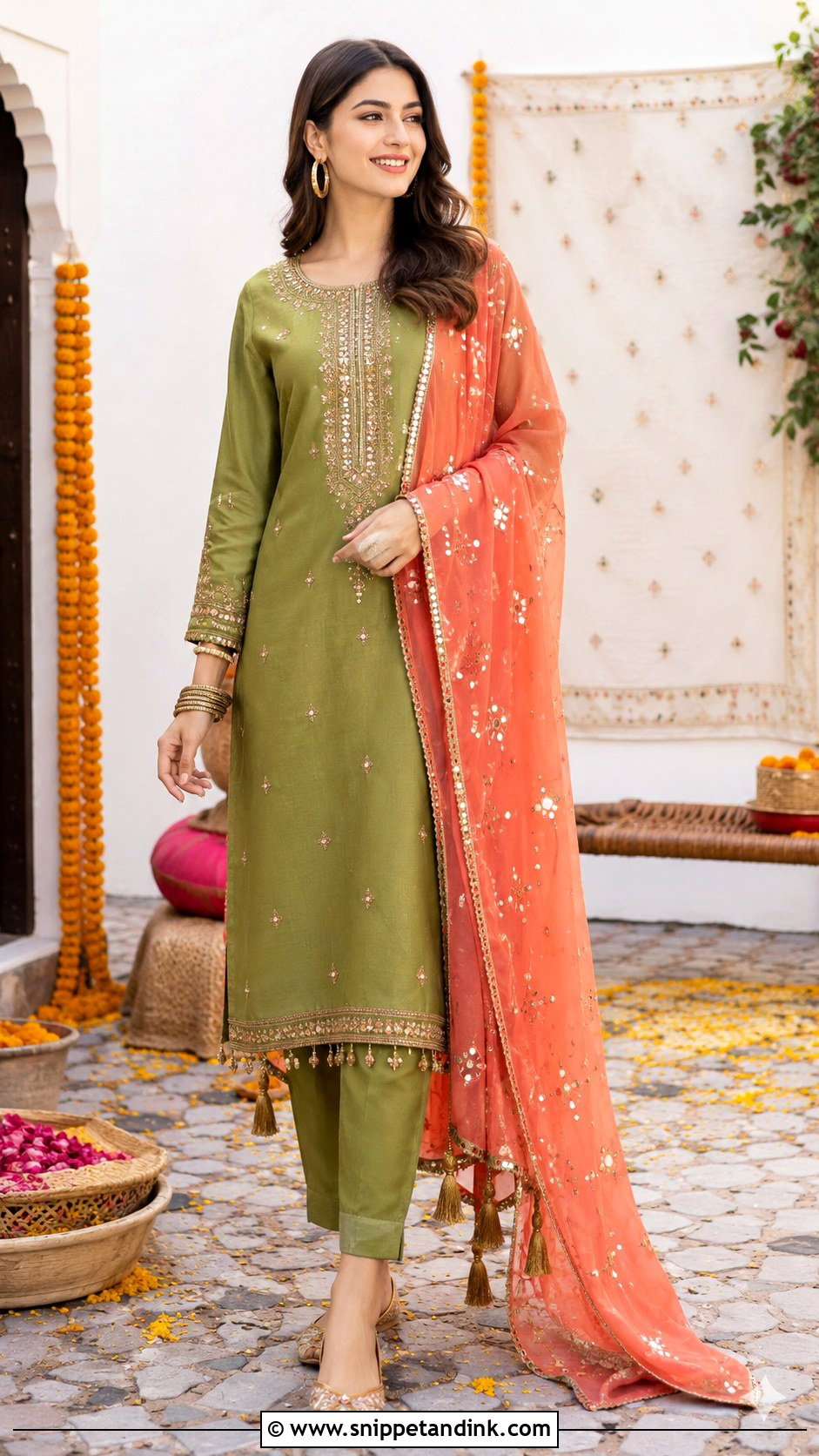
Coral is my answer for the guest who wants color but is tired of yellow and pink. It sits between the two, and its warmth against the green shows up clearly in outdoor photos. A straight kurta with slim pants keeps things clean; a flared kurta with palazzos gives more swing for dancing. Let the coral dupatta carry the mirror work, tassels or gold border. Loose tassels catch on bangles and chair backs all evening, so knot or trim any that dangle. Gold hoops, layered bangles, embroidered flats and a loose braid finish it.
10. Mehndi Green Suit With Mustard Sharara
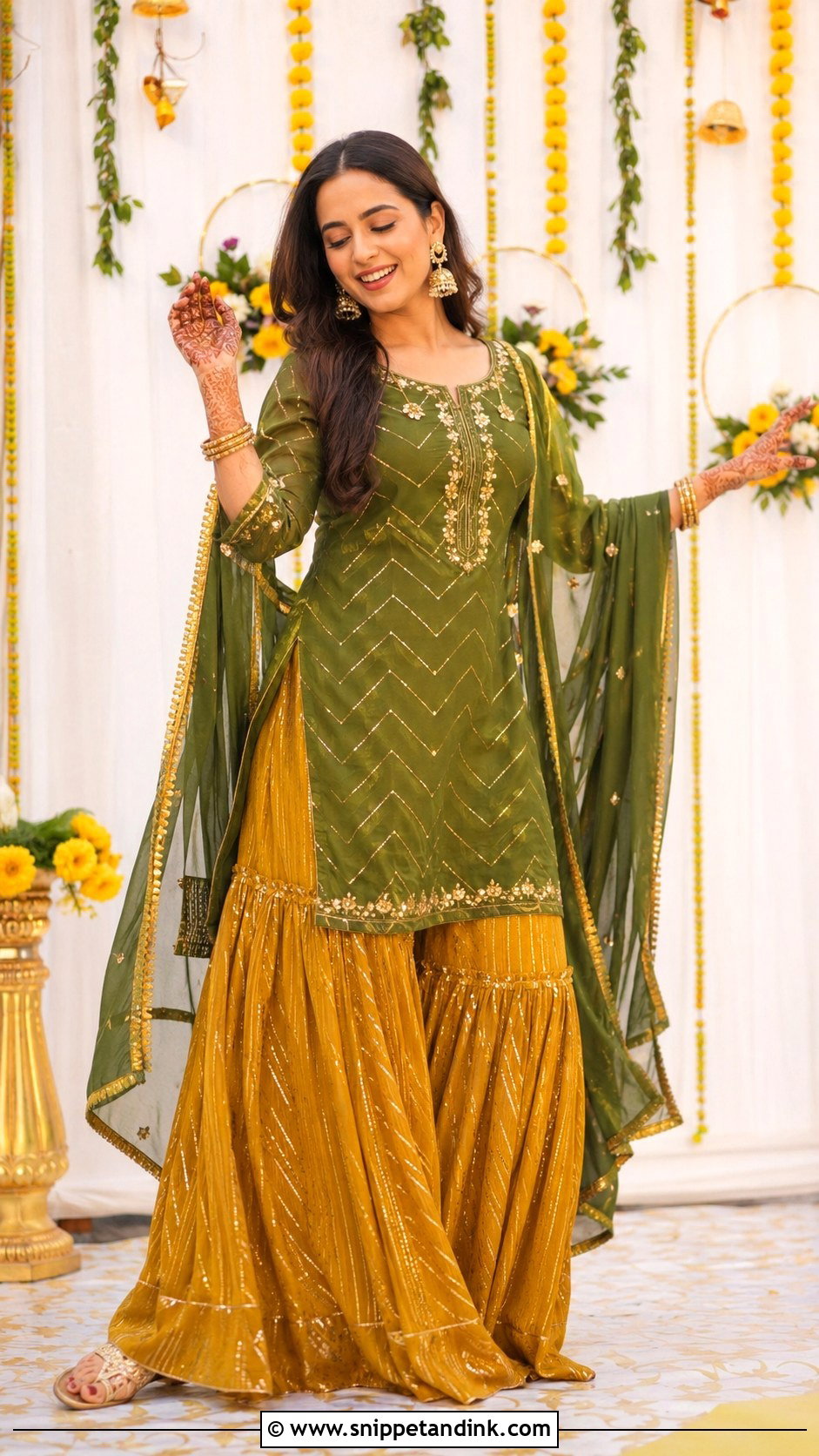
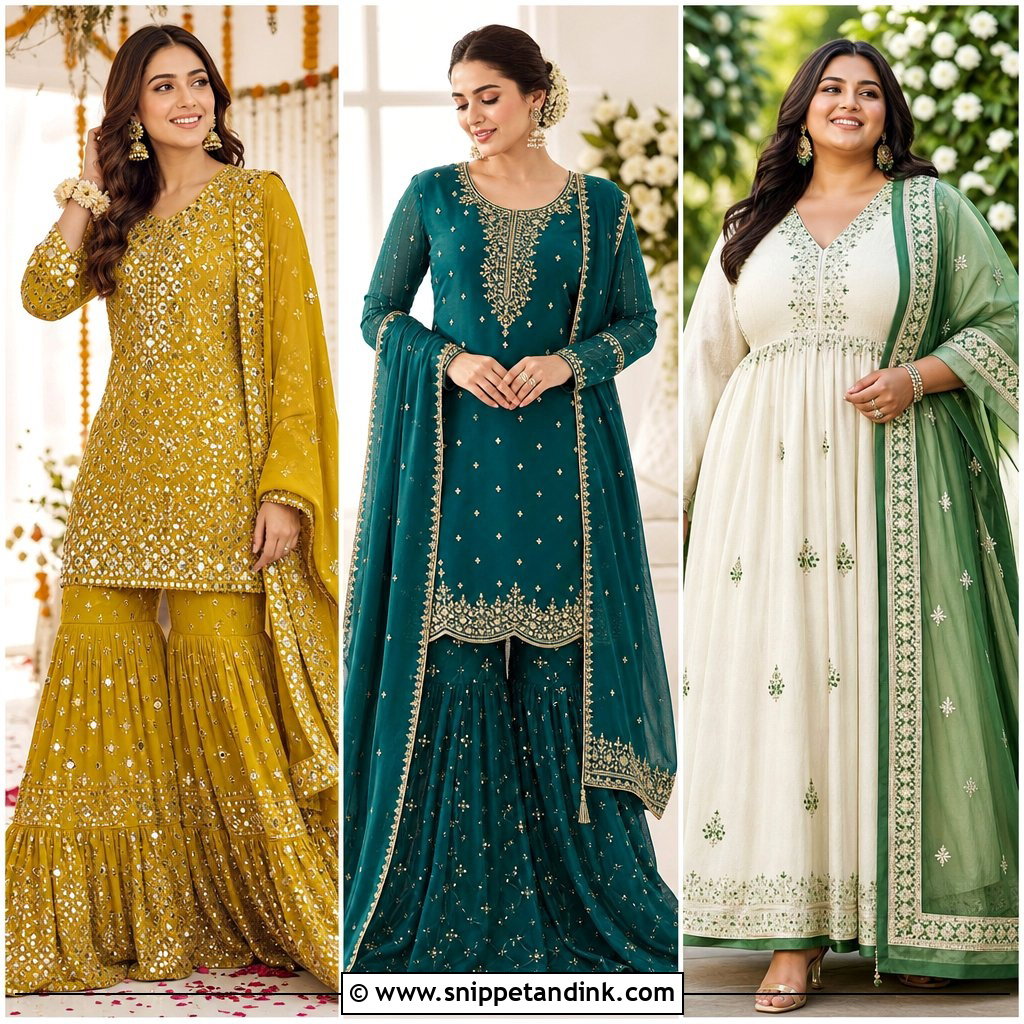
A green kurta over a mustard sharara is the outfit I trust most for someone who plans to dance all night. The short kurta balances the volume below, and the flare moves well. A dupatta in ivory, mustard or green with gota patti ties the set together. Flat embellished sandals are non-negotiable for me here, because sharara hems are long and a heel will catch them on the first staircase. Jhumkas and bangles are enough jewelry. Keep the neckline comfortable, since the drama is all happening below the knee.
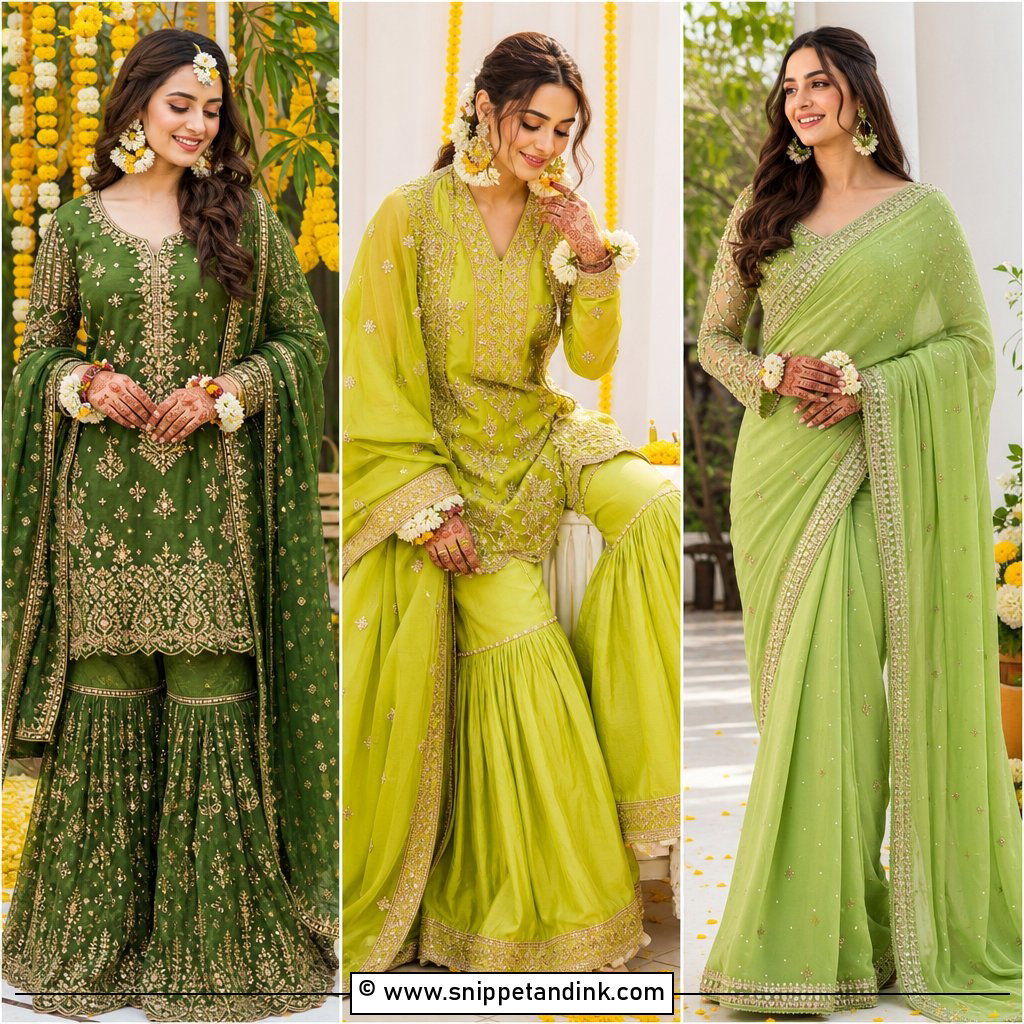
11. Mehndi Green Suit With Lime Dupatta
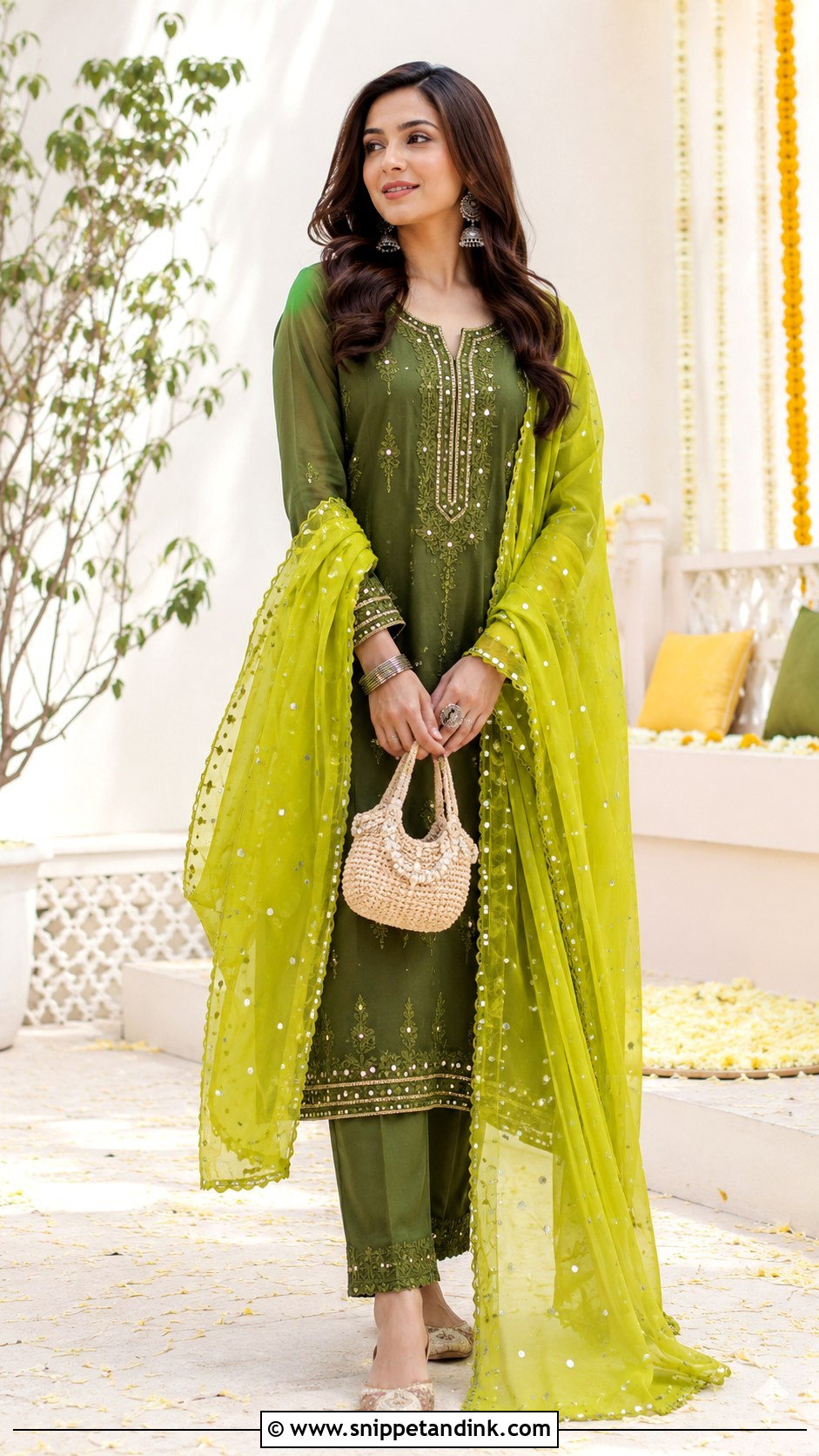
Lime and mehndi green belong to the same family, so this reads as tonal rather than contrasting. It looks brighter and younger than a matching set without the jolt of pink or orange. A finely embroidered kurta, matching pants and a lime chiffon or organza dupatta make the base, and mirror work or a gold border adds the festive note. The jewelry metal decides the mood: oxidized silver makes it casual and arty, gold makes it wedding-ready. Lime can turn sallow skin slightly yellow under fluorescent light, so if your function is indoors, test it against your face before you buy. Neutral shoes let the greens lead.
12. Mehndi Green Suit With Turquoise Dupatta
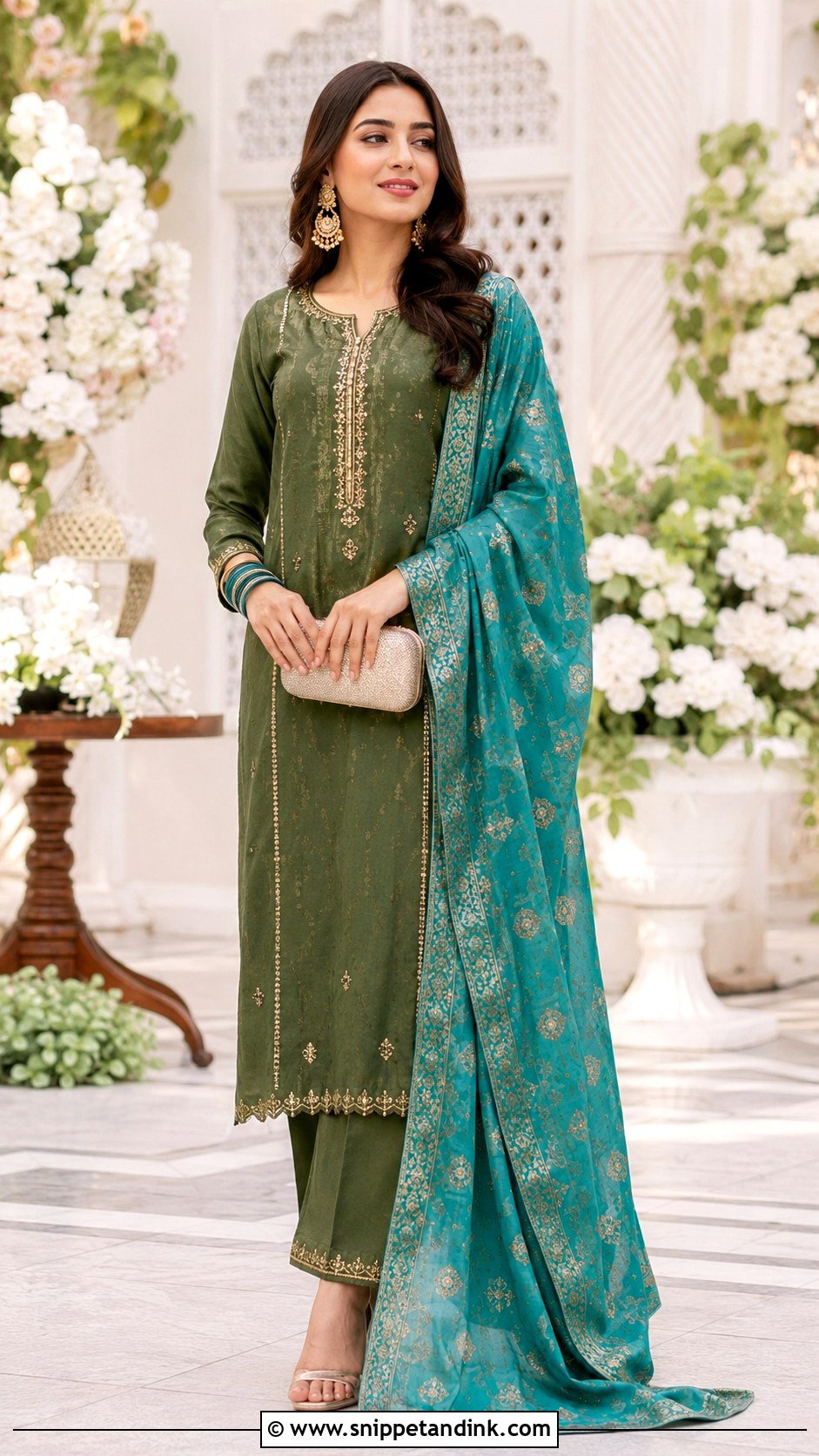
Turquoise surprises people. It shares a blue-green undertone with mehndi green, so the pairing looks considered rather than clashing. Wear a straight green suit with a solid turquoise dupatta, or a printed one that mixes turquoise, green and gold if a solid block makes you nervous. I’d repeat turquoise in one accessory only, earrings or bangles but not both, otherwise it starts to look matched out of a catalogue. Beige heels, metallic sandals or embroidered juttis all suit it. Soft brown eyes and a nude pink lip stop the face from fighting the blue.
13. Mehndi Green Suit With Red Dupatta
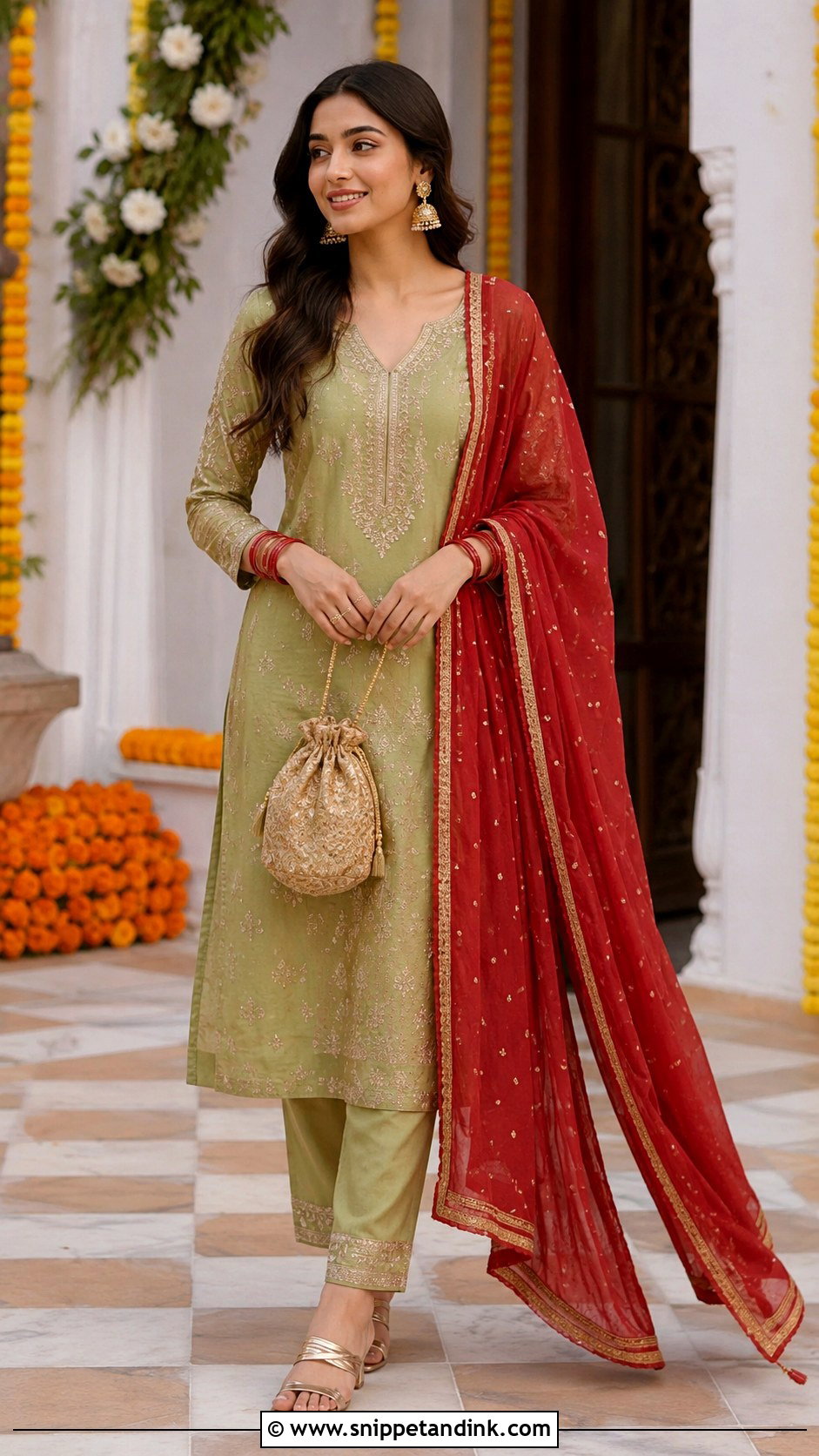
Red with green is the oldest festive pairing there is, and with gold it reads instantly as a family wedding. The balance rule I use: if the red dupatta is heavily worked, the green kurta stays simple, and if the kurta is ornate, drop to a lightweight dupatta with a thin border. Matching green or gold-toned trousers complete the base, with gold earrings, red bangles and a small potli. In many families red is reserved for the bride, so a sister or guest should check before wearing a heavy red dupatta to her mehndi. Stick to green, red and gold, and resist a fourth color.
14. Mehndi Green Suit With Beige Pants
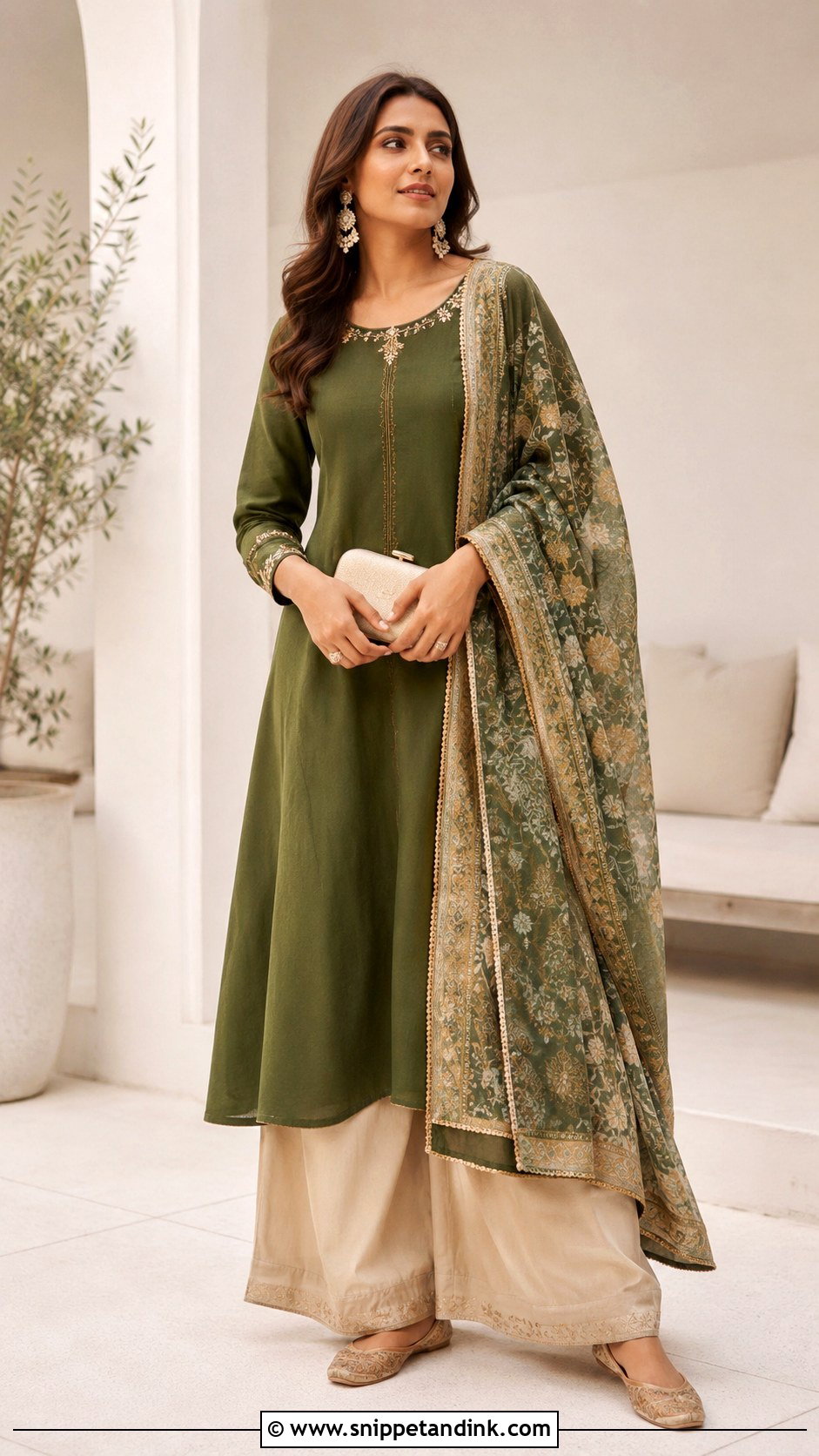
Pair a mehndi green kurta with beige pants when you want the suit to feel festive but not bright. A beige palazzo, straight pant or churidar gives a neutral base, and the green looks deeper against it. A printed dupatta with green, beige and gold ties the two together. If you choose a churidar, get the length altered properly; it’s meant to gather in soft rings at the ankle, and rolled-up excess looks bulky. Tan juttis, pearl earrings and a cream clutch keep it clean for family lunches and day events.
15. Mehndi Green Suit With Purple Dupatta
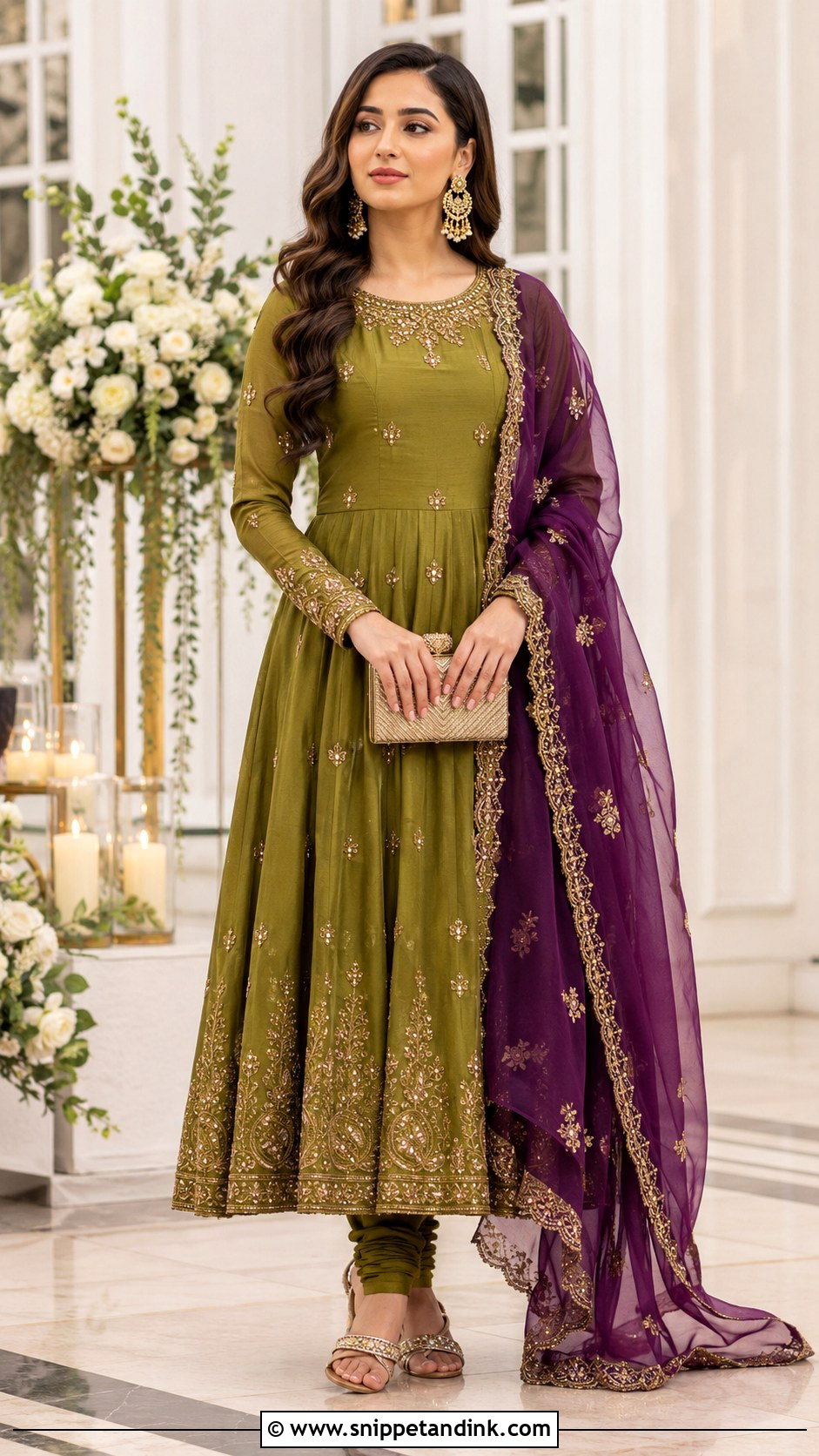
Purple is less expected with mehndi green, and it works best in the deeper shades: plum, orchid, violet. A green anarkali with a purple dupatta suits evening functions, while a straight suit with slim pants feels more modern. Cool purple can make an olive base look muddy, which is why I always warm the pairing with gold or antique jewelry. Zari, resham embroidery or small mirror details on the dupatta help the two fabrics speak to each other. Embellished sandals and soft curls finish it. If your purple leans pale and lilac, the lavender pairing below is the better guide.
16. Mehndi Green Suit With White Palazzo
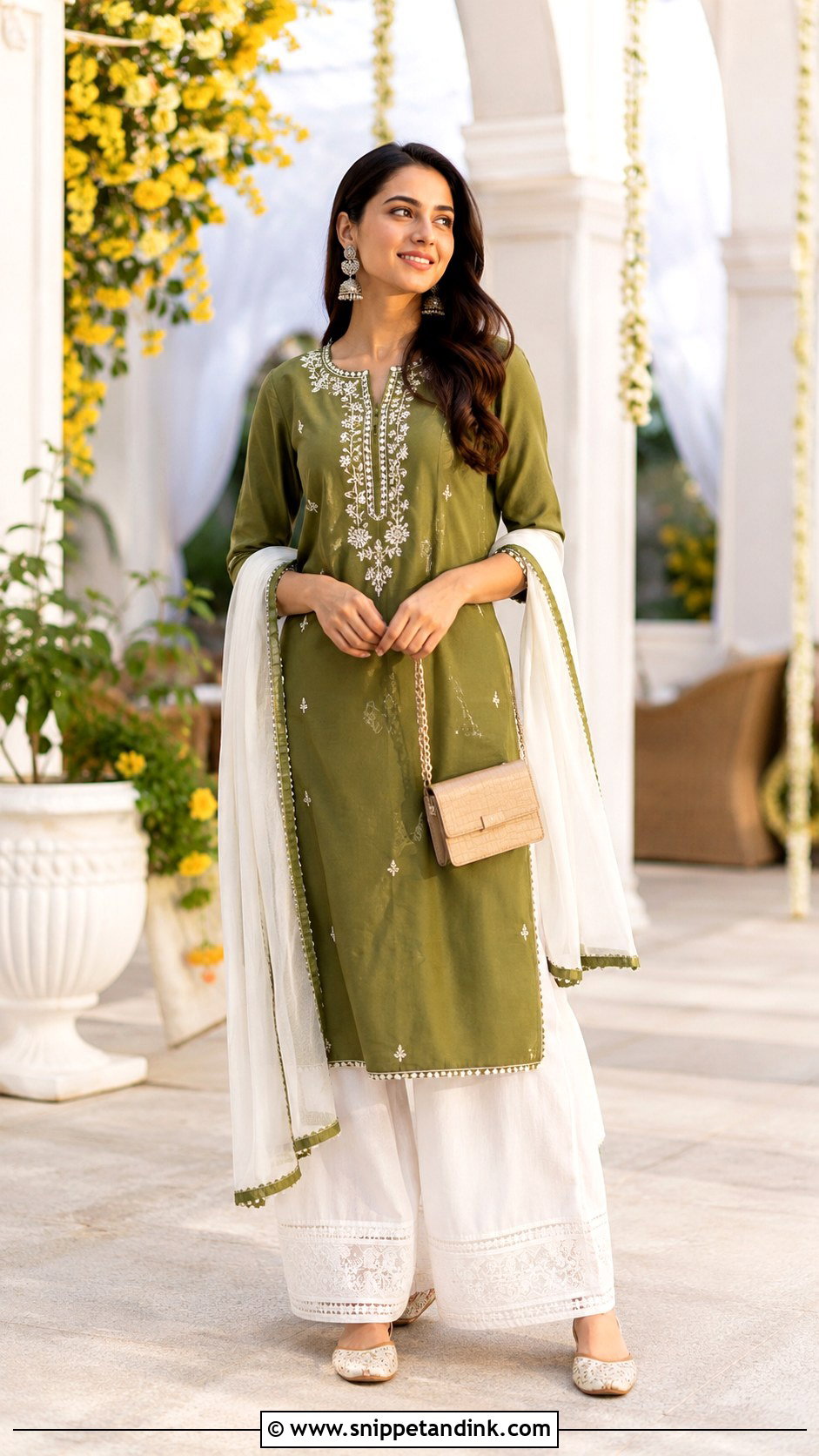
White palazzos make the suit feel crisp and breathable, which is why I pull them for summer daytime events. Wide-leg cotton or linen lets air move, and the white bottom lightens the whole silhouette. Use a dupatta that carries both colors, or a white one with a green border. Silver jhumkas keep it relaxed; gold makes it festive. Two cautions, though. White shows every henna fleck and grass stain at an outdoor mehndi, and in some families white is linked with mourning, so a quick word with the hosts is worth it.
17. Mehndi Green Suit With Mint Dupatta
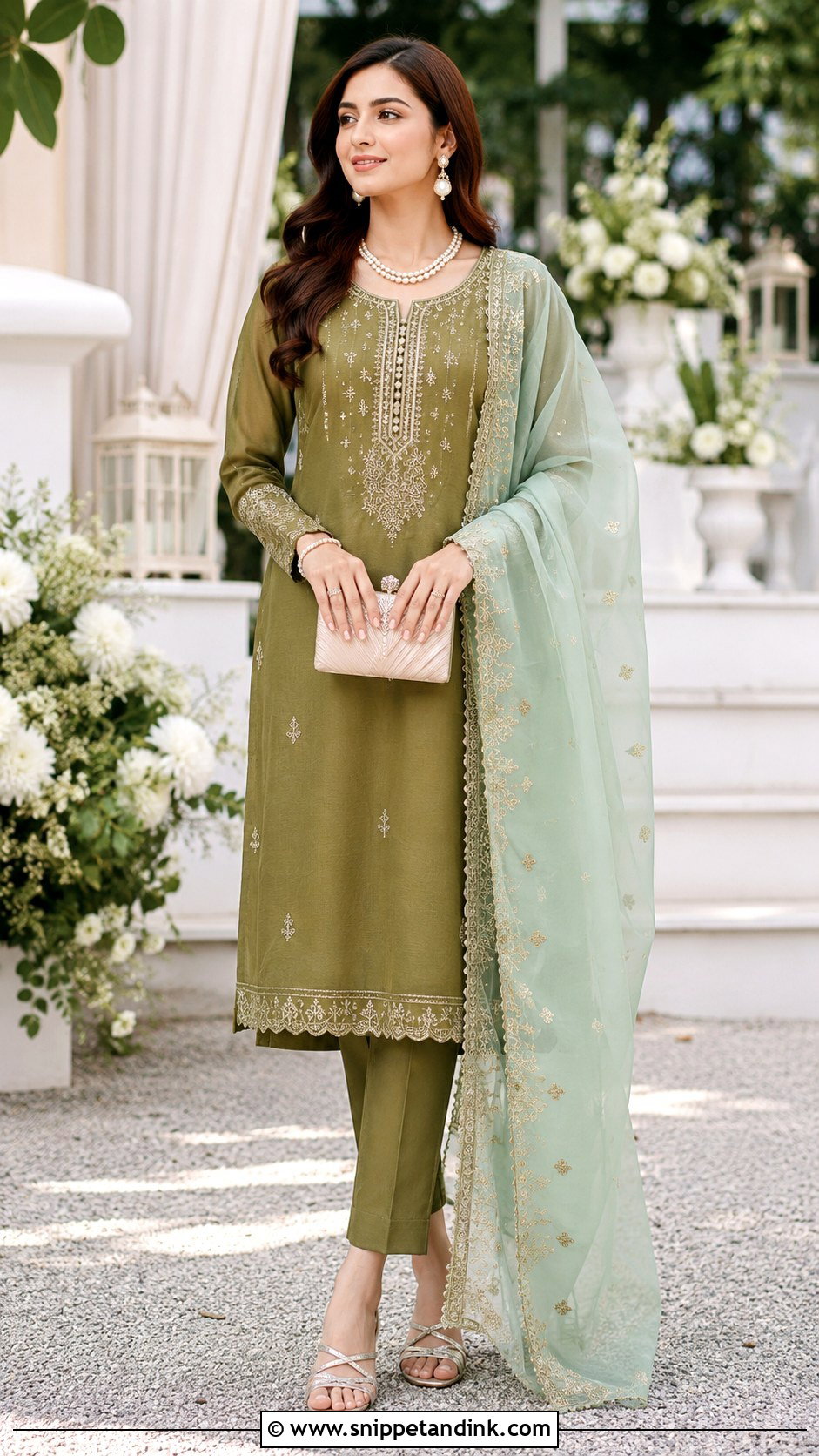
Mint is lighter than mehndi green, so you get a soft tonal look rather than contrast. Choose a kurta with subtle embroidery and matching pants, then a mint dupatta in organza, net or chiffon. Net is the most delicate of the three and snags on bangle edges and brooch pins, so keep jewelry smooth if you pick it. Pearls, silver sandals and a pastel clutch suit the palette. In strong midday sun, mint can almost vanish on camera; gold motifs or a thin gota edge on the dupatta give it a line the lens can find.
18. Mehndi Green Suit With Rani Pink Sharara
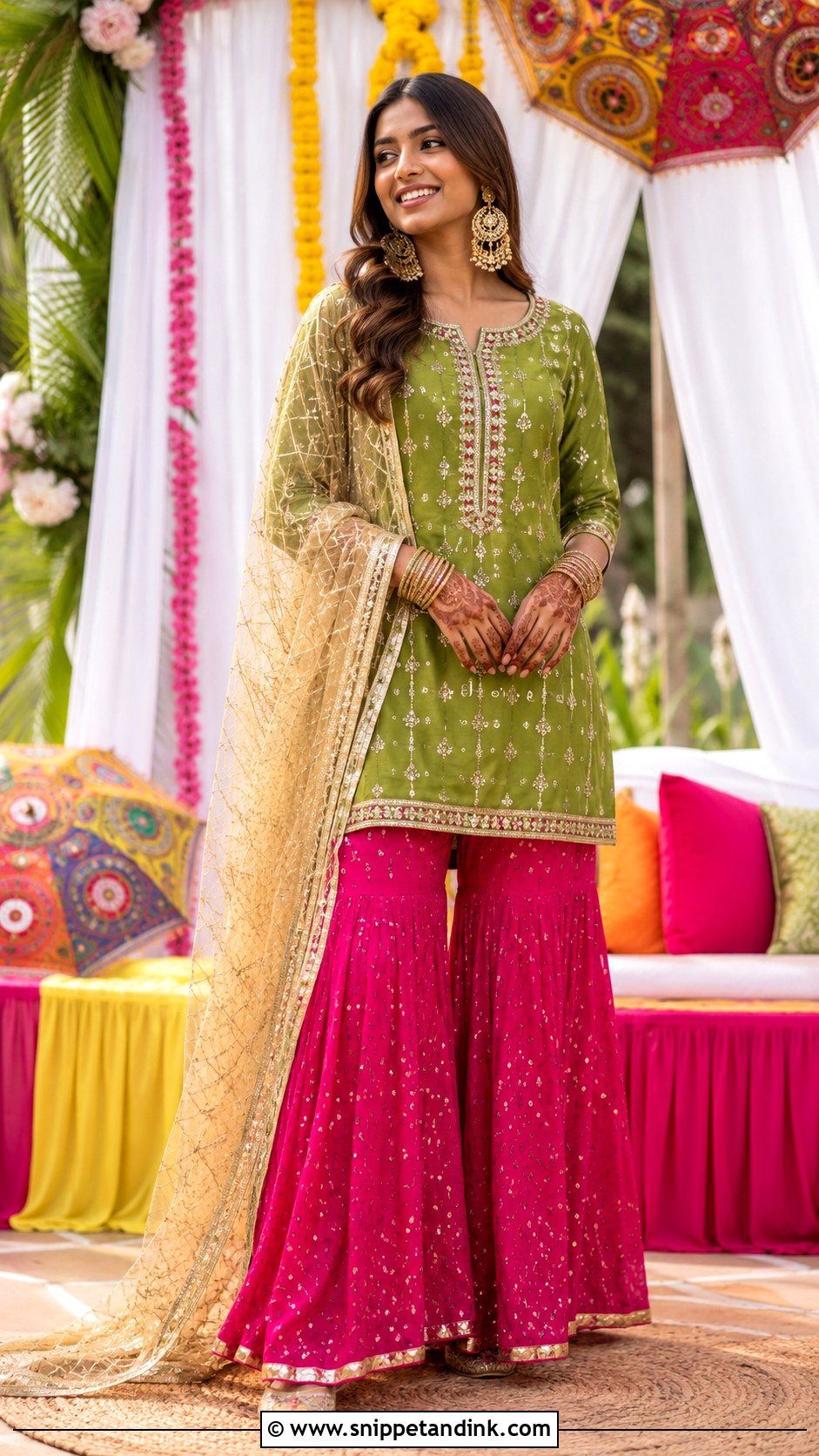
Rani pink is a deeper, bluer pink than fuchsia, and in a full sharara it’s a lot of color, which is the point. The green kurta keeps the outfit tied to the mehndi theme. Keep the kurta short so the flare shows. For the dupatta, either repeat both colors or choose a plain gold net to calm things down. Gold chandbalis, bangles and embroidered juttis complete it. I often dress bridesmaids, sisters or cousins in this when the family wants them to stand out as a group. With this much color, hair needs to be neat, because flyaways show against bold fabric.
19. Mehndi Green Suit With Rust Dupatta
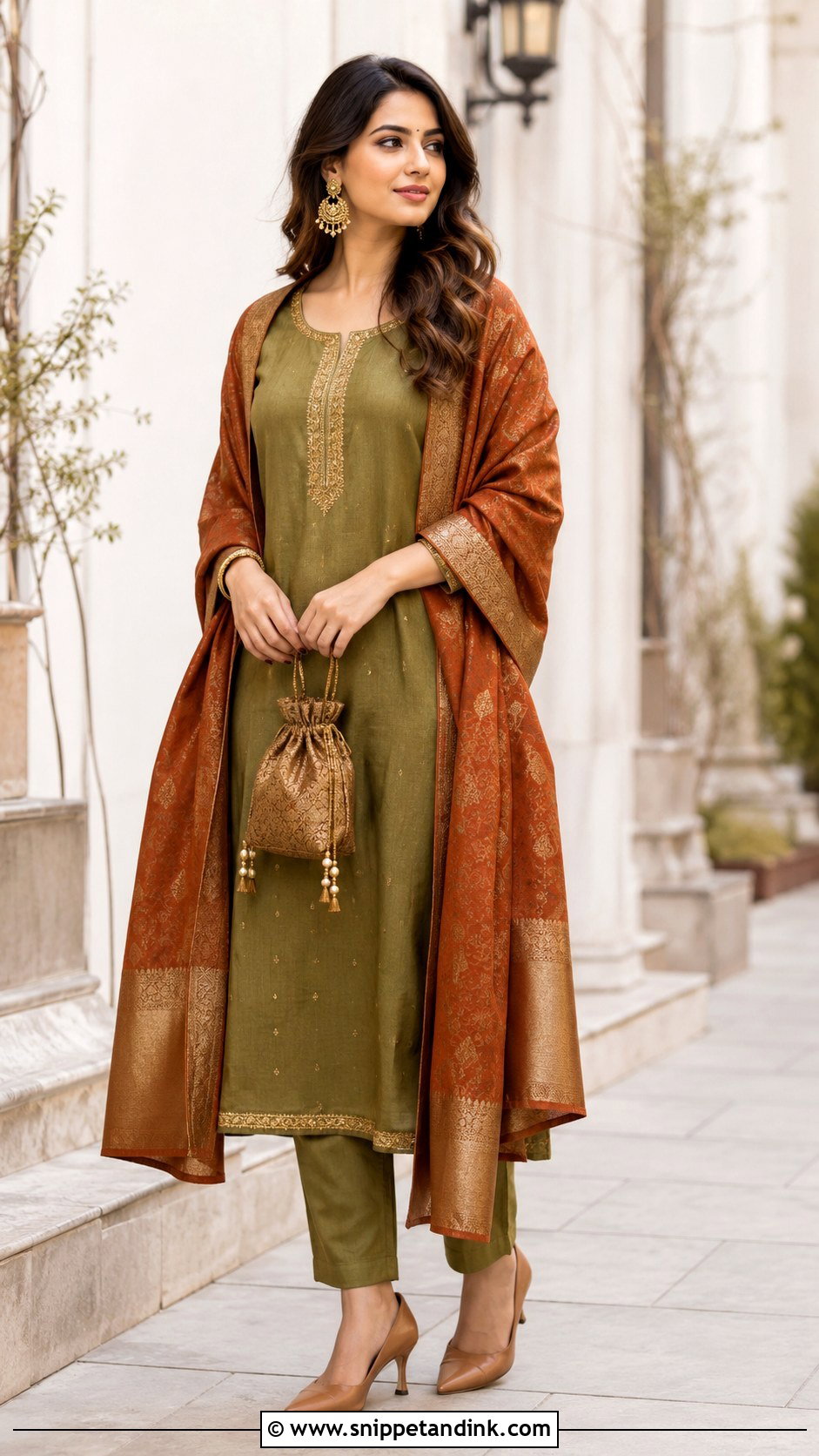
Rust and mehndi green are both earthy, and together they read warm and mature rather than bright. Try a straight-pant suit with a rust dupatta in silk, chiffon or organza, ideally with a gold border for a traditional finish. Rust carries red and brown at once, so it sits kindly on a wide range of skin tones, and that’s honestly why I suggest it to women who avoid pastels. Antique jewelry, tan heels and a brown or gold potli suit it. It’s an autumn color, happiest at indoor evening events, and bronze lids with a terracotta lip keep the makeup in the same family.
20. Mehndi Green Suit With Lavender Dupatta
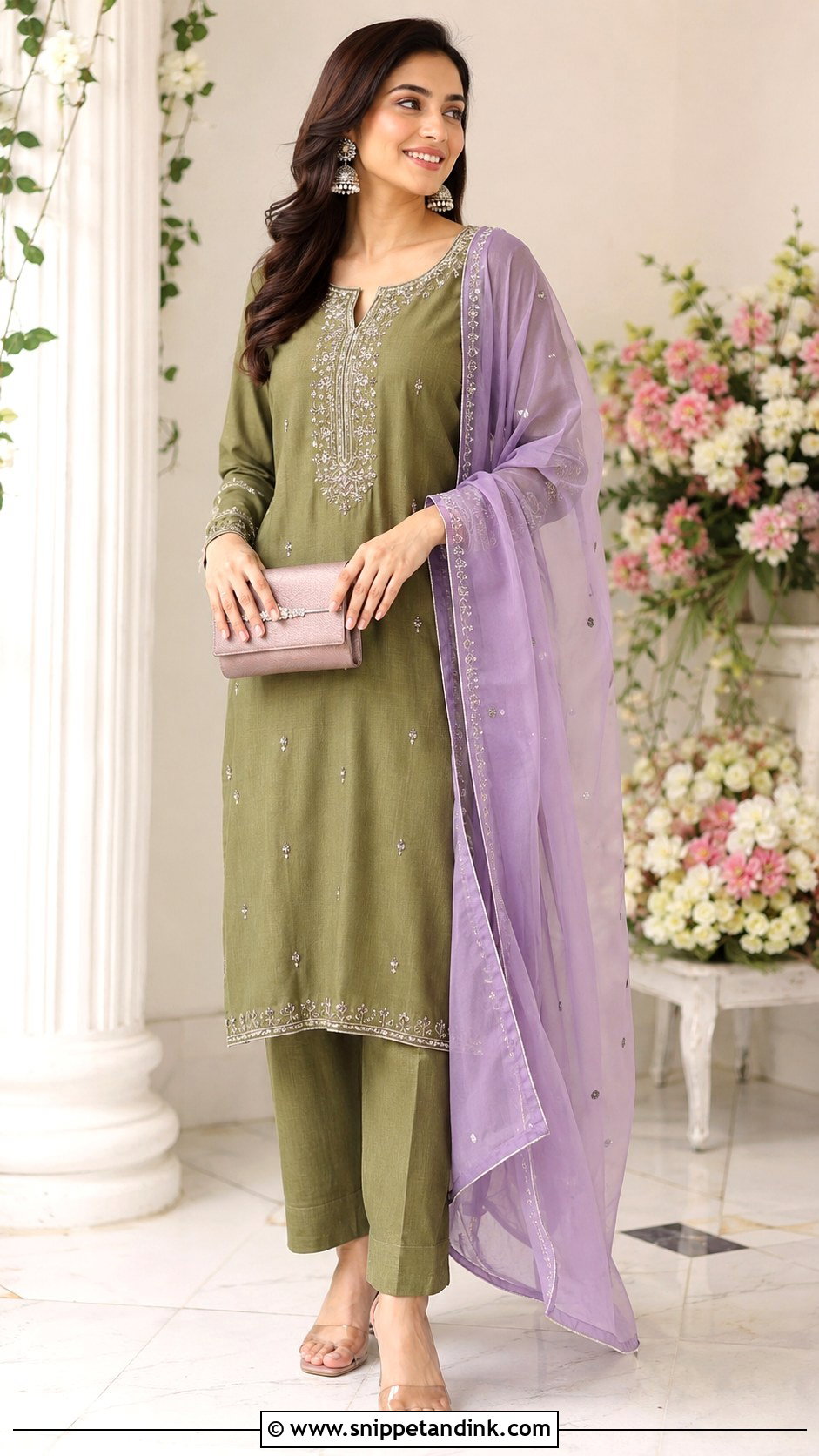
Lavender gives mehndi green a soft, modern turn, and it’s one of the few pastels that holds its own against olive. Choose a simple kurta with delicate embroidery, matching pants and a lavender organza or chiffon dupatta. Silver sits naturally with lavender; gold pulls it back toward traditional. Nude sandals and a pastel clutch keep it light. Pale purple dyes tend to fade toward grey with careless washing, so dry-clean the dupatta or wash it cold and dry it in shade. If you’d like a little sparkle, tiny sequins or pearl accents are enough.
21. Mehndi Green Suit With Blue Dupatta
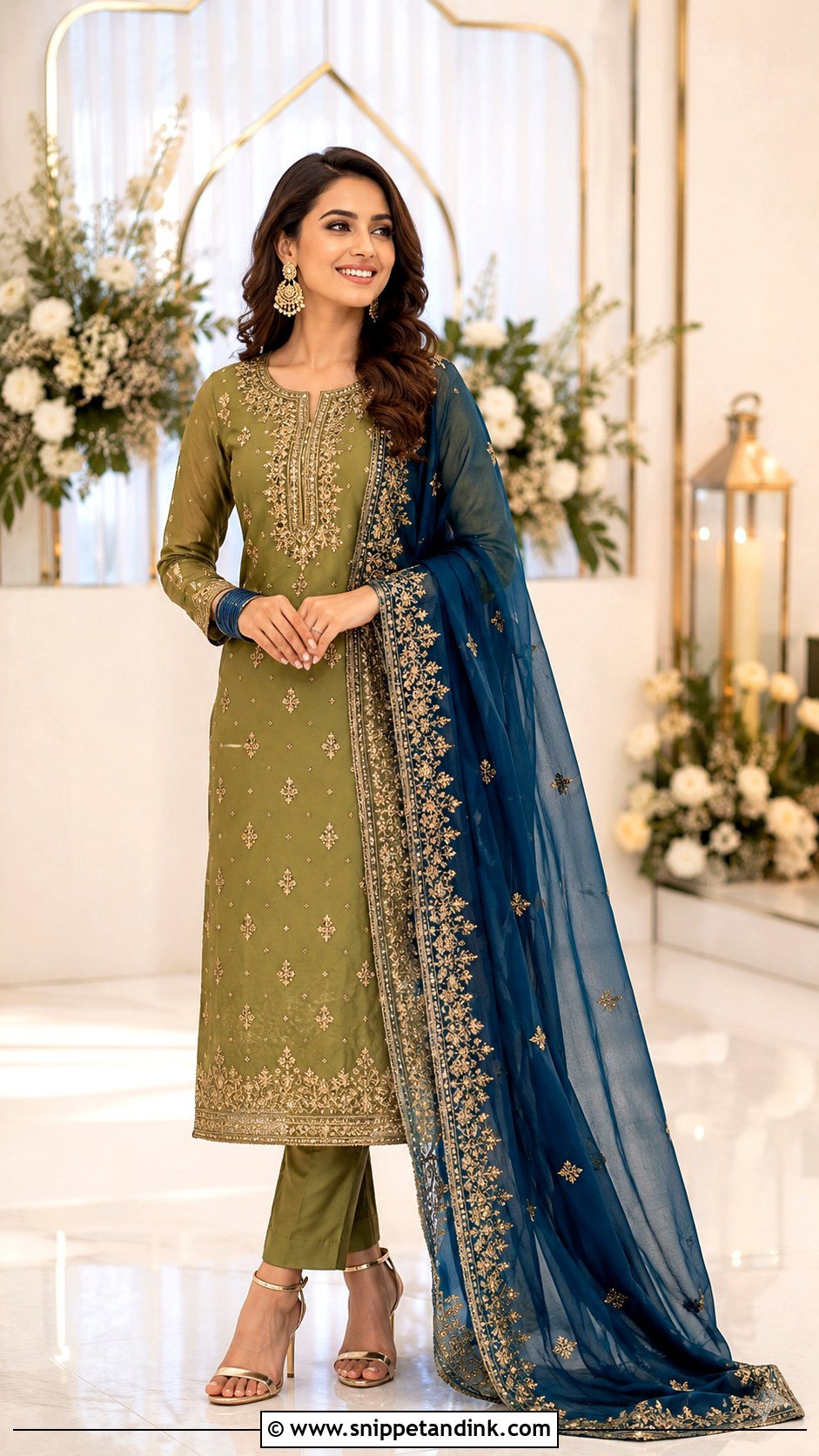
Teal and peacock blue are the blues I’d choose here, because they carry some green themselves and blend before they contrast. Royal blue is bolder and better at night. A straight green suit with a blue dupatta and gold embroidery is the polished version; blue palazzos give a stronger color block. Gold earrings, a blue bangle stack and metallic heels finish it. Deep blue absorbs light, so it reads rich at an evening event, but in a dim hall it can look almost black in photos. Keep the bag plain so the green and blue stay in charge.
22. Mehndi Green Suit With Black Dupatta
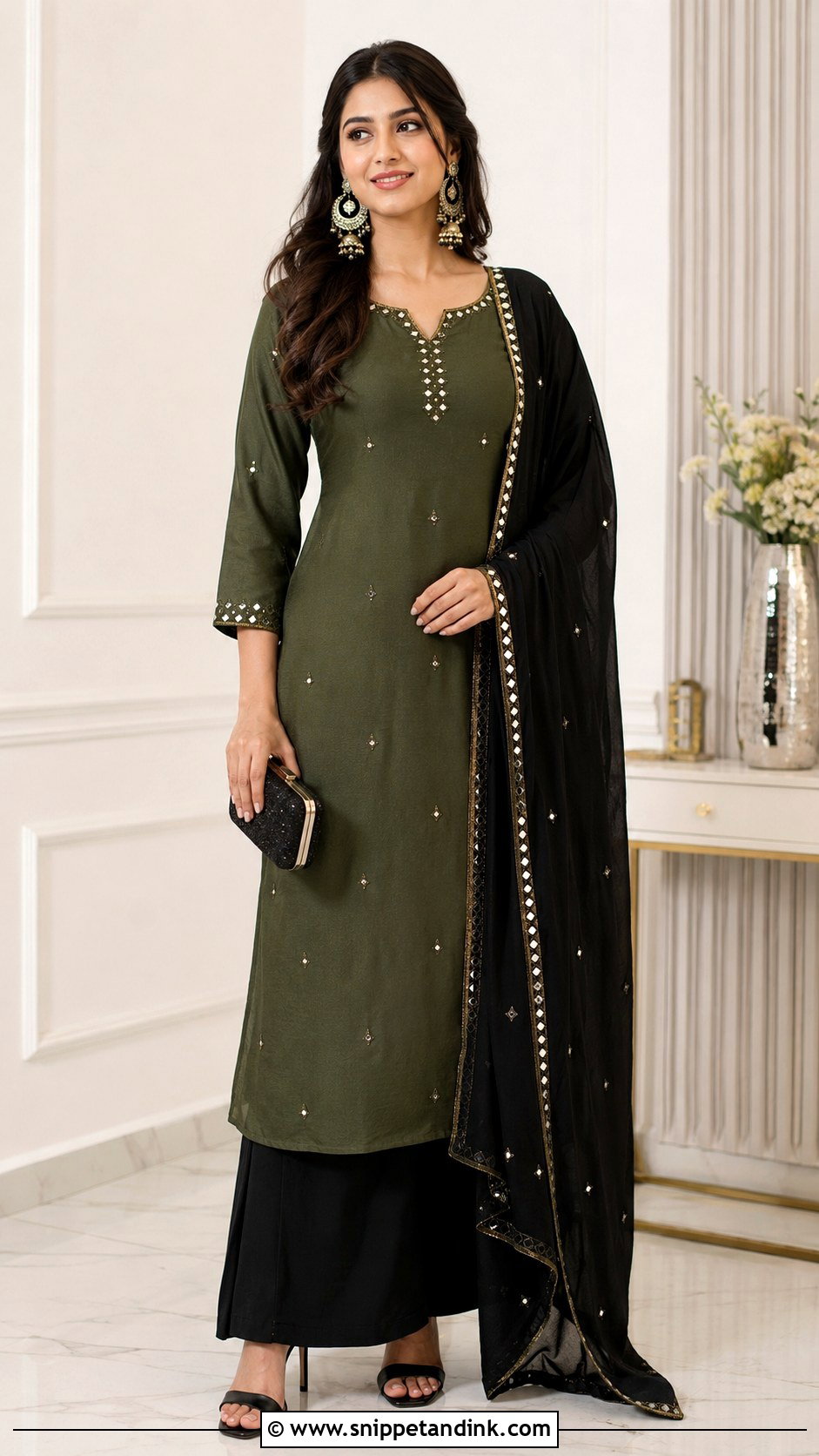
A black dupatta gives mehndi green a modern edge, but it needs gold, mirror or thread detail to stay festive. Pair the kurta with black palazzos or matching green trousers, and choose a black dupatta with a gold border, small motifs or mirror accents. Black heels, antique earrings and a sleek clutch complete it. Before you wear this one, ask. Many families still avoid black at auspicious functions, and a mehndi usually counts. It’s safer at a semi-formal dinner or a friend’s evening event where the rules are relaxed, with defined kohl and a muted lip.
23. Mehndi Green Suit With Silver Dupatta
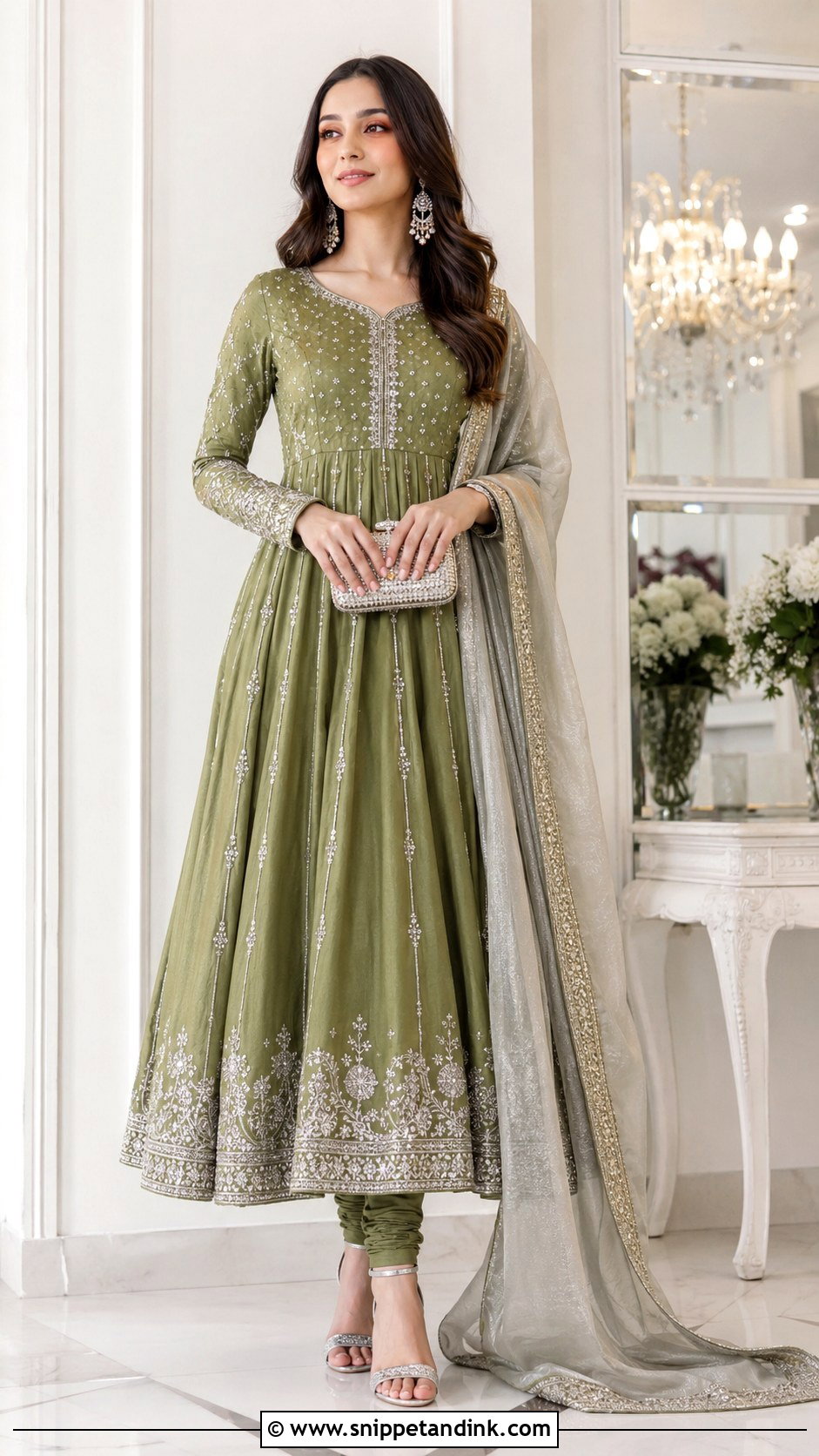
Silver gives the suit a cool shine where gold would add warmth. Put a silver tissue, organza or net dupatta over a green anarkali or straight suit, with matching green bottoms and silver heels and jewelry. Tissue is the shiniest of these and creases sharply when you sit on it, so I tell clients to drape it over the forearm through dinner rather than leaving it tucked underneath. If the dupatta is very reflective, keep the kurta embroidery minimal. Silver comes alive at indoor evening events with bright lighting, and soft smoky eyes with a pink nude lip suit the cool metal.
24. Mehndi Green Suit With Multicolor Dupatta
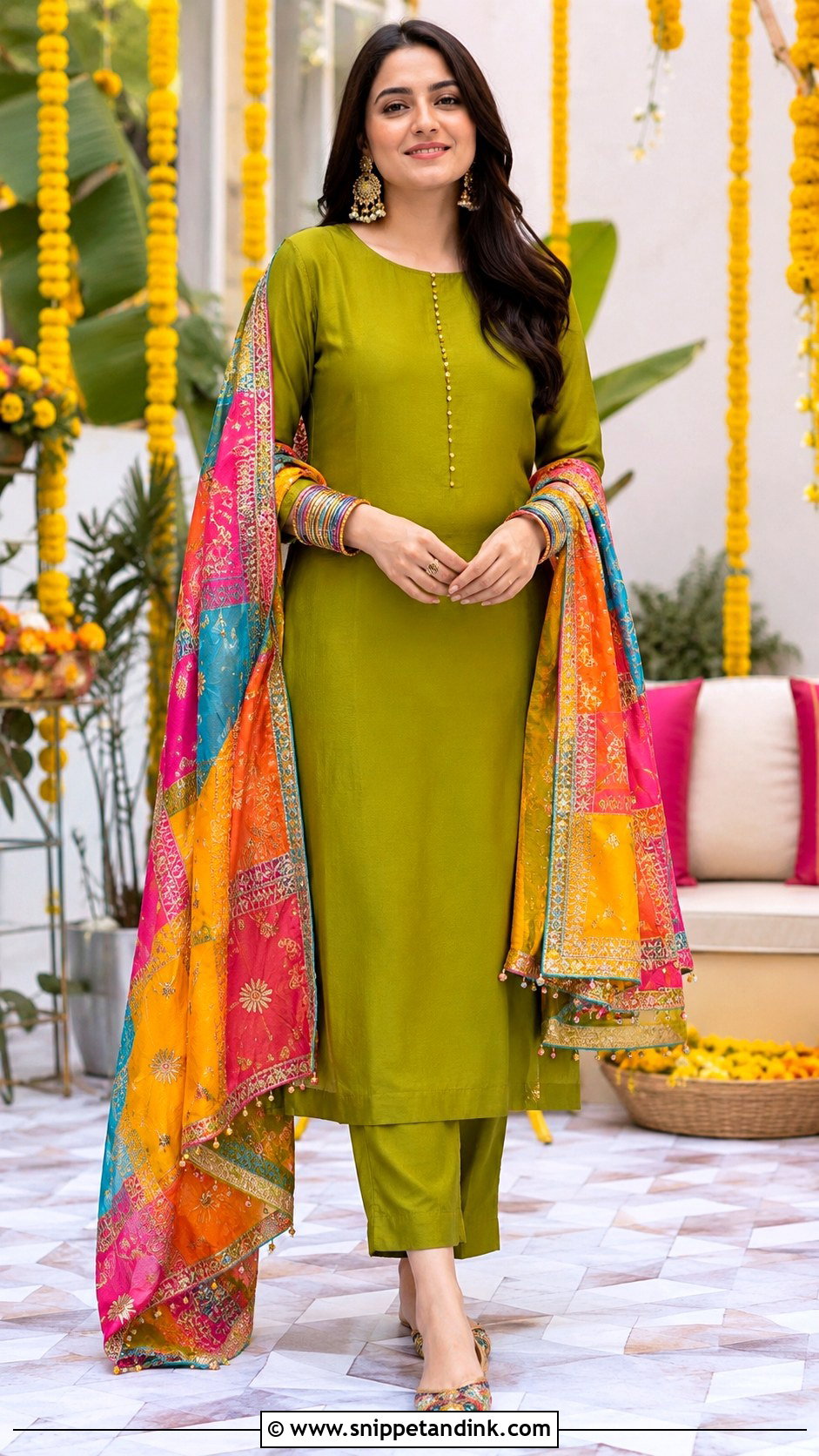
A multicolor dupatta is the easiest way to make a plain green suit festive. Look for one carrying yellow, pink, orange, turquoise or gold so it stays connected to mehndi colors. With that much going on above, keep the kurta and pants plain; a straight suit, palazzo set or anarkali all work underneath. Stick to one metal in your jewelry or it starts to look cluttered. This is also the most practical buy on the list. One plain green suit and three dupattas give you three distinct outfits across a wedding week.
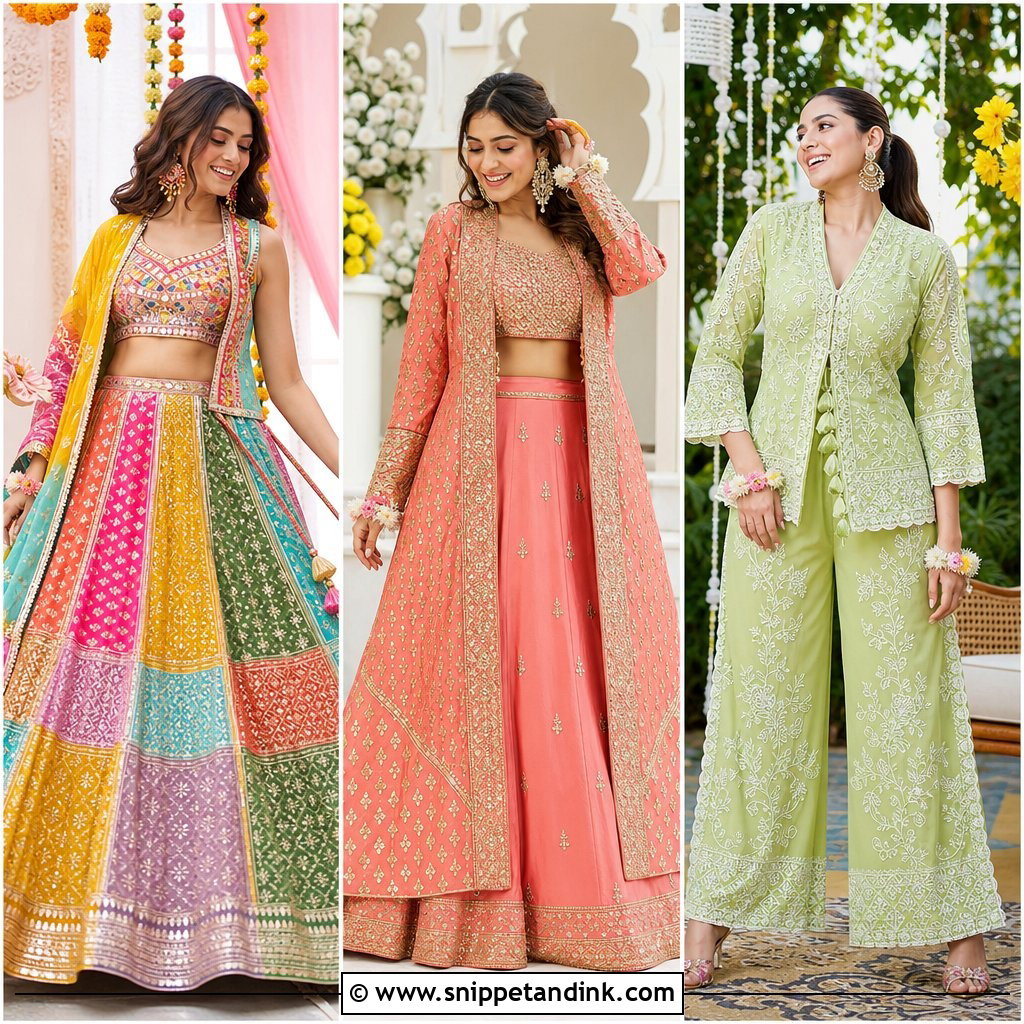
25. Mehndi Green Suit With Matching Dupatta
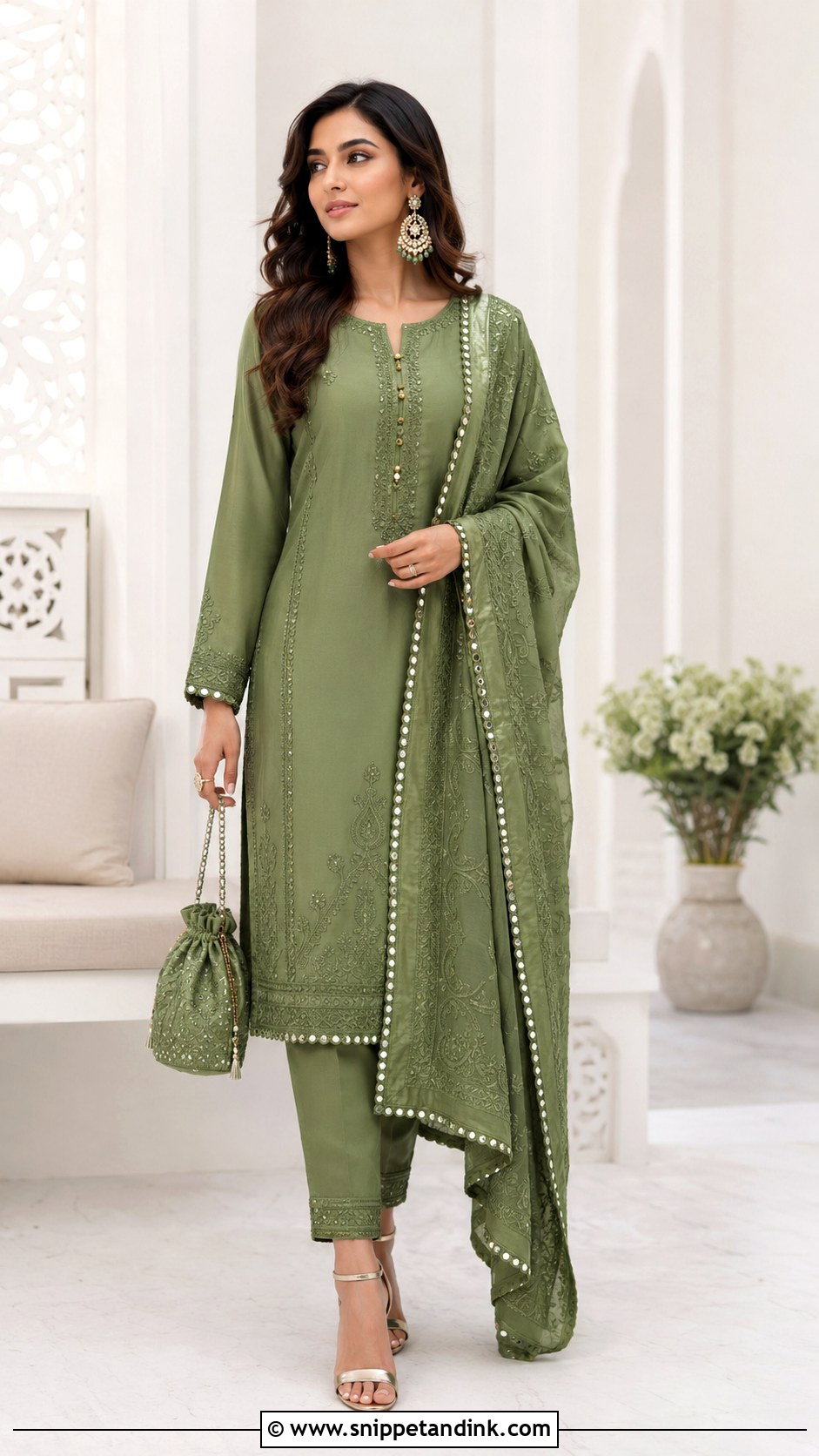
A fully matching set works when texture does the job contrast usually does. A green kurta, pants and dupatta in silk, georgette or cotton-silk create a clean monochrome line. Buy the pieces together if you can. Separates sold as mehndi green in different shops rarely match, and the mismatch shows the moment you step into daylight. Bring brightness to the face with gold, pearl or kundan jewelry, and for dimension pick a dupatta with mirror work, a zari border or tonal embroidery. Metallic heels and a structured potli finish it for women who like one strong line from shoulder to hem.
Wearing These Suits While Your Own Henna Dries
If you’re the bride, a sister or anyone having henna applied, the outfit has to cooperate with an hour or two of sitting still with wet hands. That changes my advice more than any color pairing does.
- Sleeves at the elbow or shorter. Full sleeves get pushed up and smudge the design, or the cuff picks up paste.
- Pin the dupatta at the shoulder before the artist starts. You can’t fix it with your hands, and a loose one slides straight into the paste.
- A sharara or palazzo is far easier than slim pants for sitting cross-legged on a floor cushion.
- Dark and printed fabrics hide accidental marks. Ivory, white and mint show every brown fleck once the paste dries and crumbles.
Dried paste keeps flaking for hours. Brush flakes off with a soft brush or the back of a dry hand instead of wiping, because wiping grinds them into the weave and leaves an orange stain.
Colors Some Families Keep for the Bride
Color etiquette at a mehndi varies between families, regions and faiths, and nobody tends to mention it until you walk in. A short message to the host saves an awkward evening.
- Red and deep maroon are bridal colors in many families. On a guest, a heavy red dupatta can read as competing with her.
- Black is avoided at auspicious events by many households, though younger hosts often don’t mind.
- White carries associations with mourning in some communities, even when it’s paired with green.
- Some brides ask the whole family to wear yellow and green for the mehndi. If so, the yellow and lime pairings above cover it without a new purchase.
Matching the Dupatta to the Hour and the Light
Mehndi green pairs easily because it sits between warm and cool. Yellow, fuchsia, orange, maroon and gold push it festive; ivory, mint, peach, beige and lavender soften it. For a modern outfit, move the contrast into the bottoms with a sharara or palazzo. For a classic one, keep the suit green and let the dupatta border and jewelry carry the detail. Decide by the time of day, the lighting at the venue, the weight of the fabric and how much color you can comfortably wear through hours of sitting, eating and dancing. Then hold the dupatta against the suit and your face in daylight before you pay.
You'll Like These Ideas:


Leave a Reply