
Indian celebrations stretch across several ceremonies, each with its own dress code, colors and regional customs, and that is what makes choosing an outfit feel overwhelming. Whatever you wear has to look festive and still carry you through rituals, photographs, meals and dancing. Lehengas, silk sarees, Anarkalis, shararas and draped modern pieces all have a place; lighter fabric suits daytime, heavier work suits evening. In my experience the garment is only half the outfit. Jewelry, shoes, bag, hairstyle and where the dupatta sits finish it. The twenty looks below are planned for a bride, bridesmaid, relative, or guest, with notes for different tastes and figures.
Regional Sarees a Guest Can Wear, and When to Ask First
Several looks below come from a particular region: Banarasi, Kanjivaram, Chanderi, Paithani, Bengali laal paar and Kerala Kasavu. Wearing a weave from outside your own community is usually welcomed at Indian weddings, and families are often pleased to see their regional textile honored. A few points help it land well.
- At a Kerala wedding, a Kasavu saree is standard guest wear, so you’ll fit right in.
- The red-and-white laal paar has strong ritual meaning for Bengali women. At a Bengali wedding, check whether the family expects it of relatives or would rather guests chose something else.
- Kanjivaram and Banarasi are worn across India for weddings and are a safe choice almost anywhere.
- If you’re unsure how to drape a regional style, ask a family member or book a draper rather than guessing. A badly draped traditional saree is more noticeable than a well-worn simple one.
When buying a handwoven saree, I check the reverse side, the weight in the hand and the finish of the border. Handloom has small irregularities that machine weaving lacks, and a reputable seller will tell you plainly whether a piece is handloom, powerloom or a blend.
1. Red Bridal Lehenga Indian Wedding Dress
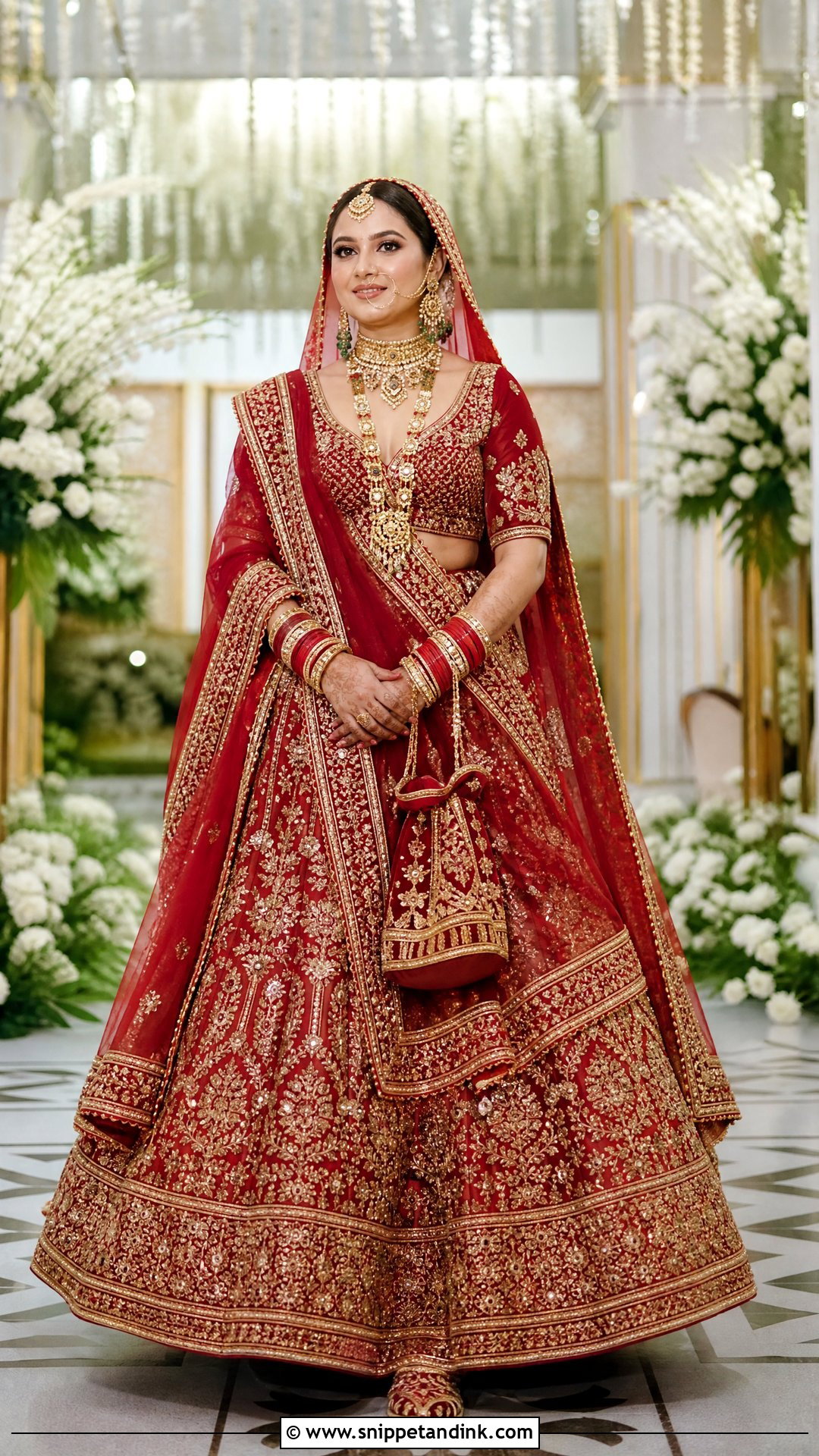
Raw silk is my preferred base for a red bridal lehenga, because it has enough body to hold a flared skirt without a stiff can-can underneath. Choose gold zari, zardozi or tonal threadwork and a well-fitted blouse that gives real support. Keep the dupatta border manageable; a wide, heavy border on the head dupatta pulls the whole drape backwards. One dupatta can cover the head while a lighter second one falls across the shoulder. A choker, longer necklace, earrings, bangles and an embellished potli complete it. Gold platforms or padded bridal juttis give height without making long rituals painful, and a neat bun with fresh flowers keeps it balanced. Have the tailor set the skirt length, waistband and blouse coverage to you, so it feels secure rather than heavy.
2. Ivory Embroidered Lehenga Indian Wedding Dress
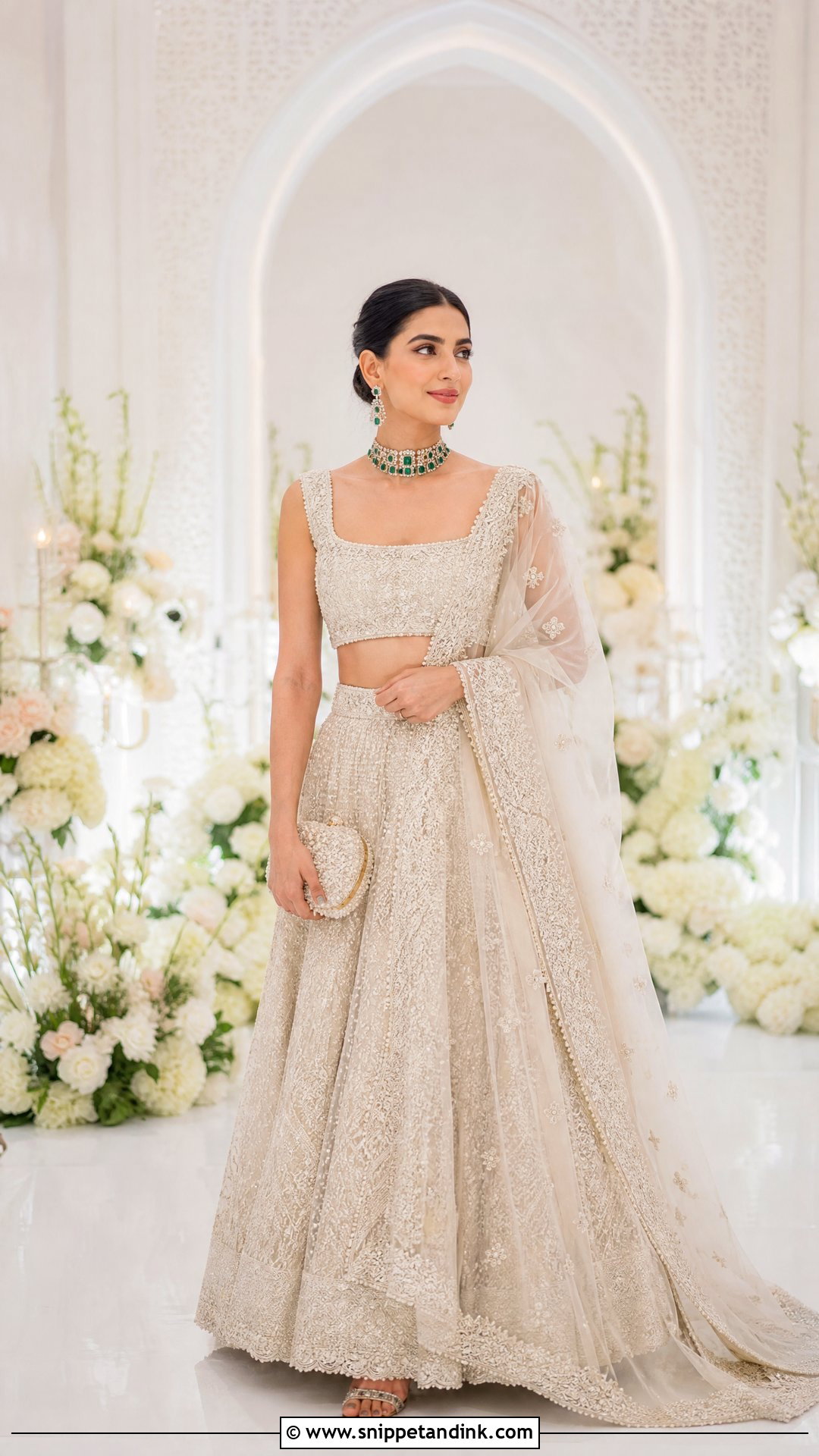
Ivory goes flat in photographs unless the embroidery gives it texture, so I look for pearl, sequin or metallic work across the skirt. A fitted blouse with a square, sweetheart or modest scoop neck adds shape, and a sheer embroidered dupatta softens it. Emerald, ruby or pastel gemstone jewelry brings in color with control. Metallic block heels, a beaded clutch and neatly arranged bangles complete it. Brides can add a veil-like dupatta and fuller jewelry; guests should keep the work lighter. Ivory also shows every mark, so keep a stain pen in your bag and never wear it to a haldi. Some brides now choose ivory for themselves, so as a guest, check with the couple before committing to it.
3. Banarasi Silk Saree Indian Wedding Dress
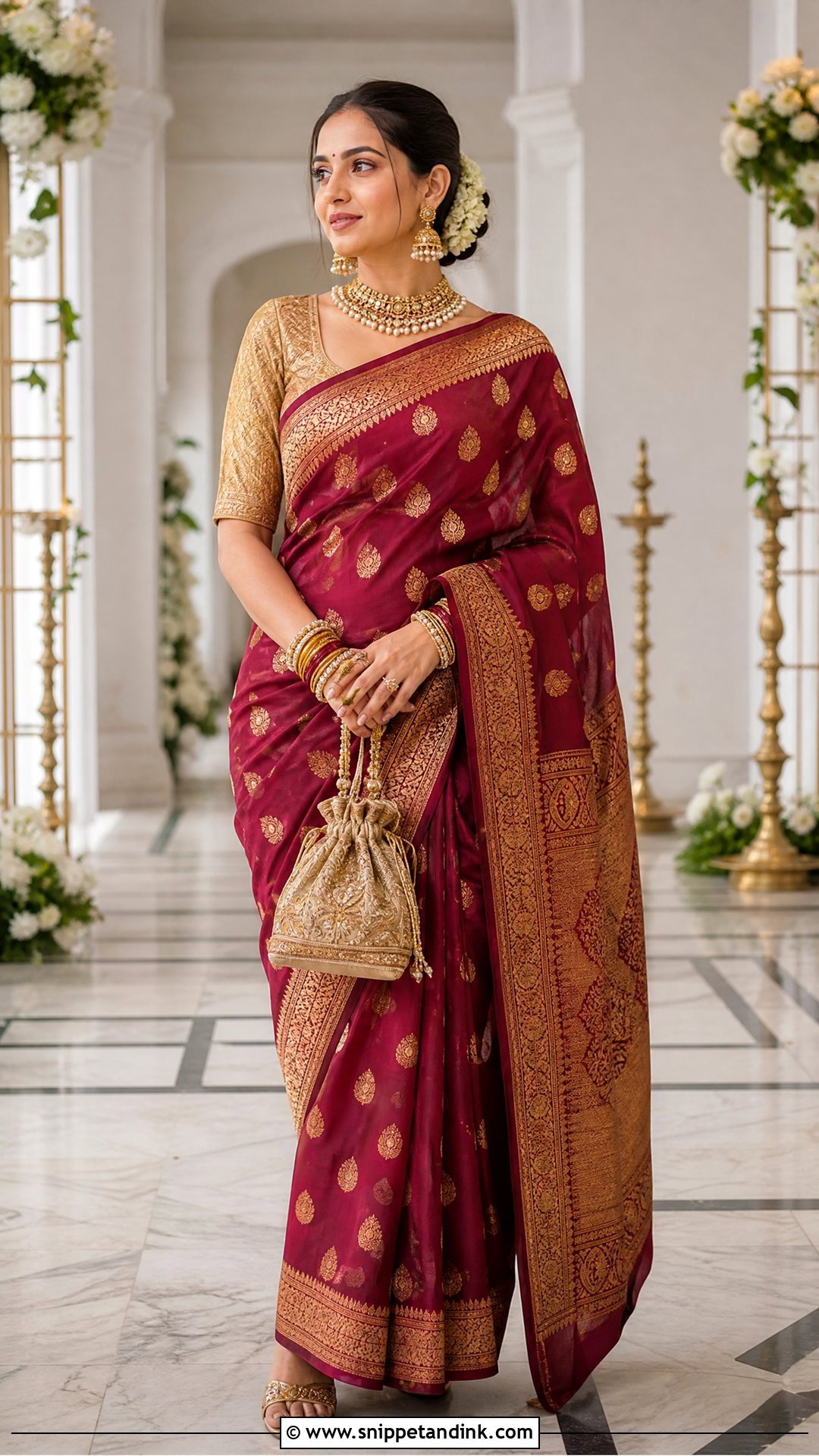
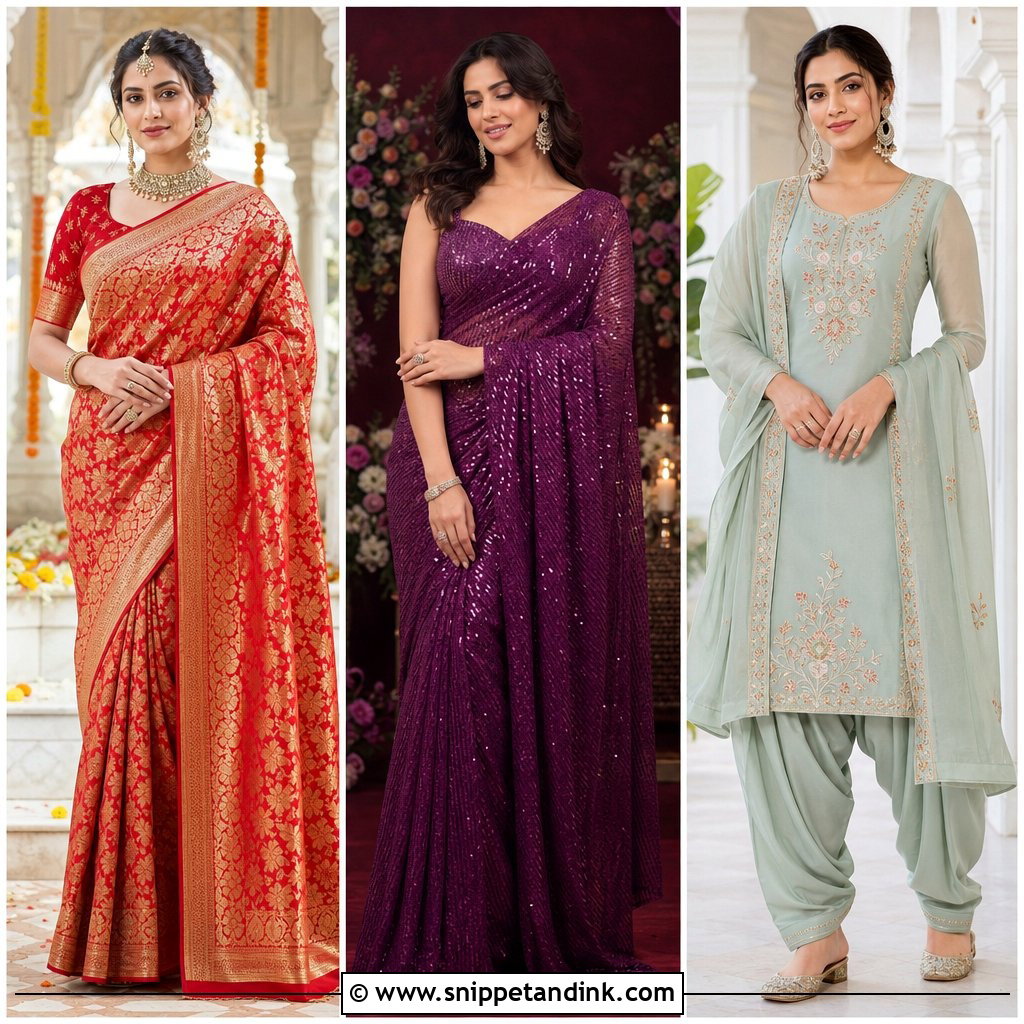
A Banarasi silk saree has so much woven surface that it needs very little help from accessories. Maroon, emerald, royal blue or magenta with a contrasting brocade blouse is the classic route. The drape is only as good as what’s under it: a tailored blouse and a petticoat tied firmly at the waist, so the pleats have something to grip all day. A traditional gold necklace, medium jhumkas, stacked bangles and a compact potli suit it, with low block heels or cushioned wedges. A center-parted bun with flowers and soft makeup complement the pattern. Petite women can pick a narrower border, taller women a broad one. Narrow, even pleats lengthen the line.
4. Kanjivaram Silk Saree Indian Wedding Dress
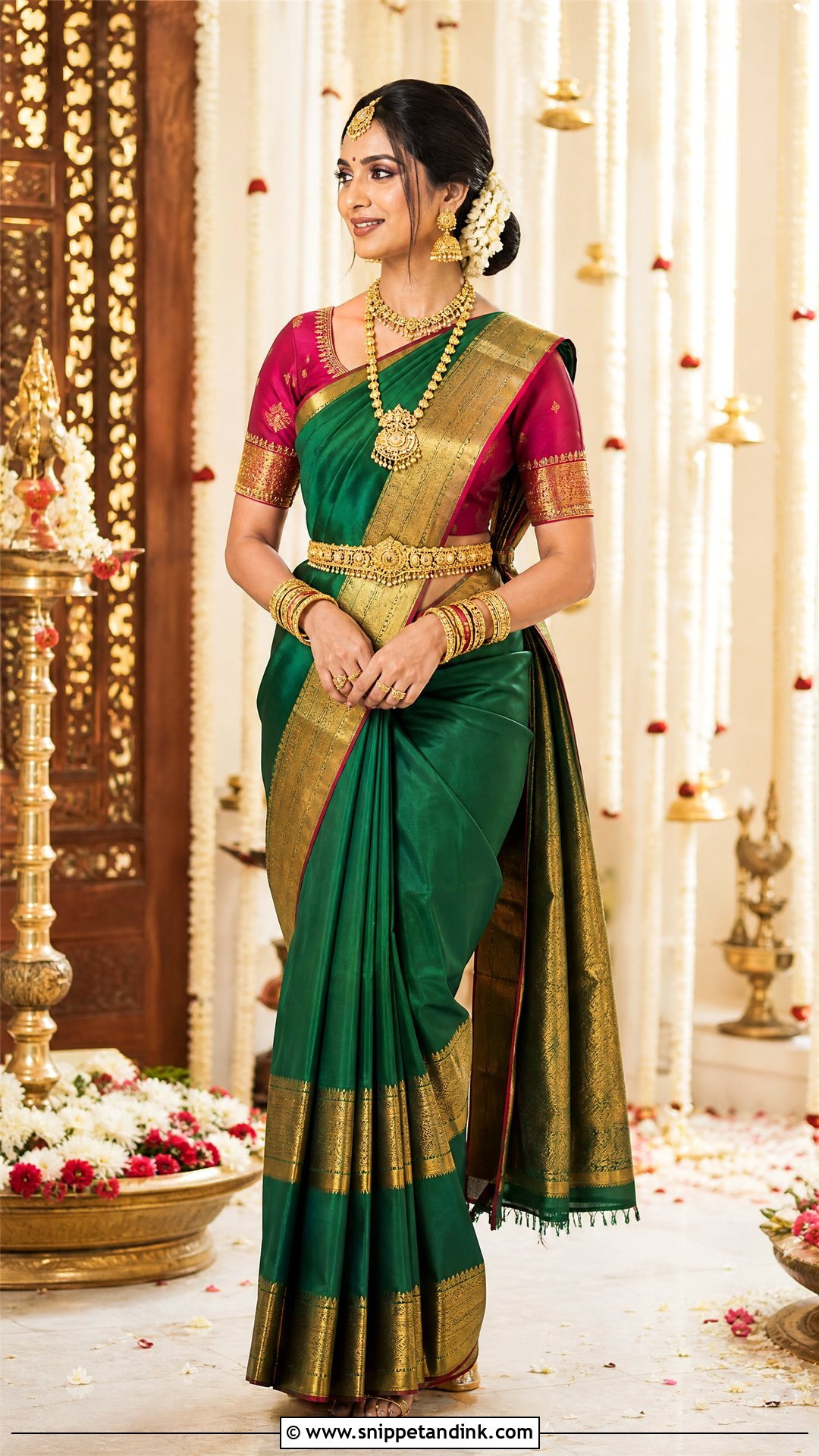
Kanjivaram silk is thick, so it drapes with structure rather than flow. Green, crimson, purple, mustard or blue with a contrasting zari border are the traditional colors, and a fitted silk blouse with elbow sleeves balances that substantial texture. A gold waist belt, the oddiyanam, holds the drape and marks the waist. Temple-inspired jewelry, jhumkas, bangles, anklets and comfortable gold sandals complete it, with a low braid or bun wrapped in white flowers. Pleating this silk takes patience. I fold the pleats and hold them with a clip for a few minutes before tucking, so they set properly. It’s right for formal ceremonies and family photographs, where a woven saree feels more fitting than a layered lehenga.
5. Pastel Floral Lehenga Indian Wedding Dress
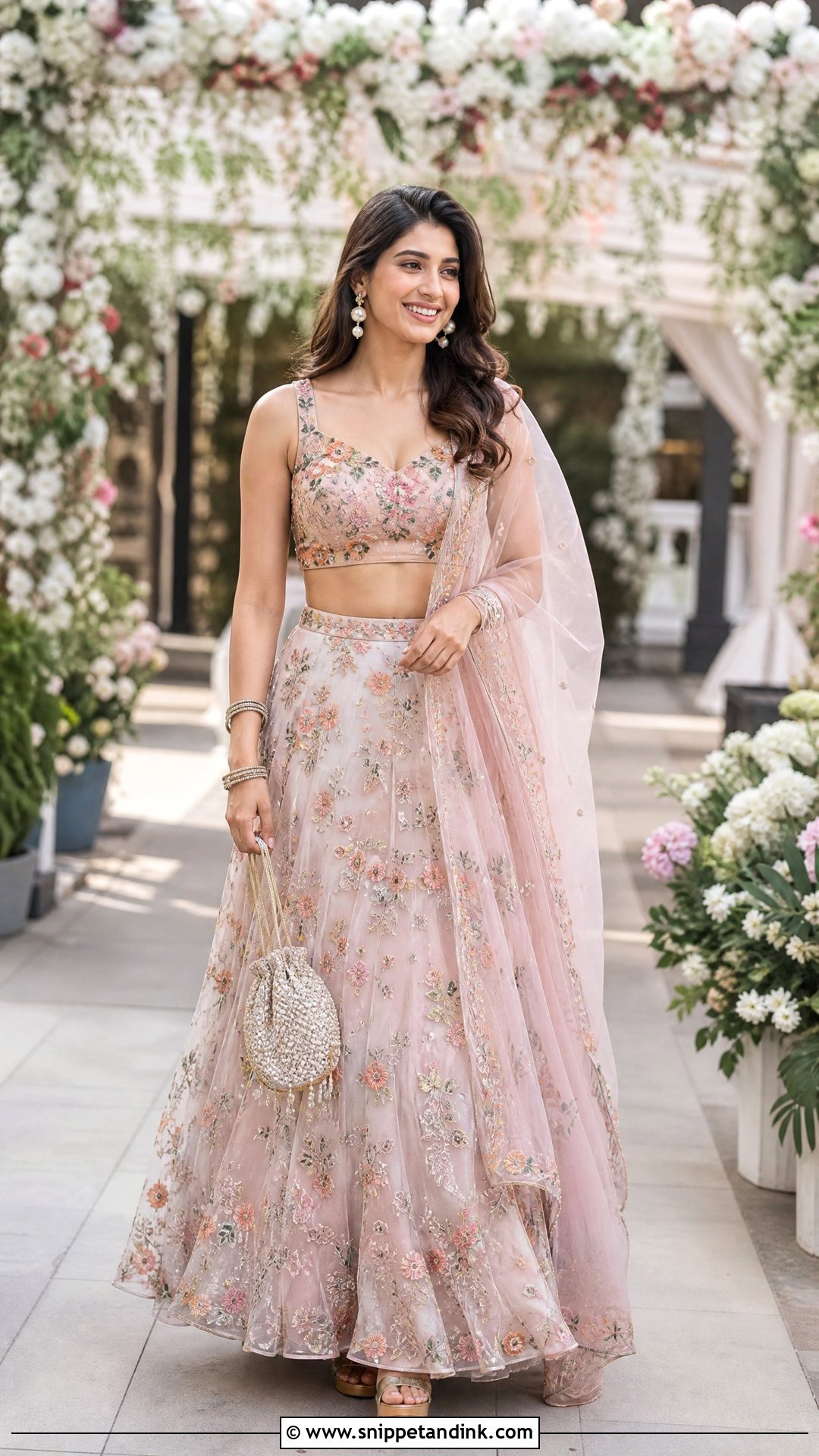
Picture a sunny garden function: a pastel floral lehenga belongs there and stays easy to wear. Lightweight organza or georgette in blush, mint, lavender, peach or powder blue keeps it airy. Pair it with an embroidered blouse and a sheer dupatta pinned lightly over one shoulder. Pearl earrings, delicate bangles, a small embellished bag and neutral block heels keep it fresh. Floral hair accessories suit a mehndi, but I’d switch to gemstones for the main wedding, where fresh flowers can look too casual. If you’re petite, ask for controlled volume; a fitted blouse and defined waistband give shape against the soft print. Organza wrinkles on a car journey, so steam it at the venue if you can.
6. Velvet Bridal Lehenga Indian Wedding Dress
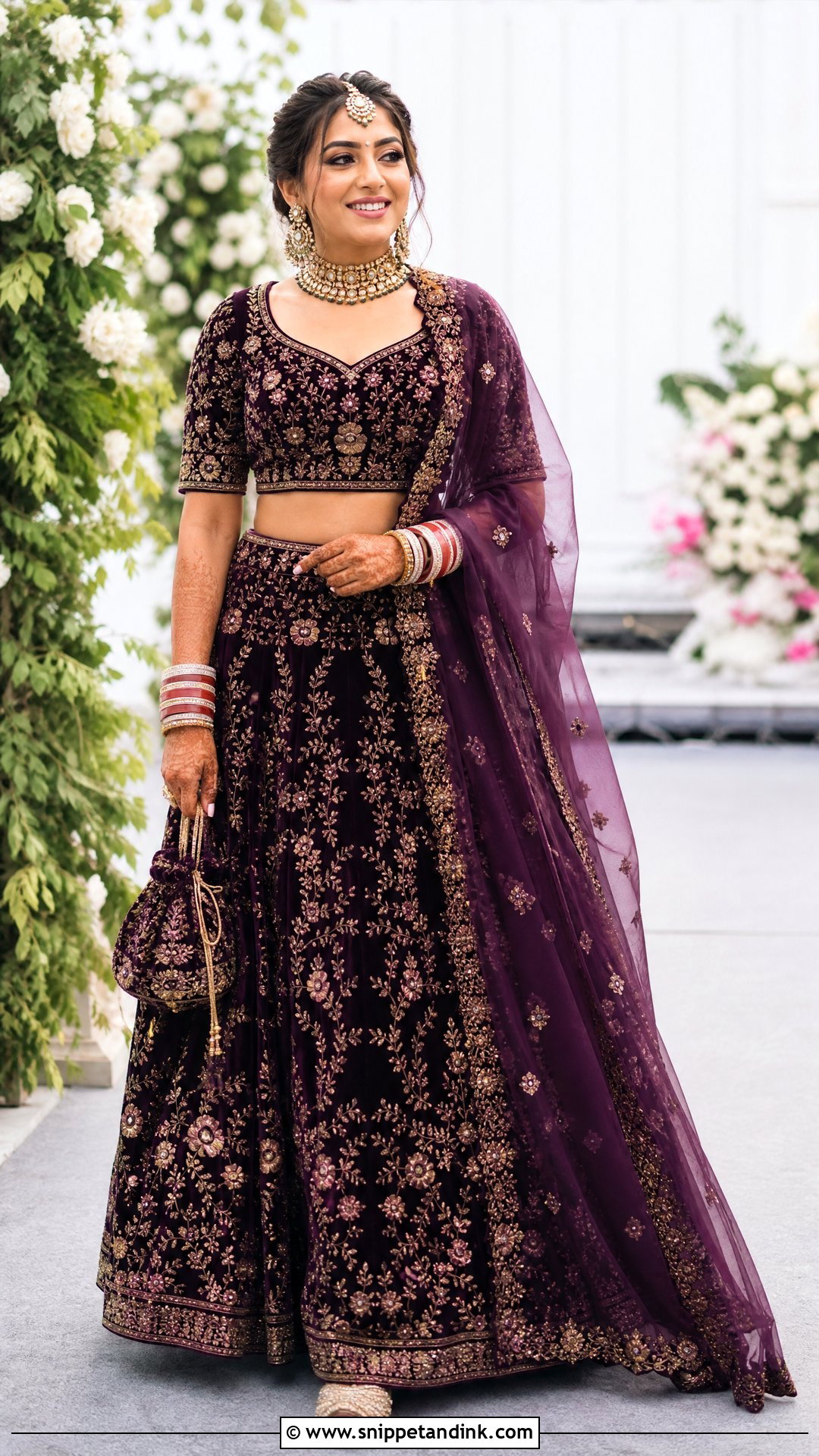
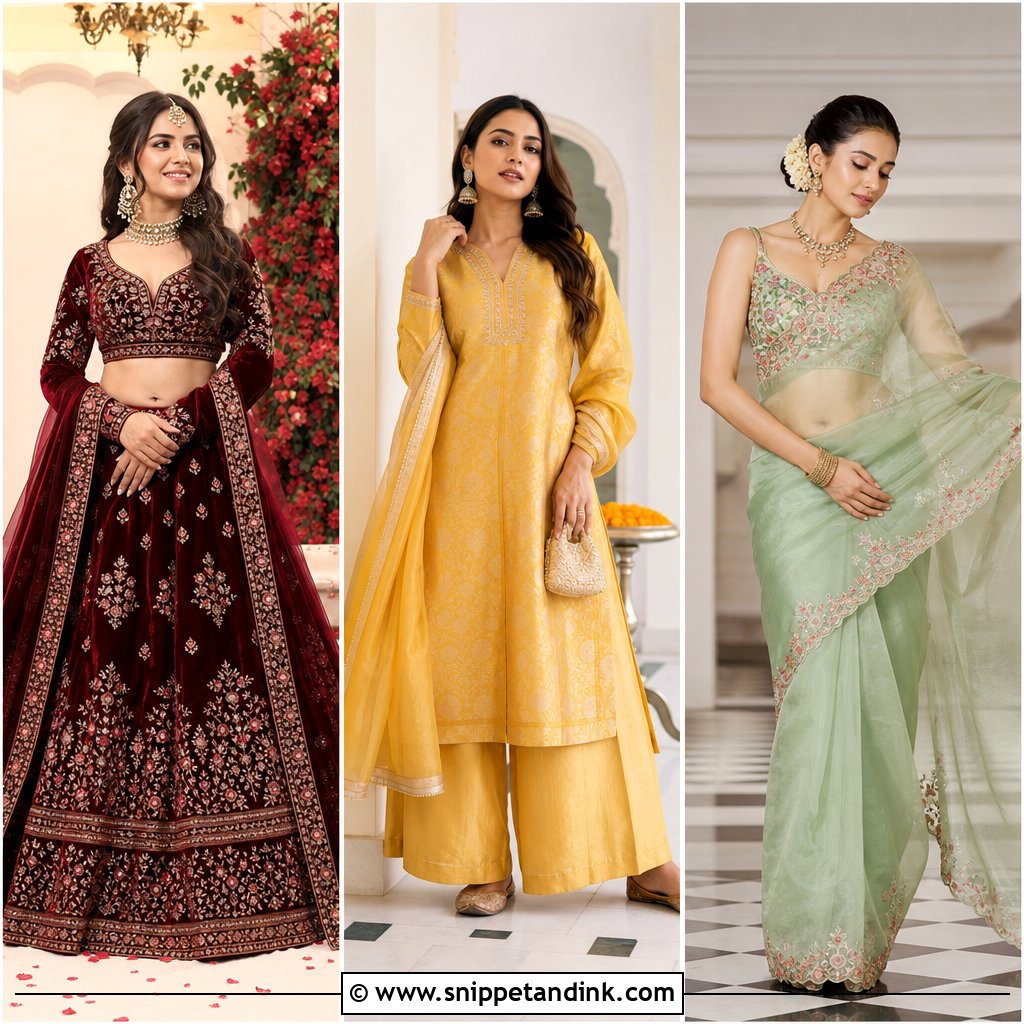
Velvet lets metallic embroidery stand out more than almost any other base, which is why deep maroon, bottle green, navy or plum velvet looks so rich in winter. Pair the skirt with a structured velvet or silk blouse and a net dupatta so the total weight stays reasonable. Antique gold, a statement choker, large earrings and a coordinated potli add formal drama. Wear platform juttis or sturdy block heels; thin stilettos wobble under a heavily embroidered skirt. A sleek bun and defined eyes suit the material. Velvet adds visual volume, so vertical or hem-focused embroidery keeps it balanced. Ask for a breathable lining, because a heated indoor venue can make velvet uncomfortable within the hour.
7. Floor Length Anarkali Indian Wedding Dress
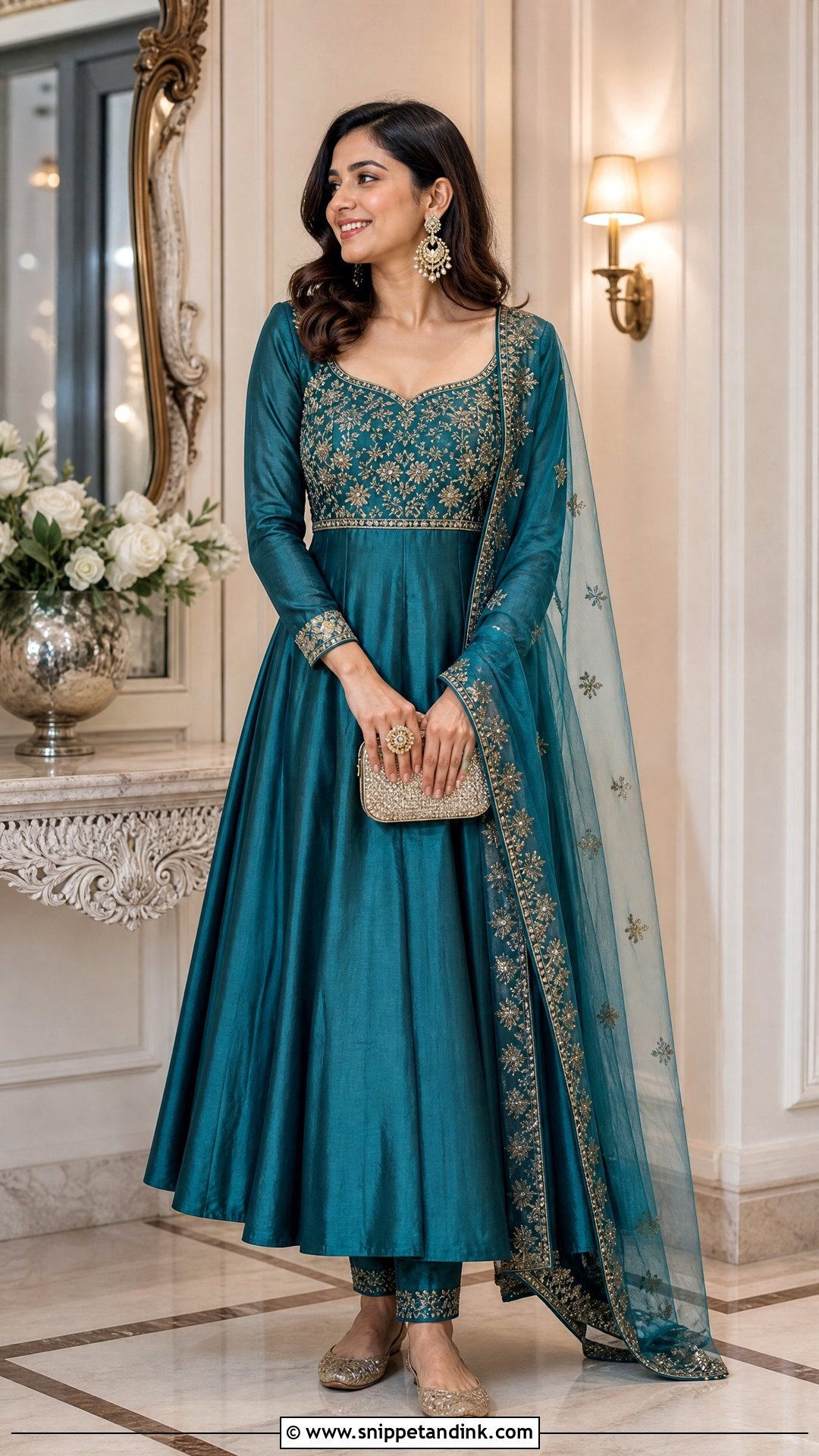
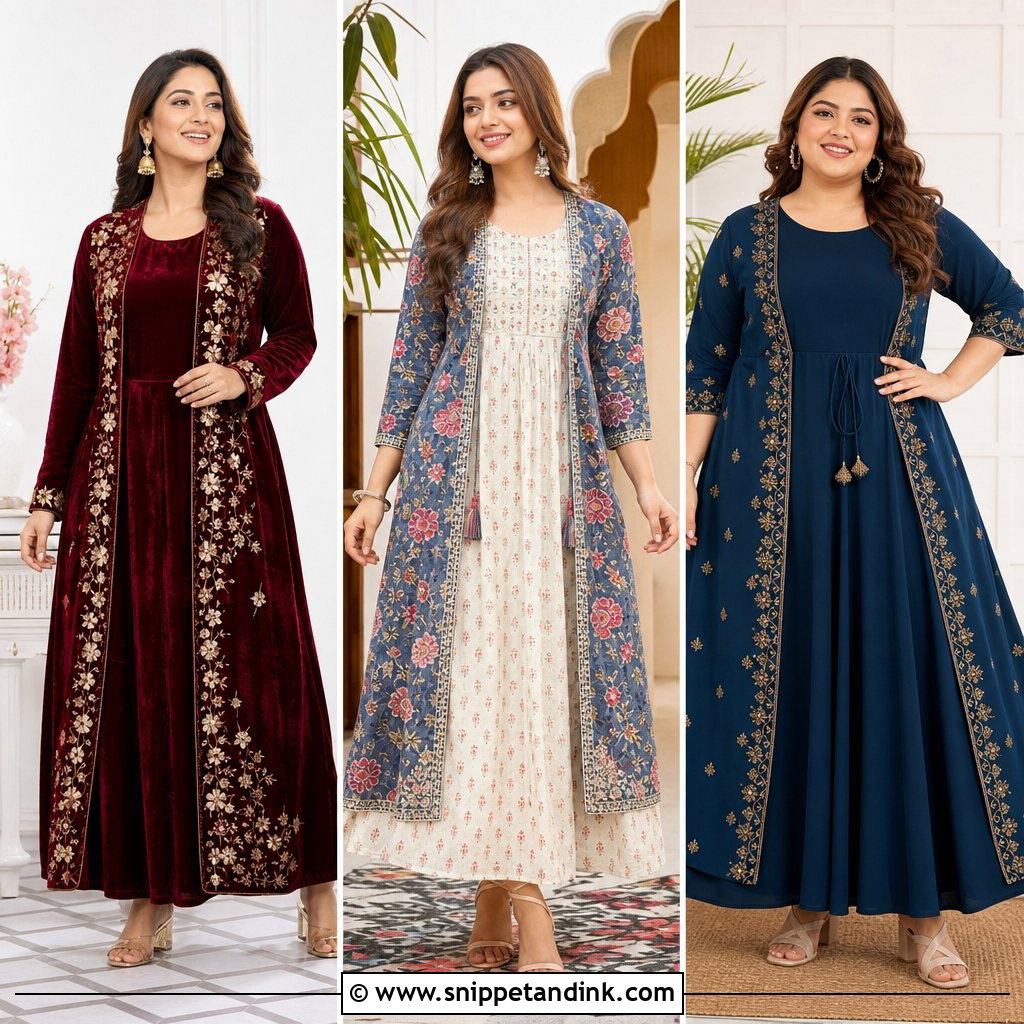
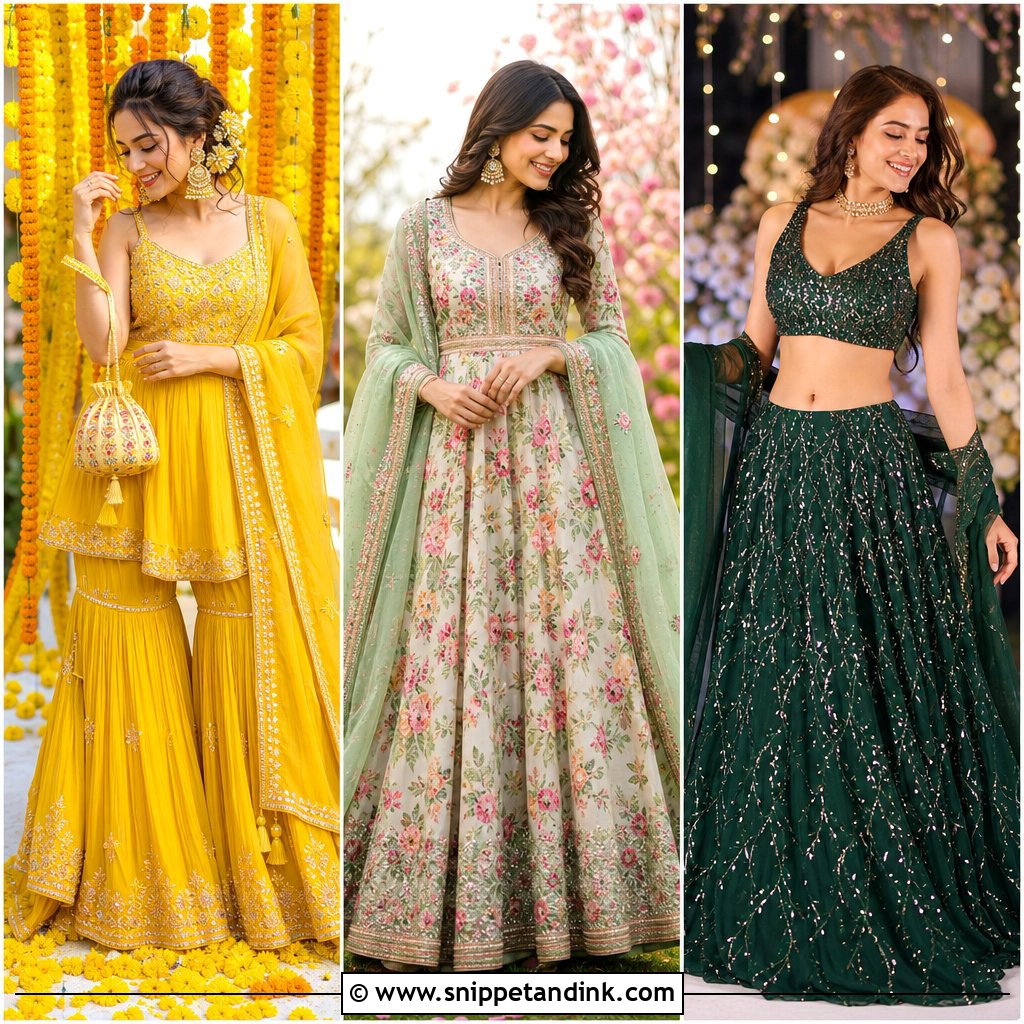
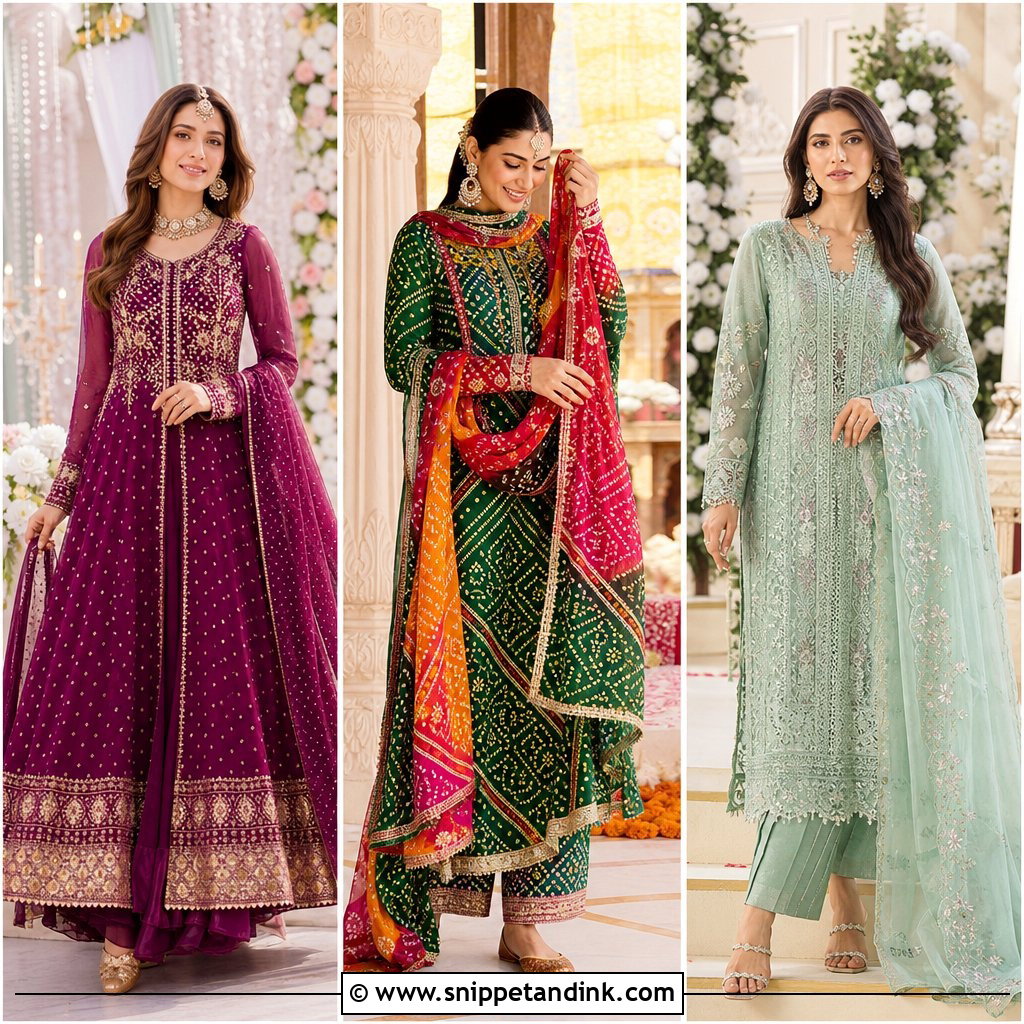
A floor-length Anarkali gives you the movement of a skirt without a separate piece to manage. Silk, georgette or chiffon with a fitted bodice and flowing panels lengthens most figures. Choose narrow churidar or straight trousers depending on how sheer the dress is; under translucent georgette, straight trousers in a matching shade look cleaner through the fabric. Drape a light dupatta over one shoulder so the front embroidery shows. Chandelier earrings, a single statement ring and a compact clutch are enough, with pointed juttis or low heels under the hem. A half-up style or smooth low bun keeps it clean. For a guest who wants coverage and comfort in one coordinated piece, this is where I’d start.
8. Sharara Set Indian Wedding Dress
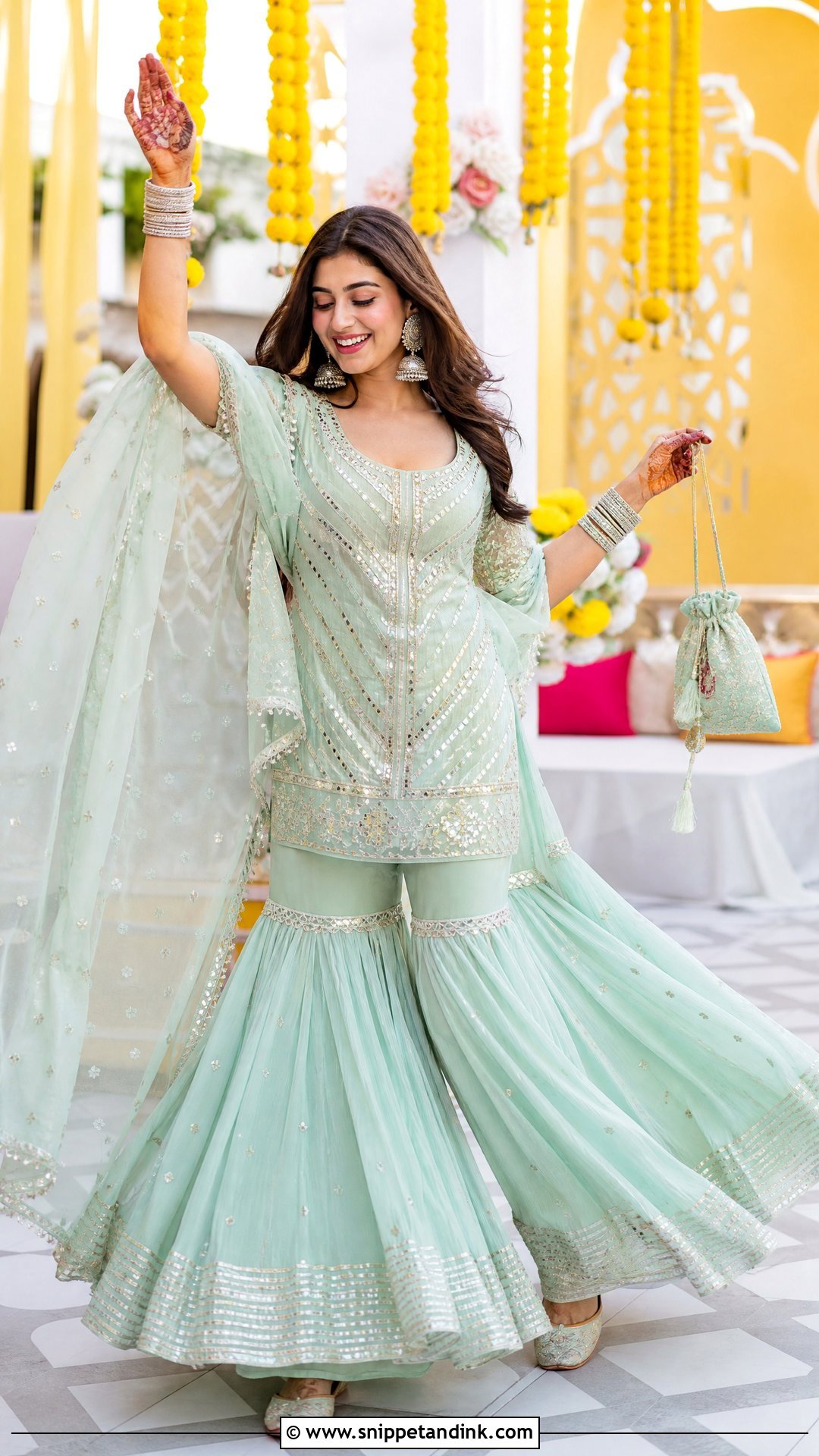
A sharara set suits the louder functions: a sangeet, a mehndi or a lively reception. Start with a short embroidered kurta ending near the upper thigh, then add flared sharara pants and a light dupatta. The short top keeps the proportions right and leaves the fullness of the pants on show. Match the embroidery to the event, gota patti and mirror for daytime, controlled sequins for night. Jhumkas, stacked bangles, a potli and cushioned juttis let you dance for hours, with a side braid, ponytail or loose waves. For more coverage, a slightly longer kurta with a defined waist works. Sharara pants use a lot of fabric, so check that the waistband lies flat instead of bunching with gathers.
9. Gharara Set Indian Wedding Dress
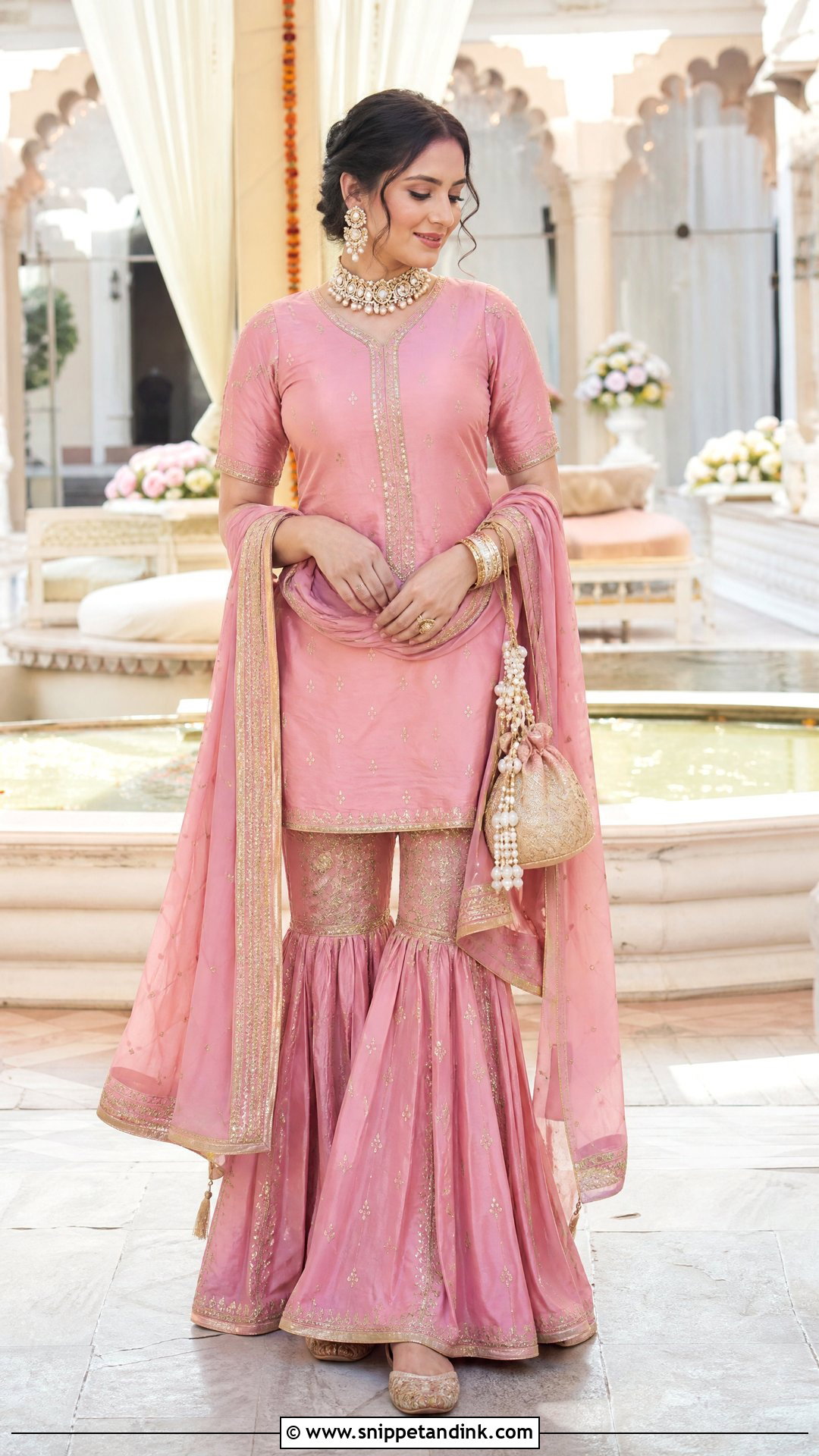
The gharara’s identity sits at the knee, where a fitted upper leg breaks into a full flare. Pair an embroidered gharara with a short or mid-length kurta so that joint stays visible, then add a contrasting dupatta edged with gota or zari, over one shoulder or loosely around the arms. Pearl-and-gold earrings, a delicate necklace, bangles and a structured potli finish it. Cushioned flat juttis are the right shoe, since heels make the wide hem harder to walk in. Rich shades suit evening; soft green, yellow, peach and pink suit day. Fit the upper leg smoothly but with room to sit, and end the kurta away from your widest point.
10. Saree Gown Indian Wedding Dress
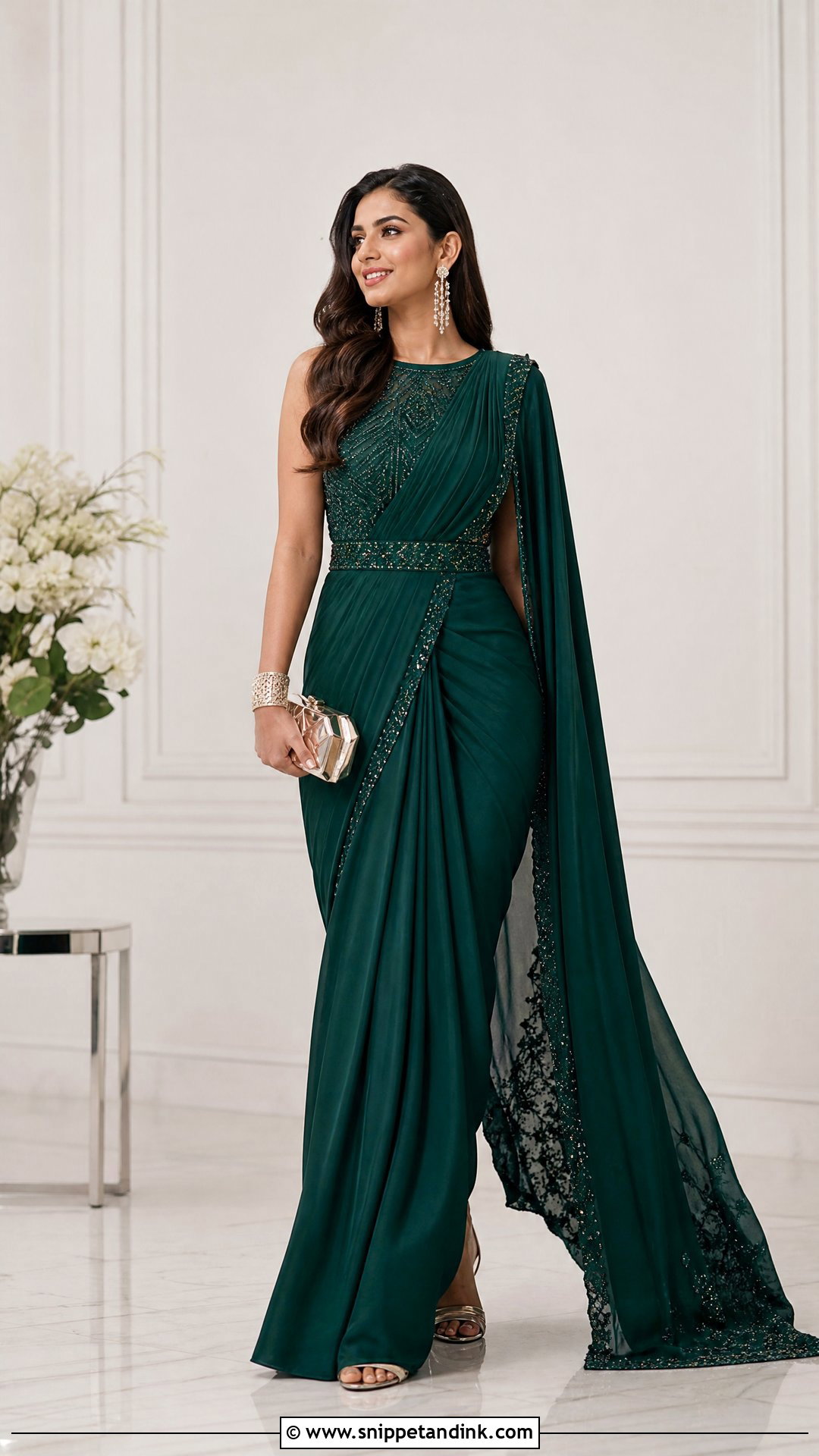
If keeping saree pleats in place worries you, a saree gown builds the drape into a fitted one-piece. Choose a defined waist, a fluid skirt and an attached pallu that falls naturally over the shoulder. Sequins, beads or tonal embroidery make it formal enough for a reception without layers of heavy jewelry. Long earrings, a cuff, a sleek clutch and metallic heels suit it, with smooth waves or a low ponytail. Shapewear is optional; I only suggest it if it improves the line without restricting your breathing at dinner. The hem should barely skim the floor in your chosen shoes, so it never drags.
11. Jacket Lehenga Indian Wedding Dress
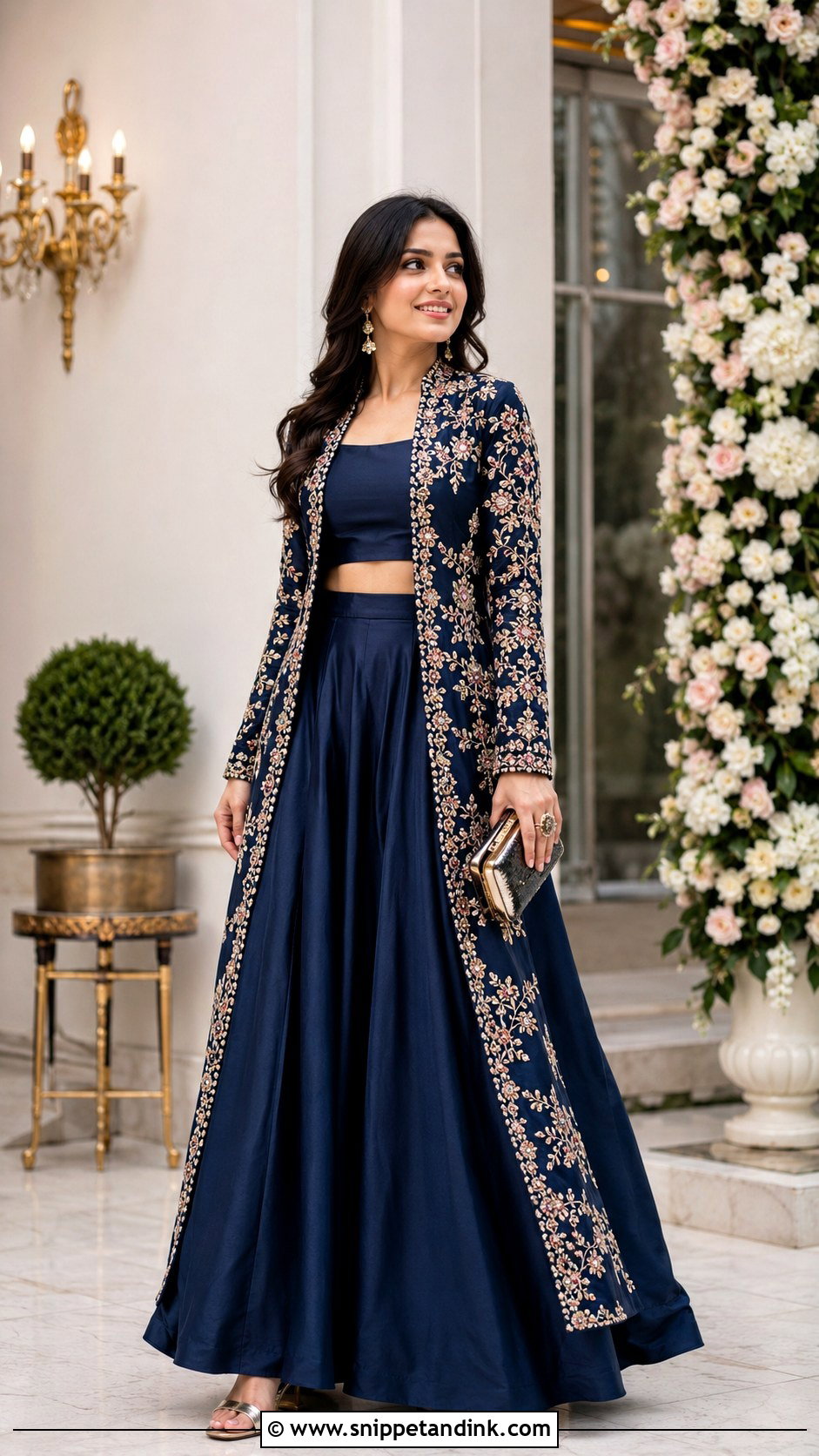
A long embroidered jacket over a flared or A-line lehenga adds coverage and height at the same time. The jacket can stay open to show the waist or close at the bust for a more modest finish. It takes over most of what a dupatta would do, so keep any extra draping minimal. Drop earrings, a statement ring, an embroidered clutch and low metallic heels complete it, with a smooth bun or side-parted waves. An open jacket with unbroken vertical embroidery lengthens the figure. Hem placement is where I spend the fitting: the jacket should end above or below the widest part of the skirt, never right across it.
12. Cape Lehenga Indian Wedding Dress
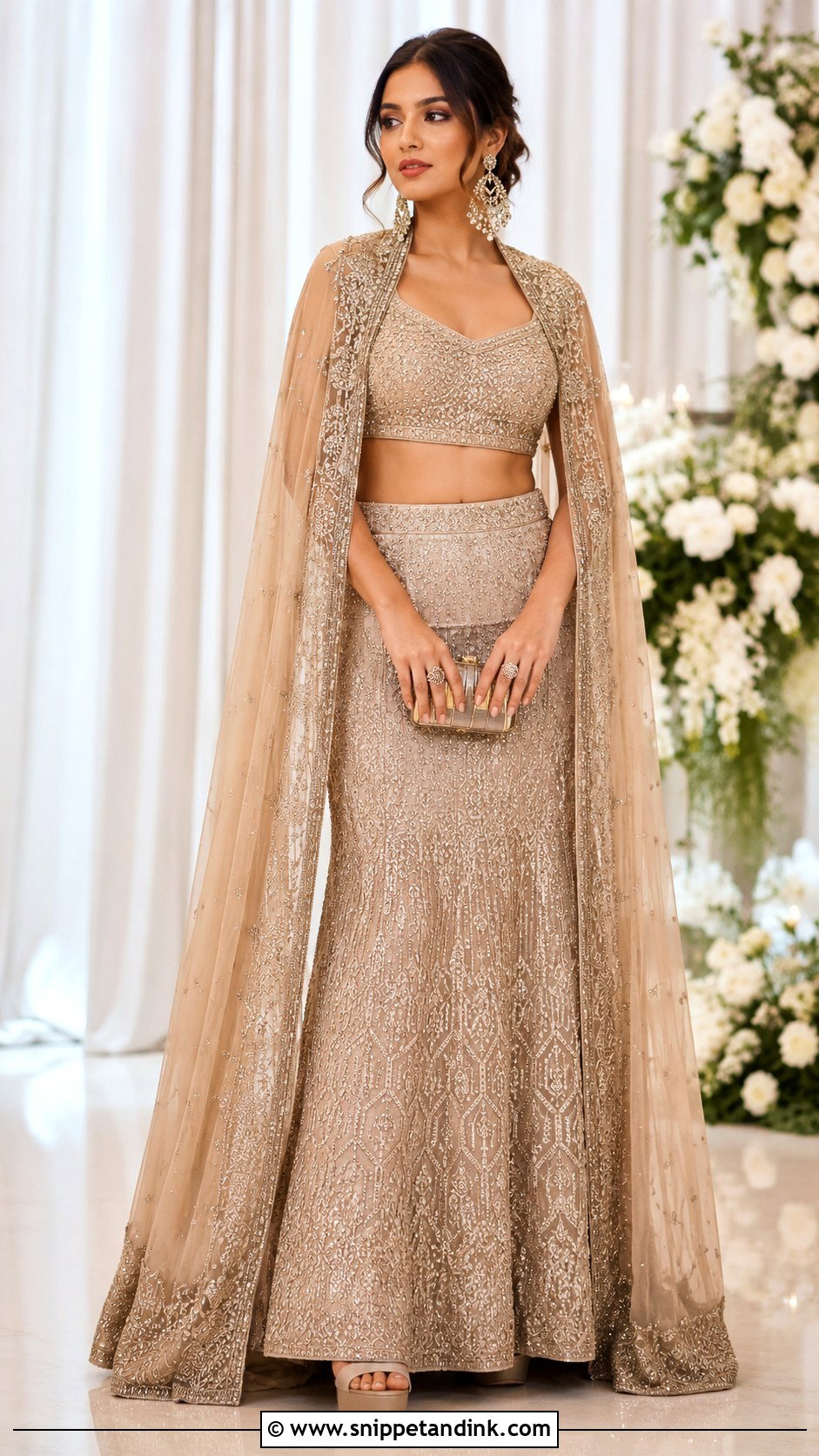
A cape can turn a lehenga into a modern engagement or reception outfit. Pair a streamlined skirt and fitted blouse with a sheer embroidered cape, waist length to show off the skirt or longer for drama and coverage. The cape is the third piece, so a dupatta is usually unnecessary. Wear a collar necklace only with a simple neckline; otherwise choose bold earrings and skip it. A box clutch, stacked rings and stable platforms complete it, with hair tucked back so the shoulder work shows. Lightweight net or organza moves without dragging. A heavy cape pulls the blouse neckline backwards when you dance, so I weigh the cape in my hand at the fitting before approving it.
13. Chanderi Silk Suit Indian Wedding Dress
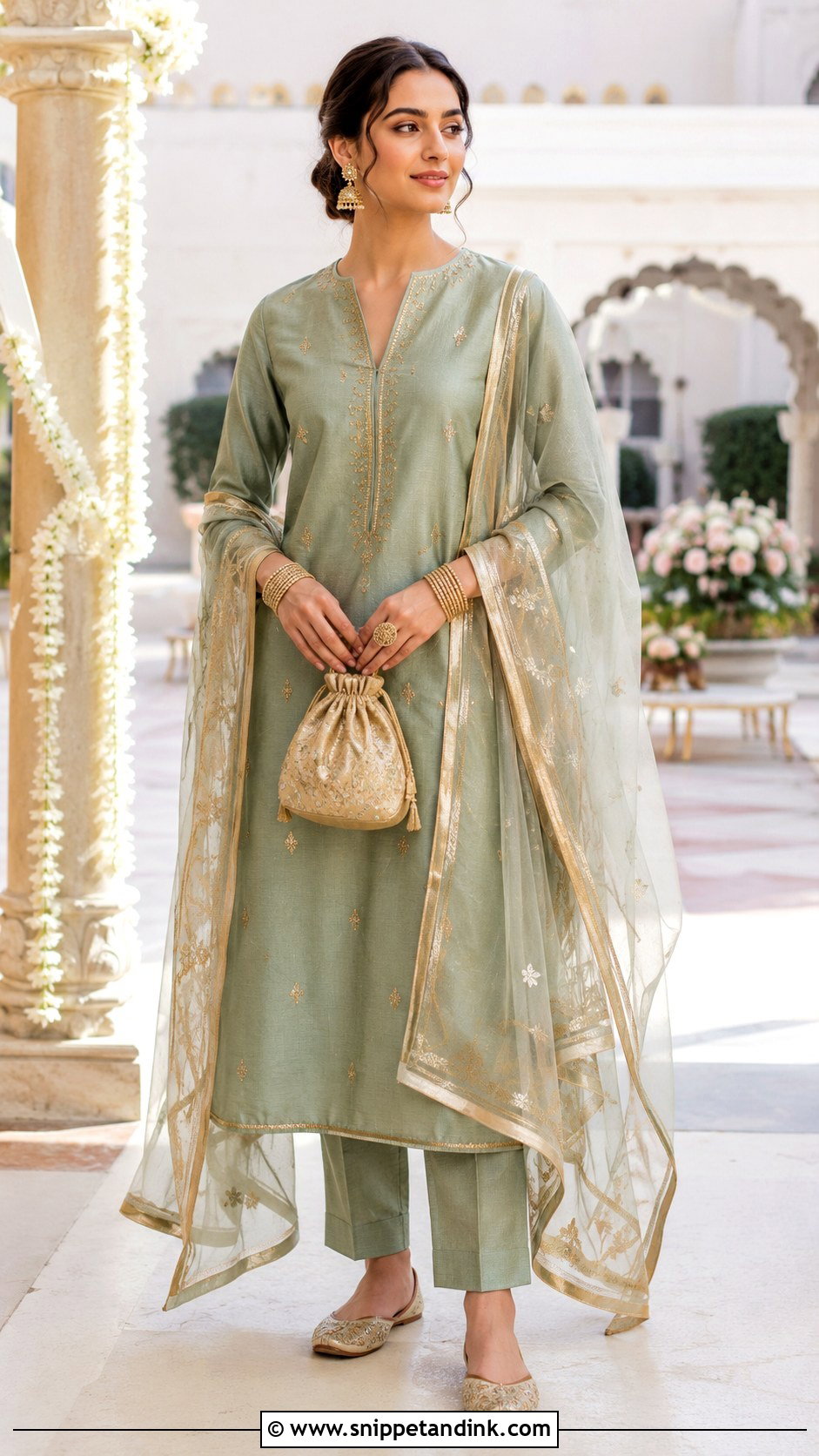
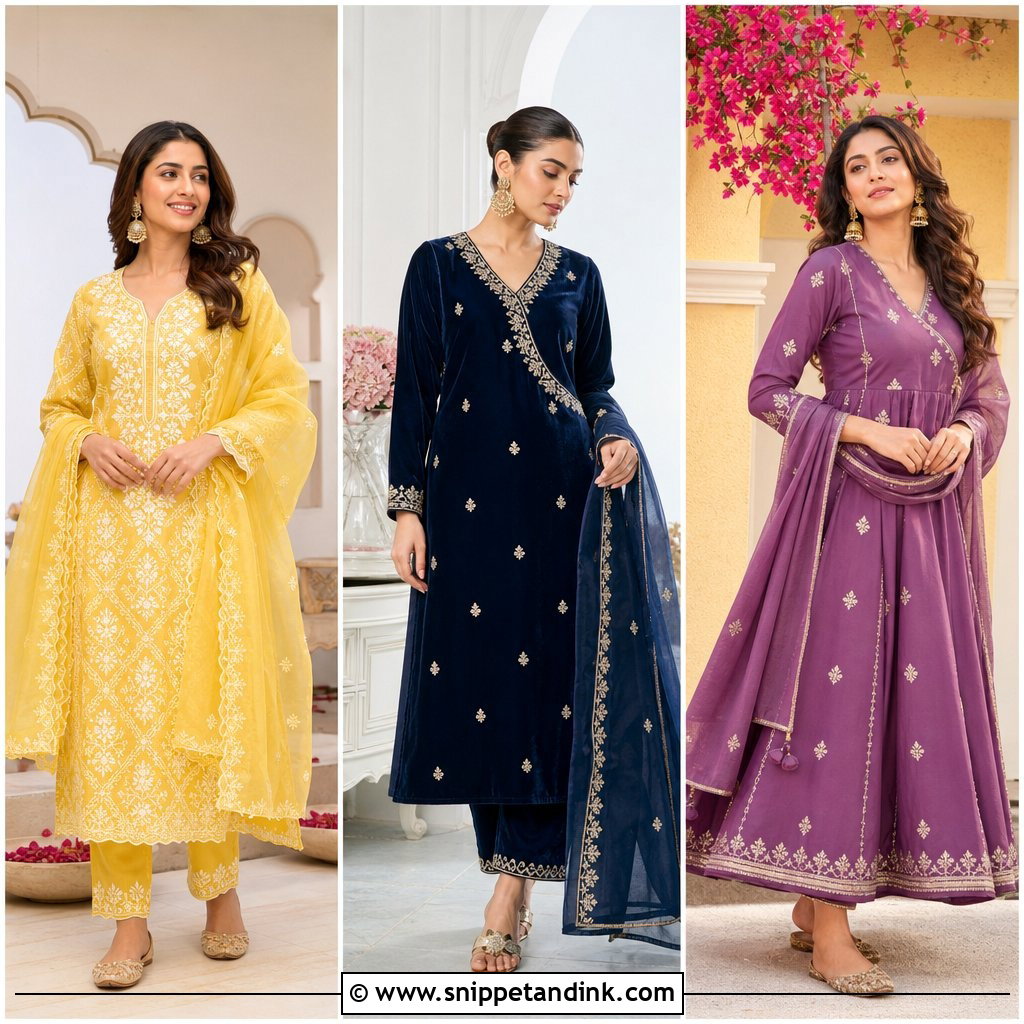
Chanderi is woven in Madhya Pradesh from silk and cotton, and its sheer, gentle sheen suits a daytime wedding that calls for understated polish. Choose a straight or gently flared kurta with cigarette pants and a sheer dupatta. Soft gold, coral, teal, dusty pink and sage carry woven motifs or light embroidery well. Medium earrings, slim bangles, a small potli and embroidered juttis complete it, with a blowout, low bun or simple braid. The kurta should sit smoothly at the shoulders and bust and fall without pulling at the hips. A vertical neckline and straight trousers lengthen the body, and side slits help you move. Steam it gently; a hot iron can leave a shine on such fine fabric.
14. Palazzo Suit Indian Wedding Dress
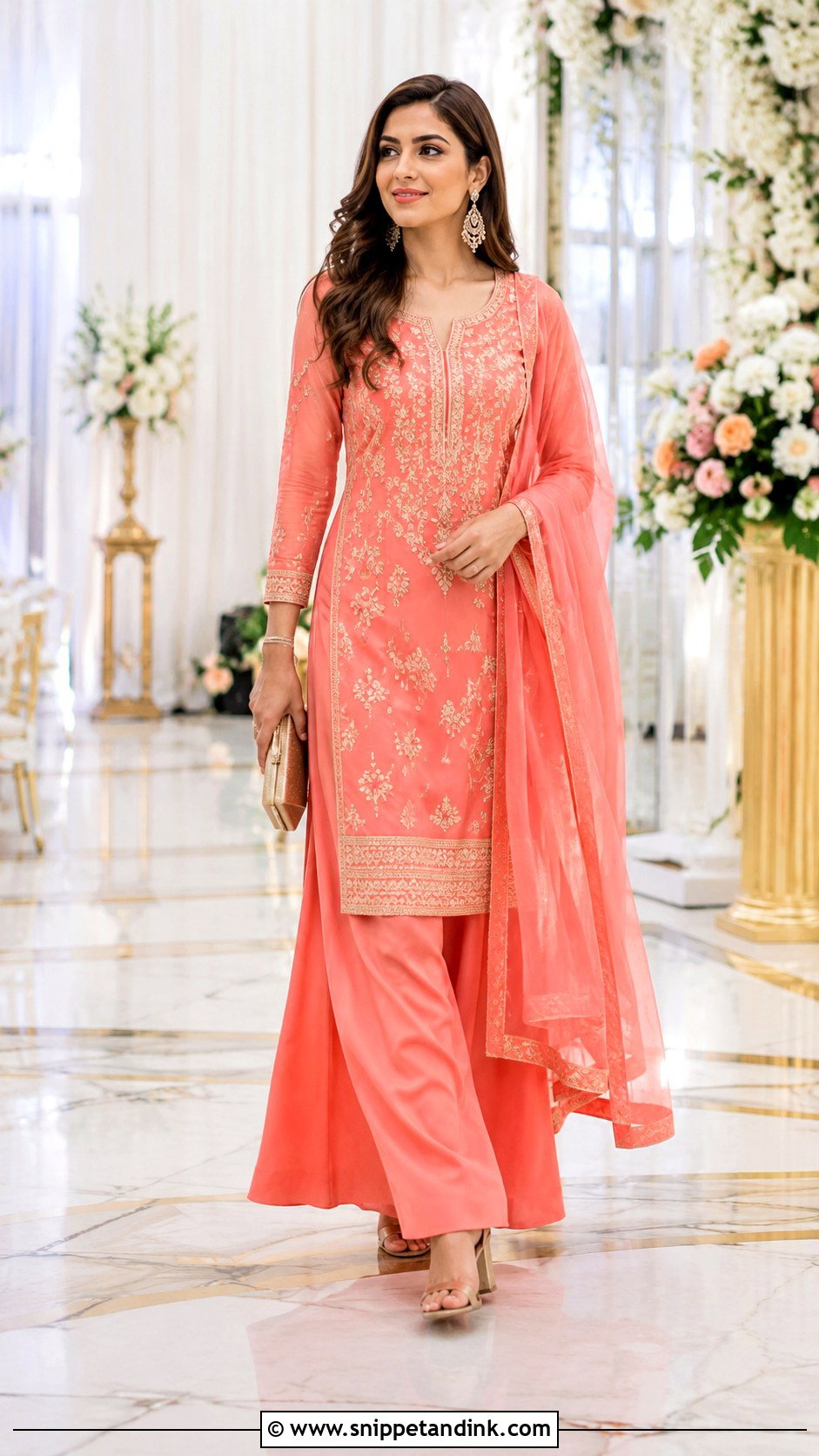
Long stretches of sitting and socializing are where palazzos win. Pair wide-leg palazzo pants with a fitted knee-length kurta or a shorter peplum top. The top must define the upper body, or the wide trousers swallow you. A chiffon, organza or tissue dupatta adds the festive third layer. Statement earrings, slim bangles, a clutch and block heels finish it, and a sleek ponytail or loose curls both work depending on the neckline. Monochrome sets lengthen; contrasting separates add energy. Recheck the hem once you’ve chosen shoes, because fabric pooling at the feet looks untidy and sweeps up dust from the venue floor.
15. Dhoti Pant Kurta Indian Wedding Dress
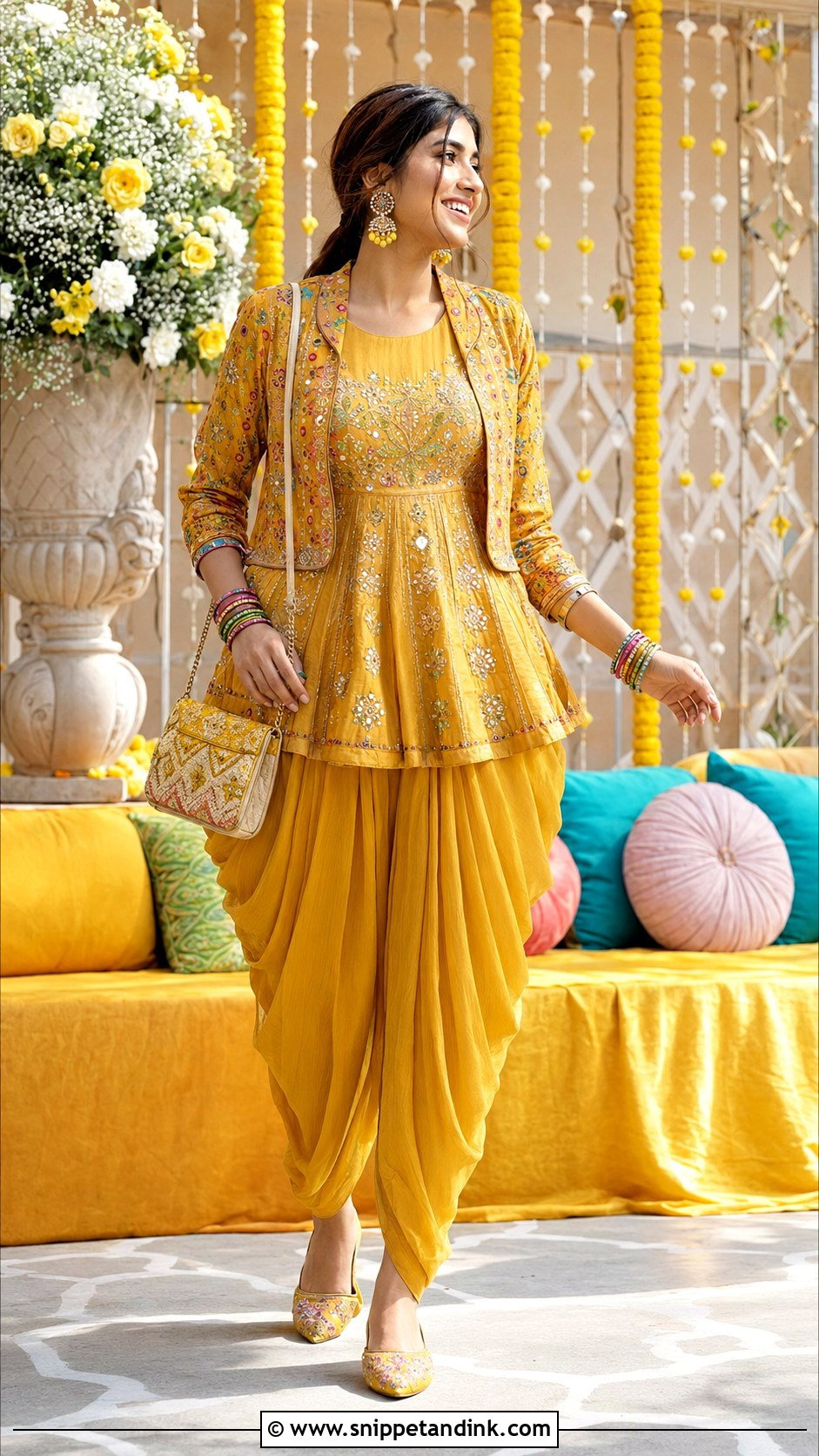
A dhoti pant and kurta combination works well at a mehndi, welcome event or relaxed function. Softly draped dhoti pants go with a fitted short kurta, an asymmetric tunic or an embroidered peplum, and the defined top balances the folded lower half. Add a light dupatta only if it improves the look; an embellished jacket gives coverage without loose fabric. Sculptural earrings, stacked bangles, a small sling bag and pointed juttis suit it, with a high ponytail or polished braid. Tailoring at the waist and crotch matters most. I have clients sit cross-legged at the fitting, because dhoti pants cut too close there strain at the seam the first time you sit on the floor.
16. Bandhani Lehenga Indian Wedding Dress
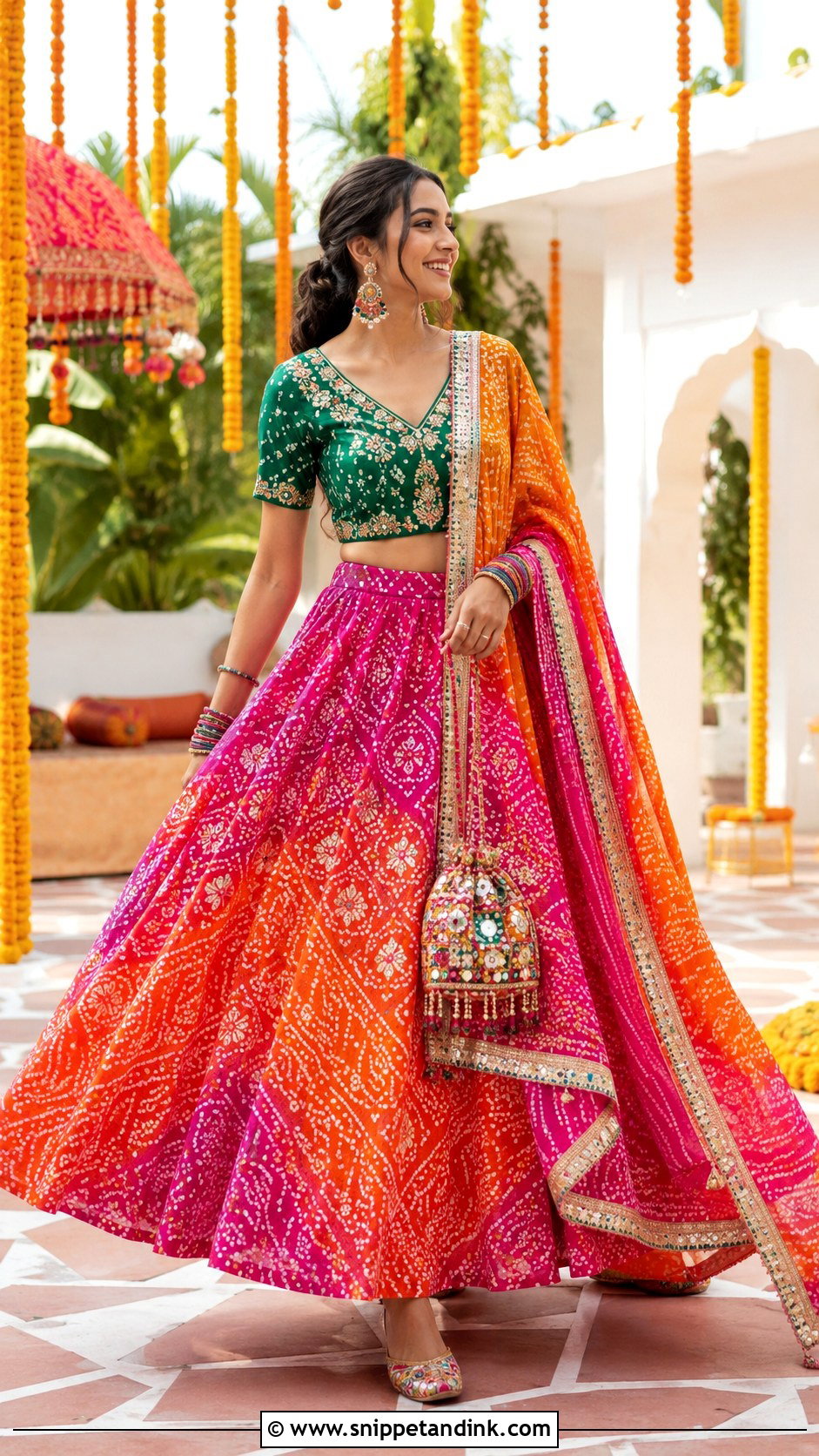
Bandhani’s dots come from cloth tied in tiny knots before dyeing, and a lehenga in red, pink, orange, green or yellow carries that joyful pattern well. Pair it with a solid embroidered blouse so the print has room. A contrasting dupatta can add a color, but repeat one shade from the skirt to hold it together. Traditional earrings, colorful bangles, a mirror-work potli and embroidered juttis complete it, with a braid, bun or soft waves and a few flowers. With an all-over pattern, keep the blouse neckline clean and the jewelry light. Hand-tied Bandhani can bleed dye at first, so have it dry cleaned rather than washed. Bridesmaids can each wear a different Bandhani color with the same blouse shape.
17. Paithani Saree Indian Wedding Dress
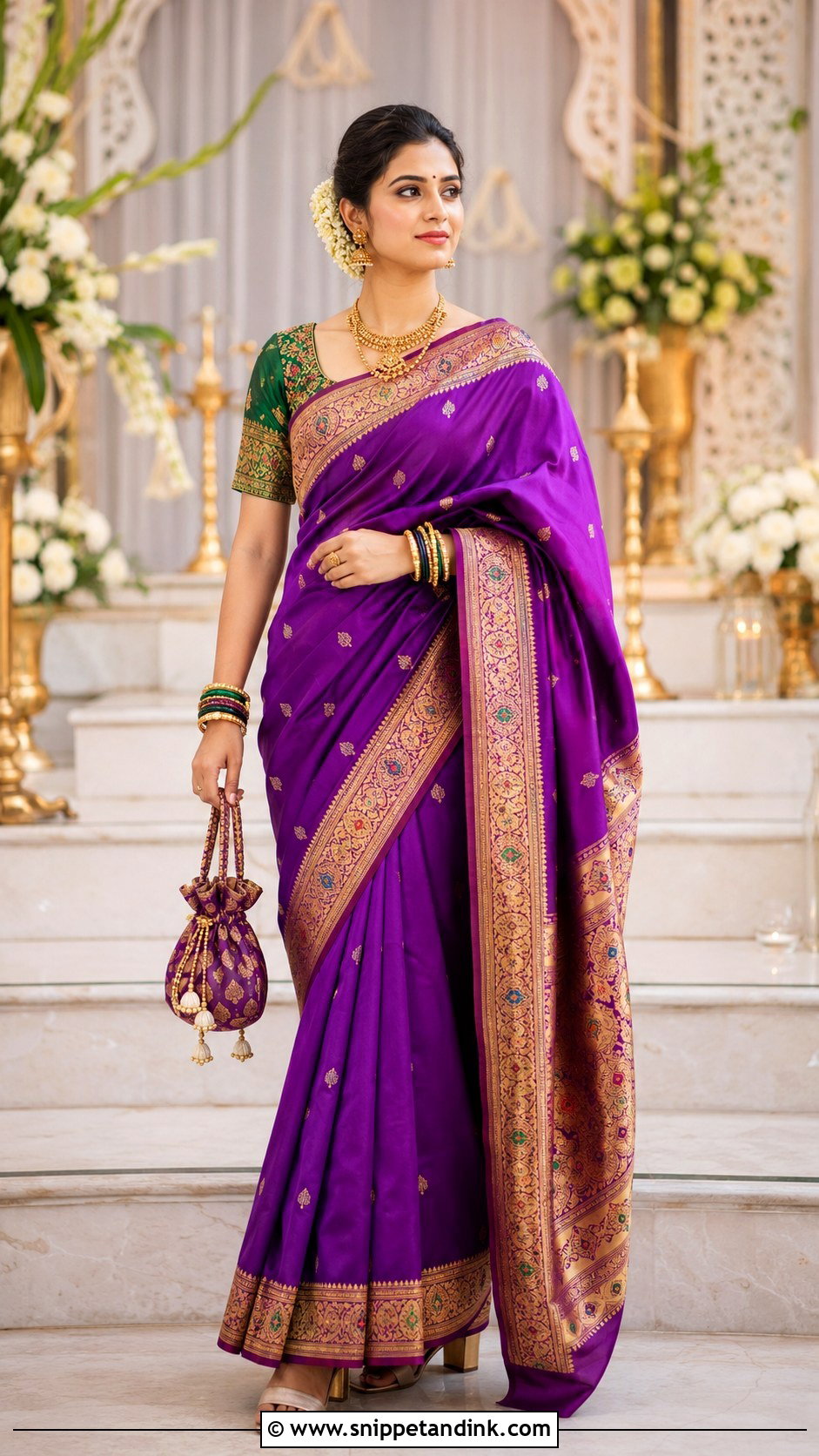
Paithani comes from Maharashtra and is known for the peacock and lotus motifs on its pallu. On a handwoven Paithani, the design looks almost the same on the reverse, which is one way to tell it from a powerloom copy. Choose rich purple, green, blue or magenta with a fitted contrasting blouse, and drape it cleanly so the border and pallu show. Traditional gold earrings, a short necklace, bangles and a small potli suit it. Choose your sandals or block heels before the length is pinned. A center-parted bun with flowers or a long braid finishes it. Don’t hide the pallu under a shawl or an oversized bag. If you’d like a lighter result, drop one necklace rather than every accessory.
18. Bengali Saree Indian Wedding Dress
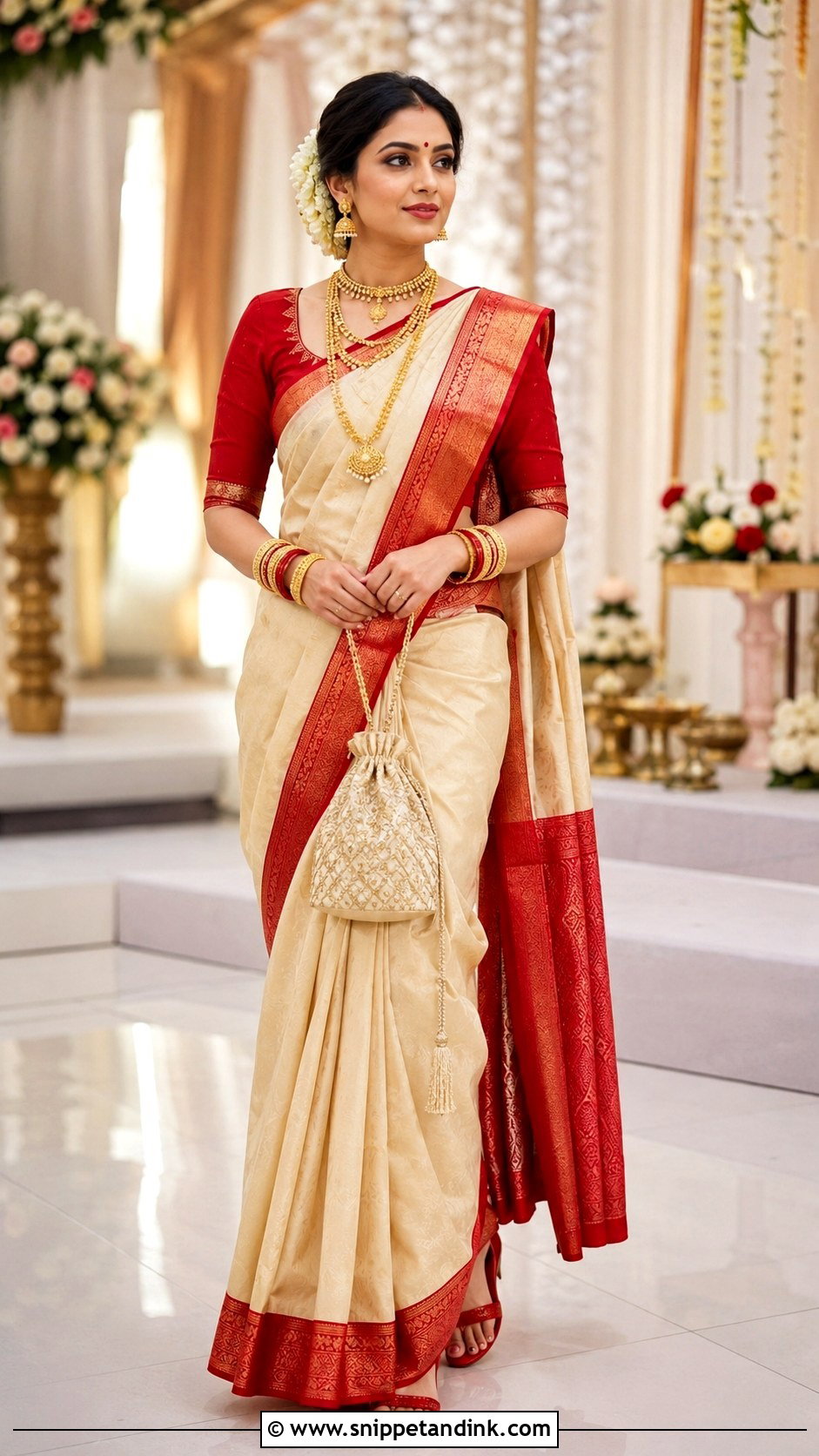
White or cream with a red border is the laal paar saree, closely tied to Bengali rituals and festivals. Pair it with a fitted red blouse with elbow sleeves, light embroidery or a woven texture. You can wear the traditional Bengali drape, where the pallu end often carries a ceremonial bunch of keys, or the familiar pleated style if that’s what you’re used to. Gold earrings, layered necklaces, red-and-gold bangles and a small potli suit it, with red sandals or gold block heels. A center-parted bun, flowers and a red lip finish it. Pleat with care, because that strong contrast border shows every uneven fold. Guests keep jewelry moderate, while brides may add a head covering and more ceremonial pieces.
19. Kerala Kasavu Saree Indian Wedding Dress
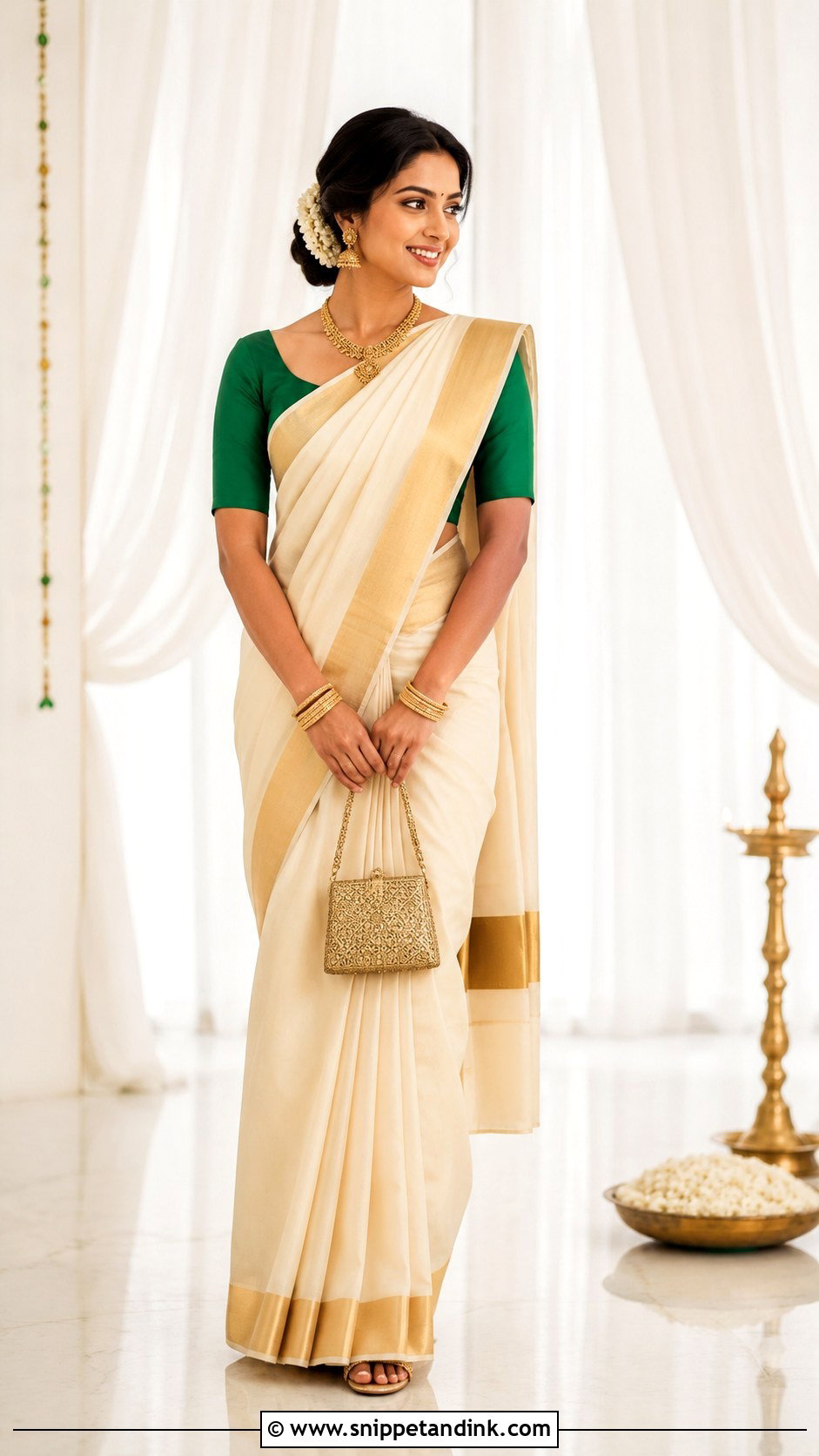
Kasavu is Kerala’s handloom cotton with a gold zari border, cream and gold with nothing else, so tailoring and draping have nowhere to hide. Pair it with a green, red, maroon or gold blouse for color. Elbow sleeves make it formal; sleeveless feels contemporary. Gold jhumkas, a traditional necklace, bangles and a compact cream or metallic bag complete it, and comfortable gold sandals keep the hem lifted. Style the hair in a low bun with white flowers or a long braid. A new Kasavu is crisp and drapes stiffly until it softens with wear, so I have it steamed and pleated well before the day. Smooth pleats, a correctly placed pallu and a fitted blouse make it look finished.
20. Embroidered Kurta Skirt Indian Wedding Dress
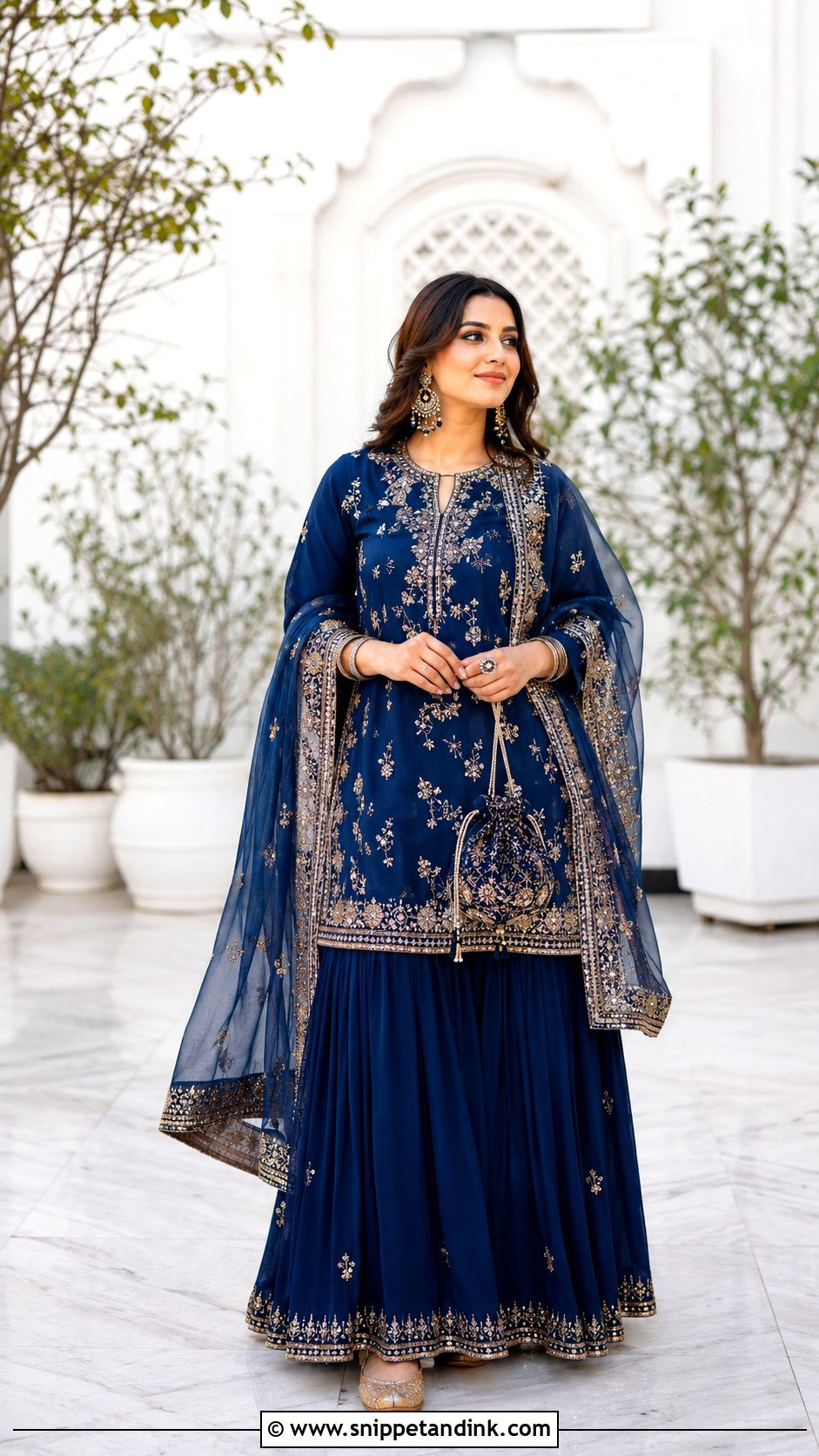
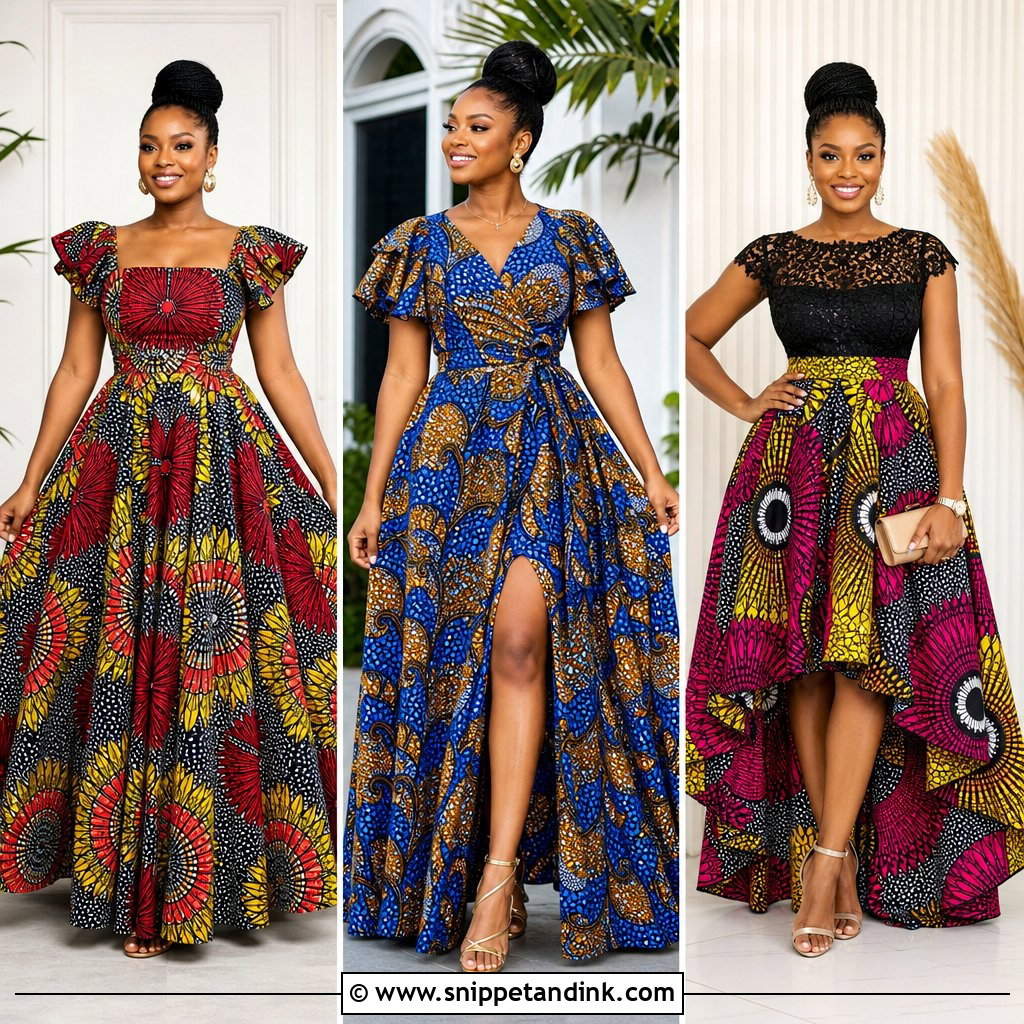
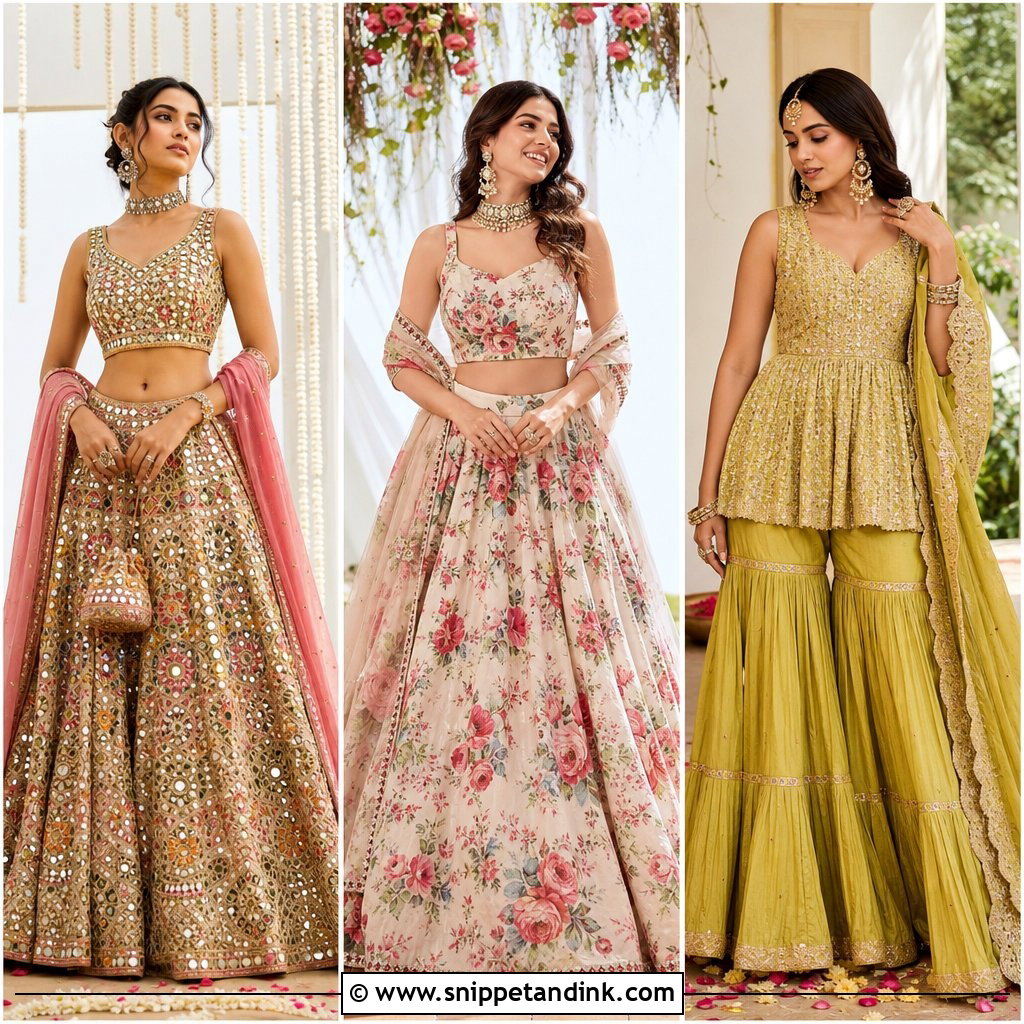
A kurta over a floor-length skirt gives a lehenga’s movement with more upper-body coverage. The kurta can be straight, flared or high-low and end at the hip, knee or calf, as long as enough skirt shows below it. Add a sheer dupatta over one shoulder for formality. Earrings, slim bangles, a potli and platform juttis or block heels finish it, and half-up hair suits it, polished without stiffness. Monochrome lengthens; contrast is more festive. I find a high-low kurta the most forgiving on fuller figures, because the shorter front shows the waist while the longer back covers the hips.
Dressing Bridesmaids in Indian Wear Without Matching Uniforms
Identical lehengas on six different bodies rarely flatter everyone. When I coordinate a bridesmaid group, I fix one or two elements and let the rest vary, so the group reads as planned without anyone feeling squeezed into the wrong shape.
- Pick a shared thread: one fabric family, one embroidery type or one blouse shape.
- Give each woman a color from the same palette, or use shades of one color from light to dark.
- Let each choose her silhouette. A lehenga, a sharara and an Anarkali in the same palette stand together well in photos.
- Order early and together if possible, so dye lots and finishes match.
- Hold one group fitting, ideally with everyone in shoes, to check hem lengths line up.
Ask the bride whether she wants her friends to stand out from family or blend in. In some families, the bride’s sisters and cousins wear matching colors at one function, and bridesmaids in a clashing shade can look out of place in the group photograph.
Comfort Outlasts Heavy Embroidery
The ceremony, the venue, the weather and how much you’ll move narrow the options faster than any trend. A red lehenga or woven silk saree brings ceremonial weight, while a sharara, Anarkali, palazzo suit or saree gown gives freedom for dancing. With any silhouette, check the tailoring, fabric weight, blouse support, hem length and shoes, and let accessories support the outfit rather than compete with it. Regional weaves are worth exploring as well. The best Indian wedding dress is rarely the heaviest one. It’s the complete, comfortable look that lets you forget about your clothes and enjoy the day.
You'll Like These Ideas:



Leave a Reply