
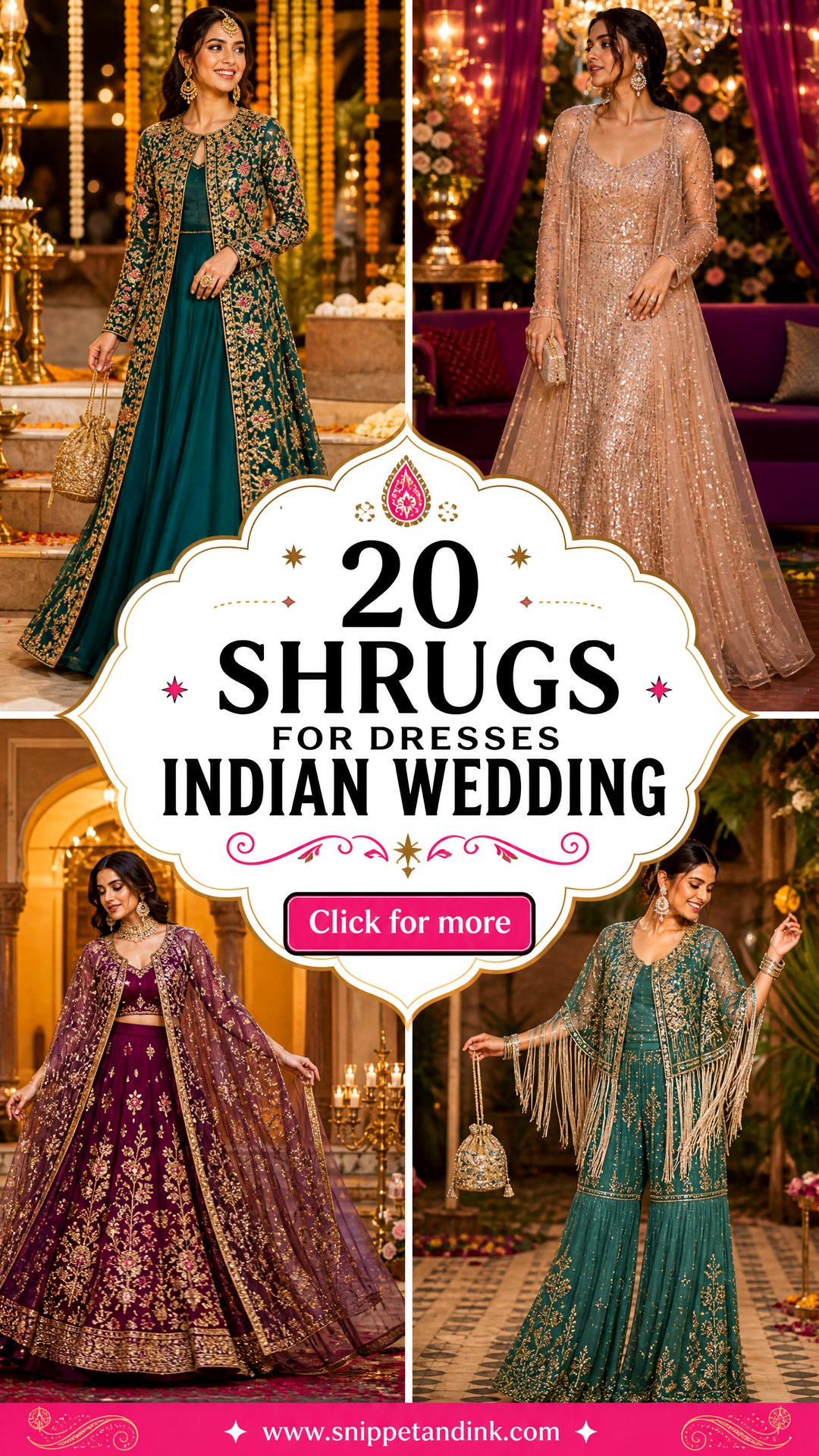
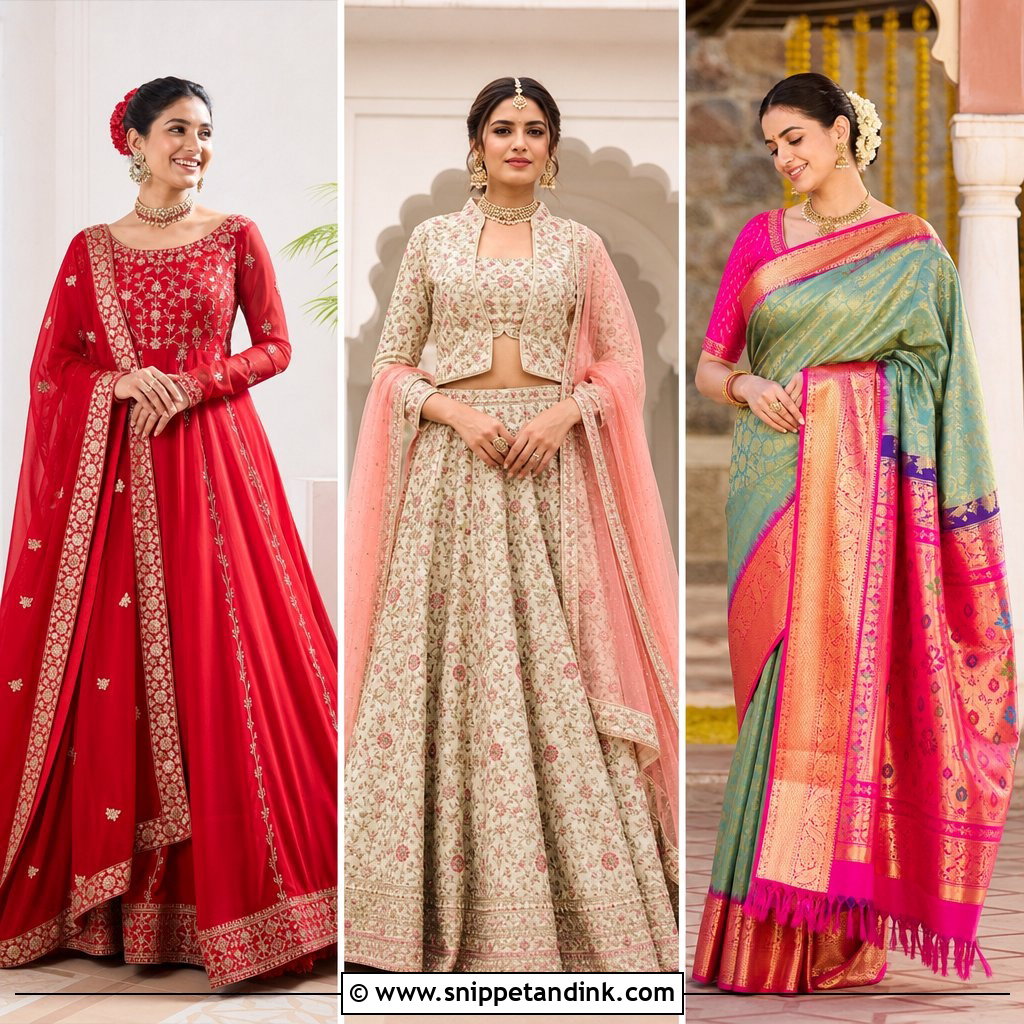
Ask any guest who has danced through a Sangeet holding a dupatta in one hand and she’ll tell you why shrugs caught on. A shrug sits on the shoulders, stays there, and still gives you the coverage and colour a wedding calls for. They now go over Anarkalis, lehengas, gowns, shararas and Indo-Western dresses, in everything from sheer embroidered net to stiff brocade. Long ones lengthen the body; cropped ones mark the waist and let a flared skirt show. I choose one by weighing four things against each other: the dress fabric, the event, the weather and how much embellishment is already on the dress. Each look below is complete, shoes to earrings.
Turn the Shrug Inside Out Before You Buy It
Two shrugs can look identical on a hanger and wear completely differently. The inside tells you more than the front, so that’s the first thing I look at when a guest brings one to me.
- Hand embroidery shows slight irregularities on the back: knots, small changes in stitch length, threads carried between motifs. Machine work is perfectly even on both sides. Neither is wrong, but hand work usually costs more and drapes more softly.
- Zari is metallic thread. Most modern zari is imitation metal or metallic polyester, which is lighter and cheaper but can tarnish or scratch. Run it against your inner arm; if it feels sharp, it will rub all evening.
- Mirror work should have each mirror held by a tight thread frame. Glued mirrors pop off with the first hug.
- Bandhani has tiny raised dots where the cloth was tied before dyeing. The colours are vivid and can bleed when damp.
- Linings matter on any shrug with heavy embroidery. An unlined back lets the stitching scratch bare shoulders.
Then check the weight. Hold the shrug by the shoulders for a minute. If your hands tire, your shoulders will feel it by the end of the night, and a heavy front pulls the whole layer forward.
1. Long Embroidered Shrug With Anarkali Dress
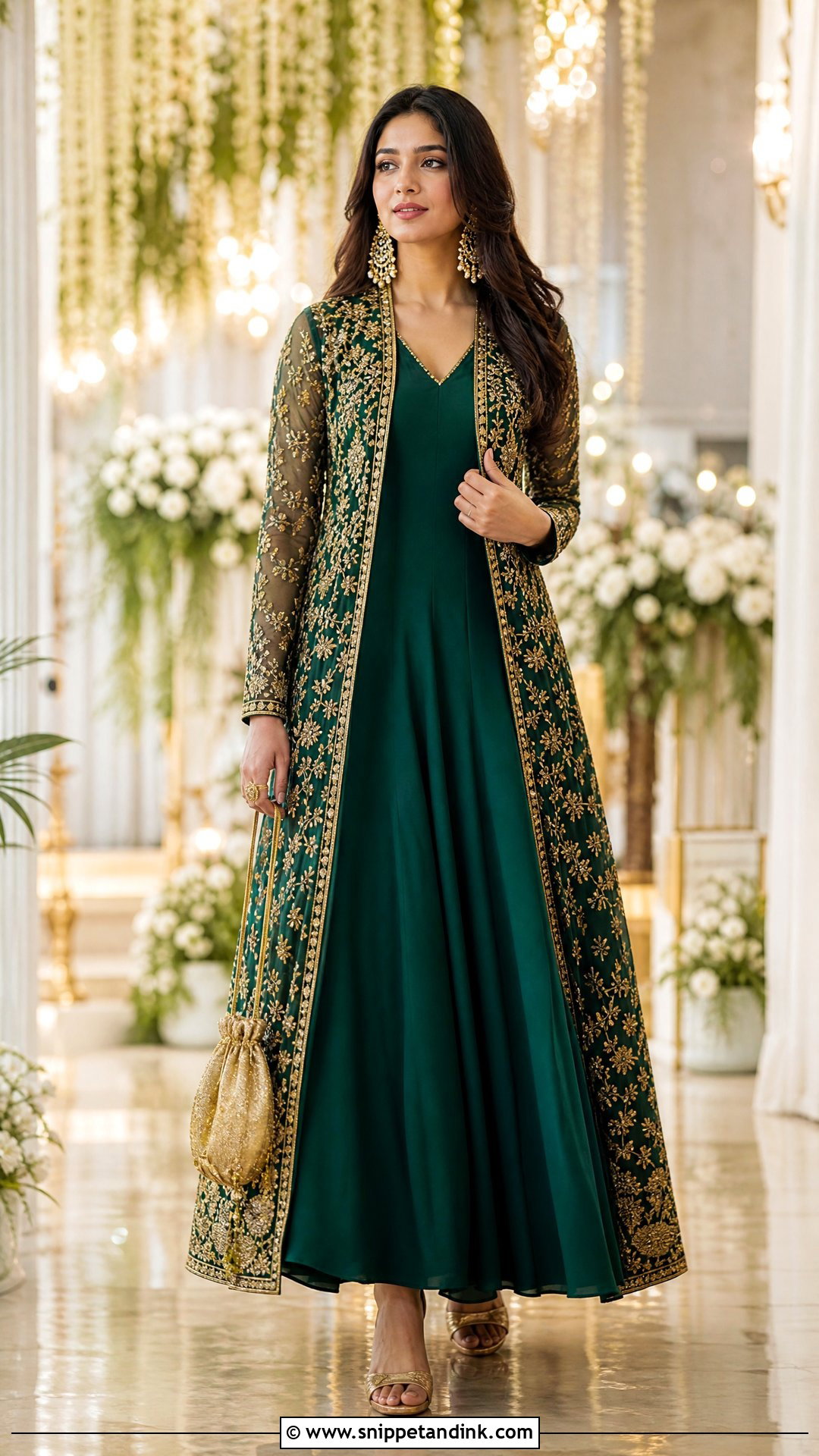
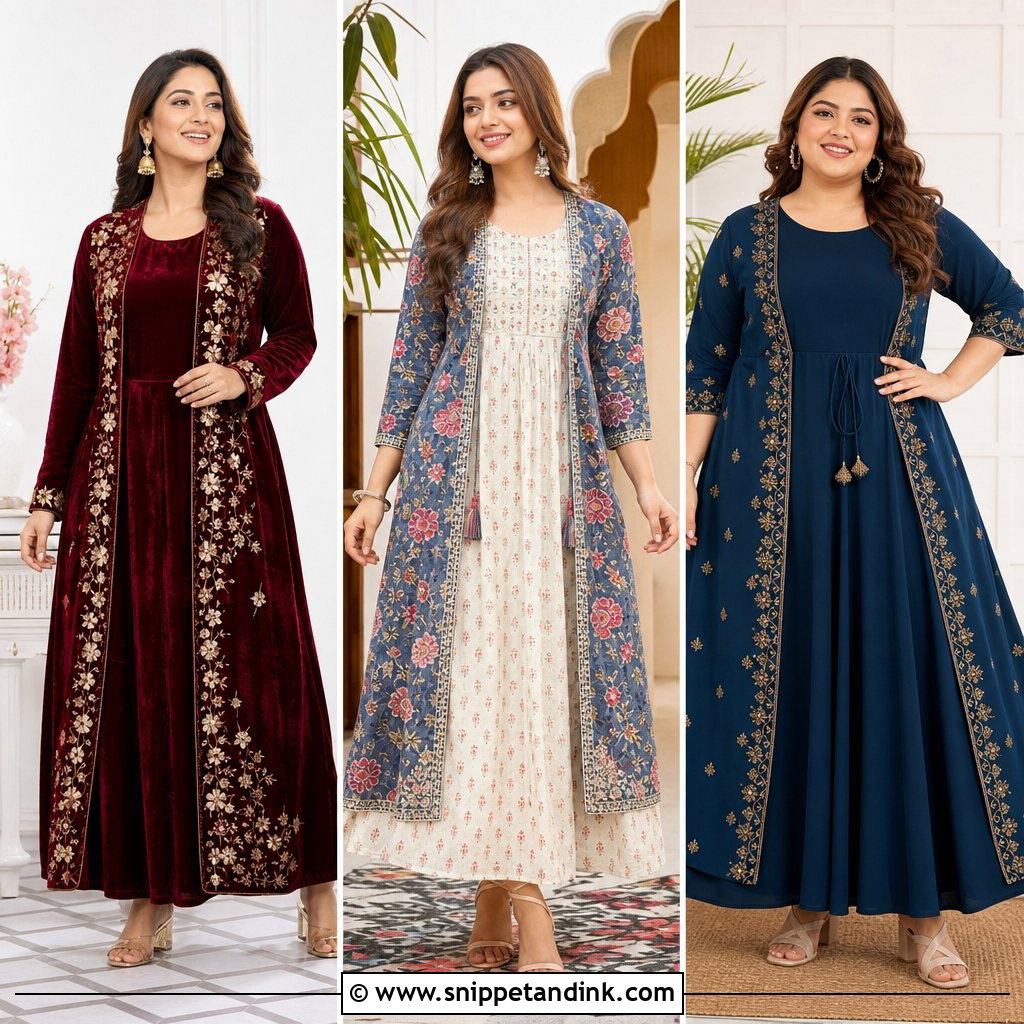
Over a solid Anarkali, a long embroidered shrug adds movement every time you turn. I’d pick floor-length georgette or chiffon with zari vines or thread embroidery down the front and sleeves, and keep the Anarkali itself plainer so the two don’t fight. Emerald with antique gold, navy with silver and blush with champagne are pairings I come back to. Chandelier earrings, a small potli and comfortable block heels finish it. Side slits in the shrug let the Anarkali skirt flare properly. Match one thread colour to your jewelry or shoes; it’s the detail that makes the outfit look planned.
2. Short Mirror Work Shrug With Flared Midi Dress
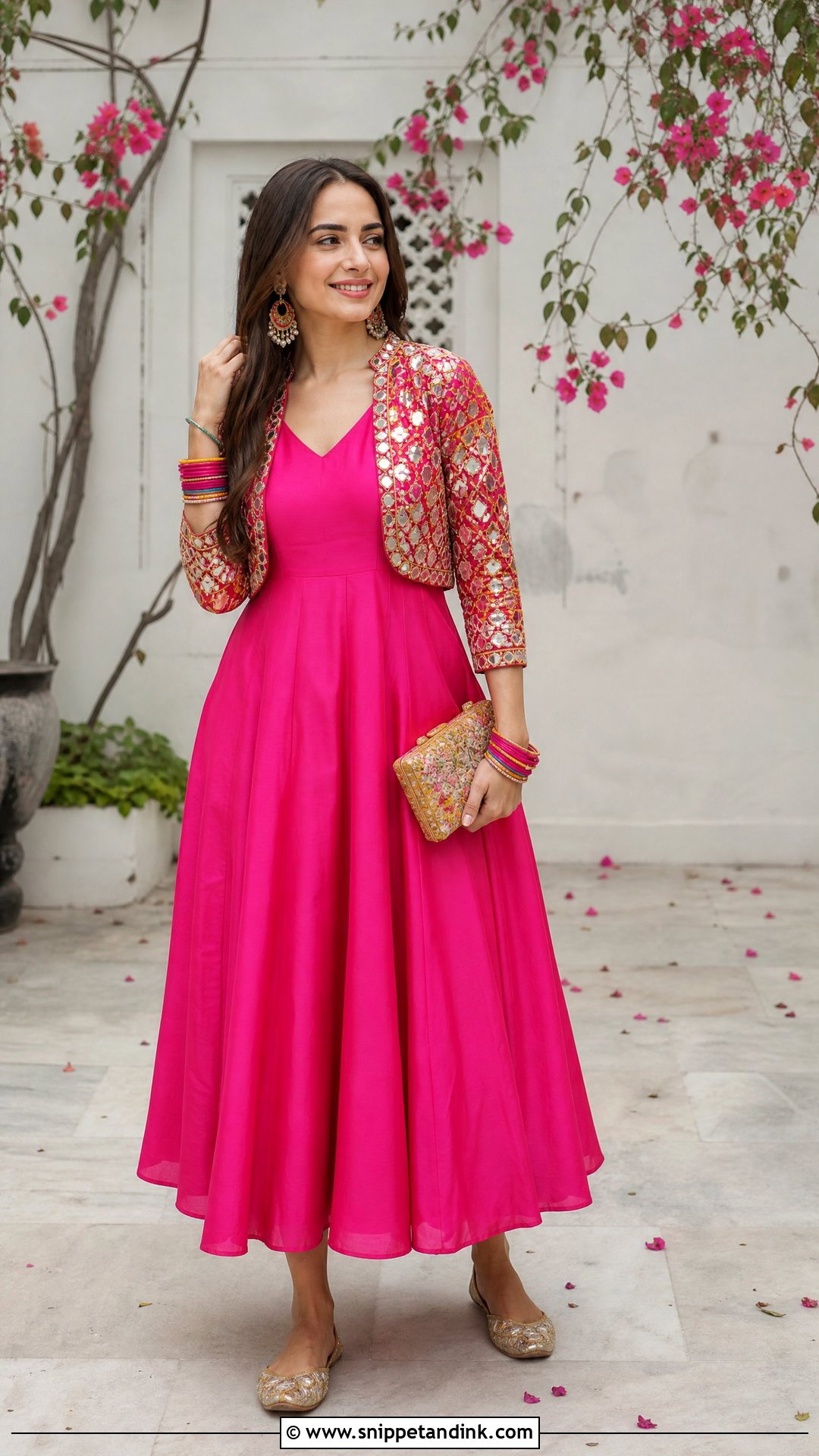
Bright mirror work gives a flared midi an instant festive feel. Choose a sleeveless dress in fuchsia, turquoise, marigold or royal blue, then a waist-length shrug with neat mirrors and three-quarter sleeves. Stopping at the waist keeps the dress shape visible. Metallic juttis, colourful bangles and a small embroidered clutch suit it, and the necklace can go. A soft cotton-silk or georgette midi with a moderate flare moves better than a stiff, layered skirt, especially for a Mehndi where you’ll be sitting low.
3. Sheer Net Shrug With Sequin Gown
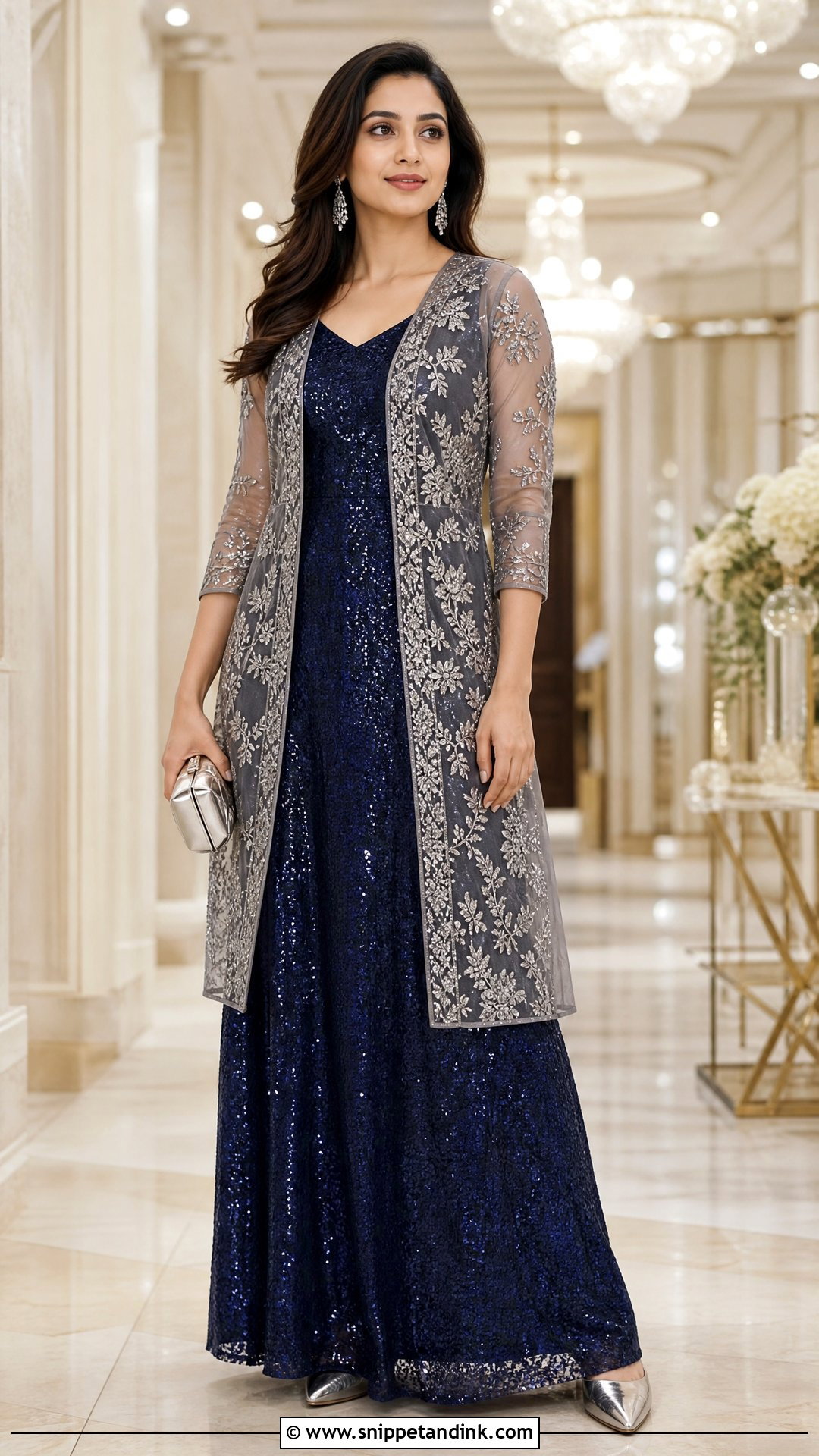
A sequin gown at an Indian reception often needs a little coverage, and sheer net gives it without dimming the shine. Knee or ankle length both work, with fine embroidery at the cuffs, shoulders and border, or plain net when the gown is already heavily worked. Silver net sits well on cool colours like navy, lavender and charcoal; champagne net flatters warm neutrals, deep red and olive. Crystal drops, a structured clutch and pointed metallic heels are enough, with a smooth low bun. Net catches on sequins, so check that the inside of the shrug’s cuffs are bound with a soft edge.
4. Floor Length Cape Shrug With Lehenga Dress
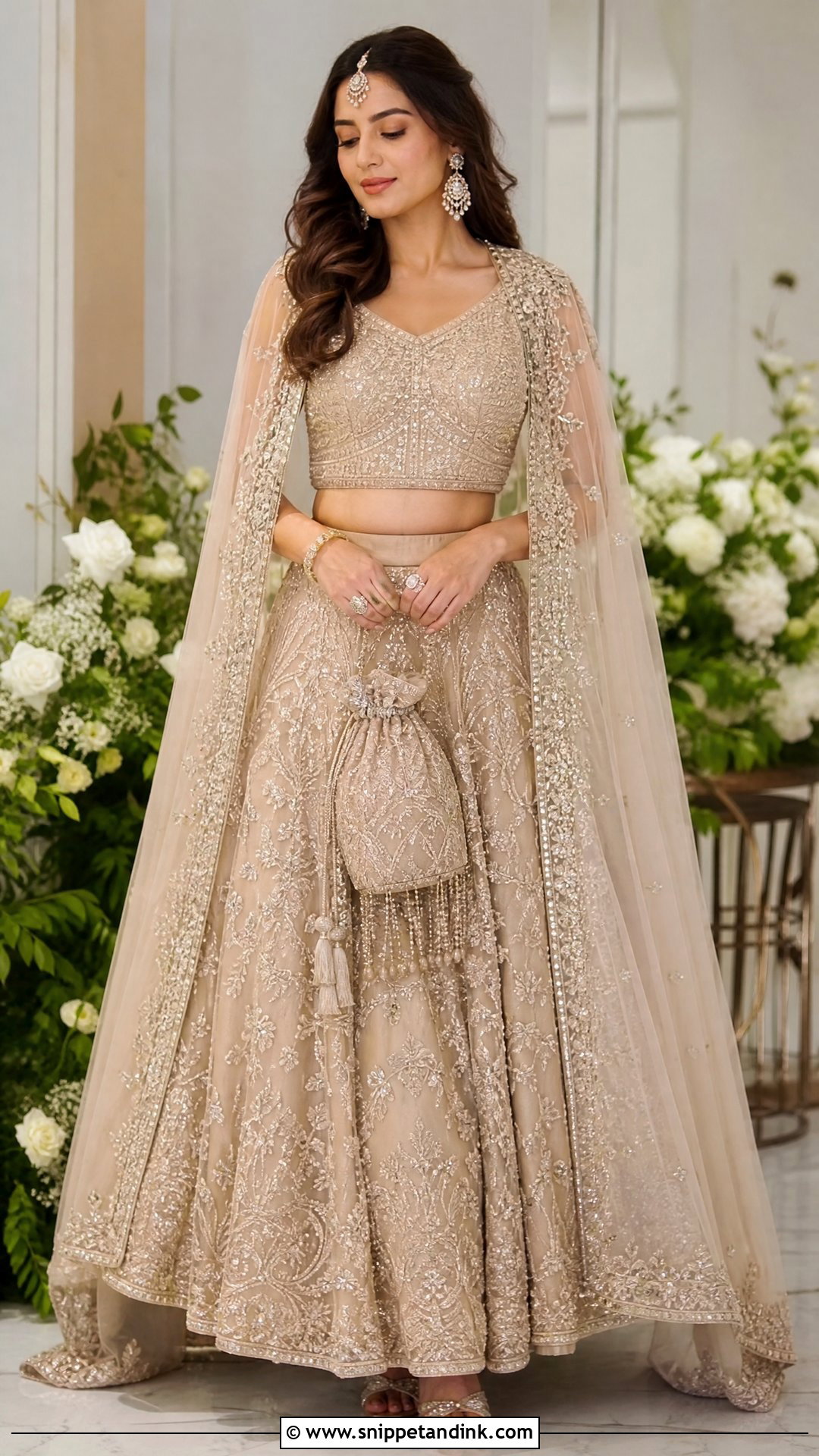
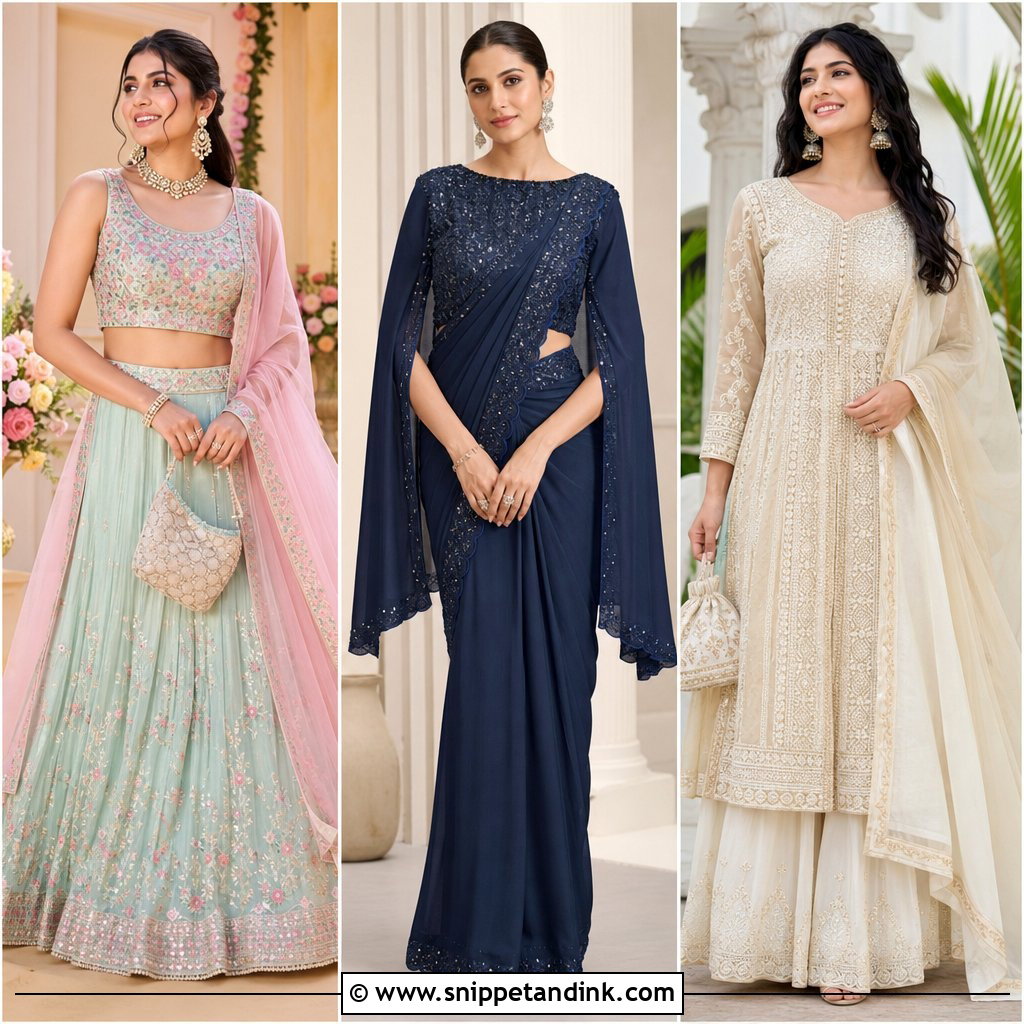
A floor-length cape in place of a dupatta makes a lehenga much easier to wear all night. It should fall close to the lehenga hem without touching the floor, or someone will step on it in a crowd. A fitted blouse and a streamlined skirt keep the layers in proportion. Embroidery belongs at the shoulders, neckline and border, with sheer fabric between so the lehenga shows. A maang tikka, statement earrings, a ring and embellished heels finish it; skip the heavy necklace if the cape neckline is detailed. Have a tailor add small snaps at the shoulders so it can’t slide while you dance.
5. Floral Organza Shrug With Pastel Maxi Dress
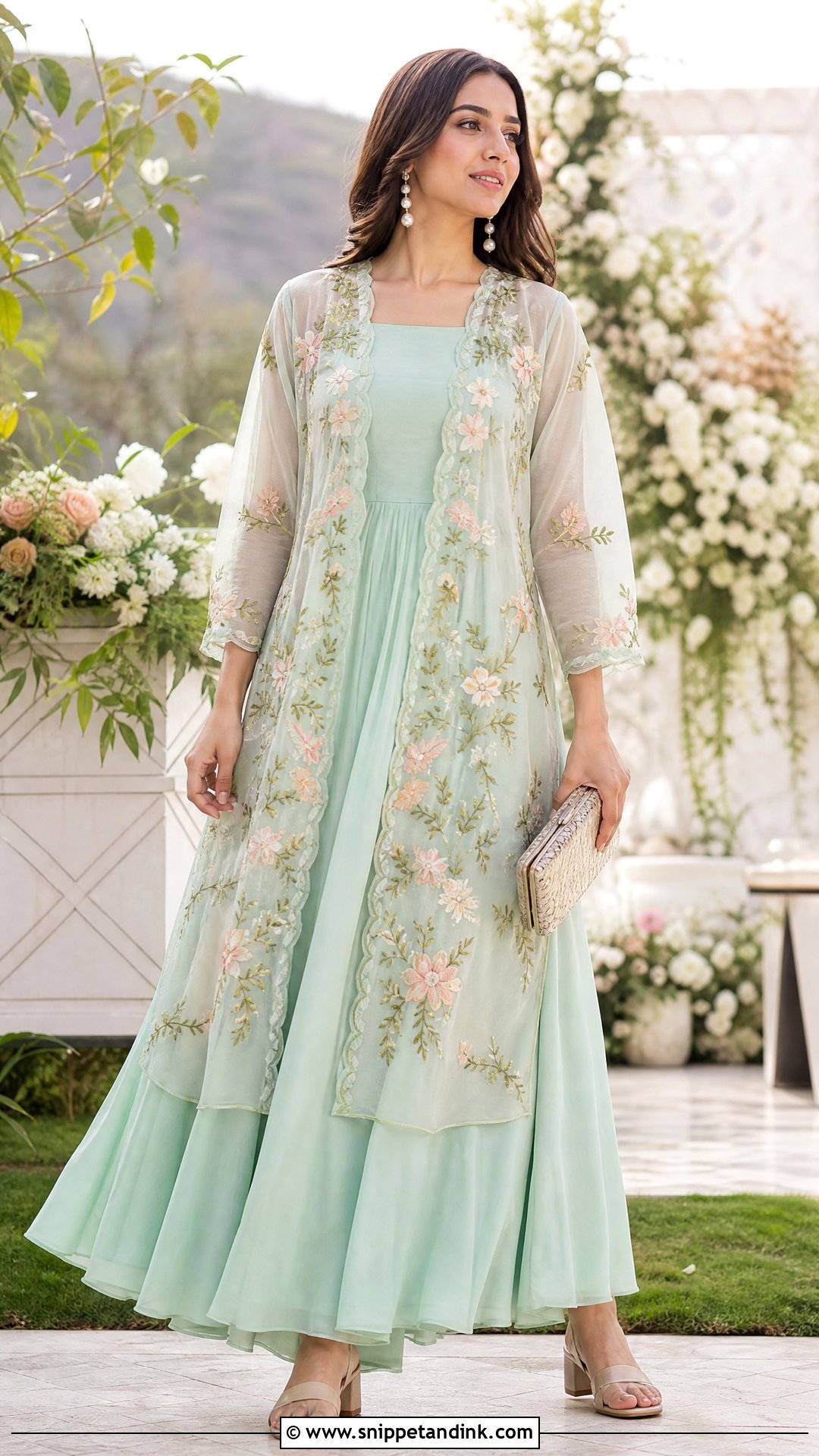
Organza florals over a plain pastel maxi dress in mint, peach, powder blue or lilac feel right at a garden ceremony. Keep the dress neckline clean and the flare gentle so the shrug leads. On petite frames I stop the shrug at mid-calf; full length can swamp you. Pearl earrings, a woven metallic clutch and low block sandals suit it, with fresh makeup and a loose braid. If the print has several colours, pick your accessories from one of the quieter ones. Organza wrinkles sharply when crushed, so travel with it on a hanger.
6. Velvet Shrug With Winter Wedding Dress
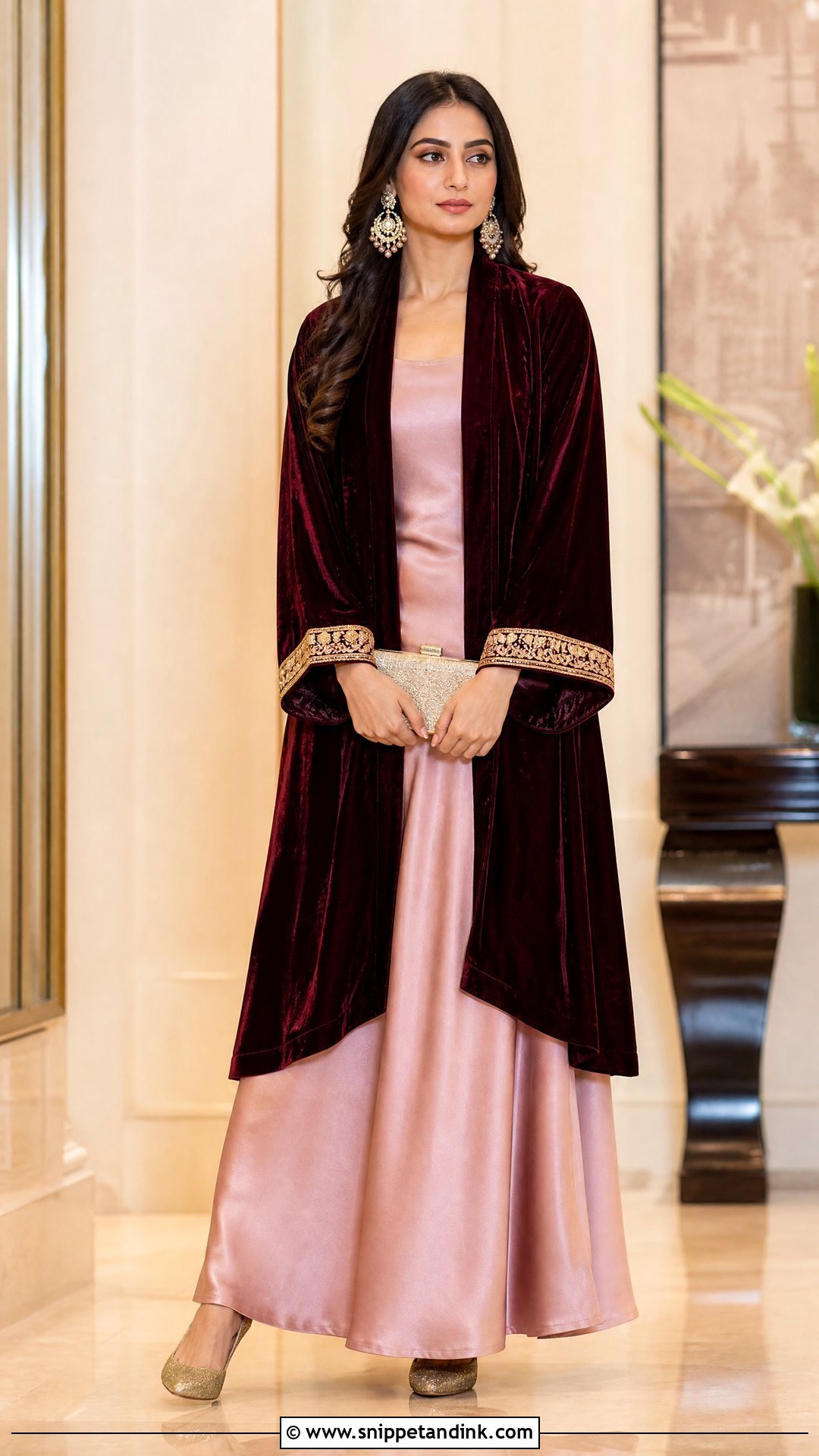
Winter weddings are where a velvet shrug earns its place. A fitted one over silk, satin or crepe looks rich and keeps you warm between the car and the hall. Burgundy with blush, emerald with gold and midnight blue with silver-grey all work. Hip or knee length, with light zari at the cuffs and front edge, is plenty; heavy embroidery on velvet adds bulk fast. Closed-toe heels, a box clutch and kundan or polki-style earrings finish it, with a sleek bun or side waves. It looks far better in photos than a coat thrown over a wedding outfit.
7. Zari Jacket Shrug With Silk Dress
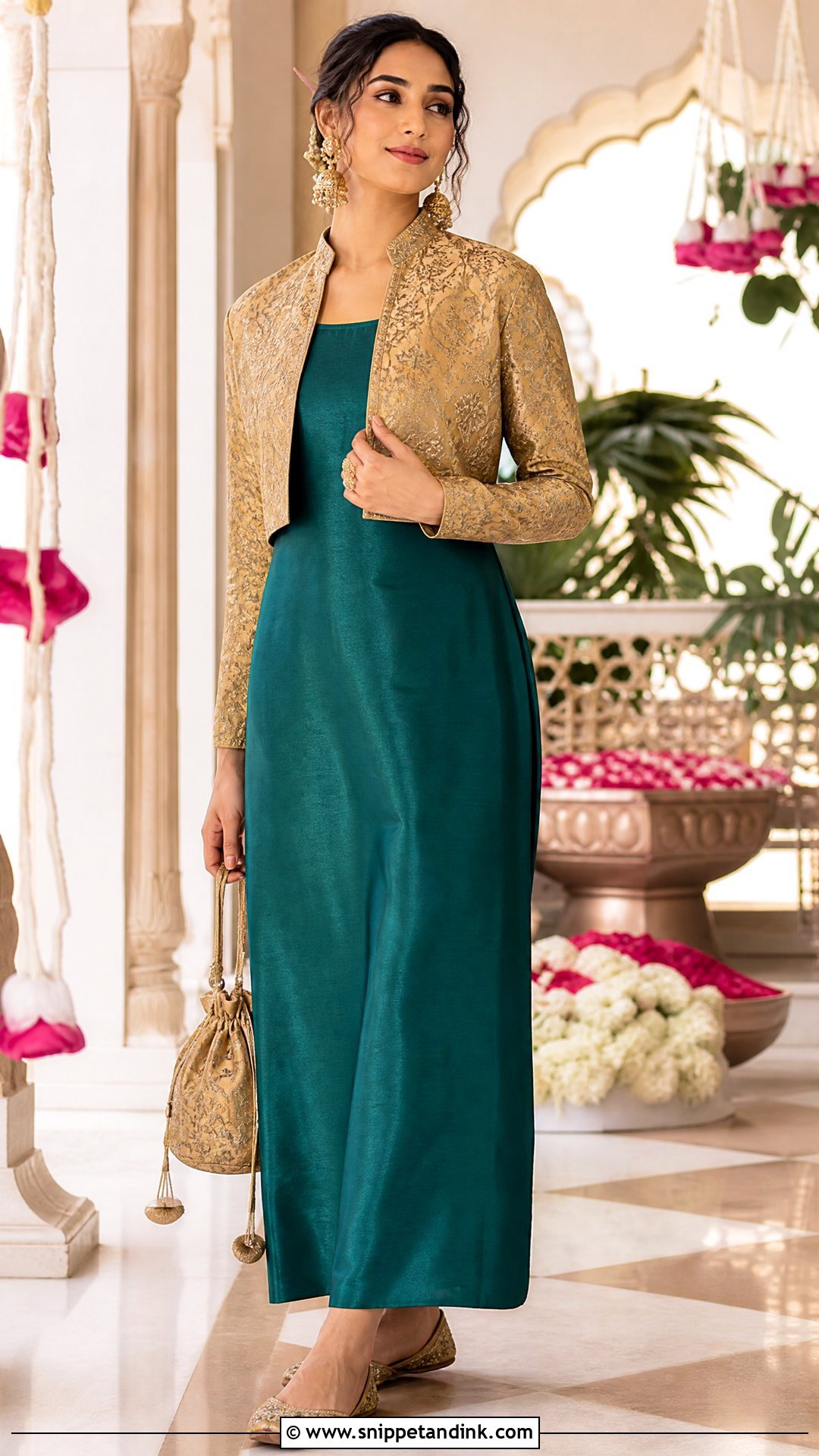
Silk and a structured zari jacket are a natural pair. Begin with a sleeveless column or softly flared silk dress in one colour, then a waist-length jacket with gold or silver weaving, a high round neck and three-quarter sleeves. Teal with antique gold, plum with rose gold or ivory with silver all look considered. Jhumkas, a silk potli and pointed juttis finish it. Skip the large necklace if the jacket neckline is decorative. Zari jackets are stiff at first and soften with wear, so put it on a few times at home before the day so it moves with you.
8. Pearl Embellished Shrug With Cocktail Dress
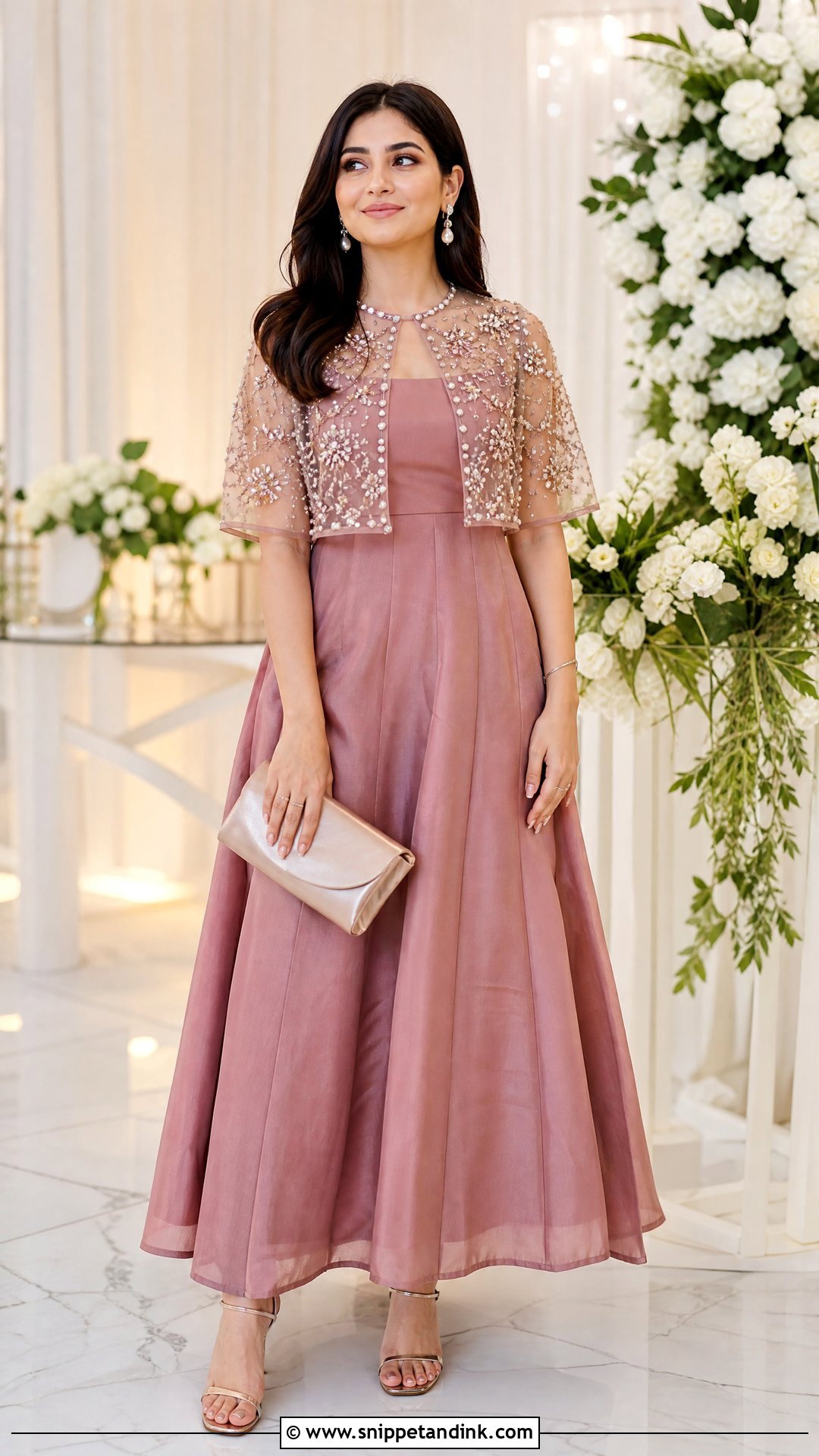
Pearls soften a plain cocktail dress and make it read as wedding wear. A fitted midi or ankle-length dress in dusty rose, sage, navy or mauve works with a sheer cropped shrug scattered with pearls; dense beading would add weight. Black is an option only if the family is happy with it, so check first. Pearl drops, a satin clutch and slim heeled sandals suit it, with a low ponytail or polished waves. Pearls at the underarm and cuff wear loose from friction faster than anywhere else, so run a finger over the stitching there before you buy.
9. Chikankari Shrug With Straight Kurta Dress
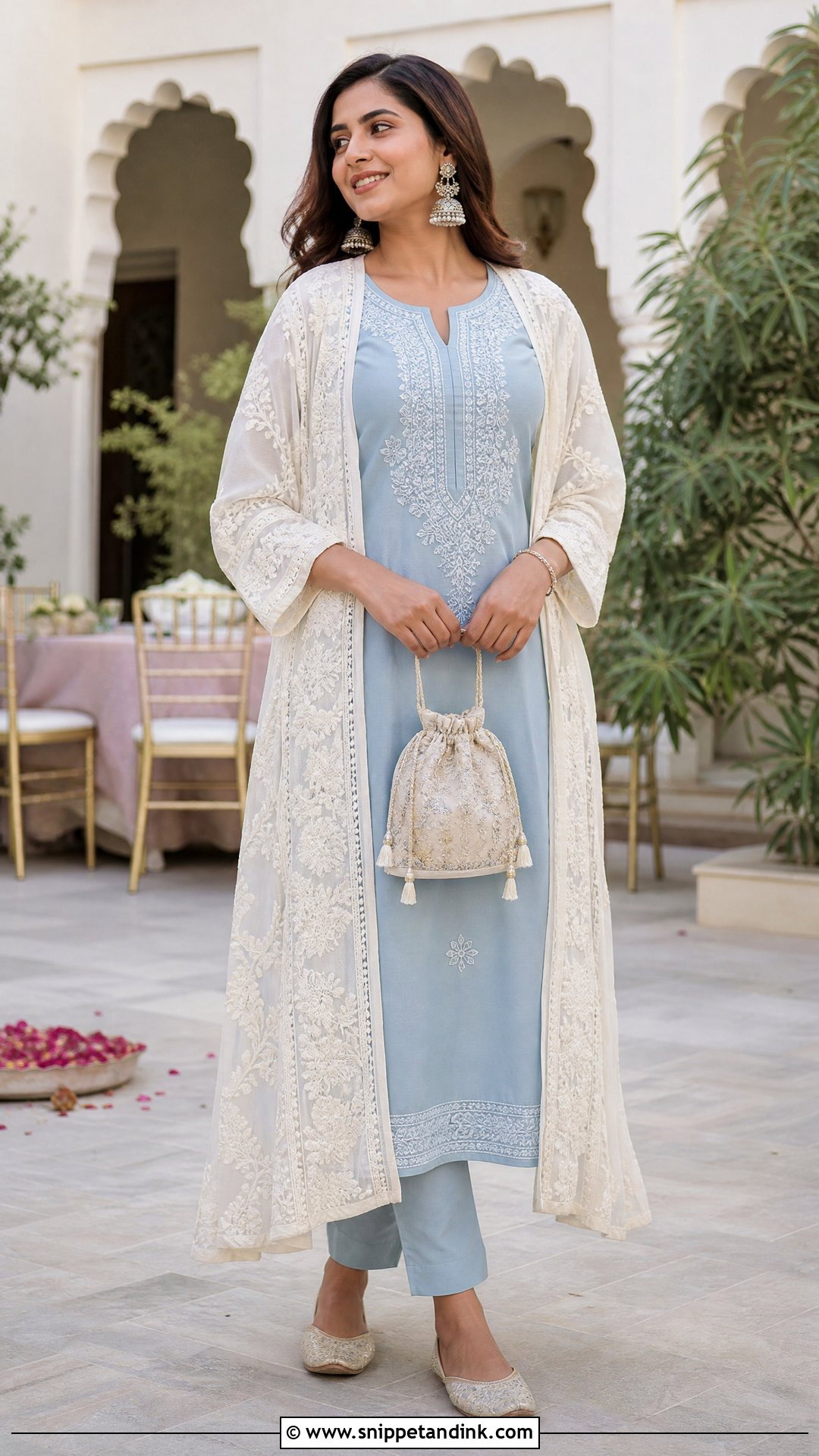
Chikankari keeps an outfit light while adding fine, hand-worked texture. A calf-length straight kurta dress with side slits and cigarette pants or narrow palazzos makes the base. Add an open chikankari shrug in white, ivory, pale pink or pale blue: tonal thread looks understated, a contrast colour more festive. Silver jhumkas, an embroidered potli and flat or low juttis are comfortable for a daytime ceremony. With a straight cut, I take the shrug below the knee for a longer line. Skip big sleeves; they hide the tailoring.
10. Bandhani Shrug With Solid Maxi Dress
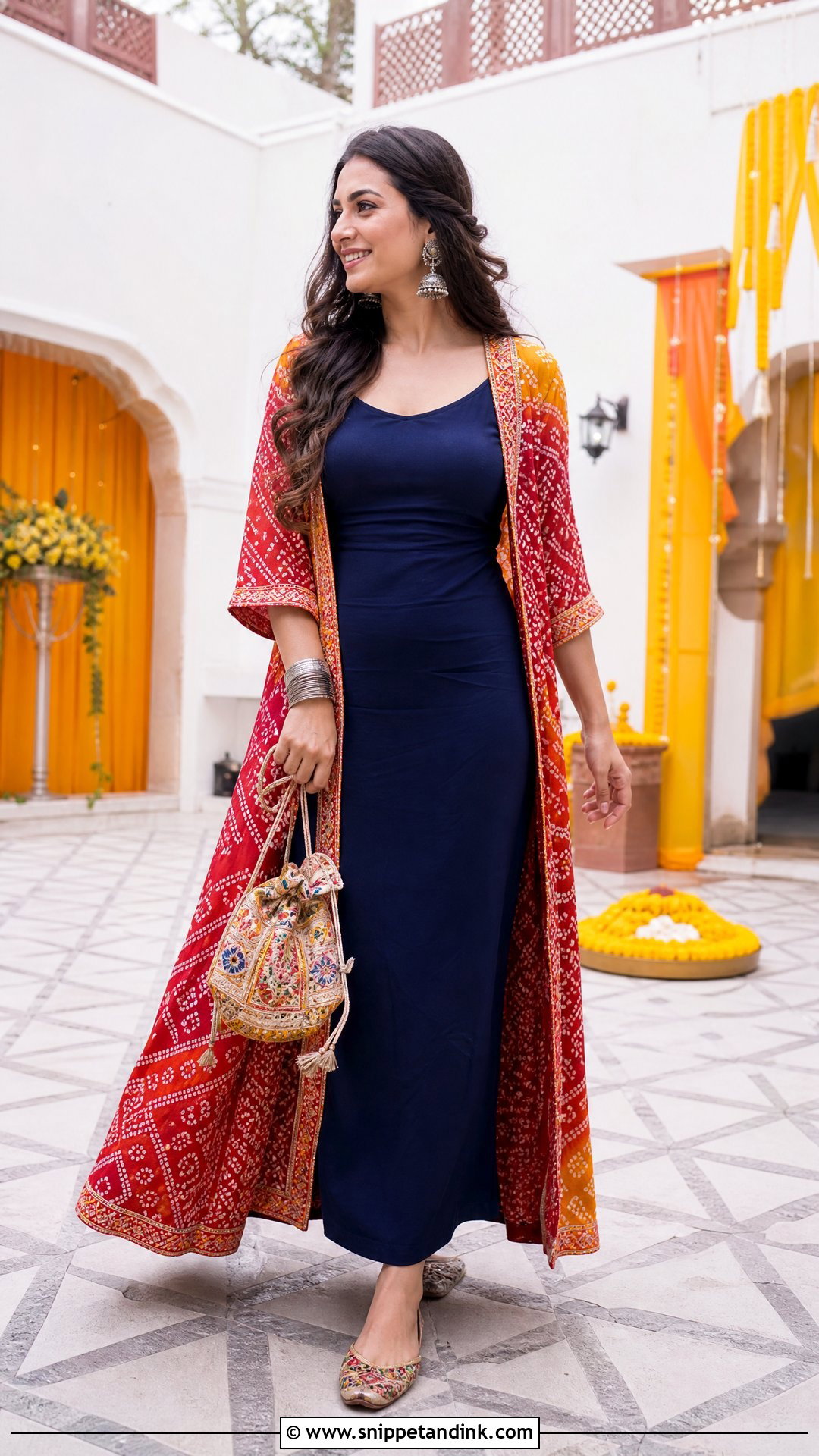
Bandhani brings colour and pattern to a plain maxi in black, navy, cream, red or mustard. The trick is choosing a bandhani shrug that contains the dress colour somewhere in its pattern, so the two look connected. Light silk blend or georgette keeps it comfortable in heat. Oxidized earrings, stacked bangles, a small potli and embroidered flats finish it, with one statement piece rather than several. A slightly fitted dress underneath stops the outfit looking loose and busy. Bandhani is dyed by hand and can bleed when damp, so keep it away from a wet Haldi.
11. Brocade Shrug With Indo Western Dress
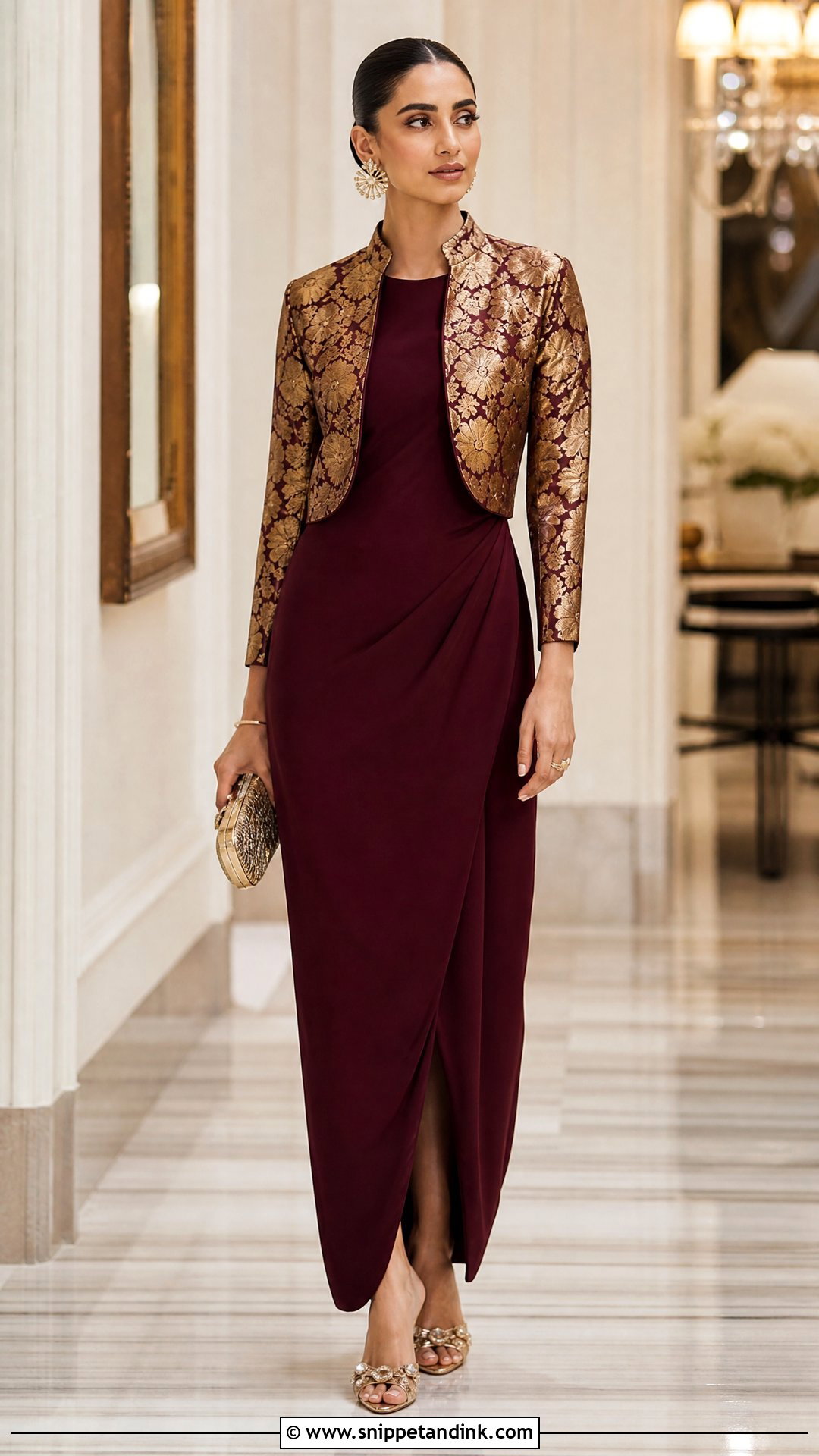
Brocade gives a modern dress the weight of traditional textile. Pair a fitted knee or ankle-length dress with a structured shrug ending at the natural waist. Gold floral brocade suits burgundy, bottle green, navy and deep purple; silver brocade suits icy blue or charcoal. A simple bodice keeps the weave as the main event. Sculptural earrings, a metallic clutch and sleek pumps or embellished mules finish it. A cropped jacket defines the waist on straight and curvy figures alike. Check that the armholes are cut high enough to lift your arms, since brocade doesn’t stretch at all.
12. Fringe Shrug With Sharara Dress
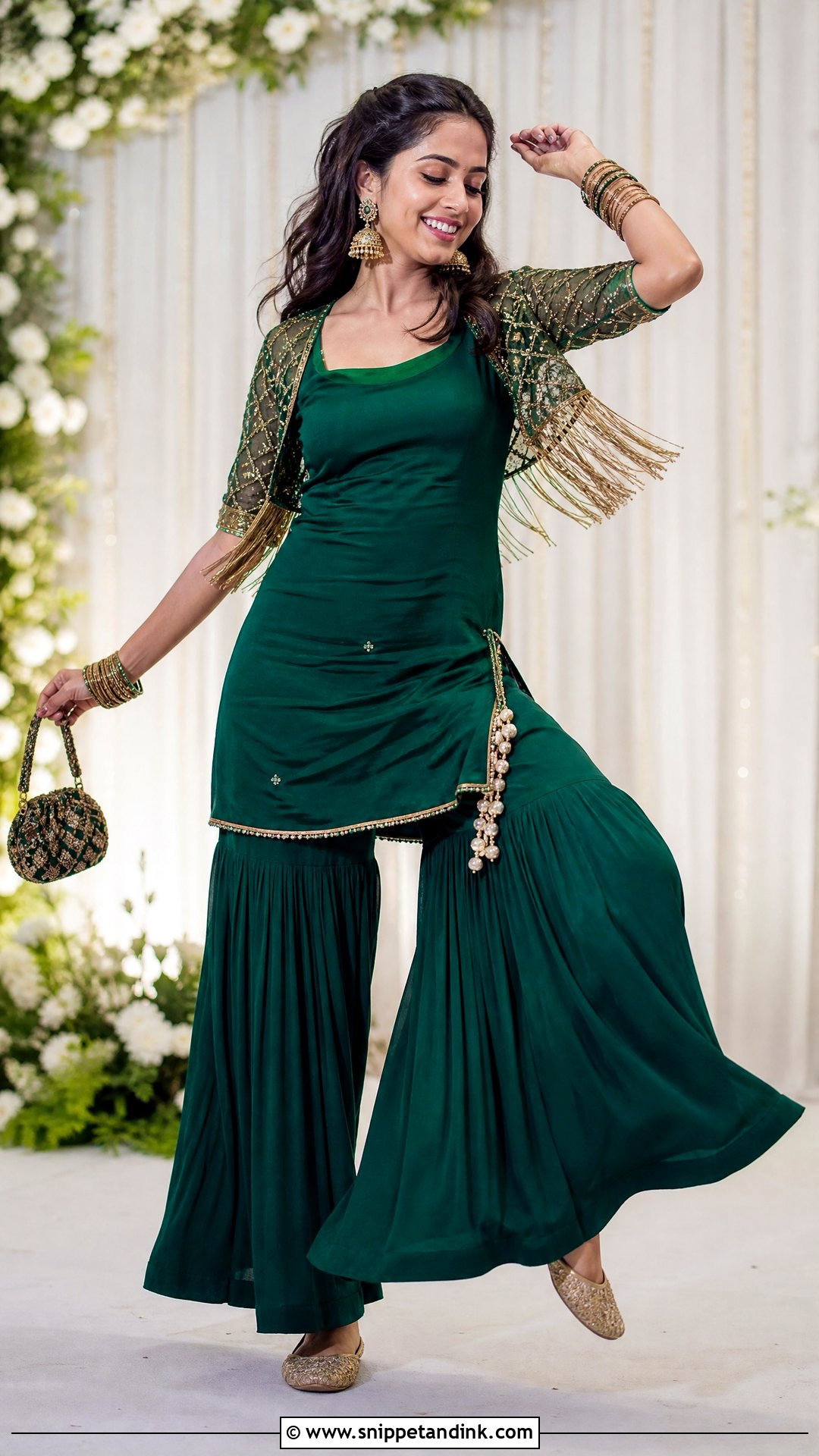
Fringe and a Sangeet dance floor are made for each other. Style a short kurta or fitted tunic with flowing sharara pants, then add a waist-length shrug with fringe at the sleeves or hem. Light tassels sway without snagging on jewelry; heavy beaded ones swing into your face and drinks. Emerald, magenta, sapphire and orange suit the mood, and metallic fringe works best after dark. Secure jhumkas, stacked bangles, a wristlet and cushioned juttis or block heels finish it. Keep embroidery on the kurta modest. Do a twirl in front of a mirror first to be sure the fringe isn’t catching on the sharara.
13. Asymmetric Shrug With Draped Dress
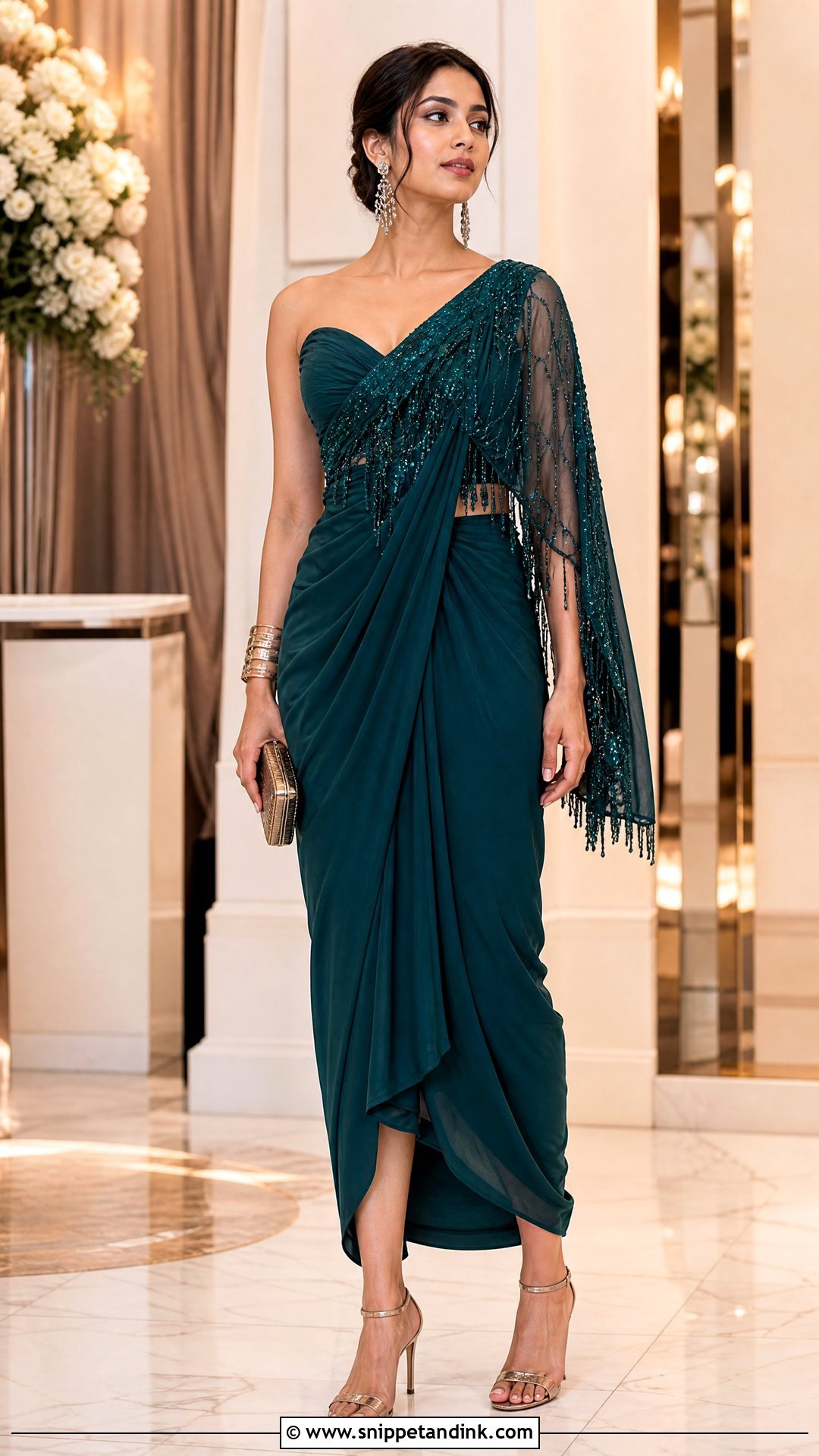
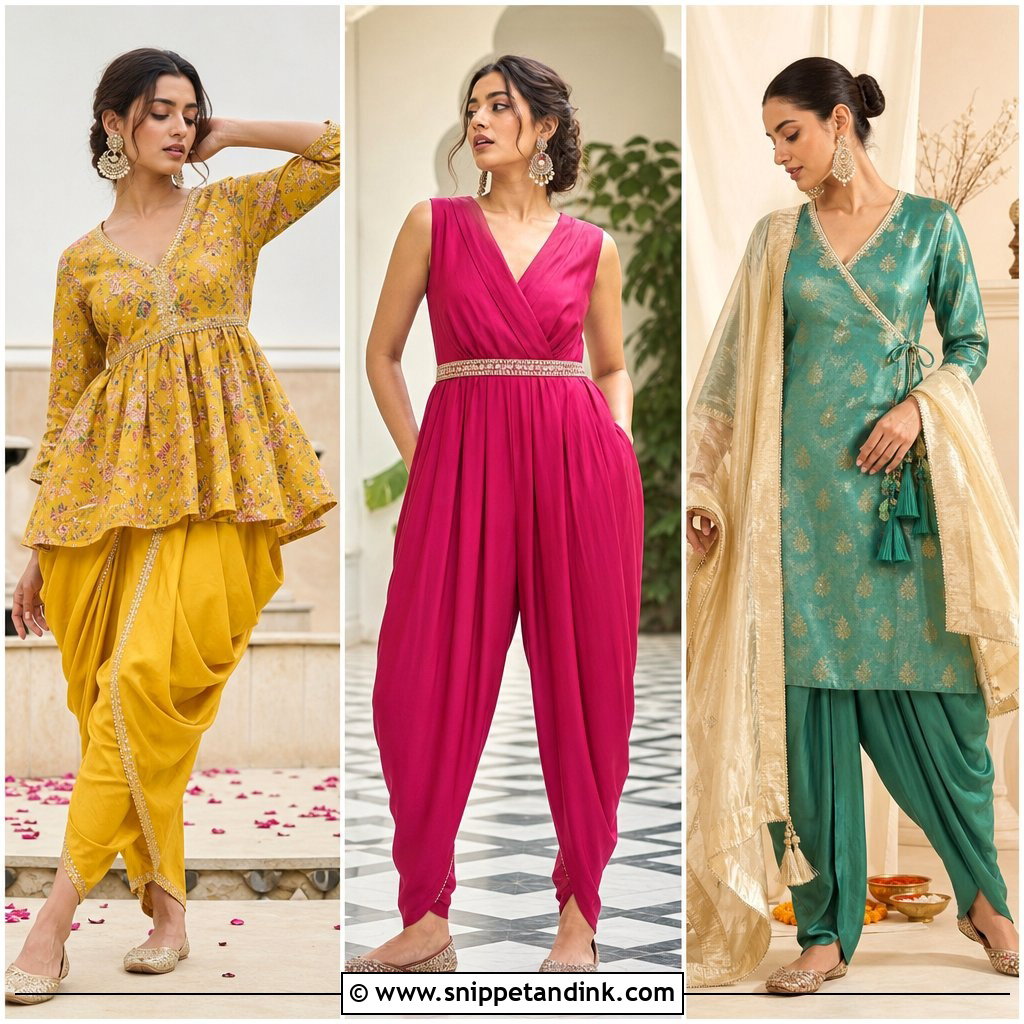
An asymmetric shrug follows the lines of a draped dress rather than fighting them. Choose a one-colour dress with a gathered waist, tulip hem or saree-style drape, then a shrug that falls longer on one side with restrained beadwork at the shoulder or edge. Teal, wine, aubergine and midnight blue look rich at night. Long earrings, a cuff, a compact clutch and narrow-strap heels suit it; keep the hair smooth so it doesn’t compete with the diagonal. The long point of the shrug must clear the floor, or it catches on chair legs in a packed venue.
14. Sleeveless Long Shrug With Palazzo Dress
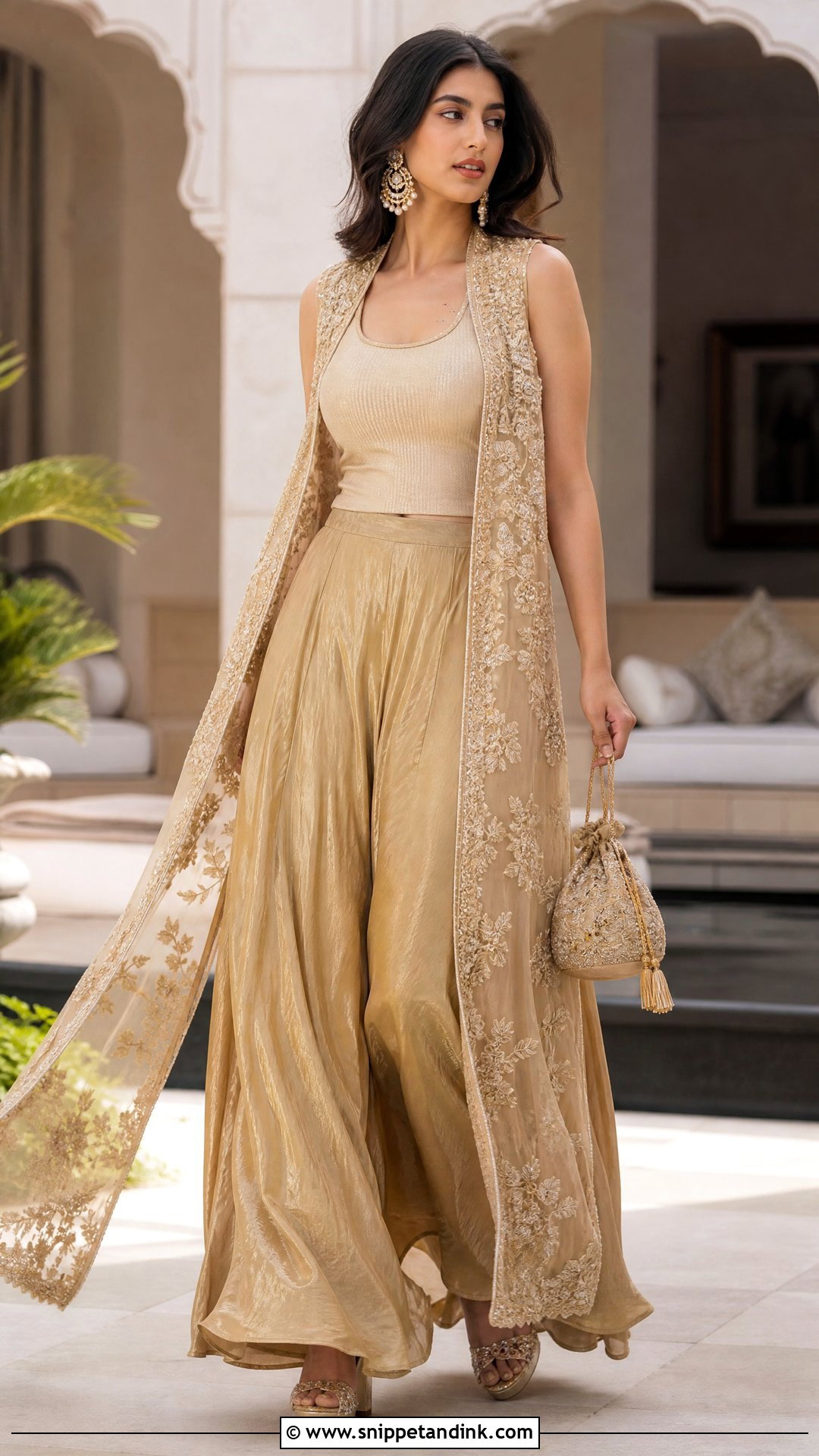
A sleeveless long shrug gives a clean, tall line over palazzos and leaves the arms cool in warm weather. Wear it with a fitted crop top or short tunic and high-waisted palazzo pants in a coordinated colour. It can be sheer, printed, embroidered or edged in metallic. I bring the length almost to the palazzo hem and add side slits so the trousers show as you walk. Shoulder-grazing earrings, a structured potli and platforms or embellished flats finish it. Petite guests look taller in one colour; taller ones can play with contrast and big prints.
15. Lace Shrug With Bridesmaid Dress
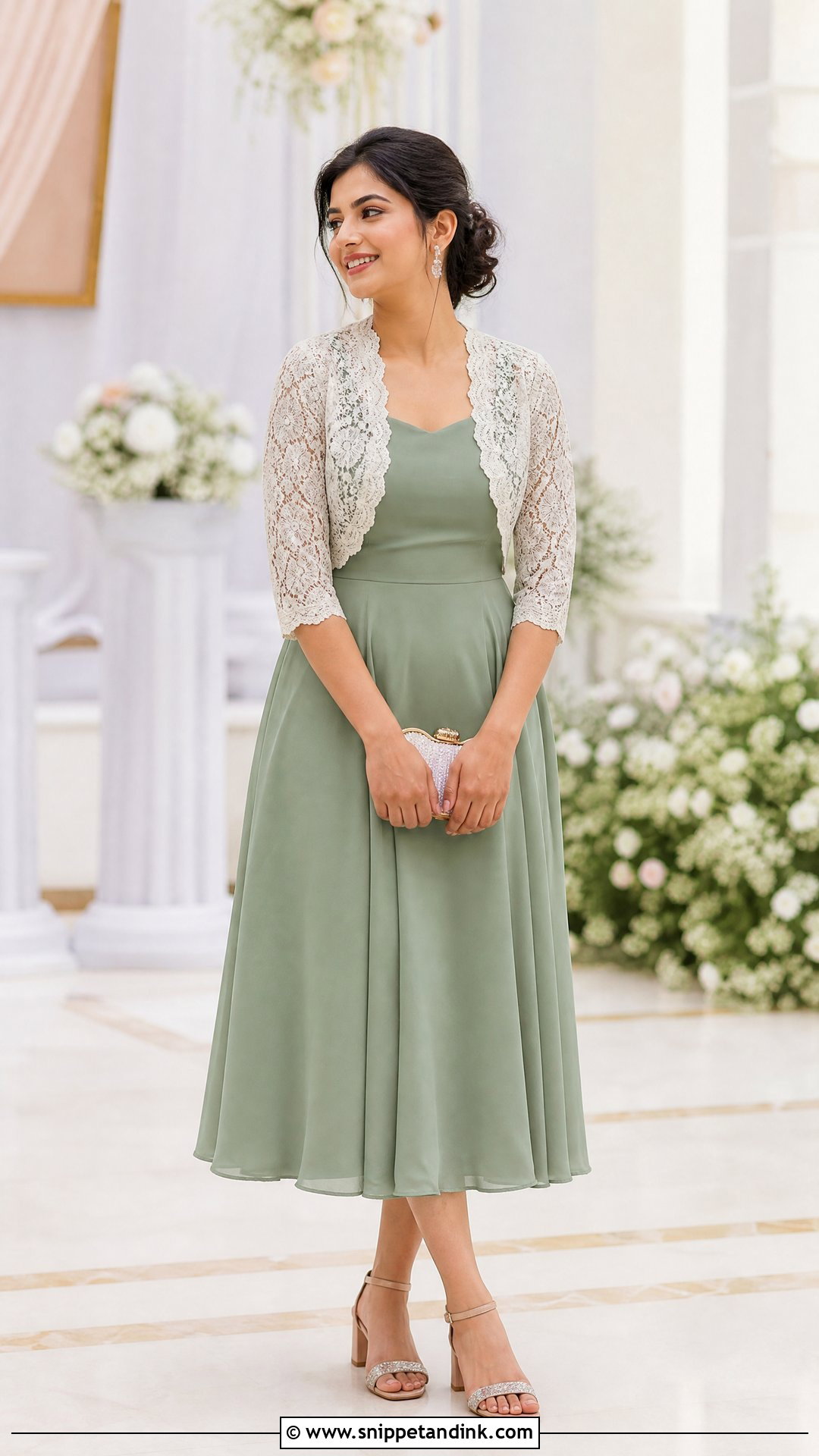
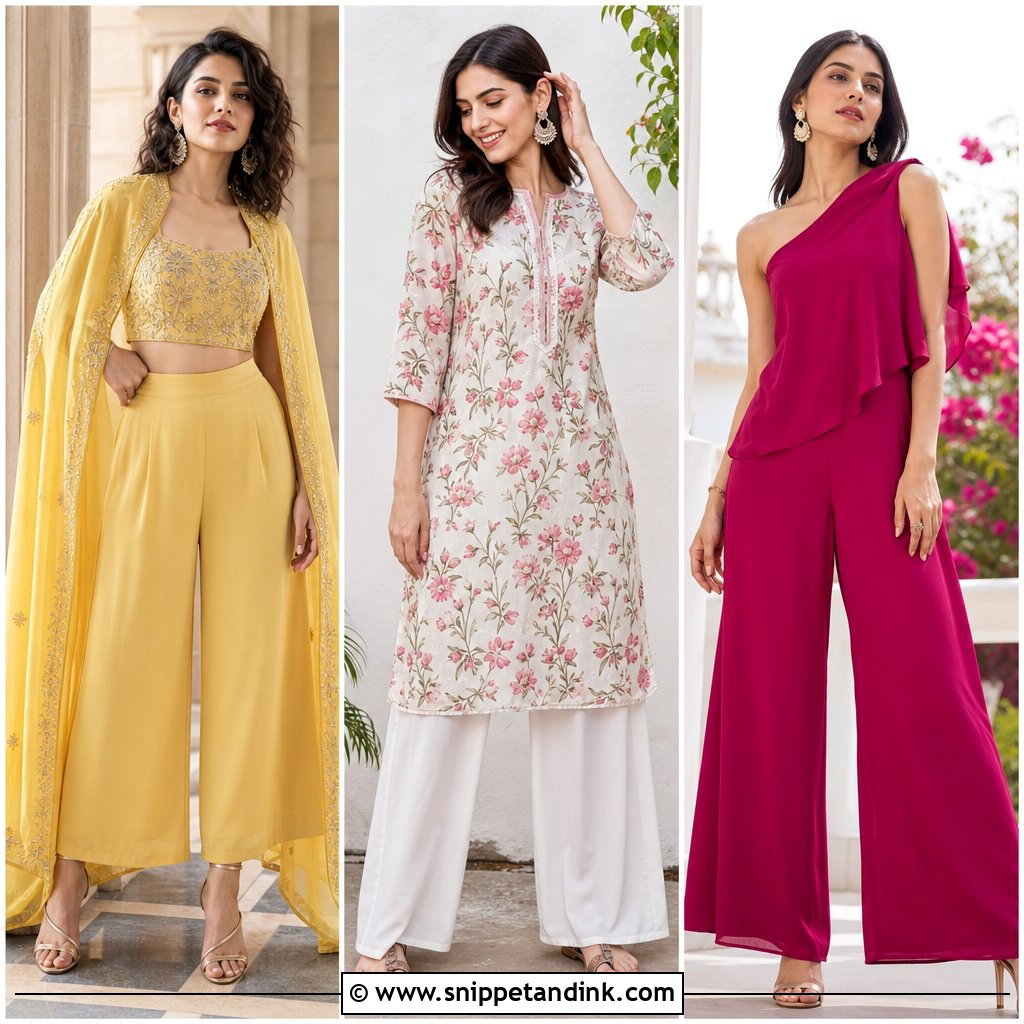
For bridesmaids, a lace shrug ties a group together while letting each person choose her own dress shape. Plain A-line, wrap or fit-and-flare dresses all work under it. Ivory lace looks delicate over muted pink, sage, lavender or powder blue; navy lace is more formal at night. Cropped or waist-length keeps the dresses defined. Matching earrings, a small clutch and block-heel sandals they can stand in through a long ceremony finish it. Order all the shrugs from one dye lot, because two batches of ivory lace can look noticeably different side by side in a group photo.
16. Printed Silk Shrug With Plain Maxi Dress
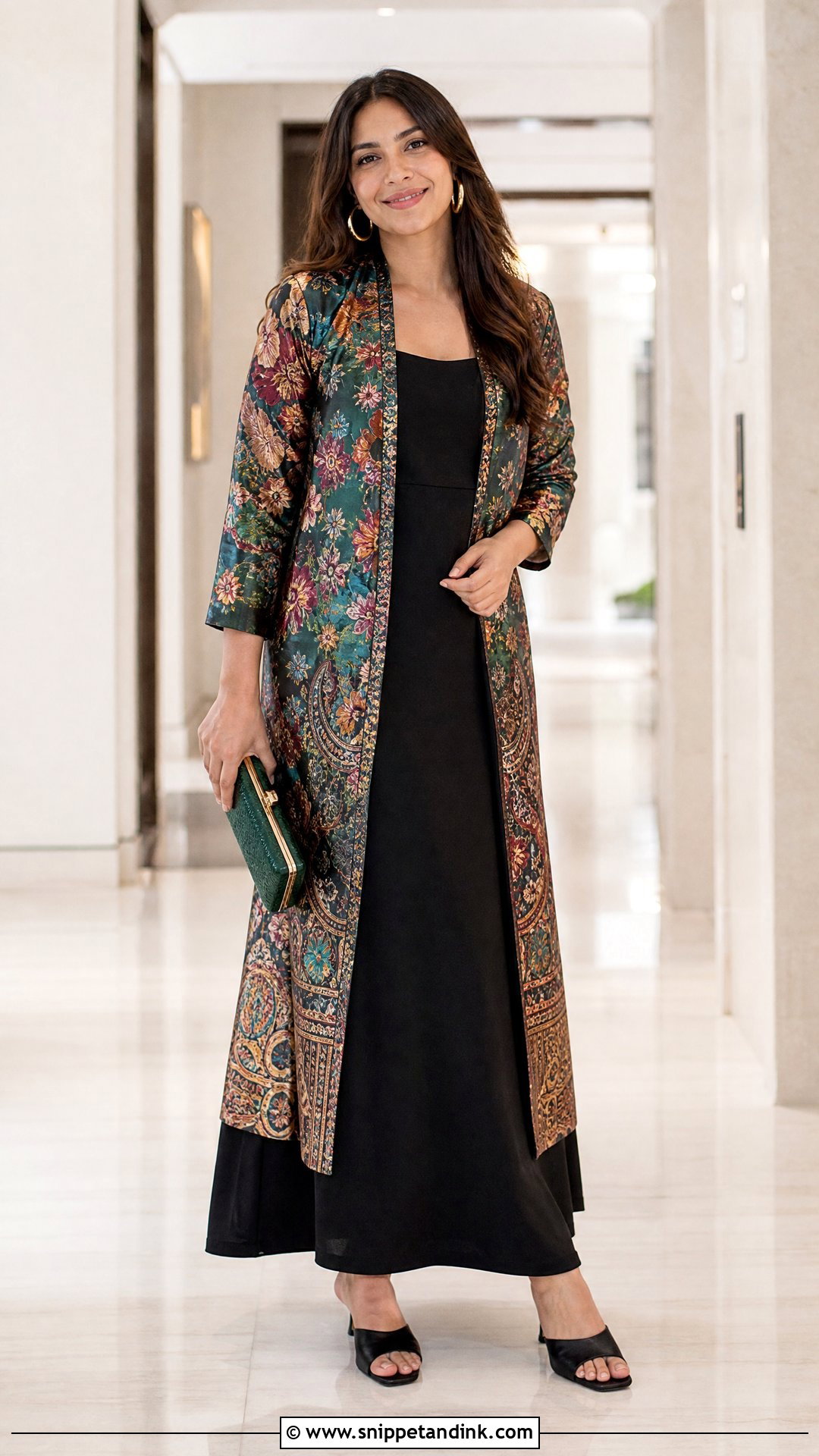
Printed silk brings bold colour without a heavily decorated dress. Layer it over a plain maxi in black, ivory, jewel green, navy or rust. Indian florals, paisley or a geometric border should be clear without being huge. A calf-length, narrow shrug stops silk from puffing out. I pick shoes and bag from a secondary colour in the print, not the main one, which looks more considered. Gold hoops, fine bangles, a structured clutch and heeled mules finish it. With a print this strong, keep the neckline, hair and jewelry simple.
17. Cape Sleeve Shrug With Saree Dress
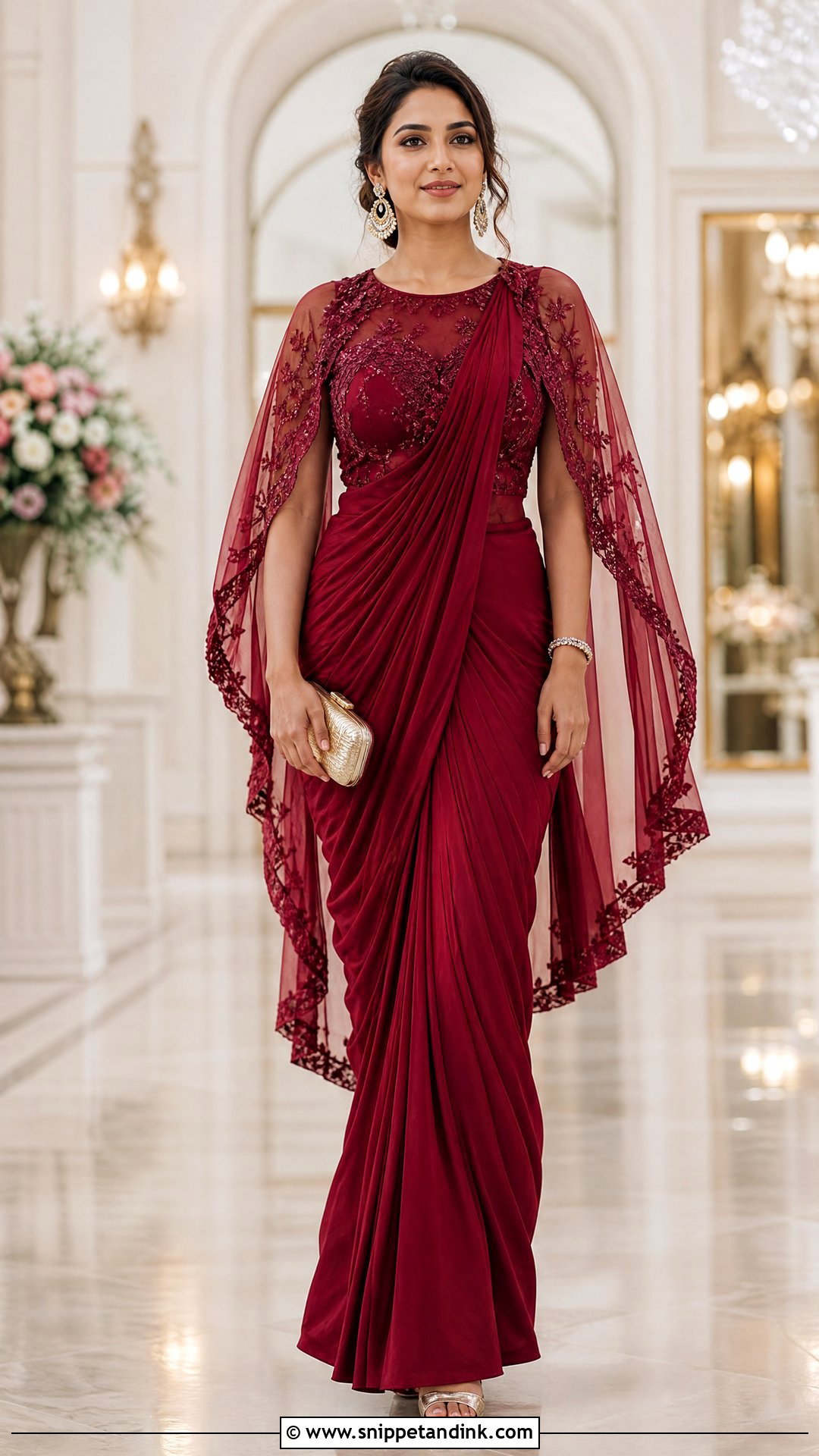
A cape-sleeve shrug makes a pre-draped saree dress more dramatic, without the constant pleat and pallu fixing of a traditional saree. Choose a fitted waist and clean pleats, then a sheer shoulder cape or short shrug ending near the elbows. Embroidery at the cape edge can repeat the saree border. Ruby on ruby looks rich; navy with smoky silver is subtler. Statement earrings, a slim bracelet, a hard-case clutch and metallic heels finish it. With the cape covering the neckline and shoulders, there’s no room for a big necklace, so don’t try.
18. Peplum Shrug With A Line Dress
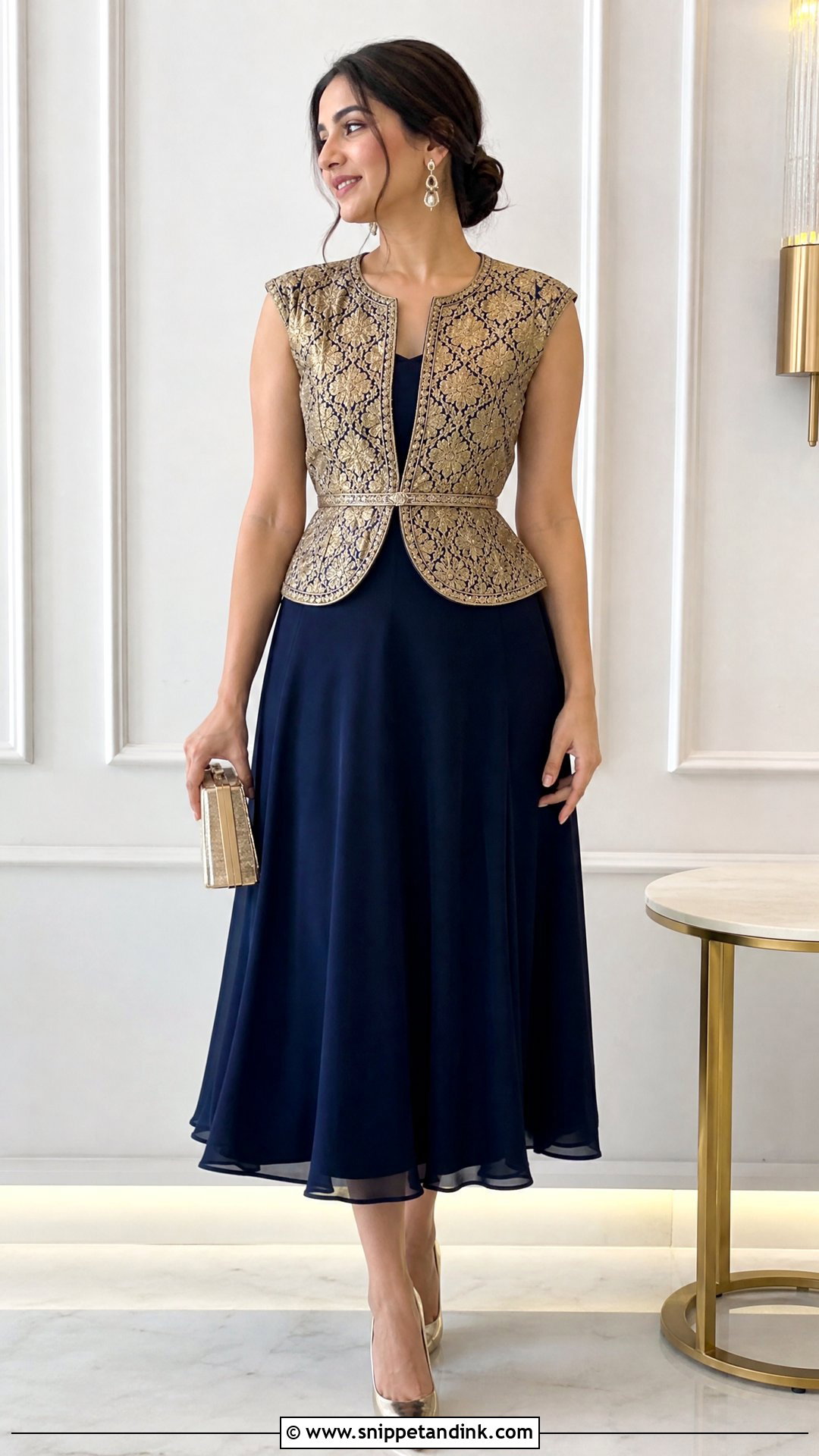
A peplum shrug adds a waist to a simple A-line. The bodice should be fitted, the hem gently flared and the embroidery along the neckline or waist seam. Anything bulky under the peplum shows, so the dress needs smooth fabric at the middle. Tone-on-tone looks sleek; a contrast brocade peplum is more festive. Medium earrings, a ring, a box clutch and pointed heels finish it. On a fuller bust, a clean V opening sits better than a round one. If you’d rather not draw attention to the waist, a longer peplum with a gradual flare is kinder than a sharp one.
19. Metallic Shrug With Reception Gown
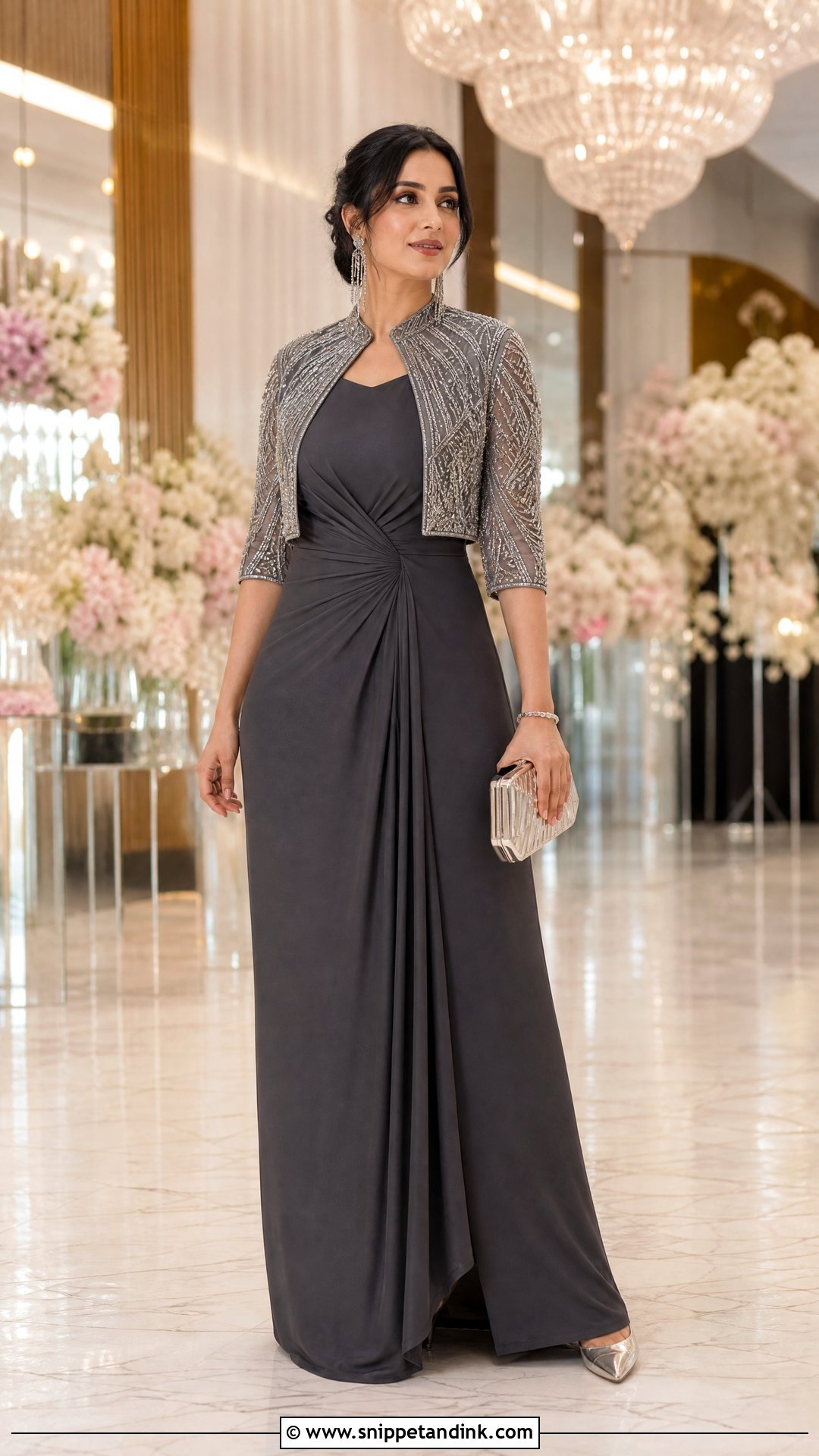
A metallic shrug gives a sleek gown reception shine without head-to-toe embroidery. Silver, pewter, champagne or soft gold over solid crepe or satin is the formula. Cropped and structured marks the waist; sheer and knee-length is softer. Keep one metal across shoes, clutch and jewelry. Crystal earrings, a simple bracelet and pointed pumps are enough sparkle. Mixed metals only work when the shrug itself mixes them. Under strong event lighting a metallic layer picks up every movement, which is exactly why it’s worth it for an evening guest.
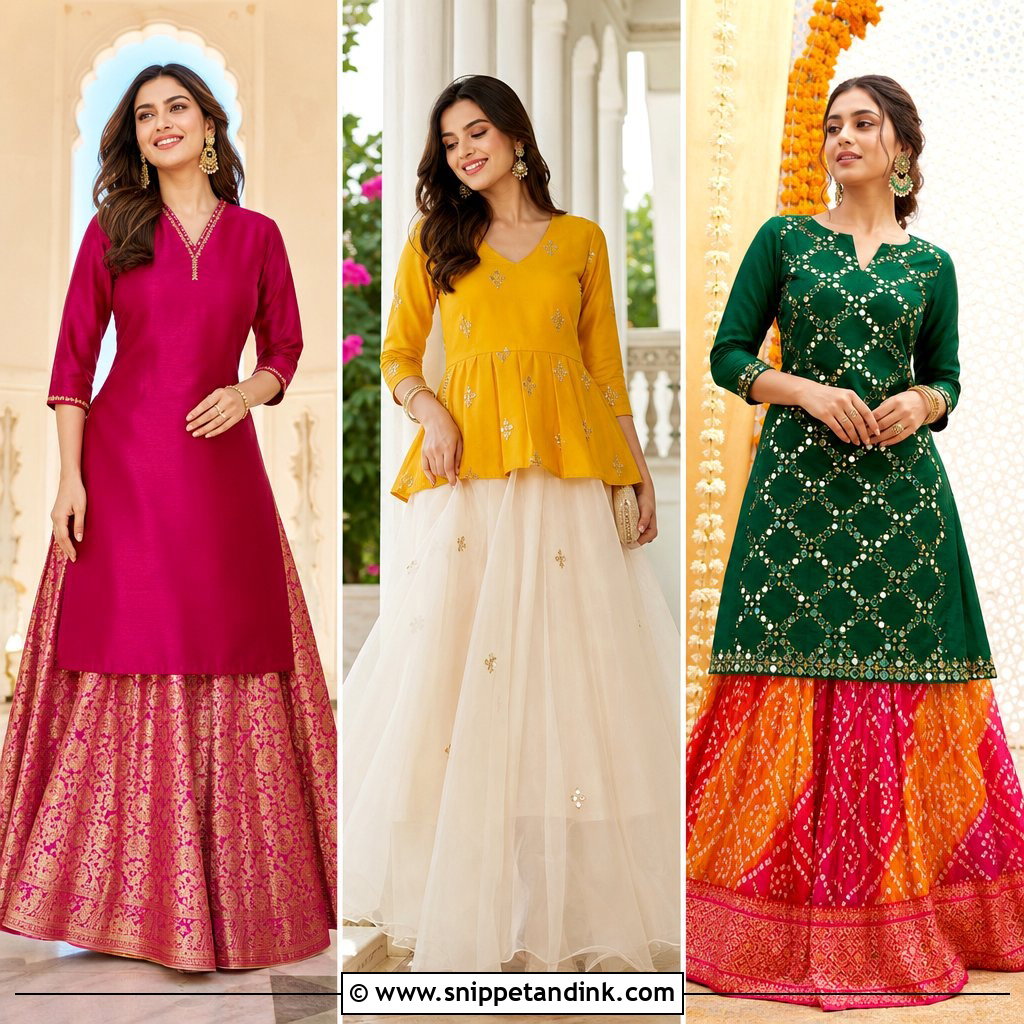
20. Longline Shrug With Empire Waist Dress
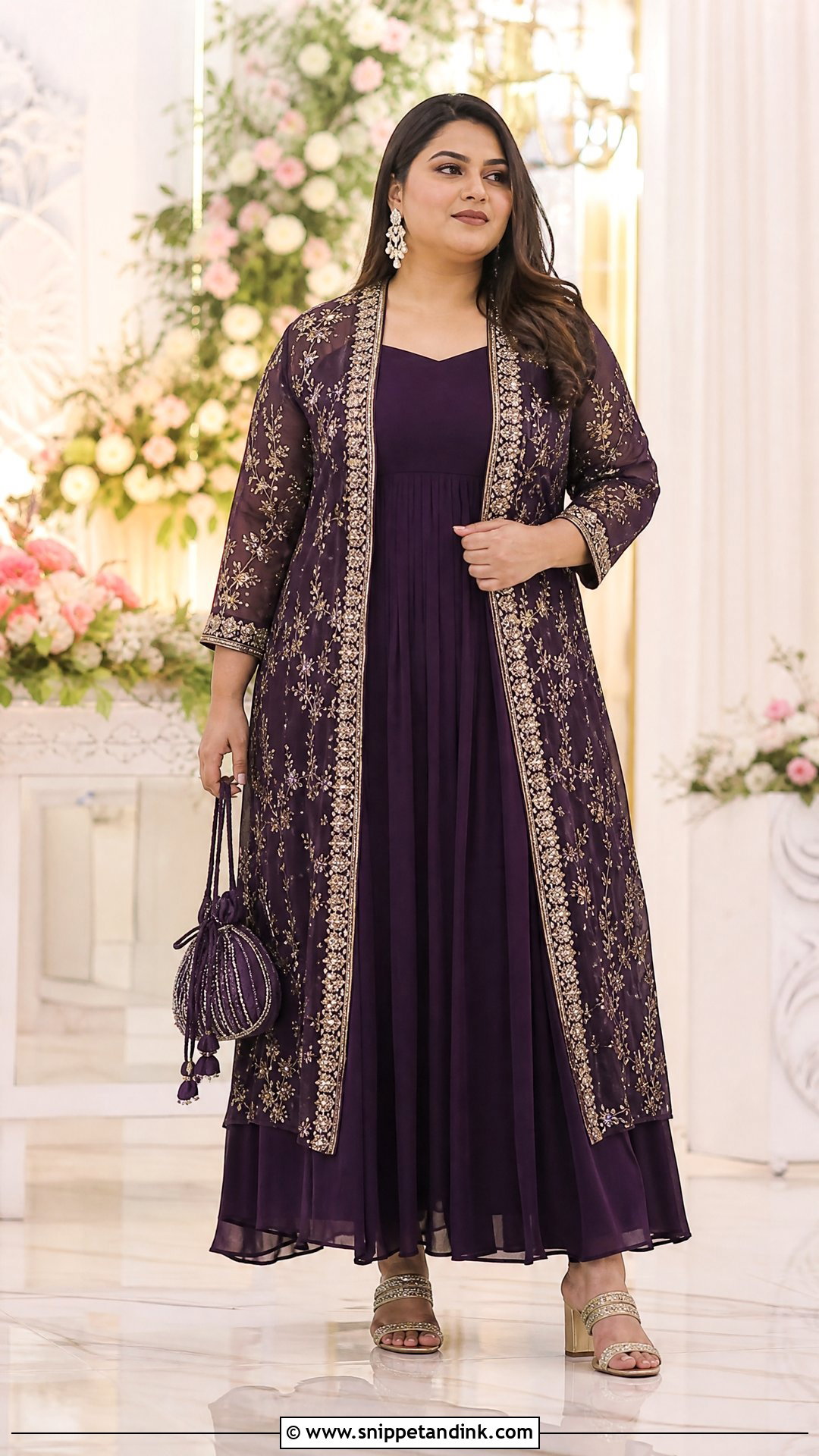
An empire waist with a longline shrug is the most comfortable pairing here and suits a wide range of shapes. The dress should skim rather than cling, with the seam just under the bust. An open shrug ending between calf and ankle creates one long line. Georgette, crepe and chiffon keep it light. I place embroidery around the shoulders and front edges, where it frames the face without adding bulk at the middle. Drop earrings, a medium potli and stable block heels or embellished flats finish it. You can dance, sit through dinner and stand for photos without adjusting a thing.
One Shrug, Three Dresses, and Storage Between Weddings
Wedding season tends to come in clusters, and a well-chosen shrug can work across several of them. I suggest guests buy their first one in a neutral, ivory, champagne or a soft metallic, with embroidery in one colour. It will sit over a jewel-tone gown for a reception, a pastel maxi for a daytime ceremony and a plain kurta for a smaller function.
Ready-made shrugs almost always need a small fix at the shoulders or sleeve length, so give your tailor two or three weeks before the first event, not two days. Bring the dress and the shoes so the length can be judged properly.
Putting It Away Properly
- Have heavily embroidered pieces dry cleaned, and point out any food or makeup marks.
- Spray perfume before you put the shrug on, not onto it; alcohol and oils dull metallic thread.
- Wrap zari and mirror work in soft cotton or muslin rather than plastic, which traps moisture and speeds tarnish.
- Fold with tissue along the folds and refold differently every few months so permanent creases don’t form.
The Layer That Lets You Dance Without Holding a Dupatta
A shrug can refresh a dress you already own, give you coverage, and make an outfit feel right for a colourful celebration. Keep the balance: an embellished shrug over a simple dress, or a quiet layer when the gown already sparkles. Think about the event, the weather, the venue and how much you’ll move before deciding on fabric and length. Shoes should be comfortable, and jewelry should suit the neckline rather than crowd it. From embroidered Anarkali layers to metallic reception jackets, there’s a shrug for every taste and size; wear the one that lets you dance freely.
You'll Like These Ideas:



Leave a Reply