
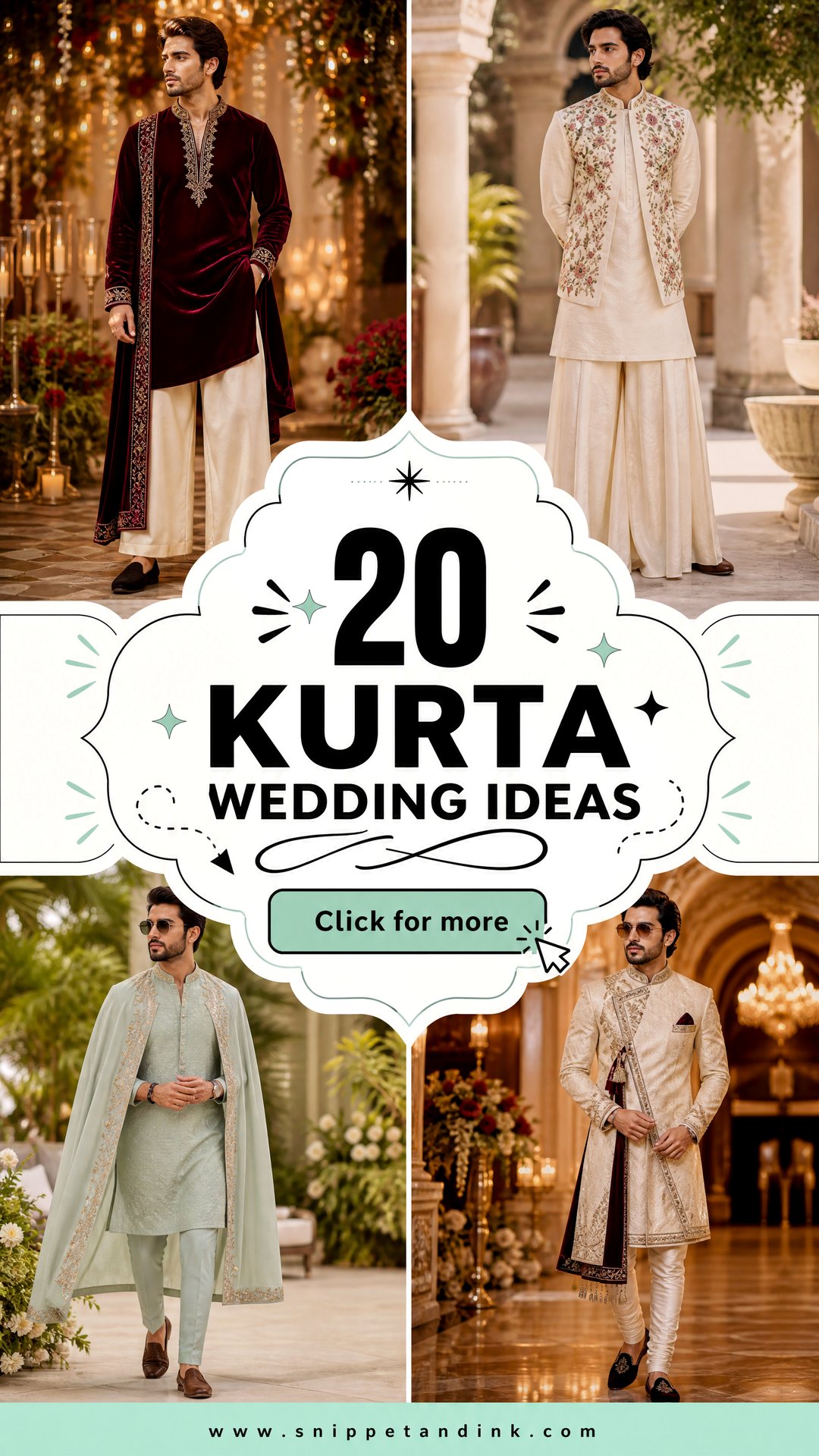
Every wedding season I style more kurtas than lehengas, mostly for guests who have a ceremony, a sangeet and a dinner to get through and want to be comfortable at all three. A kurta outfit is really a set of decisions: the length of the kurta, the shape underneath, the weight of the dupatta. Get those in proportion and the colour almost looks after itself. Below are twenty pairings, from graceful silk sets and Anarkalis to shararas, jackets and light daytime cottons, each with the bottoms, footwear and jewelry I’d put with it and the occasions it genuinely suits.
Kurta Length Against Bottom Width: The Proportion I Check First
The pairings below all follow one rule I use in fittings: when the kurta is long, the bottom stays narrow, and when the kurta is short, the bottom can flare. Break that rule and the eye can’t find your waist or your legs.
- Calf or floor-length kurta: churidar, cigarette pants or straight pants. A long Anarkali over palazzos turns into a tent.
- Knee-length kurta: straight pants, palazzos or embroidered pants all work. This is the most adaptable length.
- Hip or upper-thigh kurta: sharara, gharara, dhoti or a full skirt. Here the bottom is the main shape.
- Petite frame: one colour from shoulder to ankle and a kurta that doesn’t stop at the widest part of your hips.
- Fuller figure: an A-line or straight kurta with a defined shoulder seam, and a dupatta worn vertically over one shoulder.
Try the outfit on with the shoes you’ll actually wear. Heel height changes where every hem falls, and a churidar that bunches beautifully in flats can sit oddly in heels.
1. Silk Kurta With Palazzo Pants
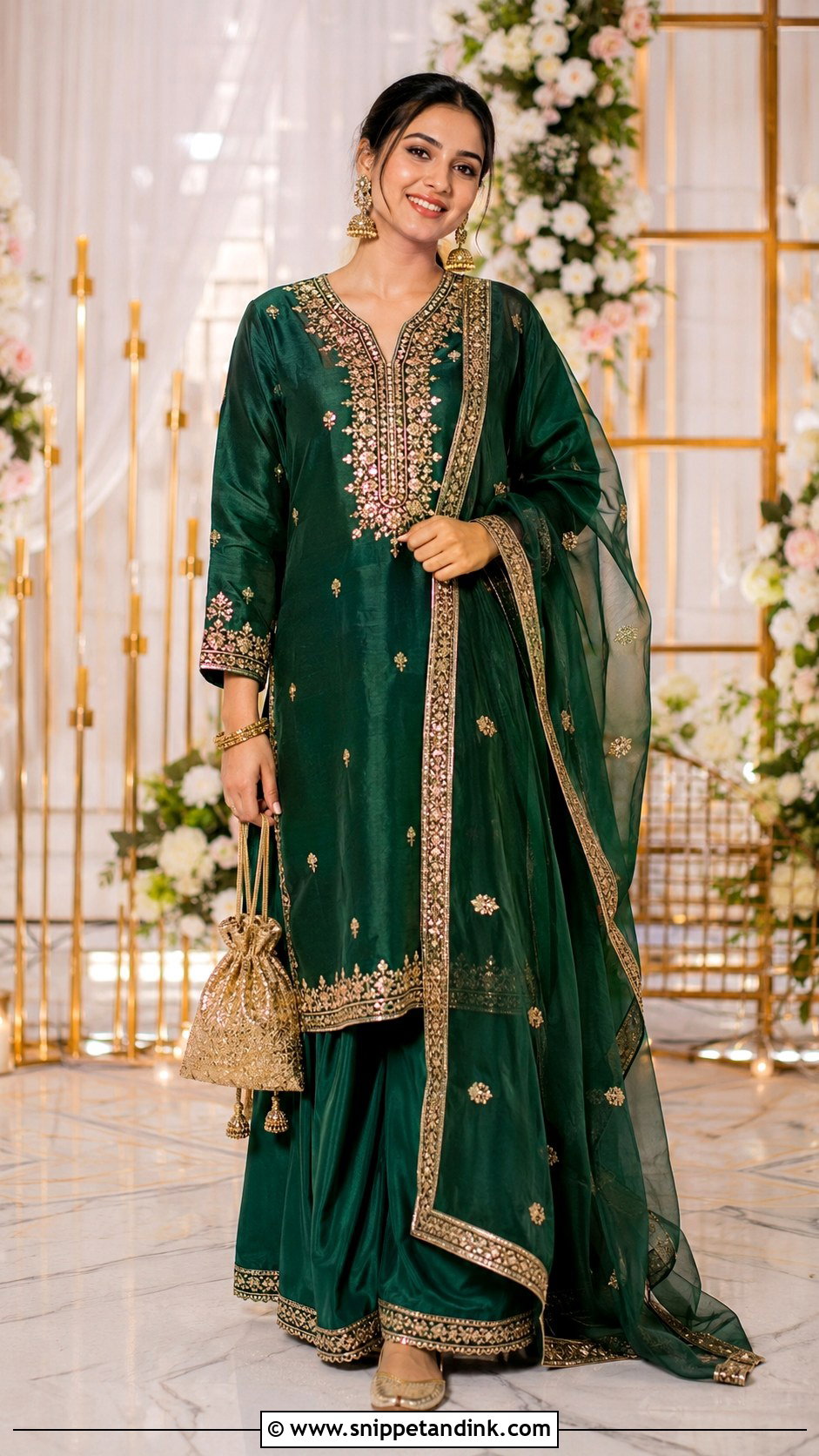
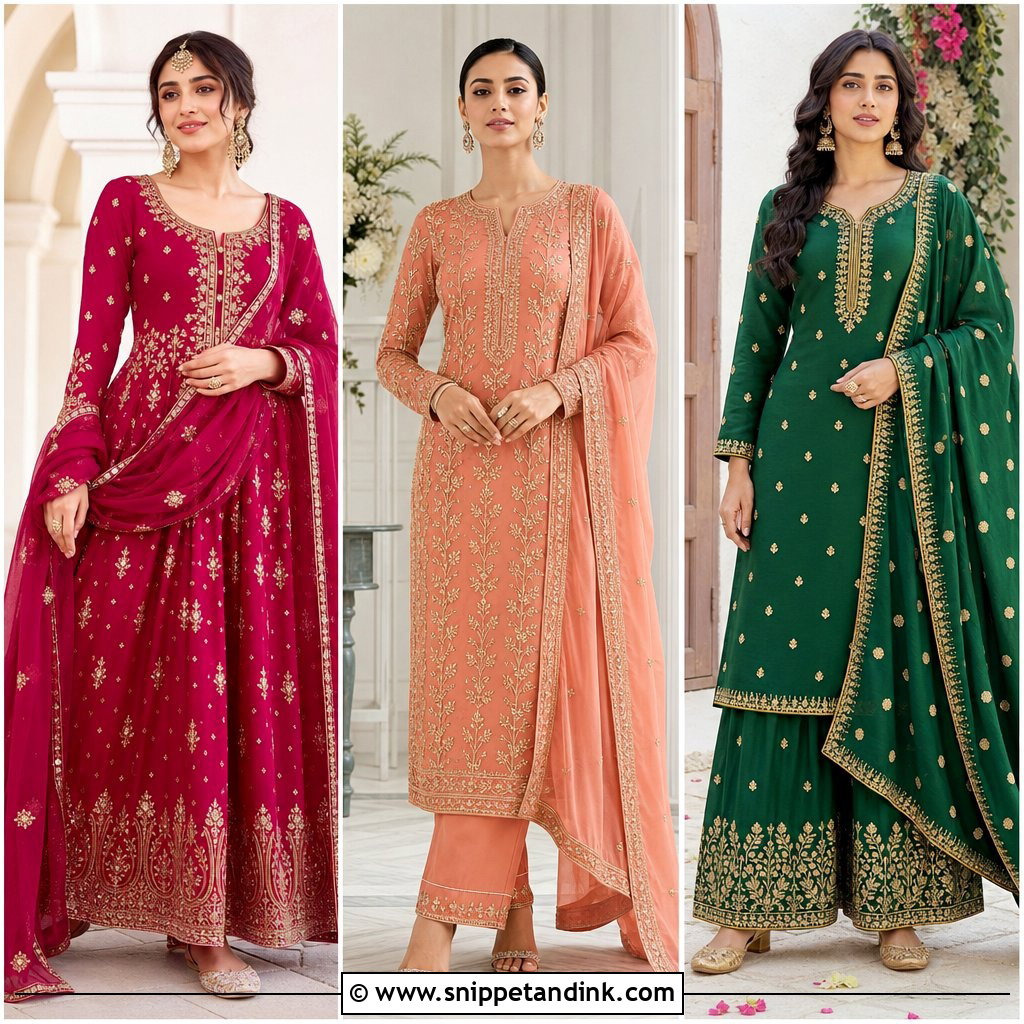
Silk over palazzos is the pairing I give guests who want to look dressed up and still sit cross-legged at the mandap. The width of the palazzo balances a fitted kurta, and the fabric falls straight instead of clinging when the air is humid. Emerald, sapphire or magenta with zari at the neckline and cuffs is plenty of decoration. One thing I check: silk palazzos with a thin waistband roll down over a long day, so ask for a wider elasticated or drawstring band. Gold jhumkas, a potli and cushioned juttis finish it.
2. Anarkali Kurta With Churidar
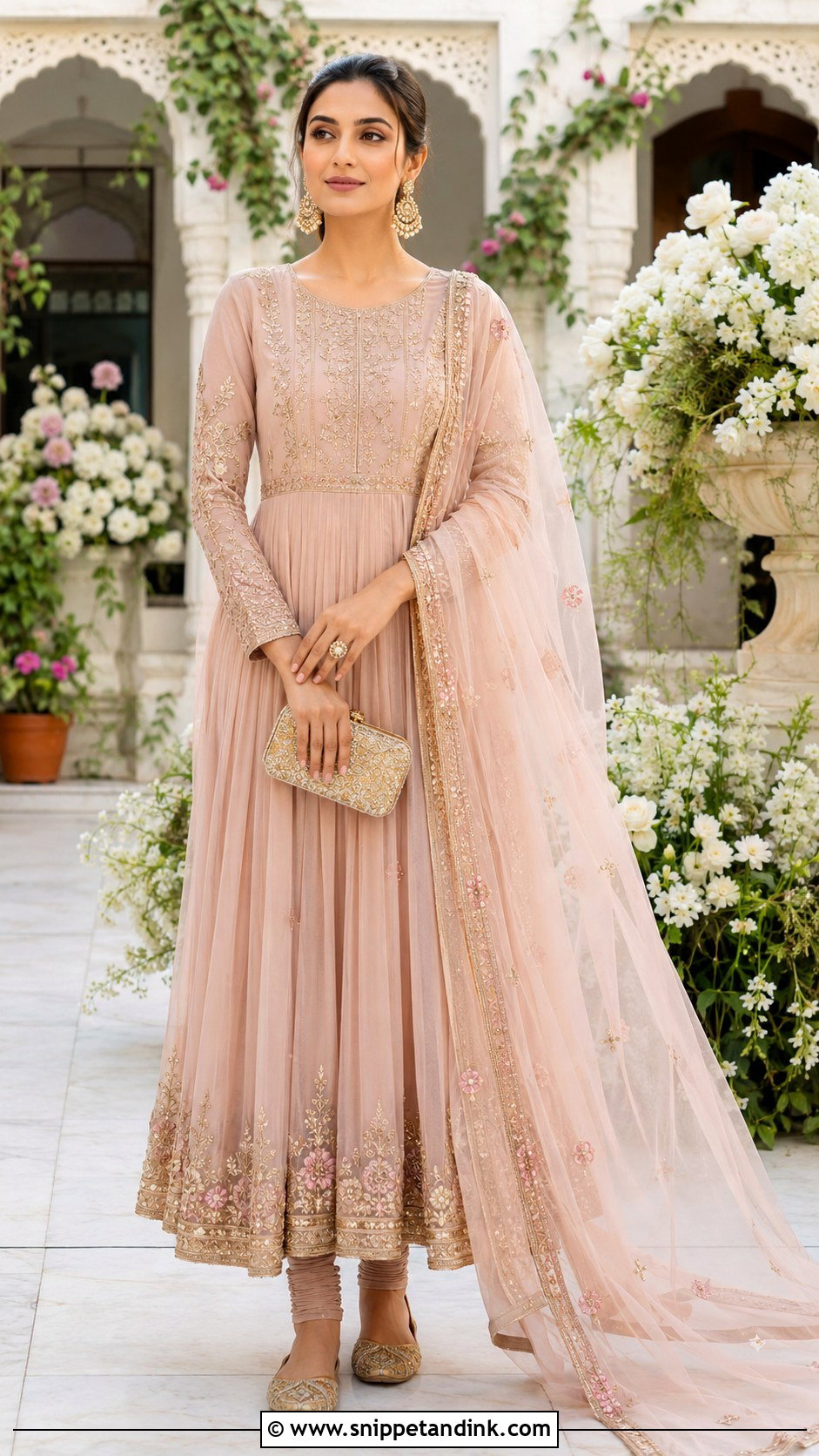
An Anarkali with churidar is the closest you’ll get to lehenga movement without a lehenga’s weight. The waist seam is everything. On most bodies it should sit at the narrowest point of the torso; if it drops even a little, the flare starts from the hip and looks heavy. Calf length is easier to walk in than floor length, especially on stairs. Churidar needs extra length to bunch at the ankle, so don’t let a tailor shorten it to trouser length. Chandelier earrings and pointed juttis or kitten heels suit a ceremony or reception.
3. Short Kurta With Sharara
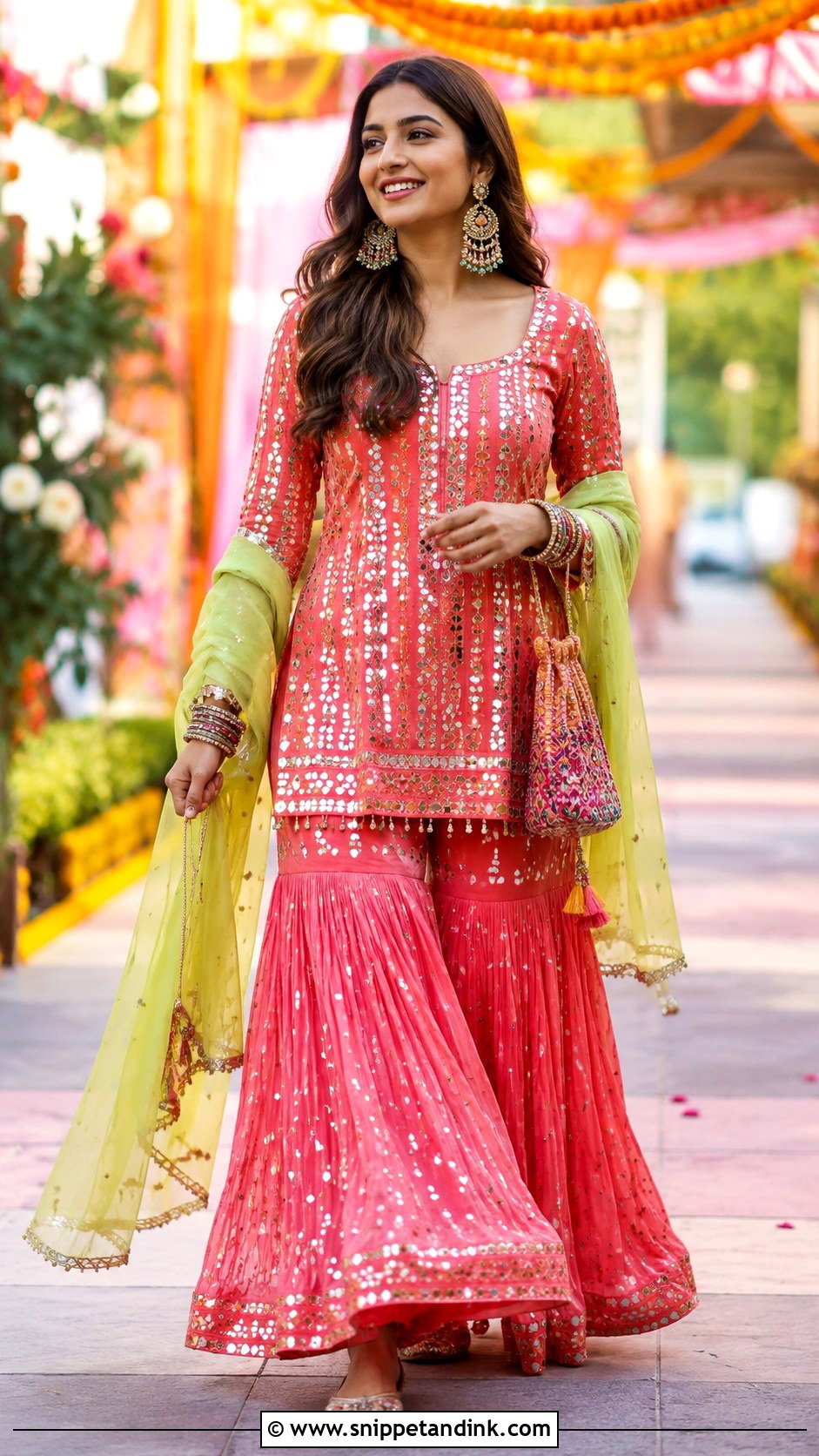
The proportion on a short kurta and sharara set depends on two points lining up: the kurta should stop around the upper thigh, and the sharara’s gathered joint should sit near or just above the knee. When those are too close together, the outfit looks bunched; too far apart and your legs disappear. Mirror work or gota suits mehendi and sangeet. A crossbody potli leaves both hands free for dancing, and metallic juttis beat heels on a dance floor that will get slippery.
4. Straight Kurta With Cigarette Pants
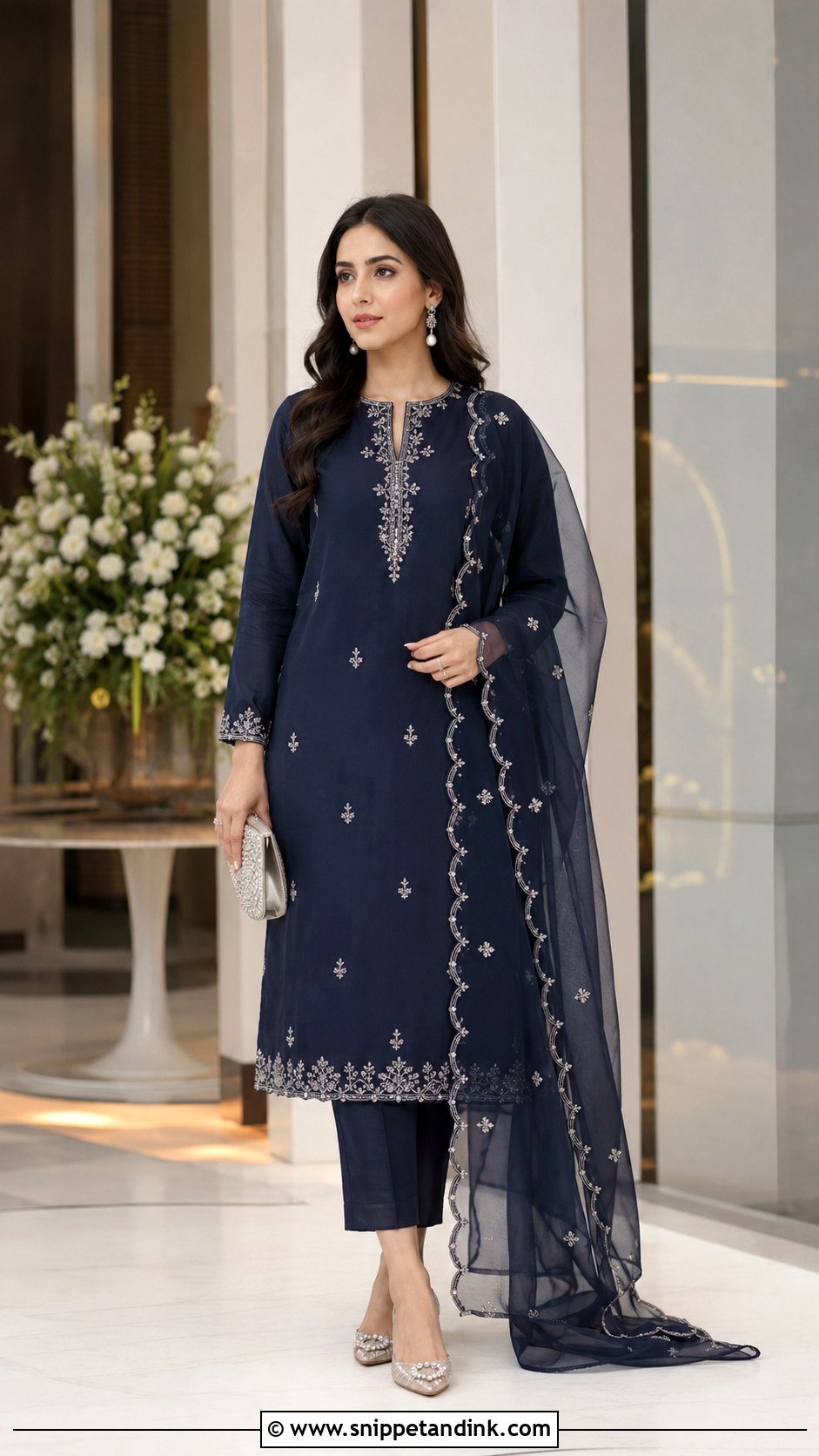
I suggest a straight kurta with cigarette pants to guests who feel overdressed in anything flared. A knee-length kurta with side slits and some structure in the shoulder looks tailored in photos, and the slim pants stay neat through a day of moving between rooms and gardens. Slits should reach no higher than mid-thigh, or they gape when you sit. A narrow-bordered organza dupatta adds softness. Pearl drops, a structured clutch and embroidered flats suit an engagement, civil ceremony or day wedding.
5. Chikankari Kurta With Flared Pants
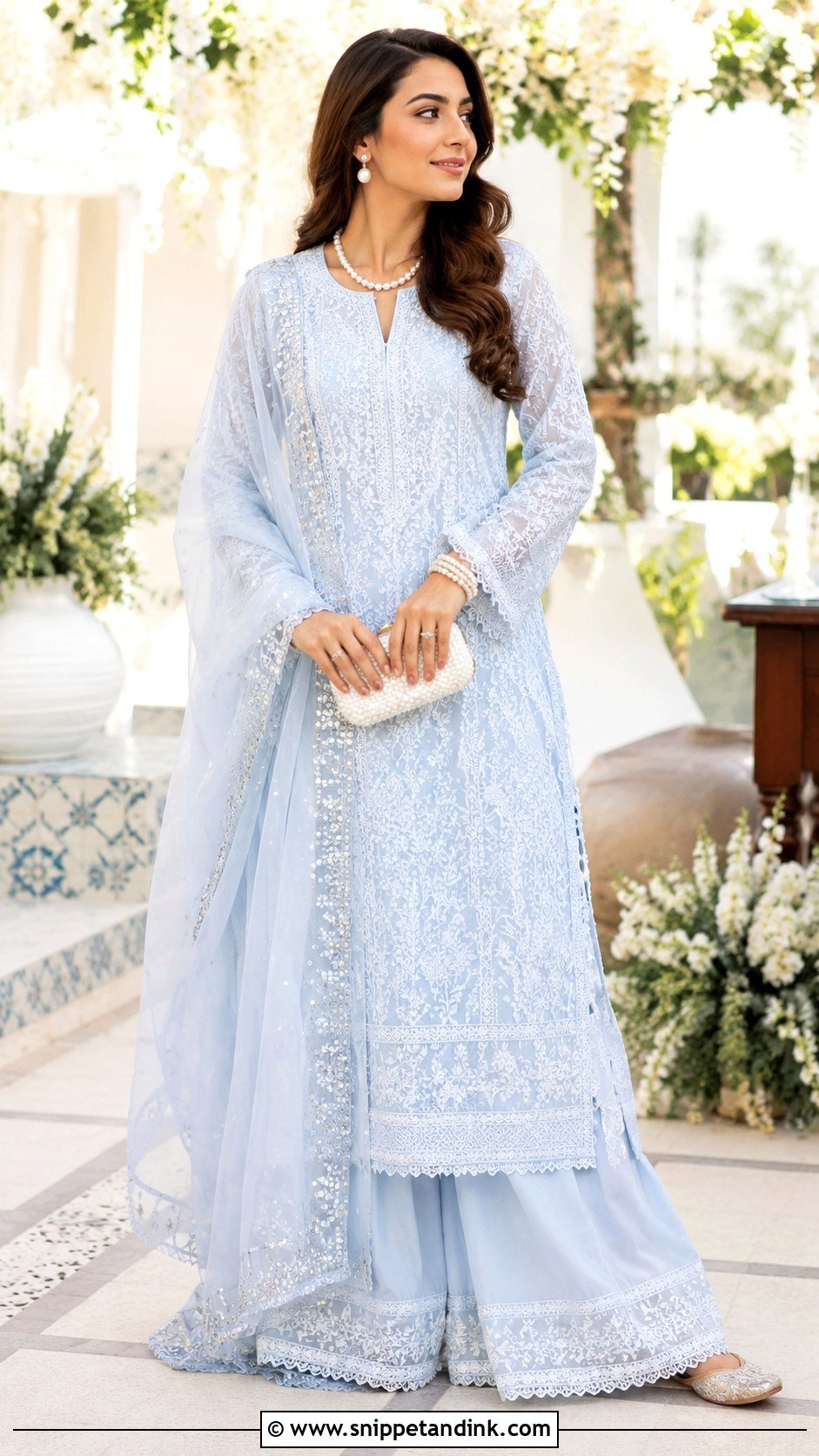
Chikankari is hand embroidery worked on fine cotton, georgette or mul, and it is at its best in morning light. A long kurta in blush, powder blue, mint or lavender over flared pants in the same shade makes one long column. These fabrics are sheer, and outdoors they show everything, so I always ask for a smooth tonal lining and a matching slip. Pearl earrings and a mother-of-pearl clutch suit the white threadwork. Wash chikankari gently by hand; the embroidery threads pull if it’s wrung out.
6. Bandhani Kurta With Straight Pants
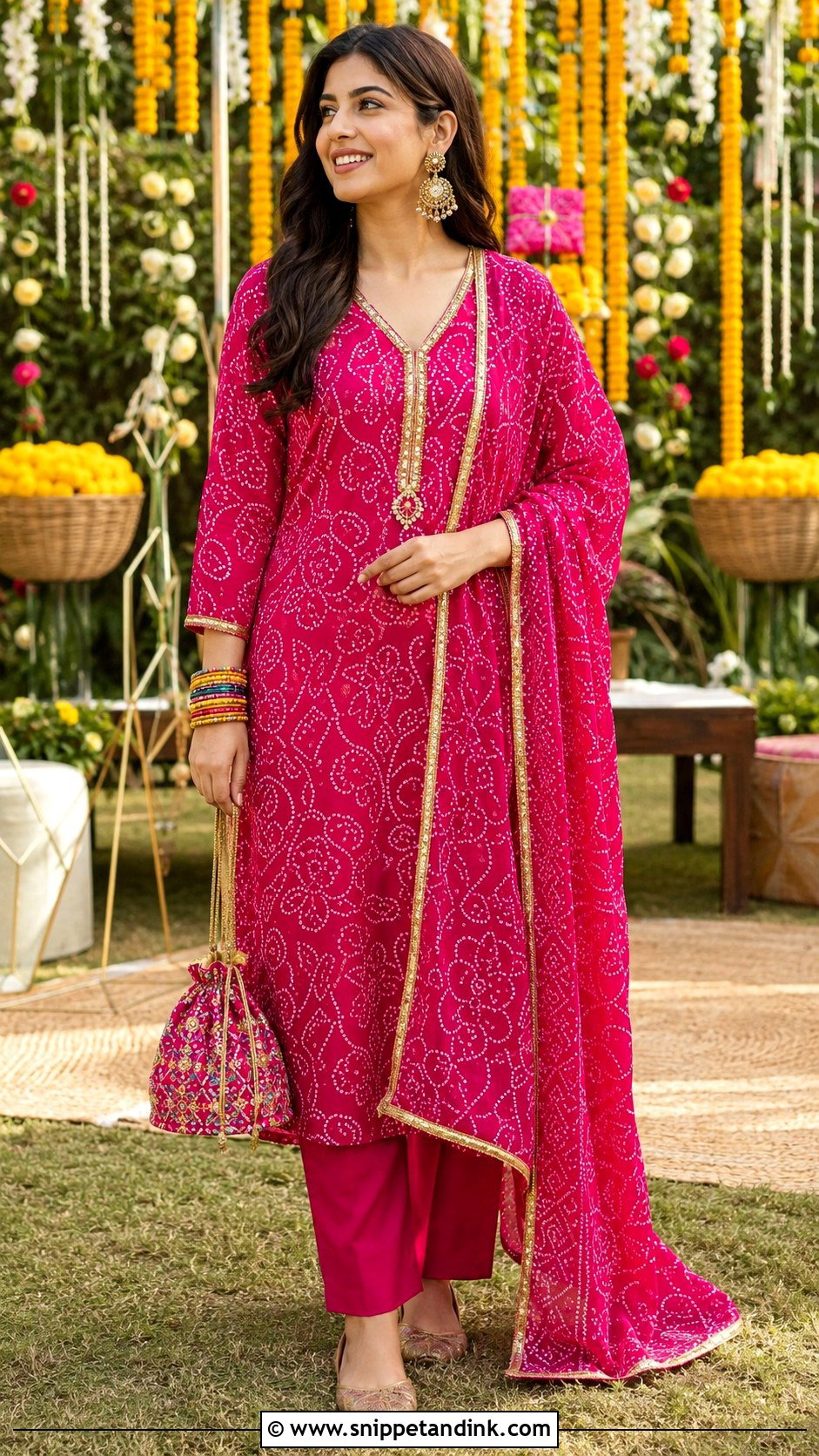
Bandhani is a tie-dye print, so let it be the only pattern you wear. A red, fuchsia, orange or royal blue kurta with plain straight pants keeps the dots readable from across a room. If the dupatta is patterned too, I keep its motifs smaller than the kurta’s. Oxidized gold earrings, bangles and a woven potli carry the folk feel, with neutral gold juttis. It’s a natural fit for mehendi, haldi and day functions. One practical point: real bandhani can bleed its dye when wet, so it isn’t the set I’d wear to a haldi with water play.
7. Velvet Kurta With Wide-Leg Pants
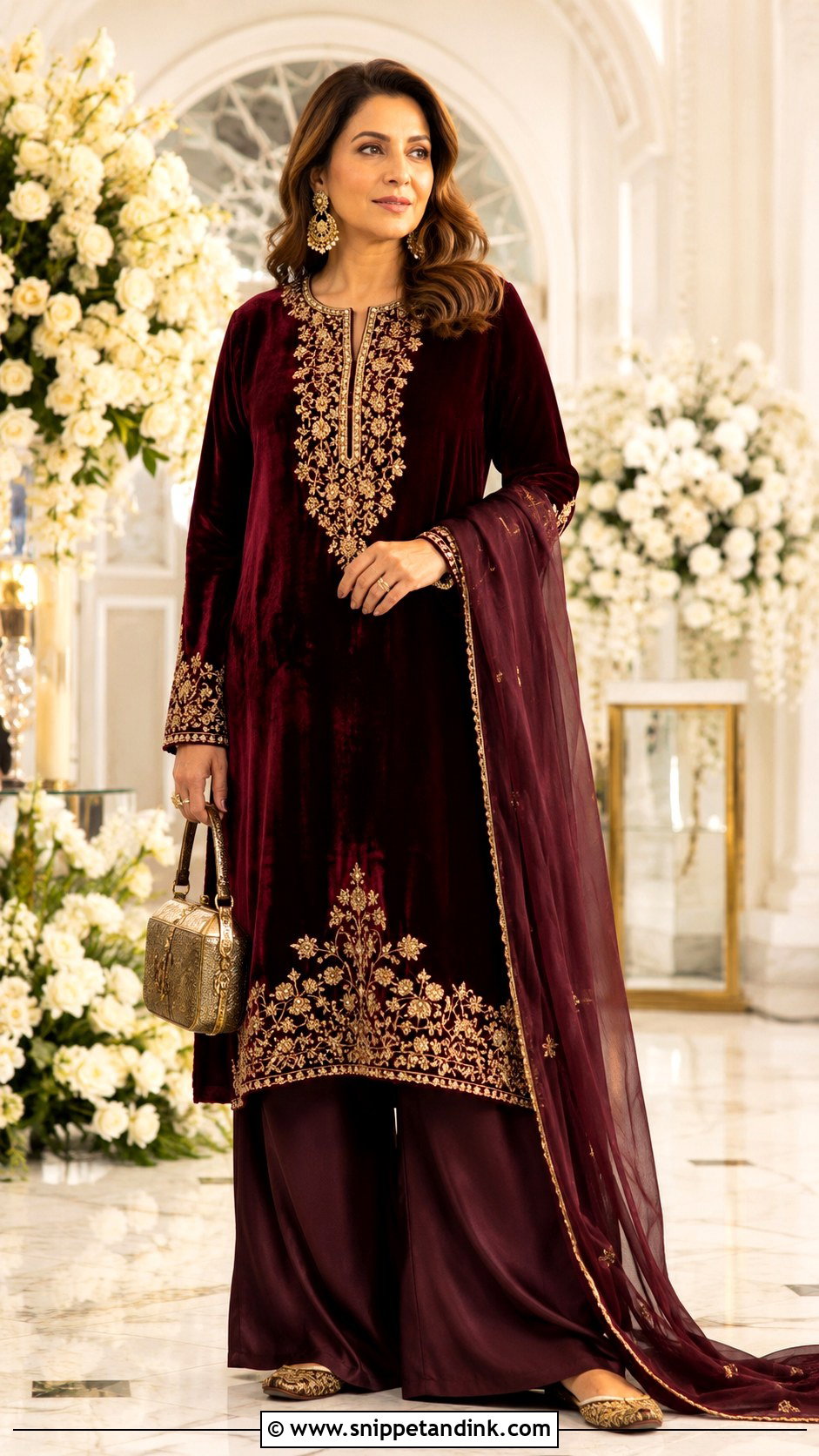
Velvet is warm, and that’s why I pair it with fluid silk or satin wide-legs rather than more velvet. Two layers of pile look bulky and trap heat once the room fills up. Burgundy, navy, forest green or plum with antique gold embroidery suits a winter reception. Drape the dupatta over one shoulder so the texture shows. Closed-toe juttis or block-heel pumps keep feet warm on cold floors. Keep jewelry around the face; a necklace over a velvet neckline gets lost in the pile.
8. Embroidered Kurta With Organza Dupatta
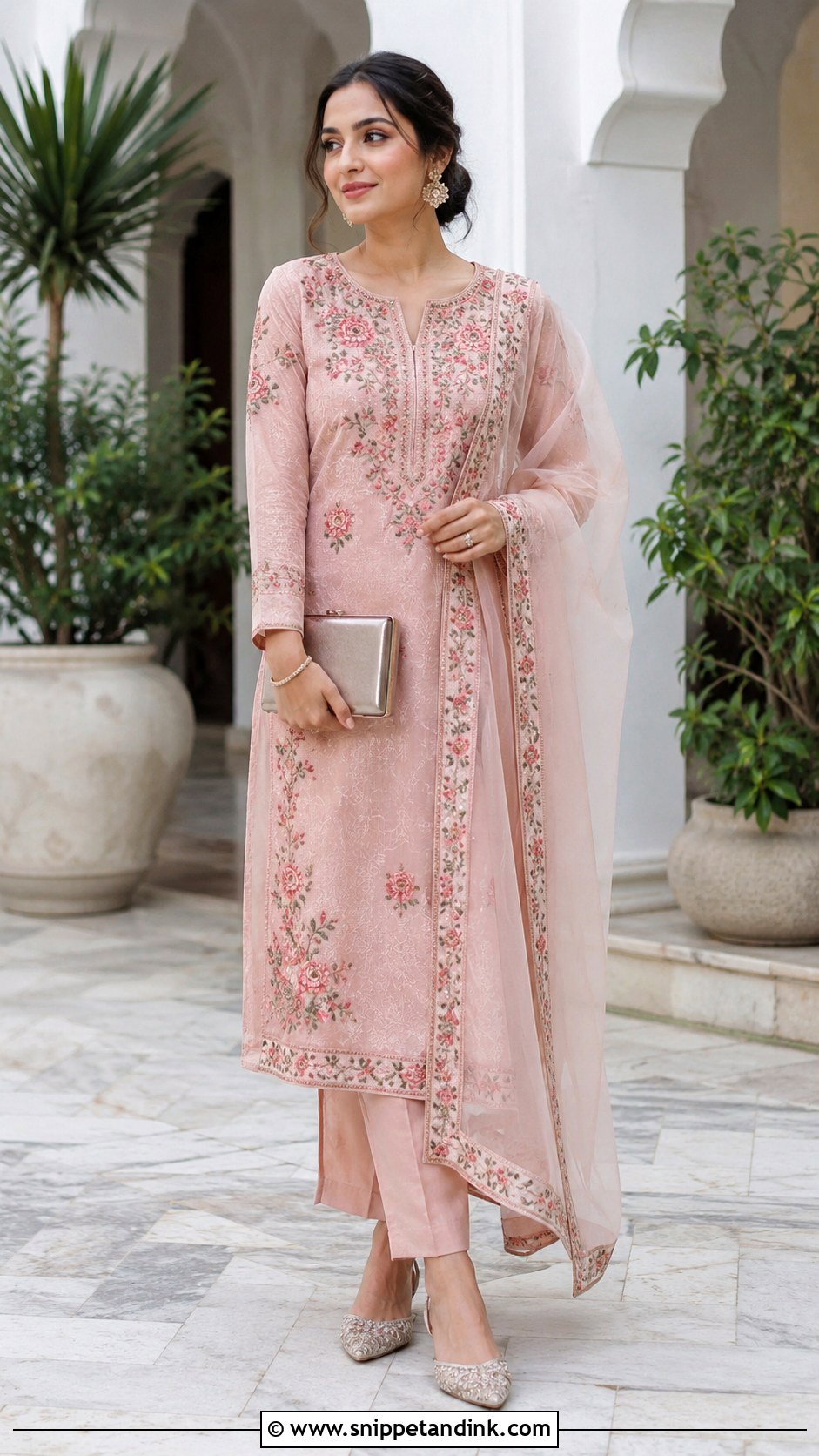
Organza is crisp, which makes it the easiest dupatta to keep looking intentional all day. I like it over a straight or lightly flared kurta with threadwork or pearls and matching ankle-length pants, with the dupatta’s border echoing the kurta rather than repeating it. Drape it over both arms for portraits, then pin it to one shoulder when you’re moving around; organza doesn’t slip like chiffon, but it does catch on bangles and rings. This is the outfit that moves from a day ceremony to dinner with only a lipstick change.
9. Mirror Work Kurta With Sharara
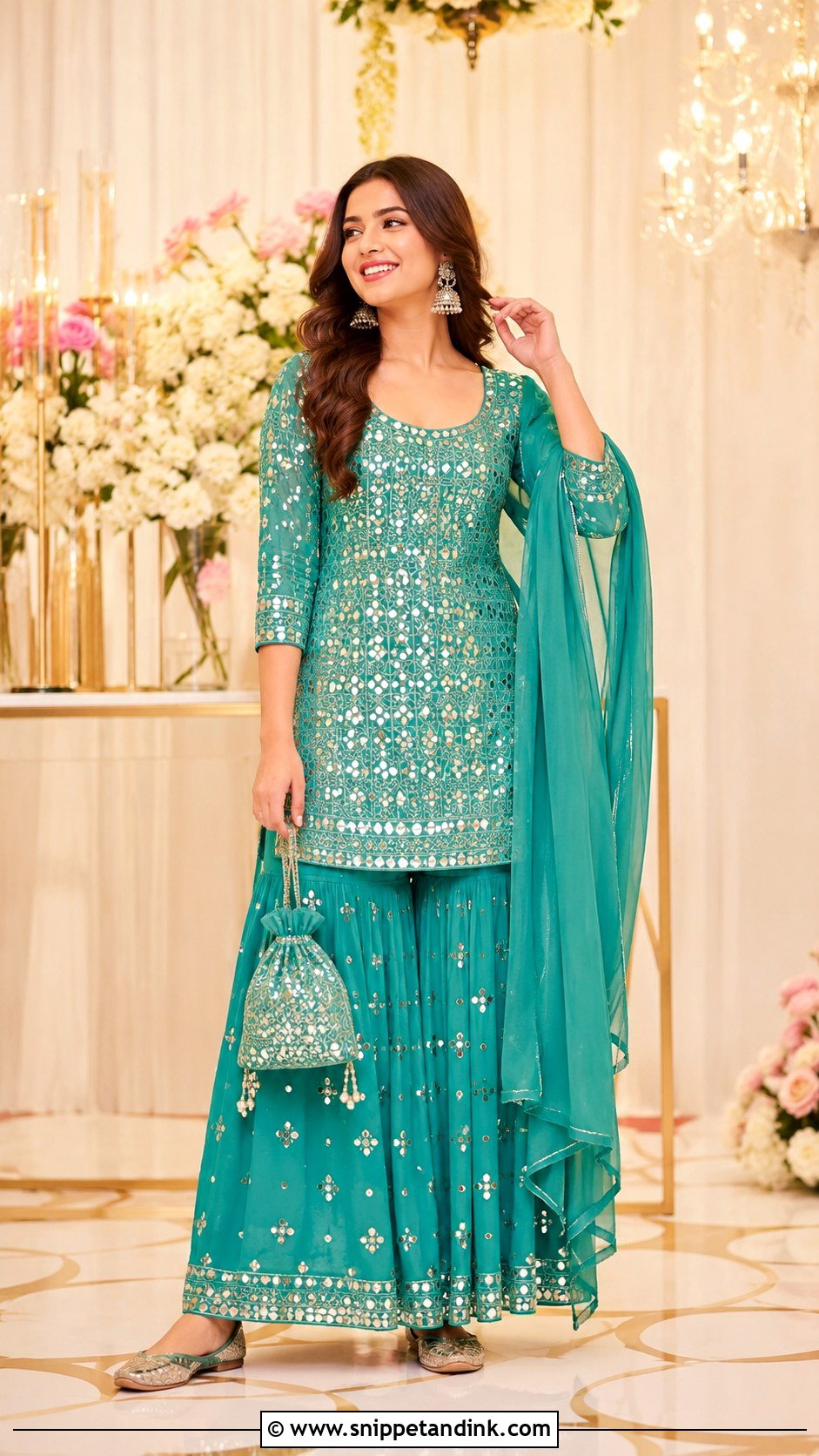
Mirror work belongs at a lively sangeet or evening wedding function, where it reflects every coloured light. I’d look for spaced mirrors on a sleeveless or elbow-sleeve kurta rather than solid coverage, because dense mirror work gets heavy and stiff. A sharara with a decorated hem band and a plain chiffon dupatta complete it. If the neckline is already worked, skip the necklace altogether. A braided ponytail stays put while dancing, where loose waves catch on the mirrors.
10. Jacket Kurta With Palazzo Pants
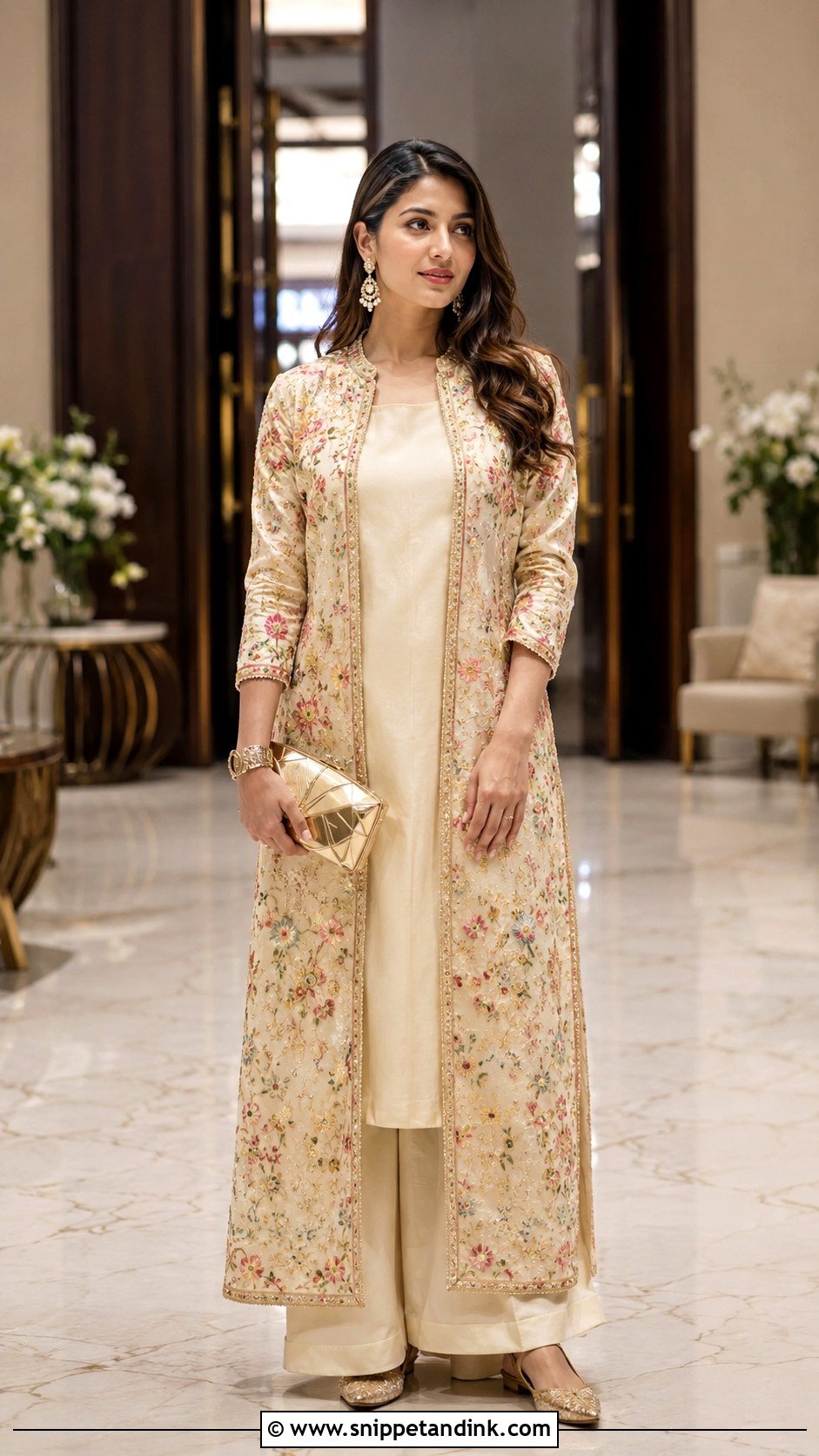
The jacket kurta outfit is the one I suggest to guests who like structure and want coverage without a dupatta. A plain sleeveless kurta with matching palazzos sits under a long open-front jacket that falls below the knee. That long vertical line flatters almost any height. The jacket does all the talking, so keep the accessories focused: drop earrings, a cuff, a compact clutch. Check the jacket’s armholes with your arms raised; jackets cut tight there are miserable by dessert.
11. Cape Kurta With Slim Pants
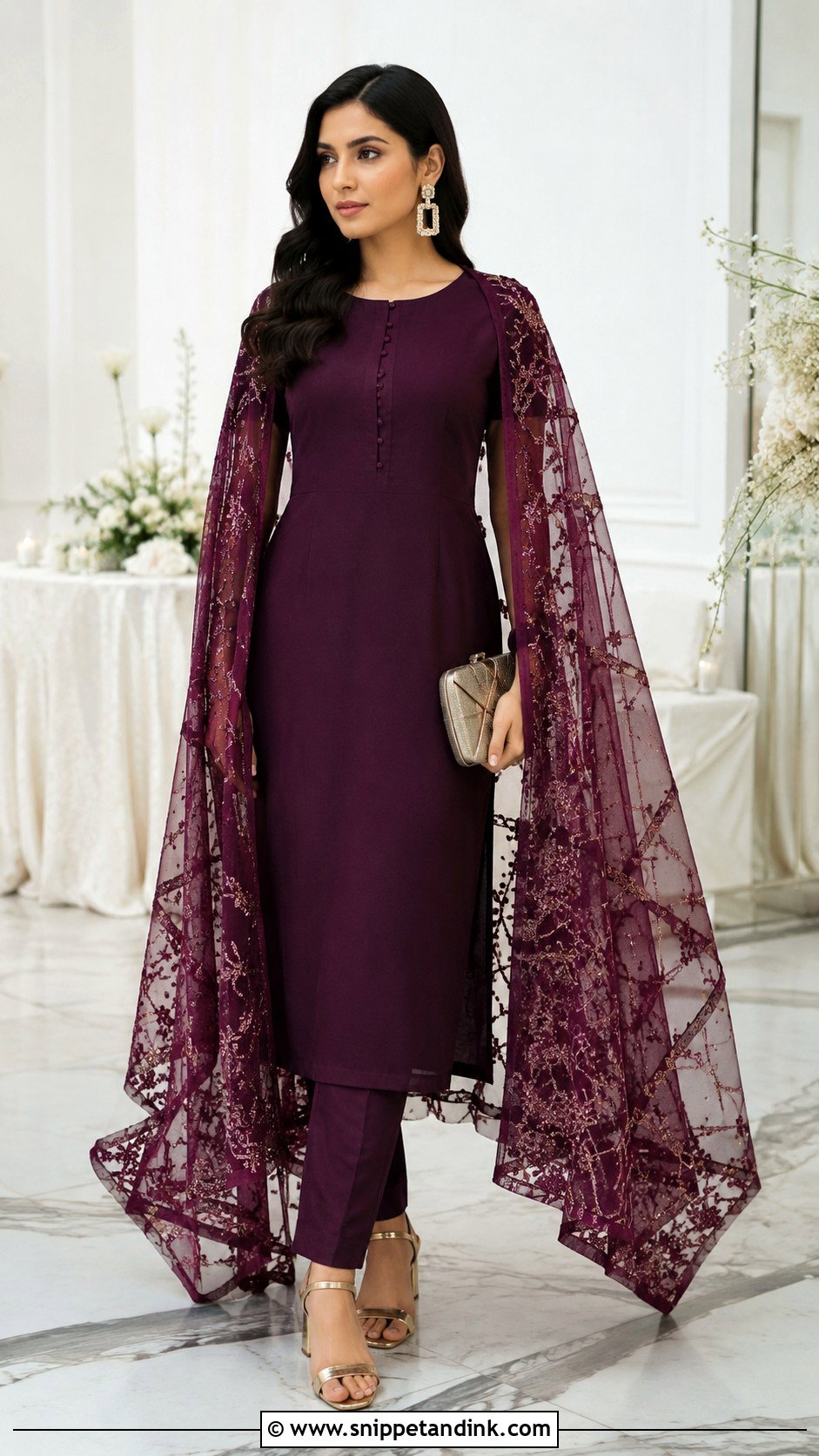
A cape is a dupatta that can’t fall off, which is why guests who greet a lot of people love it. Keep the base kurta and slim pants simple and let the sheer cape carry the embroidery, at the shoulders or along the hem. Make sure the cape ends below the hip; a short cape over a long kurta cuts the body in half. Geometric earrings and block heels lean the look Indo-Western, so it suits a reception, engagement party or modern sangeet more than a traditional ceremony.
12. Angrakha Kurta With Churidar
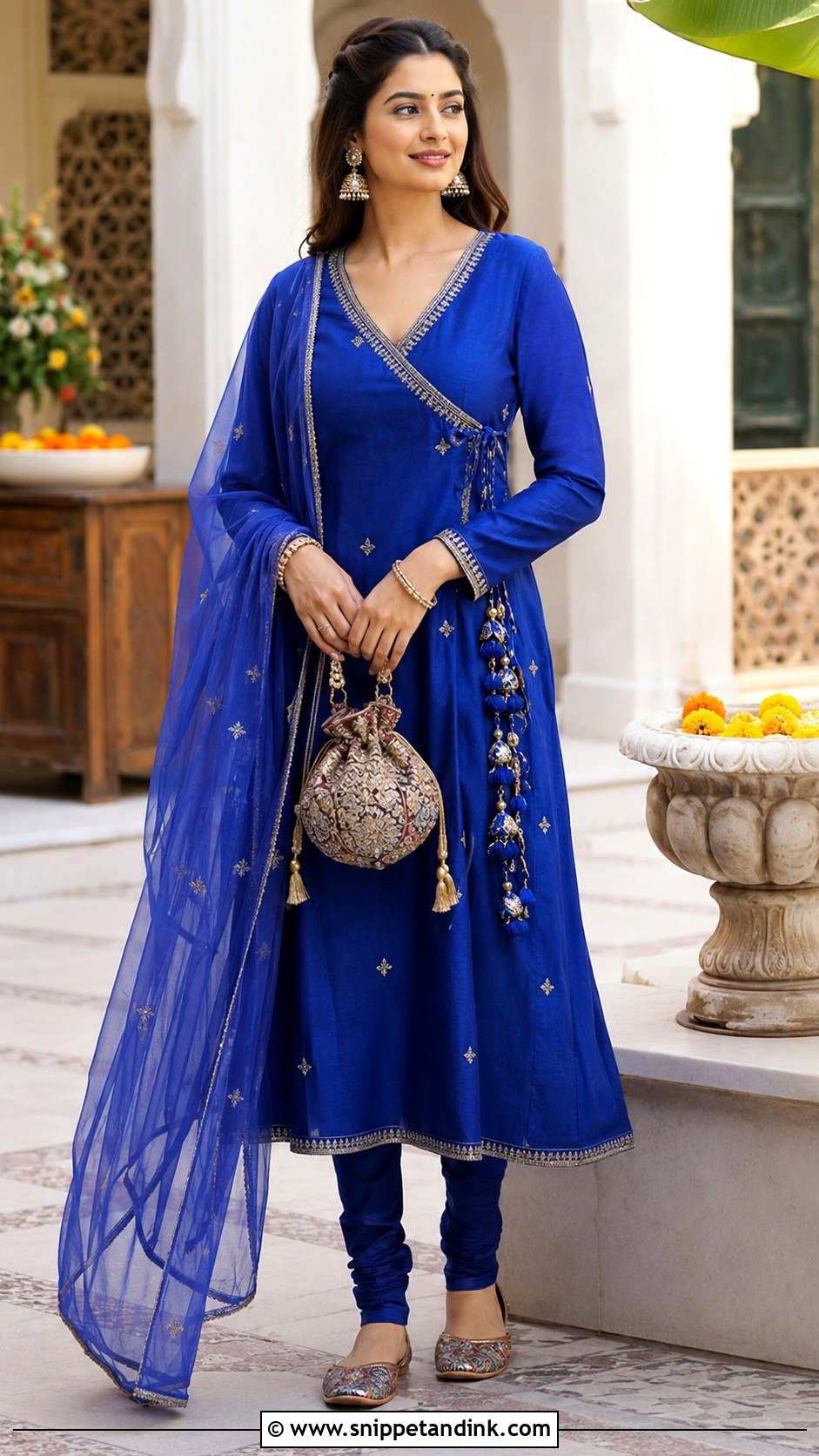
Angrakhas wrap and tie at the side, and the overlapping neckline is the feature, so I keep the dupatta on the opposite shoulder where it won’t cover it. A knee-length or long angrakha with gota or tassels at the ties suits pre-wedding pujas and day ceremonies over a fitted churidar. In practice, tie closures loosen as you move. I always have a tailor add a concealed hook inside the wrap. Traditional jhumkas, a small bindi and a round potli keep it rooted.
13. Asymmetrical Kurta With Dhoti Pants
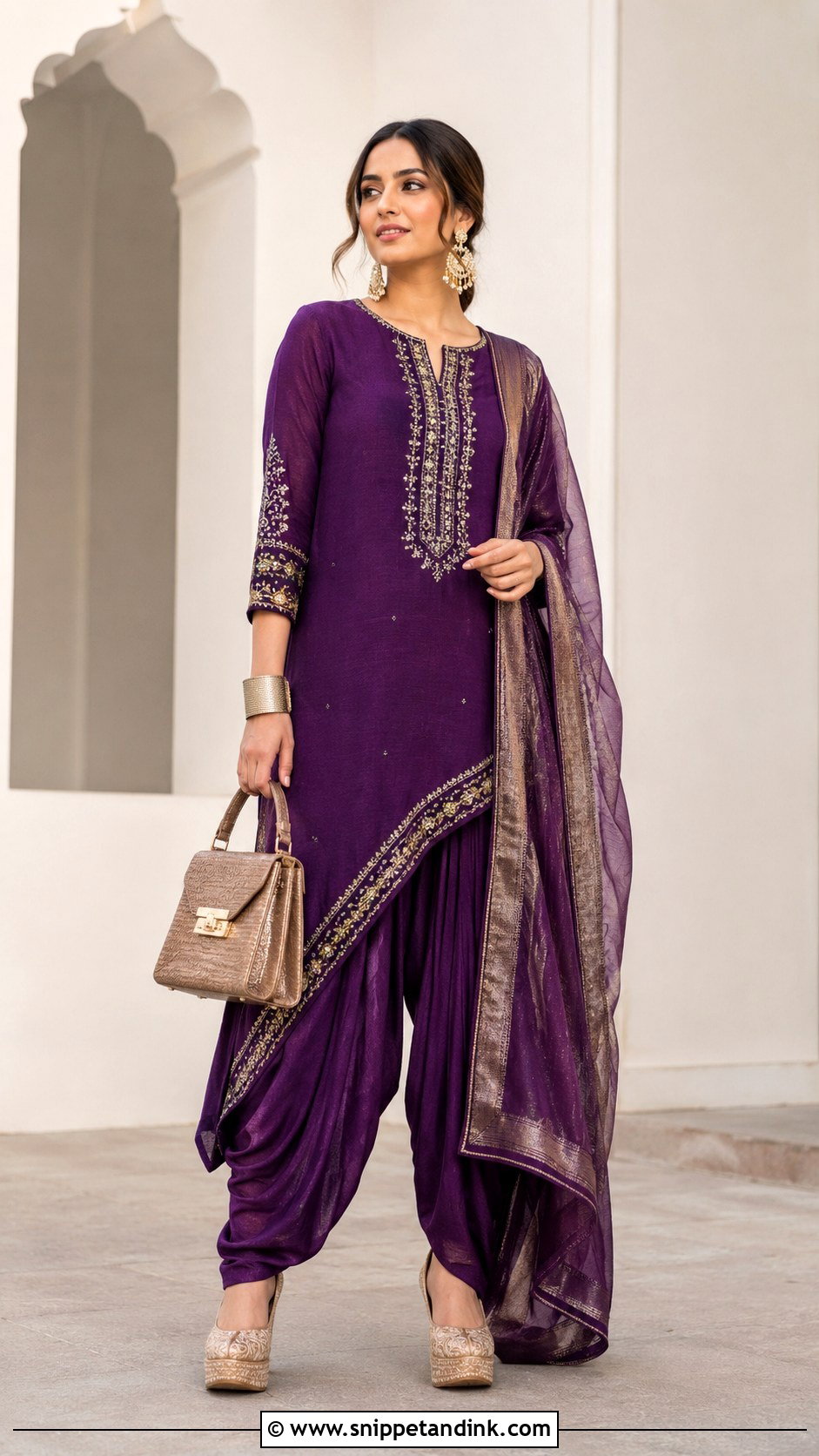
With dhoti pants, volume lives below the waist, so the kurta has to stay streamlined. A high-low or diagonal-hem kurta in one solid colour, with embroidery only at the neckline or one side, gives the drape room. Skip a full dupatta; a narrow stole is enough if the ceremony calls for covered shoulders. Platform juttis or block sandals stop the dhoti pooling over your feet. I’d keep this one for a sangeet, cocktail event or creative reception rather than a temple ceremony.
14. Peplum Kurta With Gharara
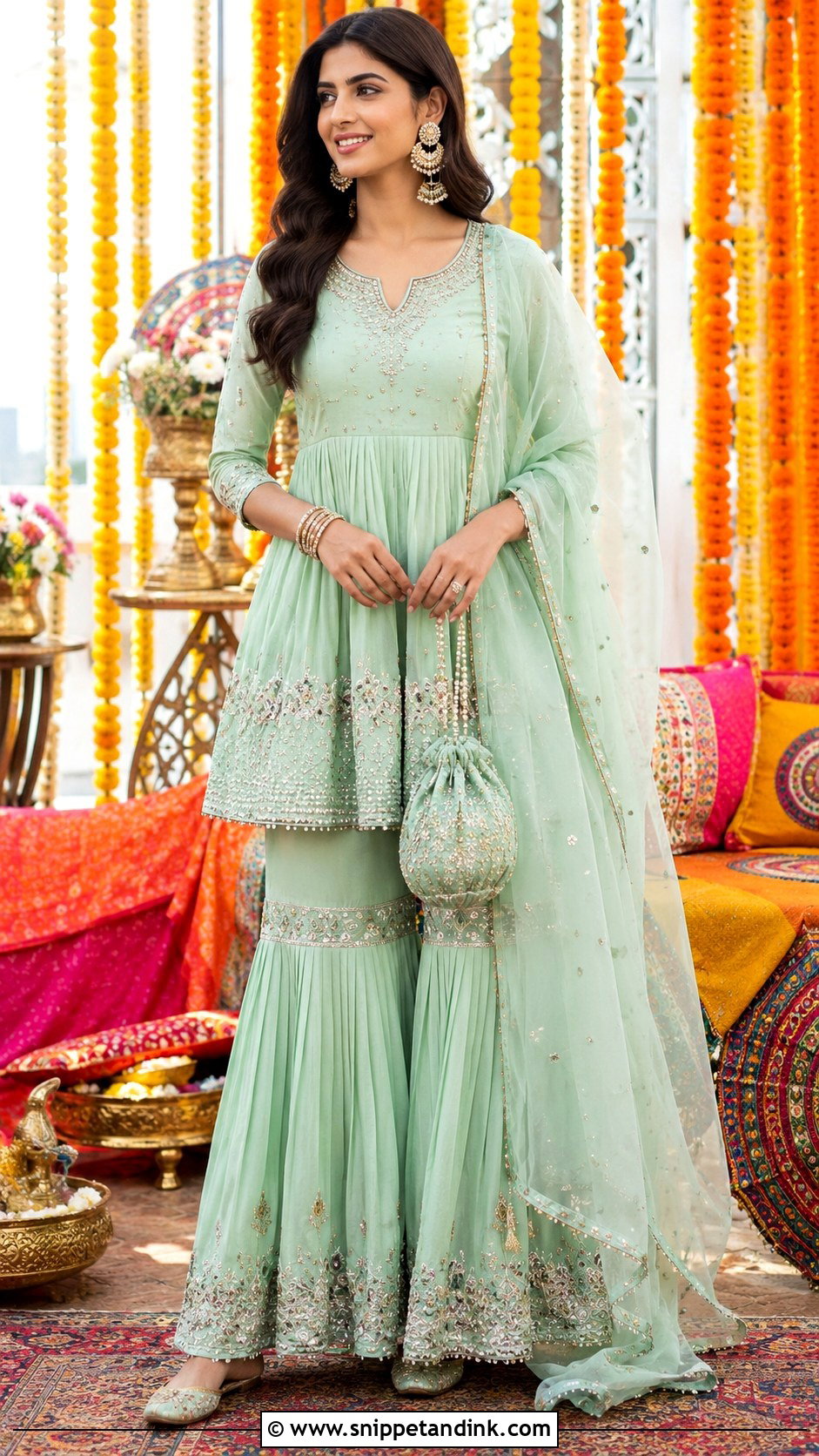
A peplum kurta and gharara set has two flares, at the waist and at the knee, so the fit of the bodice decides whether it looks balanced or bulky. I’d have the peplum begin exactly at your natural waist and stop above the hip bone. Matching embroidery at the neckline, peplum edge and gharara knee bands ties the three zones together. A dupatta worn diagonally lengthens the line. Embellished flats are easiest with a floor-grazing gharara, and this is a playful pick for mehendi and sangeet.
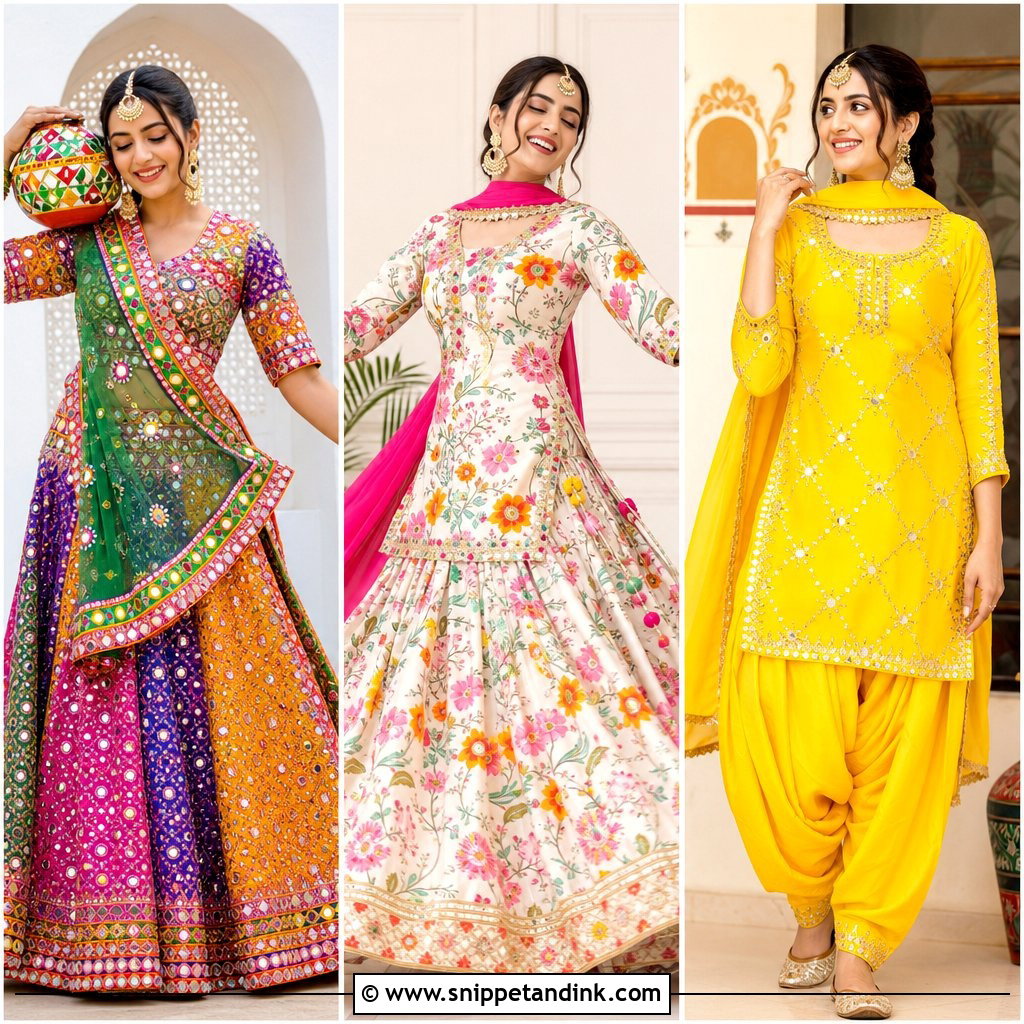
15. Brocade Kurta With Silk Pants
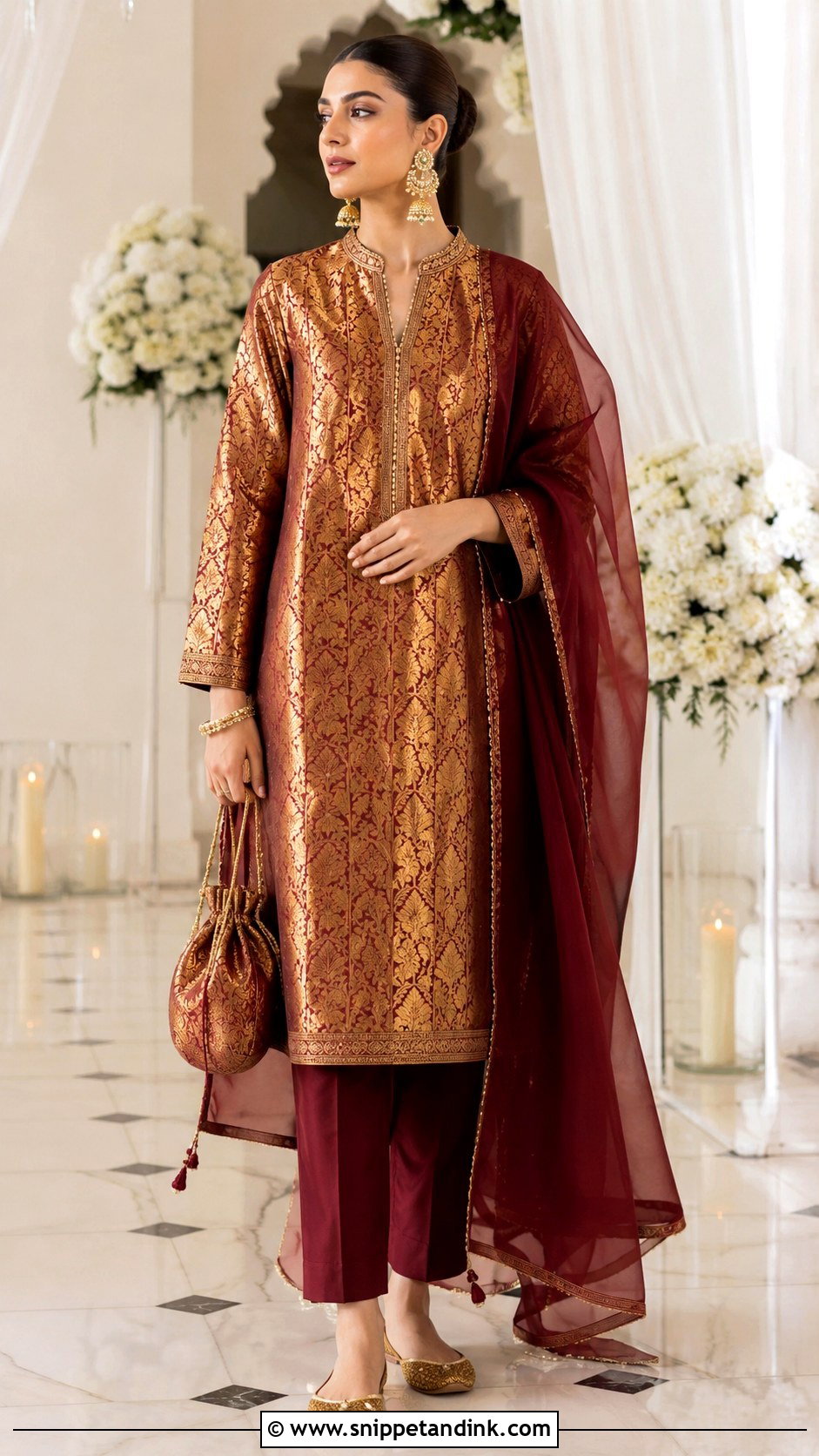
Brocade is woven with metallic thread, so it already shines; anything heavy added on top competes with it. A straight brocade kurta with side slits and a plain neckline over coordinating silk pants is enough for a formal ceremony. Pair it with a solid chiffon or organza dupatta edged in slim zari. Brocade is also stiff and creases hard at the inner elbow and lap, so I’d hang it the night before and keep the sitting to a minimum before photos. Temple-style earrings and gold juttis complete it.
16. Floral Kurta With Palazzo Pants
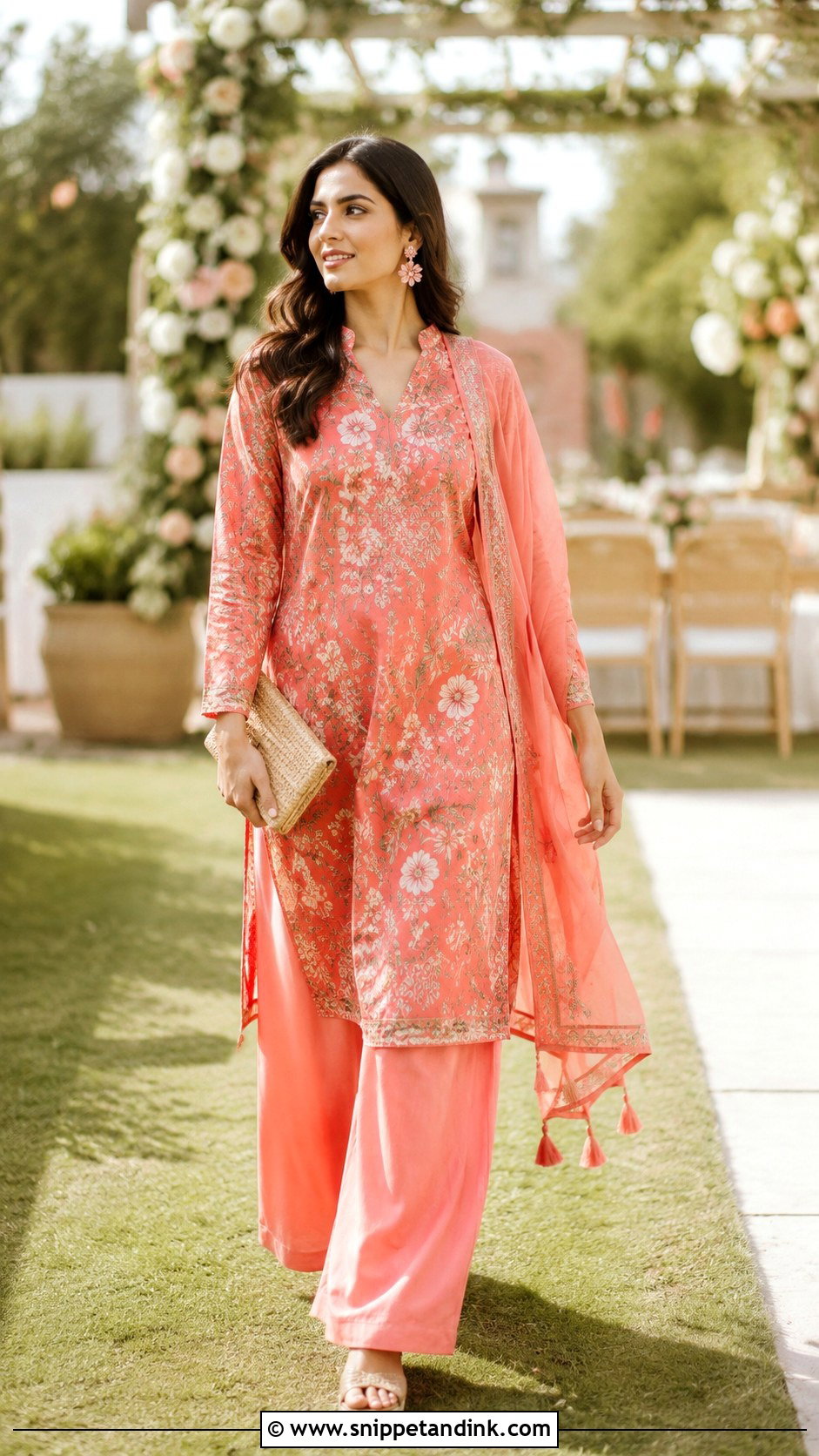
Florals are the daytime outfit I suggest for outdoor events, especially lawns and beach functions. A long printed or embroidered kurta in coral, sage or turquoise is grounded by solid palazzos; matching printed palazzos look more fashion-forward but are harder to accessorize. Keep the hem ankle length on grass or sand, because long hems pick up wet soil. Breathable cotton or mul beats polyester georgette in the heat. Wedge sandals handle soft ground better than block heels.
17. Pastel Kurta With Matching Pants
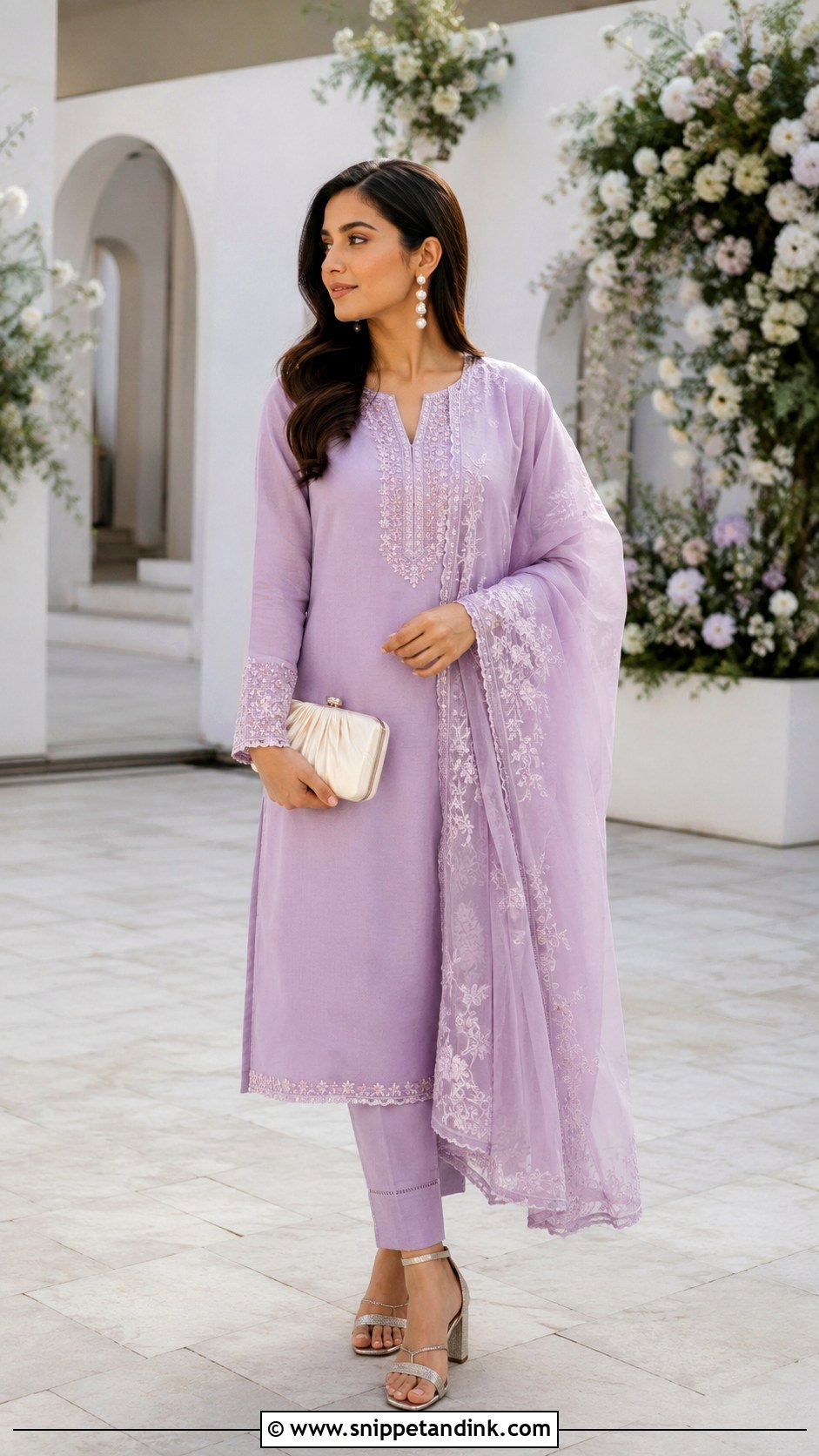
Monochrome pastels look flat when every piece is the same smooth fabric. I ask for texture to do the work: tonal threadwork, small pearls, a scalloped dupatta edge. Pick one shade, such as pistachio, lilac or rose, and repeat it across kurta, pants and dupatta, then add contrast only in your heels. It’s the set I recommend to guests who want something they’ll rewear, because a single-colour base takes new dupattas and jewelry easily.
18. Jewel-Tone Kurta With Embroidered Pants
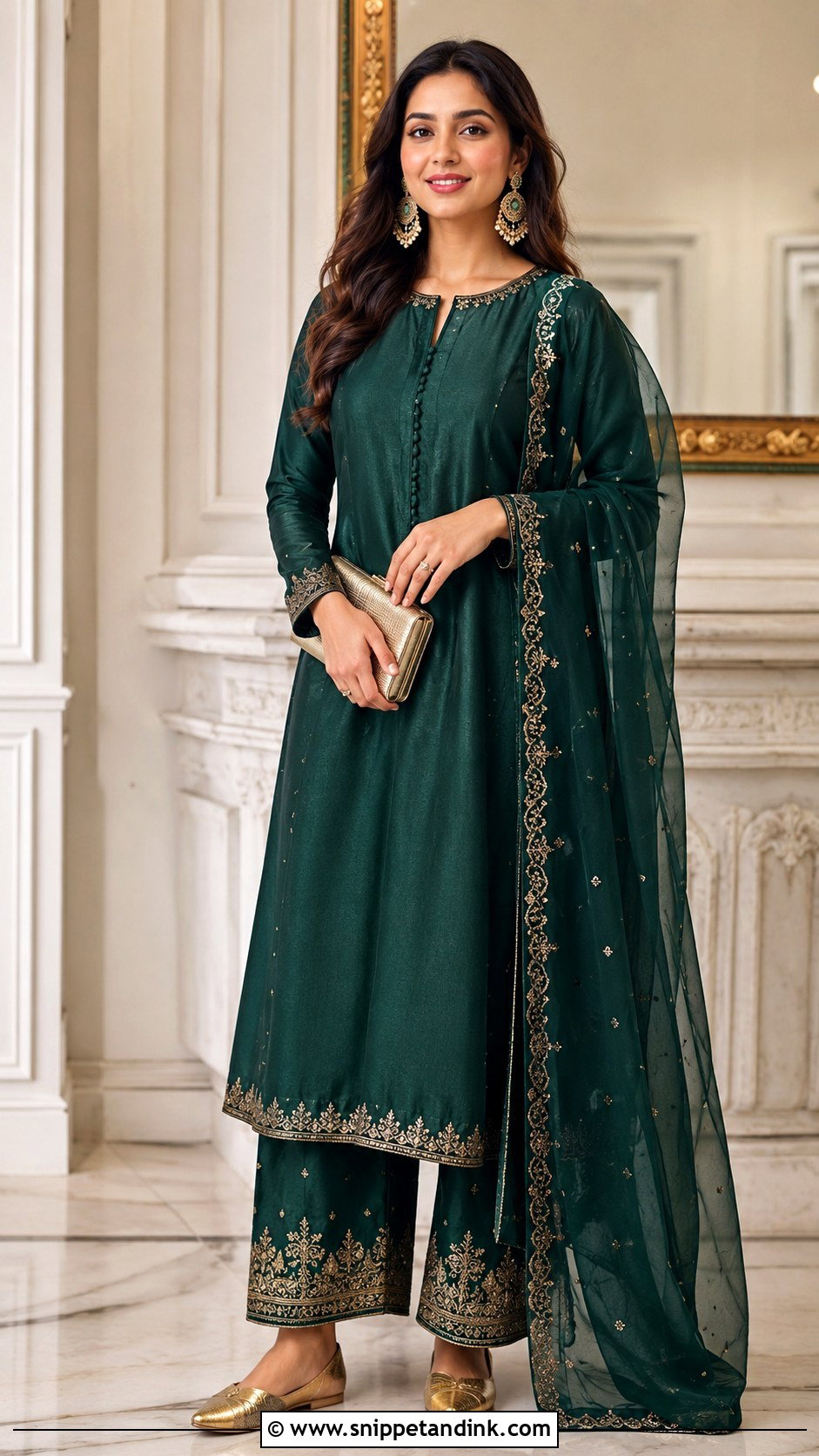
Here the drama sits low. A solid kurta in ruby, emerald, amethyst or midnight blue lets embroidered pants with worked cuffs and metallic thread take attention, which is a nice change from the usual heavily worked kurta. Keep the kurta length at or just above the knee, otherwise the pants’ detail disappears. A sheer matching dupatta, statement earrings and a sleek clutch suit an evening reception. Pointed juttis keep the line long.
19. A-Line Kurta With Wide-Leg Pants
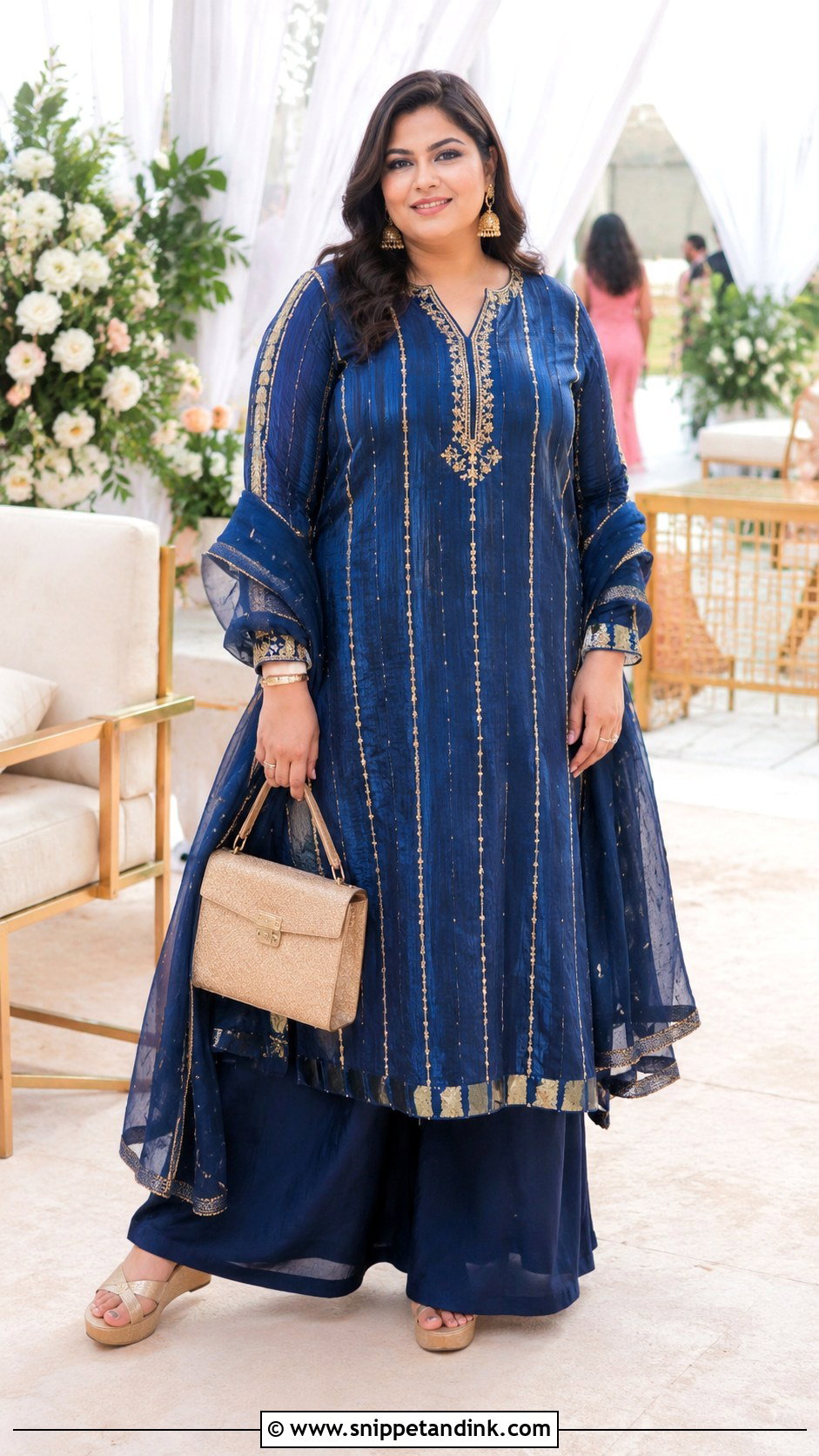
An A-line kurta over wide-leg pants is the most forgiving shape on this list, and I fit it from the shoulders down. If the shoulder seam sits right, the gentle flare looks deliberate on every body; if it drops off the shoulder, the whole outfit reads oversized. Vertical embroidery or a V-neck adds length, and the pants should skim rather than cling. I often suggest it for plus-size and older guests who want ease without looking casual. Cushioned juttis or low wedges carry you through a long ceremony.
20. Minimal Kurta With Statement Dupatta
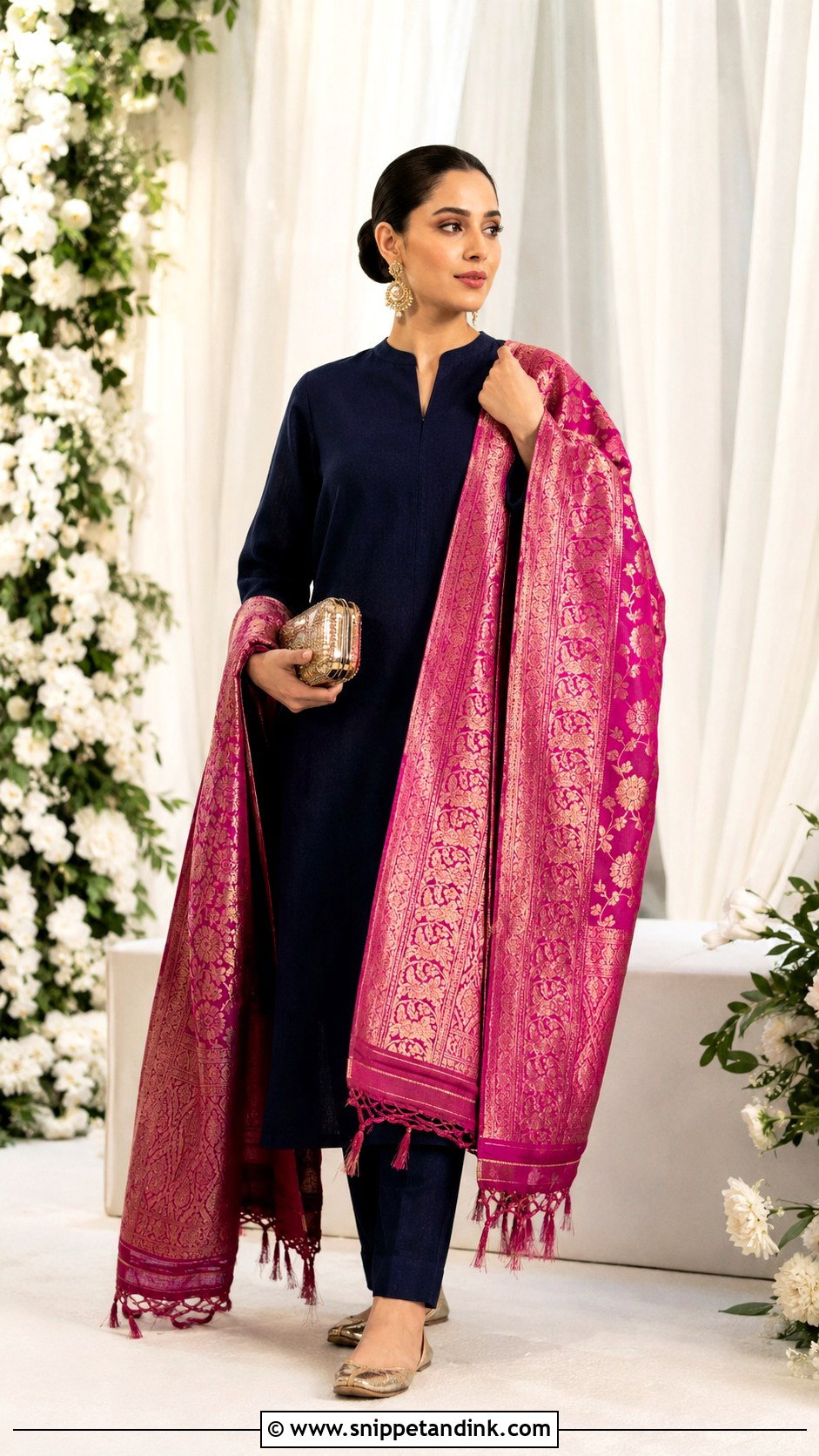
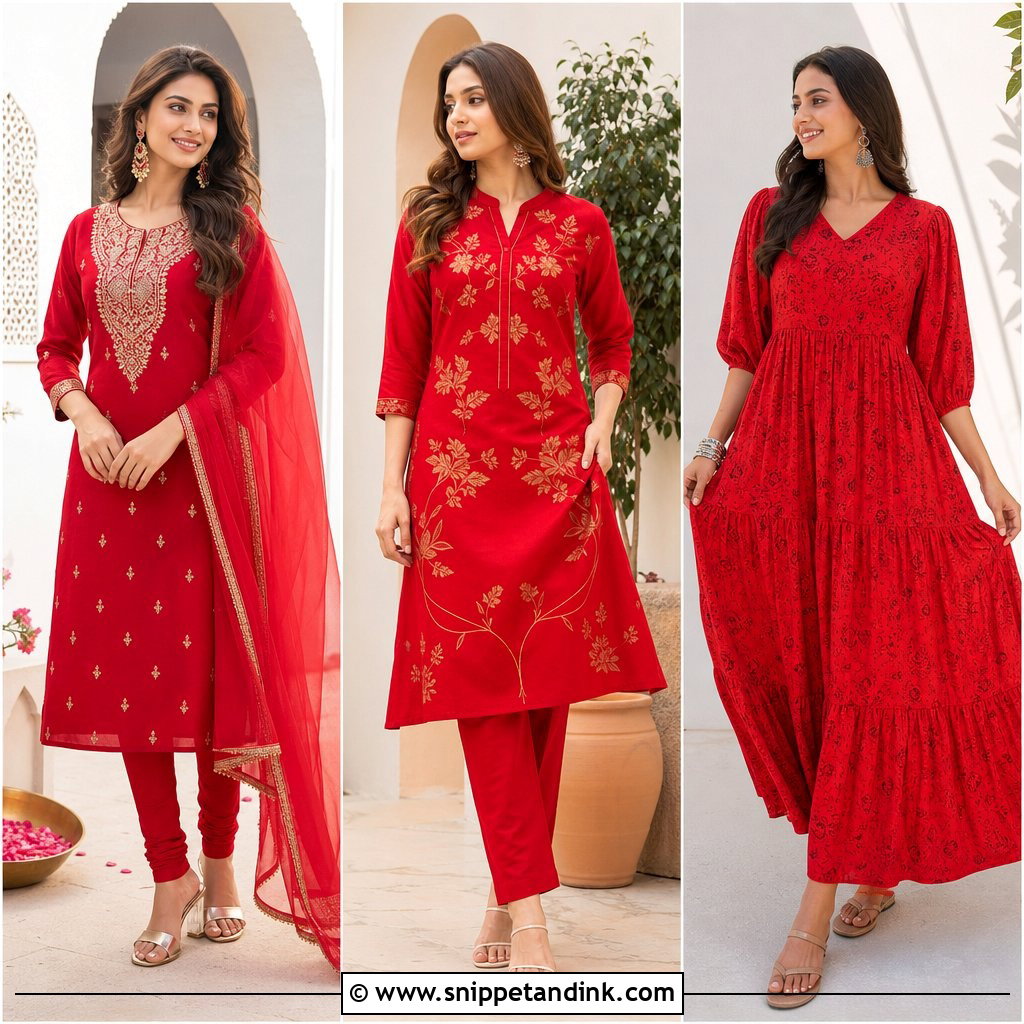
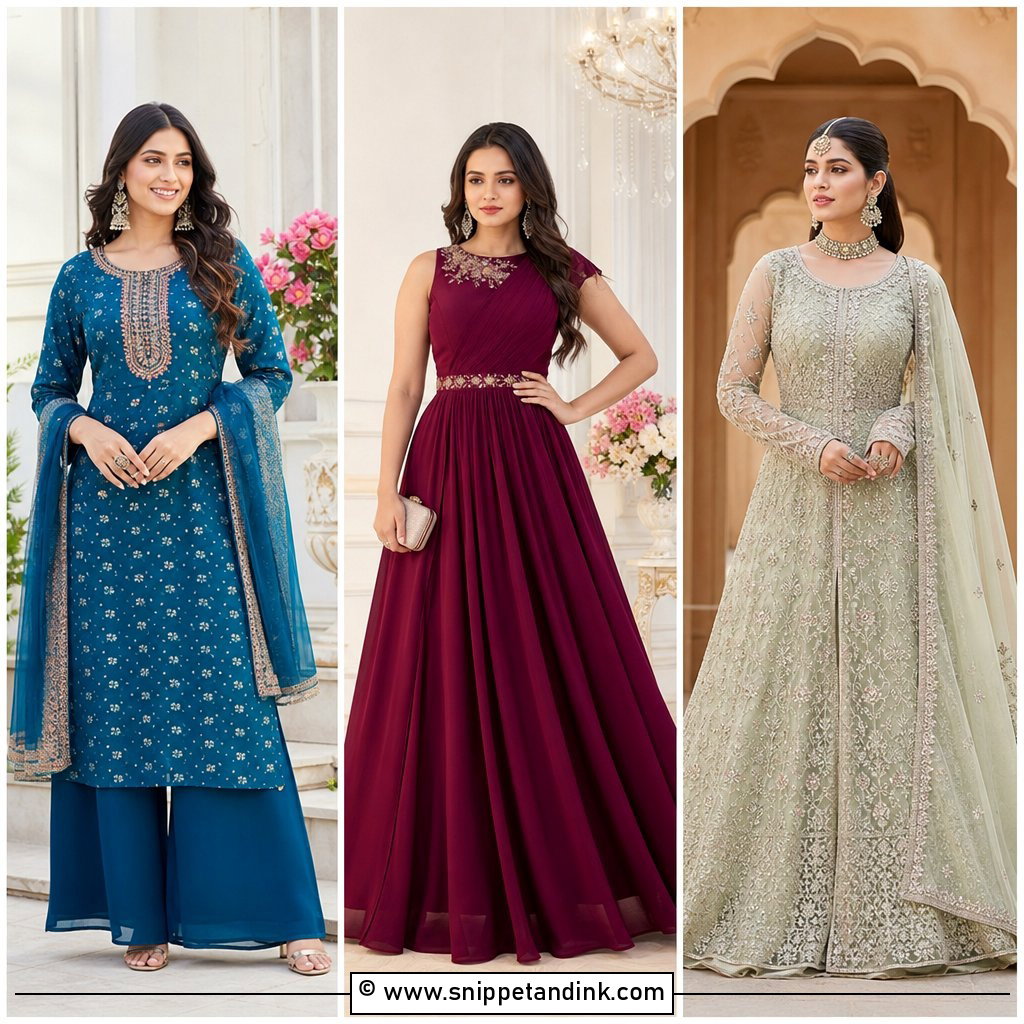
If you only buy one set this season, make it a plain kurta and pants with a beautifully detailed dupatta. A solid base in navy, ivory or maroon can take a Banarasi dupatta at one wedding and a phulkari one at the next. Keep the neckline simple so the dupatta sits close to the face without competing. Banarasi silk is heavier than it looks, so pin it at the shoulder in two places. Plain metallic juttis and a sleek bun keep the focus on the drape.
Two Kurta Sets, Four Wedding Functions
Guests often feel they need a new outfit for every event. I’d rather they spend on two well-fitted bases and change the layer on top. A solid knee-length kurta with straight pants, plus a short kurta with a sharara, can cover a full wedding weekend once you swap dupattas, jackets and jewelry between them.
- Mehendi: the short kurta and sharara with a light bandhani or mirror-work dupatta and oxidized jewelry.
- Haldi: the straight set in its plainest form, no dupatta, washable juttis.
- Sangeet: the sharara again, now with a sequinned dupatta, statement earrings and metallic flats.
- Wedding or reception: the straight set under a long embroidered jacket, or with a Banarasi dupatta and gold jewelry.
Photos from different functions rarely end up side by side, and the different layer changes the outfit enough that nobody notices the base. Keep the bases in a colour that takes both gold and silver jewelry, such as a deep teal, wine or ivory.
What Gives Way First on a Long Wedding Night
After enough functions, I know where kurta outfits fail, and it’s rarely the embroidery. It’s the small things. Drawstrings come undone, so I ask for elastic plus a drawstring. Dupattas slide off the shoulder, so I carry two small safety pins and pin them through the underside of the border, not the sheer middle. Churidars ride up when you sit, which is why they need their extra length. New juttis rub the back of the heel, so a strip of plaster in your potli is worth more than a second lipstick. And sheer fabric that looked fine indoors can turn see-through under flash, so check a phone photo with the flash on before you leave the house.
Why the Plainest Set May Earn the Most Wear
One garment, cut twenty ways, covers almost every function a wedding can throw at you. What makes it work is proportion: kurta length against the shape underneath, a dupatta that suits the event, and footwear you can stand in for hours. Richer fabrics like silk, velvet and brocade belong at evening events; chikankari, florals, bandhani and pastels earn their place in daylight. Think about the walking, dancing and weather before you settle on colour, and choose the outfit you won’t need to adjust every few minutes.
You'll Like These Ideas:


Leave a Reply