
Dressing for your sister’s wedding is a balancing act I help with often: you’re family, so you need to look the part in every portrait, but you’re also running errands, dancing and fixing the bride’s dupatta between rituals. The outfits below move function by function, from breathable haldi and mehndi sets through sangeet, ceremony and reception, with the jewellery, shoes and fitting checks I’d give a client for each. My standing advice before any of it: get the bride’s colours for every function and land one shade or one embroidery level away from hers.
Ready-Made or Stitched? What I Check on a Lehenga Before Buying
Sisters usually buy some outfits off the rack and get others made. Either way, the same few checks tell me whether an outfit will last through a wedding week or come apart on the second night.
In the shop
- Turn the skirt inside out. A proper lining and finished seams mean it won’t scratch or fray. Raw edges under heavy embroidery will unravel with dancing.
- Look for seam allowance on the blouse. Ready-made blouses with an inch or more inside the side seams can be let out; ones cut tight to the stitching cannot.
- Lift the outfit. A skirt that feels heavy on the hanger will feel twice as heavy at midnight, and most of the weight sits at the hem.
- Ask about the can-can or flare layer. A detachable one lets you wear the skirt fuller for the ceremony and flatter for dancing.
With a tailor
Give the tailor generous lead time, since busy wedding months fill their calendars and embroidery work adds weeks. Book a trial in the actual shoes and undergarments you’ll wear, and move during it: sit, raise your arms, bend as if touching an elder’s feet. A blouse that only fits when you stand still isn’t finished.
1. Yellow Lehenga For Sister Wedding Haldi
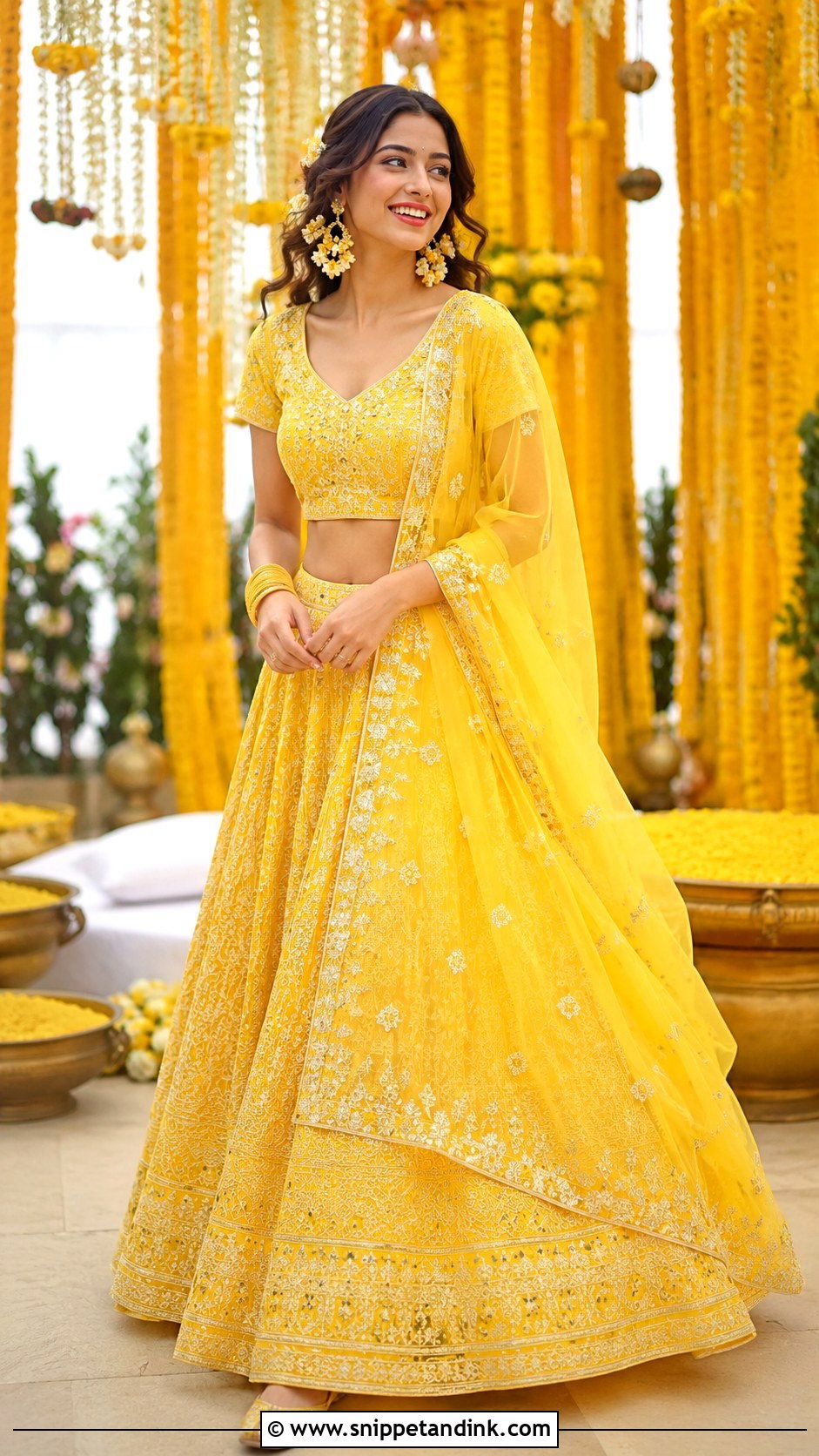
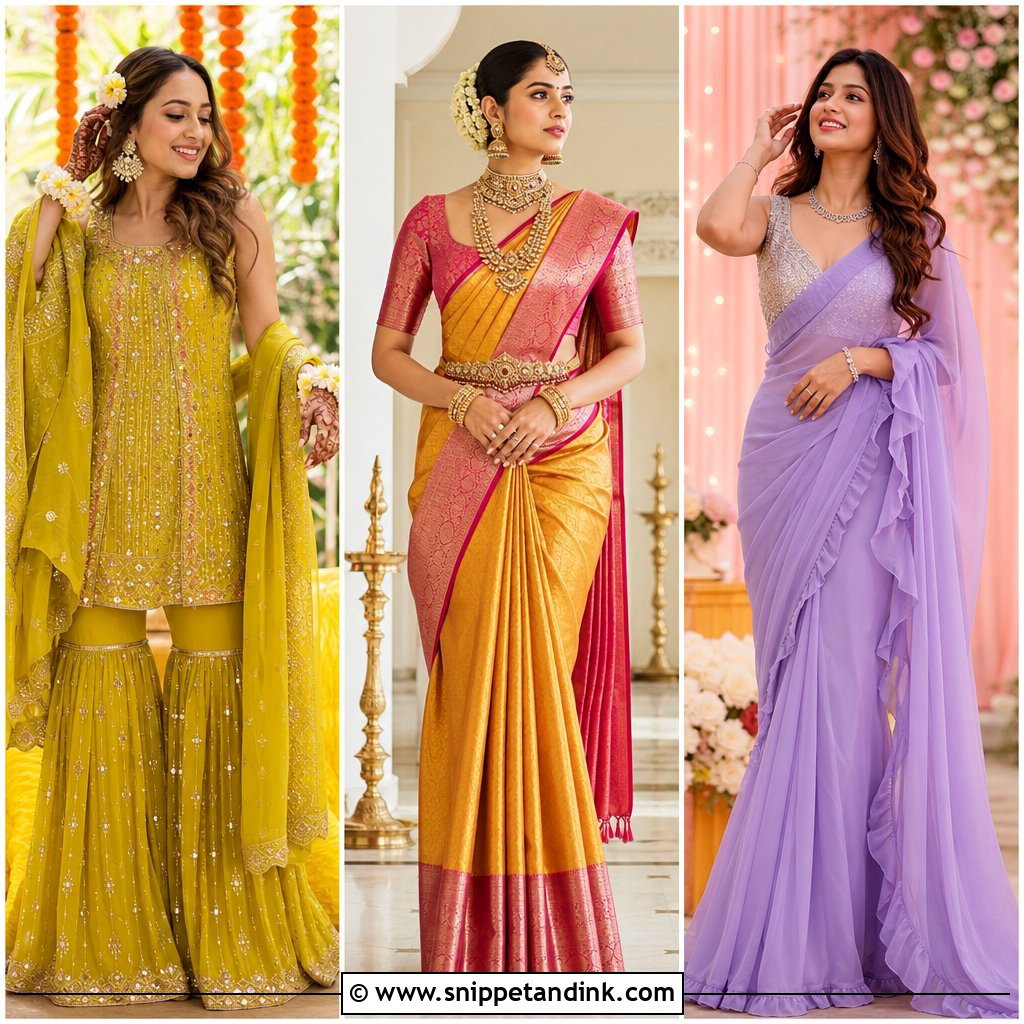
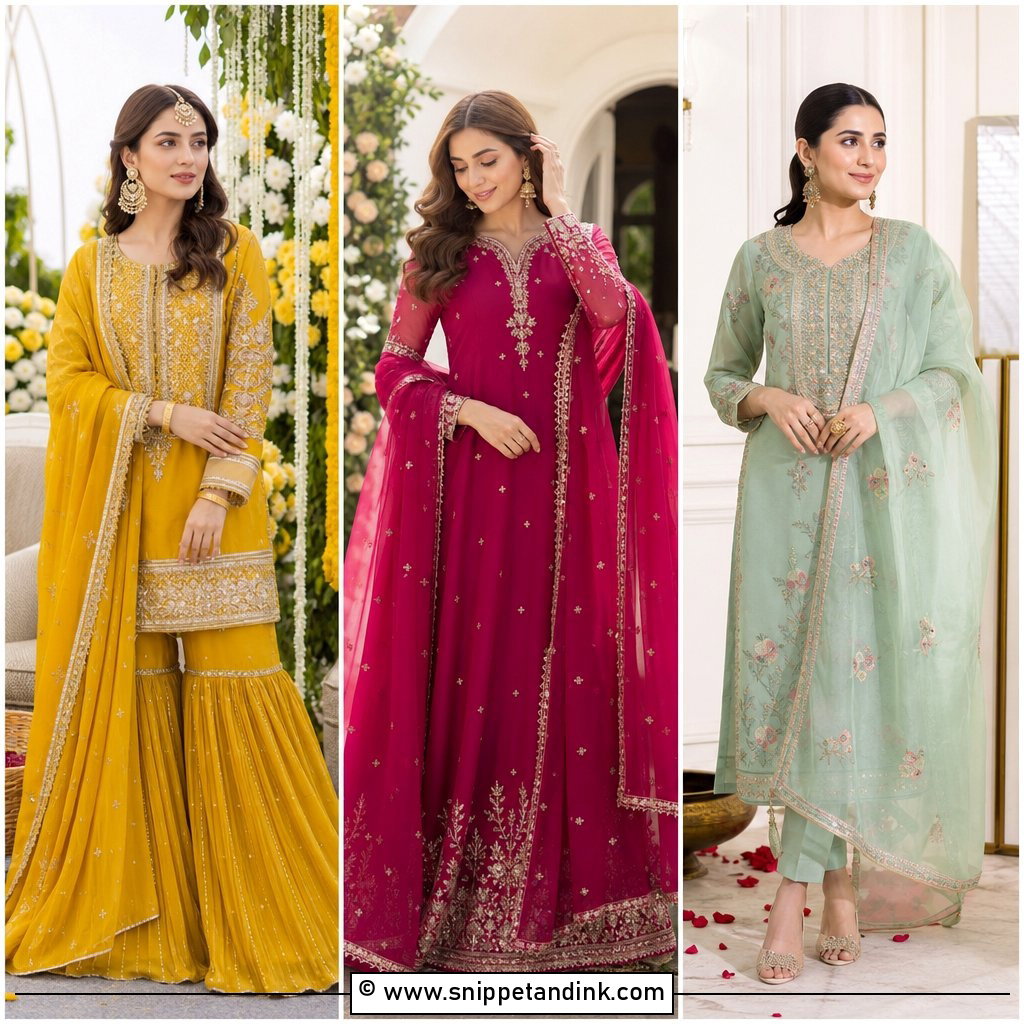
Turmeric is the hazard at haldi, so I don’t let a sister wear anything here she’d be upset to ruin. A sunny yellow lehenga in cotton-silk or a soft organza, with a narrow gota border or light mirror work, is festive without being precious. Keep the blouse sleeves comfortable and the dupatta pinned at one shoulder so it doesn’t trail into the paste. Floral earrings and bangles are the right jewellery; gold and kundan can discolour from the paste and oils. Juttis beat heels on a wet, slippery floor. Rinse any turmeric off cotton in cold water that night, since heat sets the stain.
2. White Floral Sharara For Sister Wedding Haldi
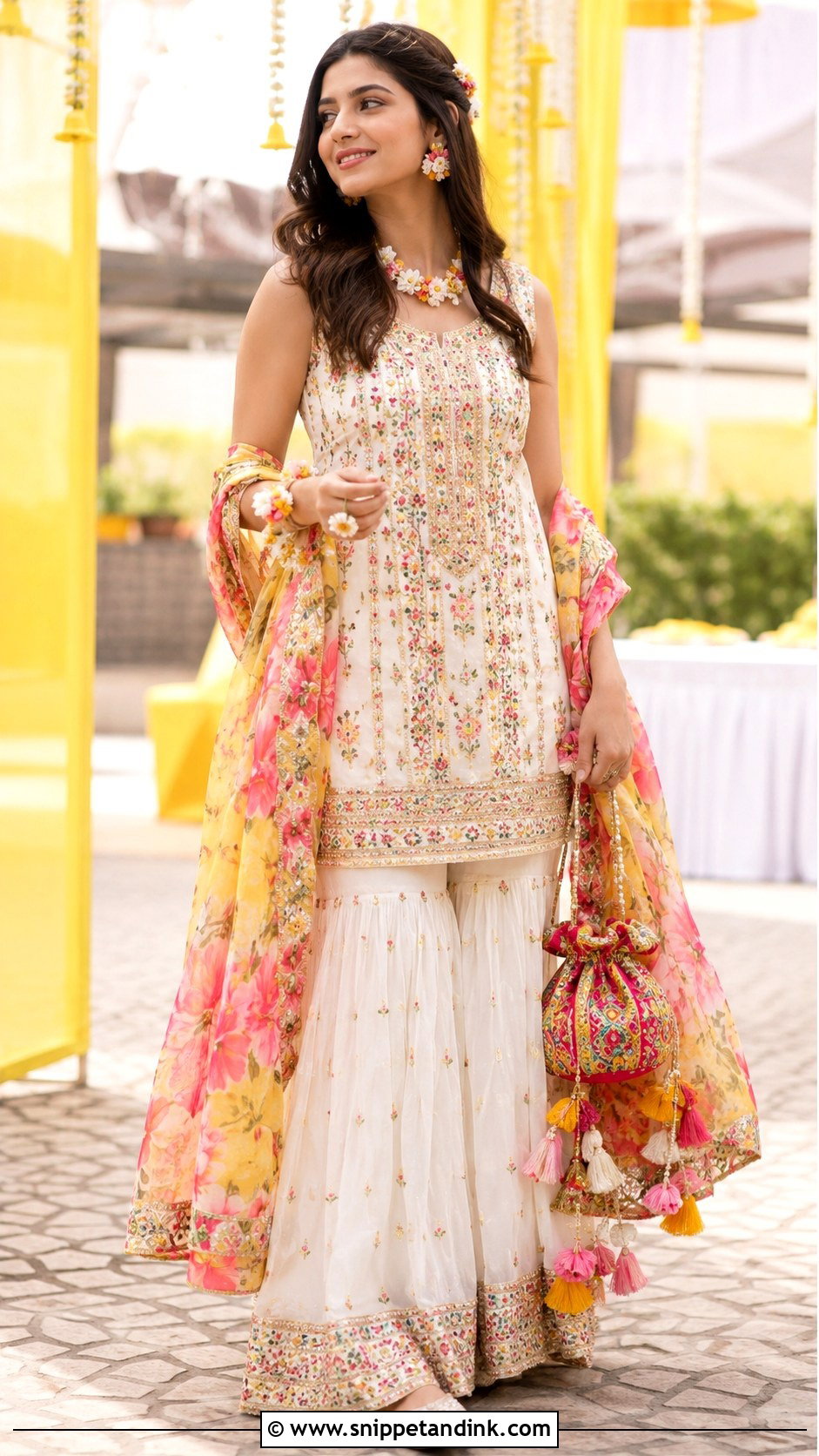
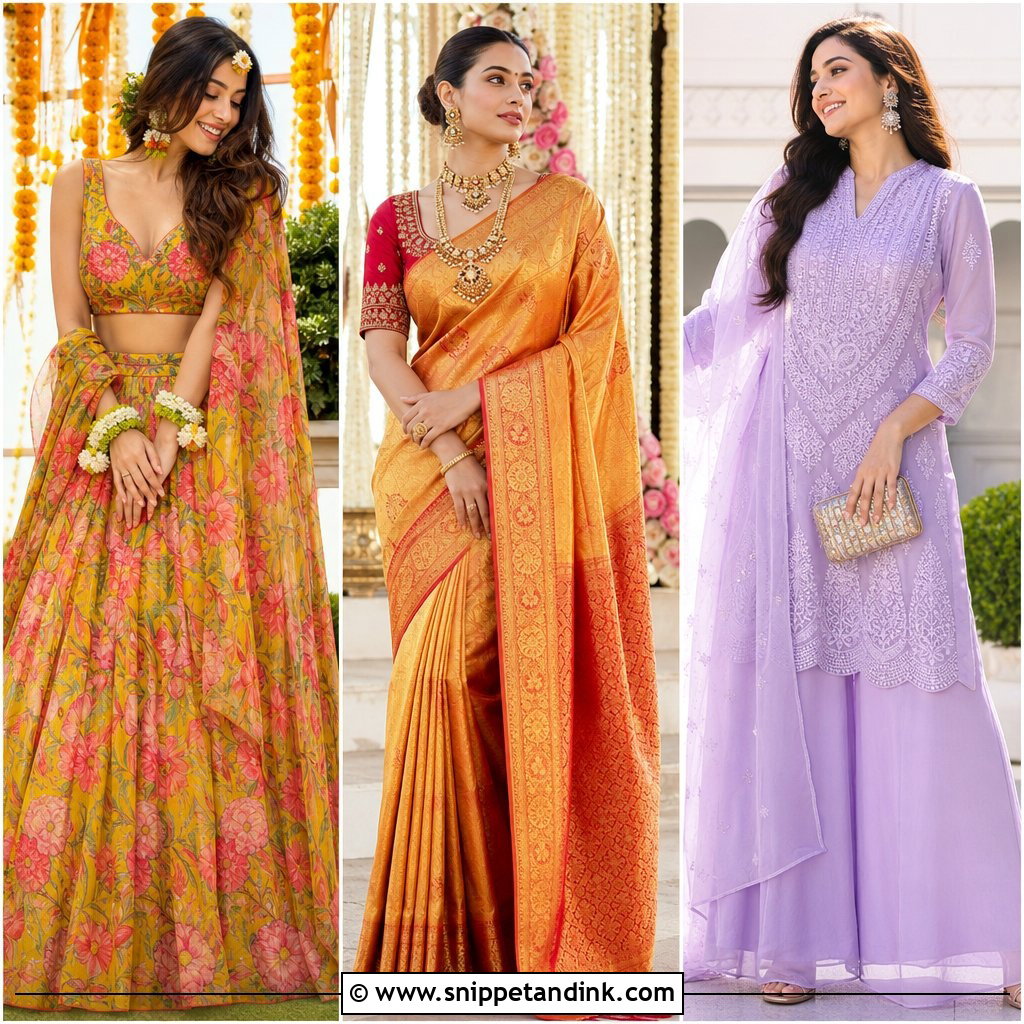
A white floral sharara is my favourite way out of the all-yellow haldi photo. The white base reads crisp, and yellow, pink or orange floral embroidery ties it back to the ceremony. Be realistic, though: white shows every smear of paste, so treat it as a one-wear outfit or choose cotton you can soak. A short kurta, wide sharara pants and a light dupatta draped over one shoulder keep you mobile for the games and photos. Floral jewellery and pearl juttis suit the mood. Outdoors, choose muslin or cotton over thick synthetics, which trap heat and cling once you start sweating.
3. Green Anarkali For Sister Wedding Mehndi
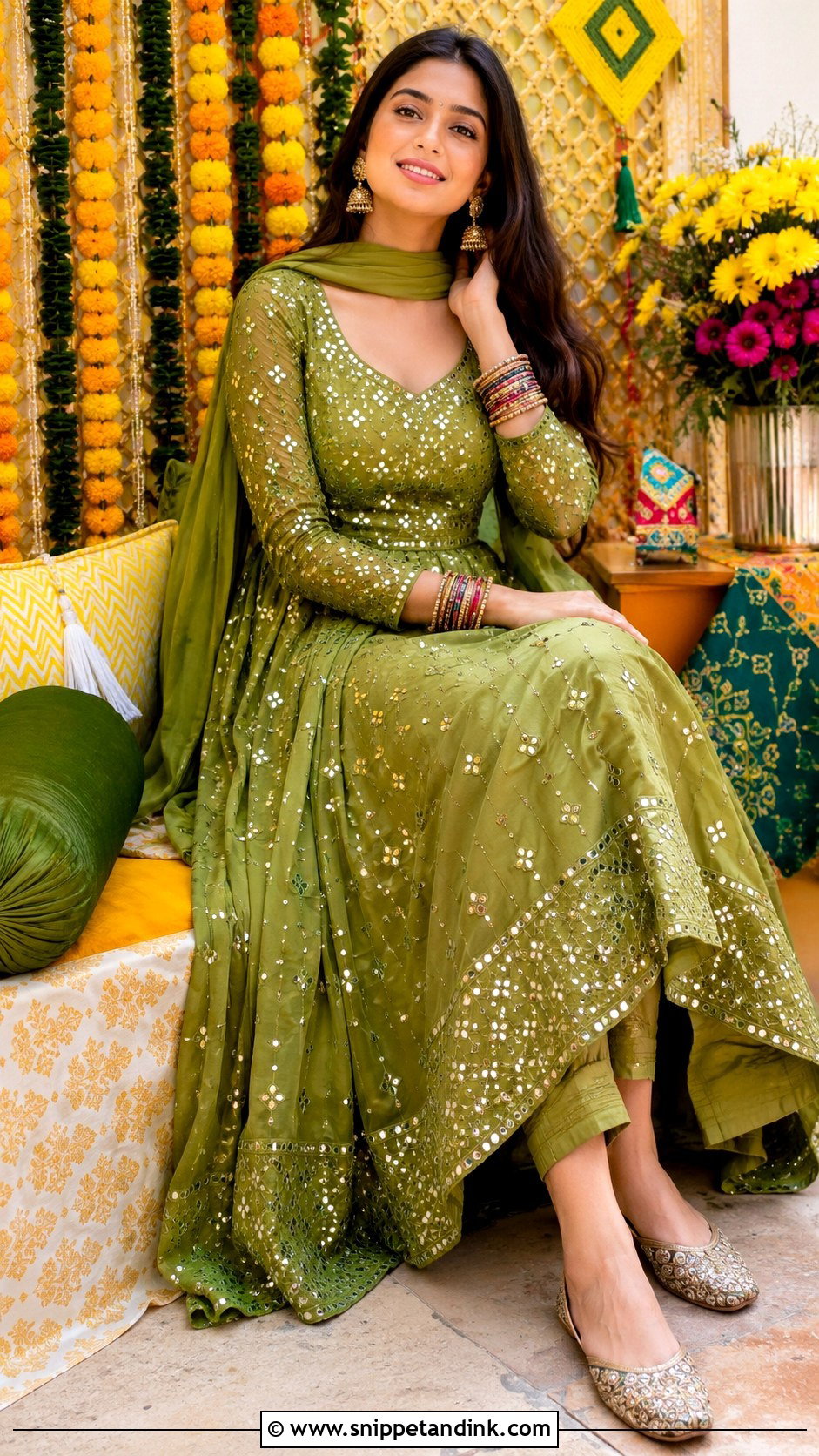
The detail that decides a mehndi outfit is the sleeve. A sleeveless or short-sleeved green Anarkali leaves the arms open, so the artist can work up to the elbow without you holding fabric out of the way. Pick an ankle-length style with a fitted waist and light sequin, bandhani or mirror work, plus cropped churidar pants so the hem stays off the floor cushions. Take off tight cuffs, heavy bracelets and big rings before the paste goes on; anything that presses against wet henna smudges the design. Gold jhumkas, a small sling bag and a loose side braid with tiny flowers complete it.
4. Pink Cape Lehenga For Sister Wedding Mehndi
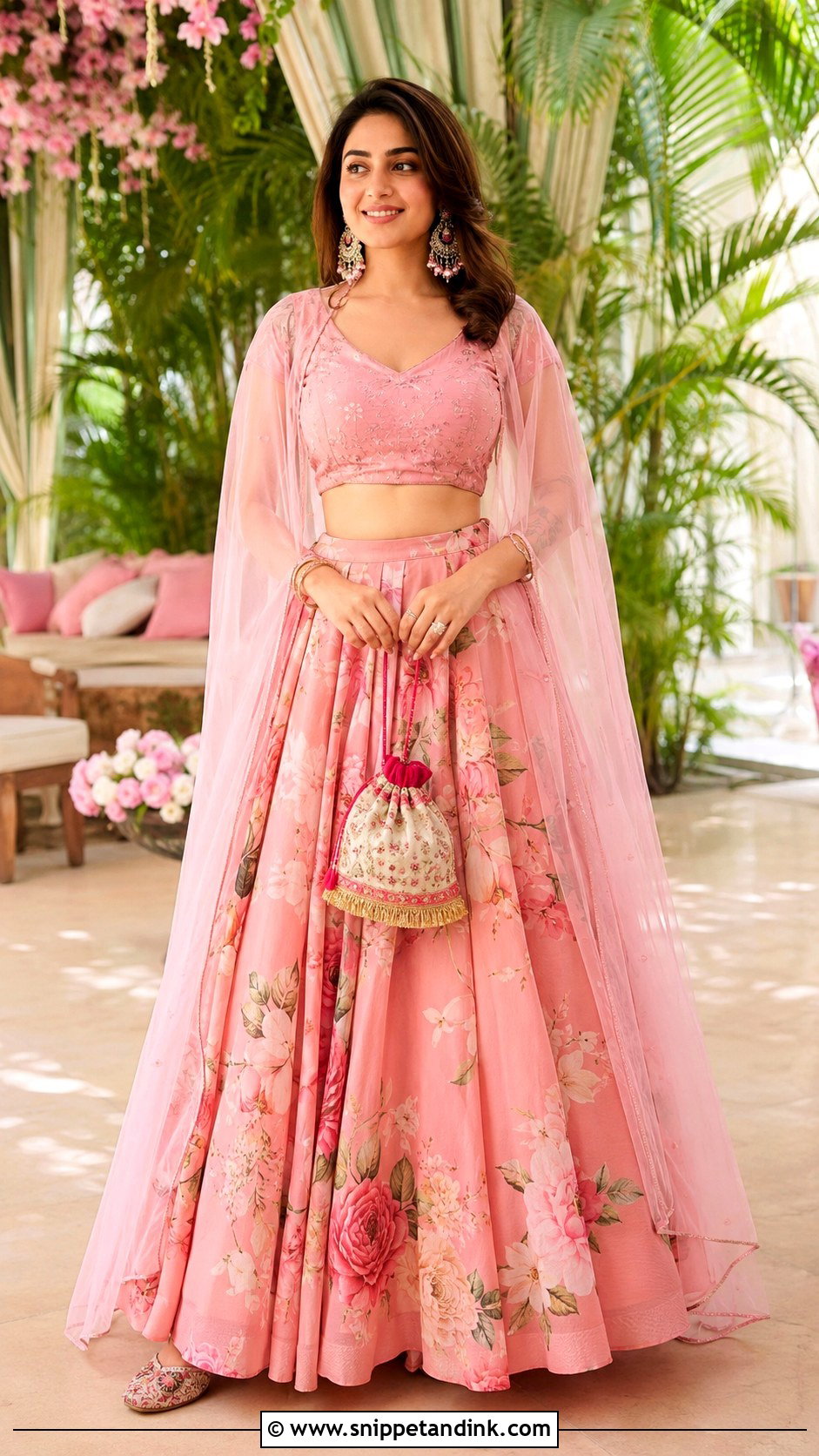
A cape lehenga solves the mehndi dupatta problem neatly: the sheer cape is fixed at the shoulders, so nothing slides into wet henna. Fuchsia, rose and coral stand out against green mehndi decor. I keep the skirt print-based or lightly embroidered, because you’ll sit on it for a long time and heavy work creases. At the fitting, raise both arms forward as if you’re holding them out for the artist; the cape should sit secure across the shoulders without pulling. Shoulder-grazing earrings, one ring, a sleek ponytail and juttis or embellished block heels are enough.
5. Mirror Work Lehenga For Sister Wedding Sangeet
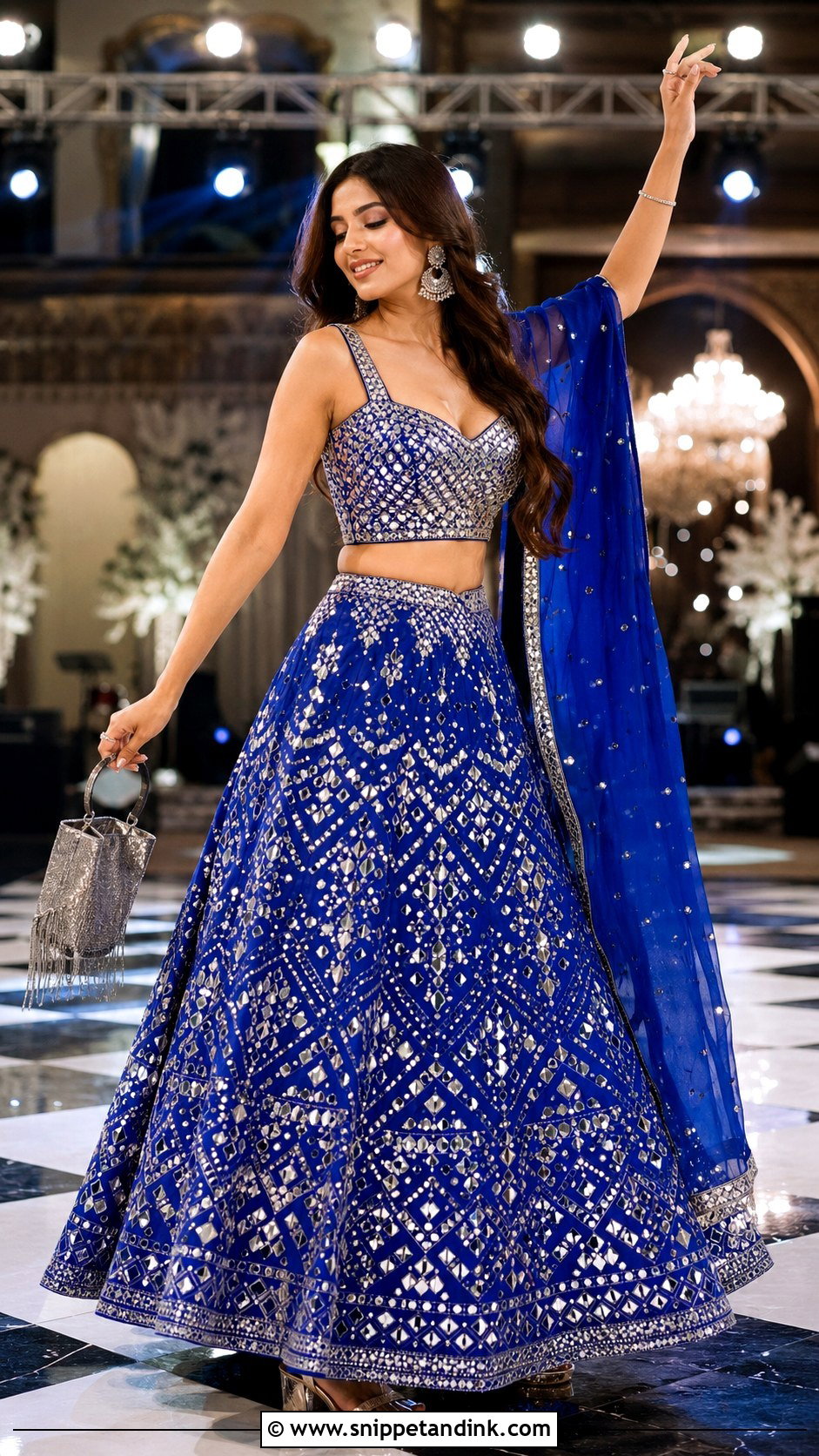
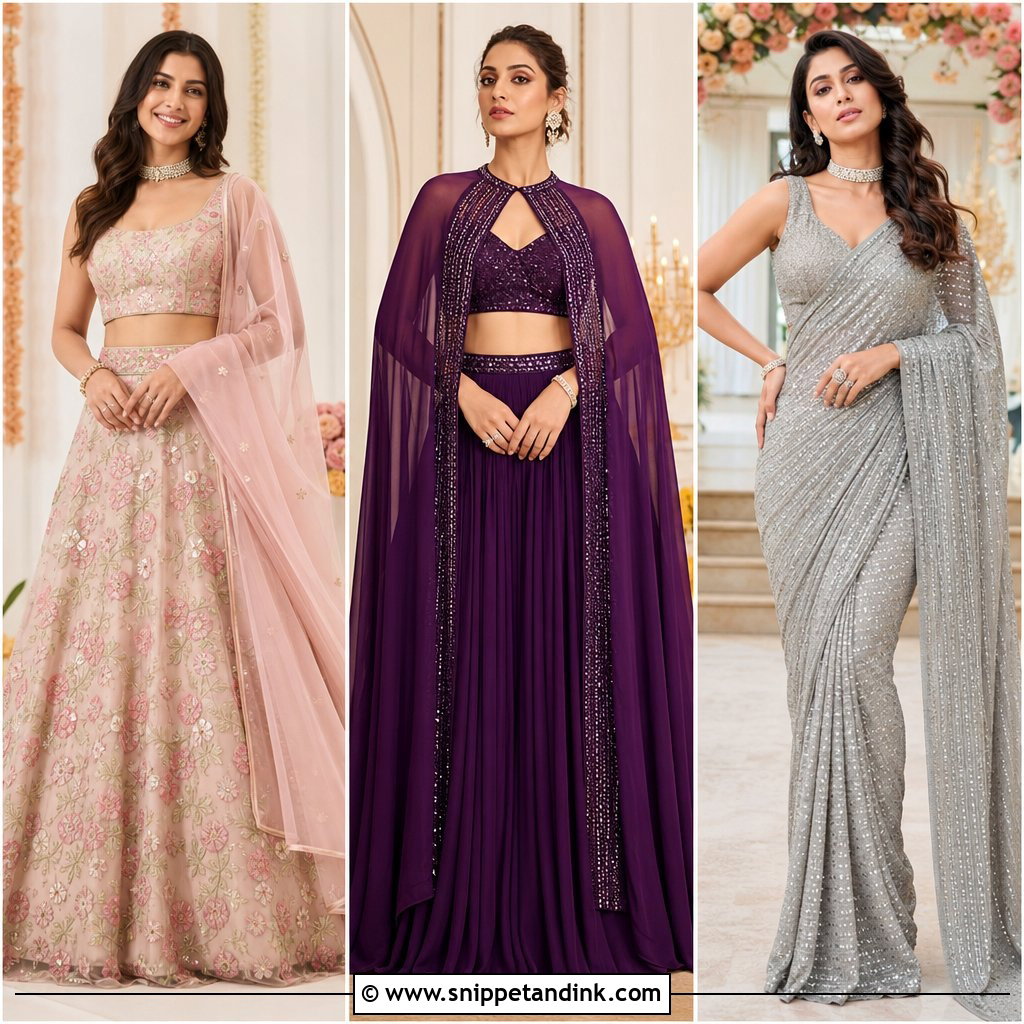
Mirror work belongs at a high-energy sangeet night because it throws back stage lights every time you move. Cobalt, emerald, plum and deep teal read as celebration without straying into bridal red. A structured blouse holds its shape through choreography better than a soft one, and a light net dupatta pinned at the shoulder and waist won’t fly off mid-routine. Mirrors scratch against metal, so I pair them with oxidised silver earrings and a slim bracelet rather than a necklace. Cushioned block heels keep you stable through rehearsals and the late dancing.
6. Indo Western Jumpsuit For Sister Wedding Sangeet
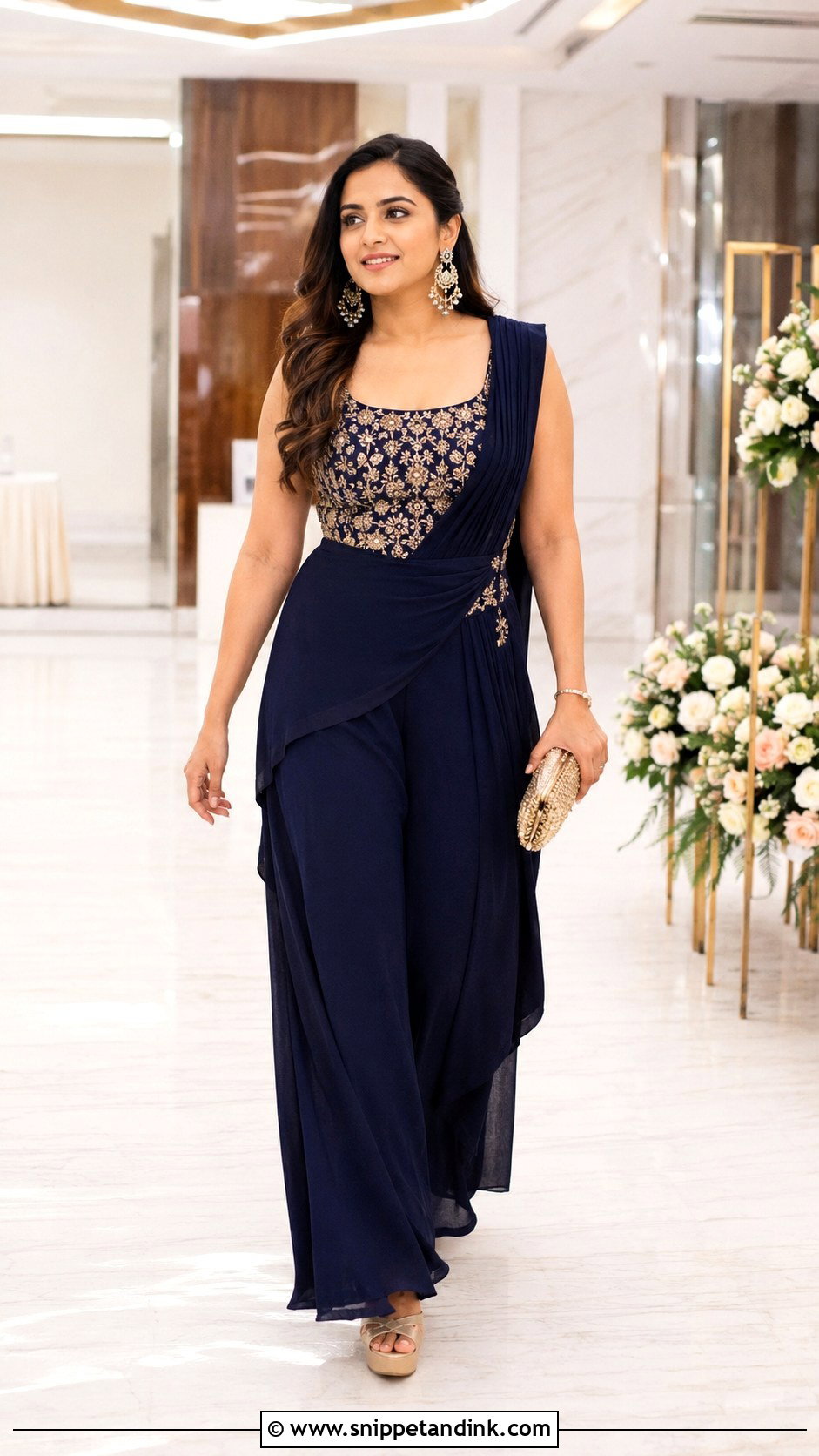
Sisters who dance hard and dislike skirts usually end up in a jumpsuit at the sangeet. The good ones have a wide leg, an embroidered bodice, a defined waist and an attached drape that mimics a pallu. Navy, wine, black and metallic grey suit evening light, as long as the family hasn’t banned black for the functions, which some do, so ask first. Check the bathroom logistics in the trial room: one-piece jumpsuits with back zips are hard to manage alone. Set the hem with your dancing shoes on so it clears the floor, and skip the necklace since the neckline carries the look.
7. Bandhani Lehenga For Sister Wedding Garba
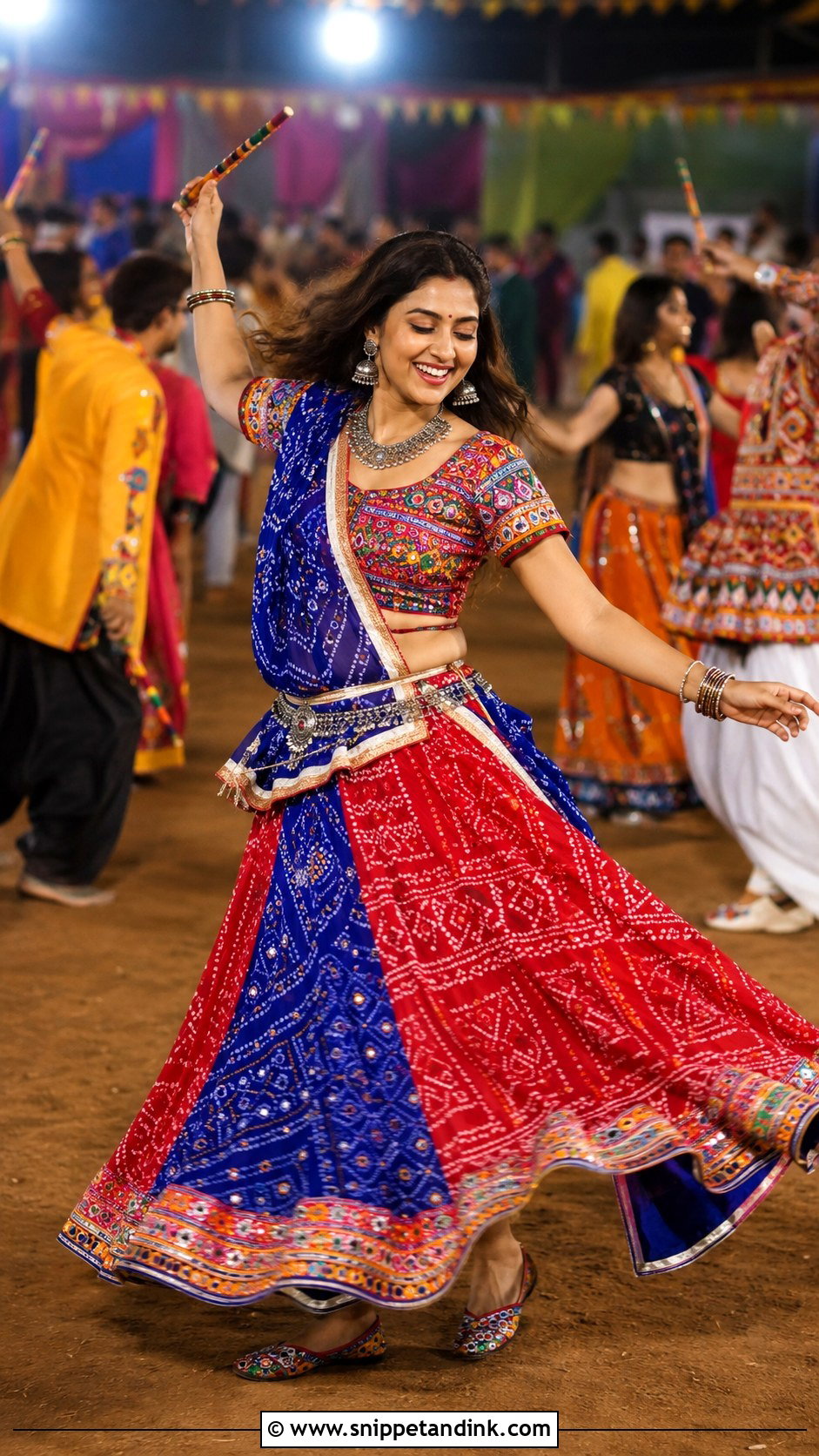
Bandhani is tie-dye done by hand, and its small dots and bright dyes suit the energy of garba or dandiya celebrations. A flared skirt in red, green, orange or royal blue with a contrasting choli gives the classic spinning shape. Drape the bandhani dupatta across the torso and tuck it firmly at the waist; garba is circular and fast, and a loose dupatta wraps around someone’s dandiya stick. I set the skirt length an inch or so above the floor in flat shoes, since stepping on the hem mid-spin is the most common fall I see. Oxidised silver, a waist belt and mirror juttis finish it.
8. Pastel Lehenga For Sister Wedding Day
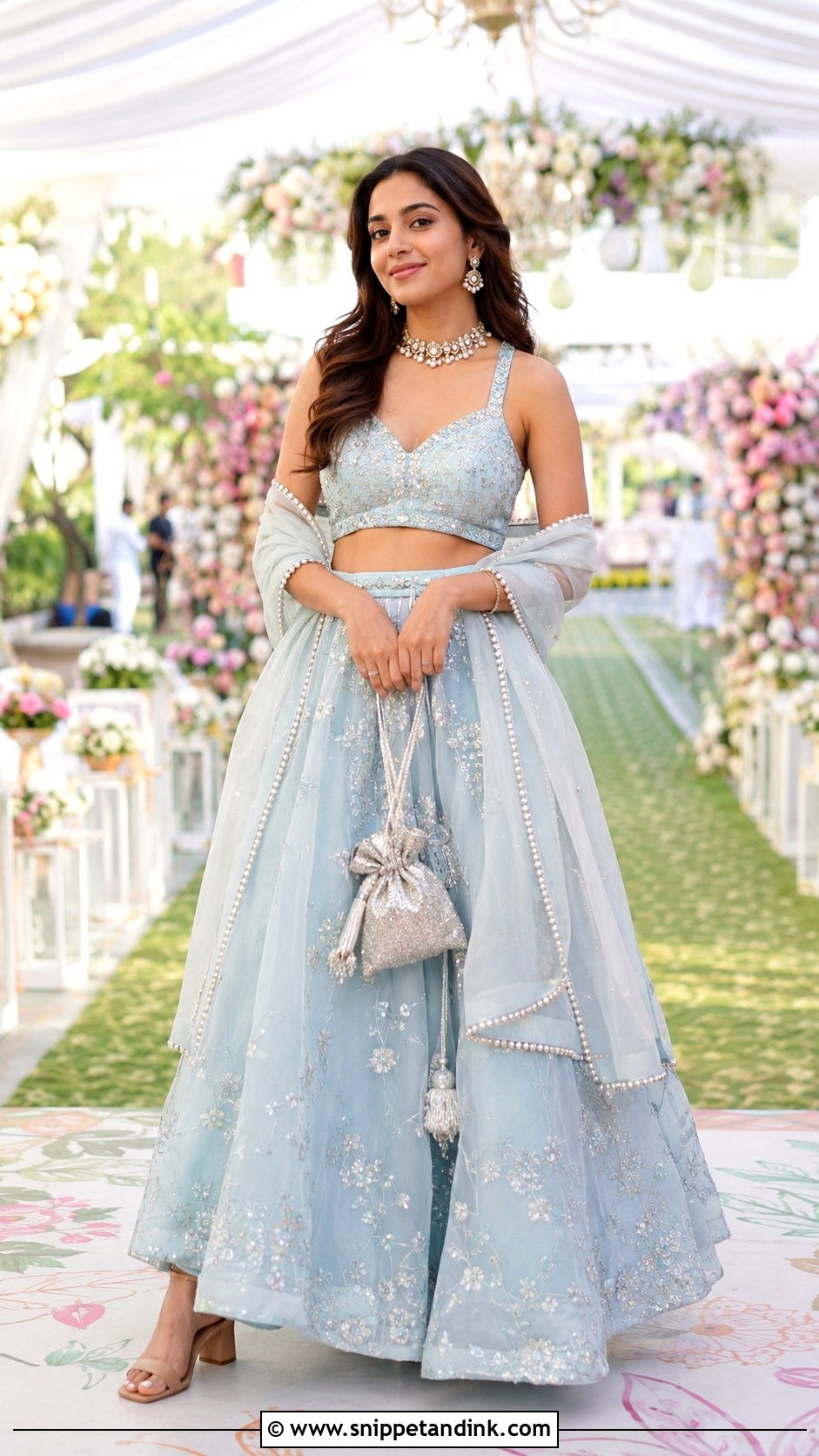
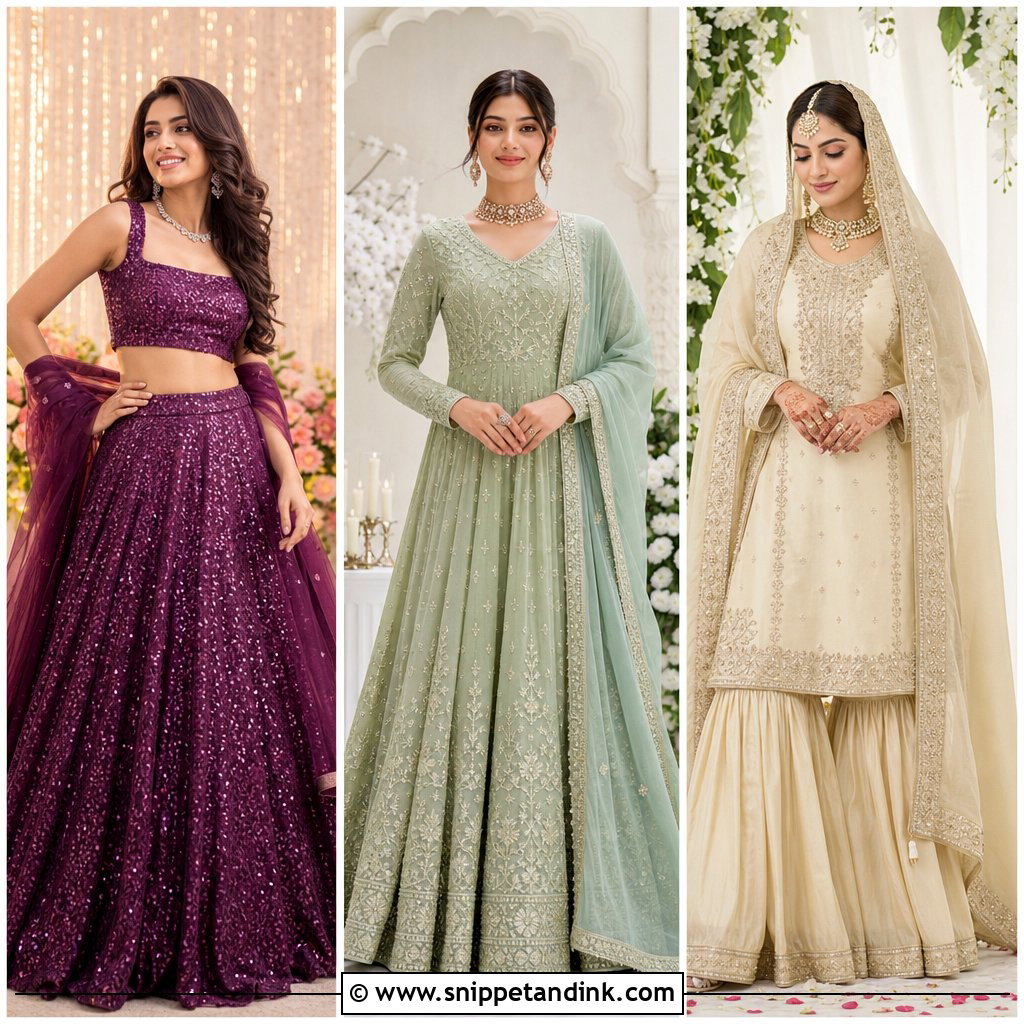
For a daytime ceremony I’d dress a sister in pastel with tonal embroidery: powder blue, lilac, peach, pistachio or dusty rose. Tonal work looks refined in natural light, while sharp contrast can look harsh in outdoor photos. An organza or raw silk skirt with a fitted blouse and a pearl-edged dupatta keeps the weight down for a long ceremony. Before you buy, lay a swatch next to the bride’s outfit and anything the mother of the bride is wearing. When two sisters are attending, choose two different pastels rather than one shared shade. Kundan earrings, a delicate choker and metallic block heels suit it.
9. Silk Saree For South Indian Sister Wedding
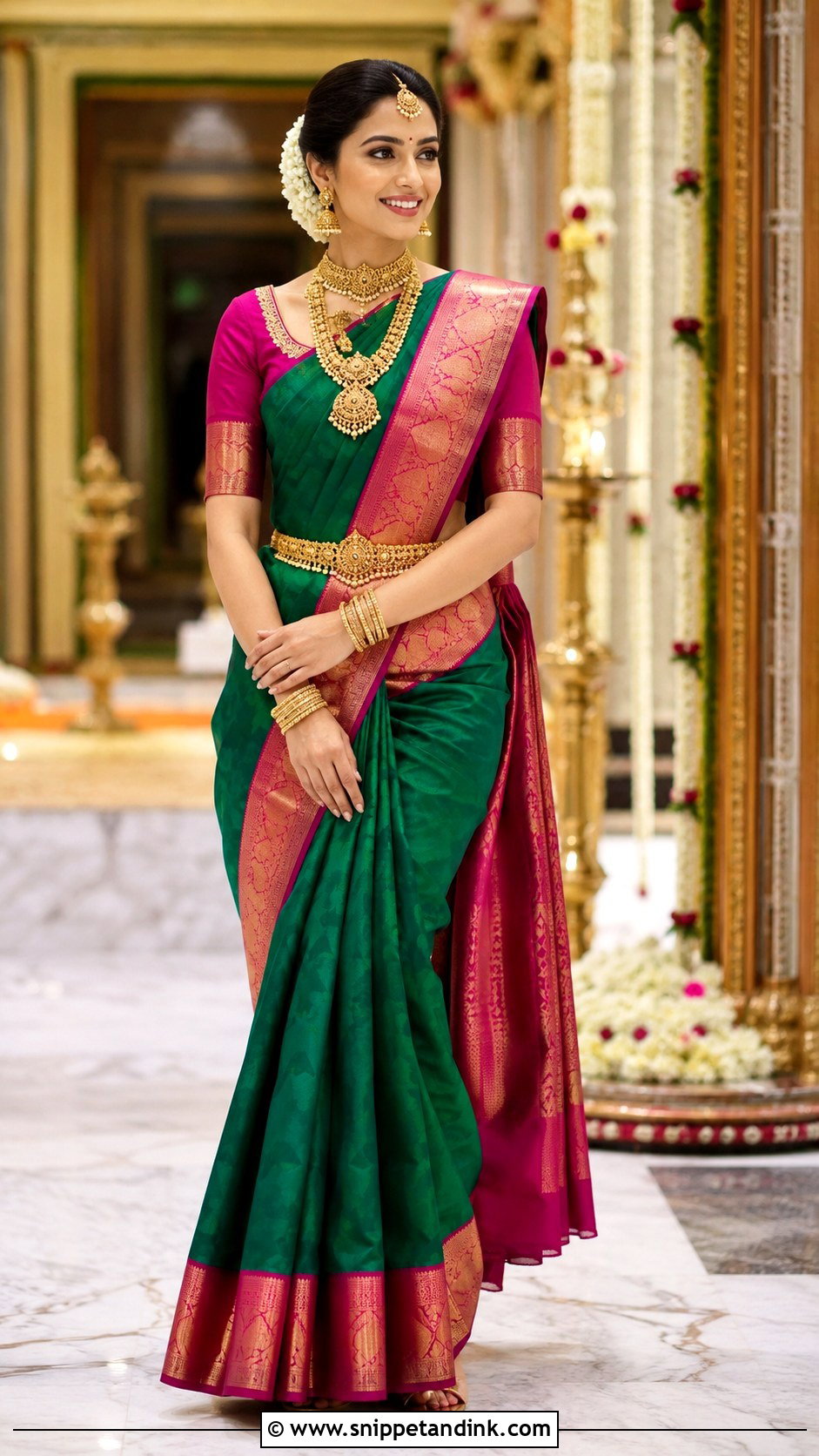
Silk is the right weight for a South Indian wedding ceremony, where you’ll sit and stand through rituals for hours. Kanjeevaram, Banarasi or a lighter silk blend in emerald, magenta, mustard, purple or peacock blue all hold their colour under the bright, warm lighting common in wedding halls. A contrast blouse with elbow sleeves suits the drape. Heavy silk pulls on the waist, so I swap a stiff petticoat for a lighter one and get the pleats professionally set the morning of. Temple jewellery, gold jhumkas, a jasmine bun and gold sandals complete the traditional finish.
10. Banarasi Saree For North Indian Sister Wedding
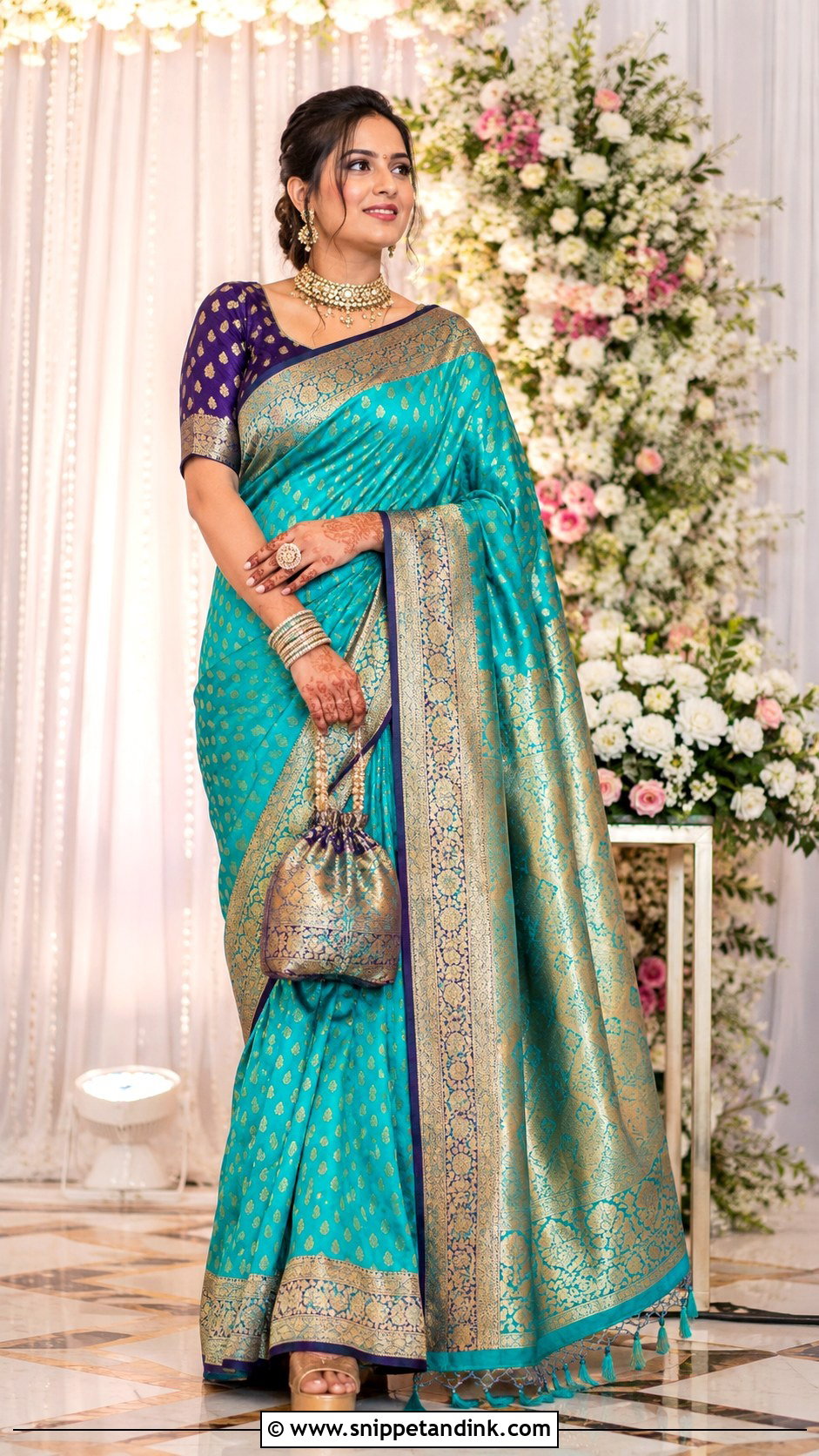
In a North Indian wedding the bride is usually in red, so a Banarasi saree in deep pink, turquoise, rust, green or purple keeps you festive and a clear step aside. The woven brocade is the feature, which is why I pair it with a solid silk blouse or a modest square neckline rather than a busy design. When you’re the sister managing the bride’s lehenga or chunni, pin your own pallu firmly at the shoulder; you’ll be bending and reaching all evening. Kundan jewellery, a brocade potli and padded wedges or block heels make long rituals bearable.
11. Velvet Lehenga For Winter Sister Wedding
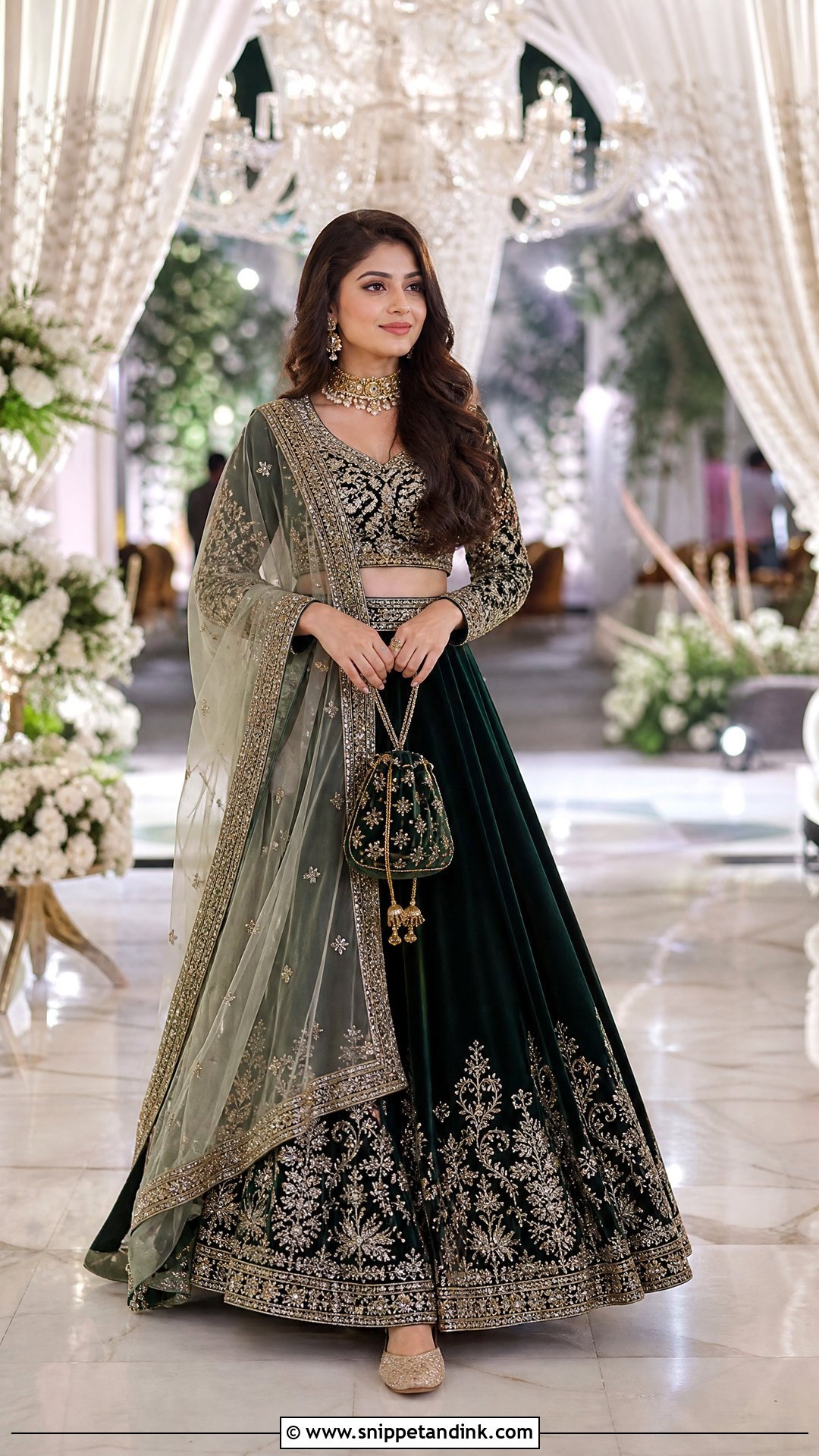
Velvet gives real warmth at an outdoor winter function, and emerald, maroon, navy and aubergine bring out its depth. Pair a skirt with controlled zari work and a long-sleeved blouse, then lighten the whole outfit with an organza or net dupatta. The thing clients don’t expect: velvet absorbs light, so it can look nearly black in indoor photos. Stand under warm light in the trial room and check with a phone camera before you commit to the darkest shades. Antique gold earrings, a compact choker and closed-toe juttis suit the texture. Don’t stack dense embroidery, heavy jewellery and a worked dupatta together.
12. Organza Saree For Summer Sister Wedding
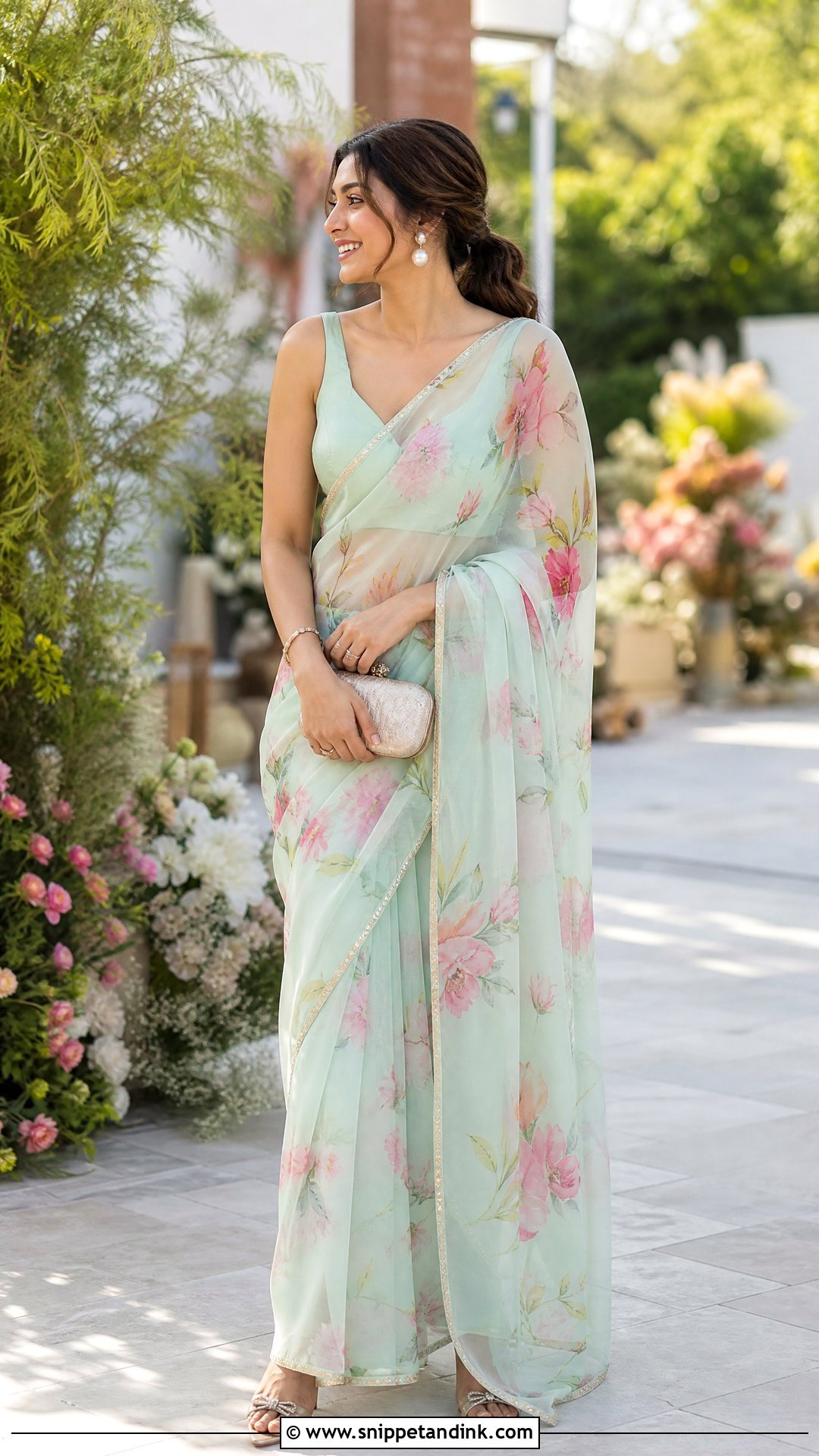
Organza is crisp and sheer, which keeps a sister cool at a summer wedding. Mint, blush, lavender, ivory and pale blue with a narrow embroidered border suit daylight. The one difficulty is volume: organza doesn’t fold flat, so too many pleats puff out at the waist. I use fewer, wider pleats and pin each one. A fitted silk or raw silk blouse gives the airy drape some structure. Pearl earrings, a delicate bracelet and a small metallic clutch keep the mood light, with low block heels and a soft bun or low ponytail.
13. Embroidered Sharara For Sister Wedding Ceremony
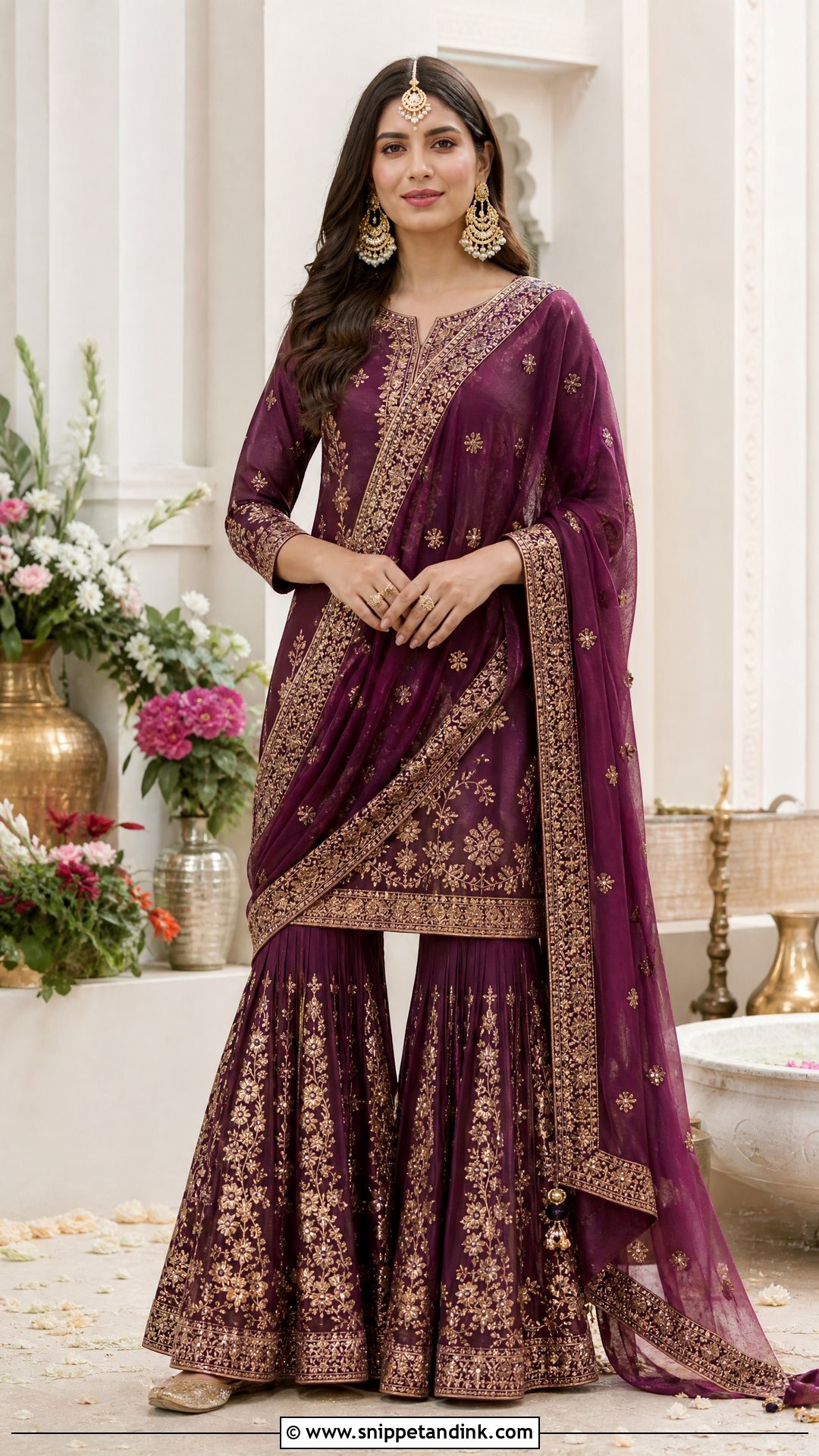
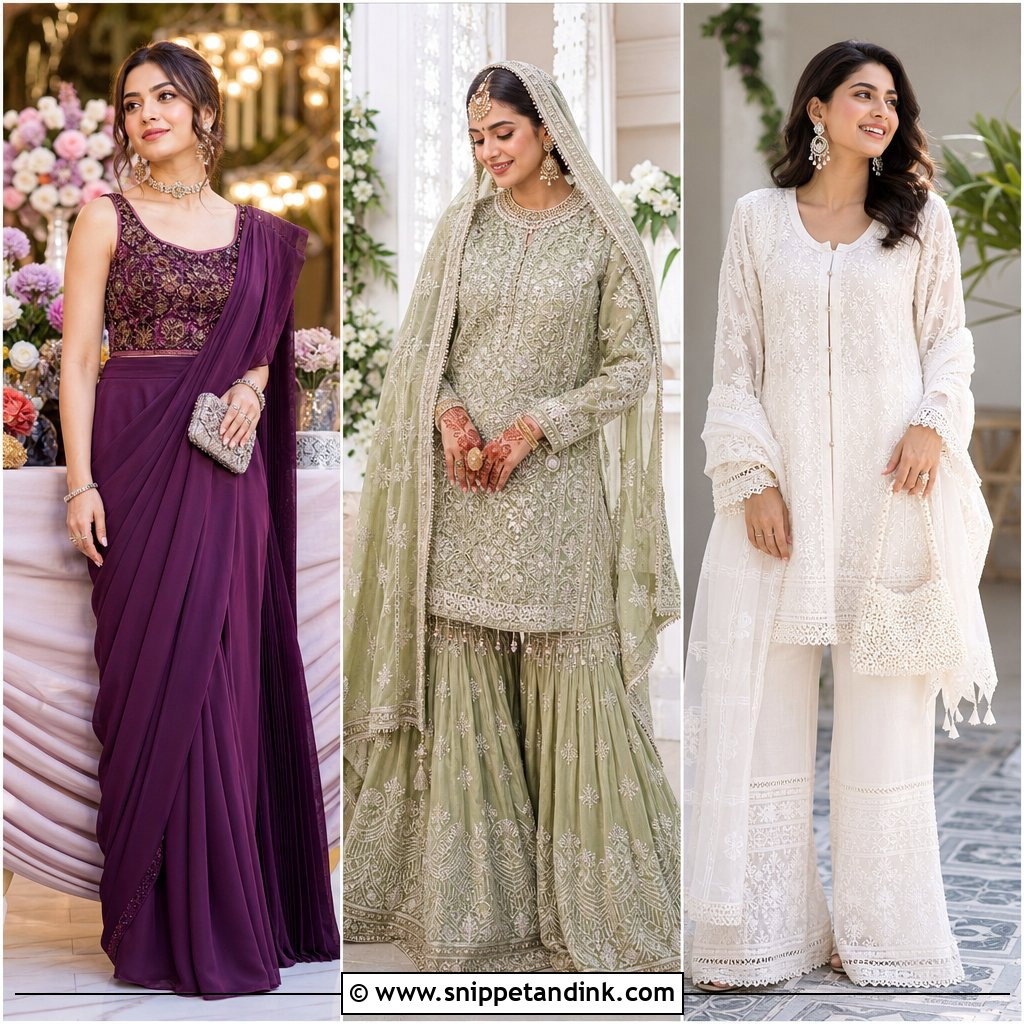
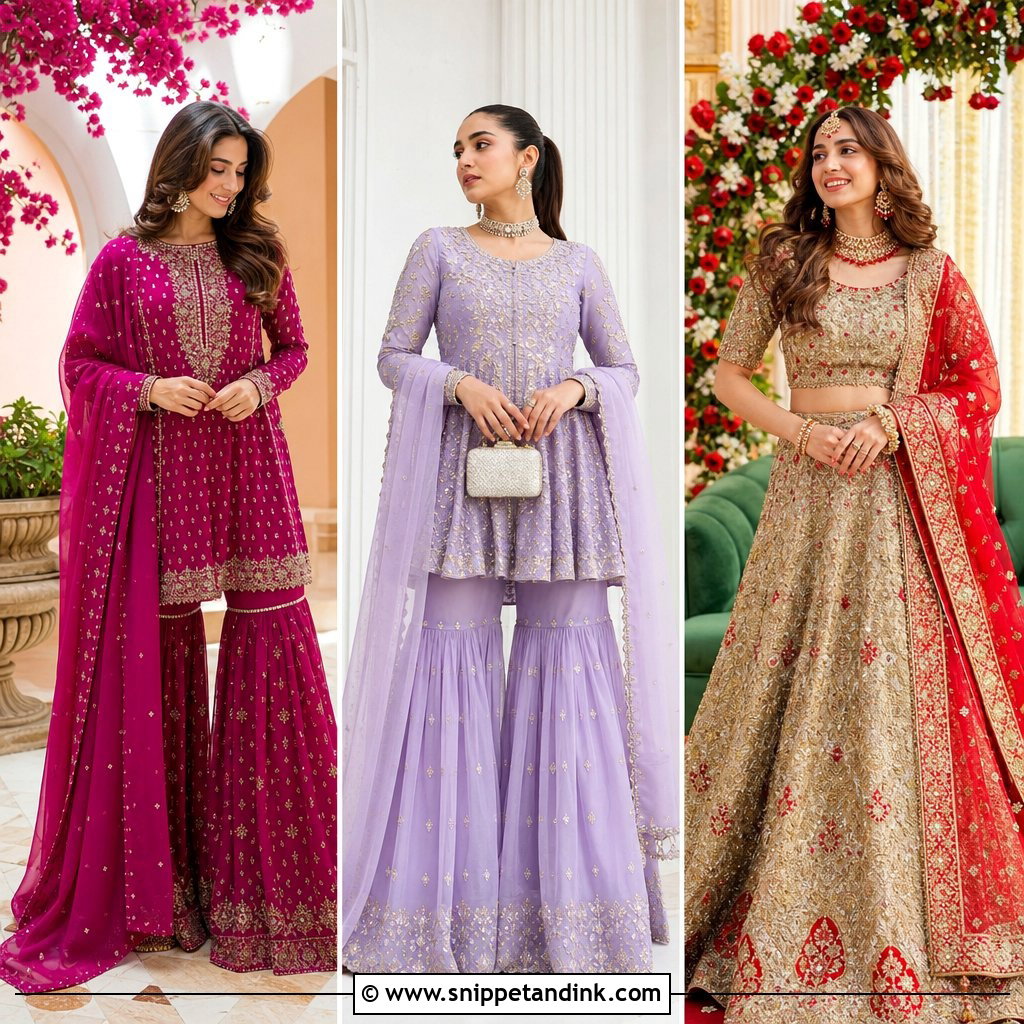
A sharara gives you lehenga-level grandeur with the ease of trousers, which matters when you’re up and down from the mandap. Pair a short kurta with flared sharara pants and a coordinating dupatta; jewel tones read formal, peach, lilac and mint read daytime. I check where the embroidery sits: concentrated at the kurta neckline and the trouser hem keeps the weight down, while all-over work makes the pants drag. The kurta should end above the knee or the flare disappears. Chandbalis, a small tikka, juttis and a half-up style that keeps your face open finish it.
14. Chikankari Gharara For Sister Wedding Function
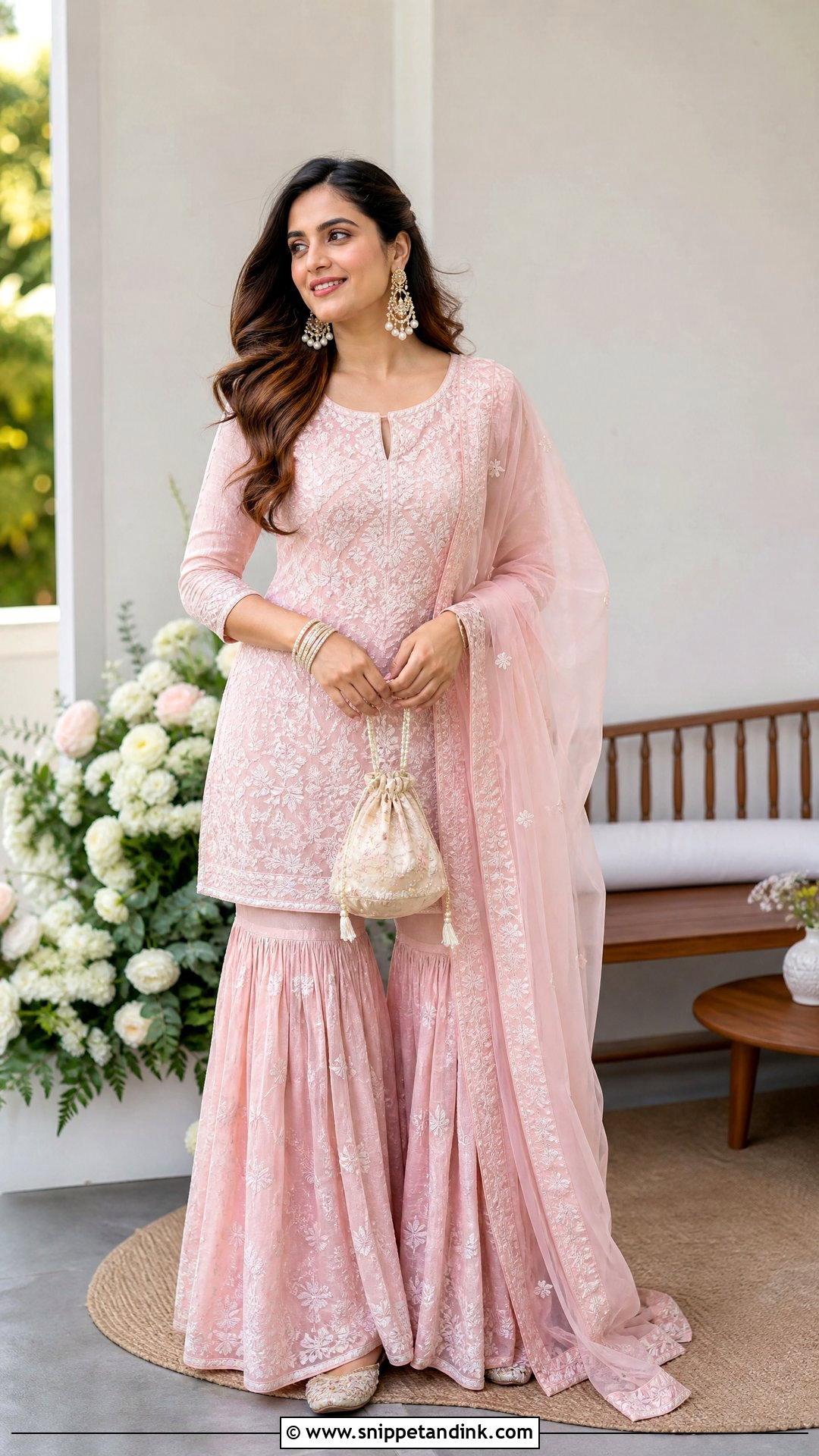
Chikankari on a gharara looks delicate at a daytime function or family lunch, in ivory, powder pink, sage, lemon or sky blue with a little mukaish or pearl work. A short fitted kurta balances the gathered gharara, and a chiffon dupatta keeps the line soft. My warning with pale chikankari: the base fabric is often thin georgette or mulmul, and strong sun makes it see-through. Buy a lined set and step outside or near a window to check from several angles before the day. Pearl chandbalis, slim bangles, embroidered juttis and loose waves keep it gentle.
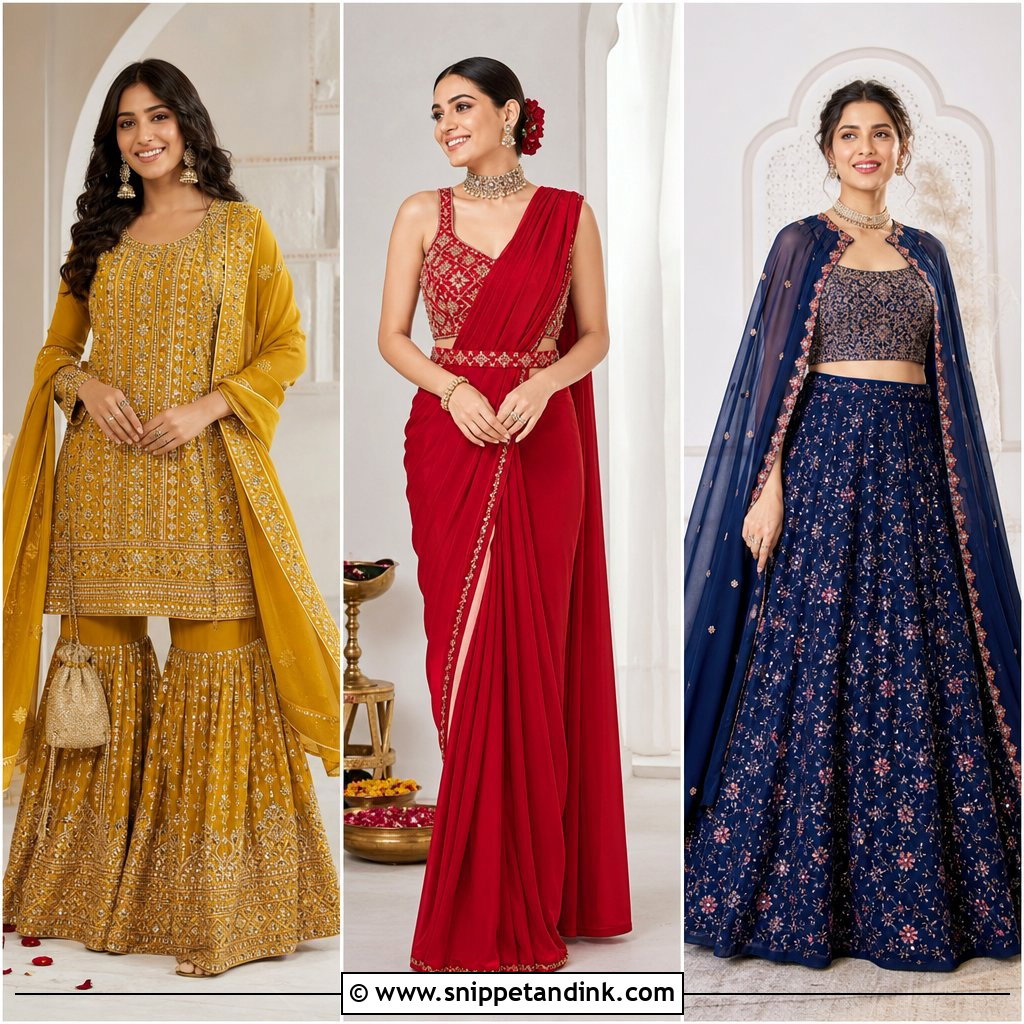
15. Pre Draped Saree For Sister Wedding Reception
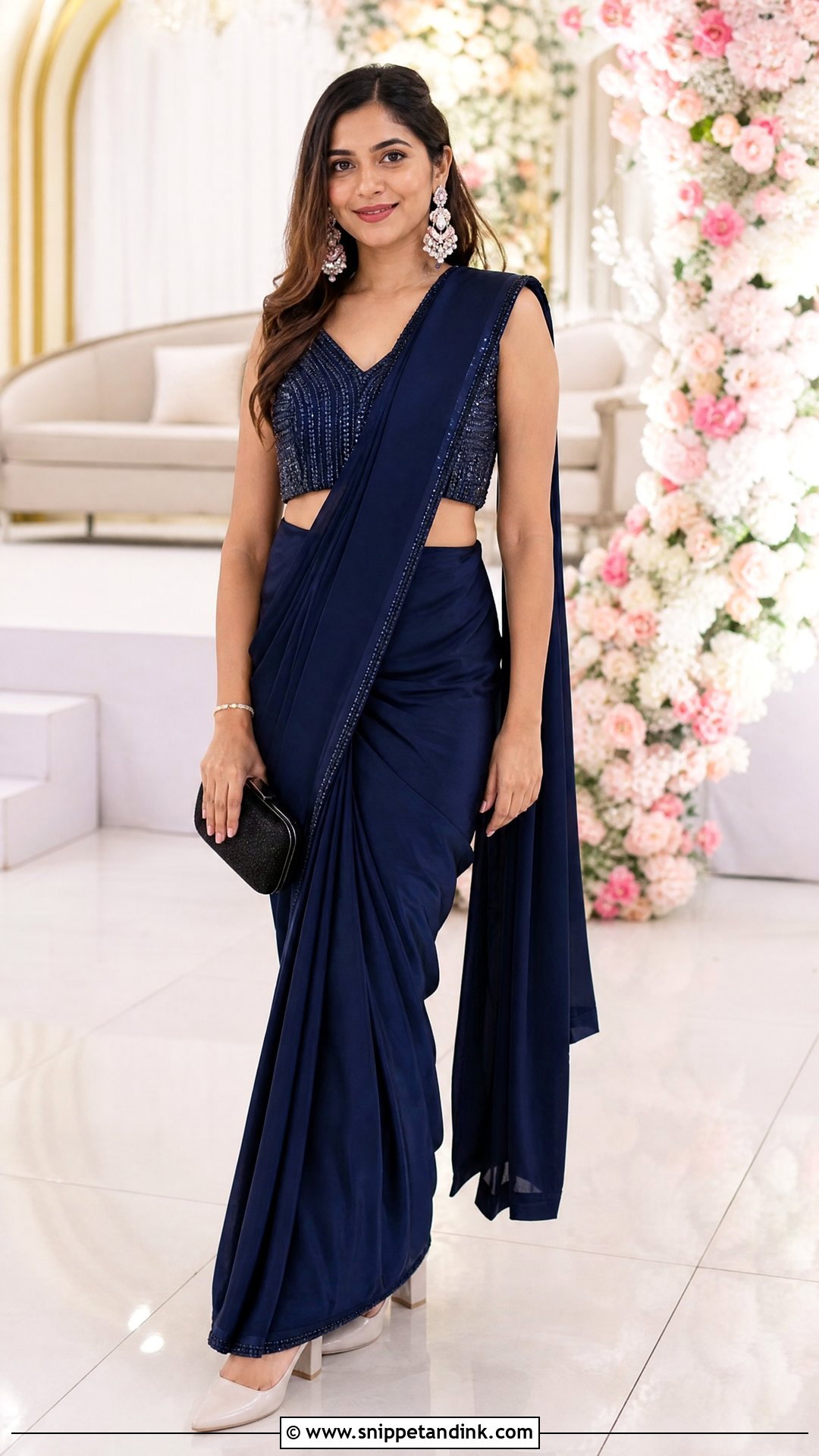
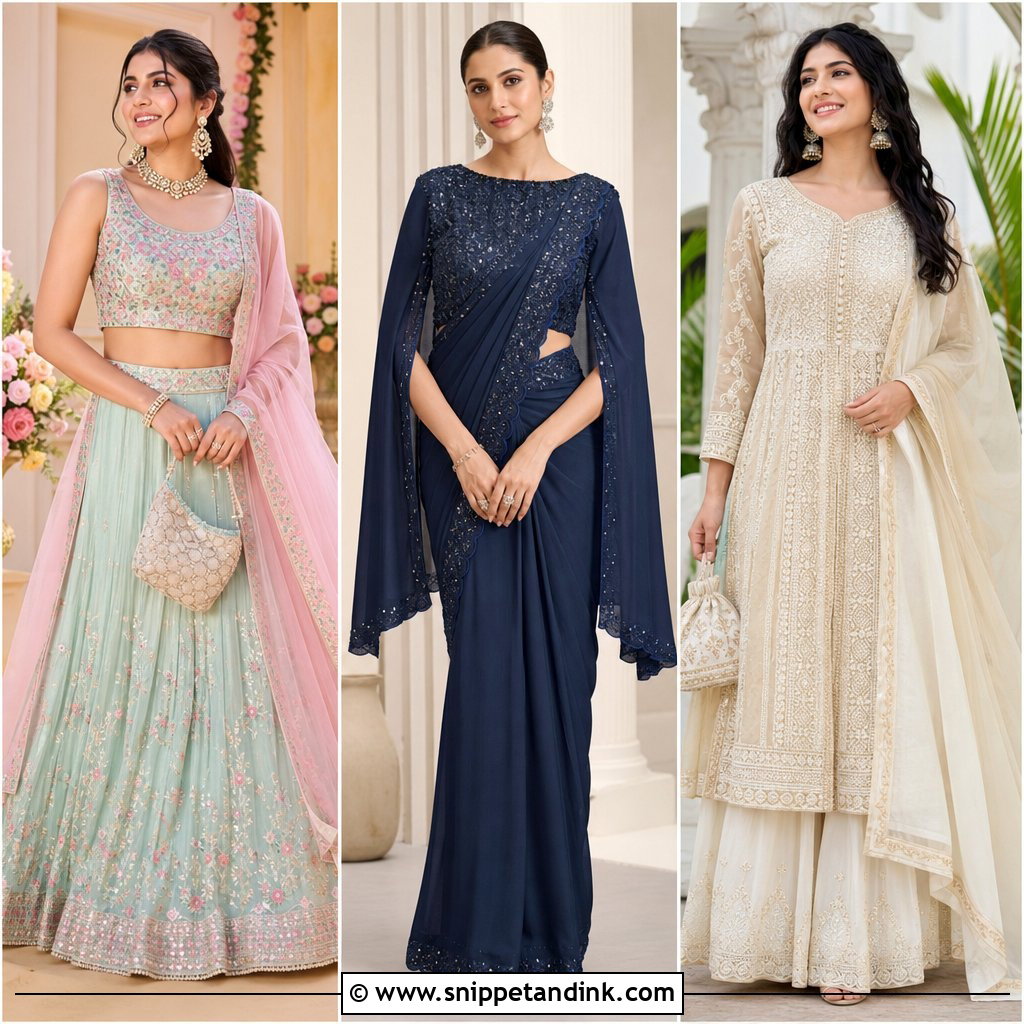
By reception night most sisters are tired of re-pinning, so I suggest a pre-draped saree with stitched pleats and an attached pallu. Satin, crepe and soft georgette hang well in this construction; stiff silk does not. Midnight blue, plum, jewel tones and metallic neutrals suit evening light. When the blouse is heavily worked, drop the necklace and wear one bracelet with statement earrings. Have the pallu position and hem set during alterations with your reception heels on, so you can greet guests and dance without anything slipping.
16. Saree Gown For Sister Wedding Reception
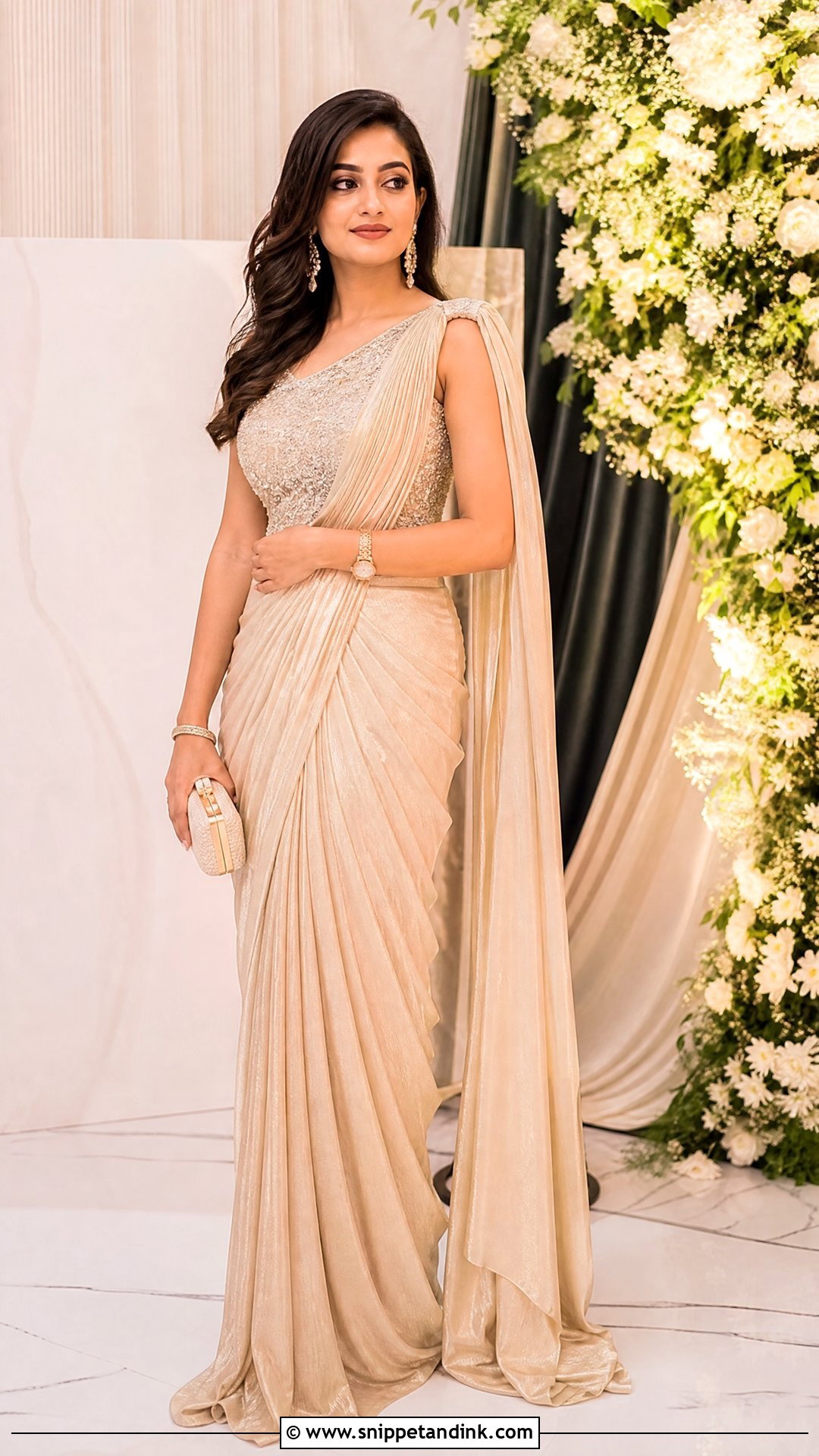
A saree gown gives the look of a draped saree with the construction of a gown, so there’s nothing to pin and nothing to fall. Look for saree-inspired pleats, an attached shoulder drape and beadwork kept to the bodice or waist. Champagne, emerald, navy, burgundy and dusty mauve suit evening. If the bride’s reception look is a red-and-gold lehenga, avoid a long train and heavy red embellishment. At alterations, test that the drape is stitched firmly, the waist allows a full meal, and the hem lets you climb the stage steps without lifting the skirt.
17. Peplum Lehenga For Sister Wedding Reception
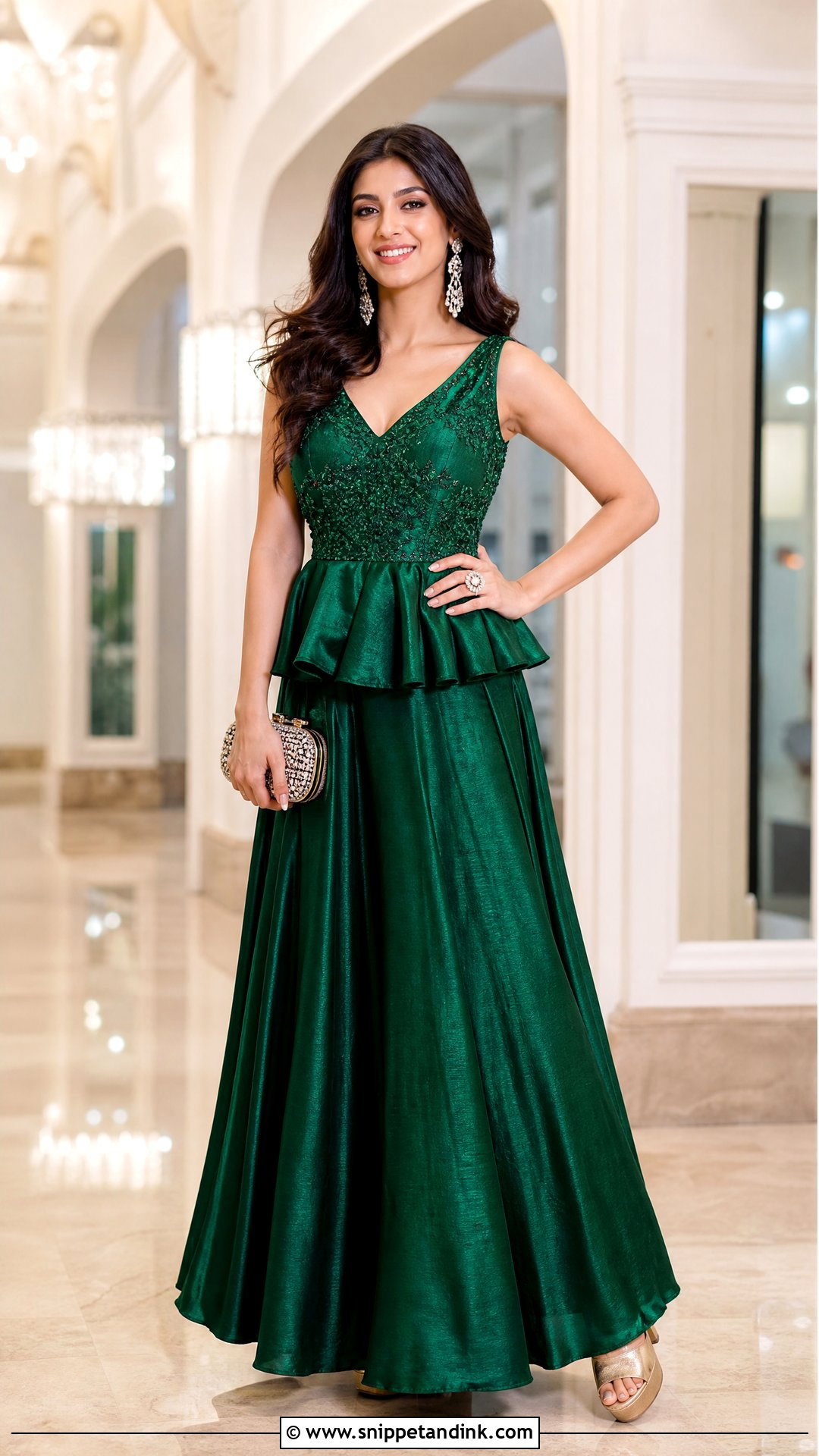
A peplum lehenga trades the cropped choli for a longer, structured top, which many sisters find more comfortable through a long reception. The peplum should end near the hip and sit over a lightly flared skirt in silk, georgette or jacquard; emerald, ink blue, magenta and muted gold all work at night. Sit down at the trial: a peplum that’s cut too stiff bunches up at the waist when you’re seated. Keep embroidery to the neckline, waist and cuffs. A dupatta is optional and should be light. Long earrings, a box clutch and a sleek ponytail keep the shape clean.
18. Dhoti Pant Set For Sister Wedding Cocktail
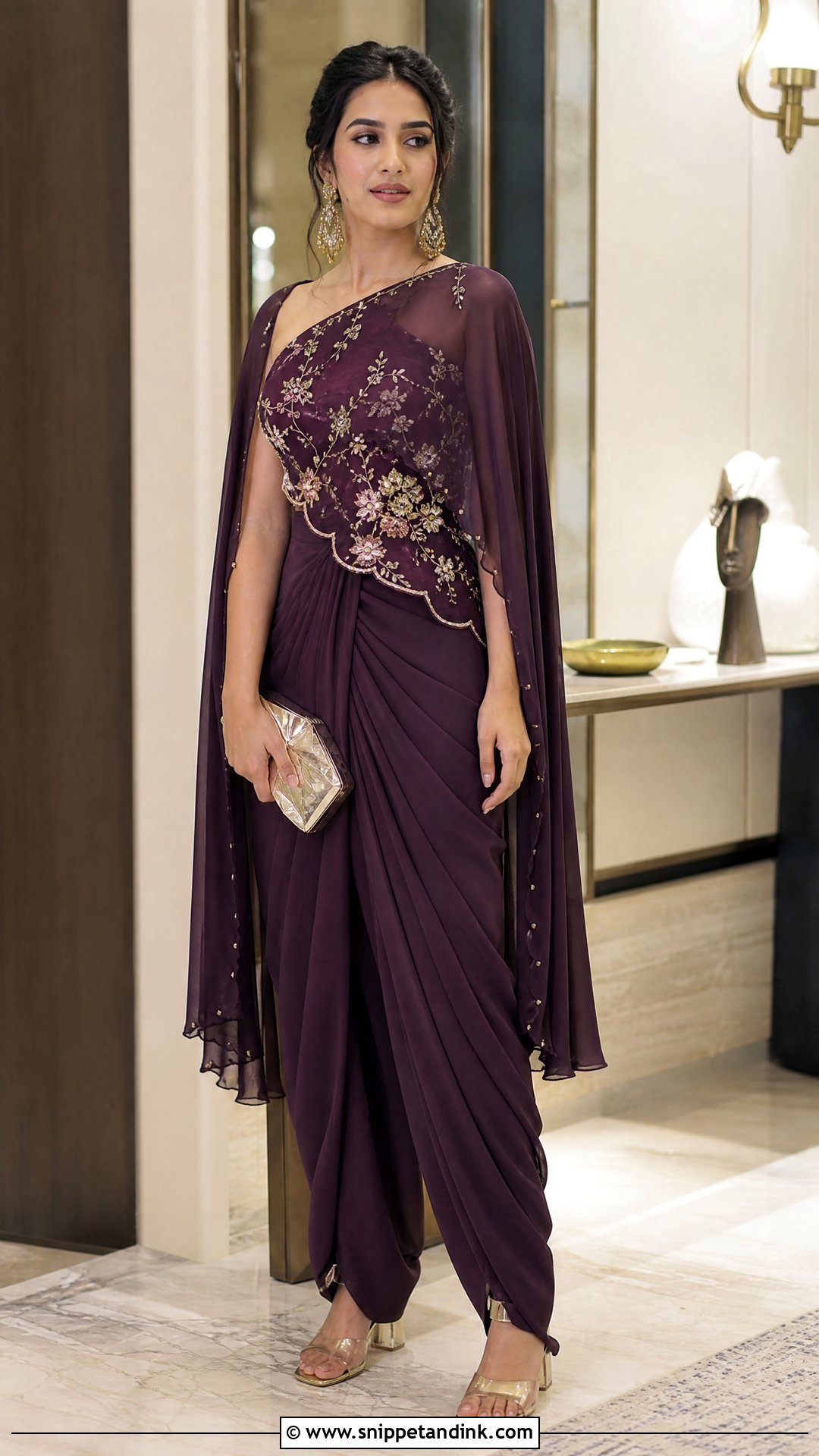
A dhoti pant set is a fun cocktail-night outfit for a sister who’s confident in fusion. Draped dhoti trousers paired with an embroidered crop top, an asymmetric tunic or a fitted jacket make a sharp evening silhouette in black, deep green, cobalt, plum or muted metallics. The trouser shape is the point, so keep the accessories modern and few. I test the drape in two positions: sitting, and climbing stairs, since dhoti pants can pull at the crotch if the drape is cut short. The hem should clear the floor and show your shoes.
19. Palazzo Suit For Sister Wedding Welcome Dinner
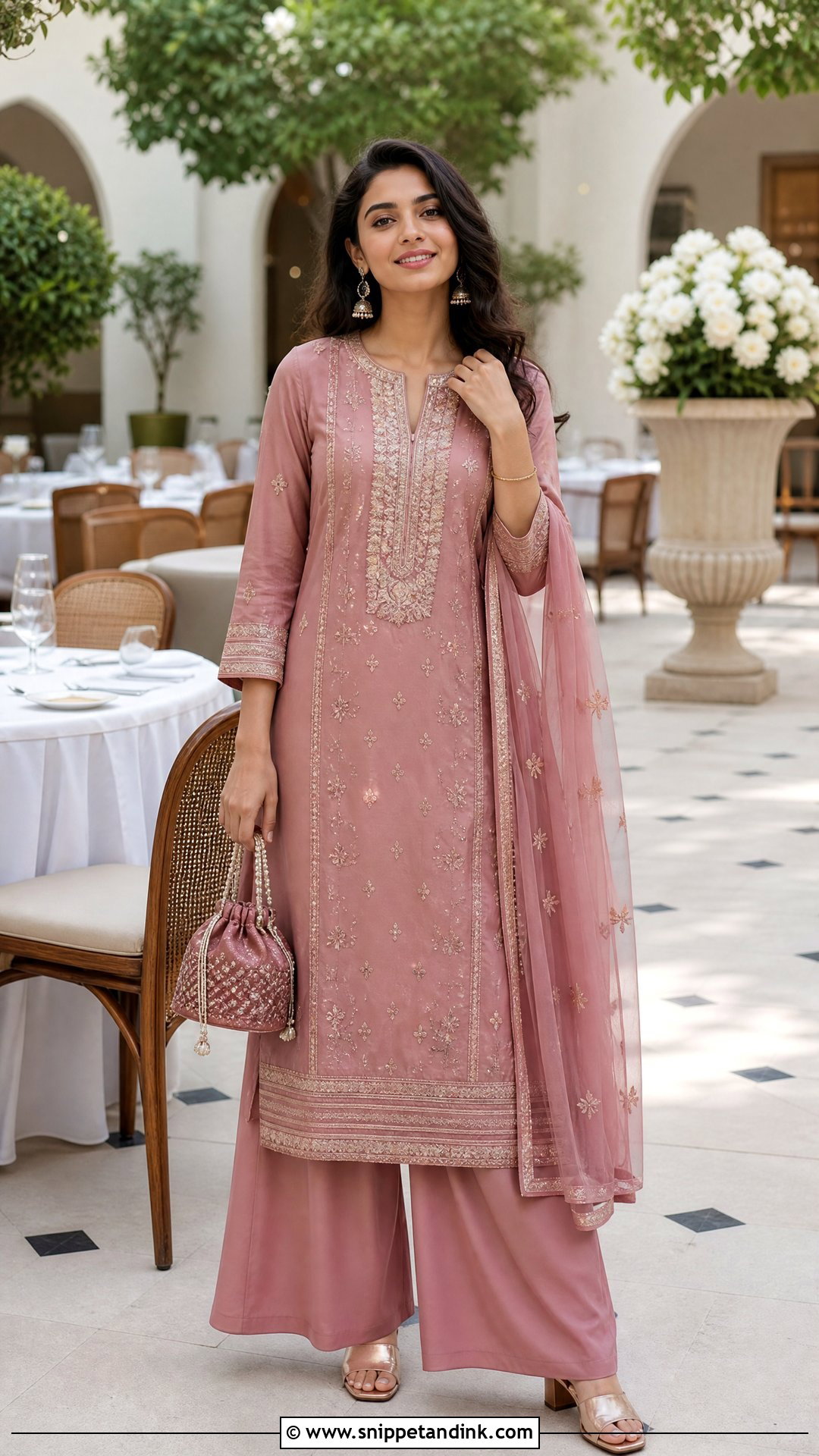
For a welcome dinner, I put sisters in a palazzo suit: dressed up enough for the first night of guests, relaxed enough to eat and talk for hours. A straight embroidered kurta, or a short top with a long jacket, over wide-leg trousers works in soft jewel tones, muted florals or pastels. Petite sisters should keep the kurta at or above the knee so the trousers still show. Low block heels let the palazzo hang straight. Drop earrings, a slim bracelet and a small potli are enough, and a light dupatta over one shoulder is optional.
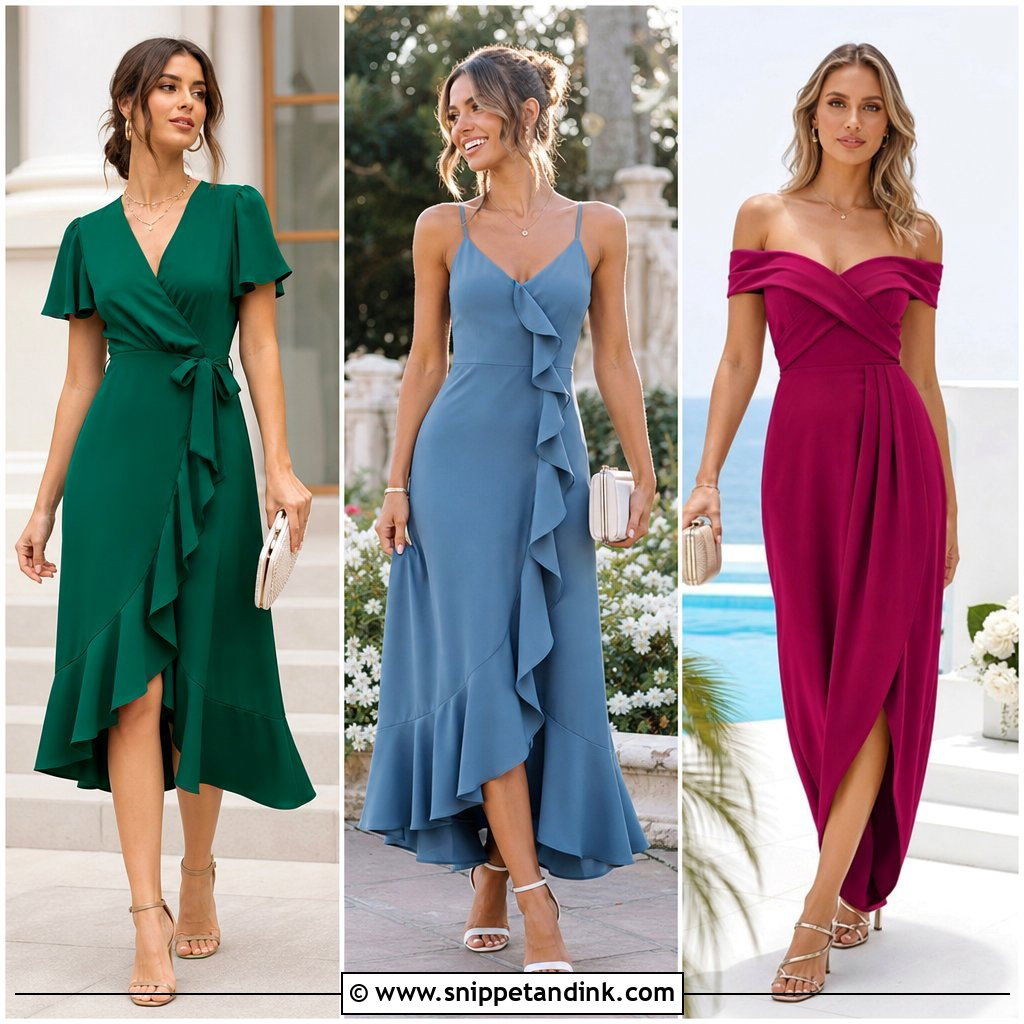
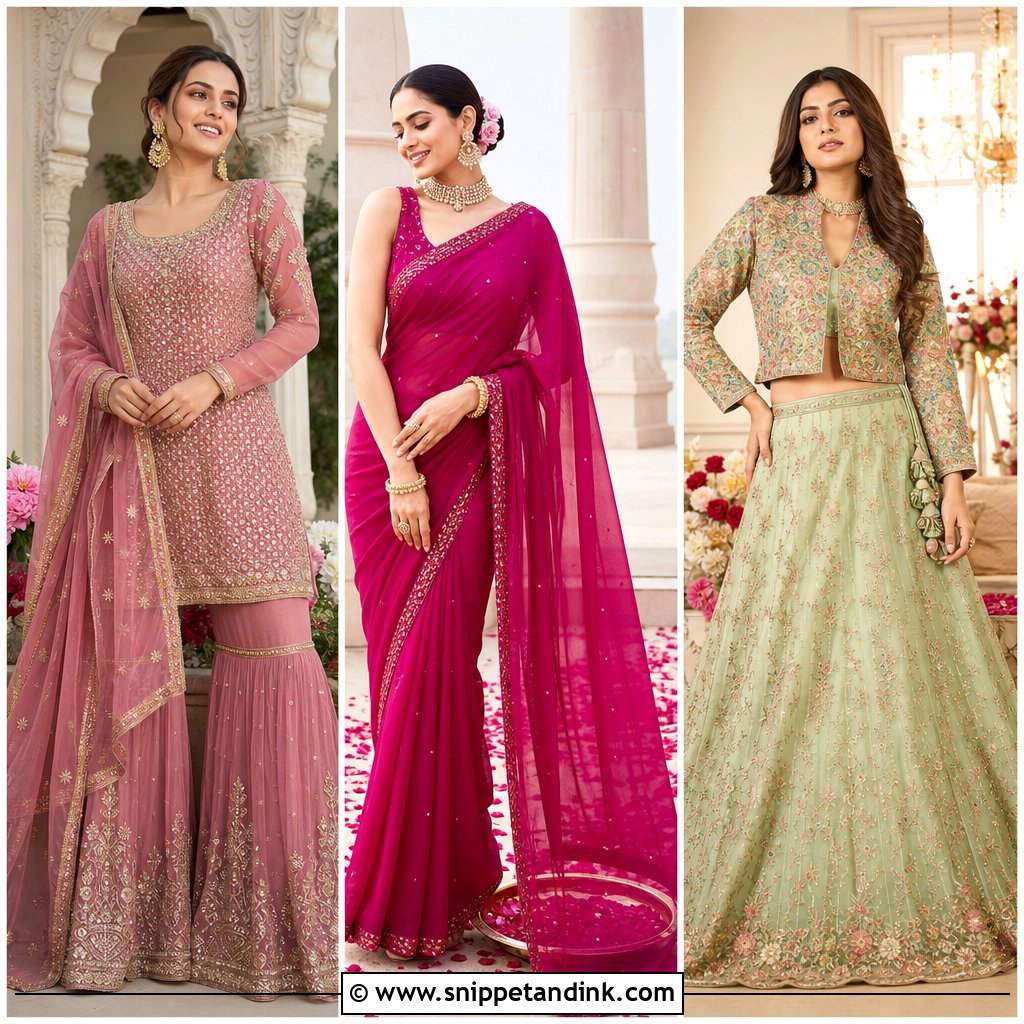
20. Jacket Lehenga For Sister Wedding Evening
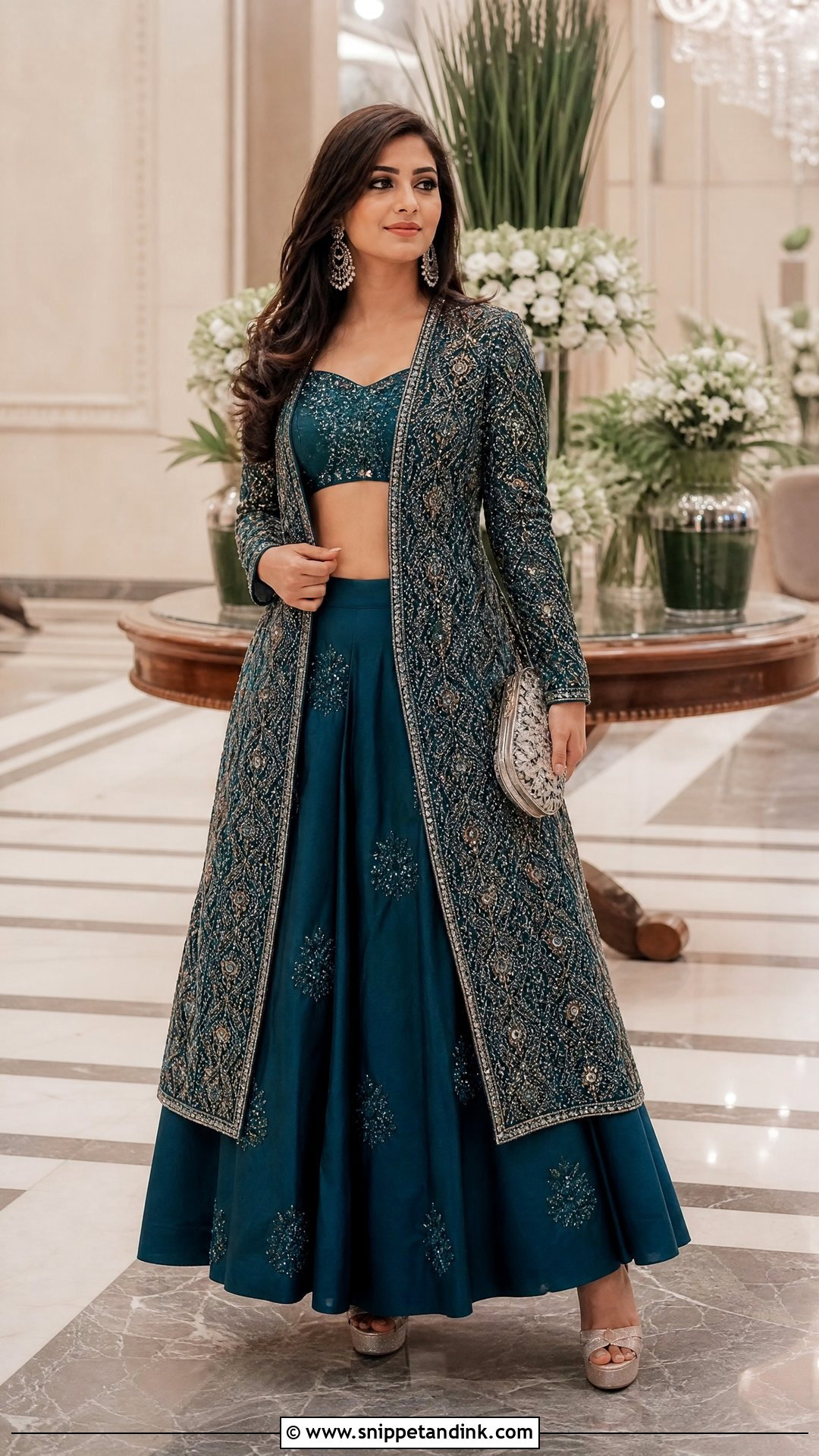
A long jacket over a lehenga gives strong vertical lines and more coverage than a cropped choli, which is why sisters who want a formal evening look without much skin often choose it. Keep the skirt and blouse simple and let a calf- or ankle-length jacket in deep teal, wine, navy or charcoal carry the metallic embroidery. Skip the dupatta unless the ceremony needs one. Two things to check at the fitting: the jacket hem shouldn’t catch under your heels on stairs, and the sleeves must let you lift your arms for hugs and photos. A polished ponytail or low bun keeps the neckline clear.
Two Sisters, Four Cousins, One Group Photo
Many families want the sisters and female cousins to coordinate at one or two functions. Done well, the group photo looks planned. Done badly, everyone wears the same shade and the bride looks like part of a uniform.
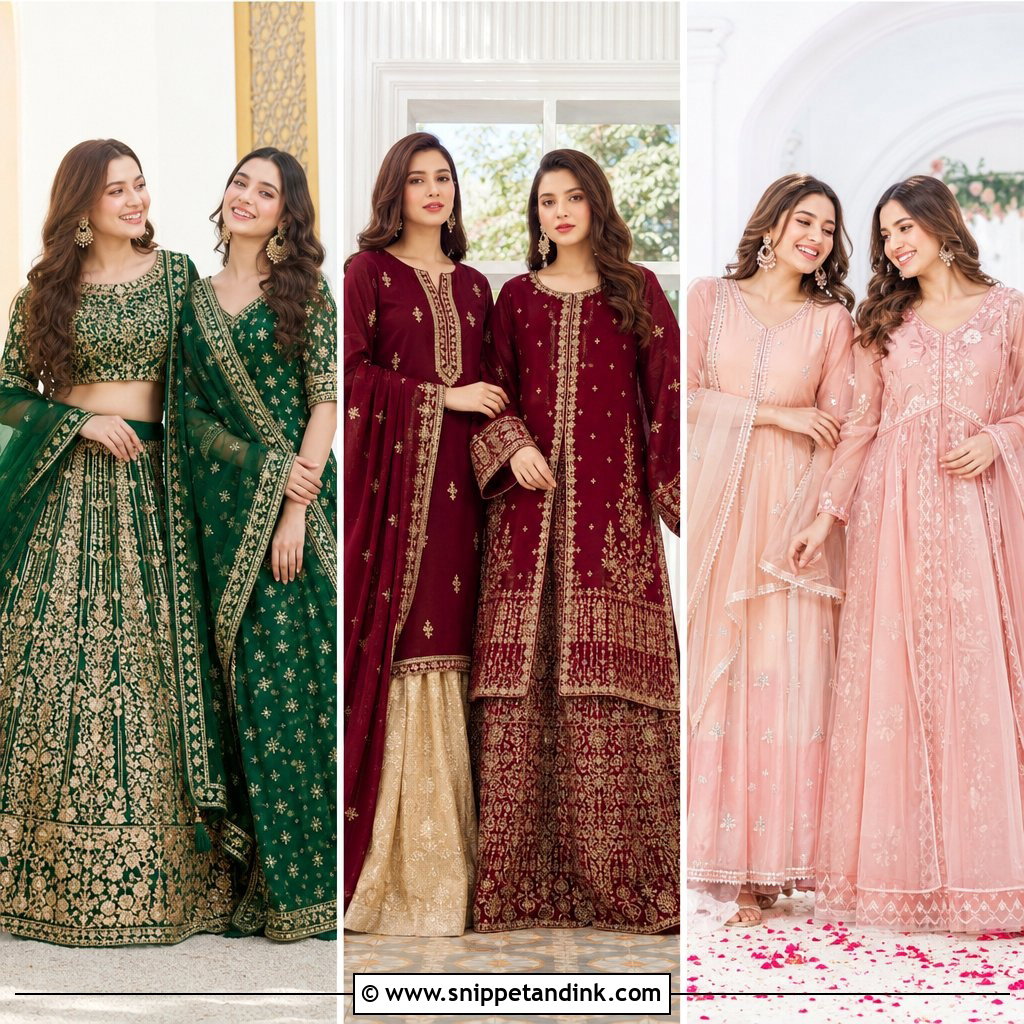
What works best is a shared colour family in different shades: three greens from sage to emerald, or pinks running from blush to fuchsia. Each person can then choose a silhouette that suits her body and comfort, so the aunt who hates crop tops gets an Anarkali while a younger cousin wears a sharara. Agree on one shared element, such as gota trim, a floral hair detail or matching juttis, and stop there.
Keep the bride out of the group colour, or put her at its deepest point if she wants to join. Before booking any fabric, collect phone photos of everyone’s options in daylight and line them up together; screens and shop lights distort colour more than people expect. One person, often the sister herself, should have the final say, or the group chat will go on for weeks.
How the Sister of the Bride Can Plan Each Outfit by Its Job
Every outfit in a sister’s wedding wardrobe has a job to do. Haldi and mehndi need washable fabrics and open sleeves, sangeet and garba need secure draping and a hem you can’t trip on, and the ceremony and reception call for richer fabric and careful coordination with the bride. Confirm the function, venue, weather and the bride’s palette before you shop, and leave time for at least one fitting per tailored piece. Good tailoring does more for a simple outfit than extra embellishment ever will.
You'll Like These Ideas:


Leave a Reply