
An Indian wedding can mean four or five functions in three days, and a shrug is the most useful layer a guest can own for them. It gives you coverage for a ceremony, swaps out the dupatta that keeps slipping during the Sangeet, and turns a simple dress into something festive. Below are twenty complete outfits built around long or cropped shrugs, from embroidered maxis and Anarkalis to coordinated sets and A-lines, for a Haldi, Mehndi, Sangeet, ceremony or reception. As a rule I go breathable for daytime and save heavier embroidery for the evening, then adjust sleeves, neckline and sparkle to the venue.
What Each Function Asks of Your Shrug
Every event in an Indian wedding is physically different. I plan a guest’s outfits by what she’ll actually be doing at each one, then pick the shrug length and fabric to suit.
- Haldi: turmeric paste gets everywhere. Choose washable cotton or a cotton blend, a short or elbow-length shrug, and nothing you’d be upset to stain.
- Mehndi: you may sit on cushions for hours with wet henna on your hands. Short or roll-up sleeves, a shrug that comes off easily and a hem that doesn’t pool on the floor.
- Sangeet: it’s a dance night. A long shrug looks great but must stop above the ankle so you don’t step on it; a cape or cropped style suits the most energetic dancers.
- Ceremony: often long, sometimes at a temple or gurdwara. Covered shoulders, a long shrug and shoes you can slip off.
- Reception: the evening event, usually indoors and air-conditioned. This is where velvet, sequins and beading make sense.
Colours Guests Usually Leave to Others
Red is the bride’s colour at many North Indian weddings, so I steer guests toward other shades for the main ceremony. Some families also avoid black or all-white at auspicious events. Customs vary a great deal between communities, and the easiest answer is to ask the couple or a family member before buying.
1. Floral Maxi Shrug Dress
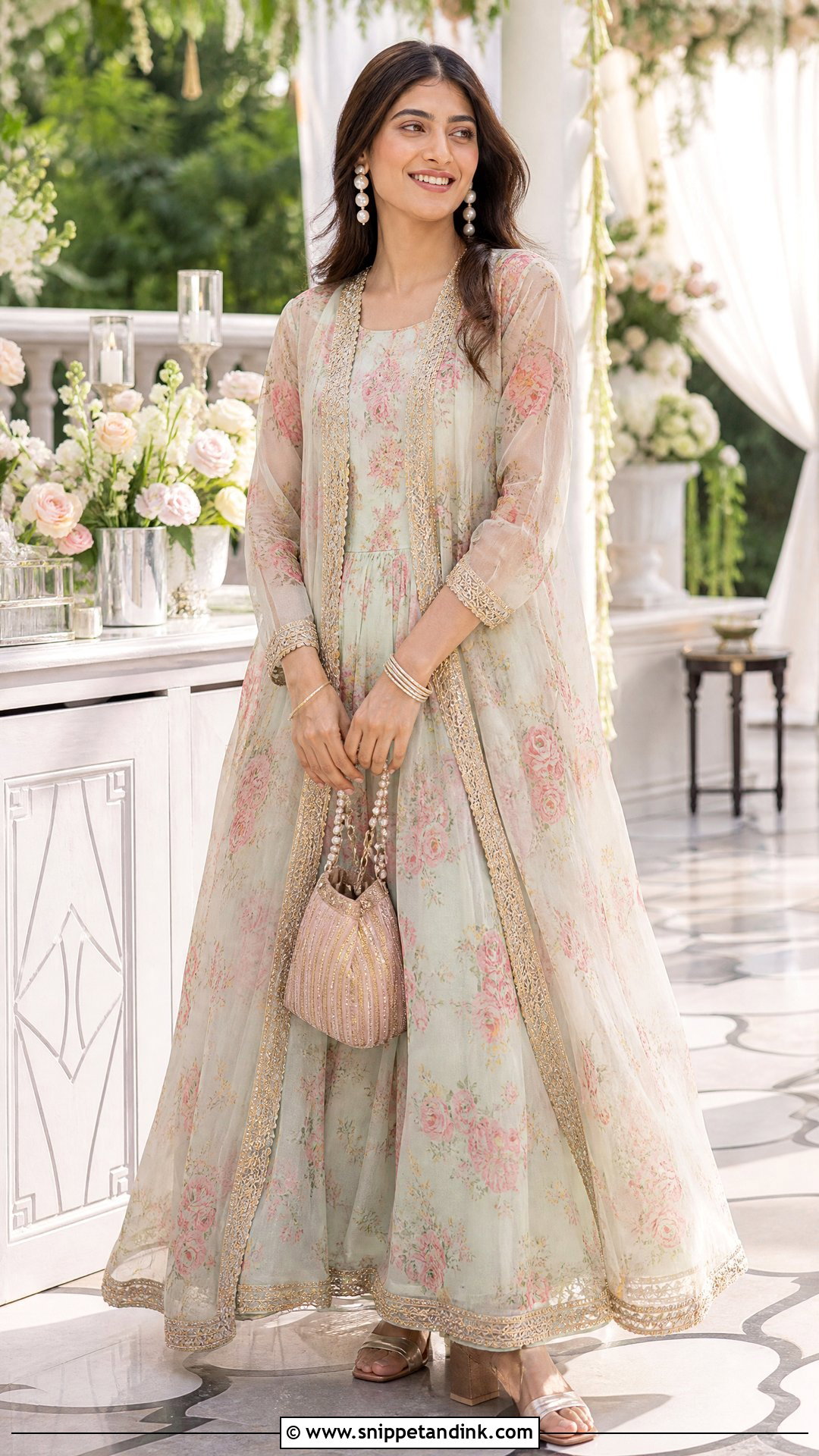
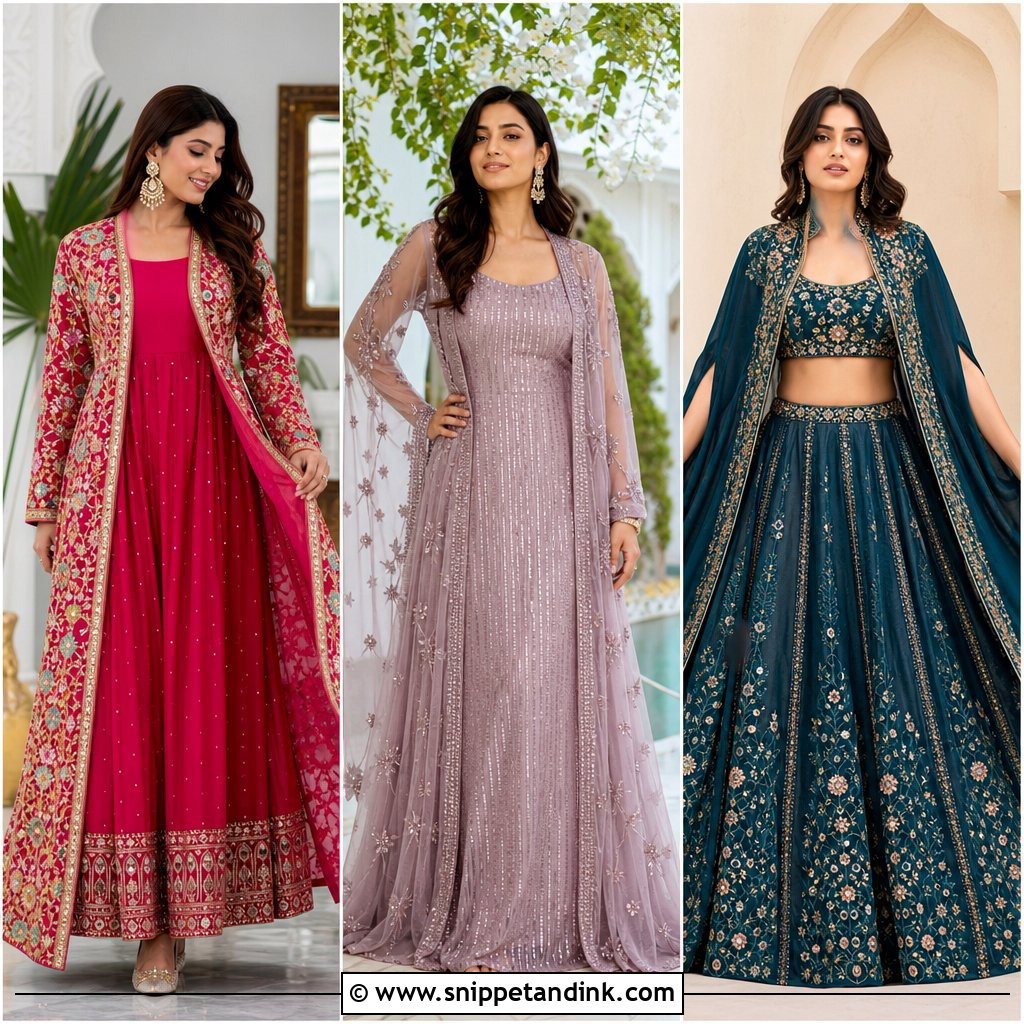
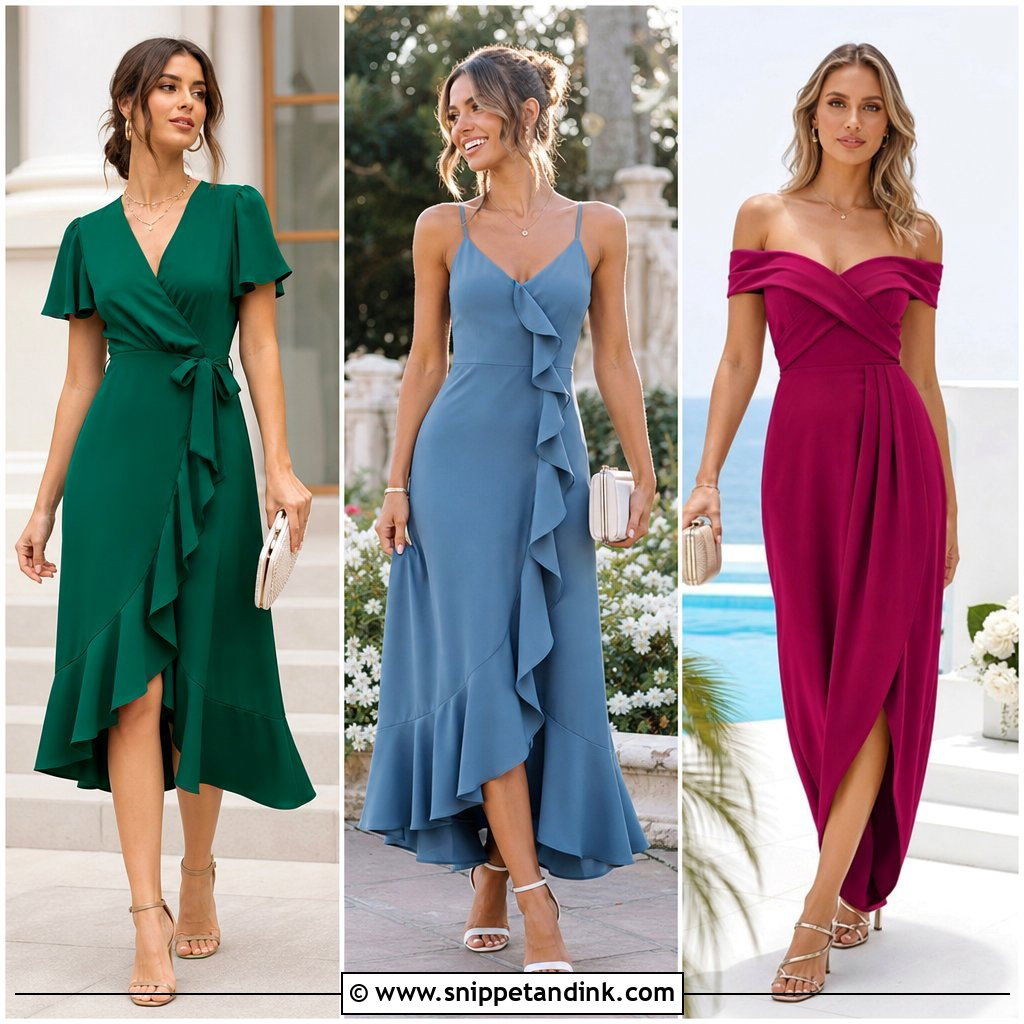
A floral maxi with a sheer floor-length shrug is the easiest daytime outfit on the list. A flowing georgette or chiffon dress in coral, mint, lavender or powder blue keeps you cool outdoors. The shrug should be light: a little threadwork or scattered sequins at the border is enough, because a heavily embroidered sheer layer drags at the shoulders and pulls the neckline back. Metallic block heels, pearl drops, slim bangles and a small potli bag finish it, with soft waves or a low bun. Wear the shrug open so the waist still shows.
2. Embroidered Anarkali Shrug Dress
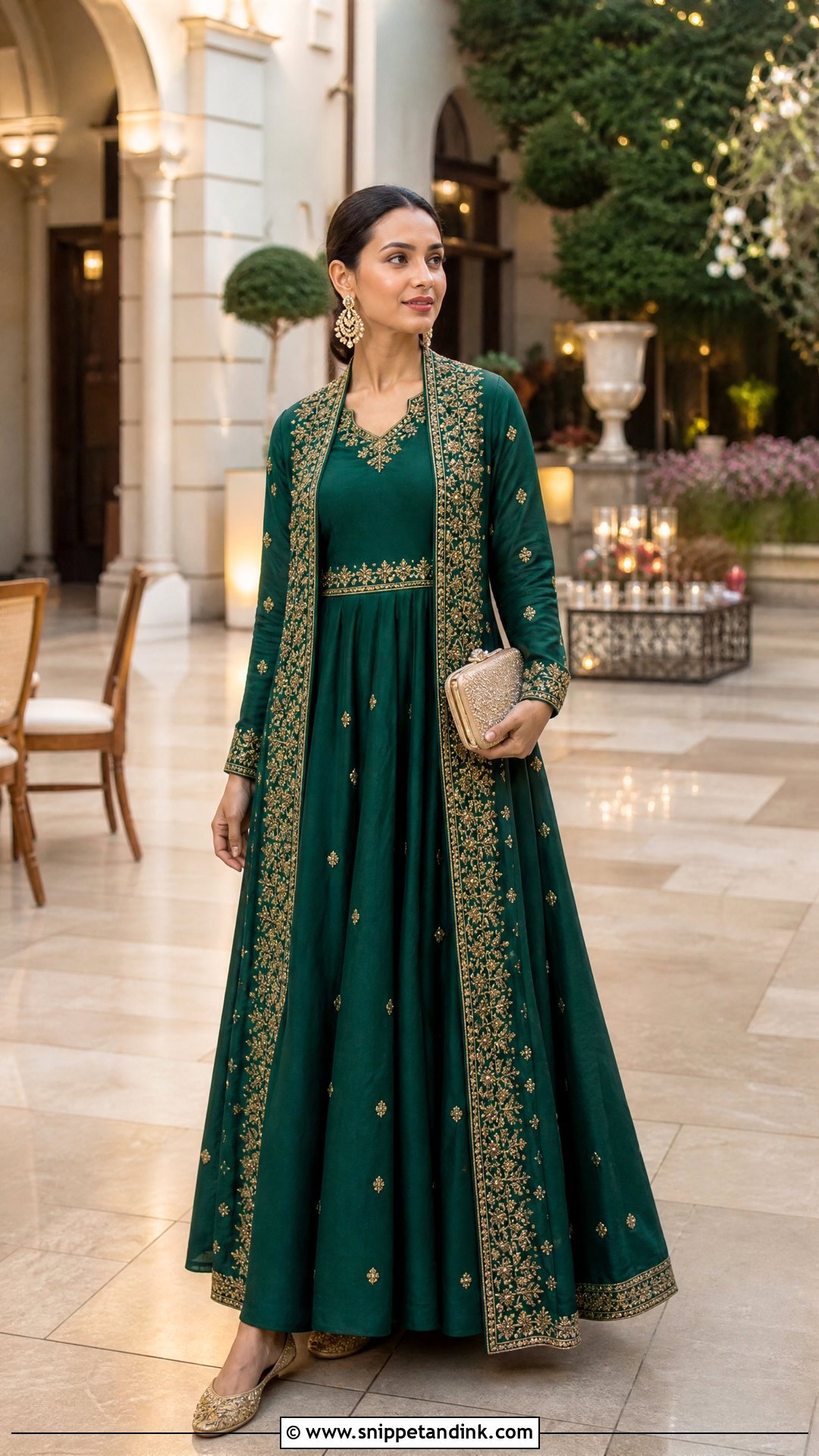
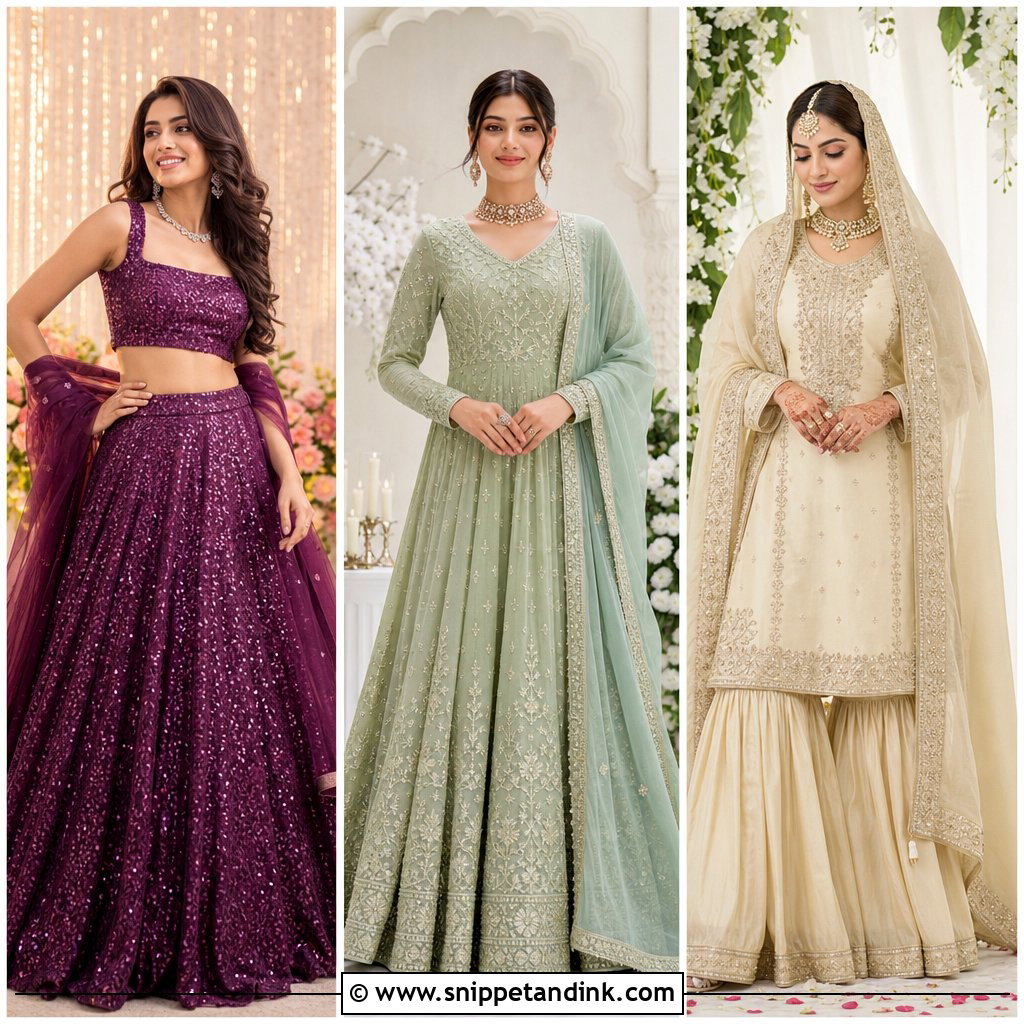
For the main ceremony, an Anarkali with a matching long shrug gives graceful coverage and lets you sit cross-legged or stand through a long ritual. A fitted bodice and a gently flared, ankle-grazing skirt in emerald, ruby, teal or plum look rich in photos. I’d keep zari on the shrug’s front edges and cuffs and leave the back plain, since that’s what you lean against for hours. Pointed juttis or low block heels, Kundan earrings and a structured clutch suit it, with a sleek bun to show the jewelry. If the Anarkali is already heavily worked, pick a lighter shrug.
3. Lehenga Dress With Long Shrug
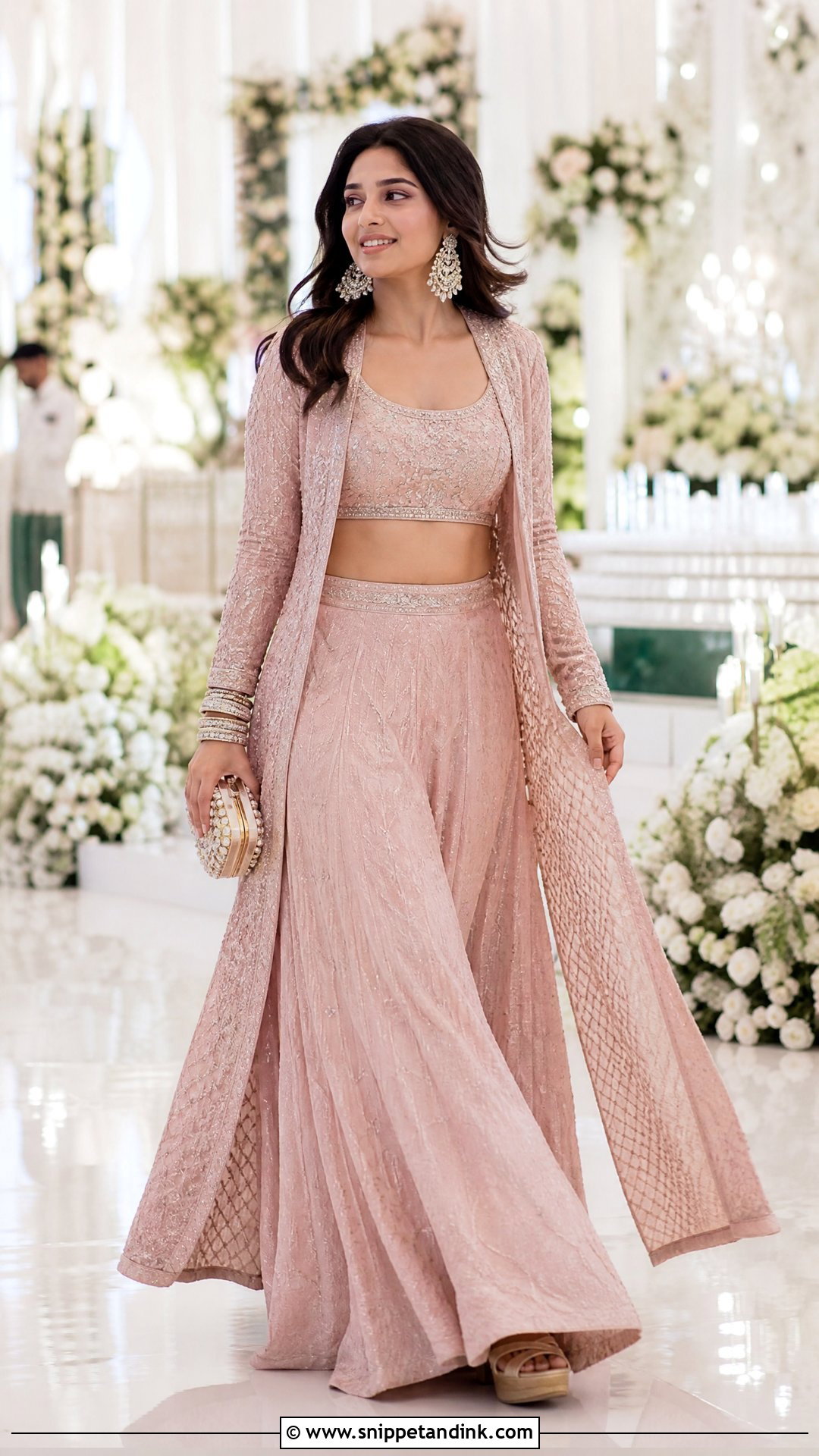
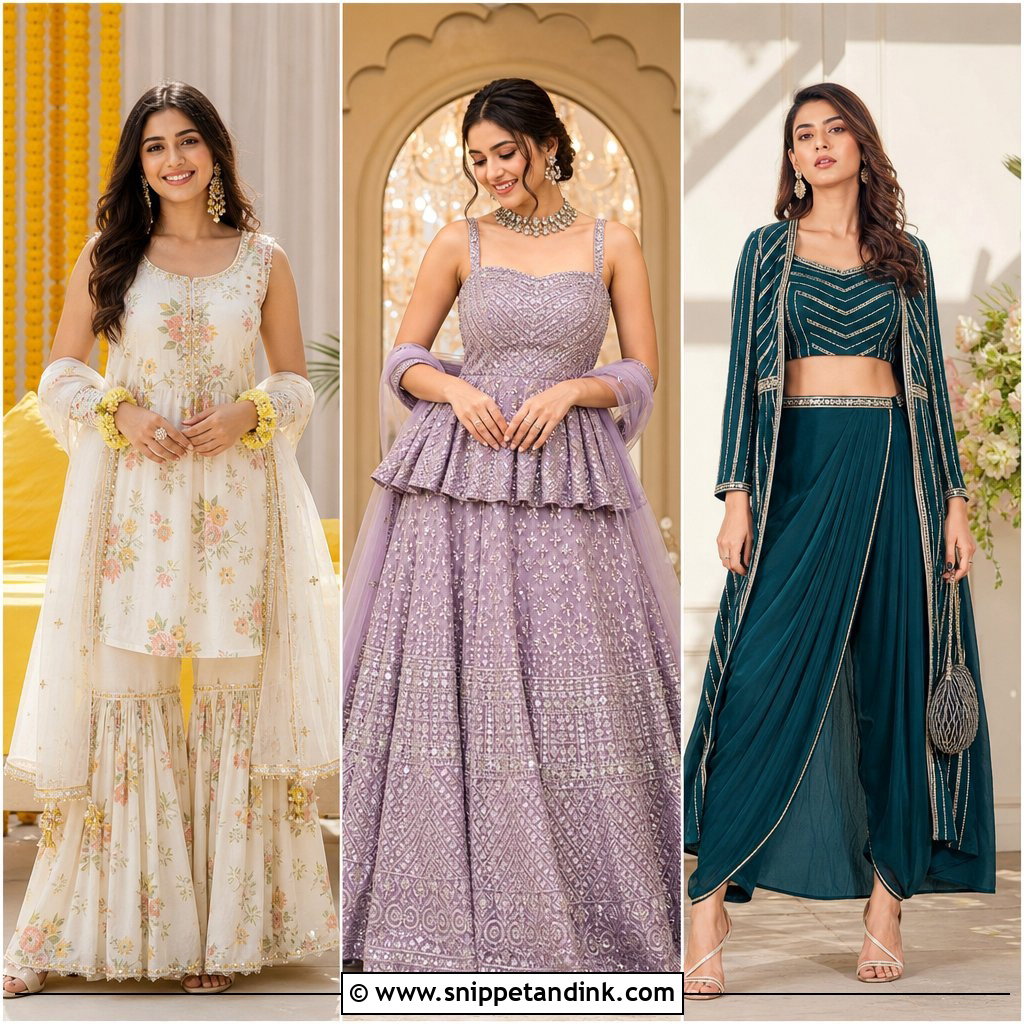
Want lehenga drama without wrestling a dupatta? Wear a fitted crop top and a full skirt, then add a floor-length embroidered shrug. It falls in clean vertical lines and stays put while you dance, which a pinned dupatta rarely does. Balance it one way or the other: plain skirt with a detailed shrug, or an embellished skirt under a sheer, simple one. Platform heels, chandelier earrings, stacked bangles and a box clutch work for a Sangeet or reception. A defined waist keeps the three pieces looking like one outfit instead of separates.
4. Palazzo Dress With Embroidered Shrug
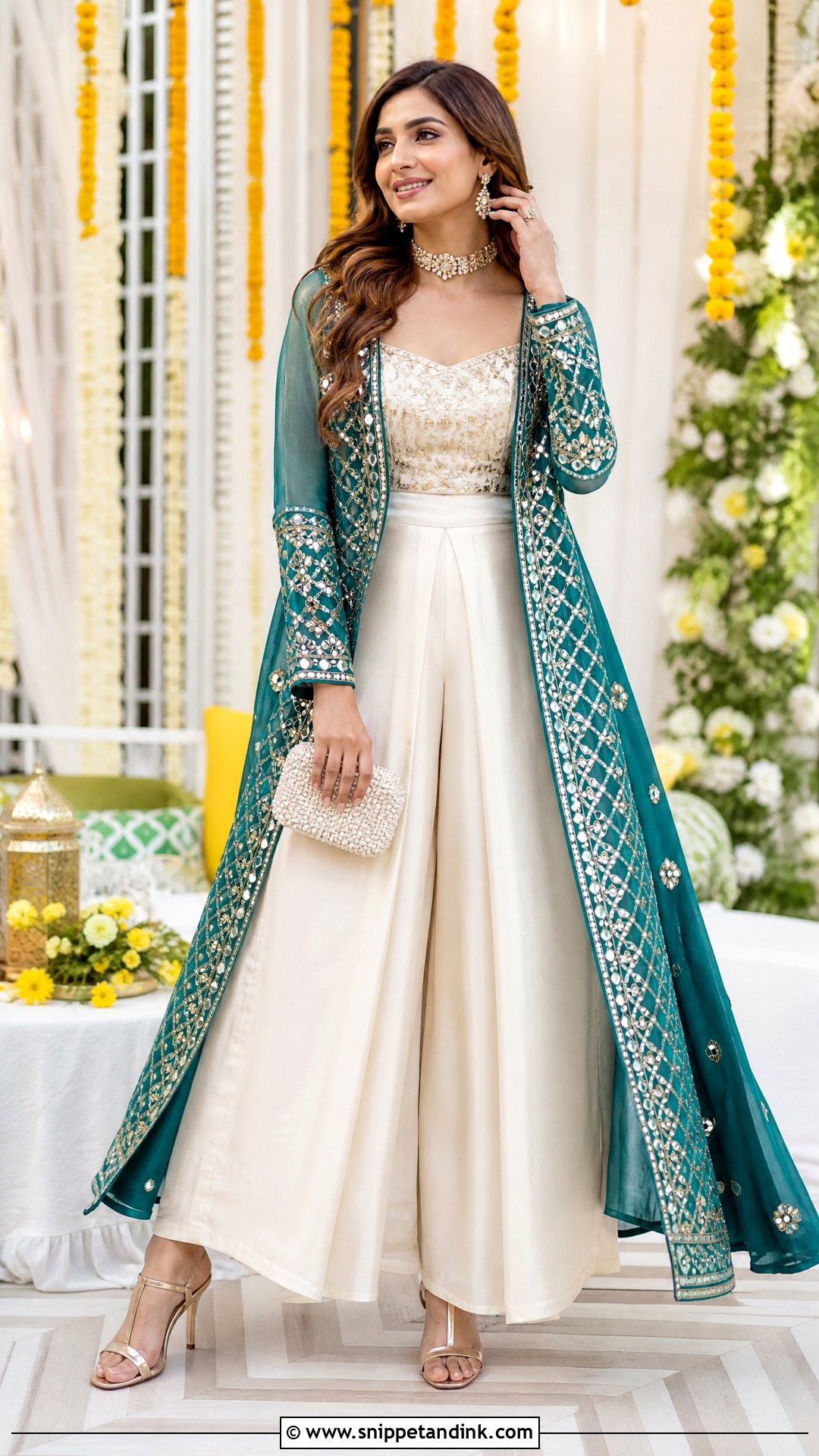
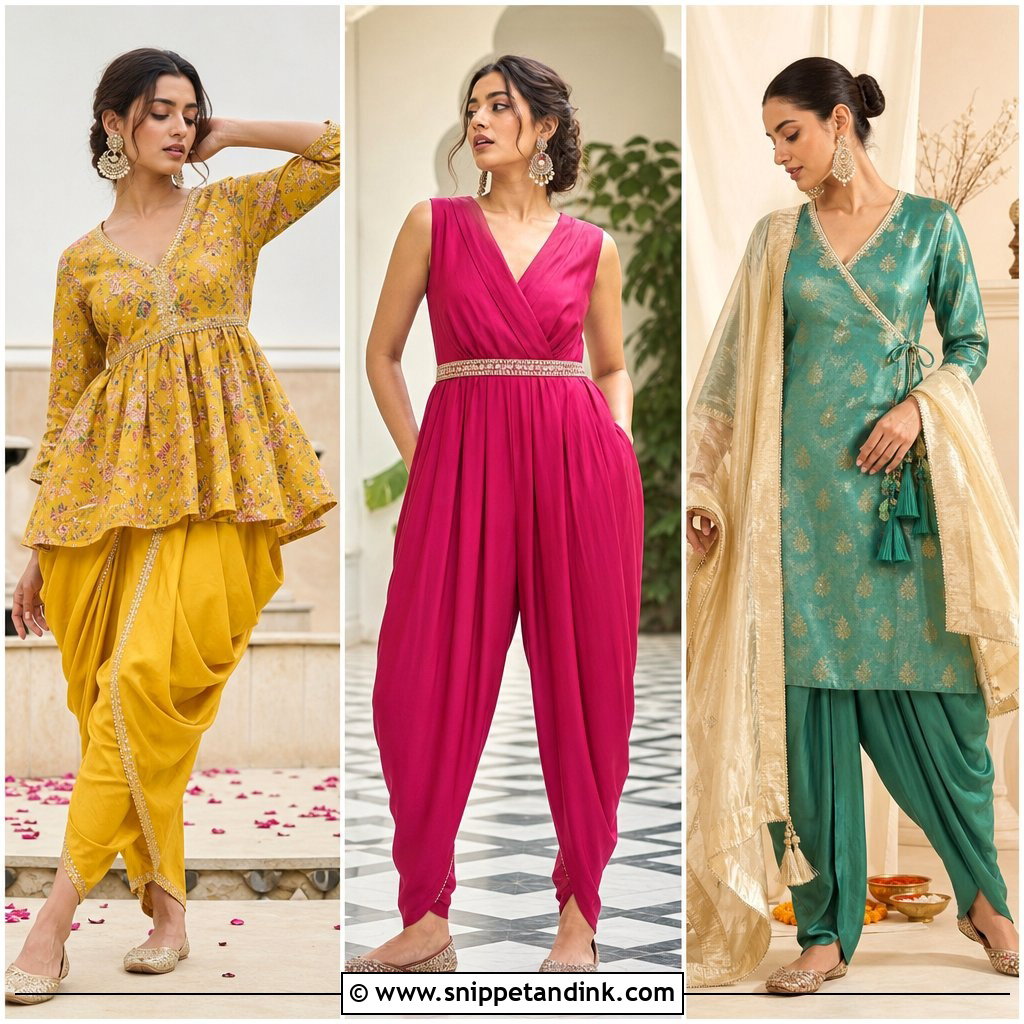
Palazzos with a festive top and a long embroidered shrug are lighter than a lehenga and still look dressed. High-waisted palazzos in silk blend, crepe or georgette pair with a sleeveless or short-sleeve top. The shrug should fall below the knee; any shorter and the wide legs make it look cut off. Mirror work, threadwork or a contrast border all suit it. Heeled sandals, a delicate choker, statement studs and a beaded clutch finish the look. If the shrug is busy, keep top and trousers one colour. Palazzos sweep the floor, so hem them to the shoes you’ll actually wear.
5. Sharara Dress With Cape Shrug
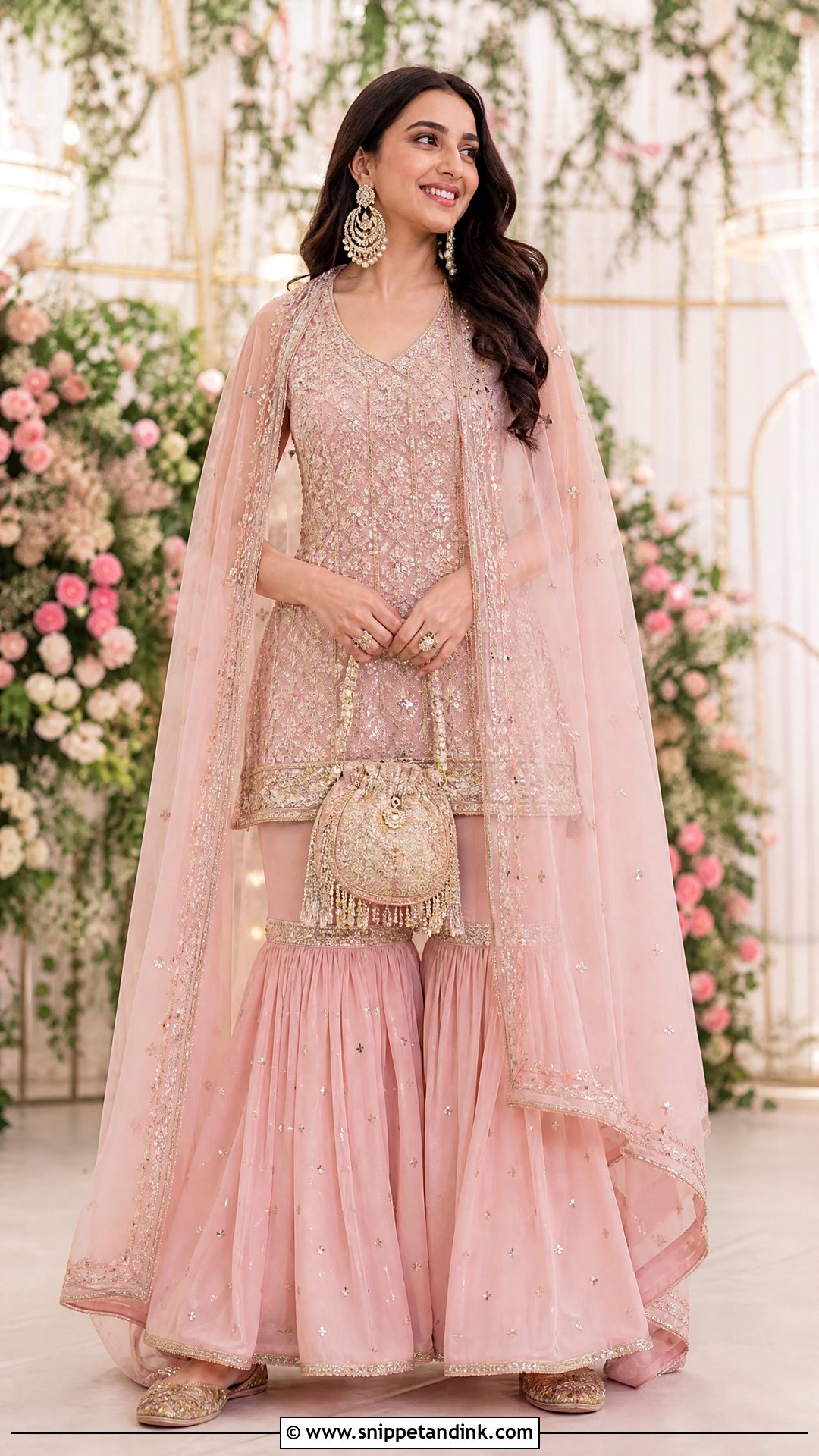
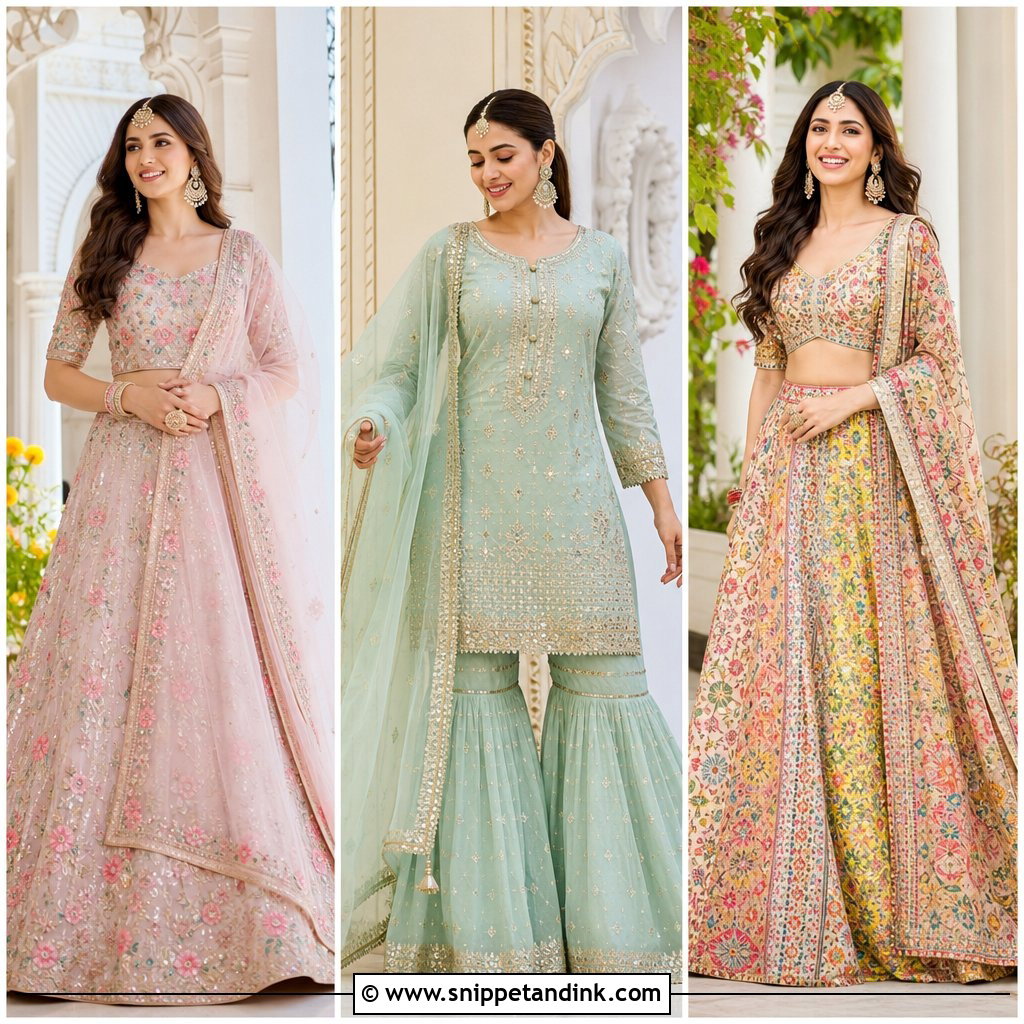
A cape shrug over a sharara gives volume without any draping. Start with a short embroidered kurti or fitted peplum and flared sharara pants, then add a sheer cape that floats around the arms. Pastel pink, pistachio, sky blue or lilac suit daytime; navy, maroon and charcoal suit evening. Embellished juttis, big earrings, a jeweled potli and soft curls complete it. With embroidery at the cape’s neckline, skip the necklace. The one thing I’d flag: capes have no sleeves to anchor them, so a hidden hook or a small pin at the shoulder stops it sliding back when you dance.
6. Sequin Gown With Sheer Shrug
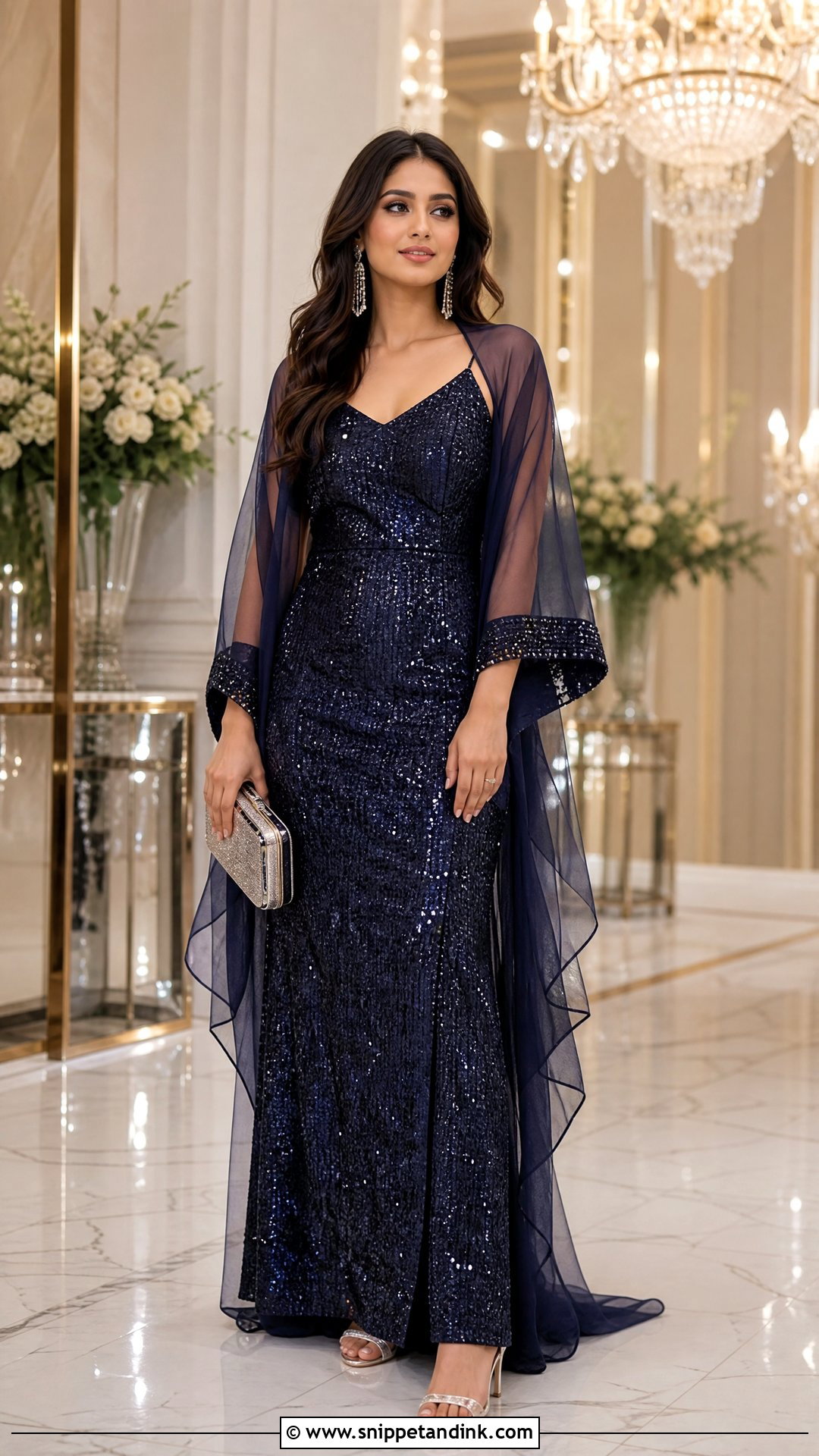
Sequins come into their own at an evening reception, and a sheer shrug keeps them from looking like a cocktail dress. I prefer small, flat sequins over big paillettes, which are heavy and catch on everything during a long night. A tulle or net shrug with beaded cuffs and a narrow edge adds coverage. Silver, champagne, midnight blue, mauve and emerald all photograph well under event lighting. Slim heels, crystal earrings, a hard-case clutch and a sleek ponytail or side waves are enough. Three-quarter sleeves cover the arms without hiding the gown.
7. Silk Dress With Brocade Shrug
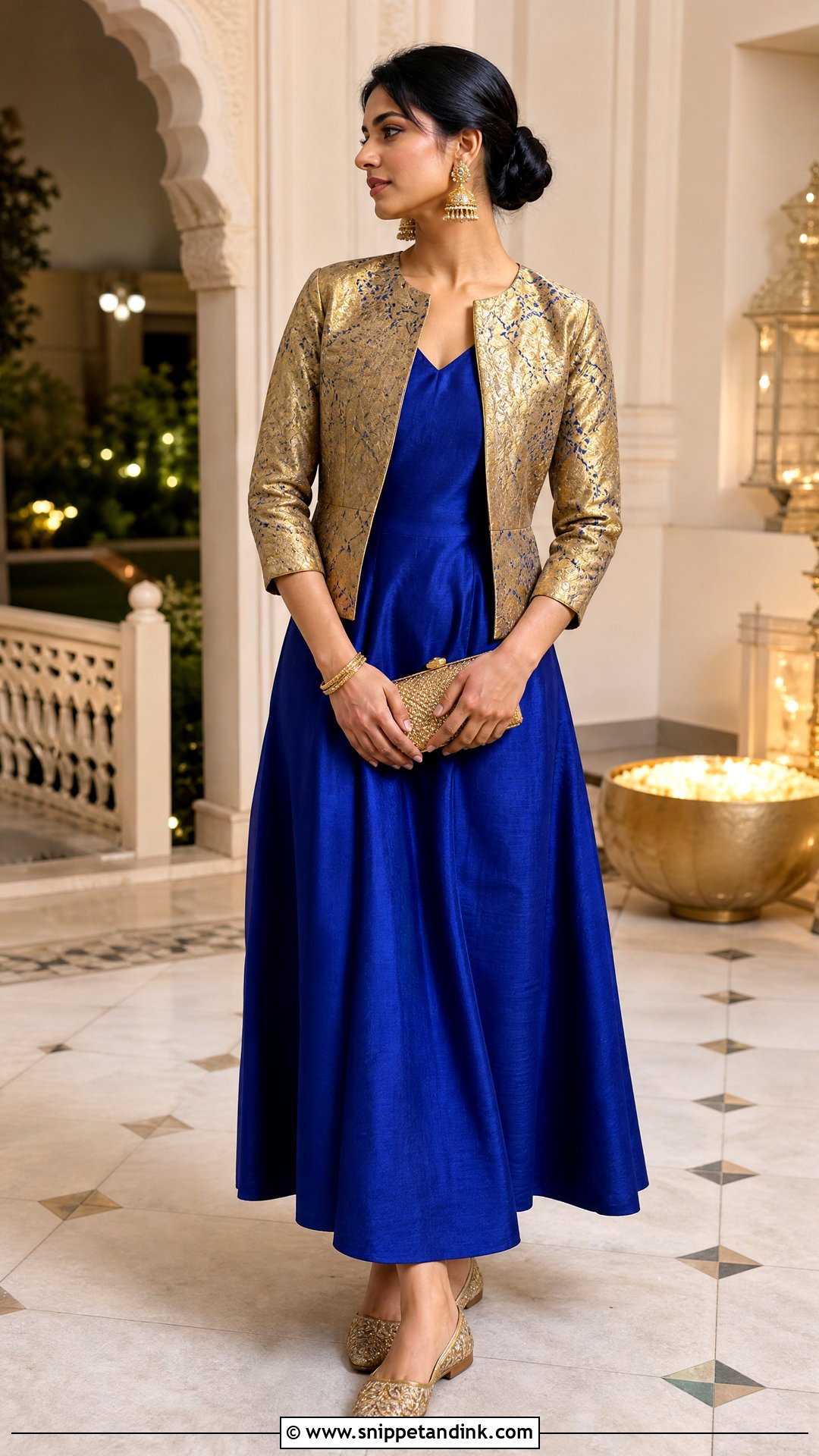
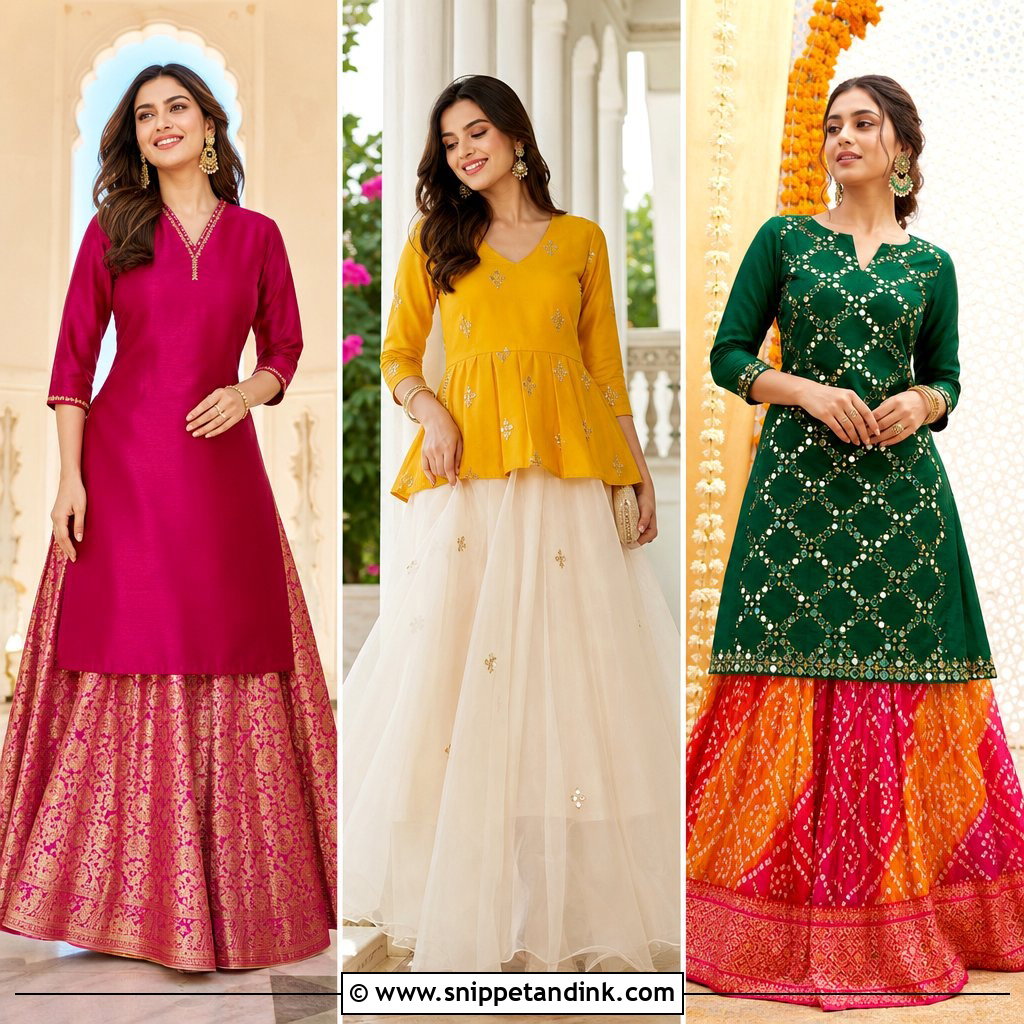
Plain silk under a brocade shrug is a contrast I love: the dress stays modern while the woven gold ties it to tradition. Wear a solid A-line or column in mustard, turquoise, magenta or royal blue, then add a knee-length brocade shrug. Brocade is stiff, so the shoulder seam has to sit exactly on your shoulder; if it overhangs, the whole shrug looks borrowed. Antique-gold heels or juttis, temple earrings, a polished clutch and a low bun with fresh flowers finish it. It suits a guest who likes simple shapes.
8. Dhoti Pant Dress With Asymmetric Shrug
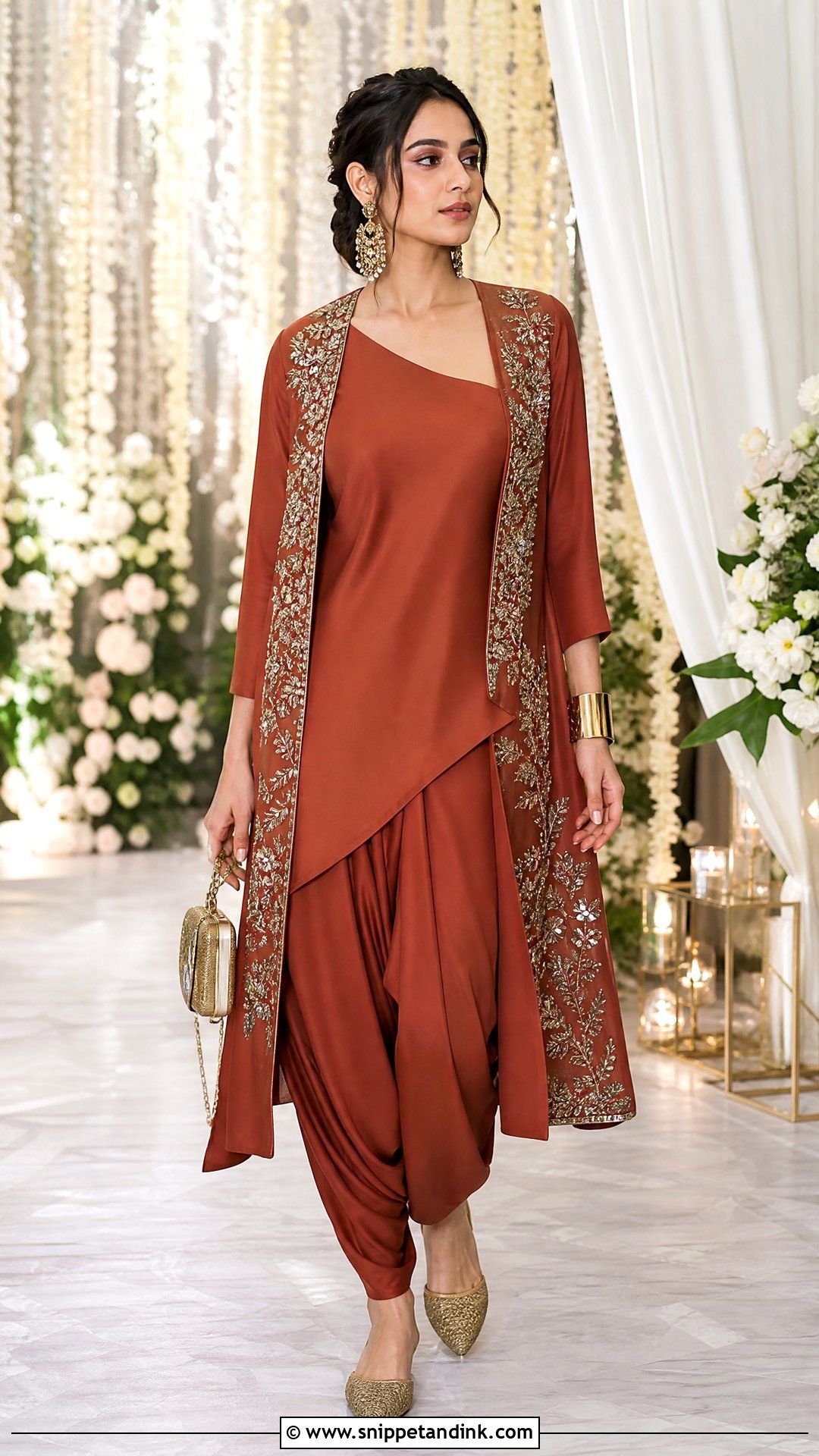
Fusion guests, this one is yours: draped dhoti pants with an asymmetric tunic and a long open shrug. The layers move nicely on the dance floor and stay comfortable. Stick to one main colour, rust, peacock green, wine or navy, and bring in metallic embroidery on the shrug border. Pointed embroidered flats or low heels suit the tapered leg. Sculptural earrings, a cuff and a chain sling bag finish it. Cut the tunic shorter on one side so the drape shows. Save this for a Sangeet or fusion party rather than a religious ceremony.
9. Mirror Work Midi Shrug Dress
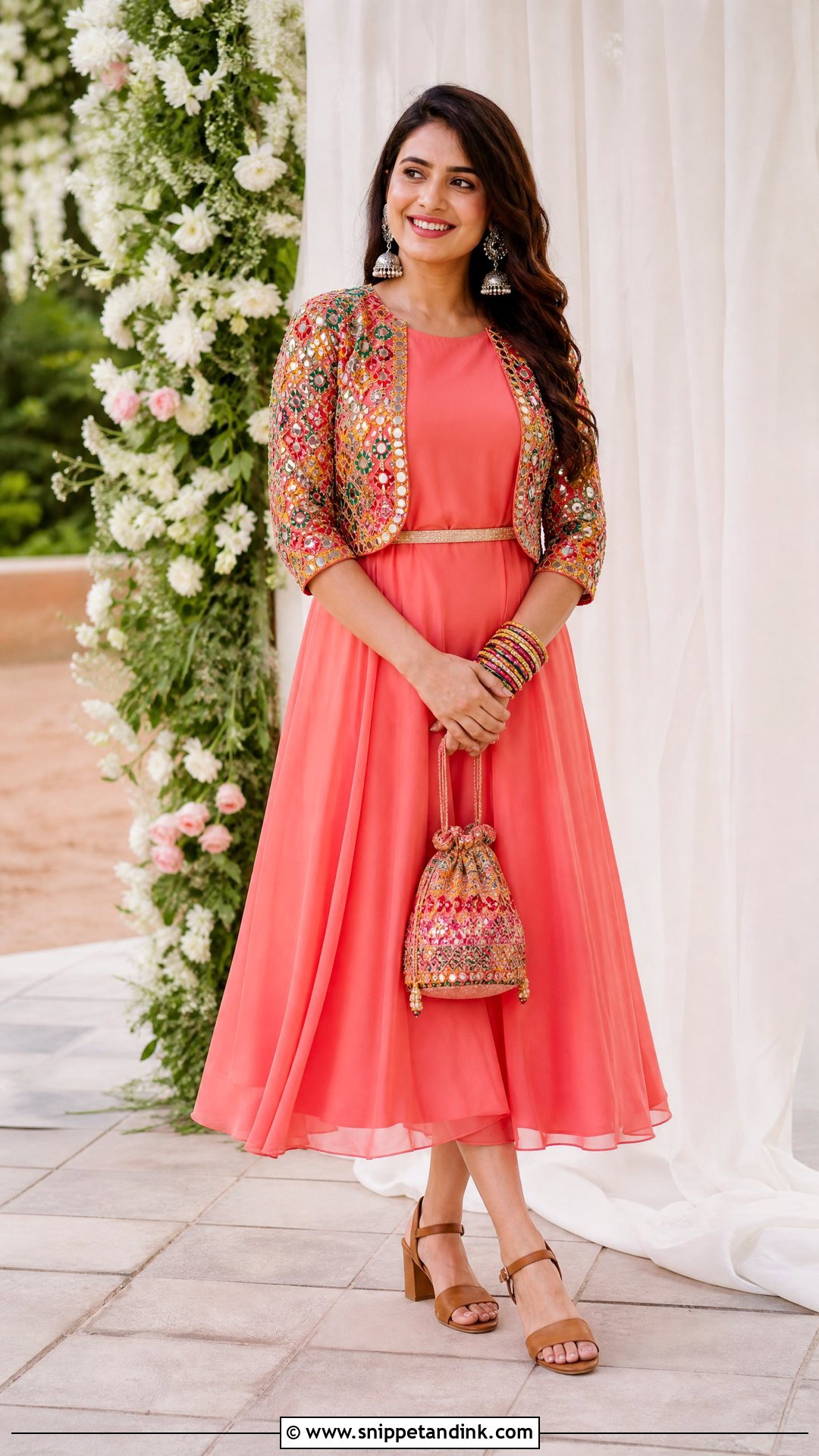
Mirror work turns a plain midi into something bright and festive. Pick a solid sleeveless or short-sleeve dress below the knee, then an open shrug with small mirrors and neat edging. Mirrors are stitched on with a thread frame, so look for one where the frame is tight; loose mirrors pop off when you dance. Keep the dress simple. Tan block heels, silver jhumkas, stacked bangles and a colourful potli finish it, and a narrow belt over the dress but under the shrug defines the waist. You’ll wear the shrug again long after the wedding.
10. Velvet Dress With Embroidered Shrug
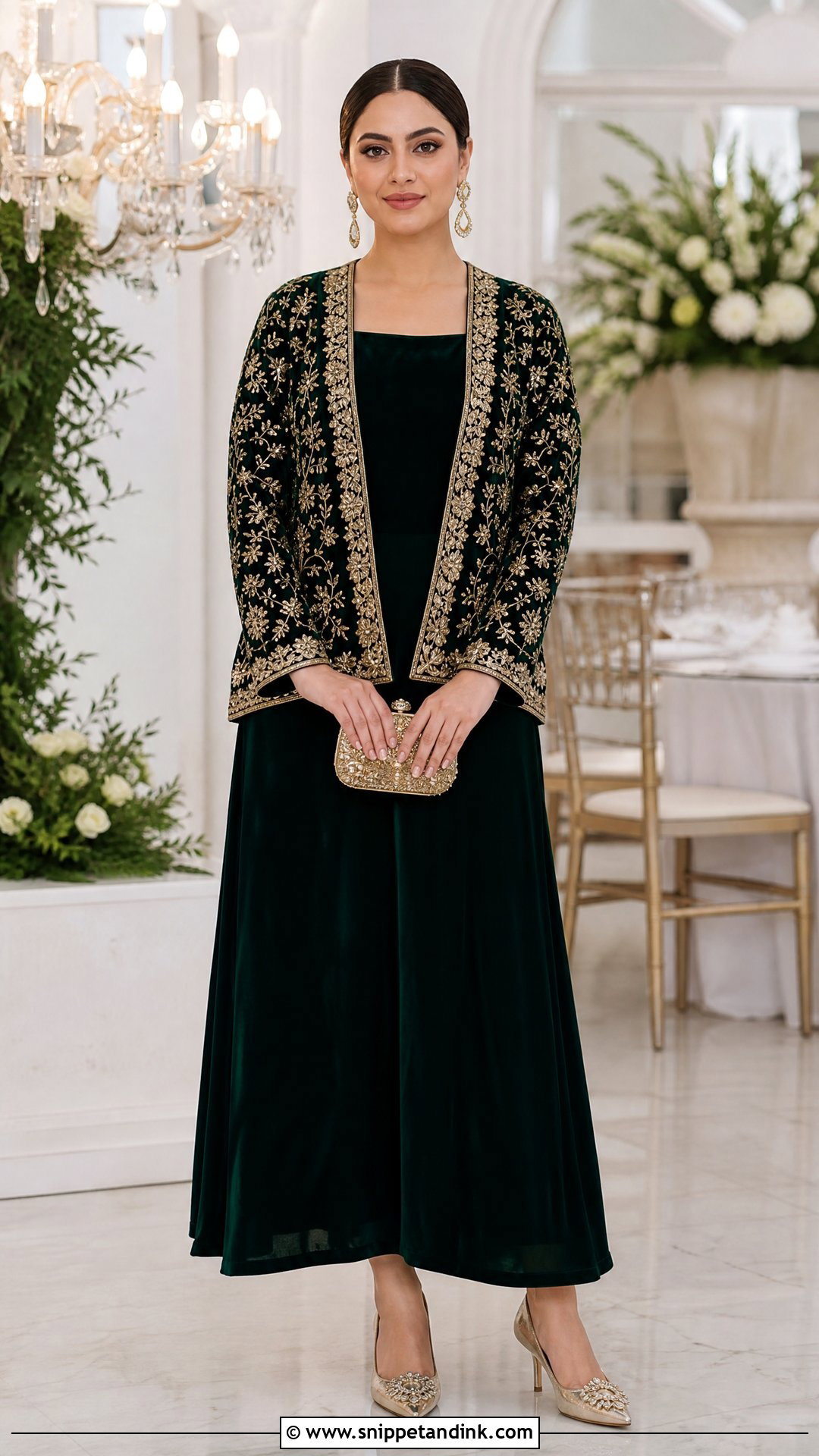
For a winter wedding, velvet gives warmth and depth. A streamlined ankle-length dress in burgundy, bottle green, navy or deep purple works best with a lighter velvet or silk-blend shrug, not two heavy velvets, which feel bulky and hot once indoors. Zari vines, beading or embroidered cuffs add the festive detail. Closed-toe heels, a jeweled clutch, drop earrings and defined makeup suit it, with a centre-parted low bun. Velvet marks when it’s crushed, so hang it in a steamy bathroom the night before rather than pressing it.
11. Pastel Georgette Dress With Organza Shrug
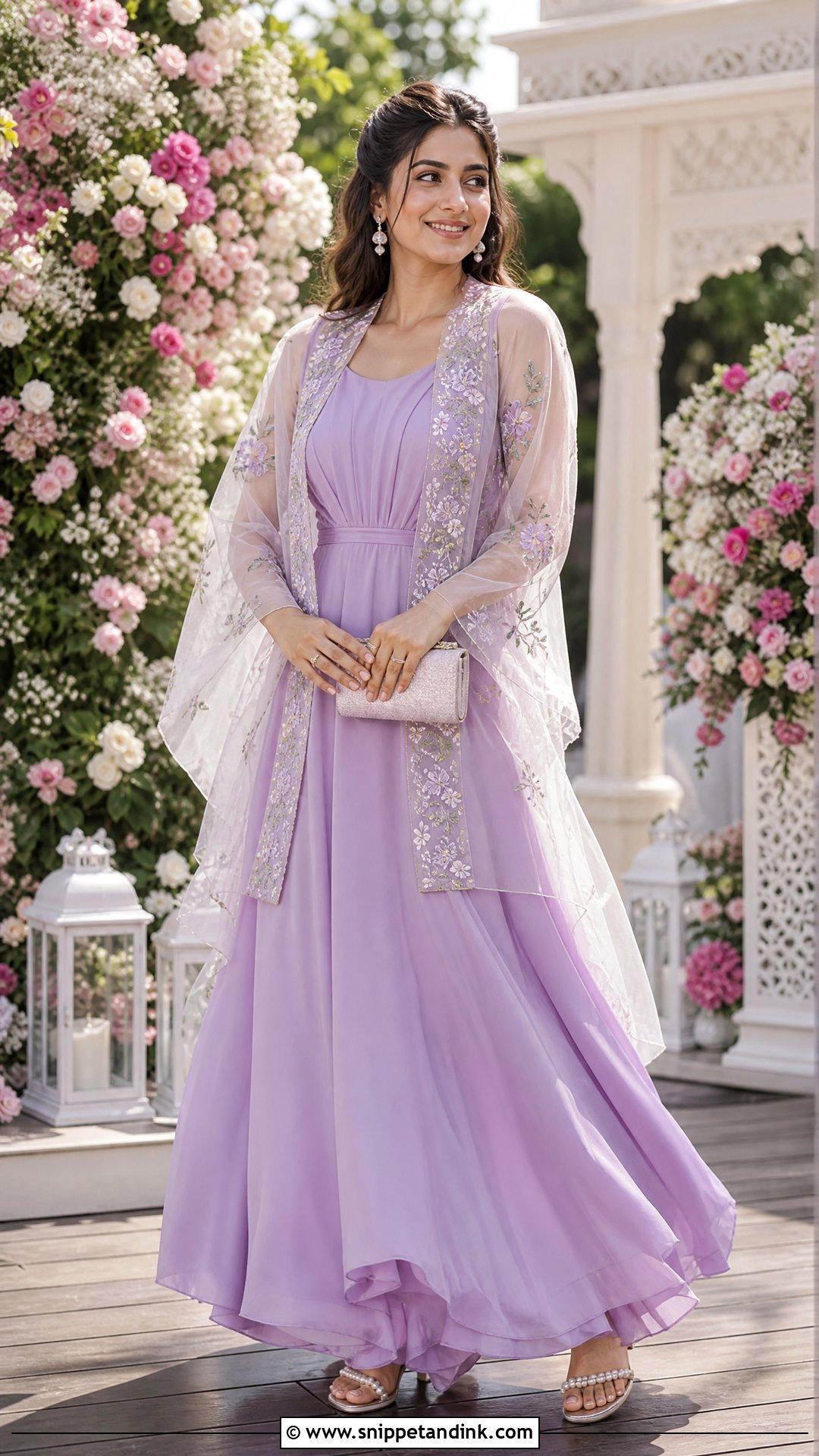
Pastel georgette and organza look fresh in daylight. Pick a flowing georgette dress in blush, icy blue, peach, sage or lavender, then a sheer organza shrug with floral embroidery, calf or floor length. Organza holds its shape and doesn’t drape, so the shrug has to fit at the shoulders and sleeves; a loose one stands away from the body like a tent. Pearl sandals, delicate earrings, a pastel clutch and a simple bracelet suit it, with a soft braid or half-up hair. It’s a strong choice for spring and summer engagements.
12. Black Jumpsuit With Gold Shrug
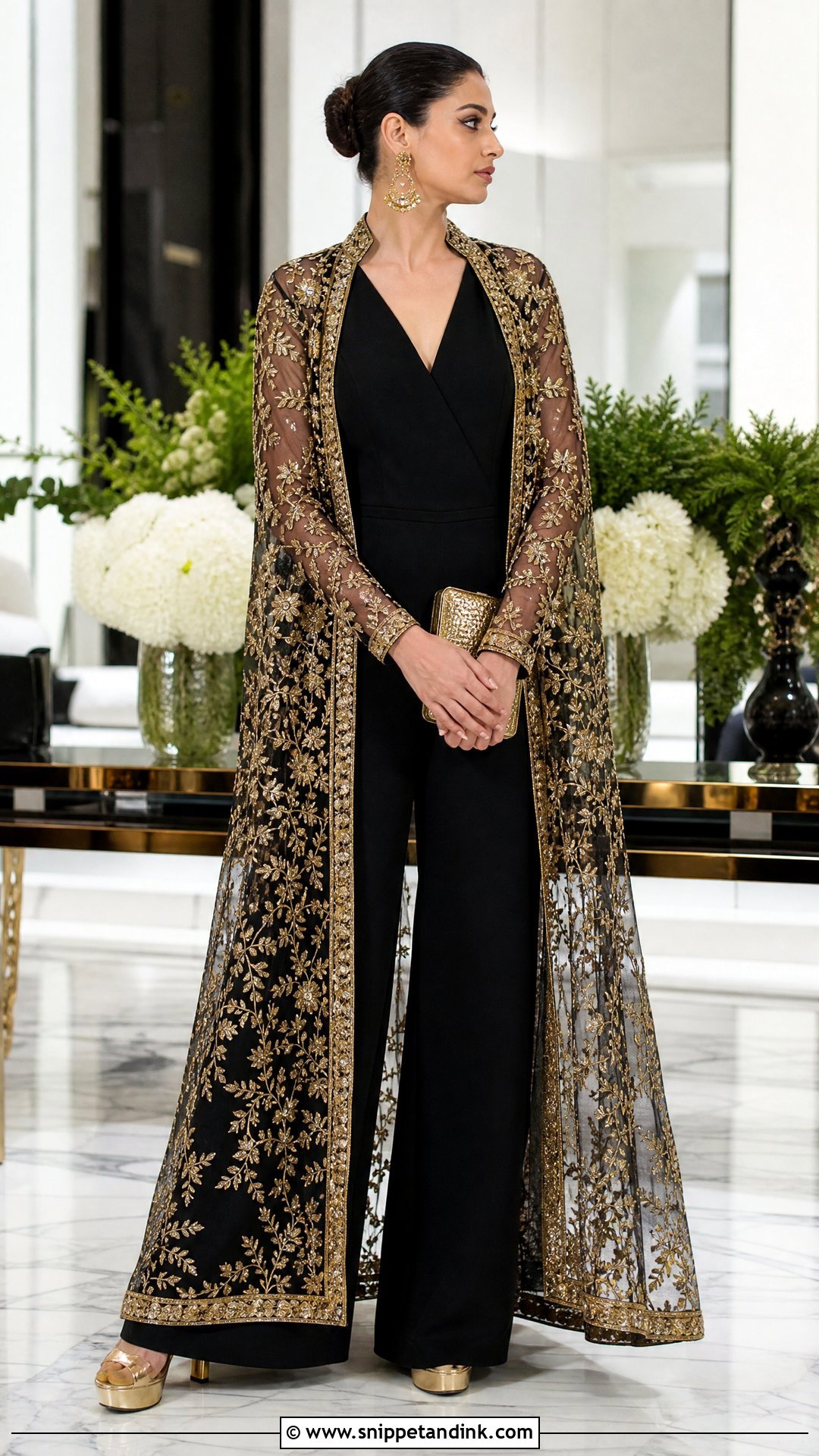
A black jumpsuit with a gold embroidered shrug is a sharp Indo-Western look. Choose one with a defined waist, wide legs and a modest neckline, and add a long sheer shrug with antique-gold threadwork or woven borders. Gold block heels, bold earrings, a textured clutch and a sleek bun finish it; skip the necklace if the shrug is heavily worked. Black is the catch. Some families avoid it at auspicious events, so check with the couple first. If it’s fine, save it for an evening reception or a modern Sangeet.
13. Printed Kurta Dress With Long Shrug
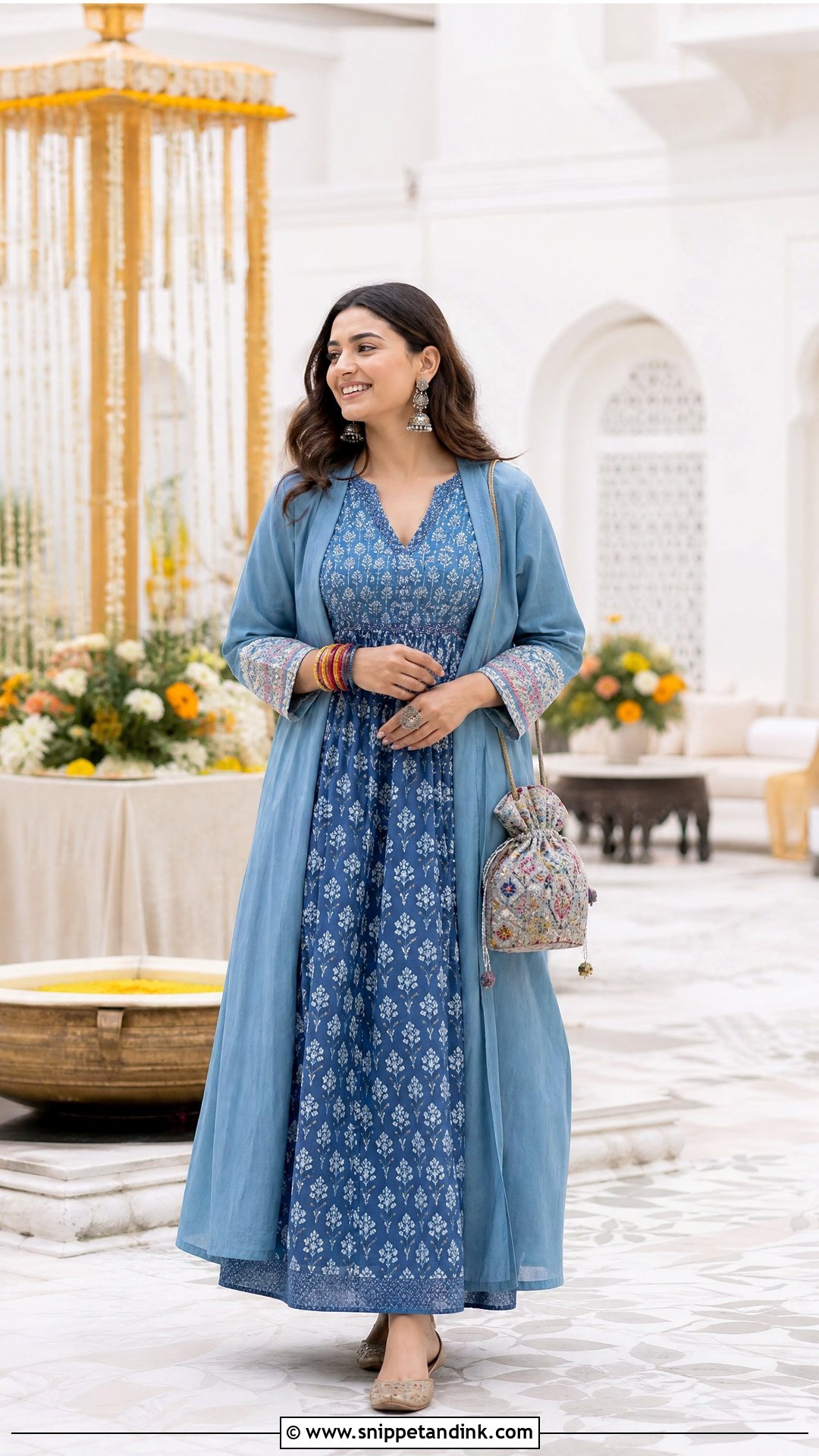
A printed kurta dress with a long shrug is about as easy as a daytime wedding function outfit gets. An ankle-length dress in block print or floral pairs with a plain shrug with embroidered cuffs, or flip it with a solid dress under a printed overlay. Comfortable juttis, oxidized earrings, a crossbody potli and colourful bangles keep it relaxed, with a side braid or loose ponytail. Make sure the two pieces share at least one colour. Block prints in natural dyes can bleed when wet, so don’t let it get soaked during a Haldi.
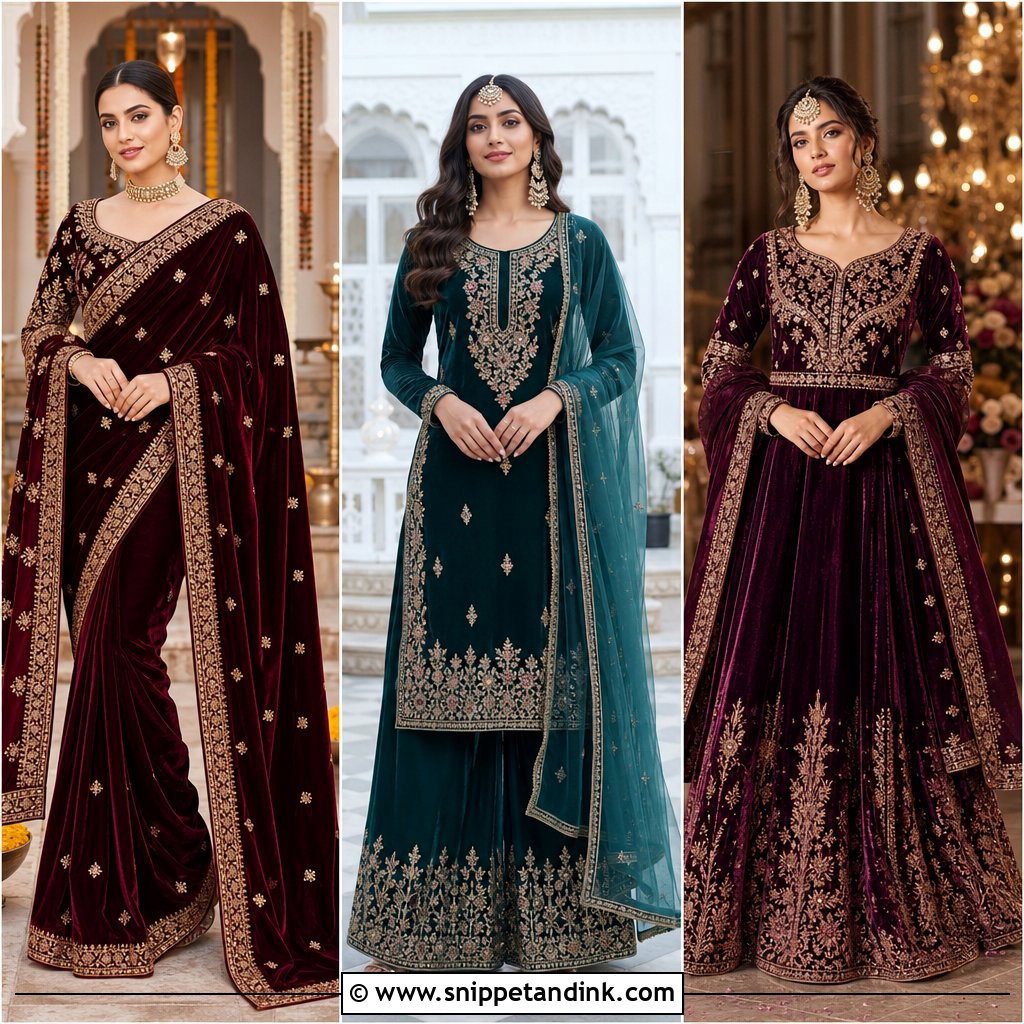
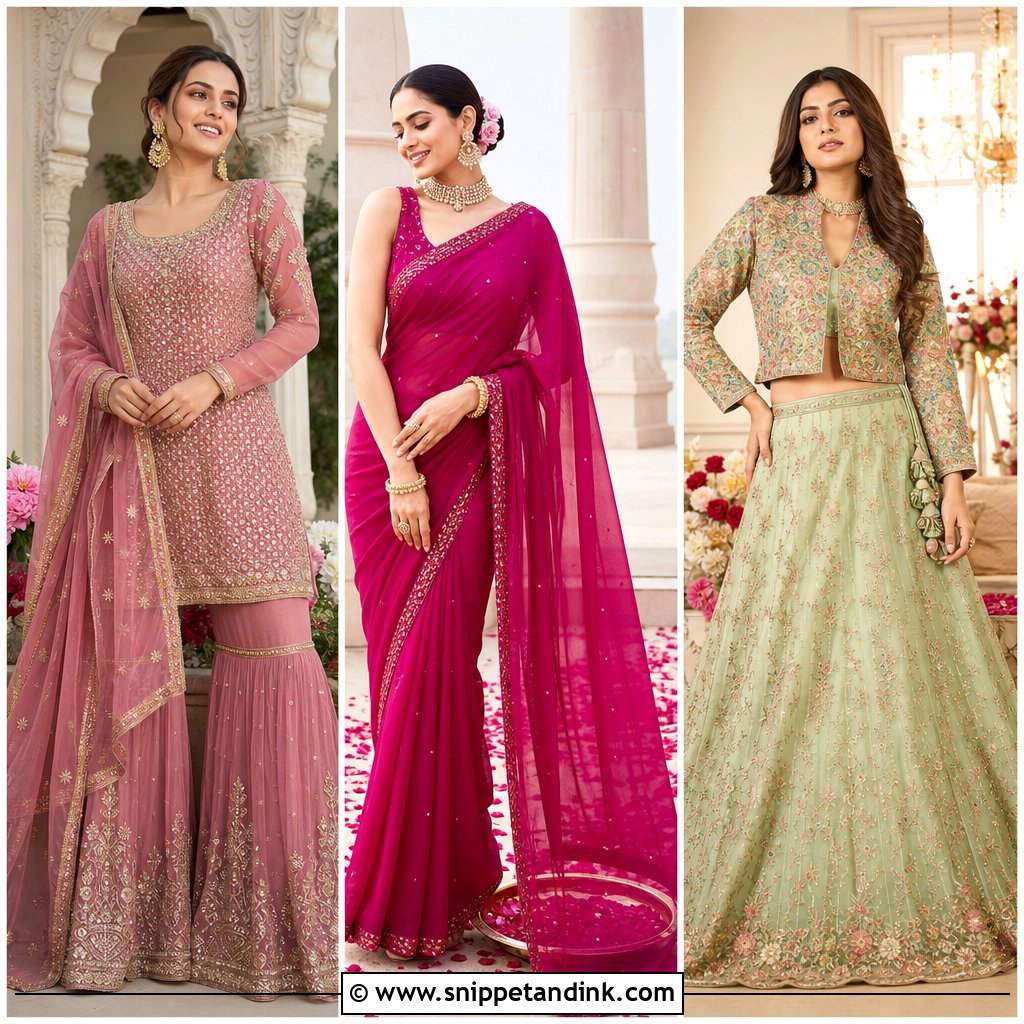
14. High-Low Dress With Tassel Shrug
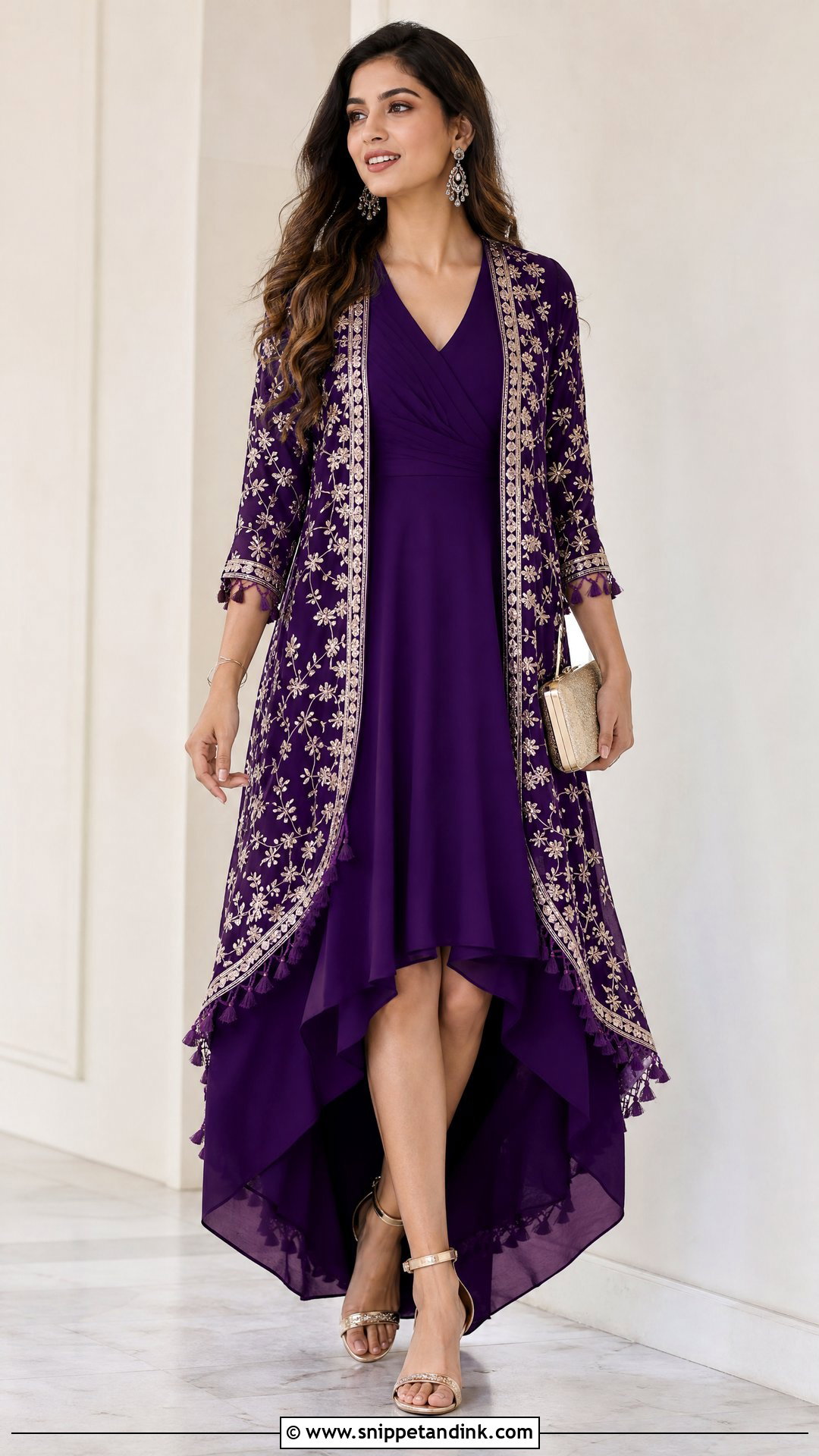
A high-low hem shows off the shoes and adds a modern swing. Pair a flowing dress, short at the front and longer at the back, with a tassel or bordered shrug. I match the shrug length to the longest point of the hem, otherwise the back view looks uneven. Embellished ankle-strap heels, medium earrings, slim bangles and an envelope clutch suit it. Lightweight crepe or georgette keeps the hem fluid. Tassels tangle in bangles, so keep them on the hem of the shrug rather than at the cuffs.
15. Peplum Dress With Cropped Shrug
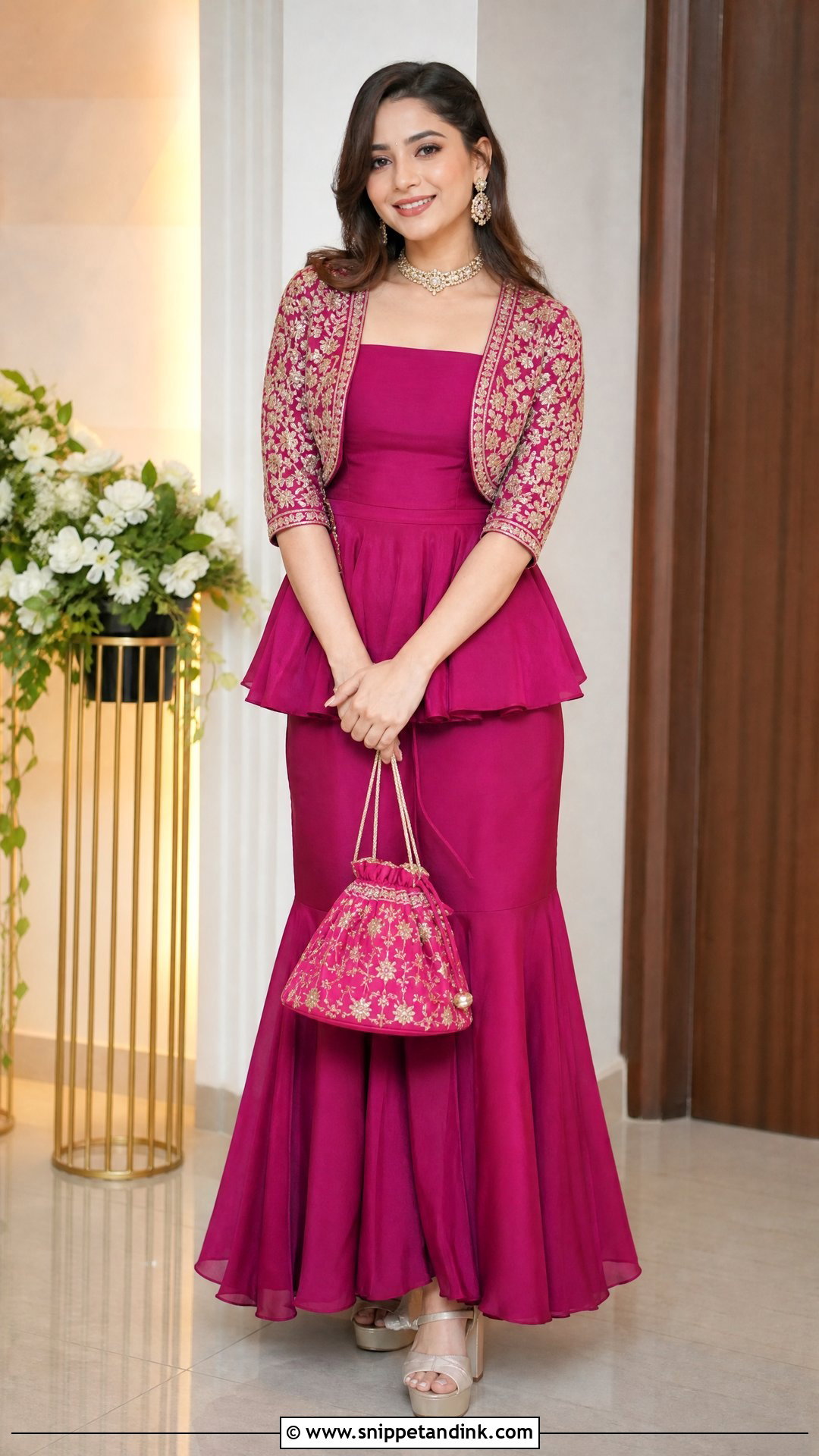
Peplum, flared skirt and a cropped shrug make a defined, balanced shape. The peplum marks the waist and the skirt moves without lehenga volume. A cropped shrug ending at the waist with embroidered shoulders and sleeves works best; anything longer hides the peplum. Keep the three pieces in close shades for length, or let a contrasting shrug lead. Platform sandals, a choker, small drops and a structured potli finish it, with a high ponytail or neat bun. This proportion works especially well on petite guests.
16. Satin Gown With Beaded Shrug
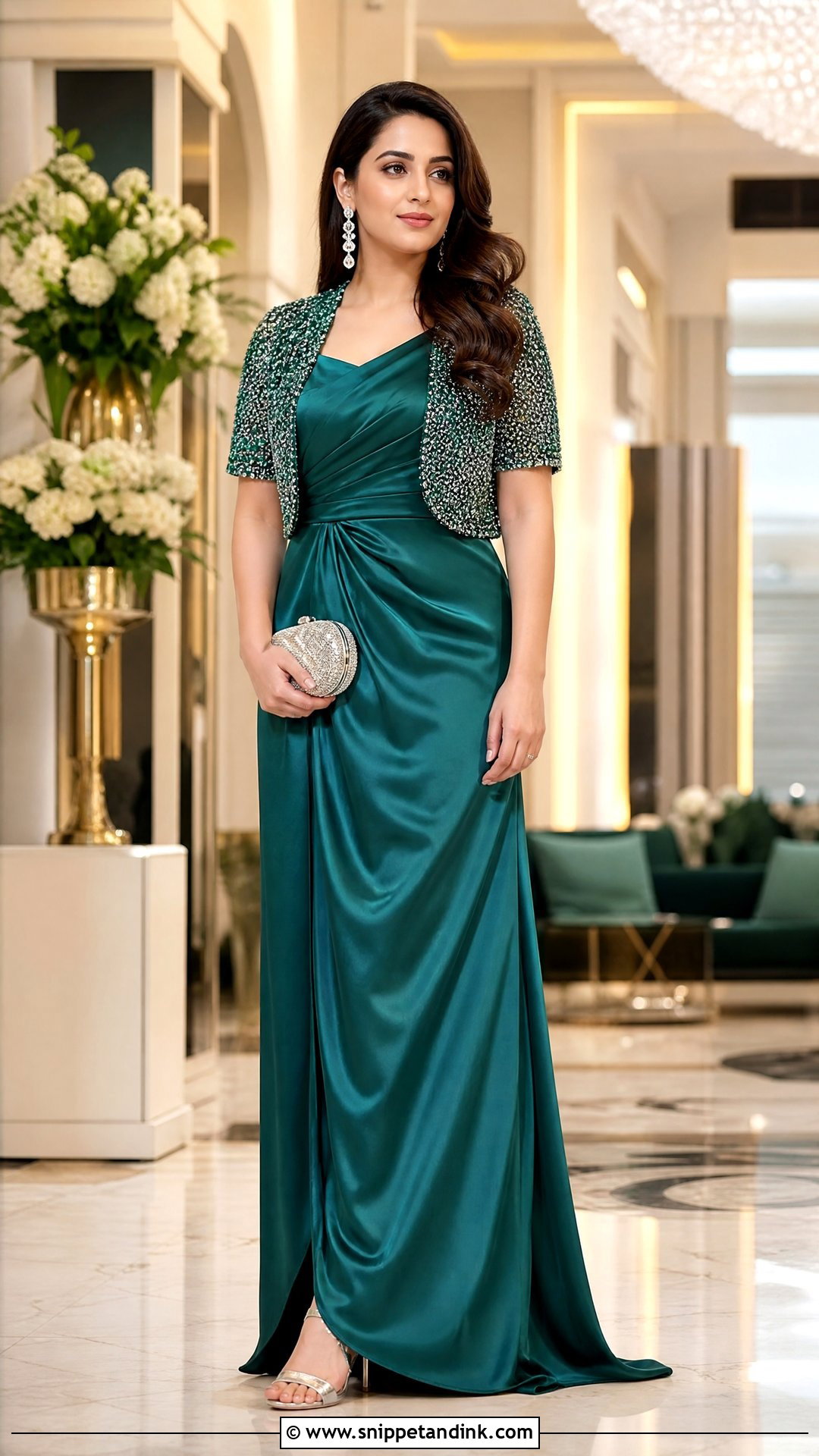
A satin gown with a beaded shrug gives shine and enough detail for a formal reception. Bias-cut or gently flared gowns in rose, cobalt, emerald, aubergine or champagne all work. A short beaded shrug covers the shoulders without breaking the long line. Satin shows every crease, and light satin creases when you sit, so I’d choose a heavier duchess or crepe-backed satin. Metallic heels, crystal drops, a compact minaudière and a polished side part are enough. Keep the bag plain; the beading already carries the outfit.
17. Plus-Size A-Line Shrug Dress
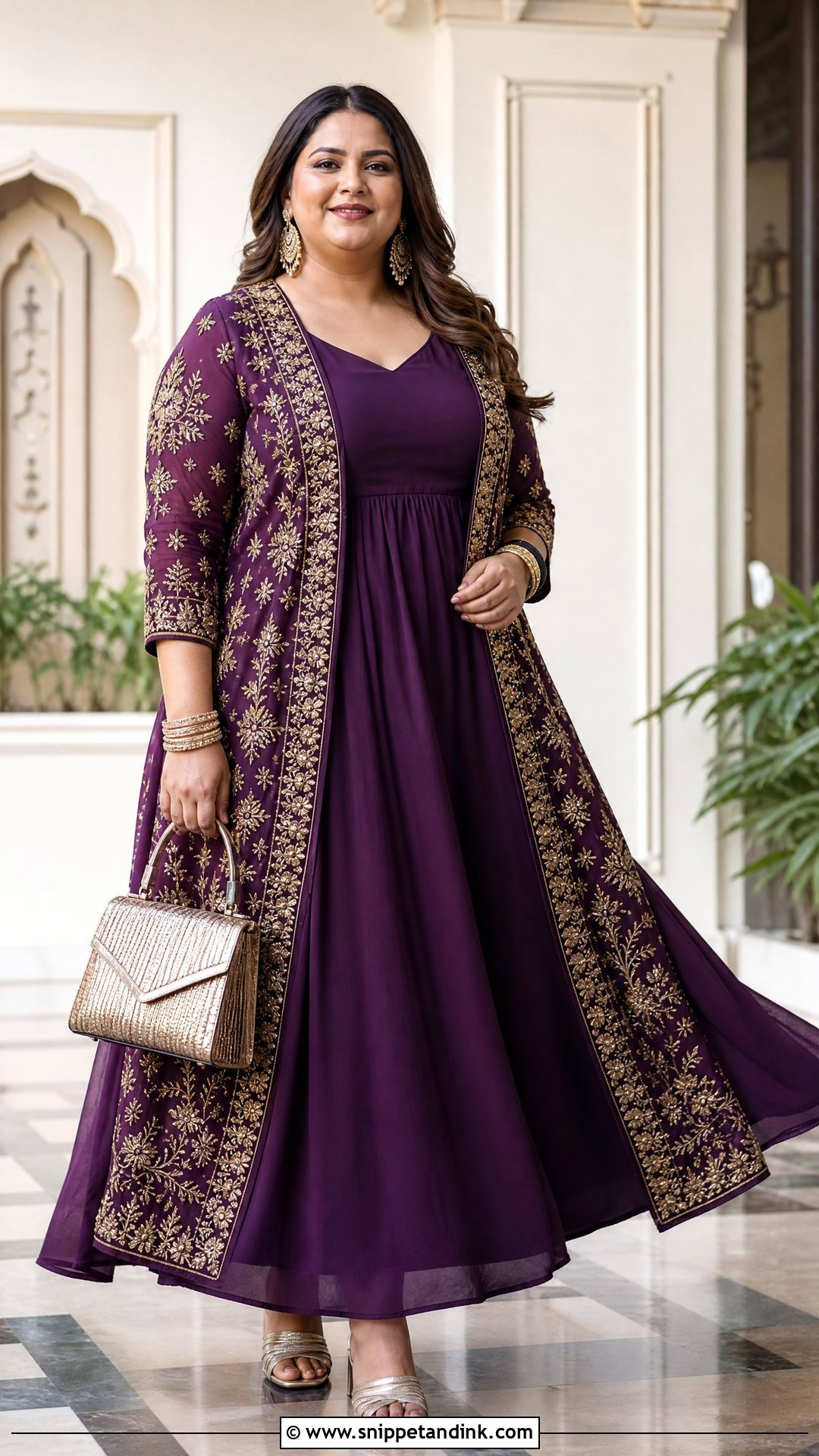
An A-line with a long open shrug suits a wide range of sizes because it moves rather than clings. I look for a dress that skims, with a neckline and sleeves that feel secure. A light shrug falling below the knee creates long vertical lines, and embroidery along its front edges draws the eye to the centre. Supportive block heels or embellished flats, medium earrings, bangles and a structured bag finish it. Monochrome looks polished; a contrast works when both share an undertone. Tailoring the bust, shoulders and armholes matters most, since a tight armhole limits how high you can lift your arms to dance.
18. Modest Maxi Dress With Long Shrug
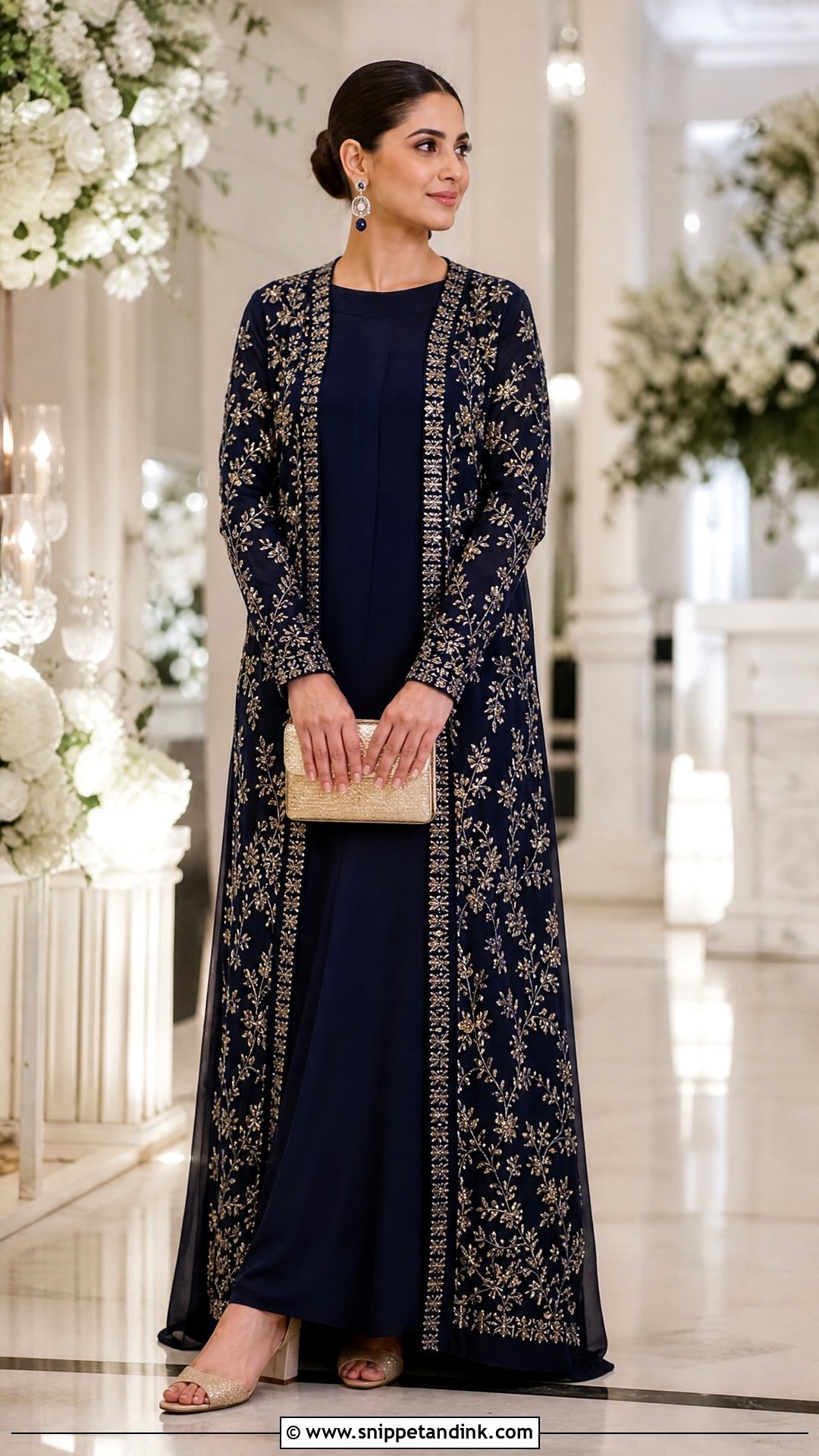
For a temple, gurdwara or a more conservative family, a full-length maxi with a long-sleeve shrug gives coverage without looking plain. Choose an opaque dress with a comfortable neckline and a soft waist, then layer an ankle-length shrug with embroidered borders or tonal threadwork. Fasten it at the neckline if you’d like more coverage. Low block heels, a refined clutch, drop earrings and a bracelet over the cuff suit it, with a smooth bun or wrapped braid. Many religious venues ask you to remove your shoes and some ask you to cover your head, so bring slip-on shoes and a light scarf.
19. Yellow Haldi Dress With Floral Shrug
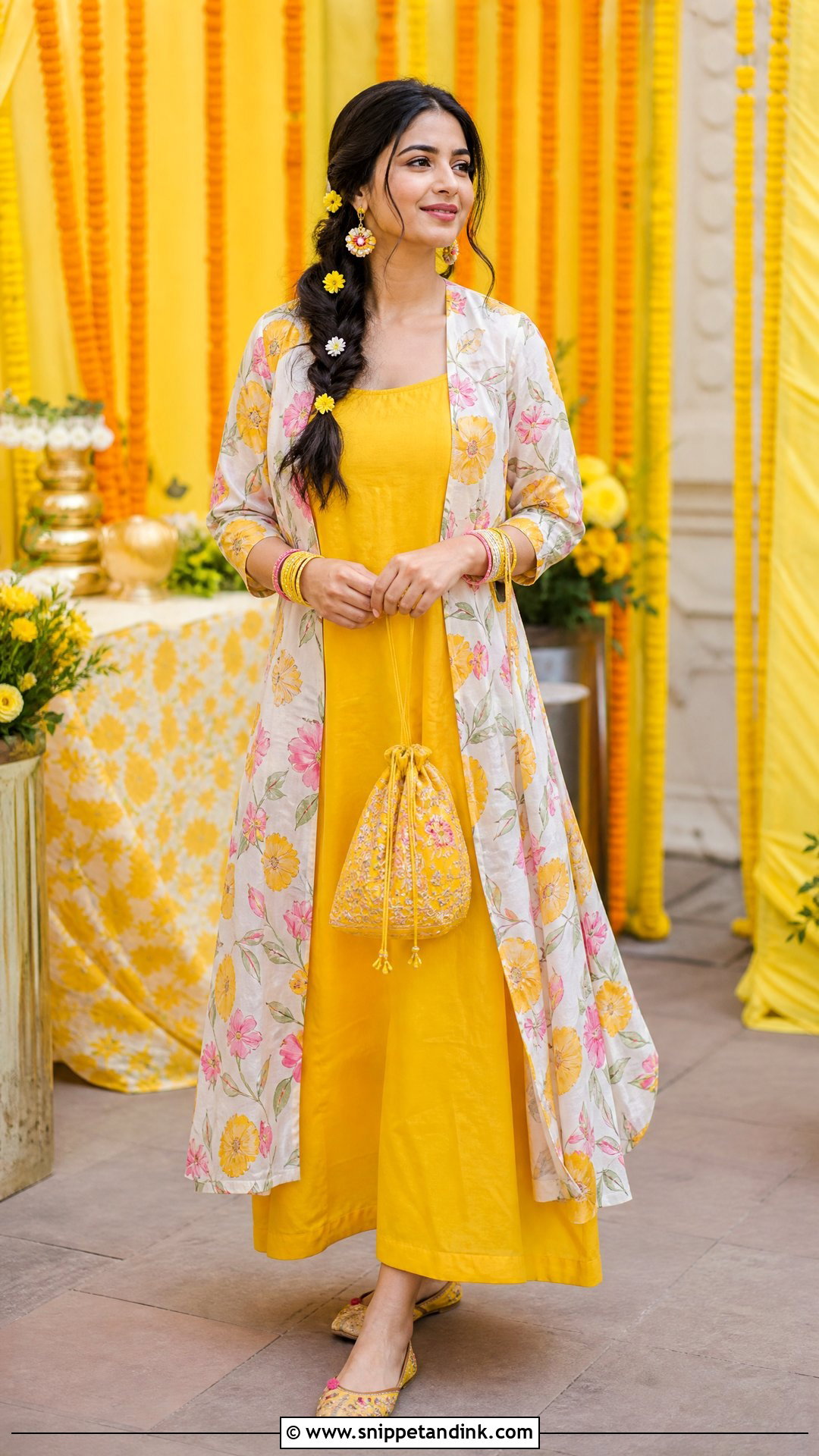
Yellow and Haldi go together. Wear a light yellow midi or ankle-length dress with a white, green or multicoloured floral shrug. Cotton blend, chiffon and georgette let you move and stay cool. Flat juttis, floral earrings, colourful bangles and a washable potli suit it, with a braid dotted with small floral pins. Turmeric paste stains, and it stains white and pale fabric most, so wear something you won’t mind marking and keep embellishment minimal. It’s a lighter alternative to the usual yellow kurta or lehenga set.
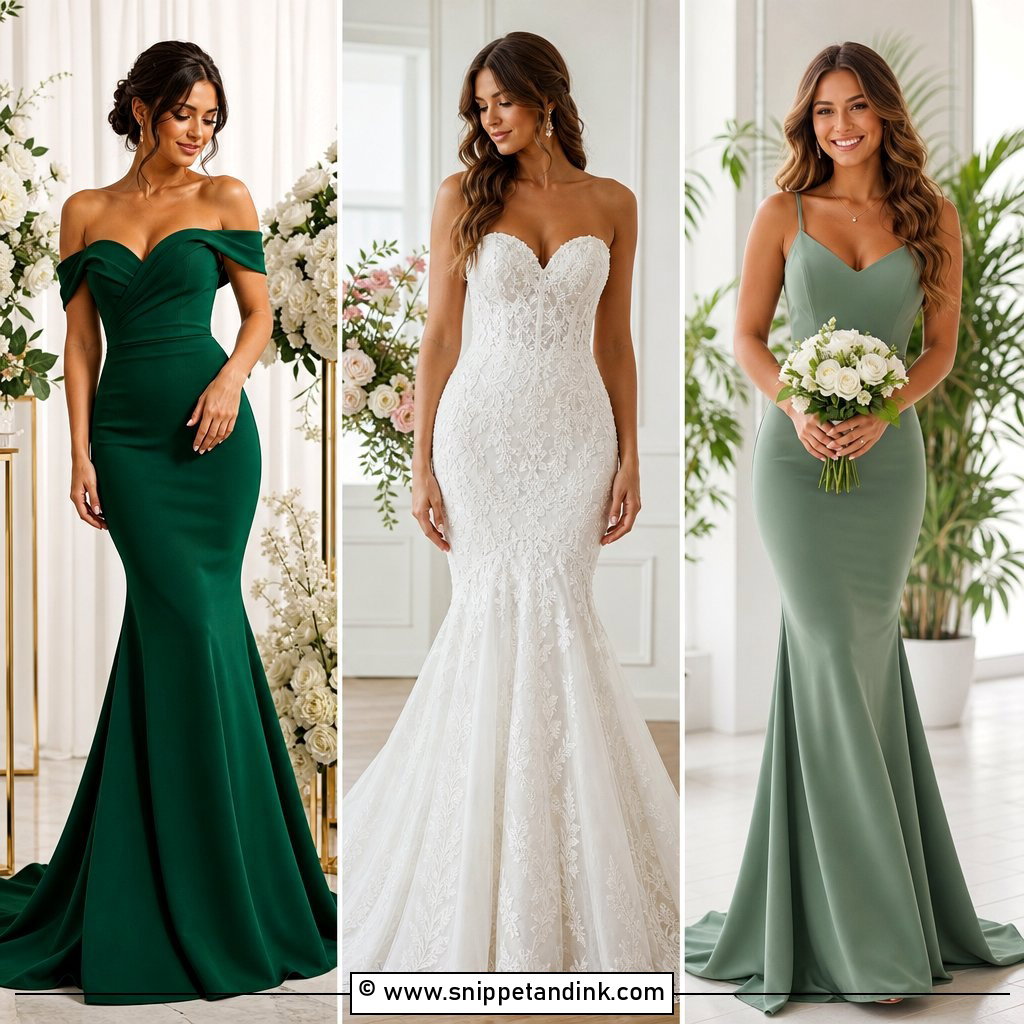
20. Green Mehndi Dress With Mirror Work Shrug
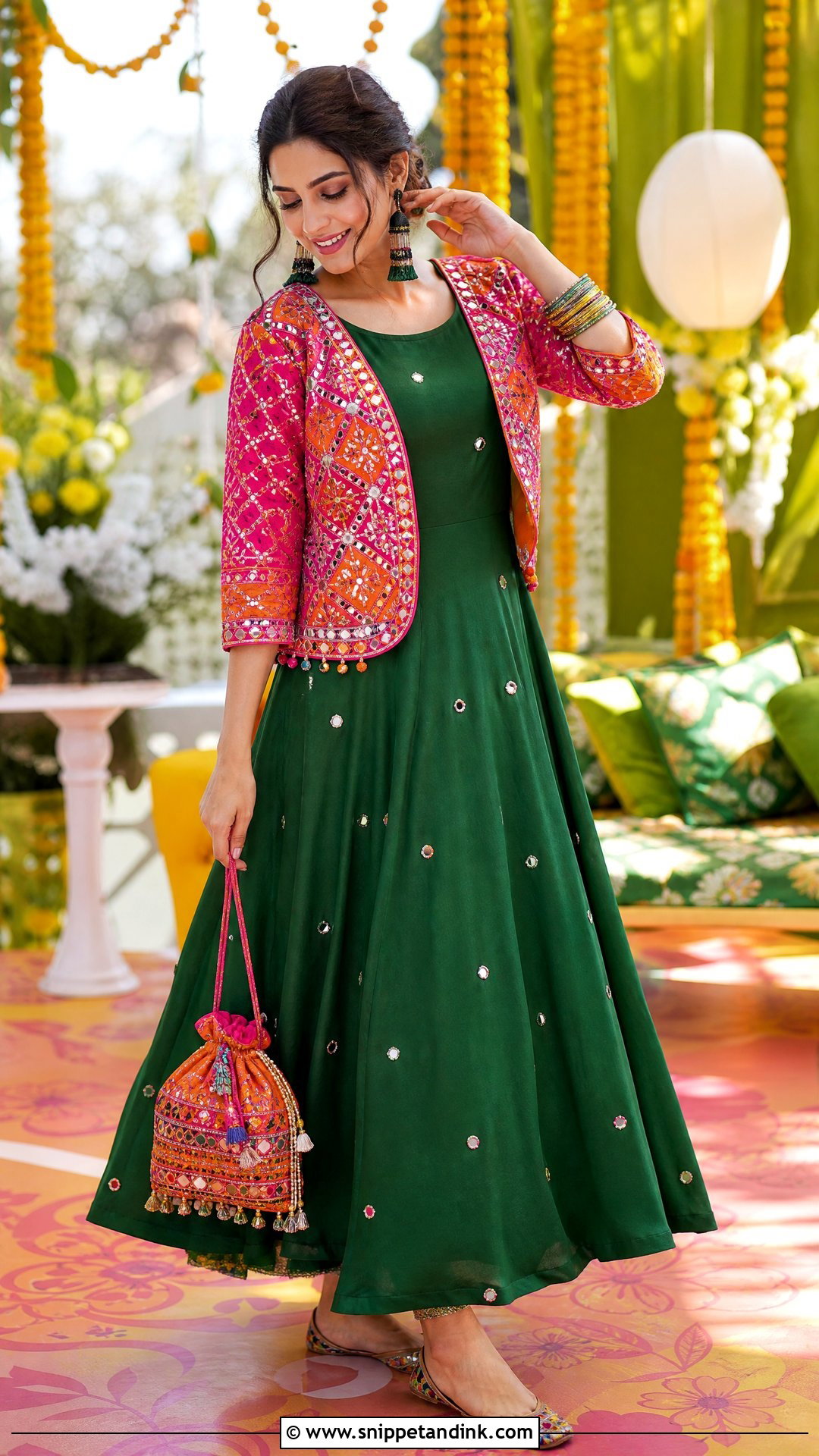
A green dress with a mirror work shrug is built for a Mehndi. Choose an emerald, lime, mint or bottle-green fit-and-flare, then a contrasting shrug in pink, orange, blue or another green with small mirrors and bright threadwork. Embroidered flats, tassel earrings, stacked bangles and a bright potli finish it. Keep the hem at the ankle so you can dance and sit on floor cushions. If you’re getting henna, push the sleeves above the elbow and tie hair into a braided ponytail so nothing touches wet paste.
Getting a Shrug to Hang Straight Until the Last Dance
Most shrug problems show up after an hour of wear, not in the mirror at home. Embroidery is heavy at the front edges, so a long shrug tends to slide forward and off the shoulders as you move.
Ask your tailor to add a small hidden snap or thread loop at each shoulder that hooks onto the dress strap or blouse. If you’re buying ready-made, a safety pin on the inside at the shoulder seam does the same job. Check the shoulder seam sits on the bone of the shoulder, not past it, and that the sleeves end above the wrist bone if you’ll be wearing a stack of bangles, since sleeves pushed up by bangles bunch and crease.
Before the day, put on the full outfit and raise both arms, sit cross-legged and walk a staircase. Zari and sequins catch on each other, so keep jewelry away from the shrug edges. Fold an embroidered shrug with tissue between the layers when you pack, and hang it the moment you arrive.
One Shrug Can Carry You Through Several Functions
A shrug adds coverage, movement and colour to almost any Indian wedding outfit, from floral maxis and Anarkalis to sharara sets, jumpsuits and satin gowns, and each look can shift with the event, season and venue. The trick is balance: a heavily worked shrug over a simple dress, or a quiet overlay when the dress already sparkles. Comfortable shoes and jewelry that won’t catch matter more over a long celebration than one more embellishment. Plan your Haldi, Mehndi, Sangeet, ceremony and reception looks together, and you’ll find one shrug can often serve two of them.
You'll Like These Ideas:


Leave a Reply