
Most brides walk into their first appointment knowing a picture they love, not the name of the shape in it. That’s fine. Once you understand where a silhouette is fitted, where it releases and what fabric holds it up, the rest of the outfit starts to choose itself. Below are twenty dress styles, each styled head to toe with shoes, jewelry, veils, and finishing touches, plus the fitting details I check before a bride commits. Sculpted waists, removable layers and short reception dresses are all on the racks right now, so there is more room than ever to mix tradition with what you’ll actually feel comfortable in.
Where Each Shape Is Fitted and Where It Lets Go
Silhouette names vary a little from one designer to the next, so I teach brides to look at two points instead: where the dress stops fitting closely, and where the skirt starts to release. Those two points decide how you’ll walk, sit and dance.
- Fitted to the natural waist, released straight after: A-line, princess and ball gown. The easiest shapes to move in, with the ball gown adding the most weight.
- Fitted through the hips, released at the thigh: fit-and-flare. Curvy, but you can still take a normal step.
- Fitted to the knee or just below, then flared: mermaid. The most dramatic and the most restrictive.
- Barely fitted anywhere, falling close to the body: sheath, column and slip. Light to wear, but they show everything underneath.
- Fitted under the bust only: empire. The coolest choice for heat and long days.
If you’re torn between two pictures, try one dress from each group at your first appointment. Seeing how far each one lets you stride usually settles the question faster than any photo.
1. A-Line Wedding Dress
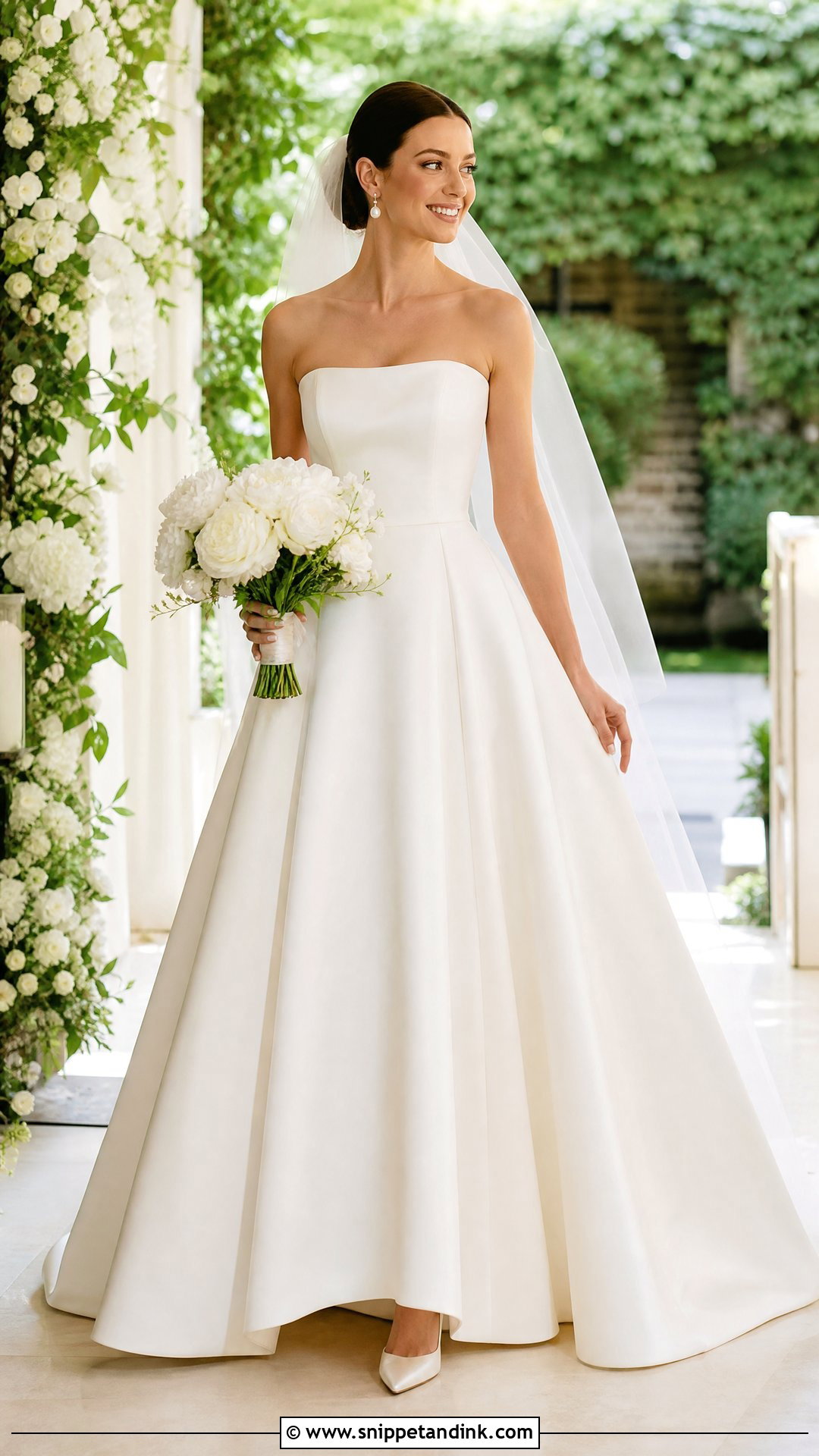
If I had to put one shape on the widest range of bodies, it would be the A-line. The skirt widens gradually from the natural waist, so it skims the hips instead of gripping them and you can walk, sit and dance without fuss. Satin gives it a clean line; lace or tulle softens it. Pointed pumps, pearl drops and a fingertip veil follow the shape without crowding it. For a lawn ceremony, swap stilettos for block heels. A slim belt adds waist definition if the bodice is plain.
2. Ball Gown Wedding Dress
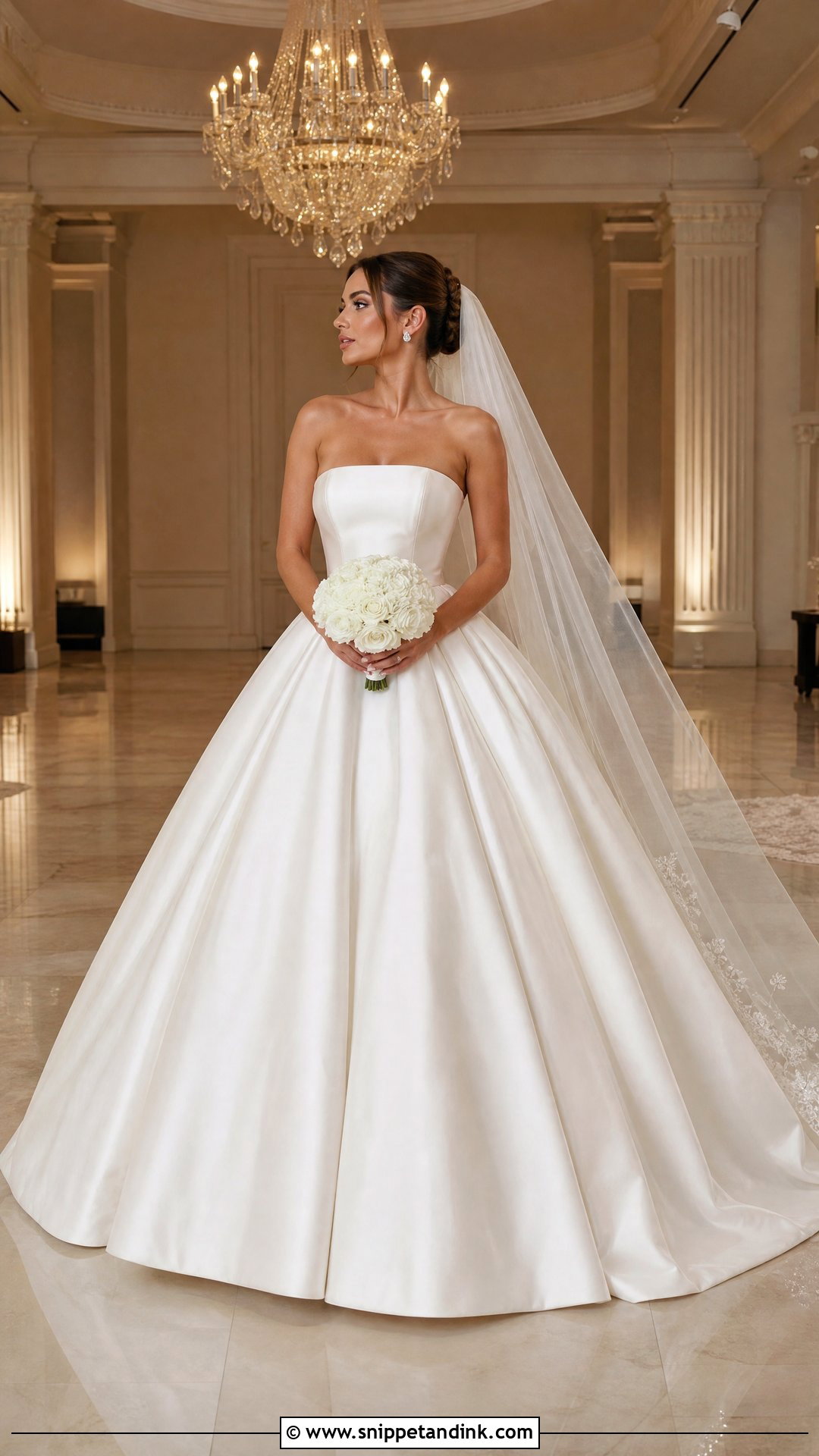
A ball gown is all about the entrance, and it’s also the heaviest thing most brides will ever wear. Mikado satin holds a sculpted skirt; layered tulle is lighter and moves more. Under all that volume nobody sees your shoes, so wear a cushioned platform you can stand in for hours. Keep jewelry small, hair up and the bouquet compact, or the proportions tip over. At every fitting I ask the bride to sit in a chair, stand, and turn on the spot. If the hoop or petticoat fights her, we adjust it then, not on the morning.
3. Mermaid Wedding Dress
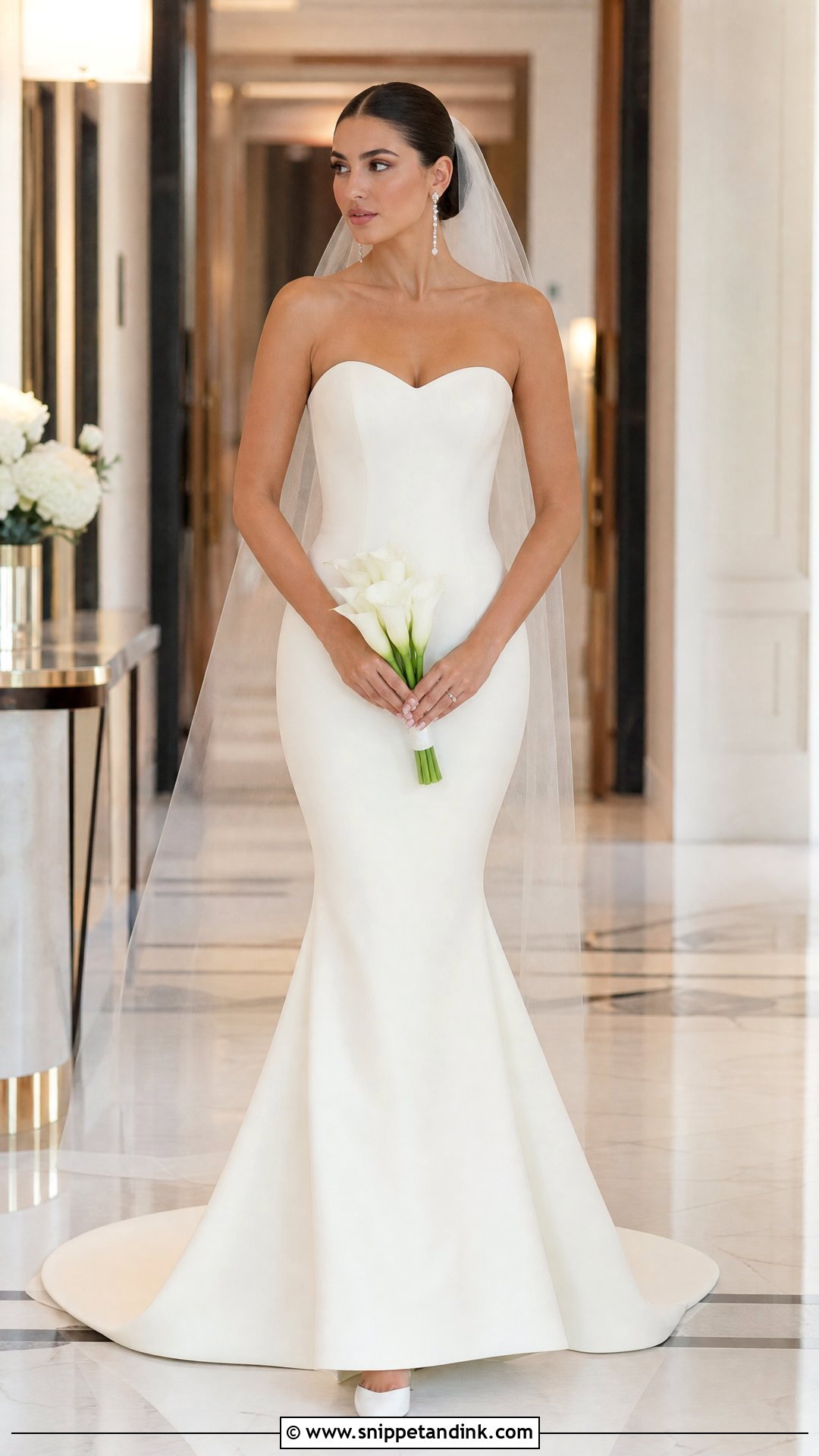
The mermaid hugs the bodice, waist and hips, then flares at or just below the knee, and the flare point is the whole story. Too low and you shuffle; a few centimeters higher and you can climb steps. Stretch crepe gives a smooth modern line, while lace on a mermaid feels more traditional. Long earrings and a simple veil under a polished bun suit it, with minimal other jewelry. Some brides add a detachable overskirt for the ceremony and take it off for the party, which solves the dancing problem neatly.
4. Fit-And-Flare Wedding Dress
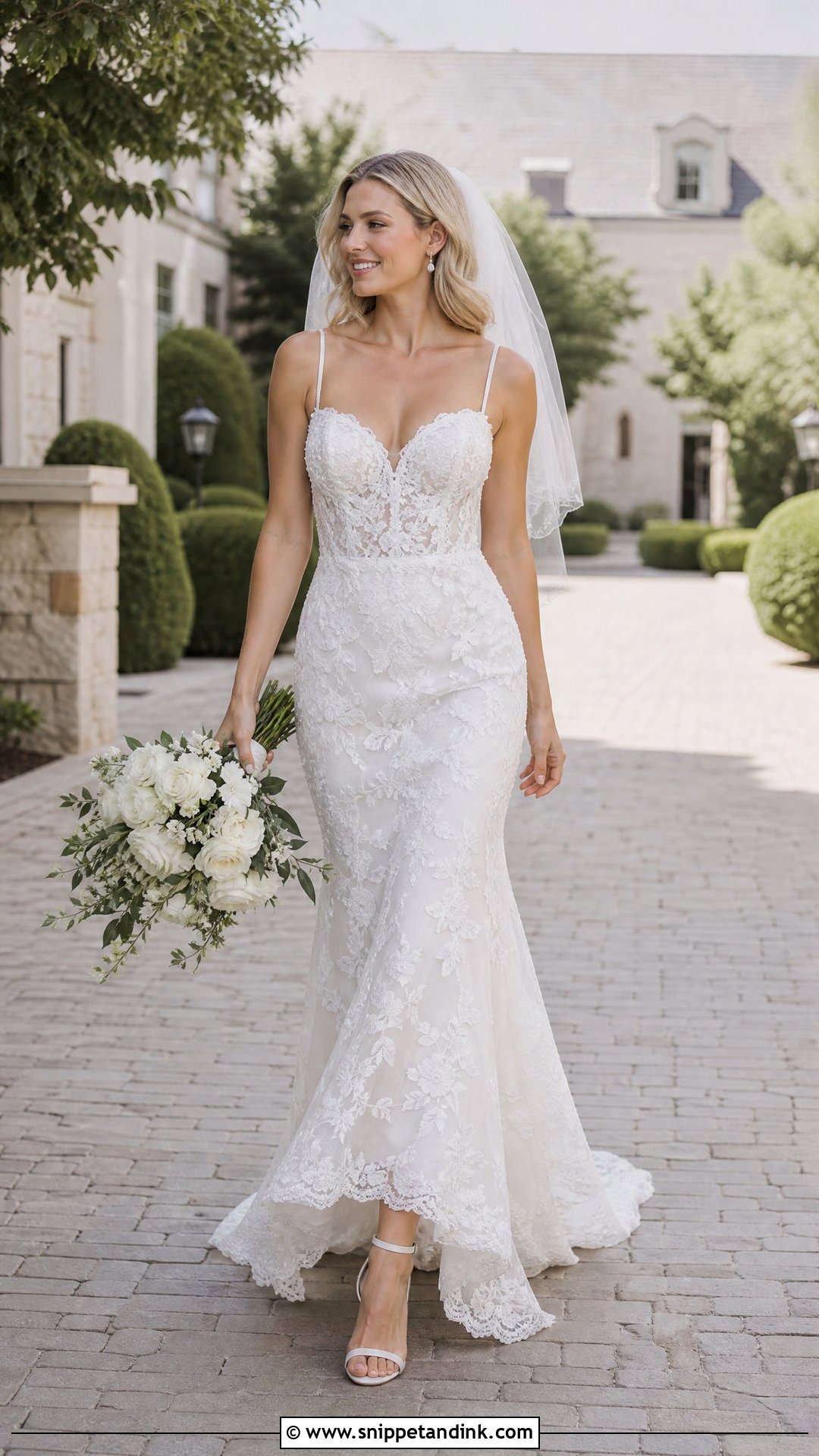
Love a fitted shape but dread the mermaid walk? The fit-and-flare opens higher, around the upper thigh, so you keep the curve and gain a normal stride. Matte crepe keeps it minimal; floral lace makes it romantic. A sweetheart or off-the-shoulder neckline softens the fitted body, and internal boning makes a big difference to comfort by evening. Bring smooth, no-line underwear to the fittings, then dance a little in the dressing room. Ankle-strap heels stay on your feet better than slip-on pumps once the dancing starts.
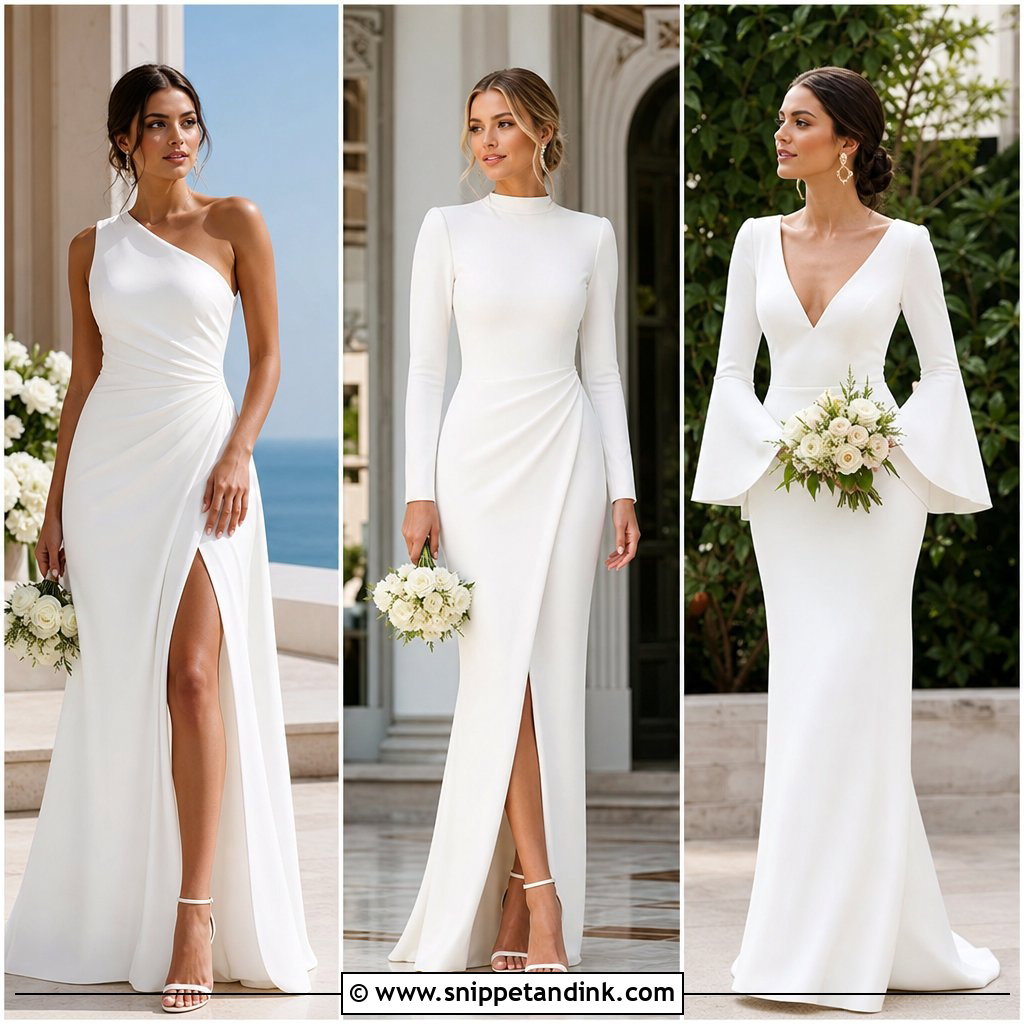
5. Sheath Wedding Dress
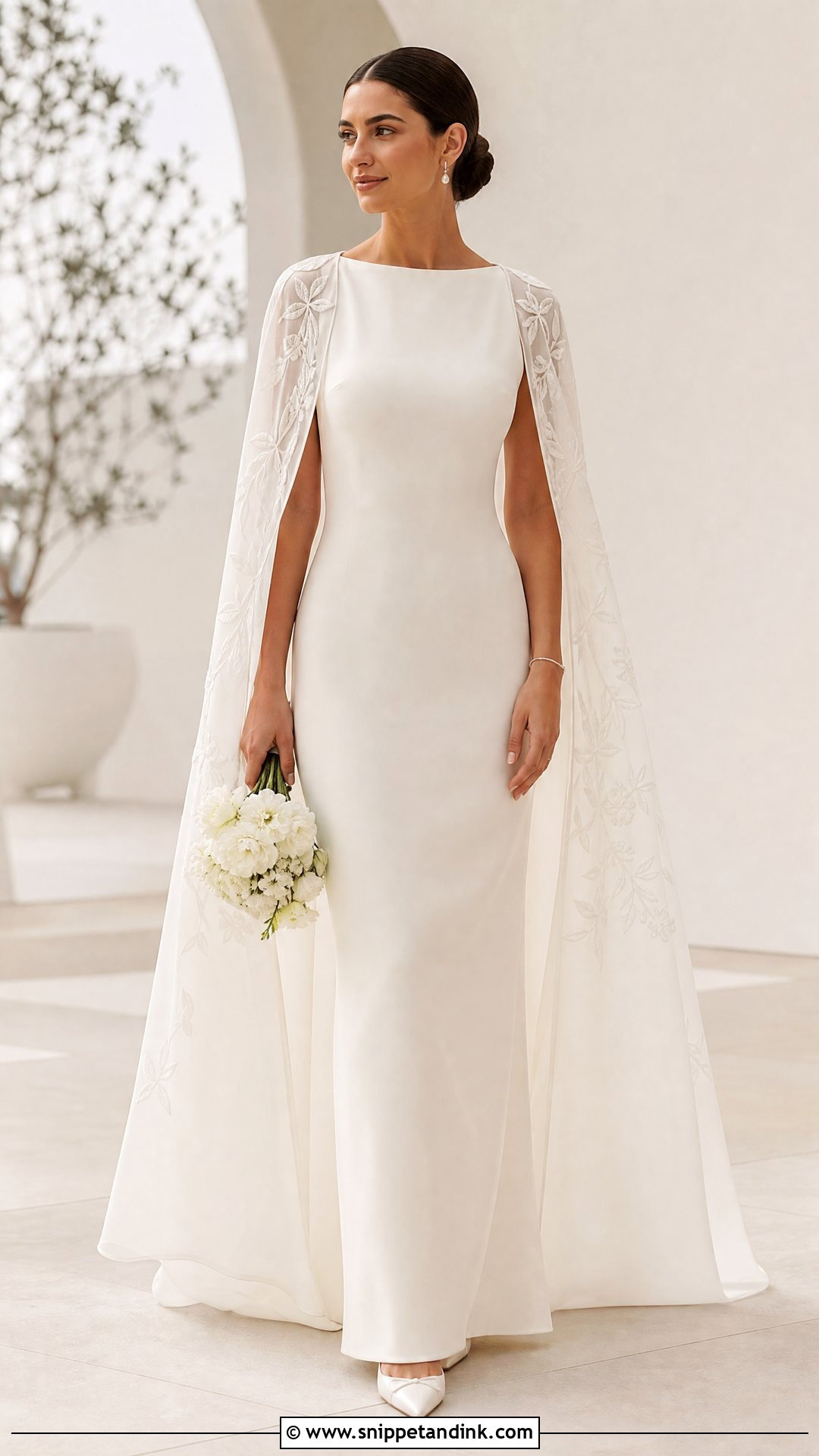
A sheath wedding dress follows a narrow line from neckline to hem, with no petticoat to hide behind. That’s its charm and its challenge: crepe, silk or light lace will show every seam and strap underneath, so fitted undergarments and a precise hem matter more here than on any full skirt. A long veil gives contrast to the slim line; a short tulle veil keeps it relaxed. Kitten heels or sleek sandals both work. Add a tailored cape if you need coverage in church.
6. Column Wedding Dress
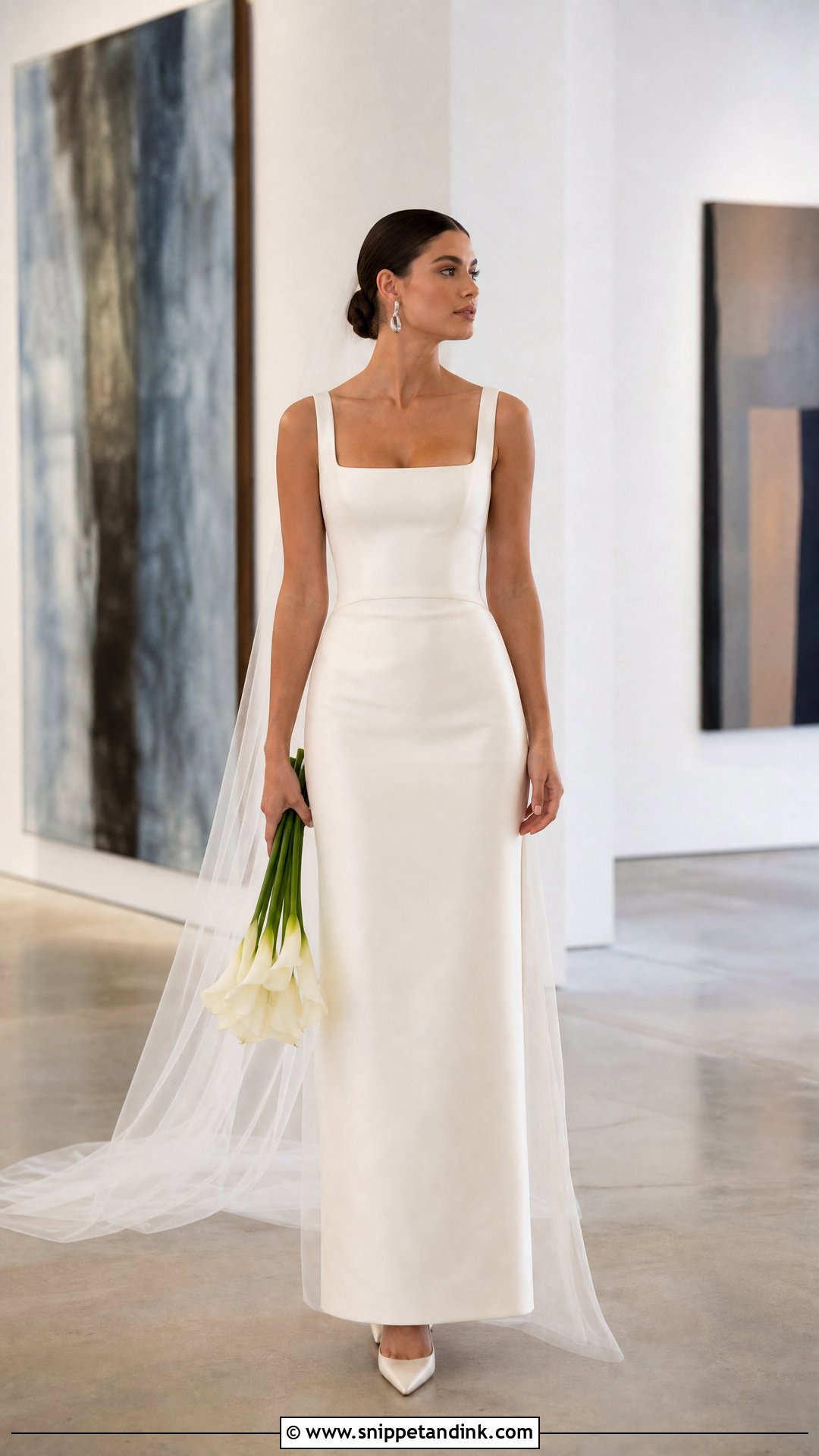
People mix up sheath and column all the time. A column usually drops straight from the bodice with almost no flare and less cling, so it reads architectural rather than body-skimming. Structured satin or heavier crepe holds that vertical line. Sculptural earrings and a smooth low bun suit it, with a long sheer veil to add movement. I’d carry a narrow bouquet with long stems to echo the shape. A square, bateau or strapless neckline changes how much coverage you get without changing the clean feel.
7. Silk Slip Wedding Dress
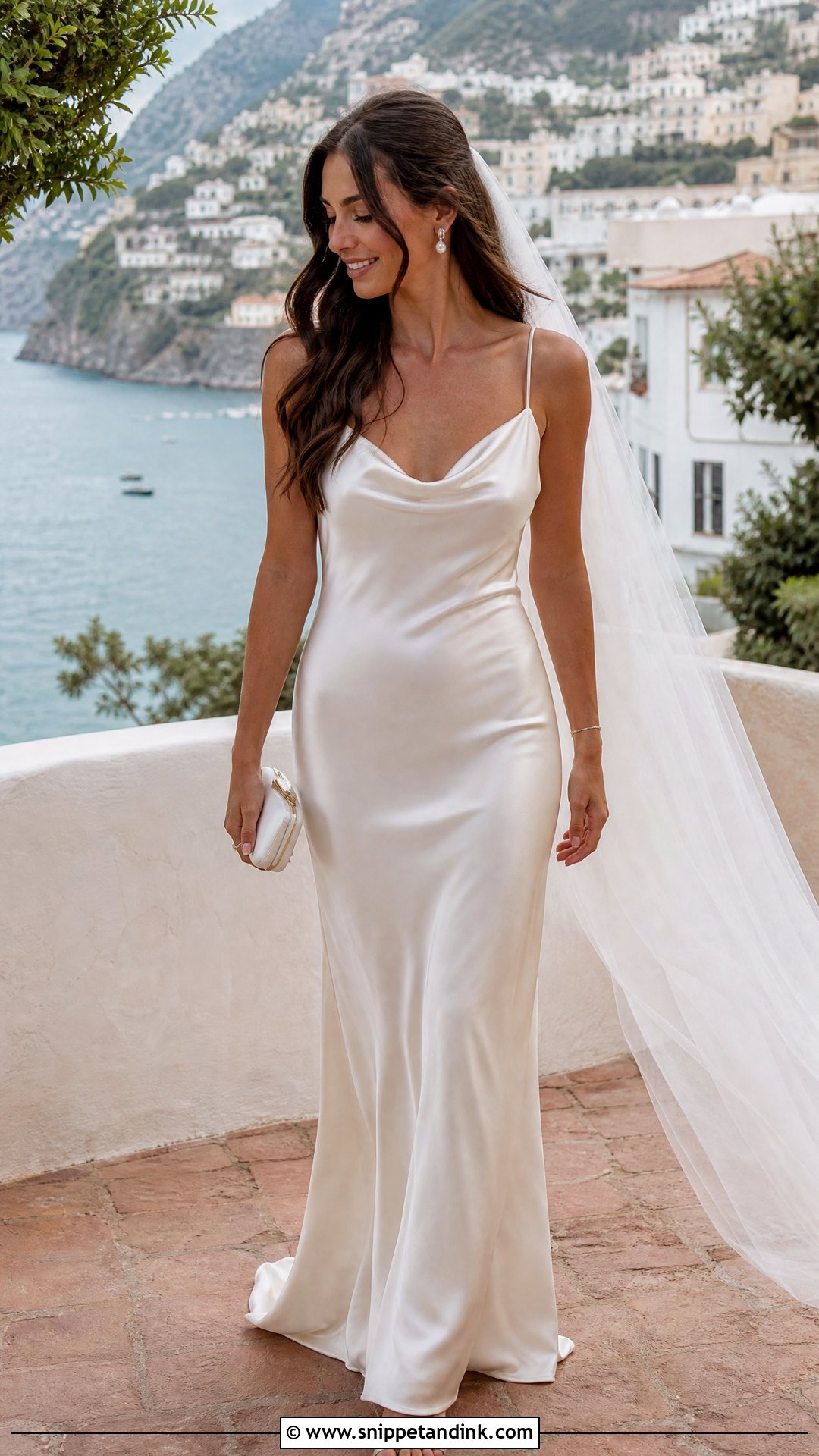
Silk slips are unforgiving, and I say that as someone who loves them. Look for a true bias cut, which lets the fabric drape over the body instead of pulling across it. Silk also water-spots, so keep drinks and rain away and pack a lint roller. A cowl or straight neckline changes the mood. Slim sandals, pearl earrings and a light veil under relaxed waves keep it easy. In cooler weather, an ivory blazer or sheer embroidered cape over the top looks deliberate and keeps you warm.
8. Empire Waist Wedding Dress
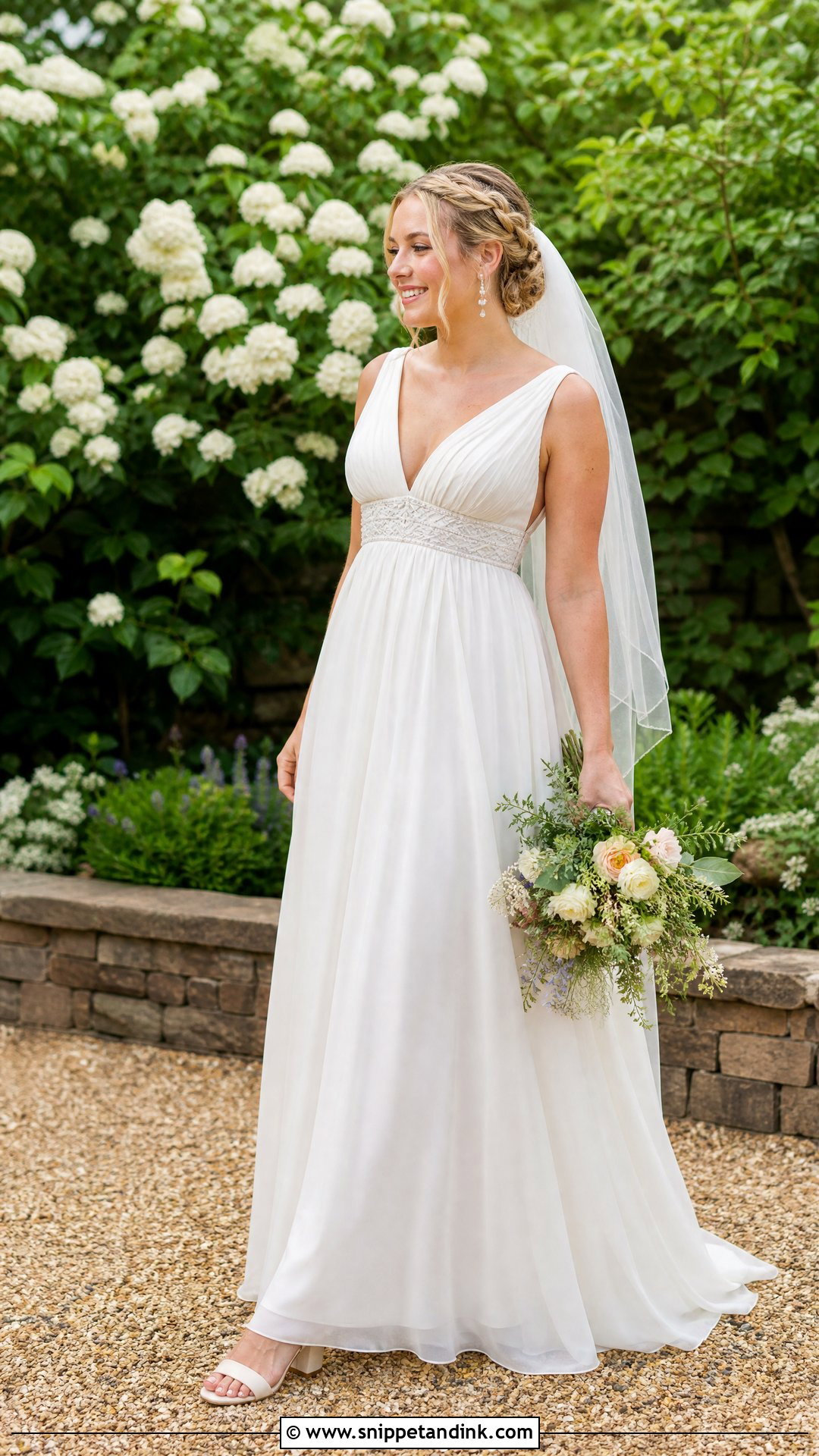
Raising the waistline to just under the bust gives an empire dress its light, floaty fall. Chiffon, tulle or soft satin drops straight from there without any structure at the natural waist, which is why I steer brides toward it for long, hot summer days. A braided updo or soft gathered hair suits the shape, as do low block heels and a chapel veil. Keep the bouquet moderate so it doesn’t hide the high waist detail. If you need more support, choose a version with a structured bodice under the draped layer.
9. Basque Waist Wedding Dress
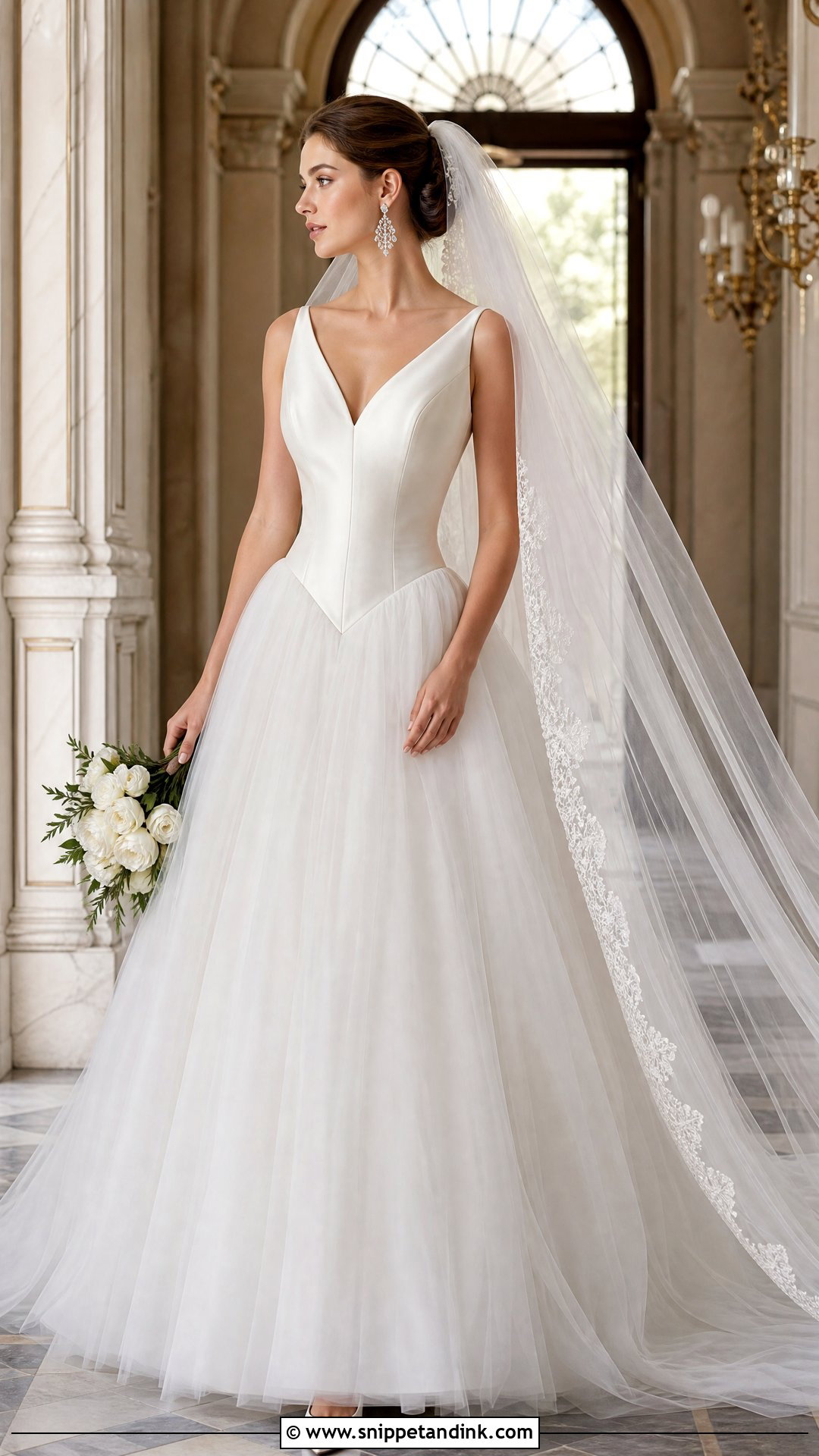
The basque waist dips below the natural waist into a soft V at the front, and it’s one of the most flattering lines for shortening a long torso or carving out a waist. Satin looks regal; layered tulle is lighter. Classic pumps, a cathedral veil and a polished updo show off the neckline. My main fitting check is sitting: a long, boned basque bodice can dig into the hips or ride up when you’re seated, so we test it at the table, not just in front of the mirror.
10. Princess Wedding Dress
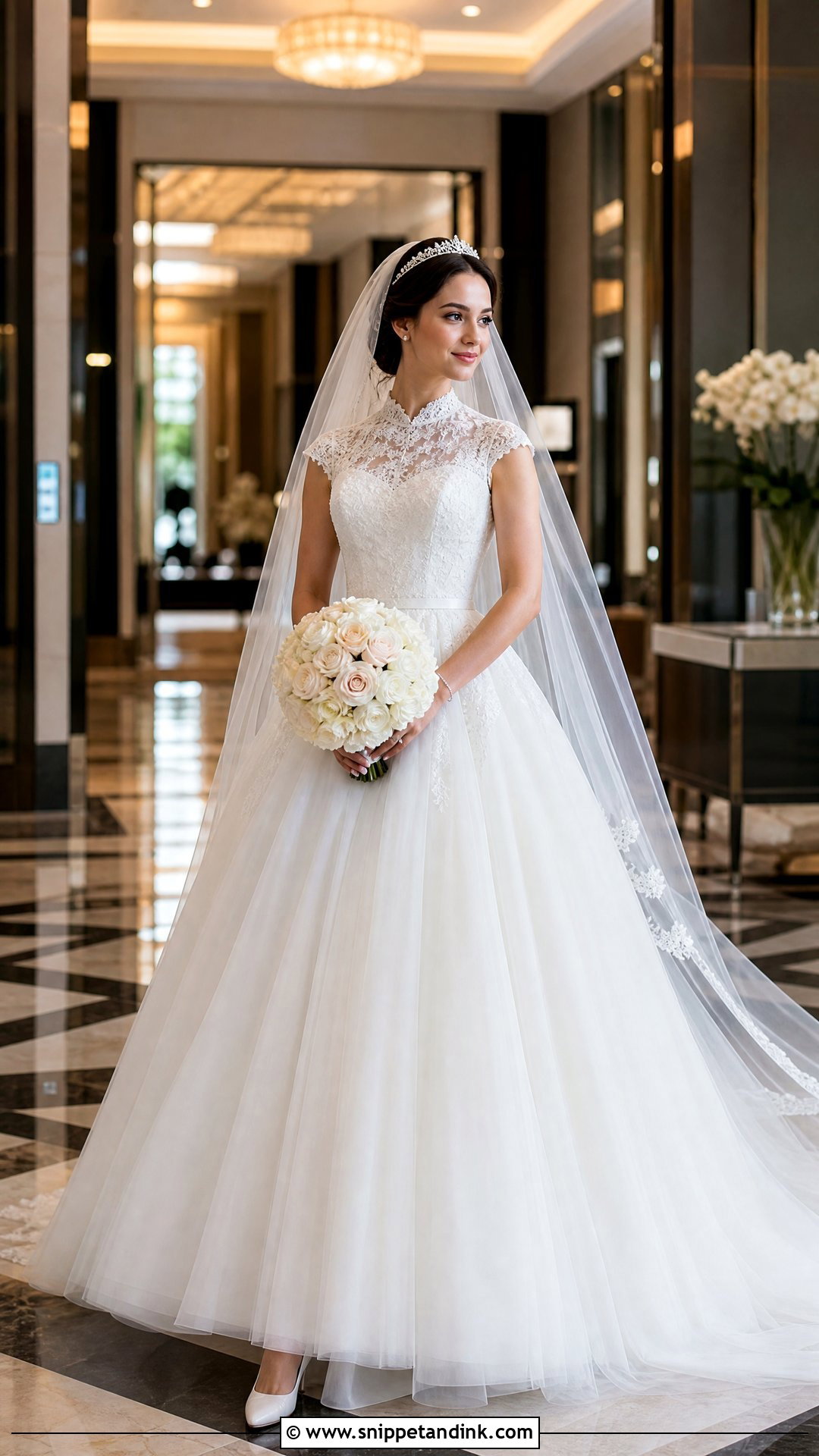
A princess wedding dress pairs a fitted bodice and defined waist with a generously flared skirt, softer than a full ball gown. Floral lace over tulle makes it romantic; smooth satin makes it cleaner. A tiara can work, though I’d keep everything else quiet if you wear one. A rounded bouquet suits the balanced skirt. During alterations, practice stairs and doorways in the full skirt, and decide who will help you through the car door on the day.
11. Off-The-Shoulder Lace Wedding Dress
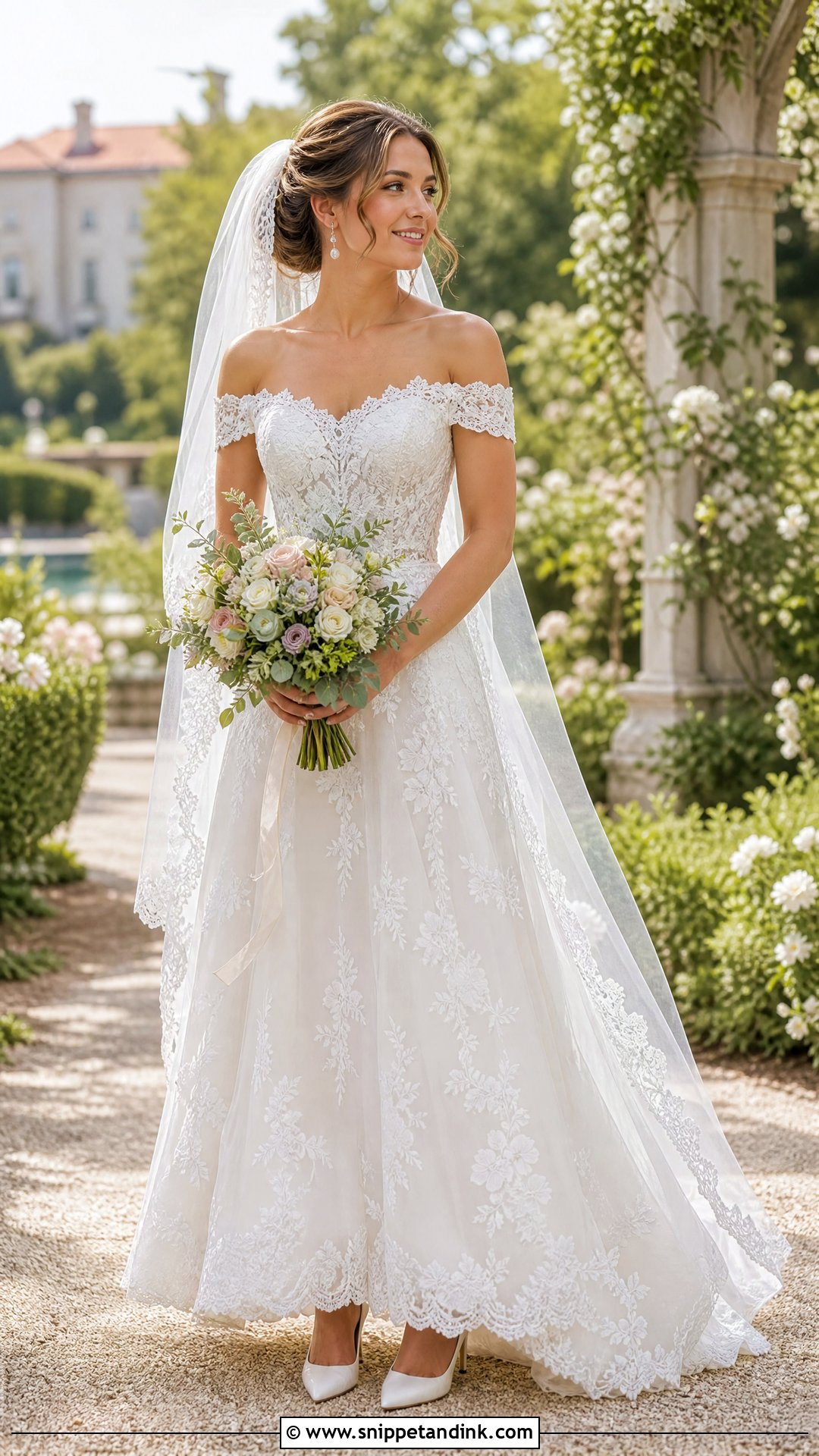
Off-the-shoulder lace looks soft, but it has to be engineered. The neckline only stays put if the bodice has proper internal support; otherwise you’ll spend the reception tugging it up. Floral lace reads traditional, graphic lace more modern. I’d skip a necklace entirely and let the open shoulders do the work, with pearl earrings and a loose bun or side-swept waves. Lift your arms at the fitting: if the sleeves bind when you raise them to hug someone, ask your seamstress about a little extra ease or a stretch lace.
12. Long Sleeve Wedding Dress
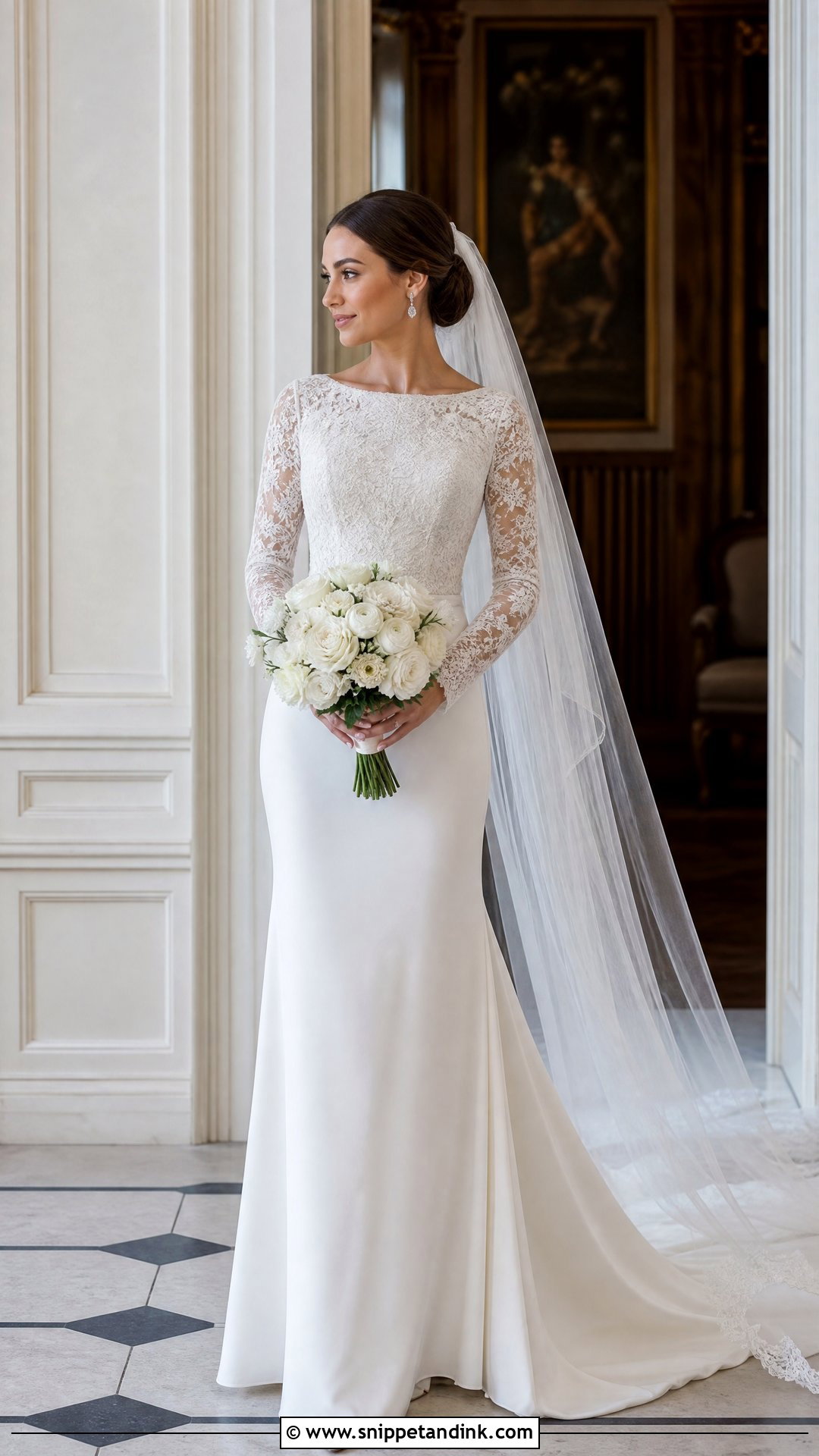
Long sleeves are worth the extra fitting time. Lace sleeves look delicate, while crepe or satin sleeves read sleek. The thing I check is the armhole: a high, narrow armhole lets you raise your arms and dance, while a low one pulls the whole bodice up when you lift them. Embroidered or beaded sleeves mean quieter bracelets and rings. Closed-toe heels and a chapel veil on a neat bun finish it. Neckline, waist and skirt can all be adjusted around the sleeves, so this works across body types and cooler-season dates.
13. Strapless Satin Wedding Dress
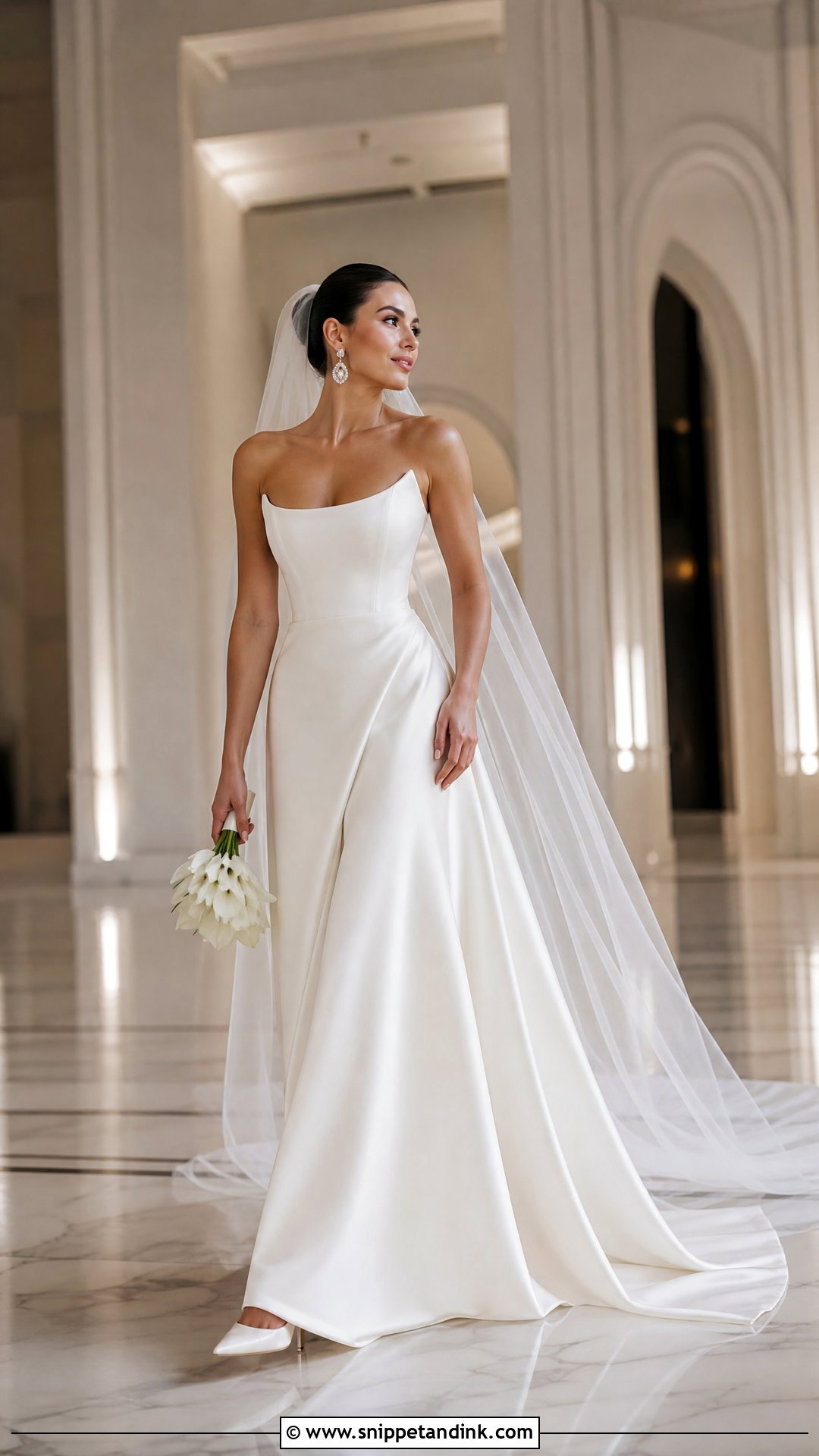
Strapless satin is the simplest-looking dress on the list and one of the most technical. Smooth satin shows every alteration, so the boning, the grip at the top edge and the length all need careful work. Choose a gentle scoop, straight or sweetheart neckline that you don’t need to keep adjusting. This is where statement earrings come into their own. A sleek bun clears the neckline; waves soften it. A satin wrap or removable bolero gives coverage during the ceremony.
14. Square Neck Wedding Dress
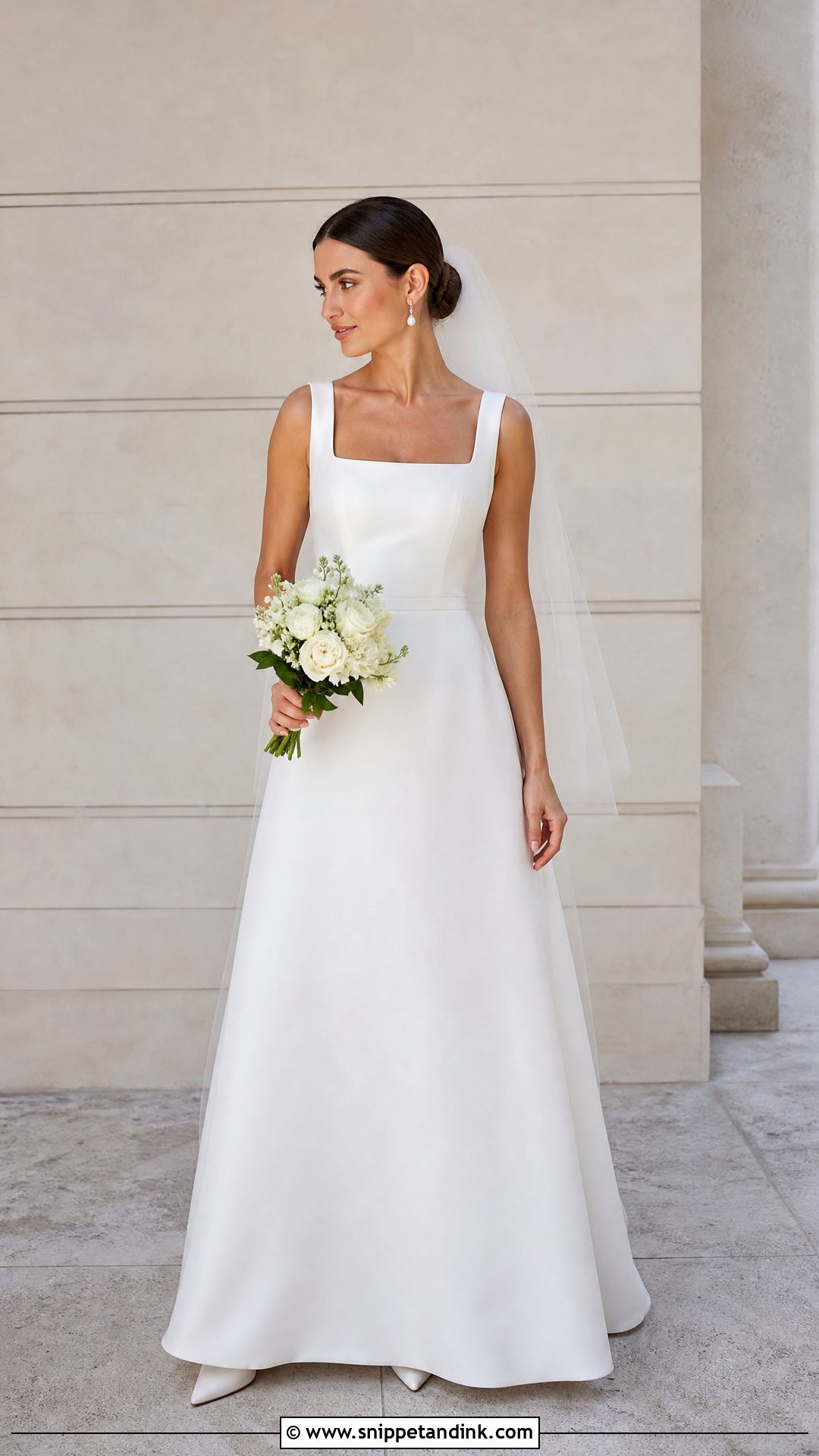
Square necks frame the collarbones and pair well with wide straps or fitted sleeves. I’d usually leave the neckline bare; a pendant can fight the straight edge. A satin A-line skirt keeps it classic, while a lace fit-and-flare makes it romantic. Choose a single-layer veil that doesn’t blur the neckline’s shape. Hair works in a low bun, ponytail or pinned waves. If the straps are wide, check they don’t slip toward the shoulder edge when you move your arms, which is a common fit issue on this style.
15. High Neck Wedding Dress
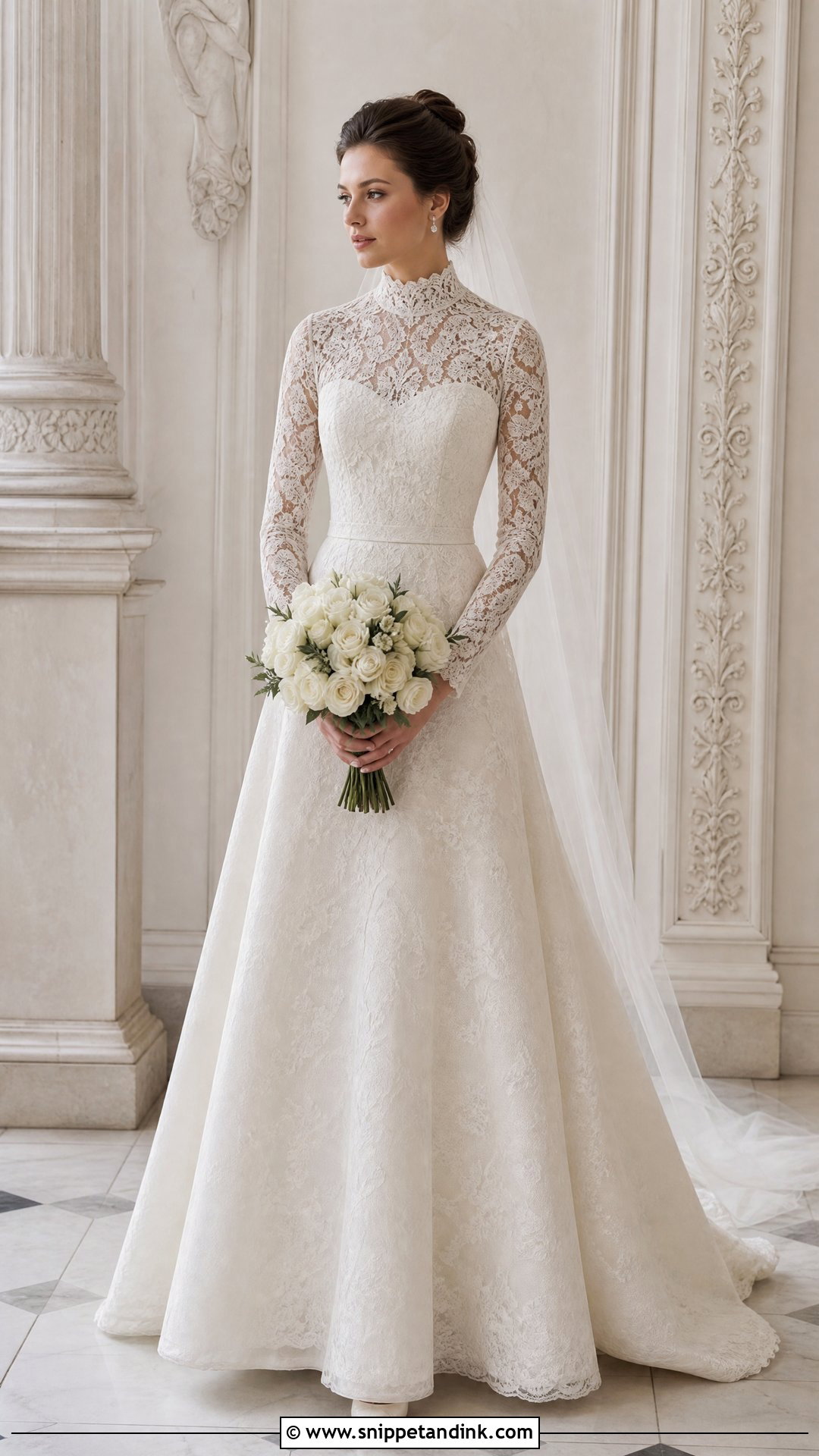
A high neck becomes the focal point, so it rules out necklaces and asks for small earrings and an updo. Balance it with a defined waist. Fitted crepe looks modern; lace with an A-line skirt is softer. If the collar is heavily embroidered, keep the veil plain and set it below the bun. Turn your head fully left and right at the fitting. A collar that is a touch too snug starts to feel tight hours later, especially in a warm room.
16. Tea-Length Wedding Dress
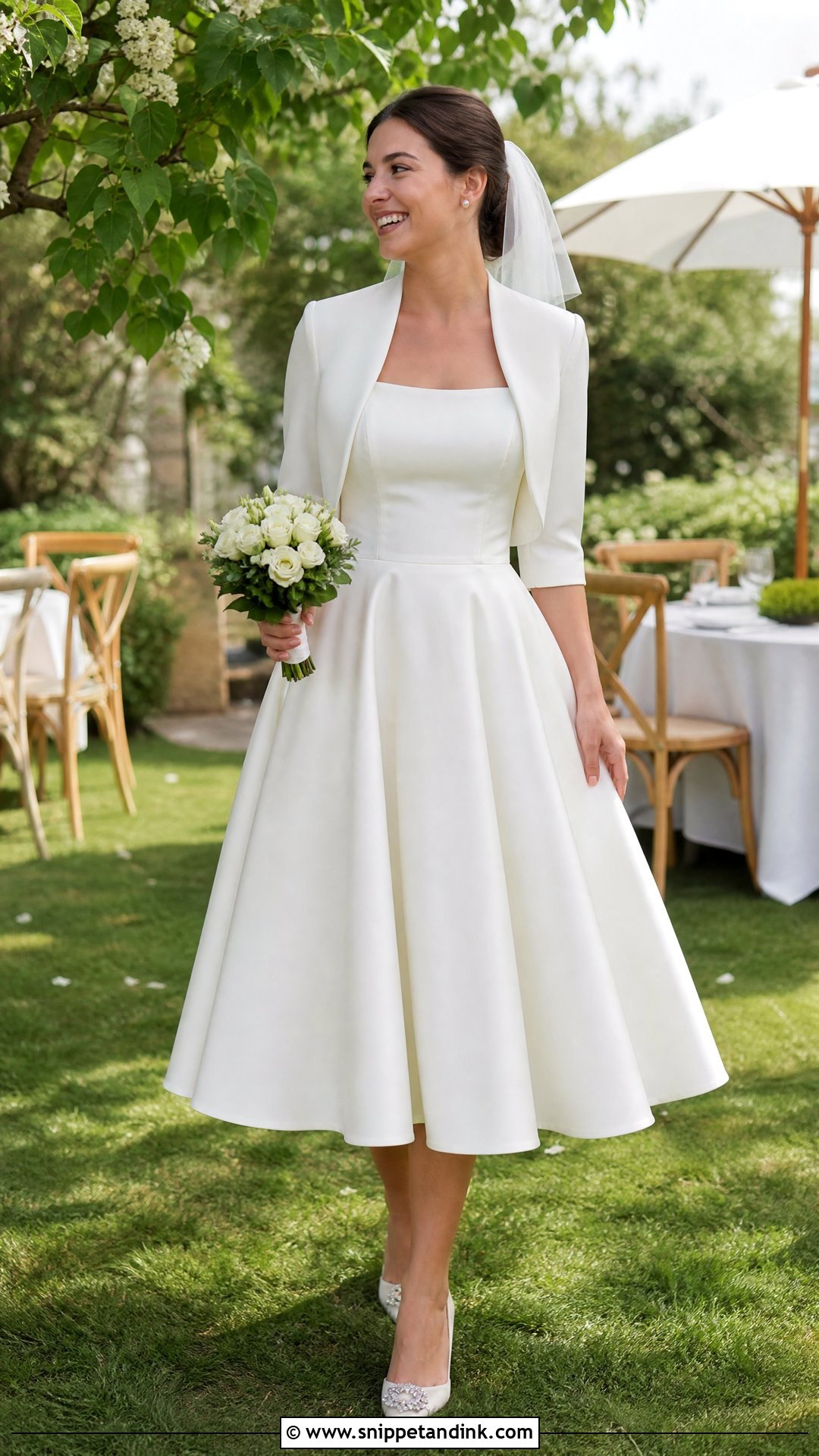
With a tea-length hem falling between knee and ankle, your shoes are on show all day, which makes them part of the dress. Embellished slingbacks or pointed pumps look polished, but pick a pair you’ve walked in, since you’ll be seen standing in them in every photo. A fitted bodice with a soft flare feels classic; a streamlined shape feels more current. Pearl studs and a short veil keep the light proportions. A cropped jacket covers the shoulders without hiding the waist. It’s a lovely fit for courthouse ceremonies and daytime receptions.
17. Mini Wedding Dress
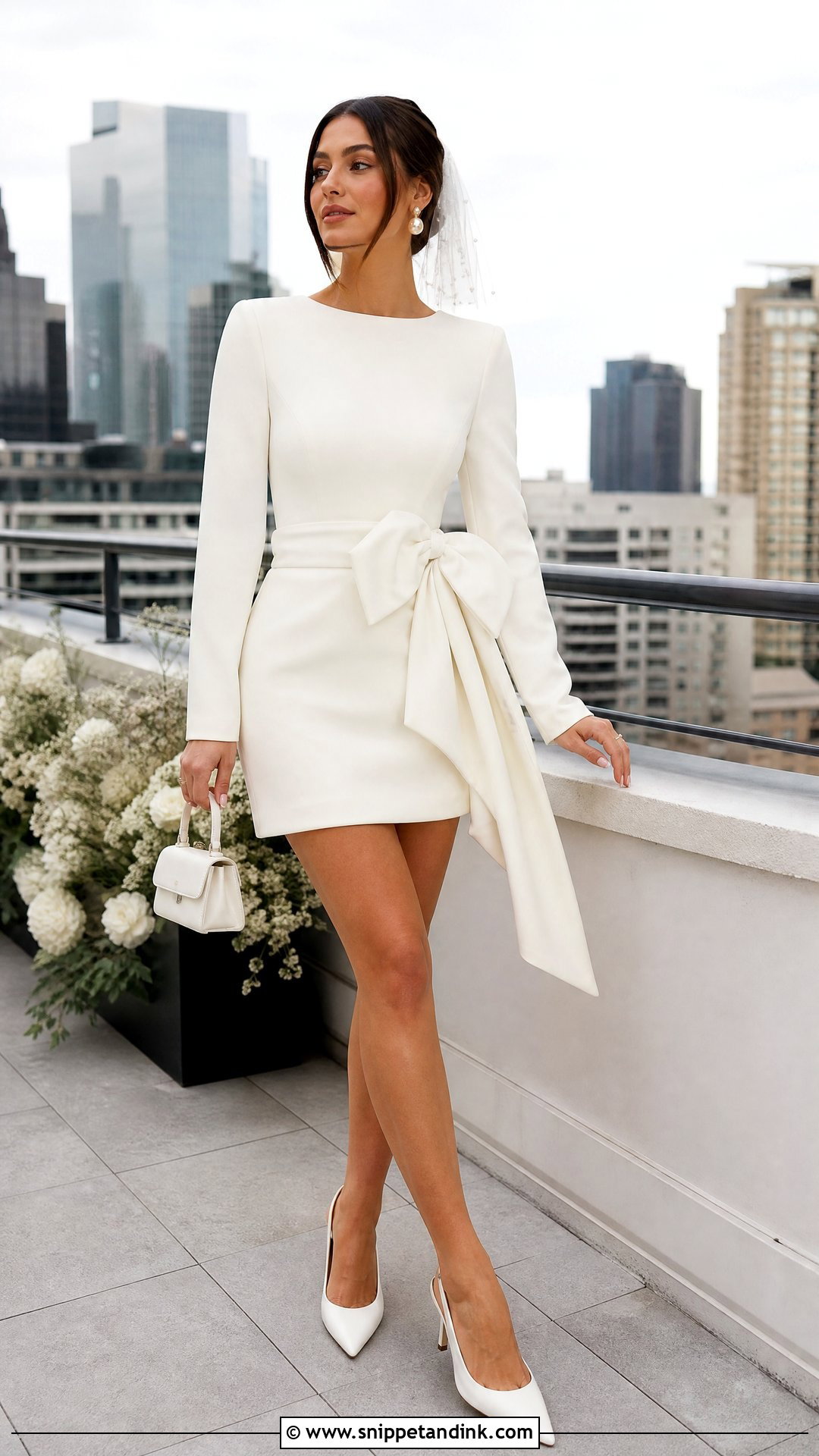
A mini is a confident option for civil ceremonies, rehearsal dinners or a second look for the reception. The fabric does the work of making it bridal: structured crepe, satin or embellished fabric keeps a short hem from looking casual. A bow, a sculpted neckline or a statement sleeve adds interest if the shape is simple. Slingbacks, pearl earrings and a short veil finish it. Sit down in it in front of the mirror at the fitting. A hem that looks right standing can ride up further than you’d like on a low chair.
18. Two-Piece Wedding Dress
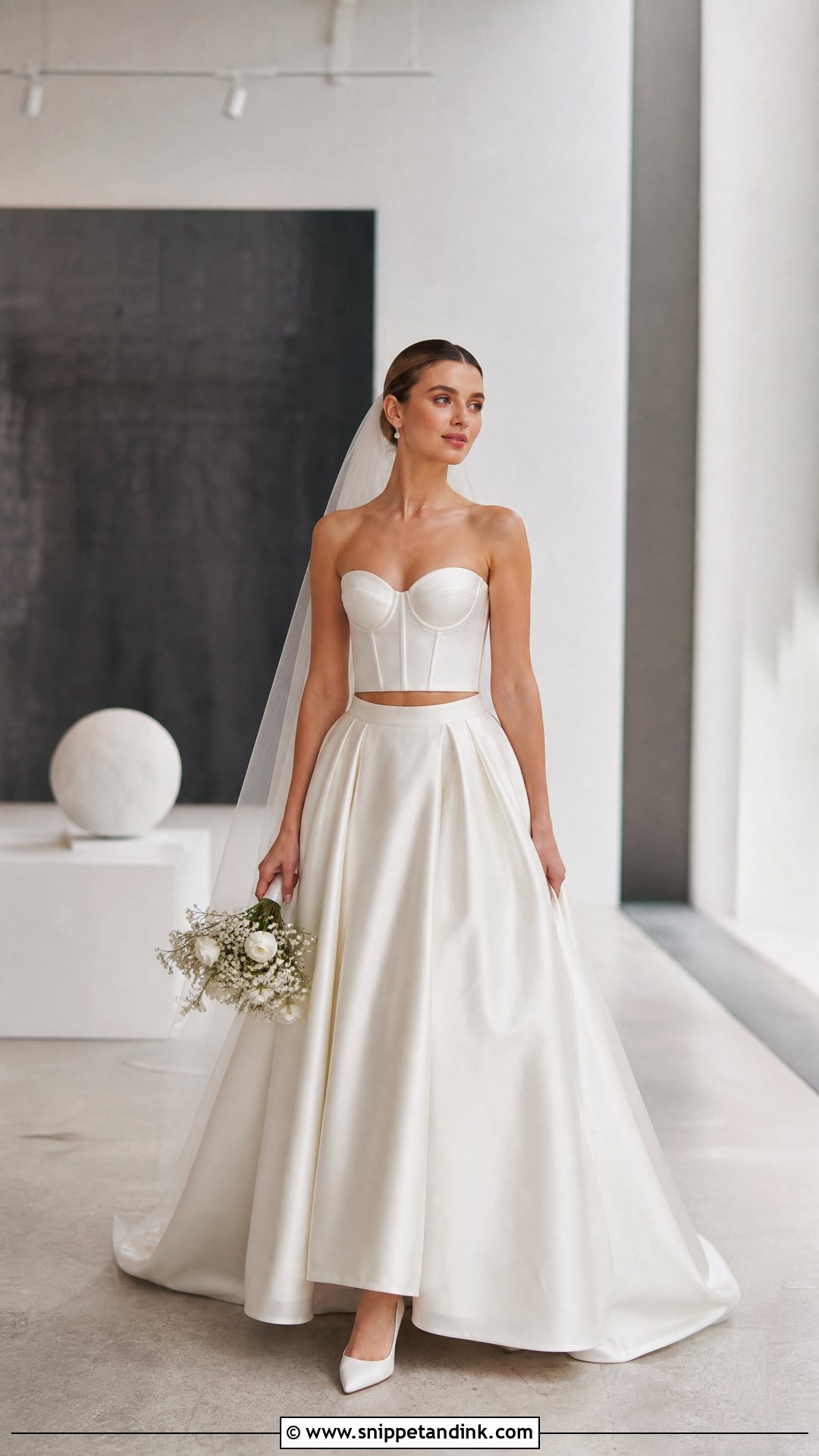
Two-pieces give you choices: a structured corset, satin top or lace blouse over a matching floor-length skirt. Keep both pieces in the same fabric for a continuous look, or use a subtle texture contrast for depth. A fitted top suits a fuller skirt, and a cropped lace blouse balances a sleek column skirt. The fastening between the pieces is what I fuss over. Raise your arms and twist, because a gap that’s elegant standing still can widen fast on the dance floor. Many brides like that they can rewear one of the separates after the wedding.
19. Cape Wedding Dress
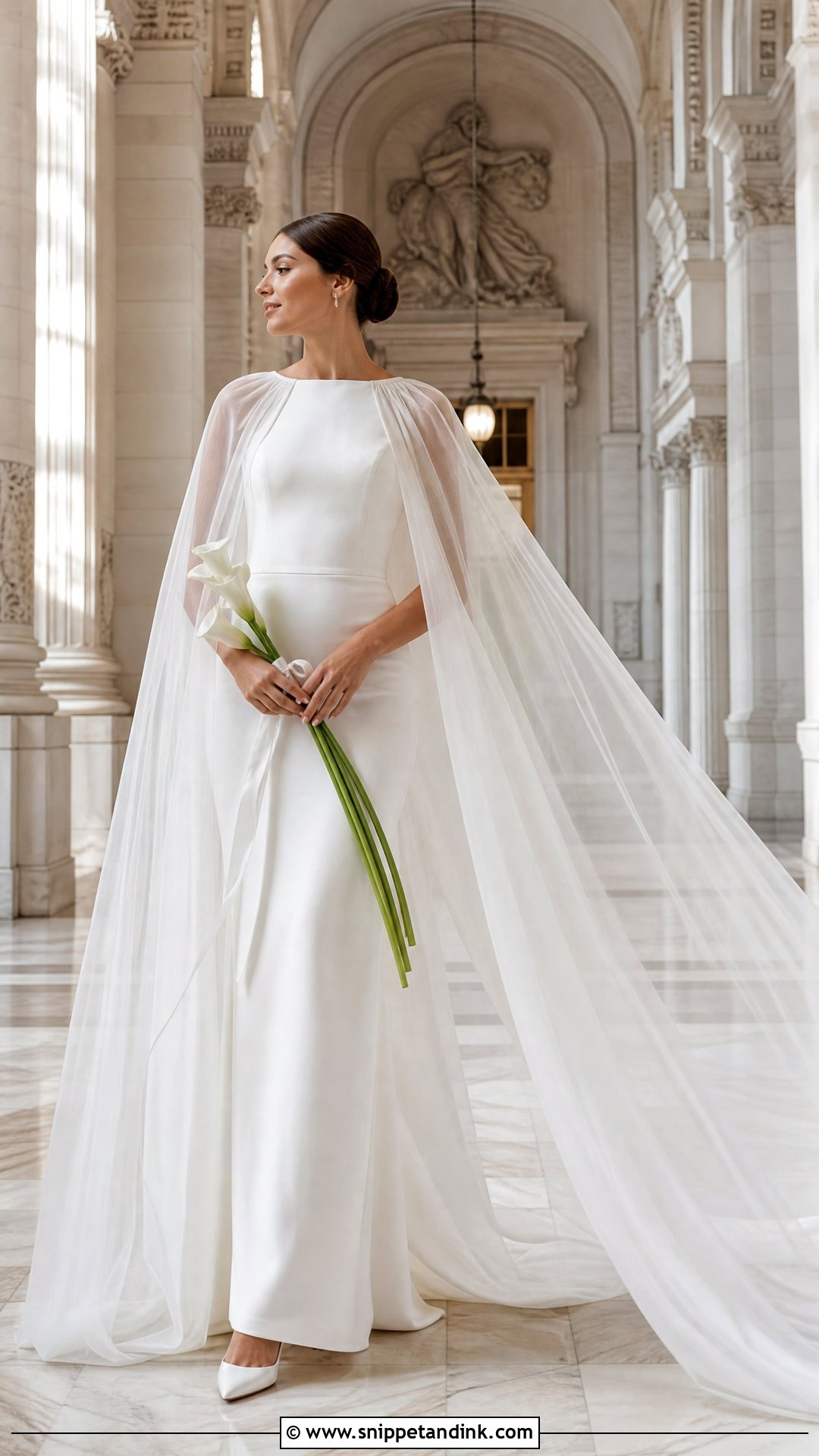
A cape gives you ceremony drama without a traditional veil. Put it over a clean column, sheath or A-line gown in sheer tulle, lace or satin. Capes attach at the shoulders, neckline or back, and the attachment carries the weight, so test a heavy satin cape for pull at the fitting. A low bun keeps the attachment points visible, and a narrow bouquet supports the long vertical line. Skip a big necklace if the fastenings are decorative. Most capes come off for the reception, revealing a simpler dress underneath.
20. Overskirt Wedding Dress
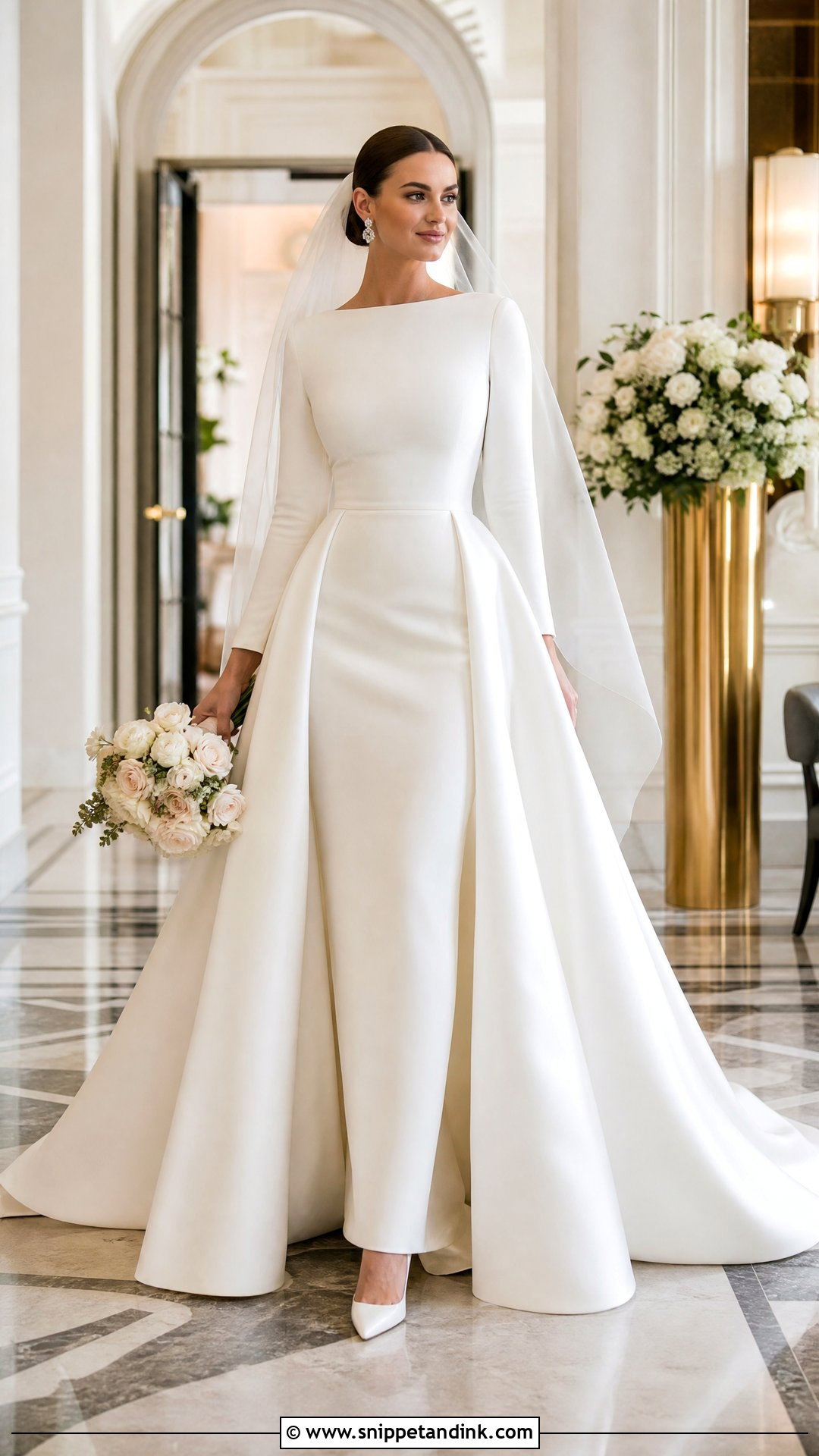
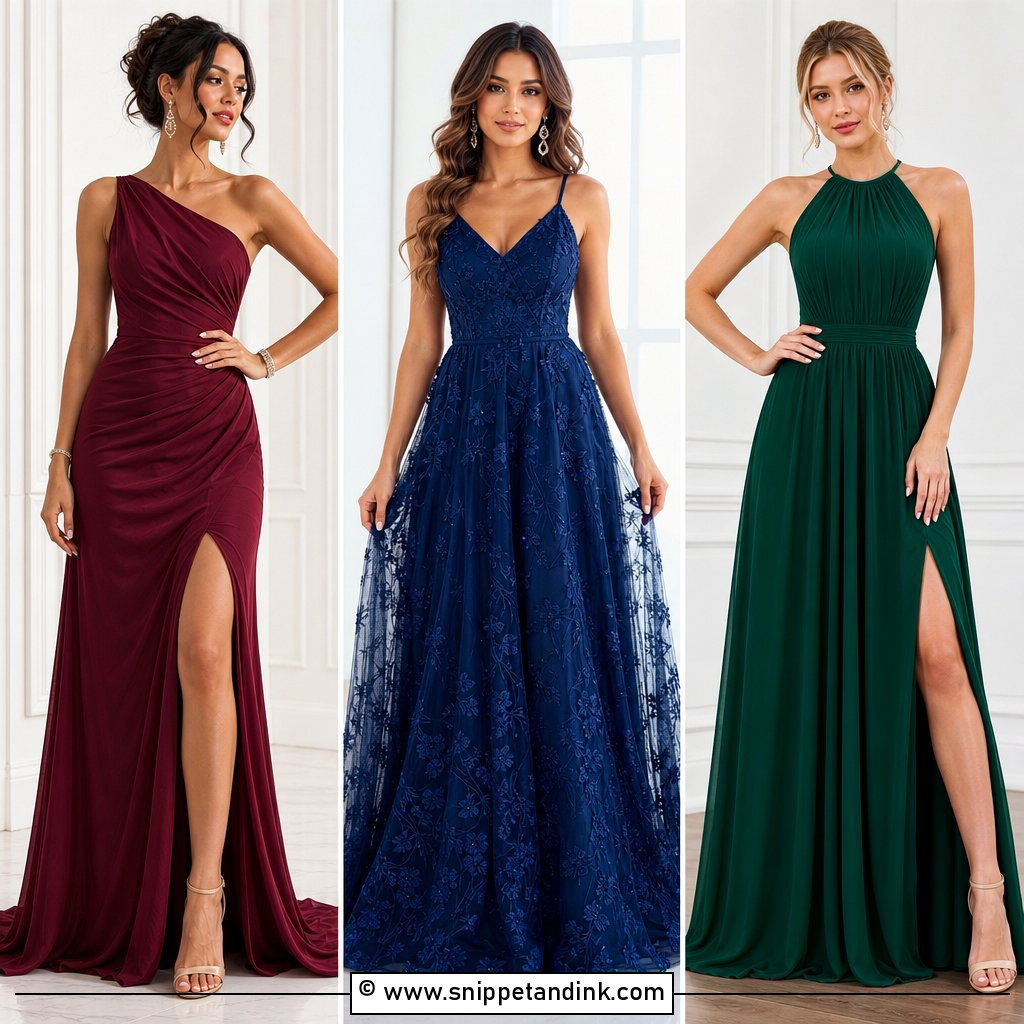
Want two looks without a full outfit change? Start the ceremony with a fitted sheath, column or mermaid gown under a removable satin, tulle, or organza overskirt, then take it off for dinner and dancing. Practice the removal with whoever is helping you, because hooks and snaps behave differently under pressure than in the boutique. Check that the attachment lies flat around the waist and won’t mark the base gown. After the switch, bigger earrings or a shorter veil make the change noticeable in photos.
How Long Does Ordering a Gown Really Take?
Longer than most brides plan for. A made-to-order gown from a bridal salon often takes several months to arrive, commonly somewhere in the range of four to eight, depending on the designer and the season. Alterations then need roughly two to three months on top, with two or three fittings. Ask the salon for the delivery estimate in writing before you pay a deposit.
If time is short
Sample sales and off-the-rack gowns can be taken home the same day, and simpler shapes such as a sheath, slip or column alter faster than a ball gown with layers of tulle. A rush fee may be offered for made-to-order dresses; get the new date confirmed before agreeing.
Bustles, Hems and Other Things That Happen After the Ceremony
Any dress with a train needs a bustle for the reception, and the type changes the look. An over bustle lifts the train up onto hooks at the back for a draped effect; an under or French bustle tucks it beneath, which suits satin and plainer skirts. Ask your seamstress to show your maid of honor how it’s done at the final fitting, and take a short video on your phone. In a crowded room, ties and hooks are much easier to find when someone has already practiced.
Lace and tulle hems also pick up dirt and catch on heels as the evening goes on. A hem that just clears the floor in your shoes, rather than resting on it, saves the skirt and saves you from tripping.
A Dress Has to Work for Twelve Hours, Not Just the Aisle
A dress that looks impressive on a hanger isn’t automatically the right one. It has to move with you, suit the venue and the weather, and feel like you from the first look to the last dance. Whichever shape you lean toward, from ball gowns and lace to clean columns, minis, capes and overskirts, think about the complete outfit rather than each accessory in isolation. Bring your real shoes and undergarments to fittings, sit and walk in the dress, and ask someone to photograph you from the back and sides as well as the front.
You'll Like These Ideas:


Leave a Reply