
Waves are the most requested wedding texture in my chair, and also the most misunderstood. Brides bring me a photo of polished Hollywood ripples and a photo of beachy bends and call both of them waves, but they’re built with different tools, different products and very different staying power. Long hair shows a wave off better than any other length, and it also drops one fastest. In each look below I’ve explained how the wave is made, how it behaves over a long day and which hair it struggles on.
Iron, Wand, Flat Iron or Rollers Make Different Waves
When a bride shows me a wave photo, my first question is what tool made it, because that decides how it looks and how long it lasts.
- Curling iron with a clamp: the most hold and the smoothest finish. My choice for Hollywood and glossy waves.
- Curling wand: softer, rounder curls that brush out into romantic, loose waves.
- Flat iron, twisted: a bent, flatter wave with straighter ends. The basis for beachy and boho texture.
- Hot rollers: volume at the root and big, soft bends. Useful on fine hair that needs body.
Barrel size matters as much as the tool. On long hair, a wave made with a large barrel stretches looser with every hour as the weight pulls it down, so I usually go one size smaller than the look in your photo and let time relax it.
Prep for hair that refuses to hold a bend
Very fine, very straight and freshly washed hair all let a wave go quickly. For those brides I wash the day before, add mousse to damp roots, and spray a light-hold spray onto each section just before the iron touches it. The heat sets the spray into the bend. Thick or coarse hair has the opposite problem: it holds a wave but takes longer to heat through, so I work in thinner sections and give the whole set more time to cool before brushing.
1. Classic Hollywood Waves for Long Hair
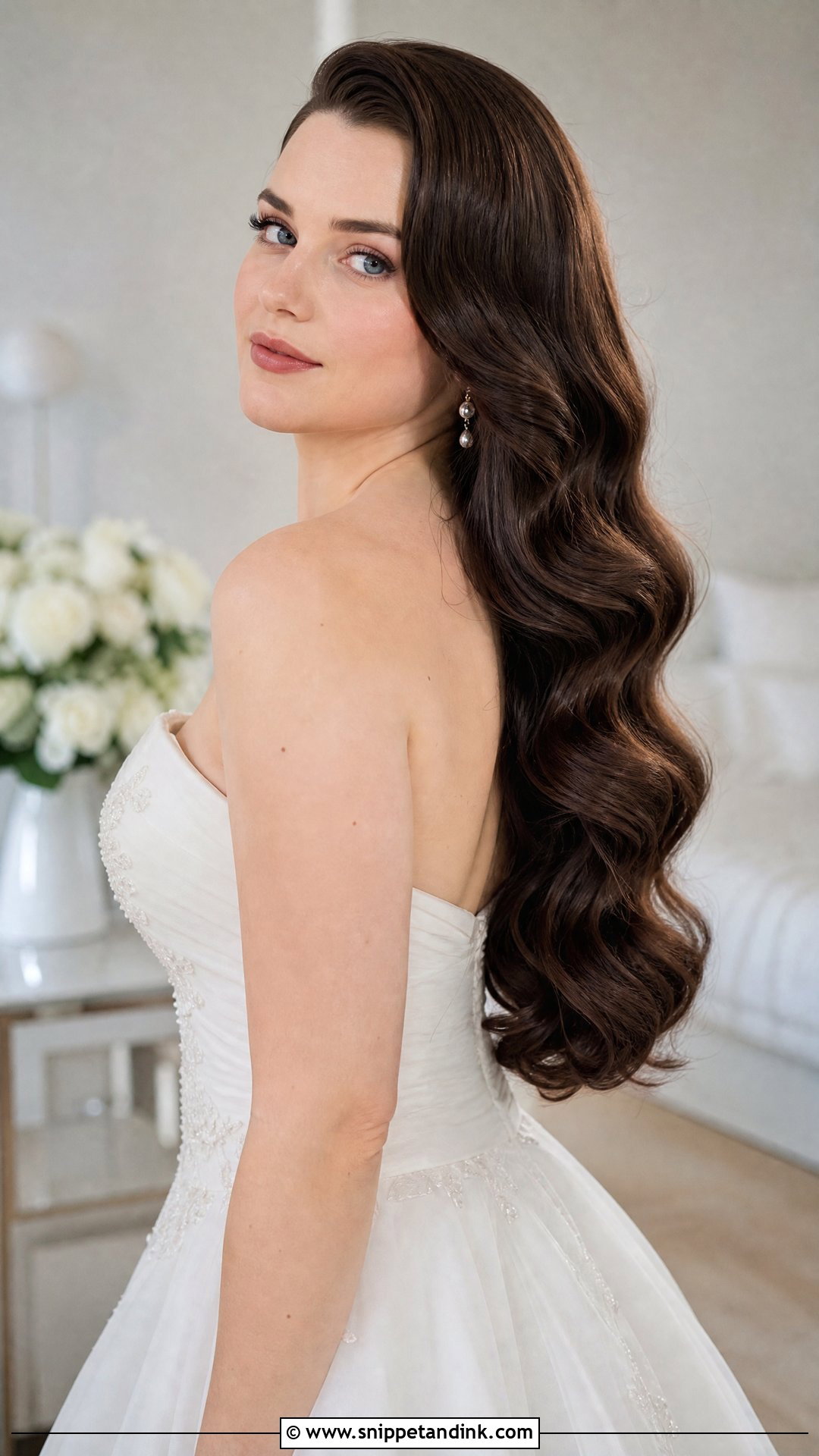
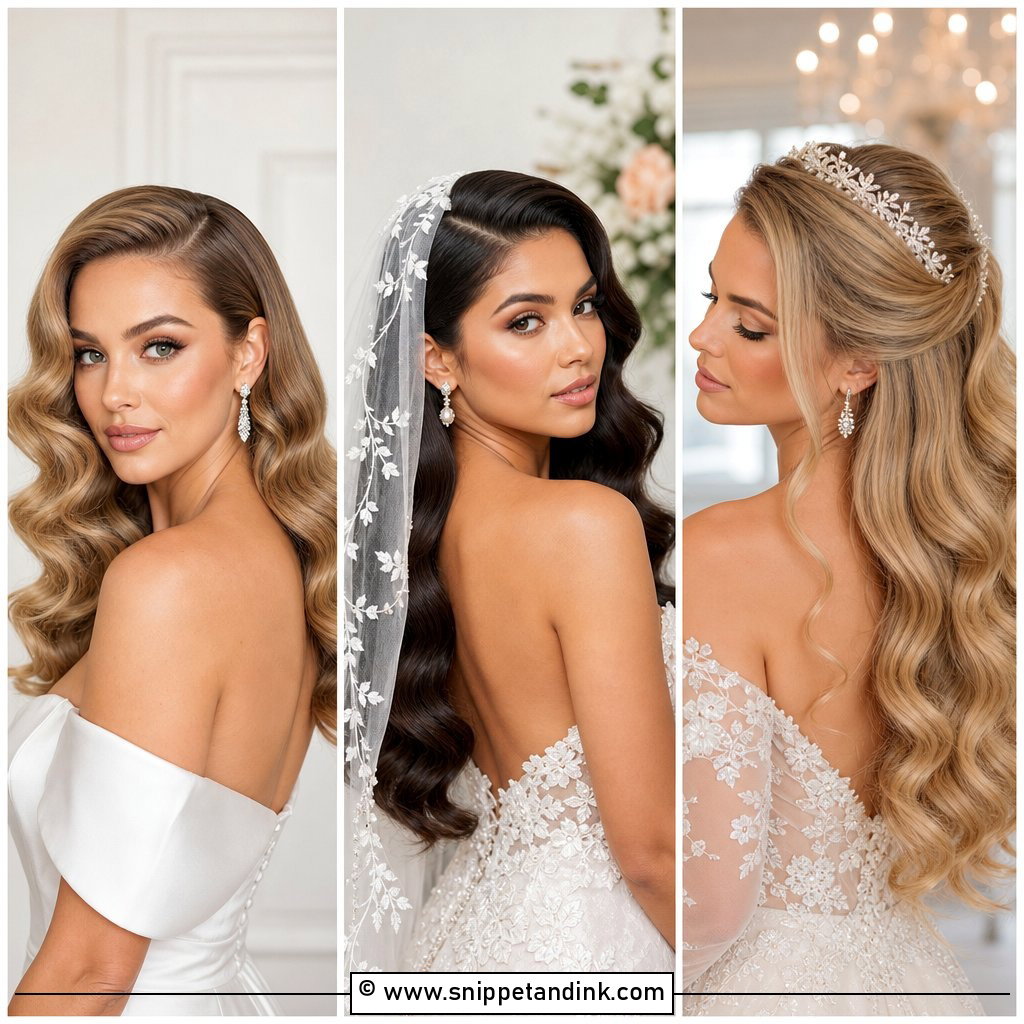
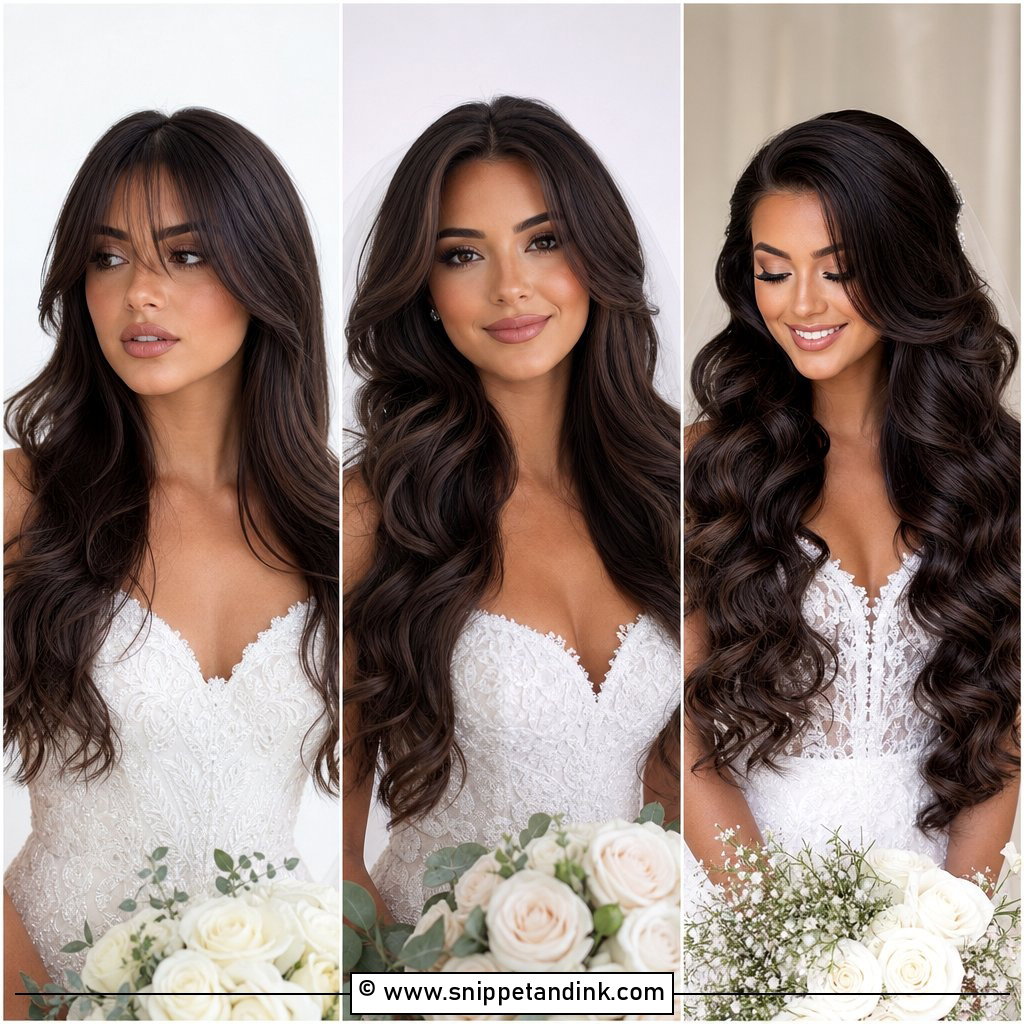
True Hollywood waves at waist length take me the better part of an hour. Every section is curled in the same direction and pinned flat to cool, then the whole head is brushed through with a paddle brush until the curls merge into deep, continuous S-shapes. A center part reads more modern; a deep side part is the classic film version. The waves sit against the collarbones and frame the neckline, so a strapless or sweetheart gown suits them best. Finish with a light serum on the ends, not all over, or the waves go limp.
2. Soft Romantic Waves With a Center Part
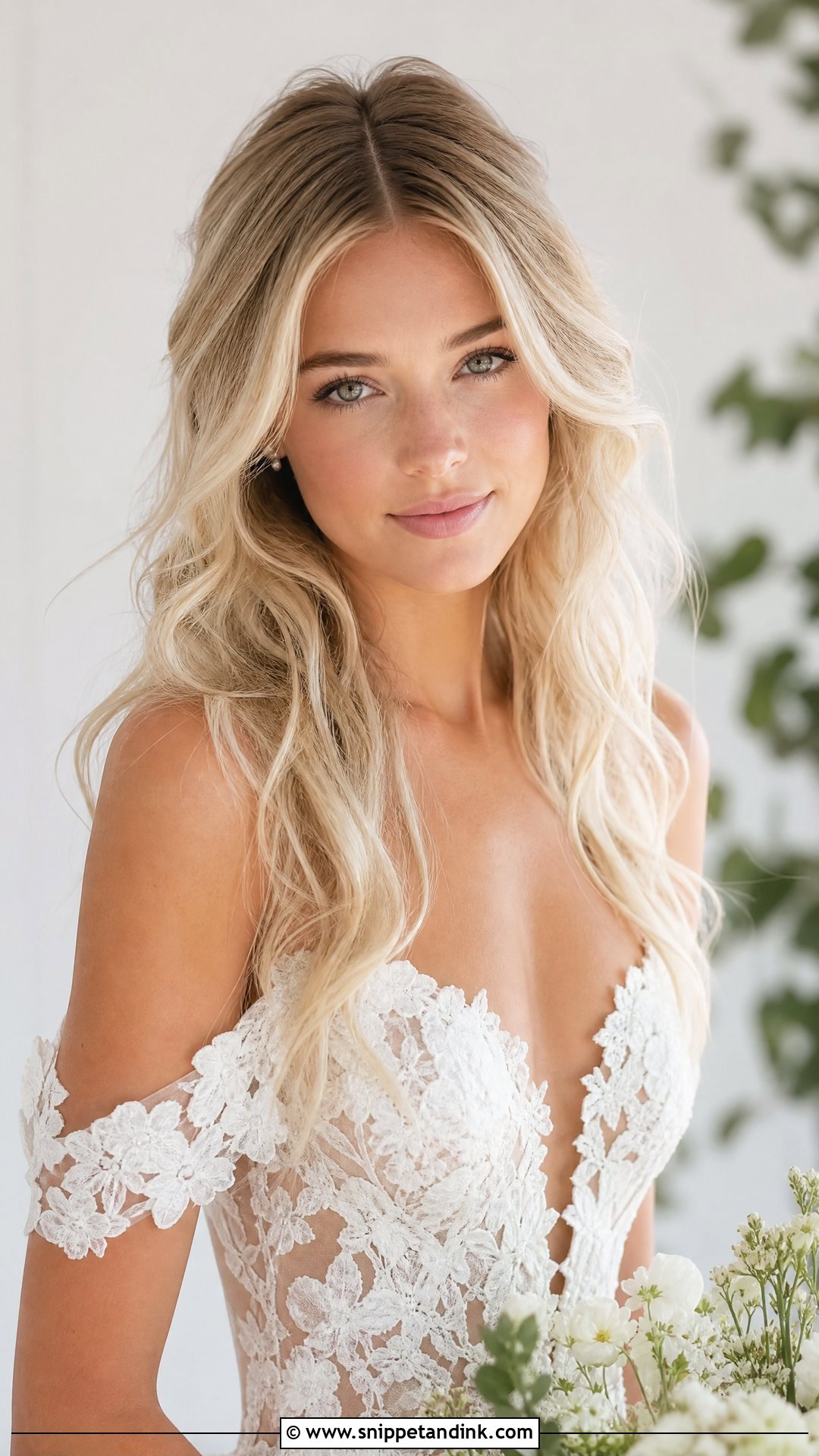
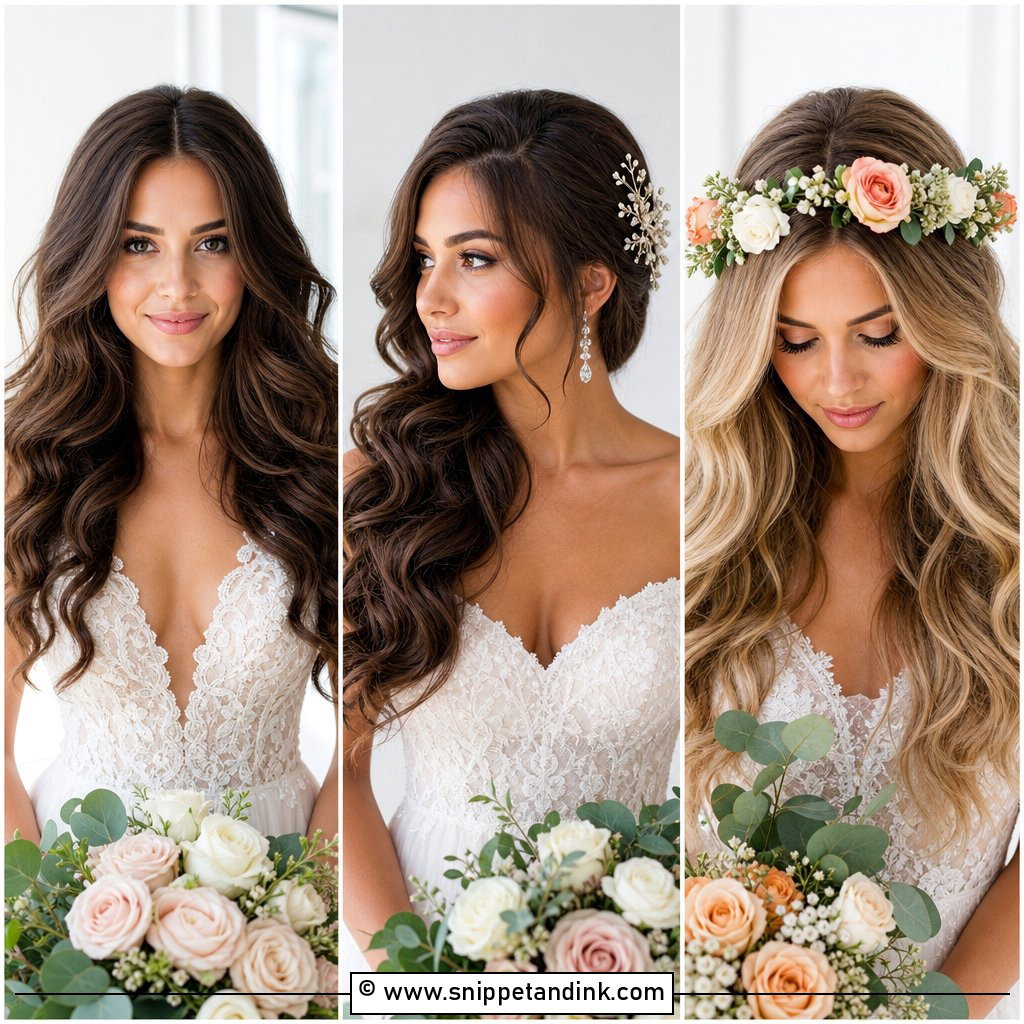
These are the waves I’d suggest to a bride who has never worn her hair styled and wants to still look like herself. I use a wide barrel and alternate the direction of each section so the bends break up rather than forming ringlets, then shake them out with my fingers. A center part keeps it balanced and modern. In a breeze they move without falling apart. Fine hair is the exception: these loose bends can vanish by lunch, and I’d set them a size tighter than you’d expect.
3. Half Up Half Down Bridal Waves
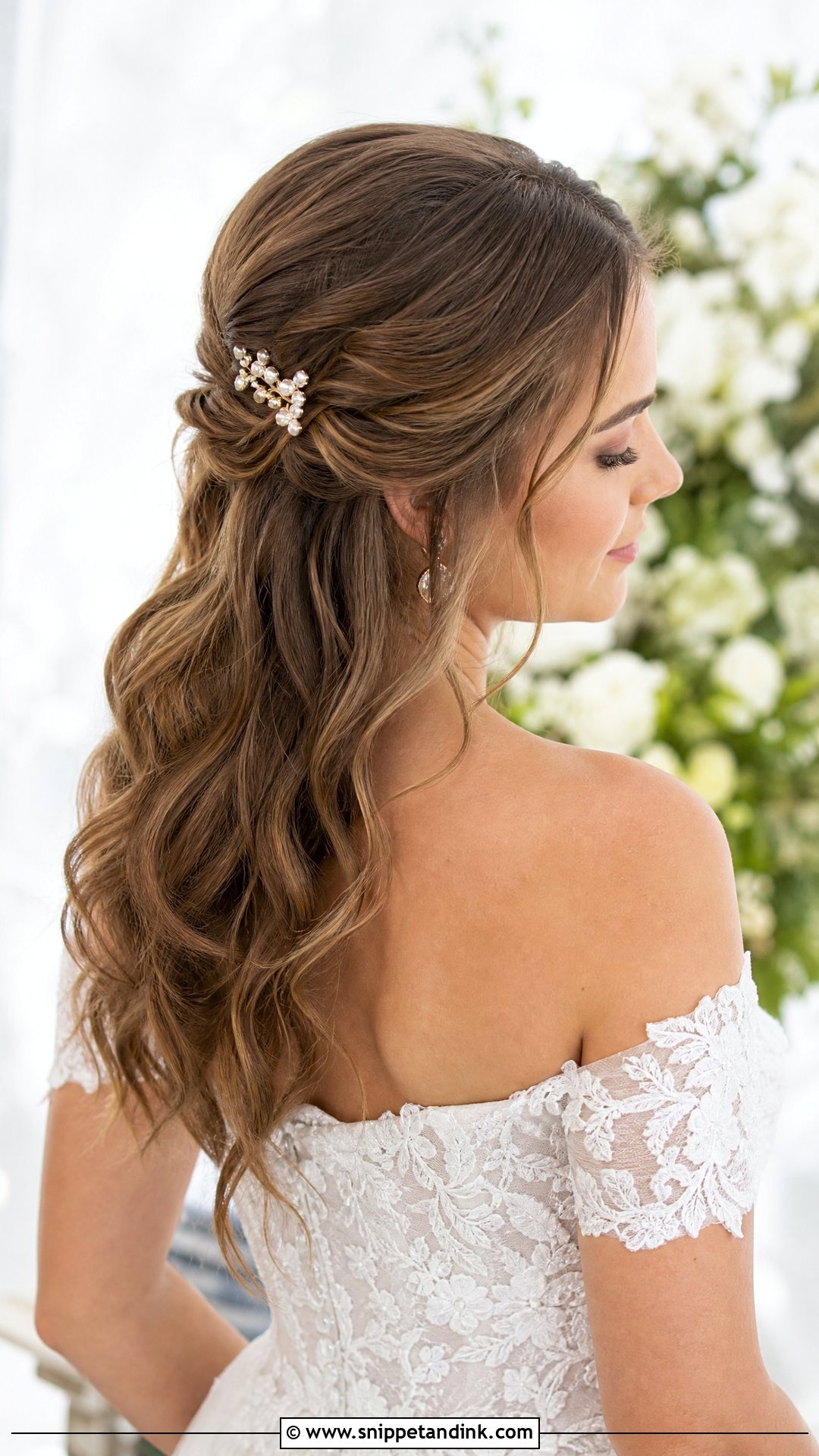
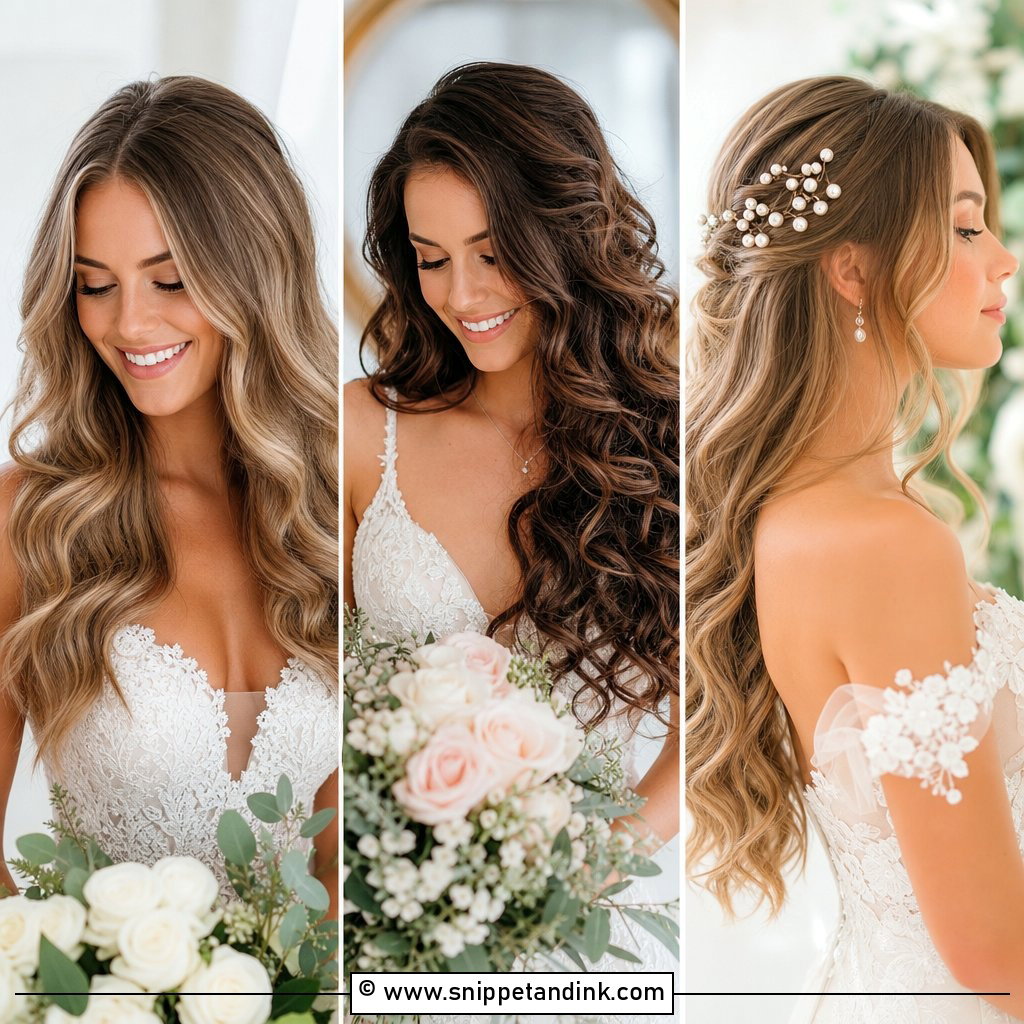
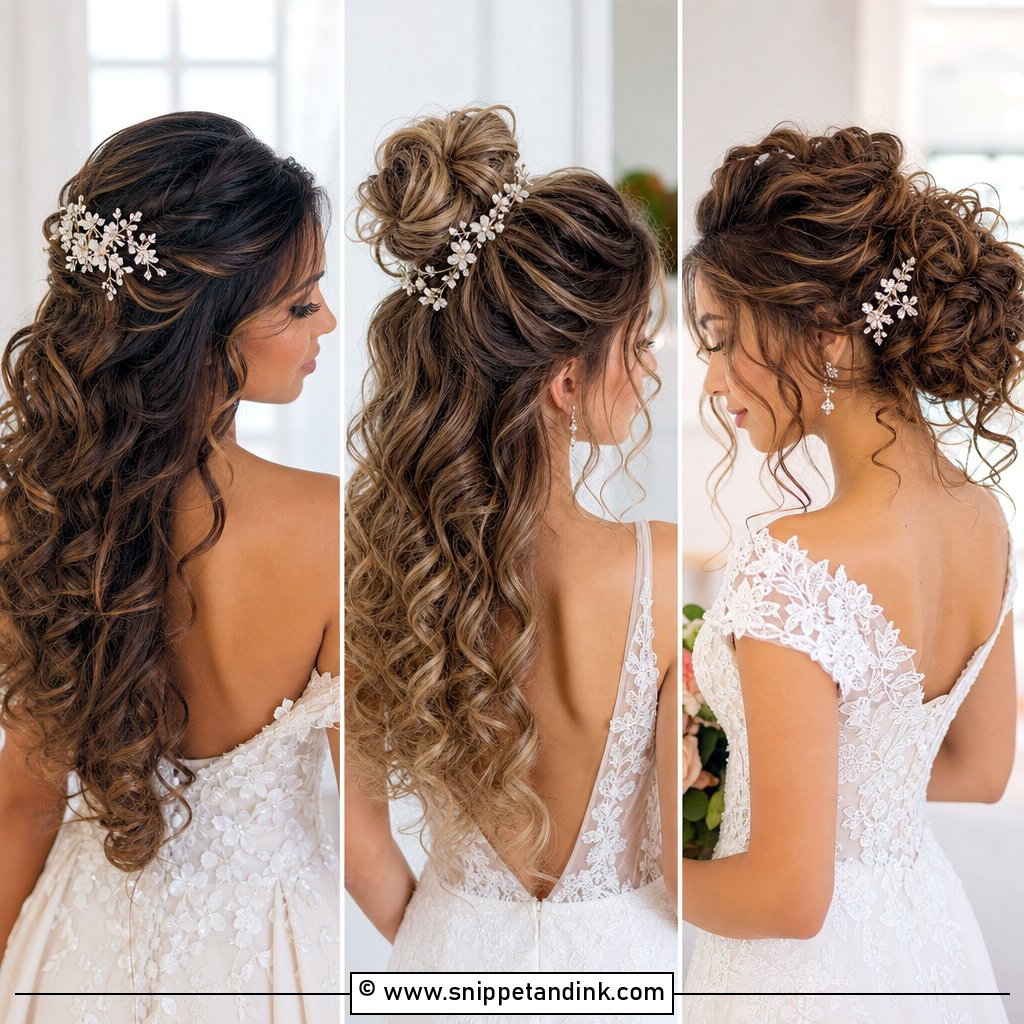
Half-up is the practical choice when a veil is part of the plan. I take the top section back and lock it with a small elastic under the pins, which gives a veil comb or floral piece a solid hold. The rest falls in soft waves showing your length. I curl the lower lengths before pinning the top, otherwise the iron disturbs the pinned section. It suits rustic barns as easily as formal estates.
4. Boho Tousled Waves for Long Hair
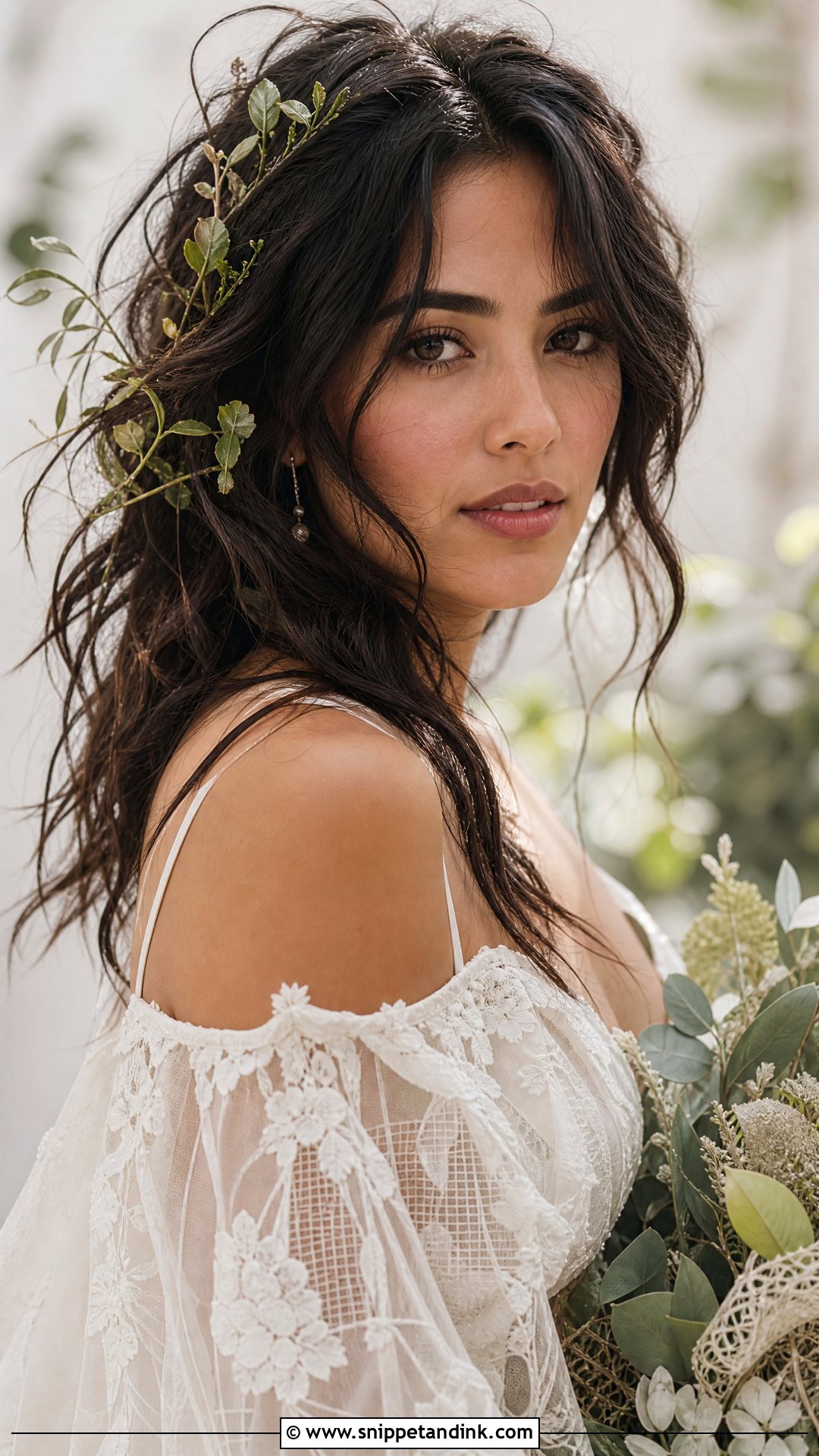
Undone texture is harder to keep than polish. Boho tousled waves rely on a texturizing spray and a flat iron twisted through each section for a bent, piece-y wave rather than a round curl. Then I rake through with fingers to separate them. Flower crowns, loose braids and greenery sit well in this texture because it grips. It suits garden and outdoor celebrations. If your hair is very silky, expect it to soften over the day; that’s part of the look, but plan for it.
5. Voluminous Bridal Waves With Extra Body
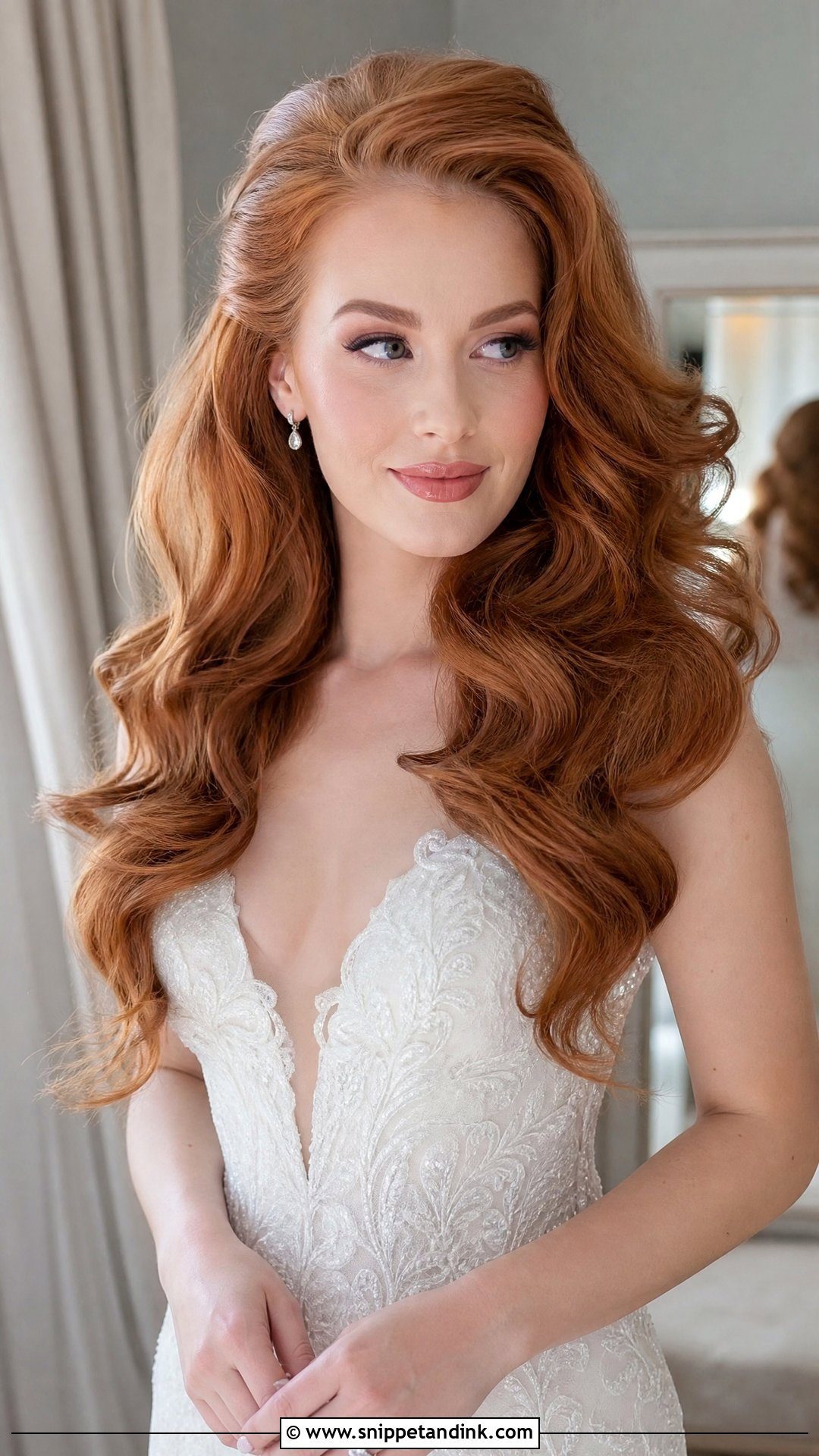
Big, bouncy waves start with the blow-dry, not the curling iron. I round-brush the roots upward for lift, then set the lengths with a large barrel or hot rollers and backcomb lightly at the crown. On thin hair this volume makes a real difference to how full it looks in photos; on very thick hair I’d hold back on the backcombing, because the result can get wider than you’d like. It frames bare shoulders and suits a grand venue.
6. Side Swept Waves Over One Shoulder
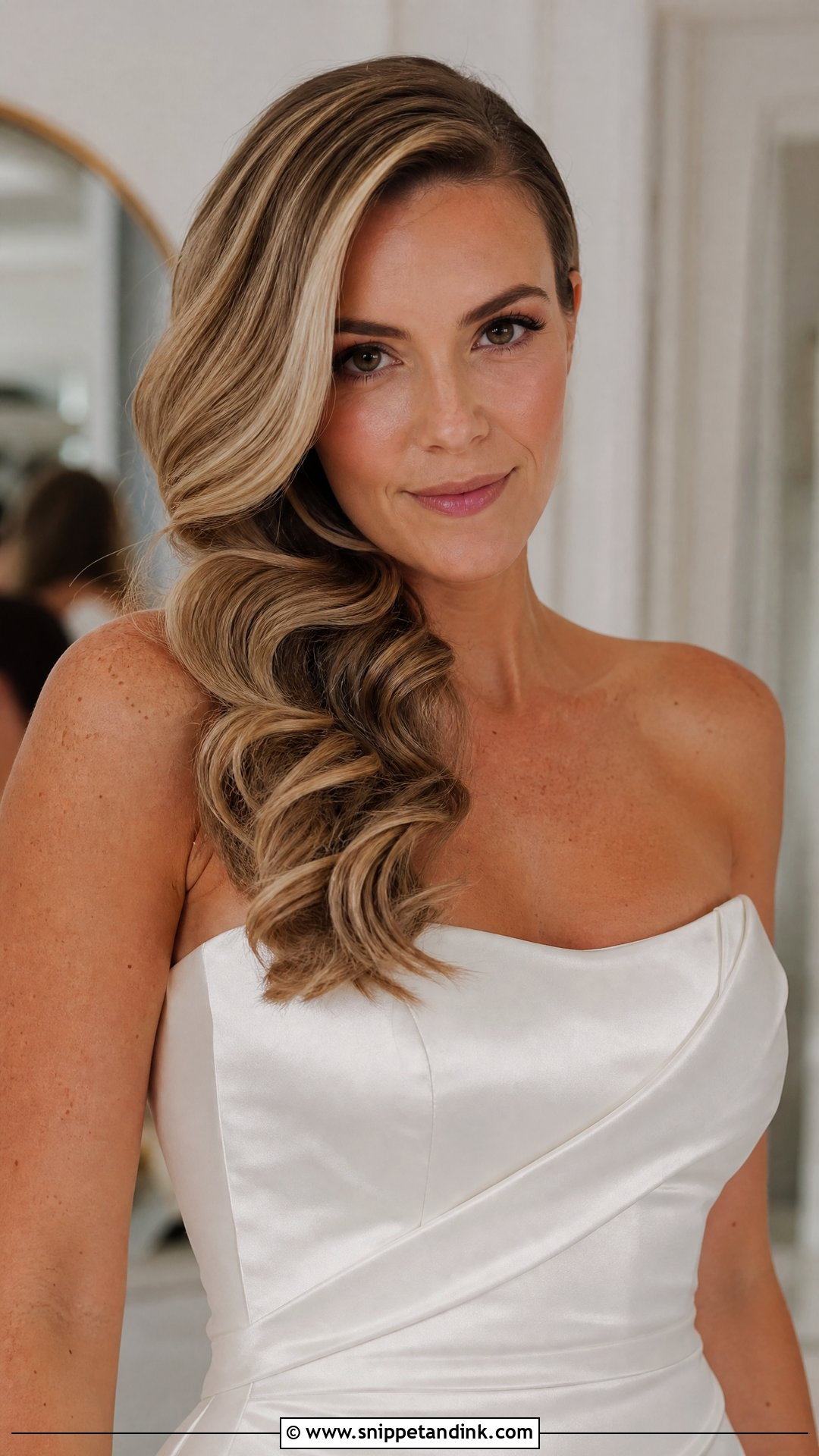
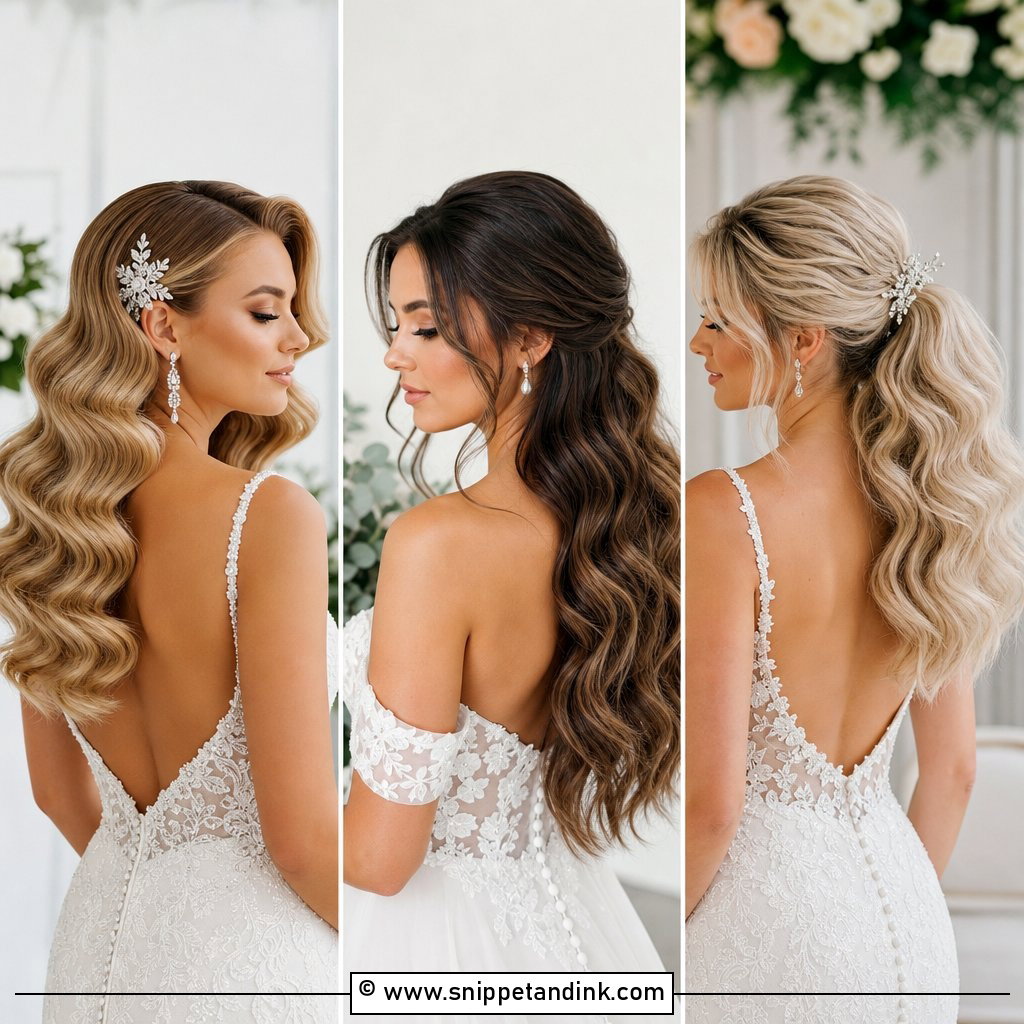
Sweeping waves over one shoulder only stays put if the other side is pinned properly. I set a deep side part, then run a line of crossed bobby pins behind the opposite ear under the hair. That’s what stops the waves from creeping back to center during dinner. It shows the jawline and neckline on that side and suits strapless or one-shoulder gowns. Ask your photographer to shoot from the open side for profile shots.
7. Beachy Bridal Waves for a Natural Look
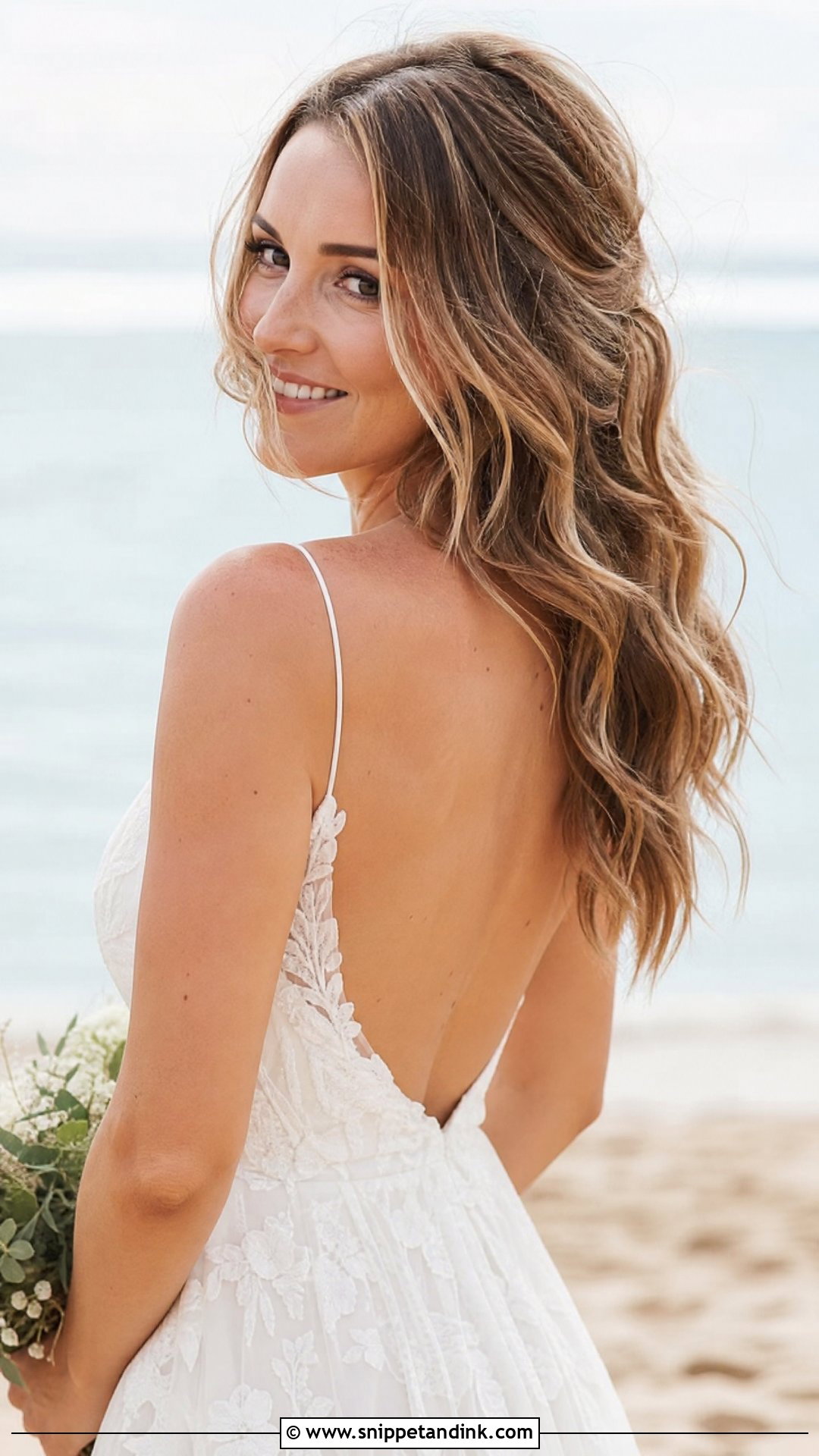
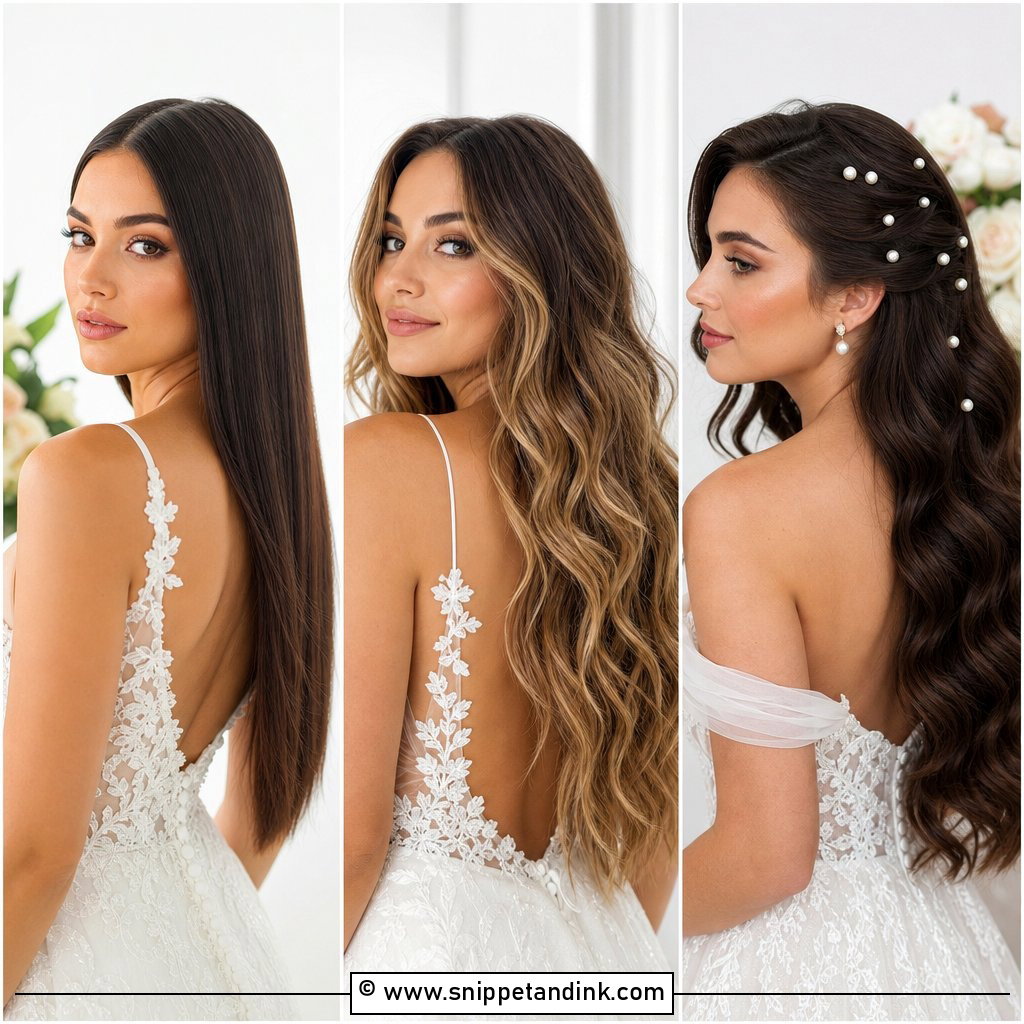
Think of the texture hair has after a day by the sea. Beachy bridal waves copy exactly that, and they’re the least structured look here. I spray a light texture or sea-salt mist, wave with a flat iron, and leave the ends straight so it reads natural rather than curled. Salt sprays can feel dry and dull on already dry hair, so I’d swap to a lighter texture spray for you if that’s your hair. It suits a coastal or destination wedding and a relaxed outdoor ceremony.
8. Sleek Glossy Waves With Shine
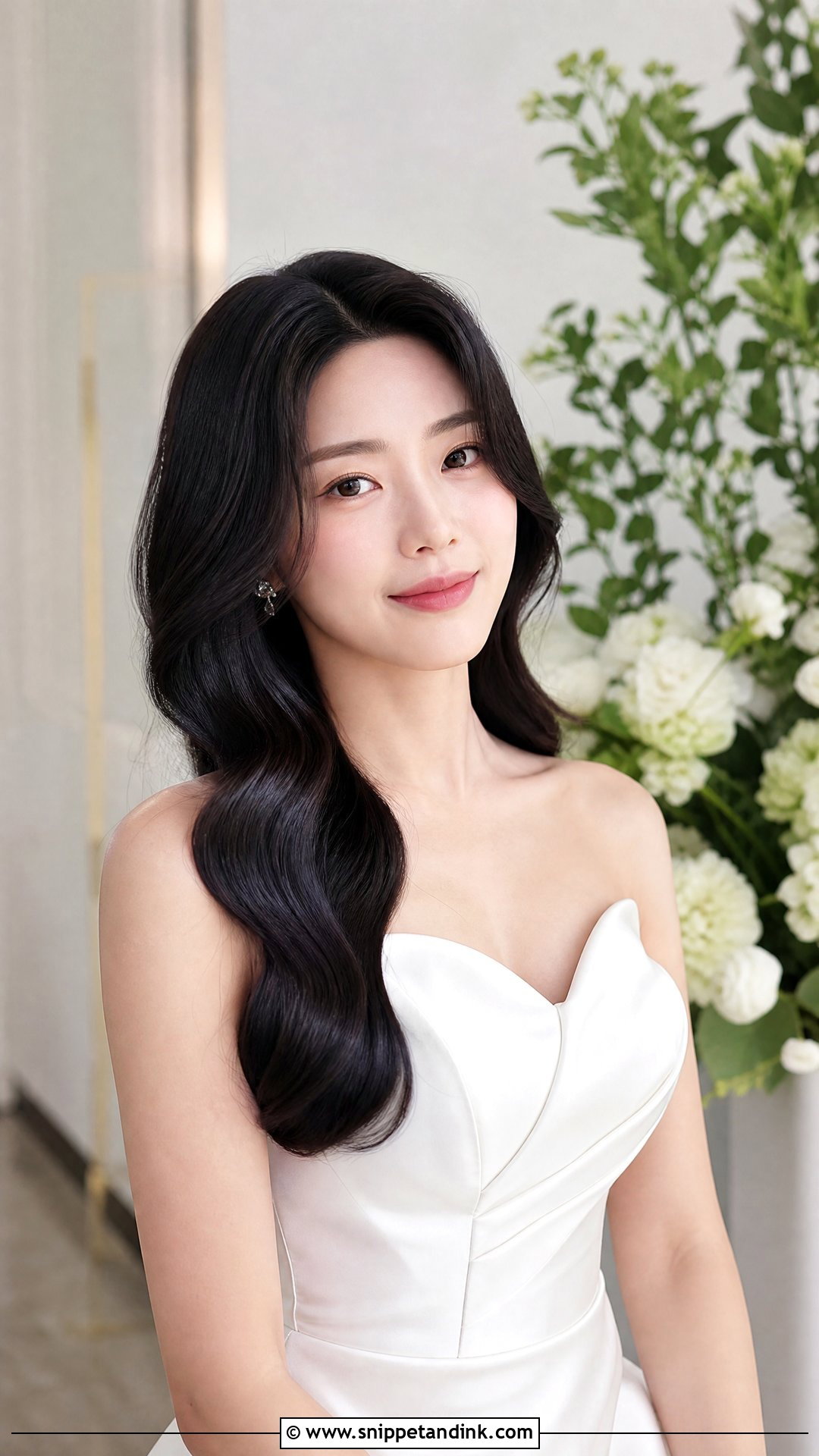
Sleek glossy waves look effortless and demand the most precise prep. I blow-dry smooth with a round brush, curl with a medium barrel, brush them out, and then press a flat iron gently over the surface to remove frizz without losing the wave. A glossing serum, used sparingly, gives that mirror shine. It suits a modern or minimalist wedding and a clean-lined gown with statement jewelry. Humidity is the enemy of this look, so for a hot outdoor day I’d pick something more textured.
9. Long Bridal Waves With a Veil
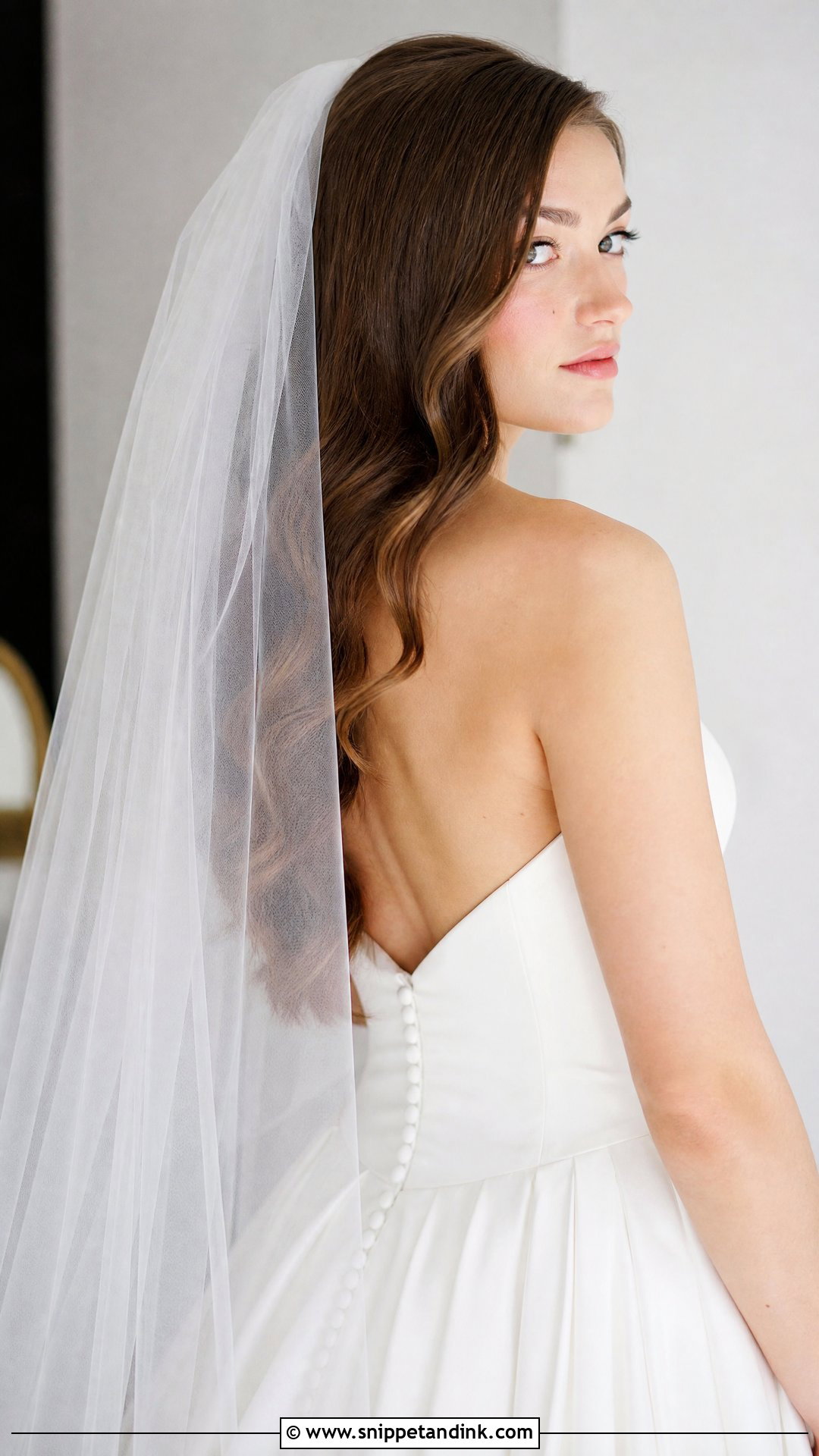
Waves and a veil work together when the veil is anchored properly. I pin a small hidden section at the crown and slide the veil comb into it, so the waves below hang freely without being pulled flat. Both cathedral and fingertip lengths suit this. One thing to watch: lace-edged veils can catch on waves and pull them out as the veil moves, so at the trial I test the actual veil over the actual waves. When the veil comes off at the reception, the hair underneath is untouched.
10. Curtain Bang Waves for Long Hair
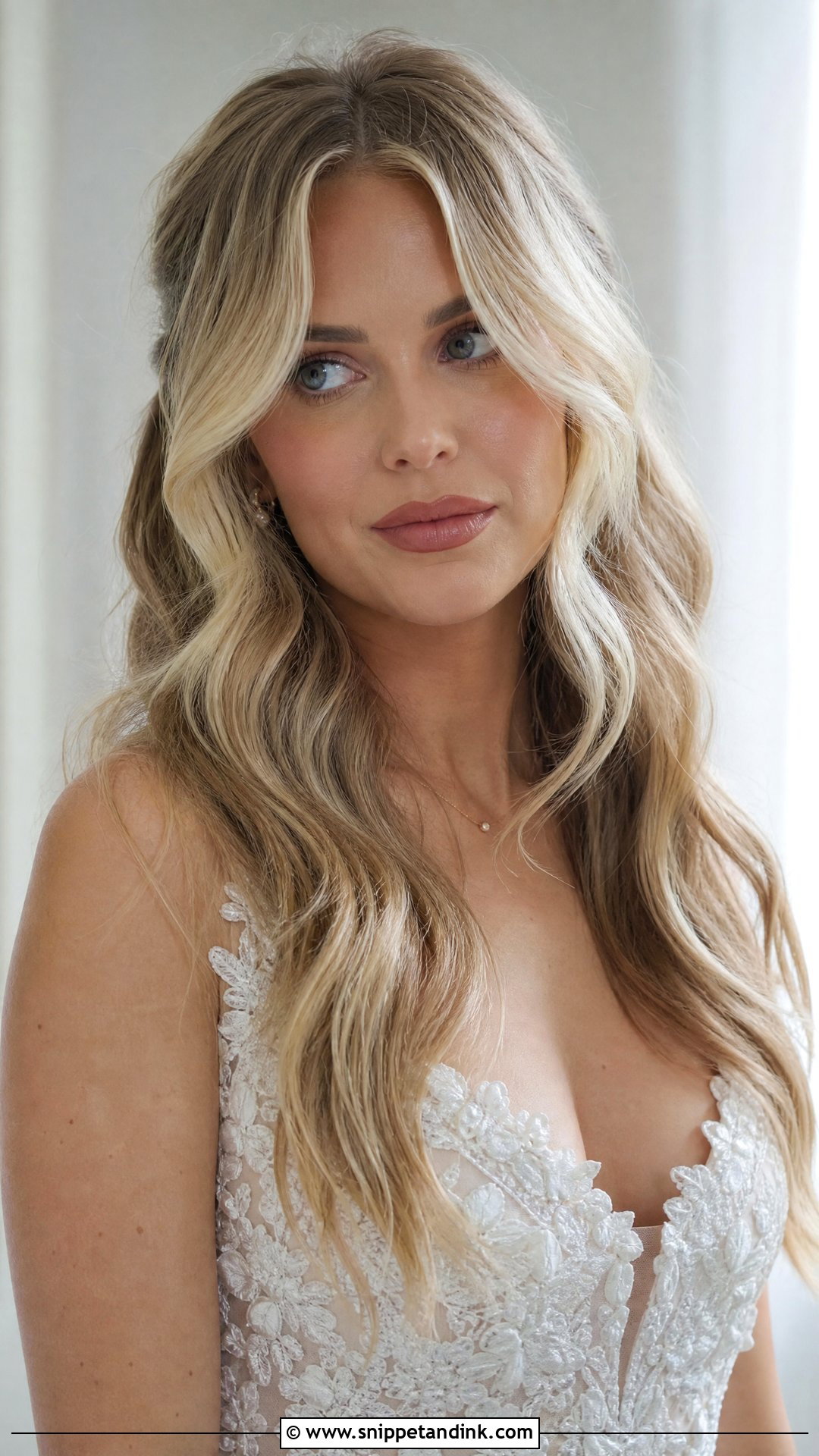
Face-framing pieces do a lot of work in bridal photos, and the softest version of them is a fringe split at the center. Curtain bangs do exactly that. I curl them away from the face with a round brush or a large barrel so they fall to the cheekbones, then wave the rest of the hair down the back. They soften the forehead and open the eyes. Don’t cut new curtain bangs in the last month; give them at least six weeks to settle and grow into a shape you know.
11. Vintage Finger Waves for Long Hair
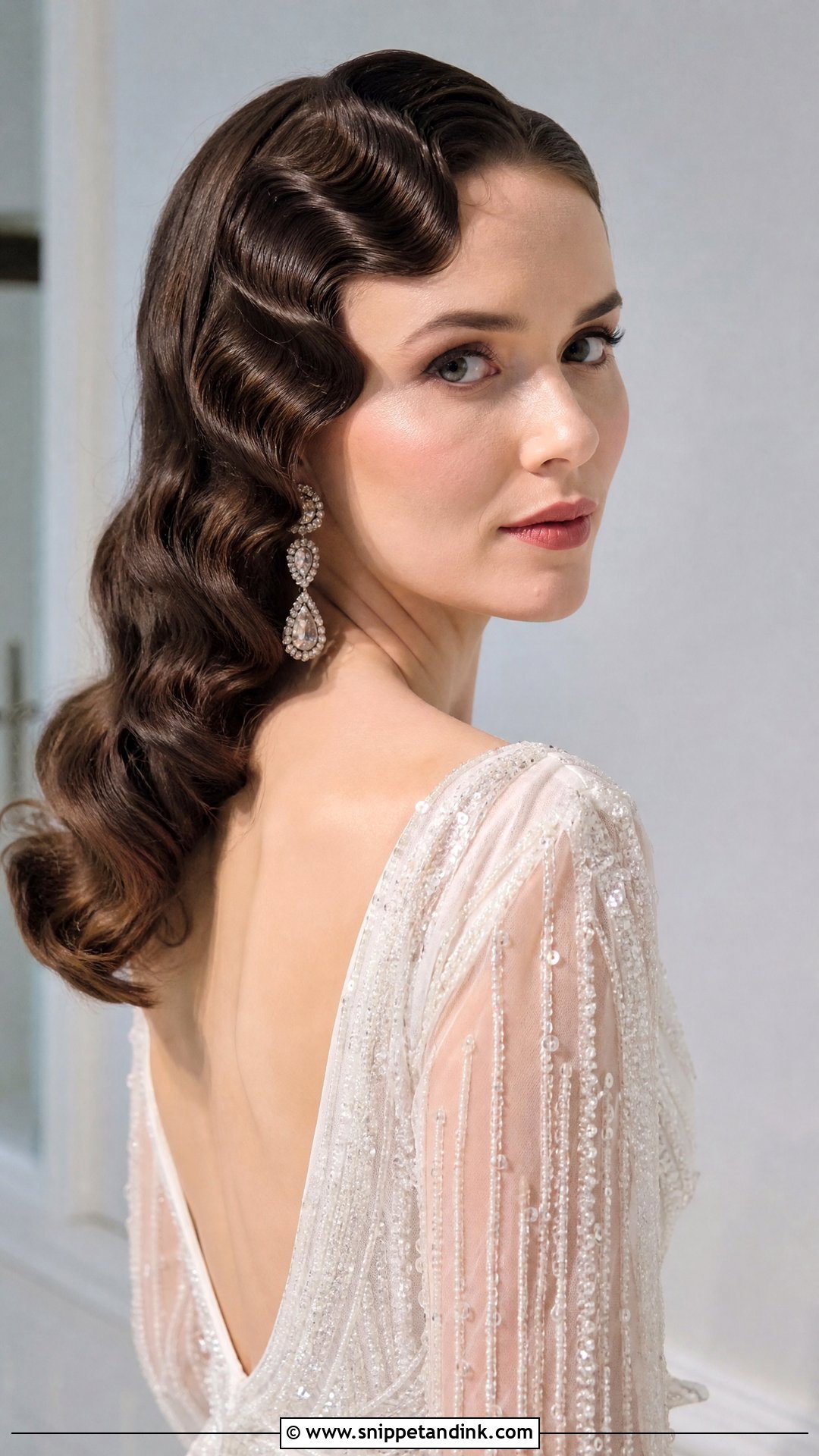
Finger waves are a specialist technique, and I’d check your stylist’s portfolio for real examples before booking this one. I comb a strong setting lotion through wet hair at the crown and press the S-shaped ridges in with fingers and a fine comb, then let them dry fully before touching. The lengths below are curled and loosened. It takes time and patience. Art deco gowns and statement earrings suit it, and a vintage-themed wedding is where it belongs.
12. Loose Waves With Braided Accents
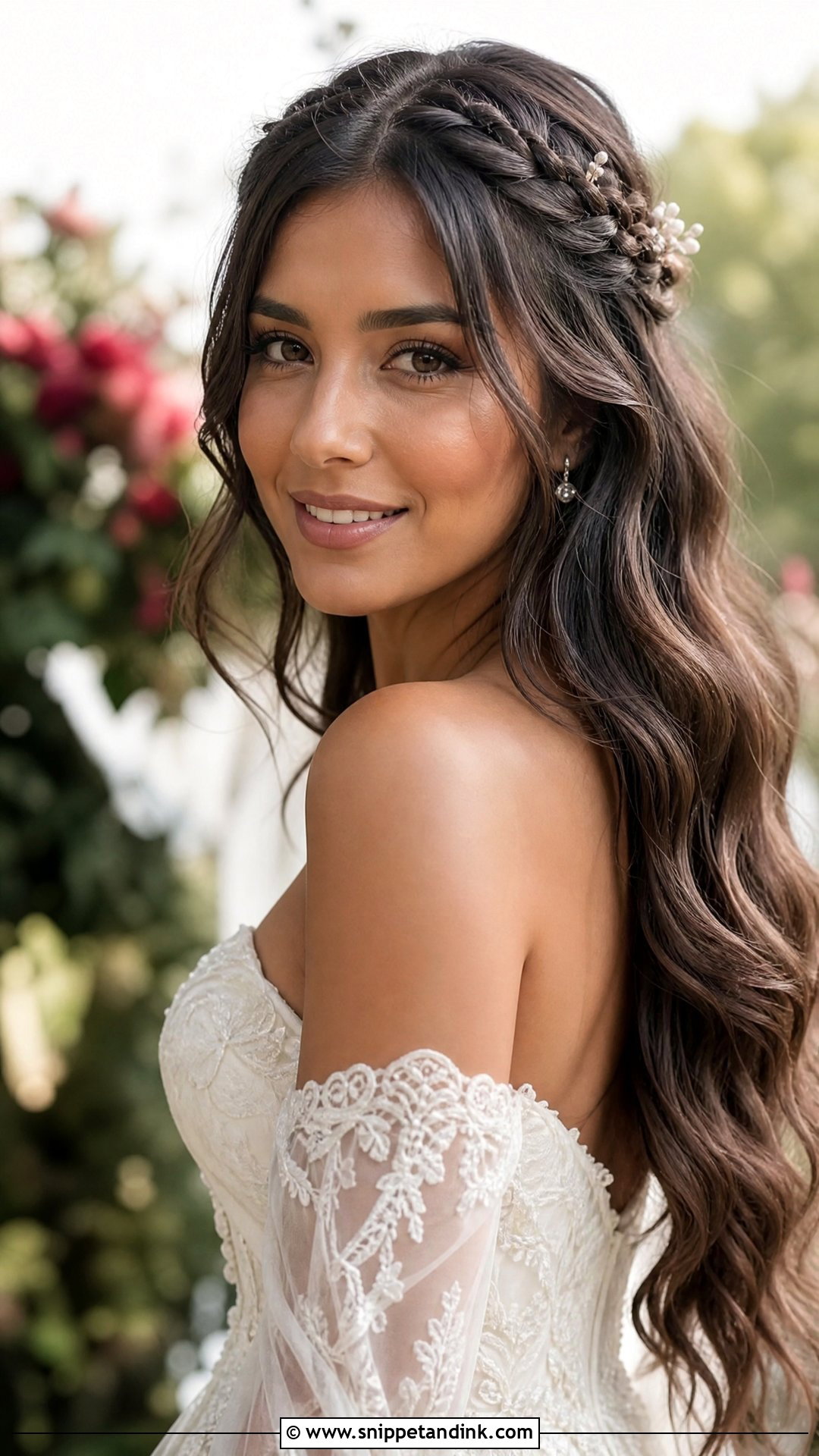
Small braids woven into loose waves add detail without the commitment of a full braided style. I braid two or three thin sections, at the crown, sides or scattered through the length, before curling the rest so the braids don’t get disturbed. Pancaking them gently makes them look soft rather than tight. It suits a boho, garden or rustic wedding. On fine hair, thin braids can disappear; I’d make them slightly chunkier for you.
13. Deep Side Part Waves for a Glam Look
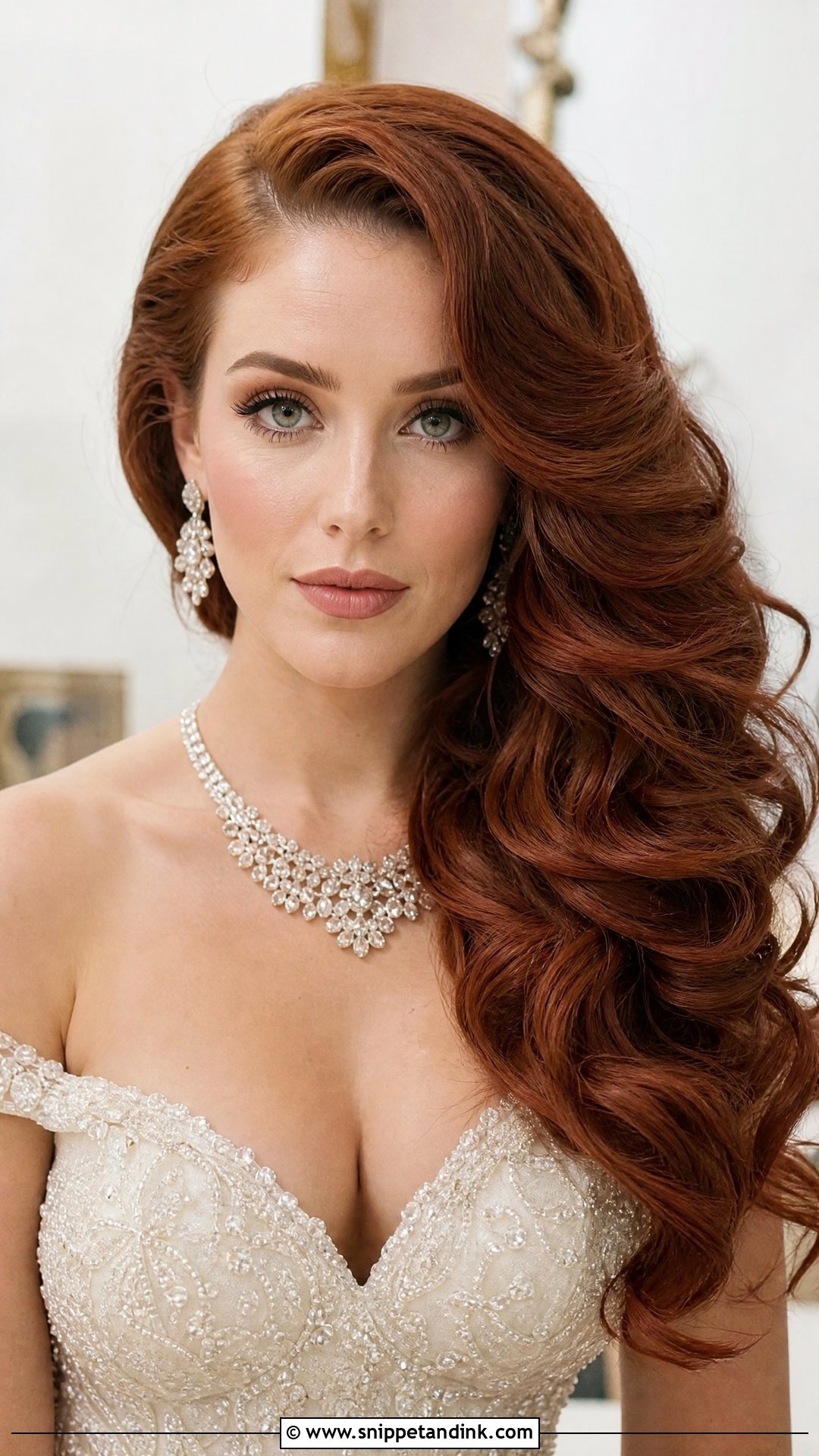
Moving the part deep to one side is the fastest way to add glamour to waves. I set the part while the hair is damp and blow-dry it in place, because trying to move a part on dry, curled hair never sits flat. The waves fall from the heavier side and frame the face. It suits a formal wedding or an evening reception with bold lips and statement jewelry. I’d steer you away if you have a strong cowlick at the front; it fights a deep part all day.
14. Soft Waves With Floral Hair Accessories
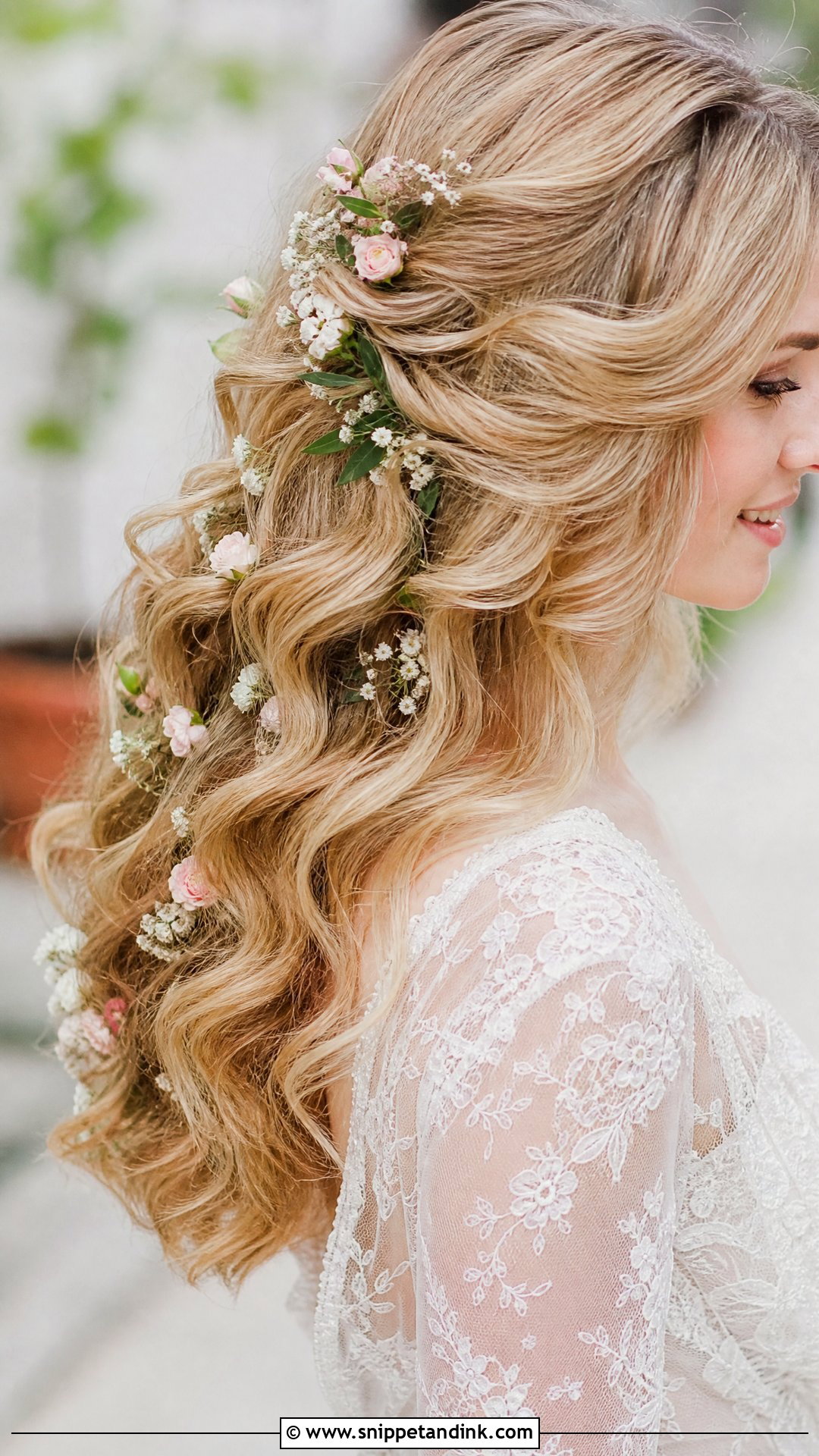
Flowers tucked into soft waves bring the garden into the hair without the weight of a full crown. I wave first, then pin small fresh or silk blooms in clusters on one side or scattered through, with a bobby pin through each stem. Fresh flowers wilt in heat, so for a summer ceremony I’d pick hardy blooms or silk. It suits spring weddings, boho brides and garden ceremonies. Coordinate with your bouquet for a matched look.
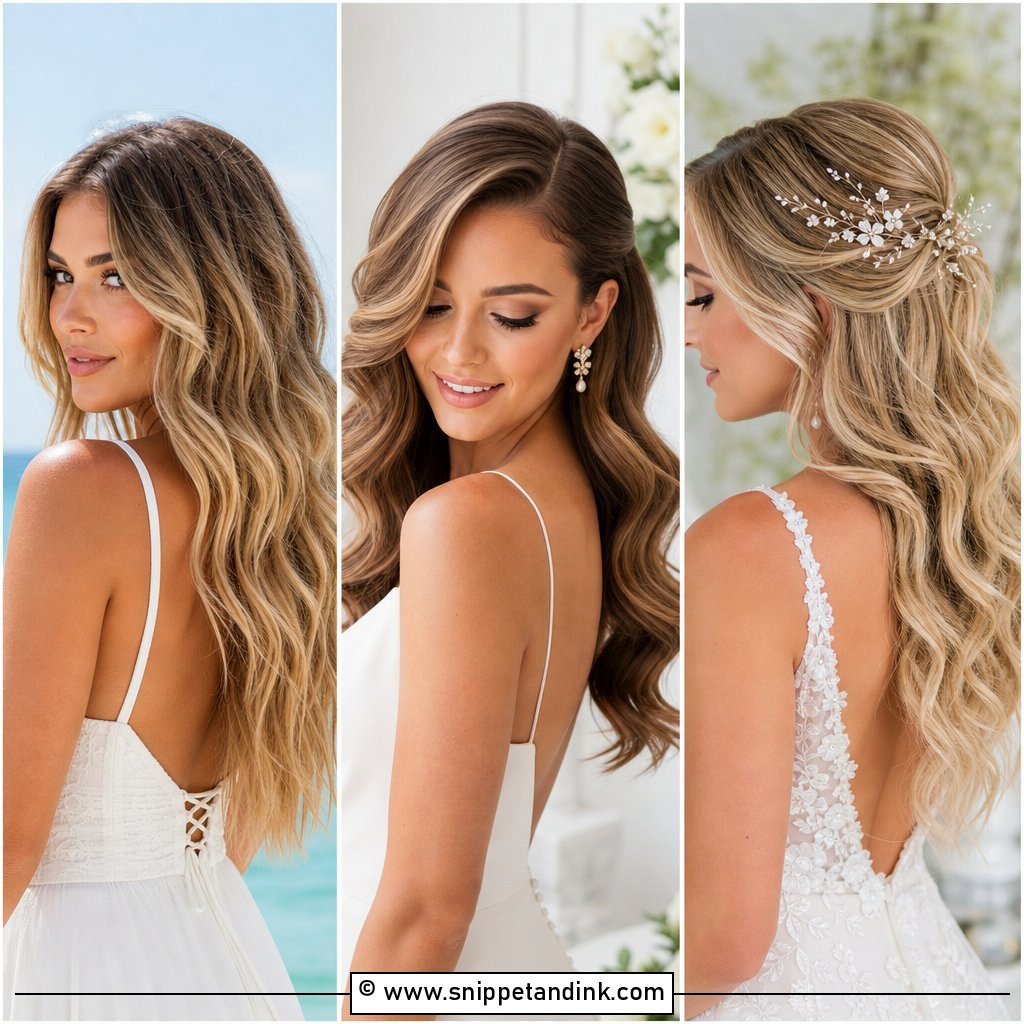
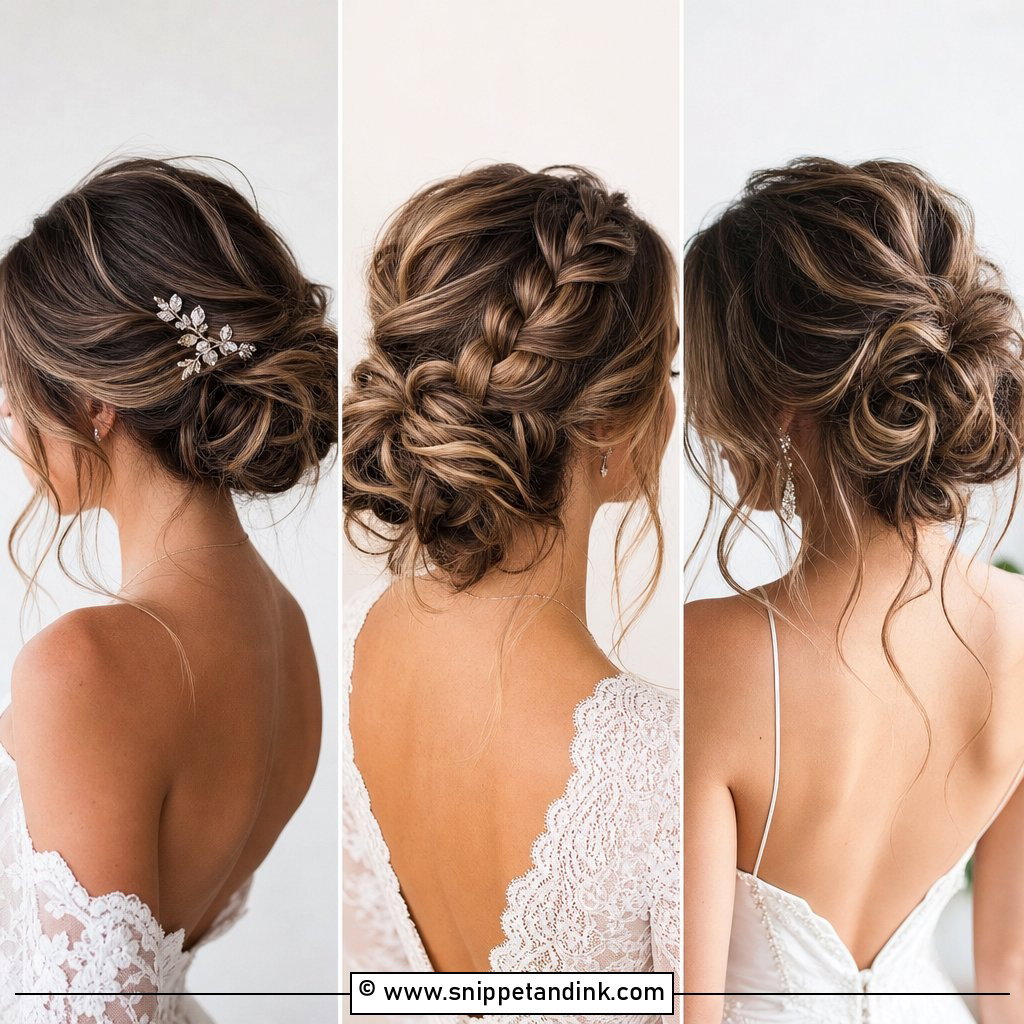
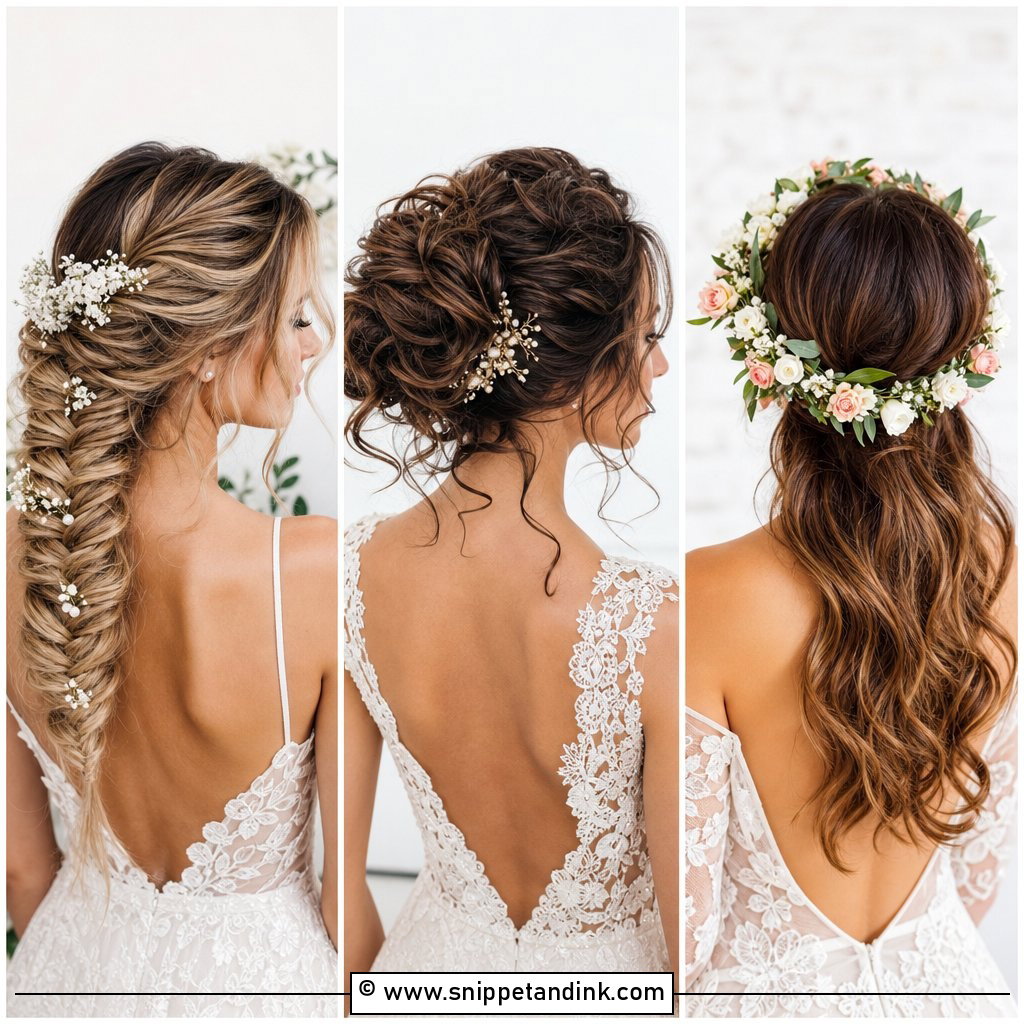
15. Hollywood Waves With a Deep Part
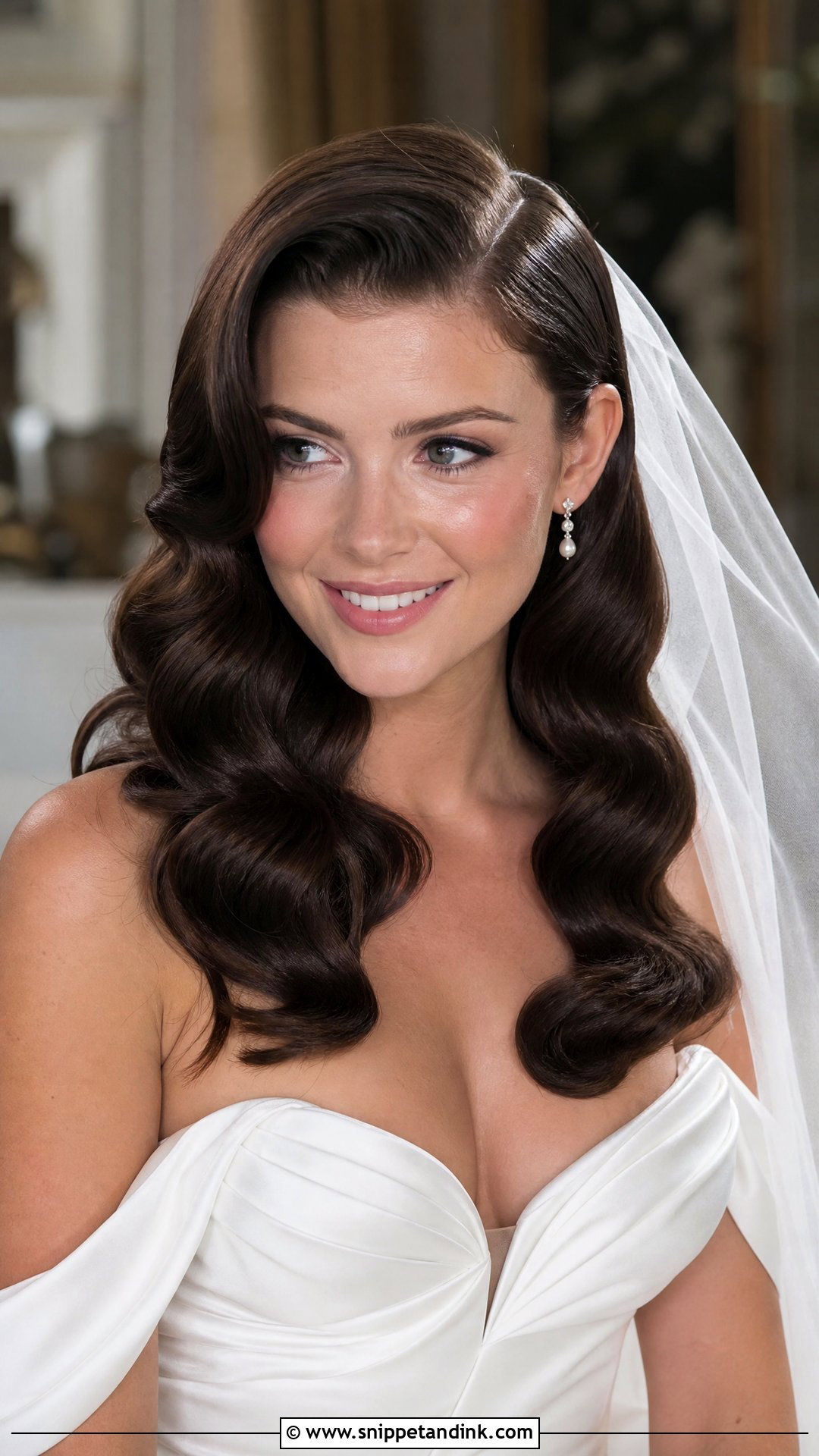
This is the full film-star version: structured, glossy S-waves pressed into smooth ridges from a dramatic side part. To get the defined ridges, I clip each wave with flat duckbill clips while it cools, and only remove them right before you get dressed. It suits black-tie and ballroom weddings. Shine spray keeps them luminous all night. Very coarse or very fine hair both find this hard; coarse hair puffs, fine hair drops, so a trial is essential.
16. Tousled Waves With a Low Bun Accent
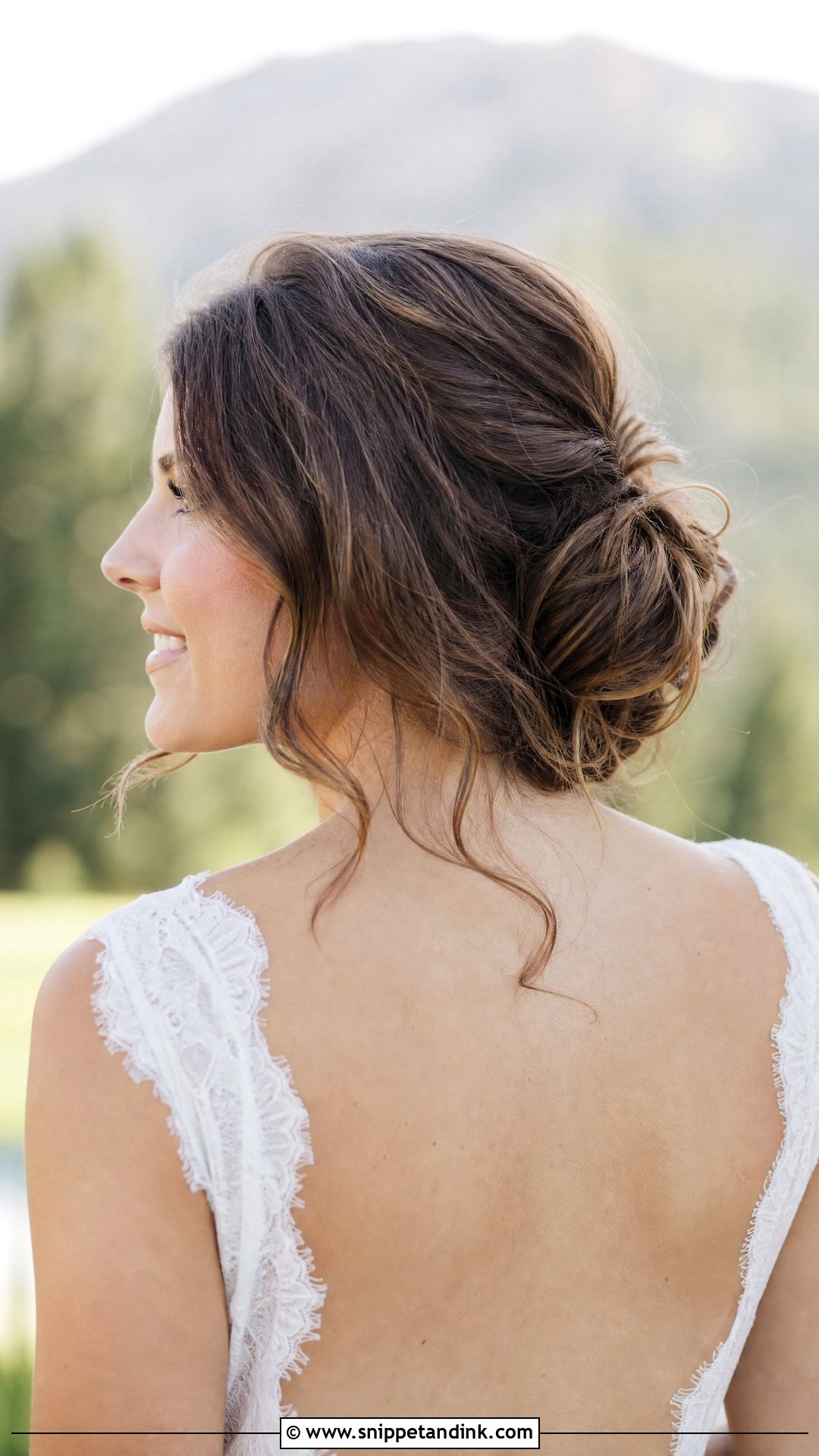
A small, low bun with waves flowing below combines an updo and hair down. I wave everything first, then twist part of the hair into a relaxed bun at the nape, with the rest falling free. The bun anchors the look and can carry a veil comb or a small accessory. It suits boho, rustic and outdoor weddings and carries through from ceremony to reception. If you know you’ll want everything off your neck later, the bun can simply absorb the loose waves.
17. Long Bridal Waves With a Tiara
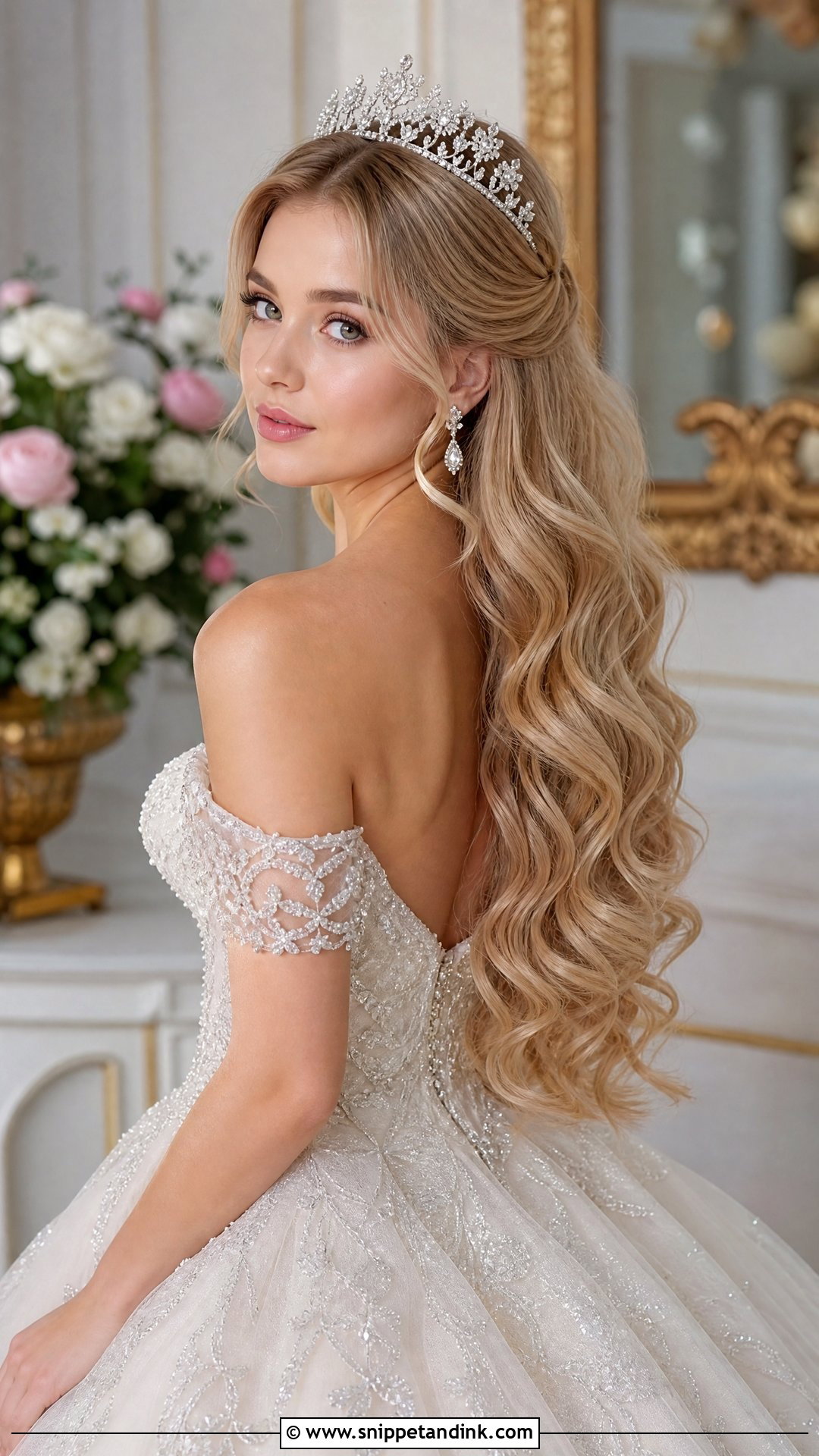
A tiara over waves only stays level if it’s pinned into something firm. I set a tiny backcombed section at the crown, then slide the tiara’s comb in and cross bobby pins over each side. Without that, waves push the tiara up and it slides back. Bridal waves with a tiara work with a center or side part and suit formal and fairytale weddings. Keep the waves a touch fuller at the crown so the height of the tiara looks balanced.
18. Waterfall Waves for Long Hair
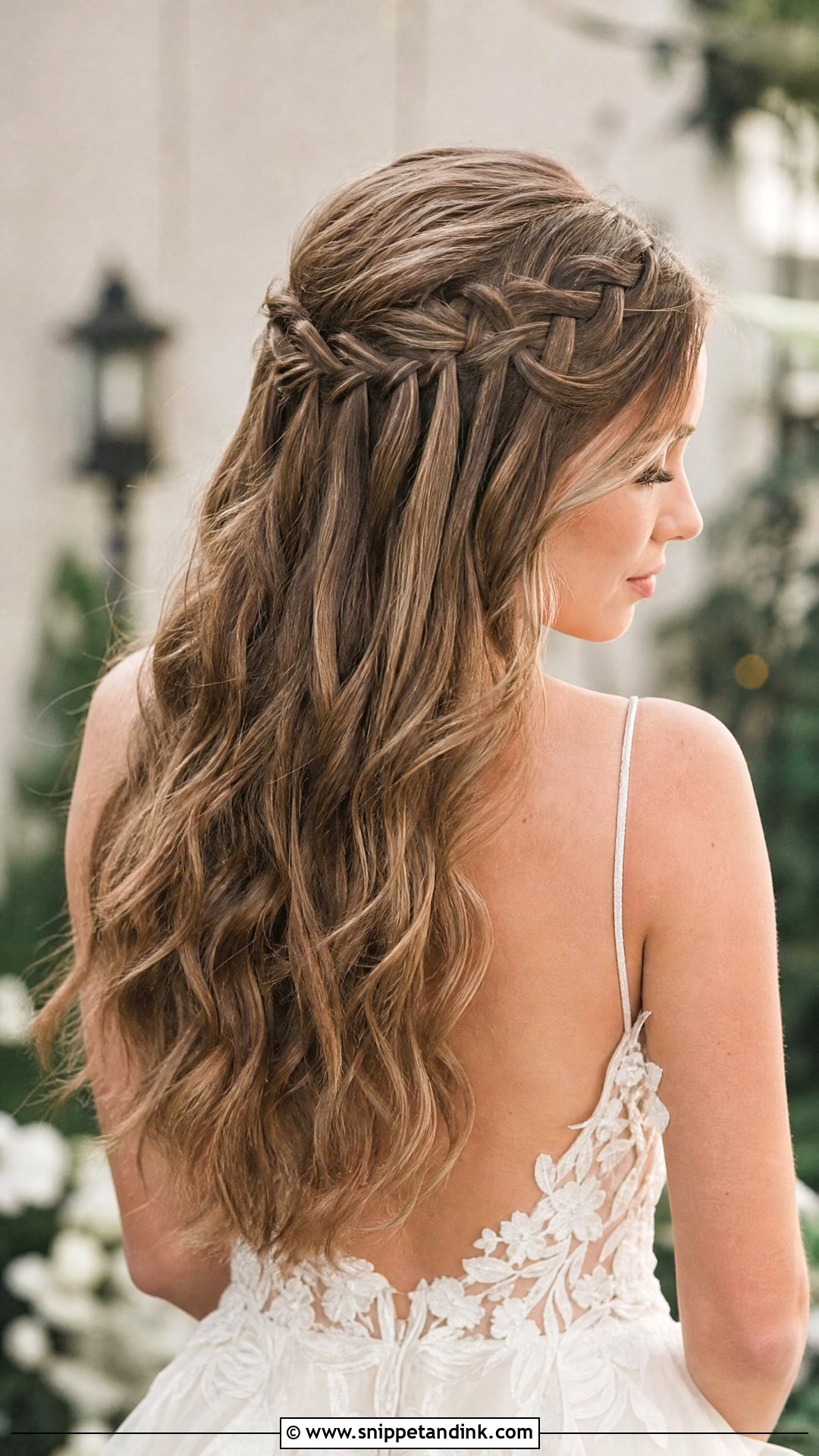
Continuous, rippling waves from crown to ends are what gives this cascade its name. I curl in one direction and brush through, then often add a waterfall braid across the back for detail. The braid drops strands through as it goes, so the waves flow through it. A light hold spray keeps the cascade soft and natural. It suits boho, garden and outdoor weddings and shows off length and shine like nothing else.
19. Glamorous Waves With a Side Tuck
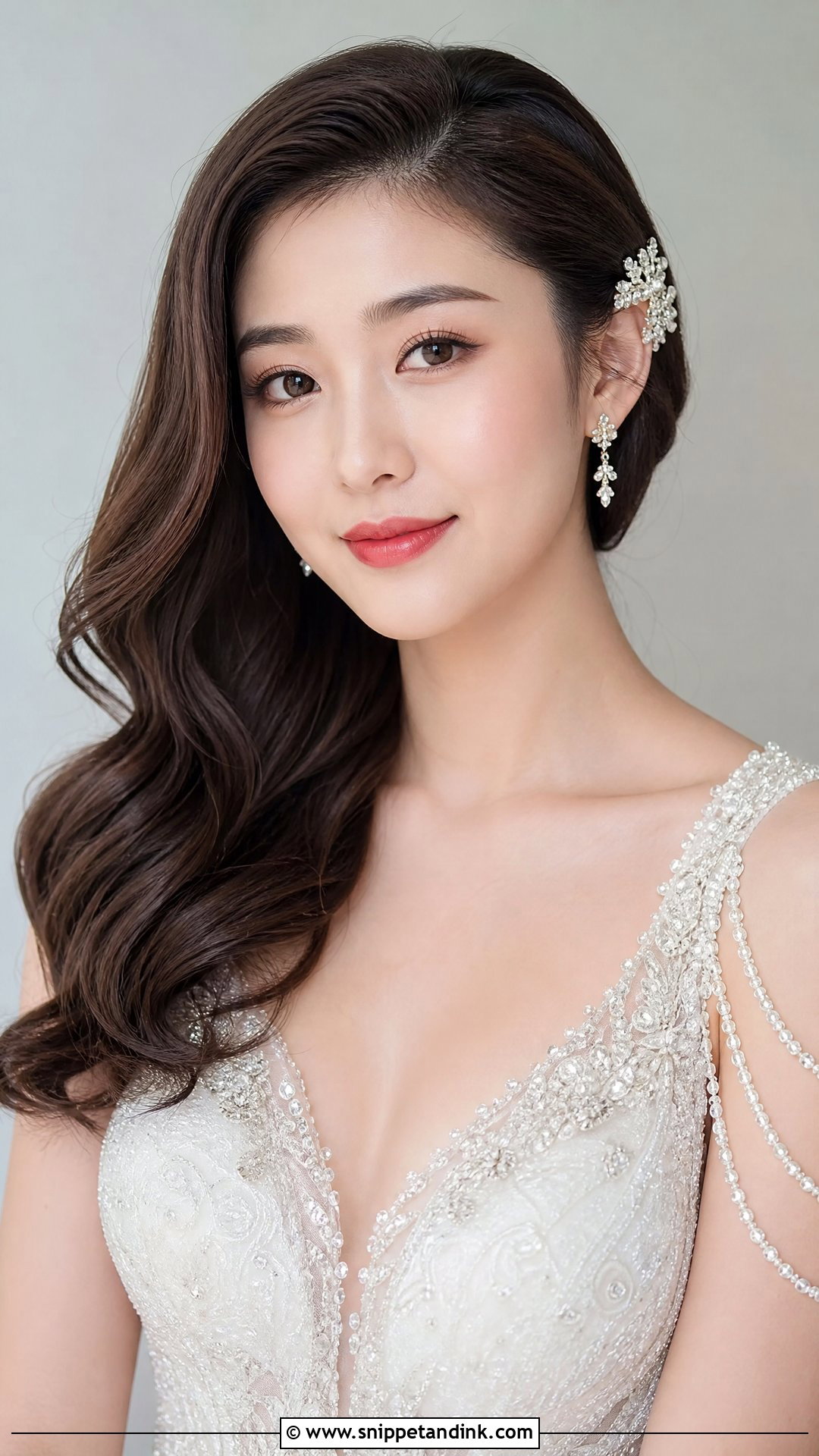
Tucking one side behind the ear and sending the waves over the opposite shoulder gives a polished, asymmetric shape. I pin the tucked section with two crossed bobby pins under a wave, then cover the cross with a decorative comb or pin. The jawline and one shoulder stay open. It suits formal weddings and elegant evening receptions. Check at the trial that the tucked side doesn’t press your ear forward; a slightly looser tuck usually fixes it.
20. Romantic Loose Waves for All Hair Types
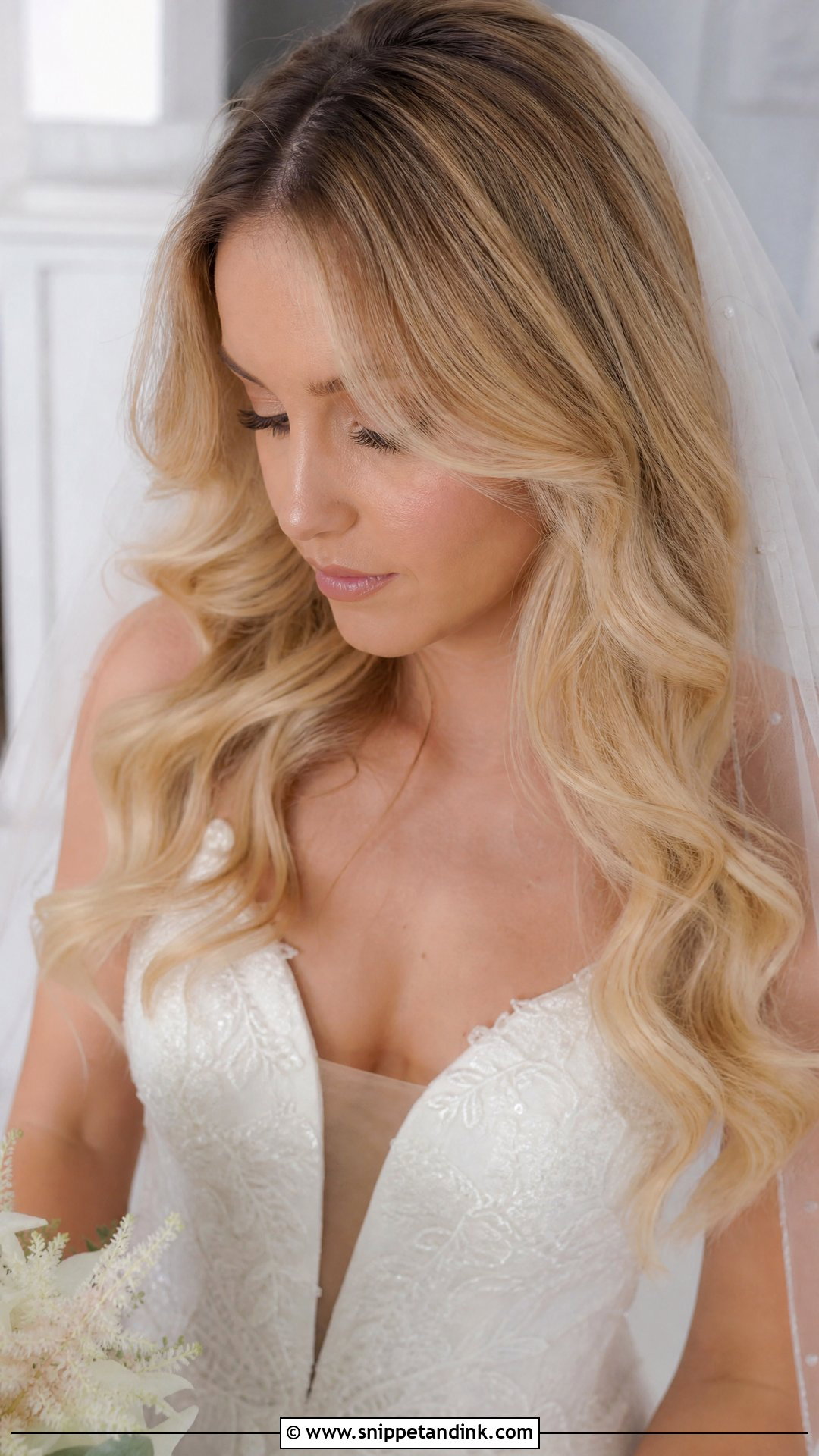
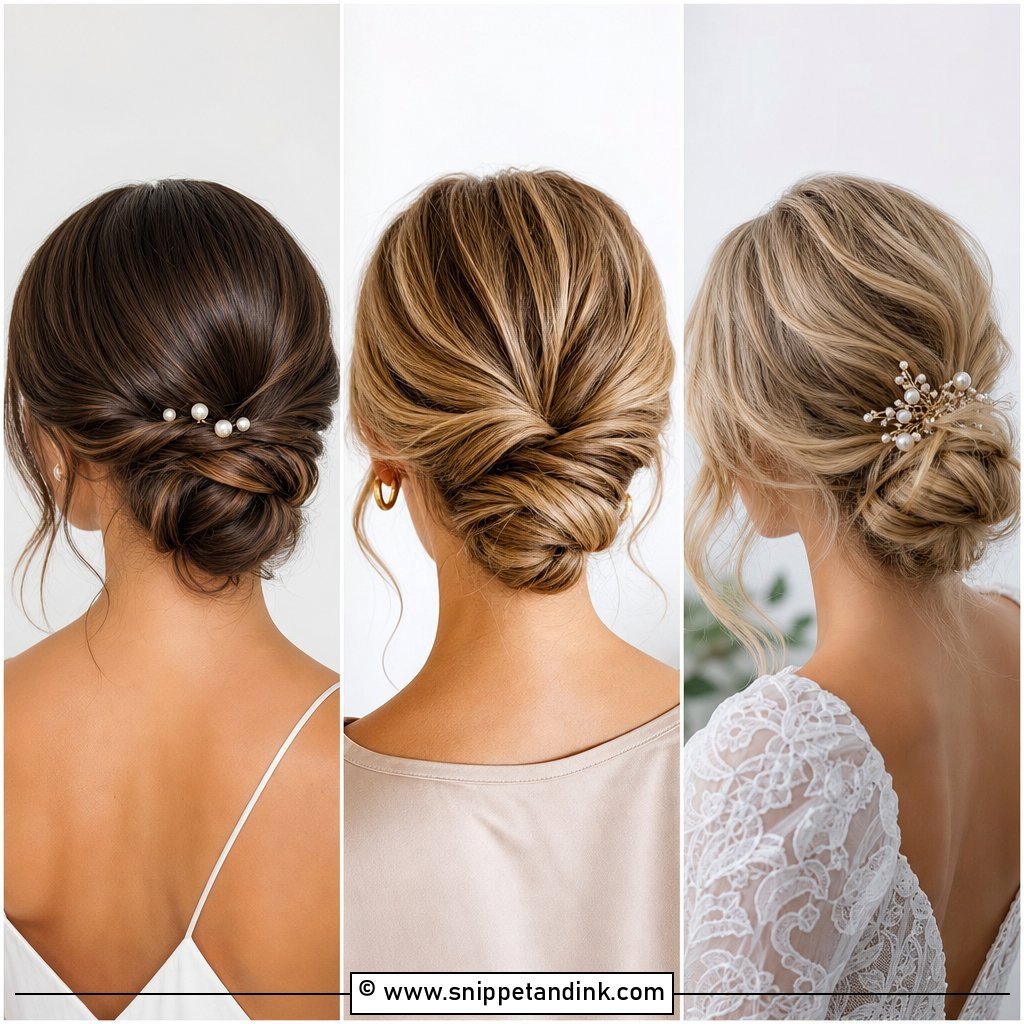
If I had to pick one wave for a bride I’d never met, it would be this. Loose, gentle bends from a wide barrel with a light hairspray suit fine, thick, straight and naturally wavy hair, provided the prep matches your texture. Fine hair needs mousse at the root and a slightly smaller barrel; thick hair needs smaller sections so heat gets through; wavy hair often just needs its own pattern refined. It works with veils, florals or simple accessories and every face shape.
When Waves Flatten Before the First Dance
Even well-set waves soften over a day, especially on fine or silky hair, in humid weather or under a heavy veil. That’s normal, and some brides prefer the softer look by evening. If you want them refreshed, a few simple things help.
- Twist a few front sections around your finger and pin them for ten minutes during dinner. They’ll come out with fresh shape.
- Mist dry shampoo or texture spray at the roots and lift with your fingers for volume.
- Smooth flyaways with a tiny amount of serum on your palms, never more.
- If your stylist stays for the reception, a few passes of a curling iron on the front pieces does most of the work.
What I’d avoid is brushing waves out mid-day to fix them. That separates the wave into frizz, especially in humid air. If they truly fall, sweeping them into a low bun or side-swept style is better than trying to rebuild them.
Every Wave Here Starts With How Your Hair Holds Heat
The right wave depends on your hair, your dress and how polished you want to look. Hollywood waves need patience and suit formal gowns; boho and beachy textures suit a relaxed venue; soft loose waves suit nearly anyone. A trial with your stylist tells you how your hair holds that wave over several hours. Add a veil, tiara or flowers once the base is right, and you’ll have a style you won’t need to think about all day.
You'll Like These Ideas:




Leave a Reply