
A dress for an outdoor wedding has to get along with the place: the light, the ground, the weather and the wall of green behind every photo. Botanical lace, airy tulle, leafy embroidery, floral appliqués and sage tones all pick up on the setting, but the practical side matters just as much. Light fabric copes with heat, fuller skirts hold their own in open landscapes, and textured details read well against foliage. When I fit a bride for a garden or forest ceremony, my first question isn’t about style; it’s what she’ll be walking on. The looks below run from boho to modern to very plain, each with notes on shoes, veil, bouquet and styling.
What Grass, Gravel, Sand and Forest Floor Do to a Hem
I ask every outdoor bride to describe the ground between the car and the altar, and then the ground where the photos will happen. The answer changes the hem length, the train and the shoes more than any style decision does.
Lawn
Soft grass swallows thin heels and leaves green marks on pale hems, especially after a dewy morning. Wear block heels or flats, and have the hem set for those exact shoes so it skims the top of the grass instead of dragging through it.
Gravel and stone paths
Gravel chews through lace and beading at the hem. A sturdier hem fabric or a horsehair braid edge holds up better, and a bustle keeps any train off the stones once the ceremony is over.
Sand
Trains collect sand and drag it along, and wet sand leaves grey marks. If you’ll be barefoot, ask for the hem a little higher than usual, because you lose the height of your shoes.
Forest floor
Expect roots, needles and mud. A shorter train, closed shoes and a fabric that brushes clean, such as crepe or satin, cope much better than open lace, which picks up every twig.
1. Floral Lace Nature Wedding Dress
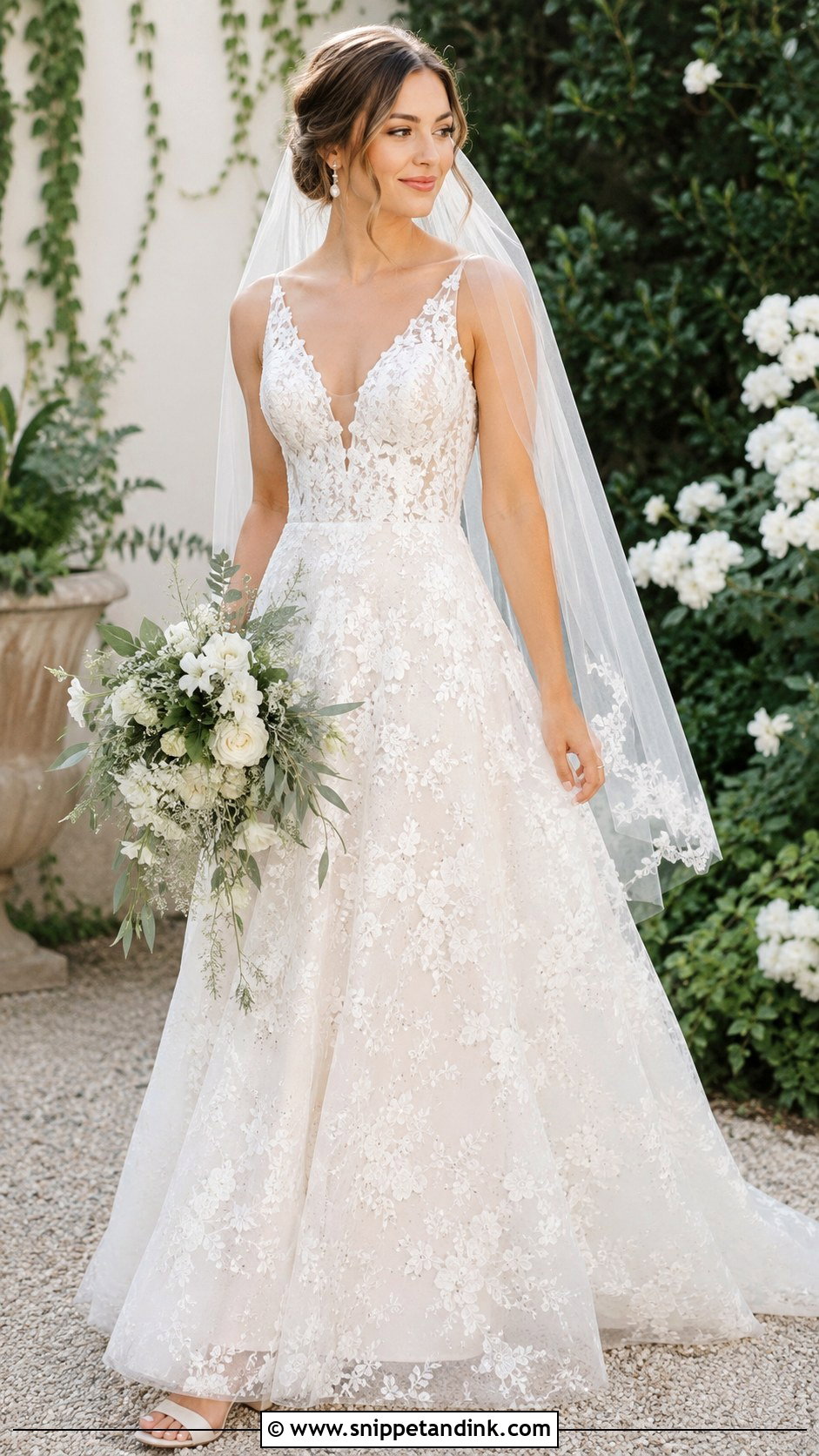
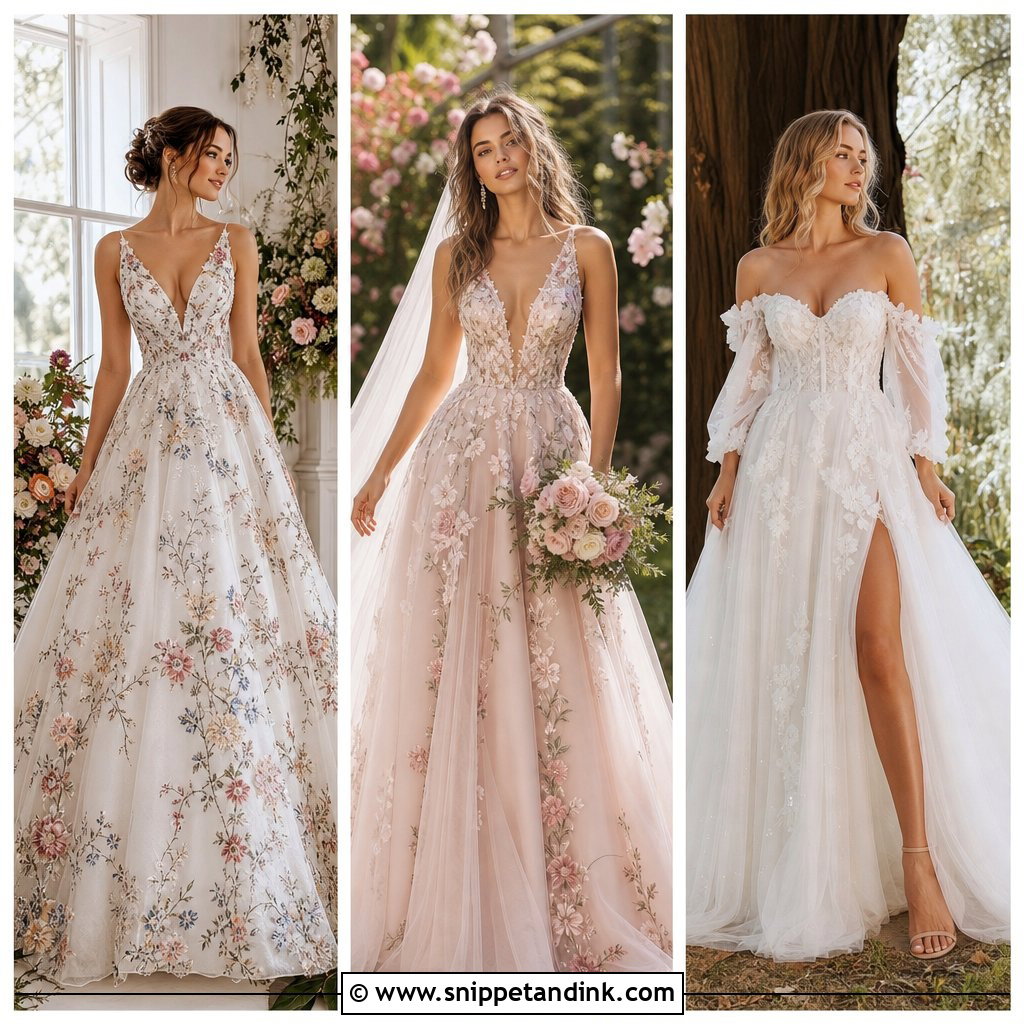
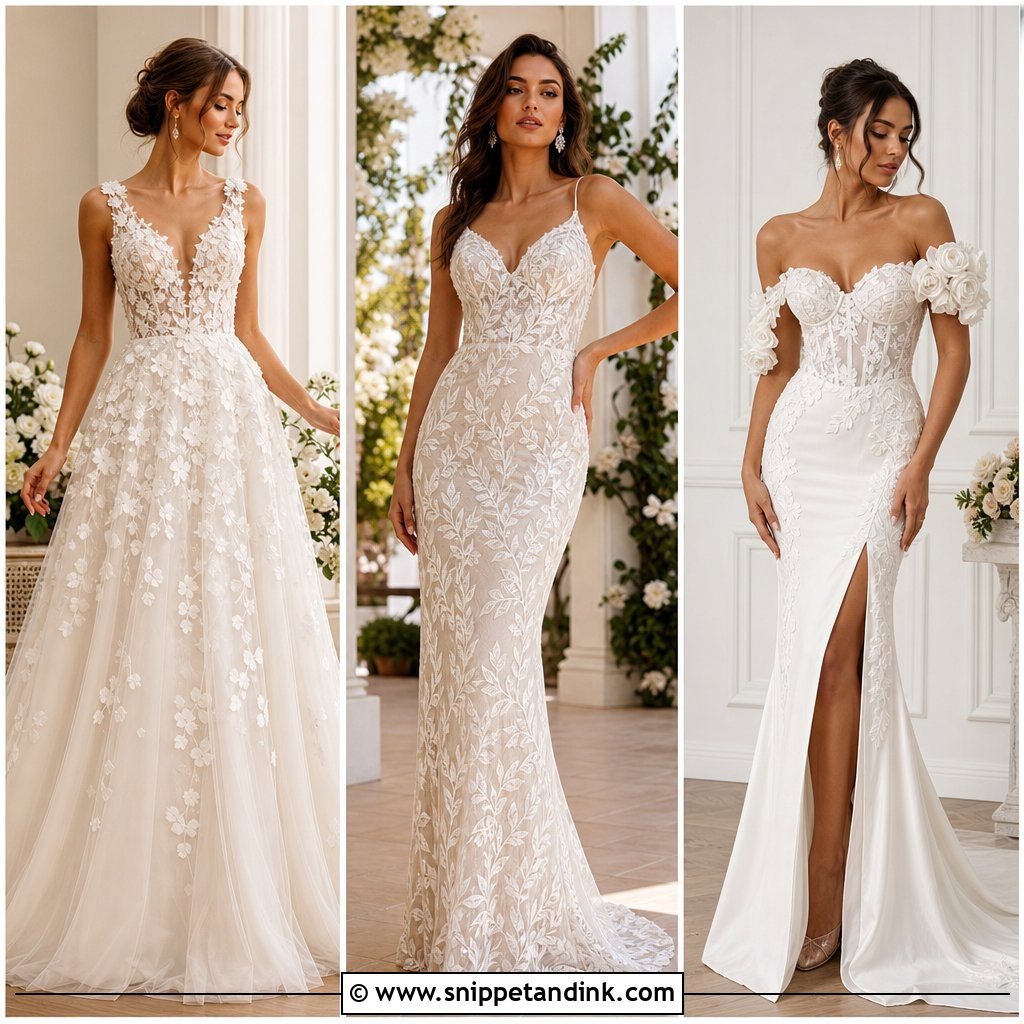
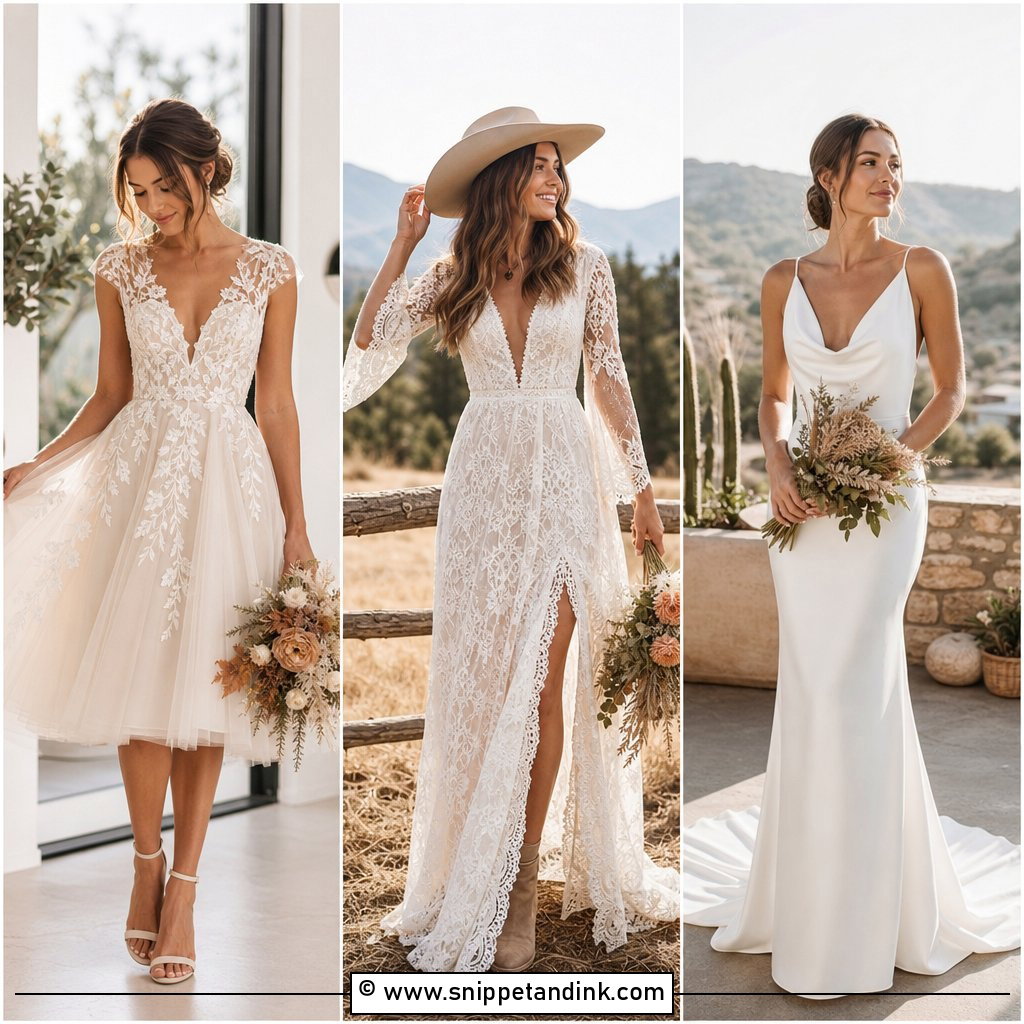
Floral lace is the easiest way to echo a garden without looking themed. An A-line or fit-and-flare gown with soft floral lace over an ivory, cream or champagne lining keeps it bridal, and the lining shade matters more than most brides expect. Champagne under lace looks warmer next to greenery, while a bright white lining can turn faintly blue in shade. Low block heels won’t sink into lawn the way stilettos do. Pearl drops, a sheer veil with a plain edge, a loose bouquet of white roses and small wildflowers, and loose waves or a relaxed low bun keep the lace as the main detail.
2. Botanical Embroidered Nature Wedding Dress
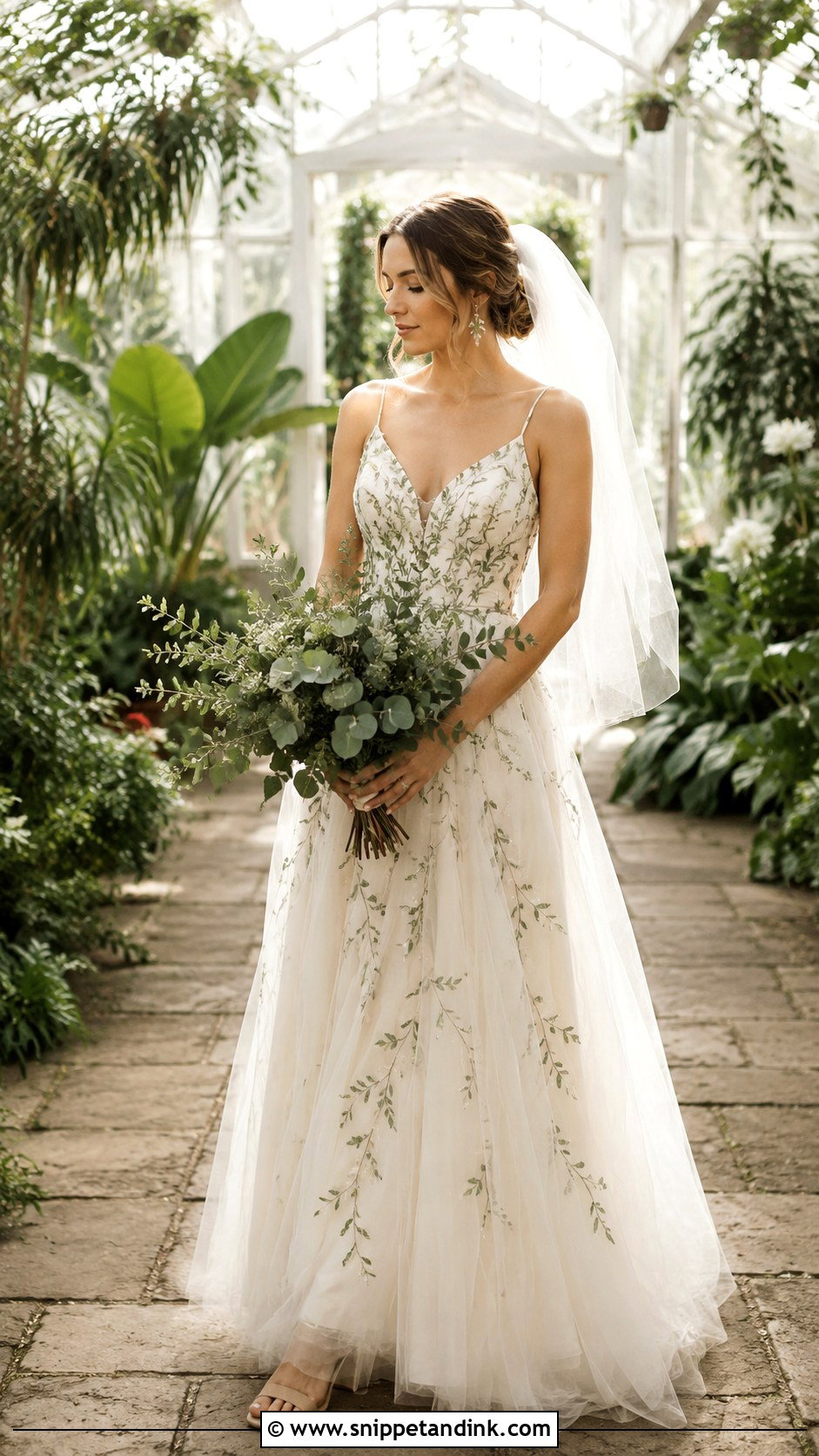
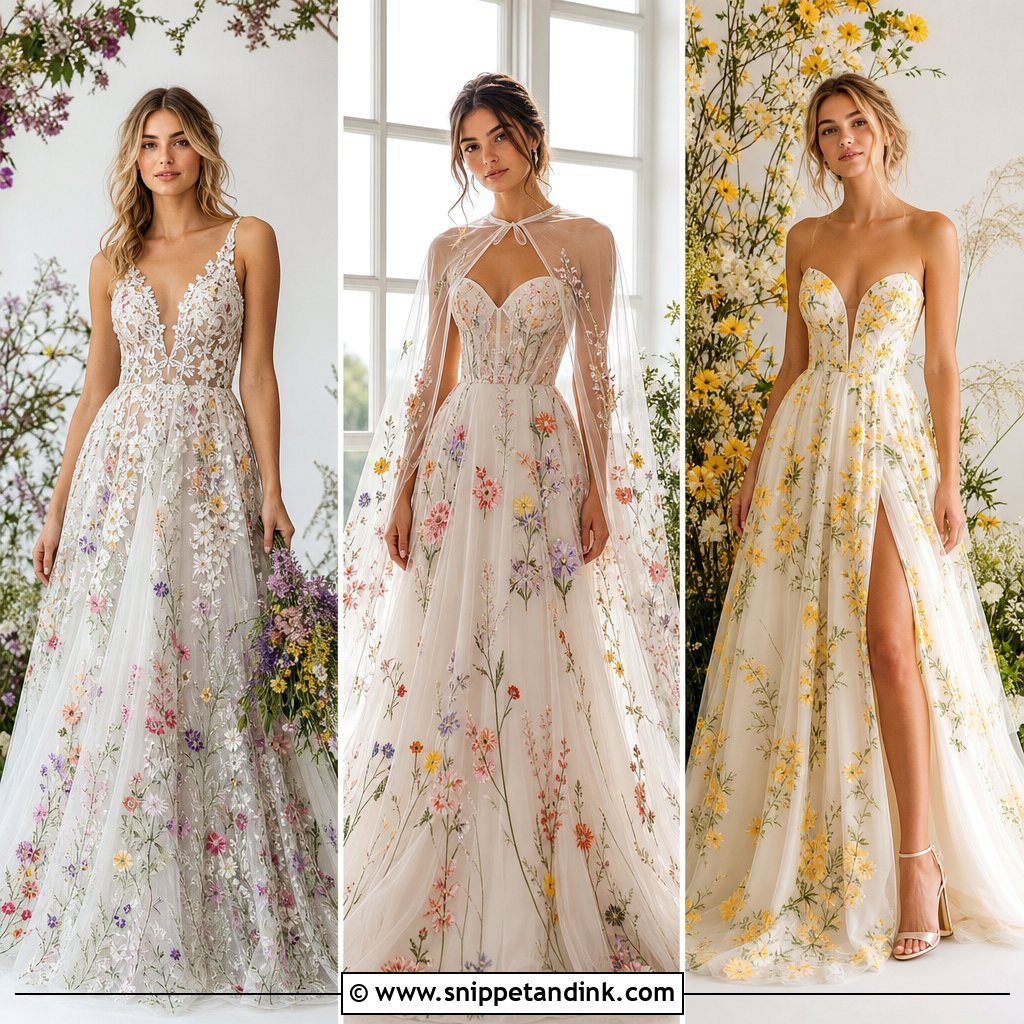
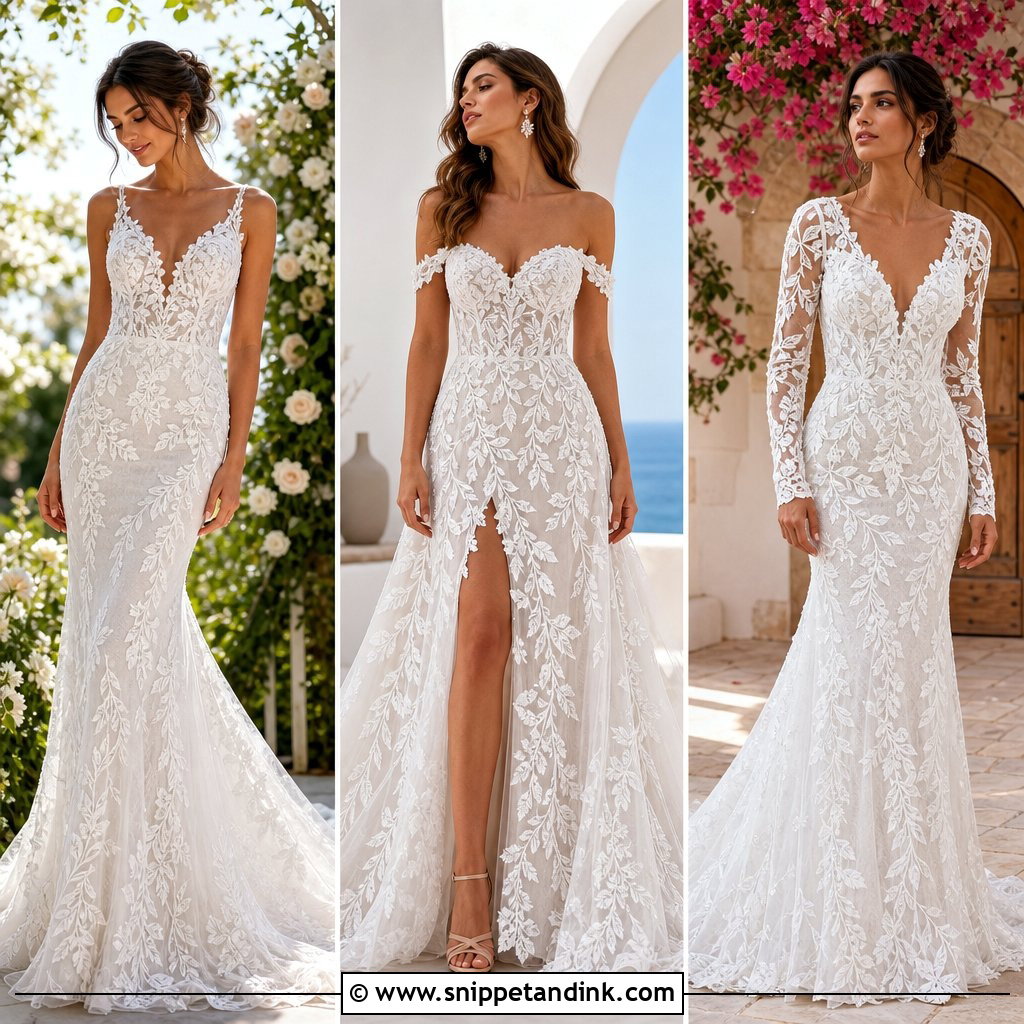
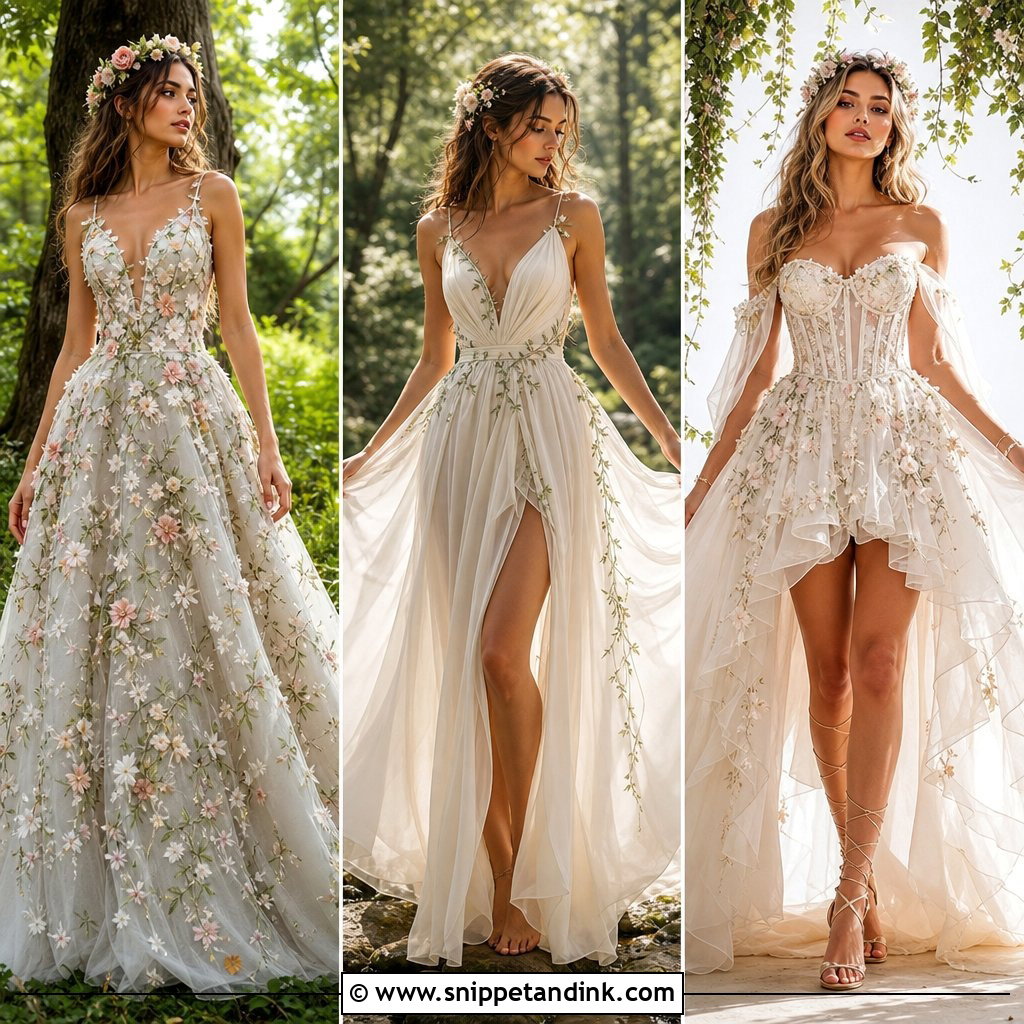
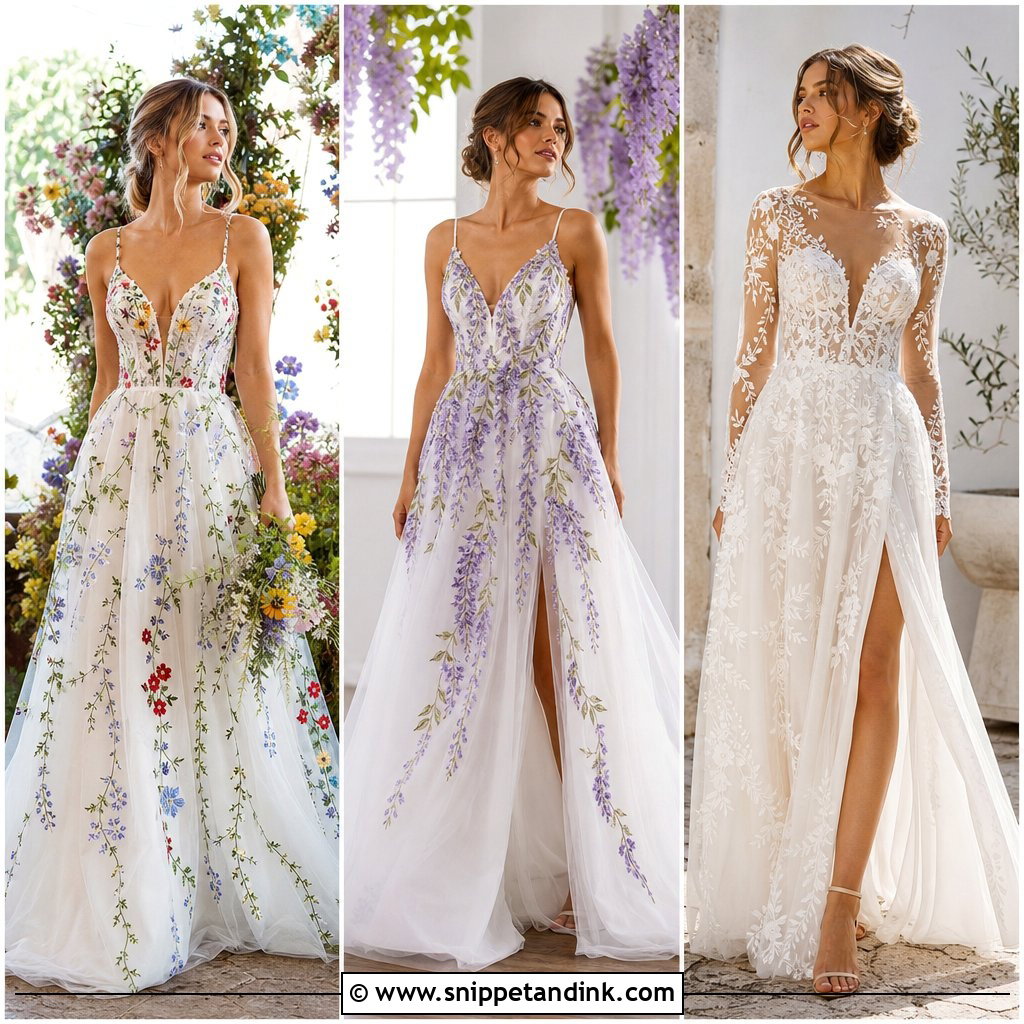
A botanical embroidered nature wedding dress swaps classic lace for leaves, vines or wildflowers, ideally trailing from the bodice down the skirt as if they grew there. I look closely at how the embroidery is backed. Dense thread on light tulle can pucker and drag the skirt, so the stitching should lie flat when you hold the fabric up to the window. Forest, garden and greenhouse venues suit it best. Vine earrings, a soft tulle veil, satin or suede block heels in ivory or nude, and eucalyptus, ferns and small white blooms in the bouquet echo the embroidery.
3. Sage Green Nature Wedding Dress
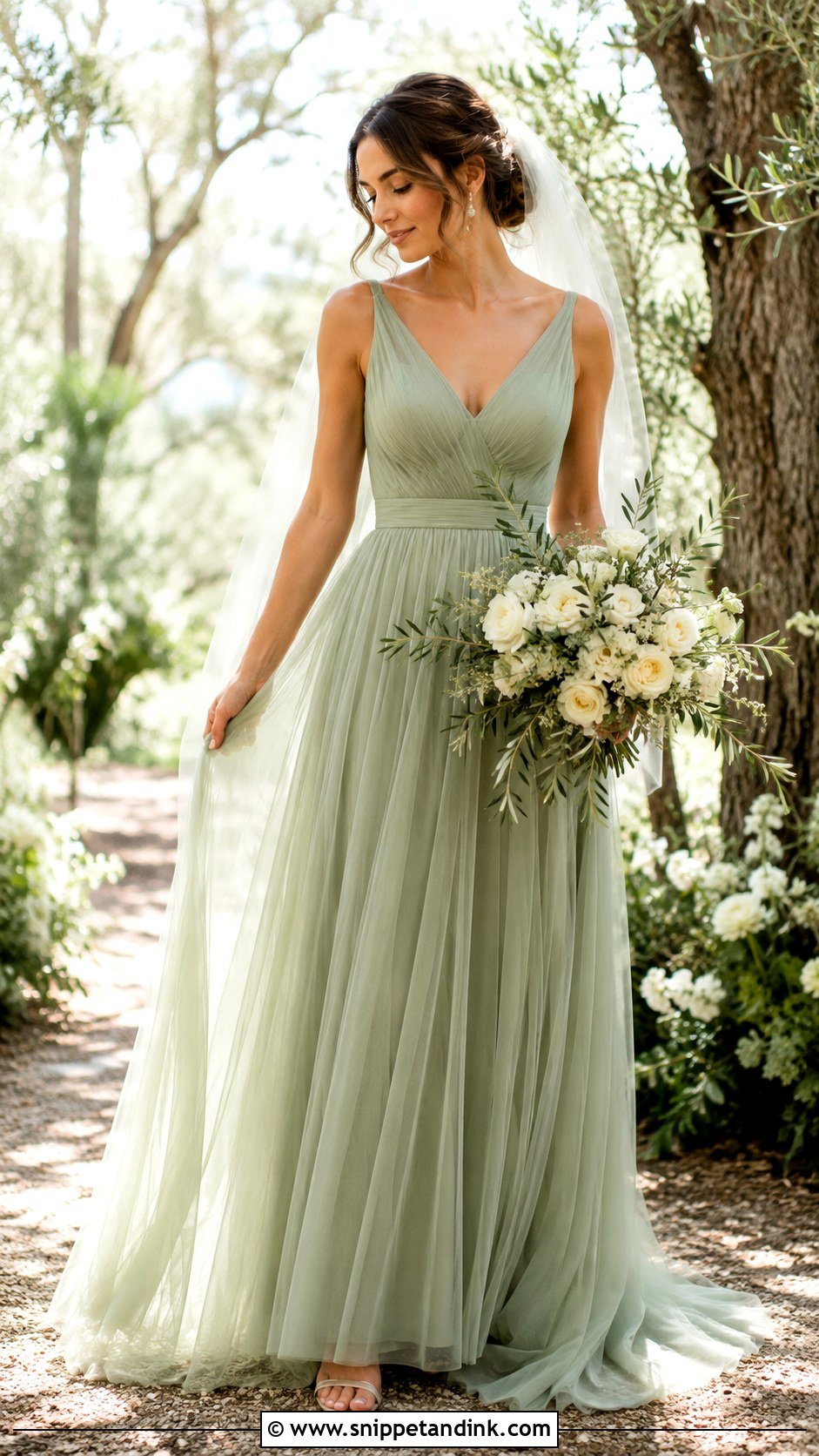
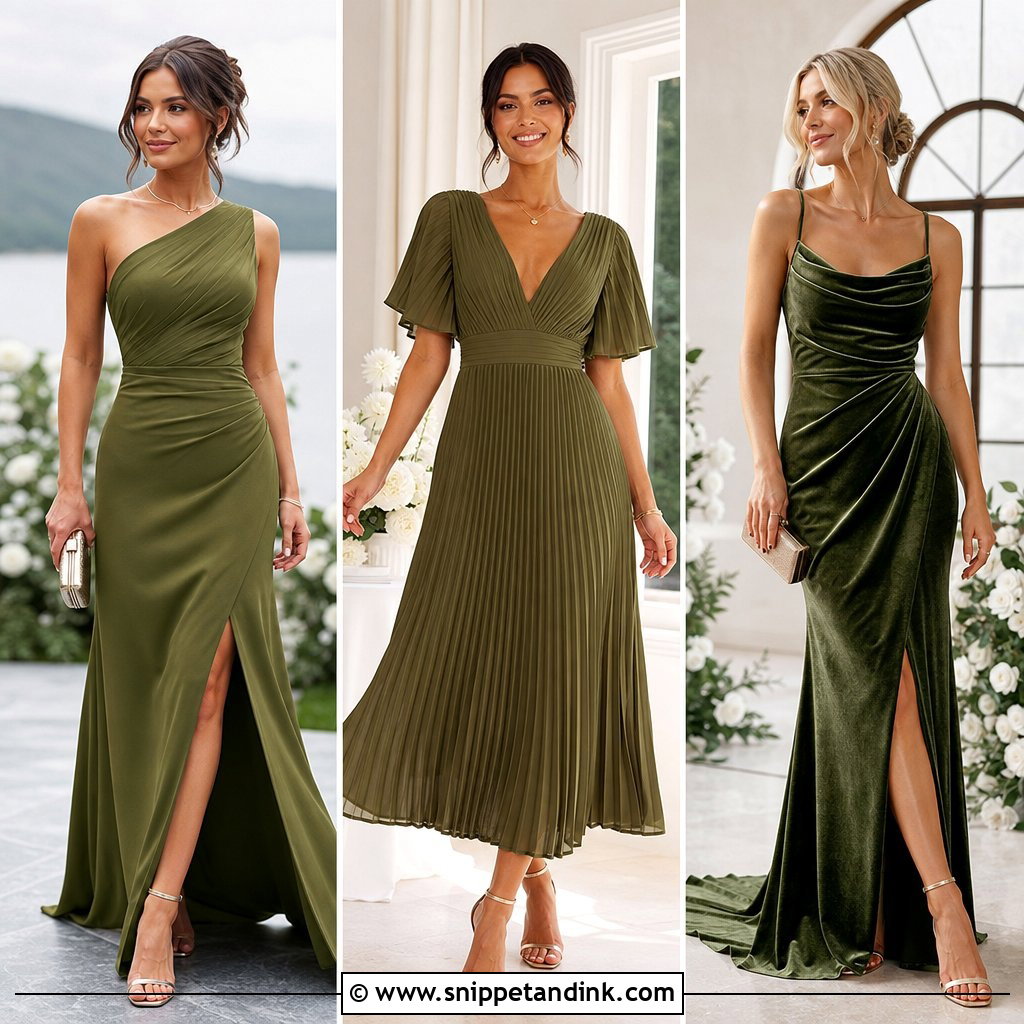
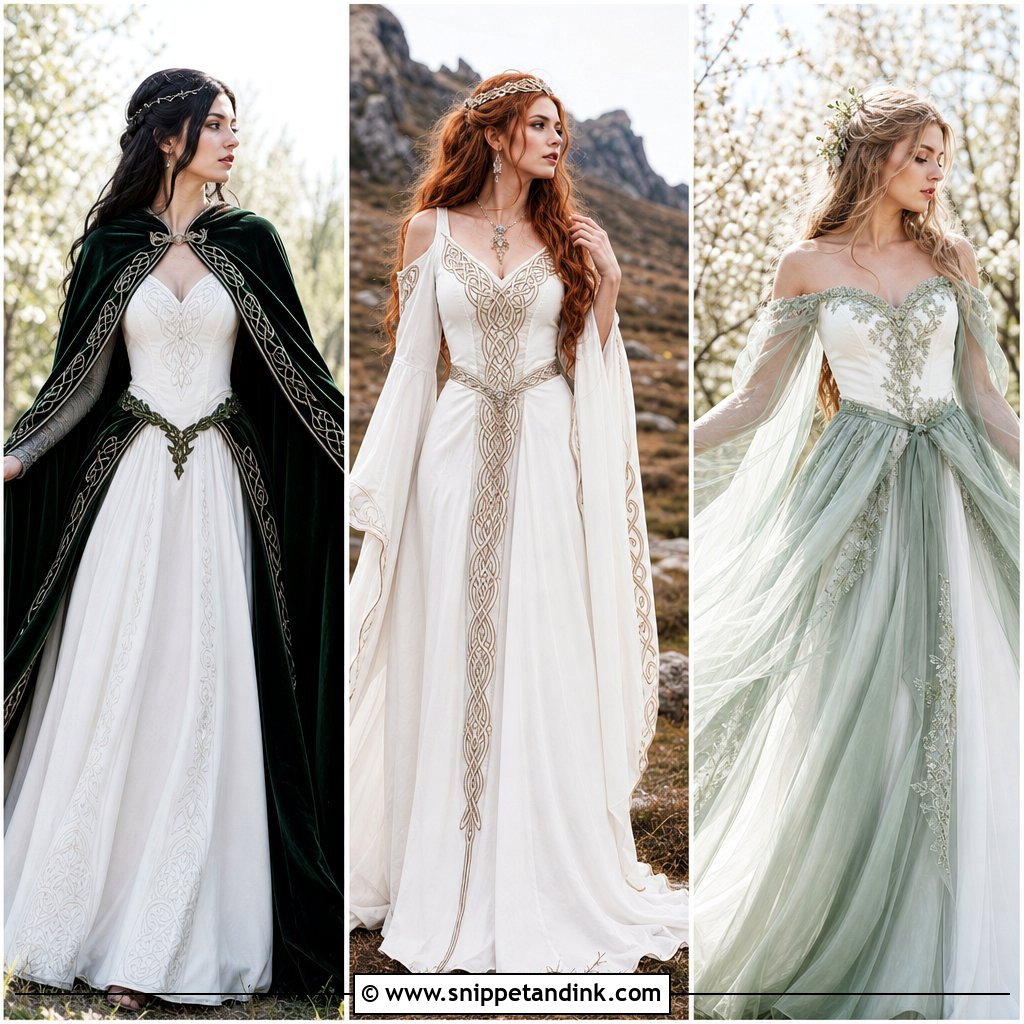
Sage is the gentlest way into a coloured wedding dress, and it reads calm in chiffon, organza or layered tulle. One caution from fittings: sage sits close to the colour of leaves, so in a deeply green woodland you can fade into the background in wide shots. A paler, greyer sage, or an ivory veil over it, keeps you separate from the trees. A flowing A-line with a fitted bodice, ivory sandals, small pearl earrings and a bouquet of cream flowers and olive branches suit spring and early autumn ceremonies.
4. Wildflower Nature Wedding Dress
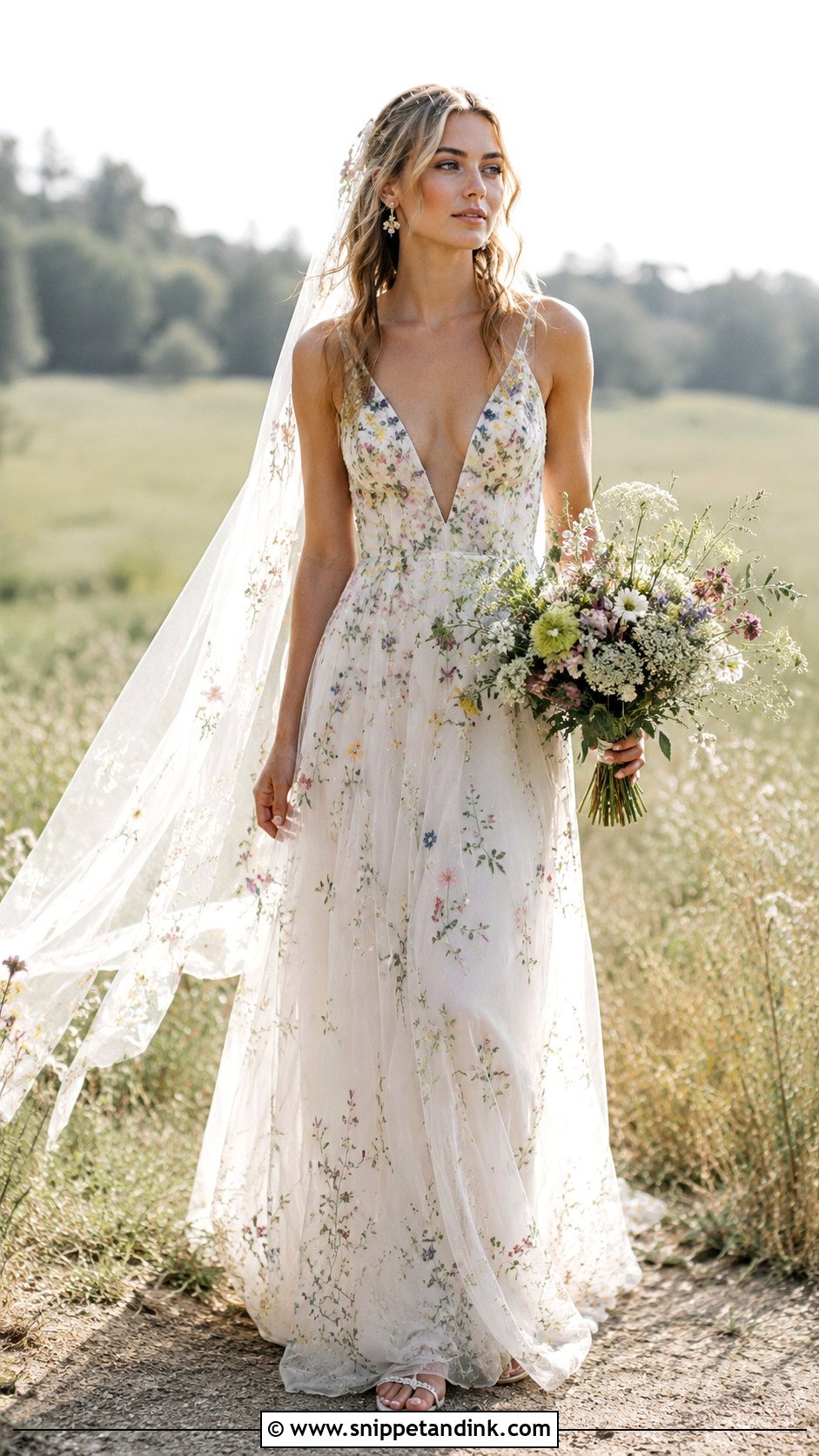
Wildflower gowns are about cheerfulness, so the silhouette should stay relaxed: soft A-line, empire waist or an easy sheath. Look for colorful floral embroidery, tiny scattered flowers or painted-looking blooms on tulle. Tulle can melt under a hot iron, so I only ever steam these, and printed colour stays brighter that way too. Dainty floral earrings, flat sandals, a veil with small flower appliqués and a loose bouquet of daisies, lavender or chamomile finish it for a meadow or backyard ceremony.
5. Forest Nature Wedding Dress
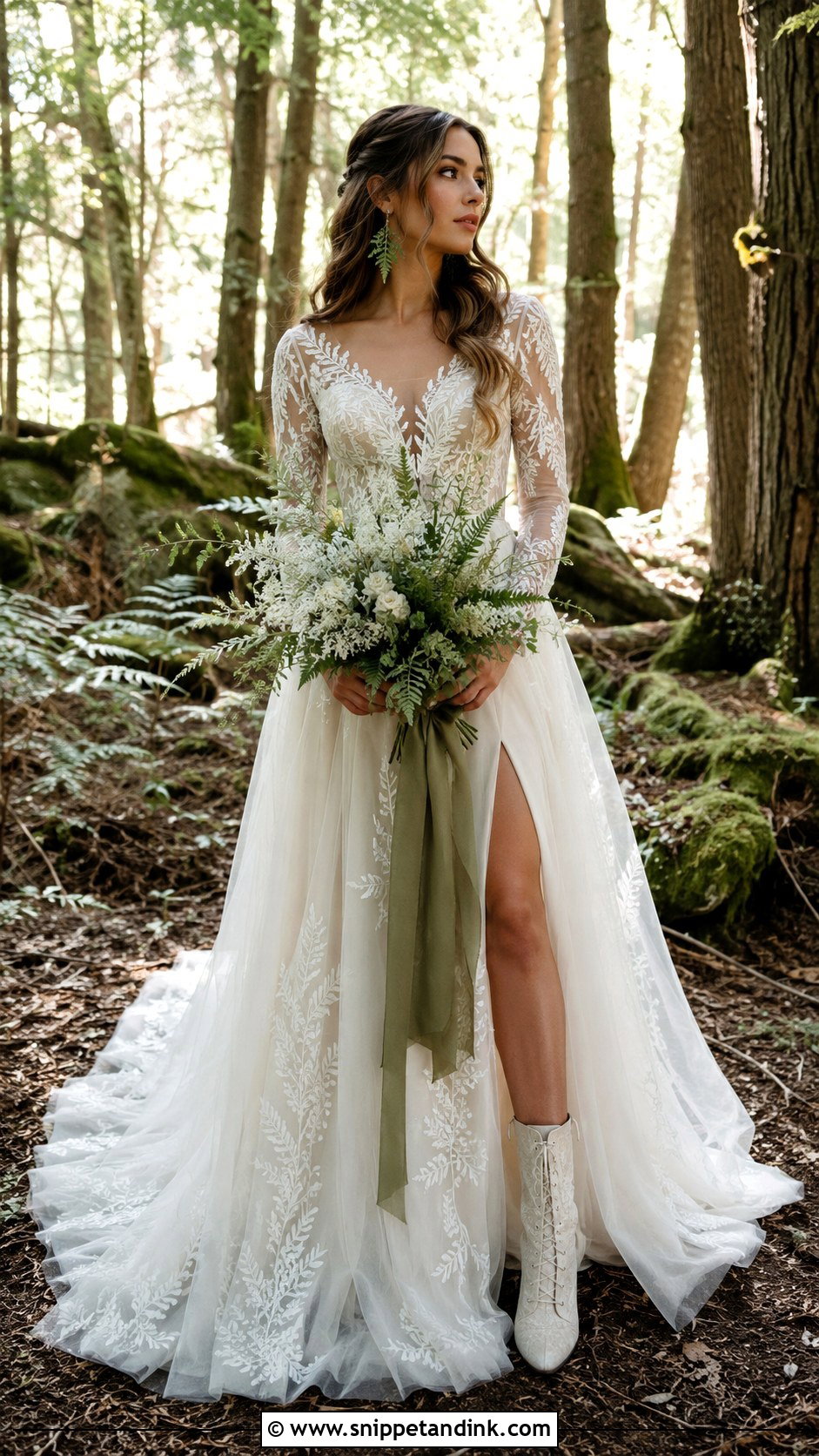
Forests are darker than brides expect, even at midday, and that shapes the colour choice. Ivory, oatmeal, champagne and soft grey hold their detail under a canopy, where bright white tends to glow and lose its texture. Long sleeves, leafy lace and a skirt that moves easily between trunks all suit the setting. Closed-toe block heels or bridal boots handle roots and soft earth. A long veil can look dramatic here, but branches snag tulle, so I’d pick one with a plain cut edge rather than lace trim. Fern-inspired earrings and a moss-green ribbon around the bouquet tie it to the woods.
6. Garden Nature Wedding Dress
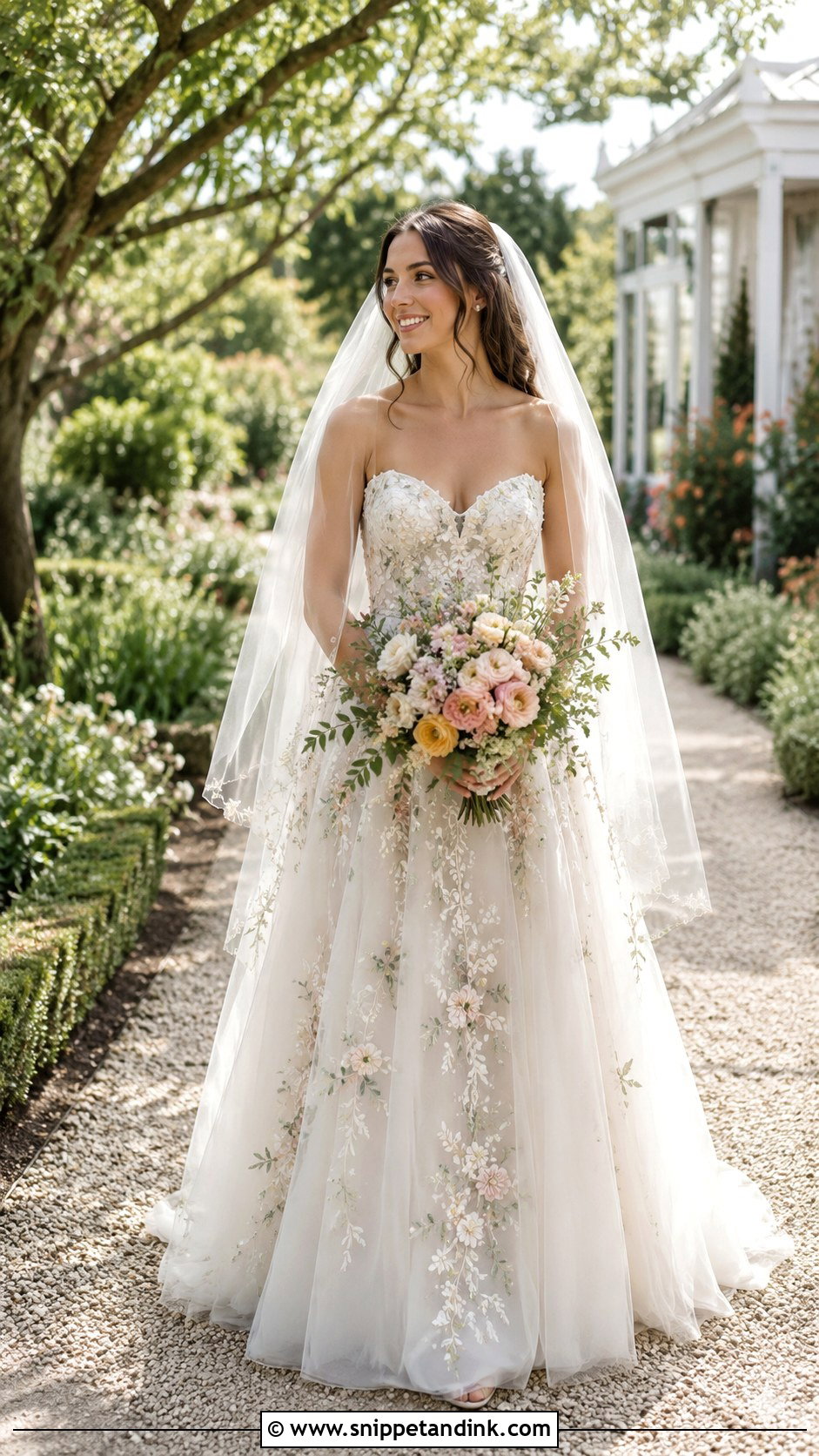
A garden gown should mirror the flowers around you without copying them. Soft tulle or chiffon with floral appliqués does that well, and a square, sweetheart or off-the-shoulder bodice adds shape without weight. Gardens usually mix lawn and stone paths, so I fit with block heels, which manage both. Pearl studs, a fingertip veil and a bouquet of roses, ranunculus and seasonal flowers finish it. Keep the makeup soft, because heavy contour looks harsh in open daylight.
7. Boho Nature Wedding Dress
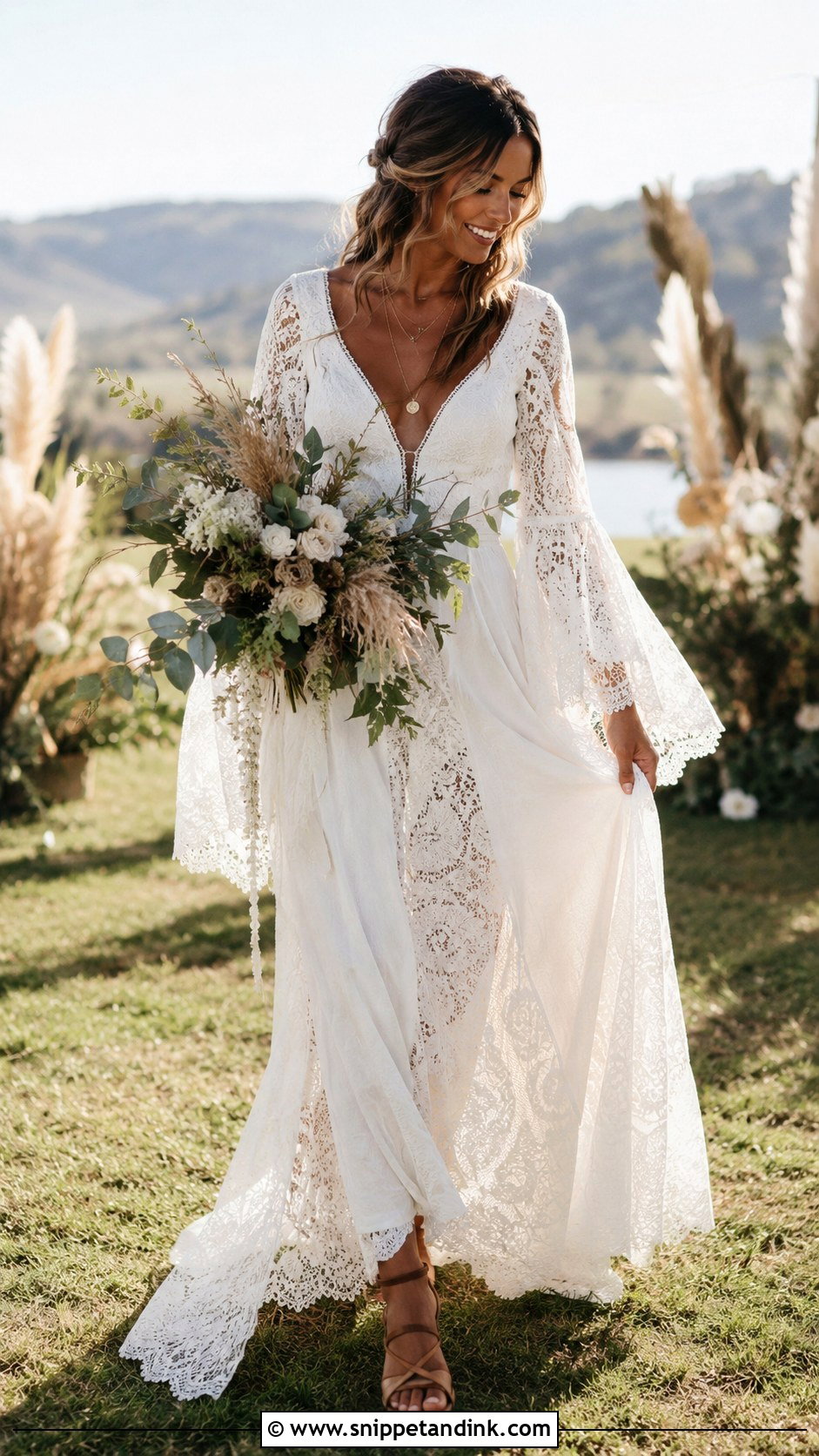
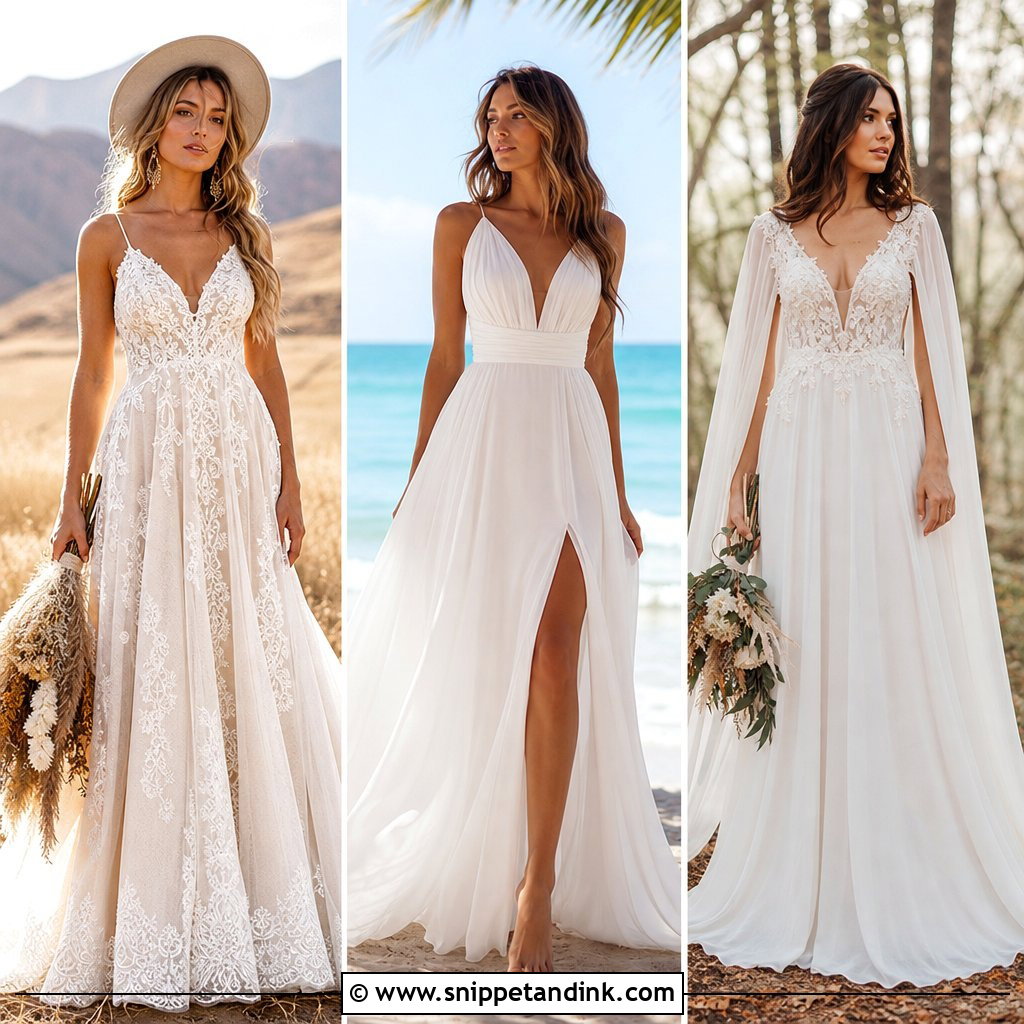
Boho dresses are made for the relaxed outdoor bride who wants to perch on a hay bale or a rock without worrying. Flowing fabric, crochet lace, bell sleeves, a deep V or a low open back all fit the style. The trade-off with a deep V and an open back is support, so raise built-in cups or a low-back bra solution with your seamstress at the first fitting, not the last. Leather or suede sandals, layered fine necklaces, a flower crown or loose veil and a bouquet with pampas grass and dried accents suit desert, meadow and forest elopements.
8. Cottagecore Nature Wedding Dress
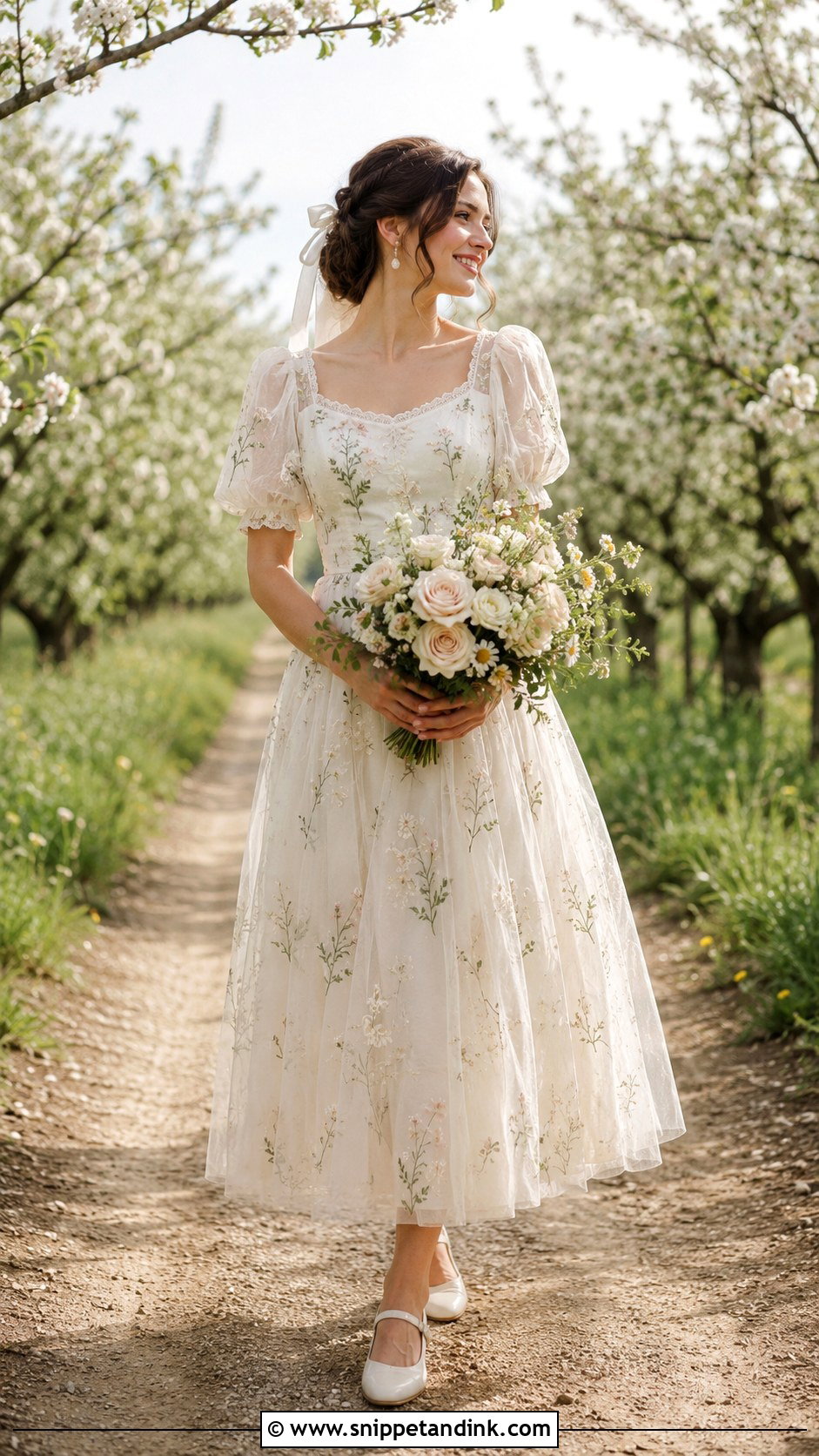
Cottagecore leans nostalgic, with puff sleeves, soft lace, floral embroidery and often a tea-length skirt. That shorter hem is genuinely practical outdoors, since it stays clear of wet grass. Cream, ivory and soft blush suit it. Mary Jane heels, ballet flats or low block heels, a ribbon in the hair, small pearls and a loose bouquet of garden roses and field flowers complete it for farmhouses and orchards. The line between charming and costume is thin, so I’d pick two of those elements, puff sleeves and a ribbon perhaps, rather than all of them at once.
9. Meadow Nature Wedding Dress
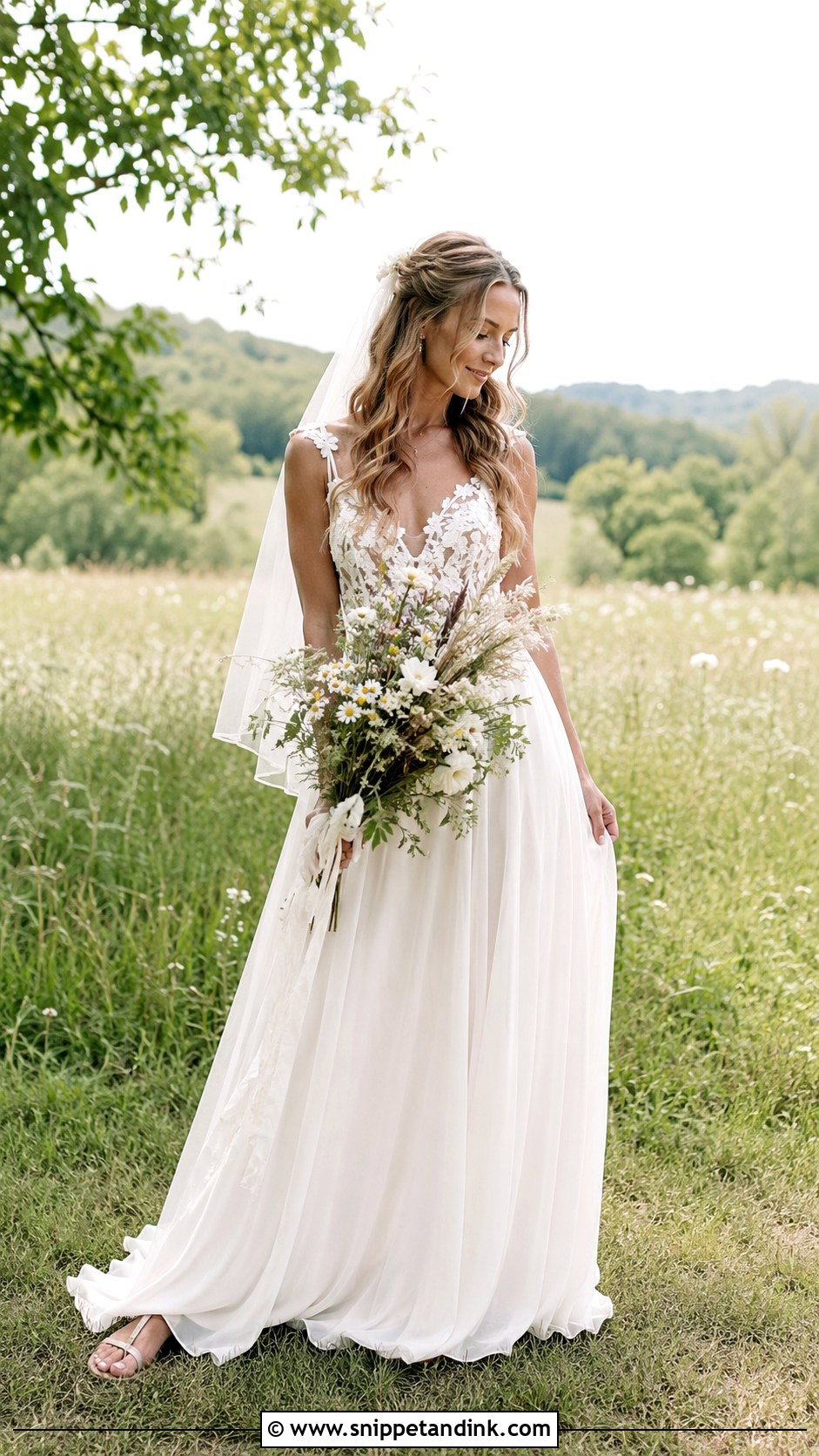
Open meadows mean wind, and that’s the first thing I plan around. Chiffon, soft tulle and organza float nicely in a breeze, while a long cathedral veil in an open field turns into a sail. A simple A-line with a fitted bodice is flattering and easy to walk through long grass in. Flat sandals, soft waves and a short, light veil work best here. Grasses, wildflowers and white blooms in the bouquet carry the setting. Golden hour suits this look, and minimal accessories let the low light do the work.
10. Mountain Nature Wedding Dress
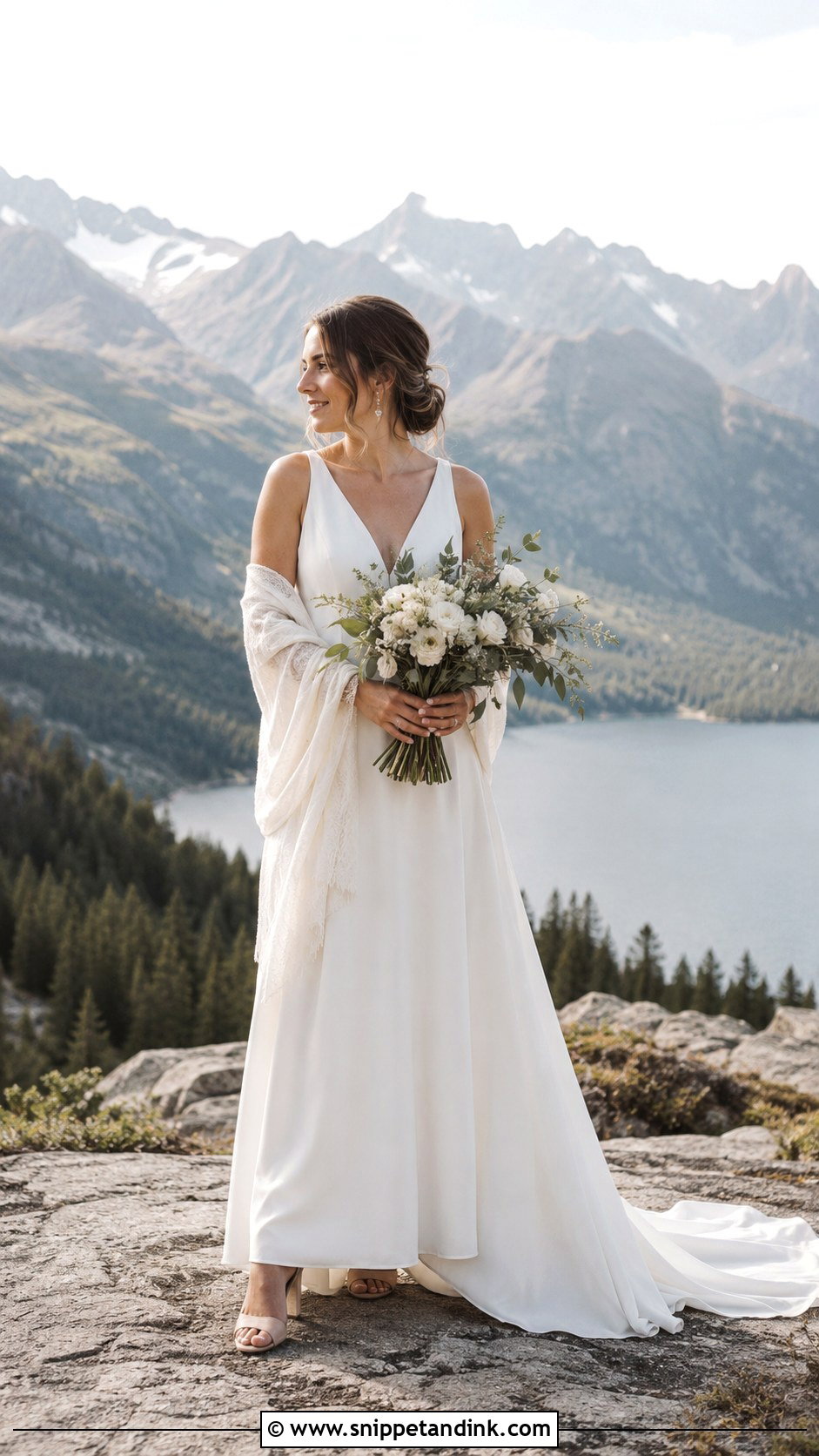
A mountain nature wedding dress has to cope with altitude weather: strong sun, sudden cold and wind on exposed ridges. A clean A-line, a crepe dress with a cape or a structured lace gown holds its shape against wide views, where flimsy fabric can look lost. Pack a bridal wrap, capelet or long-sleeve layer even in summer. Sturdy block heels, dressy boots or flats manage uneven rock. Small crystal earrings or a fine bracelet, and a bouquet of white flowers with textured branches, keep attention on the view.
11. Beach Nature Wedding Dress
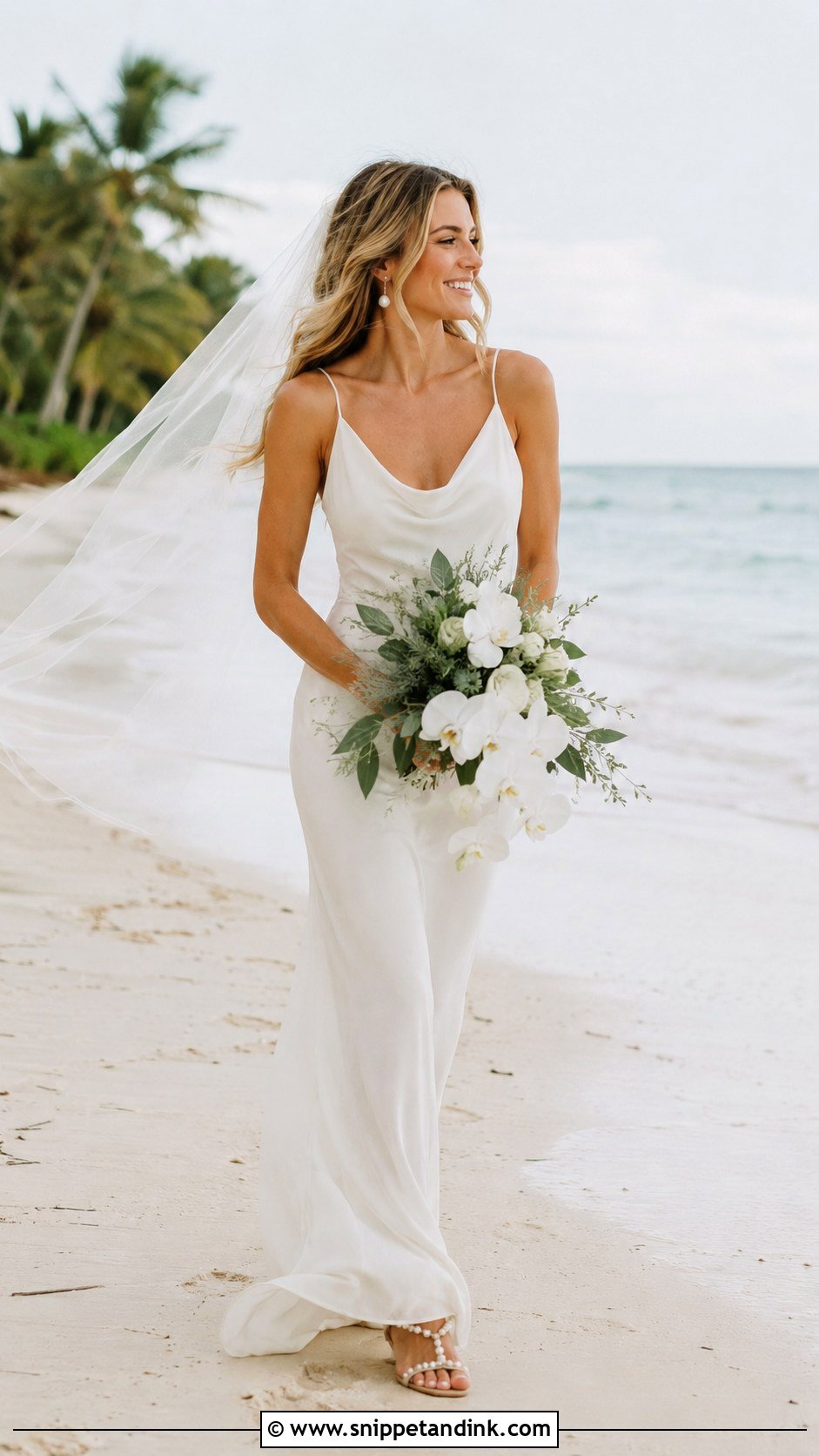
Sand rules out heavy ball gown fabric. Chiffon, silk, crepe and soft tulle stay light and shake clean, and a slip dress, halter gown or simple A-line is easy to walk in. I’d skip a long train, since it drags wet sand along behind you. Barefoot sandals, flat embellished sandals or ivory slides all work. Salt air and humidity drop curls fast, so loose waves pinned with a few hidden grips outlast a full set of curls. Pearl earrings, a soft veil and a bouquet of white orchids and grasses finish it.
12. Rustic Nature Wedding Dress
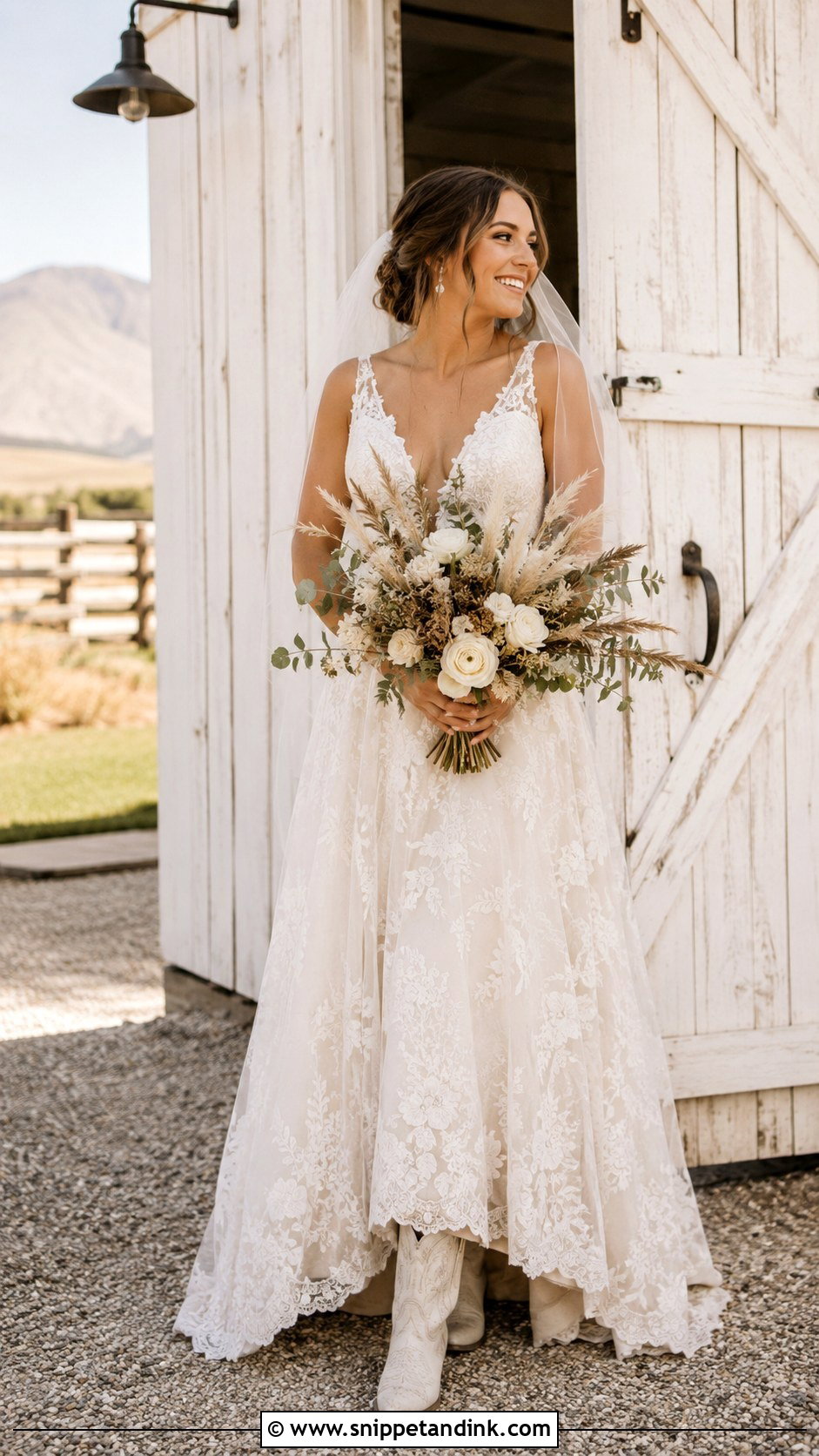
Barns, farms and open pavilions suit lace A-lines, soft off-the-shoulder dresses or a simple crepe gown with a short train. Floors there are often rough boards, gravel or packed dirt, so I steer brides away from delicate lace hems that snag; a crepe or satin-faced hem survives far better. Low block heels, bridal boots or dressy flats depend on the ground. A fingertip veil, pearl earrings and a bouquet of greenery, cream flowers and dried textures round it out. Stop at one statement element, because heavy details stacked up look fussy in a rustic room.
13. Green Floral Nature Wedding Dress
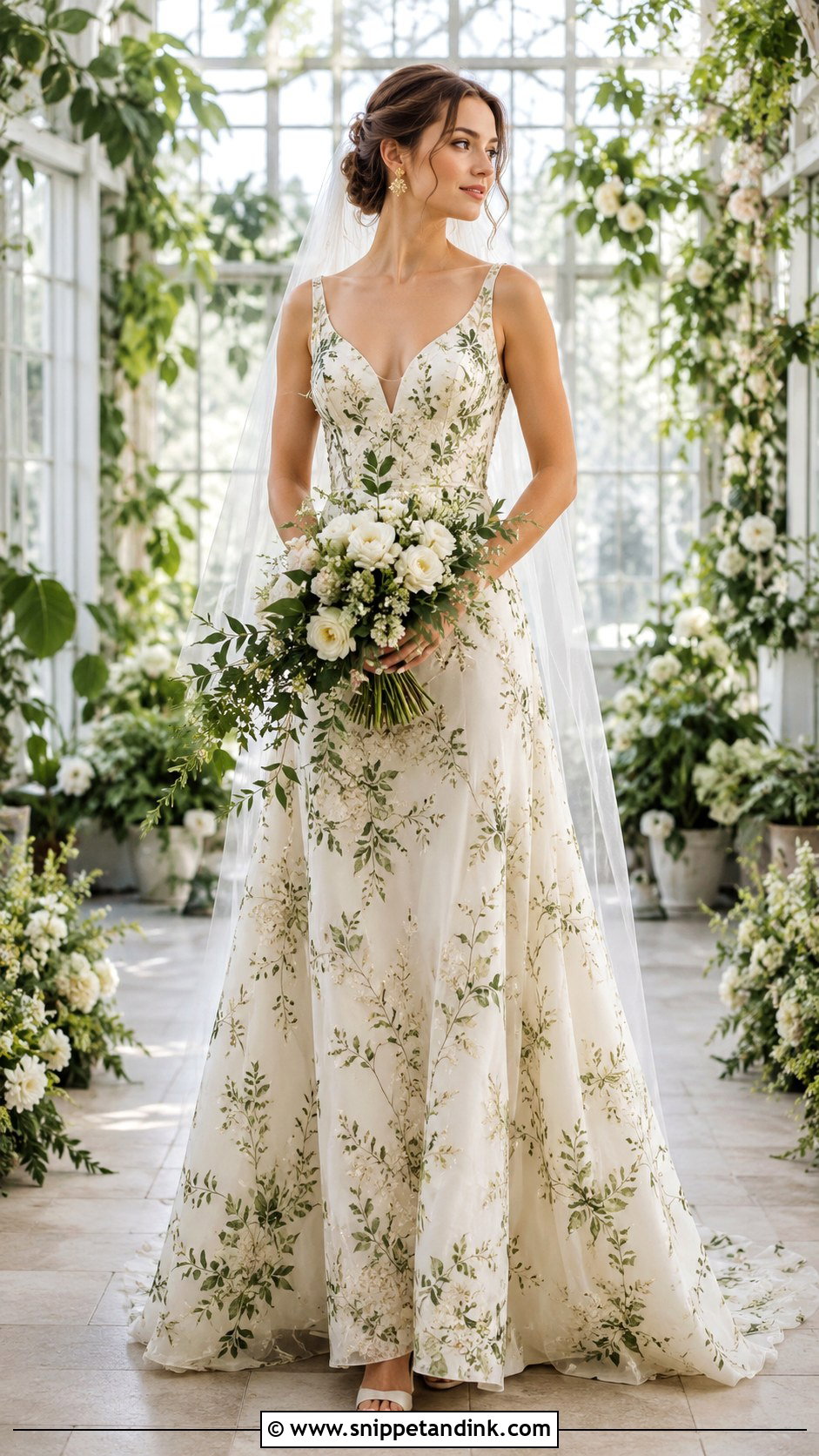
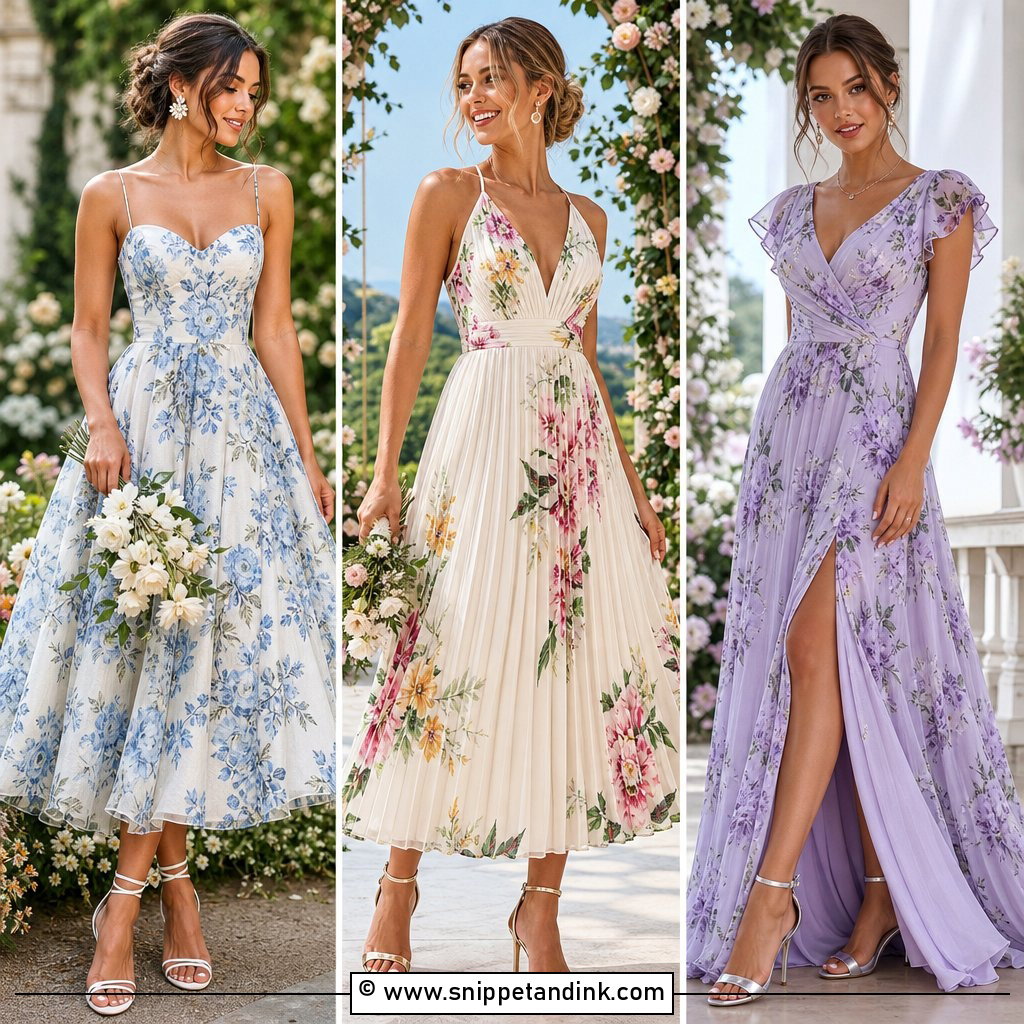
Green embroidery, a watercolour floral print or soft leaf appliqués over a neutral base give more personality than plain ivory. Check any print in daylight before you commit: watercolour florals that look soft under boutique lighting can look much busier outdoors. Garden, greenhouse and woodland venues suit it. Simple ivory heels, gold earrings and a sheer veil that doesn’t hide the detail keep everything else calm, and a bouquet of white flowers with deep greenery ties it together.
14. 3D Floral Nature Wedding Dress
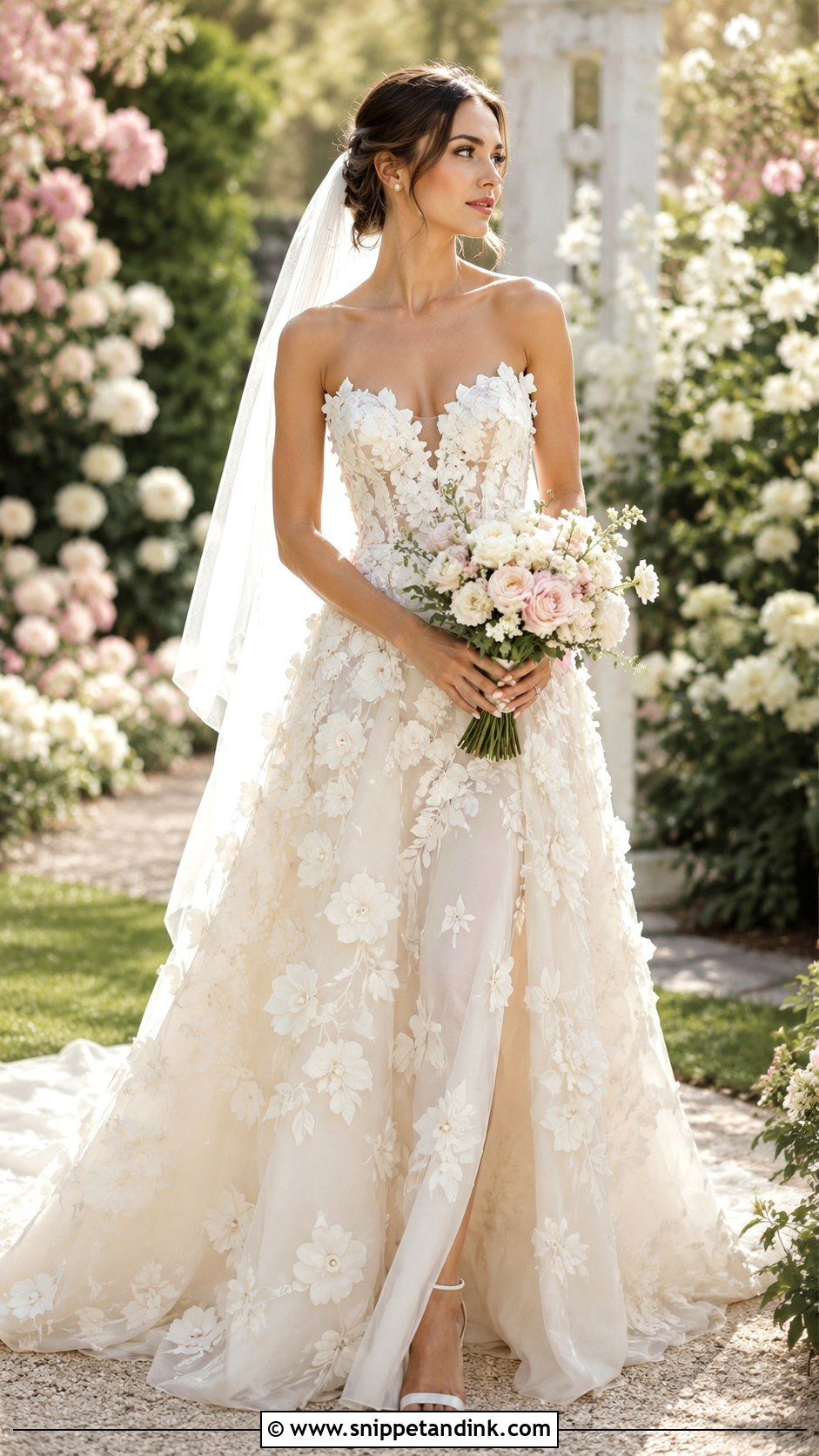
Three-dimensional petals along the bodice, sleeves, skirt or train give more texture than any other gown here, and they’re also the most fragile. Hand-sewn petals can crush in a car seat or catch on a hedge, so I pack a small sewing kit and a few safety pins for these brides. Scattered flowers are easier to live with than a full garden over the whole skirt. Pearl studs, a plain veil and clean heels keep it refined, and a bouquet with similar flower shapes makes the styling look planned. Orchards and soft afternoon light show it off best.
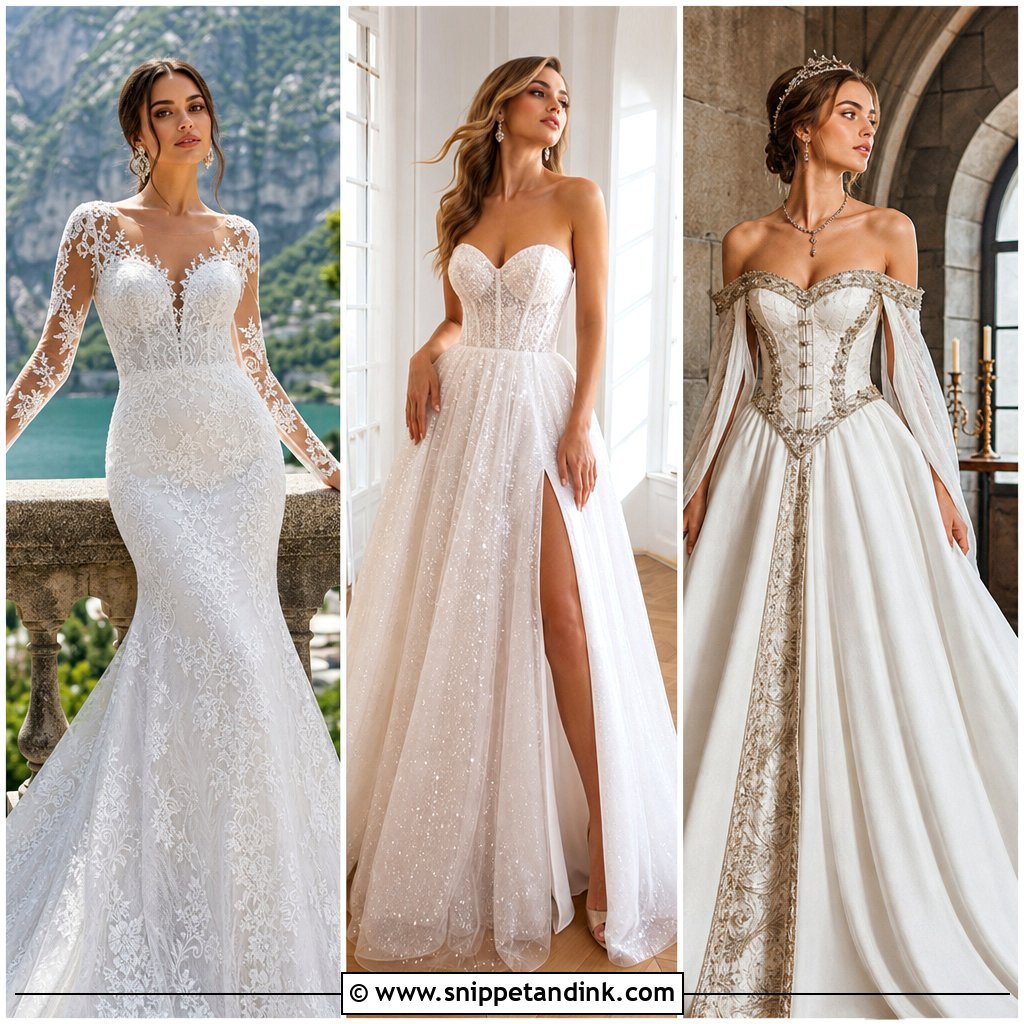
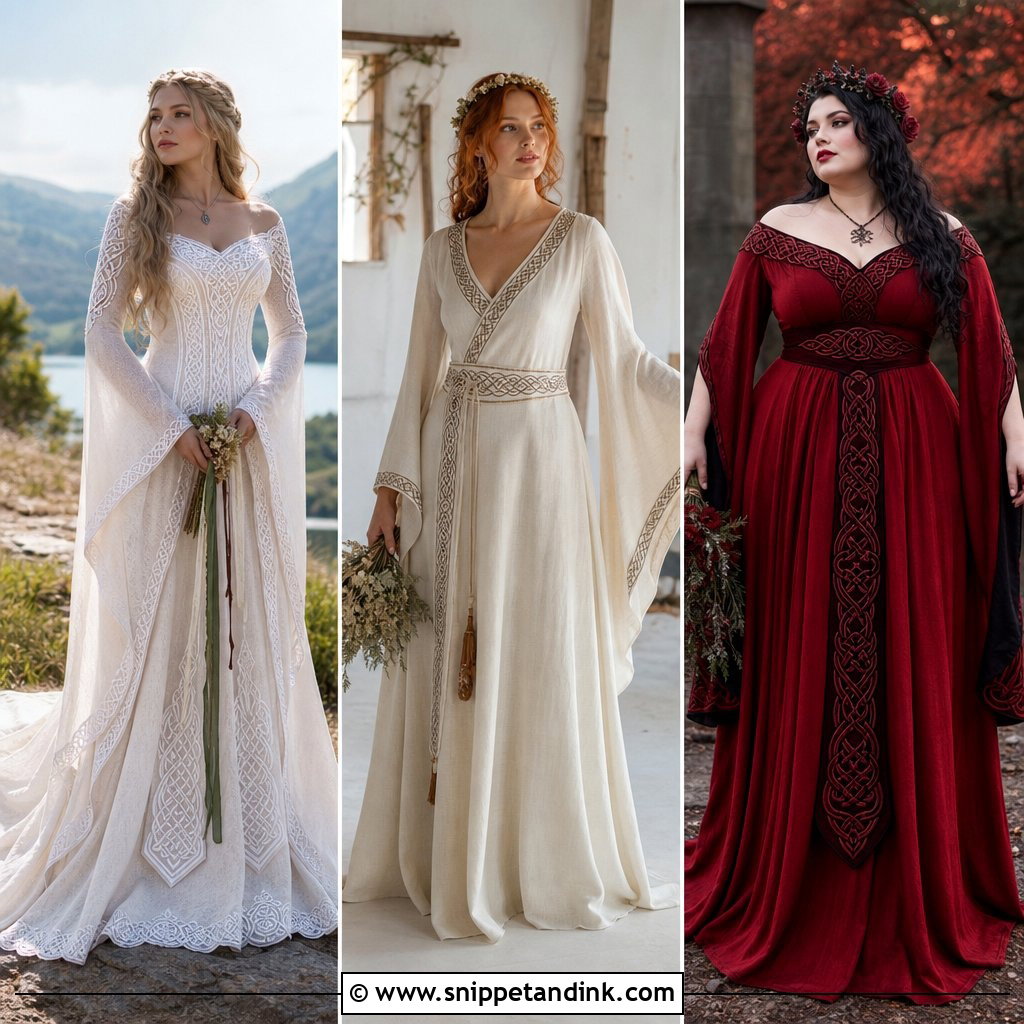
15. Leaf Lace Nature Wedding Dress
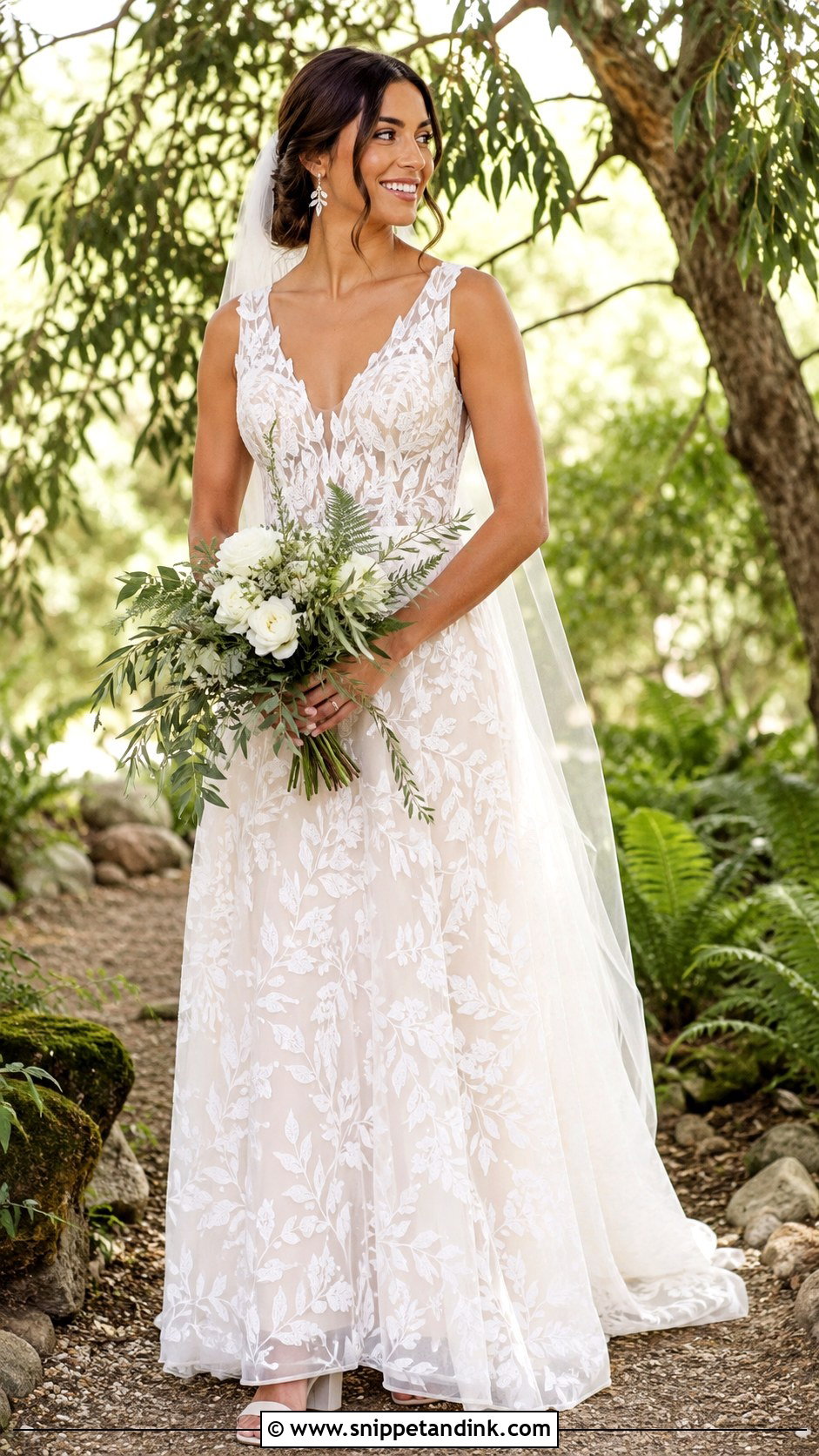
Leaf lace is quieter than floral lace, and that’s its appeal. It suits forests, vineyards, gardens and mountain venues without leaning on colour. A fitted bodice with a flowing skirt balances the pattern, or a sheath gives a cleaner line. Heavier corded or guipure leaf lace can have stiff outlines, so I check that the edges at the neckline and armholes are finished smoothly and won’t scratch over a long day. Vine-inspired earrings, a simple veil, block heels or bridal flats and a bouquet of ferns, olive branches and white blooms bring out the leaves.
16. Simple Nature Wedding Dress
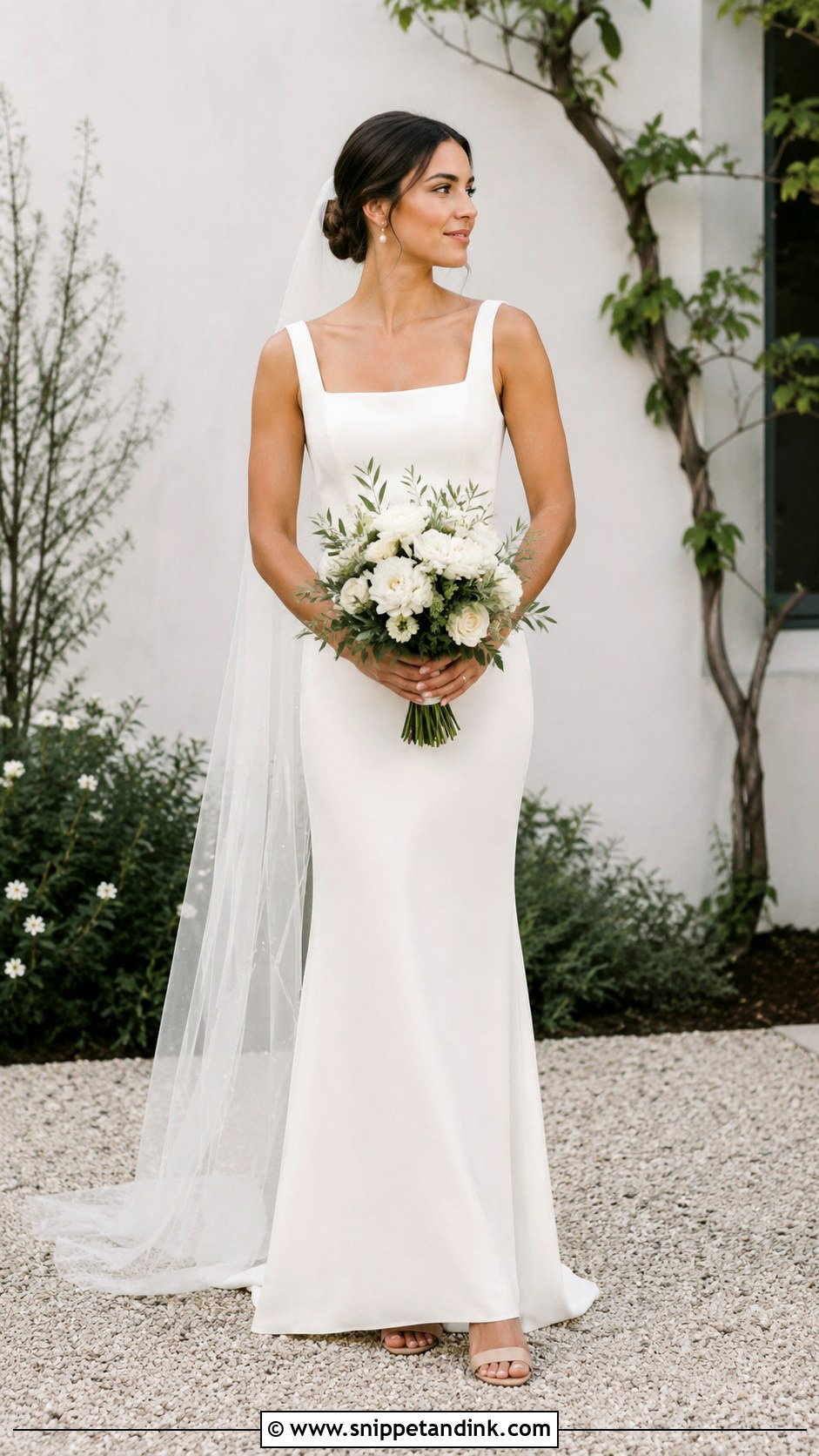
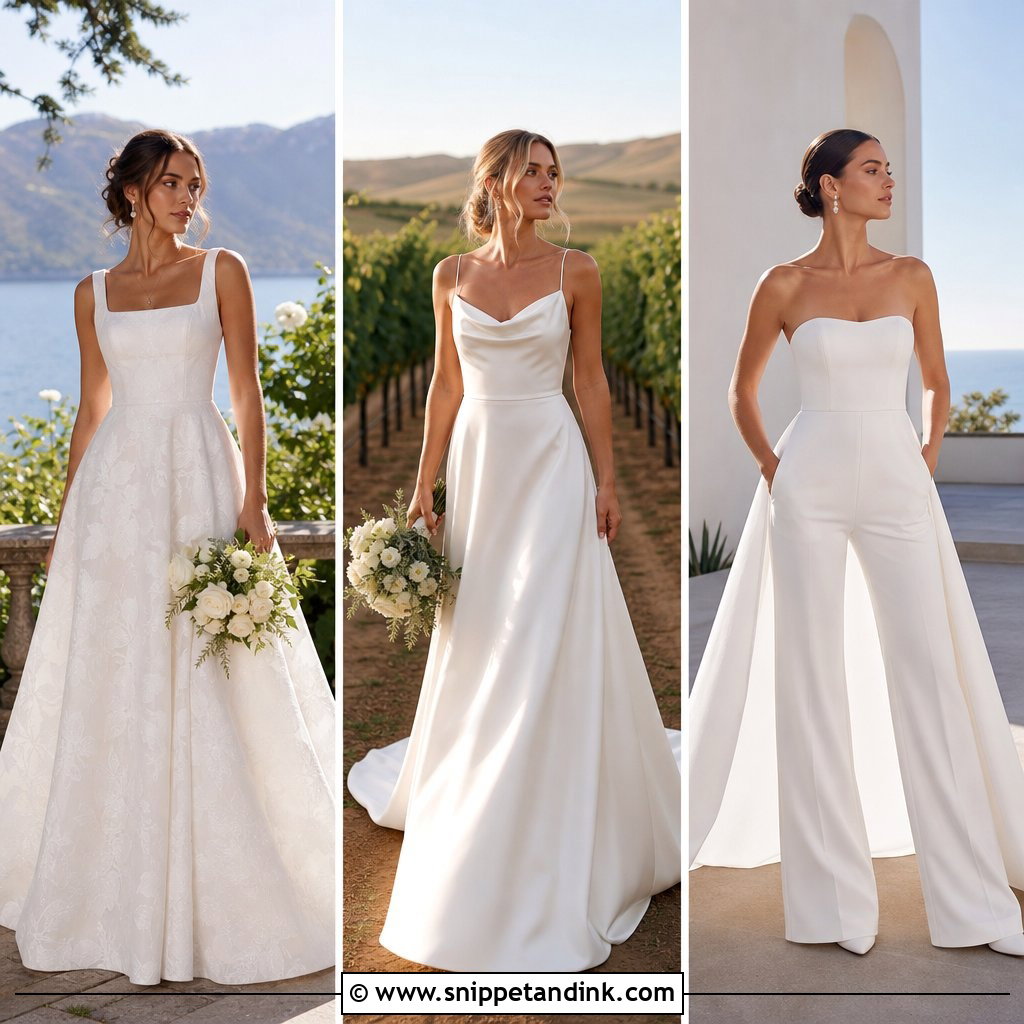
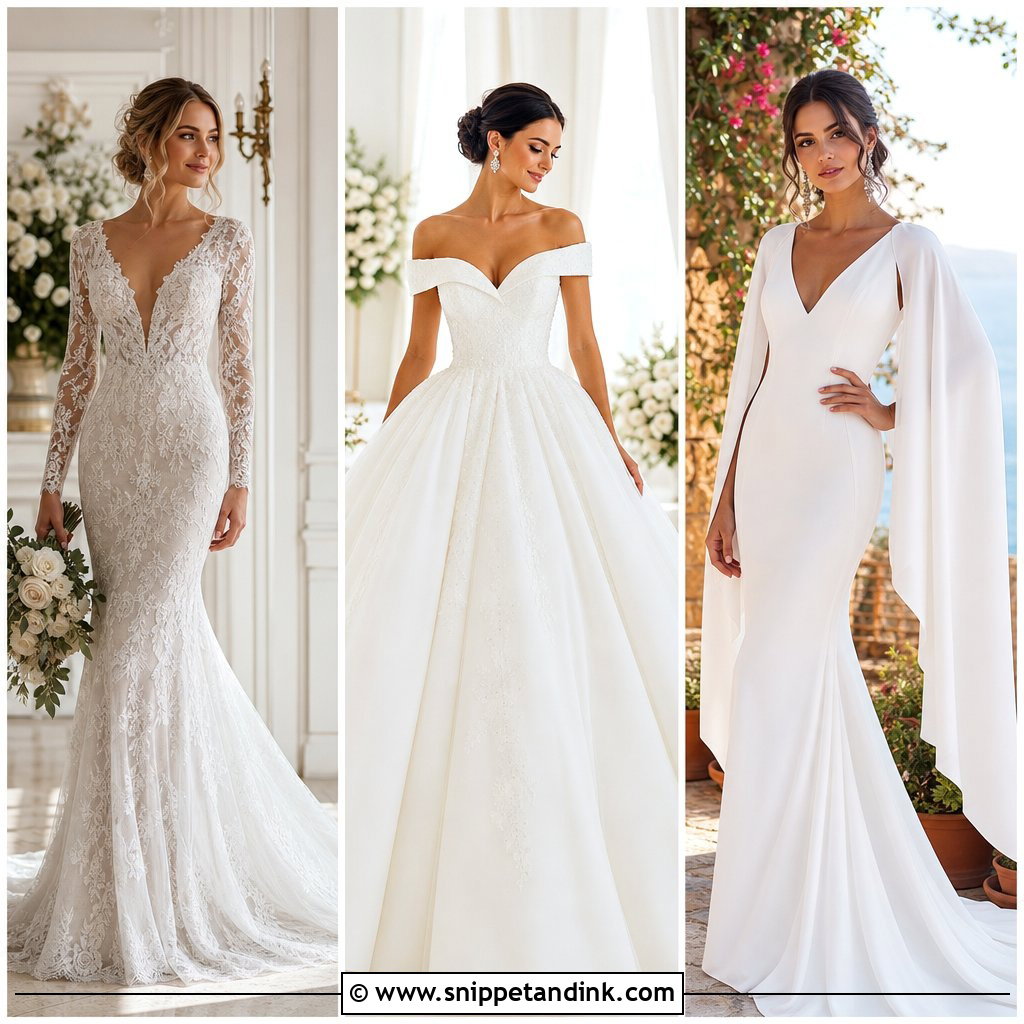
Against a big landscape, a plain dress often looks better than a busy one. Clean crepe, satin or chiffon with minimal embellishment needs a flawless fit, since nothing hides a pulled seam. A square neckline, open back or draped bodice adds interest. Satin shows water marks and creases more than crepe does, which I mention to anyone planning a damp morning ceremony or a lot of sitting. Pearl earrings, a low bun, a light veil and a bouquet of greenery and seasonal flowers suit mountain views, beaches and modern outdoor ceremonies.
17. Tulle Nature Wedding Dress
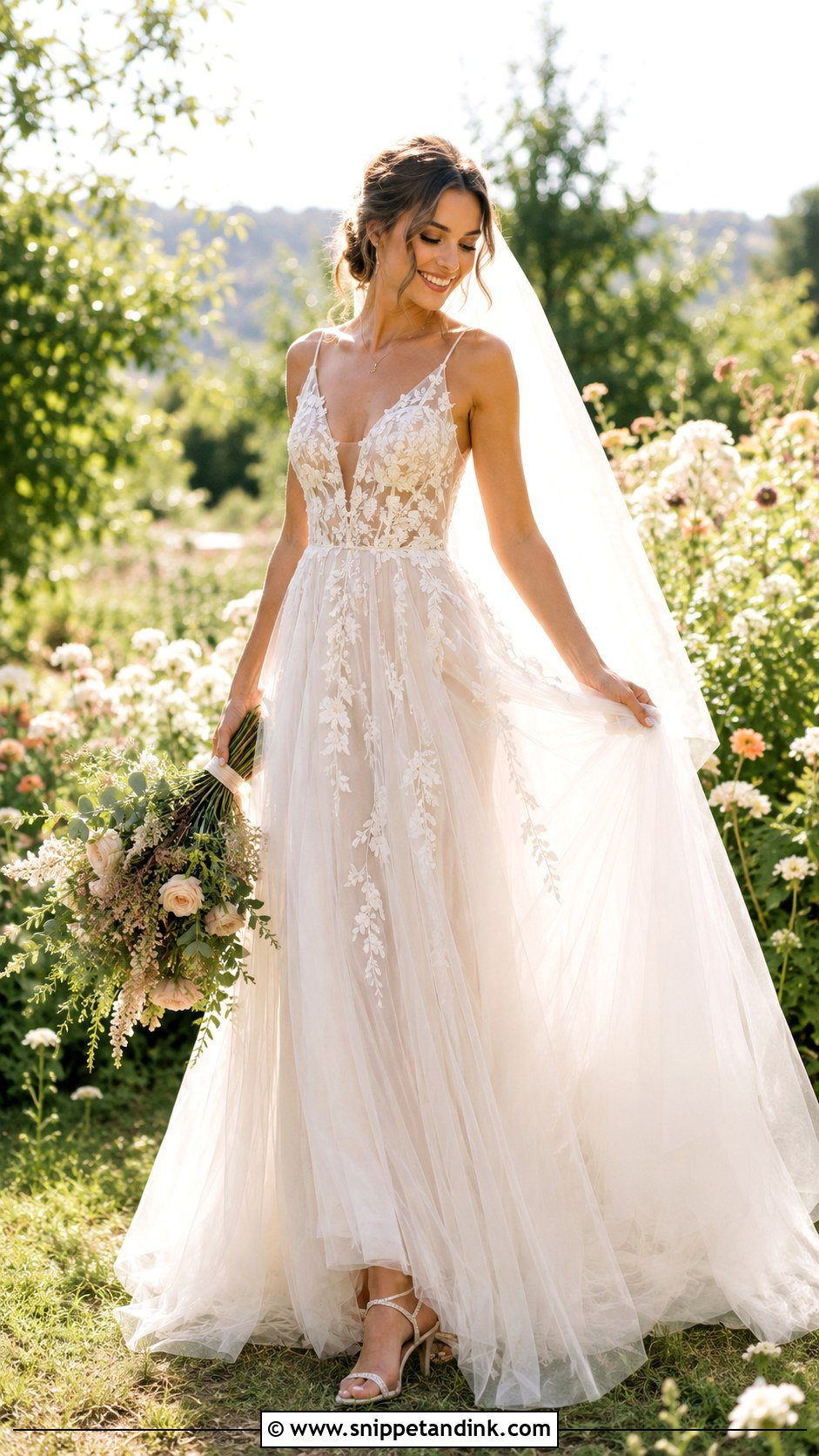
Layered tulle makes an airy skirt, but stiff volume and outdoor ground don’t mix well. Grass seeds, burrs and sand cling to tulle and travel indoors with you, so choose softer tulle with fewer layers if your venue has narrow paths. Floral appliqués, tiny embroidered vines or a sheer bodice connect the gown to the setting. Delicate heels, soft jewelry, a simple veil and a bouquet of garden flowers and loose greenery match the light texture. It looks best in sunset portraits, when backlight makes the layers glow.
18. Chiffon Nature Wedding Dress
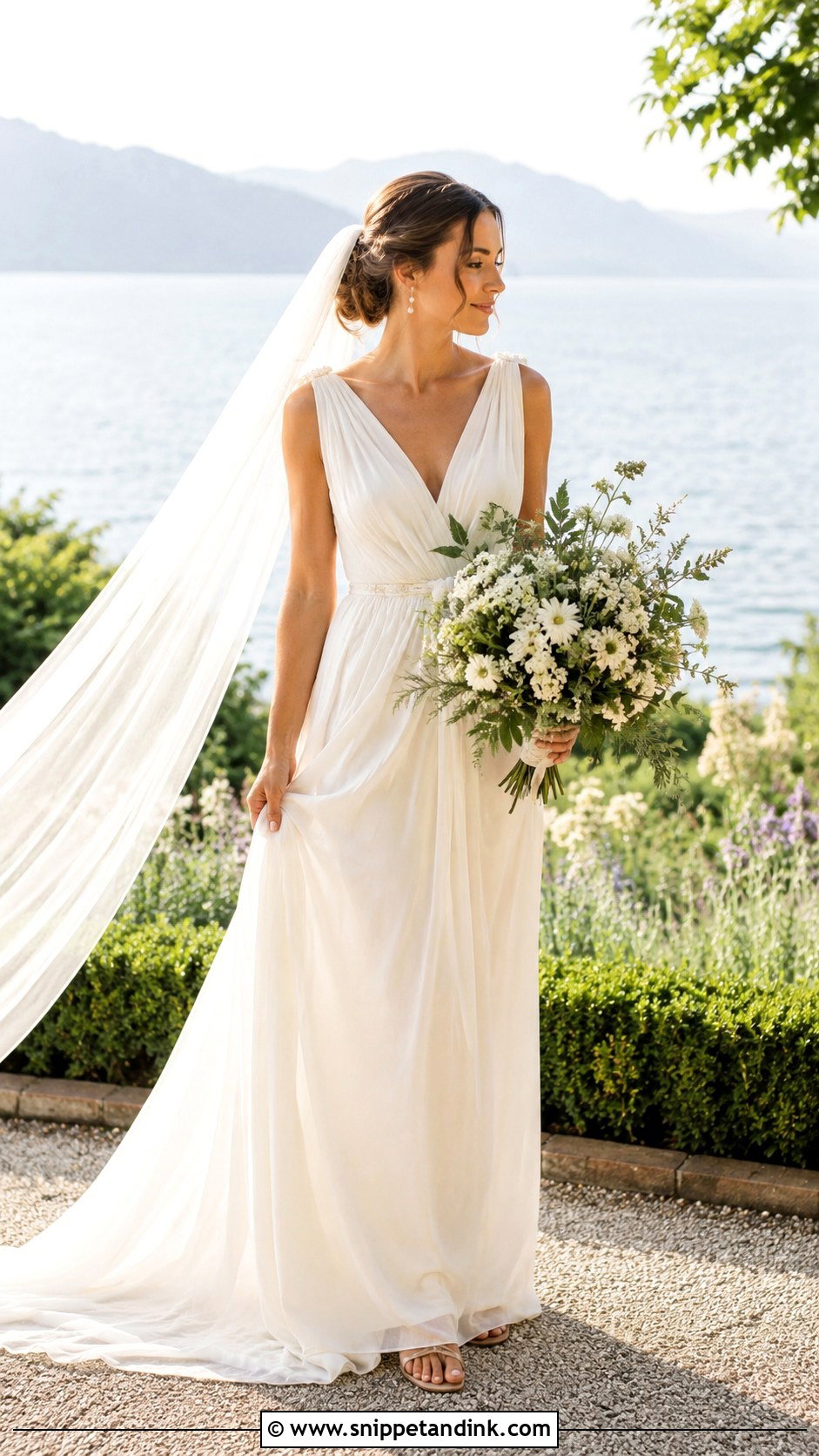
Chiffon is the coolest fabric to wear in summer heat, which is why I reach for it at warm outdoor weddings. It breathes, drapes and moves in a breeze, and a Grecian-inspired gown, empire waist or soft A-line all suit it. The downside is fragility. Chiffon snags on rough wood and pulls easily, so watch benches and chair edges. Flat sandals, dainty earrings, a flowing veil and a bouquet of white flowers and herbs finish it for beaches, lakesides and countryside ceremonies where you’ll walk and dance for hours.
19. Long Sleeve Nature Wedding Dress
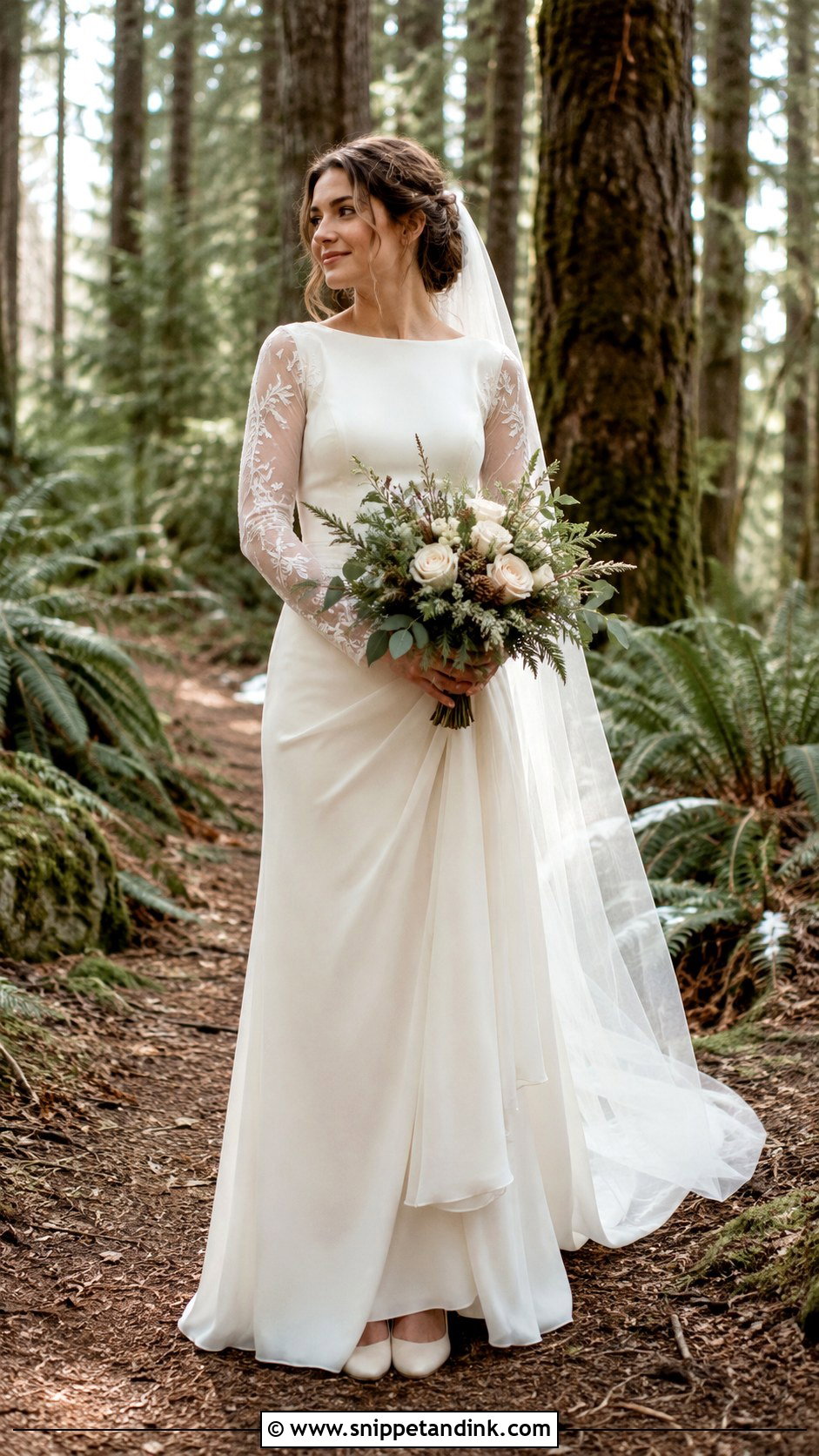
Long sleeves earn their place at autumn, winter, mountain and forest weddings, where an afternoon can turn cold quickly. Lace, sheer embroidered or fitted crepe sleeves all add coverage, and botanical lace or vine embroidery carries the theme. I always test sleeve movement at the fitting: hug someone and lift the bouquet, because tight sleeves restrict exactly those two moves. Closed-toe heels, a soft wrap, a simple veil and a bouquet with seasonal texture complete it.
20. Off The Shoulder Nature Wedding Dress
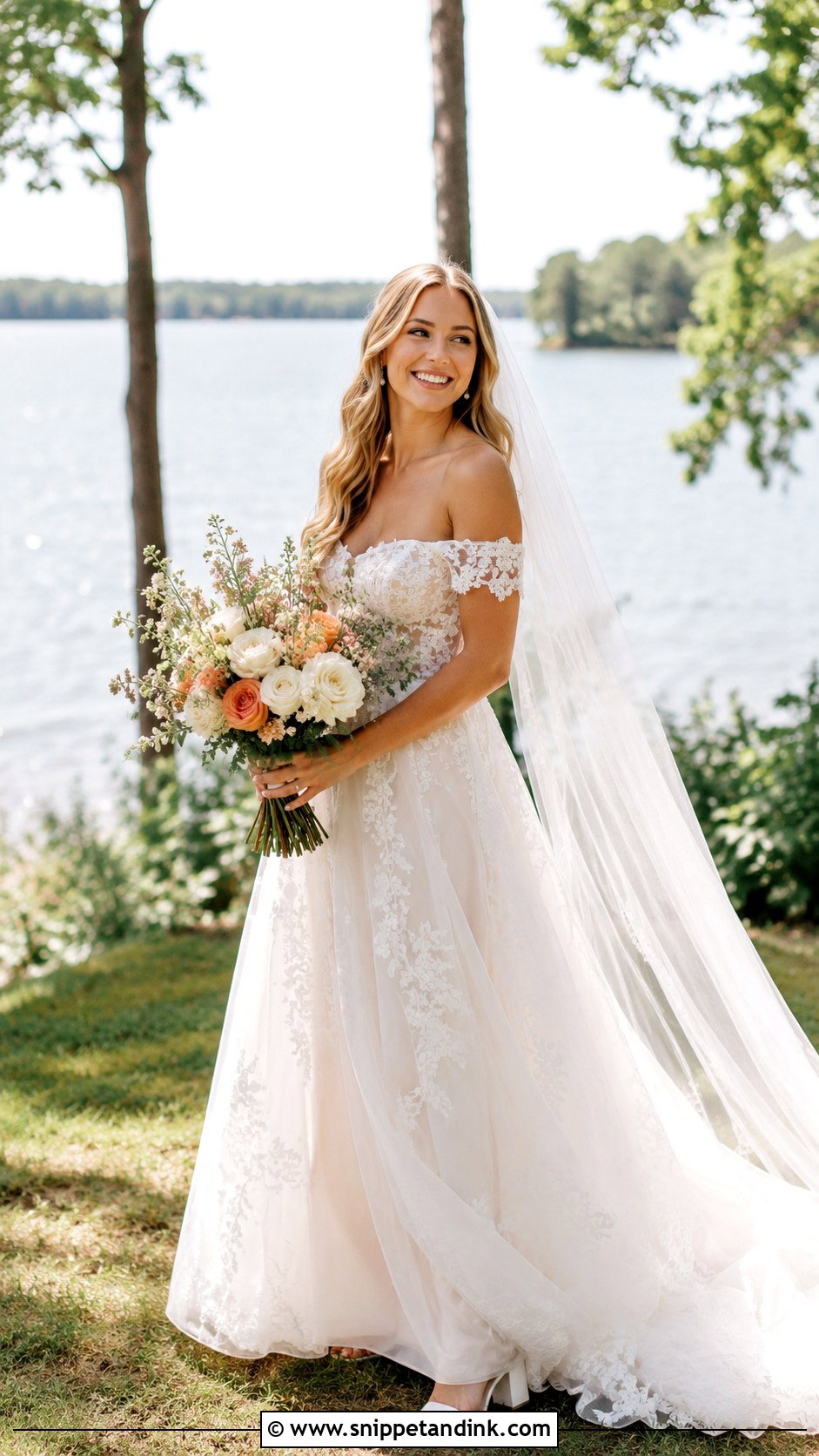
Off-the-shoulder frames the collarbones and suits floral lace, soft tulle or flowing chiffon, with a fitted bodice and A-line skirt balancing it for most figures. There’s a practical catch: you’ll want to raise your arms to hug people, and off-shoulder sleeves pin the arms down. Ask for elastic or boning that lets you lift your arms without the neckline sliding. Drop earrings, loose waves, a veil set low in the hair, block heels or flats and a bouquet of garden roses and wildflowers suit garden, lakeside and countryside ceremonies.
21. High Neck Nature Wedding Dress
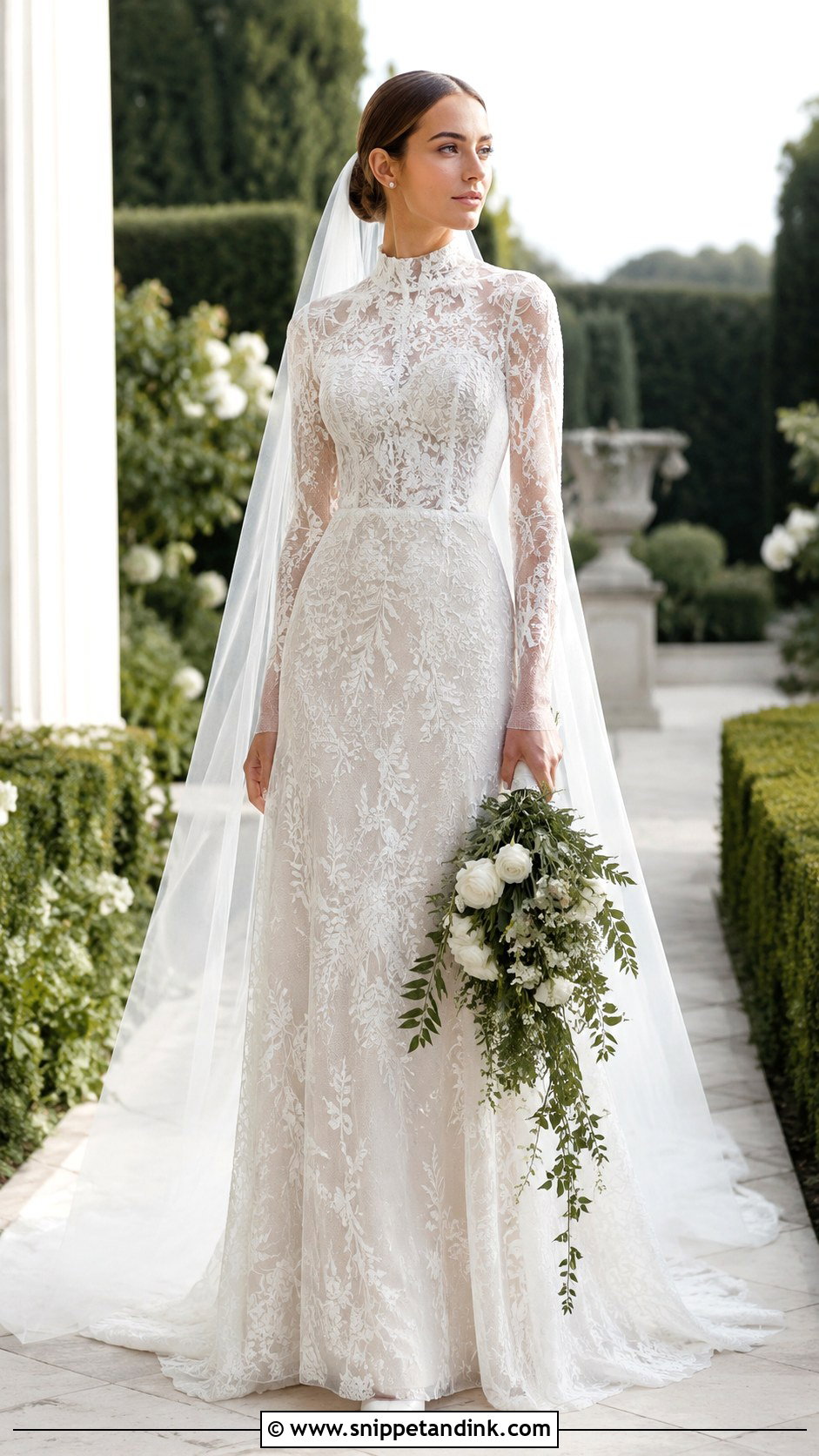
A high neck reads formal, so it needs light materials to look at home outdoors: sheer lace, botanical embroidery or soft tulle around the throat. A slim A-line or sheath keeps it modern. Because the neckline covers so much, I’d keep earrings to studs and the hair in a sleek low bun so the collar has space. A cathedral or chapel veil works if the venue has room and little wind. Closed-toe heels or block sandals and a bouquet of long trailing greenery balance the covered top for a formal garden or forest wedding.
22. Vintage Nature Wedding Dress
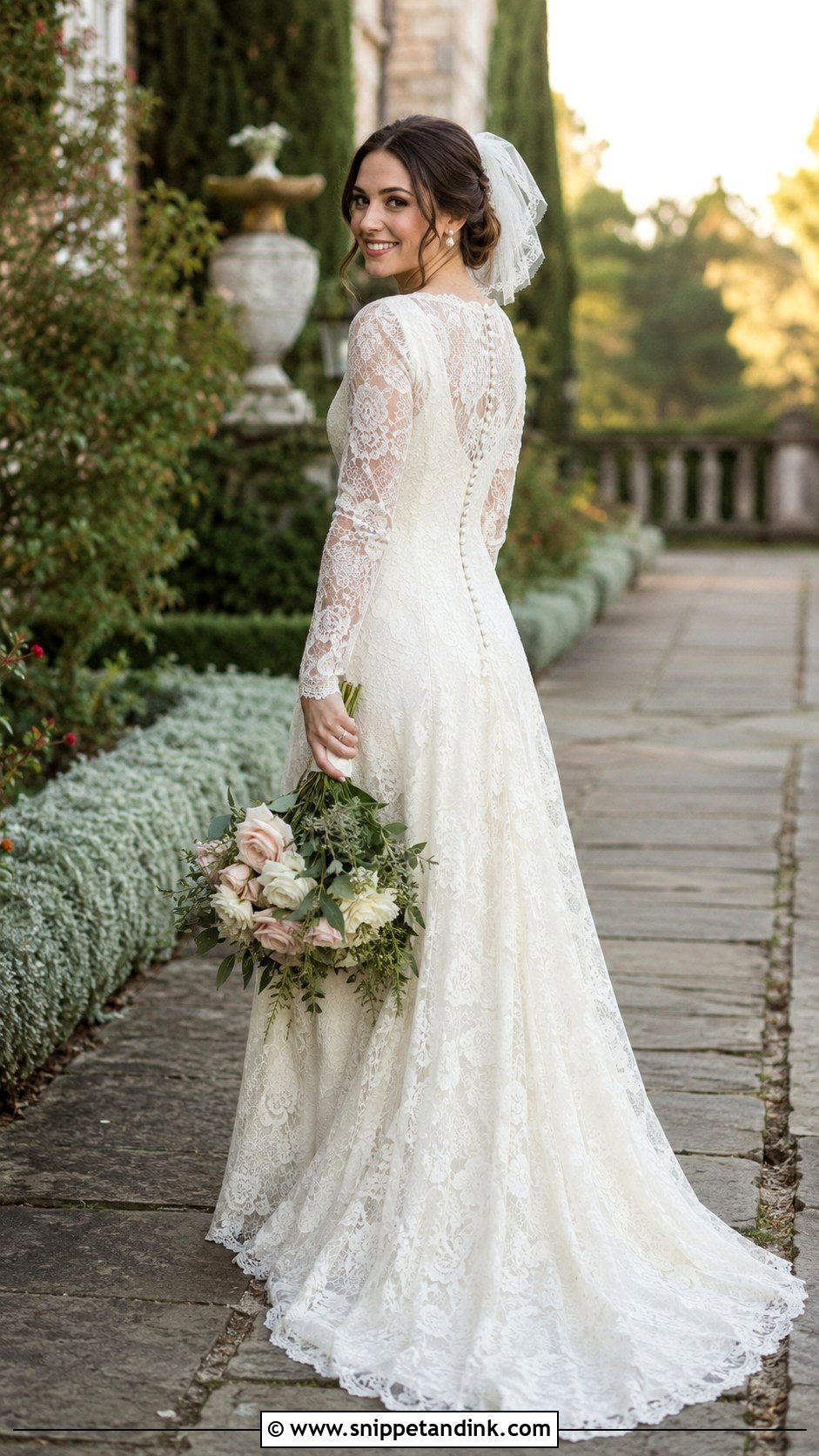
Vintage style suits garden estates, old farmhouses and orchards, with lace sleeves, small buttons, soft cream fabric, a tea-length skirt or a gently flowing shape. If the dress is genuinely old, check the fabric at the seams and underarms in daylight. Aged lace and silk can split under strain, and a specialist should reinforce weak spots well before the day. Pearl earrings, low vintage-inspired heels, a small veil or hair ribbon and a bouquet of garden roses keep it romantic. Choose one or two vintage elements and keep everything else fresh.
23. Sustainable Nature Wedding Dress
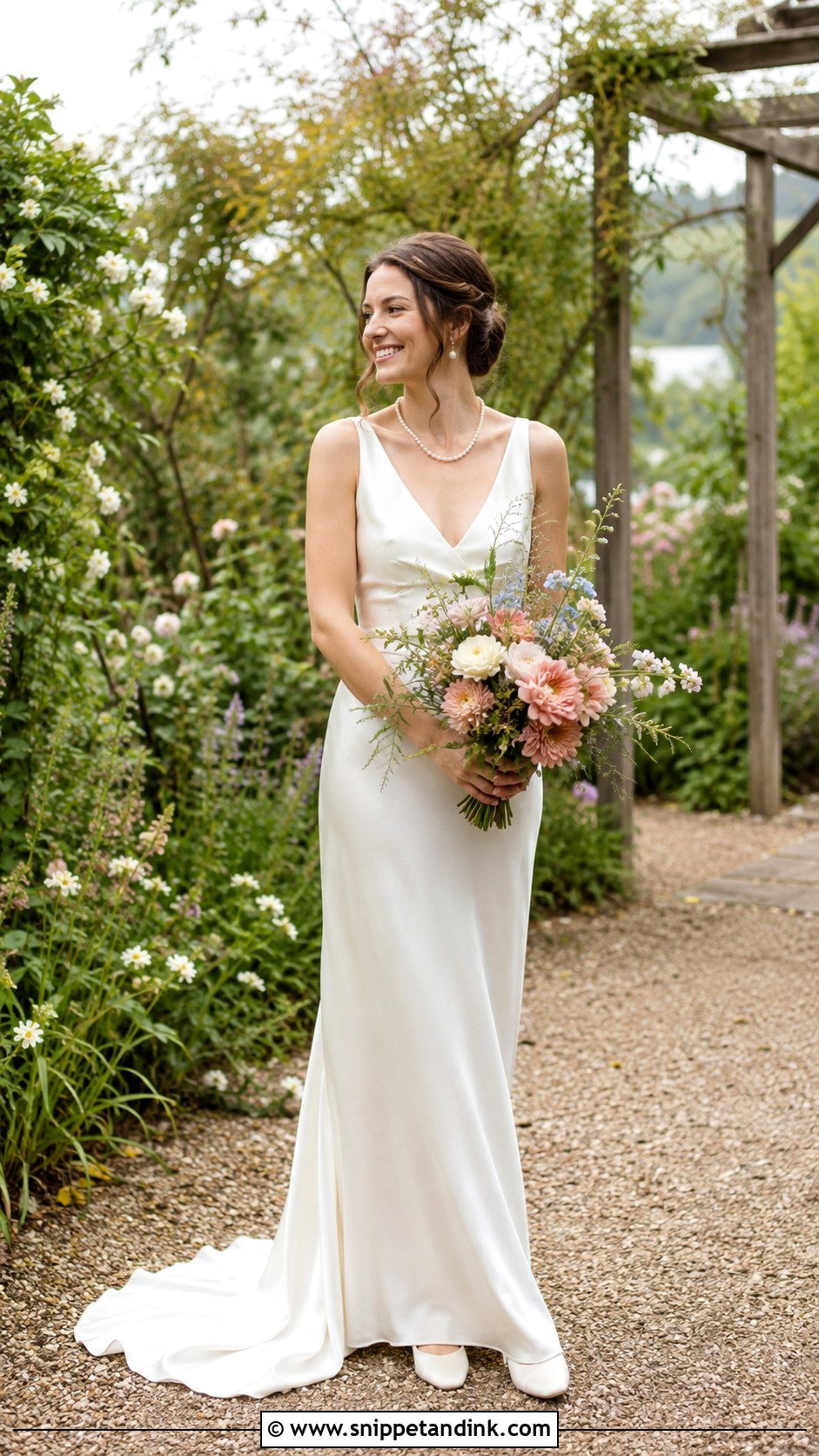
A sustainable nature wedding dress can be vintage, secondhand designer, locally made or cut from lower-impact fabric. Secondhand gowns nearly always need alterations, so budget for them: taking a dress in is straightforward, while letting it out depends on how much seam allowance is left inside. Shoes you’ll wear again, heirloom jewelry and a bouquet of local seasonal flowers carry the idea through. A natural hairstyle and minimal accessories keep the outfit considered rather than themed.
24. Short Nature Wedding Dress
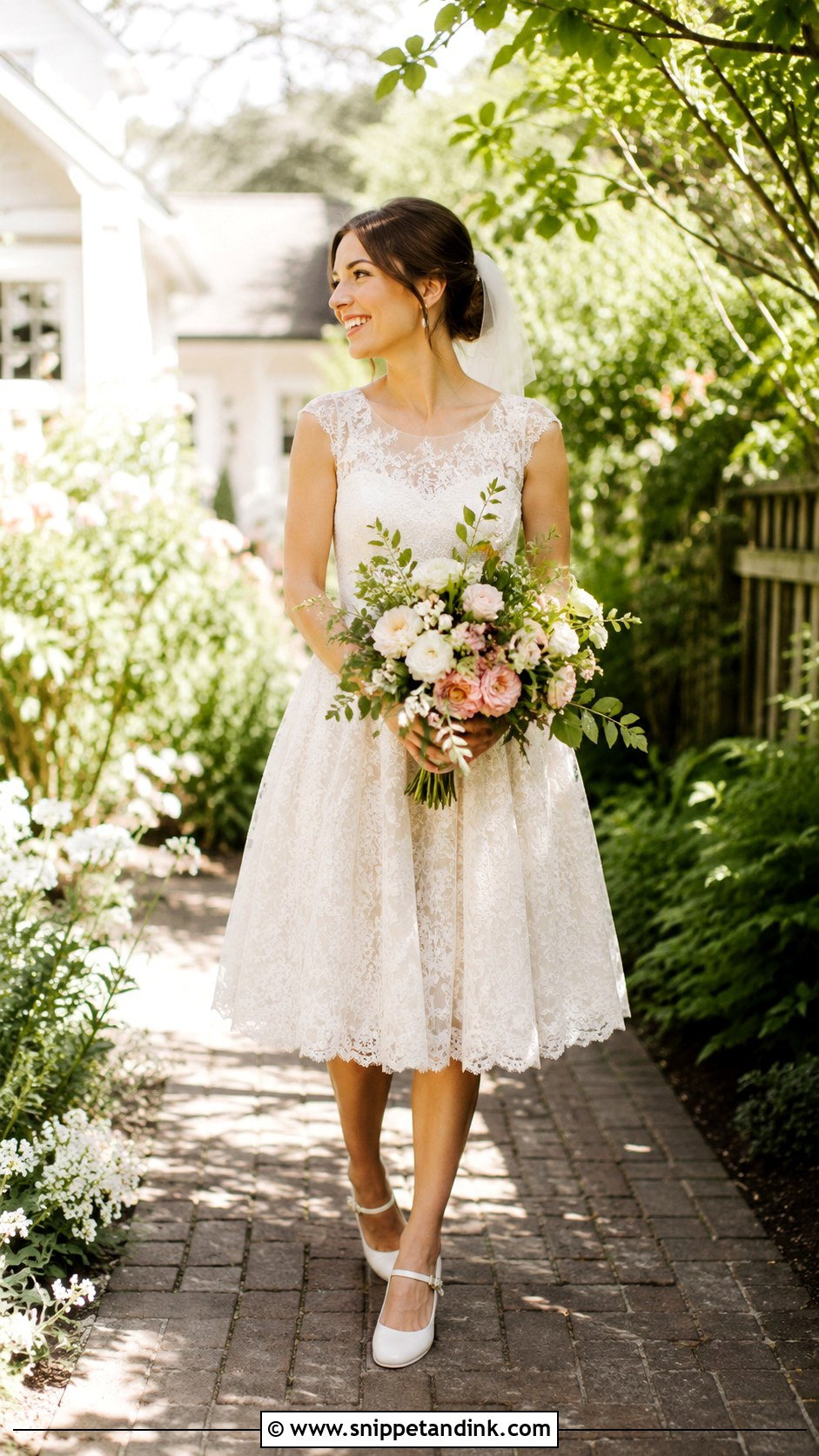
A short dress is practical for casual outdoor weddings and elopements, whether it’s tea-length lace, a knee-length embroidered gown or short tulle with floral details. The hem never touches wet grass or gravel, which is a real advantage. Pair it with ballet flats, Mary Jane heels or block sandals. With a short hem the shoes are on full show, so I treat them as part of the outfit and ask brides to buy them before the final fitting. A small veil, pearl earrings and a garden bouquet suit backyard, courthouse-to-garden and orchard celebrations.

25. Cape Nature Wedding Dress
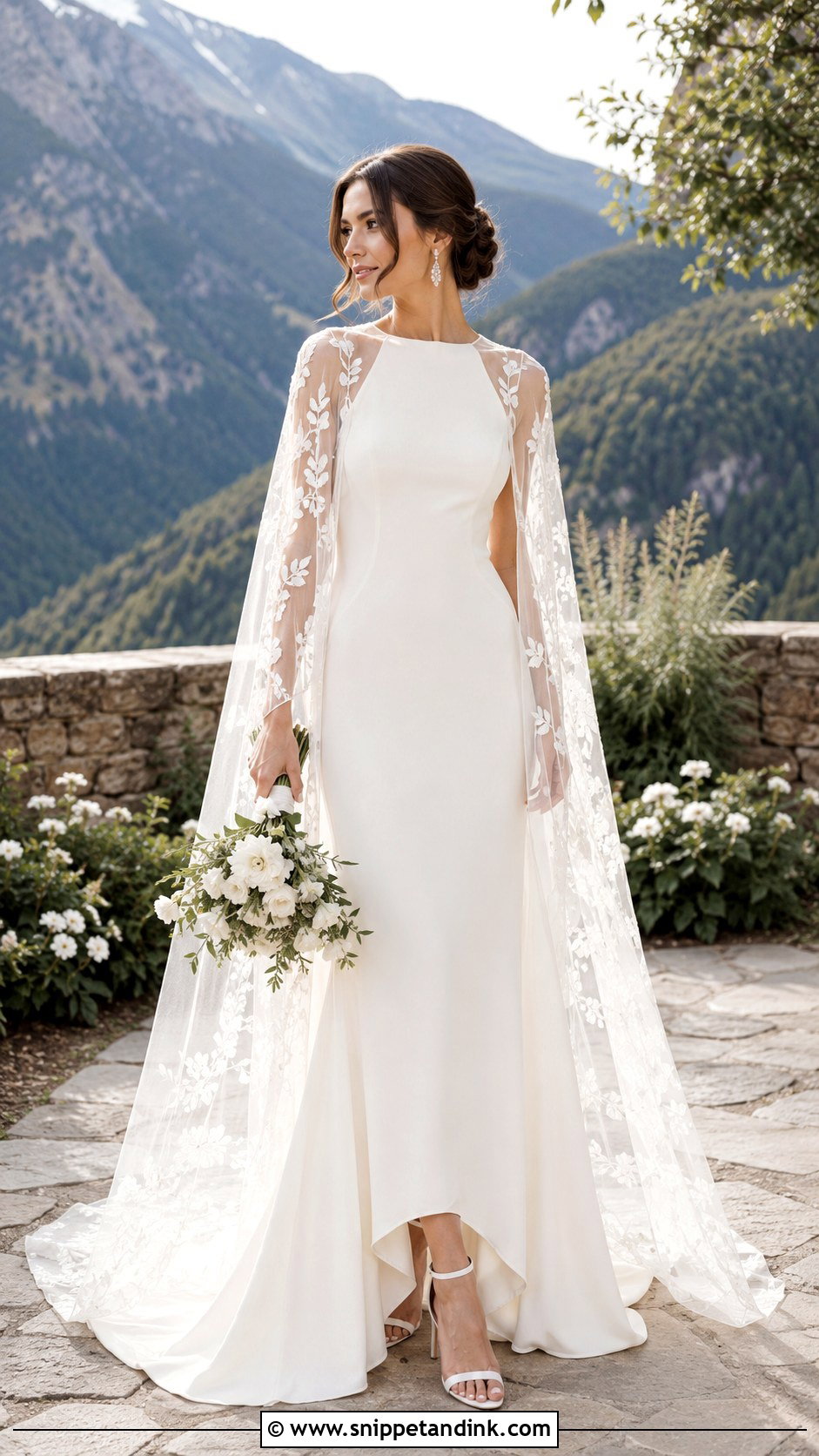
A cape gives drama without a train and replaces the veil neatly at mountain, forest or garden weddings. Choose a sheer tulle, floral embroidered or leaf lace cape over a fitted crepe gown or a soft A-line. Capes catch wind more than veils do, so on an exposed site I’d have the seamstress add small hem weights or a hidden wrist loop. Sleek earrings, simple heels and a clean bouquet keep the cape as the one statement.
When the Hem Comes Back Green
Every outdoor dress picks up a bit of the outdoors. A slightly green hem by the end of the night is normal, and nobody sees it in photos taken from the waist up. What matters is handling the marks that do show, quickly and without making them worse.
- Blot, never rub. Rubbing pushes grass and mud deeper into the weave and can fray tulle.
- Let mud dry, then brush it away gently. Wet mud spreads; dry mud mostly flakes off.
- Lily pollen stains a stubborn yellow-orange. Lift it with tape or a soft brush rather than water, which sets it, and ask your florist to remove lily stamens before the bouquets arrive.
- Carry a white chalk stick or stain pen, but test it on a hidden seam of your own dress first, since some pens leave a ring on silk.
- After the wedding, tell the cleaner exactly what each mark is. Grass, mud and red wine each need different treatment, and every stain gets harder to shift the longer it sits.
If the thought of a muddy hem worries you, a shorter length or a bustle for after the ceremony solves most of the problem before it begins.
The Landscape Already Did Half the Styling
Floral details matter less than how a dress fits the venue, the season and the way you’ll move through the day. A forest bride may want leafy lace and long sleeves; a meadow bride, chiffon and wildflower embroidery. A garden bride might go for 3D florals, while a modern outdoor bride could look best in plain crepe with natural accessories. Whatever the style, think about movement, fabric, shoes for the real ground and details that read well in daylight, and the dress will look like it belongs where you’re standing.
You'll Like These Ideas:


Leave a Reply