
A line of buttons down the spine is one of the oldest bridal details, and it still turns heads when the bride walks away from the altar. Some rows really fasten the gown. Others sit over a hidden zip, and some carry on past the waist purely as decoration across the skirt and train. Buttons suit almost every shape, from a plain satin column to a lace ball gown. What I pay attention to is scale: the button size, the fabric covering it, the spacing and where the row stops all have to fit the dress rather than fight it. Keep hair and veil choices in mind too, since a heavy veil or long loose hair can hide the whole row in photos. The twenty gowns below show how differently a button back can look.
Real Buttons, Faux Buttons and the Zip Underneath
From a few feet away, every button back looks the same. Up close, there are three quite different constructions, and the one you choose changes how the gown fits and how long it takes to get into.
Fully functional loops
Each button passes through a small fabric or elastic loop, and that’s the only closure. It’s traditional and looks authentic, and it gives a little flex at the waist. The downside is time: a long row takes a patient helper with a crochet hook, and loops under heavy strain can stretch over a long day. I’d only choose this if the gown isn’t skin tight.
Decorative buttons over a zip
The buttons are sewn onto one side of a concealed zip and fasten nothing. It’s quick, it holds a snug fit firmly, and it’s what most modern gowns use. A zip can bulge slightly in very thin fabrics, so ask to see the back of the dress in daylight.
Zip with a short working section
Some gowns hide a zip up to the waist and leave a few working buttons at the top or below the waist. It’s a sensible middle ground, and many seamstresses can convert a fully buttoned gown to this if you ask early.
1. Satin A-Line Wedding Dress With Buttons Down Back
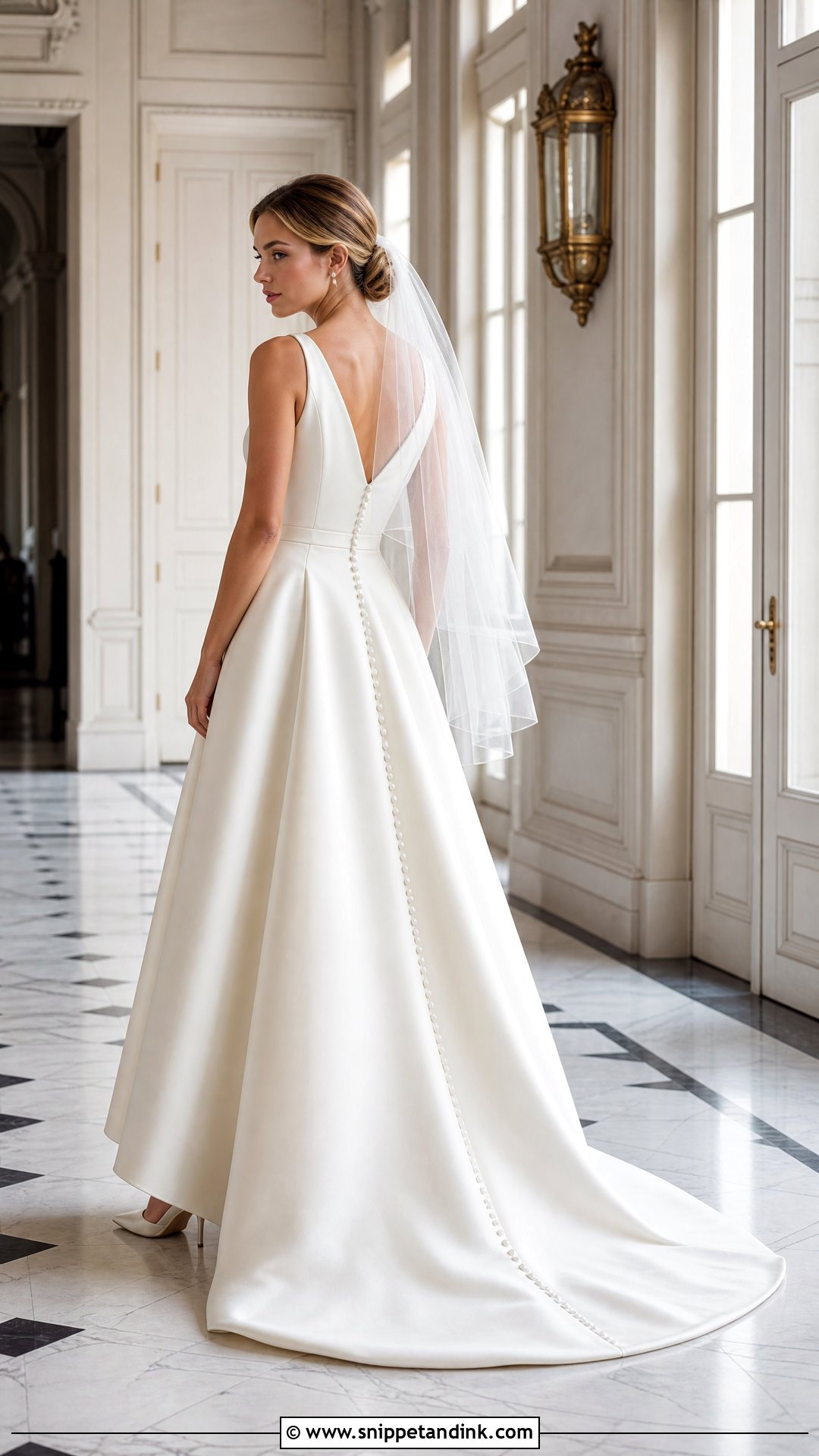
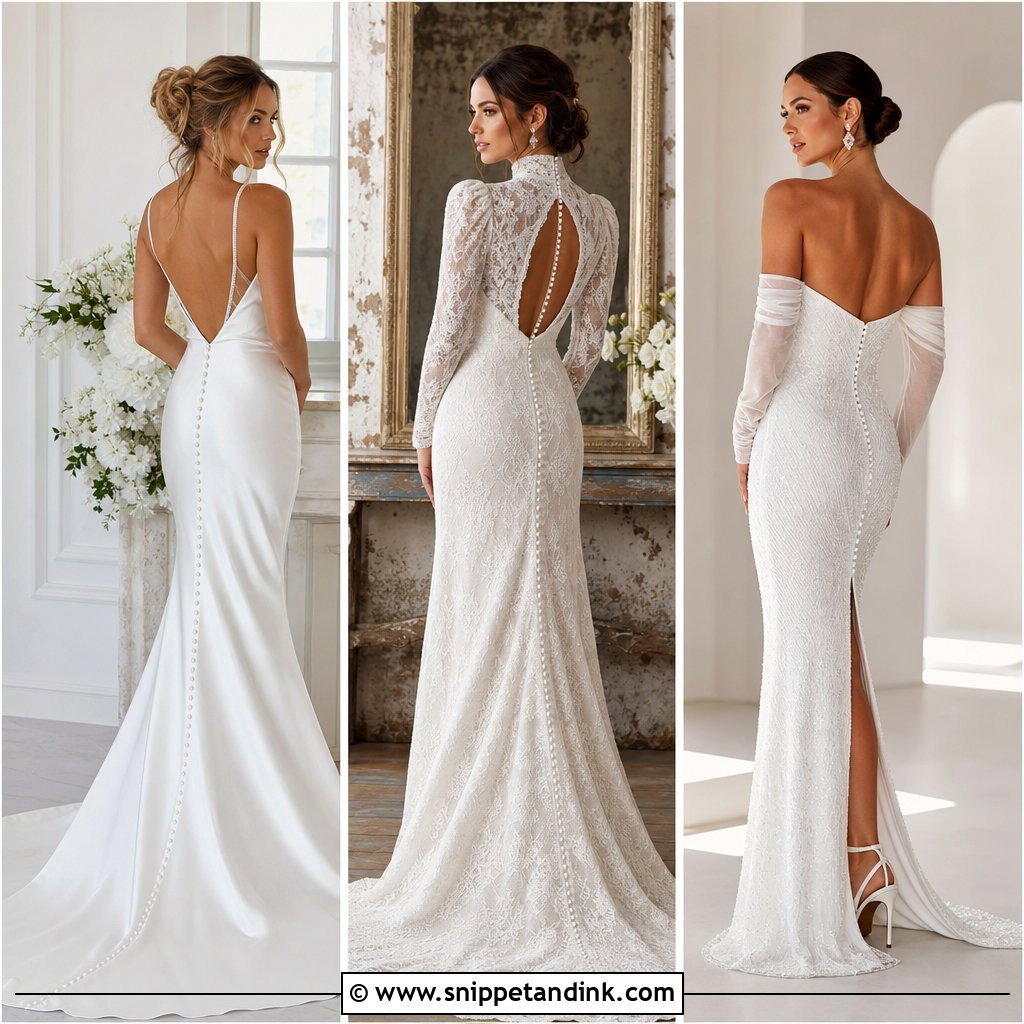
Satin and self-covered buttons are the classic pairing, because the buttons catch the same sheen as the gown. A fitted bodice with a clear waist and a skirt that glides rather than balloons gives the row a clean run from upper back toward the hem. Pointed ivory pumps, pearl studs and a fingertip veil with a raw edge keep the focus there, and a low bun keeps the hair off it. Ask early whether the buttons fasten or sit over a zip. Satin shows every pull, so if the gown is snug, a zip underneath gives a smoother closure than thirty loops under tension.
2. Long Sleeve Lace Wedding Dress With Button Back
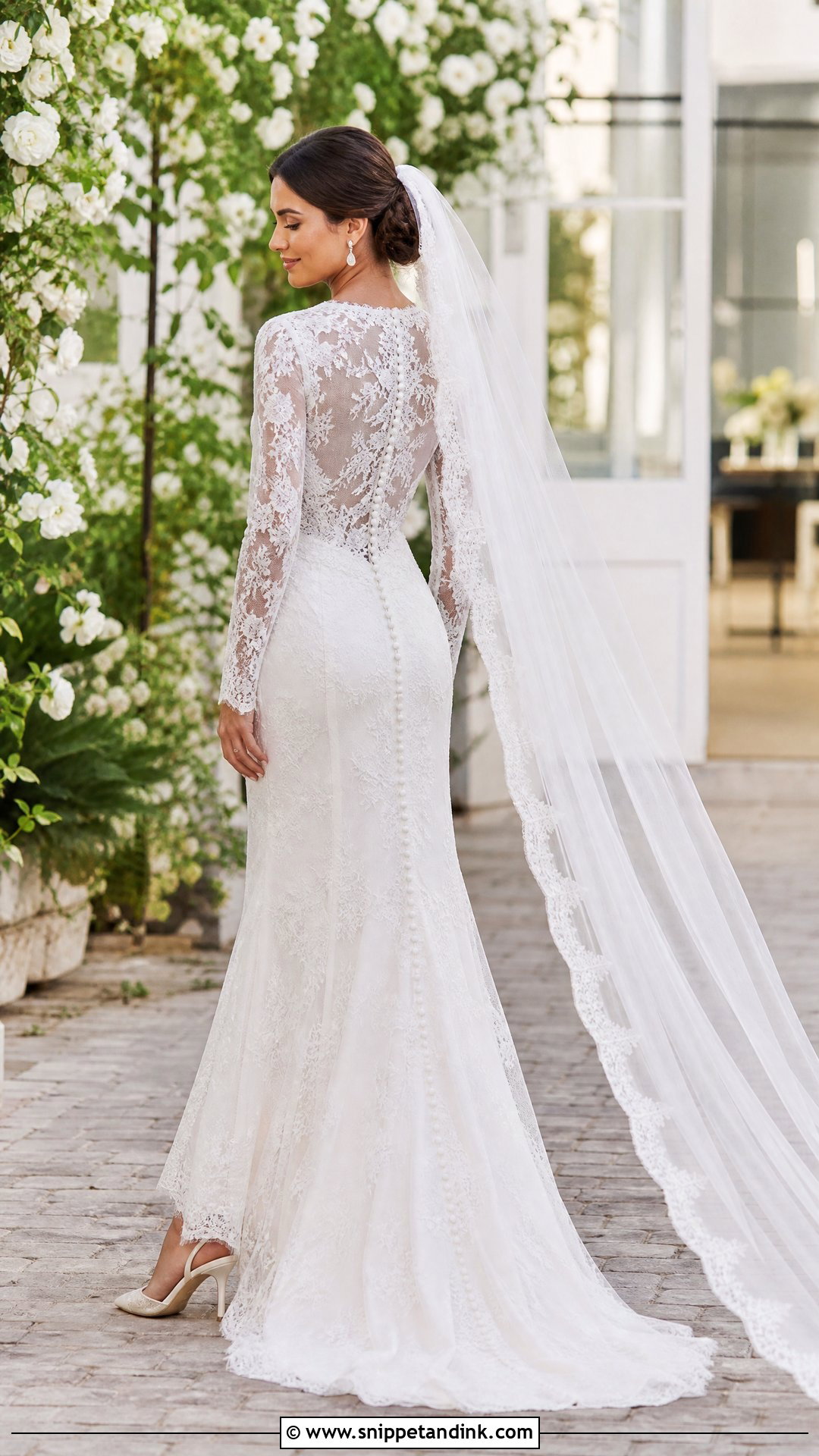
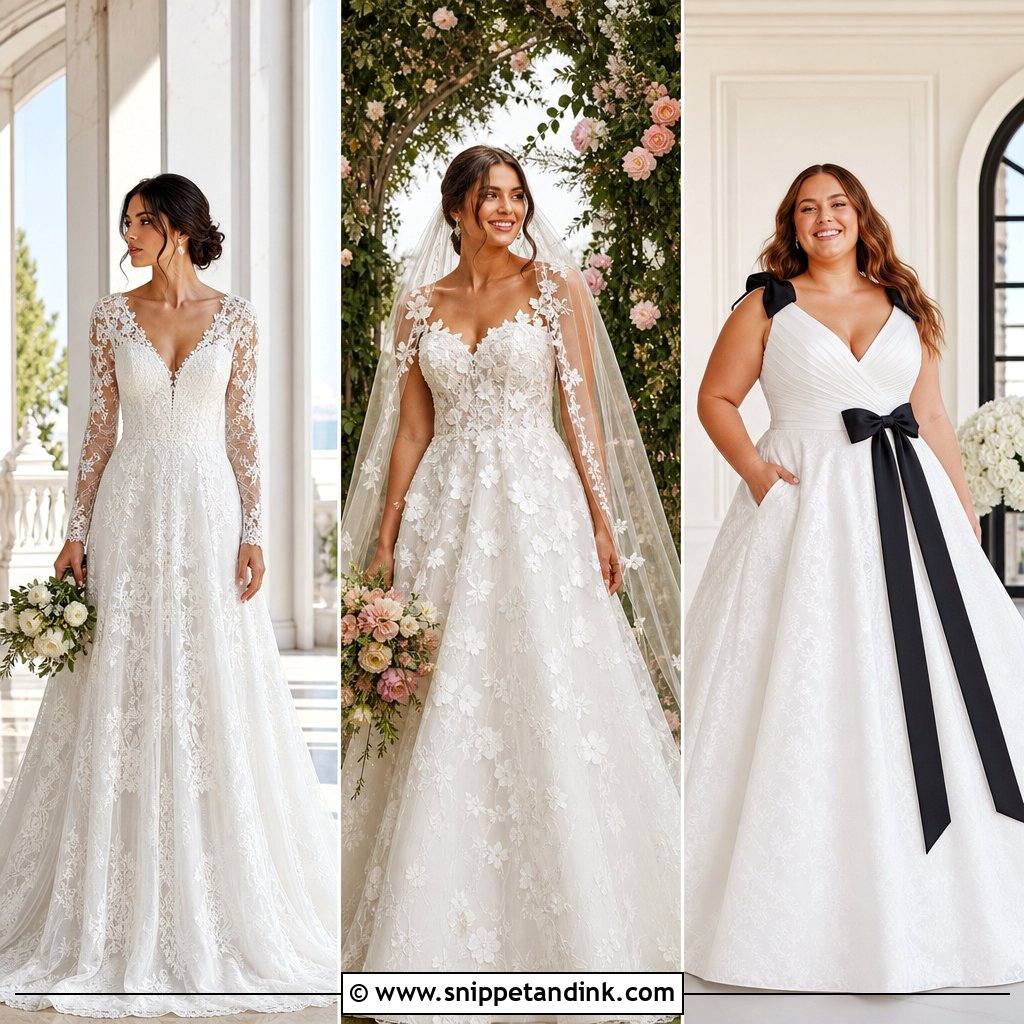
Lace with tiny buttons is about as traditional as bridal gets. A fitted lace bodice, long sleeves and a softly flared skirt let covered buttons run from the neckline to the lower back, or on over the skirt. If the lace is busy, I’d keep the buttons small and tonal; pearls or crystals on top of a detailed pattern turn into clutter. Ivory slingbacks, small drops and a light chapel veil edged in matching lace suit it, with a soft chignon so the back stays clear. With sleeves and a closed back, it’s a comfortable choice for autumn, winter or a formal garden ceremony.
3. Strapless Ball Gown With Buttons Down Back
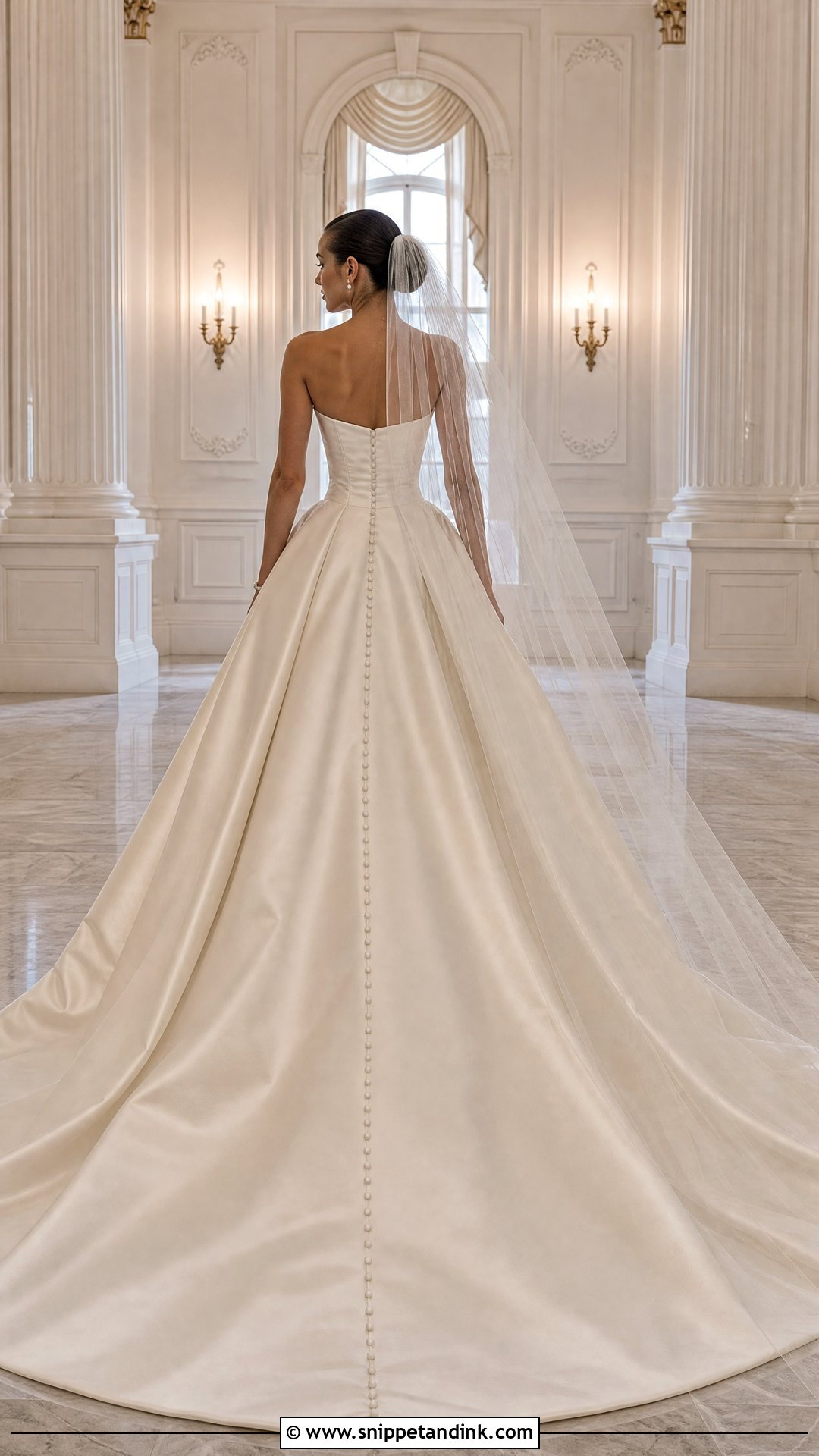
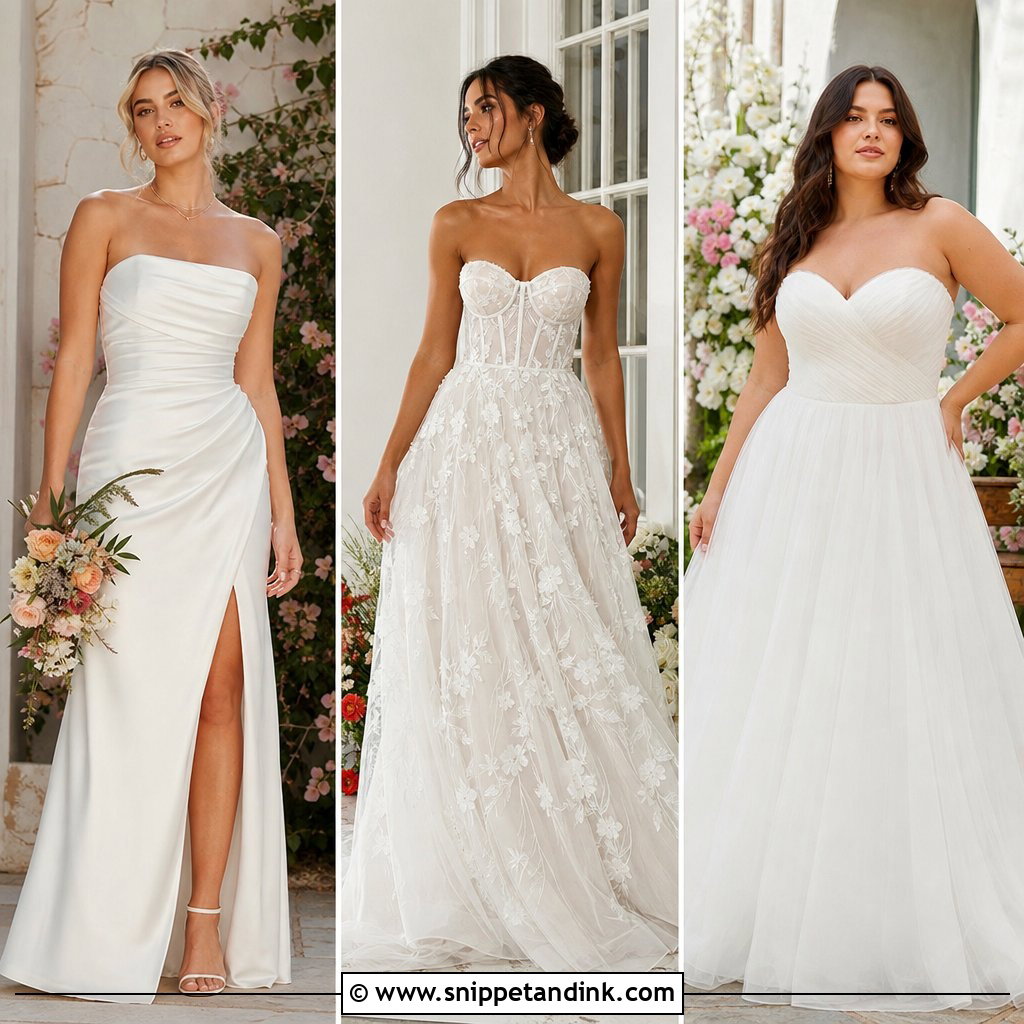
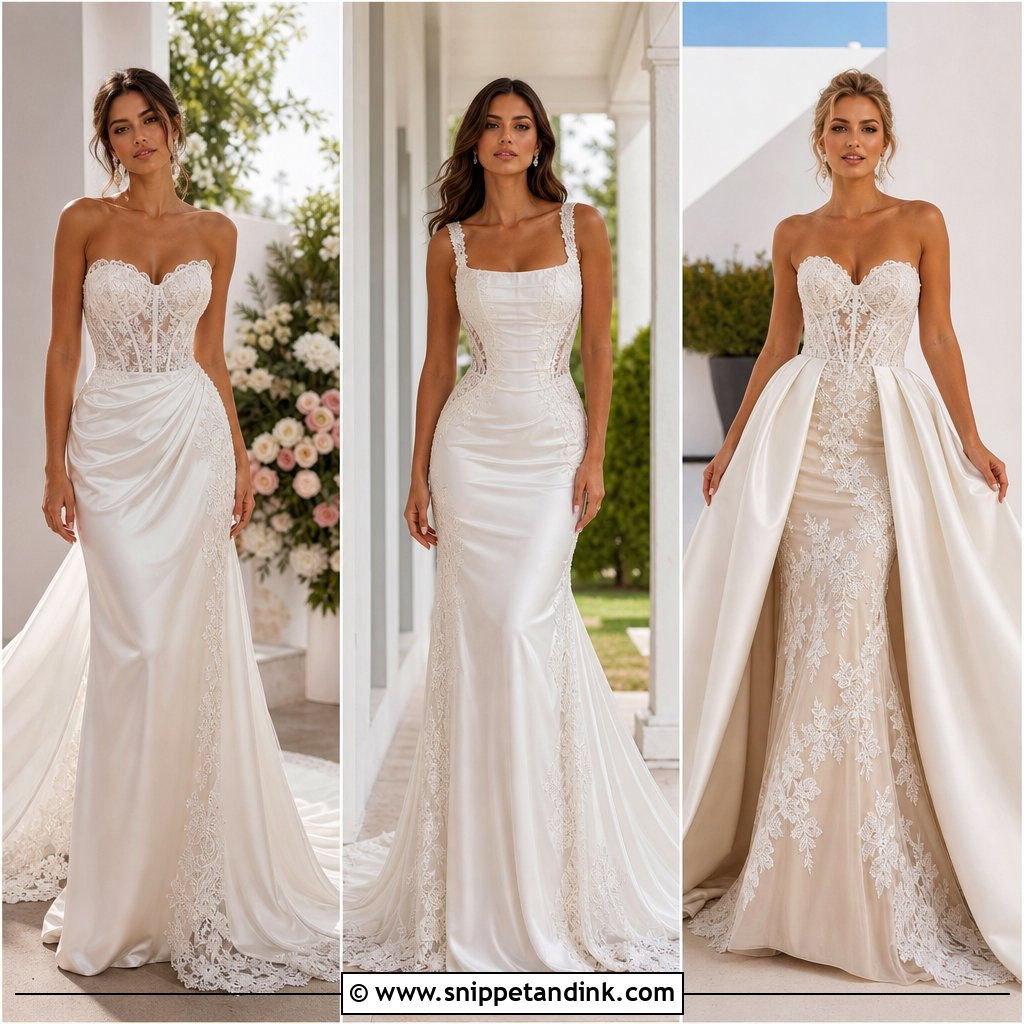
Run the buttons right into the train of a strapless ball gown and you get a line that pulls the eye from the bodice to the very end of the skirt. A sculpted, boned bodice gives the support, and full satin or mikado gives volume. Matching fabric and even spacing keep the effect expensive rather than busy. Under all that skirt, comfortable platform pumps are the sensible choice. A tennis bracelet and medium pearls are enough jewellery. If you wear a cathedral veil, make it sheer; an opaque one hides every button in the ceremony photos. A sleek bun or waves over one shoulder finish it.
4. Crepe Mermaid Wedding Dress With Button Back
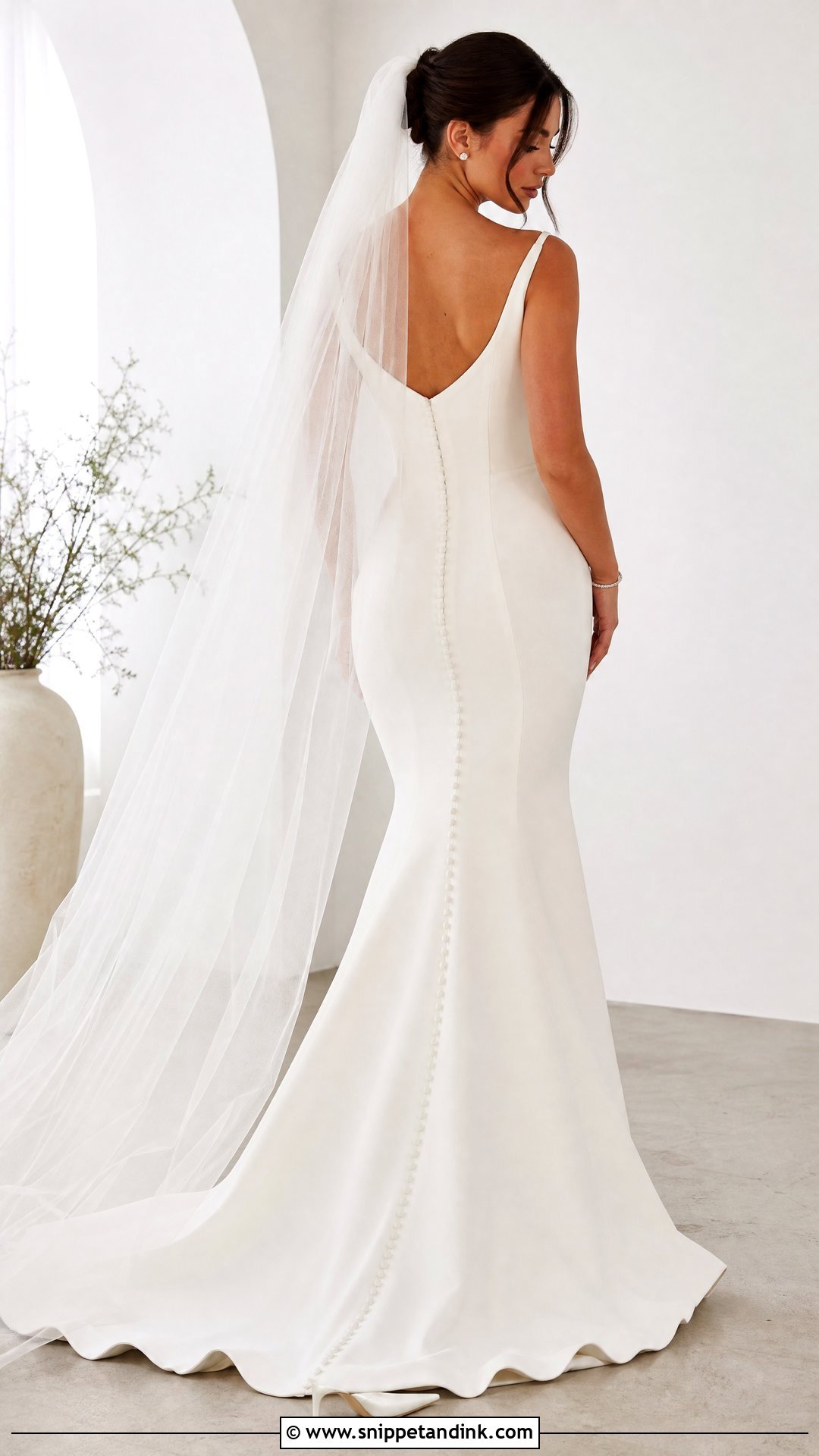
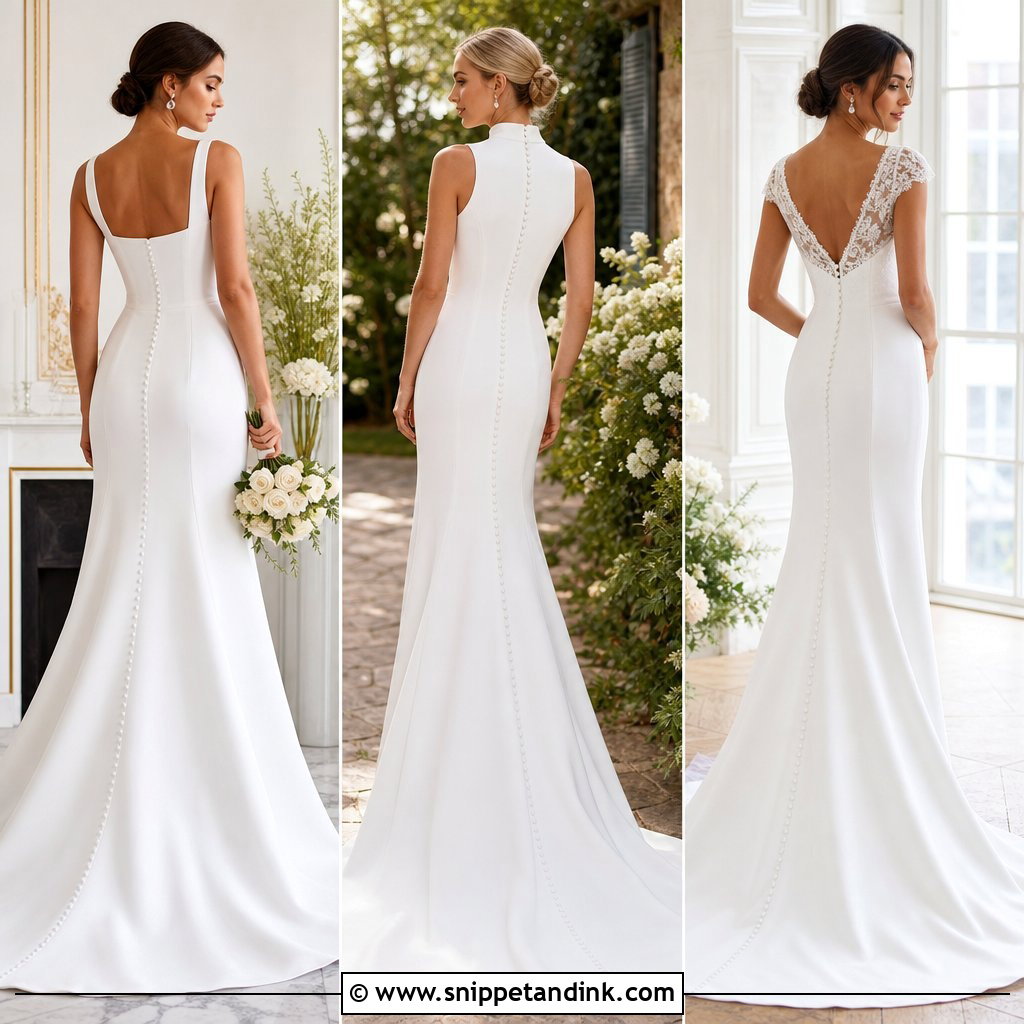
Crepe hides nothing, which is exactly why a button back looks so good on it and also why it’s unforgiving. A mermaid that follows the body through the hips before opening into a soft train suits a close row of crepe-covered buttons, which lengthens the line. Pointed satin heels, crystal studs and a slim bracelet keep it modern. During fittings I watch the buttons while the bride walks and sits: on a fitted crepe gown, any strain across the hips shows up as the row wobbling or gaping between buttons. A short or sheer chapel veil and a low ponytail or side-parted bun keep the back visible.
5. Square Neck Wedding Dress With Buttons Down Back
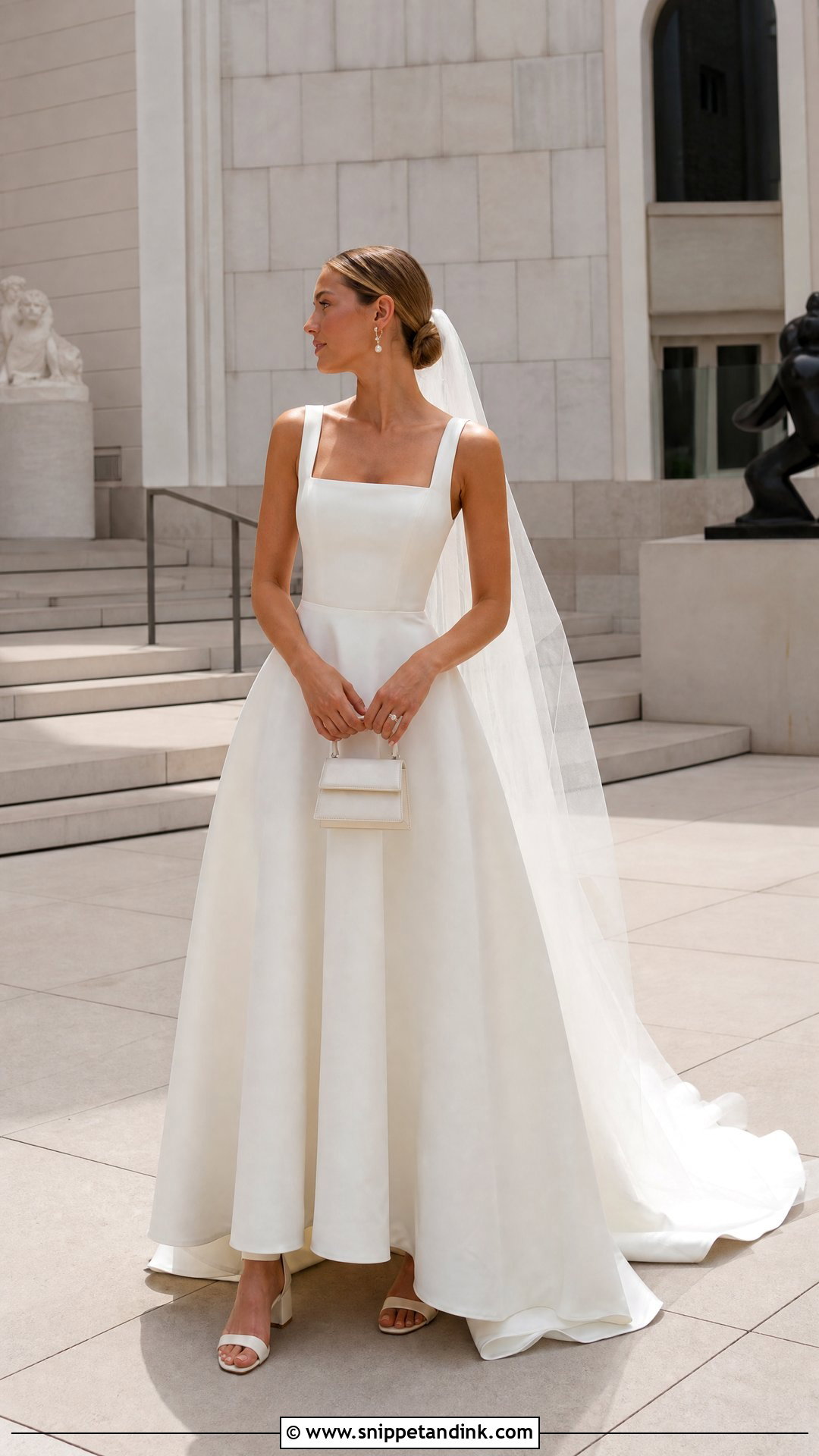
The square front gives structure, and the buttons give the view from behind. Thick straps, a fitted bodice and either an A-line or column skirt work. Because the neckline is geometric, I’d stick with small fabric-covered buttons over pearl or jewelled ones. Block-heel ivory sandals, modern pearl drops and a structured mini bag suit a hotel, museum or minimalist venue. Attach a simple tulle veil below a low bun so the neckline and the row both stay visible. If you’d rather not be buttoned in for twenty minutes, ask for a hidden zip beneath.
6. Off Shoulder Wedding Dress With Button Back
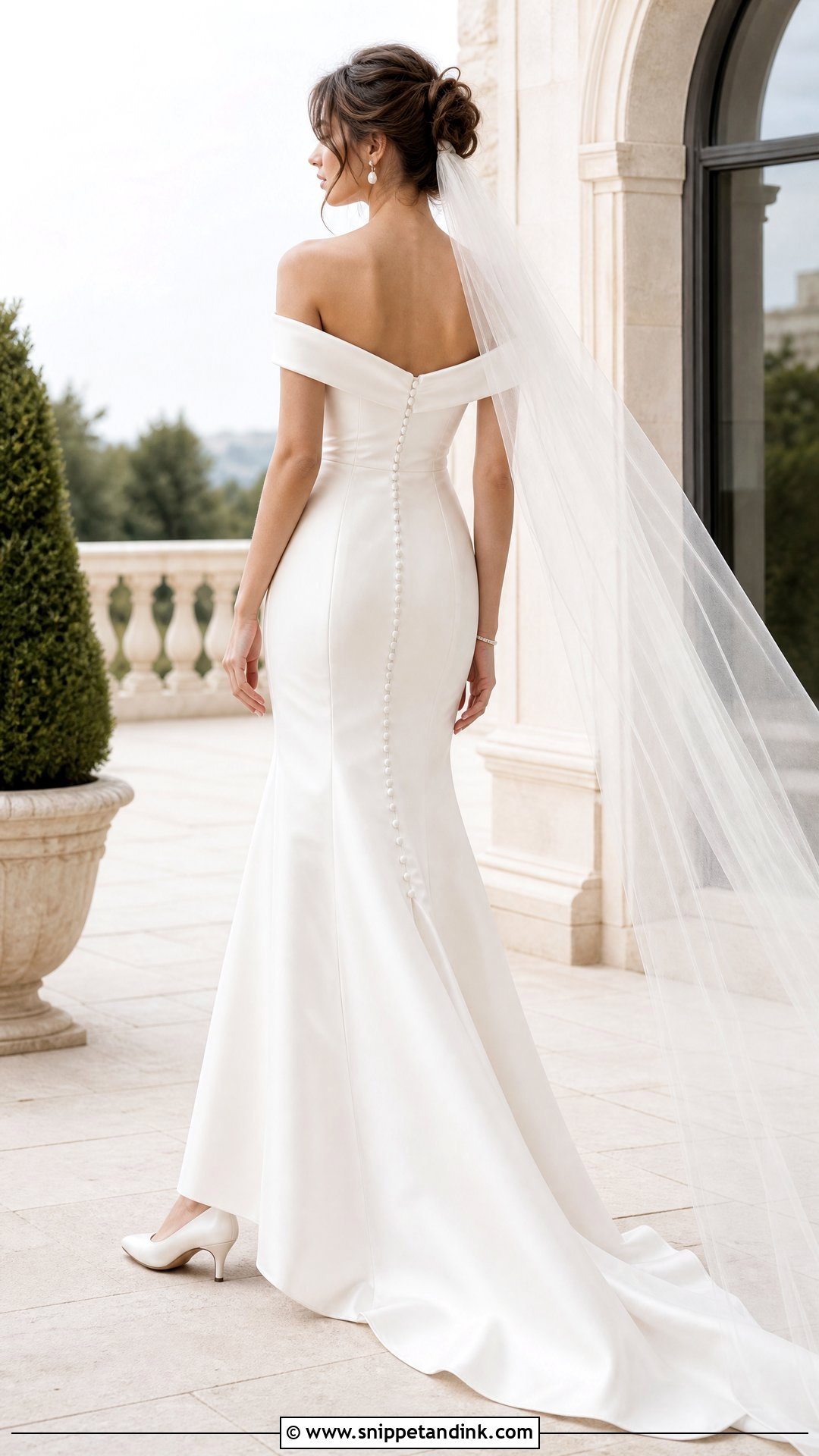
Off-the-shoulder sleeves show the collarbone from the front, and a button row balances that from behind. A satin fit-and-flare gives the combination a formal finish without needing beading. The buttons can run from the folded neckline through the waist onto the upper skirt. Here’s my one test before buying: raise your arms and sit down. The off-shoulder band should stay put, and the back closure should stay flat. Kitten heels, pearl-and-crystal earrings and a slim bracelet finish it, with a loose updo and a light chapel or shoulder-length veil.
7. Illusion Lace Back Wedding Dress With Buttons
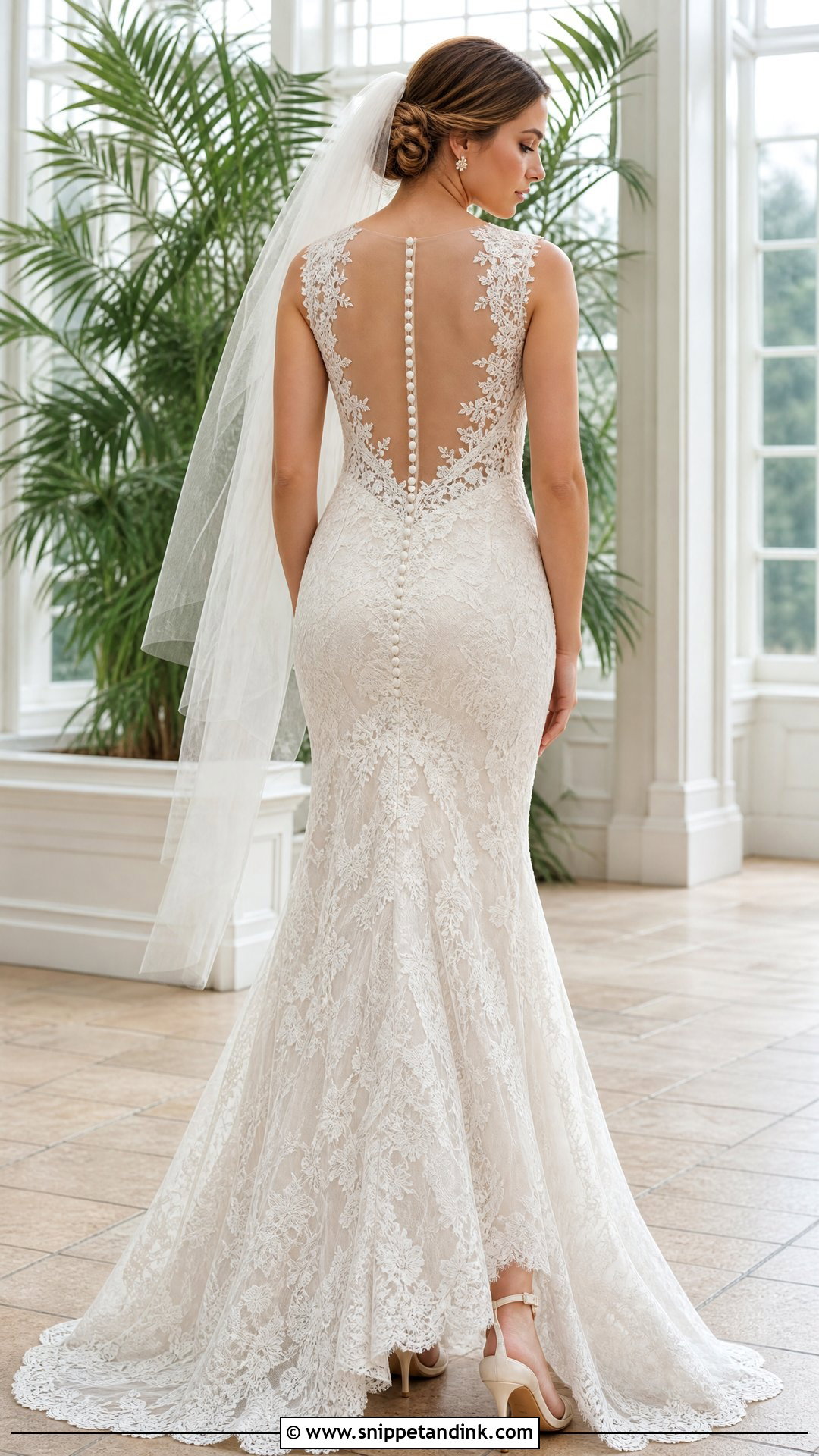
Buttons on an illusion back look as though they float along the spine. Sheer mesh holds the lace and the button loops, so the back stays light while still being secure. An A-line or fit-and-flare with lace arranged around the loops suits it. The mesh colour must be close to your skin tone, otherwise it shows as a pale panel in photos, so check it in daylight from several angles. I also look at how the loops are anchored: on mesh alone they can pull, so they should sit on a strip of lace or a stay tape. Ivory ankle-strap heels, floral studs, a plain tulle veil and a braided low bun complete it.
8. Open Back Wedding Dress With Buttoned Skirt
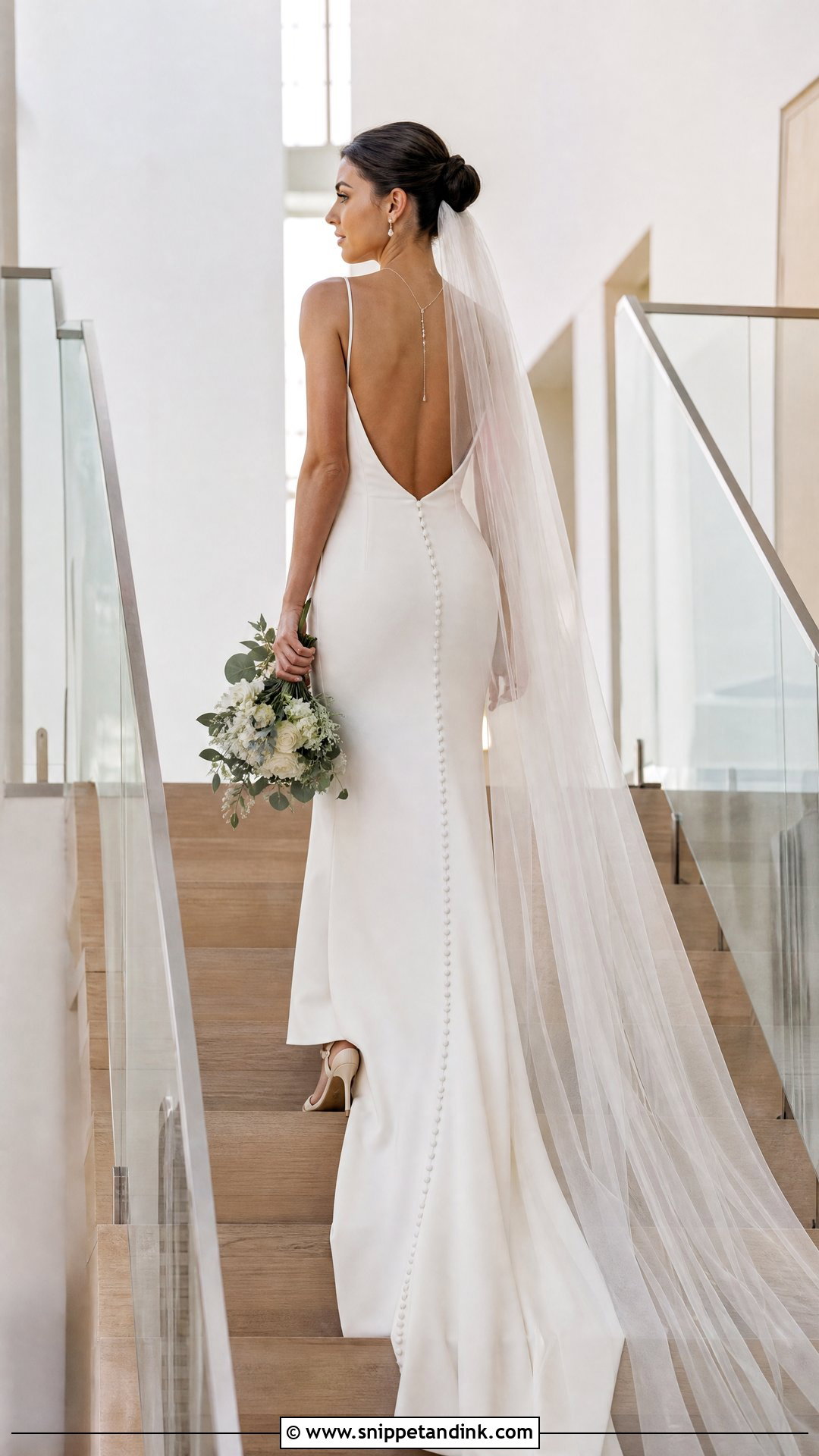
Here the back is open to the waist and the buttons start where the skirt begins, running on over crepe, satin or a lace train. It’s bold, so I’d keep the front plain. Secure straps and a firmly fitted waist are what hold the gown on; ask about built-in cups and the right undergarments before you buy, because a bare back rules out most bras. Minimal drop earrings and supportive ivory heels suit it. A back necklace is fine only if it doesn’t tangle with the top button. Wear the hair up and choose a sheer veil you can remove after the ceremony.
9. Minimalist Column Wedding Dress With Button Back
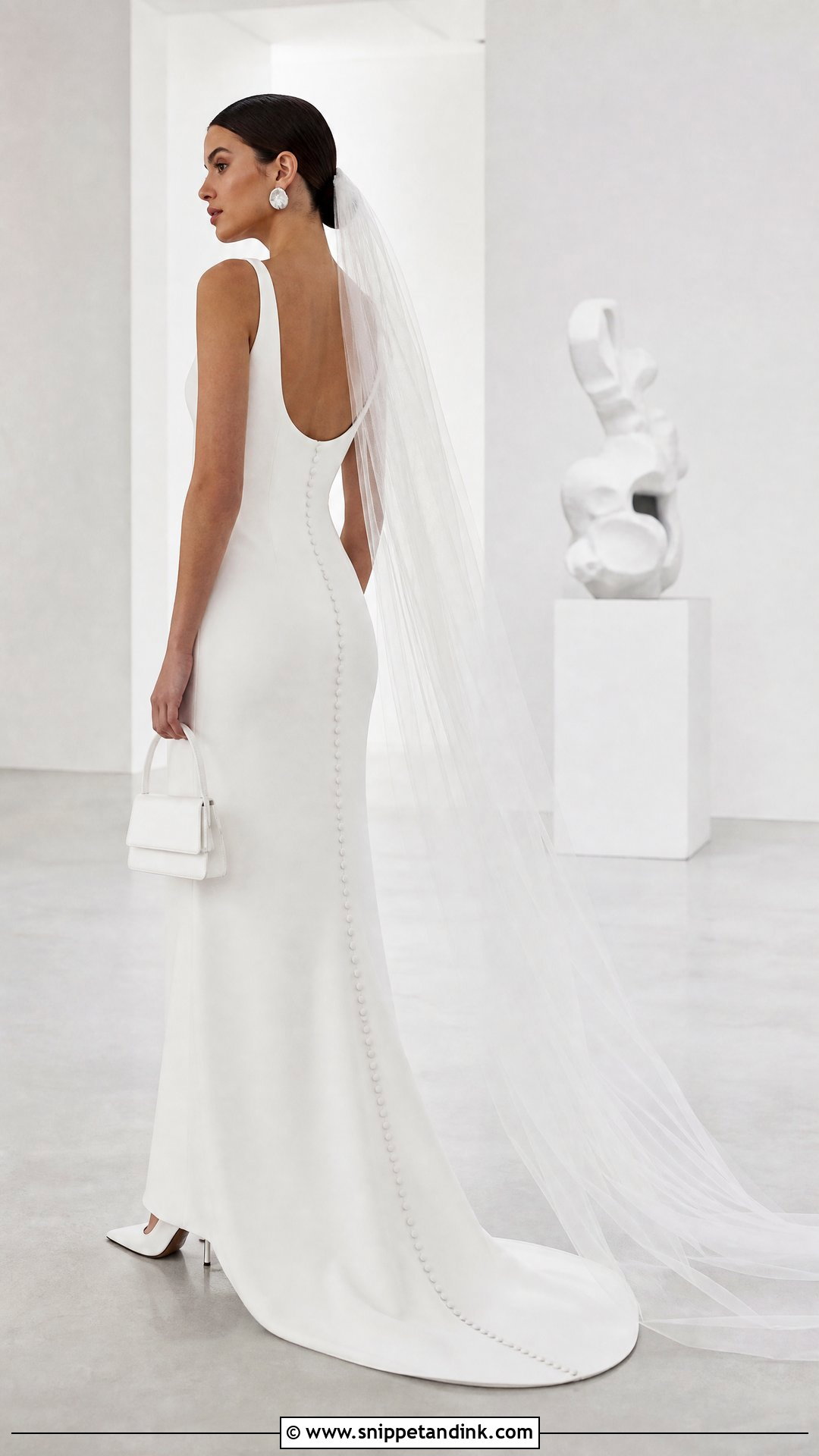
On a column gown with no lace or beading, the buttons become the decoration, so they need to be perfect. Heavyweight crepe or matte satin falling cleanly from a structured bodice suits a neat row from a high or scooped back to the end of a short train. Pointed pumps, sculptural earrings and a top-handle bag keep it pared back, with a low centre-parted bun. Go veil-free or wear a plain cathedral veil. Plain fabric shows every fitting flaw, so the tailoring around the waist, hips and zip matters more here than almost anywhere else.
10. Basque Waist Wedding Dress With Buttons Down Back
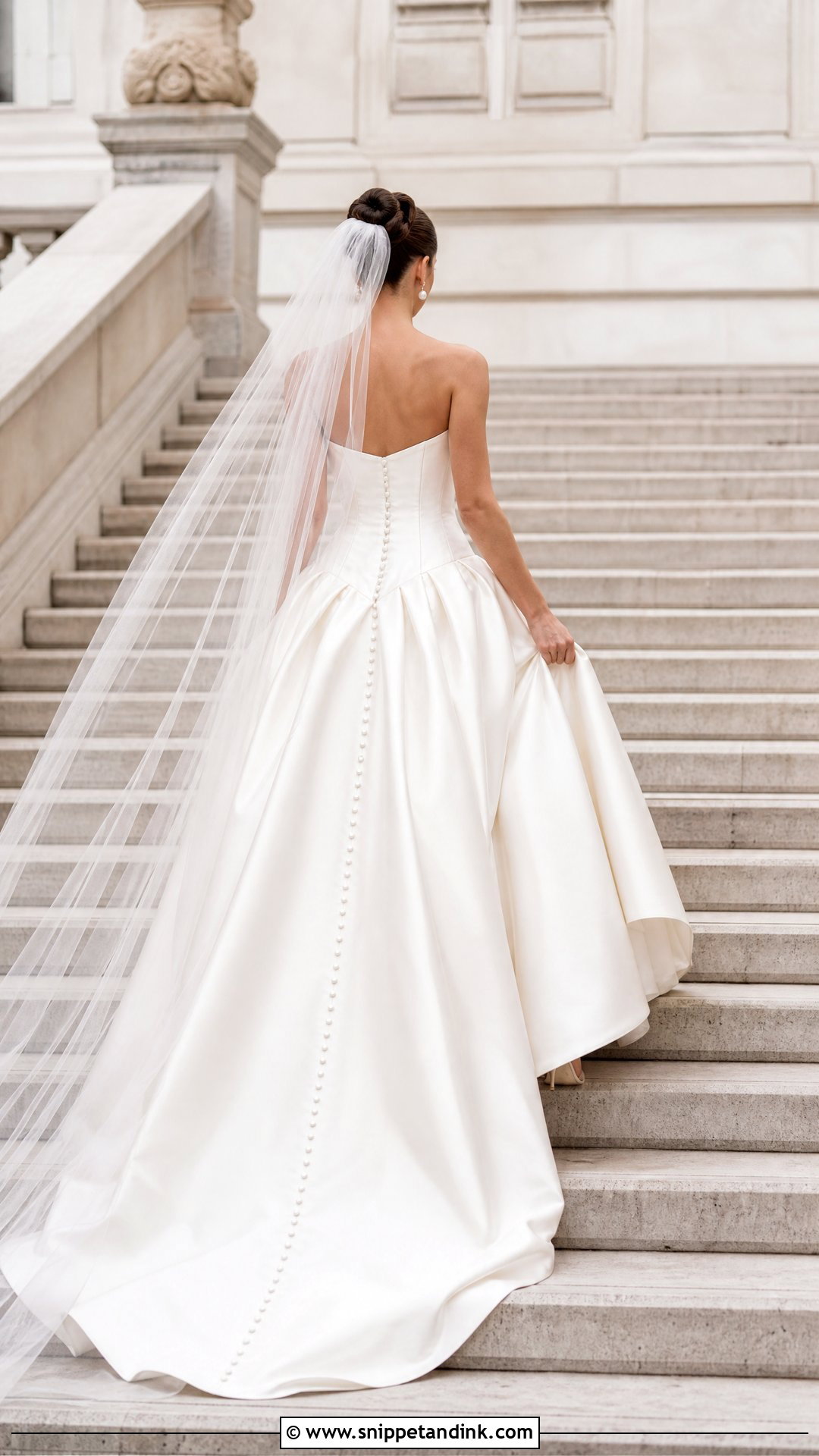
A basque waist dips to a point, and a centred button row runs straight through that point, which makes the bodice look longer still. A structured satin gown with a full or moderately flared skirt suits it, with buttons from upper back along the bodice and onto the train. Skip a wide belt; it chops the line in two. Pearl drops, pointed ivory heels and a sheer cathedral veil balance the drama, with a polished updo. At fittings, I check the point sits dead centre front and the buttons sit dead centre back. If either is off, the whole gown looks twisted.
11. Pearl Button Wedding Dress With Chapel Train
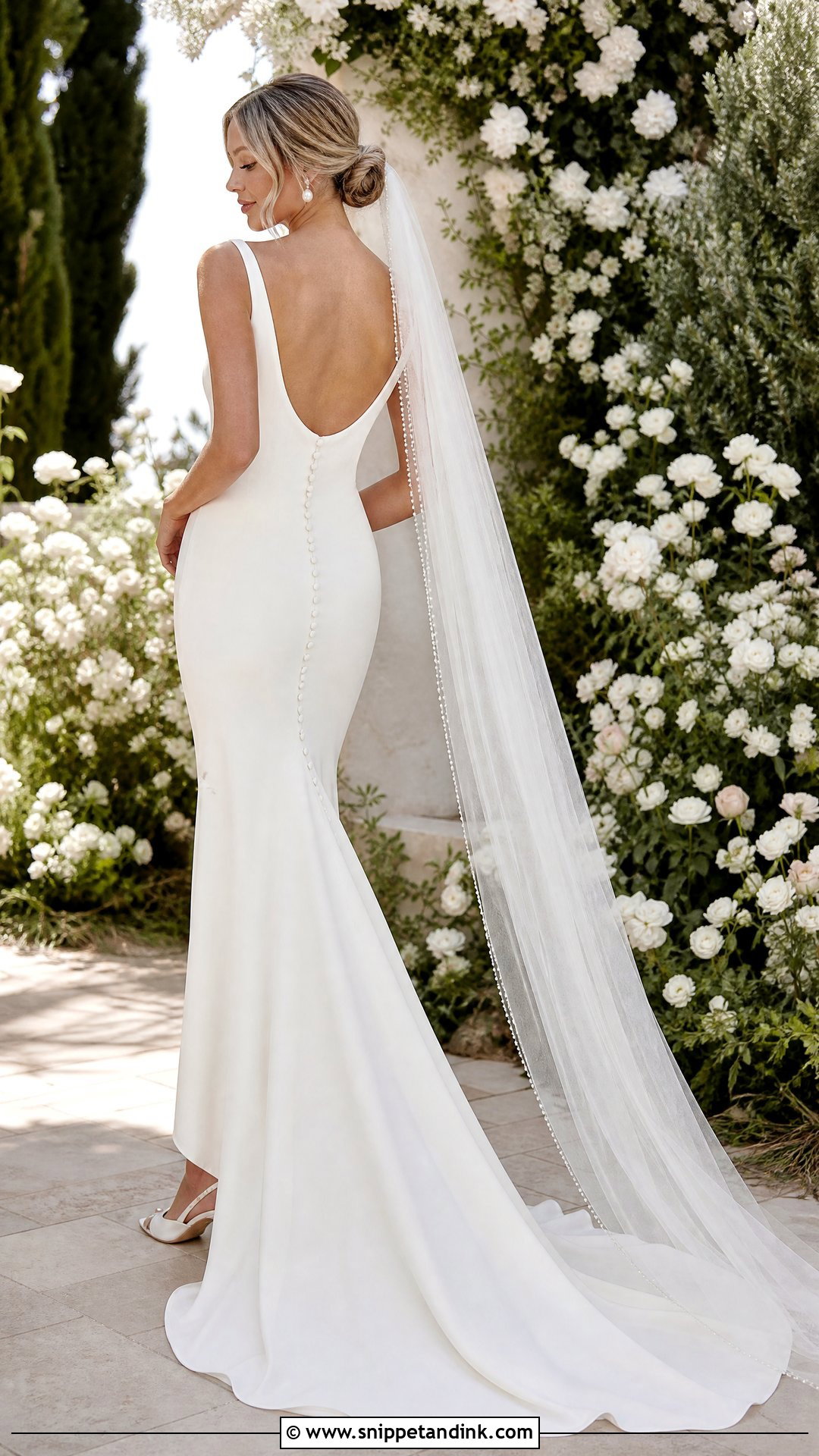
Pearl buttons give soft shine and look especially good against matte crepe, fine lace or plain satin. A fitted bodice and chapel train give the row room without making the gown hard to manage. Pearl earrings, ivory slingbacks and a fine pearl-edged veil complete it, but don’t add a pearl necklace and bracelet as well, or it all looks too matched. Pearls are heavier than fabric buttons and sit on shanks, so I ask for the shanks to be stitched through and the loops reinforced. A low textured bun or half-up style is fine if the hair stays off the top buttons.
12. Cathedral Train Wedding Dress With Buttons
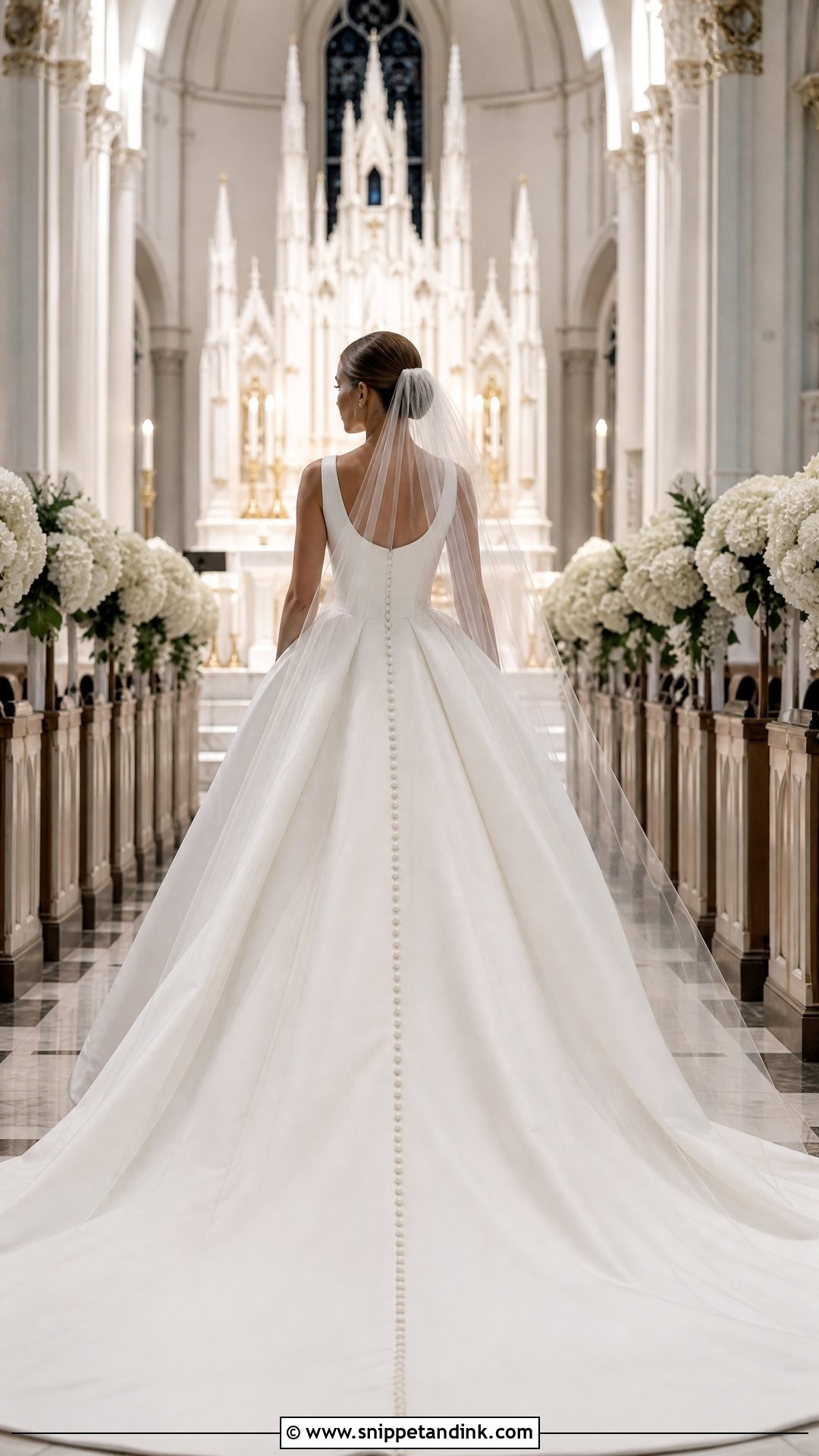
A cathedral train gives a long button row the space to run. A satin or mikado ball gown with a structured bodice suits buttons from upper back right to the end of the train. With so much going on, keep the extras simple: stud earrings, classic pumps and a long sheer veil without a heavy border. A smooth chignon keeps the back clean. Talk to your seamstress about the bustle early, because bustle hooks placed across the button line can hide or crush the buttons once the train is lifted. A wrist loop helps between portrait spots. The gown needs a long aisle to make sense.
13. Short Sleeve Lace Wedding Dress With Buttons
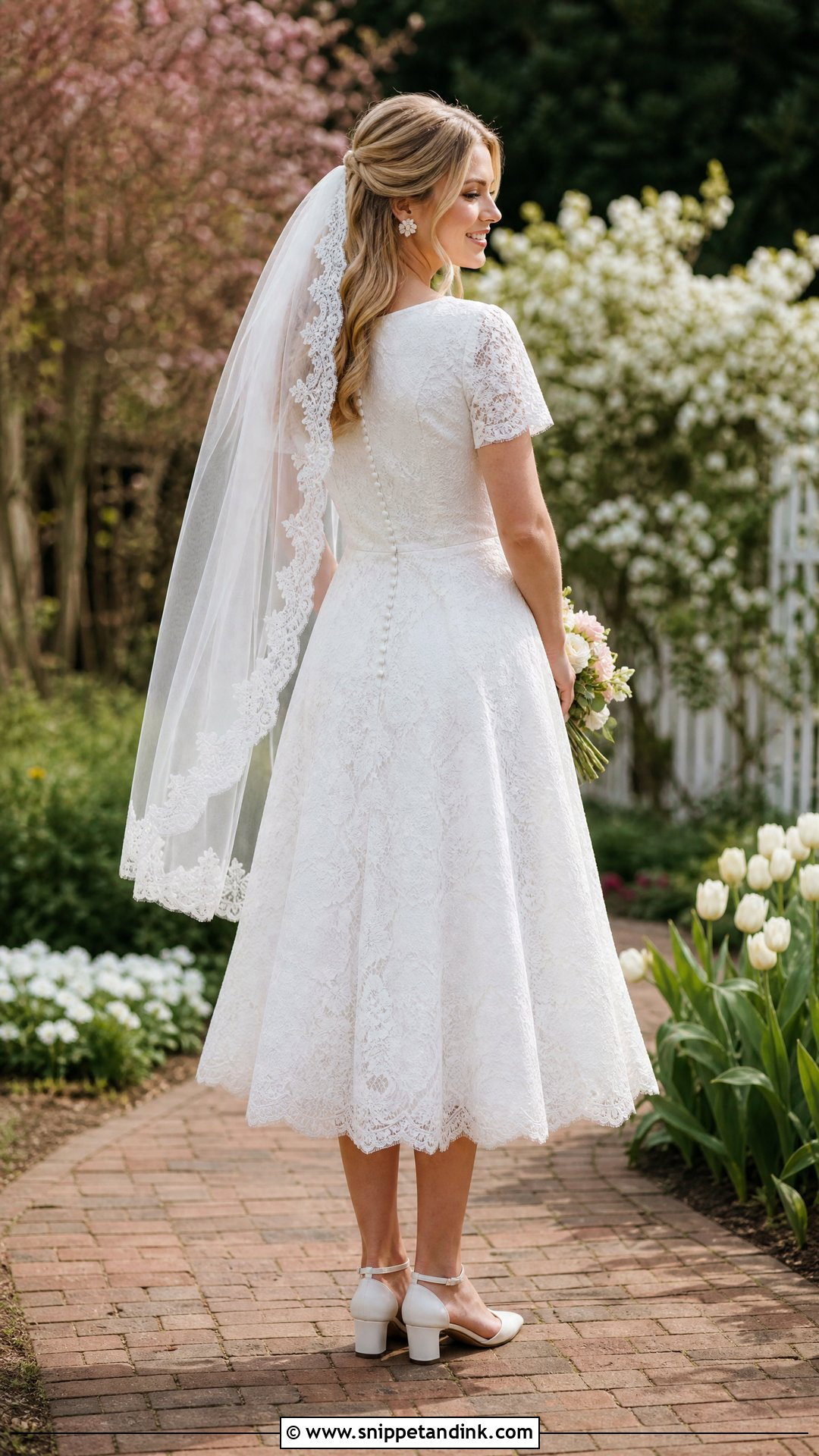
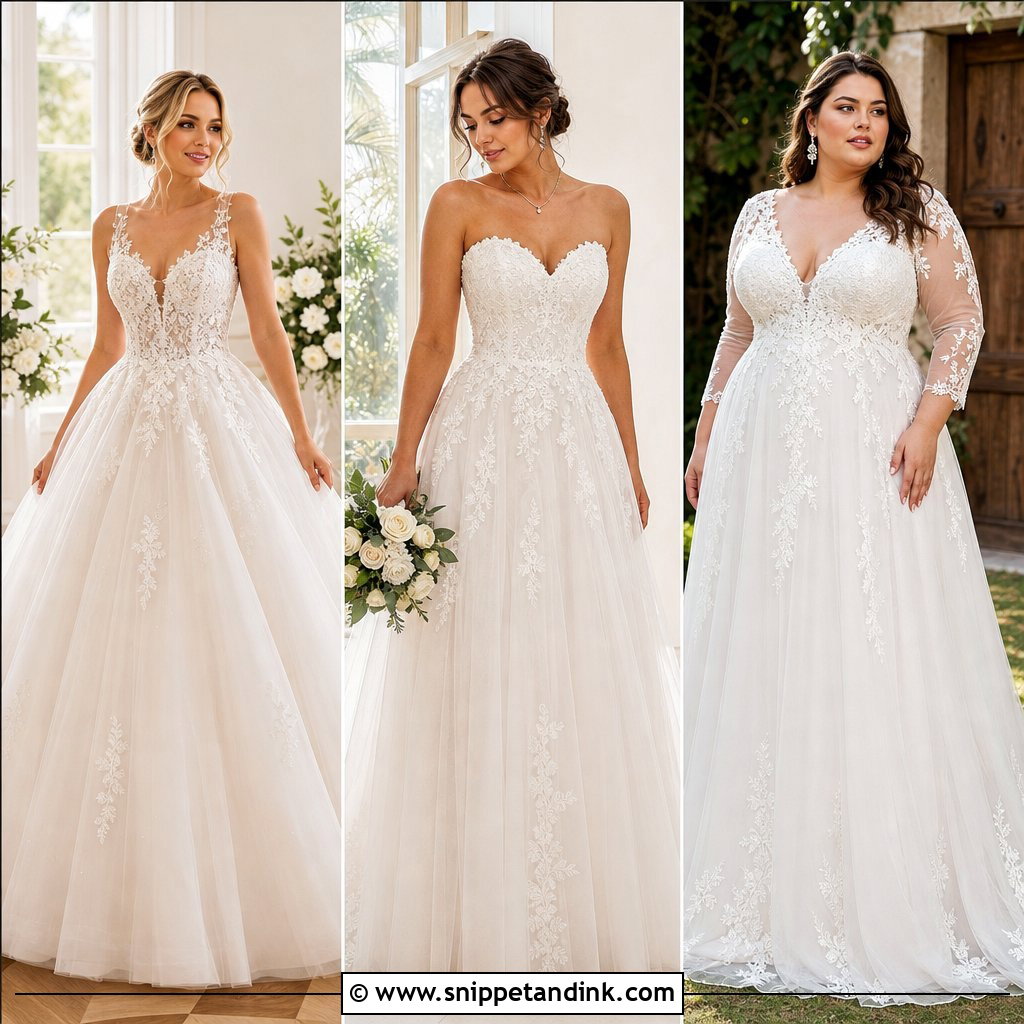
Short lace sleeves give light coverage and leave your arms free to move. A softly fitted A-line with a modest V-neck and covered buttons from upper back to waist or train suits a spring garden or a daytime wedding. Cover the buttons in the gown’s base fabric rather than the lace; lace-covered buttons look lumpy at small sizes. Low block heels, floral earrings and a fingertip veil with a fine lace edge complete it. If you wear the hair half-up, pin it away from the centre back, or the curls cover the row in every photo.
14. High Neck Wedding Dress With Button Back
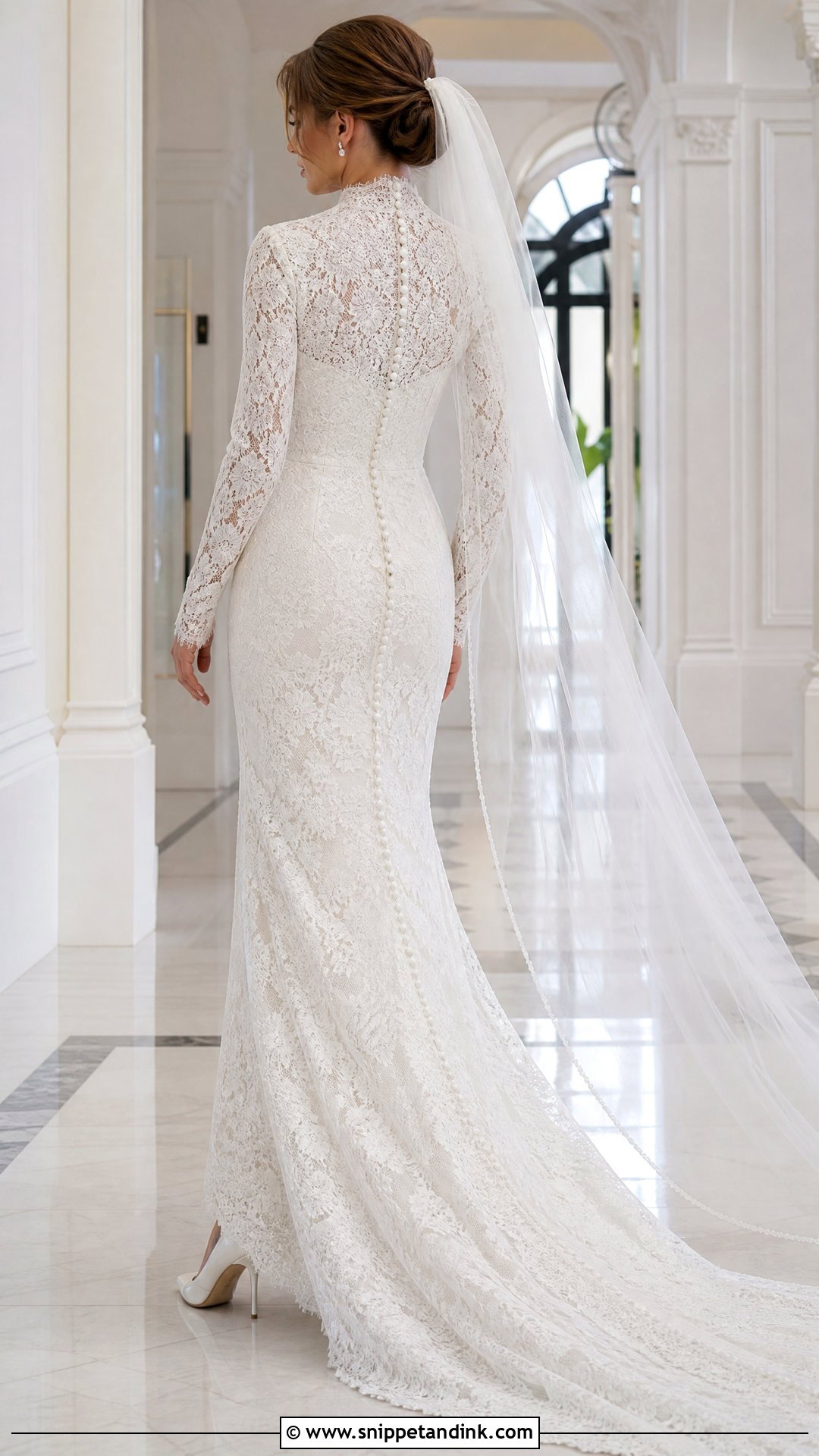
Buttons that start at the nape of a high neck draw one unbroken line all the way down. A lace or crepe bodice with a close neckline and a flowing A-line skirt suits it. Skip the necklace, since the collar already frames the face. I check that the collar lets you turn your head and look down without pressing on the throat; high necks often need a few millimetres let out. Stud earrings, pointed pumps and a light veil under a neat bun finish it. If the buttons really fasten, keep a button hook with whoever is dressing you.


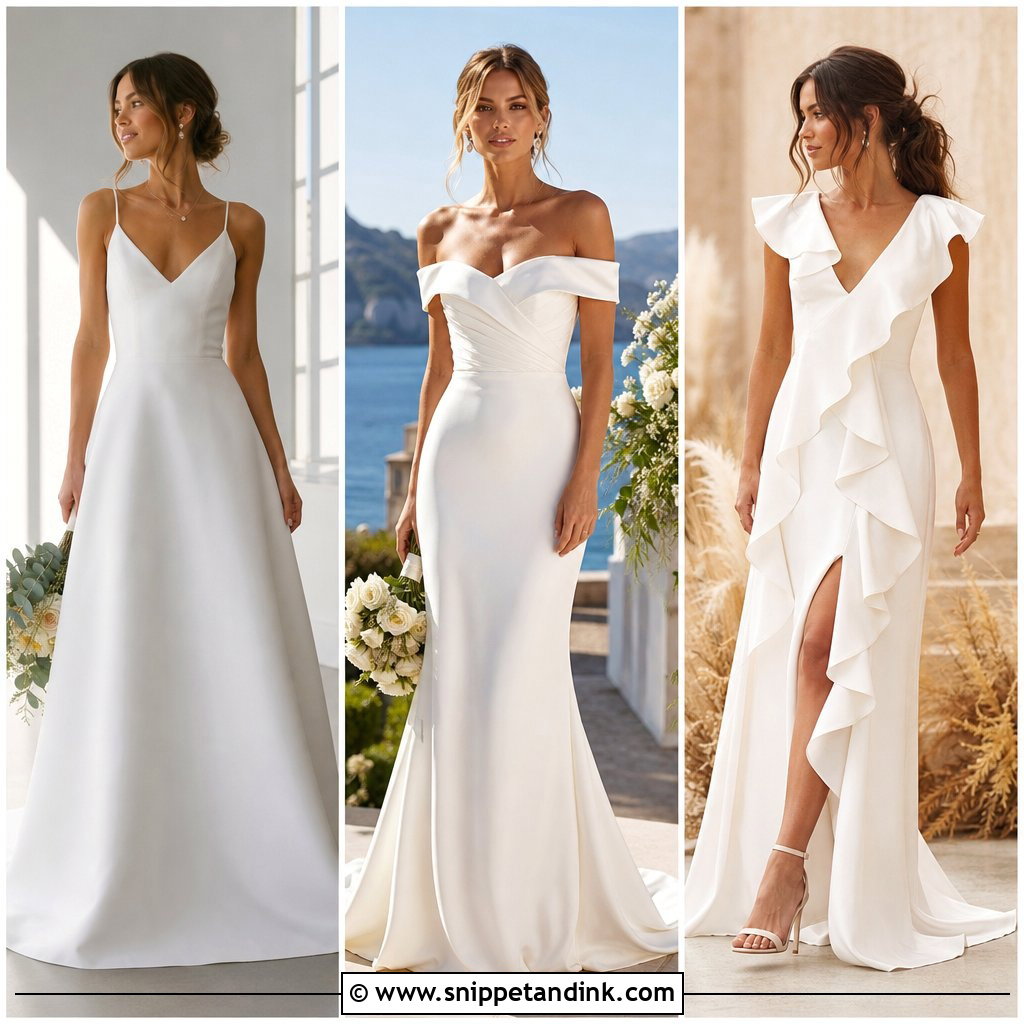
15. Cap Sleeve Wedding Dress With Buttons Down Back
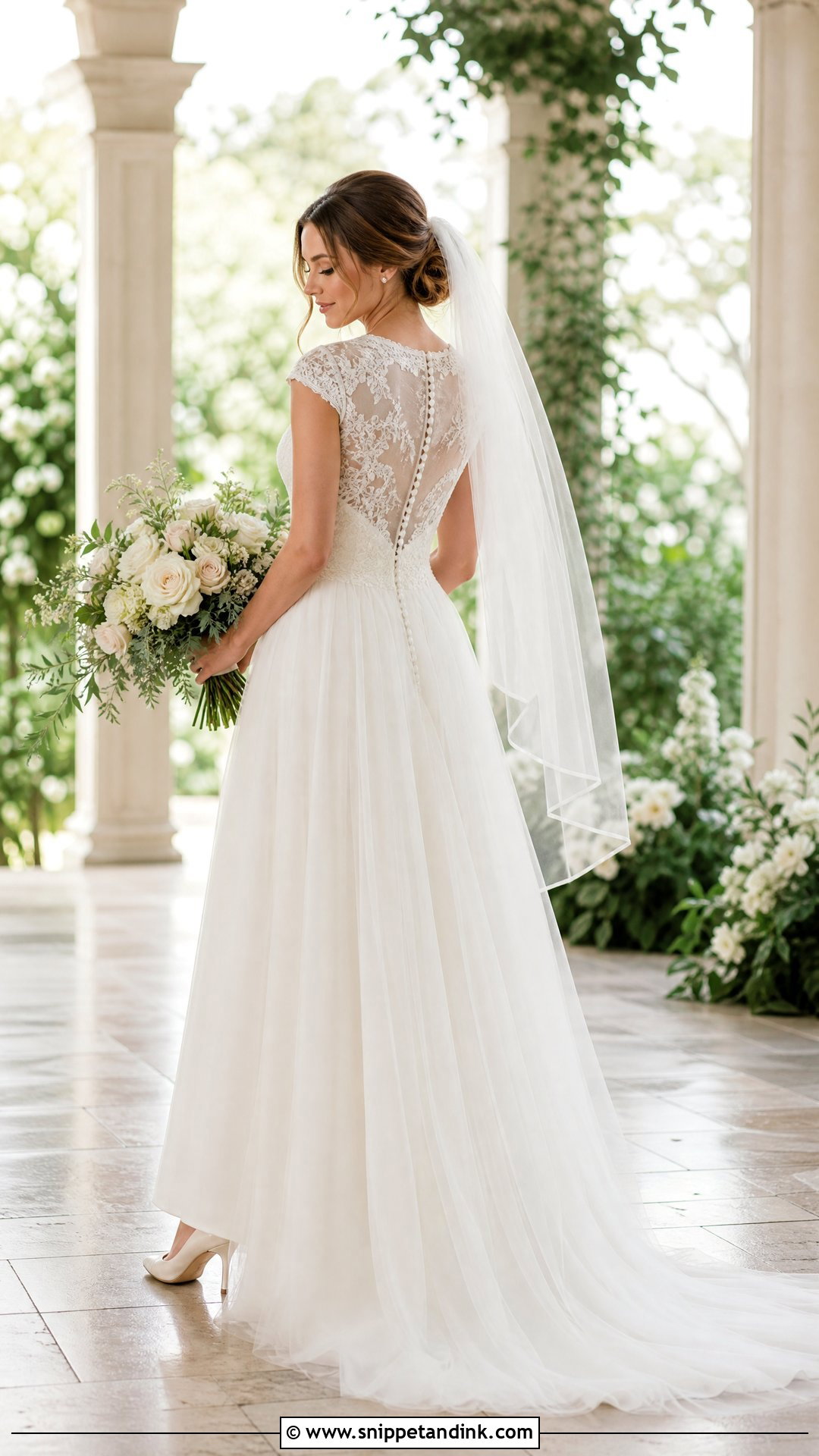
Cap sleeves give a small, neat shoulder line that suits a romantic button back. A lace bodice, natural waist and flowing chiffon or tulle skirt are the classic mix, with small covered buttons down the centre back and sometimes onto the train. Cap sleeves can restrict the arms if they’re cut tight, so lift your bouquet and hug someone at the fitting to see whether they pull. Almond-toe pumps, small pearls and a ribbon-edged veil complete it, with a loose low bun. It suits spring and early autumn, indoors or in a garden.
16. Drop Waist Wedding Dress With Button Back
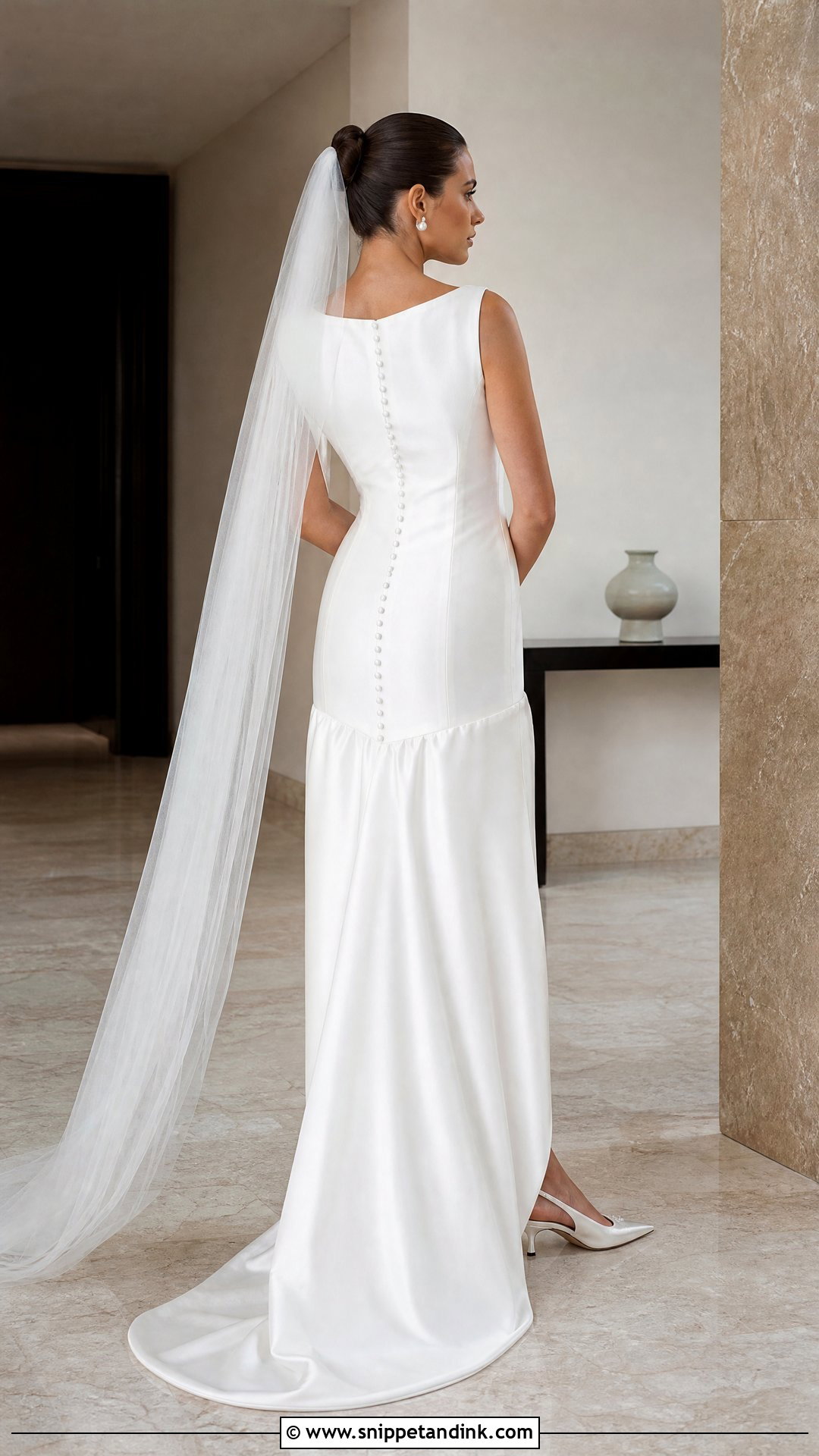
A drop waist moves the join below your natural waist, so the bodice runs long and a close button row stretches it further. Satin makes it architectural; lace softens it. Keep accessories quiet, with pointed slingbacks, medium pearls and a long plain veil under a sleek bun, since the long bodice is already the feature. The lower seam sits on the hips, so I check sitting, walking and dancing; if it rides up when seated, it needs more room there. Spacing around the hips matters too, as buttons placed too far apart gape over the widest point.
17. Tea Length Wedding Dress With Button Back
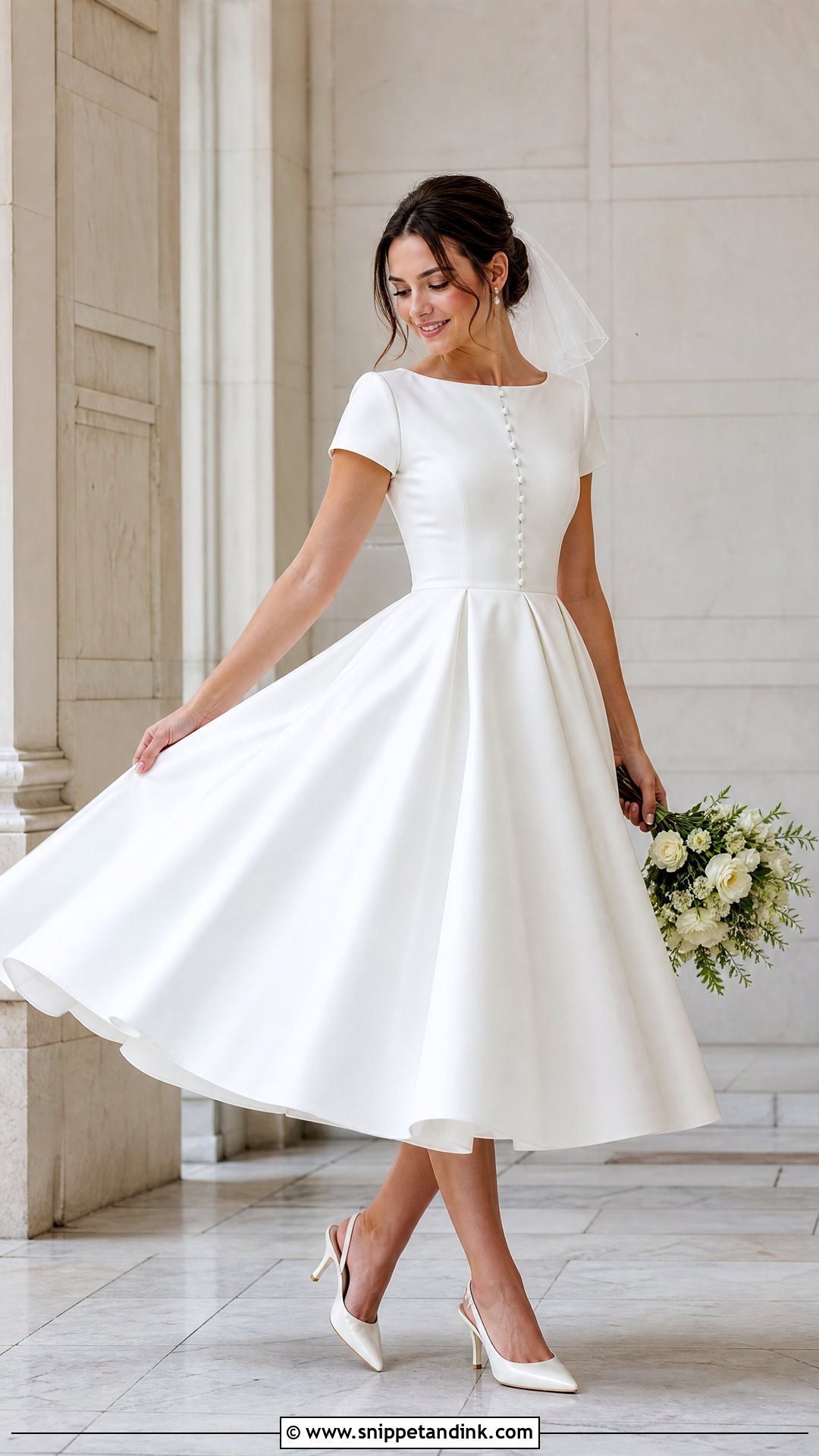
You don’t need a train for buttons to look bridal. A fitted bodice, a defined waist and a skirt ending between knee and ankle suit a row from neckline to waist. Keep the buttons small to match the lighter scale; large ones look heavy on a short dress. Your shoes will be seen, so choose them with care: ivory pumps, bow-back slingbacks or polished block heels. Pearl studs, a small bouquet and a birdcage or shoulder-length veil finish it, with a soft updo. It’s easy to move in and suits a courthouse ceremony or a daytime reception.
18. Plus Size Fit And Flare Wedding Dress With Buttons
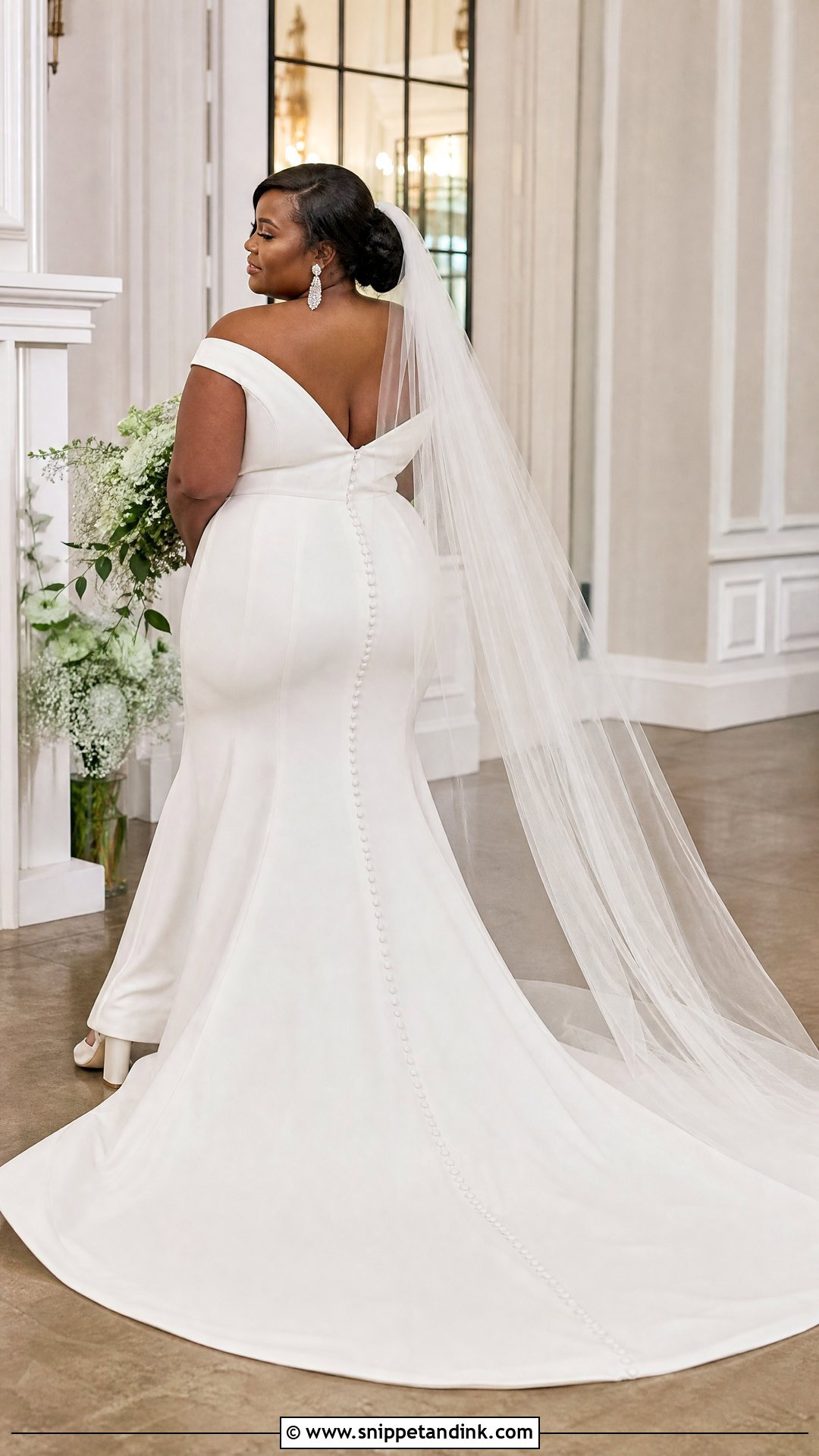
A well-cut fit-and-flare shows the waist and lets the skirt move freely. Supportive inner construction, a neckline that feels secure and stretch crepe or lined lace that follows the body all matter more than any body-shape rule. Buttons down the back give a long line and can continue onto the train. Stable block heels, statement drops and a soft chapel veil complete it, with an updo or side-swept hair. On curvier figures I always ask for a zip under the buttons and check the row stays centred as the bride moves, because loops carry a lot of strain at the waist and hips.
19. Wedding Dress With Detachable Overskirt And Buttons
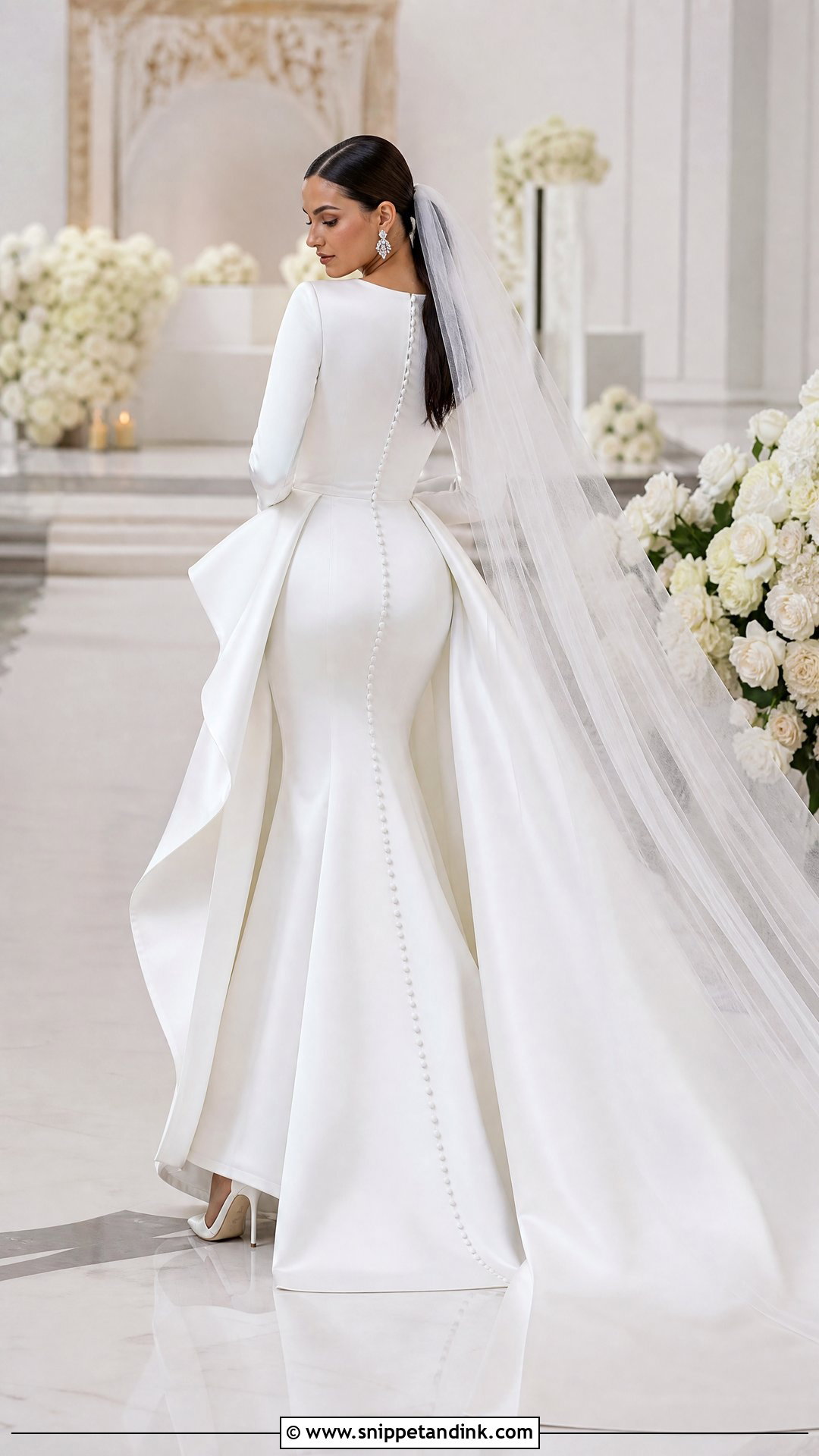
A detachable overskirt lets one button-back gown be two looks. Start with a fitted crepe or satin column with covered buttons from bodice to a short train. For the ceremony, a full overskirt goes on top. The tricky part is the waistband: it has to fasten cleanly without covering or breaking the button line, so it usually closes at the side or hooks under the row. Pointed heels, crystal earrings and a cathedral veil suit the entrance. After portraits, the overskirt and veil come off. Ask the seamstress to test every fastening so an attendant can release it in a minute.



20. Vintage Silk Wedding Dress With Buttons Down Back
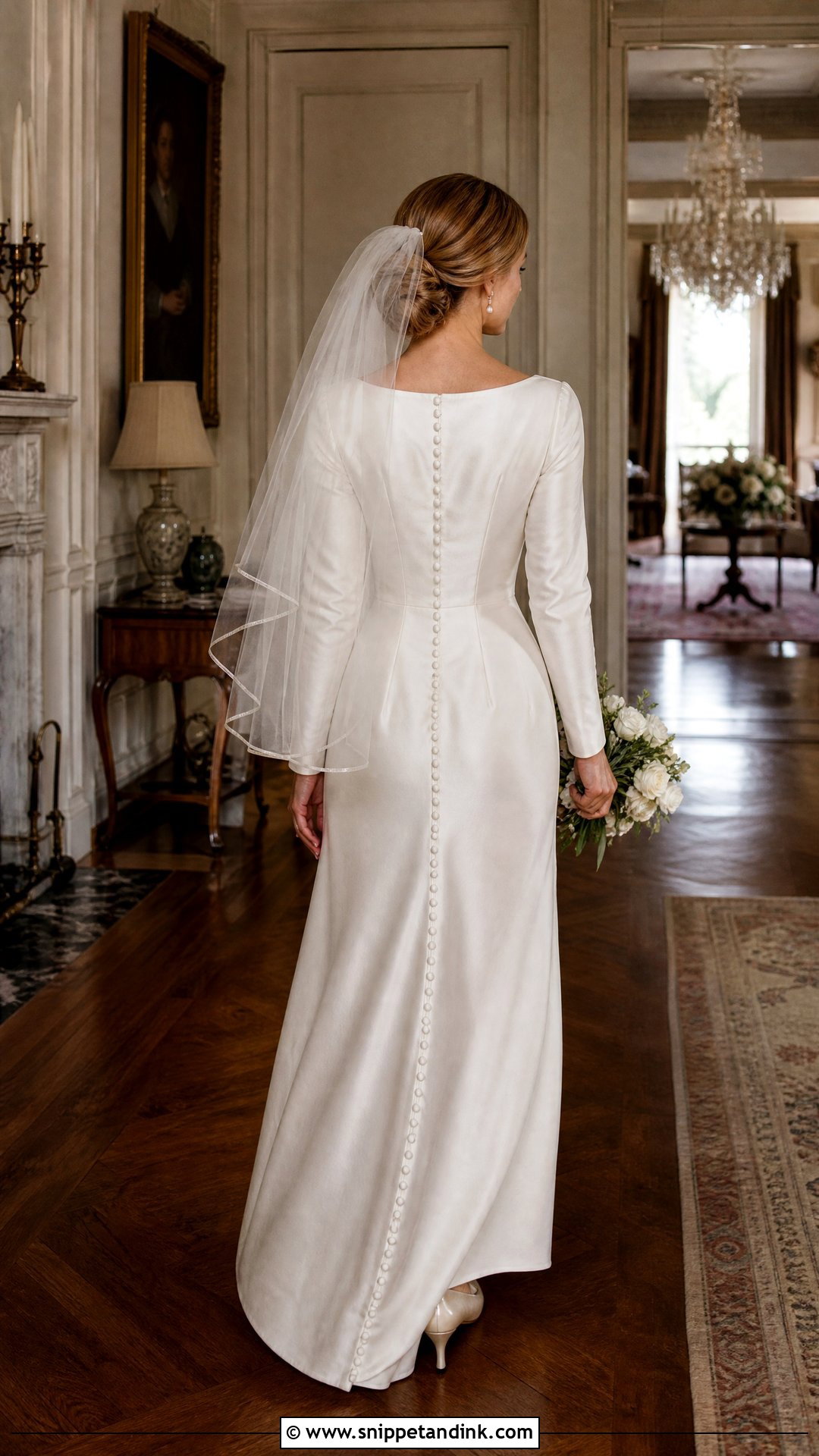
Silk moves beautifully, and silk-covered buttons on a vintage-inspired button-back gown look hand finished. A bias cut or softly fitted shape with long sleeves, a bateau neck or a small cowl suits it, with buttons from upper back to waist. Low satin pumps, antique-style pearls and a plain fingertip veil complete it, with soft waves pinned low or a rolled updo. Skip sparkly jewellery; it fights silk’s quiet sheen. Silk tears where it’s stressed, so ask how the loops and zip are reinforced. A strip of interfacing behind the loops prevents most problems.
Why a Button Back Is Harder to Alter
A plain back can be taken in at the centre seam in an afternoon. A button back usually can’t, because the buttons sit on one side and the loops on the other, and moving that seam means removing and resetting the whole row. Most seamstresses take a buttoned gown in at the side seams instead, which keeps the row straight but limits how much they can change.
That has a practical consequence. If your size may change before the wedding, a functional loop back is more forgiving than it looks, since a loop can be shortened. A zip under decorative buttons is firmer and less adjustable once set.
Spacing also matters when a gown is let out. If the back opens wider, the gaps between buttons grow and the row starts to look sparse. Ask the shop whether spare buttons or spare fabric came with the dress. Self-covered buttons can be made from a scrap of the gown’s fabric, and a few spares in your kit cover a lost button on the day.
Finally, keep the bustle and the buttons in the same conversation. Hooks and ribbons for the bustle are often placed on or near the centre back, and the seamstress needs to work around the row so the lifted train doesn’t hide it.
How Many Buttons Can You Live With?
A button-back gown finishes the outfit from behind as well as from the front. Satin-covered buttons look continuous, pearls add shine and illusion backs add contrast. Where the row stops matters as much as what it’s made of: at the waist, down a fitted skirt or along a full cathedral train. Once the gown is chosen, keep the shoes secure, the jewellery restrained, the veil sheer and the hair off the centre back. Then test the fastening, the movement and the bustle at your fittings, and pick the version you can actually be buttoned into on the morning.
You'll Like These Ideas:






Leave a Reply