
A garden ceremony puts a wedding gown through more than a chapel ever will: soft paths, petals underfoot, breeze, sun, and the photographer walking you off into the shrubbery for portraits. When I help a bride choose for an outdoor wedding, I ask about the ground and the season before we talk about lace. Floral lace, chiffon, organza sleeves, tulle, gentle shimmer and sculptural flowers all suit a garden, and the silhouette has to move from aisle to portraits to dance floor without a fight. Classic, bohemian, minimal or vintage, the gown should feel like part of the setting rather than a costume for it. Here are 25 directions, with the styling I’d pair with each.

A Fitting Plan for a Gown That Will Walk on Grass
Most bridal gowns are made to order, and production often takes several months, so I encourage brides to start shopping around nine months to a year out, though timelines vary by designer. Fittings usually begin a couple of months before the wedding, with two or three appointments.
For a garden wedding, the fittings need a few extras that an indoor bride can skip:
- Bring the exact shoes from the first fitting. On grass, many brides switch to a lower or wider heel, and the hem has to be set for that height.
- Ask for the front hem to clear the ground slightly rather than kiss it. A floor-skimming hem picks up damp and soil within minutes outdoors.
- Choose the bustle style early and have it sewn strongly. Outdoor receptions involve more walking, and a bustle that pops loose drags the train through the lawn.
- Walk a few steps on carpet or a rug at the final fitting to feel how the skirt moves on a soft surface.
- If the ceremony is in summer, ask whether lining can be lighter. Some salons can swap a heavy lining for a cooler one.
1. Floral Lace Garden Wedding Gown
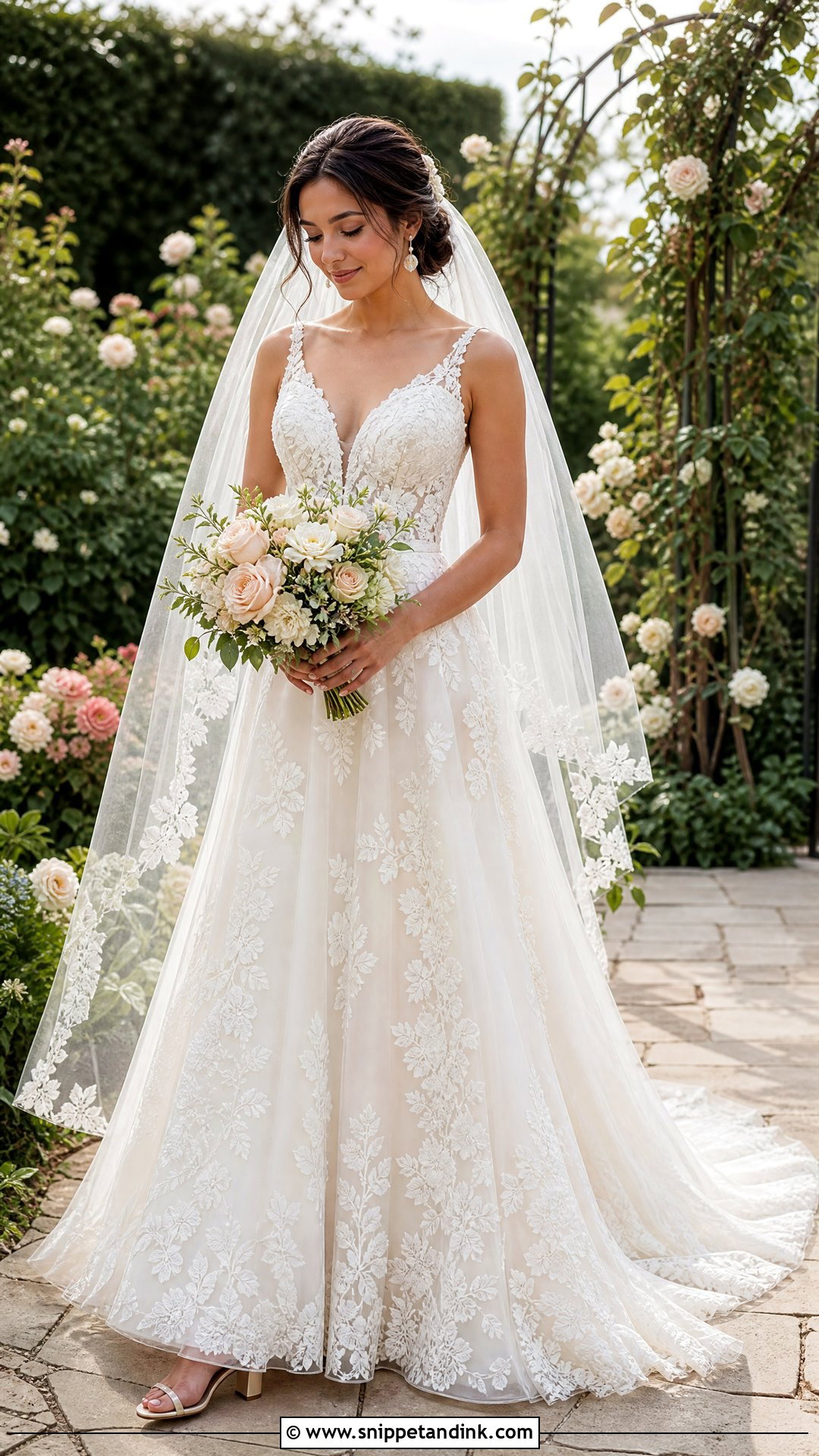
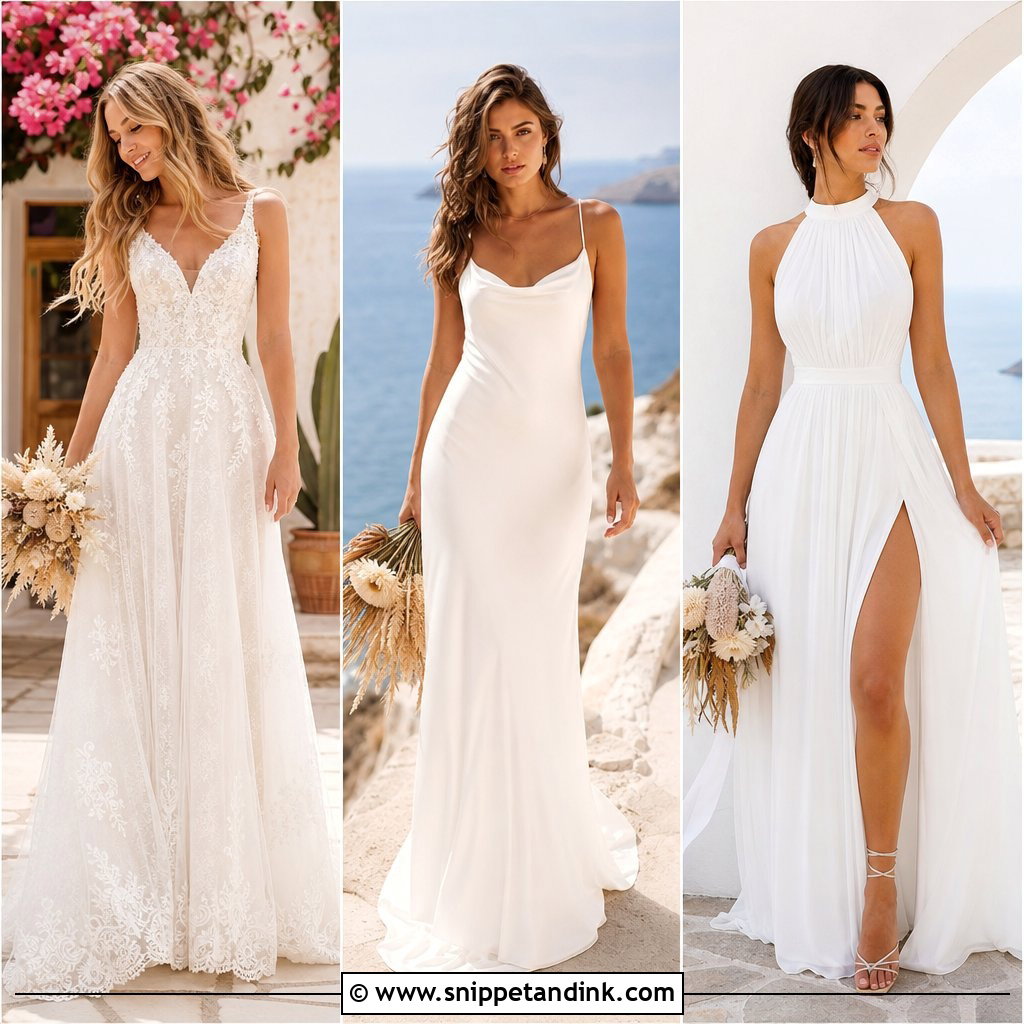
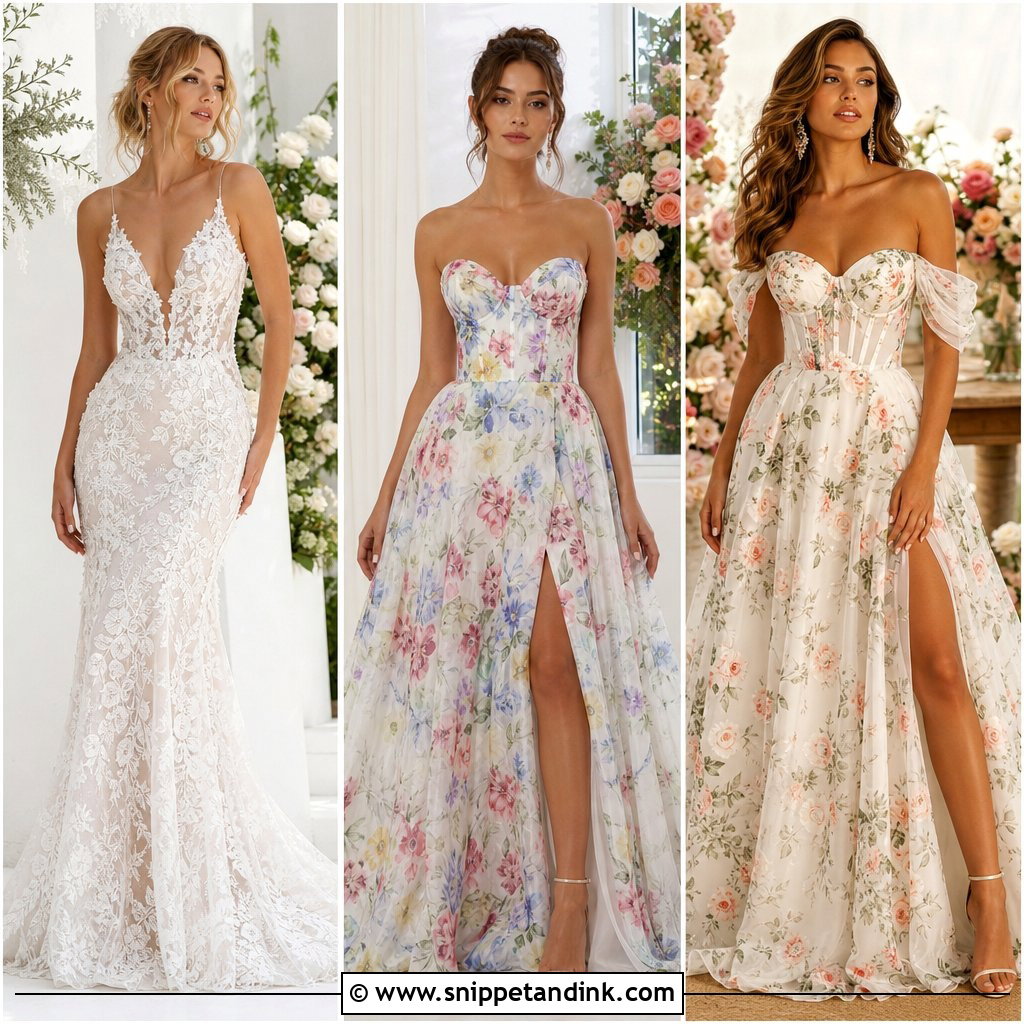
Floral lace is the obvious garden choice, and the lace pattern decides whether it looks fresh or heavy. Vines, small blossoms and open botanical motifs breathe; dense corded lace can feel stiff in the heat. An A-line cut gives shape without feeling formal on grass. I check the hem lace carefully on these gowns, because scalloped edges catch on gravel and twigs, so a small horsehair or lining guard underneath helps. Ivory, soft white or light champagne; pearl earrings, a fingertip veil and low block heels or bridal flats.
2. Chiffon A Line Garden Wedding Gown
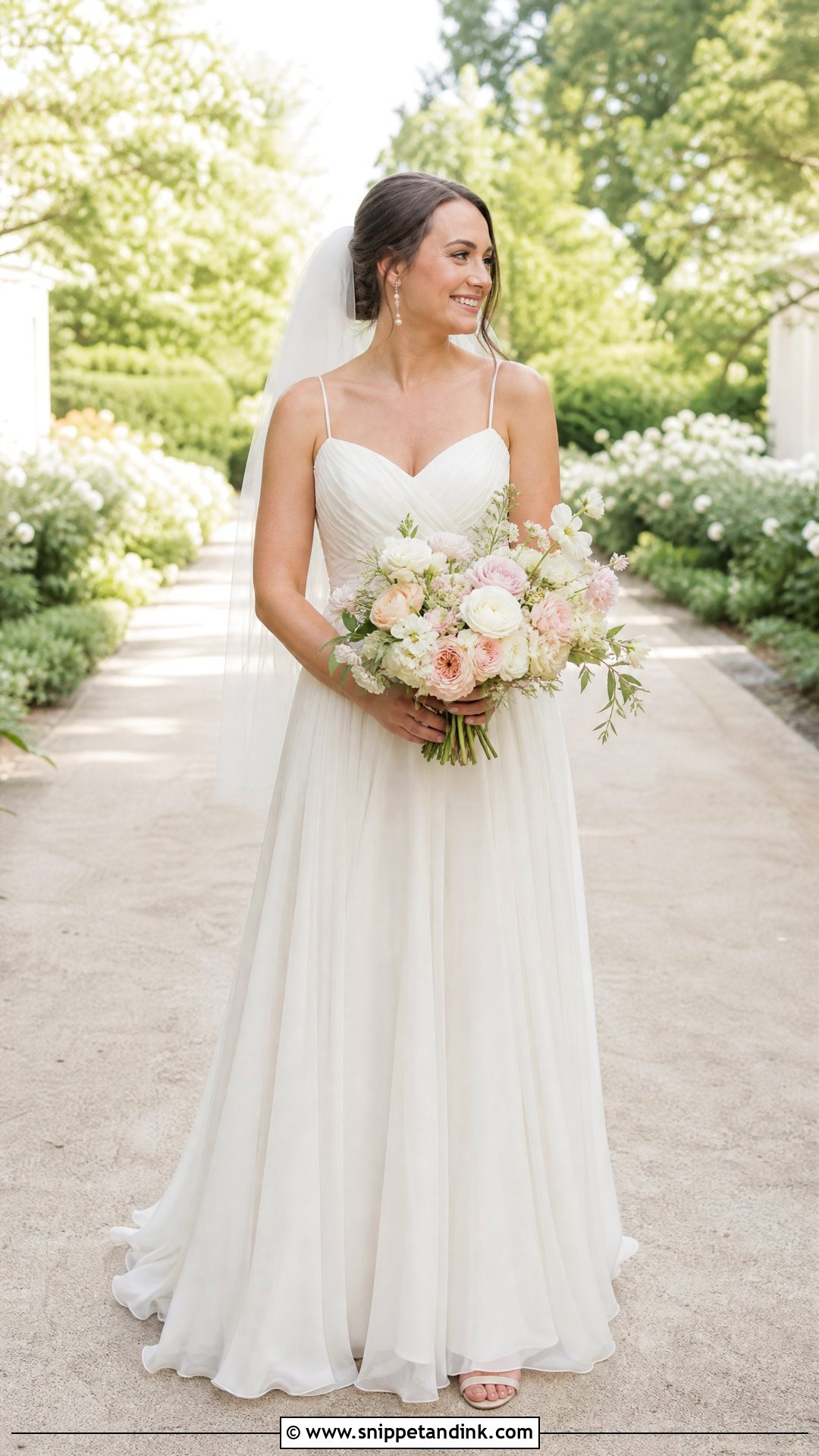
A chiffon A-line gown moves the moment a breeze reaches it, and that is most of its appeal outdoors. It is light enough for spring and summer, and a fitted bodice over a flowing skirt keeps it from looking shapeless. V, square or sweetheart necklines all suit it. Chiffon marks easily with damp, so I keep the hem just off the ground rather than skimming it. Delicate drop earrings, a thin bracelet, a soft tulle veil and block-heel sandals instead of stilettos.
3. 3D Floral Garden Wedding Gown
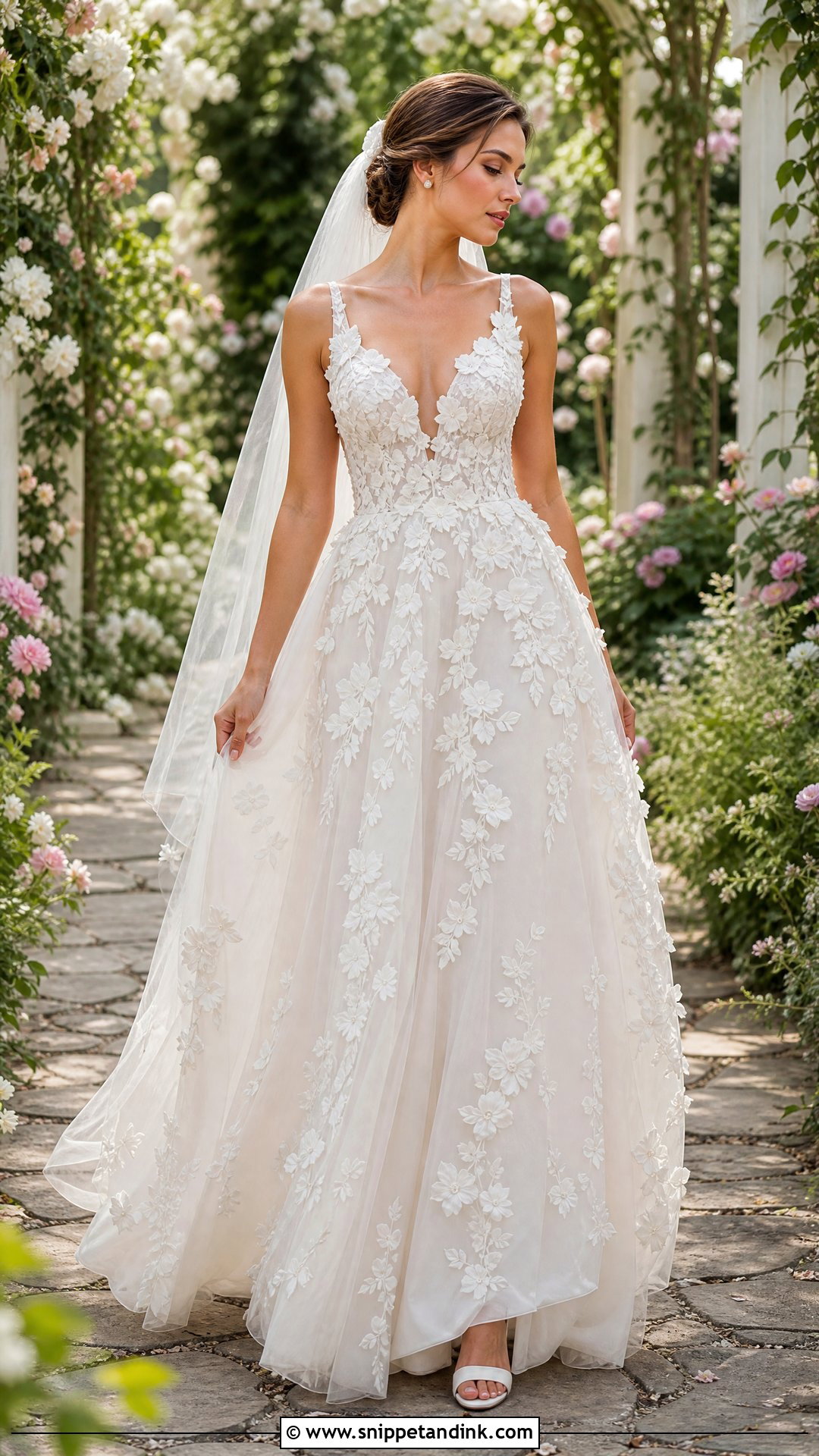
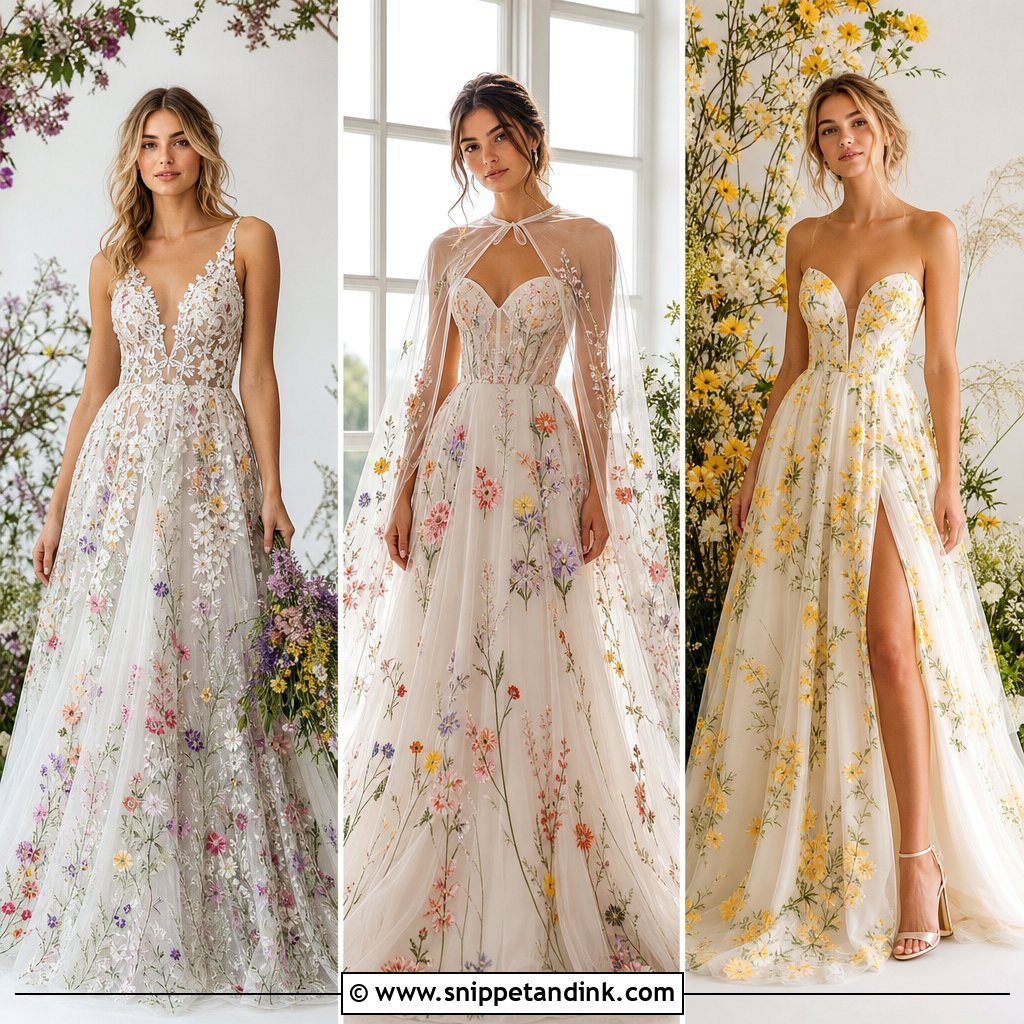
Raised petals and appliqués make a gown look like it grew in the garden. The rule I give every bride: put the dimension in one place, bodice, sleeves, hem or train, not all four. Three-dimensional flowers add weight, and a gown covered in them gets warm and heavy by the reception. They also crush if you sit carelessly, so I show brides how to gather the skirt before sitting. Simple earrings, soft makeup and a clean hairstyle let the flowers lead.
4. Off Shoulder Garden Wedding Gown
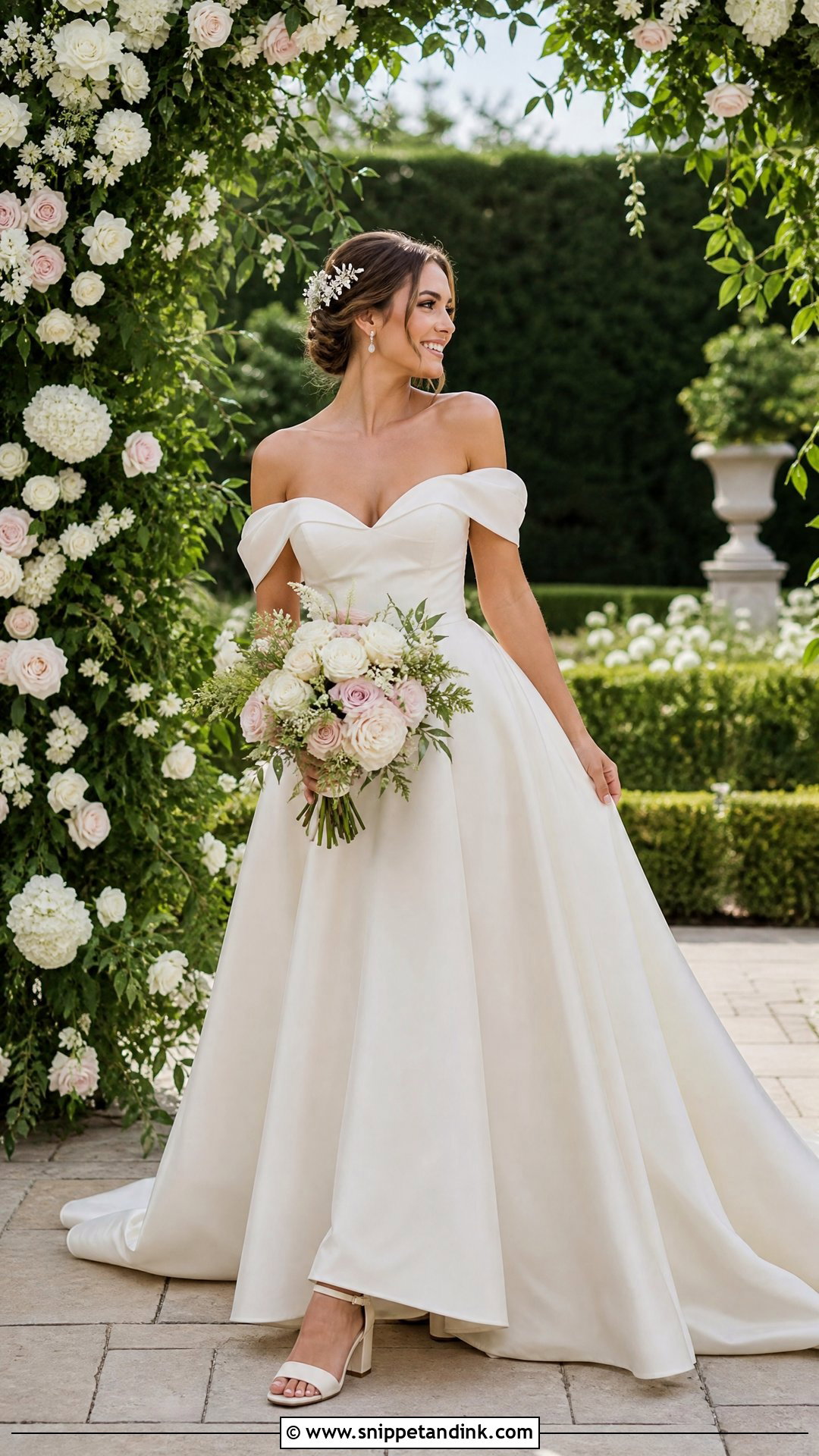
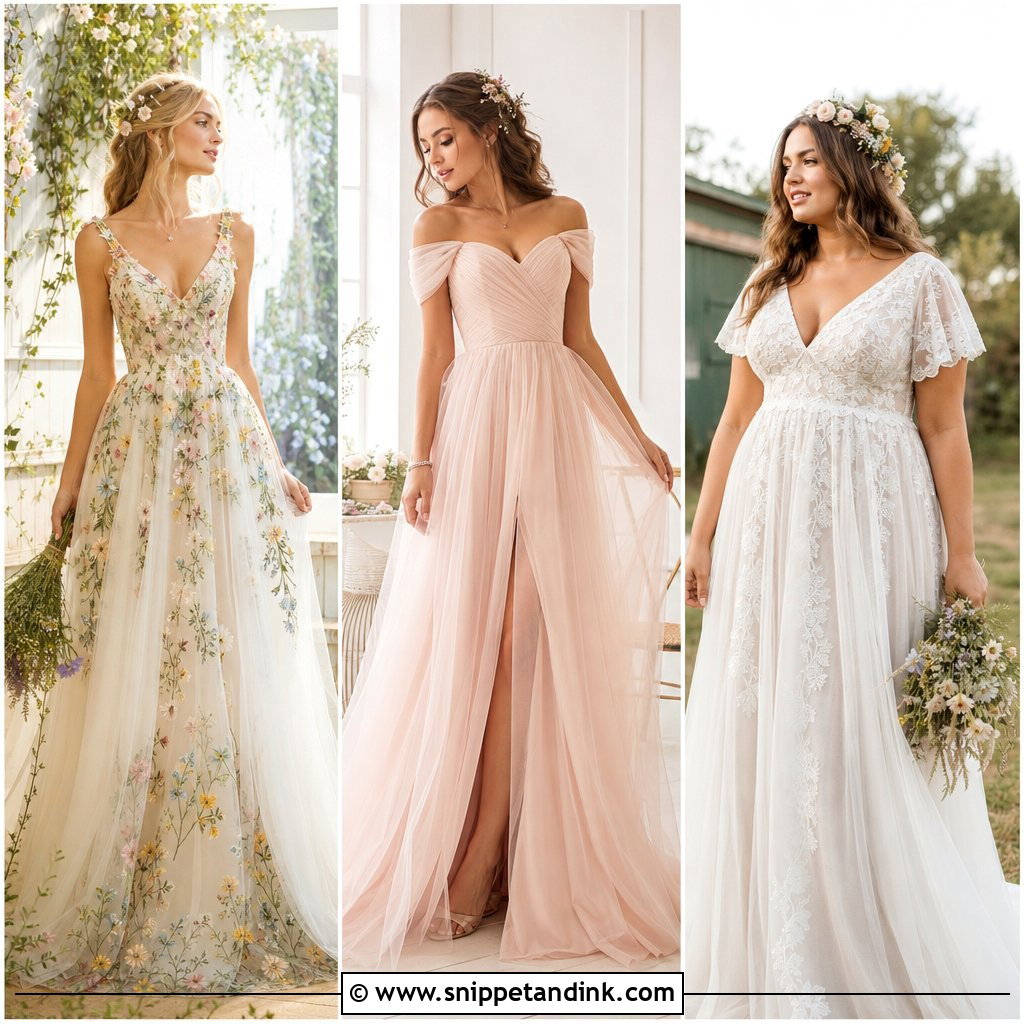
An off-shoulder neckline frames the collarbones, which suits close-up portraits under natural light. Lace, satin, tulle or chiffon all work, and softer fabrics sit more naturally in a garden than very structured ones. At fittings I watch how the band behaves when the bride lifts her arms to hug someone; if it rides up or slips, it needs internal boning or a grip strip. A floral comb, pearl studs and a simple veil. For cool weather, detachable sleeves or a light bridal wrap.
5. Long Sleeve Lace Garden Wedding Gown
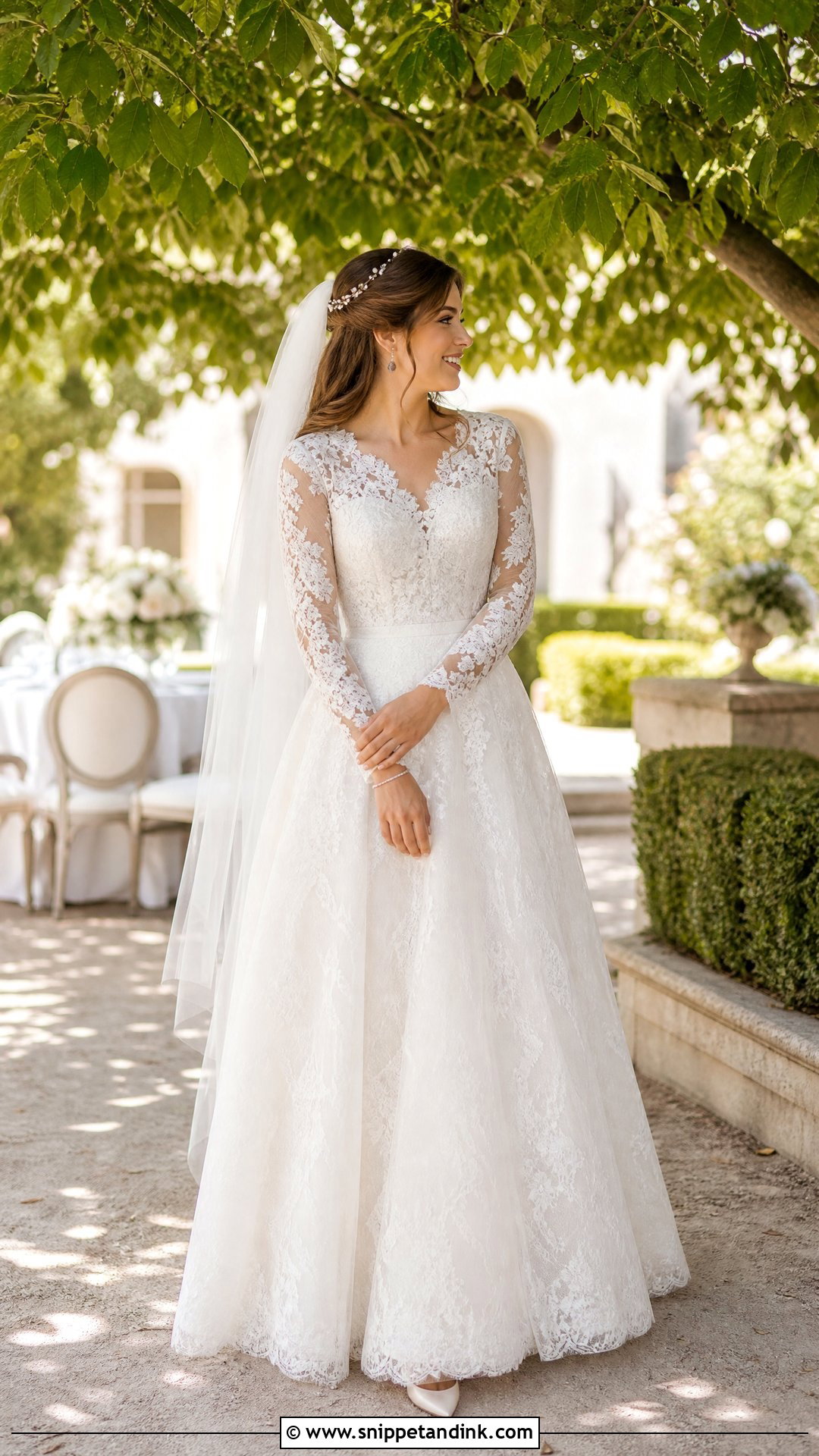
Long lace sleeves suit early spring, autumn and shaded ceremonies under trees. Sheer lace or illusion mesh keeps them light rather than wintry. I’d choose lace with vine or floral motifs, a fitted bodice and an A-line or sheath skirt. Make sure you can raise your arms fully at the fitting; tight sleeves strain at the shoulder seam when you hold a bouquet or reach to hug. A low bun, pearl pins and a simple bouquet keep the styling soft.
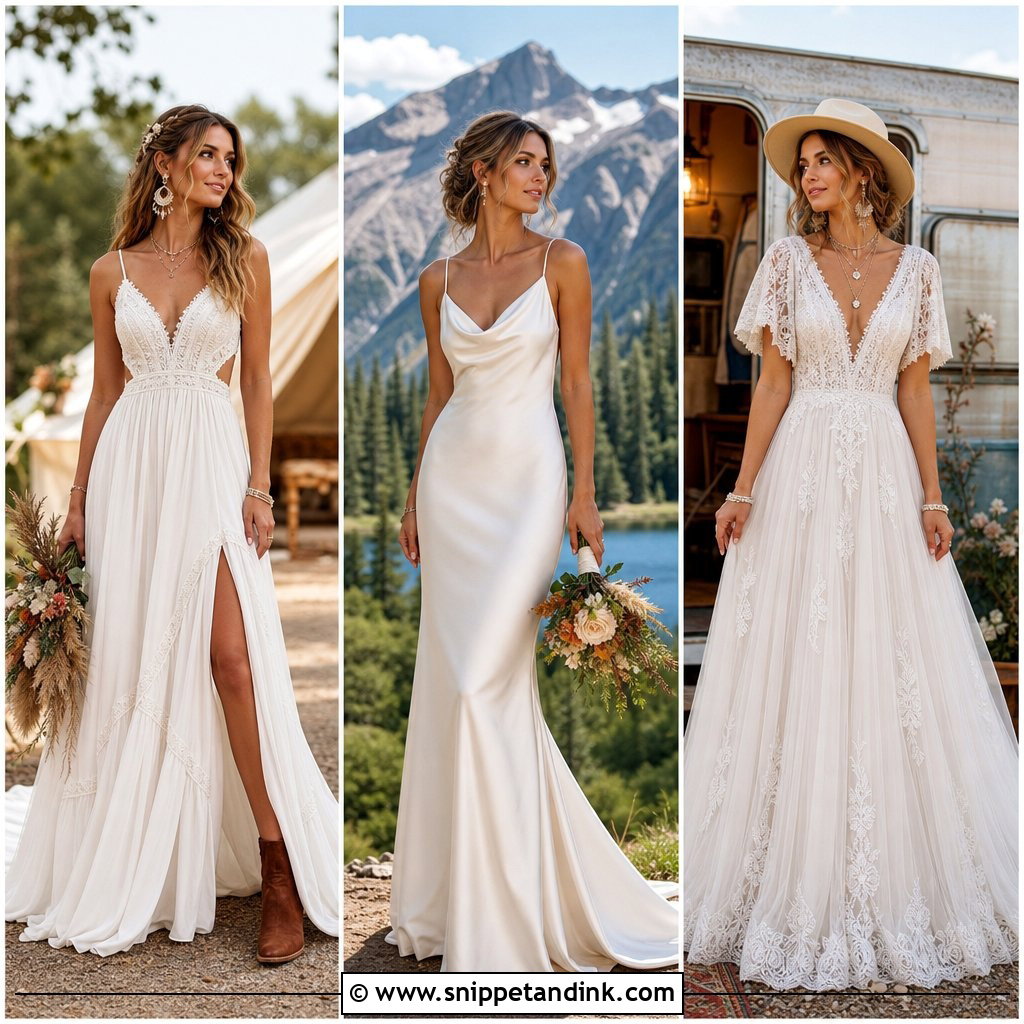
6. Boho Garden Wedding Gown
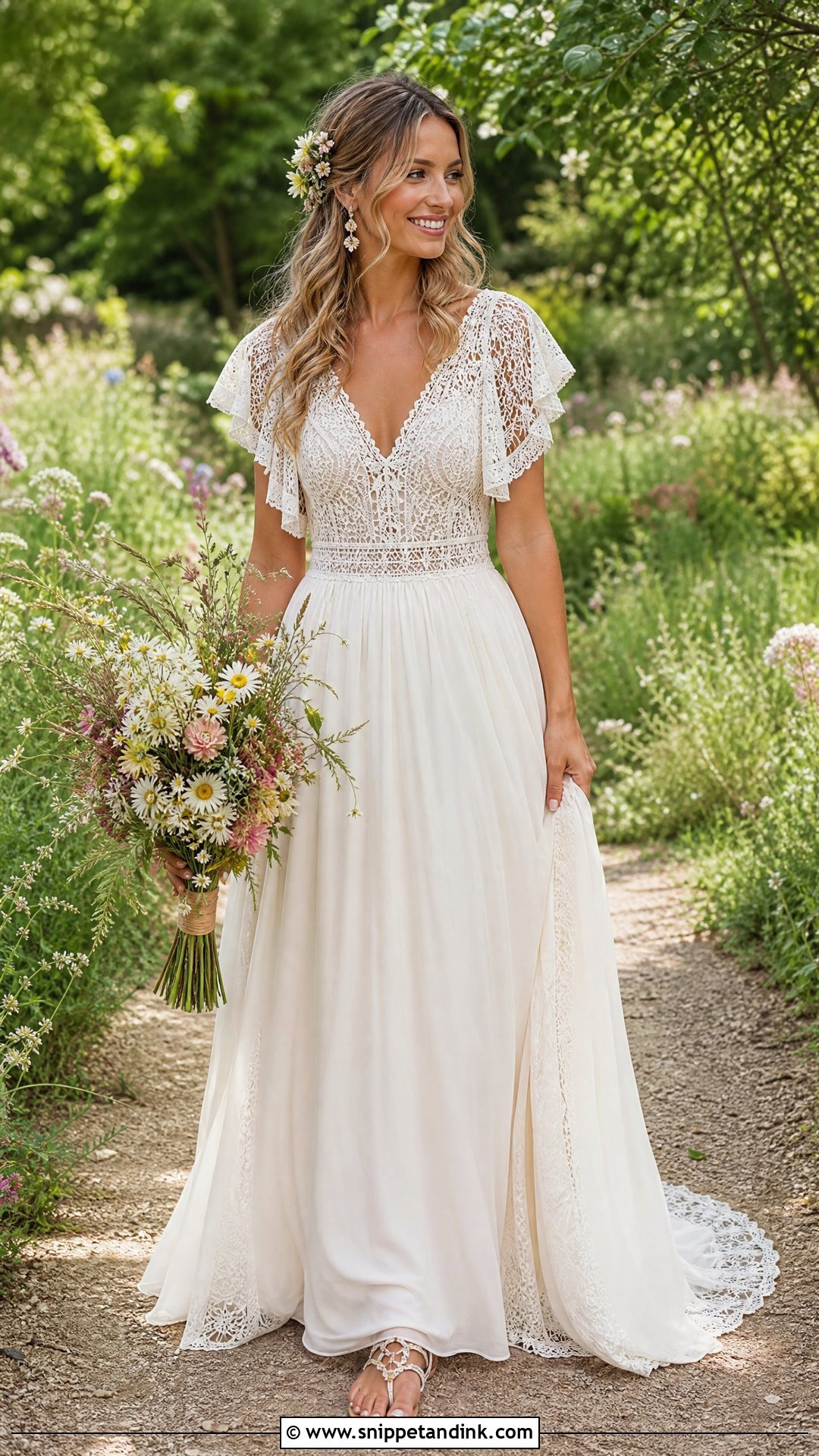
Boho gowns can drift casual, so I keep at least one firmly bridal element: a light train, a proper veil, or fine botanical lace. Crochet lace, flutter sleeves, open backs and flowing skirts all fit the look. Loose waves, delicate earrings and sandals or low heels. A full flower crown can look dated in photos; a few fresh blooms tucked into the hair usually reads more current. It suits intimate weddings with wild greenery and meadow flowers.
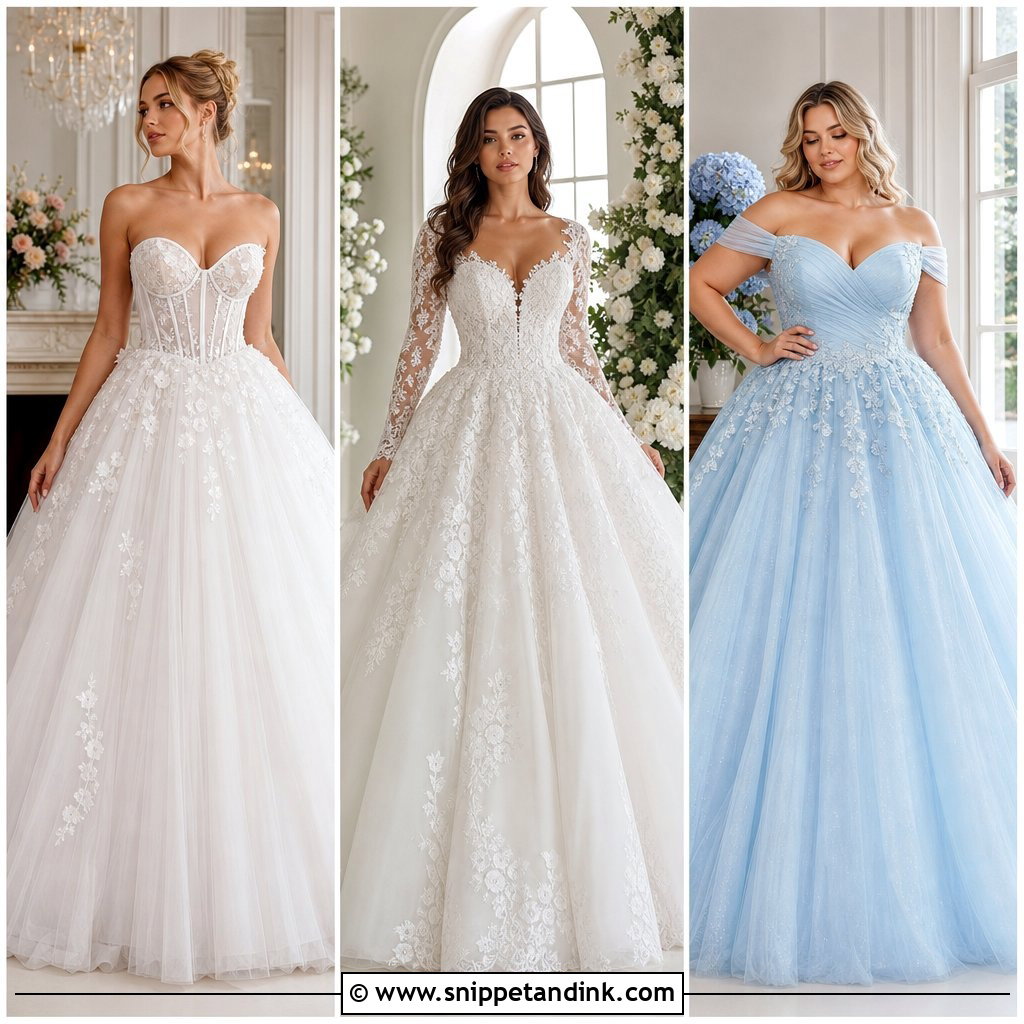
7. Tulle Ball Gown Garden Wedding Gown
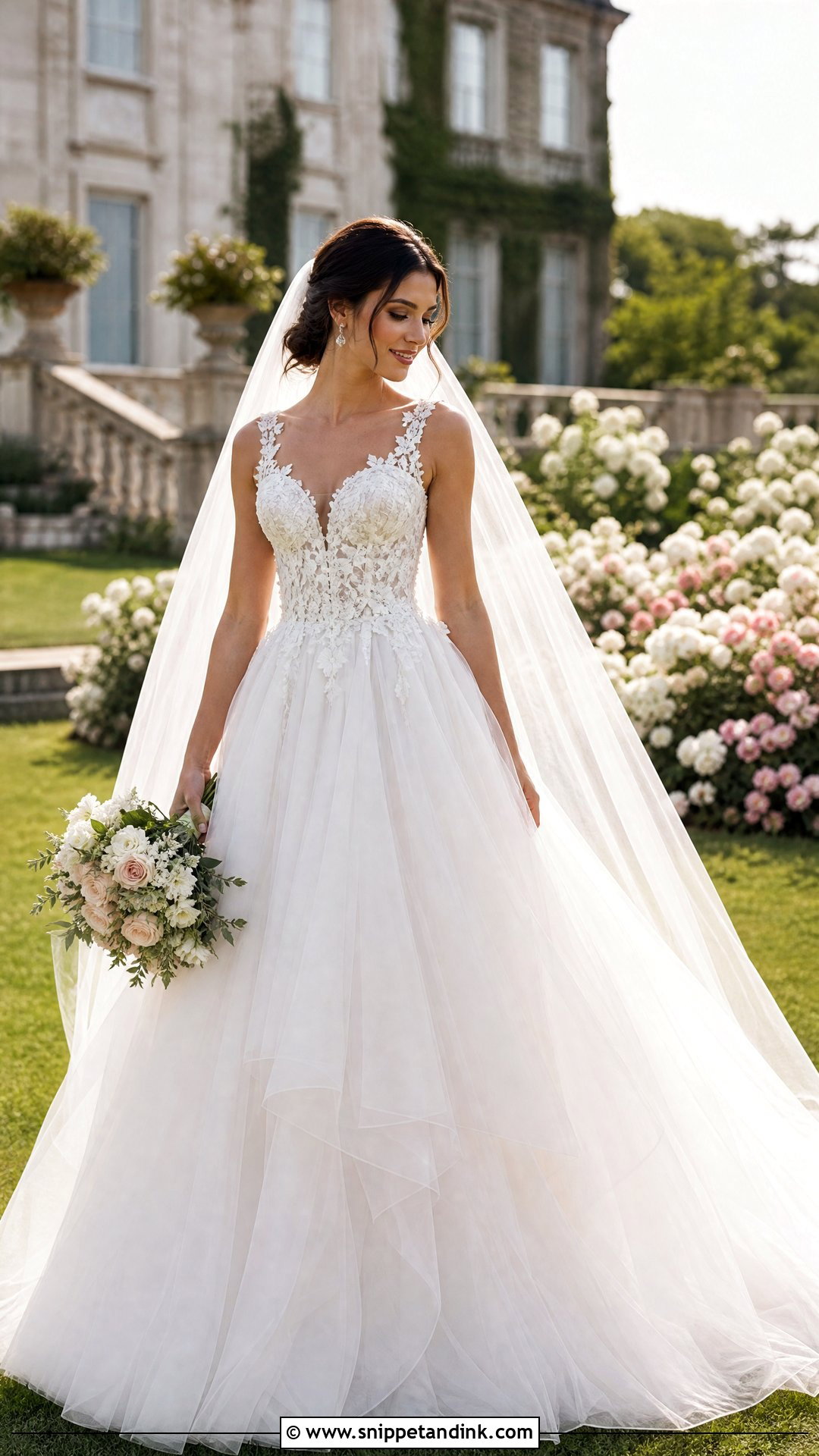
Tulle ball gowns work outdoors when the skirt is airy rather than stacked with heavy layers. A fitted bodice with floral appliqué over a soft tulle skirt suits formal estate lawns and floral arches. Tulle also snags on rough bark and rose bushes, so I warn brides to keep clear of hedges during portraits. Since the skirt hides your shoes, wear something genuinely comfortable. A long veil is dramatic, but plan how it will be anchored in wind. It suits a bride after a dreamy garden princess look with polish.
8. Simple Satin Garden Wedding Gown
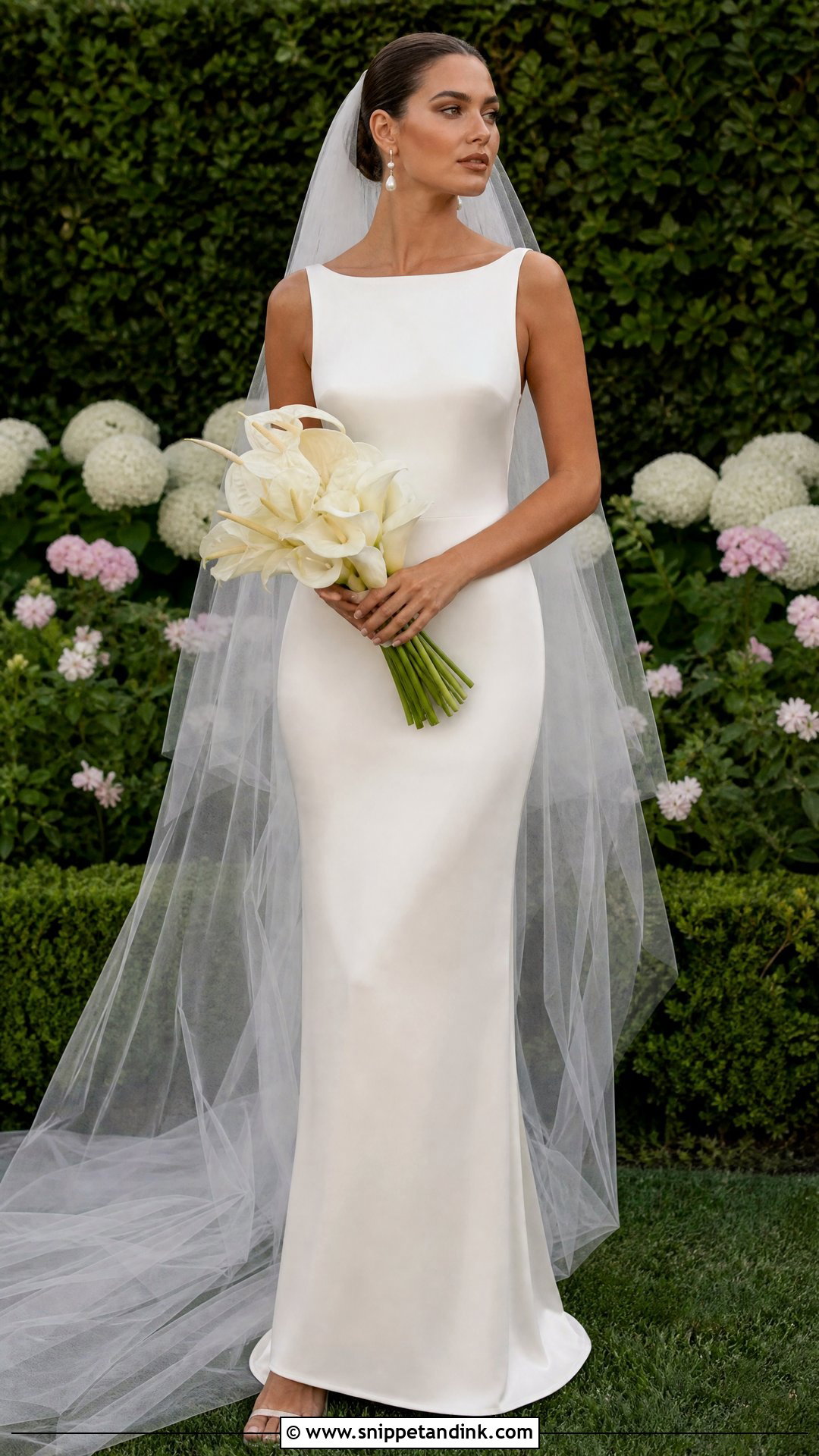
In a garden already packed with flowers, a plain satin gown can be the smartest choice. The smooth surface contrasts with all that texture. A slip, column or soft A-line all suit. Satin shows every crease and the outline of underwear, so I always do a final fitting in the exact shapewear the bride will wear. Pearl earrings, a structured bouquet, sleek heels or block sandals and a long veil for drama. It moves easily from an outdoor ceremony to an indoor reception.
9. Sheer Sleeve Garden Wedding Gown
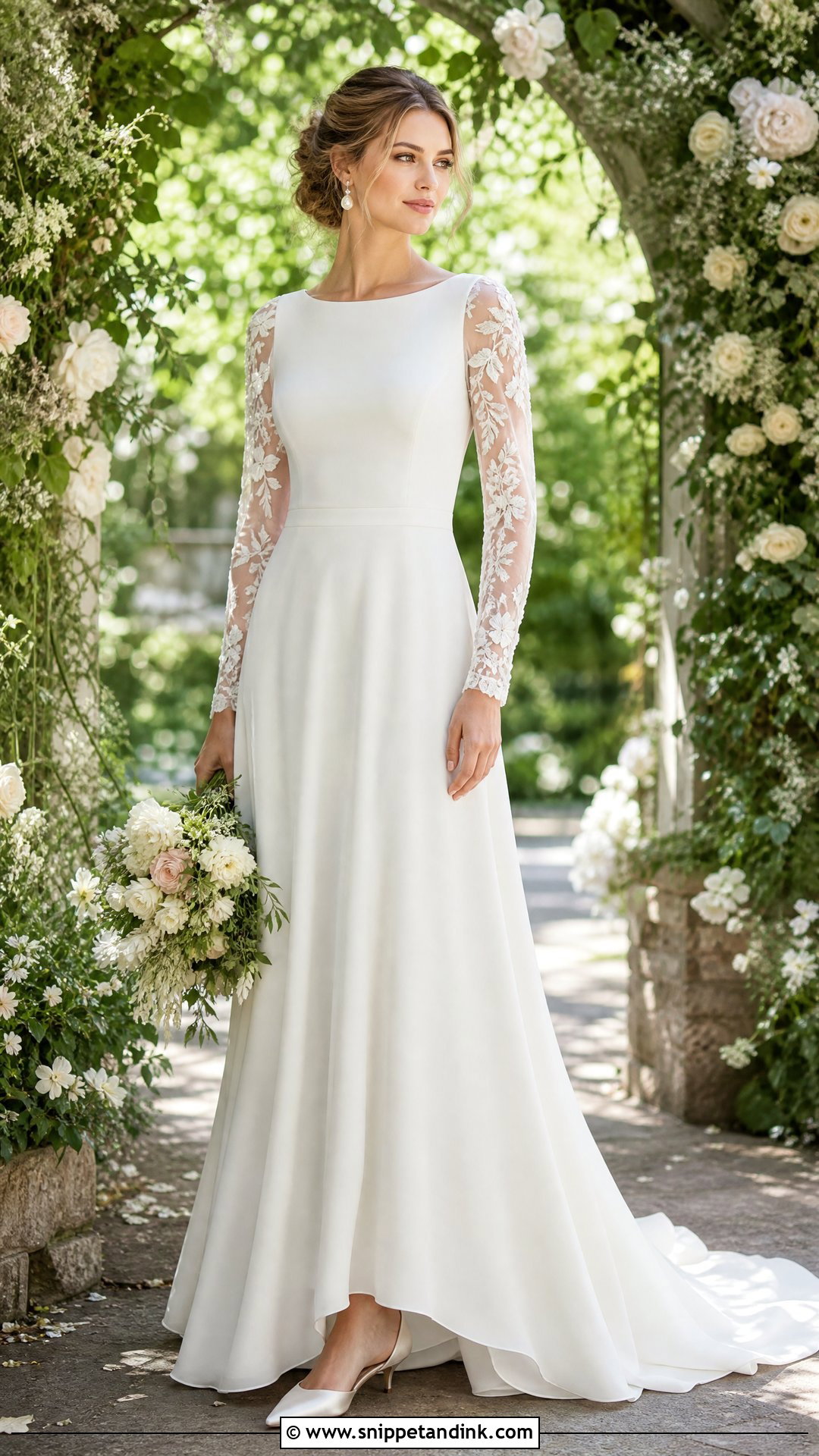
Sheer sleeves give coverage and stay breathable. Illusion tulle, lace, organza and embroidered mesh all work; puff sleeves look romantic, fitted sleeves look classic. Floral embroidery or tiny appliqués on the sleeve tie it to the garden. Keep the rest of the gown calm so the sleeves have room. An updo keeps attention on the neckline and arms. Sheer fabric can show a tan line in bright sun, worth knowing if you plan any time outdoors in the weeks before.
10. Square Neck Garden Wedding Gown
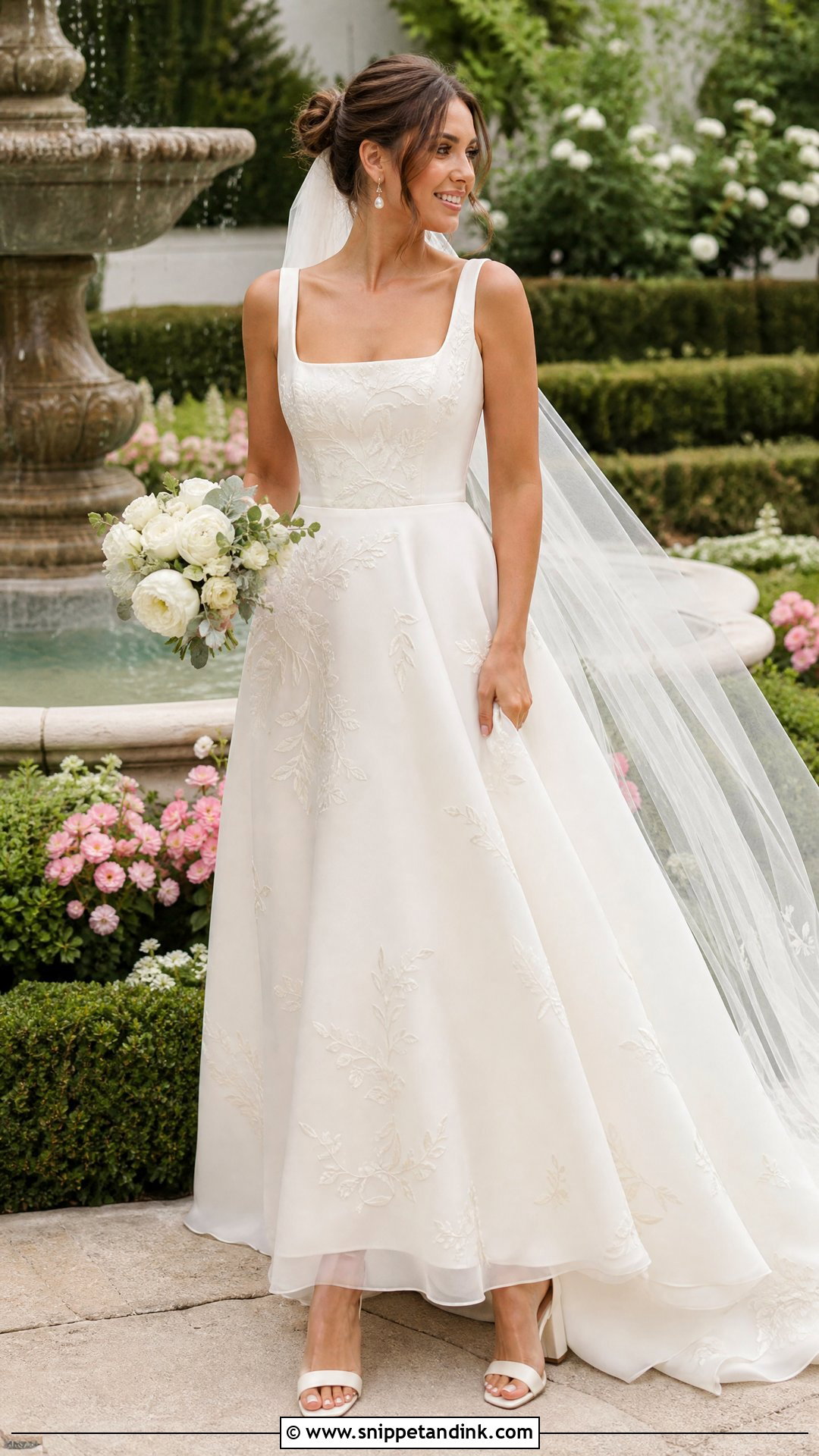
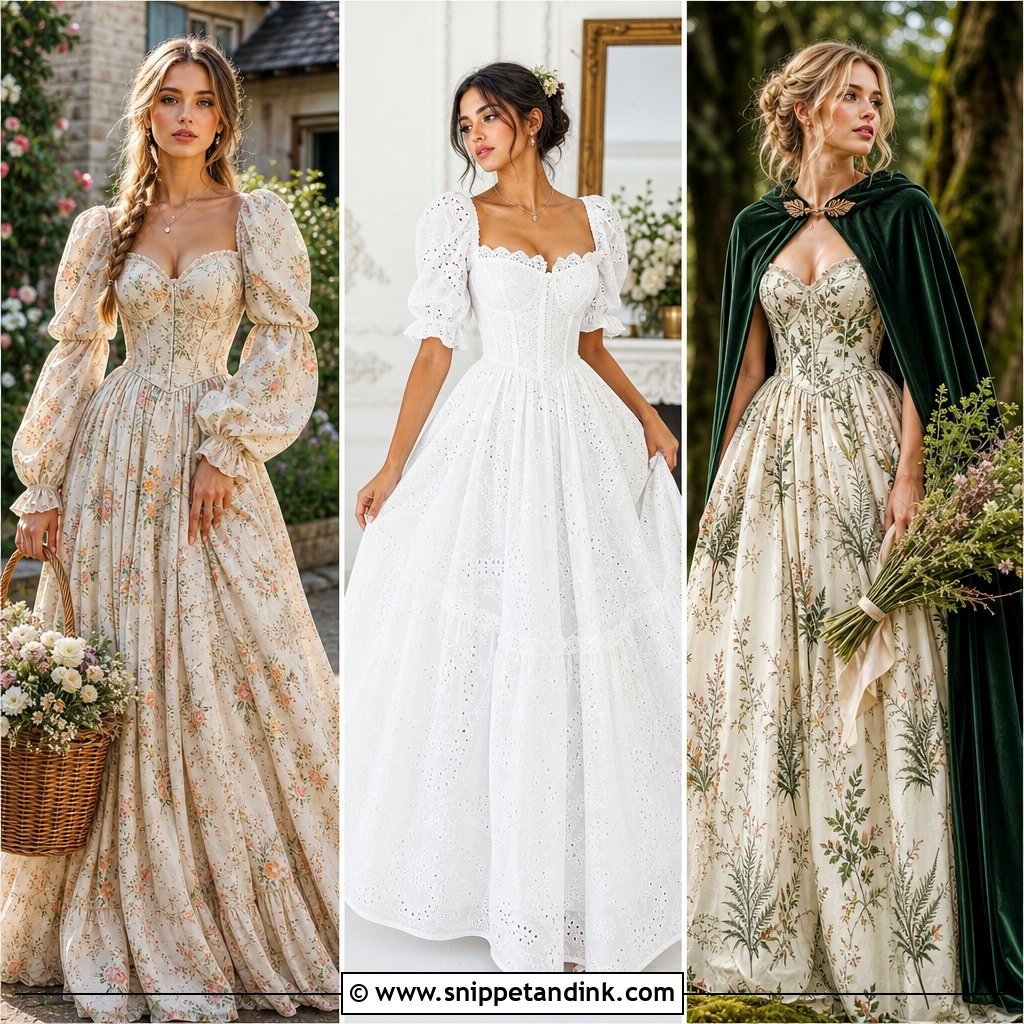
A square neckline gives structure without looking severe, and it suits lace, chiffon and satin equally. With an A-line skirt, a soft train and light floral embroidery, it reads fresh in a garden. It needs very little jewelry; I often leave the neck bare. The thing I check is the strap width, because a square neck relies on the straps sitting exactly on the shoulder, and they tend to slide outward if cut too wide. Pearl drops and a loose bun.
11. Corset Garden Wedding Gown
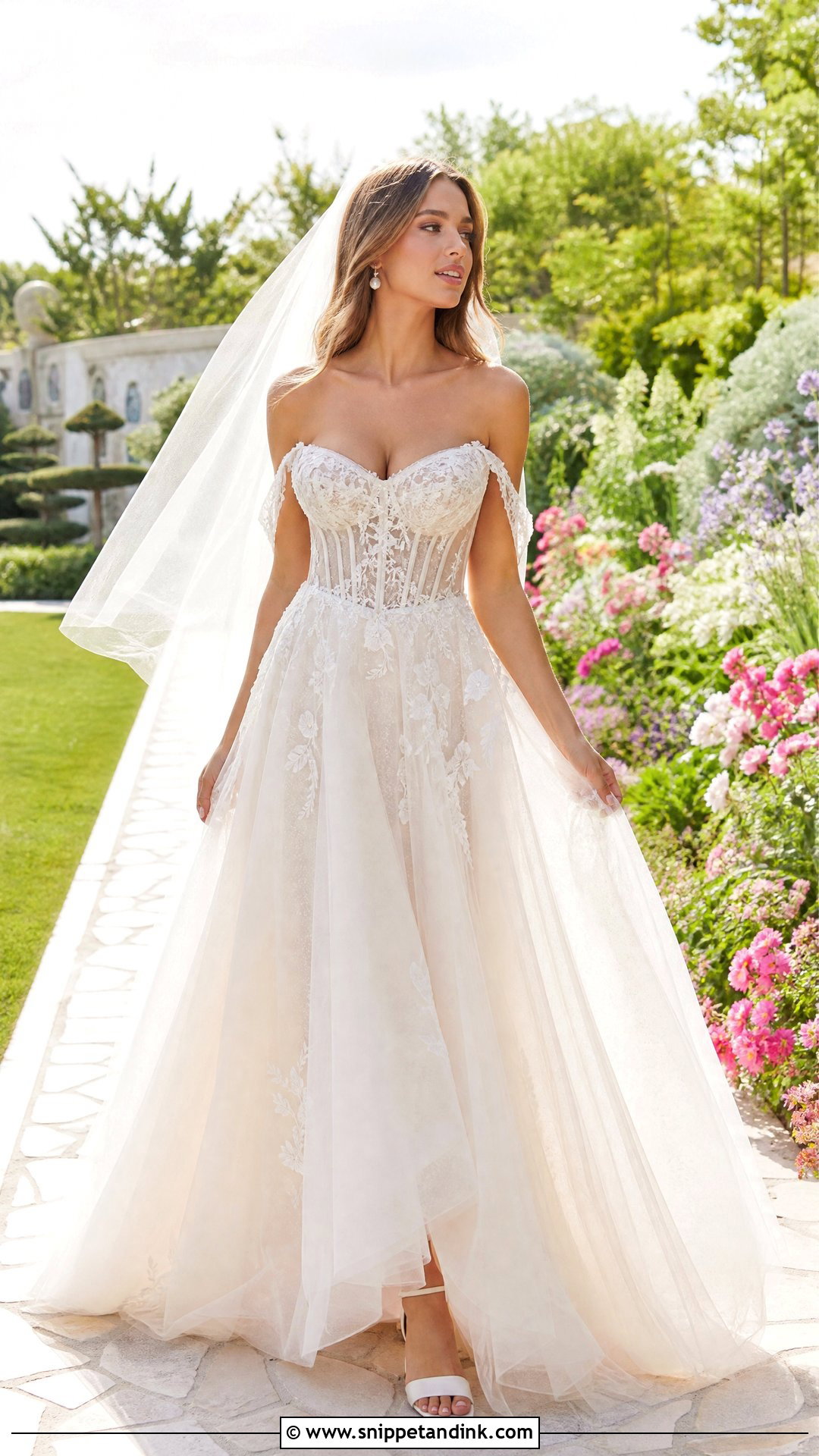
A corset bodice gives shape and support, and outdoors I balance it with a flowing chiffon, organza or tulle skirt so it doesn’t feel rigid. Look for delicate boning, lace panels or floral appliqué rather than a harsh, very structured finish. In summer heat, a corset needs to fit precisely; too tight and you’ll feel it by the speeches. Lace it up at the final fitting with a full meal in mind. A soft veil, pearl earrings and natural makeup.
12. Drop Waist Garden Wedding Gown
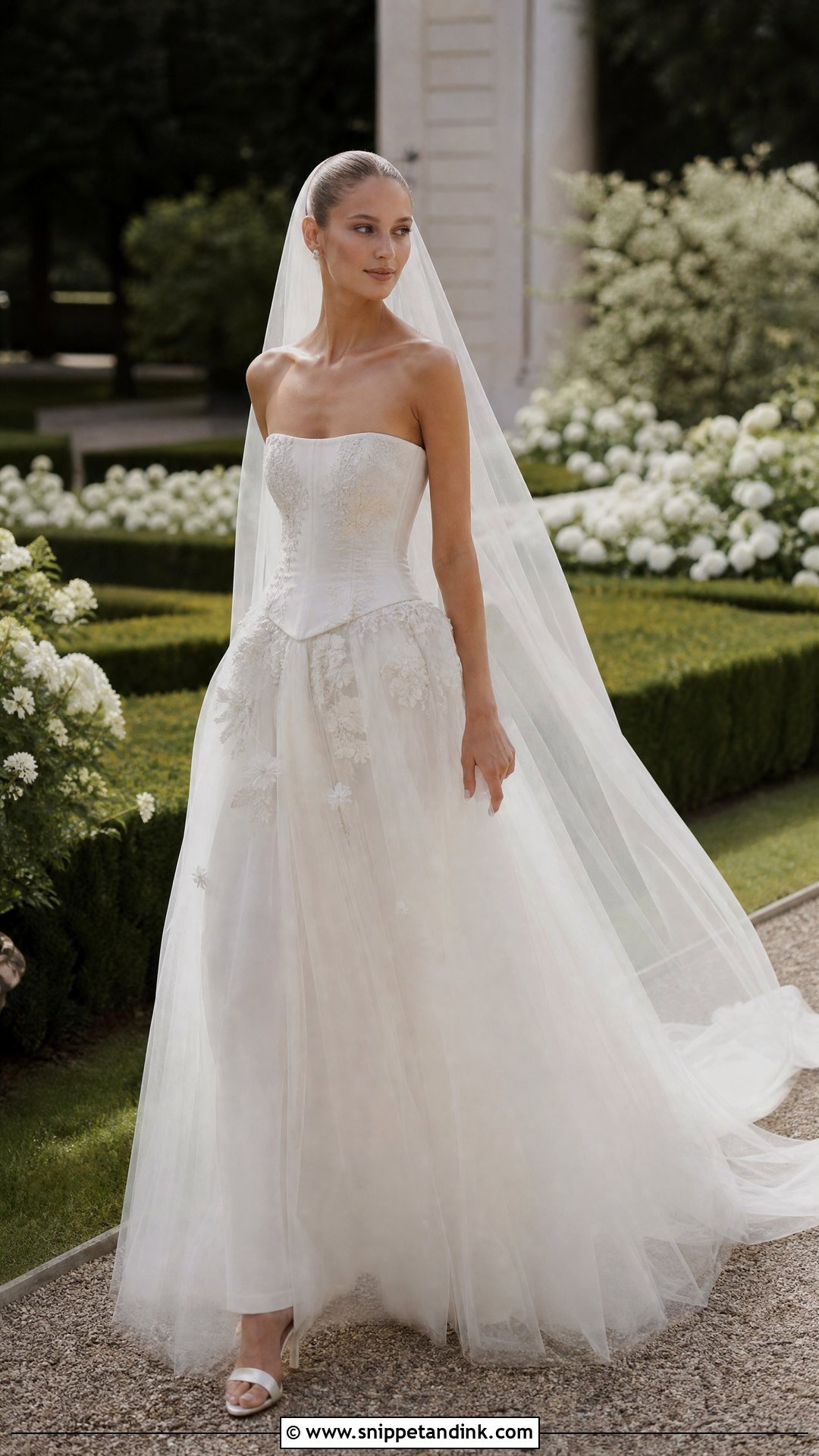
The drop waist moves the seam to the hip, creating a long line that looks current. Soft tulle, lace or light satin versions are the most wearable outdoors. A basque waist, floral appliqué or gentle full skirt gives it shape. This cut is less forgiving on a short torso, so I always have a bride try it on rather than ordering from photos. Keep accessories refined; the silhouette is the feature. It suits formal estates and manicured lawns.
13. Tea Length Garden Wedding Gown
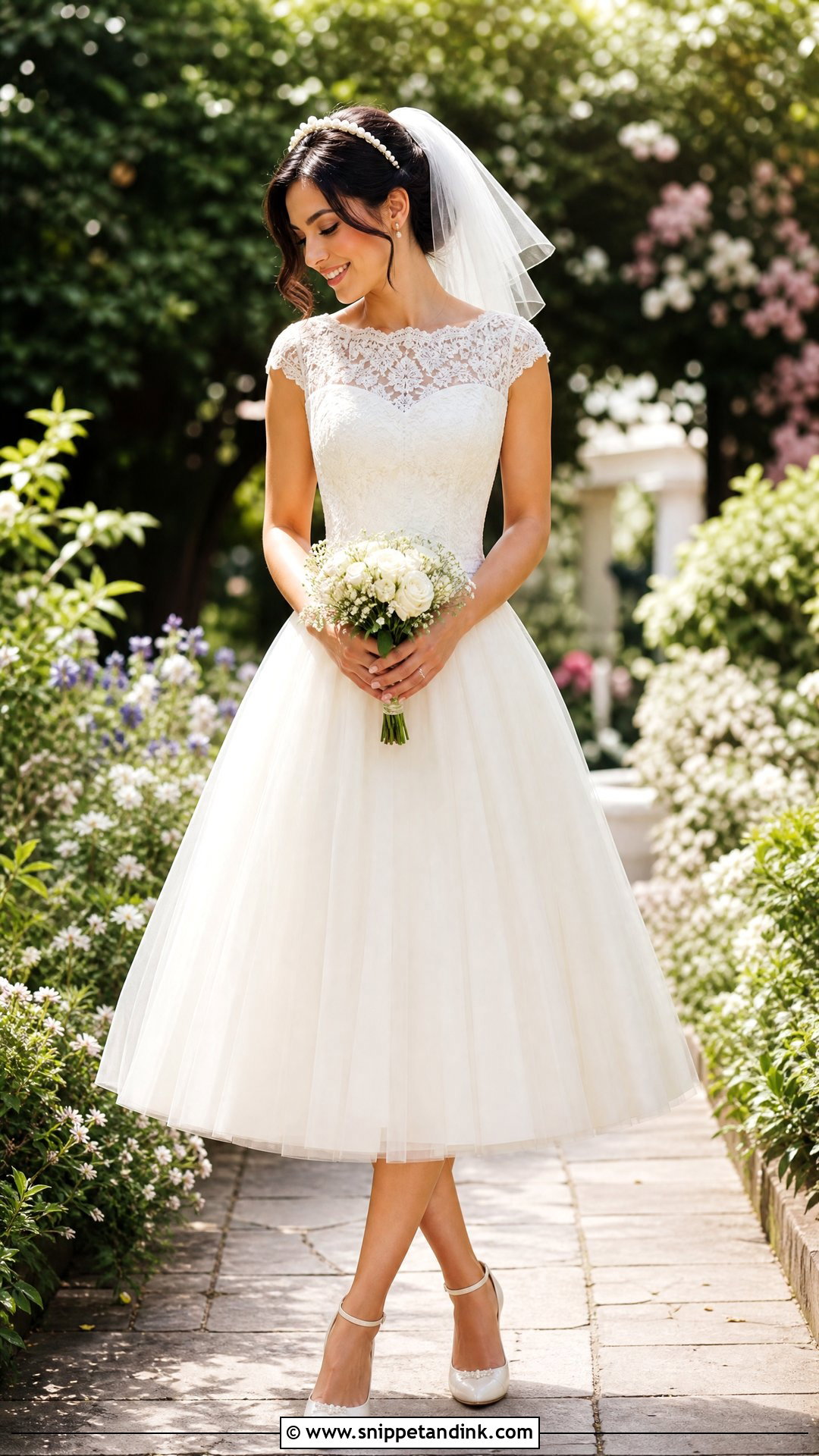
Tea length is the most practical bridal hem outdoors: it never drags on grass or gravel, and you can walk freely. Your shoes become part of the outfit, so pearl heels, satin flats or embellished block sandals are worth choosing with care. Lace, organza, mikado or tulle keeps it clearly bridal. A short veil, bow detail or pearl headband adds polish. It suits daytime, intimate and vintage-themed weddings.
14. Floral Embroidered Garden Wedding Gown
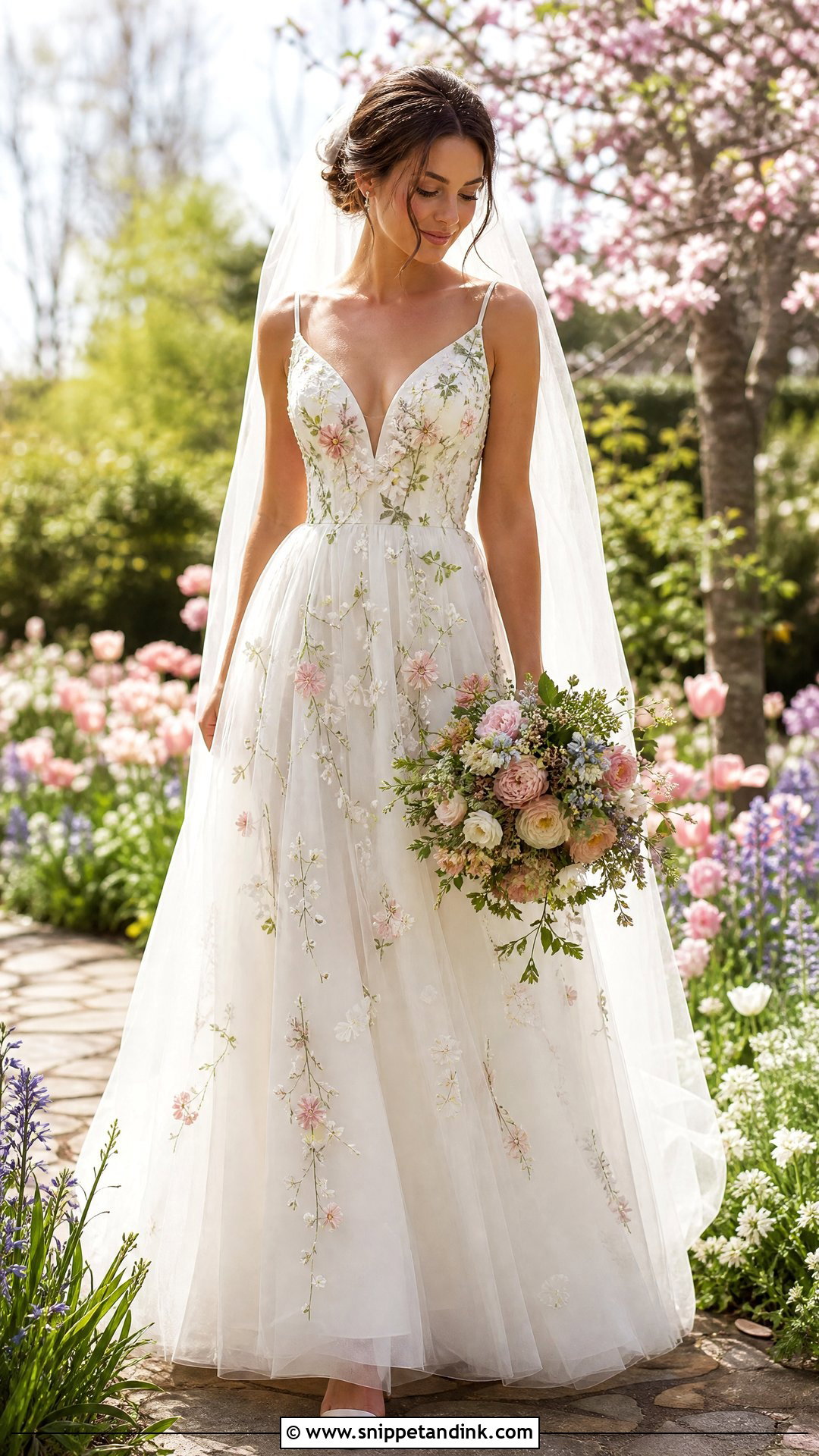
Embroidery can be white-on-white, soft pastel or slightly raised with beads and threadwork. For a garden, I keep the motifs delicate. A floral embroidered garden wedding gown with a sheer overlay gives a floating effect in photos. Coloured embroidery should be checked in daylight, since pastel thread can look grey in shade. A simple veil, dainty earrings and a bouquet that echoes the embroidery tones complete it.
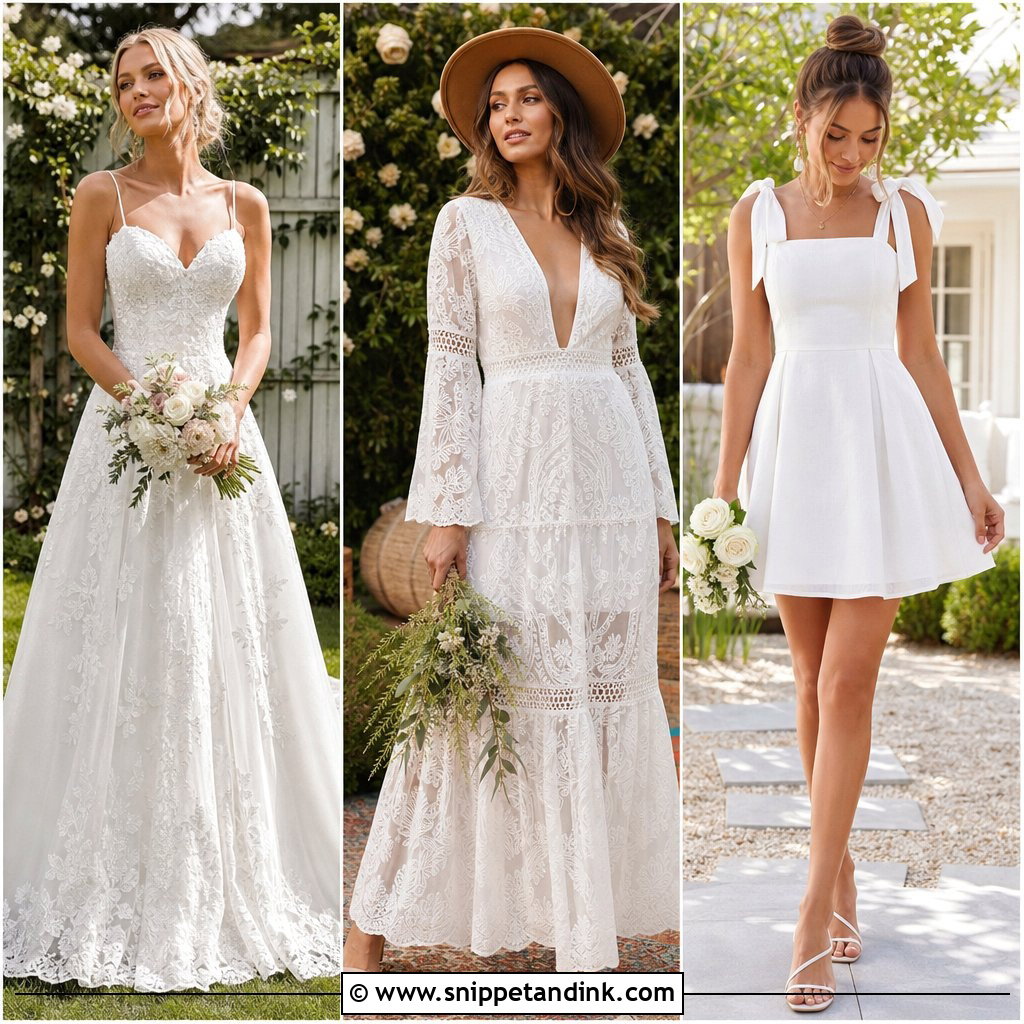
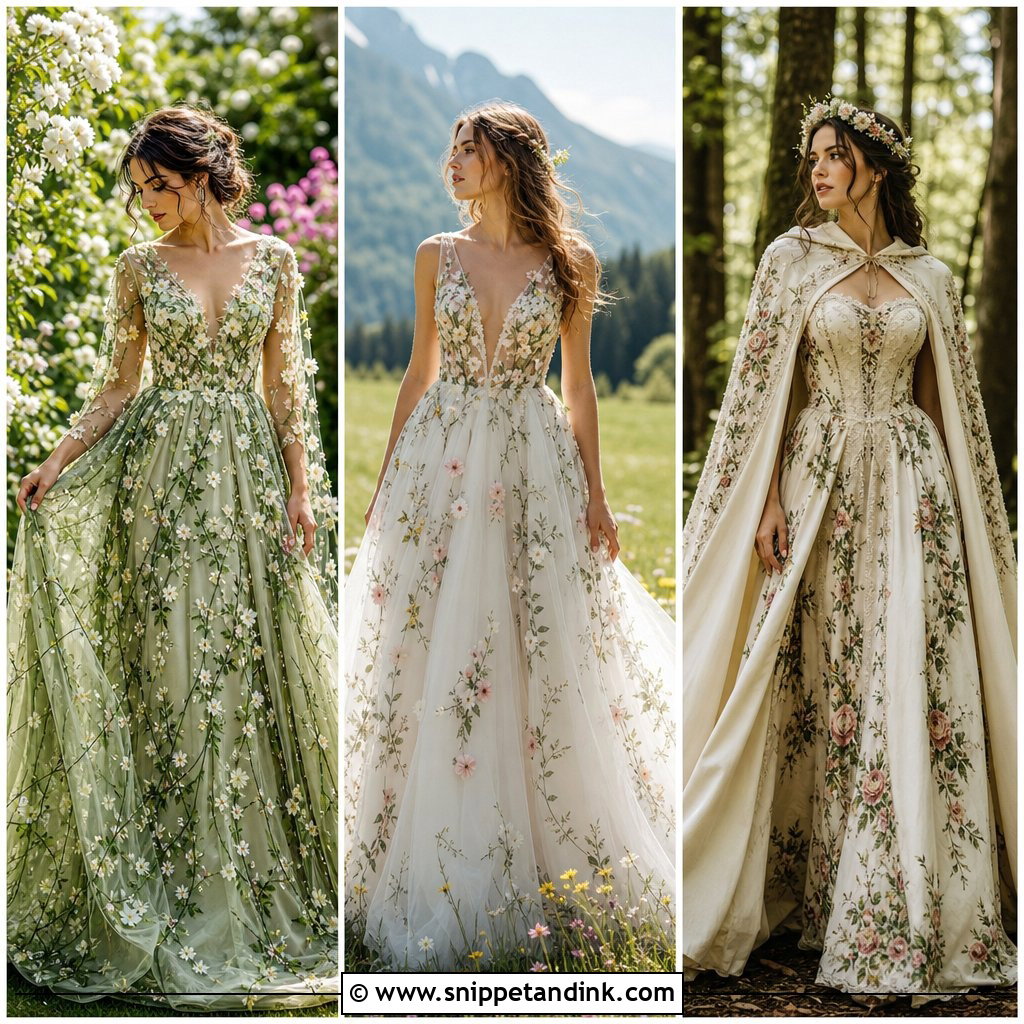
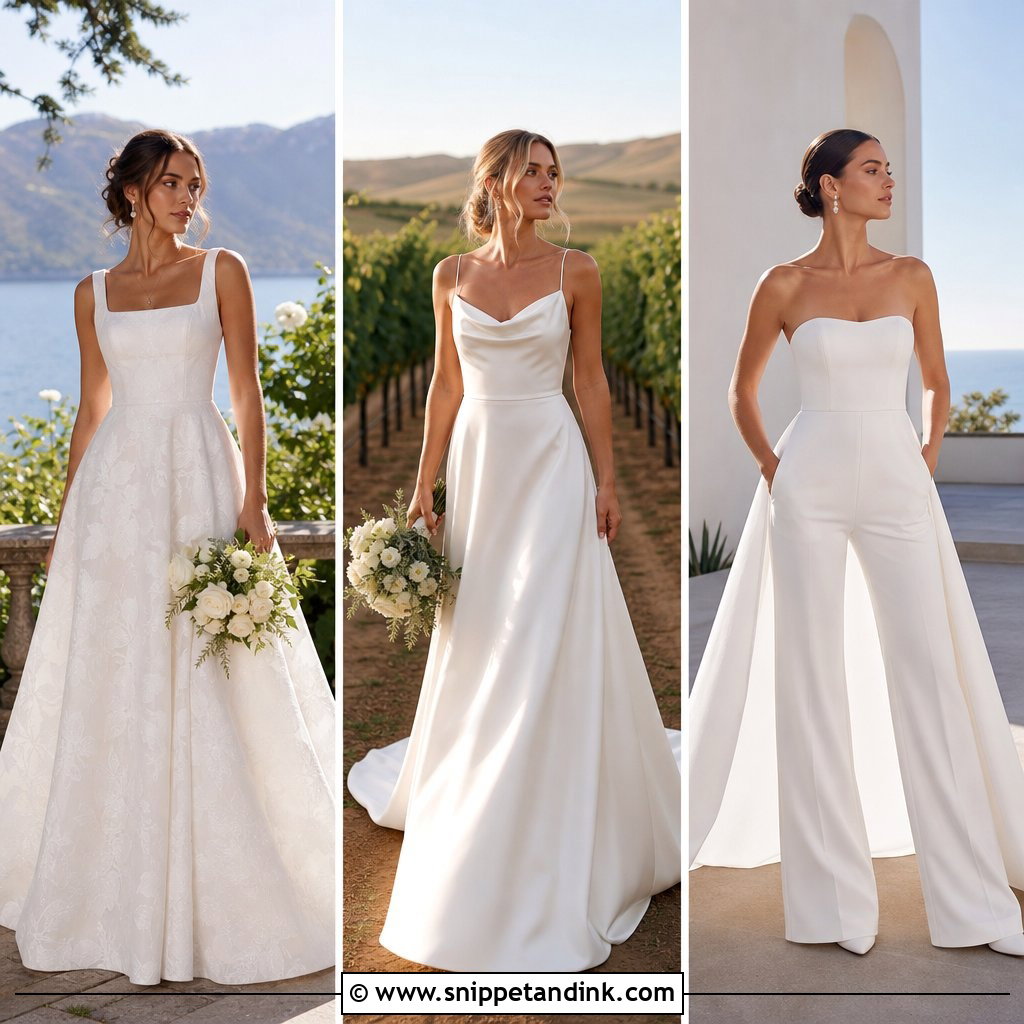
15. Organza Garden Wedding Gown
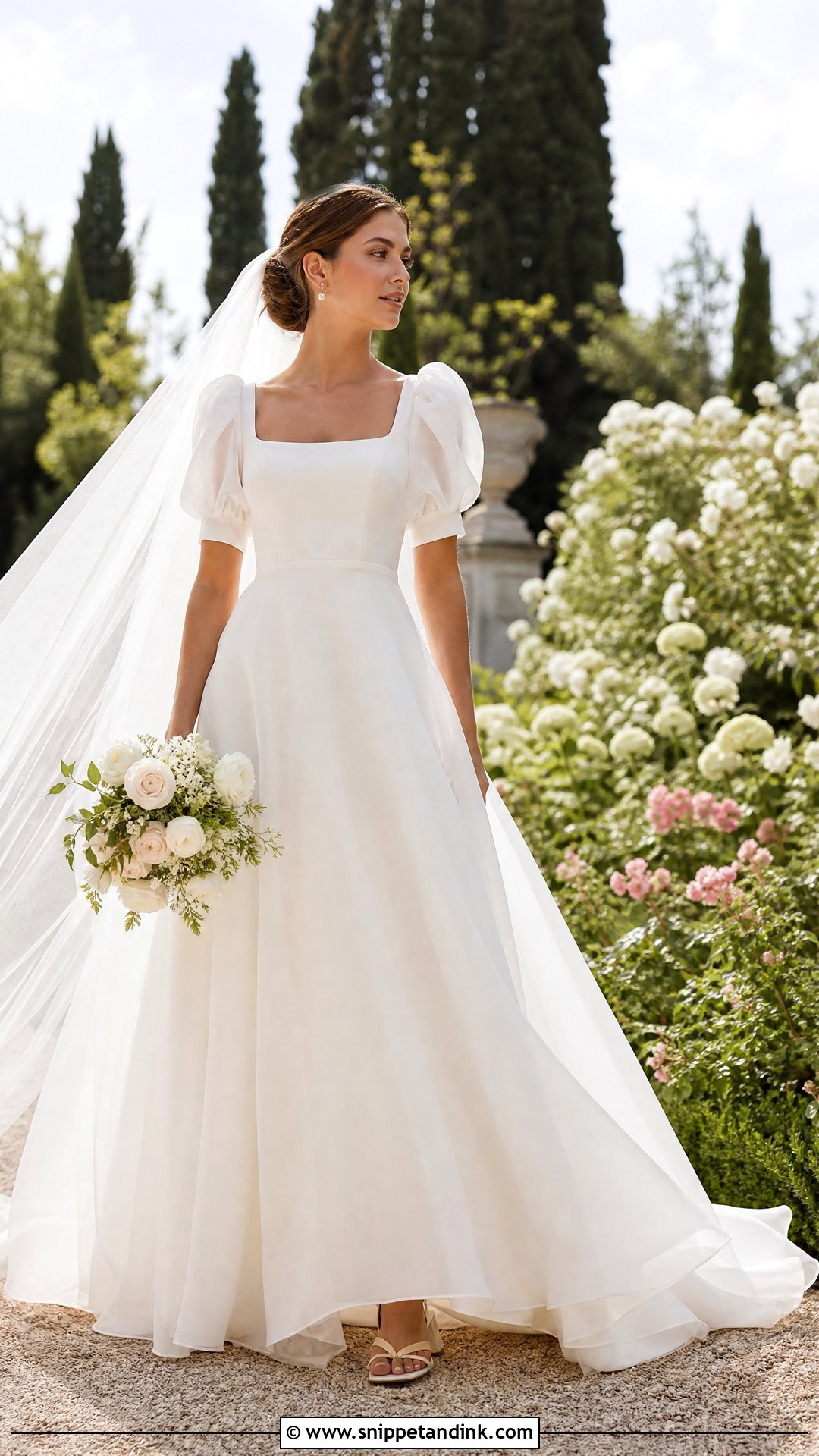
Organza is crisp but light, and it holds shape far better than chiffon: soft ball gowns, puff sleeves, layered skirts and sculptural bows all keep their form. Plain organza looks modern; floral appliqué makes it romantic. Its volume can add width, so the fit through the bodice has to be exact. Organza also creases sharply when you sit in a car, so I steam it on site after you arrive. Pearl studs, a clean veil and soft block heels.
16. Slip Garden Wedding Gown
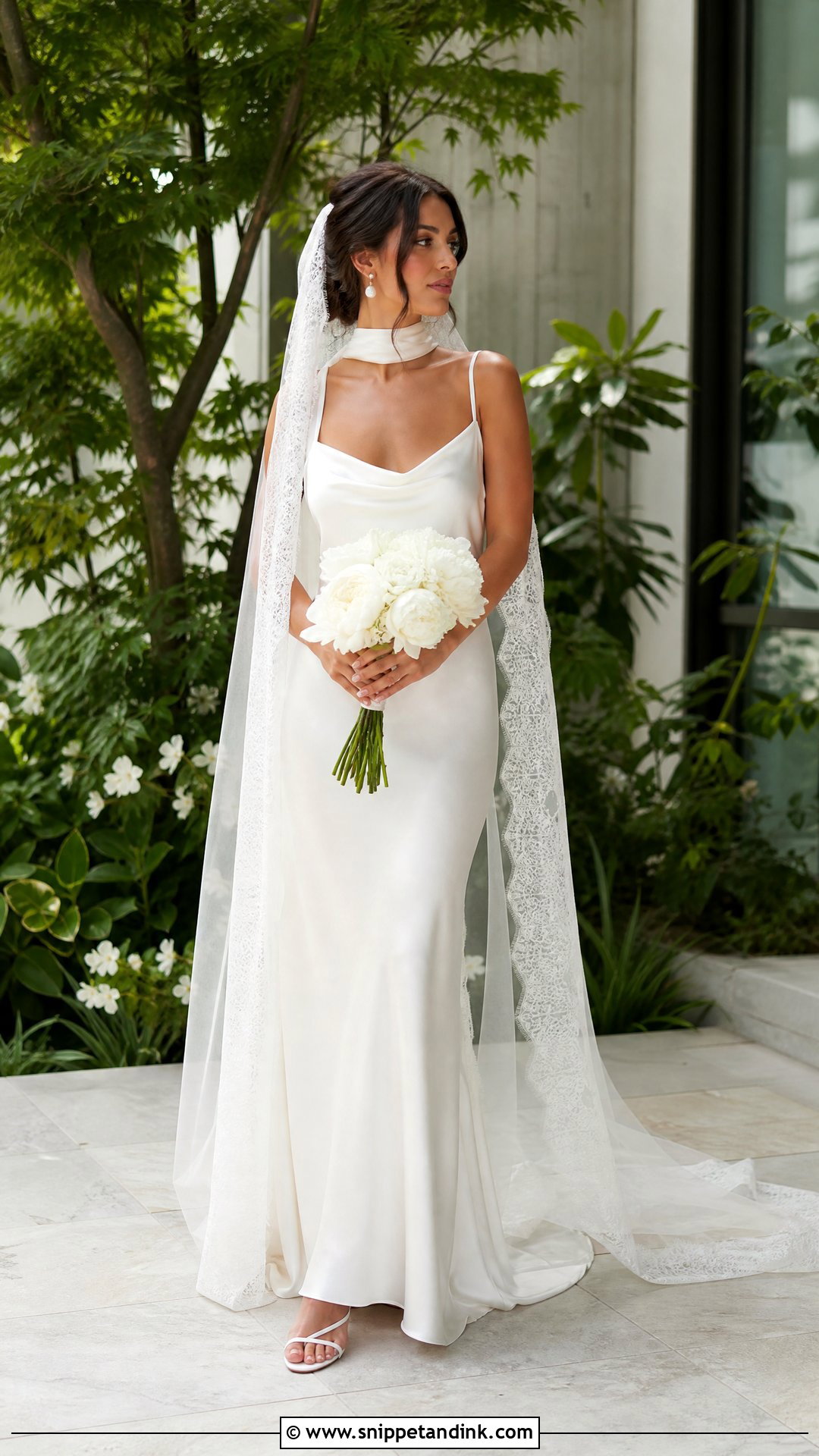
A slip gown lets the trees and flowers frame you. Silk, satin or crepe with a gentle drape, rather than anything clingy, keeps it comfortable in warm weather. A cowl, square or V-neck all suit. To make it bridal, add a lace veil, a delicate cape or pearl earrings. Silk shows water marks, so a sudden drizzle or splashing fountain is worth keeping in mind. Block-heel sandals or minimal bridal heels.
17. Puff Sleeve Garden Wedding Gown
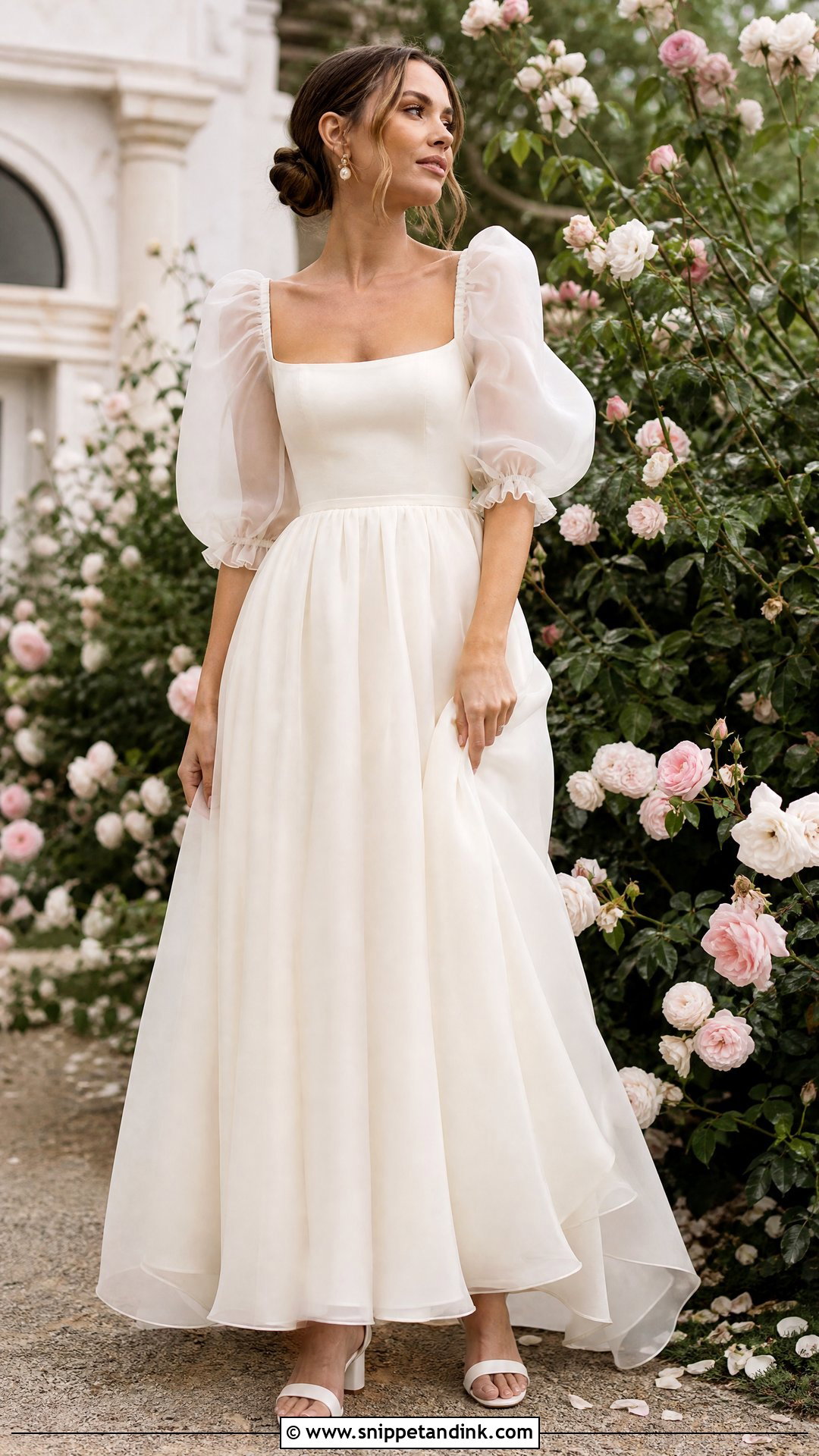
Puff sleeves should look full of air, not stuffed. Sheer organza, tulle or soft lace keep them light, and they pair well with square necklines, corset bodices and simple skirts. Choosing detachable puff sleeves lets you take them off for dancing, which I recommend for summer receptions. Keep the rest of the gown plain. A low bun or half-up style keeps the neckline open.
18. Ruffle Garden Wedding Gown
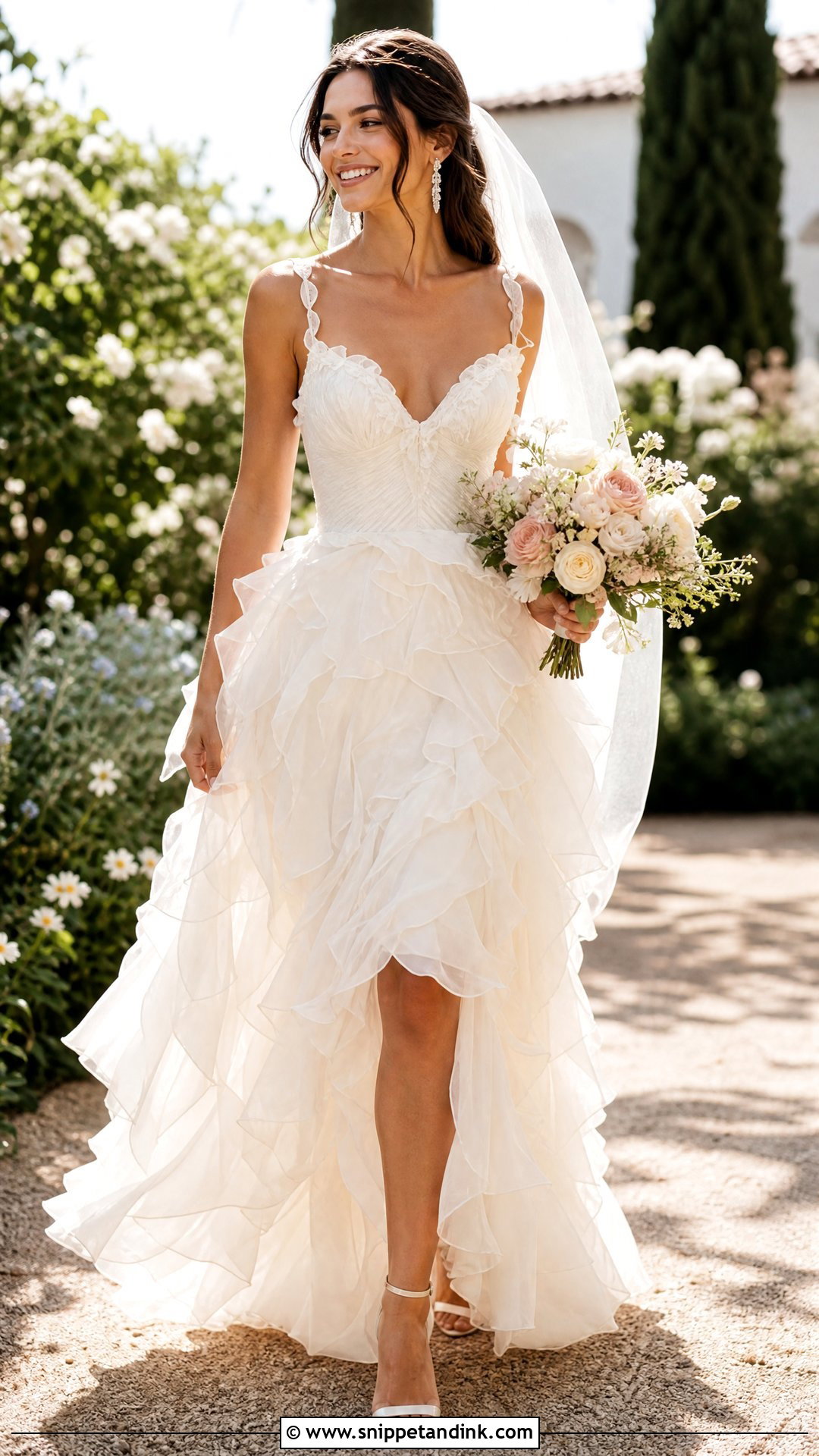
Ruffles give a gown movement as you walk, which is what makes them work in outdoor photos. Soft cascading ruffles on tulle, chiffon or organza look natural; stiff layers look heavy on grass. A fitted bodice balances the volume. Ruffled hems pick up grass and petals as you walk, so I ask a bridesmaid to give the skirt a shake before portraits. Minimal jewelry, with or without a veil.
19. High Neck Garden Wedding Gown
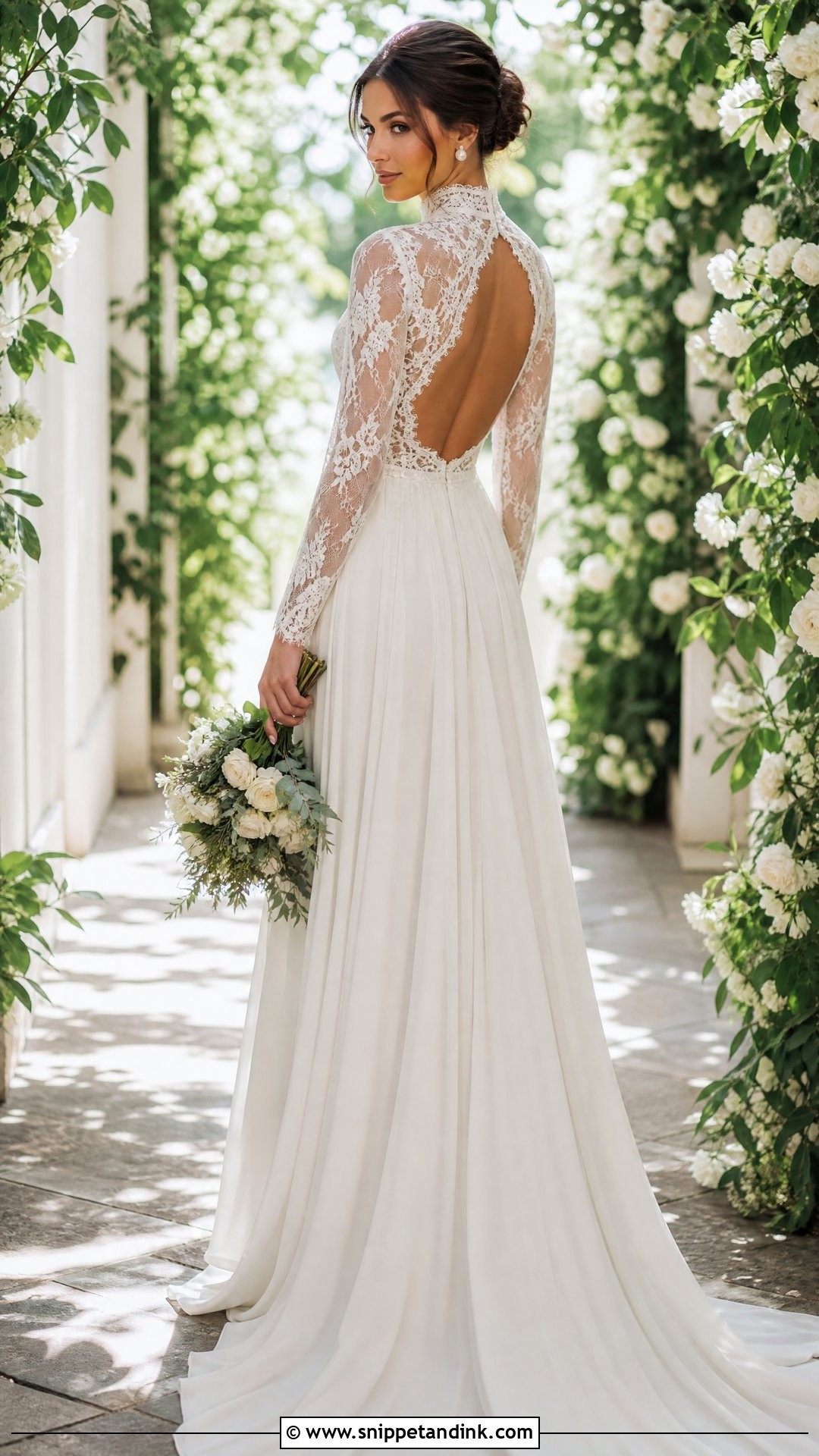
A high neck gives coverage with a refined look, especially in lace, illusion mesh or soft crepe. A sheer lace high neck with floral detail looks delicate against greenery. Balance it with an open back, fitted waist or flowing skirt so it doesn’t feel closed in. Hair up shows the neckline. In heat, a high neck in solid fabric can feel warm, so I steer summer brides toward sheer versions. Small earrings and a simple bracelet are enough.
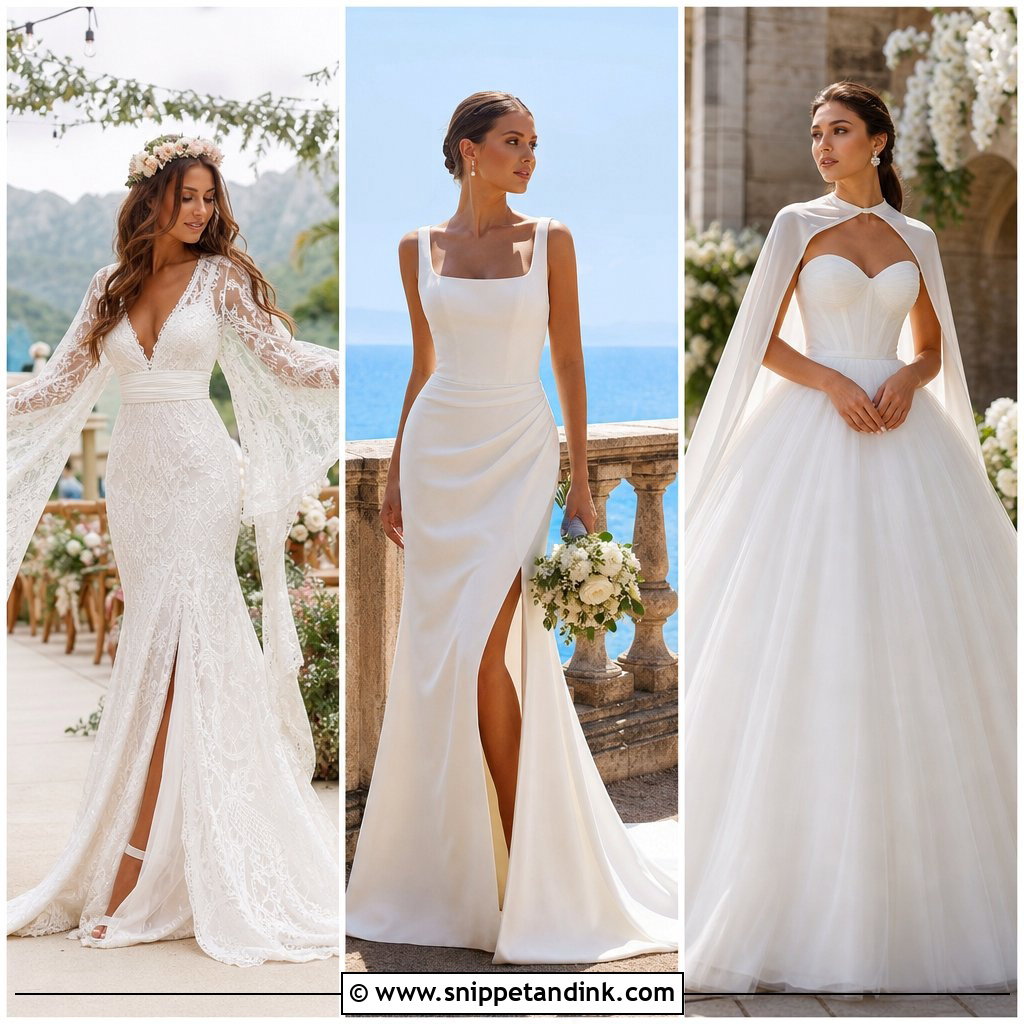



20. Cape Garden Wedding Gown
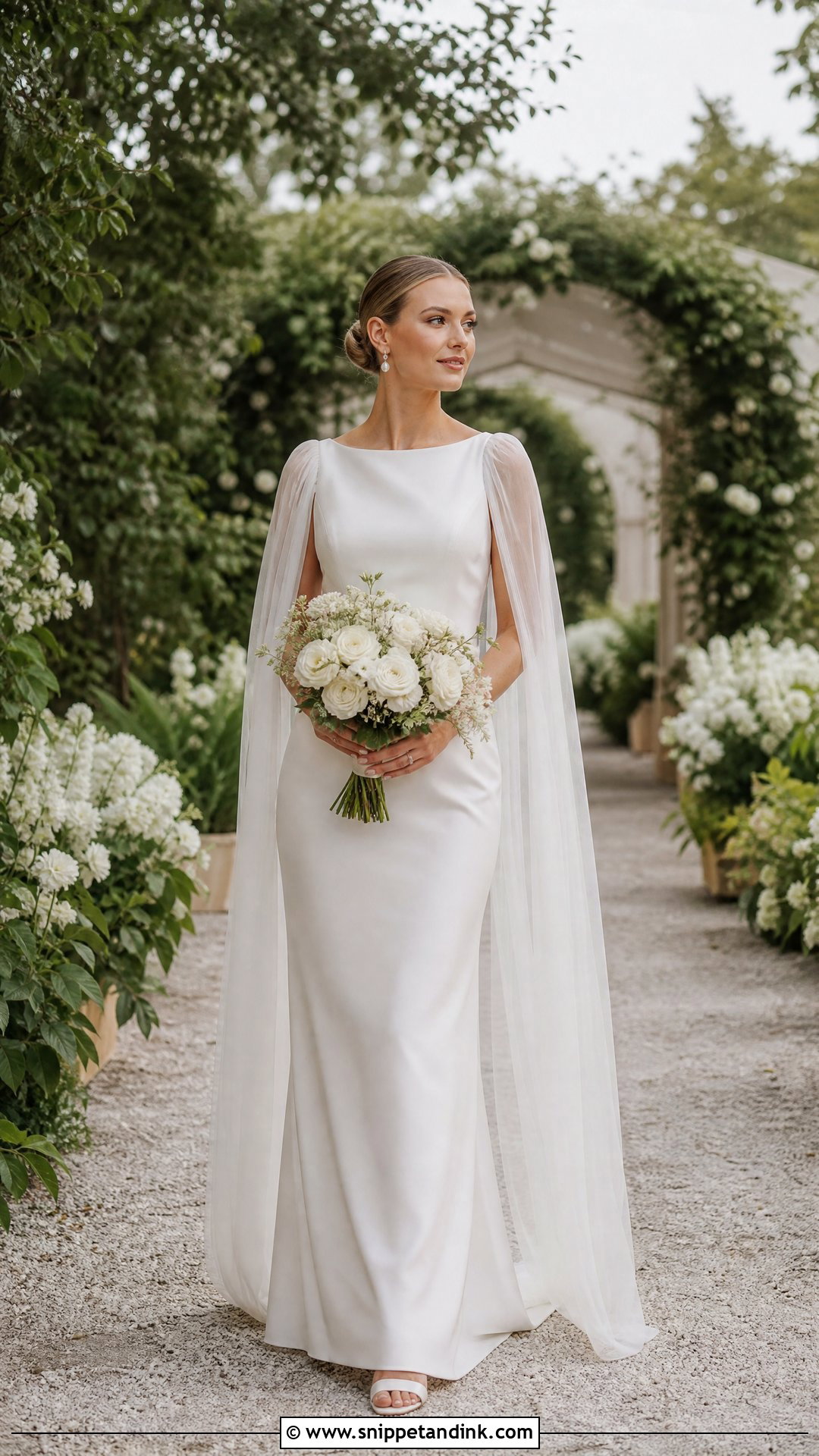
A cape gives the drama of a veil without the weight on your head. Sheer tulle, lace or chiffon capes move in a breeze. They attach at the shoulders, neckline or back, and pair well with a plain satin dress, lace sheath or minimal A-line. A cape gives coverage for a religious ceremony and can usually come off for the reception. In wind, a long cape can wrap around you, so I keep outdoor capes to floor length rather than trailing.
21. Blush Garden Wedding Gown
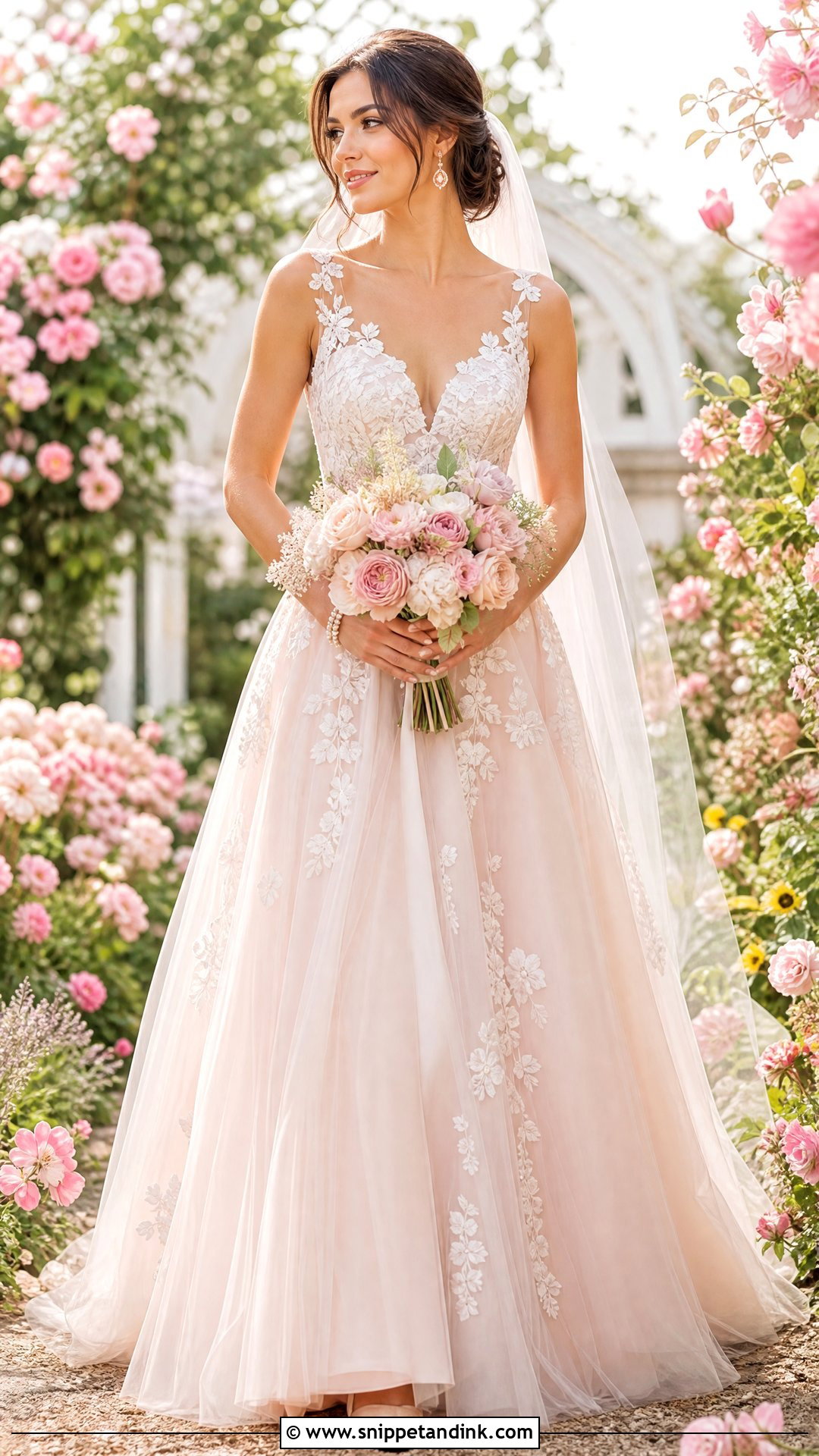
Blush is a soft alternative to white and sits well beside flowers. Tulle, chiffon, lace and organza suit it. A blush lining under ivory lace gives a subtle tint; a full blush skirt with white appliqué gives more colour. Pearl, ivory, champagne or rose gold accessories keep it soft. Blush can read nearly white in bright sun and pinker in shade, so I look at it outdoors before a bride commits.
22. Champagne Garden Wedding Gown
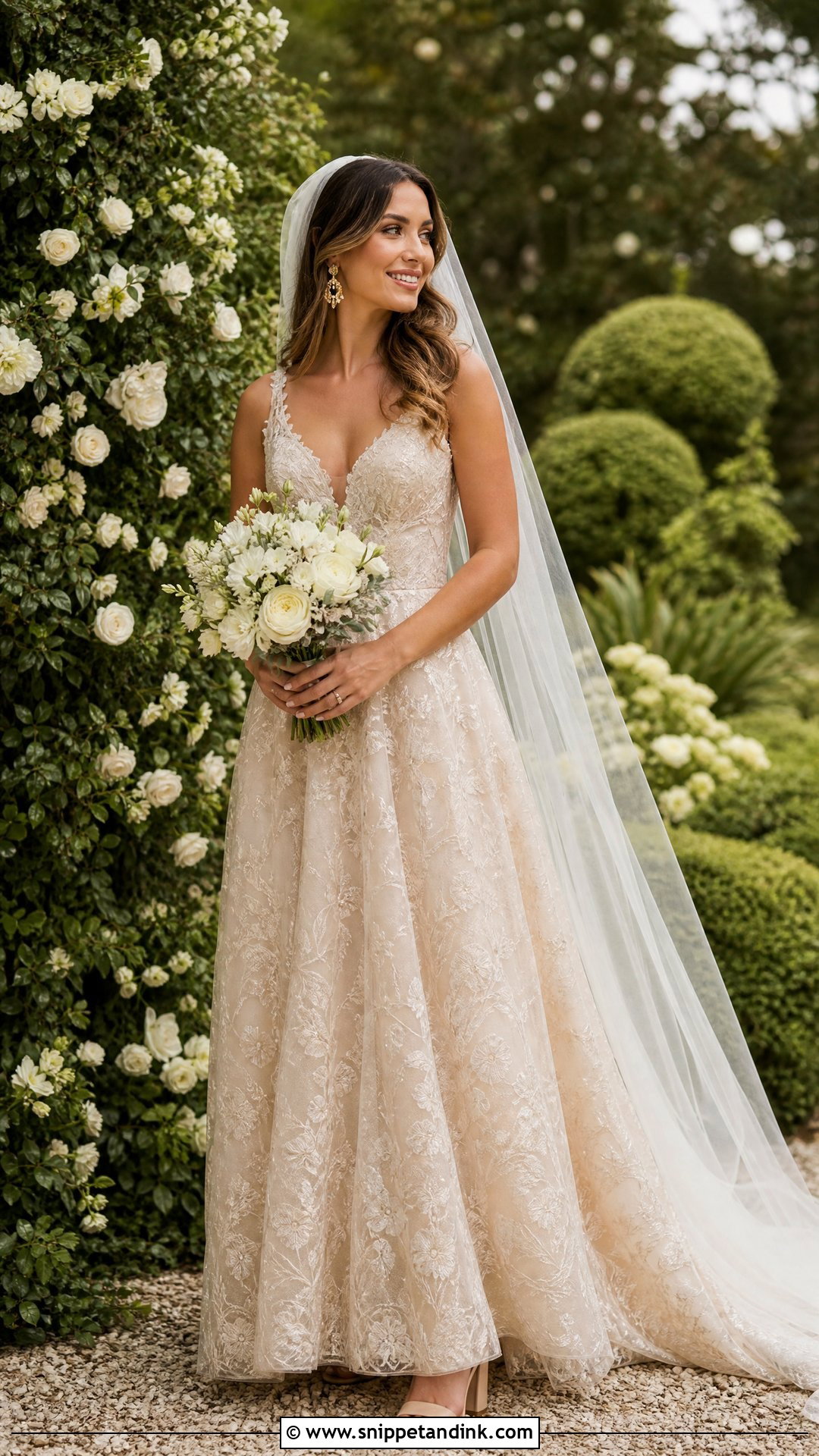
Champagne adds warmth and flatters many skin tones, particularly in late afternoon light. It suits lace overlays, beaded tulle, satin and floral embroidery. For a garden, I’d pick subtle shimmer or a matte finish over heavy sparkle, which can look harsh in daylight. Ivory flowers, gold-toned jewelry and neutral block heels complete it. Match the veil to the gown’s undertone; hold both together in daylight to check.
23. Short Train Garden Wedding Gown
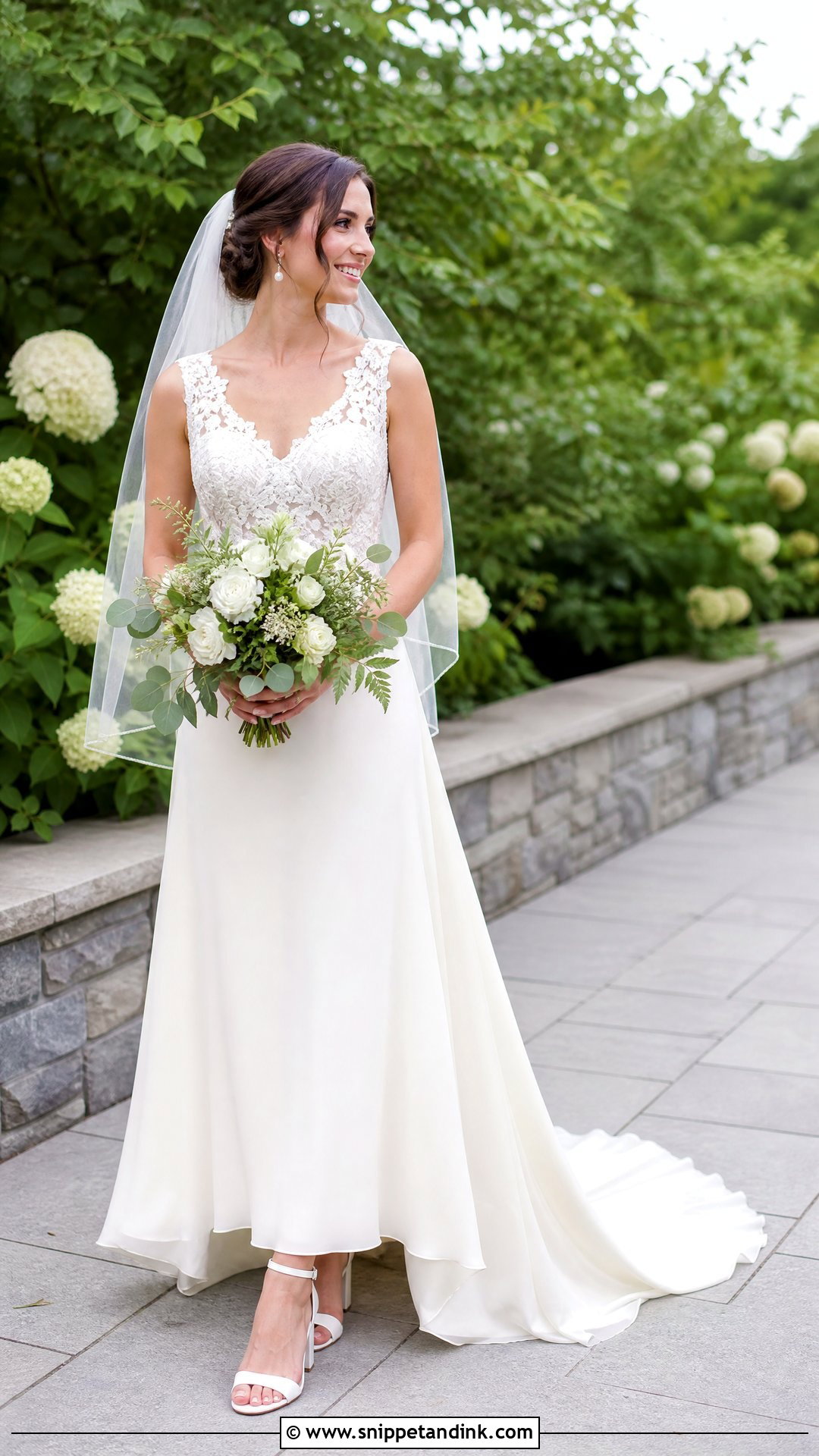
Long cathedral trains are dramatic, but on a lawn they collect grass, petals and soil. A sweep train or chapel-length train gives enough presence and stays manageable. It suits almost any silhouette, from lace A-line to satin slip to soft tulle. Ask about bustle options before alterations, and practise the bustle with whoever will do it on the day. Comfortable shoes and a veil that doesn’t fight the train finish it.
24. Vintage Garden Wedding Gown
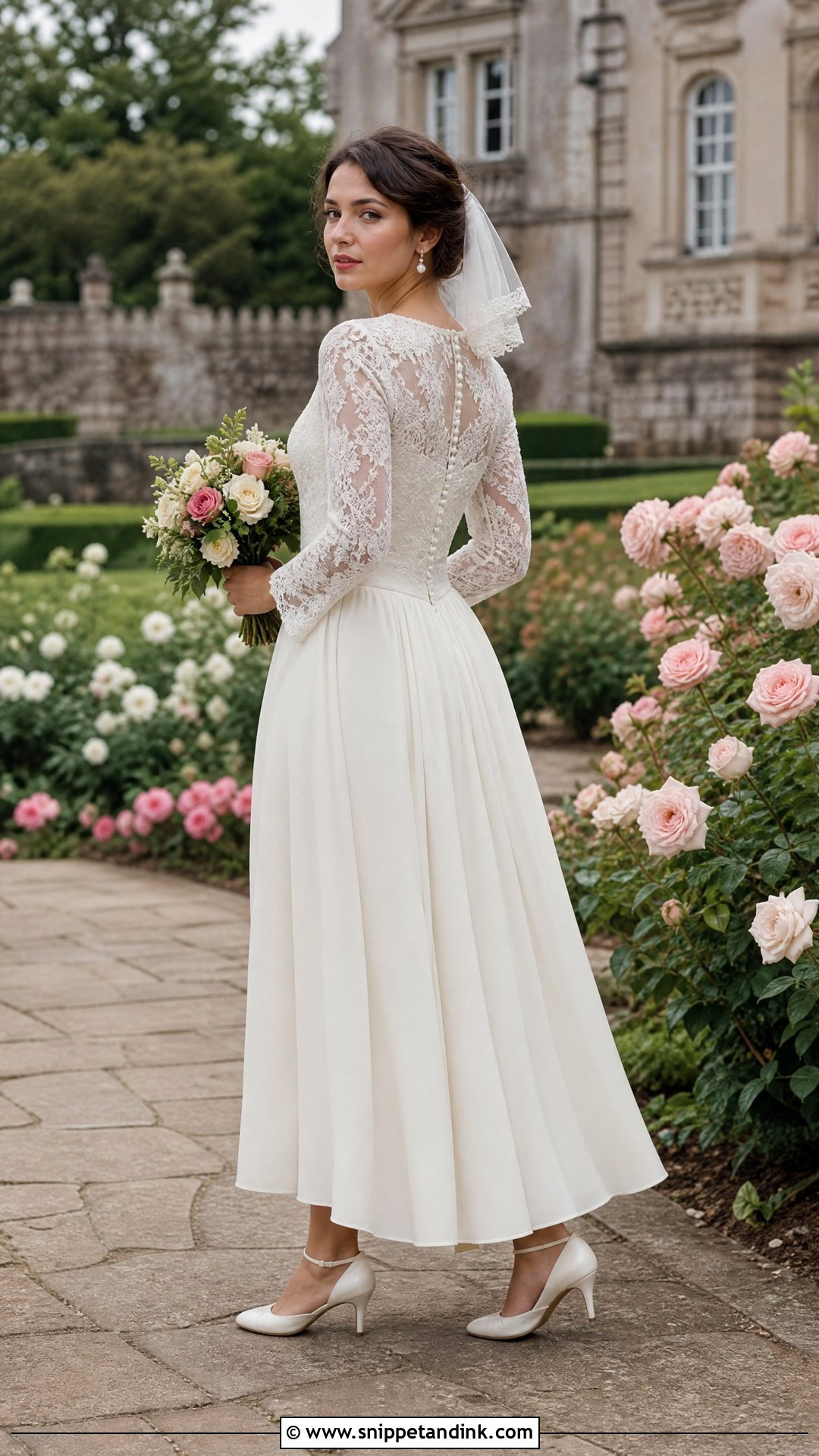
Vintage works best when you take one or two details from the past and keep everything else current. Lace sleeves, covered buttons, tea length, a high neck, scalloped lace or delicate beading all carry the mood. Covered buttons look lovely and take a long time to fasten, so I allow extra minutes for dressing and assign someone with steady hands. A soft veil, pearl earrings and low heels suit rose gardens and historic estates.


25. Minimalist Garden Wedding Gown
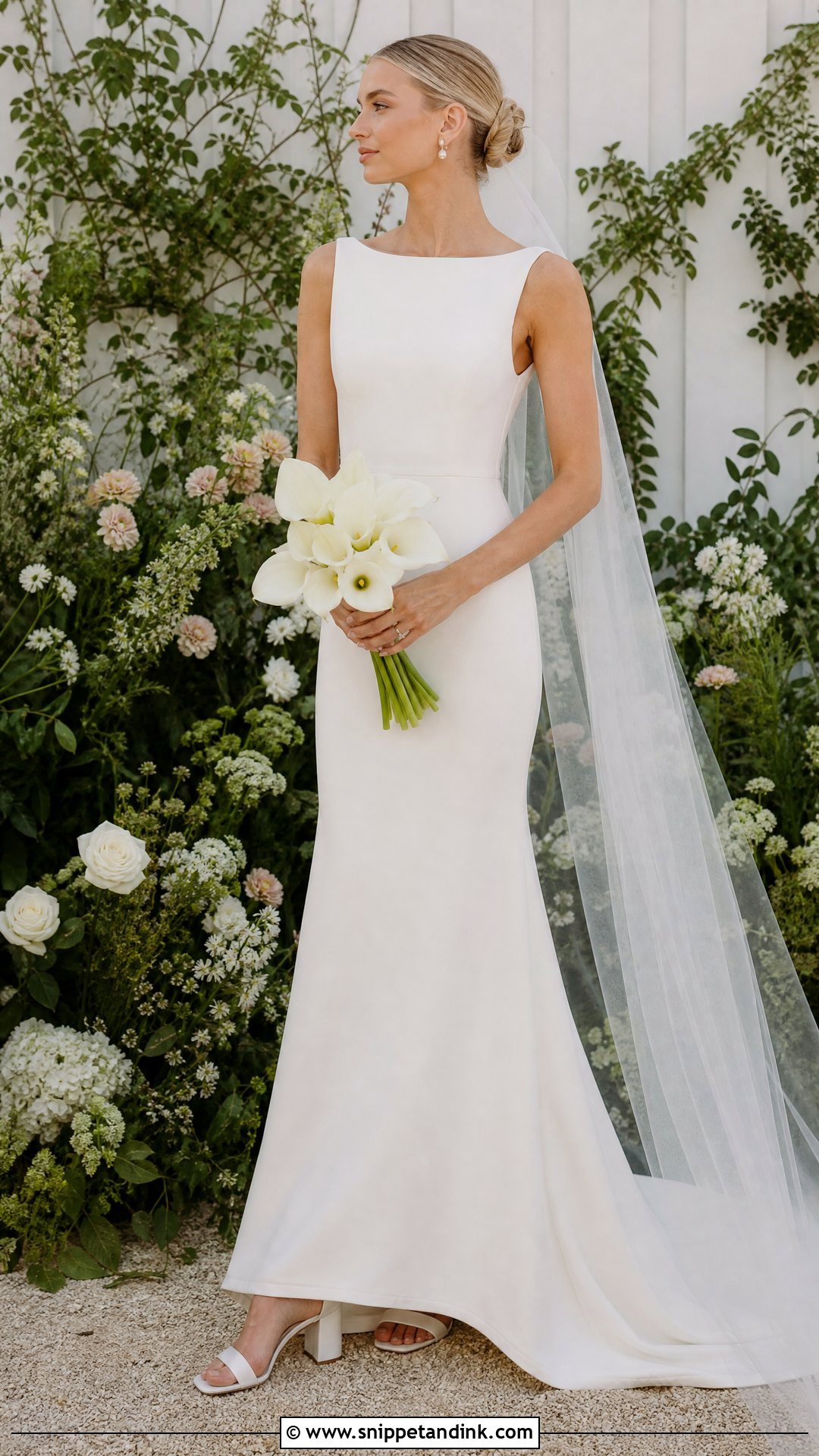
Minimal gowns depend on fabric and fit more than anything else. A crepe sheath, satin column, square neck A-line or strapless dress with subtle structure will look calm against a flower-filled garden. Every seam is on show, so I book an extra fitting for minimalist gowns. Add one strong detail: a long veil, a sleek bun or a sculptural bouquet. Comfortable shoes still matter on grass and uneven paths.
Wind, Veils and a Train on an Open Lawn
The thing that catches outdoor brides off guard is wind. A cathedral veil looks wonderful in still air and turns into a sail in a gust. I anchor veils on a comb with extra pins crossed underneath, and for long veils I sometimes suggest small weights stitched discreetly into the hem so it falls rather than flies.
- Agree with your photographer when the veil goes up and down, so a helper can manage it between shots.
- Fabric aisle runners can wrinkle and slip on grass. Ask the venue whether they peg them down or whether the aisle is better left as lawn.
- Give one bridesmaid the job of lifting and fluffing the train before every photo.
- Pack a white chalk stick and a clean cloth for small marks on ivory fabric.
Accept that the hem will come home a little green. That’s normal for a garden wedding. Take the gown to a cleaner who handles bridal fabrics within a few weeks, point out every mark, and resist the urge to scrub anything at home. Grass and soil set in over time, and delicate lace or silk can be damaged by the wrong treatment.
Let the Flowers Carry the Detail You Leave Out
A garden gown should be comfortable and connected to its setting. Outdoor ceremonies favour softer fabrics, floral details, practical hems and silhouettes that move well in daylight. Lace, chiffon, satin, tulle, organza or crepe can all work. Think about the season, the ground, the temperature and how each fabric looks in natural light, then style it fully with veil, shoes and hair. Any of the gowns above can become a complete bridal look that you can actually walk, sit and dance in.
You'll Like These Ideas:



Leave a Reply