
Brides who come to me wanting a fairy-inspired bridal look usually show me pictures of forests, not dresses. That is a good starting point. The gowns that translate best have flowing skirts, flowers stitched into the fabric, fine lace and a little light-catching detail, and right now dimensional florals, exposed corsetry, airy organza and soft color are all easy to find in bridal shops. My rule is one enchanting focal point per gown, with everything else kept quiet. Below are twenty dresses, each styled for a real venue and a real day of wear.
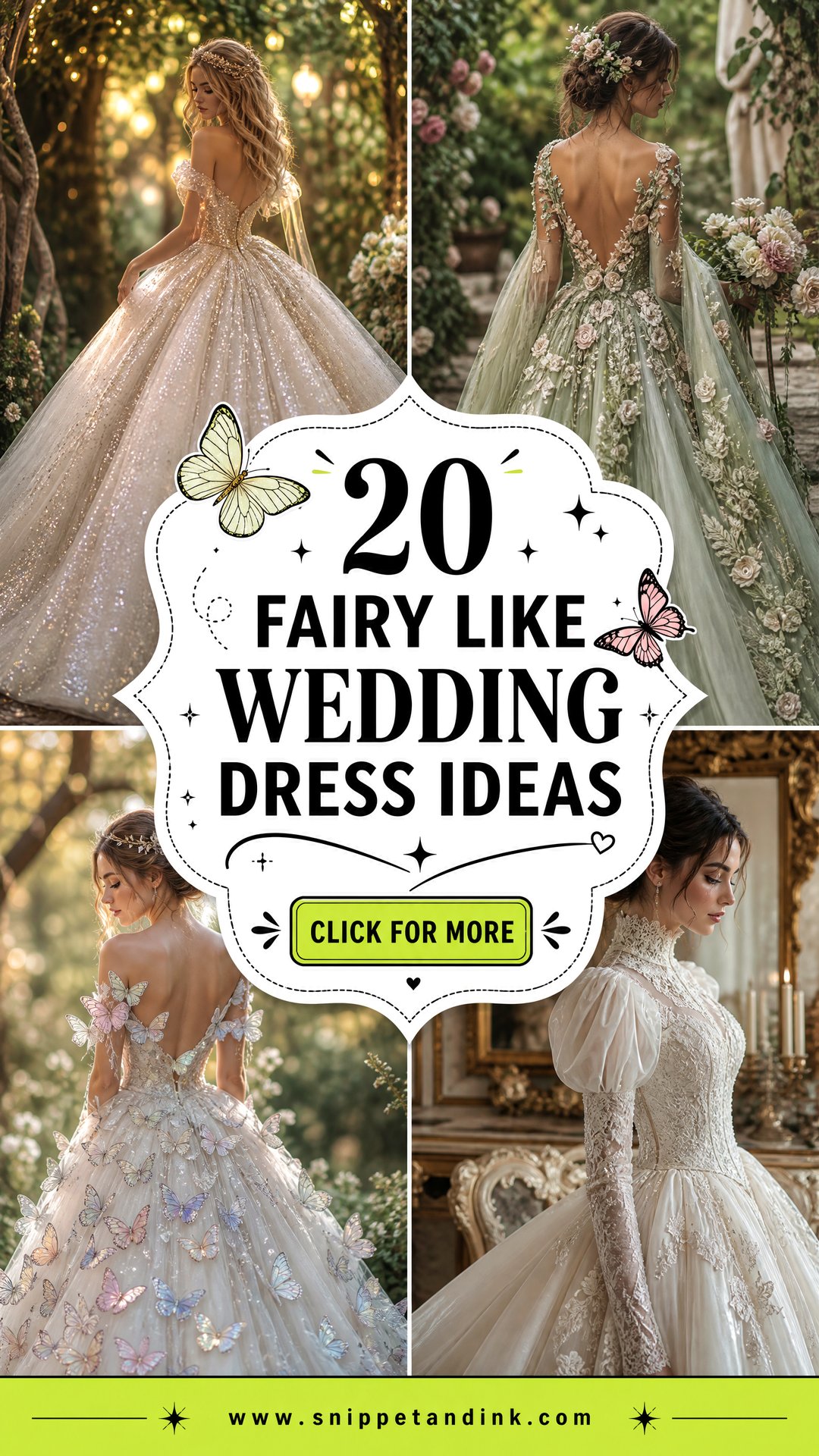
Woodland Light Turns Ivory Green, So Test Fabric Outdoors
Under a tree canopy, daylight is filtered through leaves and picks up a green cast. Bright white fabric can look grey-green there, and pale blush can drift toward beige. Ivory and warm off-whites hold up much better in shade.
Before I let a bride commit to a color, I ask the salon for a swatch or take the sample to a window and then outside if they allow it. If your ceremony is in a forest, a photo of the swatch held in shade on your phone will tell you more than the fitting room mirror ever will.
- Sheer layers pick up the color of whatever is underneath, so test the full stack of lining and tulle together, not just the top fabric.
- Silver beading looks cool and slightly blue in shade; gold and champagne stay warm.
- Dappled light makes busy embroidery look busier. One area of detail reads better than an all-over pattern under trees.
1. Floral Appliqué Tulle Wedding Dress
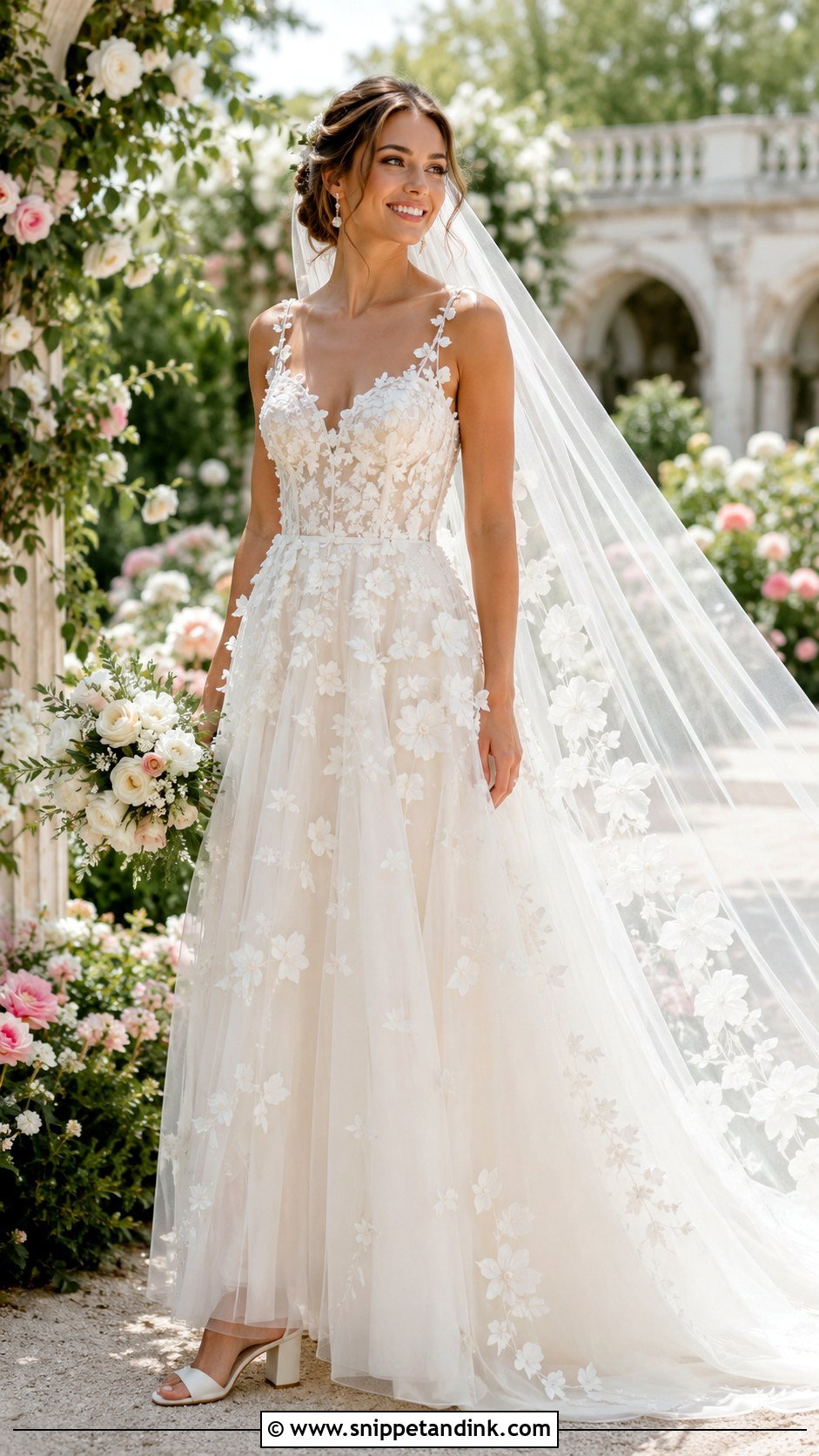
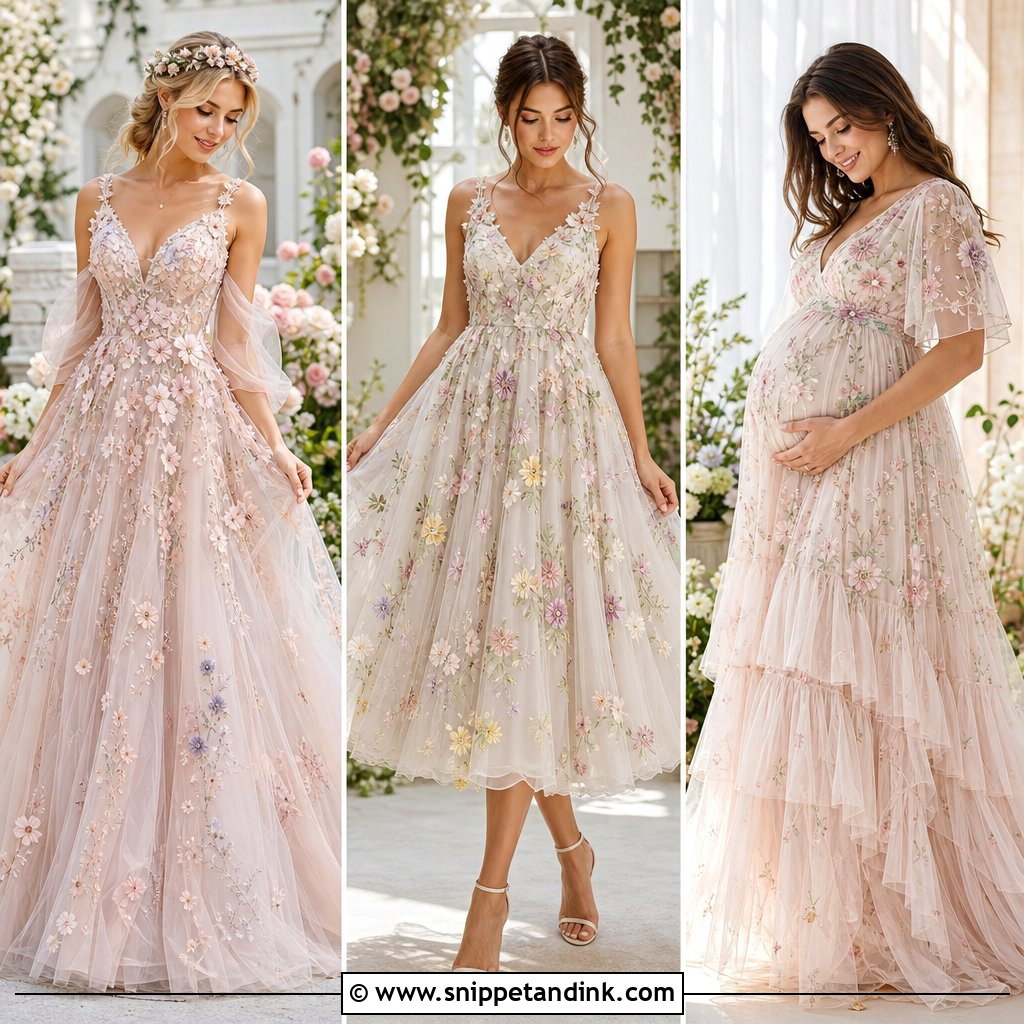
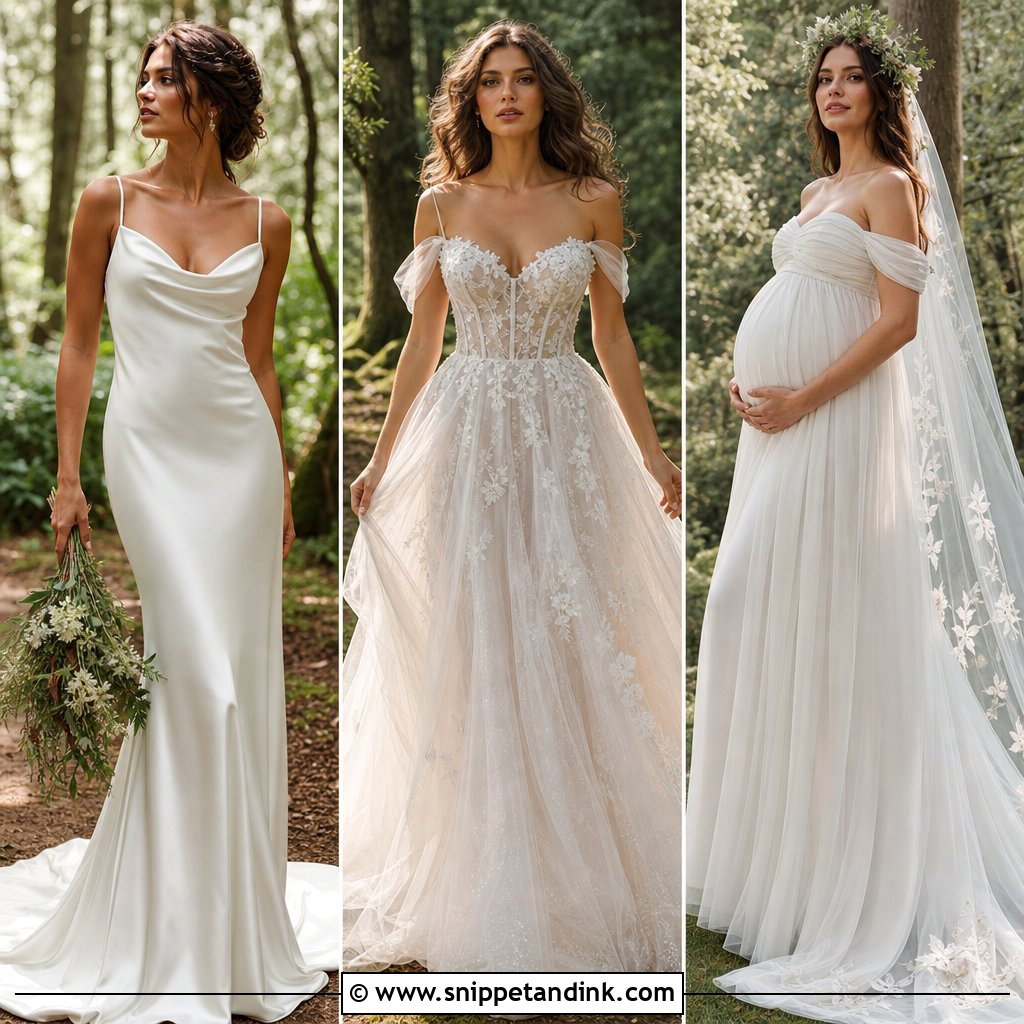
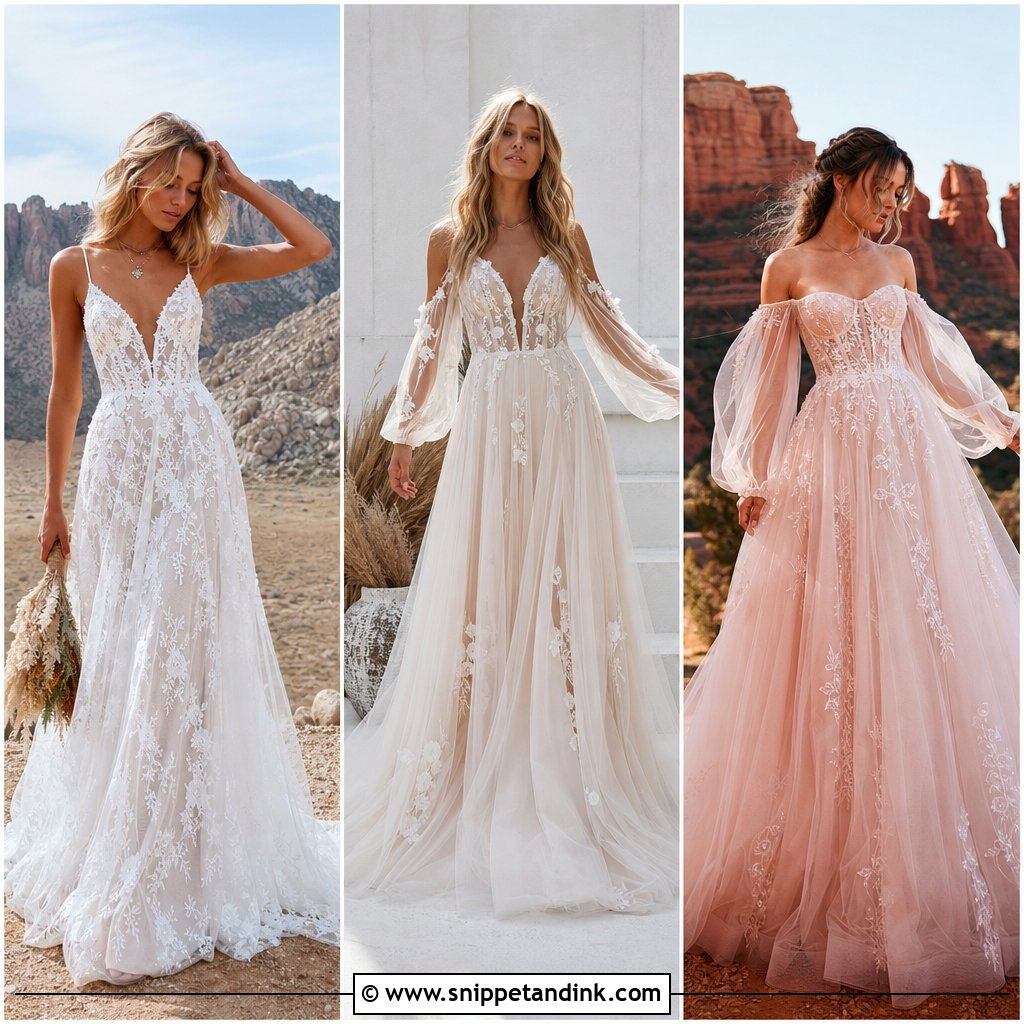
Appliqué tulle is the easiest entry point, and it works because the flowers do the fairy work for you. I look for flowers that trail from the neckline into the skirt and get sparser as they go, which keeps the hem light. Ivory and pale blush are kindest to botanical details. On grass, pointed satin flats or a low block heel; heels sink. A loose braided updo and a cathedral veil with a few scattered flowers finish it, and an untidy seasonal bouquet suits it better than a tight round one.
2. Long Sleeve Lace Wedding Dress
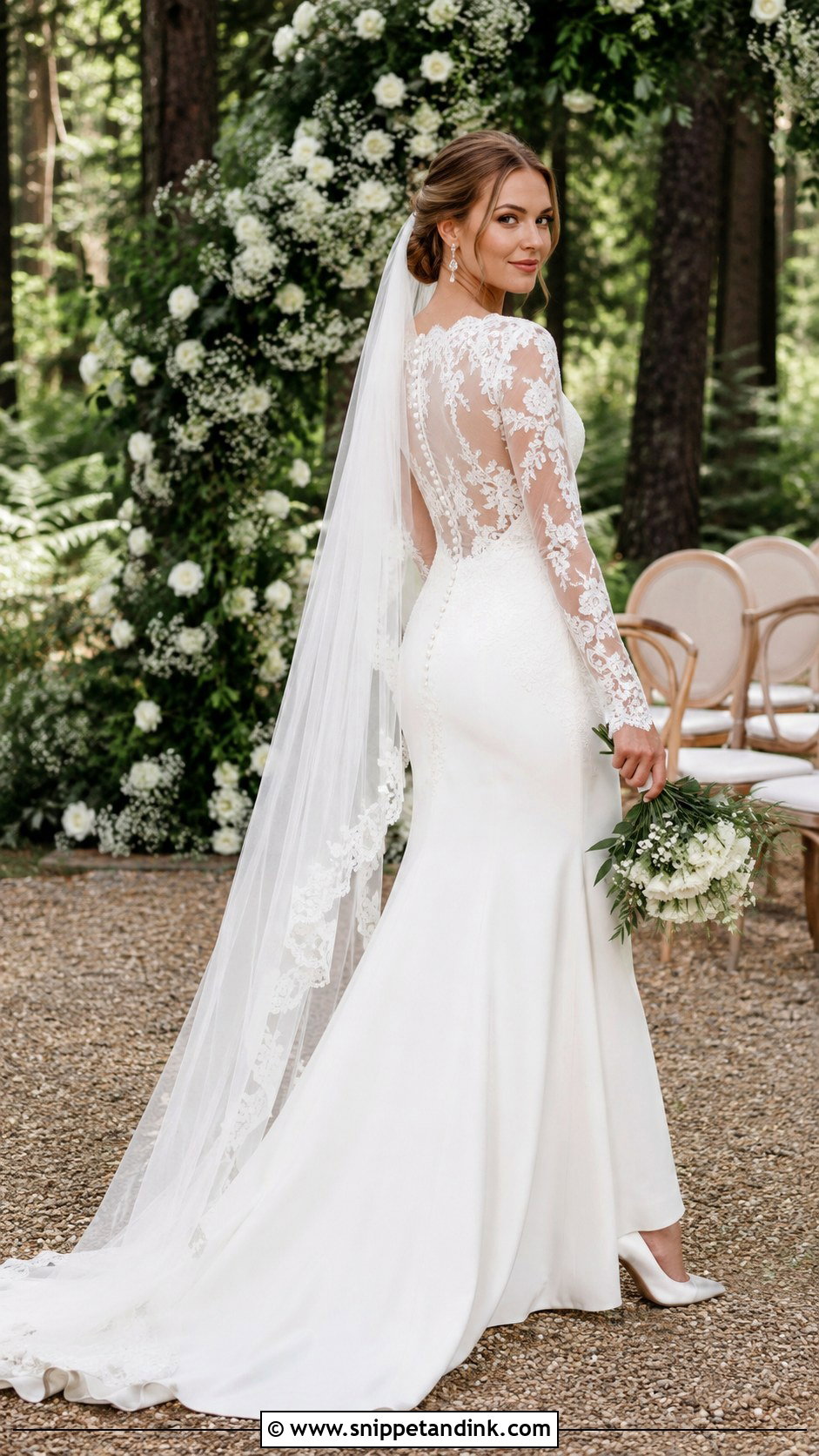
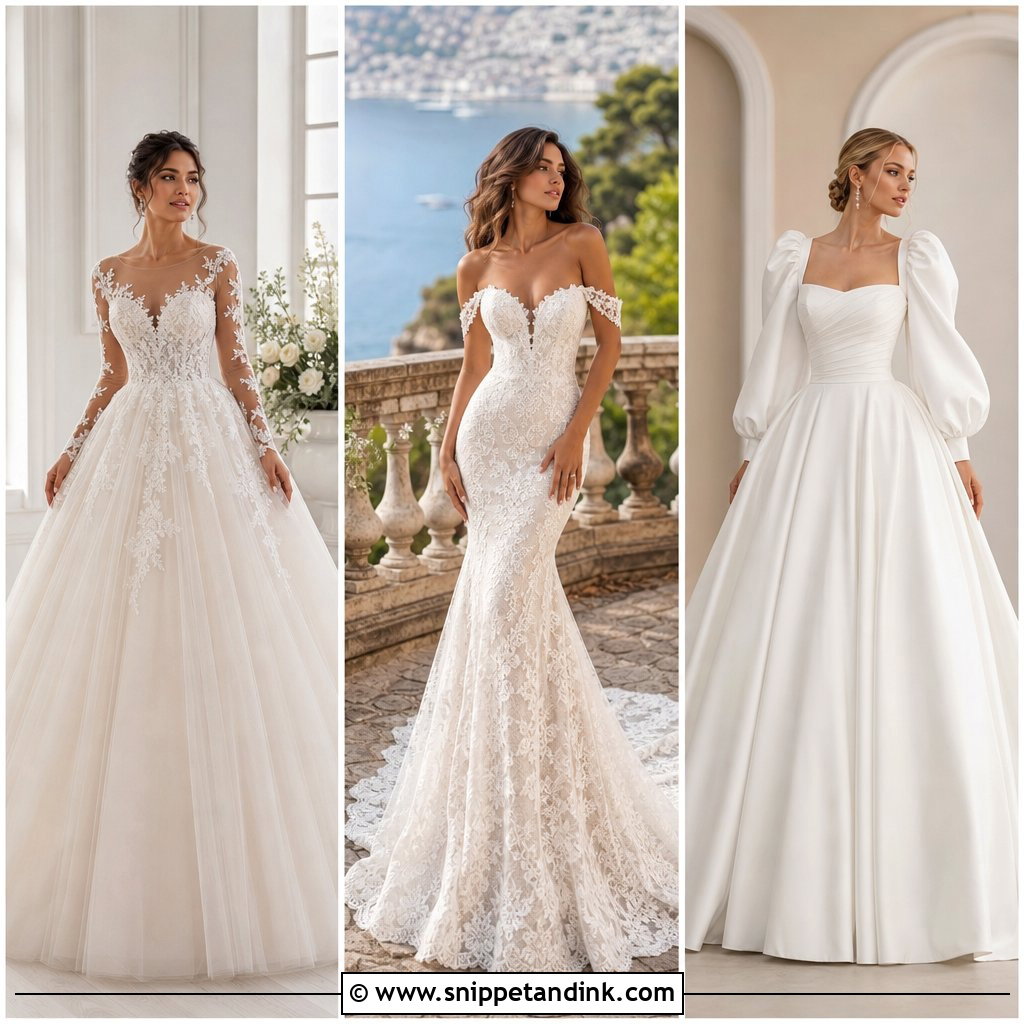
Vine lace sleeves give coverage and still look delicate, but only if the lace is fine and flexible. Thick, stiff lace makes the arm look heavier and does not stretch when you reach. I ask brides to cross their arms and hug me in the sample before we go further. A row of covered buttons or a low back adds interest from behind, which matters because guests look at your back through the whole ceremony. Ivory ankle boots for an autumn field, satin pumps for a formal room.
3. Off The Shoulder Chiffon Wedding Dress
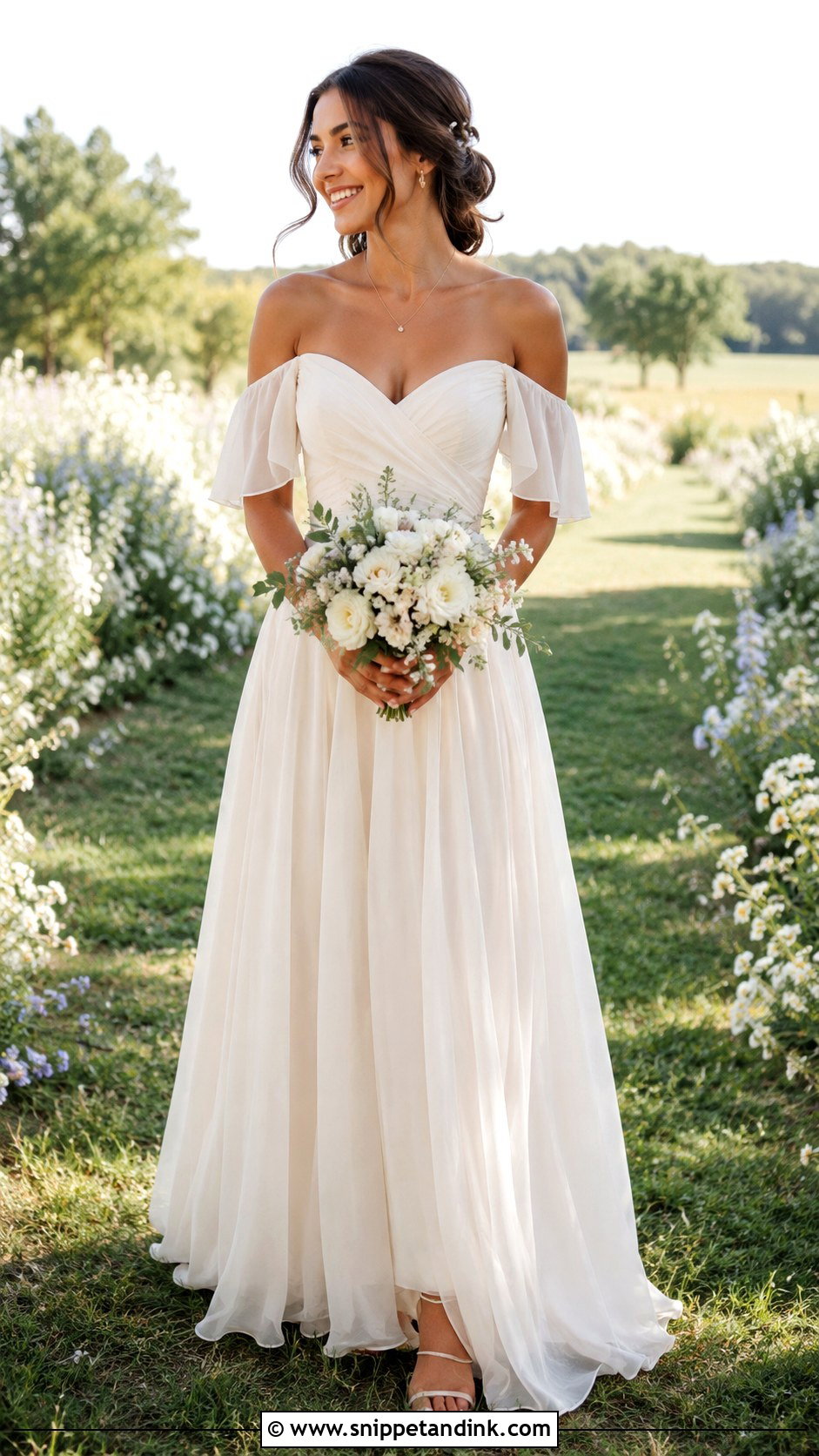
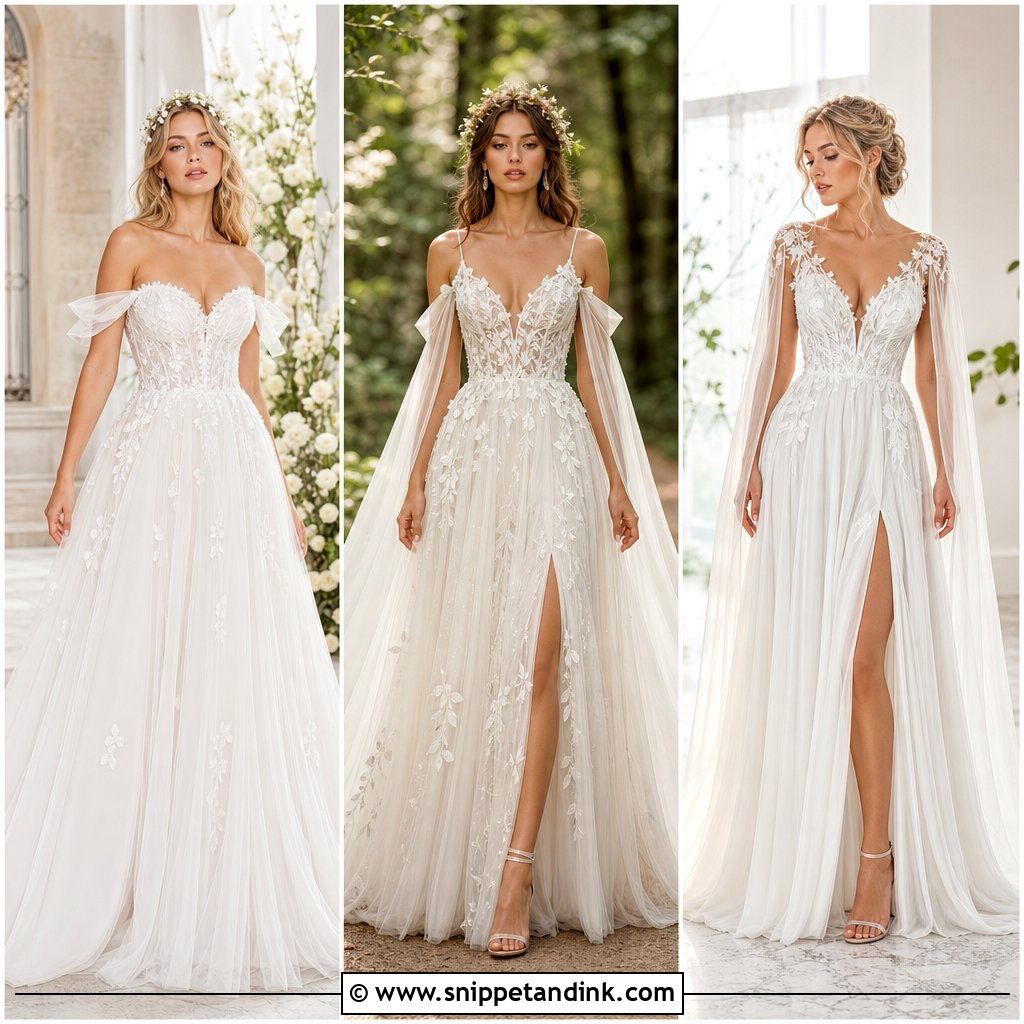
Chiffon moves with every step, so it gives you the floaty effect without volume. Off the shoulder suits a spring meadow or beach, and flutter sleeves soften the arm. The weakness is support: chiffon has no body of its own, so a defined waist and a built-in bodice underneath are what keep the shape. Strappy sandals make sense here. If wind is likely, I prefer a floral headband over a chapel veil, which can wrap around your face in a gust.
4. Glitter Tulle Ball Gown Wedding Dress
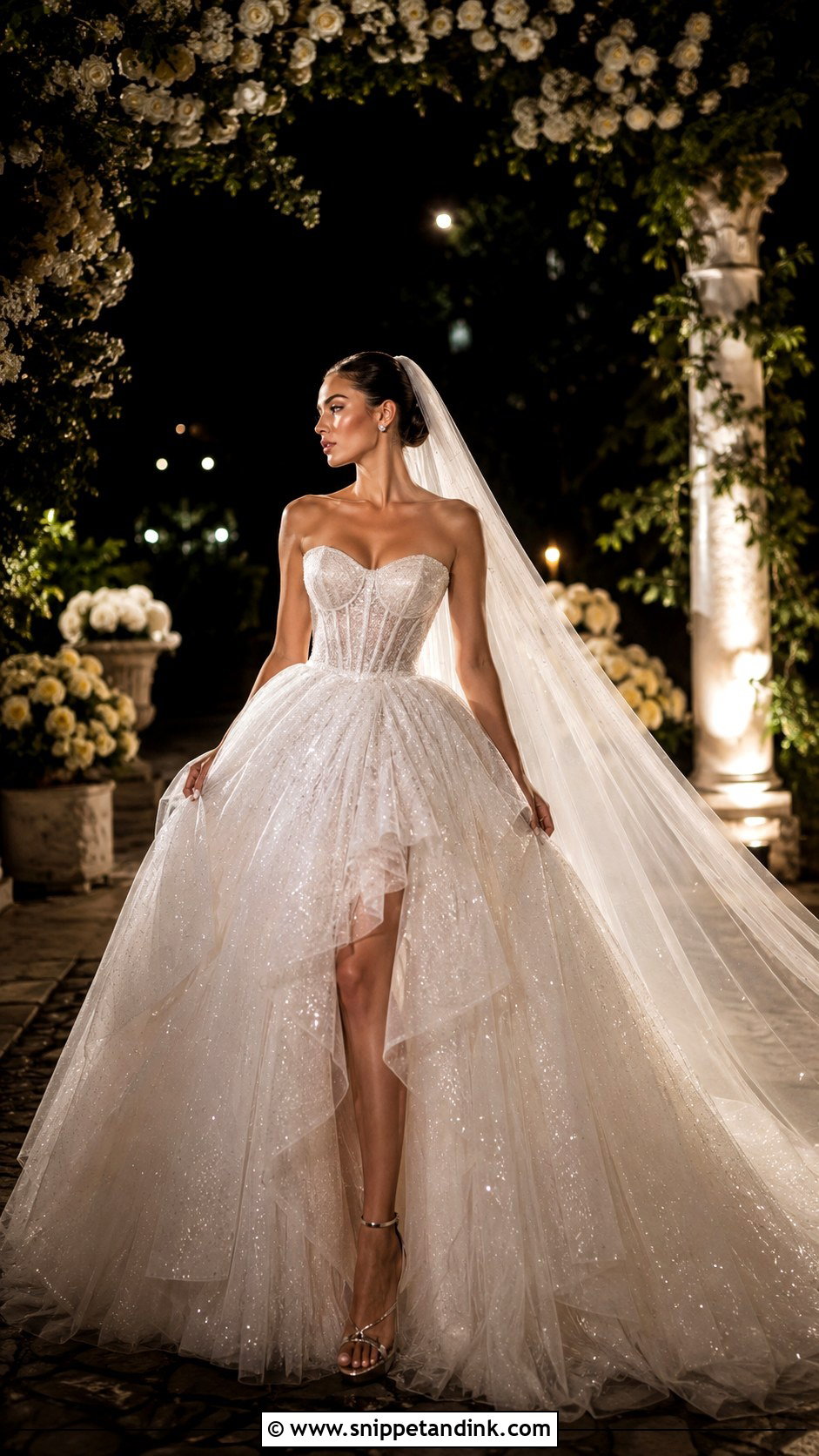
Glitter tulle is the closest a dress gets to starlight, and it shines under evening lighting. Ask whether the sparkle is woven into the net or sprayed on the surface. Surface glitter sheds onto your partner’s suit, the car seats and every guest you hug, and it dulls after a few hours. A plain strapless or square bodice balances the skirt. Silver or ivory heels can disappear under the hem, but make sure they are stable, because a full ball skirt hides the ground from you.
5. Blush Embroidered Wedding Dress
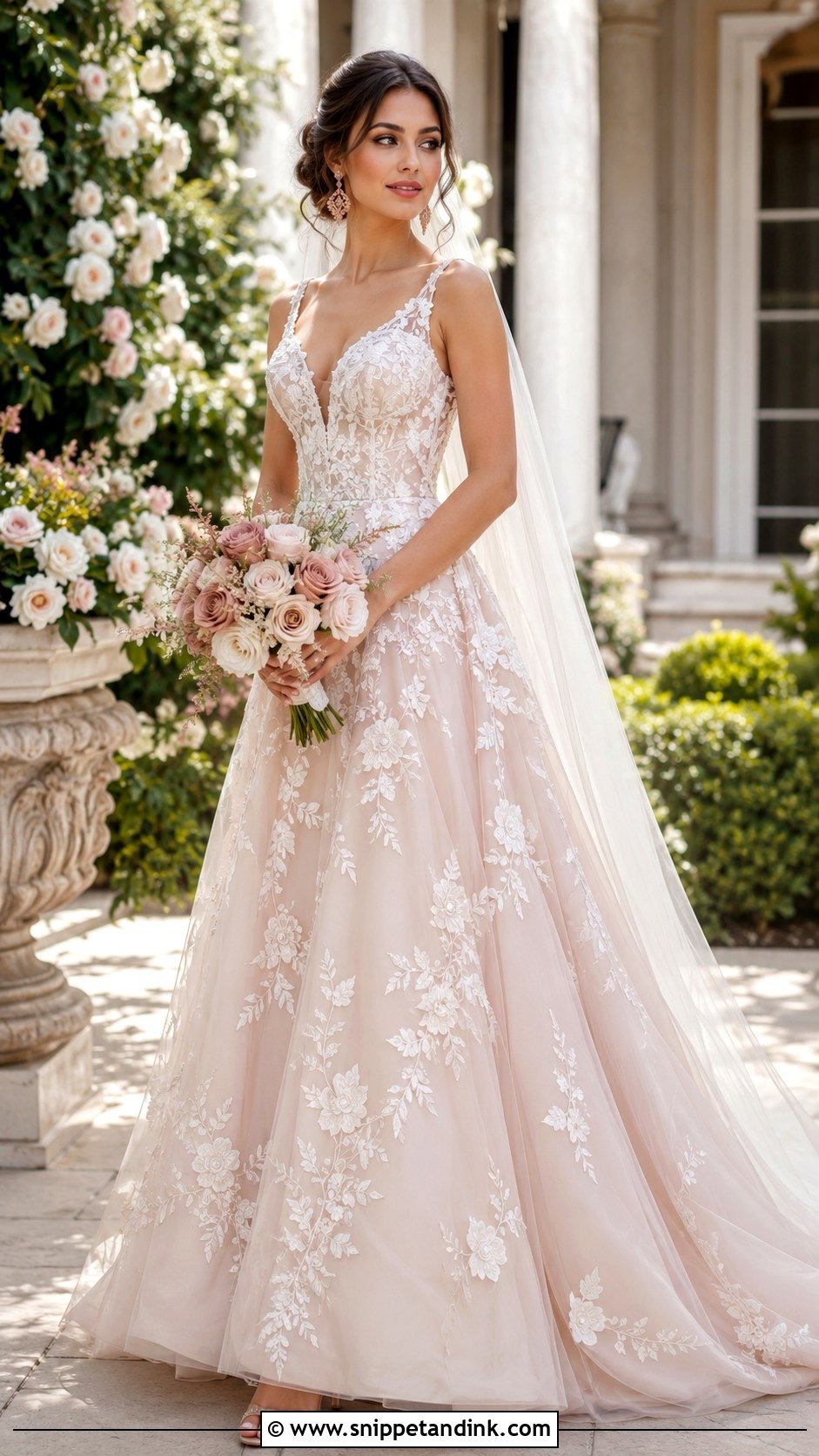
A blush embroidered gown reads as bridal while quietly stepping away from white. I prefer the version where the embroidery sits on an ivory or champagne lining, because the stitching stays crisp; on a blush lining it can blur. Muted pink, cream and pale green thread is enough color. Keep the veil ivory and sheer so the gown shows through. Rose-gold earrings and a low twisted hairstyle leave the neckline clear.
6. Sage Floral Wedding Dress
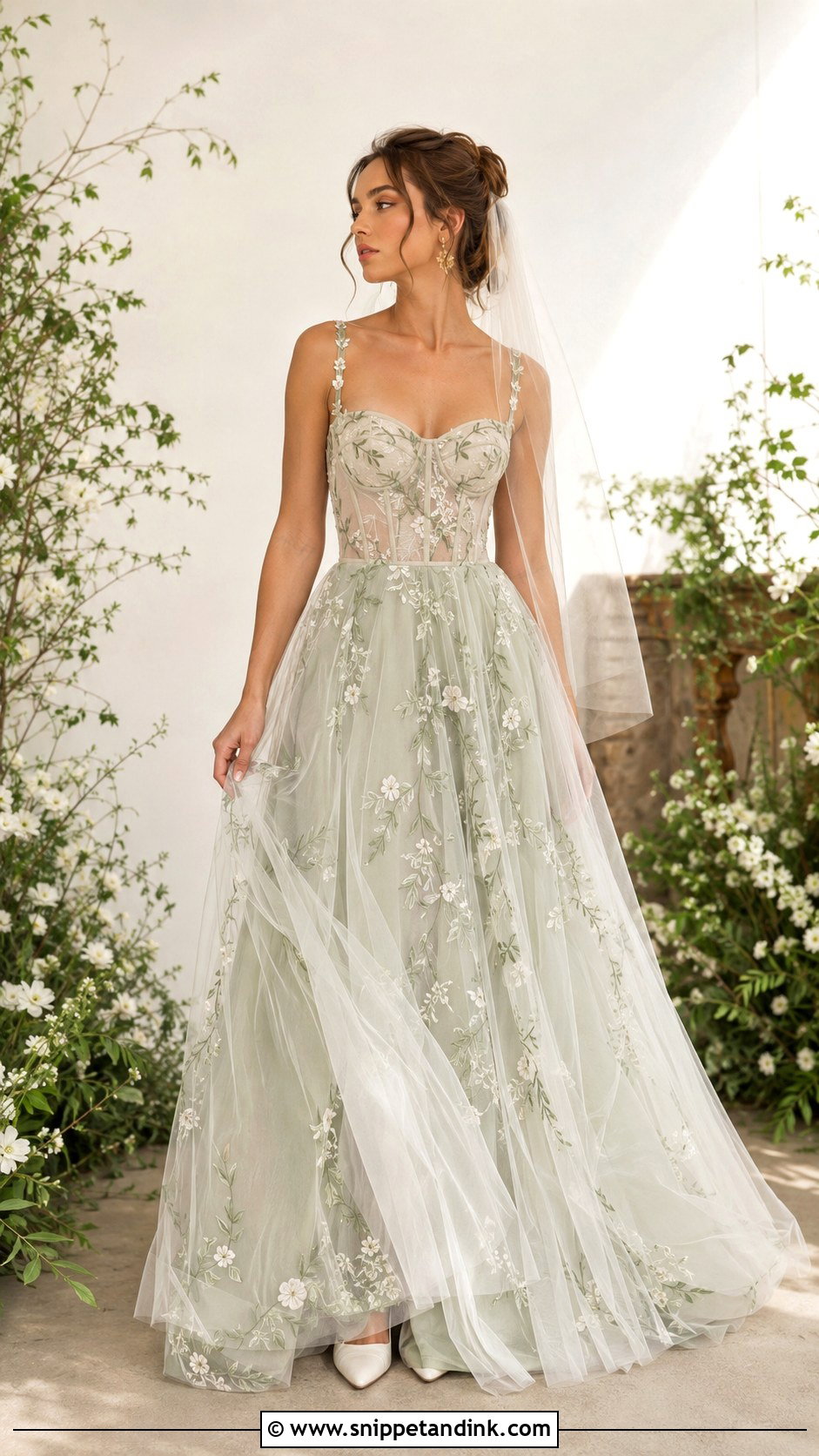
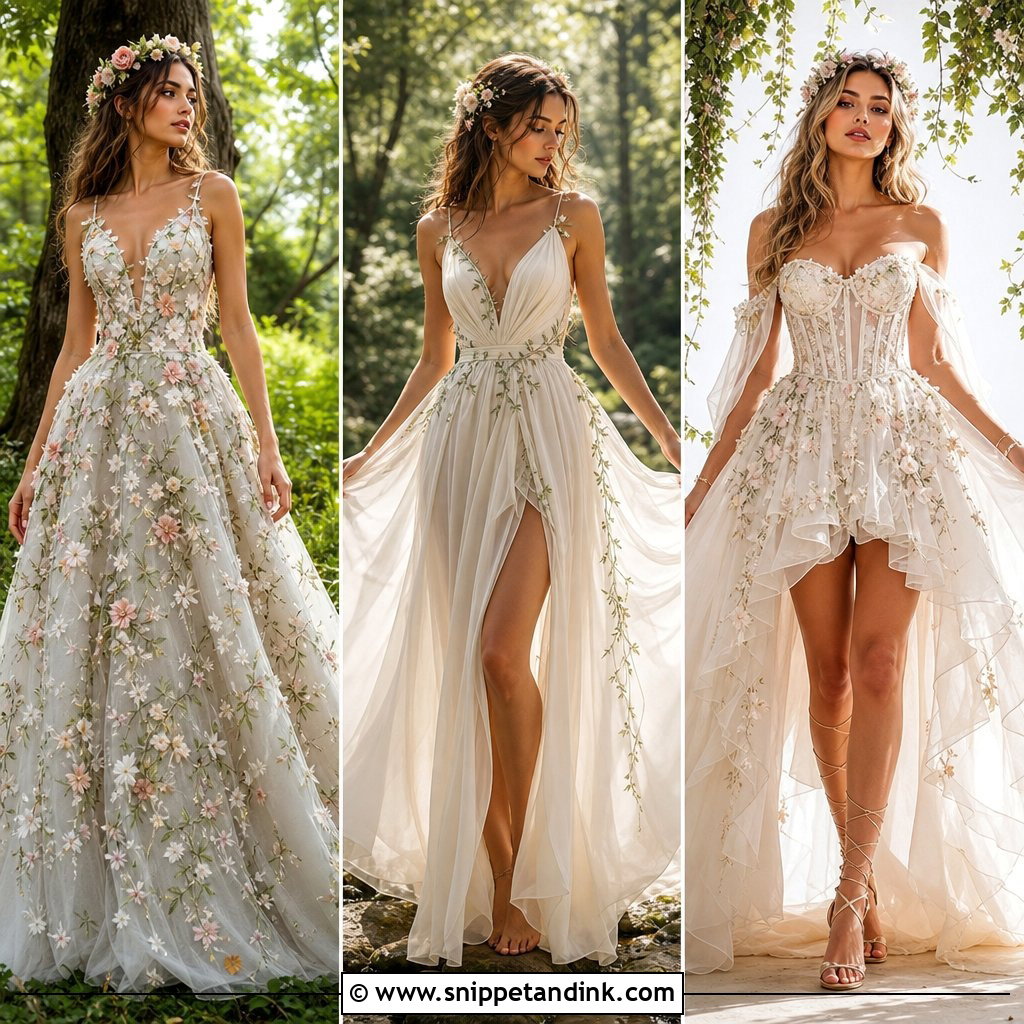
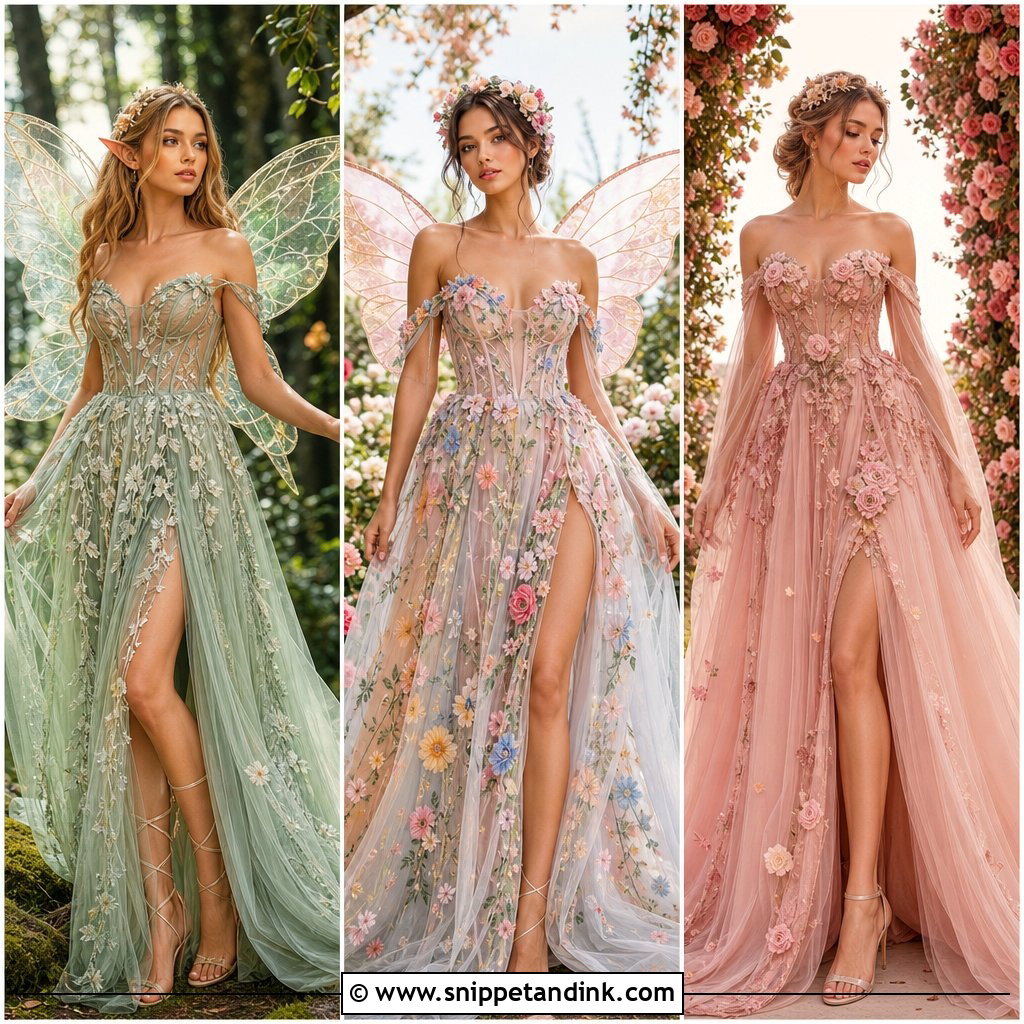
Two ways to do green: fine vine embroidery on an ivory base, or a pale sage layer under white tulle. The second is softer and kinder to most skin tones, since the green is filtered. A sage floral wedding dress should have a plain silhouette, so the color and the pattern stay in charge. I tell brides not to match accessories to the green. A mostly white bouquet with fresh foliage does the linking, and warm brown eye makeup sits well with it.
7. Cape Sleeve Wedding Dress
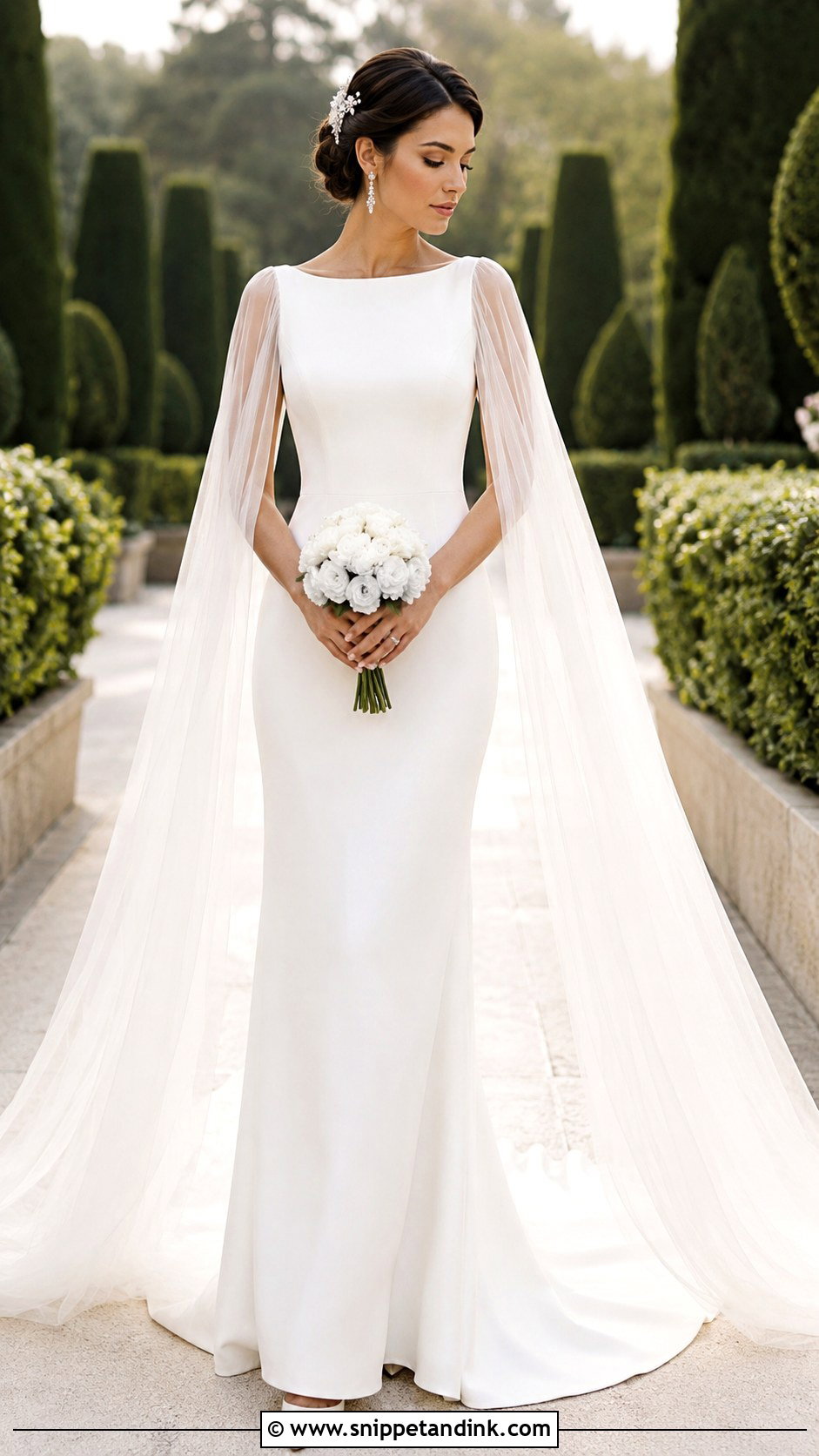
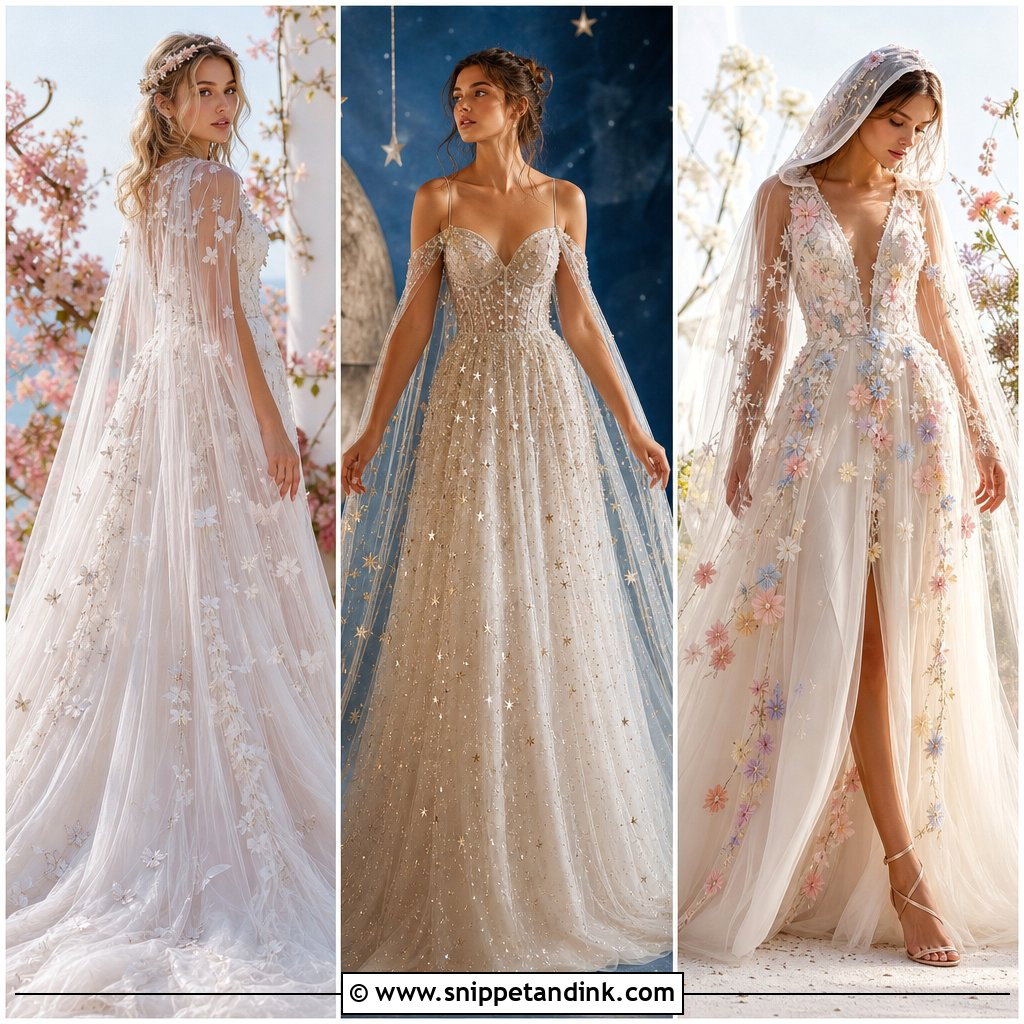
Long sheer panels falling from the shoulders mimic fairy wings, and of everything here, they are the detail guests notice most from behind. The gown underneath should stay plain, a square neck or smooth crepe, so the cape is the event. Skip the veil; two sheer layers fighting in the wind is a common day-of frustration. A sleek low bun lets the cape lie flat. Have the cape tacked at the shoulder seam and wrist, or it can slip as you hug people.
8. Corset Tulle Wedding Dress
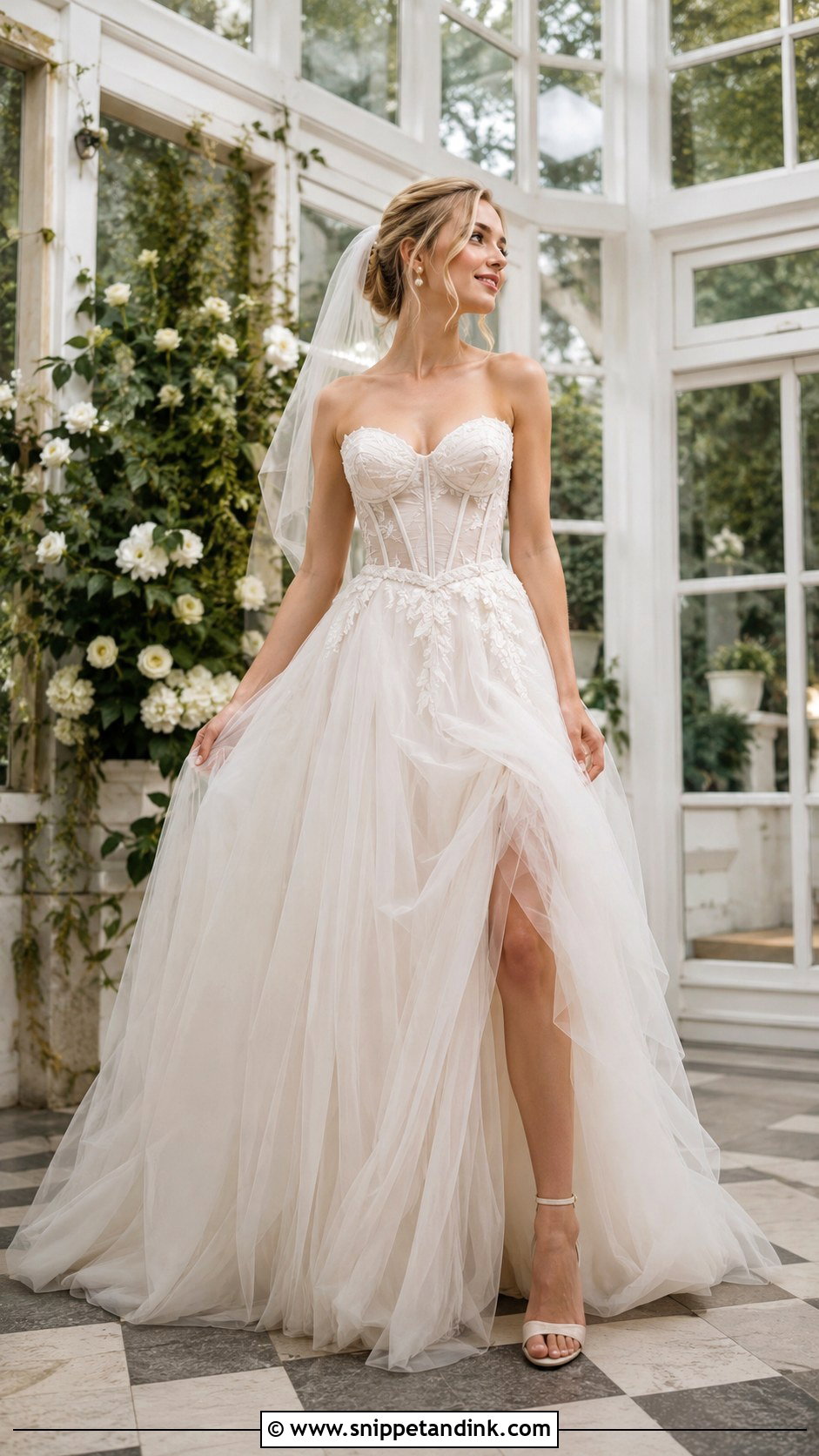
A visible corset needs to be fitted more precisely than any other bodice, because every gap shows. The boning should curve with you, not poke out at the top edge when you sit. A basque or slightly dropped point at the front lengthens the torso into the tulle. I check ankle straps on shoes with this gown, since the full skirt makes it hard to see your feet on steps. Half-up waves echo the softness without covering the neckline.
9. Butterfly Appliqué Wedding Dress
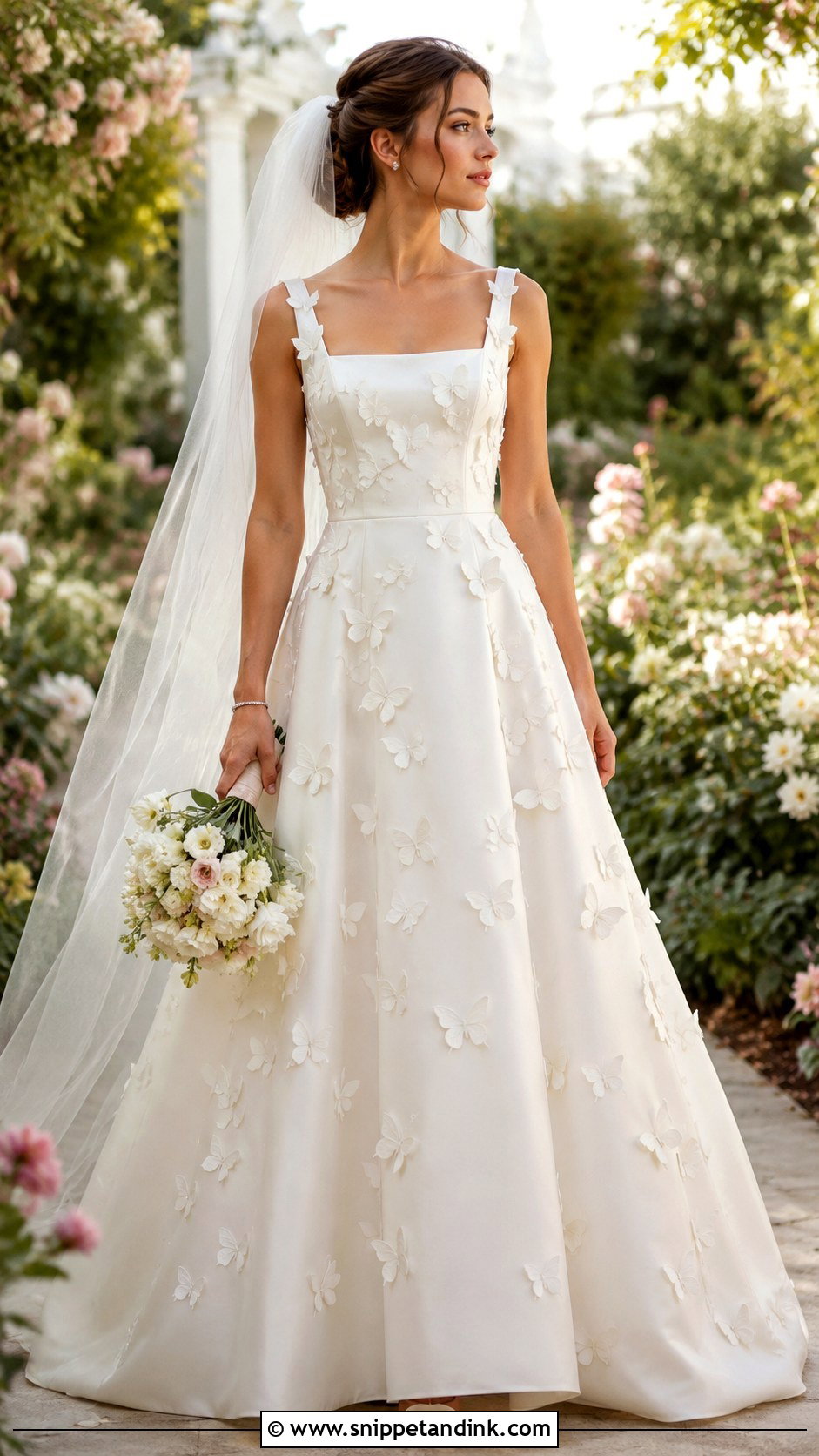
Butterflies are fun, and they turn juvenile fast. The test I use is distance: from across a room, small tone-on-tone butterflies should look like texture, and only close up should you see they are wings. Ivory on sheer tulle is the subtlest; pale blue or blush is fine in small amounts. A smooth ponytail or soft bun shows them off. Choose plain satin shoes and a veil with no trim, so nothing else competes.
10. Wildflower Embroidered Wedding Dress
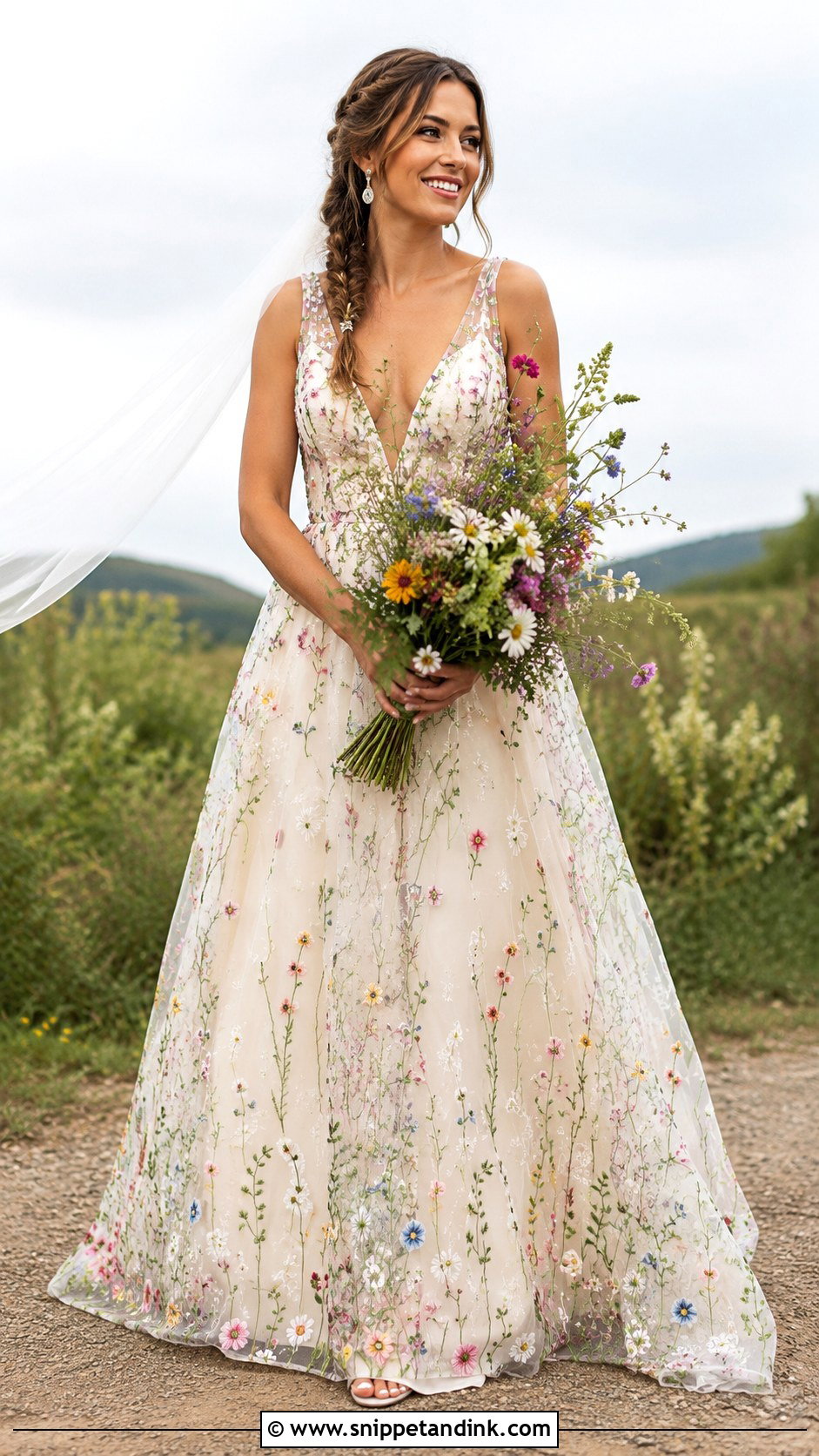
Picture a meadow in late spring and you have the right setting for embroidered wildflowers. The embroidery needs a lining to read properly, and the choice of lining changes everything: ivory looks classic, nude looks almost bare, pale blush warms the whole gown. An A-line gives the flowers space to spread. I like a loose braid with two or three real small flowers. Echo the embroidery in the bouquet without copying it bloom for bloom.
11. Celestial Beaded Wedding Dress
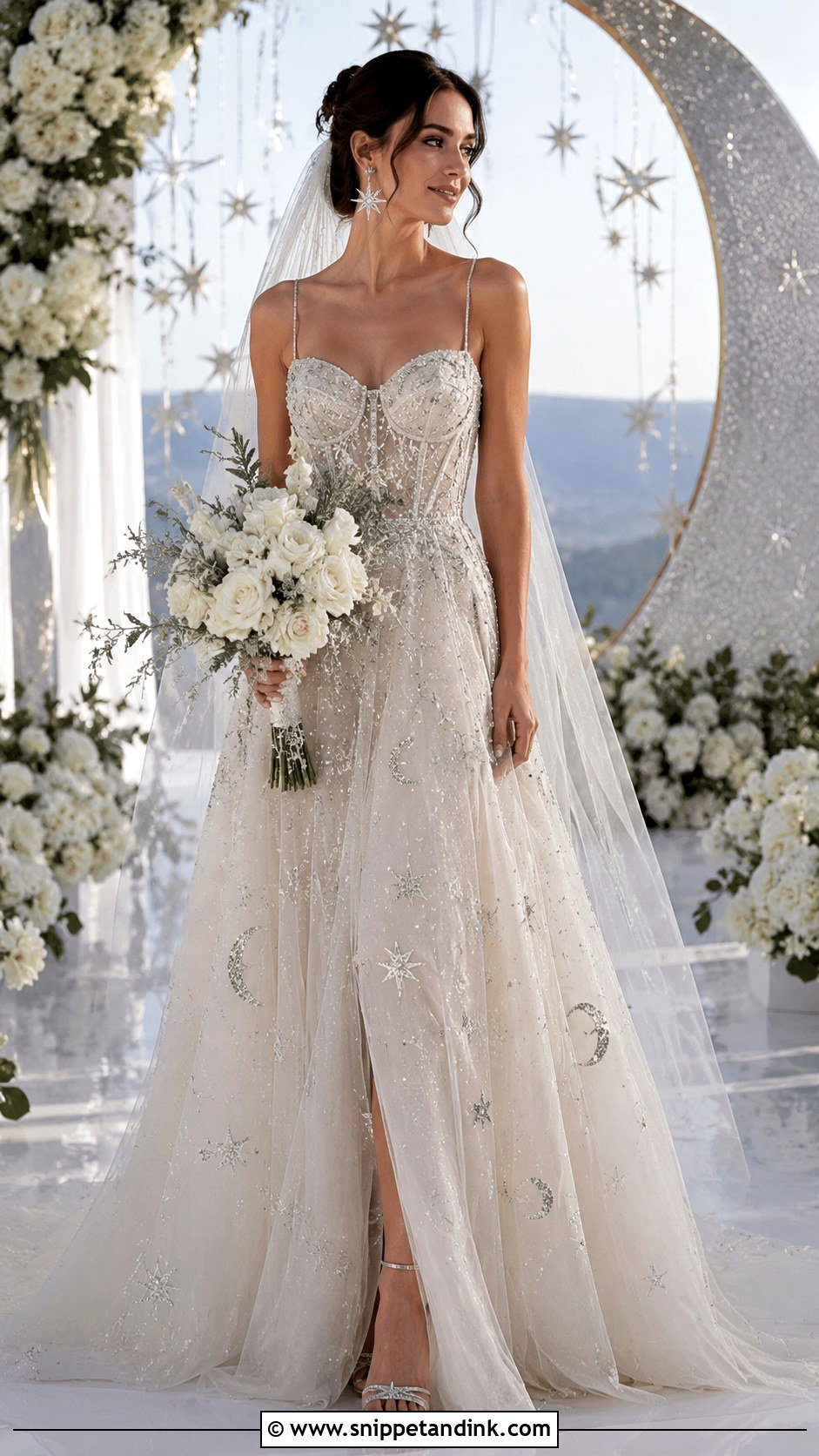
Star and moon beading suits an evening ceremony outdoors, and it is the one idea here that needs darkness to work. A celestial beaded wedding dress with silver embroidery over soft tulle catches string lights and candles nicely; at noon it can look flat. Do not stack celestial motifs with floral lace, big jewelry and an ornate headpiece. Small star earrings and a plain veil are enough. Silvery foliage in the bouquet supports the cool palette.
12. Victorian High Neck Wedding Dress
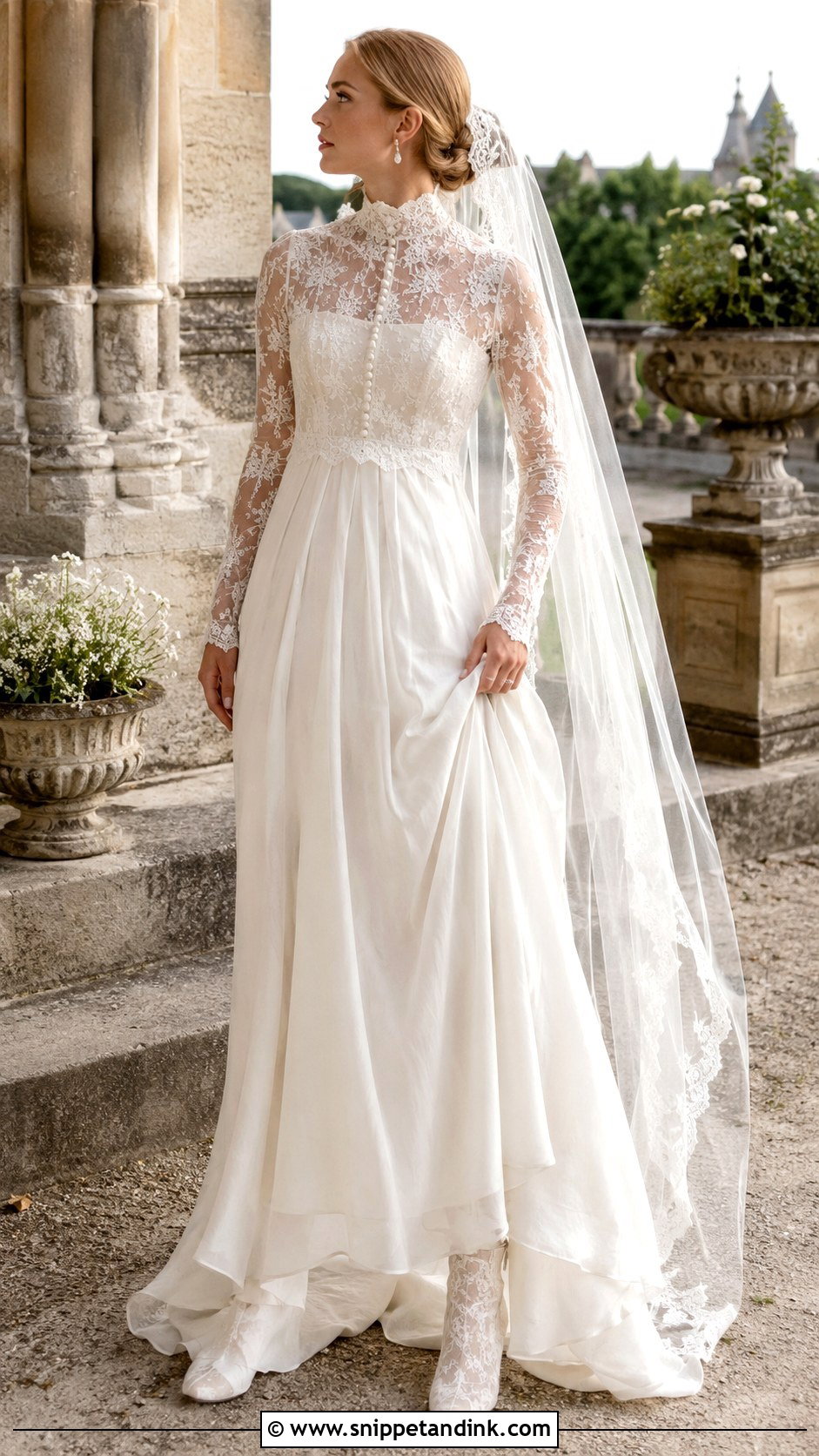
High necks carry a romantic Victorian feel, but the wrong lace makes them uncomfortable. Stiff lace at the throat scratches and rides up when you turn your head, so I always ask brides to look over each shoulder in the mirror during a fitting. Sheer lace with a fine floral pattern lets a little skin show and keeps it from looking severe. Pearl drops and a low bun suit it, with the veil set under the bun so it does not catch on the collar.
13. Bell Sleeve Lace Wedding Dress
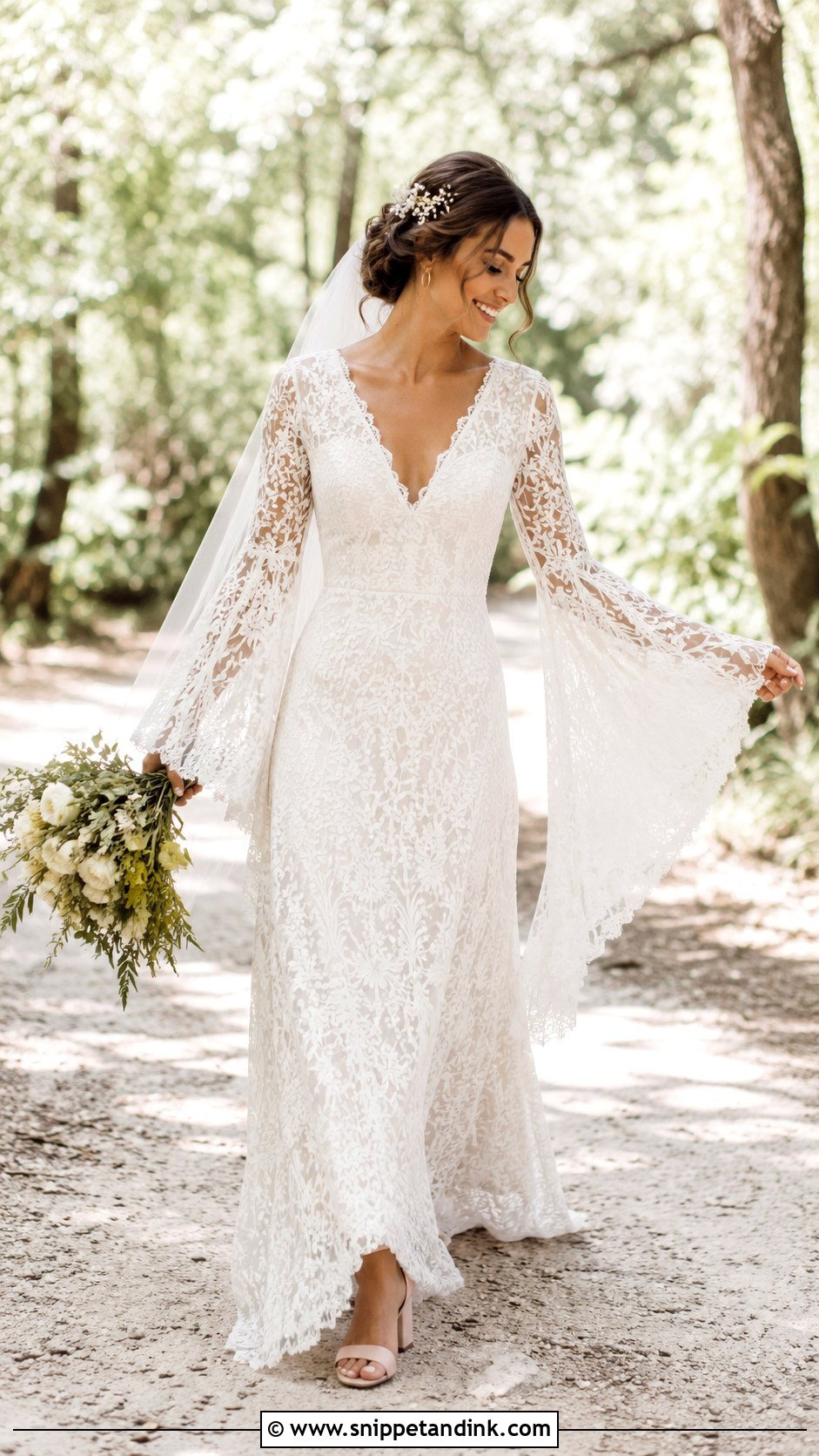
Bell sleeves have one practical limit: they must stop above the fingertips, or you will dip them in everything. Sleeves that flare below the elbow give the drama while leaving your hands free for the bouquet and the ring exchange. Botanical lace, an open back and scalloped edges suit this shape. Skip bracelets, which catch on lace edges and pull threads. A veil is optional; loose waves and a natural bouquet feel right on their own.
14. Organza Ruffle Wedding Dress
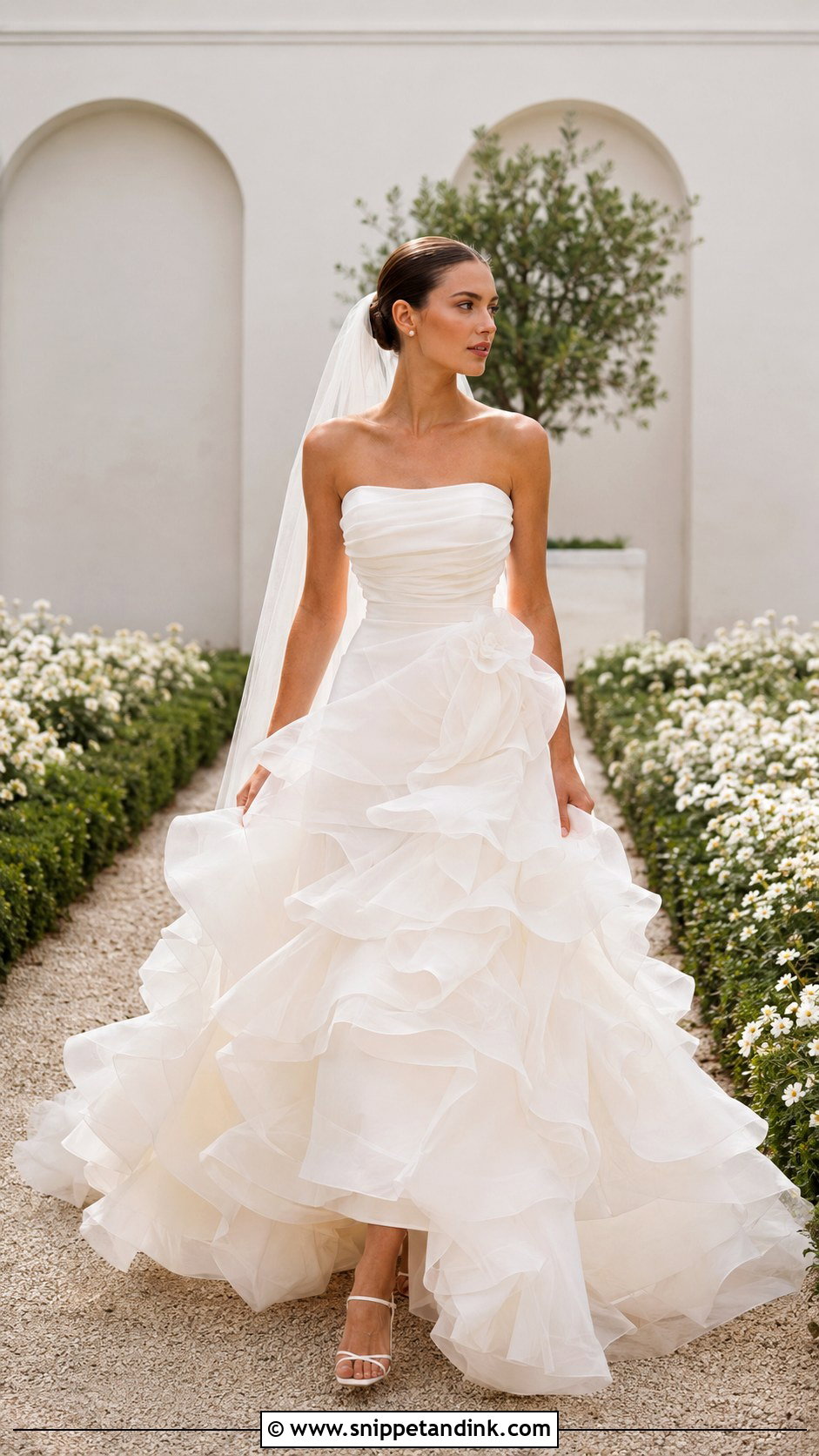
Organza ruffles give volume through air, not weight, which is why they feel so light to wear. Placement is the skill. Ruffles along the skirt or across one shoulder look intentional; ruffles everywhere look like a cake. I check that the organza is soft enough to move, since a very crisp one holds every crush mark from the car. A plain veil and pearl studs keep the outfit modern. A structured white bouquet grounds the softness.
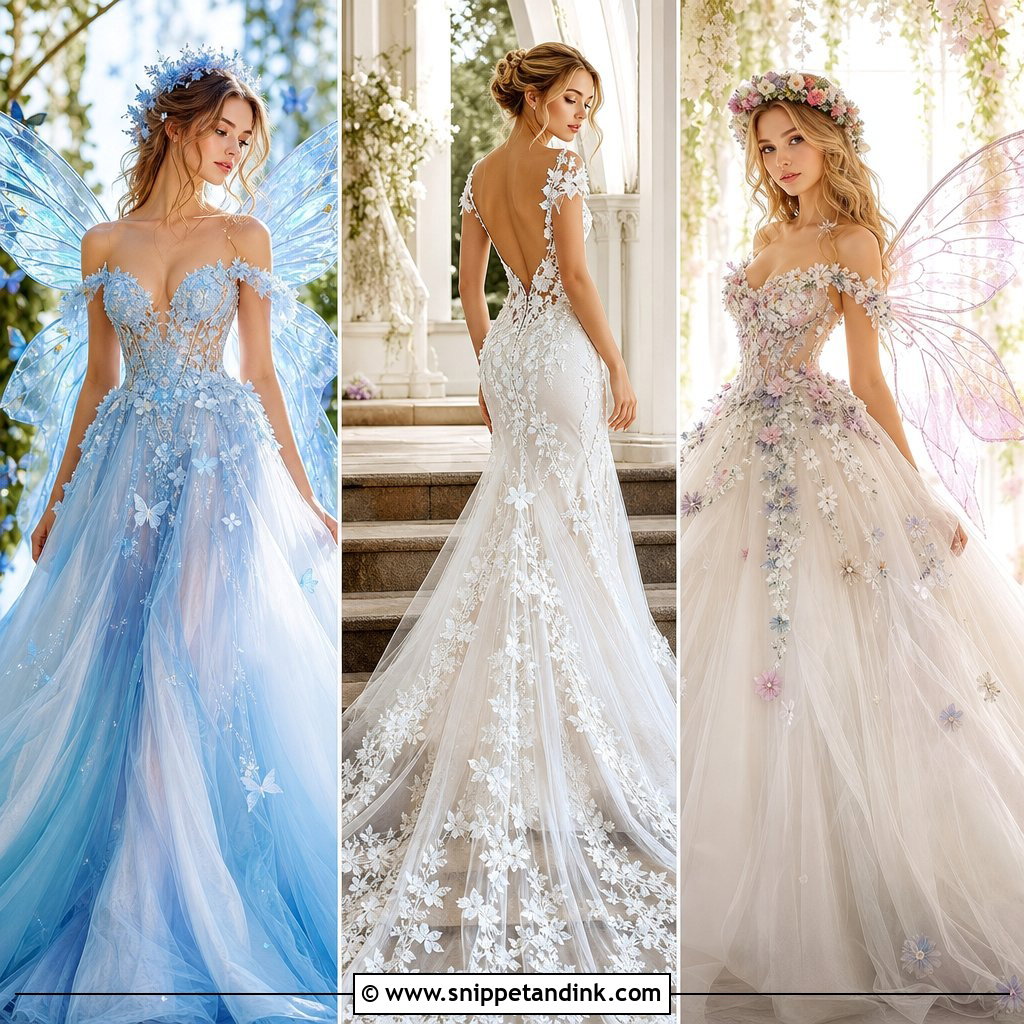
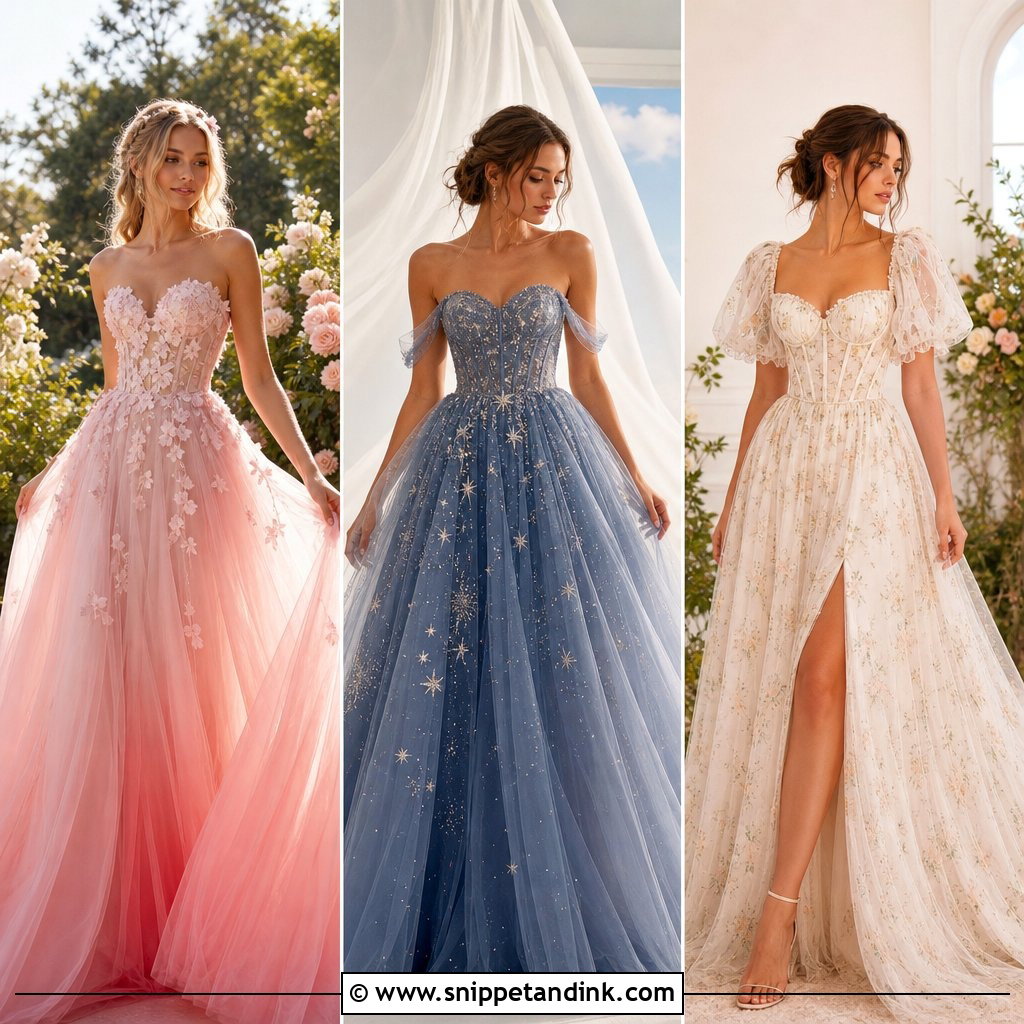
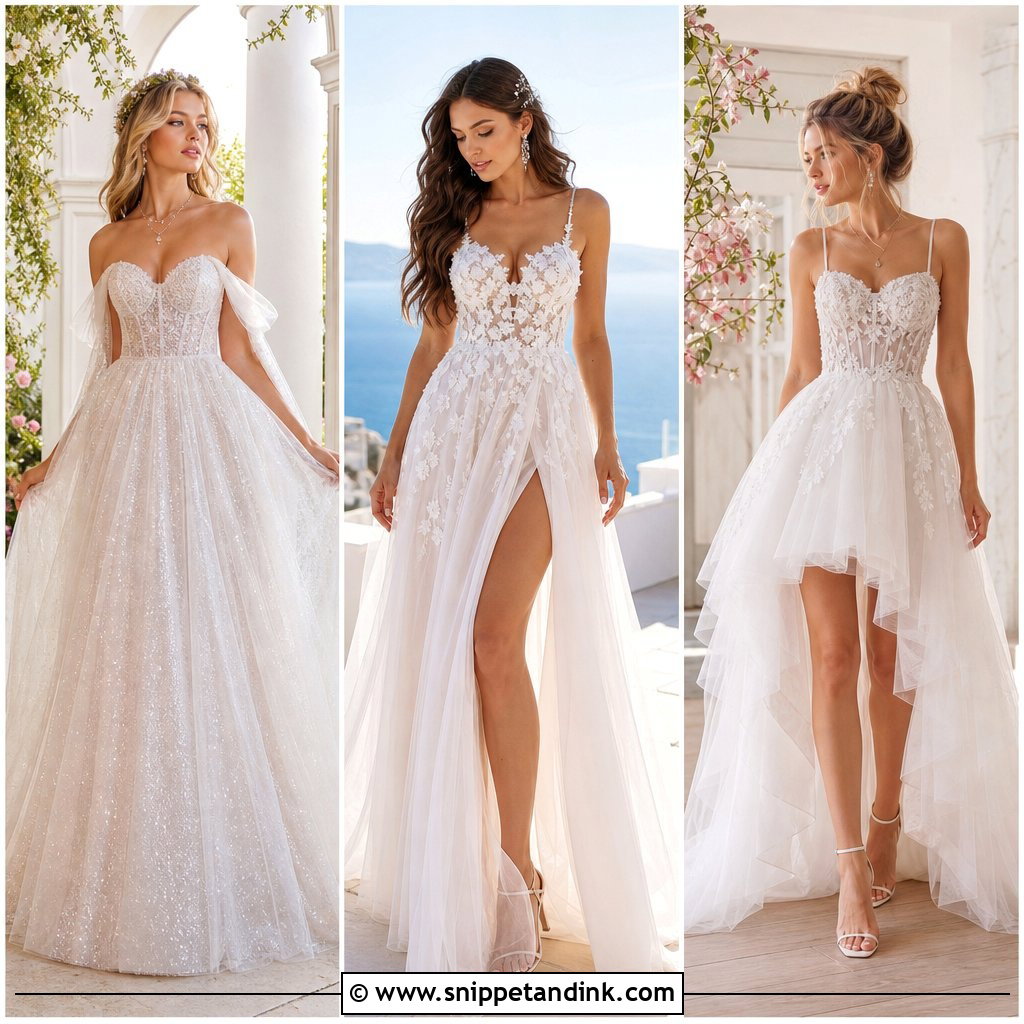
15. Basque Waist Princess Wedding Dress
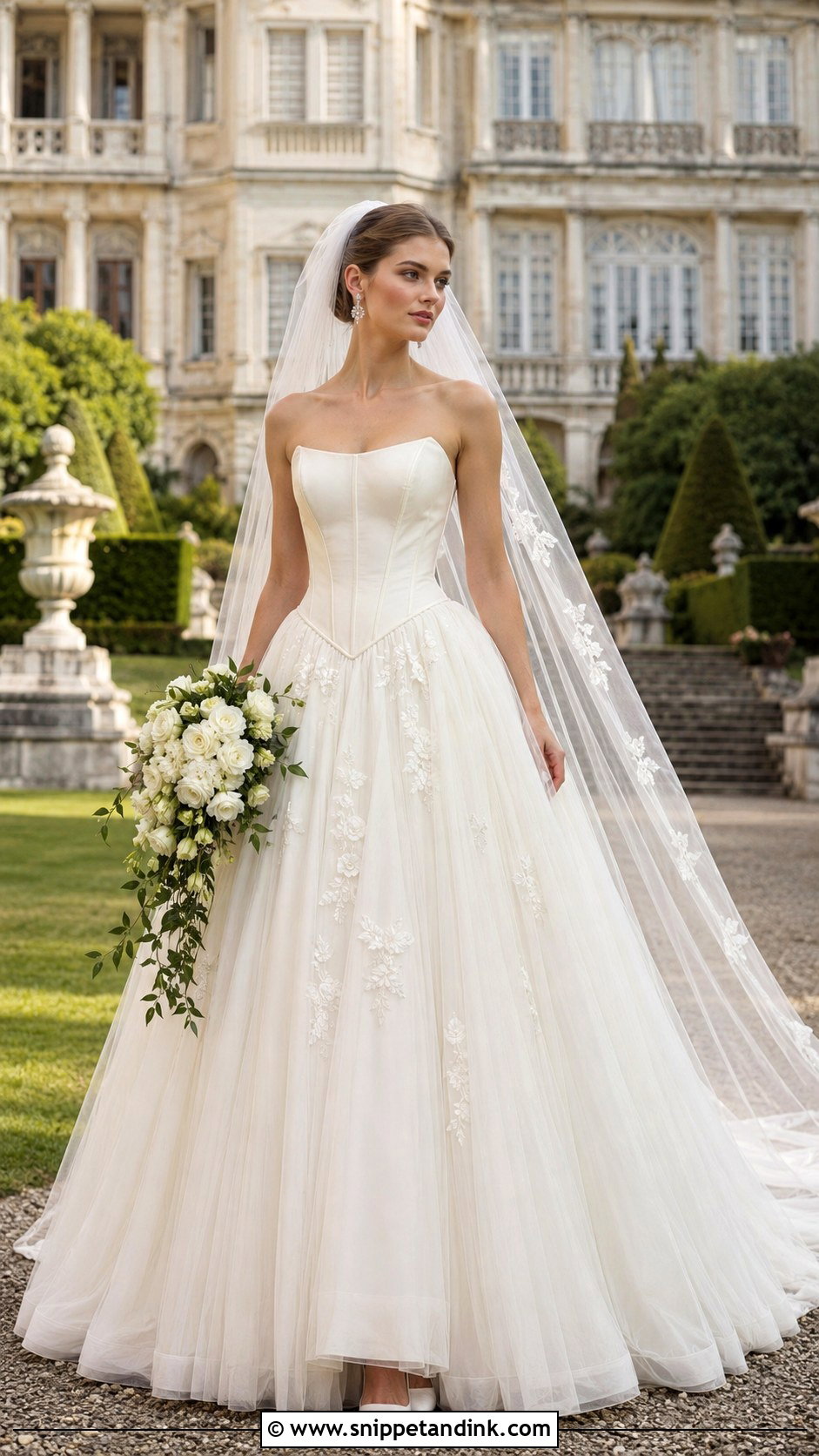
A pointed basque waist lengthens the torso and sends the skirt sweeping out from a low point, which is why a basque waist princess wedding dress looks so regal. It suits most figures, but short-waisted brides should check where the point lands; too low and it can shorten the legs. Keep the neckline simple, because the silhouette is already doing a lot. A cathedral veil, small crystal earrings and closed ivory heels are all you need. Hair can go half-up or low, with some lift at the crown.
16. Tea Length Fairy Wedding Dress
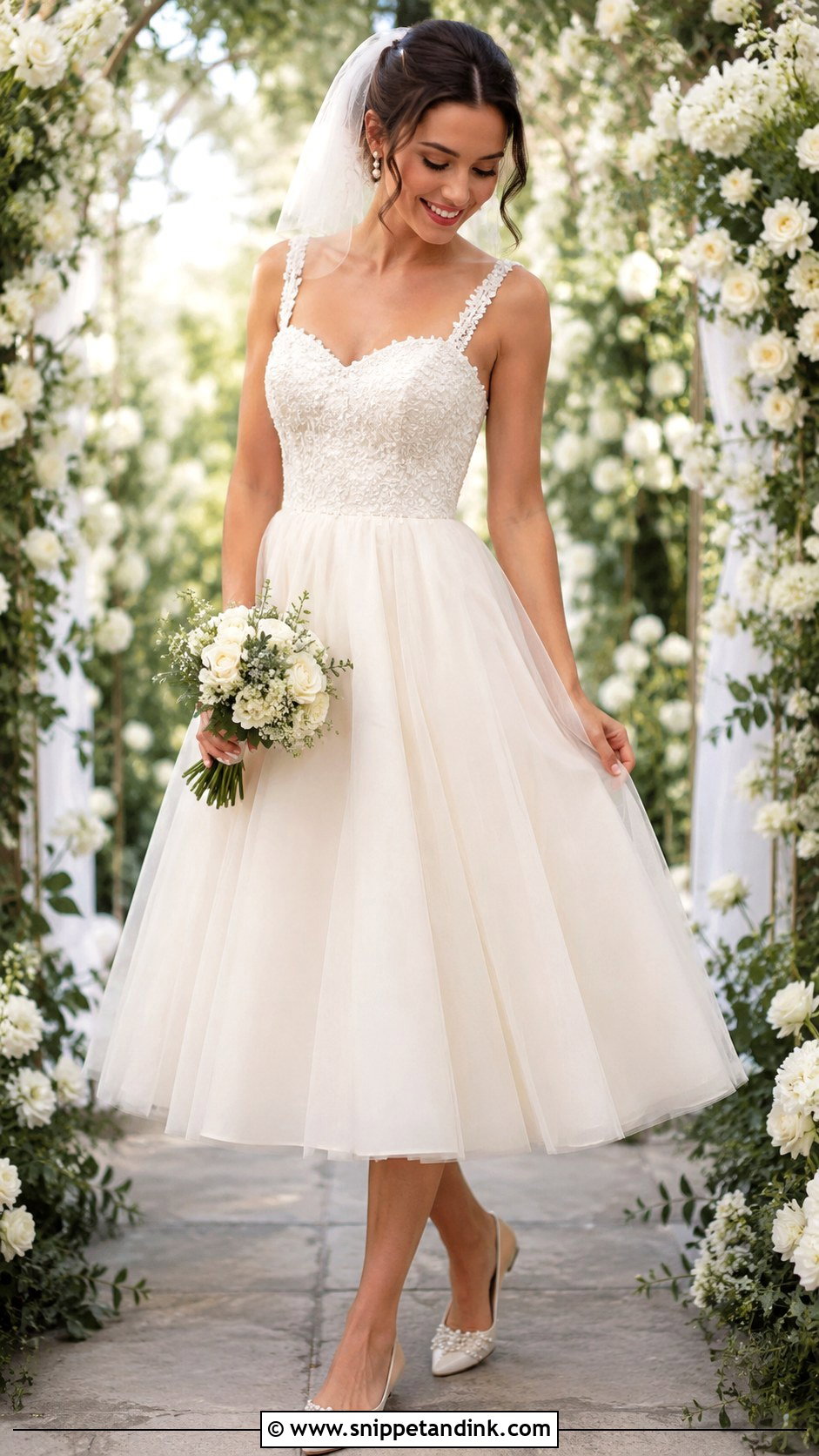
Shorter fairy dresses get dismissed too quickly. A tea length fairy wedding dress with a layered tulle skirt ending between knee and ankle is easy to walk in on garden paths and keeps the hem clean. Embroidery or tiny appliqués stop it looking like a party dress. Your shoes are on display, so pick embellished flats or ankle-strap pumps you can stand in for hours. A short veil and a small bouquet keep the proportions light.
17. Detachable Overskirt Wedding Dress
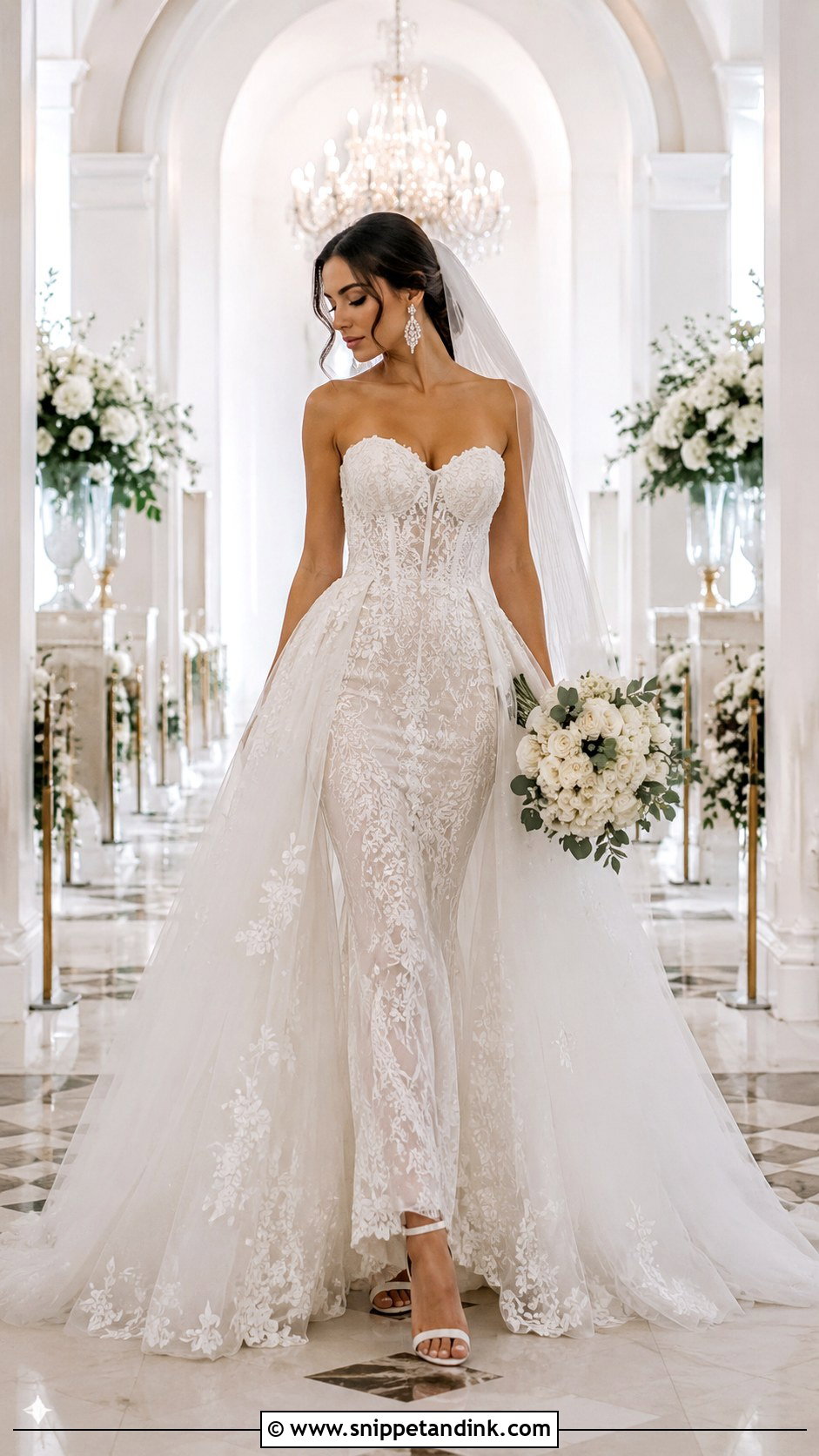
An overskirt is the most practical idea on this list. You get ceremony volume, then remove one layer and dance in a fitted lace or crepe dress. I check two things at fittings: that the overskirt fastens at the natural waist without bulk, and that its ivory matches the base dress exactly, since two different whites side by side look like a mistake. After the swap, change to smaller hair accessories or bigger earrings to mark the new look.
18. Pastel Ombré Wedding Dress
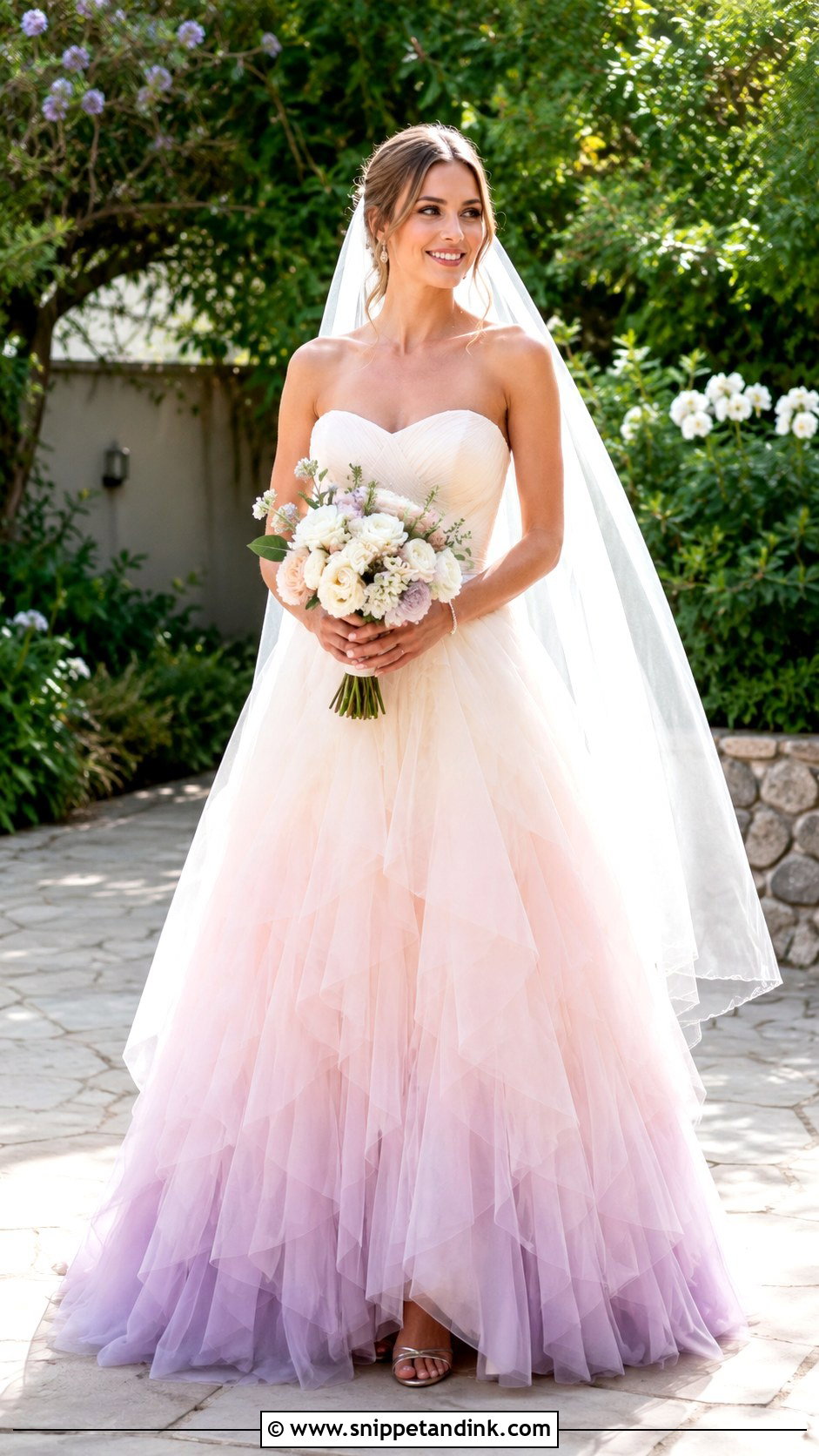
Ombré gowns move from ivory at the bodice into blush, lavender, blue or pale green at the hem. Tulle and organza blend the color best because the layers are sheer. The risk is a dye line: look closely in daylight for any harsh stripe where the shades meet. Keep the cut simple, a strapless A-line or slim straps. Carry mostly white flowers with one pastel note so the bouquet does not fight the skirt.
19. Pearl Vine Wedding Dress
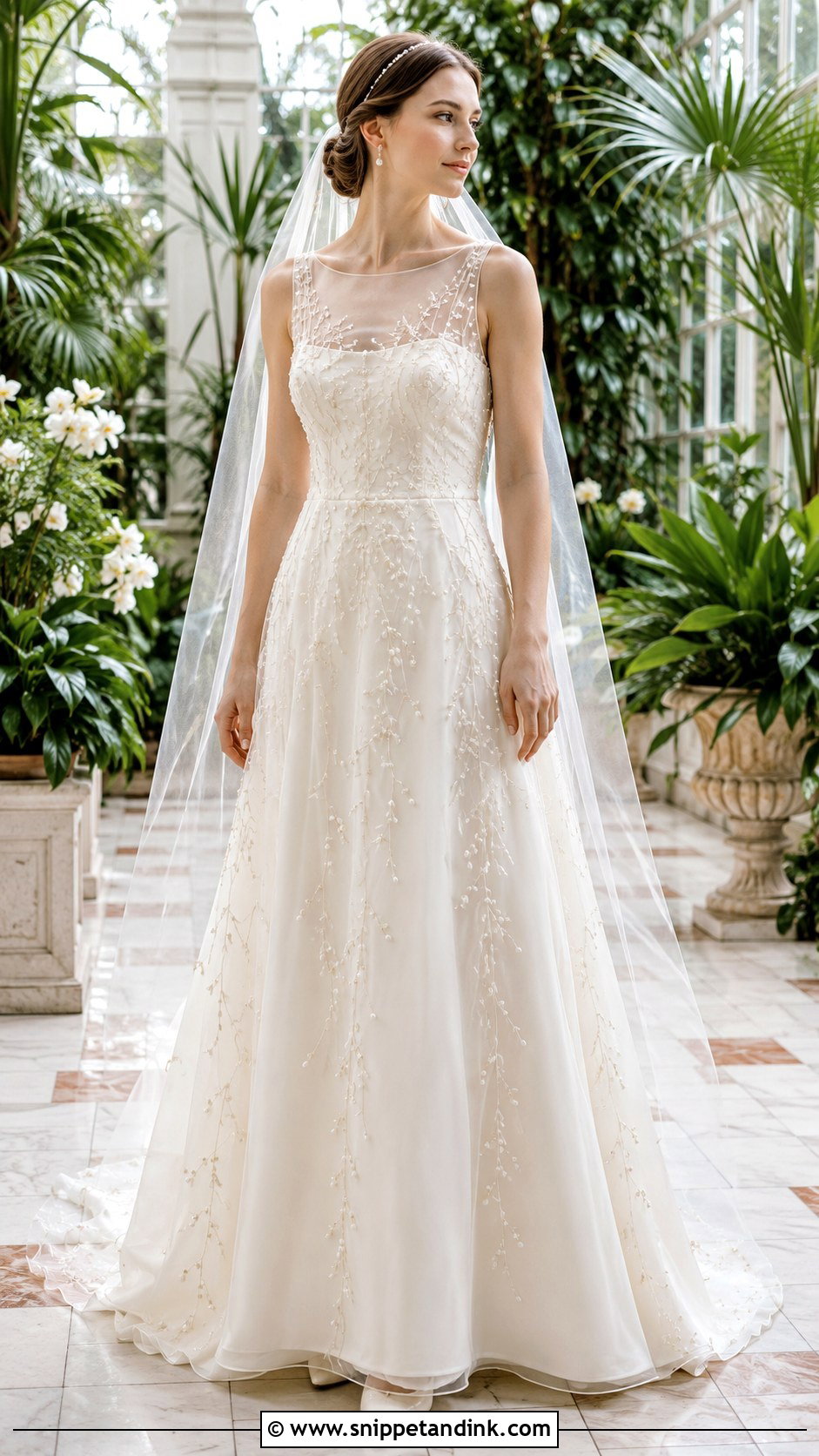
Pearl vines look as though they grew over the gown. I like the pearls concentrated at the neckline, the waist or the upper skirt, sitting on sheer tulle so they appear to float. Pearls add weight, so ask how much the bodice holds and whether the skirt is lined to take it. Leave the necklace off if the bodice is beaded. A slim pearl hair vine in a twisted low bun ties it together without matching too literally.
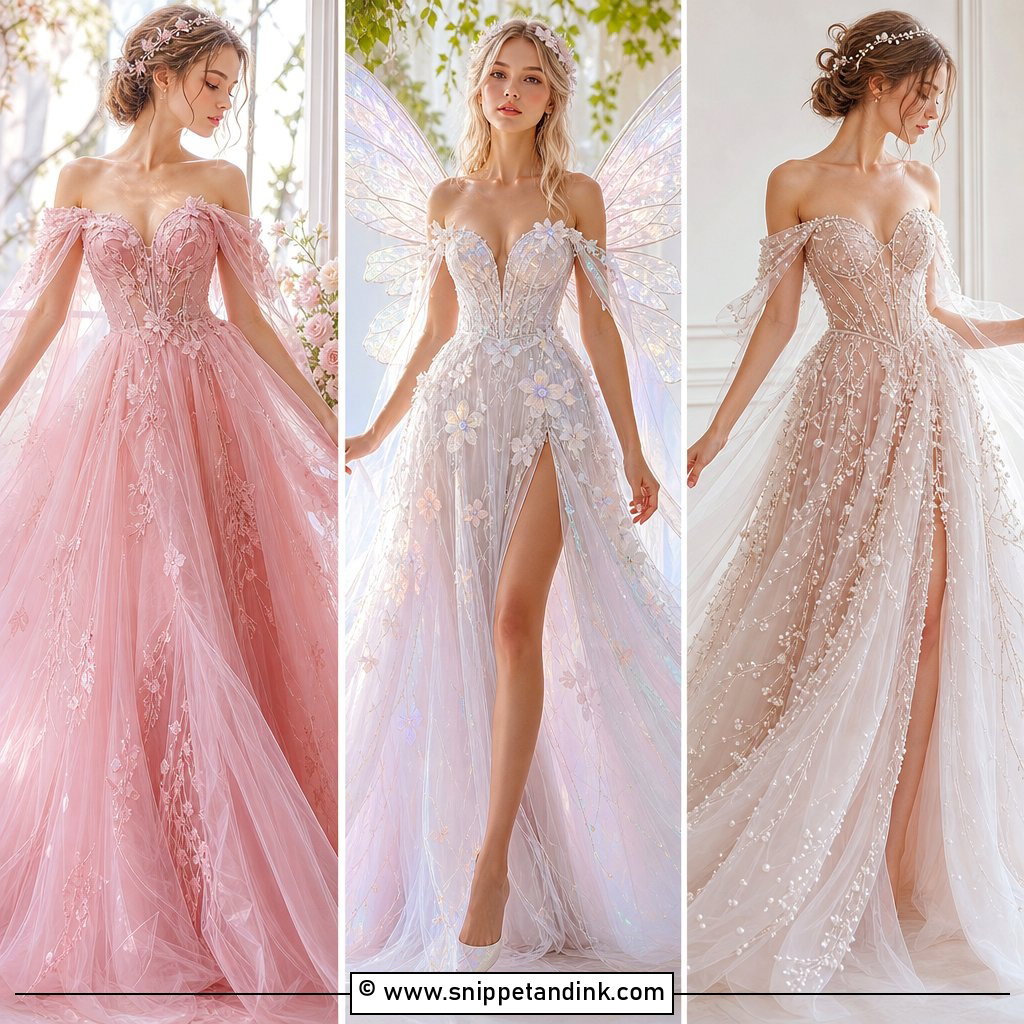
20. Silk Organza Fairy Wedding Dress
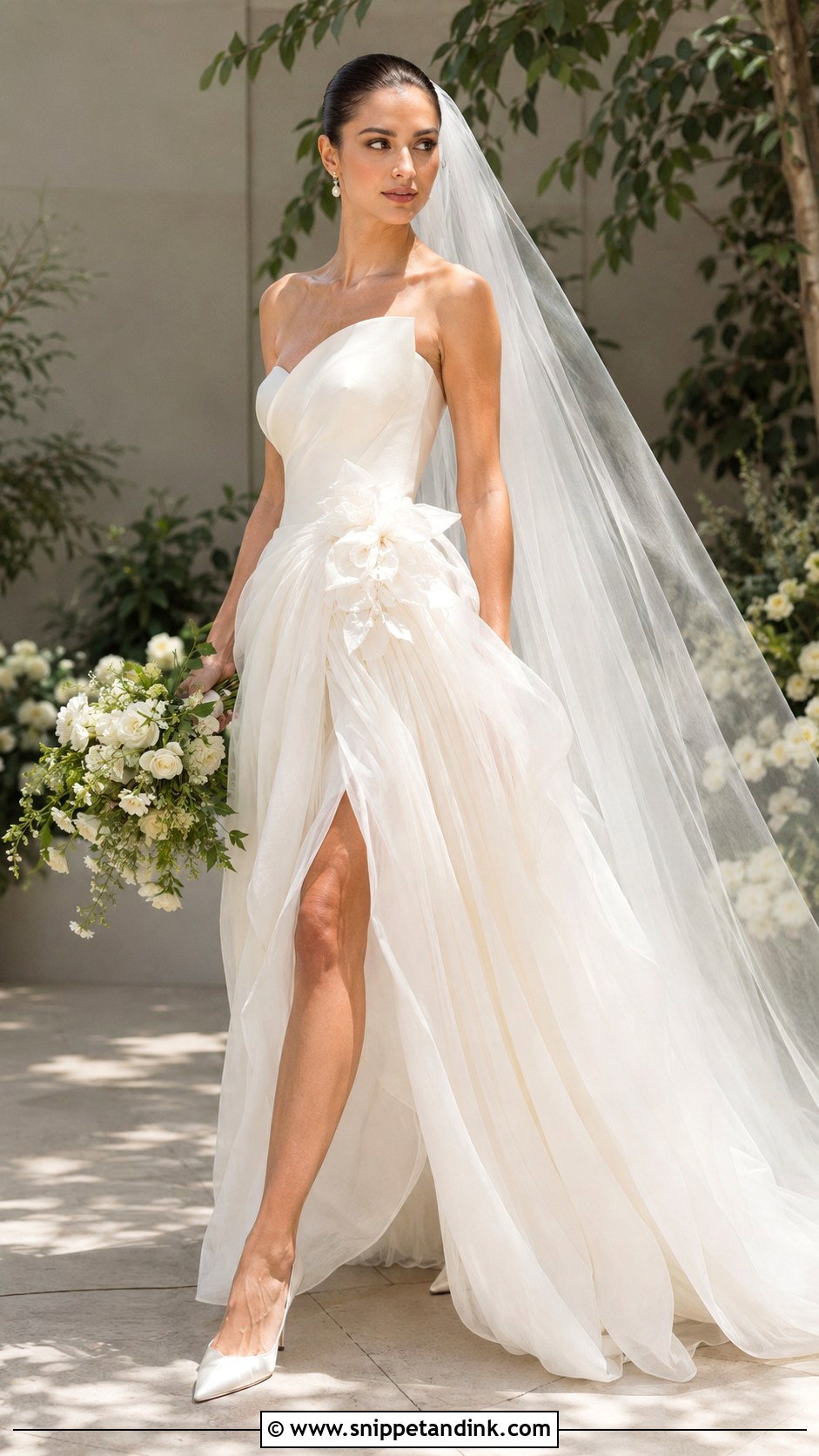
Silk organza is the quietest fairy option and, in my view, one of the most elegant. It has body without stiffness and a soft sheen that looks expensive in natural light. The design feature should be one thing: pleating, a sculpted neck or a low back. A few hand-cut fabric flowers at the waist are optional. One caution: silk organza water-spots, so if rain is possible, keep an umbrella and a towel close.
Order Dates for Embroidered and Hand-Beaded Gowns
Most of these dresses are made to order, and the detailed ones take longer. As a general pattern, gowns ordered through a bridal shop take several months to arrive, often four to eight, and hand embroidery, custom colors and pearl work can push that out further. Designers and shops vary, so ask for the expected delivery date in writing.
I work backward from the wedding like this:
- Start trying on around nine to twelve months out, earlier if you want a custom color or a sample from abroad.
- Order soon after you decide, and confirm whether rush fees apply if you are inside the normal window.
- Book the first alteration fitting roughly two to three months before the date. Corsets and layered skirts usually need more than one session.
- Plan a final fitting a couple of weeks out, wearing your real shoes and underwear, and bring whoever will bustle the train.
Short on time? Look at sample sales and ready-to-wear lines first. A simpler gown with a detachable cape or overskirt can be finished much faster than a fully beaded one.
Where the Magic Should Stop
Flowing tulle, dimensional flowers, delicate embroidery, romantic sleeves and soft sparkle can all create the enchanted effect, but not all at once. Pick a gown with one or two strong features and keep the shoes, jewelry, hair pieces and flowers restrained around it. Then think about the ground you will walk on, the weather, the weight of the dress and how much you want to move. A fairy dress should still feel like yours when the photographer has gone home and the dancing starts.
You'll Like These Ideas:



Leave a Reply