
A storybook gown has to survive a real day: a car door, a receiving line, a few hours of dancing. I’ve fitted enough full skirts to know the fantasy only holds when the structure underneath is right. The twenty looks below run from full princess volume to lighter woodland, celestial and vintage moods, and each is styled head to toe with the veil, earrings, shoes and flowers I’d pair with it. Read them for mood first, then check the notes on fabric and fit before you fall for a silhouette your venue or your back can’t carry.
How Much Skirt Your Venue Can Actually Hold
Every gown below falls somewhere on a scale from full volume to fitted, and the venue usually decides which end you can live with. I ask brides to describe the route of their day before we pull a single dress: the car, the aisle, the dinner chair, the dance floor and the bathroom.
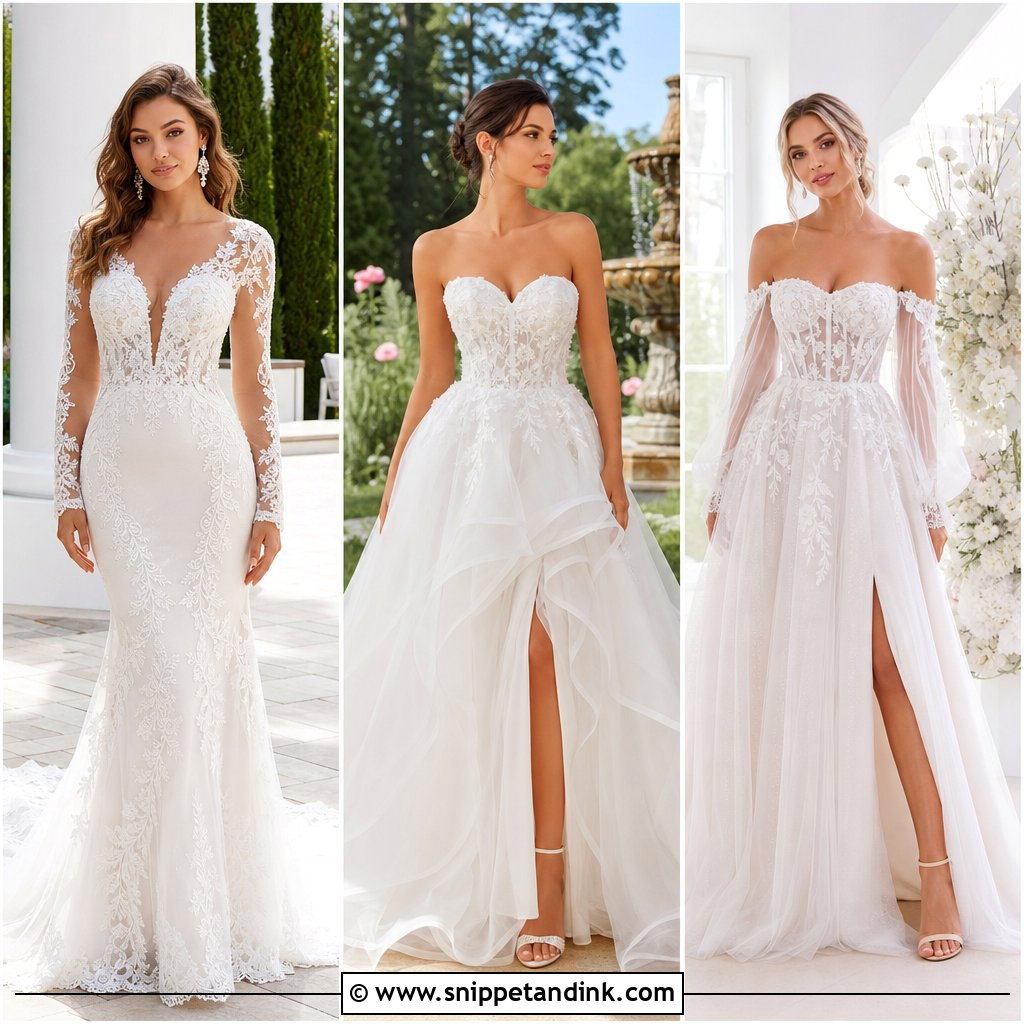
Full ball gowns
A full tulle skirt needs a wide aisle, a roomy car and someone to help in the bathroom. Ask whether the volume comes from a sewn-in hoop or from layered petticoats. Petticoats compress better in a car and can often be reduced after the ceremony; a hoop holds its shape no matter what.
A-line, cape and cottage shapes
These are the easy ones. They fit through doorways, sit comfortably at dinner and dance well, which is why I steer outdoor and all-day weddings toward them.
Mermaid and fitted shapes
Fitted gowns take up little room but limit your stride and your seated comfort. Stairs, uneven ground and long dinners all deserve a test walk at the salon.
- Measure the aisle or ask the venue for its width.
- Check whether the reception chairs have arms.
- Count the steps between the ceremony and the reception.
- Decide whether you’ll change into a second look.
1. Princess Ball Gown Wedding Dress
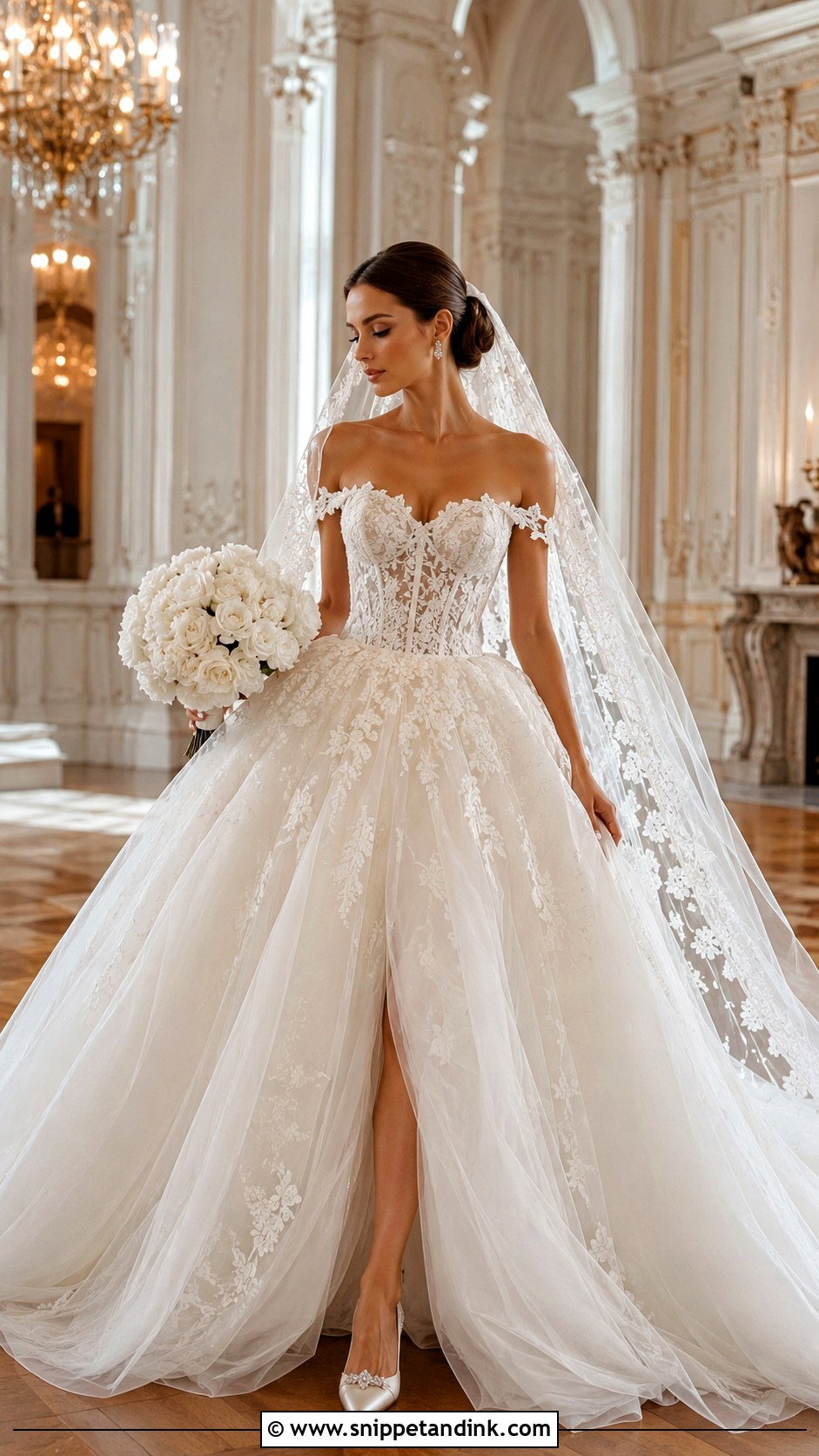
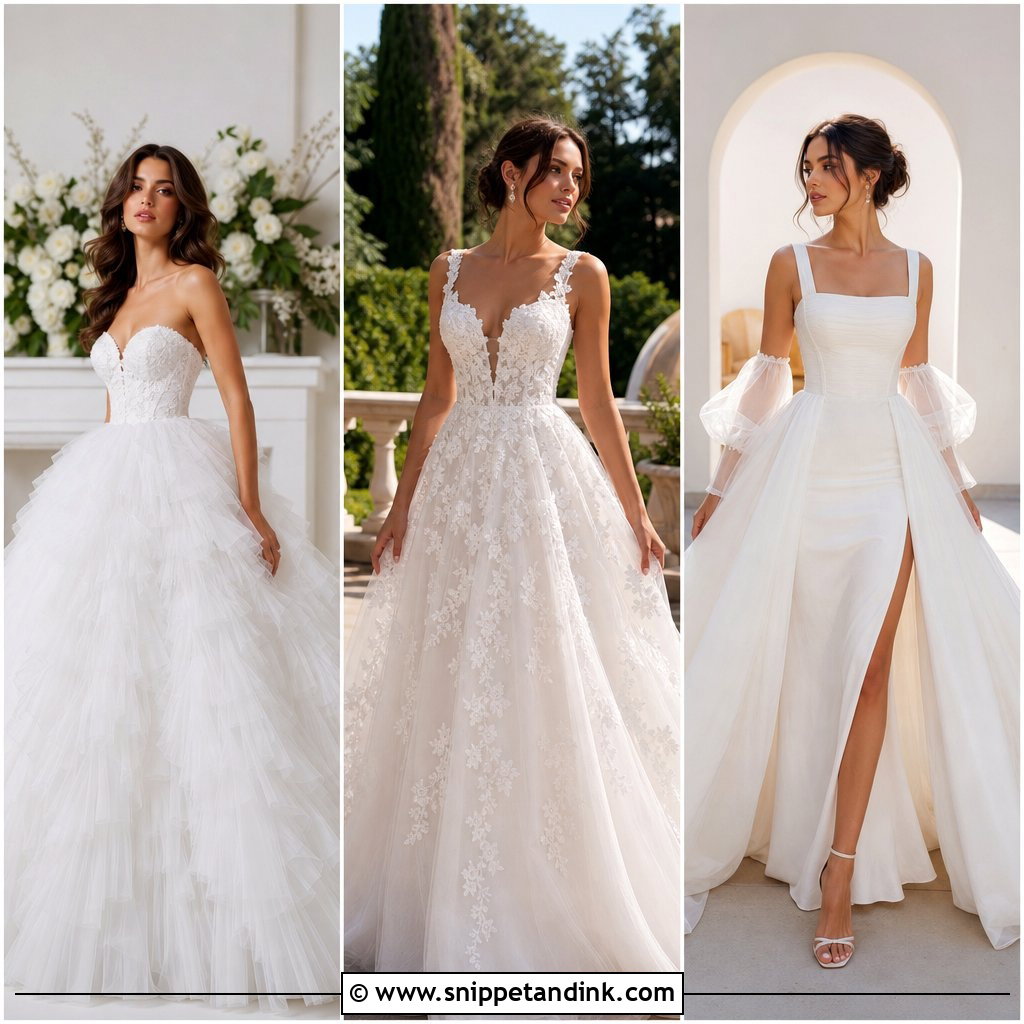
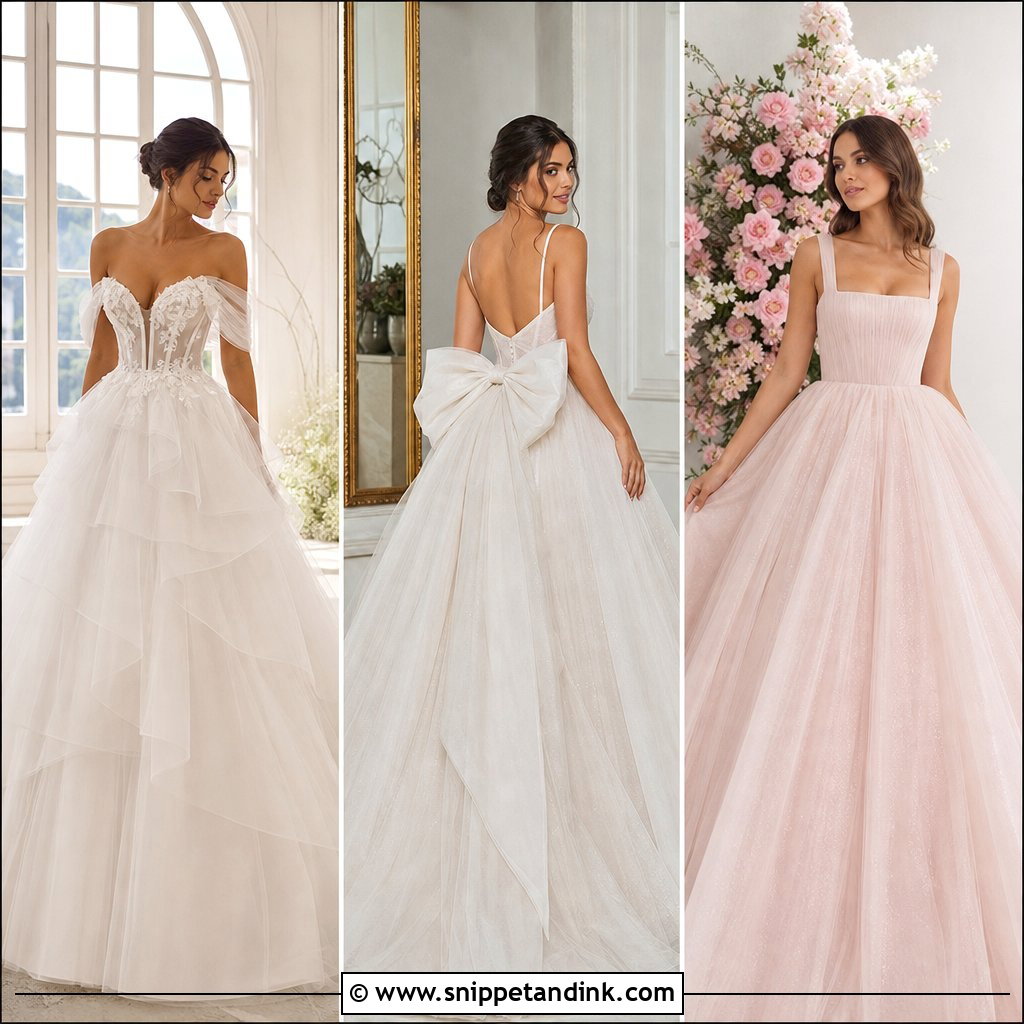
A full ball gown is the classic fairy-tale silhouette, and the skirt only stays round if the bodice is doing its job. I look for a corset bodice with internal boning and a waist stay, because layered tulle is heavier than it looks and will drag a soft bodice down by the reception. Keep any shimmer woven into the tulle rather than glued on, so it catches light without scratching your arms. Crystal drop earrings, pointed satin heels and a cathedral veil edged in fine lace finish it, with a polished low bun so the veil comb has something firm to grip. A rounded bouquet of white garden roses and pale greenery suits the scale. Save this one for ballrooms, estates and wide staircases; in a narrow aisle the skirt brushes every chair.
2. Floral A-Line Wedding Dress
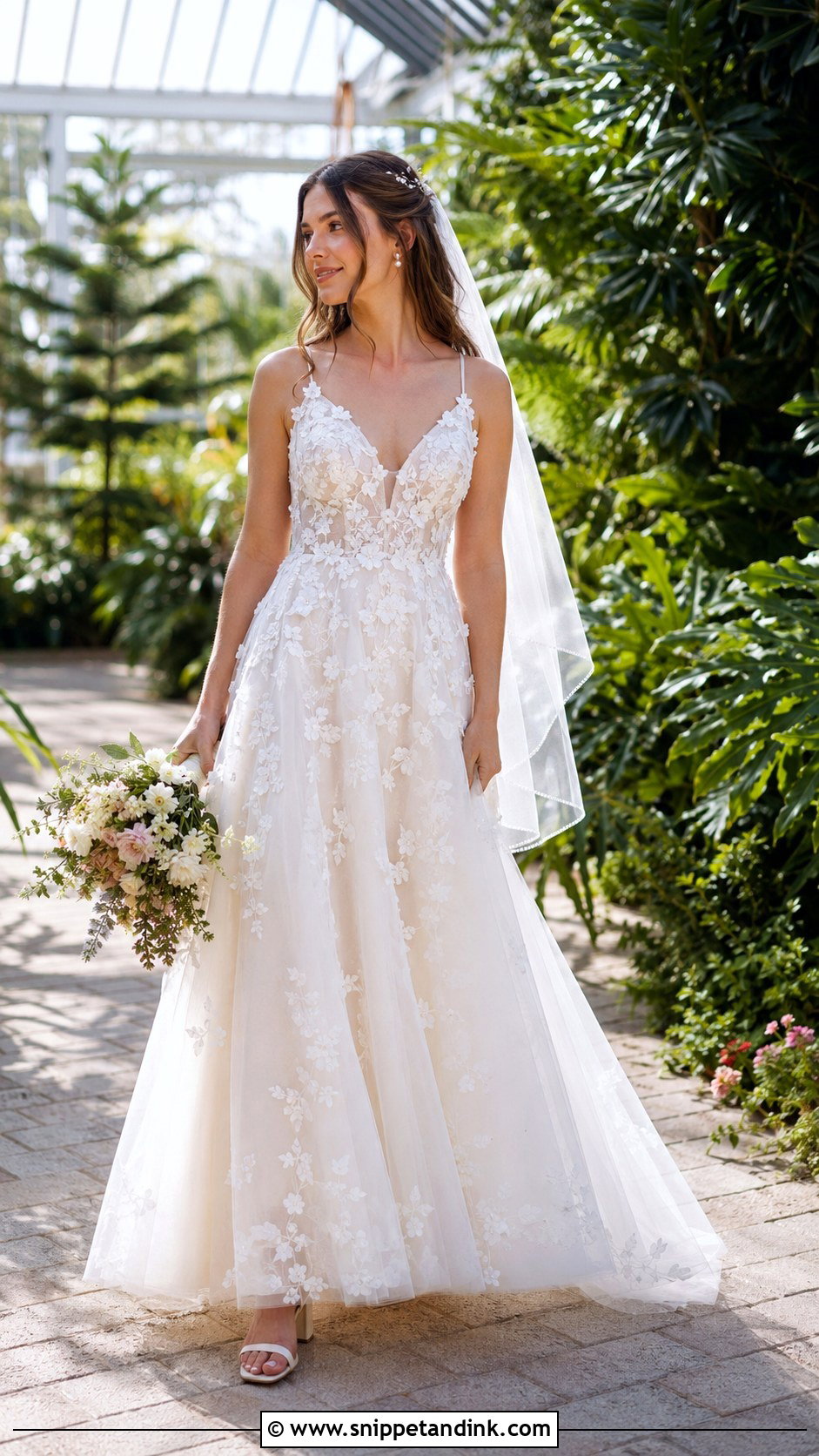
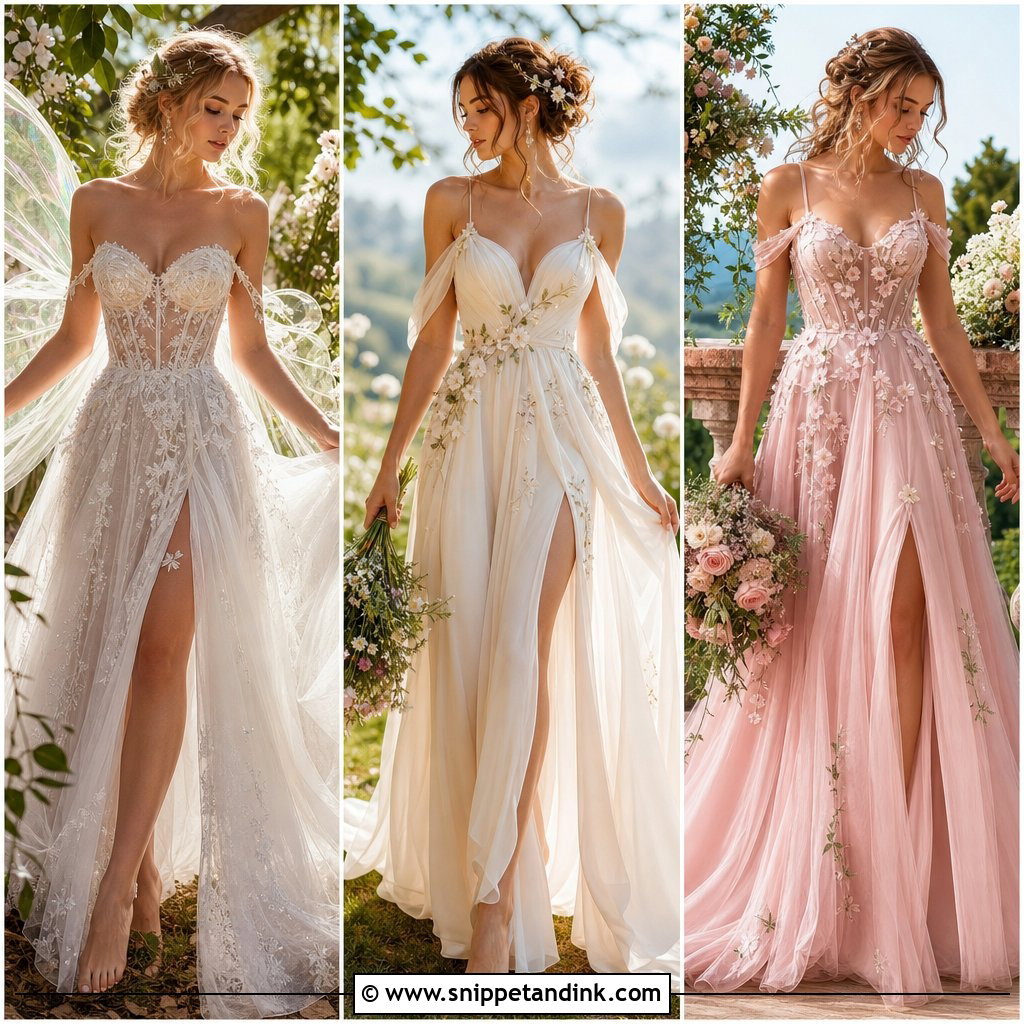
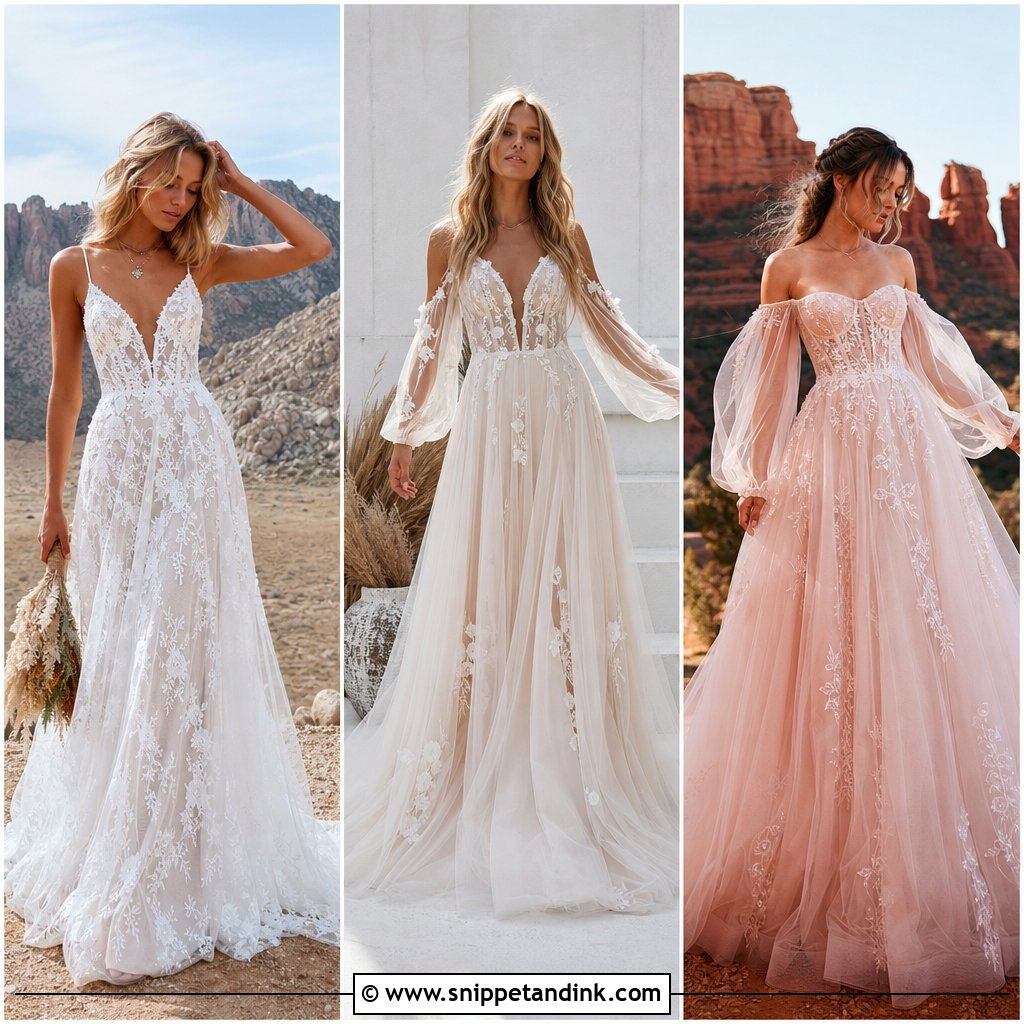
Floral appliqués on illusion tulle look weightless in a photo, but each flower is stitched on, and stitching is where snags happen. Ask the salon how the appliqués are attached before you order. Loosely tacked flowers on a train catch on grass and gravel, so for a garden I prefer the dimensional work concentrated on the bodice, with only small pieces trailing down. The A-line skirt is the most forgiving shape on this list to walk and sit in. Pair it with pearl hairpins, small floral earrings and ivory block-heel sandals that won’t sink into a lawn, plus a sheer fingertip veil that leaves the embroidery visible. Soft waves, fresh makeup and a loose bouquet of white ranunculus, pale pink roses and trailing greenery suit a botanical garden in spring.
3. Long Sleeve Lace Wedding Dress
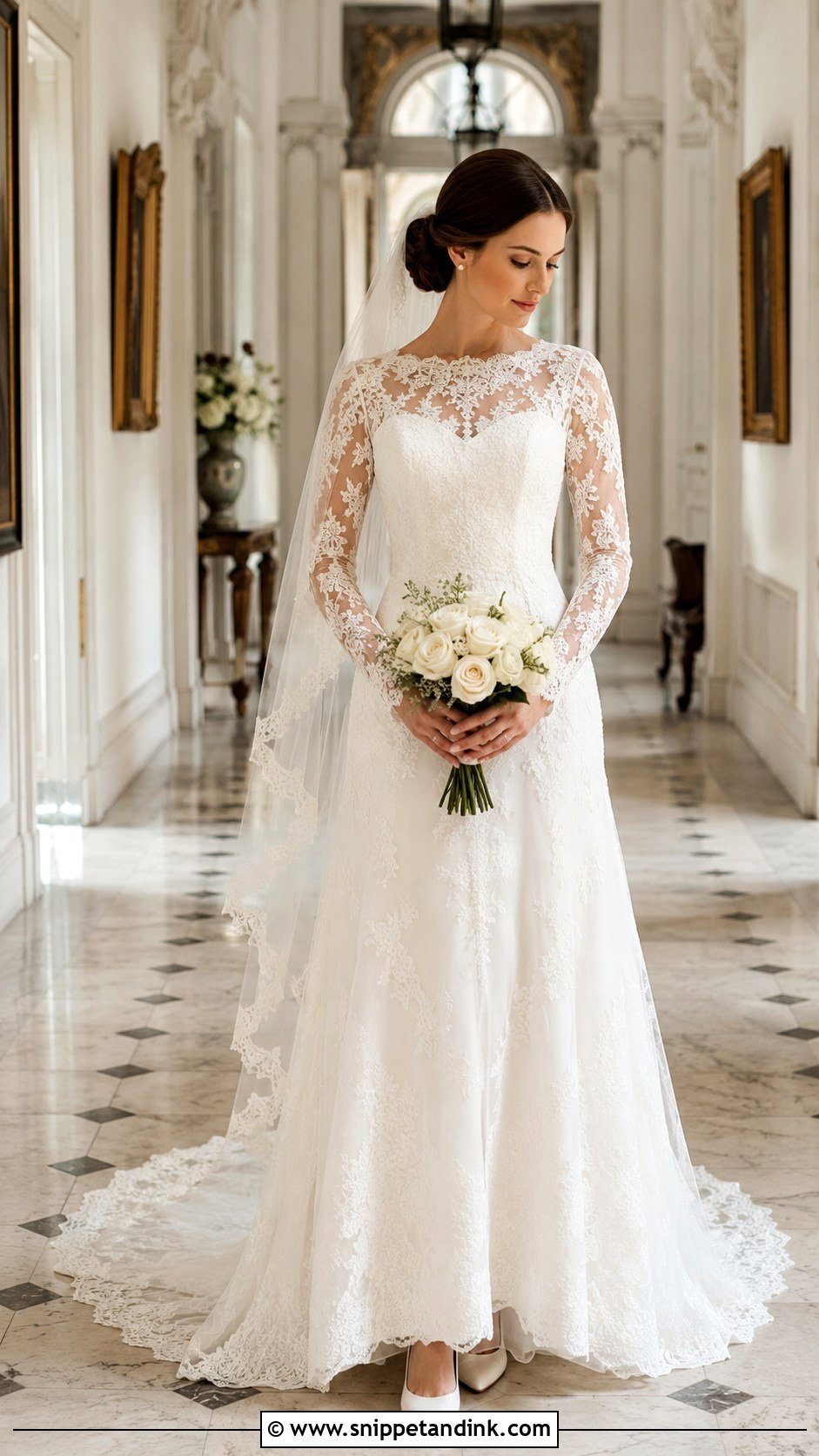
Sheer lace sleeves are the part of this gown I fuss over most at fittings. Lift your arms, hug someone, reach for a glass: if the sleeve pulls at the underarm, the seamstress needs to add room there before anything else is touched. Underneath, an A-line or softly fitted shape with a structured bodice does the work, while scalloped cuffs and covered buttons carry the vintage detail. A plain chapel veil, pearl studs and closed-toe ivory pumps are plenty. A braided updo or low chignon shows the neckline, and I’d leave heavy jewelry at home because the lace already fills the eye. Cream roses with a little greenery keep the bouquet compact. Cooler months, historic buildings and formal indoor ceremonies suit it, especially when the train repeats the lace motif.
4. Sparkly Tulle Wedding Dress
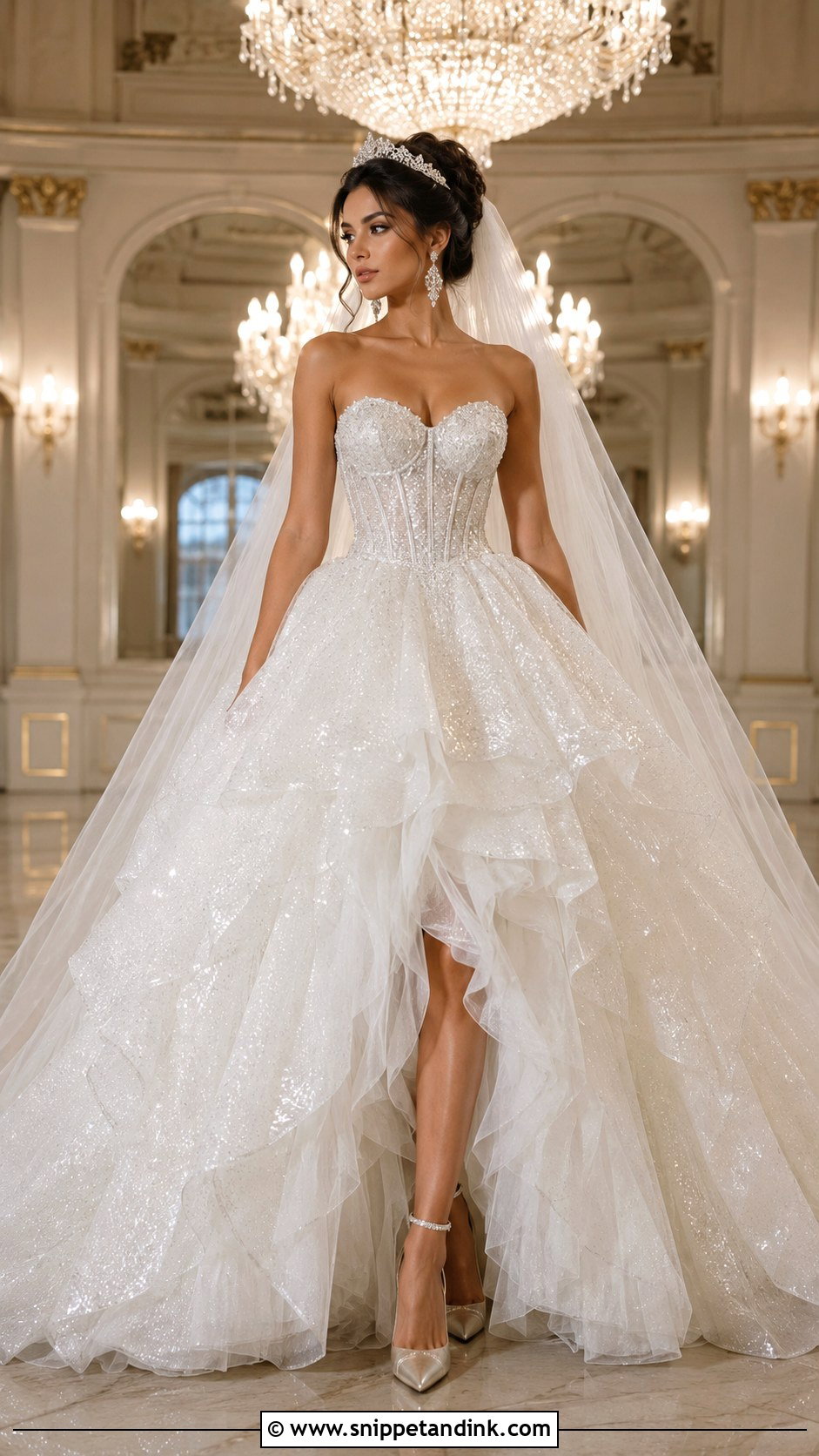
Glitter tulle surprises people twice: it sheds a little, and it reads very differently by a window than under chandeliers. See the fabric in both kinds of light before you commit. I prefer the fine glitter layered beneath plain tulle over a supportive corset bodice, which softens the sparkle and keeps it off your partner’s suit. A moderate train is far easier to bustle than a long one in this fabric. Crystal earrings, a slender jeweled headband and silver or ivory heels finish the outfit, and the veil should stay plain so two shimmering layers don’t fight. Smooth waves or a half-up style and a simple white bouquet keep the focus on the skirt. Evening receptions under bright chandeliers show it off best.
5. Off-Shoulder Wedding Dress
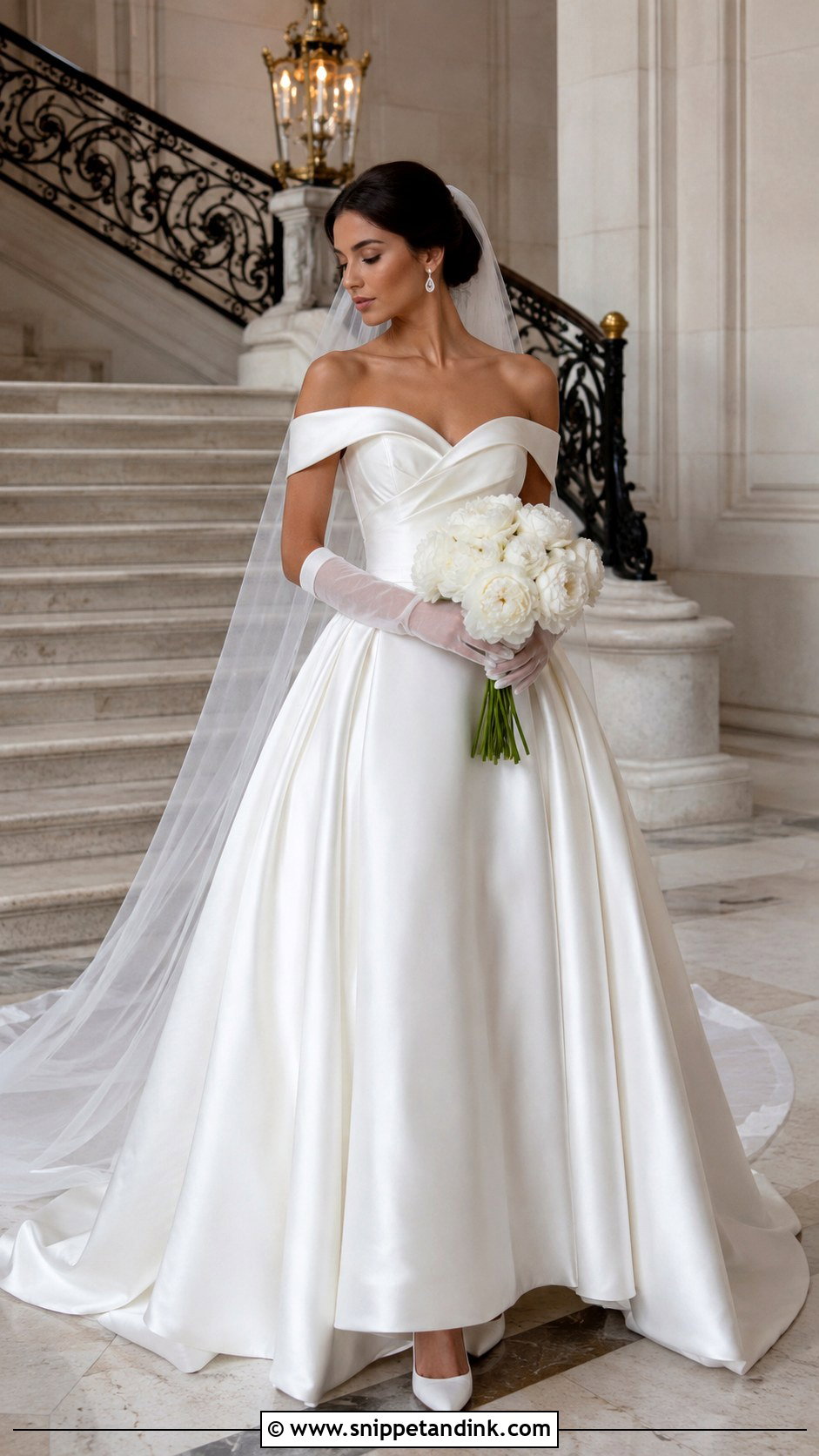
Off-shoulder sleeves sit on the upper arm, not the shoulder, so the bodice has to hold the entire dress up by itself. That means firm boning and a precise fit at the ribcage; if the sleeves start sliding, you’ll spend the night tugging them back. Over a ball gown or A-line with a satin or tulle skirt, leave the neckline bare or add one delicate pendant. Teardrop earrings, satin pumps and a long veil anchored beneath a smooth bun suit the shape. Opera gloves add formality when they match the gown’s fabric, though they come off for the ring exchange, so rehearse that. White peonies and roses keep the colors simple for a formal hall and a grand entrance.
6. Enchanted Forest Wedding Dress
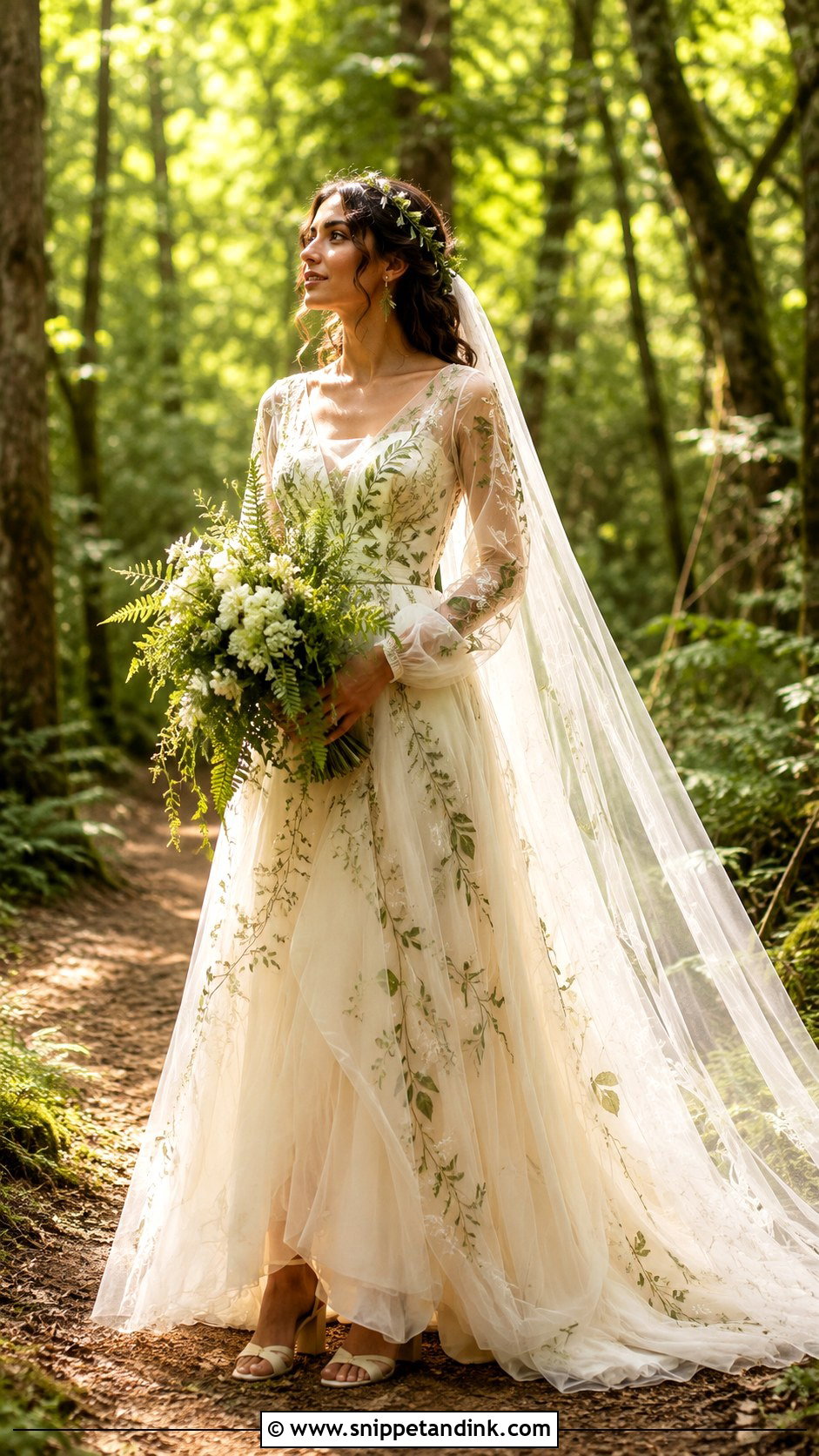
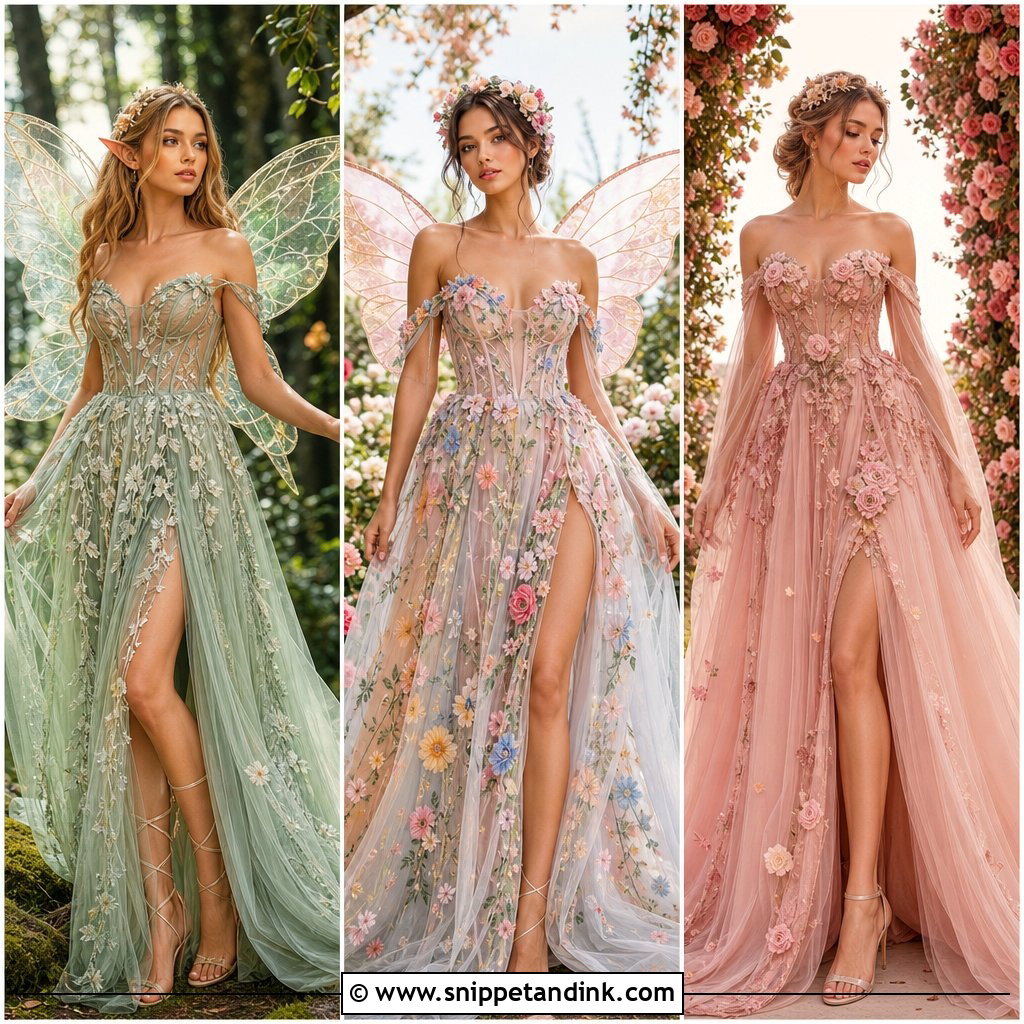
An enchanted forest wedding dress should look grown rather than costumed, and the quickest way to tip it into costume is too many leaves. Keep the leafy embroidery and floral lace on a lightweight A-line, and let the accessories stay quiet: botanical drop earrings, one vine hairpiece, ivory block heels that grip a forest floor. An illusion neckline or sheer sleeves give coverage while staying airy. Outdoors I’d choose a chapel veil over a cathedral length, because long tulle collects twigs and burrs, and someone ends up picking them out between photos. A loose braid or low updo and a gathered bouquet of white flowers and ferns finish the look under tall trees or along a garden path.
7. Champagne Wedding Dress
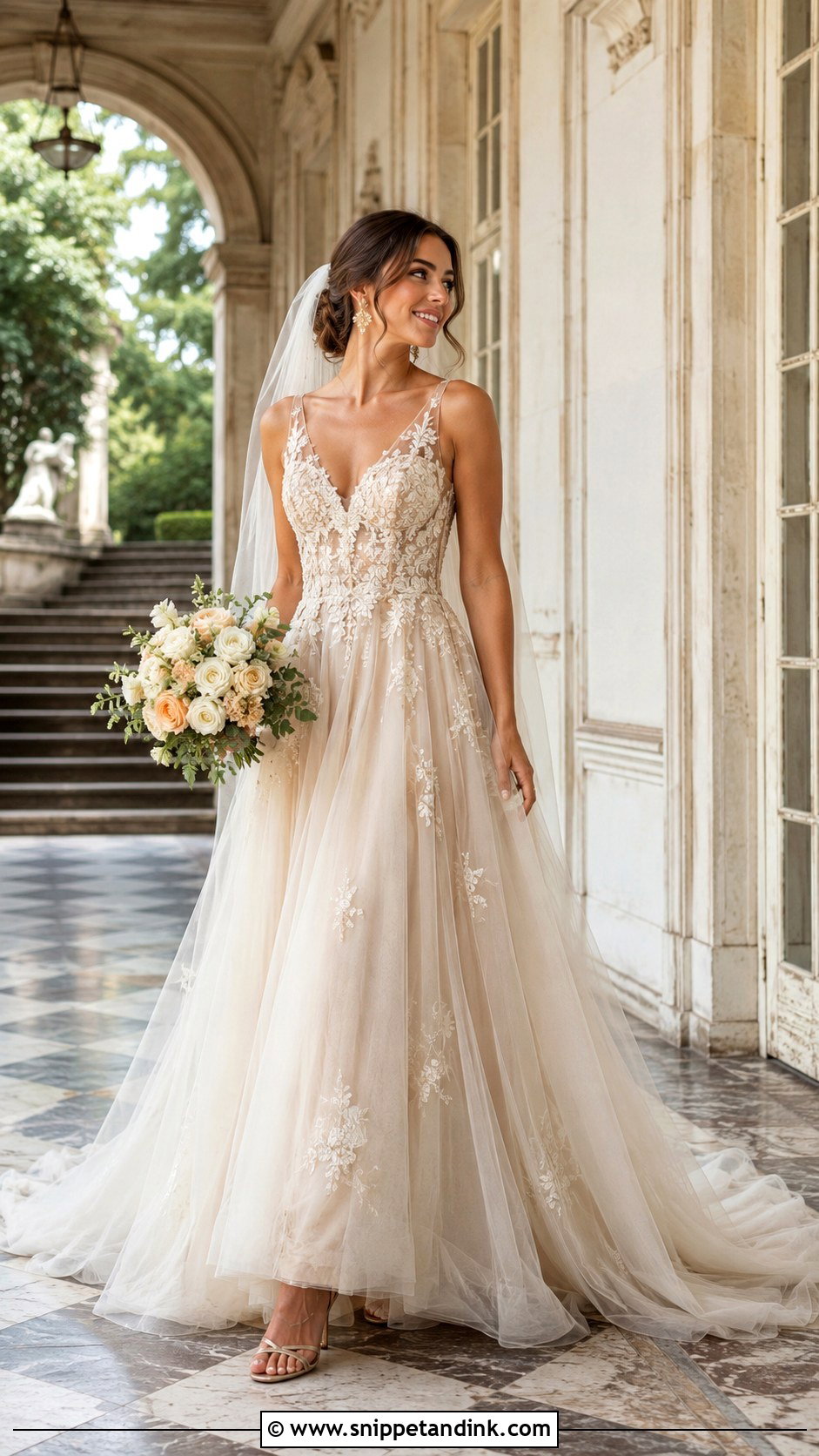
Would a warmer shade feel more magical than white? Champagne is the color I suggest most often to brides who look washed out in bright white, because the lining warms the skin and pushes lace and embroidery forward. Hold the gown up to your face in daylight, though. Some champagne linings read almost nude in photos, which delights some brides and startles others. A fitted bodice over an A-line or ball gown skirt keeps the shape classic. Gold-toned earrings, champagne heels and a sheer ivory veil sit well with it, along with a loose low bun and natural makeup. Cream roses mixed with pale peach flowers coordinate the bouquet, and gardens, historic estates and candlelit rooms flatter the tone.
8. Blush Pink Wedding Dress
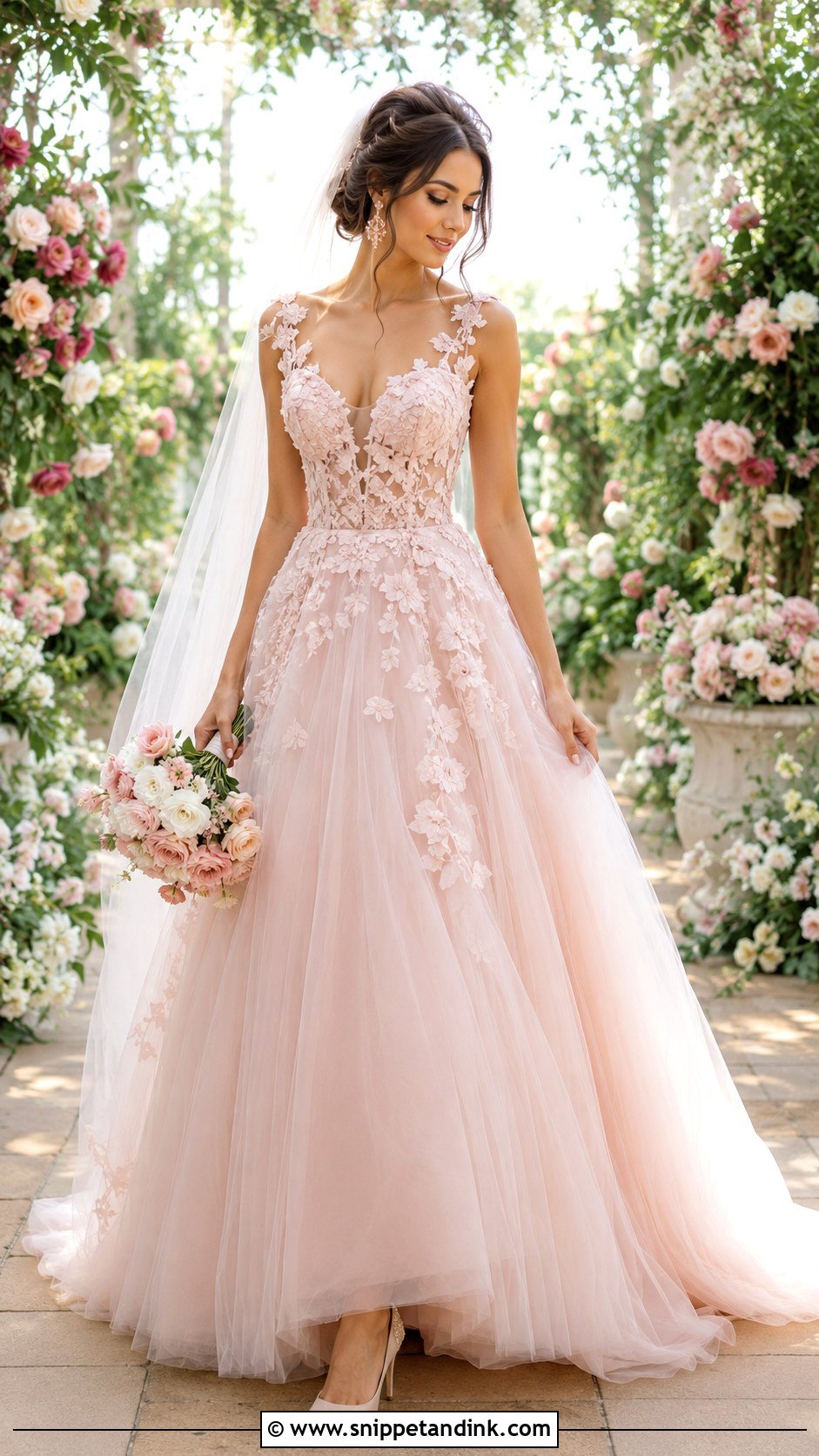
Blush tulle changes with the number of layers over the lining, so the small swatch you see is rarely the color you end up wearing. I always ask to see the full skirt in natural light. Built on a fitted waist and full skirt, this gown keeps the classic princess shape, while floral appliqués or fine beadwork add interest at the bodice. Rose gold earrings, ivory heels and a plain veil in blush or soft ivory stop it looking themed. Add a loose half-up style with tiny pearl pins and a bouquet of white roses, blush ranunculus and muted greenery. On very warm skin, the palest pinks can wash out, so test it against your face before you fall for it.
9. Butterfly Wedding Dress
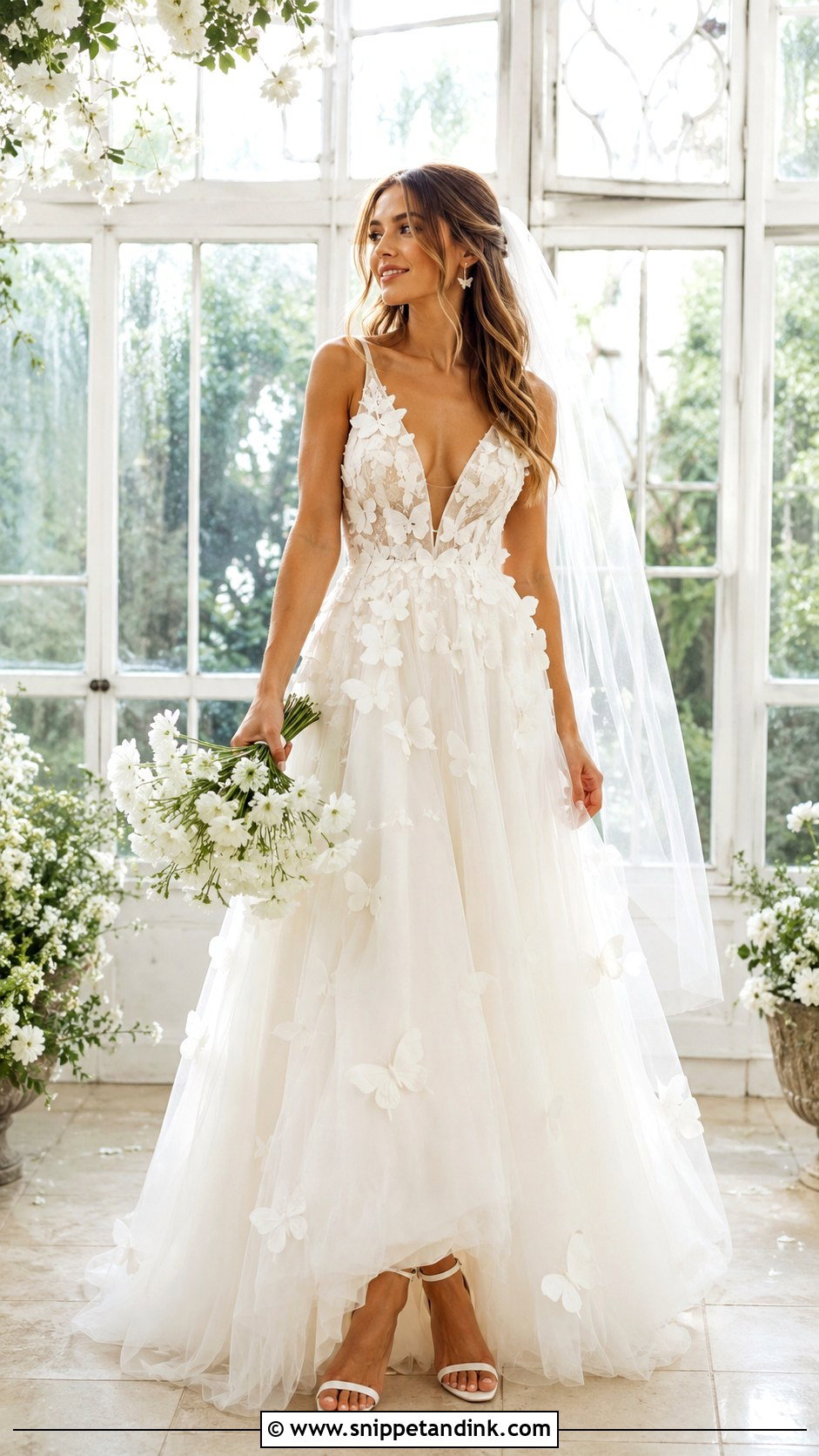
The gown already carries the butterflies, so one or two on the accessories is plenty. Small embroidered or dimensional wings are scattered across the bodice and drift down the tulle of a clean A-line skirt. Dimensional wings are fragile; ask whether they’re wired or simply stitched, and keep them off the lower train where guests will step on them. Subtle butterfly earrings, ivory ankle-strap heels and a light fingertip veil finish the outfit. Loose waves or a relaxed updo held with few pins suit the mood, along with white sweet peas, roses and airy greenery. A greenhouse or a flower-filled garden in daylight shows it best.
10. Satin Royal Wedding Dress
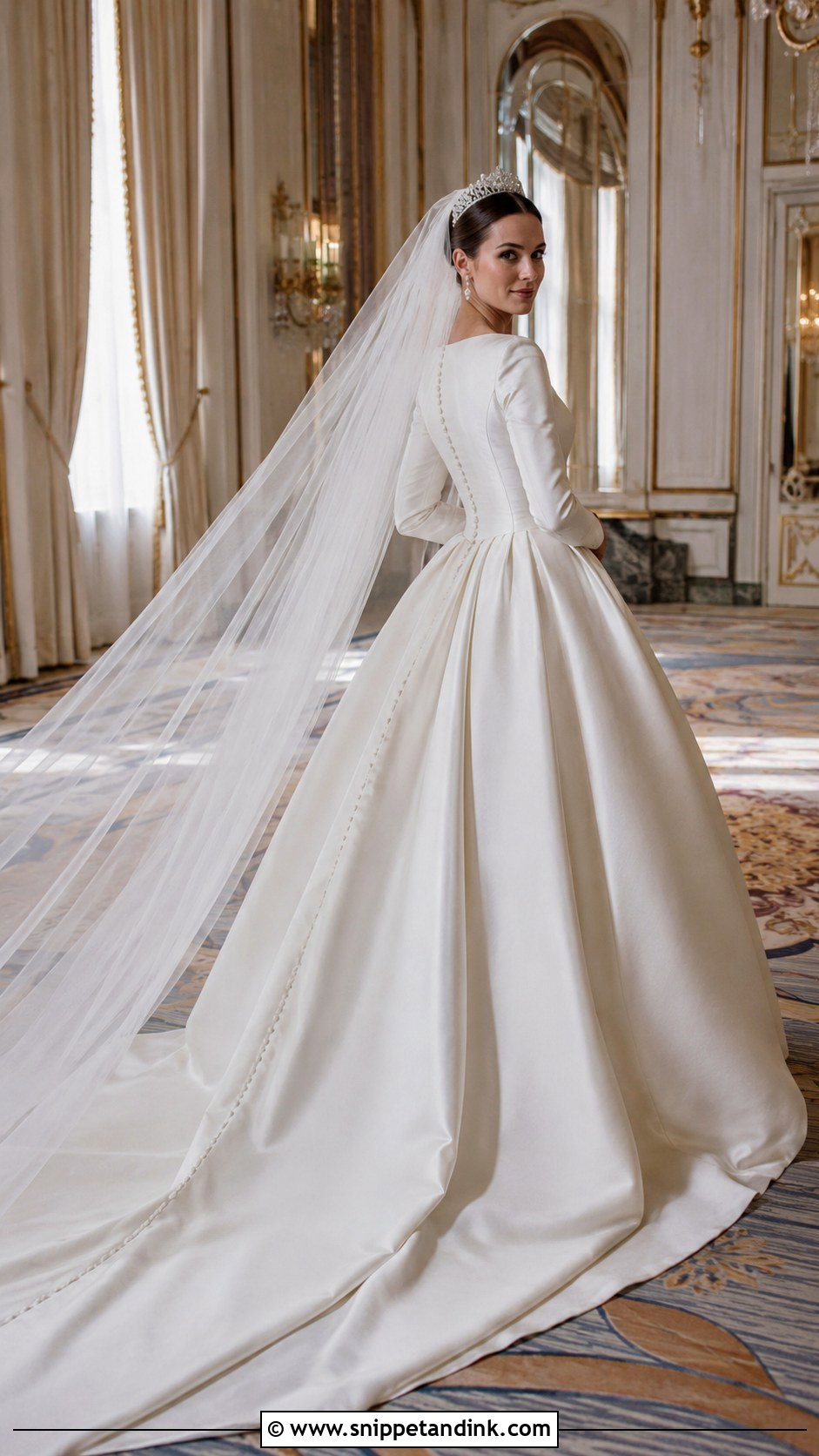
Satin is honest fabric. It shows every seam, every wrinkle and every place the fit is slightly off, so I’d only choose a royal-style satin ball gown if you’re ready for careful alterations and a thorough steam on the morning. The sculpted bodice, defined waist and wide pleated skirt carry the drama, with covered buttons and a long train instead of decoration. Heavy satin also creases across the lap when you sit, which is why I schedule portraits before dinner. Pearl drop earrings, a delicate tiara and pointed ivory pumps suit it, with a cathedral veil trailing behind the train and a sleek low bun. A structured bouquet of white roses completes a finish made for grand hotels and ballrooms.
11. Corset Wedding Dress
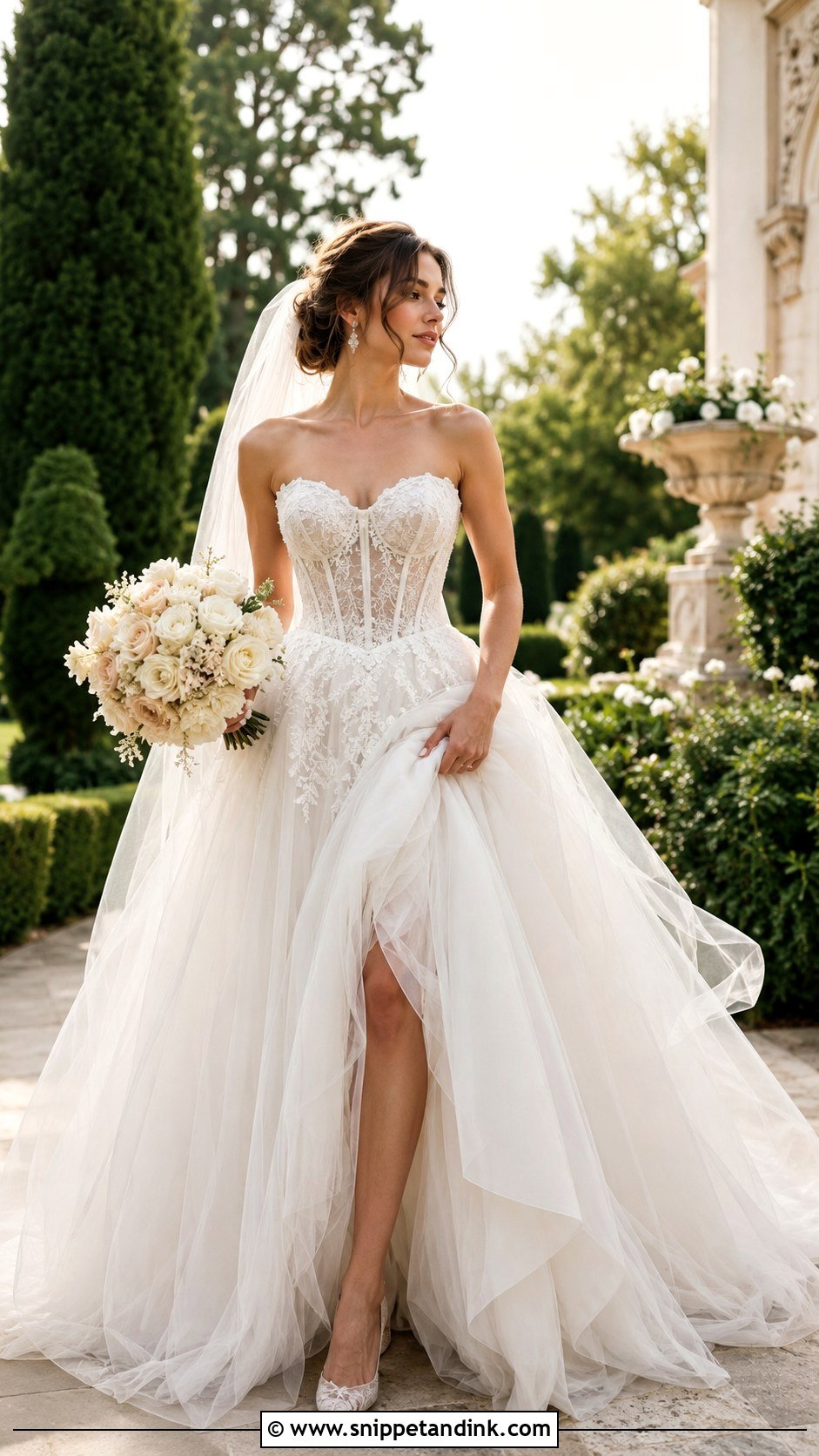
A well-made corset bodice is one of the most comfortable structures on this list, provided it’s fitted to your ribcage and not just your waist. Visible boning, a softly curved neckline and lace over a lined or semi-sheer bodice give it storybook detail, balanced by a full tulle skirt or a softer A-line. At your fitting, sit down and take a deep breath: the top edge shouldn’t dig in or gape. Small crystal earrings, lace-trimmed heels and a plain chapel veil go well, and a soft updo with face-framing pieces keeps the neckline visible. With a heavily detailed bodice, swap the necklace for a slim bracelet. A loose cream and pale pink bouquet softens the line through a long ceremony and reception.
12. Cape Wedding Dress
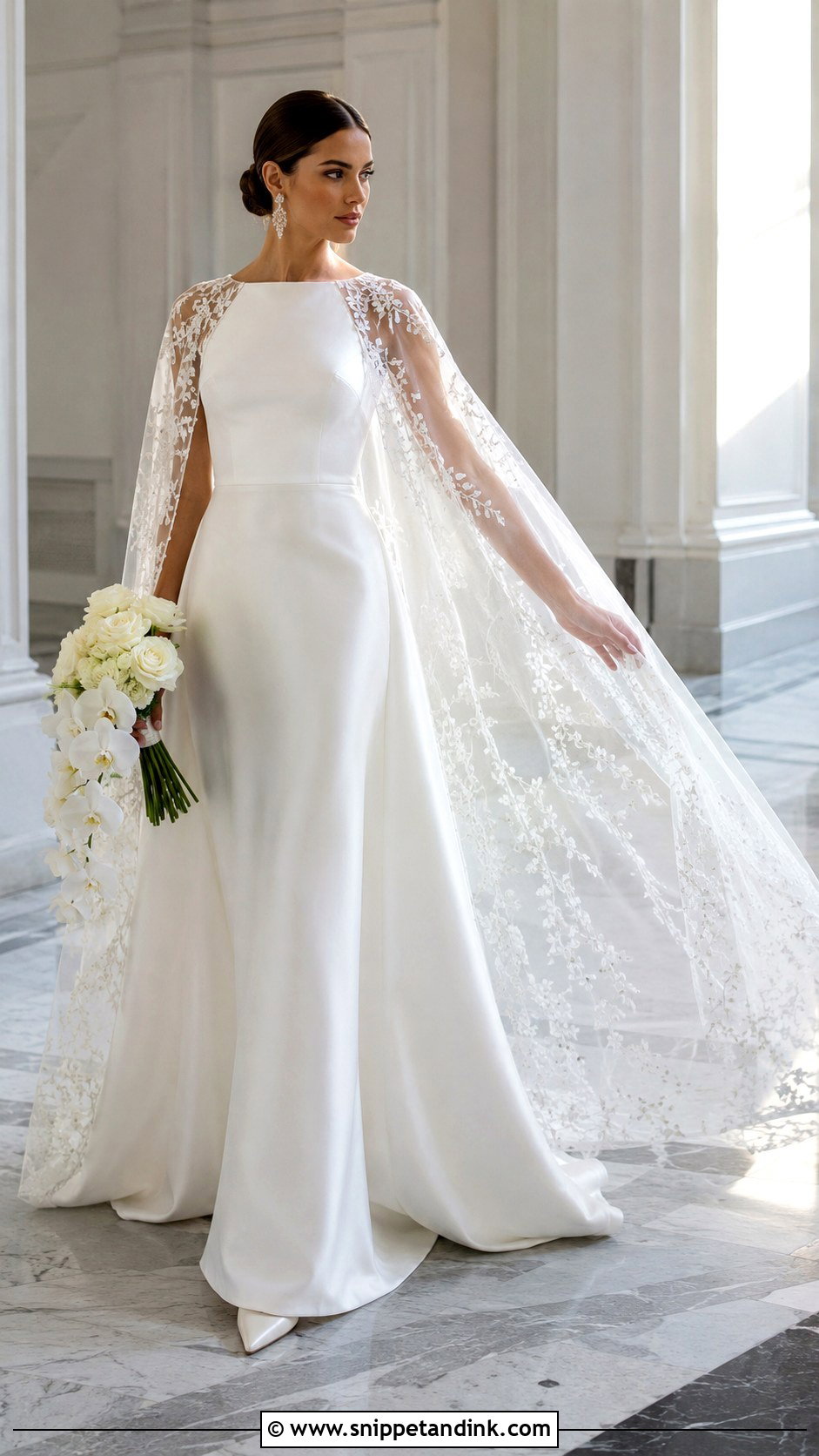
A cape gives you the movement of a veil without anything on your head, which helps if your hairstyle is complicated. Start with a clean column, A-line or fitted gown in crepe or satin, then attach a sheer floor-length cape at the shoulders, finished with light lace, tiny pearls or fine embroidery. Ask exactly how it attaches. Hidden snaps or hooks come off far faster than buttons, and you’ll want it gone for dancing. Statement earrings, pointed pumps and a sleek low bun suit the long vertical line, and the neckline can stay bare. A slim bouquet of long-stemmed white flowers echoes that line. Be wary on windy outdoor sites, where a cape lifts like a sail.
13. Puff Sleeve Wedding Dress
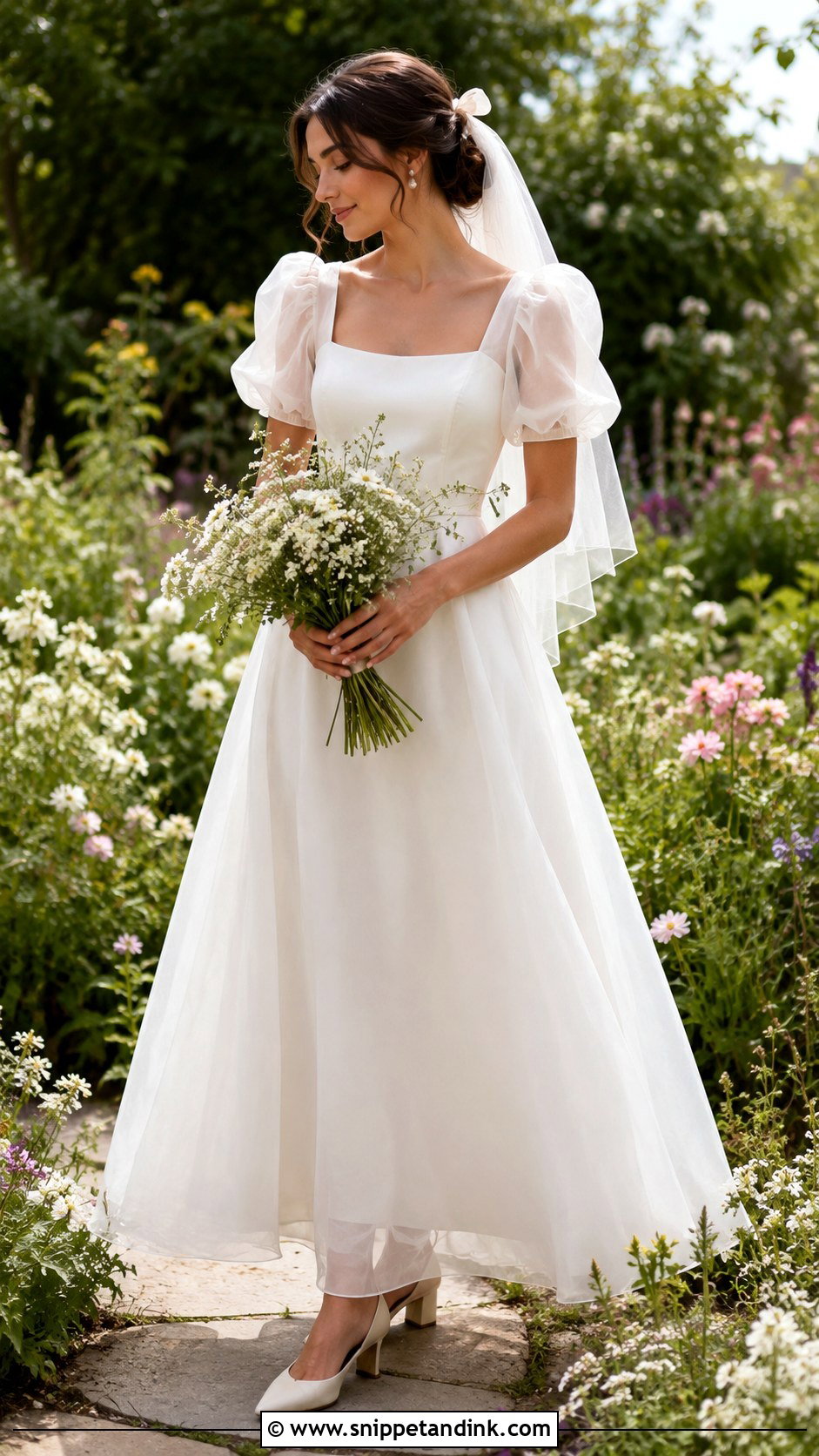
Puff sleeves bring storybook charm to a fairly plain gown, but the volume needs the right fabric to hold. Sheer organza keeps its puff on its own; softer chiffon tends to collapse within an hour or two. Keep the shoulders in proportion with the fitted bodice and A-line skirt so the sleeves don’t widen your frame in group photos. Pearl earrings, low ivory heels and a simple fingertip veil leave the sleeves room. A ribboned ponytail or softly waved hair fits the mood, and a small bouquet of white wildflowers keeps it light. Detachable sleeves are worth asking about if you’d like a cooler, simpler look for the reception.
14. Blue Fairy-Tale Wedding Dress
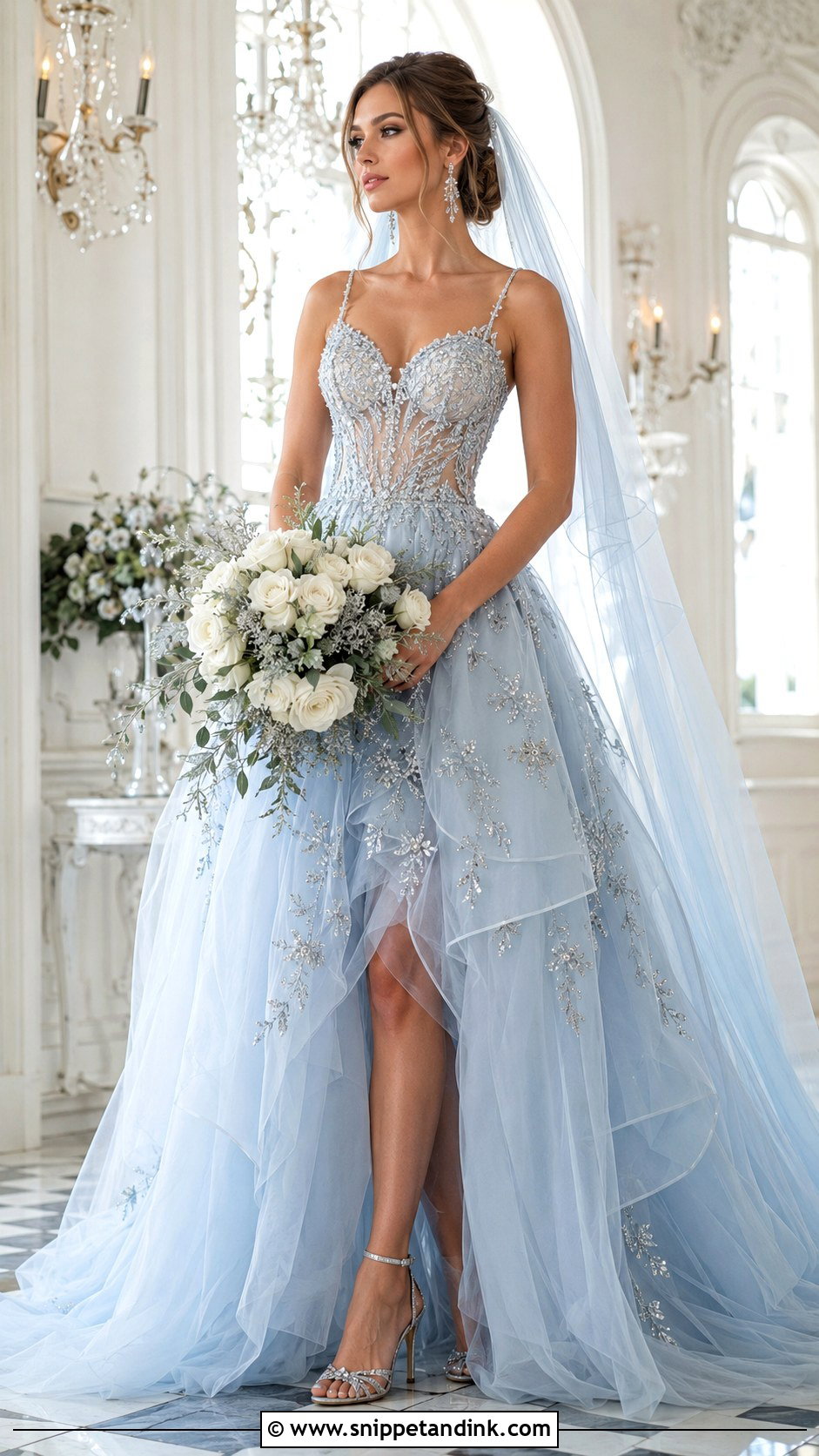
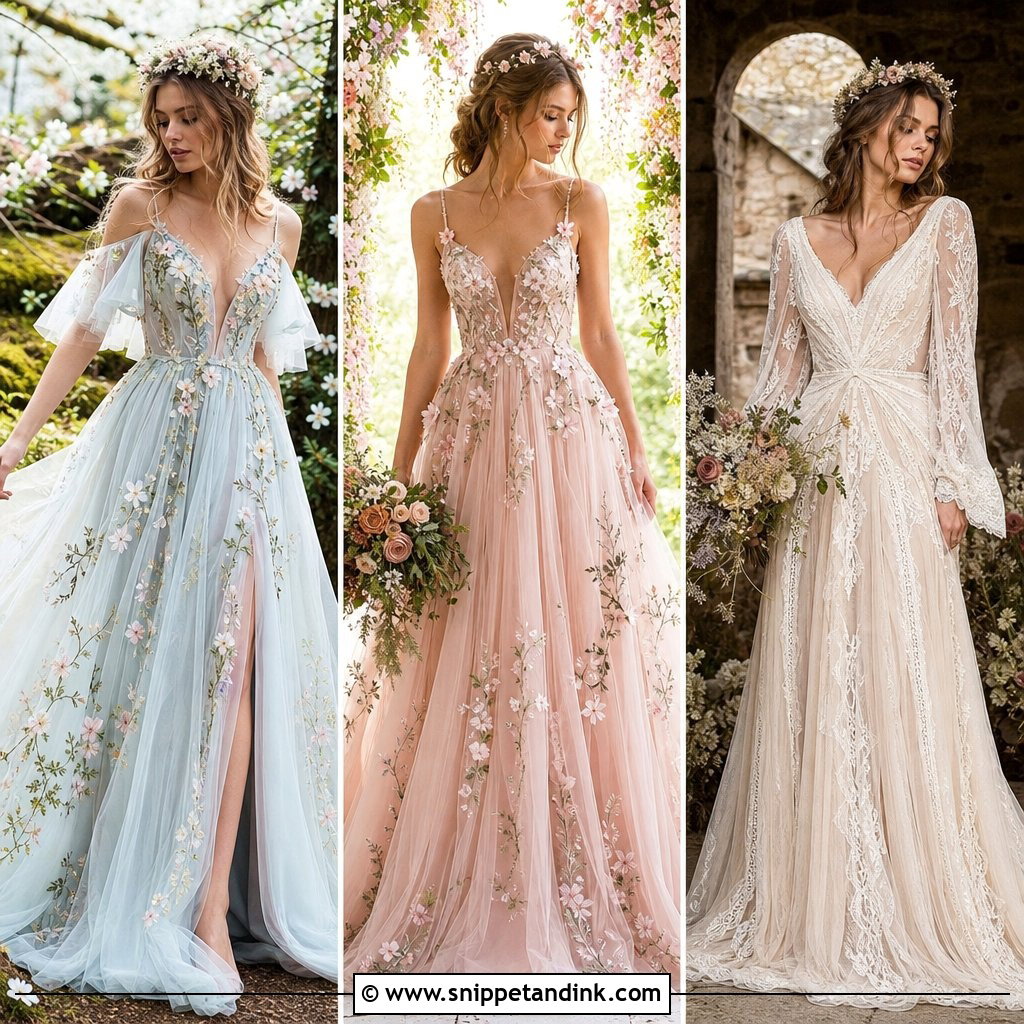
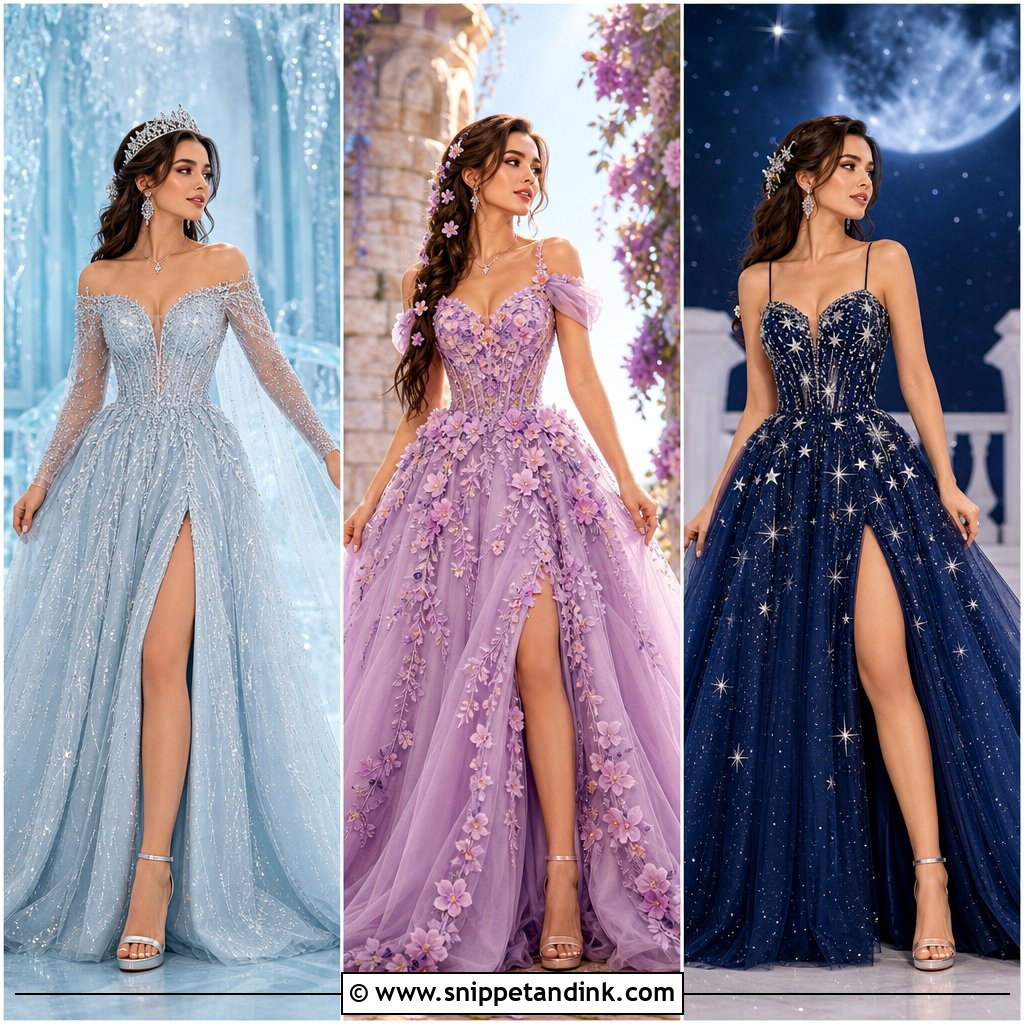
Pale blue is the hardest color here to photograph. Icy blue tulle can drift toward grey in shade and toward white under a strong flash, so I’d test it on camera in your venue’s light, even with a phone. Choose a fitted bodice with soft tulle layers, then add silver embroidery, tiny crystals or a few star details. Crystal earrings, silver heels and a sheer veil in a cool coordinating tone hold the palette together. Smooth waves or a polished half-up arrangement suit it, and a bouquet of white anemones, roses and silvery greenery avoids any strong contrast that would pull the eye. Winter venues and bright garden light reveal the blue most clearly.

15. Cottagecore Wedding Dress
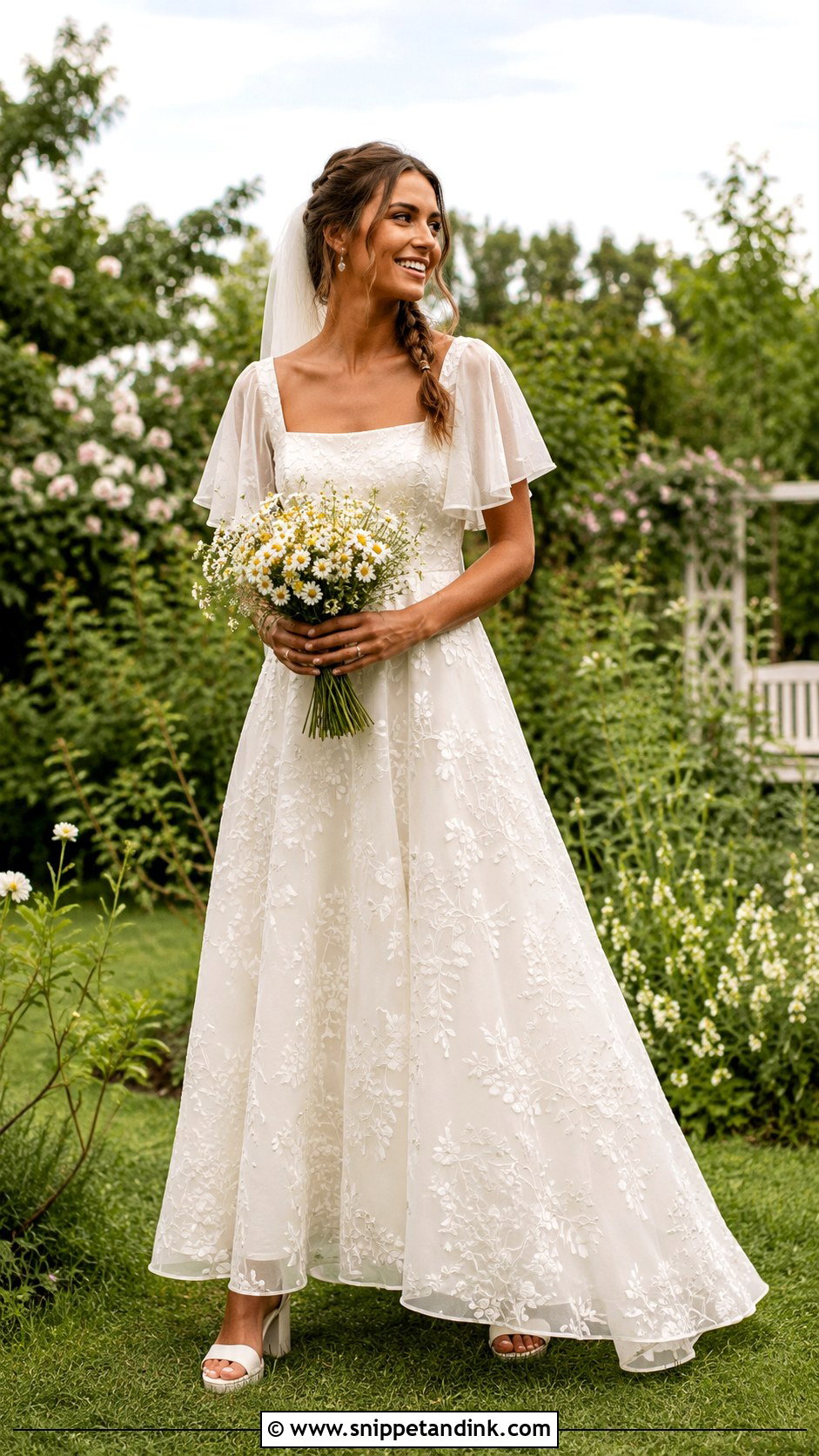
This is the gown I’d point a bride toward if she wants to sit on a hay bale, dance barefoot and never think about her skirt. A flowing A-line with embroidered flowers, a square neckline and flutter or gently puffed sleeves moves with you instead of against you. Cotton lace and soft embroidery do crumple in a car, so keep it hanging until the last minute. Low block heels or ivory flats make sense on grass, and pearl earrings, a ribbon woven through a loose braid and a shoulder-length veil keep the styling natural. Carry white daisies, sweet peas and garden greenery through a meadow ceremony or an intimate rustic garden.
16. Vintage Fairy-Tale Wedding Dress
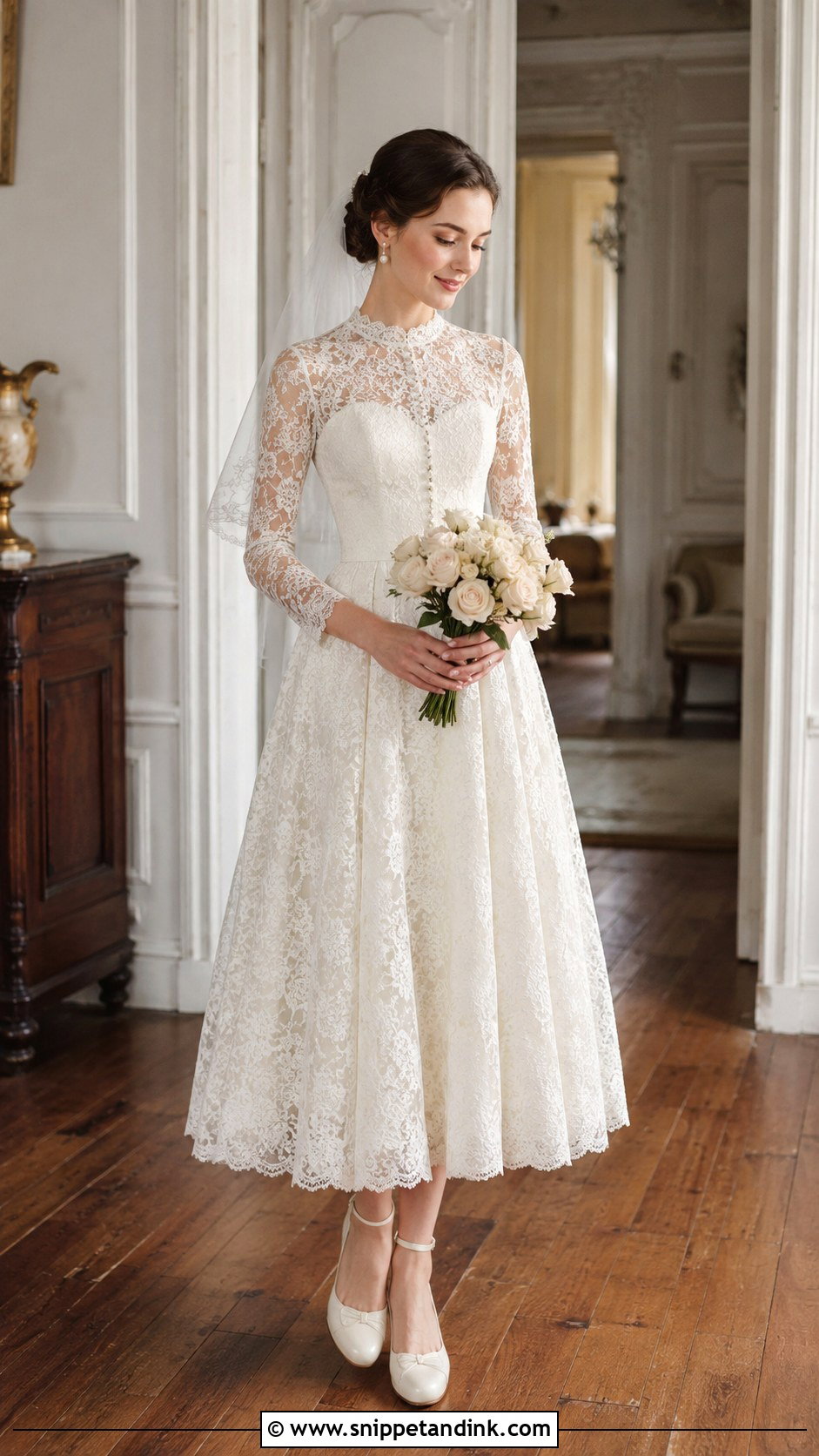
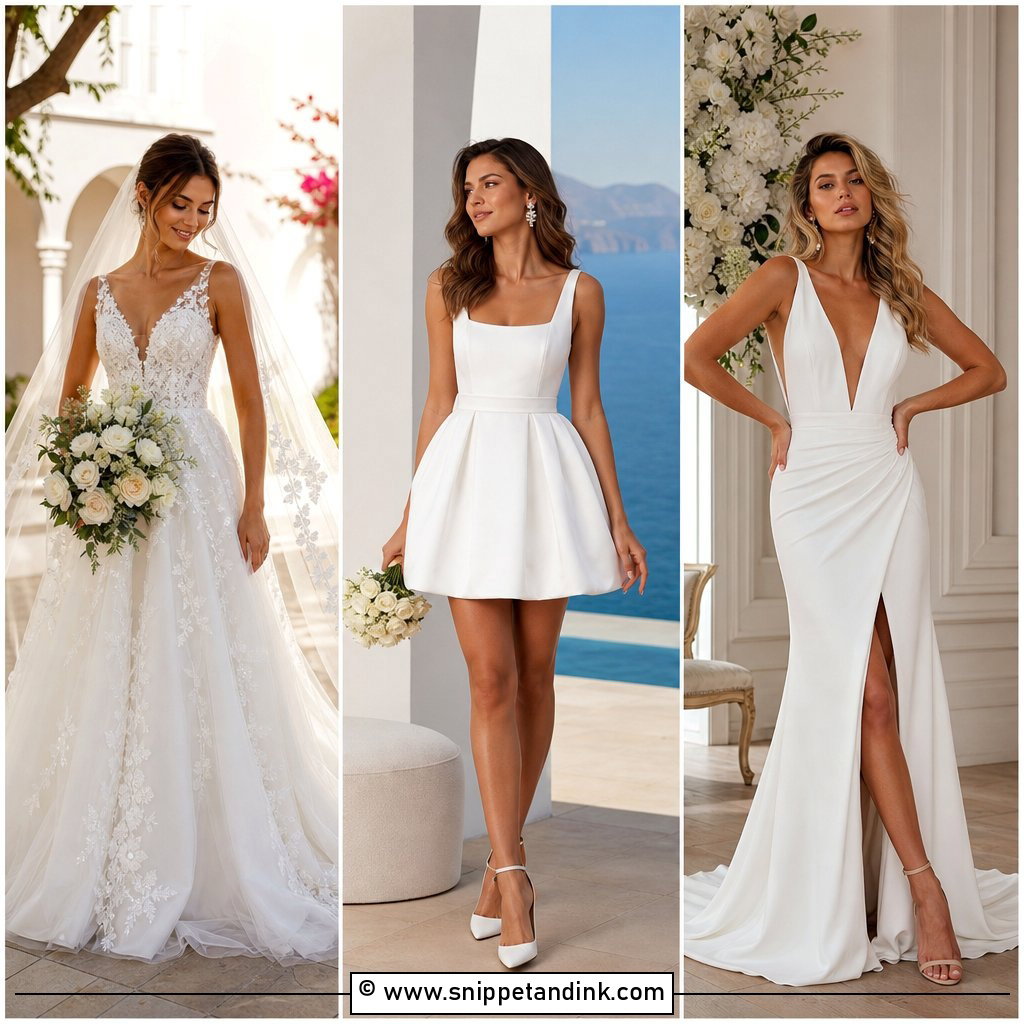
Vintage-inspired gowns look right when one era leads. A tea-length or floor-length dress with fine lace, covered buttons and a softly defined waist can lean toward the forties or the fifties, but mixing decades in the accessories muddles it. Long sheer sleeves or a bateau neckline add period character. I pair a birdcage veil with a tea-length skirt and a fingertip veil with a floor-length one, plus pearl earrings and ivory block heels. Brushed waves or a neat low roll finish the hair. A compact bouquet of cream roses and greenery keeps to ivory, champagne and muted gold, which suits historic homes and art-filled venues.
17. Boho Fairy Wedding Dress
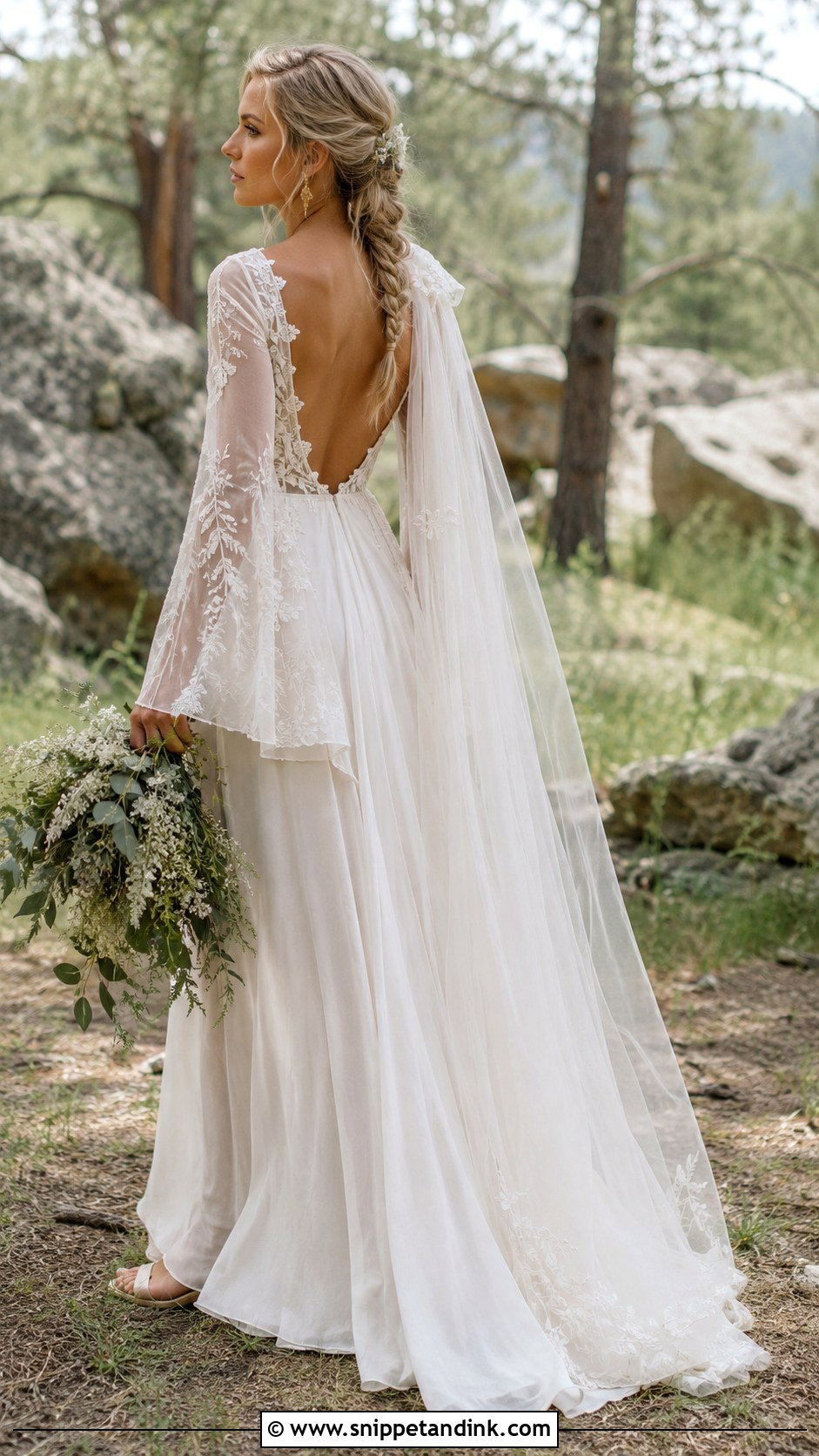
A boho fairy wedding dress sits closest to festival wear on this list, so restraint decides whether it reads as bridal. Choose a flowing gown with botanical lace, a softly fitted waist and a chiffon or tulle skirt that moves freely; bell sleeves, an open back or a gentle V-neck give it shape. Chiffon is light enough for desert heat, but it creases easily, so pack a handheld steamer. Delicate gold earrings, neutral sandals and a sheer cape veil or light chapel veil finish it. A textured braid with a few pearl pins and an airy bouquet of white flowers and grasses suit woodland clearings, open fields and desert gardens.
18. Celestial Wedding Dress
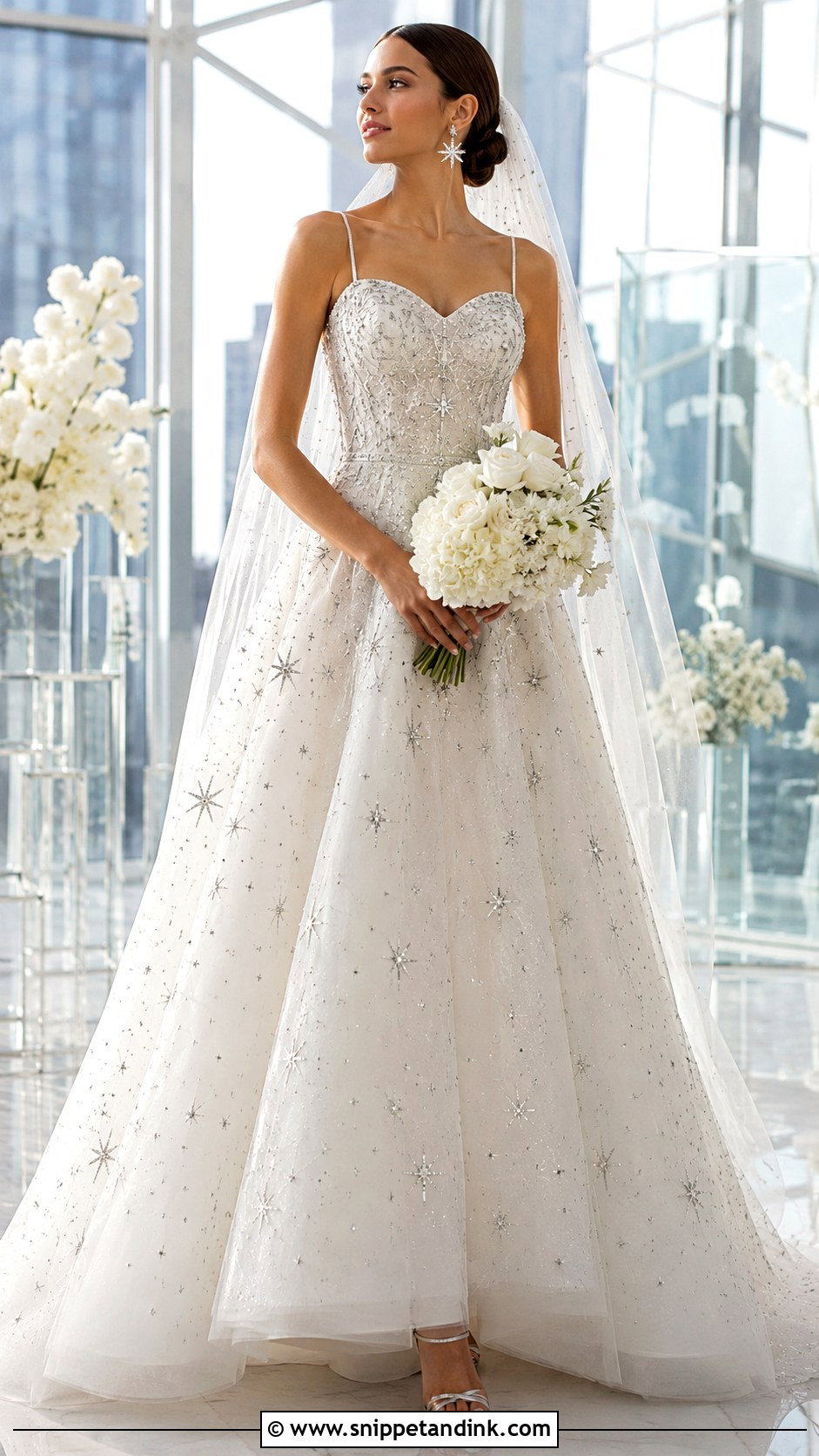
Celestial embroidery needs evening light to come alive. By day, scattered crystals and silver stars on ivory, champagne or pale blue tulle look quite restrained; after dark they catch every spotlight. An A-line shape with a structured bodice keeps it graceful. Star-shaped earrings, silver or ivory heels and a sheer veil dotted with a few crystals go with it, but I’d stop the motif there, with one hairpin at most. Past that point the outfit starts to look like a theme party. A polished low bun or smooth waves keep the head clean, and white flowers with silvery foliage suit the palette in a glass venue or an evening ballroom.
19. Mermaid Fairy-Tale Wedding Dress
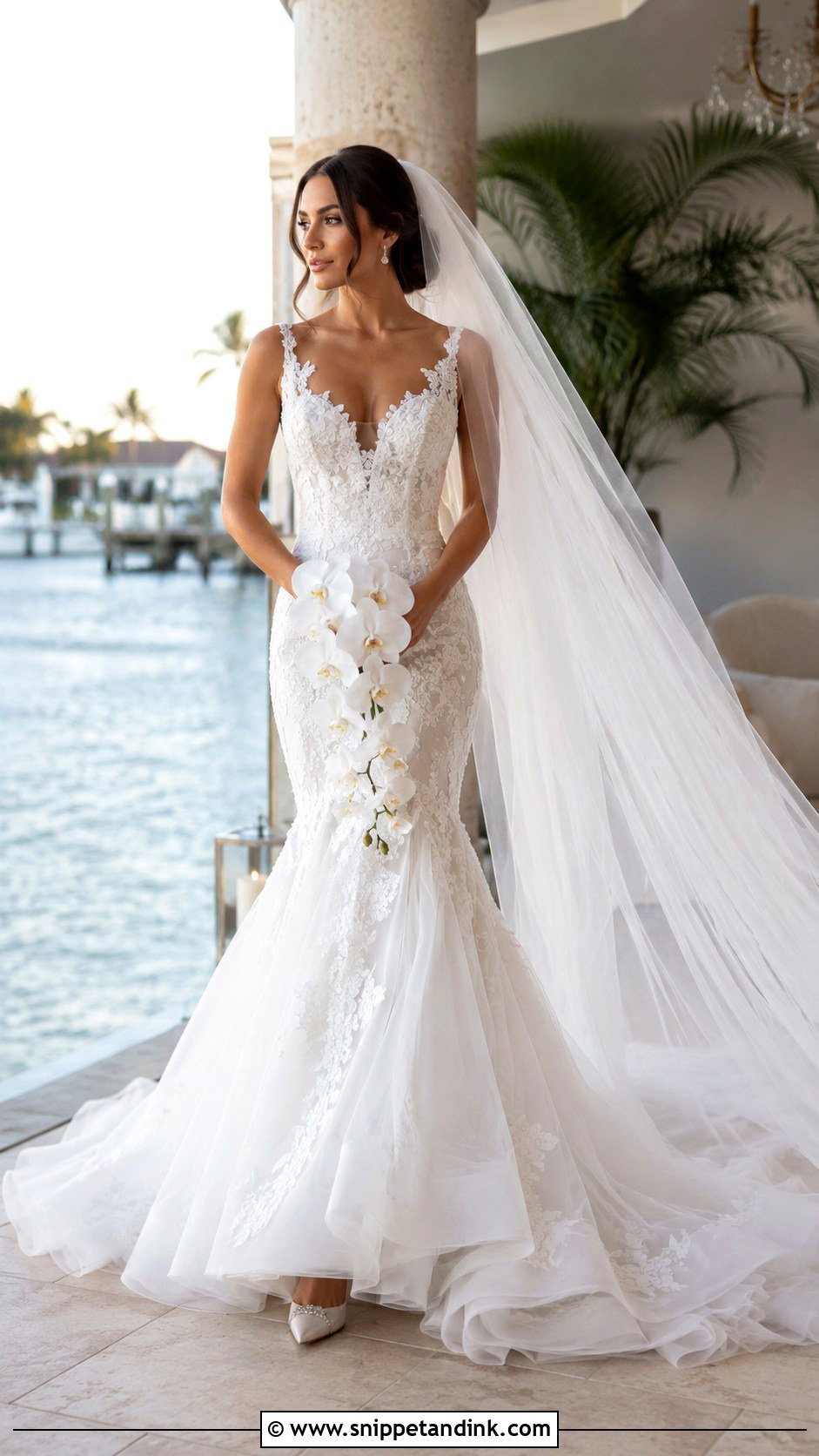
Before alterations begin, walk up a step and sit on a chair in a mermaid gown. The shape hugs the body to the knee before flaring into layered tulle or organza, and if the flare starts too low you’ll shuffle all night. Floral lace, pearl beading or a little sparkle soften the line. Drop earrings, pointed ivory heels and a long plain veil extending past the train suit it, with a sleek bun or side-parted waves. Carry a narrow bouquet of white orchids or roses so you don’t add width at the hip. Plenty of brides in this shape bring a lighter second look for dancing, which is worth considering for a long reception at a formal hall or waterfront venue.

20. Ruffled Organza Wedding Dress
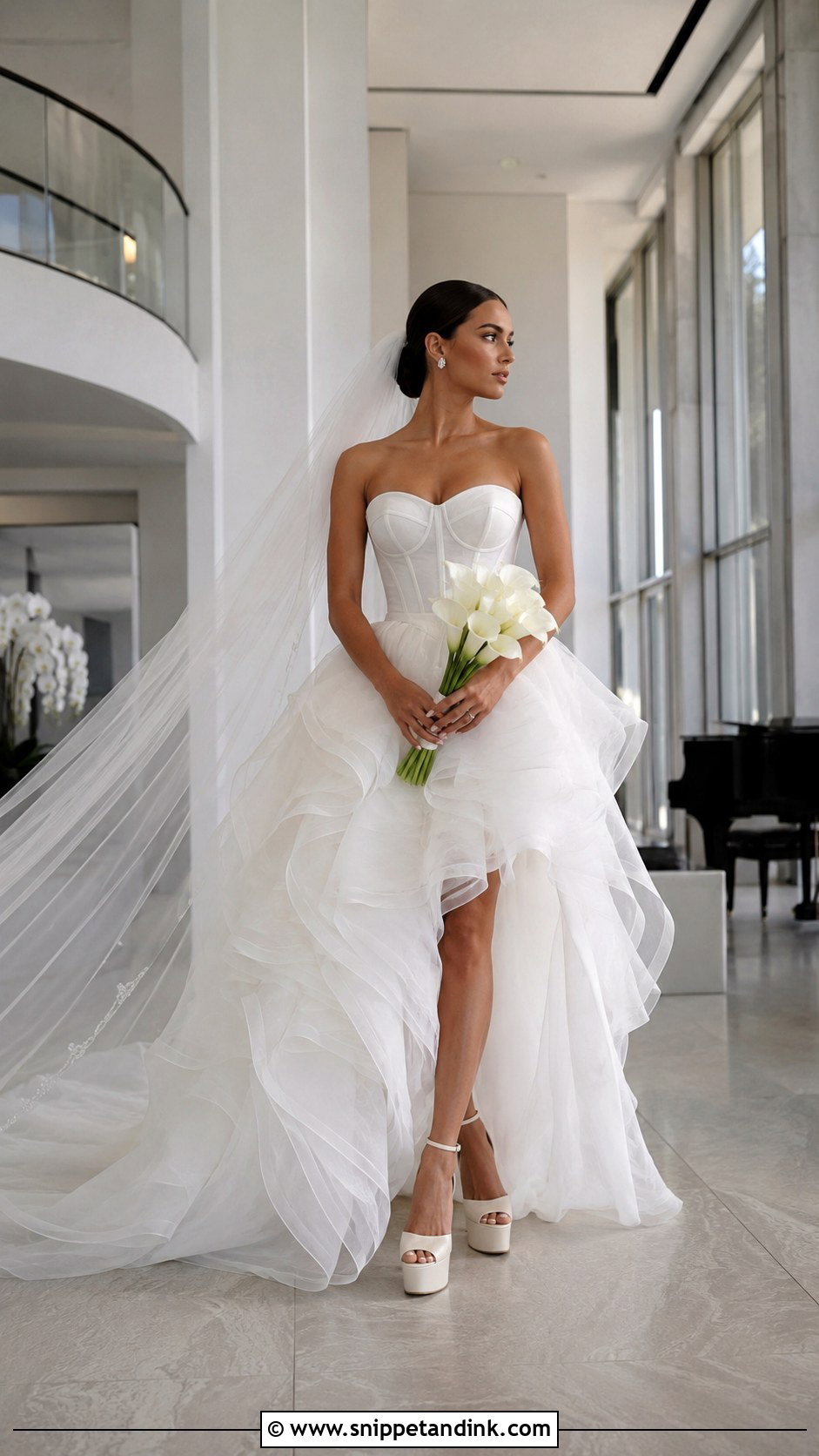
Organza holds its shape where tulle would sag, which is why asymmetrical ruffles in it seem to float. The fabric gives volume without embellishment, so keep the accessories clean: crystal studs, ivory platform heels, a plain cathedral veil. It does crush if you sit on it carelessly, so learn to sweep the back of the skirt out before you sit. A neat bun or simple half-up style balances the skirt, and a small bouquet of white roses or calla lilies avoids competing with the ruffles. Give it space; grand indoor venues, modern estates and roomy gardens let the skirt move.
Lead Times for Lace, Beading and Appliqué
Hand embellishment is slow work. Made-to-order gowns commonly take several months to arrive, and heavily beaded or appliquéd designs can take longer, though timings vary a great deal between designers. I’d order with enough margin that a late delivery doesn’t eat into alterations.
Alterations on a layered gown usually need two or three fittings, starting roughly two months before the wedding. Bring your actual shoes and underwear to the first one, because the hem is set to the heel height and the bodice to whatever sits beneath it. Rush fees exist, but they rarely buy back time on hand-sewn lace.
Bustles, Steam and Storage for Tulle and Satin
A long train has to be bustled for the reception, and the person doing it should practise at your final fitting. An over bustle lifts the train up onto hooks at the back; an under bustle tucks it beneath with ribbon ties, which suits satin and heavier skirts. Number or color-code the ties so nobody guesses at night.
- Steam tulle and organza on a low setting from inside the skirt; never press an iron straight onto them.
- Hang a heavy gown by its inner straps so the shoulders and sleeves don’t stretch.
- Have the gown cleaned soon after the wedding, since sugary drink spills are invisible at first and turn yellow as they age.
- Store it folded in acid-free tissue in a breathable box, away from plastic bags and damp walls.
Comfort Decides the Fairy Tale
The best fairy-tale bridal outfit is the one you forget you’re wearing by the second hour. Fantasy matters, but so do the venue, the season and how much you plan to move. Shortlist two silhouettes from the looks above, then try each with the same shoes and underwear so you’re comparing gowns rather than extras. Keep the details that make you feel confident and drop the ones that only match a theme. The gown starts the story; the veil, jewelry, shoes, flowers and hair finish it.
You'll Like These Ideas:






Leave a Reply