
A romantic gown has to work from the back and the side as much as from the front, because that’s how most guests see you. The twenty dresses below cover sweeping ball gowns, floral lace, sparkling tulle, regal satin and a few vintage shapes, each paired with the shoes, veil, jewelry and flowers I’d choose to go with it. Some suit a grand ballroom, others a garden, and a handful are quiet enough for a bride who’d rather skip the drama. If your dream dress feels princess-inspired, woodland, celestial or classic, there’s a starting point here, along with what I’d check before you commit.
Where to Spend and Where to Save on a Fairytale Gown
A dress this romantic can swallow a budget quickly, and most of the money that makes a visible difference goes into places brides don’t expect. Prices vary hugely by designer and region, so think of this as where to put the weight rather than what to pay.
Worth spending on
- Alterations by someone experienced with bridal fabrics. A modest gown fitted perfectly looks better than an expensive one that gapes.
- Internal structure: boning, a waist stay and built-in cups, which decide whether the bodice stays put for twelve hours.
- Fabric on the parts that sit close to your face and skin, the bodice and sleeves, where cheap lace scratches and shows.
Easy places to save
- The veil. A plain tulle veil with a cut edge looks just as good in photos as an embroidered one when the gown is detailed.
- Shoes that sit under a floor-length skirt. Comfort matters more than labels when nobody sees them.
- Sample or pre-loved gowns, which often cost far less and only need a good clean and refit.
1. Princess Ball Gown Wedding Dress
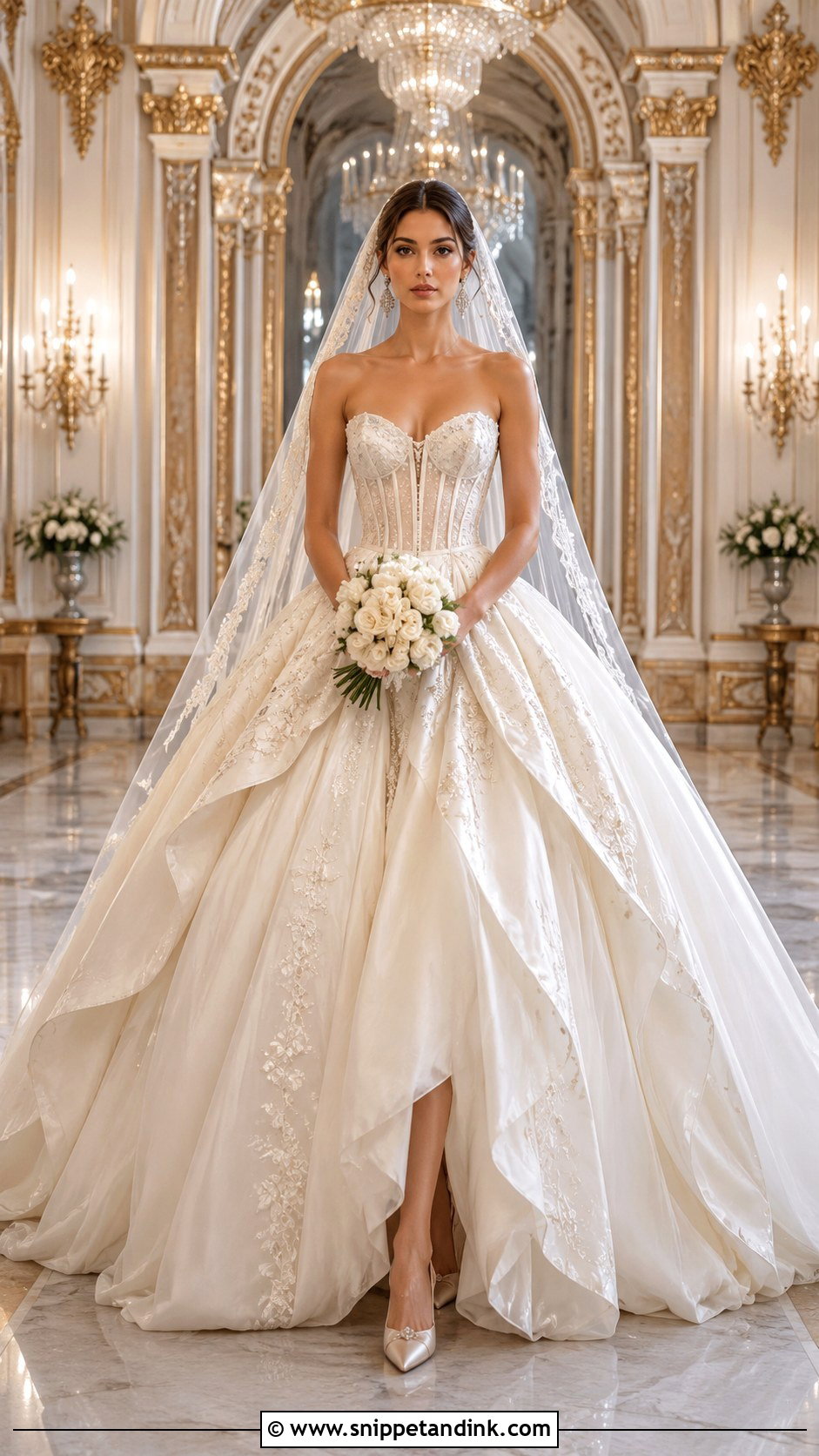
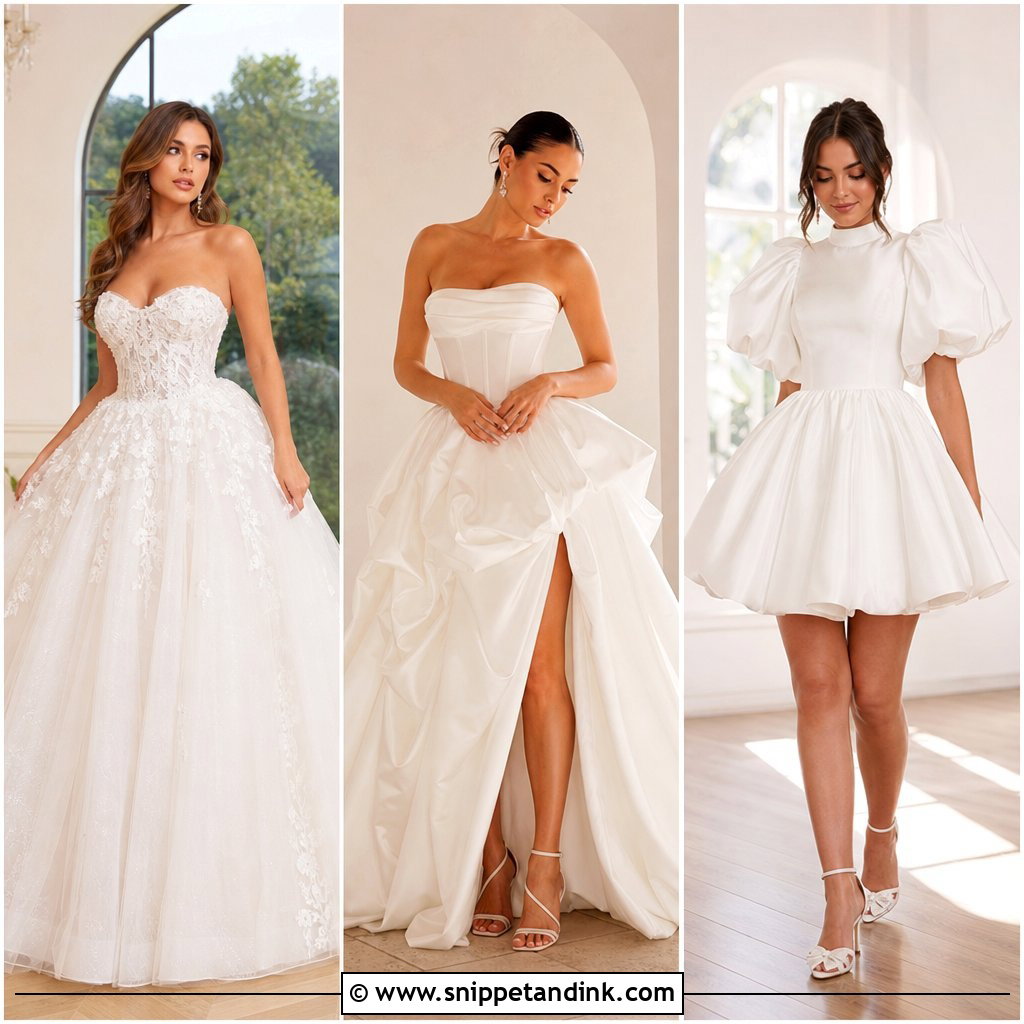
Nothing says fairy tale faster than a princess ball gown, and the best ones are built in two layers. Ivory satin underneath gives the regal structure, and a light tulle overlay softens it so the skirt sways instead of standing stiff. The corset bodice needs proper boning and a defined waist to carry that skirt all day. A cathedral veil, crystal drops and a polished low bun keep the neckline clear. Save it for a ballroom or estate with wide doorways, since the skirt needs room for its entrance.
2. Floral A-Line Wedding Dress
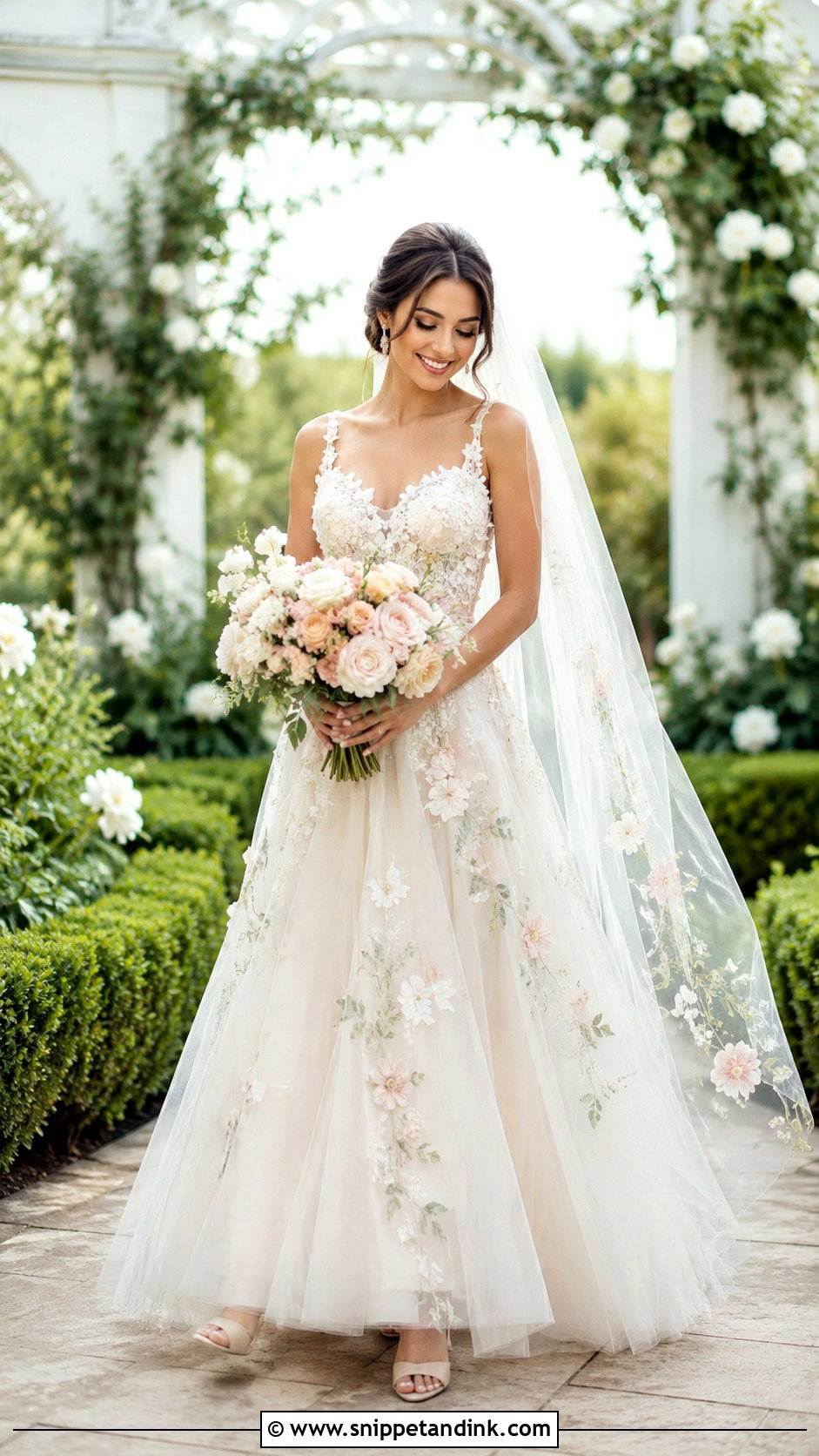
Floral appliqués that start at the bodice and scatter down an airy tulle skirt turn a plain A-line into a garden dress. The gently structured waist gives shape without ball gown weight, which matters on a warm afternoon outdoors. I’d edge the fingertip veil with just a little embroidery so it echoes the dress rather than repeating it. Pearl pins in loose waves, ivory block heels and a bouquet of peonies and sweet peas in muted pink suit a conservatory or lawn.
3. Lace Wedding Dress With Cathedral Train
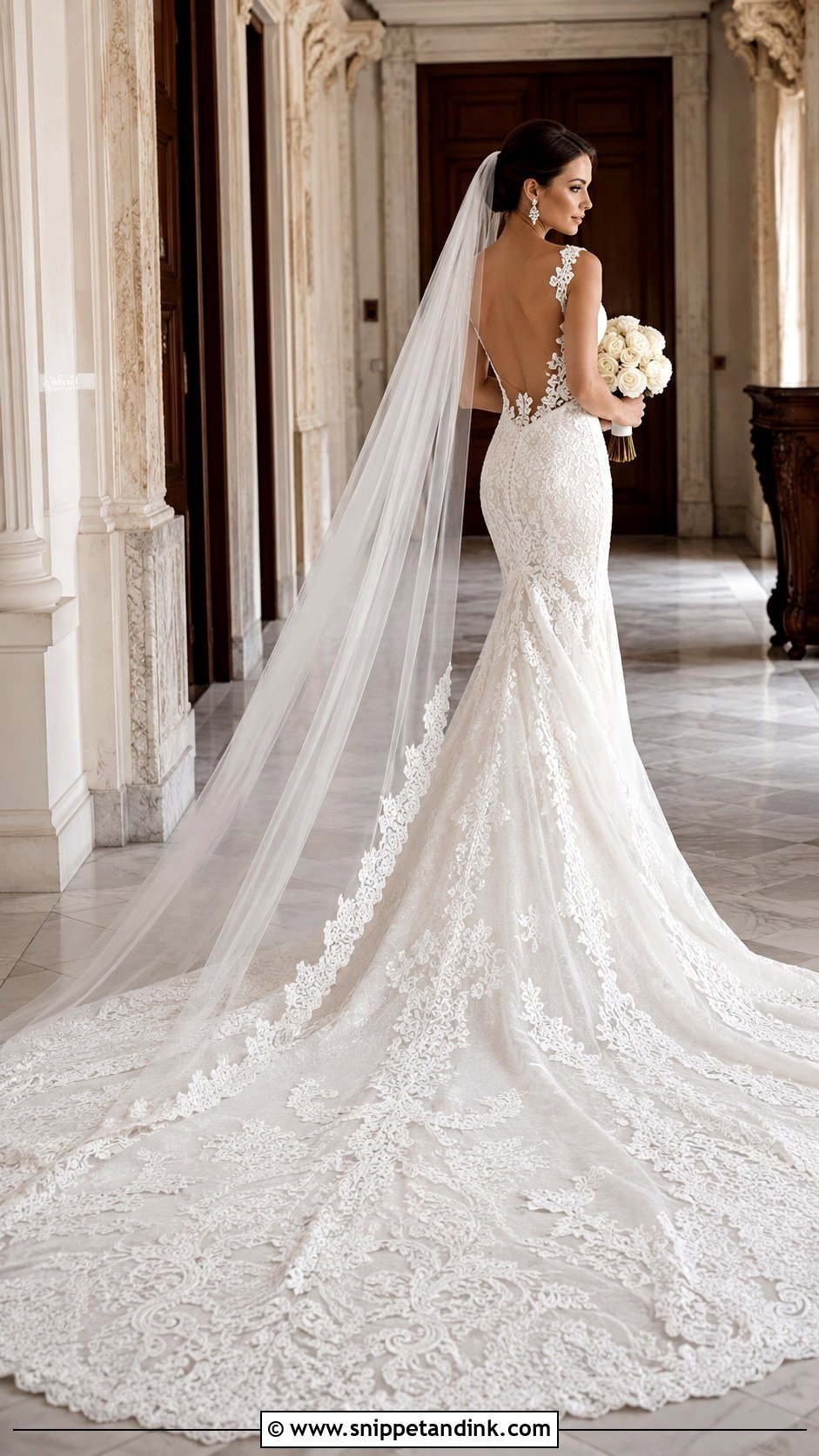
A lace cathedral train is pure ceremony, and it’s also the hardest train to manage after the vows. On a fitted lace gown with a soft flare, floral or vine lace spreads out behind you as you walk, and a sheer veil extending just past the hem frames it. The bustle is the part I plan most carefully here, because lace tears if it’s hooked through the motif rather than the net, so ask your seamstress to anchor every point on a solid area. Crystal studs, ivory closed-toe heels and a smooth chignon keep everything else quiet.
4. Off-Shoulder Satin Wedding Dress
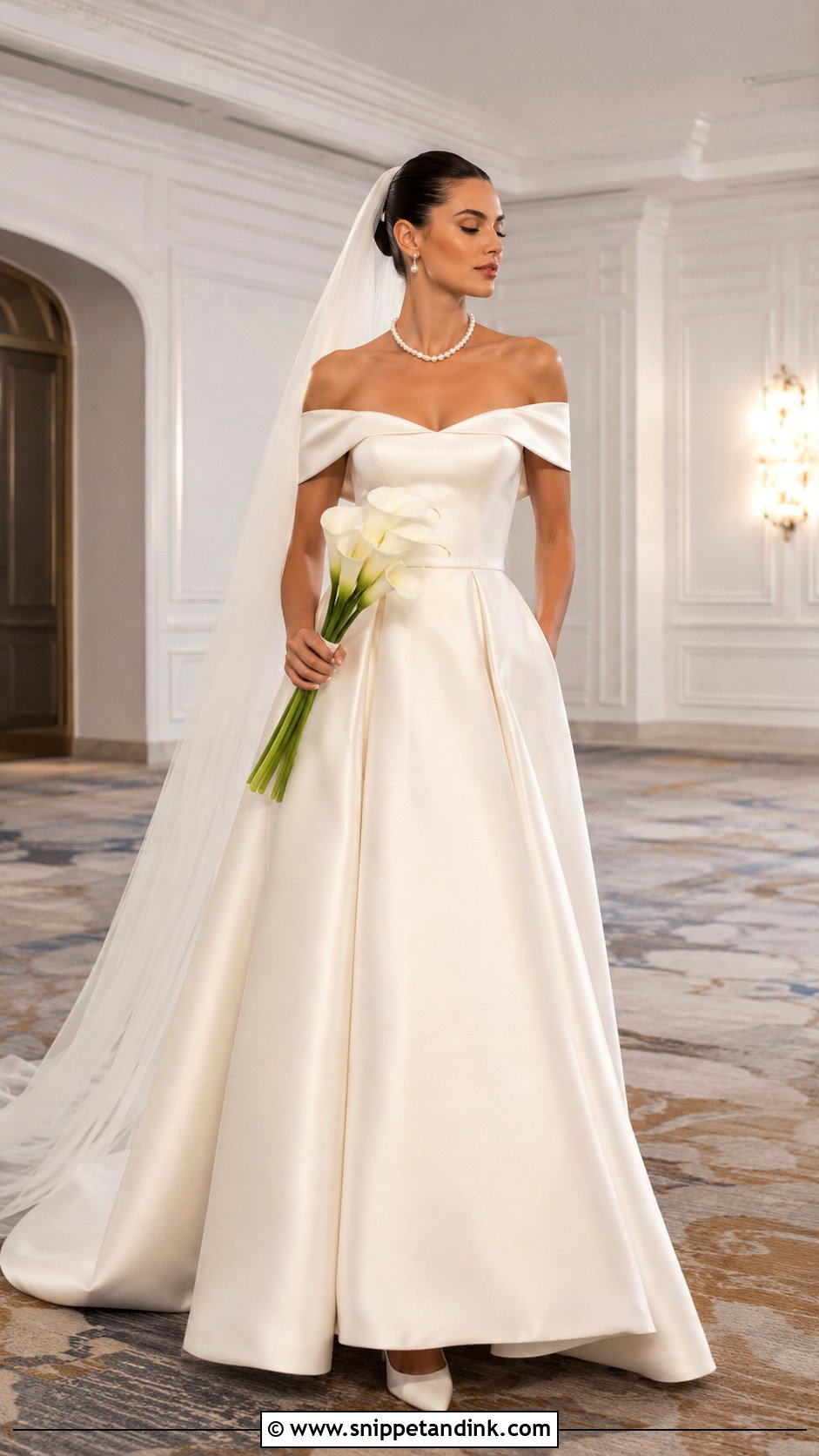
Satin off the shoulder reads royal because the fabric shows every clean line, and that’s also why the fit has to be precise. The sleeves sit on the upper arm, so I check them while the bride hugs and raises a glass; if they cut in, they need easing or the neckline drops all night. Gentle pleating gives the full skirt its volume. A fine pearl necklace and a long plain veil let the satin shine. A centre-parted low bun and calla lilies tied in satin ribbon suit an estate or hotel ballroom.
5. Corset Tulle Wedding Dress
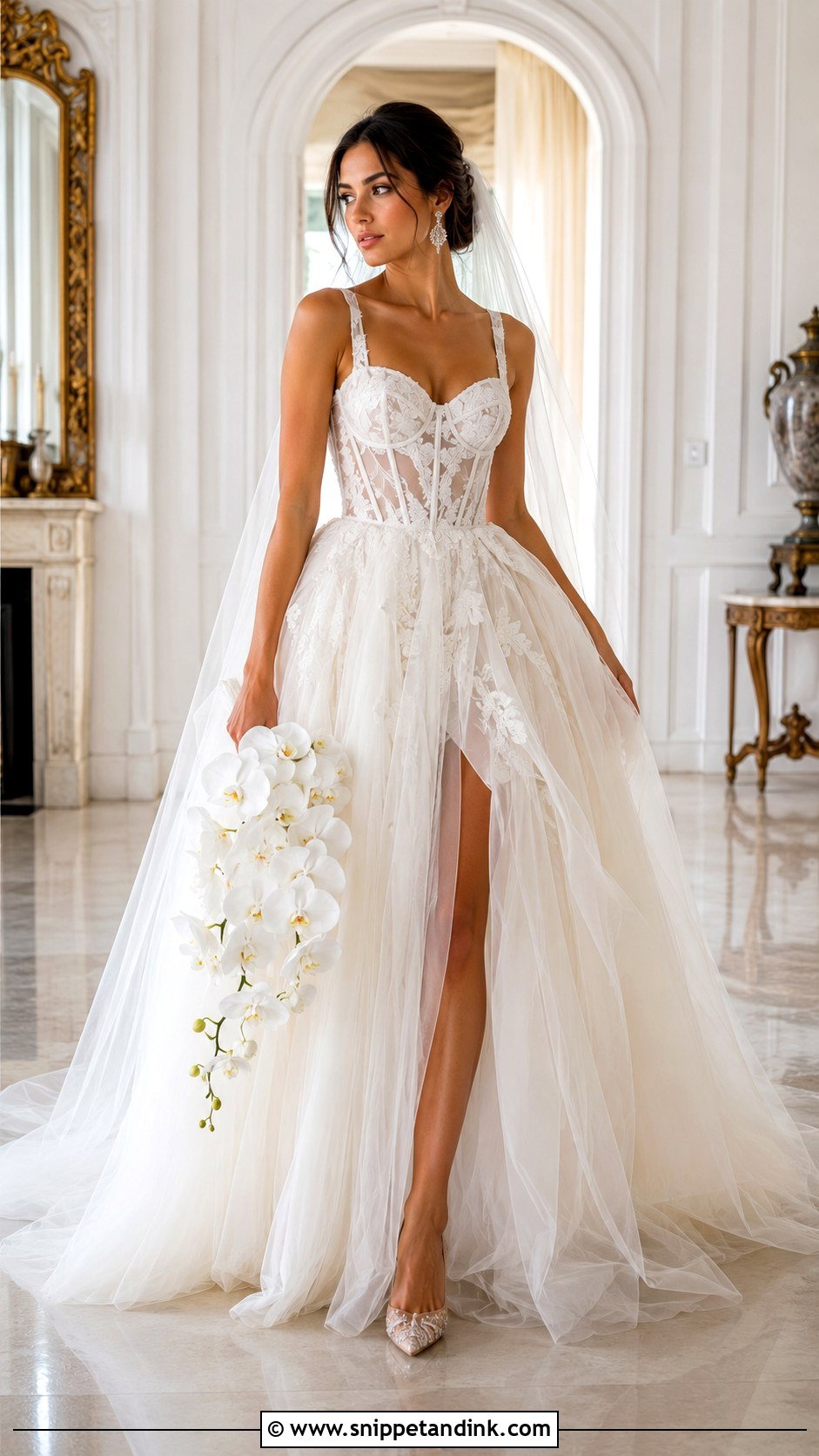
Visible corsetry under layers of soft tulle balances structure with air. A semi-sheer bodice with lace appliqués placed over the seams shows the construction while still giving coverage. The skirt should start at the natural waist and fall in loose layers. You should be able to breathe deeply and sit without the bodice digging in, which is the first thing I test at every fitting. A loose updo with face-framing pieces softens the corset lines, and cascading orchids continue the ethereal mood.
6. Long-Sleeve Lace Wedding Dress
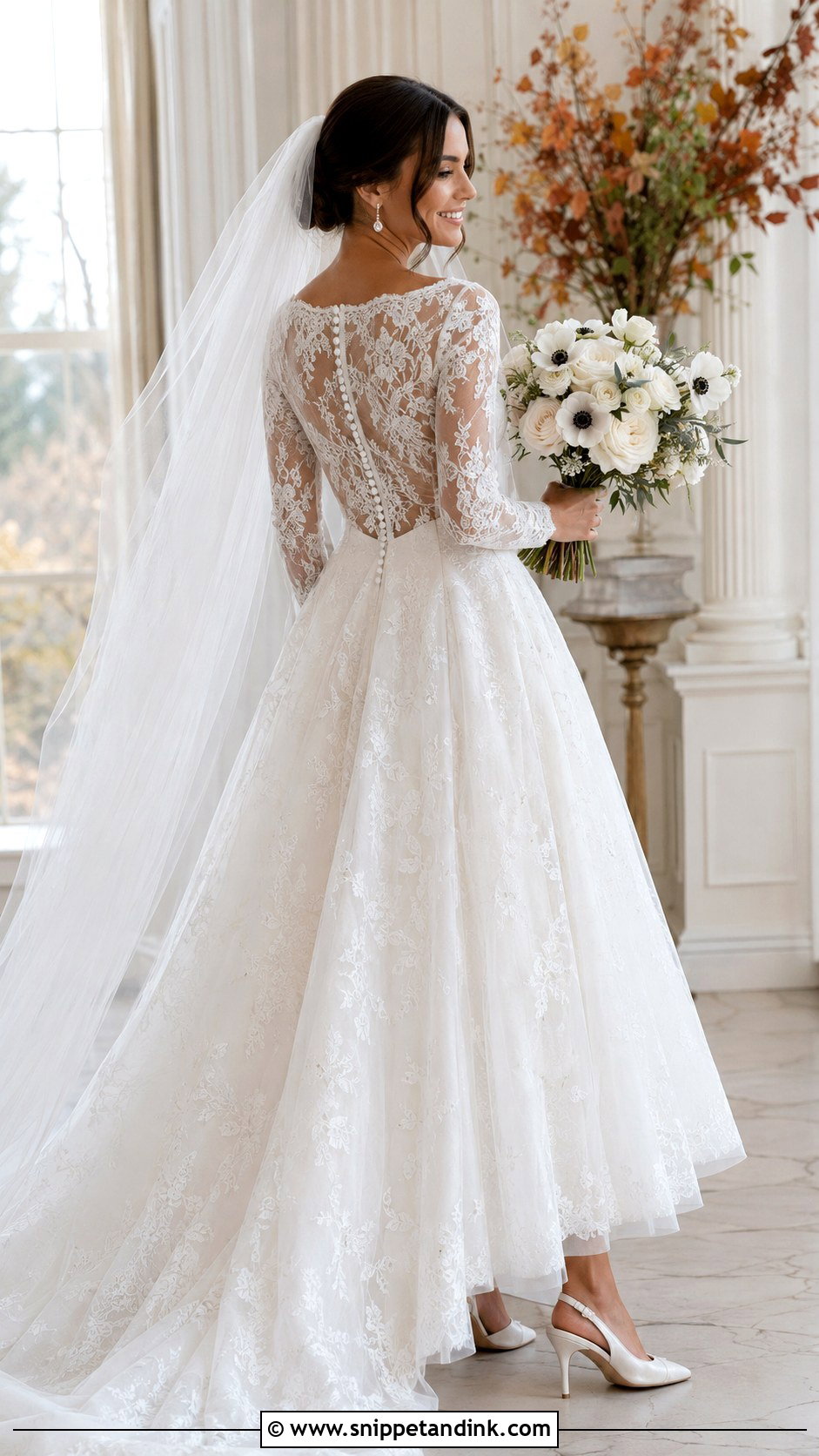
Illusion sleeves with lace motifs that run across the bodice and taper at the wrist give coverage without bulk. A row of covered buttons down the back is the detail people notice during the vows, so I always make sure each one actually fastens rather than sitting over a zip that gapes. An A-line or soft flare balances the sleeves. Fall, winter and early spring suit this gown best, though a breathable lace can manage mild summer weather. Test arm movement before the alterations are finished.
7. Basque Waist Organza Wedding Dress
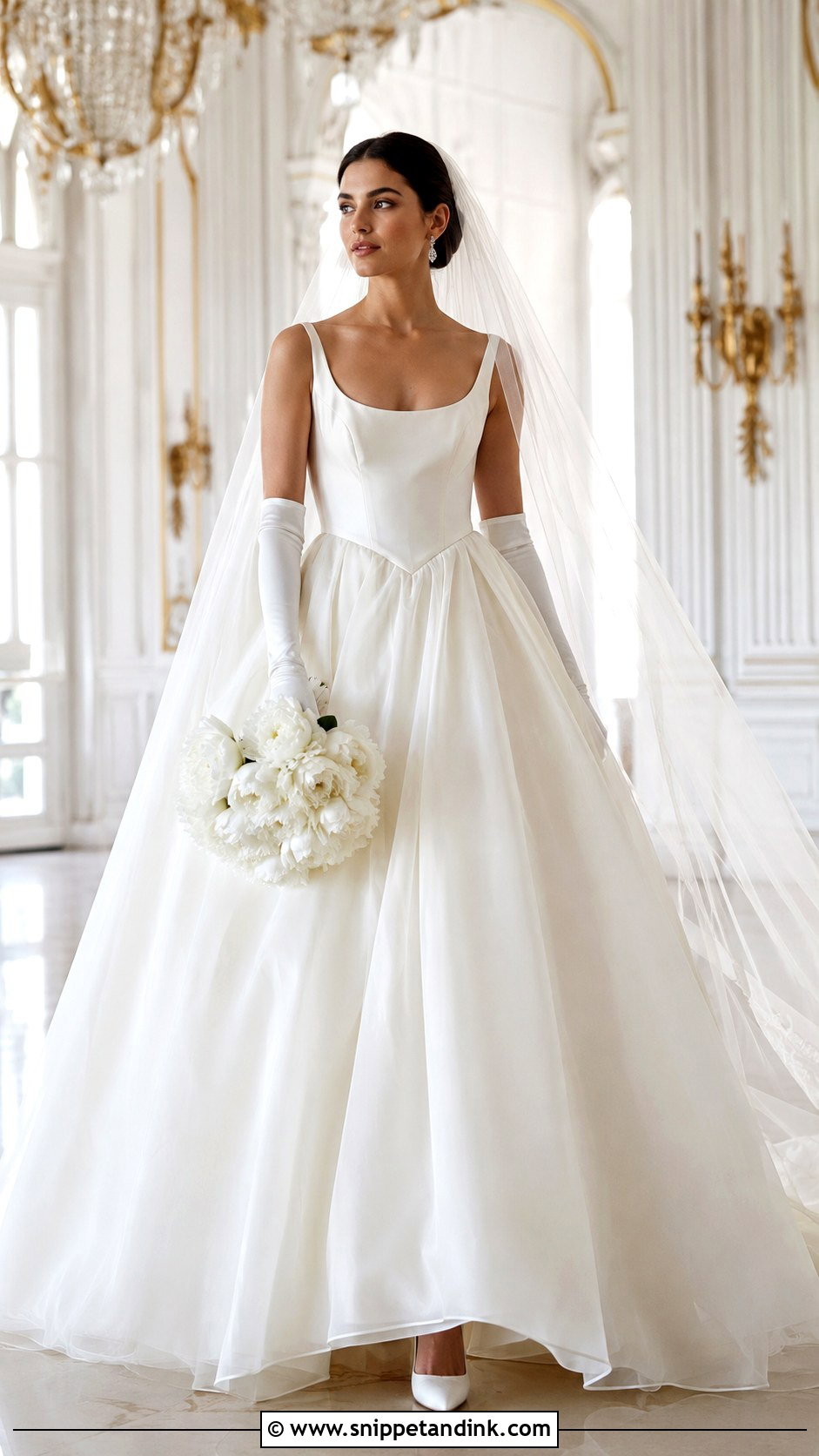
A basque waist dips to a point below the natural waistline, which lengthens the torso and gives instant period character. Light organza holds the volume underneath with less weight than satin. Because the waist is the feature, I’d leave off the necklace and let a scoop or straight neckline frame the bodice cleanly. Elbow-length gloves suit it well, but take them off for the ring exchange, or ask for a glove with a finger opening. A polished bun and white peonies keep the formal mood fresh.
8. Blush Floral Wedding Dress
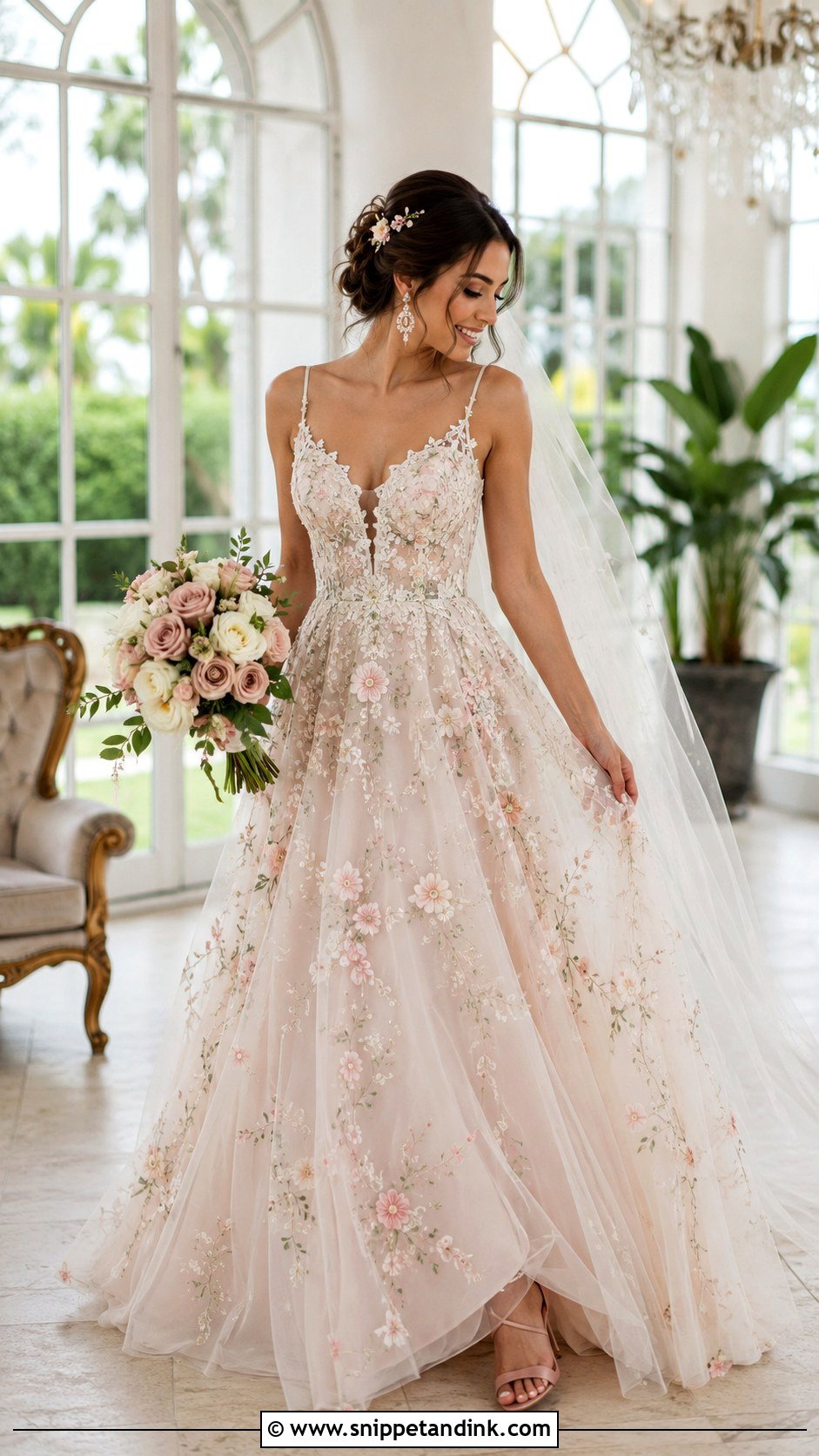
Champagne or pale pink lining beneath ivory tulle makes embroidered flowers stand out with a soft shadow. That’s the version of blush I suggest most, since the colour stays subtle in photos. An A-line with delicate straps suits most settings. Blush tones vary a great deal, so view the fabric by a window and under indoor light before choosing. A loose braided updo with tiny floral pins and cream roses with pale ranunculus support the garden theme quietly.
9. Light Blue Tulle Wedding Dress
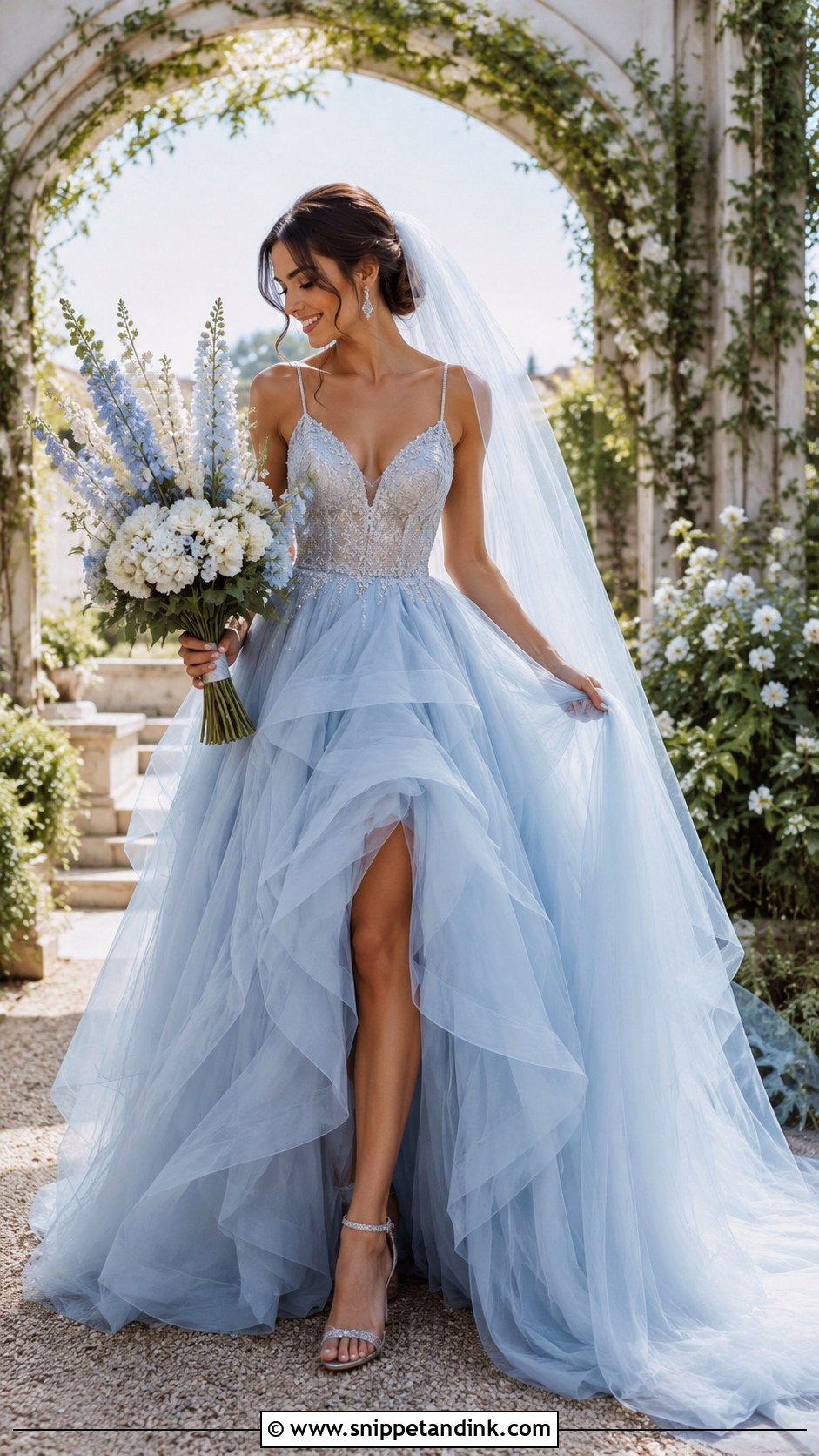
Powder blue is the shade to choose if you want colour that still reads bridal; deeper blues start to look like eveningwear. Silver embroidery on the bodice and a layered tulle skirt catch the light gently. I’d find a veil in a blue-white tone, because pure white beside pale blue can make the dress look grey. Soft waves pinned back and a bouquet of white delphinium and hydrangea connect the palette. If a whole blue gown feels like a leap, put ivory lace over blue tulle.
10. Wedding Dress With Sheer Cape
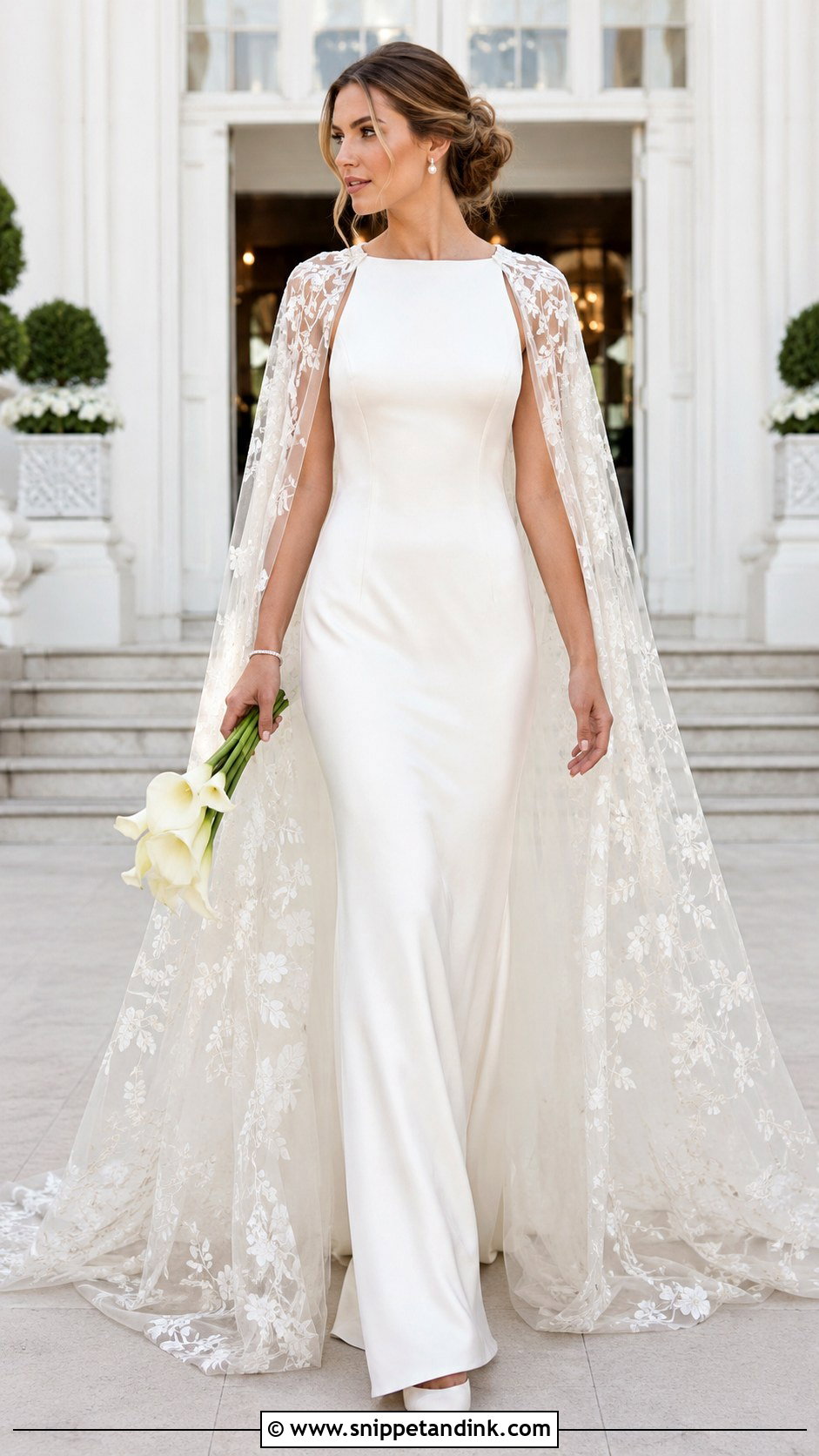
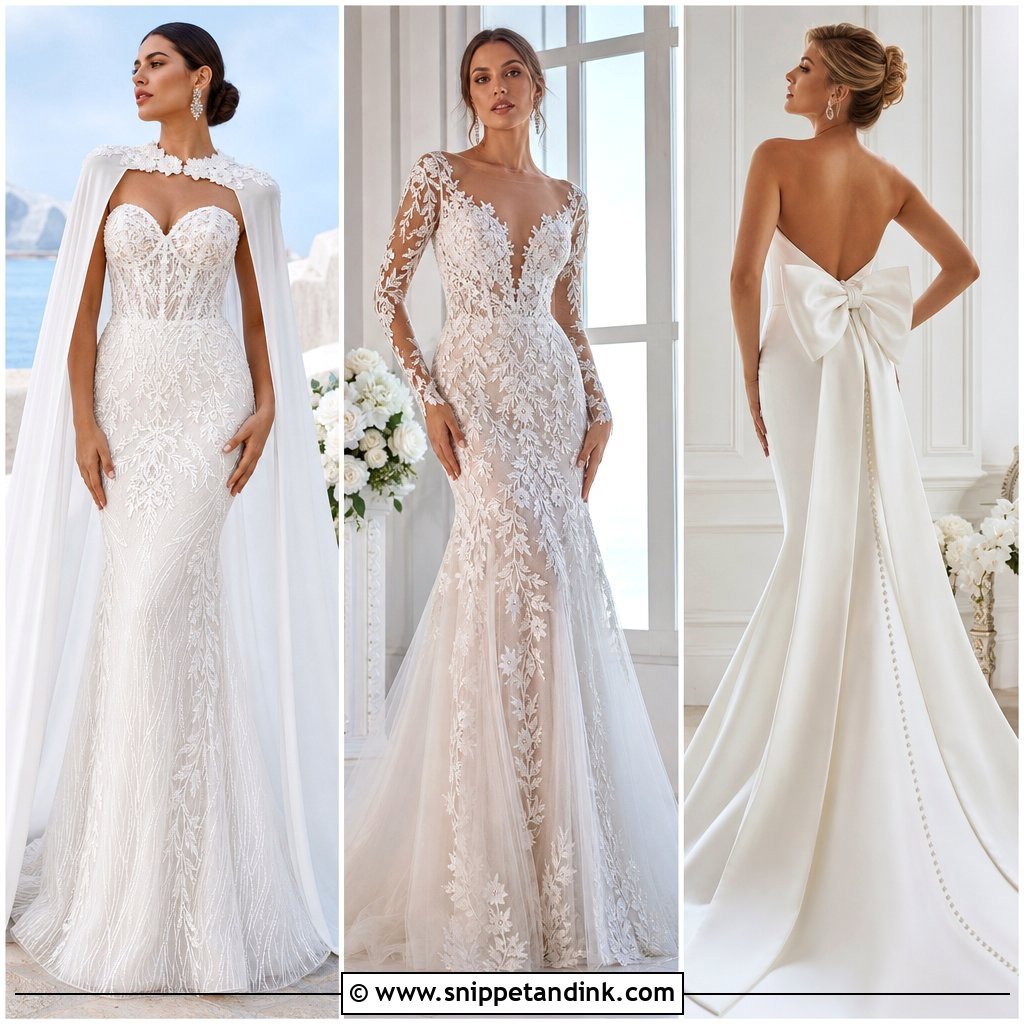
A floor-length tulle cape can take a plain A-line or crepe gown and make it ceremony-ready. Vines, stars, pearls or small flowers embroidered on the cape give the movement a veil usually would. Keep the jewelry to pearl studs, and wear a low twisted bun so the shoulder fastenings stay visible. I test those fastenings carefully during alterations: a cape that pulls at the shoulder seams drags the whole bodice backward. A removable one gives you a lighter reception look.
11. High-Neck Victorian Wedding Dress
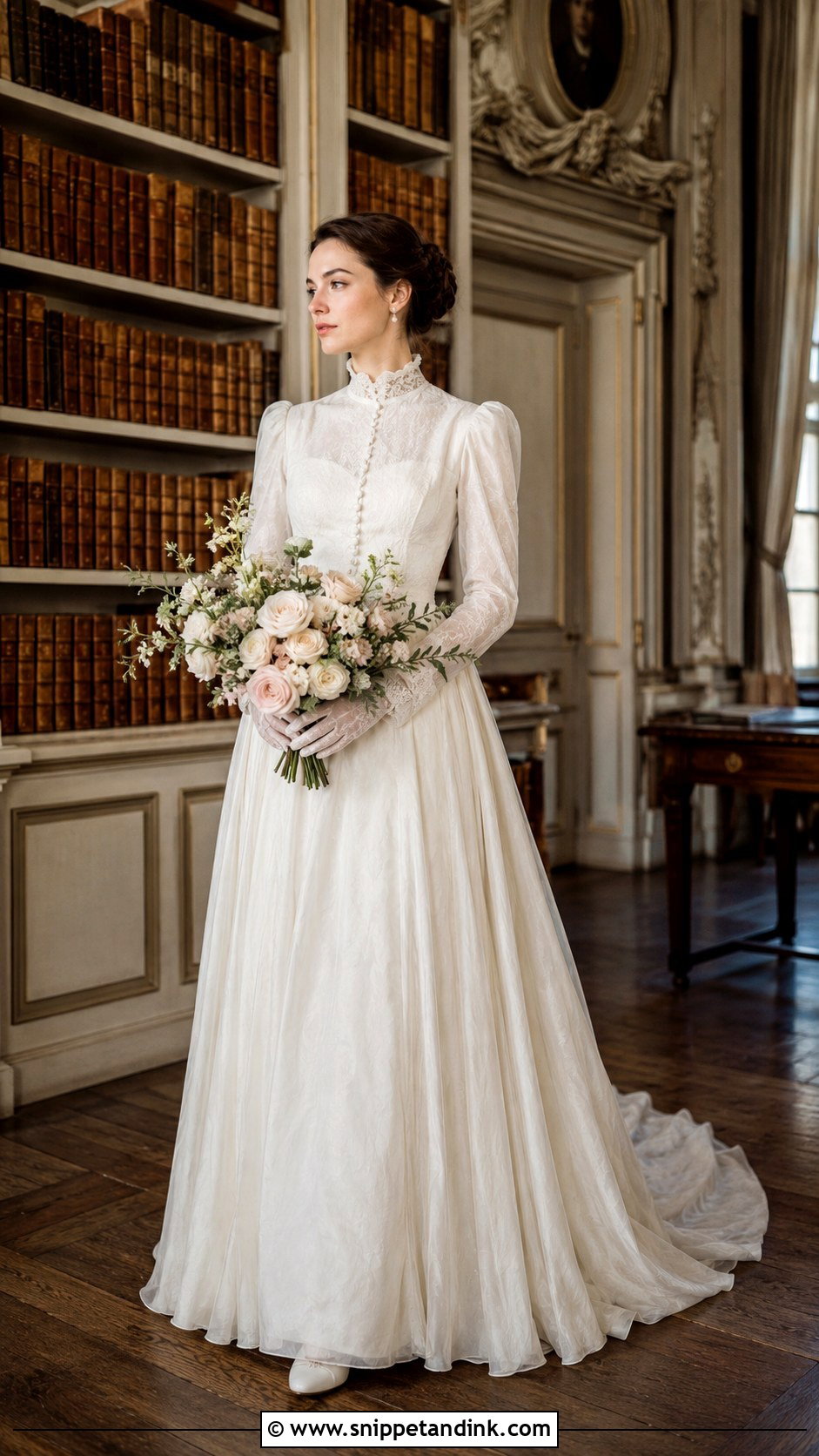
A small standing collar, covered buttons and long or three-quarter sleeves give a Victorian bodice its character, and the collar lace matters more than any other detail. Scratchy lace at the throat becomes unbearable by evening, so I rub it against the inside of the wrist at the appointment. A flowing chiffon or tulle skirt balances the detailed top. Skip the heavy necklace and wear a delicate comb above a gathered low bun. Historic homes, libraries and gardens all suit it.
12. Square-Neck A-Line Wedding Dress
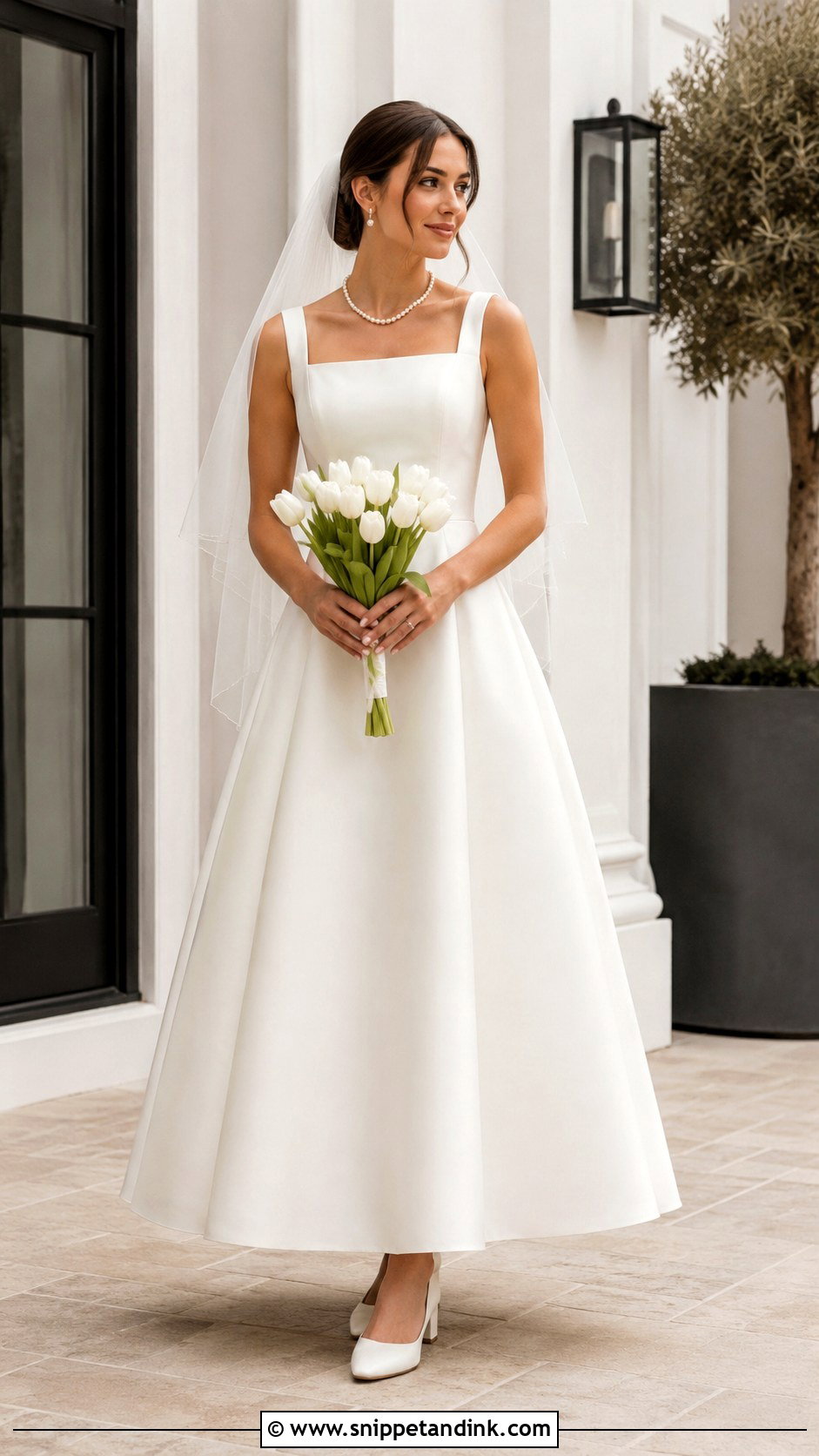
Clean lines and a square neckline need nothing else to look like a princess. Matte satin or mikado with wide straps and a fitted waist holds the A-line skirt’s shape on its own, and hidden pockets drop into the side seams without spoiling it. The open neckline leaves room for a short pearl necklace. Low block heels make this one practical, and a smooth half-up style keeps it fresh. White tulips or tightly packed roses suit its simplicity.
13. Glitter Tulle Wedding Dress
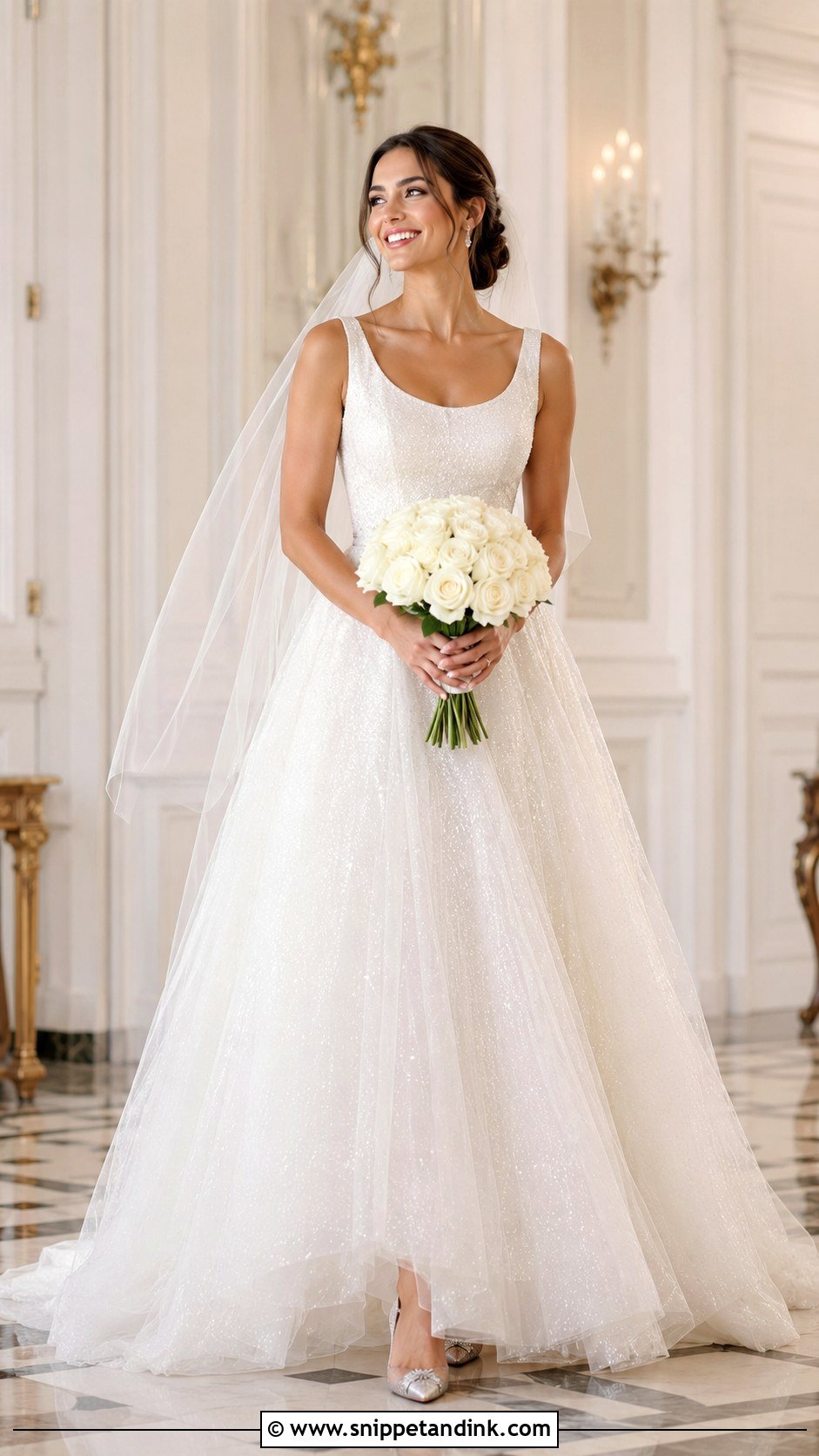
Fine, evenly spread glitter is the only kind I recommend in tulle. Large particles look harsh in photos and transfer onto your partner’s suit, the car seat and everyone you hug. A V or scoop bodice over a full A-line skirt gives the shimmer a classic shape. Keep the veil plain sheer so it doesn’t compete. Check the dress under daylight and at the venue’s lighting if you can; sparkle that’s subtle in a showroom can turn loud under spotlights.
14. Ruffled Organza Wedding Dress
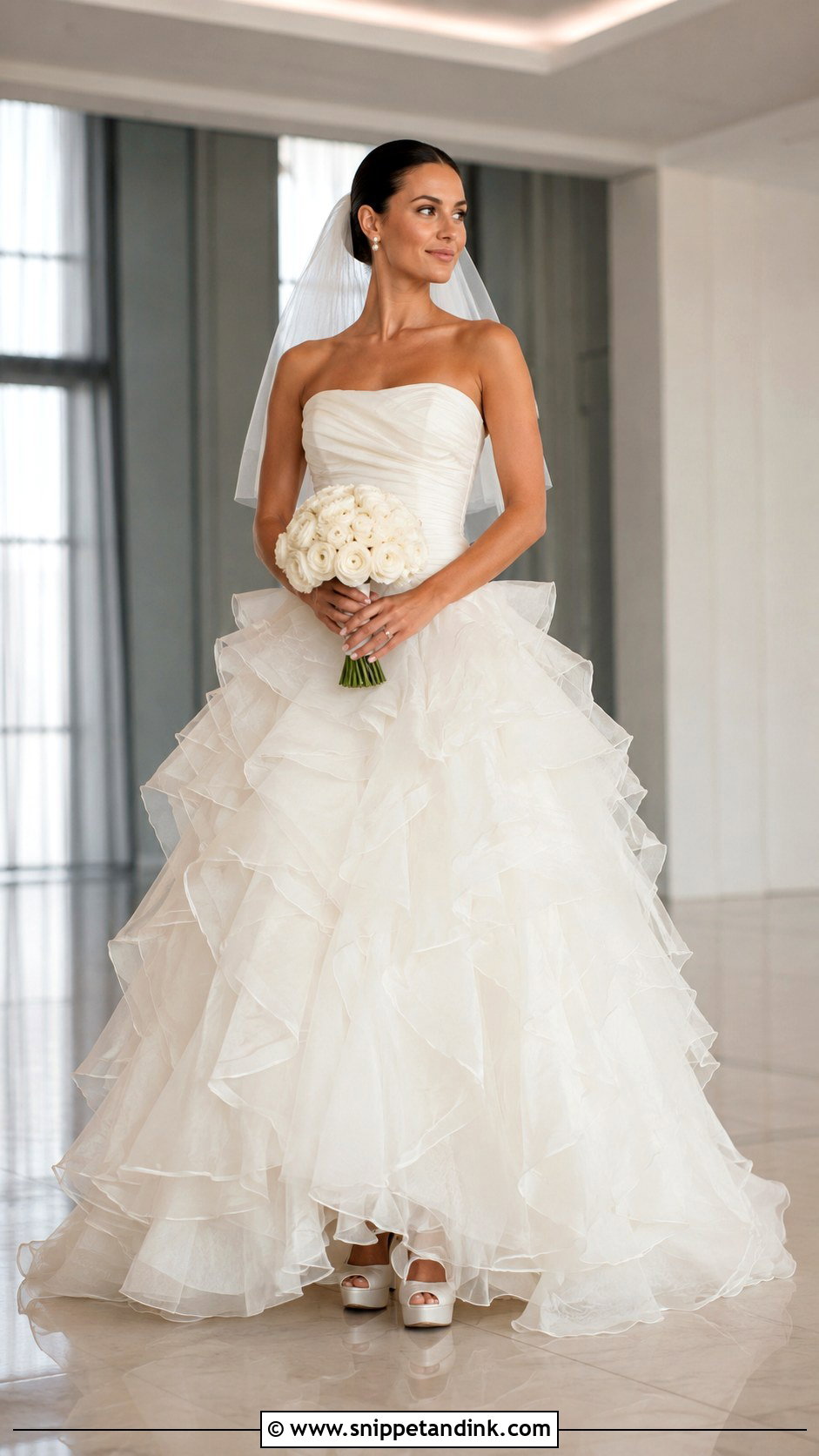
Ruffled organza gives a fairy-tale wedding outfit playful volume, and where the ruffles begin changes everything. Starting below the hips, they lengthen you; starting at the waist, they give full princess width. Keep the bodice simple so the skirt leads, and end the veil above the biggest ruffles so the two don’t fight. This skirt takes up real space, so practise sitting and turning in it. A carefully placed bustle protects the tiers once dancing starts.
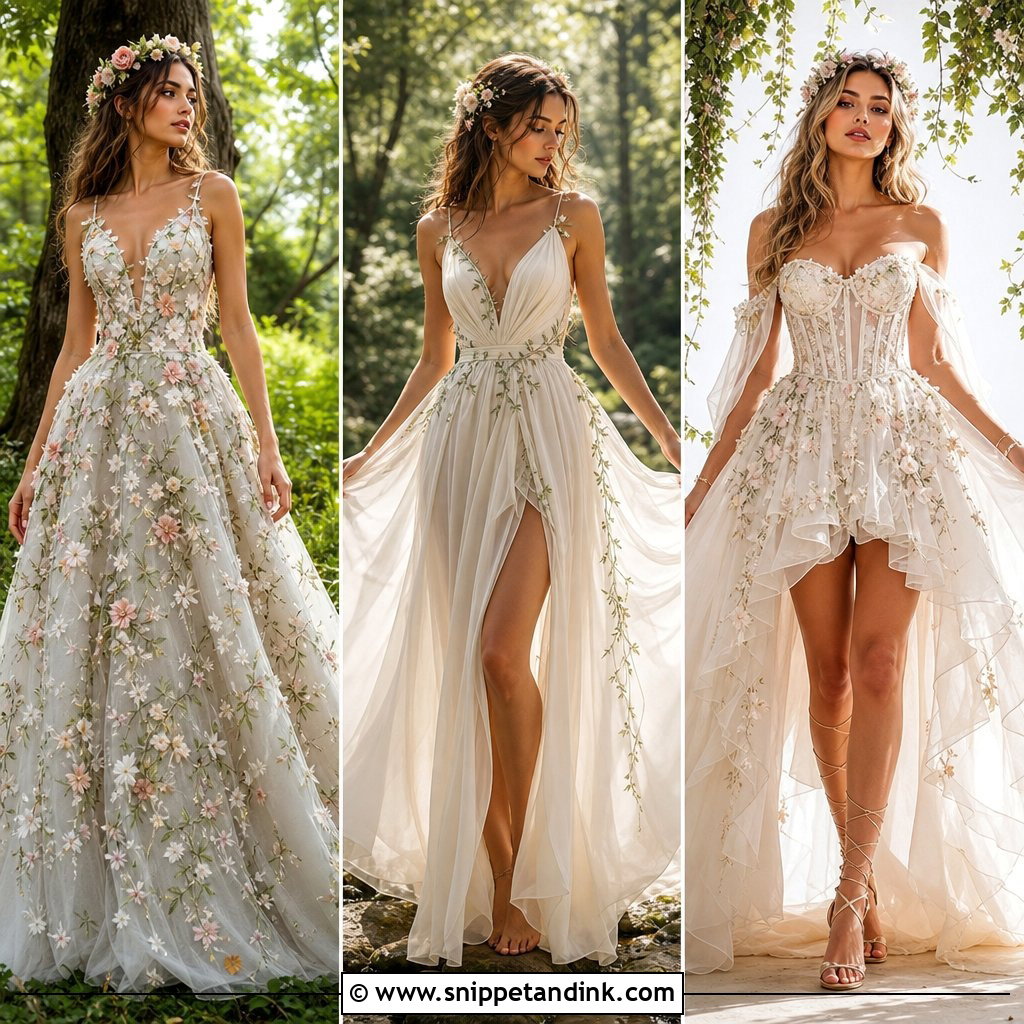
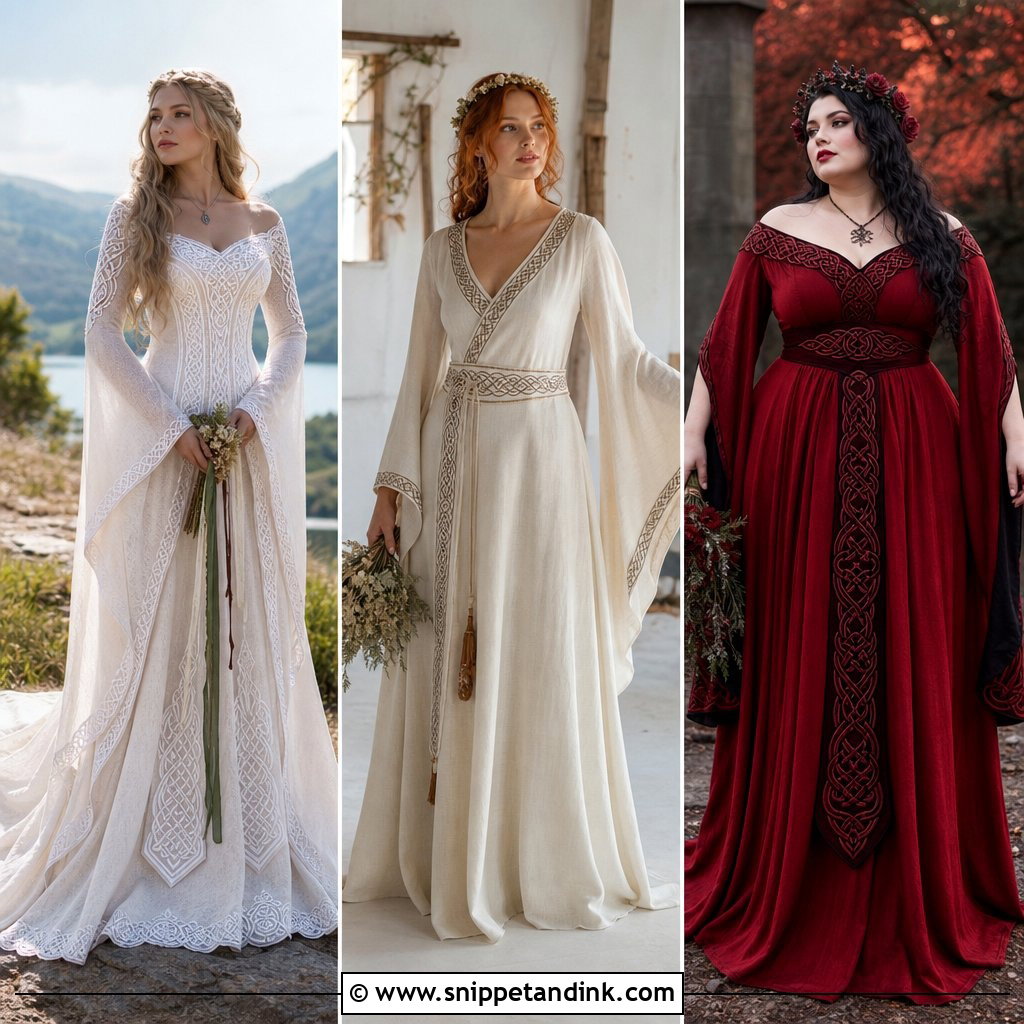
15. Woodland Floral Wedding Dress
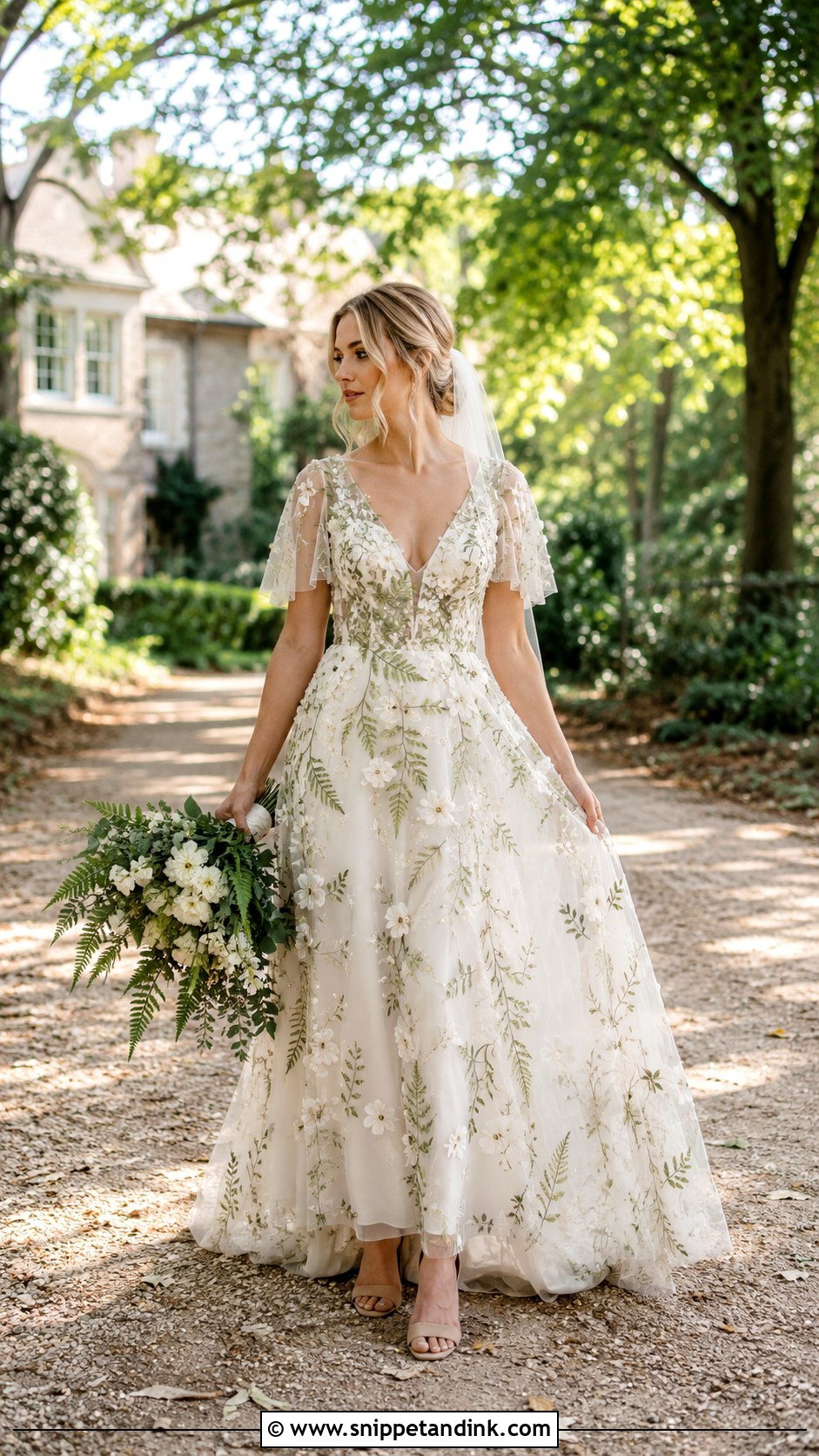
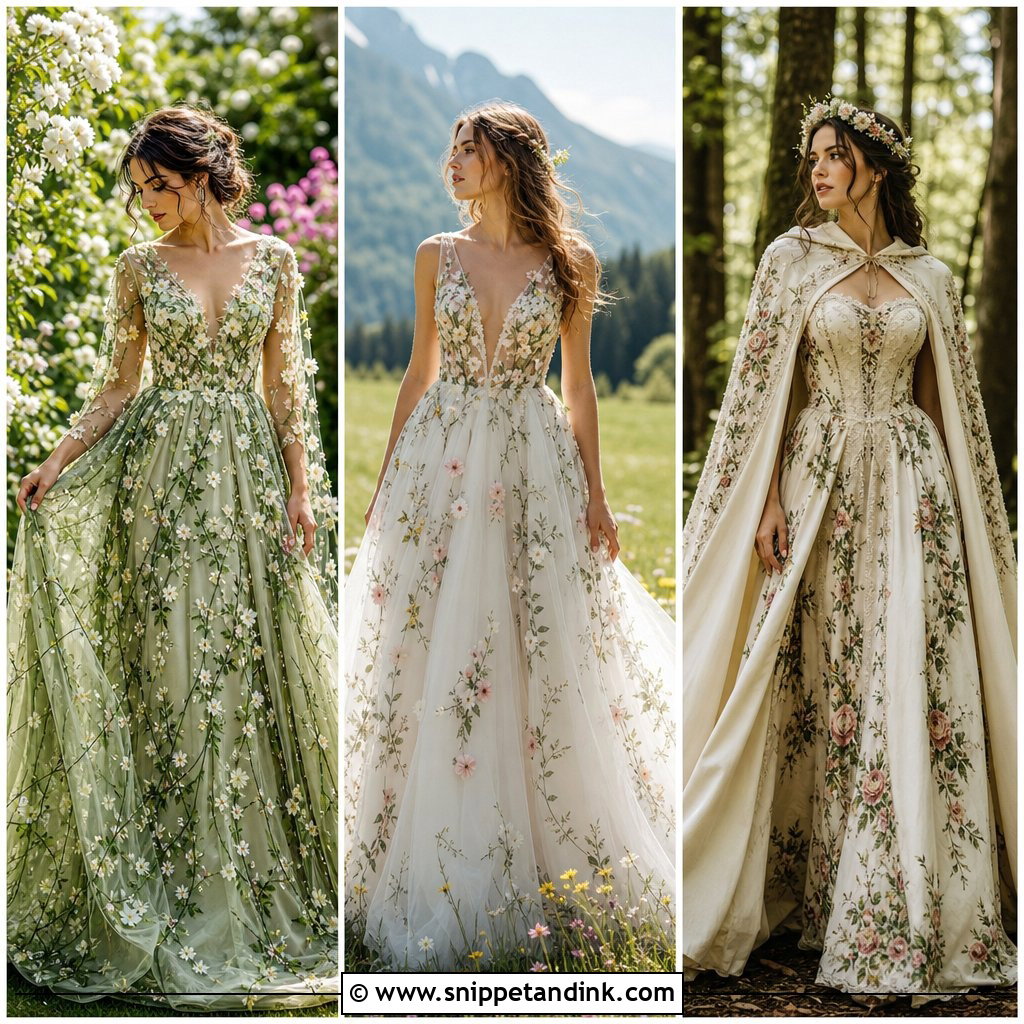
Embroidered leaves, vines and small three-dimensional flowers on an ivory A-line set the woodland tone without any props. Flutter sleeves or soft off-shoulder straps keep the look organic and let you move. I’d hold back on rustic accessories; refined details are what keep it bridal rather than festival. A light tulle veil under a textured braided updo and a bouquet of ferns suit the palette. On grass, wider heels or heel protectors stop you sinking at every step.
16. Mermaid Fairytale Wedding Dress
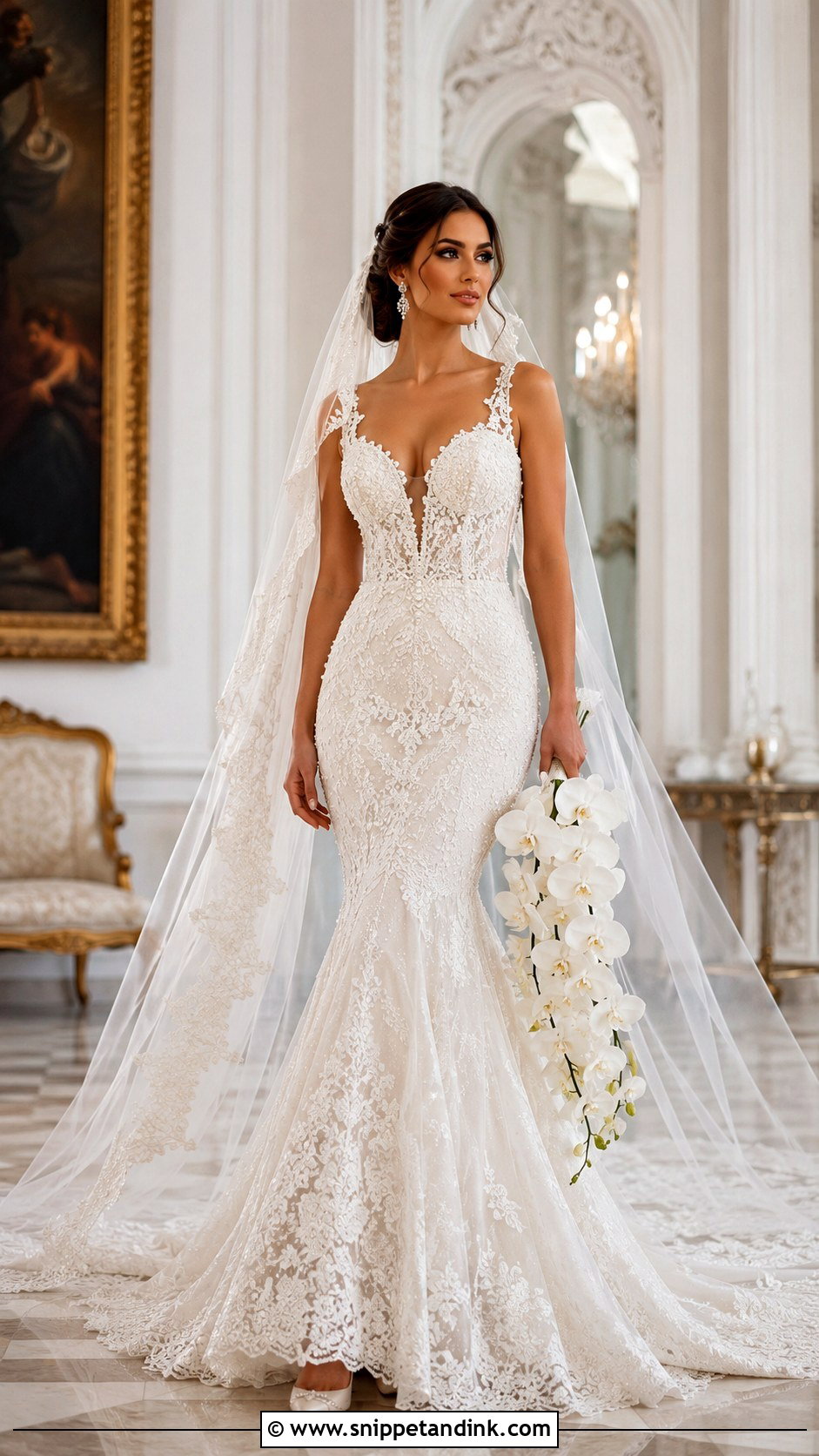
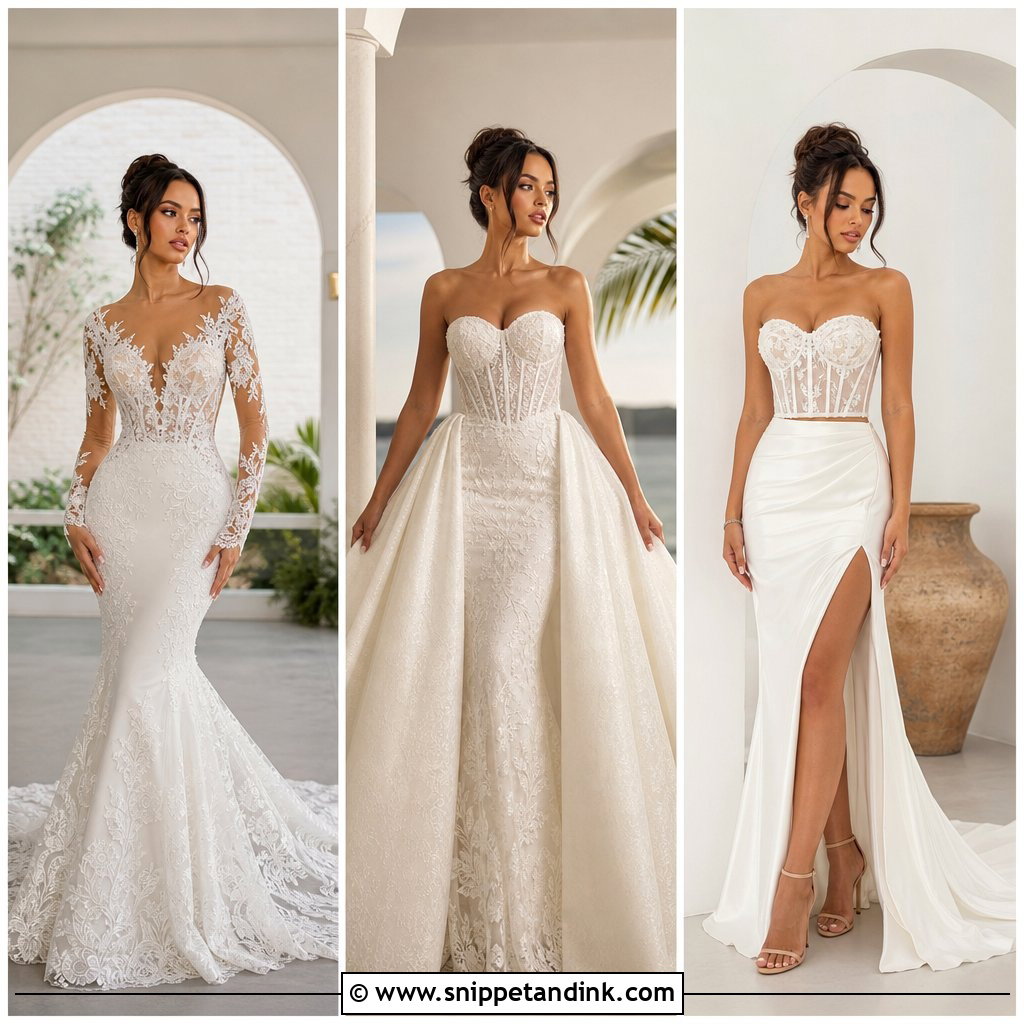
A mermaid gown proves a fairy tale dress can work without a full skirt. It follows the body and flares around the knee, with lace appliqués, pearl beading or a little shimmer softening the structure. During fittings, practise sitting and taking full steps, since the flare placement controls how far you can stride. A stretch lining and strong internal support make a real difference over a long day. A long, narrow bouquet of orchids echoes the elongated line, and Hollywood waves suit the glamour.
17. Tea-Length Fairytale Wedding Dress
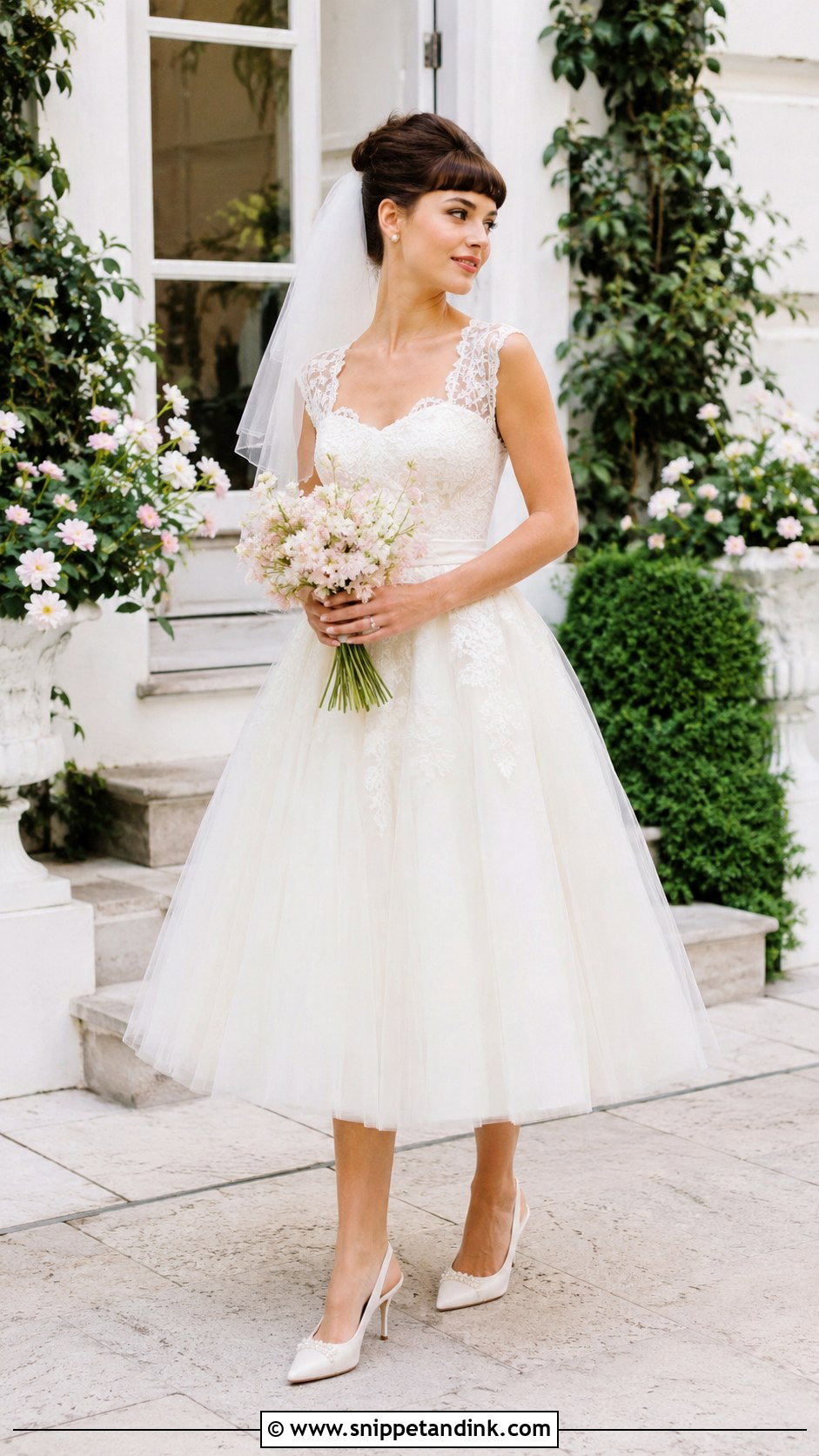
Tea length has a lighter, vintage spirit. A structured bodice with a defined waist and a full skirt ending between knee and ankle moves easily, in tulle, floral lace or smooth satin. The shoes are now part of the outfit, so I’d treat pearl-trimmed pumps or satin slingbacks as a feature, not an afterthought. A short veil, pearl earrings and a curled bob or low bun all work. It’s a sensible shape for a courthouse ceremony or a dance-heavy reception.
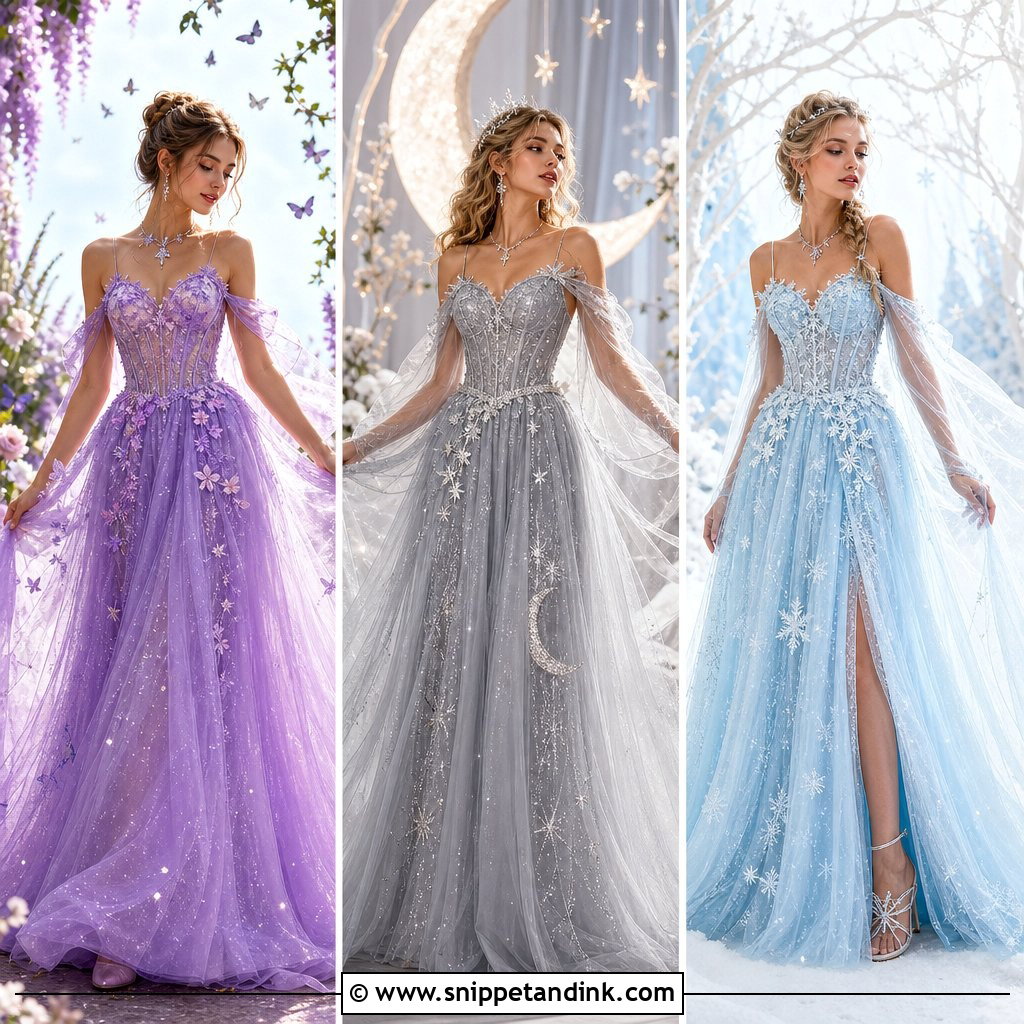
18. Celestial Star Wedding Dress
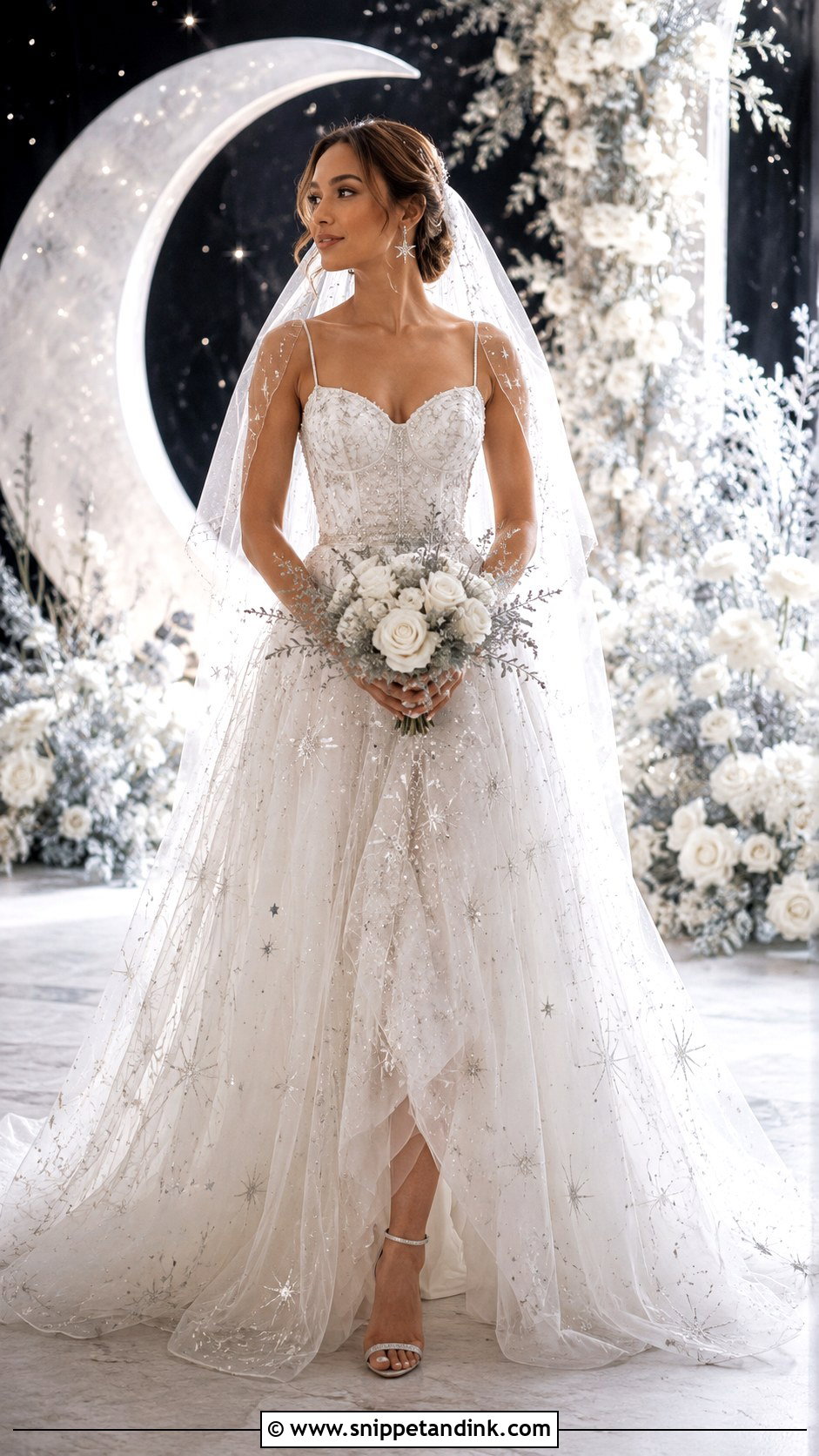
Embroidered stars, moons, and scattered crystals work best when they’re small and spaced out. Large graphics read as a print. A sheer ivory or pale silver overlay over a lined, supportive bodice gives depth. With the theme already in the fabric, I’d keep accessories to one celestial note, perhaps a slim silver headband, and let the veil carry only a few matching crystals. An all-white bouquet with dusty miller adds a quiet silvery touch.
19. Regal Mikado Wedding Dress
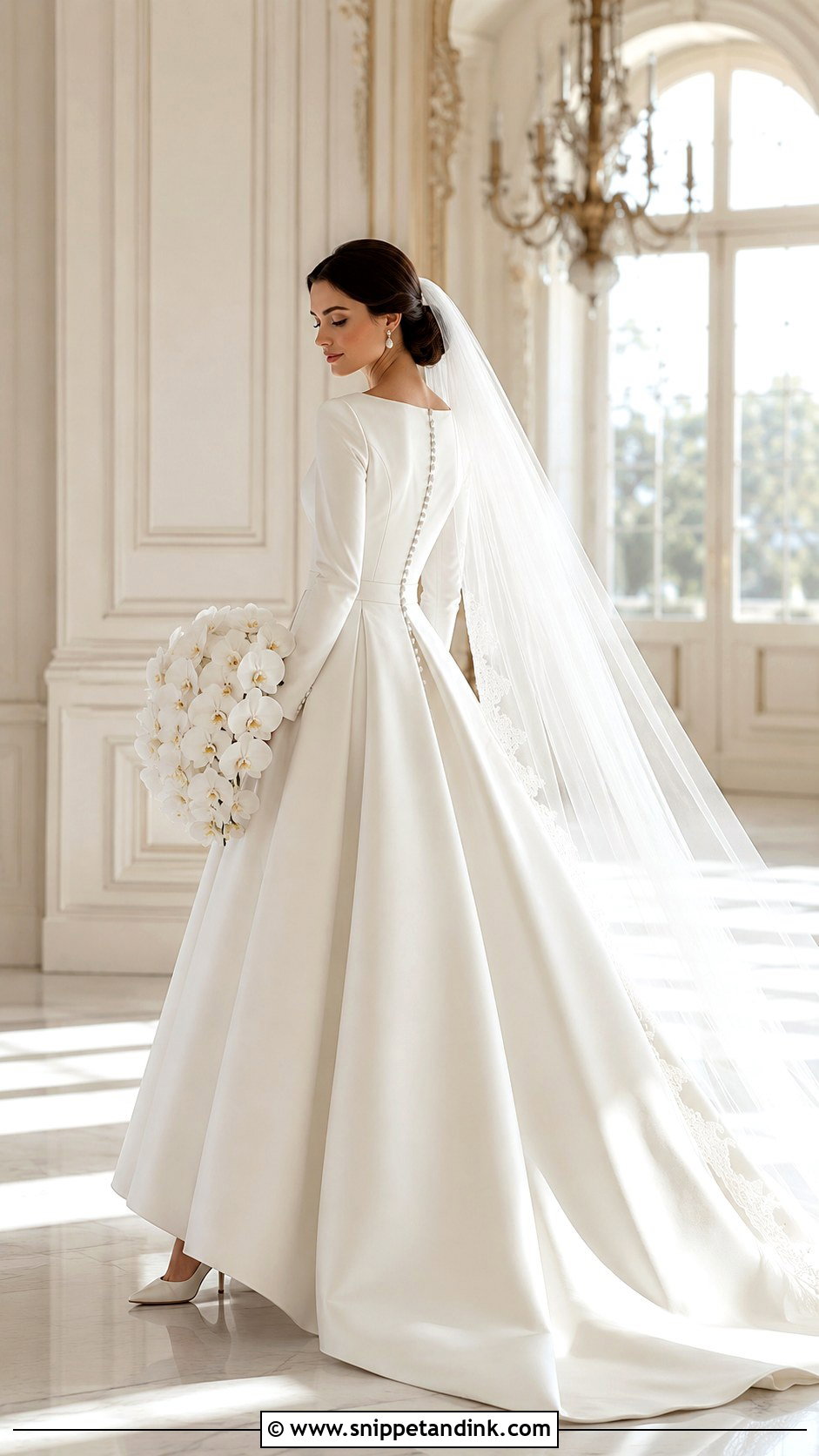
Mikado holds wide pleats and a sculpted ball gown shape without any lace or beading, which is why it suits brides who love drama but dislike fuss. A bateau, scoop or strapless neckline keeps it classic, with covered buttons down the back. The trade-off is warmth: mikado is firm and doesn’t breathe much, so check that the lining does and that the skirt gives you room to walk, sit and dance. A cathedral veil, pearl earrings and a neat chignon complete it.

20. Simple Fairytale Wedding Dress
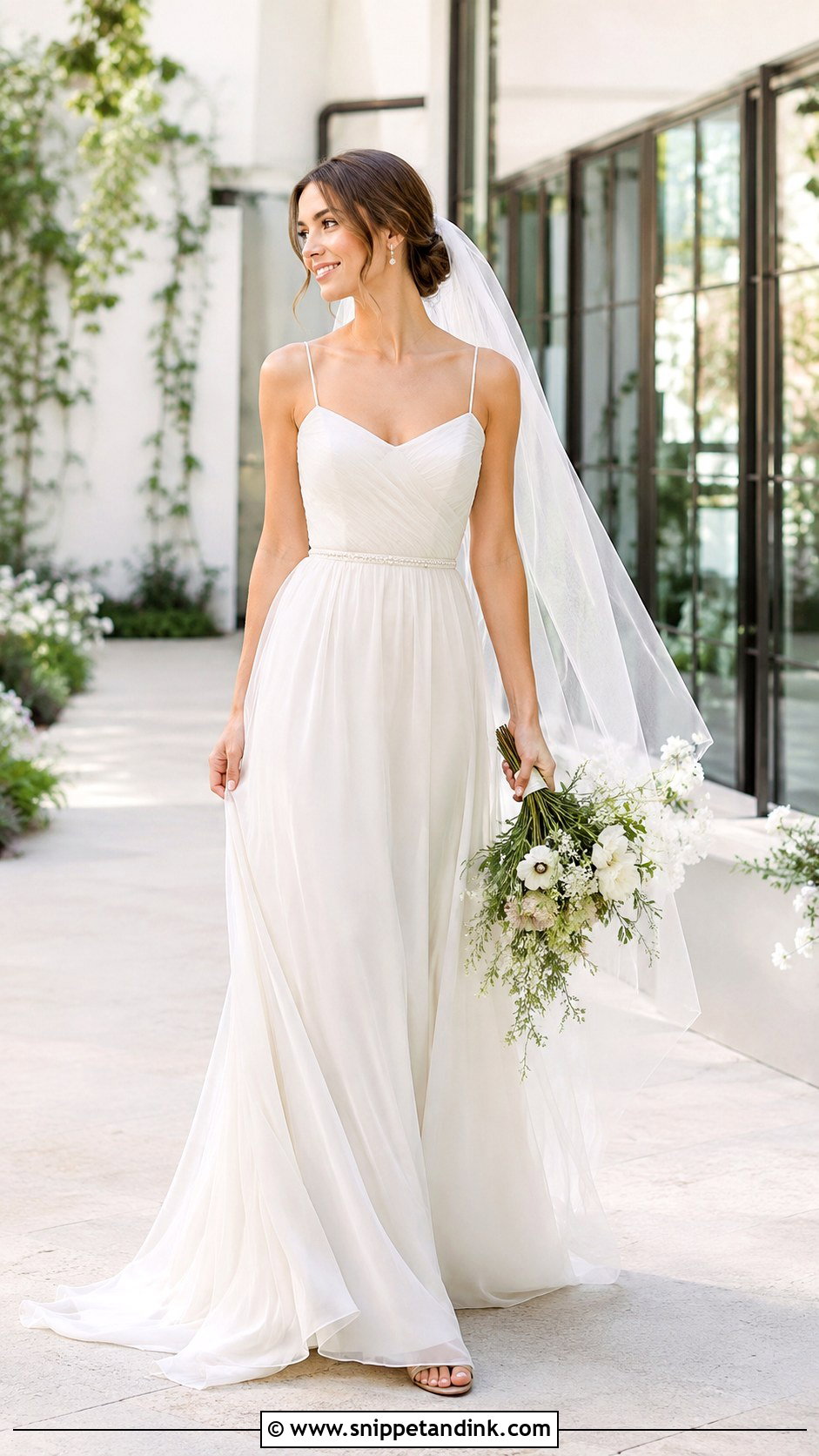
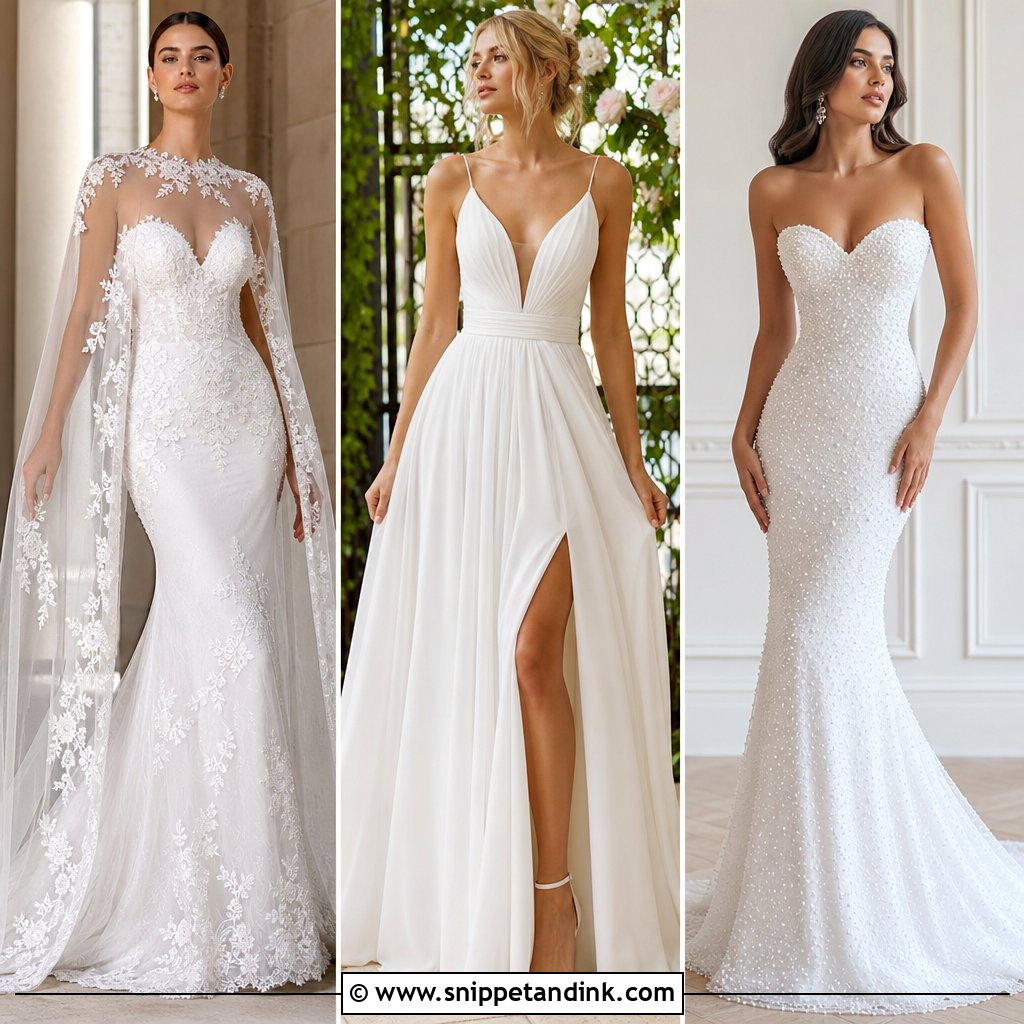
Flowing chiffon or silk in an A-line with a softly fitted bodice can carry the whole mood with very little decoration. A narrow sash or a row of pearl buttons adds just enough detail. This shape adapts to beaches, estates and modern rooms, which makes it a good fit for a small wedding. With so little embellishment, fabric quality and tailoring show immediately, so put the budget there. It should skim the body and move freely rather than cling.
Rain, Mud and Spilled Wine on a Fairytale Gown
Something always happens to the dress on the day, and it’s rarely a disaster if someone knows what to do. I hand the maid of honour a small kit and a few rules before the ceremony.
- Blot, never rub. Rubbing pushes a stain deeper and roughs up satin and tulle. Press with a clean white cloth and leave the real treatment to a specialist cleaner.
- Water on satin can leave a ring as it dries, so in rain keep a large clear umbrella and a dry towel in the car, and lift the skirt rather than let it trail.
- Muddy tulle is easier left to dry; the dirt often brushes off once it’s no longer wet.
- A stick of white chalk or a little bridal cover powder hides small marks on ivory for photos.
- Pack spare safety pins, a mini sewing kit with ivory thread and a few clear elastic bands for a broken bustle loop.
Note every mark when you take the gown off, then mention each one when it goes for cleaning. Stains that are named early are far easier to lift.
Your Version of a Fairy Tale, Not Someone Else’s
The fairy tale look you’ll remember is the one that sounds like you and still lets you relax. From princess ball gowns and celestial tulle to simple chiffon and vintage tea length, start with your venue, season and how much you’ll move, then let the neckline, waist and fabric do the narrowing. Add the veil, jewelry, shoes and flowers last, so they support the gown. And trust the dress that makes you stand a little taller when you see it.
You'll Like These Ideas:





Leave a Reply