
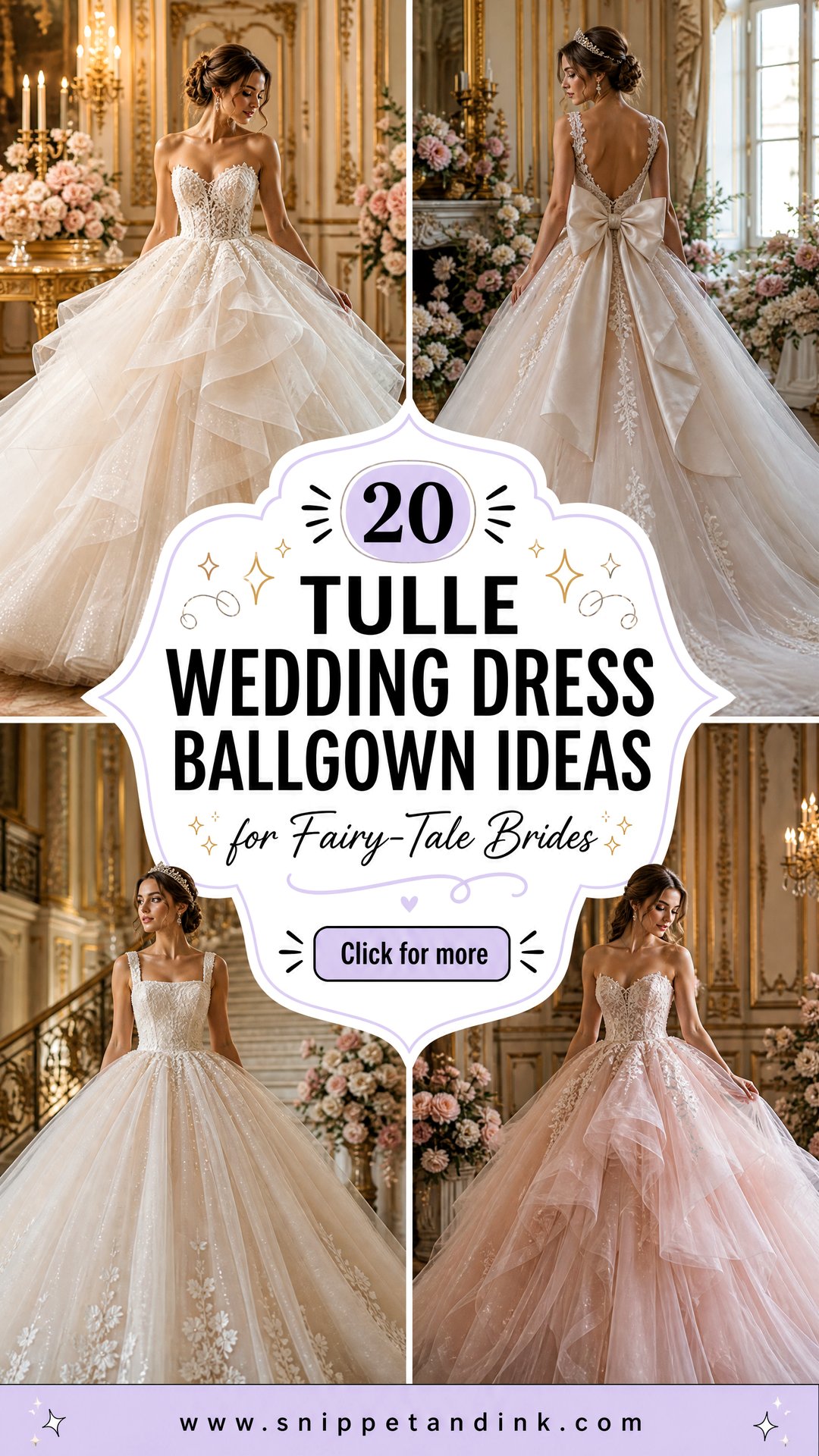
Nothing fills a doorway like a tulle ballgown. The fitted bodice marks the waist and the layers below give volume without the weight of satin or mikado, which is why tulle is the fabric I suggest when a bride wants the full skirt but dreads carrying it. The shape suits ballrooms and gardens alike; the neckline, train and decoration decide which. Below are twenty versions, from corset bodices to dimensional flowers, glitter, long trains and blush, each with the accessories I’d pair and the one fitting detail that makes or breaks that particular gown.
A Ballgown Calendar, From First Appointment to Final Pressing
Ballgowns take longer than most brides expect, because the skirt and bodice are usually made to order and then altered by hand. Timings vary a lot between designers and seamstresses, so treat these as a rough shape and confirm the real dates with your shop.
- Around nine to twelve months out: start trying on. Many made-to-order gowns need several months to arrive, and some designers need longer.
- When you order: ask for the expected delivery date in writing and what happens if it slips.
- Roughly two to three months out: first fitting. Bring the shoes and underwear you’ll wear on the day.
- Second fitting: the hem, waist and bustle are set. This is where the skirt’s balance is decided.
- Two to three weeks out: final fitting, with your helper there to learn the fastenings and bustle.
- The week of the wedding: collect the gown pressed and steamed, and hang it at once.
A tighter timeline isn’t hopeless. Buying off the rack or a sample gown can cut months off, though you’ll have less choice of size and you’ll rely more on alterations.
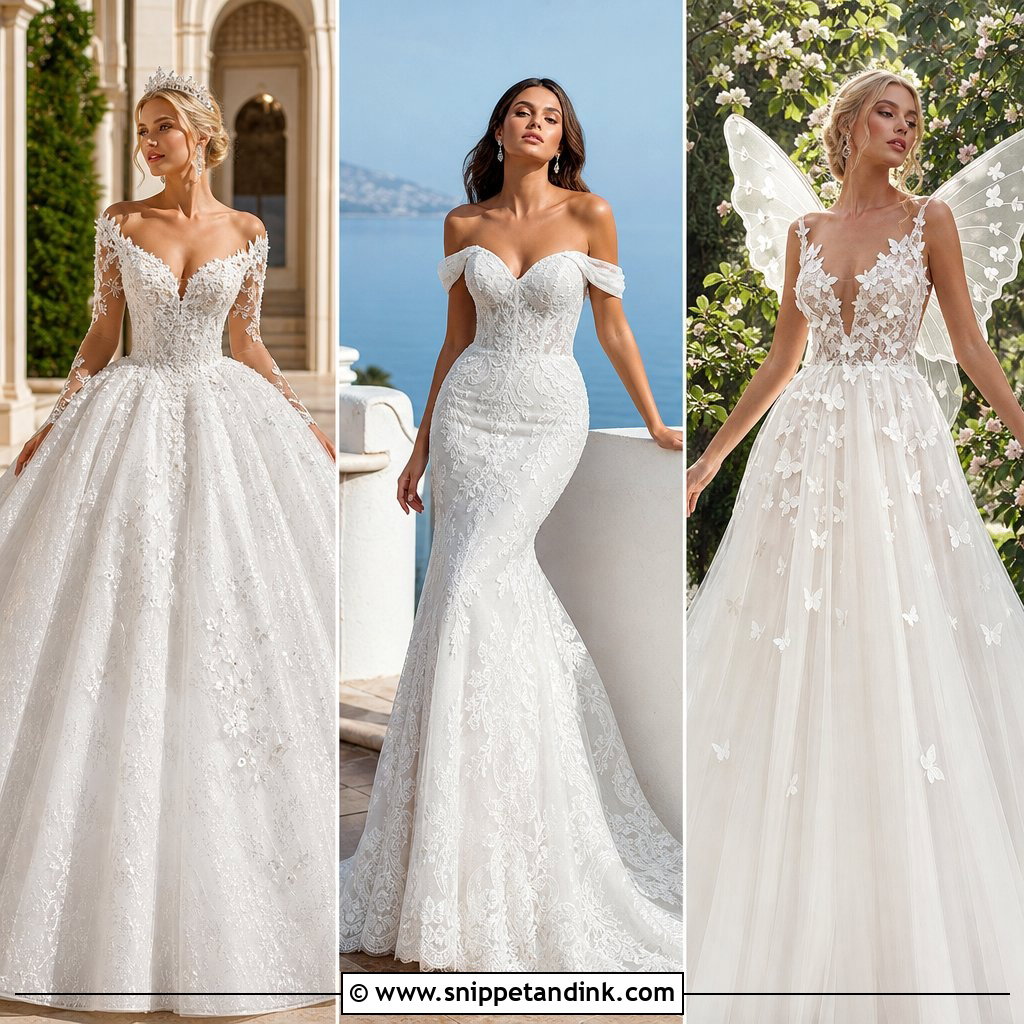
1. Strapless Sweetheart Tulle Wedding Dress Ballgown
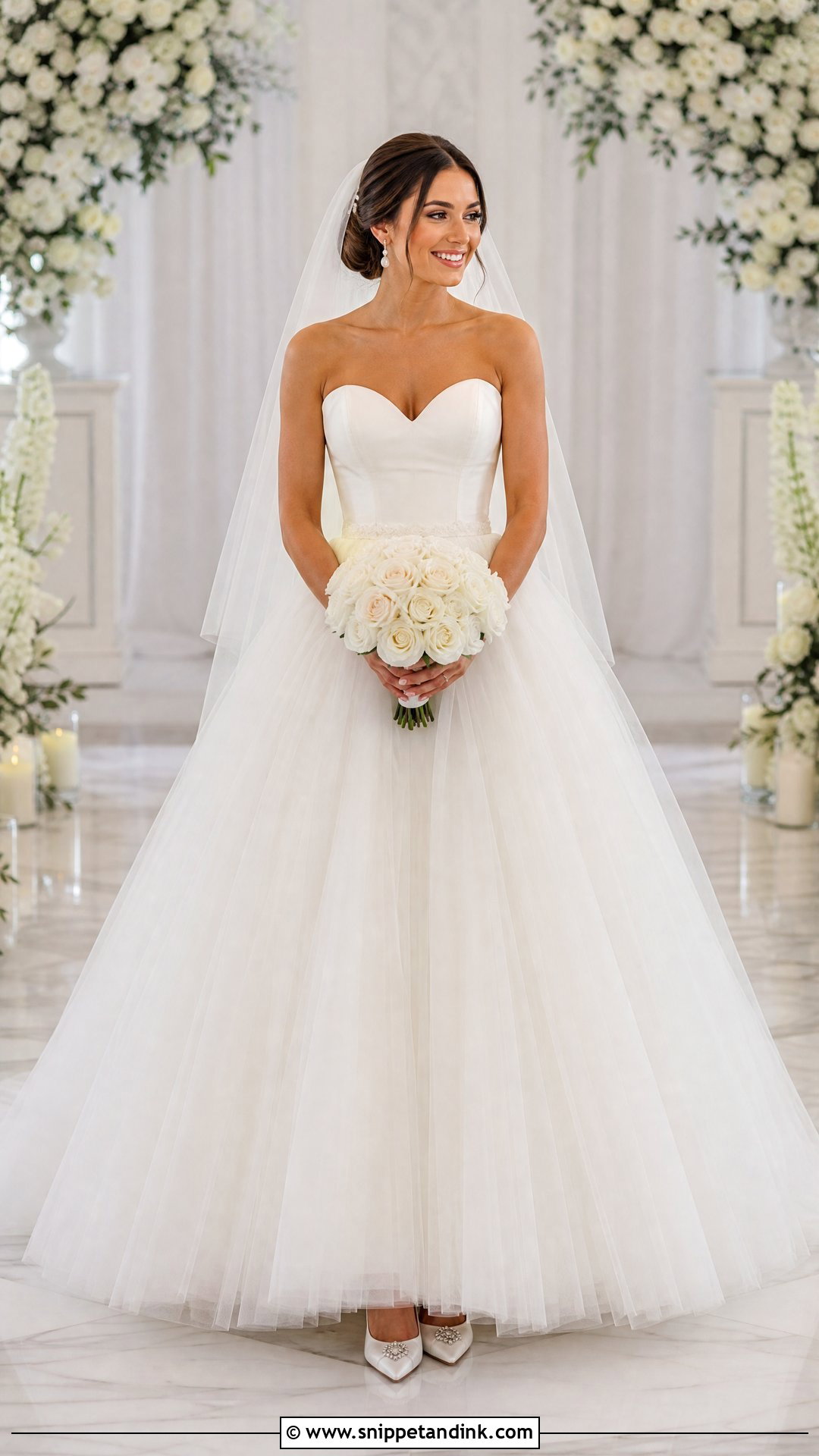
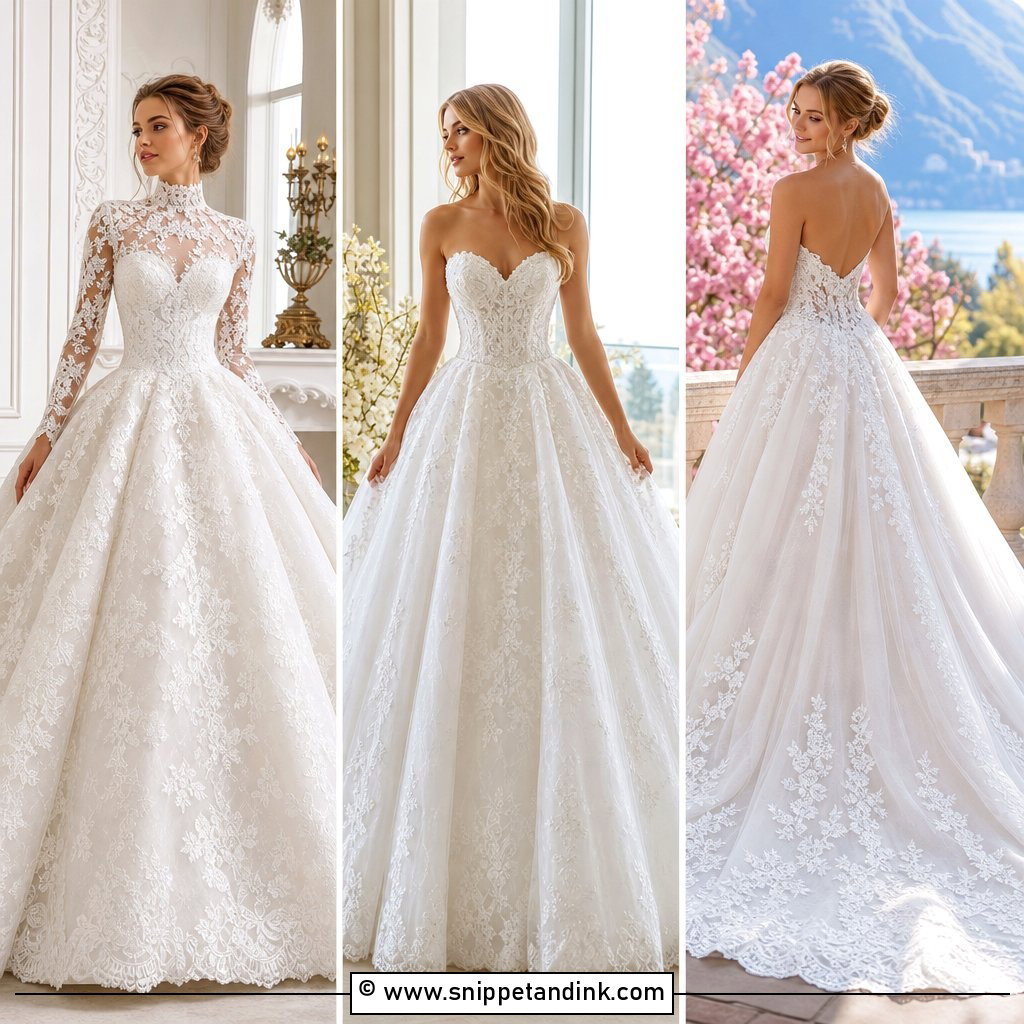
Strapless sweetheart over a full skirt is the gown most people picture, and the whole thing rests on the bodice. You want internal boning and built-in cups, so it holds itself up rather than relying on you to tug it. Satin gives a clean contrast to the tulle; lace appliqués soften it. In alterations, sit, walk and lift your arms, and watch whether the sweetheart curve stays put. A fingertip veil, pearl drops, pointed ivory pumps and a low chignon complete it, with a round bouquet of white roses or peonies and very little greenery.
2. Off Shoulder Tulle Wedding Dress Ballgown
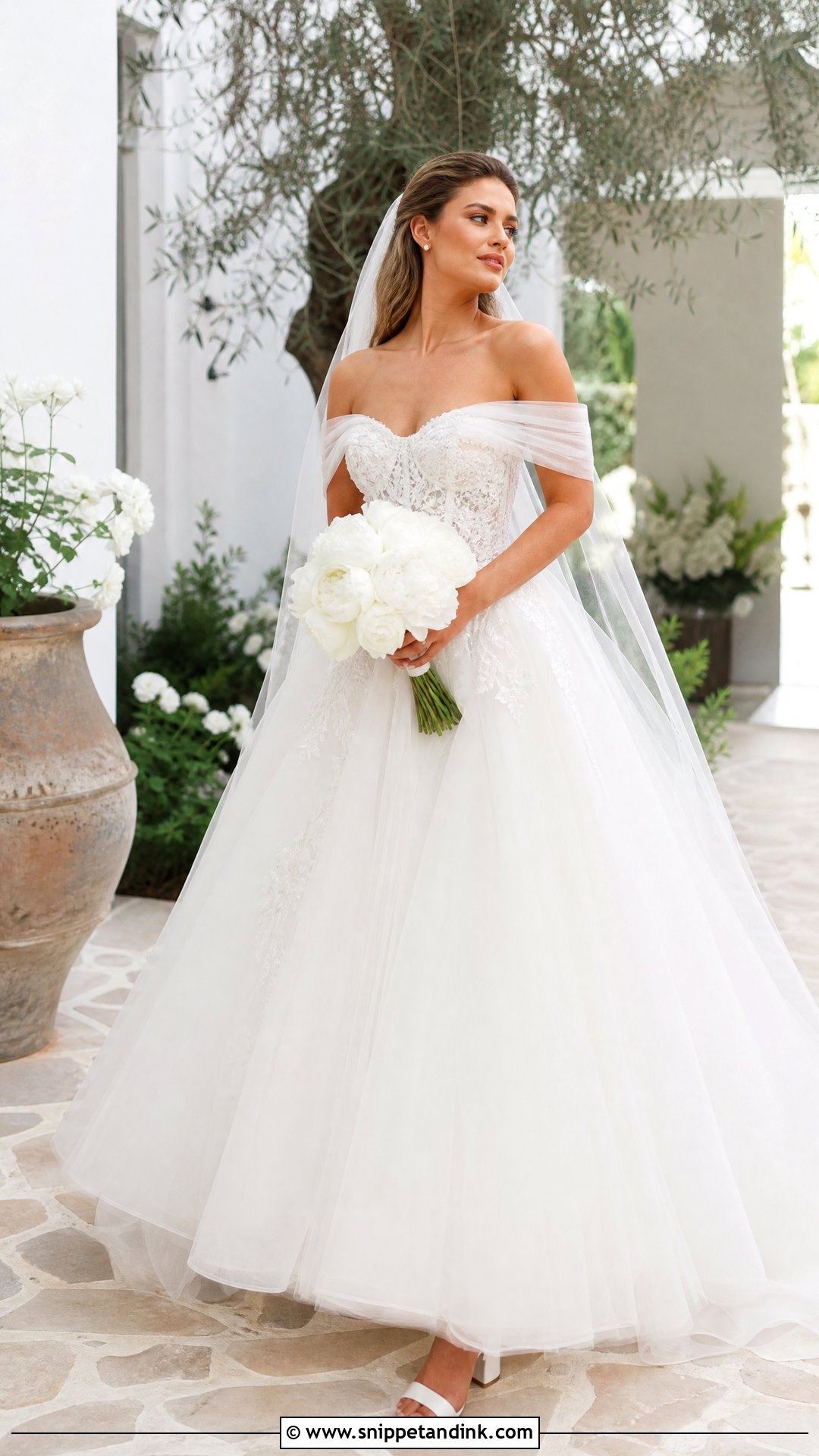
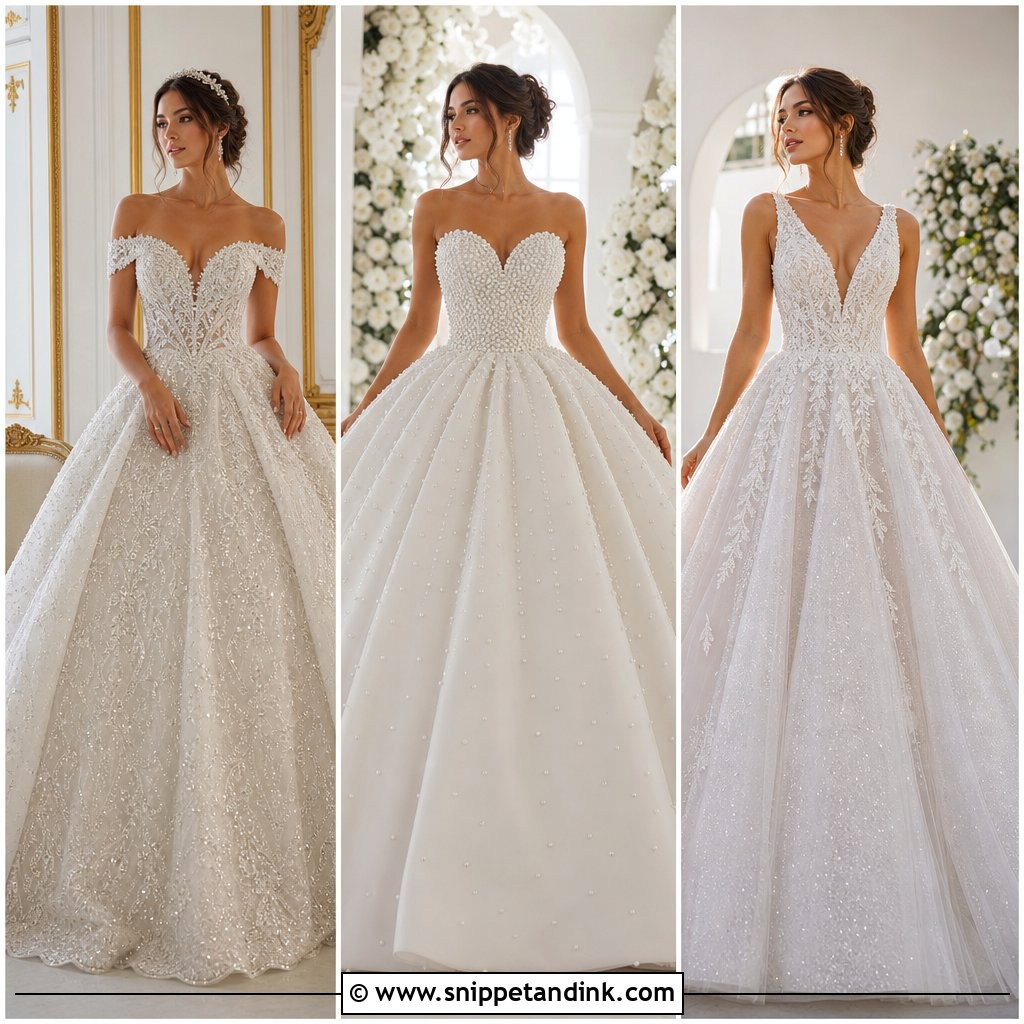
Off-the-shoulder straps frame the collarbone and balance the width of the skirt. Draped tulle looks airier; lace-covered straps give more definition and slightly more grip. The bodice should fit snugly at the natural waist so the skirt starts from a secure point. Satin block heels make the walk easier, and a delicate pendant with crystal studs or brushed-back waves shows off the neckline. A cathedral veil suits a formal ceremony, a short raw-edge veil a relaxed one. Ask how high you can raise your arms in those straps. If you plan to dance, it matters more than the look.
3. Long Sleeve Lace Tulle Wedding Dress Ballgown
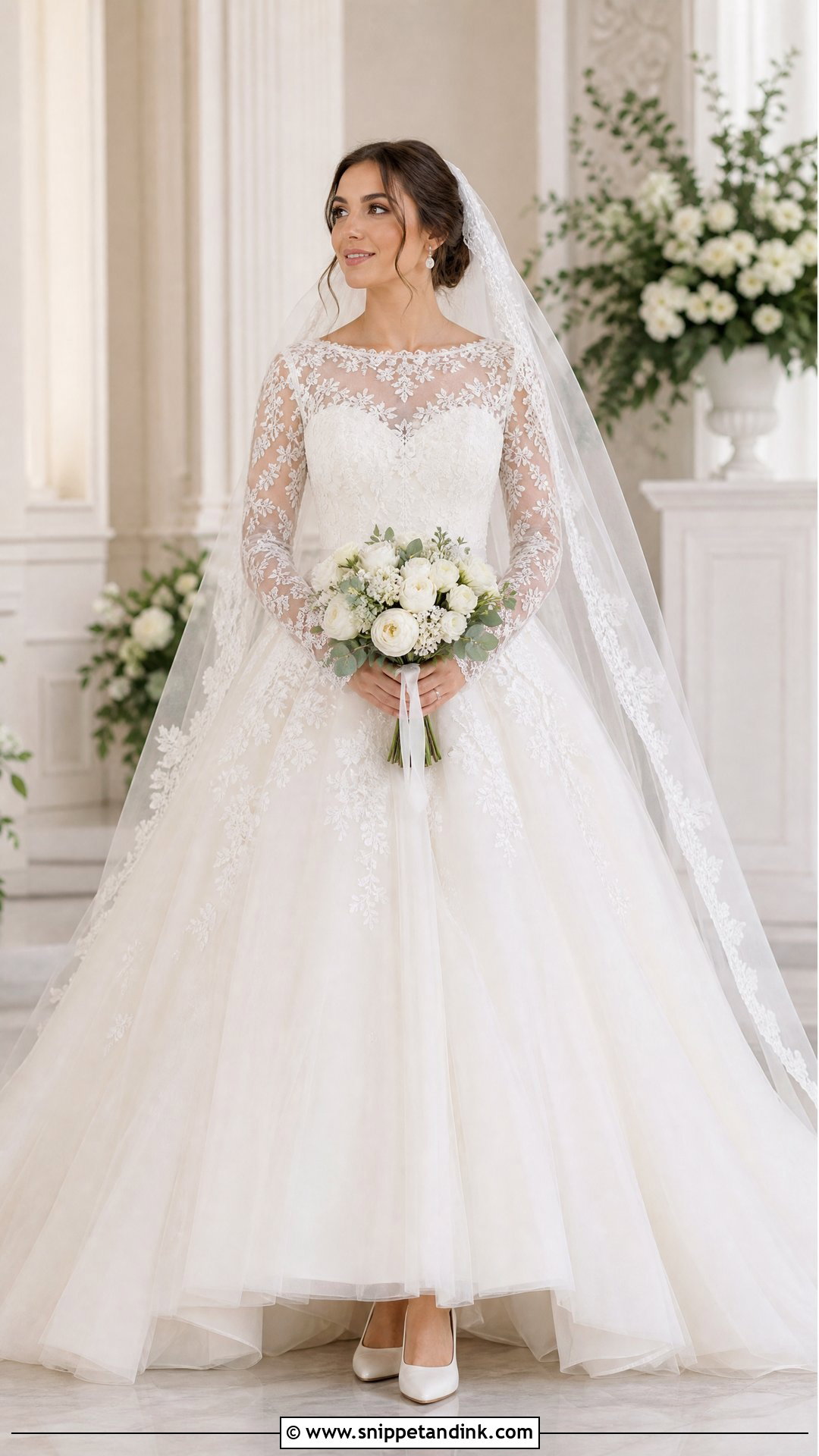
A long-sleeve lace bodice gives cool-weather coverage without making the ballgown heavy, especially when the sleeves are sheer with appliqués placed carefully over them. A bateau or soft round neck suits it. Choose a plain or lightly lace-edged veil so the sleeves aren’t fighting a second lace pattern. Closed-toe satin pumps and small pearl earrings are enough, with a neat bun or a low ponytail. Bend your elbows at the fitting. If the sleeve lining is stiff, it bunches at the crease and pulls across the shoulders every time you reach. White ranunculus and roses with seasonal greenery finish it.
4. Basque Waist Tulle Wedding Dress Ballgown
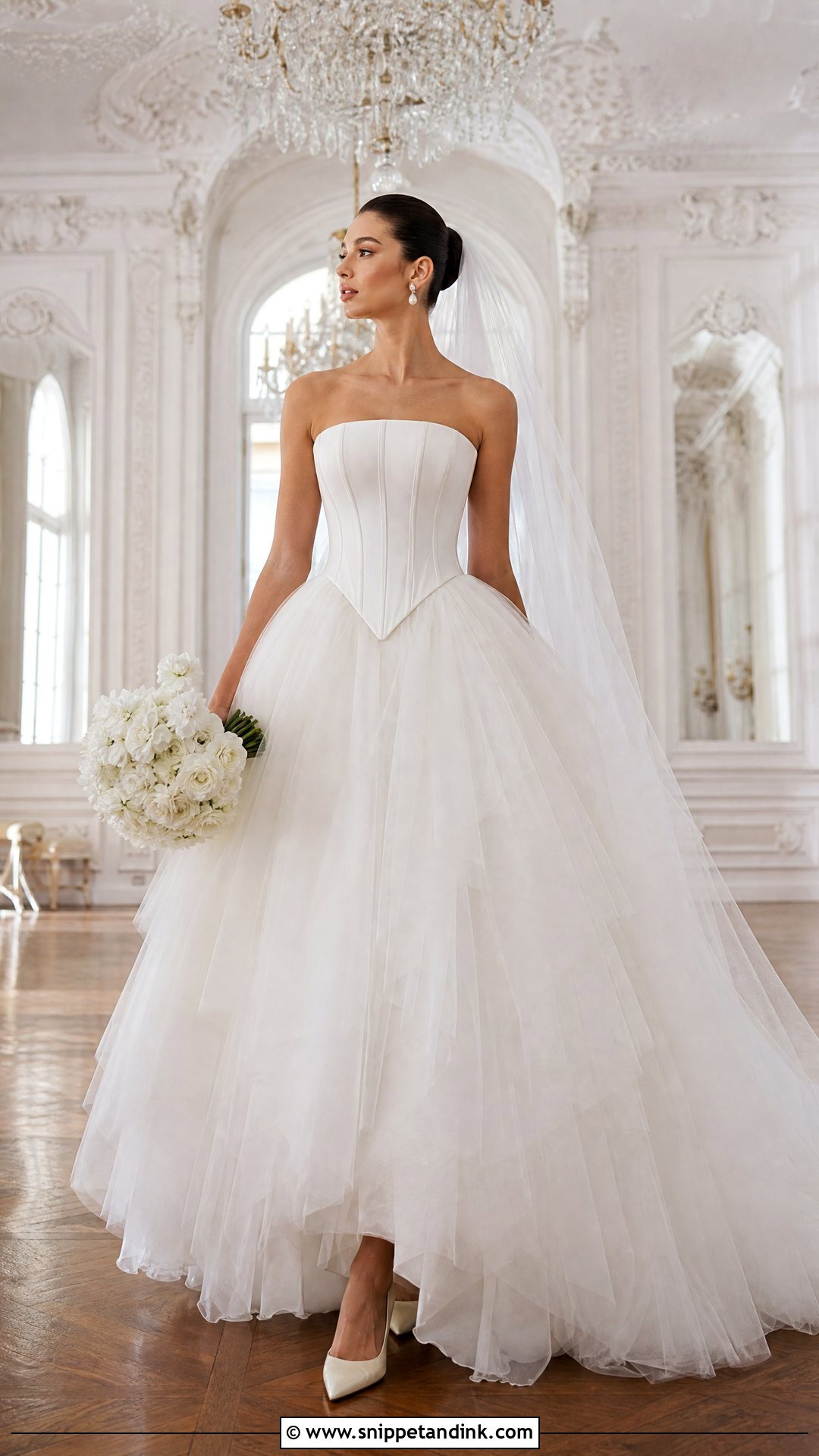
The point of a Basque waist sits below the natural waist and draws a strong center line down into the skirt. A soft curve is subtle; a deep V is dramatic. Strapless shows off the construction, while thin straps add support. Keep the necklace minimal and wear teardrop earrings, pointed pumps and a long plain veil, with a sleek updo and a structured bouquet. The fitting check is simple: sit down. If the point folds or digs into your lap, the boning needs adjusting before anything else is done.
5. Drop Waist Tulle Wedding Dress Ballgown
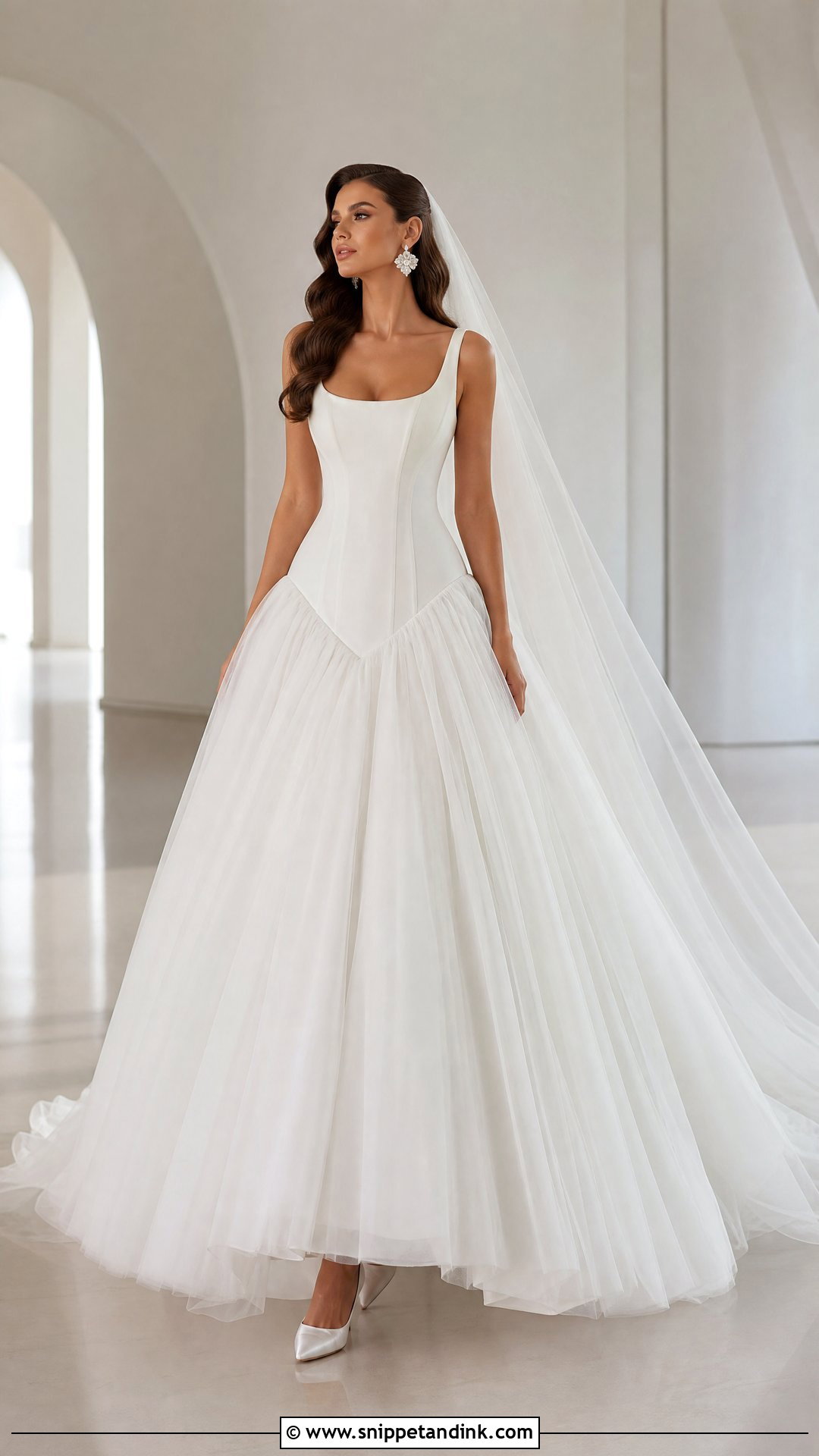
A drop waist carries the bodice over the upper hips before the skirt opens, a longer line that makes a ballgown feel more fashion than fairytale. Smooth corsetry is modern; ruched tulle or lace detailing softens it. A clean scoop, straight or strapless neckline balances the long bodice. Where the skirt starts should suit your proportions, not the sample’s, and moving that seam is a normal alteration, so ask. Make sure you can sit comfortably with the bodice over your hips. Sculptural earrings, a plain cathedral veil, satin heels and a polished bun or soft waves suit it.
6. Corset Bodice Tulle Wedding Dress Ballgown
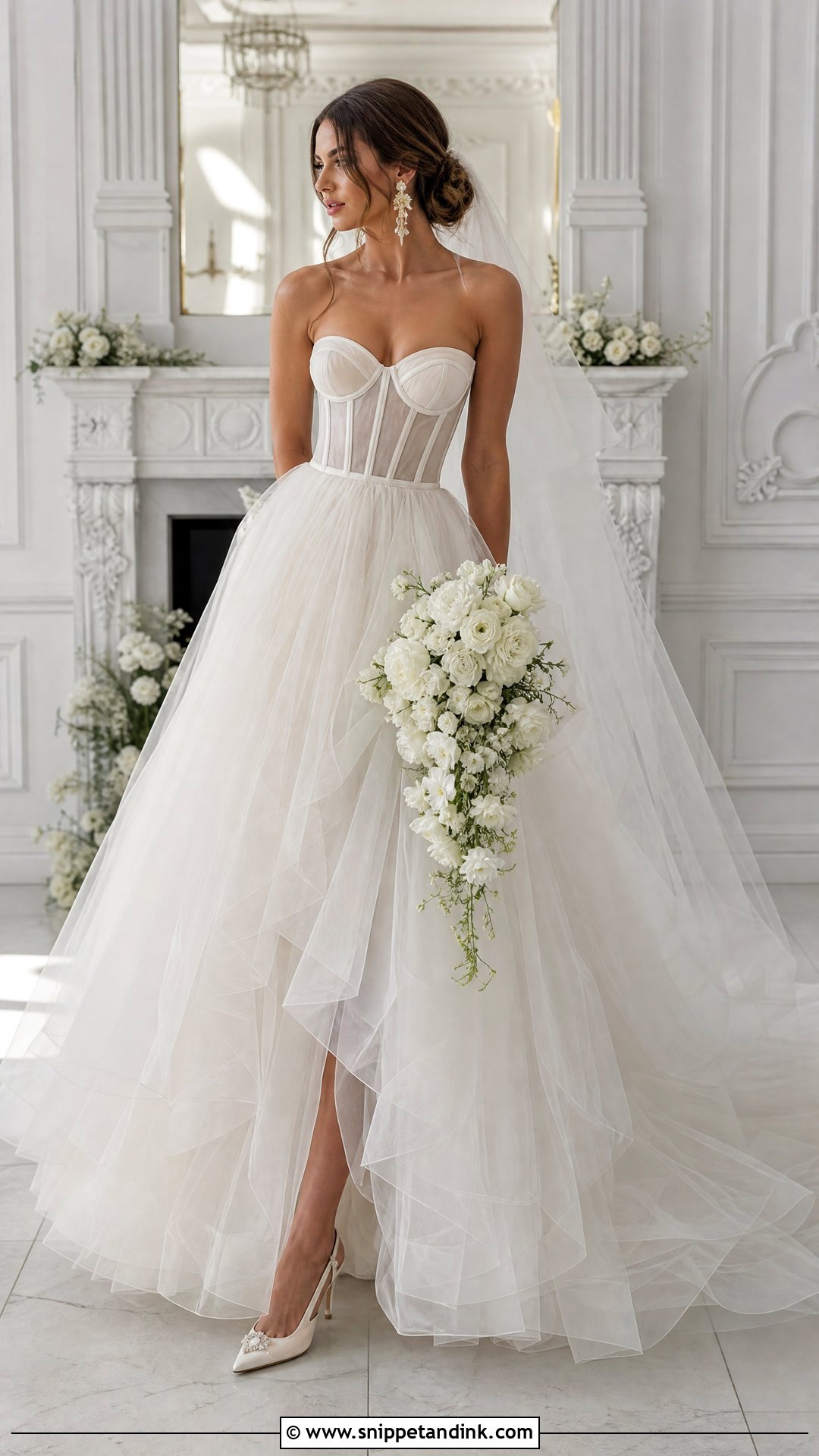
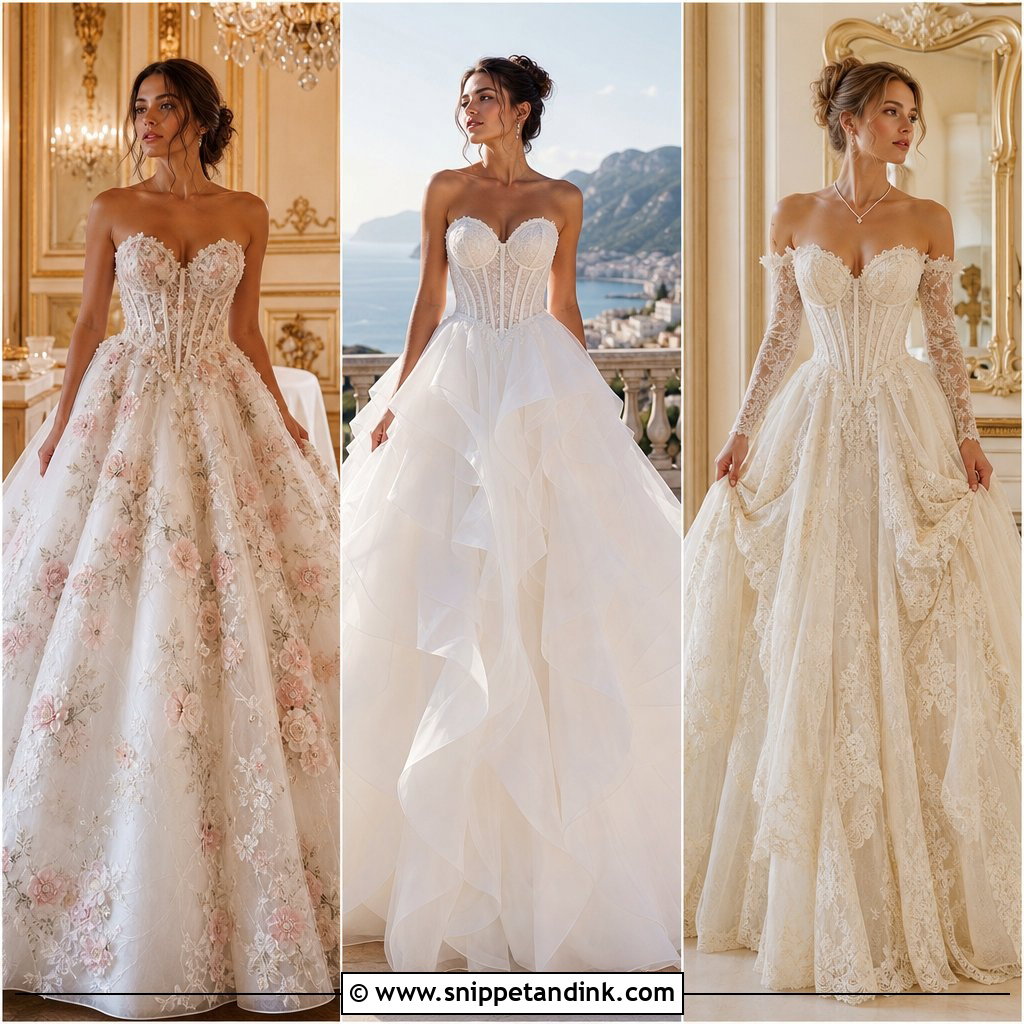
A visible corset turns a ballgown’s bodice into the main event. Exposed boning reads modern; lace-covered construction looks traditional. Pick a lining shade close to your skin, secure closures and real cups. You should be able to take a full breath. One thing brides rarely think of: once the train is bustled, its weight hangs from the back of the waist, and that can pull the corset. Have the seamstress check the fit after bustling, not just before. Crystal drops, a raw-edge veil, slingback heels and a low bun soften the strong lines.
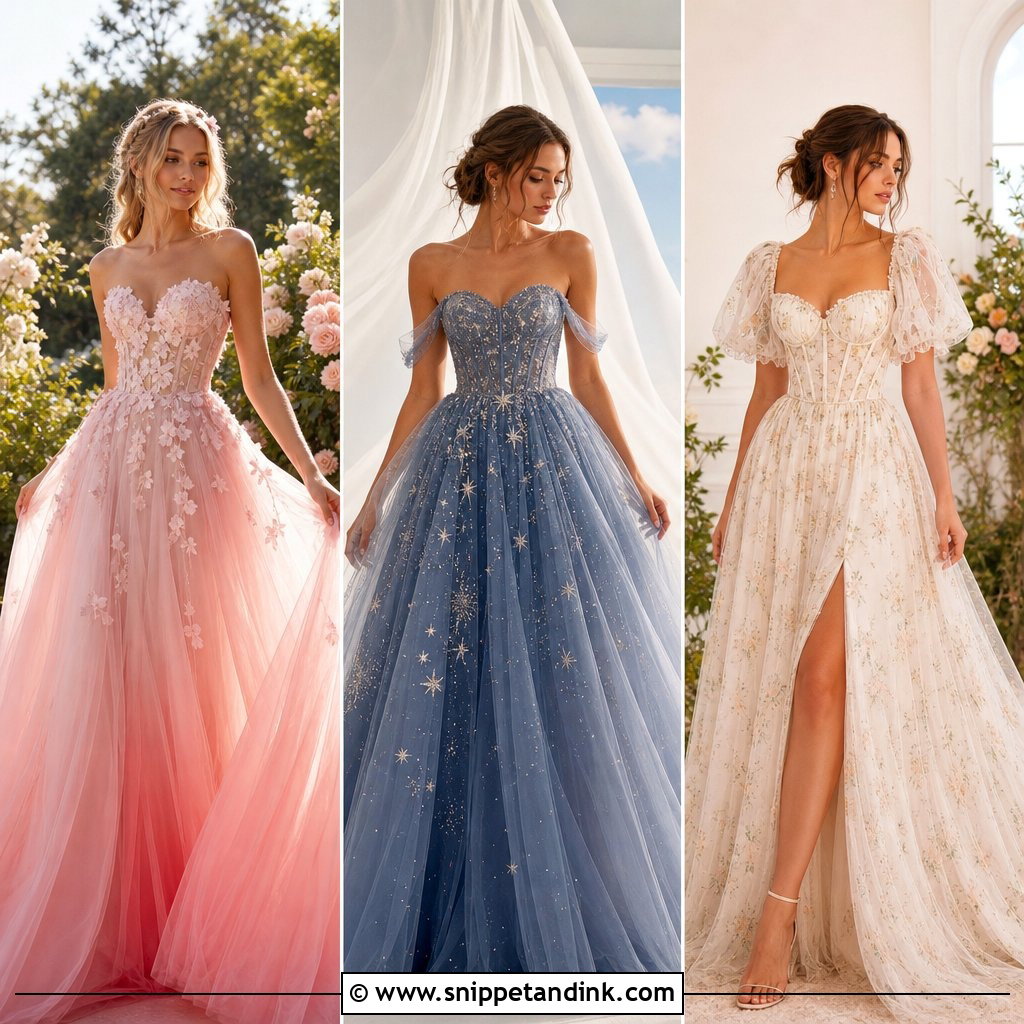
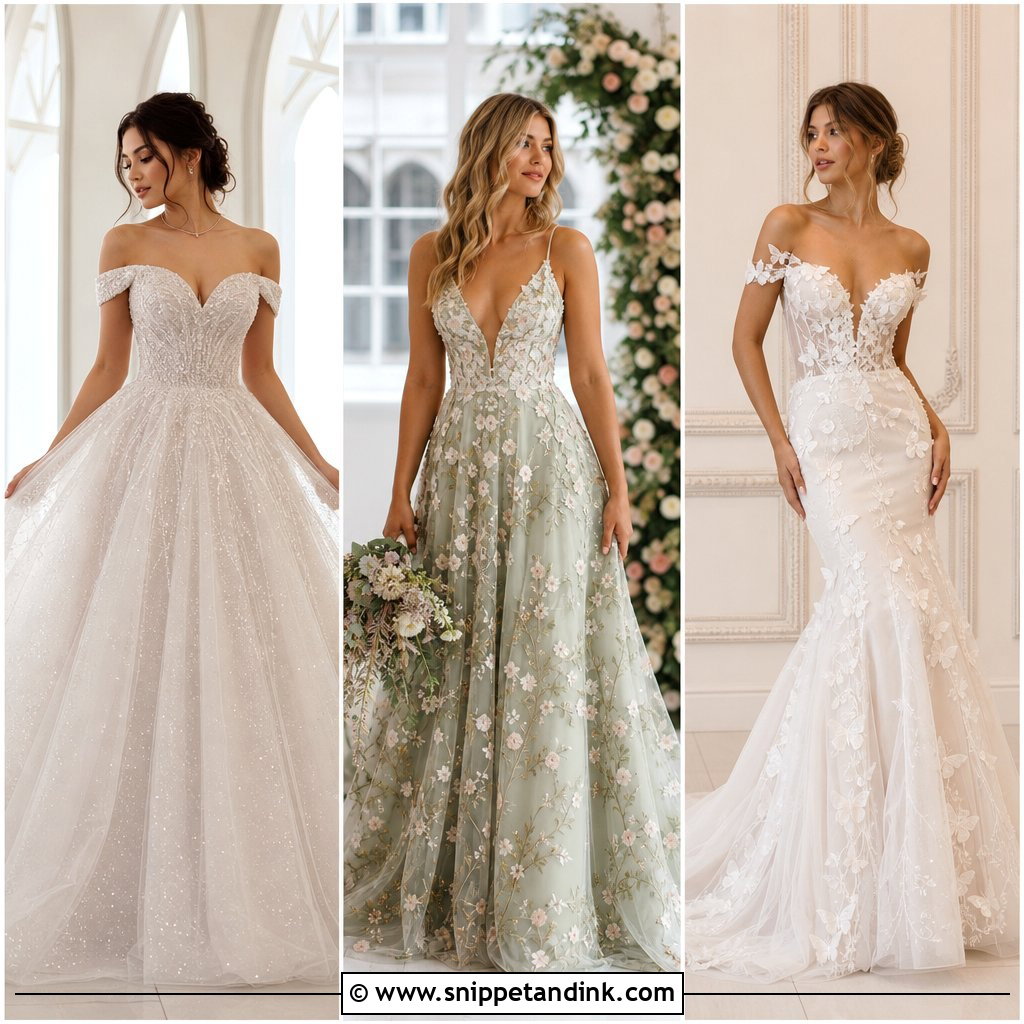
7. Floral Applique Tulle Wedding Dress Ballgown
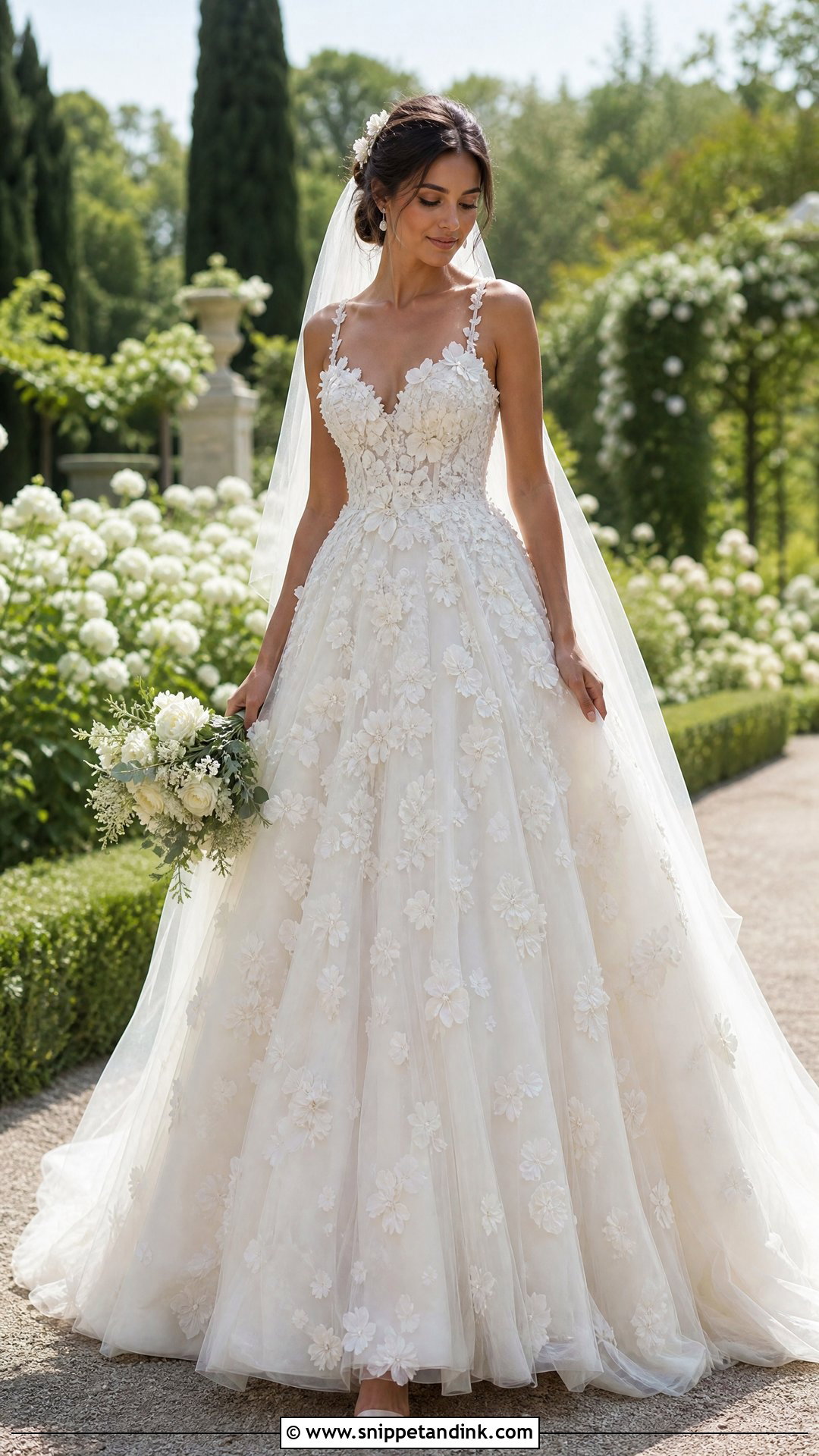
Raised floral appliqués make tulle look like a garden in bloom, whether that’s small flowers scattered over bodice and skirt or a few larger blossoms. A little beading or embroidery on the petals adds texture. Watch the placement around seams and the waist; appliqués are hand-placed and can be moved during alterations if a flower lands awkwardly over a seam. A plain veil often photographs more clearly over a detailed gown than one with matching flowers. Floral hairpins, pearl earrings and plain ivory heels suit it, with a loose bouquet that complements rather than copies the dress.
8. Glitter Tulle Wedding Dress Ballgown
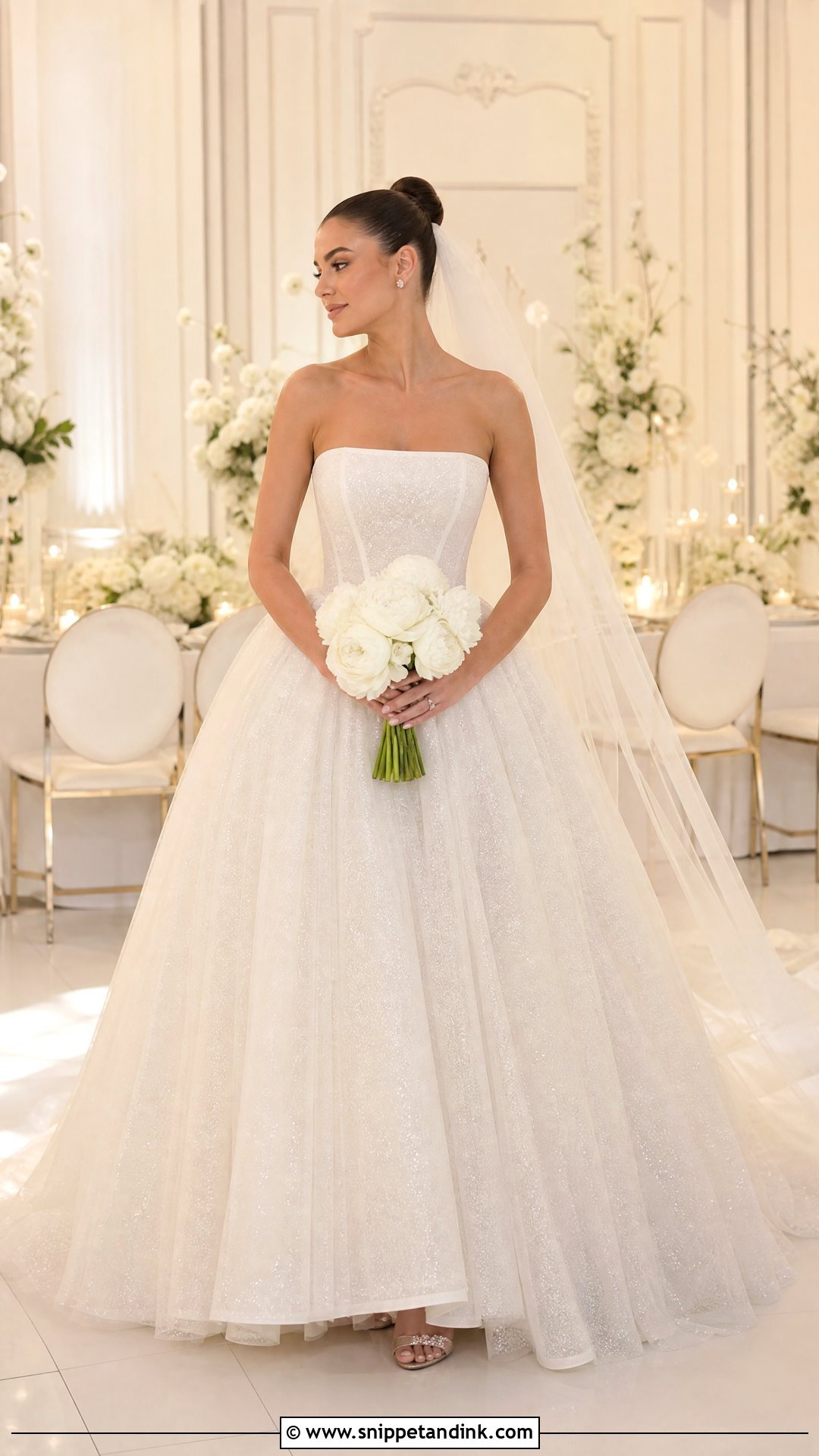
Glitter tulle is an evening fabric. It catches every light source in a candlelit room and can look flat or greyish in midday sun. The sparkle can run through the whole skirt or sit under a plain top layer for a gentler glow. Before choosing, I look at it by a window, under shop lights and with a phone flash, because it photographs very differently in each. A clean corset bodice, crystal studs, metallic ivory heels and a plain veil keep it balanced. A white bouquet gives the eye a calm place to rest.
9. Layered Tulle Wedding Dress Ballgown
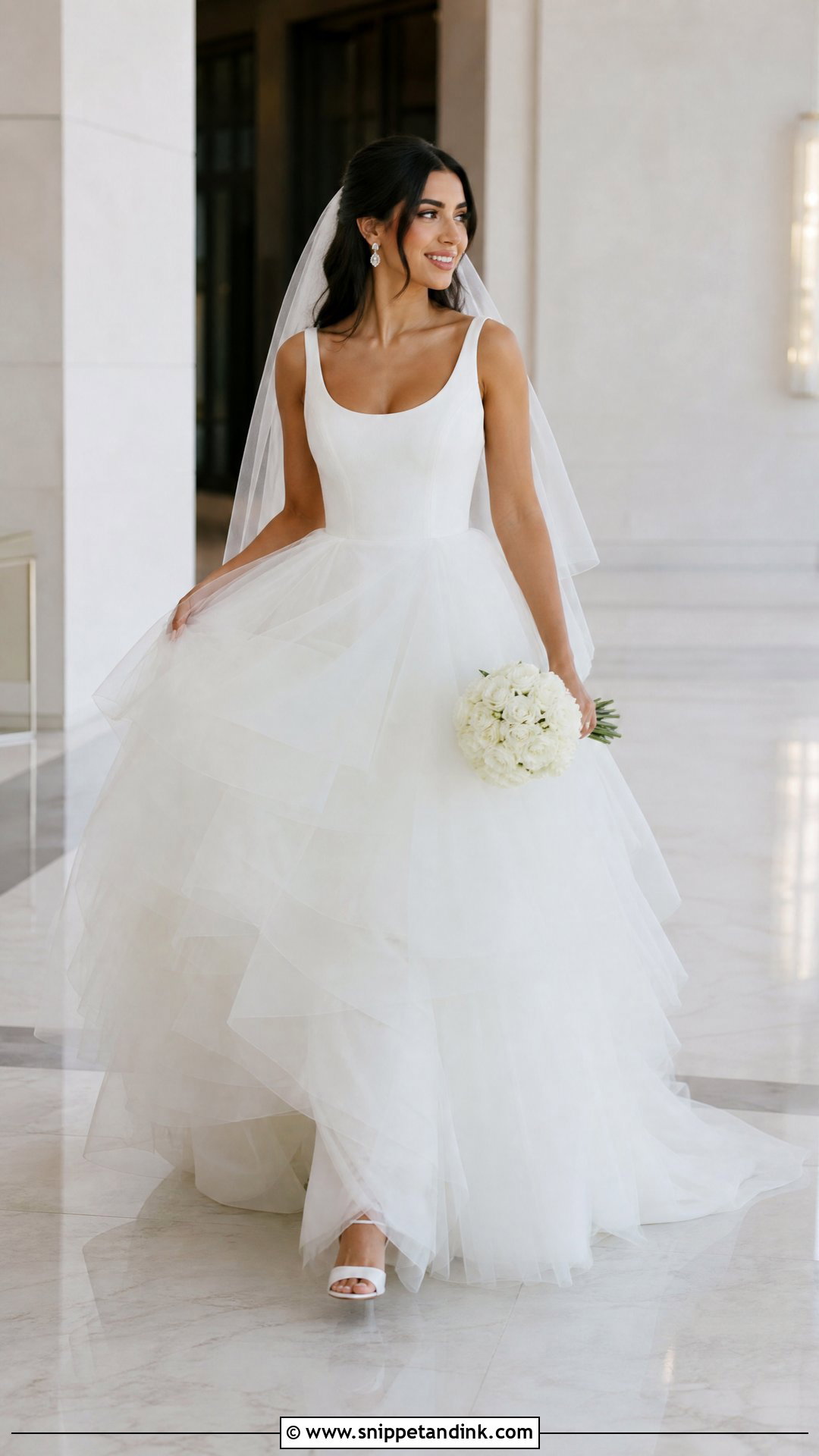
Volume in tulle comes from the number of layers, so a heavily layered skirt is full without being heavy. Graduated layers fall smoothly; handkerchief-cut panels float more. A fitted scoop neck or strapless bodice lets the skirt lead, and a high bun lengthens the neck against all that width. Ask whether the underskirt layers or petticoat can be removed: you get full drama for the aisle and a lighter dress for the evening. The hem should clear your shoe toes by a little, or you’ll step on the front layers on every stair. A plain veil, delicate earrings, hidden block heels and a compact bouquet suit it.
10. Pearl Beaded Tulle Wedding Dress Ballgown
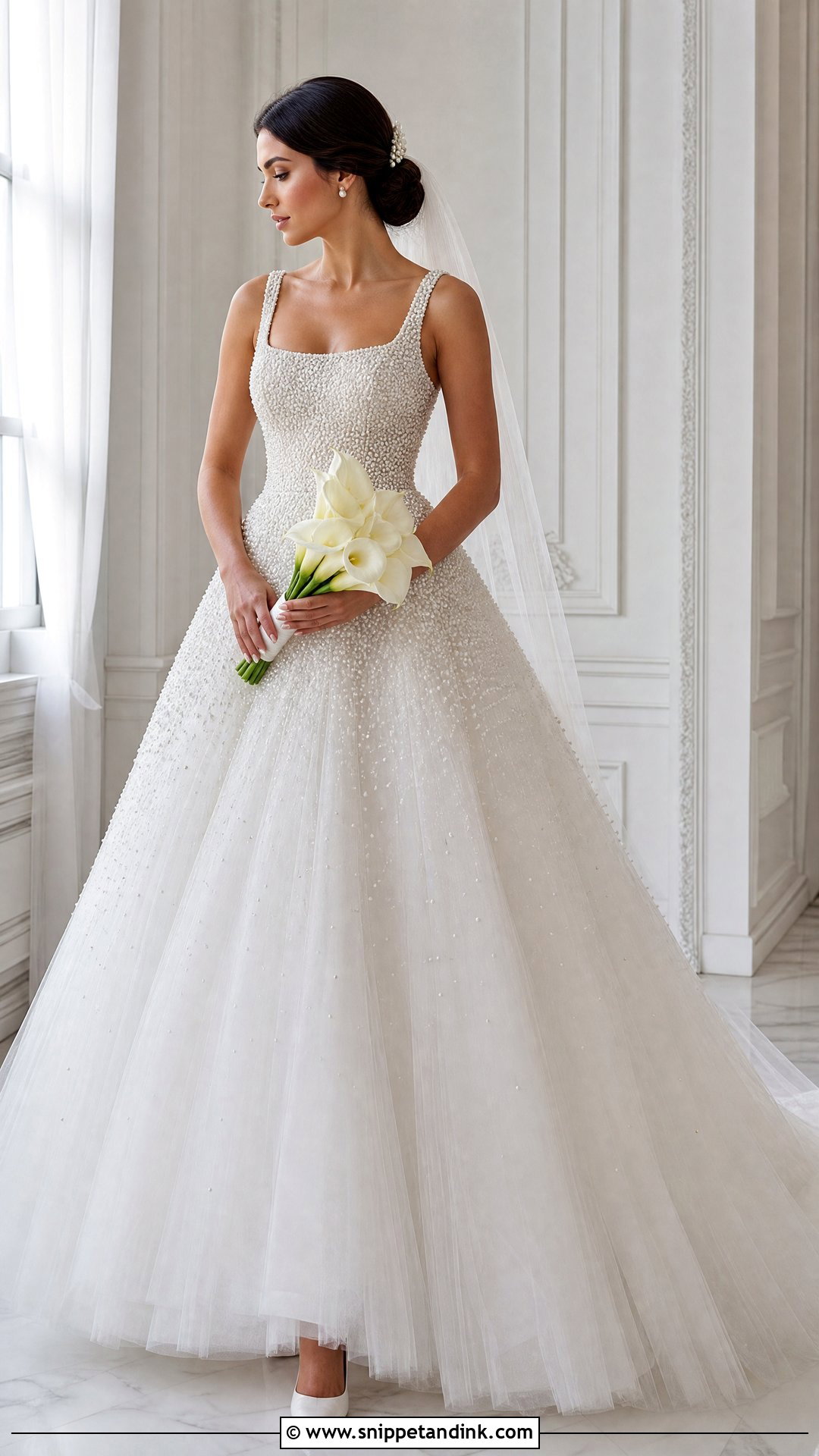
Pearls give tulle a soft glow rather than the sharp sparkle of crystals. Scattered over the bodice and upper skirt they look refined; graduated beading pulls the eye to the waist. Restraint is the styling rule. With a well-beaded dress, one or two pearl accents are plenty, such as pearl studs and a pearl comb in a low chignon, with a smooth fingertip veil and plain satin pumps. Before buying, run your hand over the inside of the beading. Knots and thread ends there will scratch your arms and catch the veil. White roses, anemones or calla lilies give a clean finish.
11. Cathedral Train Tulle Wedding Dress Ballgown
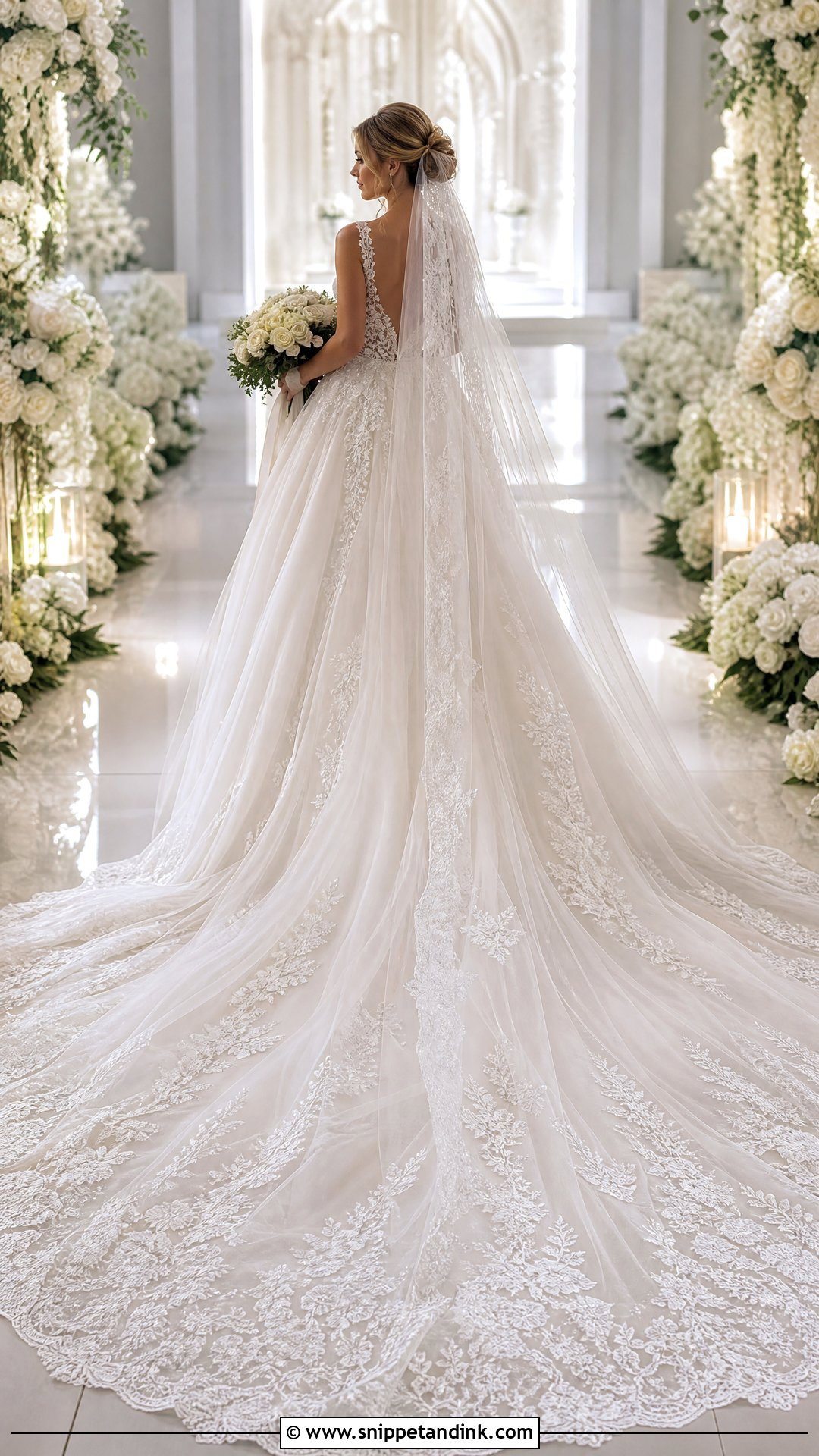
A cathedral train gives you the long aisle moment, and tulle is the lightest way to have one. Plain layers look dramatic; lace appliqués around the hem add detail for the photographs taken from behind. A veil reaching the end of the train looks most deliberate. Plan the practicalities: a secure bustle that spreads the fabric evenly, a rehearsal of walking and turning, and someone assigned to arrange the train before portraits and the processional. Outdoors, check the path. Gravel and damp grass both cling to tulle. Simple earrings, a polished updo, elegant pumps and a narrow bouquet keep the front visible.
12. Detachable Sleeve Tulle Wedding Dress Ballgown
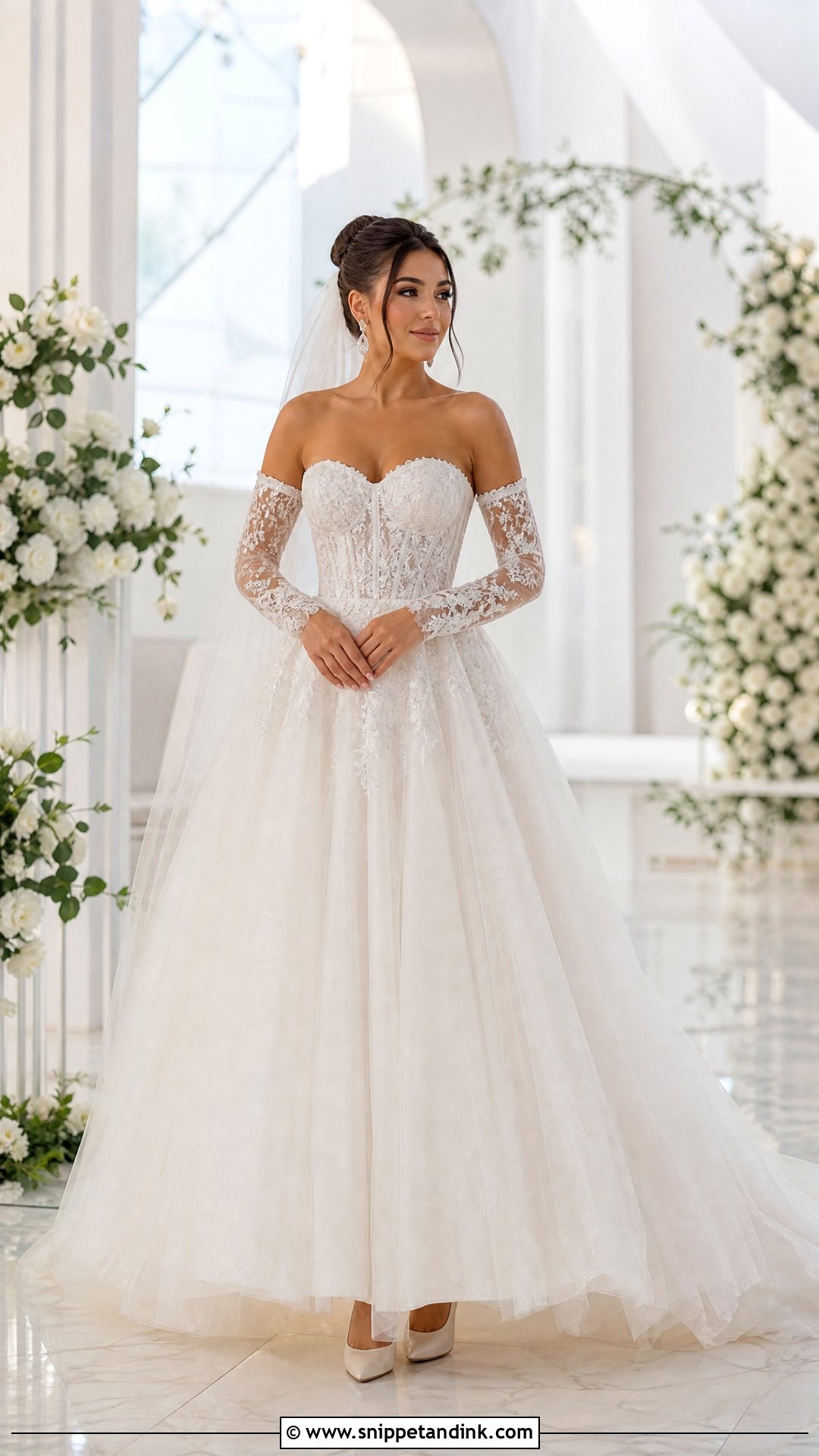
Detachable sleeves give you two ballgowns: covered for the ceremony, strapless or thin-strapped for dancing. Fitted lace sleeves look traditional. Puffy tulle sleeves make more of a statement. Check that every snap, hook or button lies flat against the bodice, since bumps show through in photos. An updo stops hair catching in the fastenings. Practice removing them with your helper beforehand, and have a labeled garment bag ready so they don’t end up beside the cake table. A simple veil, drop earrings and comfortable ivory heels complete it.
13. Bow Back Tulle Wedding Dress Ballgown
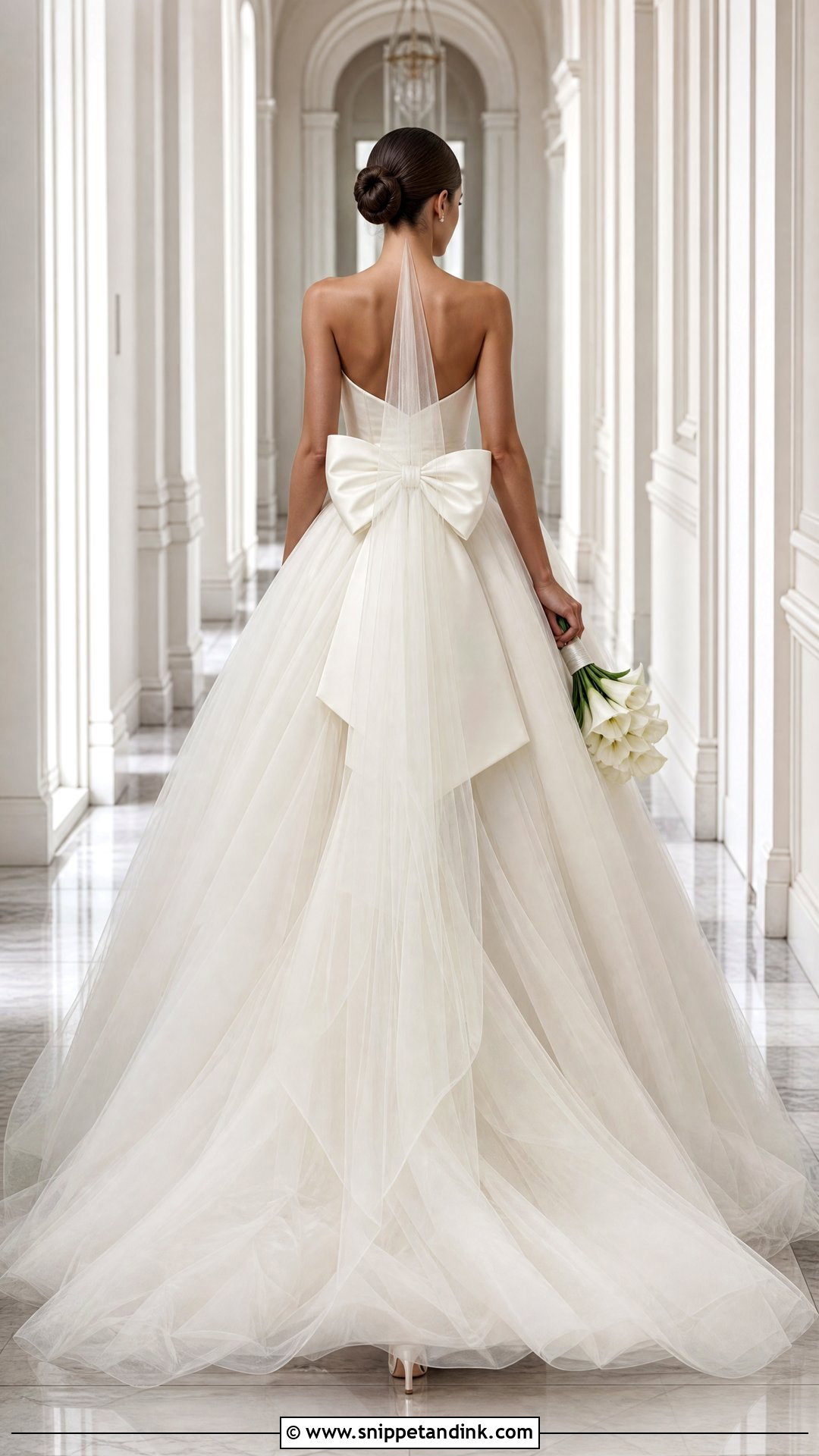
A bow at the back gives a ballgown personality from the angle guests see most during the ceremony. Crisp satin contrasts with the tulle; a tulle bow blends in. Medium bows are subtle, while an oversized one with long tails is pure drama. Ask early whether the bow is detachable. A removable bow makes bustling easier, stops it crushing in the car and in seated photos, and gives you a different look for the reception. Choose a veil you can remove after the ceremony so the bow is visible, plus simple studs, satin pumps and a smooth bun or ponytail.
14. Square Neck Tulle Wedding Dress Ballgown
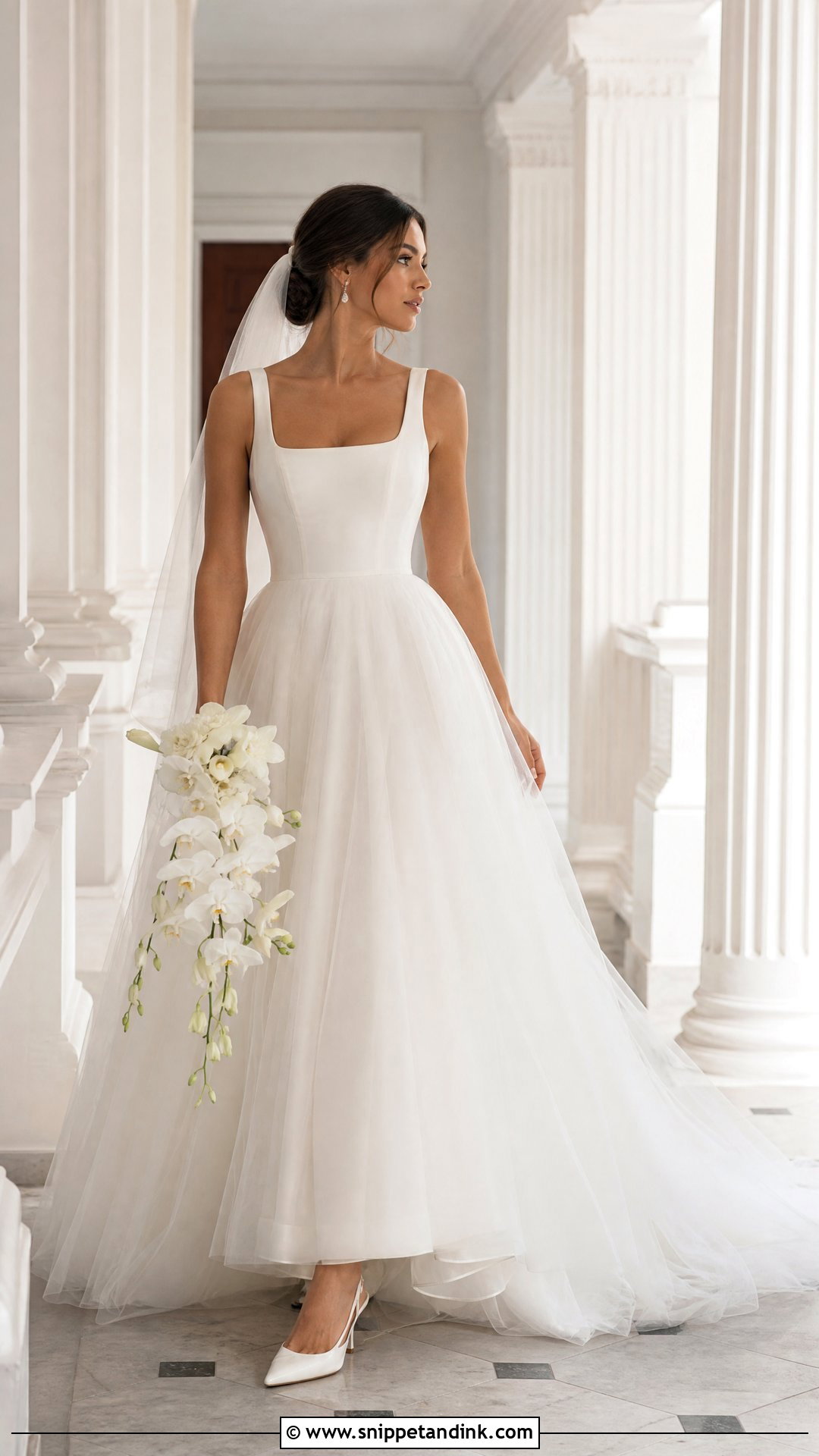
A square neckline gives a ballgown a crisp frame. Wide straps add support, and a lower square opens the neckline more. A defined waist and evenly layered skirt continue the geometry. At fittings, sit and move, and look closely at the corners: they should stay flat rather than gaping, and strap placement makes a real difference across bust sizes. Short drop earrings, a simple veil and pointed slingbacks suit it. A low bun or half-up style keeps the lines clean, and an elongated bouquet echoes the bodice’s verticals.
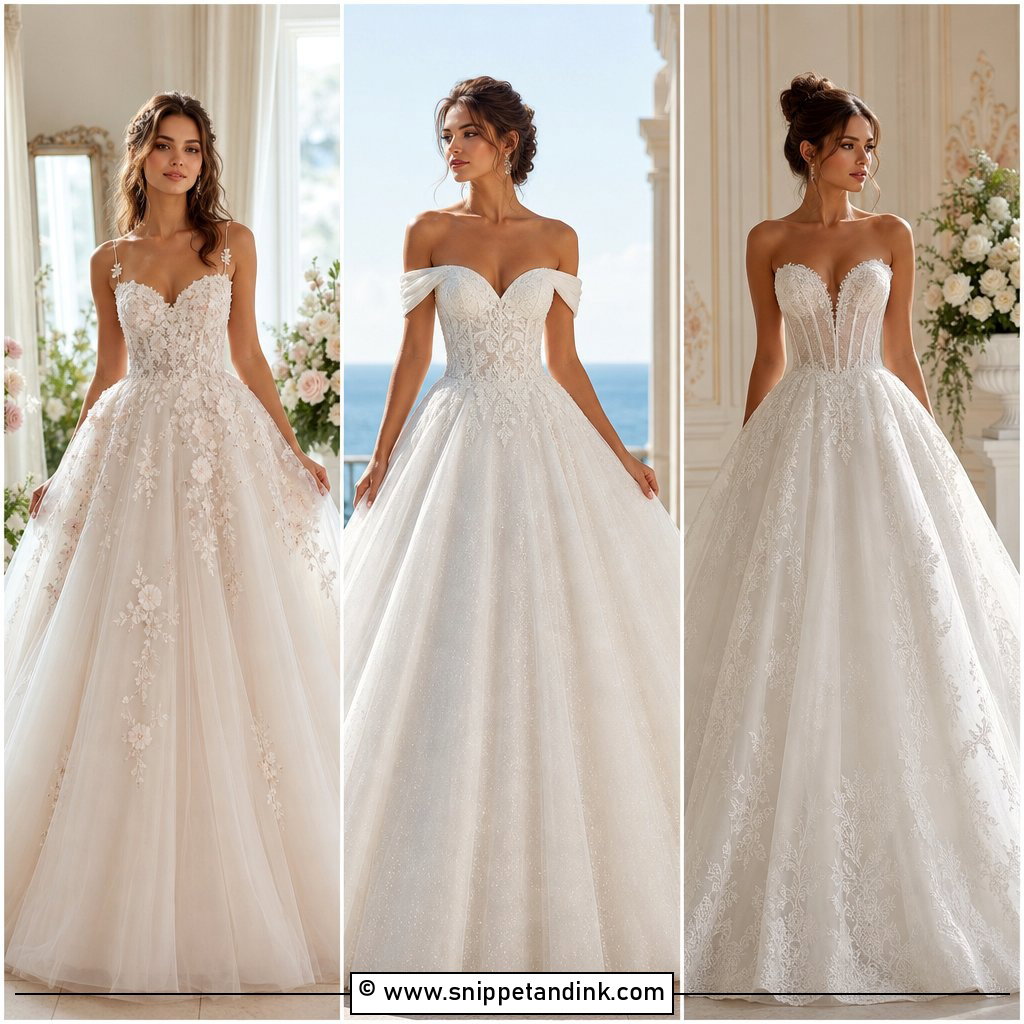
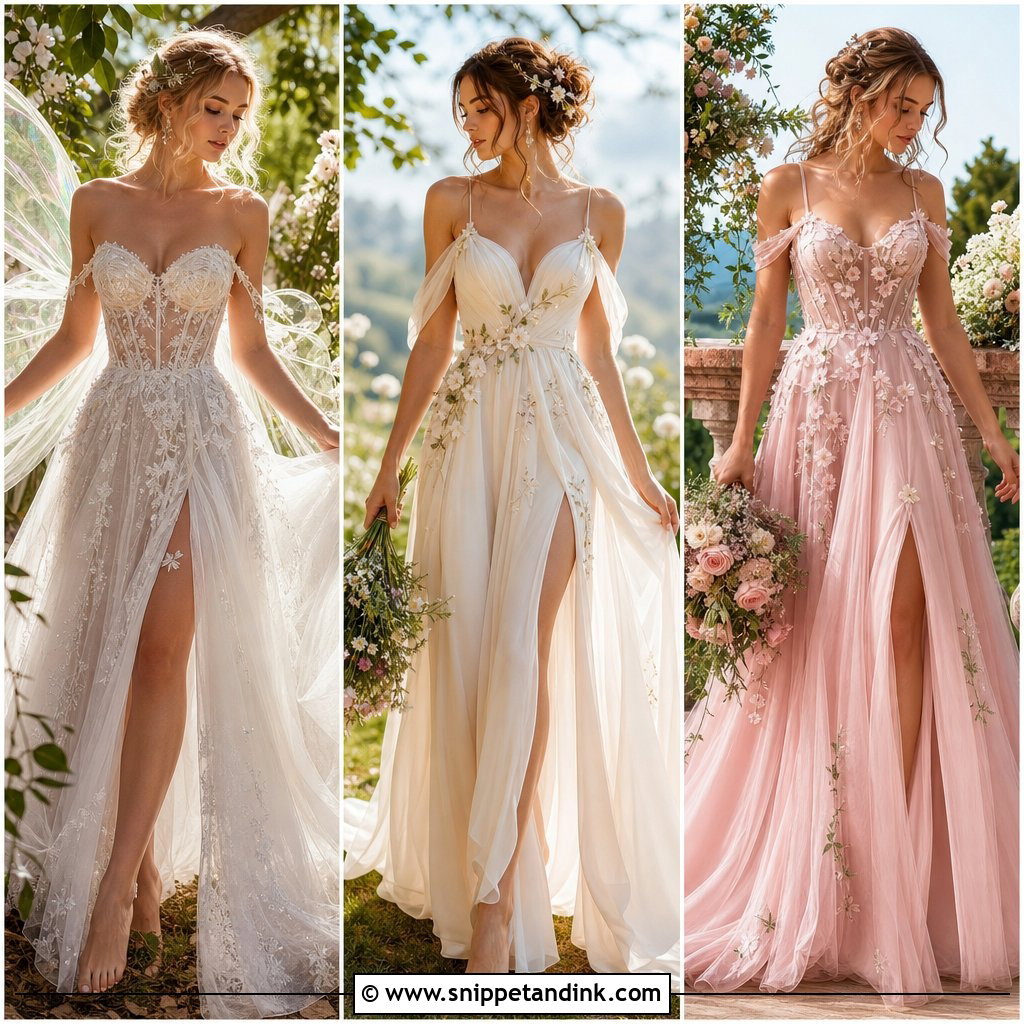
15. High Neck Tulle Wedding Dress Ballgown
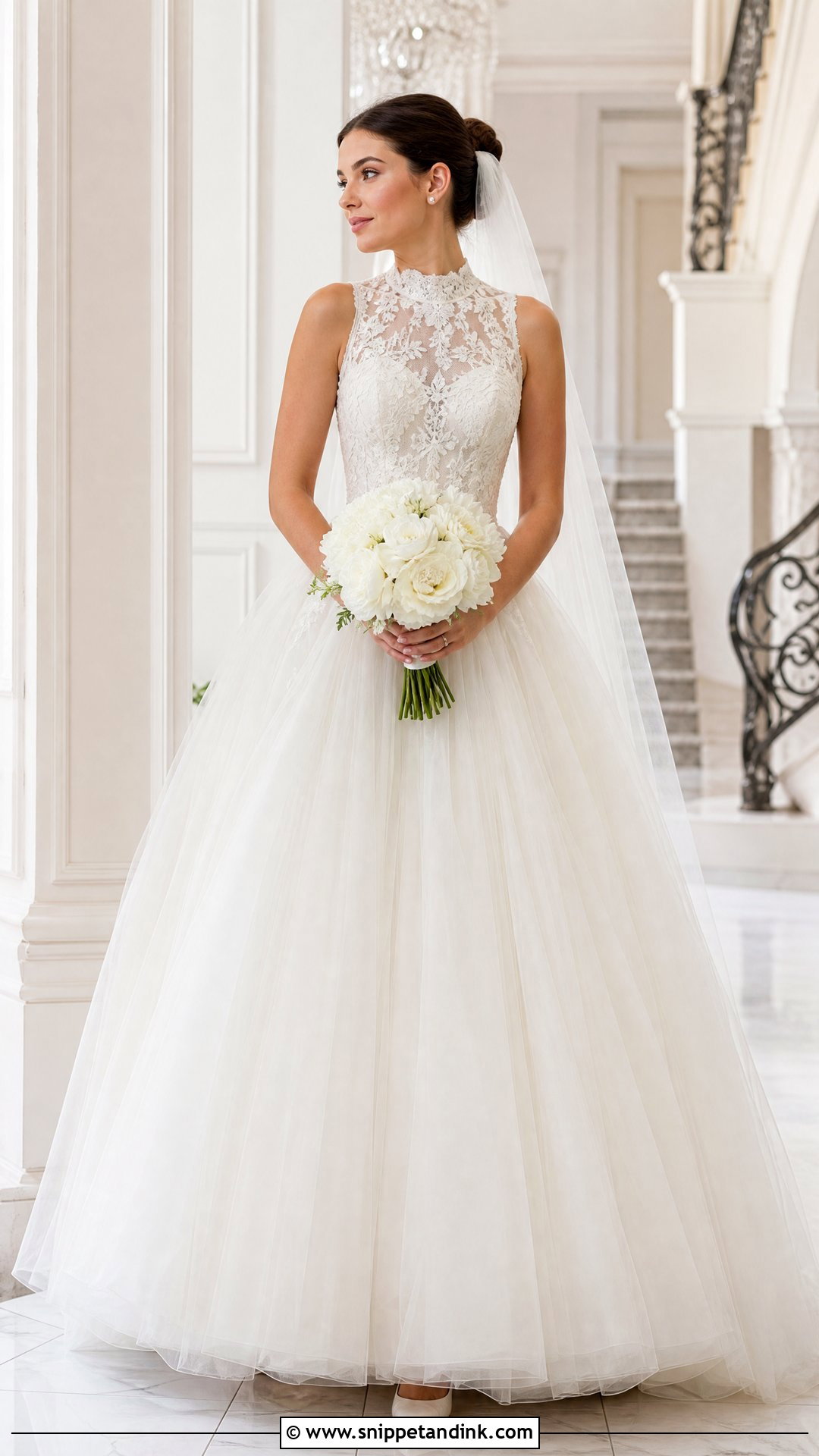
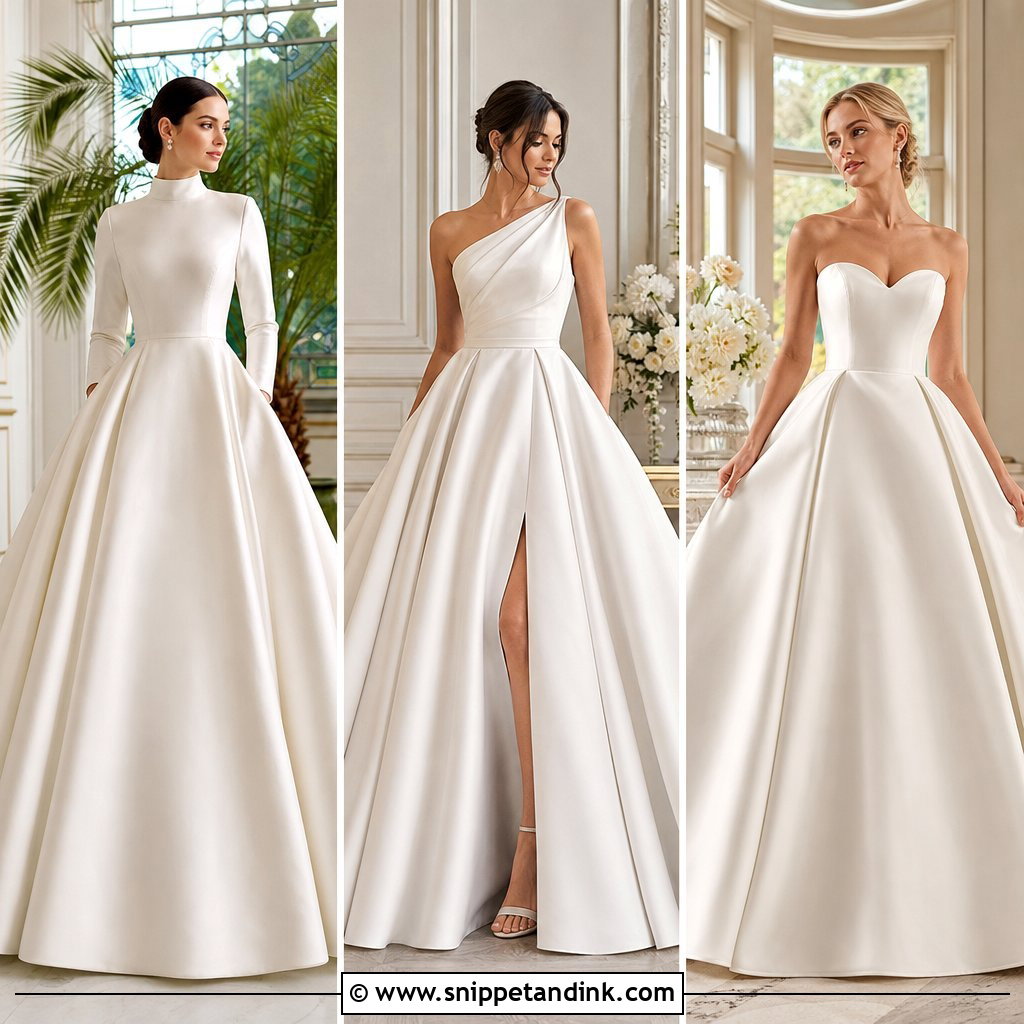
High necks give coverage while the full skirt keeps the gown light. Sheer lace looks delicate; lined satin or crepe is more architectural. A sleeveless cut shows the shoulders so the neck doesn’t feel too covered. I’d skip the necklace entirely, with small earrings, closed-toe pumps and a veil beneath a neat bun. Turn your head and sit at every fitting; the collar should never rub or fold. If it fastens with a long row of buttons, make sure your helper has practiced, because tugging at loops is how delicate fabric tears. A structured bouquet suits the formal shape.
16. Illusion Neckline Tulle Wedding Dress Ballgown
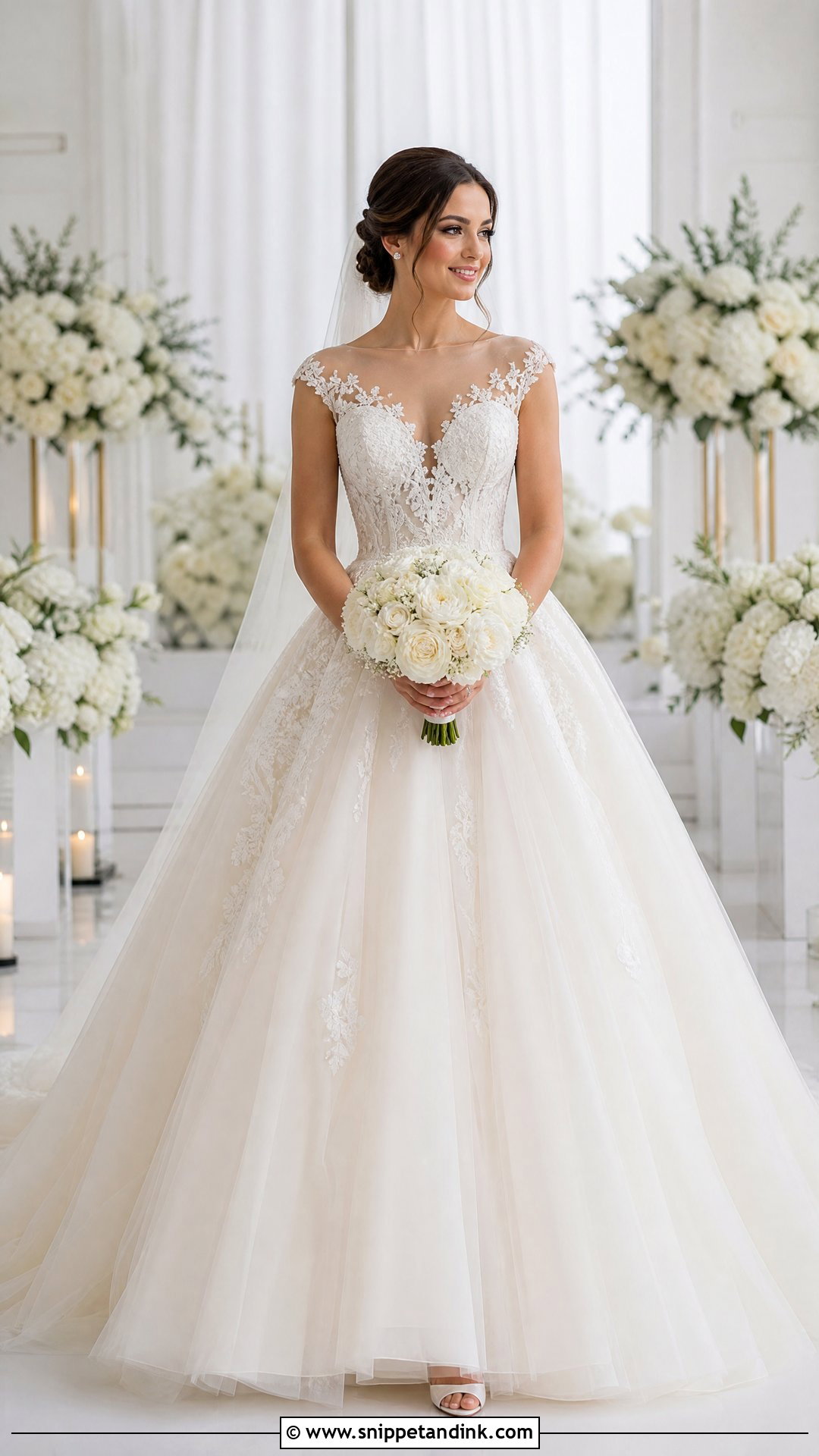
An illusion neckline looks open while sheer mesh keeps everything secure. Lace, pearls or embroidery cover key areas, and the upper chest stays light. The mesh should be close to your skin tone; I check it in daylight, under shop lights and with a flash photo, because a mismatch only sometimes shows to the eye. The edges should lie flat around the shoulders. A good seamstress can adjust the mesh without moving the appliqués. Crystal studs, a plain veil, satin block heels and a soft updo, kept away from the lace, finish it with a round bouquet held below the bodice.
17. One Shoulder Tulle Wedding Dress Ballgown
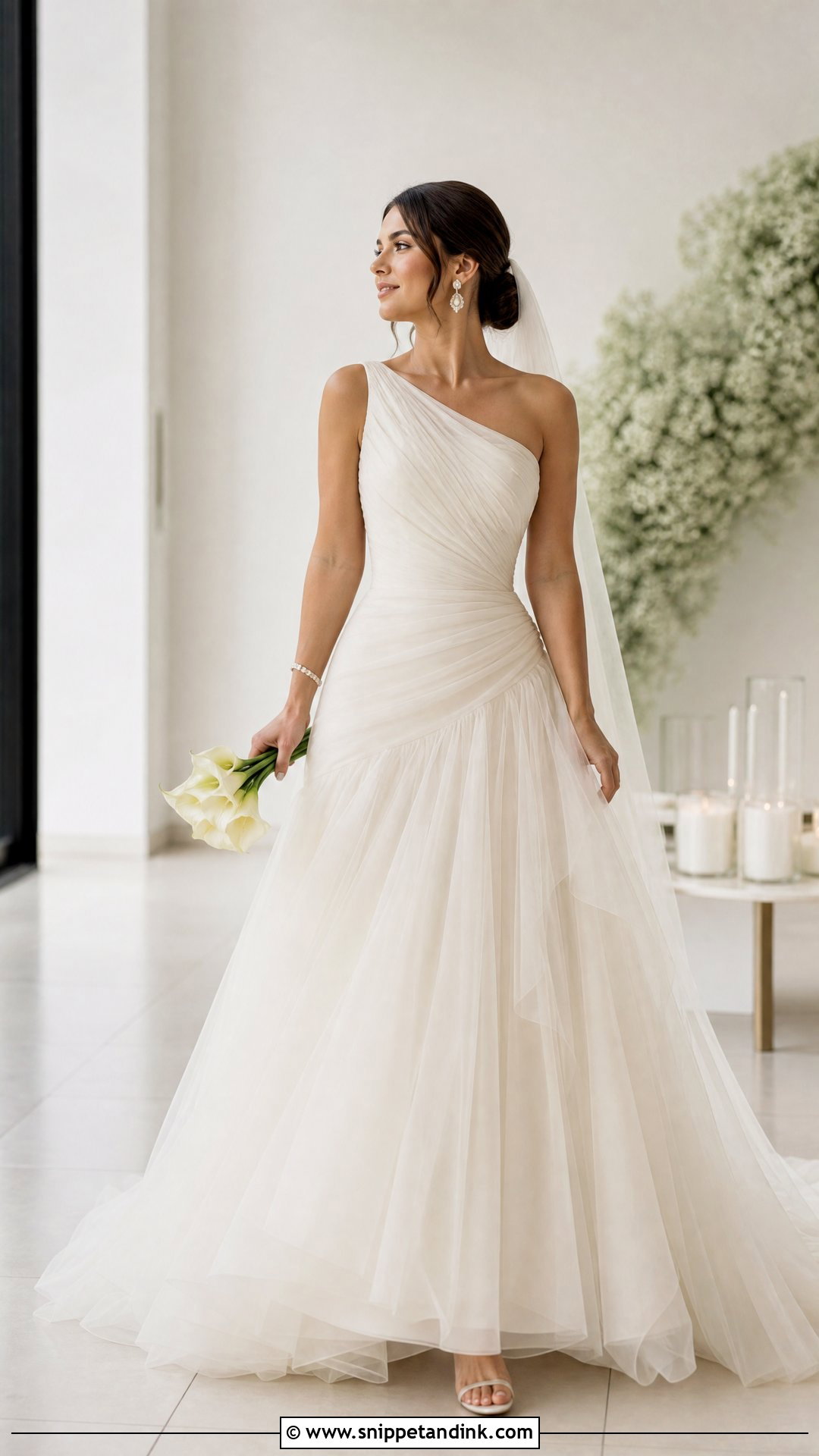
A one-shoulder bodice brings a modern diagonal to a classic ballgown. A draped tulle strap is soft; a structured satin shoulder is bold. Keep the bare side clean so the asymmetry looks deliberate. Support is the issue: the bodice must hold both sides equally, not hang from the single strap. In alterations, move your arms and twist your upper body to check that the shoulder doesn’t drag the waist out of line. Earrings rather than a necklace, a sleek bracelet, ivory heels and a bun set away from the strap suit it, with a narrow bouquet and a plain low veil.
18. Blush Tulle Wedding Dress Ballgown
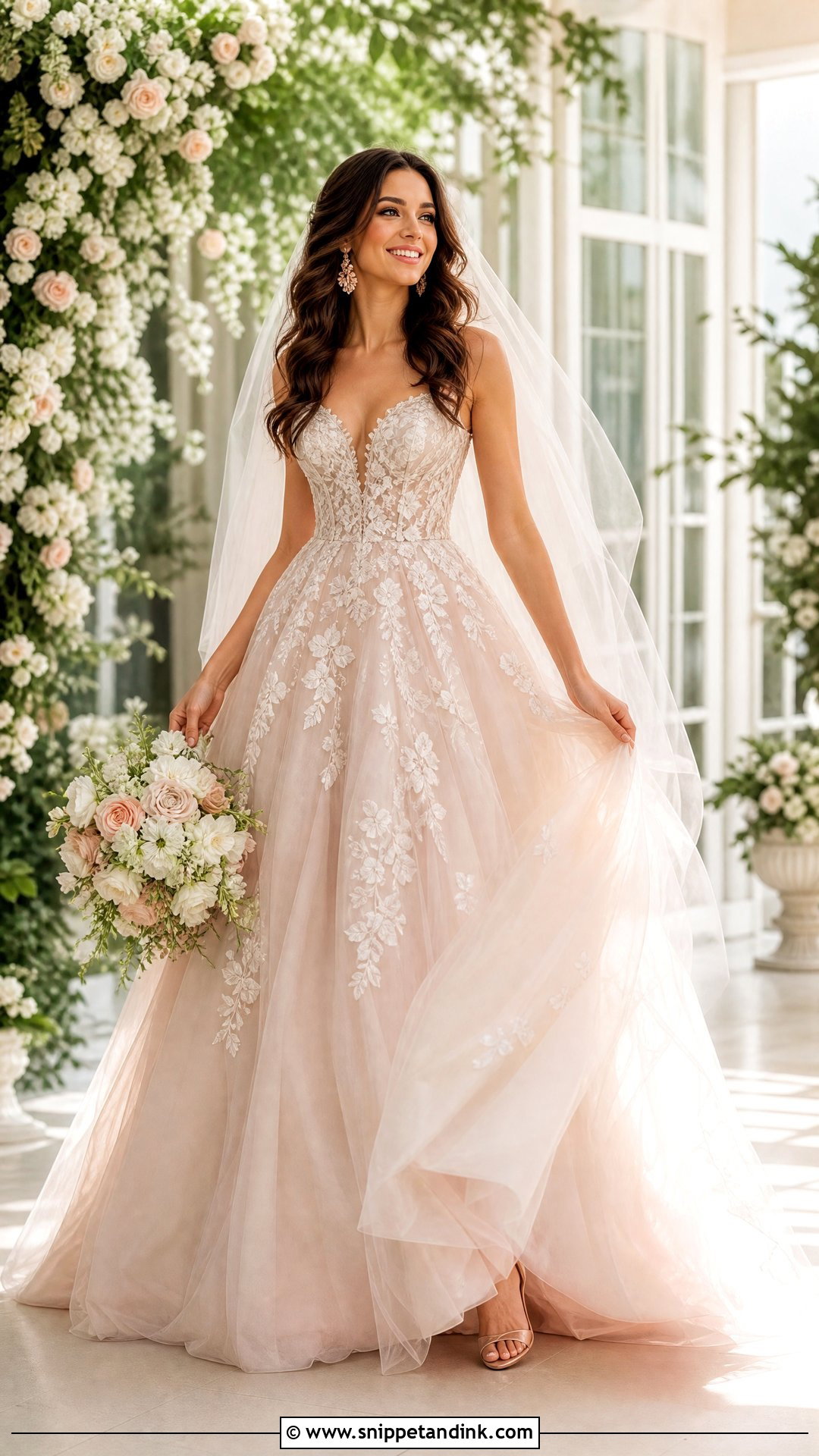
Blush tulle keeps the romance of a ballgown and swaps bright white for a softer glow. Pale pink, nude or champagne linings also make lace and appliqués stand out more. Shop lighting is often warm and flattering, so compare shades against your skin by a window. Rose-gold earrings, neutral satin heels and a sheer ivory veil give subtle contrast, and a loose chignon or brushed waves suit the softer color. Carry cream, blush and white flowers. Avoid matching every accessory to the same pink; nearby neutrals and metallics look more considered.
19. Minimalist Tulle Wedding Dress Ballgown
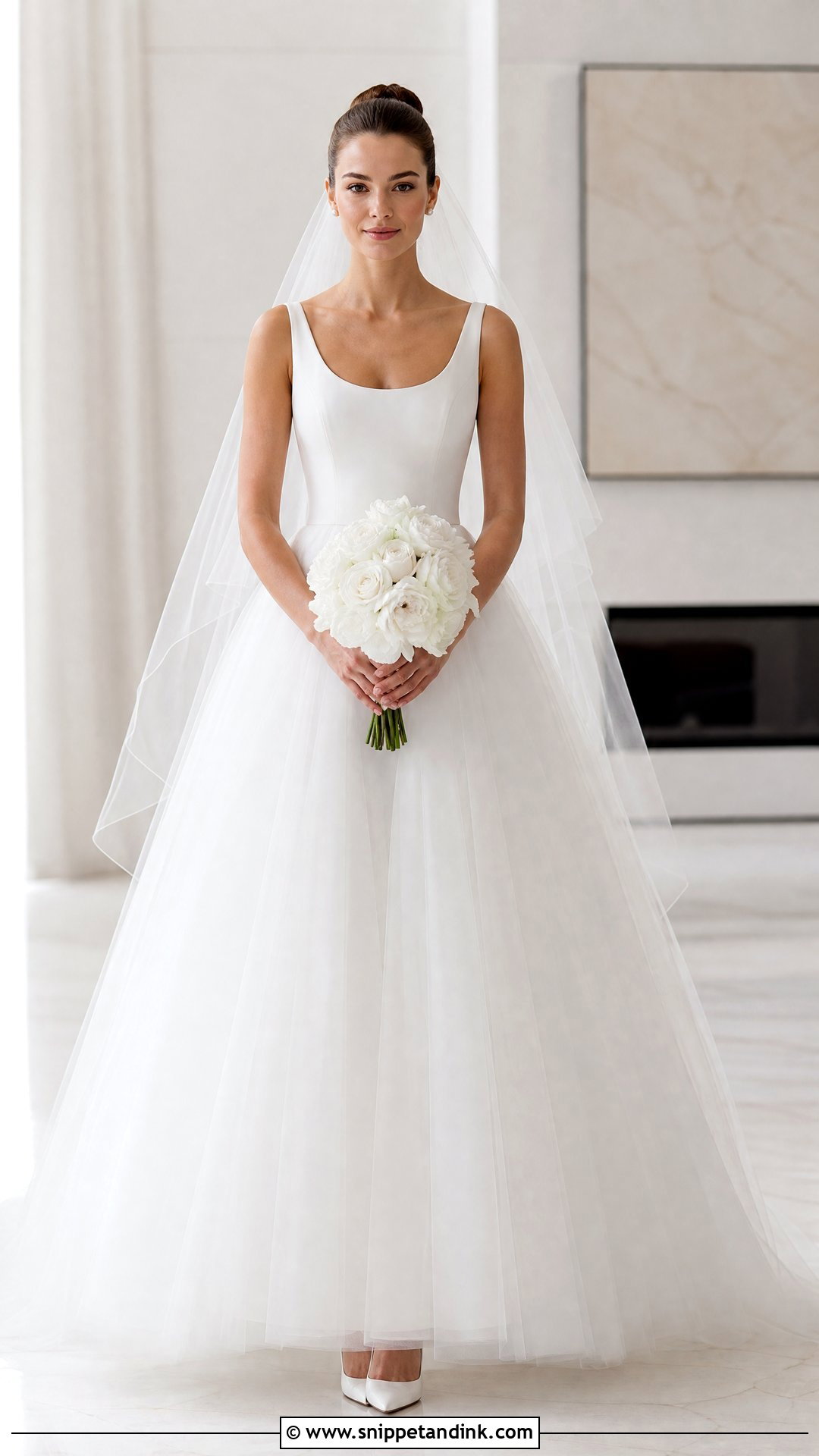
A minimalist tulle ballgown shows that volume doesn’t need decoration. With no lace, beads or glitter, construction is everything. Look at how the tulle is gathered at the waist; it should spread evenly, without bulk at the hips. A straight or scoop neckline suits it. Pearl studs, plain satin pumps, a raw-edge veil, a neat bun and an all-white bouquet keep it uncluttered. The bonus of a plain gown is freedom: it carries an heirloom veil or a statement piece of family jewelry without looking crowded.
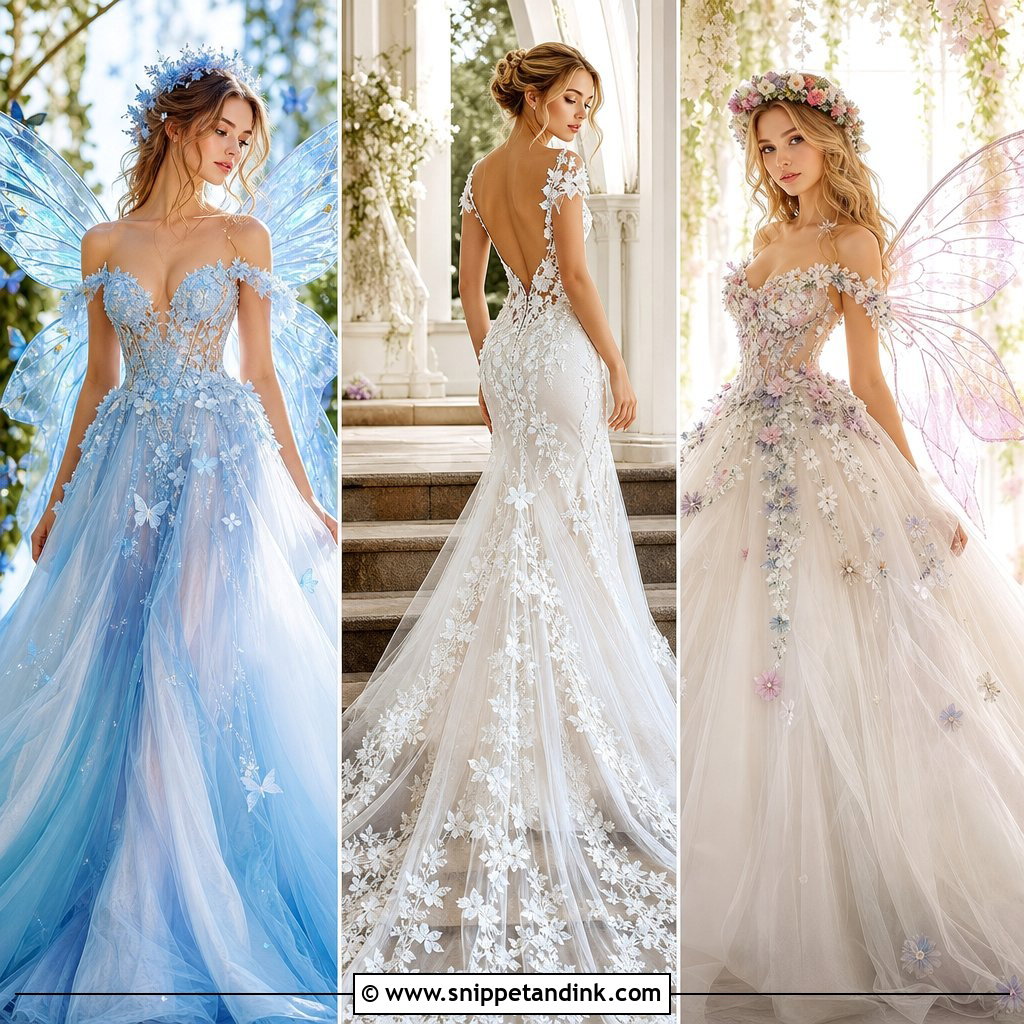
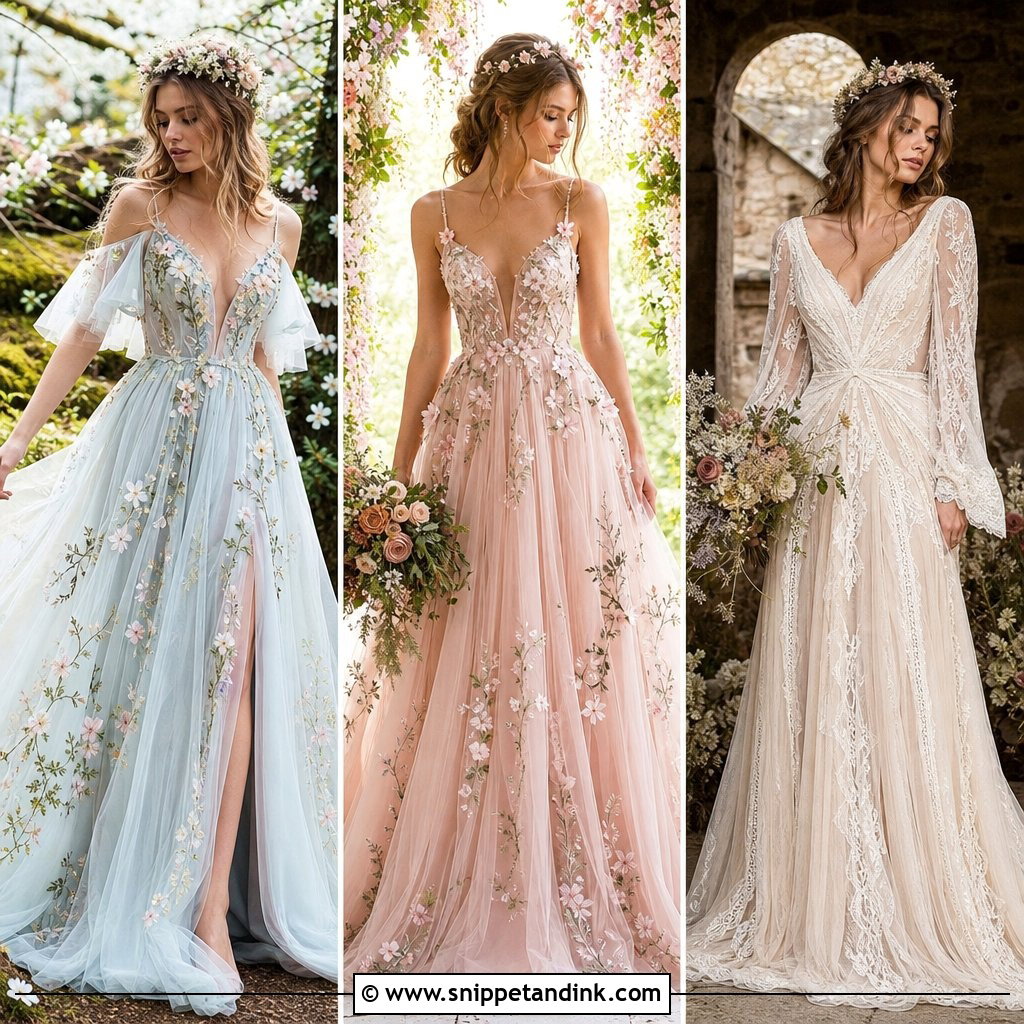
20. Modest Tulle Wedding Dress Ballgown
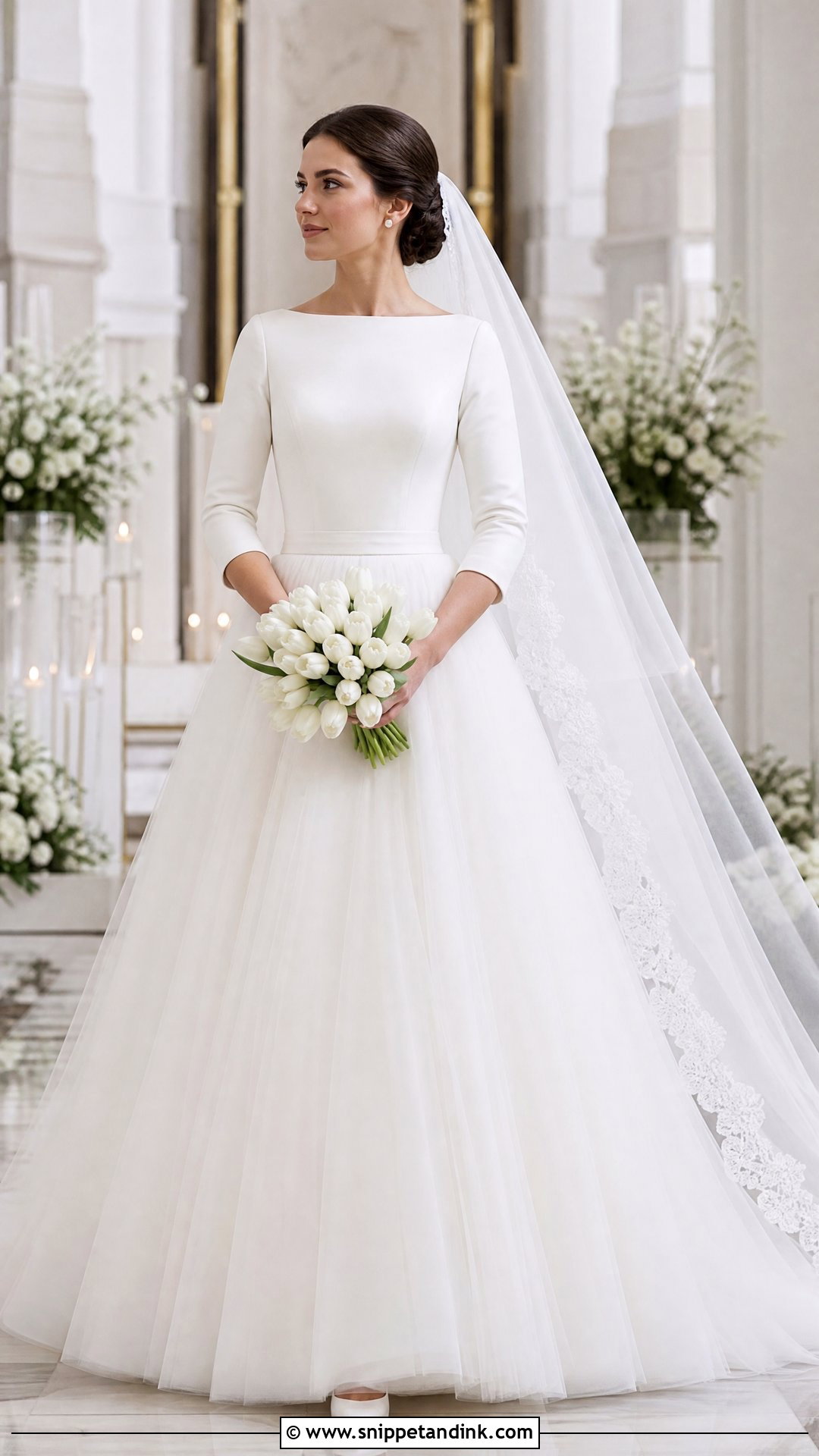
A modest ballgown gives coverage with a light, celebratory skirt. A lined bateau neckline, three-quarter sleeves or a higher back with covered buttons all work, and a defined natural waist keeps the extra coverage from looking boxy. For a summer wedding, ask about the lining fabric. Breathable linings and sleeves with some give make a big difference over a long day. A seamstress can adjust opacity, neckline height and sleeve length while keeping the gown’s proportions. Closed-toe heels, pearl earrings, a cathedral veil, a low bun and white seasonal flowers finish it.
Heat, Cold and Rain in a Full Tulle Skirt
A ballgown is a lot of fabric to wear outdoors, and weather changes how it behaves. I plan for the forecast at the final fitting, not on the morning.
In the heat
Layers of tulle trap warm air around your legs. A removable petticoat helps, as does a breathable cotton or silk slip next to the skin. Sweat shields sewn into the bodice protect satin and lace, and a small fan in someone’s pocket is worth more than any accessory.
In the cold
Coats rarely fit over a full skirt. A cape, a faux fur stole or a cropped jacket covers the shoulders without crushing the volume, and thick tights or thermal shorts can hide under the layers without anyone knowing.
In the rain
Tulle dries quickly, but mud doesn’t wash out on the day. Have someone lift the back of the skirt on wet ground, keep a large clear umbrella for photos, and pack a towel and a soft brush. Let any splashes dry fully before brushing them off gently; rubbing wet mud into net spreads it.
Wear It for an Hour Before You Say Yes
A ballgown should look right from every angle and still let you walk, sit and dance. Settle the overall shape first, then compare waistlines, necklines, sleeves, decoration and train length. Venue and season matter, but they shouldn’t overrule what you love. Construction and alterations count as much as the look, so bring your shoes and underwear to every fitting and practice moving in the finished gown. If you can spend an hour in it at the final fitting without wanting to take it off, you’ve found the right one.
You'll Like These Ideas:


Leave a Reply