
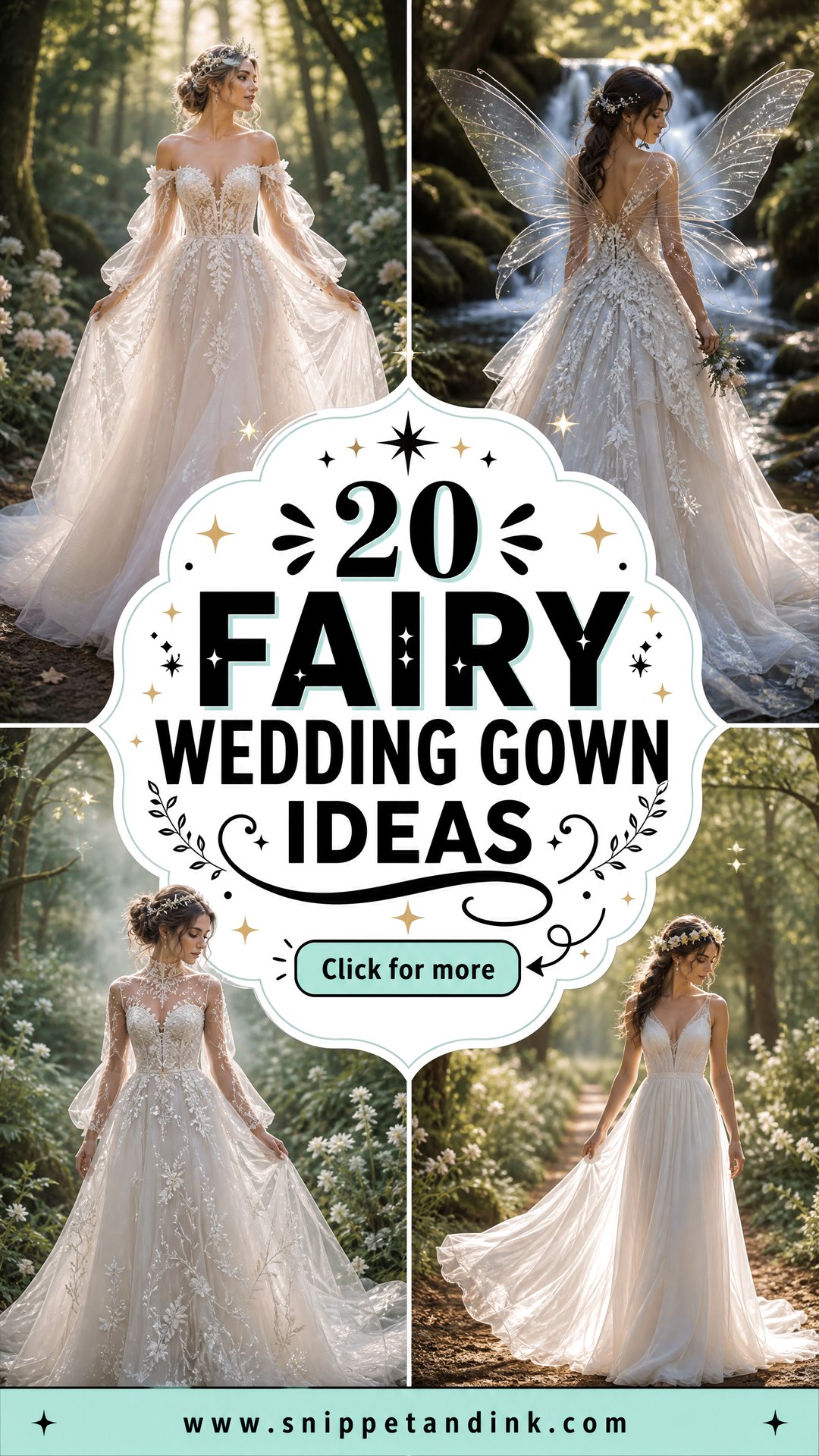
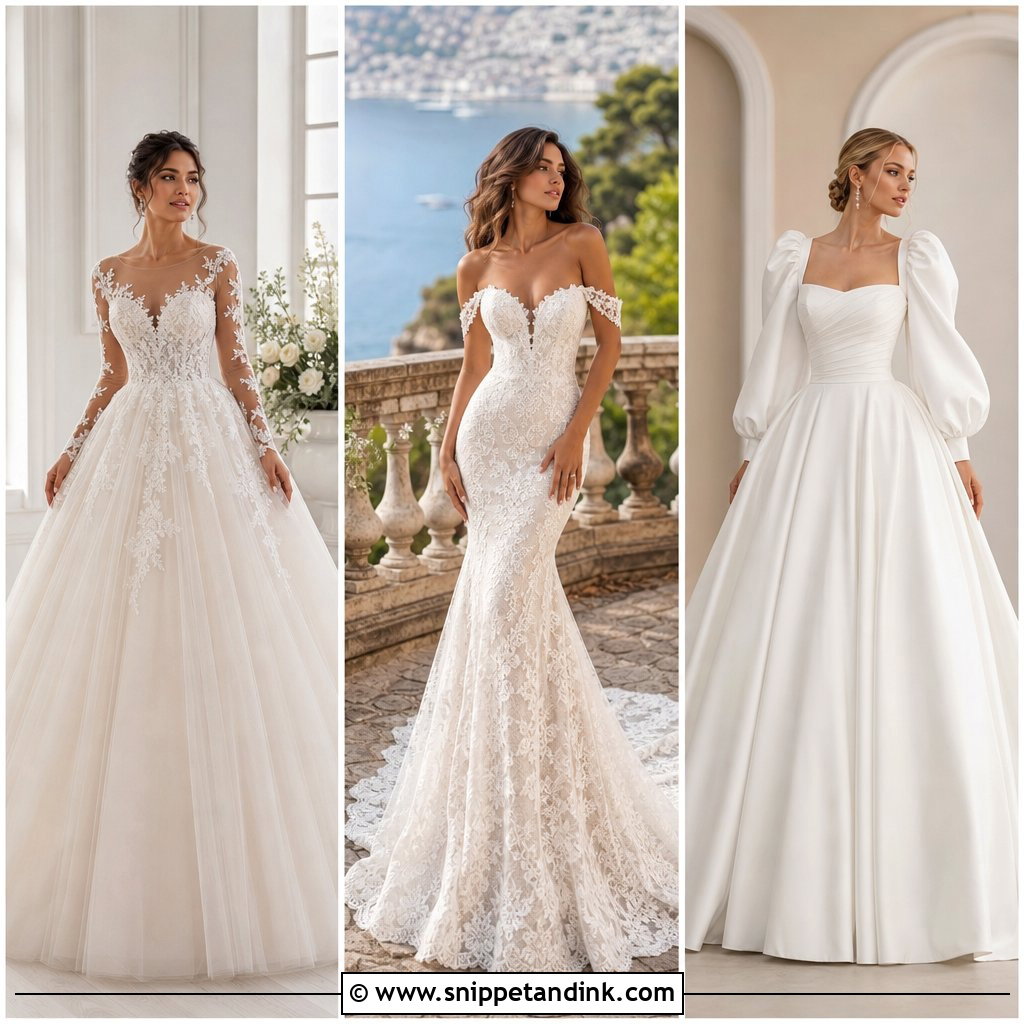
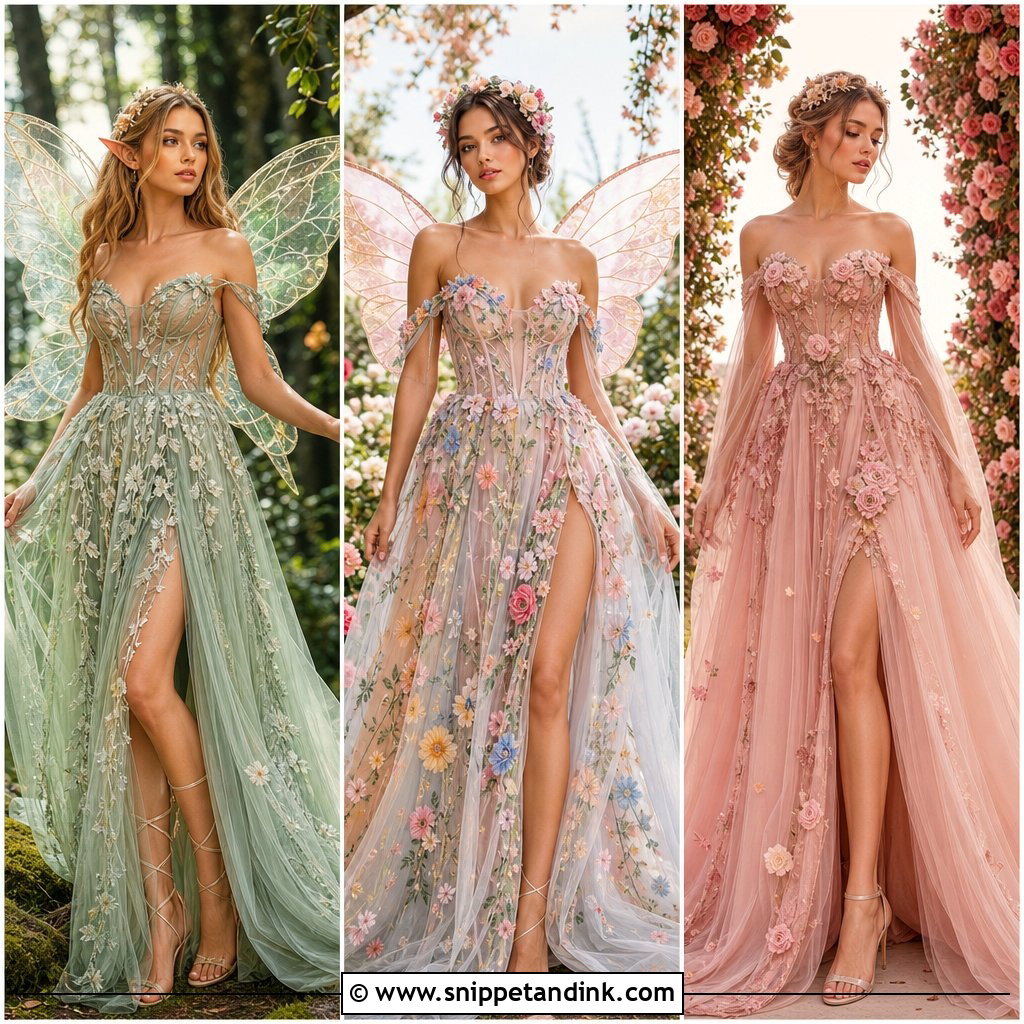
A fairy-inspired bridal look lives on soft movement and nature-inspired texture, and it tips into costume the moment one element shouts. The details I reach for most are airy tulle, embroidered vines, dimensional flowers, sheer sleeves, a little shimmer and gentle corsetry, and fuller fairytale skirts with floral work are easy to find in bridal shops right now. A dress like this can work in a woodland clearing, a garden, a castle or a plain indoor room. Below are twenty gowns, from dramatic ball gowns to relaxed chiffon, with what I’d check on each one for your body, season and comfort.
Your First Bridal Appointment for a Fairy Look
Fairy gowns photograph very differently on a hanger than on a body, so the first appointment is about learning which shapes and fabrics suit you, not finding the dress. A little preparation makes that hour far more useful.
- Bring a handful of photos, and point to what you like in each one: the sleeves, the skirt, the colour. That tells me more than a whole mood board.
- Wear the kind of undergarments you’d actually marry in, or a smooth nude set, so bodices fit the way they will later.
- Know your total budget including alterations, which can add a meaningful amount to a structured or lace gown. Costs vary widely, so ask each salon for a typical range.
- Keep the group small. Two people whose taste you trust give clearer feedback than six opinions at once.
- Try at least one shape you think you won’t like. Fairy brides who arrive set on a full ball gown often leave with an A-line.
Take photos from the front, side and back if the salon allows it. A gown that looked dreamy in the mirror can look quite different from behind, and that’s where your guests will see it during the ceremony.
1. Floral Appliqué Fairy Wedding Gown
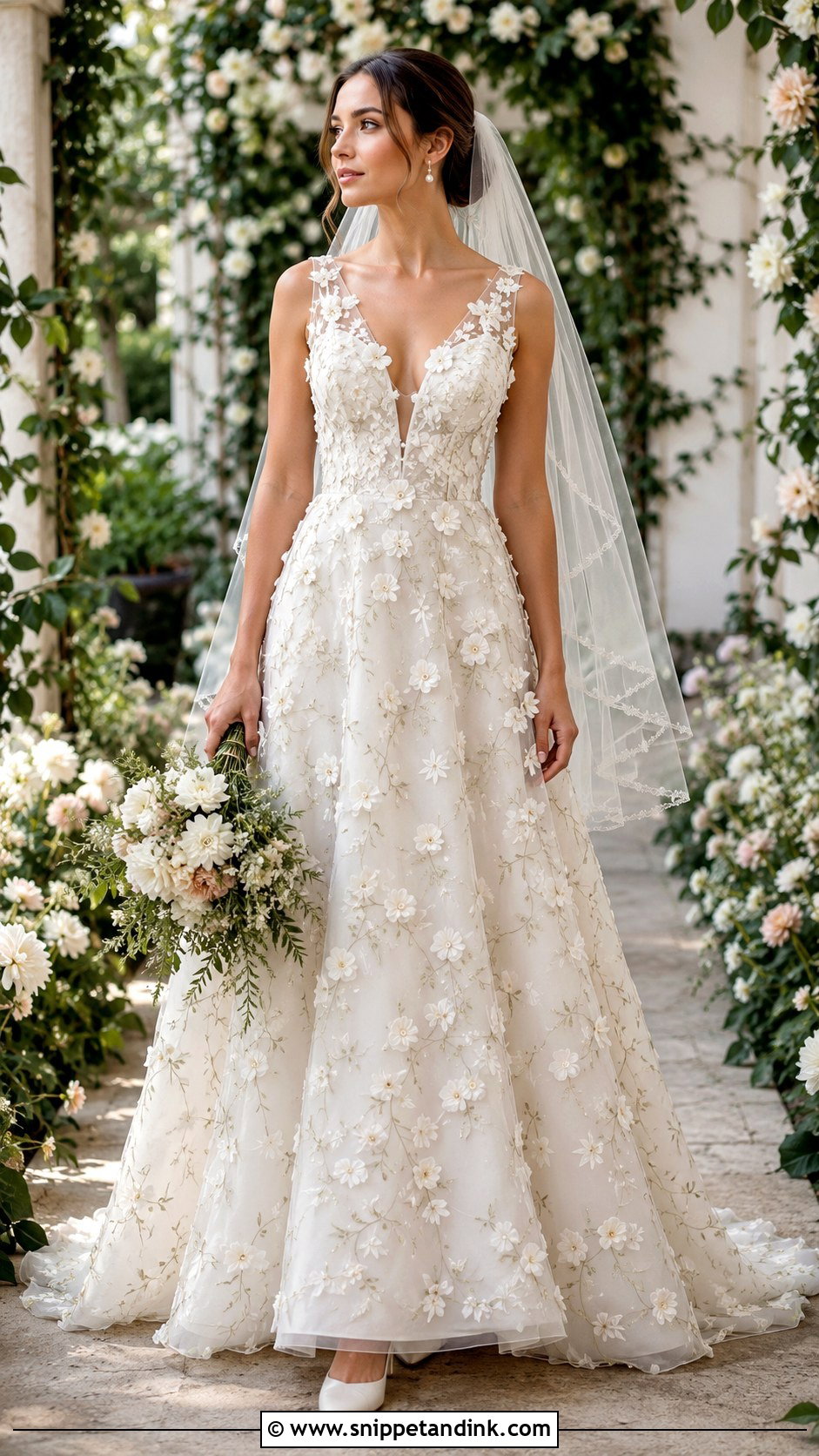
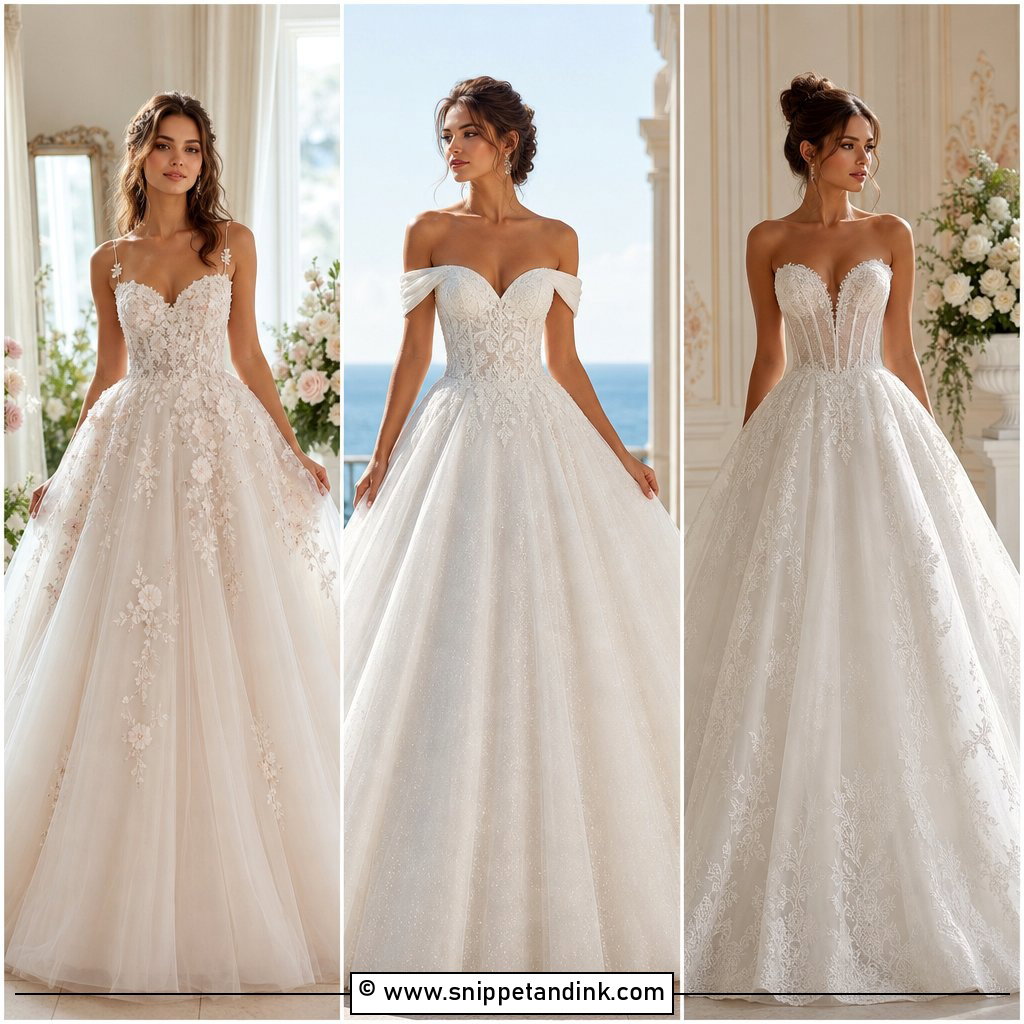
Appliqué gives texture without heavy ornament, which is why I start so many fairy brides here. On an A-line, embroidered vines and three-dimensional blossoms placed in a loose vertical line draw the eye down the dress and make you look taller. A plain-bordered fingertip veil lets the flowers stay the focus. If the bodice is sheer and you want more coverage, ask for a lining or an illusion neckline added in alterations. Pearl drops, a loose braid and ivory flats or low block heels finish it, with a loose botanical bouquet.
2. Tulle Ball Gown Fairy Wedding Dress
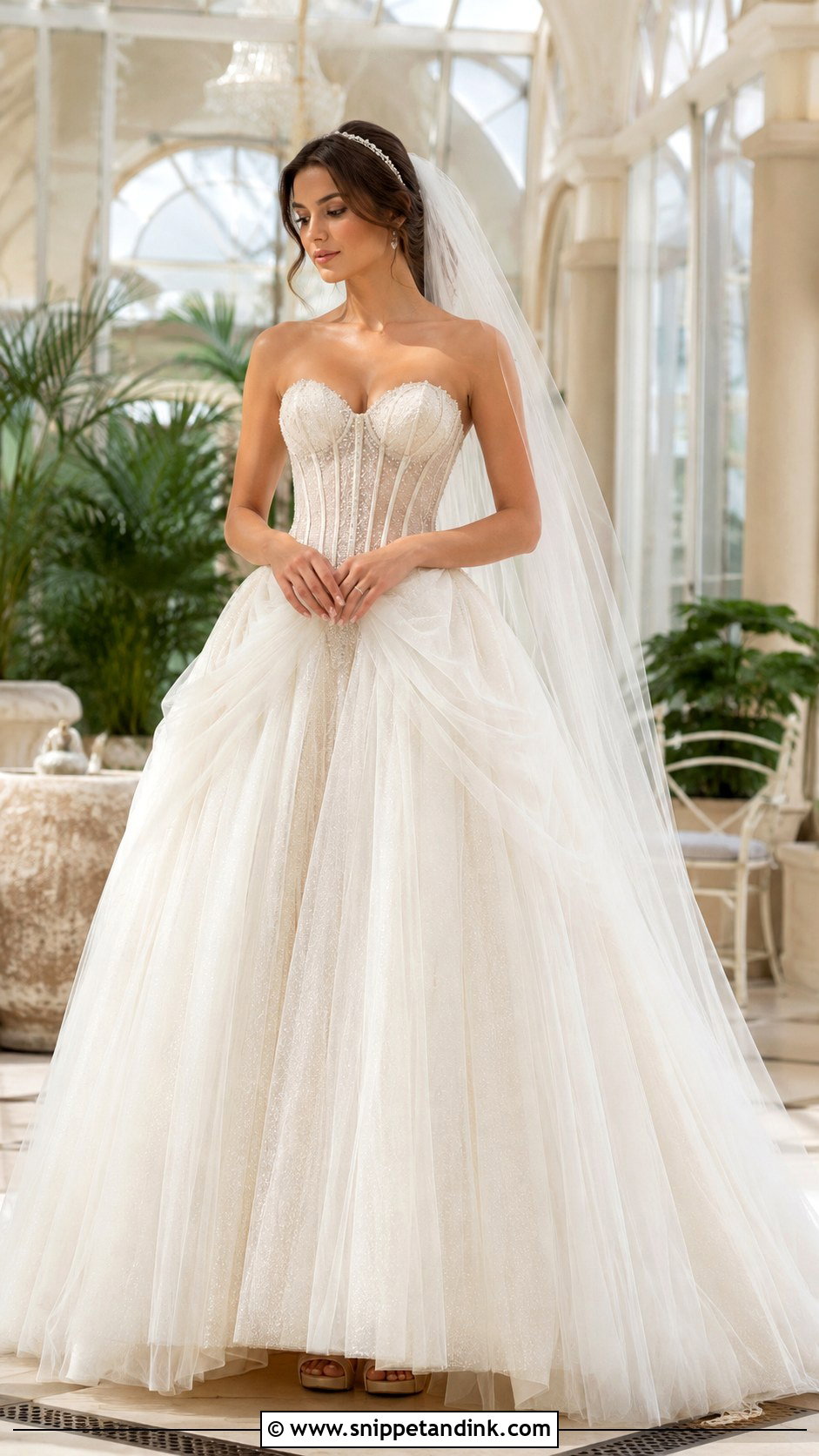
Several fine layers of tulle give volume while keeping the skirt soft enough to sway. A fitted bodice with a natural or basque waist suits the shape, and a faint sparkle underlay catches daylight without looking glitzy. Bust support is the question I ask first: internal boning, wider straps or detachable off-the-shoulder bands all help. Have the front hem set a little shorter than the back so you don’t kick the skirt as you walk. A small bouquet and minimal jewelry keep this complete princess-like look light.
3. Long Sleeve Lace Fairy Wedding Gown
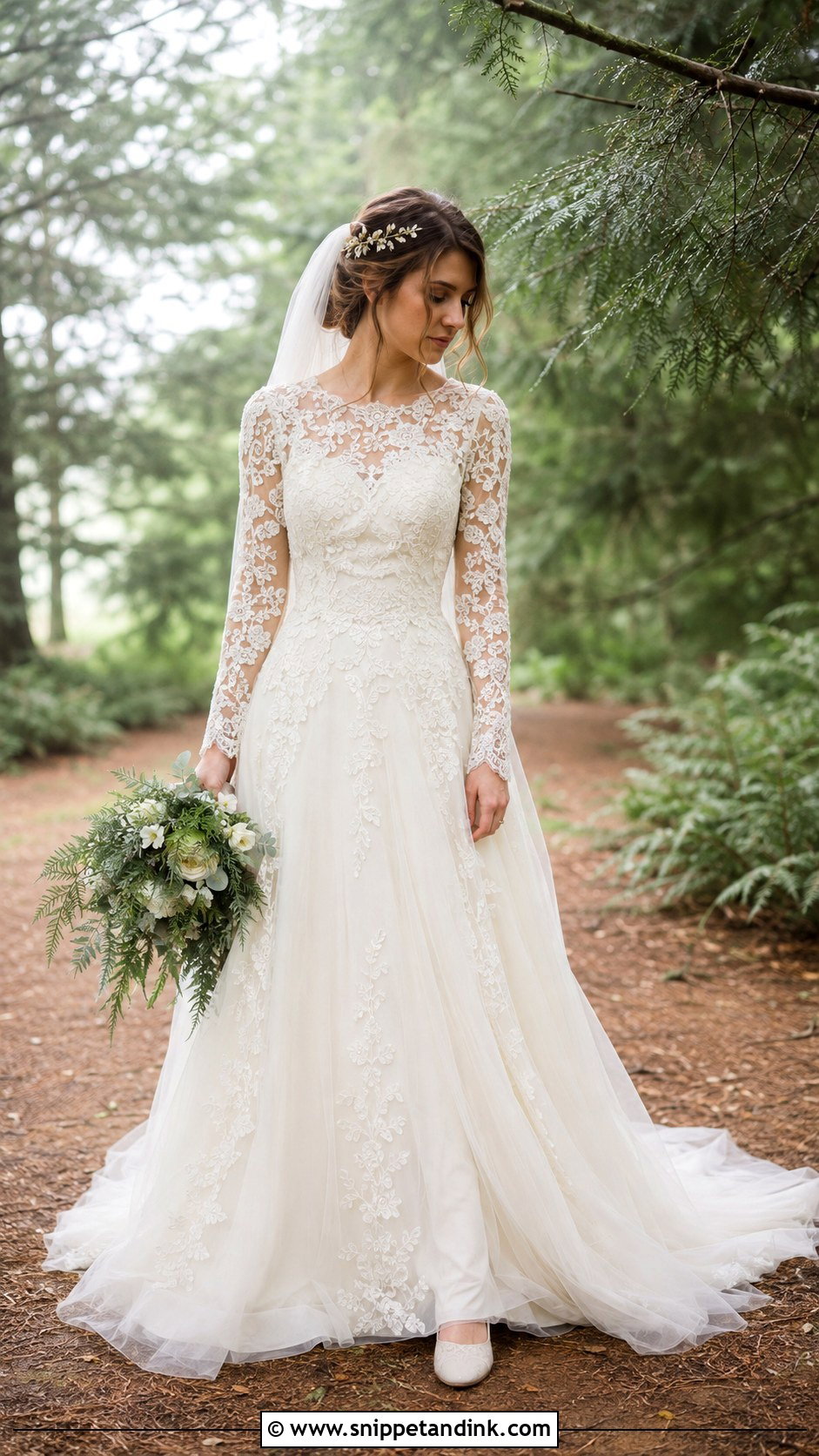
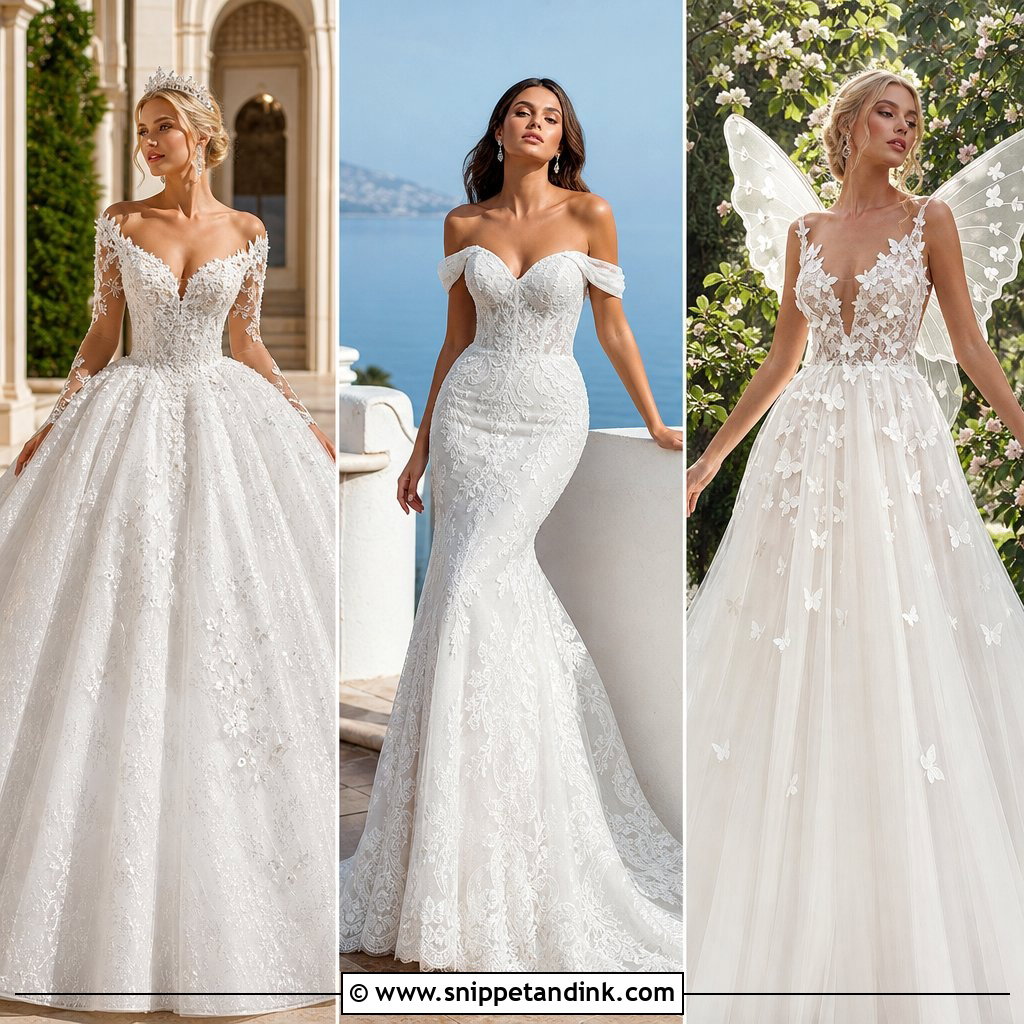
Fine leaf lace on fitted illusion sleeves reads more organic than dense traditional motifs, which suits a woodland wedding or a cold month. A flowing A-line with a lightly structured bodice keeps it graceful. If the ceremony is outdoors, I add a lined cape that comes off indoors, because lace sleeves alone won’t keep you warm. Sleeves can be lined in a skin-tone or ivory fabric for less transparency. Check that the cuffs let you move your hands freely before the last fitting.
4. Off Shoulder Fairy Wedding Gown
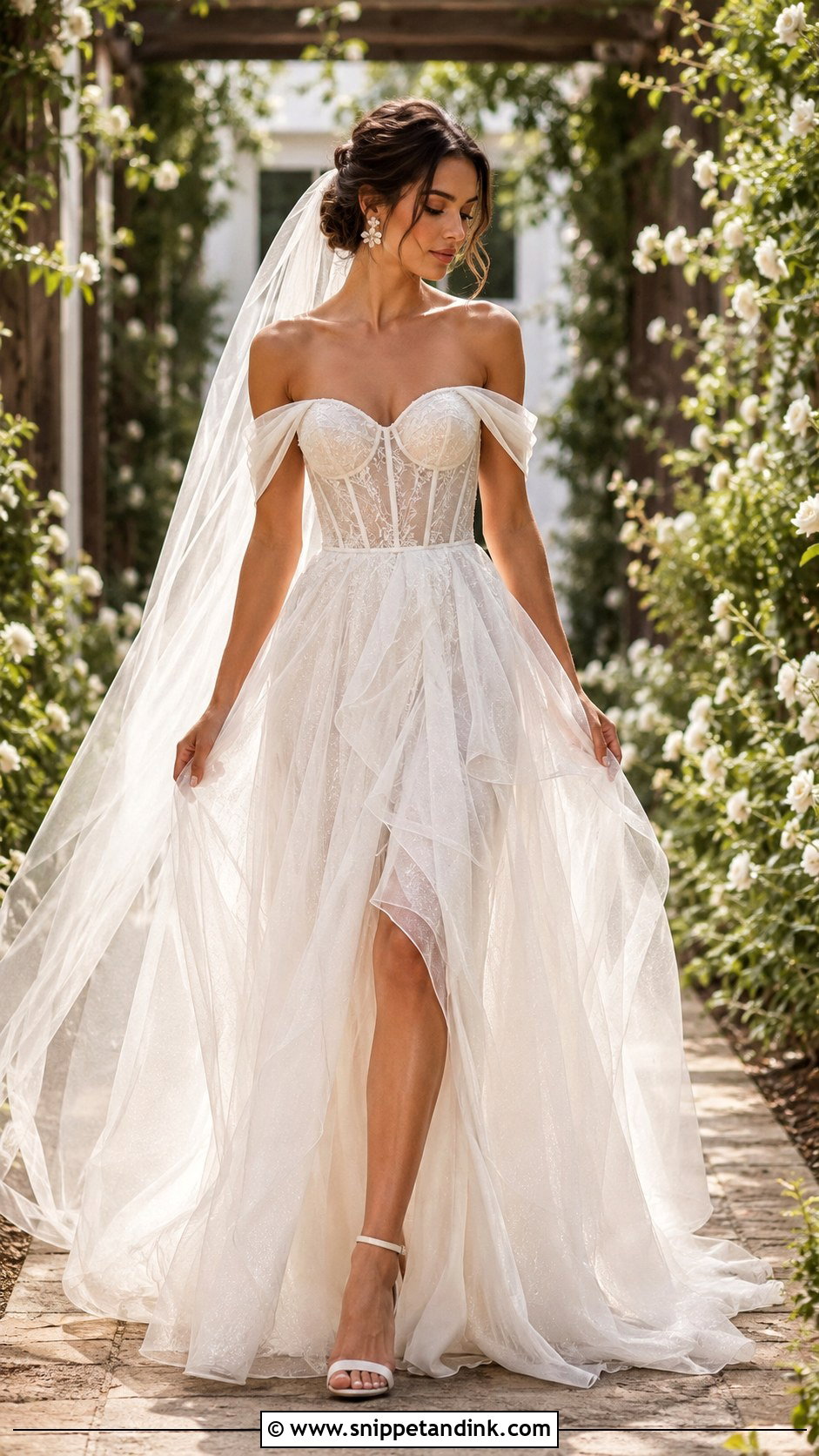
An off-the-shoulder neckline frames the collarbone, but only soft draped sleeves let you raise your arms properly; stiff bands clamp them to your sides. Pair the drape with a corseted bodice and an organza or tulle skirt. Half-up hair keeps the neckline visible and gives the floral pins something secure to grip. I walk, sit and lift arms with every bride in this neckline at the fitting, and detachable sleeves are the easy fix if they restrict you. A fine chain necklace and low heels with ankle straps complete it.
5. Blush Fairy Wedding Gown
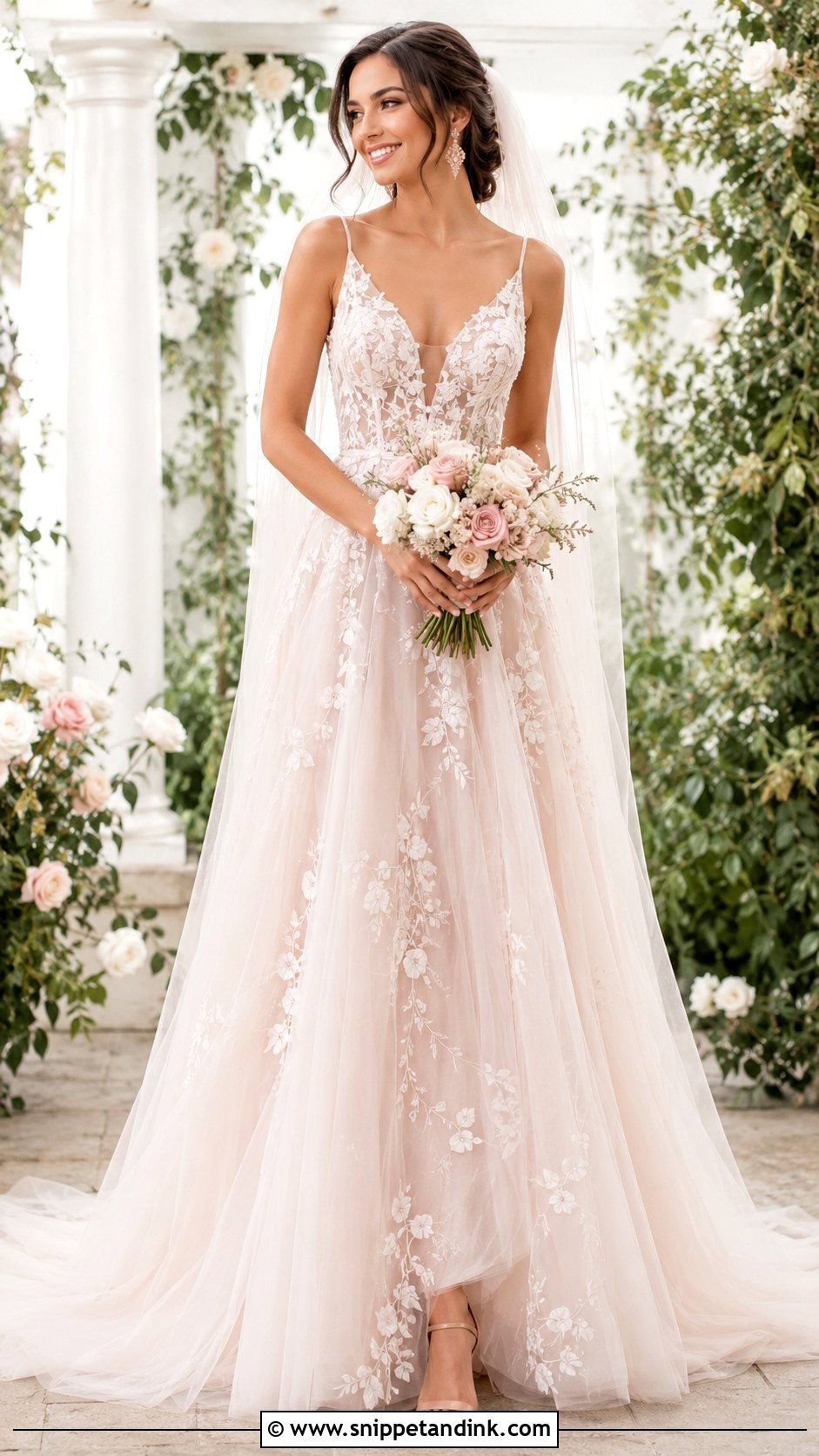
Blush makes lace and floral embroidery look more dimensional, because the colour shows through the gaps. My favourite version is a blush underlayer beneath ivory tulle, a hint rather than a pink dress. A fitted V-neck and A-line skirt adapt to most figures. Check it in daylight and indoors, since blush photographs differently under each. For just a trace of colour, ask for linings in misty rose, almond or soft champagne rather than a saturated pink.
6. Corset Fairy Wedding Gown
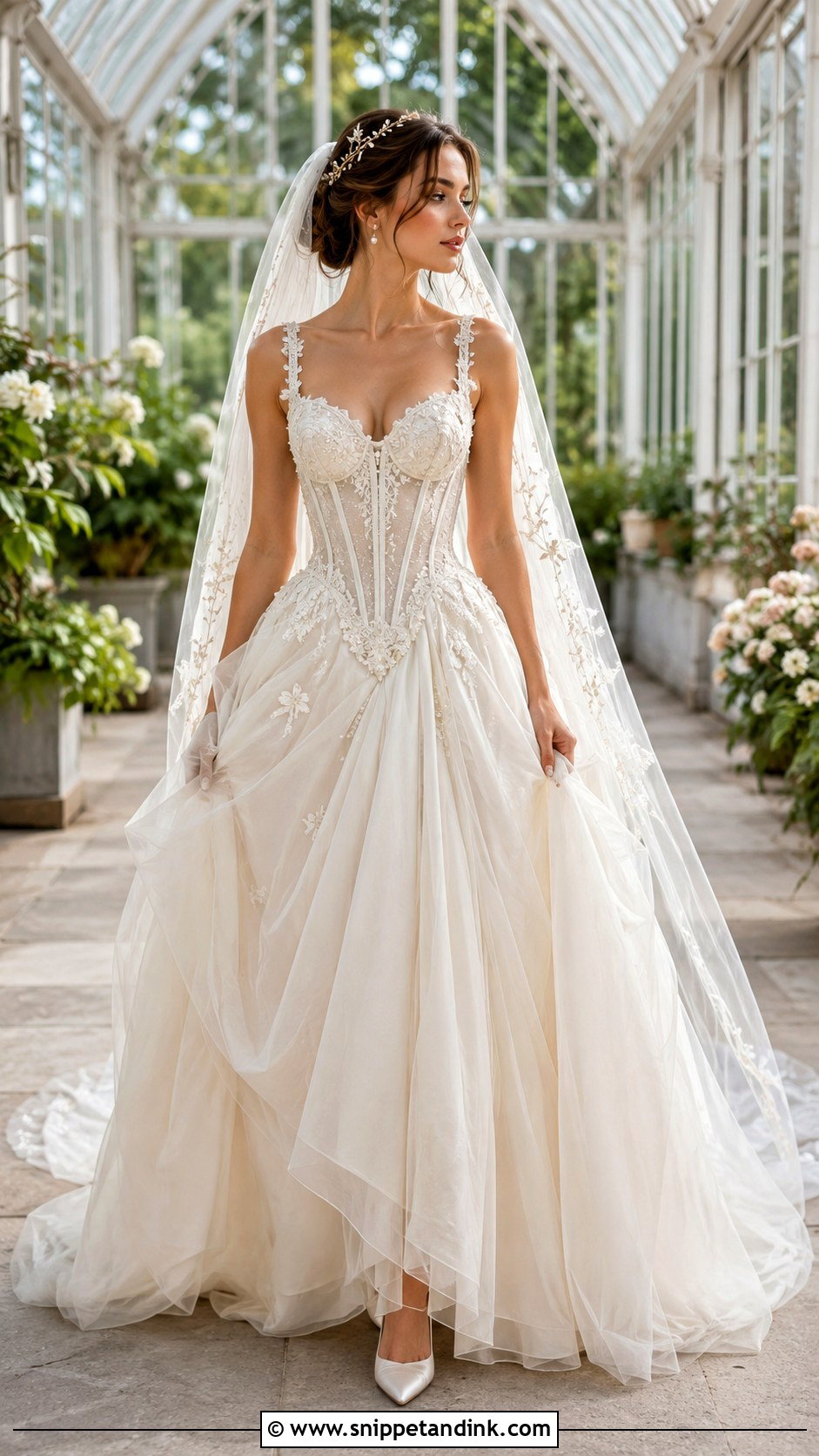
Corsetry pairs naturally with lace, pearls and sheer tulle, which is why it shows up on so many fairy gowns. Look for curved seams and subtle boning under the lace, with a softly gathered A-line skirt so the outfit doesn’t turn rigid. If you don’t want visible boning channels, ask for matching lining or appliqués placed over them. The bodice has to support you while you breathe, sit and eat dinner; I check all three before the final fitting. A vine hairpiece and a compact bouquet keep the waist the focus.
7. Chiffon Fairy Wedding Dress
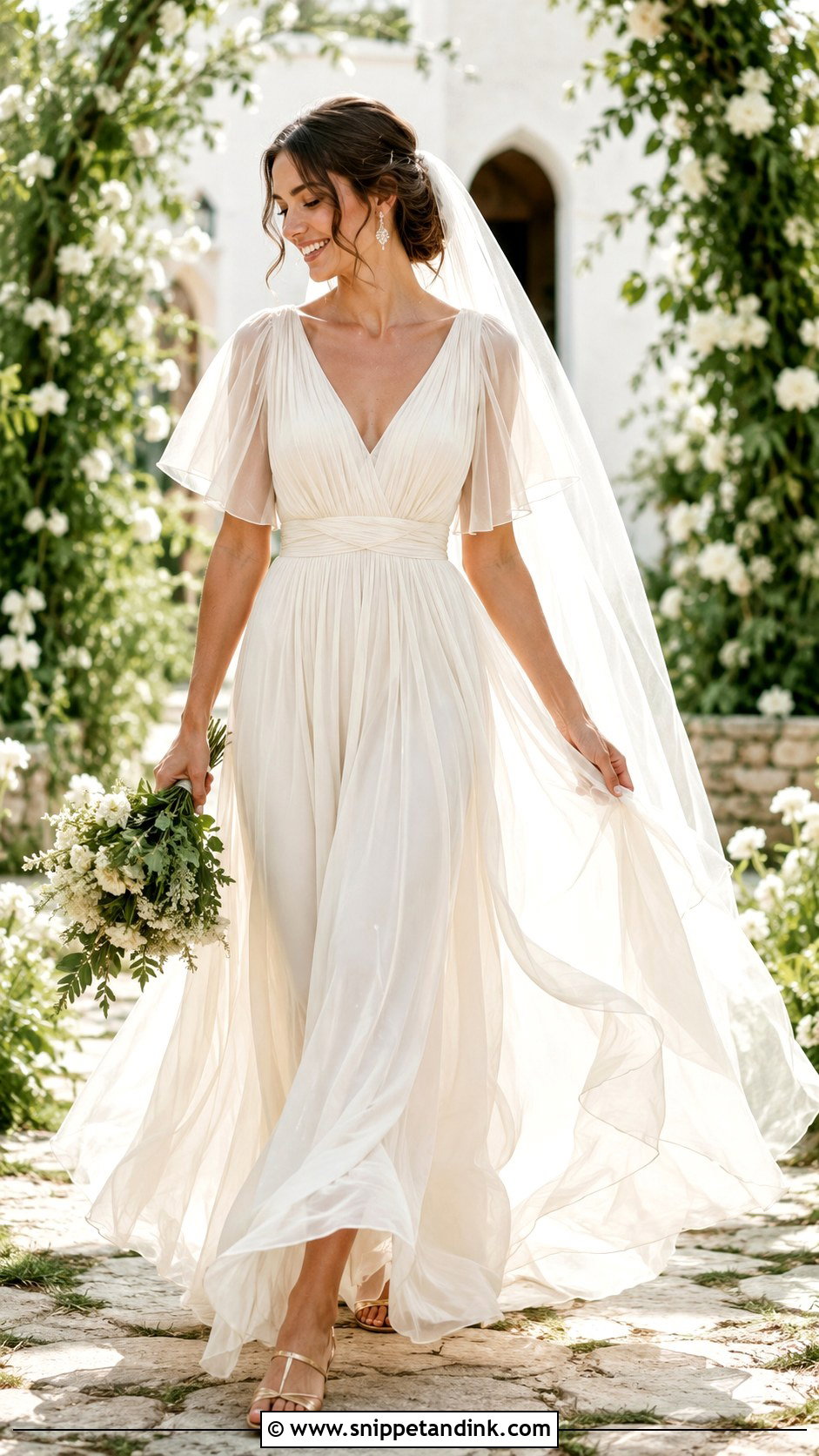
Chiffon doesn’t need a big skirt to feel ethereal. It falls softly from a gathered bodice and defined waist, and several skirt panels give it movement at the slightest breeze. Flutter or cape sleeves add coverage without breaking the fluid line. My one caution: chiffon shows seams and underlayers in bright light, so ask for a smooth, breathable foundation layer. Metallic flat sandals and a small-bloom flower crown suit it better than anything heavy.
8. Bell Sleeve Fairy Wedding Gown
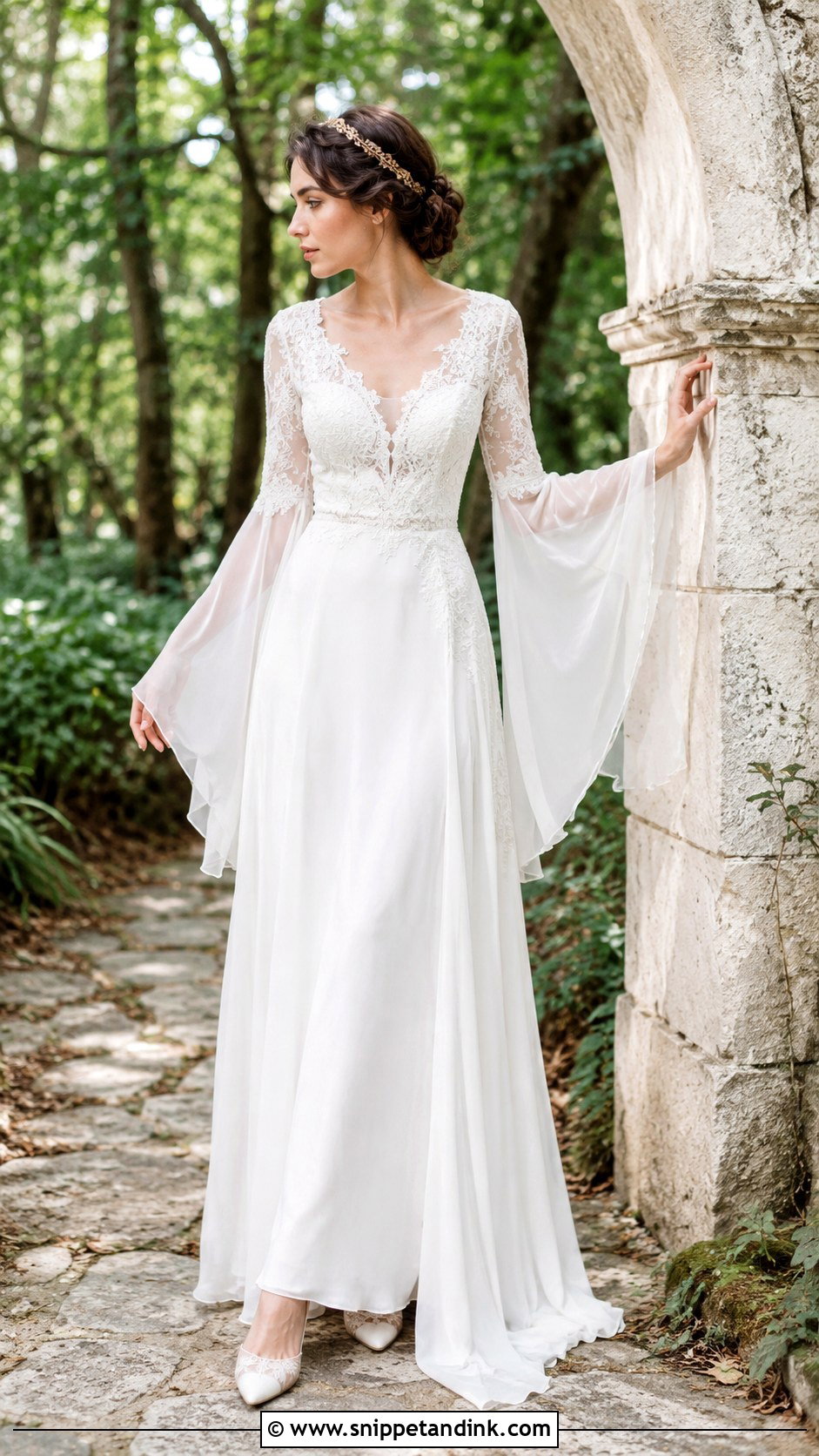
Bell sleeves bring a subtle medieval influence without losing the bridal feel. They should fit close through the upper arm and widen only near the elbow or wrist, or the lace looks bulky. A narrow A-line skirt balances that sleeve volume. I ask for discreet finger loops at the sleeve ends to keep them tidy in photos, and if long cuffs will get in the way at dinner, detachable sleeves are worth it. A shoulder-length veil, or none, keeps the sleeves visible.
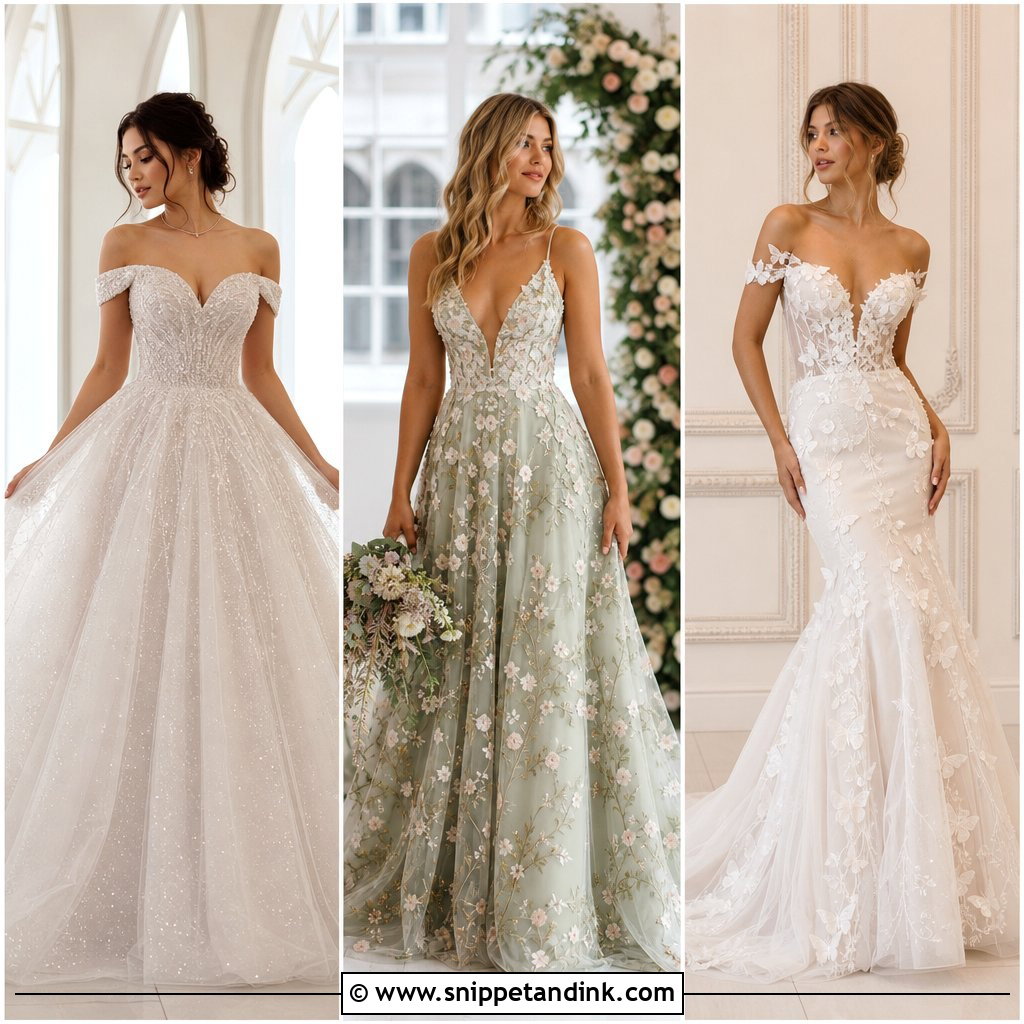
9. Green Fairy Wedding Gown
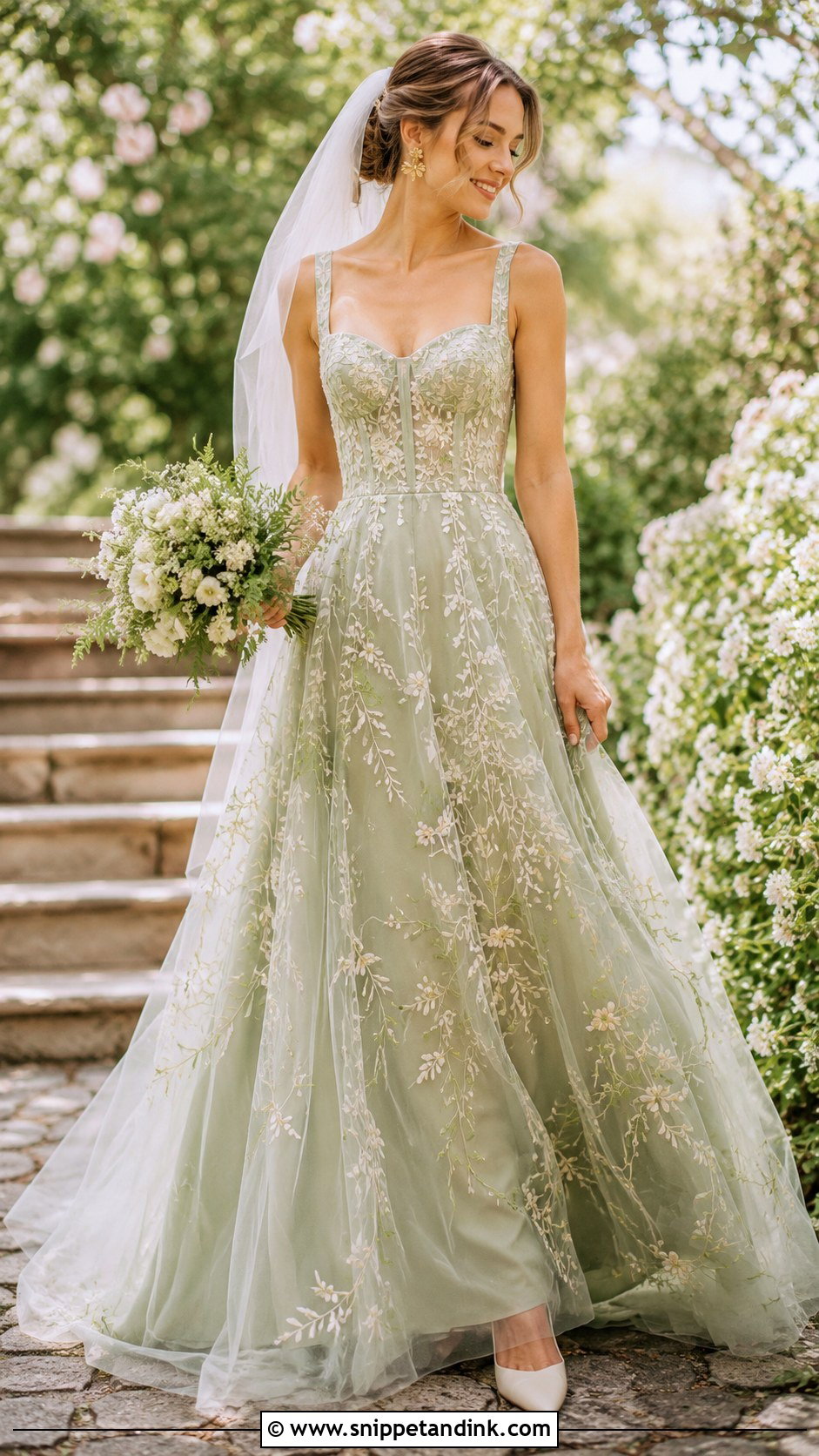
Green is harder to choose than it looks. Sage, celadon and eucalyptus all carry grey, blue or yellow undertones, so I compare samples against the bride’s skin in daylight before anyone orders a pale green gown. Under ivory lace or embroidered tulle it reads botanical and still bridal. A plain ivory veil keeps the colour from taking over. If you want something more traditional, put the green only in the underlayer, sash or embroidery.
10. Sparkly Fairy Wedding Gown
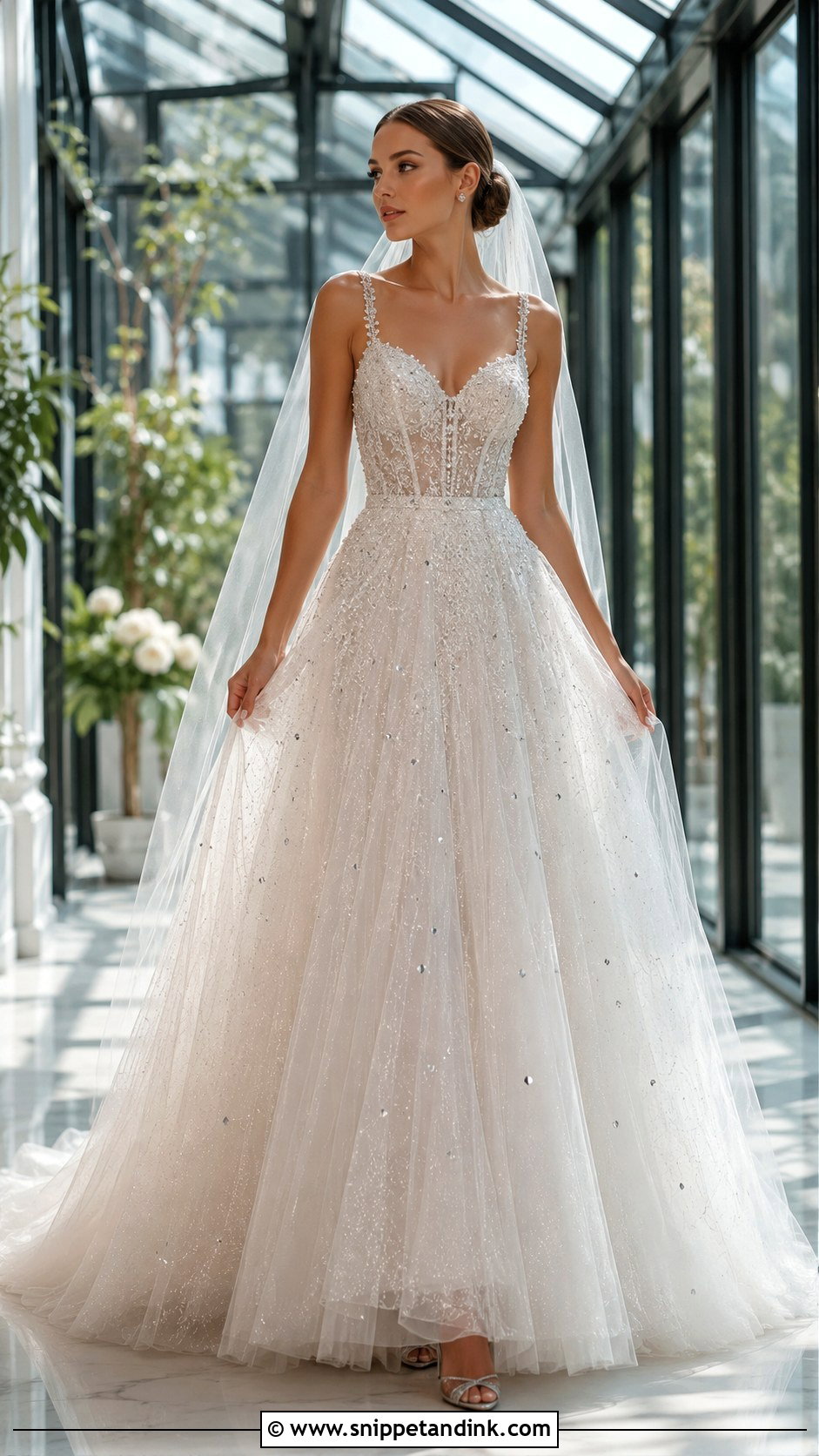
Shimmer works best when it’s scattered: glitter tulle, a few crystals, translucent beads or fine metallic thread rather than dense sequins. Look at the fabric in daylight, indoors and under a phone flash before deciding, because each changes it. Beading under the arms rubs over a long day, which matters if your skin is sensitive, and a smooth lining fixes it. Pair with a plain veil, since a sparkly one on top of a sparkly skirt becomes visual noise.
11. Fairy Wedding Gown With Wings
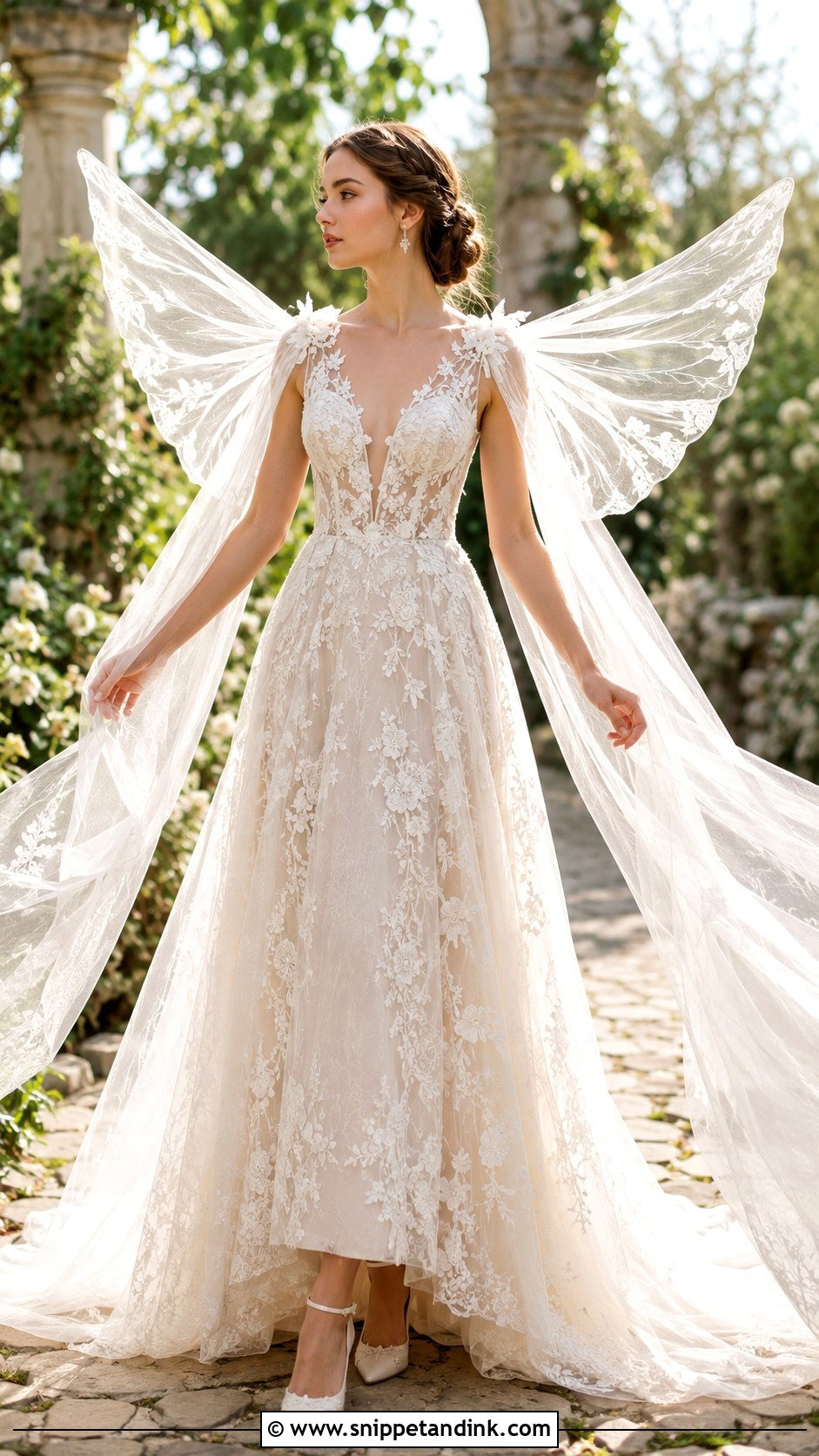
Wings only stay elegant when they behave like draping. Sheer tulle panels fixed at the shoulders or upper back and trailing like a soft cape read bridal; wired wings read fancy dress. Wear them over a clean A-line with a floral lace bodice, and skip a long veil, as the layers tangle. Test the panels outdoors in wind at your fitting, keep them short enough to walk safely, and take them off after portraits if you want a simpler reception outfit.
12. Fairy Wedding Gown With 3D Flowers
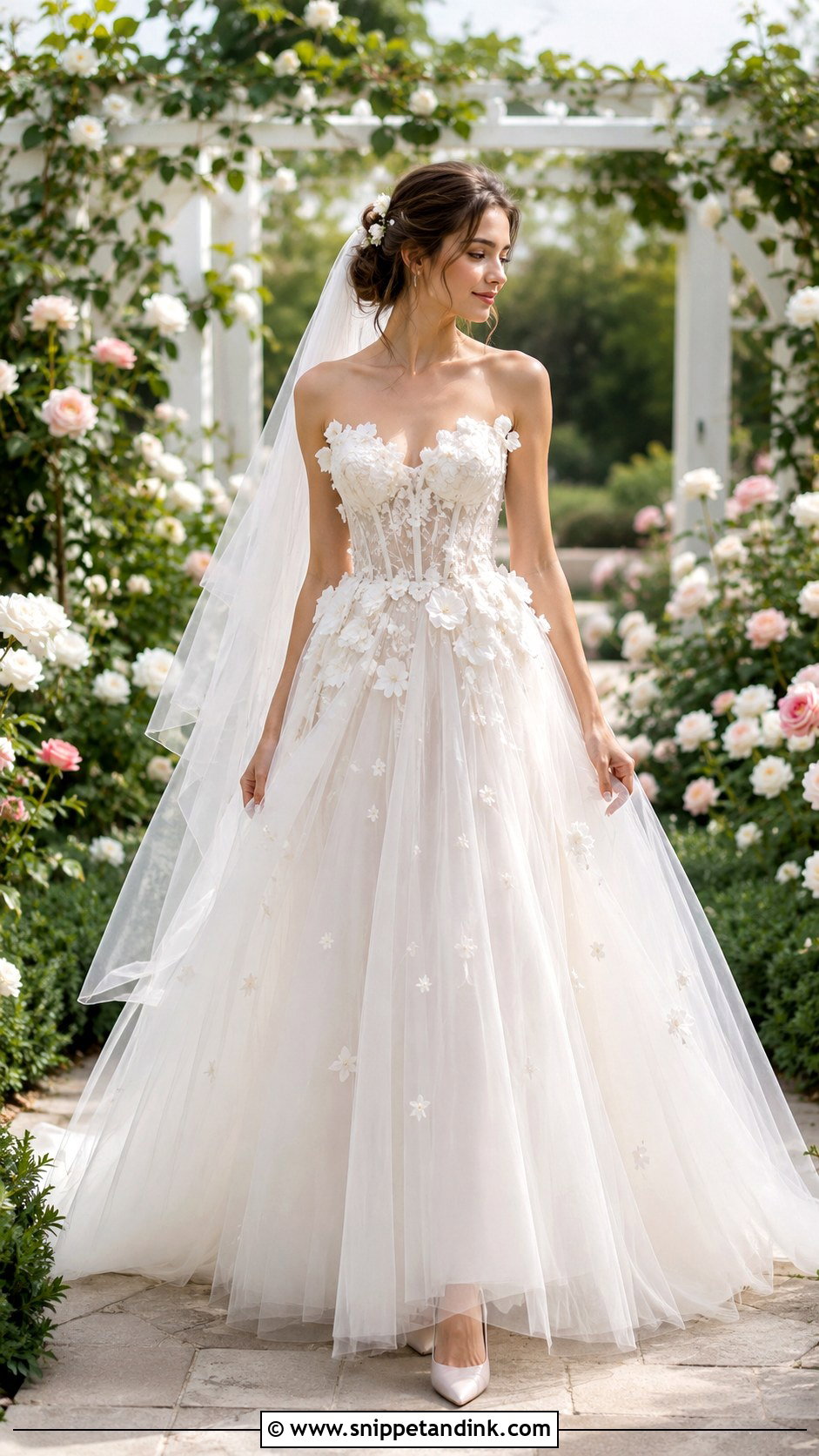
Varying the flower sizes is what gives a 3D floral gown real depth. I like small blossoms concentrated at the neckline and waist, then a lighter scatter across the skirt, so the silhouette stays defined. Check that flowers near the arms don’t scratch or catch on bracelets. Tell your seamstress about the appliqués before she plans the bustle, because the pick-up points have to avoid them. Plain veil, tiny earrings and a few matching floral pins in a soft updo.
13. Fairy Wedding Gown With Cape
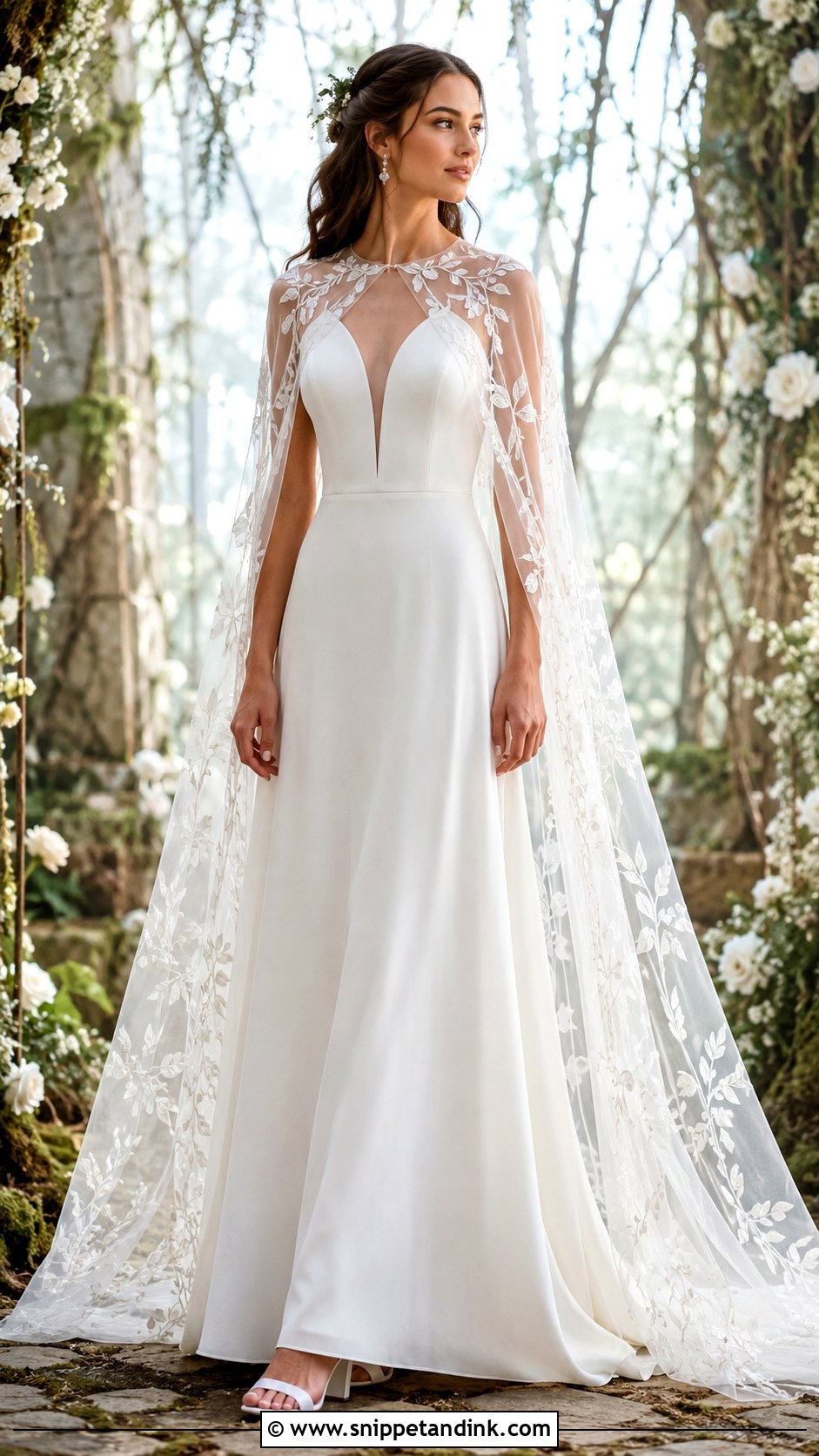
A cape gives coverage and drama without permanently changing the dress. A sheer tulle one with a small collar or botanical edging works best over a sleeveless or strapless A-line, where the contrast keeps both visible. It can replace the veil, which cuts down the fabric at your back. The thing to plan is length: the cape has to sit with the train, not tangle in it, and the bustle needs to work with it either on or off. In cooler weather a lined chiffon or soft velvet version helps.
14. Fairy Wedding Gown With High Neck
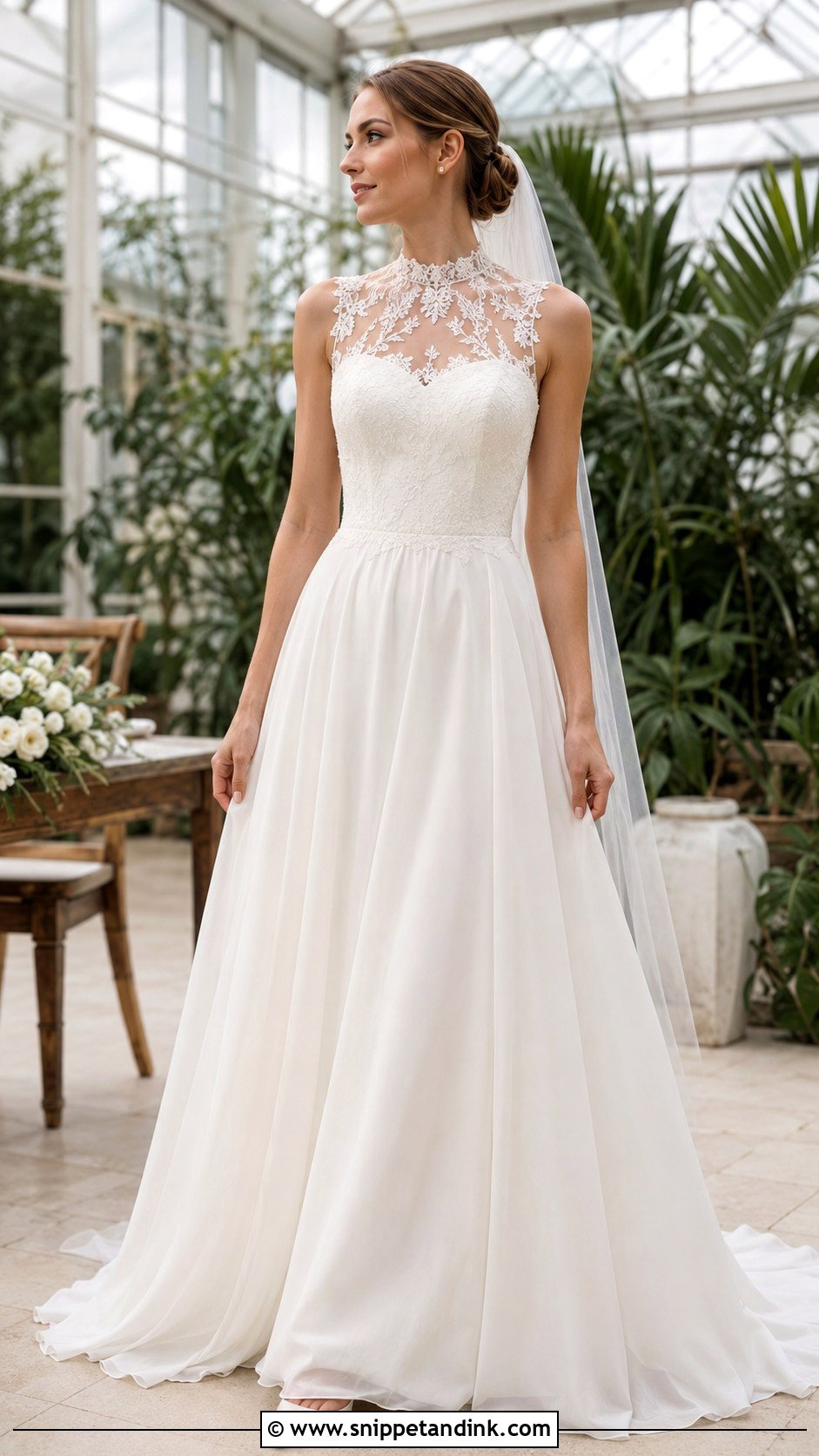
A high neckline draws attention to the face and to the lace work. Vine motifs climbing from the bodice into a sheer collar look delicate, and a keyhole or open back keeps the dress from feeling closed in. Balance all that detail with a fluid chiffon or tulle skirt and skip the necklace. If sheer panels aren’t for you, ask for a fully lined lace yoke. I check the collar while the bride sits, turns her head and poses, because that’s when it rubs or wrinkles.
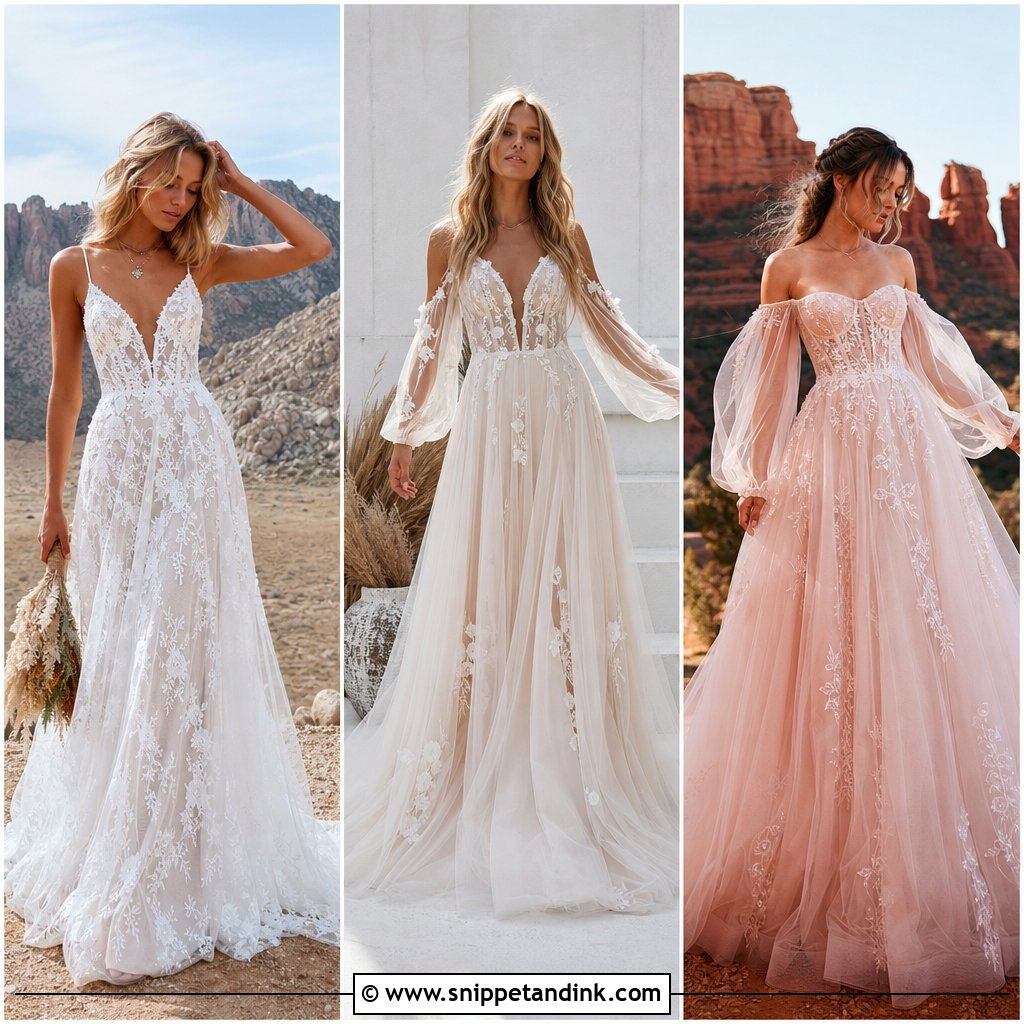

15. Fairy Wedding Gown With Slit
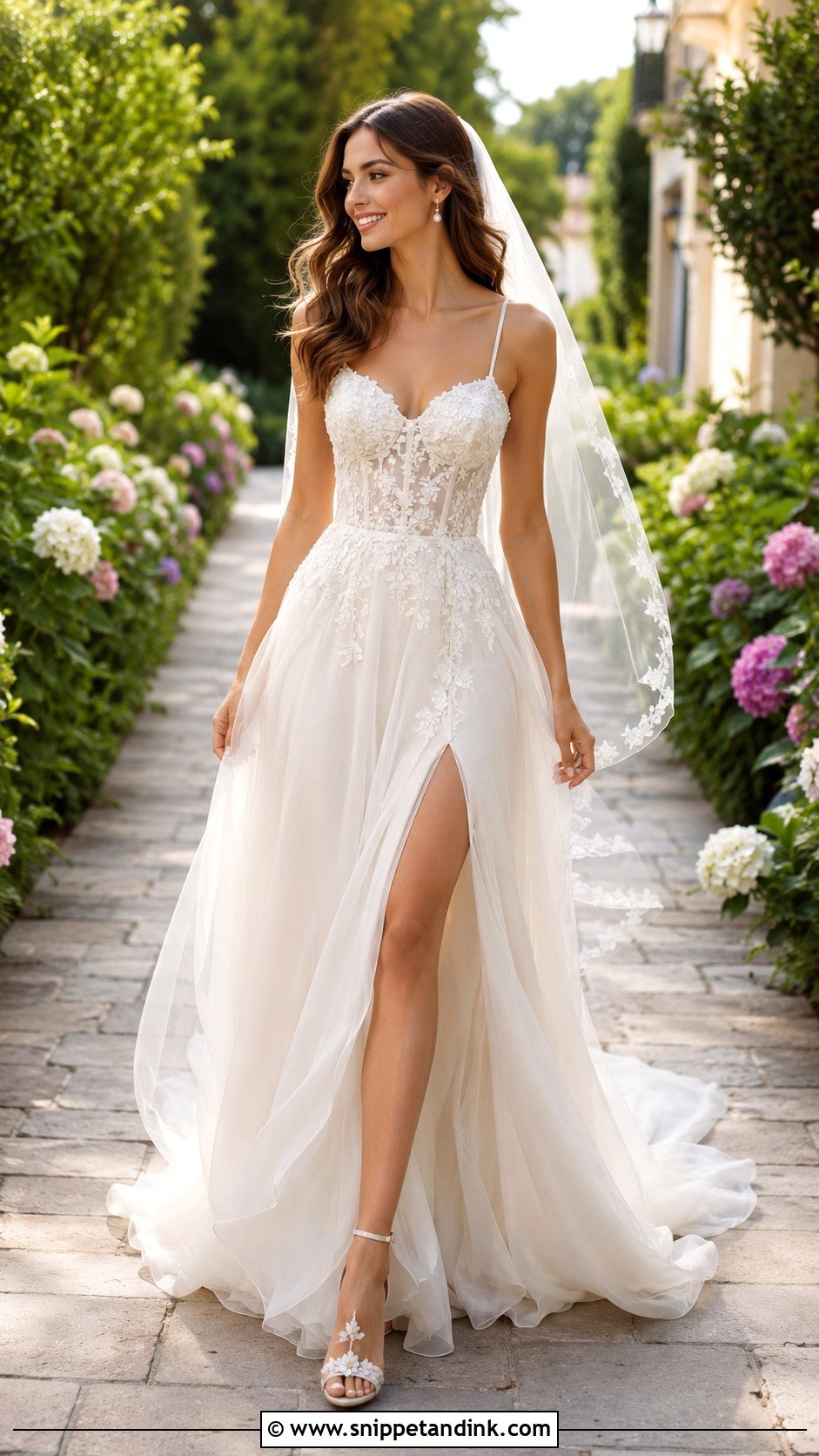
A slit adds ease, and in a layered chiffon or tulle skirt it stays romantic. Placement is everything. Set slightly to one side, it shows the shoe as you walk without opening up when you stand still, and its height can be adjusted in alterations. Ask for a hidden lining or overlapping underskirt if the ceremony is windy. It’s also the most practical shape here for stairs and uneven ground, so floral ankle-strap heels suit it well.
16. Plus Size Fairy Wedding Gown
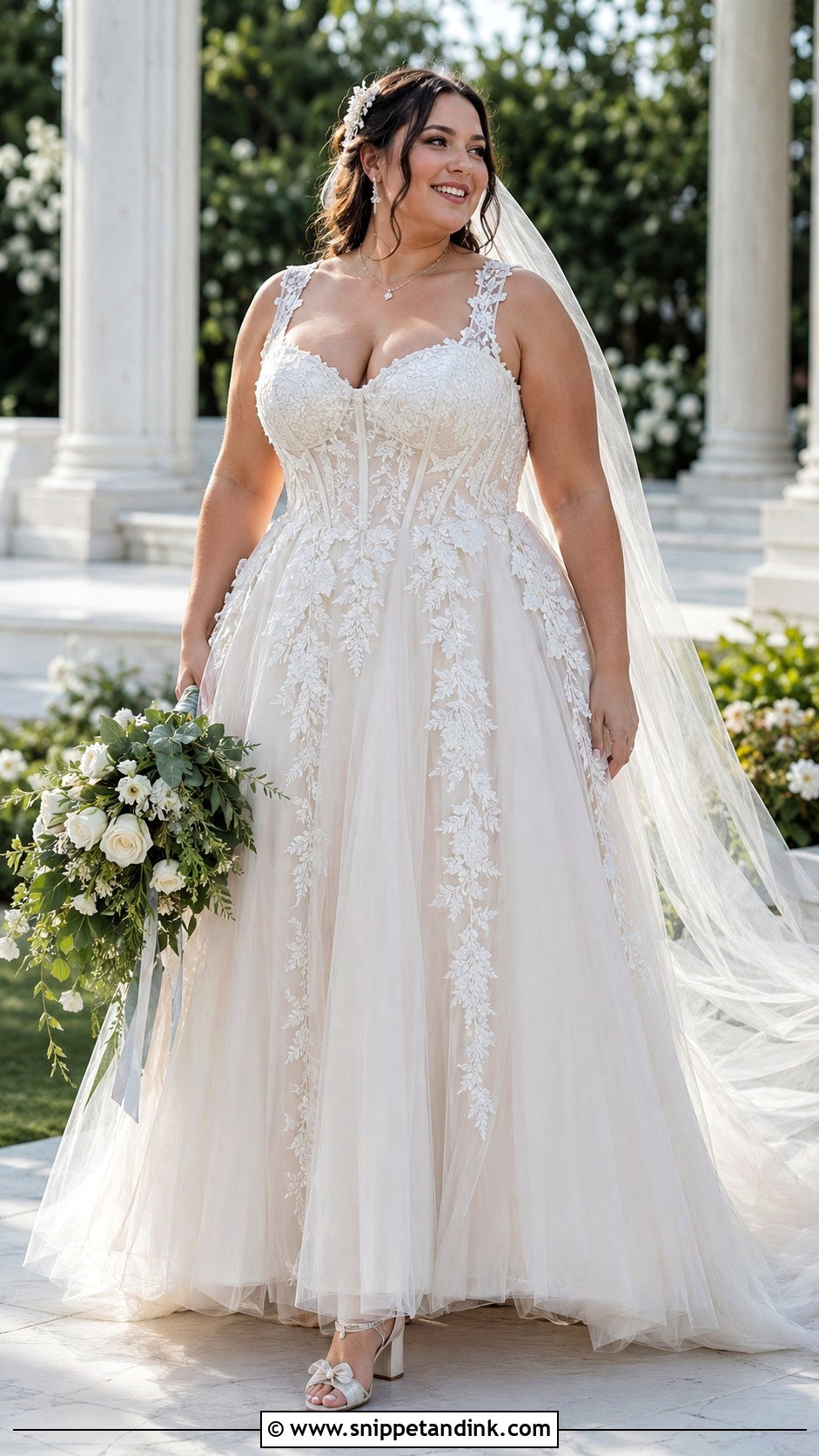
A fairy gown should support the body rather than rely on tight shapewear. Internal boning, a supportive neckline and straps wide enough to sit comfortably come first, and a softly structured corset can define the waist under layered tulle and vertical floral appliqués. Ask about cup customisation, bodice lining and sleeve options at the appointment. Remember that a sample in the wrong size tells you very little about how your size will fit after alterations. Choose a design for its support and freedom of movement, not to hide anything.
17. Petite Fairy Wedding Gown
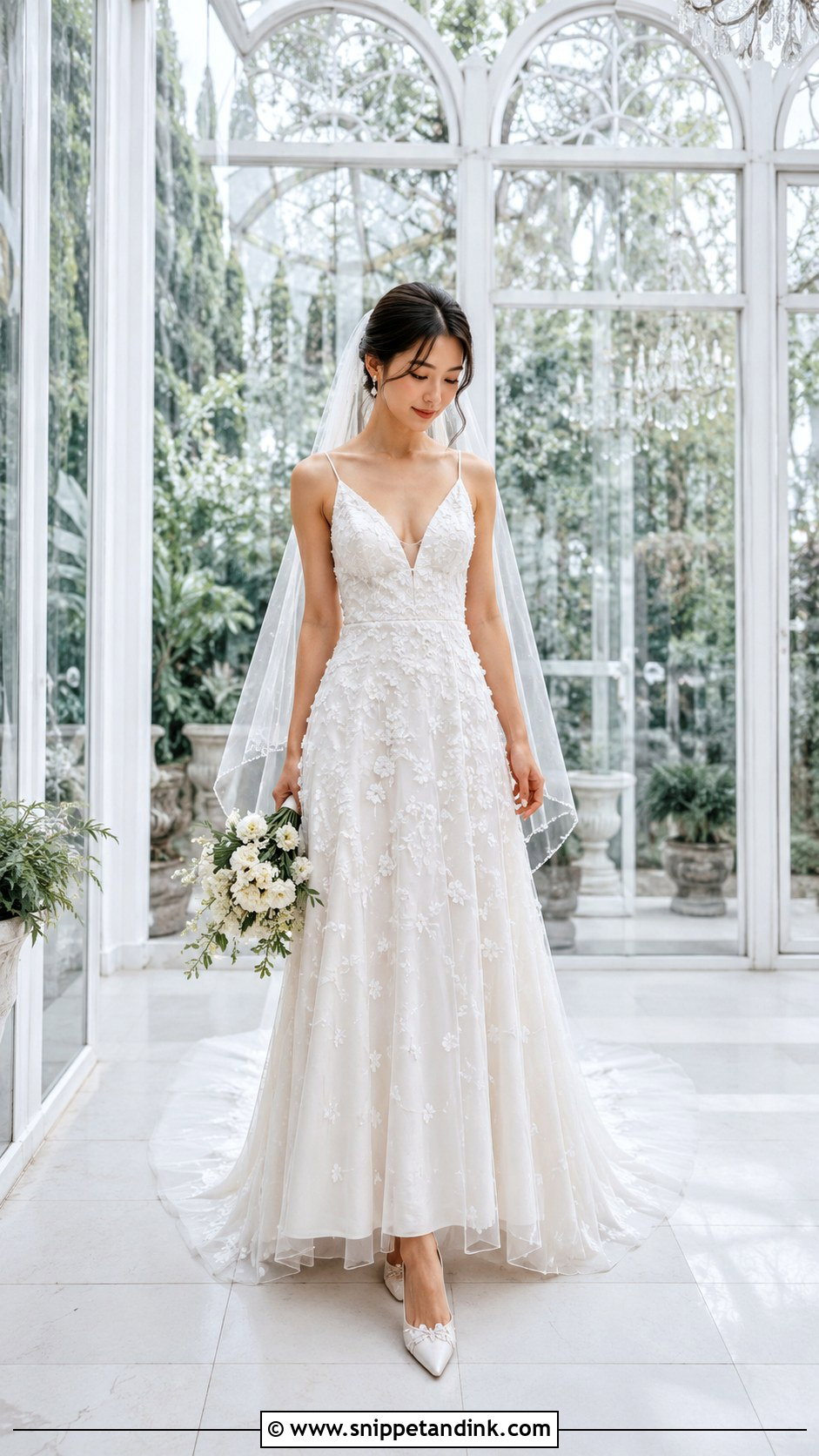
Petite brides can absolutely wear detailed fairy gowns; it’s about scale. An A-line or soft fit-and-flare creates length, and smaller appliqués, a slightly raised waist and a V or narrow square neck extend the line further. Keep the train controlled and the bouquet proportional. When hemming a lace gown, a good seamstress lifts the motifs off the edge and resews them after shortening, so the pattern isn’t simply cut off. That one step makes a shortened gown look as if it was made for you.
18. Boho Fairy Wedding Gown
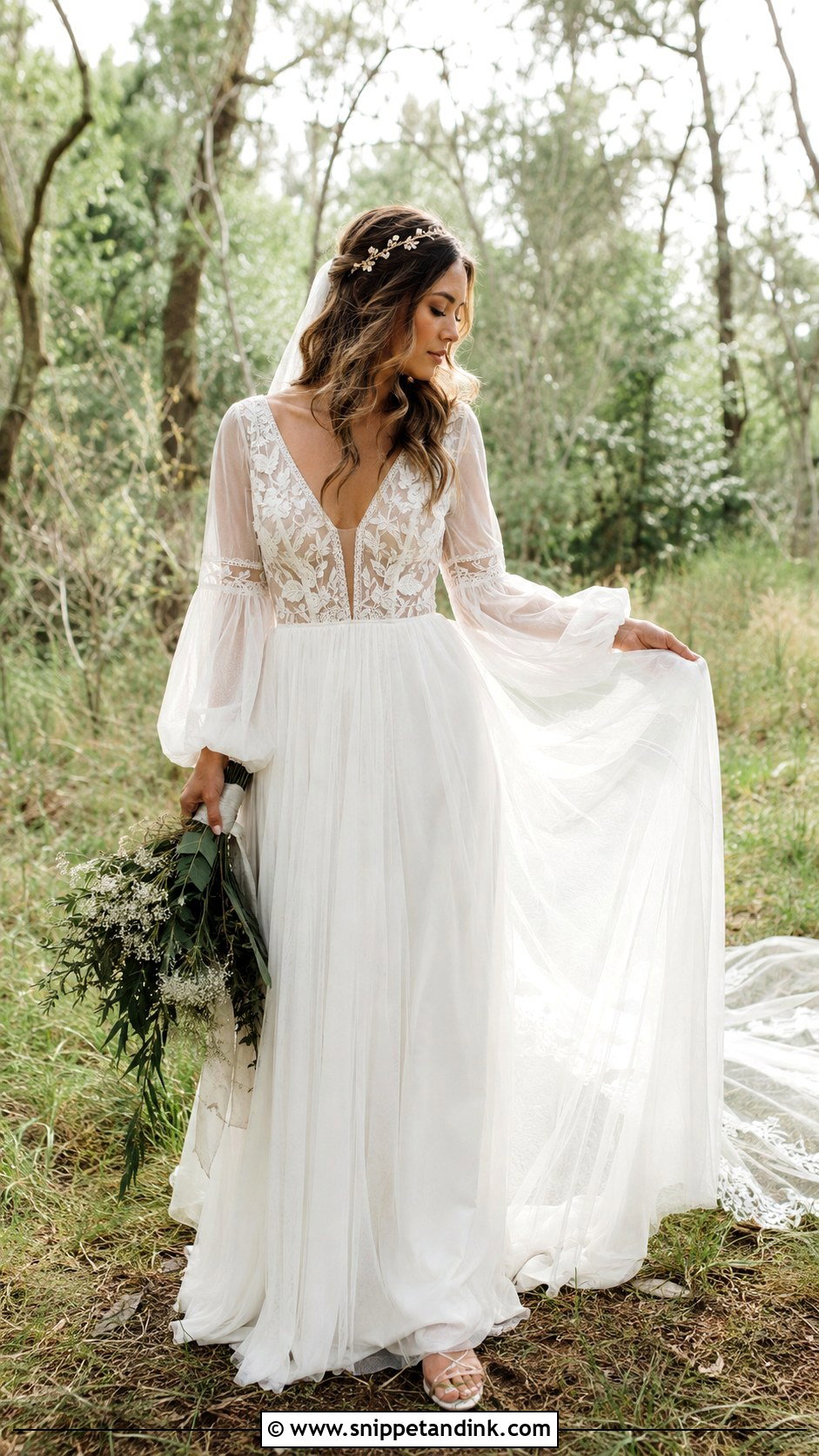
Boho fairy gowns walk a line between relaxed and unfinished. Soft botanical lace, a lightly fitted bodice and a skirt without a rigid petticoat give the ease; bishop or flutter sleeves add movement. Because everything is soft, tailoring and lining quality are what keep it looking bridal, so I don’t let brides skimp there. Flat embellished sandals, natural waves and a small gold or pearl headpiece. Ask for an easy bustle if the ground is rough.
19. Celestial Fairy Wedding Gown
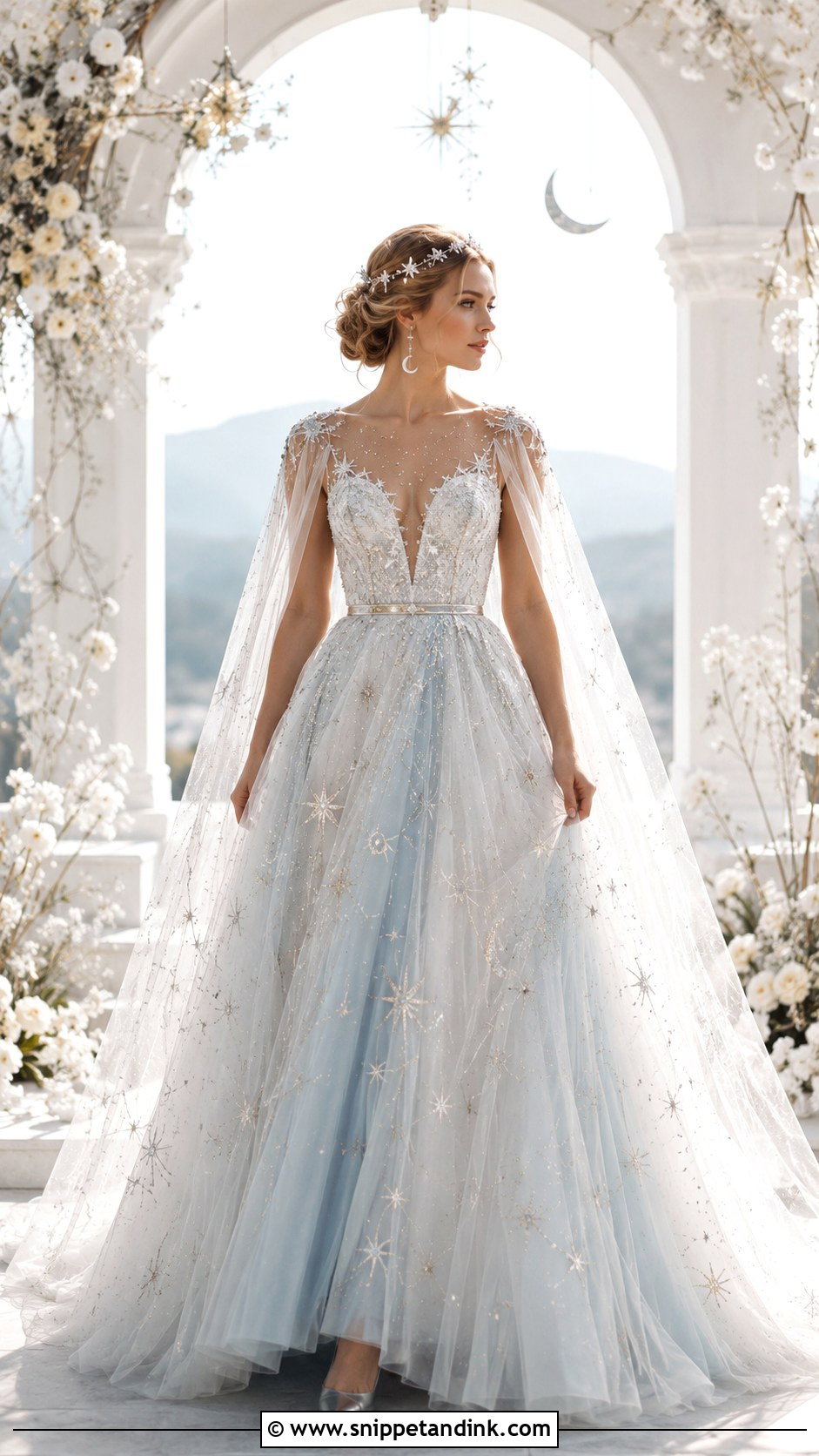
Stars and moons make a refreshing change from florals. Sheer tulle embroidered with tiny stars over a navy-tinted, silver, pale blue or ivory underlayer gives the depth, and a fitted bodice with a full A-line skirt shows the pattern without needing much sparkle. A plain veil keeps the celestial embroidery visible, or a draped cape can replace it. Limit the accessories to one or two moon or star motifs. I also run a hand over the embroidery and any glitter to make sure it’s bonded smoothly against the skin.

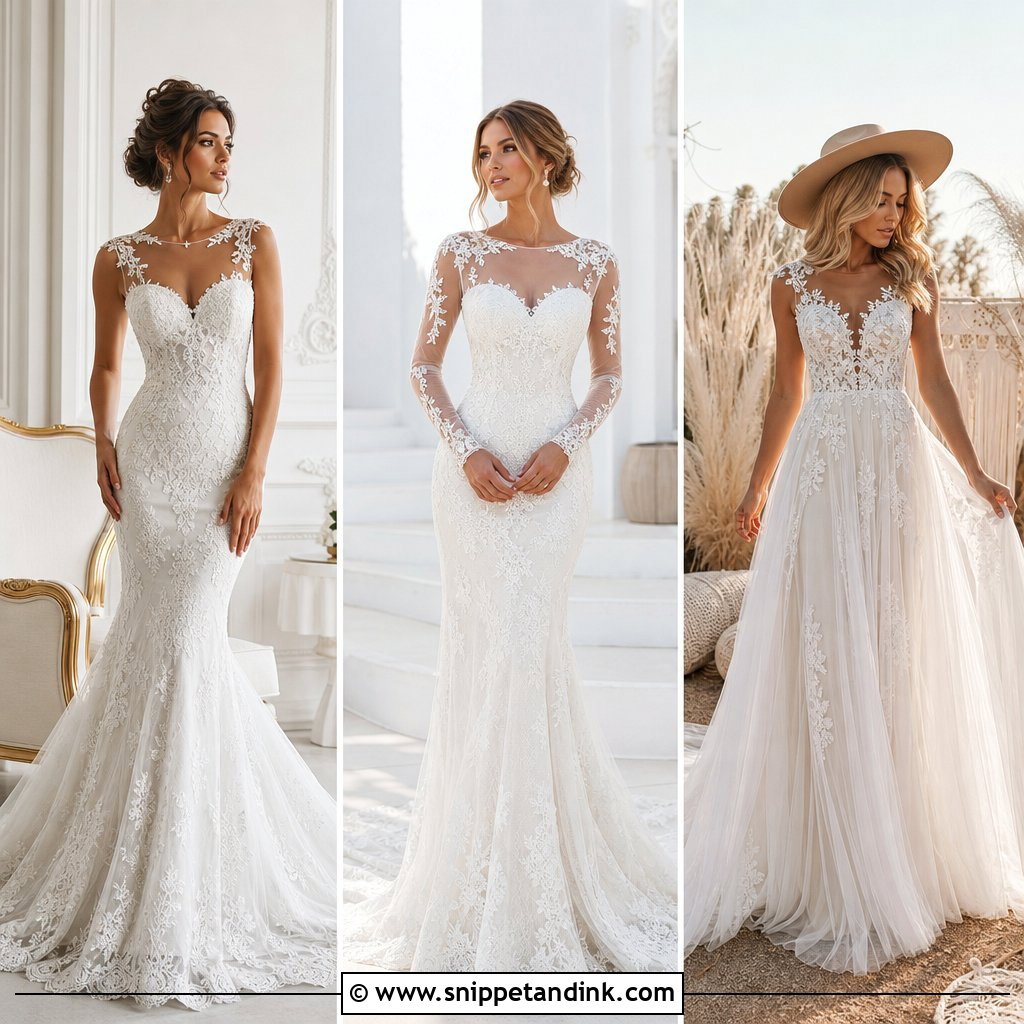


20. Simple Fairy Wedding Gown
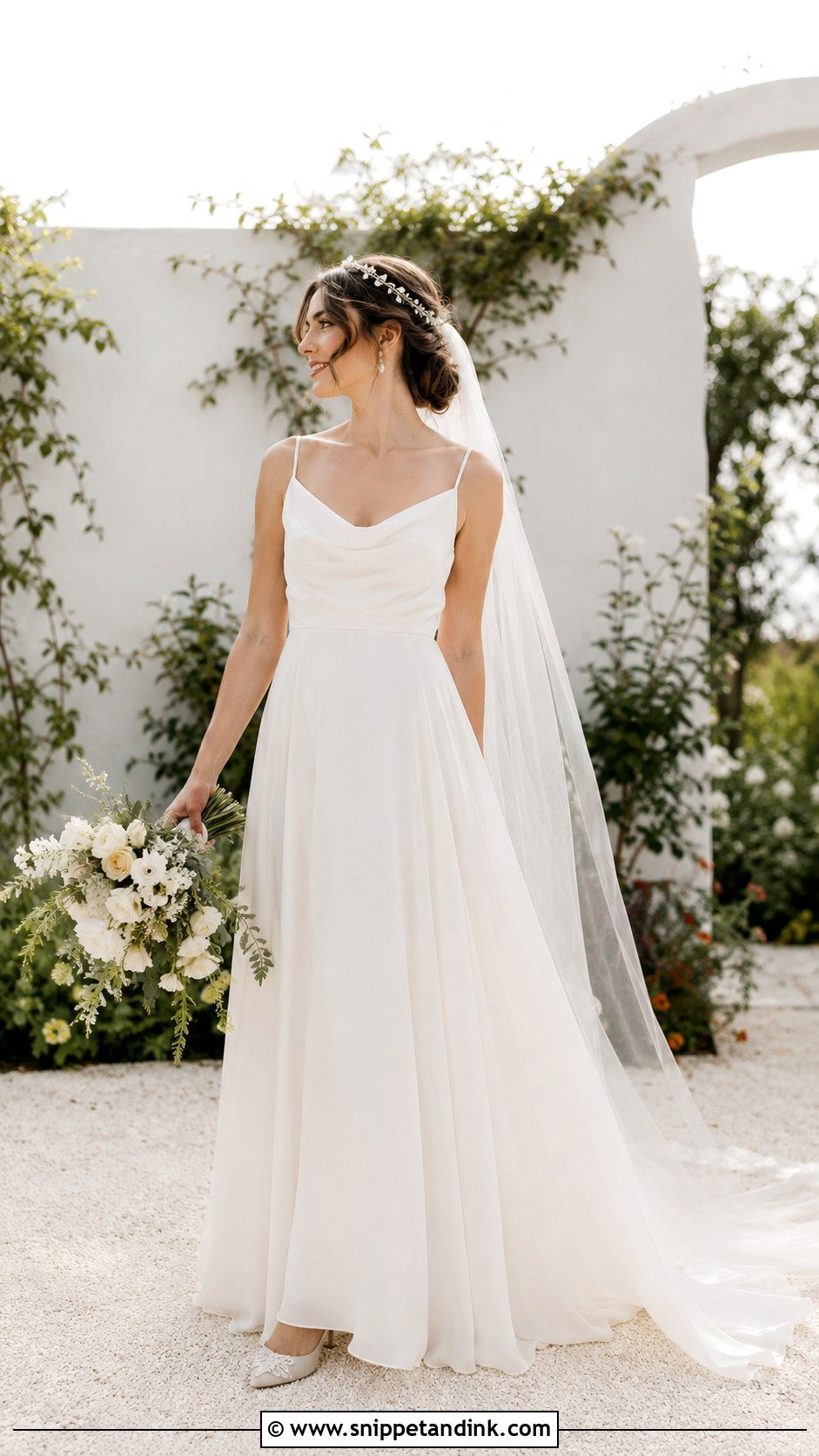
A simple dress can carry the fairy mood through fabric alone. Ivory silk chiffon or light organza in an A-line with a softly draped bodice moves in a way that does the work, and a long sheer veil adds sweep. A narrow botanical trim at the waist or veil edge brings a little texture. With so few embellishments, fit becomes the whole story, so budget for proper hemming and bodice adjustments. A floral hair vine and embroidered flats complete it.
Matching Ivory, Champagne and White Across the Whole Outfit
Bridal whites are a family of shades, and fairy gowns often mix several in one dress: ivory tulle, champagne lining, cream lace. A veil or shoe in the wrong white shows up instantly in photos, usually as a grey or blue cast beside the gown.
Ask for a fabric swatch
Most salons can give you a small cutting of the gown fabric or the name of its exact shade. Take it when you buy the veil, shoes and any cape from elsewhere, and compare in daylight rather than under shop lighting.
Match the veil to the top layer
With a layered gown, I match the veil to the outermost fabric, the one sitting nearest to it, not the lining. A slightly lighter veil reads fine; a brighter white than the dress makes the gown look dull. Satin shoes can be matched to the swatch, and metallic or pearl shoes avoid the problem altogether.
Where Fantasy Meets a Dress You Can Live In
Every gown here balances fantasy against fit and comfort. Flowing tulle, botanical lace, soft chiffon, corset bodices, capes, dimensional flowers and a touch of shimmer can all build an enchanting bridal look, as long as each one suits your venue, season and the way you’ll move. Try gowns in more than one kind of light, test the neckline and sleeves, and talk through lining, support, hemming and bustling before you order. Green woodland gown, blush ball gown, celestial tulle or simple chiffon, the right styling is what makes it yours.
You'll Like These Ideas:










Leave a Reply