
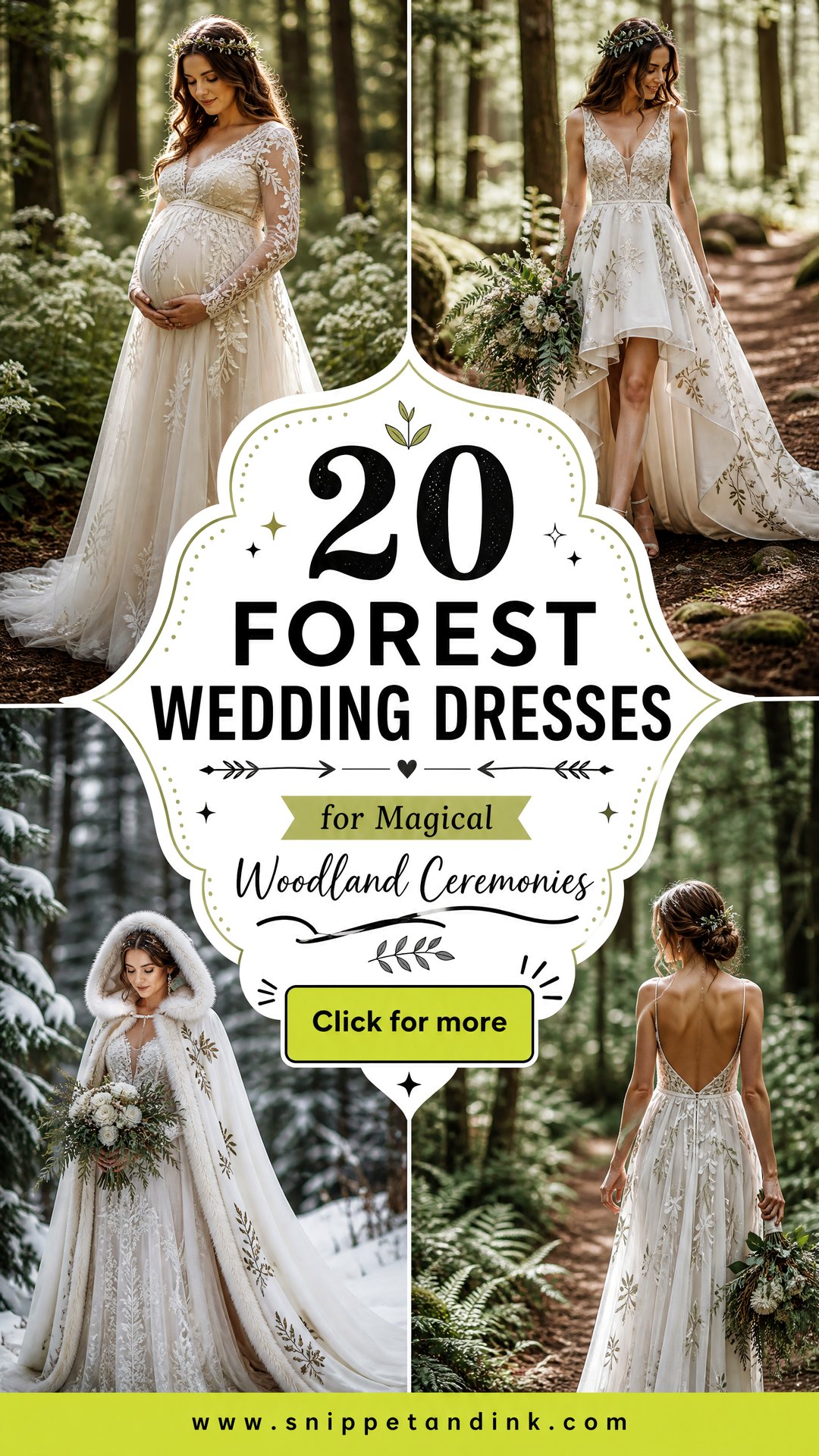
A woodland ceremony asks more of a gown than a ballroom does, because roots, damp leaves and cool shade all get a say. These 20 Forest Wedding Dresses run from loose boho lace to plain satin, green and even black, and I’ve styled each one head to toe with shoes you can actually walk a trail in. When I dress a forest bride, the first thing I ask about is the ground on the day. Chiffon and tulle float well between trees, but a heavy train turns into a rake on a leafy path. Botanical lace and vine embroidery suit the setting without tipping into costume, so read the shoe and layering notes as closely as the dresses.
Reading the Forest Floor Before You Commit to a Train
The ground decides more about a forest dress than the trees do. Before I pull a single gown, I ask the couple to walk the ceremony route and tell me what’s underfoot: packed earth, gravel, pine needles, moss, roots or wet leaves. That answer narrows the train length and the shoes before we talk about lace at all.
Train length against the terrain
- No train or a short sweep for anything with roots, steps or a long walk from the parking area.
- Chapel length on a mown clearing or a boardwalk, with a bustle planned for afterward.
- Cathedral length only if the aisle is a runner or a deck, and you’ll bustle or remove it right after the vows.
Hem height and the shoes you’ll really wear
Boots and flats sit lower than the heels most sample gowns are pinned for, so bring the exact shoes to every fitting from the first one. On soft ground I’d have the front hem finished a little off the floor rather than just kissing it. That small gap stops the toe of your shoe catching the skirt on an uphill step.
Ask your seamstress which bustle suits the skirt. An over bustle hooks the train up onto the back of the dress and is quick to do; an under, or French, bustle tucks it beneath and sits better on full tulle. Either way, have a bridesmaid practice it at the last fitting, because on the day it gets done in a hurry with cold fingers.
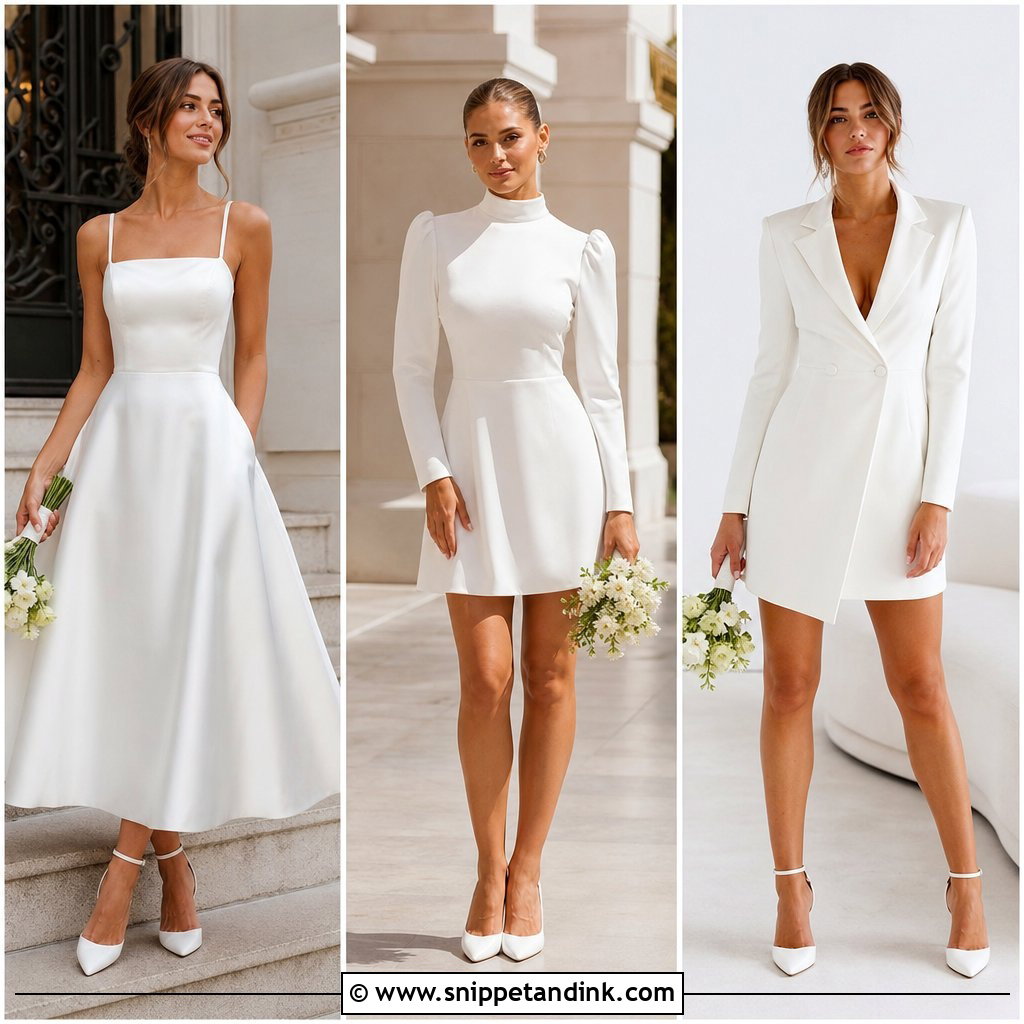
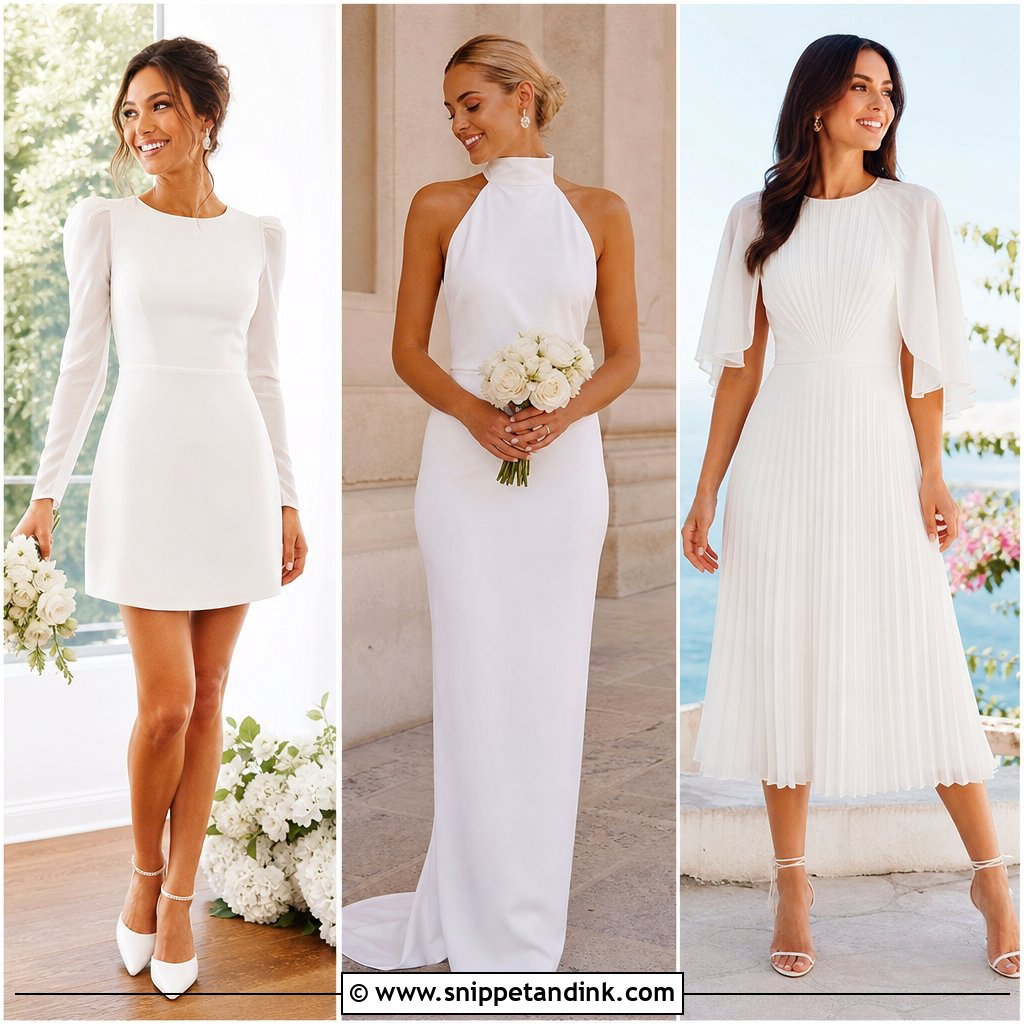
1. Boho Lace Forest Wedding Dress
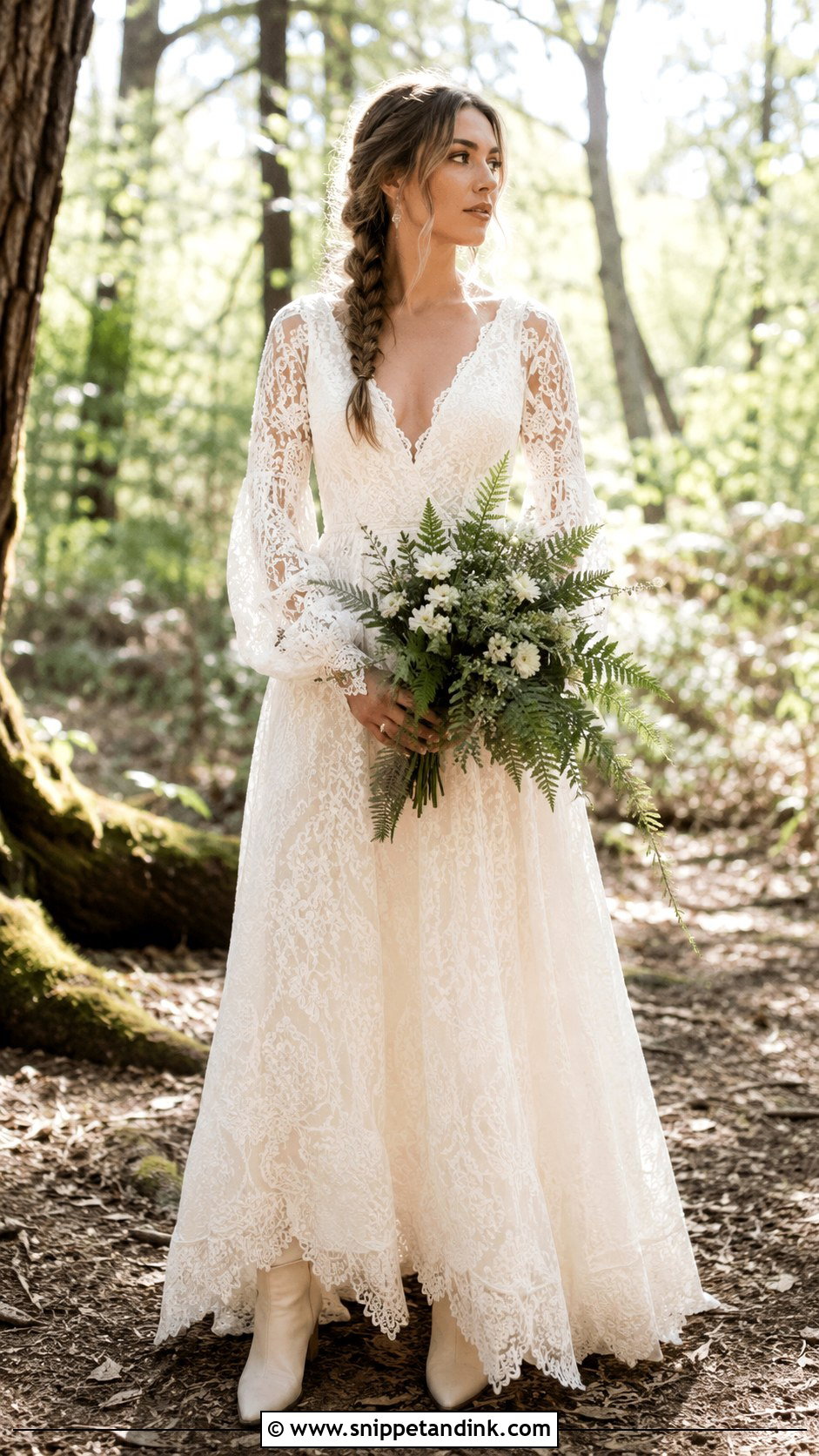
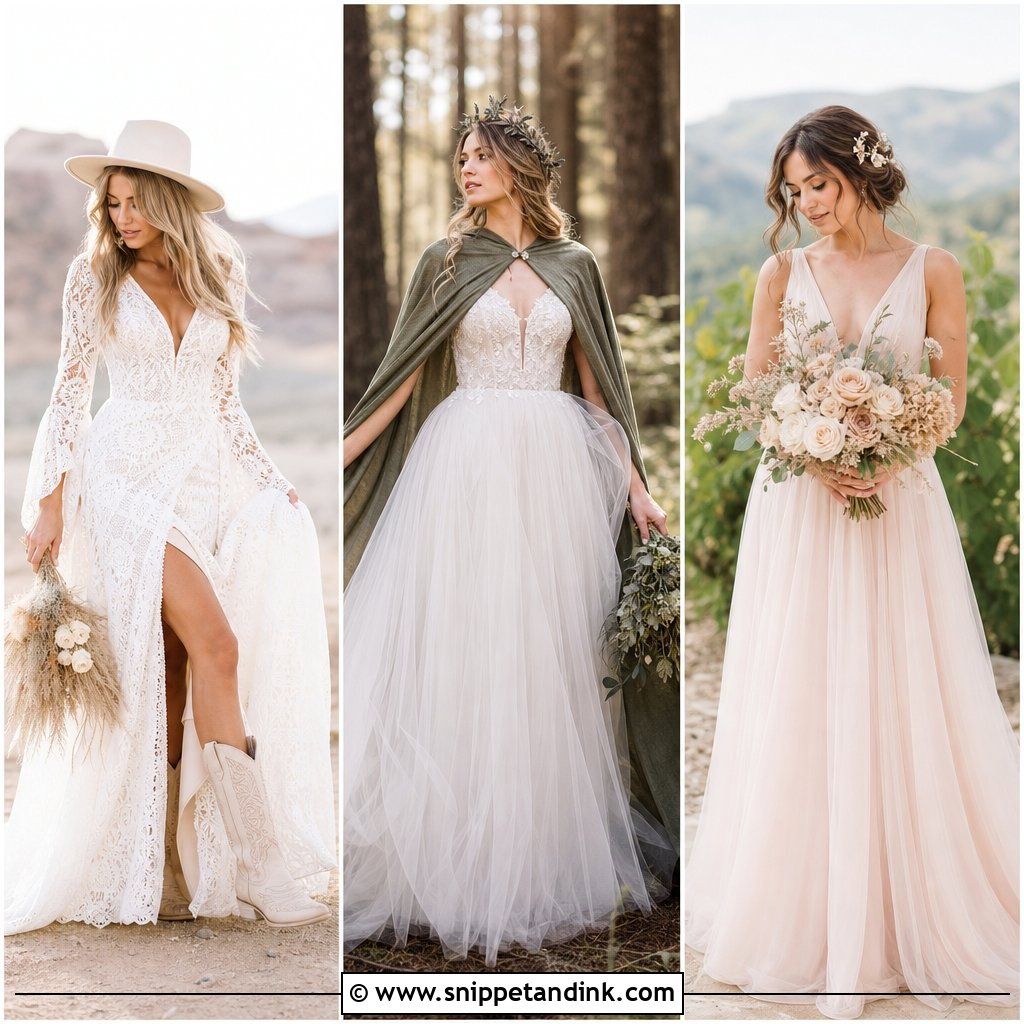
Boho lace is the gown I see most often in the woods, and it earns its place because lace hides the odd leaf mark far better than plain fabric. I’d pick an ivory A-line with a fitted lace bodice and flutter or bishop sleeves. With bishop sleeves, test the cuff at a fitting by hugging someone, since a tight elastic cuff leaves a red line by the reception. Keep the train medium so it moves without collecting the forest floor. Cream ankle boots, a loose braid, delicate drop earrings and a narrow floral hair vine finish it, with ferns, white flowers and trailing greenery in the bouquet. If the ground is damp, ask your seamstress for a hidden bustle so the train lifts straight after the photographs.
2. Floral Appliqué Forest Wedding Dress
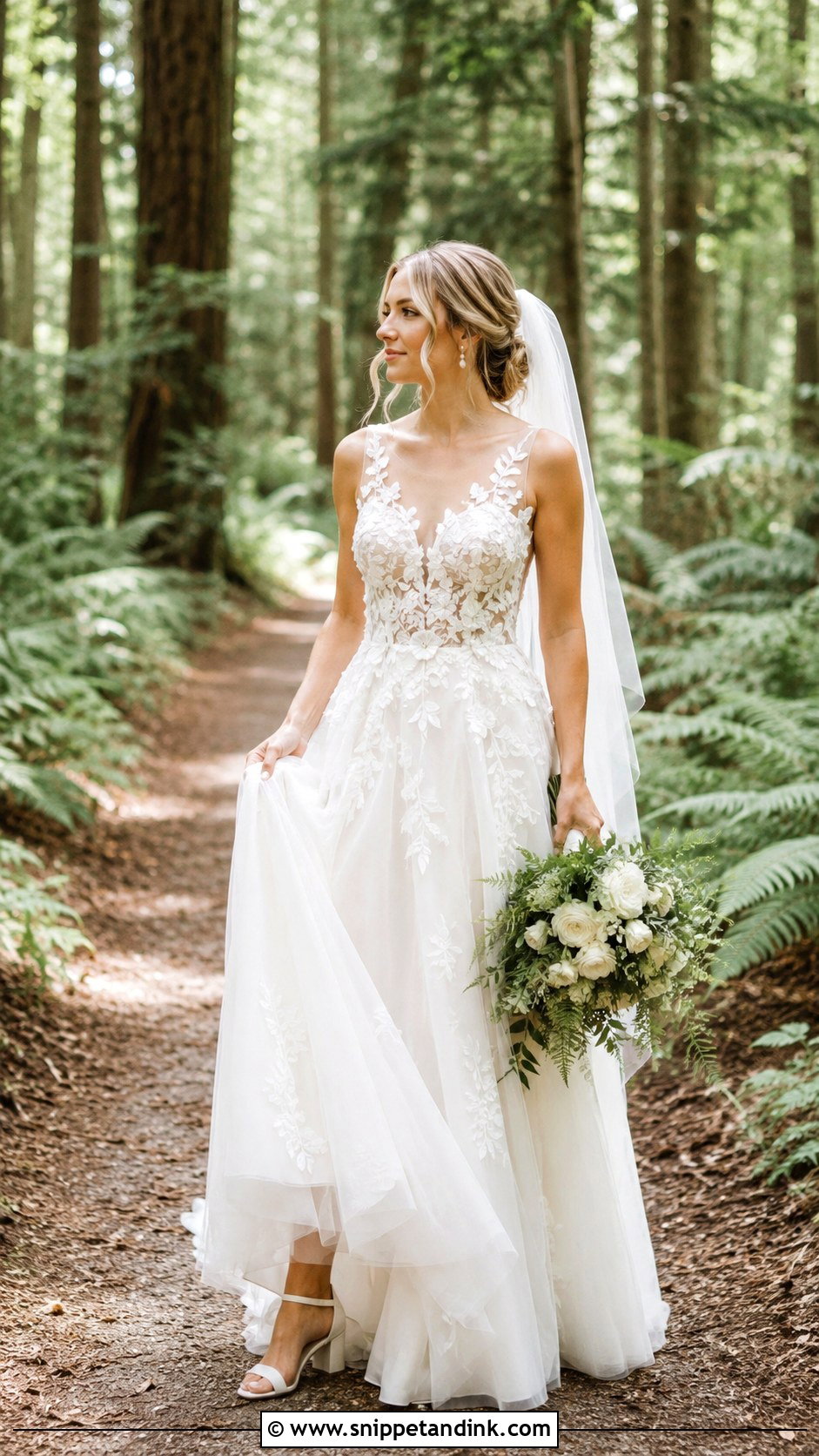
Three-dimensional flowers give the bodice the same texture as the setting, so the trees and the dress feel related. Look for an A-line where the appliqués cluster over the bodice and thin out down the skirt. On an illusion neckline or sheer straps, ask to see the mesh against your skin in daylight; a shade too pale reads as a grey panel in pictures. Raised petals also snag fine veil tulle, which is why I keep the veil plain and set the comb low, below where the blooms sit. Pearl earrings, a low textured bun and a loose bouquet of seasonal flowers in mixed greens are plenty. For shoes, pointed ivory flats or low block heels, decided by how firm the path is.
3. Long Sleeve Lace Forest Wedding Dress
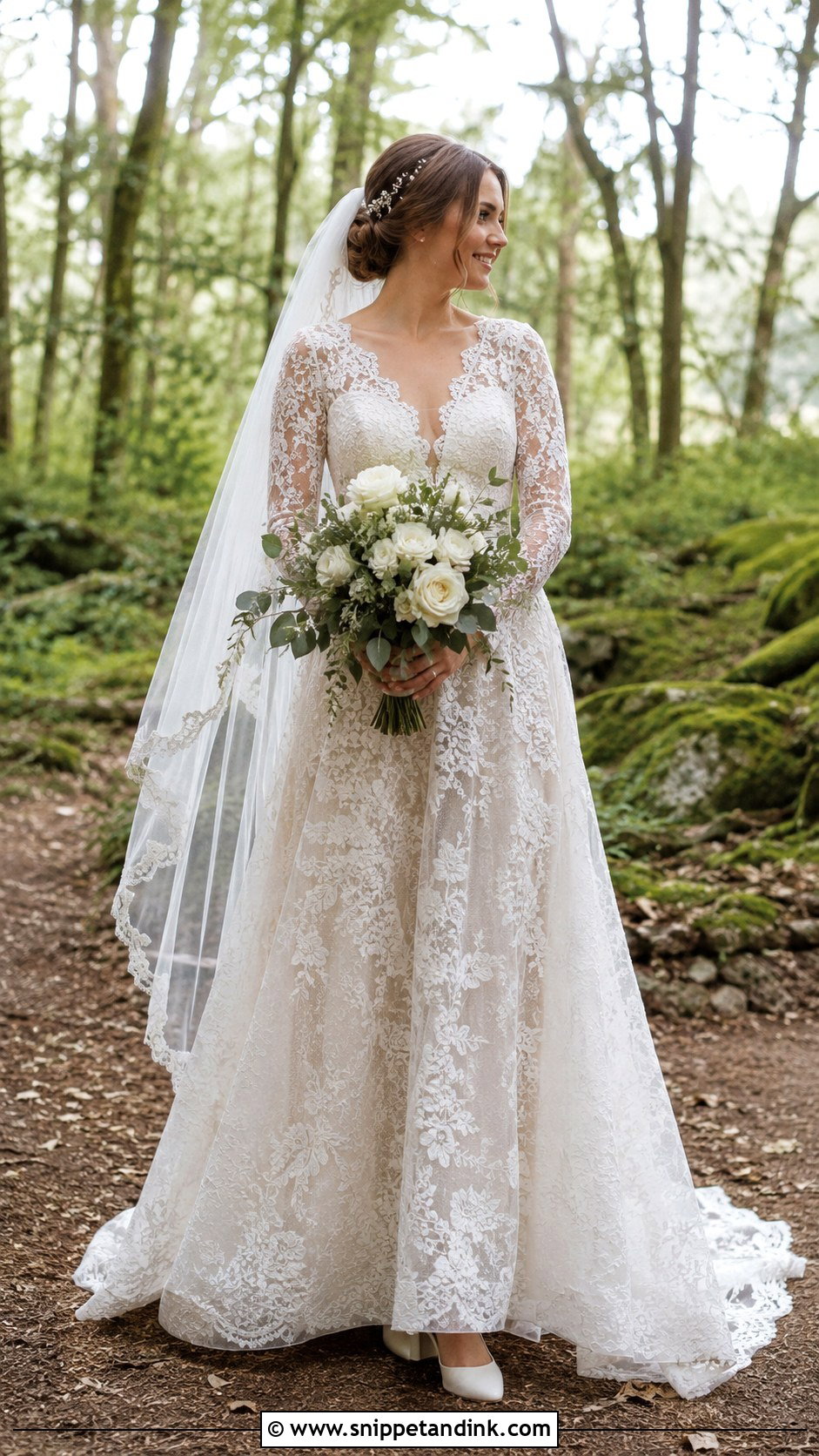
Shade under a canopy can sit noticeably cooler than an open lawn, and long lace sleeves handle that without a jacket. I want a fitted bodice, a defined waist and an A-line skirt with real walking room, in botanical lace with leaves or winding vines. The fitting test I always run: raise both arms as if hugging someone taller. Lace sleeves cut tight at the bicep drag the whole bodice up when you do that. Closed-toe block heels or bridal boots give grip. A low bun with small crystal pins and a fingertip veil leave the sleeves on show, and stud earrings stay out of their way. Carry ivory flowers with eucalyptus and woodland greenery, and for an autumn date add a removable cream wool wrap.
4. Off Shoulder Tulle Forest Wedding Dress
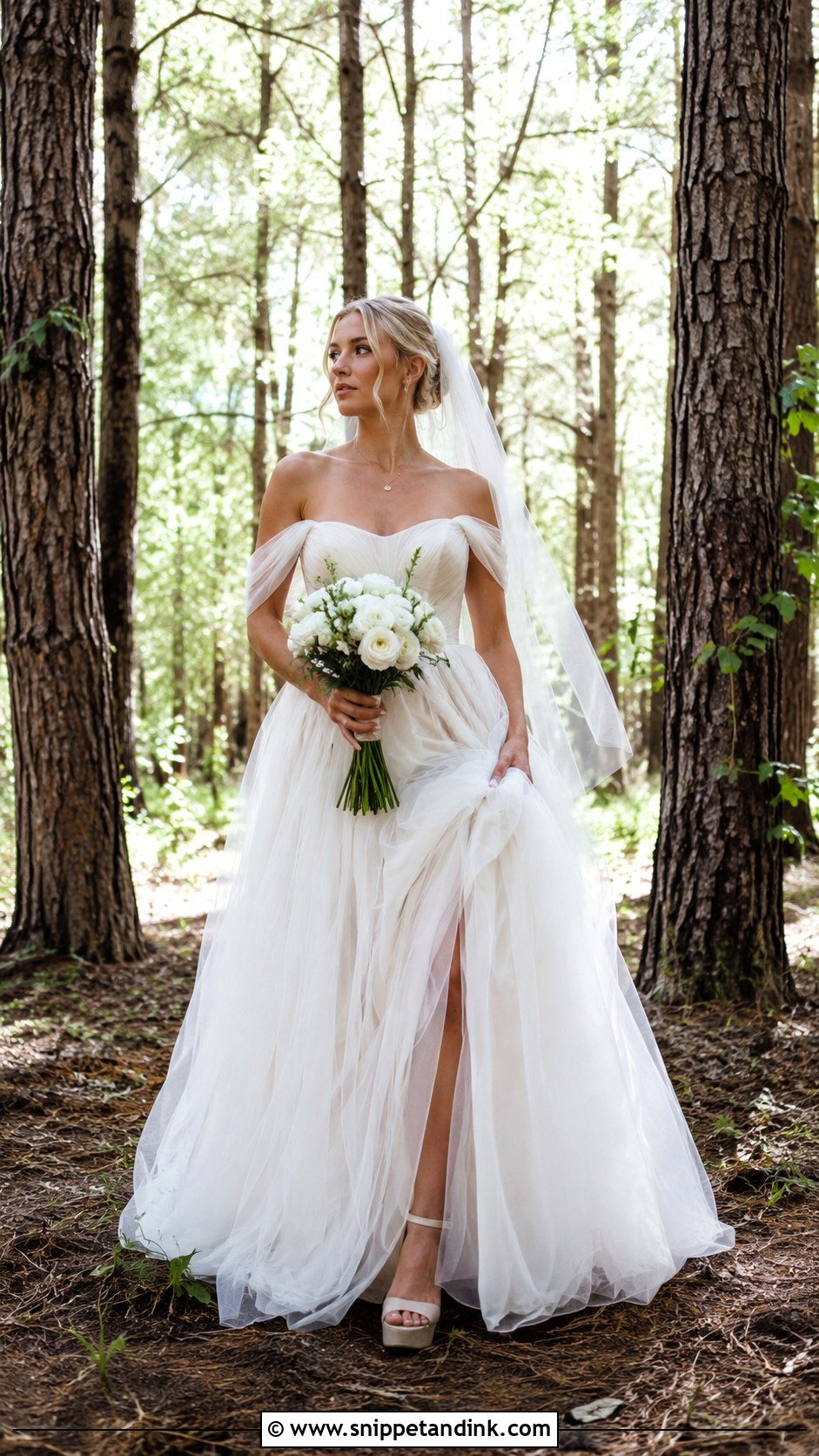
An off-the-shoulder neckline reads clearly against tall trunks, but it has one catch I warn every bride about: draped sleeves limit how high you can lift your arms. The support has to come from boning in the bodice, never from the sleeves, or you’ll spend the day hitching them up. Go for layered tulle in an A-line, in pale ivory or light champagne so it separates from deep green. Low platform sandals or sturdy block heels won’t sink into soft ground. A half-up style keeps hair off the neckline, with the sheer veil anchored underneath it. Add a fine pendant, small earrings and a bouquet of white roses, greenery and small wildflowers. Anything heavier crowds the shoulders.
5. Simple Satin Forest Wedding Dress
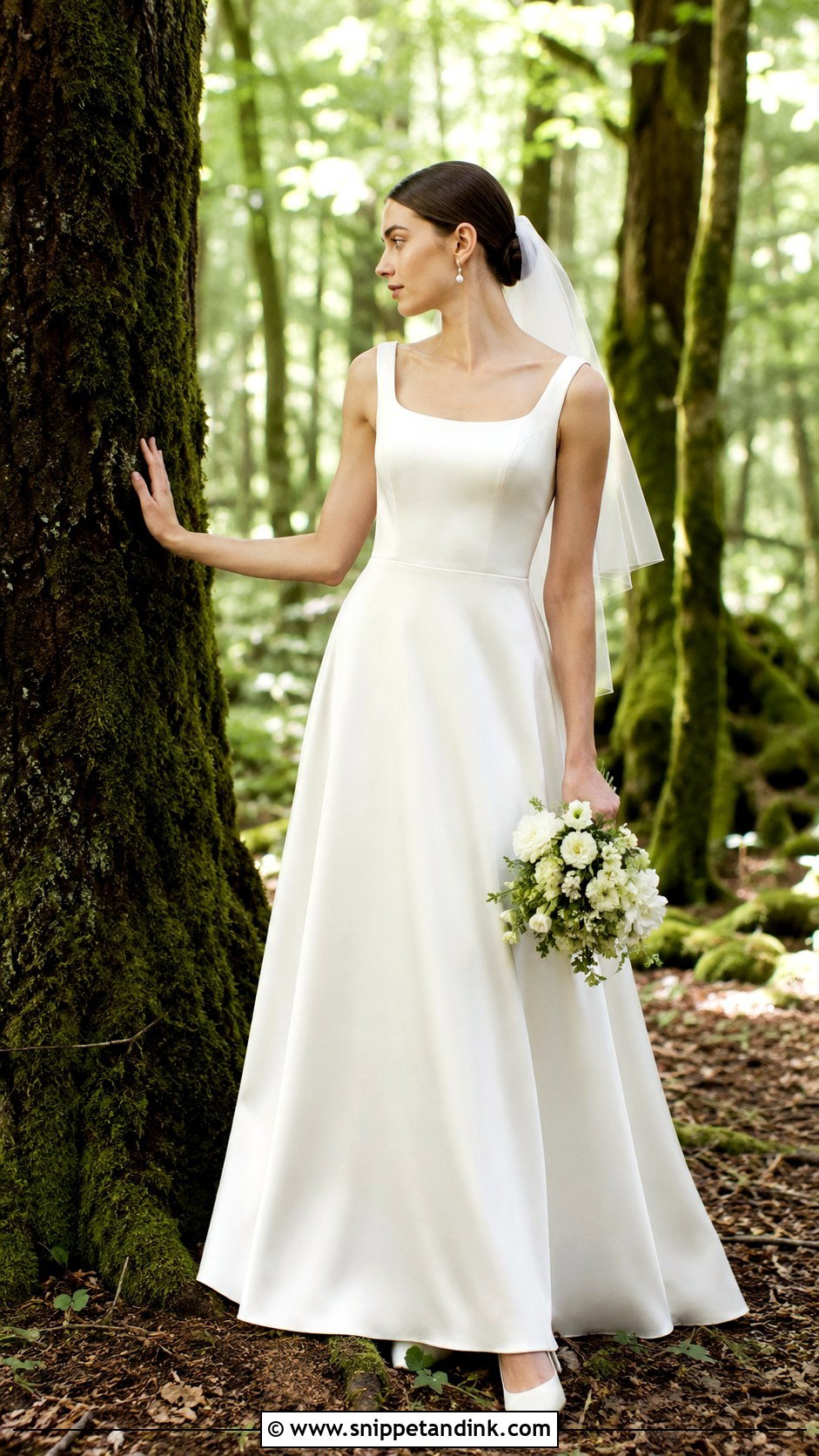
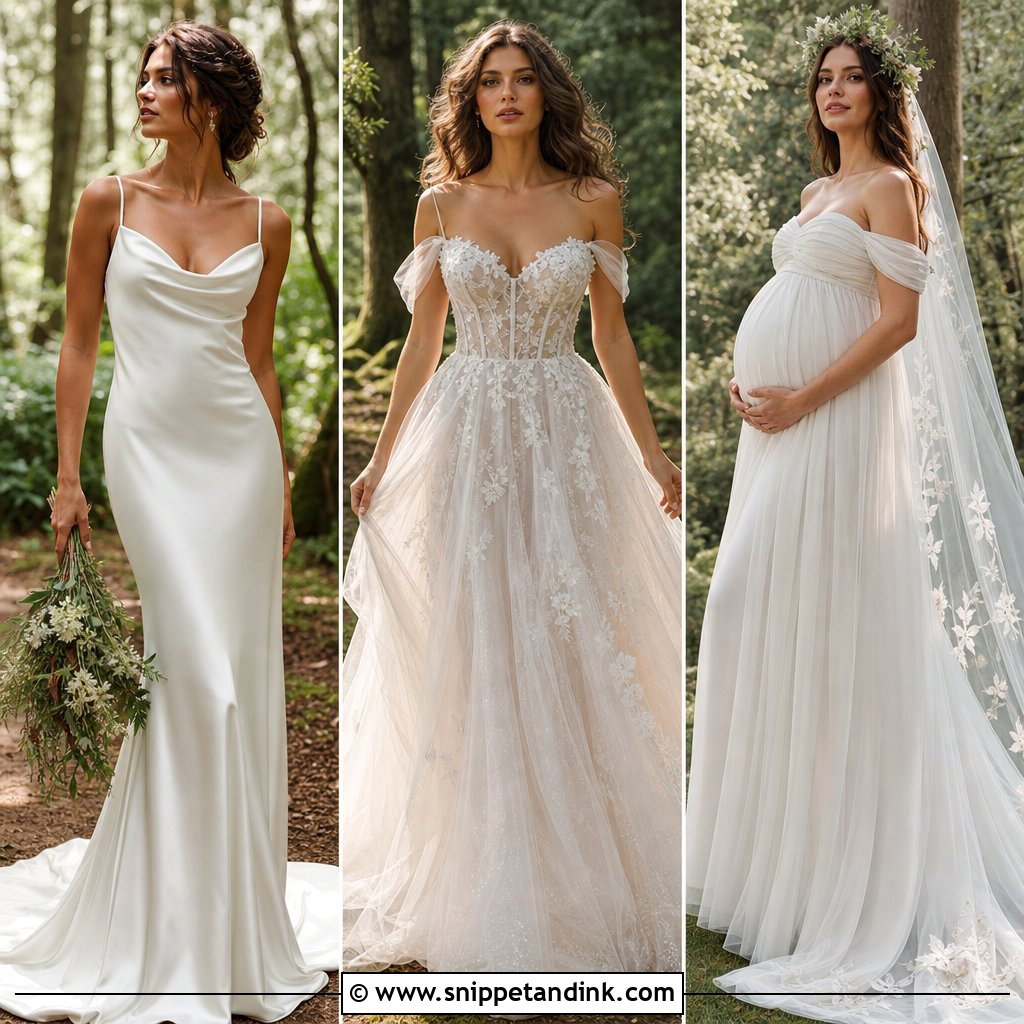
Smooth satin against rough bark is a contrast I like a great deal. A square-neck A-line with wide straps and a structured bodice keeps it modern, as long as the skirt glides rather than spreads. Satin is honest about everything, though. It creases where you sit and water marks it, so in a forest I bring a clean sheet to stand on for portraits and keep the hem lifted between locations. A heavier satin creases less than a thin, glossy one, which is worth feeling for at the shop. Pearl drop earrings, a sleek low bun and ivory leather block heels go with a short or streamlined chapel veil, plus a compact bouquet of white flowers and glossy green leaves.
6. Chiffon Empire Waist Forest Wedding Dress
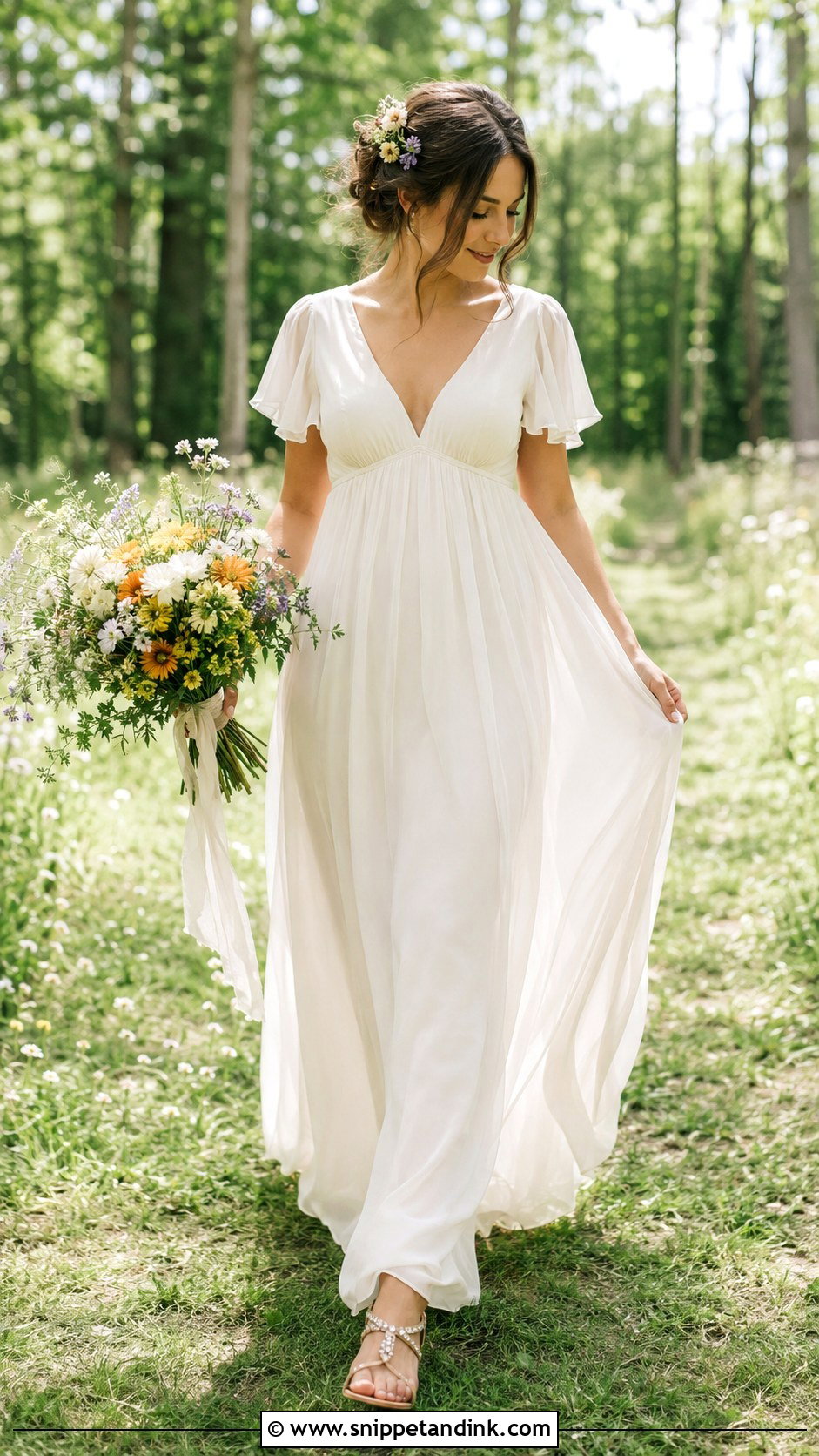
For a warm woodland wedding, chiffon is the fabric I reach for first because it breathes. An empire waist with a V-neck bodice and a gathered skirt leaves the hips and legs free, and flutter or cap sleeves add coverage without bulk. Its weakness is brambles. Chiffon pulls a thread on a single thorn, so walk the path beforehand and have anything at skirt height cut back. Flat sandals or low wedges keep you steady. I’d style a loose updo with face-framing pieces and tiny floral pins, then a delicate bracelet and light earrings instead of a necklace. A meadow-style bouquet of white blooms, herbs and wispy greenery suits the loose shape.
7. Vintage Bell Sleeve Forest Wedding Dress
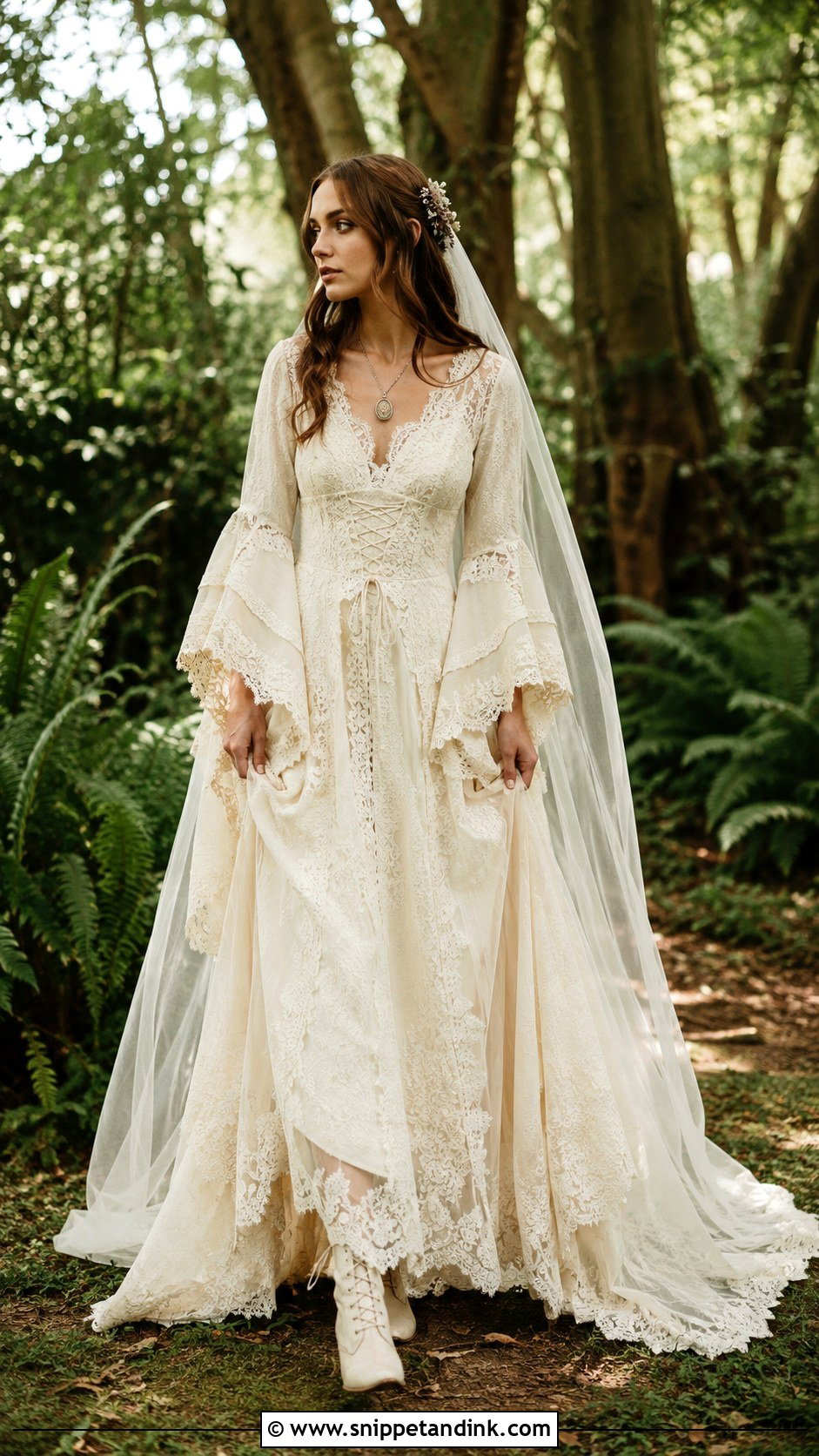
Bell sleeves are what keep a vintage lace gown from looking like a costume, but they need a length check. Hold your bouquet at the fitting: if the sleeve hem falls well past your wrist, it will dip into the cake and catch on every chair back. Soft ivory or antique cream flatters old-style lace more than bright white, which can make it look new and flat. Lace-up ankle boots, a loose center part with a floral comb at the back, small antique-style earrings and a simple pendant complete it. Swap the round bouquet for a loose mix of ferns, cream flowers and trailing foliage, and add a sheer cape veil for movement in the ceremony shots.
8. Corset Bodice Forest Wedding Dress
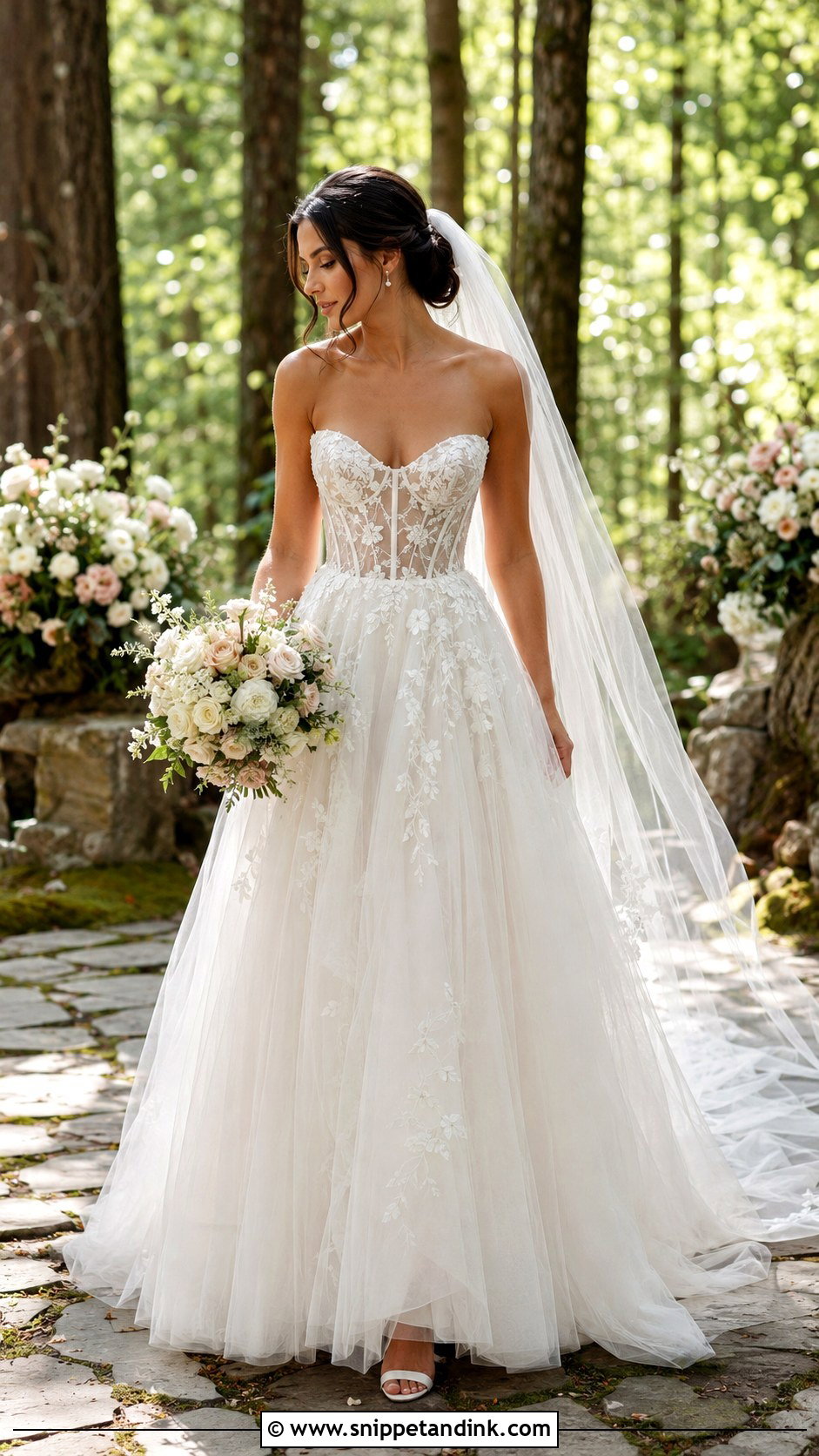
A corset bodice gives definition and real support, which counts when you’ll stand on uneven ground for photos. I fit corsets standing and then seated, because a bodice that feels right upright can dig into the ribs at dinner, so leave a finger’s room at the lacing. Visible boning, a gently curved neckline and botanical lace keep it romantic, and a lightweight tulle skirt stops the top from feeling stiff. Wear sturdy ivory block heels and a cathedral veil you remove or bustle after the ceremony. A low full bun shows the neckline, with small drop earrings. In the bouquet, one or two deeper accent shades among pale flowers and greenery add depth.
9. Tea Length Forest Wedding Dress
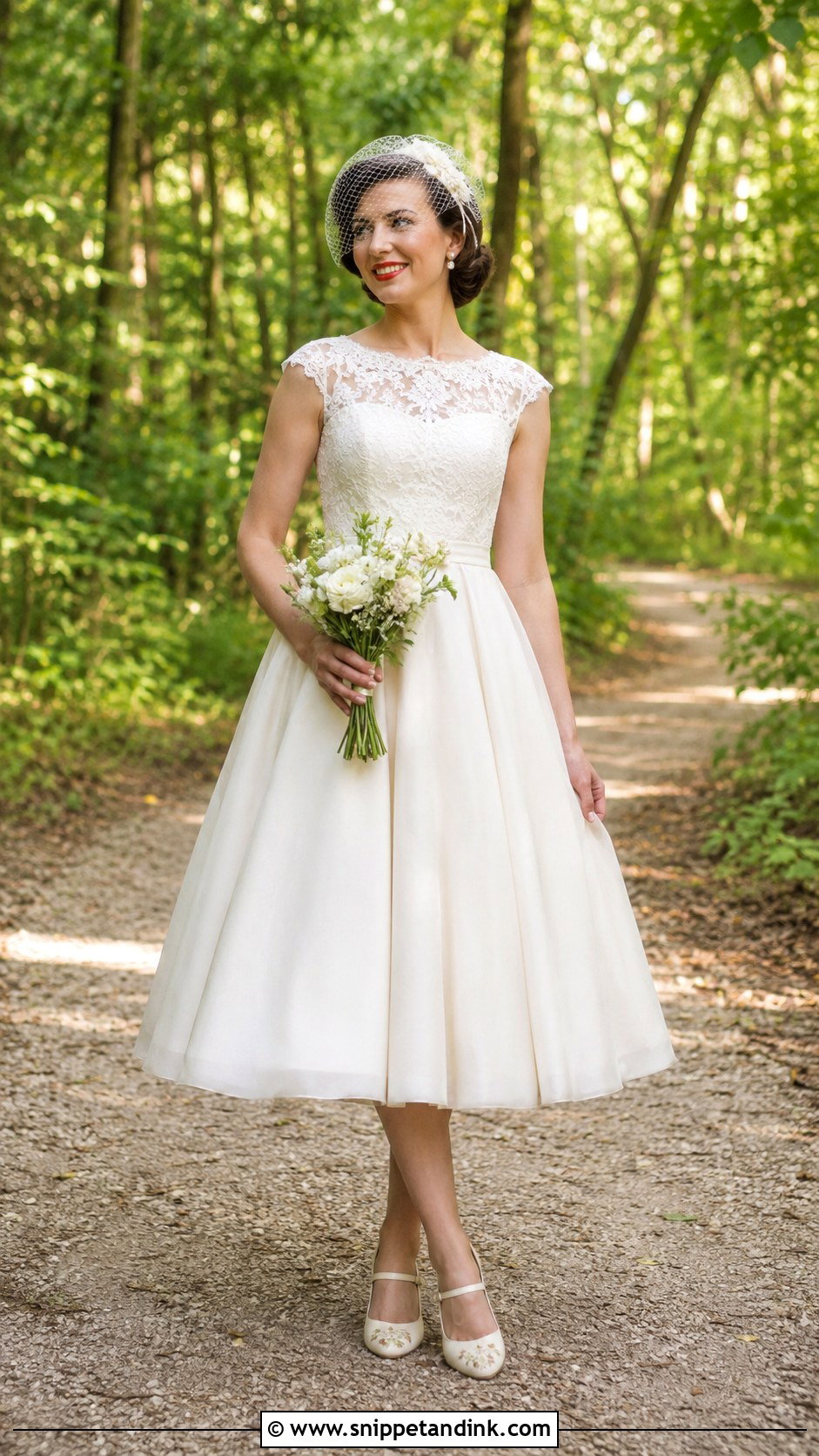
Tea length is the most practical hem in a forest, since nothing touches the dirt. What I adjust most is where it ends: a hem sitting right at the widest part of the calf shortens the leg, so I move it an inch above or below that point. Pair a fitted lace or satin bodice with a full skirt, and because the shoes are on show, make them a pair you love, such as ivory Mary Janes or embroidered flats. A birdcage veil leans vintage, a short tulle veil reads softer. Pearl studs, a small structured bouquet, and a neat low bun or waved bob finish it, with a cropped cardigan or tailored jacket on cool days. It suits informal ceremonies, woodland elopements and any day when you’d rather not manage a train.
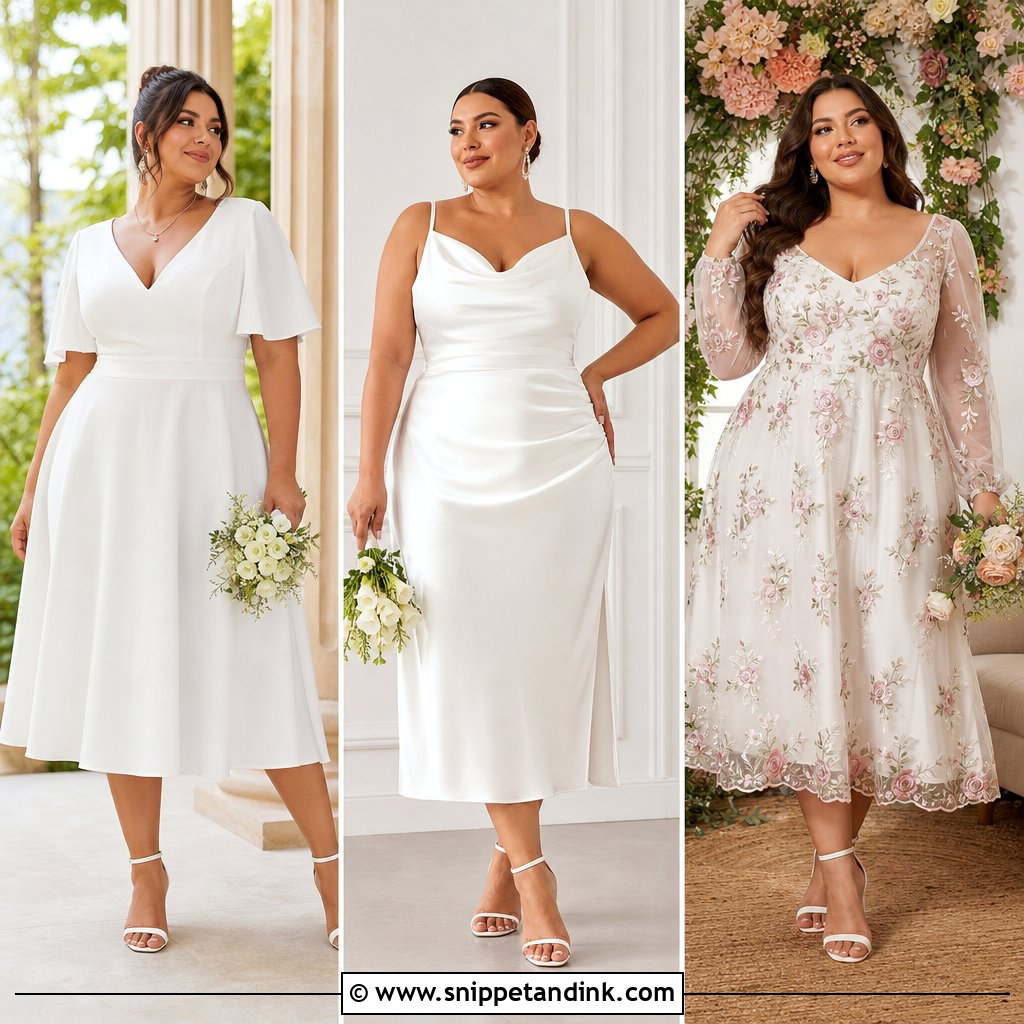
10. Plus Size A-Line Forest Wedding Dress
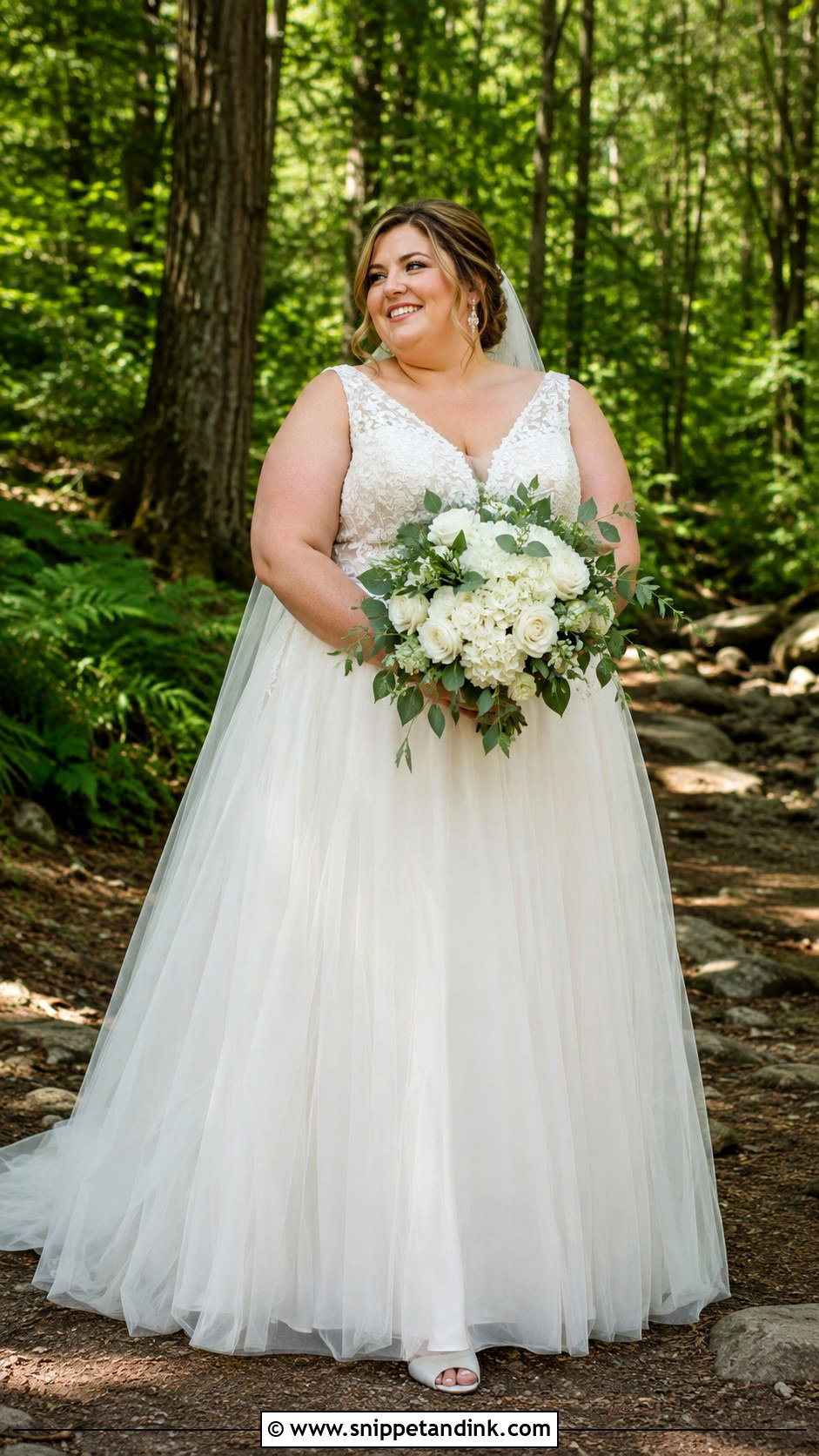
In a plus-size A-line, the support should be built inside the gown, through an inner corset or waist stay, so the straps aren’t carrying the bust. That’s the first thing I check, and it’s where alterations matter most. Look for wide straps or supportive sleeves, a structured bodice and a waistline placed where it feels right on you, not where the sample happens to sit. Floral lace can frame the neckline while soft tulle or chiffon layers let the skirt move without weight. Wide-fit block heels or cushioned flats handle the forest floor. Add a chapel-length veil, a low side bun and medium-scale earrings. Size the bouquet to your frame; a tiny posy looks lost.
11. Maternity Empire Waist Forest Wedding Dress
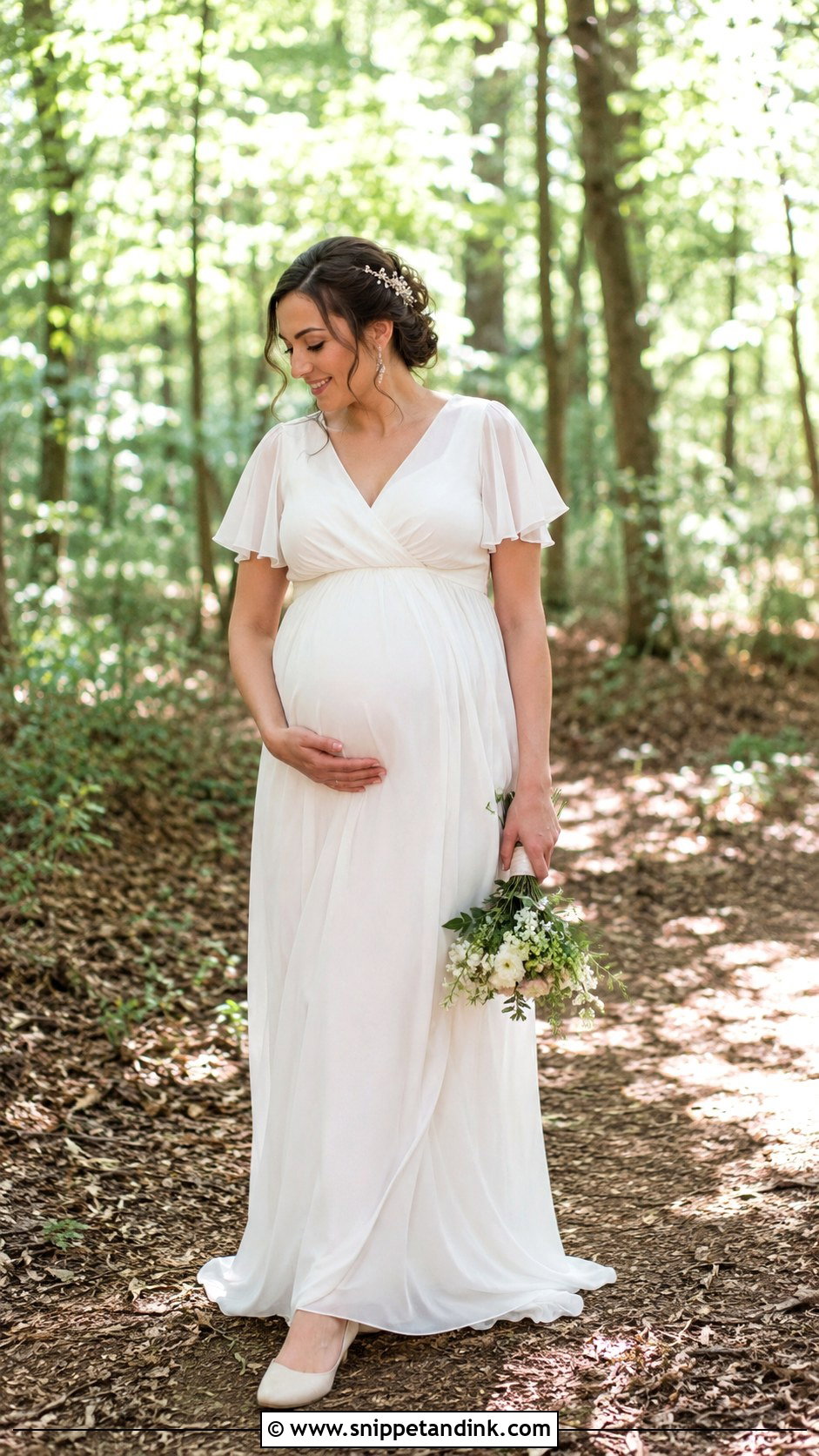
A maternity forest wedding dress has to allow for change right up to the day, so I book the final fitting as close to the wedding as the seamstress will allow. An empire seam under the bust lets chiffon or tulle fall over the belly without clinging, and a wrap V-neck with stretch lining adjusts as you grow. Feet often swell later in pregnancy, so choose flat sandals or cushioned flats with some give and wear them in at home. A flower comb, loose waves and delicate earrings keep the top half light. Go for a short train or none, and a small bouquet that’s easy to hold for an hour.
12. Green Forest Wedding Dress
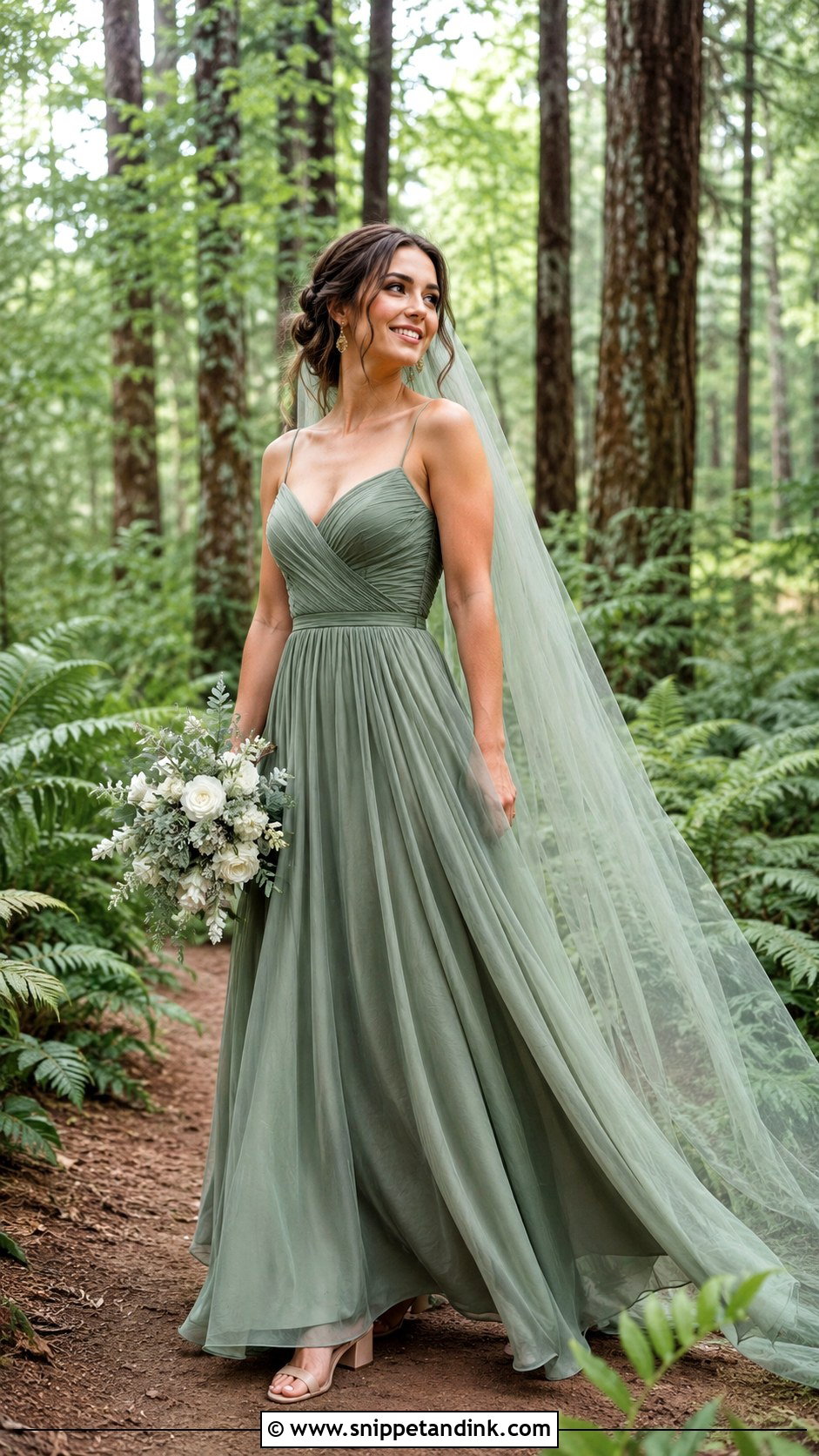
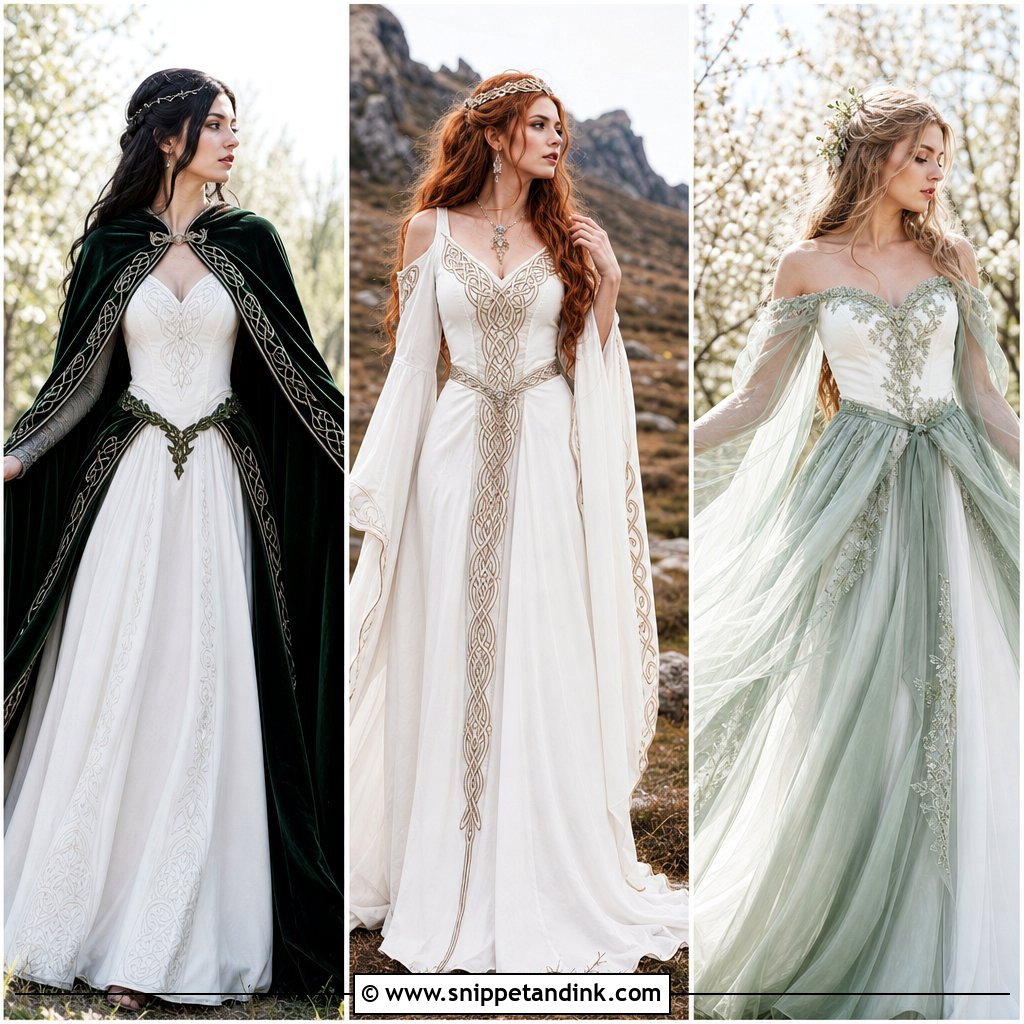
A green gown sounds like it would vanish into the trees, and it can if the shade matches the foliage too closely. I take swatches outside and hold them up against the real leaves. Sage reads soft, deep forest green reads dramatic, dusty olive feels earthy, and the right one sits a step lighter or darker than your venue’s greenery. An A-line with a fitted bodice and flowing chiffon skirt keeps the color bridal. Wear neutral block heels, gold earrings, an ivory or matching green veil, and a loose updo with small gold pins. White flowers with silvery greenery stay visible against the dress. On a plain surface, draped sleeves or soft pleats add the texture it needs.
13. Champagne Forest Wedding Dress
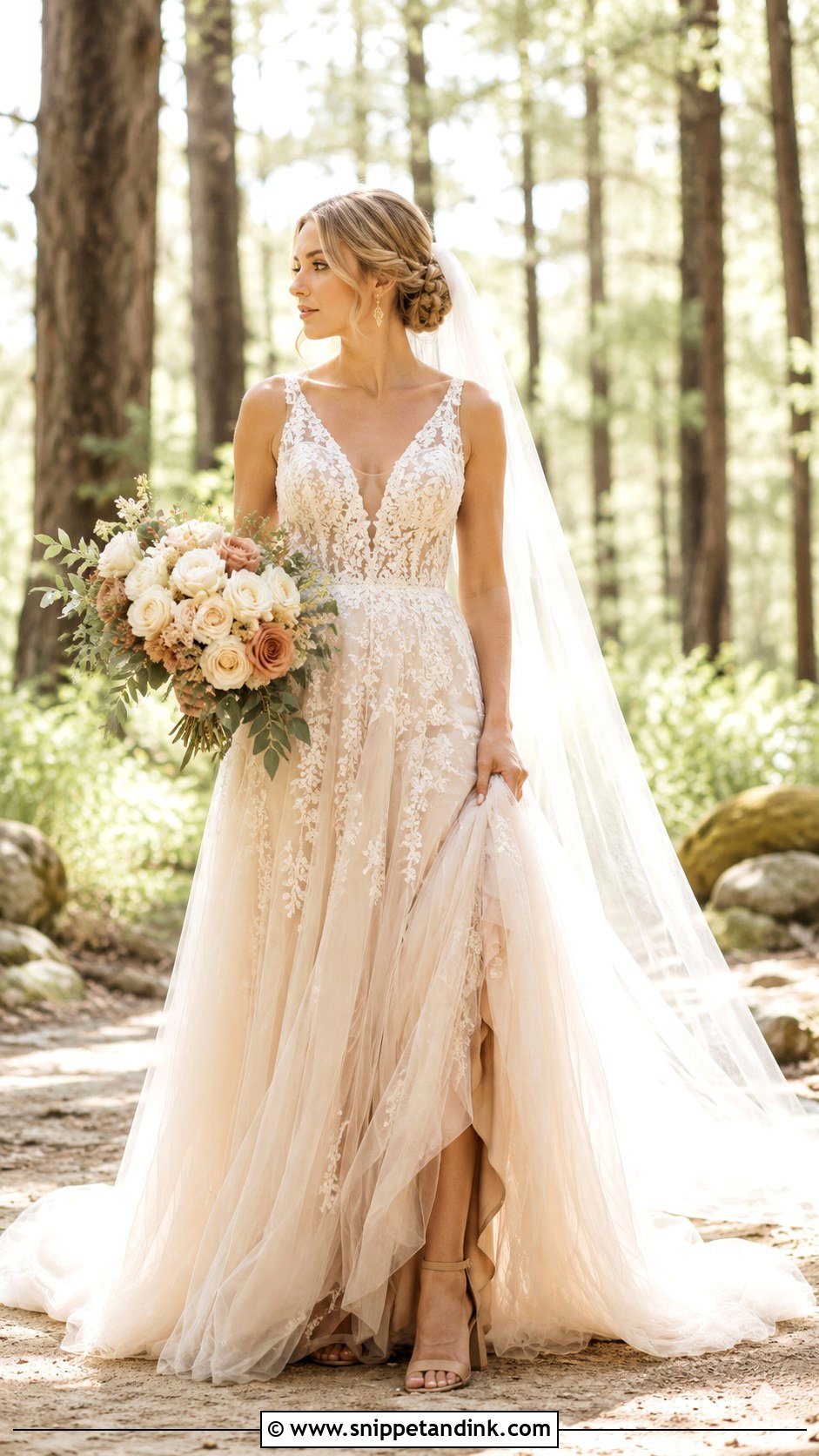
Champagne lining under ivory lace is how you get the lace pattern to show up in pictures; over white lining the lace tends to flatten out. In filtered sun the whole gown reads warm rather than bright. One thing I always check is how close the lining is to your skin tone, because a near match can look like bare skin on camera, so compare a couple of shades. A V-neck, fitted waist and tulle skirt pair with nude or champagne block heels, warm gold jewelry and a soft ivory veil. A low braided bun keeps the neckline clear. Cream flowers with muted peach and greenery suit the warmer palette, and if the gown is beaded, keep jewelry to almost nothing.
14. Black Forest Wedding Dress
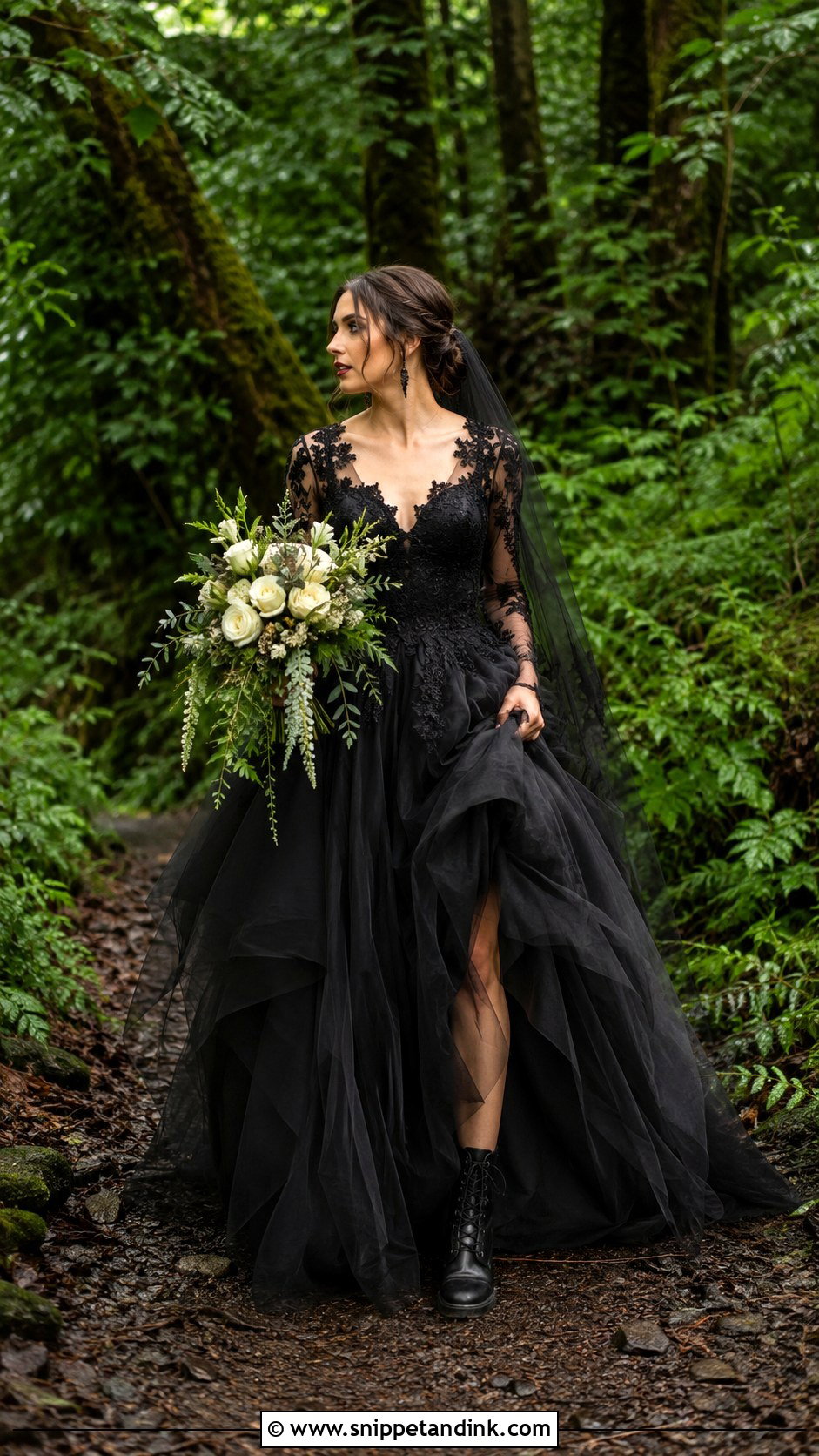
Black is a real option for a bride who wants an unconventional woodland outfit, with one honest caveat. In deep shade black lace loses its detail, so talk to your photographer about light before you commit. Go romantic rather than severe: a black tulle A-line with a lace bodice, defined waist and layered skirt, plus sheer sleeves or an illusion neckline so the color doesn’t feel heavy. Black ankle boots, silver earrings, and a black tulle veil or tiny star pins suit it, with softly waved hair. Pale flowers and fresh greenery give contrast. Have the hem professionally adjusted and add a wrist loop to the train, because a dark skirt on a dark path is easy to step on.
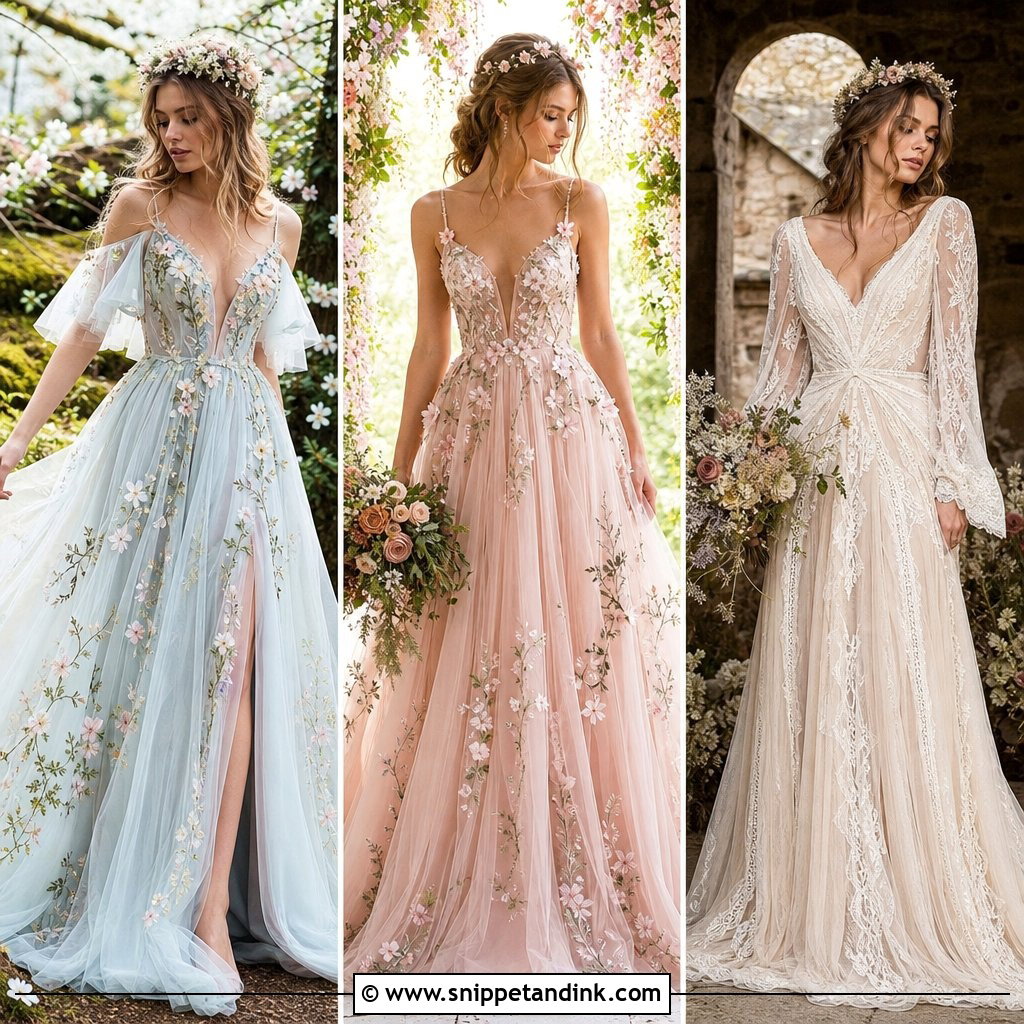
15. Fairy Forest Wedding Dress
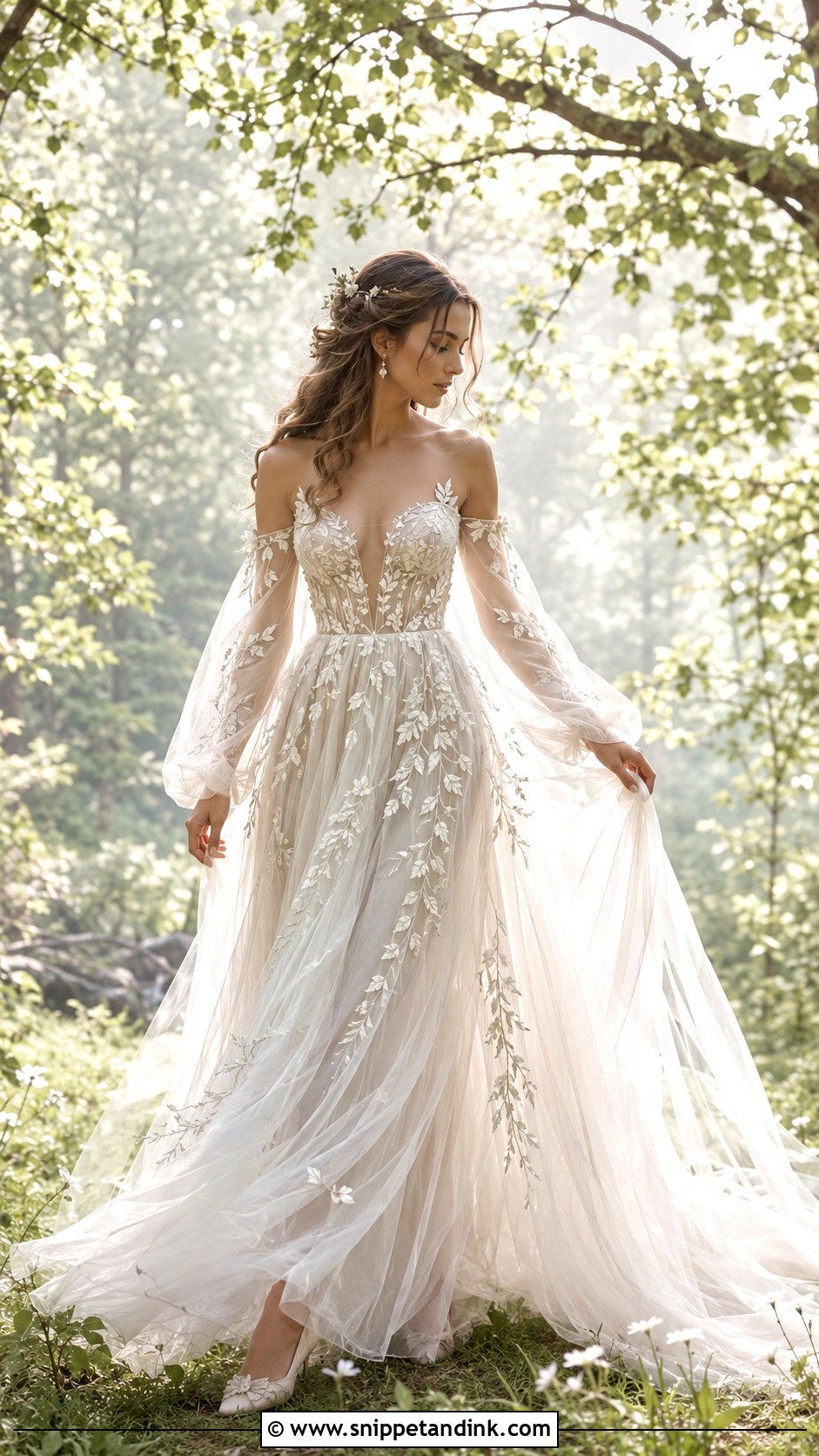
A fairy-inspired wedding dress works when the magic is in the fabric, not the props, so skip wings and oversized crowns. I look for airy tulle over a fitted bodice with leaf embroidery, and detachable sleeves you can shed for dancing. Those sleeves need secure snaps rather than ties alone, or they slide off the shoulder by evening. A misty gray or pale blush lining under ivory tulle gives a hazy effect in soft light. Embroidered flats or low sandals handle roots and leaves. Style long waves or a loose braid with tiny floral pins, slender drop earrings and a sheer cape, and carry ferns, white flowers and trailing vines.
16. Rustic Lace Forest Wedding Dress
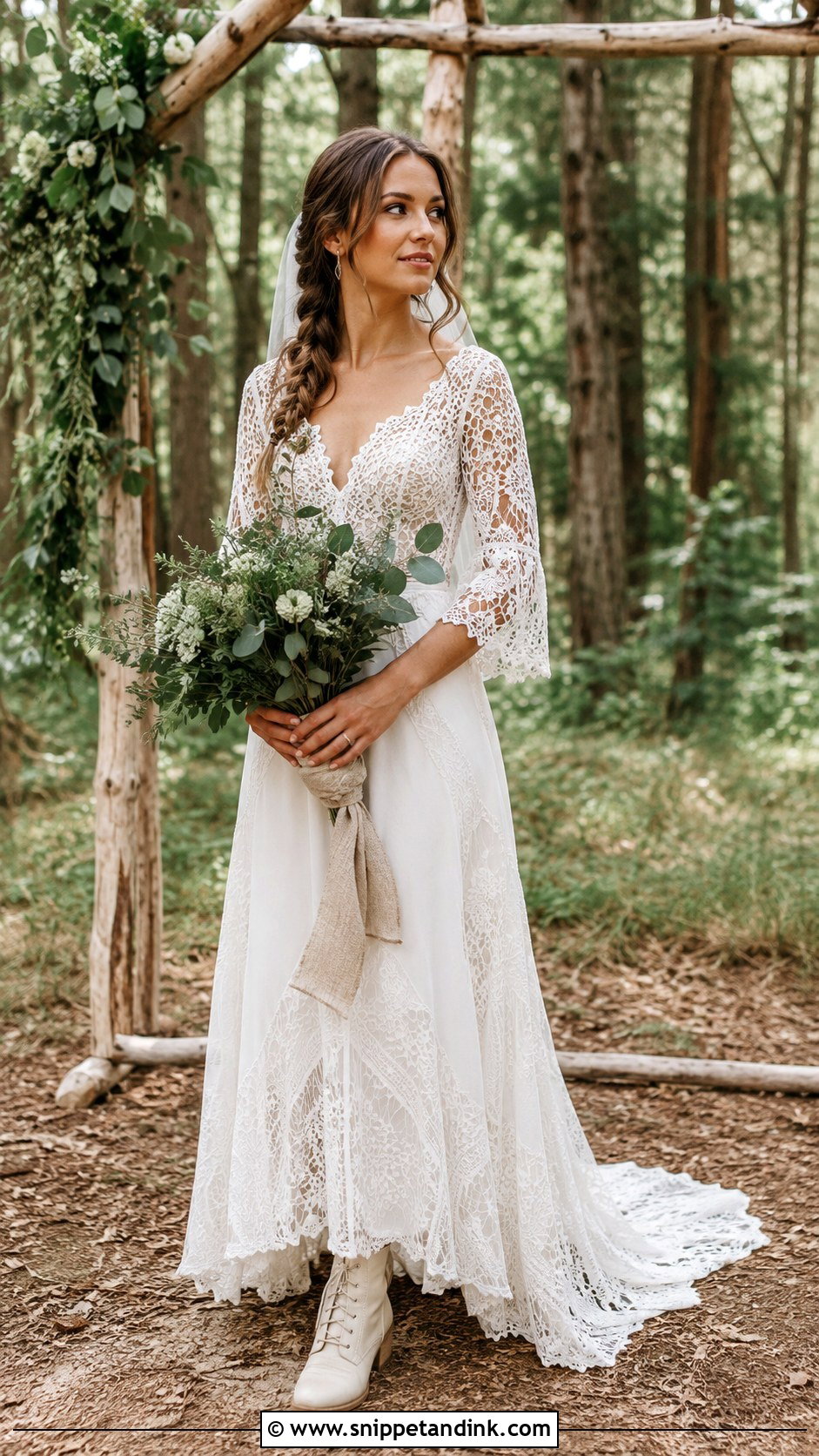
Rustic lace suits a casual forest setting with wooden benches and a simple greenery arch. Crochet-style lace and large floral patterns look handmade, and their open texture forgives a bit of dust at the hem. Check the lining, though. Open lace without a full lining shows every line of your underwear in backlit shots. Choose a relaxed A-line or sheath with a defined waist and a sweep train you can manage. Cream leather boots or low stacked heels, a loose braid, a small flower comb and a short veil keep it informal, with small hoops and a bouquet wrapped in linen ribbon. If the evening cools, a soft neutral shawl beats an embellished jacket.
17. Minimalist Slip Forest Wedding Dress
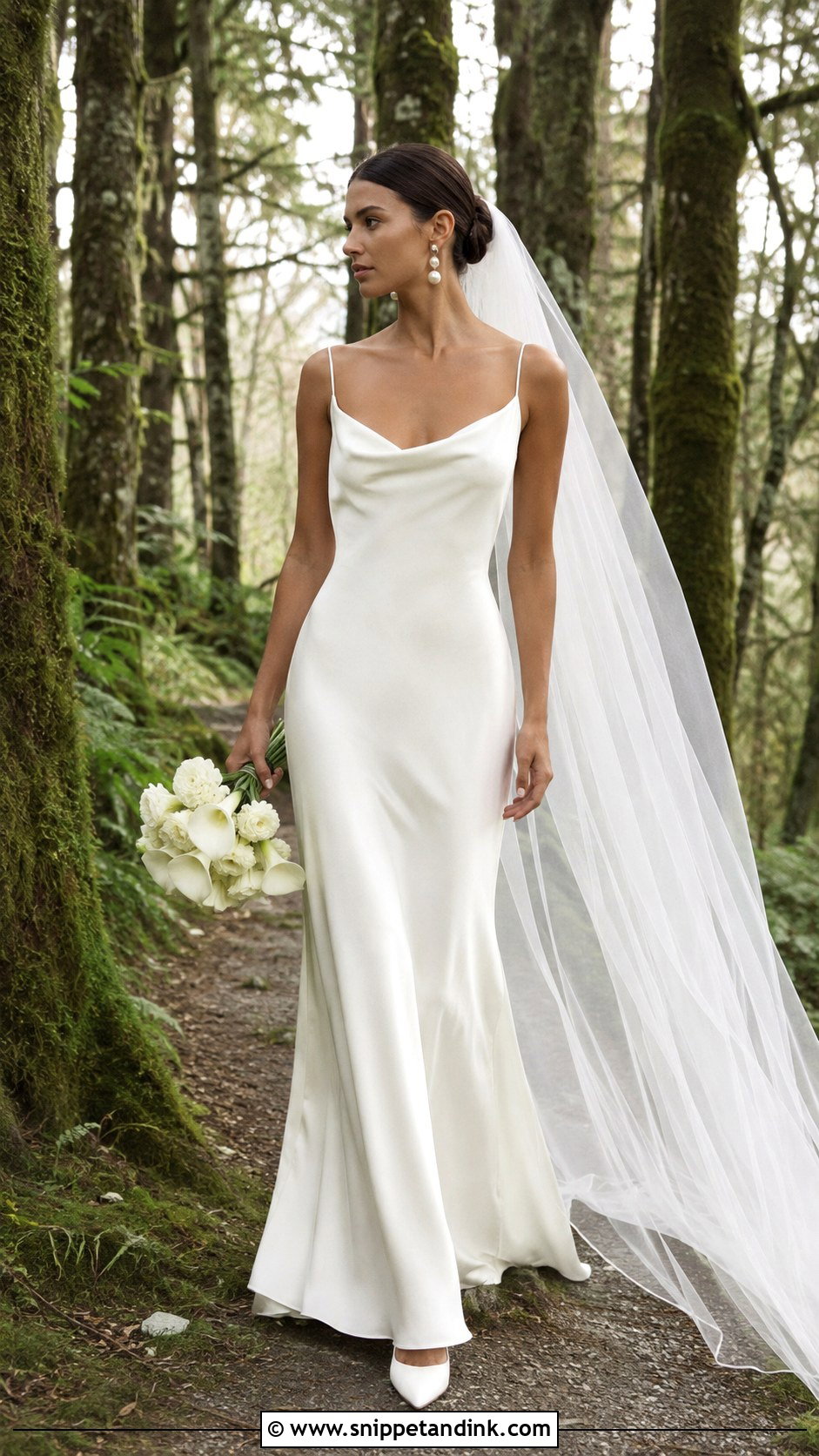
A bias-cut slip is the plainest dress here and the least forgiving. Cut on the bias, satin skims and clings, so fit and undergarments decide everything, and I have brides bring their exact underwear to every fitting. Slender straps, a softly draped neckline and a fluid skirt are all it needs. Pointed flats or low block heels, a smooth bun and pearl or sculptural earrings keep it modern. A sheer cathedral veil gives the ceremony its drama and comes off for the reception. Carry a streamlined bouquet of white flowers with long-stem greenery, and for cool air add an ivory blazer or cashmere wrap. The satin’s sheen against rough bark and moss is the whole point.
18. High Low Forest Wedding Dress
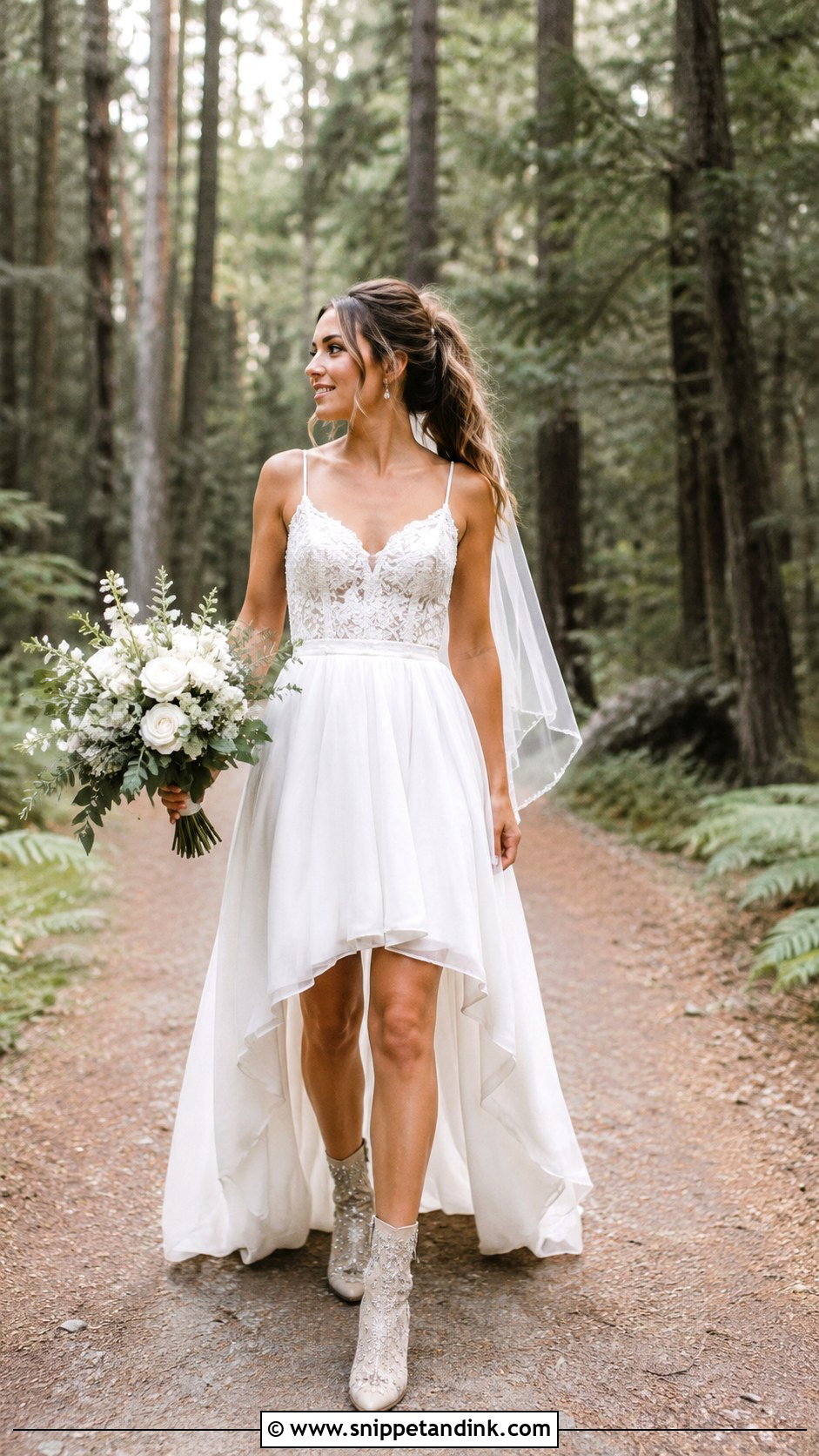
A high-low hem gives you a full train behind and a clear front for stairs and slopes. Hem it with the actual wedding shoes on, because the front sits near the ankle and an inch of heel changes how the curve falls. Since the shoes show, embellished ankle boots or lace-up flats earn their place. Chiffon or light tulle over a fitted lace bodice keeps it bridal. Finish with a textured ponytail or relaxed updo, small earrings, a fingertip veil and a loose bouquet of white flowers and fresh greenery.
19. Winter Forest Wedding Dress With Cape
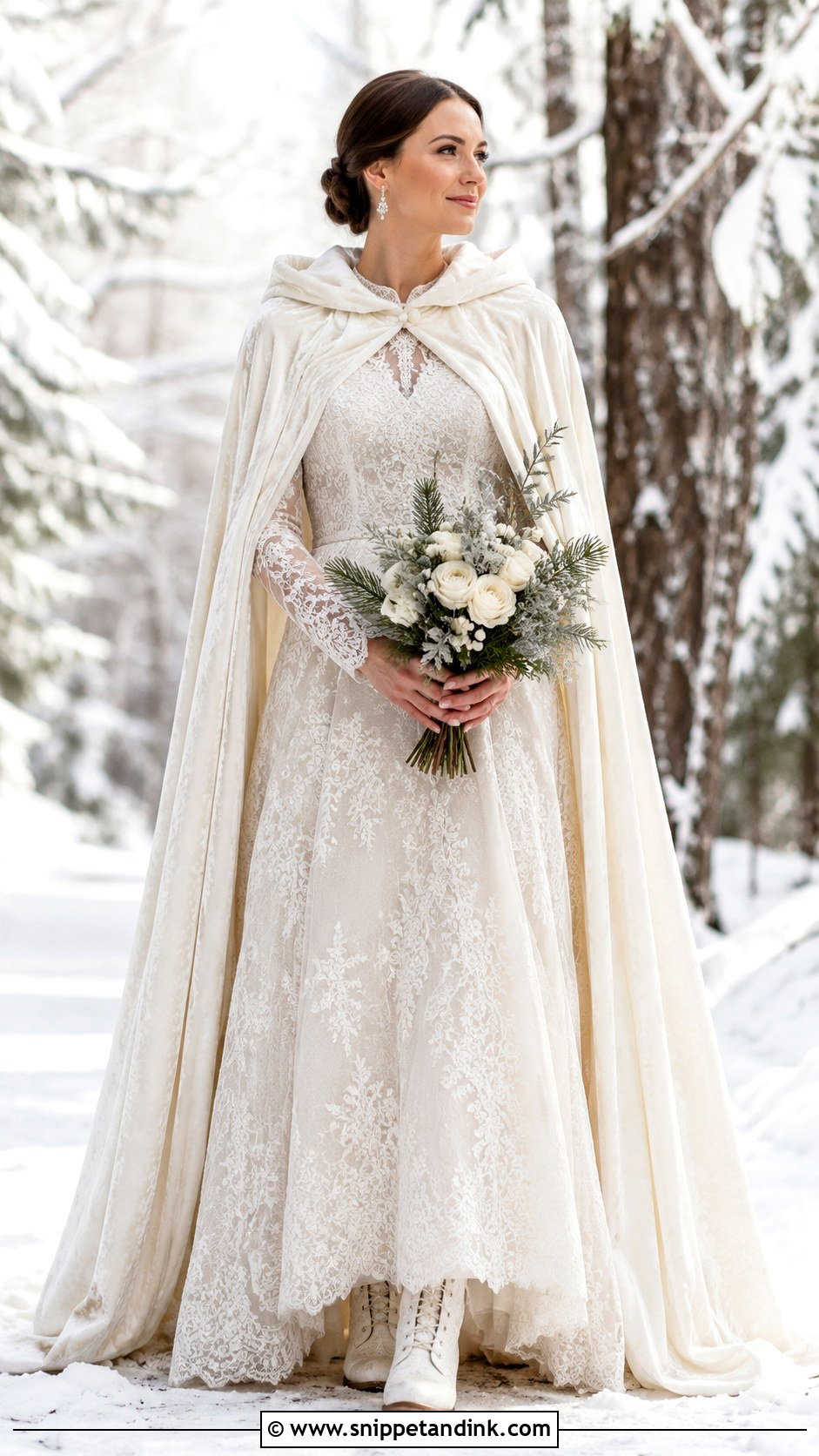
In winter woods, warmth comes first, but the dress still has to show. I start with a long sleeve crepe or lace gown, structured at the bodice with an A-line skirt, and add a floor-length ivory velvet cape with a lined hood or a high collar. Velvet crushes wherever it’s pressed, so the cape travels on a hanger, never folded into a bag. Insulated bridal boots and warm tights stay hidden under the skirt. Crystal earrings, a polished low bun and a delicate comb catch light around the face. White flowers with pine and silvery foliage feel seasonal without going themed. The cape can stand in for a veil and come off indoors.
20. Summer Backless Forest Wedding Dress
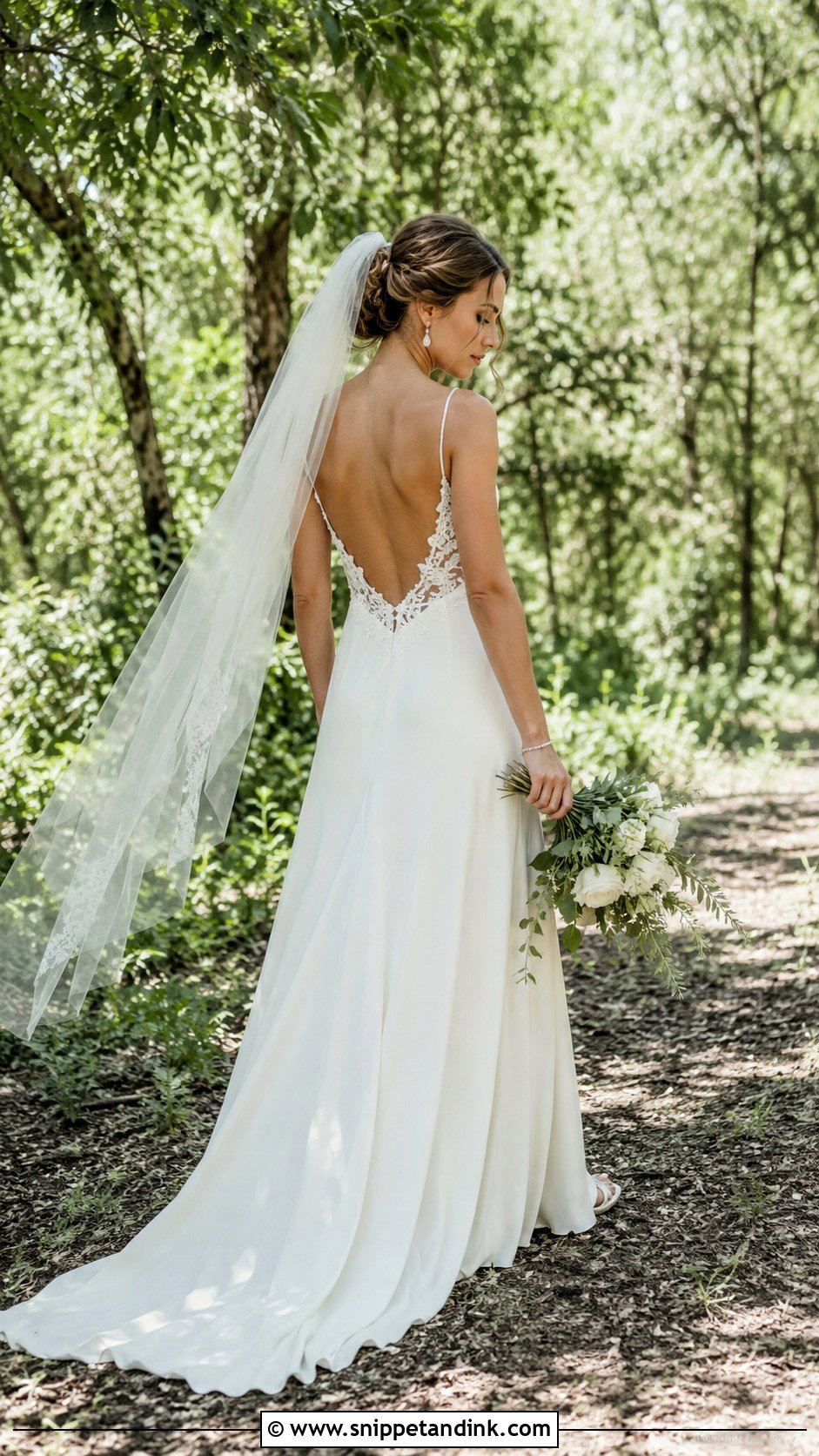
A backless gown is the coolest choice for summer under the trees. Think chiffon or crepe in an A-line with slender straps, a secure waist and a low back framed by lace or fine beading. Support comes up at every fitting, so ask your seamstress about sewn-in cups early; they have to be placed before the back is finalized. I’d keep the skirt just off the ground so it doesn’t drag twigs along. Flat sandals, a lightweight veil and a loose updo that shows the back, plus small drop earrings and a fine bracelet. Tuck a few delicate grasses among white flowers and greenery. In the weeks before, watch for tan lines, since a low back shows every strap mark.
Why Bright White Can Look Green Under the Canopy
Light coming through leaves picks up their color, and a white skirt reflects it back. In dense shade, optical white can look faintly green or blue in photos, while ivory and soft champagne hold their warmth. I’d take the shortlisted gown, or at least a swatch, to the venue at ceremony time and snap it on a phone in the shade. Your photographer can correct a lot afterward, but a fabric that isn’t fighting the light makes their job easier. Finish matters too: satin catches what little light there is, while matte crepe soaks it up.
Sap, Mud and Moss on the Hem the Morning After
A forest dress comes home dirty at the hem. That’s normal, and most of it can be fixed if nobody panics on the night.
- Let mud dry fully, then brush it off gently. Rubbing wet mud pushes it deeper into the weave.
- Leave tree sap alone. No heat, no scrubbing; point it out to the cleaner, because it needs a solvent treatment.
- Grass and moss stains set over time, so get the gown to a specialist wedding dress cleaner within a few weeks.
- Sugary drinks dry clear and can turn brown months later, so mention any spill, even one you can’t see.
- Store the cleaned gown in an acid-free box or a breathable cotton bag, never the plastic cover it came home in.
Walk the Trail in Your Shoes Before the Last Fitting
Start with the ground, then the fabric, then the look. Flowing A-line skirts, lighter fabrics, secure bodices and trains you can manage make the walk through trees easy. Botanical lace or appliqué echoes the setting, though satin, color and a plain slip hold their own just as well. Plan stable shoes and a layer for the weather, and let accessories support the dress rather than compete with it. Book alterations early and do one full run in the whole outfit, shoes included, ideally on grass or gravel. If you can walk, sit and climb a step without thinking about the dress, it’s the one.
You'll Like These Ideas:





Leave a Reply