
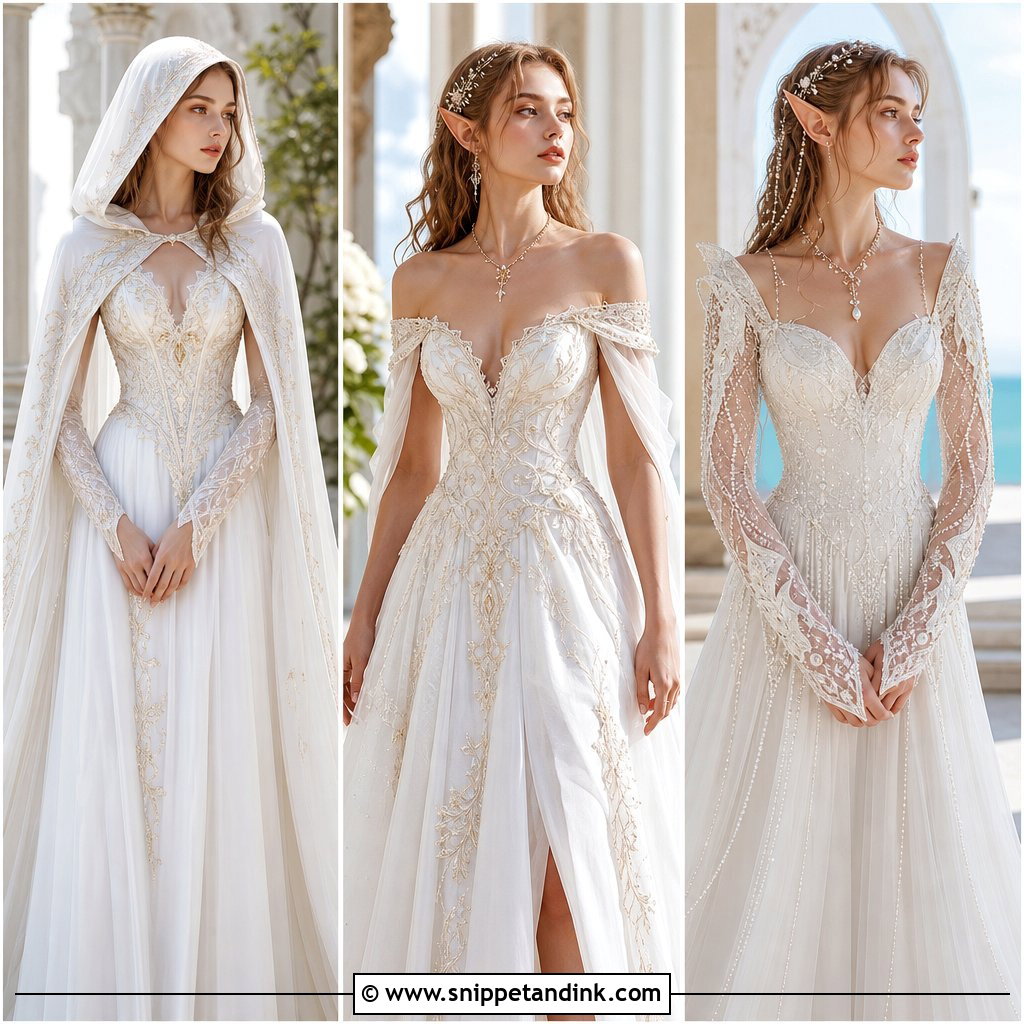
A fairy-inspired bridal look lives or dies on restraint. The gowns I pull for this brief share a few traits: airy tulle, flowers that look grown onto the fabric rather than glued, sleeves that move, and a bodice with enough structure to hold everything up. Push past two fantasy details and it starts to read as a costume. Your venue decides a lot here, because embroidered vines and flats belong on a woodland path, while a ballroom can carry glitter tulle and real volume. Below are twenty directions, each with the shoes, veil and finishing pieces I would put with it.
Tulle, Chiffon or Organza: How Each Fairy Fabric Behaves Over Twelve Hours
Most fairy gowns are built from three sheer fabrics, and each one behaves differently once you are actually wearing it. I make brides touch all three before they fall for a photo, because the fabric decides how the dress moves, creases and copes with the venue.
- Soft tulle (English net or silk tulle) drapes and floats, but it snags on rough bark, bramble and chair edges. If your ceremony is in woodland, ask whether the outer layer can be replaced with a tougher nylon tulle.
- Chiffon flows closest to the body and moves in a breeze, which is lovely outdoors. It also shows sweat marks and creases at the hips after a long seated dinner, so I suggest steaming it just before you put it on.
- Organza holds a shape and has a slight sheen. It crushes into hard creases if you sit on it awkwardly, and the creases do not drop out on their own, so it suits brides who will stand more than sit.
Static is the other surprise. Layered synthetic tulle clings to tights and to itself in dry, heated rooms. A slip under the skirt and a light anti-static spray on the inside layers, tested on a hidden seam first, usually solves it.
1. Floral Applique Fairy Bride Dress
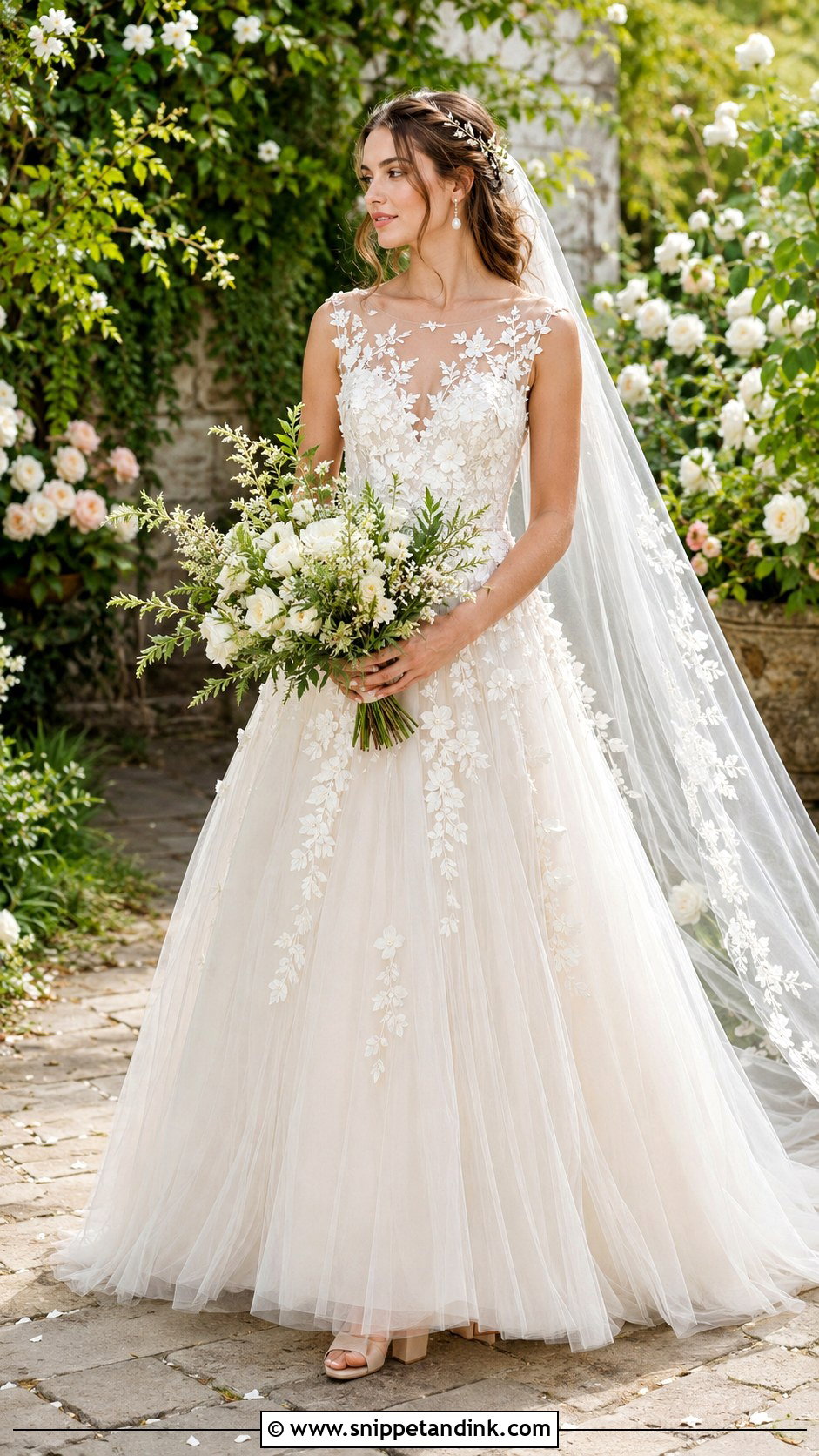
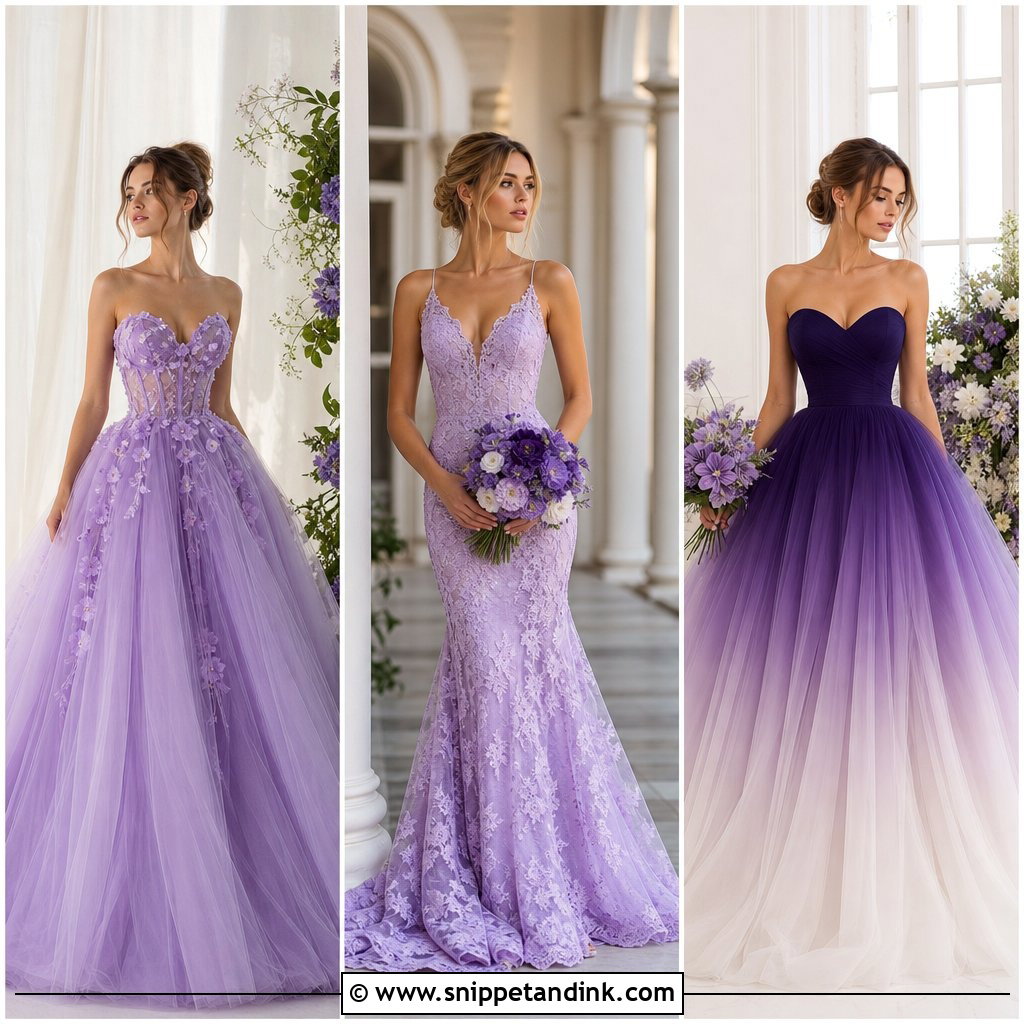
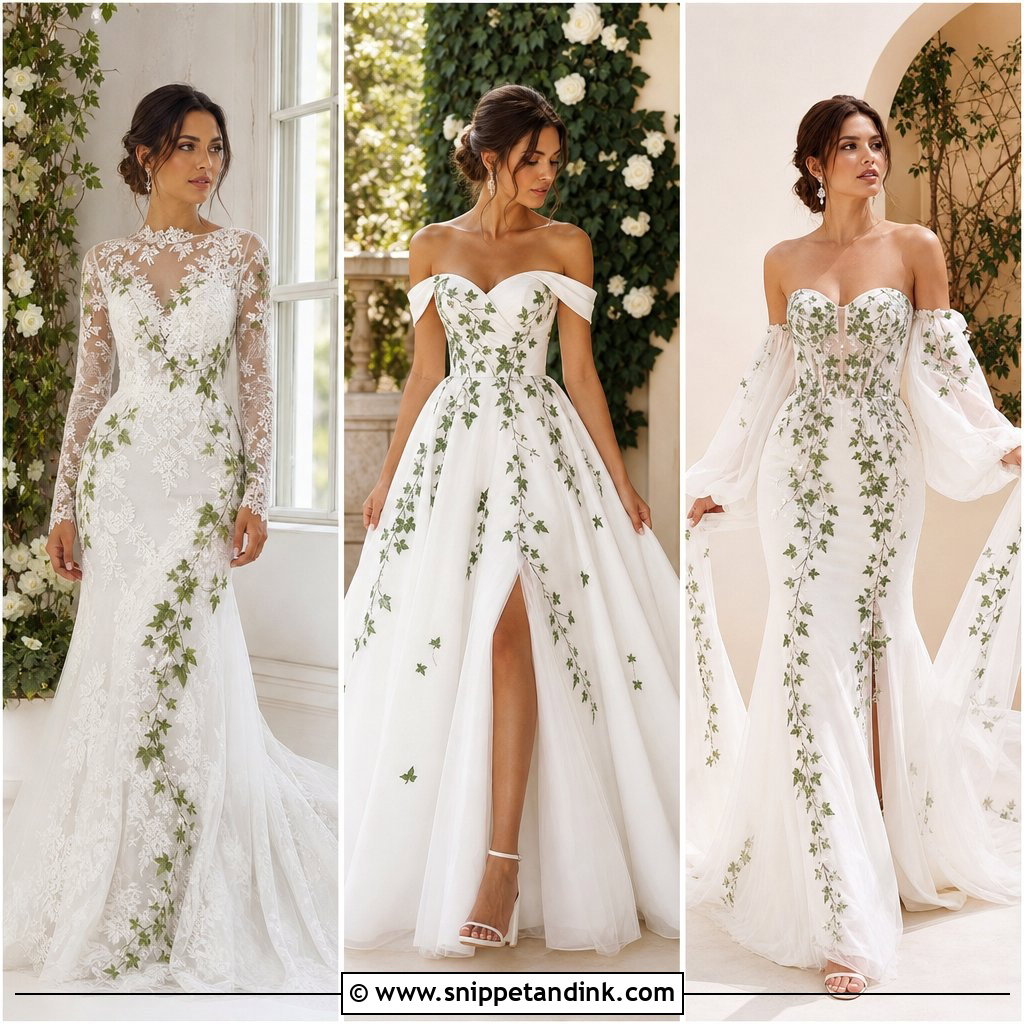
Dimensional flowers on a sheer bodice are the most requested version of this look, and the detail I check first is how the appliqués are attached. Hand-tacked flowers sit flat and move with the tulle; heat-bonded ones can stiffen and lift at the edges after a few hours of body warmth. I like the flowers thinning out toward the hem so the skirt seems to float. Ivory flats or a low block heel will save you on garden lawns, and a fingertip veil with a little embroidery near the edge ties back to the bodice. Keep the hair soft and low so it does not cover the shoulder work.
2. Tulle Ball Gown Fairy Bride Dress
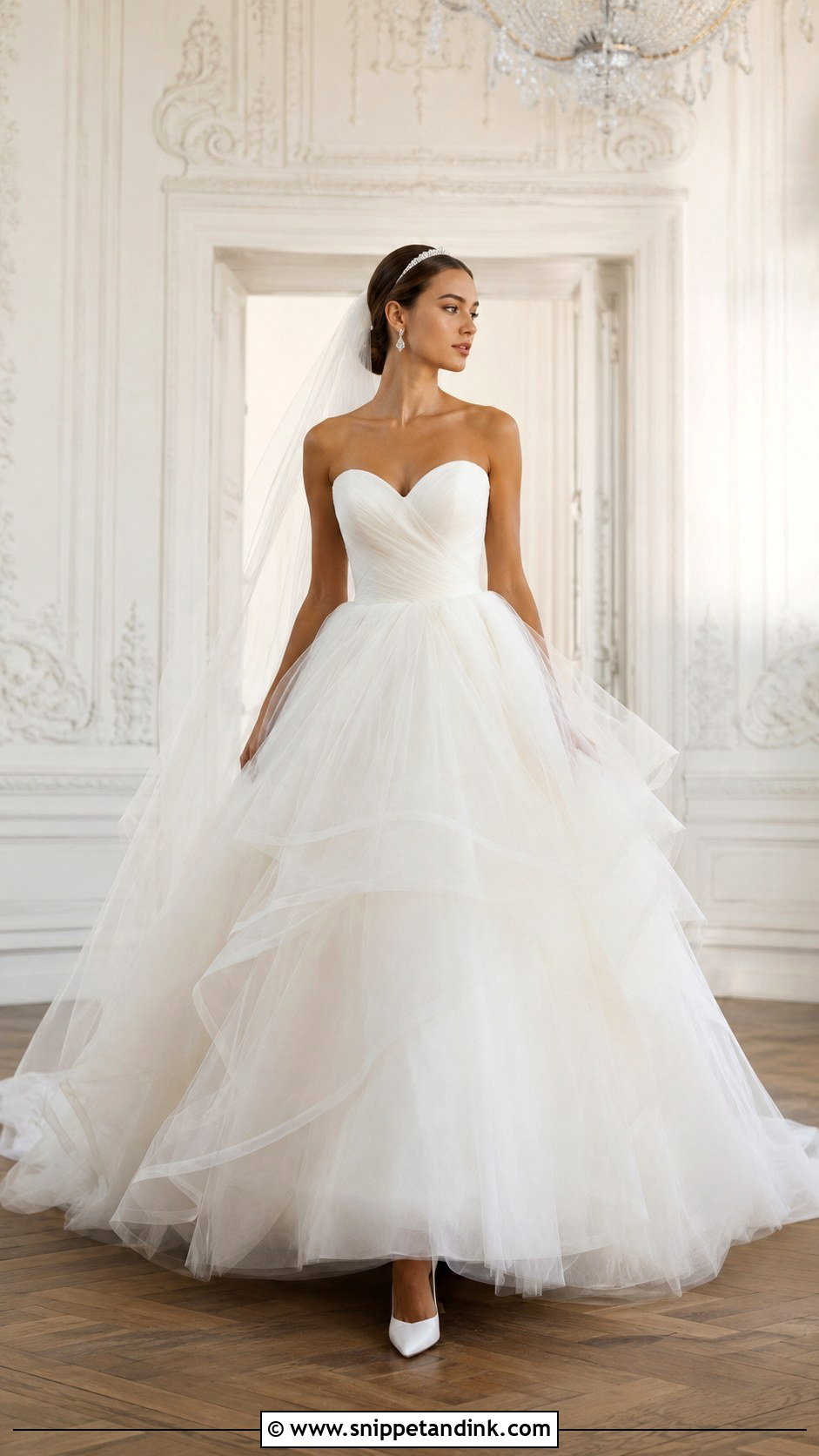
Tulle ball gowns go one of two ways: floaty or stiff. The difference is mostly in the layering. Soft English net over one crisper layer moves when you walk, while a skirt built on several stiff crinoline layers stands away from the body and looks like a petticoat. I steer petite brides toward asking for one or two layers to come out at alterations, which keeps the shape without the dress wearing them. A fitted bodice with a sweetheart line balances the volume, and a narrow jeweled headband is plenty. Save the cathedral veil for the aisle and take it off before dinner.
3. Long Sleeve Lace Fairy Bride Dress
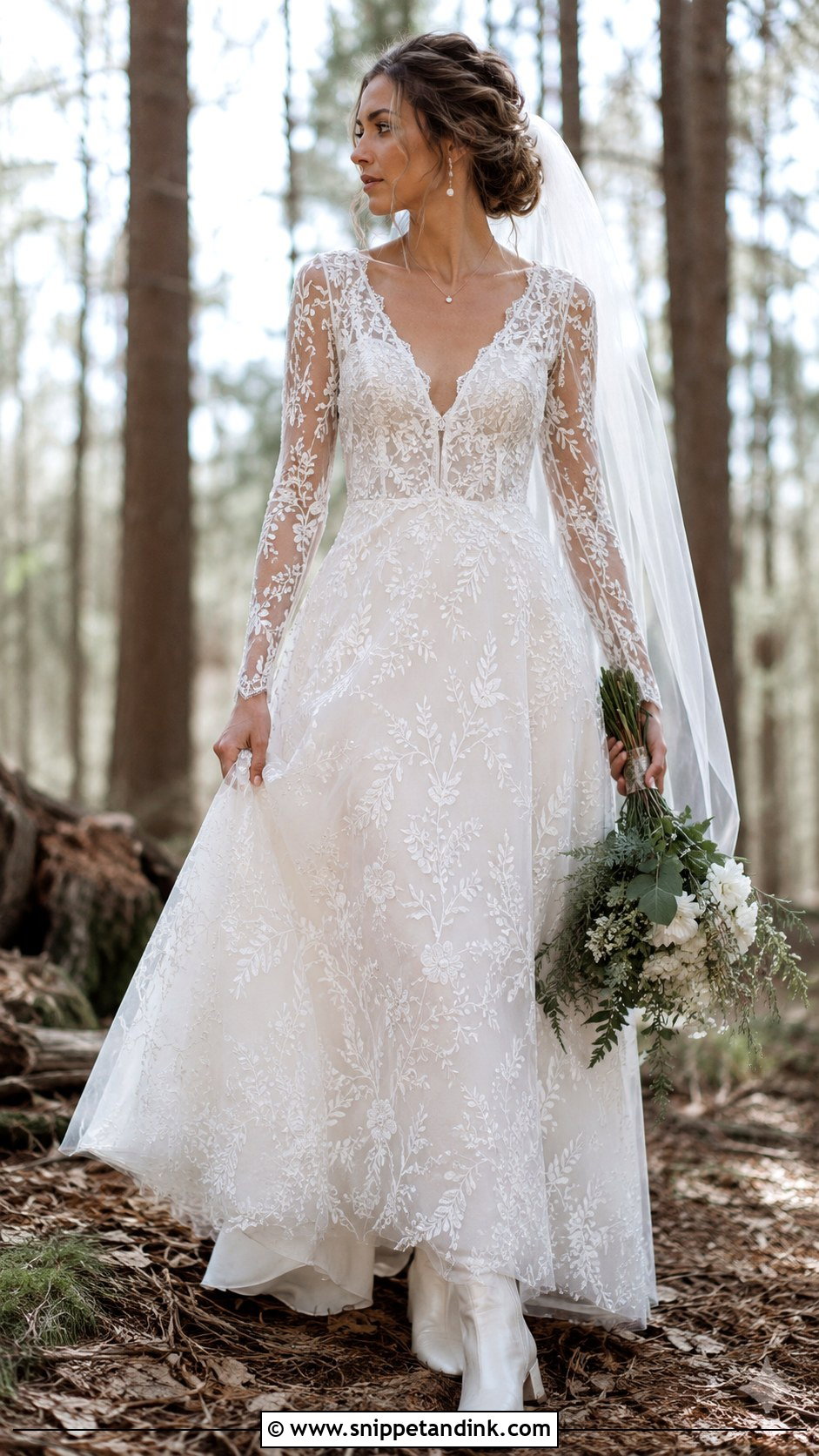
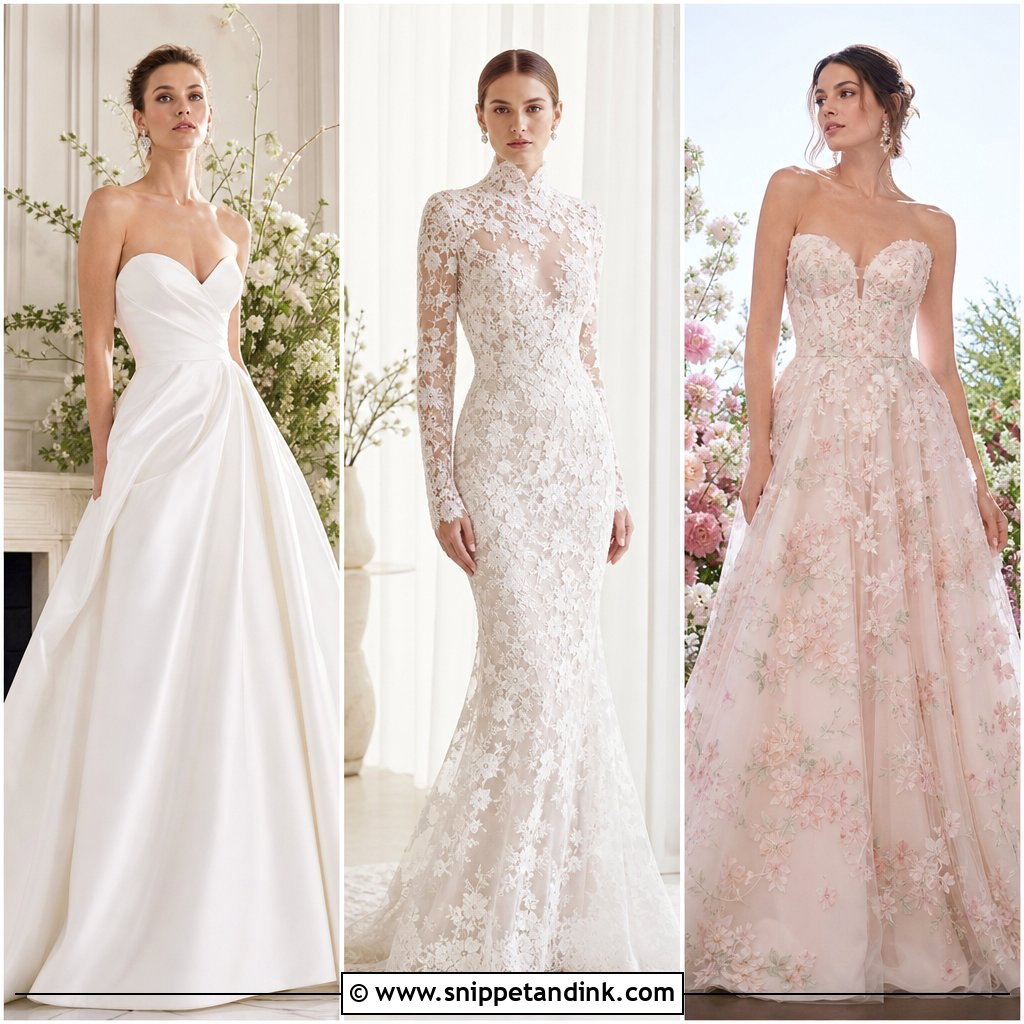
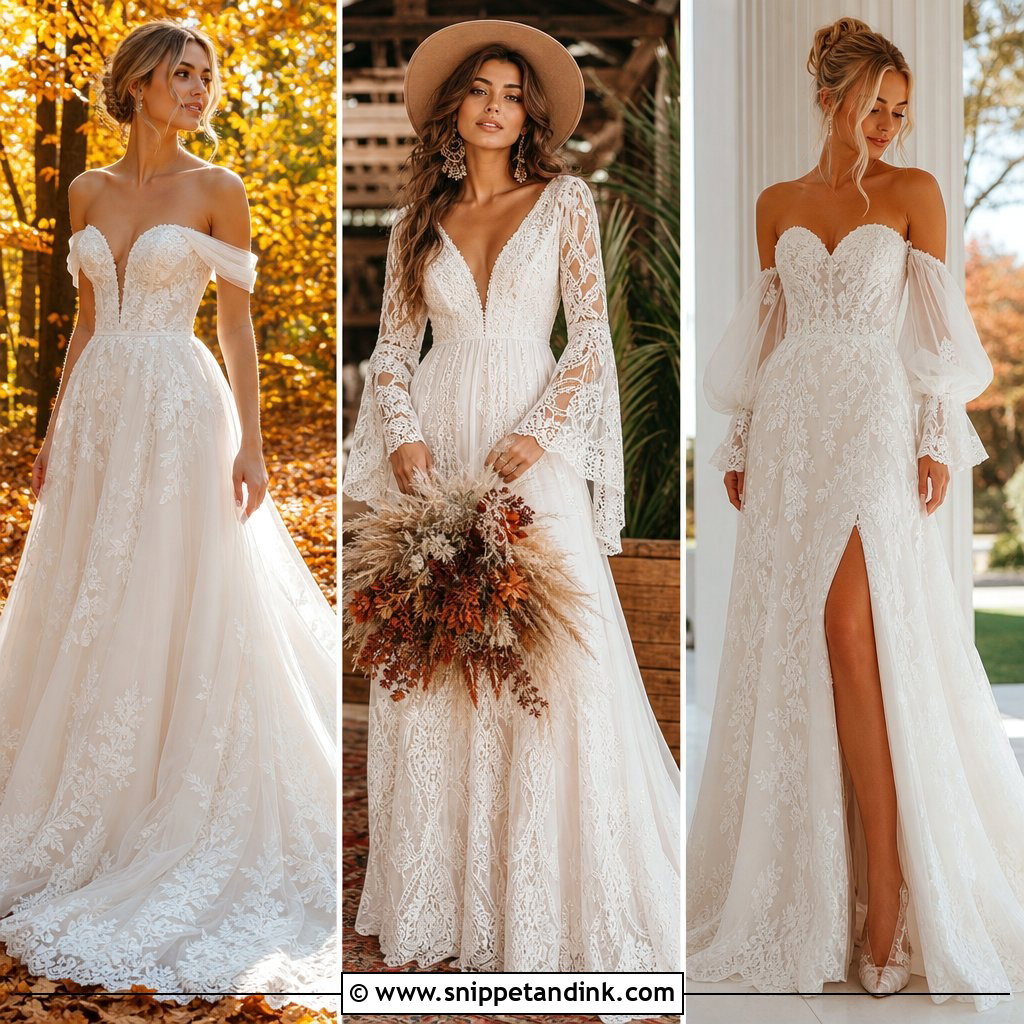
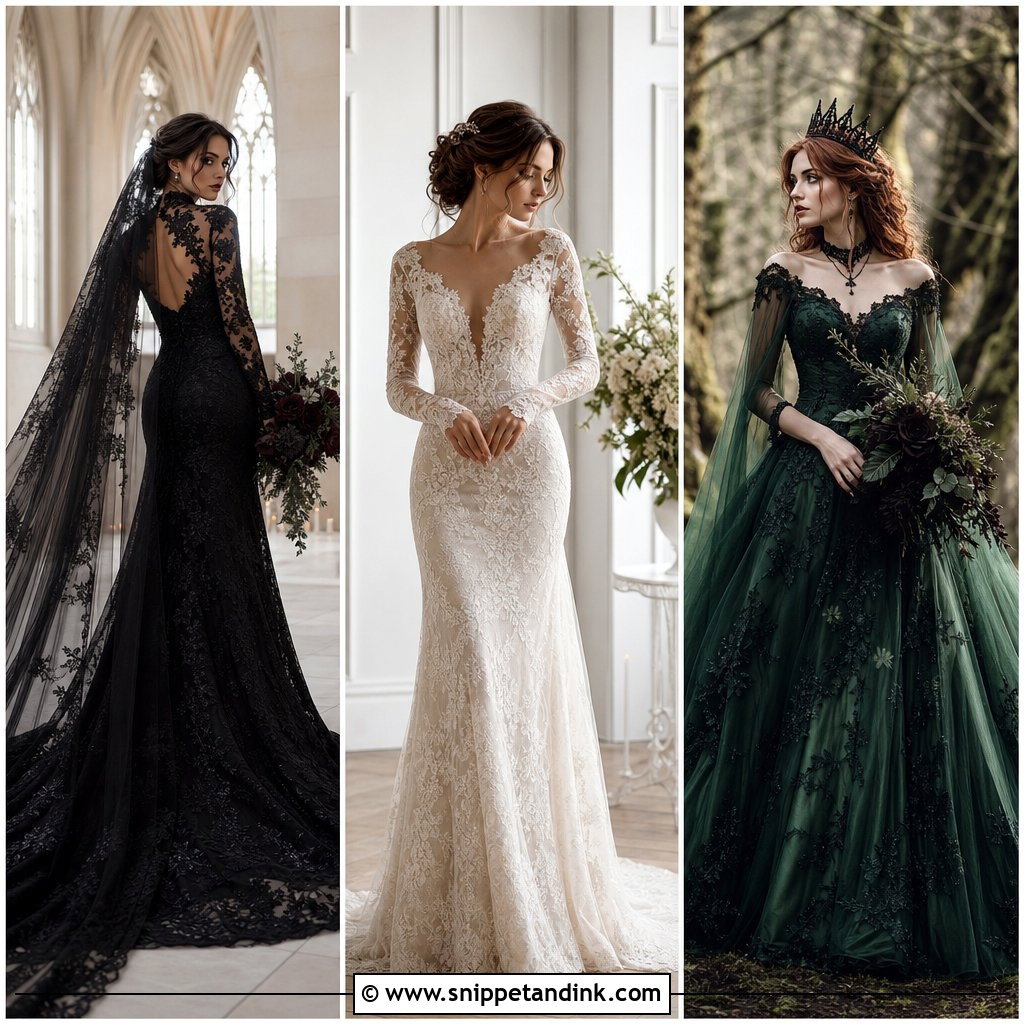
For an autumn or winter date, long lace sleeves give coverage without weight, but the lace pattern matters. Fine botanical Chantilly reads as fairy; heavy corded Alençon reads as traditional. I always have a bride bend her elbow and reach forward in the sample, because tight lace sleeves can bind at the inner elbow once you start hugging people. Ankle boots suit a woodland venue, closed pumps an indoor one. If the back is illusion lace, put the hair in a low bun and skip the necklace.
4. Off Shoulder Fairy Bride Dress
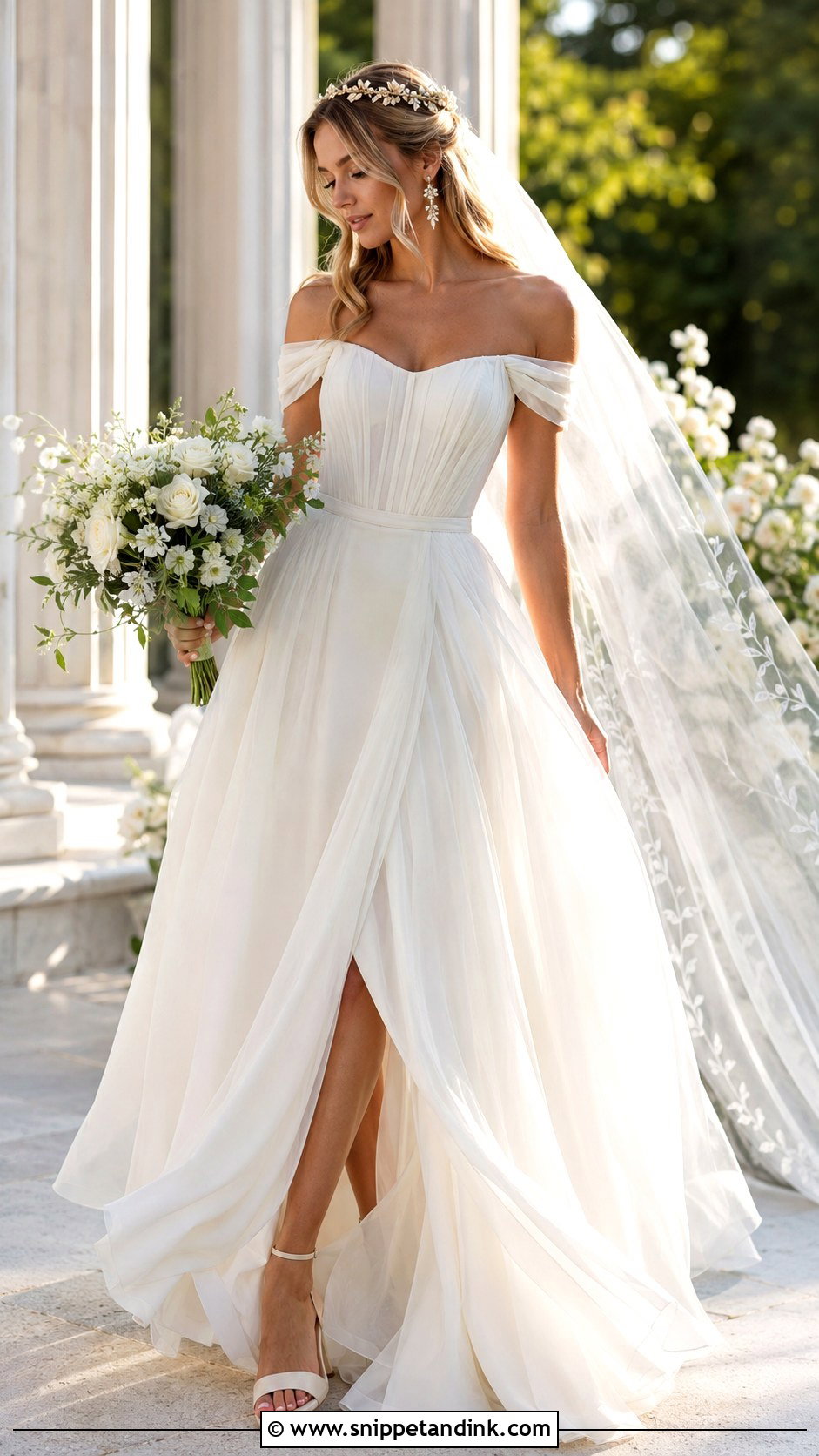
Off-the-shoulder necklines photograph softly, but they are the style I fit most carefully. The bodice has to hold itself up, because your arms will lift the sleeves every time you raise a glass. Ask your seamstress about silicone gripper tape inside the neckline or a hidden clear strap; both are standard fixes. A relaxed updo with a chapel veil tucked underneath keeps the shoulders clear. I leave the neck bare and let a glowy skin finish do the work a necklace would.
5. Butterfly Applique Fairy Bride Dress
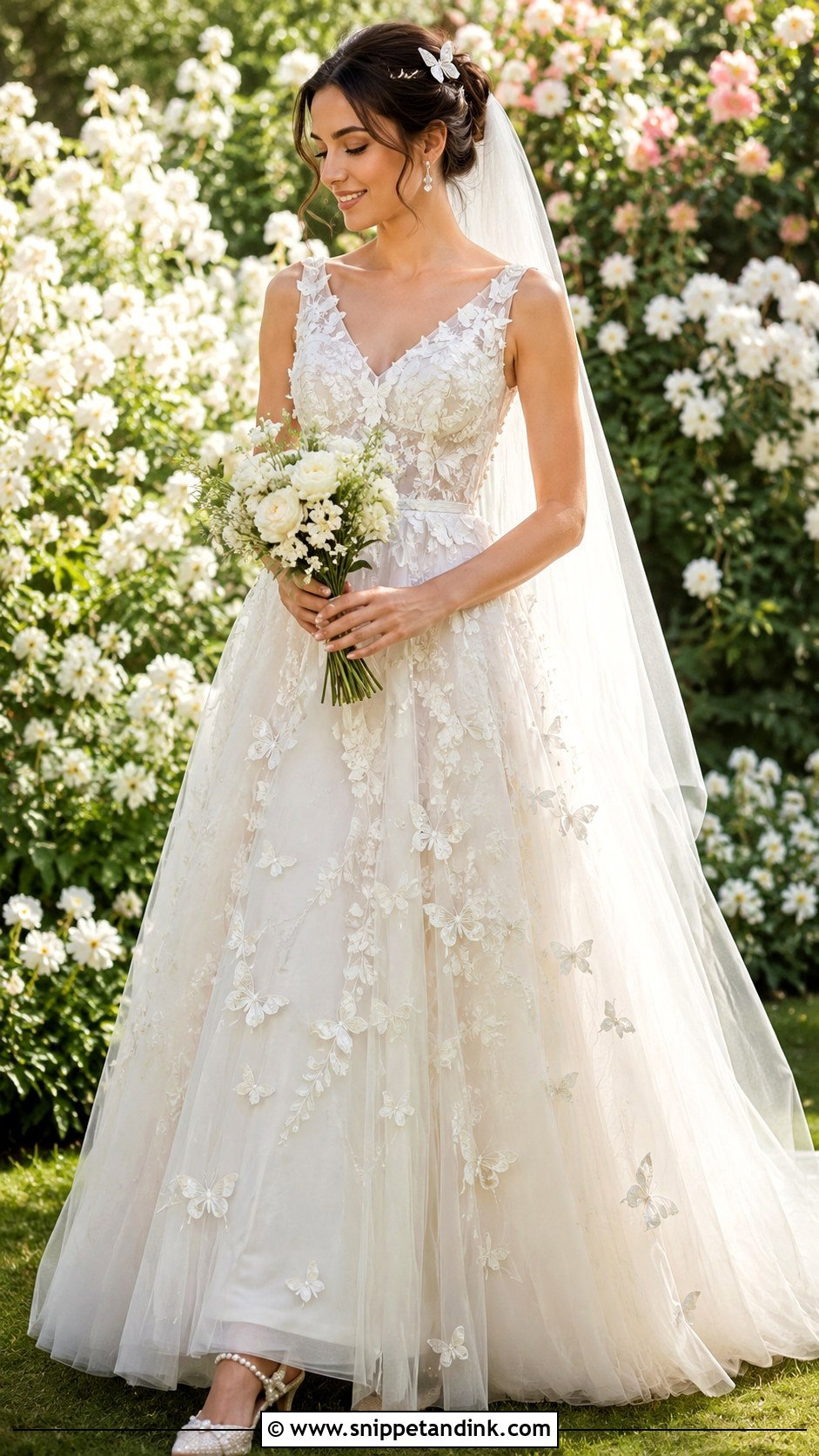
Butterflies can look whimsical or childish, and scale is what decides it. Small tonal butterflies, the same ivory as the gown, scattered over the shoulders and upper skirt, look like they have landed there. Large colored ones combined with beading look busy, so I pick one feature and stop. A soft A-line gives the motifs room. One or two matching butterfly pins in a half-up style is the limit before it tips into theme party territory.
6. Corset Bodice Fairy Bride Dress
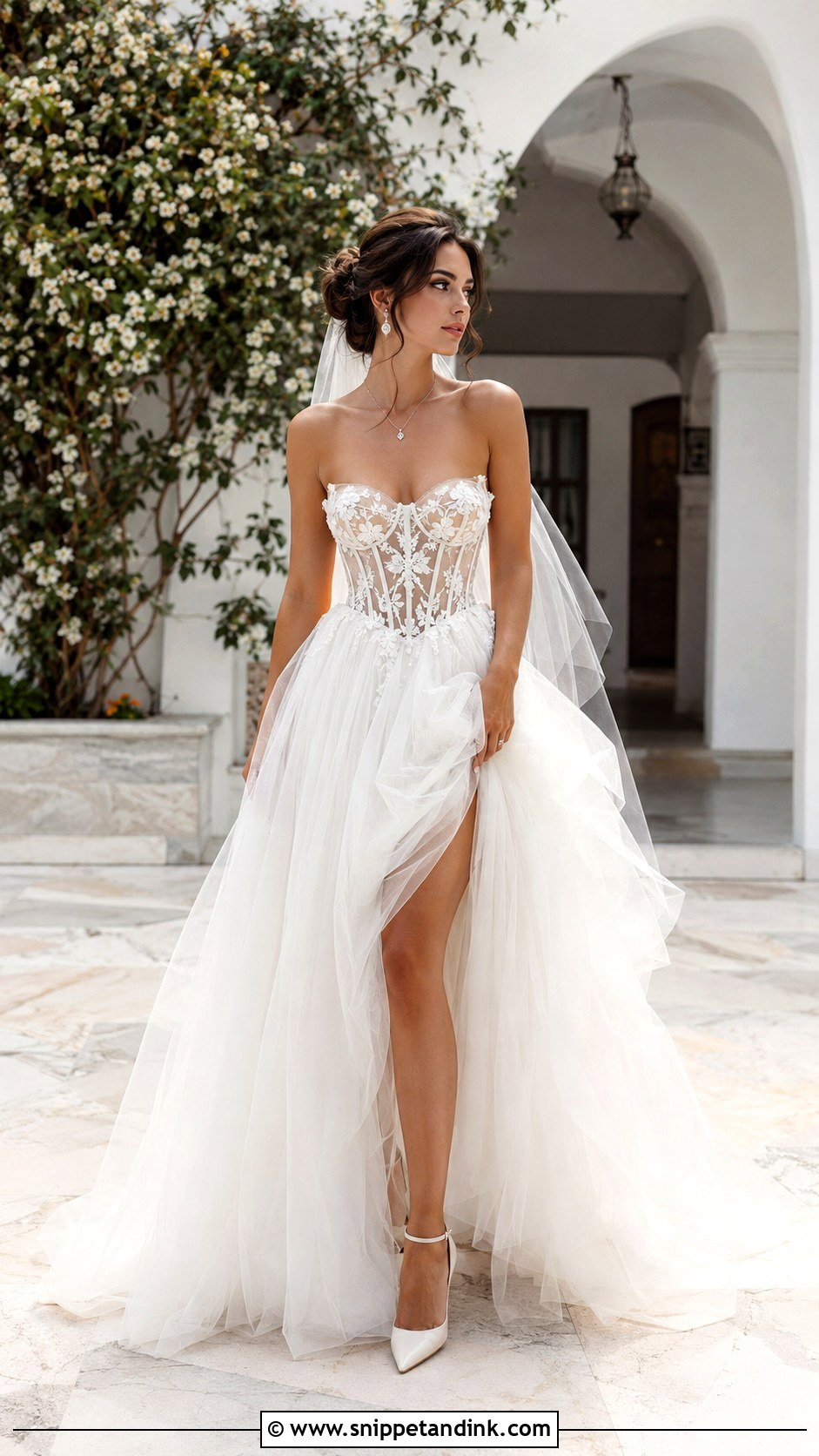
A good corset bodice carries the weight of the whole skirt, so the boning and seams matter more than the decoration on top. I look for spiral steel or flexible boning, curved panel seams, and a basque or dropped waist that eases into the tulle. At every fitting, sit down, walk, and lift both arms over your head; if the top edge digs in or the bones press into your ribs, it needs adjusting. Ordering a size down to look smaller backfires, because the bodice then pushes flesh over the top edge. Fit it to your body and it will hold you comfortably all day.
7. Sage Green Fairy Bride Dress
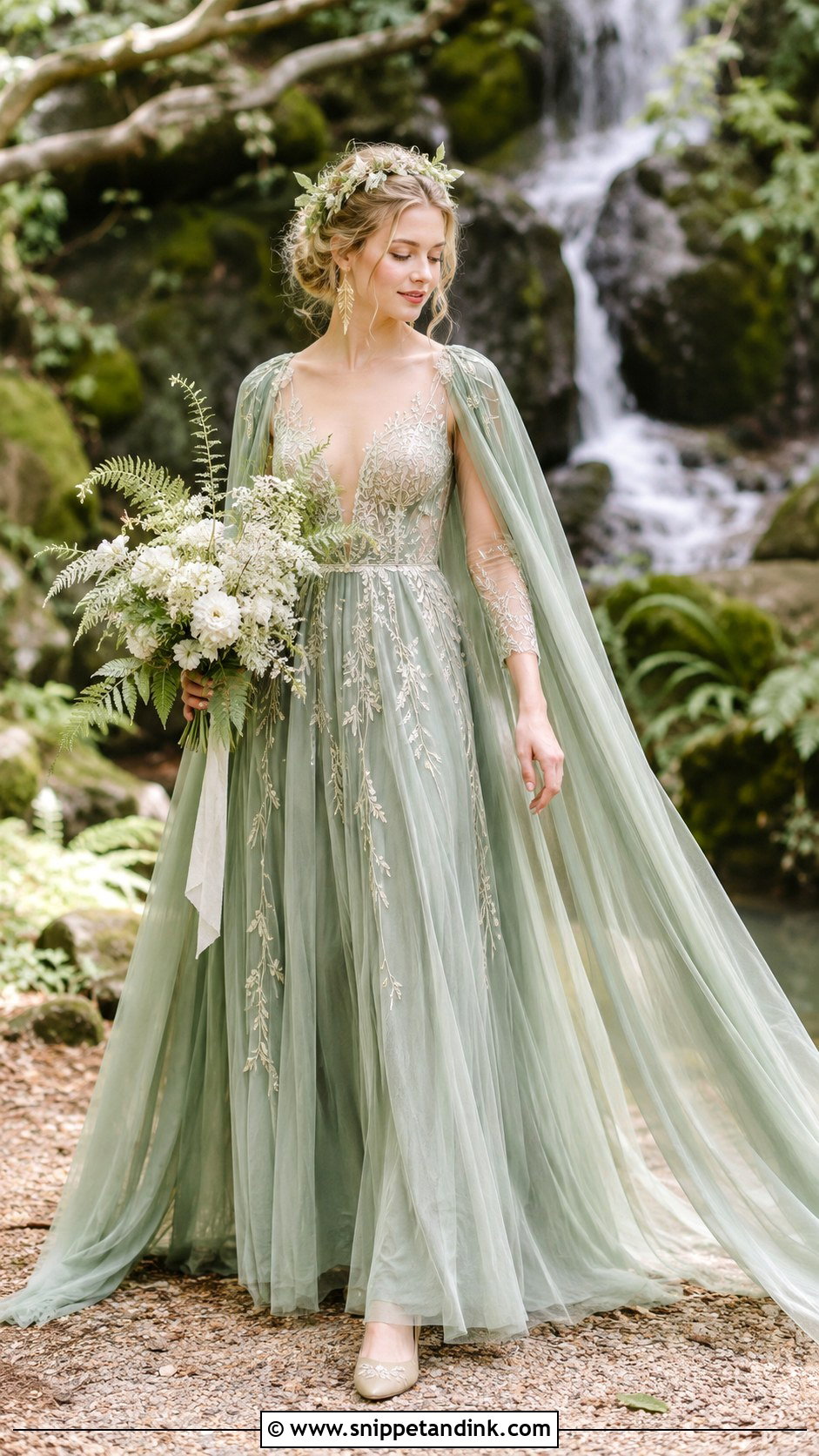
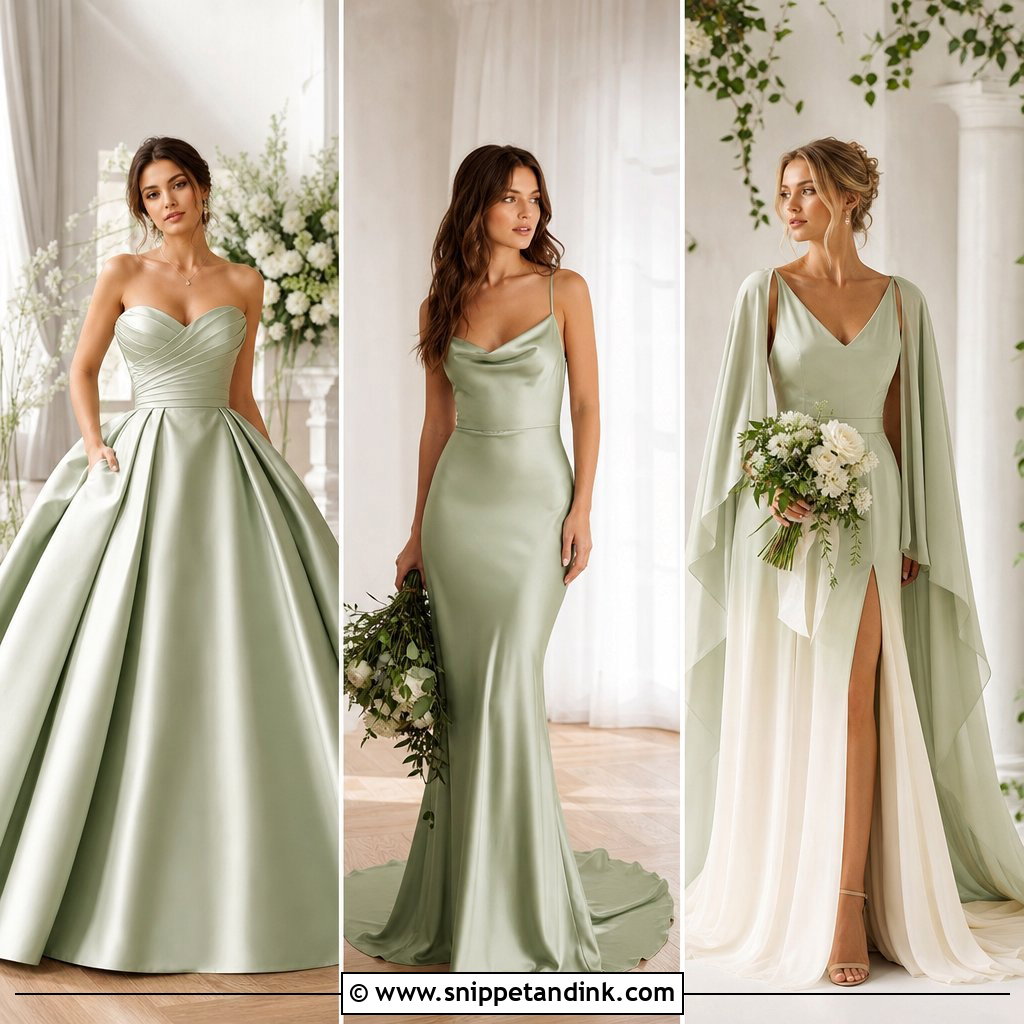
Color is where I slow brides down. A sage green fairy bride dress needs a grey-leaning, silvery sage; a saturated green can make skin look sallow in shade and often reads as bridesmaid. Ivory embroidery or a pale tulle overlay lifts it. Champagne heels and gold leaf earrings sit well with the earthy tone, and a bouquet of white blooms, ferns and eucalyptus keeps the palette coherent. Against forest greenery and old stone the color glows rather than disappearing.
8. Blush Pink Fairy Bride Dress
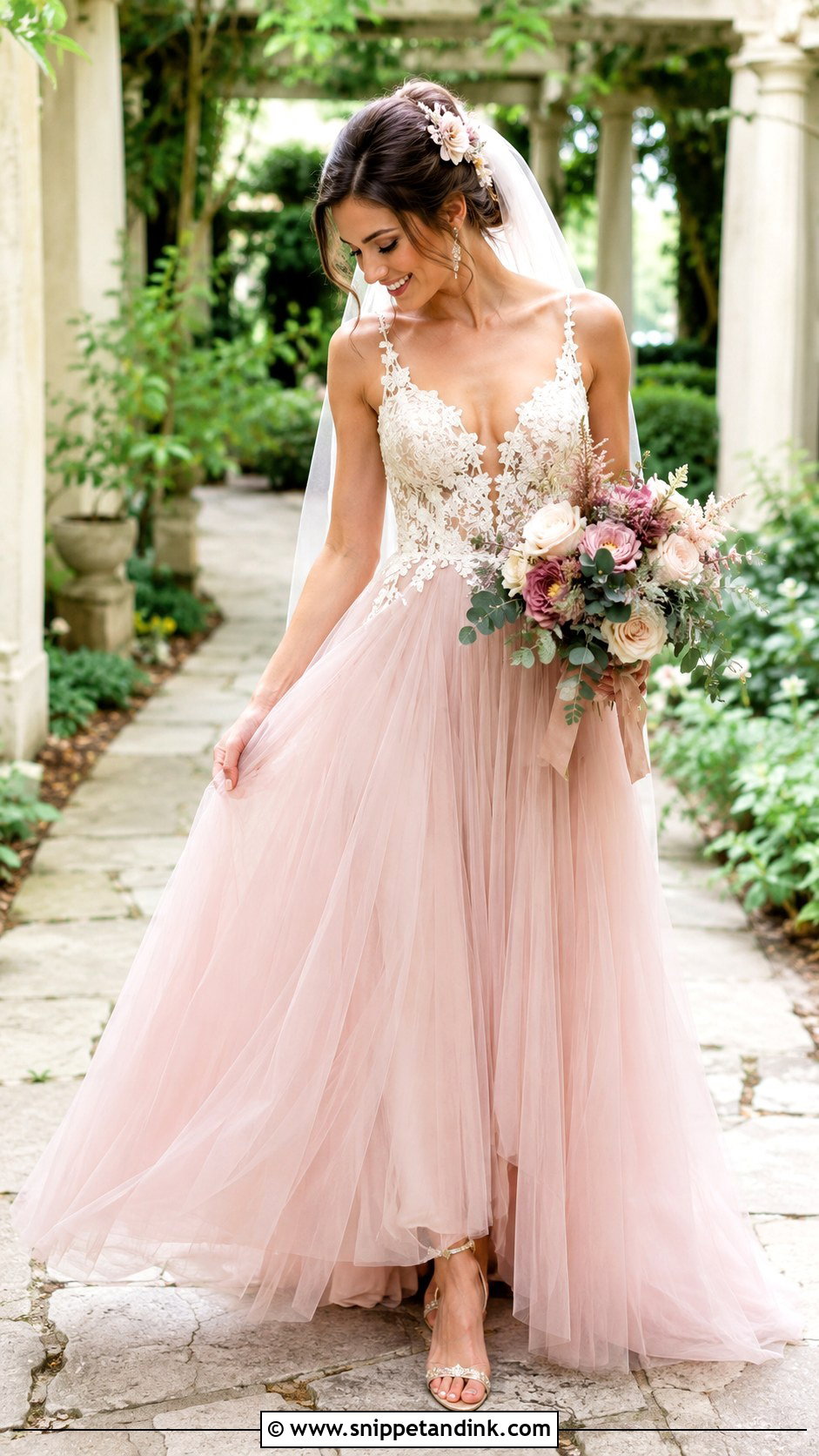
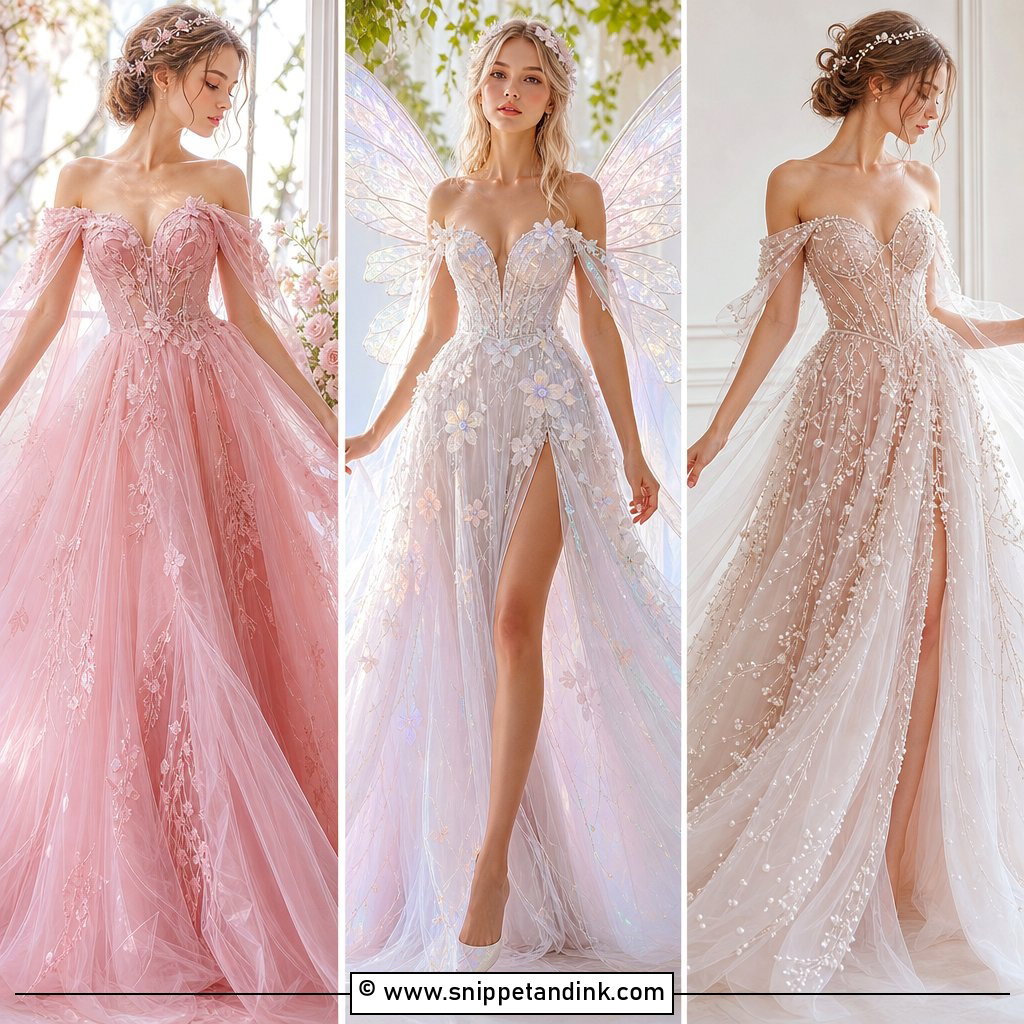
Blush is the gentlest way into color, and the best version is usually a blush lining under ivory lace, so the pink shows through rather than sitting on top. Dusty rose tulle is stronger and needs testing. I hold swatches against a bride’s face by a window and again outdoors, because a pink that looks warm under shop lighting can turn cold or ashy in daylight. Nude or soft gold shoes keep it calm. Do not match makeup, flowers and accessories exactly to the dress; one tone up or down looks intentional.
9. Champagne Sparkle Fairy Bride Dress
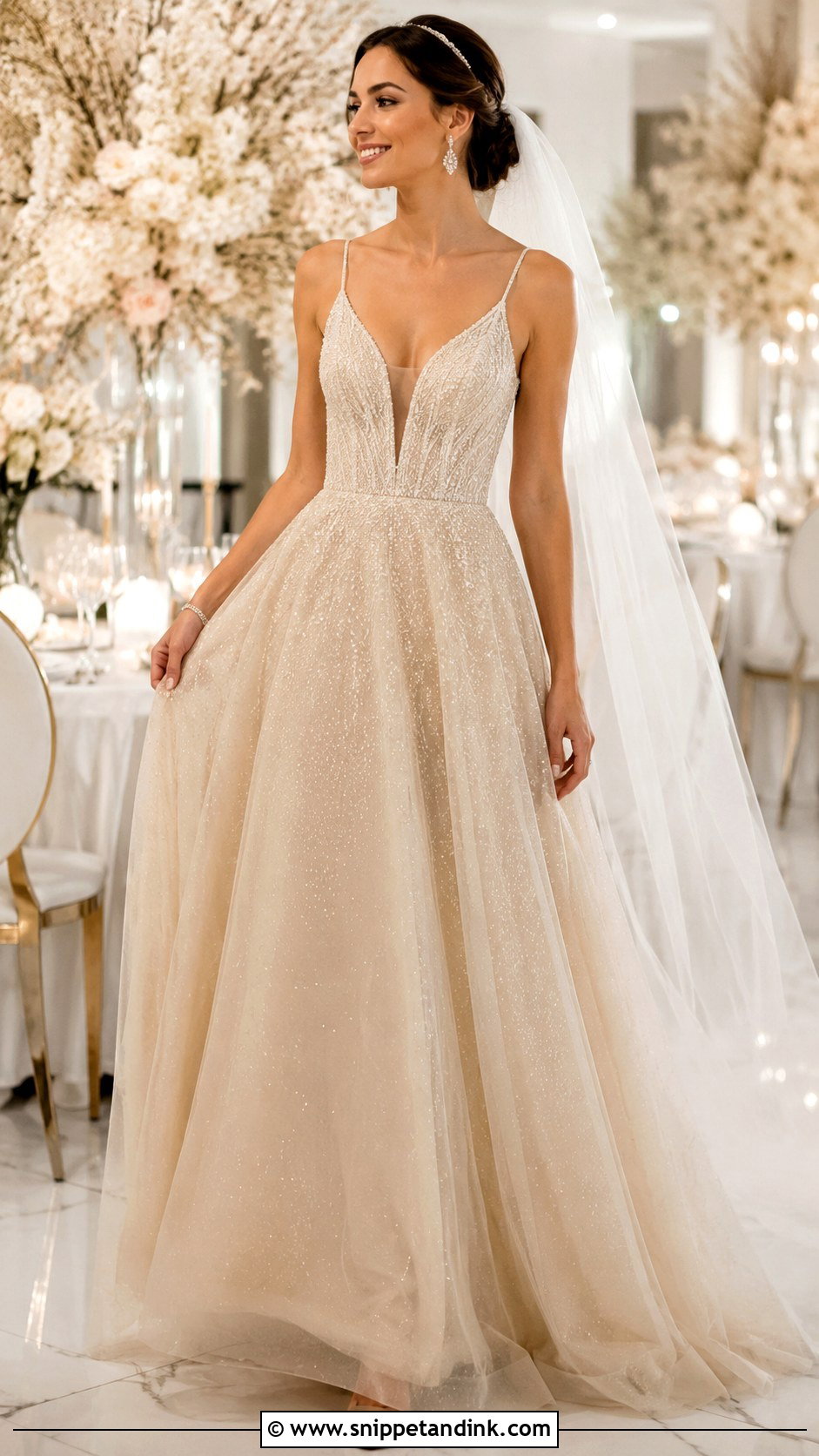
Champagne sparkle is an evening idea. Under candlelight fine glitter tulle catches the light gently; large sequins and big crystals flash back at the camera and can look harsh with flash. A warm champagne lining gives depth. With a heavily beaded neckline, skip the necklace and go for a polished low bun. If you only want sparkle for the entrance, a sparkling overskirt over a plain fitted gown comes off after the ceremony, which also makes dancing far easier.
10. Boho Fairy Bride Dress
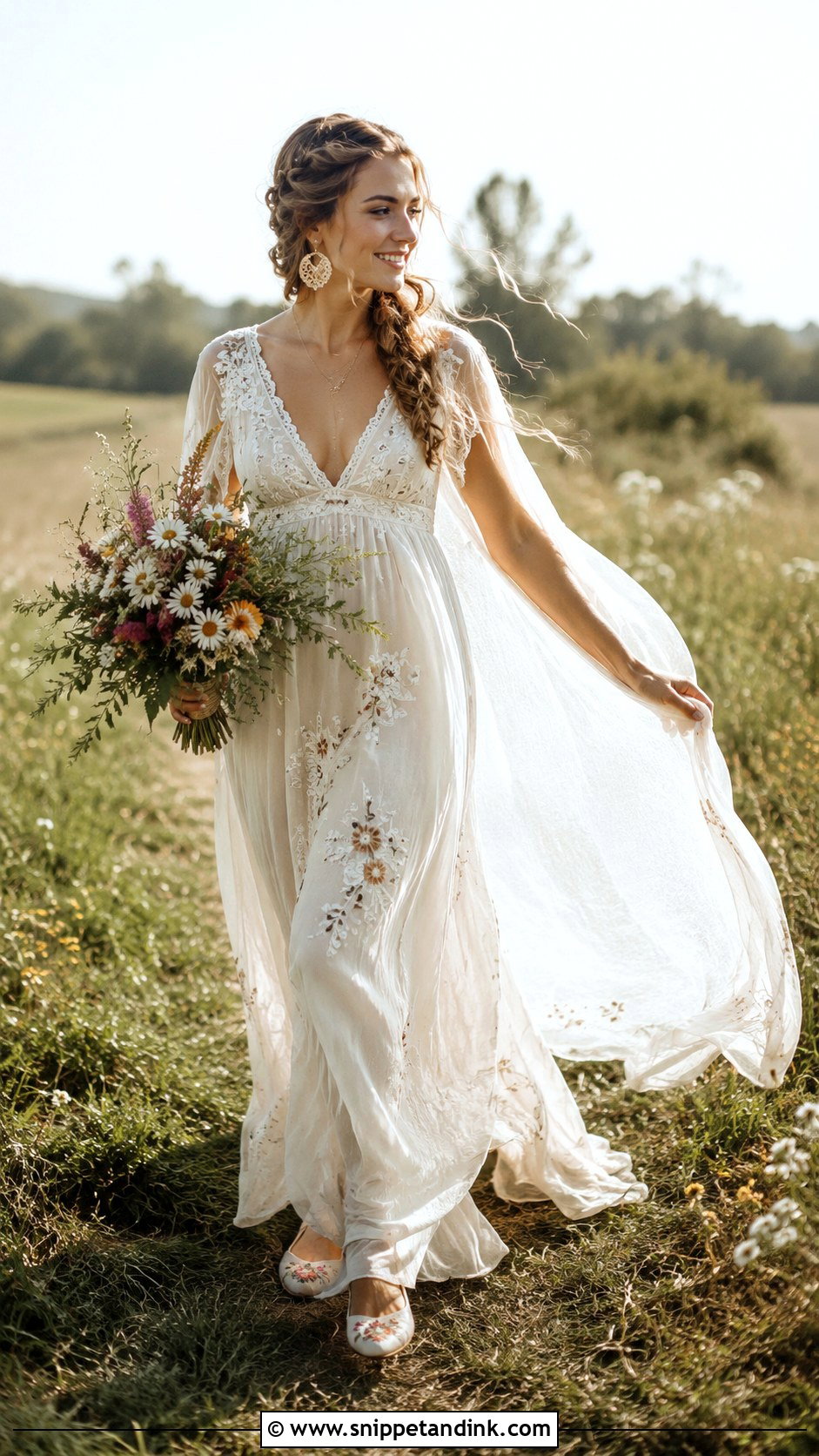
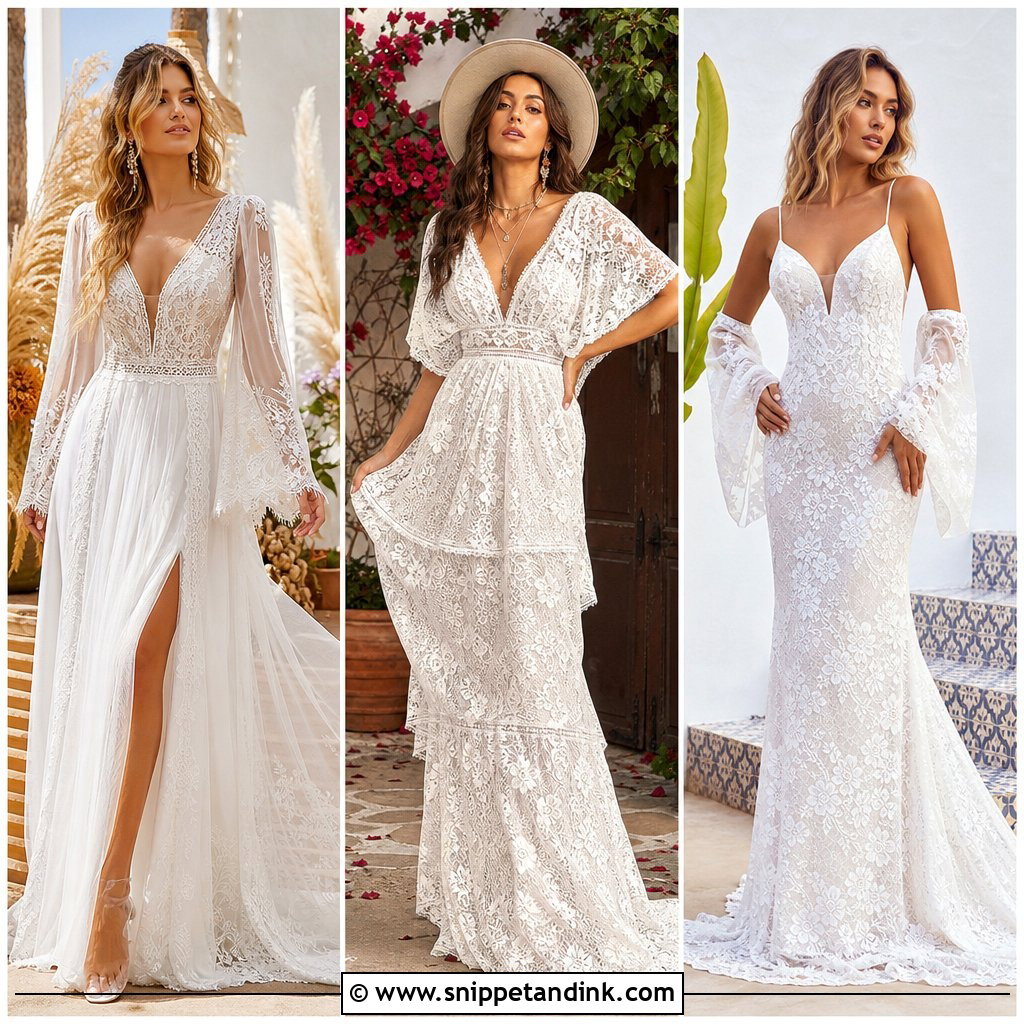
Boho fairy gowns rely on lightweight fabric, so chiffon and soft lace with flutter sleeves and an open back are the backbone. The thing I check is the back: an open back needs either a built-in bra solution or a bride comfortable without one, and that decision changes which dresses are realistic. Shoes depend on the ground. On grass, block heels or embroidered flats; on gravel, low boots. Swap the veil for a light cape if you want movement in outdoor pictures, and keep the bouquet loose with trailing ribbon.
11. Woodland Fairy Bride Dress
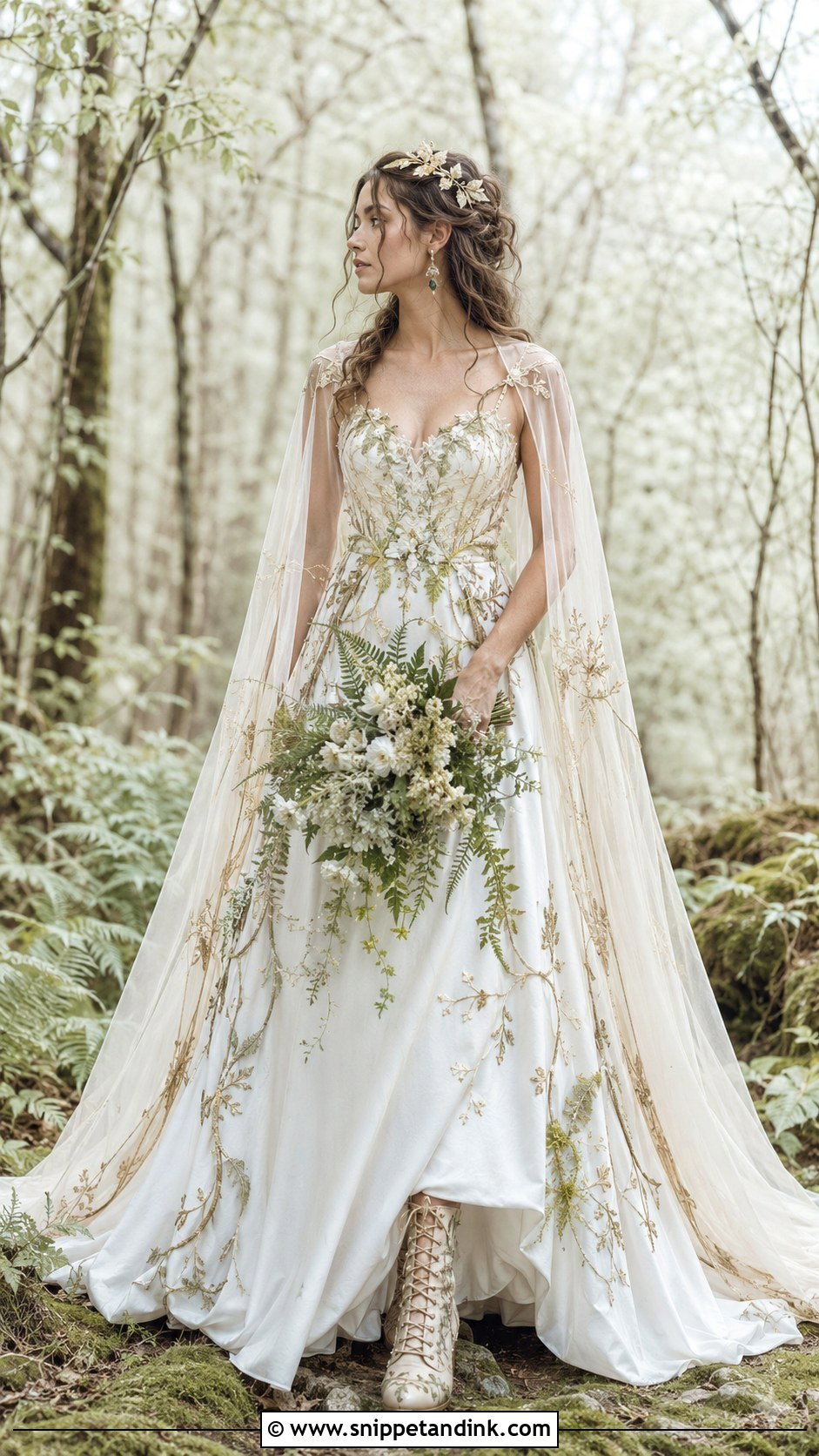
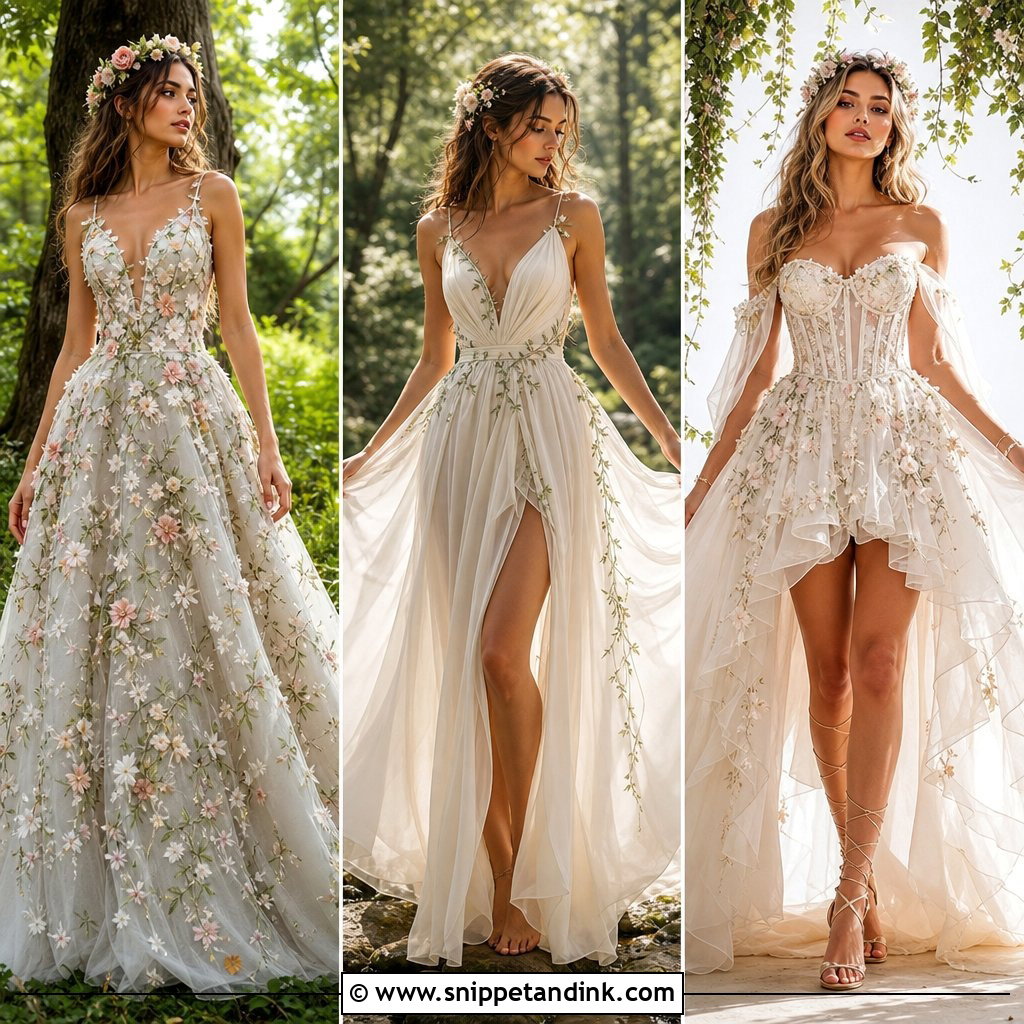
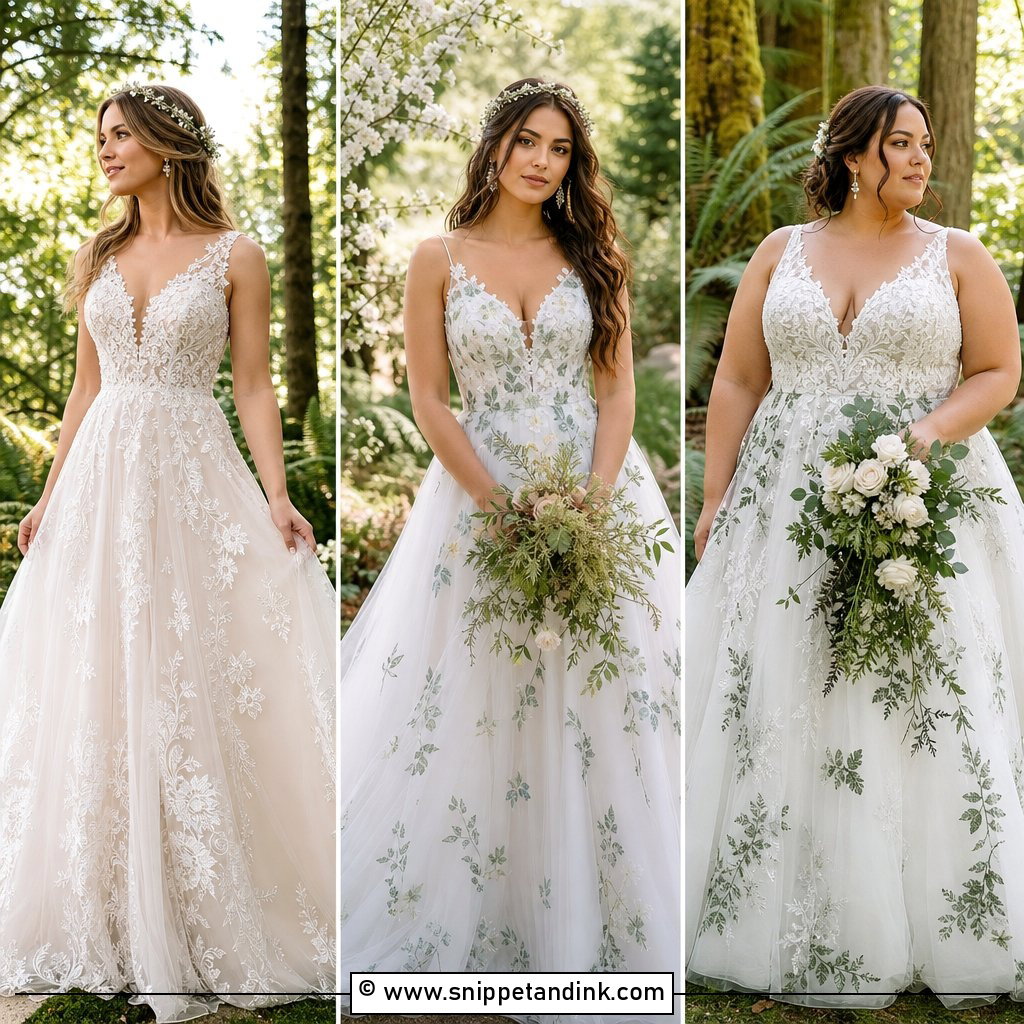
Picture walking under trees in a gown covered with stitched leaves and vines. A woodland fairy bride dress has to cope with roots, damp ground and low branches, so I keep the train modest and make sure a bustle is planned from the start. Botanical lace in ivory, moss or muted gold connects it to the setting. Closed flats or low boots will not sink into soft earth. If the embroidery is already busy, choose a leaf comb over a big flower crown.
12. Cottagecore Fairy Bride Dress
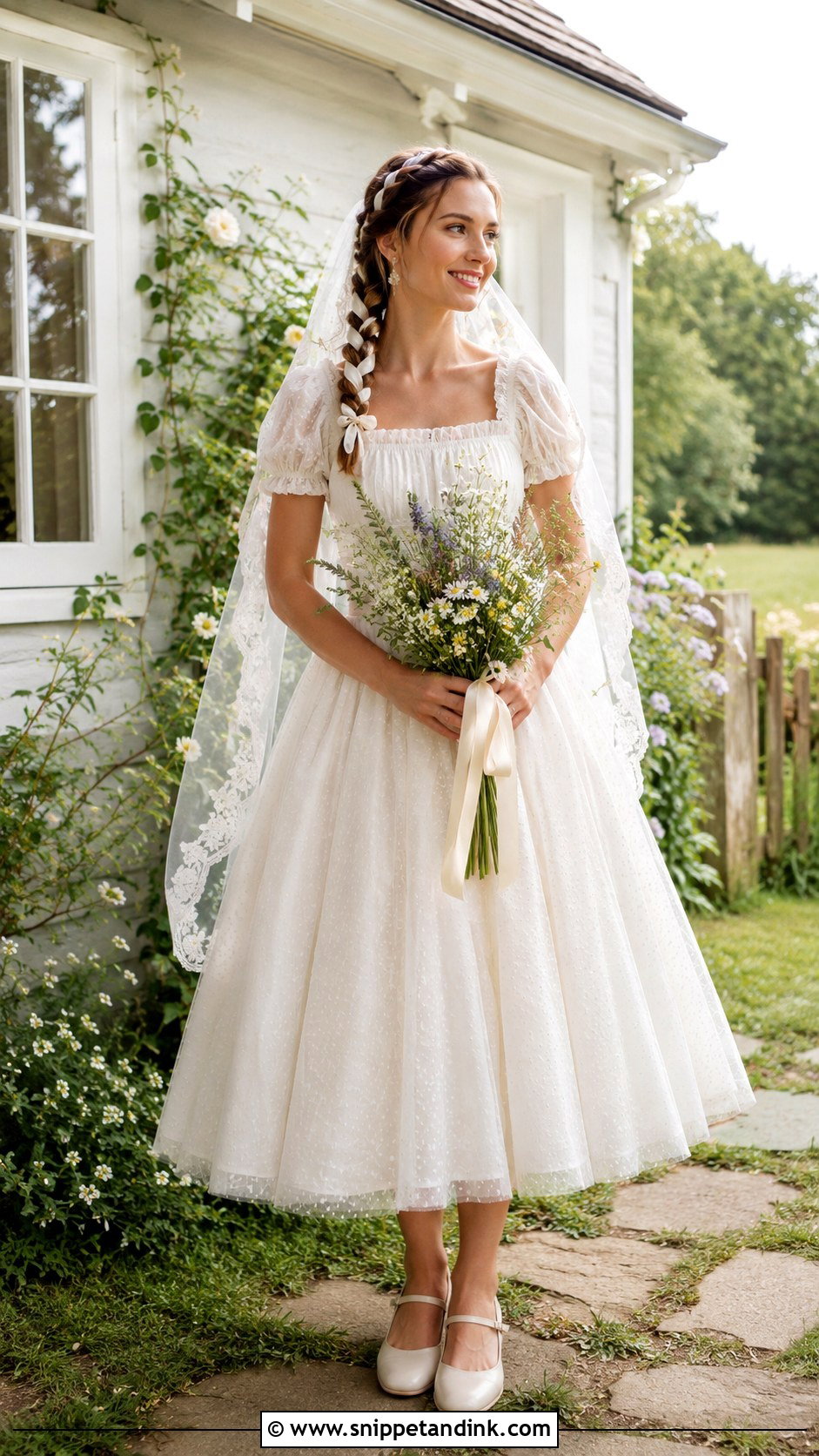
Cottagecore is the most relaxed take on fairy bridal, built on a square neckline, puff sleeves and a gathered skirt. Cotton lace and dotted tulle suit it better than satin, which pushes it toward vintage reproduction. Tea length works for a farmhouse or garden party; full length for something more formal. One honest warning: puff sleeves add width at the shoulder line, so if your shoulders are already broad, a smaller, flatter sleeve head keeps the balance. Mary Janes and a ribbon in a low braid finish it.
13. Plus Size Fairy Bride Dress
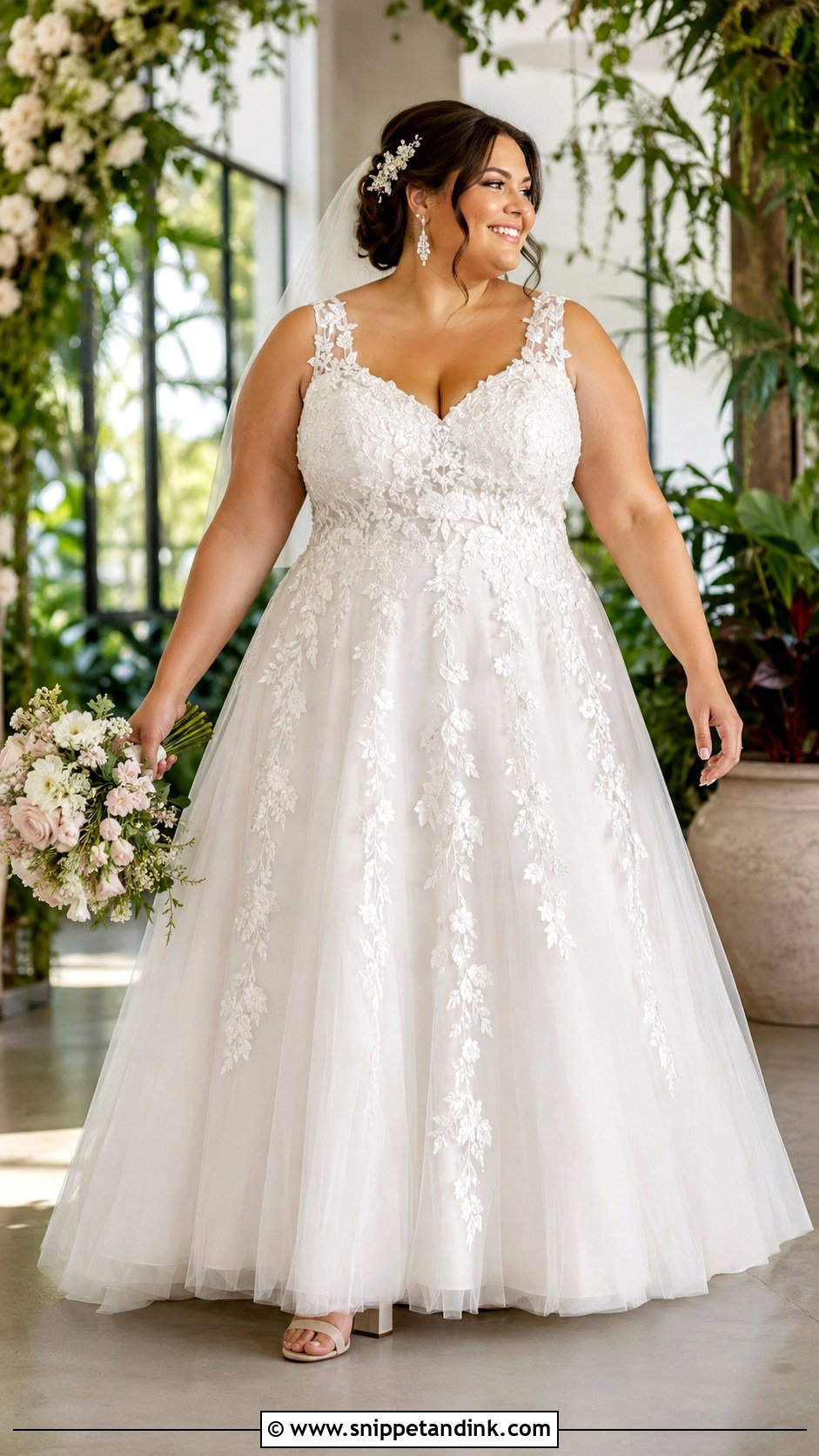
For plus size brides, the fairy look depends on support more than any detail on the surface. I start with the foundation: a structured bodice with real boning, straps or sleeves that carry weight, and layered tulle that drops from the natural waist. Vertical placement of appliqués draws the eye down the length of the dress. Attach the veil under the hair rather than at the crown so it does not add bulk at the shoulders. Try samples as close to your size as the salon has; judging a gown that is clipped open at the back tells you very little.
14. Simple Fairy Bride Dress
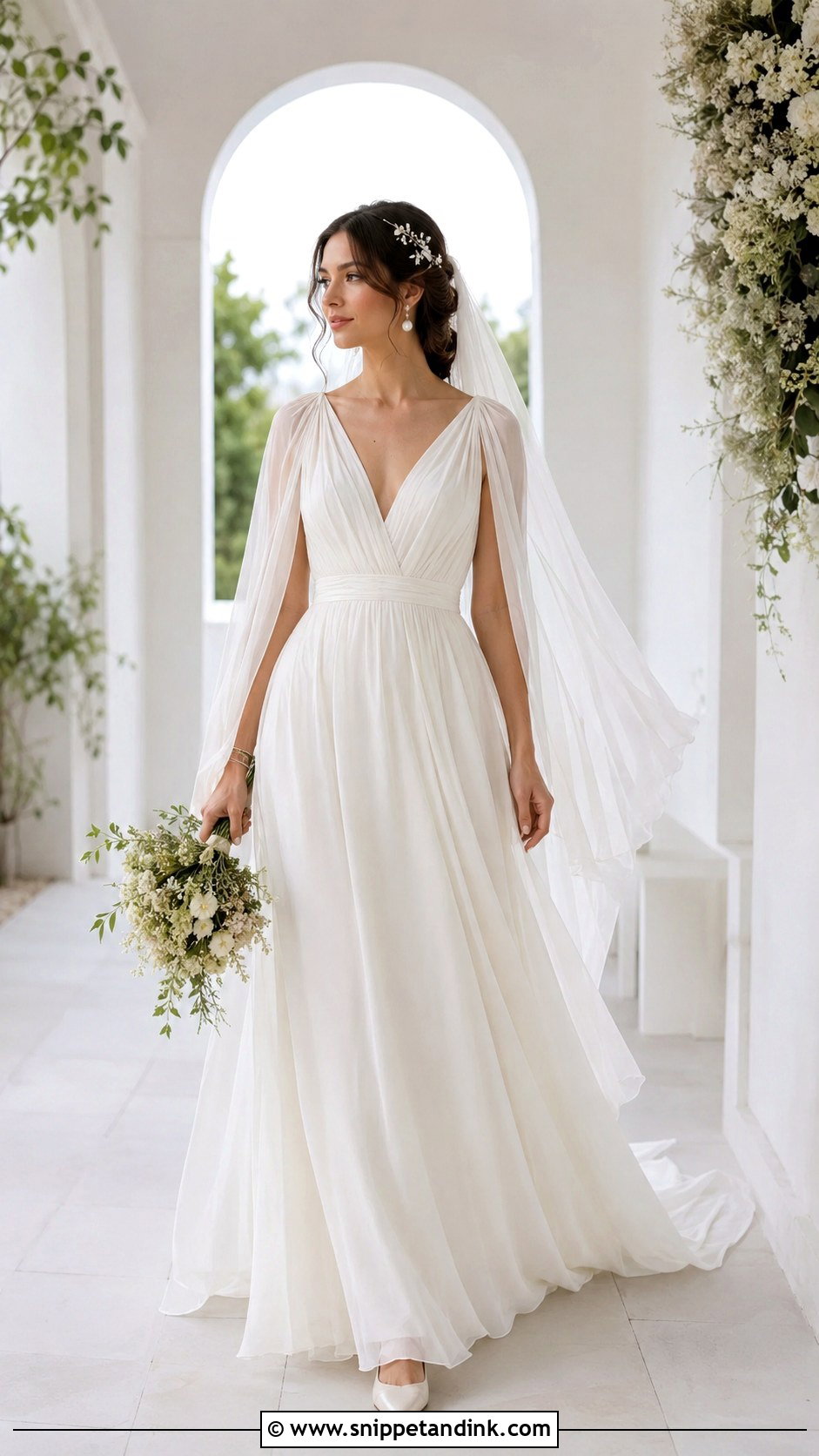
Not every fairy gown needs beading. A plain chiffon A-line becomes fairy-like through movement and one feature: cape sleeves, a draped neckline, a low back or a softly gathered waist. I steer minimalist brides to spend on fabric quality instead of embellishment, because cheap chiffon wrinkles and clings while a good one falls cleanly. A long cathedral veil adds ceremony drama and comes off later. Natural makeup and a relaxed bun suit the mood.
15. Short Fairy Bride Dress
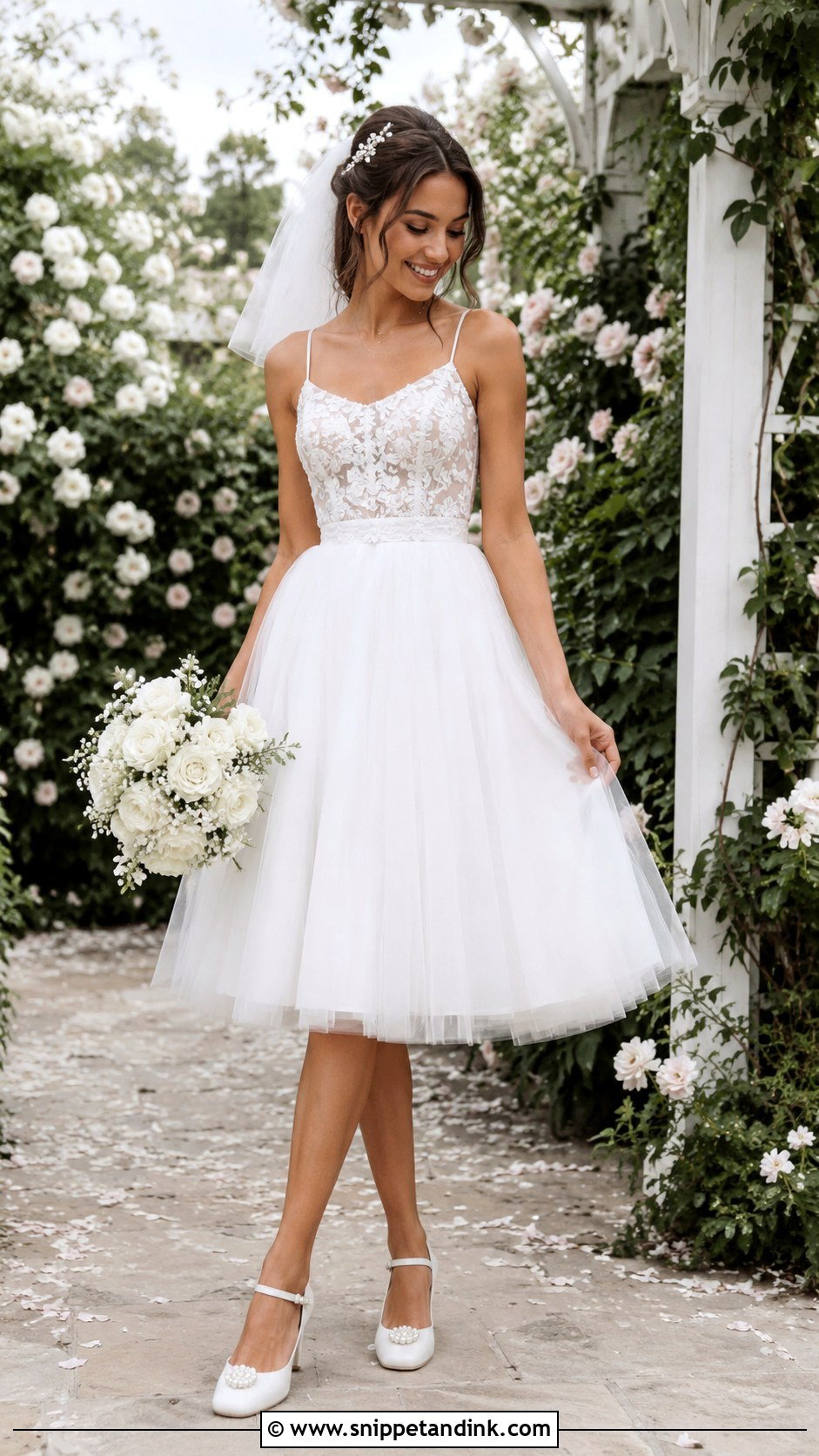
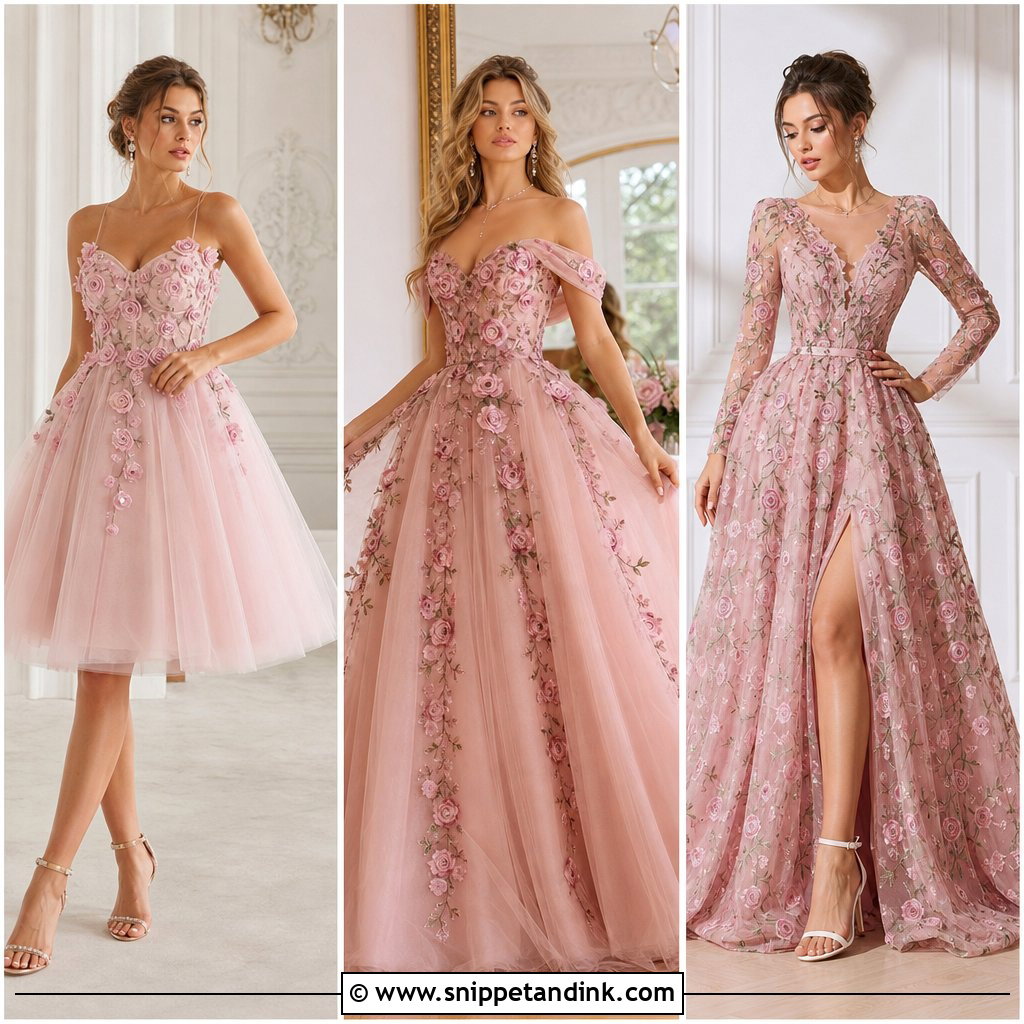
Short fairy dresses work for elopements, courthouse ceremonies and as a second dress for dancing. A tea-length tulle skirt with an embroidered bodice keeps it bridal; knee length with detachable sheer sleeves feels more modern. Shoes become part of the outfit, so this is where pearl Mary Janes or floral heels earn their place. I keep accessories small so they do not overpower a compact silhouette. For outdoor portraits on a cool day, a light wrap helps, and the shorter hem keeps all the softness of an enchanting fairy-inspired bridal outfit without a train to manage.
16. High Low Fairy Bride Dress
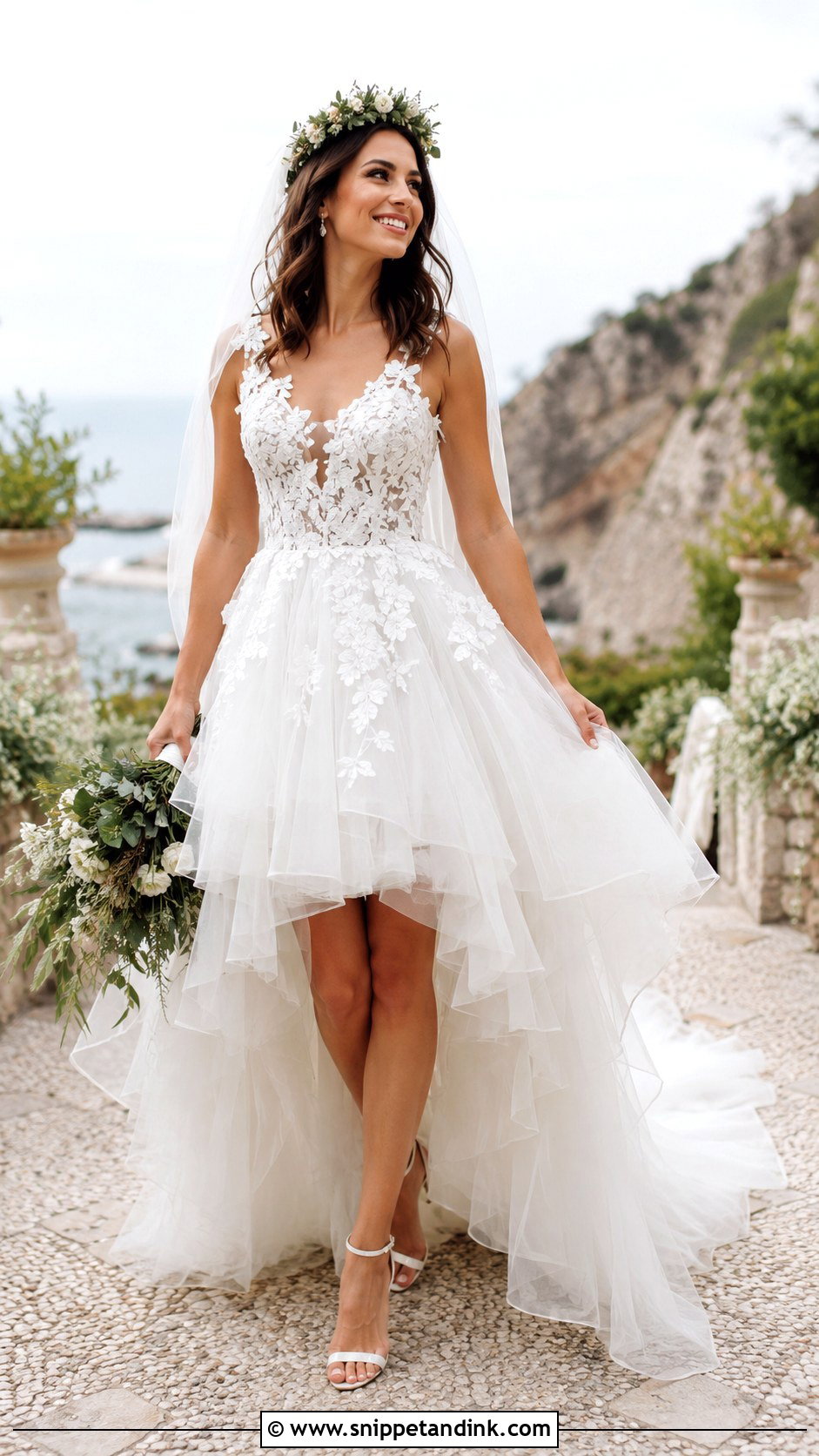
High-low hems are practical outdoors, since the front stays clear of wet grass while the back still trails. The cut is everything: a gradual curve from front to back looks graceful, while a sharp drop looks like two different dresses. Your shoes are on show all day, so choose a pair you love and have broken in. A detachable train gives you ceremony drama and comes off for dancing. A shoulder-length veil keeps the proportions right.
17. Cape Sleeve Fairy Bride Dress
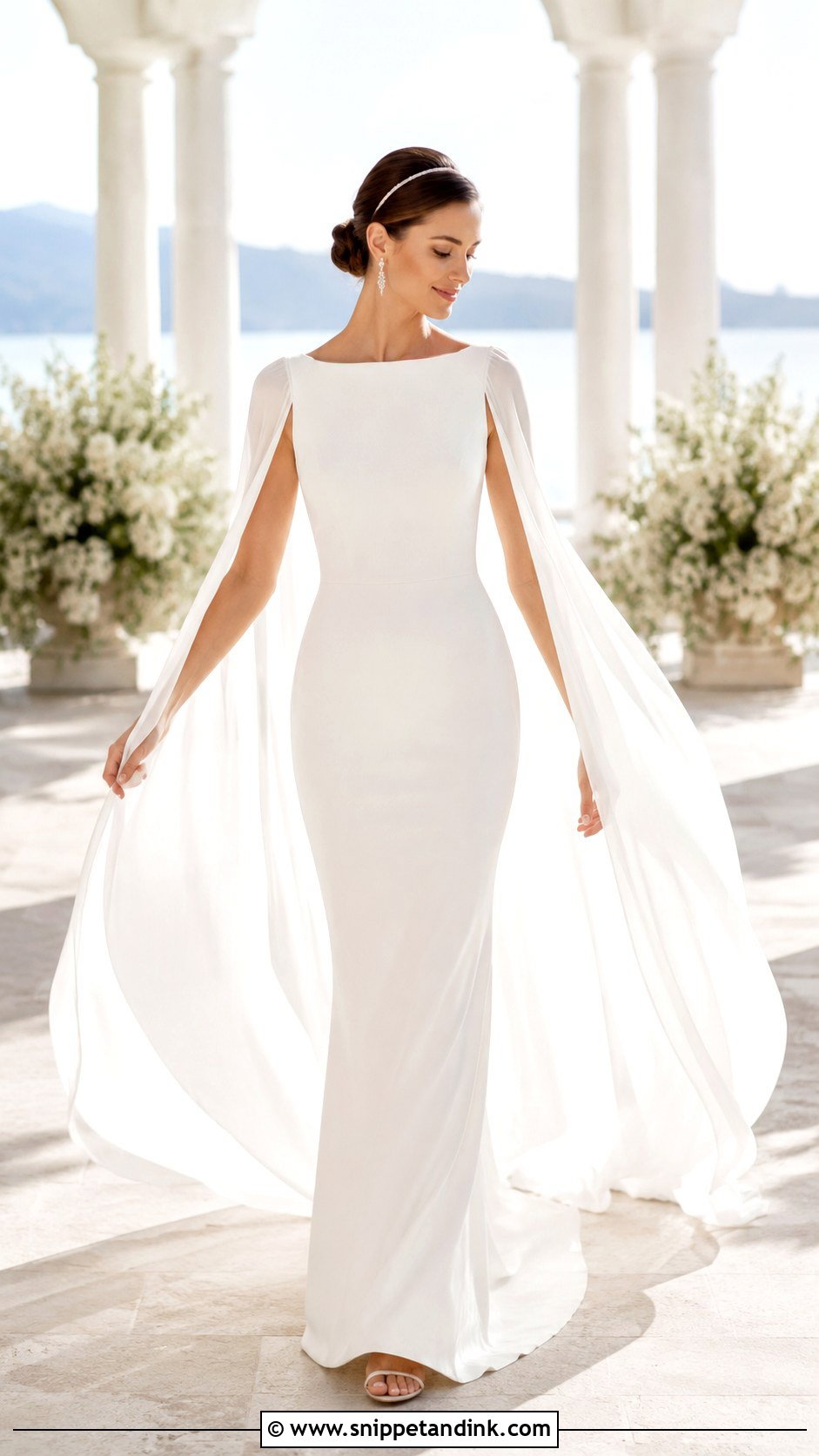
Cape sleeves give arm coverage with movement instead of fabric hugging the arm. I check the attachment point first: a cape anchored at the shoulder seam with a small hidden snap stays put, while one sewn only at the neckline can slide back as you move. A plain column or A-line underneath keeps the detail clear. Skip a long veil unless the cape detaches, because two trailing layers tangle in wind. A clean low bun shows where the cape joins the gown.
18. Bell Sleeve Fairy Bride Dress
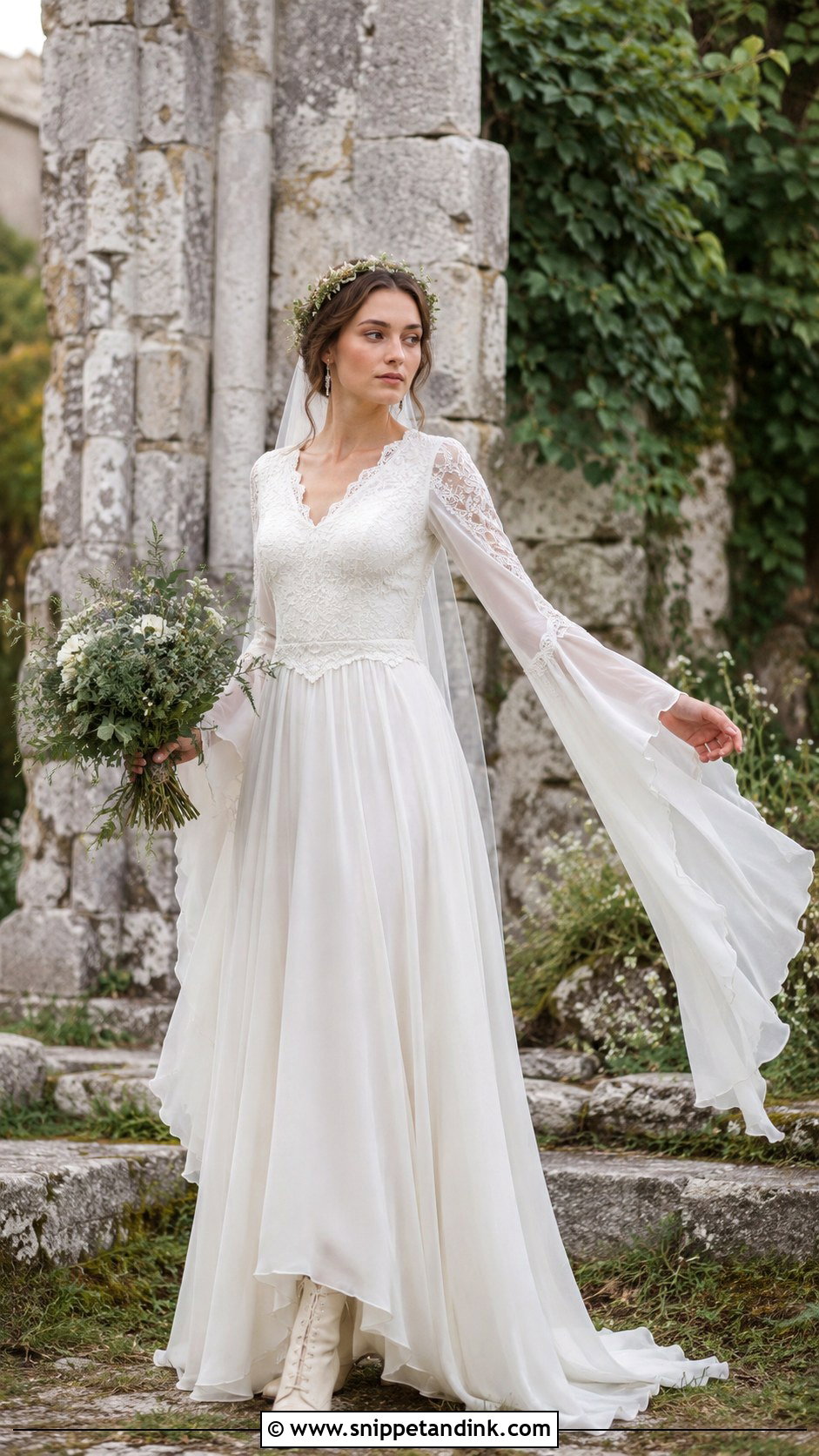
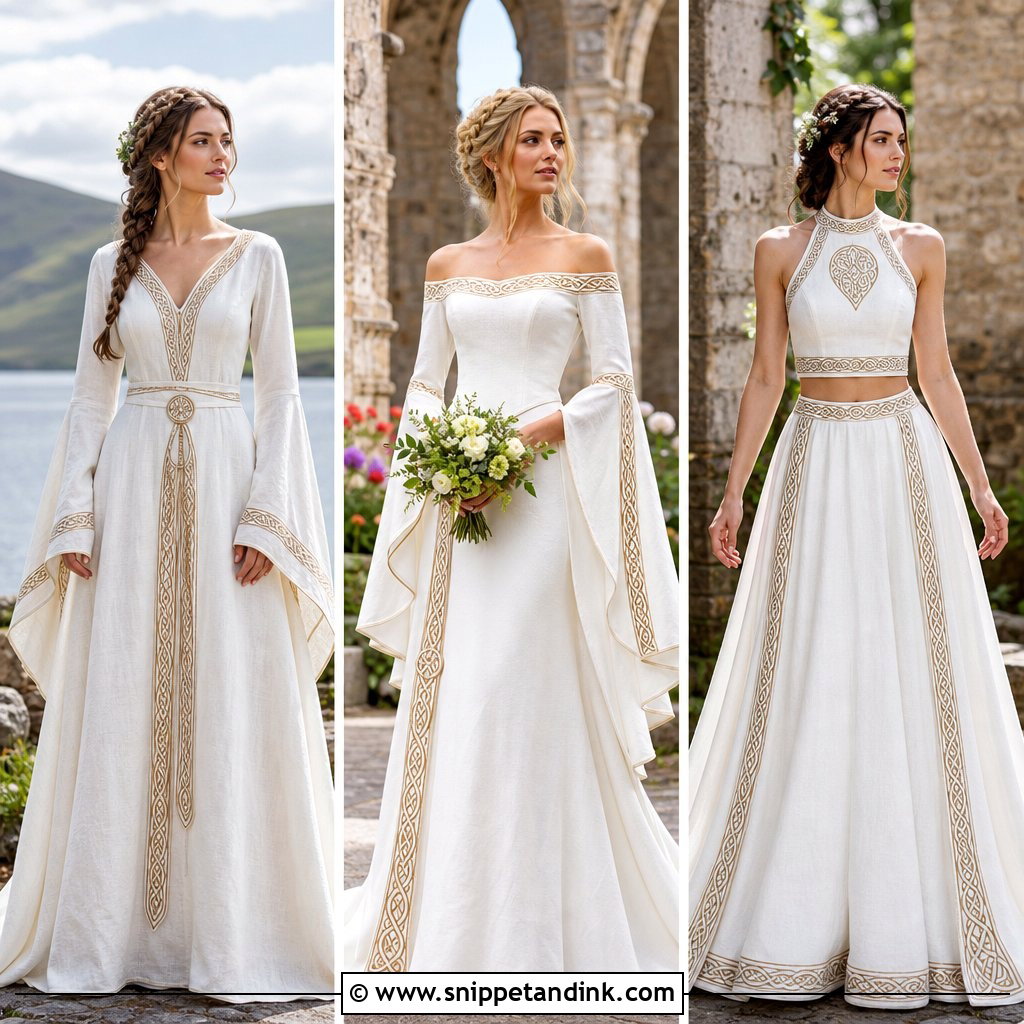
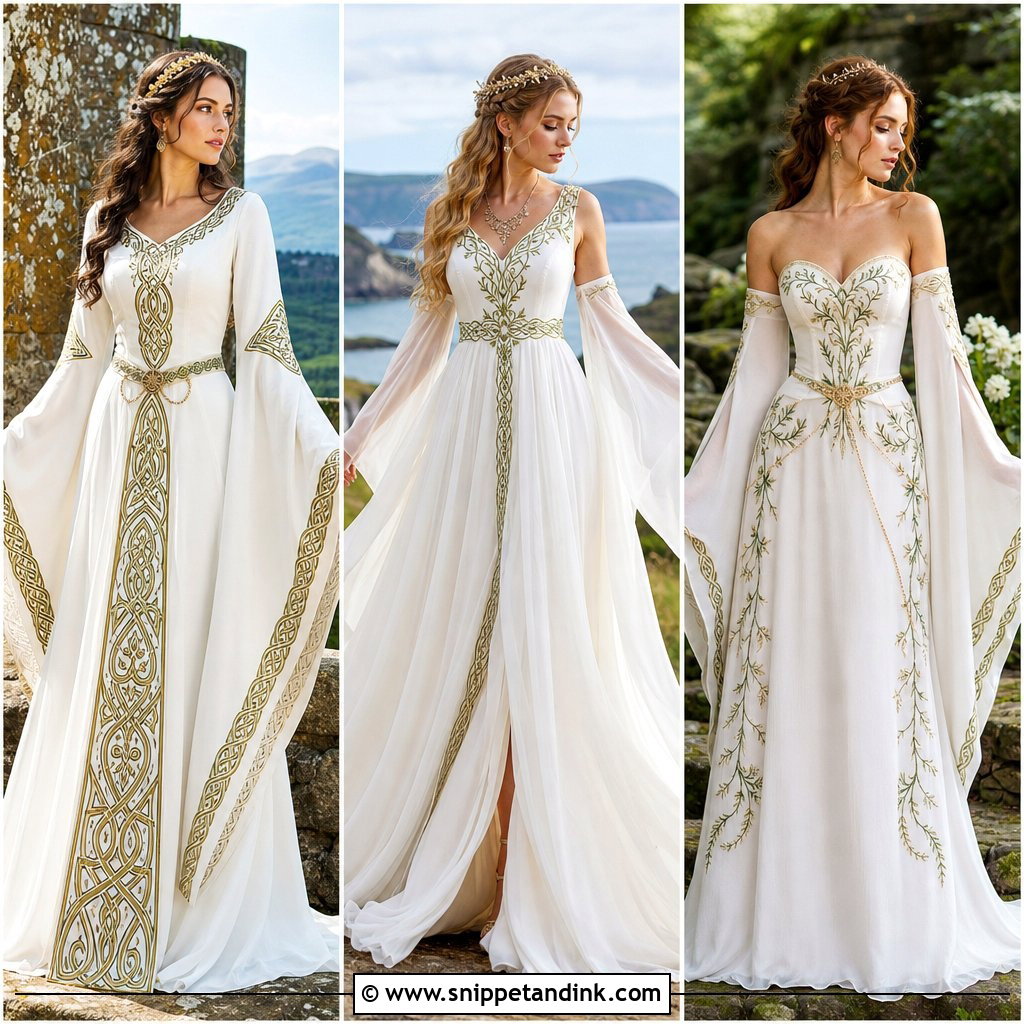
Long bell sleeves bring a medieval and woodland influence, but they get in the way more than people expect. I ask brides to practice holding the bouquet, eating, signing the register and hugging guests in the sample. If the sleeve swings into the plate or covers the hand, have it shortened to end above the wrist or made detachable. Lightweight lace or chiffon sleeves widen gracefully without weight. Ivory ankle boots and a leaf crown suit the mood.
19. Pearl Beaded Fairy Bride Dress
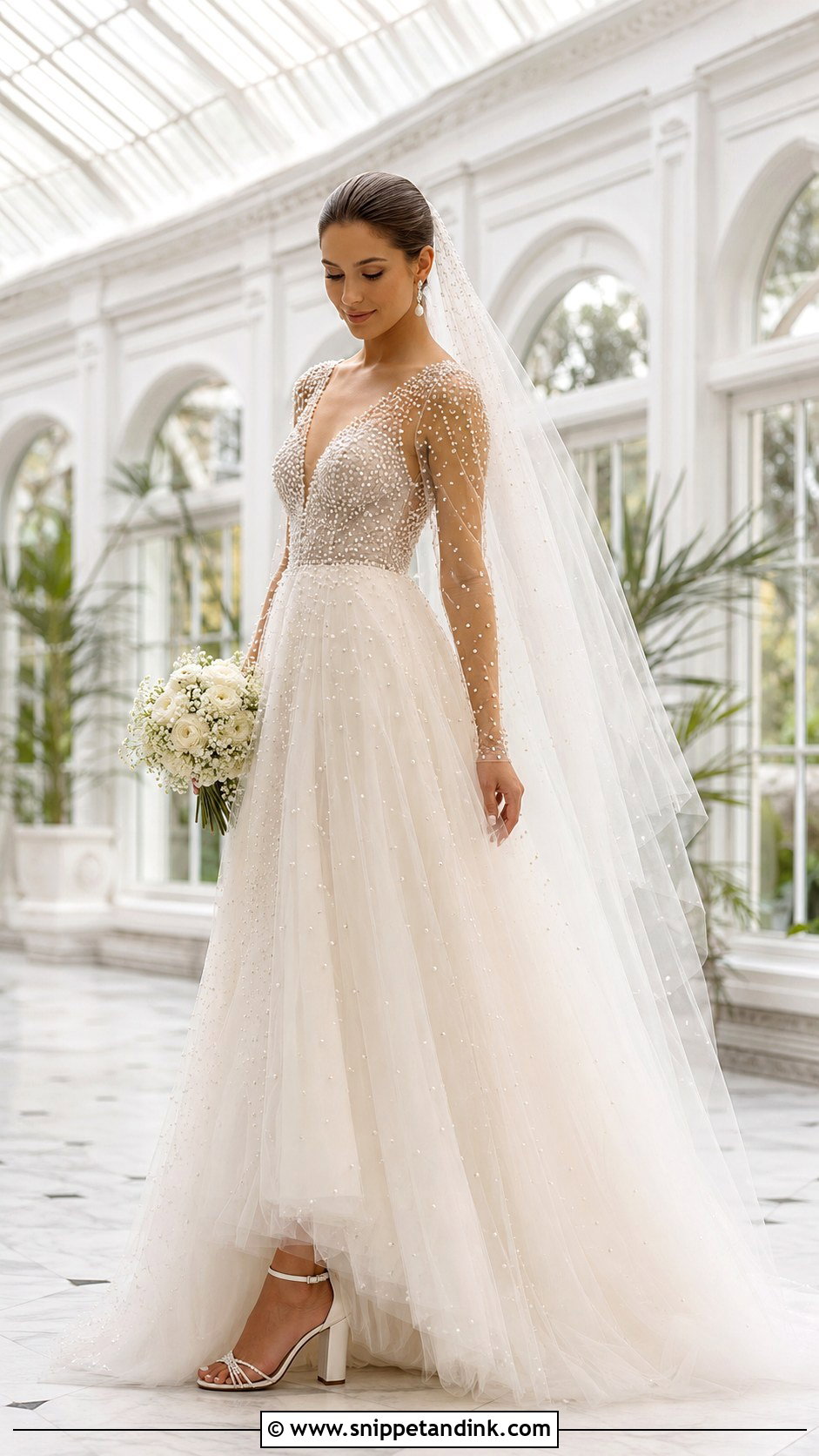
Pearl beading glows softly where crystals sparkle, and that is why it suits a fairy look. Clustered pearls in one area keep the gown light; pearls everywhere make a heavy skirt and can pull fine tulle downward. Run your hand over the beadwork at the fitting and ask how it is secured, because loosely strung pearls catch on veils and lace. A veil with a few matching pearls along the edge ties things together. Store the gown flat or on its hanging loops, never on the shoulders, so the weight of the beads does not stretch the bodice.
20. Colorful Embroidered Fairy Bride Dress
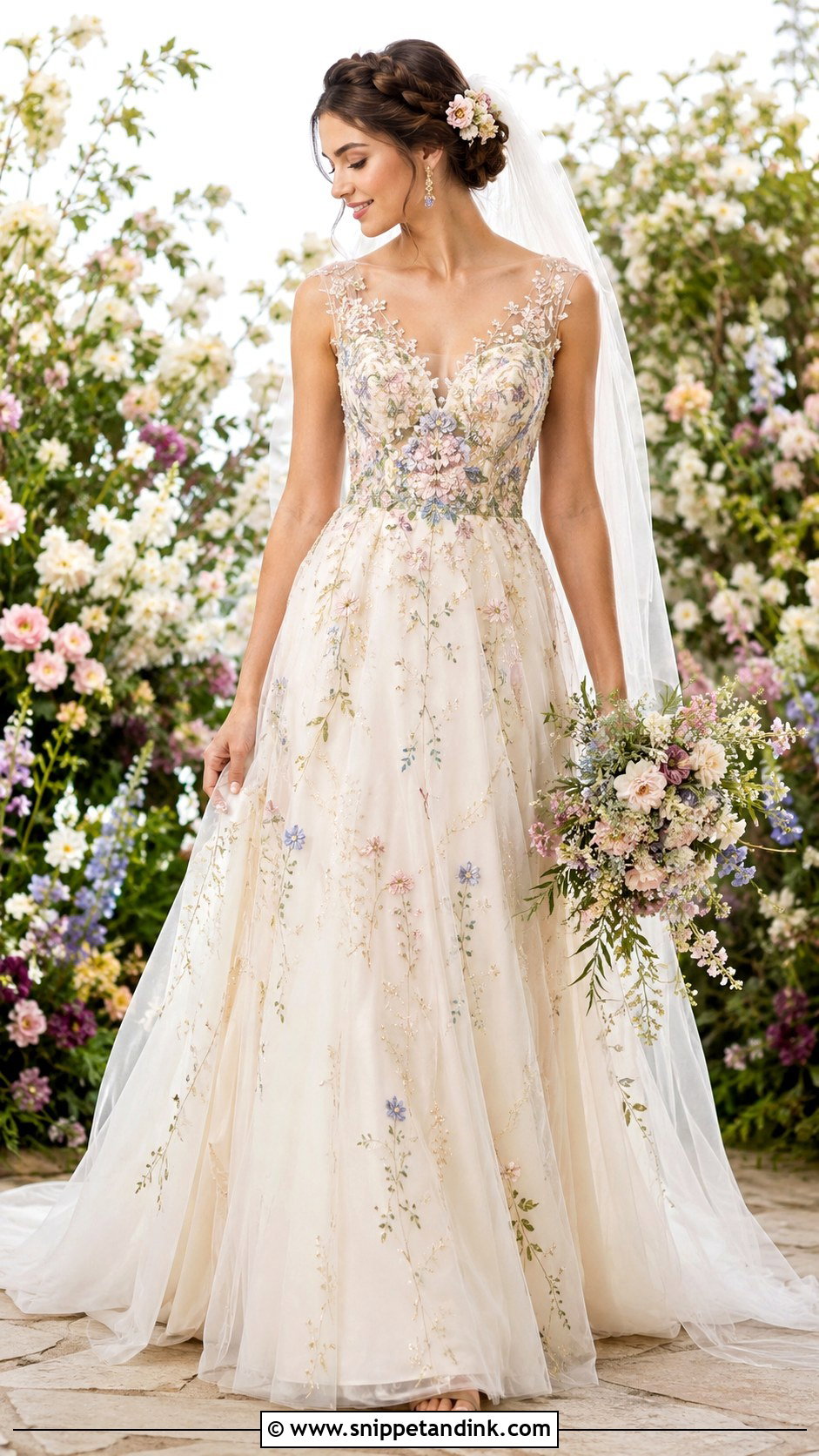
Colored embroidery turns ivory into a garden. I prefer muted blue, lavender, blush, sage or soft gold over bright primaries, which can look like folk costume under flash. The best pieces cluster the stitching at the bodice and scatter it lower down. Pull one or two shades from the thread into the bouquet instead of matching all of them. If you want only a hint of color, an embroidered cape or overskirt over a classic gown gives you the option to take it off later.
Hems, Dew and Bustles: Protecting a Layered Skirt Outdoors
A fairy dress is almost always photographed outside, and the hem pays for it. Morning dew soaks tulle upward like a wick, and grass stains on ivory layers rarely come out completely. I plan the outdoor portraits for after the grass has dried where I can, and I ask the photographer to choose paths over long lawns when the gown has a train.
Planning the bustle at your final fitting
Layered skirts usually need more than one bustle point, and each layer may be bustled separately. Ask the seamstress to show both you and the person who will do it on the day, then have that person practice twice. Mark the hooks or ribbons with small colored threads if there are several.
The week before and the morning of
- Take the gown out of its bag a few days early and hang it from the inner hanging loops so the creases relax.
- Steam tulle from inside the skirt, holding the steamer well away; never iron it, because synthetic net melts.
- Pack a small kit with clear nail polish for a tulle snag, a few safety pins, white chalk for marks and a lint roller.
- If you plan to keep the gown, have it professionally cleaned soon after the wedding, before sugar stains from drinks oxidize and turn yellow.
Two Fairy Details Are Usually Enough
Start with the silhouette that fits your body and venue, then add no more than two fairy details: appliqués, airy sleeves, soft sparkle, colored embroidery or a cape. Pick shoes for the ground, not the photo. At every fitting, walk, sit and raise your arms, because alterations can fix almost any discomfort if someone sees it in time. Woodland lace, blush tulle, pearl beading or plain chiffon can all get you there, as long as the dress still feels like you.
You'll Like These Ideas:


Leave a Reply