
A forest ceremony asks more of a dress than a ballroom does. The ground is soft, the light is green and patchy, and the temperature under the trees can drop fast in late afternoon. The woodland wedding dress ideas I reach for mix movement with botanical detail: floral lace, chiffon that floats, embroidered tulle, old-fashioned sleeves and warm undertones. Before falling for a gown, I want to know the season, the walking surface and how long the forest aisle is, because those decide the shoes, train and veil. The 25 looks below range from relaxed boho to fairy tale, each with notes on wearing it outdoors.
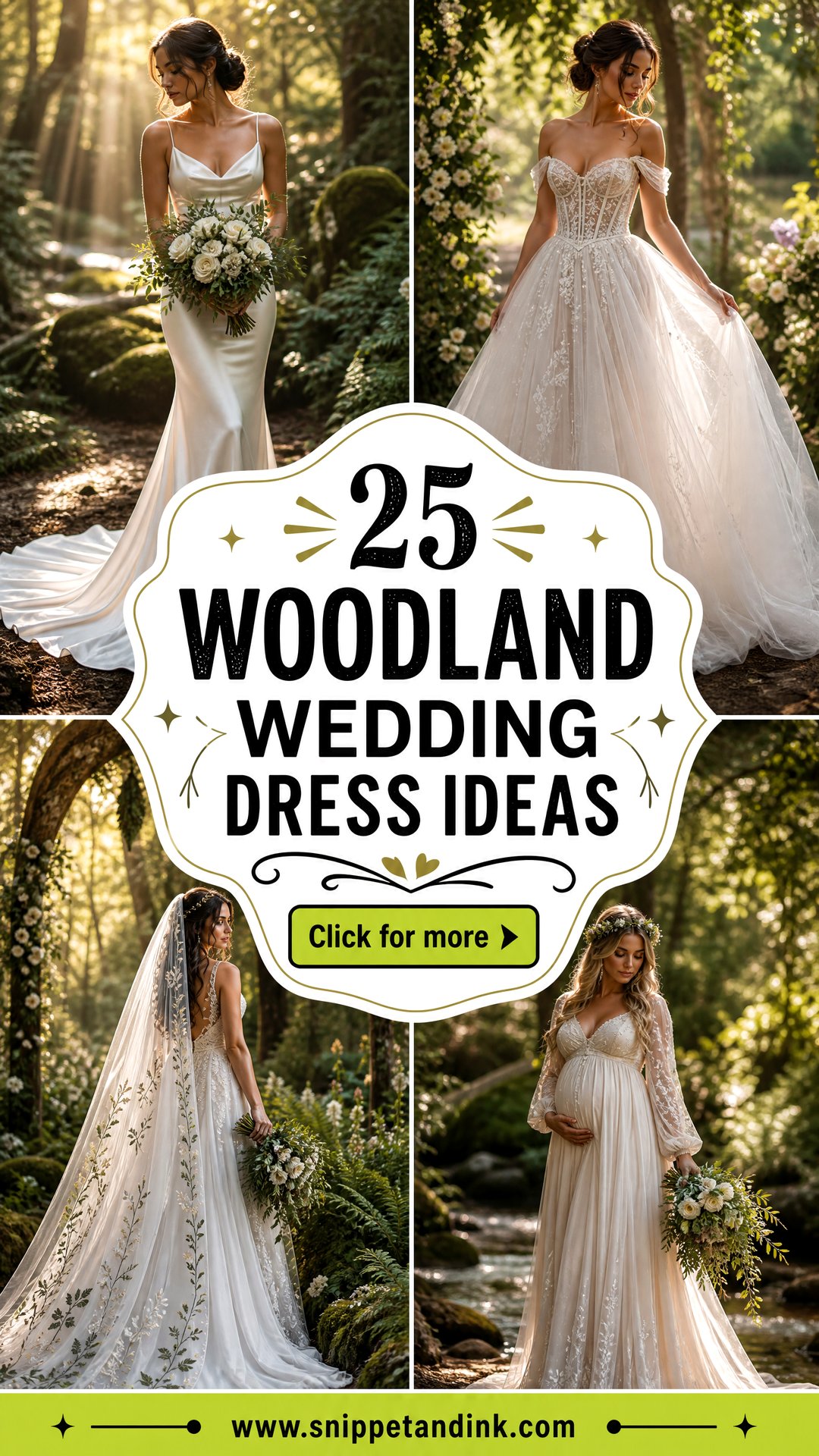
Walk the Forest Aisle Before You Fall for a Train
If I could ask every woodland bride to do one thing before shopping, it would be this: visit the ceremony spot at the same time of day as the wedding, in flat shoes, and walk the route you’ll take. Forest aisles are rarely aisles. They’re footpaths, boardwalks, mossy clearings or a strip of bark chips, and each one changes what you can wear.
- Soft soil and moss swallow stiletto heels. Block heels, wedges and flat boots stay on the surface.
- Roots and stones catch narrow hems. A dress that clears your shoes by a centimetre is safer than one that brushes the floor.
- Bark chips and pine needles cling to tulle and lace trains. If the path is long, plan a wrist loop or a bustle you can secure before photos.
- Look up as well as down. Low branches and brambles at shoulder height can catch a long veil or wide sleeves.
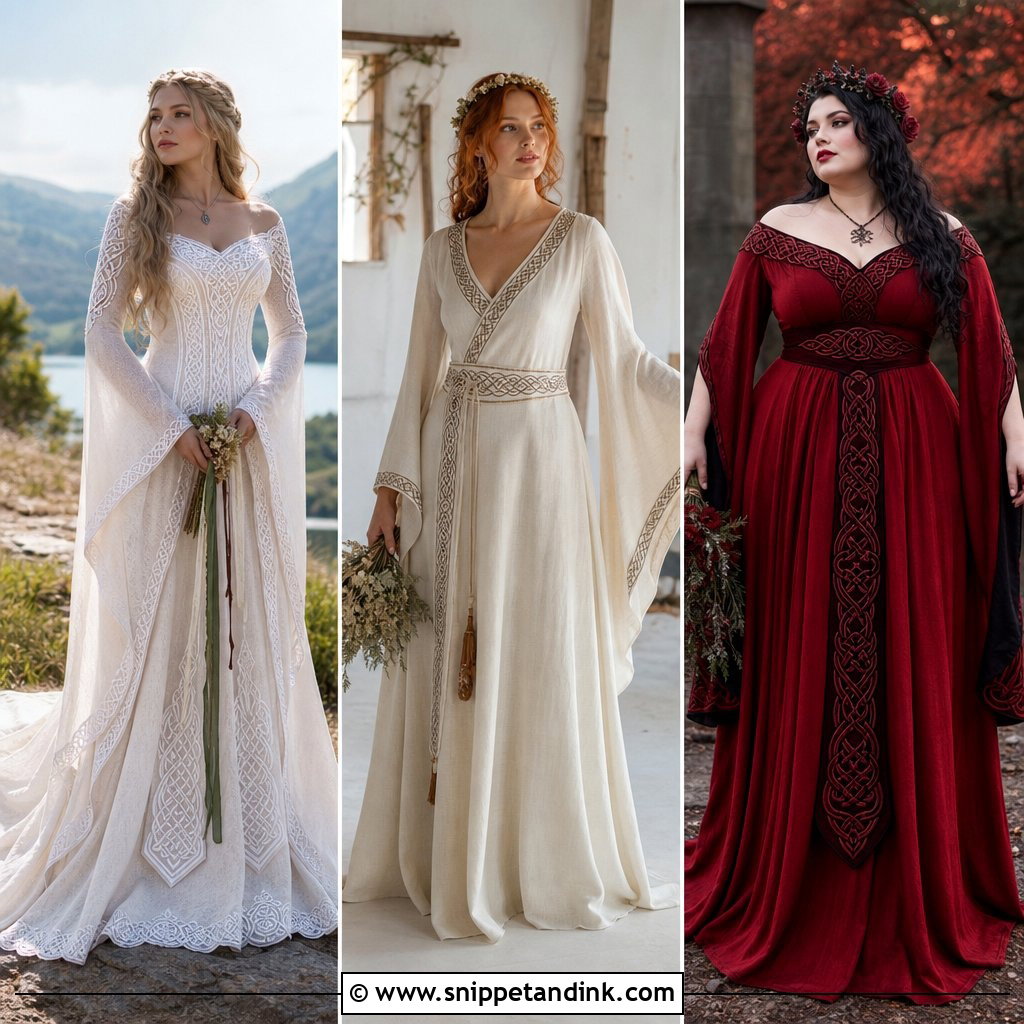
Take photos of the path and bring them to your appointments. I make very different suggestions for a gravelled garden walk than for a narrow trail between ferns.
1. Boho Lace Woodland Wedding Dress
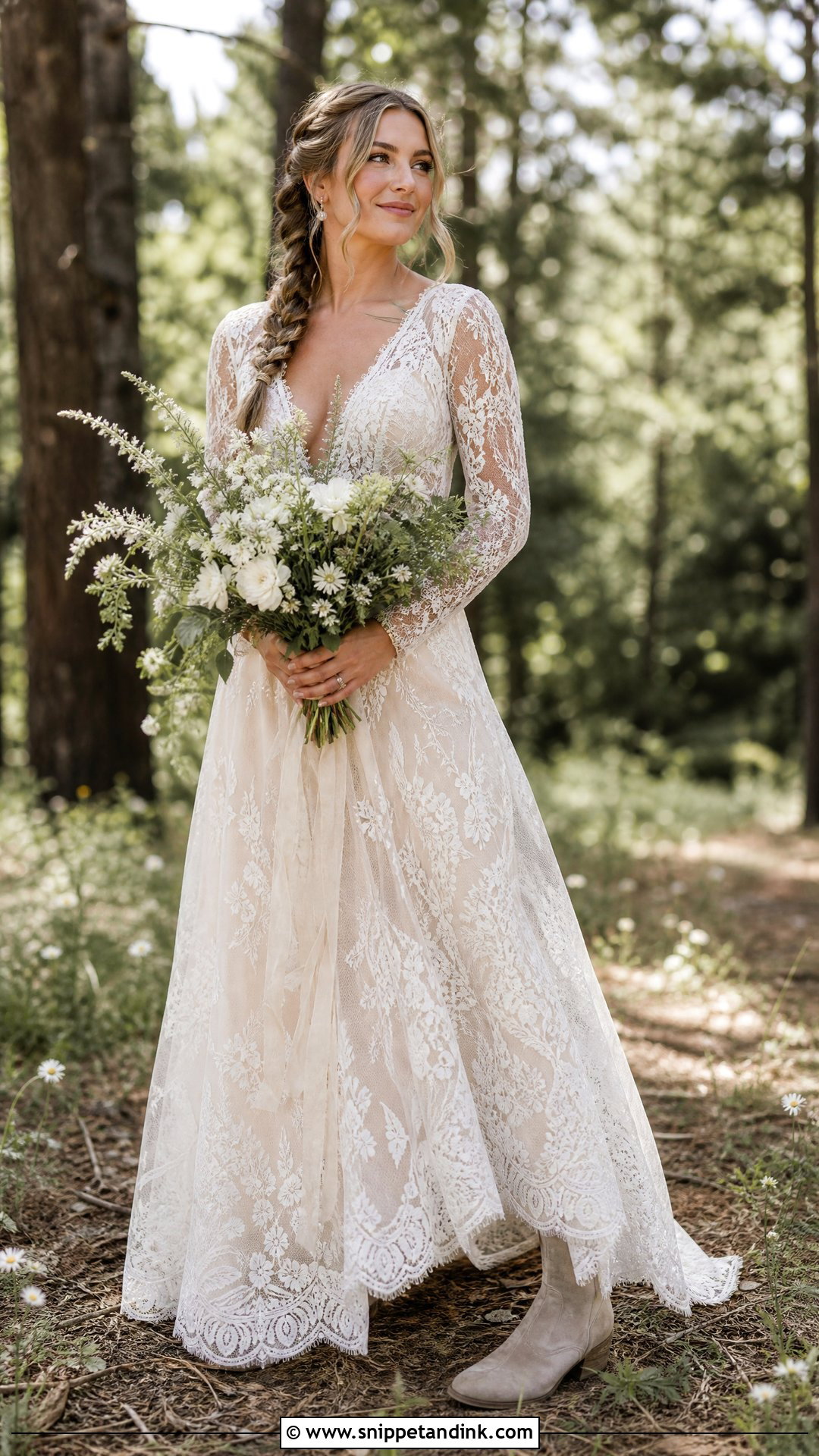
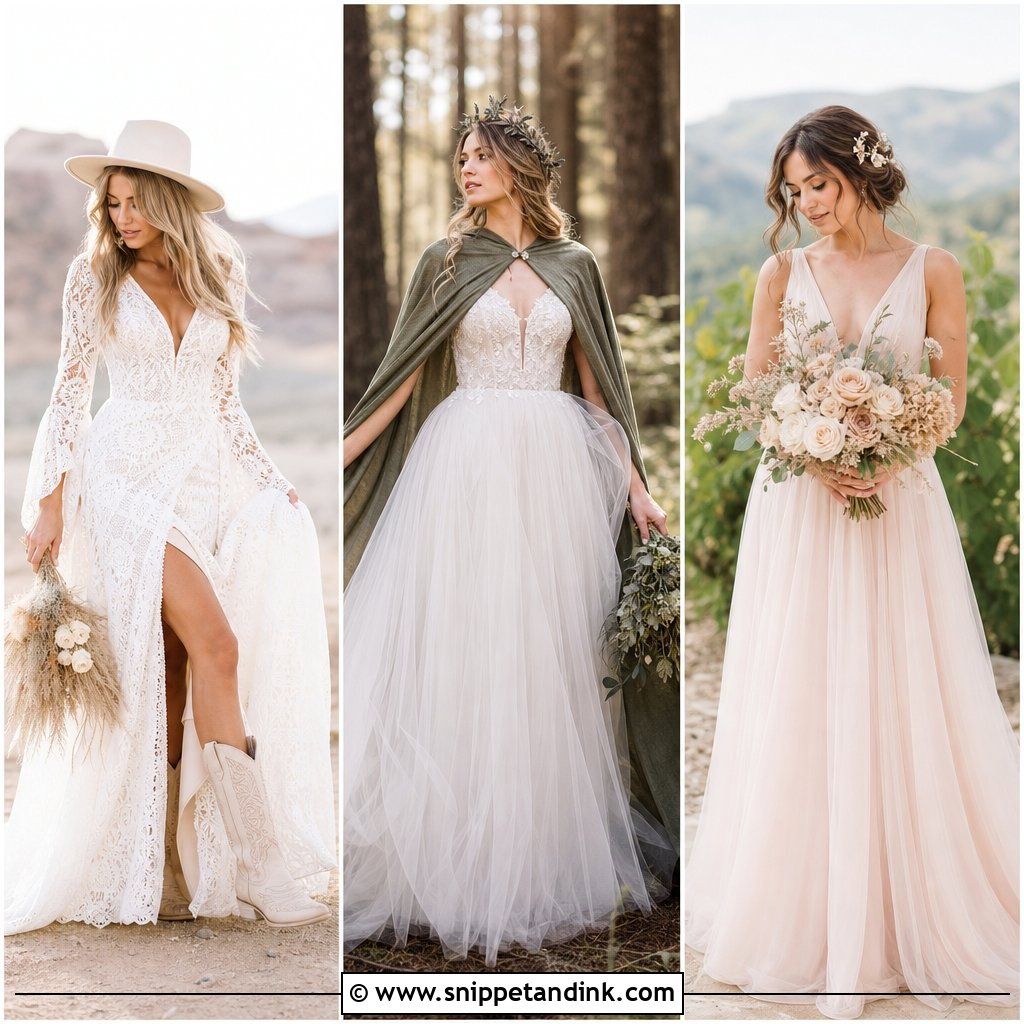
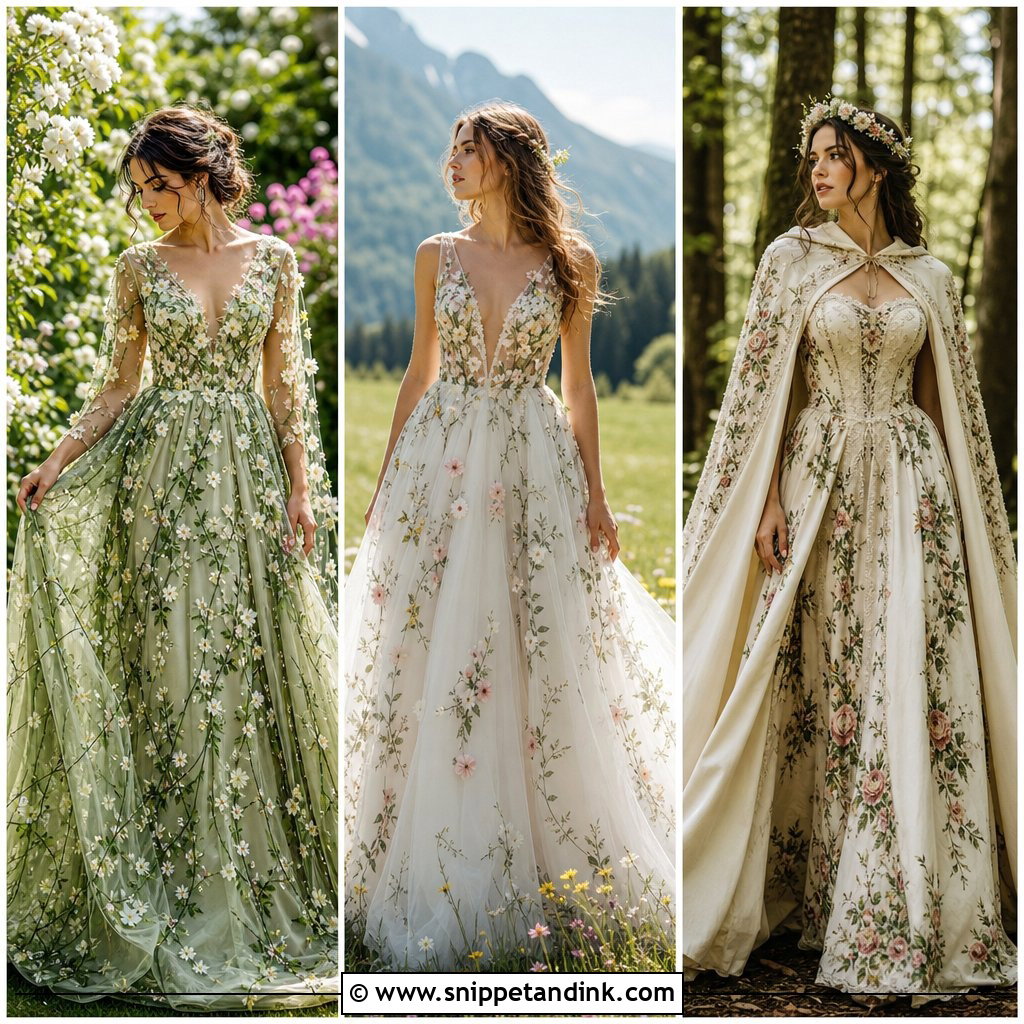
Boho lace under tall trees is the most natural pairing on this list. A relaxed A-line with botanical lace, a softly fitted bodice and a light skirt moves without fuss. I’d line it in ivory or soft cream rather than nude, which keeps the lace pattern visible without harsh contrast in shade. Low suede bridal boots, a loose braid and small pearl or leaf earrings suit it, with a wildflower bouquet in white, green and muted peach. If the gown has a train, a wrist loop is the cheapest fix for walking through leaves after the ceremony.
2. Floral Appliqué Woodland Wedding Dress
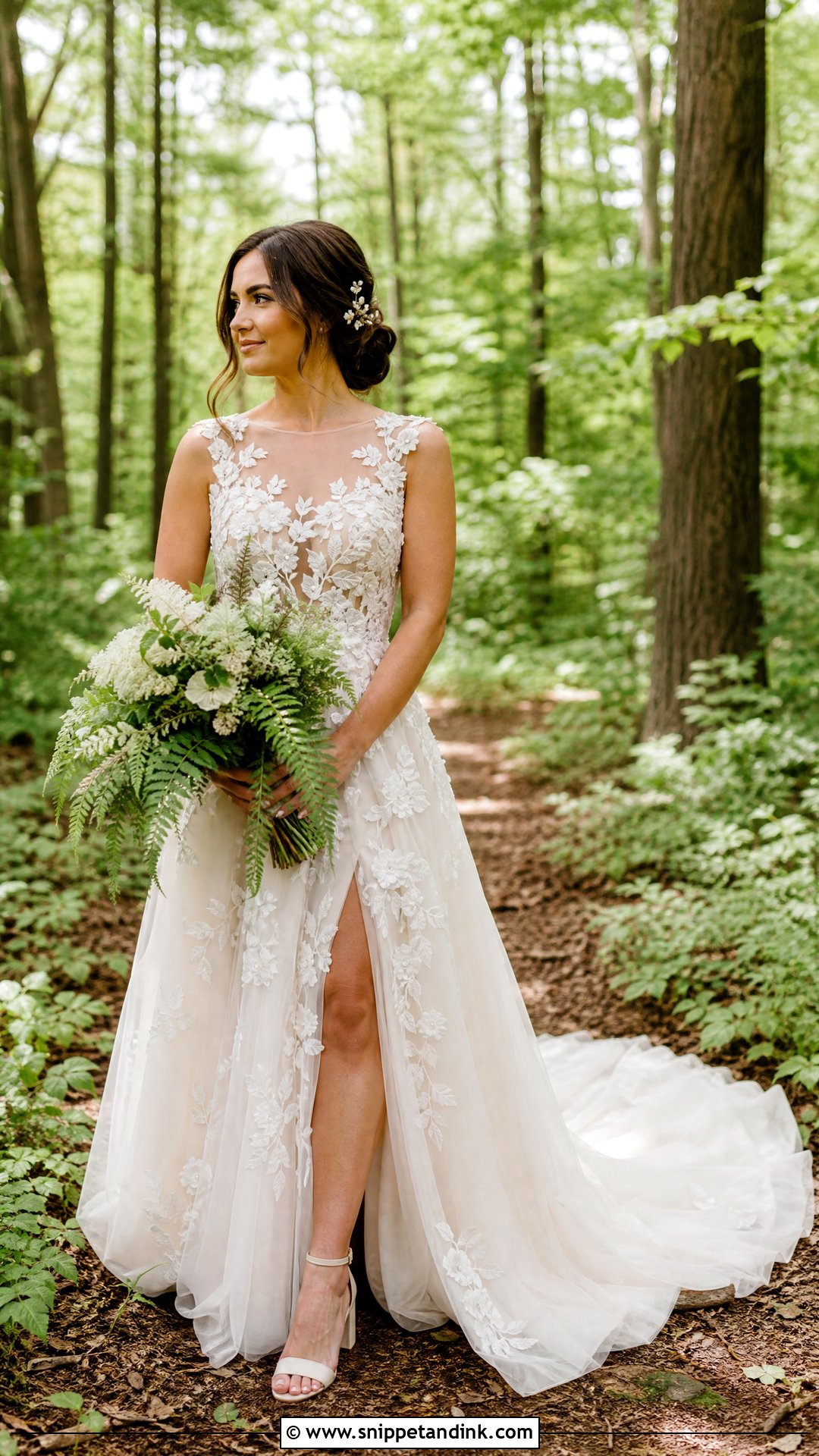
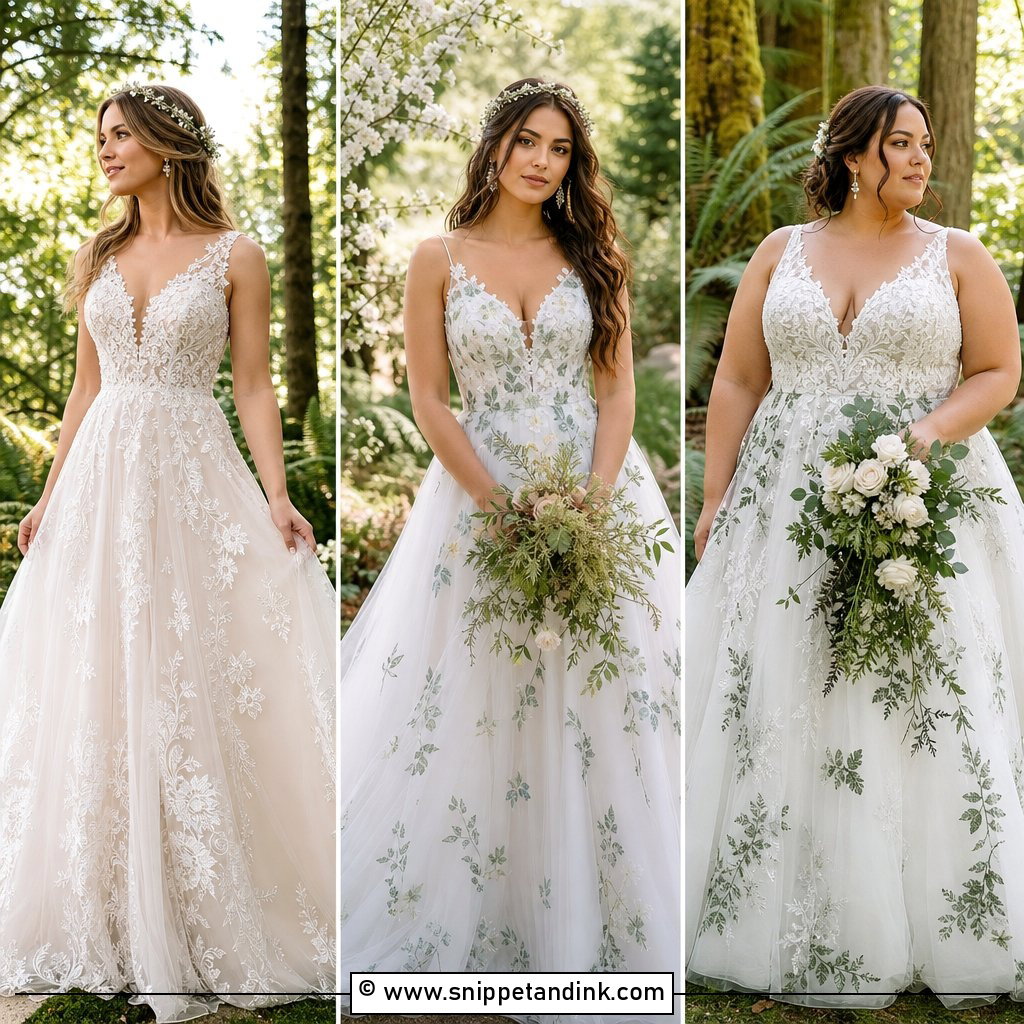
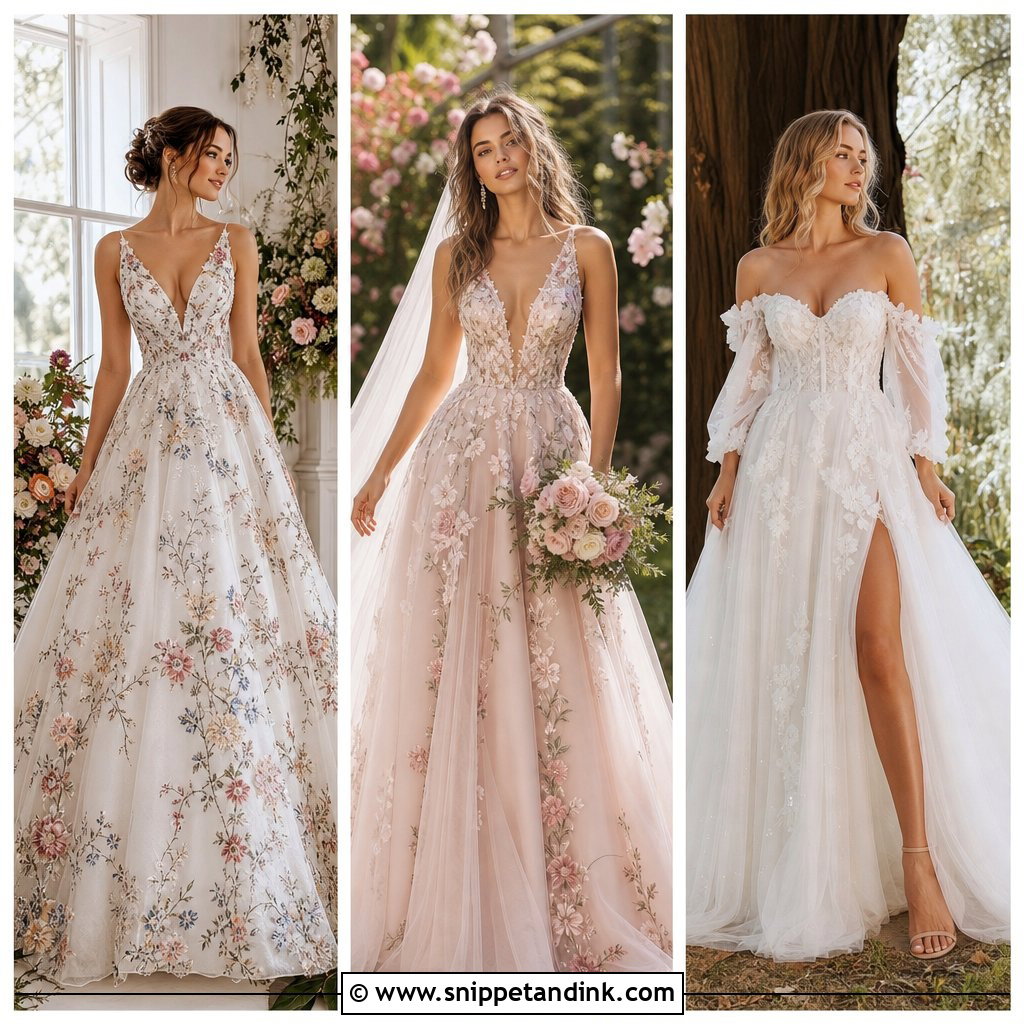
Floral appliqué turns a simple shape into the nature statement of the outfit. The ones I like best trail from bodice onto skirt, with a sheer neckline and a few scattered leaves so it doesn’t look crowded. Raised flowers do snag on bark and brambles, so I’d keep this dress for a clearing or a mown path rather than a narrow trail. Pearl pins in soft waves, ivory block heels and very little jewelry keep the texture in front. Ferns, white blossoms and trailing greenery echo it in the bouquet. Spring and early summer, when the canopy is bright, suit it most.
3. Long Sleeve Lace Woodland Wedding Dress
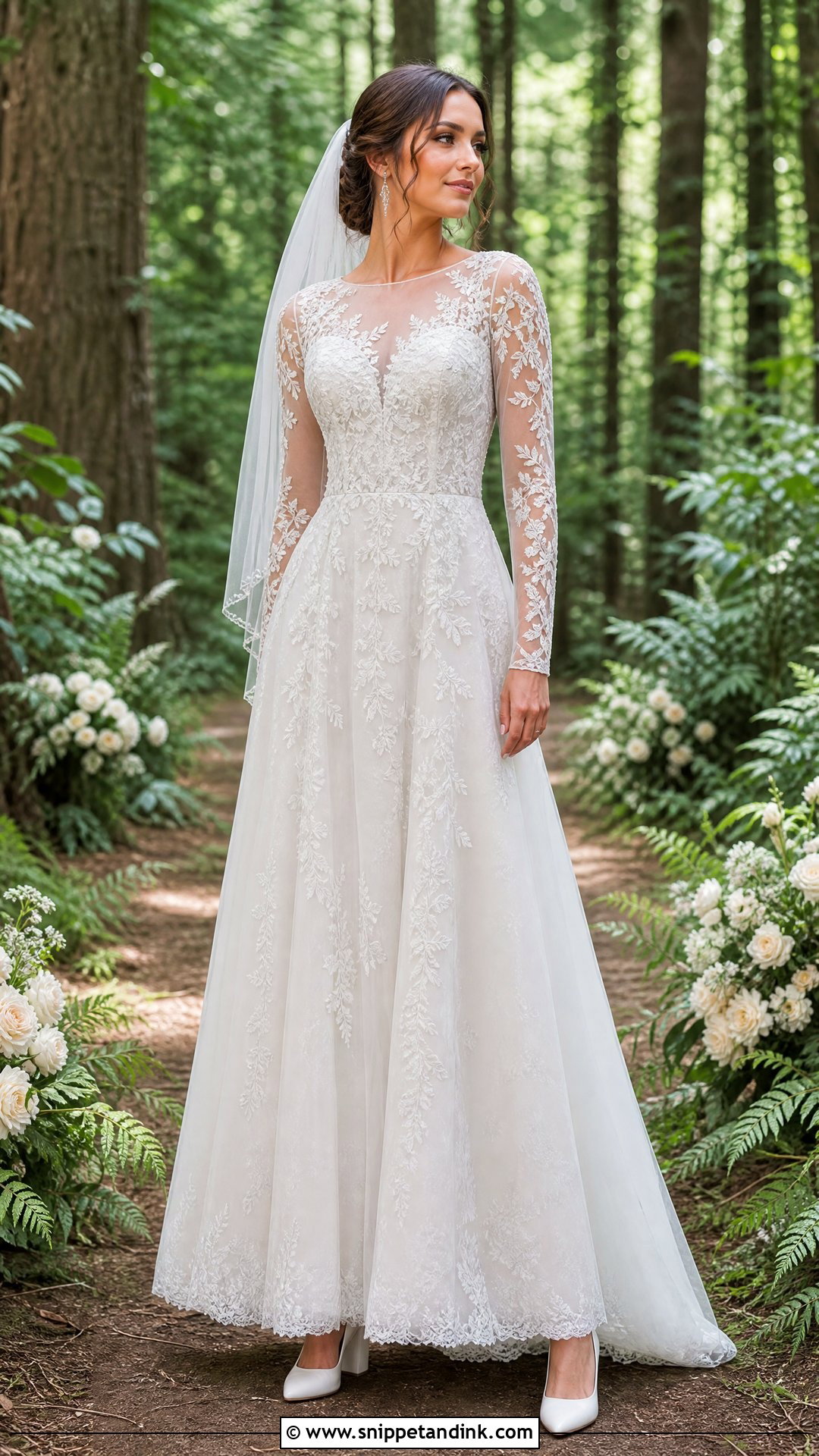
Under a canopy, even in summer, it can feel several degrees cooler than the car park. That’s why I like long lace sleeves for woodland brides: fitted illusion sleeves with vine, fern or floral motifs, over a flowing A-line skirt. Closed-toe block heels or ankle boots handle soft ground. A low textured bun, simple drop earrings and a fingertip veil leave the lace visible. For autumn, carry cream flowers with dried grasses and deep green foliage.
4. Off Shoulder Chiffon Woodland Wedding Dress
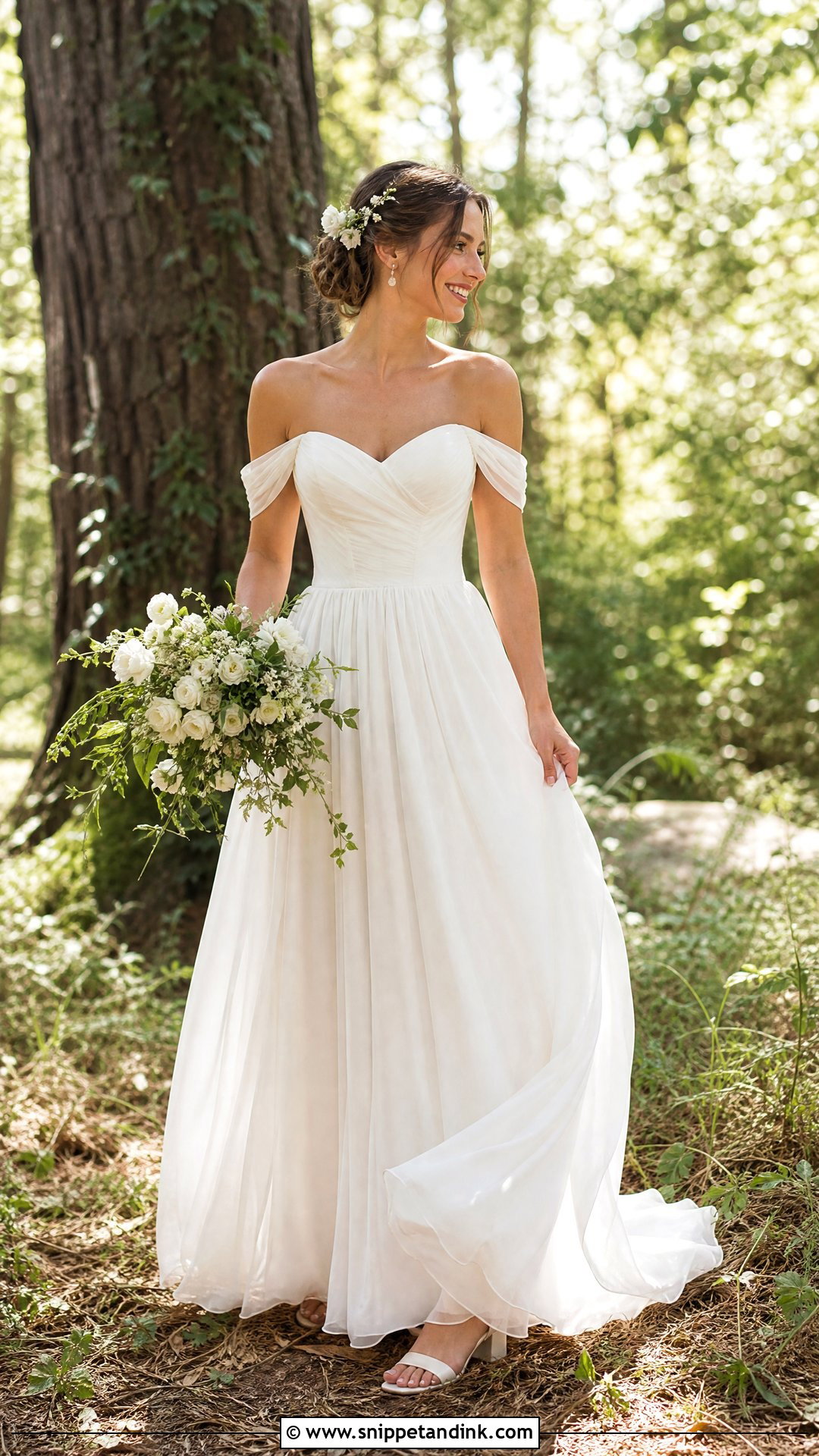
Chiffon earns its place in warm weather. It breathes, it moves in the smallest breeze and it doesn’t need volume to look bridal. An off-the-shoulder version with a structured bodice and softly draped sleeves suits an open clearing best, since the light there shows the fabric moving. Chiffon does pull easily on twigs, so watch the hem near brush. Floral hair pins, delicate earrings and low block-heel sandals keep it relaxed, with a short or fingertip veil and a loosely gathered bouquet of white flowers and fresh greenery.
5. A-Line Tulle Woodland Wedding Dress
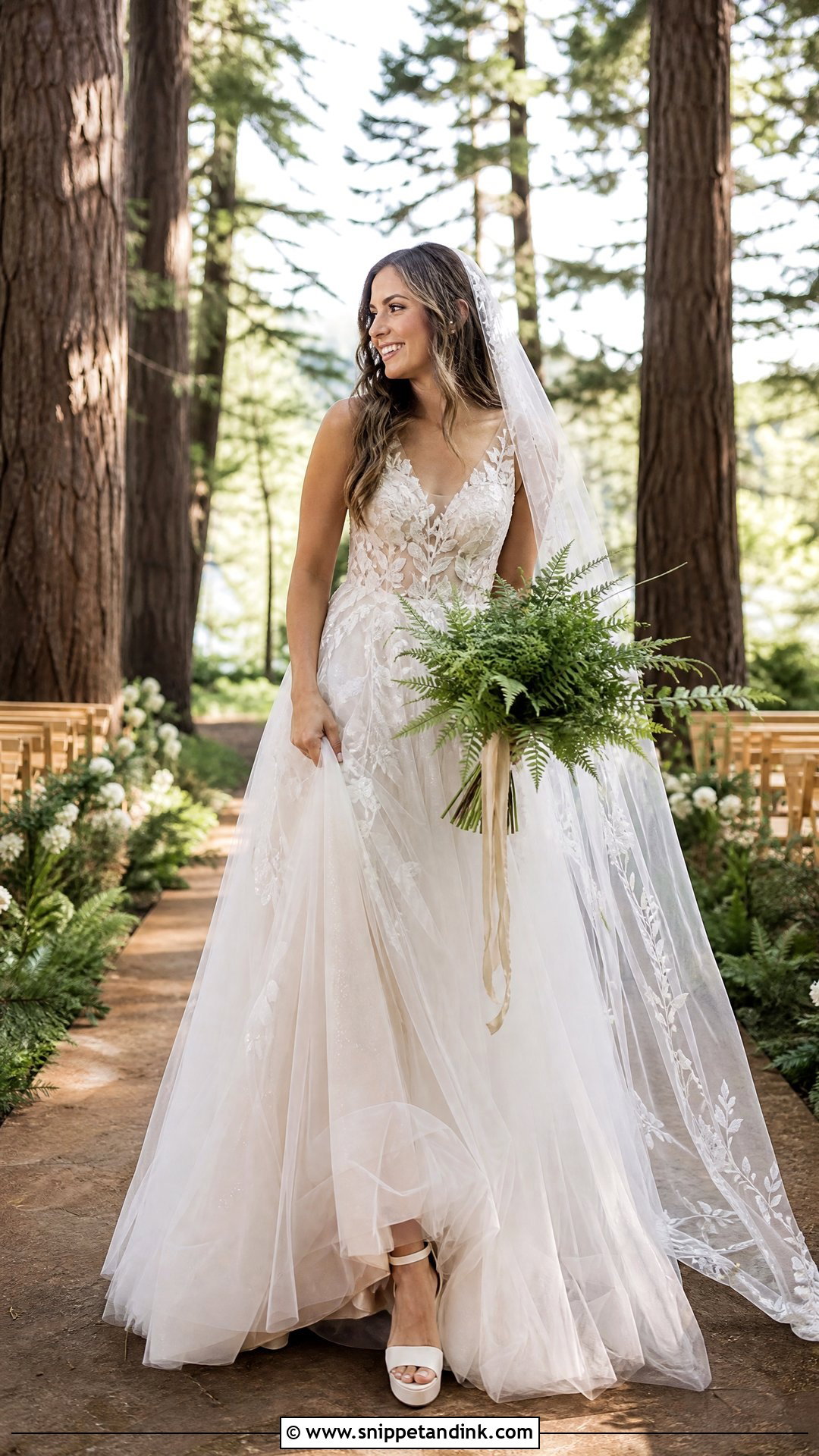
Soft tulle layers create a fairy-tale bridal look without the weight of a structured ball gown. I’d pick an A-line with a fitted bodice and a skirt that widens gradually rather than one that balloons. Scattered floral embroidery or a faint shimmer catches the filtered light between trees. Ivory block heels, a delicate headband and a sheer veil with tiny embroidered leaves suit it. One honest warning: tulle collects leaves, pine needles and burrs like a net. A moderate train and a secure bustle help, and so does a bridesmaid with a quick eye before photos.
6. Vintage High Neck Woodland Wedding Dress
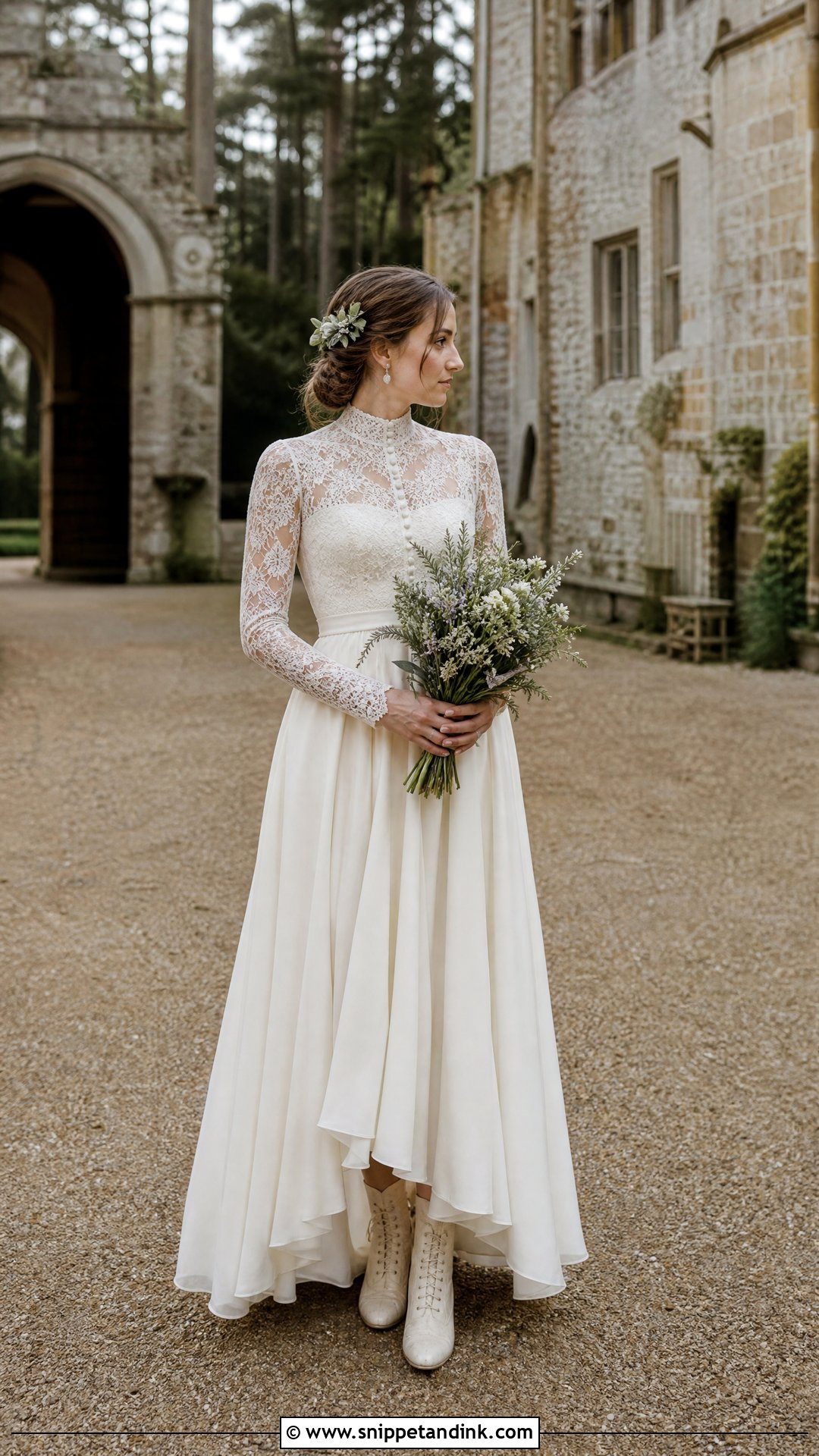
High necklines bring a quiet vintage character to shaded woods. Look for a fitted lace bodice, covered buttons, sheer sleeves and a fluid skirt. An ivory underlayer softens the design and lets the lace read clearly. I’d pair it with low Victorian-style boots, pearl earrings and a neat low bun, plus a small comb decorated with leaves, which nods to the setting without veering into costume. A compact bouquet of cream flowers, herbs and greenery keeps it refined. Historic forest venues and small ceremonies suit it.
7. Bell Sleeve Woodland Wedding Dress
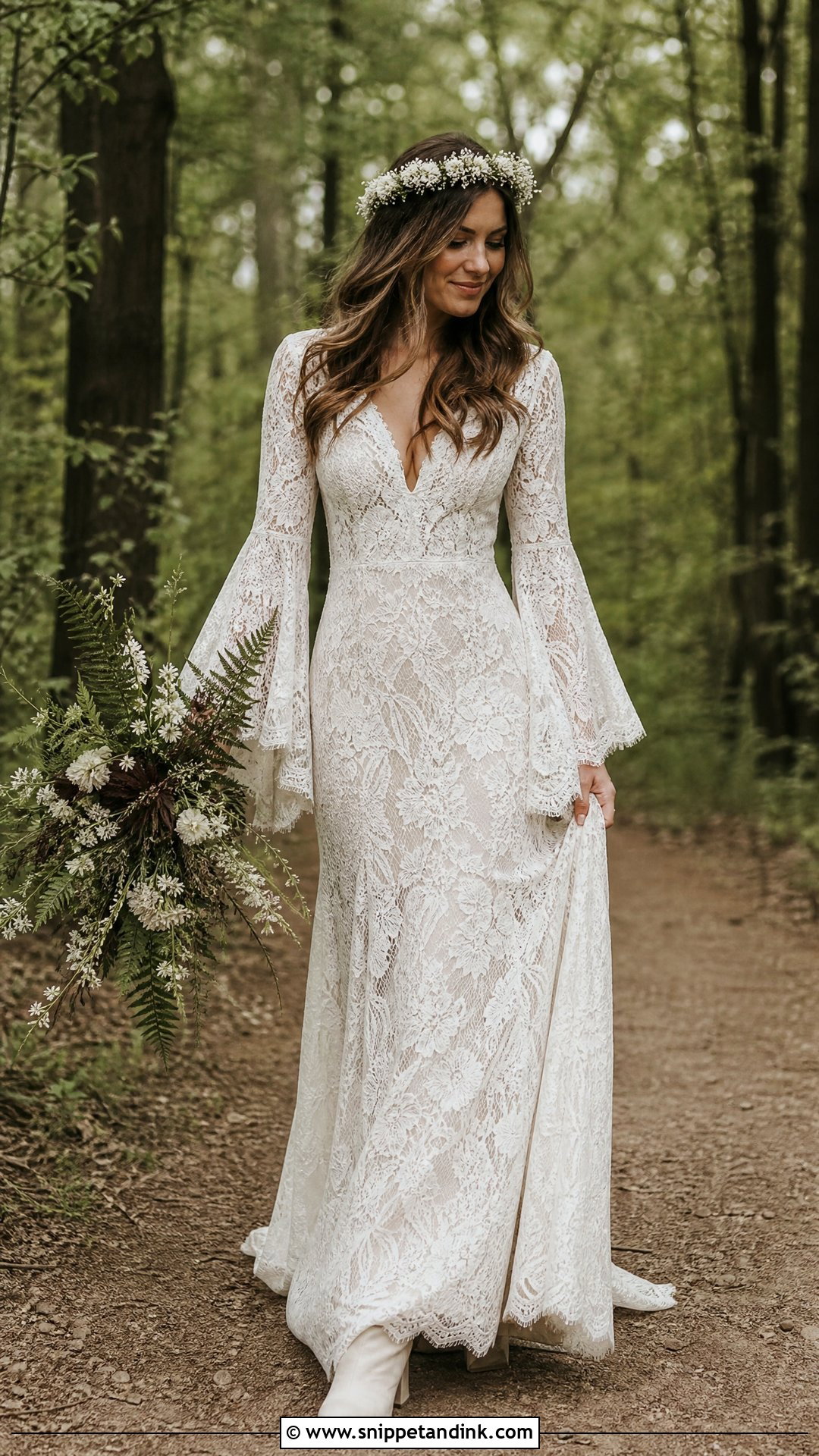
Flowing bell sleeves bring a bohemian quality that feels at home among trees. I prefer sleeves that flare from below the elbow on a softly fitted lace gown, with a skirt that follows the body loosely. Botanical lace over a plain lining keeps the balance right. Neutral boots, loose waves and a narrow crown of small white blooms suit it, with ferns and wildflowers in hand. Extremely long cuffs will brush through greenery and table settings all day, so I’d always choose a moderate flare.
8. Open Back Woodland Wedding Dress
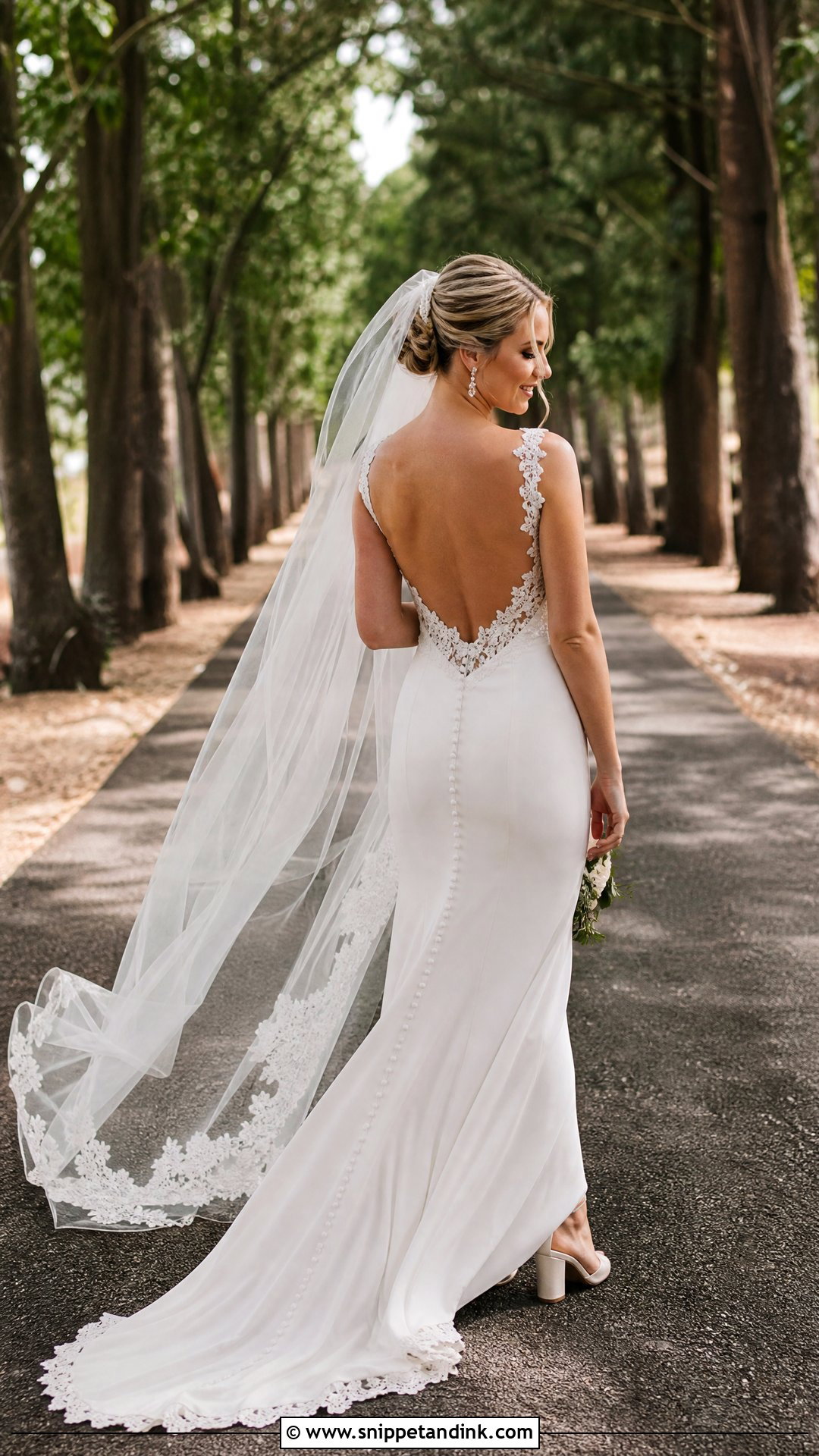
The back is what guests see for the whole ceremony, and on a tree-lined aisle it’s the view in most processional photos. An open back with lace edging, covered buttons or crossed straps frames it well. Fitted crepe or lace feels sophisticated, a softly flared skirt keeps movement easy. Wear hair up or swept to one side so the detail shows, with drop earrings, a light cathedral veil kept for portraits and sturdy block heels. If you need more support than the open back allows, an illusion panel gives the look with a secure fit.
9. Champagne Woodland Wedding Dress
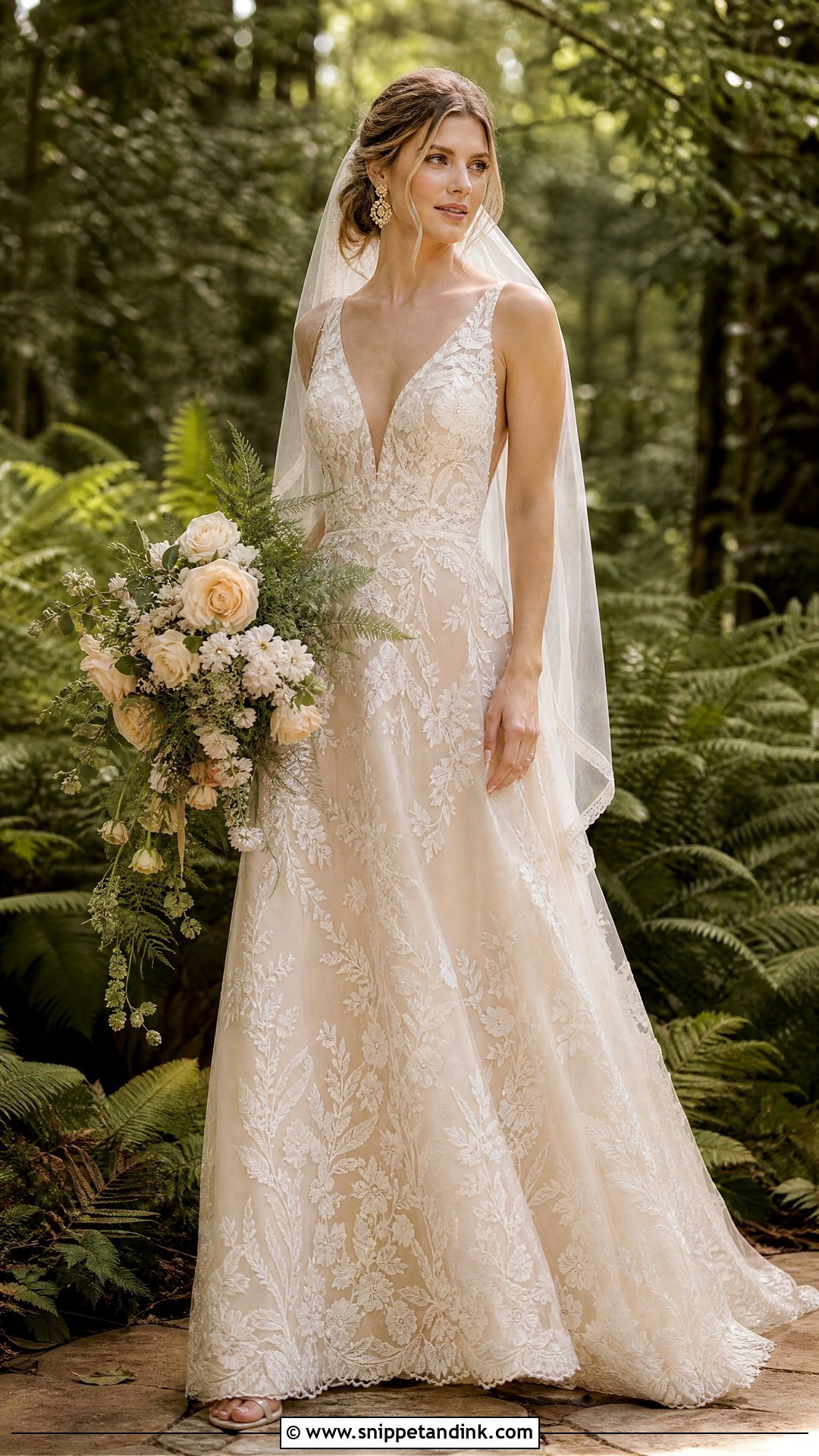
Bright white can look stark against dark trunks and deep shade; champagne doesn’t. A champagne lining under ivory lace warms the gown and makes the botanical pattern stand out more. Keep the shape refined with an A-line or fit-and-flare, and add neutral block heels, antique-style earrings and a warm ivory veil. Cream flowers with muted peach and dark greenery connect it to the setting. I’d stop at one subtle gold detail; several metallic pieces against a coloured lining start to fight.
10. Blush Floral Woodland Wedding Dress
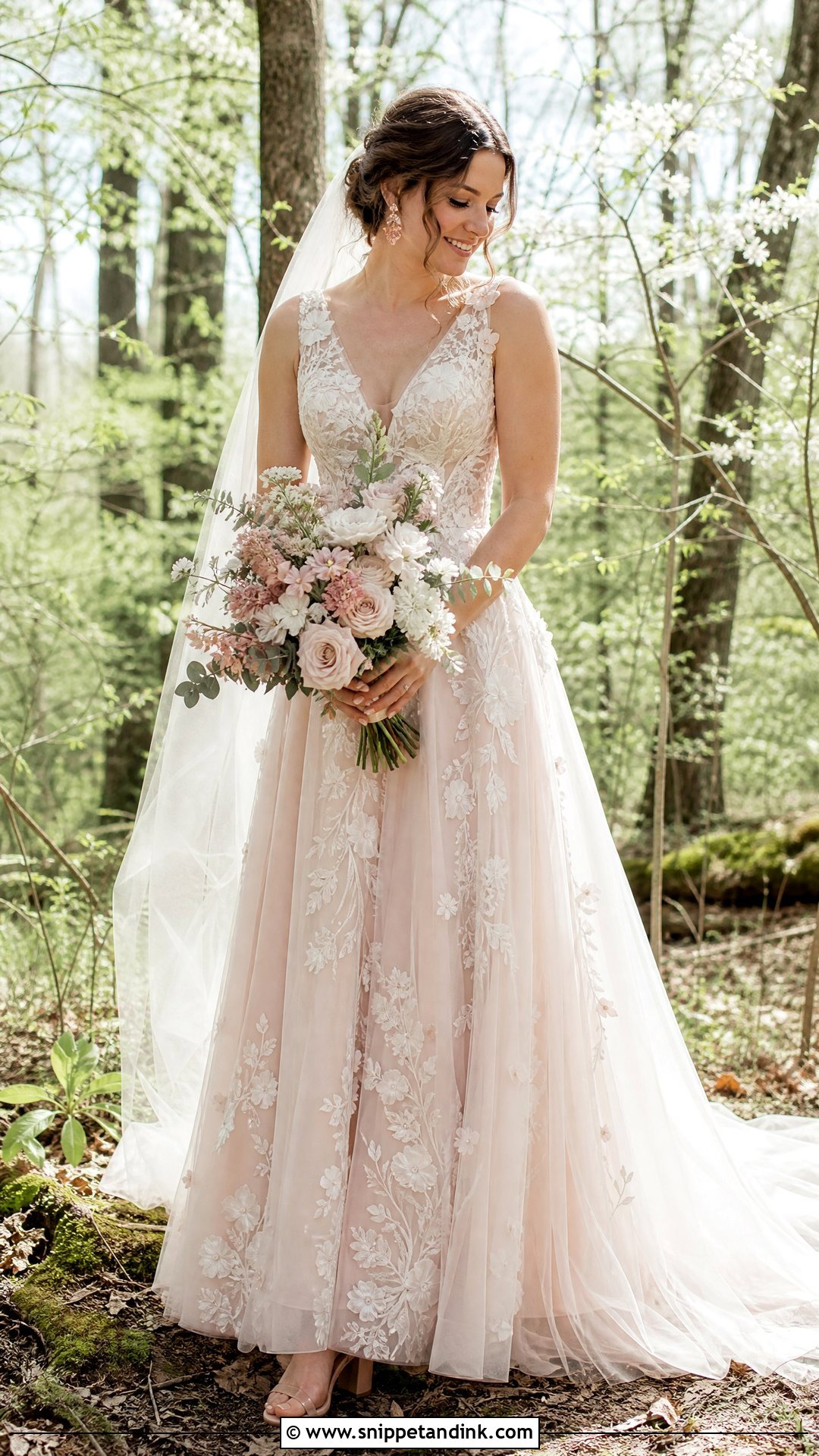
Blush gives a gentle colour that still reads as bridal. A pale blush lining under ivory floral lace, embroidered vines or dimensional petals works best, with a flowing A-line so the fabric detail leads. Nude block heels, rose-gold earrings and a floral comb suit it, plus a bouquet in ivory, dusty pink and green. With this much detail on the dress, I’d choose a plain tulle veil. Blush sits especially well against deep green foliage, which pushes the pink slightly warmer in photos.
11. Sage Green Woodland Wedding Dress
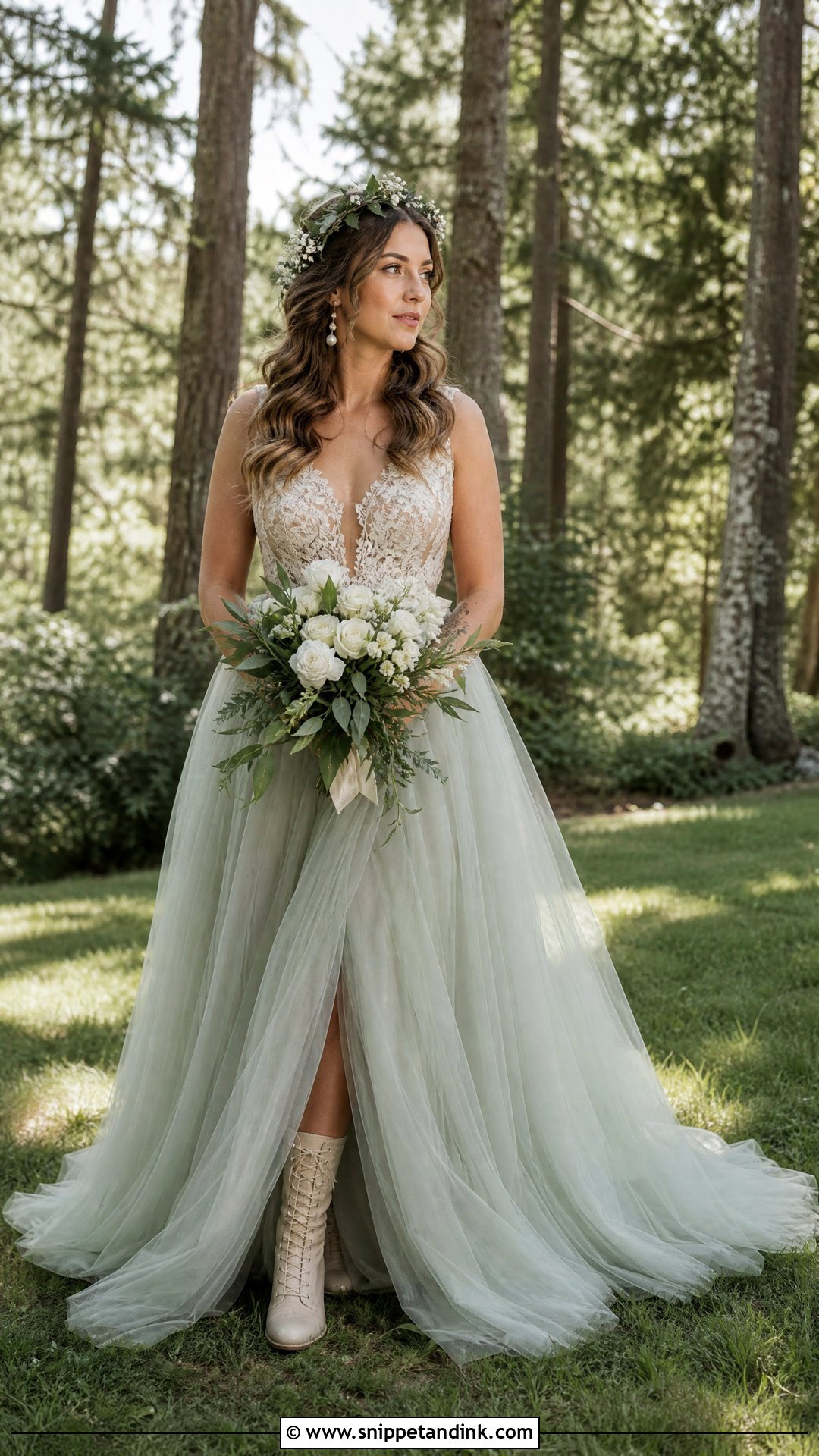
Green on green is the risk with a muted sage gown in a forest: stand in front of a fern bank and you can blend in. That’s why I keep the colour gentle and carry a mostly white bouquet, which gives the eye something to separate you from the background. Soft tulle or chiffon with an ivory lace bodice, a sage underlayer or green embroidery all work. Cream boots, pearl earrings and a greenery crown with tiny white flowers finish it. If full green feels too much, an ivory dress with sage ribbon or botanical stitching gets you halfway.
12. Minimalist Satin Woodland Wedding Dress
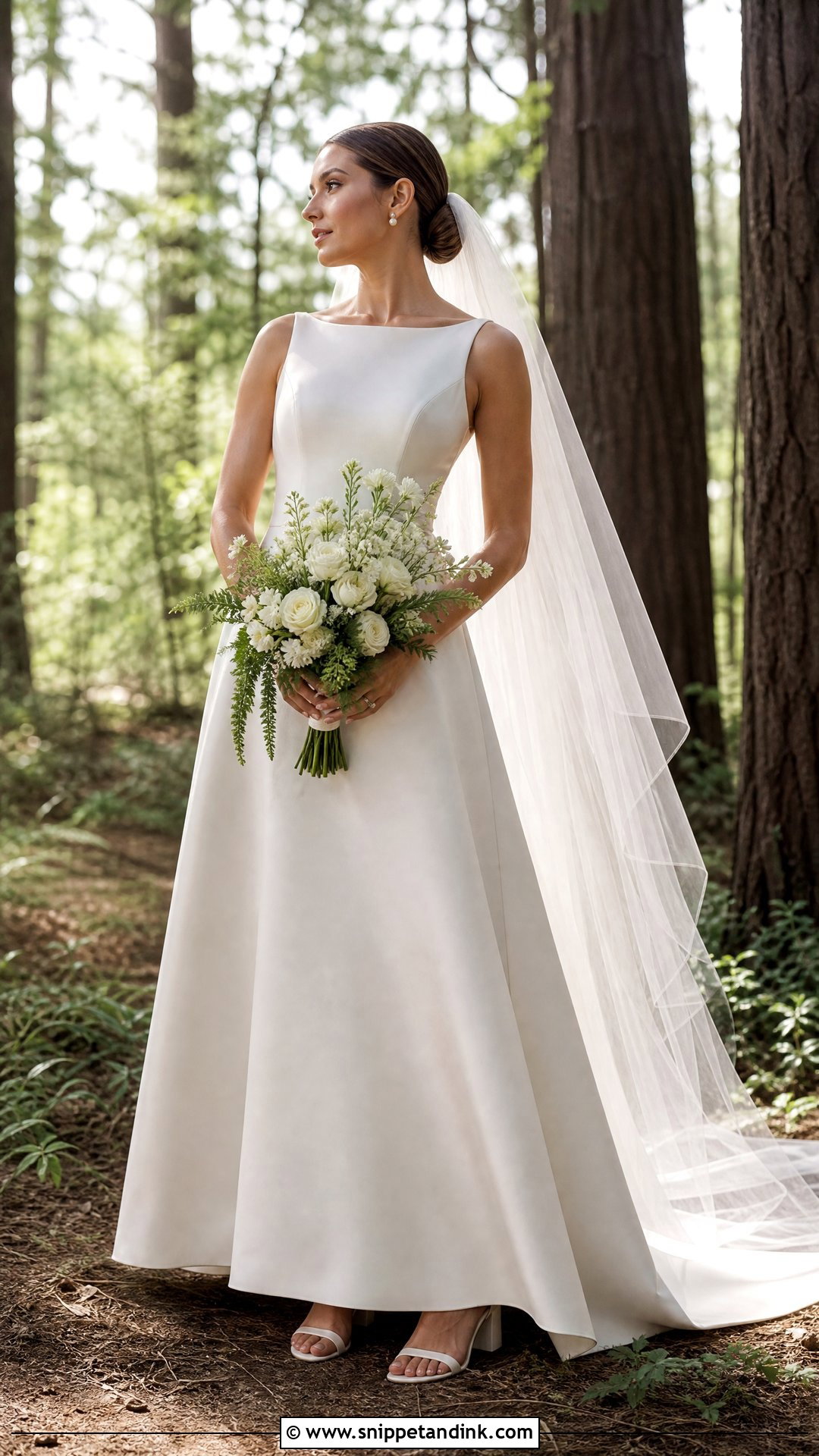
A plain satin gown can stand out precisely because the forest is so textured. A fluid A-line or bias cut with clean seams, a soft neckline and a manageable train is enough. I’d pick matte satin or lightweight silk over high-shine fabric, since glossy satin outdoors can flare white in dappled sun. Pearl studs, a polished low bun, ivory block heels and a sheer chapel veil complete it, with a structured bouquet of white flowers and deep green leaves to tie it to the setting.
13. Tea Length Lace Woodland Wedding Dress
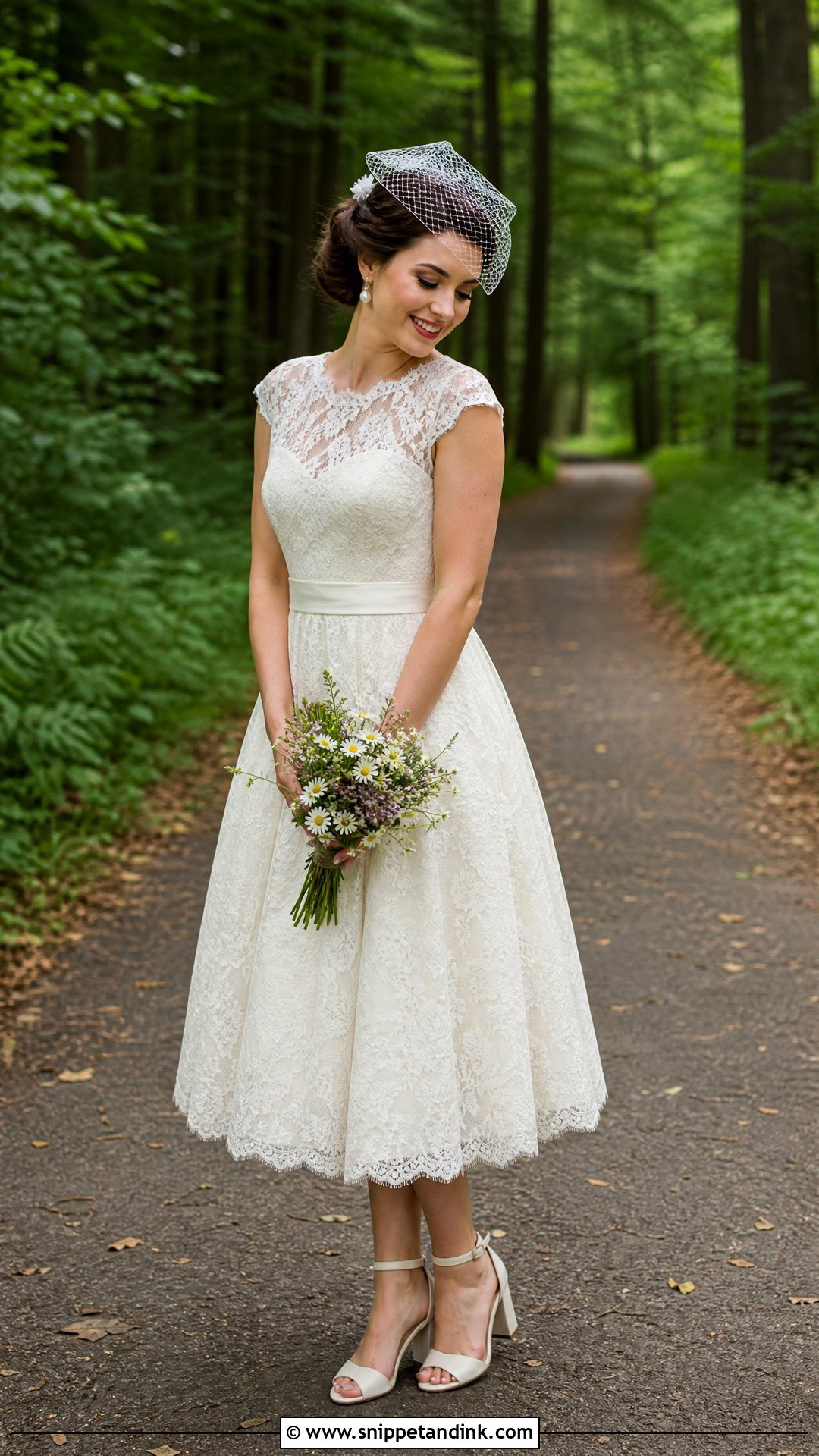
Tea length is the practical answer to damp ground. The hem stays clear of wet grass, leaves and exposed roots, and your shoes become part of the outfit. An ivory lace dress with a defined waist and softly flared skirt suits small woodland weddings well. Cream ankle-strap block heels or boots, a birdcage veil and pearl earrings match its vintage mood, with a compact wildflower bouquet. Pack a light cardigan or cropped jacket; forests cool off quickly once the sun drops behind the trees.
14. Empire Waist Chiffon Woodland Wedding Dress
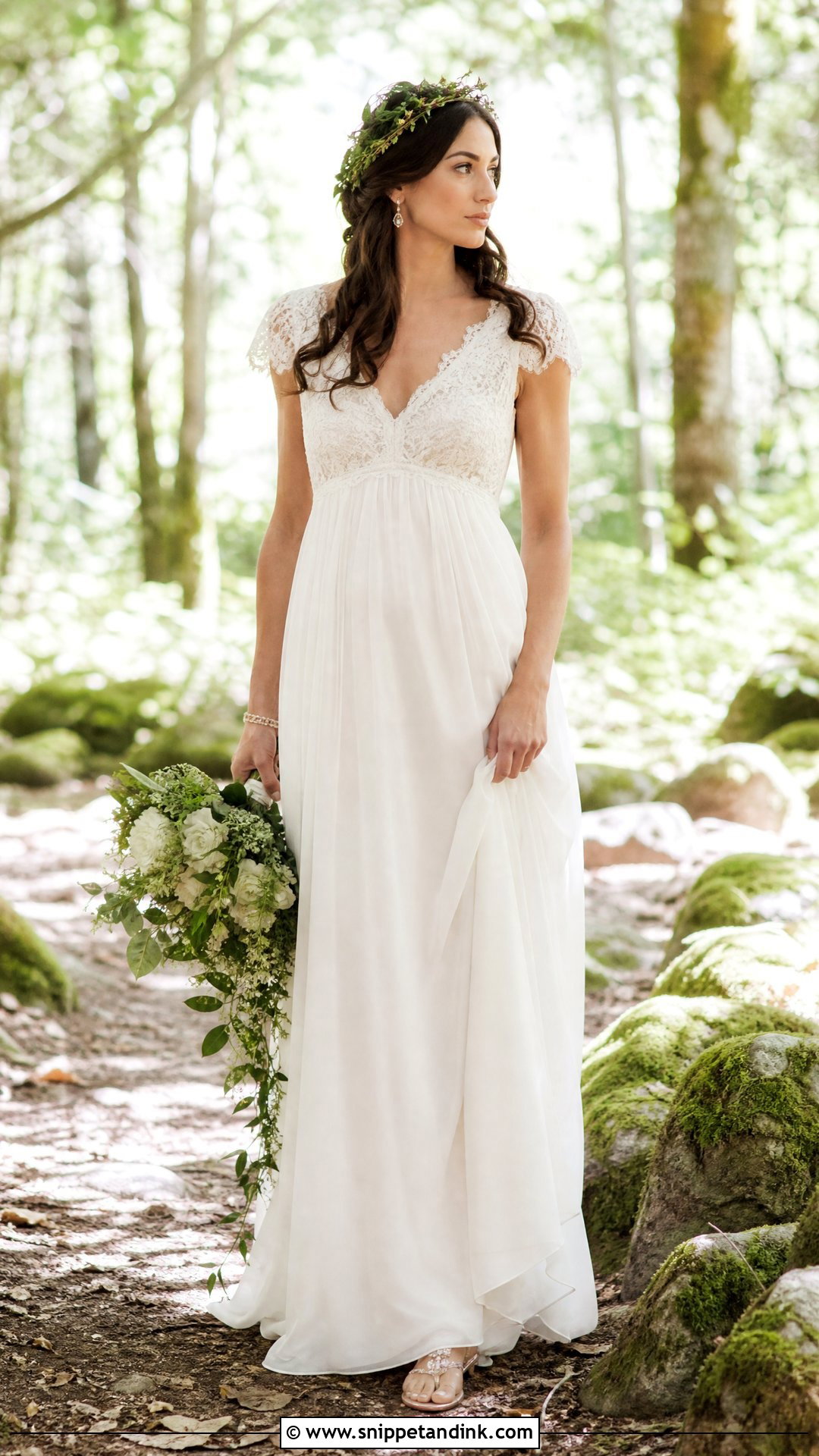
An empire waist puts the seam just under the bust and lets the skirt fall loose from there, so nothing presses on the stomach all day. Gathered chiffon or delicate lace at the bodice, with fabric that skims rather than clings, walks easily over uneven ground. Flat embellished sandals, a leafy hair vine and simple drop earrings suit it, plus a bouquet with long trailing greenery. It flatters petite brides, expectant brides and anyone who dislikes a structured waist. A short sweep train keeps it clear of roots.
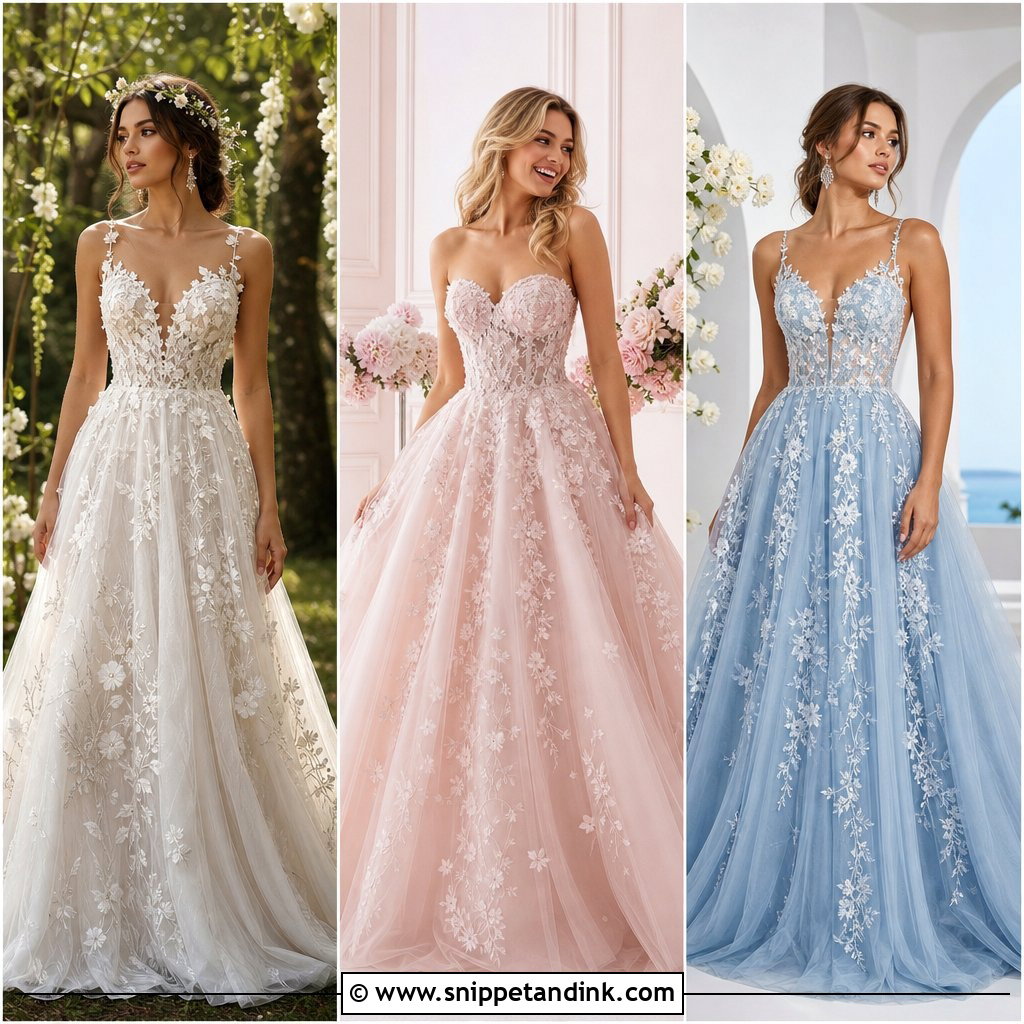
15. Corset Tulle Woodland Wedding Dress
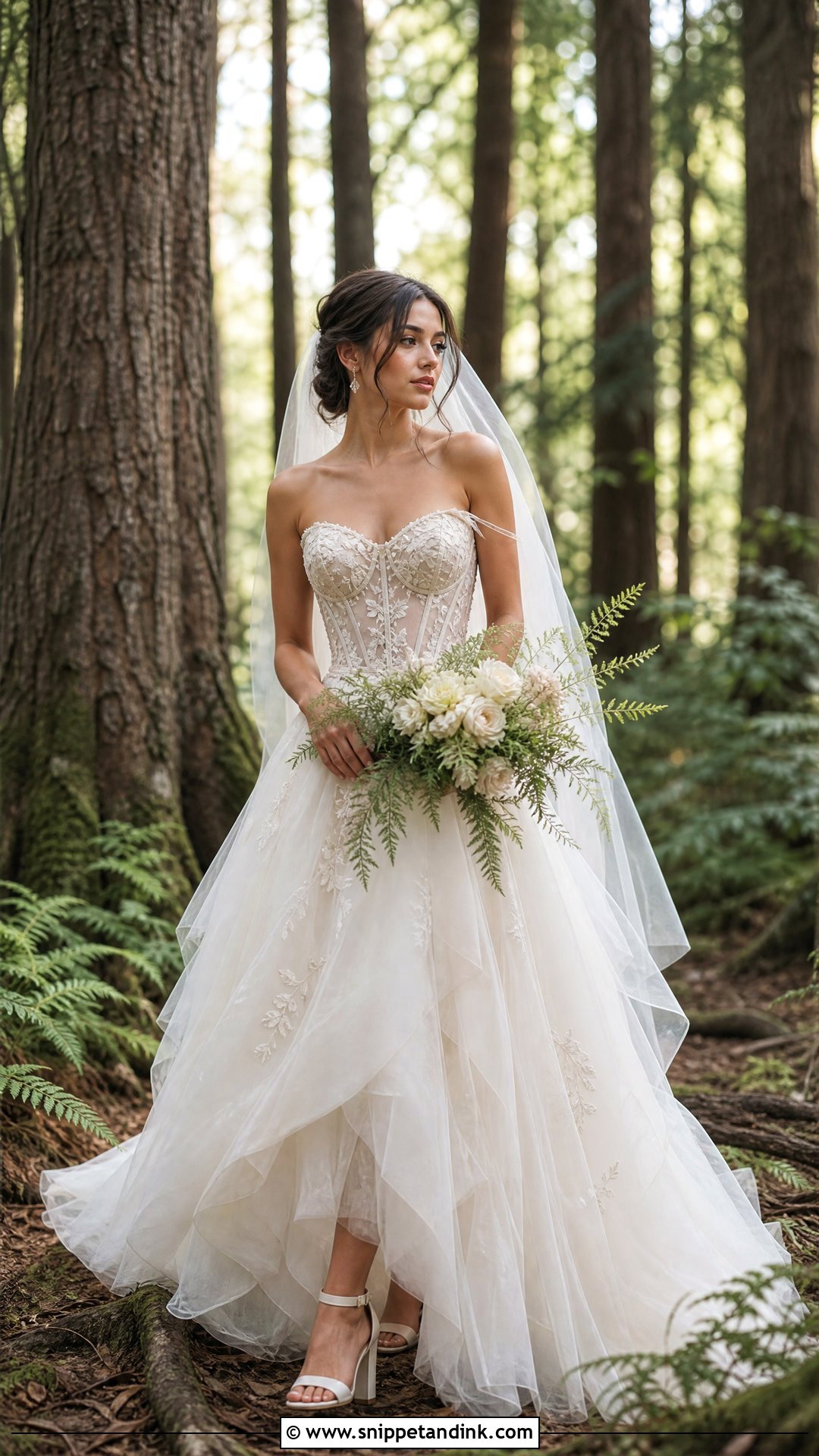
A corset bodice over a light tulle skirt gives fairy-tale structure without a heavy gown. I like visible boning covered in floral lace or fine embroidery, which keeps it romantic rather than formal. The skirt can be layered, but it has to stay narrow enough for a woodland aisle, which is often a path barely two people wide. Pearl drop earrings, an airy veil and supportive block heels suit it, with ivory flowers and ferns in the bouquet. Get it professionally fitted, then test sitting on a bench, walking and raising your arms.
16. Cape Sleeve Woodland Wedding Dress
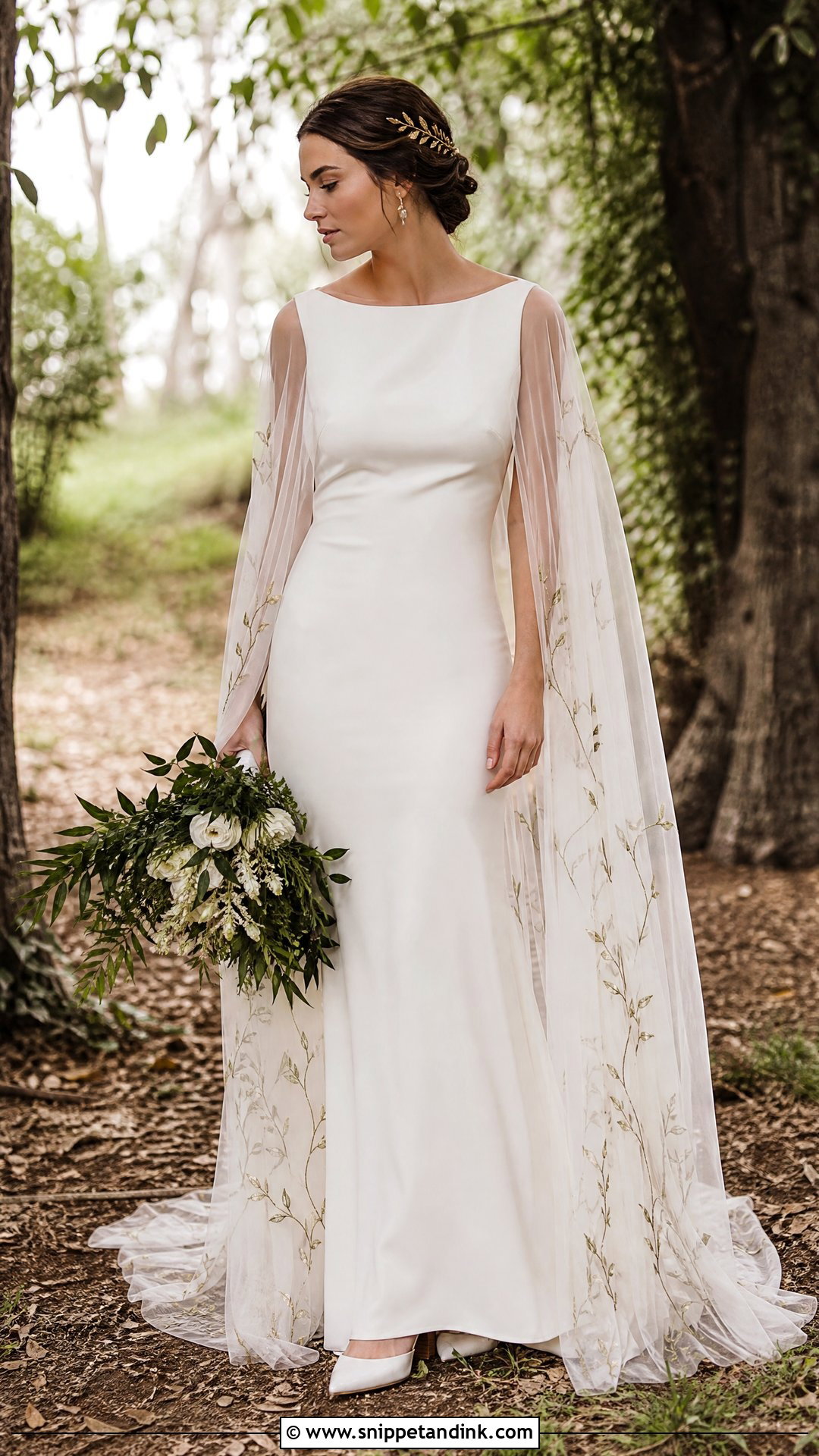
Cape sleeves give light coverage at the shoulders and arms and float behind you as you walk. A simple crepe or chiffon gown with sheer cape panels from the neckline or upper back is enough, and botanical embroidery along the edges adds a quiet woodland reference. Because the cape already gives you flowing fabric behind, I’d usually skip the veil and wear a small leaf comb instead. Pointed-toe block heels, a low chignon and understated earrings complete it. It’s my favourite shape for spring or autumn weather that can’t decide.
17. Detachable Overskirt Woodland Wedding Dress
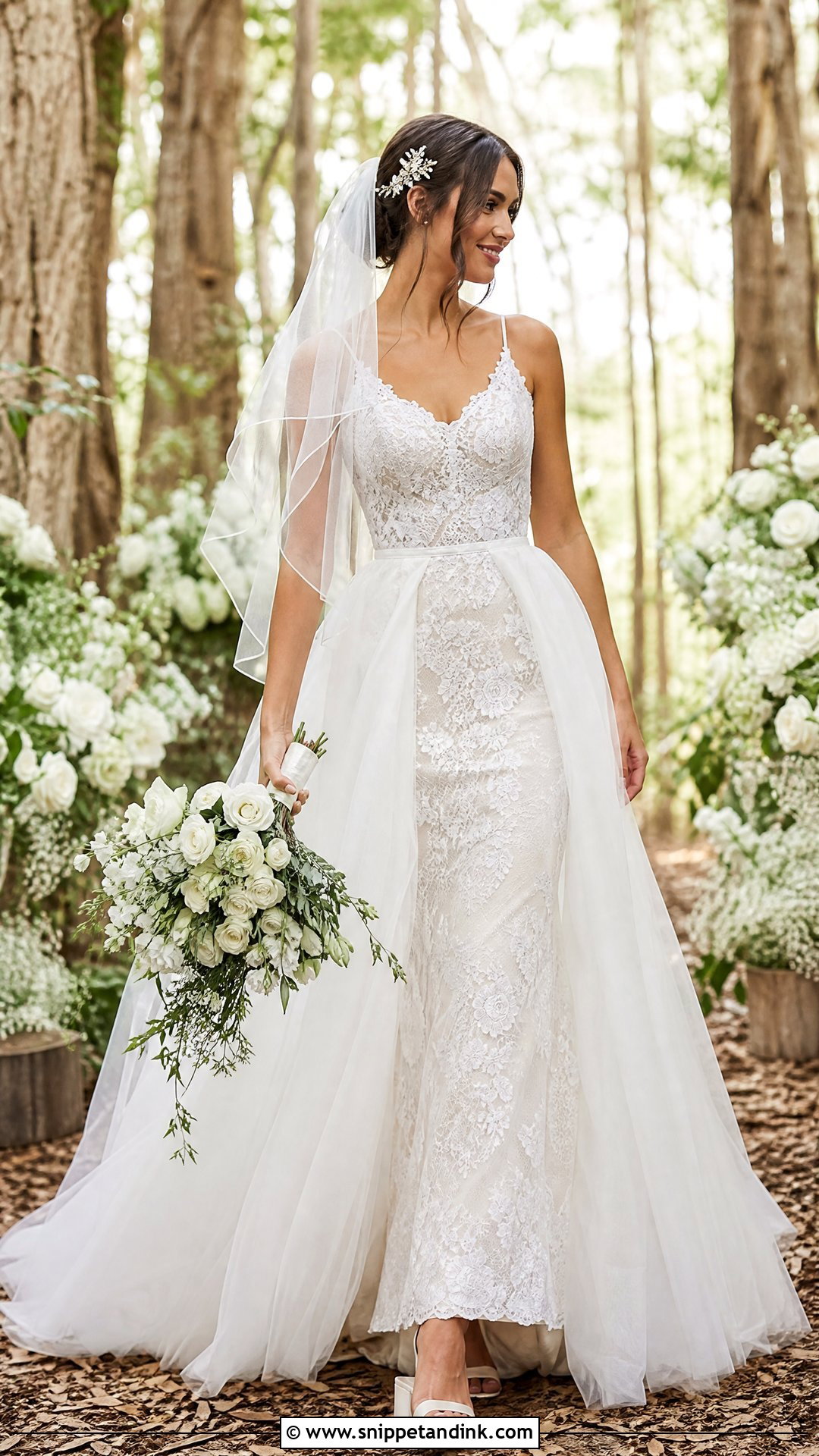
This dress gives you two looks: a lightweight tulle overskirt for the aisle and portraits, then a fitted lace or crepe dress underneath for dancing. Outdoors, there’s a bonus I point out to every bride: the overskirt takes the mud, and the dress underneath stays clean for the reception. Block heels, a floral comb and a fingertip veil suit it, with white blooms and trailing greenery in hand. Check that the fastening sits flat at the waist and that you can remove it quickly without a team.
18. Woodland Wedding Dress With Embroidered Veil
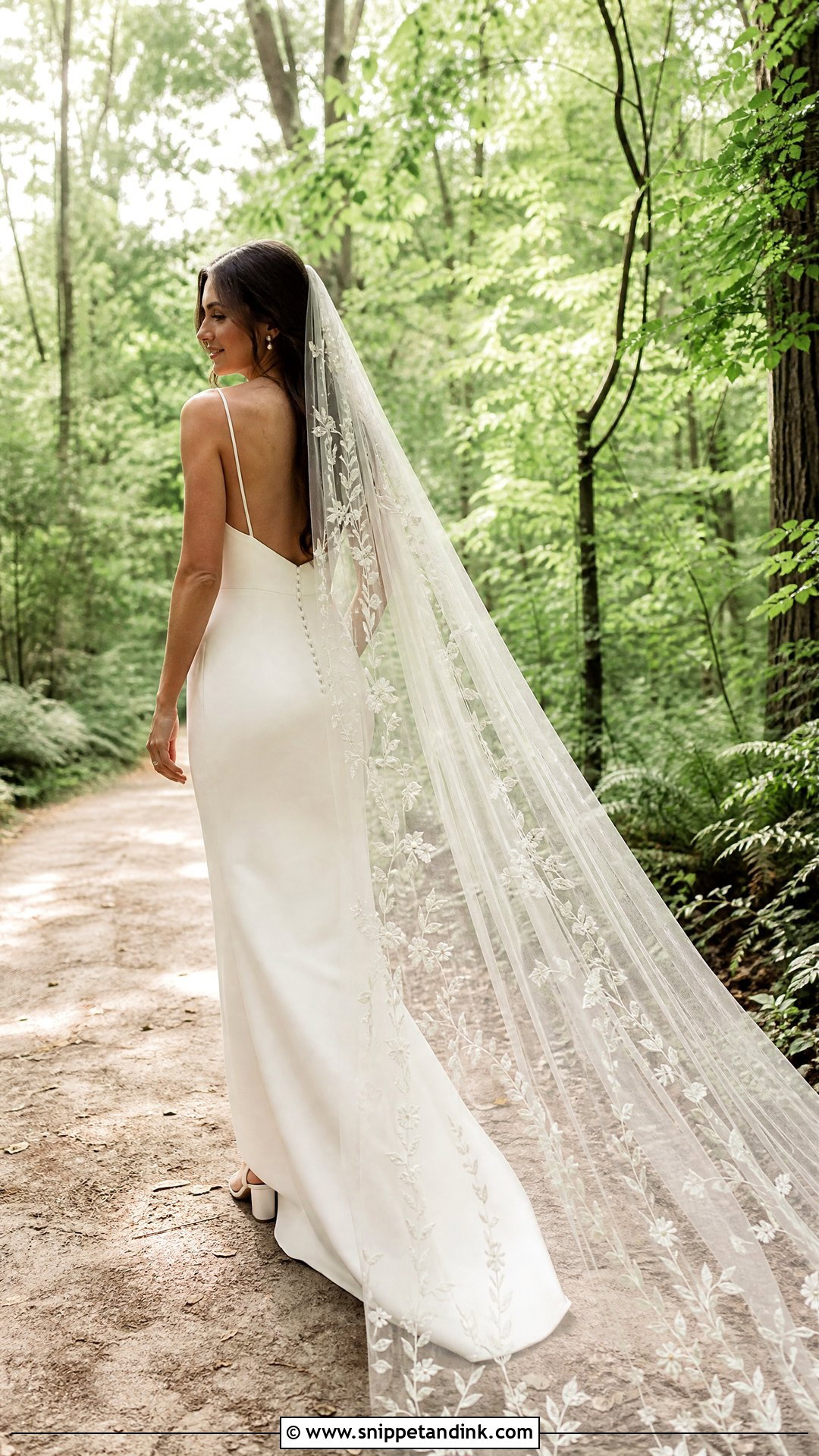
A botanical veil puts the woodland detail on the one piece you only wear for an hour. Pair a clean ivory crepe or satin dress with a sheer veil embroidered with vines, leaves and tiny flowers, and let the veil lead. Pearl earrings, low block heels and a smooth bun or half-up style suit it, with a restrained bouquet of white flowers and mixed greenery. Outdoors, I’d stay at fingertip or chapel length; cathedral veils snag on undergrowth and need someone to lift them over rough ground.
19. Velvet Trim Woodland Wedding Dress
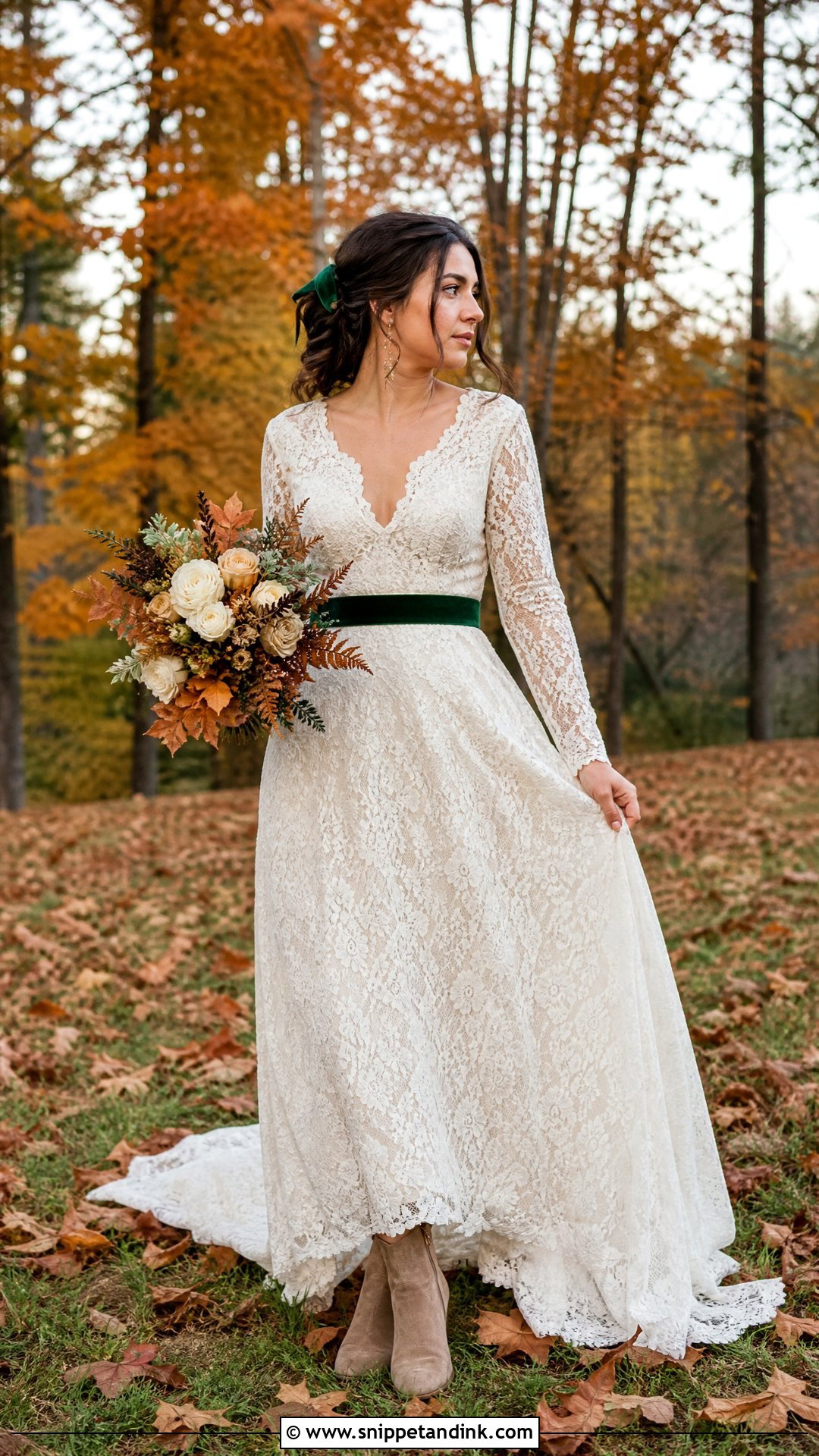
Small velvet touches are the easiest way to make an ivory gown feel seasonal. A narrow waistband, ribbon or covered buttons in forest green, taupe, soft brown or muted burgundy add definition without taking over. I’d repeat the colour once, perhaps in a velvet hair ribbon, and stop. Suede ankle boots and antique-style earrings suit it, with cream flowers, seasonal foliage and a few deeper accents. Autumn leaves or evergreens make the best backdrop.


20. Puff Sleeve Cottagecore Woodland Wedding Dress
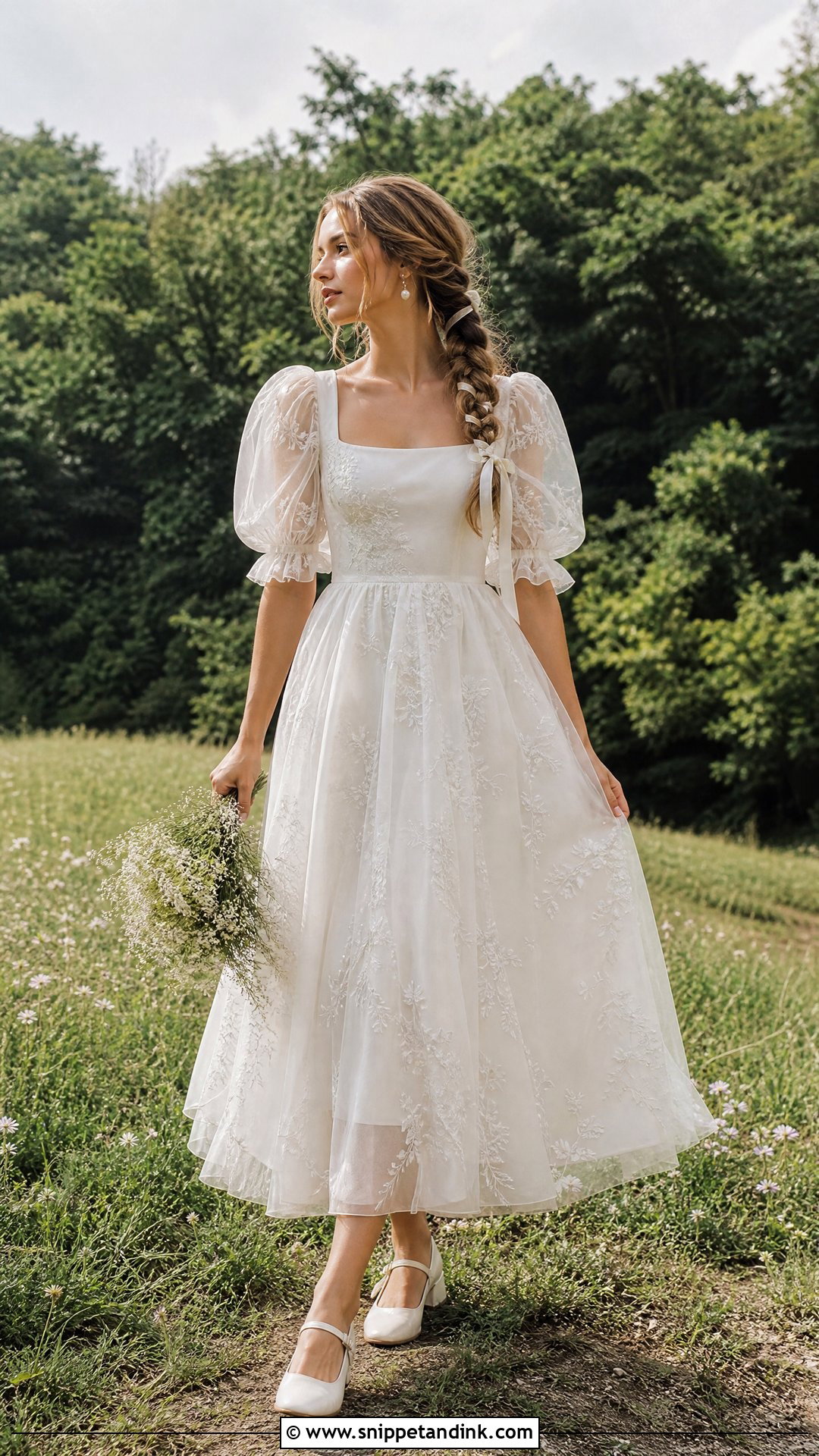
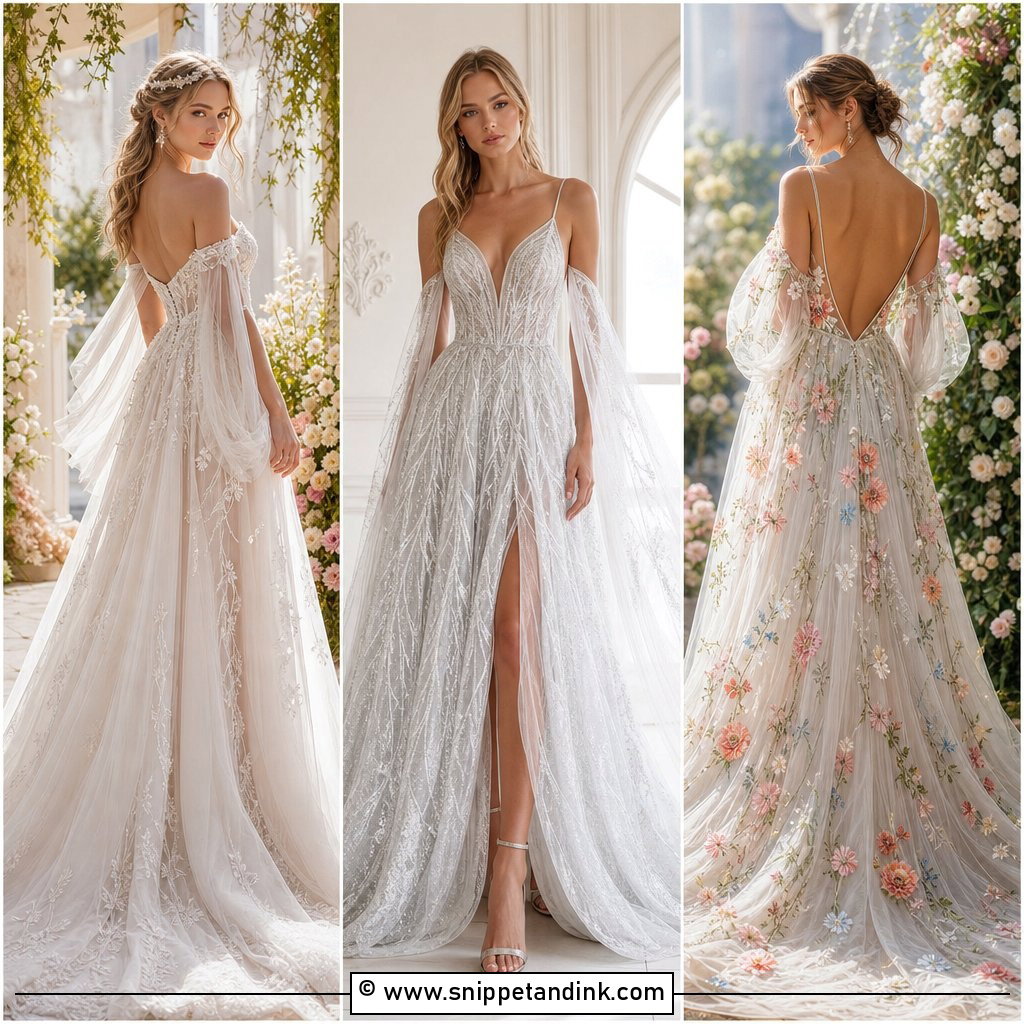
Puff sleeves and a square neck give a sweet cottage-inspired silhouette. Floral organza, embroidered tulle or light lace in an A-line suits it, with sheer, gently gathered sleeves over a fitted bodice. Volume at the shoulders needs a close fit at the waist, or the whole dress looks wider than you are. Low Mary Jane heels, pearl drops and a ribbon woven through a loose braid suit it, with a hand-tied bouquet of small white flowers. I’d wear a short veil or none, so the sleeves stay visible. Small daytime ceremonies suit it best.
21. Plus Size A-Line Woodland Wedding Dress
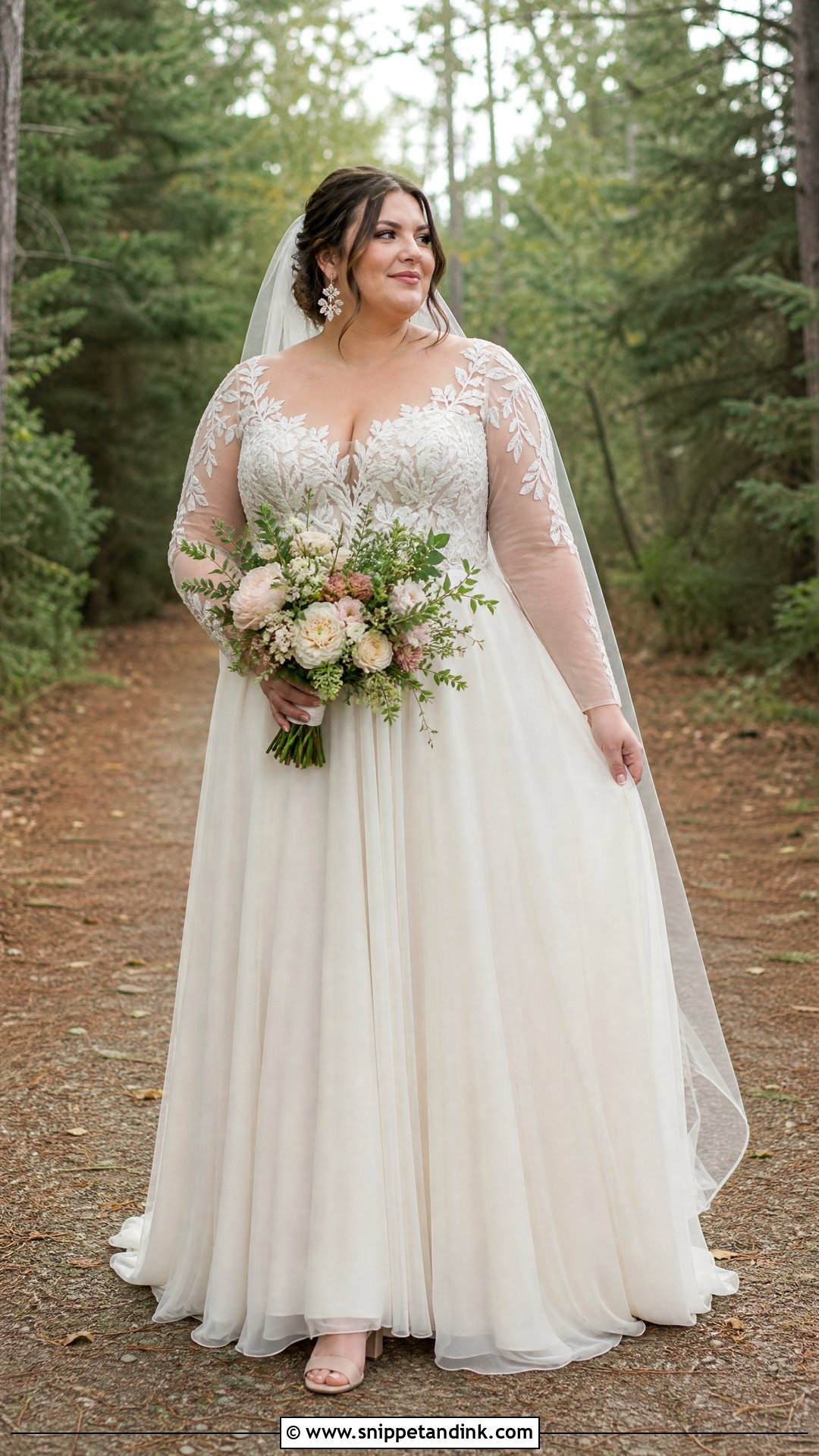
The A-line is my starting point for curvy brides because the support can be built in without stiffness. Look for a supportive bodice, a defined waist, a soft skirt and botanical lace placed deliberately. Wider straps, a structured lining or illusion sleeves add security. Supportive block heels, statement earrings and a light veil complete it, with varied greenery and softly coloured flowers. Bust support and hem length are where alterations matter most; I’d budget for both. Pick what lets you move easily, not what an old rule says you should wear.
22. Petite Sheath Woodland Wedding Dress
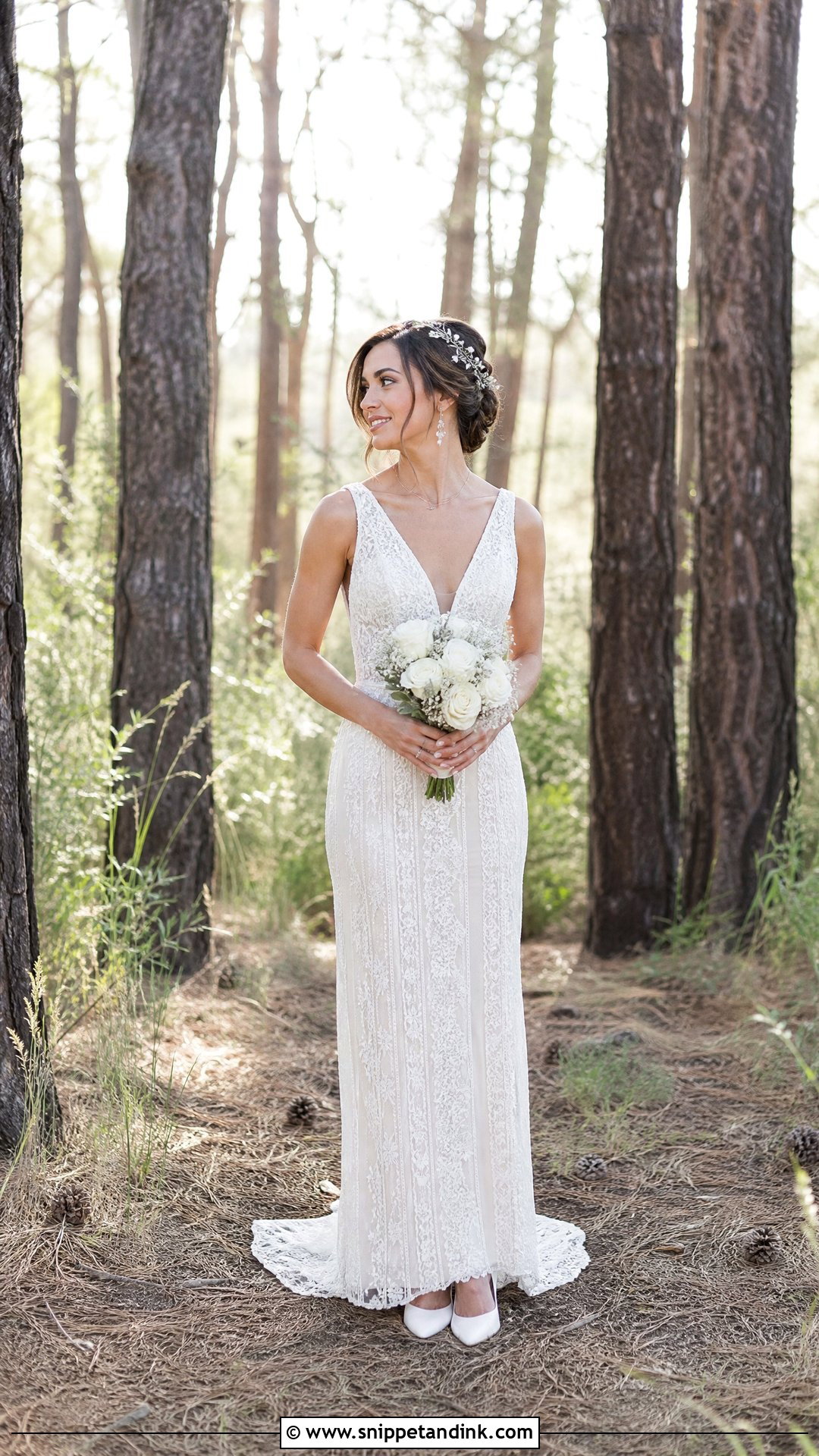
On a petite frame, a sheath keeps the line long and avoids drowning you in fabric. Vertical lace placement, a defined waist and a narrow skirt that still allows a full stride all help; a V-neck or open back lengthens further. Low pointed-toe block heels, small drop earrings and a delicate hair vine suit it, and a compact bouquet keeps proportions right. Hemming is the detail I’m strictest about here, because extra fabric pooling at the feet breaks the vertical line. Keep the train short or bustled for woodland paths.
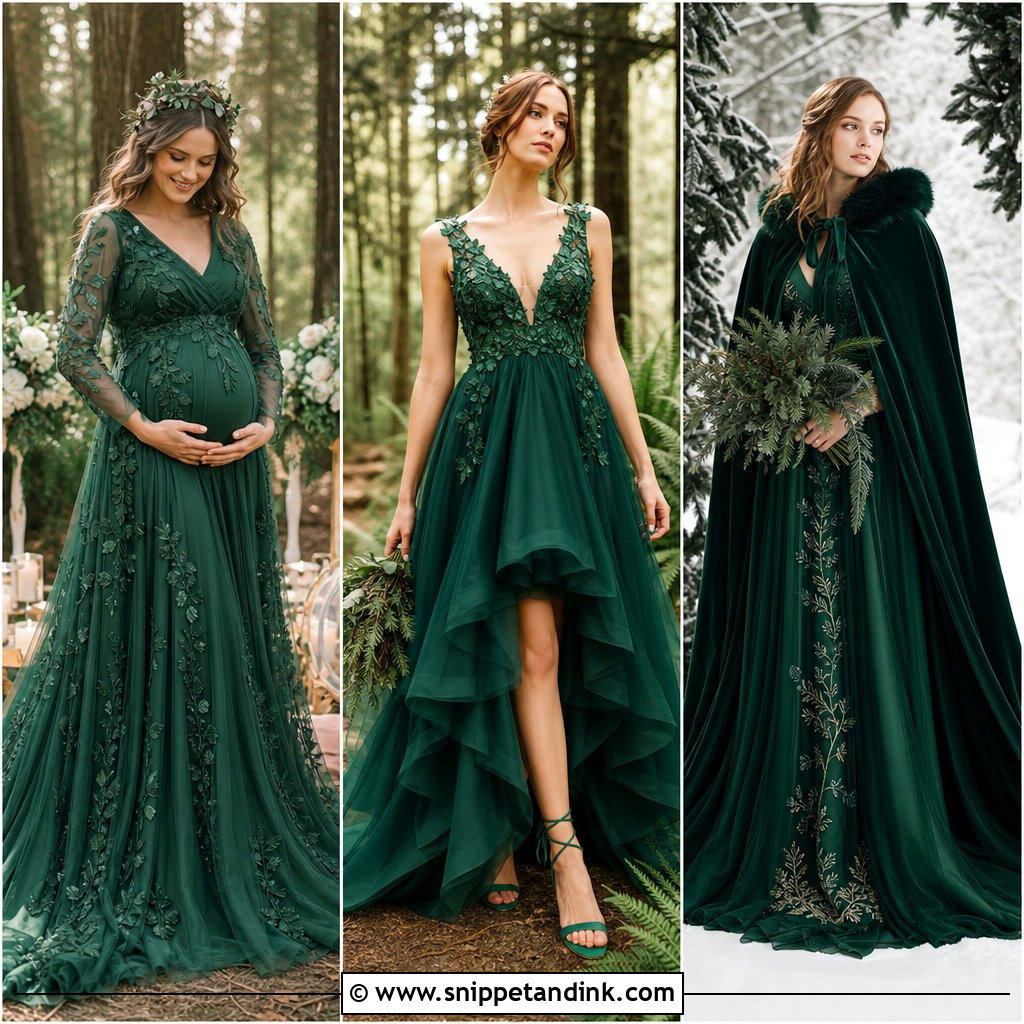
23. Maternity Empire Waist Woodland Wedding Dress
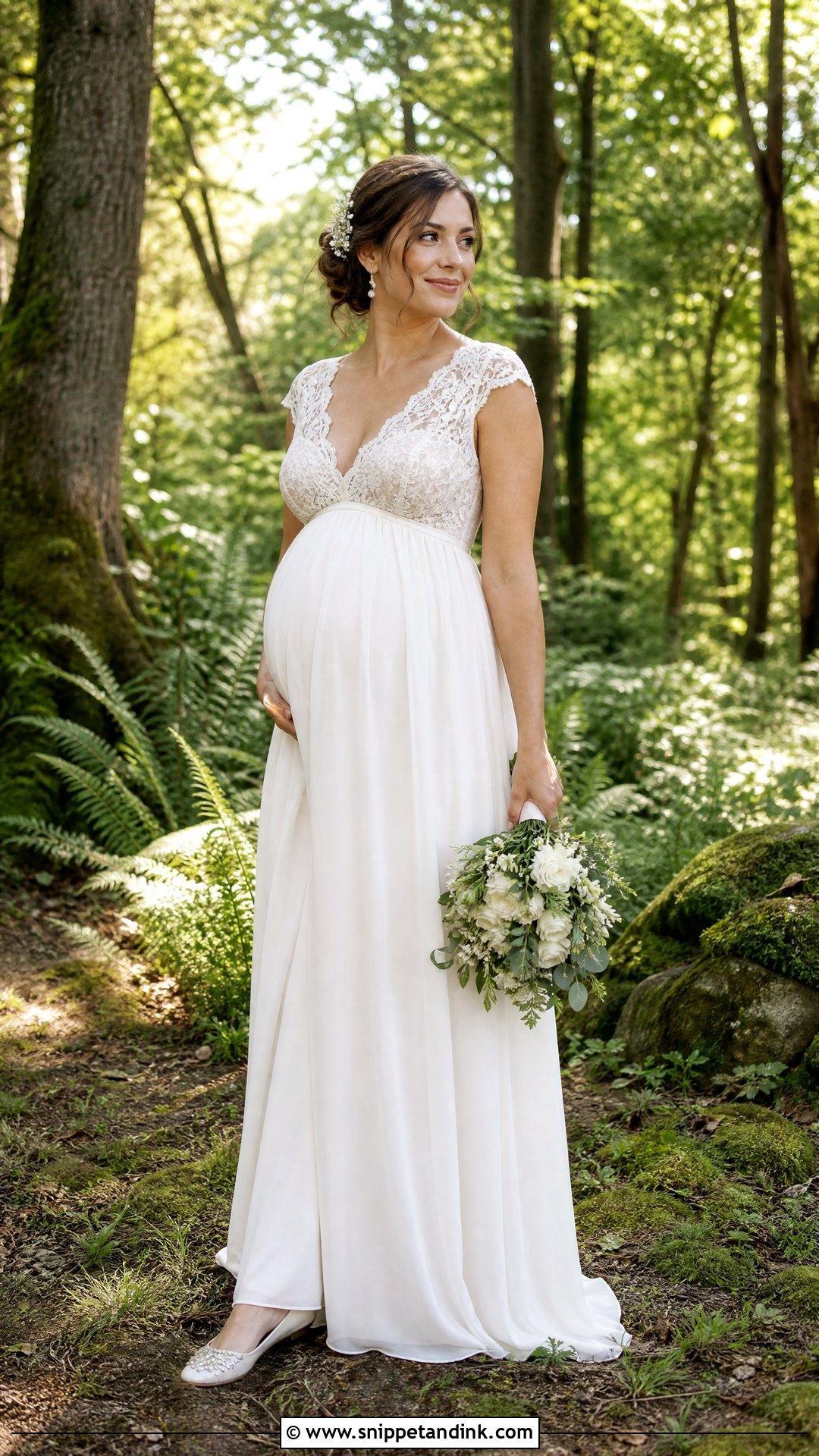
For a pregnant bride, I want room, support and fabric that won’t feel heavy on a warm afternoon outdoors. An empire waist with a lace bodice and a flowing chiffon skirt defines the upper body and leaves the waist free. Soft lining and adjustable features such as a lace-up back or elastic panels give space for change. Embellished flats, pearl earrings and a floral comb suit it, plus a light shawl. A medium bouquet is easier to hold than a big one. Book the final fitting close to the date, but leave a week or two for the finishing work.
24. Velvet Woodland Wedding Dress
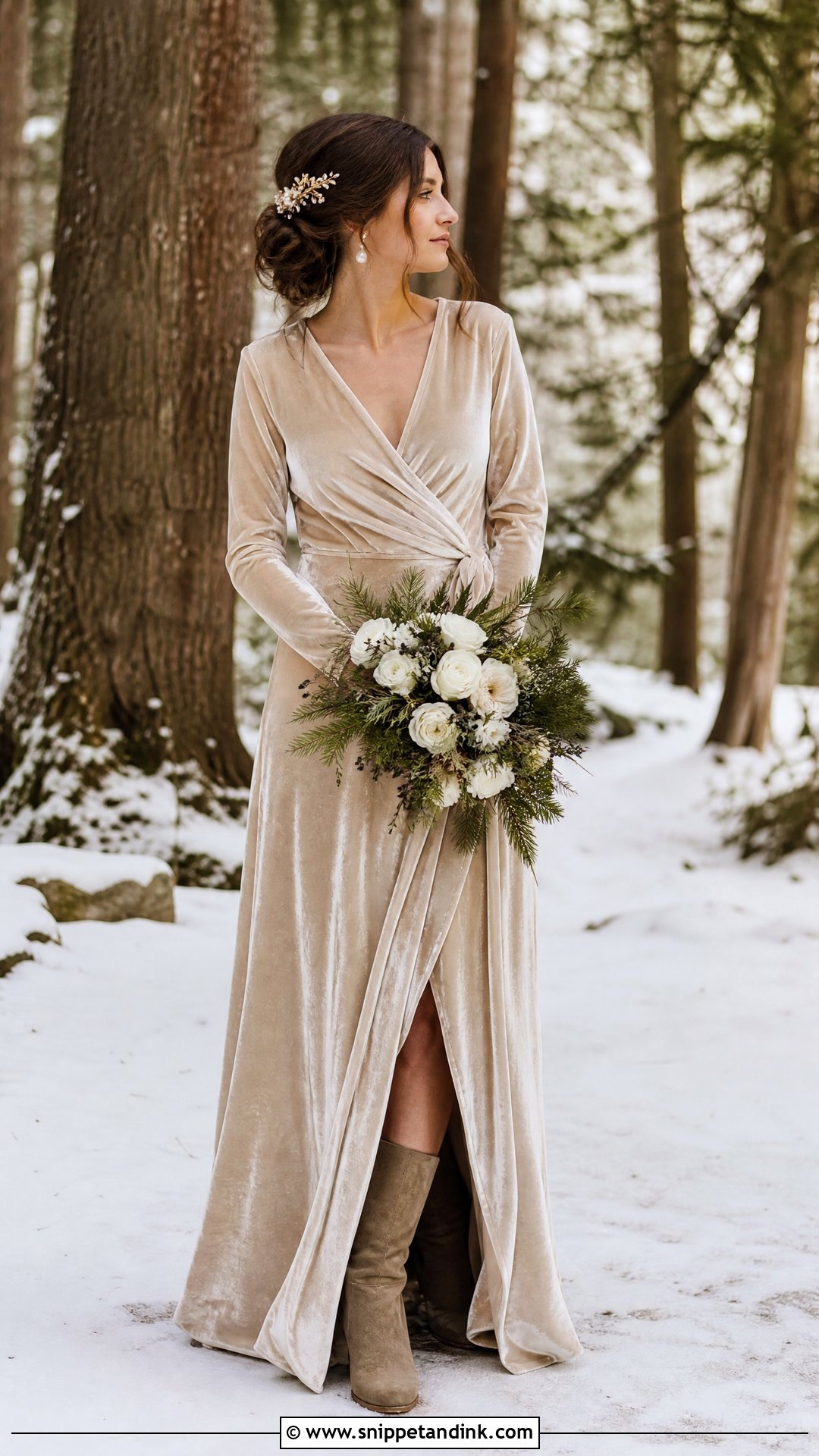
Full velvet is the warmest option for a cold-season forest wedding. Soft ivory, pale champagne or muted silver velvet in an A-line or gently fitted shape lets the fabric speak, with a wrap bodice, long sleeves and a simple neckline. Leather or suede boots, pearl earrings and a low bun with a small botanical comb suit it, plus white flowers, evergreen foliage and seed heads. Velvet is heavy and warm, so I’d skip extra layers and keep the train short. Against evergreen bark, its smooth surface is at its best.

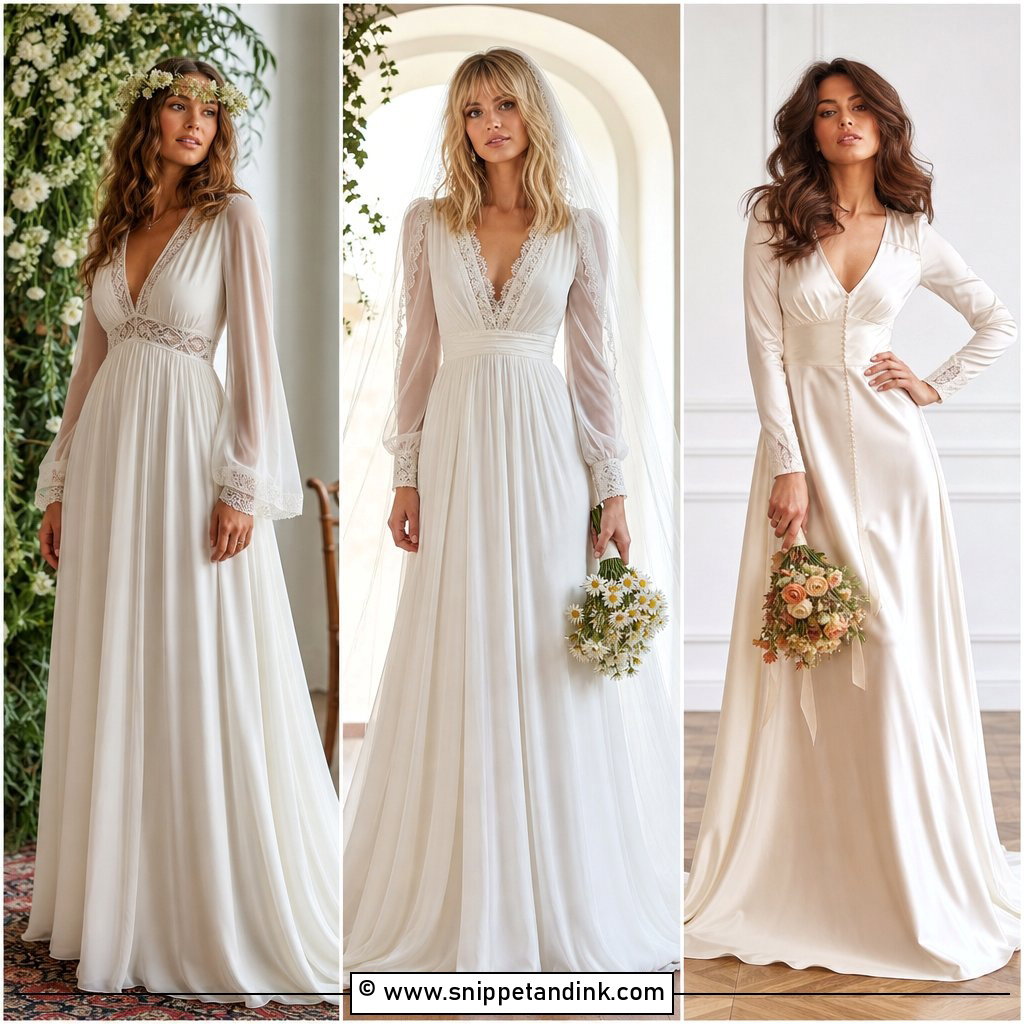
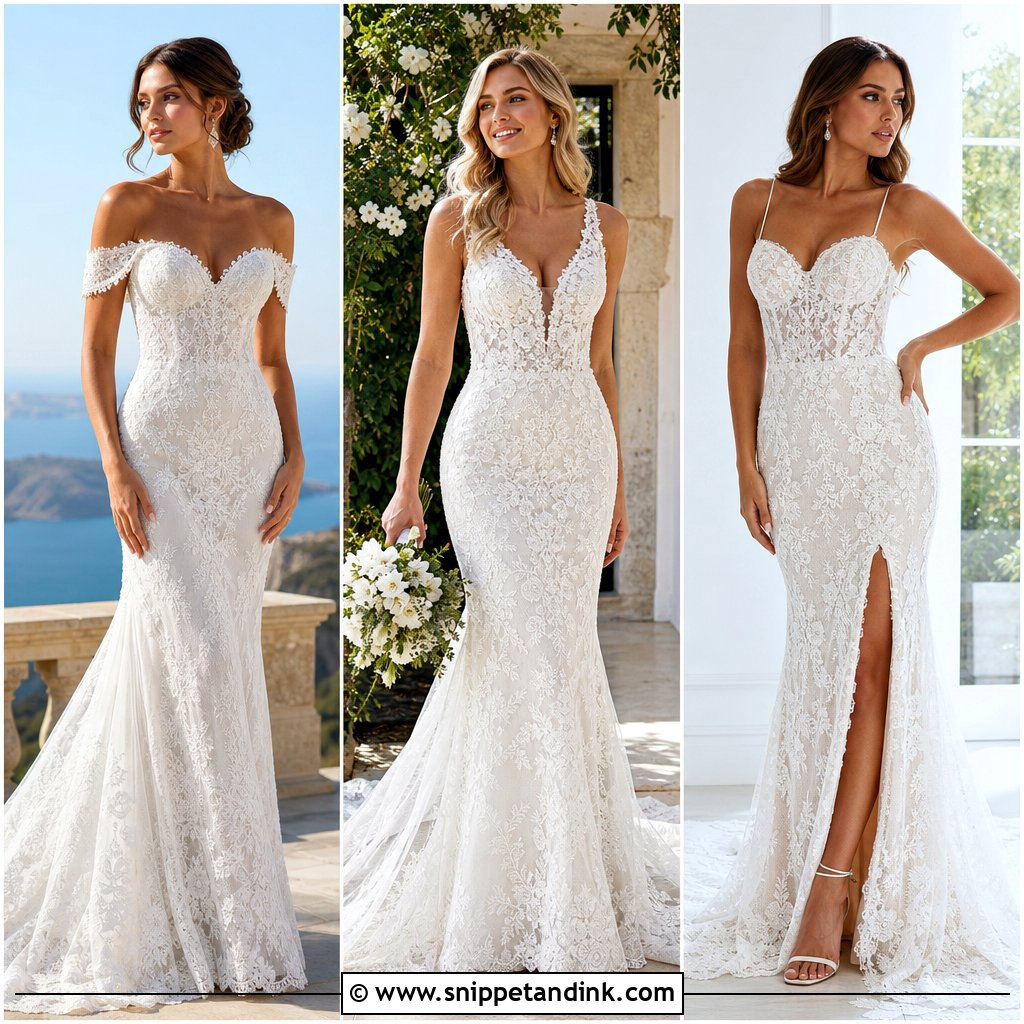


25. Winter Cape Woodland Wedding Dress
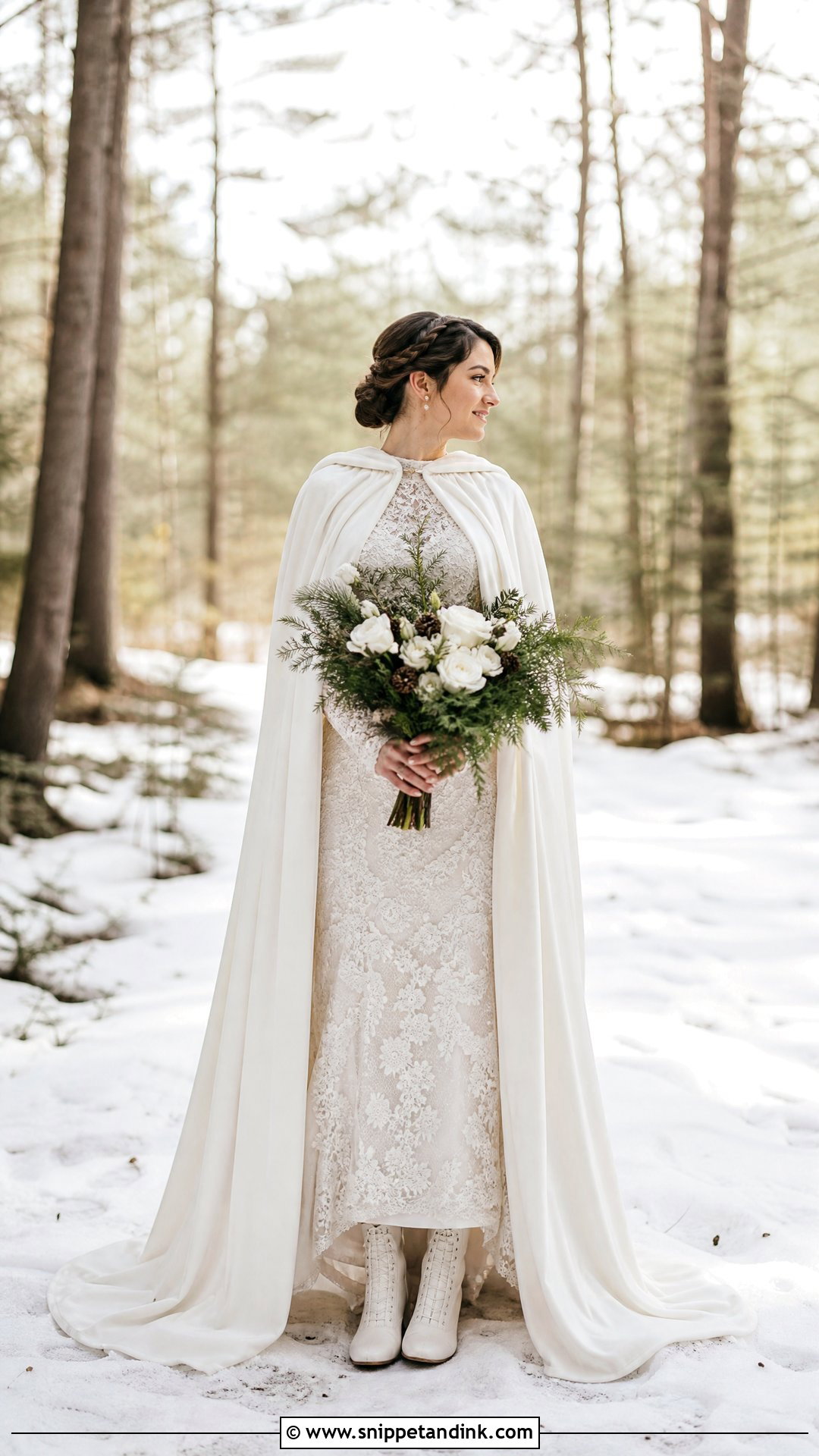
In winter, the outer layer becomes part of the bridal look rather than a coat thrown over it. Start with a long sleeve crepe or lace gown, then add a floor-length ivory cape in wool, velvet or lined satin, with a secure neckline and room to move your arms. Weather-ready boots, pearl earrings and a low braided bun suit it, with white flowers and evergreen branches in hand. The cape can replace the veil entirely. I always ask brides to wear the whole outfit outside for twenty minutes before the day, to check the hem, boots and cape work together.
Mud, Sap and Damp Hems on the Day
An outdoor dress will come home with the forest on it, and that’s fine. The aim is to keep it clean enough for the ceremony and portraits, then let a specialist cleaner handle the rest. Here is what I bring and what I tell brides not to do.
- Let mud dry before touching it. Wet mud smears into lace; dry mud mostly brushes off with a soft clothes brush.
- Leave tree sap and grass stains alone. Rubbing them with water or wipes spreads them and can set the stain. Point them out to the cleaner instead.
- Spray insect repellent and sunscreen before dressing, then let them dry. Both can mark silk and satin, so keep the bottle well away from the gown.
- Have a bridesmaid check the back of the train before each set of portraits for leaves and needles.
- Pack a light shawl or jacket, a spare pair of flat shoes and a small towel for drying hands.
After the wedding, get the dress to a bridal cleaner within a few weeks and tell them exactly what it went through. Mud and grass on a hem are routine for them; stains left to oxidise for months are much harder to lift.
The Forest Decides as Much as the Dress Does
Botanical lace, appliqué, chiffon, velvet and embroidered veils all tie a bridal outfit to the trees around it, but the woodland itself sets the limits. The ground, the temperature and the length of the walk matter as much as the silhouette. Choose shoes, outer layer, hair accessories and train length alongside the gown, not after it. A satin sheath, a boho lace dress and a winter cape can all work in the right forest; the one to pick is the one you can walk, sit and stand in comfortably until the last photo.
You'll Like These Ideas:


Leave a Reply