
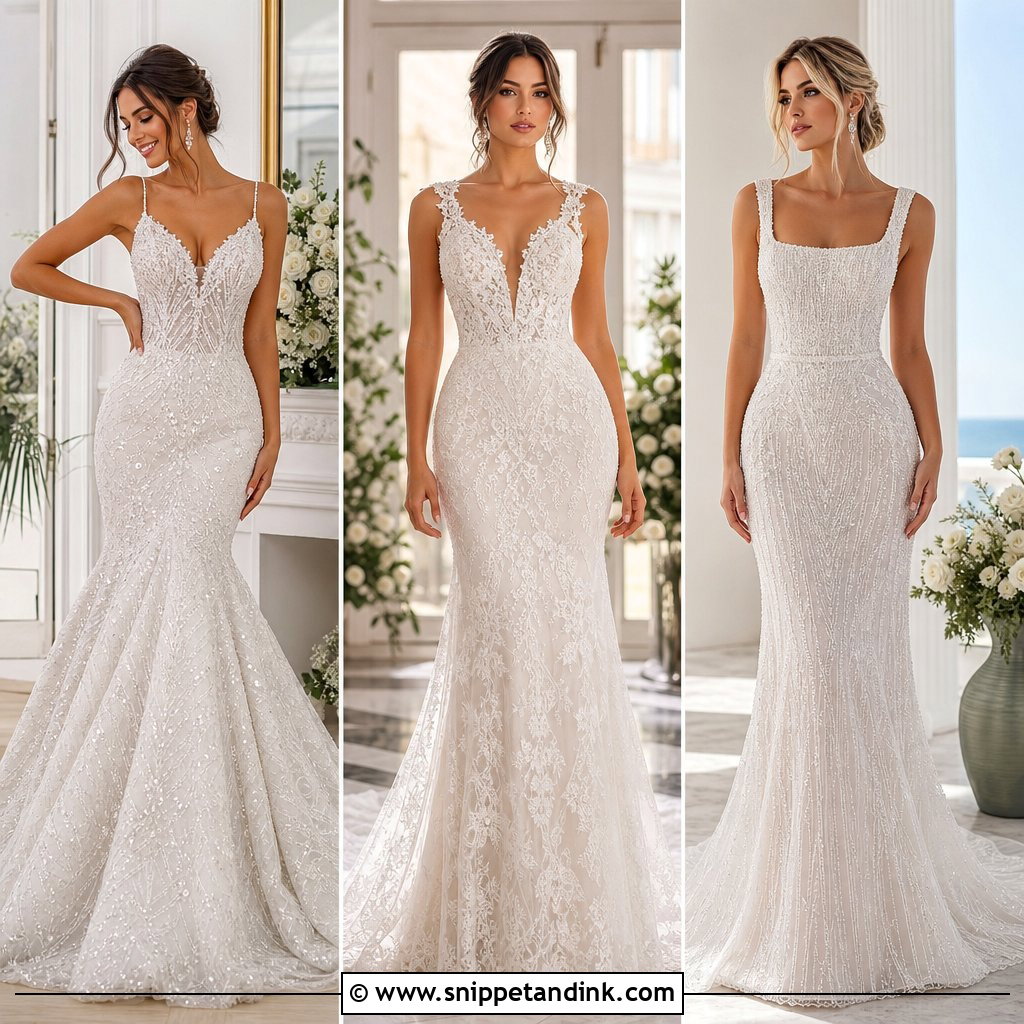
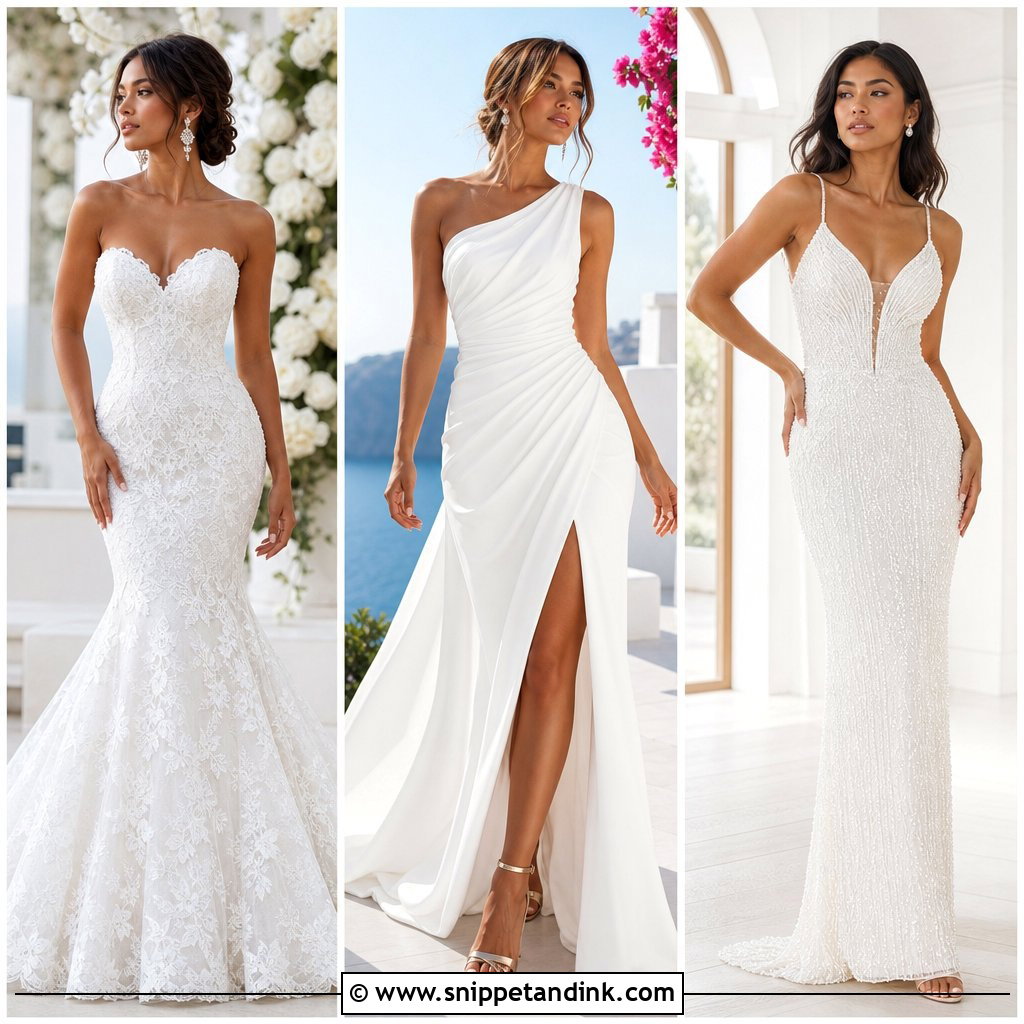
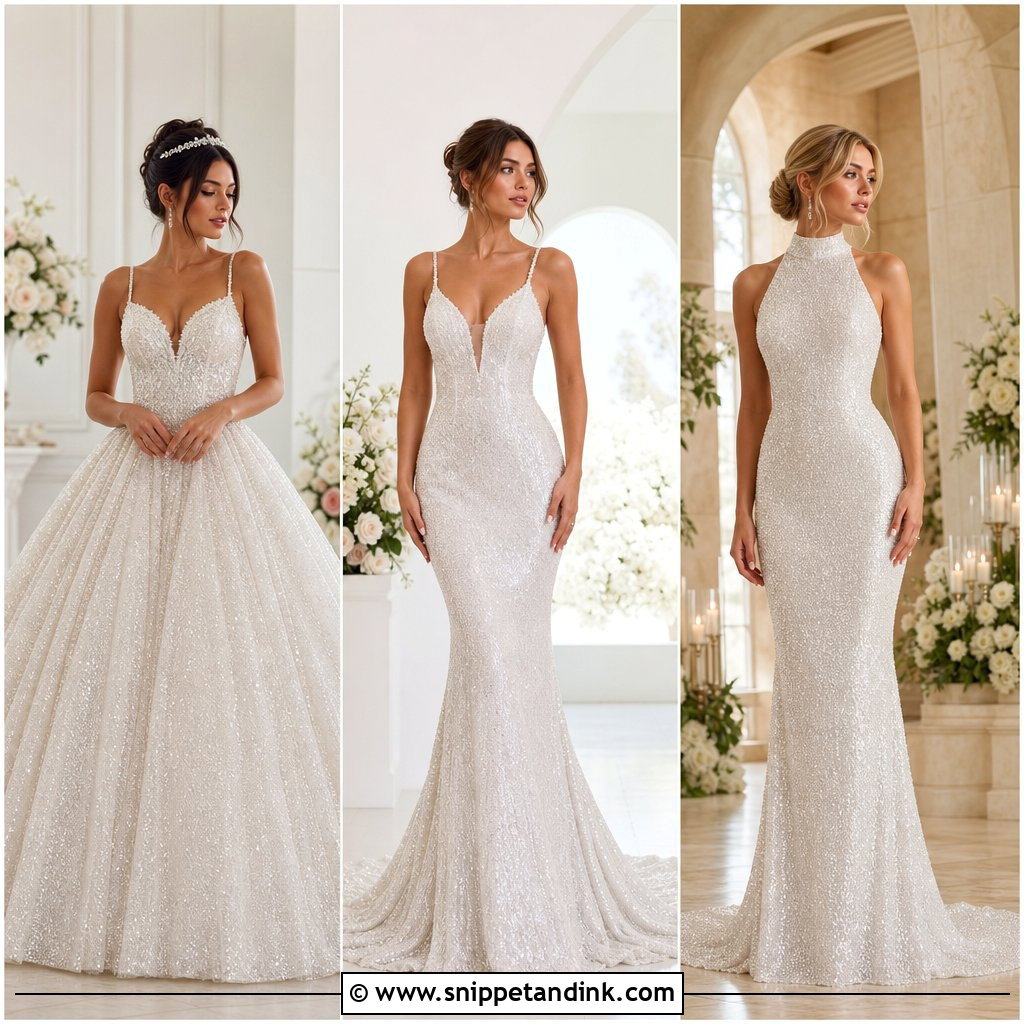
Sparkle is the one bridal detail that changes with every room you walk into. Under a chandelier it glows, in midday sun it can flatten, and under a camera flash it either reads as texture or turns into white spots. The gowns below run from softly shimmering A-lines to crystal-covered mermaids and short sequinned reception dresses, and each one handles light a little differently. When I style a sparkly gown, I start with the silhouette and the venue, then decide how much embellishment the bride can carry before it starts wearing her. Accessories stay quieter than you’d expect. Each look below comes with the details I’d actually put next to it.
Sequins, Glitter Tulle, Crystals and Beads Are Not the Same Sparkle
Brides often say they want something sparkly and then try on four gowns that sparkle in completely different ways. The material decides how the dress moves, how heavy it is, how it feels against your arms and how it behaves in front of a camera. Before you book appointments, it helps to know which kind of shine you are actually drawn to.
Glitter tulle
The glitter is bonded into the net, so it is light and soft and gives an all-over shimmer. It does shed. Expect a little on your partner’s suit and on the car seat, and it rubs thinner along the hem over the evening. It is the most forgiving option under flash.
Sequins
Each disc is a tiny mirror. Small, closely sewn sequins look smooth; large ones flicker and can look spotty in photos. Sequin fabric is heavier than it looks on the hanger, and the backs of the stitches can scratch, so I always check the lining under the arms and along the side seams.
Crystals, beads and pearls
Hand-applied stones give the strongest, most directional sparkle, which is why they suit bodices and necklines. They add real weight, they can catch on veils and lace, and loose stones are common after a long day. Ask your bridal shop for a small bag of spare beads or crystals that match your gown; many can supply them, and your seamstress will want them for repairs.
- Lots of daylight and outdoor photos: glitter tulle or sparse crystals hold detail best.
- Evening reception with candles and warm bulbs: sequins and champagne tones glow most.
- Long day on your feet: weigh the gown in your hands before you love it.
1. Glitter Tulle Ball Gown Wedding Dress
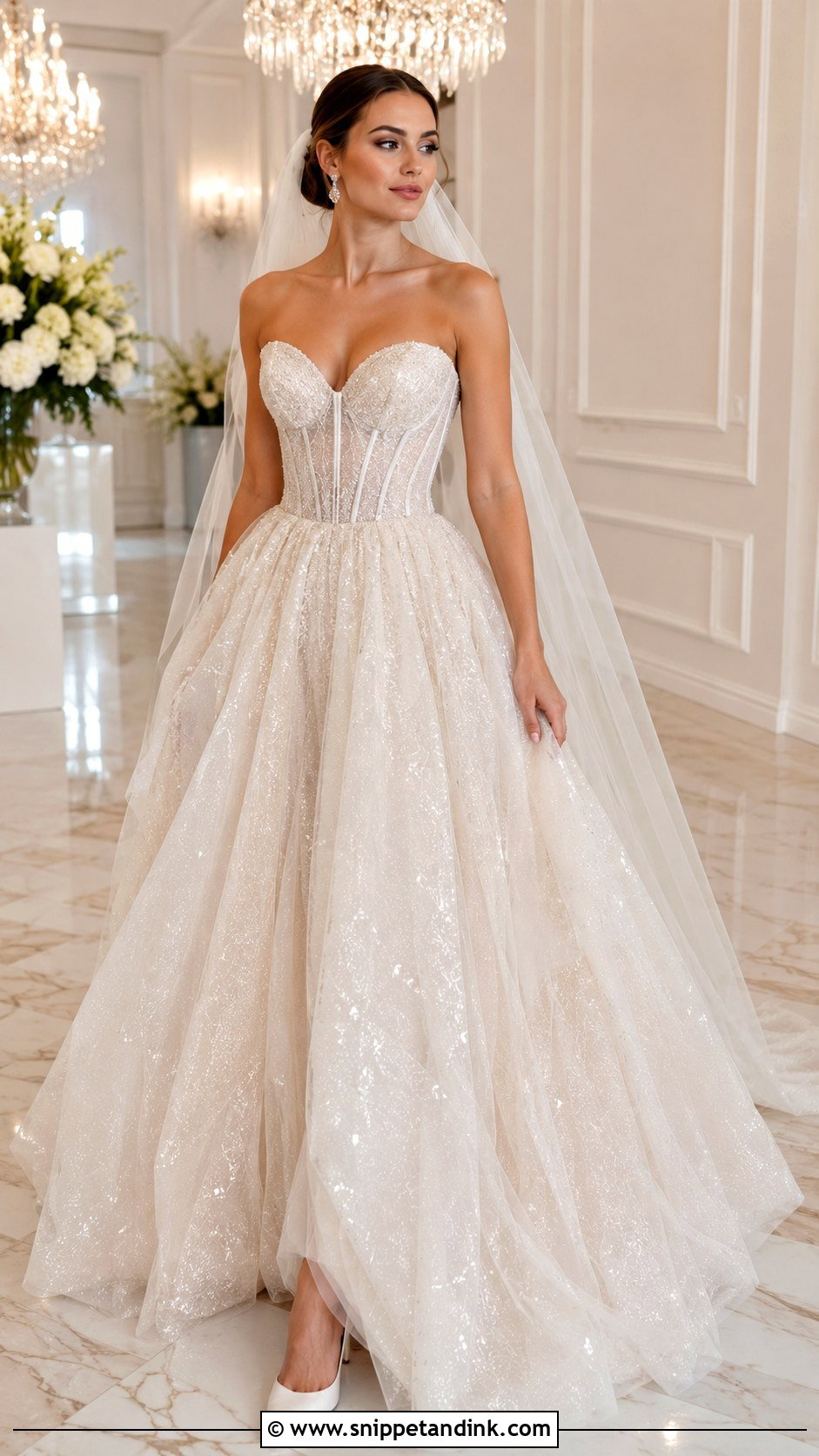
Volume and shine together sound like a lot, but a glitter tulle ball gown is surprisingly soft in person because the glitter is pressed into fine net rather than stitched on as discs. That means it reads as a haze, not a mirror, which is why it works for a morning church ceremony as well as an evening ballroom. I look for a boned bodice with a clearly defined waist; without that, the skirt layers swallow the torso. Pointed ivory heels, crystal drops and an untrimmed cathedral veil are enough. Keep the hair in a low bun so the neckline stays visible. One caution: sit down in the sample. Several tulle layers bunch under the hips, and you’ll be seated through dinner.
2. Sparkly Lace A-Line Wedding Dress
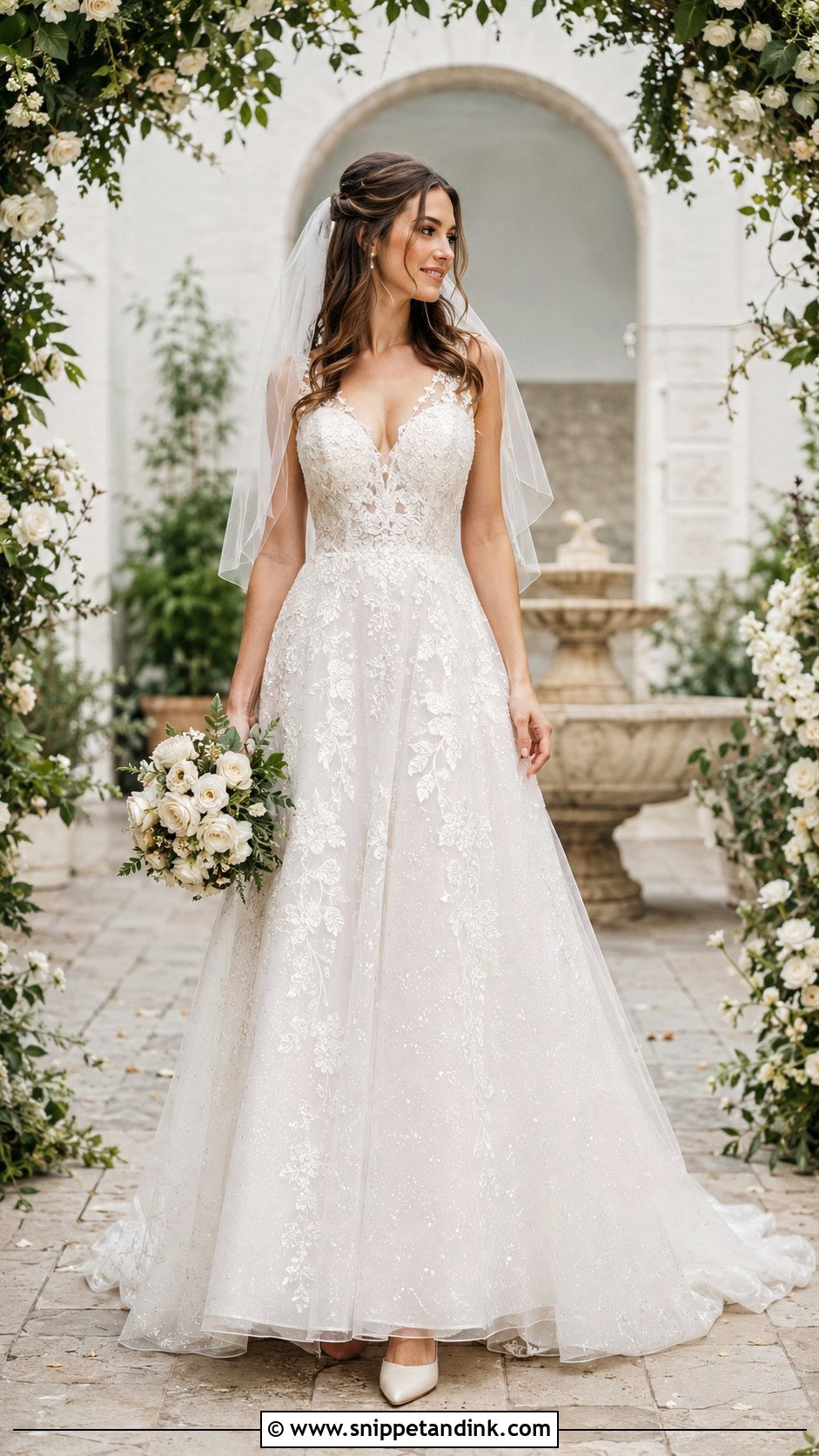
Here the crystals sit between the lace motifs rather than on top of them, and that placement is what I check first. Floral lace laid over glitter tulle lets the shimmer show through the gaps, so the lace still looks like lace. The A-line follows the bodice and releases at the waist, which is the easiest shape to sit, dance and hug in. I’d pair it with pearl-and-crystal studs, an elbow-length veil and closed satin pumps, plus a half-up style that leaves an illusion neckline clear. For an outdoor ceremony, ask your seamstress for a bustle with more than one point; a single hook on a glittered train tends to pull and drop by the second hour.
3. Crystal Corset Mermaid Wedding Dress
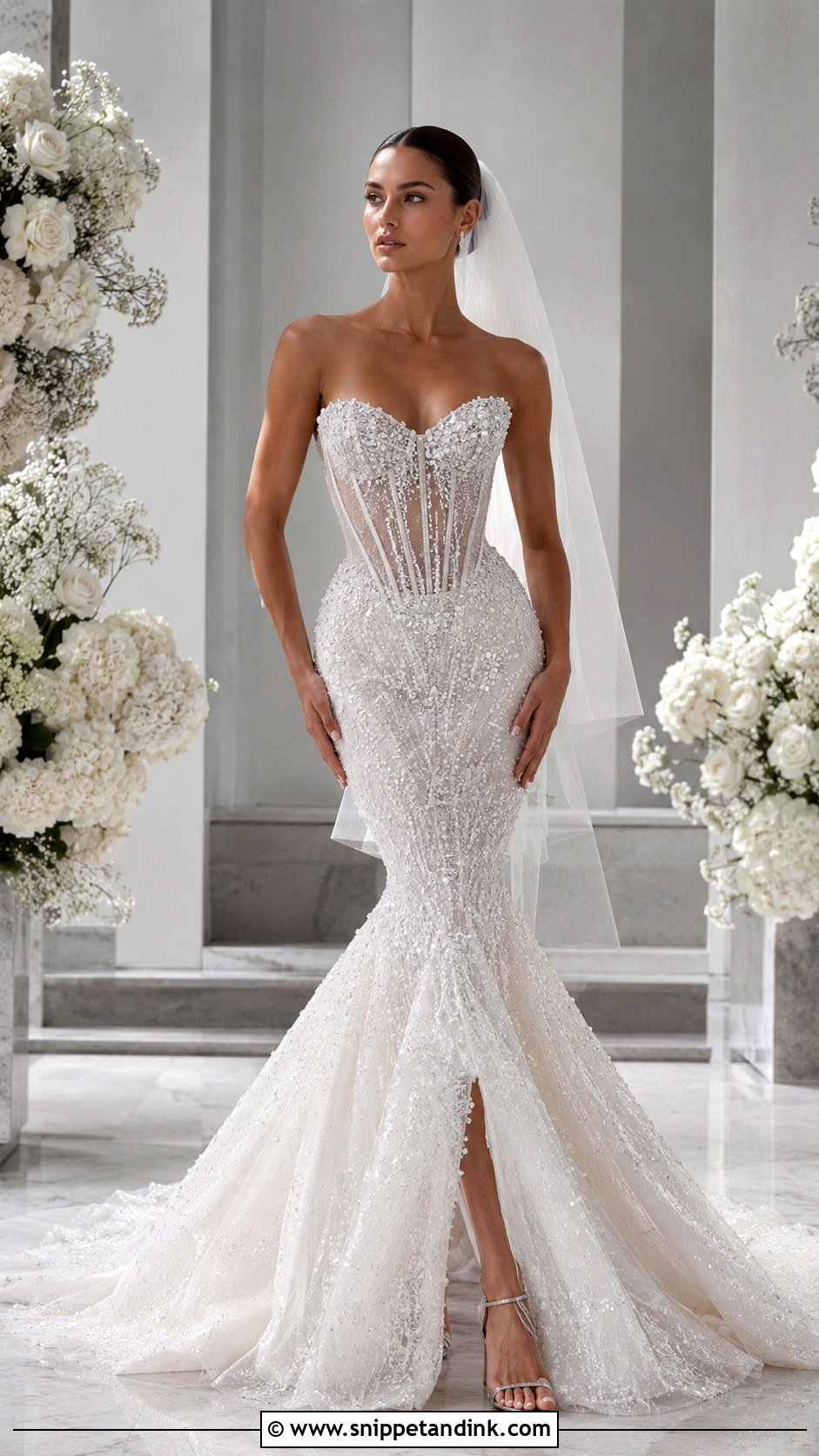
A crystal corset mermaid is the most demanding gown on this list to fit, and also the most dramatic when it’s right. The bodice is built to hold the waist, then the skirt hugs the hips before flaring at or just below the knee. Clear boning and a lined bodice give coverage without hiding the crystal work. Because the gown is already loud, I keep the rest plain: metallic silver sandals, small earrings, a fingertip veil with no edging and a smooth updo or polished waves. Walk a full corridor in it at the fitting. If the flare starts too low you’ll shuffle, and any loose fabric at the hip shows immediately on a fitted shape.
4. Sequin Column Wedding Dress
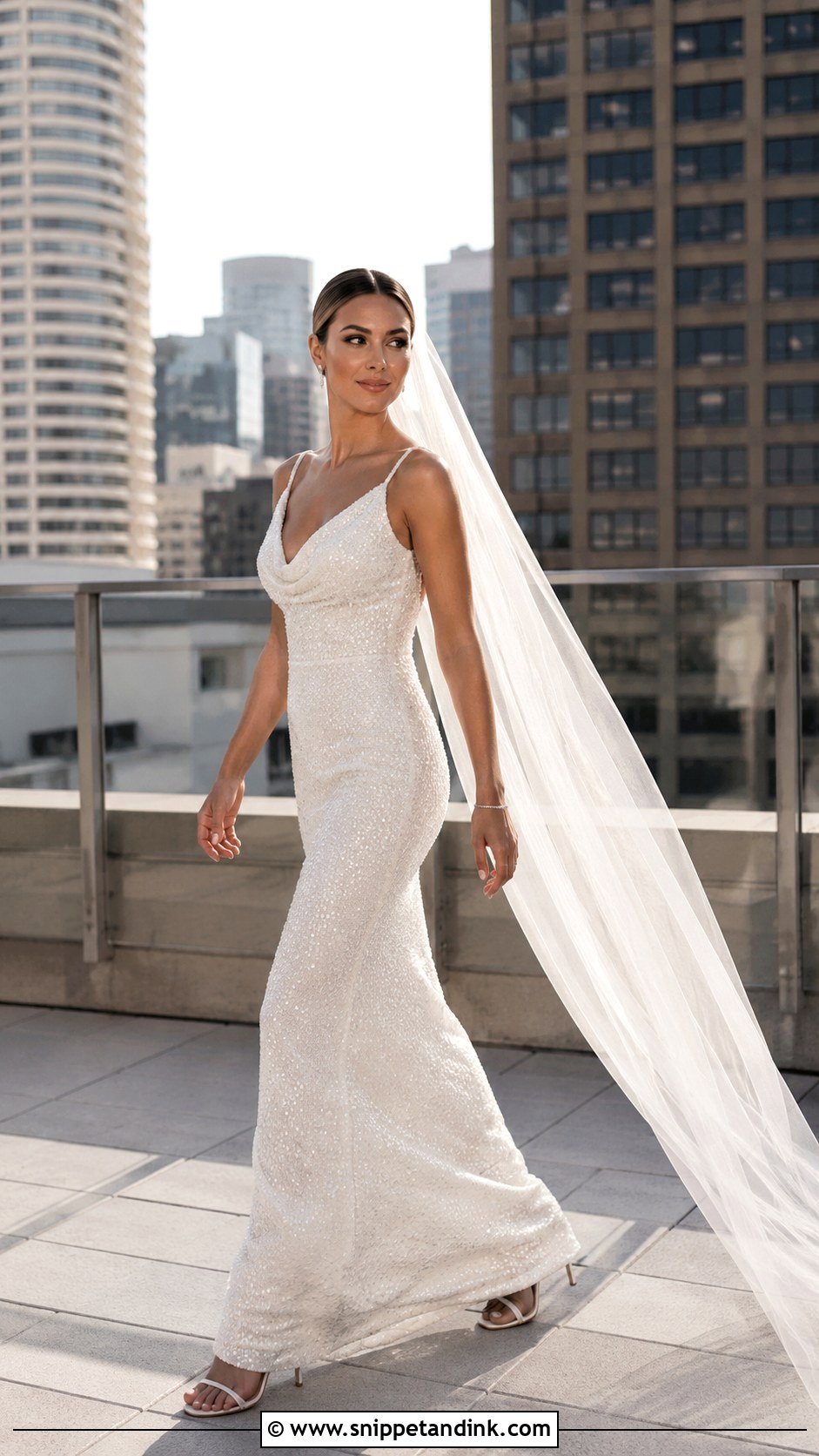
I reach for a sequin column wedding dress when a bride wants glamour without managing a skirt. The straight line suits rooftops and hotel ballrooms, and it travels well. Small, tightly spaced sequins give an even shimmer on camera; large discs catch the flash one at a time and look patchy. A draped neck or low back adds movement to an otherwise straight shape. Slim ivory heels, a small structured bag for the reception and one bracelet finish it, with a sheer untrimmed veil. Turn the gown inside out before you commit. Sequin fabric is heavy, and a scratchy or unfinished seam allowance will rub at the underarm all night.
5. Glitter Long Sleeve Wedding Dress
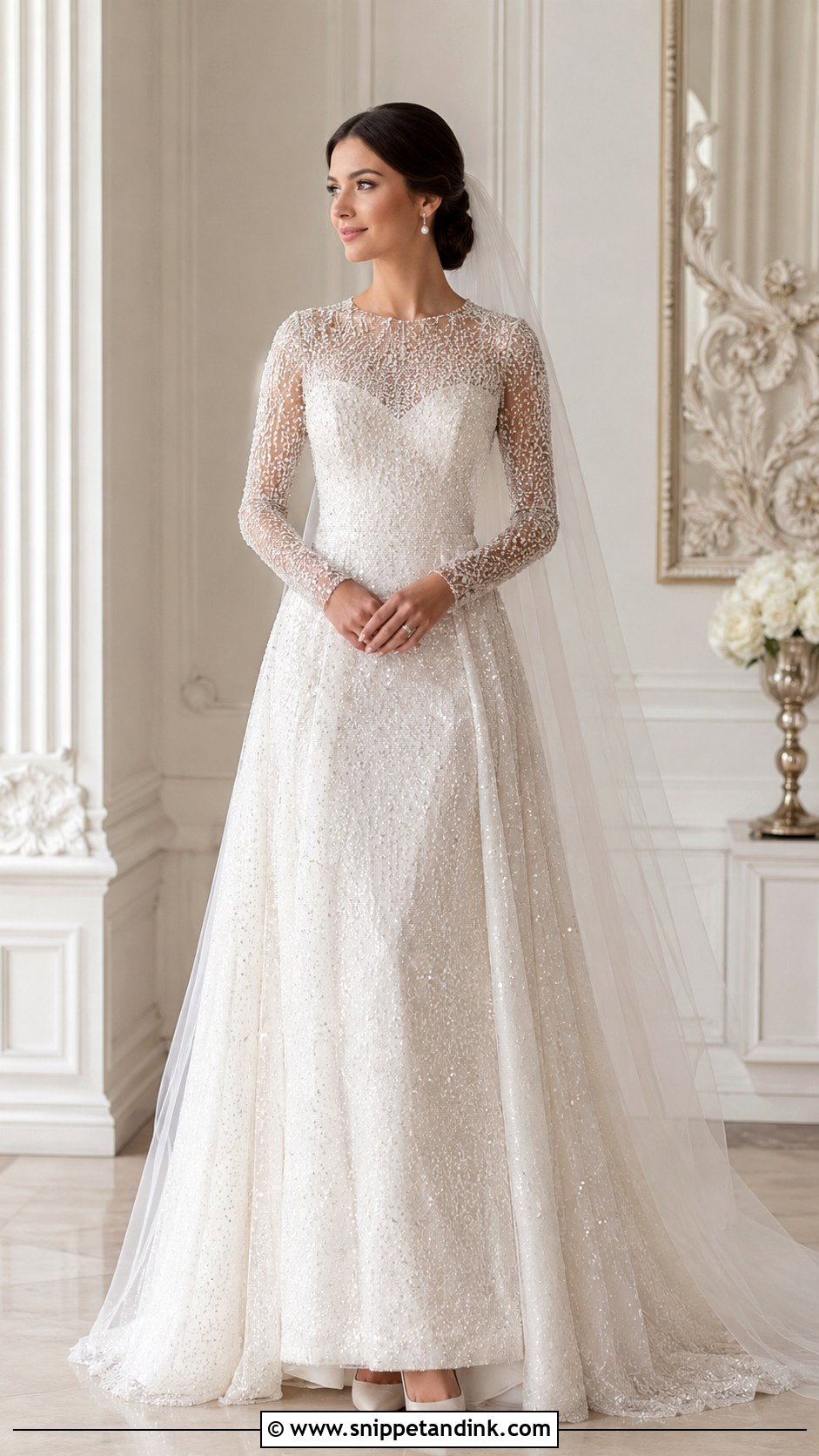
Long sheer sleeves dusted with tiny crystals give coverage in autumn and winter without the weight of lace or satin. With a fitted bodice and a flowing skirt, the proportions stay balanced. I style this one with pearl earrings, pointed pumps and a chapel veil tucked under a soft chignon, and I skip the necklace if the beading climbs toward the collarbone. The part brides rarely check is the inside of the sleeve. Crystals on mesh are often backed with sharp settings, and on sensitive skin that is the difference between a comfortable day and red wrists. A soft lining or appliquéd crystals solve it.
6. Off-Shoulder Sparkly Wedding Dress
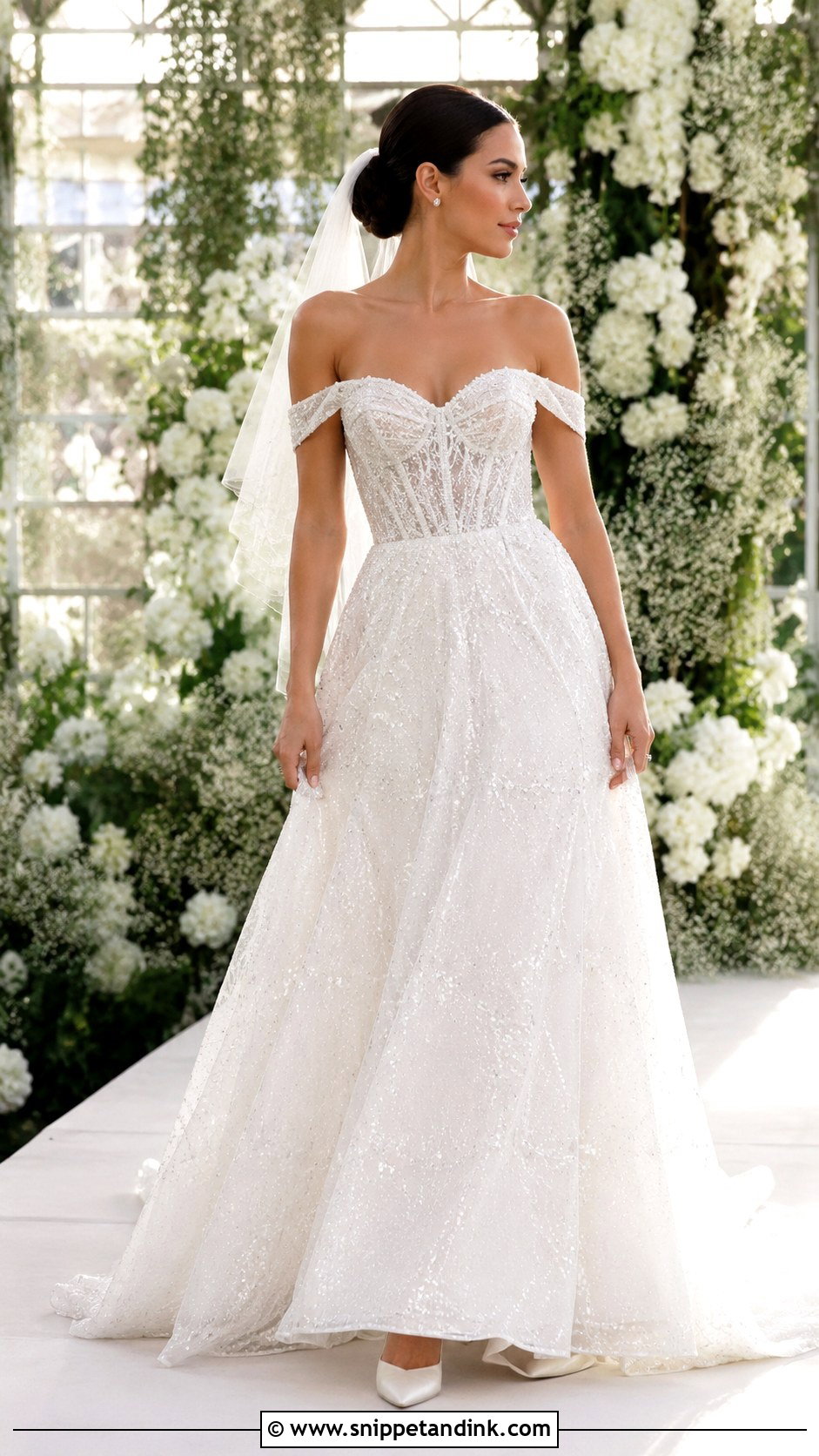
An off-shoulder sparkly wedding dress frames the collarbone, which is one of the best areas to light in a portrait. The catch is that the sleeves themselves can’t hold the dress up; an internal corset has to do that work, and I always ask to see it. Glitter tulle or light crystal embroidery can carry from the bodice into an A-line or full skirt. A delicate pendant, small drops and a low gathered bun keep the shoulders open. At alterations, raise both arms as if you’re hugging someone taller than you. If the bands bite or ride up, they need easing before the day, not after.
7. Strapless Basque Waist Glitter Wedding Dress
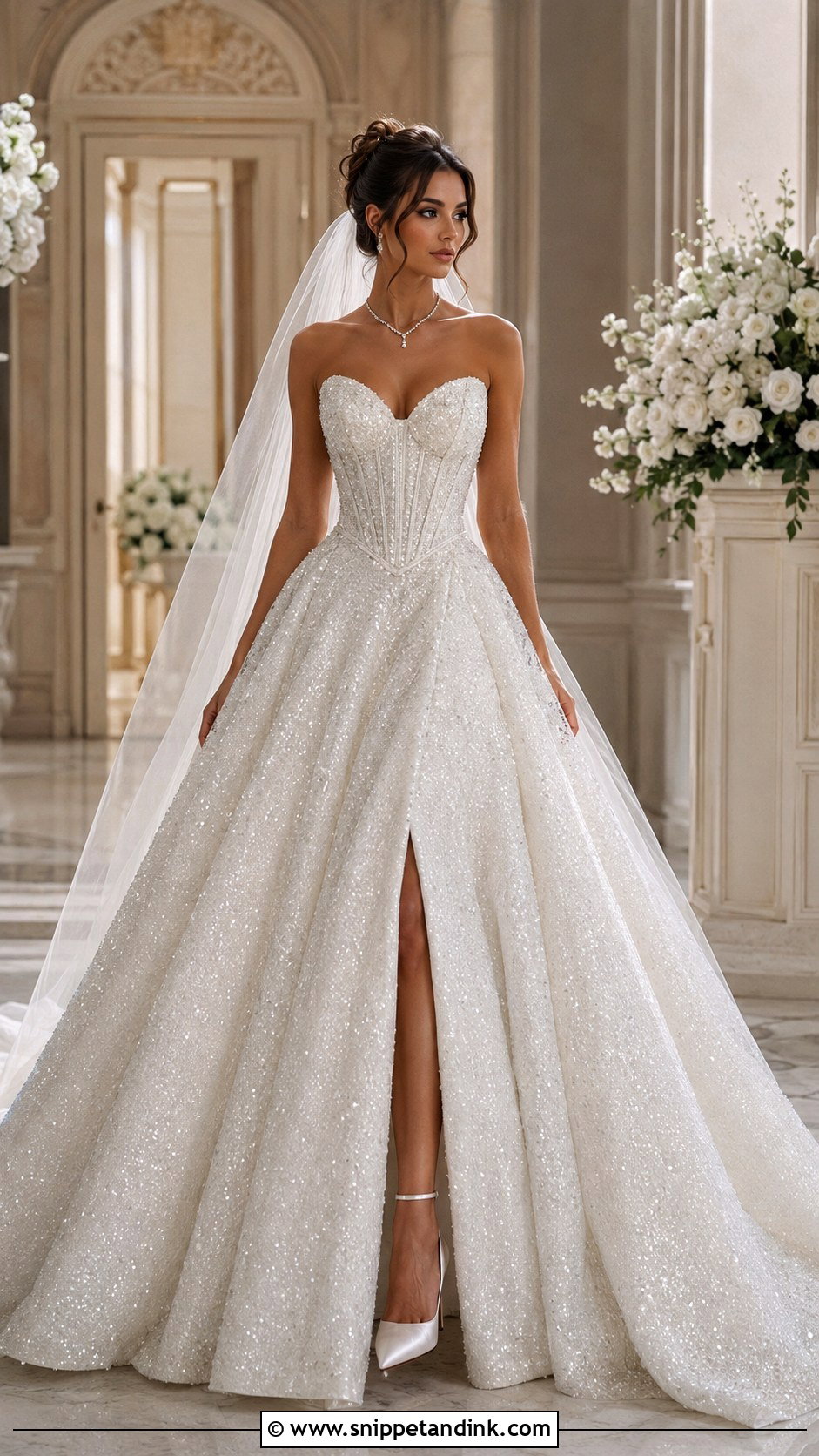
The pointed Basque waist drops into a V below the natural waistline, which lengthens the torso before the skirt opens. With glitter fabric it reads quite regal. I like the sparkle concentrated low, building toward the hem, so the strapless bodice stays clean against the skin. A tennis-style necklace and matching studs are plenty, with satin heels hidden under the skirt and a long plain veil for contrast from behind. If you plan to dance hard, ask whether detachable straps can be added for the reception. The point of the seam must sit dead center and lie flat; even a slight twist shows on every photograph taken from the front.
8. Square Neck Beaded Wedding Dress
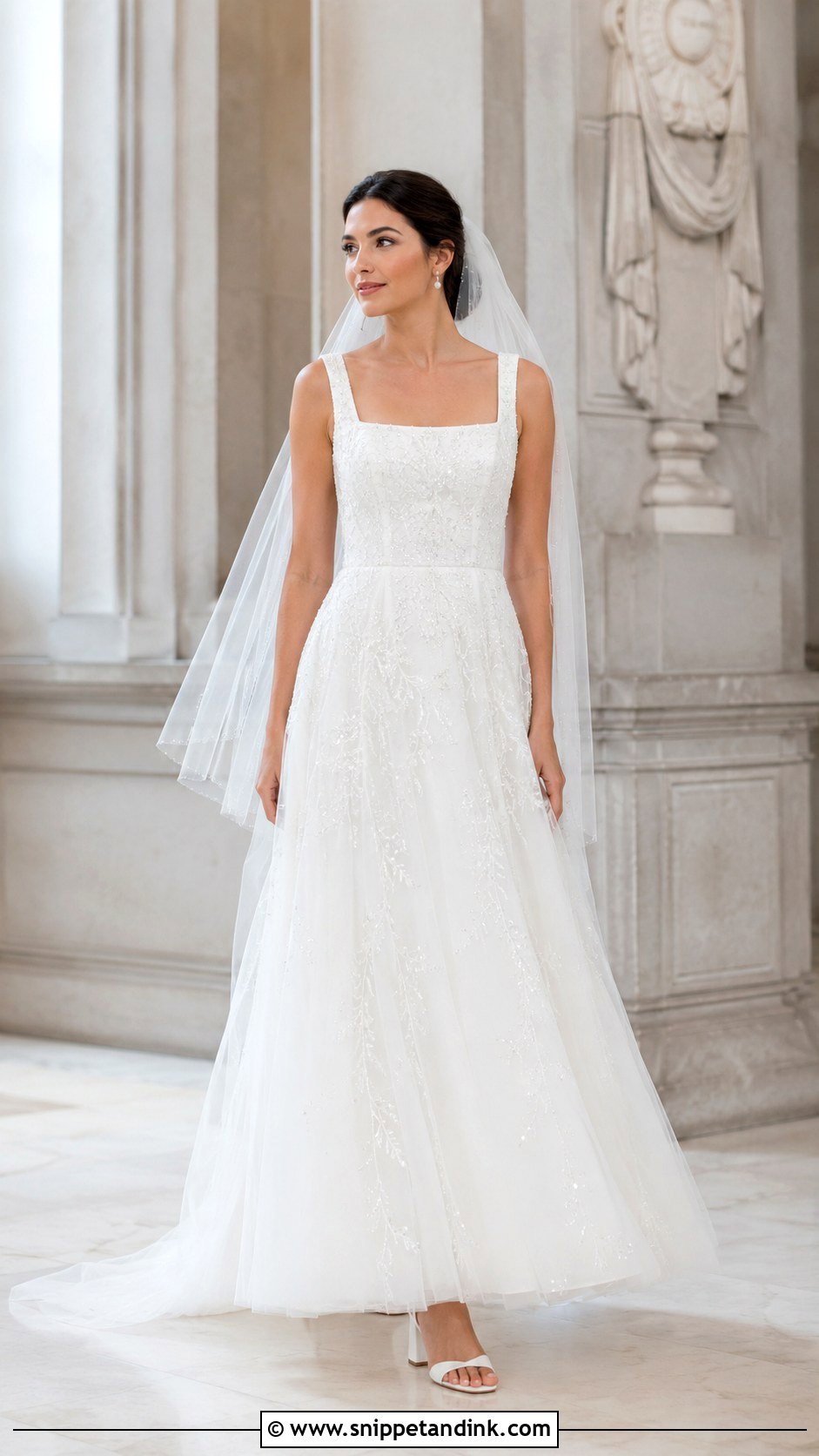
Structure is the appeal of a square neck beaded wedding dress. The straight neckline frames the collarbone like a picture edge, and scattered beads add light without softening the tailoring. Wide straps over a fitted bodice and an A-line skirt with fine crystal vines is my favorite version. Pearl buttons, block heels and a neat low bun suit it, and studs usually beat a necklace here. A practical bonus: wide straps hide a supportive bra far more easily than sheer designs do. At each fitting, lean forward slightly. A square neck that gapes when you bend will gape when you sign the register.
9. High Neck Crystal Lace Wedding Dress
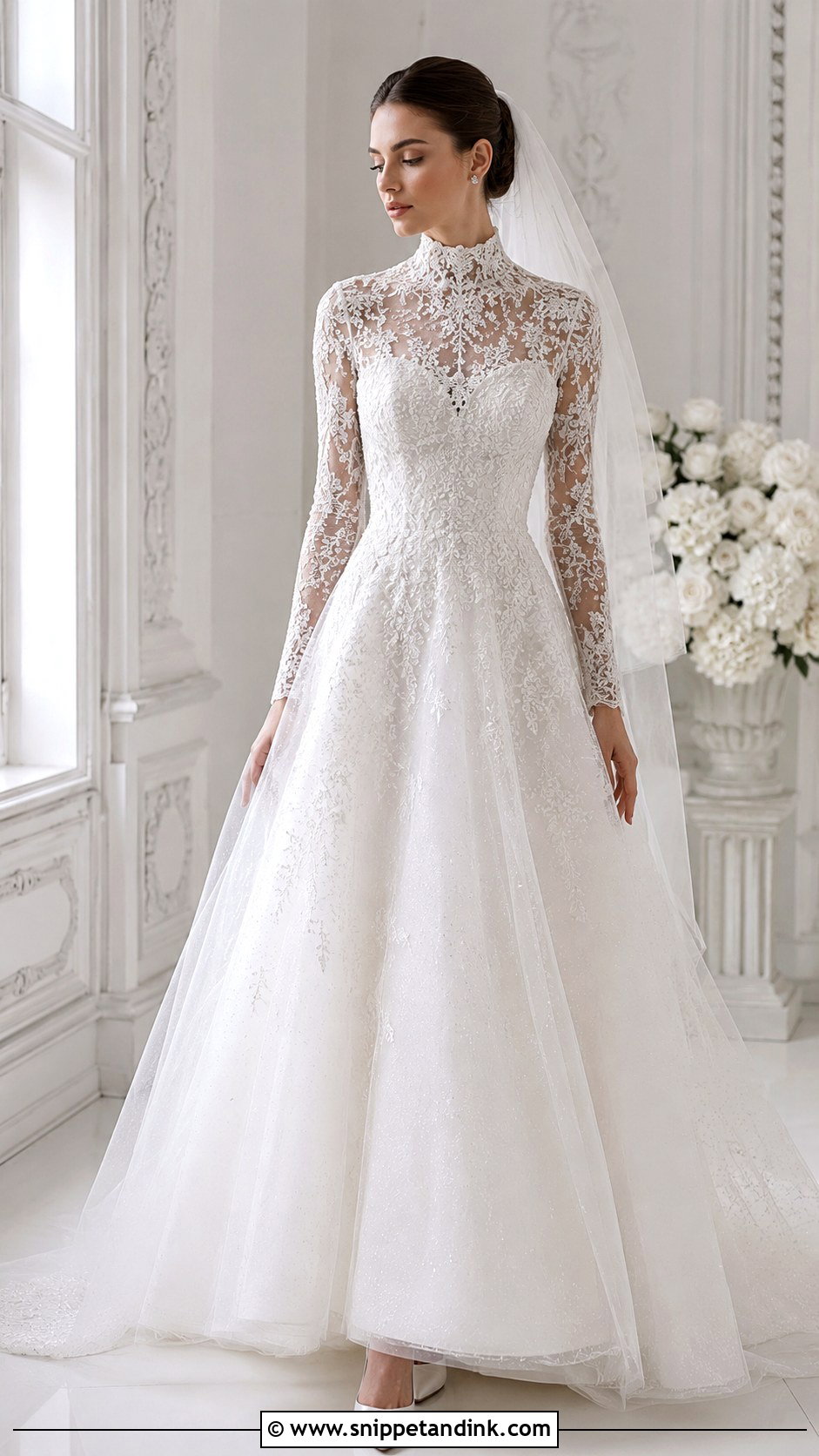
Coverage and sparkle meet in a high neck crystal lace dress, where sheer lace runs over the shoulders and up the throat with a lined sweetheart or straight bodice underneath. Crystals that follow the lace pattern add depth without weighing down the top half. I balance it with a smooth A-line or lightly glittered tulle skirt, crystal studs, pointed satin pumps and a veil set under a sleek updo. No necklace; the collar already is one. Turn your head side to side in the fitting room. A stiff or scratchy collar edge is something you’ll feel every time you look at your partner, and it’s an easy fix if caught early.
10. Blush Glitter Wedding Dress
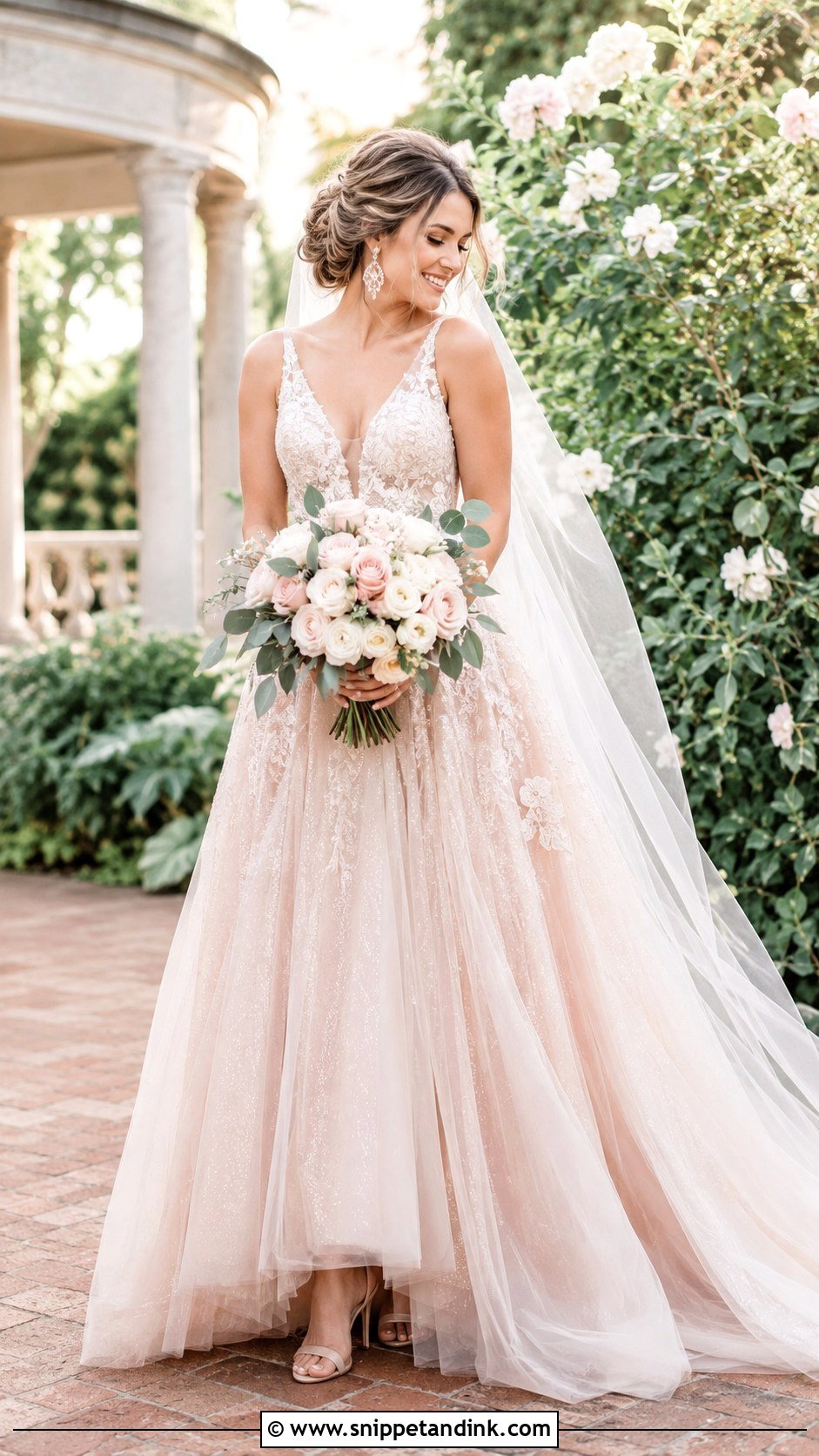
Blush works best as a layer rather than a color. Pale pink or nude tulle under ivory lace warms the dress while it still looks bridal, and fine silver or iridescent glitter shifts as you move. Champagne heels, rose gold earrings and a sheer ivory veil sit well with it, along with a loose low bun or brushed waves. I’d keep the bouquet restrained in ivory, blush and muted greens. Please look at the dress by a window before deciding. Blush underlayers can disappear completely under warm indoor bulbs and turn noticeably pinker in daylight, so you want to like both versions.
11. Champagne Sequin Wedding Dress
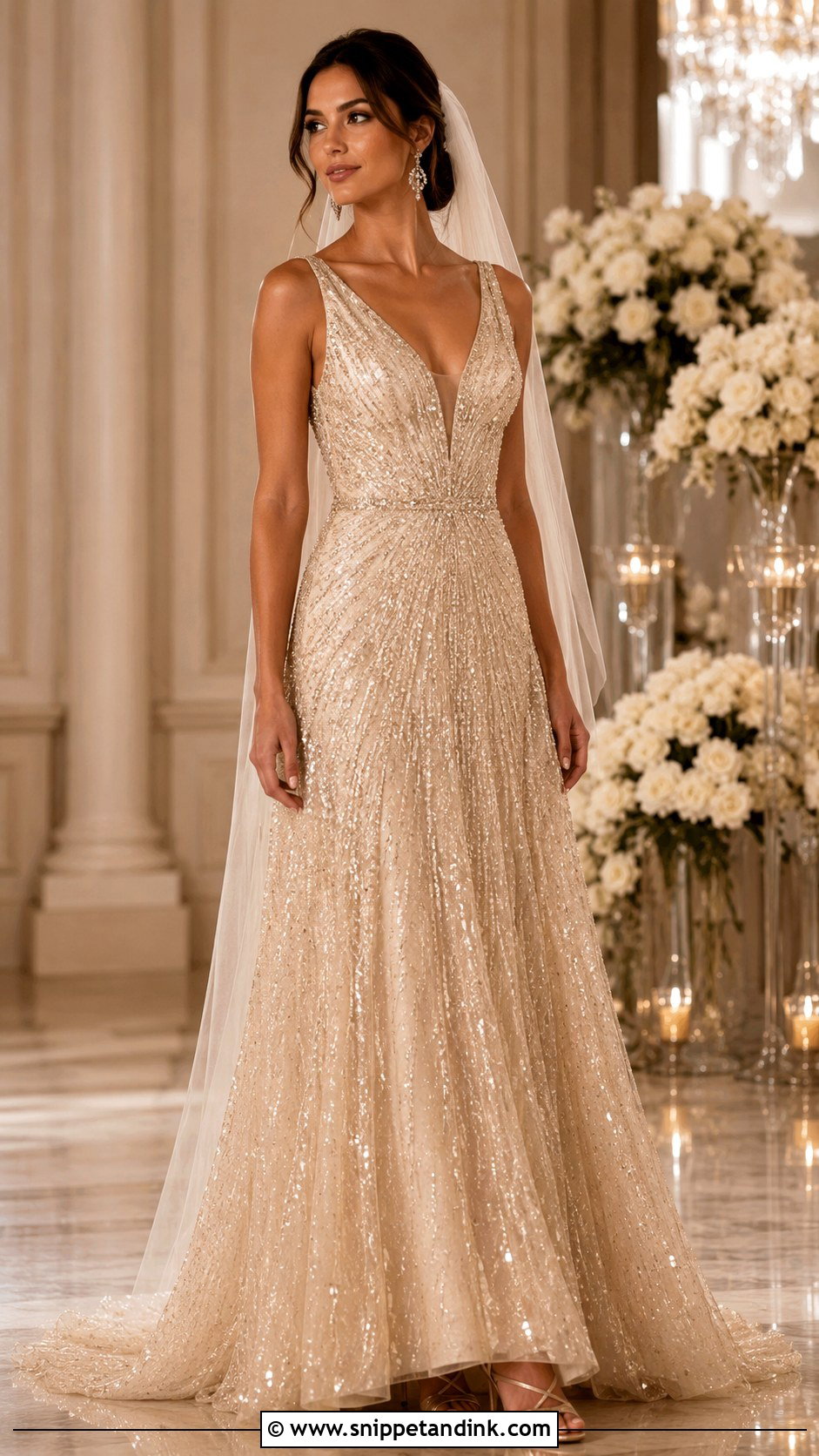
For candlelit evenings, champagne sequins give a warm glow that ivory can’t. A beige or soft gold lining makes the embellishment look deliberate and dimensional. Keep the cut simple, either an A-line or a fitted sheath, and a V-neck to lengthen the bodice. Metallic champagne sandals, warm crystal earrings and a soft ivory veil complete it, with a sleek ponytail or side-parted waves for a modern finish. Champagne is not one shade. I hold the veil, shoes and jewelry against the gown in the same light, because a pinkish champagne next to a yellowish one looks like a mistake. Pick one warm metal and repeat it.
12. Silver Glitter Wedding Dress
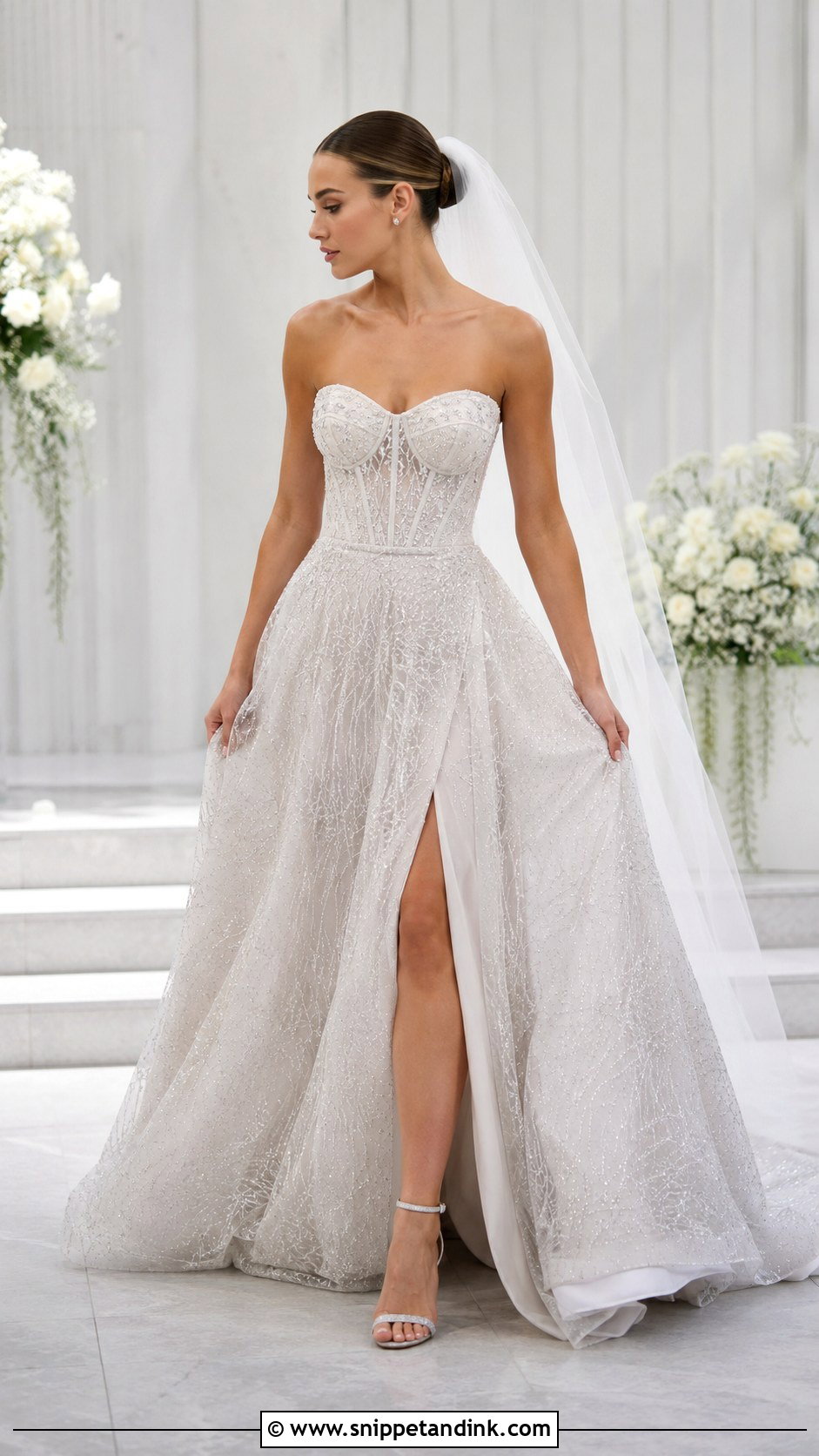
Silver shimmer reads cool and contemporary, but I wouldn’t choose metallic fabric for it. Ivory tulle threaded with silver glitter, or clear crystals on white, keeps the dress bridal while the reflective details do the work. A structured bodice and flowing skirt, silver ankle-strap heels, crystal studs and a clean white veil are all it needs. Ask your makeup artist for cool pinks and a light highlight rather than glitter on the face, which competes. Silver bounces flash harder than gold or champagne. Take a phone photo with the flash on in the bridal shop; if the bodice blows out to white, the crystal density is too high for indoor flash photography.
13. Glitter Floral Appliqué Wedding Dress
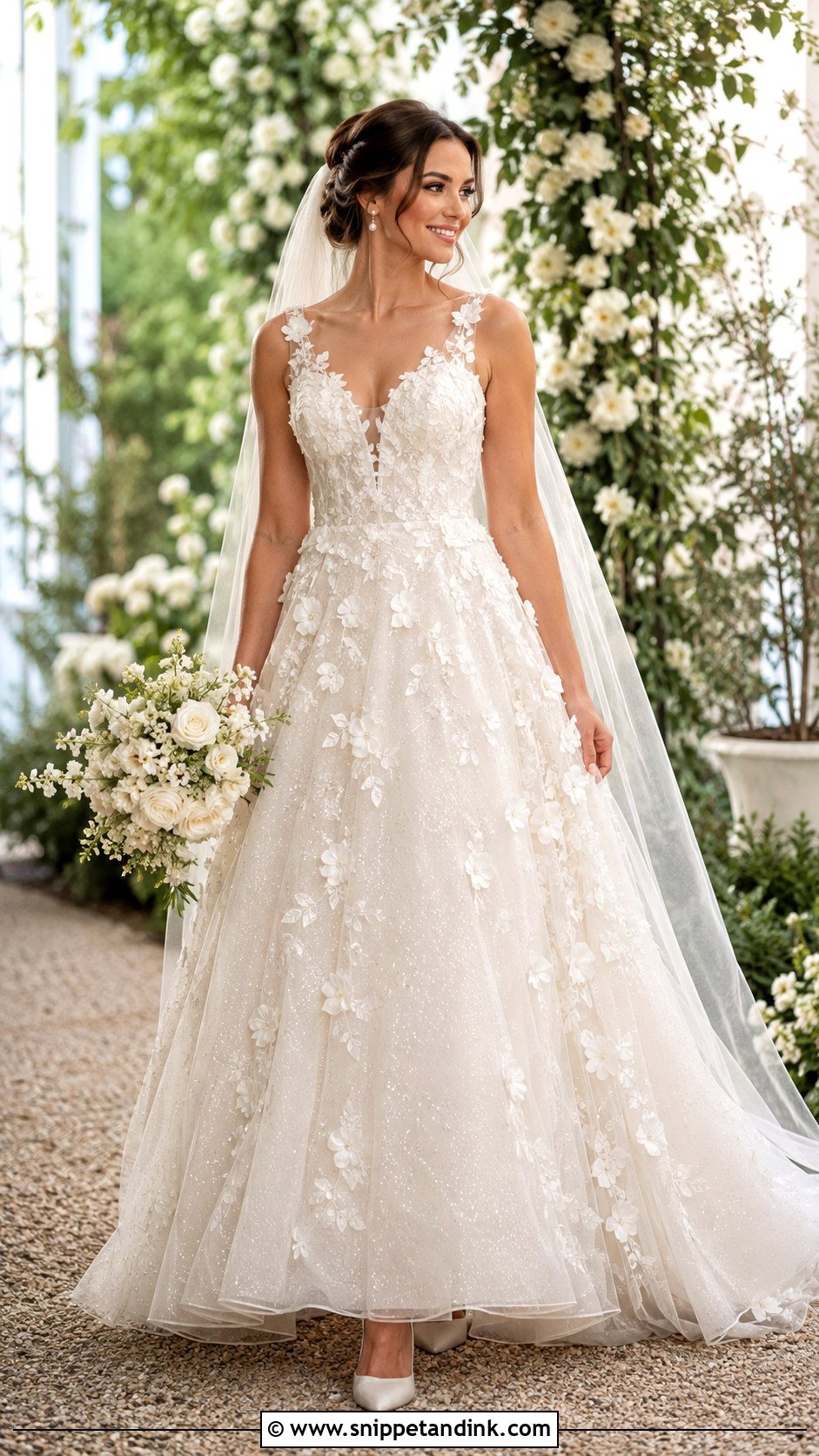
Raised flowers with fine glitter give texture you notice from the side and back, not only the front. I prefer appliqués that cluster on the bodice and thin out down the skirt; an A-line gives them room so the gown doesn’t look busy. Simple pearl earrings, ivory pumps and an untrimmed tulle veil let the flowers stay visible, with a relaxed updo and a few loose face-framing pieces. Floral jewelry or decorated shoes are one layer too many. During fittings, run the veil over every appliqué. Three-dimensional petals snag tulle easily, and a caught veil at the altar is a surprisingly common moment.
14. Pearl And Crystal Wedding Dress
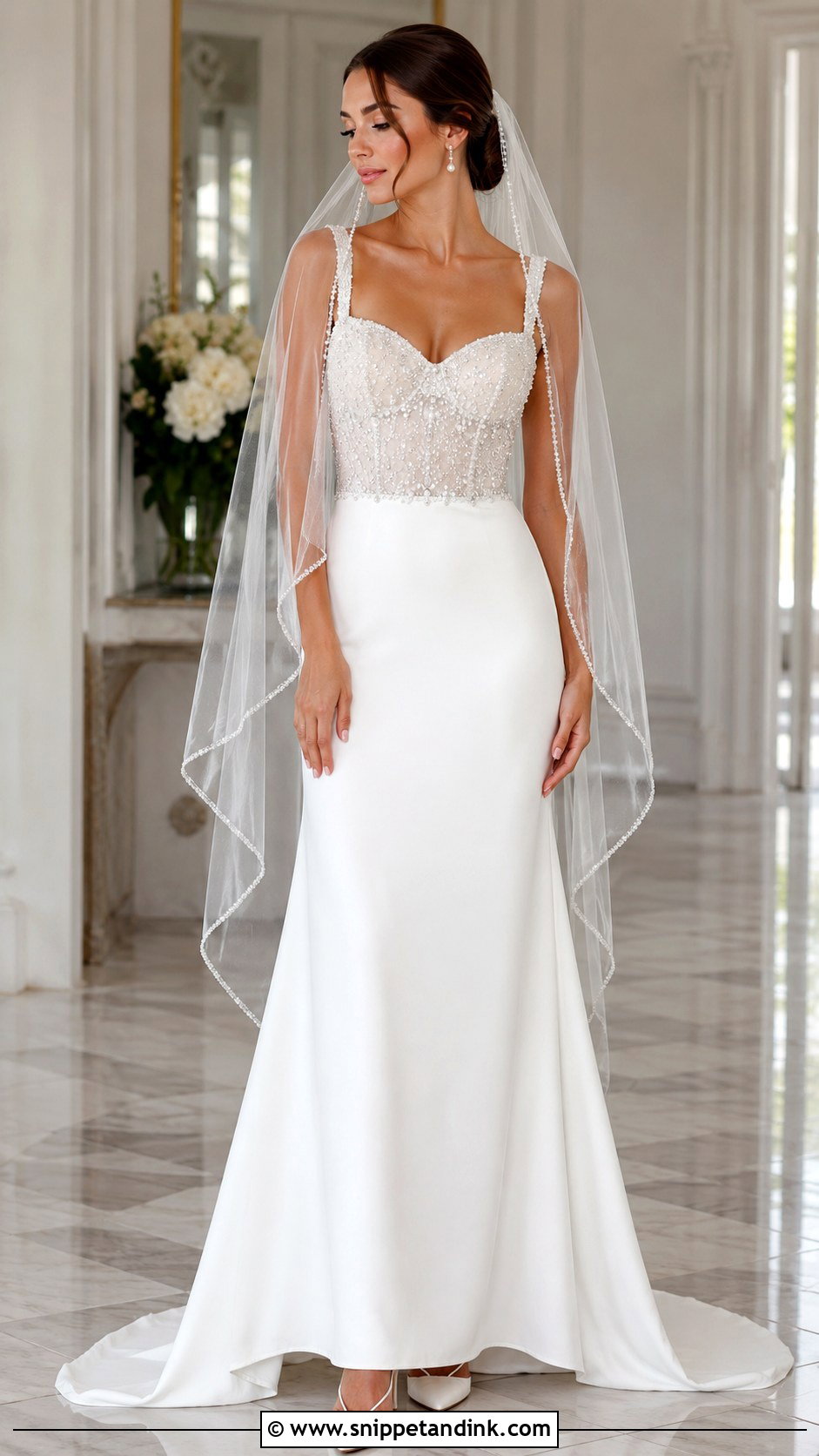
Pearls take the hard edge off crystal. Mixed pearl sizes with small crystals on a fitted bodice, over a clean skirt or a lightly beaded train, gives texture and shine at once. Bateau, scoop and sweetheart necks all suit it; it comes down to how much coverage you want. Pearl drops, satin slingbacks and a sheer veil with a narrow pearl edge tie it together, and the hair stays smooth so the beadwork leads. Lift the gown off the hanger before you fall for it. Dense pearl work is genuinely heavy, and that weight sits on your shoulders or hips for ten hours.
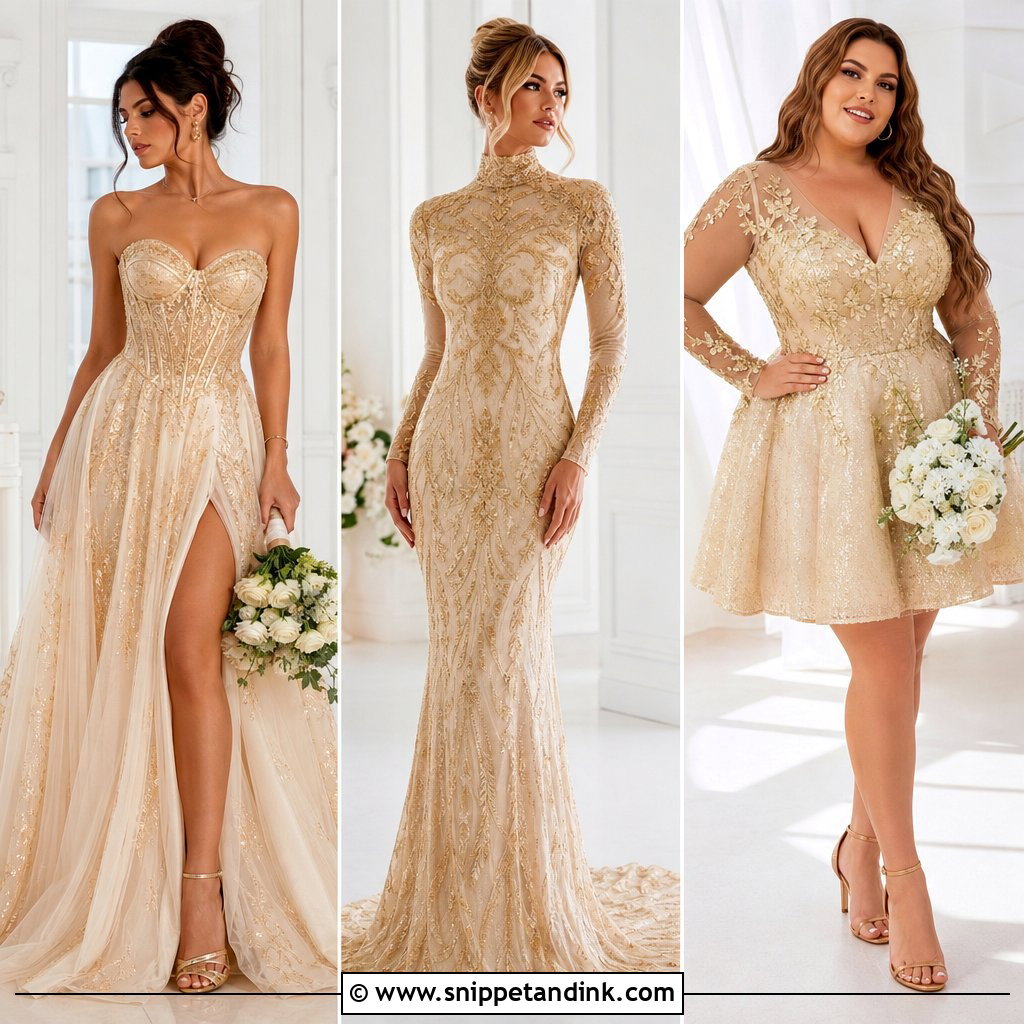
15. Celestial Glitter Wedding Dress
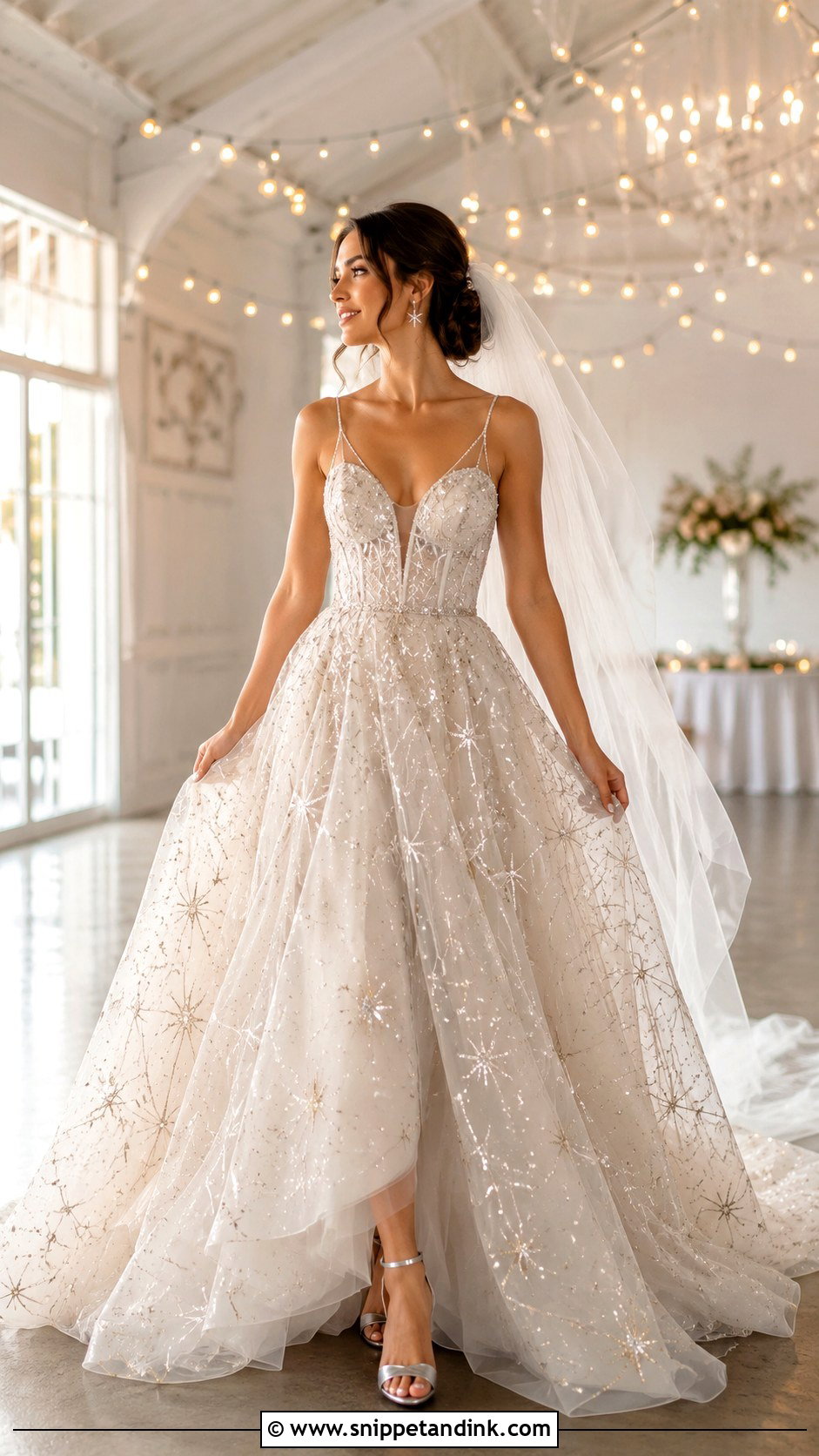
A celestial glitter wedding dress uses stars, constellations and scattered crystals, and the line between dreamy and costume is the size of the motifs. I look for small, evenly spaced stars in silver thread over ivory or pale nude tulle; navy or midnight underlayers aren’t needed to make the theme read. Star studs, metallic heels and a plain veil that won’t cover the pattern work well, and a soft braided updo can nod to the theme quietly. A fitted bodice with a flowing skirt lets the embroidery move. Under string lights this gown comes alive, and because the sparkle is spaced out, it still holds detail in daylight photographs.
16. Glitter Cape Sleeve Wedding Dress
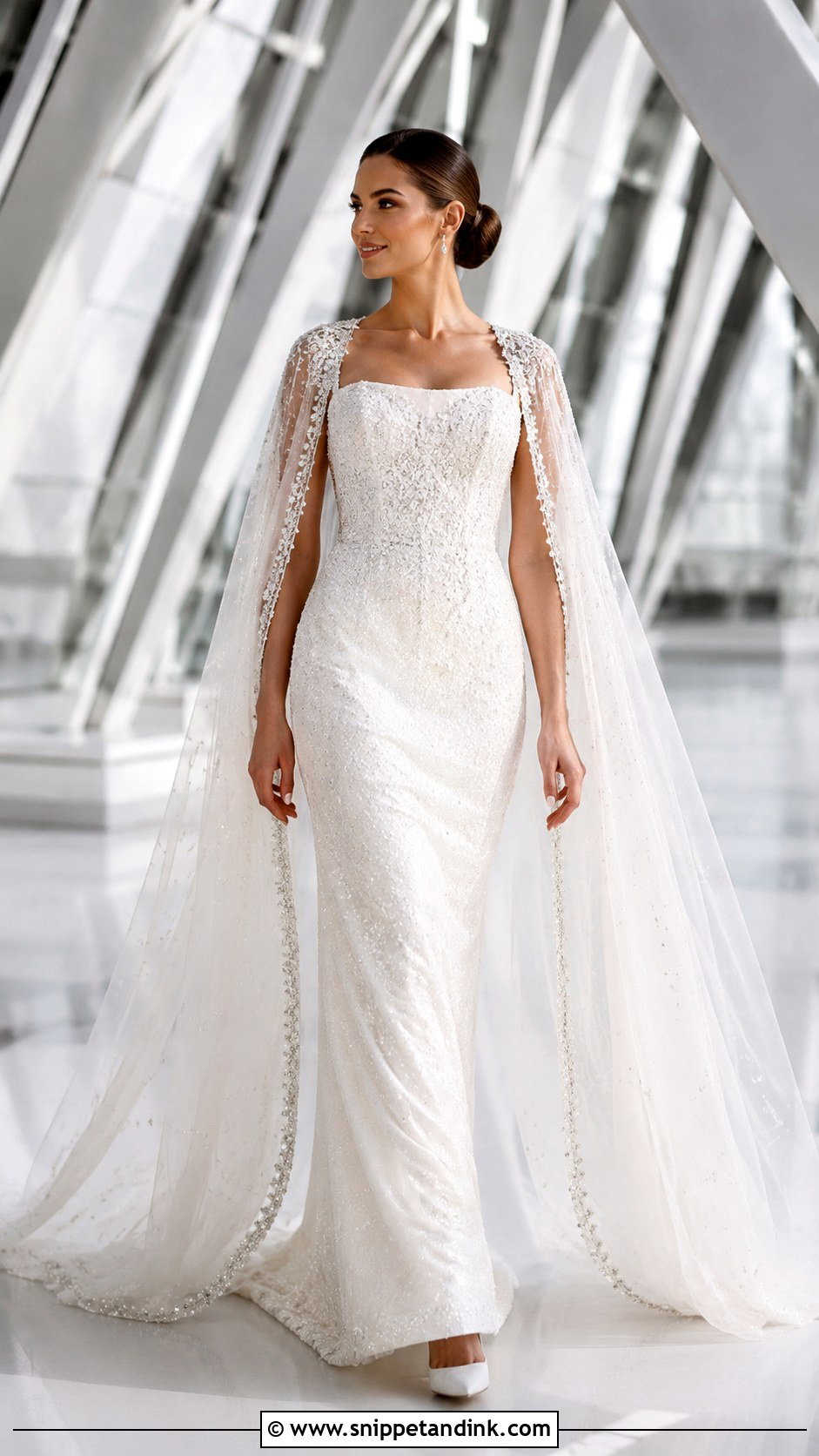
Cape sleeves give movement and coverage at once, and they make an entrance. I pair them with a fitted column or a gentle A-line, with sheer capes attached at the shoulder and fine crystal edging linking them to a lightly beaded bodice. Small earrings, pointed pumps and a polished bun are enough. You may not need a veil at all, since the cape already gives length behind you; if you want one, keep it short and plain so the two layers don’t tangle. Walk past chairs and through a doorway at the fitting. Capes catch on chair backs more than any other detail I style, which is why I often suggest detachable ones for the reception.
17. Glitter Wedding Dress With Detachable Overskirt
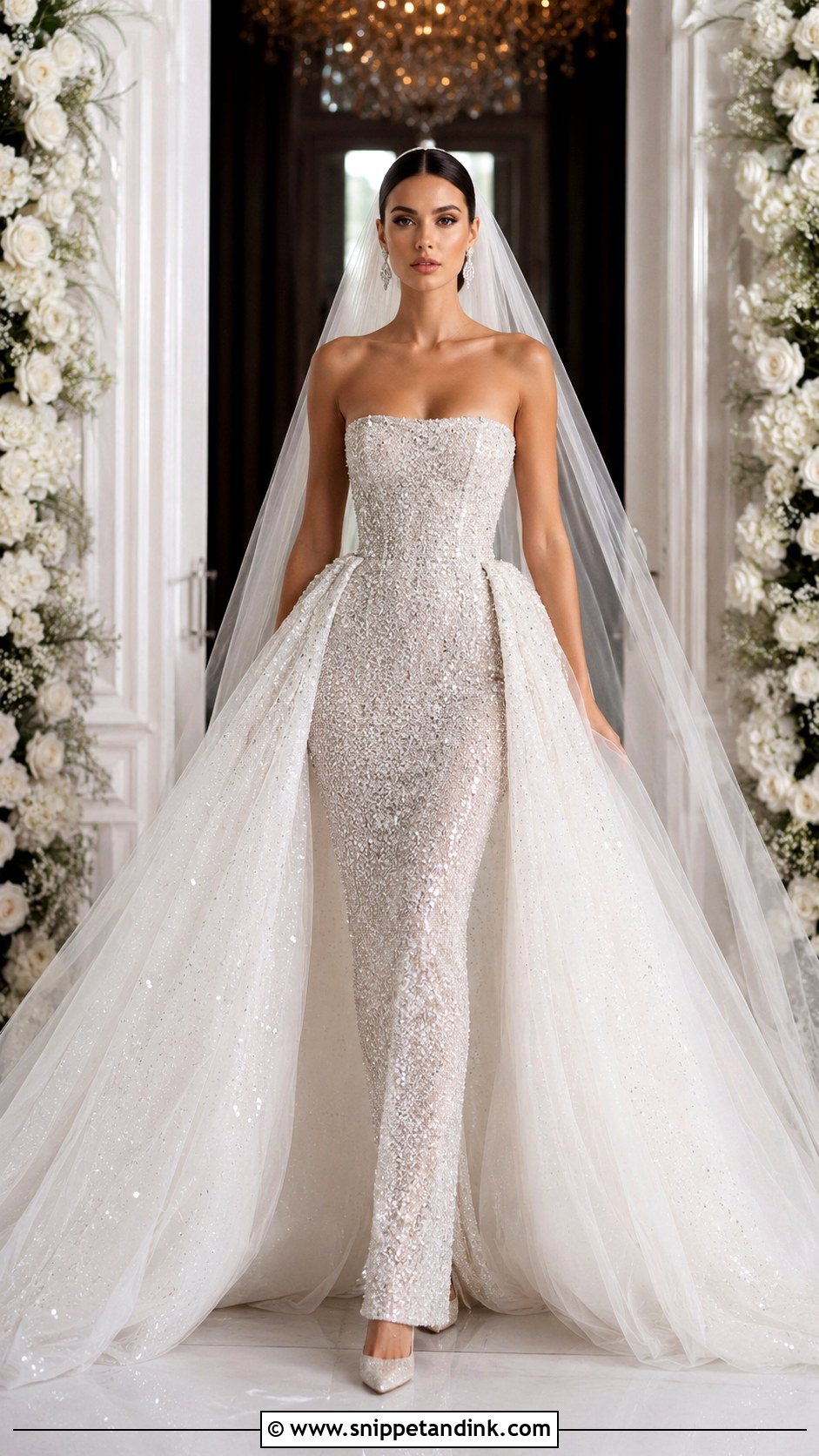
Two silhouettes from one dress is the reason brides love this. Underneath sits a fitted crystal-covered sheath or mermaid gown, and a full tulle overskirt goes on top for the ceremony. The join matters most: it should sit flat at the waist and blend into the bodice, with no visible ridge. A long veil, drop earrings and pointed heels suit the ceremony version. After photos, the overskirt and veil come off to reveal the slim gown for dancing, with a sleek bun and a compact clutch. Rehearse the change at least once with the person who’ll help you, and give them a garment bag. A glittered overskirt left on a chair collects every crumb in the room.
18. Sparkly Tea-Length Wedding Dress
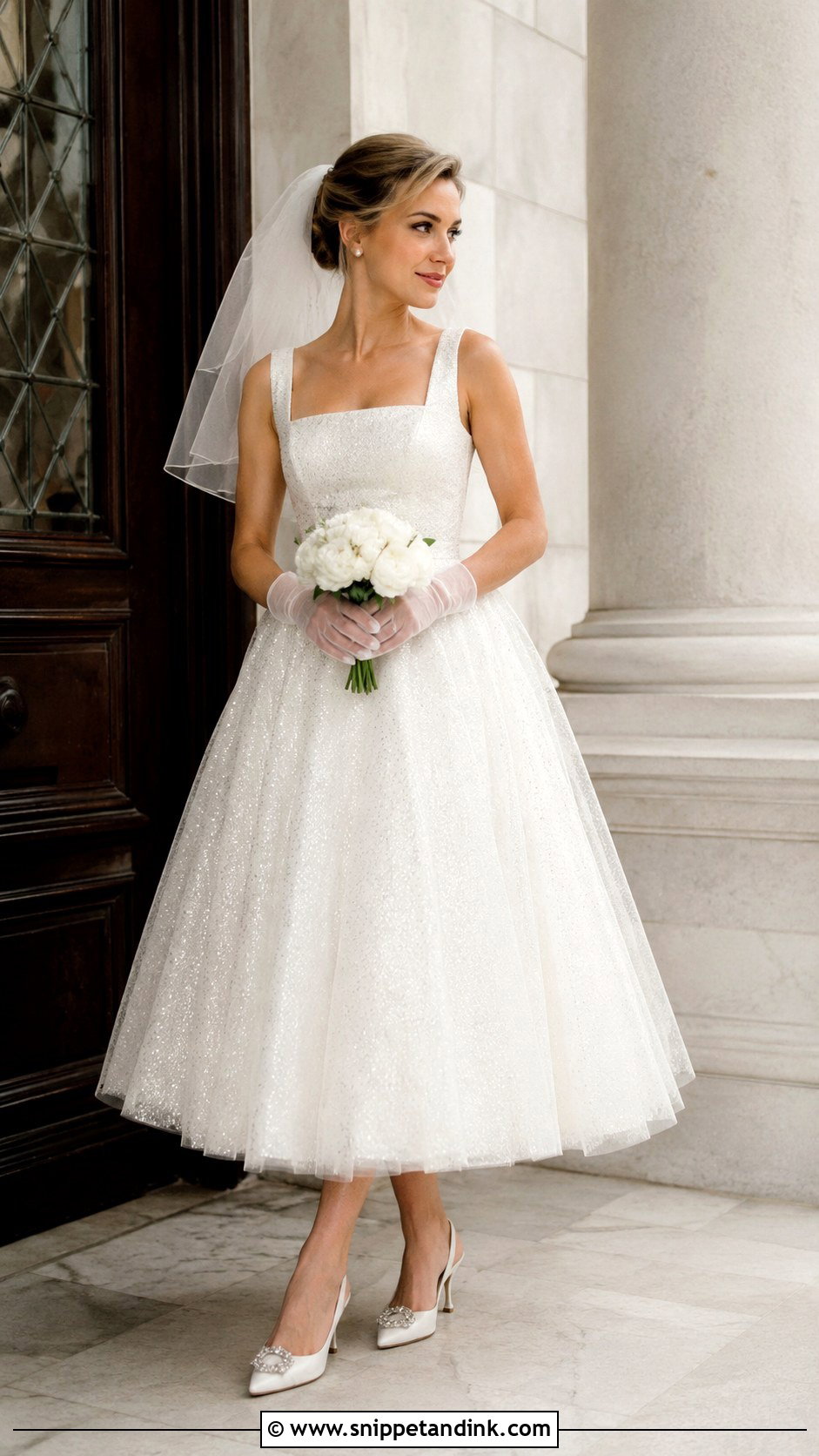
A tea-length hem falls somewhere between knee and ankle, which puts your shoes on display all day. I’d choose a structured bodice with a softly flared glitter tulle skirt, then pointed pumps, embellished slingbacks or neat block heels. Pearl studs, short gloves and a birdcage or shoulder-length veil push it toward vintage without tipping into costume. A neat updo keeps the proportions clean. It suits courthouse ceremonies and smaller rooms where you’ll move around a lot. Bring the actual wedding shoes to the hemming appointment; the most flattering stopping point is usually just above the narrowest part of the calf, and heel height changes where that lands.
19. Sparkly Mini Reception Wedding Dress
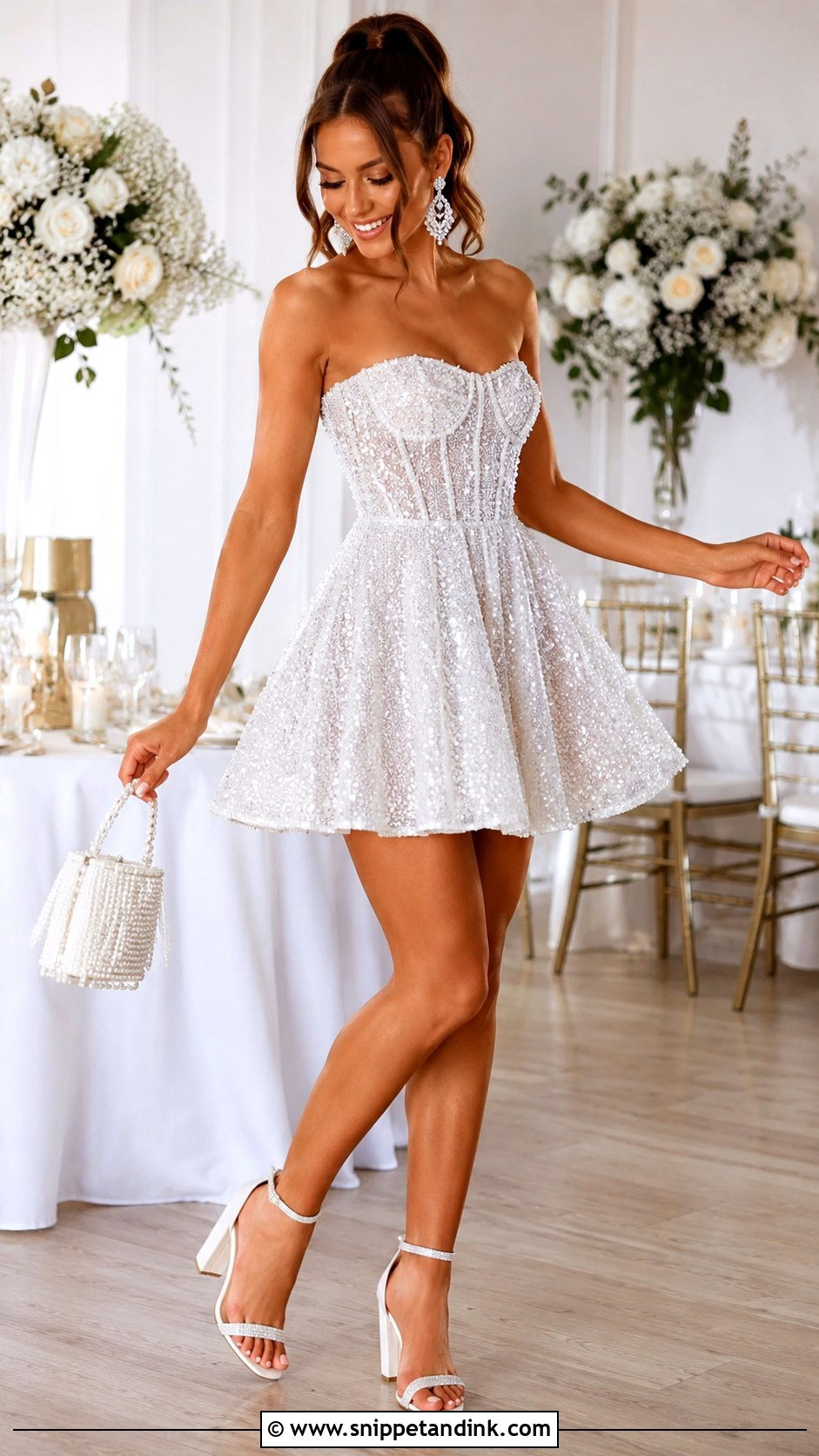
A sequinned mini gives you a second look for the dance floor, and it is far easier to move in than any gown. Check for a secure neckline, a soft full lining and sequins spread evenly so the hem doesn’t drag down on one side. A flared skirt moves freely; a fitted column mini looks sharper. Block-heel sandals, bolder earrings and a small top-handle bag for lipstick and phone finish it. If you’d like coverage, detachable sheer sleeves or a short cape work. Keep your ceremony hair or switch to a high ponytail. Sit, crouch and dance in it before the day. Short sequin hems ride up quickly, and the lining is what stops that.
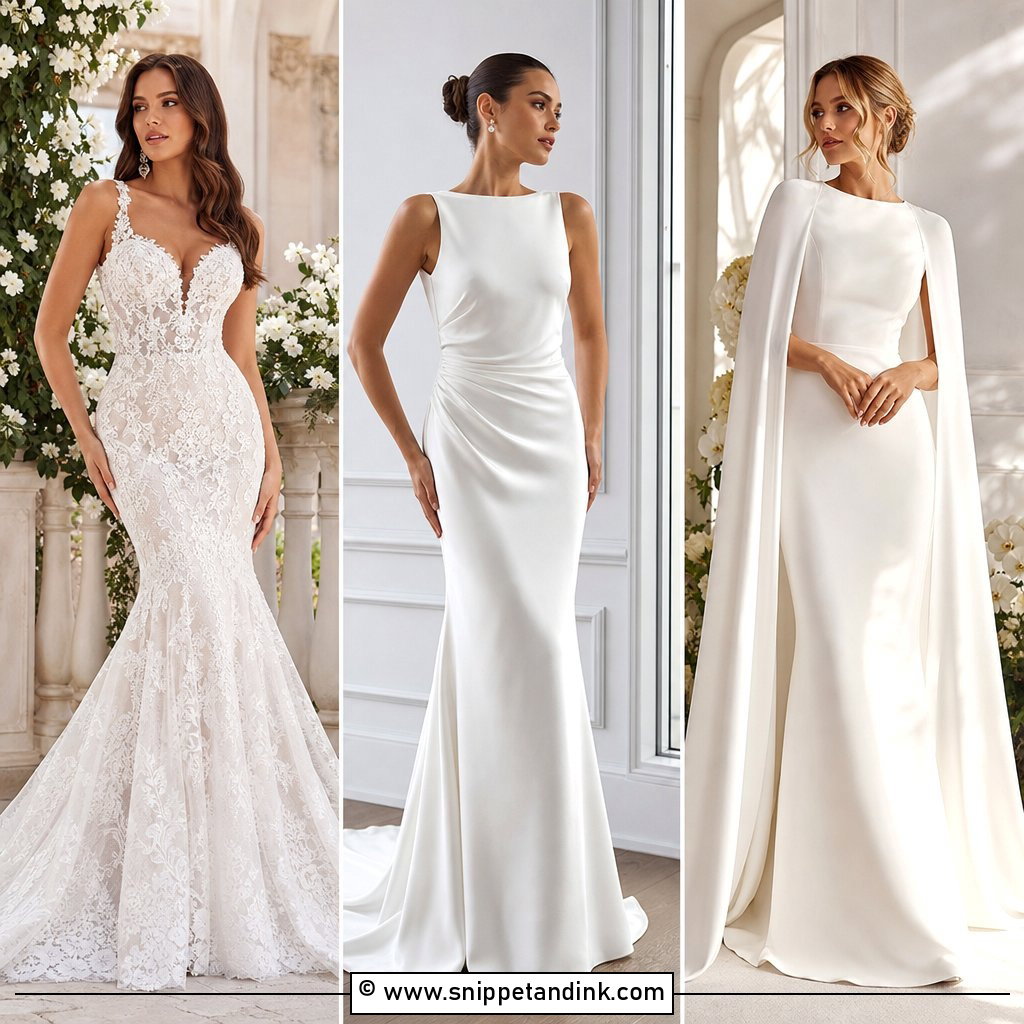




20. Plus Size Glitter A-Line Wedding Dress
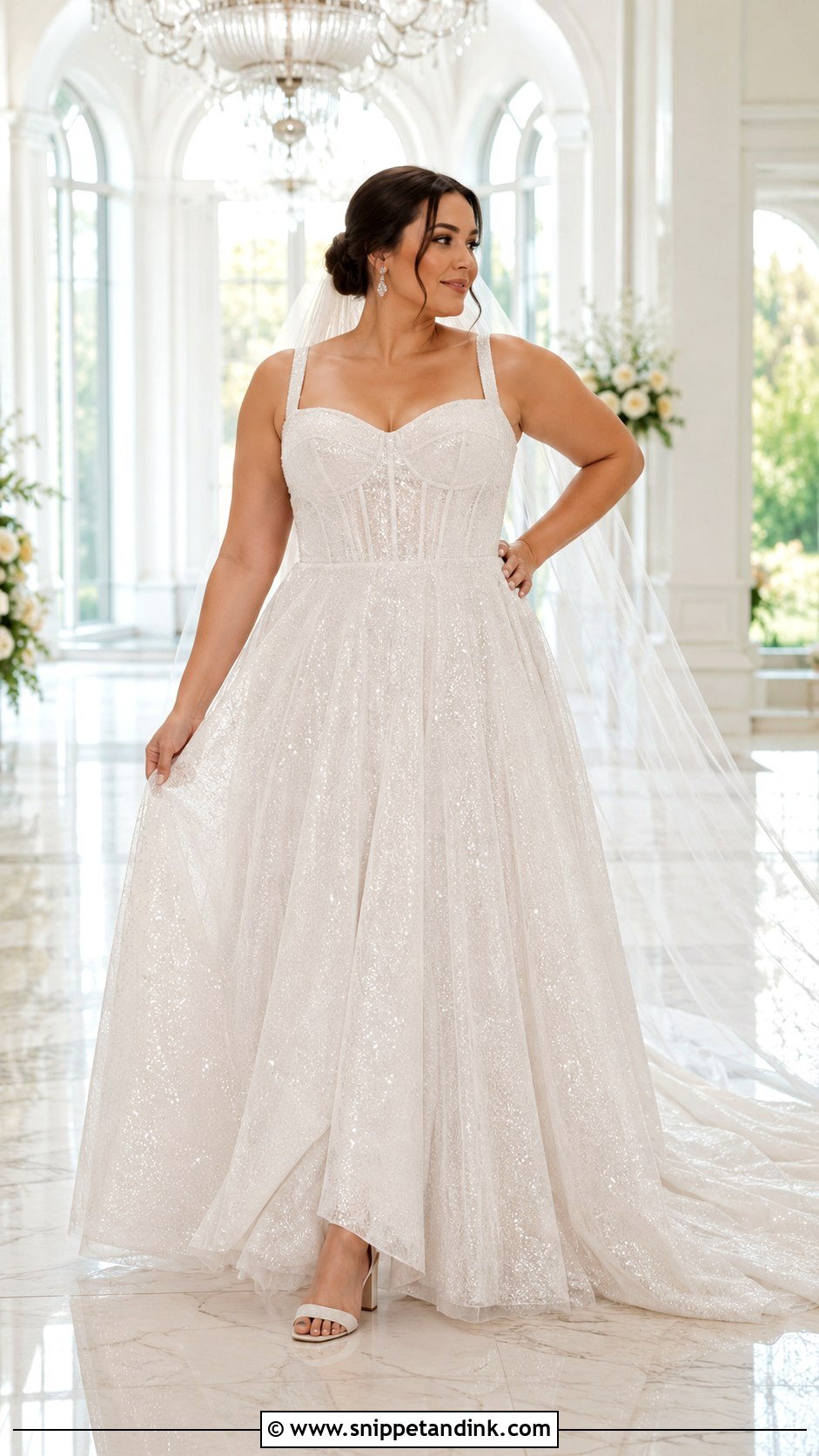
For a plus size glitter A-line, construction comes before any sparkle. I want secure straps, cups placed where your bust actually sits and boning that follows your shape without digging in. A natural or Basque waist flowing into glitter tulle balances the figure from every side. Supportive block heels, crystal earrings and a light veil keep the look easy to wear all day, with a side-swept style or low bun leaving the neckline open. Clipped sample gowns tell you almost nothing about your fit, so ask about cup adjustments, strap placement and lining options before judging the dress. The goal isn’t hiding anything; it’s a gown that fits properly and feels secure while you celebrate.
What Ten Hours of Hugs and Dancing Do to an Embellished Gown
Every heavily decorated dress loses something over a wedding day. Crystals snag on a guest’s knitwear, a sequin thread pulls on a chair, and beading at the waist takes the strain every time you sit. None of this is a disaster if you plan for it.
- Pack a small kit with a needle threaded in your gown’s color, clear nail varnish to stop a pulled thread running, fabric glue suitable for crystals and the spare beads from the shop.
- Ask your seamstress to reinforce the stones along the bustle points and underarms at the final fitting. Those areas take the most friction.
- Give one bridesmaid the job of checking your veil before you walk. Tulle catching on a bodice crystal is the snag I fix most often.
- Hold your arms slightly away from a sequinned bodice when you hug. Many guests wear textured fabrics that the edges of sequins can catch on.
Cleaning and Storing a Beaded Dress Once It Comes Off
Get the gown to a specialist wedding dress cleaner within a few weeks, and tell them it is embellished. Some glues and sequin coatings dissolve in standard dry-cleaning solvents, so they may hand-clean those areas or test a hidden spot first. Sugar from champagne or cake can be invisible at first and yellow later, so point out anything you spilled, even if you can’t see a mark.
Never store a crystal or pearl gown hanging by its straps for months; the weight stretches the shoulders and seams. I’d keep it folded flat in an acid-free box with acid-free tissue between the layers and padding at every fold so beads don’t press creases into the fabric. Keep it somewhere cool, dark and dry, not in a loft or a damp basement, and take it out once a year to check for loose stones or discoloration.
Let the Room You Marry In Set Your Level of Shine
Sparkle comes in very different strengths, from a haze of glitter tulle to a gown solid with crystal, and the right amount depends on the fabric, the shape and where you’ll be standing. Get the fit and comfort settled first, then judge the embellishment against your venue’s light. Photograph the dress from several angles, with and without flash, before you sign anything. When the gown is busy, let the jewelry and veil go quiet. If you can sit, hug and dance in it without thinking about it, you’ve found the right one.
You'll Like These Ideas:
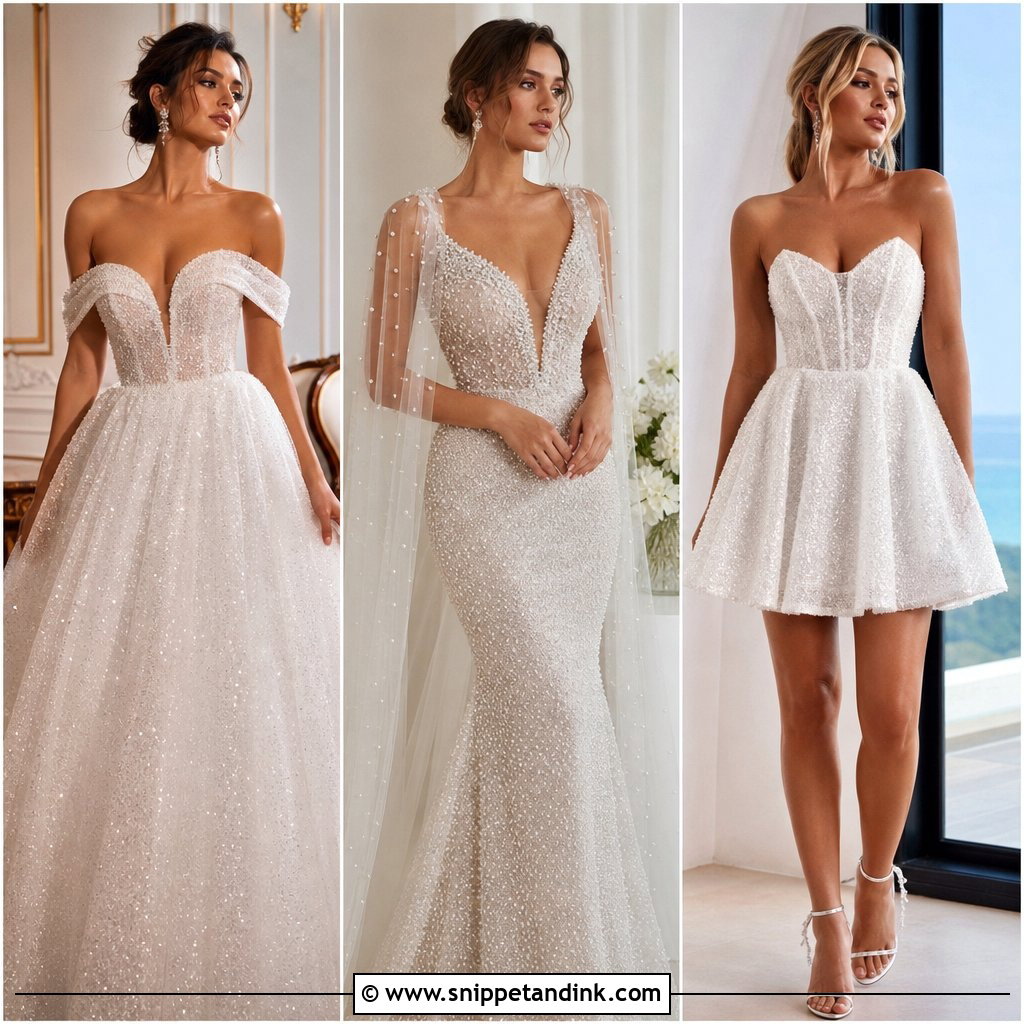
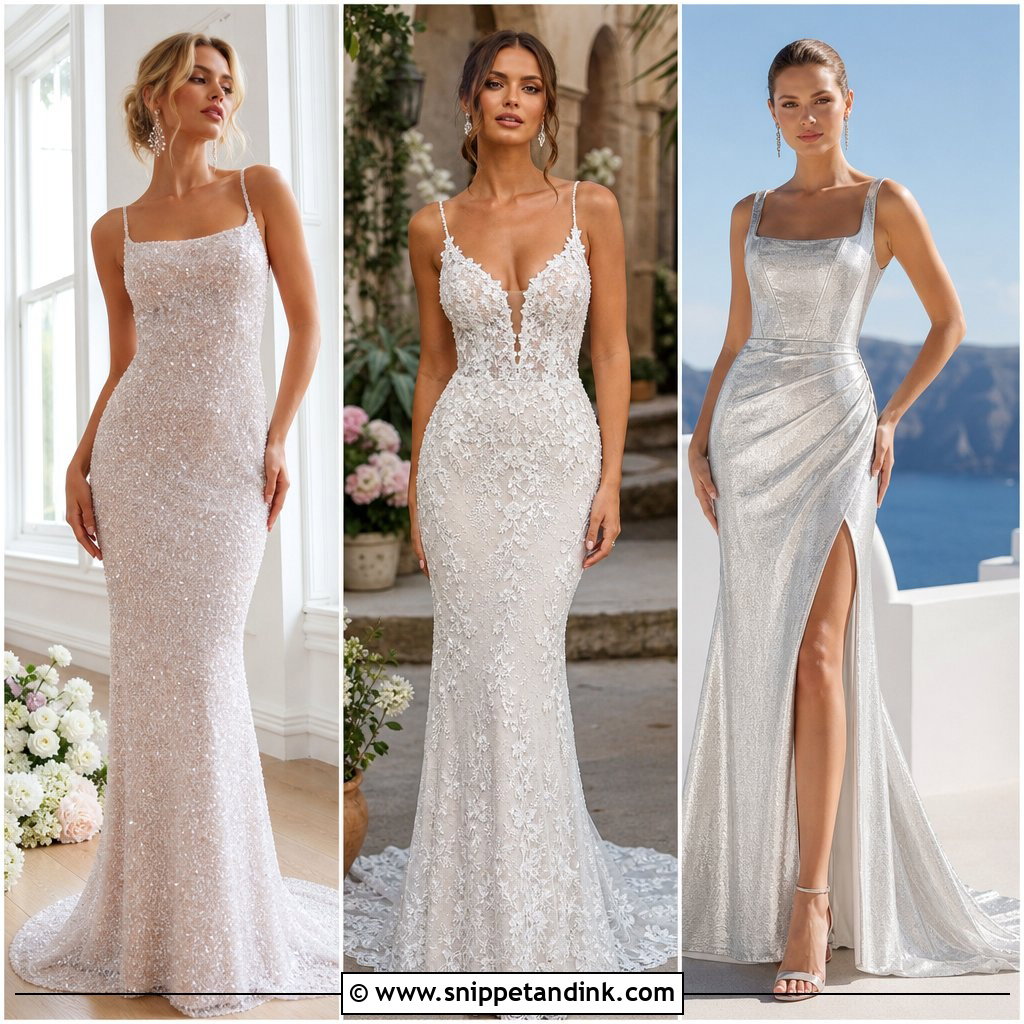
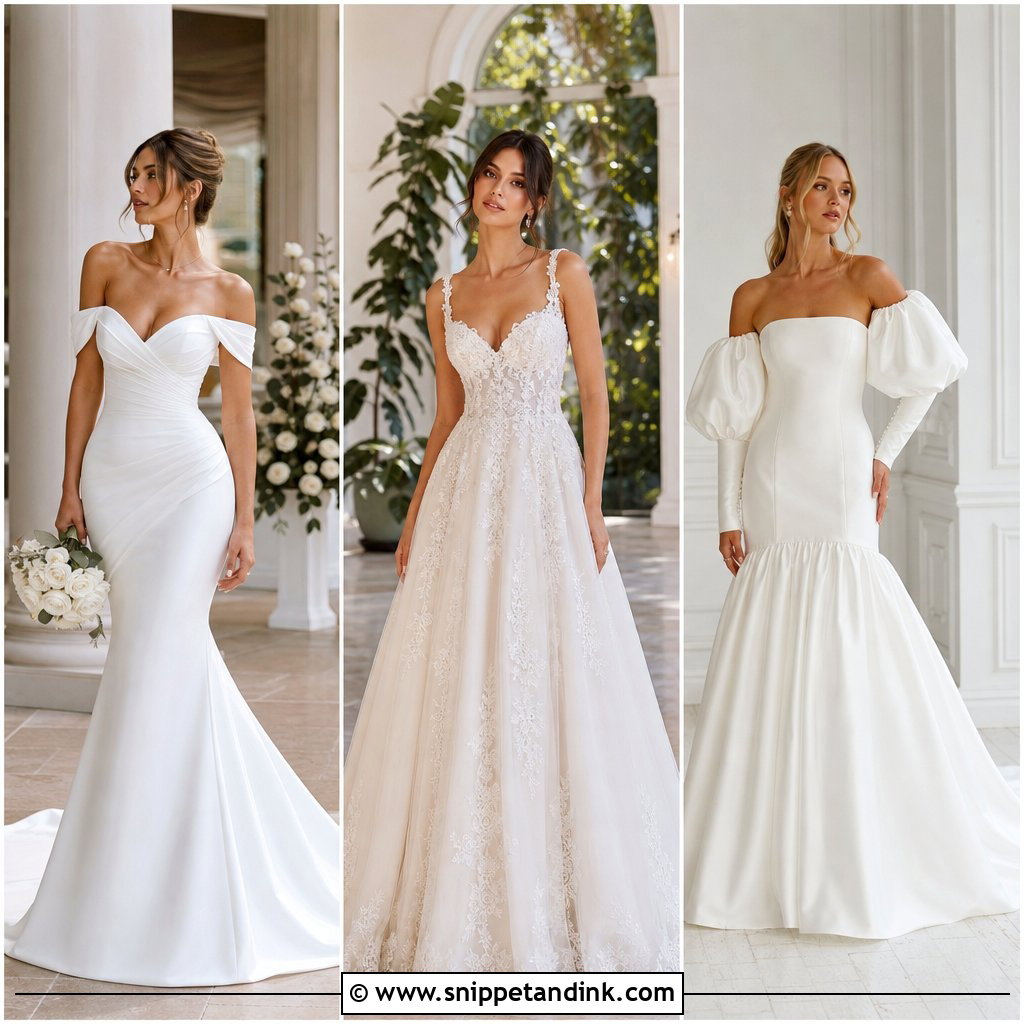


Leave a Reply