
Gold is the colour I suggest most often to brides who feel flat in white but still want something that reads as a wedding dress the moment they walk in. The range is wider than people expect, from a champagne satin that is barely warmer than ivory to sequins that throw light across a room. Below are twenty gold gowns, each styled head to toe, with notes on where each one tends to struggle. Before you fall for a picture, know that the shade matters more than the silhouette here: the wrong gold can make skin look tired, while the right one does half the work of your makeup.
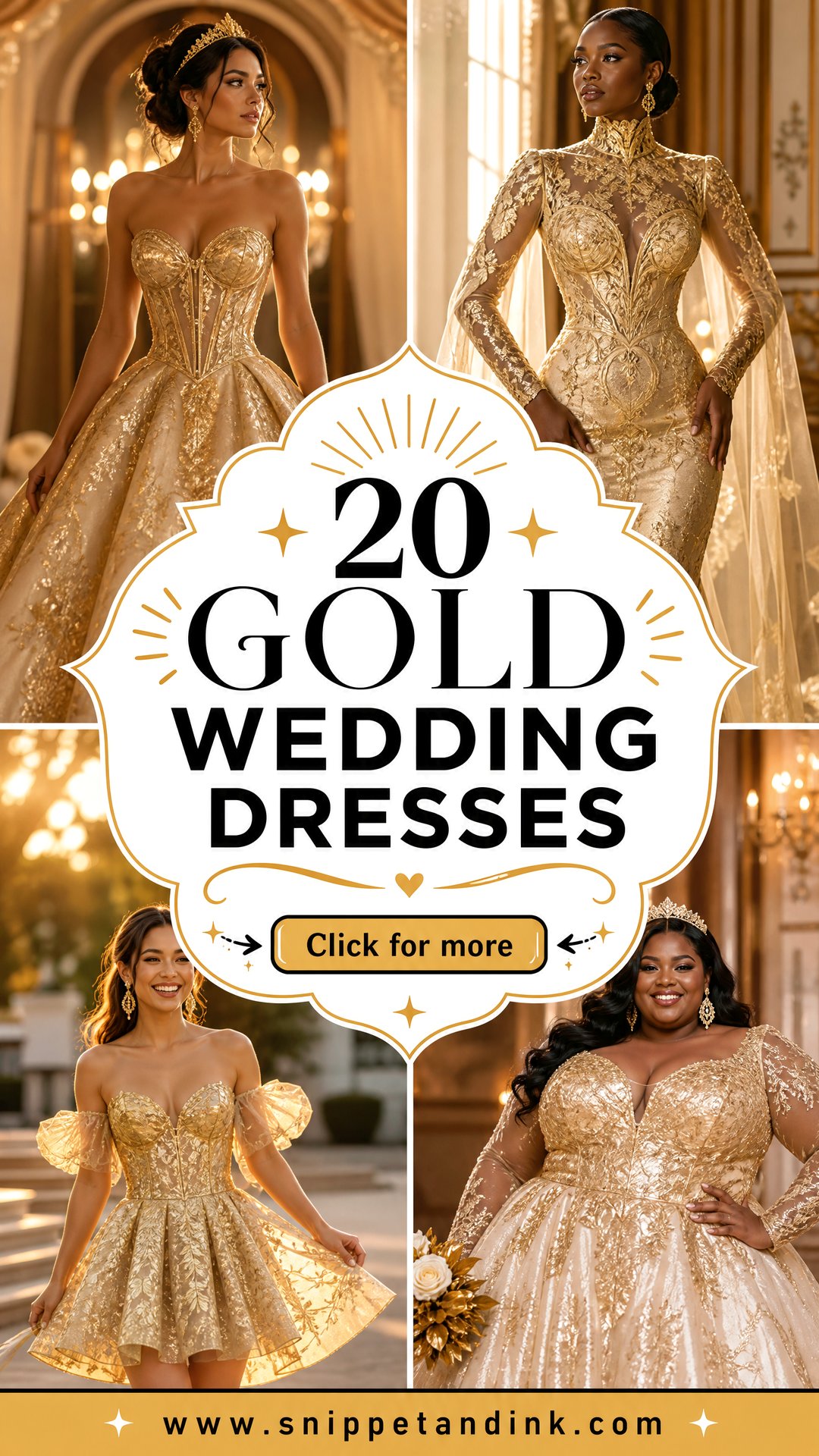
Testing a Gold Shade Against Your Face in Daylight
Shop lighting is warm and flattering, and it hides the one problem I see most with gold: a shade that turns skin sallow. At an appointment, I take the gown, or at least a swatch of it, to a window and hold it just under the chin. If your face looks brighter, the shade is right. If you suddenly look tired or the redness around your nose stands out, try a cooler or paler gold.
- Champagne and pale gold flatter the widest range of skin tones, because they sit close to ivory.
- Rose gold has pink in it, which helps fair, cool-toned skin but can look washed out against very rosy cheeks.
- Deep antique and brass golds come alive on olive and deep skin tones and can overpower very fair skin.
- Bright metallic lamé reflects colour back onto the face, so its effect is exaggerated in photos.
Then think about the camera. Flash on sequins can create white hotspots, and warm indoor light can push a yellow gold toward brass. I tell brides to send their photographer a phone photo of the dress in the venue light, because they’ll set white balance with that in mind. Your veil matters too: a bright white veil next to gold can look grey, so I match the tulle to the dress, not to a standard white.
1. Gold Satin Ball Gown Wedding Dress
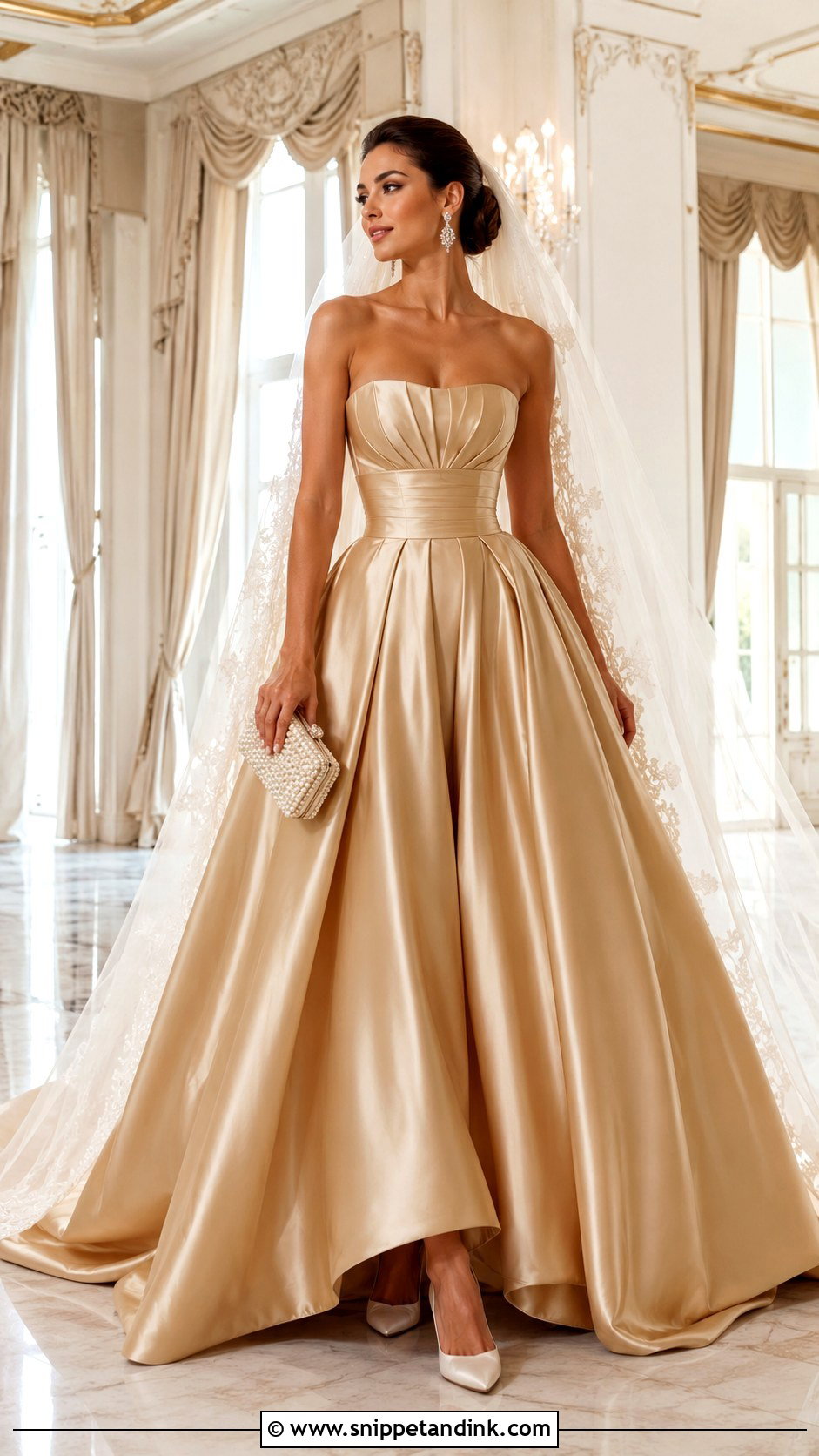
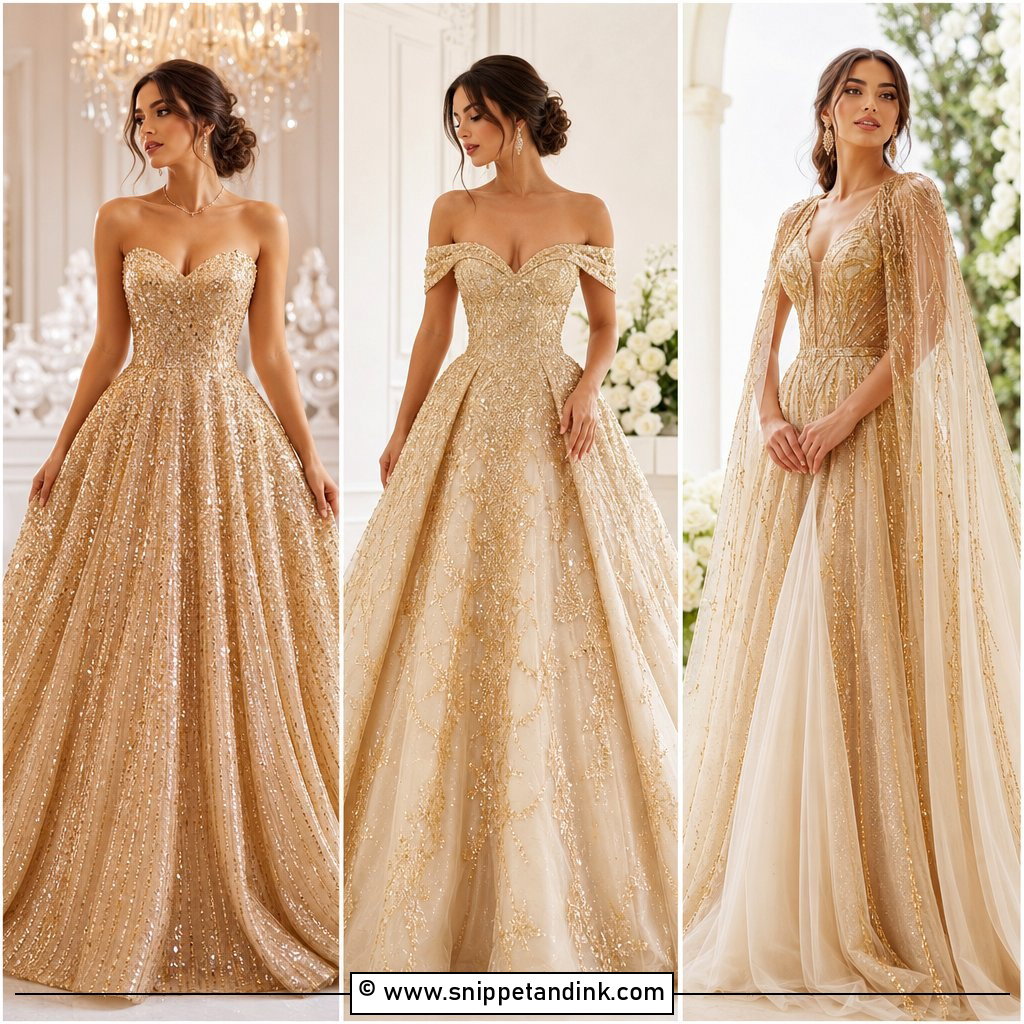
Satin ball gowns are the most forgiving way to wear gold, because the fabric reflects light in broad, soft planes rather than tiny flashes. I look for a structured bodice and a skirt that holds its own shape through a petticoat, not through layers of trim. Champagne or antique gold satin reads softer than bright metallic, and in daylight it looks warm rather than shiny. Keep the rest simple: ivory pointed pumps, small crystal earrings and a cathedral veil with a narrow satin edge. A sleek low bun lets the neckline carry the look. On petite brides I often raise the waist a touch; taller brides can usually take a longer bodice. A pearl clutch is enough for the reception.
2. Gold Sequin Mermaid Wedding Dress
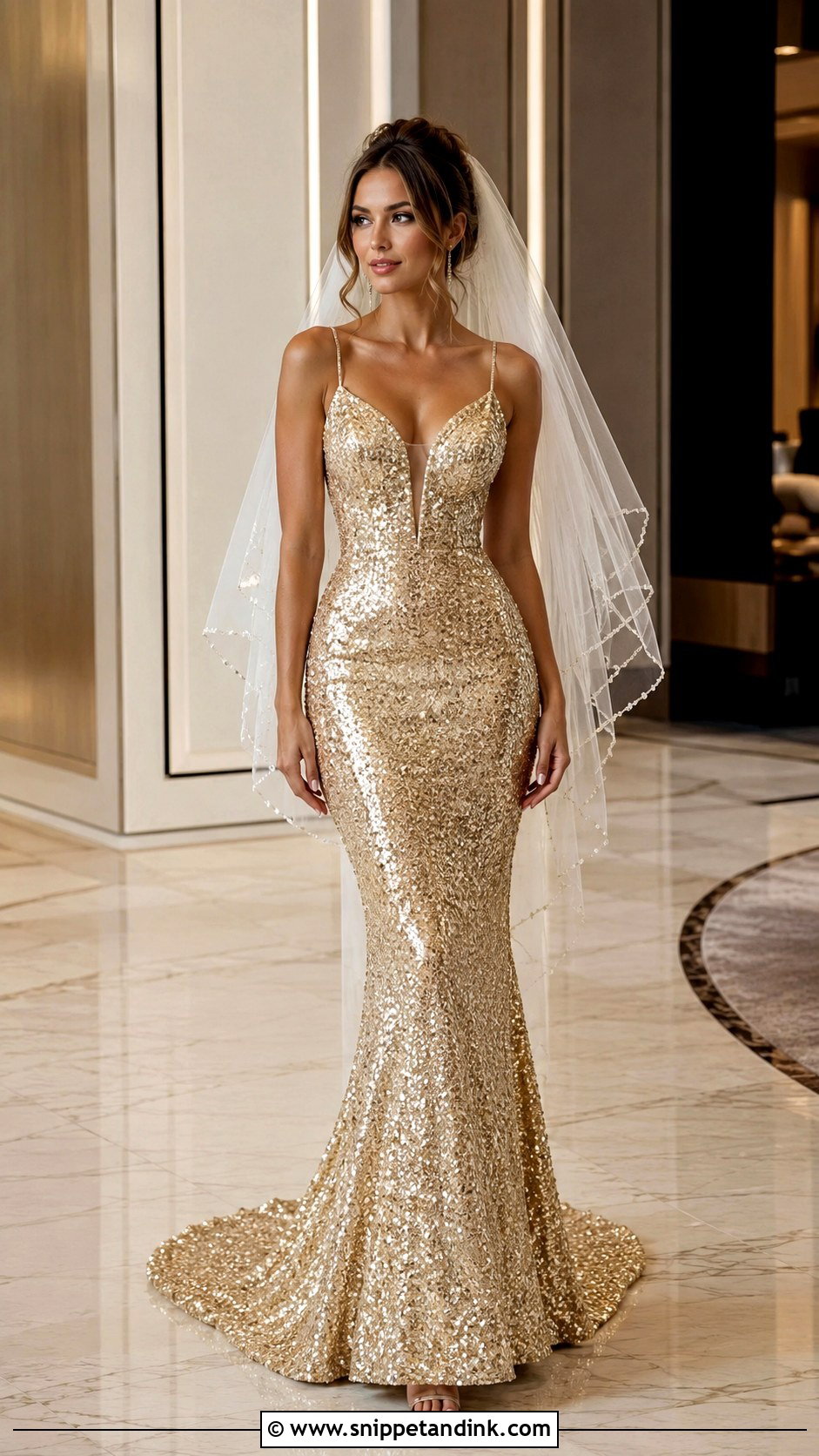
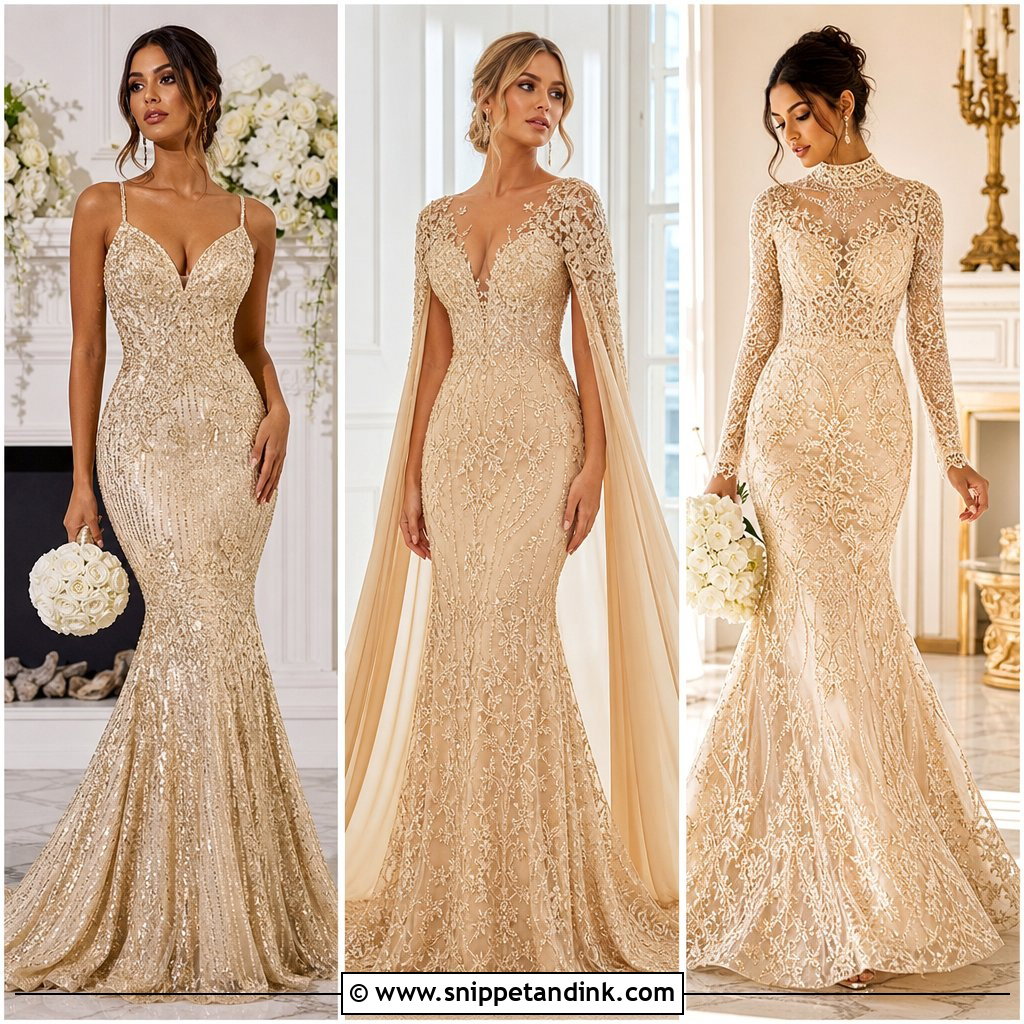
Sequins on a fitted shape give you the most sparkle per square inch in this list, and that is also its risk. On a gold sequin mermaid wedding dress I check two things first: the sequins should be small and evenly stitched, and the lining must be soft enough that seams don’t scratch the inner arms by the second hour. The flare should start at or just below the knee, or walking turns into shuffling. With this much shine, I’d skip the necklace entirely and choose barely there sandals plus one pair of drops. A fingertip veil keeps it bridal without covering the line of the dress.
3. Champagne Gold A-Line Wedding Dress
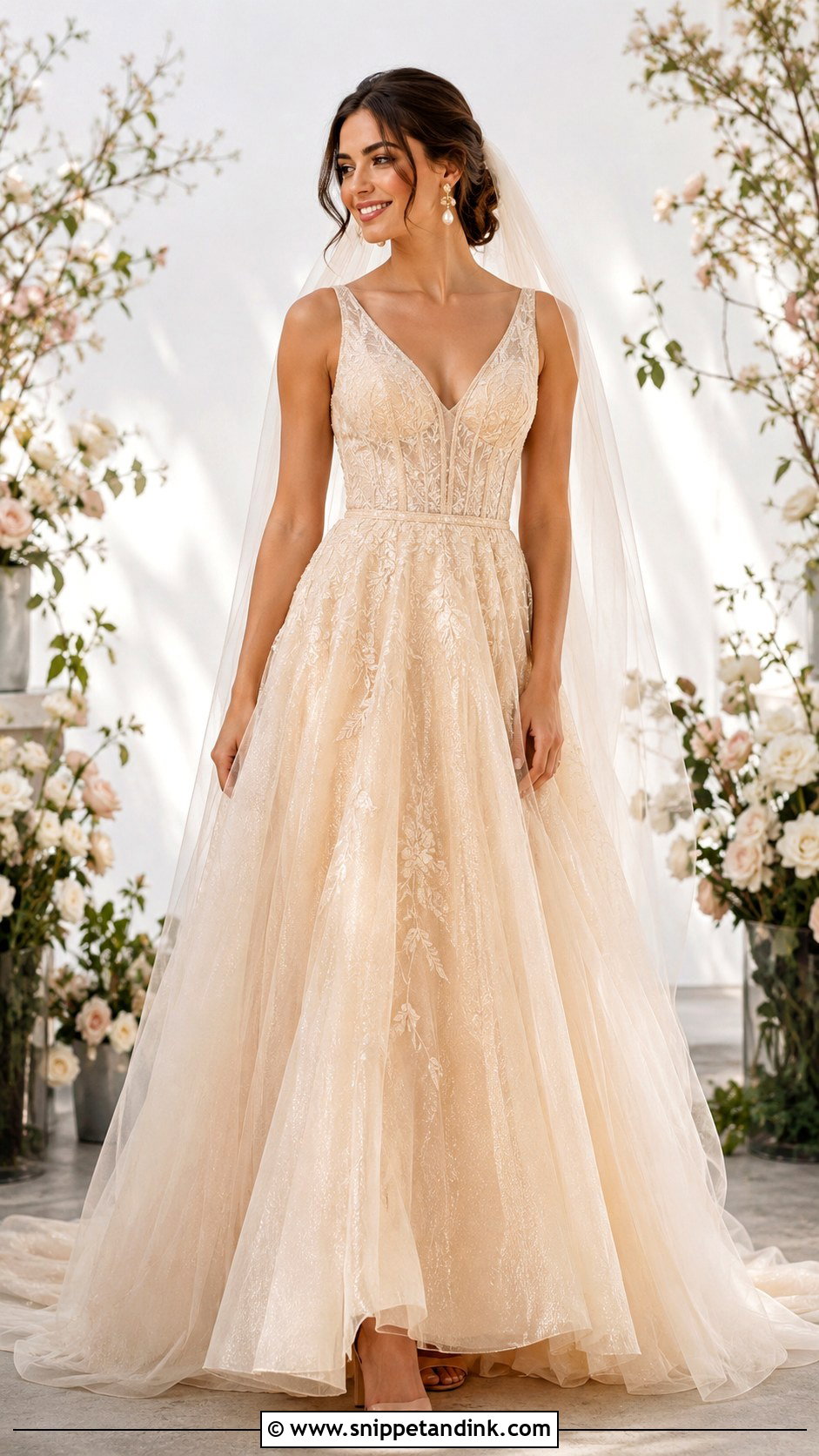
If a bride tells me she wants gold but can’t picture herself in anything loud, this is the dress I pull. The champagne A-line fits through the bodice and opens gradually, so it moves well at a garden ceremony and still looks right in a ballroom. Chiffon makes it lighter, satin gives it more polish, and layered tulle adds volume without the weight of a full ball gown. I match the veil to the dress rather than to a white swatch, since a stark white veil next to champagne can look slightly grey. Nude block heels and pearl-and-gold earrings finish it quietly.
4. Rose Gold Lace Wedding Dress
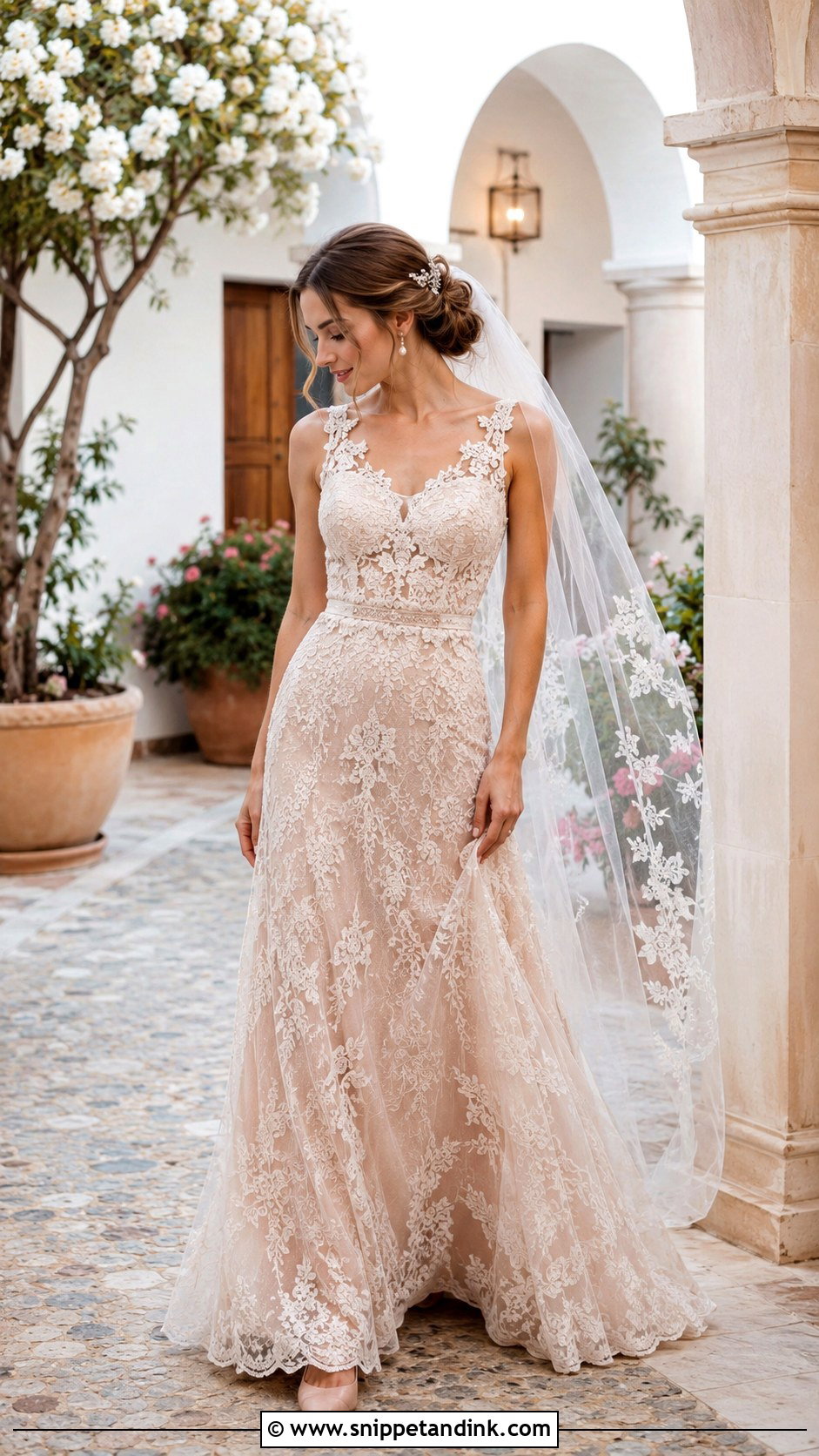
Rose gold lace is warmer than ivory and shows its pattern more clearly, especially over a neutral lining. That lining is the detail I’d ask about at the fitting: over a skin-toned base the lace reads delicate, while over a bright base it can look almost peach. A fitted lace bodice with a flowing skirt feels light; all-over lace leans vintage. Blush pointed heels, small pearls and a fine bracelet are plenty. If your veil has appliqués, scatter them sparsely so the veil doesn’t look like a second dress. Soft curls or a relaxed chignon with one metallic comb suit it best.
5. Light Gold Long Sleeve Wedding Dress
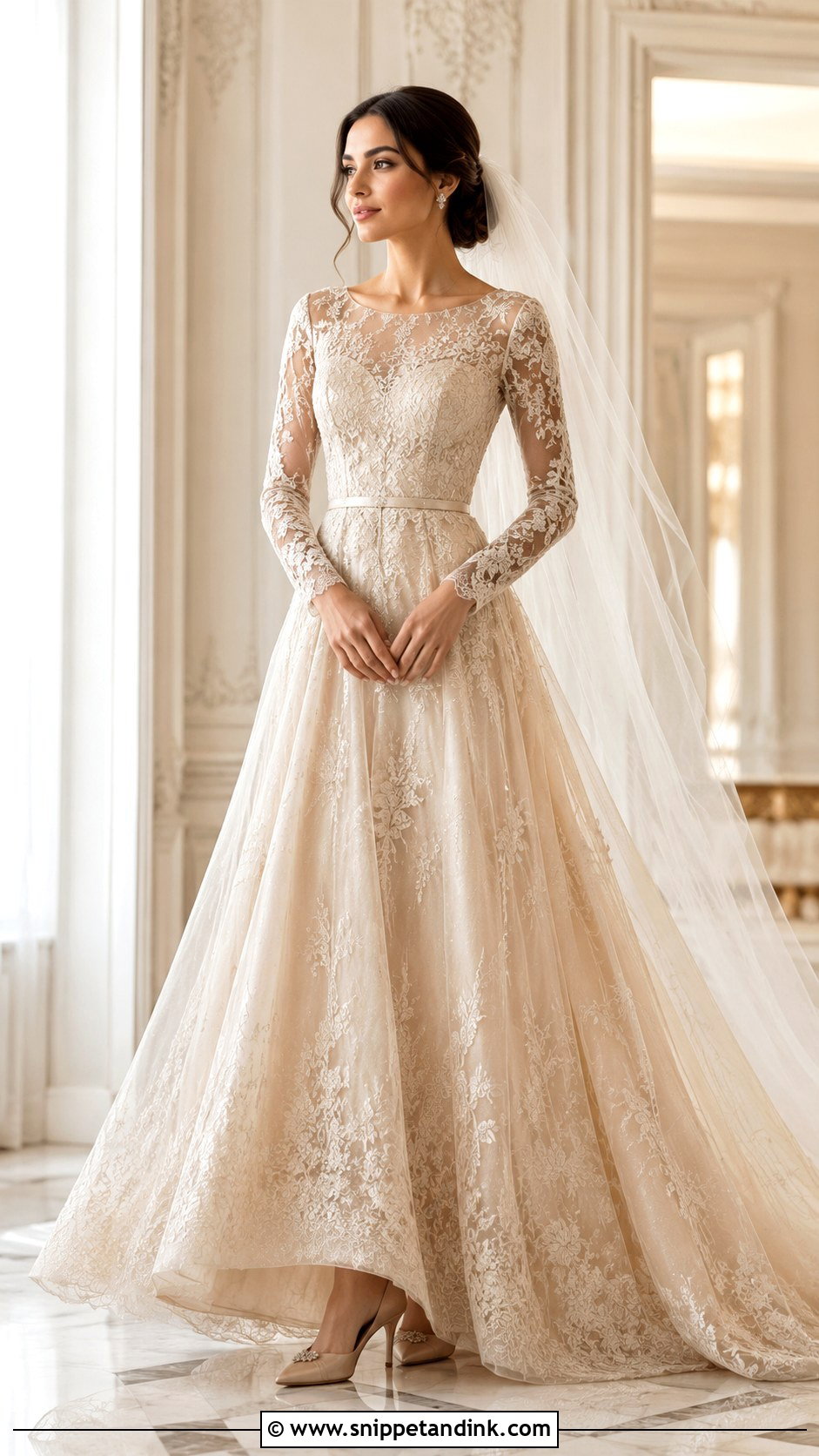
Sleeves change how a gold dress behaves. Sheer lace sleeves keep a light gold gown airy, while satin sleeves look cleaner but need room at the elbow, so I always ask brides to hug someone at the fitting to test it. An open back or a softly shaped neckline balances the coverage. For a cool-weather wedding, a matching wrap can come off indoors without changing the colour story. Closed-toe champagne pumps and crystal studs are enough jewelry. Keep the veil to plain tulle; beading on both sleeves and veil starts to look heavy.
6. Gold Corset Wedding Dress
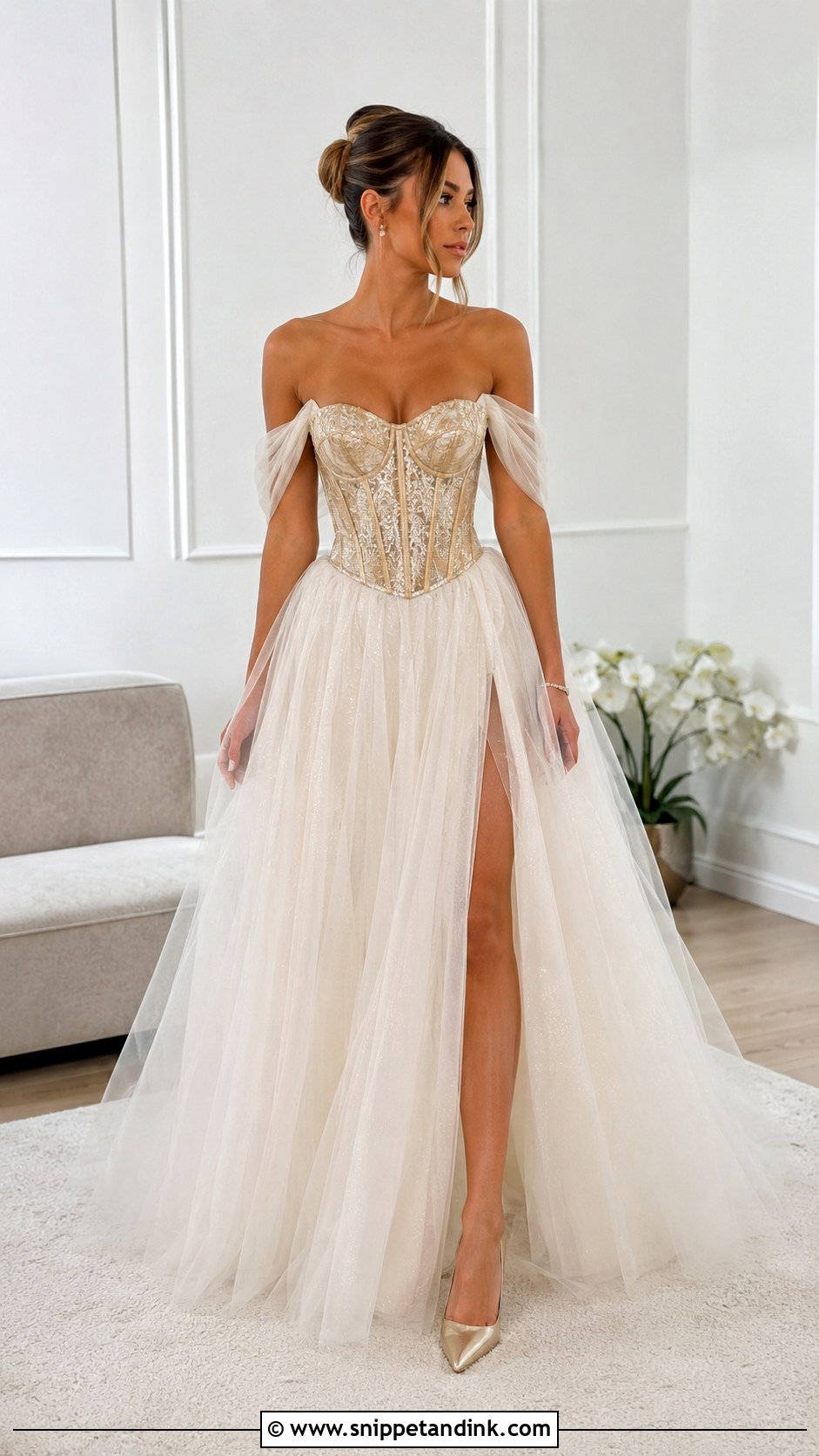
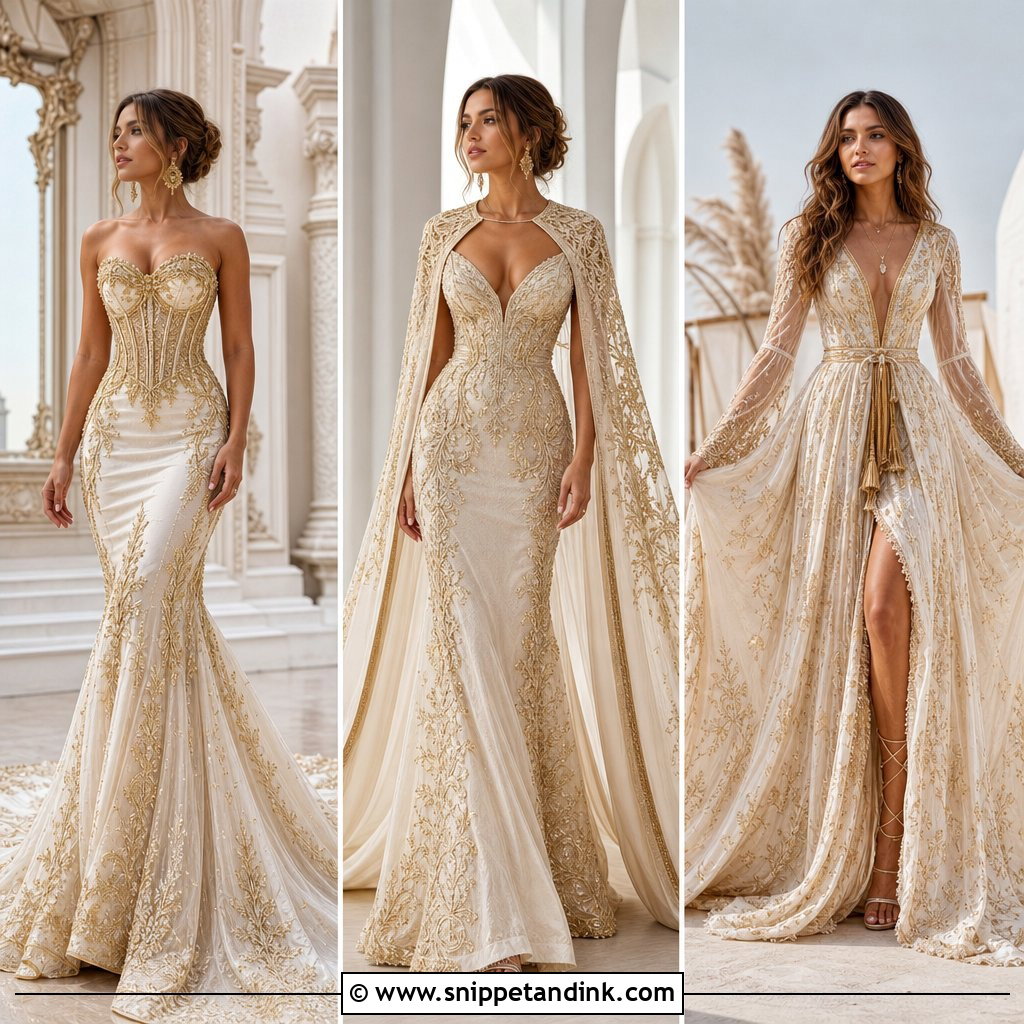
With a corset bodice, fit is everything. Boning should sit flat against the ribs, the bust should be filled without spilling, and the waist should feel firm rather than tight, because you will be sitting down to eat in it. I ask brides to sit, walk and lift both arms over their head in the fitting room before we sign off on alterations. A full tulle skirt makes the corset dramatic; smooth satin keeps it clean. A detachable off-the-shoulder drape can soften the ceremony look and come off later. Pair it with metallic pumps, a slim tennis bracelet and petite earrings.
7. Gold Off Shoulder Wedding Dress
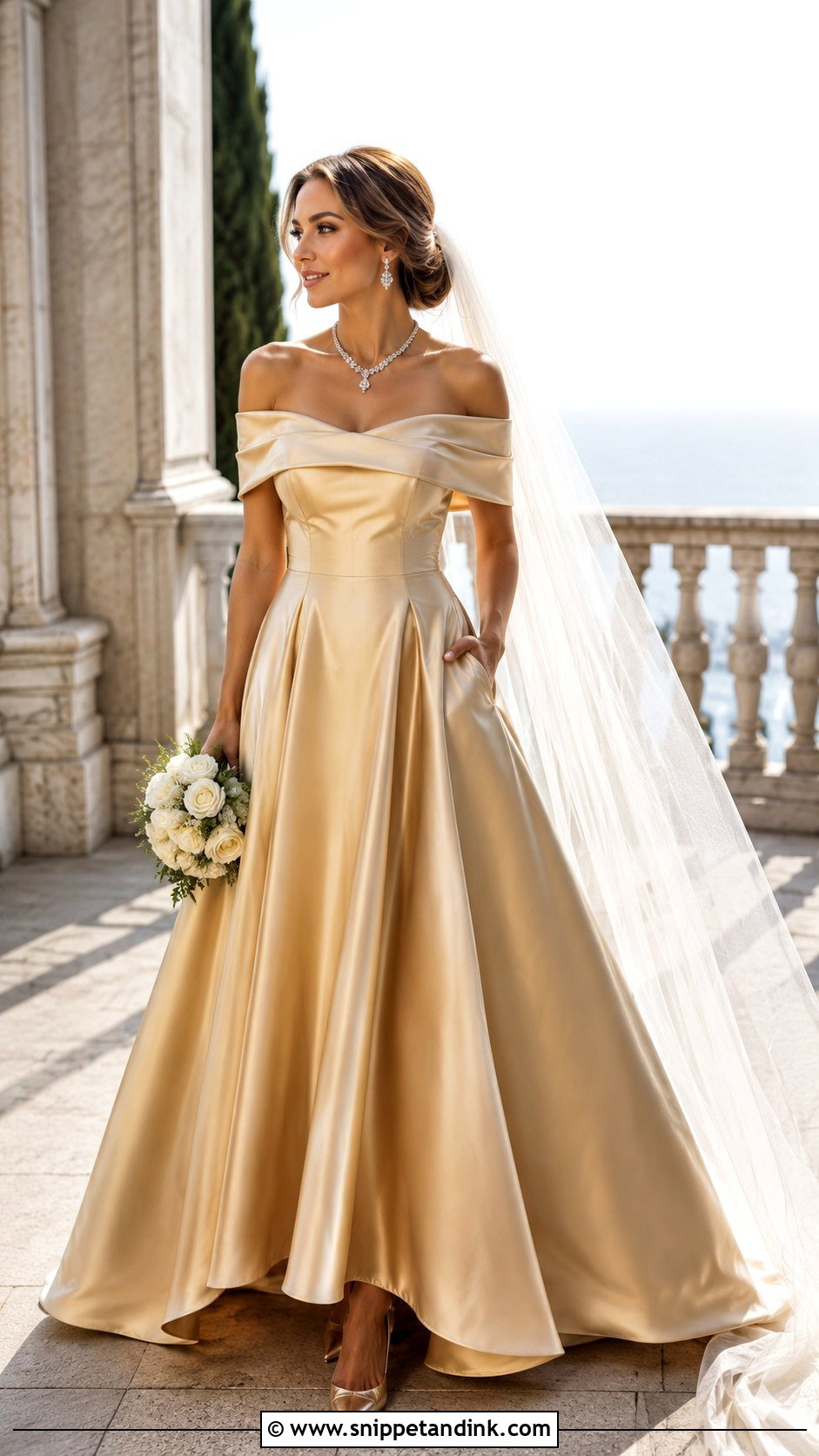
Off-the-shoulder necklines frame the collarbones, which is exactly why they need support inside. Without a silicone grip strip or fashion tape, the band rides down every time you raise your arms. A folded satin neckline looks modern; draped tulle sleeves are softer. I keep jewelry close to the neck, usually a short crystal necklace and matching studs, and put the hair in a low side bun so the shoulders have space. Attach the veil below the bun so it adds length without covering what the neckline is designed to show.
8. Gold Slip Wedding Dress
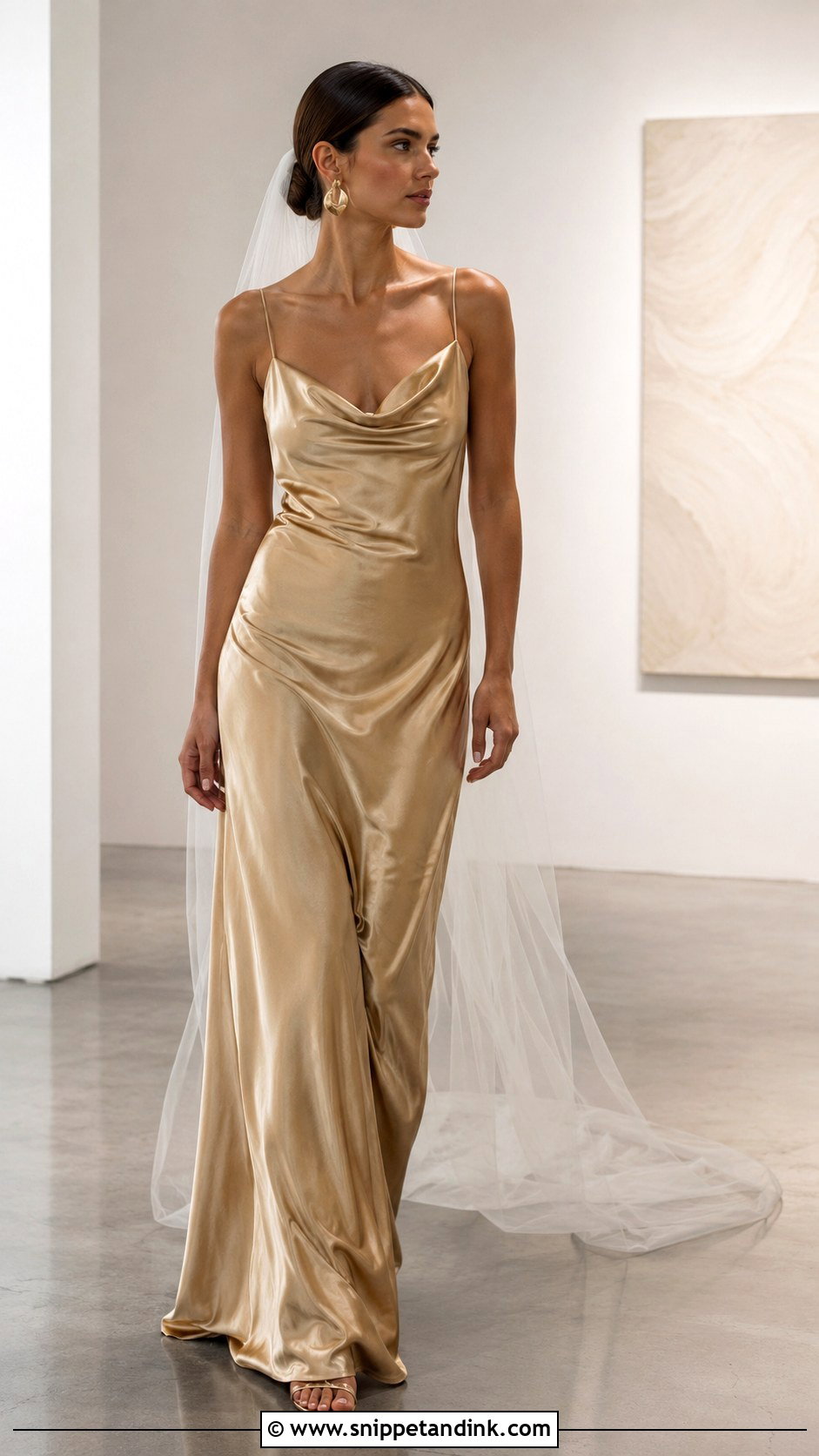
A bias-cut gold slip shows everything, including the fit, so this is the style where I insist on a good tailor. The satin needs enough weight that it skims rather than clings; lightweight charmeuse can show every seam of your underwear. Look for adjustable straps and a lightly shaped bust. Slim gold sandals, sculptural earrings and a small satin clutch suit its clean lines. A sheer floor-length veil for the ceremony, removed later, gives you two moods from one dress. Expect to spend fitting time on the hem, straps and hips, because there is no embellishment to hide a wrinkle.
9. Gold High Neck Wedding Dress
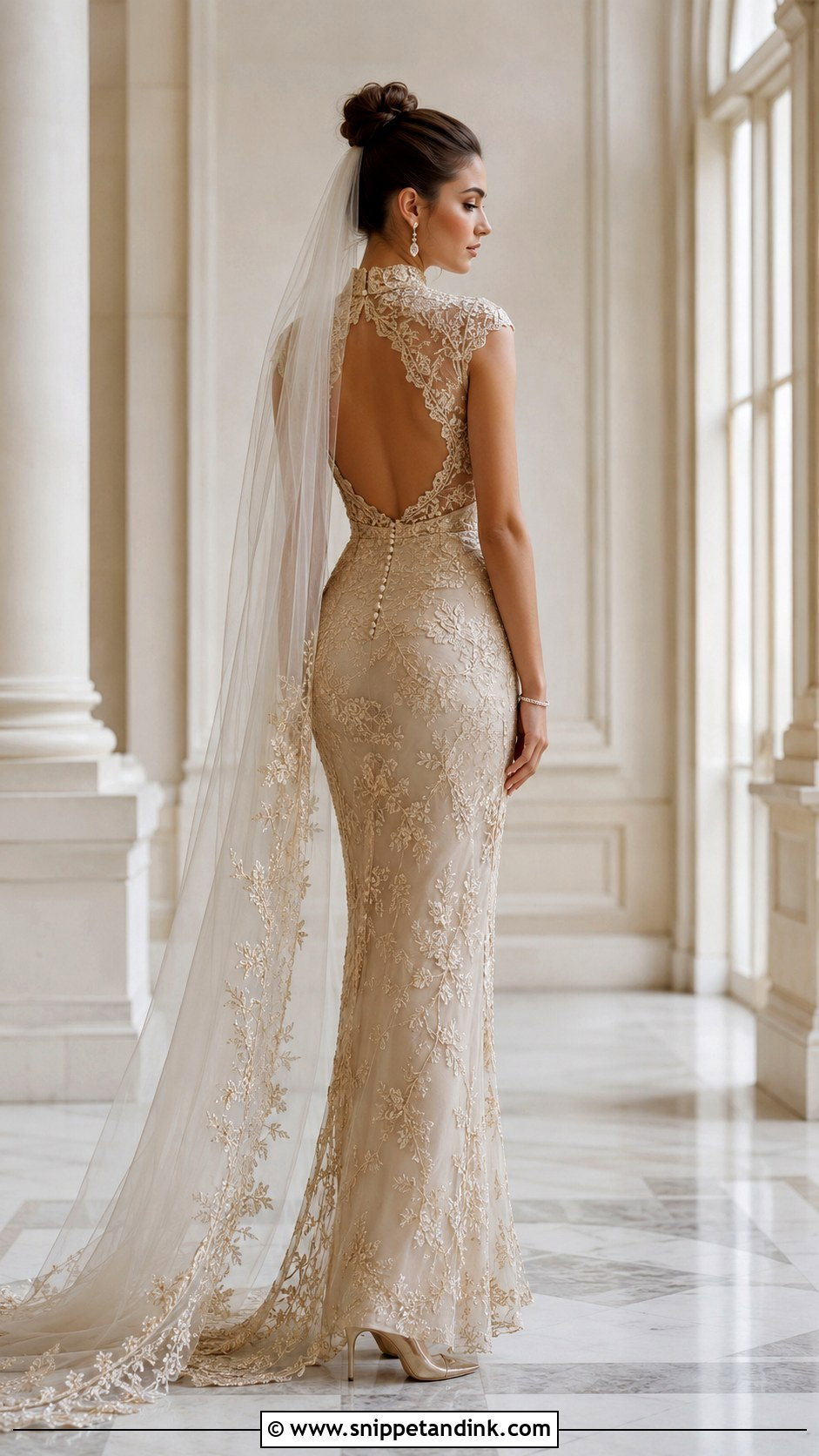
High necklines look most considered when the fabric is interesting, so I’d save this shape for gowns with embroidery, beading or metallic lace that rewards a close look. Sheer embroidered tulle feels delicate; smooth satin looks sharper. Skip the necklace and wear drop earrings instead. The hair should go up, into a high bun or a sleek ponytail, otherwise it piles against the collar. Pin the veil beneath the hairstyle so there’s no extra volume at the neck. An open back or a defined waist balances all that coverage up top.
10. Gold Cape Wedding Dress
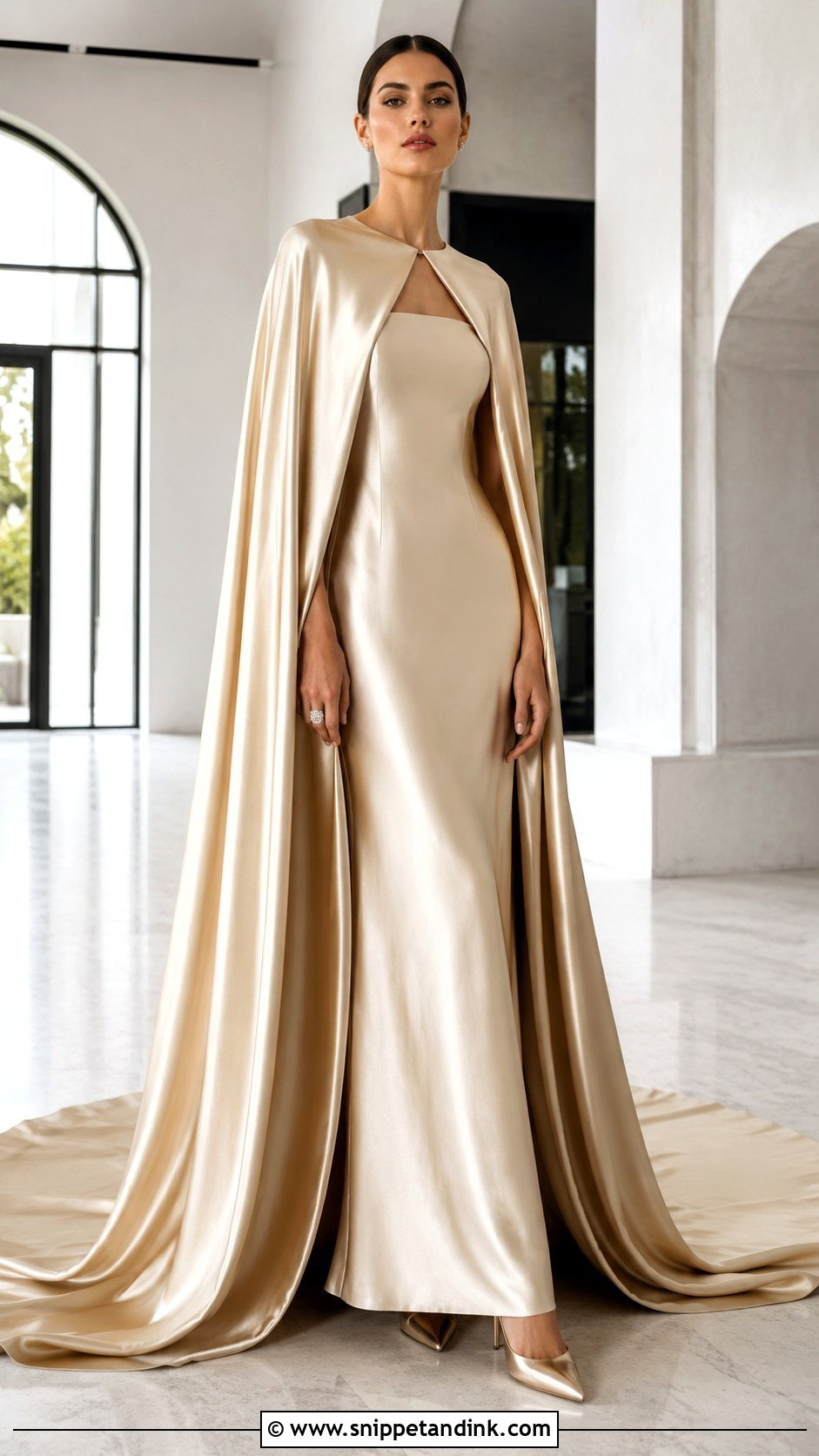
A cape replaces the veil and does a lot of the drama on its own. It can fall from the shoulders, attach at the neckline or extend from a structured bodice into a train. Underneath, I prefer a simple column or A-line so the two layers don’t compete. Check the cape length against your shoe height in the fitting, because a cape that drags on gravel or catches a heel is miserable. If it’s detachable, take it off after the ceremony. It needs room, so it works best in venues with wide aisles. Small earrings, pointed pumps and one ring are all it asks for.
11. Gold Floral Appliqué Wedding Dress
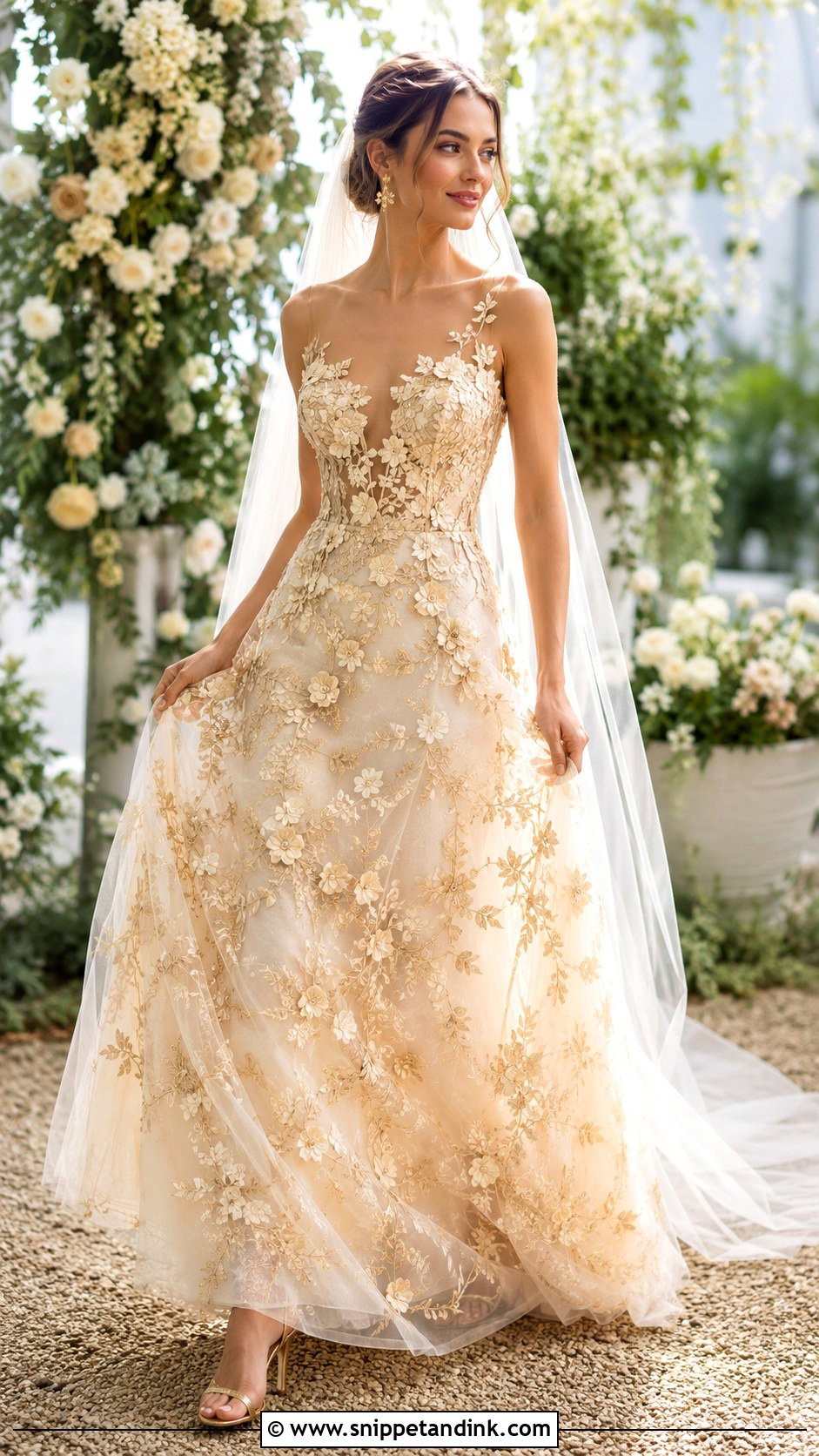
Three-dimensional appliqué looks best when it’s heaviest at the bodice and thins out toward the hem. That placement defines the waist and stops the skirt from looking crowded. A nude or champagne lining lets the gold embroidery and beads stand out. Appliqué flowers catch on lace veils and bouquet wire, so I’d choose a veil with a plain edge and keep the bouquet stems wrapped smoothly. A low textured bun with one or two matching pins is enough; a big floral crown competes with the dress. Garden ceremonies and greenery-filled rooms suit this one.
12. Gold Beaded Column Wedding Dress
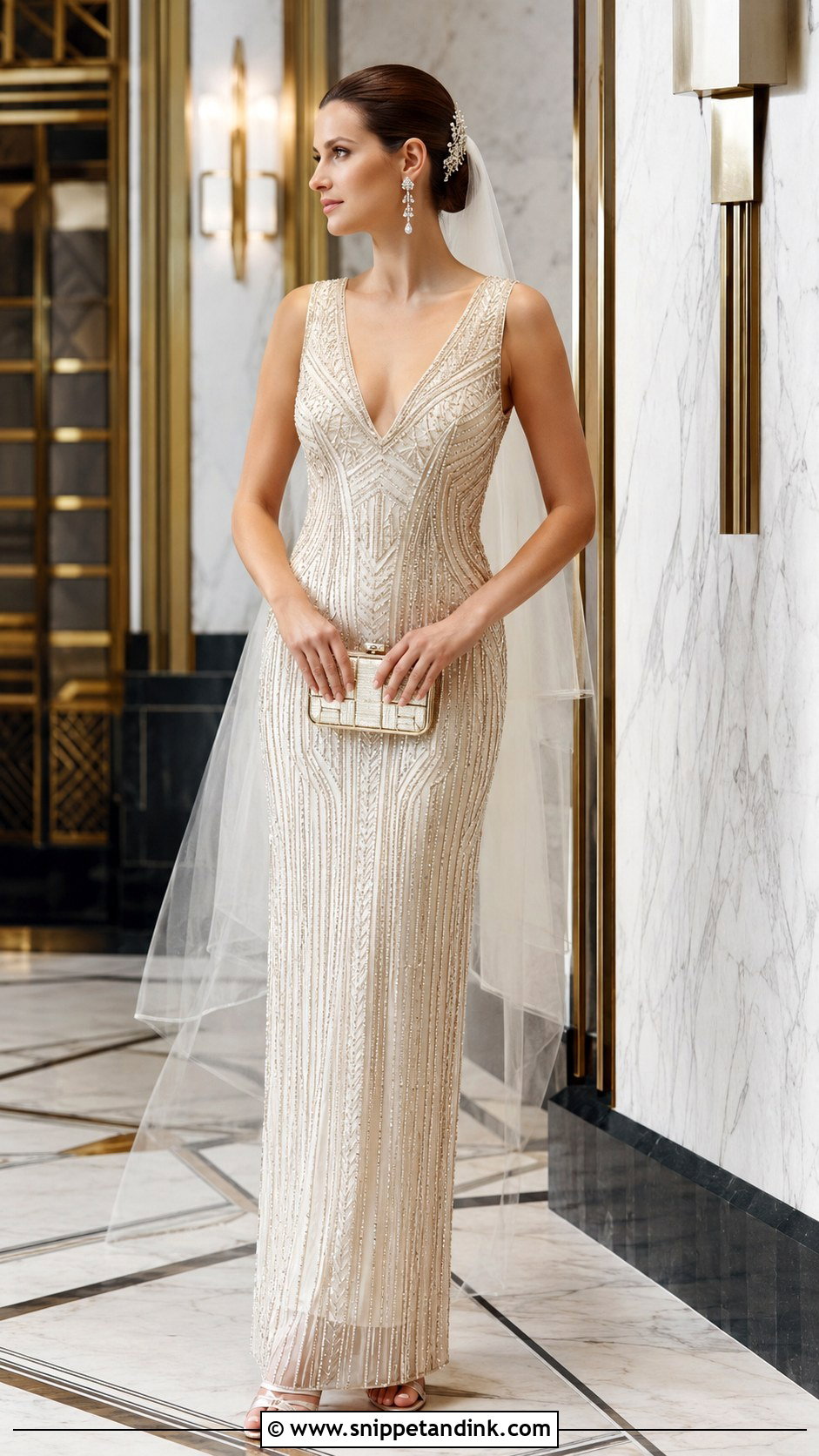
Beaded column gowns are heavier than they look, often noticeably so, and that weight is part of why they hang so well. Vertical beadwork lengthens the figure, while geometric patterns lean Art Deco. I check the inside before anything else: smooth lining, finished seams, no thread ends that will rub. If you’ll be standing for long stretches, pick low metallic sandals over heels. Crystal drop earrings and a structured clutch complement the beads without copying them. A fingertip veil for the ceremony, then a jeweled comb later, keeps the hairstyle sleek. It suits evening receptions in hotels and formal venues.
13. Gold Tulle Princess Wedding Dress
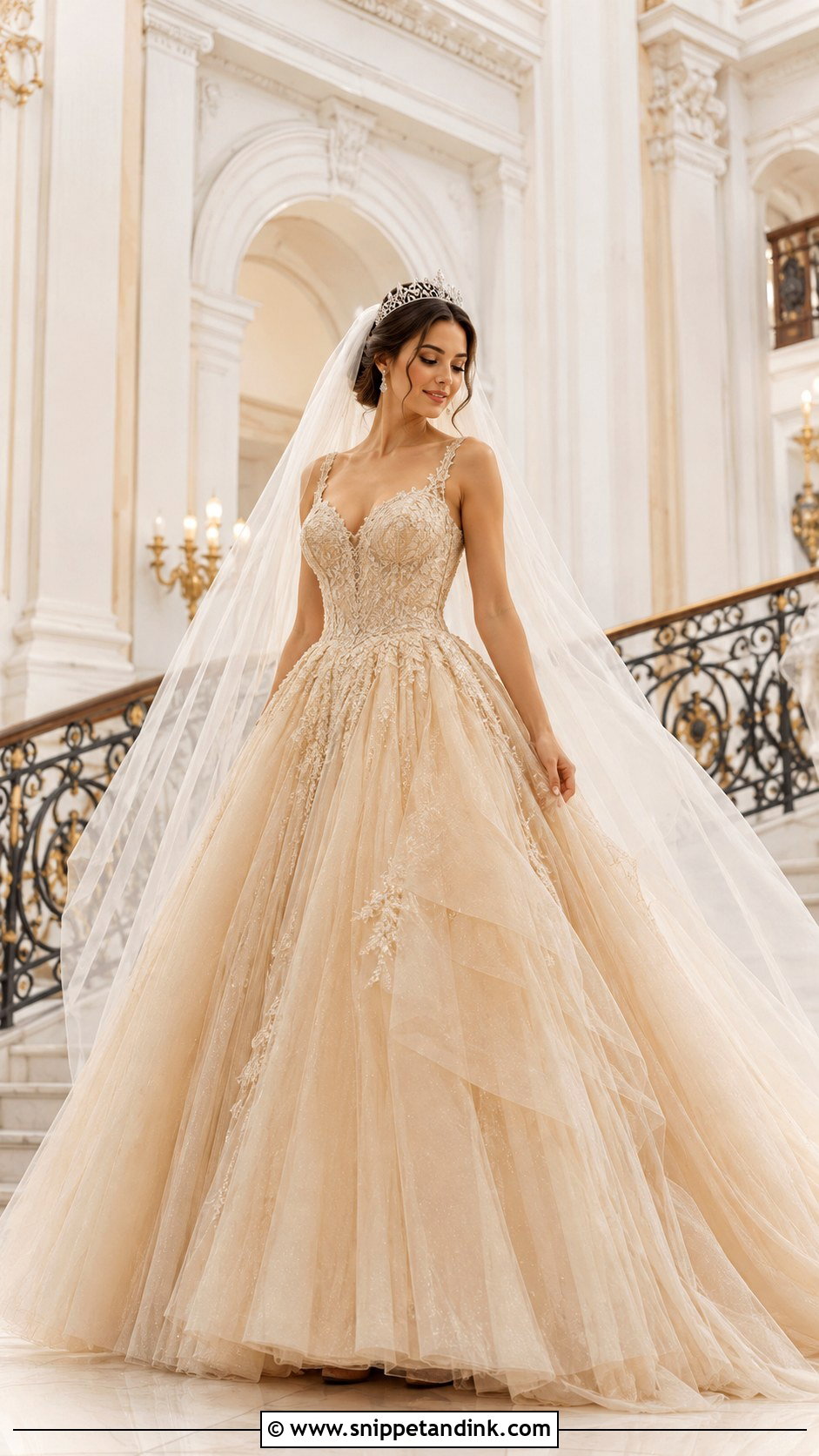
Gold tulle in multiple layers gives you volume without the weight of satin, which is why an airy princess wedding dress can still be comfortable at the end of the night. The fitted bodice and a defined waist keep the skirt from swallowing you. Soft champagne tulle stays subtle; metallic embroidered layers are bolder. Tulle snags on rough floors and stair edges, so I always ask for a bustle and a practice walk with it pinned up. Block heels hidden under the skirt, delicate earrings and a small tiara or crystal comb are enough. A plain cathedral veil can run past the train.
14. Gold Brocade Wedding Dress
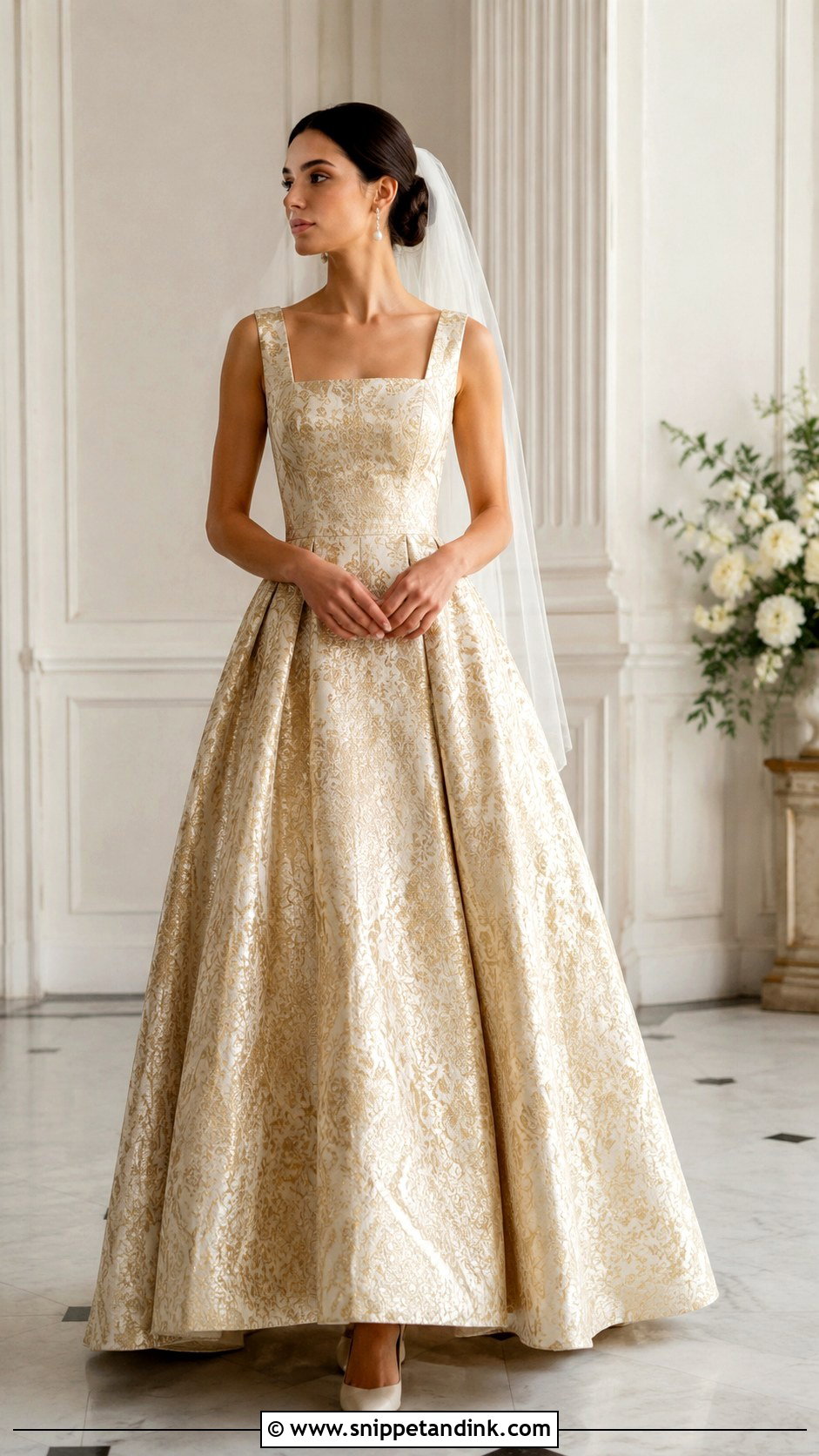
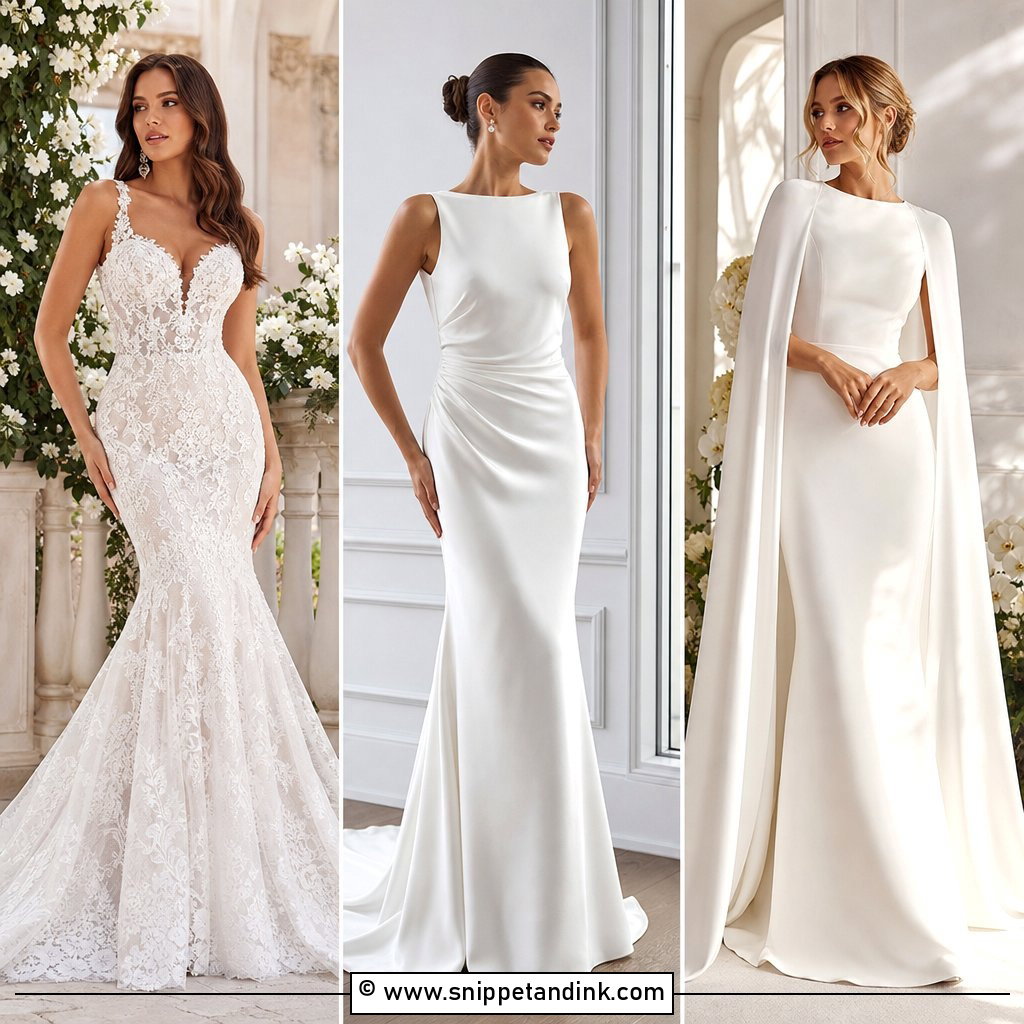
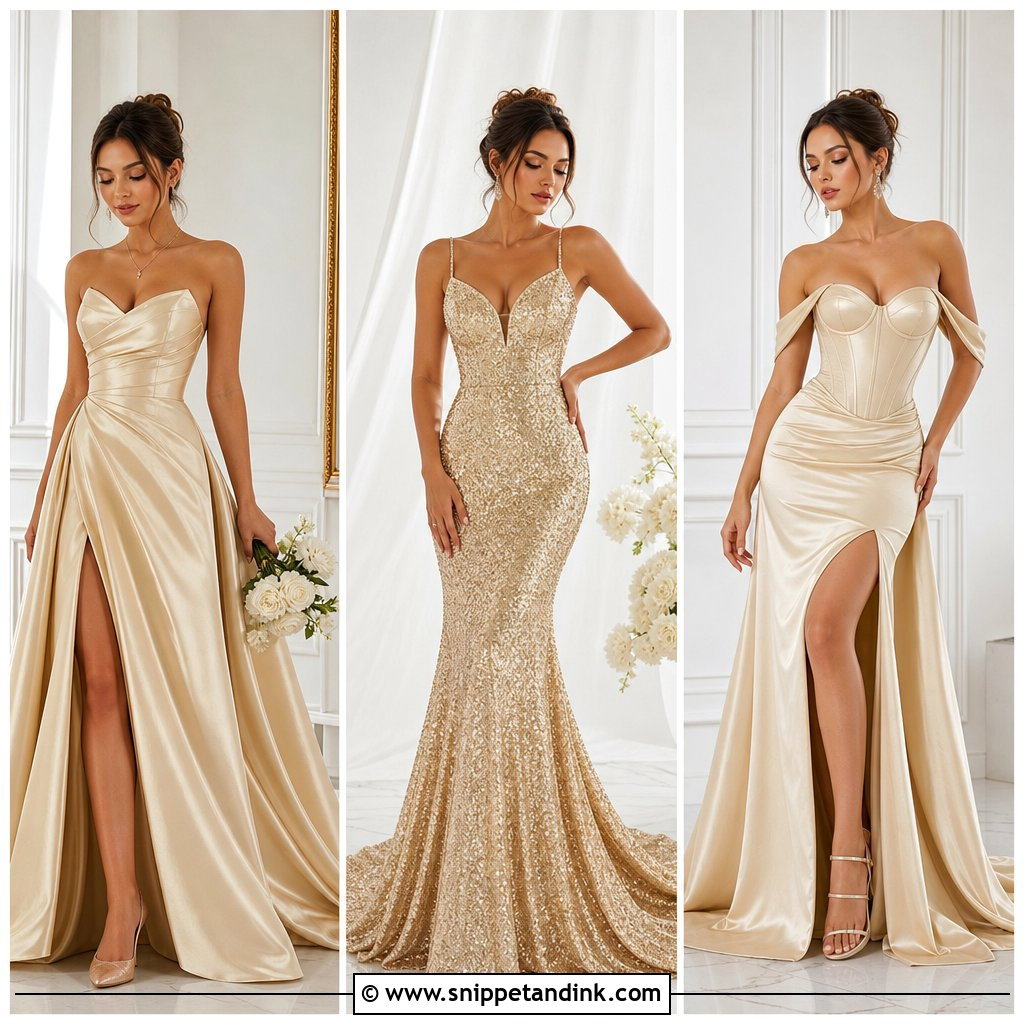
Brocade has a woven pattern with real weight, which is why it holds tailored shapes like ball gowns and square-neck A-lines so well. Scale matters: a large motif on a petite frame can look like upholstery, so I hold the fabric up against the bride before we commit. It also doesn’t drape, so it suits structure rather than flow. Pair it with ivory or muted gold pumps, simple pearls and a polished clutch, and let a plain veil soften the surface. A sleek chignon or smooth half-up style works best. Any ornate accessory beyond that starts to fight the fabric.
15. Gold One Shoulder Wedding Dress
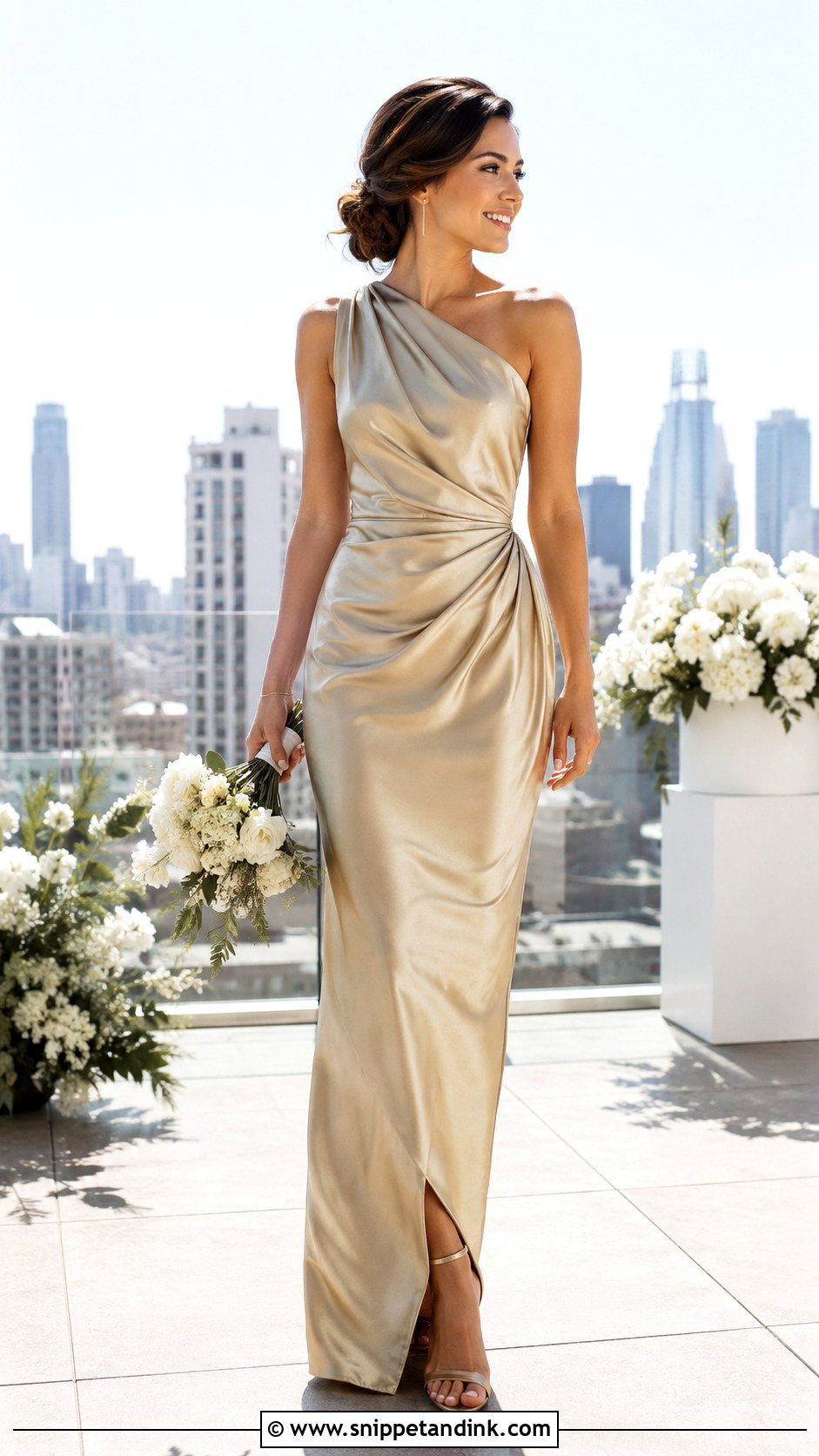
A one-shoulder neckline draws the eye on a diagonal, and every accessory choice should respect that line. Draped satin feels fluid; a fitted beaded version is more evening. I’d skip the necklace and decide on earrings: one statement piece on the bare side, or a pair of slim drops if you prefer symmetry. Wear the hair swept to the open side or in a low bun away from the strap. The one thing I watch at fittings is strap tension, since a single strap carries the bodice and can dig in by evening. Strappy metallic heels and a narrow bracelet finish it.
16. Gold Tea Length Wedding Dress
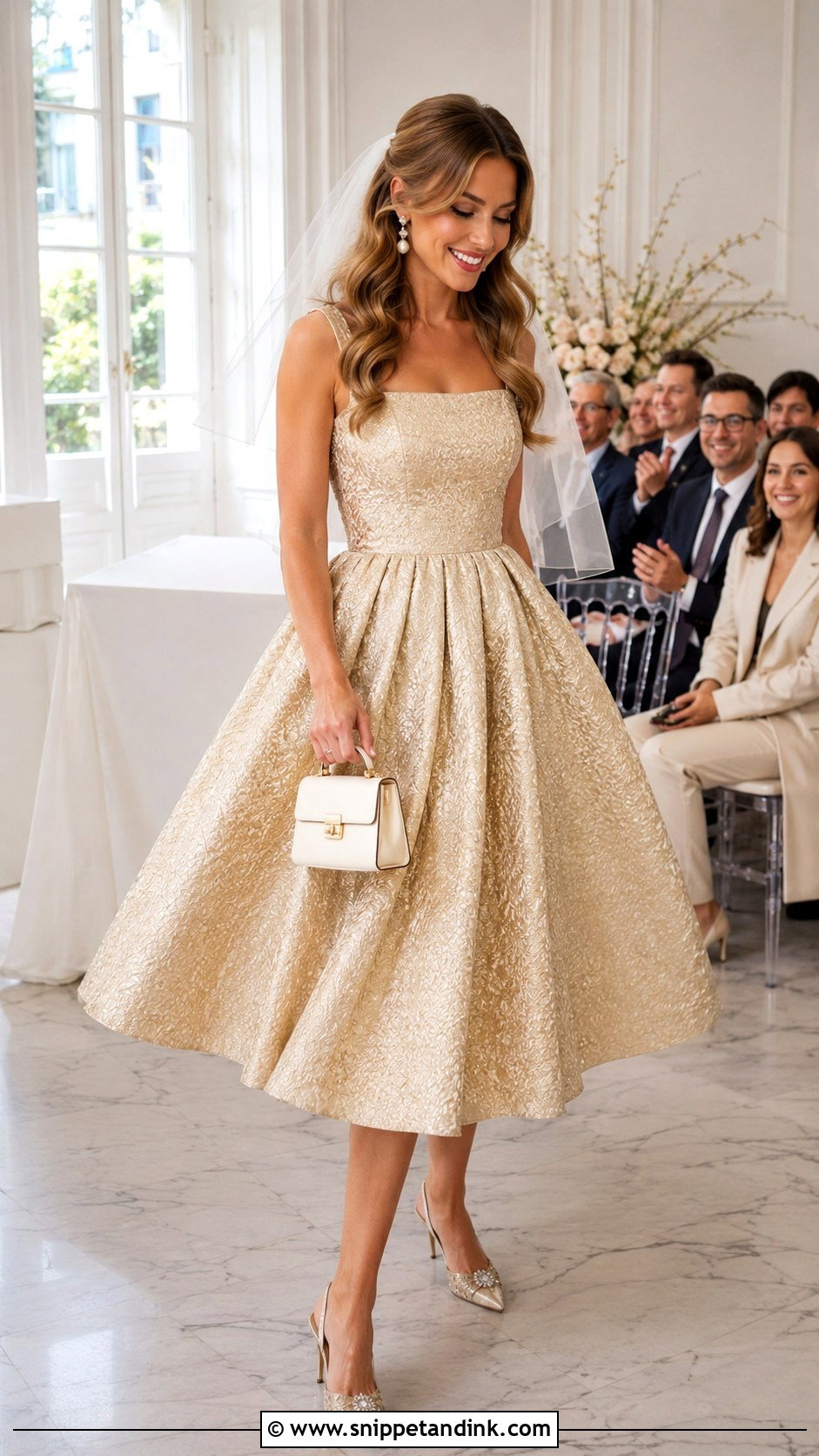
Tea length sits between the knee and the ankle, which means your shoes are part of the outfit in every photo. A fitted bodice with a full skirt pairs well with pointed slingbacks or ankle-strap heels; a straight tea-length dress with a square neckline looks cleaner with simple sandals. Hemming decides whether it looks intentional, so bring the exact shoes to every fitting; even a small heel change moves the hem. Small pearls, a structured mini bag and a short veil keep it bridal. It suits civil ceremonies and relaxed celebrations.
17. Gold Mini Wedding Dress
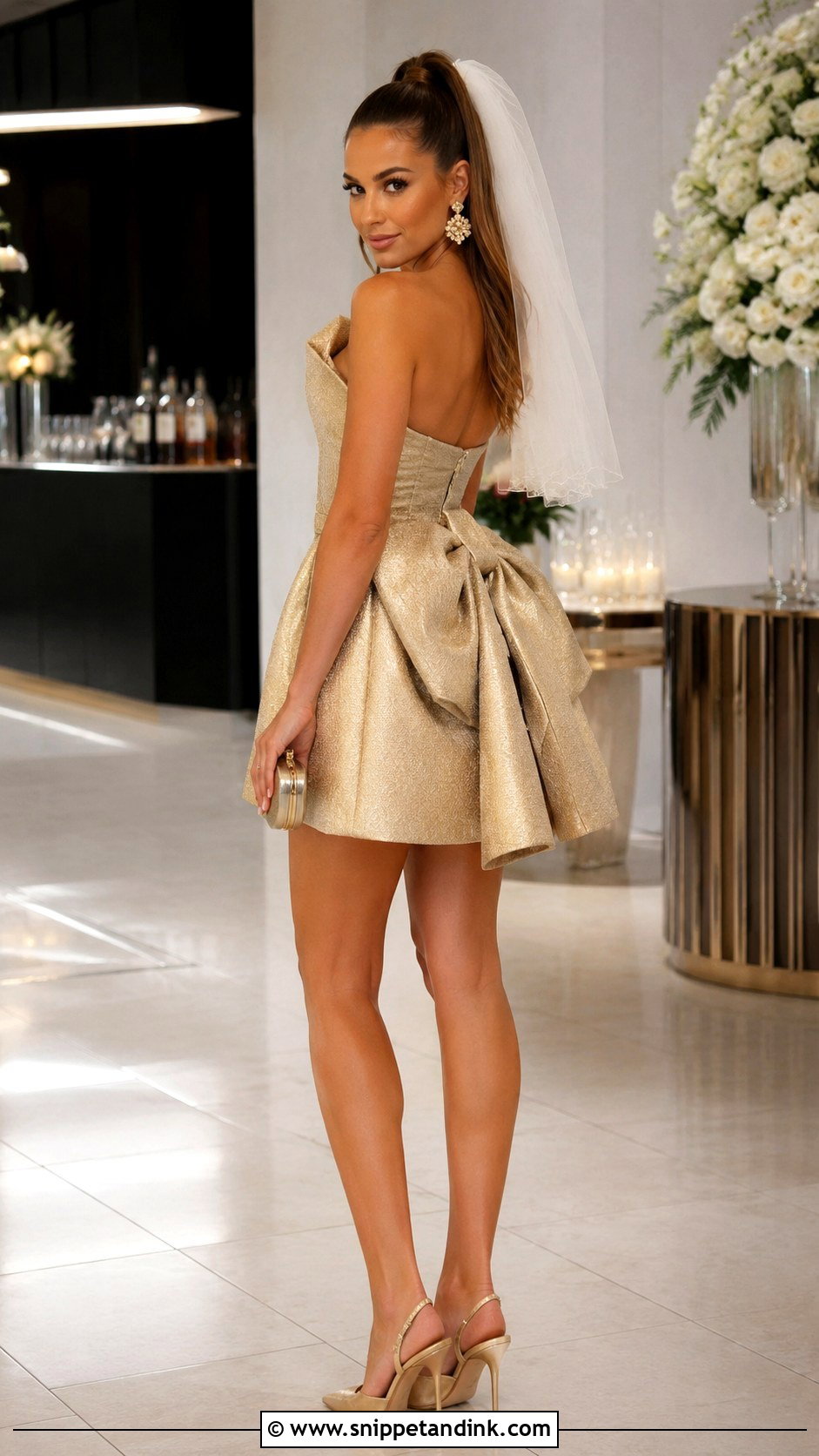
A gold mini reads as a celebration piece, so I steer brides toward it for the courthouse, the reception or the after-party rather than a formal church ceremony. Structure keeps it bridal: a bow, a detachable overskirt or a sculpted neckline. Before buying, sit down in front of a mirror. Minis ride up when seated, and you’ll be sitting a lot. Pointed pumps or slingbacks balance the short hem. Choose either statement earrings or a short veil as the playful note, not both. A high ponytail or a curled bob suits the shape.
18. Gold Plus Size Wedding Dress
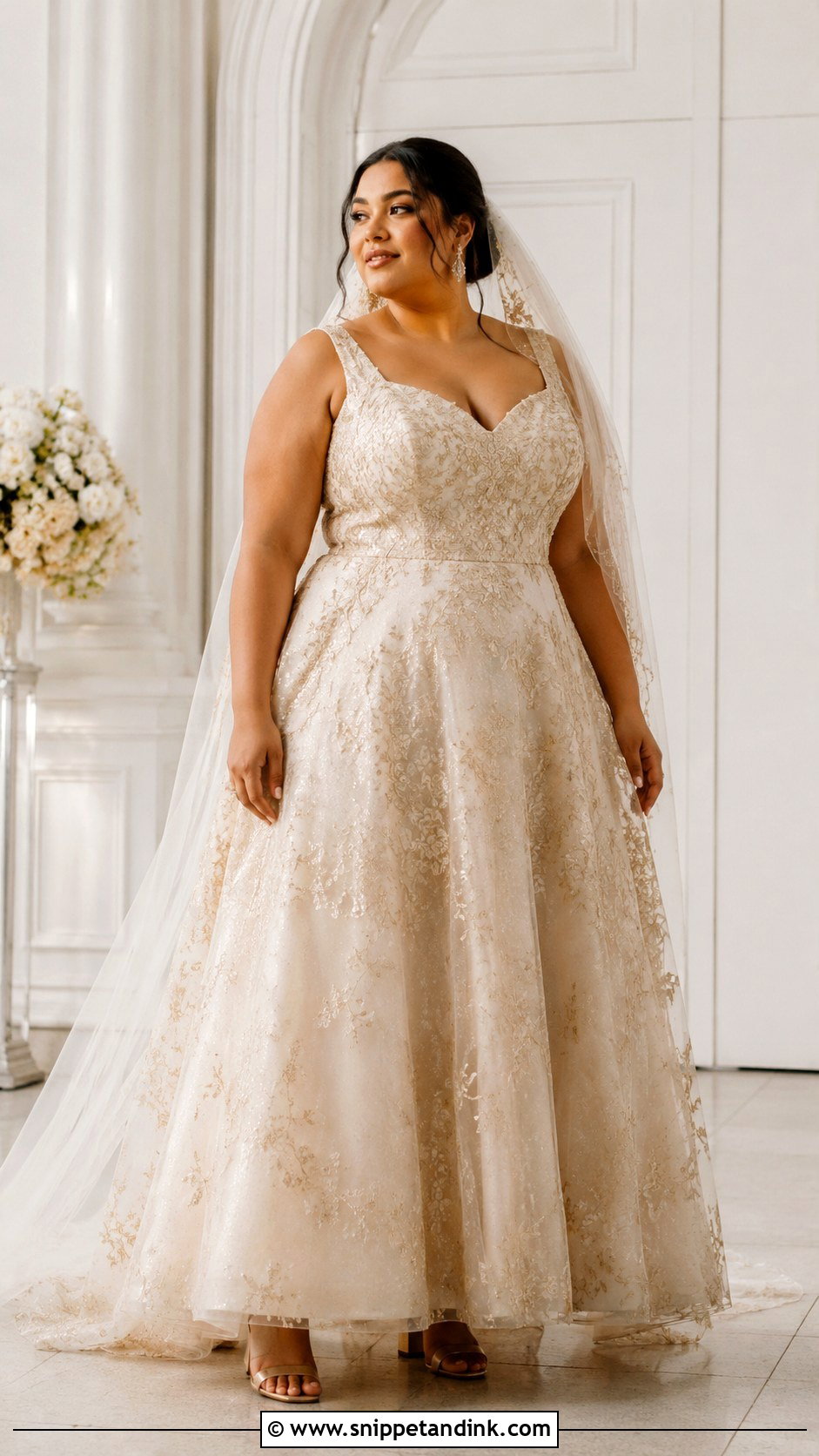
For plus size brides, I start with support and fit, not with hiding anything. An A-line with a structured bodice defines the waist; a fitted trumpet silhouette highlights curves with more drama. Internal boning, supportive cups and wider straps make a real difference by evening, and good lining stops metallic fabric from rubbing. Block heels, medium-scale earrings and a veil that frames the dress work well. A smooth bun or side-parted waves balance a fuller skirt. Most of the polish comes from alterations at the bust, waist, hips and hem.
19. Gold Modest Wedding Dress
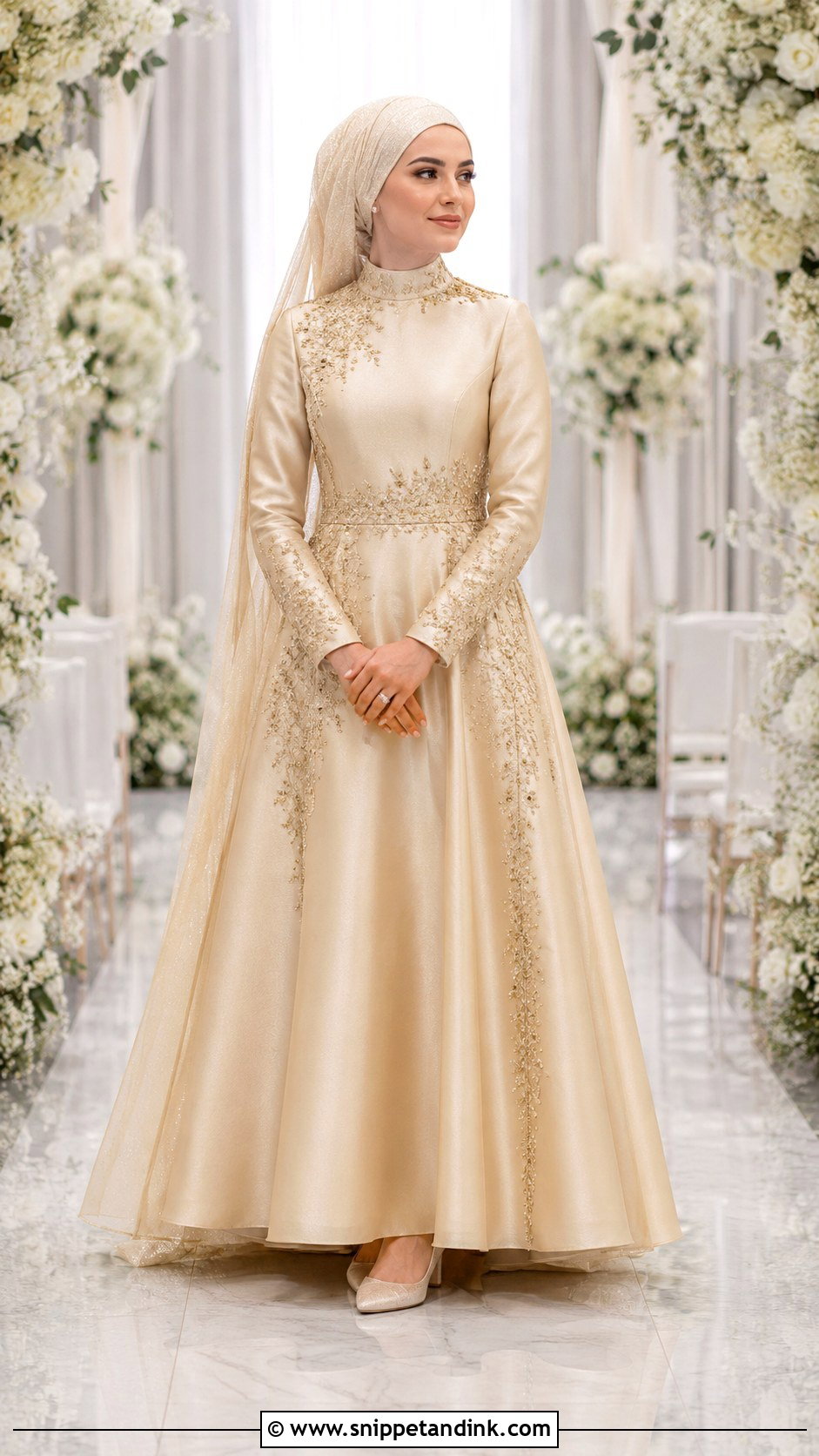
Modest gold gowns work best when the fabric does the talking. I look for long sleeves, a high neckline and an opaque bodice, often in satin or crepe, with a softly defined waist so full coverage doesn’t look shapeless. Embellishment works best concentrated at the cuffs or neckline. If you wear a head covering, choose a lightweight fabric in a matching tone and bring it to fittings, because it changes how the neckline sits. Closed-toe champagne pumps and crystal studs complete it. An A-line or column skirt keeps the line clean and comfortable.


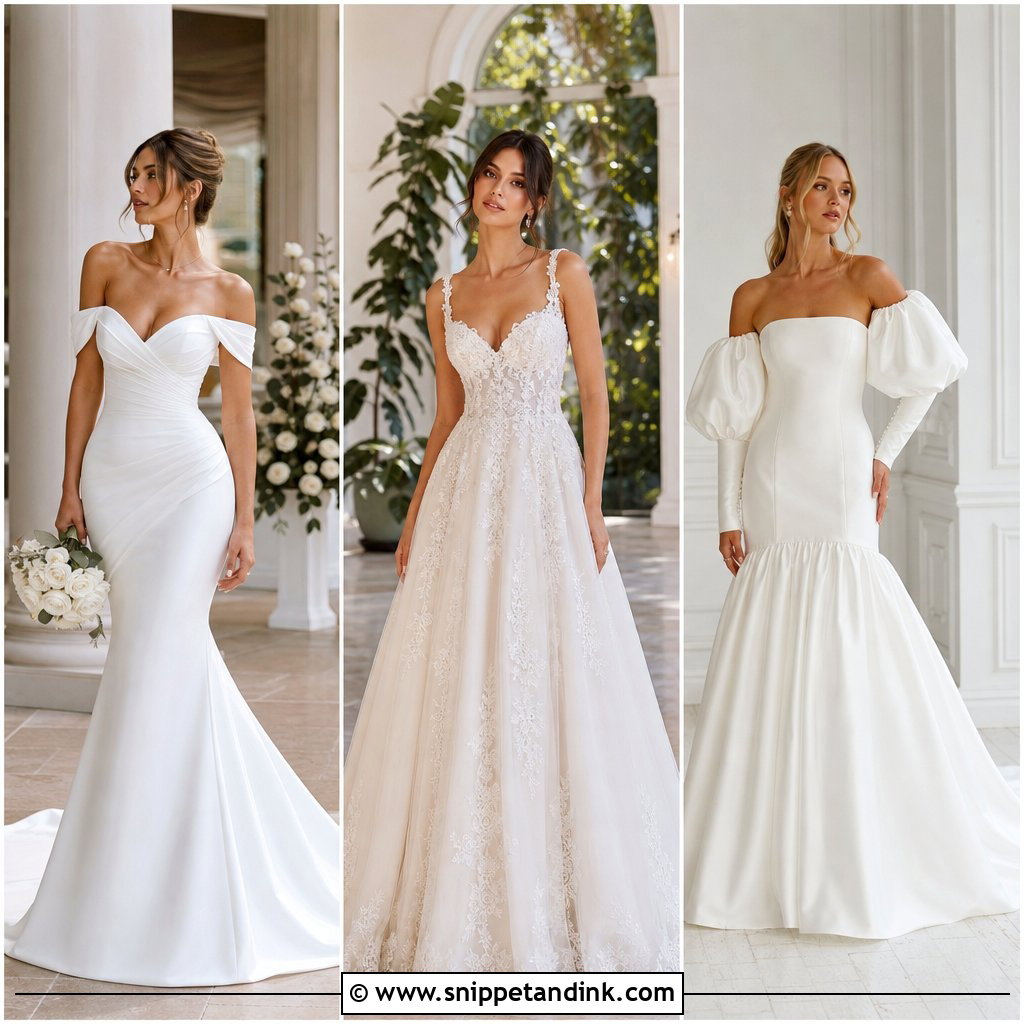
20. Gold Reception Wedding Dress
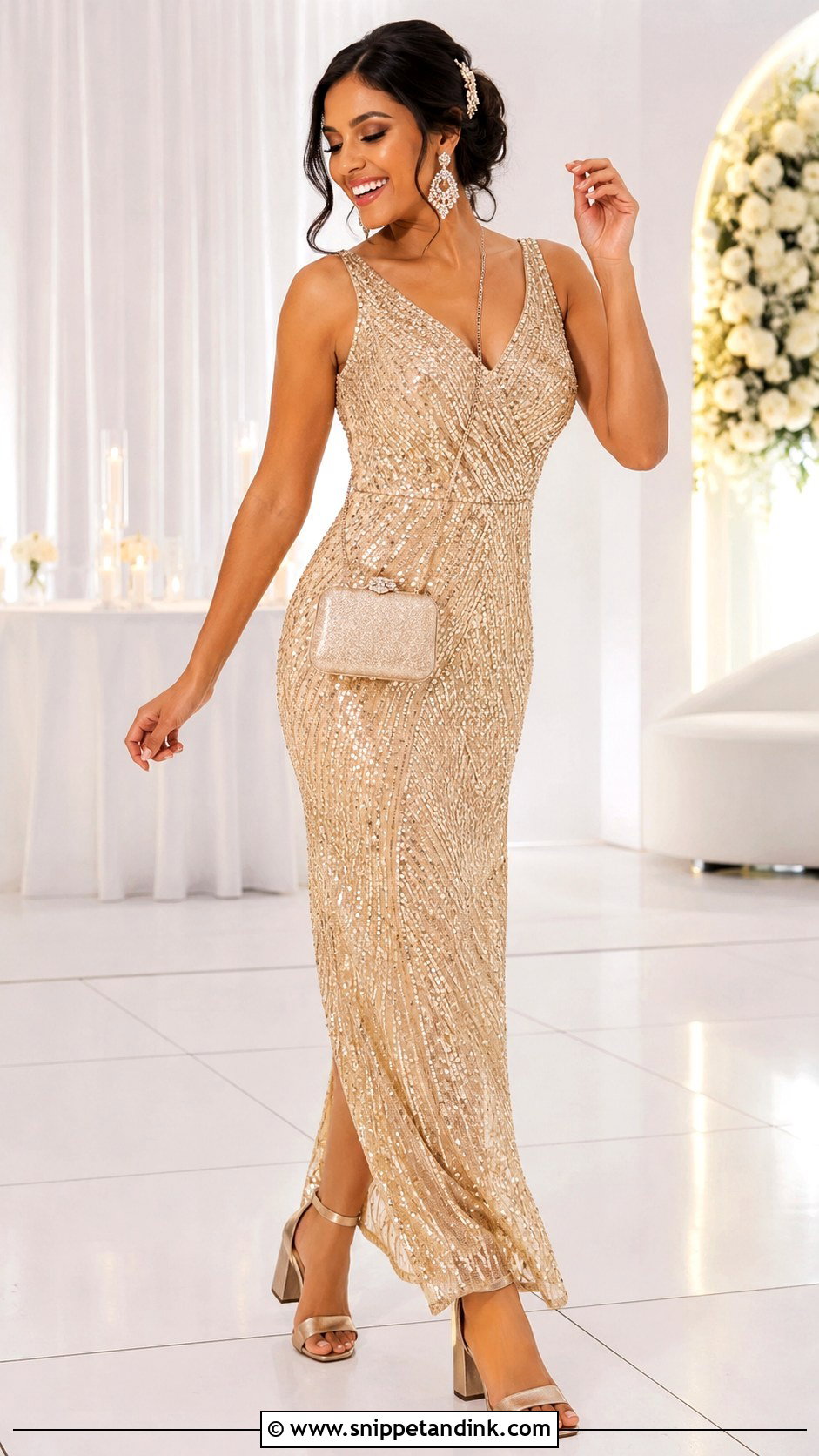
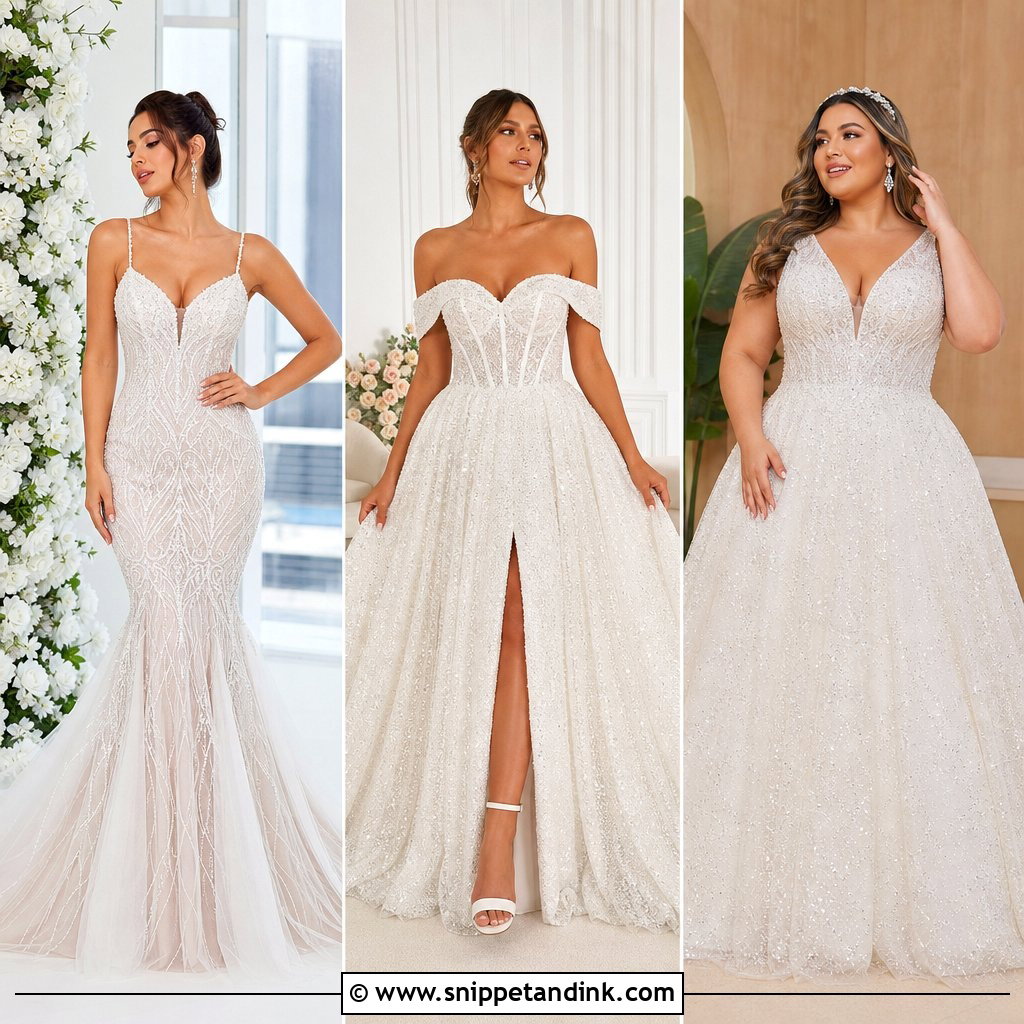
A reception dress has one job: let you move. I’d choose something you can dance and sit in, like an ankle-length sequin dress, a fluid satin midi or a structured mini with a removable overskirt. Heavy beading needs a full lining so it doesn’t scratch, and the hem shouldn’t catch on your shoes. Block-heel sandals or embellished flats will carry you further than stilettos. Swap the veil for a jeweled clip and wear statement earrings. This second bridal look can be bolder than your ceremony gown, as long as it still sits within the wedding palette.
Pressing, Wearing and Storing Metallic Fabric
Gold fabrics get their shine in different ways, and each one needs slightly different handling. Metallic threads can scorch or dull under a hot iron, sequins warp under direct heat, and satin shows every water spot. Here is how I handle a gold gown from delivery to the morning after.
In the weeks before
Hang it in a breathable cotton bag, never in plastic, and store it away from sunlight, which can fade dye and dull metallic yarn. For creases, I use a steamer held several inches away, working from the inside of the skirt. Never iron sequins or beading directly; if an area must be pressed, turn it inside out and use a press cloth on low heat.
On the day
Spray perfume and let deodorant dry before you step into the dress, since both can leave marks on satin and tarnish metallic threads. Put on the gown after your makeup, with a scarf over your face as you step in. Pack a small kit with a lint roller, clear thread, a needle and a few safety pins for loose sequins.
Afterward
Get it cleaned within a few weeks, before sugar and sweat stains oxidise and turn brown. Tell the cleaner exactly what is metallic, beaded or sequined. Store it flat or folded with acid-free tissue in an archival box, and check it every year or so for discoloration.
Which Gold Will Still Feel Right After Ten Hours?
Every gown here can work, but only in the right shade and fit for the bride wearing it. Champagne satin, rose gold lace, brocade and a sequin mini all ask different things of you. I’d start with the shade against your face in daylight, then the silhouette you can sit and dance in, then the accessories, keeping them quieter as the dress gets louder. Bring your shoes to every fitting. Think about the venue, the season and how the dress will look in photographs. The right gold is the one you stop noticing because it feels like yours.
You'll Like These Ideas:



Leave a Reply