
Gold can make a bride look regal, modern or softly romantic, and the difference comes almost entirely from fabric and finish. A champagne satin gown, an antique-gold Kanjeevaram and a rose-gold lehenga are all “gold”, yet they suit very different brides. The list below moves between embroidered lehengas, silk sarees, structured gowns, shararas and draped sets. Across all of them, my rule is the same: when the outfit shines, the jewellery, shoes and makeup should calm it down rather than add more glitter. Each look comes with the accessories I’d pair and the fitting checks I’d make.
Real Zari, Tested Zari and Why Your Lehenga Weighs What It Does
Most golden Indian bridalwear gets its shine from zari, and the type of zari changes the weight, the price and how the outfit ages. It’s worth asking about before you fall in love with a piece.
The three kinds you’ll hear about
- Real zari: fine silver wire coated with gold, wound around silk. It’s the most expensive, feels heavy and soft, and darkens slowly with age.
- Tested zari: copper wire electroplated with silver or gold. It looks close to real zari at a lower cost and is what many good bridal pieces use.
- Imitation or metallic yarn: polyester film with a metallic coating. It’s light and won’t tarnish, but it can feel scratchy and looks flatter up close.
Heavy zardozi lehengas can weigh several kilos once you add the can-can and dupatta. When a bride tells me she wants to dance all night, I steer her to lighter tested zari or to a second outfit for the reception. Ask the shop to weigh the skirt, or simply hold it up for a full minute before you buy.
1. Classic Golden Bridal Lehenga
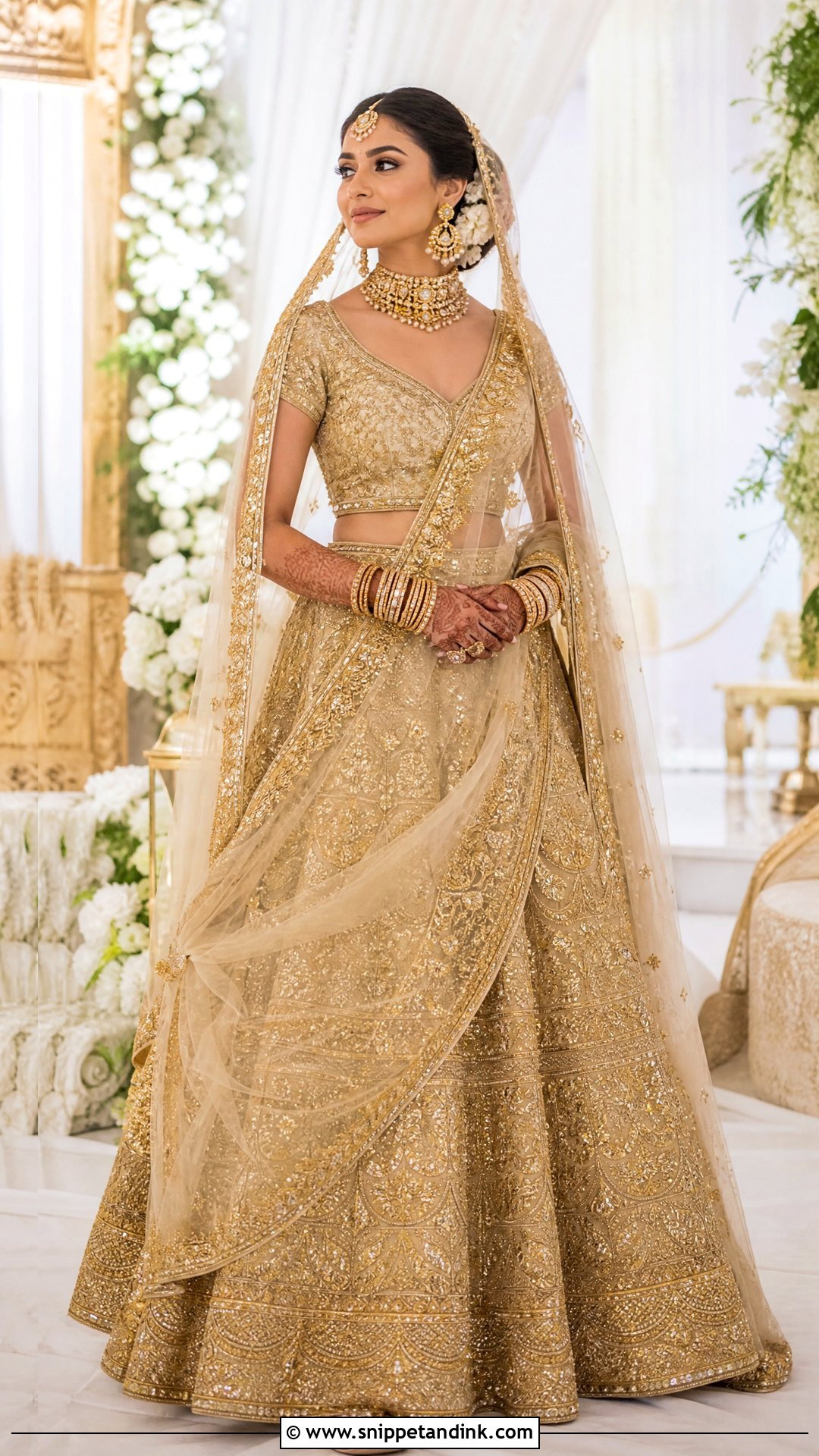
A classic golden bridal lehenga relies on texture rather than colour contrast, so the embroidery has to do the talking. Zari, zardozi or metallic threadwork on a full, structured skirt gives it depth. A fitted blouse with a balanced neckline keeps the volume tidy, and a sheer embroidered dupatta softens the area around your face. Kundan choker, earrings, stacked bangles and gold juttis complete it. Gold jewellery on a gold lehenga can merge into one flat surface in photos, so I break it up with pearls or emerald drops. A sleek bun and rose-neutral makeup finish it.
2. Champagne Gold Bridal Gown
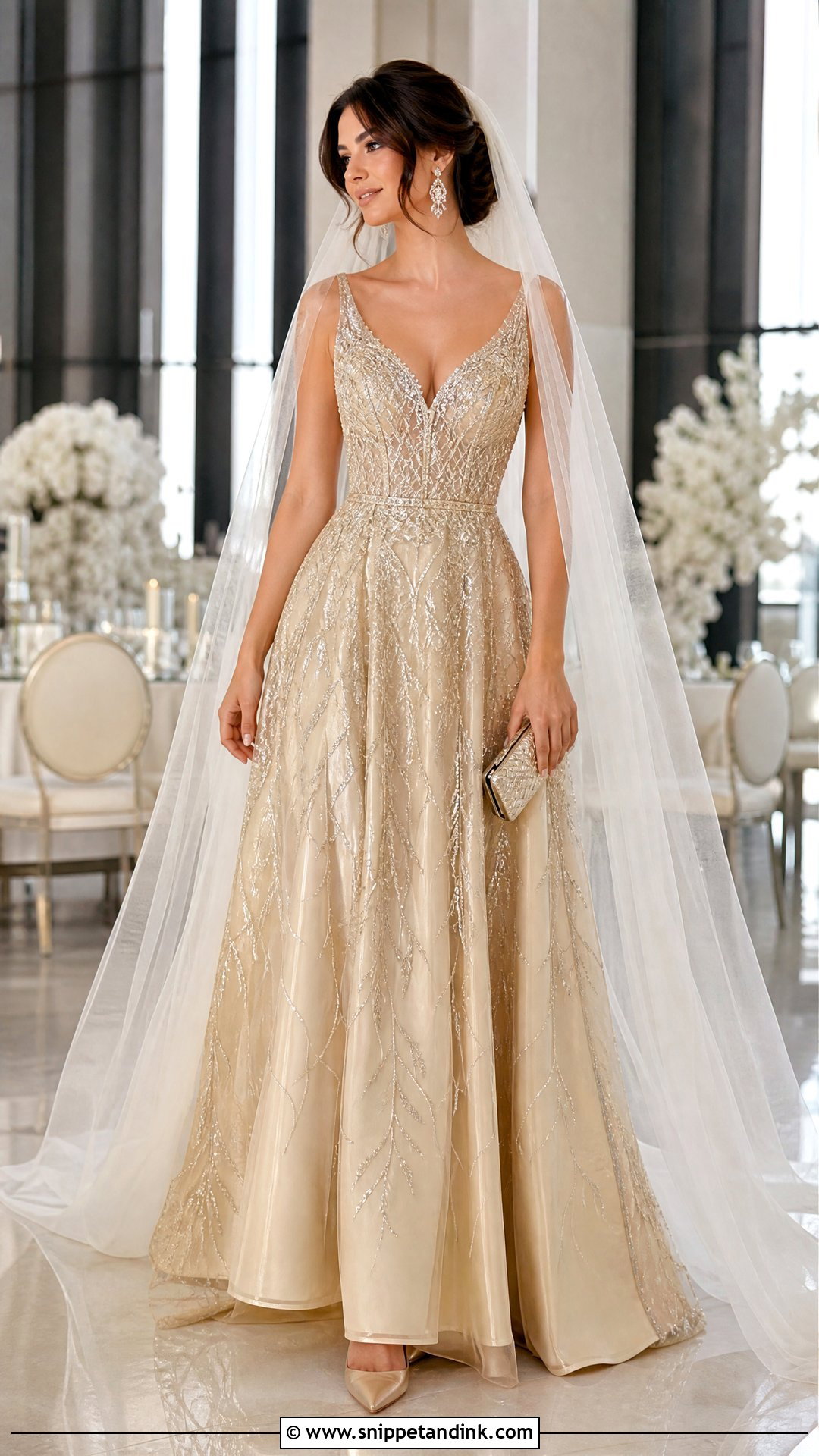
Champagne is the shade I offer brides who want gold to whisper. A floor-length gown with a fitted bodice and flowing skirt, worked with fine sequins or crystal embroidery, gives dimension without weight. Pointed champagne heels, a small metallic clutch and crystal drops match the tone. A sheer cathedral veil with a narrow embellished edge carries the colour down the aisle. Soft curls, luminous skin and a muted pink lip suit it. Is it right for you? Hold the fabric against your bare face in daylight; if you look tired, try a warmer gold.
3. Rose Gold Bridal Lehenga
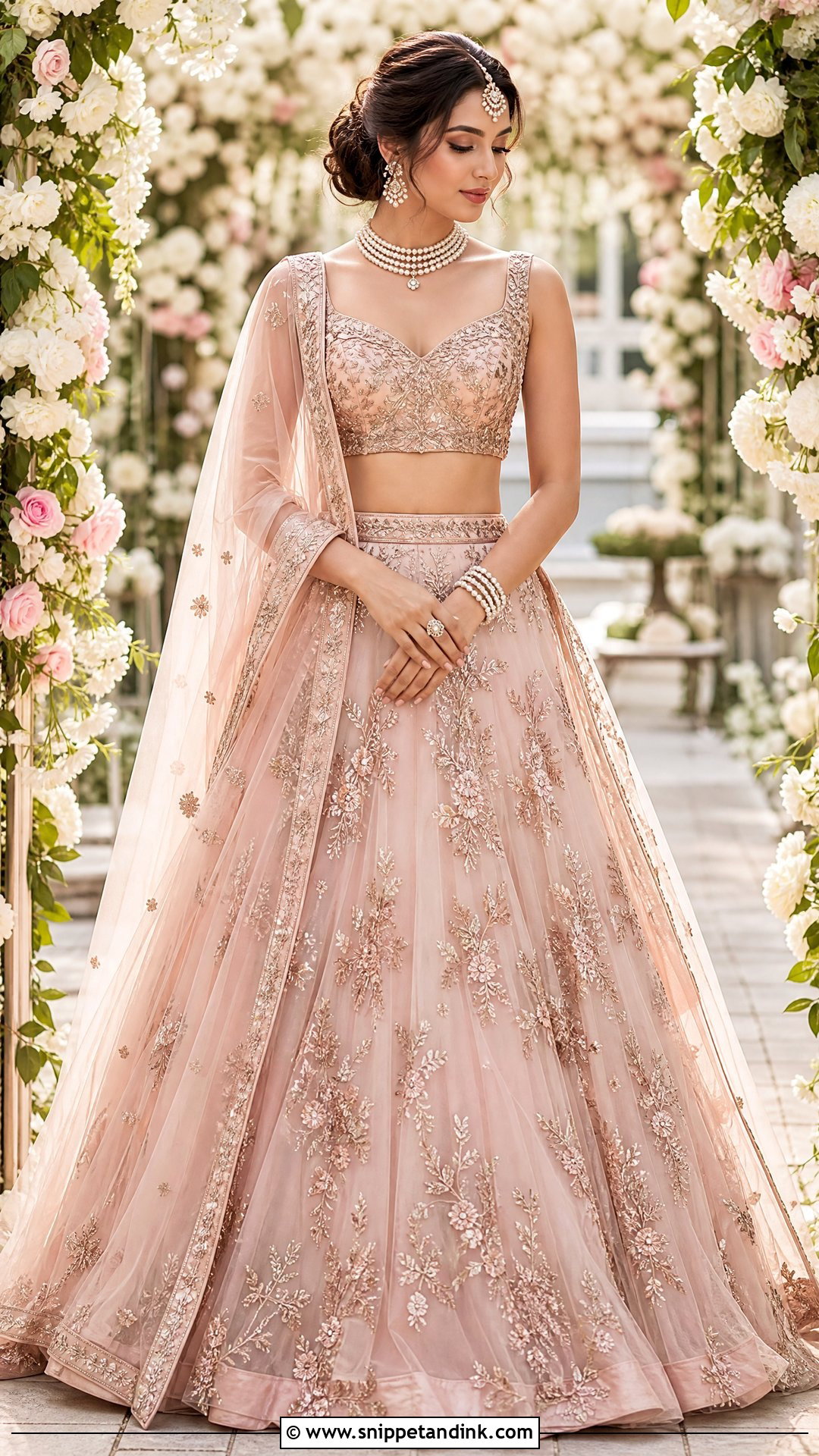
Rose gold works when the pink is in the base fabric and the gold sits in the embroidery, rather than the whole skirt being reflective. Pale pink with rose-gold floral work looks soft and current. A structured blouse with short sleeves or slim straps keeps it modern. I drape a light tulle dupatta over one shoulder so the skirt and jewellery stay on show. Rose-gold heels, pearl-and-crystal earrings, a slim maang tikka and a matching potli finish it. Blush, soft brown eyes and a textured low bun suit a daytime or garden ceremony.
4. Antique Gold Bridal Saree
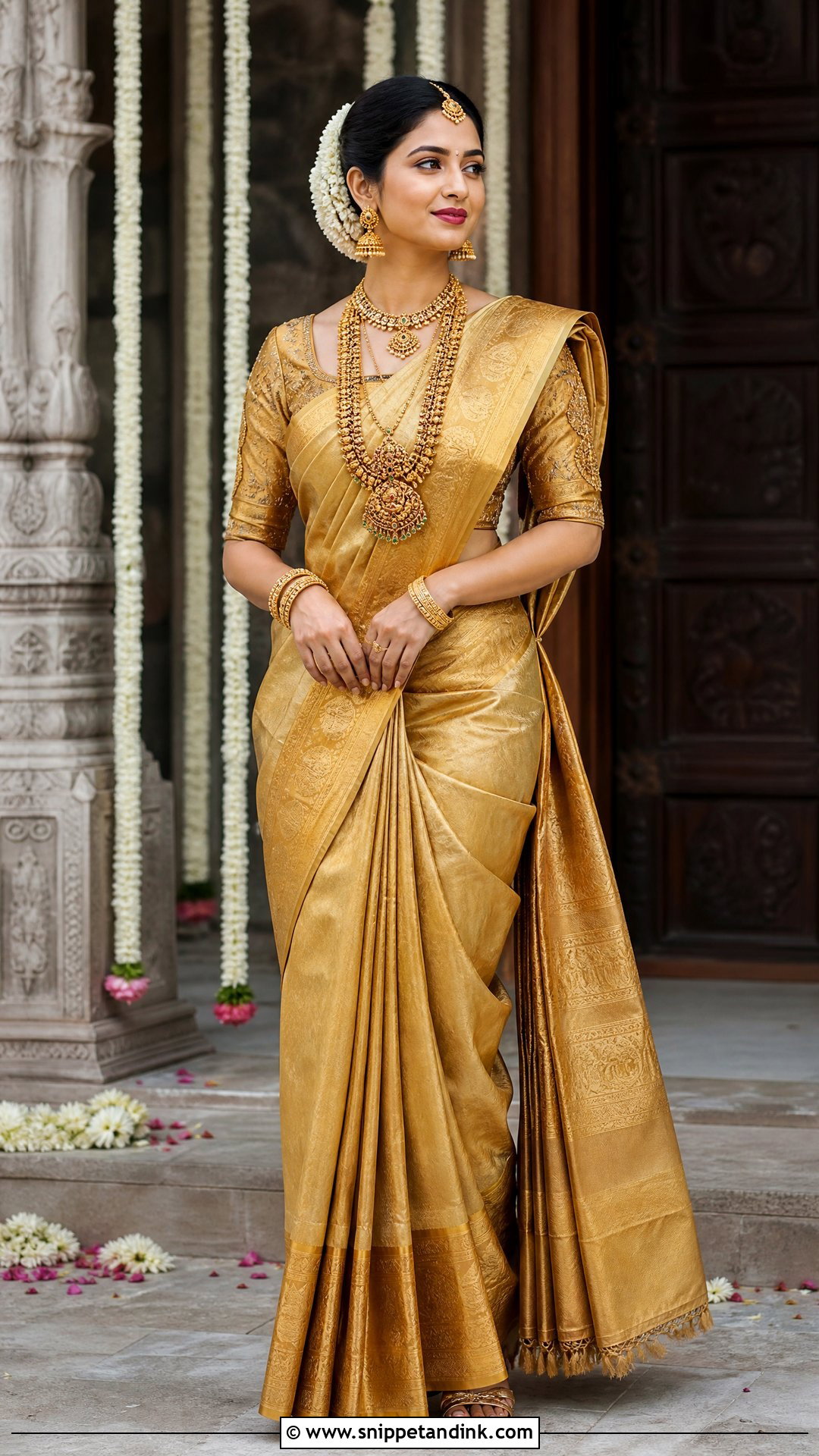
Antique gold has a muted, slightly aged sheen, and it looks like heritage before you add a single piece of jewellery. Silk, brocade or handwoven fabric with a dense border is the base. I’d pair it with a fitted blouse featuring elbow-length sleeves and traditional work. Neat pleats keep it secure and let the weave show. Temple jewellery, a layered necklace, statement earrings, bangles and embroidered sandals suit the palette. White flowers around a smooth bun give a crisp contrast against the deeper gold. Kohl-lined eyes and a warm berry lip hold their own in photographs.
5. Ivory And Gold Bridal Gown
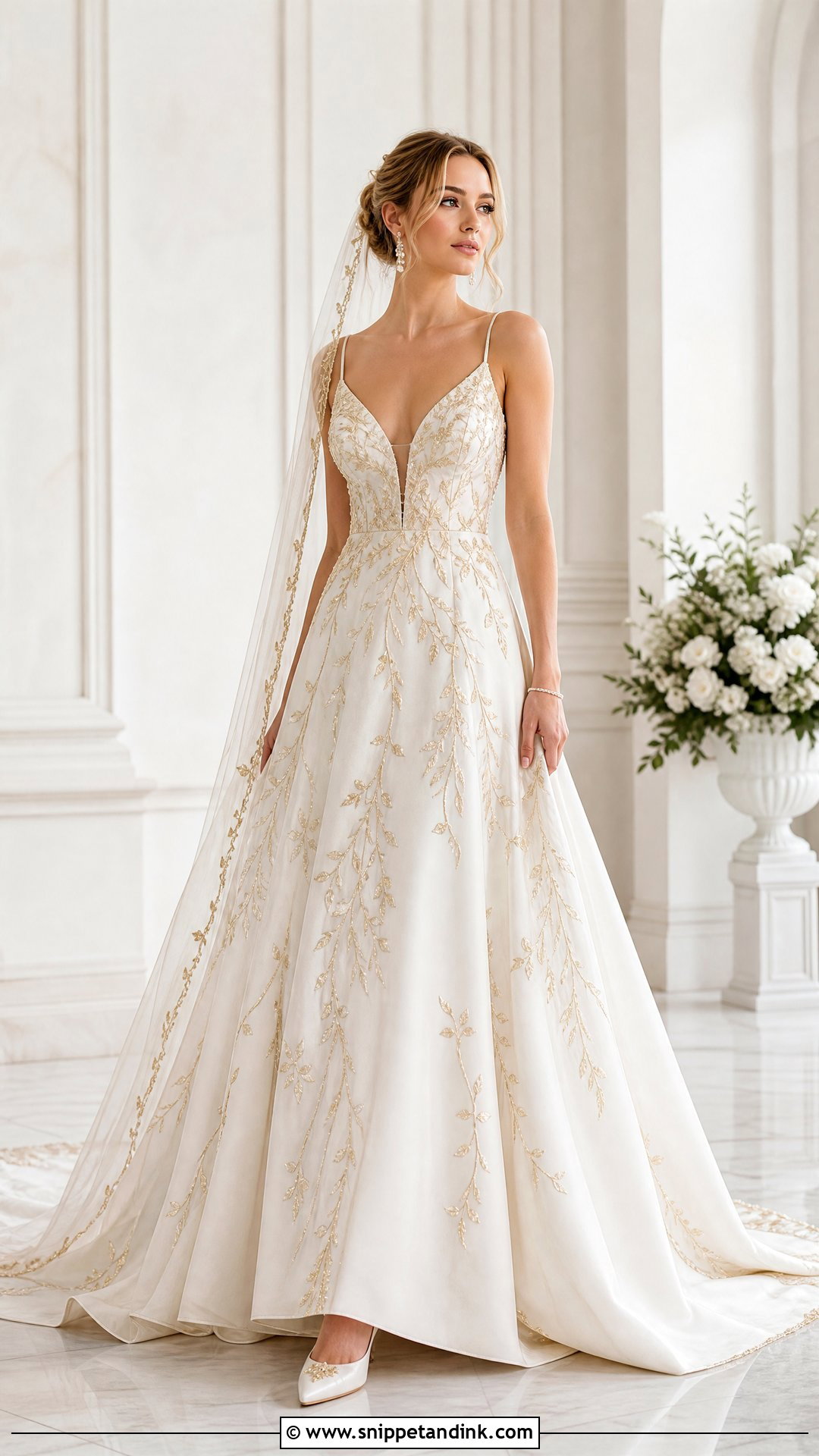
Ivory with gold is the gentlest version of a golden bride: the dress reads white from a distance and gold up close. Gold lace, embroidered vines or metallic appliqué on an ivory A-line gives movement without crowding the detail. Ivory heels with a touch of gold, pearl drops and a slim bracelet suit it. The veil depends on the gown: plain ivory if the dress is busy, a gold edge if it’s simple. A low bun or controlled waves and champagne eyeshadow finish it. Daylight shows the contrast best, so I’d plan this one for a morning or afternoon ceremony.
6. Red And Gold Bridal Lehenga
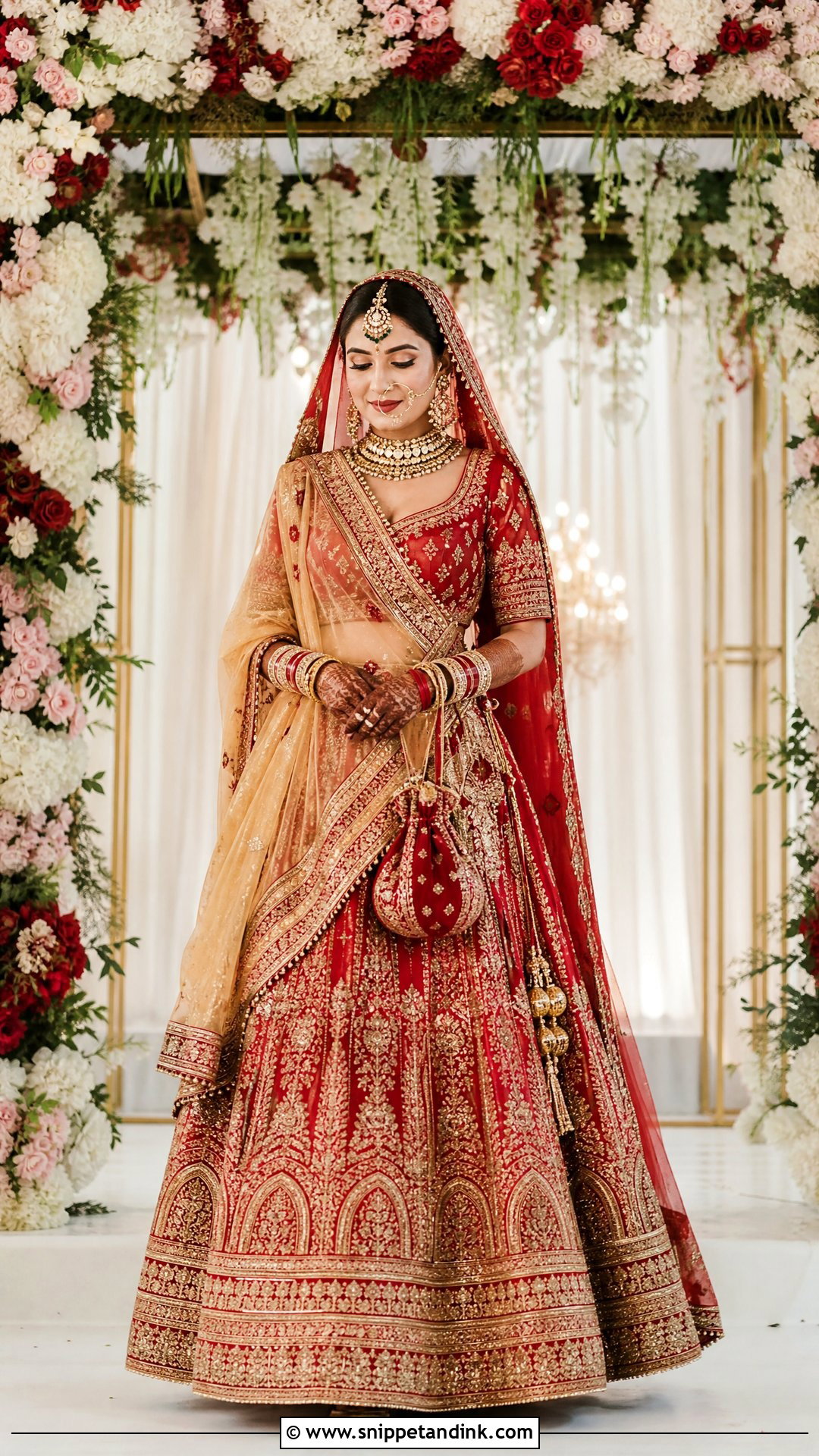
Red with gold is the classic bridal pairing in many Indian traditions, and the balance between the two is what I adjust. Red keeps it bridal; gold zari, sequins or thread adds ceremony. A blouse with a supportive fit and a neckline that leaves room for layered necklaces matters more than its decoration. A double drape works well: a red dupatta over the head and a lighter gold one across the shoulder. Kundan jewellery, red-and-gold bangles, an embellished potli and juttis complete it. Deep red lips and a defined bun suit the strength of the colour.
7. Golden Sequin Bridal Gown
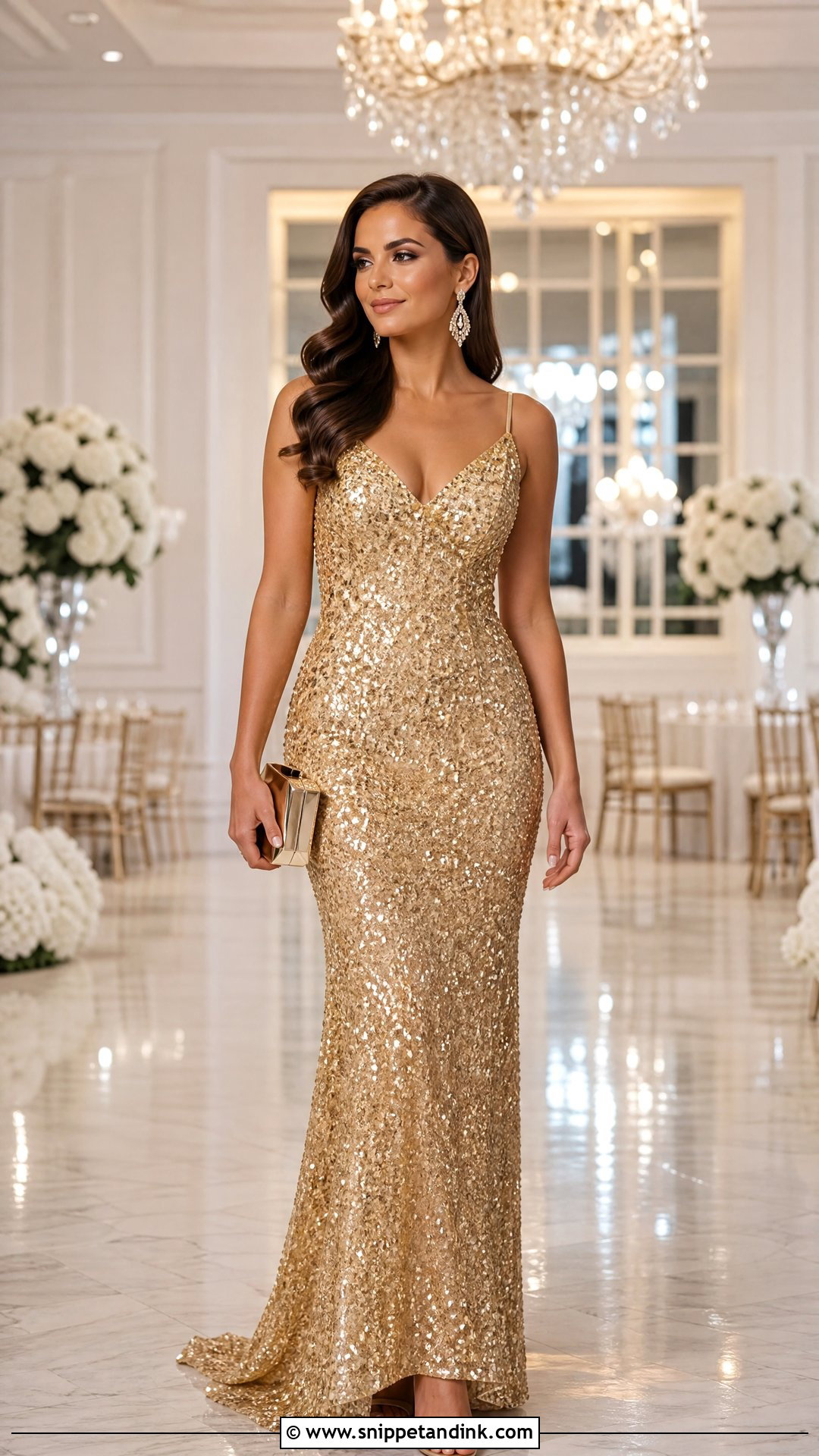
Sequins make the strongest statement in this list, so I keep this gown for a reception or evening event. Evenly placed sequins on a clean silhouette look sophisticated; patchy ones look like costume. A column, fit-and-flare or soft drape balances the shine. Simple metallic heels, small crystal earrings and one structured clutch are all I’d add; more large pieces just compete. Sleek waves, a ponytail or a smooth bun keep it modern. Ask for a soft lining at the underarms, because sequin edges rub the skin raw by the end of a night of dancing.
8. Golden Banarasi Bridal Saree
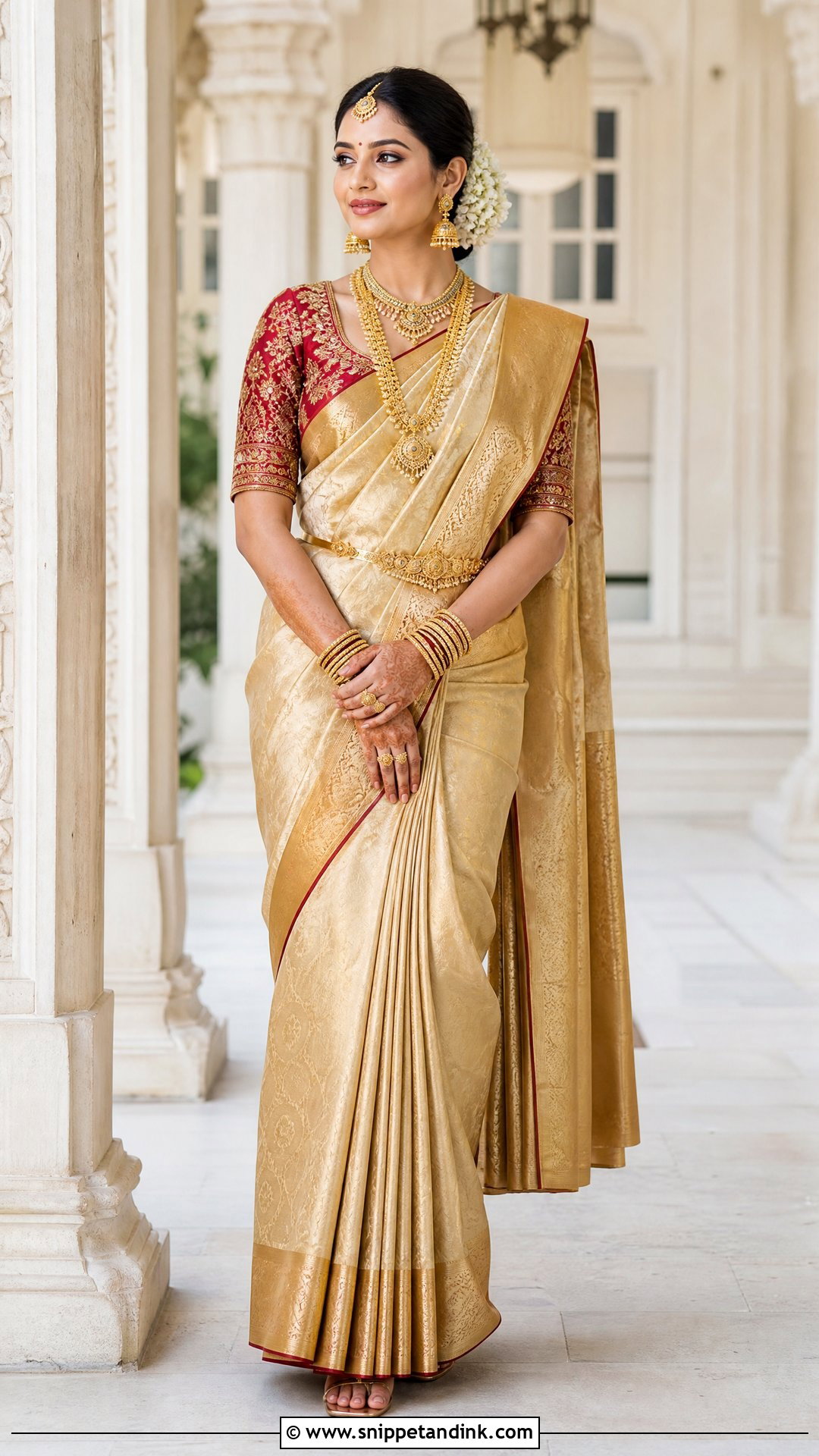
A golden Banarasi bridal saree has a woven surface that catches light and drapes with real body. Choose one with traditional motifs and a strong border, then pick a matching or contrasting blouse. Deep red, maroon or emerald contrast well while keeping the gold in charge. A layered necklace, jhumkas, bangles and gold sandals suit it. Pure Banarasi silk can be slippery, so I pin the pallu at the shoulder and the pleats at the waist before you leave the room. A centre-parted bun with flowers, defined liner and a rich lip complete it.
9. Golden Mirror Work Bridal Lehenga
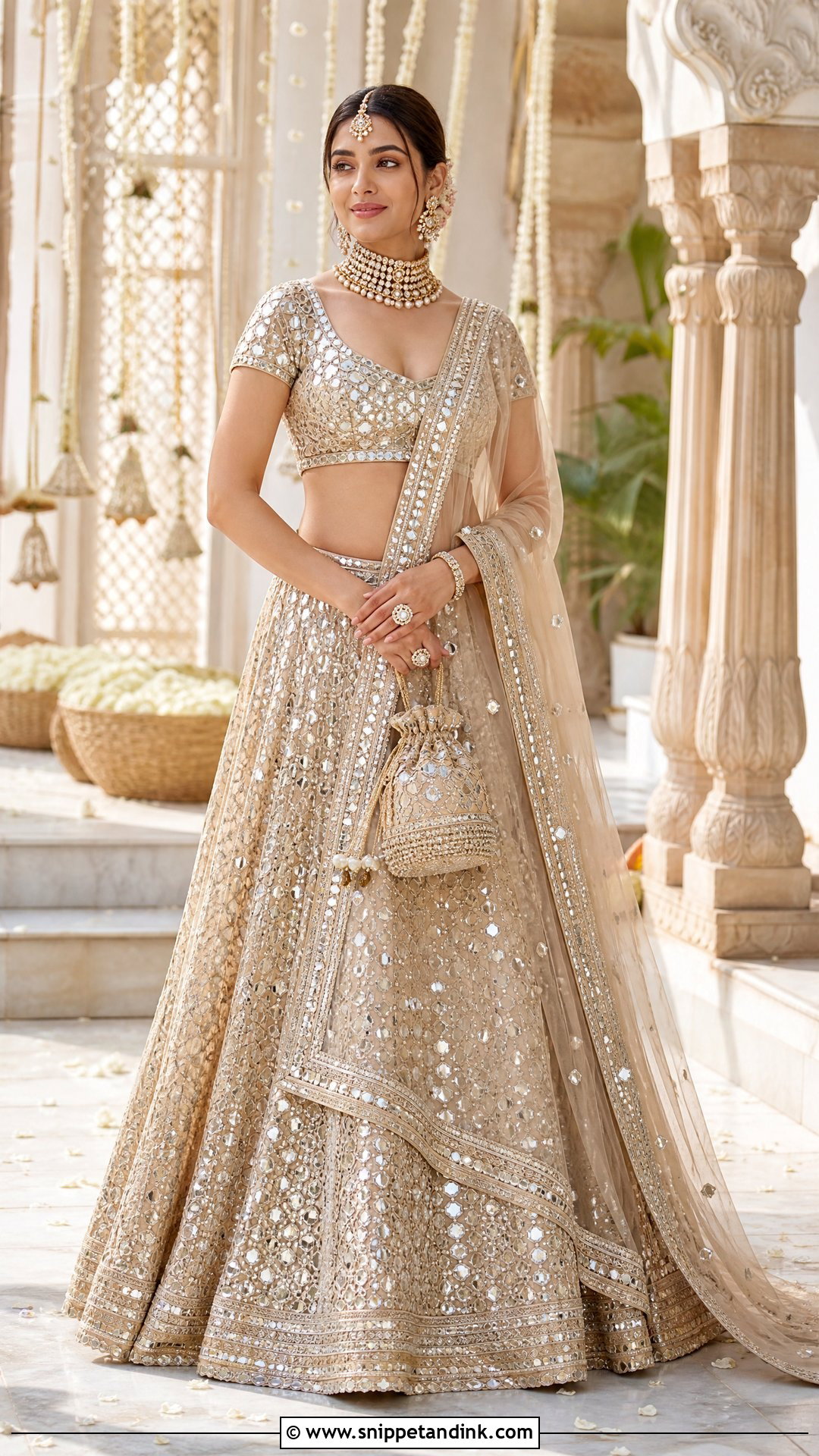
Mirrors bounce light in every direction, so the base colour matters. On warm beige, champagne or soft gold, the mirrors stay visible without the outfit looking chaotic. A fitted blouse, moderately flared skirt and sheer dupatta with a narrow mirror border complete the set. I swap reflective necklaces for a pearl choker, small earrings and a maang tikka. Embroidered juttis and a structured potli keep it practical. Soft waves or a low bun suit the playful finish. Real glass mirrors add weight and can crack, so ask whether yours are glass or acrylic.
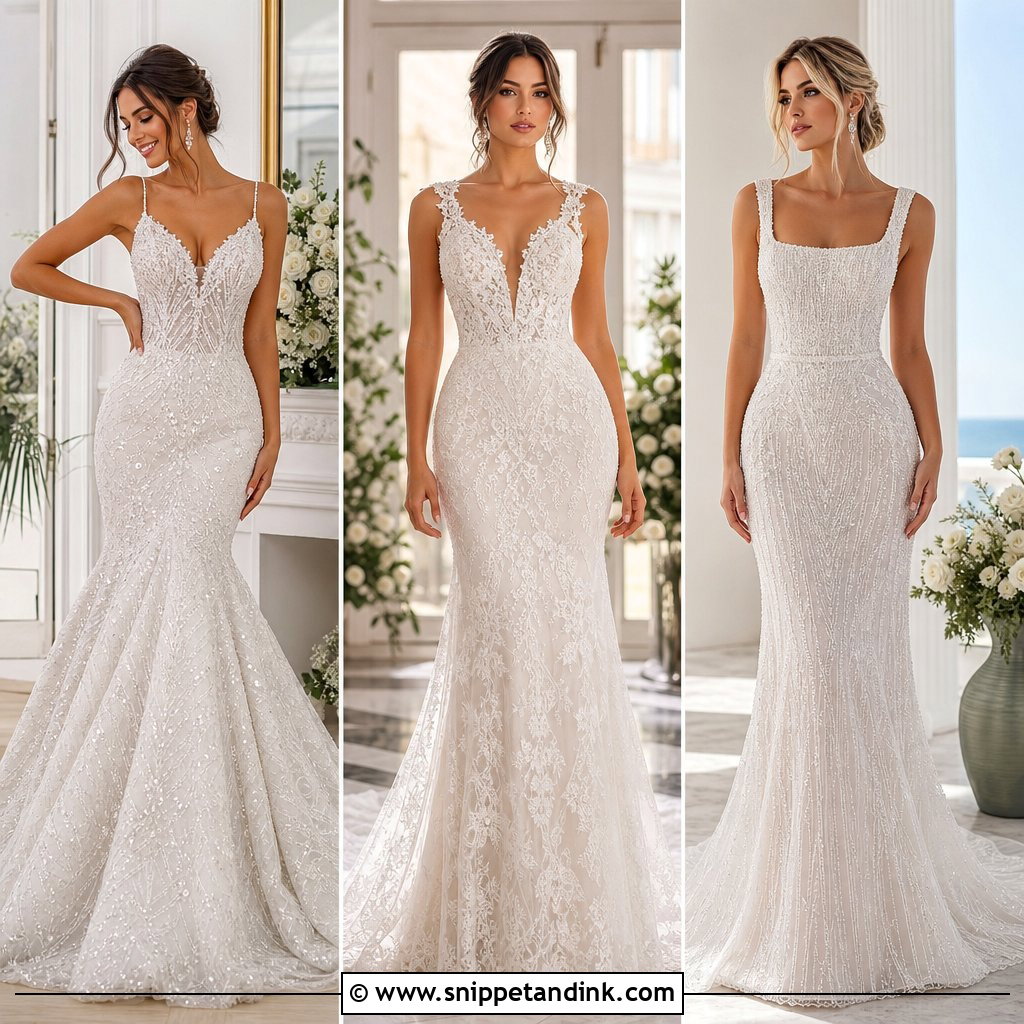
10. Golden Mermaid Bridal Gown
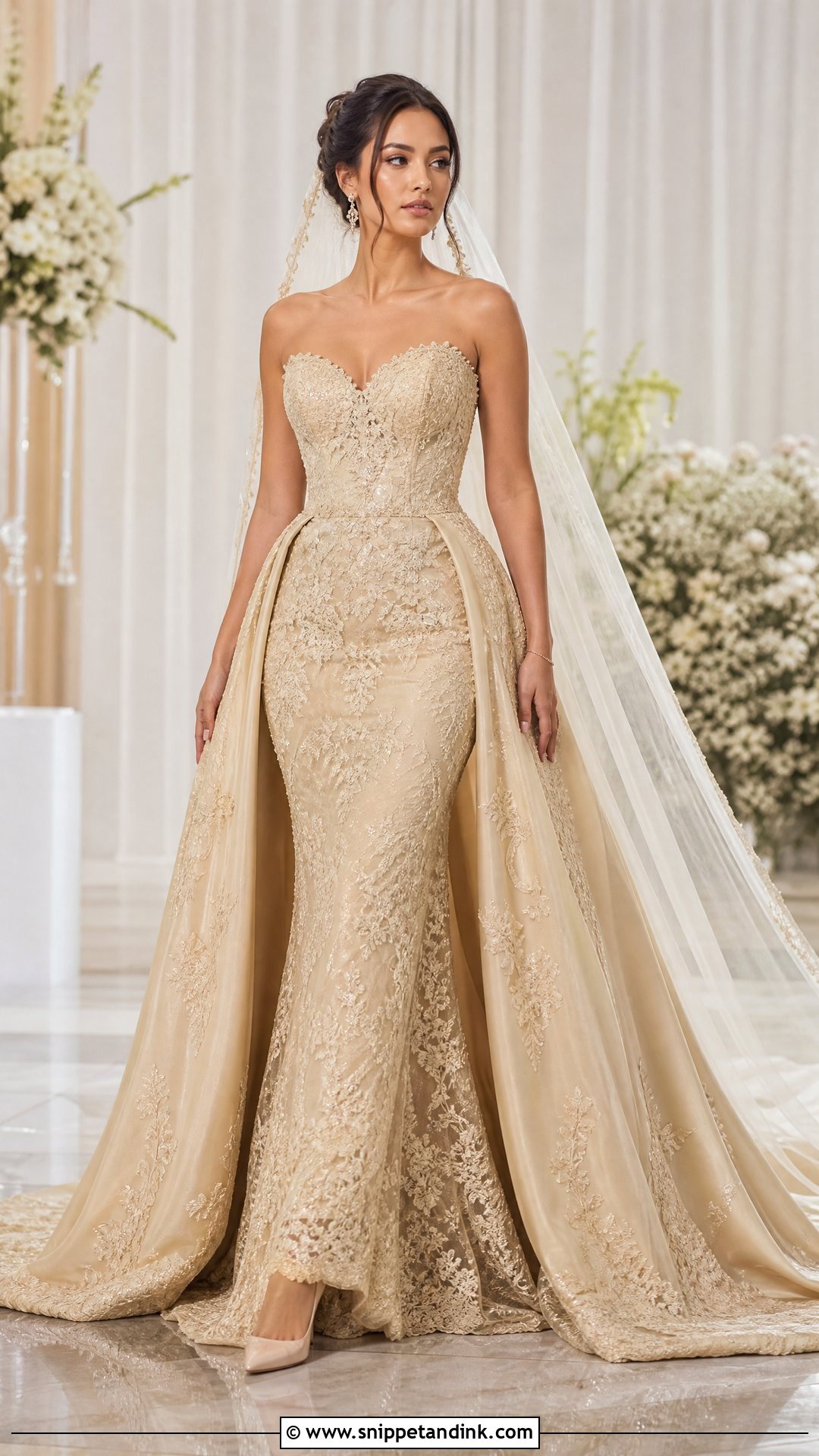
A mermaid needs precise tailoring more than any other cut, since it has to follow your body through the hips and still let you walk, sit and dance. On a golden gown, embroidered lace, fine beading or a matte metallic fabric shows the shape better than big sequins, which add bulk at the curve. Pointed neutral heels, drop earrings and a slim bracelet complete it. A detachable overskirt or long veil adds volume for the ceremony and comes off later. Side waves or a low bun suit the line. Sit down at every fitting; the knee flare should never pin your legs.
11. Golden Embroidered Bridal Sharara
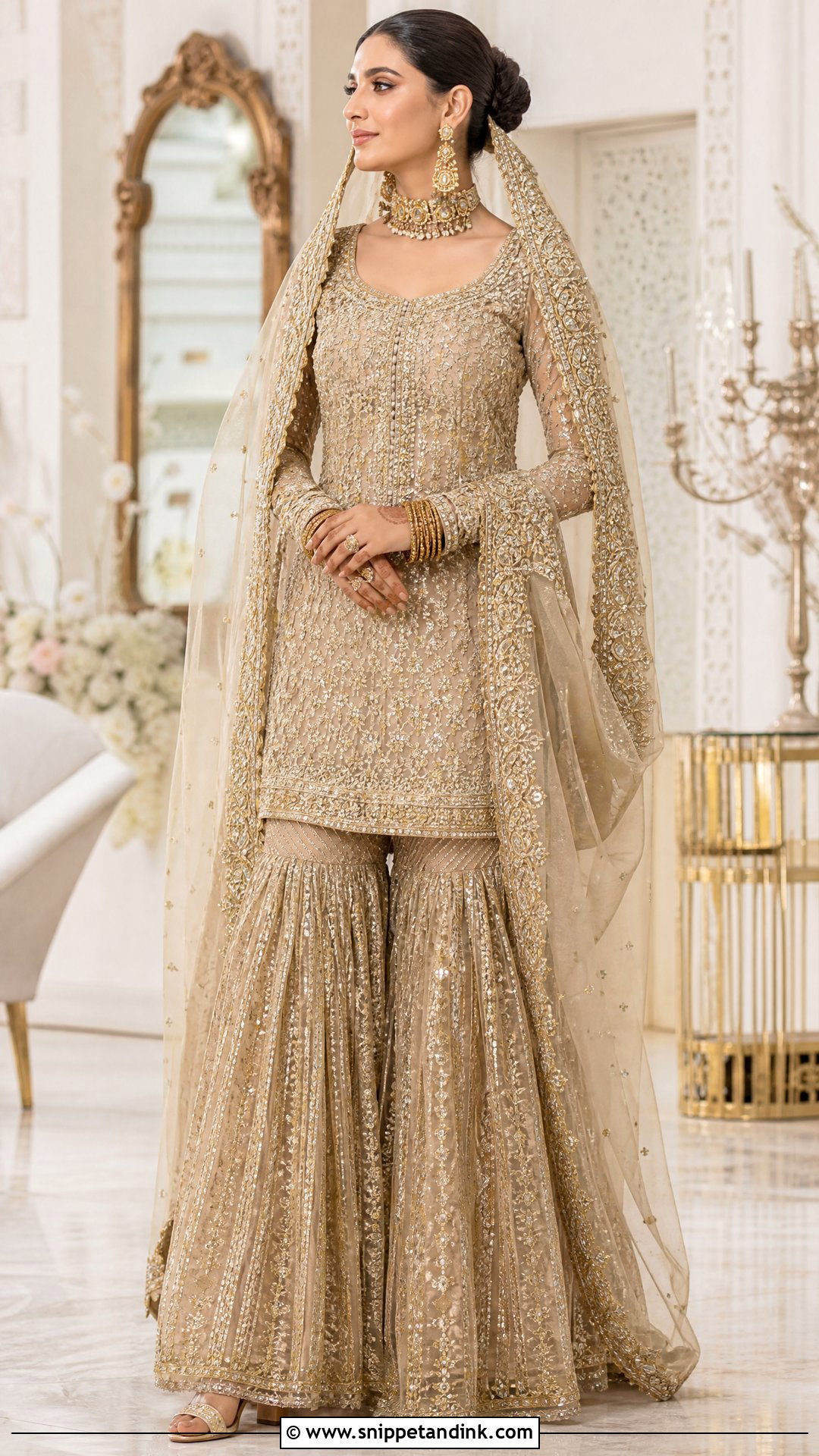
A golden embroidered sharara gives you volume and coverage without the weight of a lehenga skirt. Wide-legged pants in silk, brocade or georgette sit under a structured short kurta with embroidery at the neck, sleeves and hem. A sheer dupatta over the head or across both arms softens it. A statement choker, jhumkas, bangles and block heels hidden under the hem complete it. A braided or smooth low bun keeps the neckline visible. It lets you move freely; just practise stairs, since wide legs catch under heels.
12. Golden Cape Bridal Lehenga
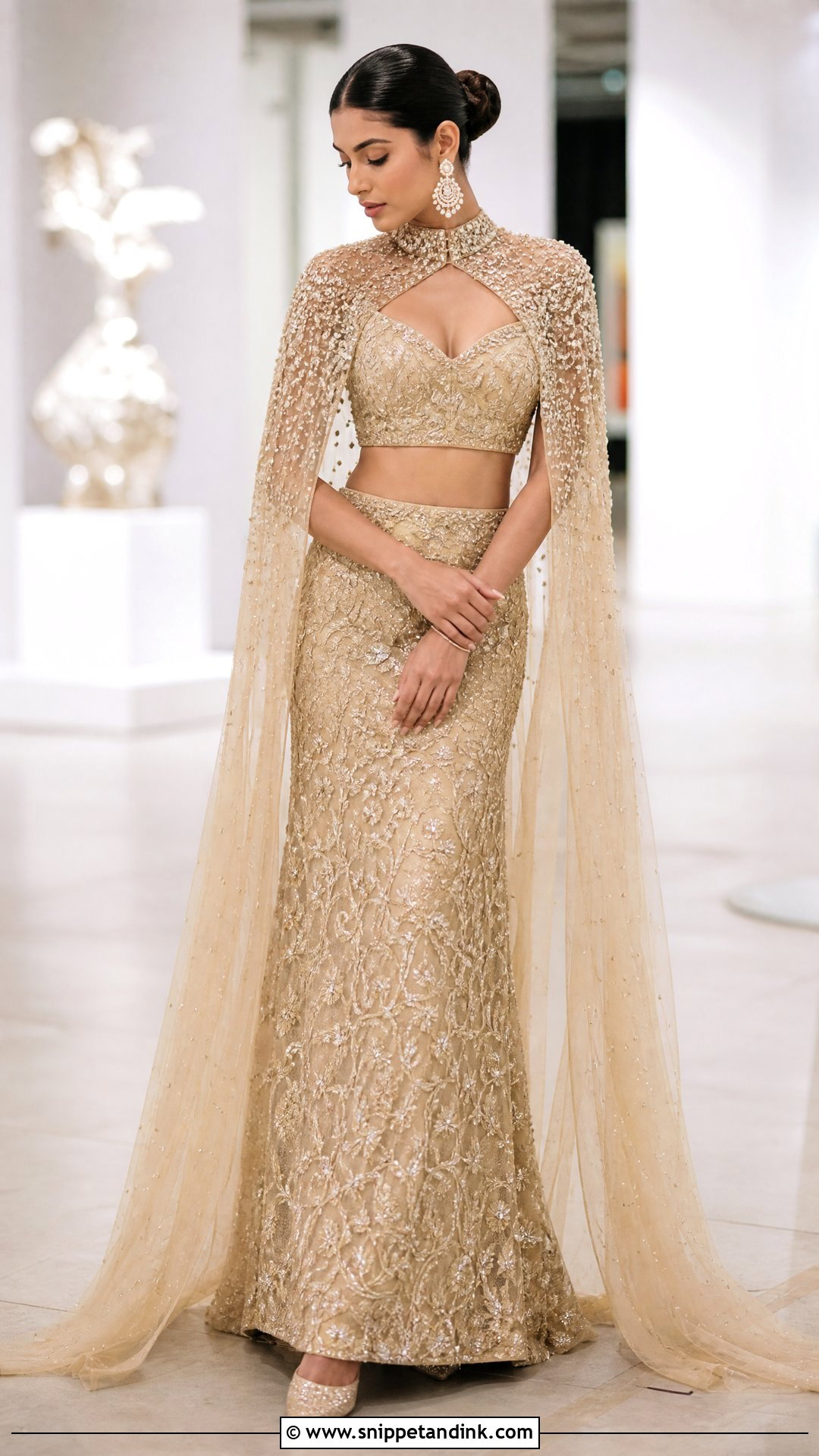
A cape modernises a golden lehenga and can replace the dupatta entirely. Start with a streamlined skirt and fitted blouse, then add a sheer embroidered cape from the shoulders, with beadwork at the neck and light scattering through the body so the lehenga still shows. Statement earrings, a slim bracelet, pointed heels and a compact clutch complete it. A sleek bun or ponytail keeps hair from catching on the cape. If you also want a veil for the ceremony, keep it light tulle and pin it below the cape’s neckline so the two don’t bunch.
13. Golden Kanjeevaram Bridal Saree
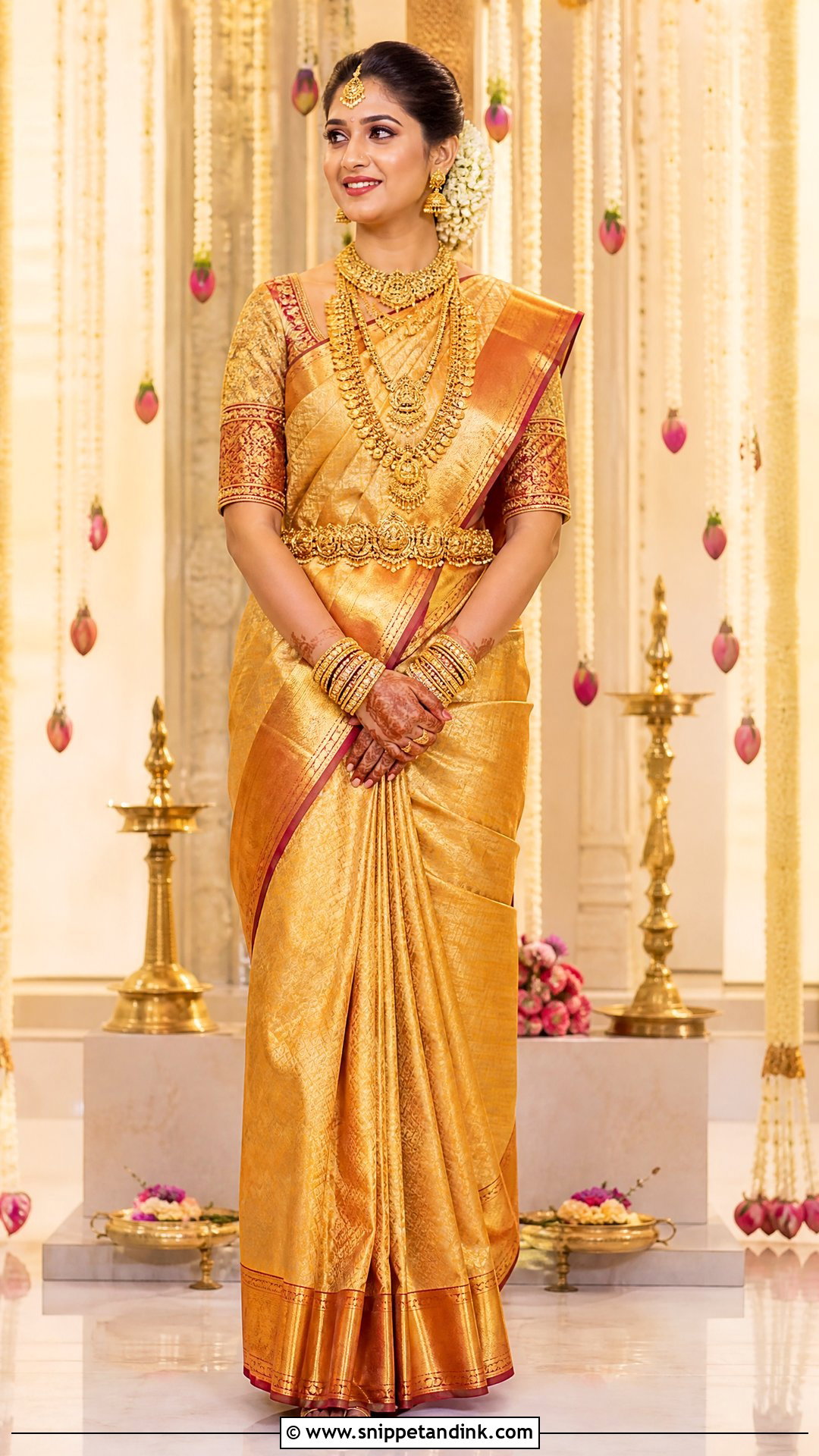
Kanjeevaram silk is dense and lustrous, and a gold-dominant one is about as commanding as a bridal saree gets. You can keep it mostly gold or bring in red, green, orange or magenta through the border and pallu. A well-fitted silk blouse with elbow sleeves and some embroidery completes it. Because the silk is stiff, crisp pleats hold well; I still pin the shoulder drape so it stays comfortable. Temple jewellery, layered necklaces, jhumkas, a waist belt and bangles finish it. A centre-parted bun with white flowers and a classic lip suit the lustre.
14. Golden A-Line Bridal Dress
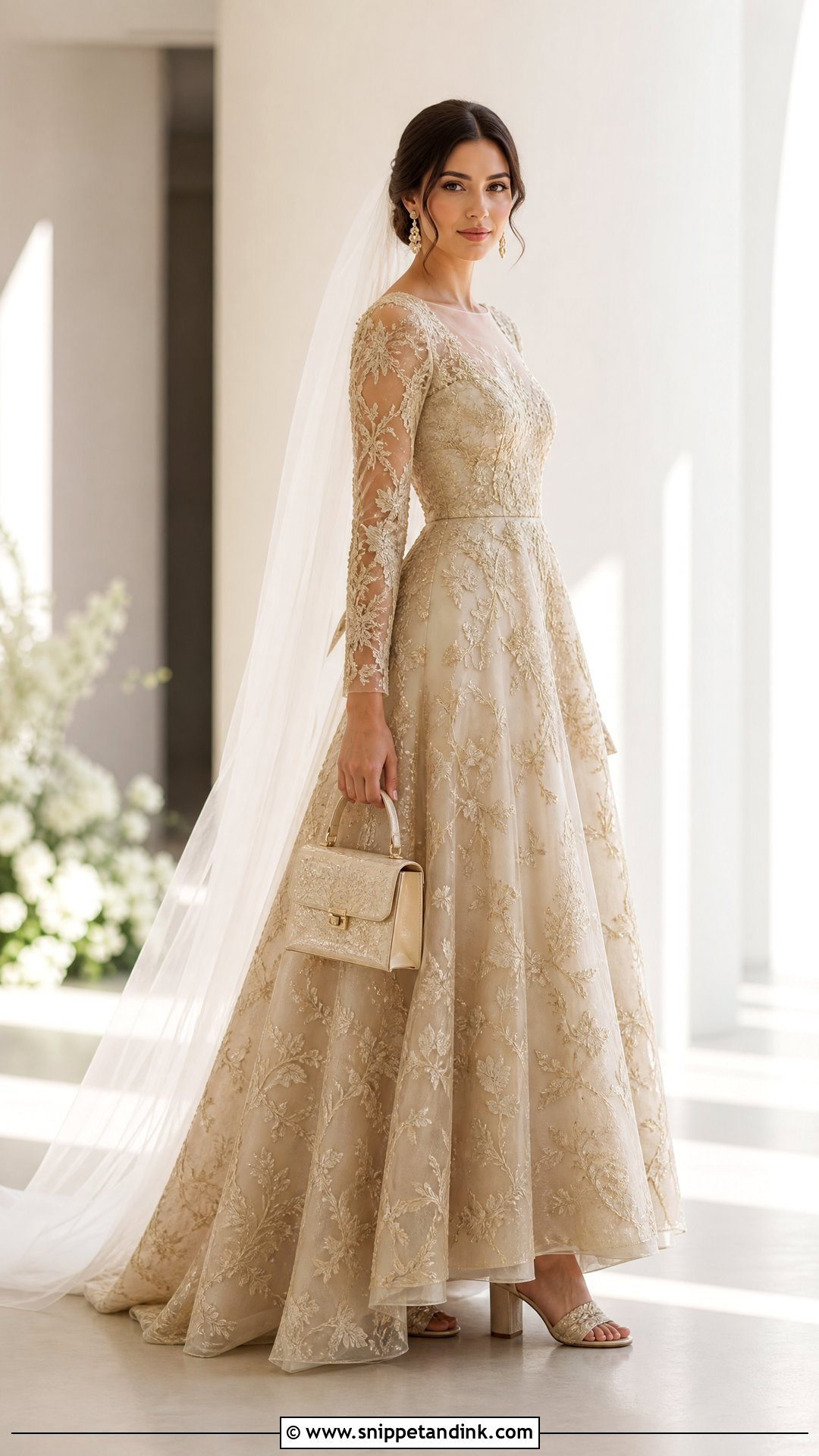
An A-line is the easiest gown shape to wear for a whole day: fitted on top, widening from the waist, with room to walk and sit. Champagne tulle, metallic lace or embroidered satin gives it dimension. Block heels, a delicate necklace, drop earrings and a small bag for essentials suit it. A chapel veil adds ceremony without overpowering the dress. For more coverage, choose sheer sleeves or a matching removable bolero. A low chignon, radiant skin and a neutral pink lip complete it. It’s the shape I’d recommend if you can’t decide on a venue style yet.
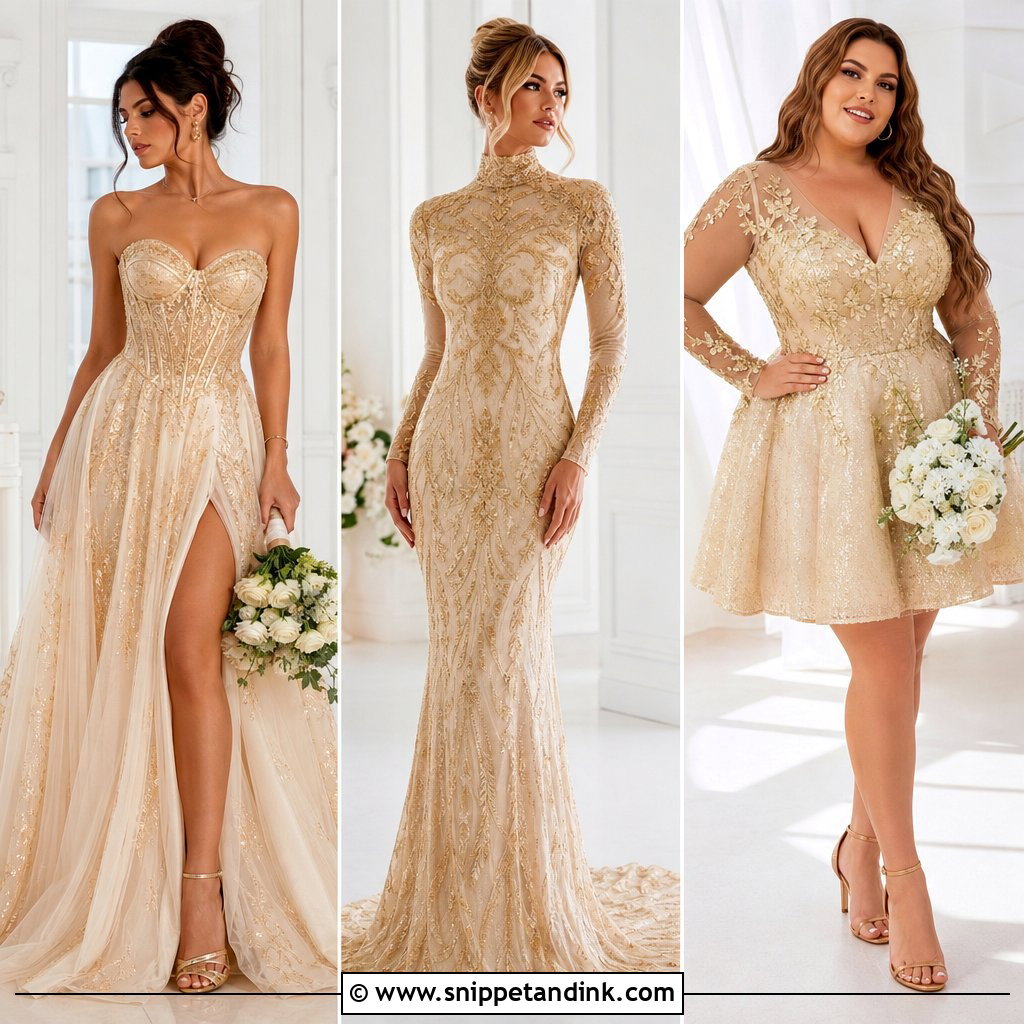
15. Golden Velvet Bridal Lehenga
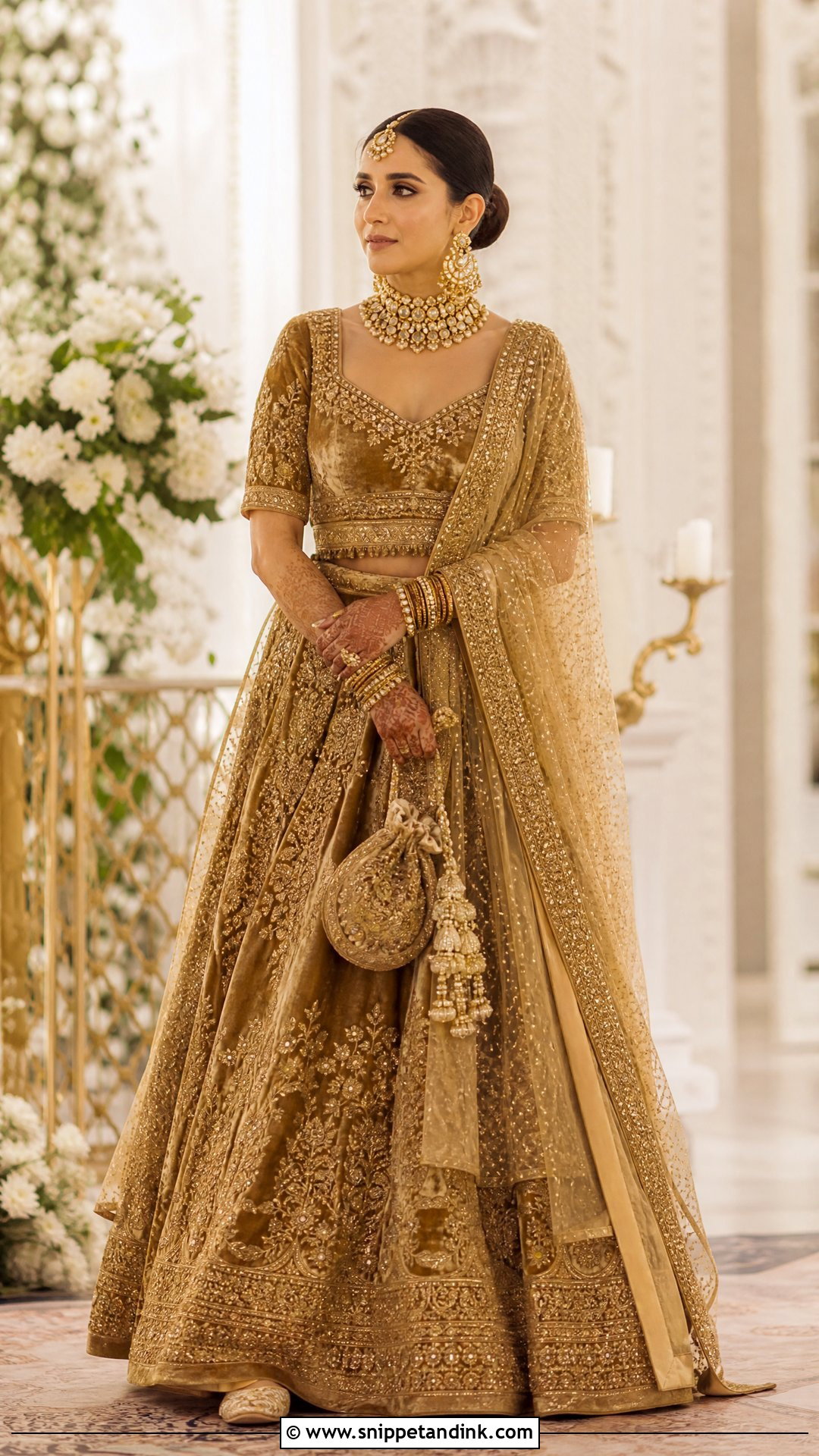
Velvet only makes sense for a winter wedding or a cool evening venue; its pile holds heat. Deep antique gold, bronze-gold or warm caramel velvet with zari gives a rich, regal look. A matching velvet blouse creates a monochrome effect, and a light net dupatta stops it feeling heavy. Kundan jewellery, a structured potli, stacked bangles and closed juttis suit it, with a smooth bun or long braid. Velvet is heavy, so I’d ask for a broad, supportive waistband and keep the skirt volume moderate, or you’ll feel the weight on your hips by the photos.
16. Golden Tissue Bridal Saree
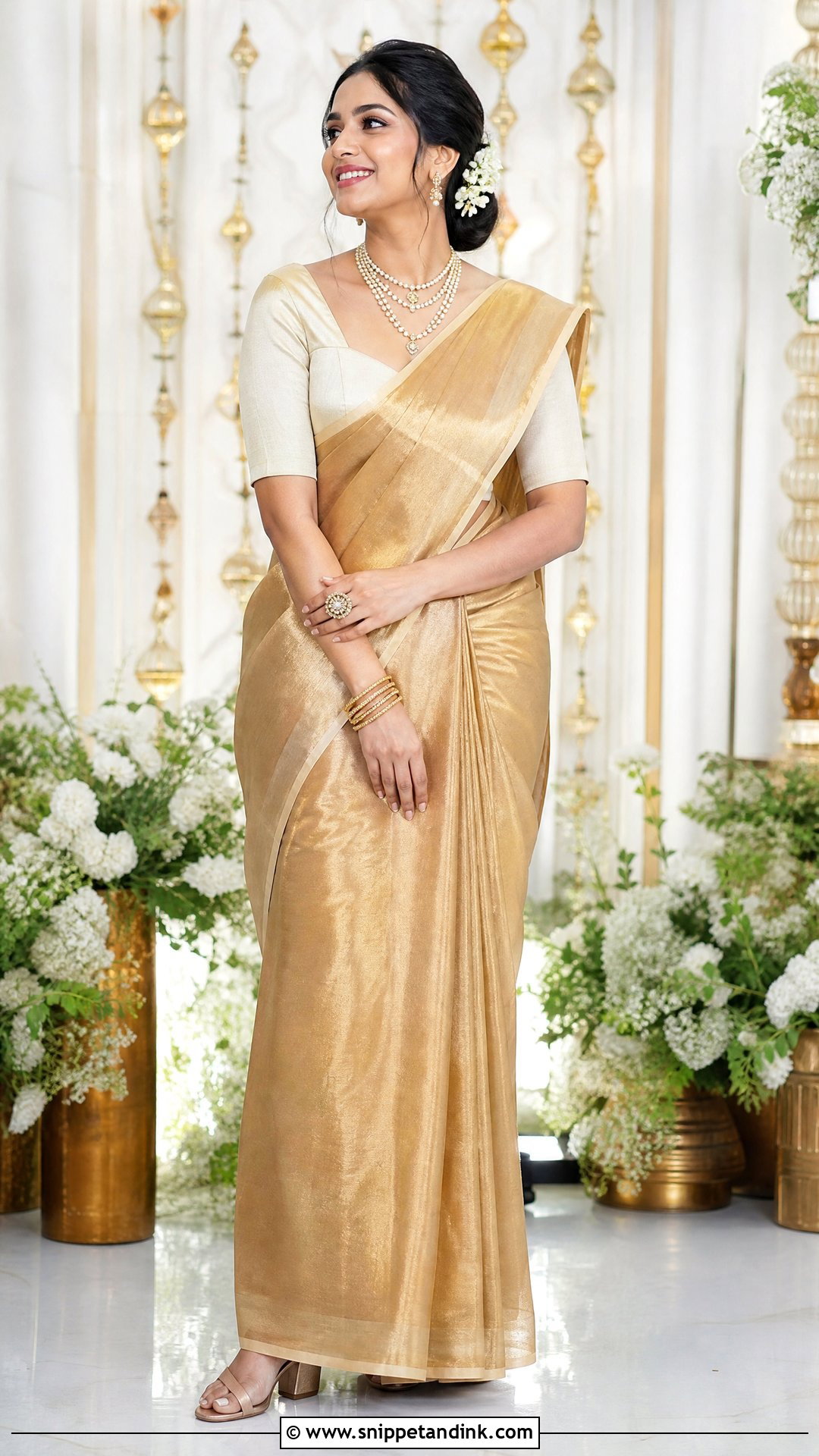
Tissue has metallic yarn in the weave, which gives it a crisp, airy sheen. Since the fabric already catches light, choose a clean border or restrained embroidery. A structured blouse in gold, ivory, red or deep green, with a high boat neck or elbow sleeves, balances the shine. Pearl-and-gold jewellery, a statement ring, bangles and low block heels finish it. Tissue is springy and resists sharp pleats, so I pin each one carefully before draping. A sleek bun with fresh flowers softens the metallic effect.
17. Golden Floral Bridal Lehenga
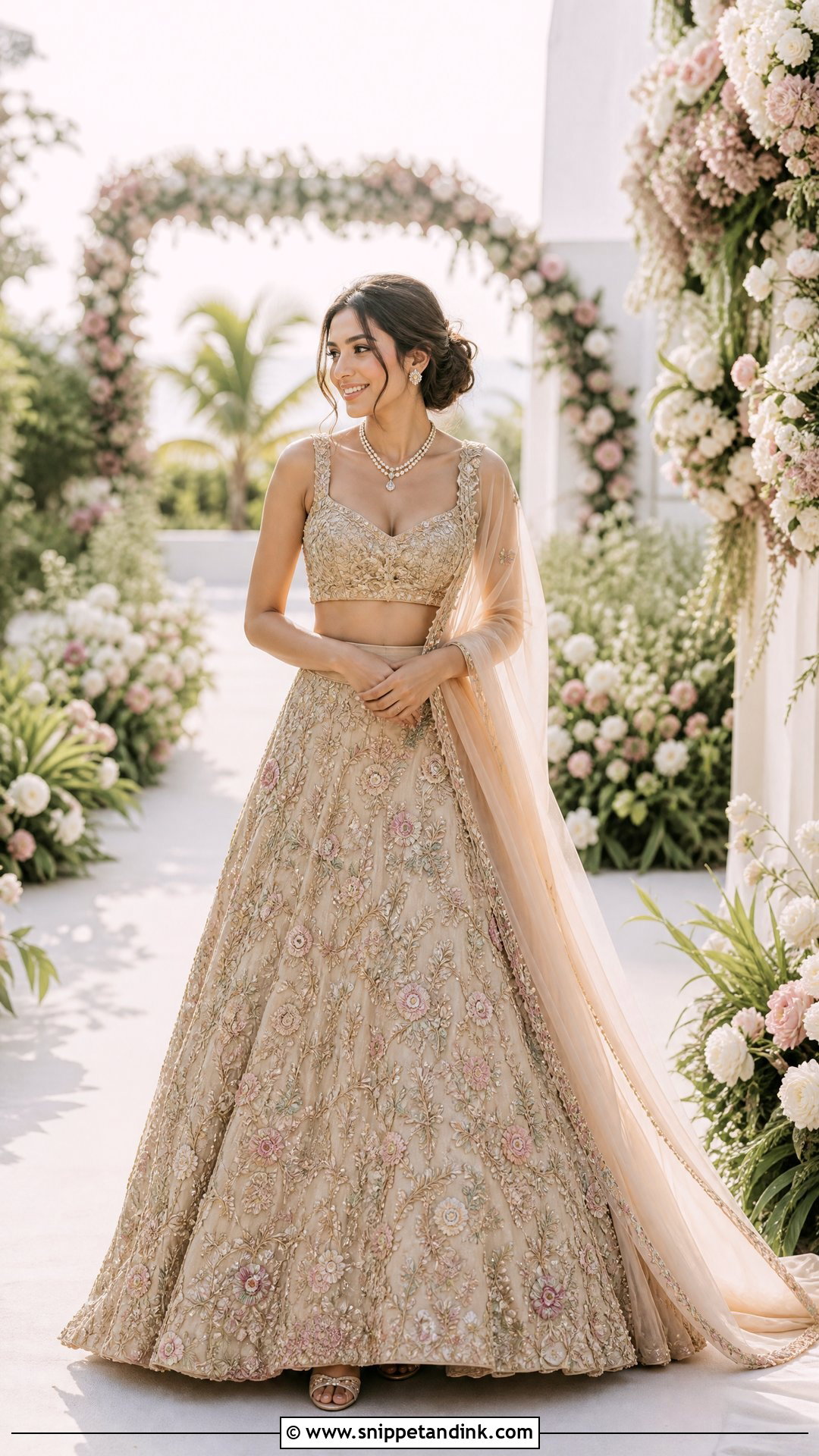
Floral embroidery brings colour into a golden lehenga without loud contrast. A champagne or pale gold base with muted pink, ivory, sage or burgundy flowers looks soft. A fitted blouse with matching florals connects top and skirt, and a plain sheer dupatta stops the outfit getting crowded. Pearl jewellery, gemstone earrings, a floral hair accessory and neutral embroidered heels complete it. I pick one thread colour from the embroidery and repeat it in the blush or lip. Garden ceremonies suit it, where the flowers echo the setting.
18. Golden Long Sleeve Bridal Gown
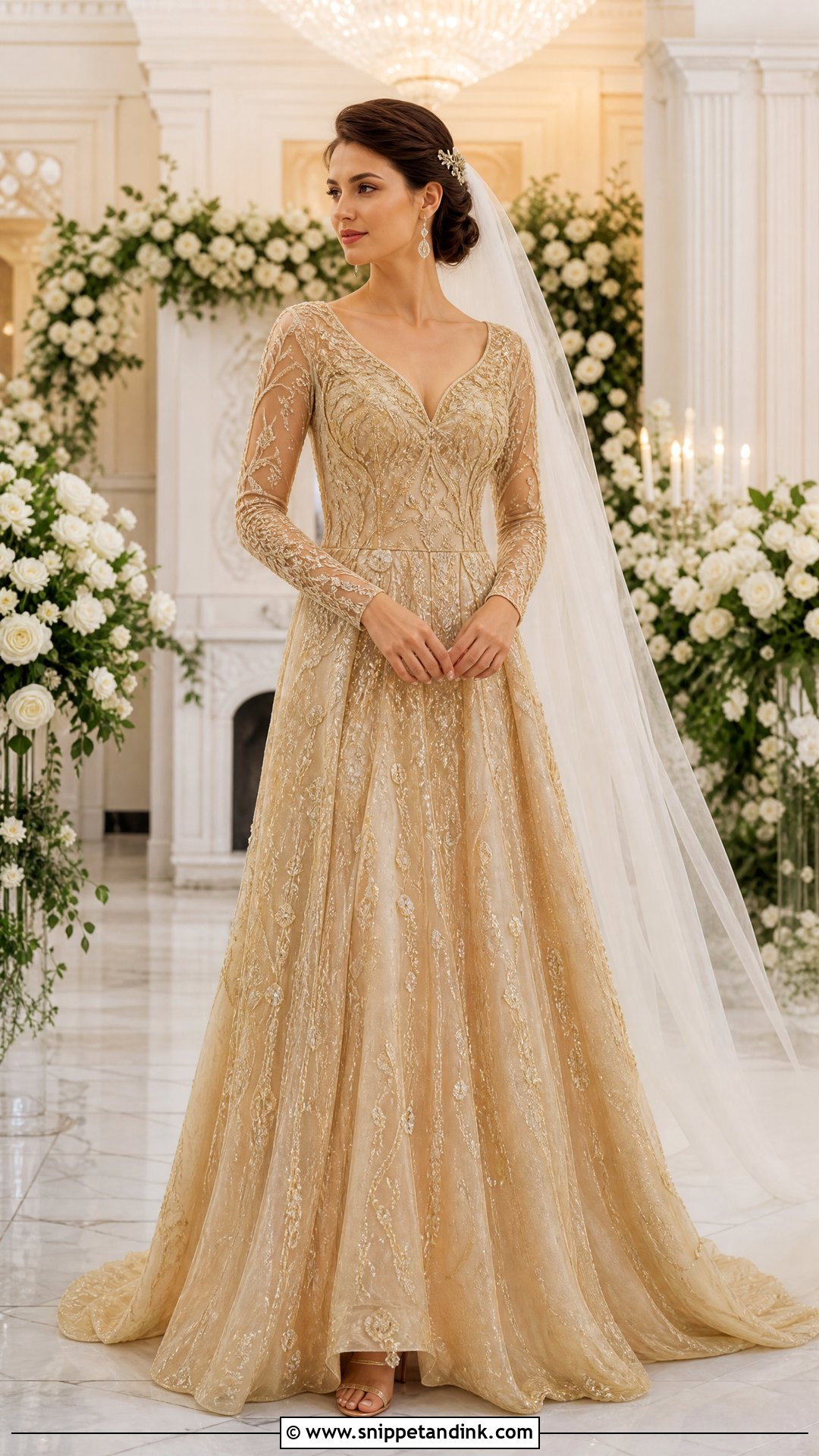
Long sleeves give a golden gown a covered, elegant line and room for detail. Sheer embroidered sleeves feel light; lined satin sleeves look smoother and more structured. A defined waist and flowing skirt balance the coverage on top. Simple heels, small drops and a hair comb are enough; skip the necklace if the bodice is heavily beaded. A long veil suits a plain gown, a short one a busy gown. A neat bun, soft liner and a muted pink lip finish it. Lift your arms at the fitting to check the sleeve cap; tight sleeves ride up and pull the bodice.
19. Golden Jacket Bridal Lehenga
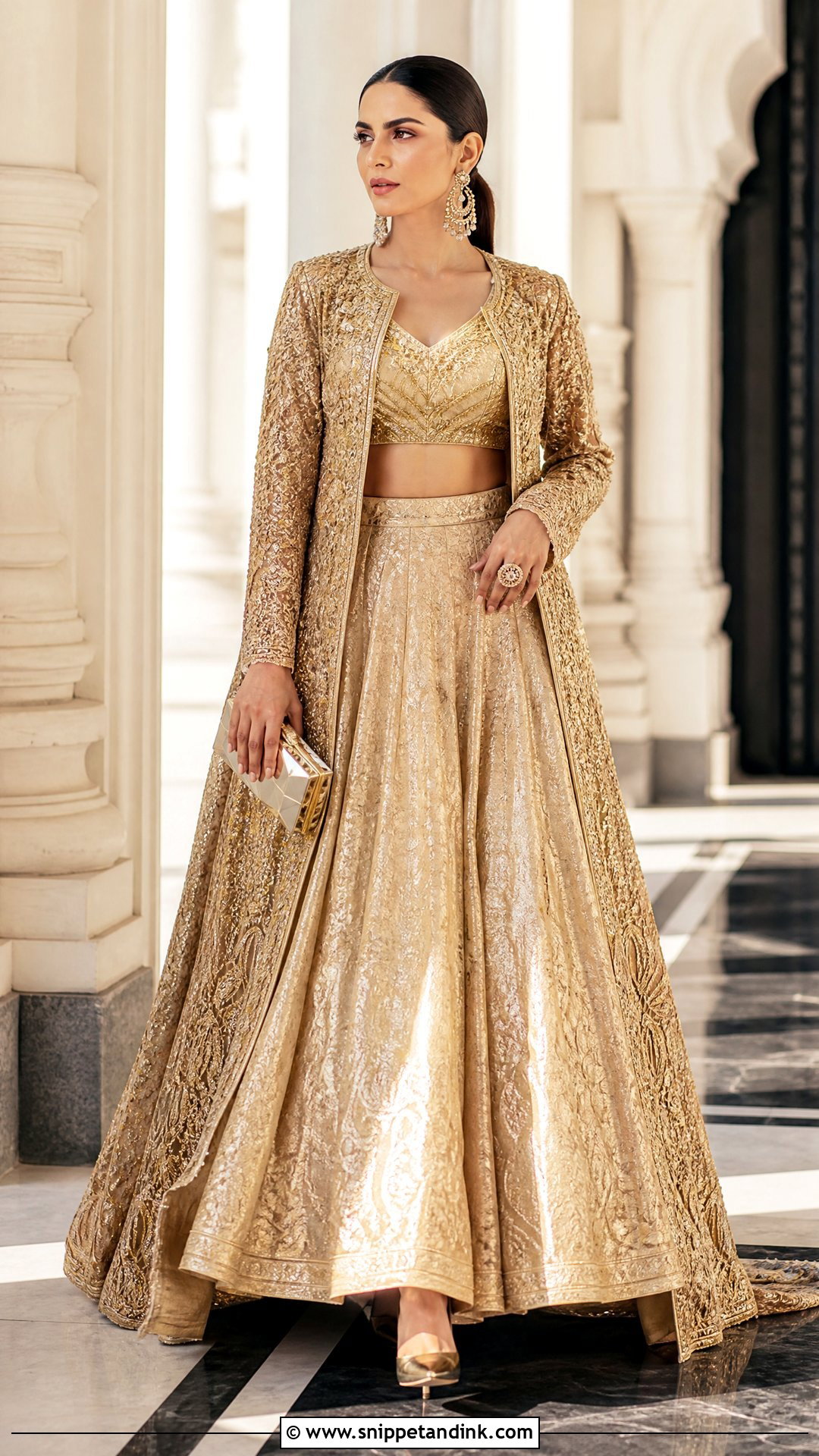
A long embroidered jacket gives a golden lehenga structure and lets you drop the dupatta. It goes over a fitted blouse and moderately flared skirt, open in front so the waist and embroidery show. Sheer net looks light; silk or brocade gives more coverage and shape. Chandelier earrings, a cocktail ring, pointed heels and a small clutch complete it. A smooth low ponytail or bun shows the jacket’s neckline. I’d suggest it for a reception or civil ceremony, and for brides who feel more comfortable in tailored layers than in yards of drape.




20. Golden Off Shoulder Bridal Gown
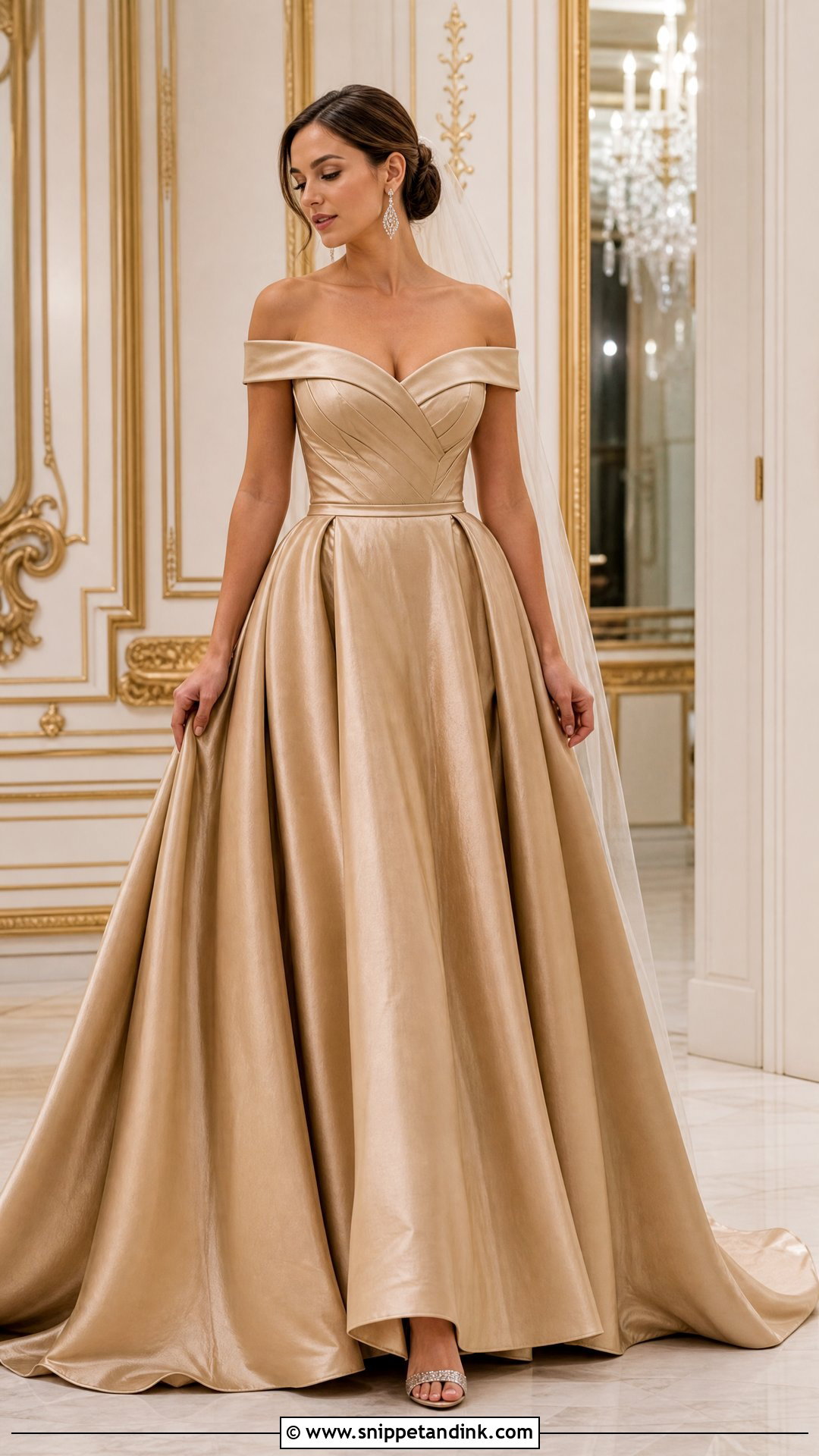
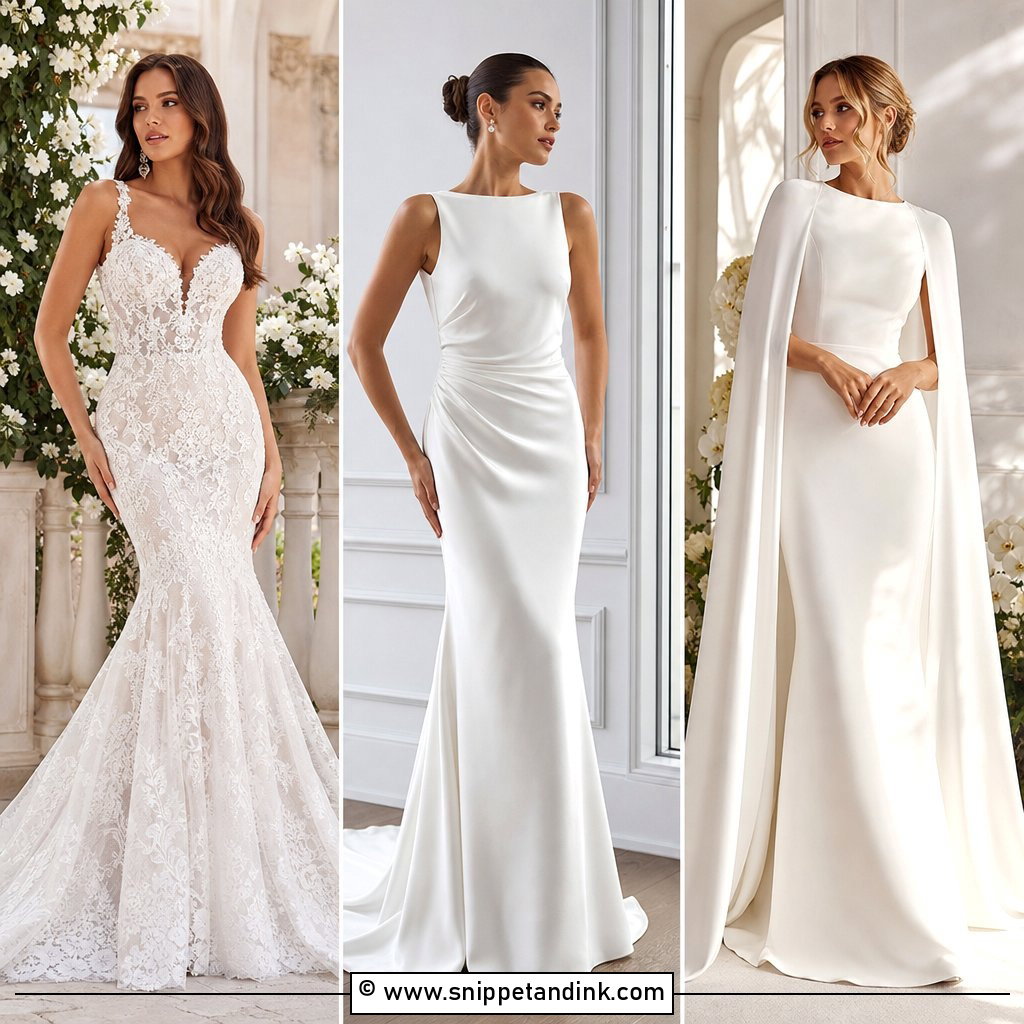
Off-shoulder necklines put the focus on your collarbones and shoulders, and the bodice needs real support to stay there. A full skirt is classic; a slim fit-and-flare feels newer. Choose either a short necklace or statement drops, not both, if the bodice is embellished. Matching heels and a sheer veil pinned under a polished bun complete it. A light wrap or detachable sleeves help in a chilly church. I’d do a quick arm test at the fitting: reach forward and up, and see whether the band slips. Hidden elastic usually fixes it.
21. Golden Peplum Bridal Lehenga
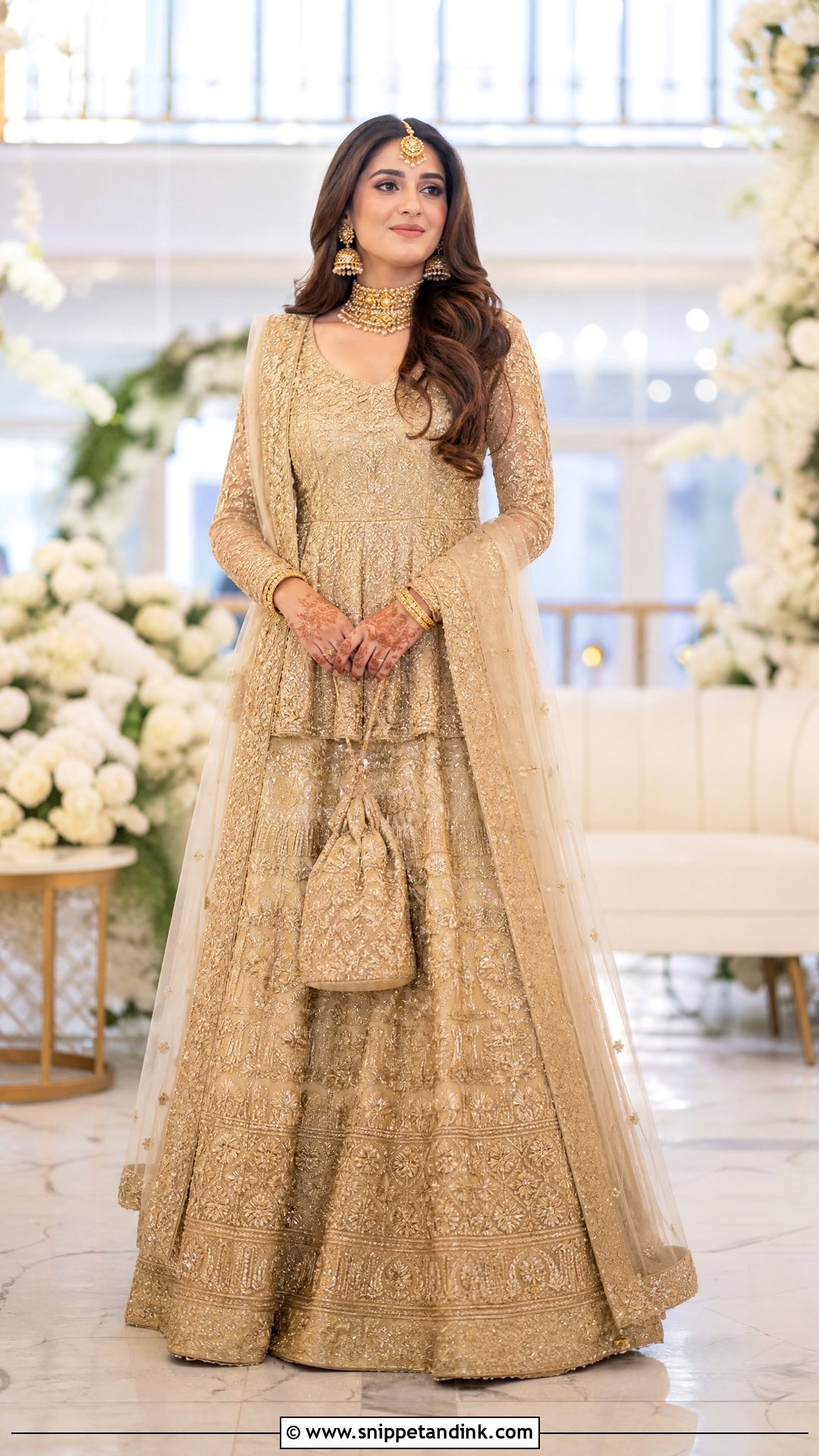
Peplum length is the detail that makes or breaks this outfit. Ending near the upper hip, it defines the waist and keeps the layers neat; lower than that, it adds bulk exactly where you don’t want it. Pair it with a clean flared skirt and continue the embroidery along the neckline, waist and hem. A light dupatta over one shoulder keeps the peplum visible. A choker, earrings, bangles, juttis and a compact potli complete it. A smooth bun or soft ponytail suits the modern shape, with warm, polished makeup.
22. Golden Draped Bridal Saree
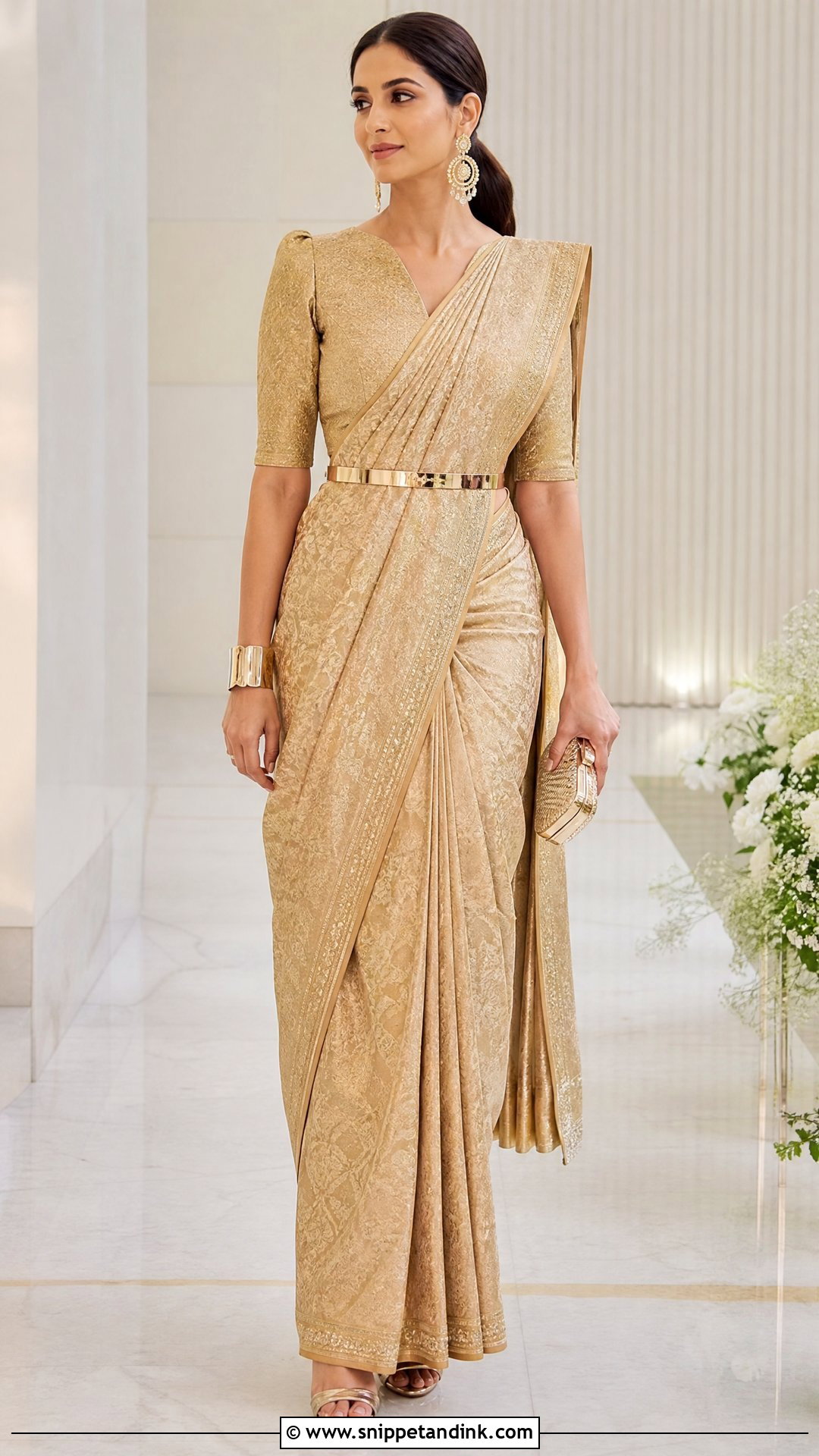
A pre-draped golden saree gives you the look of a traditional drape with the security of a fitted garment. Look for stitched pleats, a defined waist and a pallu that falls naturally over the shoulder. Pair it with a structured blouse, corset top or long-sleeve bodice, depending on coverage. A slim waist belt controls the drape. Drop earrings, a cuff, heeled sandals and a small metallic clutch complete it, with sleek waves or a low ponytail. I recommend it for receptions especially, because you can sit, stand and dance without anyone re-pinning you.
23. Golden High Neck Bridal Gown
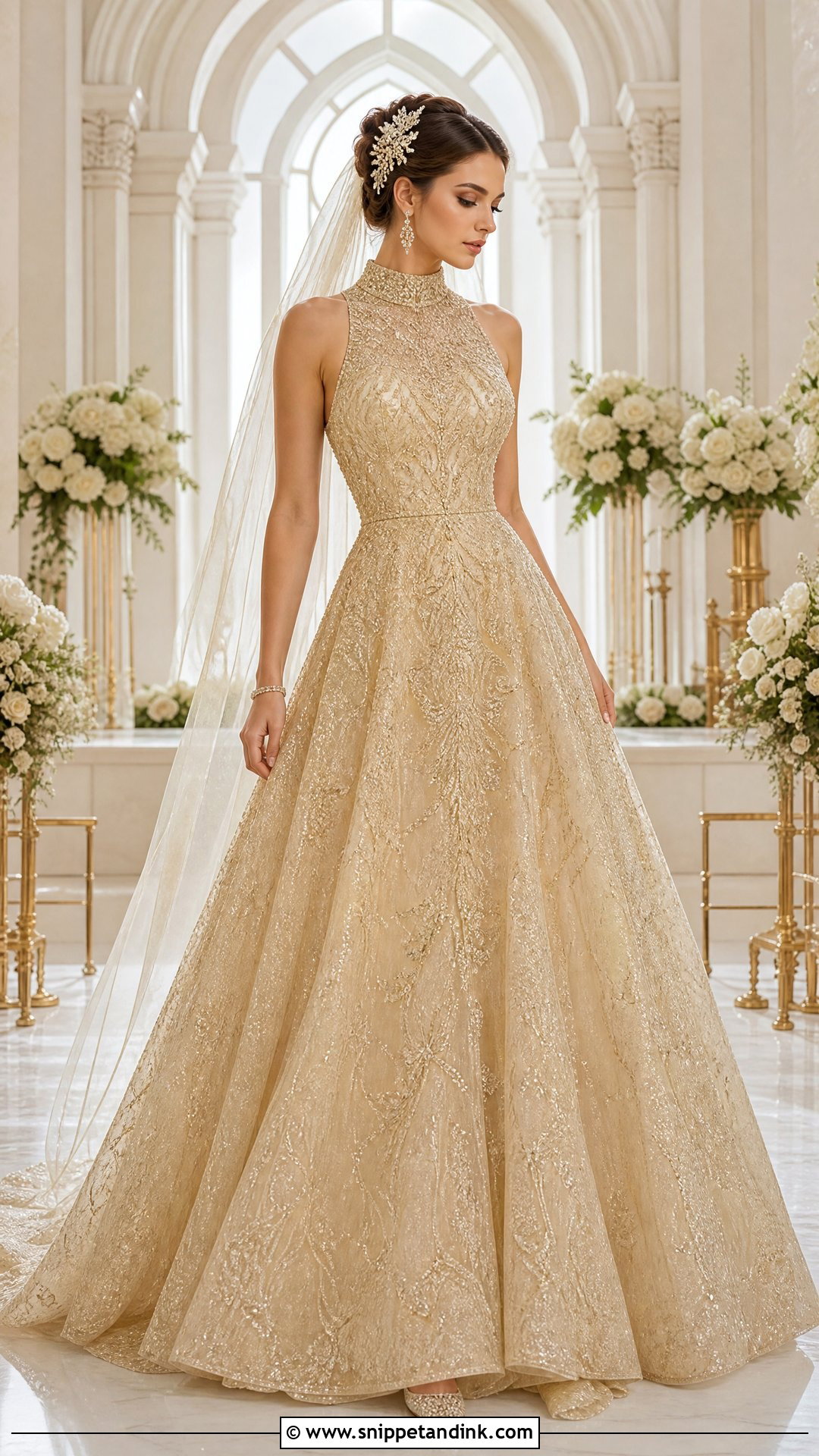
High necklines suit intricate embroidery, since the work becomes a frame for the face. A fitted bodice with beadwork at the neck and a skirt with enough volume balances the covered top. Sheer fabric at the neck keeps it light; full lining looks more formal. Skip the necklace and choose earrings, a slim bracelet and a hairpiece. Pointed heels and a simple veil starting below the hairstyle complete it, with a smooth bun to keep the neck clear. Ask for the collar to be lined in something soft; beaded collars scratch over a long day.
24. Golden Trail Bridal Lehenga
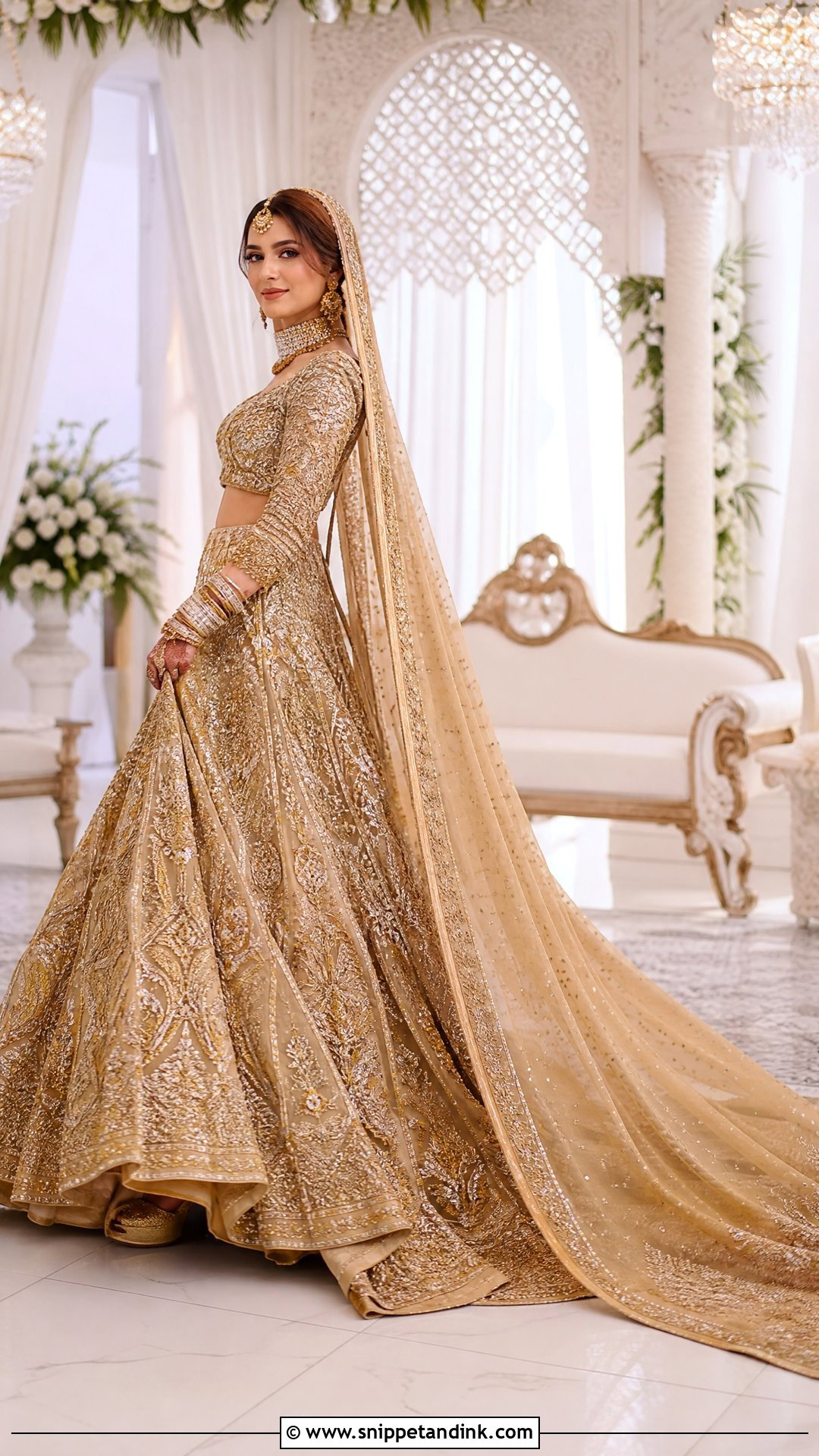
A trail lehenga makes an entrance, and the best ones keep the extra length at the back rather than adding volume all round. That way, the front stays manageable when you walk and sit. A fitted blouse and sheer dupatta over the head or shoulders suit it. A statement necklace, earrings, bangles and platform juttis or secure block heels finish it. A sleek bun keeps the shape tidy. I always ask the tailor for a hidden wrist loop or bustle point, so the trail can be lifted after the photos and you aren’t dragging it through the buffet.




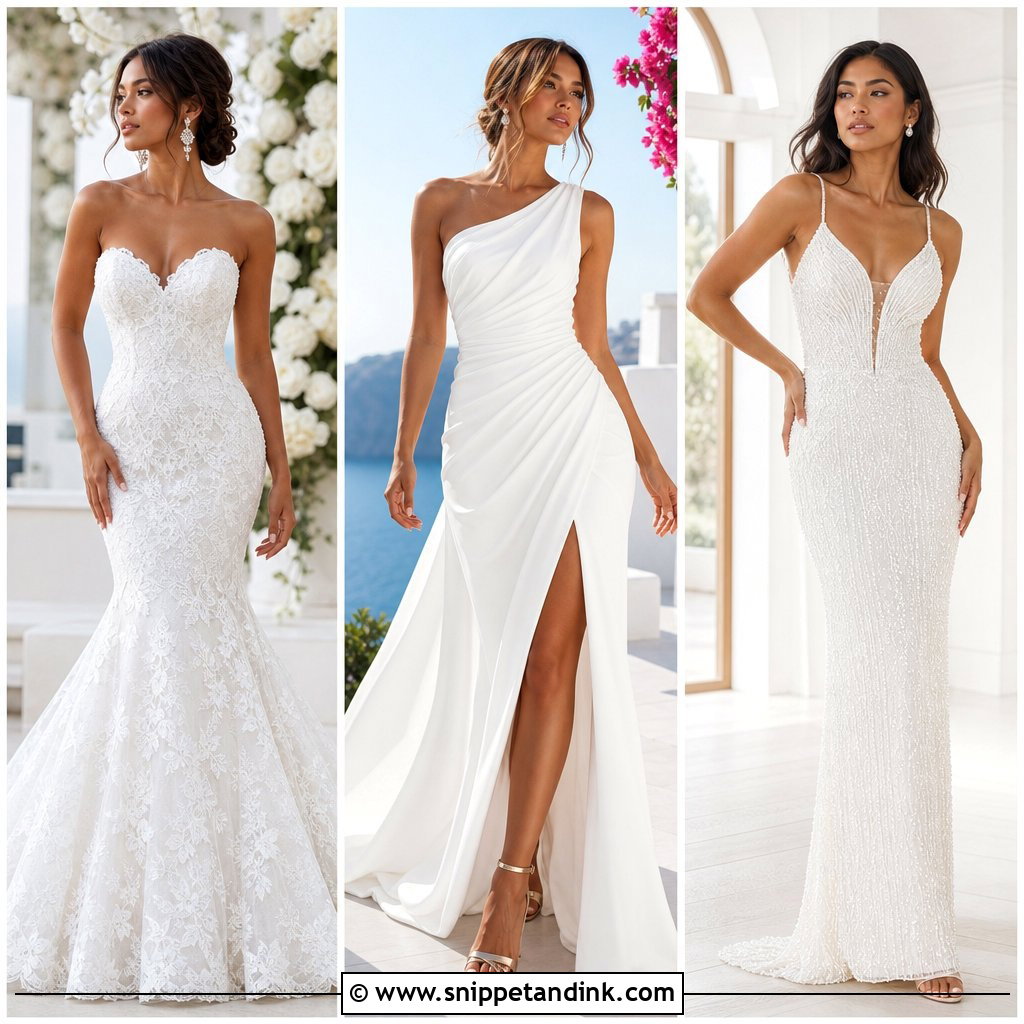
25. Minimal Golden Bridal Dress
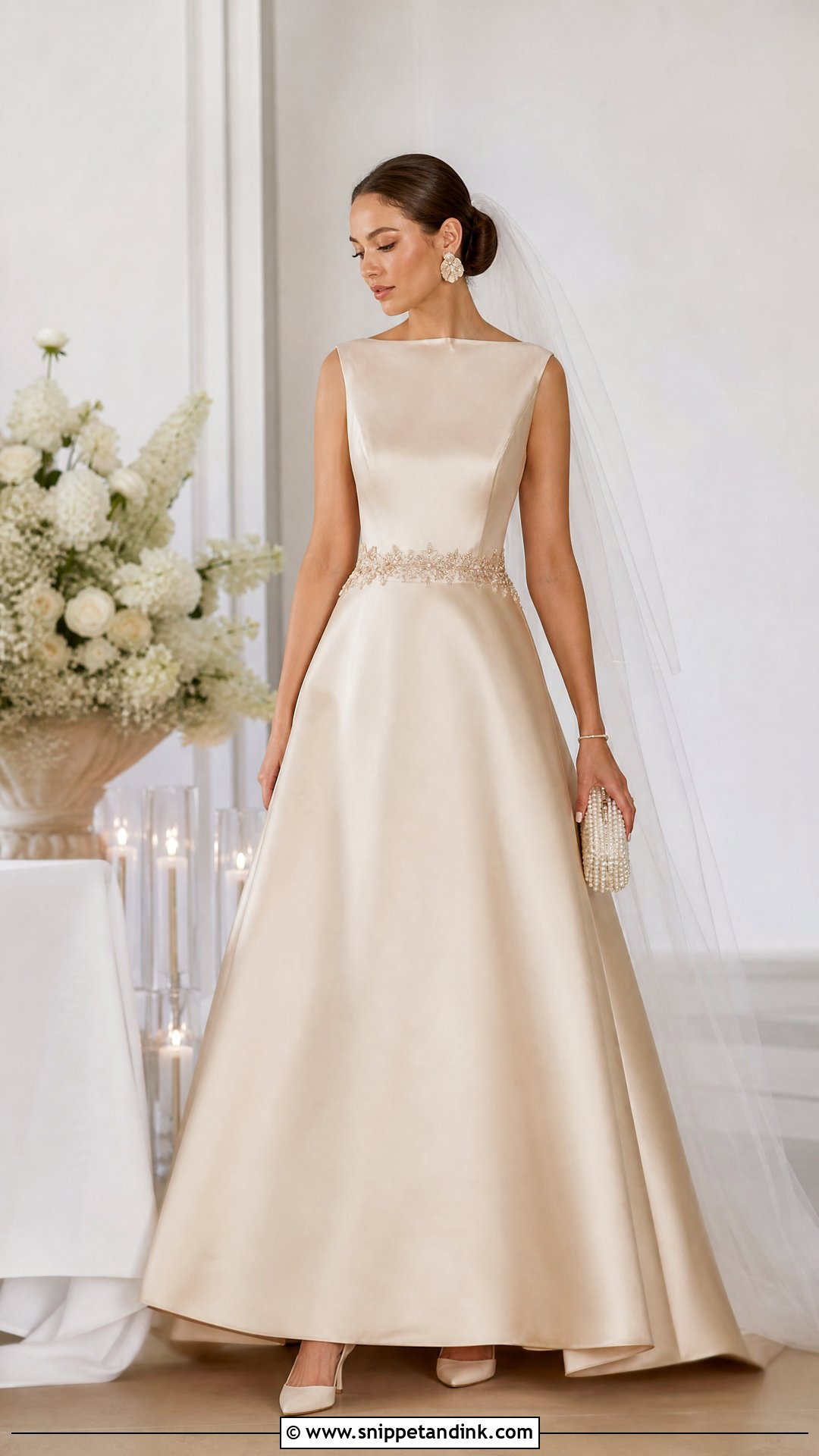
Gold doesn’t need heavy embellishment to look bridal. A clean satin, silk or crepe dress with careful tailoring and a little beading at the neck or waist can be enough. A column, A-line or soft drape keeps the focus on fabric and fit. Sculptural earrings, a slim bracelet, neutral heels and a simple veil suit it. Add one personal piece, a pearl clutch or a delicate comb, and stop there. Smooth waves or a low bun and fresh makeup complete it. Minimal gowns show every flaw in fit, so budget for extra alteration time.
Gold Jewellery on a Gold Outfit Without Losing Both
Gold jewellery on a gold lehenga or saree is traditional, but in photos the two can merge into one flat shine. I fix that with contrast in material or colour, not by removing the gold.
- Bring in pearls, polki or kundan with white stones to break the metal.
- Add one coloured stone family, emerald, ruby or pink tourmaline, picked from the embroidery.
- Pick a jewellery finish different from the fabric: matte antique gold against shiny tissue, or bright yellow gold against muted brocade.
- Keep the neckline in mind. A high or heavily worked neck needs earrings and a maang tikka, not a stacked necklace.
Why Zari Turns Dark in the Cupboard
Real and tested zari contain silver or copper, and both react with air, moisture and anything containing sulphur. That’s why an outfit sealed in plastic, or stored near rubber bands or perfume, can come out dull or blackened a year later. After the wedding, have it dry cleaned by someone experienced with bridal embroidery, then wrap it in soft muslin or an old cotton saree and keep it in a dry cupboard. Refold it every few months along different lines so the zari doesn’t crack at the creases, and never spray perfume directly onto the embroidery.
Let One Golden Detail Lead and the Rest Support It
The looks above show how far gold can stretch, from silk sarees and ornate lehengas to sleek gowns and modern drapes. Start with a tone that suits your skin and your venue’s light. Then think about fabric weight, fit, movement, jewellery, shoes and how the veil or dupatta will sit. Don’t make every element equally elaborate; pick one focal point and keep the others quiet. Above all, book a full outfit trial with jewellery, shoes and hair, and wear it for an hour before you sign off on it.
You'll Like These Ideas:


Leave a Reply