
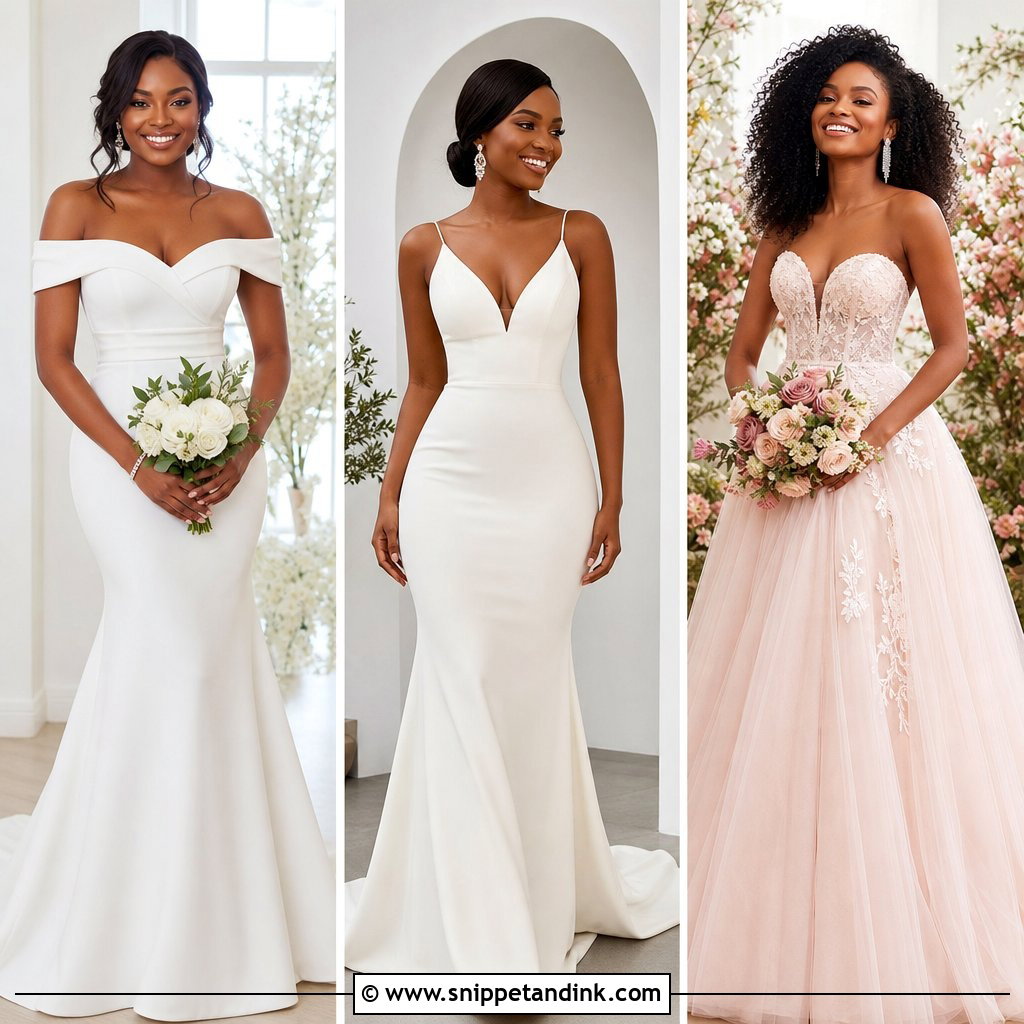
A wedding dress should look like the woman wearing it, not like the sample hanging in the shop. For Black brides, I’ve found the details that make or break a gown are rarely the silhouette. They are the shade of the fabric against your skin, whether the illusion mesh matches you, and whether the accessories support the dress or crowd it. Bridal collections right now lean on corsetry, dimensional flowers, drop waists, pearls and convertible pieces, which gives you plenty of room to make a gown your own. Below are the gowns I’d put in front of a Black bride, from ball gowns and sleek crepe to lace, corsets and colour, with what I check on each one.
Packing for a Bridal Appointment So the Samples Show You Properly
Shop samples are rarely made with deeper skin tones in mind. The mesh is usually pale, the try-on bras are beige, and the lighting is warm and flattering. You can work around all of it if you arrive prepared.
- Underwear and shapewear in your own skin shade, so nothing pale shows through lace or mesh and the stylist can judge the real effect.
- Shoes at the heel height you plan to wear; length and proportion change with every centimetre.
- A phone to photograph each gown by a window and with the flash on. Pale mesh that disappears in the shop often shows clearly under flash.
- A question list: which mesh shades are offered, whether linings can be changed, and how long the gown takes to arrive.
If a salon can’t show you a gown on a model or bride with a similar complexion, ask to see a fabric swatch of each lining and mesh option. Holding swatches against your inner wrist and your face tells you more than any catalogue photo.
1. Ivory Satin Ball Gown Wedding Dress
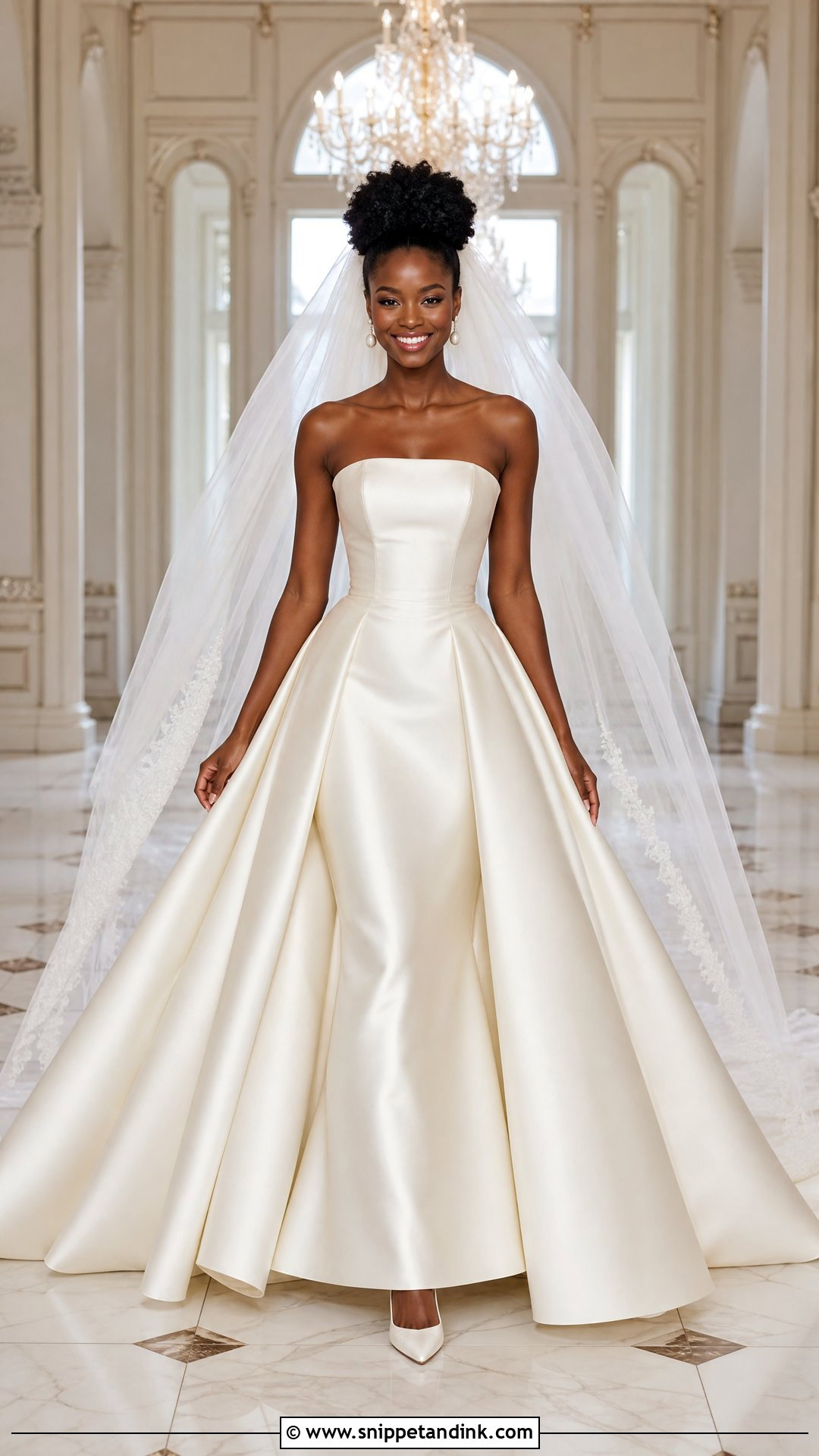
Ivory or white? Hold both against your face beside a window before you decide, because ivory satin can look creamy on one bride and slightly yellow on another depending on undertone. A fitted bodice with a full structured skirt needs no embellishment at all. Pearl drops, pointed ivory pumps and a low bun or sculpted natural updo. Cathedral veil for formality, a shorter one for a cleaner line. I always ask for hidden pockets in a skirt this size, and a bustle that a bridesmaid can actually fasten in under five minutes.
2. Off Shoulder Mermaid Wedding Dress
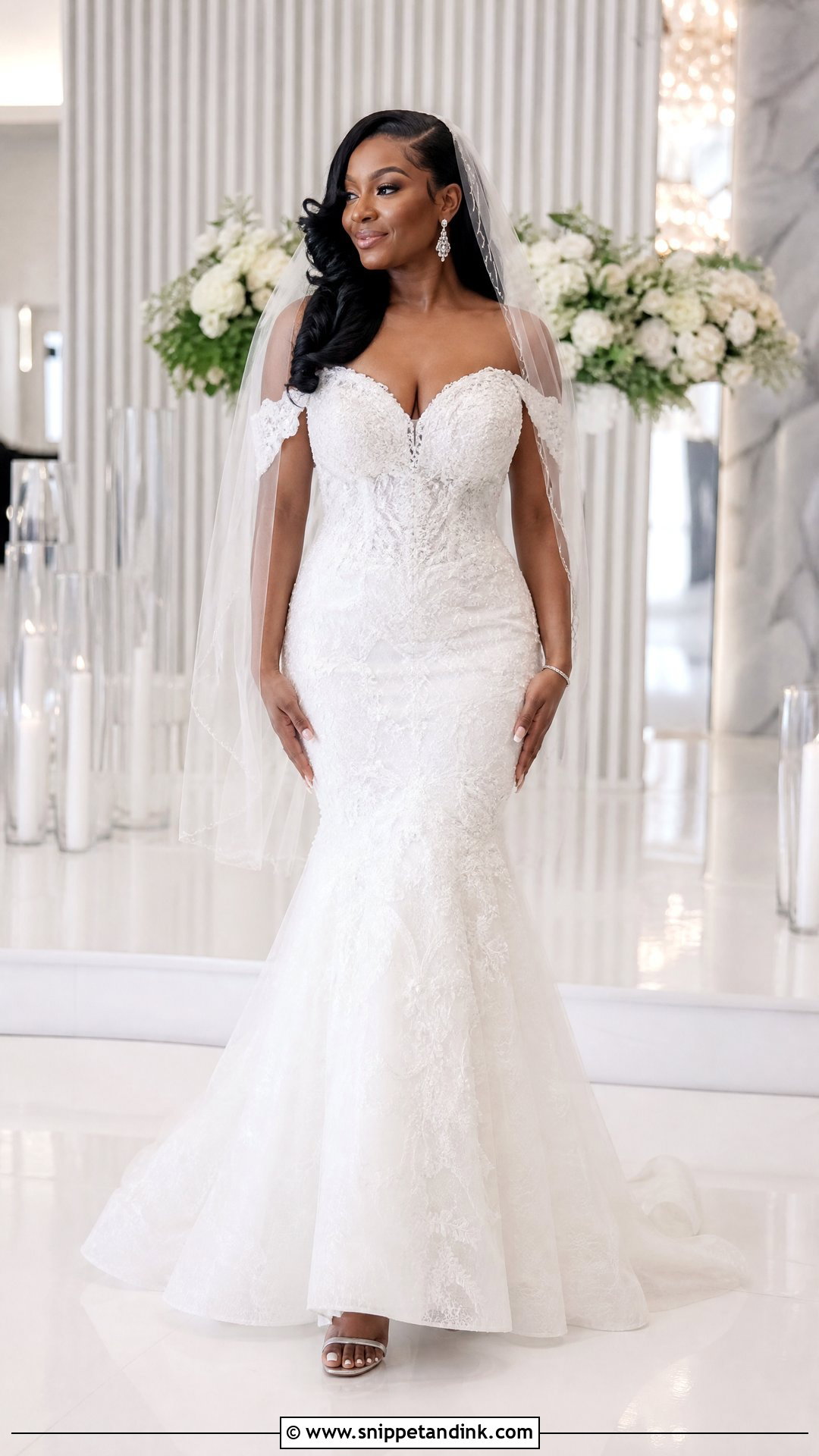
An off-the-shoulder mermaid relies on its internal structure. The sleeves alone can’t hold the bodice up, so I look for boning and a stretch lining before anything else. Brides with a fuller bust often feel more secure with a slightly higher neckline or discreet added straps. Crystal earrings, metallic heels and a compact satin clutch. Side-swept hair, a braided updo or defined curls keep the neckline open. With lace or beading on the gown, choose a plain fingertip veil. At alterations, sit, walk and dance so the flare begins where your knee needs it to.
3. Lace A Line Wedding Dress
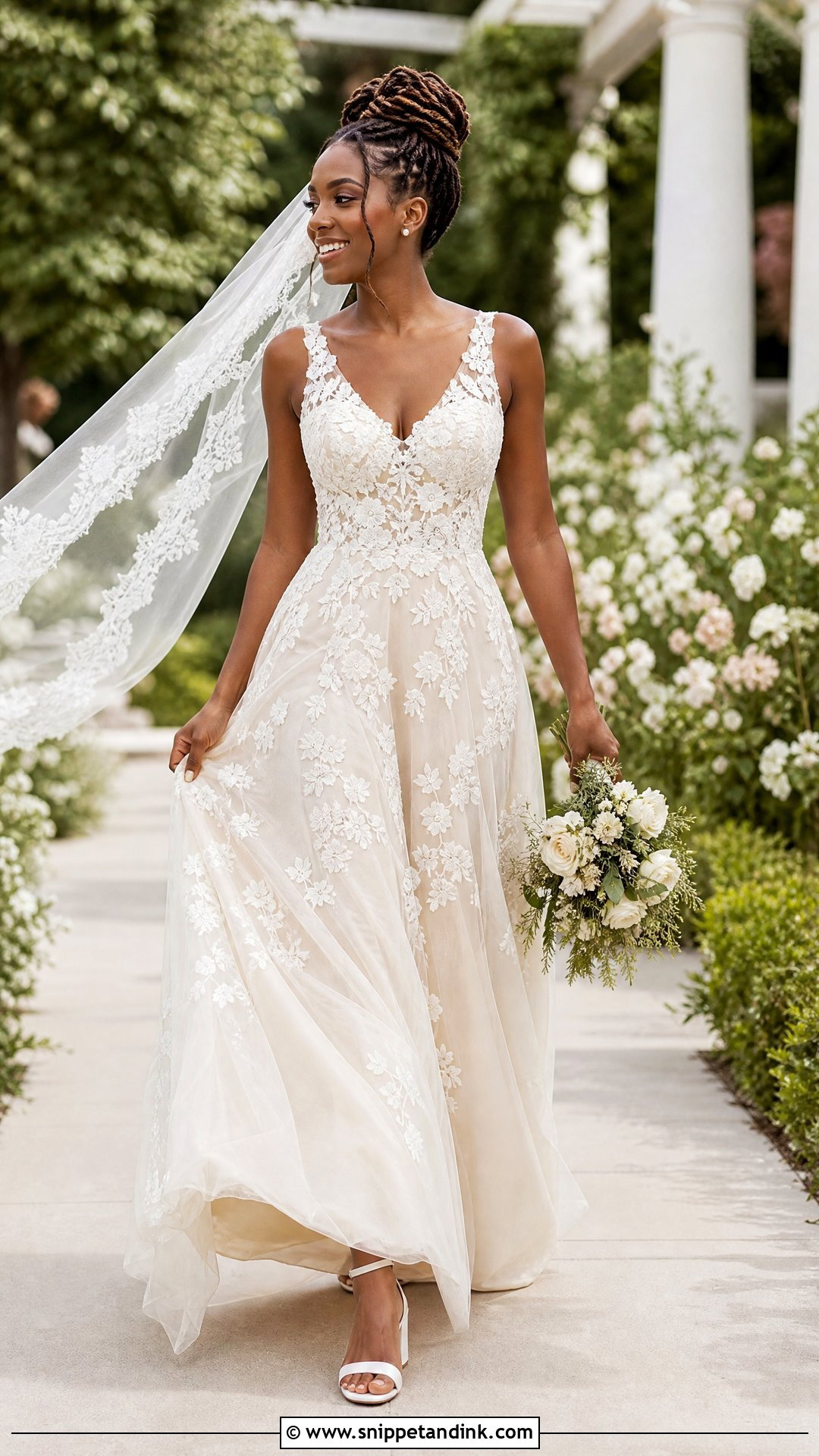
Lining colour is the detail I spend the most time on with lace A-lines. Ivory lining makes the lace look flat on deeper skin; a lining in mocha, caramel, or champagne can make the same lace pattern stand out clearly. Large motifs read bold, small florals quiet. The bodice fits without squeezing and the skirt moves away from the waist, so it suits most venues and seasons. Pearl studs, block heels and a light veil edged in matching lace. Look at it in daylight and in evening lighting before you commit.
4. Strapless Corset Ball Gown Wedding Dress
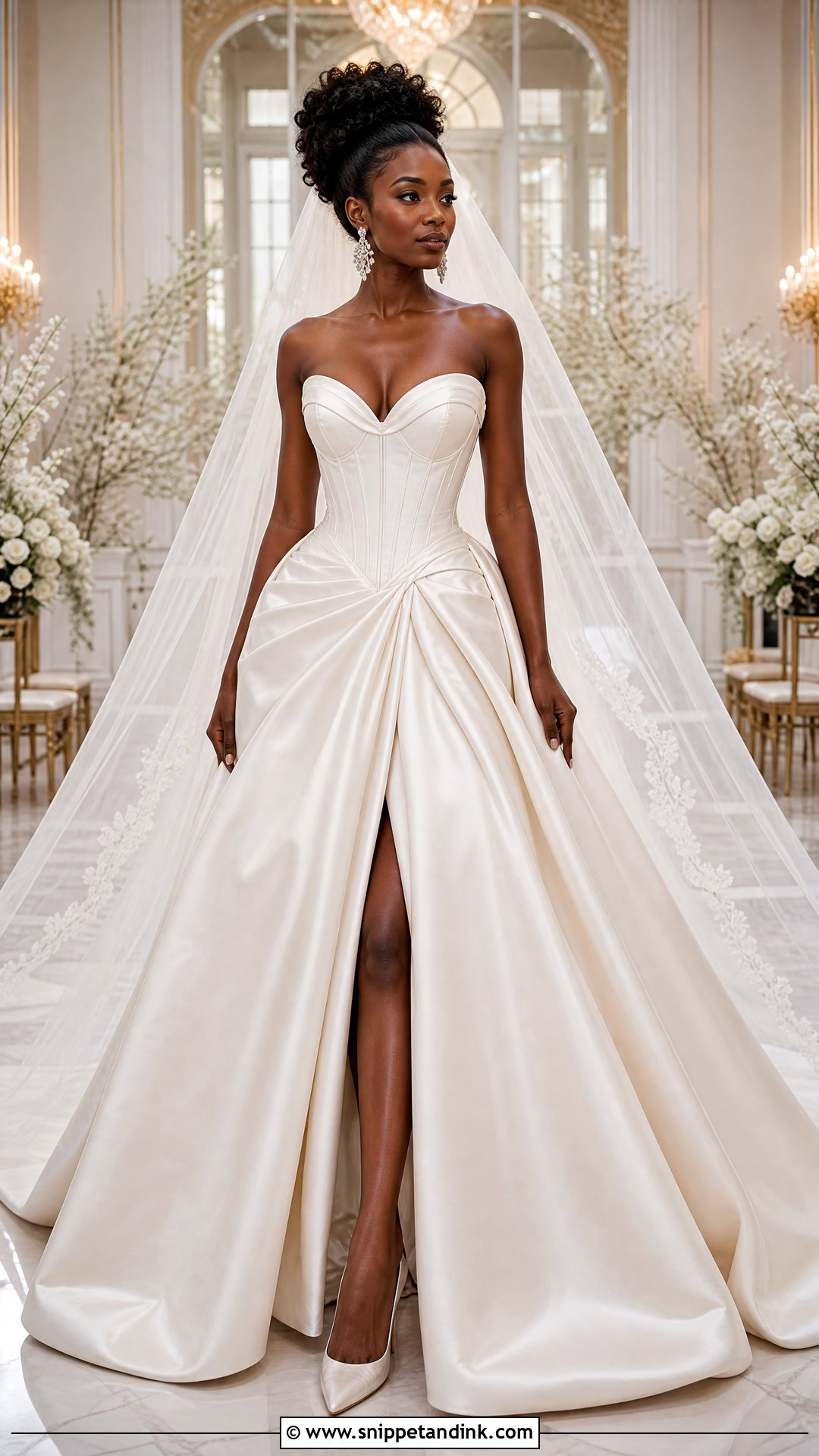
The bodice of a strapless corset gown has to stay up on its own, and if you’re tugging it at the fitting you’ll be tugging it all day. Visible corset seams look modern, covered boning more traditional, and a curved neckline softens the bust. Choker or statement earrings, not both, if the bodice is embellished. Pointed pumps, a structured bouquet and a high bun. A full natural puff or sculptural updo balances the skirt’s volume well. Detachable straps or a matching bolero give coverage for a church ceremony.
5. Long Sleeve Illusion Wedding Dress
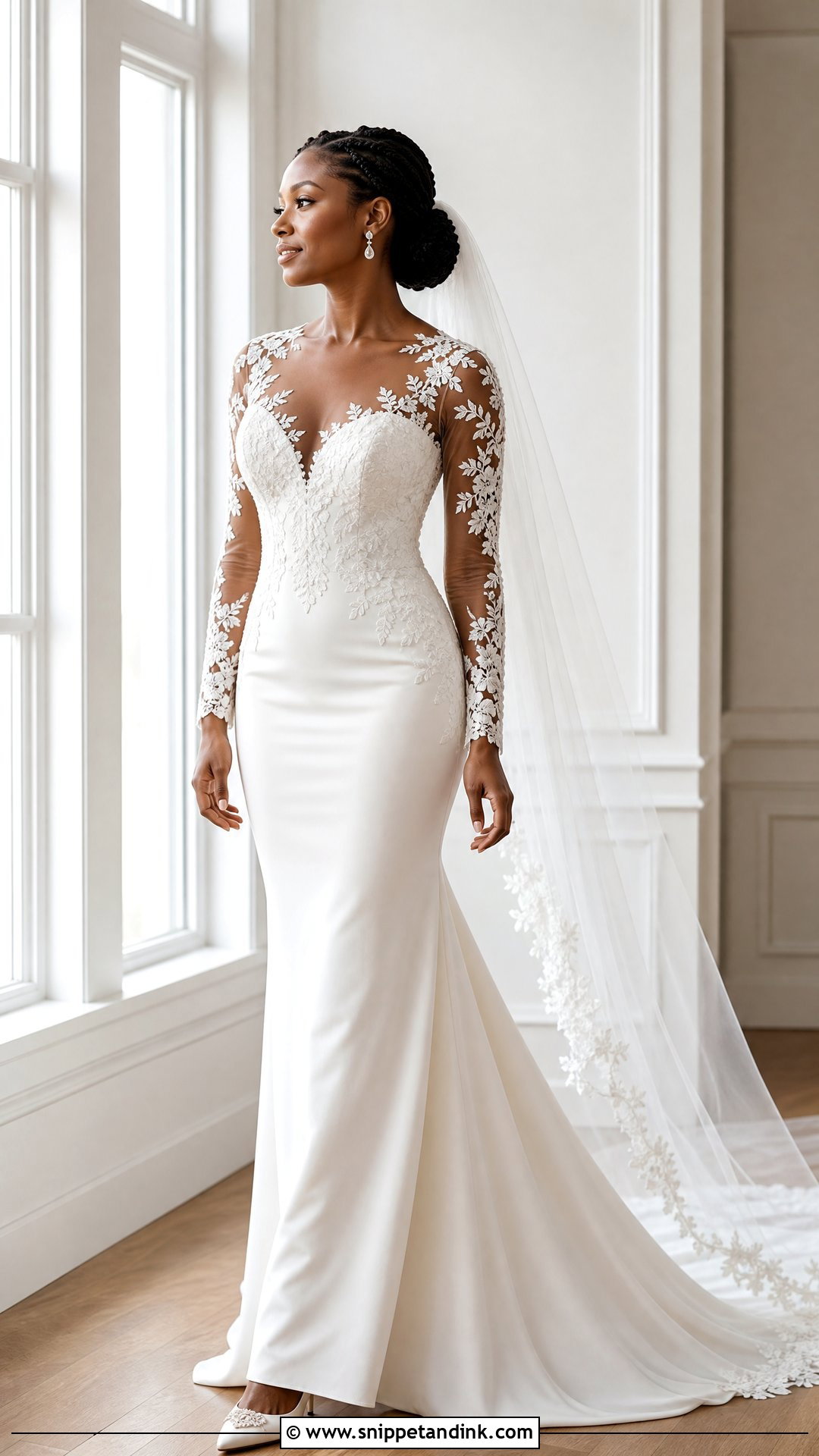
Illusion mesh is where I see the most avoidable disappointment. Most samples come in a pale or “nude” mesh that turns grey or orange against deeper skin. Ask the salon whether the designer offers other mesh shades; if not, a good bridal tailor can often replace visible panels and cover bra cups in a closer match. Understated earrings, closed-toe heels and a veil fixed beneath a braided bun, loc updo or chignon. No necklace. For winter, lined sleeves or denser lace will keep you warmer than thin mesh, and check the gown under camera flash from every side.
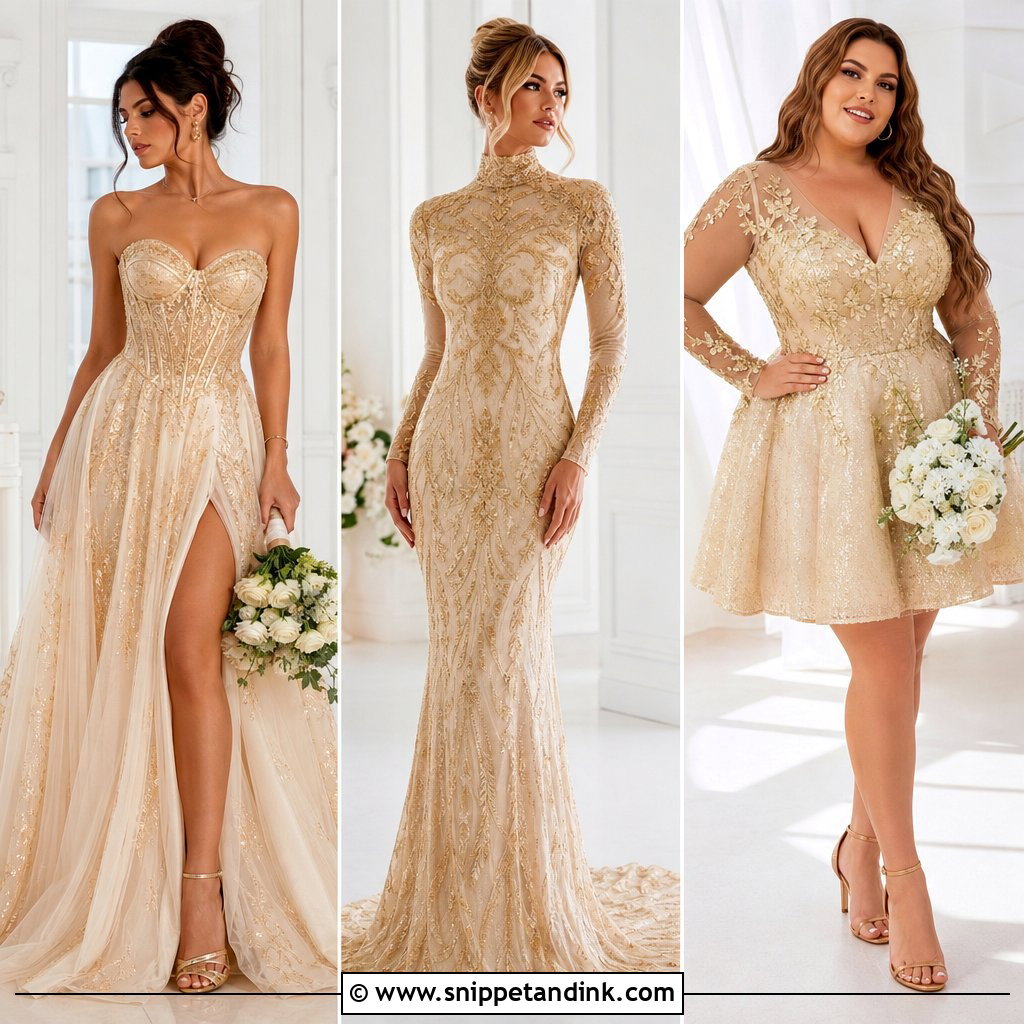
6. Champagne Tulle Wedding Dress
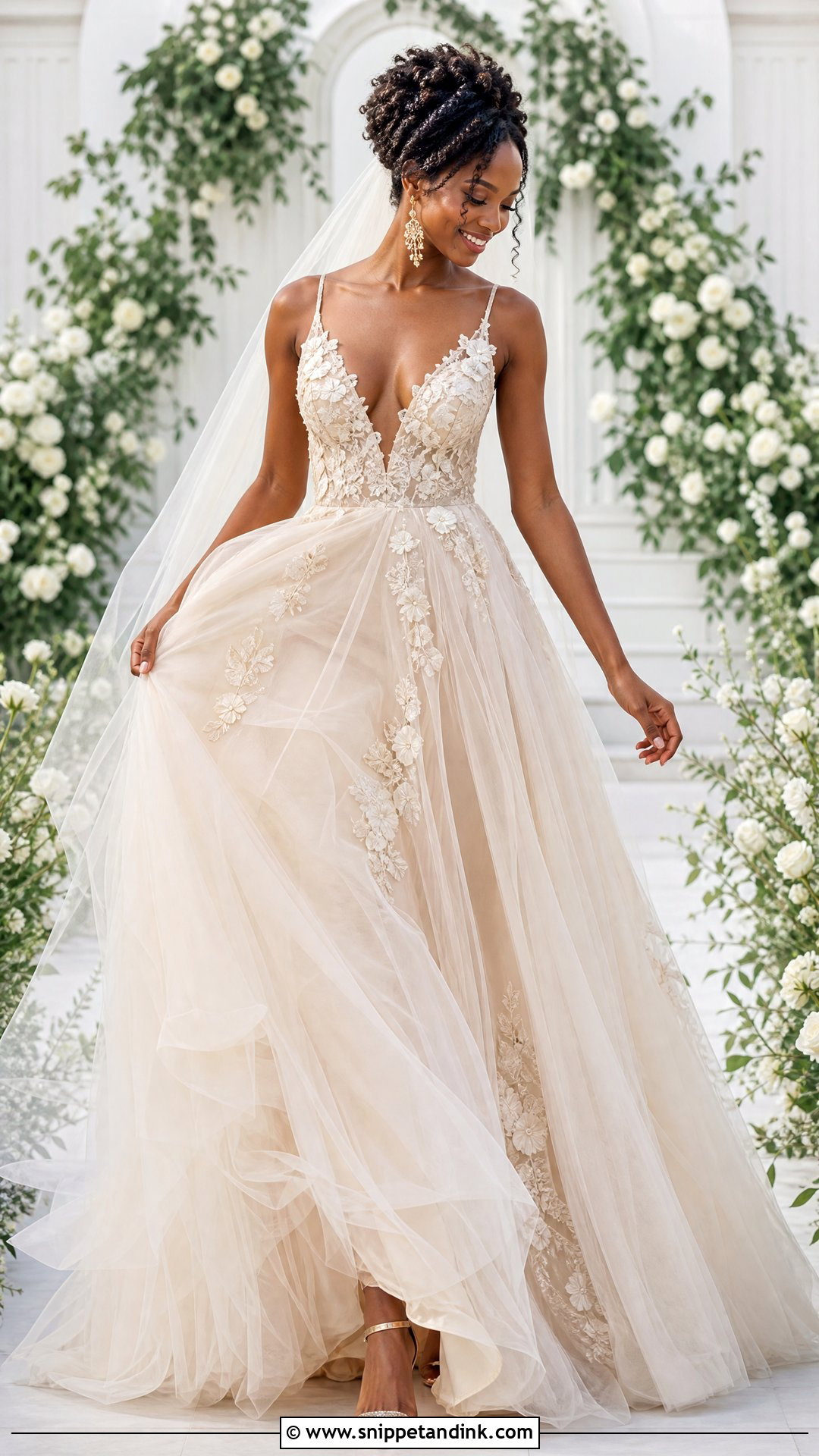
Champagne is a name, not a colour, and it can mean anything from pale beige to deep gold. Compare real swatches against your skin rather than trusting the label. Layered tulle in champagne gives warmth and movement, and the lining makes ivory lace or beading easier to see. Gold earrings, neutral metallic sandals and a sheer ivory or champagne veil. A twist-out, a loc style or a low textured bun. Go easy on shimmer in your makeup, since the fabric already glows. A many-layered skirt needs a light bustle and a smooth underskirt so it doesn’t catch on your shoes.
7. Ivory Mikado Wedding Dress
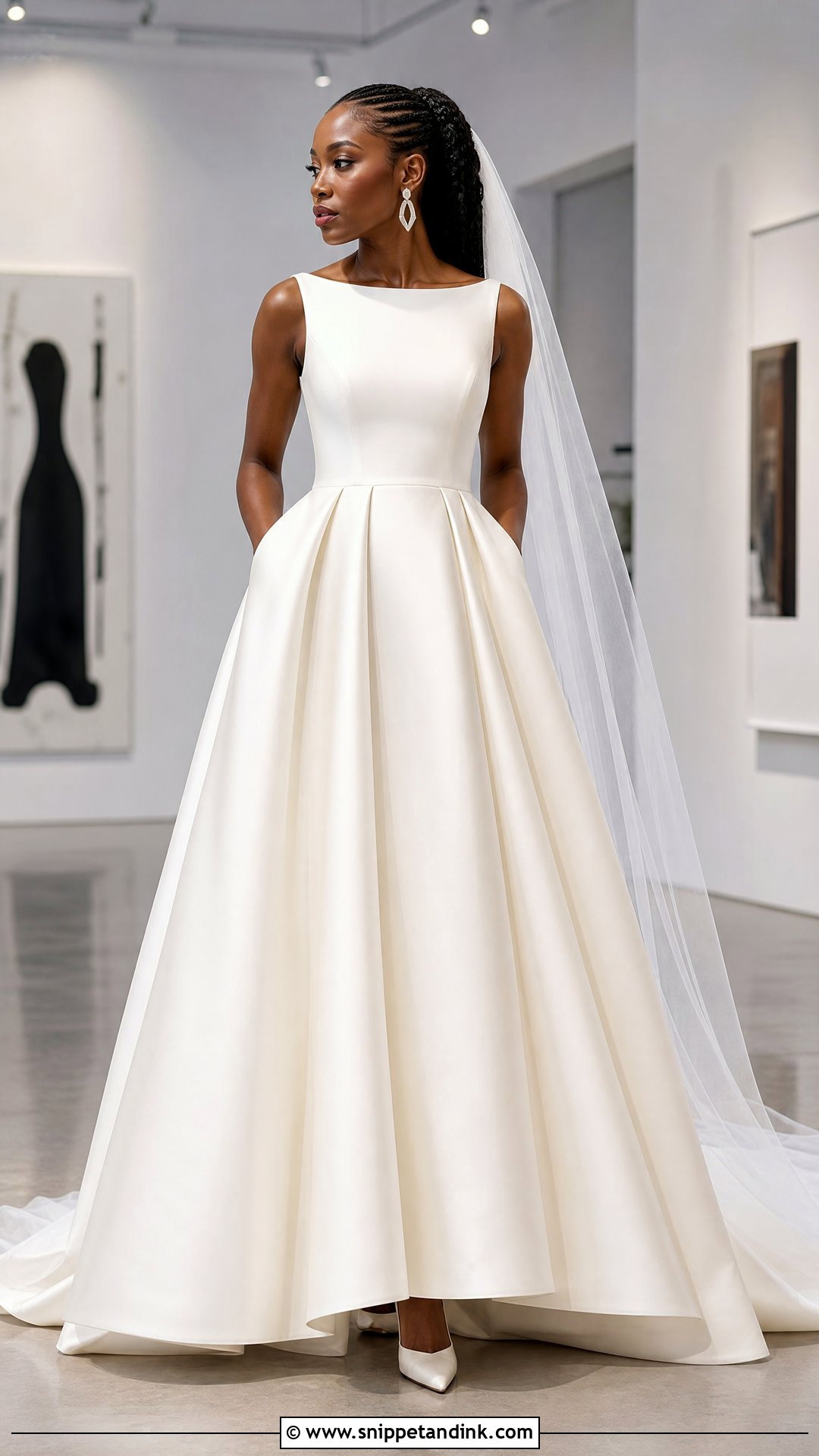
Mikado is stiff and holds its shape, which is exactly why brides who dislike lace and sparkle love it. That stiffness also means tailoring must be precise around the bust, waist and back. Ask the seamstress to remove bulk rather than simply take it in, or the fabric will buckle. A fitted bodice and pleated A-line skirt move well through the hips. Architectural earrings, sleek pointed heels and a structured bouquet. A smooth high bun, sculpted natural style or long braided ponytail. A plain cathedral veil, and covered buttons down the train if you want a modern finish.
8. Sweetheart Fit And Flare Wedding Dress
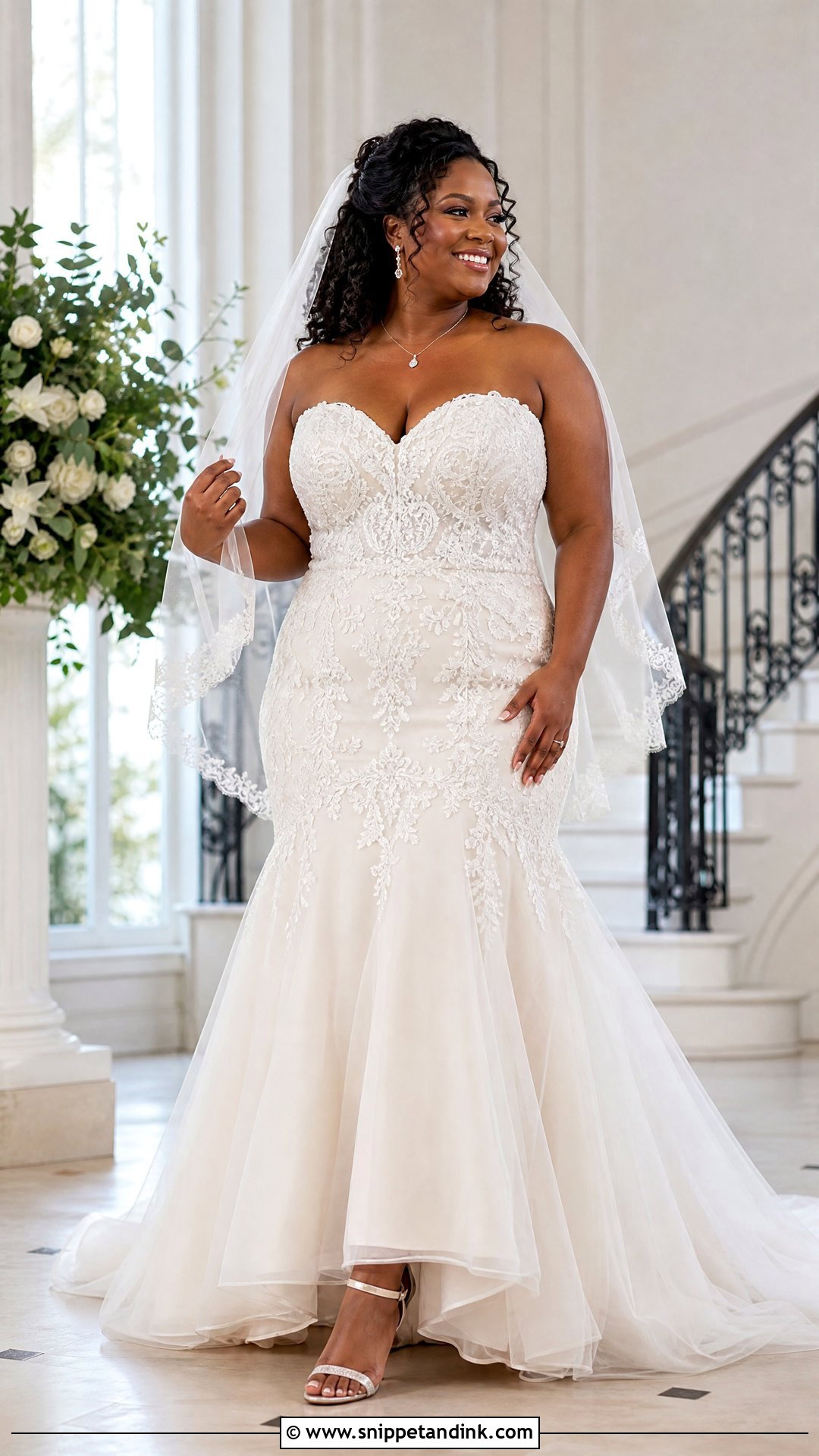
Fit-and-flare sits between an A-line and a mermaid, with more freedom at the knee. Crepe for a clean finish, embroidered lace for romance. The sweetheart neckline needs to sit flat without pressing into the bust, and sewn-in cups should match your depth and skin tone so they don’t show through. A delicate pendant, drop earrings, ankle-strap heels and a soft fingertip veil. Defined curls, half-up natural hair or loose braids. Bring your wedding shoes to the final fitting and test stairs, sitting, hugging and dancing.
9. Square Neck Column Wedding Dress
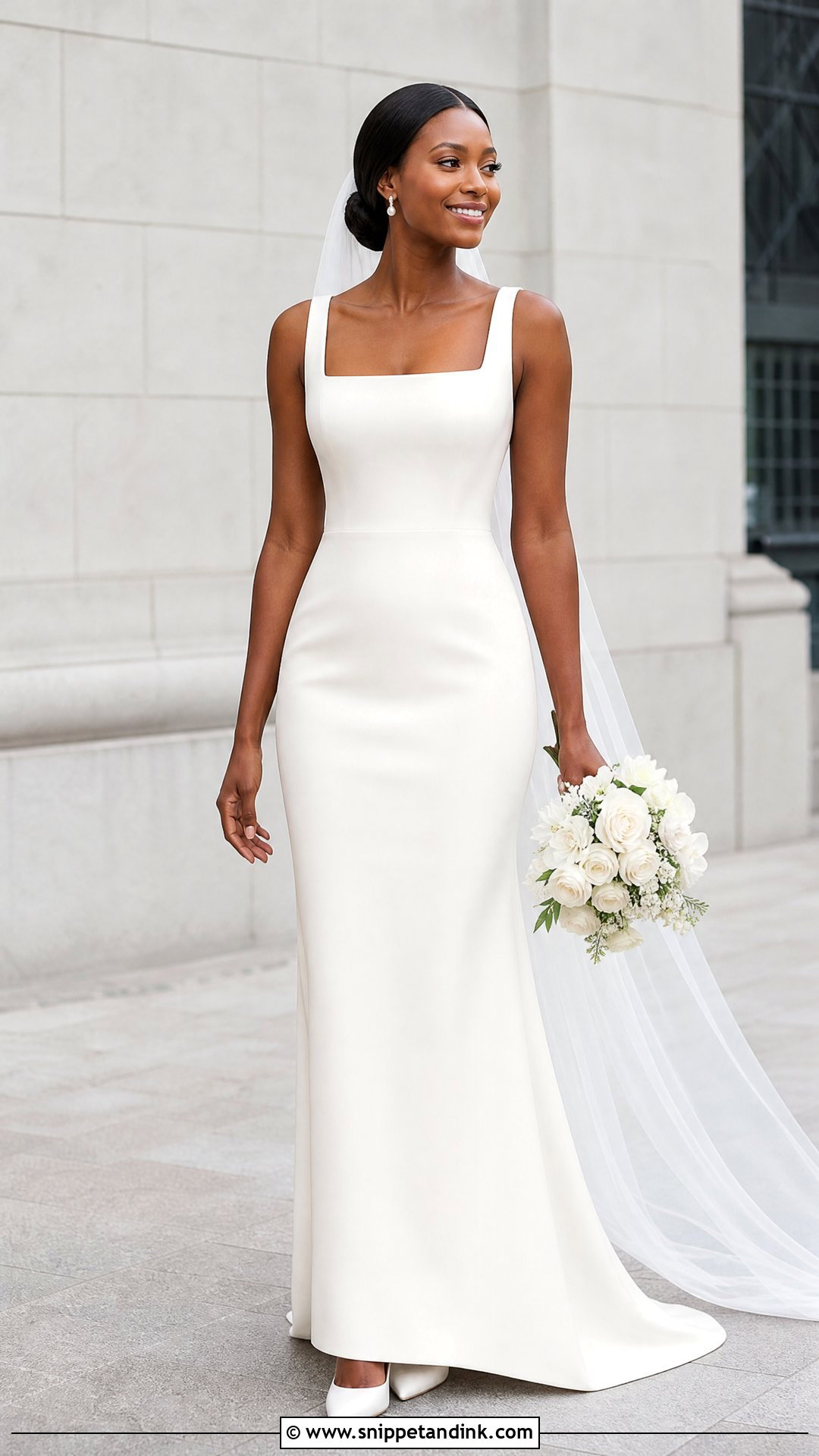
Columns are honest dresses: there is no skirt to hide a poor fit. I’d choose substantial crepe or lined satin so it skims rather than clings. The square neckline frames the collarbones and suits wide straps, fitted sleeves or bare arms. A slim bracelet, modern pearl earrings, pointed pumps and a narrow chapel veil. A centre-parted bun, short natural cut or neat locs. Ask for a back vent, stretch panel or slight flare at the hem so you can walk, and look at where the vertical seams fall. A removable overskirt adds ceremony drama.
10. Halter Neck Crepe Wedding Dress
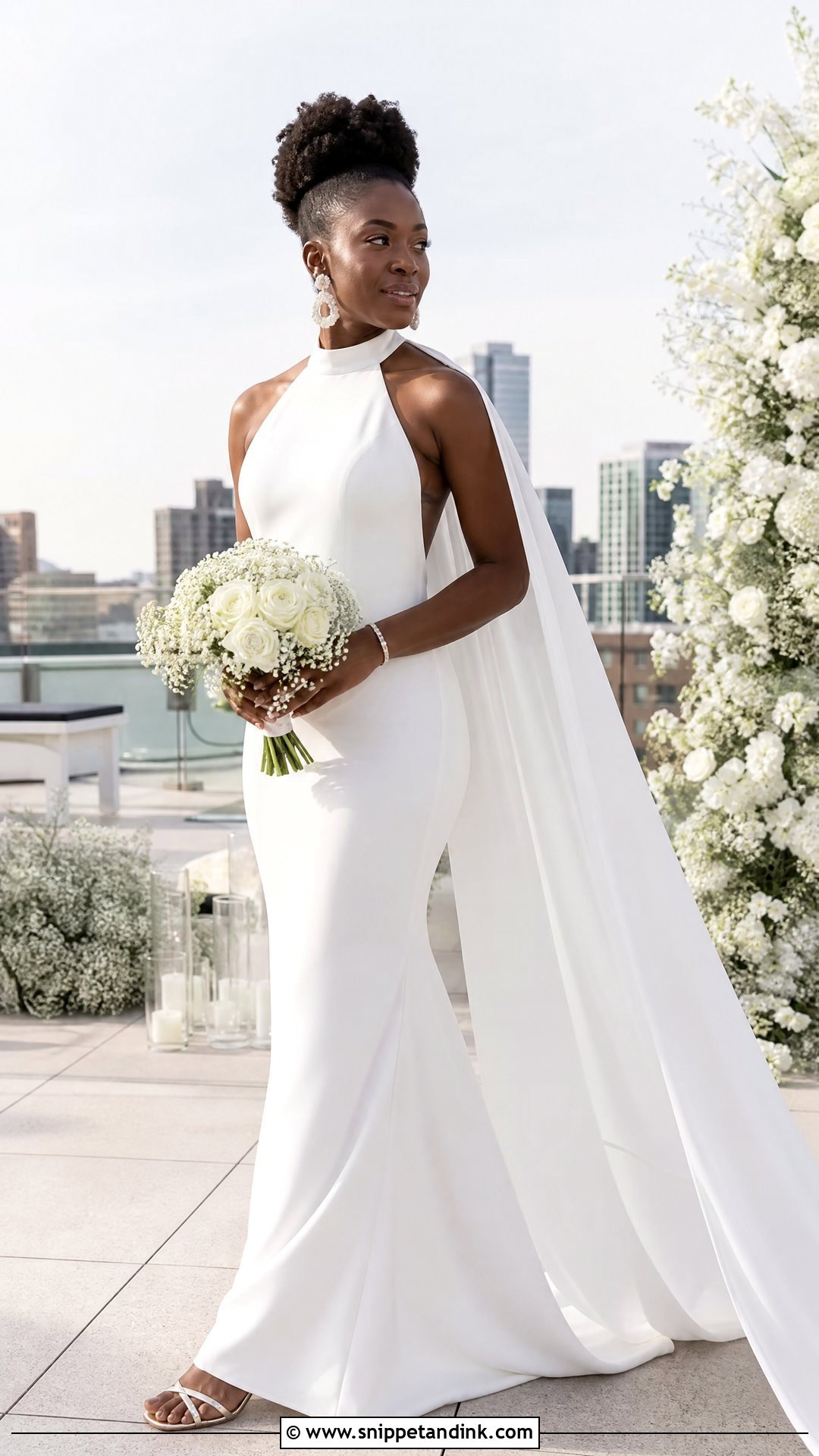
With a halter, the first question I ask is whether you can wear it for ten hours without the neck strap pulling. Crepe halters with an open back or soft drape look sleek and draw the eye to your shoulders and face. Bold earrings, metallic sandals and a wrist loop or compact bouquet that doesn’t hide the shape. A braided bun, high puff or pinned locs keep the neck clear. A cape veil attached at the shoulders adds drama without covering the open back. Standard bras rarely work here, so ask about built-in support, and raise your arms and turn at the fitting.
11. One Shoulder Draped Wedding Dress
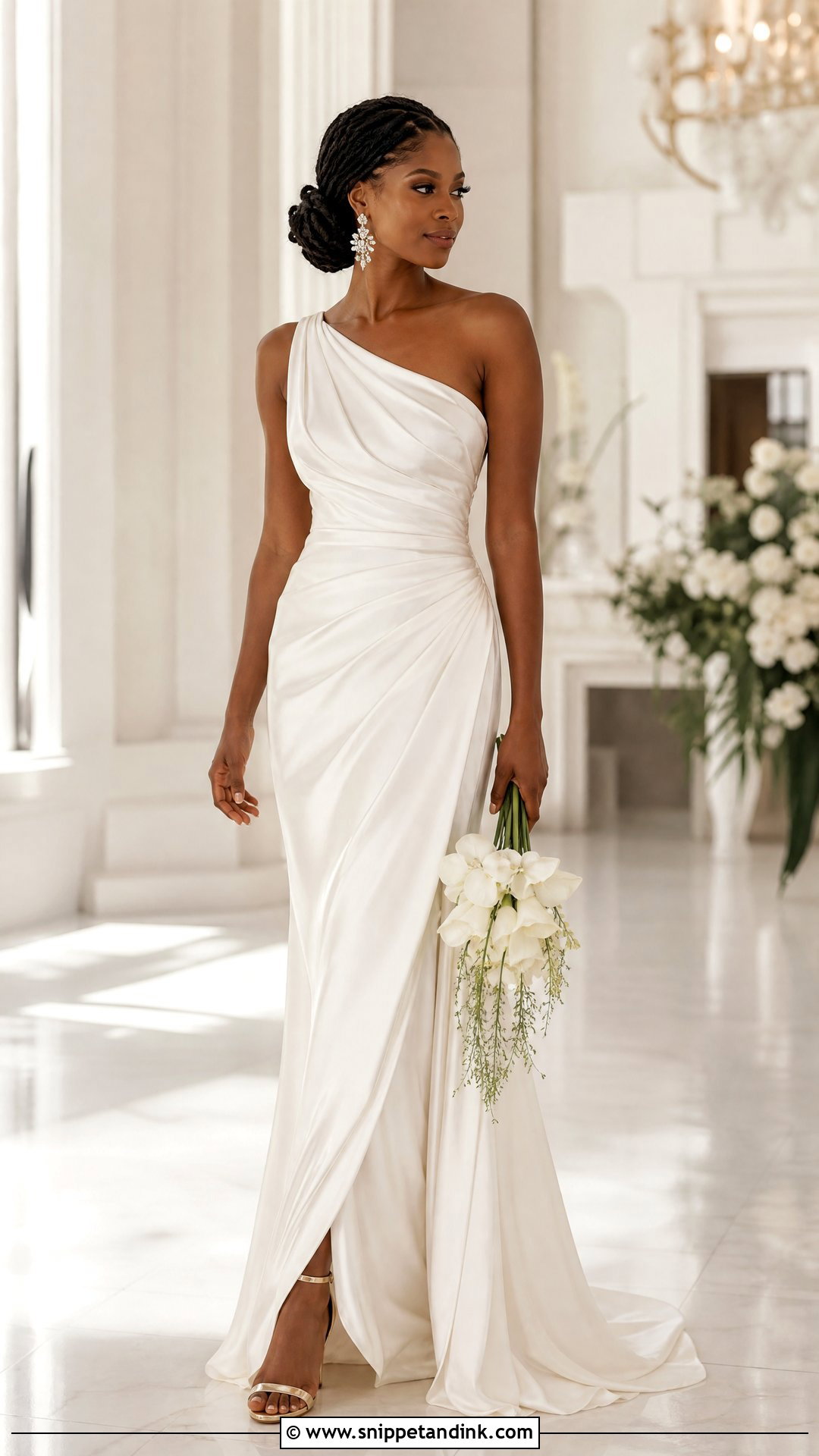
Draped satin or crepe across one shoulder is sculptural, and it defines the waist softly. If you need more support, look for an internal corset or a hidden strap under the bare side. One statement earring on the open side, or a matching pair for a more traditional finish. Metallic heels, a streamlined bouquet and a low side bun, braided chignon or swept-back curls. Wear the veil beneath the hairstyle. When you hug someone at the fitting, check the drape stays smooth across the bust.
12. Basque Waist Ball Gown Wedding Dress
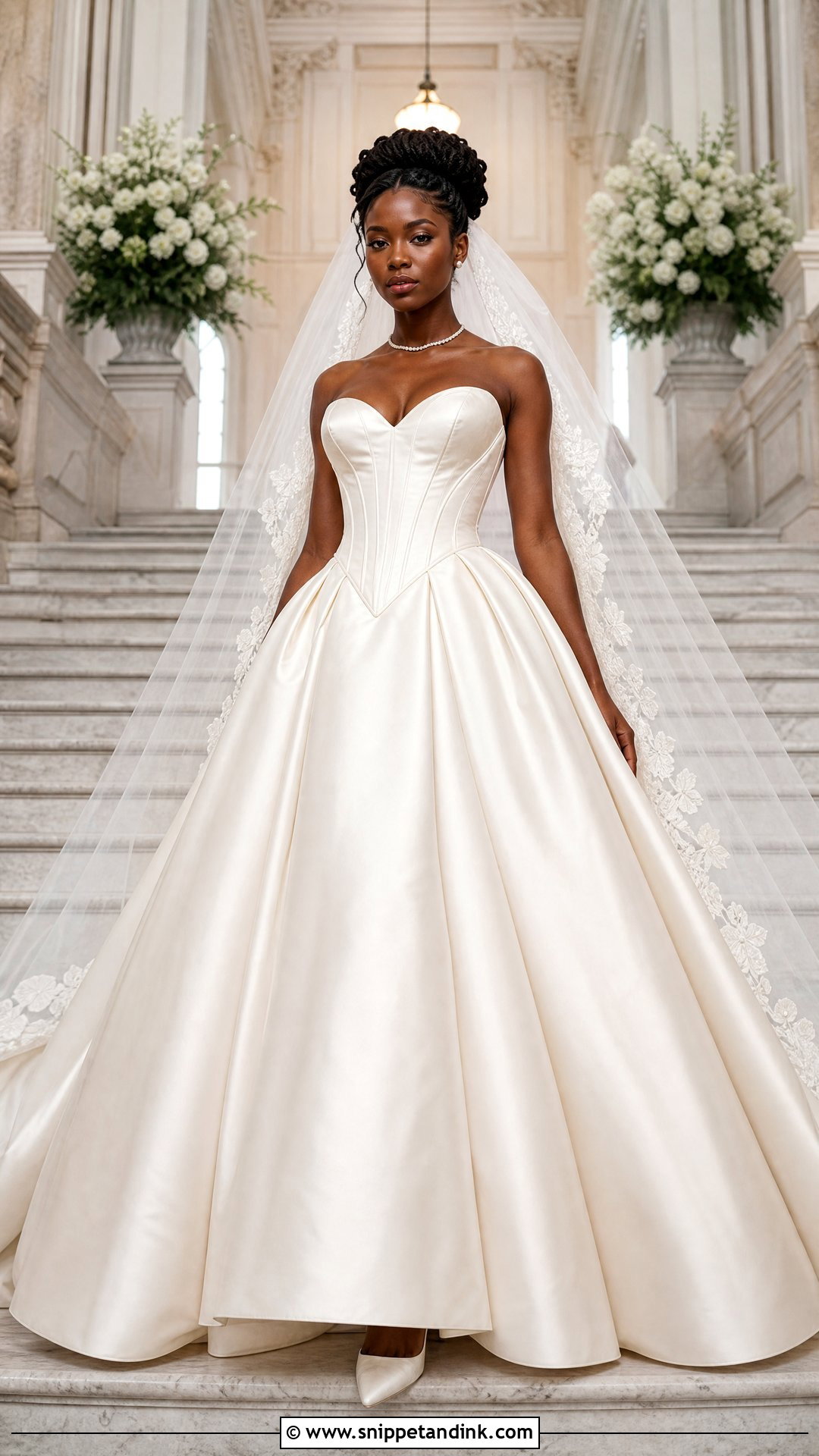
A basque-waist ball gown dips below the natural waist in a point, which lengthens the torso. Satin and jacquard give structure, tulle gives softness, and a curved neckline balances the point. I fit the waist seam with the bride sitting, since it folds if it’s even slightly off. Shorter brides can wear it with moderate skirt volume and a carefully placed point. A tennis necklace, pearl earrings, satin pumps and a cathedral veil. A regal bun, voluminous natural updo or long braids suit its scale.
13. Drop Waist Wedding Dress
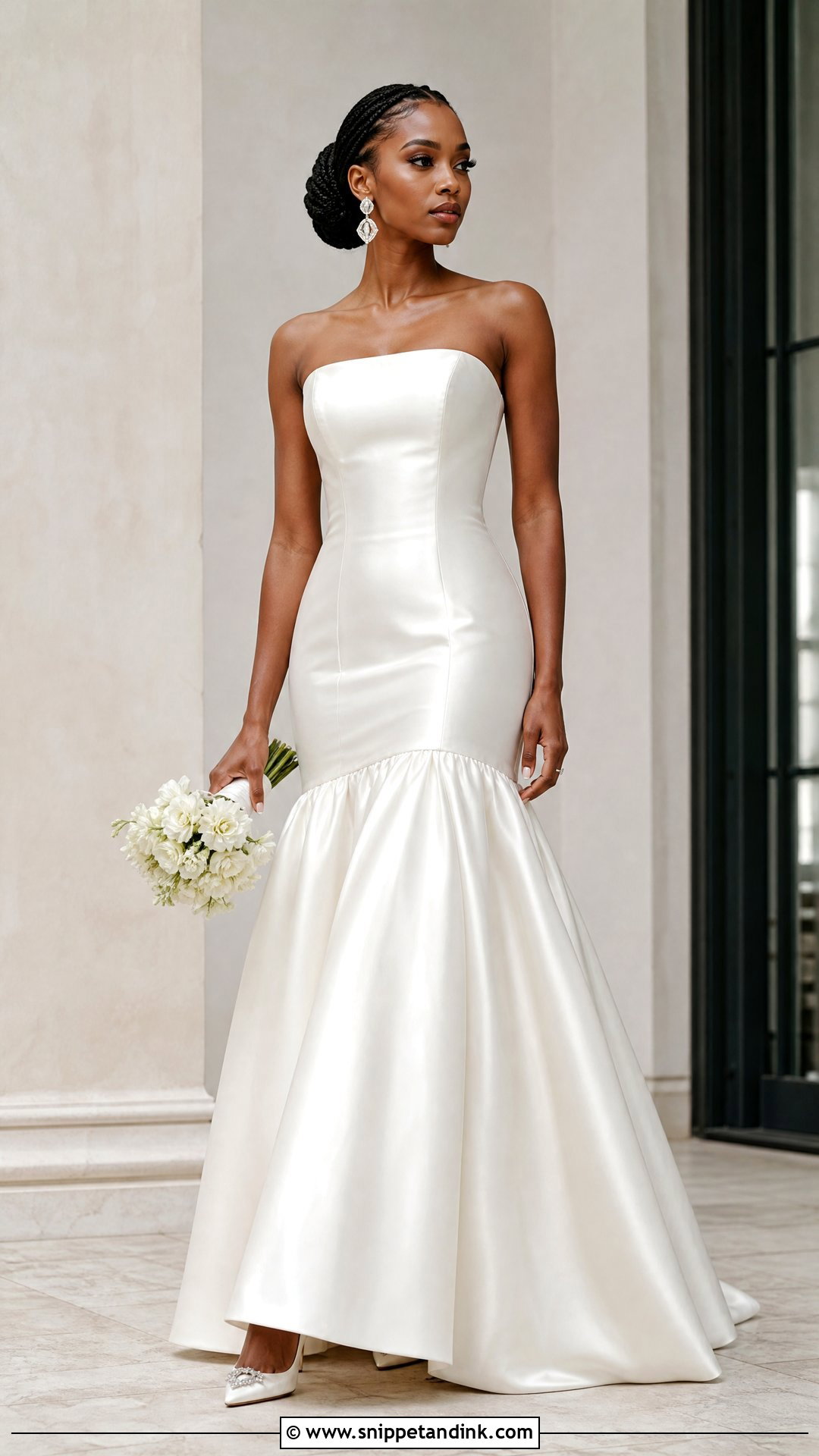
Drop waists look modern in satin or Mikado and softer in lace. The seam position is personal: try several, because a slight drop often looks better than a dramatic one. Make sure you can bend and sit comfortably with the seam lower on your body. If you want more room at the hips, choose a drop-waist A-line over a tightly fitted version. Well-fitted vertical seams keep the bodice flat. Sculptural earrings, pointed heels, a compact bouquet and a plain veil. A sleek ponytail, braided bun or short natural style.
14. High Neck Lace Wedding Dress
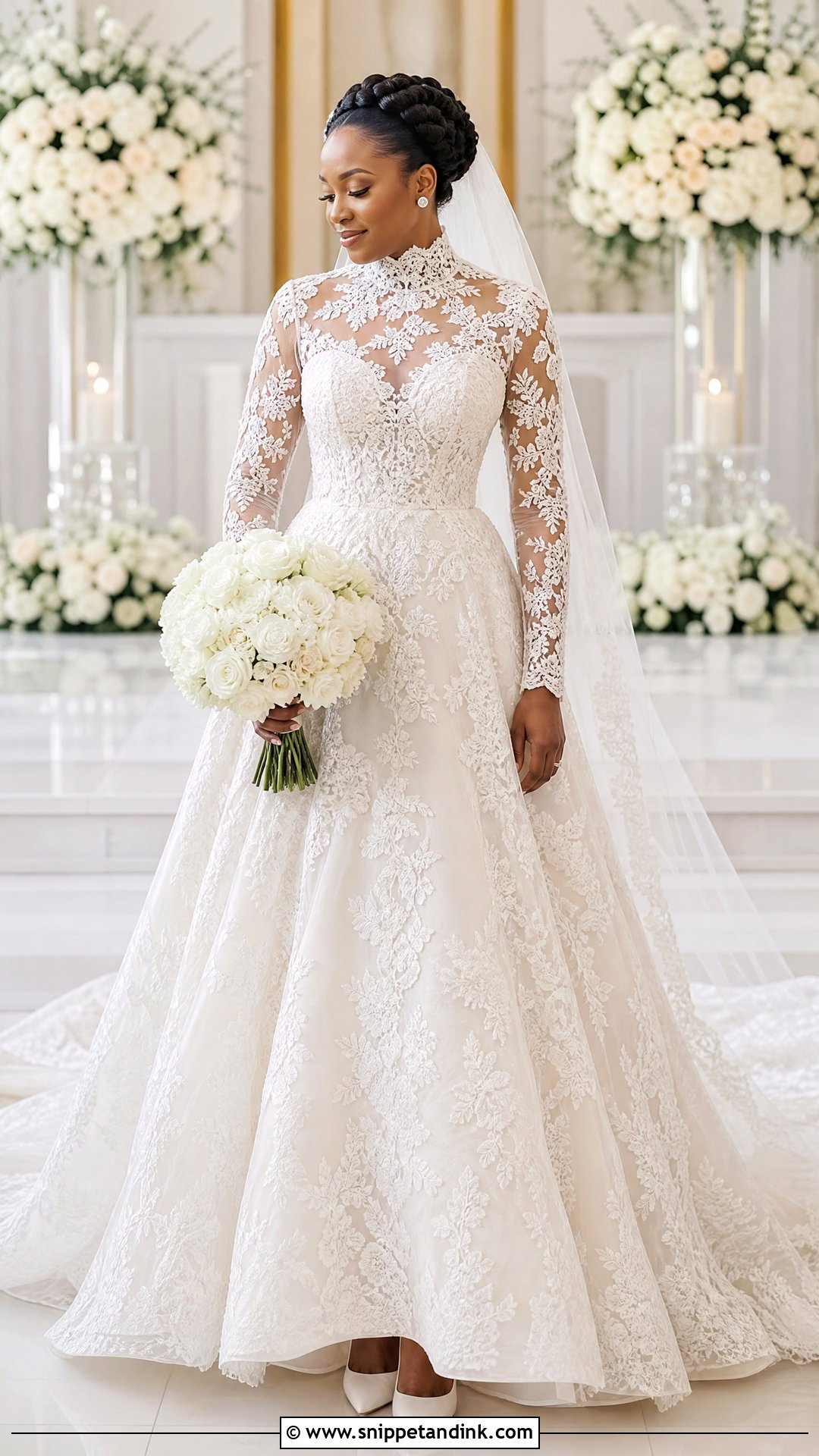
High-neck lace gives coverage across the chest and shoulders, and the lace pattern decides whether it reads vintage or modern. A fitted lace bodice over an A-line crepe or chiffon skirt keeps a smaller frame from being swallowed. If the neckline includes mesh, ask for a shade that matches your complexion and check it in daylight. Stud earrings, closed-toe pumps and a cathedral veil secured beneath the hair. A low bun, crown braid, loc chignon or soft updo. Skip the necklace. For a summer wedding, ask for breathable lining and lighter sleeves.
15. Cape Sleeve Wedding Dress
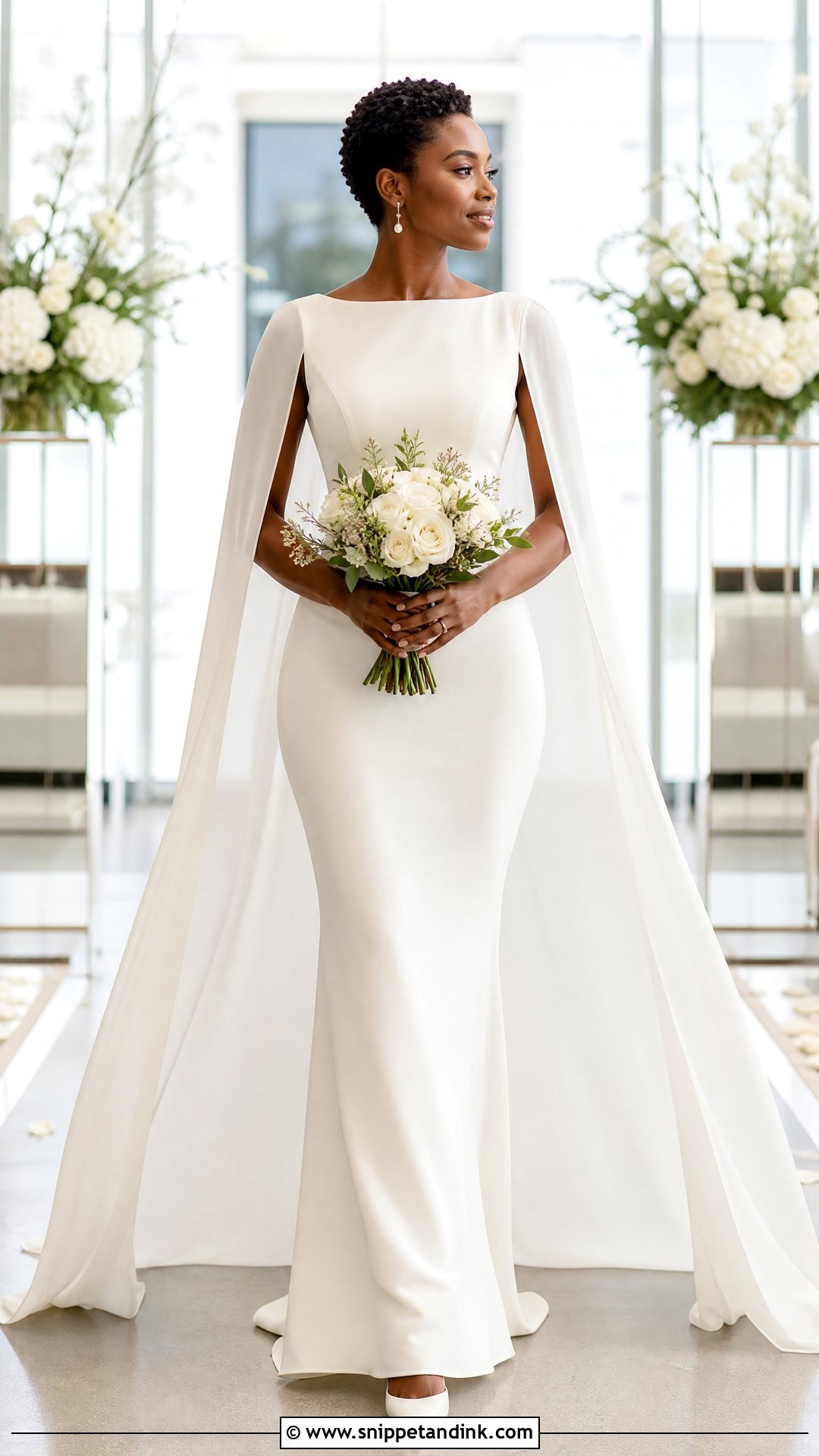
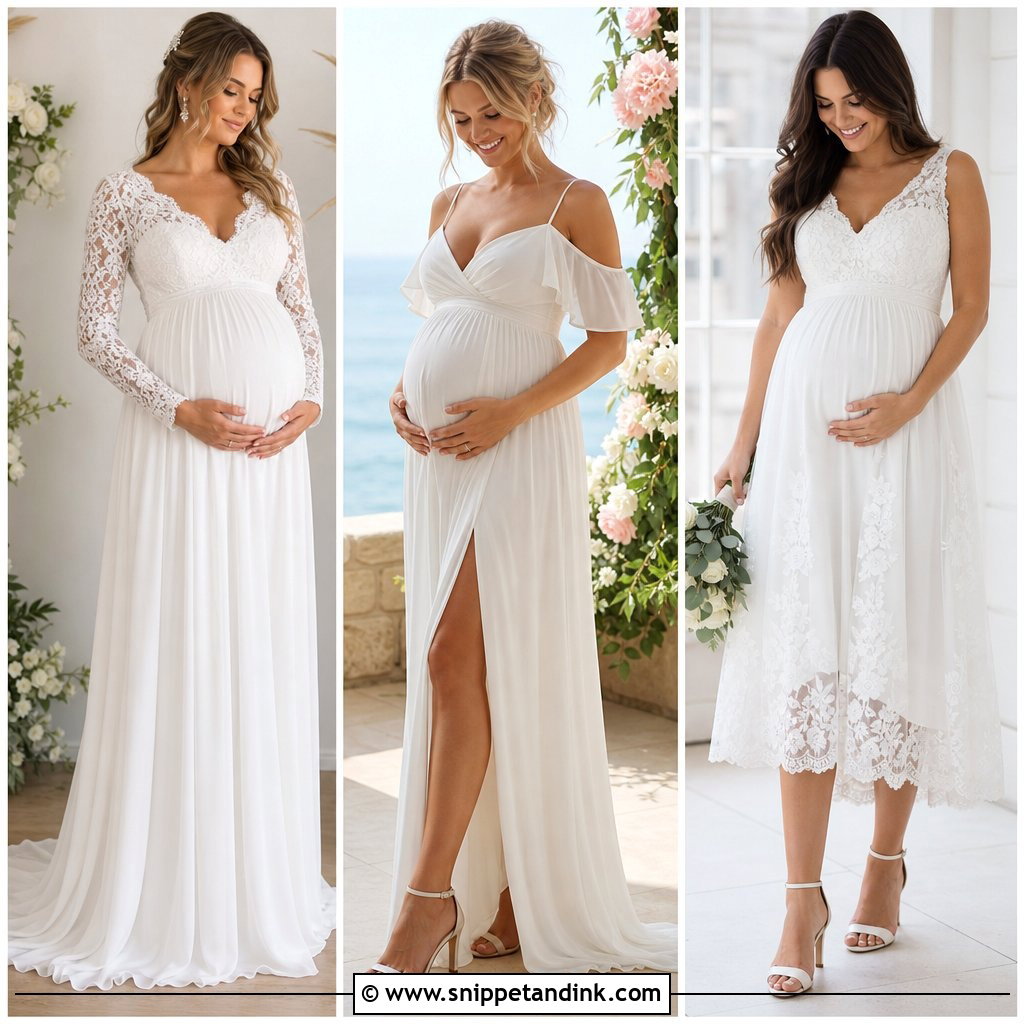
A cape sleeve gives you the movement of a veil, and you may not need a veil at all if the cape runs into a train. Chiffon feels light; embellished tulle or crepe gives more drama. A fitted column or A-line underneath lets the cape lead. Wind catches long cape panels much more than sleeves, so walk outdoors at a fitting if you can. Pearl or crystal earrings, pointed heels, a simple bouquet. A polished bun, short natural style or pulled-back locs keeps fabric from tangling. Ask for a removable cape with secure, hidden attachment points.
16. Detachable Overskirt Wedding Dress
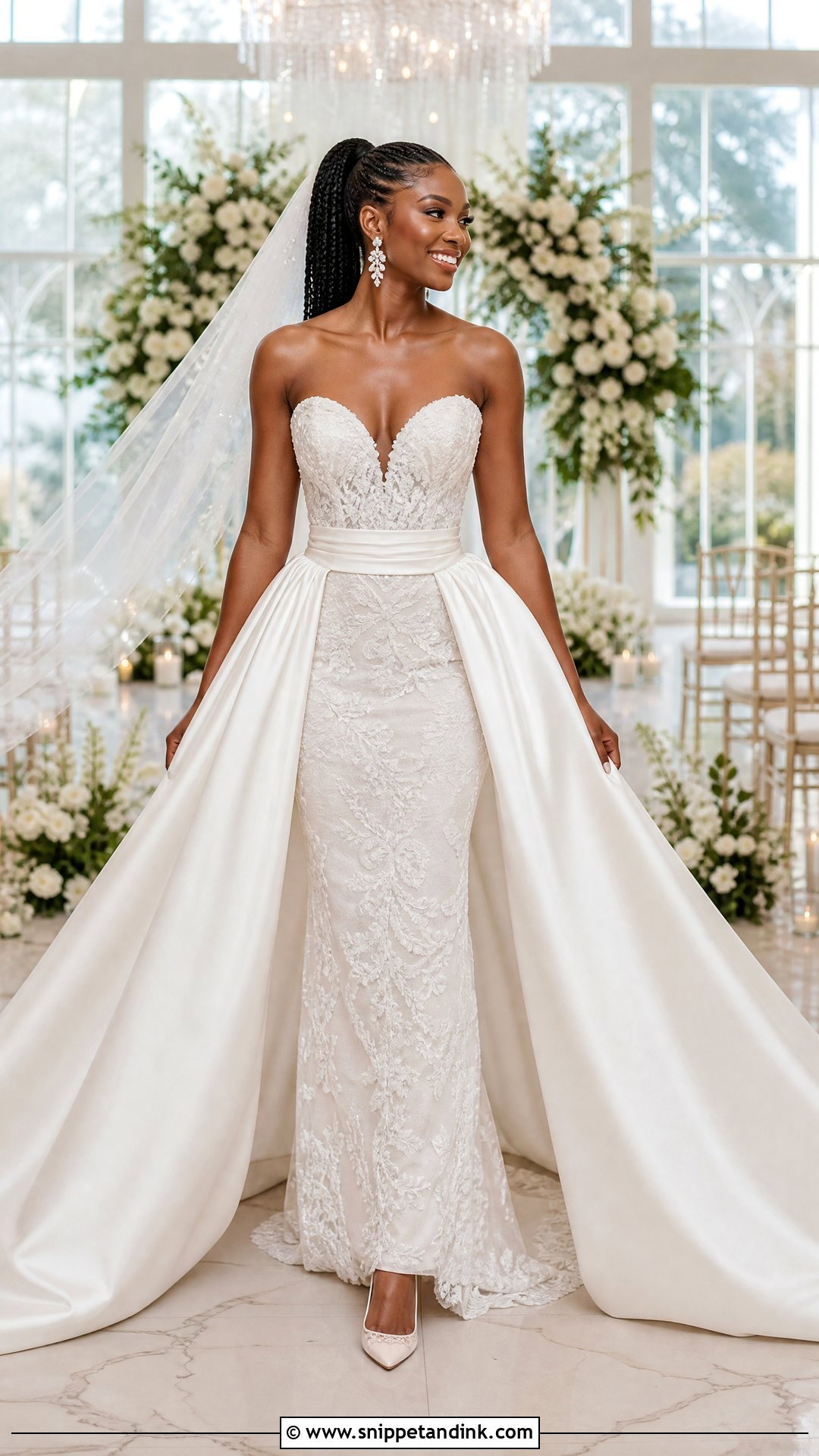
Two looks, one dress: wear the full overskirt over a fitted crepe, satin or lace gown for the ceremony, then unhook it for the reception. The join should hide in a waistband, belt or seam. I check that it closes securely and doesn’t rotate when you walk, and I teach one helper how to remove it before the day. Long veil, statement earrings and pointed pumps first; lighter earrings and comfortable sandals after. A braided ponytail, sleek bun or half-up curls work with both. Hang the overskirt on a sturdy hanger once it’s off.
17. 3D Floral Wedding Dress
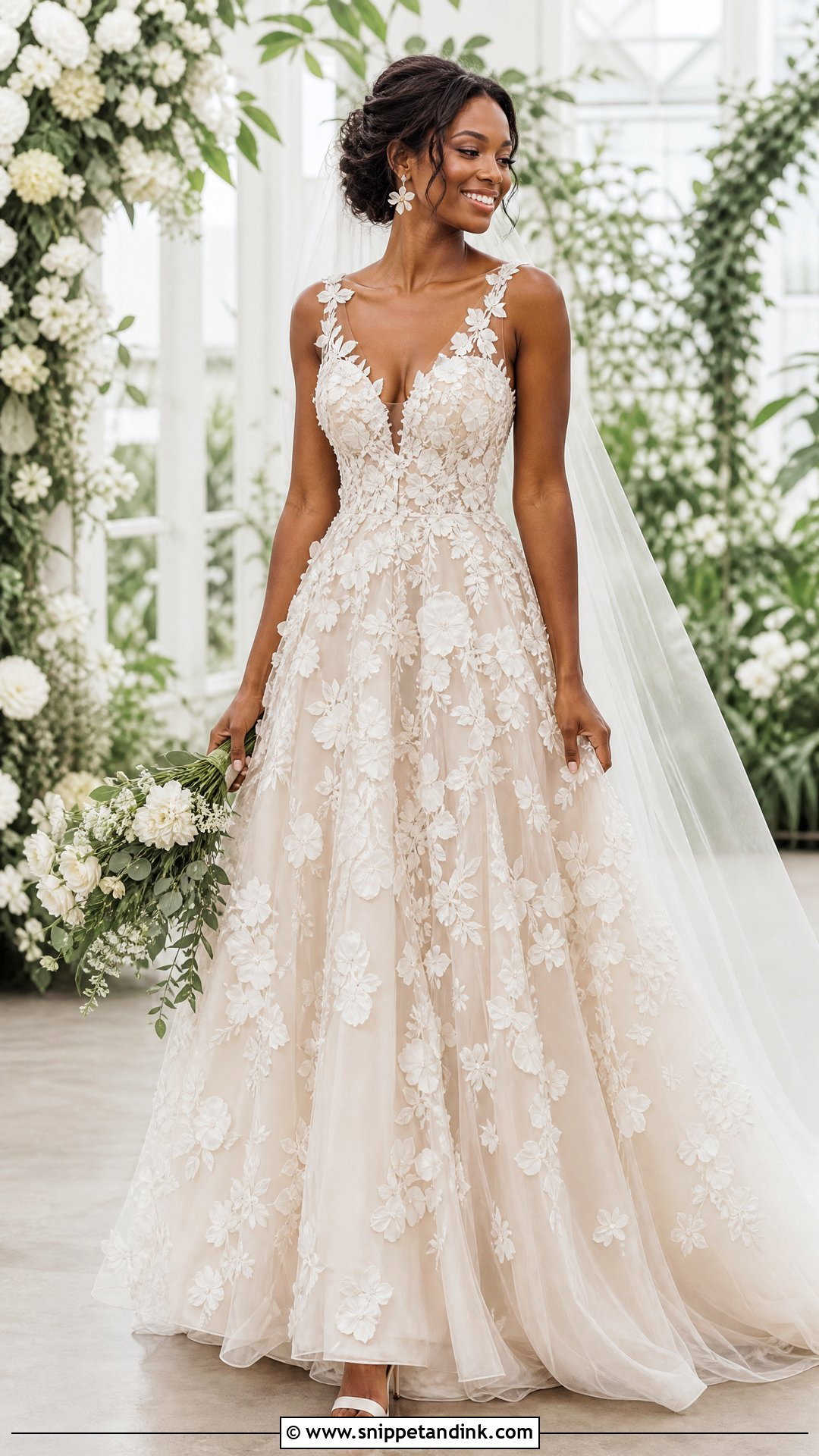
Dimensional flowers add texture without all-over sparkle. They can cover the bodice, trail down an A-line skirt or frame a sheer neckline. Placement matters: flowers clustered at the hips add bulk, so balance them. Ivory flowers over a champagne, cocoa or skin-matched lining show up clearly on deeper skin. Floral earrings, simple heels and a light veil with minimal edging. A soft natural updo, braided bun or pinned curls. Keep the bouquet modest, check every appliqué before the wedding, and transport the gown in a roomy bag so the petals don’t crush.
18. Beaded Couture Wedding Dress
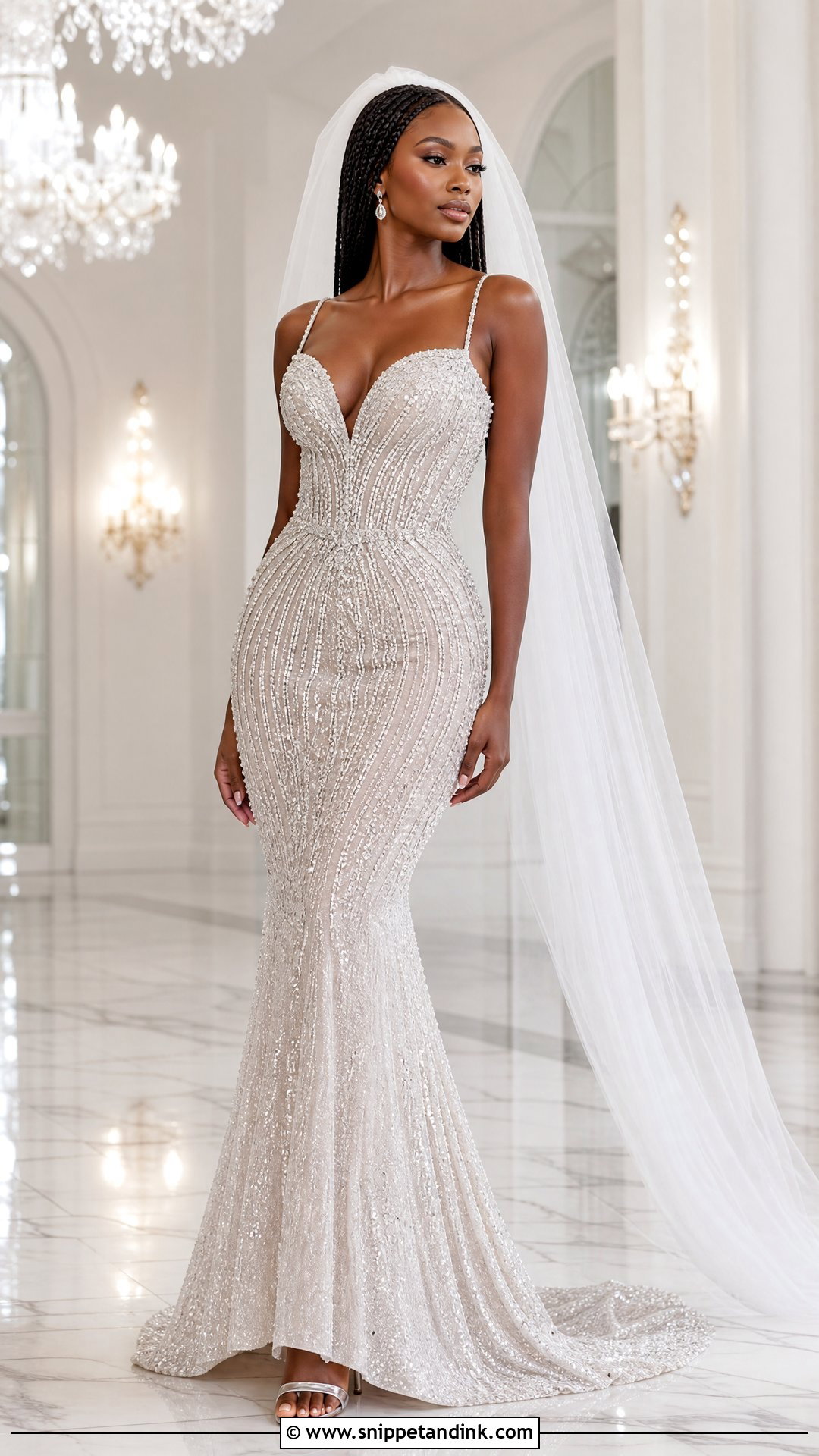
Beaded gowns are heavier than they look. Wear the sample for a good ten minutes and walk around before ordering. Crystal beadwork sparkles; pearl or tonal beading gives a softer textured shine. A column, fit-and-flare or slight flare keeps it refined. Check that the underarm edges are smooth, because beads there can rub skin raw by evening. Small studs, metallic heels and a plain tulle veil. A sculpted updo, long sleek braids or shoulder-length curls. Leave steaming to a professional, since direct heat can loosen glue and thread.
19. Pearl Embellished Wedding Dress
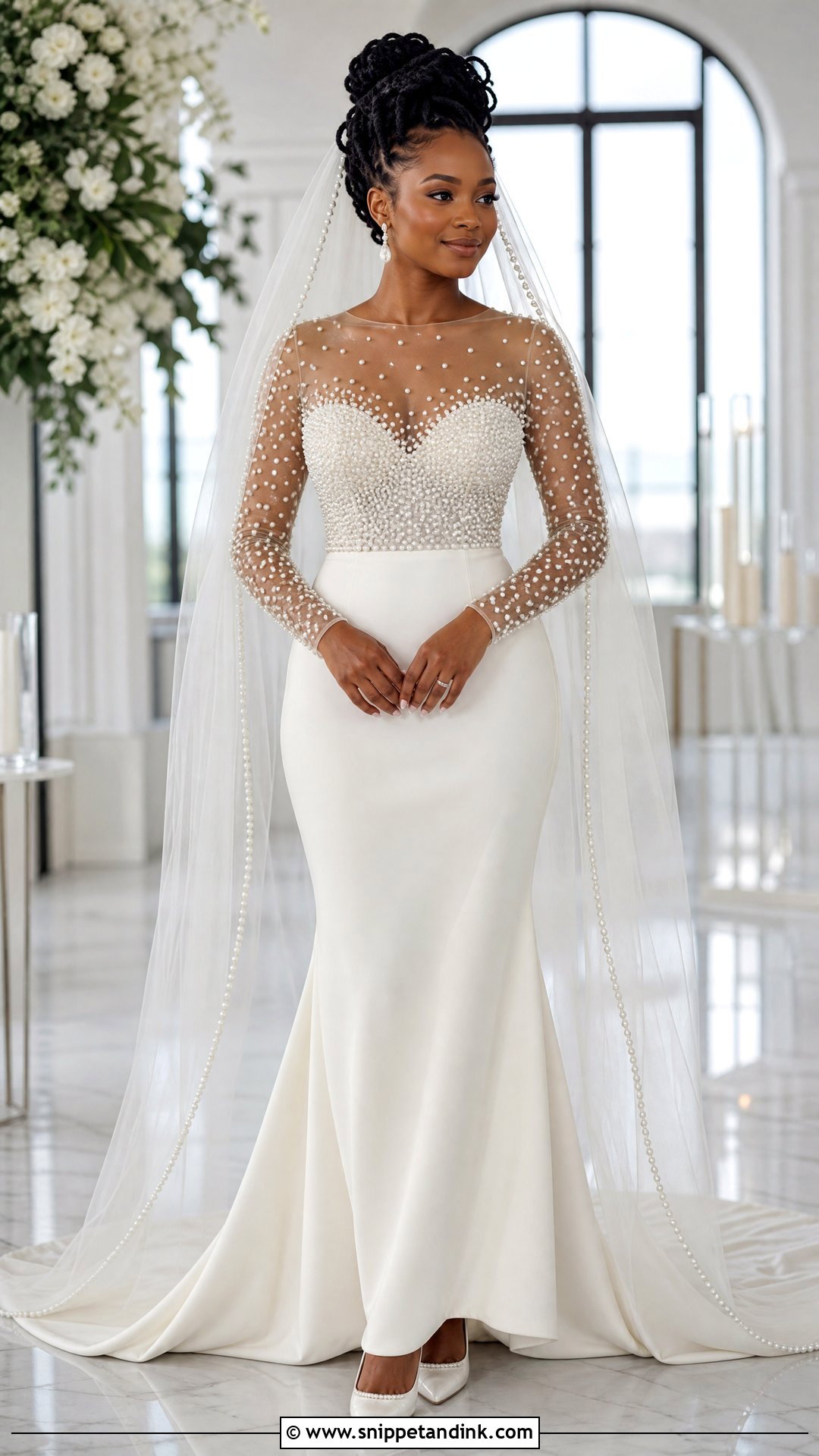
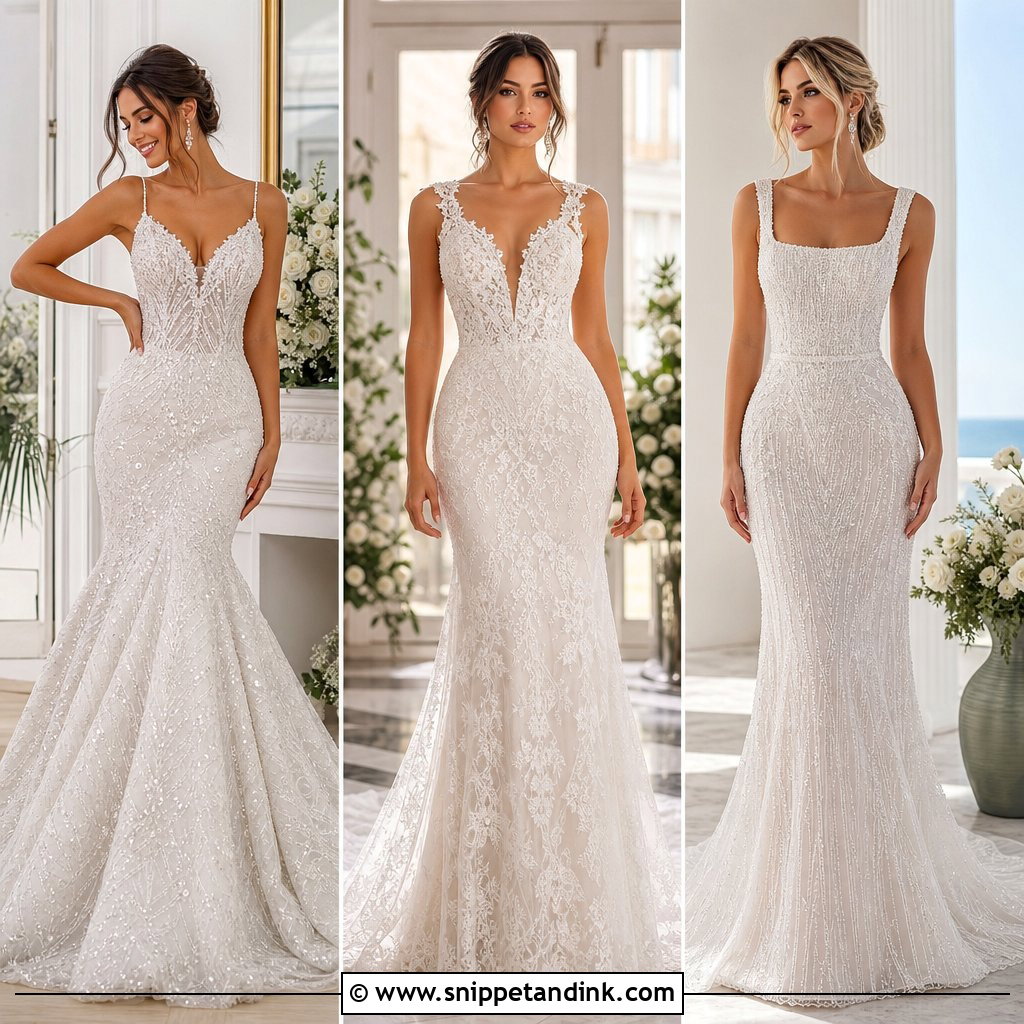
Pearls give a softer glow than crystals. Scattered over tulle sleeves, lined along a corset or concentrated at the neckline, they look best when one area leads. Small pearl drops, satin pumps and a plain veil with a subtle pearl edge. A low braided bun, loc updo or soft puff frames the face. Match accessories by tone; no two pearl shades will be identical. Check beads at the waist and underarms for comfort, have loose pearls reinforced, and pack a needle and thread.
20. Puff Sleeve Wedding Dress
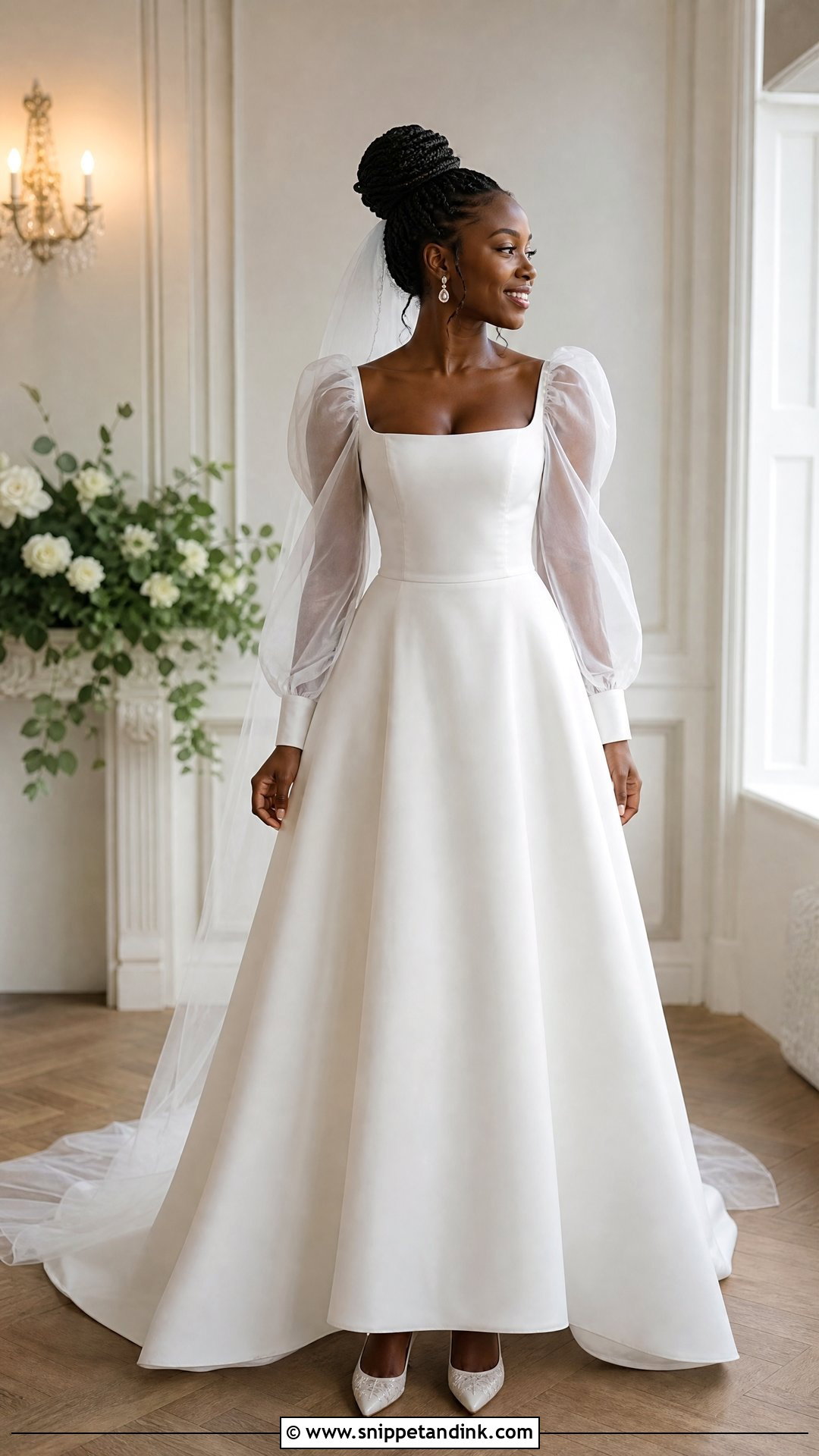
Puff sleeves add volume at the shoulders, so the skirt should stay clean: A-line, column or fit-and-flare. Organza gives an airy puff; satin gives a stronger, regal shape. For broader shoulders, I’d suggest a smaller puff that starts just below the shoulder line. The cuff or elastic must not pinch. Lift your arms and hug someone at the fitting, since tight sleeves can limit movement even when the rest fits. Delicate earrings, closed-toe heels and a simple veil beneath a textured bun or braided updo.
21. Tea Length Wedding Dress
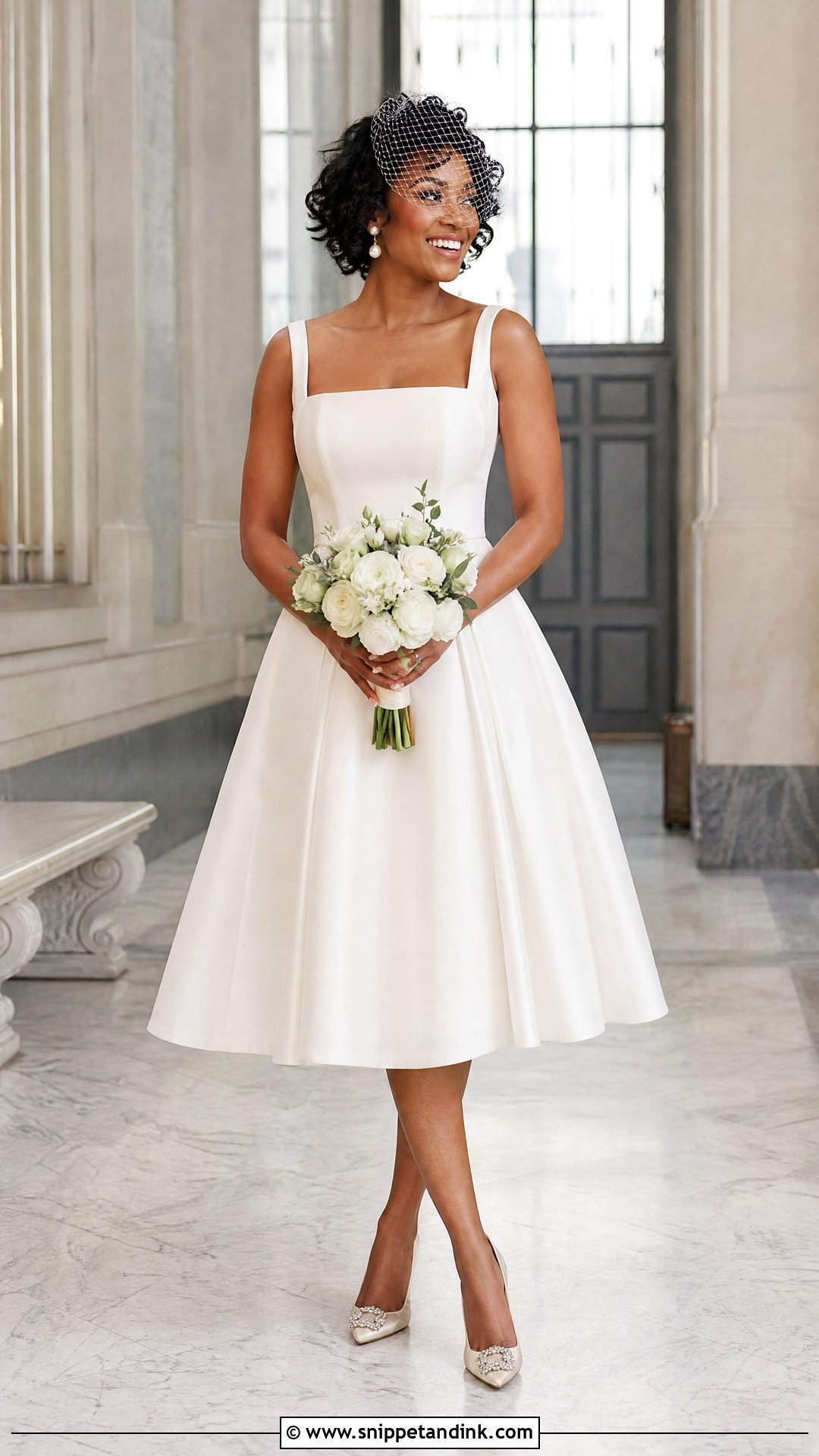
Tea length suits a courthouse ceremony, garden party or relaxed reception, and it puts the shoes on show. A fitted bodice with a flared skirt is classic; a structured column is modern. The hem should never stop at the widest part of the calf, so I set it with the bride standing in her shoes. Embellished pumps, pearl earrings and a birdcage veil or comb. A curly bob, tapered natural cut, braided bun or shoulder-length locs. A cropped jacket or detachable sleeves for cold weather, and a small structured bouquet.
22. Boho Lace Wedding Dress
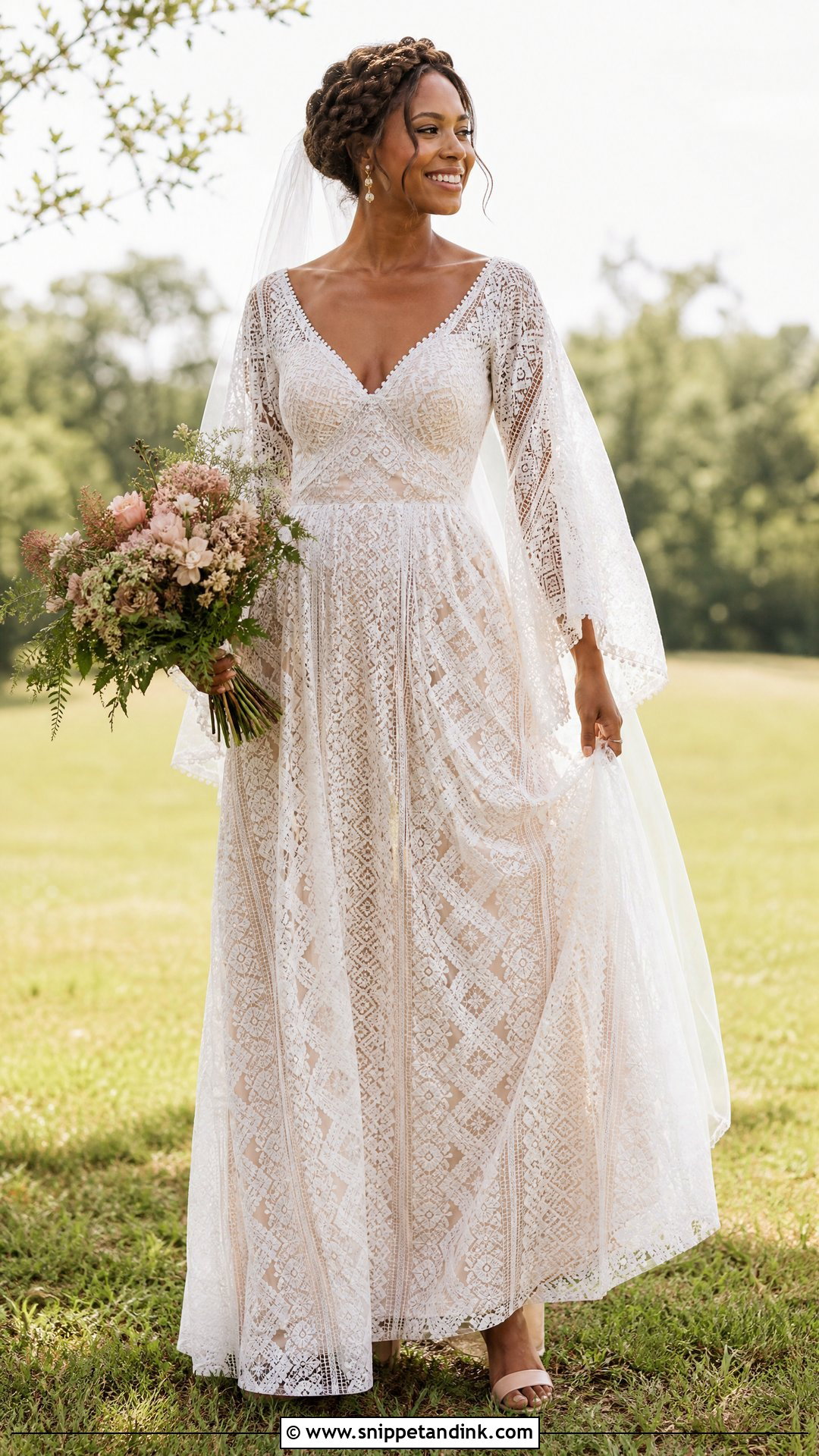
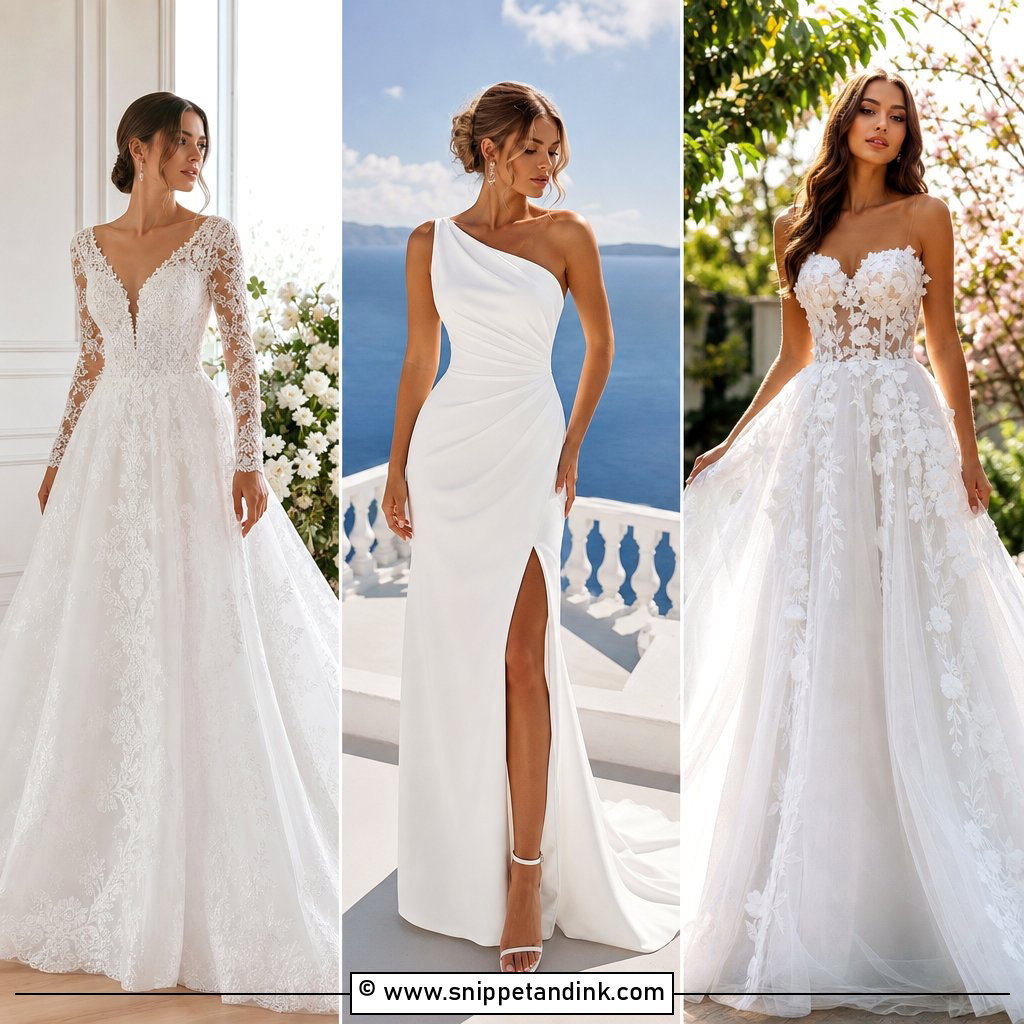
Boho lace should look relaxed without looking unfinished. Soft geometric lace, flowing sleeves, an open back and a light A-line or sheath. Ivory, cream and warm champagne linings each change the effect, so compare them outdoors if that’s where you’ll marry. For an outdoor setting, pick a train that bustles quickly. Block-heel sandals, small gold earrings and a fingertip veil or hair accessory. Defined curls, loose locs, a braided crown or a low textured bun. Ask for a smooth, breathable lining so the lace doesn’t itch.
23. Black Wedding Dress
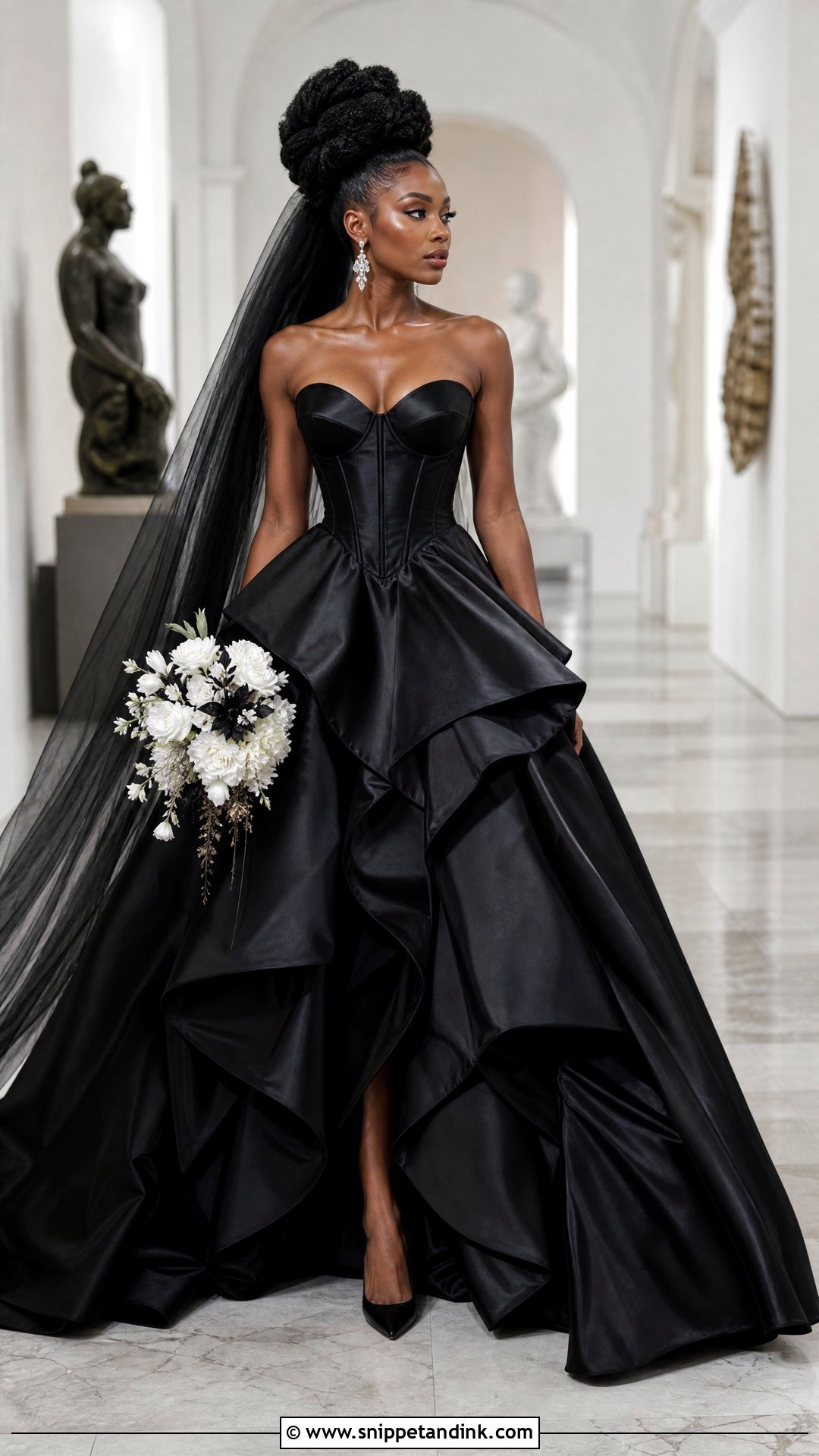
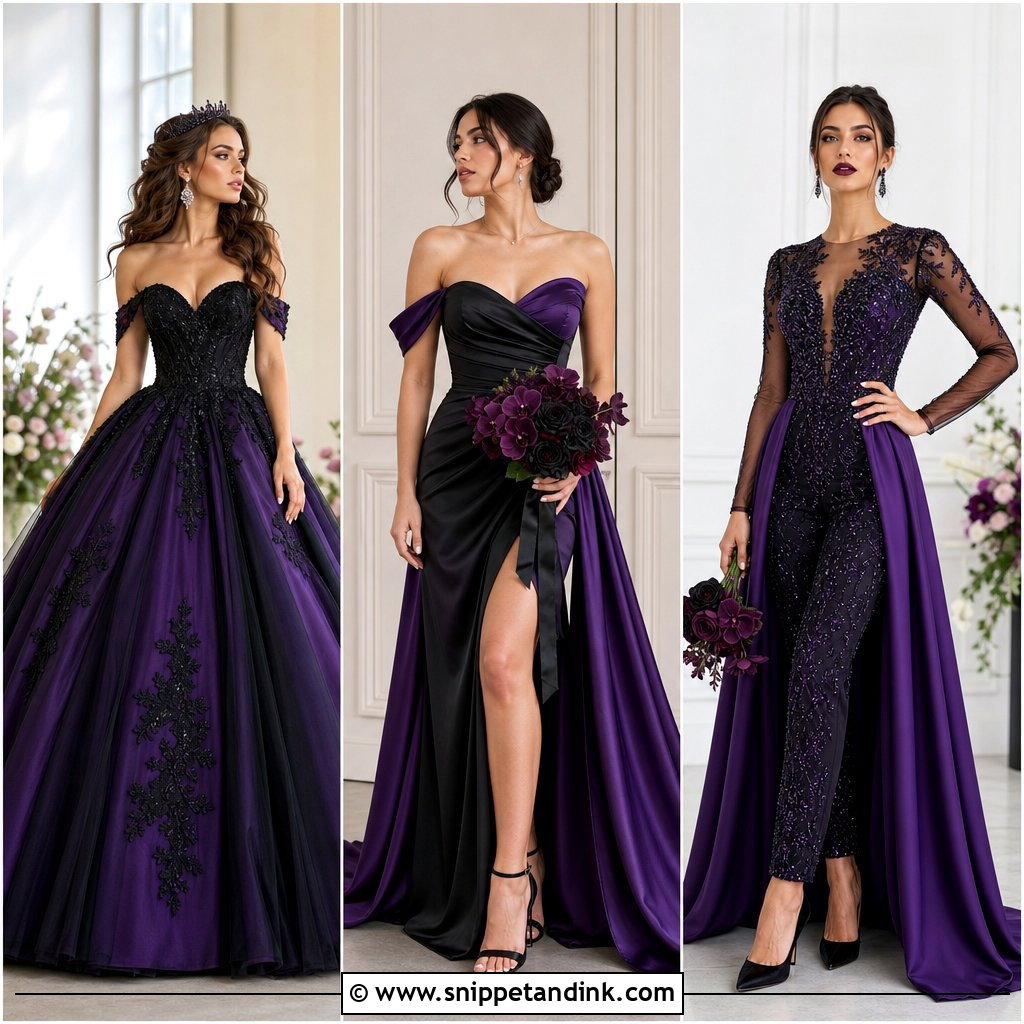
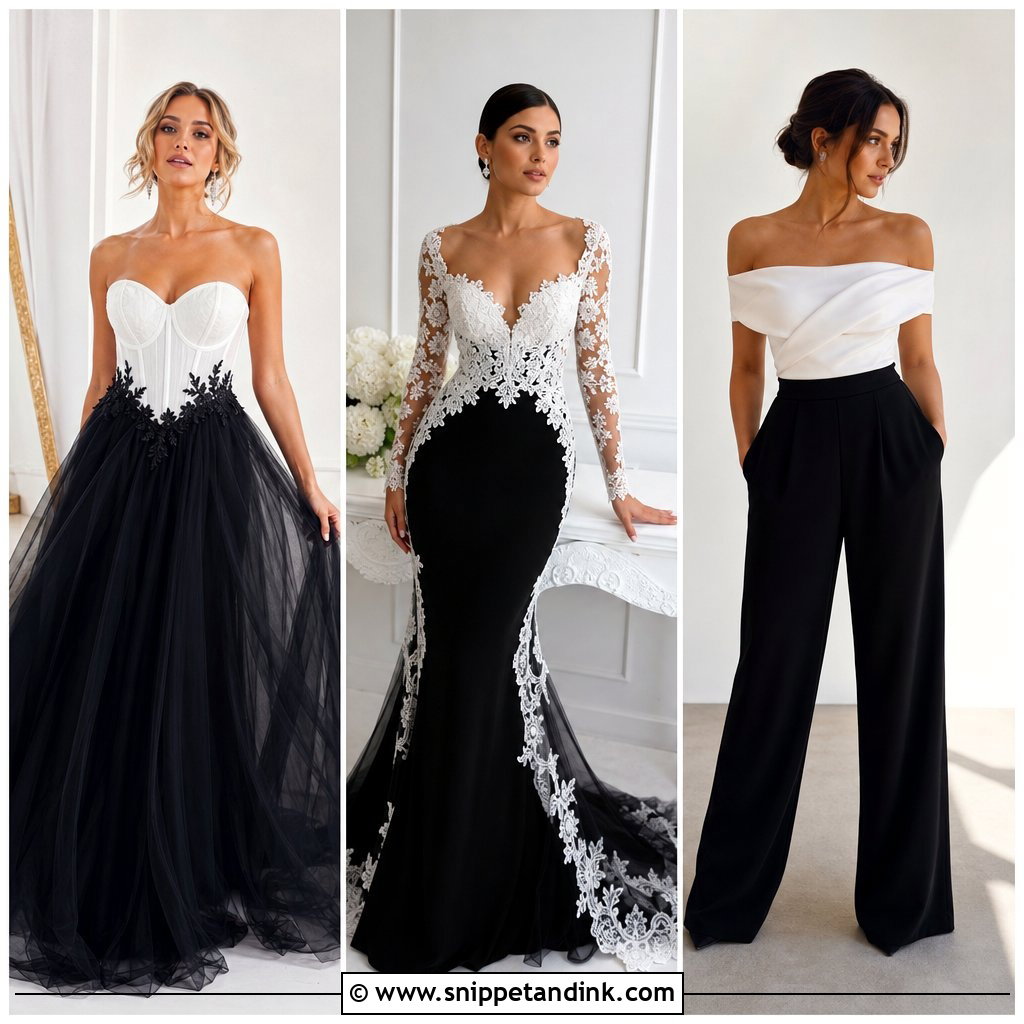
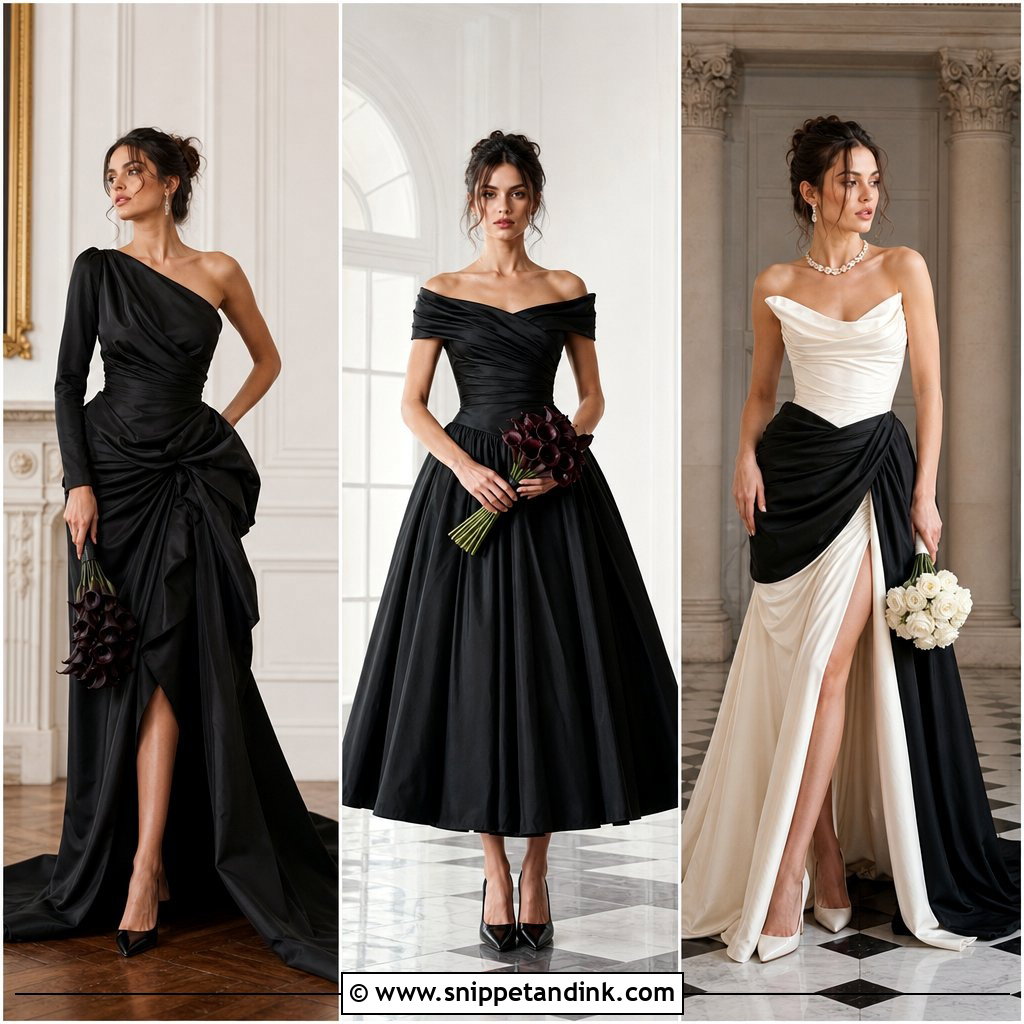
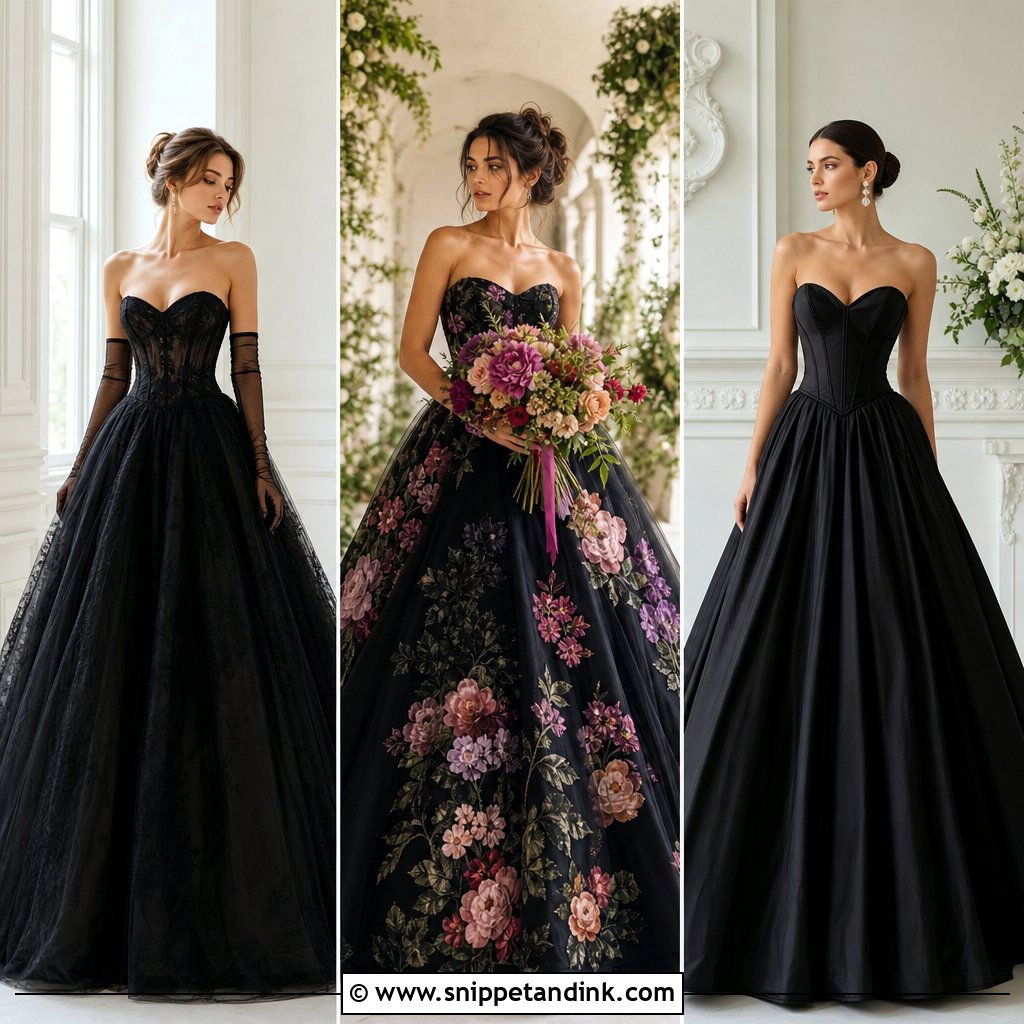
Black is for the bride who feels most herself outside traditional colour rules. To keep it ceremonial, I lean on a rich fabric, a dramatic train, a fitted corset or a layered ball skirt. Black lace over a deep lining gives texture; satin looks clean and formal. Crystal earrings, black pointed pumps and a bouquet in white or deep jewel colours. A high natural updo, polished loc bun, or long braided ponytail. Black veil to match or sheer ivory for contrast. Black hides construction in photos, so plan directional light with your photographer.
24. Blush Wedding Dress
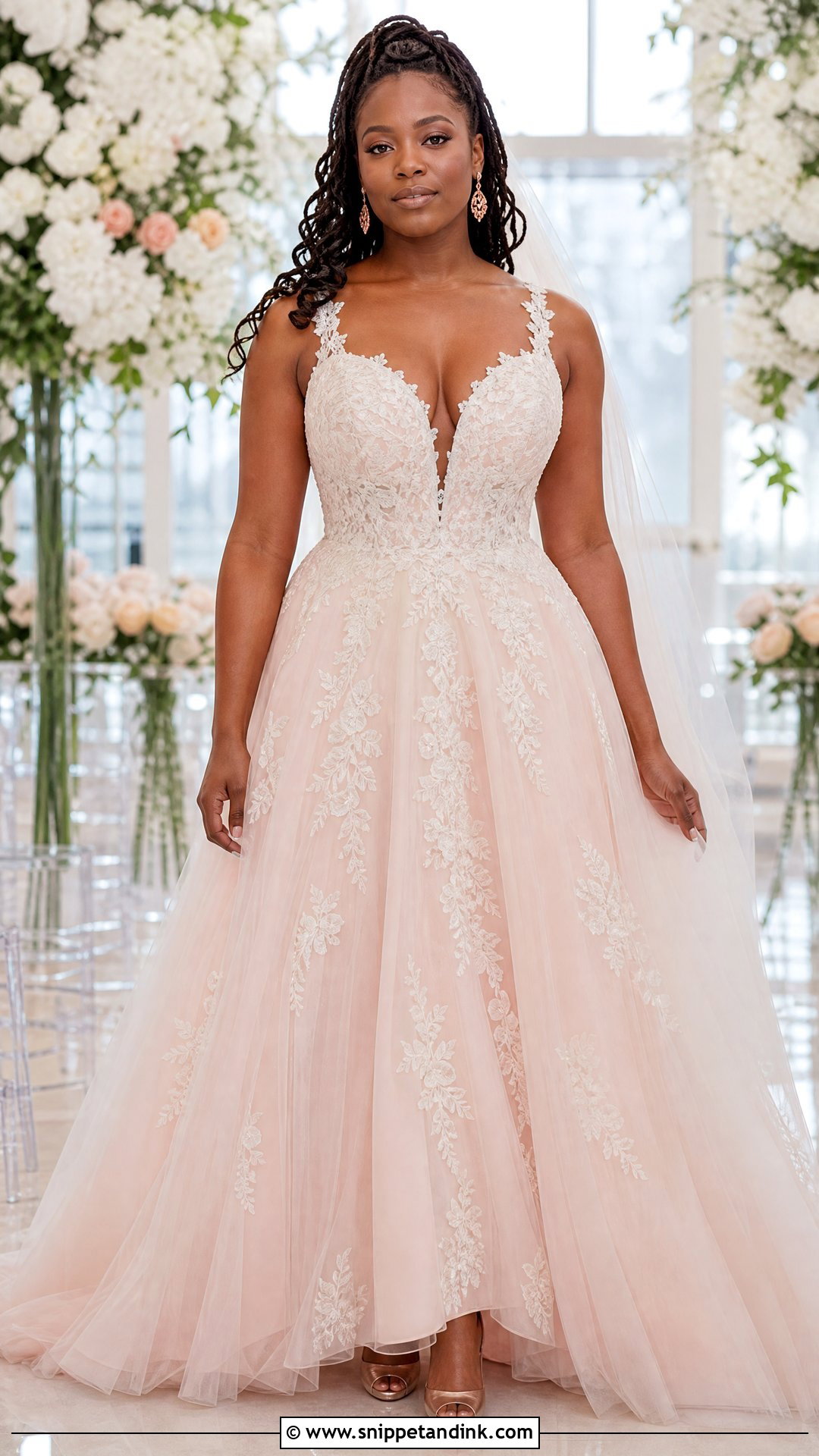
Blush ranges from pale pink-beige to dusty rose, and the shade that works depends on your undertone. Try it in daylight, indoor light and under camera flash. A blush lining under ivory lace adds warmth without making the gown look pink. Rose-gold earrings, neutral metallic heels and a sheer ivory veil. A curled afro, half-up locs, braided bun or polished waves. Keep makeup neutral or rosy rather than matching the dress exactly. If bridesmaids are in blush too, put them in a deeper or lighter shade so you stand apart in group photos.



25. Kente Detail Wedding Dress
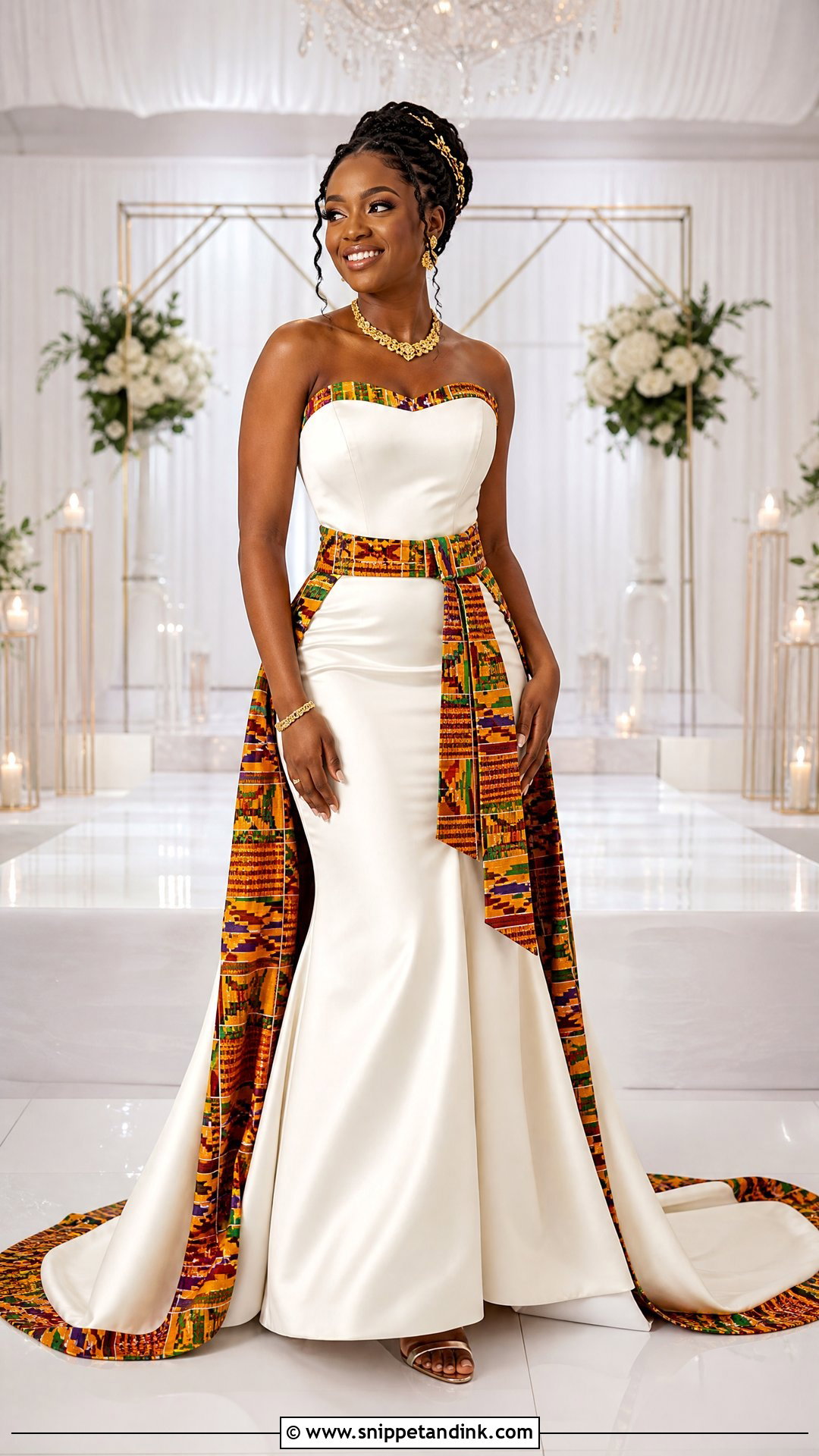
Kente-inspired or personally meaningful African textile details can carry heritage into the gown. The accent might be a removable sash, corset panel, train border, headwrap or overskirt. Work with a designer who understands pattern placement and the cloth’s meaning, since kente patterns carry names and significance. I pair the textile with a clean ivory satin or crepe gown so both stay visible. Gold jewelry, neutral heels and a structured bouquet. Braids, locs, curls or a tied headwrap. Avoid mixing several prints, and use leftover fabric for a pocket square or clutch for a family member.
Two Ceremonies, Two Looks, One Timeline
Many Black brides, especially in Nigerian, Ghanaian and other West African families, hold a traditional ceremony as well as a white wedding. That means two outfits, two sets of fittings and often two hair and headwear plans.
Ordering both outfits
A made-to-order white gown commonly takes several months to arrive before alterations even start, so it usually needs ordering first. Custom traditional attire depends on your tailor and on getting the fabric, and family fabric for guests can take time to source too. I’d confirm both lead times at the start, not after the white gown is chosen.
Headwear and hair across both looks
A gele and a cathedral veil need very different hair underneath. If both happen on one day, plan a style that works for the first look and adapts quickly, such as a low bun that can sit under a headwrap, and leave proper time between ceremonies for the change.
Do at least one fitting of the traditional outfit with the headwear, shoes and beads you’ll wear. Heavy beads and a stiff headwrap change how a neckline and shoulders sit, and a blouse that looked right on its own can pull once everything is on.
A Gown That Fits Your Skin, Your Body and Your Day
The right gown supports your body, reflects your personality and lets you forget about it once the day starts. Treat these looks as starting points. Try several silhouettes, compare ivory and coloured fabrics in daylight, and ask about matching illusion mesh to your skin. Wear your actual shoes and foundation garments at every fitting, and test sitting, walking, hugging and dancing before you approve alterations. A dress that honours how you look and how you move will stay comfortable from the aisle to the last song.
You'll Like These Ideas:


Leave a Reply