
A wedding dress is only half the picture until you see it with the veil, the shoes, the earrings and your hair in the mirror together. When I dress Black brides, the conversation I care about most is how a fabric’s white reads against her skin and how the shape holds her through a twelve-hour day. Bridal racks right now are full of sculpted bodices, romantic lace, drop waists, detachable details, clean satin, big sleeves and short reception dresses. Below are thirty gowns, each with the styling and the honest fitting notes I’d give you in the salon.
Ivory, Diamond White or Champagne Against Deeper Skin
Bridal white is not one color. Stark optical white has a blue base, diamond white is softer, ivory leans cream and champagne leans gold. On deep and warm skin, I find ivory and champagne usually flatter more than the brightest white, which can look harsh beside the face under flash. That said, some brides with cool undertones glow in a crisp white, so test it rather than taking anyone’s rule.
My test at an appointment is simple. Hold a swatch or the bodice of the sample against your collarbone near a window, then take a phone photo with flash and one without. Look at the photos, not the mirror, because that is how most people will see the dress.
- Ask what color the lining is. A champagne or cocoa underlay under lace changes how the whole gown reads.
- Ask whether illusion mesh comes in darker shades. Many designers offer several skin-tone mesh options, but you often have to request them.
- Compare the veil tone to the dress in daylight. A veil one shade too white makes an ivory gown look yellow.
Hair plans change the neckline choice
If you’ll wear braids, locs, a big natural afro or a tall updo, bring a photo of that style to every appointment. Volume at the crown or a heavy braided bun changes where a veil can anchor and how a high neck or cape sits.
1. Satin Ball Gown Wedding Dress
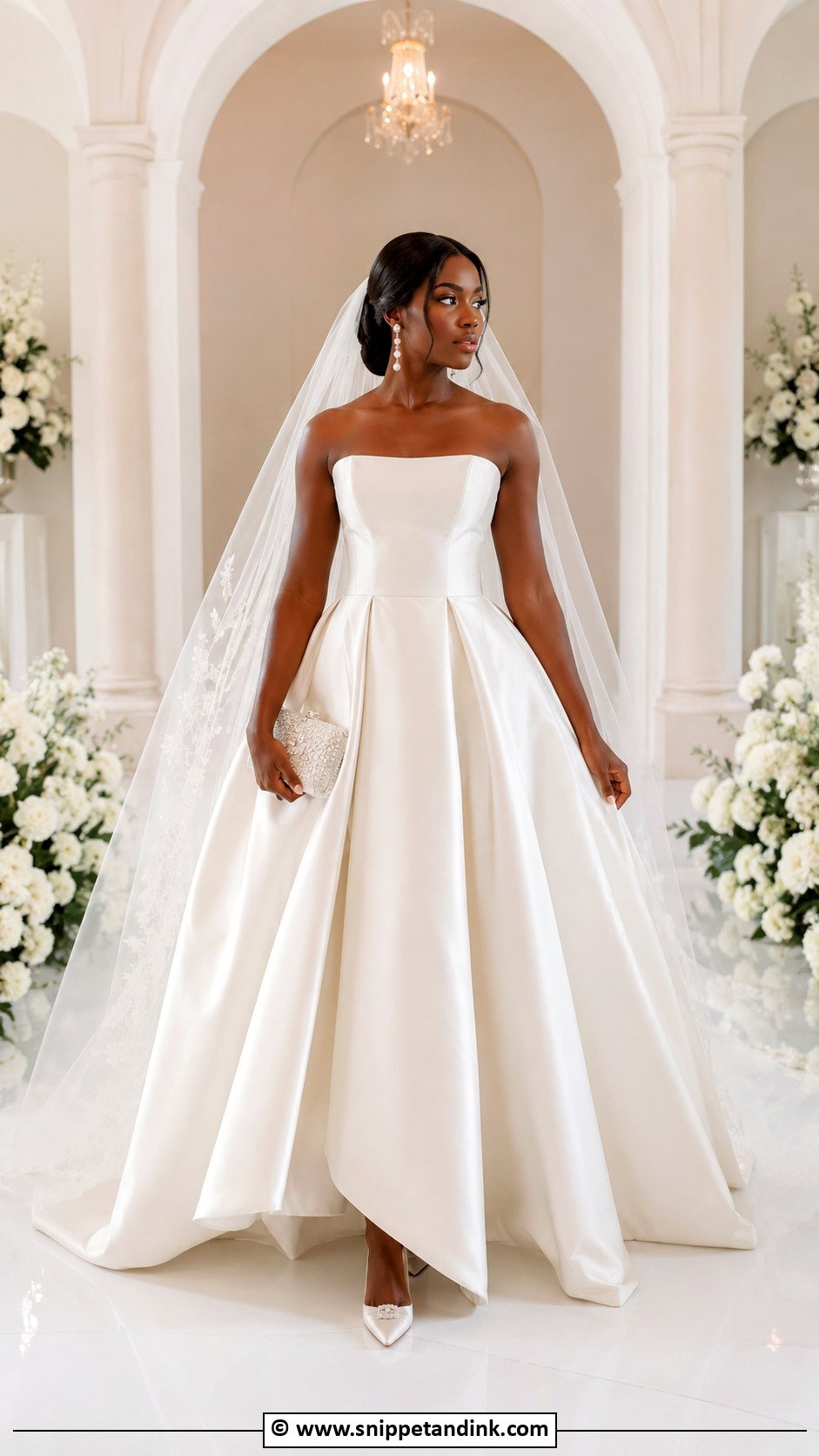
Satin is the fabric I reach for when a bride wants a proper entrance, because heavy satin holds a skirt’s volume without much petticoat underneath. Against deeper skin it reflects a broad, even sheen rather than glitter, which keeps the face as the brightest point in a photo. A scoop or strapless neckline with a structured bodice keeps the proportions calm. Pearl drops, a cathedral veil and satin pumps are plenty. One warning: satin shows every crease from sitting in the car, so I always pack a handheld steamer for the getting-ready room.
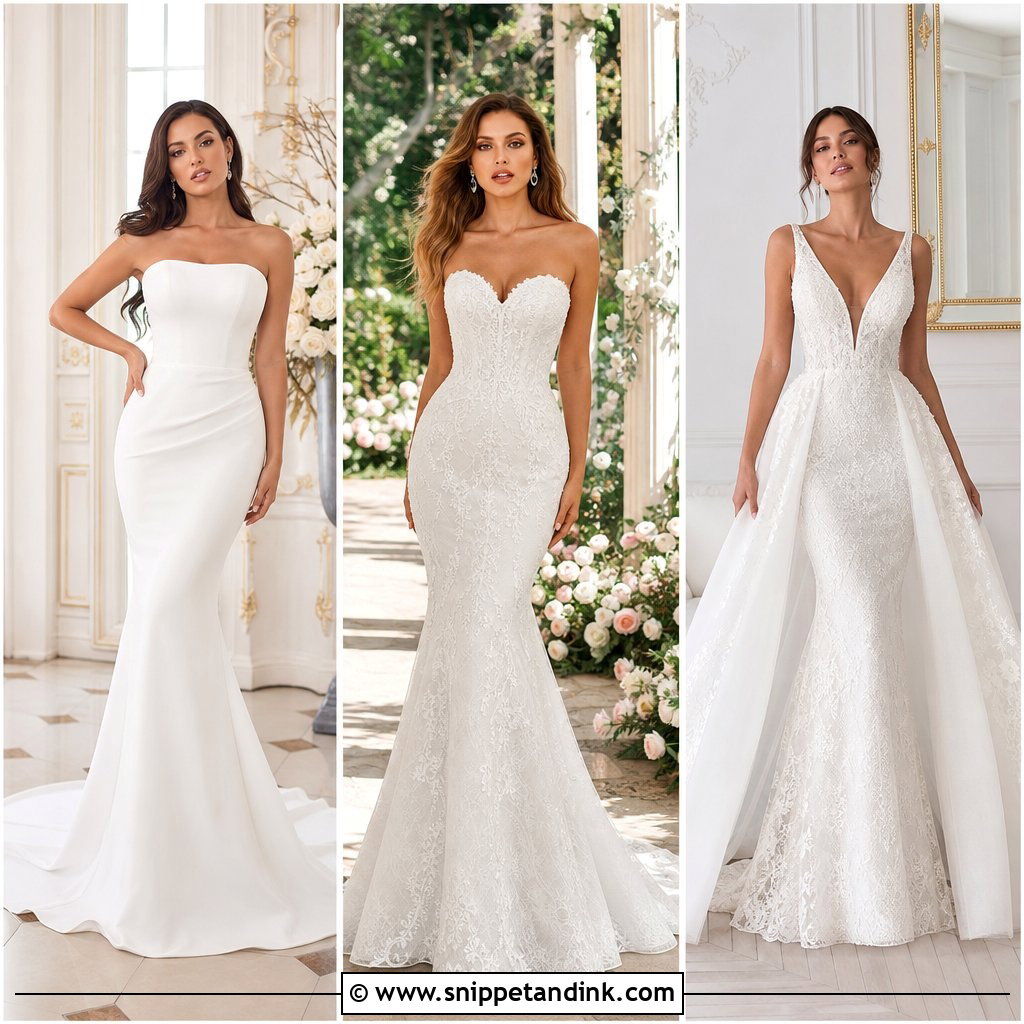
2. Lace Mermaid Wedding Dress
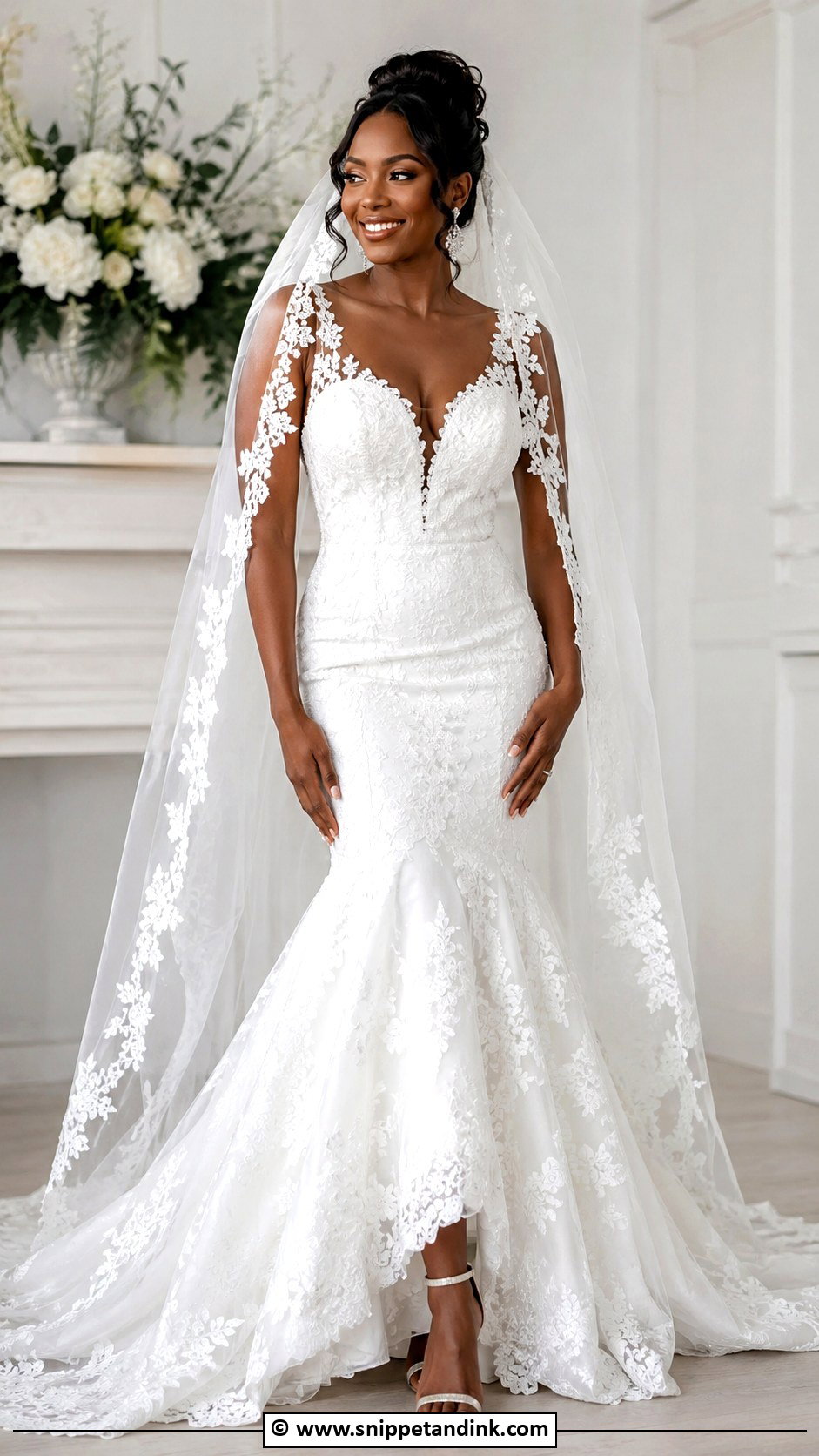
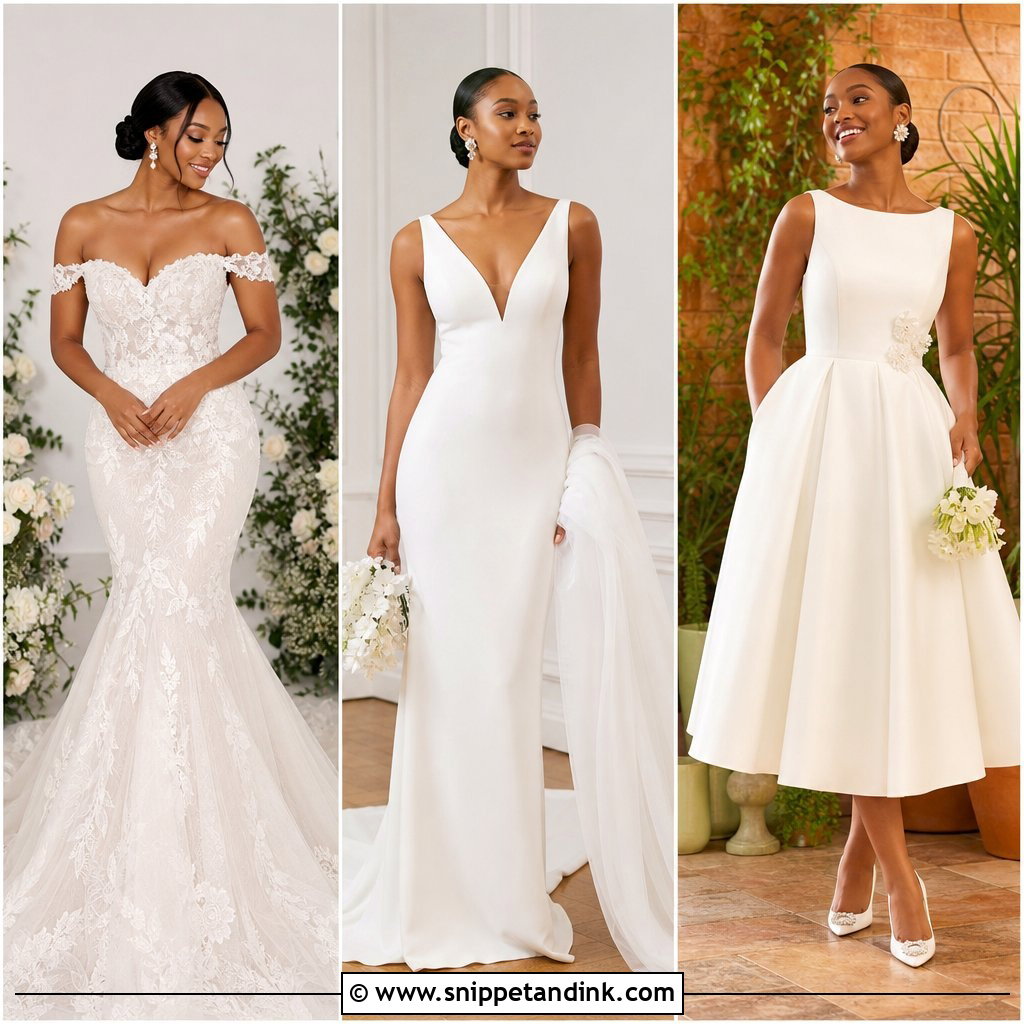
The first thing I check on a lace mermaid wedding dress is where the flare starts. If it sits above the knee you can walk and sit; if it sits below, you’ll be taking small steps all night and lifting the skirt to climb stairs. Floral lace with light beading reads well on camera without weight. A sweetheart or illusion long sleeve softens the fitted line, and ankle-strap heels stop your feet sliding forward in a narrow hem. Keep hair in a smooth low bun or deep side part so the neckline stays visible.
3. Off Shoulder Wedding Dress
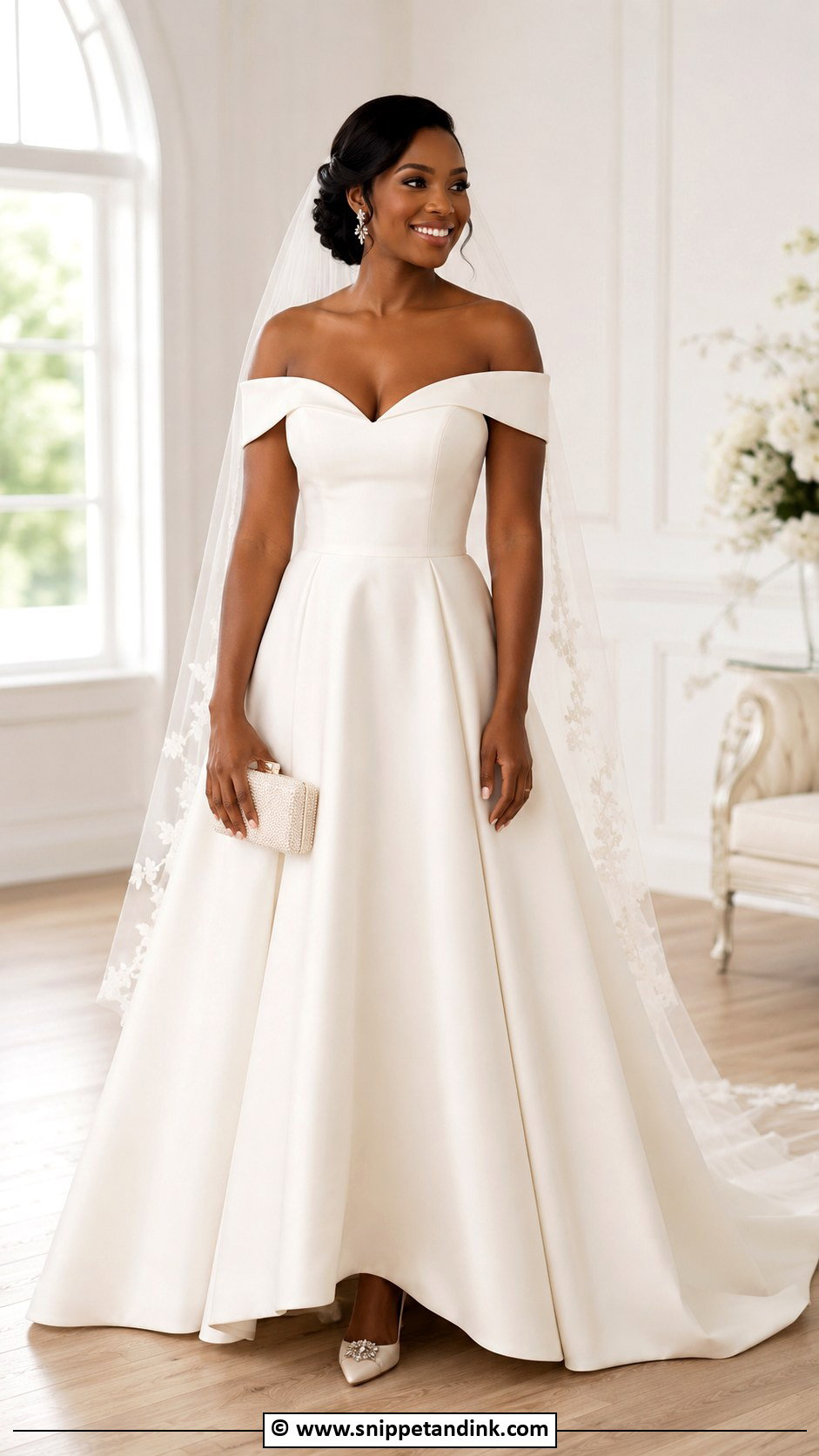
Off-shoulder straps look simple, but they decide whether you can hug anyone. I have brides lift both arms during the fitting, and if the straps ride up or the bodice gapes, the band needs elastic or a tighter tack. Crepe and mikado hold the line best; soft lace can slip. With a bare collarbone, statement earrings usually do more than a necklace. Natural curls, locs, braids or a sleek chignon all sit nicely against an open neckline.
4. Long Sleeve Wedding Dress
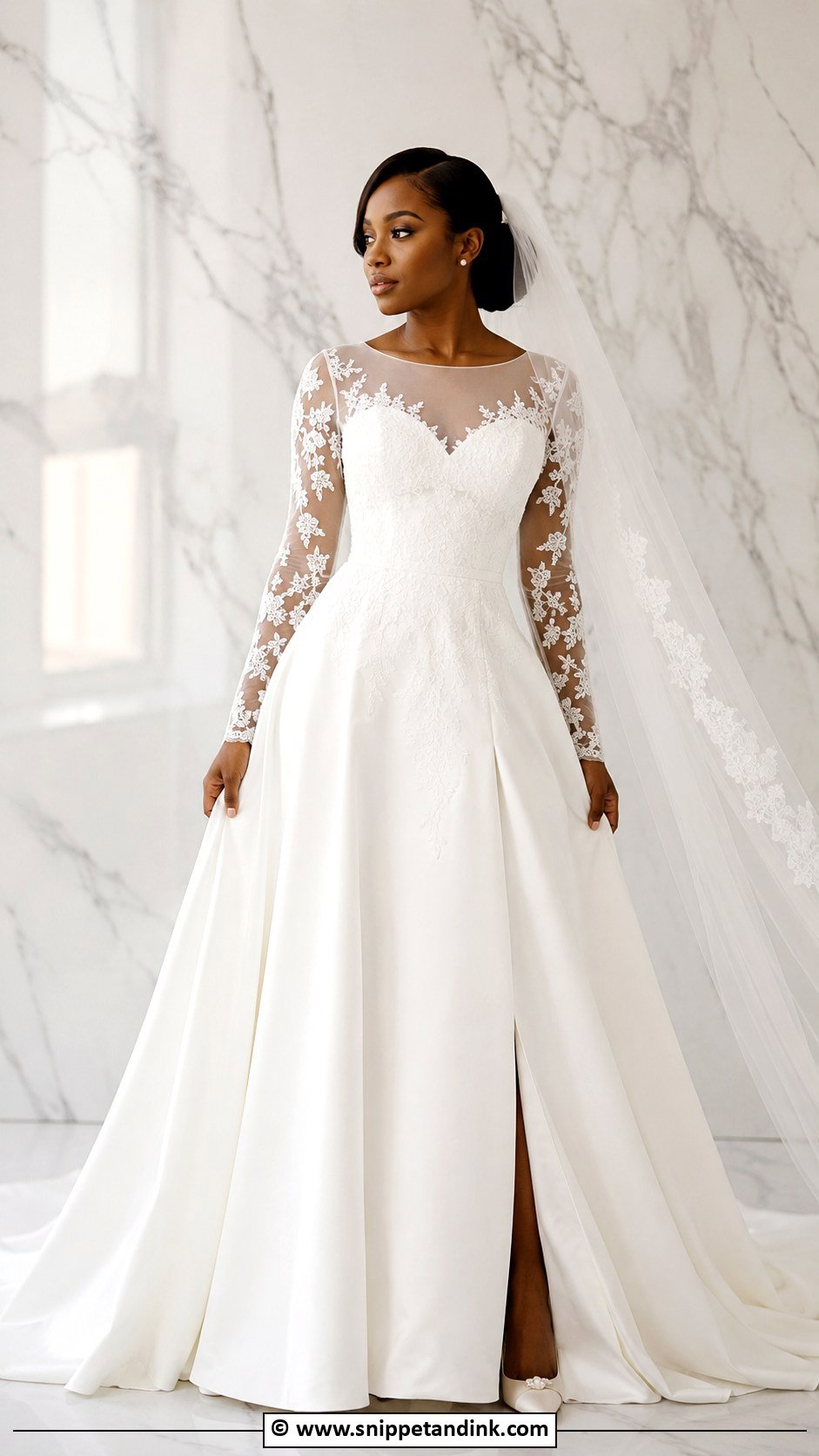
Sleeves change how a gown feels to wear more than how it looks. Sheer lace sleeves read soft and romantic; satin or crepe sleeves look sharper and more modern, but they need room at the elbow or you won’t be able to lift a fork. I suggest them for autumn and winter weddings, church ceremonies and anyone who wants coverage. If the lace is heavy, keep jewelry to studs. If the sleeve is plain, a beaded belt or a bold earring gives the eye somewhere to land.
5. Strapless A Line Wedding Dress
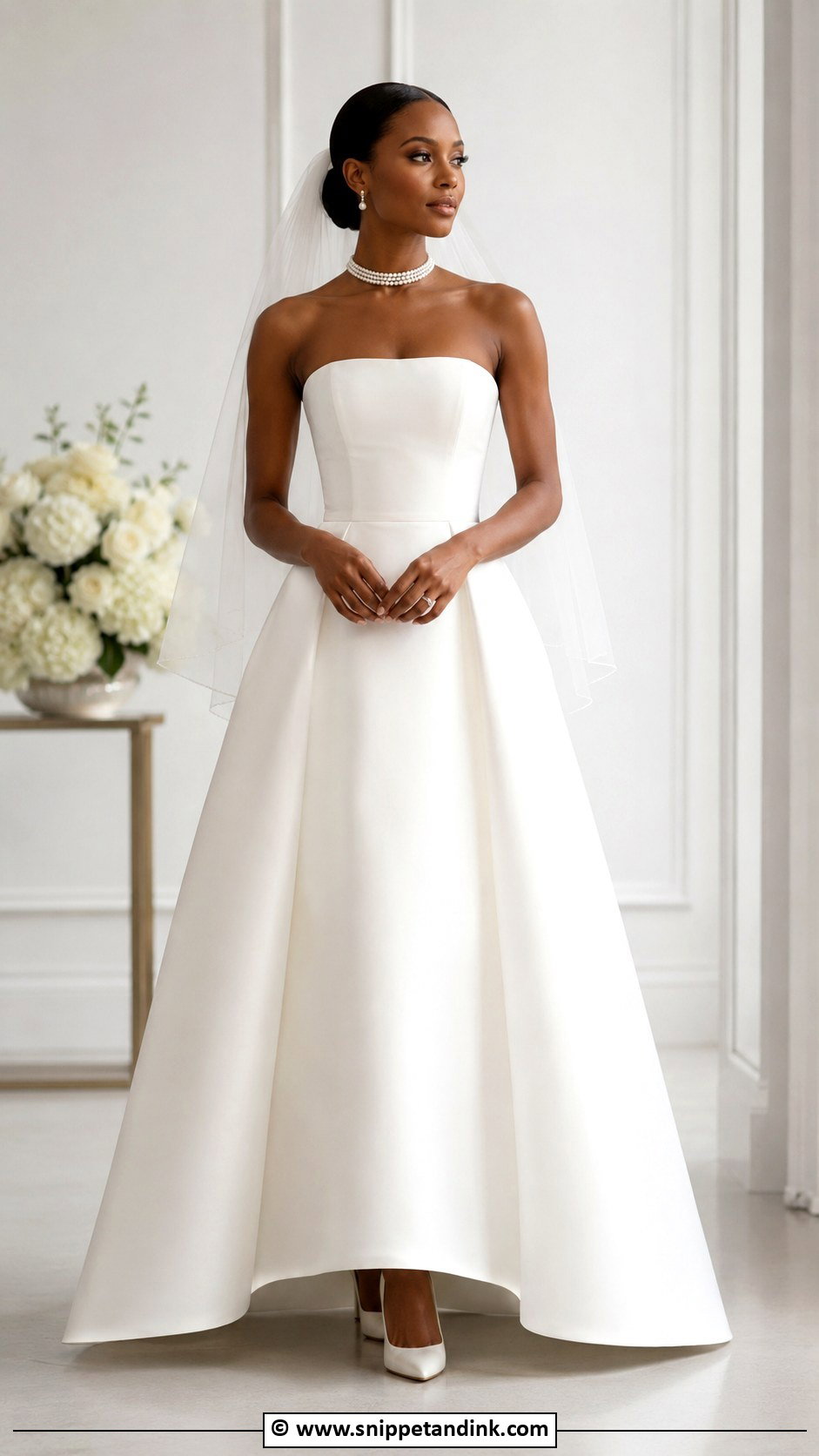
A strapless A-line wedding dress suits more figures than almost any other cut, since the skirt falls away from the hips instead of gripping them. The catch is the bodice. A strapless top stays up through boning and a precise fit at the ribcage, not by squeezing, so I never skip the final fitting on this one. Satin looks sleek, tulle moves more, lace adds texture. A pearl choker or drop earrings with a mid-length veil keeps it balanced, and a high bun shows off the shoulders.
6. Corset Wedding Dress
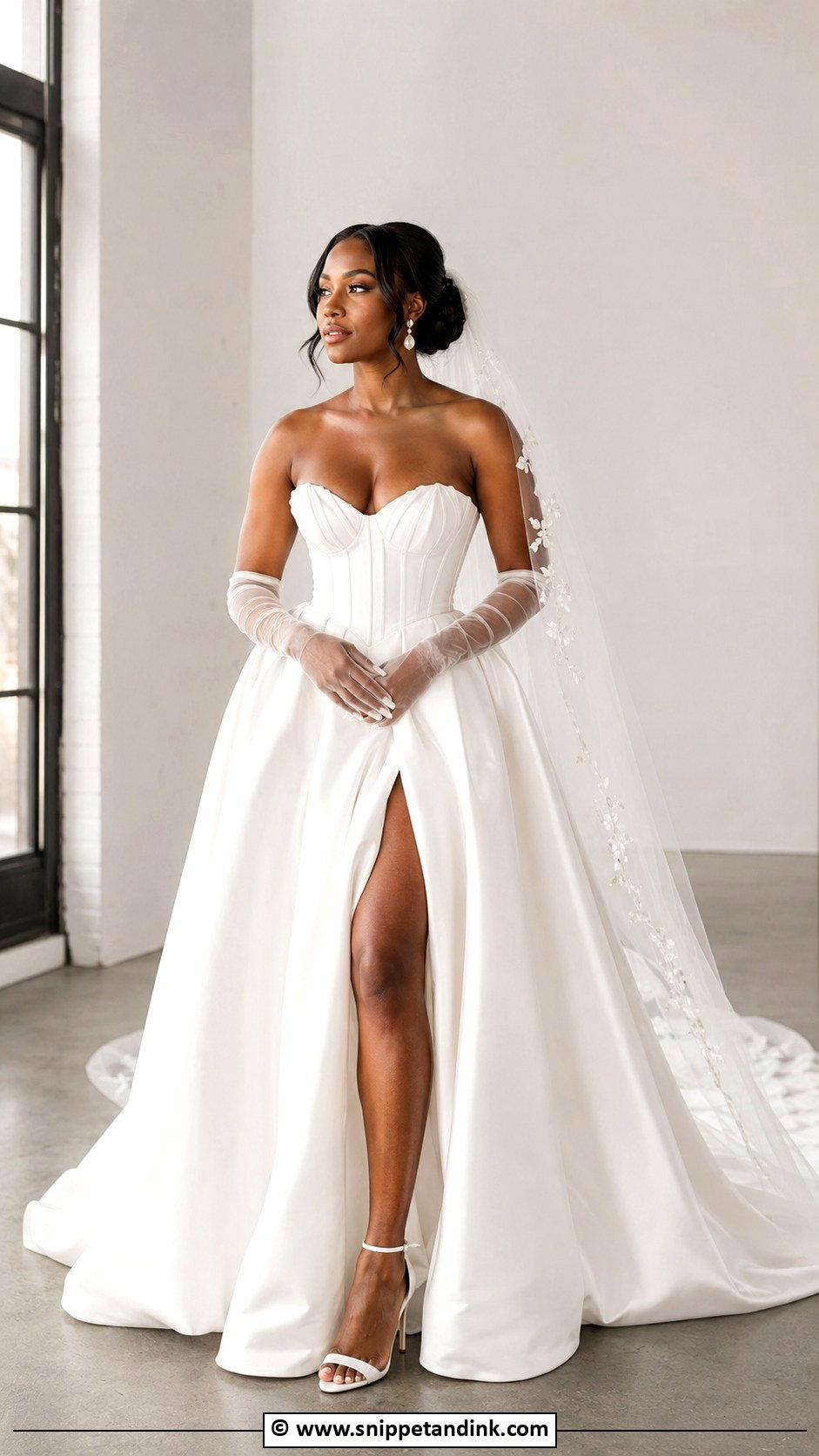
With a corset gown, I look inside before I look at the front. Quality pieces have spiral steel or flexible boning, a firm lining and a modesty panel behind the lacing; cheaper ones use plastic boning that kinks after a few hours of sitting. A full, fitted or flowing skirt can sit beneath it. Sheer gloves, pearl earrings and a cathedral veil pull it back toward bridal so it doesn’t read as a trend piece, and a detachable overskirt gives you a second shape for the party.
7. Drop Waist Wedding Dress
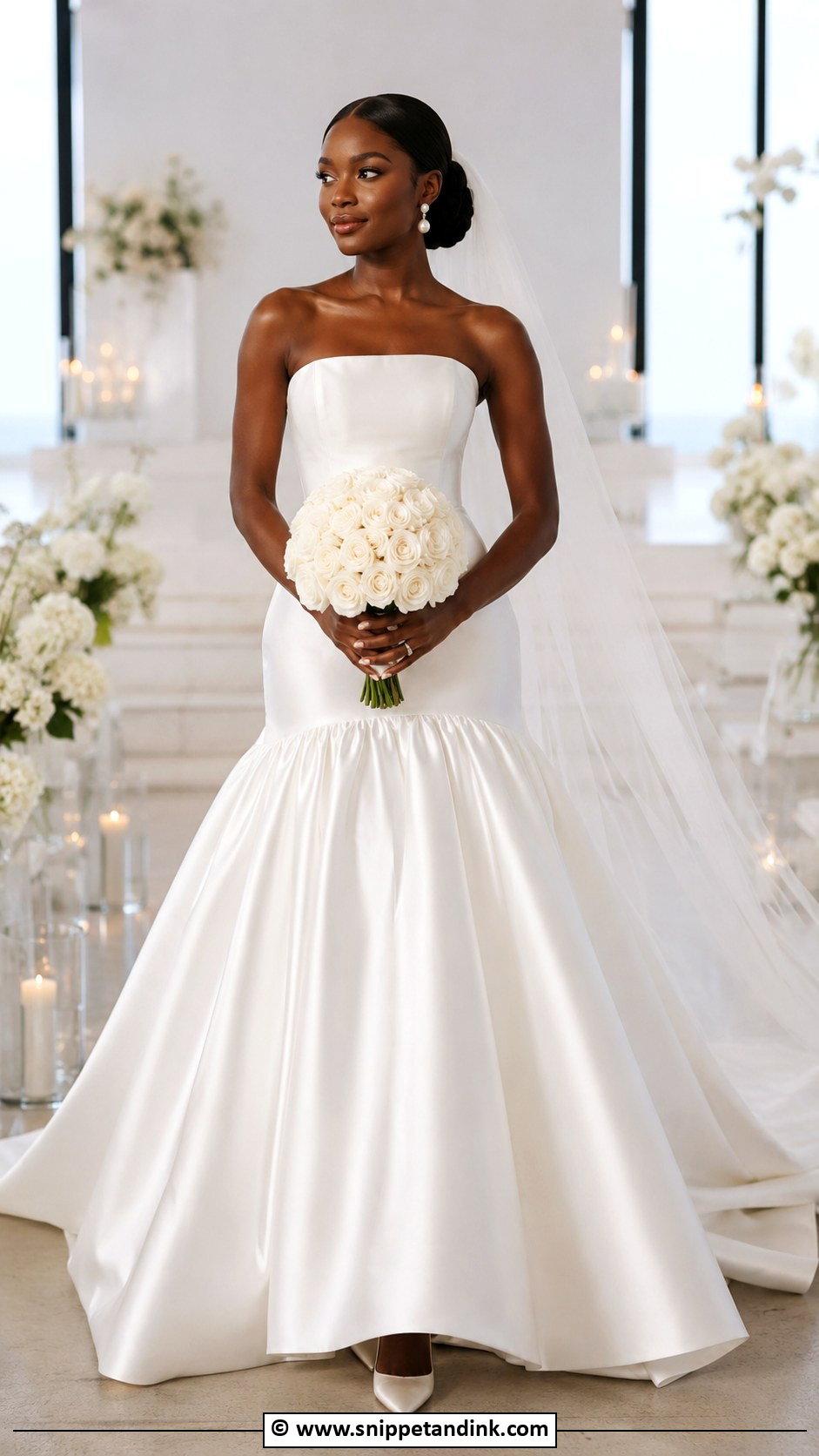
The drop waist has come back hard, and it lengthens the torso by moving the seam below the natural waist. That seam placement is the whole trick, so I pin it on your body rather than trusting the size chart; an inch too low and the skirt looks like it’s slipping. Satin, mikado and stiff lace hold the shape best. Keep shoes and earrings plain so the line does the talking. Petite brides should try it on before falling for a photo, because a long bodice can shorten the legs.
8. Minimalist Silk Wedding Dress
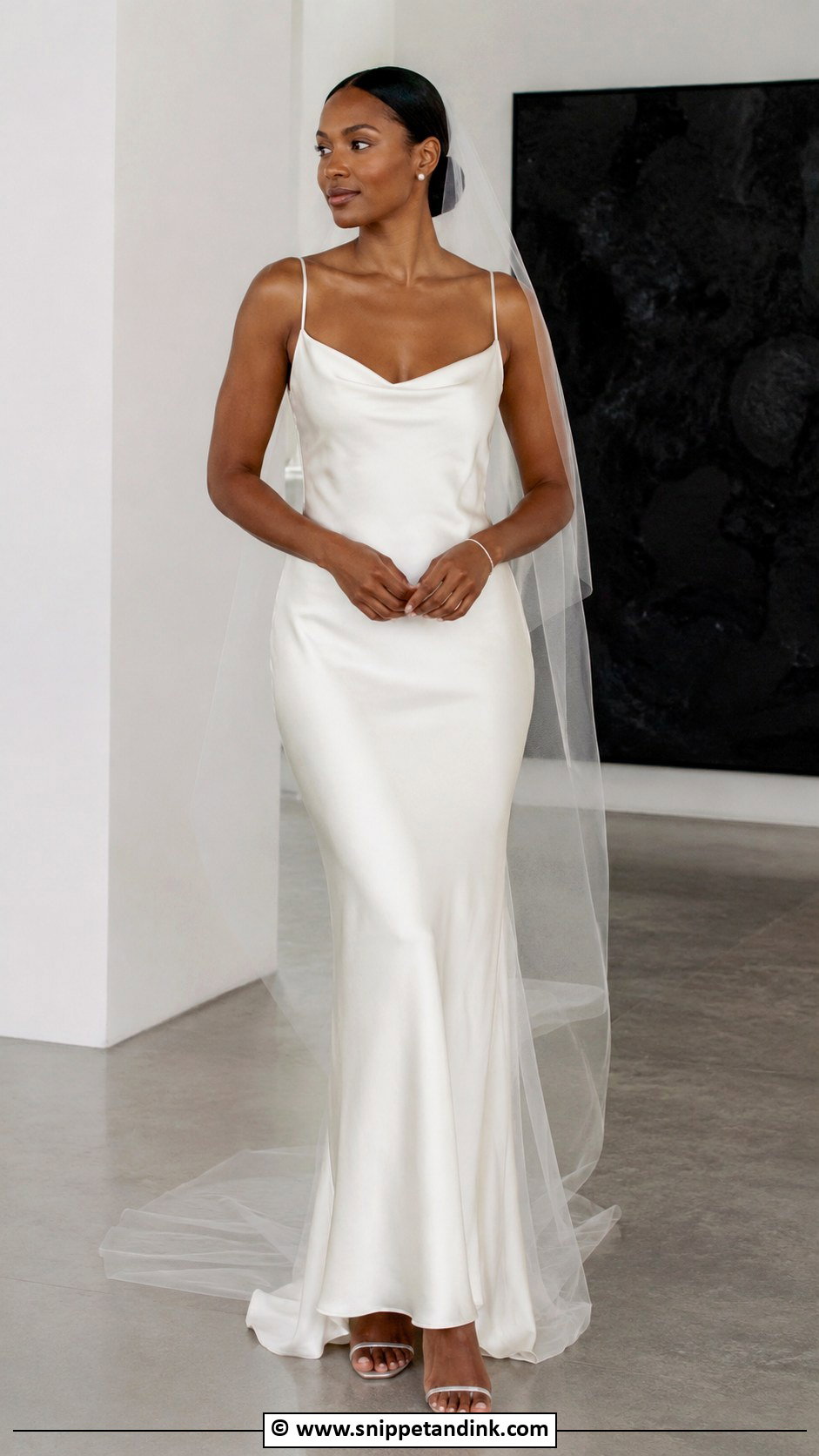
Plain silk hides nothing, and that’s the point and the risk. A bias-cut slip or clean column skims the body, so I fit it over the exact underwear you’ll wear and check for seams and lines in daylight. Silk reflects light softly against deep skin and looks rich without any decoration. Strappy heels, pearl studs and a sheer veil are enough. Bring a stain pen and keep red wine at arm’s length, since water marks on silk are hard to lift on the day.
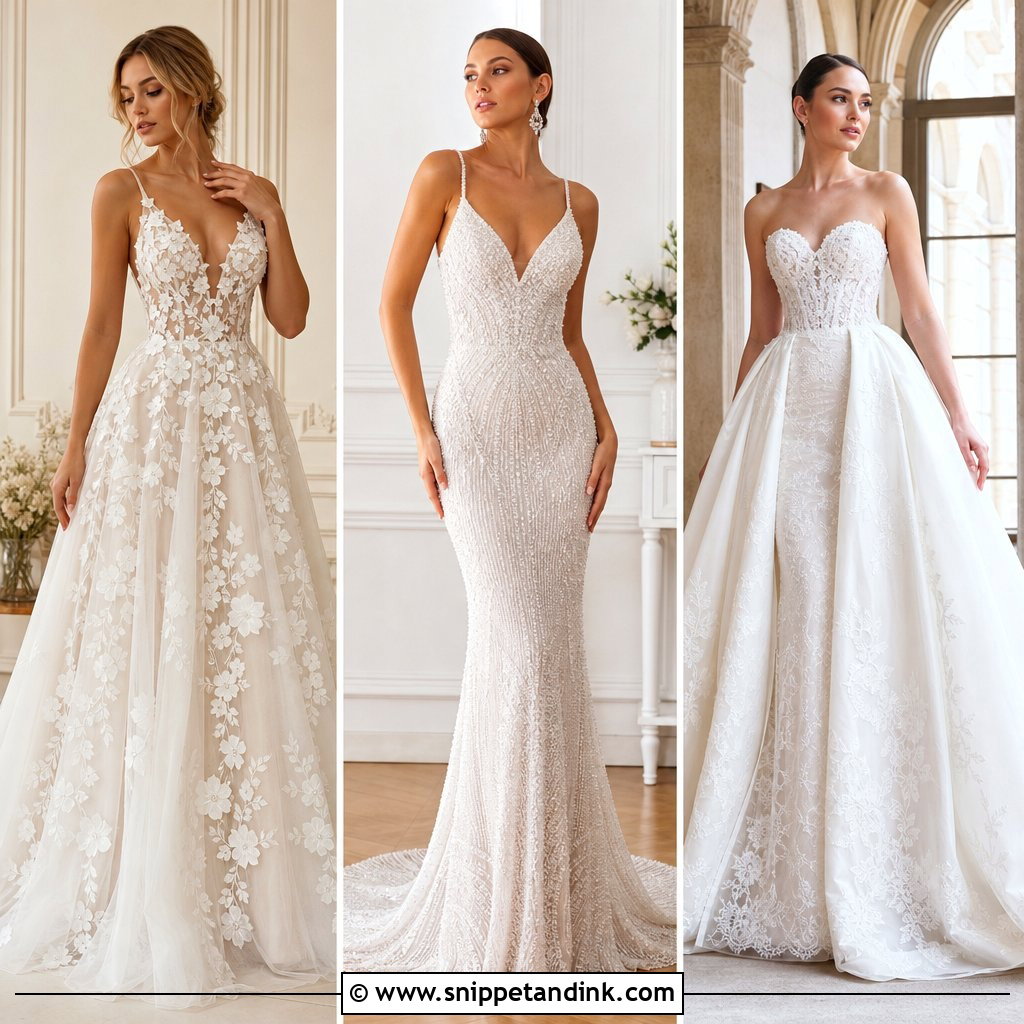
9. Beaded Wedding Dress
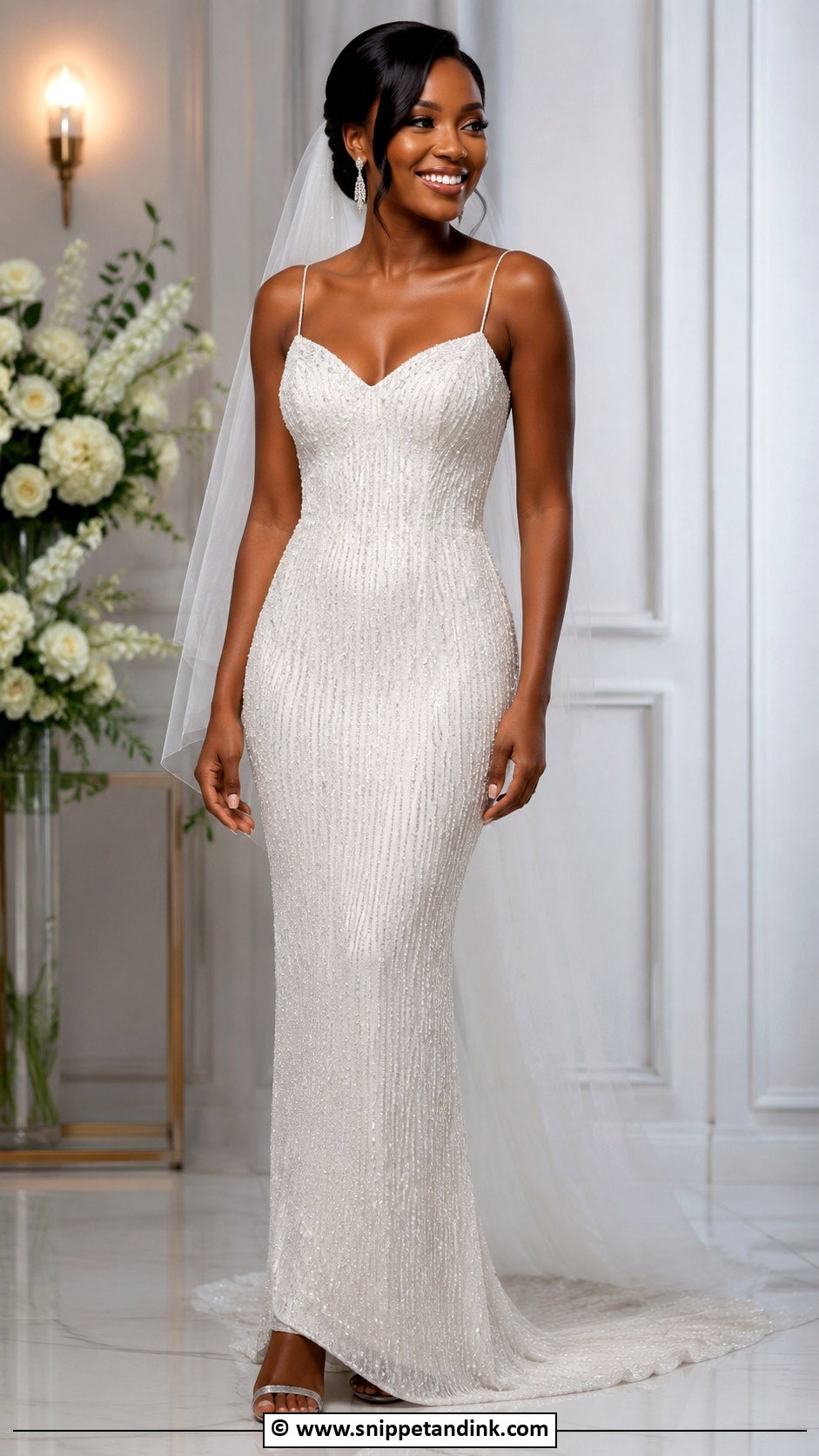
Beading is about placement before quantity. Vertical rows draw the eye up and down and make you look taller; scattered crystals give a soft shimmer instead. I ask what the lining is, because a champagne or cocoa underlay behind clear beads glows on Black skin while a stark white one can look flat. Beaded gowns are heavy, so try one on for at least ten minutes, not two. Plain metallic heels and a smooth updo keep the beadwork in view, and an evening reception is where it really catches the light.
10. Floral Applique Wedding Dress
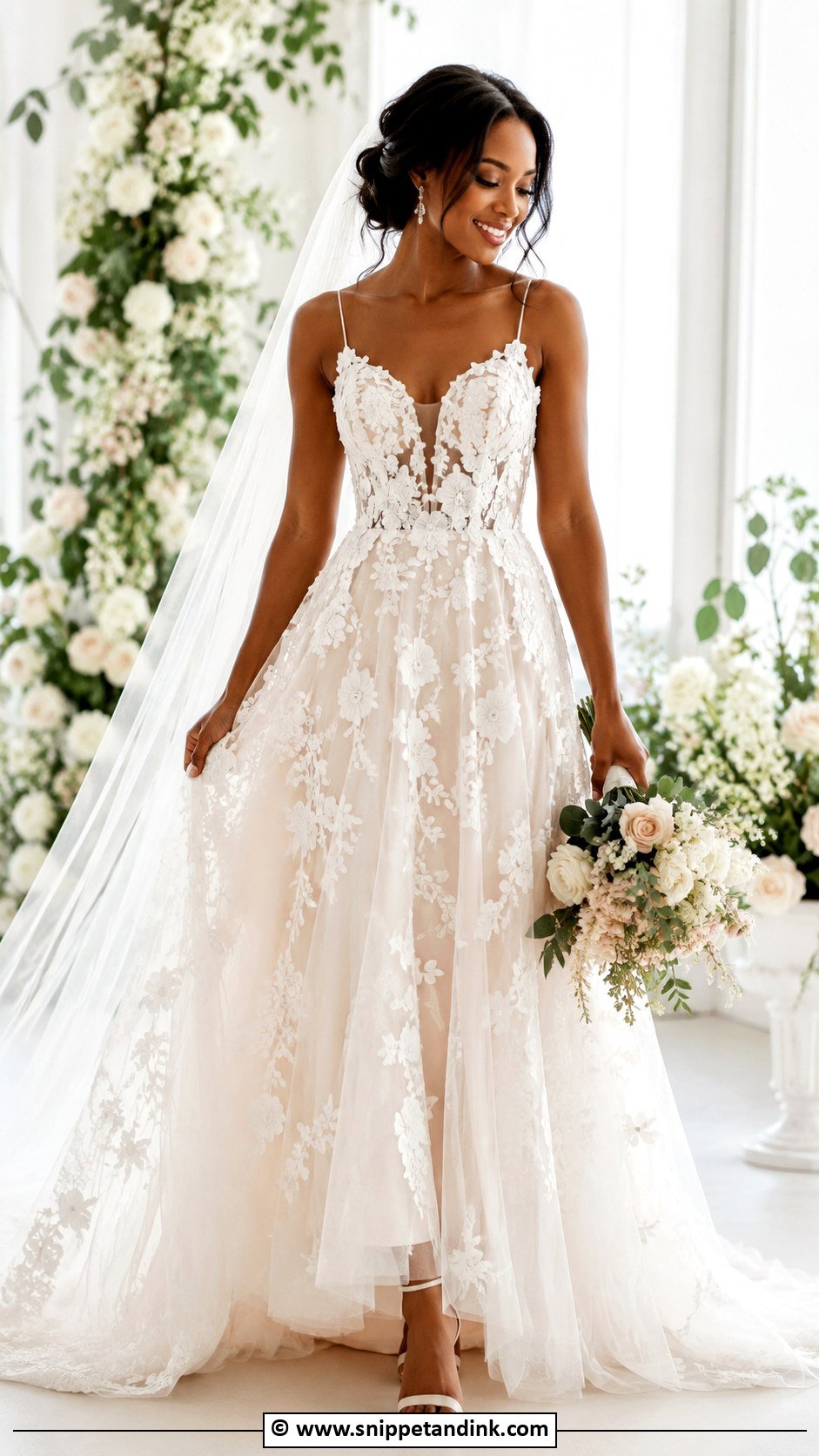
Three-dimensional appliques give texture without sparkle, and they work on A-line, ball gown and fitted shapes alike. The detail to inspect is the stitching: good appliques are hand-tacked at many points, while glued ones can lift after a day of hugging and dancing. If the flowers are large, carry a simpler bouquet and wear delicate earrings so nothing competes. Garden ceremonies and outdoor portraits suit this dress, since the petals throw small shadows that read well in natural light.
11. Tulle Princess Wedding Dress
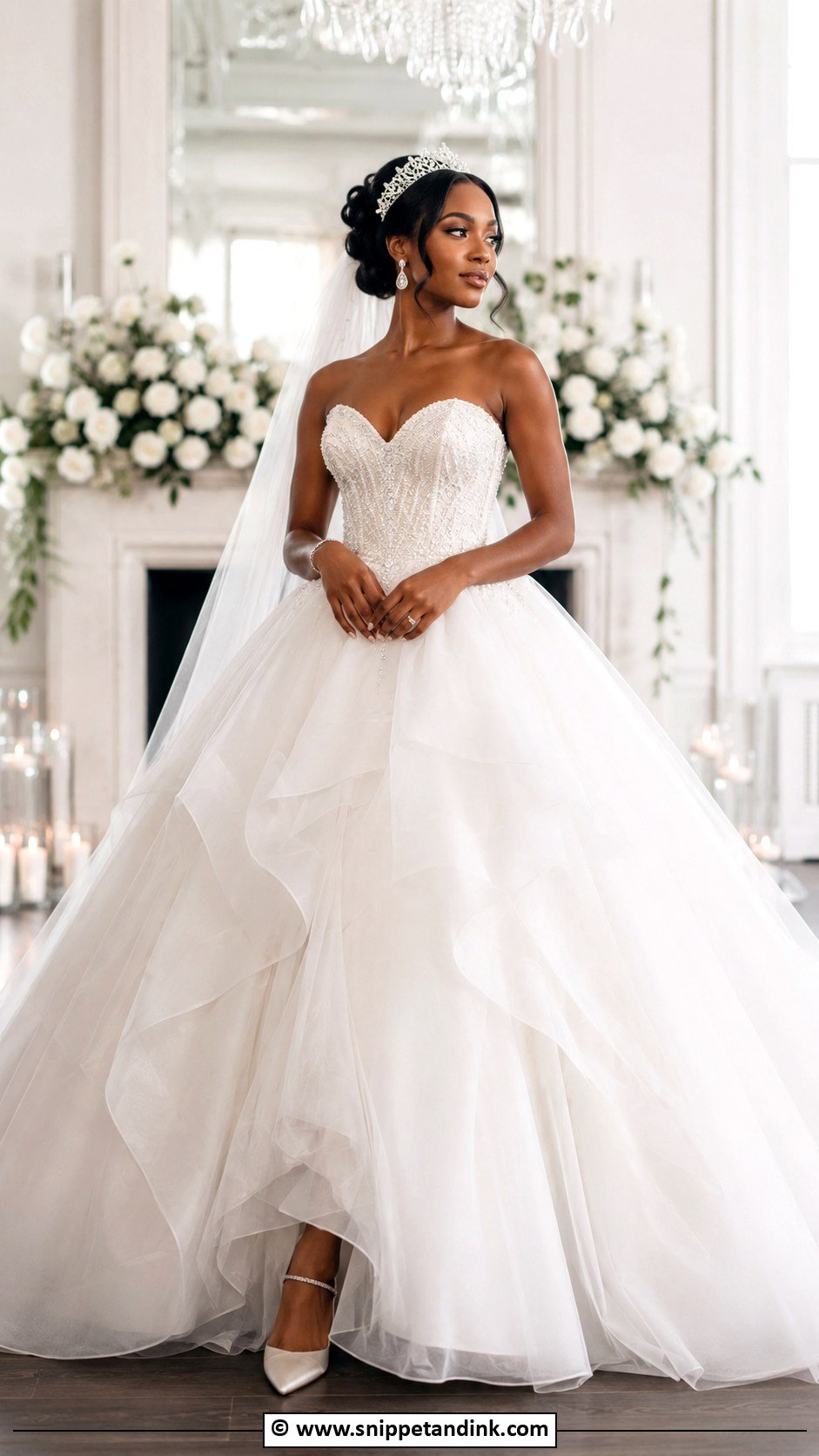
Tulle builds volume without much weight, which is why princess skirts are often easier to wear than they look. A defined waist and fitted bodice keep all those layers from swallowing you. I tell brides to choose one feature, clean tulle with a little sparkle or a lace bodice, not both plus a tiara and a cathedral veil. Tulle also snags on rough stone and jewelry clasps, so run a hand over your bracelet before you hug anyone. Soft glam makeup sits nicely with it.
12. Crepe Fit And Flare Wedding Dress
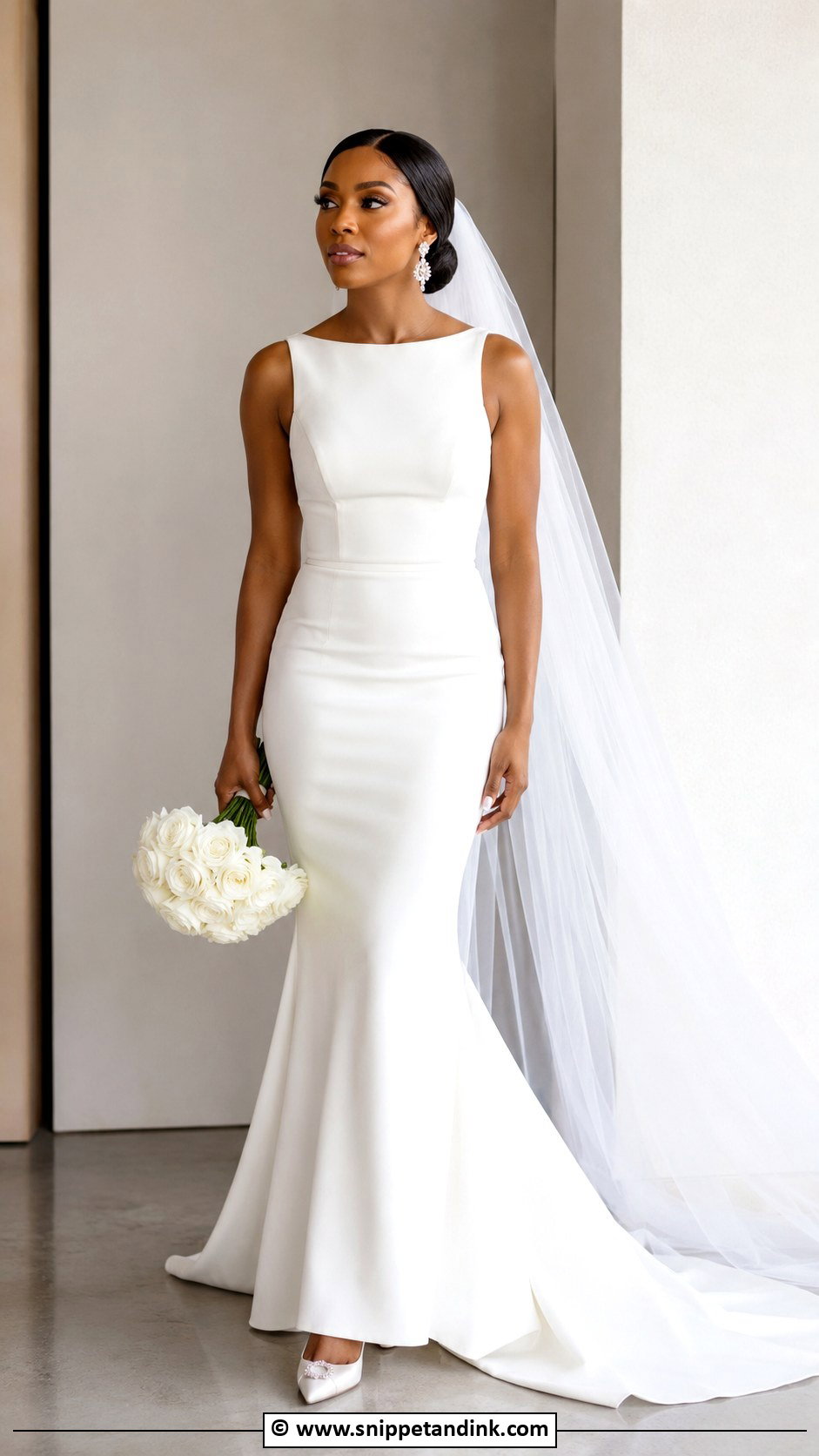
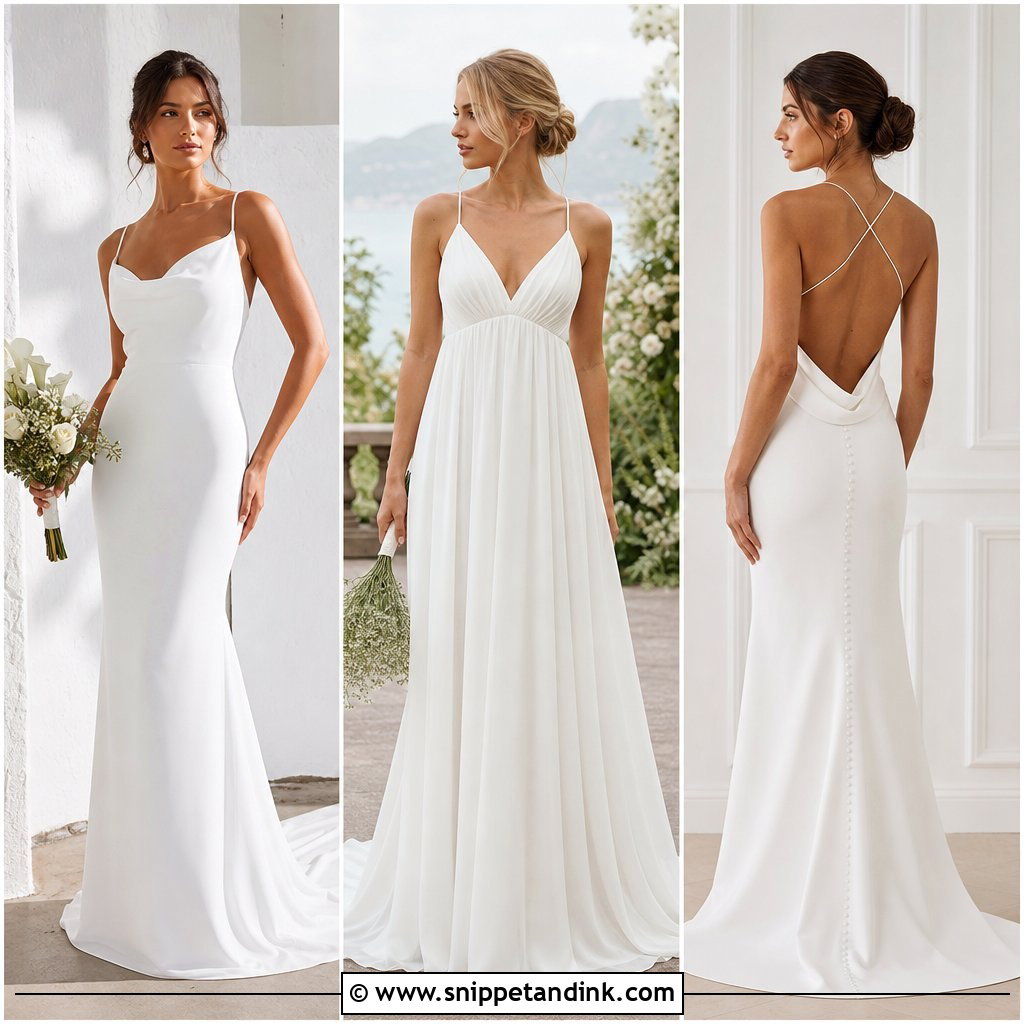
Crepe has enough weight to skim the body without clinging, and a fit and flare opens at the knee rather than lower, so you can actually walk. I suggest it to brides who like the mermaid outline but don’t want to shuffle. Crepe is honest about fit, so tailoring at the hip matters more than anywhere else. Statement earrings, a long veil and pointed heels match the clean seams, and a low bun or sharp side part keeps the whole look modern.
13. Square Neck Wedding Dress
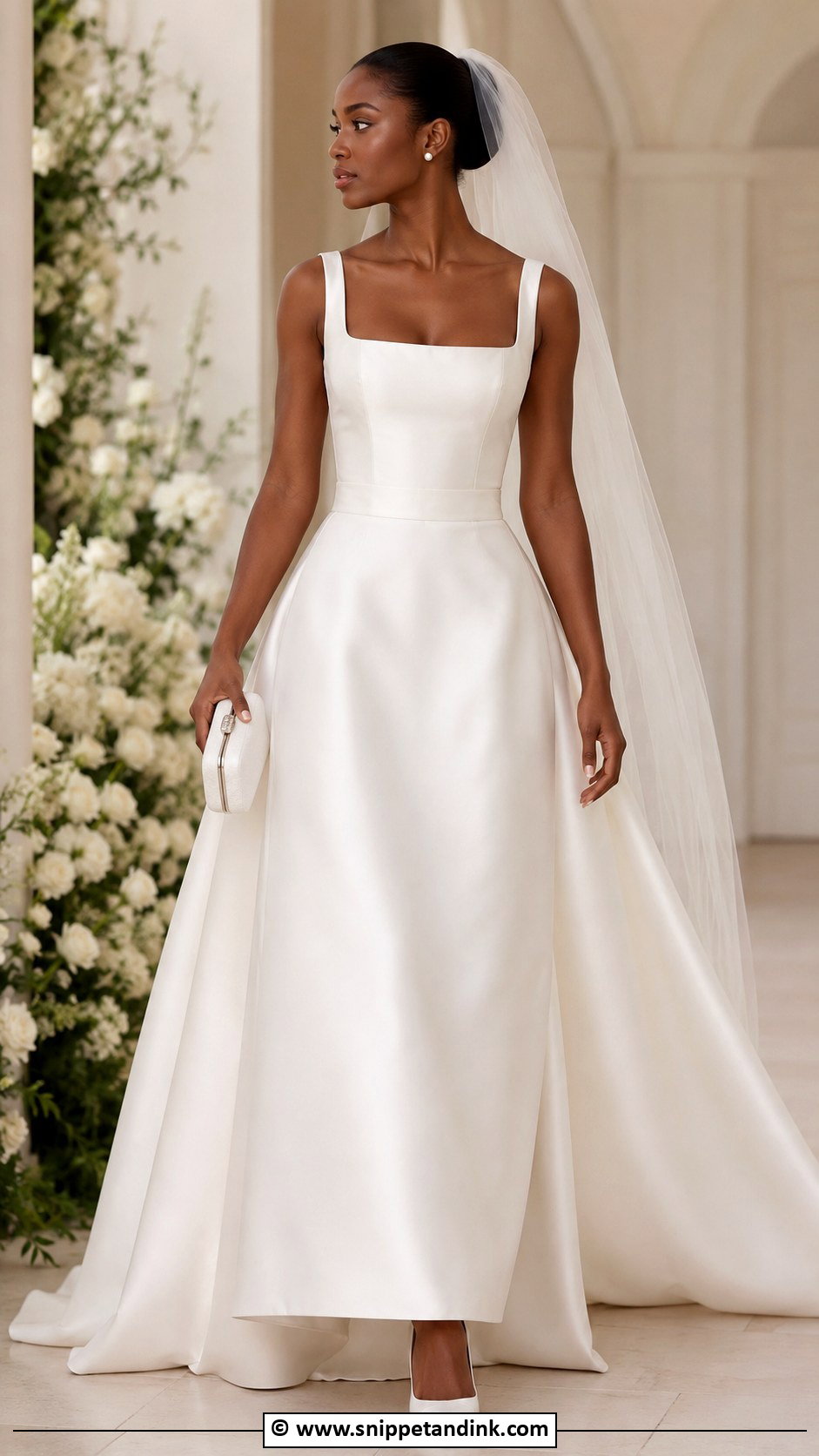
A square neckline frames the collarbone with more coverage than a plunge, and it has a slightly vintage feel. On a wide square, I usually skip the necklace altogether, because a chain sitting inside that frame looks crowded. Pearl studs or small drops and a sleek veil are enough. It pairs well with textured natural hair, braids pulled back or a smooth bun. Watch the corners at your fitting: if they buckle when you raise your arms, the bodice needs a stay stitched in.
14. High Neck Wedding Dress
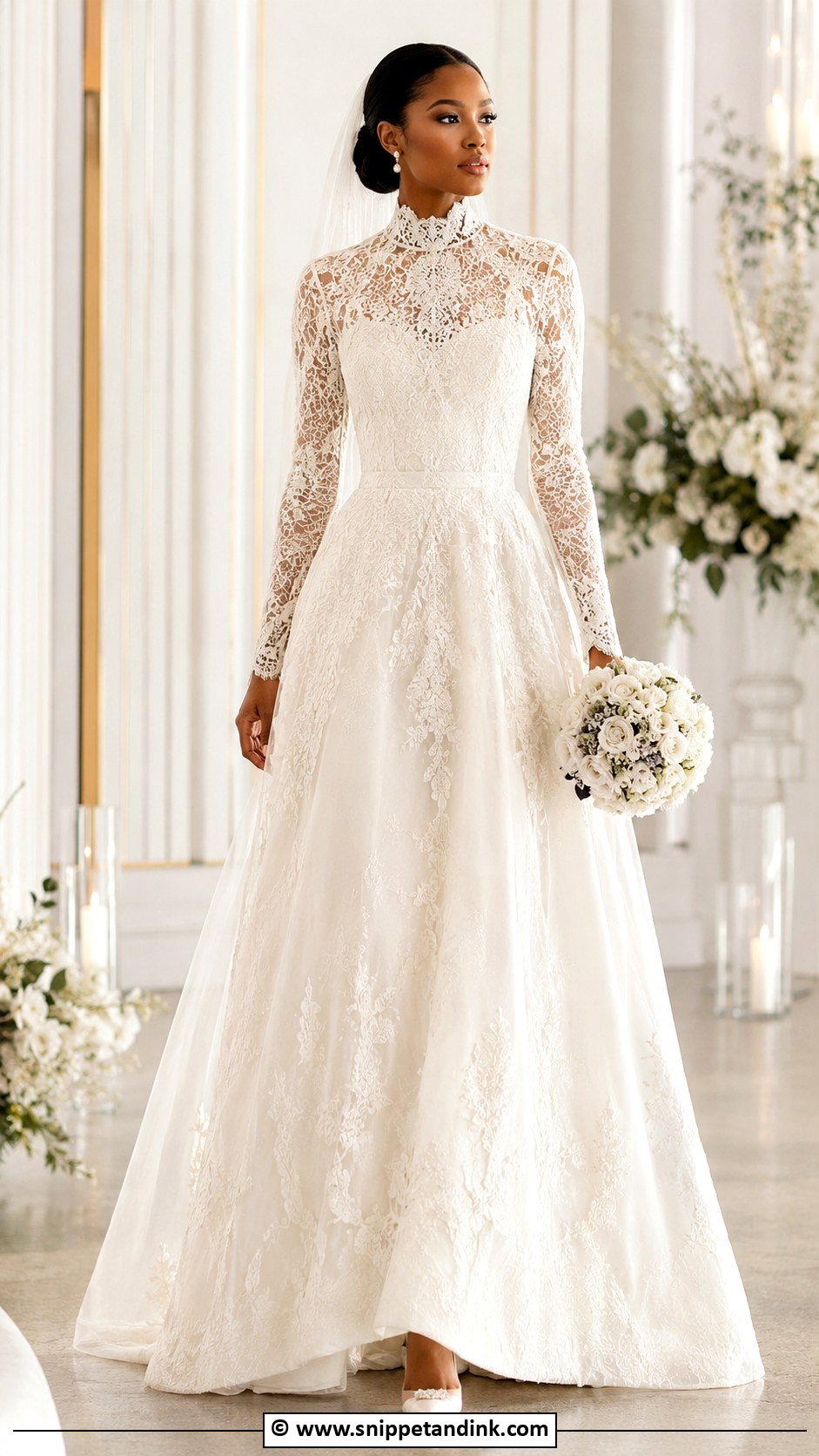
A high neck puts all the attention on your face and posture, so earrings and hair matter more than with any other neckline. I attach the veil lower at the back of the head so the comb doesn’t fight a tall collar. Lace, crepe or satin with a fitted bodice and a flowing skirt is the classic version. Skip necklaces entirely. On Black brides, ivory lace close to the face gives a clean contrast, but check the neck fastening, because a tight collar becomes uncomfortable by the second hour.

15. Plunging Neckline Wedding Dress
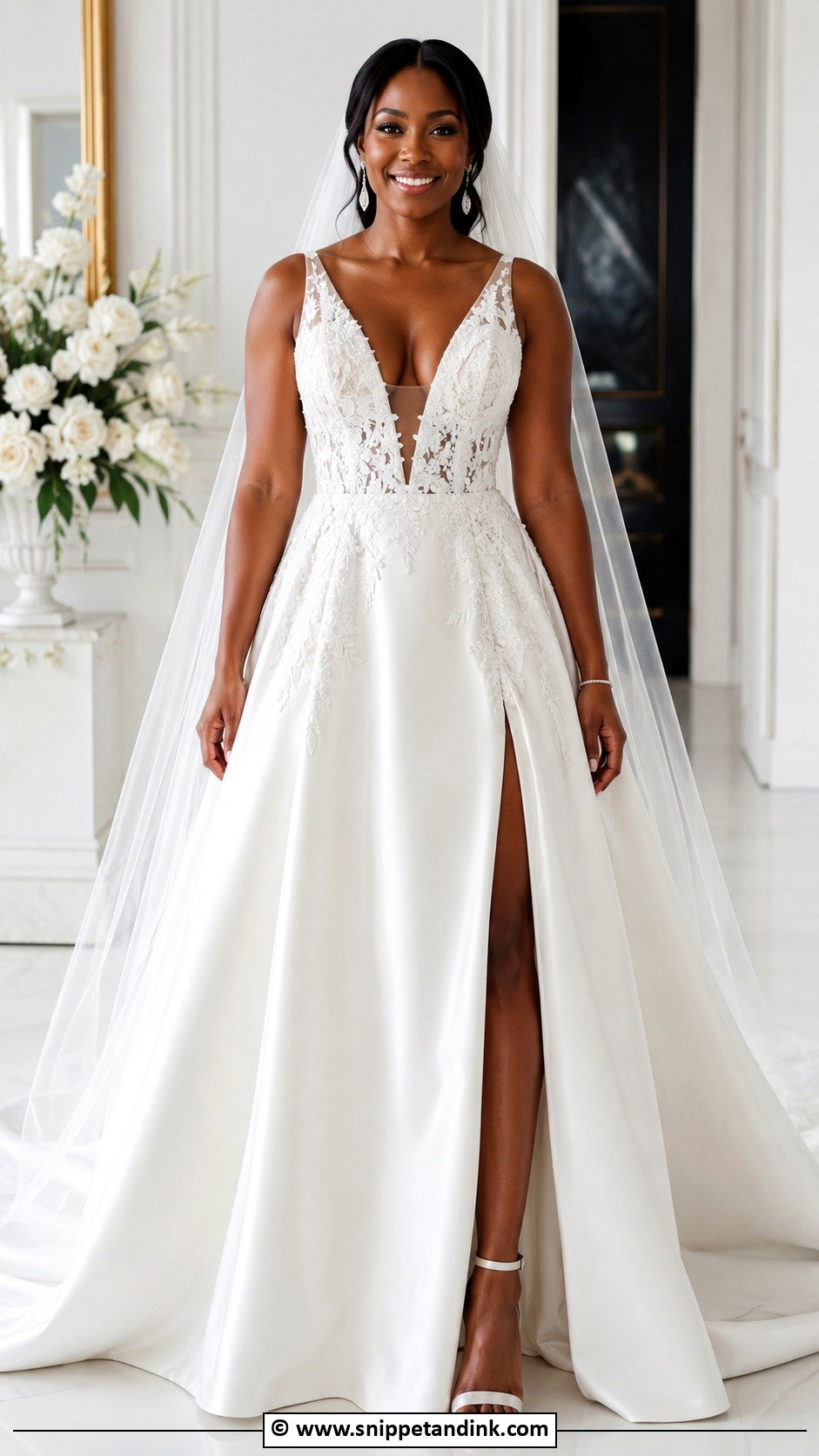
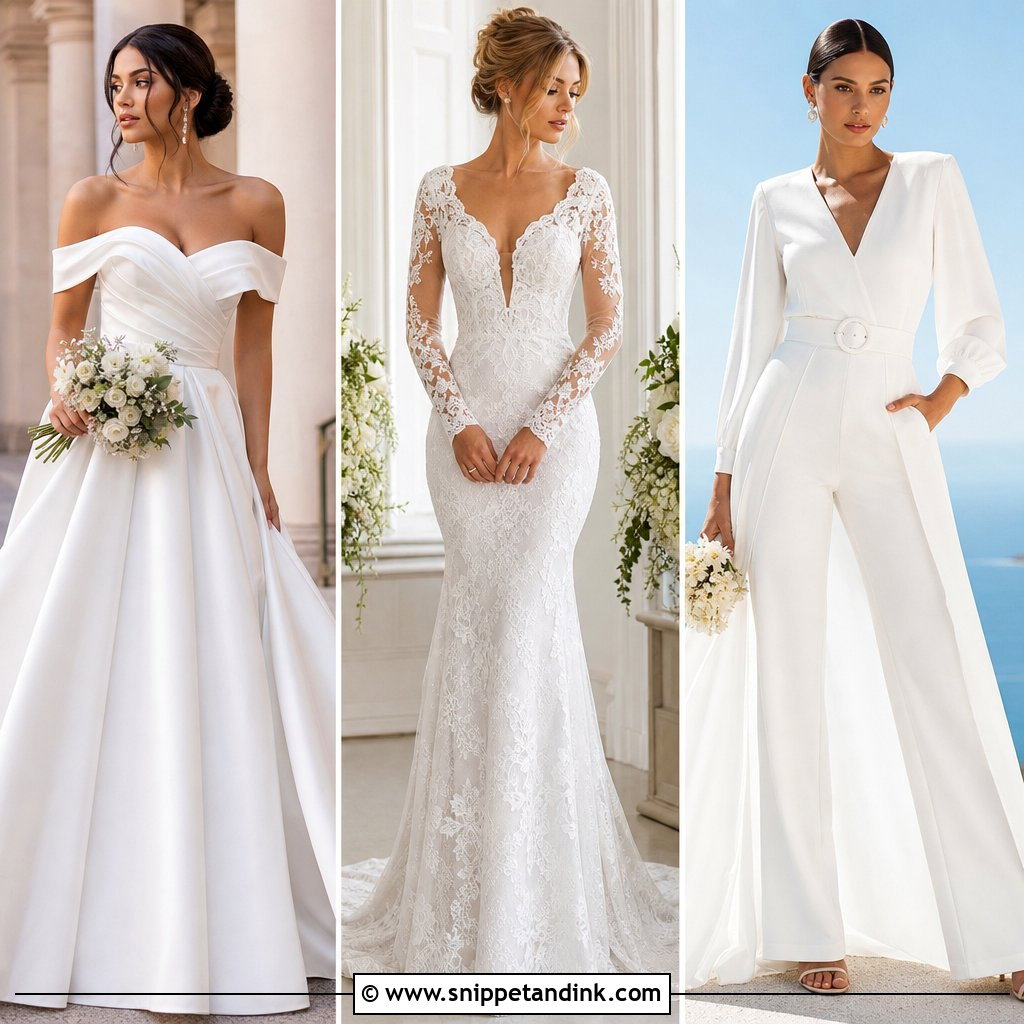
A plunge only looks bridal when it’s engineered. I look for boning along the neckline, a strip of illusion mesh in the center and, for most brides, bra cups sewn in during alterations. Ask the seamstress to match the mesh to your skin; stock “nude” mesh is often too light on deep skin and shows as a pale stripe in photos. Long earrings and a clean veil suit the vertical line. Ivory or warm champagne fabric keeps it soft rather than severe.
16. Detachable Overskirt Wedding Dress
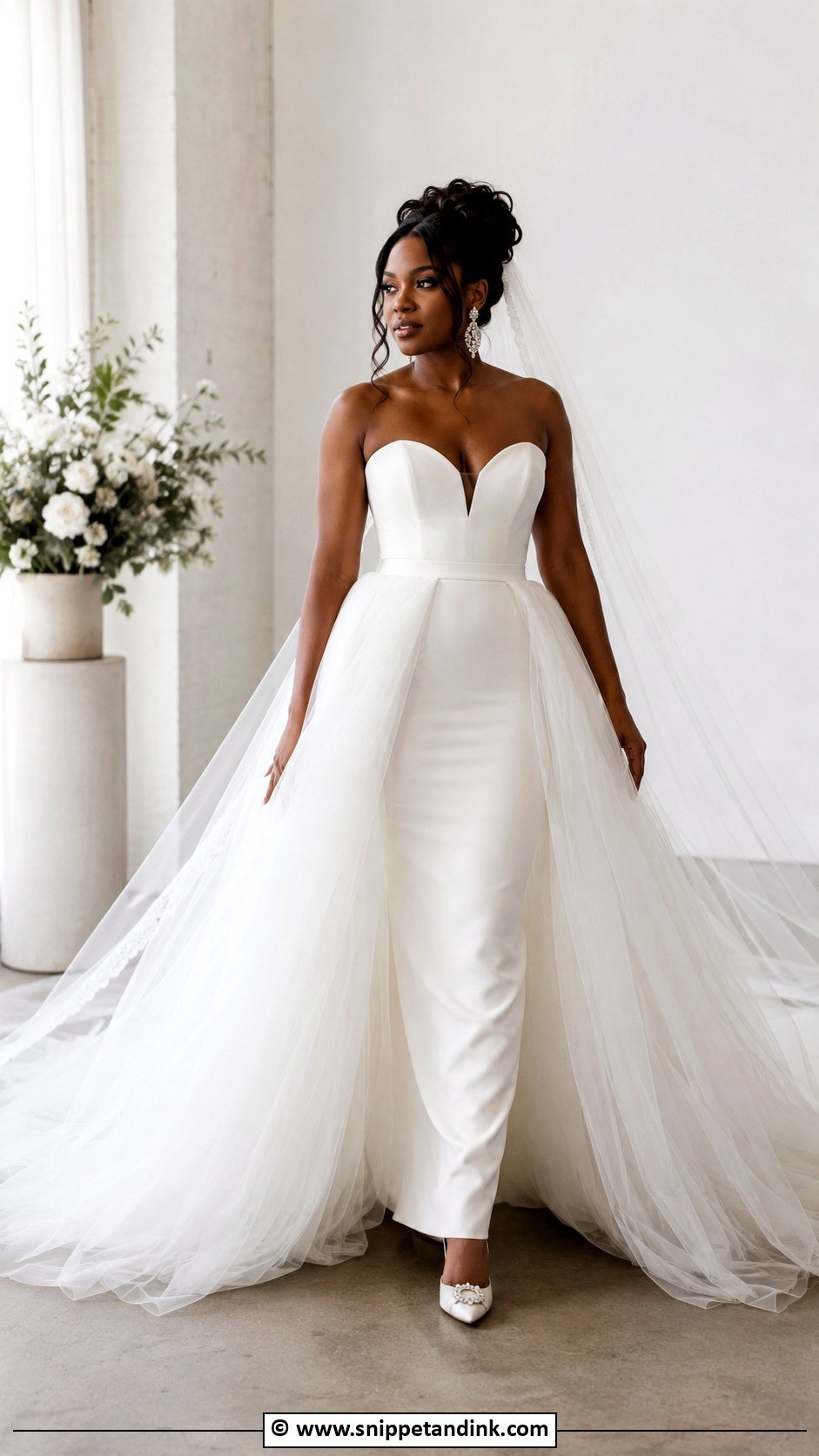
A detachable overskirt wedding dress gives you a full ceremony silhouette and a fitted reception dress without paying for a second gown. I make brides practice taking the overskirt off at the final fitting, because hidden hooks behind a lace bodice are hard to find with nervous hands. Choose a crepe, lace or beaded base and a tulle or satin overskirt. Long veil for the aisle, bolder earrings once the skirt comes off, and shoes you can dance in for six hours.
17. Cape Wedding Dress
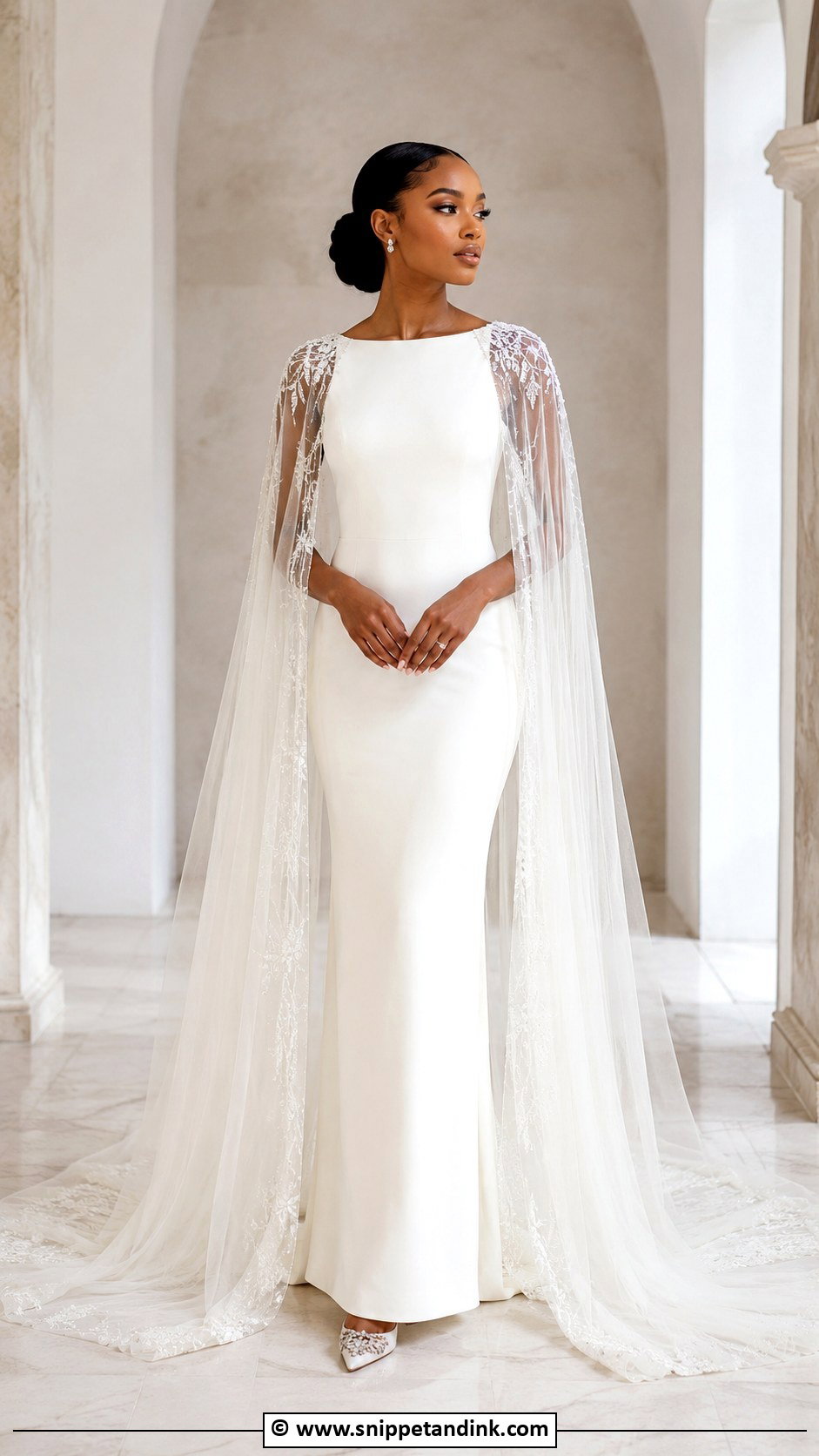
A cape can replace a veil entirely, and it moves in a way that most veils can’t when you walk. Underneath, I keep the gown simple: a column, a clean crepe shape or fitted satin. Check how the cape attaches, since shoulder snaps tug at lightweight fabric while a cape stitched into the neckline sits more securely. It frames the shoulders well on Black brides and reads as regal without any extra jewelry beyond small earrings.
18. Pearl Wedding Dress
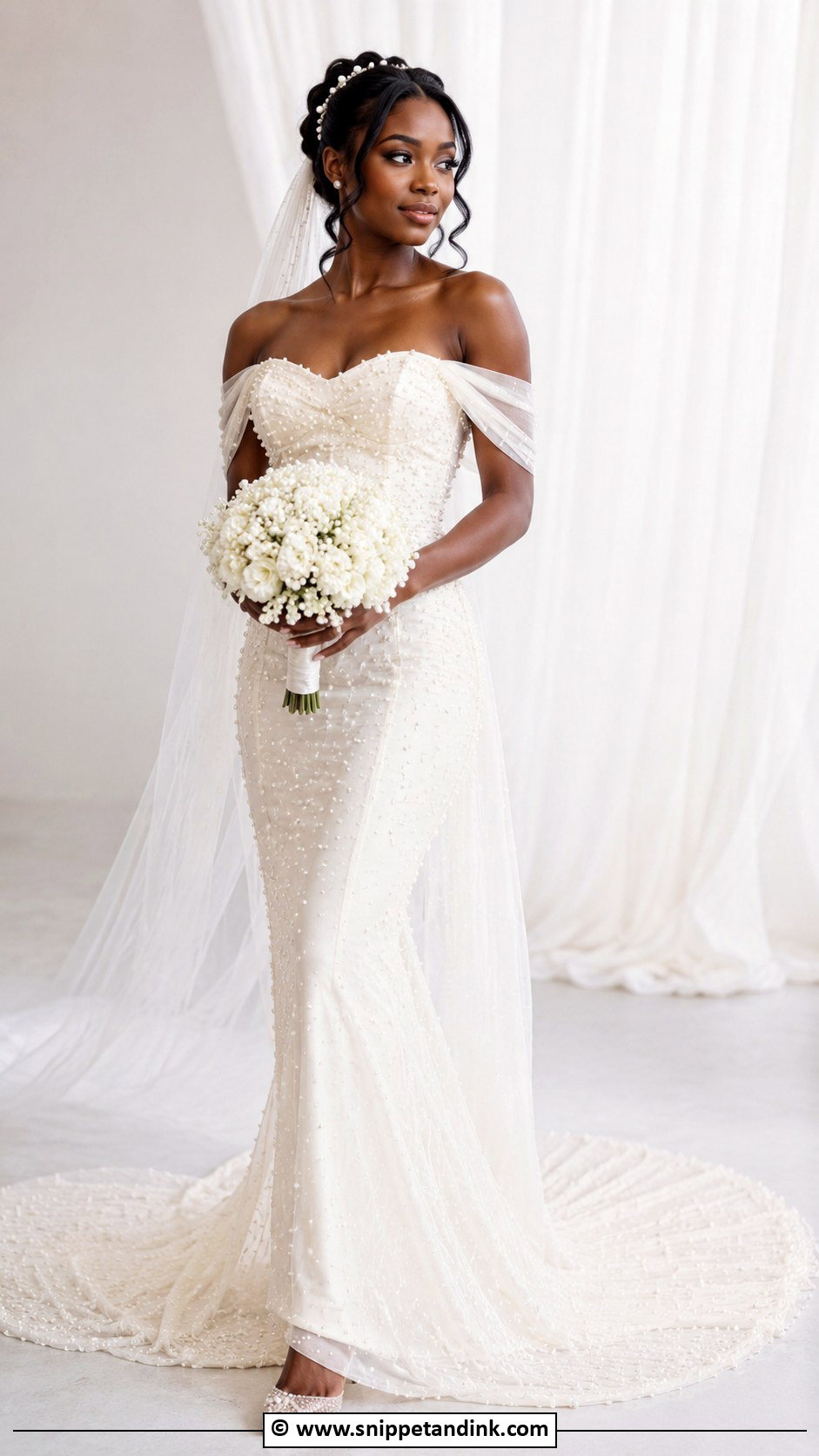
Pearls give a softer shine than crystals, and they photograph with depth instead of sharp flashes. Balance is everything here. A pearl-heavy gown wants plain studs; a gown with a few pearls can take a pearl veil, pearl pins or pearl straps on the shoes. I always check whether the pearls are sewn individually or strung in lines, because strung rows can snap and scatter if they catch. Ivory, soft white or champagne all glow against deep skin.
19. Two Piece Wedding Dress
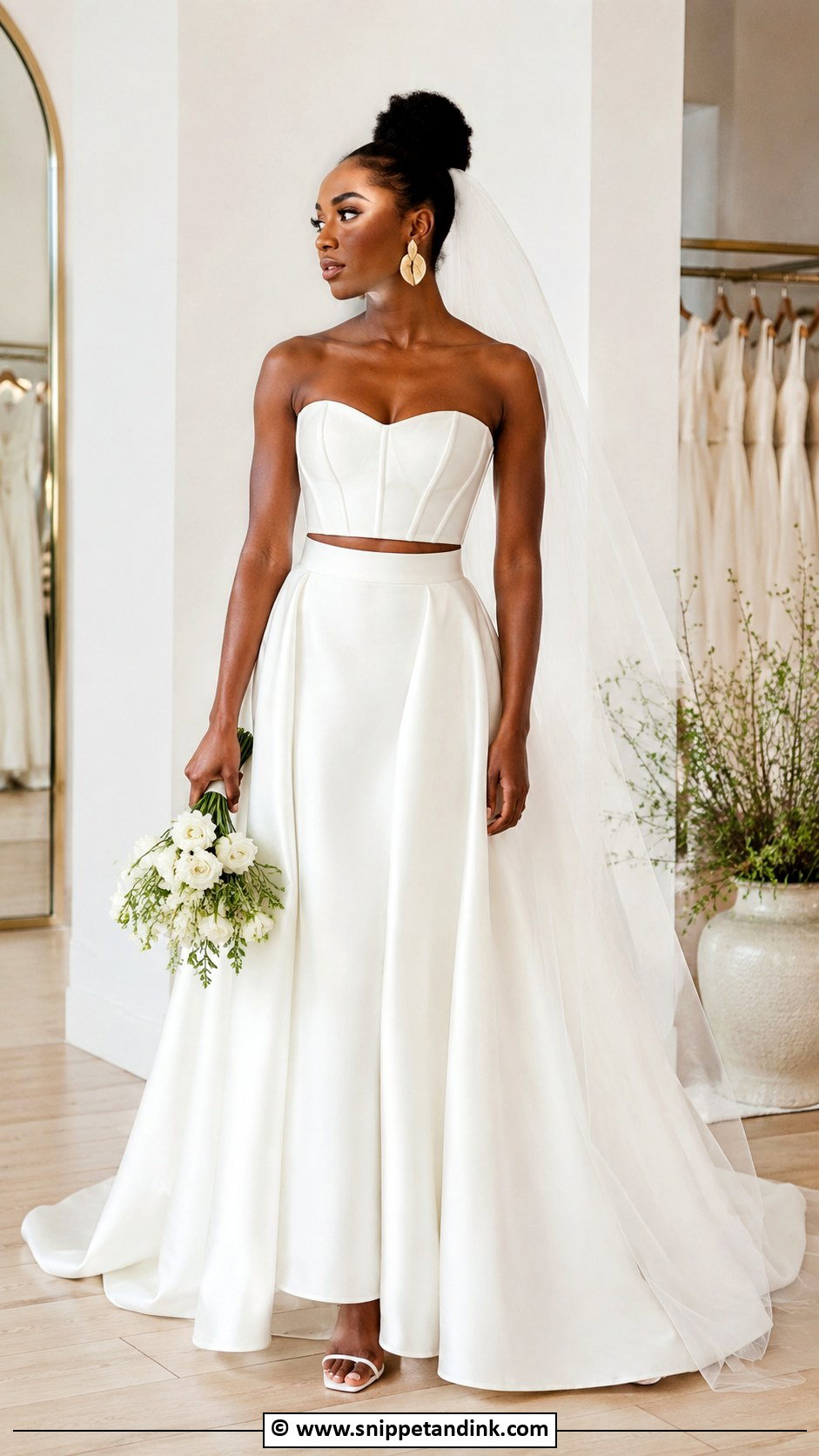
A two piece wedding dress lets you mix textures, a lace top over a satin skirt or a corset top with a tulle skirt. The thing I fit carefully is the gap: sit down, lift your arms, and see how much skin shows. For a formal ceremony, keep it to a sliver. A high-waisted skirt with a structured top dances well and lets you rewear one piece later. Sculptural earrings and a sleek hair accessory finish it.



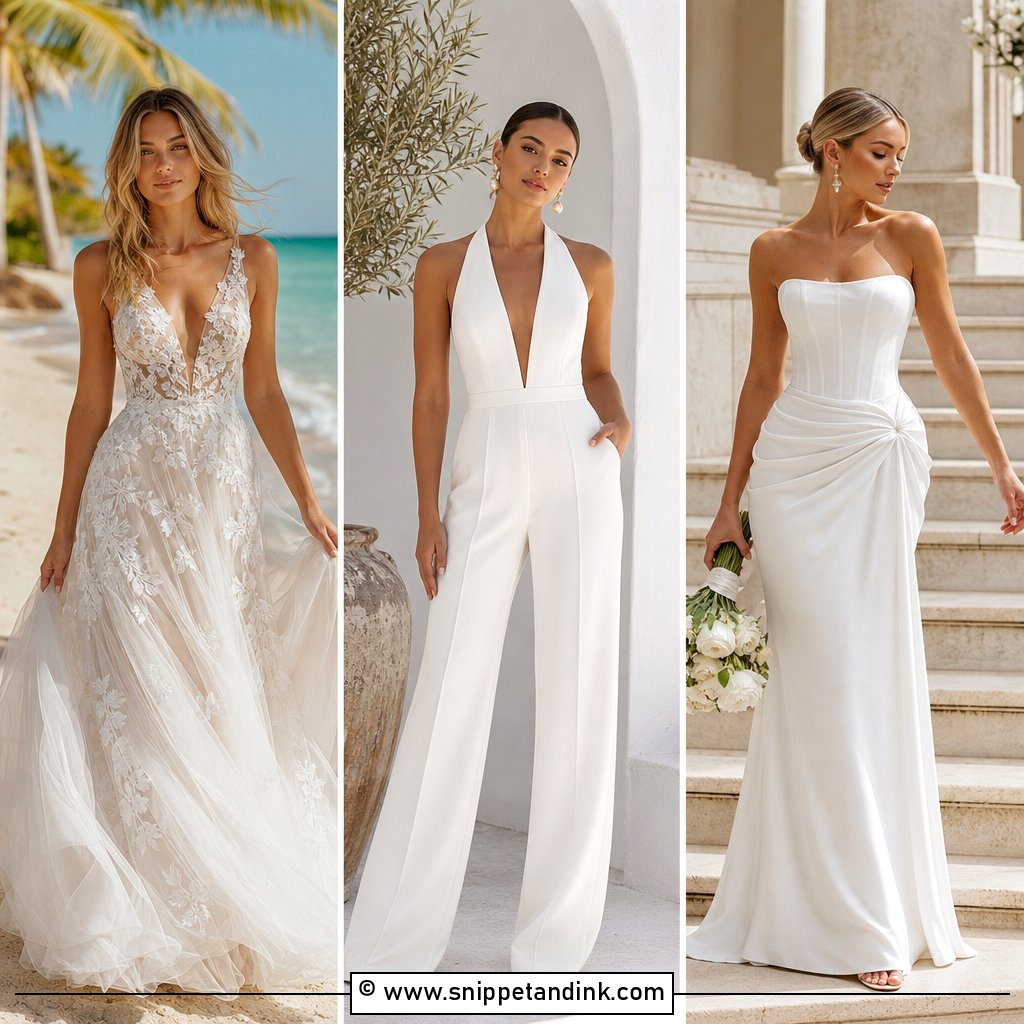
20. Bridal Jumpsuit Wedding Outfit
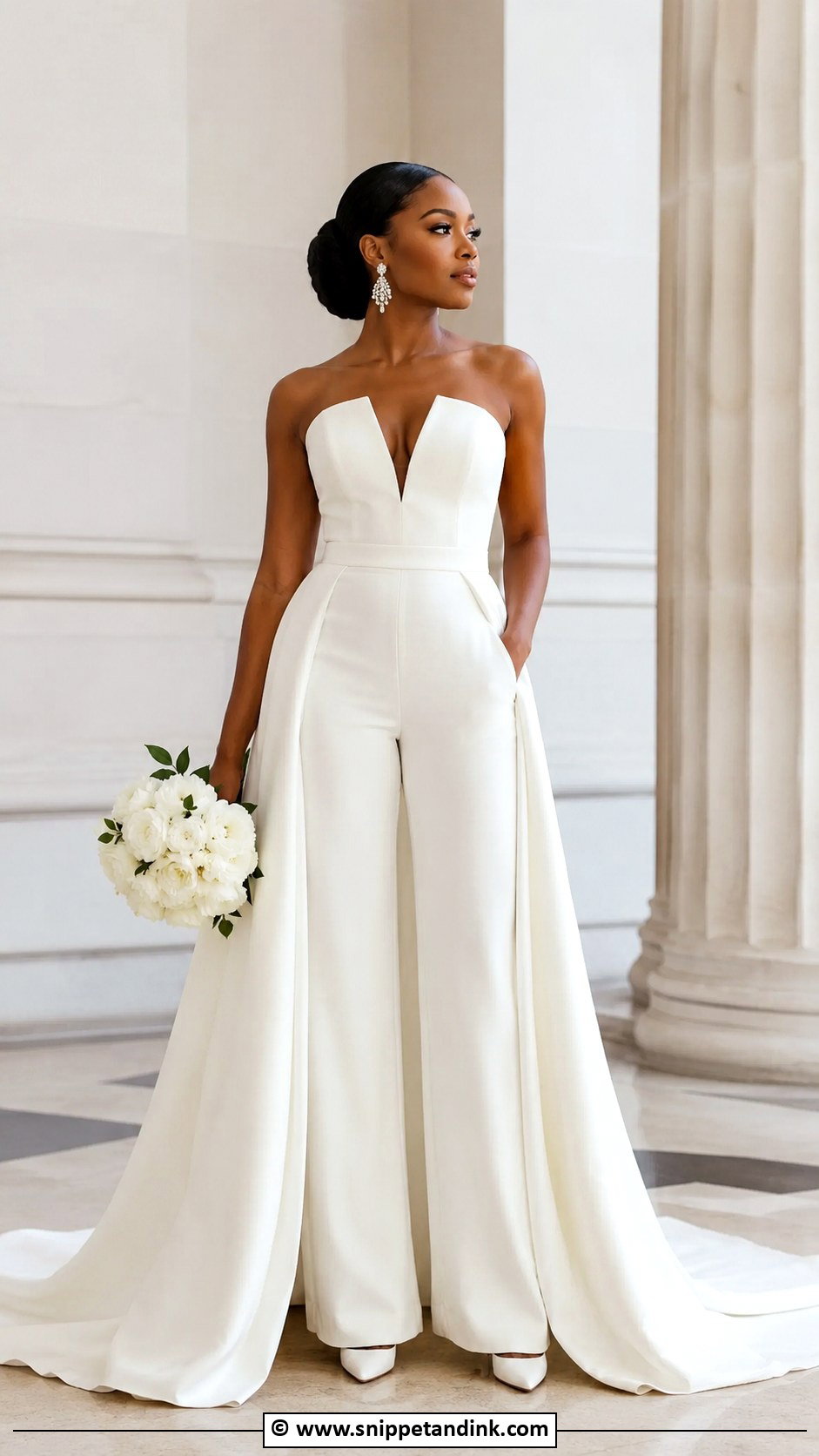
Jumpsuits are about tailoring, and the measurement most people forget is the rise. If the crotch sits too low you can’t take a full step, and if it’s too high you’ll feel it every time you sit. Choose a defined waist, wide legs and a structured bodice in white or ivory. A detachable train or cape adds ceremony drama. Pointed heels lengthen the leg, and hemming should be done with the exact shoes, since wide trousers drag quickly on a dance floor.
21. Short Reception Wedding Dress
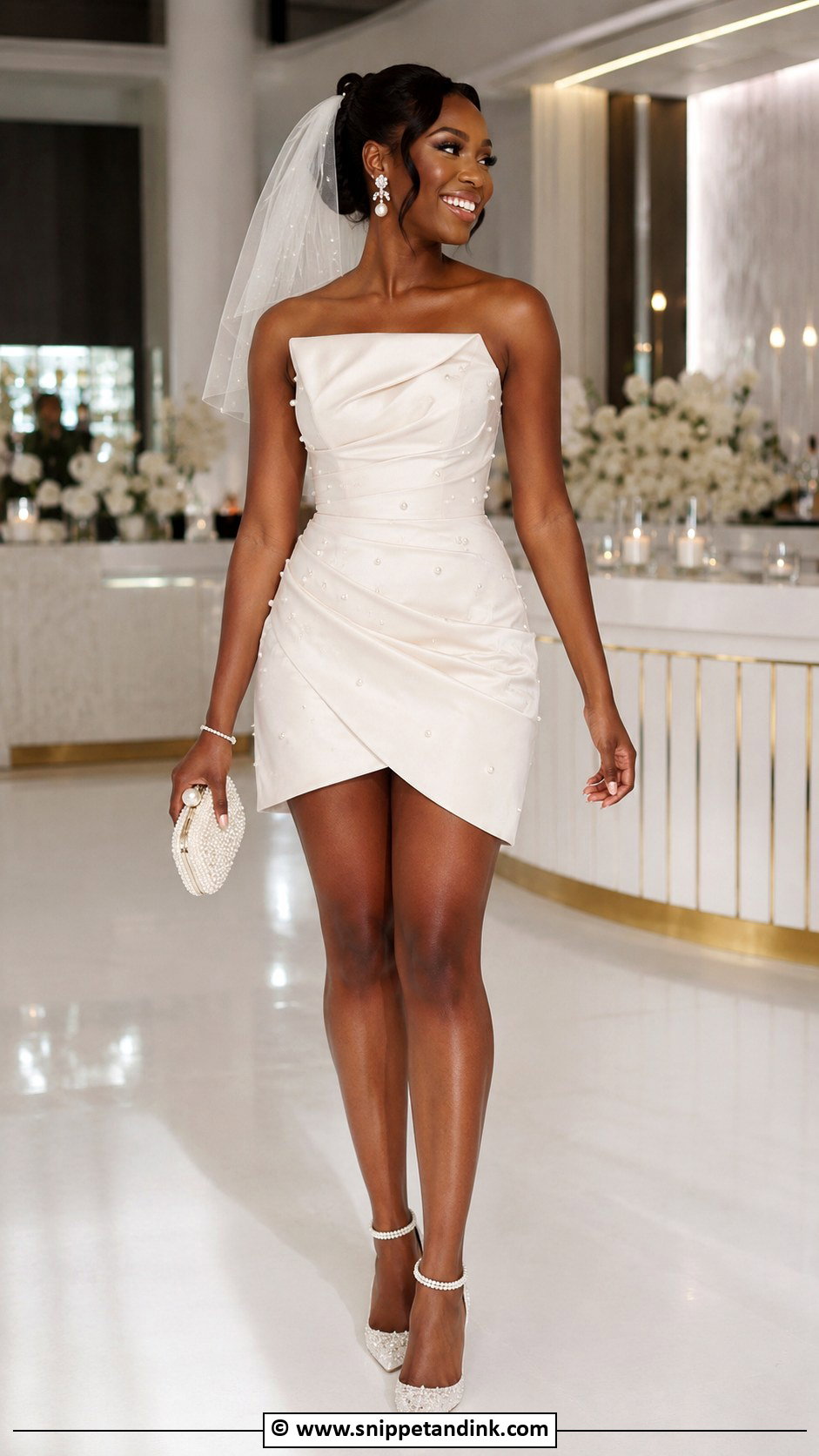
A short reception dress is the one you’ll dance in, so I test it by having brides sit, twirl and bend before buying. Minis or tea lengths with pearls, bows, feathers or satin keep it bridal. A structured mini with a full skirt reads playful; a fitted crepe mini looks sharp. Embellished heels, sparkling earrings and a short veil or bow headband finish it. Plan your change for after dinner, when guests are moving anyway and nobody misses you for ten minutes.
22. Tea Length Wedding Dress
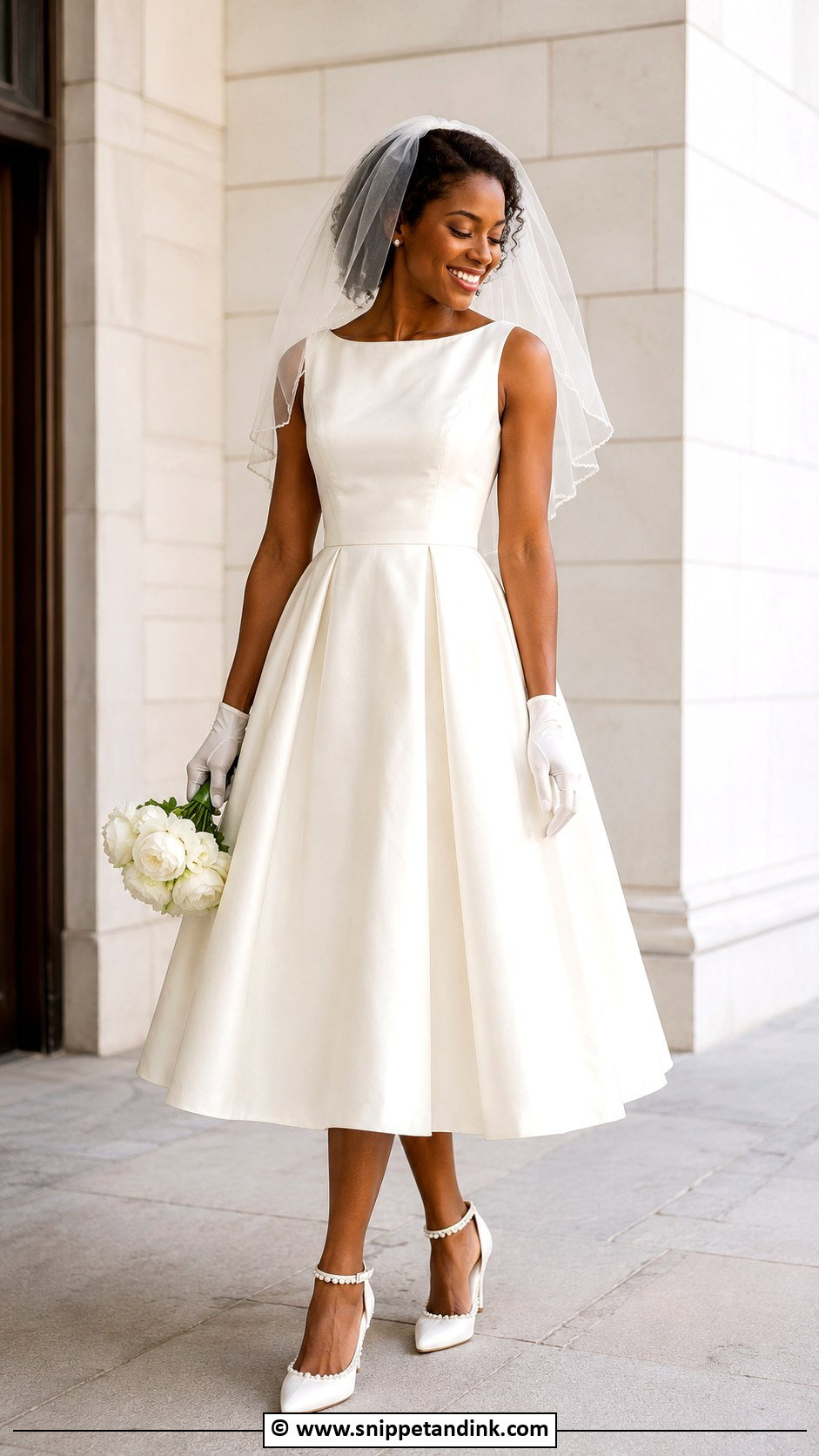
A tea length wedding dress stops between the knee and ankle, which means your shoes become part of the outfit. I tell brides to buy shoes first and hem second. Satin pumps, pearl heels or ankle-strap sandals all work. A fitted bodice with a flared skirt gives the classic shape, while tulle or lace softens it. Short gloves and a birdcage veil lean vintage. It suits courthouse ceremonies and brunch weddings where a long train would only collect dust.
23. Black Wedding Dress
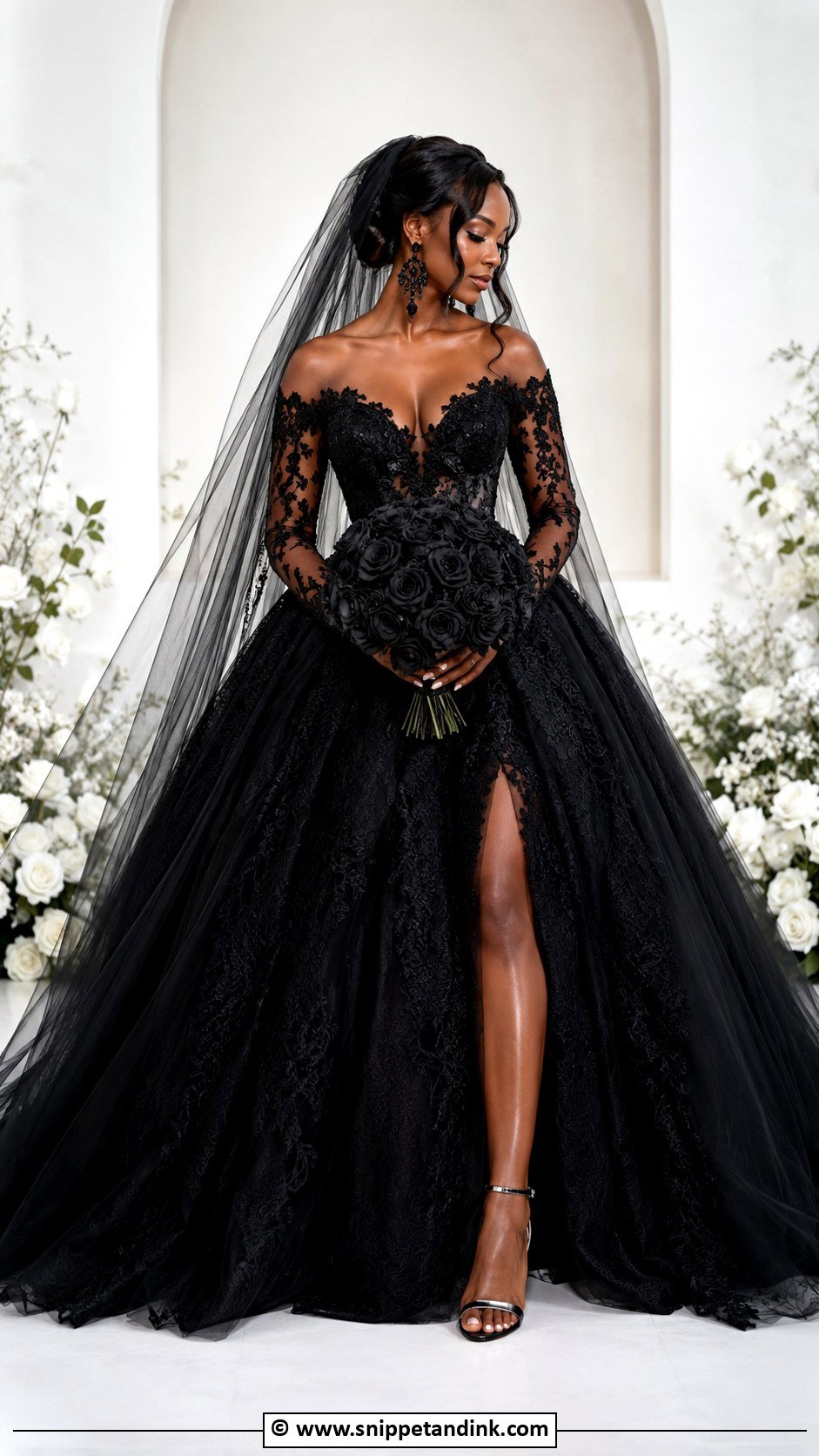
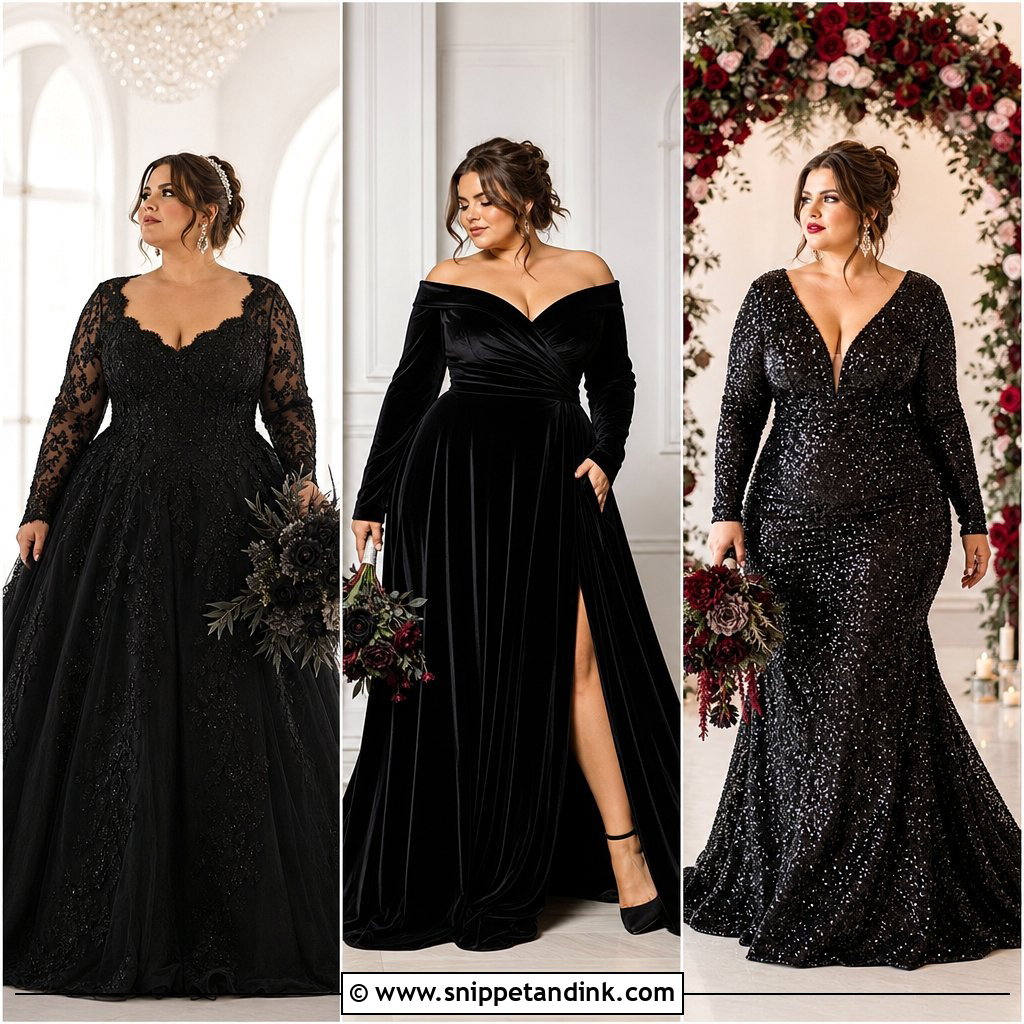
Black gowns go gothic, glamorous or minimal depending on the cut. A black ball gown is high drama; black lace in a mermaid shape reads more romantic. Because the color is less traditional, fabric quality shows more, so I steer brides toward heavy satin, silk faille or good lace rather than shiny polyester. Black crystal earrings, metallic heels or a sheer black veil keep it bridal. Ask your photographer to expose for your skin, not the dress, or the detail in the black disappears.
24. Champagne Wedding Dress
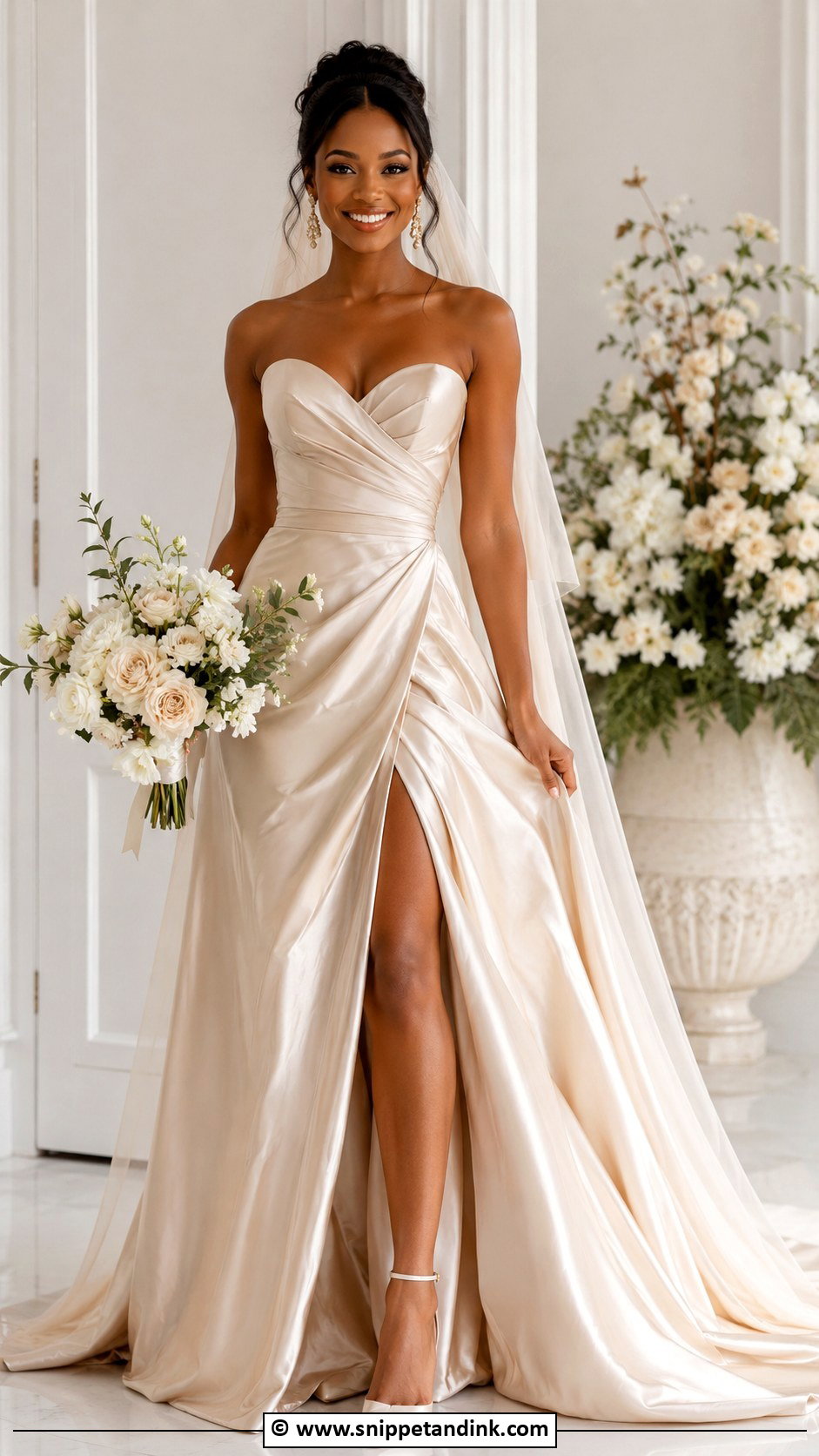
Champagne is the shade I suggest most often to brides with warm or deep skin who find pure white harsh near the face. The warm undertone blends rather than contrasts, and the skin looks lit from within in photos. Satin, beaded tulle or lace over a nude lining all suit it. Gold jewelry looks right; bright white accessories can make champagne look dingy beside them, so match the veil tone to the dress, not the store sample.
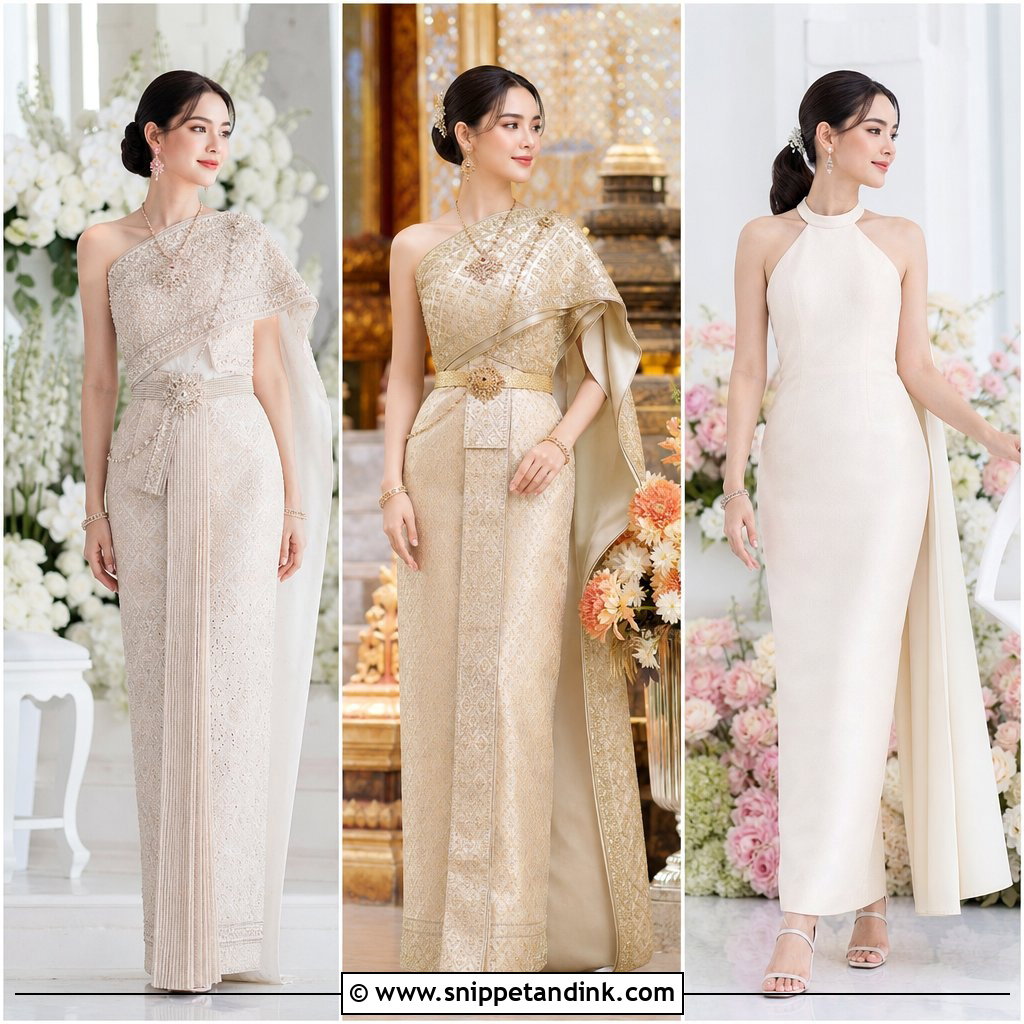

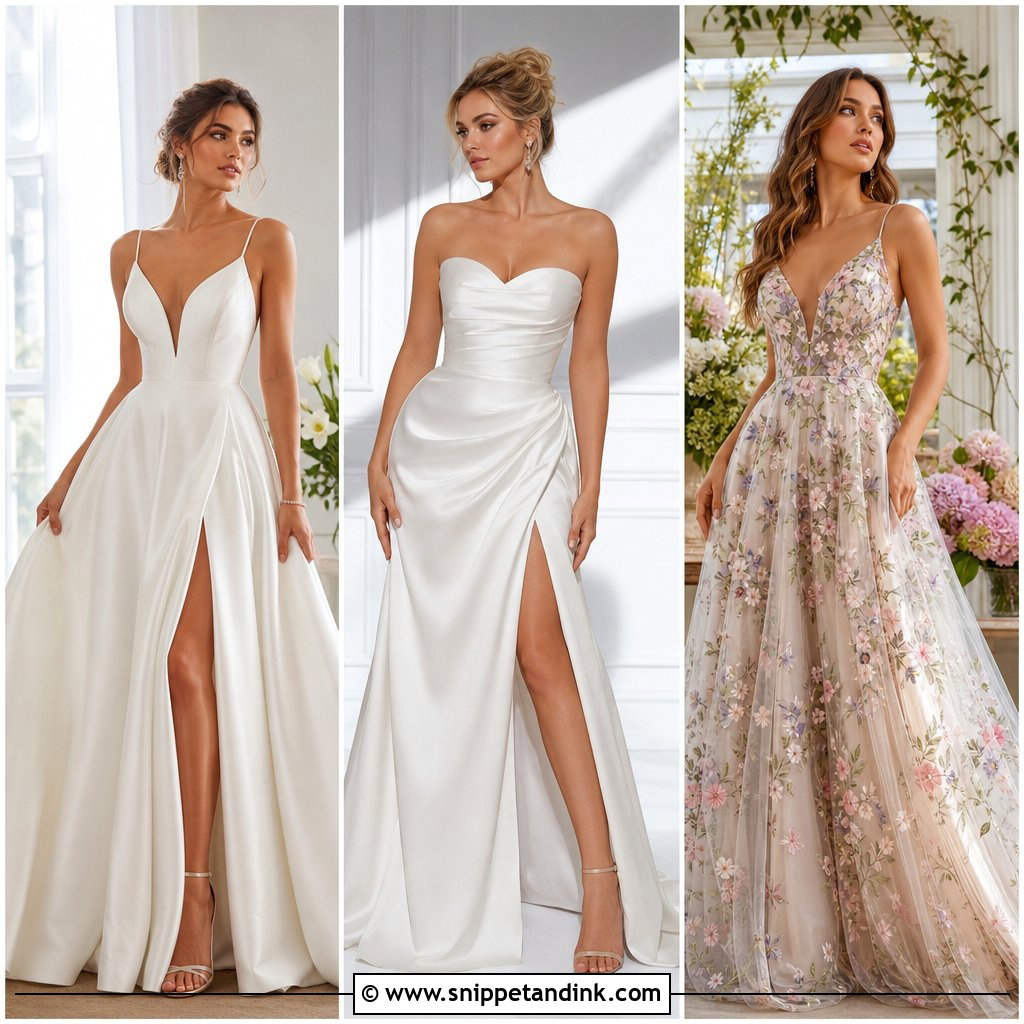
25. Blush Wedding Dress
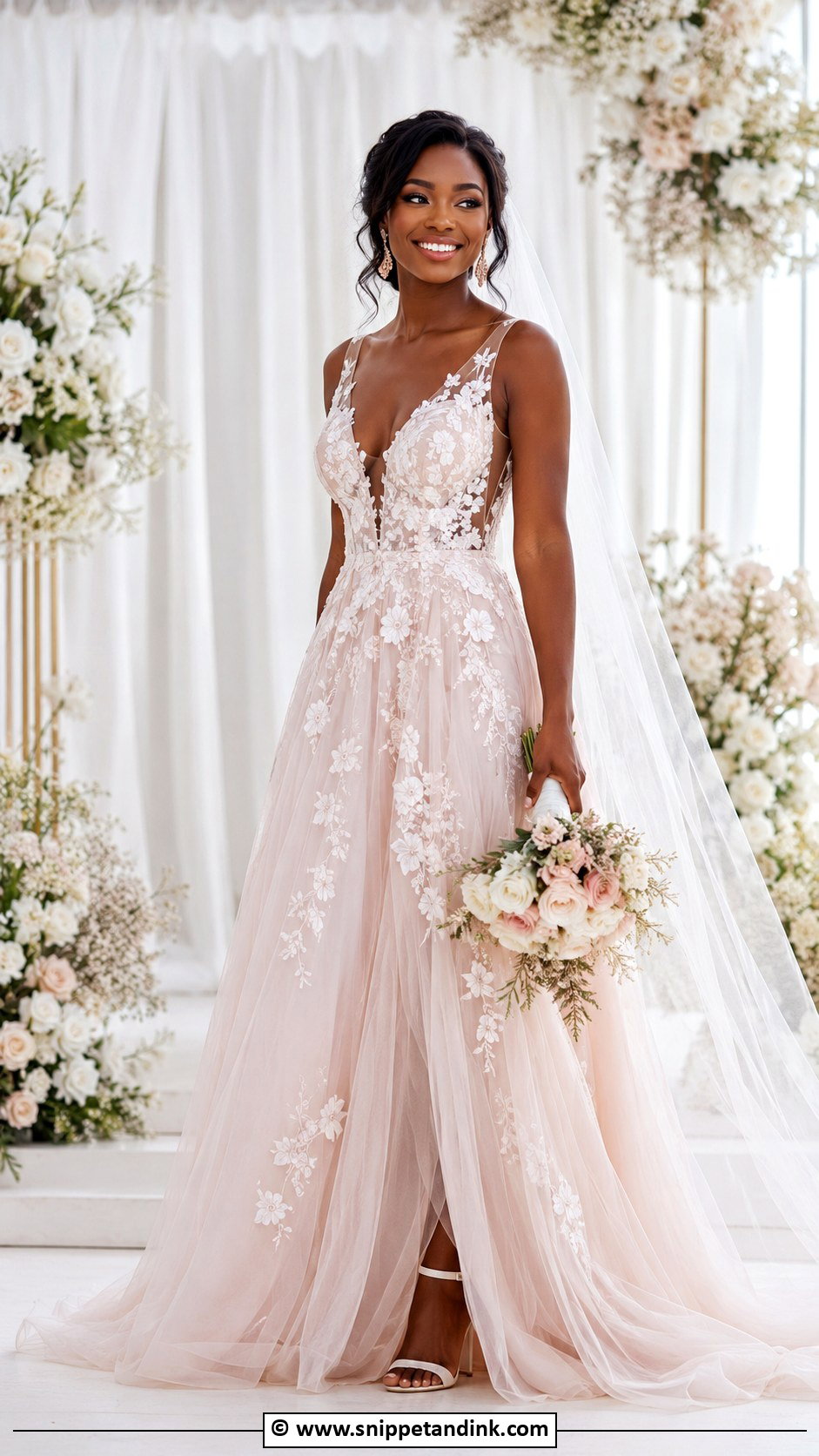
Blush adds just enough color to show in photos without stepping away from bridal. On deep skin, a pink with a warm, slightly peachy base looks better than a cool icy pink, which can look chalky. Floral applique or layered tulle suits the shade. Rose gold earrings and nude or ivory heels pick it up, and a soft ivory veil keeps the outfit from going too sweet. Keep makeup in the same warm family.
26. Dramatic Train Wedding Dress
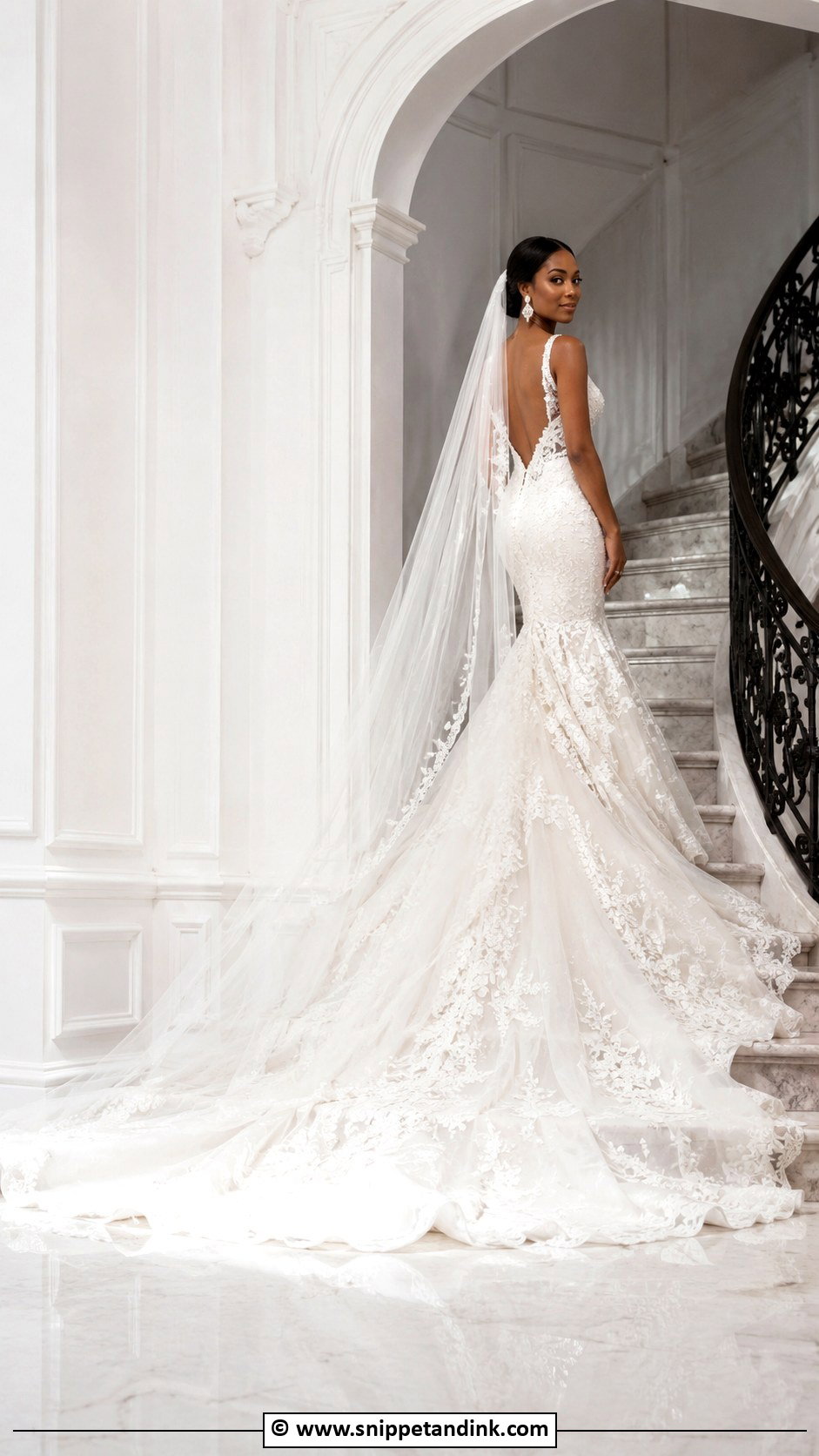
A long train is the most photographed part of an aisle walk, but it’s also the part that needs the most planning. Cathedral, chapel or detachable, ask early for the bustle style, French or American, and have your maid of honor learn it at the last fitting. A secure bodice matters, since a heavy train pulls back on the shoulders. Match the veil length to the train or go shorter. Against deep skin, an ivory train spreading behind you gives a regal look in wide shots.
27. Backless Wedding Dress
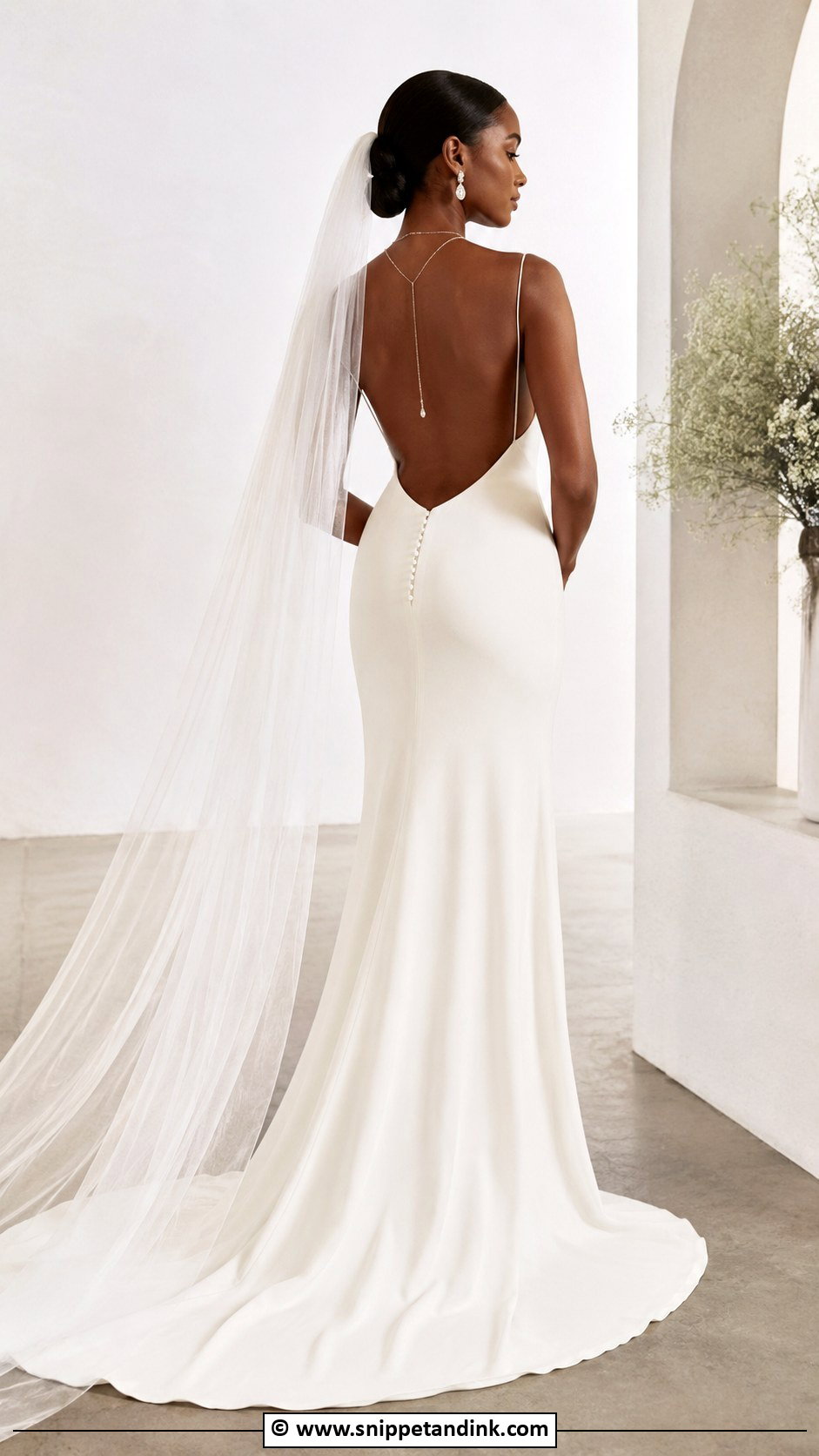
An open back lets the front stay simple and the back carry the drama. Support is the real question: I check for built-in cups, a waist stay and clear elastic along the edge so the sides don’t gape when you lean forward. Silk, crepe, lace and satin all work. A low bun and a back necklace or long drop earrings keep the line clean, and a sheer veil adds softness without hiding the detail during the ceremony.
28. Puff Sleeve Wedding Dress
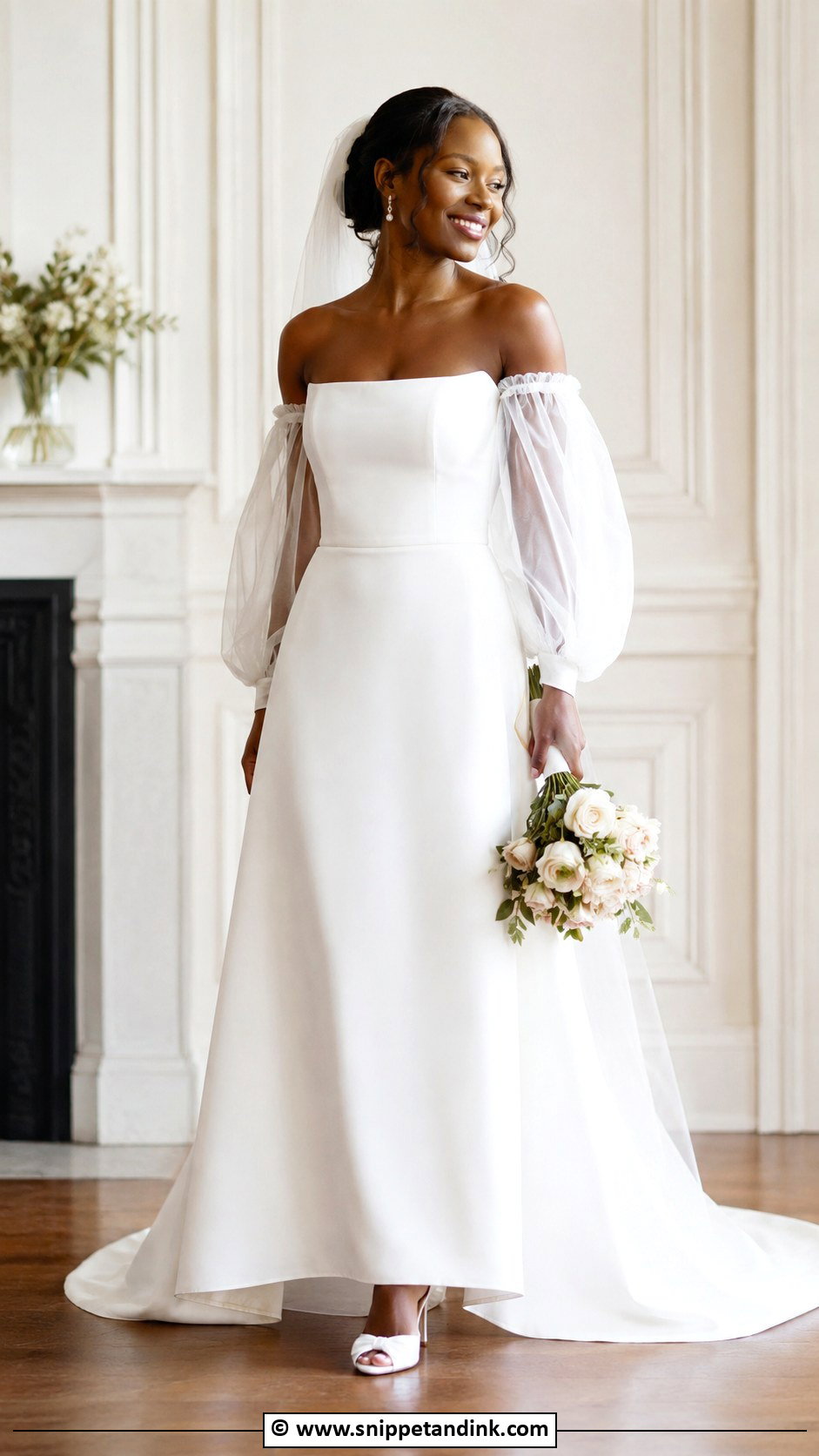
Puff sleeves are a fun statement, but they take up visual space, so I pair them with a clean bodice and a simple skirt. Ask whether the sleeves are structured with organza or net inside; unsupported puffs collapse after an hour of hugs. Detachable sleeves give you a reception option. With bold sleeves, studs and a light veil are enough. They frame the upper body well and suit brides who like vintage shapes with a current finish.
29. Sheath Wedding Dress
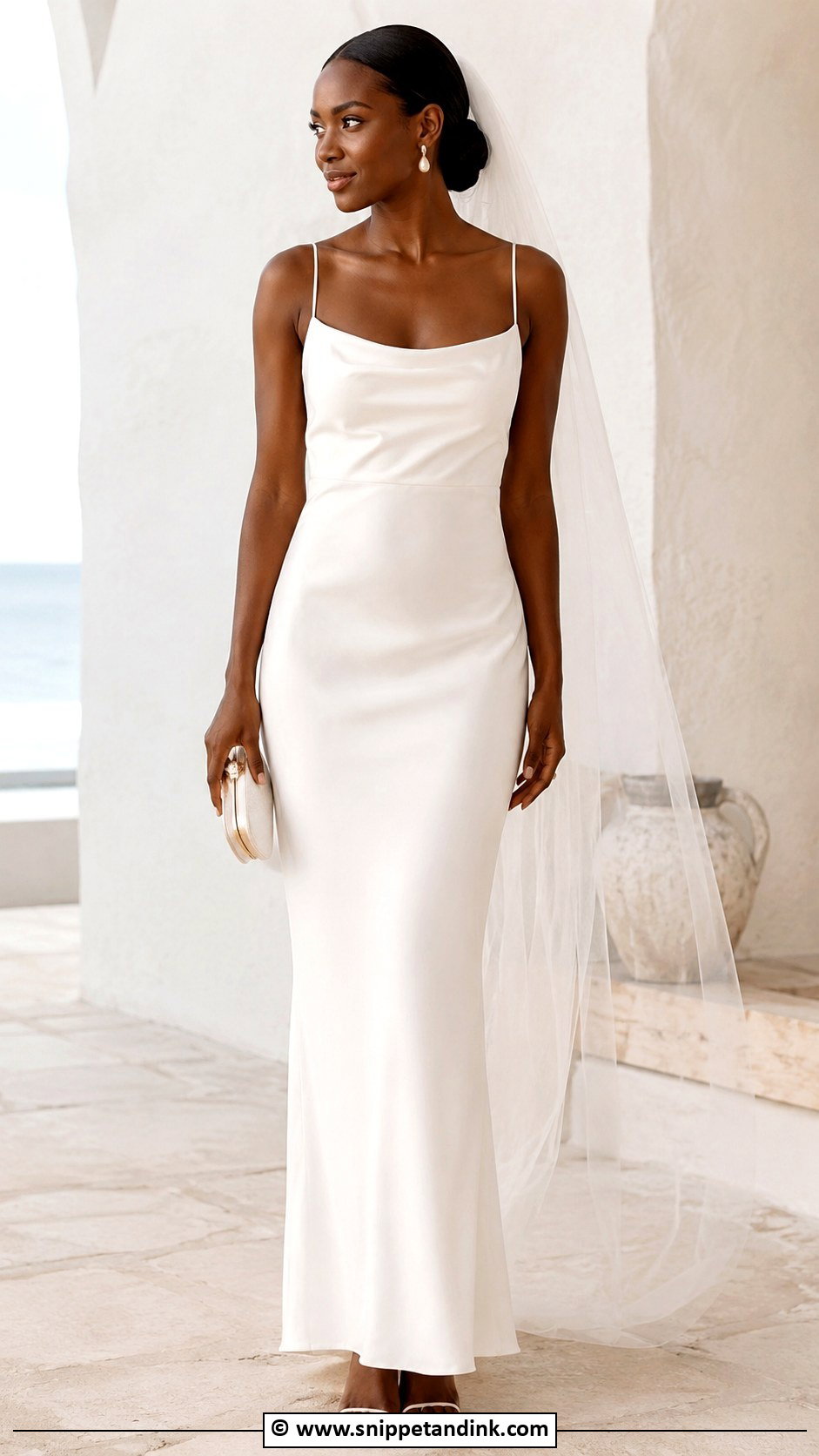
A sheath follows the body’s natural line with no big skirt, so it’s light to wear and easy to travel with. Beach weddings, courthouse ceremonies and small dinners suit it. In crepe or satin it hides less than silk, which is worth knowing if you want a smoother line. Strappy heels, pearl earrings and a soft veil finish the look, and braids, a sleek bun or loose curls all sit well with the simplicity.
30. Plus Size Wedding Dress
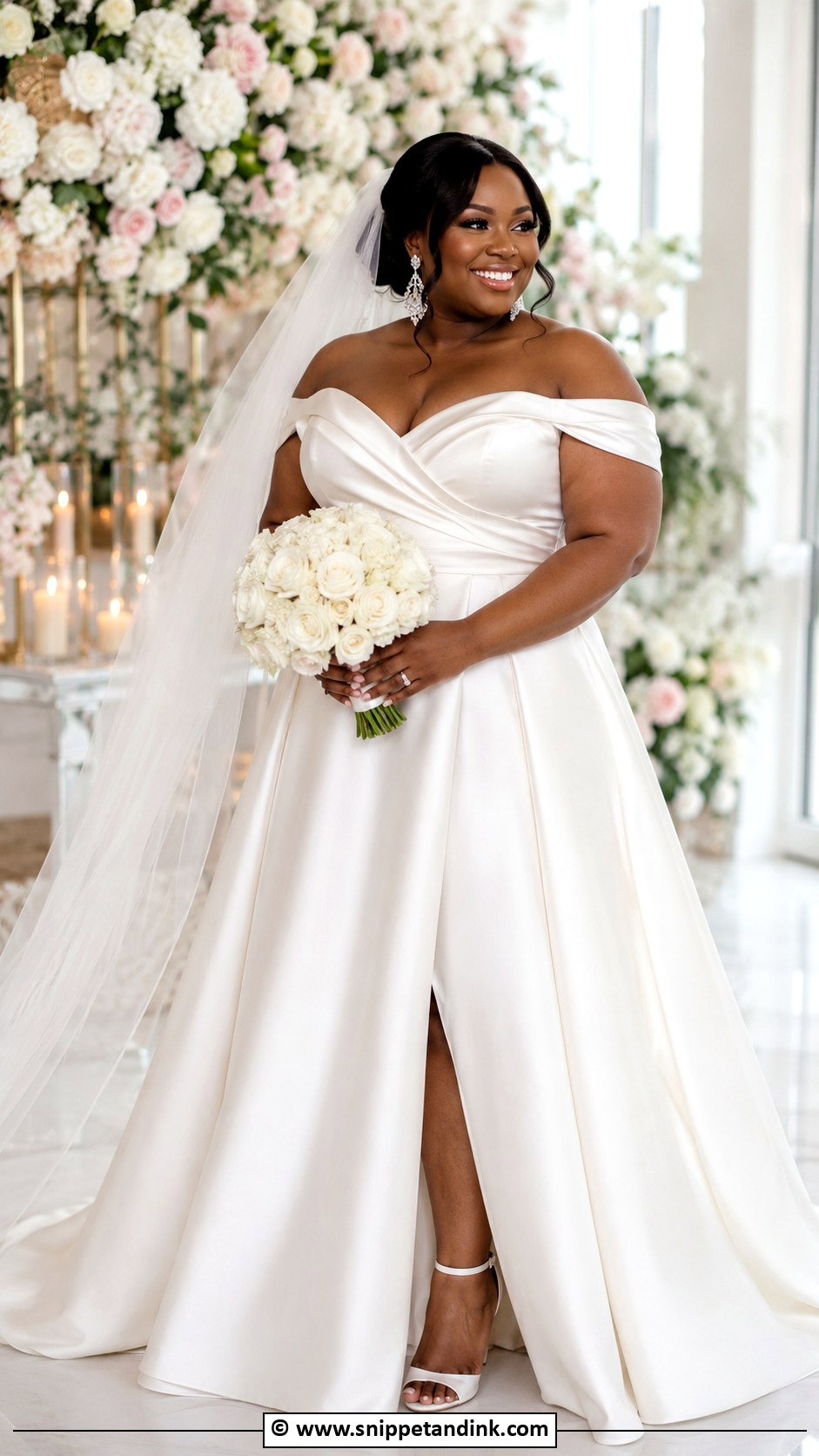
For plus size brides, construction makes the gown. I look for wider straps or a built-in corset, firm lining, inner waist stays and fabric with enough weight to hang instead of cling. A-line gowns, ball gowns, fit and flare shapes and off-shoulder necklines can all look wonderful when the bust and waist are fitted first and the skirt follows. Buy supportive shoes and try on undergarments with the dress before alterations begin. Your comfort at hour ten counts as much as the first look.
The Fitting Calendar Most Gowns Actually Need
The biggest stress I see in bridal salons comes from timing, not style. Made-to-order gowns usually take several months to arrive, and then alterations need their own window. Lead times vary by designer, so ask the salon for theirs in writing when you order.
- Order roughly eight to ten months before the wedding if you can. Rush fees exist, but they limit your choices.
- Book your first fitting about two to three months out. Bring the shoes, the bra or shapewear, and any jewelry you plan to wear.
- Expect two or three fittings. Bodices, hems and bustles are the usual work; changing a whole neckline costs much more.
- At the last fitting, bring the person who will bustle you and let the seamstress teach them. Film it on a phone.
- Pick the gown up about two weeks before the wedding and hang it in its breathable bag, not plastic.
Pack a small dress kit for the day
My kit for every bride holds a handheld steamer, safety pins, a needle with ivory and white thread, a stain pen, fashion tape, and a small towel to lay across your lap while you eat. Satin and silk mark easily, and a towel is cheaper than a cleaning bill.
Hand the kit to someone who isn’t in the wedding party so it’s actually reachable when a strap slips during photos.
The Dress That Still Fits at Midnight
Every bride I fit ends up deciding on the same few things: whether the white suits her skin, whether the shape lets her move, and whether the gown stays put through dinner and dancing. Silhouette and trends come second to those. Pull the styles from this list that made you pause, try them on with your shoes and your hair roughly as you’ll wear it, and trust the one you forget you’re wearing after twenty minutes.
You'll Like These Ideas:








Leave a Reply