
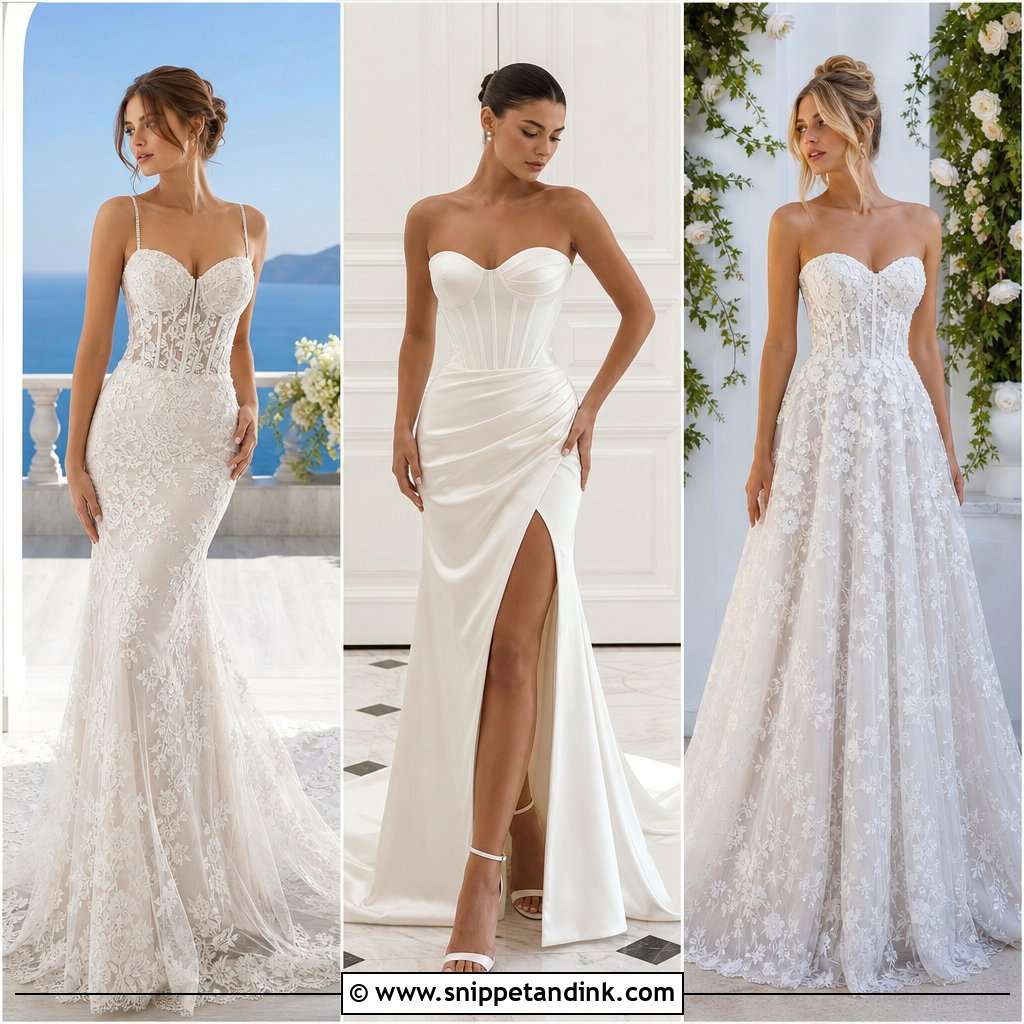
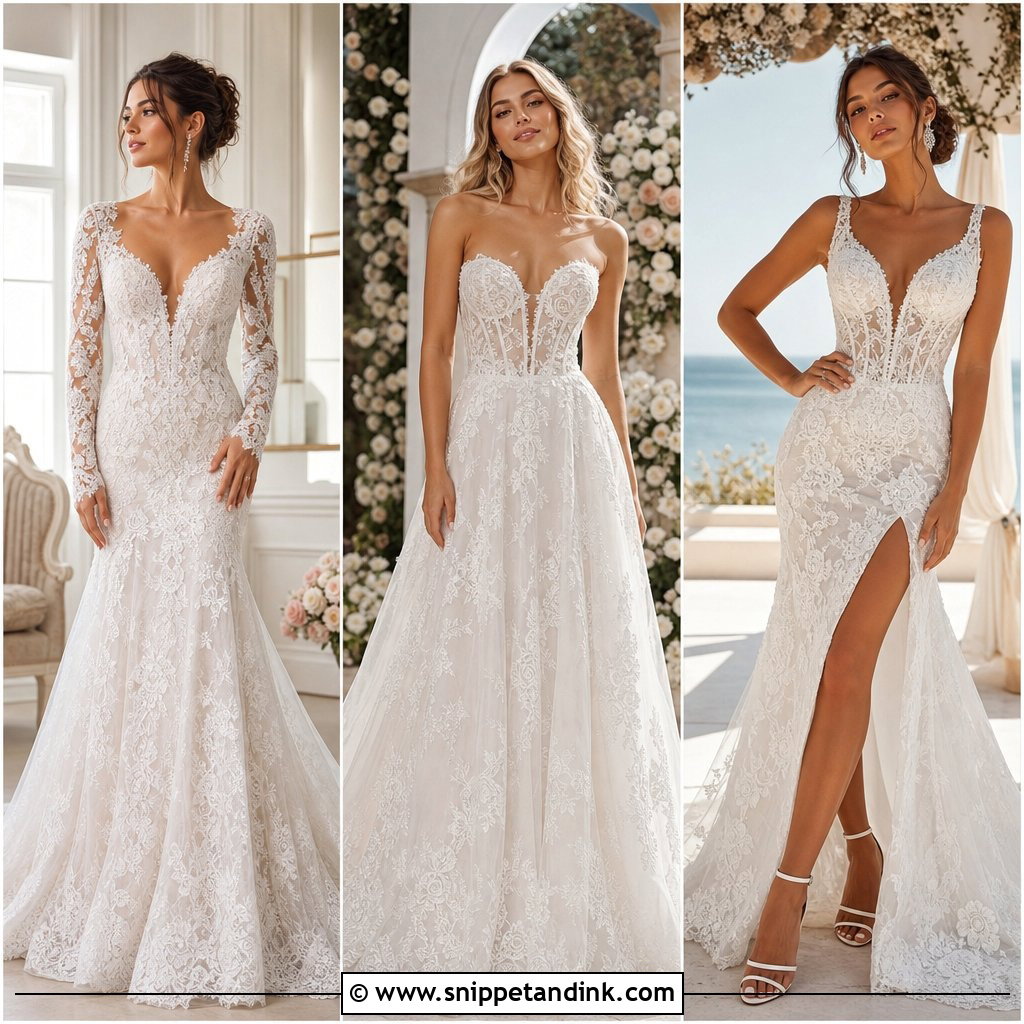
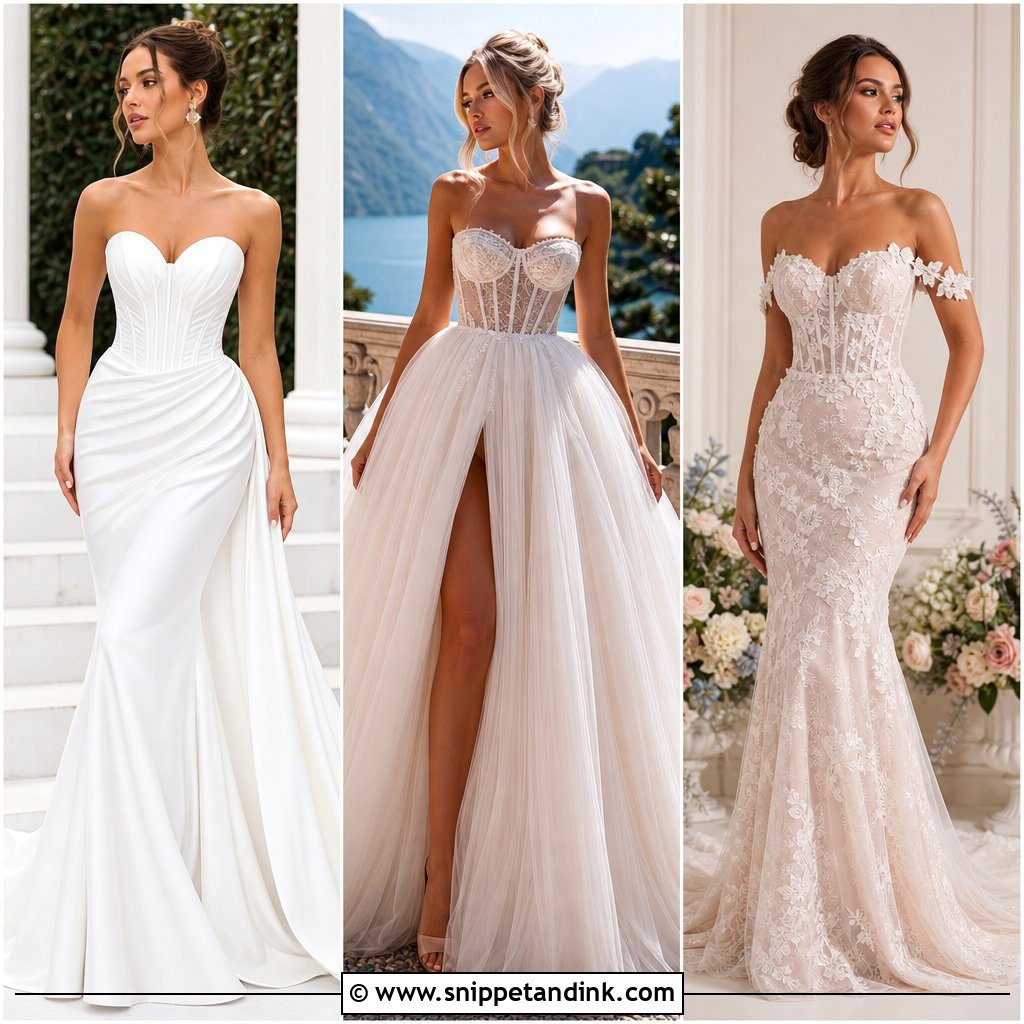
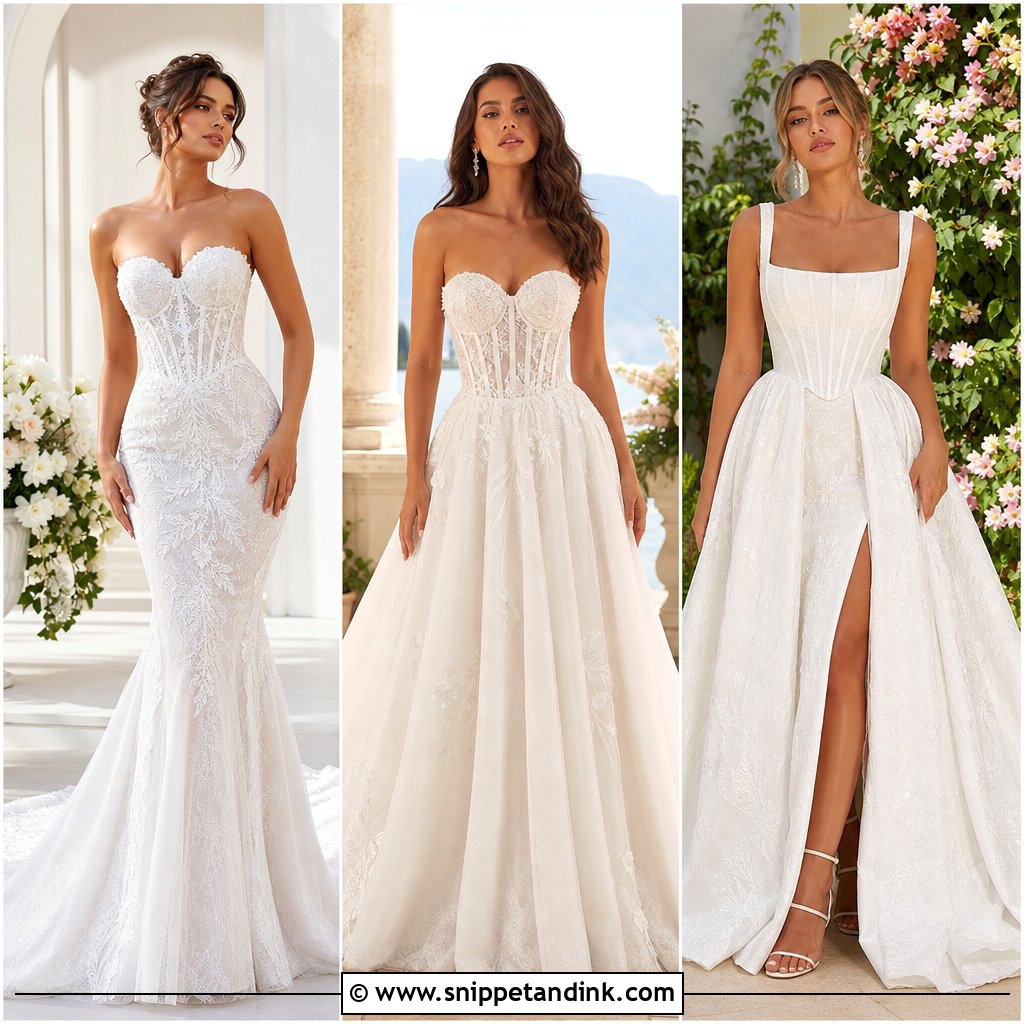
A boned bodice is the closest thing bridal wear has to tailoring. It holds the bust, sets the waist and gives a gown a finished line that soft construction can’t match. The style underneath can go anywhere: clean satin, lace ball gowns, basque waists, sheer boning, detachable skirts, even a mini. What decides whether one works for you is fit and how long you’ll wear it, so alongside each of these 25 gowns I’ve added what I look at when a bride steps into it.
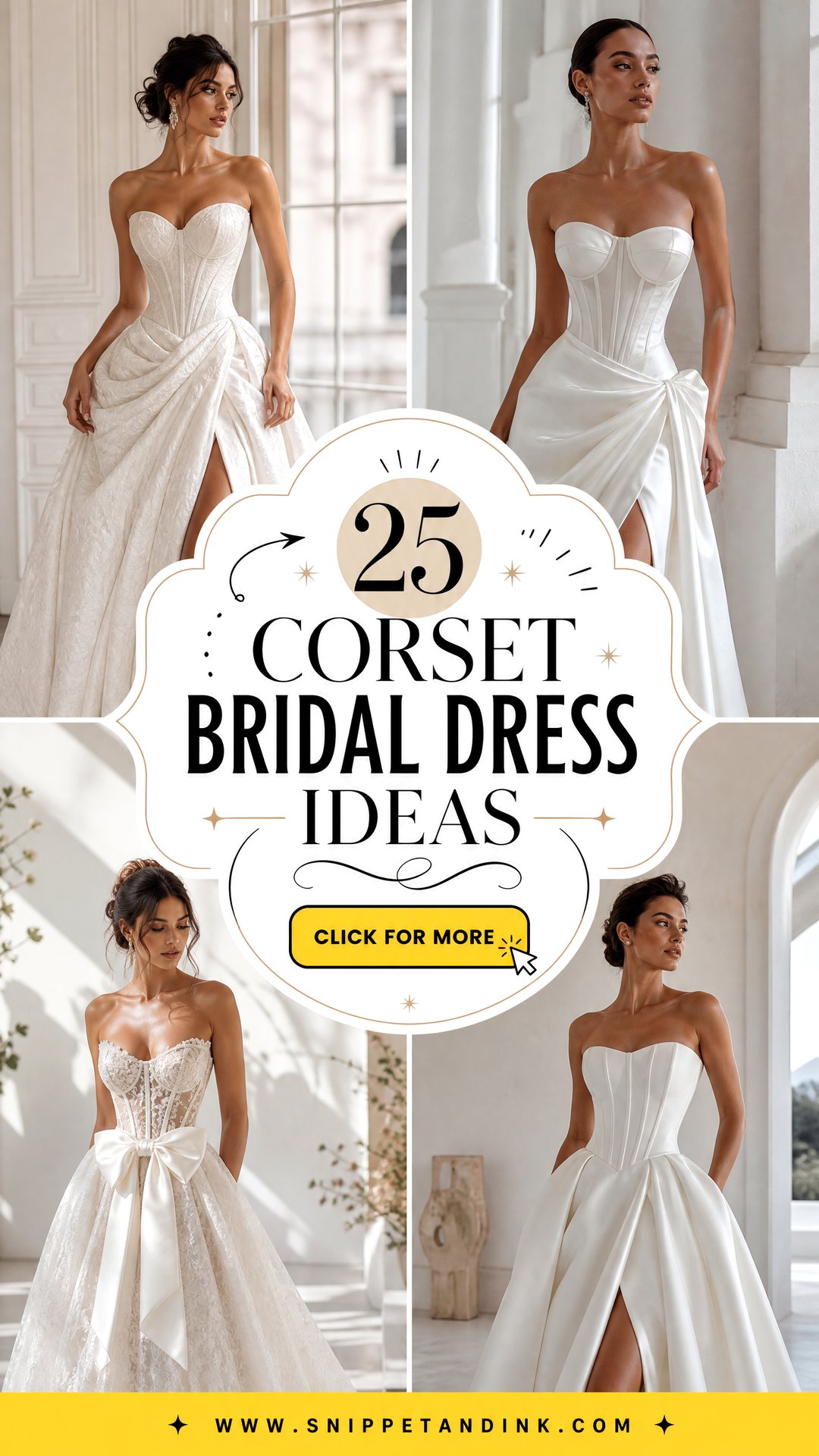
What Goes Under a Boned Bodice
Most corset gowns don’t need a bra at all. A well-built bodice has cups or padding sewn in, and the boning does the lifting. Adding a strapless bra underneath usually creates a ridge along the top edge and pushes the bust higher than the neckline was designed for. If you feel you need more support, I ask the seamstress to add or reshape cups inside the dress instead.
Below the waist, keep it simple. Smooth, skin-toned underwear with no lace edges is the safest choice under satin and crepe. Heavy shapewear can fight with the corset, because the boning already holds the waist and a second compression layer bunches where they meet. If you want a smoother line over the hips, a light high-waisted brief is enough.
Whatever you choose, wear it to every fitting from the second one onward. The dress is altered to the body underneath it, and changing the underwear later changes the fit.
1. Satin Corset Bridal Dress
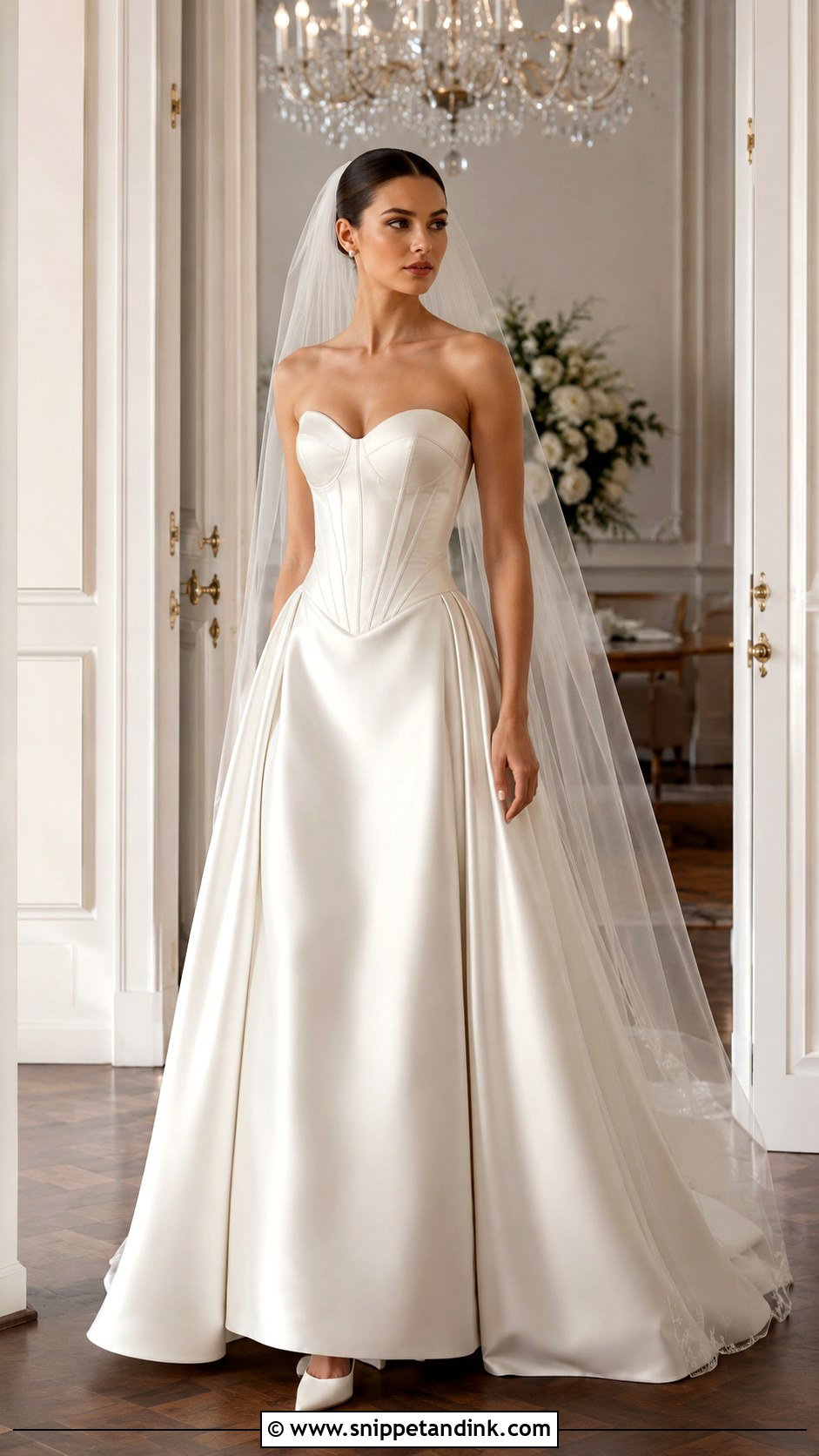
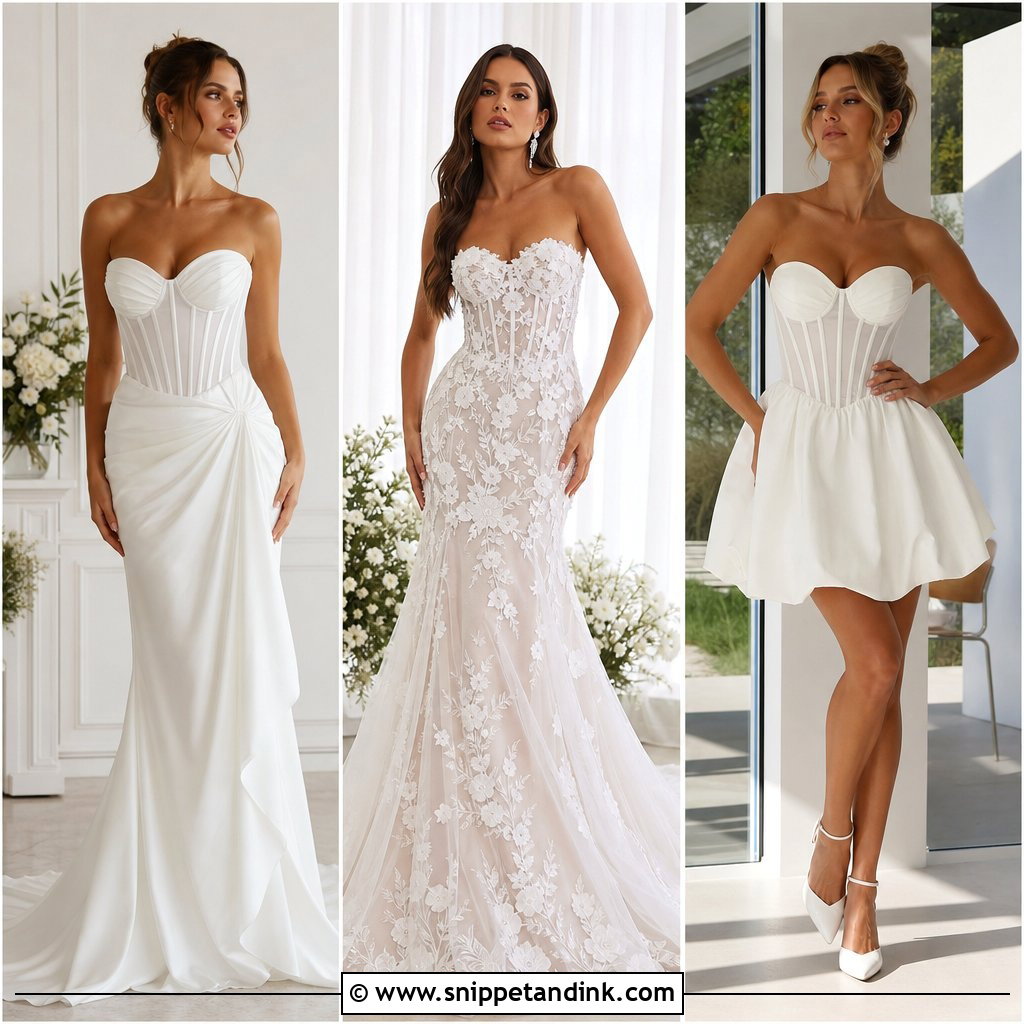
Satin over a corset is the cleanest version of this look and the least forgiving. Satin shows the line of every bone, so I check the bodice under bright light for any channel that ripples or pokes. Strapless suits a classic ceremony; thin straps give a little extra security. A cathedral veil, pearl studs, pointed heels and a low bun keep it composed. If you want the corsetry to read, ask for visible seaming or a lace-up back rather than adding jewelry.
2. Lace Corset Bridal Dress
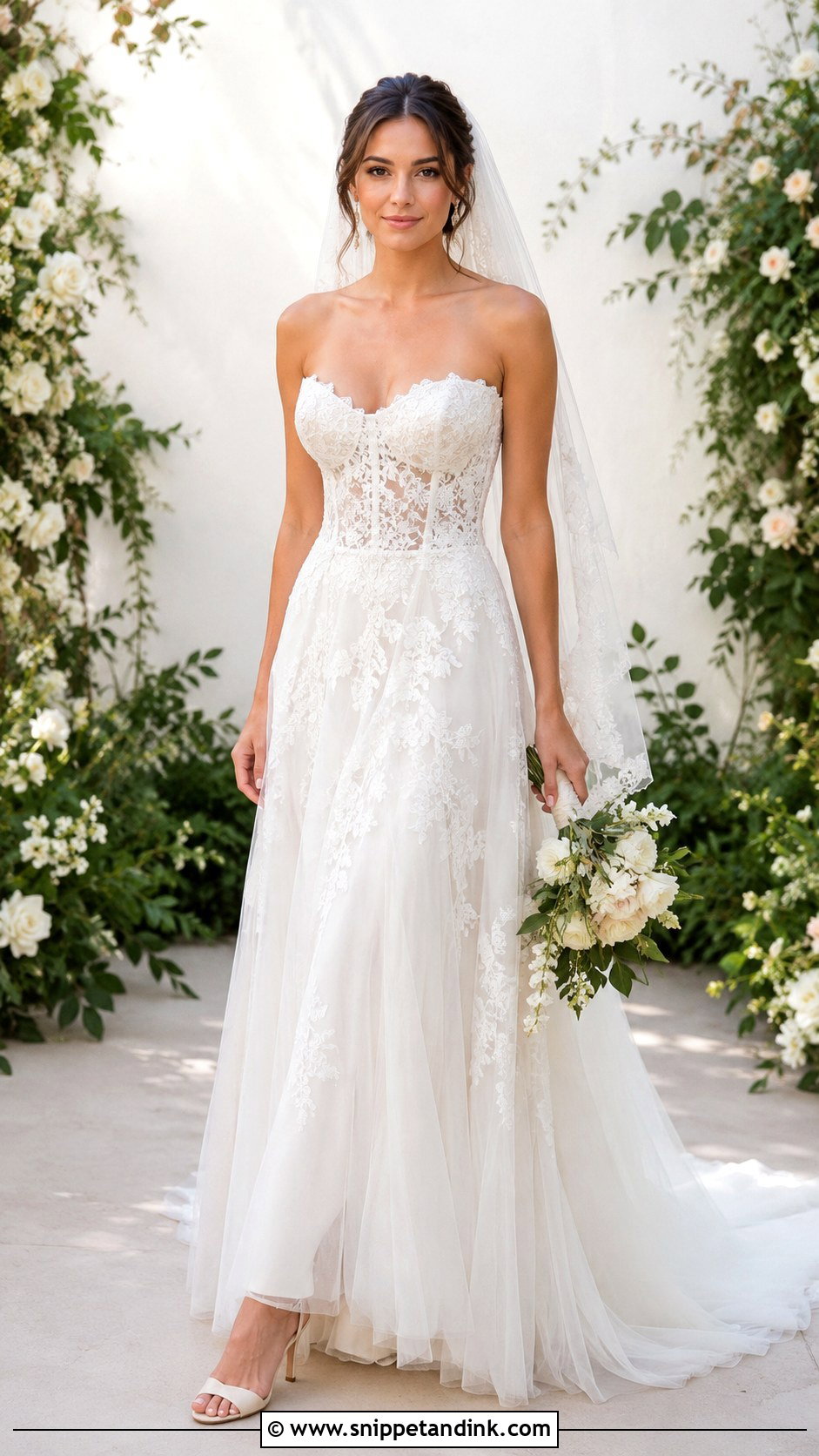
Lace softens structure, and it hides the boning channels better than any other fabric here. That’s why I often suggest it to brides who like the shape of a corset but feel self-conscious about visible lines. It sits well on A-line, mermaid and ball gown skirts. Lace straps or illusion sleeves add coverage. For a modern twist, ask for floral lace over a nude or ivory lining so the seams show just faintly. A fingertip veil and drop earrings finish it.
3. Basque Waist Corset Bridal Dress
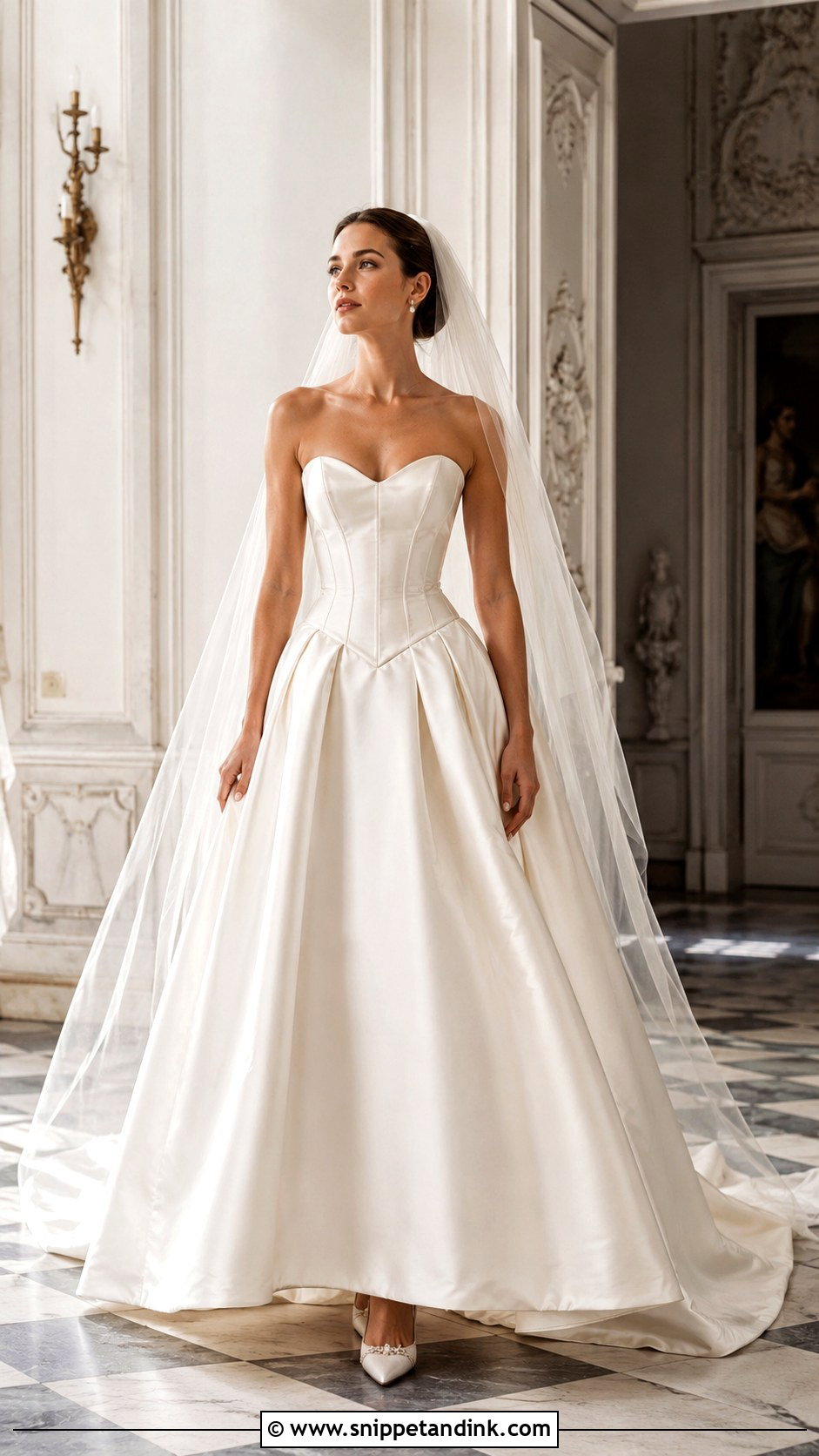
Few shapes are as flattering as the basque waist. The V at the front draws the eye downward, so the torso looks longer and the skirt fuller. Ask me who it suits and I’d say almost everyone, but especially brides with a shorter torso who want more length. A voluminous skirt makes it regal; a softer A-line makes it more wearable. The waist itself is the detail, so a plain veil, small earrings and classic heels are enough, and grand or historic venues are its natural setting.
4. Corset Ball Gown Bridal Dress
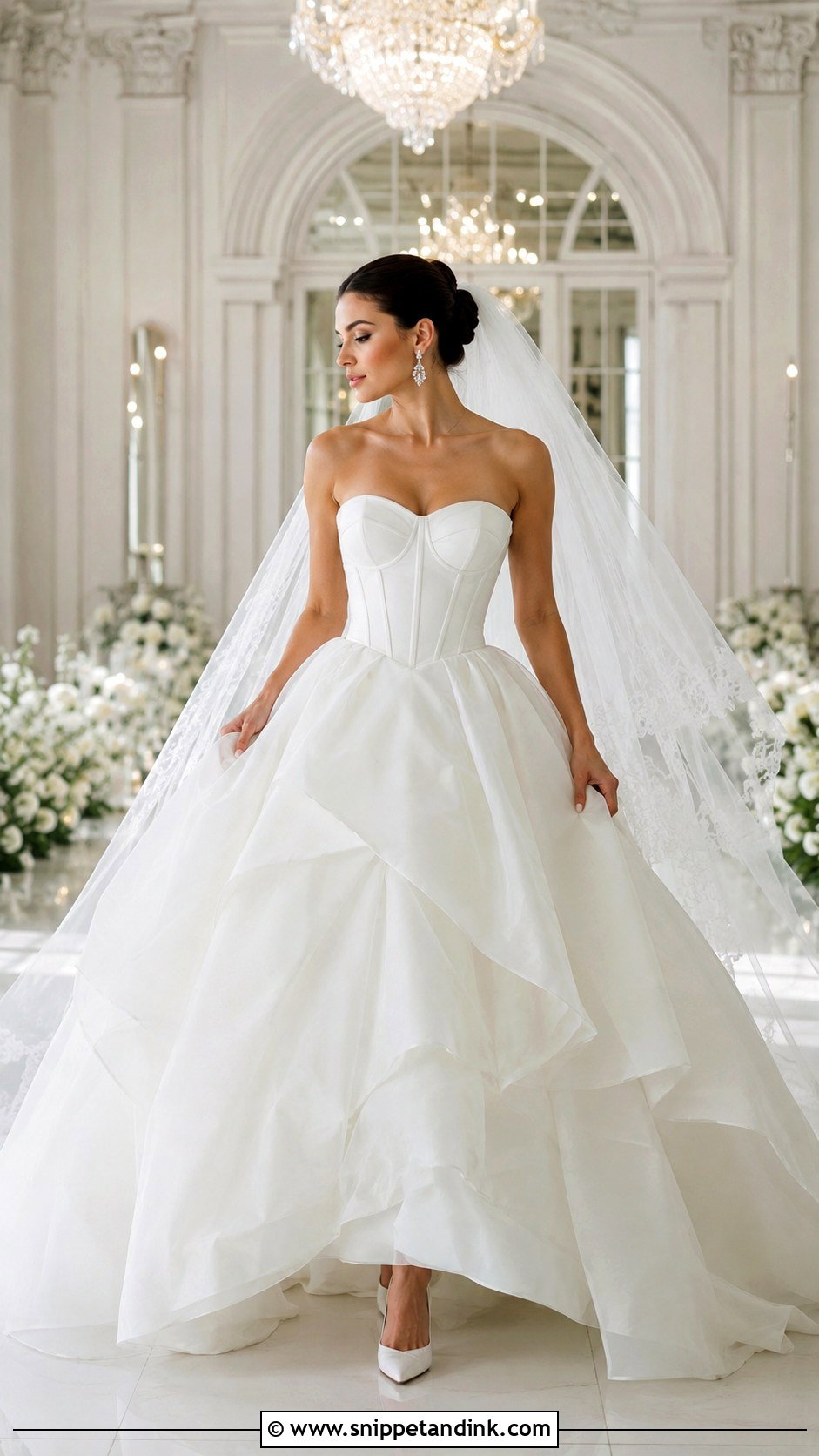
A corseted ball gown is built for a big entrance, and the corset matters more here than anywhere else because it carries the skirt. A full satin or layered tulle skirt can be surprisingly heavy, and that weight hangs from the waist seam. At a fitting I have brides sit, stand and walk a few laps before I’m happy. Satin, lace, tulle and organza all work. A long veil, crystal earrings and pumps complete it, with nothing pulling attention from the silhouette.
5. Mermaid Corset Bridal Dress
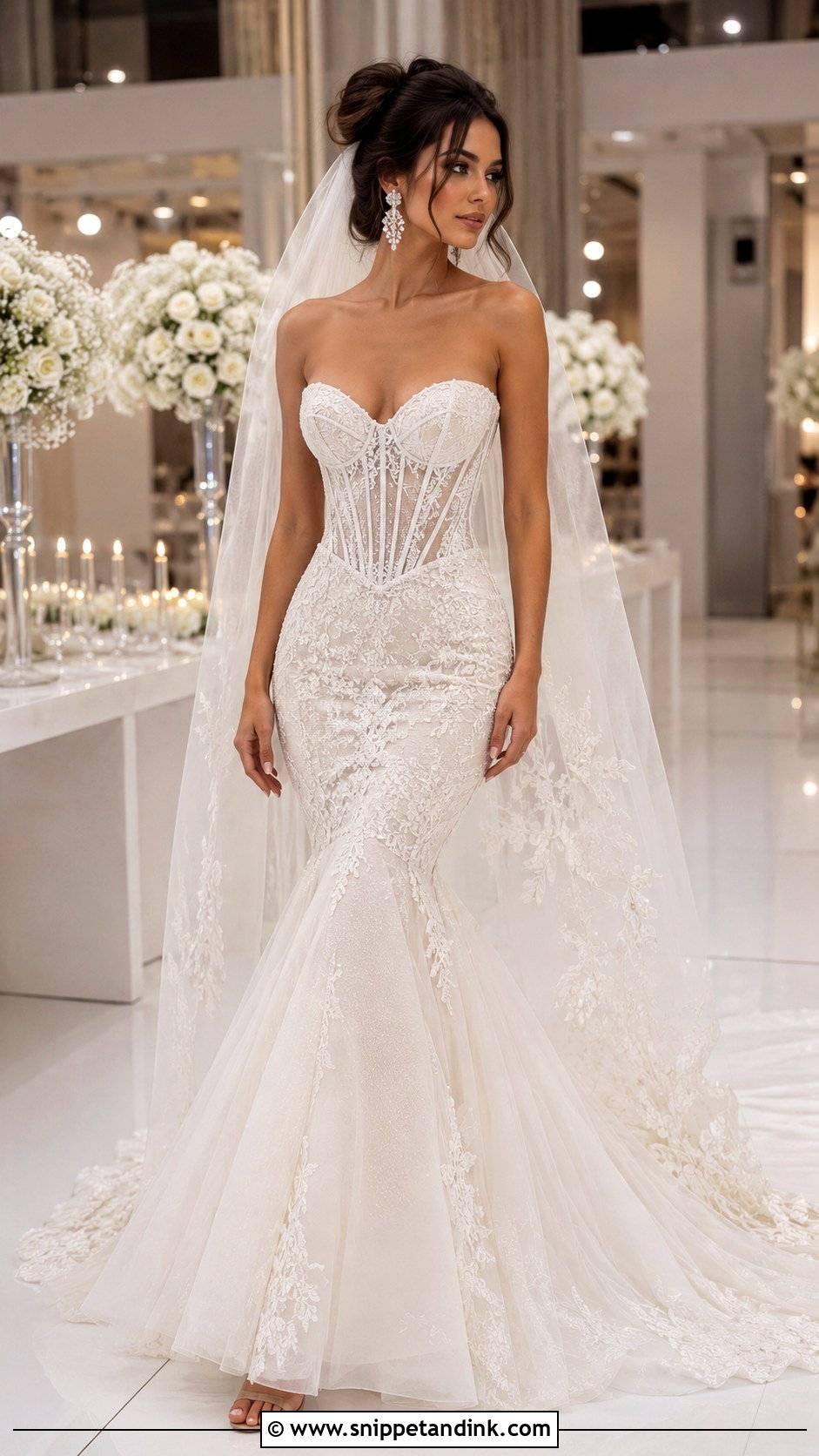
Mermaid corset gowns are about confidence and close fit. The bodice holds the waist and bust, the skirt follows the hips, and the flare opens around the knee. Where that flare starts makes or breaks the dress: too high and it loses the shape, too low and you can’t climb stairs. Satin, crepe, lace and beaded fabrics all suit it. Stretch lining makes a real difference to comfort, and a long veil with high heels keeps the line long. Evening receptions and black-tie weddings suit it best.
6. A Line Corset Bridal Dress
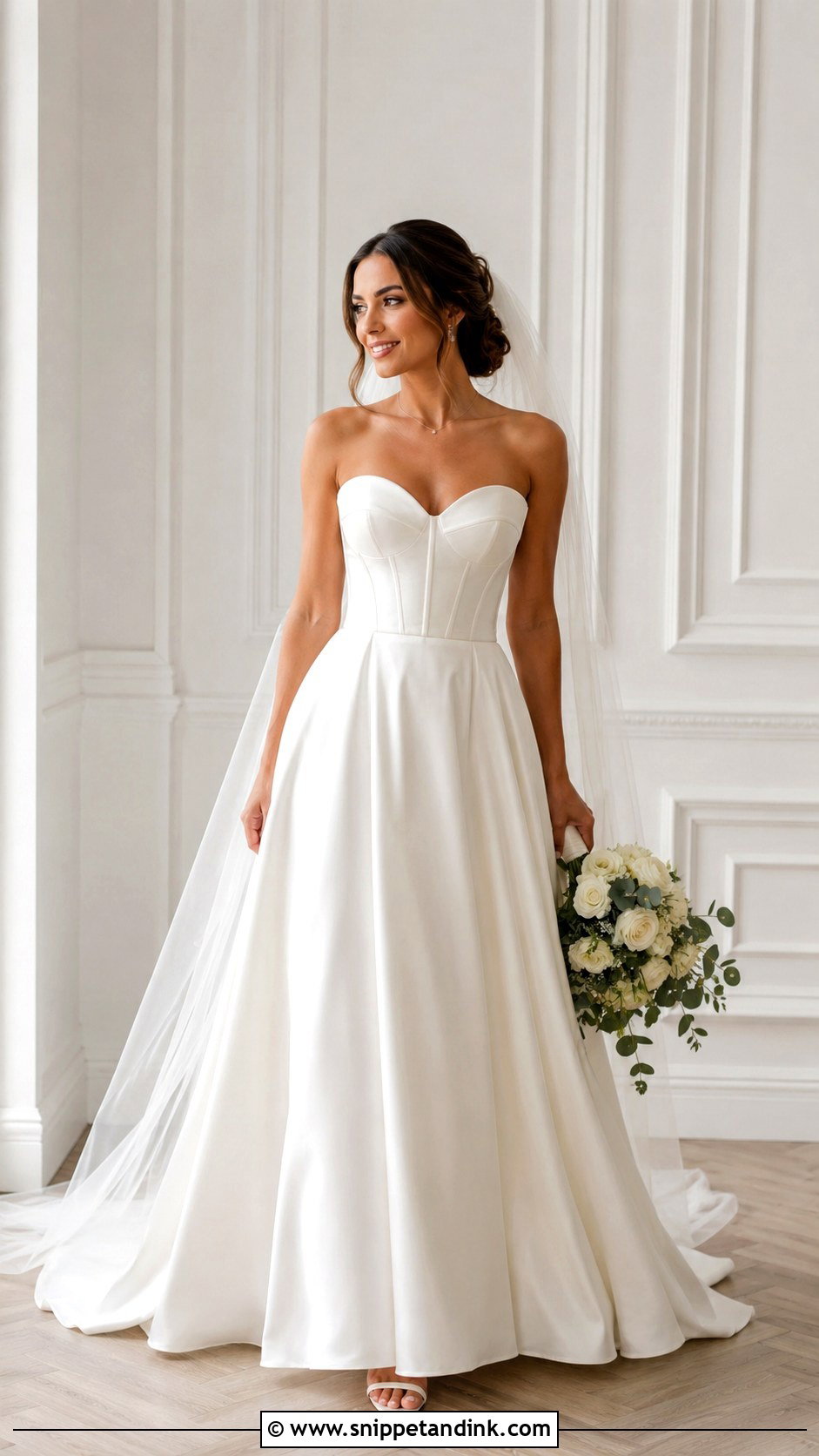
Of all the silhouettes, the A-line is the one I recommend most often for a first corset. The bodice shapes the upper body, the skirt moves away from the waist and nothing feels restrictive. It works on most figures and in most seasons. Plain satin or mikado keeps it simple; lace, tulle or floral appliqué add romance. Block heels and a soft veil keep it easy to walk and dance in, so it stays comfortable well past the speeches.
7. Off Shoulder Corset Bridal Dress
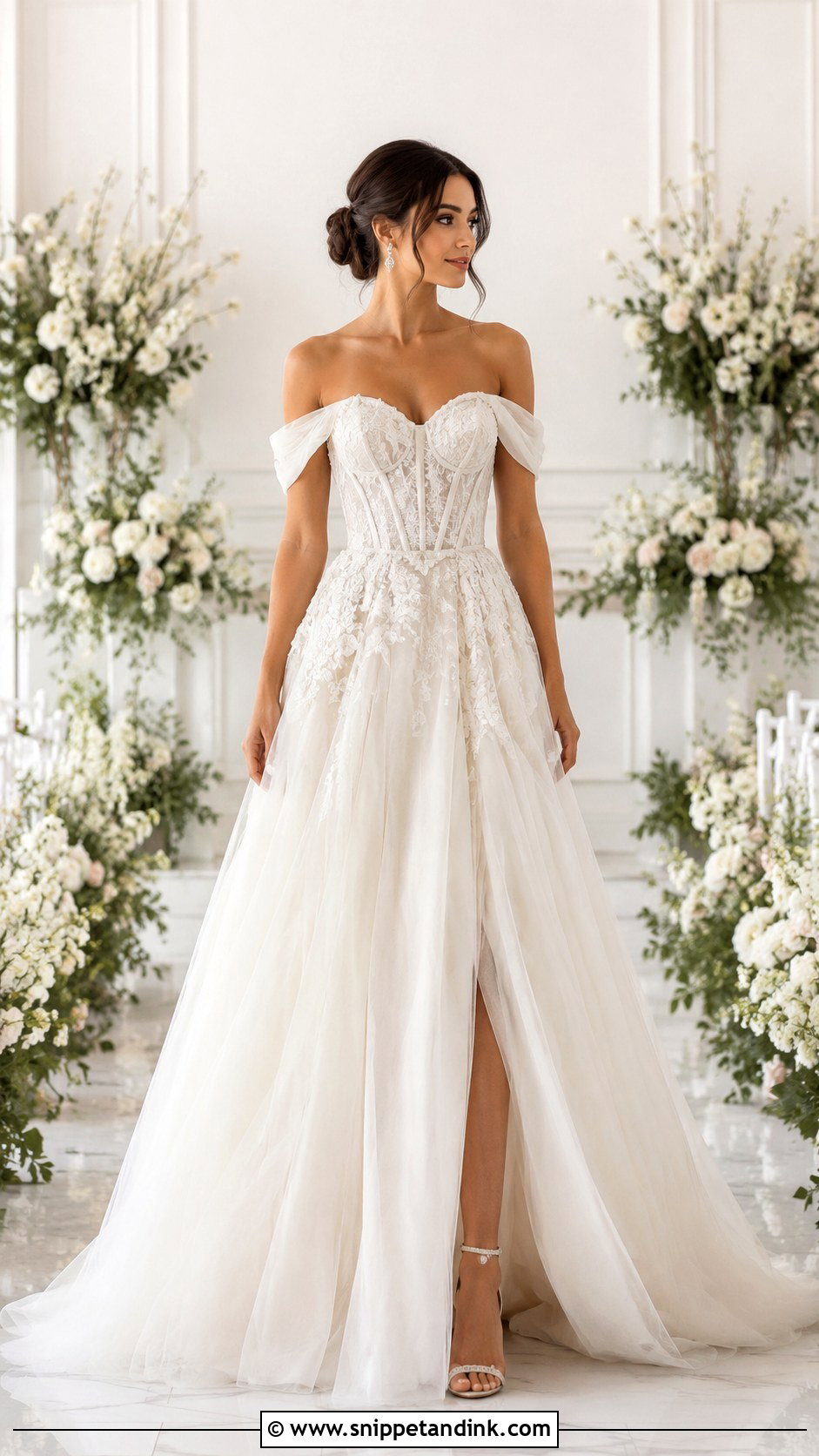
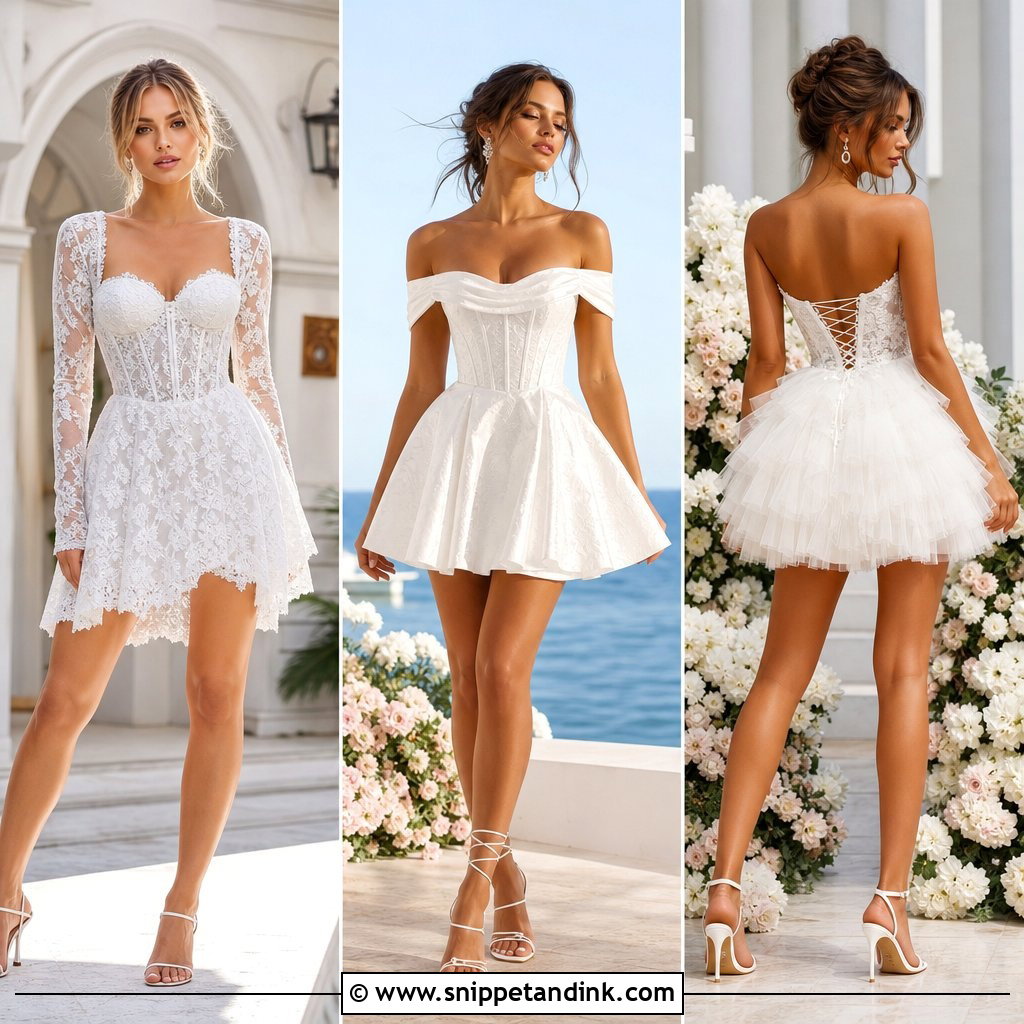
Off-shoulder sleeves leave the collarbones open and rely on the corset to stop them sliding. Before booking alterations, I check that the bodice is snug enough at the top that the sleeves stay down when you raise a glass. Skip the necklace unless the neckline is wide enough to hold one. A loose updo or low bun keeps the shoulders visible. Satin gives a clean finish, lace a romantic one, and tulle something lighter.
8. Strapless Corset Bridal Dress
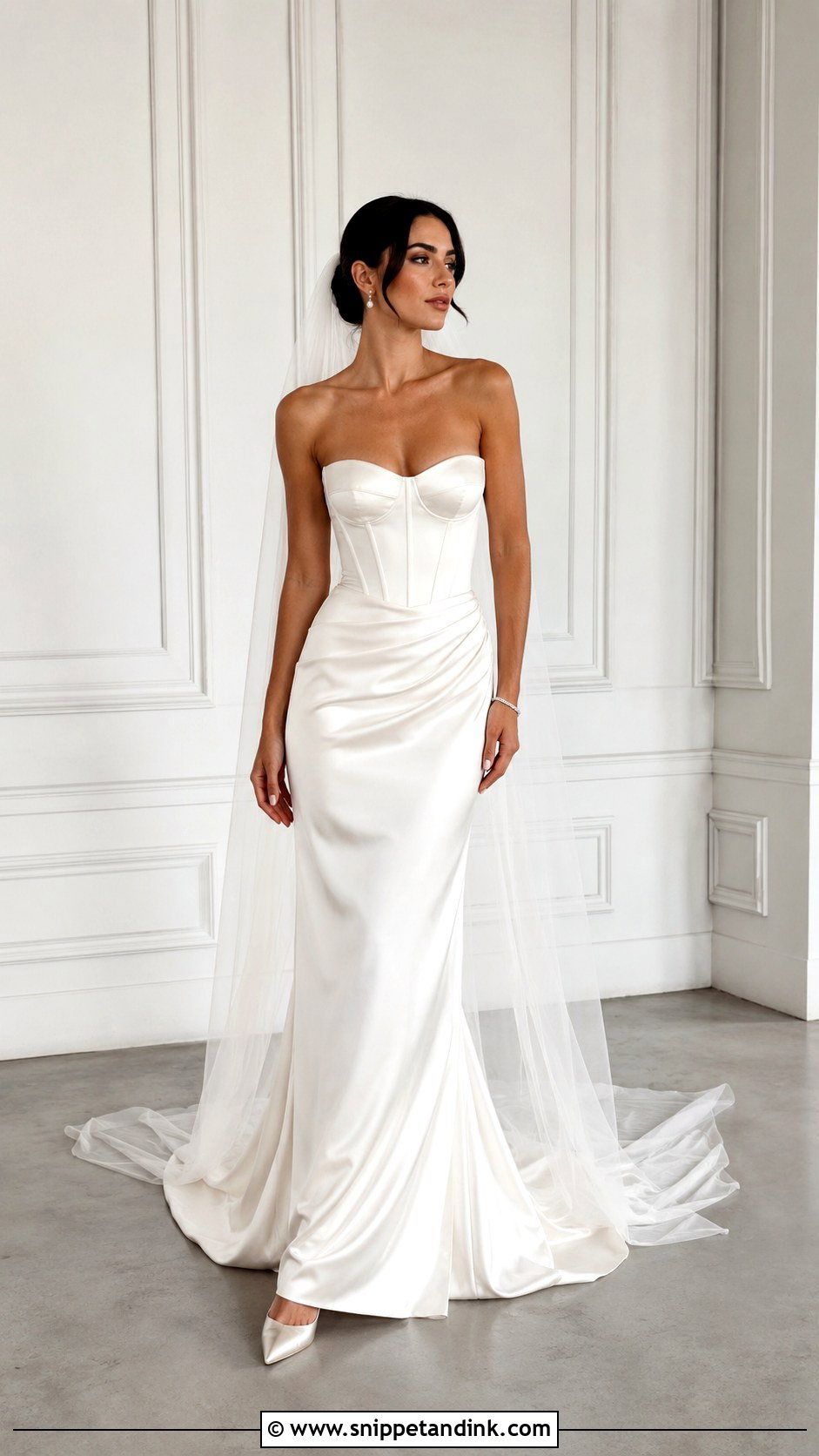
Strapless is the classic corset gown because the boning does exactly what straps would otherwise do. A straight neckline reads sleek; sweetheart adds softness. Since shoulders and posture are on show, fit at the top edge is everything. It should sit flat against the skin with no gap when you breathe out and no digging when you breathe in. Pair it with a long veil, simple earrings and a bracelet. Satin ball gowns, lace mermaids and plain A-lines all take this neckline well.
9. Sweetheart Corset Bridal Dress
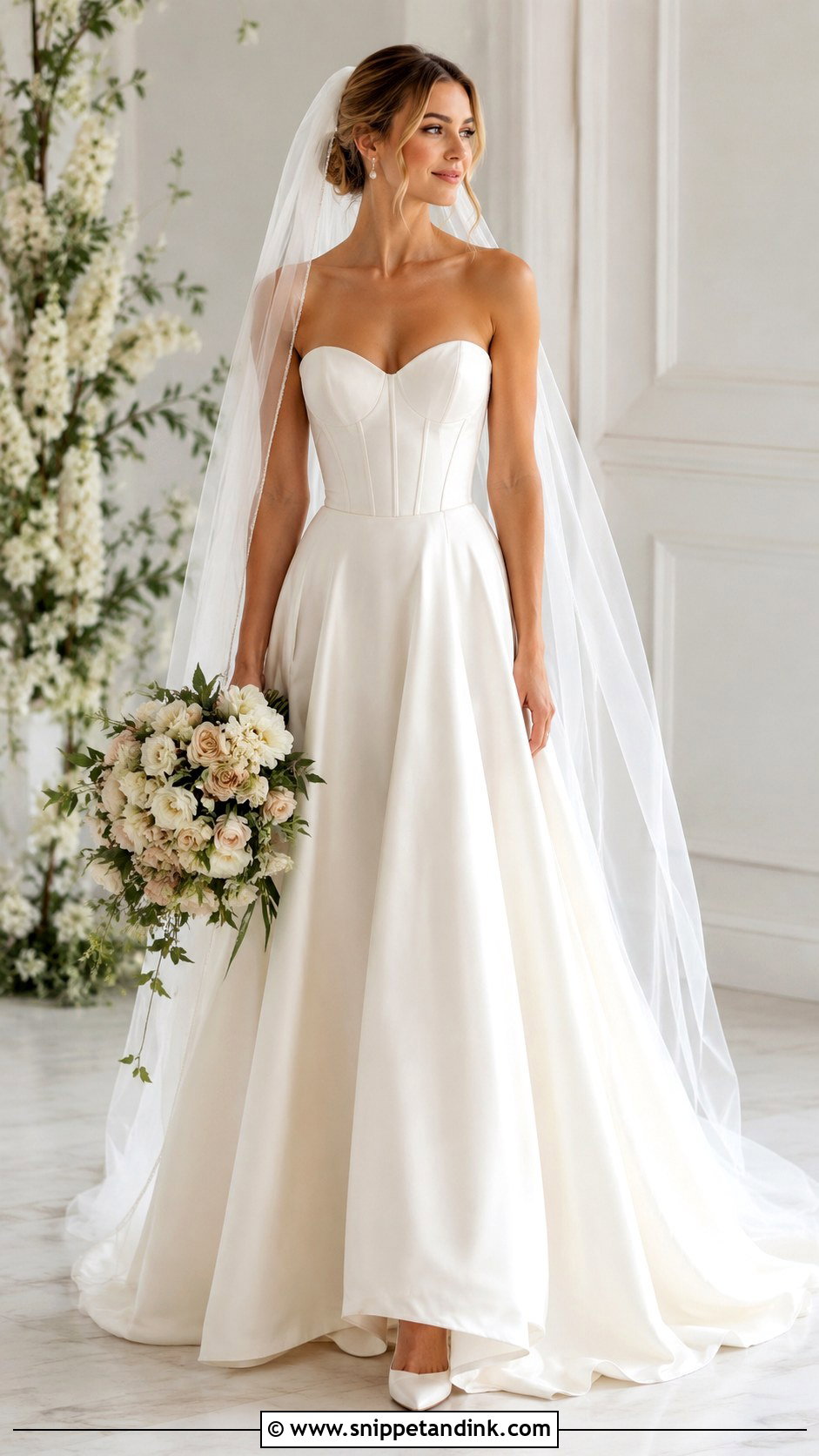
The curve of a sweetheart neckline lifts the collarbone line and works with most bust sizes when the cups are shaped properly inside. That’s the bit I check: whether the dress has real cup structure or just fabric folded into a curve, because the second kind gapes when you lean forward. A sweetheart corset bodice with an A-line skirt, pearl earrings and a chapel veil is the traditional version. A fitted skirt with crystal detail is more glamorous. Detachable sleeves give you a second look later.
10. Sheer Corset Bridal Dress
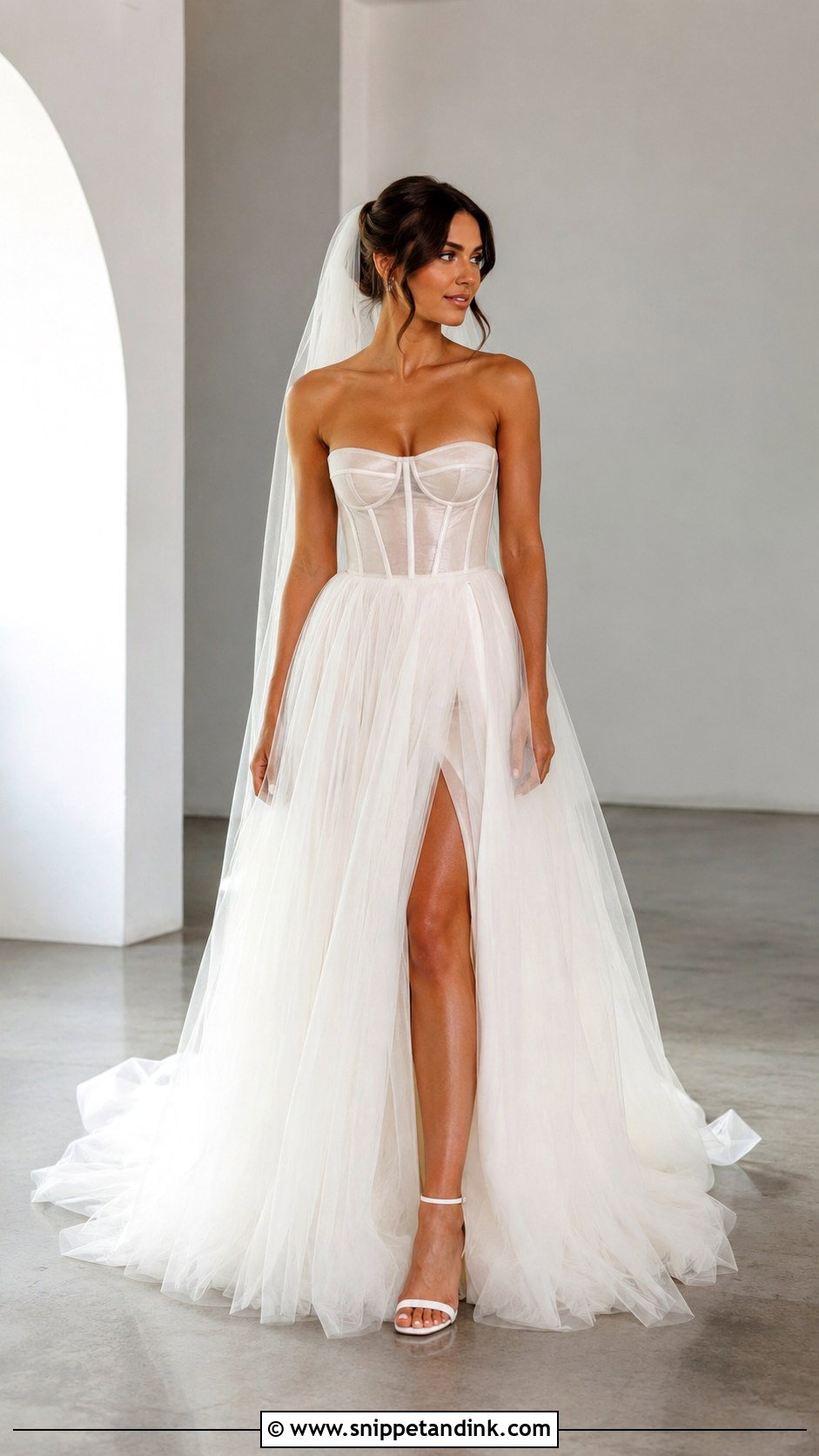
Sheer corsets put the boning on display, which makes construction quality obvious. I look at whether the channels are evenly spaced and the bones cut to the same length, since any unevenness is visible straight through the tulle. If full sheer feels too exposed, sheer panels over ivory lining give a softer version rather than a fully transparent effect. A plain veil, minimal earrings and sleek heels keep attention on the bodice. Flowing tulle or a fitted crepe skirt both suit it.
11. Long Sleeve Corset Bridal Dress
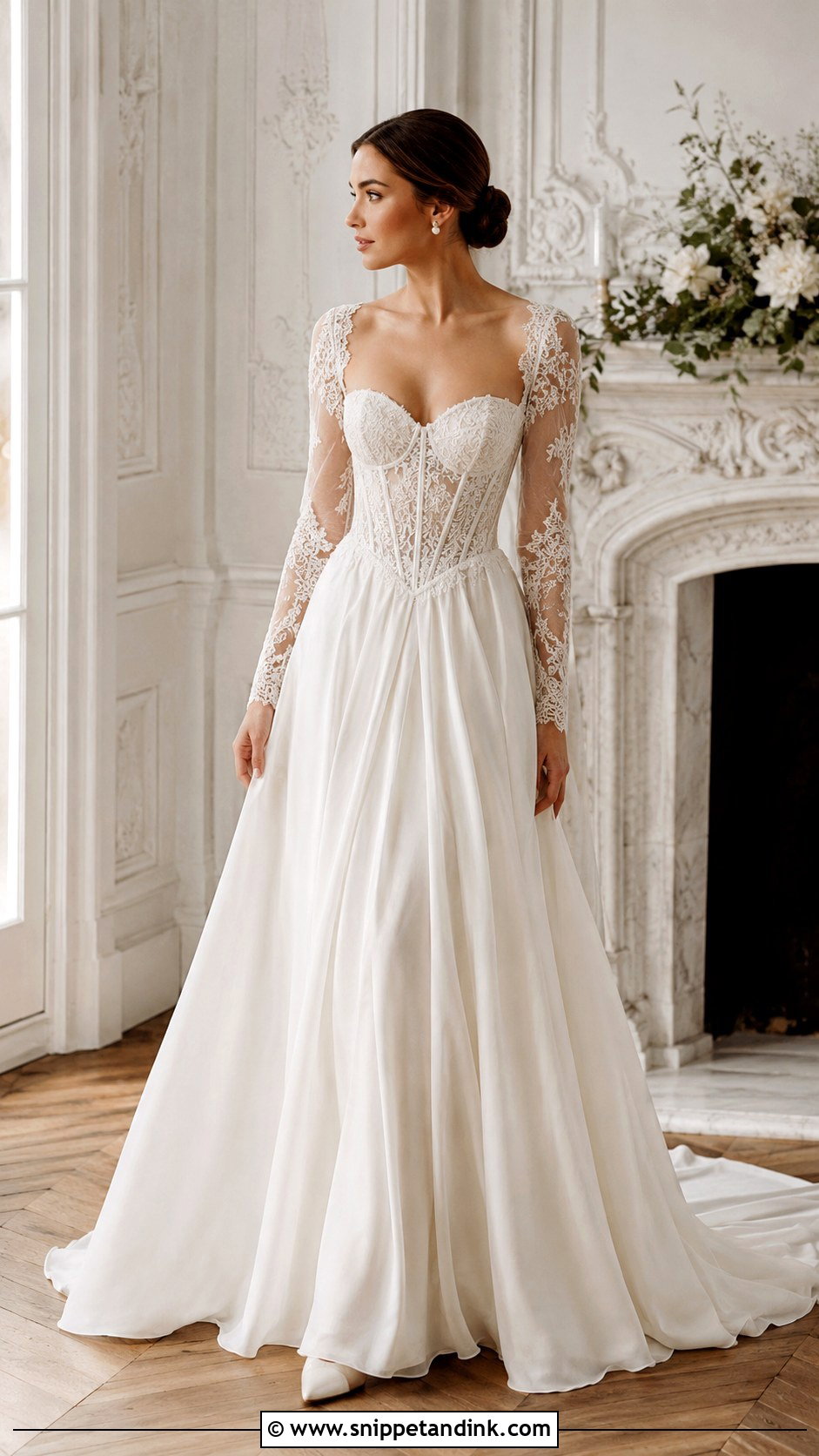
Long sleeves balance the defined waist and give coverage without losing shape. Lace sleeves feel classic, sheer ones lighter, satin ones regal. The fit problem I see most is sleeves cut too narrow at the upper arm, which pulls on the corset every time you lift your arm; ask for a little stretch or a soft lining. A low bun, simple earrings and closed-toe heels make it polished. Fall, winter and formal indoor weddings suit it.
12. Corset Bridal Dress With Detachable Sleeves
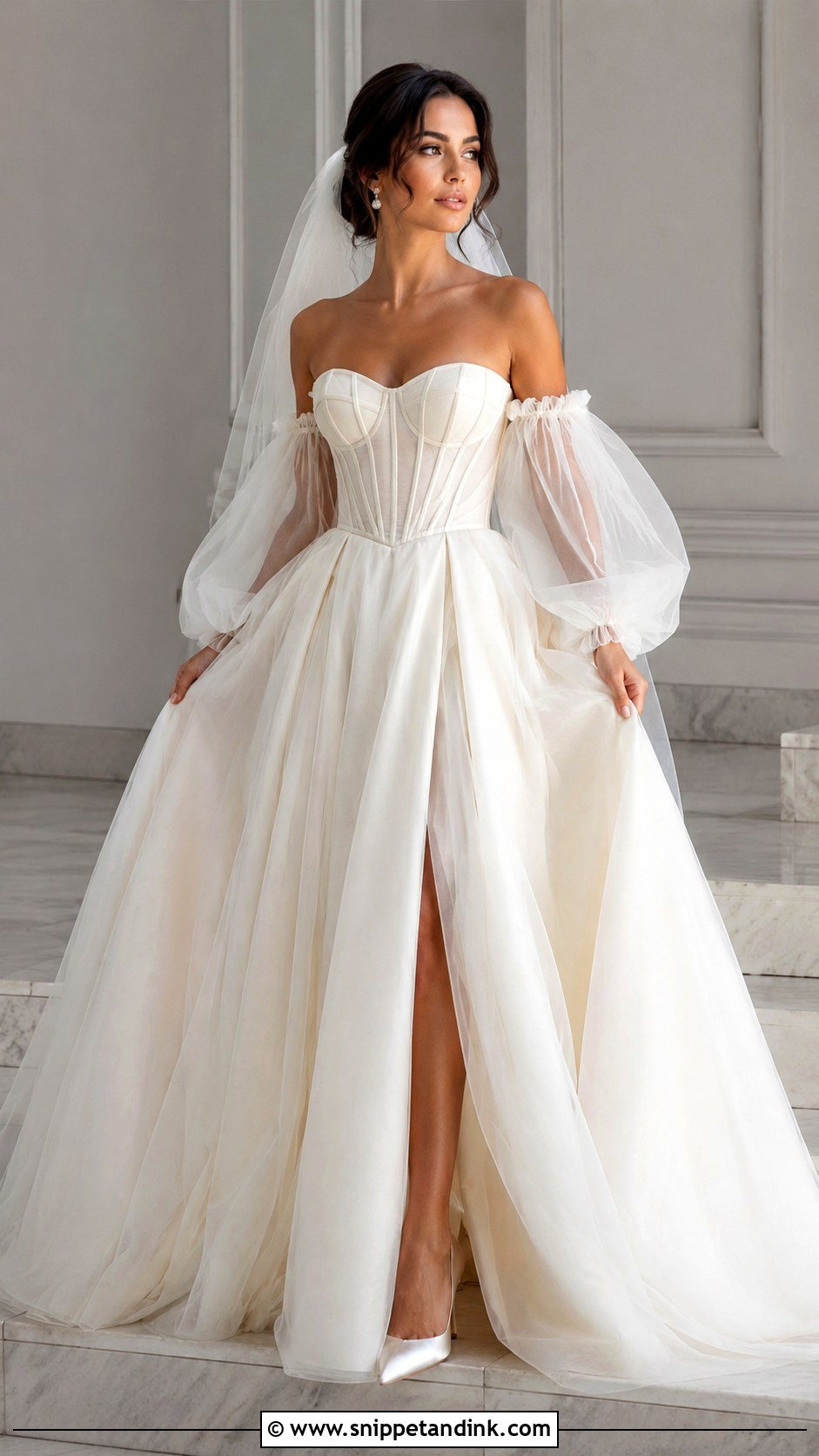
Detachable sleeves let you change the look without changing the dress. Wear them for the ceremony, then take them off before dancing. Puff, off-shoulder, lace and sheer tulle sleeves can all detach. I always ask how they fasten: elastic bands sit neatly but can leave marks, while small hooks or snaps sewn to the bodice hold more securely. The corset keeps its structure either way. Swap the veil for statement earrings at the switch.
13. Corset Bridal Dress With Overskirt
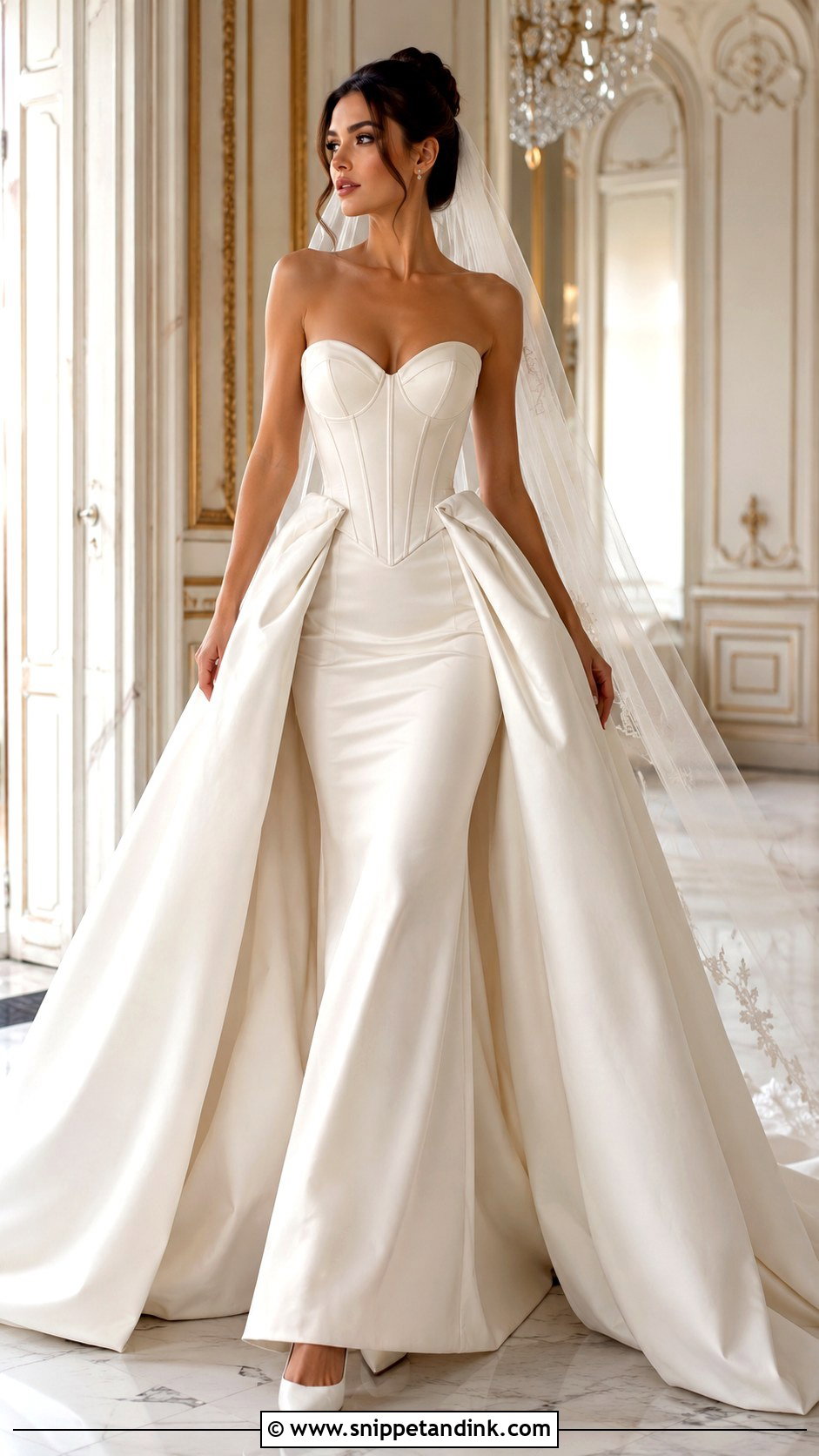
An overskirt gives you drama for the ceremony and freedom for the reception. The base dress stays sleek; the removable layer adds volume. A corset bodice anchors both, keeping the waist defined. Satin is polished, tulle soft, organza light. I suggest a test removal at the final fitting with whoever will help you, because a hidden waistband with hooks behaves differently when you’re in a hurry. Wear it with a long veil for the ceremony, then take both off for dancing.
14. Corset Bridal Mini Dress
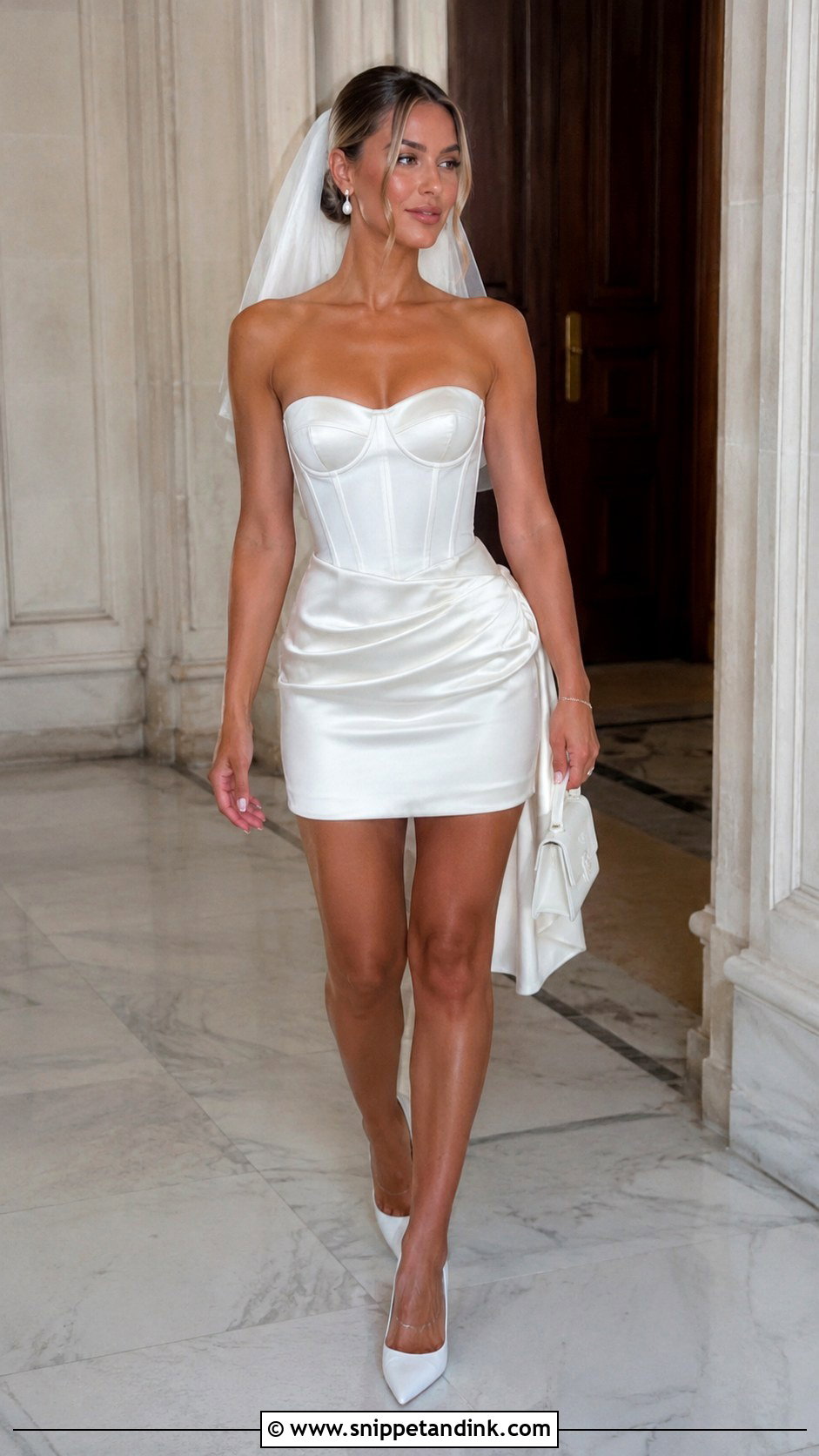
A corseted mini is a lot of fun for a civil ceremony, a rehearsal dinner, a reception change or the after-party. The structure keeps a short dress looking bridal. Satin is clean, lace romantic, and a bow adds charm. Watch the hem when you sit; corset minis tend to ride up as the boning pushes the skirt forward. Pointed pumps, pearl earrings, a small bag and a short veil or bow finish it.

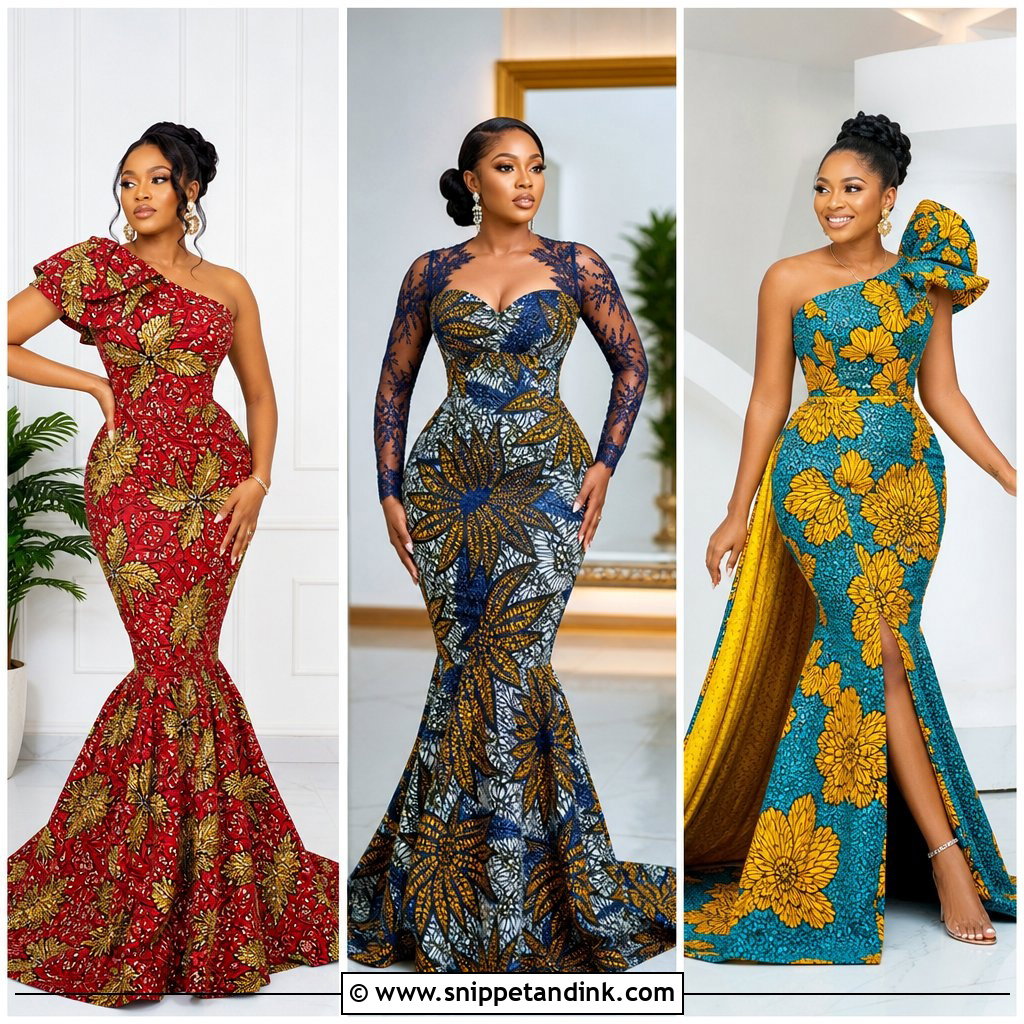
15. Corset Bridal Dress With Bow
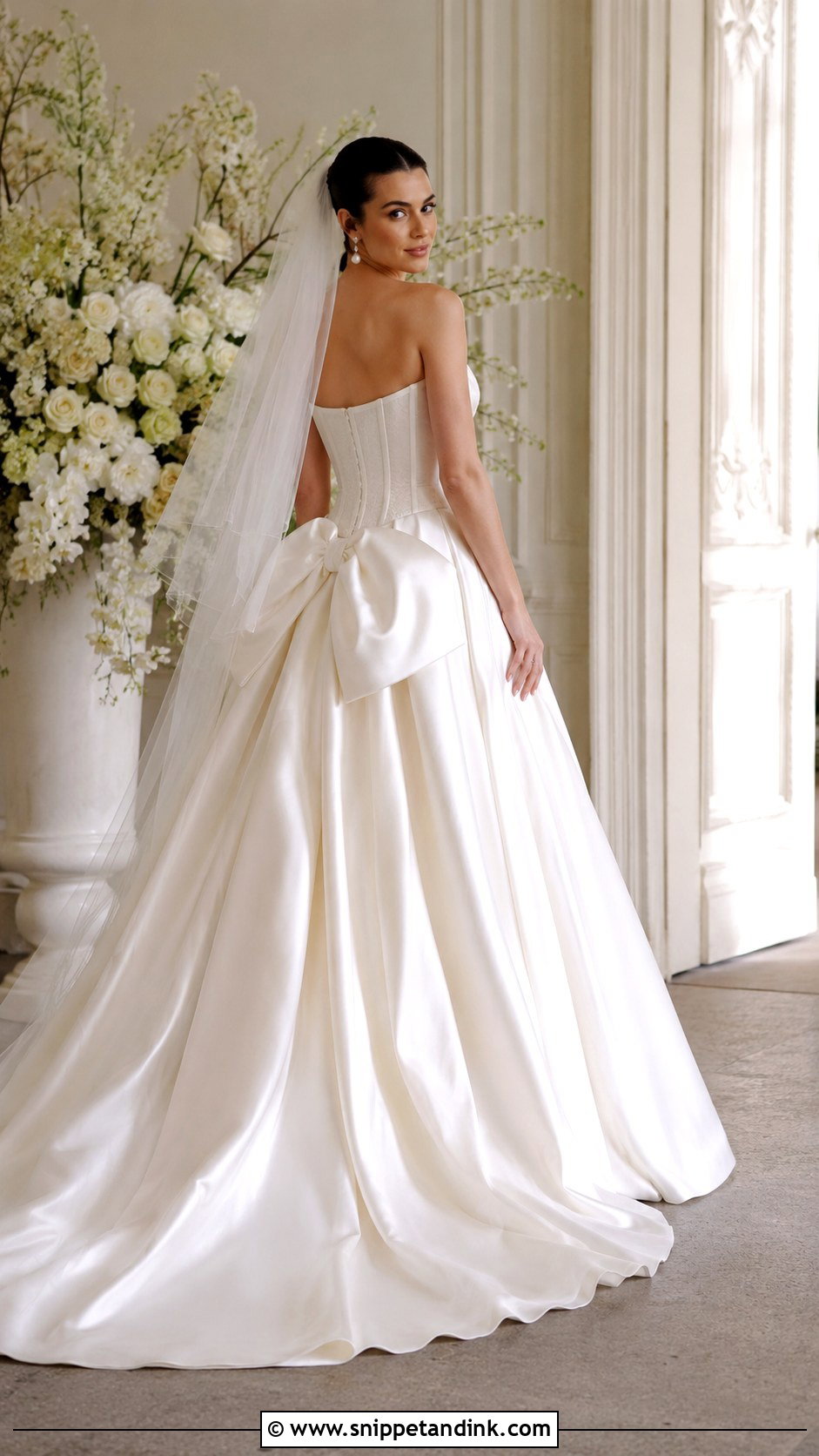
A bow can sit at the back, waist, shoulder or neckline. If it’s big, I keep the bodice clean so the two don’t compete. Large bows on satin need stiffening inside, or the loops slump by the evening. A satin gown with an oversized back bow suits a formal room, while a tulle gown with a smaller bow is gentler. Simple heels, a veil and minimal jewelry let the bow lead.
16. Pearl Corset Bridal Dress
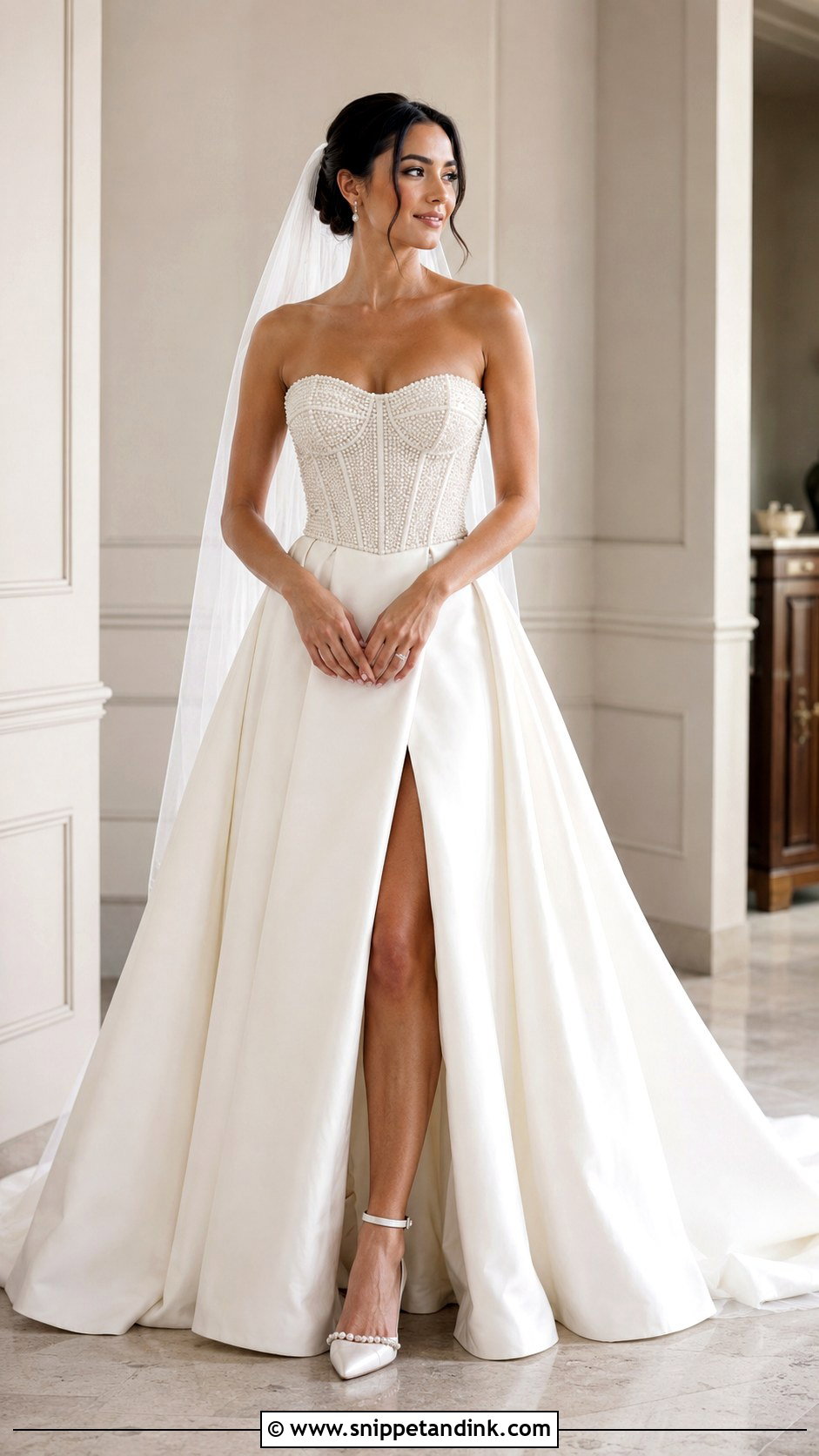
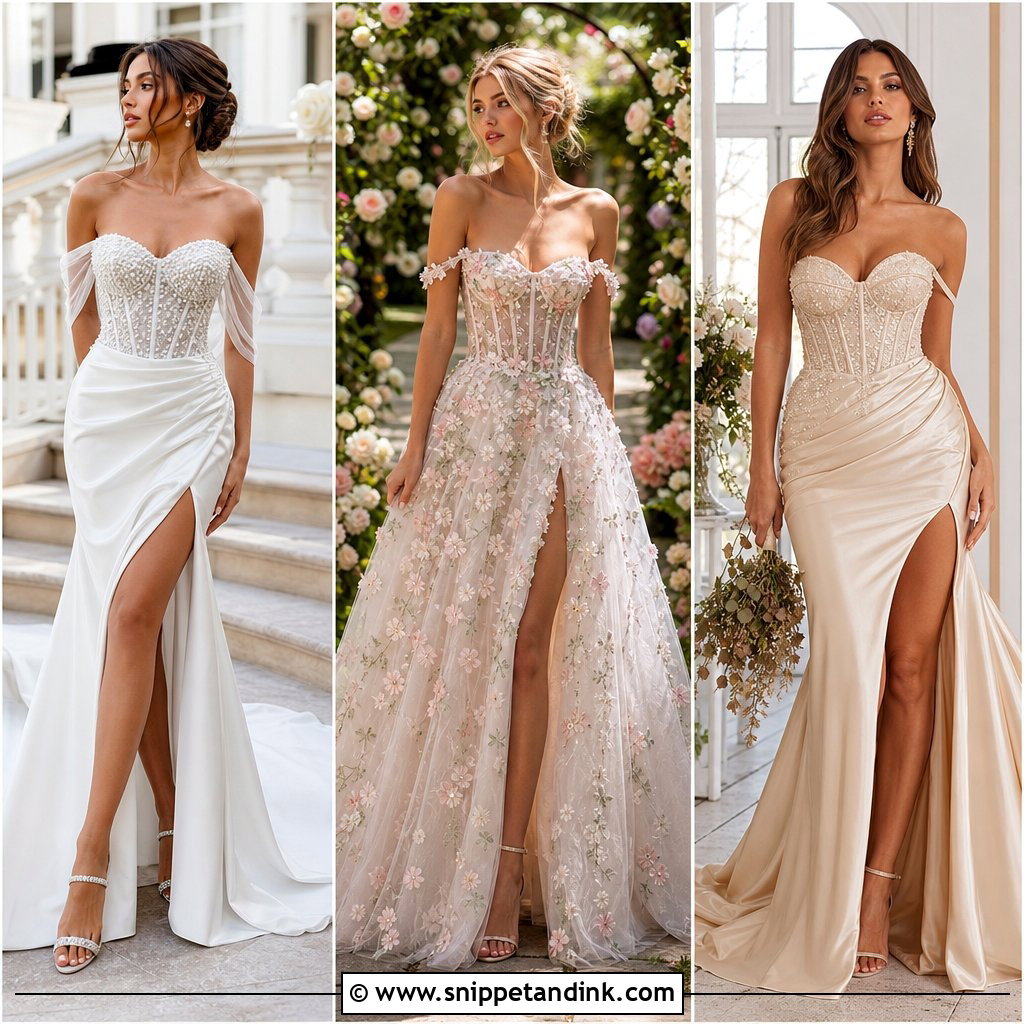
Pearls can cover the bodice, trace the boning or scatter across the skirt, adding texture and soft shine without sparkle. On a corset, pearls along the boning lines are the version I like most because they follow the structure rather than fight it. Check they are sewn, not glued. Pearl earrings, satin heels and a simple veil keep everything cohesive, and pearl buttons or scattered appliqué make a quieter version.
17. Beaded Corset Bridal Dress
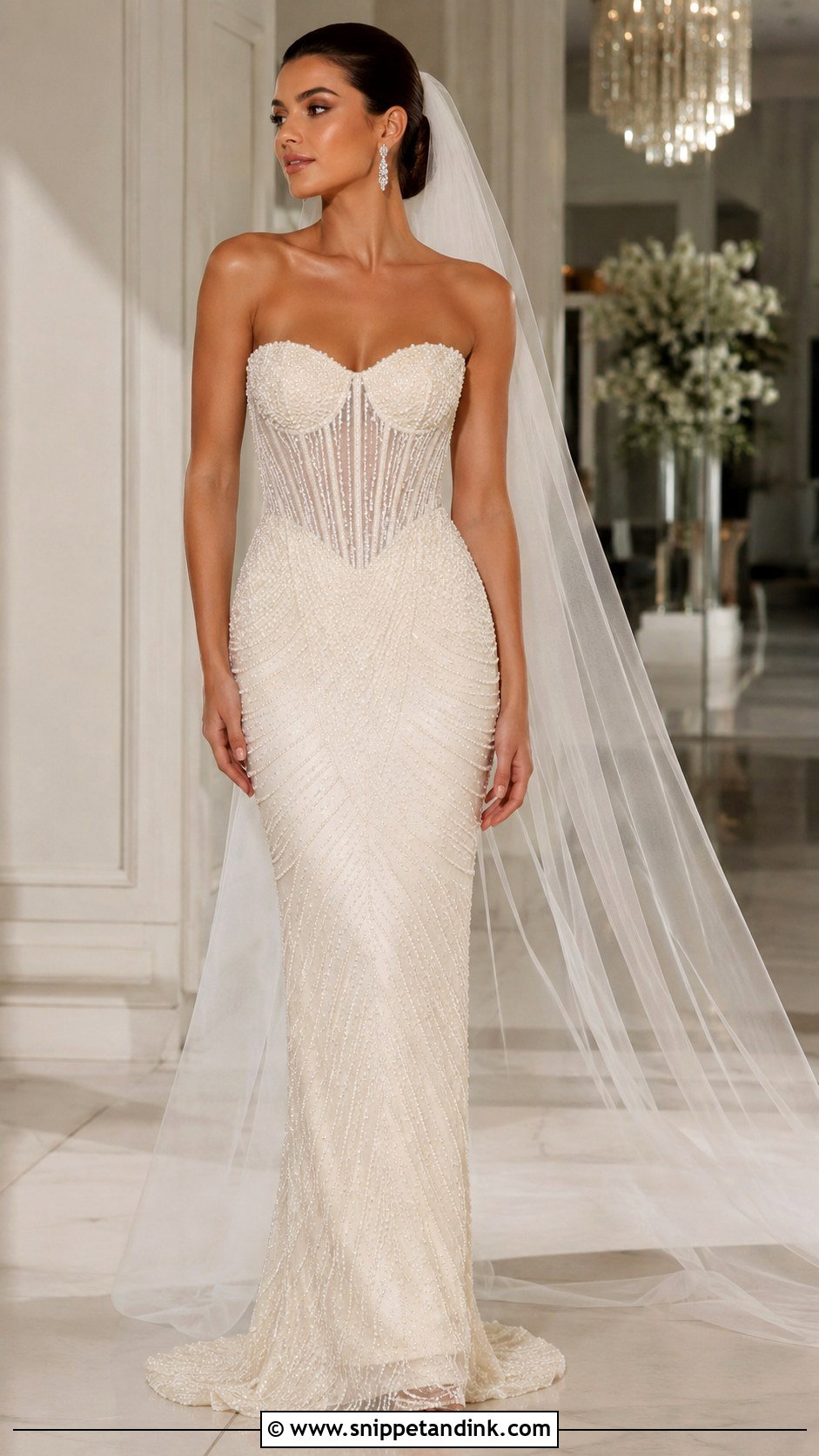
Beading can trace the corset seams, cover the bodice or flow into the skirt, and it catches light in a way plain fabric never will. It also adds weight. A fully beaded bodice is noticeably heavier than satin, so construction and fit matter more. I always ask brides to move around in it during fittings: dance, sit, hug someone. Simple heels, delicate earrings and a clean veil keep it from looking overdone, and evening receptions show it best.
18. Floral Applique Corset Bridal Dress
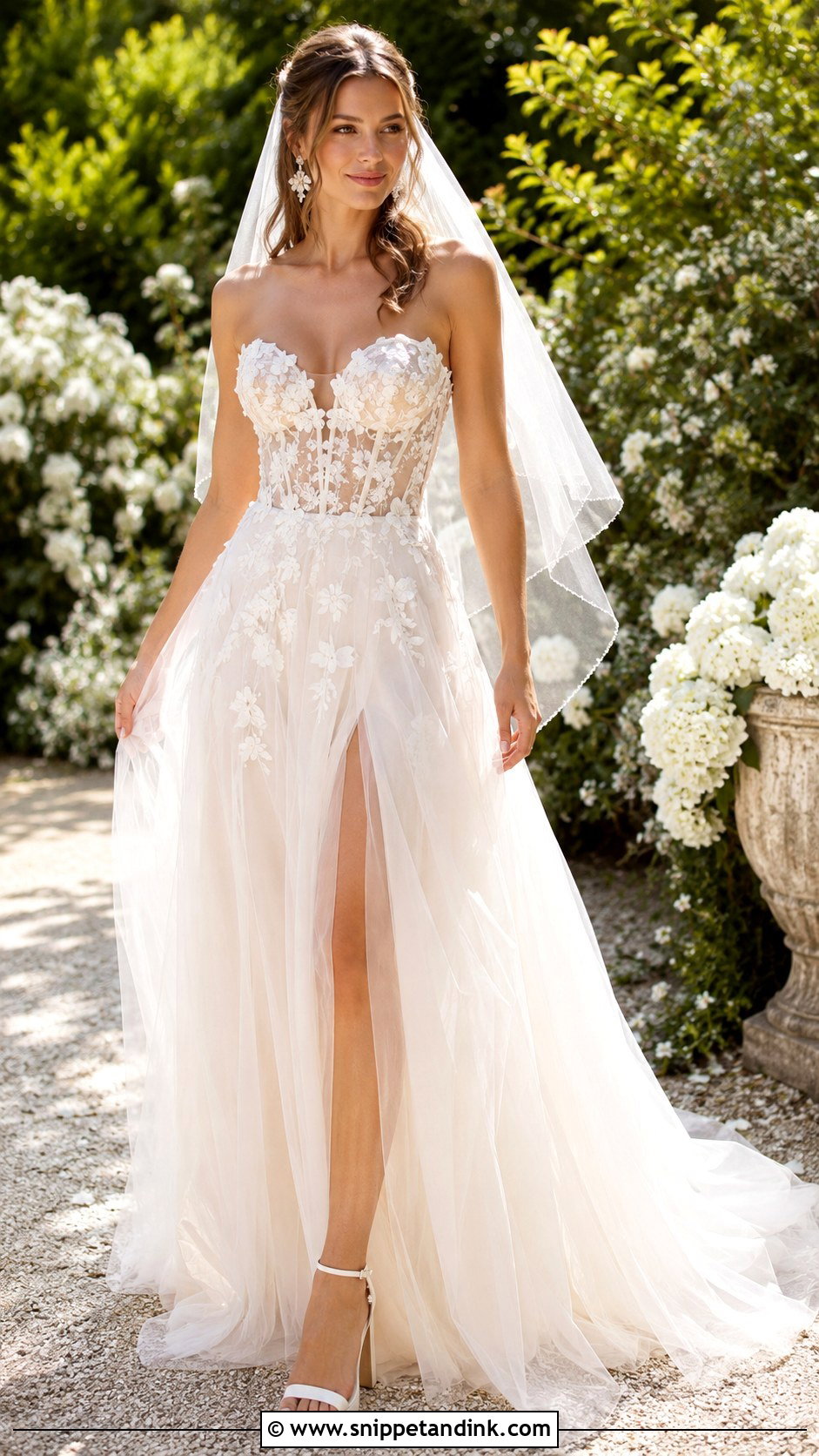
Appliqué flowers can sit across the bodice, trail down the skirt or frame the neckline. The corset underneath keeps a heavily floral gown from going shapeless. Larger 3D flowers placed sparingly look modern; delicate lace appliqué throughout looks classic. I’d avoid raised blooms at the waist if you’ll hold your bouquet there, as they flatten. Soft waves, ivory heels and a light veil suit spring and summer gardens.
19. Tulle Corset Bridal Dress
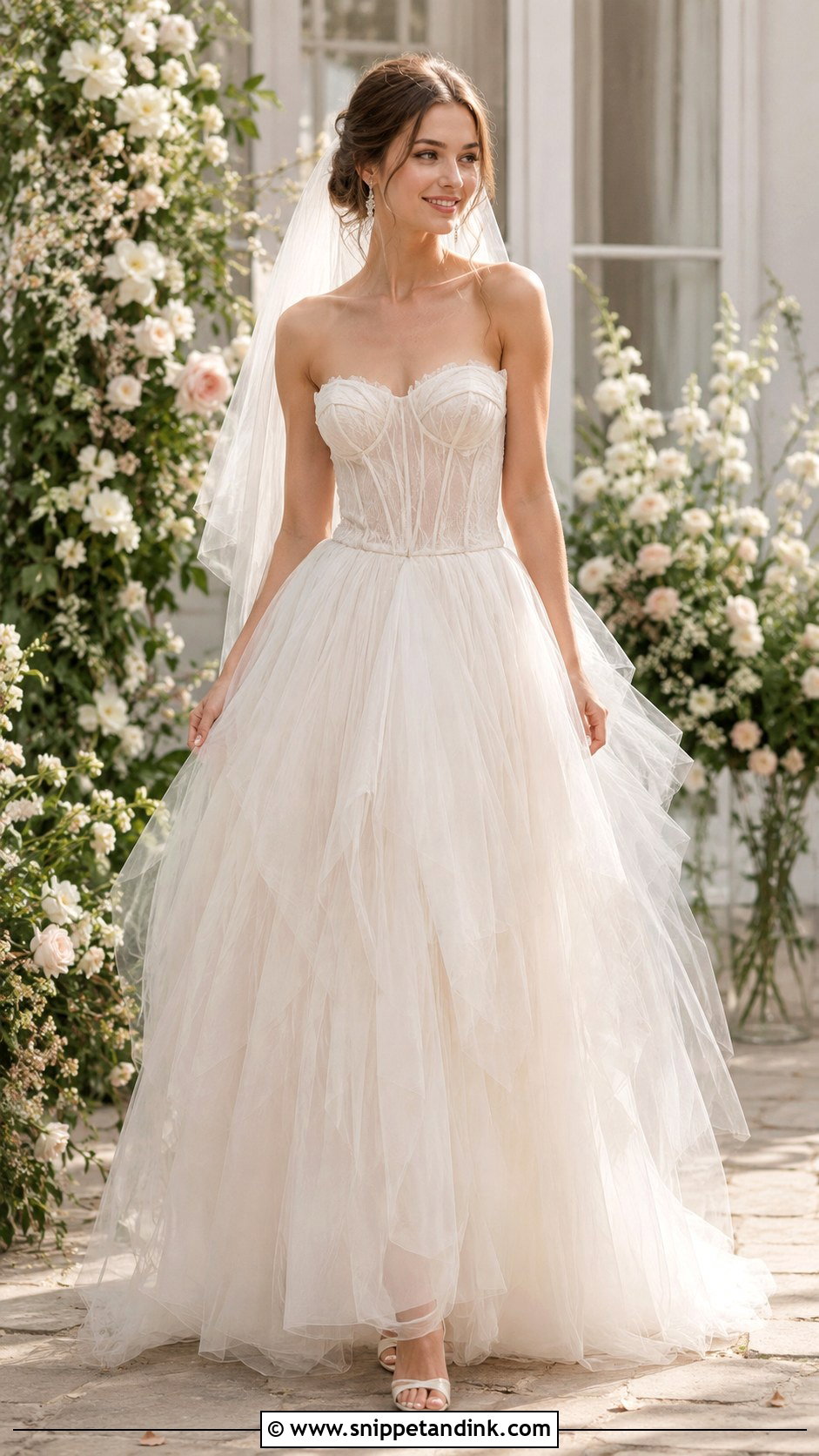
Tulle and a corset are an easy pairing: structure on top, movement below, and very little weight. A layered tulle skirt adds volume; a slimmer one feels relaxed. I’d steer anyone prone to overheating toward this over satin, because tulle breathes. Comfortable heels or bridal flats make sense here. Floral appliqué or subtle sparkle add detail, and it’s as at home in a garden as in a ballroom.
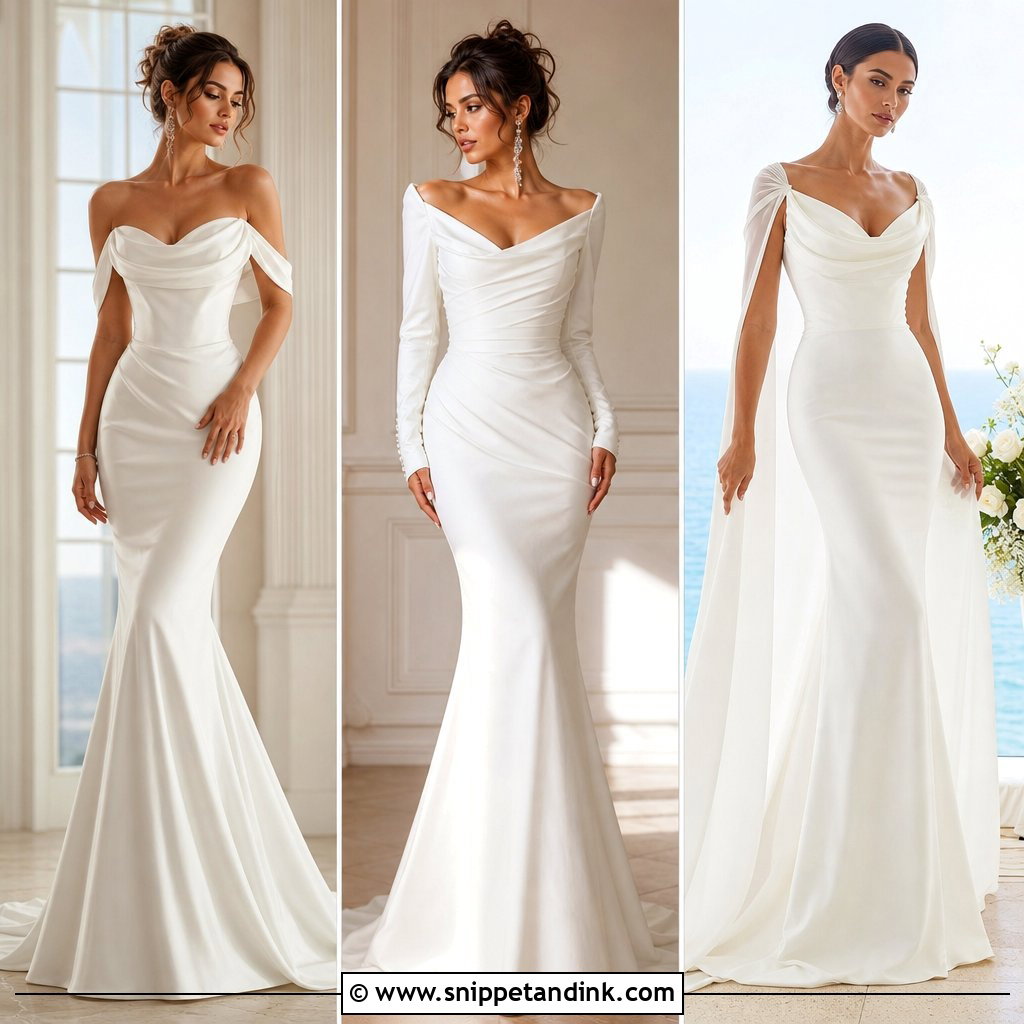



20. Mikado Corset Bridal Dress
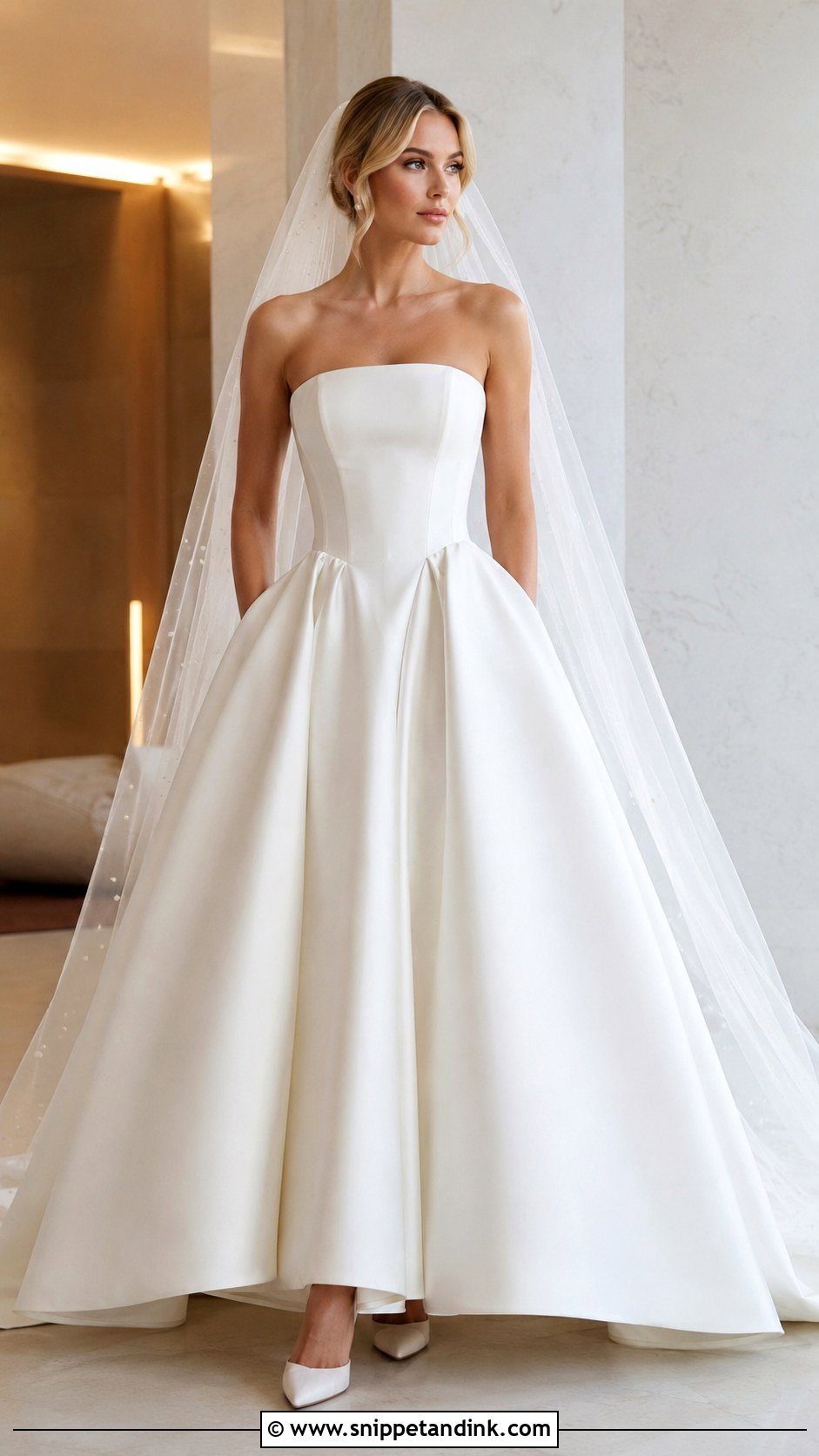
Mikado has body. It holds a sculpted shape on its own, which is why it pairs so well with corset bodices, full skirts and architectural folds. Embellishment usually works against it; the fabric’s slight sheen and weight are the point. Mikado also creases less than satin when you sit, a quiet advantage on a long day. Pearl studs, a smooth veil and classic pumps keep it clean, a sleek bun suits it, and the result has a crisp, expensive-looking finish.
21. Crepe Corset Bridal Dress
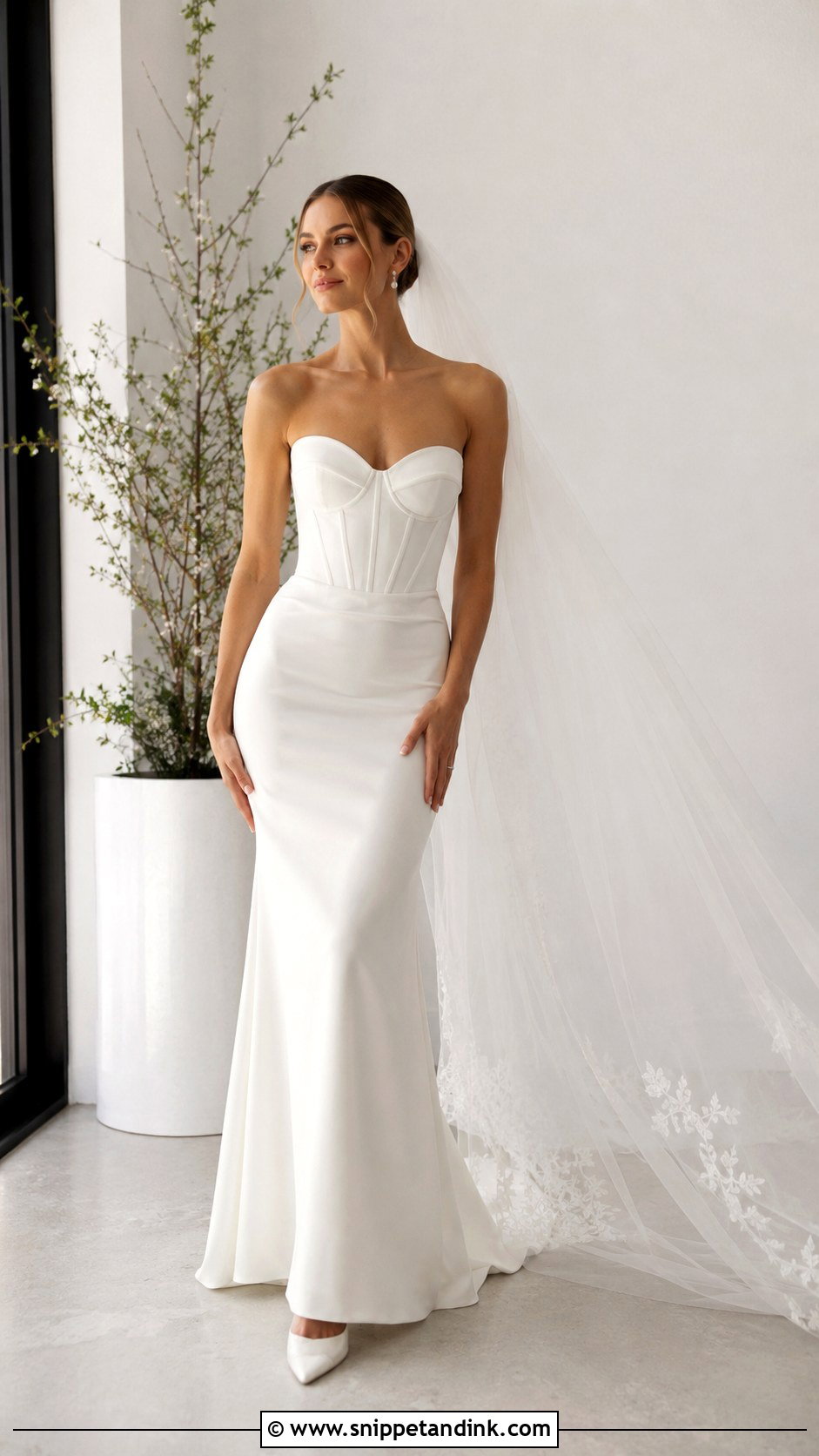
Crepe drapes close to the body and has a little natural give, so a crepe corset is more comfortable than it looks. The structure stays where you need it and the rest is smooth and matte. A straight neckline and slim skirt look modern. One honest warning: crepe shows underwear lines more than any other fabric here, so I do the fitting in your actual wedding lingerie. A low back, buttons or a detachable train add drama, and it suits courthouses and minimalist ceremonies.
22. Square Neck Corset Bridal Dress
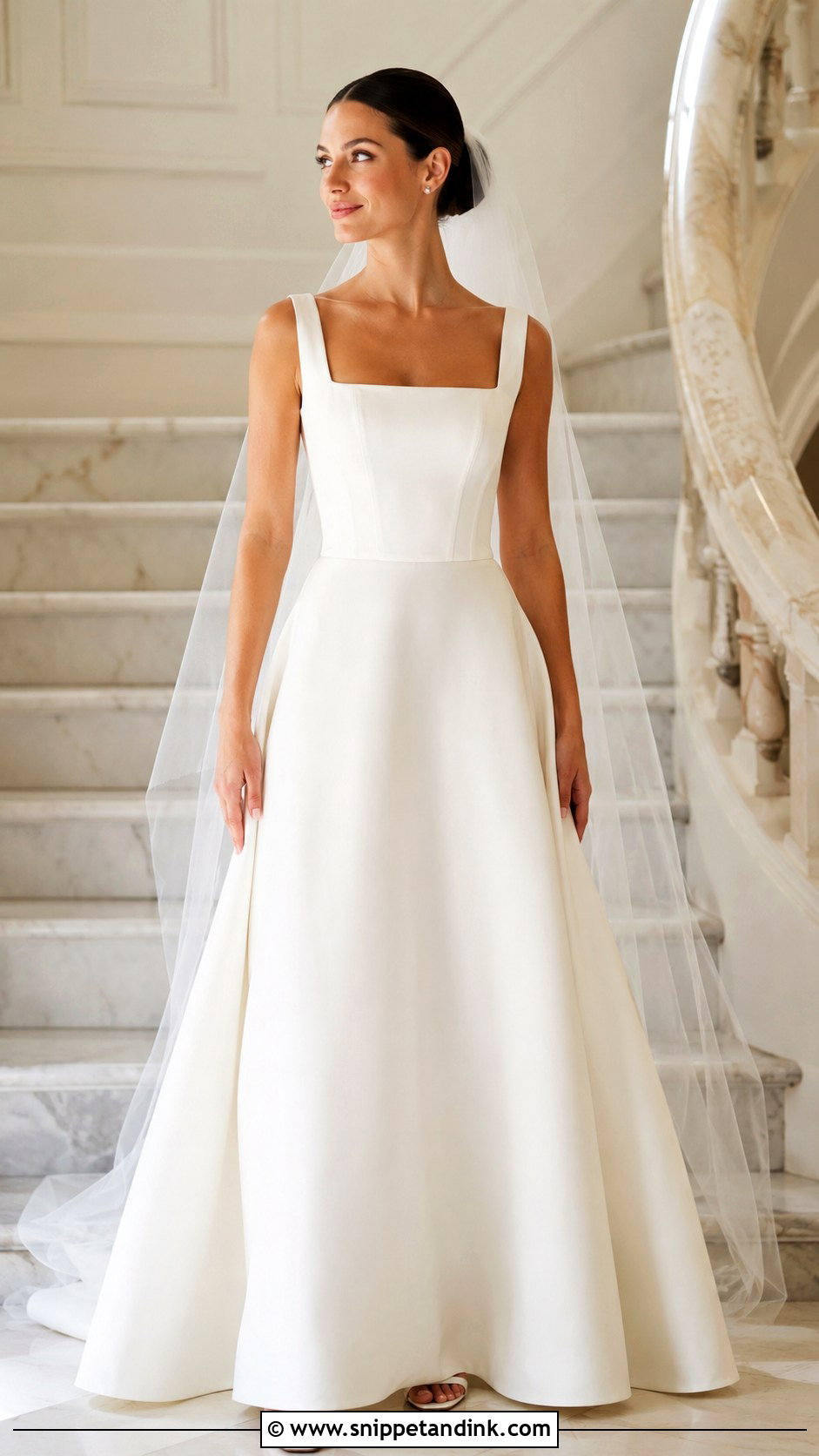
Square necklines give a clean, structured frame. They offer a bit more coverage than a sweetheart while still feeling open. Straps can be thin, wide or long-sleeved. In satin or crepe, a square neck corset is very refined. I like it with a veil tucked under a bun, small earrings and simple heels, because the straight neckline and the shaped corset work together without extra help.
23. Drop Waist Corset Bridal Dress
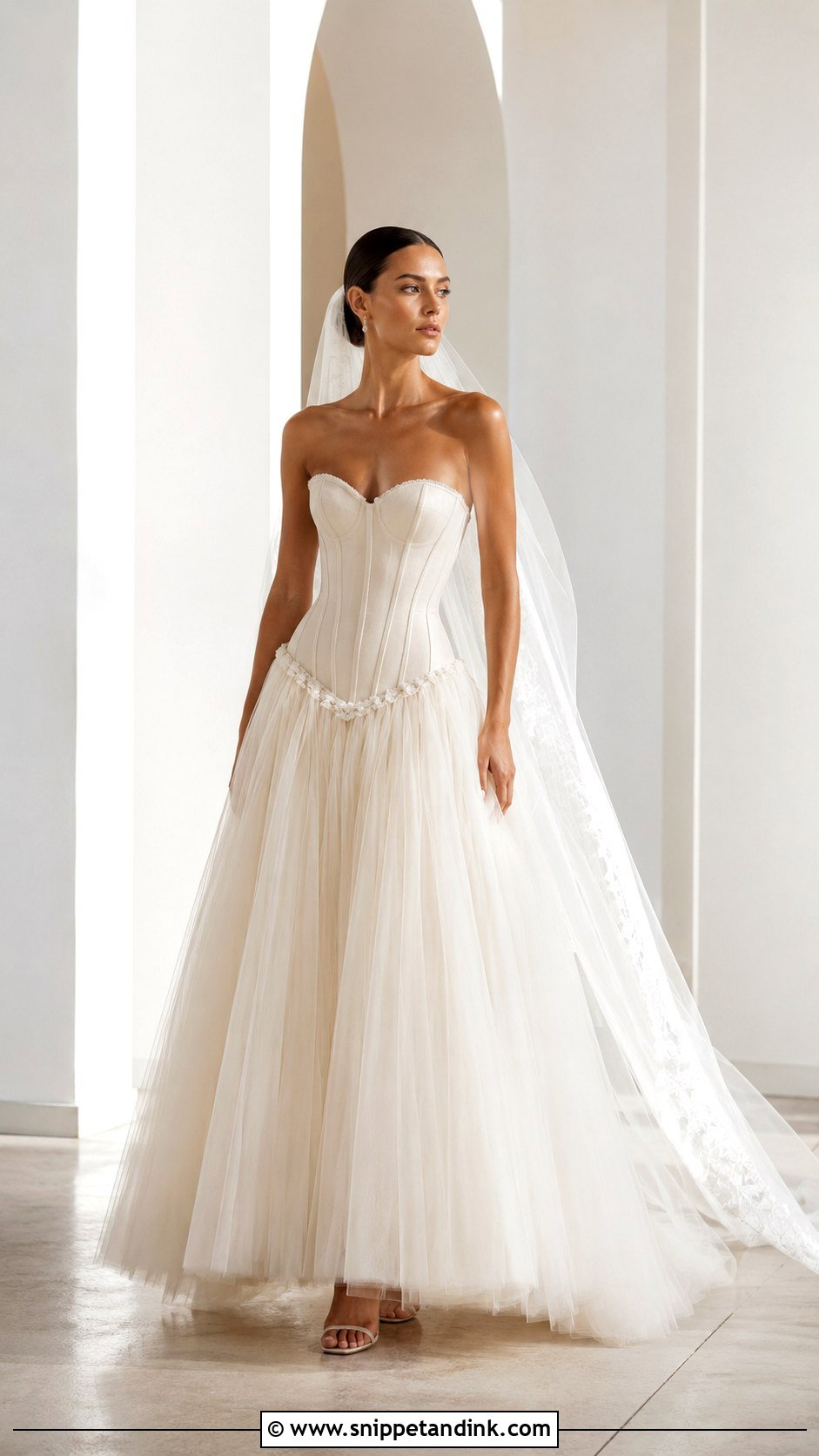
The drop waist extends the bodice past the natural waist before the skirt begins, giving a long, sculpted line. It only works when the tailoring is exact, because the waist placement is the main detail. Full skirts, soft tulle and smooth satin all suit it. A long veil, sleek hair and minimal jewelry are enough. If you’re drawn to vintage influence or runway-inspired details, try it on, but take a side-view photo before you decide.
24. Corset Bridal Dress With Train
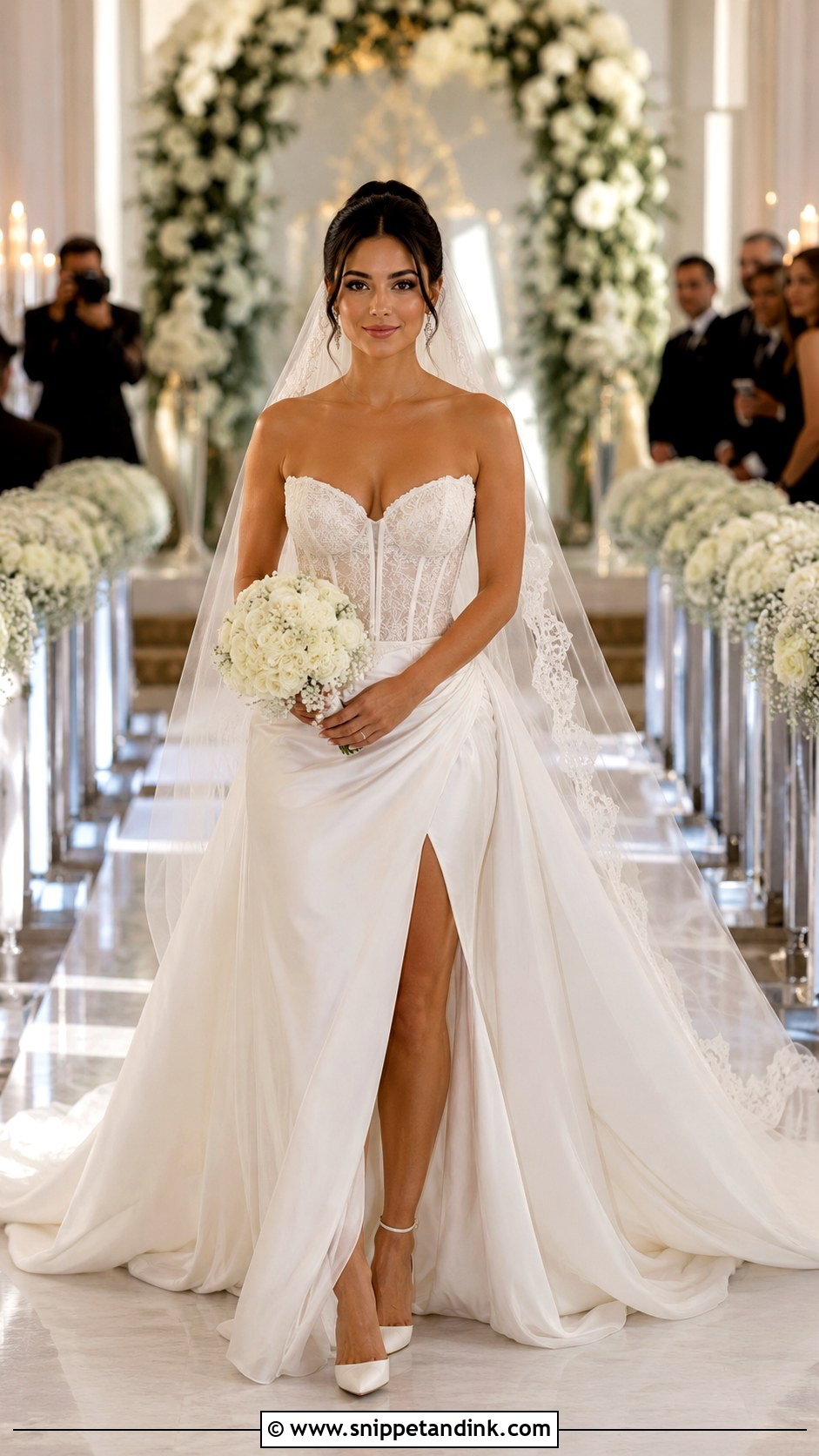
A train adds ceremony impact, and the corset gives the rest of the gown structure to carry it. A chapel train is the practical option; cathedral length is grander. Satin, lace, mikado, crepe and tulle all work. The bustle is non-negotiable: ask how many points it has and practise it with the person who’ll do it, because a heavy train on a weak bustle tears loose on the dance floor. Match the veil length to the train.


25. Corset Bridal Dress With Cape
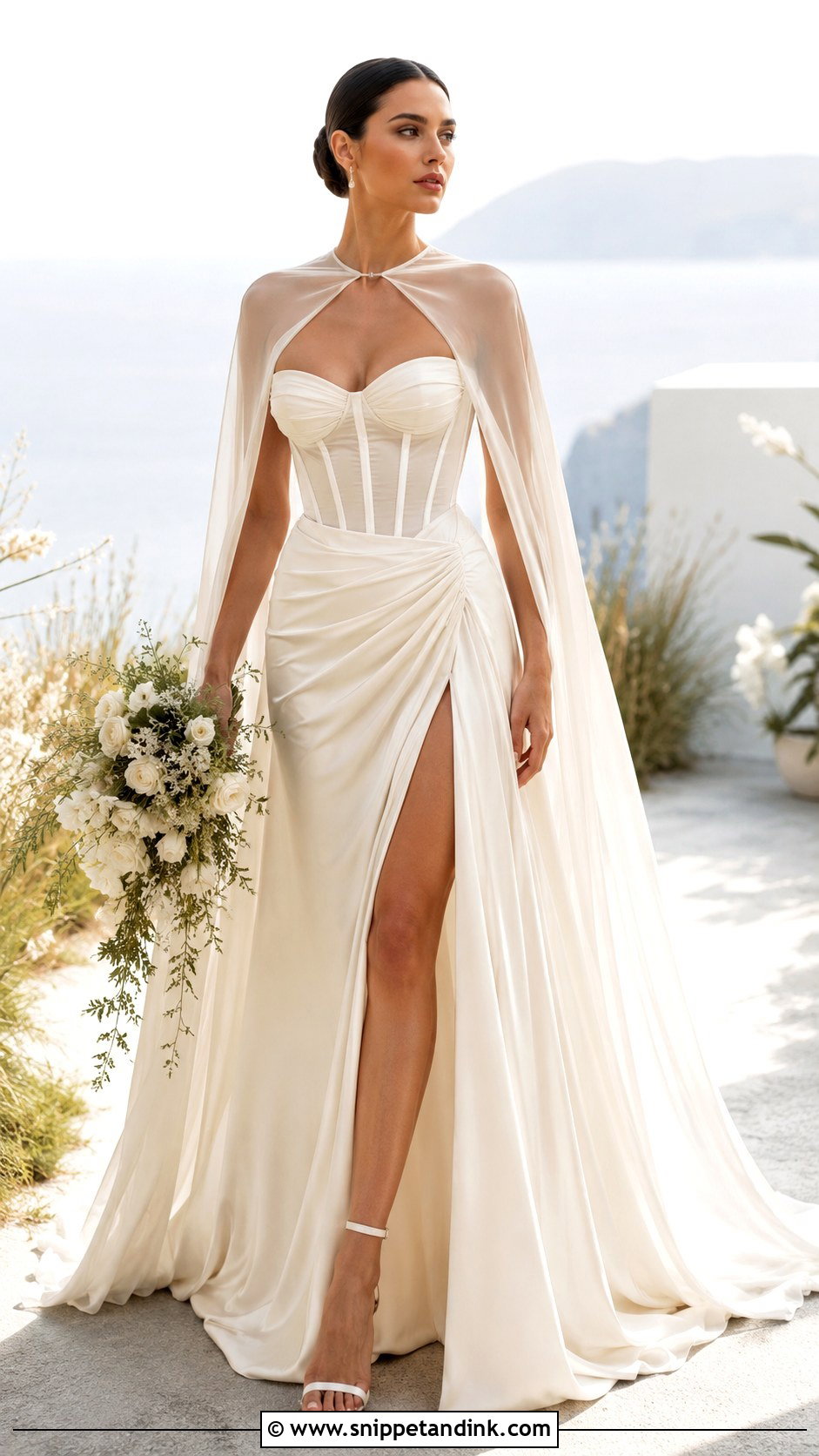
A cape is a modern alternative to a veil. The corset keeps the gown structured while the cape adds movement and coverage. Sheer capes are soft; satin capes are bold and architectural. I’d choose one that attaches with hidden hooks at the shoulders so it can come off for the reception without a struggle. Simple earrings, clean heels and sleek hair let the cape move freely. Outdoor portraits and modern venues show it at its best.
A Twelve-Hour Day in a Corset Gown
A corset that feels fine for ten minutes in a boutique can feel very different by the evening. Here’s what I prepare brides for.
Eating and drinking
A boned waist leaves less room for a full meal. Eat a proper breakfast, have small bites through the afternoon and don’t skip dinner, but expect to feel full sooner. If your gown laces up, ask a bridesmaid to loosen it slightly after the meal.
Bathroom breaks
Practise this at home in the dress or a similar full skirt. Facing the toilet backwards with a helper holding the skirt is the method most brides find easiest.
Heat and sitting
Bodies swell slightly through a warm afternoon, and a bodice fitted on a cool morning can feel firmer by the first dance. When you sit, sit tall on the front half of the chair; slumping pushes the bottom of the boning into your hips and creases the front of the skirt. I keep a hand fan and a small bottle of water within reach of every corseted bride.
Signs it’s too tight
Shallow breathing, bones pressing into the ribs or underarms, red marks after an hour or numbness in the arms all mean the fit is too firm. Tell your seamstress early; letting out a corset is much easier before the final fitting than on the morning itself.
A Corset Should Disappear Once You Put It On
From classic satin to lace ball gowns, minis and cape looks, a corset bodice adapts to almost any wedding style. What matters most is that it supports you without restricting you, and the only way to know is to move in it: sit, reach, dance and eat during fittings. Think about the whole outfit too, from veil and shoes to jewelry, hairstyle and any detachable pieces. When the structure fits properly, you stop noticing it, and that’s exactly the point.
You'll Like These Ideas:







Leave a Reply