
Lace is back on the rails of every bridal shop, but it isn’t the stiff, heavy lace many of us remember from older wedding albums. Today’s laces are finer, often laid over a nude or champagne lining, and placed with more restraint. The question I start with is never which lace looks prettiest on the hanger. It’s how a particular lace sits on your body for twelve hours, in your venue’s temperature, in the season you’re marrying. Below are 25 shapes and lace treatments, from fitted sleeves to tea length hems, with what I’d watch for in each one at a fitting.
Reading Lace Up Close at a Fitting
Before we get to shapes, it helps to know what you’re looking at, because two lace gowns at the same price can behave completely differently once they’re on. When I pull dresses for a lace appointment, I look at three things before I even think about silhouette.
The net and the motif
Most bridal lace is a pattern of motifs sitting on a fine net. Chantilly has a flat, soft motif on a very fine net. Alencon outlines its motifs in a raised cord. Guipure has no net at all, just motifs joined to one another, so it’s heavier and holds a shape. Run the lace between your fingers: soft lace drapes and clings, while corded and guipure lace stand slightly away from the body.
Where the seams hide
On a well-made gown, the lace is cut around its motifs at the seams and laid over, so you can’t see where one panel meets the next. On cheaper gowns the pattern simply stops at a straight seam. Turn sideways to the mirror and look at the side seams first; that’s where it shows.
What’s underneath
The lining decides how the lace reads in photos and how warm you’ll be. Hold the skirt up to a window and look at the lining color through the lace. Then sit on the fitting room stool for a full minute. Lace over a stiff lining creases differently from lace over soft crepe, and you’ll be sitting through dinner, speeches and at least one car ride.
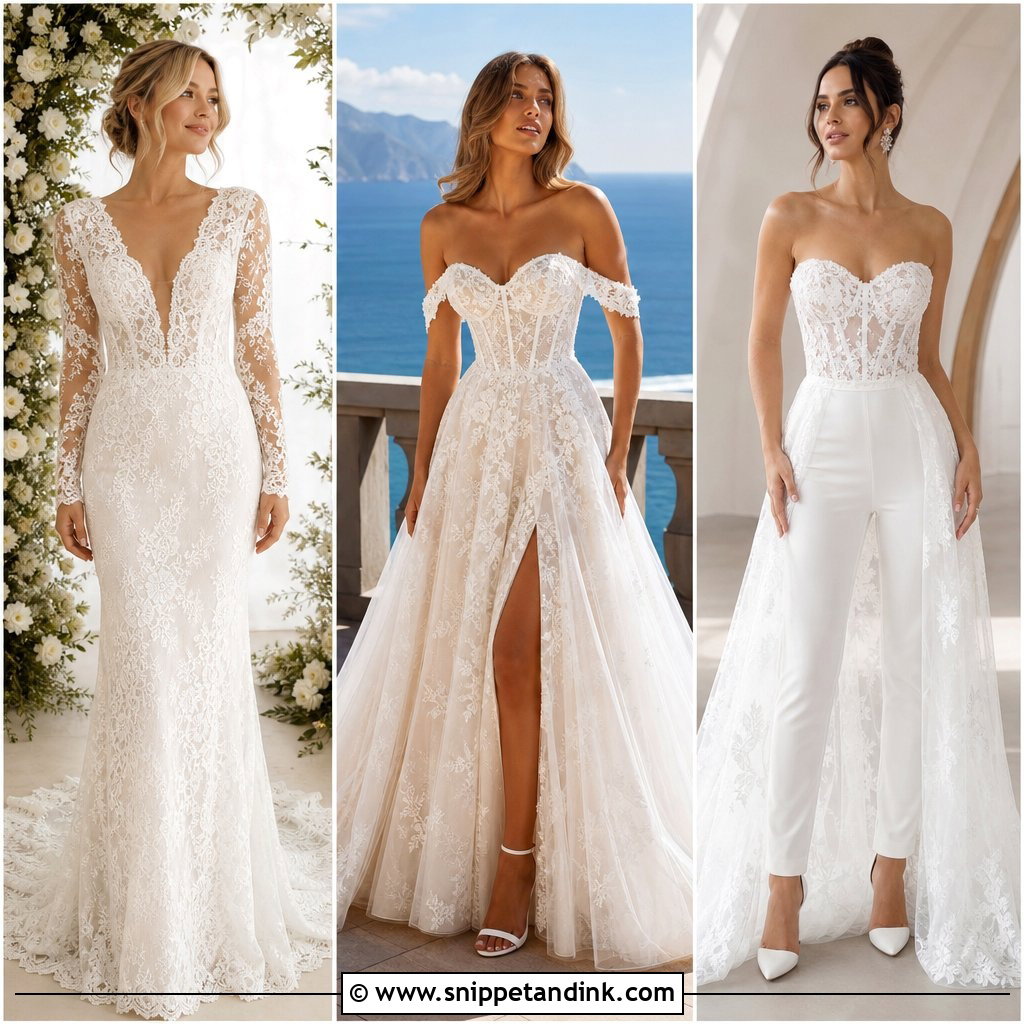
1. Long Sleeve Lace Bridal Dress
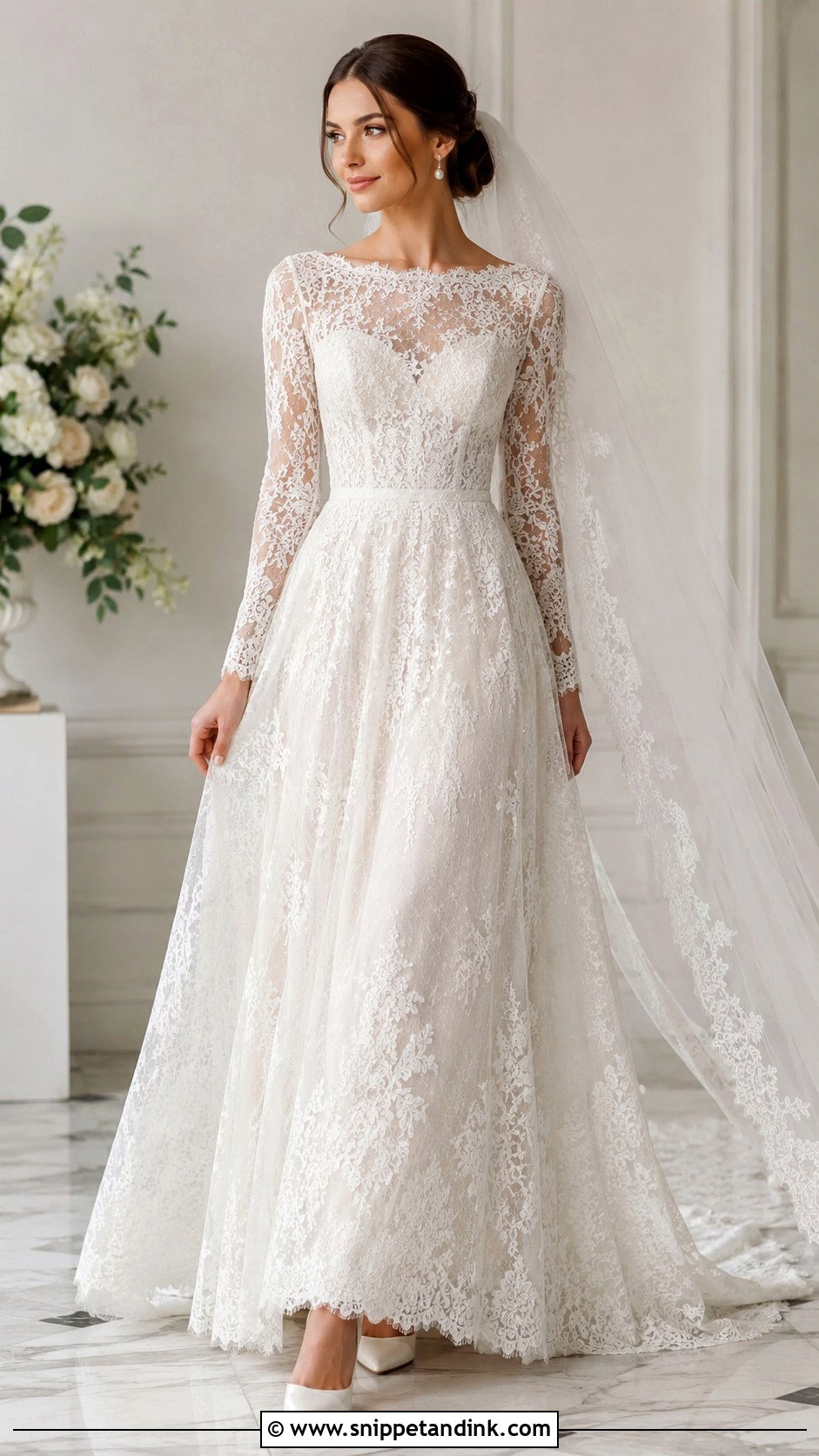
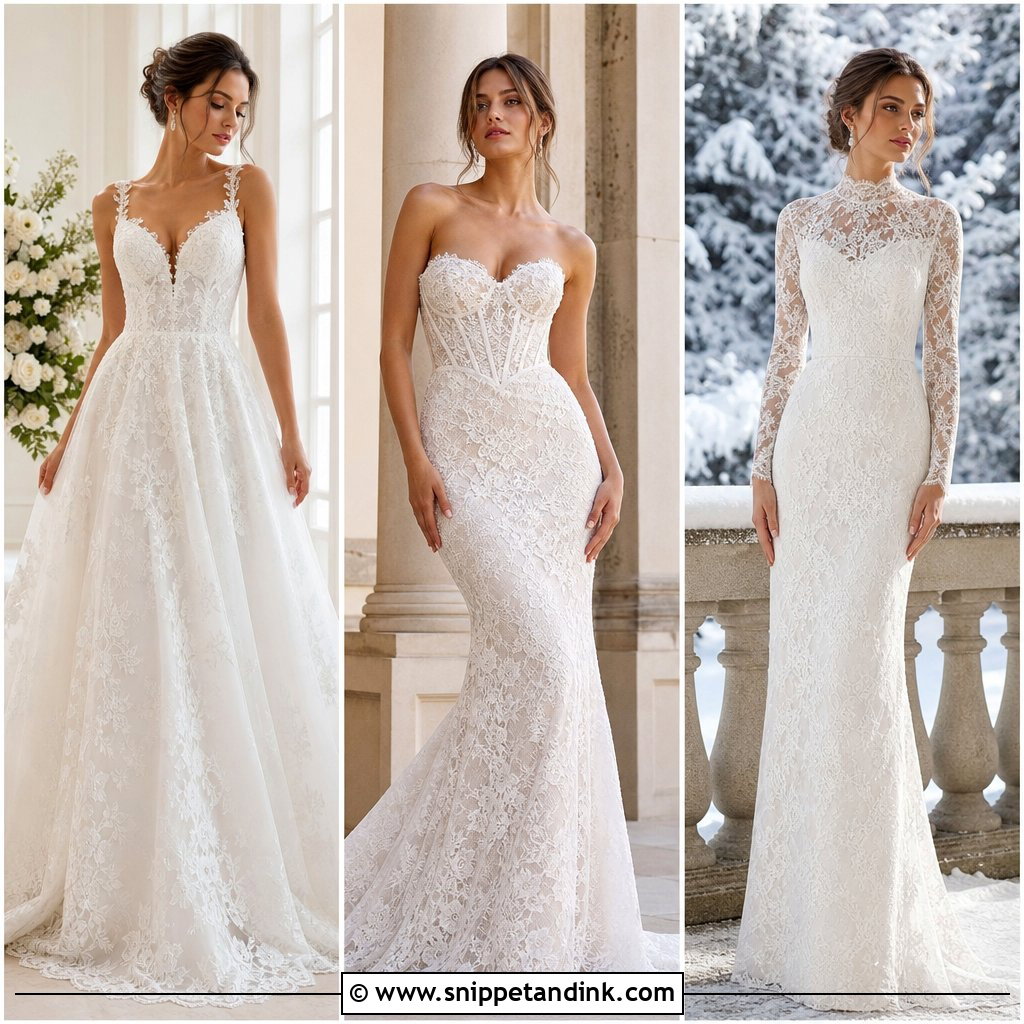
Long sleeves in lace give coverage without the weight of satin, and they can be sheer, lined, fitted or slightly puffed. The thing I check first is the armhole. A sleeve cut high and close lets you lift your arms to hug people, while a low armhole drags the whole bodice up when you reach. Ivory floral lace over a nude or champagne lining reads classic, and a low bun keeps the sleeve line clear. I’d lean toward these for fall, winter and formal indoor weddings, with a lighter lace in spring. Skip heavy jewelry and let a plain cathedral veil carry the formality.
2. A Line Lace Bridal Dress
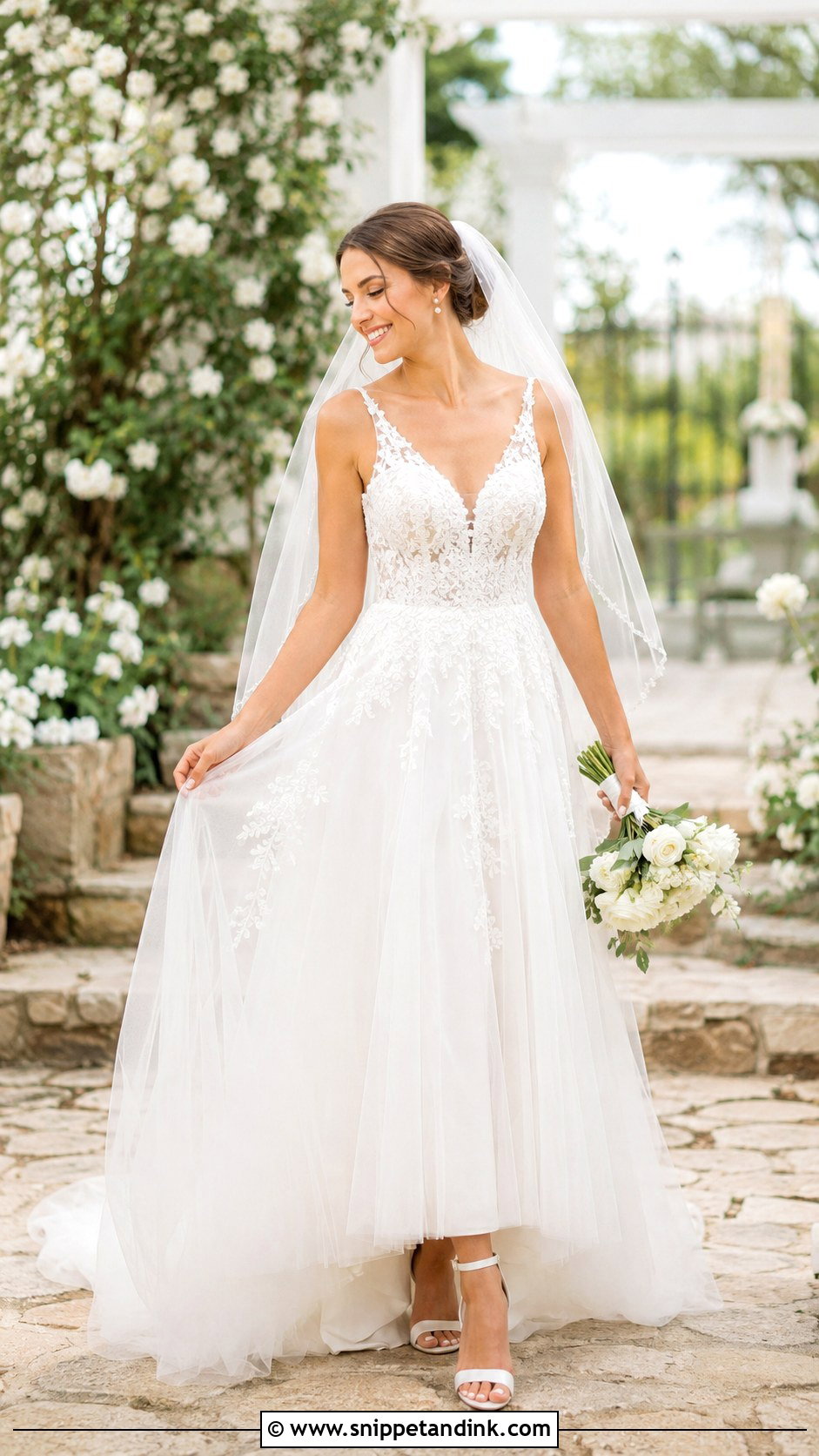
Most brides I dress try an A-line at some point, because it marks the waist and then skims past the hips instead of gripping them. It’s also the easiest lace gown to walk, sit and dance in. Look for appliqué that is dense on the bodice and thins out as it travels down into tulle or organza; that fade pulls the eye up toward your face. Ankle strap heels, a fingertip veil and small studs are enough. One honest caution: on a very petite frame, a skirt with too many underlayers can swallow you, so ask to try a version with fewer.
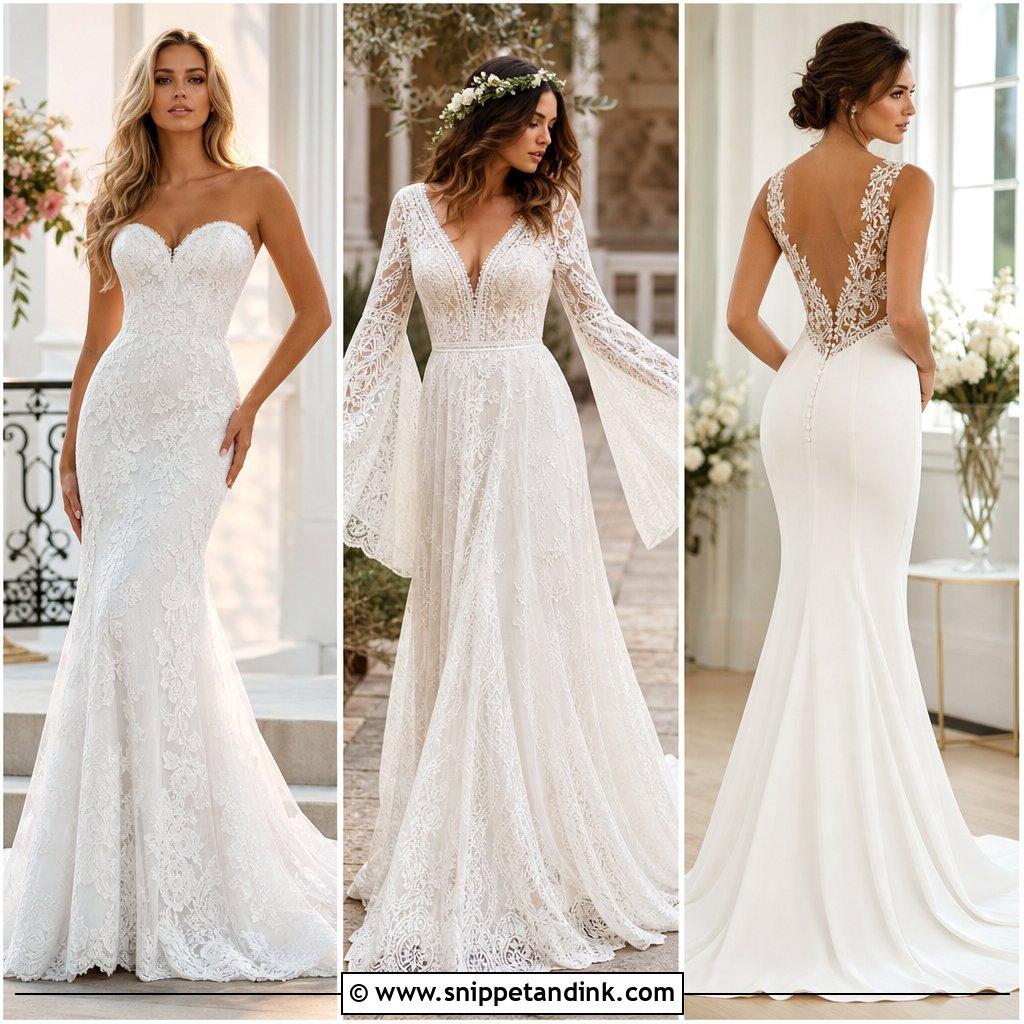
3. Mermaid Lace Bridal Dress
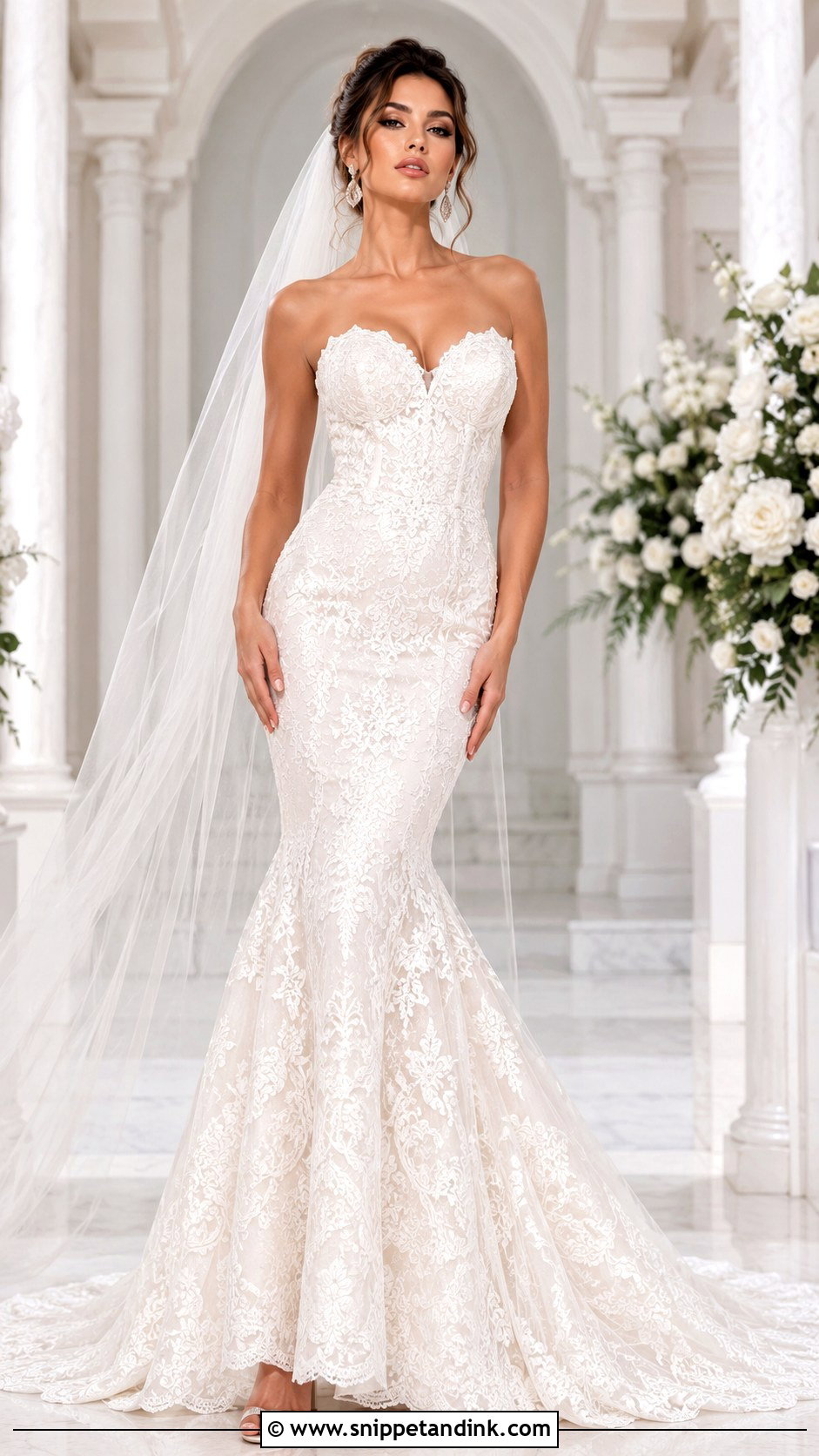
Mermaid gowns hug the bodice, waist and hips and flare near the knee or lower thigh, so the lace is stretched over curves more than in any other shape. That matters, because flat, heavy lace can distort and let the lining show through when it’s pulled tight. Corded or dimensional lace holds its pattern better. A sweetheart neckline or thin straps soften the fitted line. In the fitting room I ask every mermaid bride to sit, climb a step and dance a little, since a flare that starts too low means shuffling all night. Get the flare point right in alterations and keep the veil plain.
4. High Neck Lace Bridal Dress
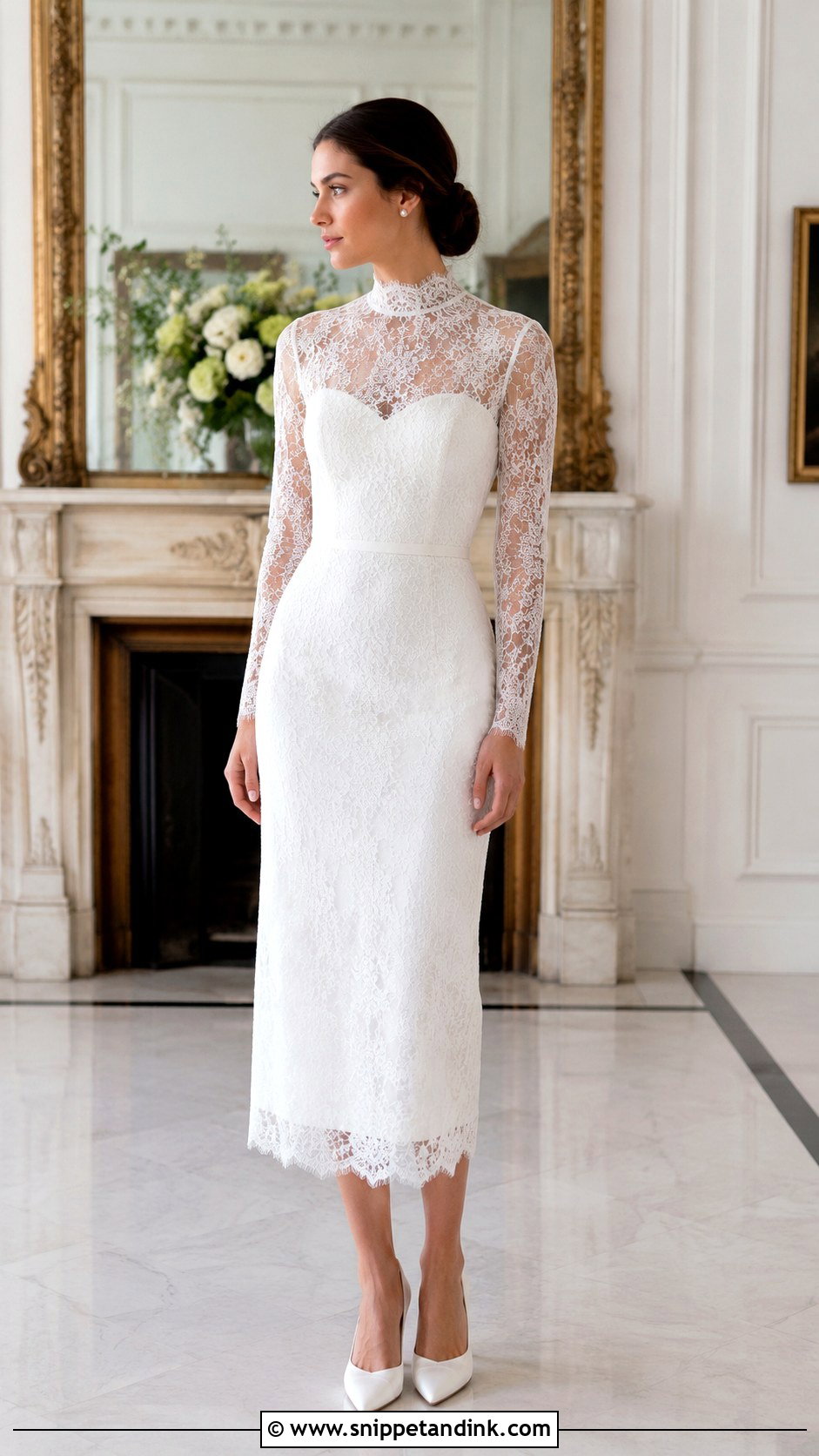
A high neck puts the lace right beside your face, which is why I like a sheer collar with the lining stopping lower on the bodice. The neckline already does a necklace’s job, so leave your throat bare and wear pearl studs with a low chignon. Watch the fit at the back of the neck. A collar that stands away from the skin looks borrowed, and one that’s too snug will feel tight by the reception. With fine lace rather than dense, it gives modest coverage without looking old-fashioned.
5. Off Shoulder Lace Bridal Dress
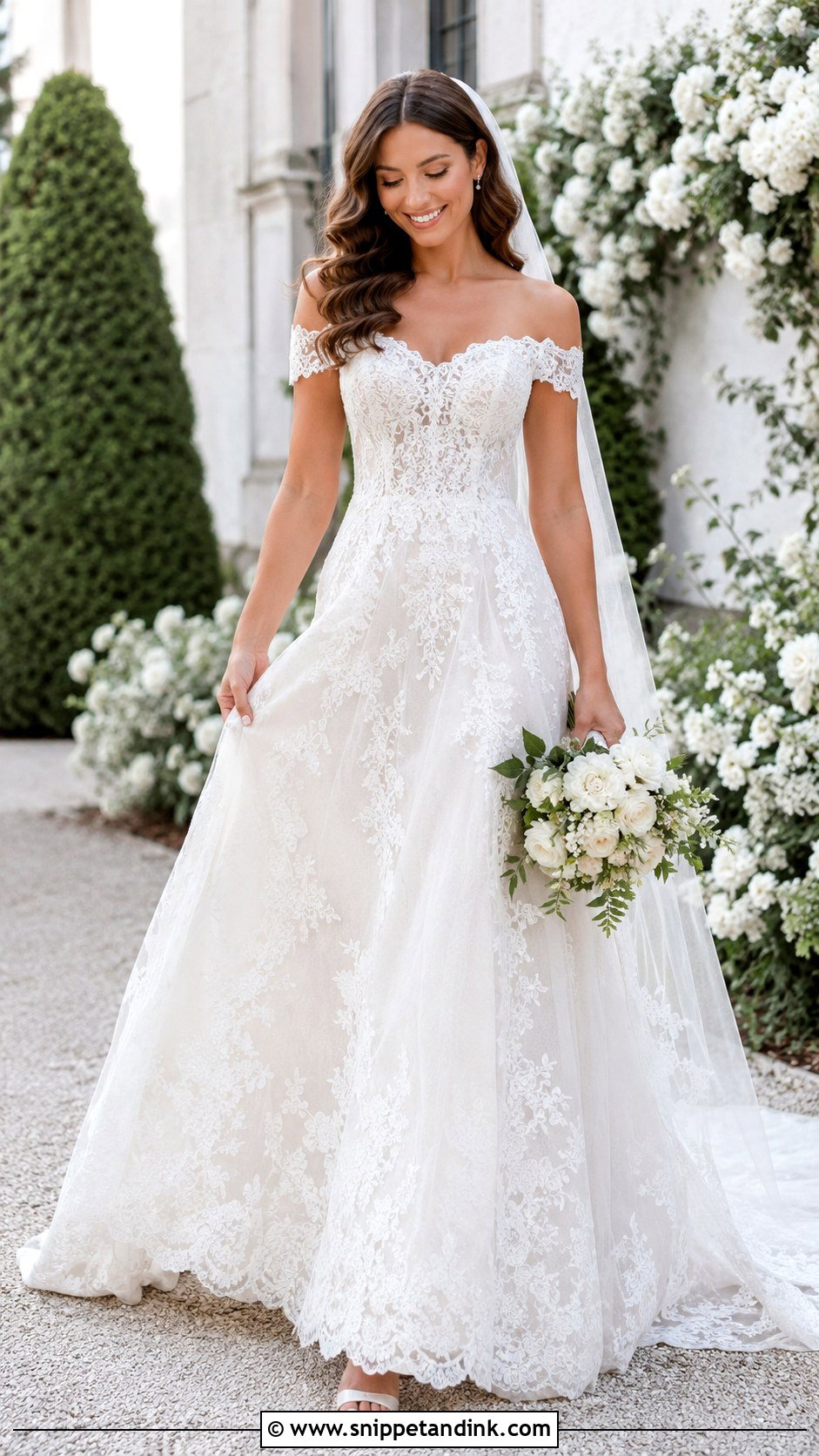
Off-shoulder lace shows the collarbones without a low front. The engineering is the tricky part: the band across your upper arms has to be anchored by a well-built bodice underneath, or it creeps toward your neck every time you lift your arms. I test this by having the bride raise both hands as if holding her bouquet up for a photo. Soft waves and small earrings keep the neckline clean, and an A-line or fit-and-flare skirt balances the width at the shoulders. It suits garden and estate weddings, as long as you’re happy keeping your arms a little lower on the dance floor.
6. Strapless Lace Bridal Dress
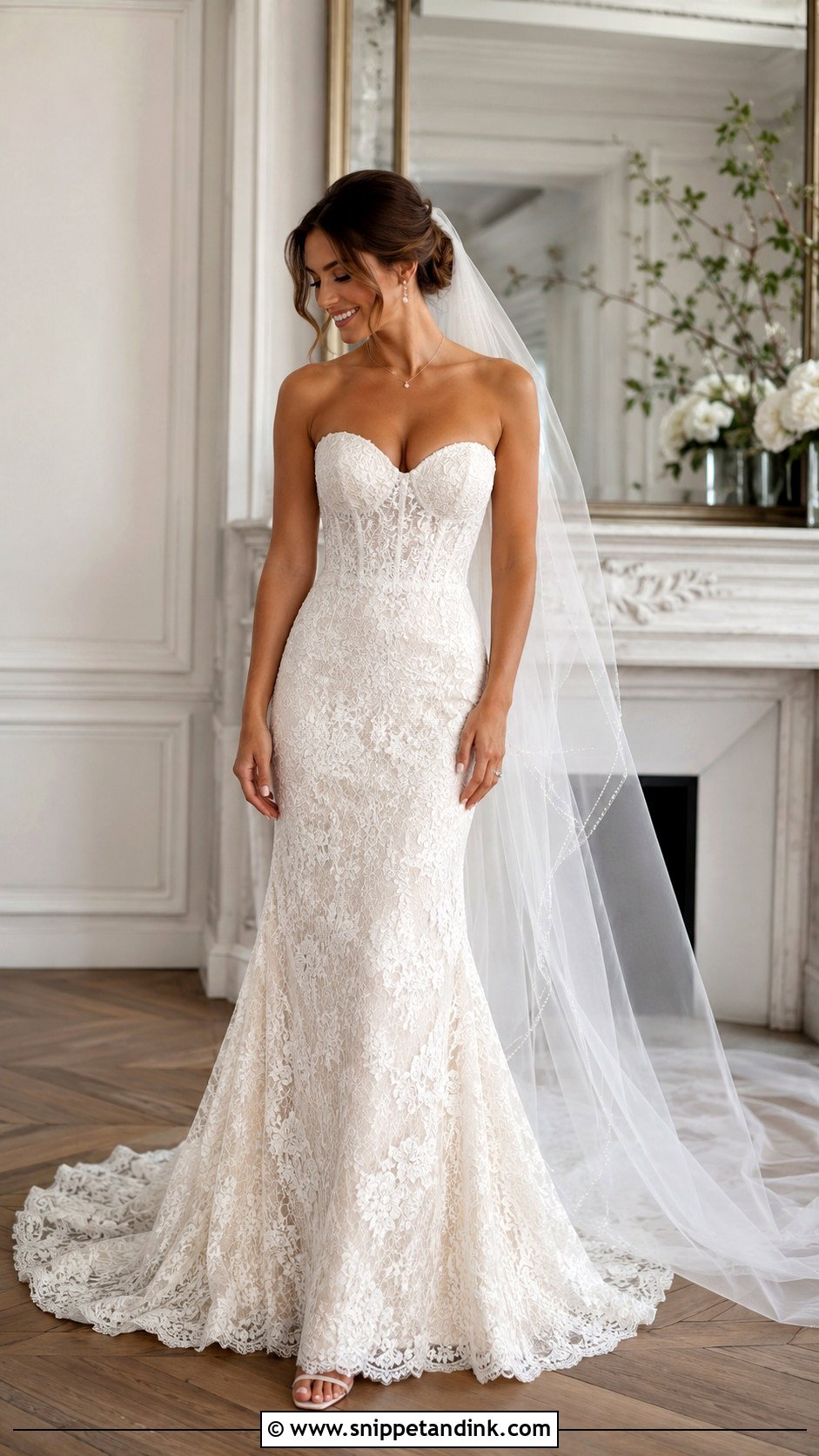
Strapless lace is a blank canvas, with a straight, curved or sweetheart edge. What makes or breaks it is the inside: boning, a waist stay and a bodice fitted tightly enough that you aren’t hitching it up through dinner. I’d rather a strapless gown feel snug at the final fitting than comfortable, because lace relaxes slightly with body heat over the day. A smooth updo and a chapel veil keep it classic. Sheer lace gloves or a lace-trim veil soften it if bare shoulders feel too stark for you.
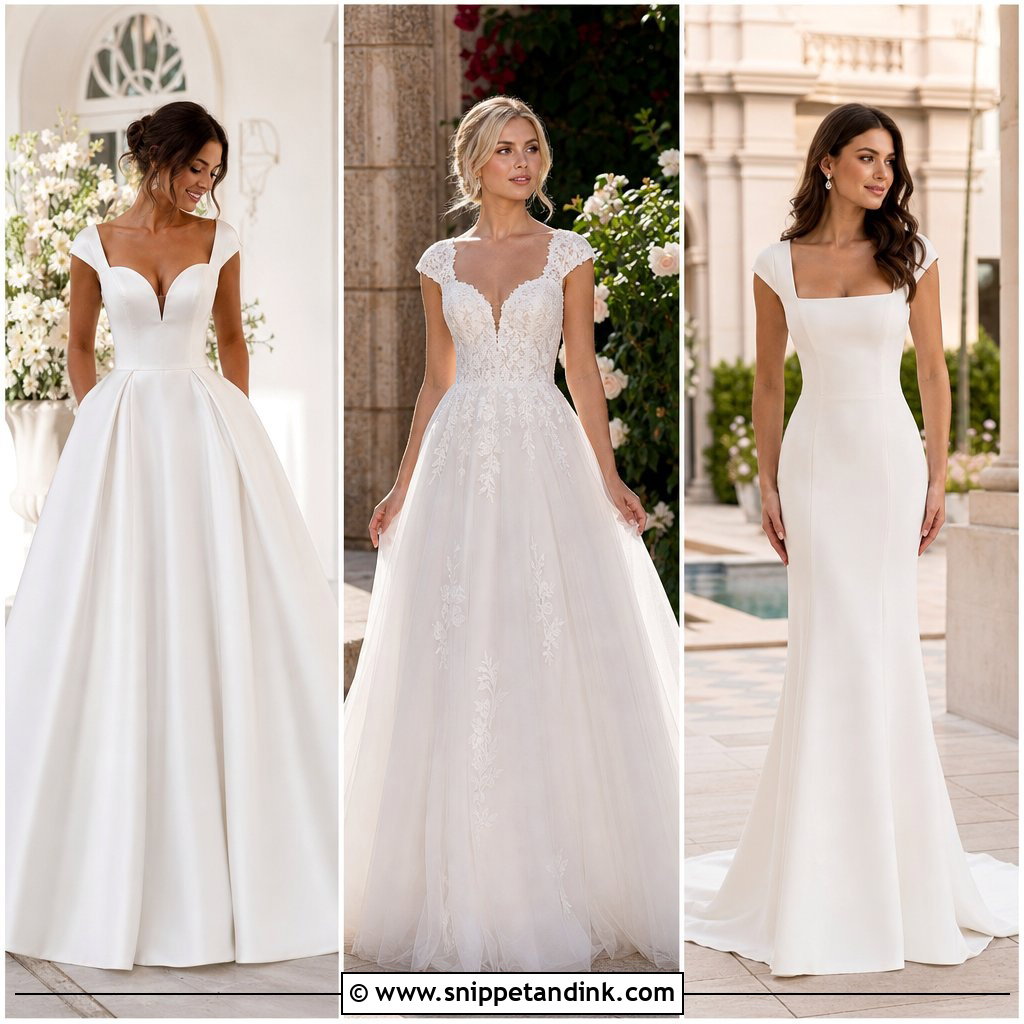
7. V Neck Lace Bridal Dress
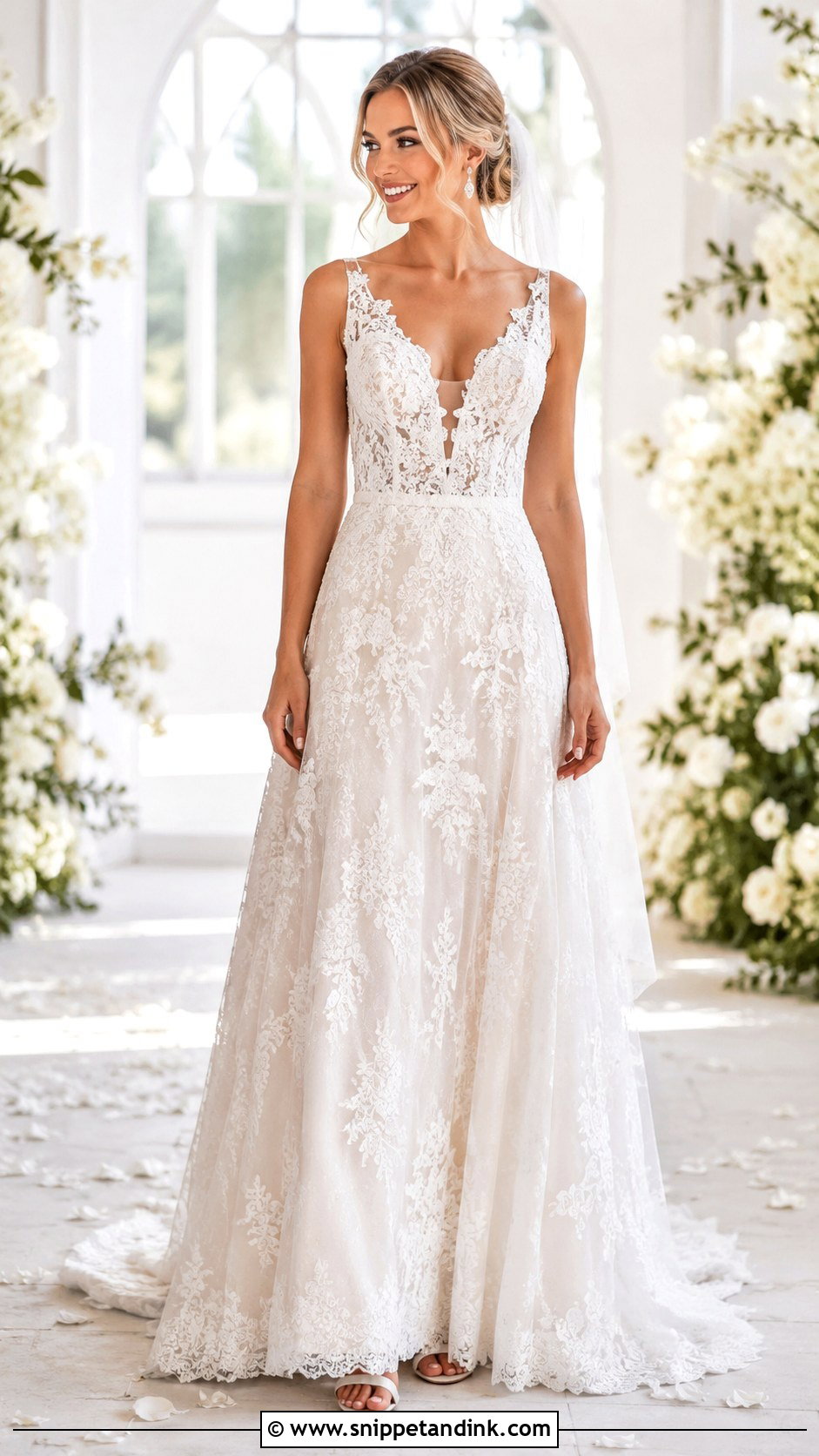
A V neck draws a vertical line from face to waist and suits more figures than most necklines. If the V is deep, a sheer illusion panel lets you move without worrying about gaping, and I always check that panel in daylight because some mesh reads grey in photos. Match heels and earrings to the dress undertone. My rule for accessories is simple: bold lace gets plain jewelry, while delicate lace leaves room for a pearl hairpin or a fine bracelet.
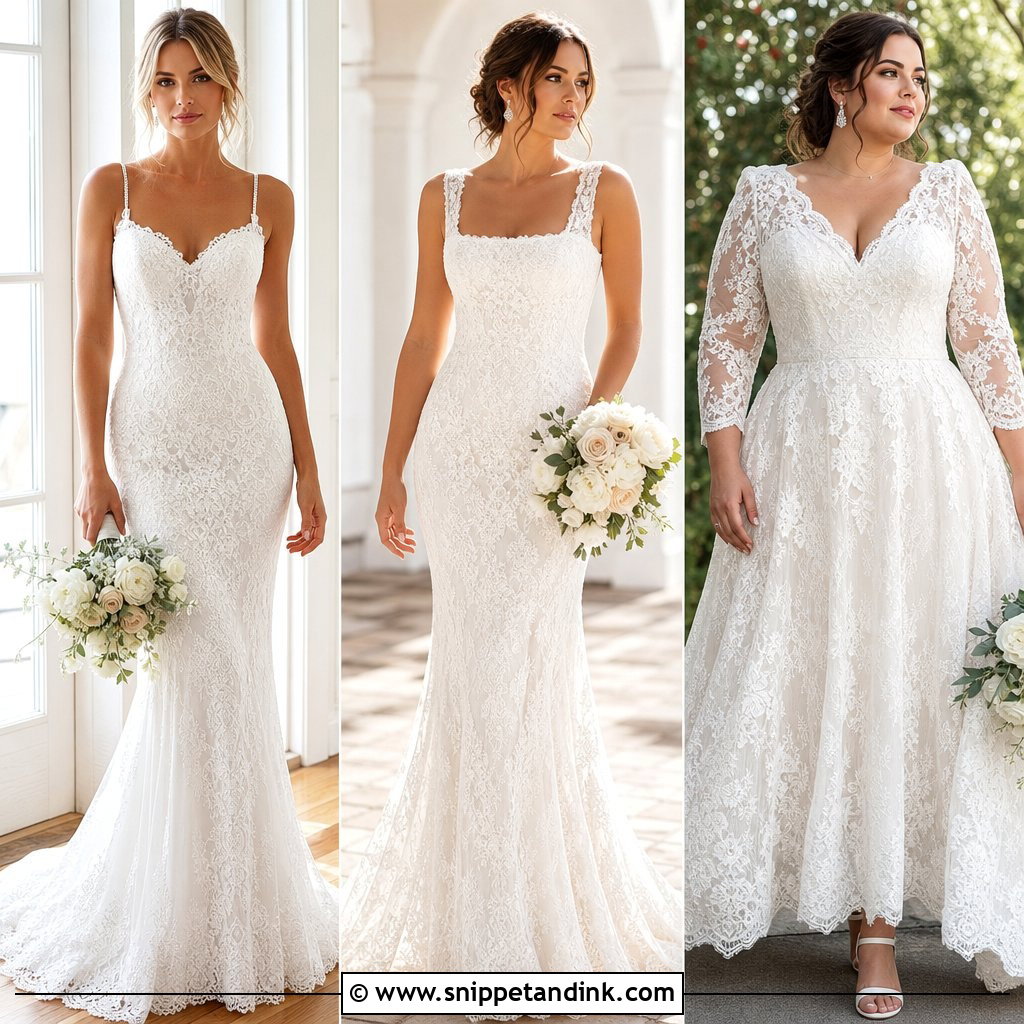
8. Square Neck Lace Bridal Dress
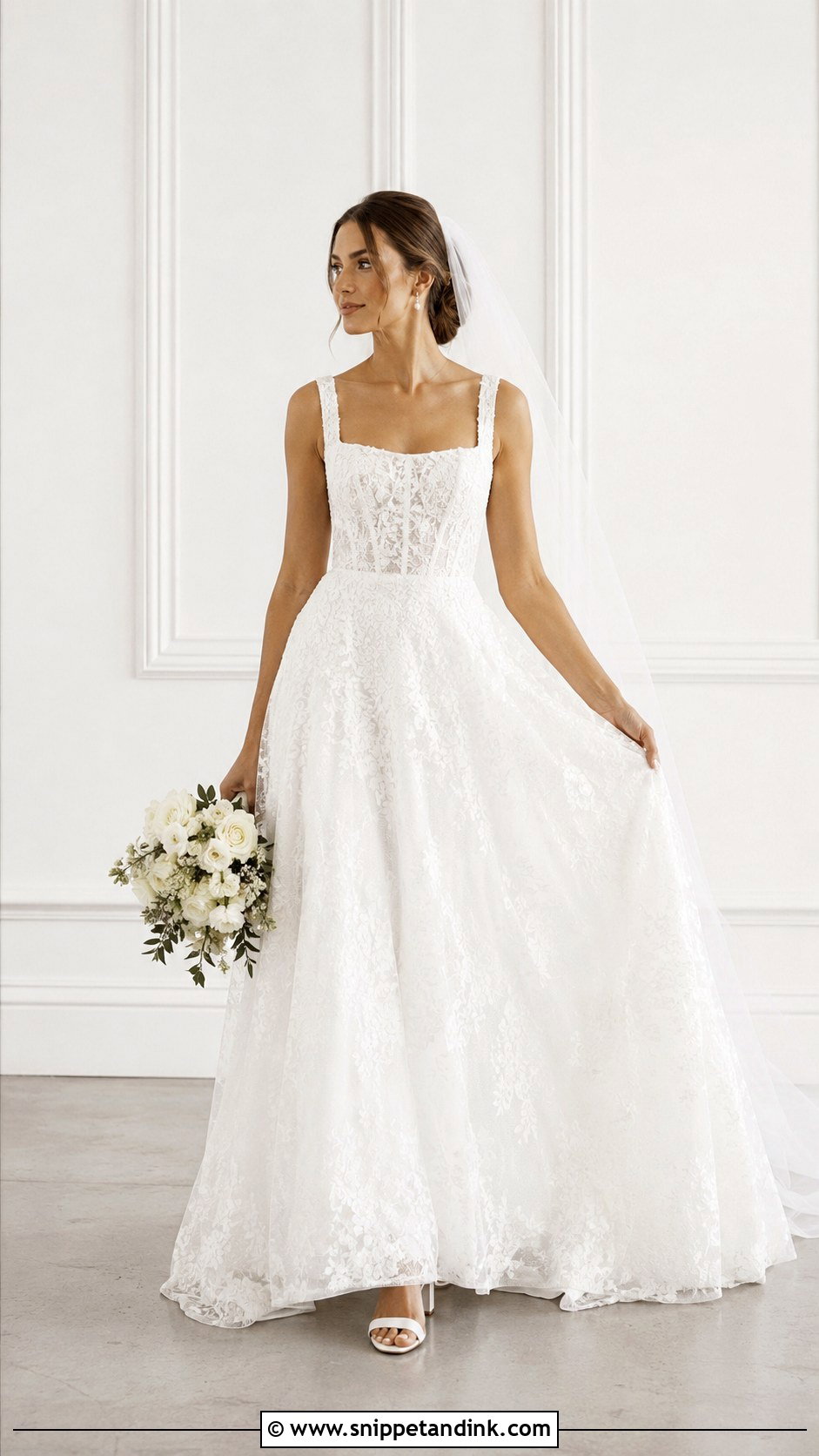
Square necklines frame the collarbone with a clean geometric edge and look sharp with wide straps or fitted long sleeves. That edge has to lie flat. If the corners bow away from the chest when you lean forward, the fix is usually at the side seams, not the neckline itself. Floral lace keeps the shape romantic; geometric lace pushes it modern. Pearl earrings and block heels suit it, with a neat bun or a soft half-up style, and a plain veil stops the texture getting busy.
9. Lace Bridal Dress With Corset Bodice
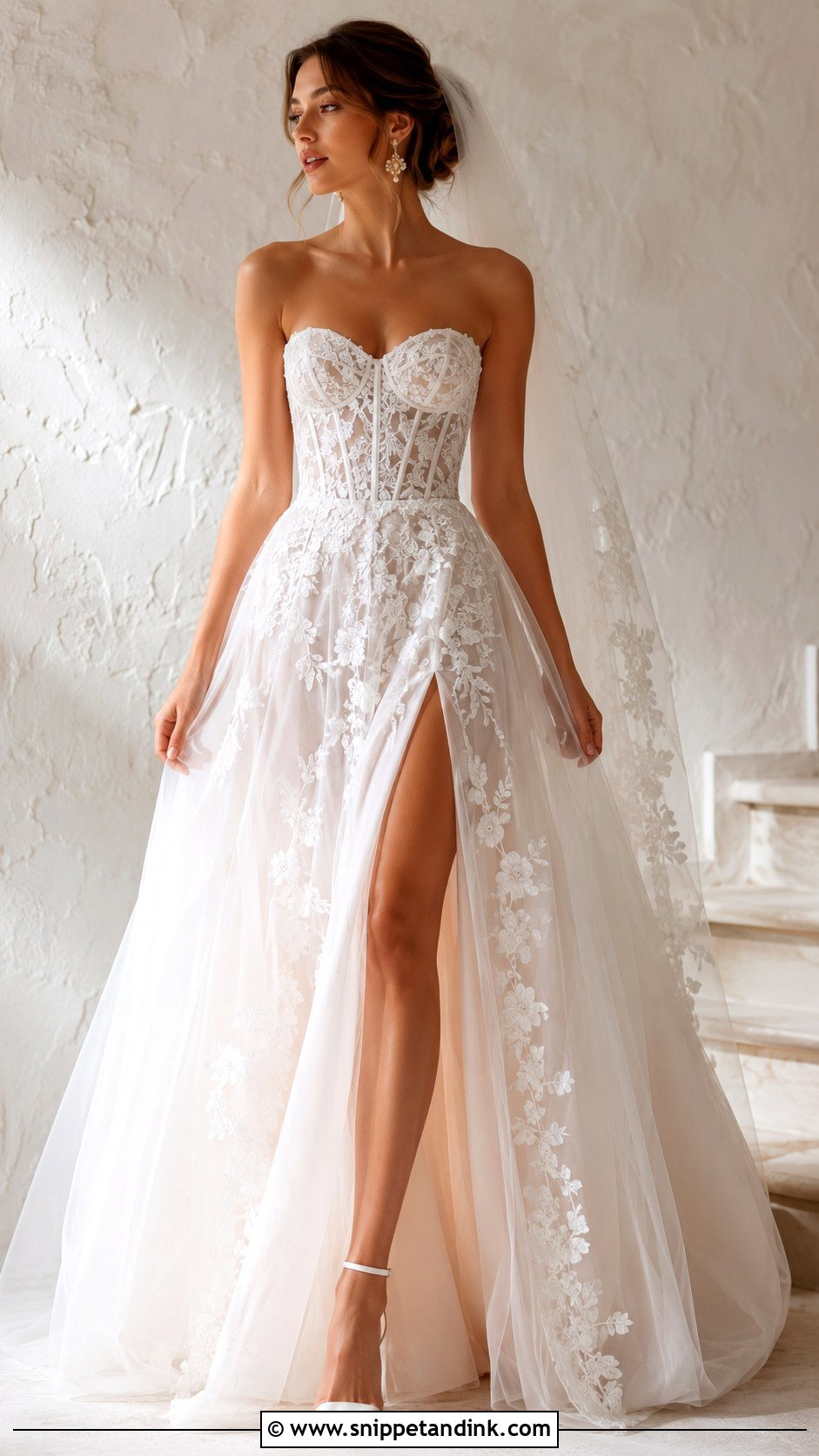
Corset bodices are back, often with visible boning or sheer panels so the structure becomes part of the design. Because the top is so detailed, I balance it with a soft skirt in layered tulle, organza or light crepe and keep jewelry minimal. What brides underestimate is breathing room. A corset laced for a standing fitting feels very different after a three-course dinner, so I fit them seated as well as standing and leave a little ease across the ribs.
10. Lace Ball Gown Bridal Dress
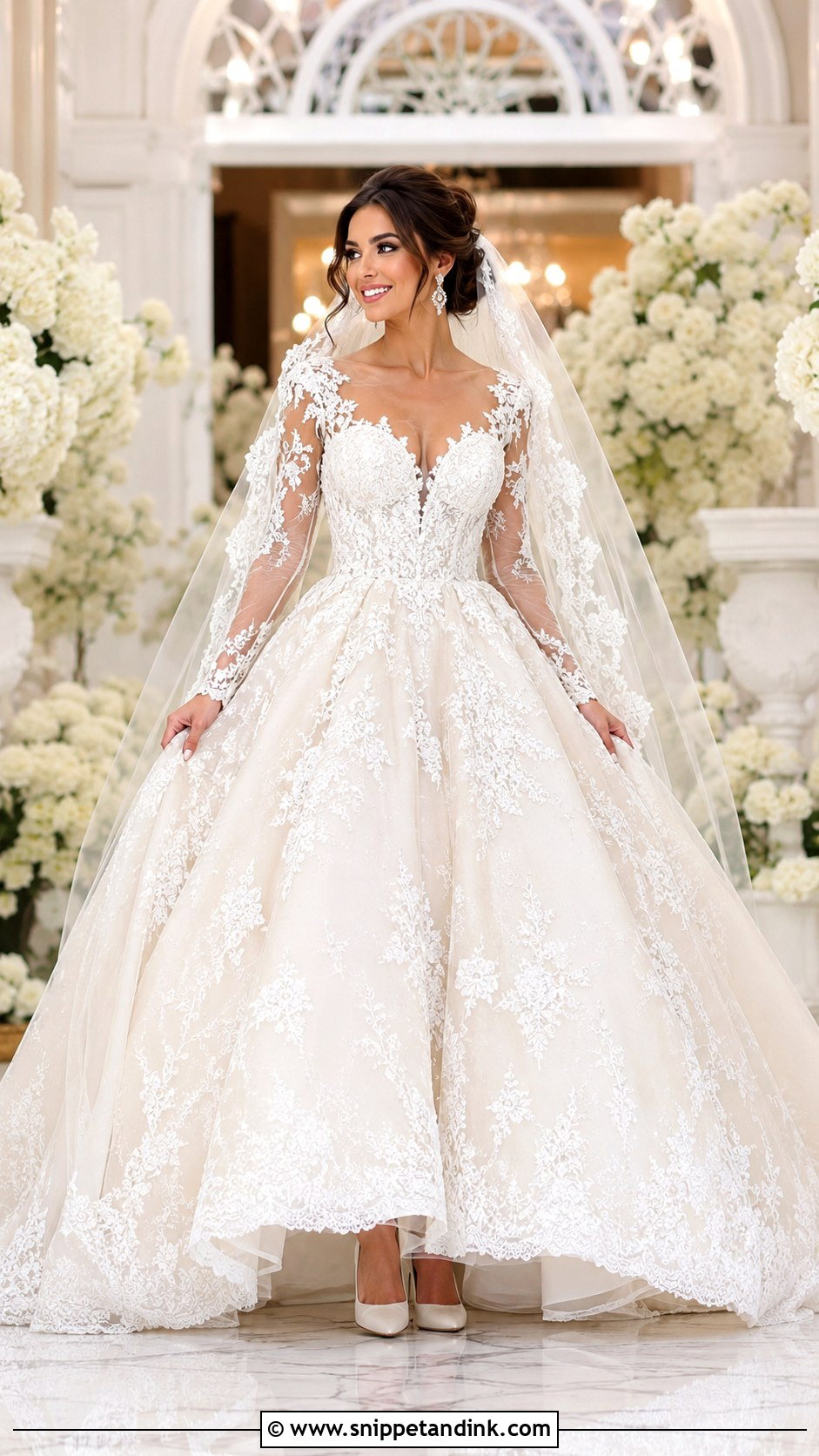
A lace ball gown is all about the entrance. The volume comes from layers of tulle, sometimes with a hoop or crinoline underneath, and the lace sits on top as texture. To keep it from feeling heavy, look for lace that’s concentrated on the bodice and thins across the skirt, and a skirt that sways when you walk rather than standing stiff. A clean hairstyle balances the fullness. Grand halls and estates suit it. A small restaurant or a narrow aisle does not, and I’d tell you so before you fall for one.
11. Lace Sheath Bridal Dress
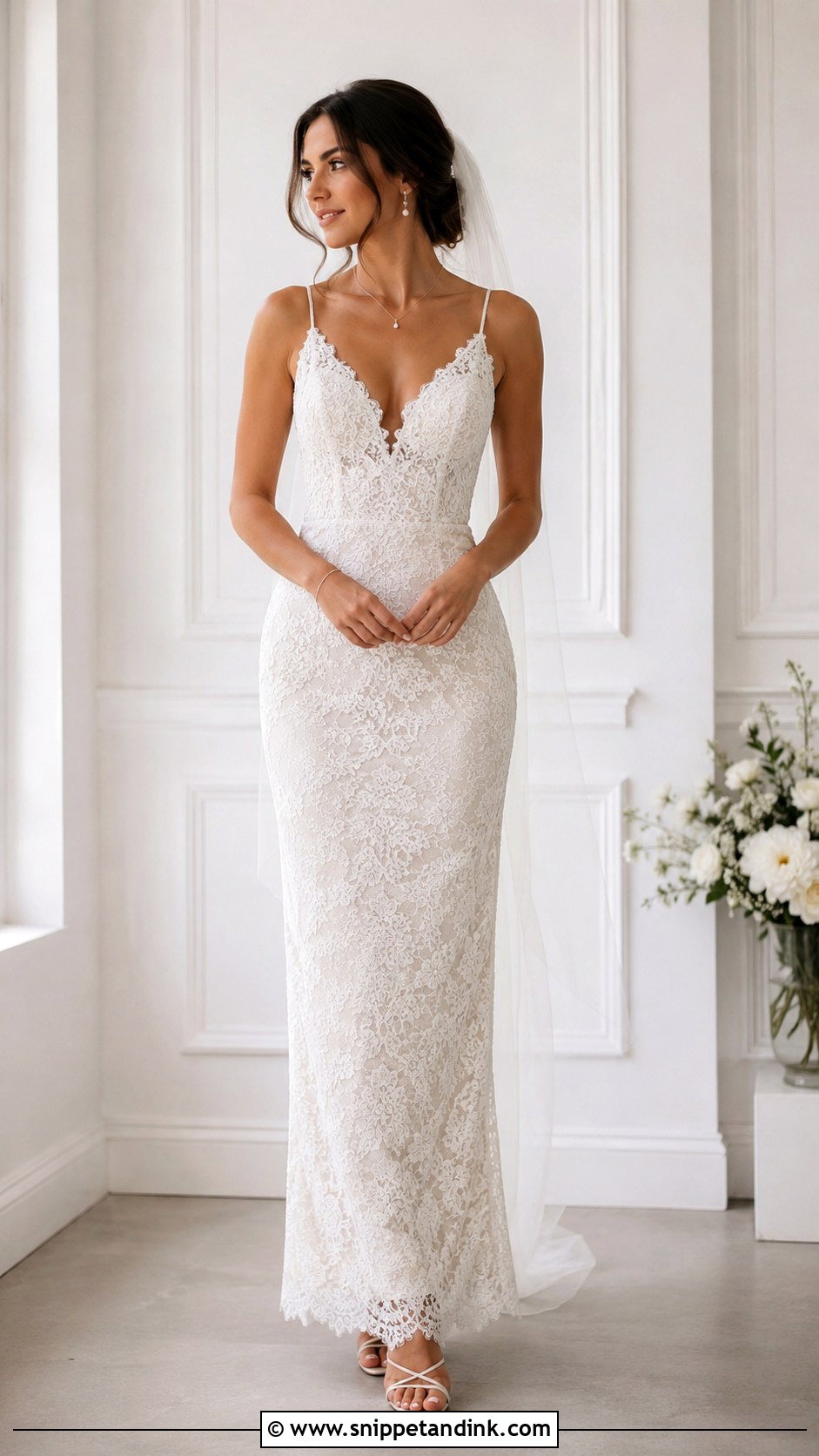
A lace sheath bridal dress follows the body without a mermaid’s flare, so it moves easily and packs well for a destination trip. Light lace over crepe gives a clean shape. The catch is that a narrow skirt hides nothing: a wrinkle across the hips or a pull at the zip shows in every photo, so I spend more fitting time on sheaths than their simplicity suggests. Strappy heels, a low-set veil and fine jewelry finish it for a small wedding or a modern venue.
12. Lace Slip Bridal Dress
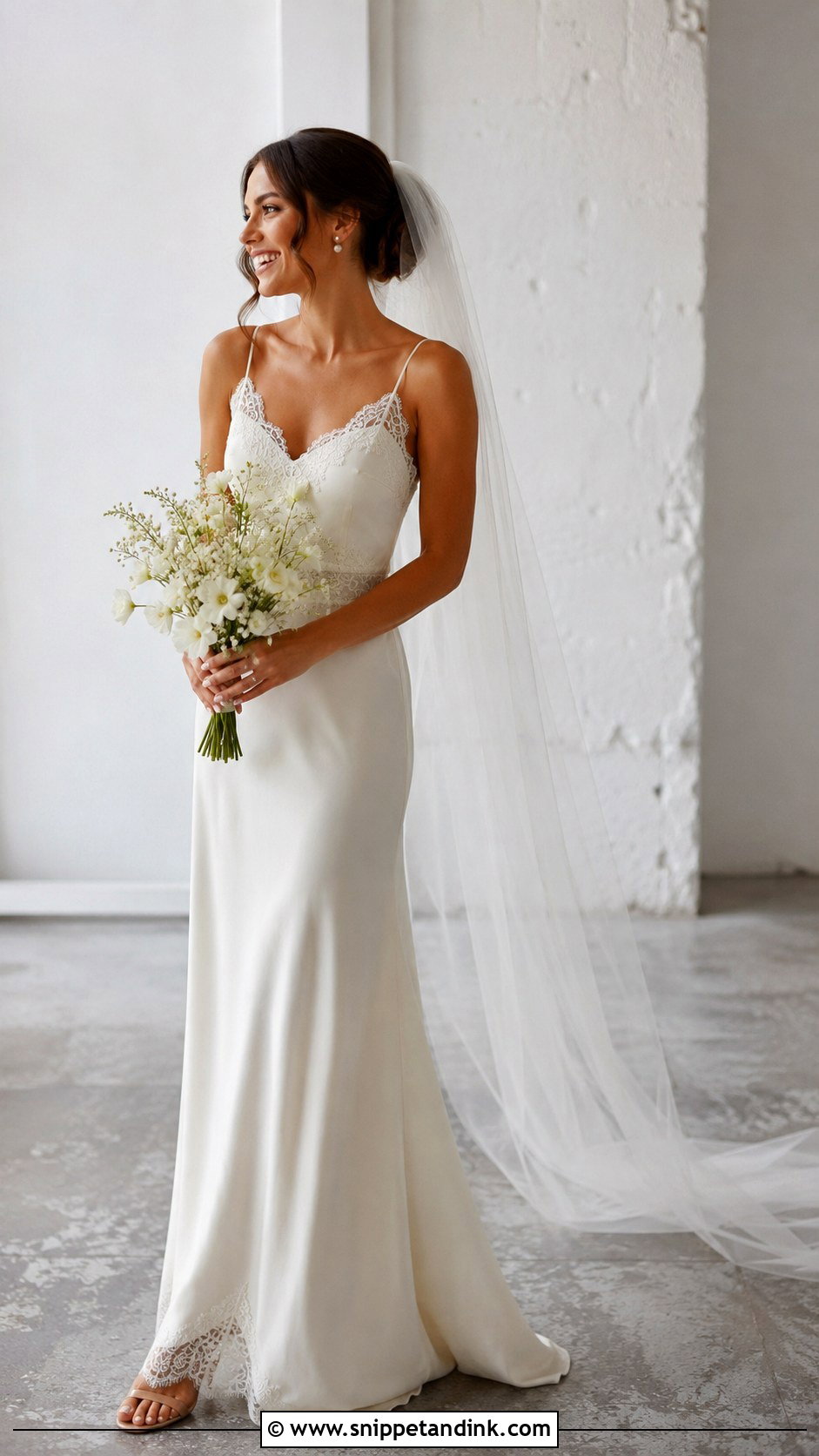
Slip dresses with lace trim or lace panels are the most minimal choice on this list, and the fabric under the lace is often a bias-cut satin or silk. Bias cut drapes softly but also shows everything beneath it, so I bring up underwear and a secure lining at the very first appointment. Barely-there sandals, simple studs and a soft updo or natural waves keep it relaxed. Very light slips can cling in heat, which is worth testing before a summer or city wedding.
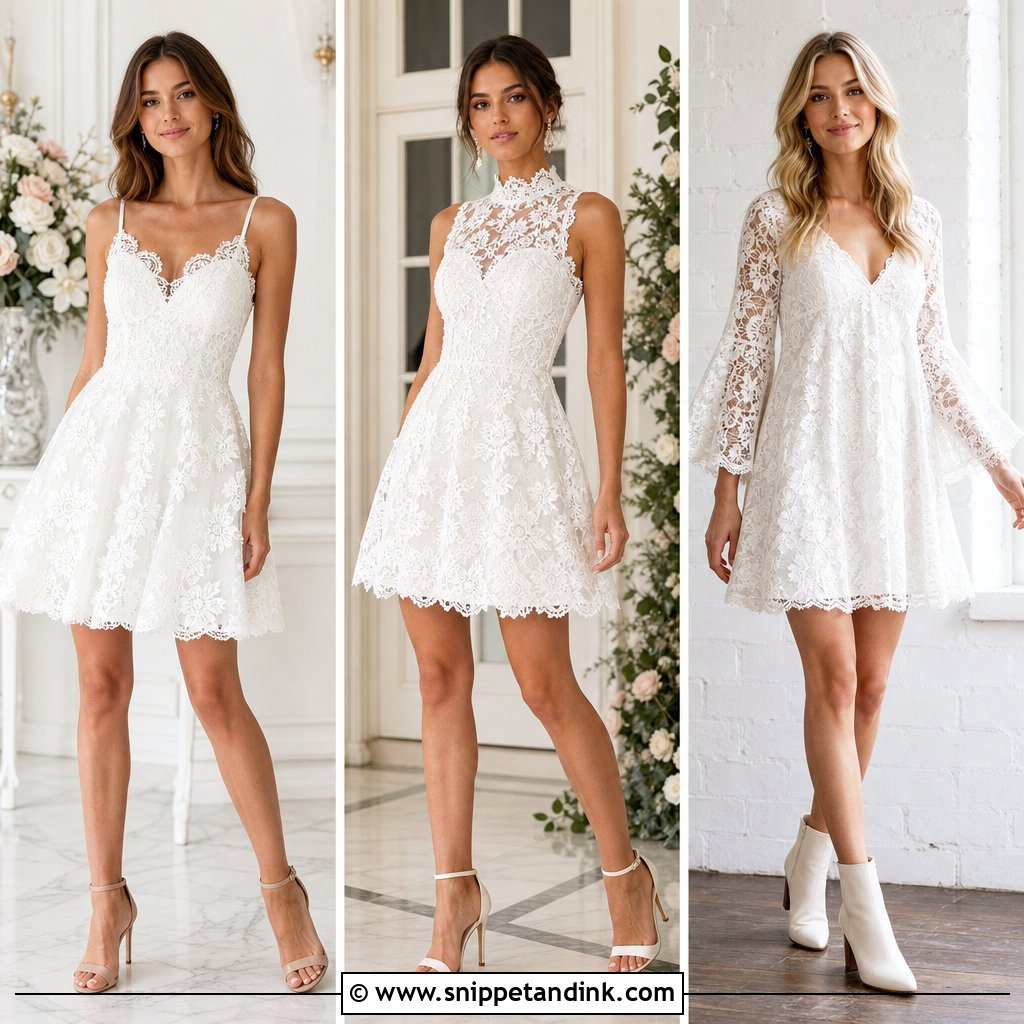
13. Lace Tea Length Bridal Dress
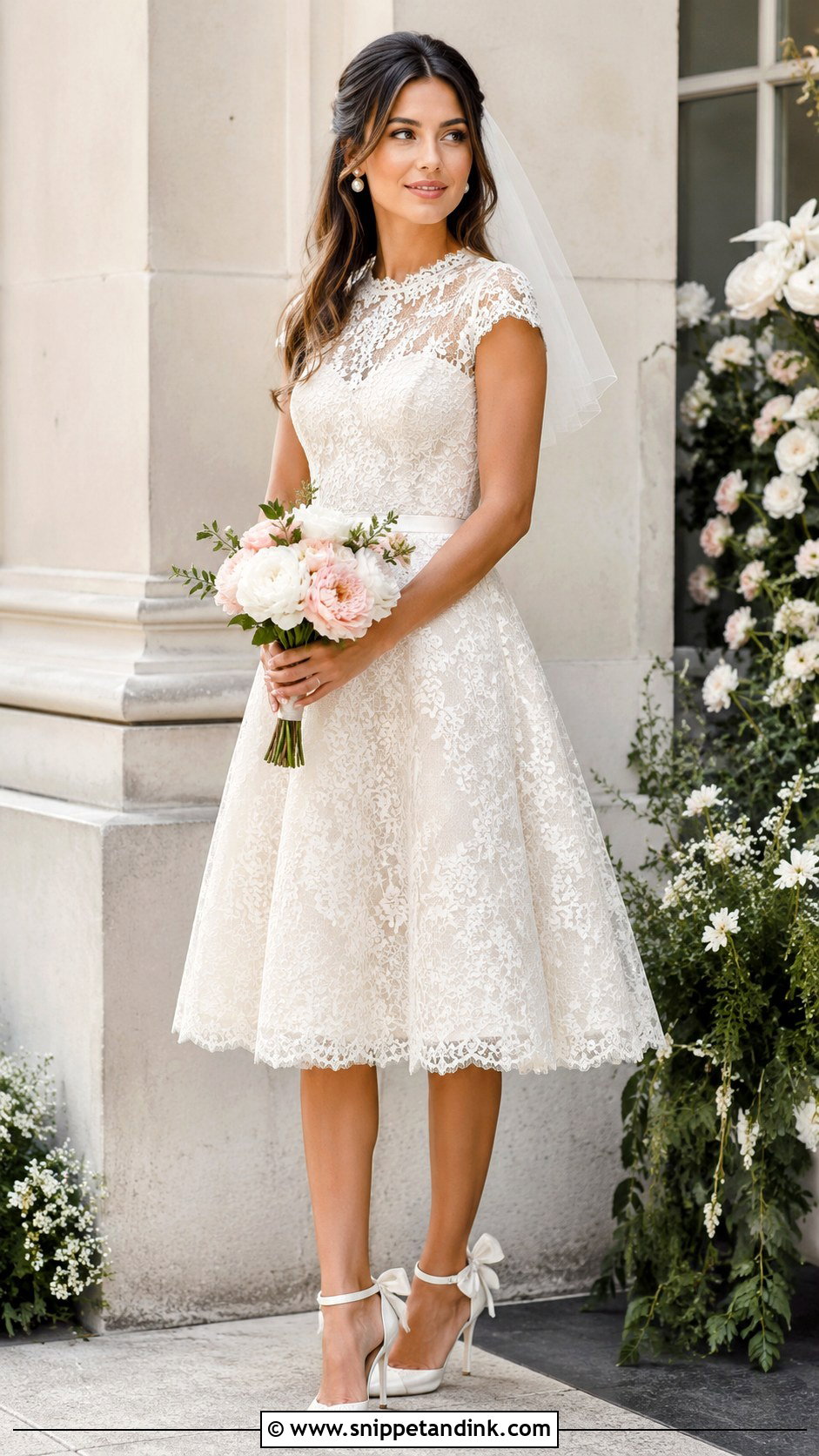
Tea length falls between knee and ankle, which puts your shoes on show and means you never manage a train. Pointed pumps, satin bow heels or slingbacks all work. A short veil and a rosy lip give it a retro feel; I’d stop there, because adding gloves, a hat and a petticoat tips it into fancy dress. It suits courthouse ceremonies, brunch weddings and second looks. Mark the hem with your actual wedding shoes on, since half an inch changes the proportions more than you’d think.
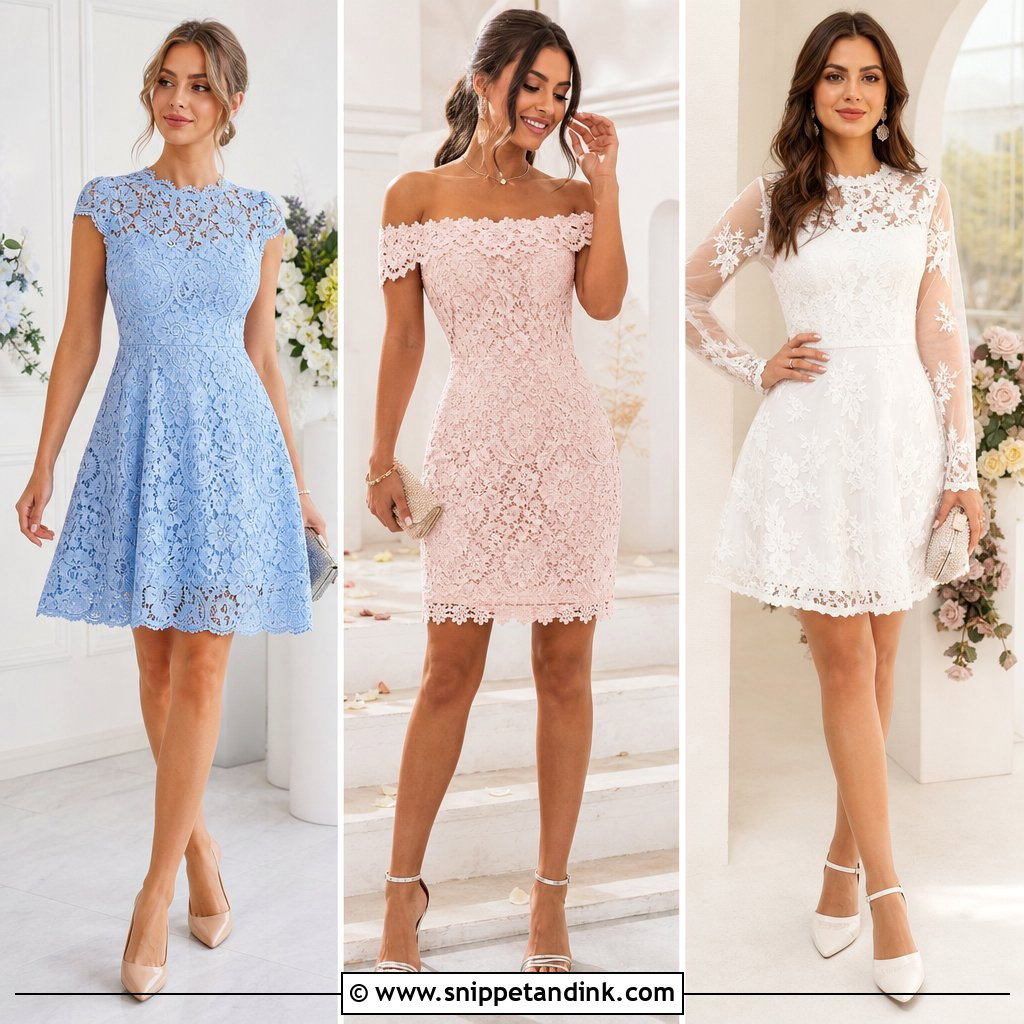
14. Lace Mini Bridal Dress
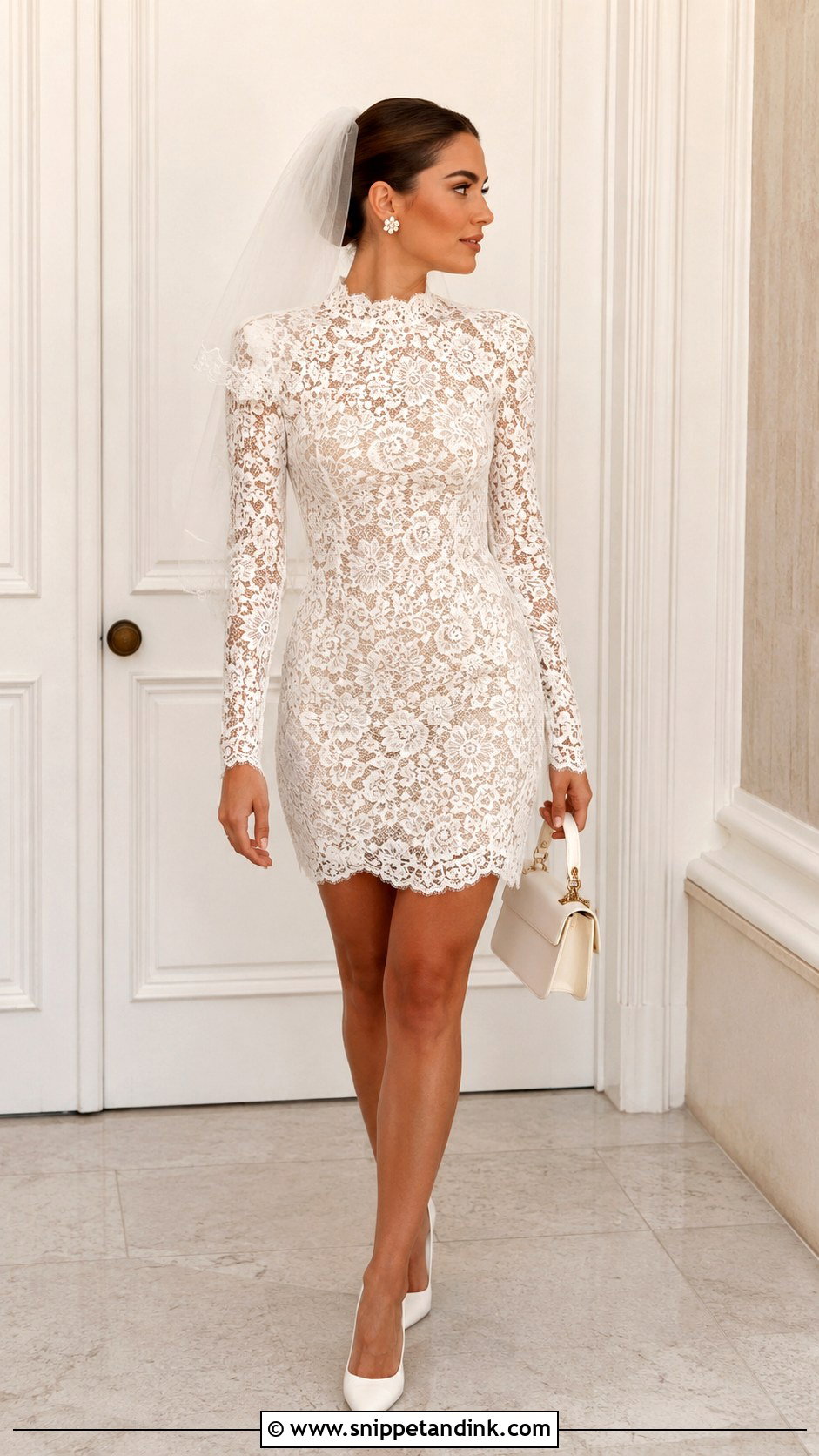
A lace mini works for a civil ceremony, a reception change or the after-party, but it has to look deliberate. I steer toward structured lace, long sleeves or a tailored cut rather than a soft lace that could pass for a party dress. Sleek pumps and a short veil or bow mark it as bridal, and sheer tights or a cropped bridal jacket help in a cold venue. Sit down in it before you buy. Short lace hems ride up more than you’d expect on a low reception chair.

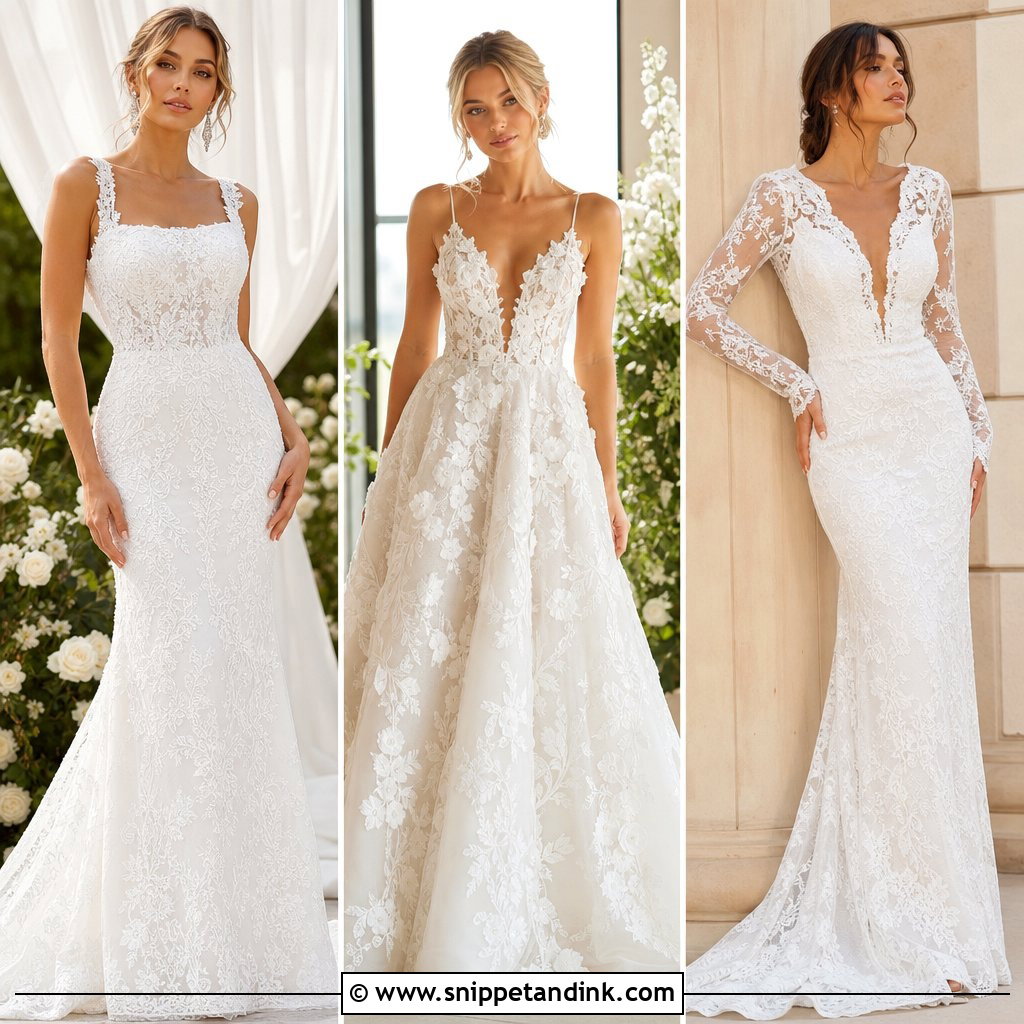

15. Lace Bridal Dress With Detachable Skirt
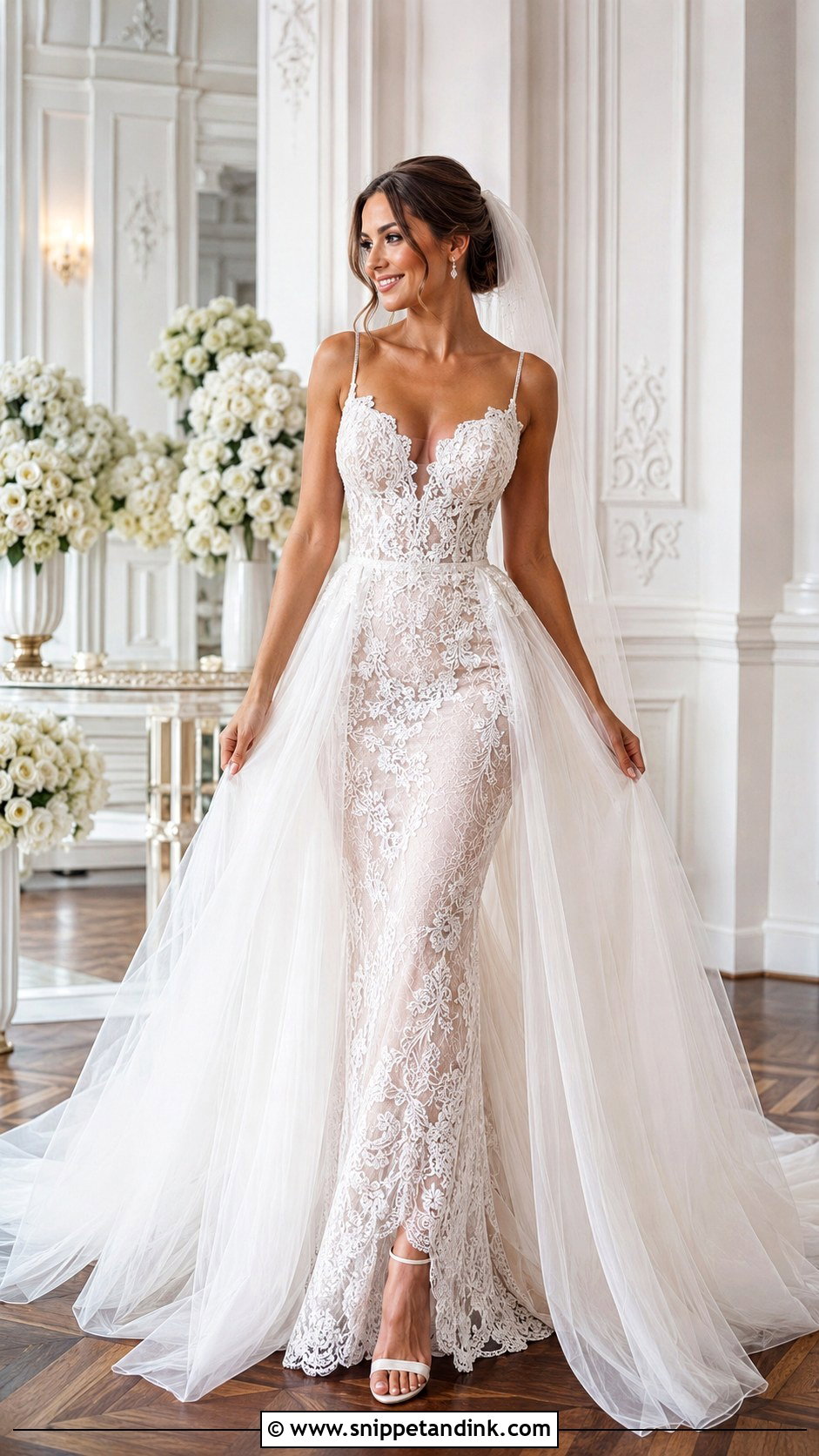
A detachable skirt gives you a fuller ceremony silhouette with a slim reception dress underneath. I always test the attachment before the wedding, whether it’s hooks, snaps or a hidden zip, and time how long it takes someone other than me to undo it. Show a bridesmaid at the final fitting and let her practise twice. Keep heels, earrings and veil the same for both versions so the two looks belong together, and plan where that bulky skirt goes once it’s off.
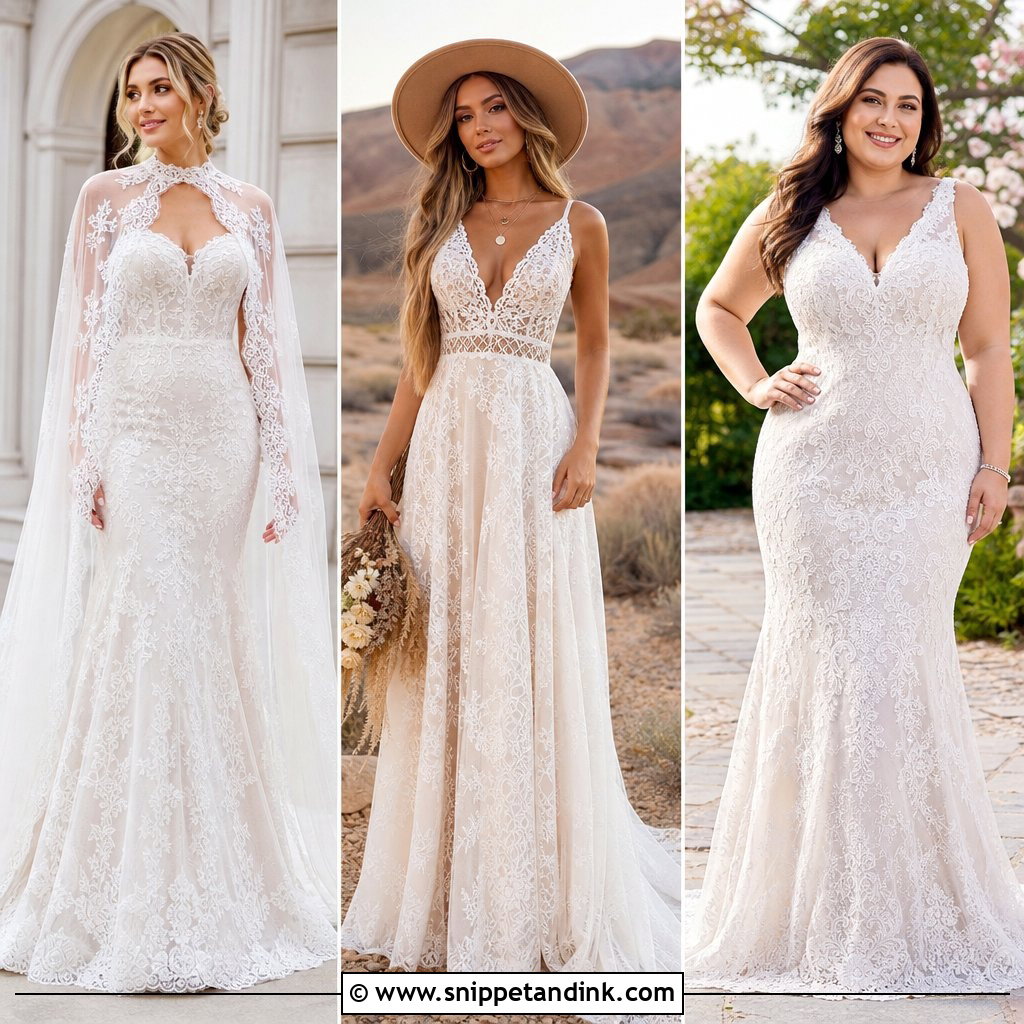
16. Lace Bridal Dress With Cape
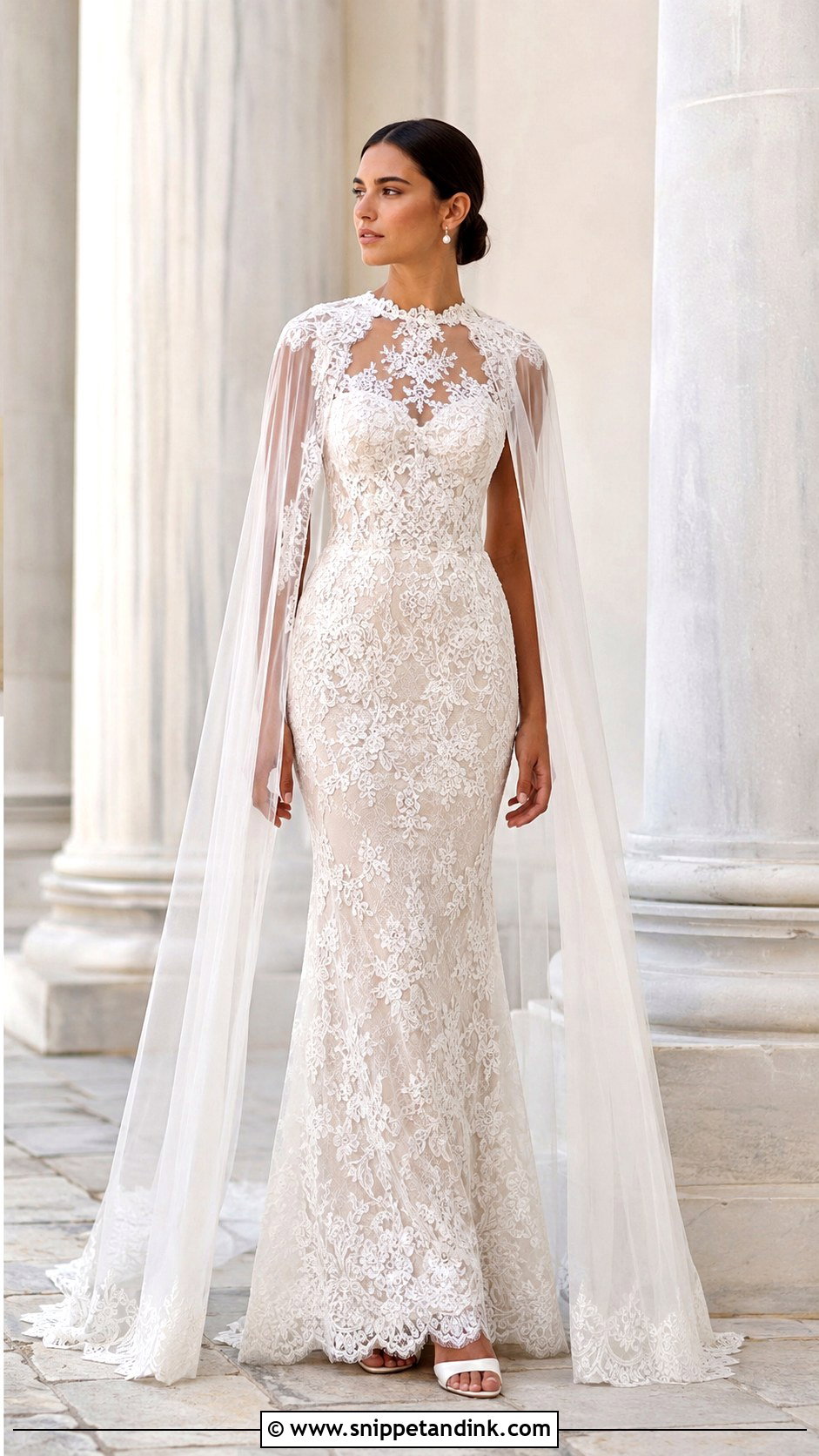
Capes add back interest and a little coverage, and they can replace a veil entirely. A lace cape hangs its weight from the shoulder seams, so a full lace cape on a strapless dress needs secure attachment points or it drags the bodice backward. Sheer tulle with lace trim is far lighter. Keep the hair simple so the cape stays visible, and match its length to the setting: a floor-sweeping cape outdoors collects grass and leaves. In cool weather and formal rooms it earns its place.
17. Lace Bridal Dress With Sleeves And Open Back
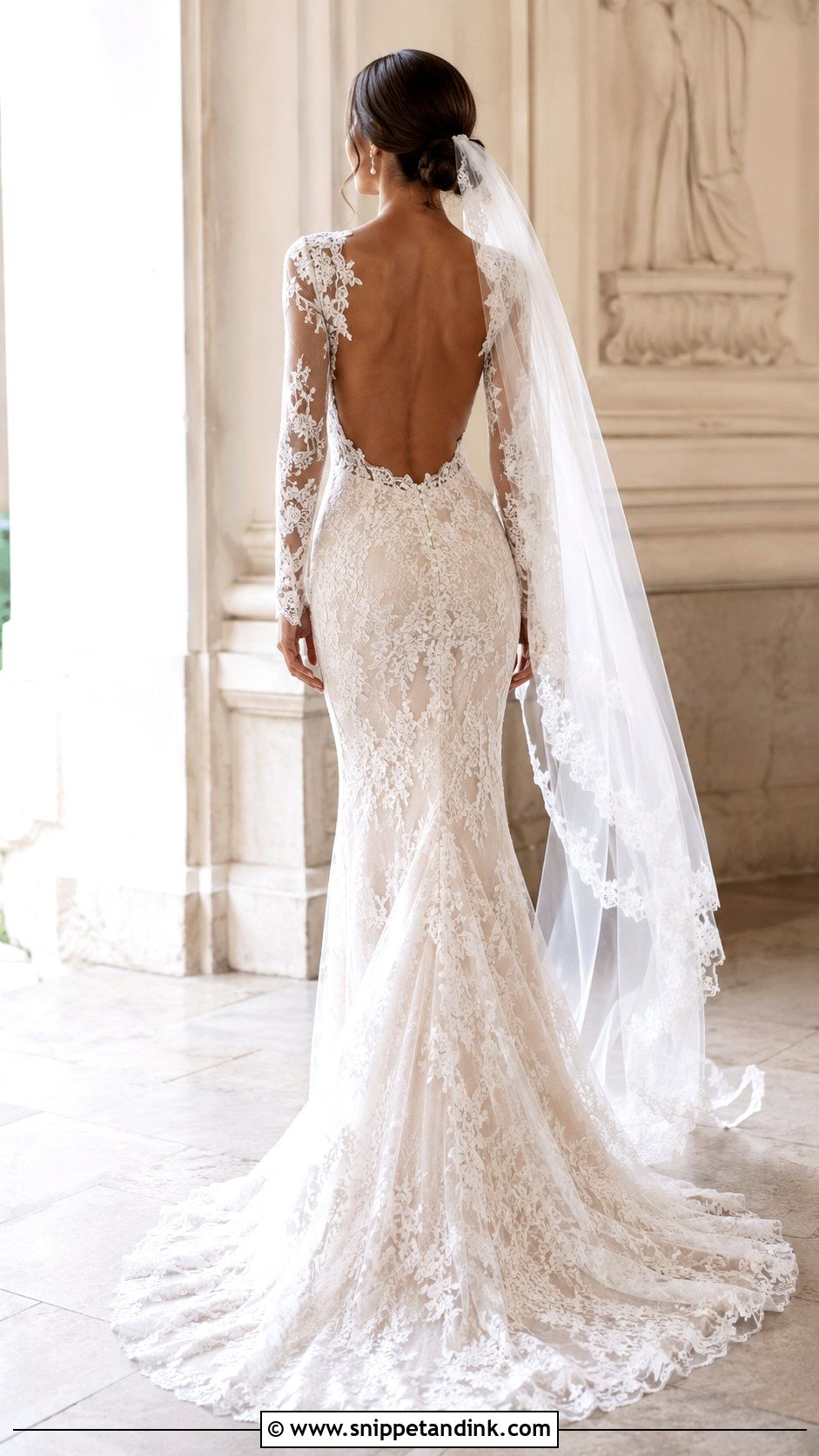
Sleeves with an open back read classic from the front and surprising from behind, which is exactly the view guests have during the ceremony. Sheer sleeves pair well with a low scoop, keyhole or V back. The opening must fit closely, and if it gaps when you raise your arms, the sleeves are pulling on it and need adjusting. I place the veil comb below the bun so the lace back isn’t hidden, and back-drop earrings echo the line.
18. Floral Lace Bridal Dress
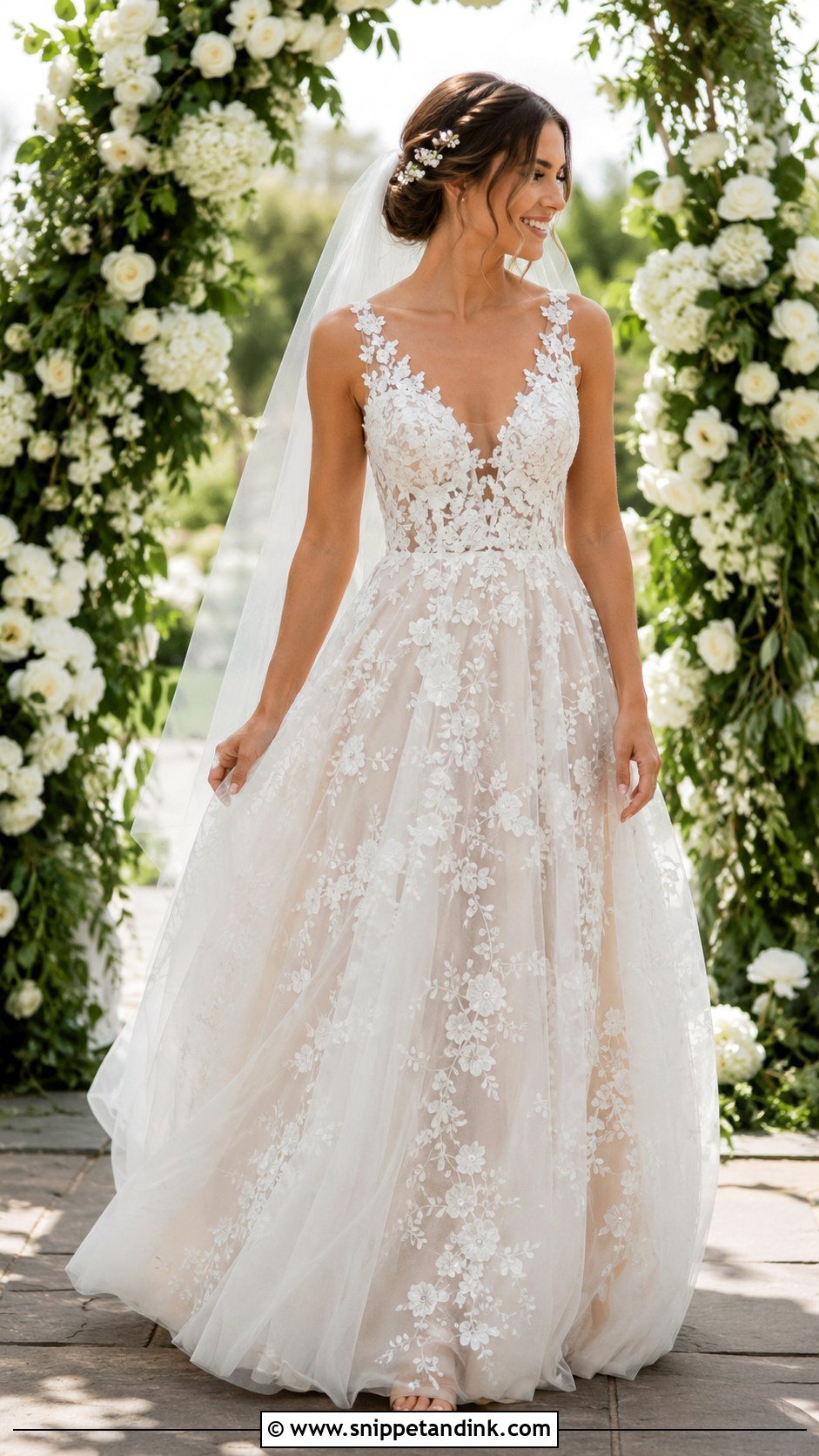
Floral lace runs from tiny flat flowers to raised 3D appliqués that seem to climb across the bodice. The bigger and more raised the flowers, the more they catch, so I warn brides about bouquet wire, bracelet clasps and hugs from guests in sequined dresses. Ivory over a blush or nude lining keeps it soft, with soft curls, pearl pins and neutral heels. Spring and garden weddings are its natural home, though heavier floral lace on a fuller lining carries well into autumn.
19. Chantilly Lace Bridal Dress
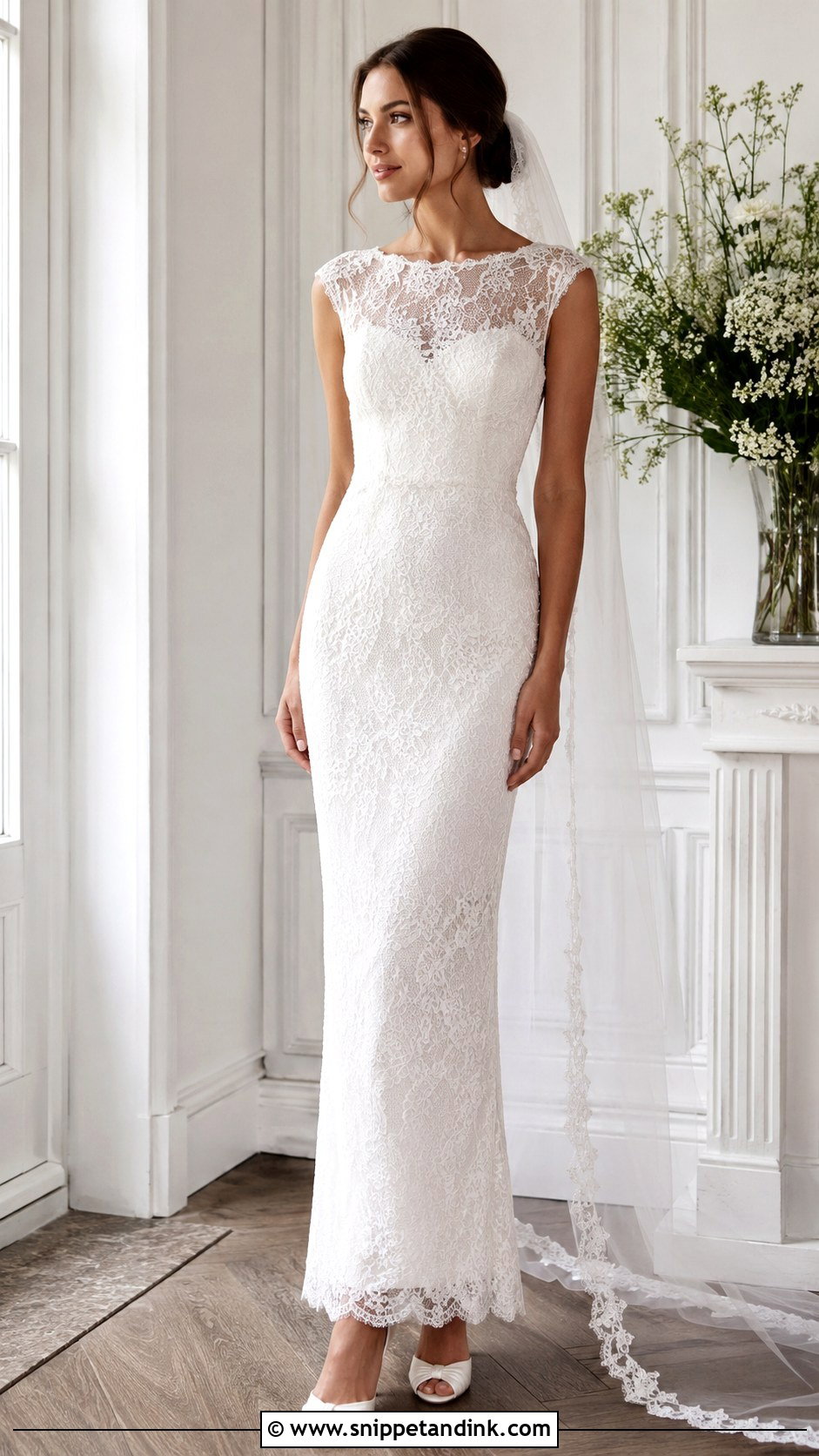
Chantilly is a fine, soft lace with a delicate outlined pattern, and it’s the one I suggest when someone wants texture without bulk. It drapes well over sheaths, A-lines and long sleeves. Because it’s so fine, it can snag on a rough bracelet or ring, and it won’t hide a bra line, so the lining does a lot of work. Small pearl earrings and a fine veil are all it needs. Anything oversized fights the detail.




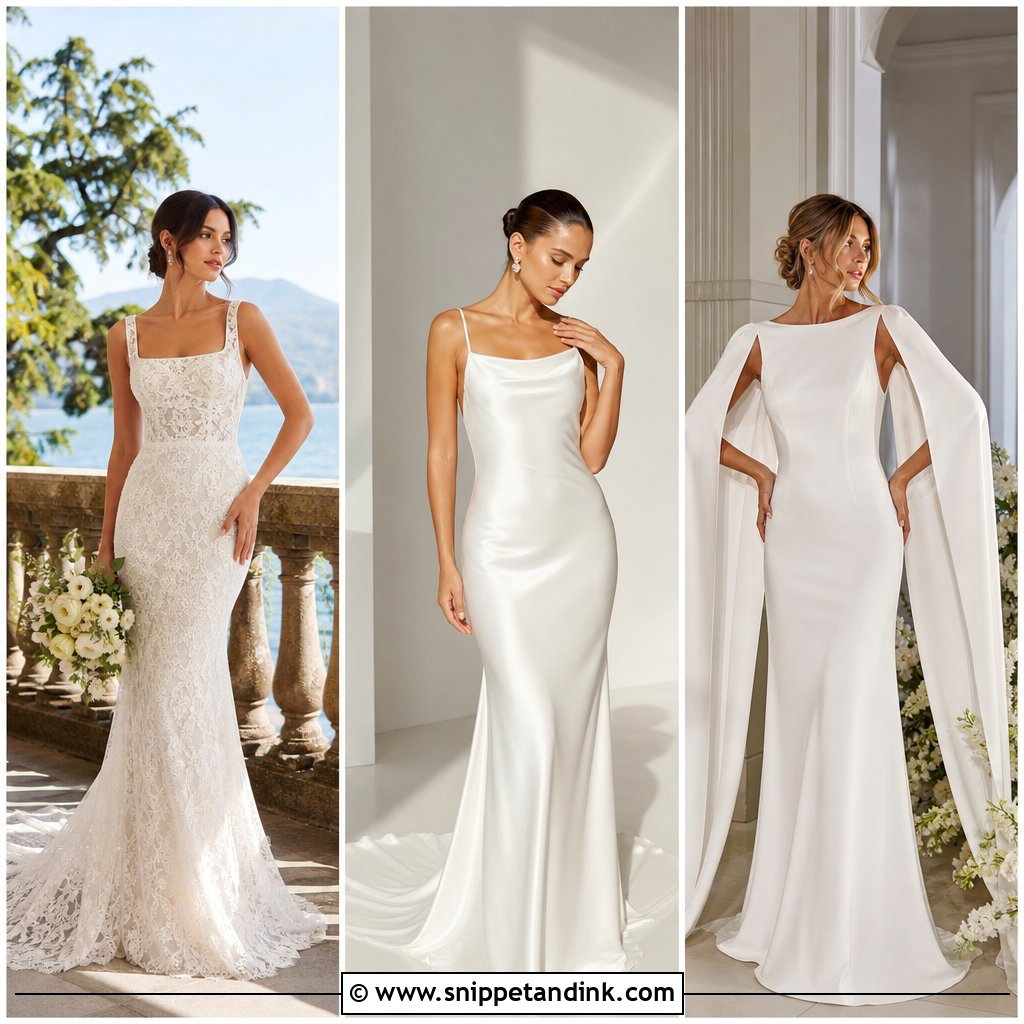
20. Alencon Lace Bridal Dress
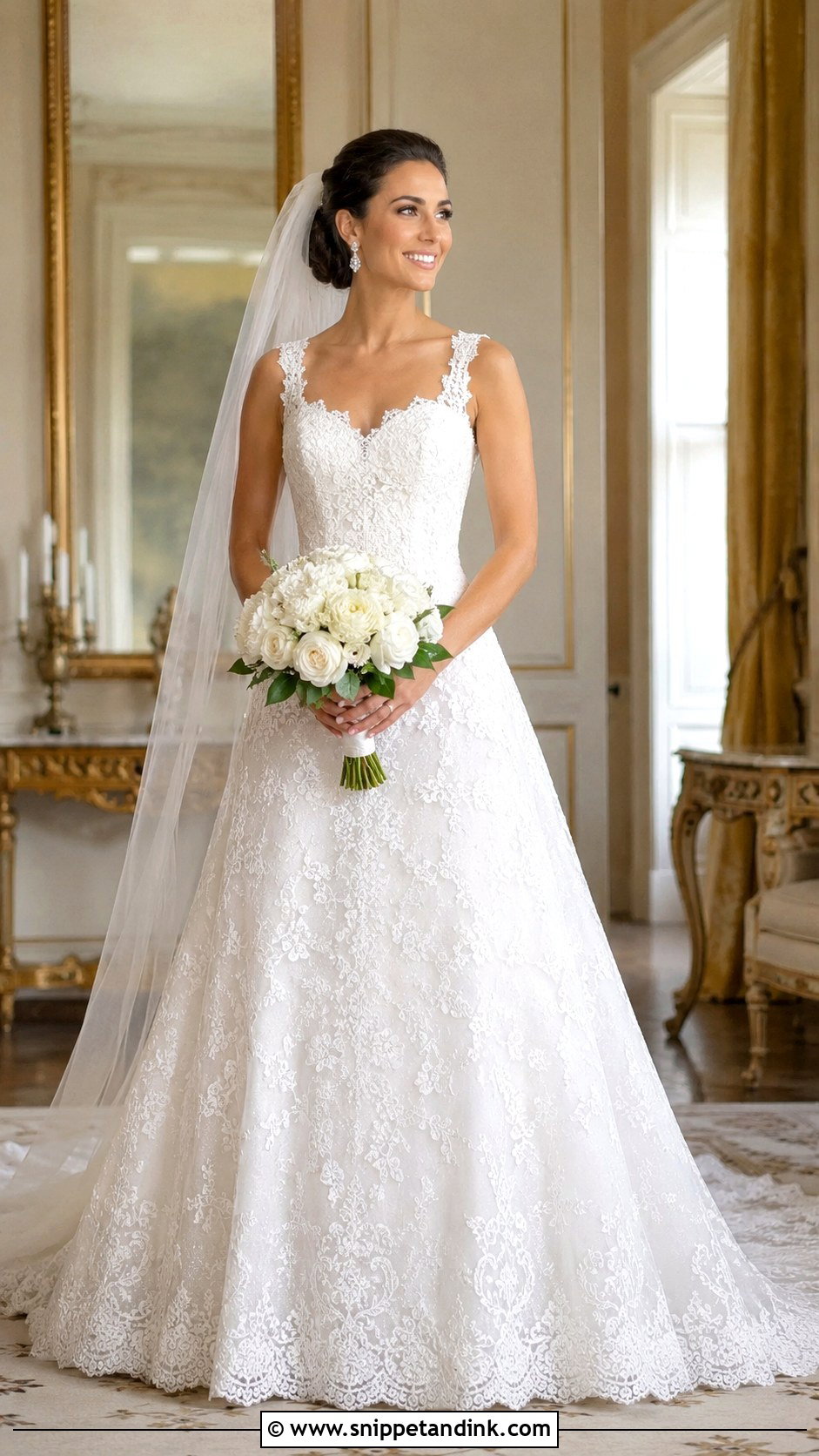
An Alencon lace bridal dress uses lace whose motifs are outlined in a raised cord, so the pattern stands proud of the net. That cord gives it body, which is why it suits fitted bodices and structured A-lines. It also lets a seamstress cut around individual motifs and re-appliqué them, so alterations on Alencon tend to disappear well. Lace this bold wants a simple bouquet and smooth hair, and its weight belongs at formal and estate weddings.
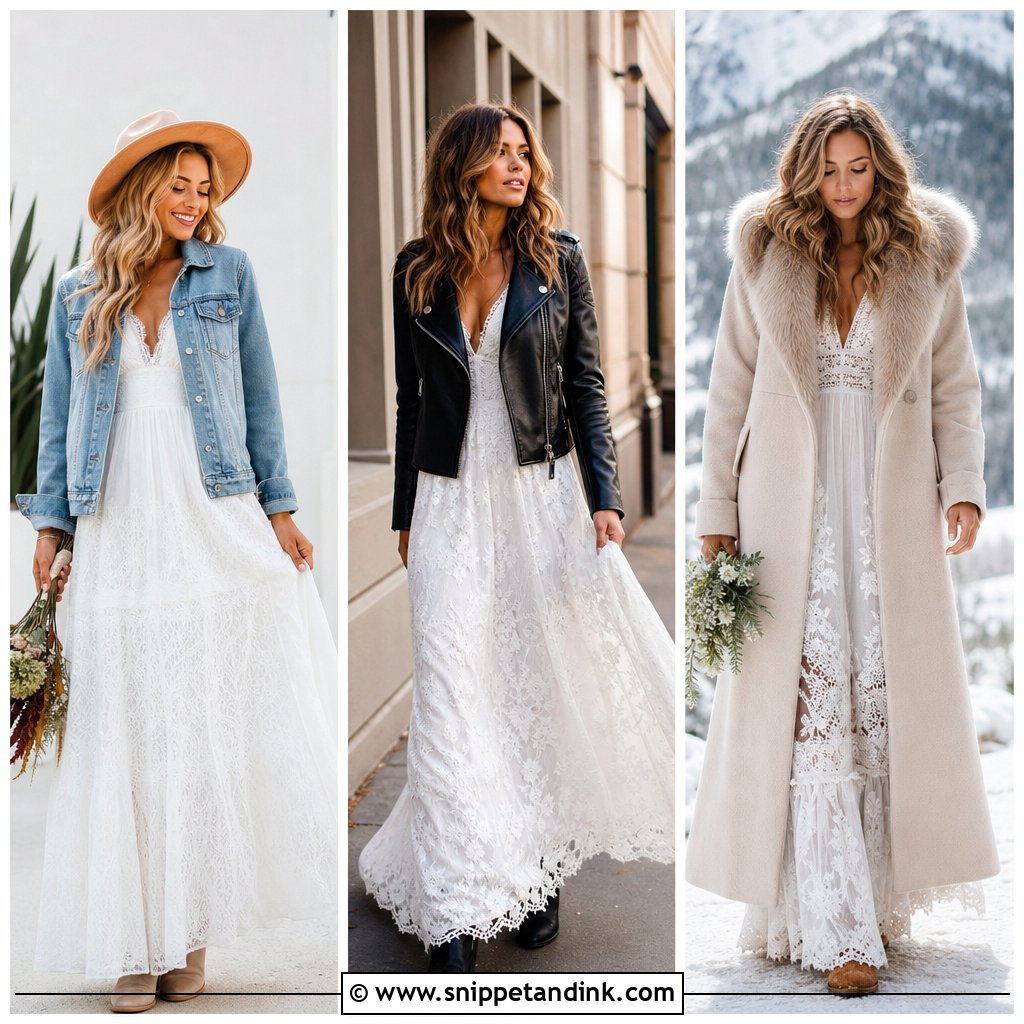
21. Boho Lace Bridal Dress
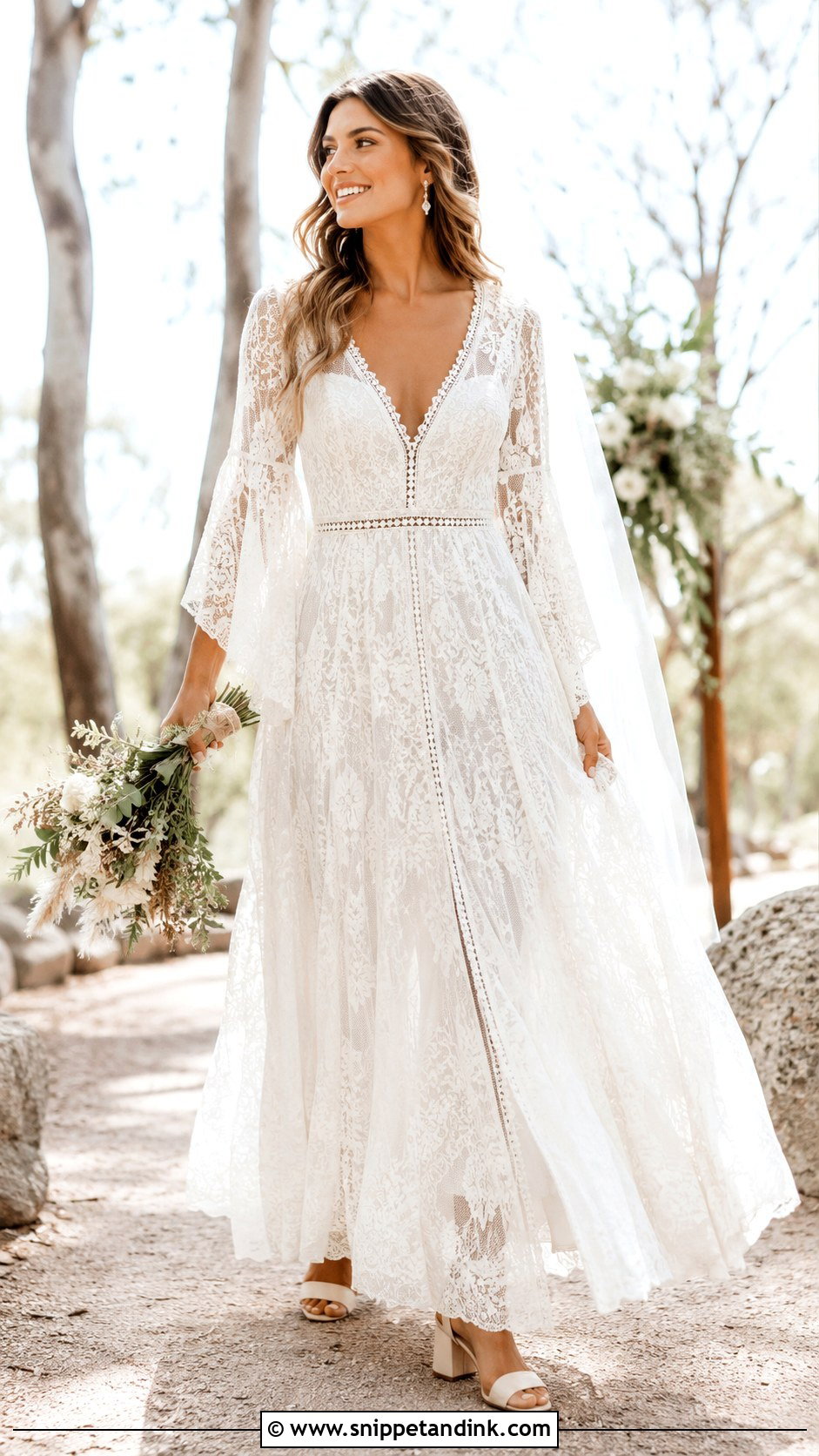
Boho lace is about lightness: soft lace, flowing sleeves, a skirt with movement, maybe an open back, and no heavy sparkle. Low block heels are worth it if the ceremony is on grass or sand, because stilettos sink. Loose waves and a hair comb finish it. I’d check the lining carefully here, since a polyester lining in desert or beach heat feels clammy by mid-afternoon, and cotton or a breathable blend is kinder to you.
22. Modern Lace Bridal Dress
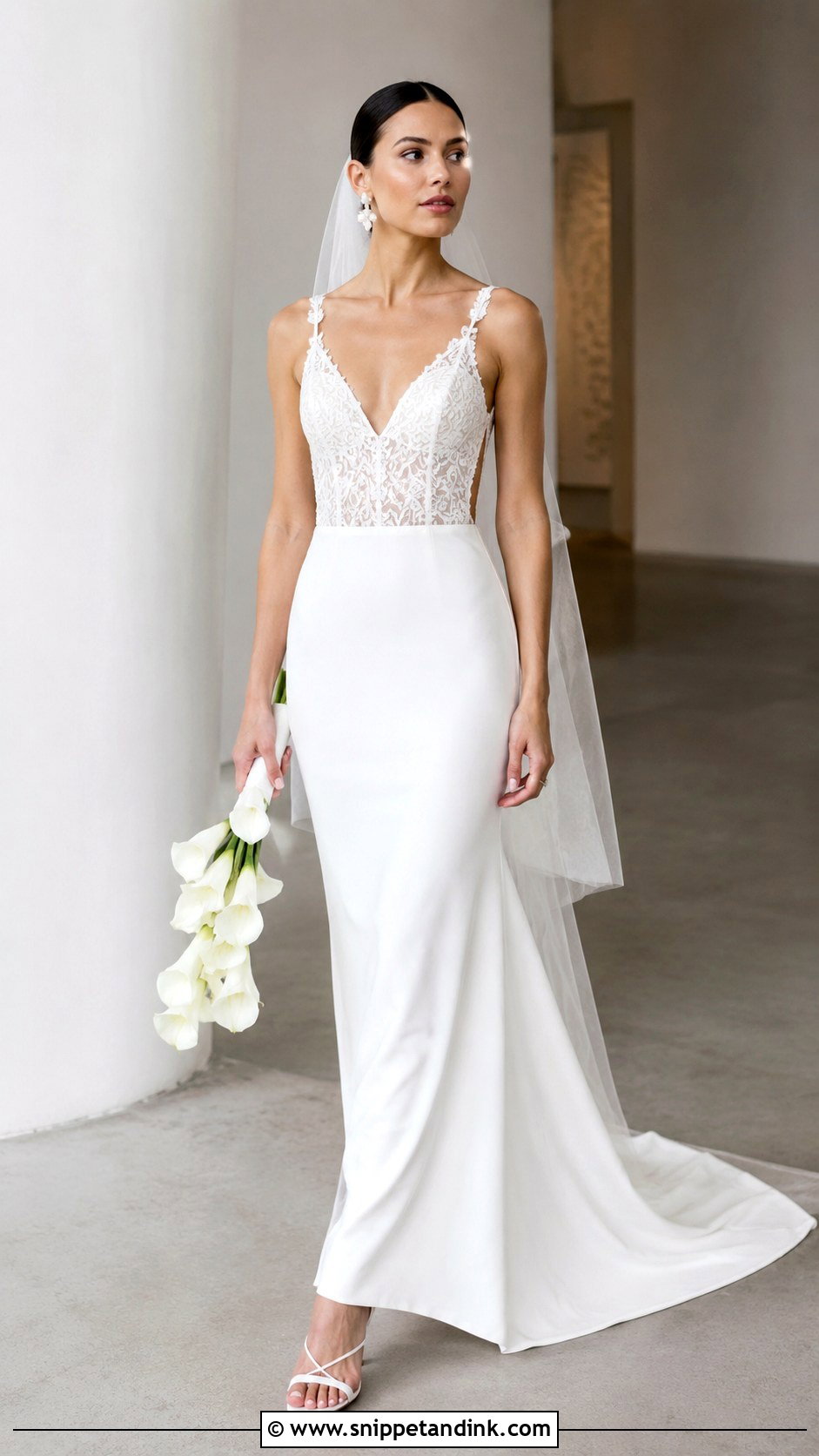
Modern lace gowns put lace in one deliberate place instead of everywhere: a lace bodice over a plain crepe skirt, sheer sleeves on a clean shape, a graphic panel. Pair it with sleek heels and sculptural earrings, and consider no veil at all. Where it goes wrong is too many ideas in one dress. When I edit a modern lace look, I remove one thing at a time until nothing feels decorative for its own sake. Galleries, lofts and city venues suit it.
23. Vintage Lace Bridal Dress
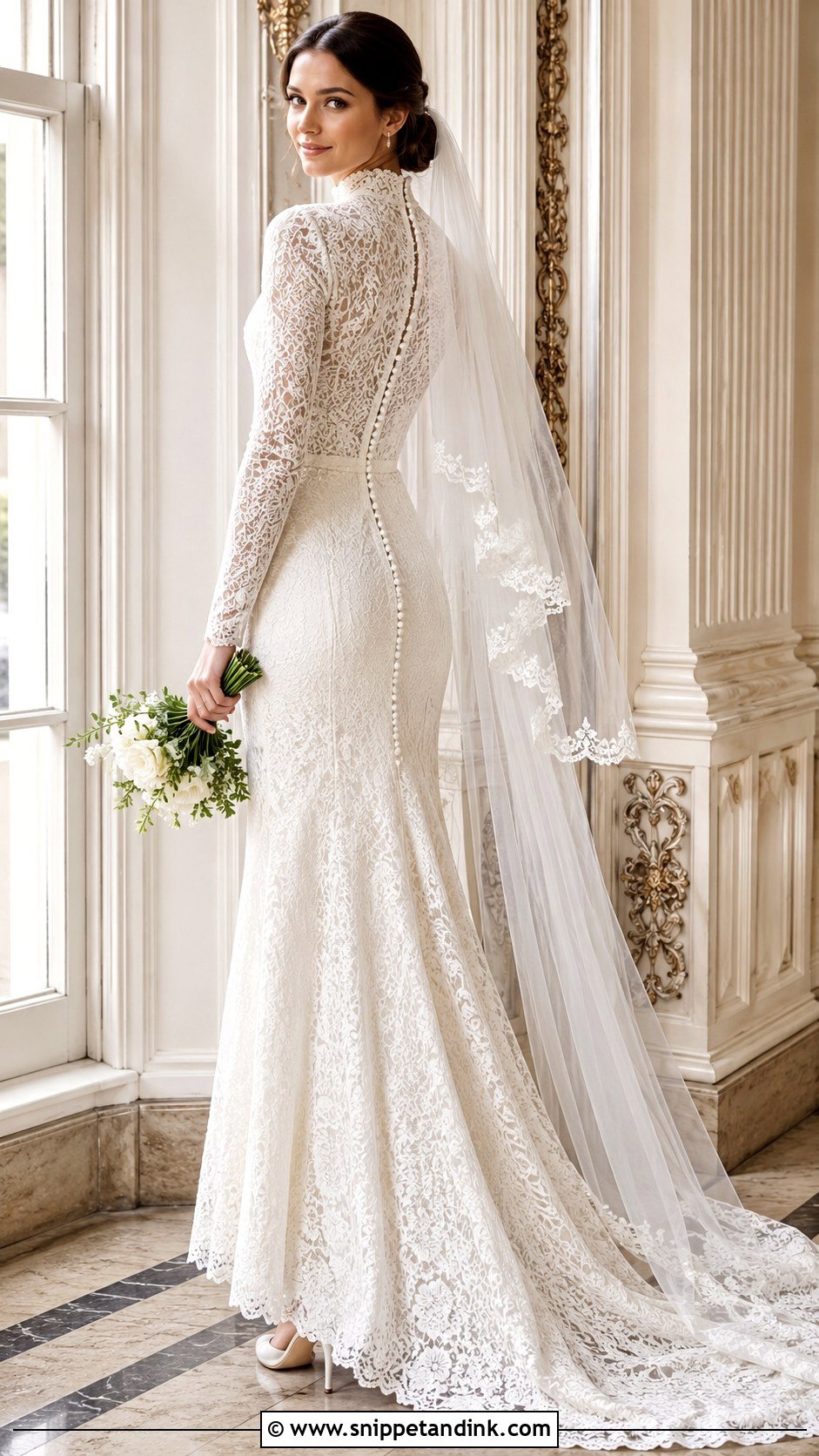
Vintage lace means high necklines, long sleeves, covered buttons, scalloped edges and warmer ivory tones. The trick is styling it in the present, with polished heels, clean makeup and a simple hairstyle rather than a themed costume. A plain veil often looks fresher than a lace-trim one unless the lace matches exactly. If you’re buying true vintage, examine it in daylight for yellowing, brittle threads and weak seams, and budget for a specialist repair, because old lace can split under the stress of alteration.
24. Lace Bridal Dress With Pearl Details
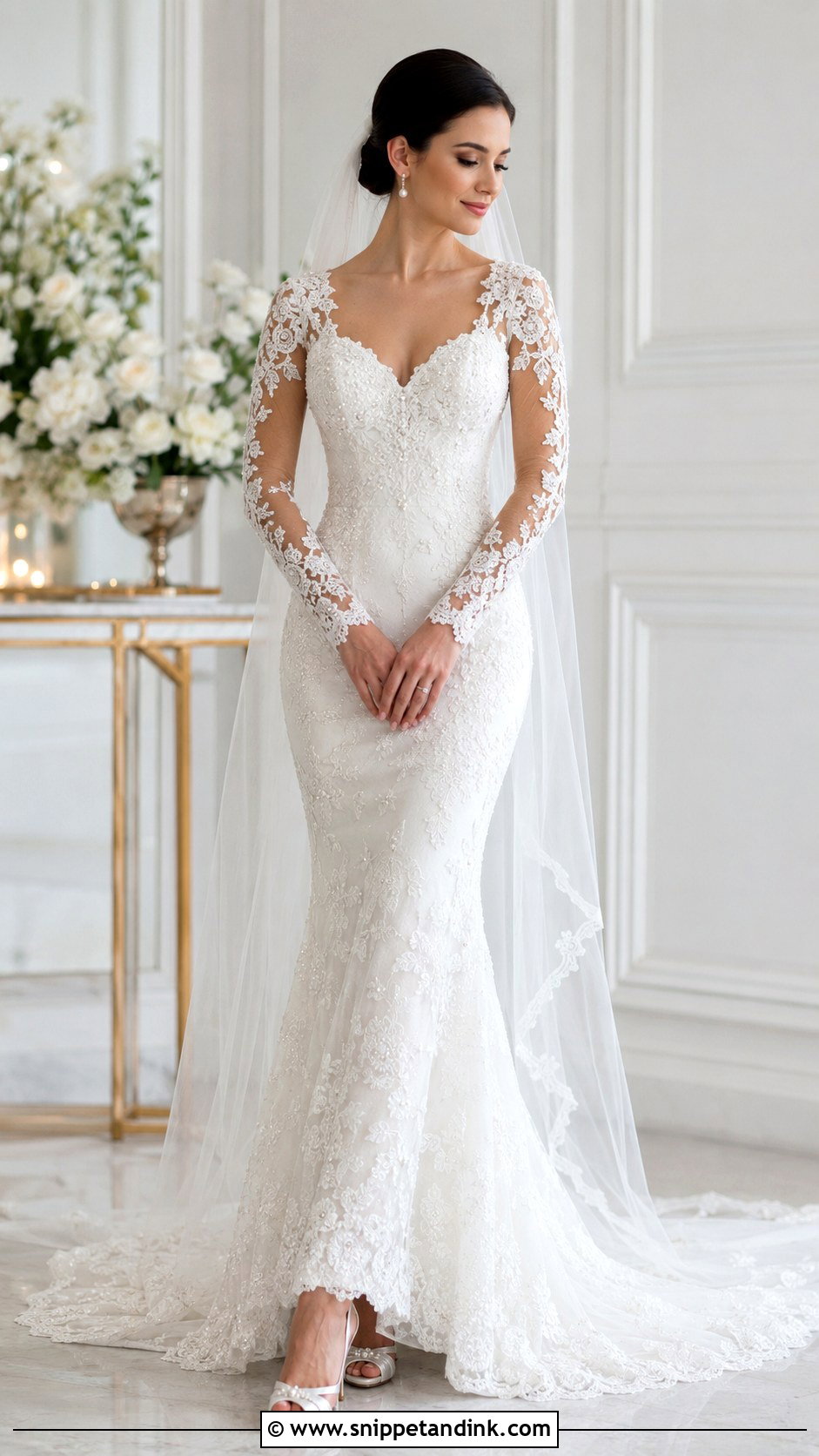
Pearls give a soft sheen that crystals don’t, scattered on the bodice, sleeves, neckline or down the skirt. In quantity they are also heavy, so a heavily pearled sleeve or train changes how the gown hangs, and I always see a pearl gown on the body before setting the hem. Pearl earrings, satin heels and a smooth bun echo the detail. Hand-sewn pearls can loosen during the day, so ask the shop for a few spares for your emergency kit.


25. Lace Bridal Dress With Colored Lining
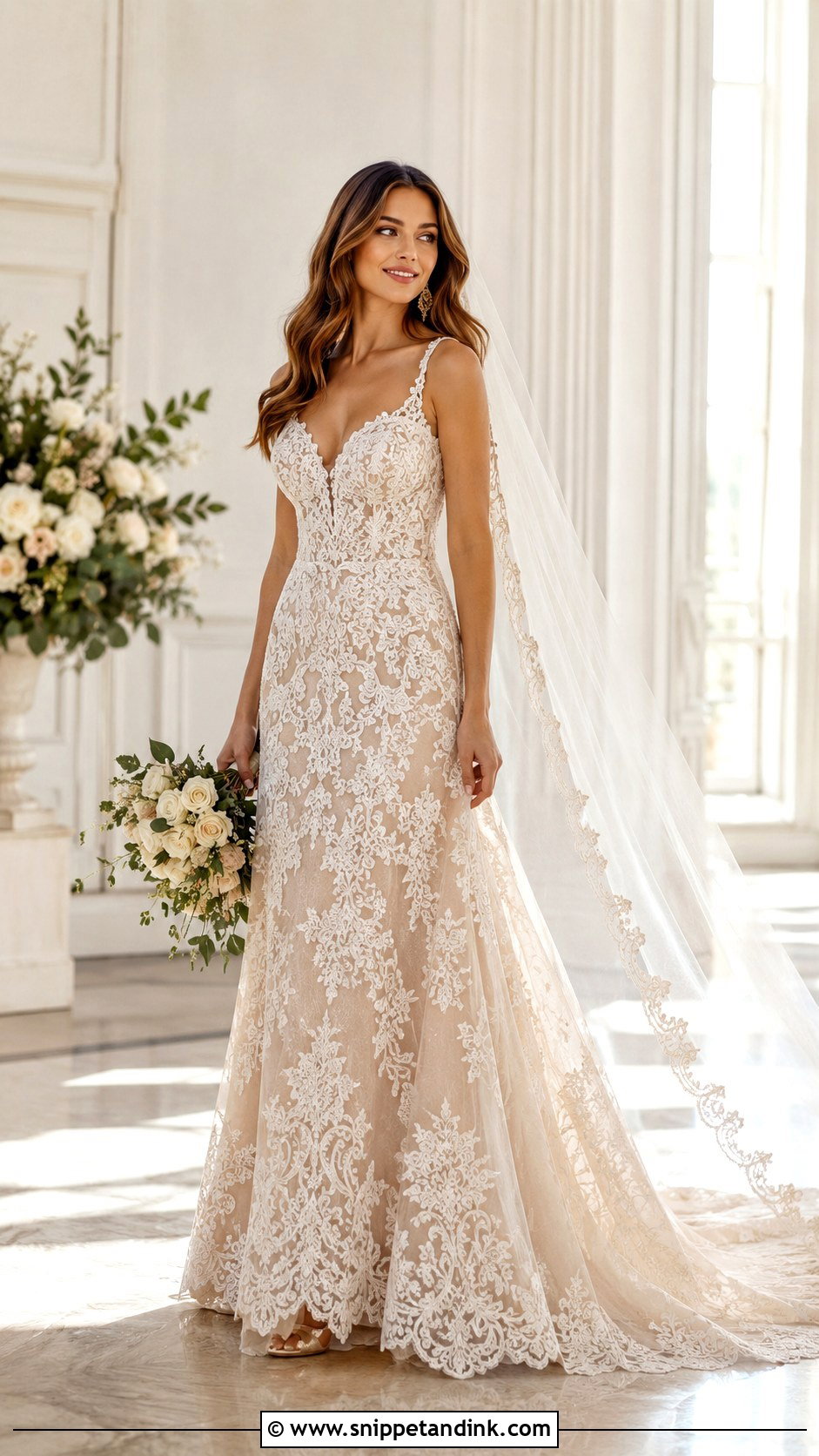
A lace bridal dress with colored lining makes the pattern visible, because ivory lace over ivory lining can flatten into one tone on camera. Nude, champagne, blush or pale beige under the lace gives contrast while still reading bridal. I hold the lining swatch against your skin in daylight before ordering, since a nude that matches one bride’s skin can look grey on another. Match the veil and earrings to whichever undertone dominates.
Hems, Bustles and the Months Lace Alterations Need
Lace gowns usually take longer to alter than plain ones, because the edges are often scalloped. Shortening a scalloped hem means unpicking the border, taking up the skirt and hand-sewing the border back on so it still finishes in a scallop. A plain satin hem is a much quicker job, and that difference shapes the whole timeline.
- Order early. Many made-to-order gowns take several months to arrive, so I’d start shopping around nine to twelve months out where you can.
- Plan the first fitting roughly two to three months before the wedding, a second a few weeks later and a final one close to the date. Bring your wedding shoes and the underwear you’ll actually wear to every one.
- Ask how the train will bustle. Lace trains are often lifted with hidden hooks or ribbon loops so the gathered fabric shows its pattern, not the lining. Have whoever will bustle you on the day shown how at the last fitting.
- Expect lace alterations to cost more than work on a plain gown. Prices vary a lot between seamstresses and cities, so get a written quote at the first appointment.
If you’re short on time, a soft lace sheath or A-line with a plain, unscalloped hem is the least risky choice.
Caring for Lace Once the Dancing Is Over
Lace takes the most wear at the hem and the sleeves. After the reception, hang the gown by its inner hanging loops rather than the straps, because the weight of a full lace skirt can stretch a fine neckline overnight.
Don’t scrub a stain on lace. Blot red wine, grass or makeup with a clean white cloth and leave the rest to a cleaner who works with bridal fabrics, the sooner the better. Sugar from champagne or cake can turn into brown marks weeks later even when nothing shows now. Tell the cleaner about any beading or pearls so they’re protected during cleaning.
For storage, I ask for the gown to be folded with acid-free tissue between the layers and packed in an acid-free box or a breathable cotton bag, kept somewhere cool, dark and dry. Avoid plastic, attics and basements. Open the box once a year and refold along new lines so the lace doesn’t set into permanent creases.
Lace That Feels Like Yours by the First Dance
Lace changes character completely with the shape it’s cut into, which is why I never let a bride decide from photos alone. Try at least one fine lace and one corded lace, one fitted shape and one fuller one, and notice how each feels after ten minutes, not ten seconds. Think about your venue, season, neckline and train, and let accessories support the gown. Whichever way you go, from lace sleeves to a short tea length, the right dress is the one you’ve forgotten you’re wearing by the first dance.
You'll Like These Ideas:





Leave a Reply