
Beading is the detail I spend the most time explaining in fittings, because it changes a gown’s weight, its price at alterations and how it behaves under a camera flash. The look has also softened. Pearl accents, art deco patterns, sheer layers and sculpted corsets sit beside warmer champagne and blush linings, and labels like Maggie Sottero now place beads where they flatter instead of covering everything. So there is a beaded gown for a ballroom, a garden, a beach or a courthouse. Below are the shapes I’d consider, with how I’d style each and where each one tends to cause trouble.
What Beads Do to Fit, Weight and Alterations
A fully beaded gown can weigh several times what a plain one does, and that weight sits on your shoulders, waist and hips all day. I plan for it from the first appointment.
Why altering beaded fabric is slower
A seamstress can’t sew through beads. To take in a side seam or shorten a hem, she has to unpick the beading along that line, make the change, then hand-stitch the beads back. That is why alterations on beaded gowns usually cost more and take longer than on plain ones. Prices vary a lot by region and by how much beading sits on the seam, so get a quote at your first fitting rather than guessing.
- Order close to your size. Taking a beaded gown in by several sizes means re-beading long stretches.
- Ask whether the hem is beaded. A plain hem under a beaded skirt is a much simpler shortening job.
- Allow for three fittings and leave the last one within a few weeks of the date.
1. Beaded Mermaid Wedding Dress
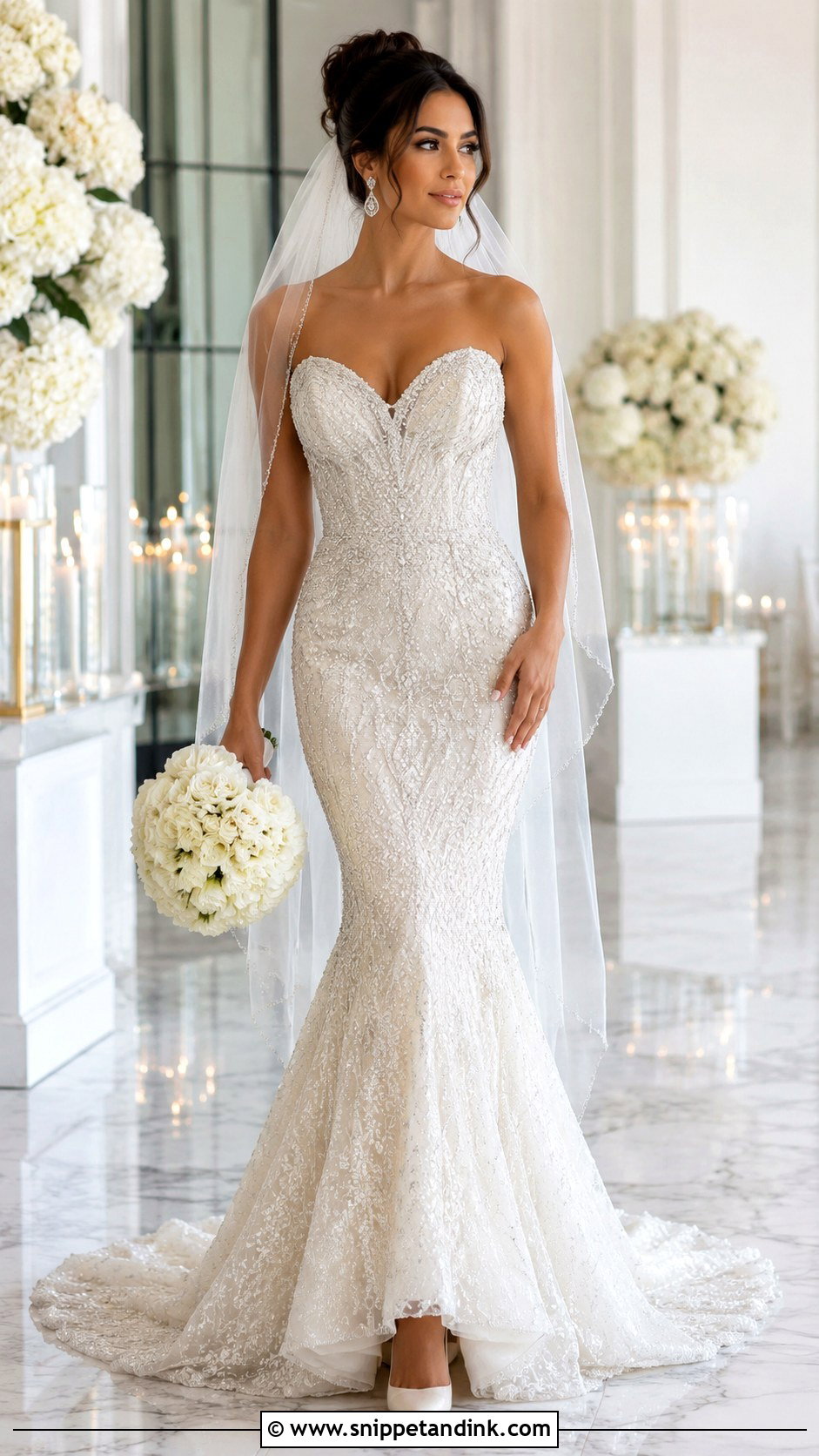
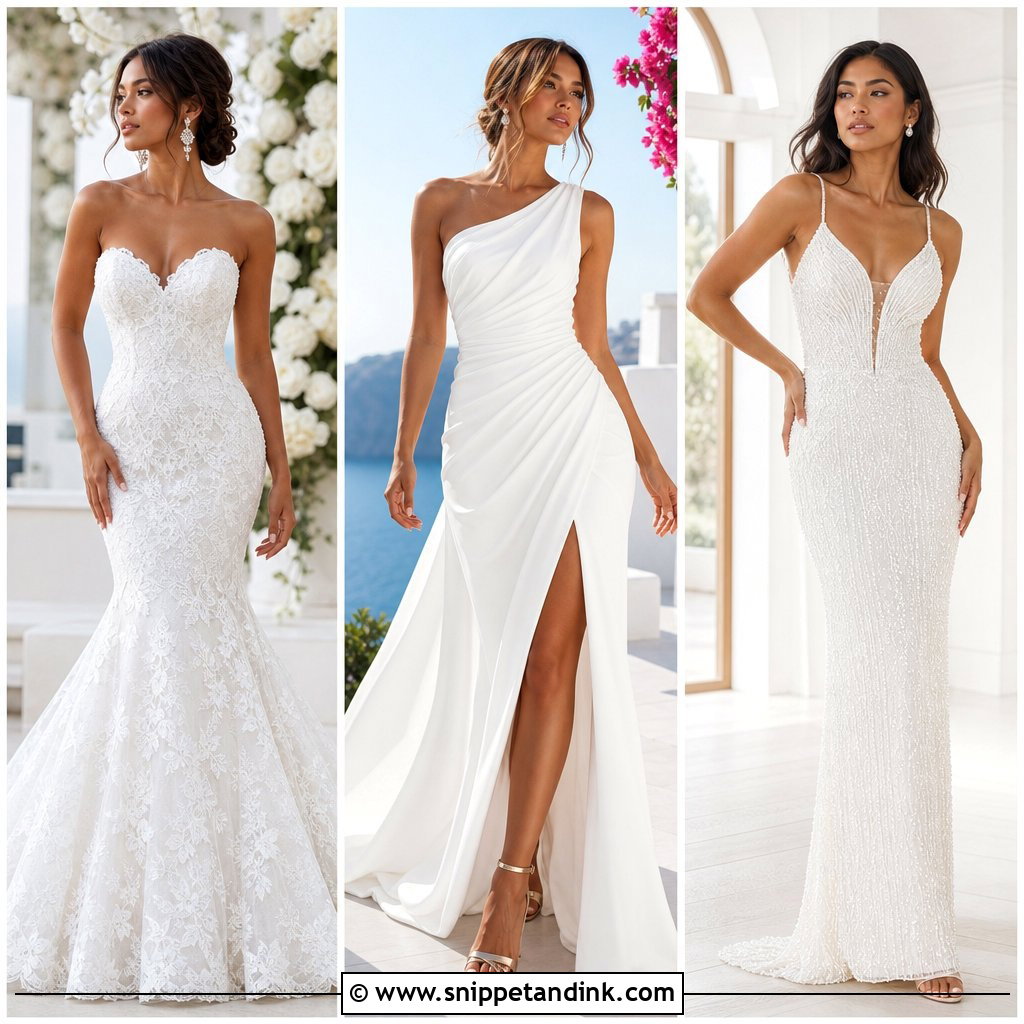
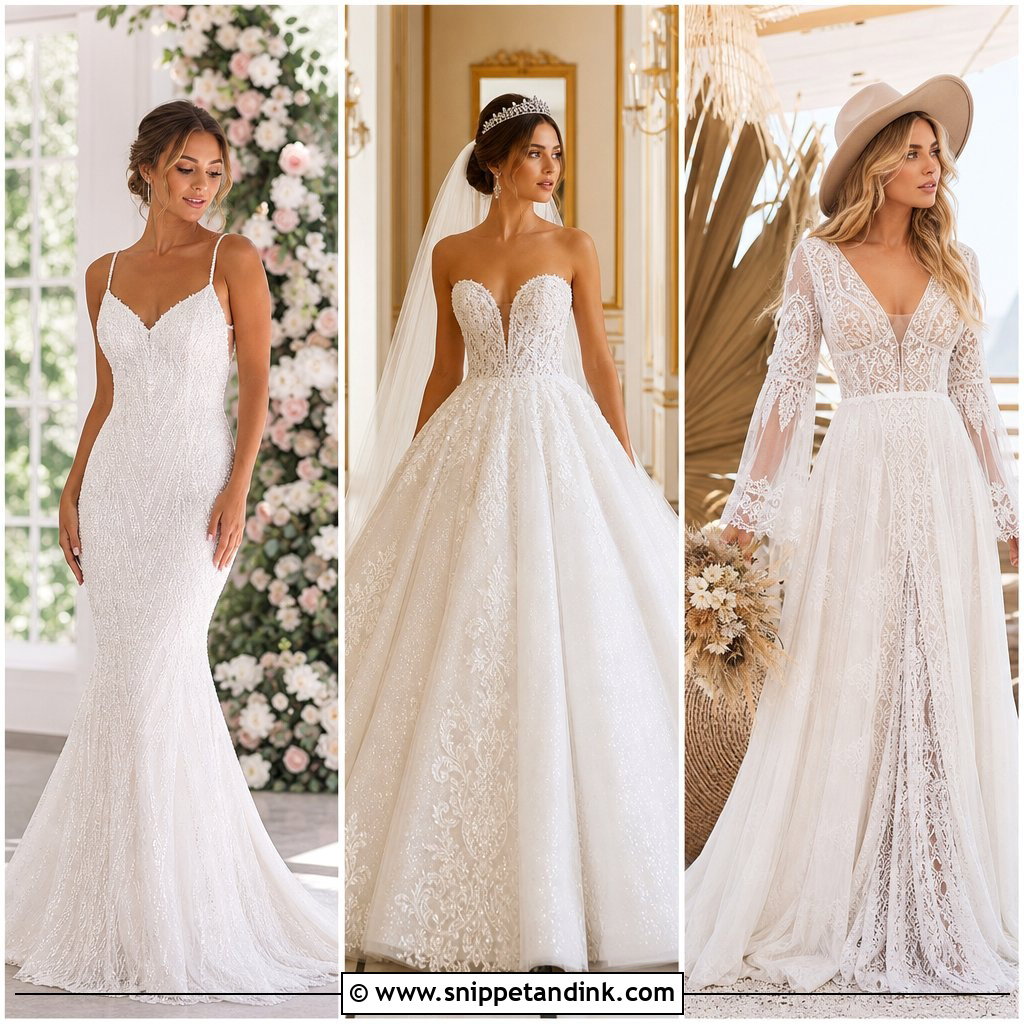
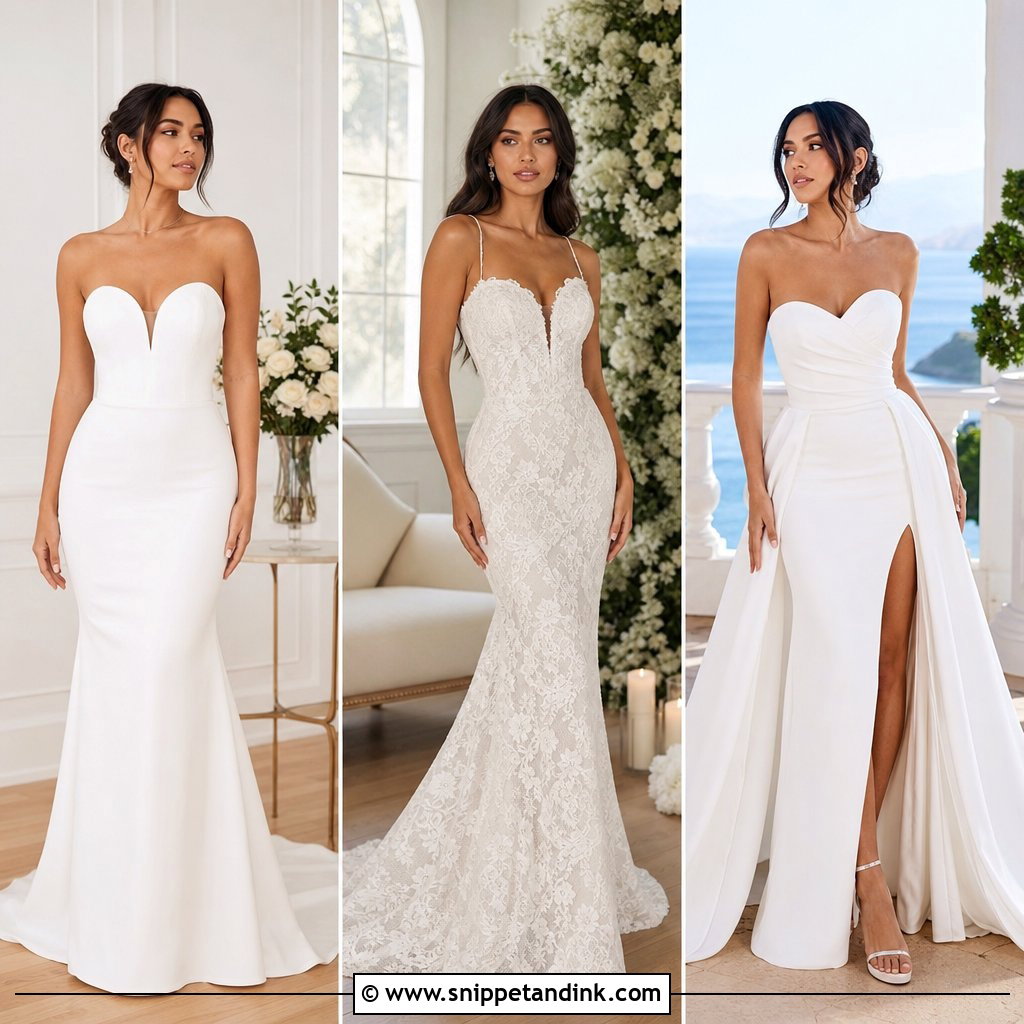
Mermaid is the most sculpted shape on this list: fitted through bodice and hips, flaring at or below the knee. Crystal beading gives it high shine, pearls a softer finish. Sweetheart, off-the-shoulder and illusion sleeves all suit it. My warning is about the flare point. Walk, climb a step and sit in it at the fitting, because a heavily beaded skirt that flares low can make stairs awkward. Style it simply with pointed ivory heels, a fingertip veil, small drops and a smooth bun or soft waves.
2. Beaded A Line Wedding Dress
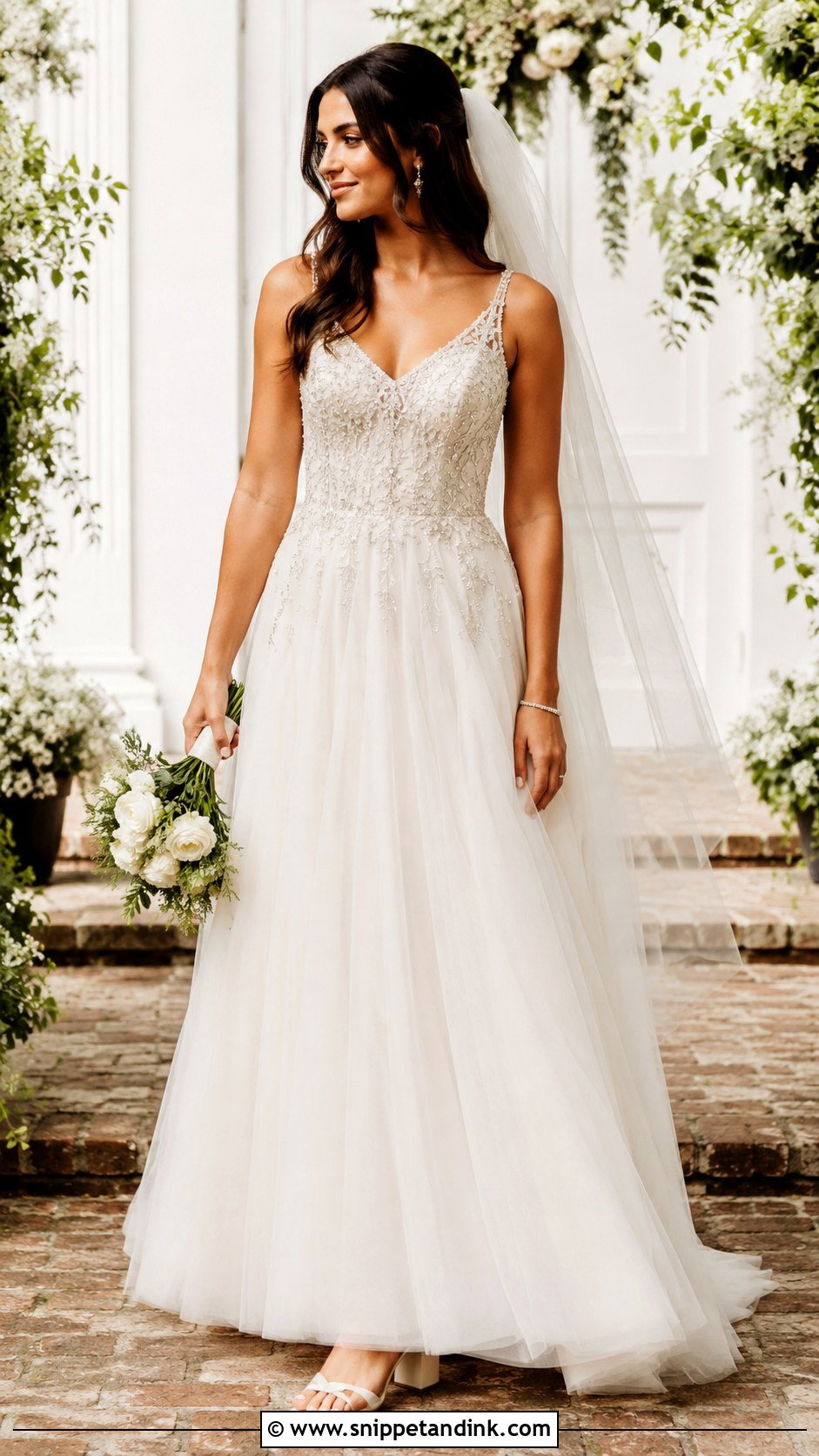
If you’re unsure where to start, start here. The A-line fits through the bodice and falls away from the waist, which flatters most figures and suits most venues. I like beading that’s heavy on the bodice and fades into a tulle or organza skirt, because it keeps the weight up top where the boning supports it. Formal venues can carry beading scattered down the skirt. Block heels, a soft veil and a simple bracelet are all it needs.
3. Beaded Ball Gown Wedding Dress
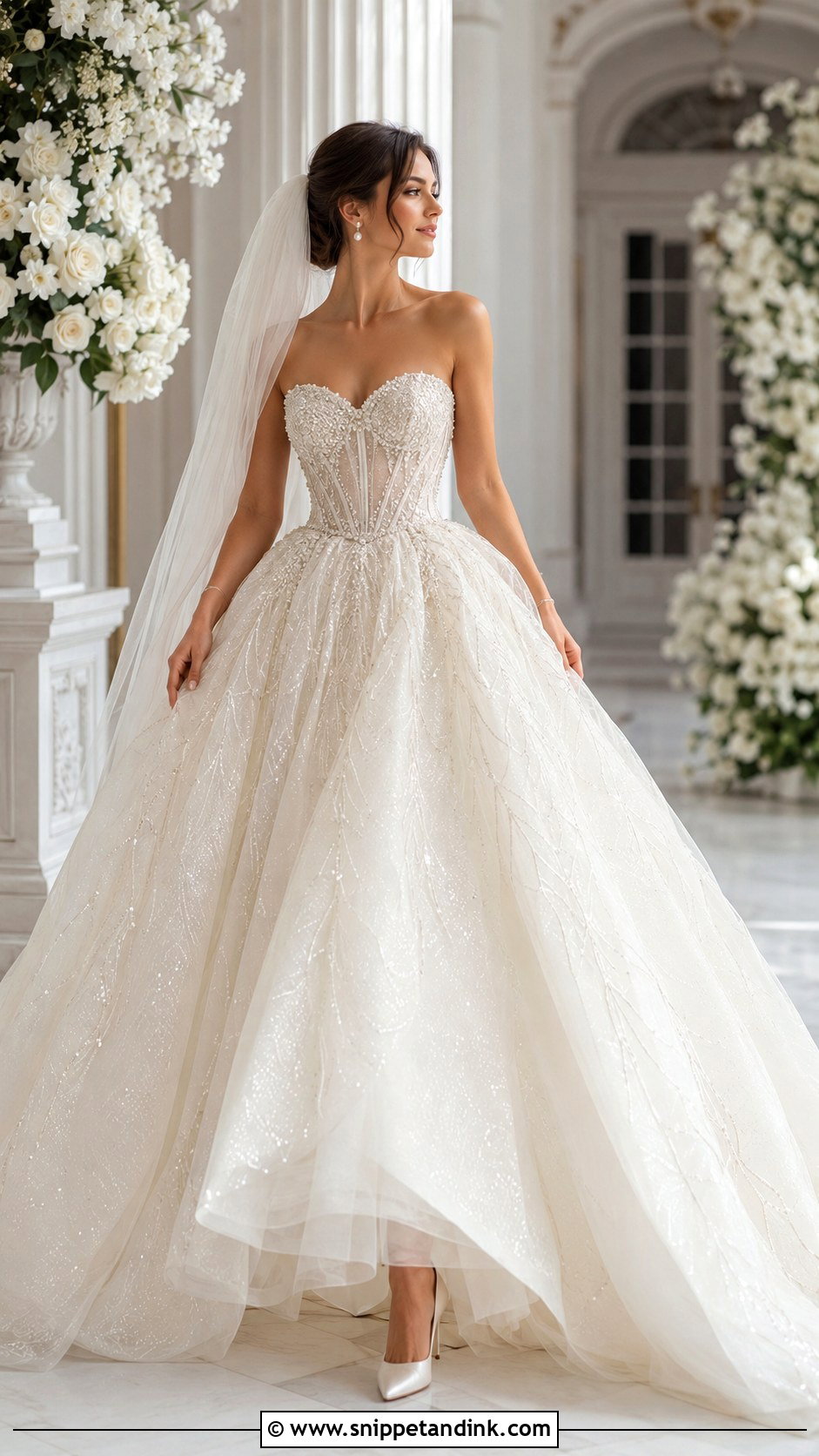
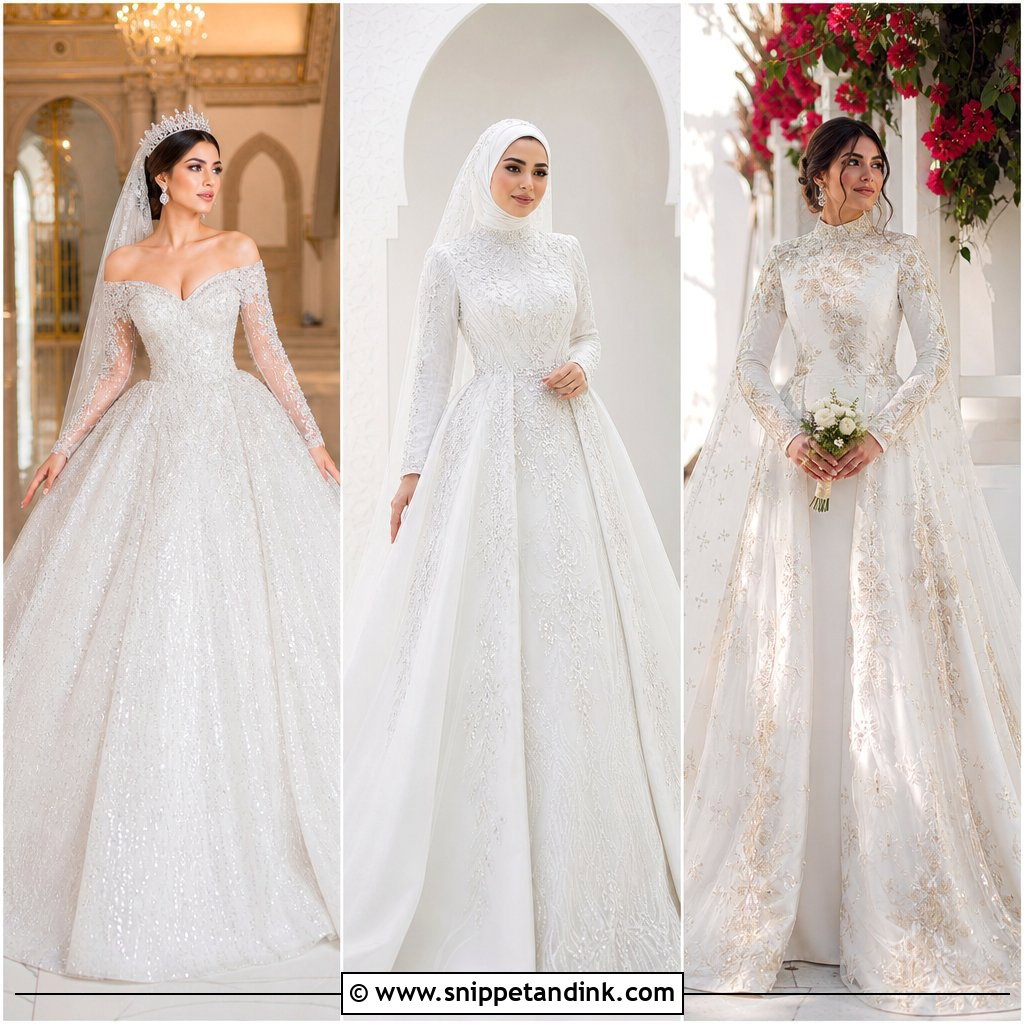
A beaded ball gown is the full entrance: corset bodice, beaded lace or crystal embroidery at the waist, and a skirt with real volume. It needs space, so I only steer brides toward it for large venues with wide aisles. Heavy skirt embellishment means a plain veil, otherwise the eye has nowhere to rest. Satin heels, pearl studs and a clean updo finish it. Plan the bustle early, since a beaded skirt has enough weight to tear a single weak bustle point during dancing.
4. Beaded Sheath Wedding Dress
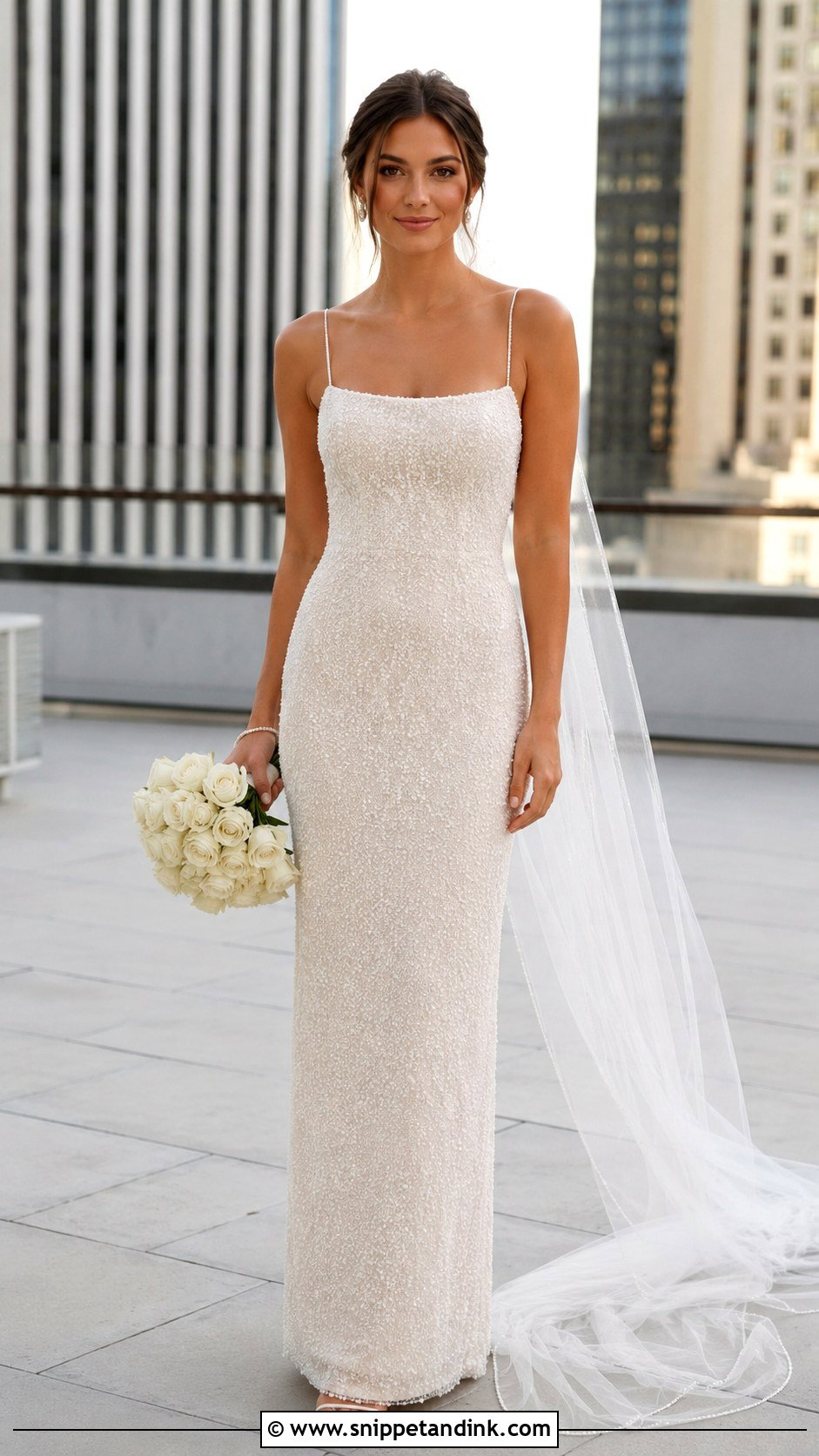
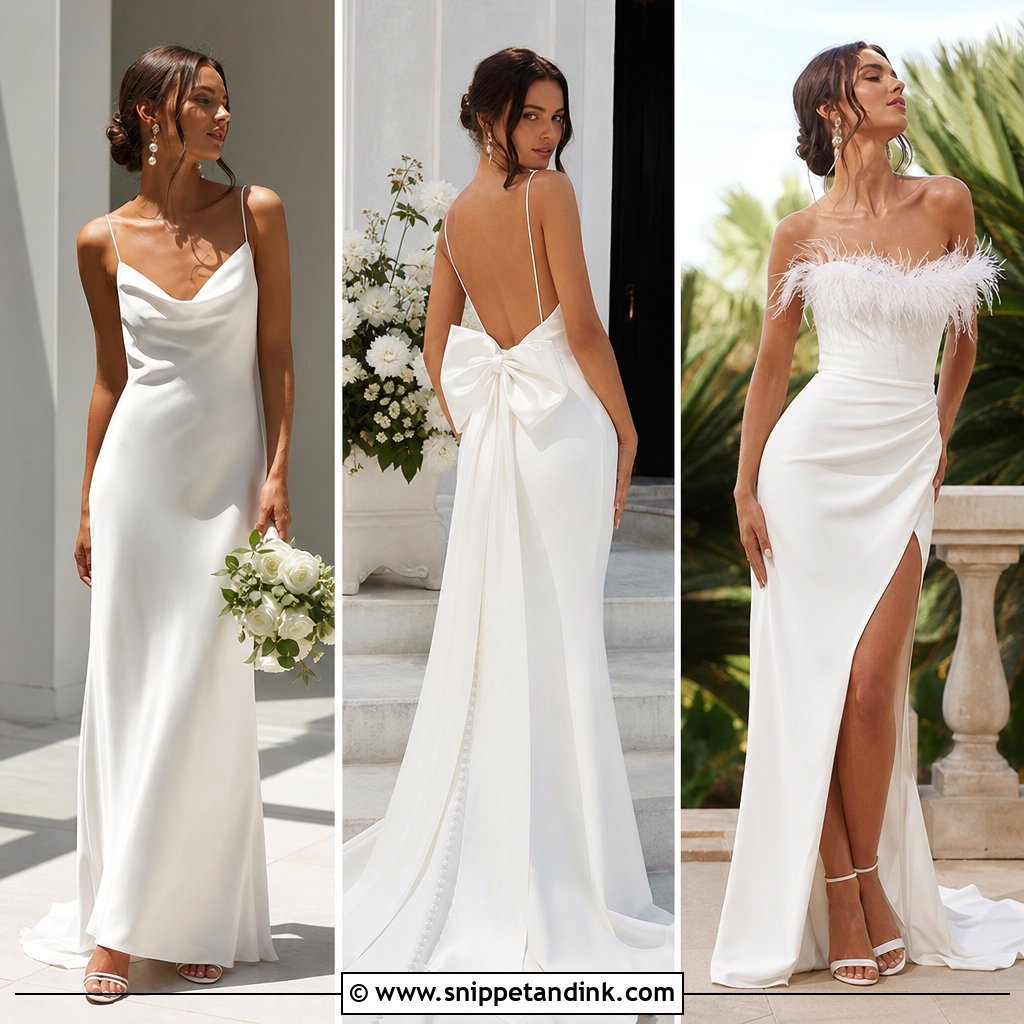
A beaded sheath wedding dress follows the body without a flare, so the beadwork does all the talking. Micro beading all over gives a liquid shine; vertical lines of beads lengthen the body. It is light enough for destination weddings, rooftops and small celebrations. I check one thing on every beaded sheath: the hips when seated. Close-fitting beaded fabric has little give, and if it pulls across the lap at the fitting, it will strain at dinner. Strappy heels, a narrow veil and minimal jewelry suit it.
5. Beaded Lace Wedding Dress
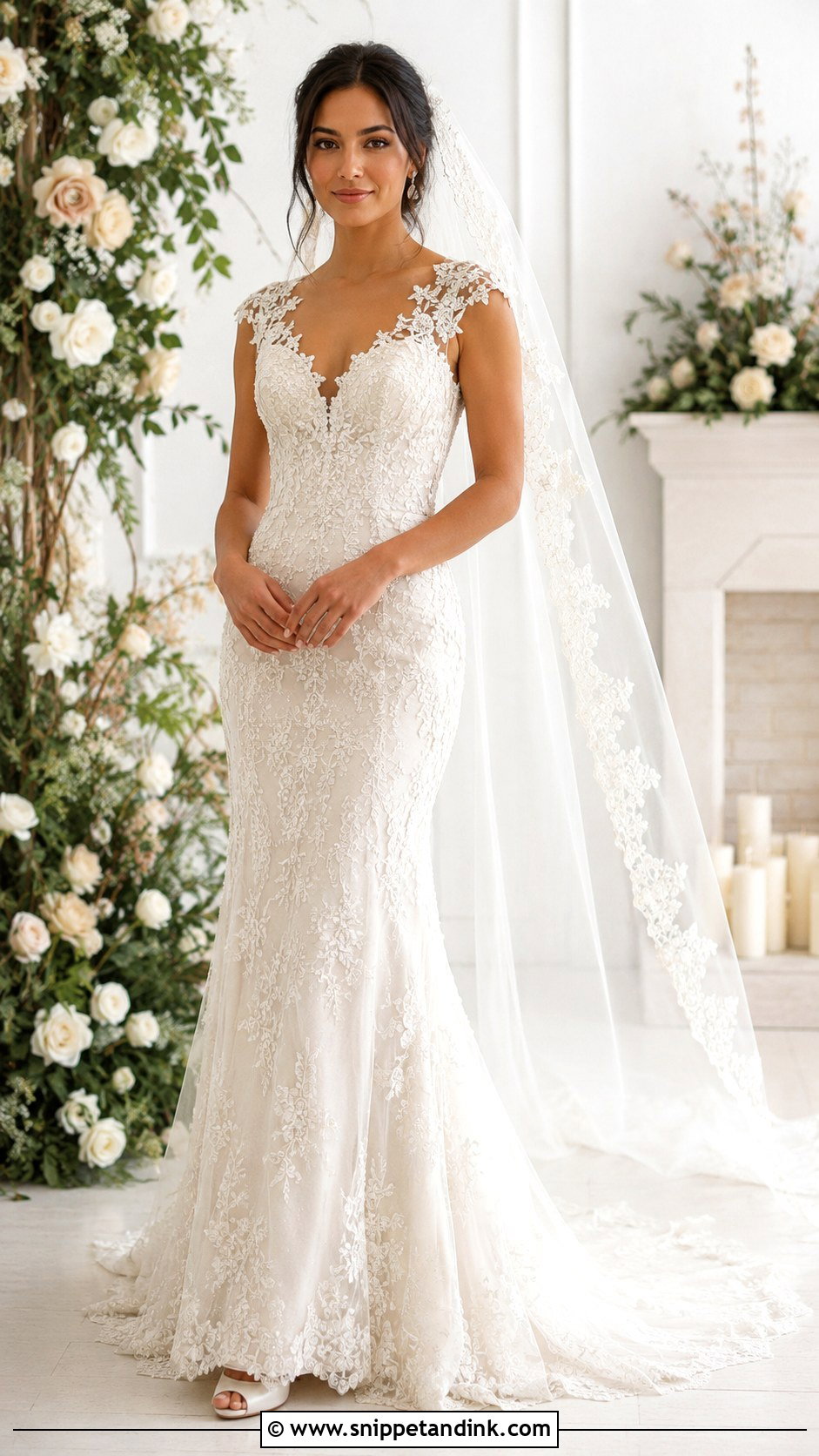
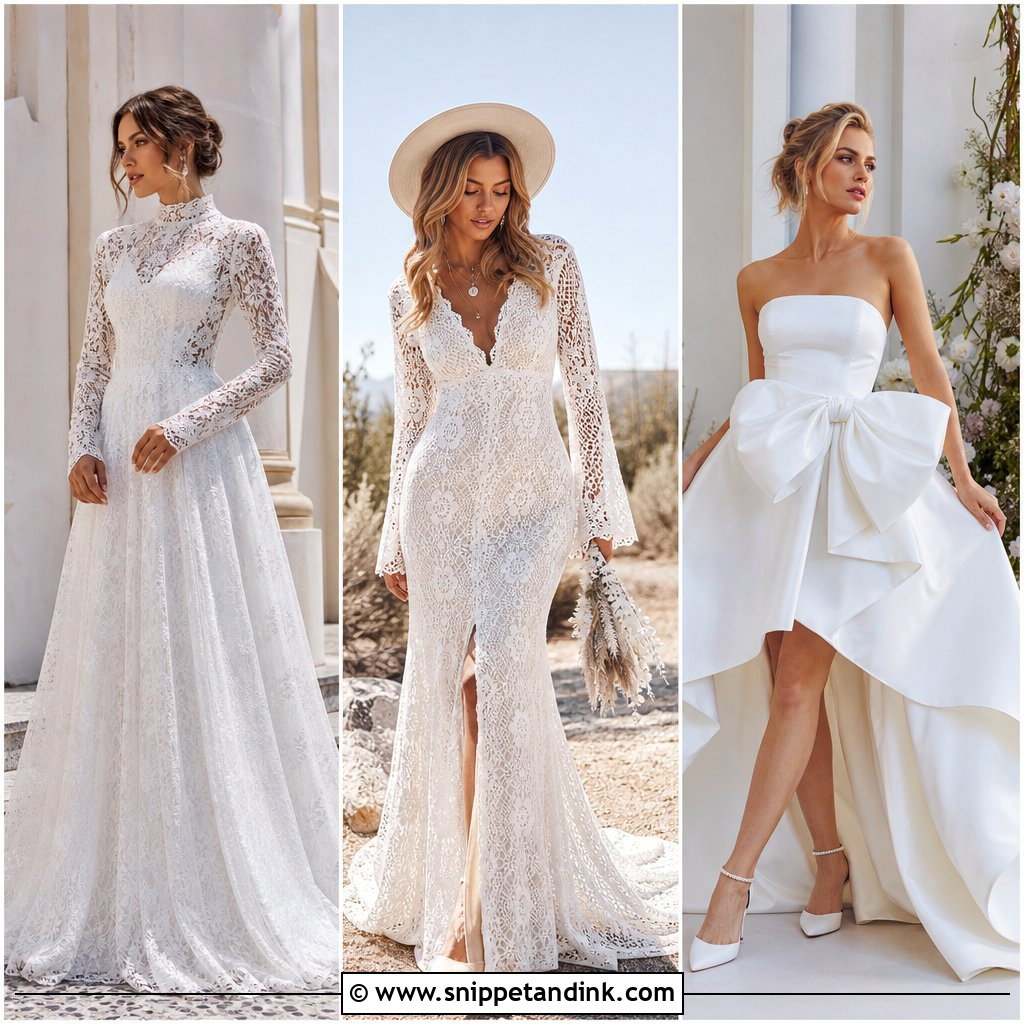
Beads stitched onto lace give the pattern depth, picking out petals and edges so the motif shows from a distance. It works on fitted gowns, A-lines and long sleeves. Ivory lace with clear crystals or pearls is the classic version; a champagne lining under ivory lace makes the beading stand out more. Soft curls, a lace-trim veil and plain ivory heels are enough. I keep accessories to almost nothing with this one.
6. Beaded Long Sleeve Wedding Dress
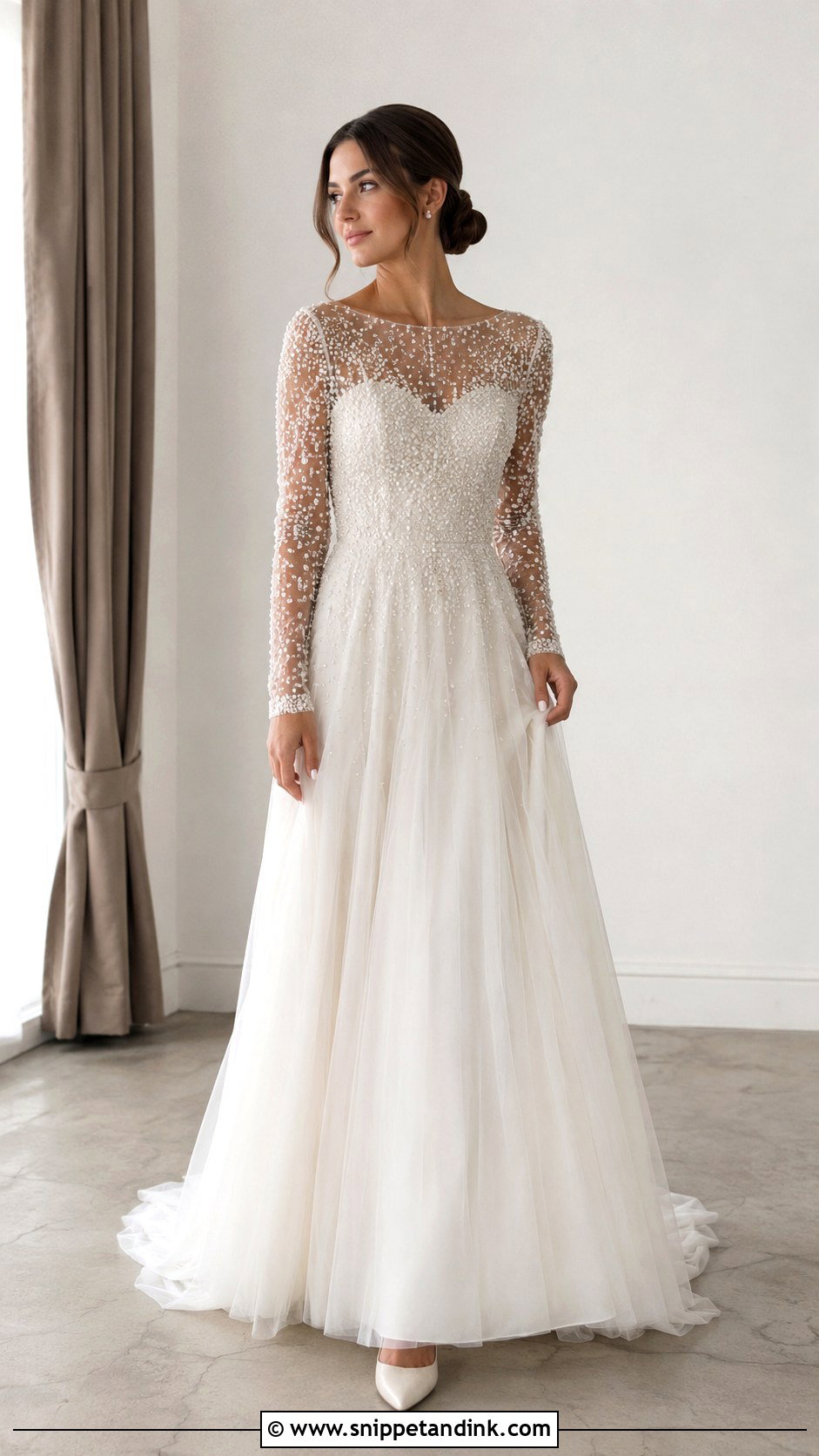
Long sleeves give coverage, and beading stops them reading heavy. Sheer illusion sleeves with crystals, pearls or beaded lace look light on camera. A fitted sleeve is sleek; a bishop or slightly puffed sleeve is softer. My fitting check here is reach: lift your arms as if hugging and throwing a bouquet, because beaded sleeves cut close have no stretch. Closed-toe pumps, a low bun and small earrings, and skip the bracelet if the cuffs are already detailed.
7. Beaded Strapless Wedding Dress
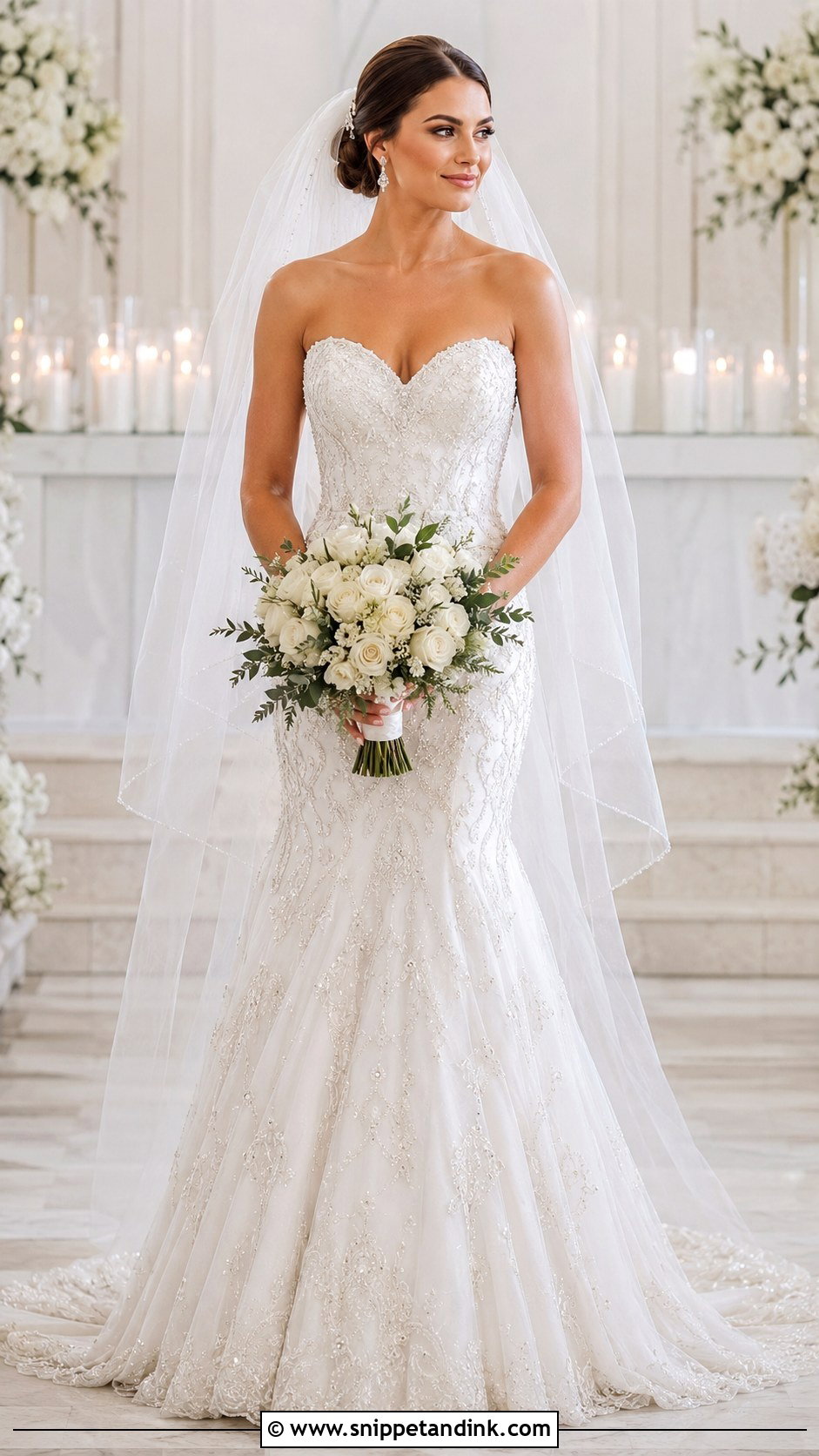
Strapless puts all the impact into the fabric and leaves your shoulders and collarbones bare for the veil. Construction matters most here. Beading adds weight that pulls a strapless bodice down over a long day, so I look for internal boning, a waist stay and a firm fit at the top edge before I look at anything else. A straight neckline reads modern; a sweetheart is softer. Earrings are often enough. Add a chapel veil, smooth heels and a clean hairstyle.
8. Beaded Off Shoulder Wedding Dress
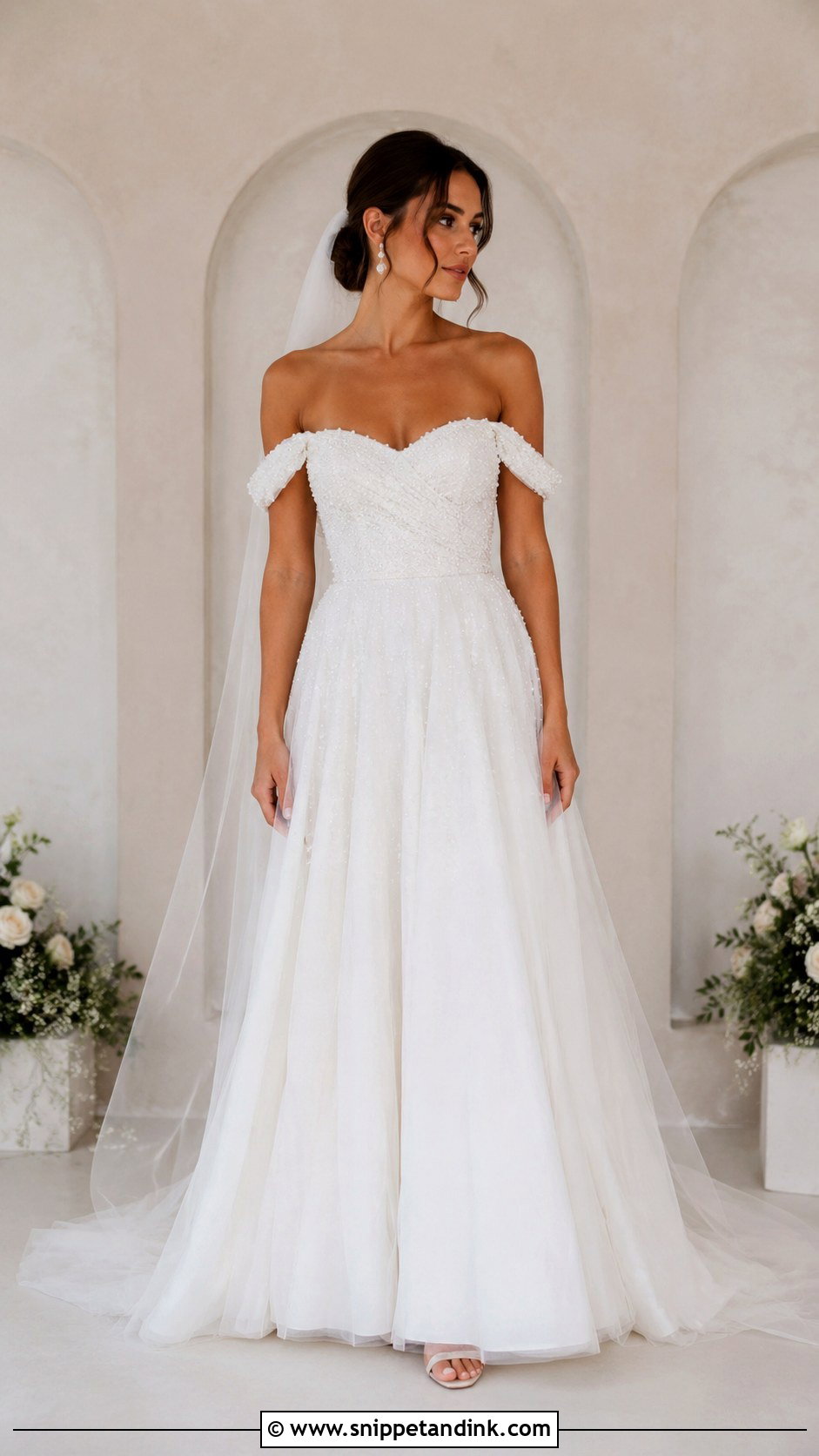
An off-the-shoulder neckline frames the shoulders and puts the beading near your face, which is flattering in close-ups. Pearls over lace look classic; crystals on a structured bodice look glamorous and need very little jewelry. I always choose earrings over a necklace with this neckline. A soft chignon, smooth waves or a half-up style all work. Ask for the veil comb to sit low on the head so the tulle falls behind the shoulders rather than over them.
9. Beaded V Neck Wedding Dress
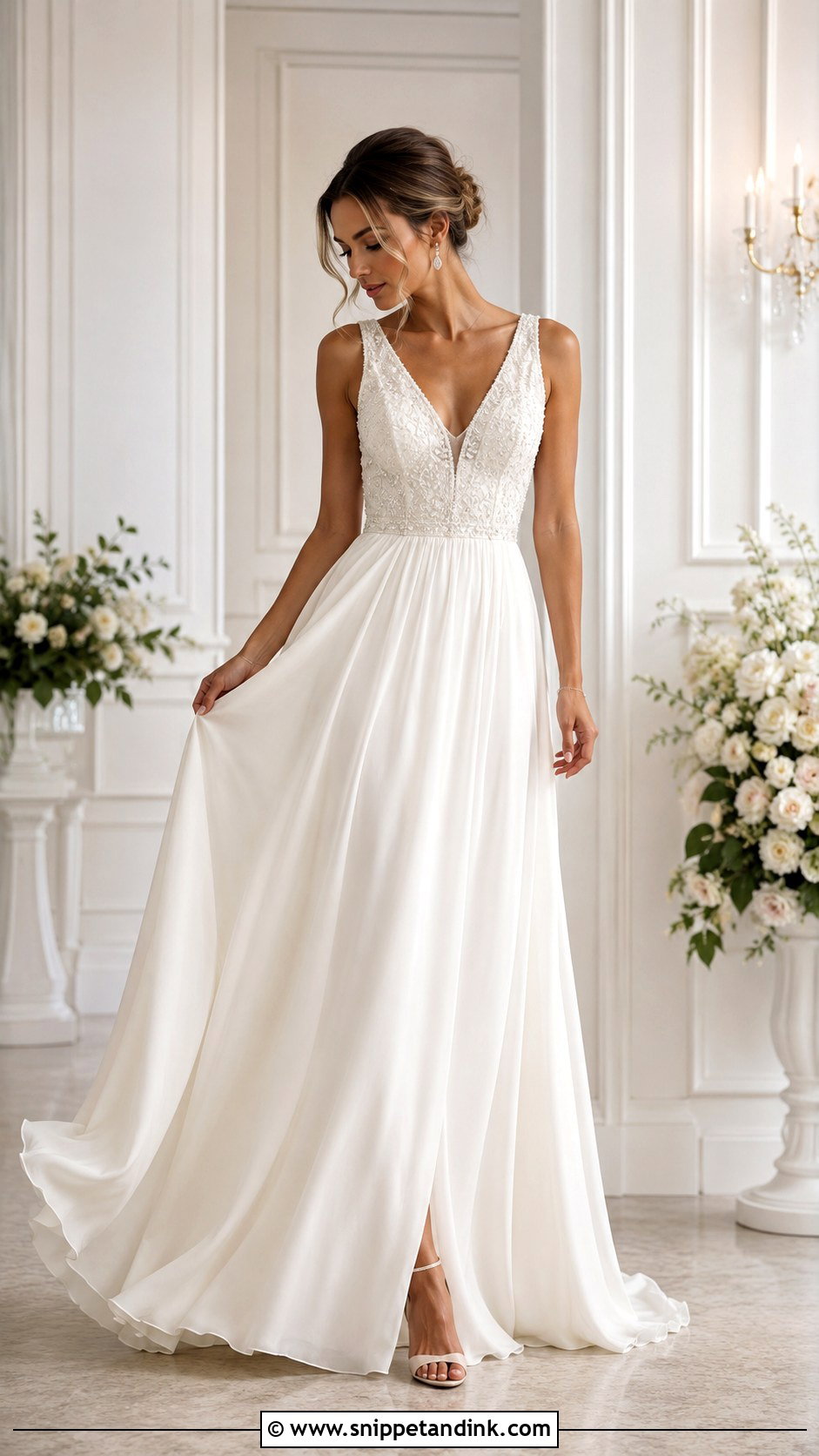
A V neckline lengthens the torso and draws attention to the face, and beading along the edge acts like built-in jewelry. The depth can be modest or plunging. For a deep V, I want illusion mesh and secure tailoring, and I usually ask for fashion tape on the day too, because beaded edges are heavier than plain fabric and can gape when you lean. Flowing skirts, fitted crepe or beaded lace all suit it. Delicate earrings, a narrow bracelet and comfortable heels, with a veil soft enough to show the neckline.
10. Beaded Square Neck Wedding Dress
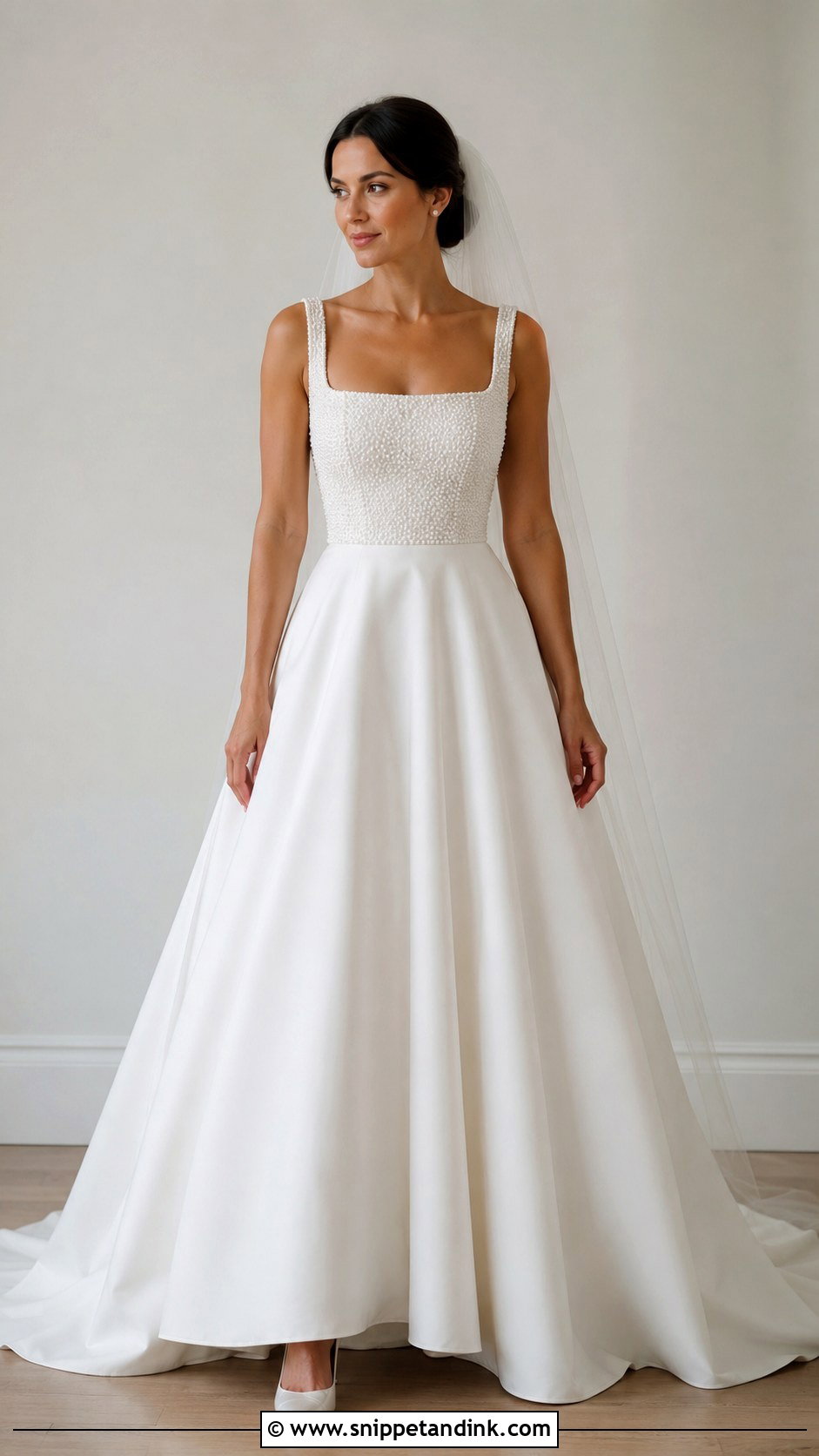
Square necklines feel clean and structured, especially with subtle pearl or crystal beading along the edge. They suit fitted gowns, A-lines and corset bodices, and offer support without going strapless or high. I like small studs, a sleek veil and a structured bouquet with it. Pointed pumps for cooler months, minimal sandals for summer. Beading along a straight neckline will show any unevenness, so make sure your seamstress checks it sits level on both sides.
11. Beaded High Neck Wedding Dress
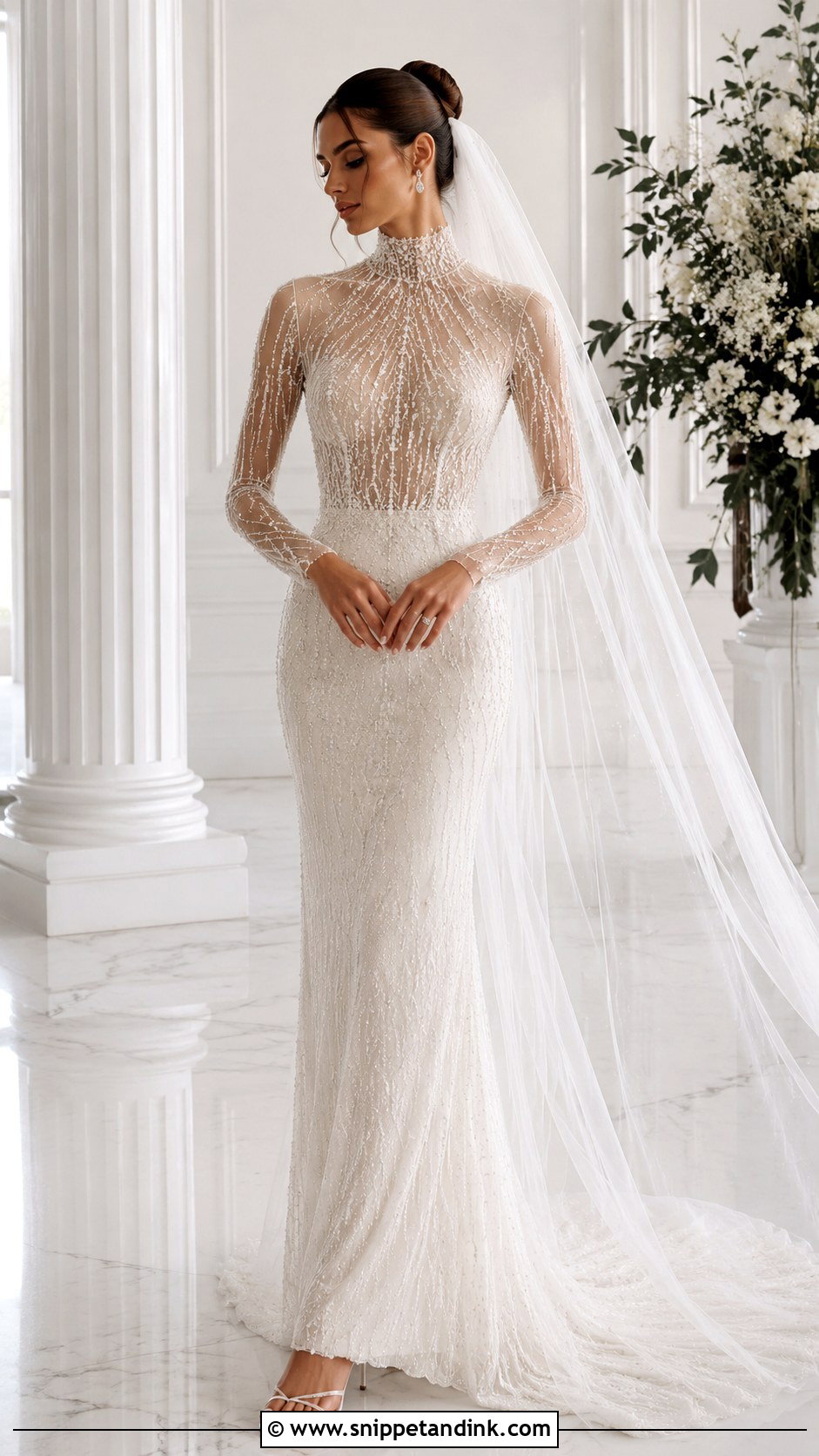
High necks feel editorial. The neckline draws the eye up, so an updo and clean makeup suit it best. Fine beads on sheer tulle stay light; dense pearls or crystals feel formal. A slim skirt, an A-line or long sleeves pair well with it. Skip the necklace entirely and match earring scale to the beadwork. Attach the veil below the bun so the collar stays visible. One honest caveat: beaded high necks can feel warm and scratchy against the throat, so wear it for a while at the fitting before committing.
12. Beaded Corset Wedding Dress
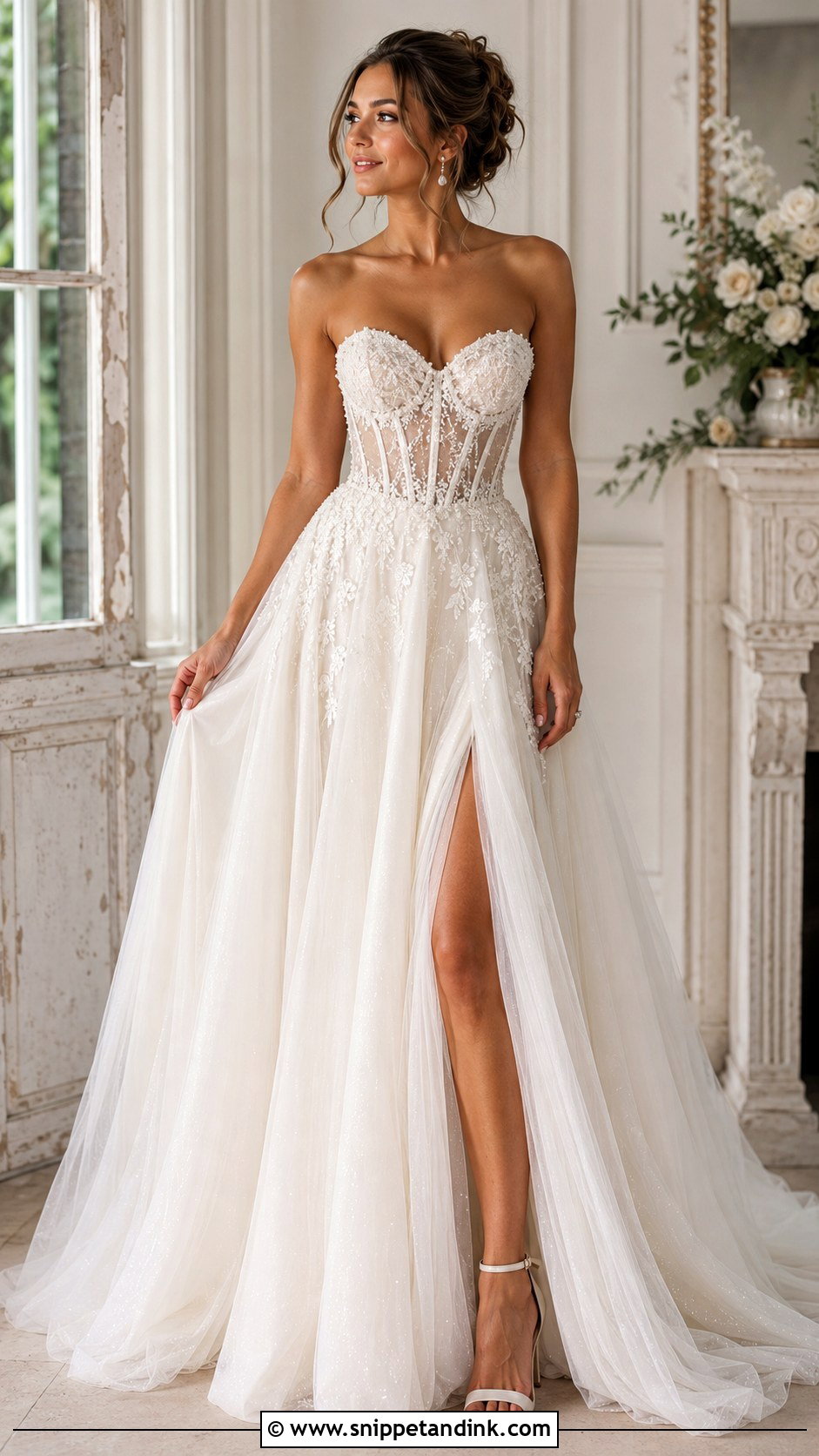
A beaded corset pairs a defined waist with softer surface detail. Exposed boning, pearl embroidery or crystal vines can turn the bodice into the centrepiece. A flowing tulle skirt keeps it romantic; a fitted skirt makes it dramatic. Because the corset carries the detail, shoes and jewelry stay simple. It looks great with a veil and just as strong without one. Corsets need precise fitting, and I’d book the final fitting close to the wedding so the lacing sits right on your body as it is that week.
13. Beaded Tulle Wedding Dress
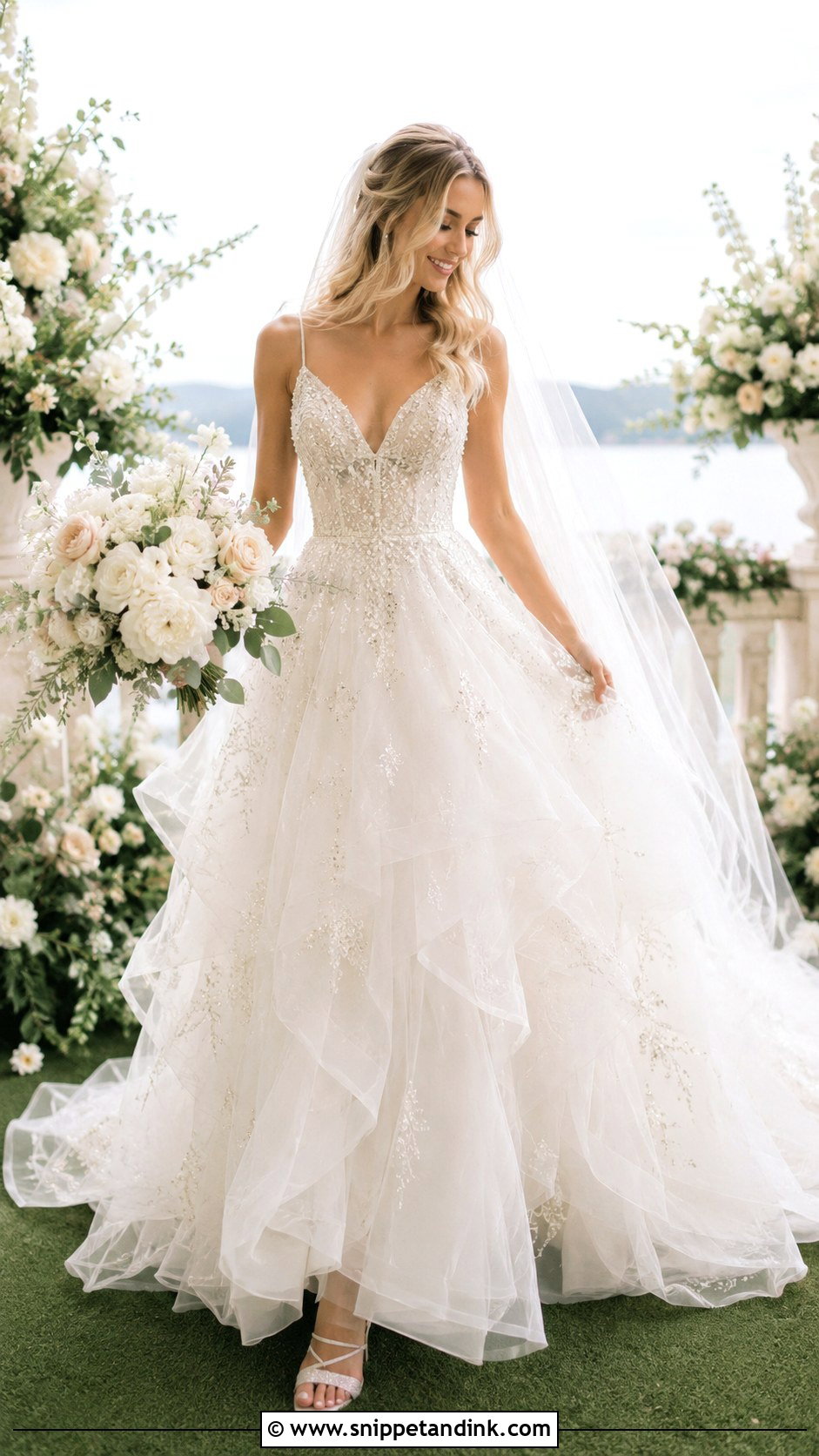
Tulle is airy, and scattered beads on it move and catch light on video in a way few fabrics do. Scattered crystals look starry; floral beadwork looks romantic. It suits outdoor ceremonies because it moves without stiffness. Delicate heels, soft waves and a veil in the same tulle tone are my usual styling. With many layers, keep accessories light. Tulle snags easily, though, and a single bead on a loose thread can catch a heel, so I check the hem the week before.
14. Beaded Satin Wedding Dress
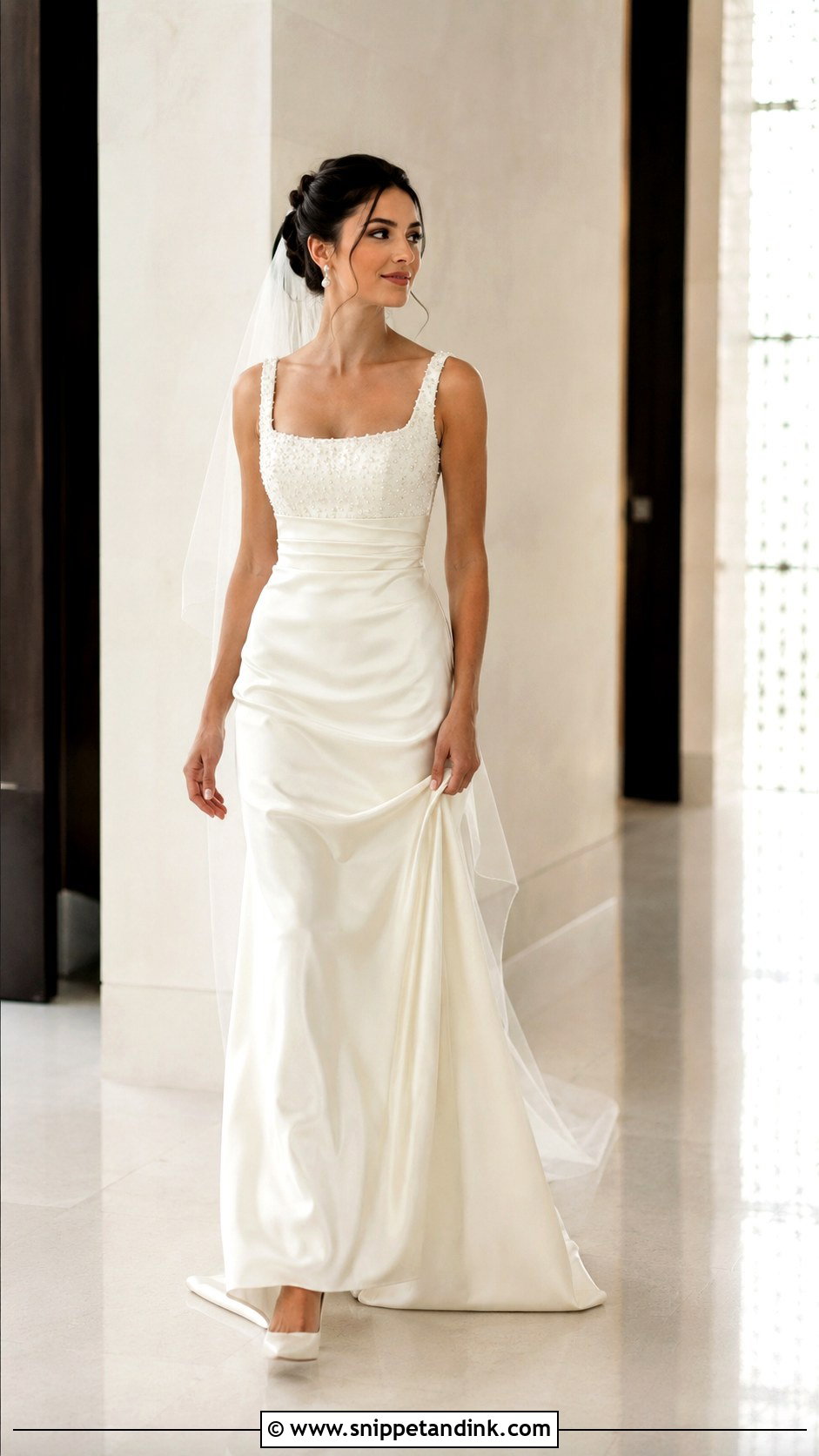
Satin shines on its own, so even minimal beadwork reads rich on it. A beaded bodice feels classic; beaded straps or a beaded waistline are subtler. I like satin best with clean lines and strong tailoring. Satin pumps, pearl earrings and a simple veil, and avoid sparkly accessories because the fabric and the beads already give enough glow. Satin also shows every crease, and beads sewn onto it can pucker the fabric slightly, so look at the gown under bright light before buying.

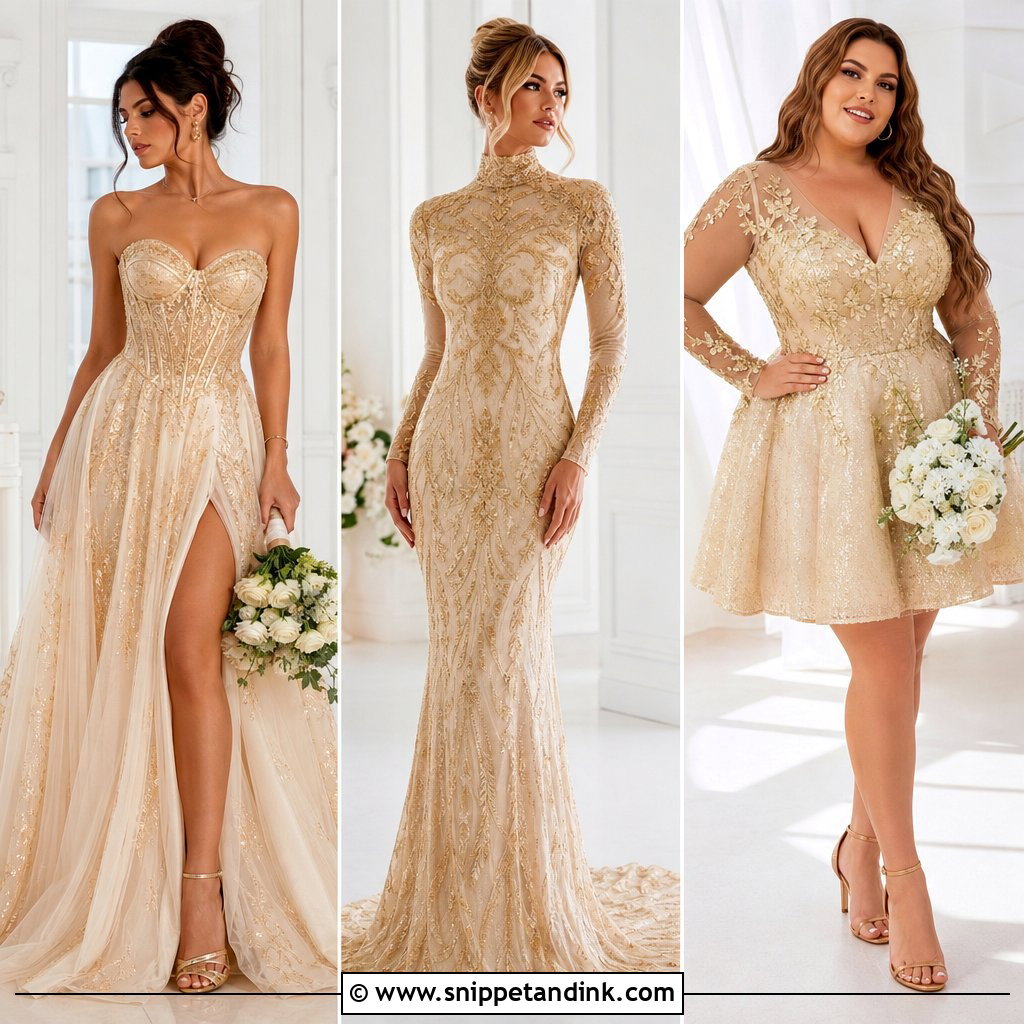
15. Beaded Crepe Wedding Dress
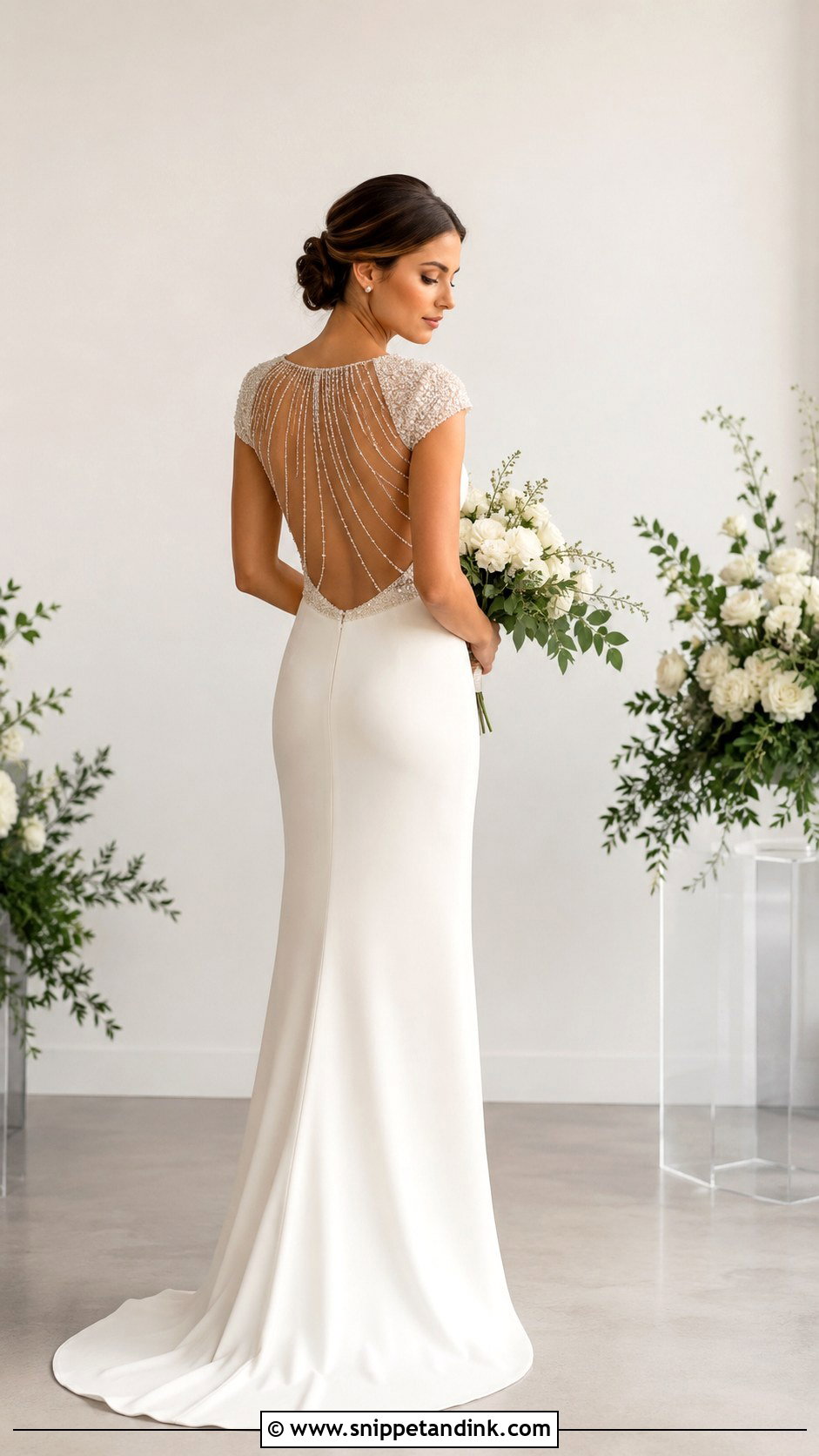
Crepe is matte and fluid, so beading on it looks sharp and deliberate. A crepe sheath with beaded shoulders, back or side panels is my pick for a bride who wants a sleek gown with a single strong detail. Clean heels, a low bun and small pearl or crystal earrings. A plain veil keeps the beading crisp. Watch the weight on crepe: heavy beading on a thin crepe can drag the fabric and show lines, so ask how the beading is backed.
16. Beaded Champagne Wedding Dress
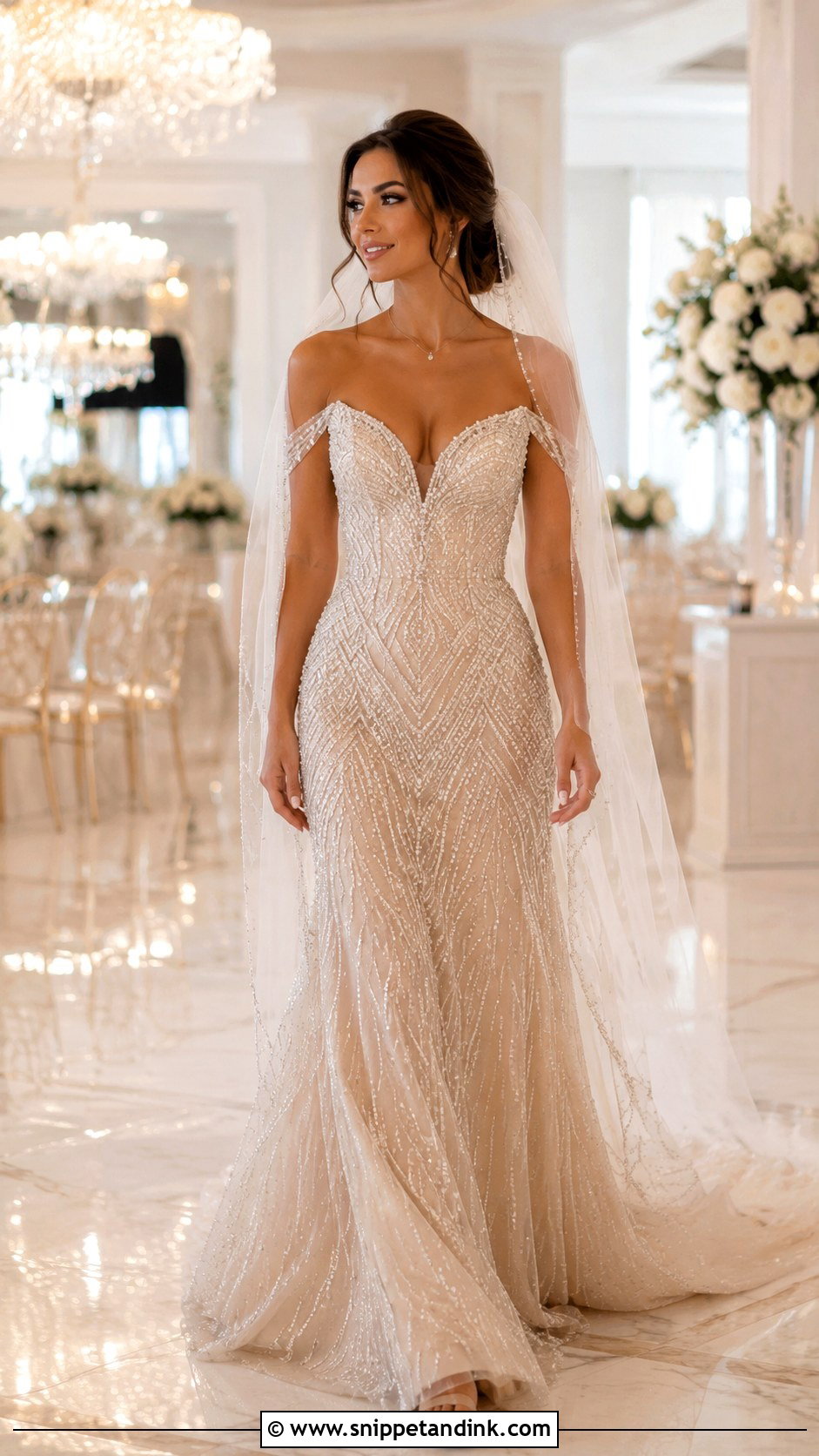
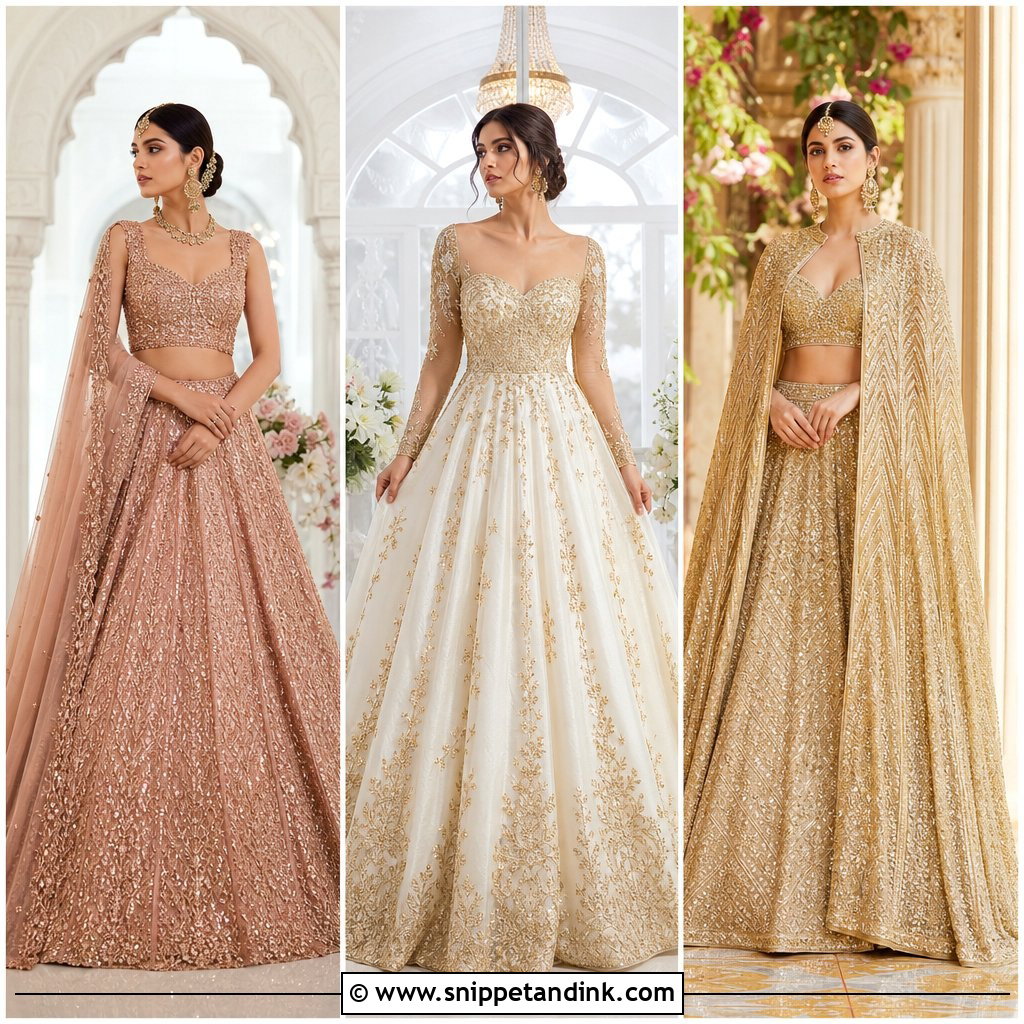
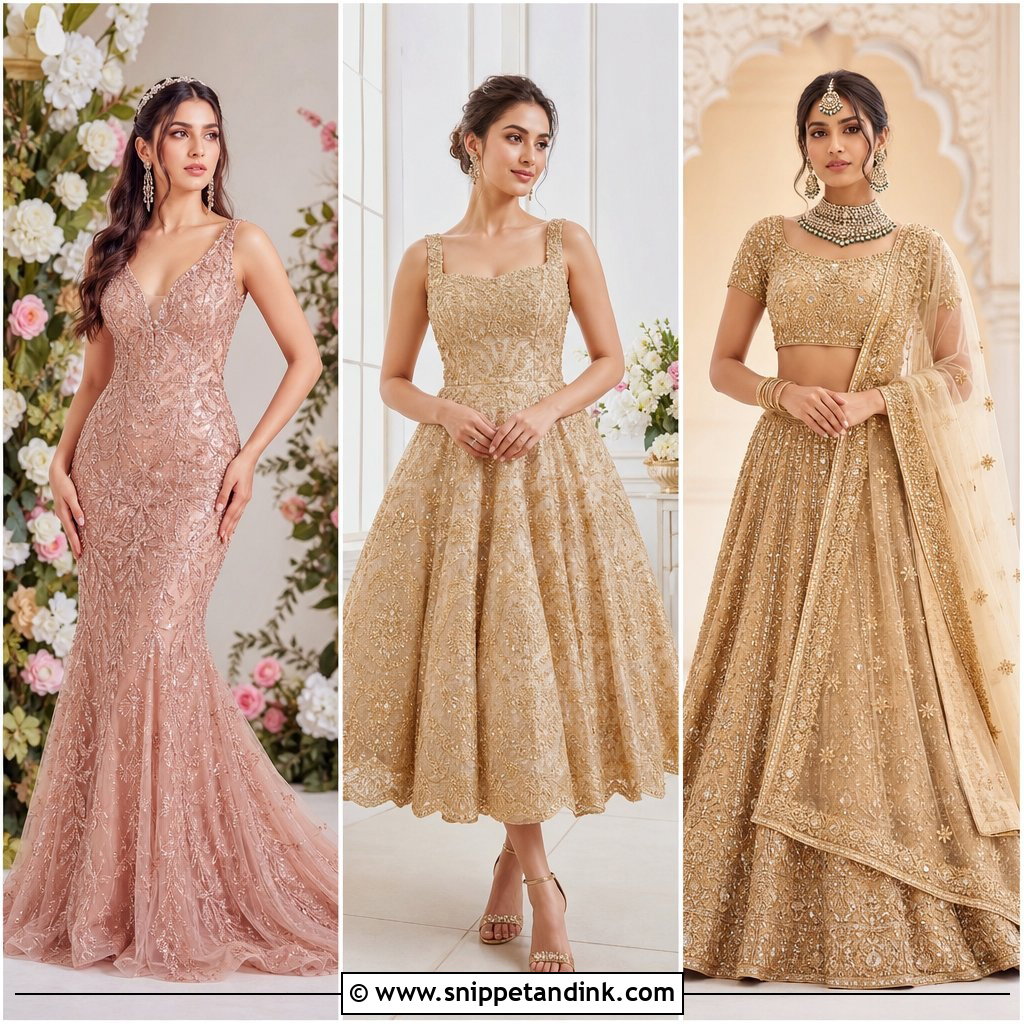
A champagne lining warms up the bridal palette and makes ivory beads, pearls and crystals stand out, which shows clearly in evening photos and warm indoor light. It flatters many skin tones. Choose fitted for glamour or A-line for romance. Gold-tone accessories can work if they stay small. Nude or champagne heels, soft makeup and a sheer veil complete it. I always match the veil to the gown’s outer layer, not the lining, or the veil can look greyish beside it.
17. Beaded Blush Wedding Dress
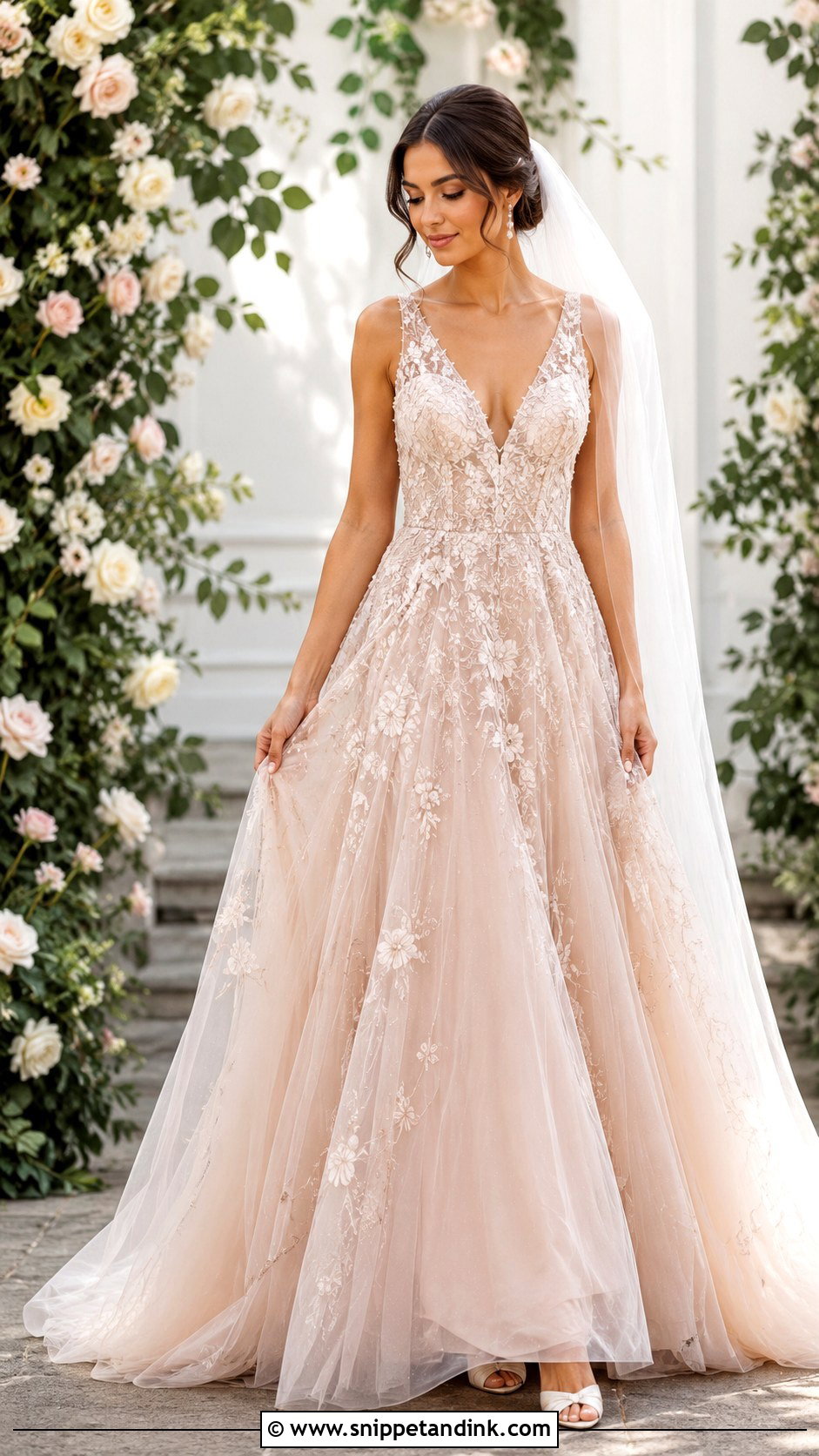
Blush gives you colour while still reading clearly as bridal. It pairs naturally with floral beadwork, pearls and soft tulle. I’d steer toward a muted blush rather than a bright pink, because muted tones look more grown-up and photograph closer to how they look in person. Ivory or nude heels, rose-toned makeup and delicate earrings suit it. An ivory veil softens the colour; a blush veil matches it. Spring weddings and gardens are where it shines.
18. Beaded Ivory Wedding Dress
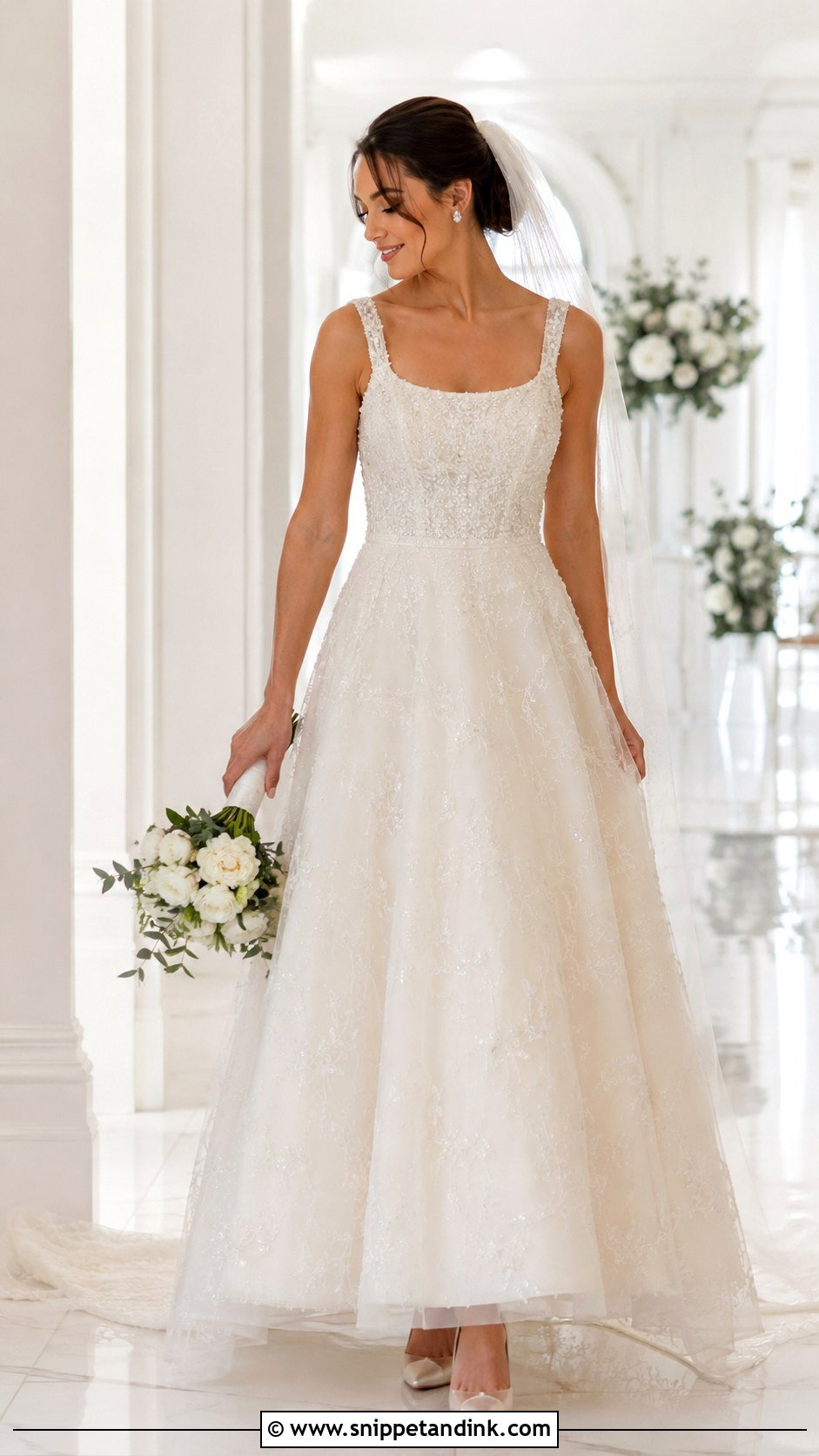
Ivory is softer than stark white and photographs well in most lighting. It takes pearls, clear crystals, silver beads and subtle sequins equally well. Bead placement sets the mood: all-over is glamorous, a beaded bodice over a plain skirt is classic. The detail I fuss over is undertone. Ivory varies a lot between makers, so I hold the veil, shoes and gown together in daylight before ordering, because a mismatch you can’t see in the shop shows up in every photo.
19. Beaded Pearl Wedding Dress
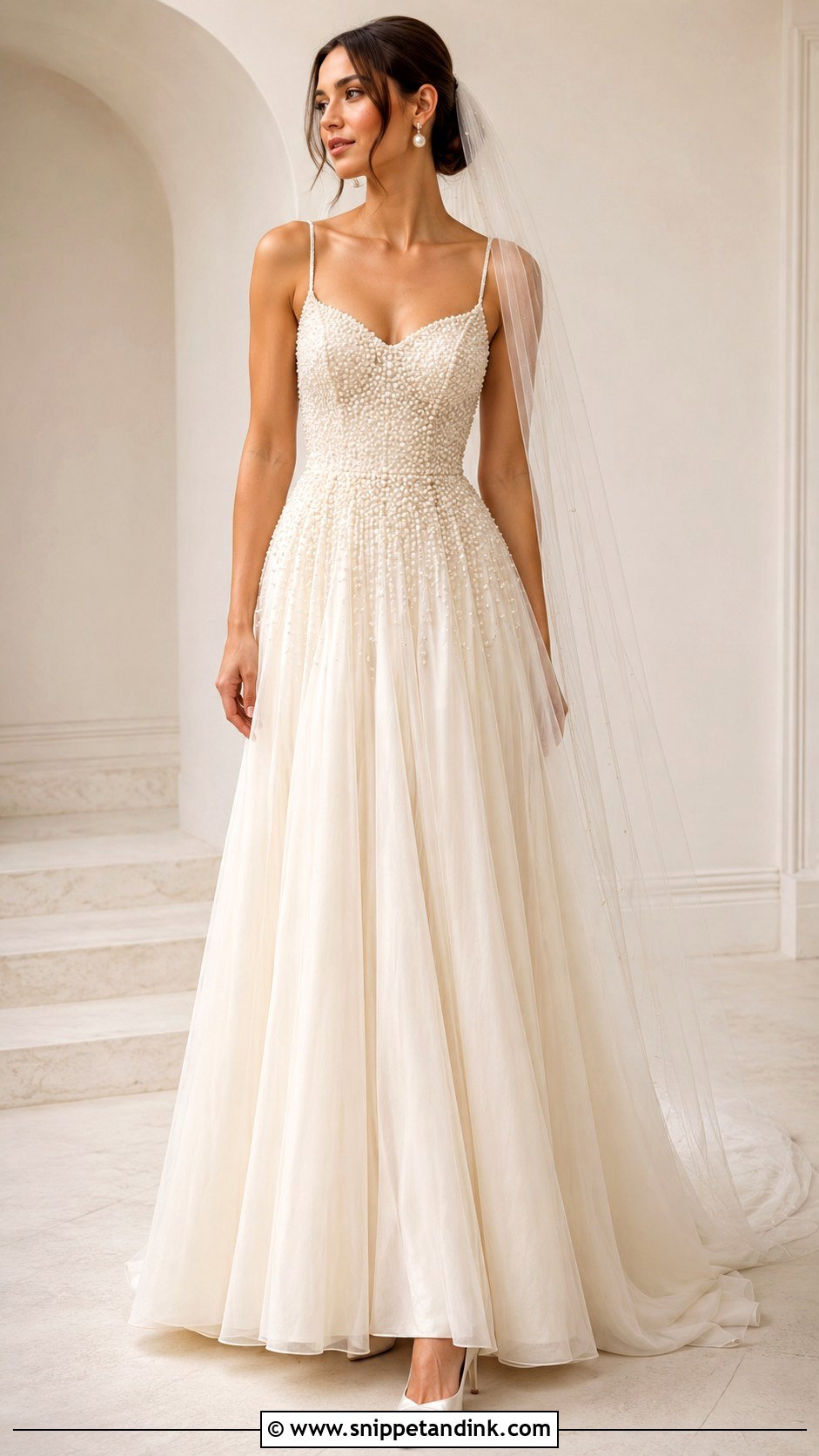
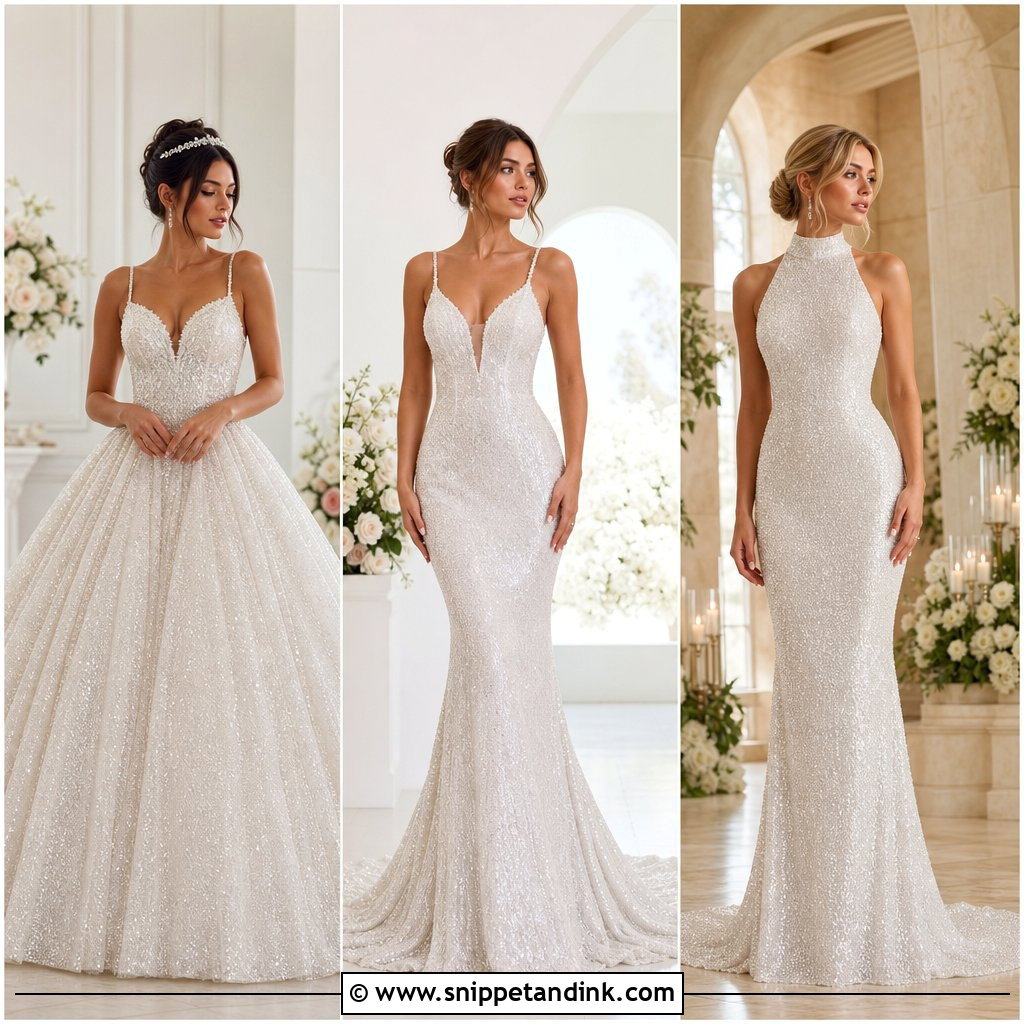
Pearls glow instead of sparkle. They work on tulle, lace, satin and crepe, from tiny scattered beads to bold dimensional accents, and they suit brides who want texture without crystal shine. Pearl straps, pearl sleeves or a pearl-covered bodice are all options. I keep the extra pearls minimal: pearl earrings, satin shoes and a simple veil. Too many pearl accessories add up quickly. Also, pearl-covered gowns can be surprisingly heavy, so try on the actual sample rather than judging from a photo.
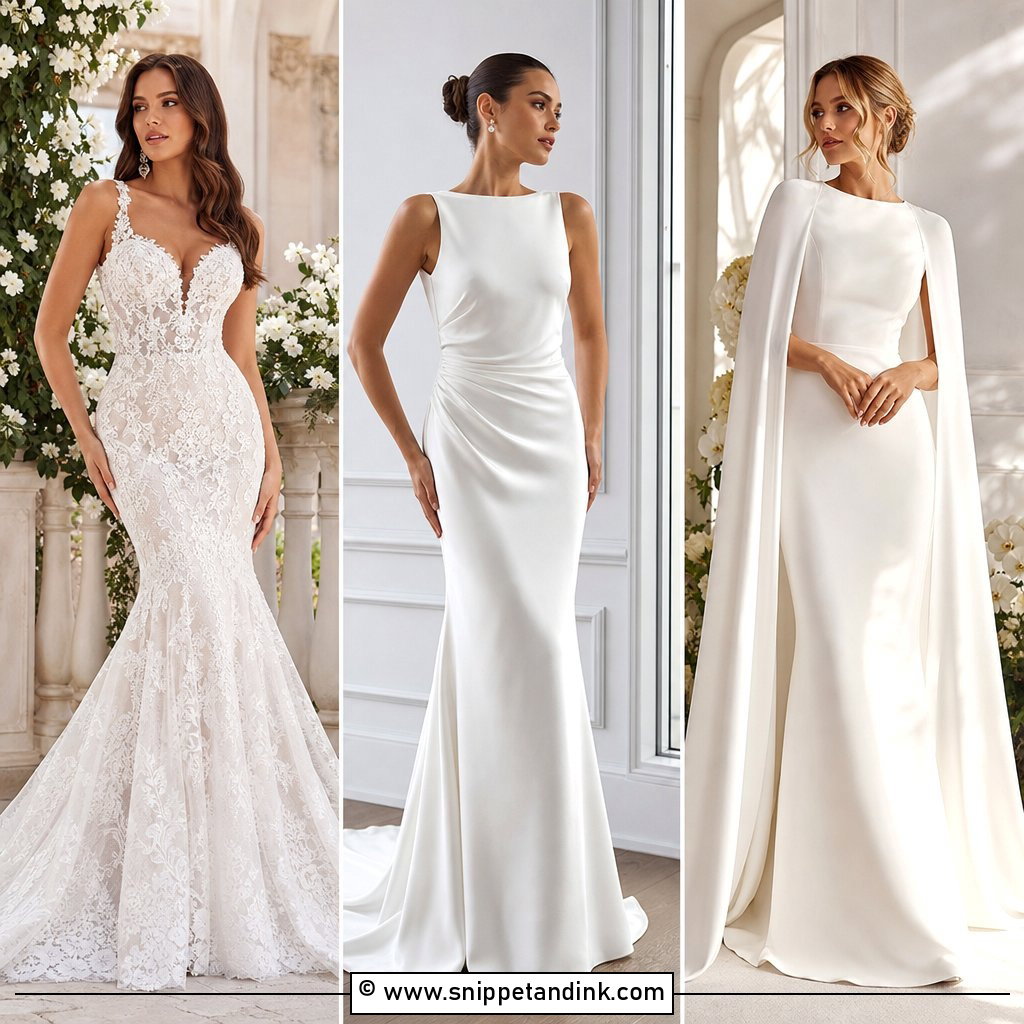
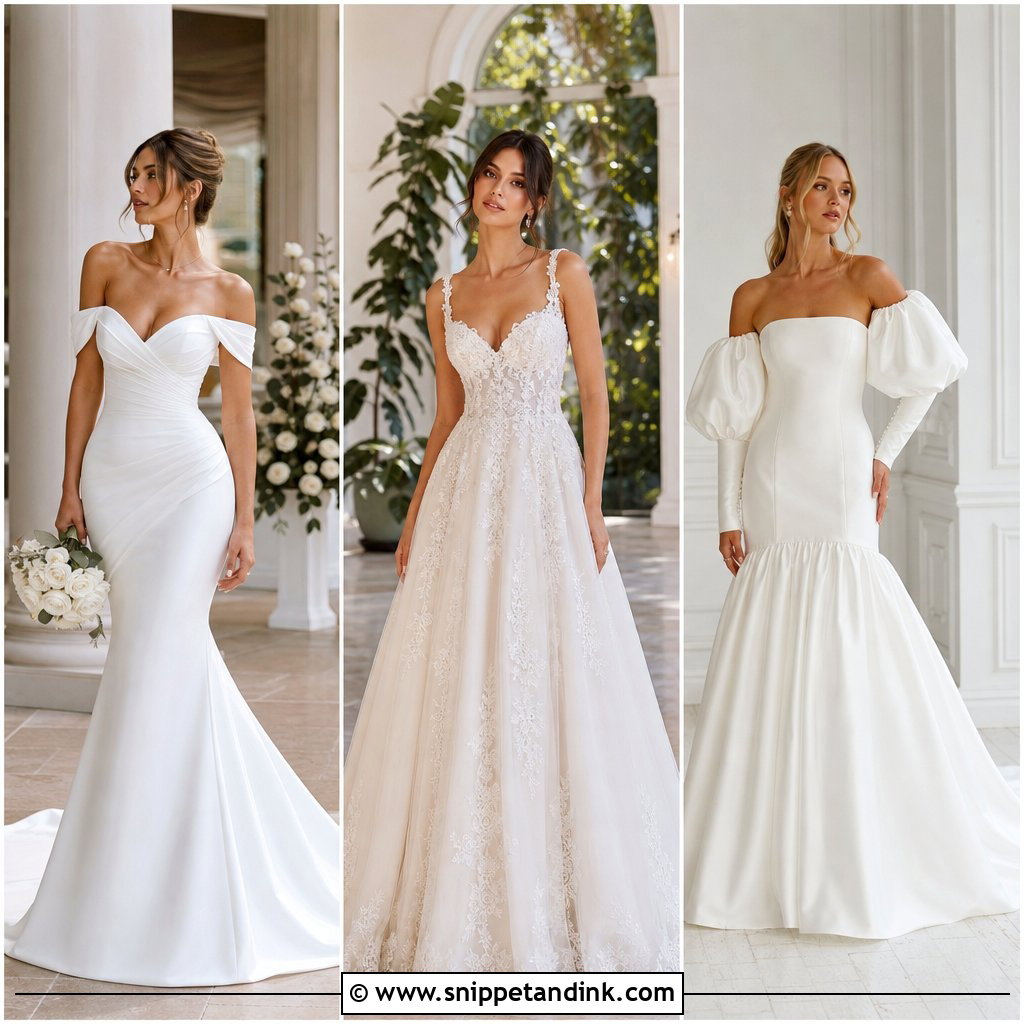
20. Beaded Crystal Wedding Dress
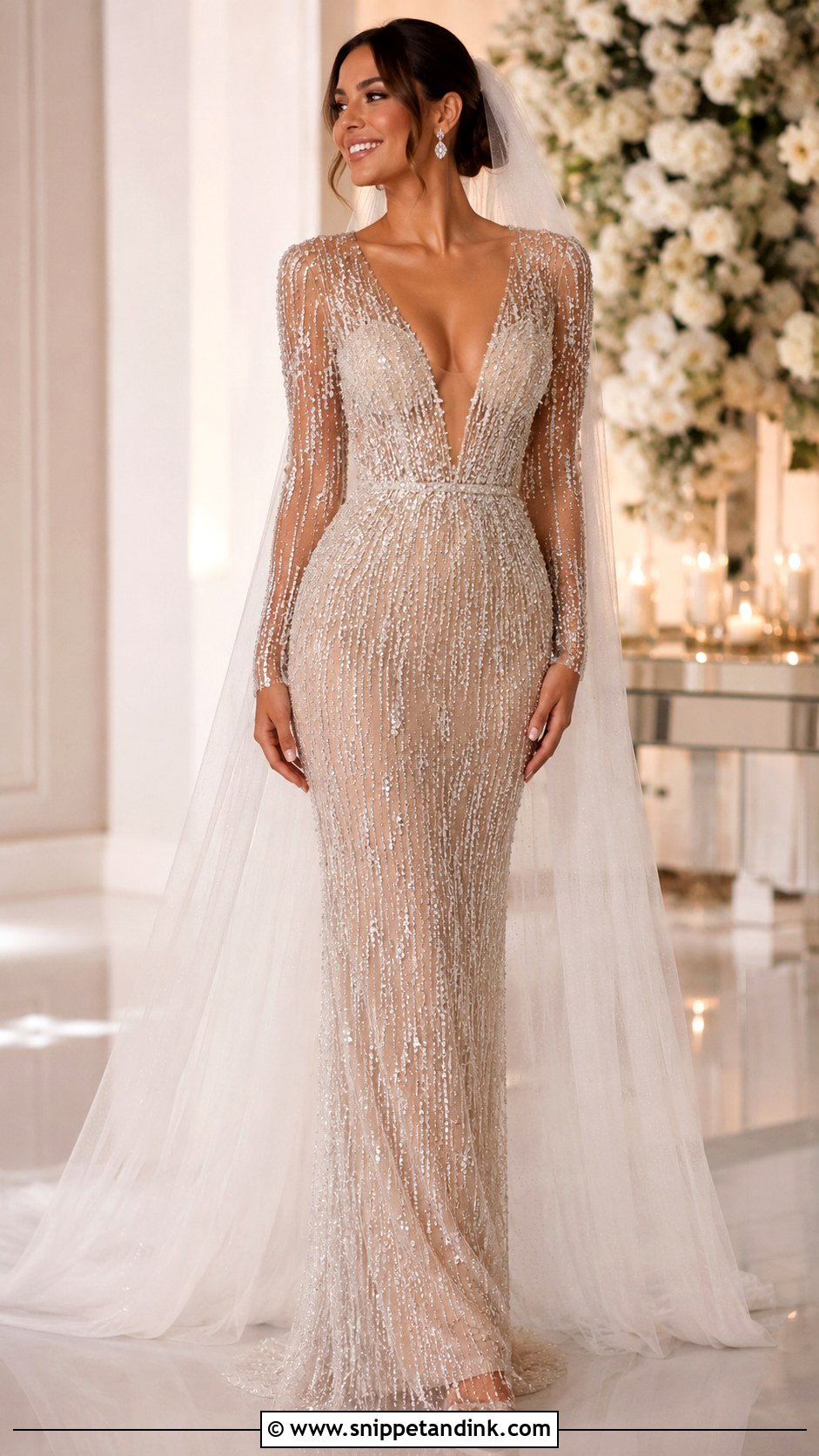
Crystals throw light from every angle, which makes them the boldest choice here. They look striking on fitted silhouettes, sheer overlays and geometric patterns. For a full-shine look, go all-over; for something easier to wear, keep crystals to the bodice, straps or train. Keep shoes and jewelry quiet, with clear or silver-tone earrings, and let a plain veil soften the effect. I warn brides that heavy crystal can scratch arms and catch on a partner’s jacket during slow dances.
21. Beaded Art Deco Wedding Dress
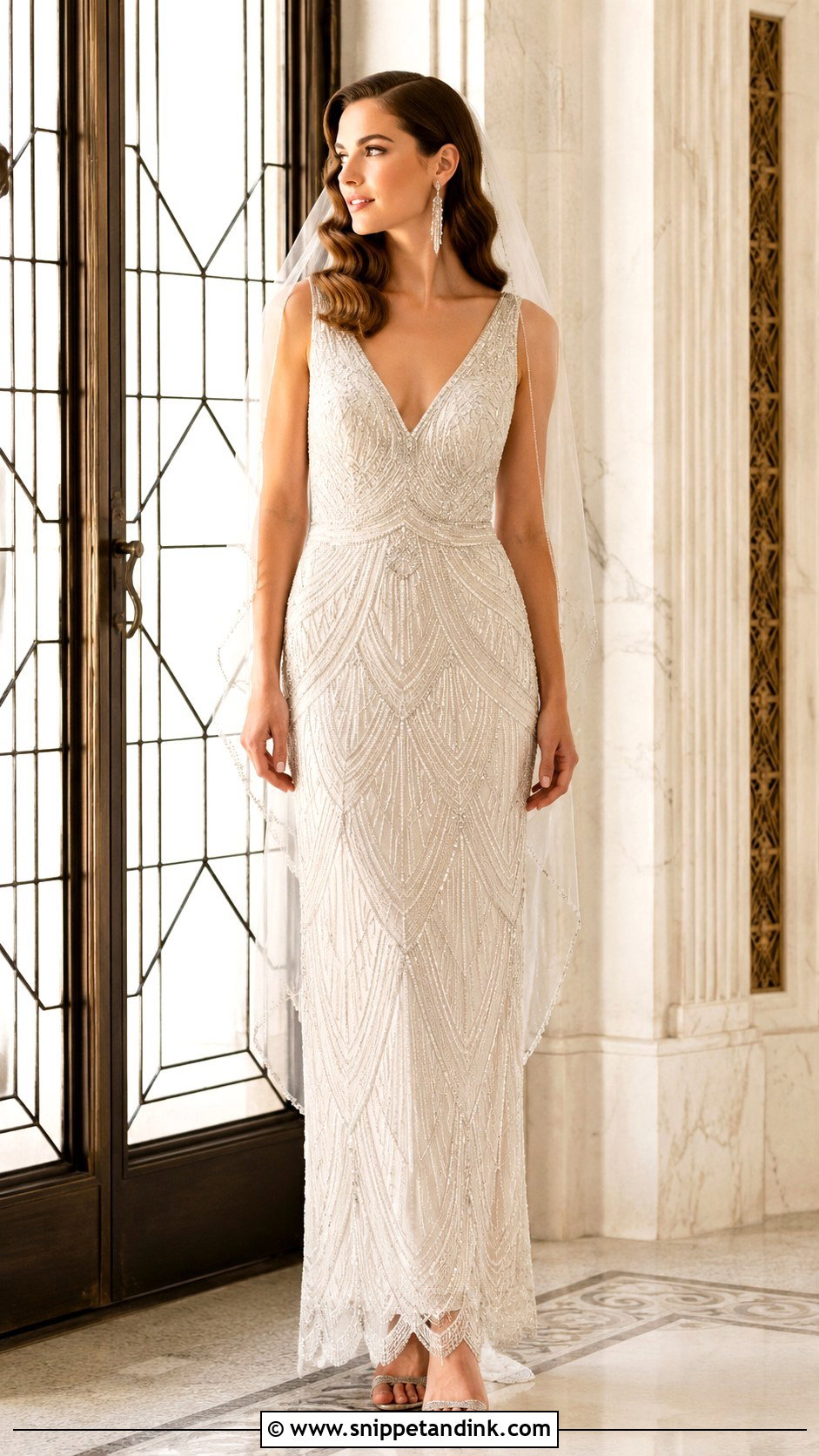
A beaded art deco wedding dress brings vintage glamour through fan patterns, vertical beadwork, scalloped edges and metallic accents. Sheath and column shapes keep the geometry readable. I pair it with simple heels and a sleek bob, finger waves or a low bun. Long earrings suit the era, unless the neckline is already busy. A fingertip veil or no veil both work. Deco beading is often dense, so check how the hem behaves when you walk, since heavy scallops can swing and tap your ankles.
22. Beaded Boho Wedding Dress
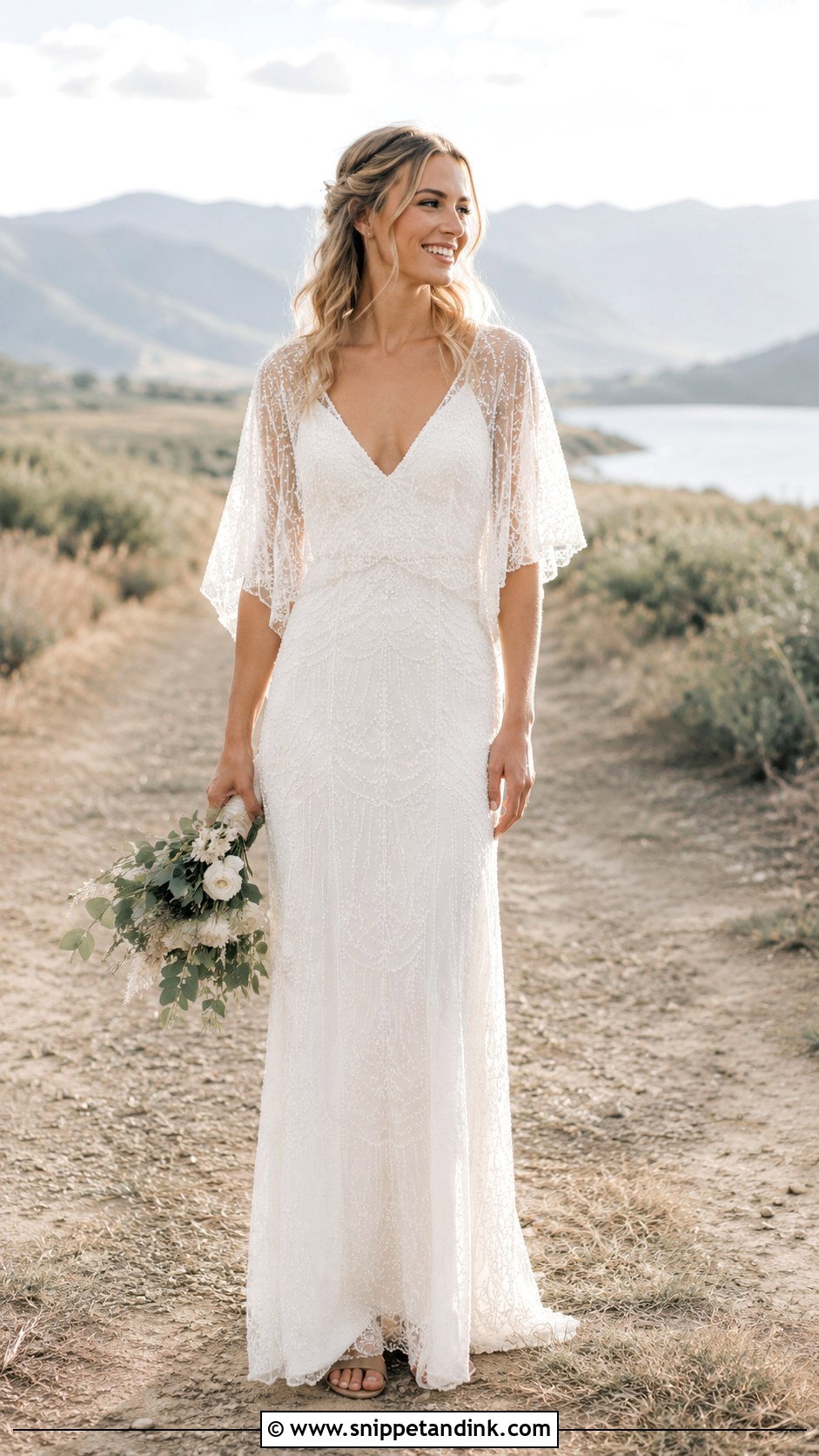
Boho beading is quieter: soft beads within lace, flowing sleeves, light tulle or an easy sheath. It’s made for outdoor weddings, beaches, deserts and gardens. Ivory, nude-lined or champagne tones look natural there. Loose waves, simple sandals or block heels and delicate earrings, with a soft veil, hair pins or a minimal headpiece. I tell boho brides to check the back of the dress in a sitting position, since open backs and loose lace can shift more than you’d expect.
23. Beaded Beach Wedding Dress
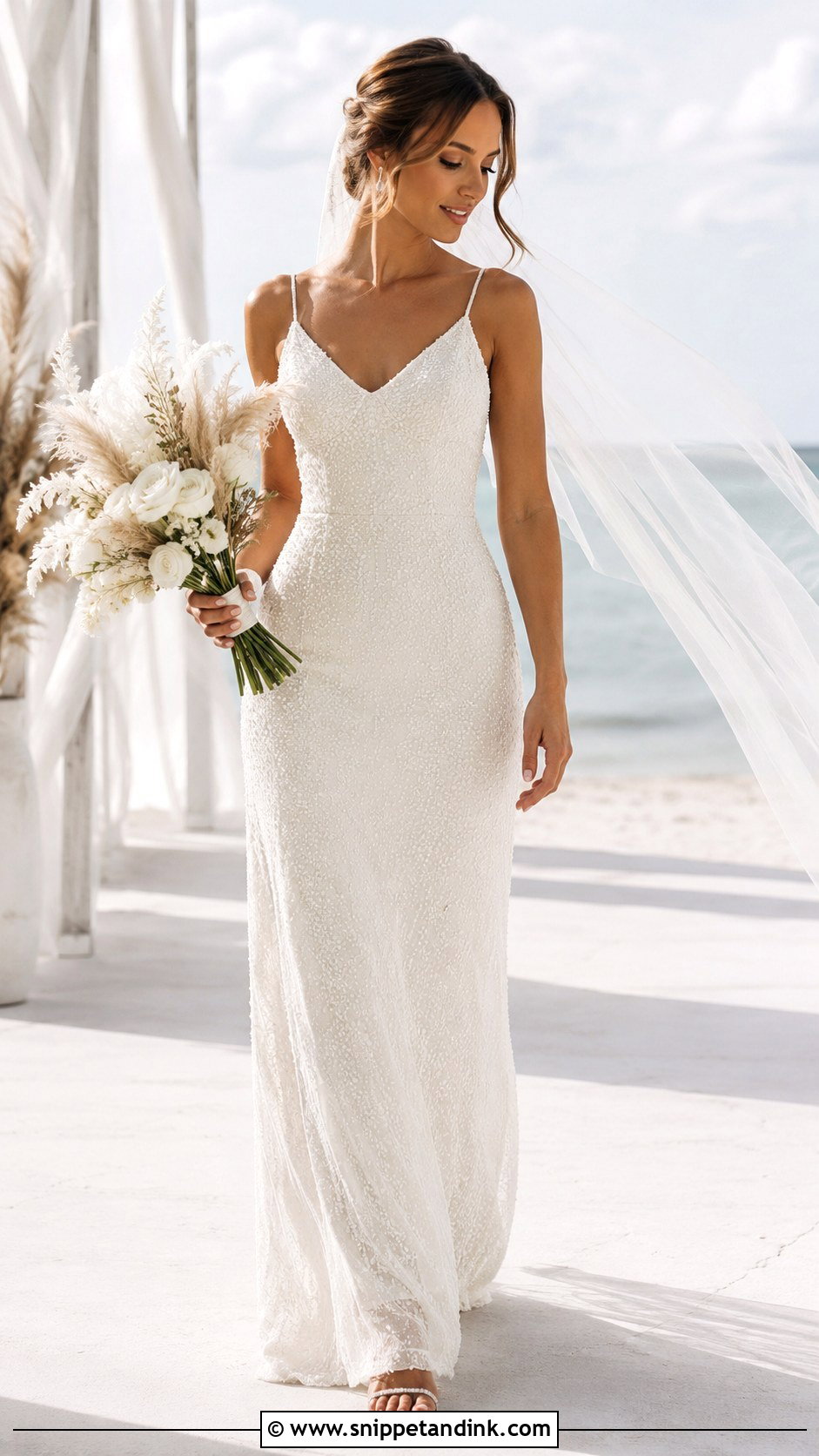
Heat and heavy beads don’t mix. For a beach, I’d pick scattered beading, delicate straps or a lightly embellished bodice on a sheath, slip or soft A-line, never a large ball gown on sand. Lightweight tulle, chiffon or crepe breathes. Flat sandals, low block heels or barefoot sandals if the setting allows, minimal jewelry and a veil that won’t fight the wind. Sand also works into beaded hems, so shake the dress out gently before it’s packed.
24. Beaded Reception Wedding Dress
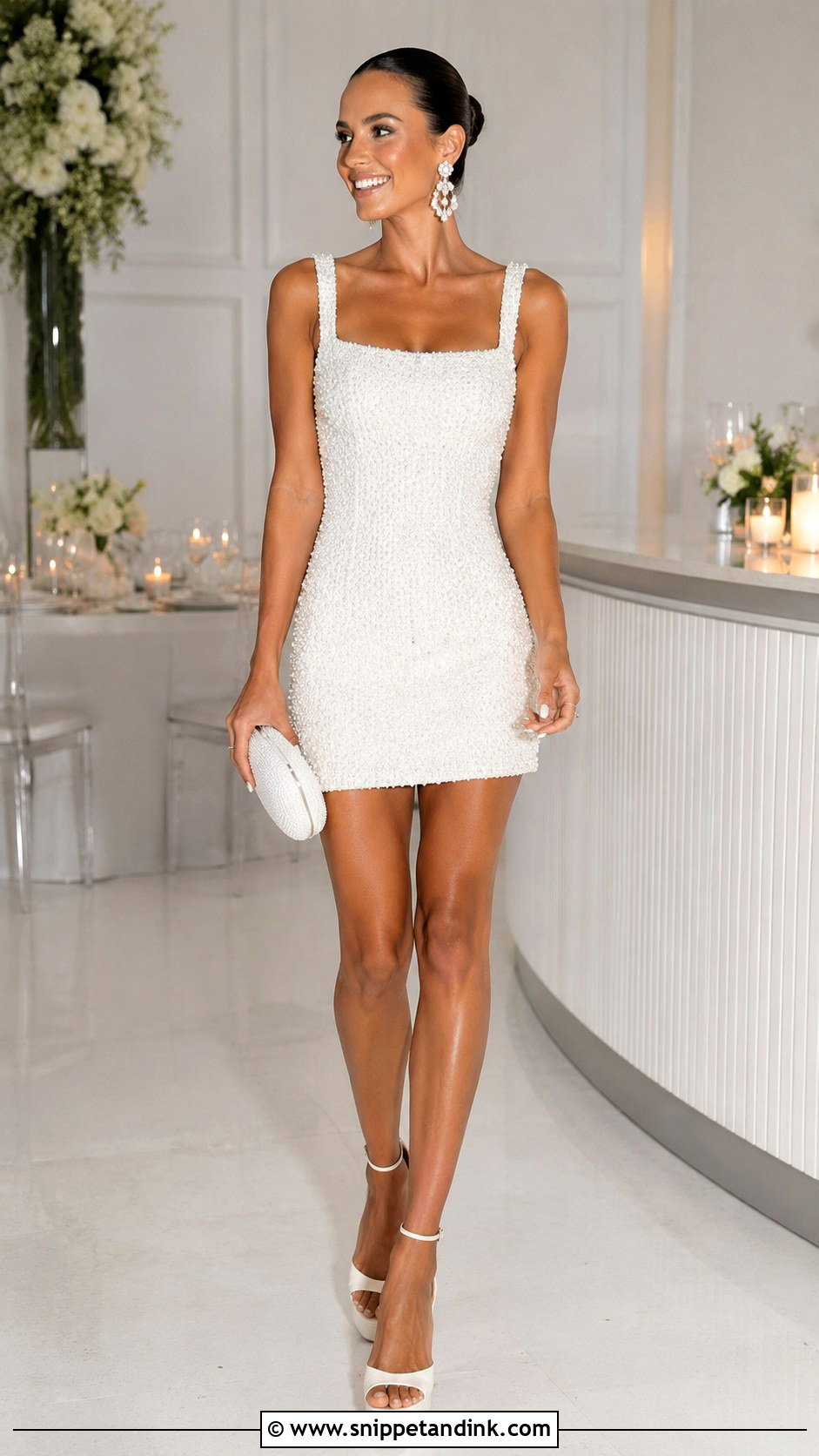
A reception change lets you move freely after a heavy ceremony gown. It can be a mini, a midi dress, a sheath or a slip dress with beaded detail. Short beaded dresses suit platform heels or embellished sandals; a slim full-length gown feels right for a formal reception. Secure straps and a comfortable fit come first, then statement earrings or a small clutch. I plan the change for a natural break in the evening so it takes ten minutes, not thirty.
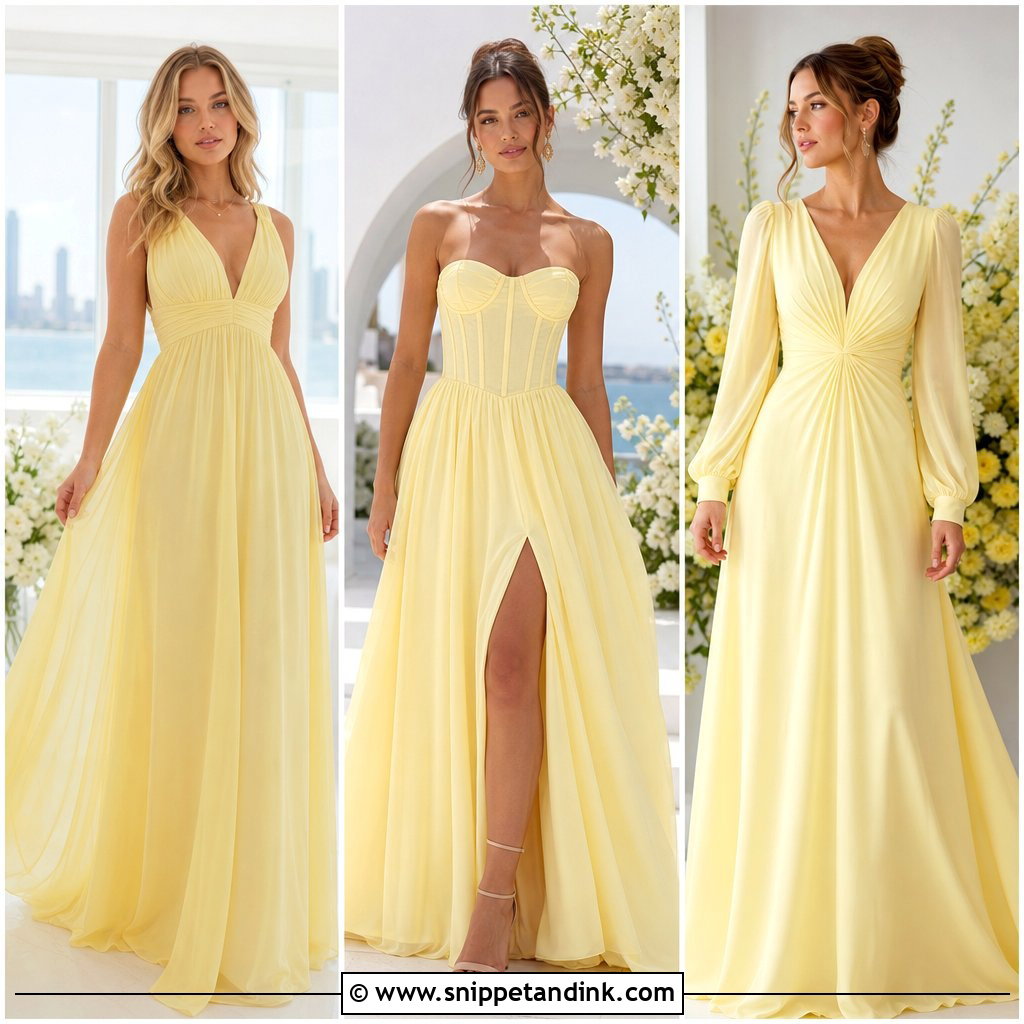
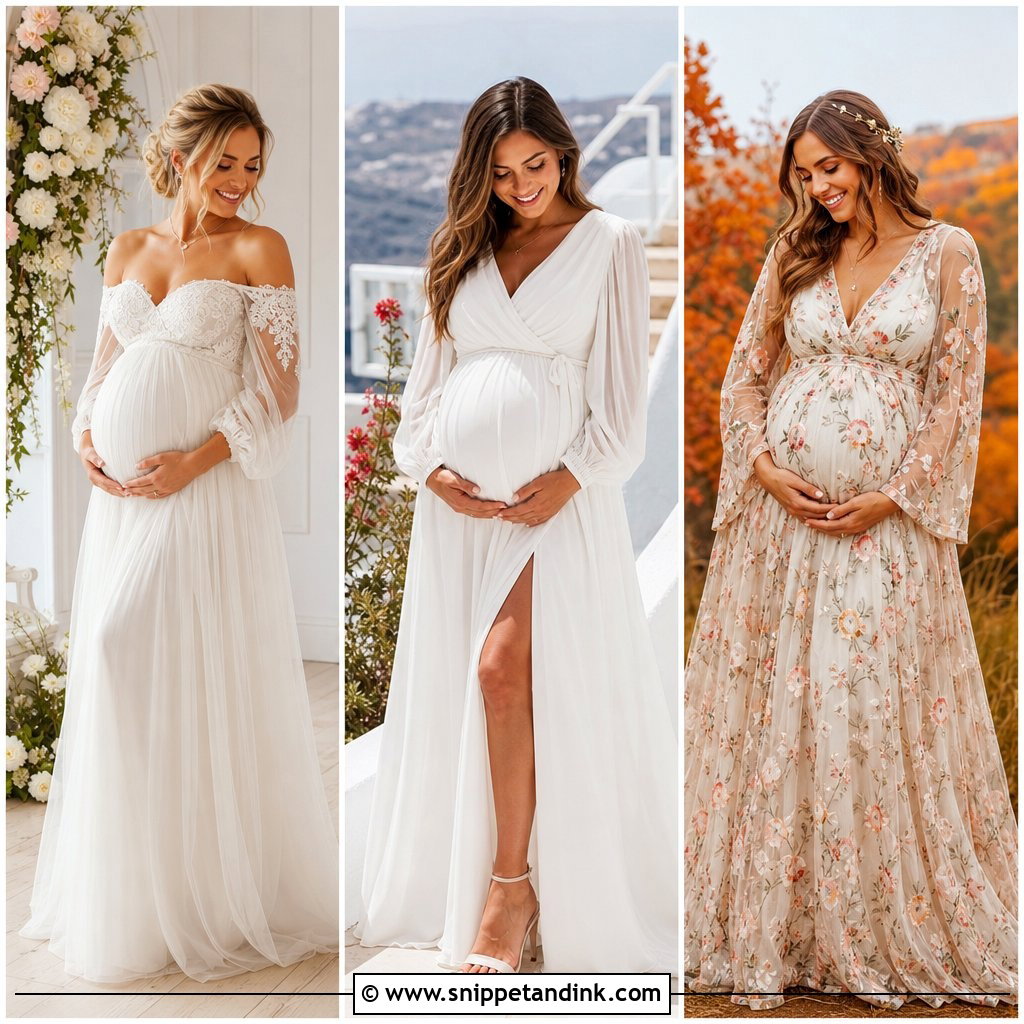
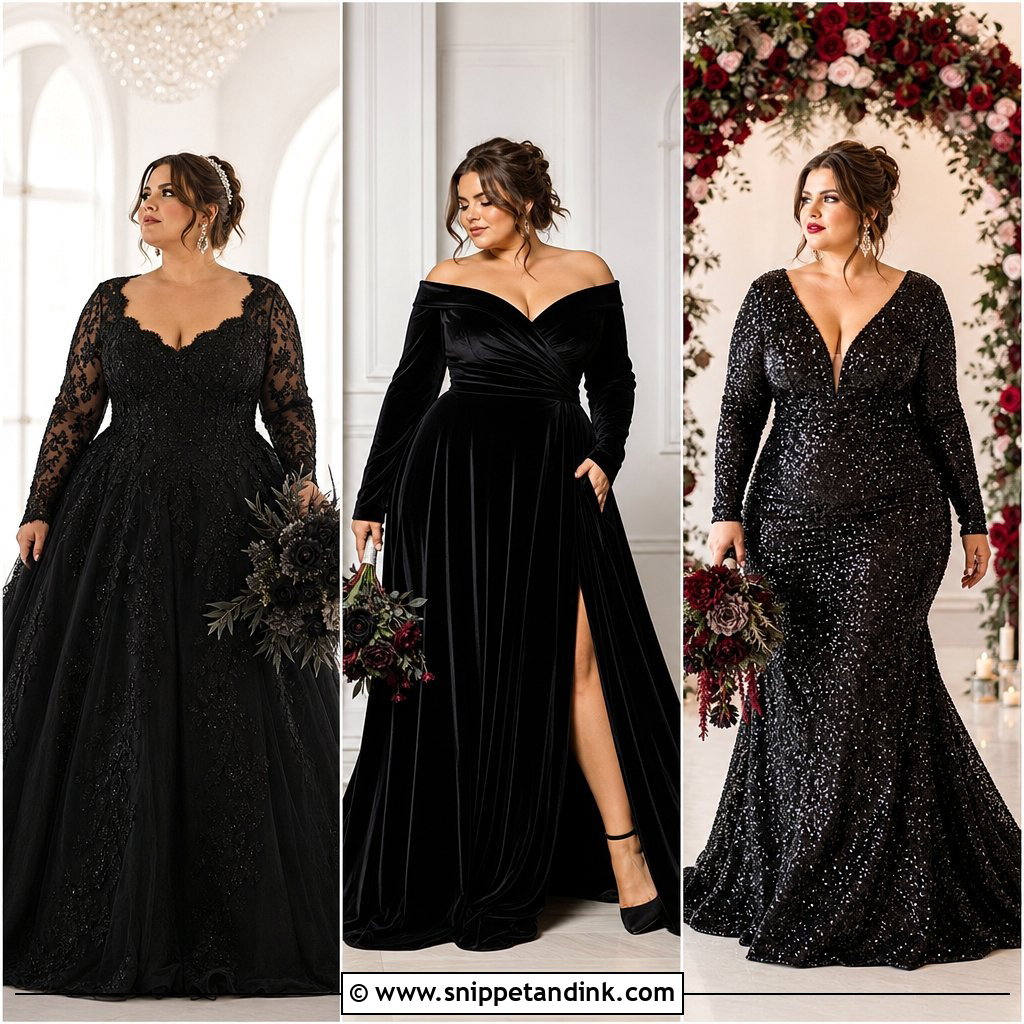
25. Beaded Plus Size Wedding Dress
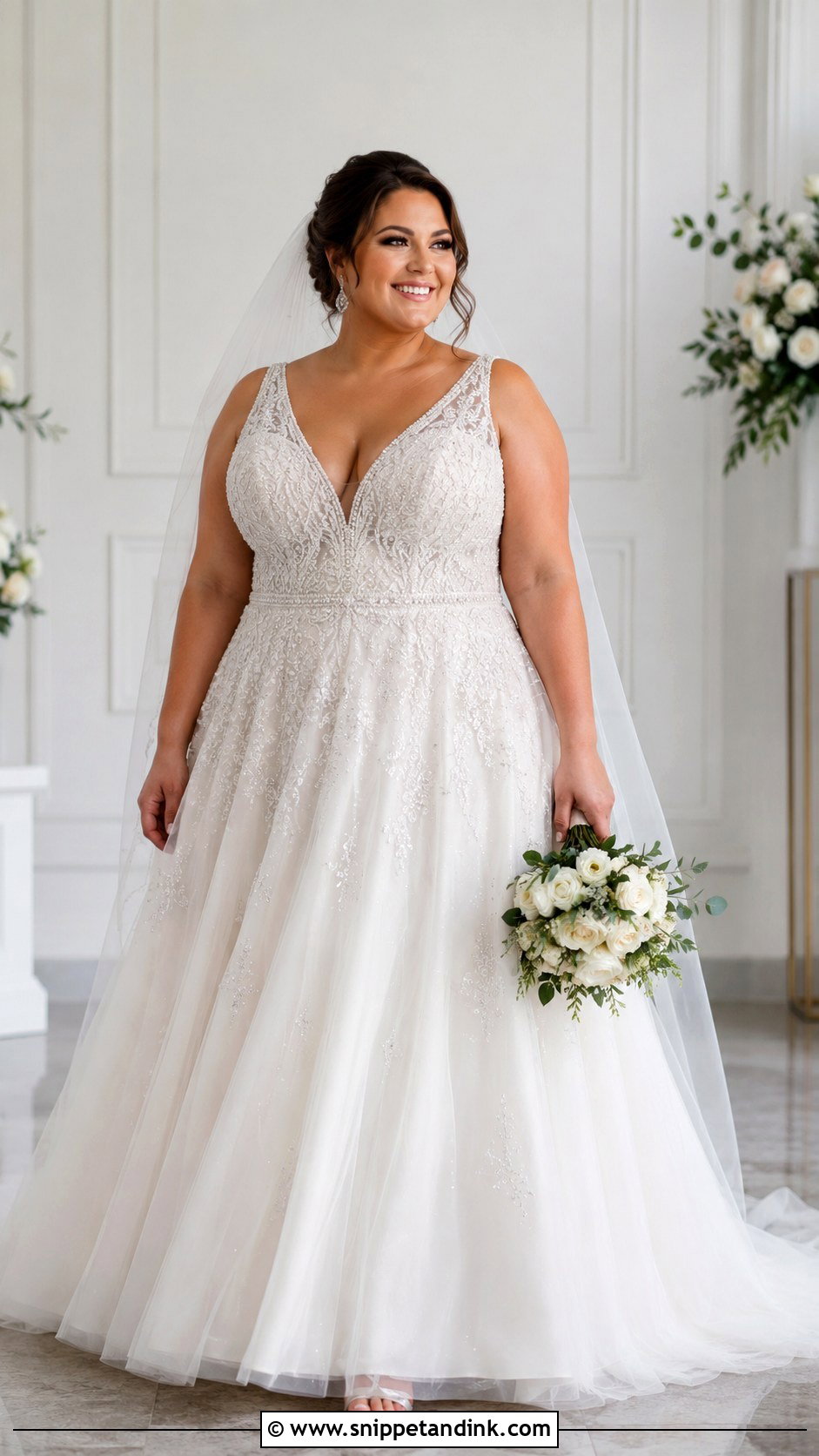
For plus size brides, construction comes before any beading decision. I look for internal corsetry, good lining and bead placement on the parts you most like about your body. A-lines, fit-and-flare, corset bodices and V necklines are common choices, but the right one is the one that feels secure. Waist beading defines; vertical beading lengthens. Bring your actual undergarments and shoes to every fitting, and sit, walk, hug and dance in the dress before the final alteration is signed off.
How a Beaded Dress Holds Up at Dinner and on the Dance Floor
Most problems with beaded gowns appear after the ceremony, once you sit, hug and dance. Beads shed. Threads snag. The bustle gives way. None of this is a reason to avoid beading, but it is worth preparing for.
I ask for a bustle with several attachment points spread across the skirt, since one or two hooks can’t hold a heavy beaded train for long. I also hand a small repair kit to whoever is helping you: a needle already threaded in the gown colour, a few spare beads if the shop supplied them, and some clear fashion tape. If a strand of beads starts to unravel, knot the thread and tuck it in rather than pulling, which only strips more beads off the line.
Seating is the last check. Beaded skirts can scratch a chair or catch on rough fabric, and the beads under you will press into your legs through a long dinner. A quick test in a hard chair at your fitting tells you whether you’ll want a soft slip underneath.
Wear It for an Hour Before You Say Yes
Sparkle is the easy part. The decisions that matter are shape, fabric, weight and neckline, matched to your body, the venue and how many hours you’ll wear the gown. Heavy beading reads formal; scattered pearls or crystals read softer. Factor in alterations, season and comfort before you fall for a sample, and try several silhouettes, because the same beading looks completely different on a mermaid and an A-line. Mermaid, satin, blush or a reception change: wear it for a full hour before you say yes.
You'll Like These Ideas:





Leave a Reply