
A wedding hairstyle has two jobs: look right in the first photo and still be in place after the last dance. When I plan a bride’s hair, the picture she brings matters less than her density, her length and how many hours the day runs. Below are twenty looks I’m asked for again and again, from sleek buns to braided half-ups and pinned short styles, each with notes on how it actually behaves once it’s on a real head. Read the notes for your own hair type, not just the photos.
Your Density Matters More Than the Photo You Saved
Most brides bring me a saved photo of a model with thick, long, often extension-filled hair. That photo tells me the shape you like. It doesn’t tell me whether your hair can hold it. Before you pick from the twenty below, I’d sort them by what your hair does on an ordinary Tuesday.
Fine or Thin Hair
Fine hair slips and flattens. I’d point you toward styles with structure that doesn’t depend on volume: the sleek low bun with a padded base, the French twist with backcombing for grip, or a tighter braid. Loose waves worn down will often look half their trial volume by the reception. Clip-in pieces can add body to a half-up, but get them color-matched and wear them once before the day.
Thick or Heavy Hair
Thick hair holds curl well but gets heavy. A high ballerina bun on very dense hair can pull uncomfortably for hours, and a large updo needs more pins than you’d guess. Low placements, like the chignon or the low pony, spread the weight onto the neck. For a big bun I often wrap only part of the hair and pin the rest flat underneath, so the shape stays neat instead of bulky.
Curly and Coily Hair
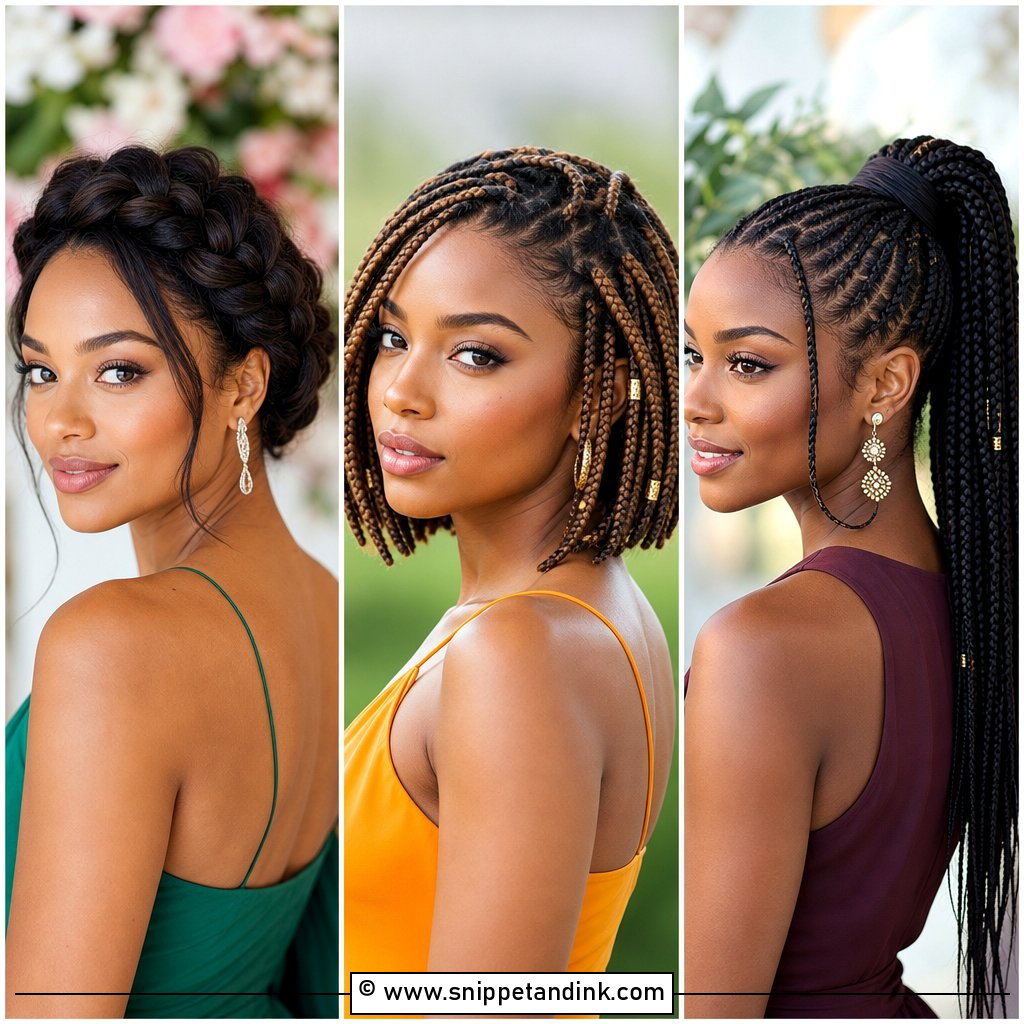
Curly hair already has the texture other brides chase with hot tools. The curly updo, the side-swept look and the braided crown all work with natural pattern. Sleek straight hair and Hollywood waves mean a lot of heat, and humidity will try to revert them, so I’d only go that way if you regularly wear your hair straightened and know how long it lasts.
Bobs and Pixies
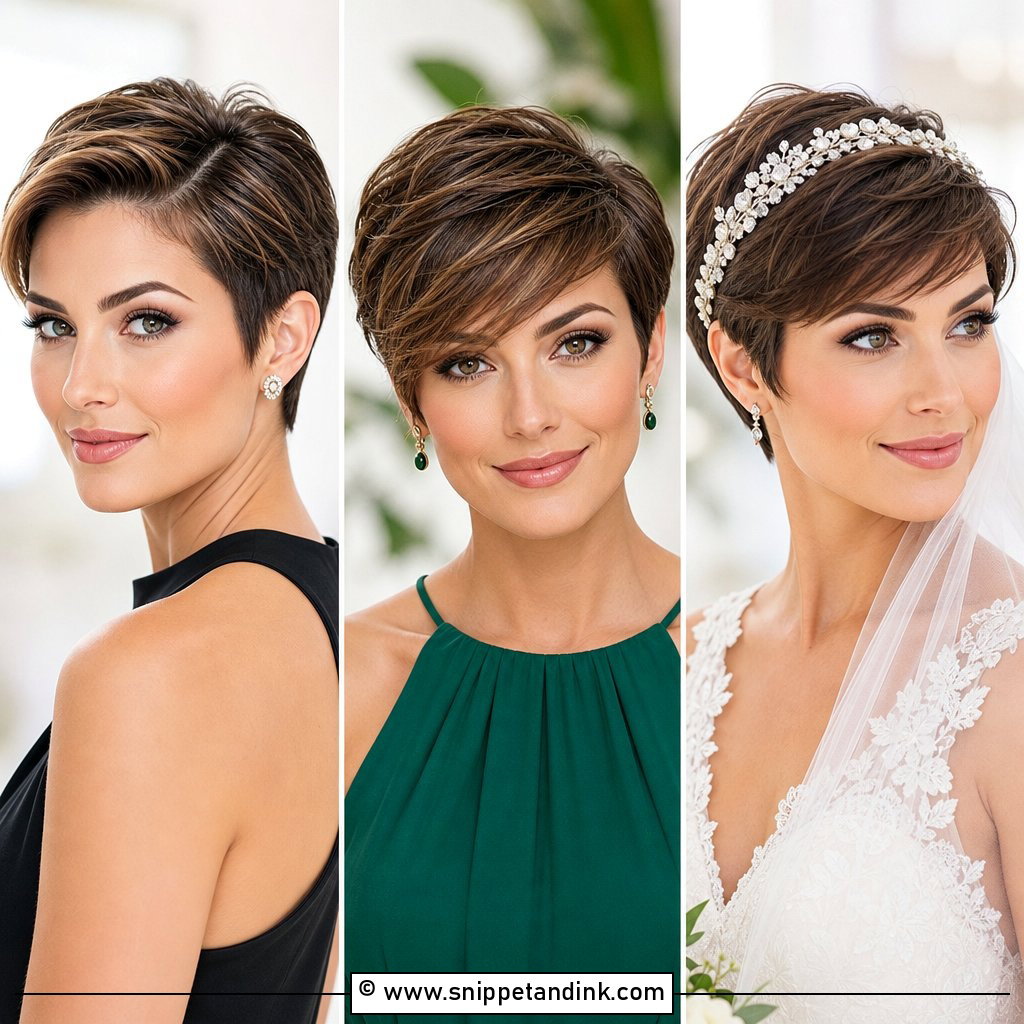
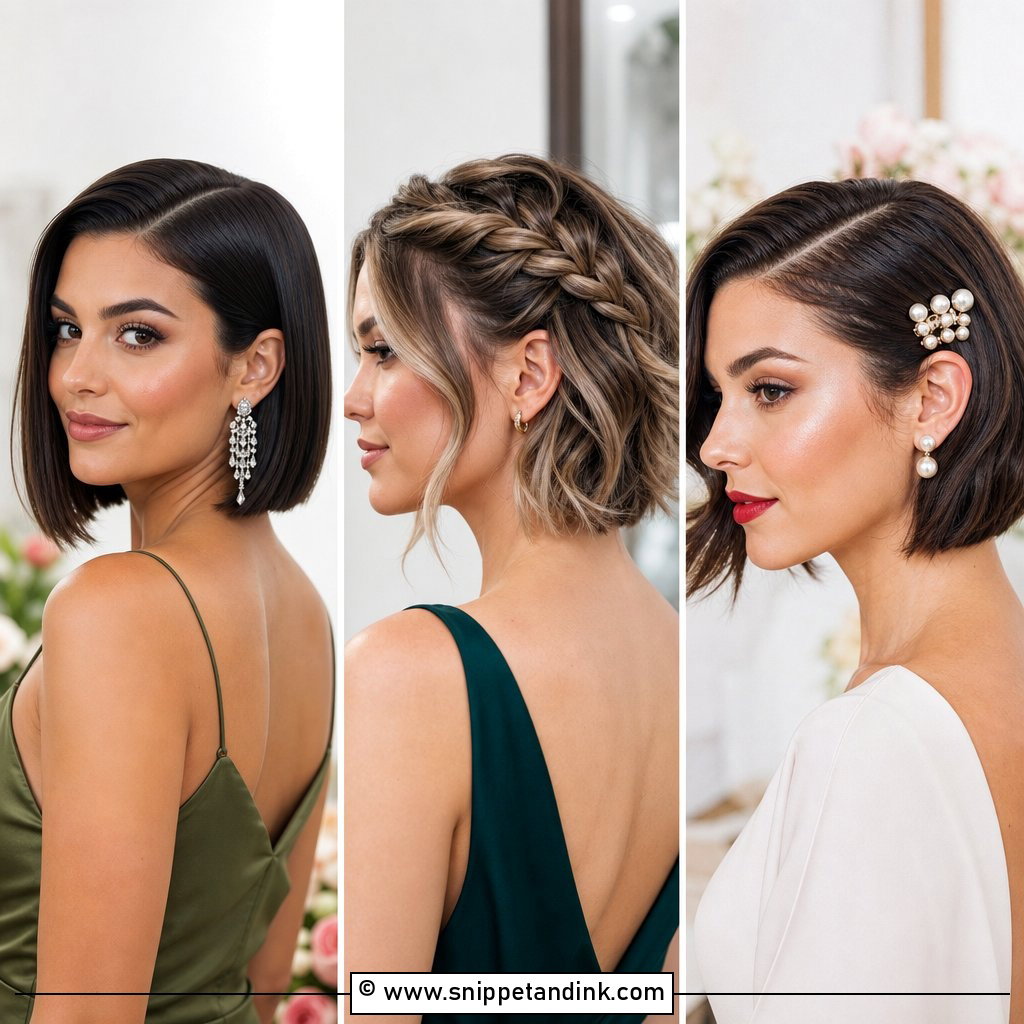
Short cuts can do pinned-back sides, a small twist or finger waves. Most buns need hair that at least touches the shoulders. If you’re growing your hair out for the wedding, schedule the trial once you’ve stopped cutting, so we design for the length you’ll really have.
1. Sleek Low Bun for Wedding
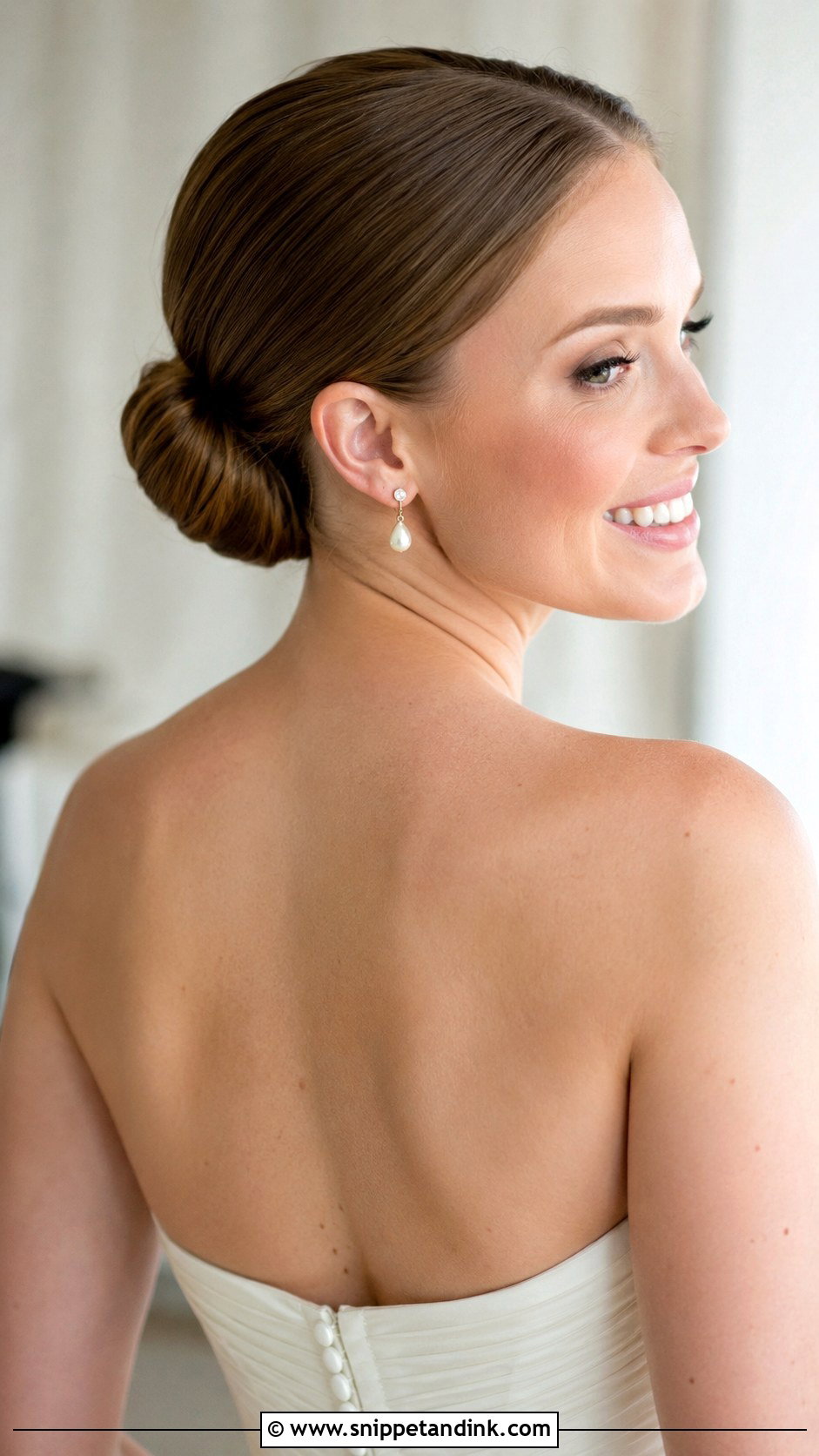
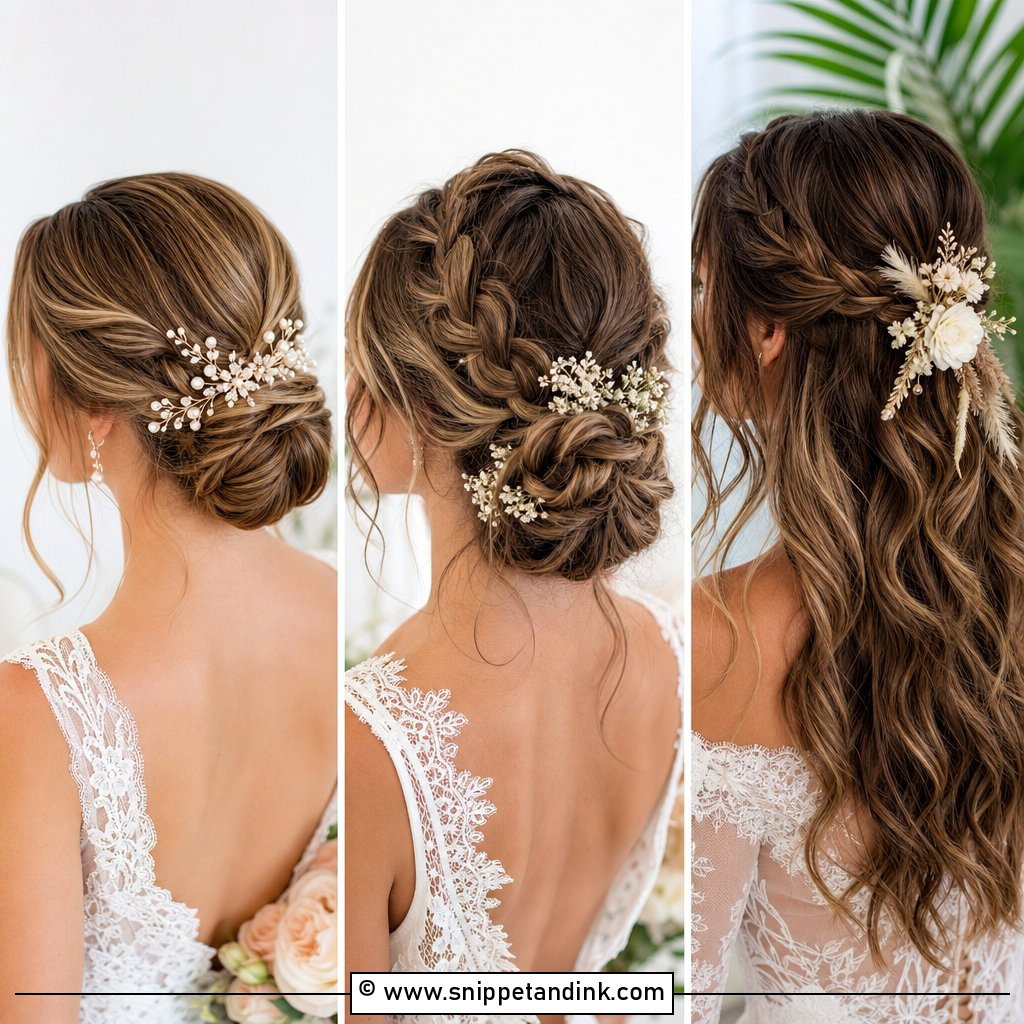
A sleek low bun lives or dies on its base. I set a tight, flat ponytail at the nape first, smooth it with a little cream and a boar bristle brush, then wrap and pin into that base so nothing can slide. A center part gives it the clean editorial line, and it leaves room for statement earrings or a veil comb above. On very fine hair I hide a small padded donut inside, otherwise the bun reads like a thumbprint from behind. It holds through hugs and dancing because there are no curls to drop. One caution: a pearl pin should go into the base, not just the surface, or it works loose.
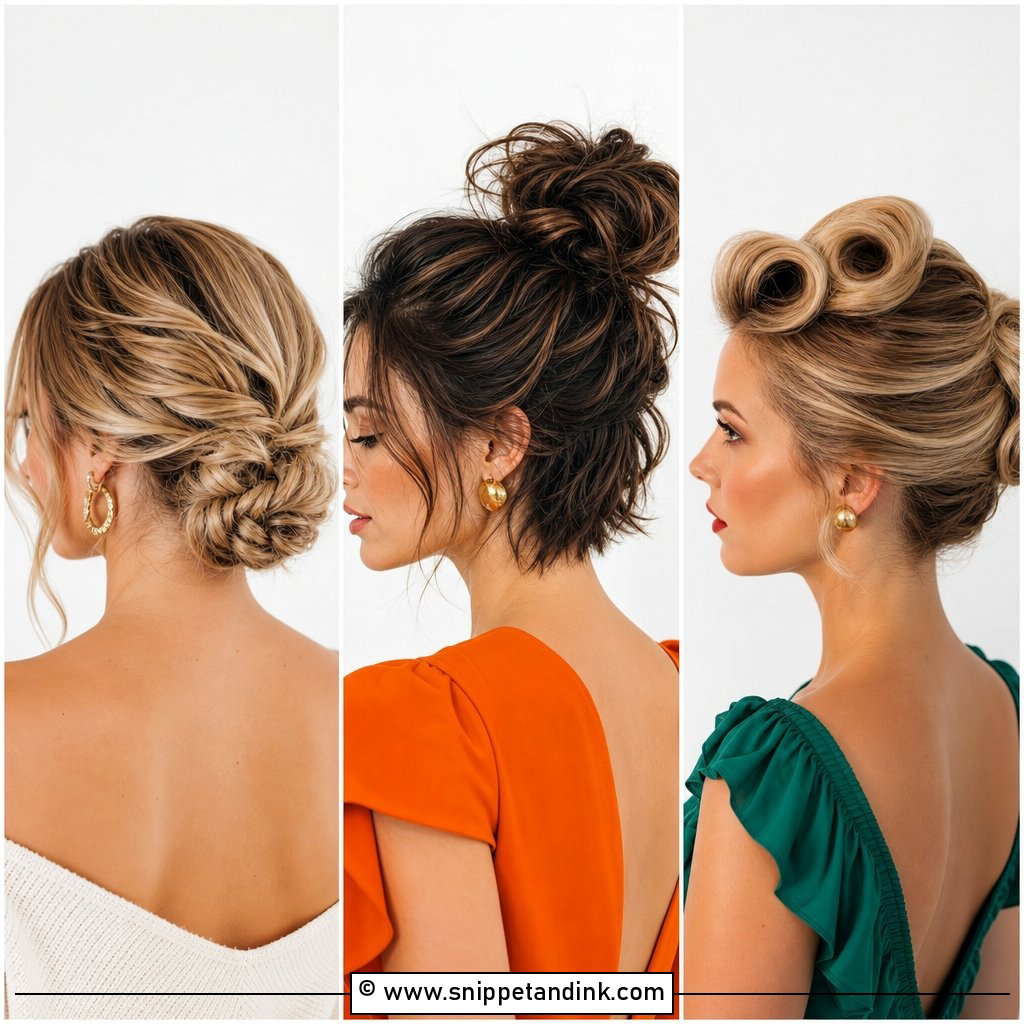
2. Half Up Half Down Wedding Hairstyle
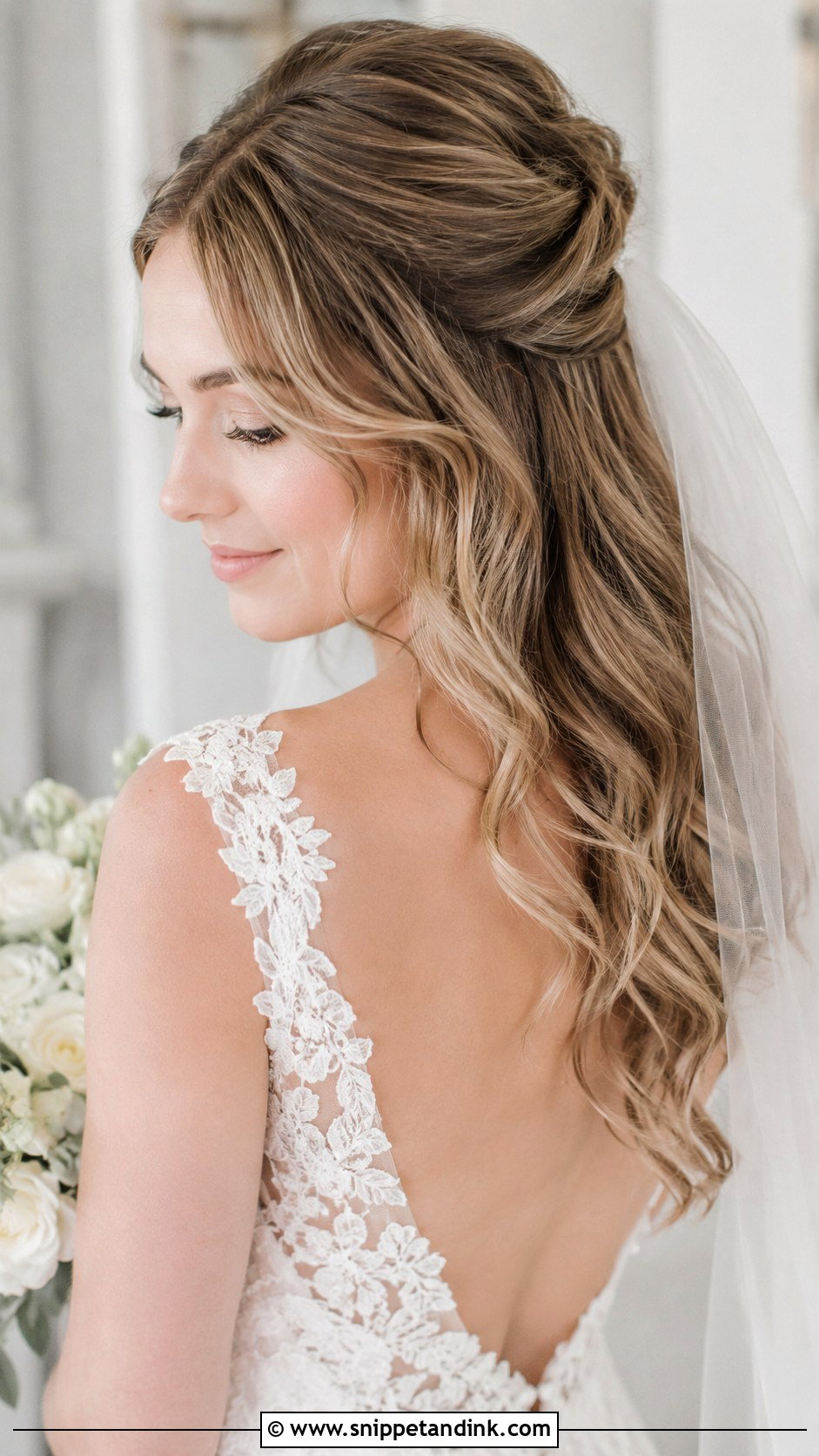
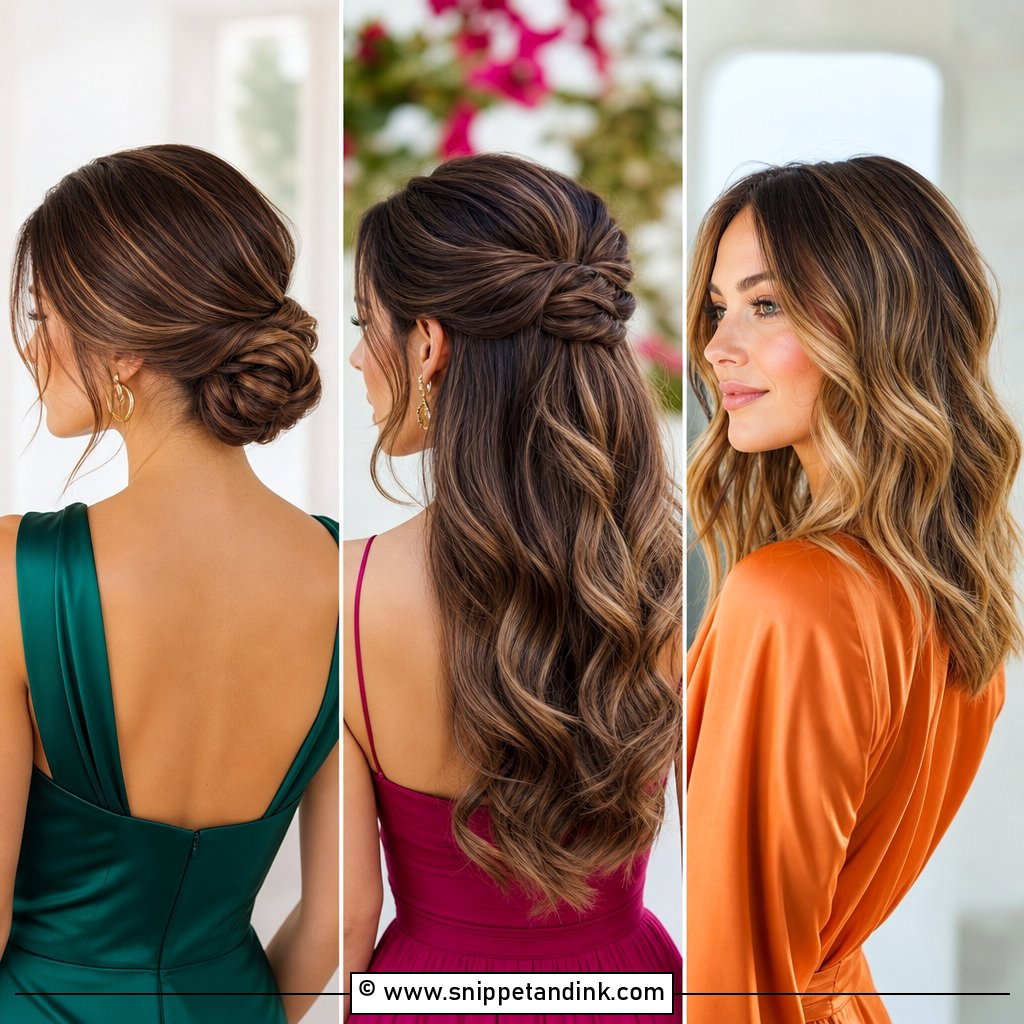
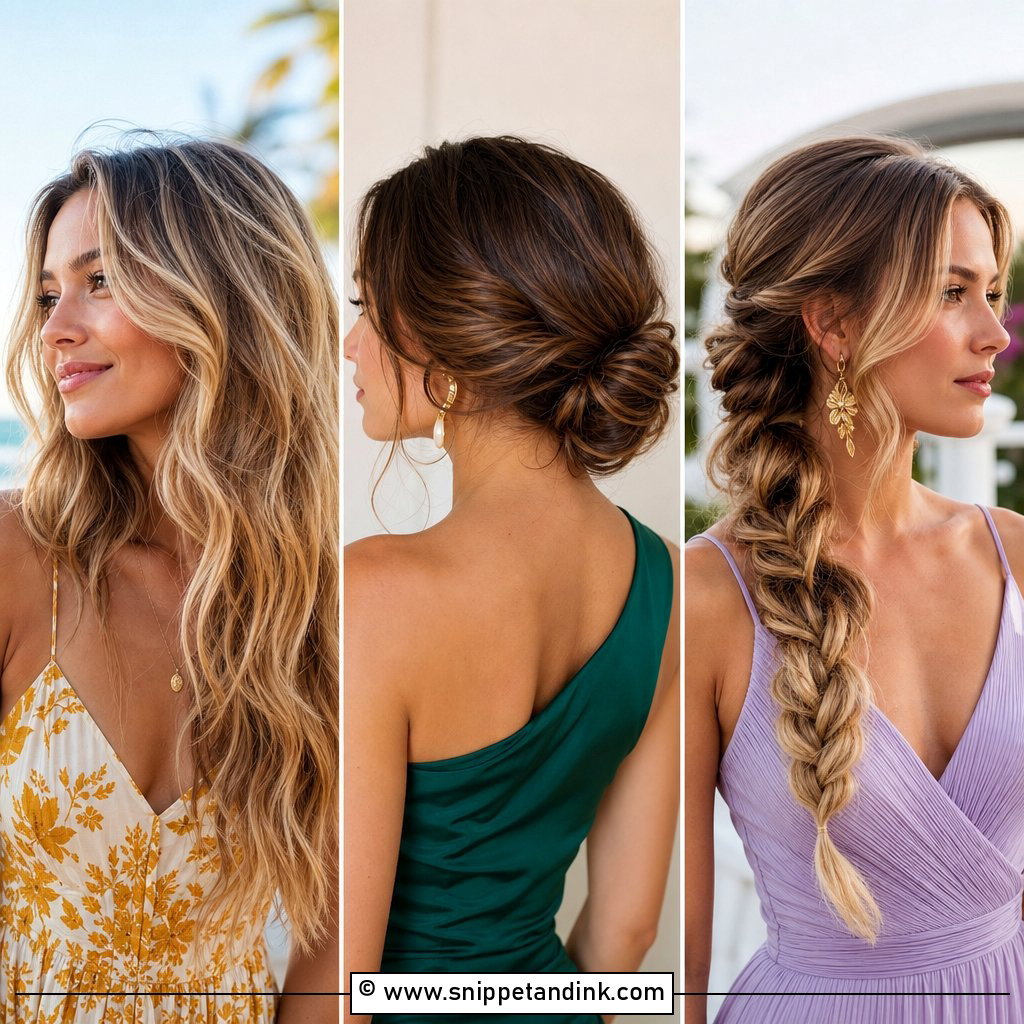
This is the style I’m asked for most, and the one that changes most over a day. The top section is pulled back and pinned while the lengths are waved and left loose, so the face stays clear and you keep the movement. The catch is that the loose half drops. On straight or fine hair I set each wave with a hot tool, pin the curl while it cools and only brush out once the hair is completely cold. A veil sits neatly at the crown pinning point, and a sparkly clip can cover the crossover. If you have humidity-prone hair and an outdoor August ceremony, expect softer waves by the reception.
3. Loose Romantic Waves for Brides
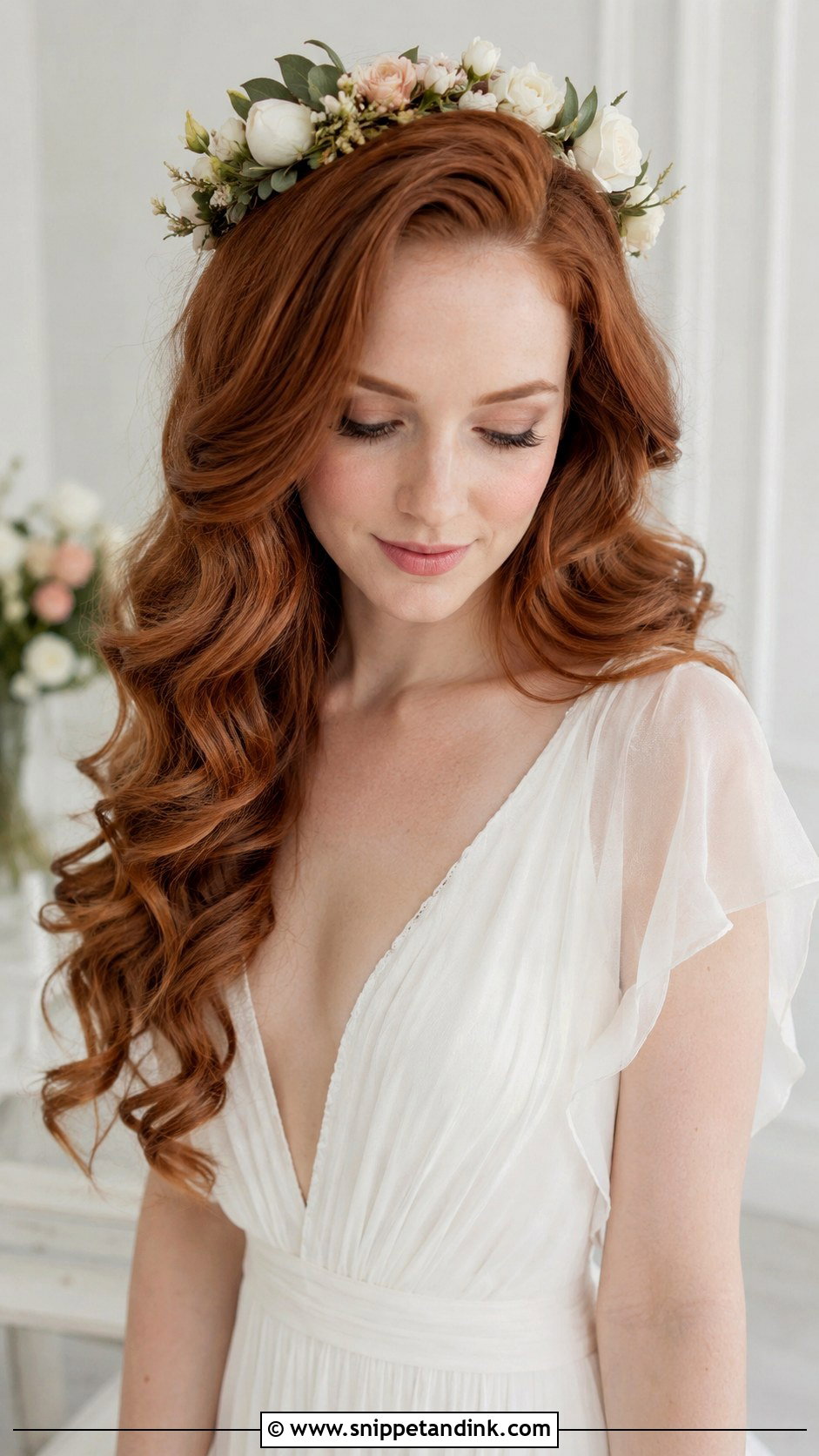
Loose waves look like the least work and are often the most. To get that glossy, lived-in movement past the shoulders, I prep the roots with a light mousse, curl in alternating directions, then break the curls up with my fingers rather than a brush so they don’t merge into one heavy sheet. A center part and a deep side part give very different moods, so try both at your trial. Waves sit happily under a floral crown or a fingertip veil. Texture spray goes on last and lightly; overdo it and the hair turns crunchy in close-ups. A humid beach is the hardest setting for this one.
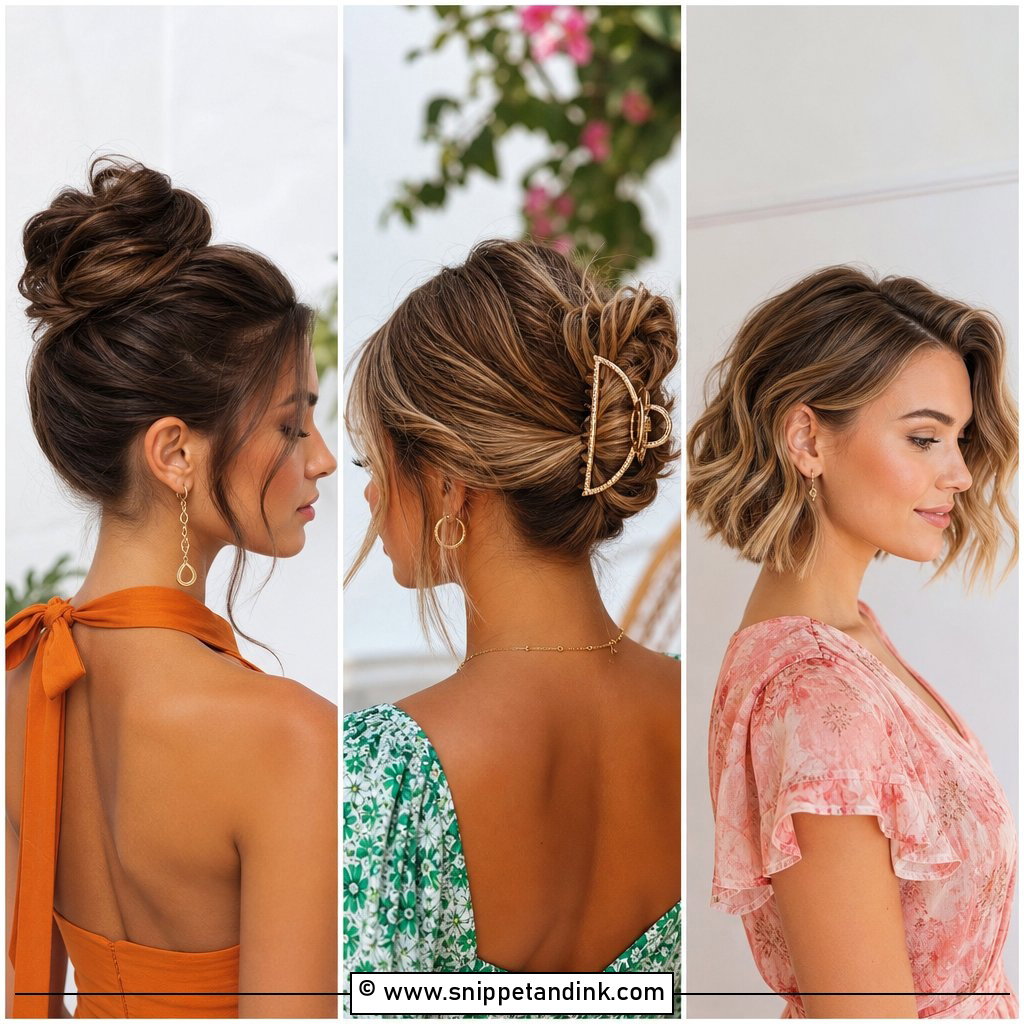
4. Messy Boho Bun for Wedding
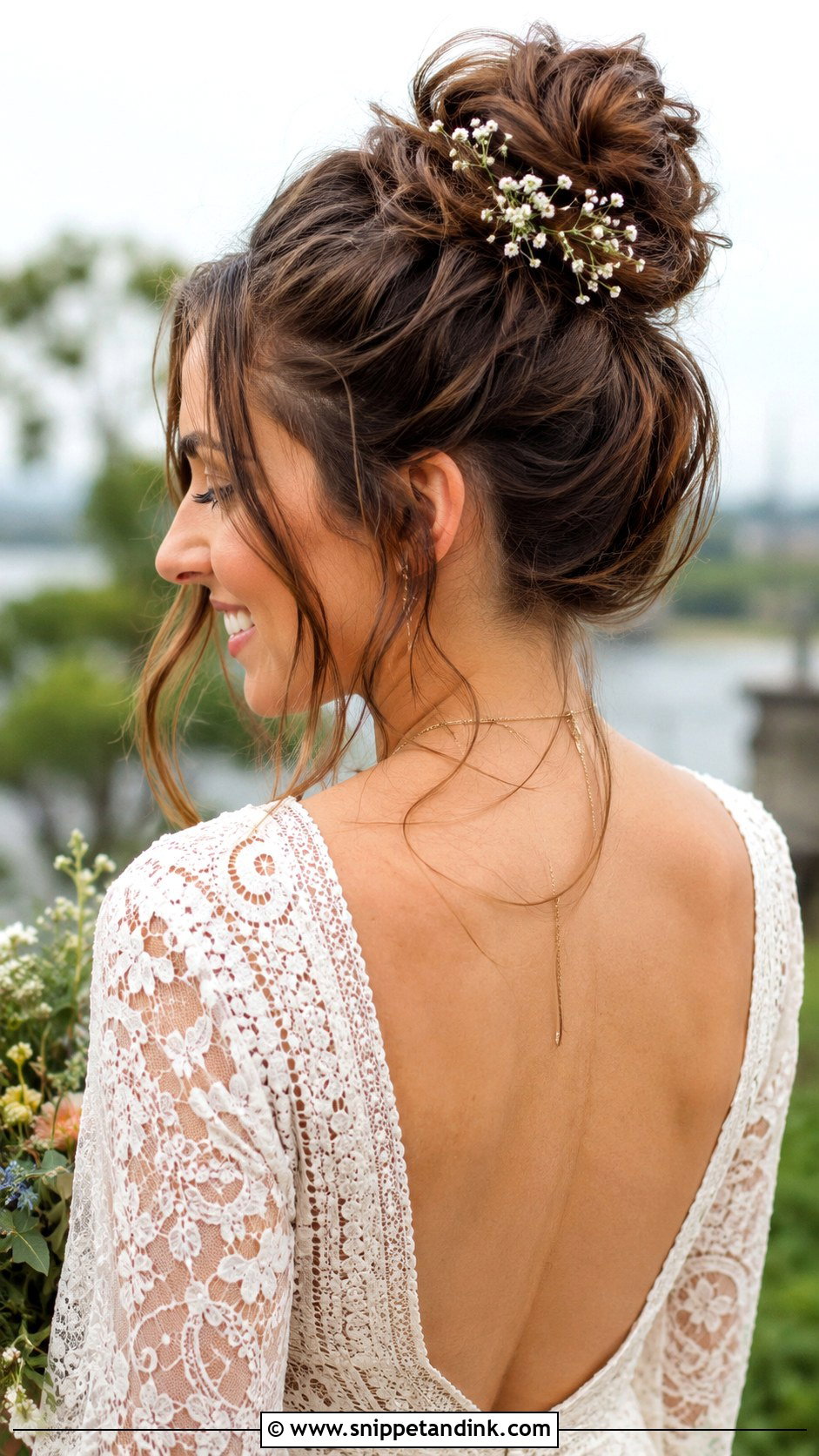
For the free-spirited bride, a messy high bun reads relaxed, but there’s structure hiding inside it. I curl the hair first, gather it toward the crown and pin the loops one at a time, so the mess is placed rather than accidental. Face-framing tendrils get curled separately and left out before the bun goes up. Baby’s breath or small wildflowers tuck in easily, which suits a barn or garden venue. Very long, heavy hair can start to tug at the crown late in the evening, so on dense hair I build it slightly lower.
5. Classic French Twist for Brides
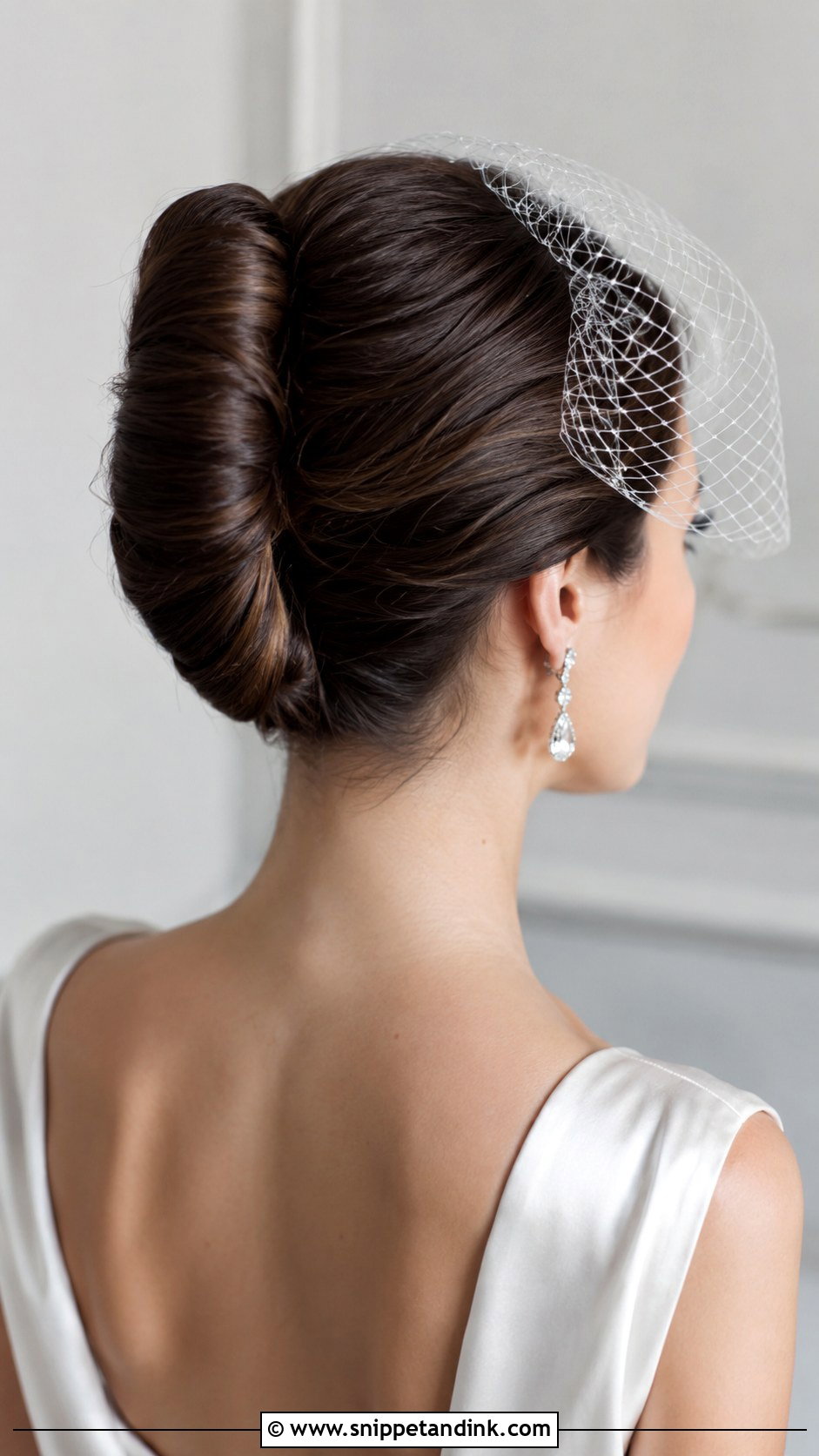
The French twist is back on mood boards, and I’m glad, because it’s one of the most secure updos I know. The hair is swept to one side, folded vertically up the back of the head and pinned along the seam with crisscrossed pins hidden inside the roll. A little backcombing at the crown gives lift and gives those pins something to grip. It sits well with a birdcage veil or a vintage-style gown, and it keeps your neck clear in warm weather. Shoulder length is the minimum. On a short bob the ends poke out of the seam.
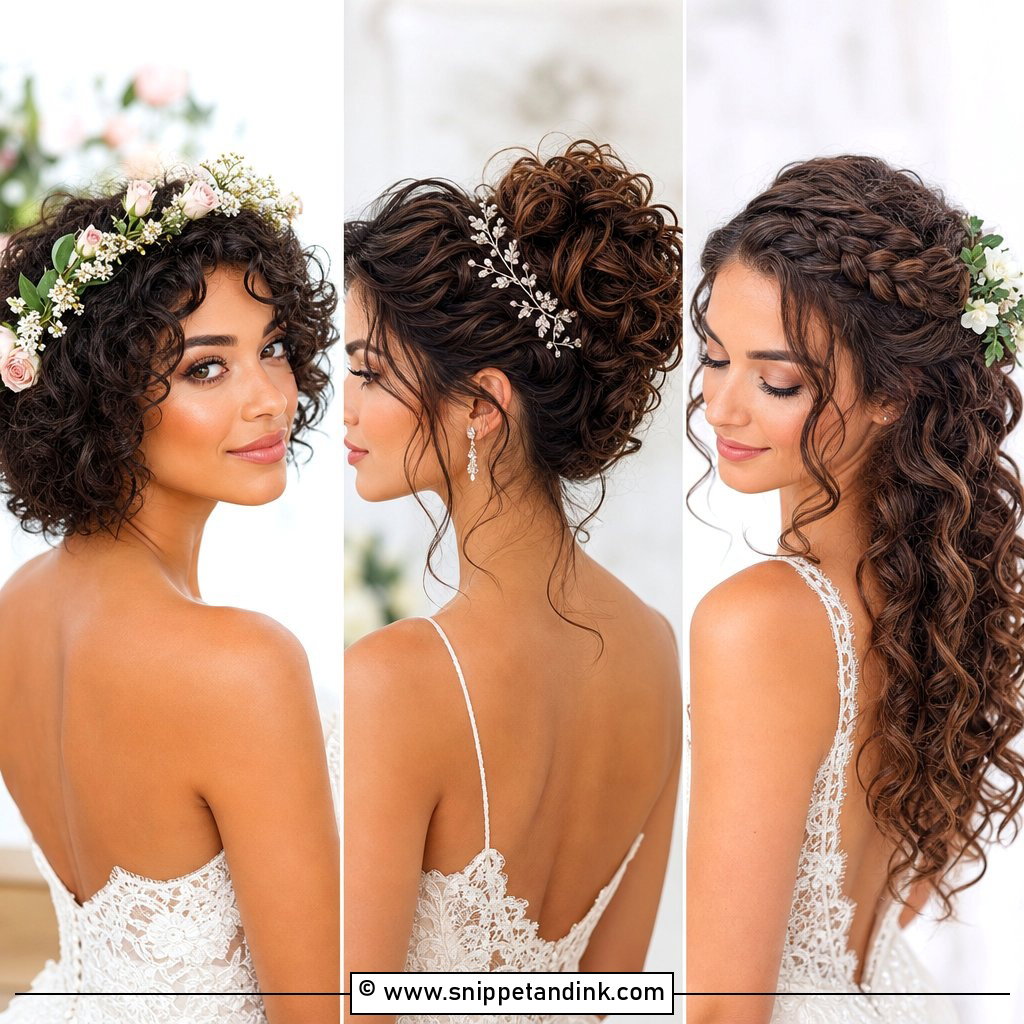
6. Braided Crown Wedding Hairstyle
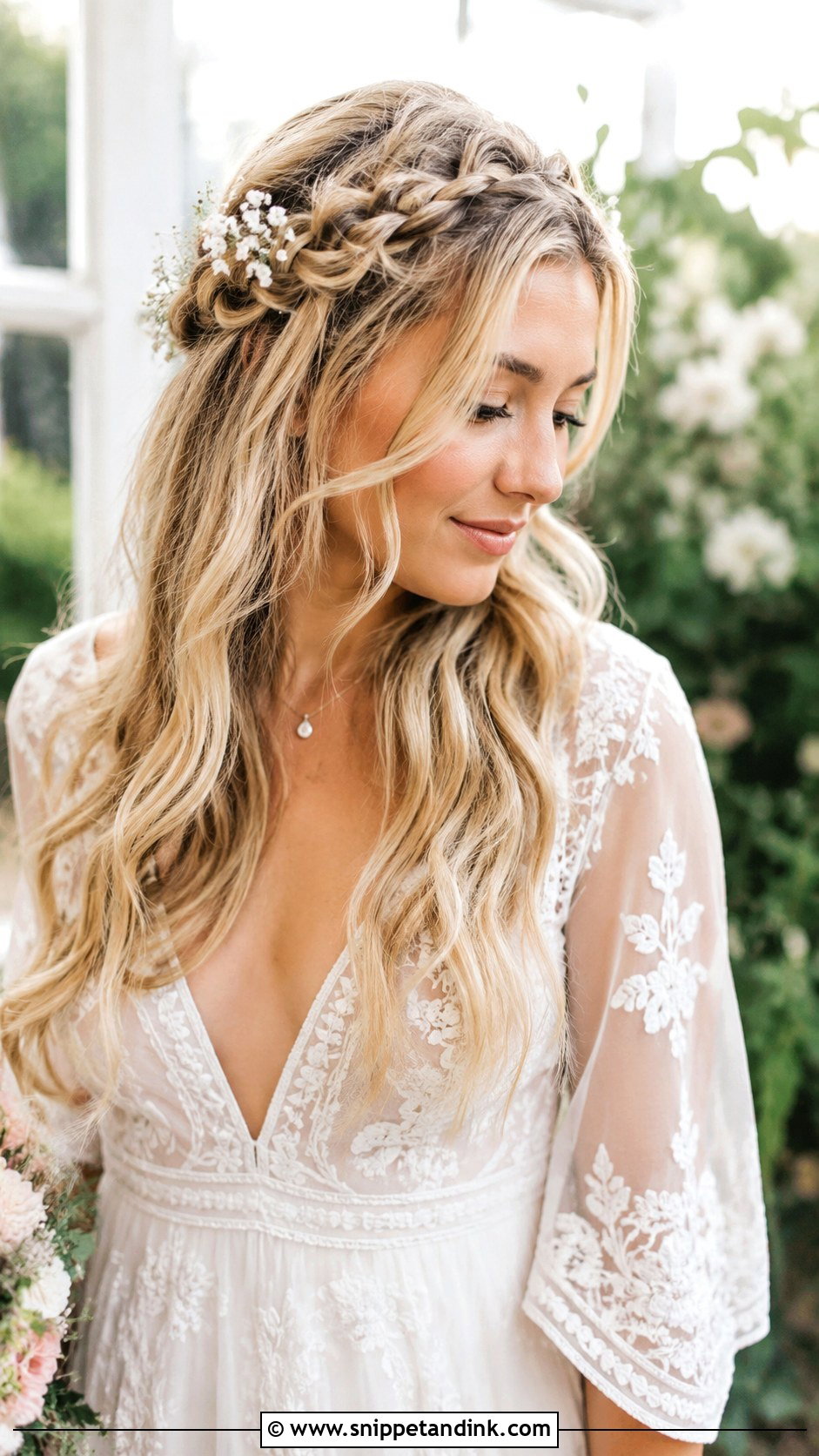
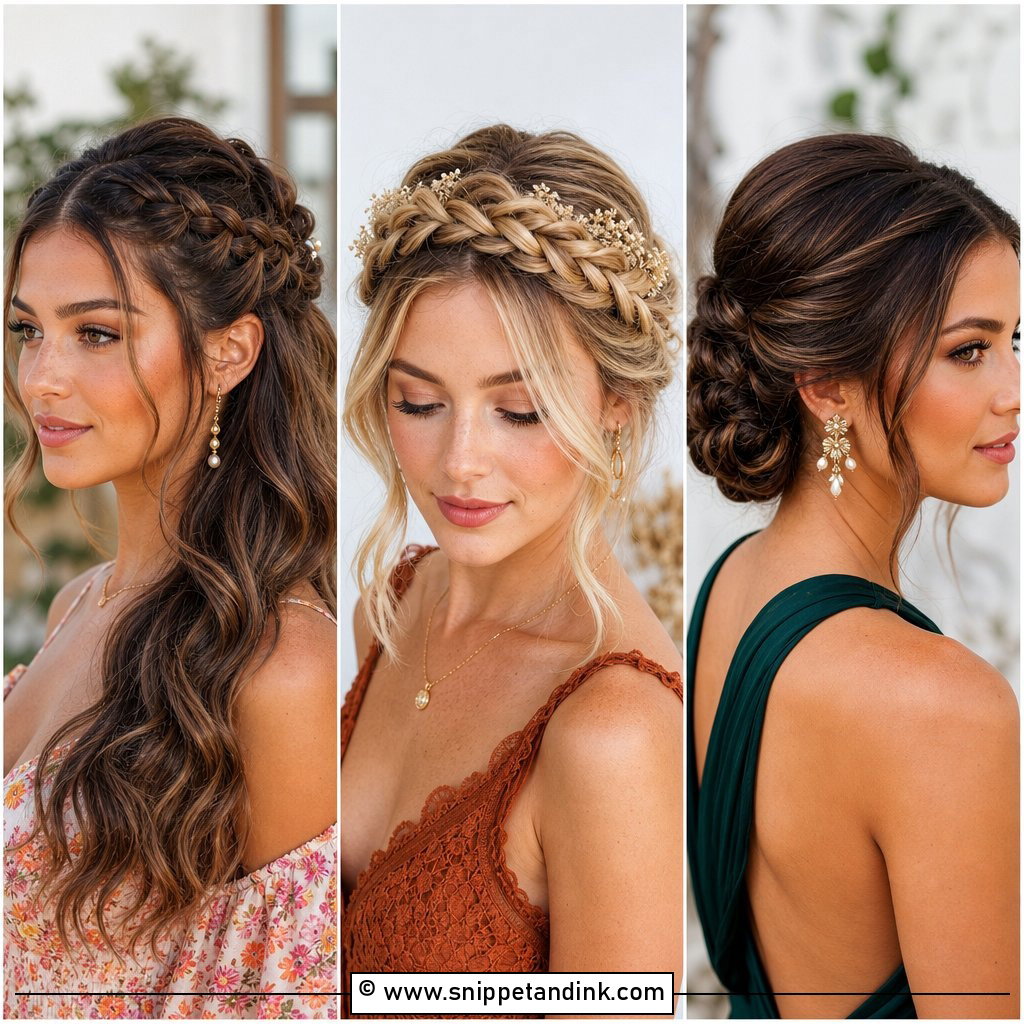
A braided crown circles the head like a halo and is a favorite with fairytale-inspired brides. To wrap all the way round from a single braid, hair needs to be well past the shoulders; on shorter lengths I build it from two braids that meet at the back. I pancake each braid by gently pulling the loops wider, which makes it look fuller and hides the pins. Small flowers or greenery slide into the plait without extra anchoring. Since nothing hangs loose to catch the wind, it’s a sensible pick for woodland and open-air ceremonies, worn with the rest down or wrapped into a low bun.
7. Sleek Ballerina Bun for Wedding
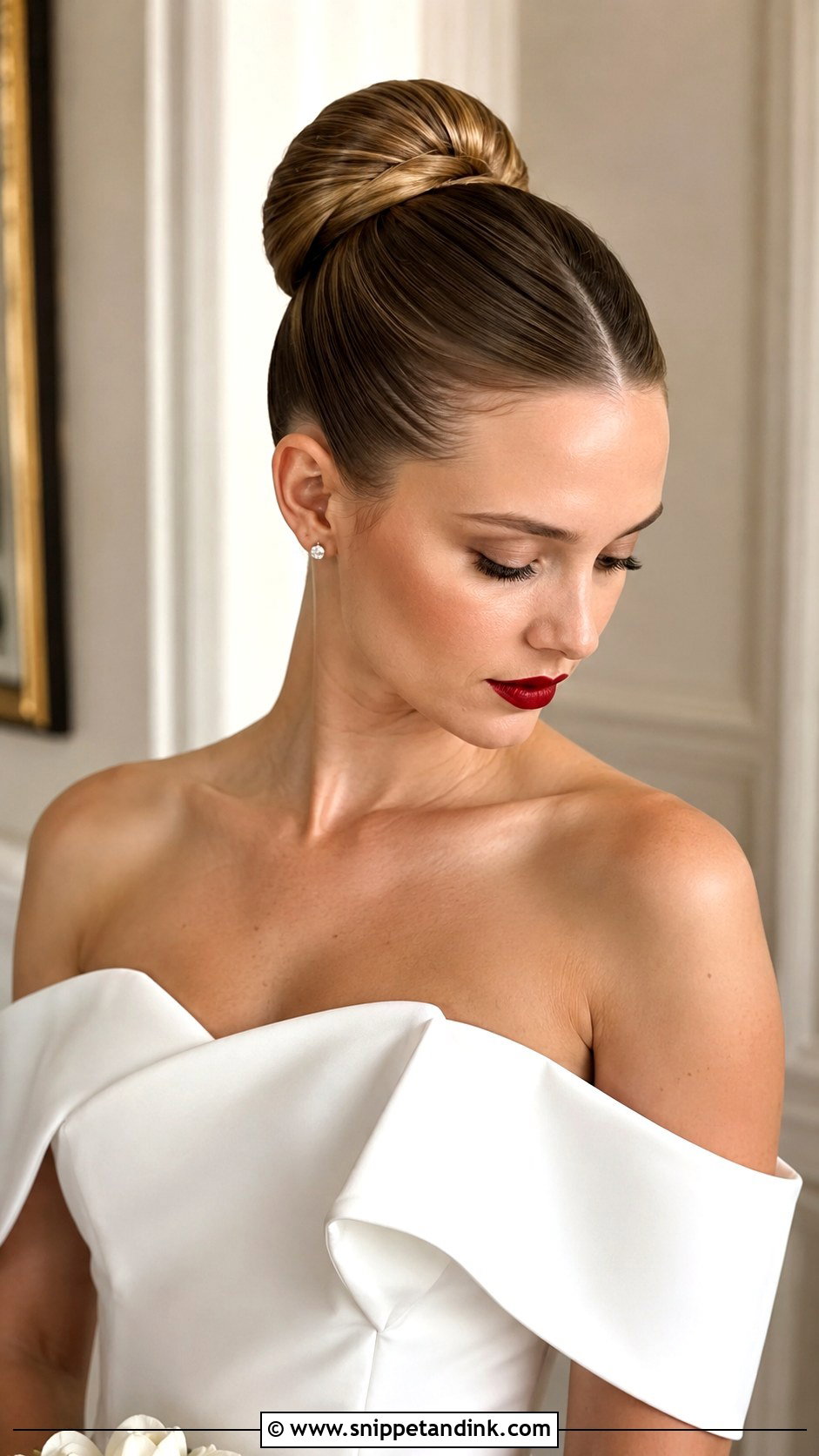
A ballerina bun sits high and smooth, with a center part drawing everything up and back. It shows off the neckline and jewelry more than any other style here, and it pairs naturally with a sculptural gown and a bold lip. Be honest about your hairline before choosing it. Every strand is pulled taut, so sparse temples or a front cowlick will show, and a full day of tension gives some brides a headache. I’d suggest wearing a high pony for an entire afternoon first and seeing how your scalp feels.
8. Wedding Updo With Curls
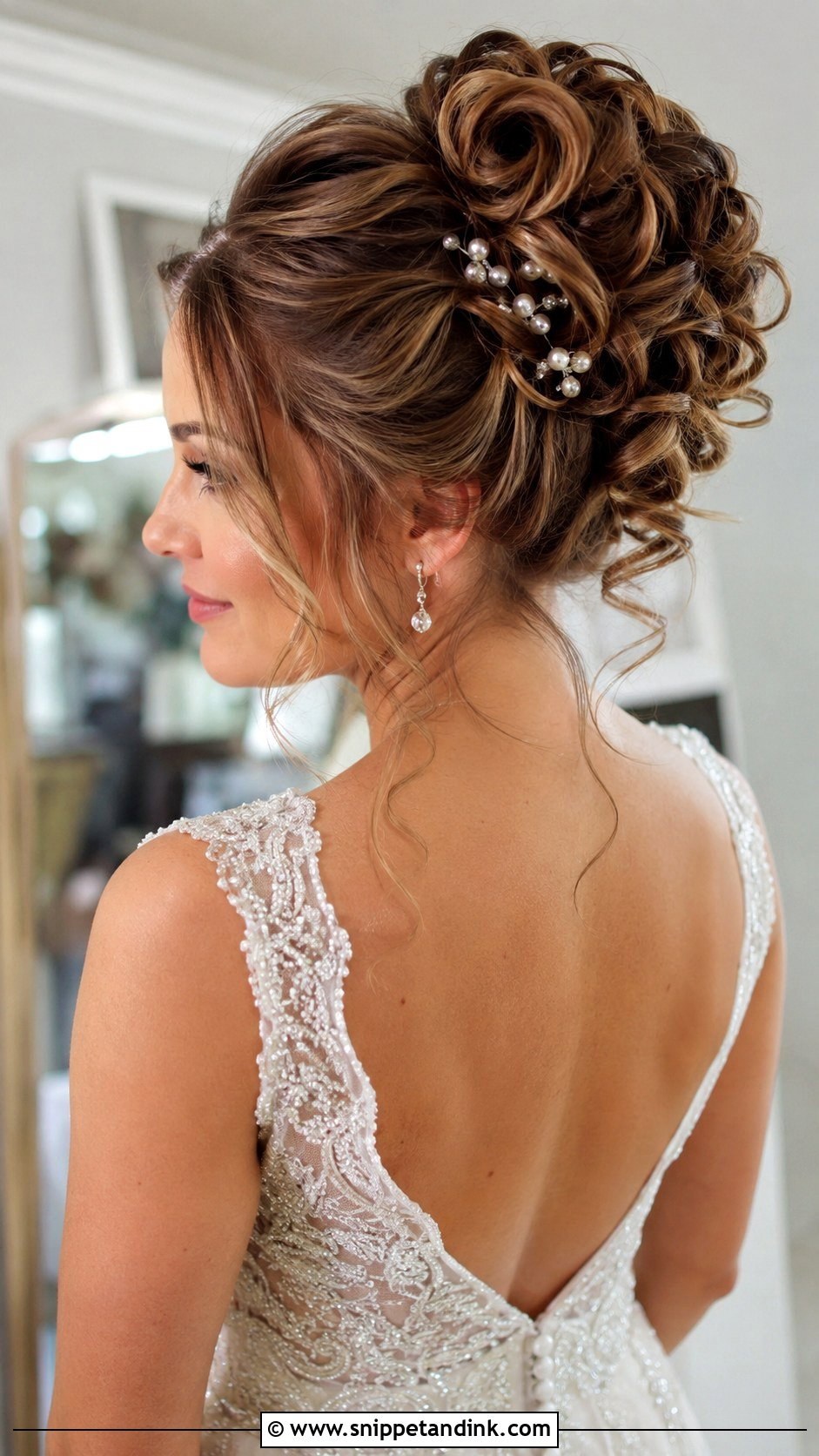
A curled updo is built in two stages: barrel curls are set first, then pinned into a textured shape so each curl keeps its form. That’s why it holds volume through a long day better than a smooth chignon does on hair that falls flat. I leave a few softened pieces around the face. Pearl pins or jeweled combs slot between the curls easily. A longer veil goes underneath, pinned below the shape, so it doesn’t crush the top. Very slippery, freshly washed hair works against this style, so I ask brides to wash the day before rather than that morning.
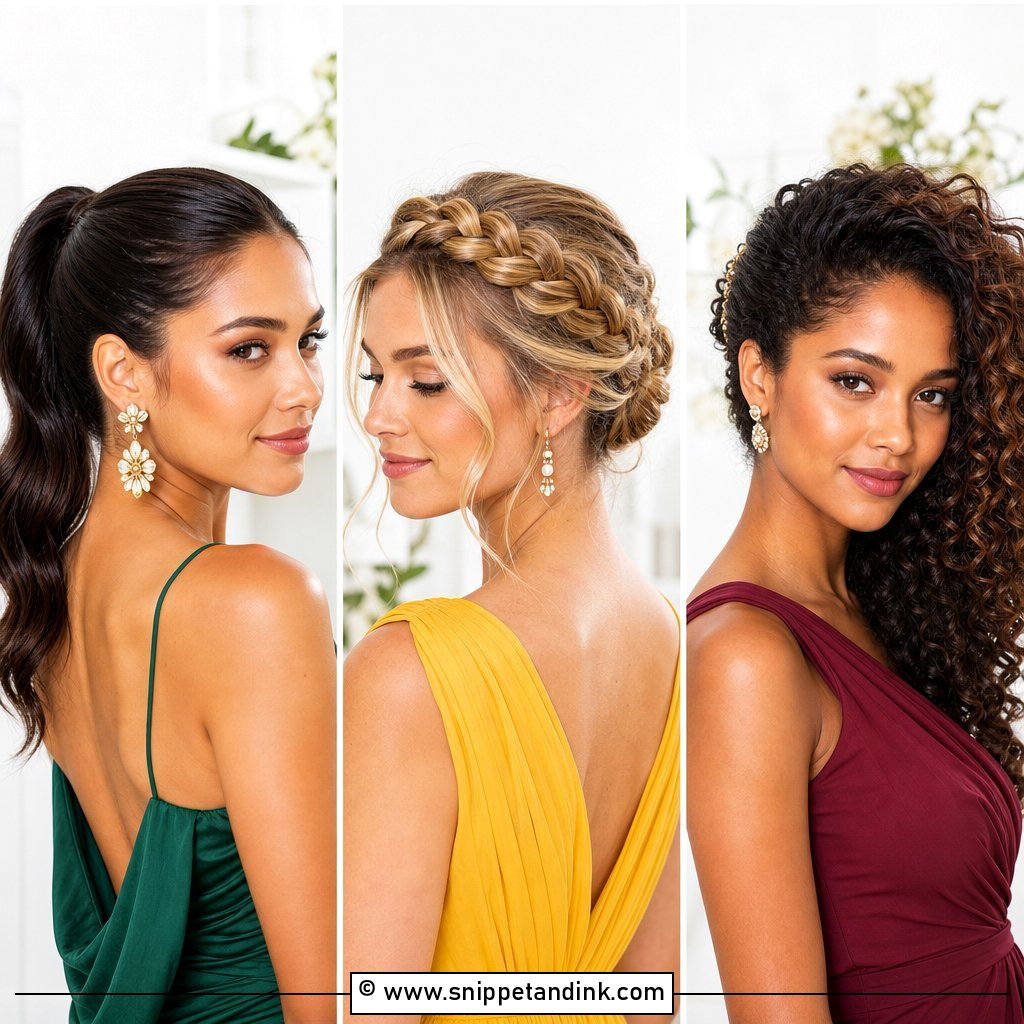
9. Low Ponytail for Wedding
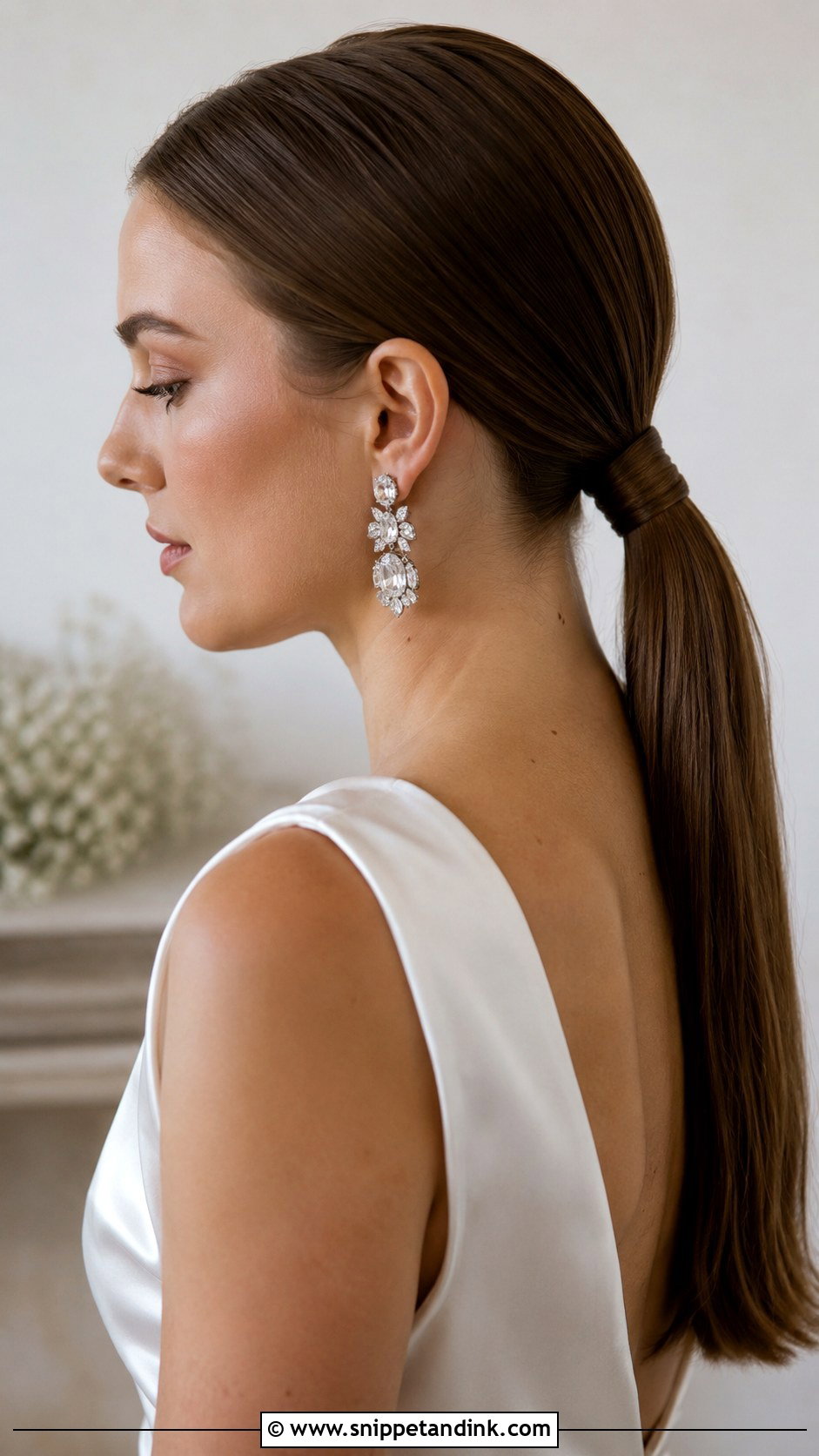
Don’t underestimate the bridal ponytail. A low, polished pony at the nape takes less chair time than almost any updo and is genuinely comfortable to wear from morning to midnight. I wrap a strand around the base to hide the elastic and pin it from underneath. The lengths can be smoothed straight or loosely waved. Its weak point is the elastic: a standard one slides on silky hair, so I stack two small ones or use a hidden bungee band. It looks most at home with statement earrings, a sleek gown and a city or minimalist setting.
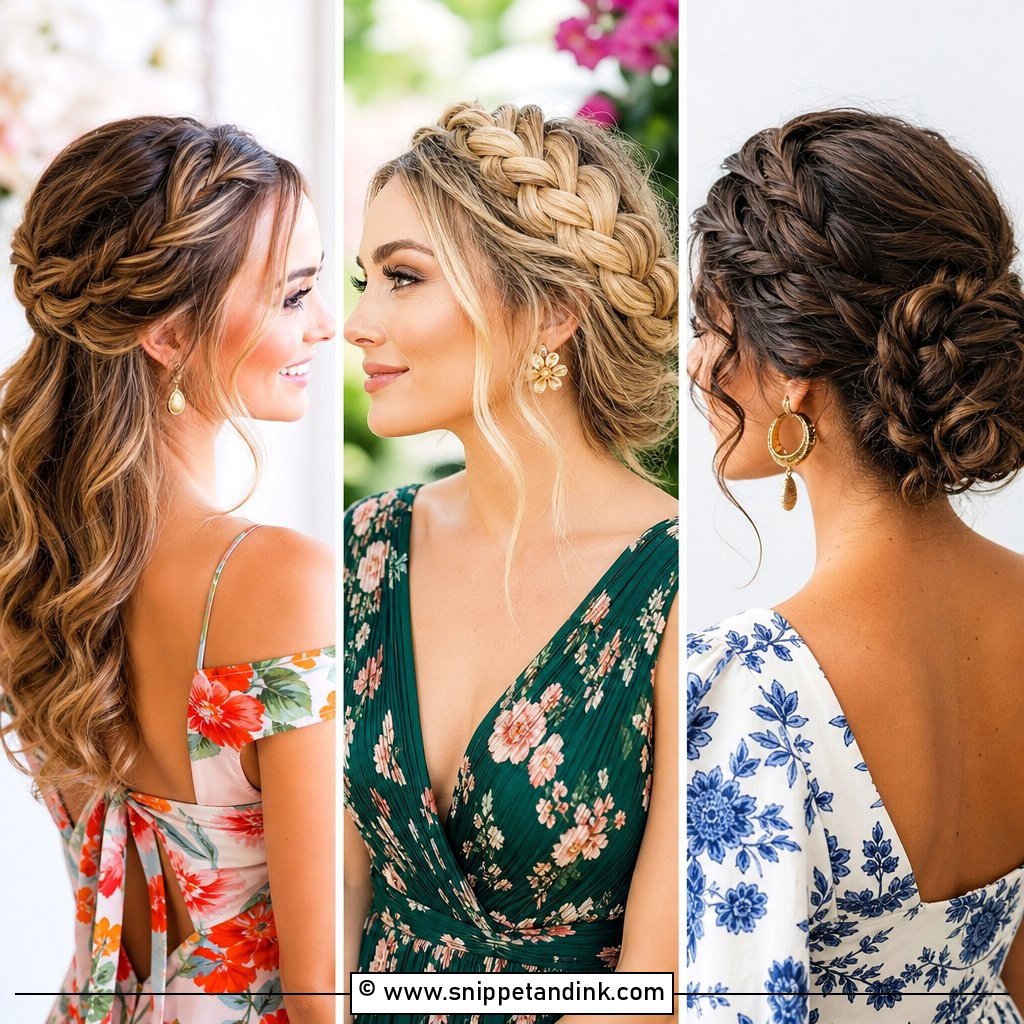
10. Half Up Braided Wedding Hairstyle
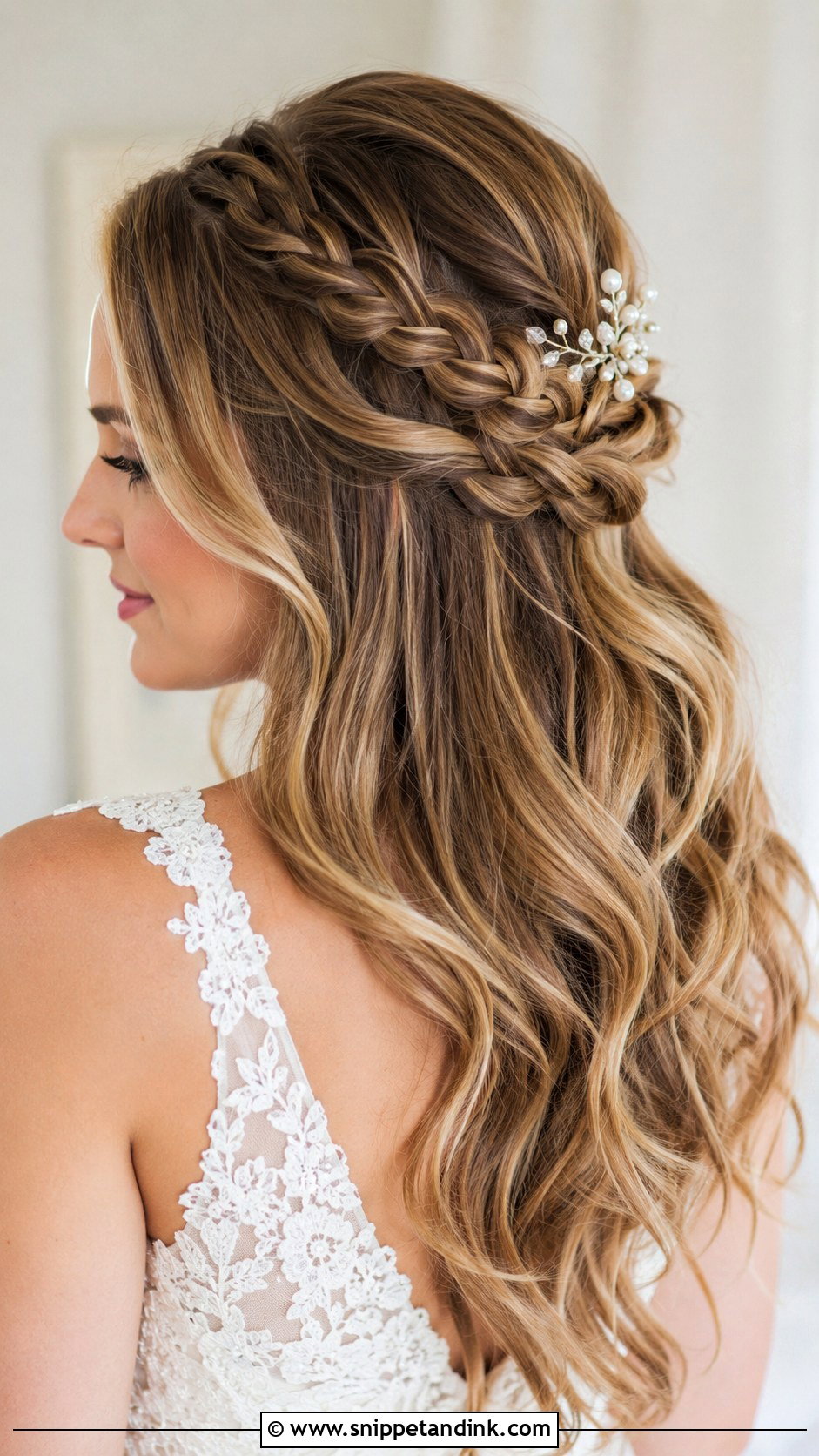
Braiding the top section of a half-up adds detail that holds better than a plain pinned section. The braid runs back from the temples, meets at the crown and the waved lengths fall below it. I usually keep the braid loose and pulled apart, but on fine hair a tighter plait gives more definition in photos, since a loose braid on thin hair can vanish. It works with vintage, modern or boho dressing, and a small pin or tiny flowers can cover the join. Mention it to your photographer, because a braid only reads from the back and side.
11. Vintage Hollywood Waves for Brides
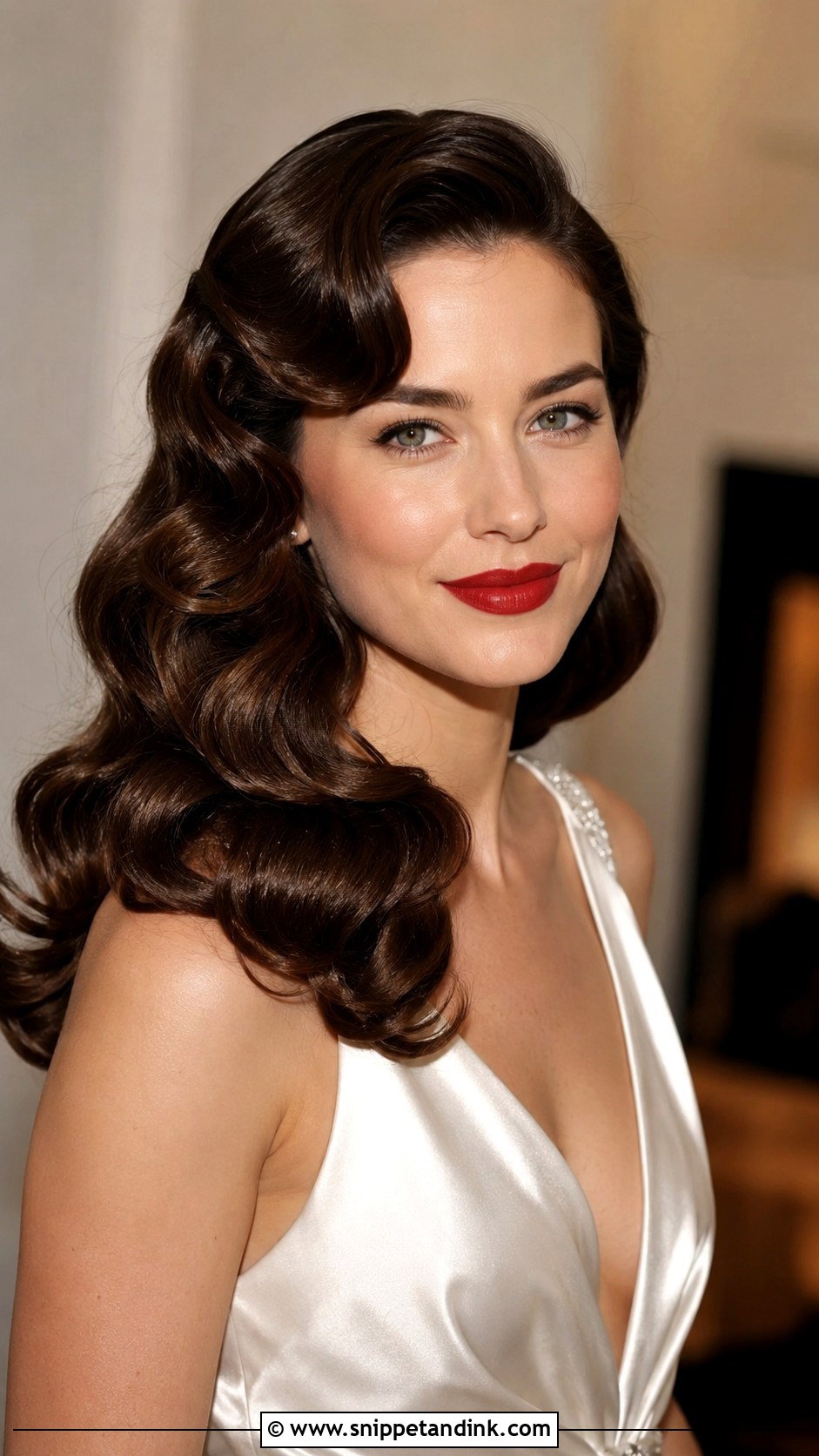
Deep, glossy Hollywood waves take more precision than anything else on this list. Each section is curled in the same direction and pin-set to cool, then brushed out and shaped so the waves line up into one ripple across one side. A deep side part is not optional here. It’s the look for vintage, art deco or ballroom weddings, often with a red lip, worn long or pinned under into a faux bob. I’d be cautious on very curly hair or in a humid venue, because the ripple pattern is the first thing to frizz and it’s hard to rescue mid-reception.
12. Floral Updo for Wedding
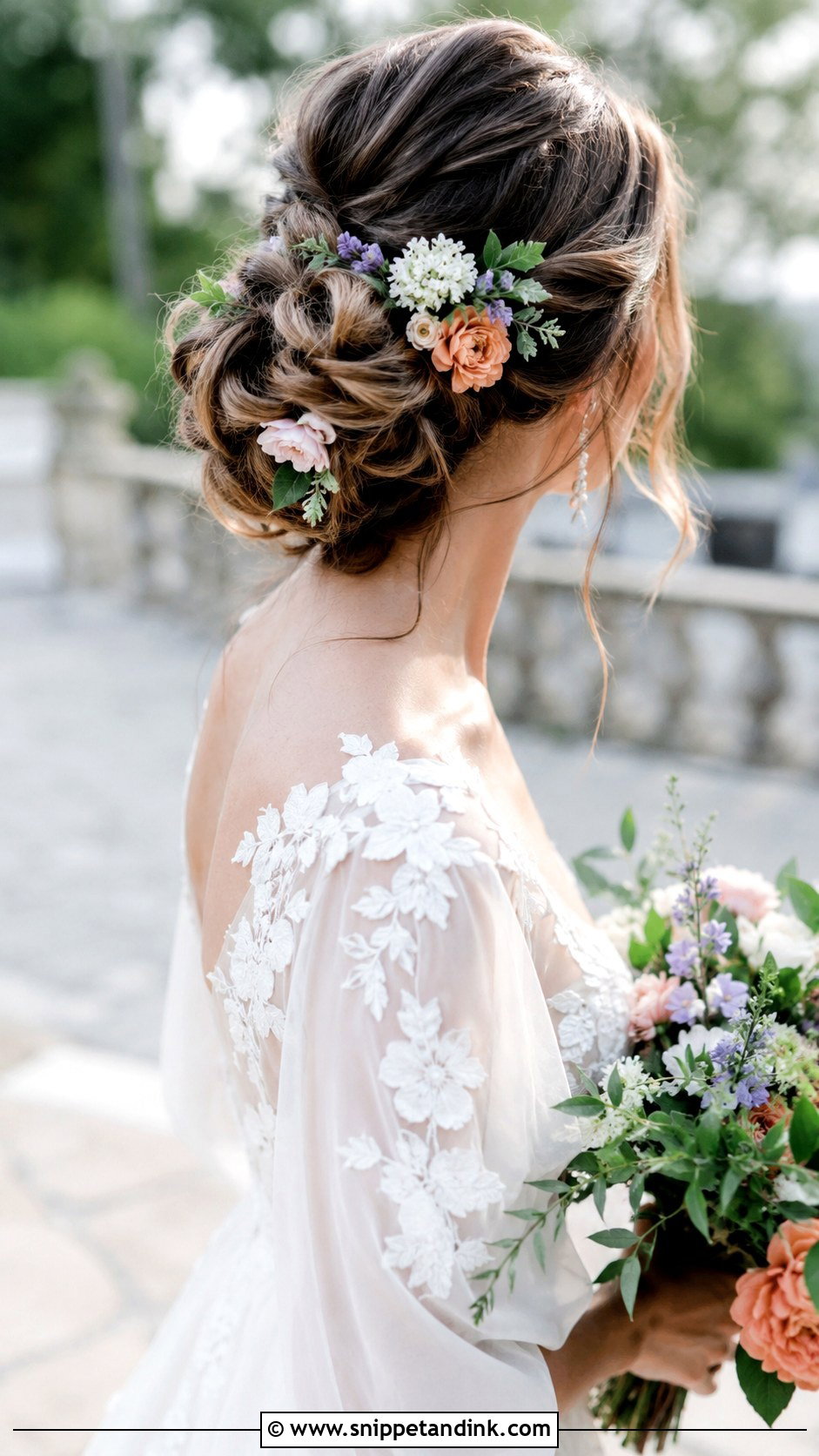
Fresh flowers turn a soft bun or twist into something that ties back to your bouquet. I ask the florist for small, sturdy stems, wired and taped, because soft petals like gardenia bruise and brown at the edges within hours out of water. Spray roses, wax flower and small orchids hold up much better. In a hot outdoor setting, silk flowers are the safer bet. The flowers always go in after the updo is finished and sprayed, since hairspray can spot delicate petals.
13. Sleek Straight Hair for Wedding
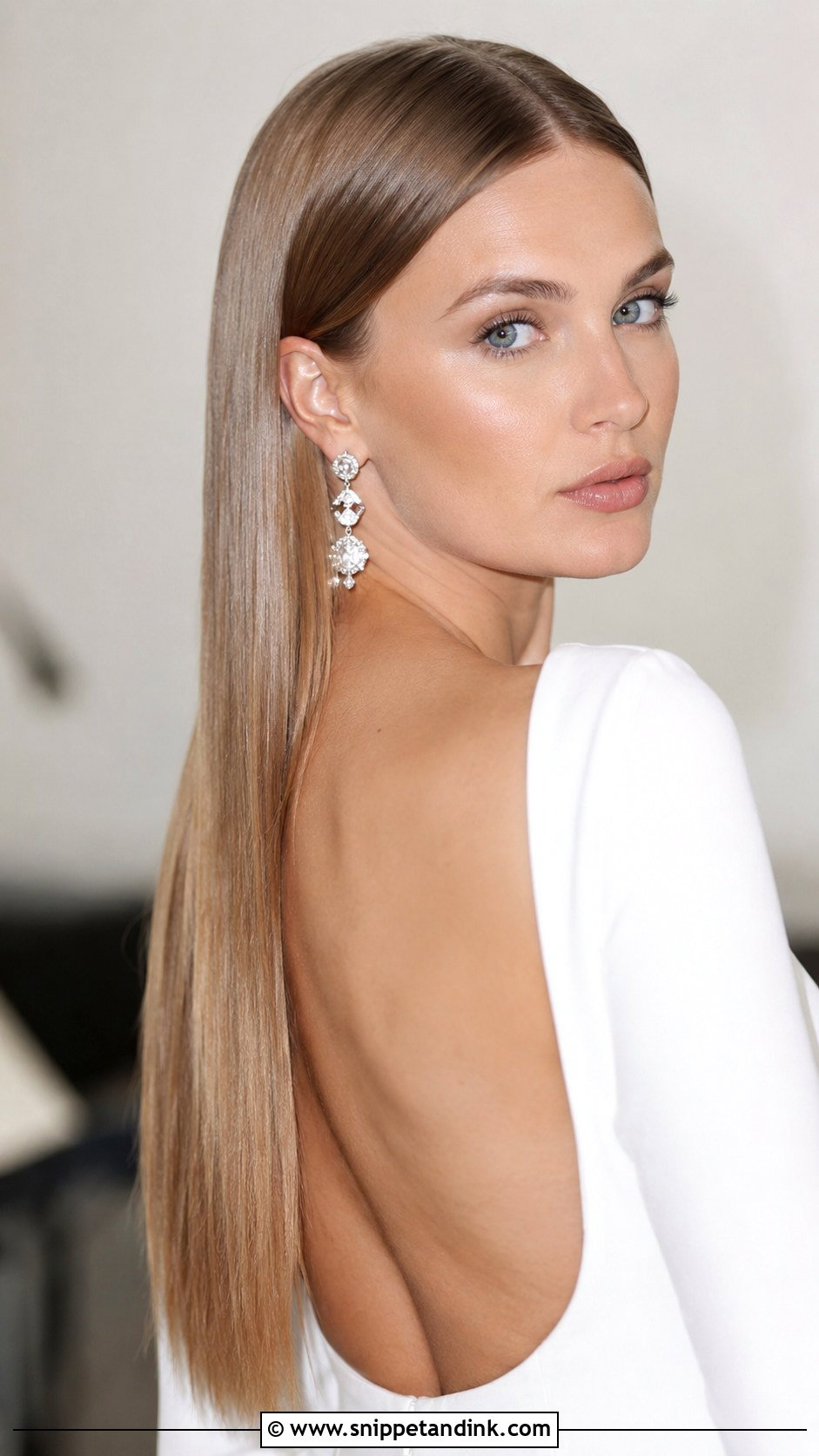
Sleek straight hair worn down is simple to describe and unforgiving to execute. The finish has to look like glass, so I blow-dry with a paddle brush, then flat-iron in thin sections with a heat protectant and a few drops of smoothing serum on the ends. A sharp center part adds the editorial edge, and statement earrings suit it well at a city or fashion-led wedding. The honest trade-off: straight hair shows every frizz and kink, and if your hair naturally waves, humidity will start pulling it back by evening. Keep a mini flat iron with whoever holds your kit.
14. Twisted Half Up Wedding Hairstyle
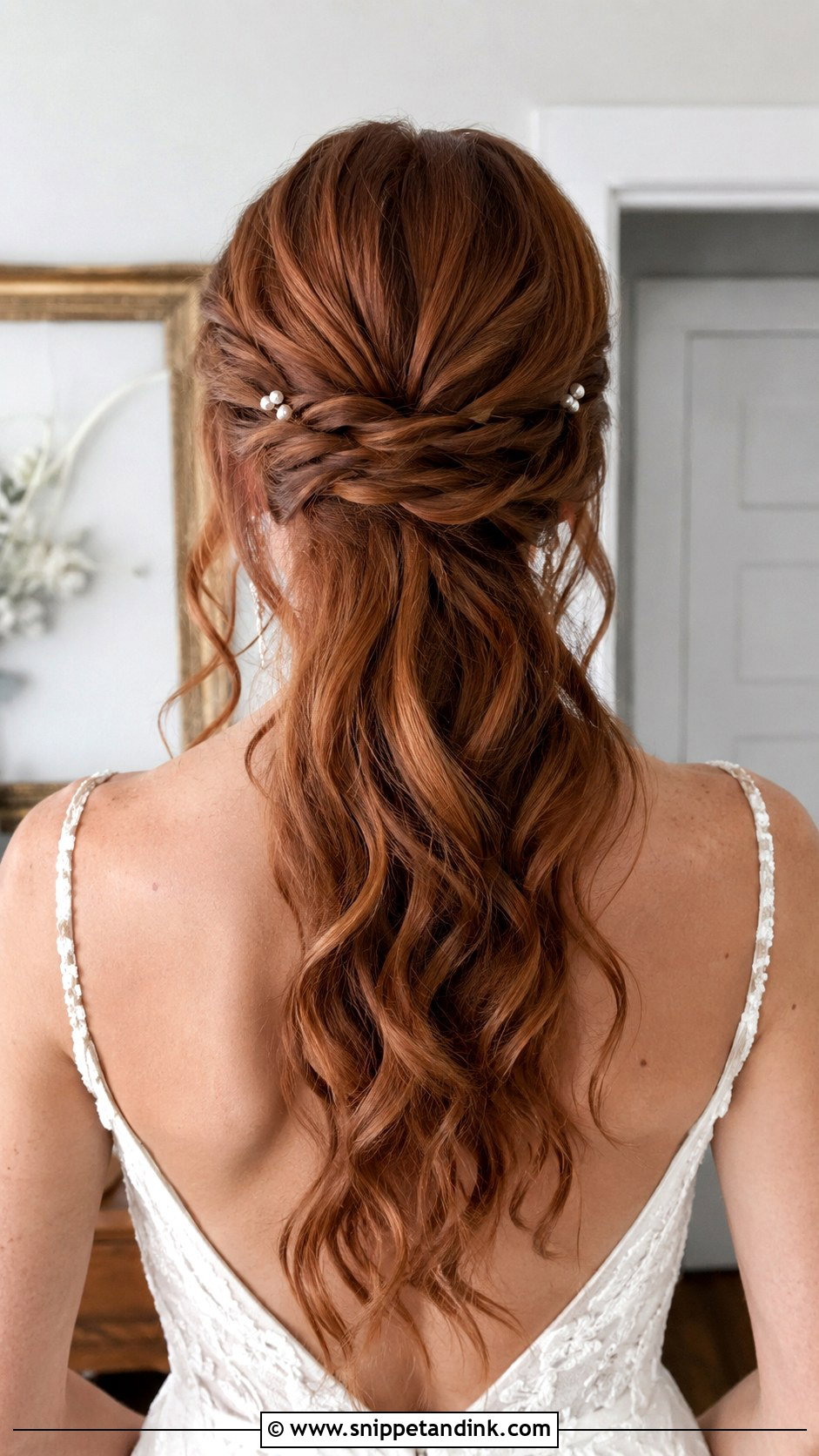
A twisted half-up gives texture in less time than a braid. A section from each side is rope-twisted back and the two are pinned together, while the rest falls in waves below. I secure the twists with crossed bobby pins under the join so they don’t loosen every time you turn your head. It moves between a ballroom and a garden without looking out of place, and pearls or a delicate pin can cover the meeting point. Layered hair is the tricky one: short pieces pop out of the twist, so we either curl them or leave them out on purpose.
15. Bridal Bun With Veil
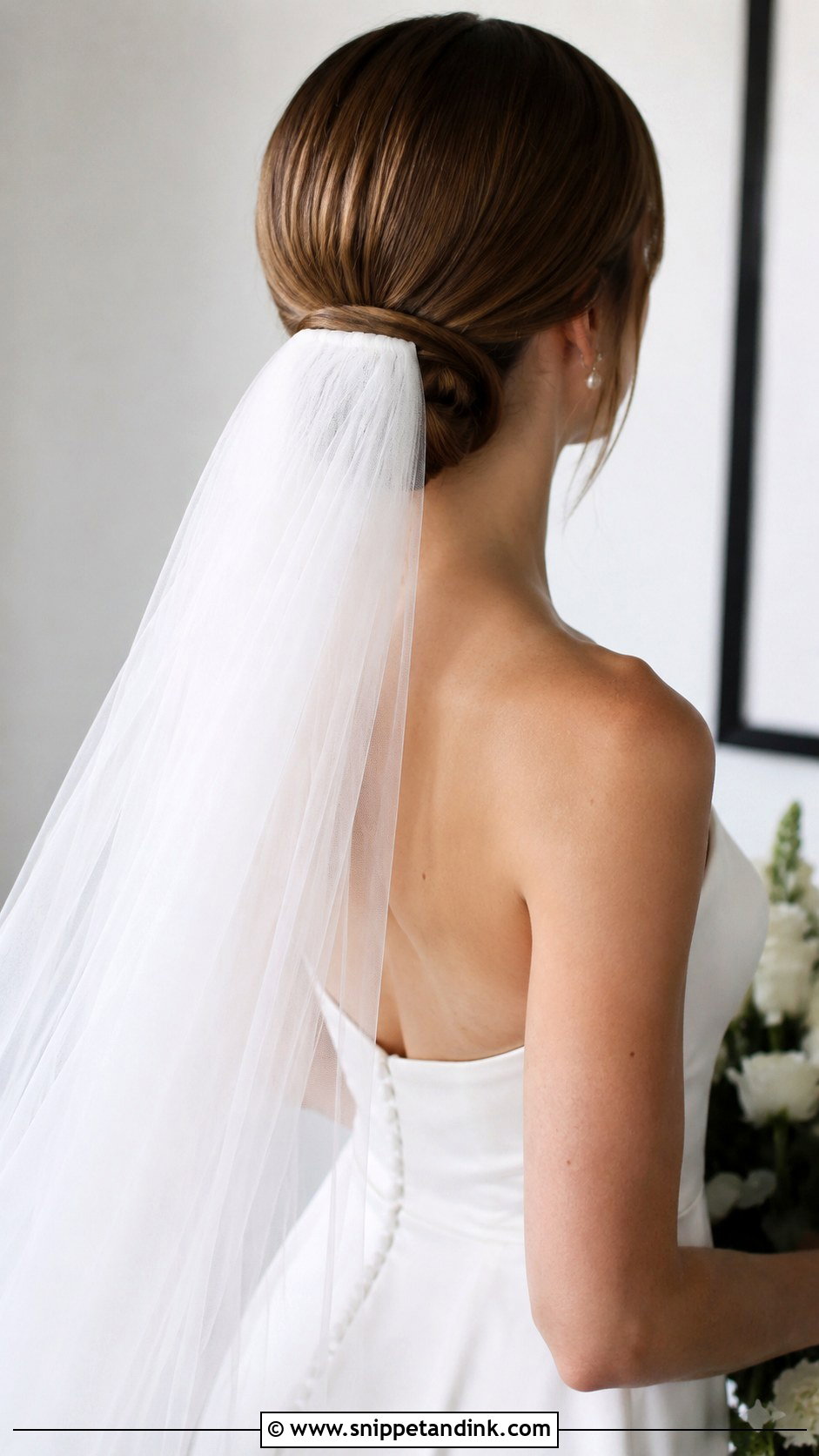
A classic bun is the most secure anchor a veil can have. The comb slides into the bun’s base at an angle, either above it for a fuller drape or below it so the bun stays visible through sheer tulle. I always test placement with the real veil at the trial, because a heavy cathedral length pulls backward and needs pins crossed through the comb teeth. Once the ceremony is over, the veil comes out and the bun still looks finished for the reception, which is the practical reason so many formal and traditional weddings go this way.
16. Curly Hair Wedding Updo
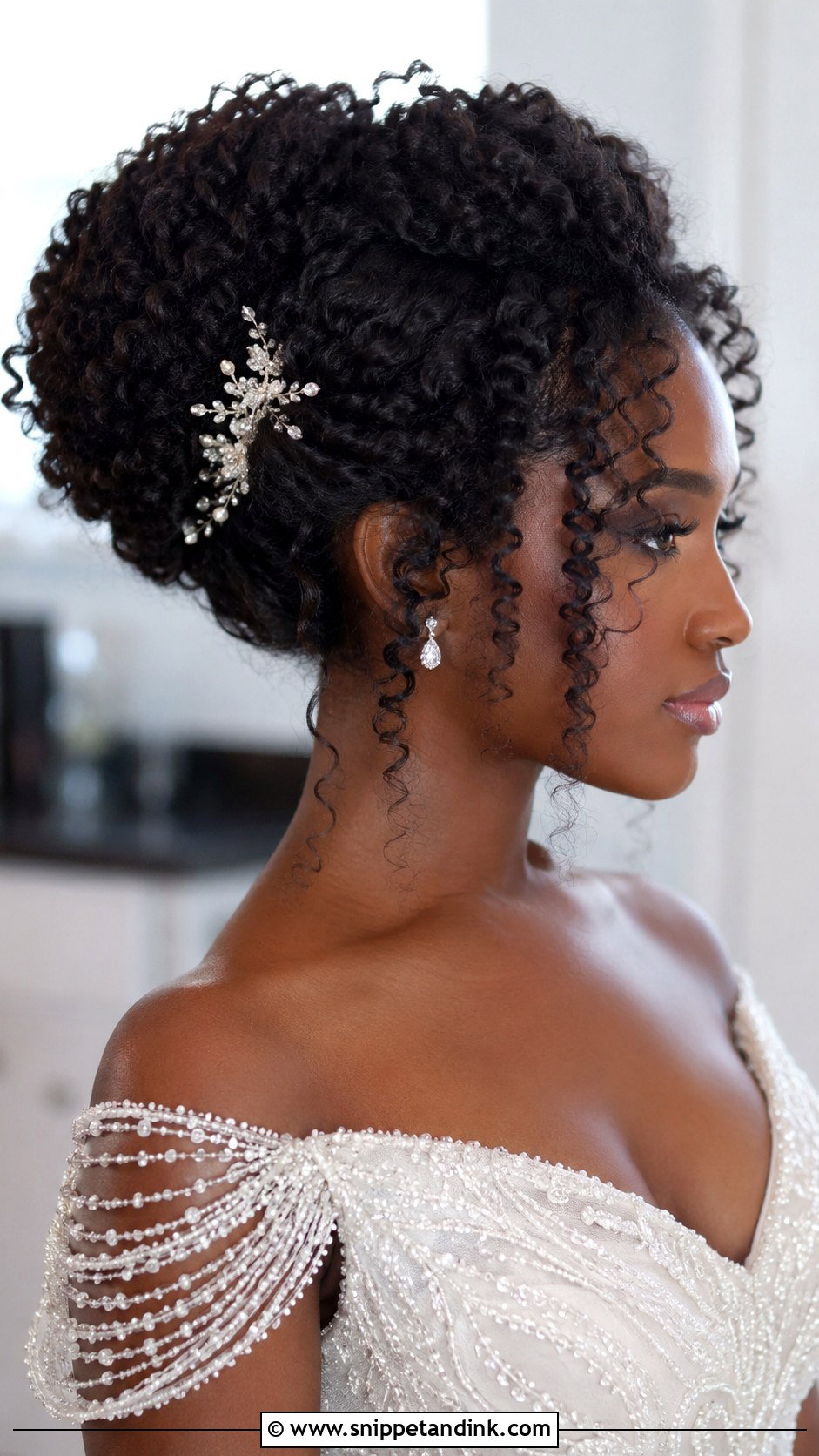
Natural curls deserve an updo that works with them rather than fighting them. I don’t brush curls; I shape them with my fingers, define them with a curl cream and gather the hair loosely so the coils keep their pattern. Pins go in at the base of each section, never through the curl itself. A few soft curls left around the face stop the shape from looking severe, and a jeweled pin sits nicely inside the volume. Plan your wash day carefully: most curls behave best a day or two after washing, so I rarely recommend washing that morning.
17. Side Swept Wedding Hairstyle
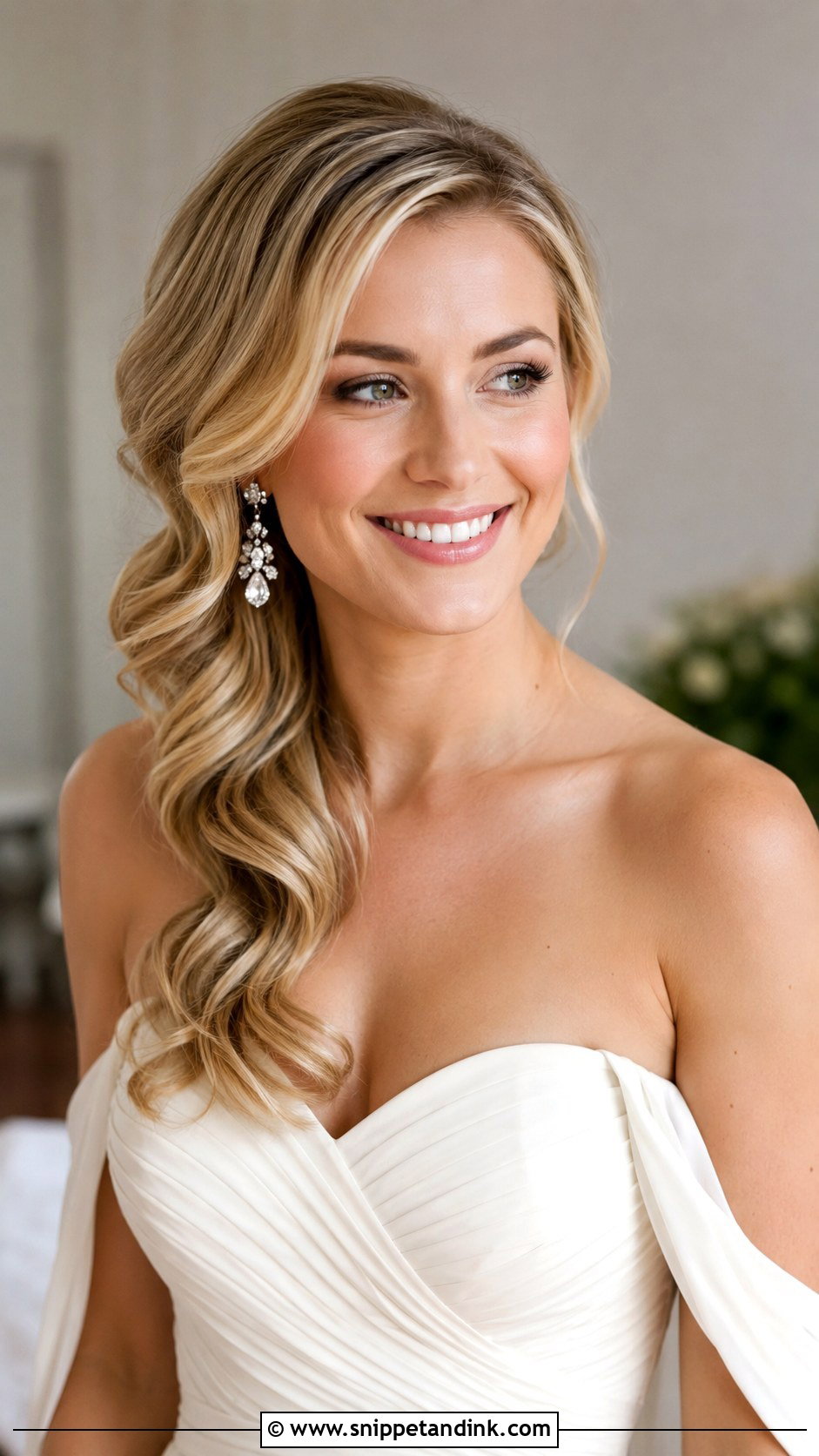
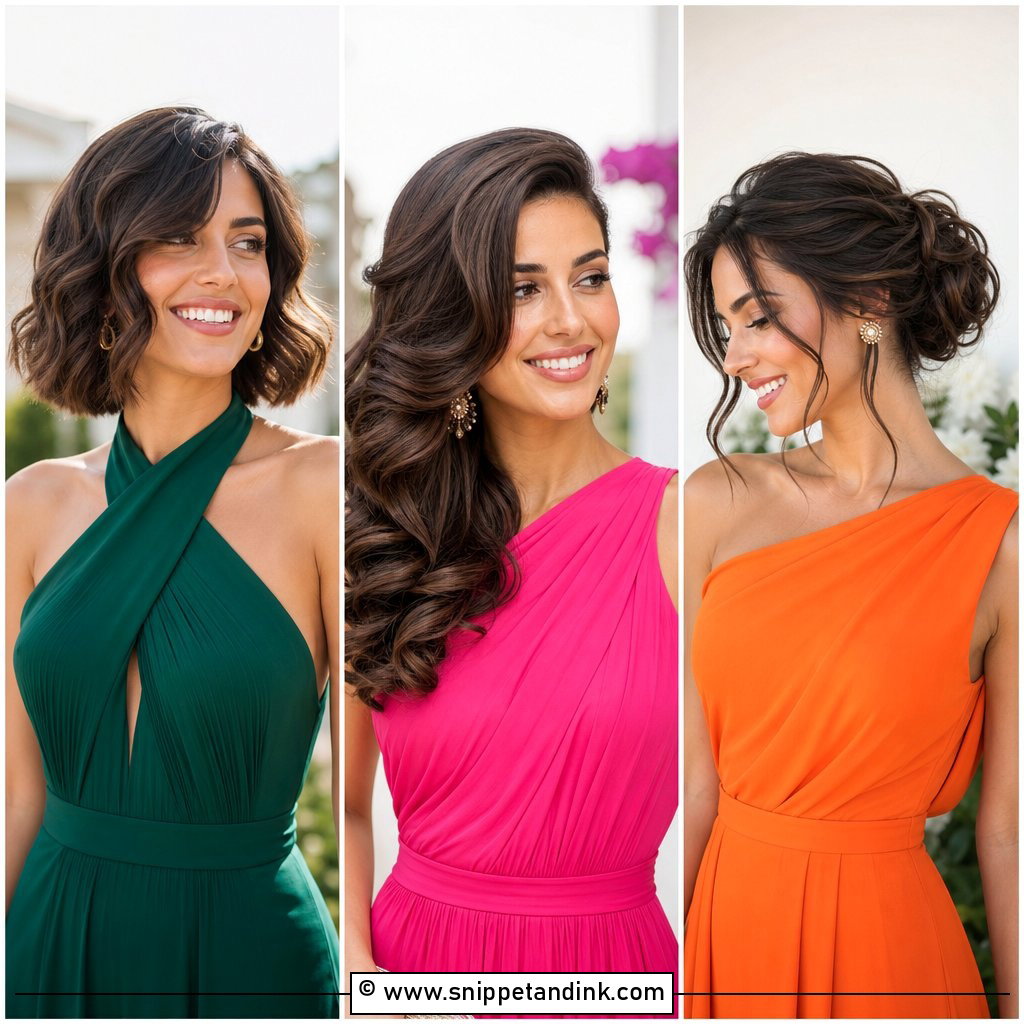
Sweeping hair to one side creates an asymmetrical shape that frames the face and shows off an earring on the bare side. The hidden work is a row of crossed pins behind the ear on the heavy side, which stops the hair sliding back over your shoulder. Tousled or sleek, it sits well with both flowing and structured gowns. Think about where you’ll stand at the altar: the bare side should face your guests and the camera. For destination and evening weddings it gives you one-sided glamour without committing to a full updo.
18. Low Chignon for Wedding
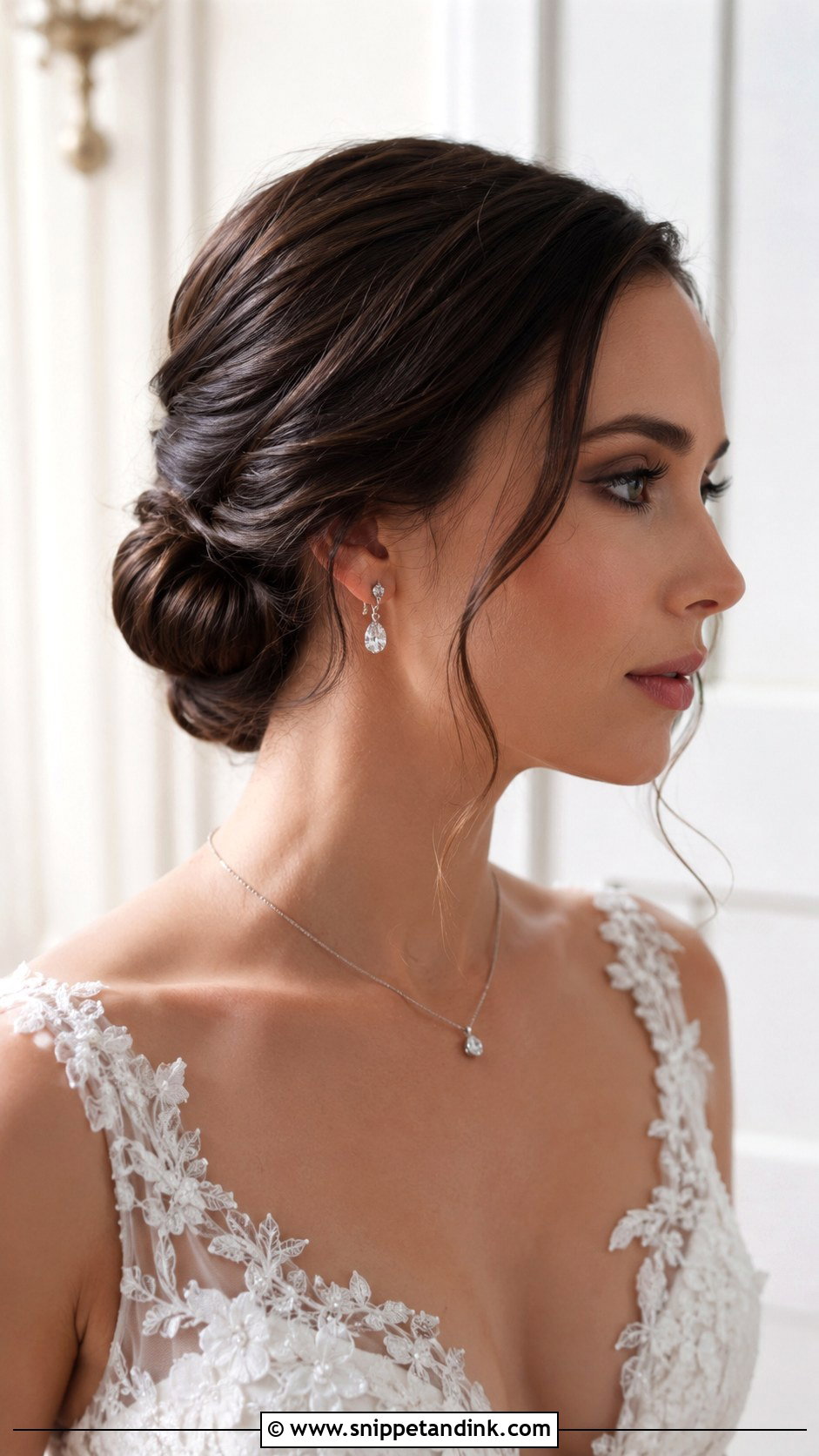
The low chignon is the one I’d pick for the longest wedding days. It sits low at the nape, so the weight rests on the neck instead of pulling from the crown, and because the hair is rolled rather than curled, there’s nothing to drop. Leave a few tendrils for softness or keep it sleek. Check your collar before you choose it, though. A high neckline or a lace back can crowd a chignon, so bring a photo of the back of your dress to the trial.
19. Boho Braided Half Up for Brides
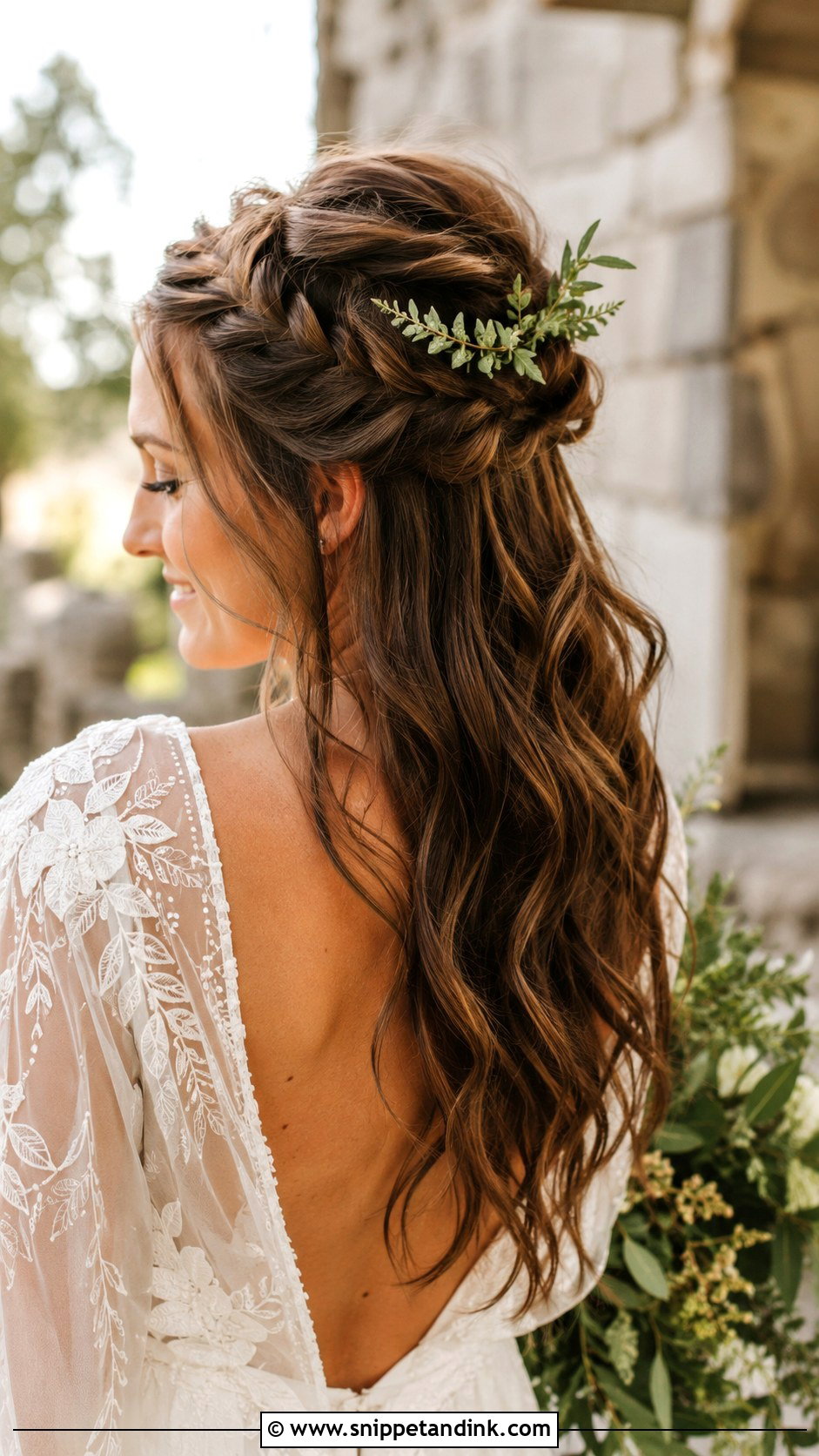
This is the looser, airier cousin of the braided half-up above. The top section is woven into soft, deliberately undone braids, sometimes two or three of them, while waves fall below. Small flowers or sprigs of greenery tuck into the braid loops. It needs long hair, since the waves only show with length, and it sits most naturally at rustic or festival-style weddings. Wind is the risk with loose braids, so I mist each braid with spray as I finish it, not just once at the end.
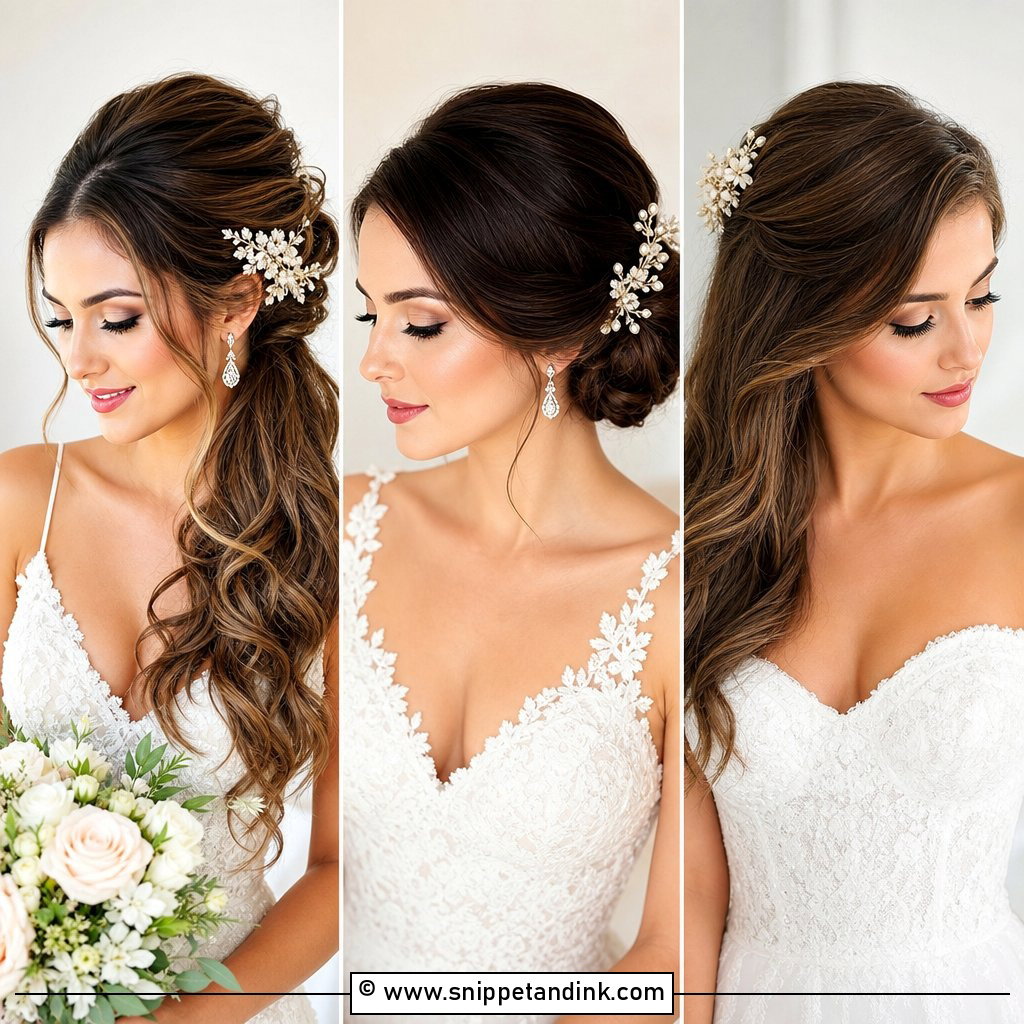
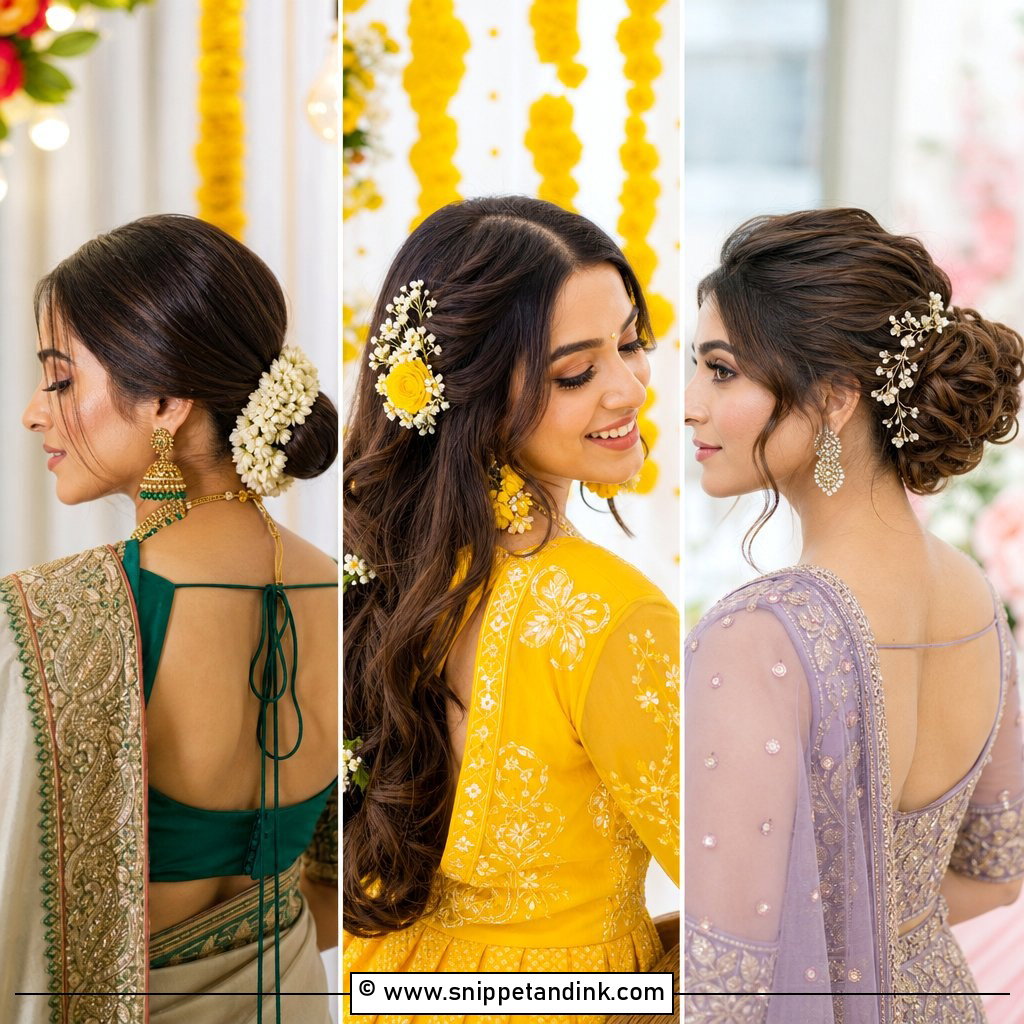
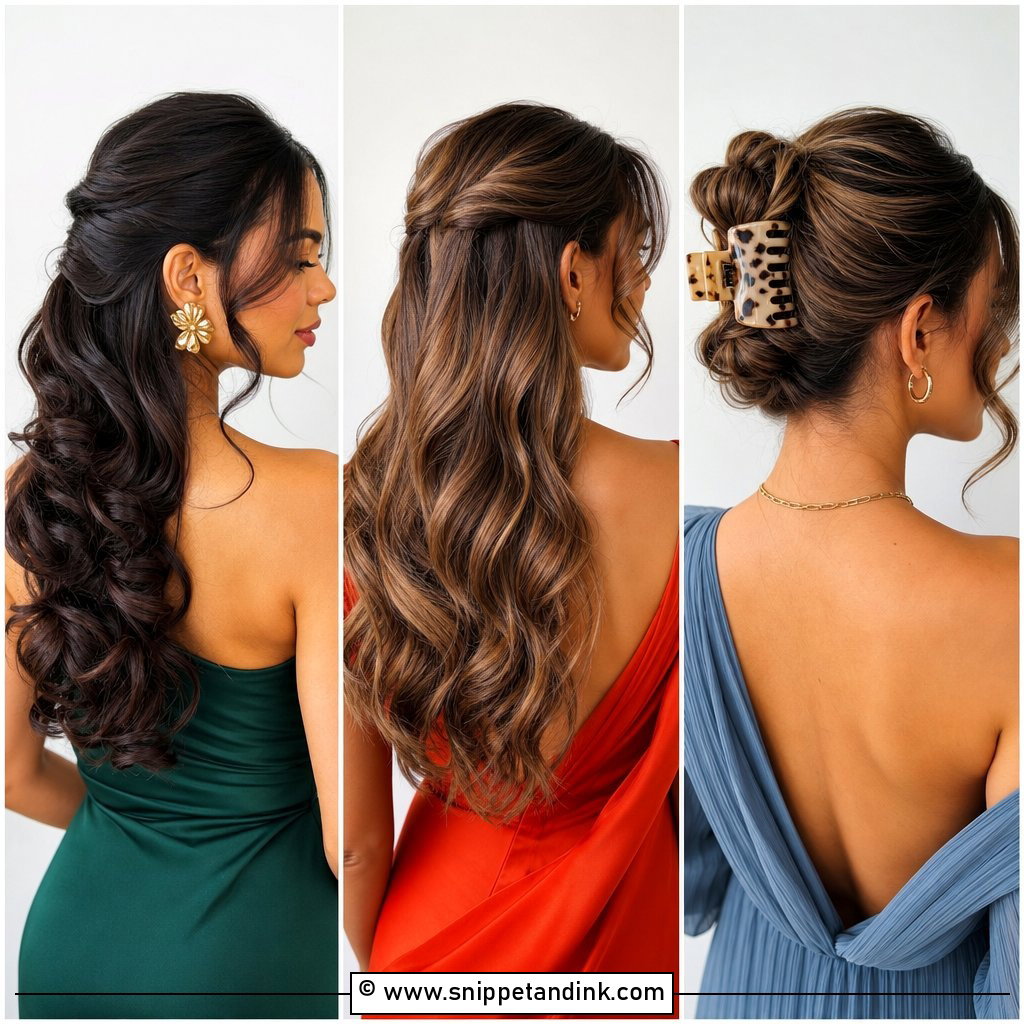
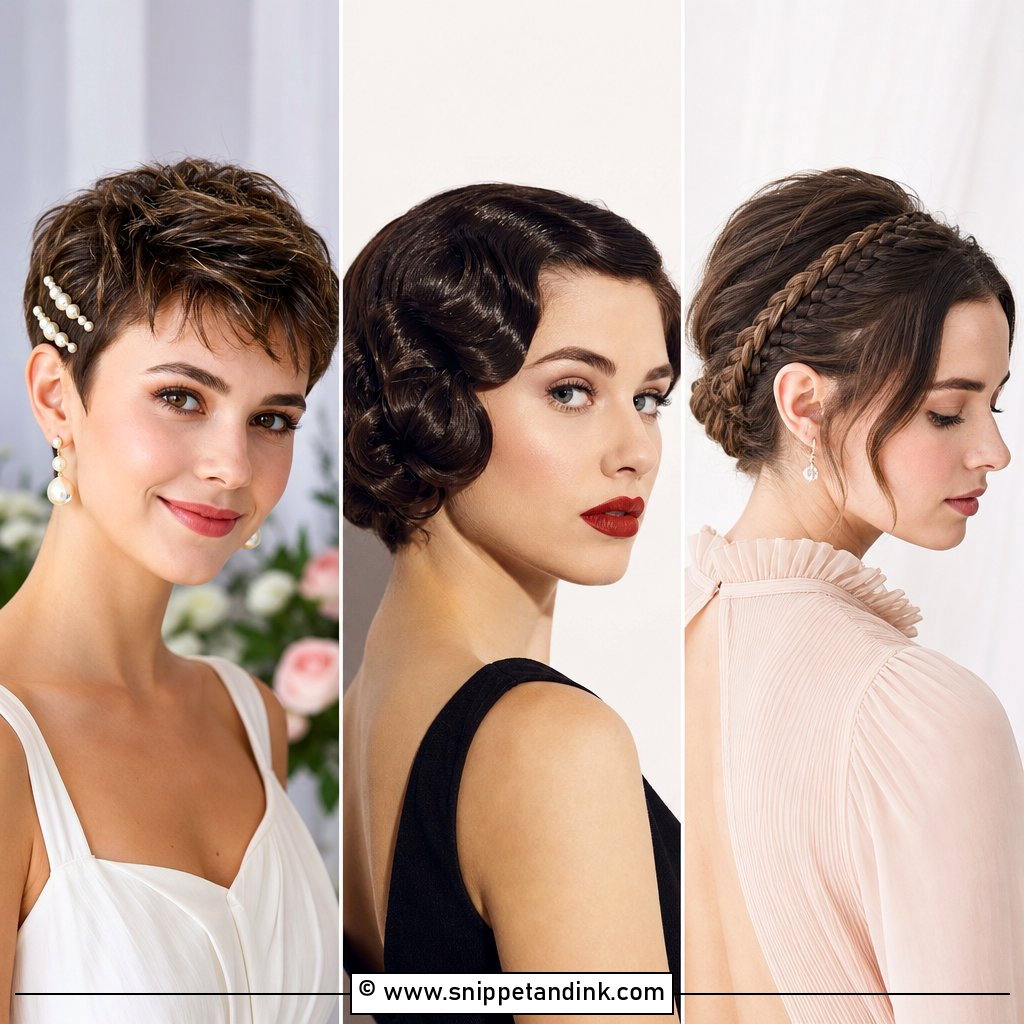
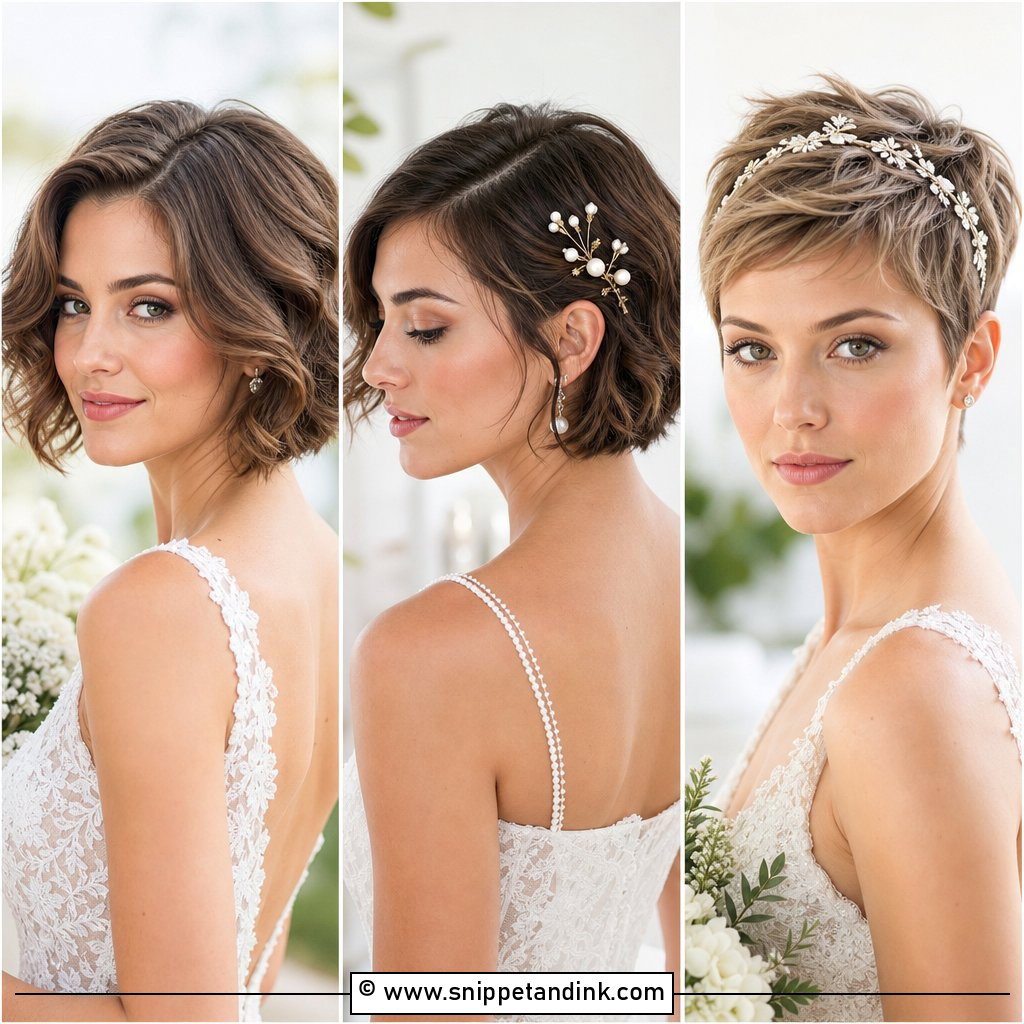
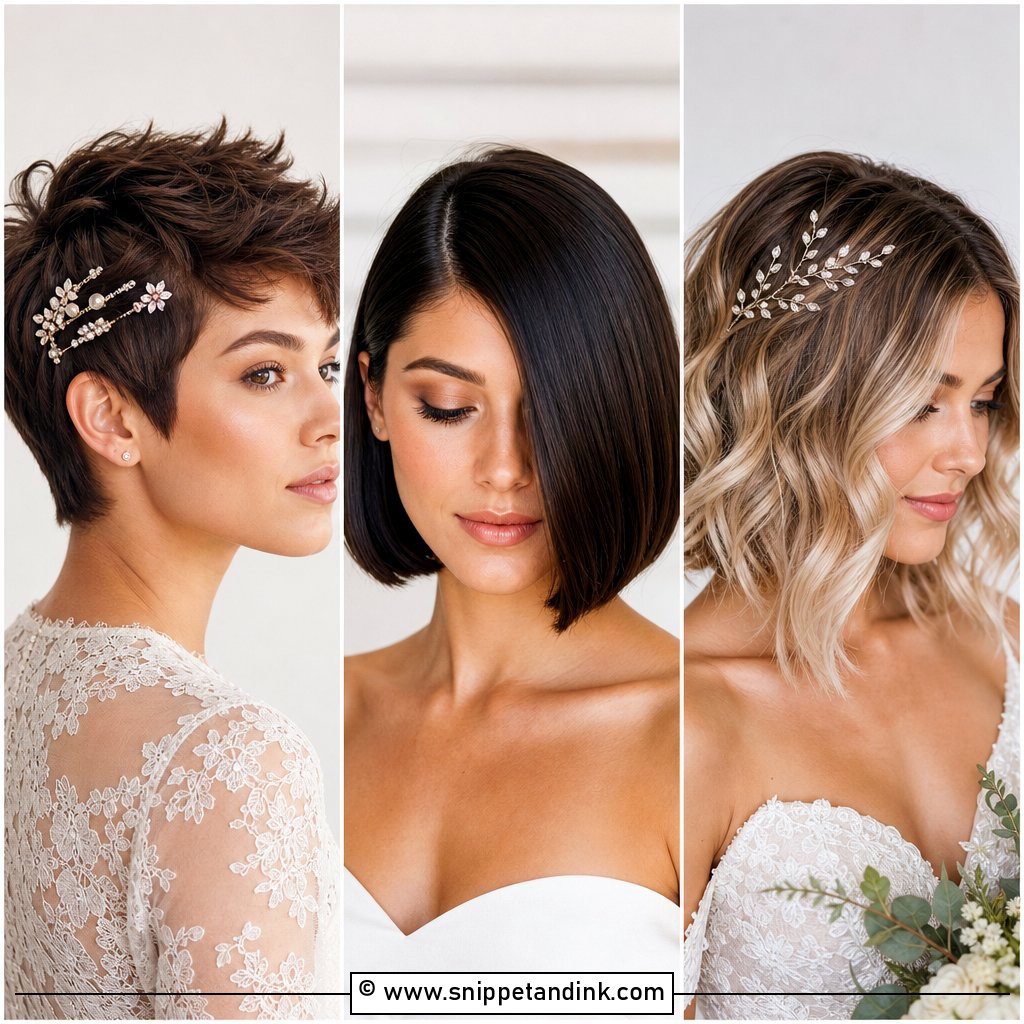
20. Pinned Back Wedding Hairstyle for Short Hair
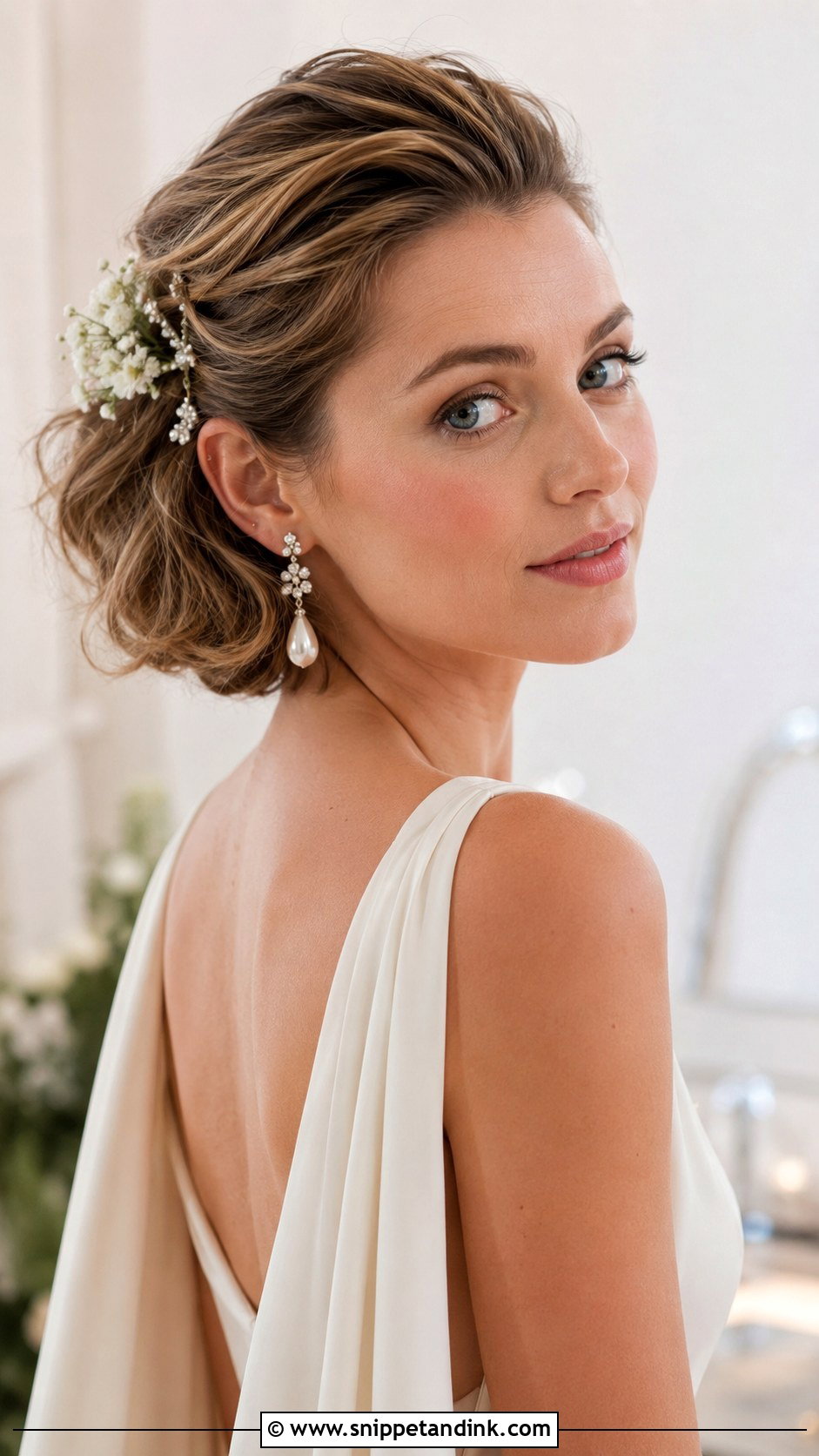
Short hair has more options than most brides expect. A pinned-back style sweeps the sides away from the face and holds them with decorative pins, a comb or a couple of small flowers, and it works on bobs, pixies and lobs. On a pixie I use a little pomade and hide the pins under the top layer, because very short hair gives them almost nothing to grip. Bring your accessories to the trial; a comb that’s too wide won’t sit flat against a short cut. Sleek or softly waved, it puts your face and earrings at the center.
What Holds and What Drops Between the Vows and the Last Dance
A wedding day runs long and hair changes across it. Assuming good prep, this is roughly how the twenty looks rank for staying power.
- Most secure: the sleek low bun, low chignon, French twist, ballerina bun and bun with veil. Nothing is curled loose, so there’s very little to fall.
- Middle of the pack: the curled updo, curly updo, braided crown and the twisted and braided half-ups. The pinned parts stay put while the loose ends relax.
- Most likely to change: loose waves, Hollywood waves, side-swept curls and sleek straight hair worn down. These rely on curl or smoothness holding, and heat, damp air and hugging all work against that.
Low on the list doesn’t mean avoid it. It means plan for it. For a loose style I set the curls tighter than you’ll want them in the mirror, because they relax within the first hour or two. I also hand a bridesmaid a few bobby pins, a travel-size spray and a small comb, so a fallen section can be fixed in the restroom in a couple of minutes.
When the Forecast Turns Muggy
Damp air is the one thing I can’t fully beat. If the week’s forecast looks humid, consider moving one step up the list: waves pinned into a half-up instead of everything down, or a curled updo instead of loose curls. Make that call with your stylist a few days out, not on the morning itself, so nobody is improvising with the clock running.
One Afternoon in a Trial Style Settles It
The right style is the one that suits your hair, your dress and the length of your day, not just the photo that caught your eye. Take your top two or three picks to a trial, keep the result in for the rest of that day, and notice what moves. A sleek low bun, a curled updo and a twisted half-up behave very differently by evening, and only your own hair can show you which one holds.
You'll Like These Ideas:


Leave a Reply