
Most brides who sit in my chair want the same thing from an updo: hair that stays up through the vows, the hugs and the dancing, yet still looks soft enough to touch when the photographer leans in close. The shapes I’m building most right now are low buns, looser chignons, softer French twists, braided details and natural texture. Which one is yours depends less on trends than on your neckline, where the veil sits, and how much hair you actually have to work with. Here are fifteen I’d recommend, with what each one needs from your hair and where it can let you down.
Thin Hair, Thick Hair, and What Each Bun Needs
The first thing I do at a consultation is gather your hair in my hand at the nape. That tells me more than any photo, because every shape below needs a certain amount of hair to look the way it does online.
Fine or thin hair
Plan on help. A padding ring inside a bun or a few clip-in wefts matched to your colour give a chignon or high bun the size you see in pictures. Curls drop faster on fine hair, so I set them with a grip product and let them cool in pin curls before I build anything. Sleek styles are kinder to fine hair than very loose ones.
Thick or heavy hair
The problem flips. A full head of thick hair in one bun can turn into a large, heavy knot that pulls at the scalp by afternoon. I thin out the bulk by braiding or twisting sections first, then pinning those flatter pieces into the shape. More pins, placed crossed, matter more here than more hairspray.
Shoulder length
Most low buns and twists are possible from roughly shoulder length. Shorter hair can still go up as a pinned cluster of curls, but a smooth roll or a big bun usually needs extensions.
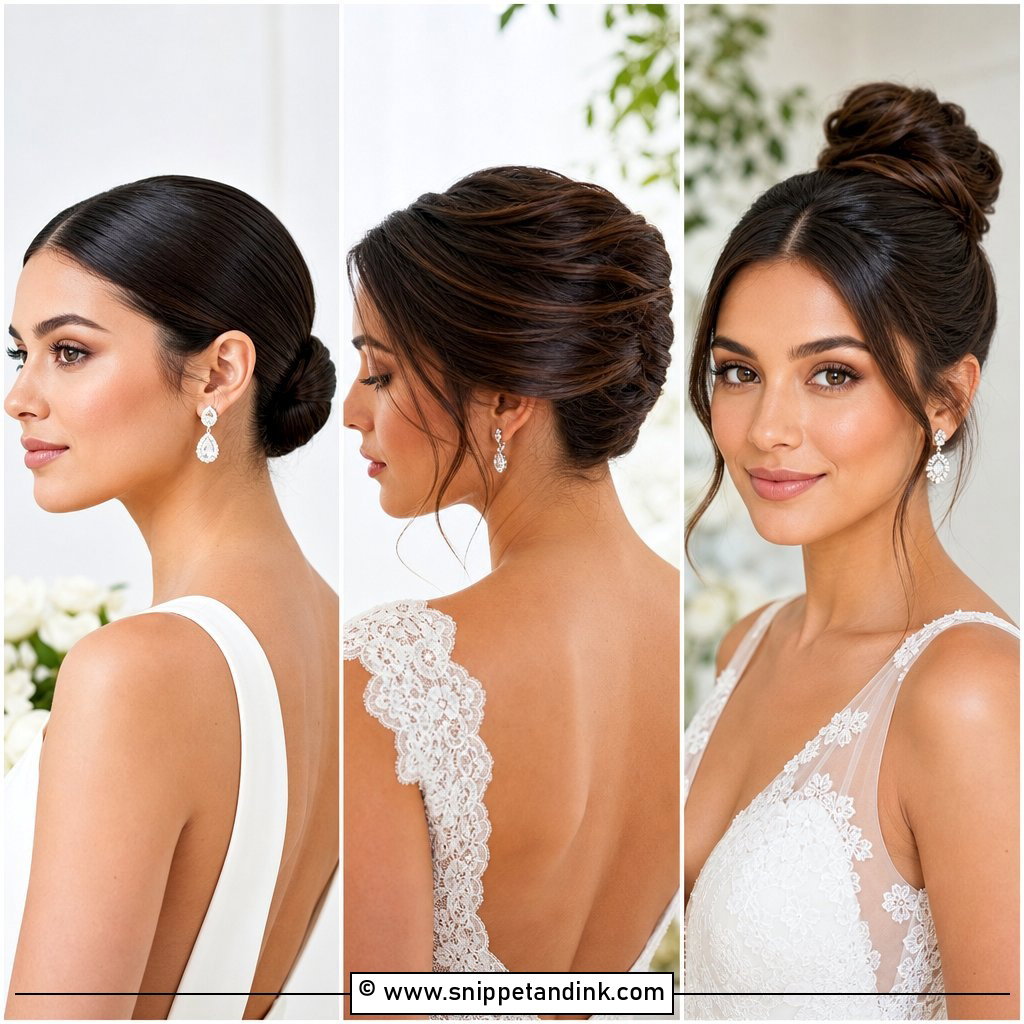
1. Bridal Low Bun Updo
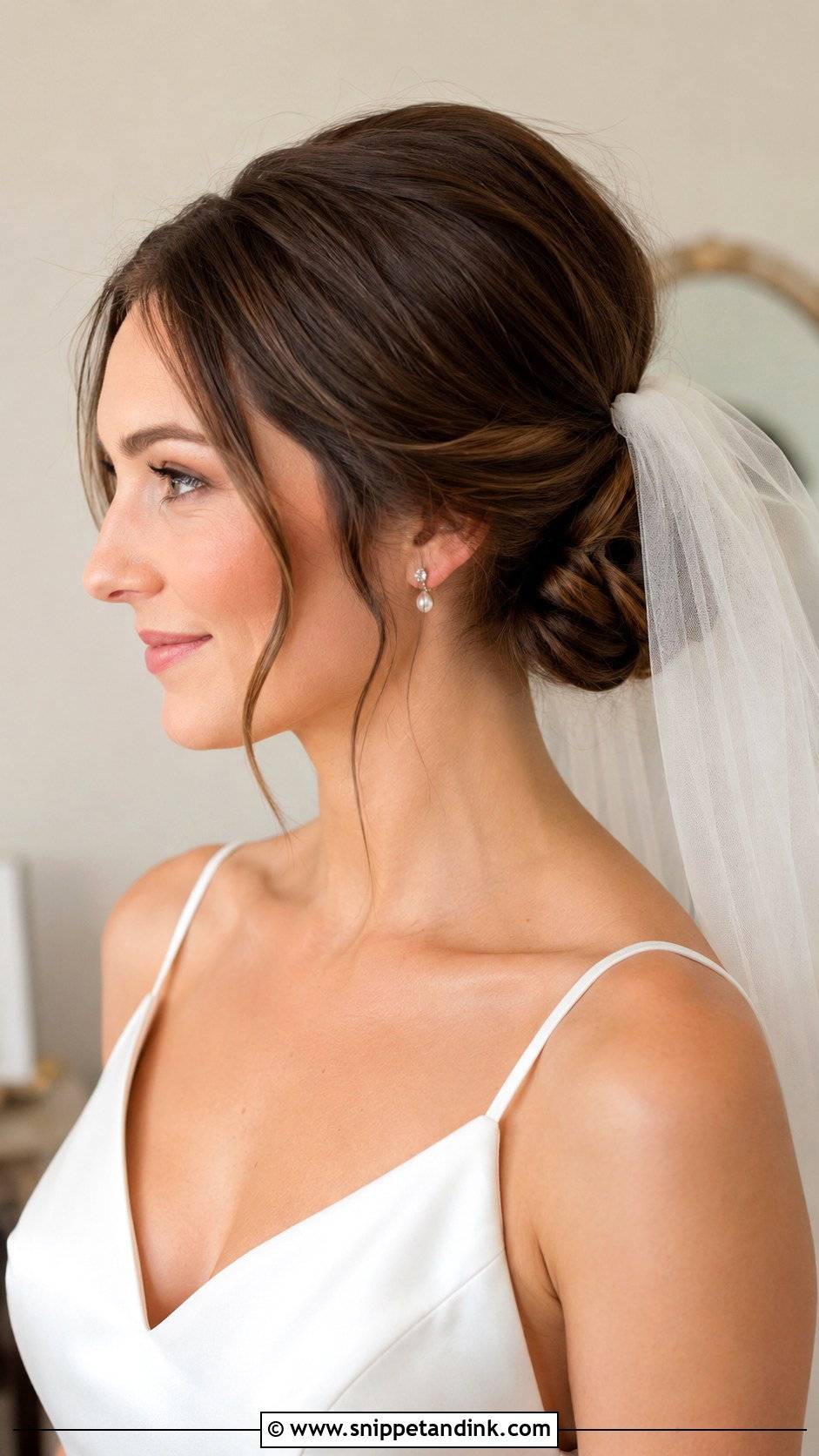
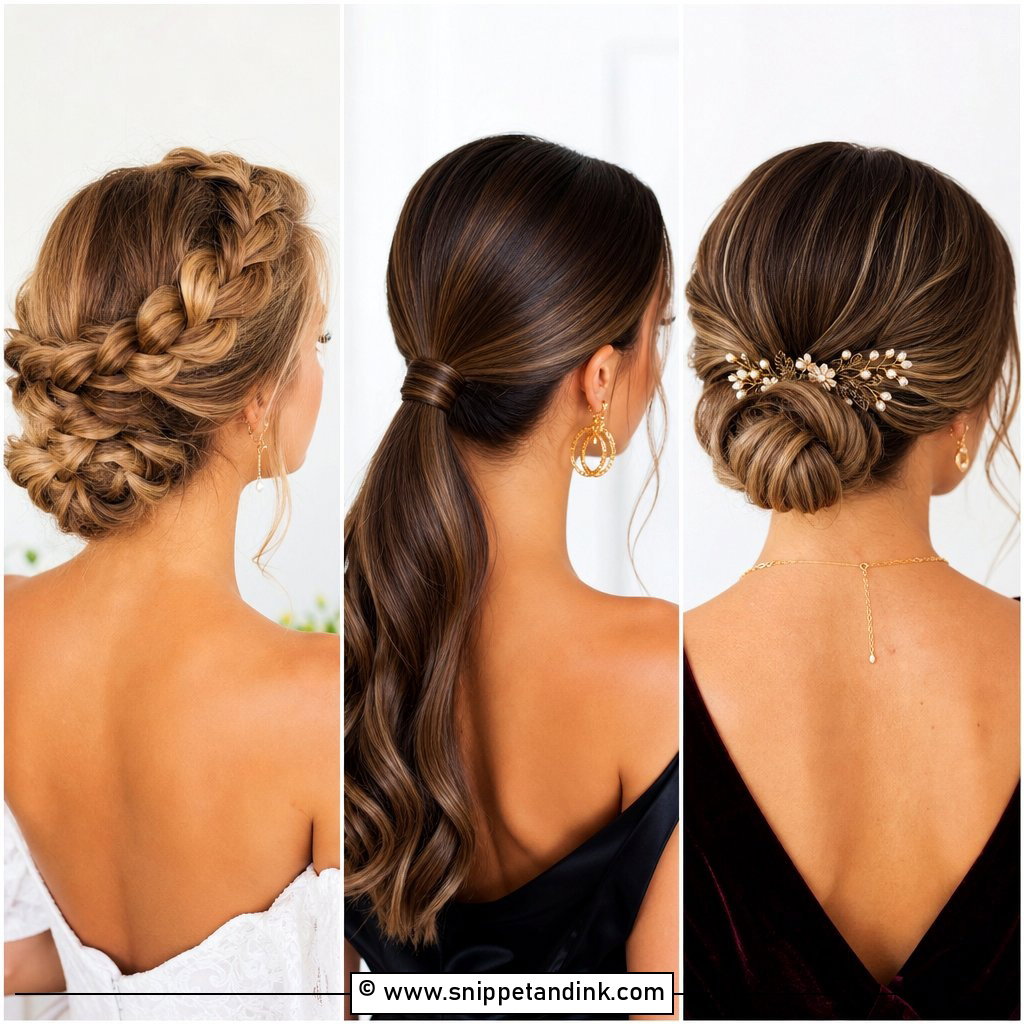
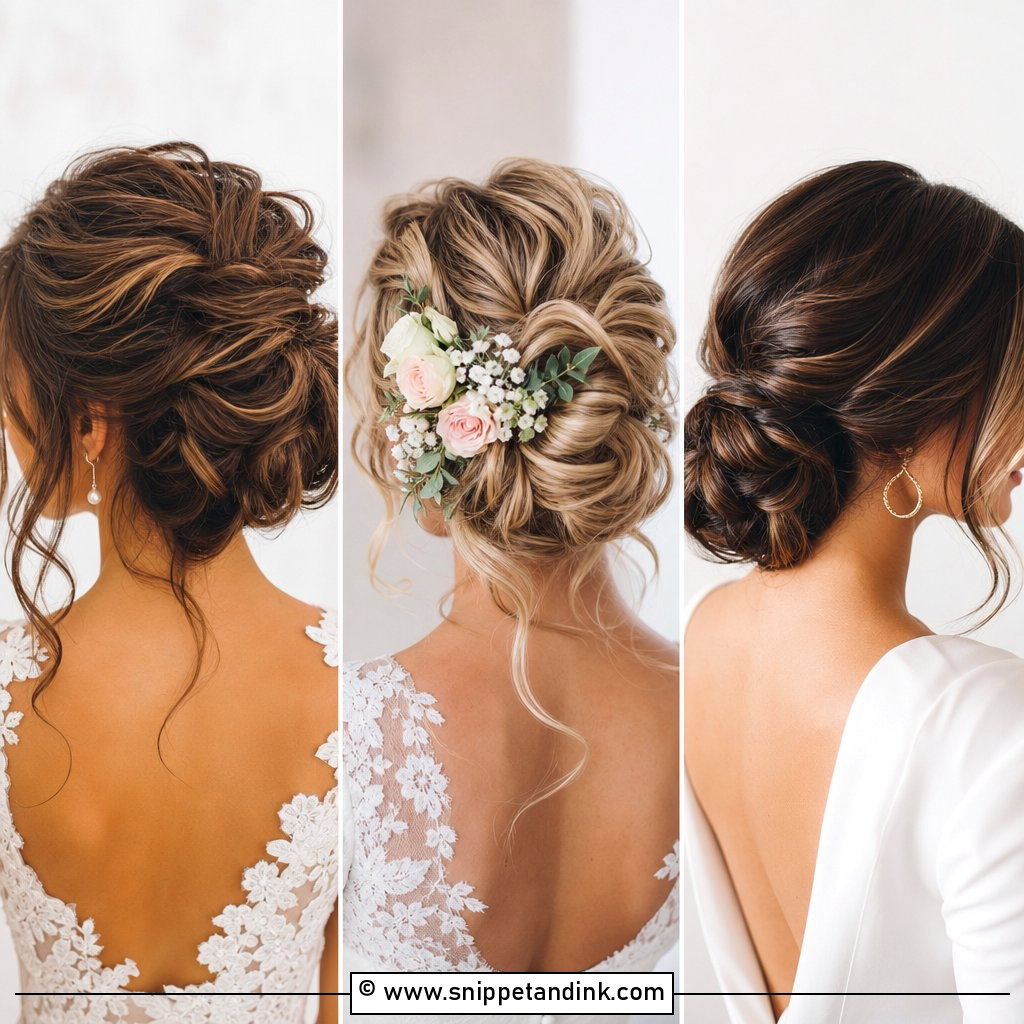
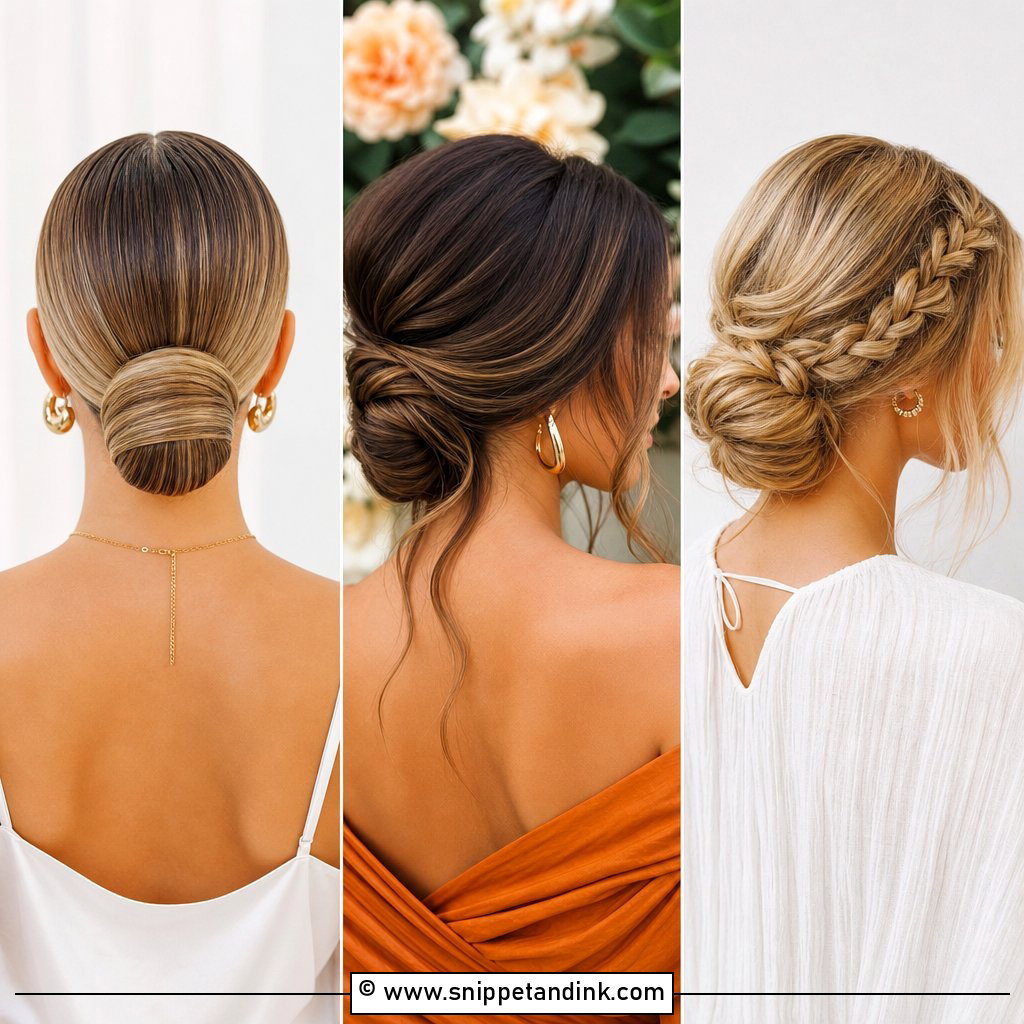
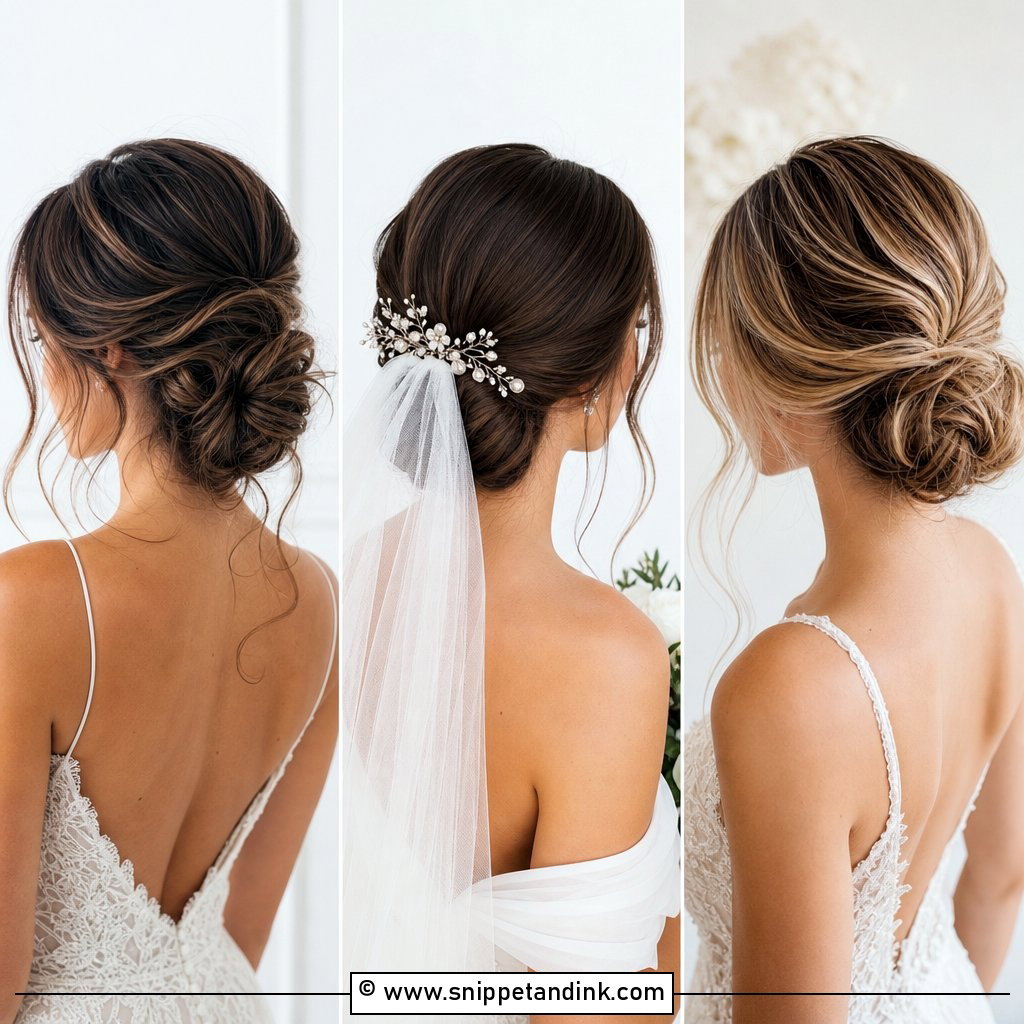
If I had to pick one updo that suits nearly every dress, it would be this. A bun at the nape keeps the weight low, so it rarely gives a headache, and it leaves room above for a veil comb. I decide on crown volume by the gown: a little lift for lace and soft fabrics, a smoother crown for crepe or a clean modern cut. Outdoors it’s my safe bet, because a low bun barely moves in wind and doesn’t depend on curls holding their bounce.
2. Romantic Chignon Wedding Updo
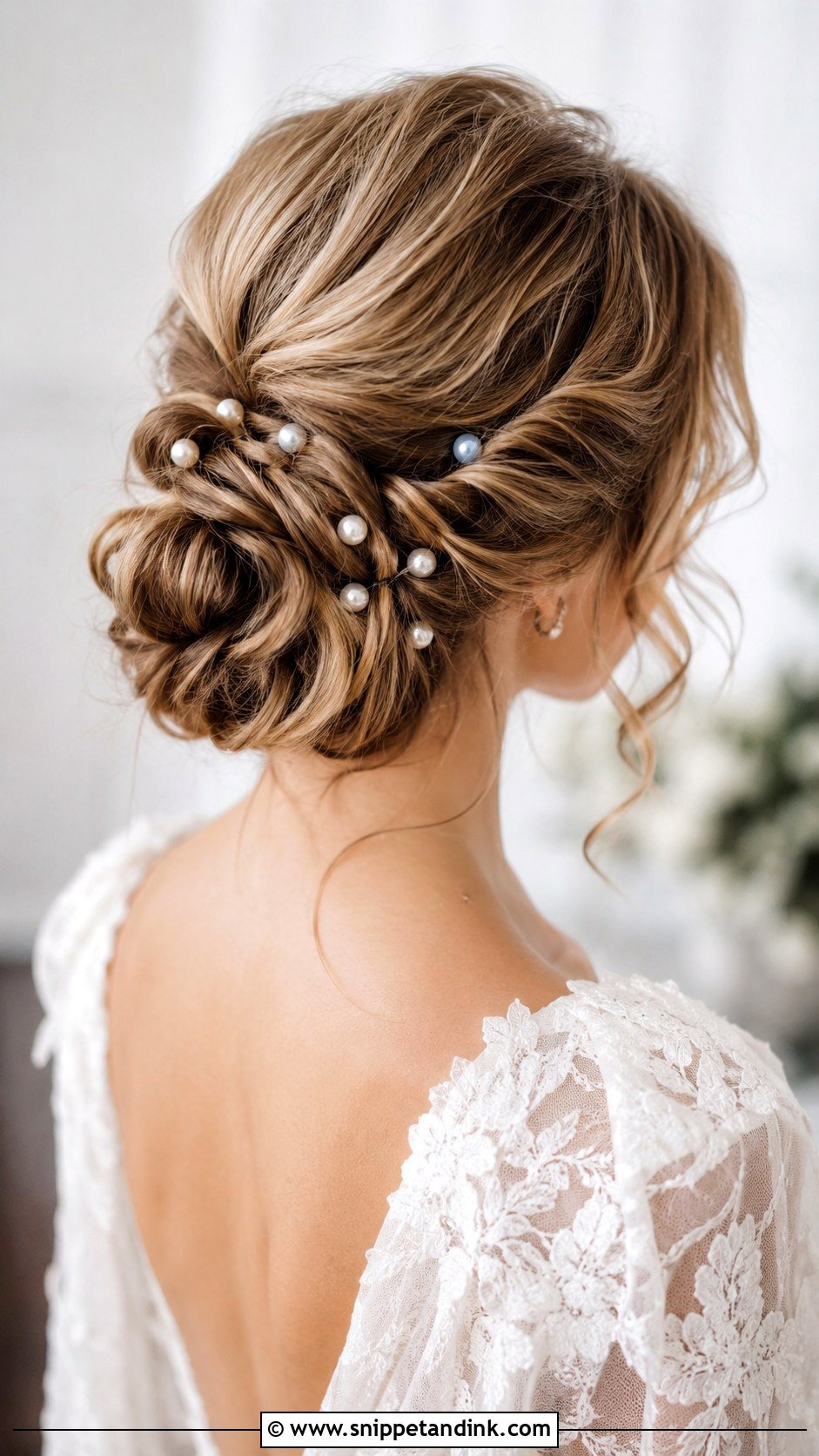
A chignon is a low, rounded knot with some texture left in, so it reads softer than a bun. I gather the hair at the nape, pin it into shape and tuck the ends inside so the back stays tidy for the processional photos. A couple of loose pieces at the cheeks soften the jaw, though I keep them short of the collarbone so they don’t tangle in an earring. It sits nicely with lace, off-the-shoulder gowns and fine veils. The height is the part we fiddle with most at the trial; half an inch up or down changes how it looks in profile.
3. Sleek Bridal Bun Updo
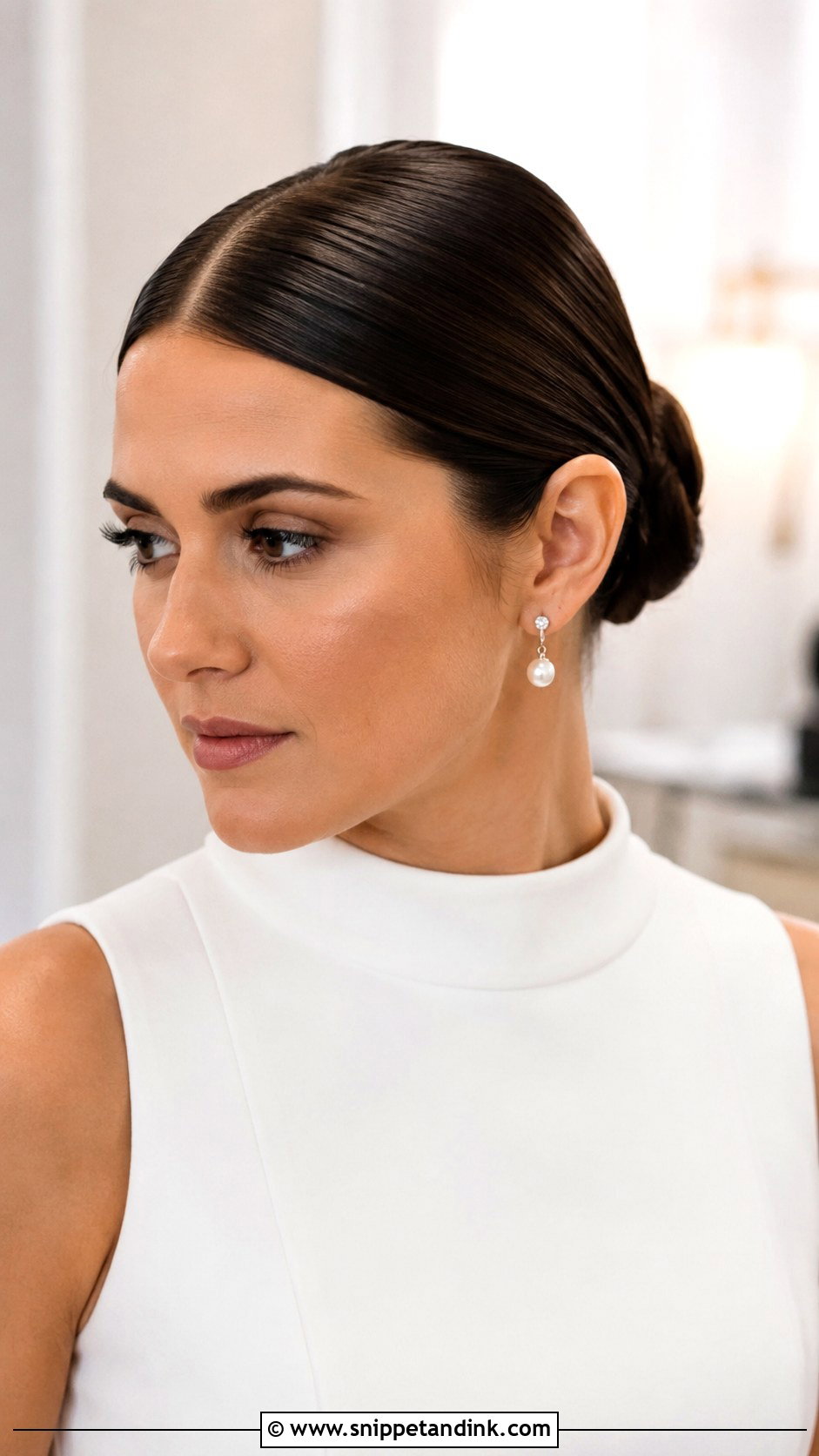
Sleek buns show everything, which is both the appeal and the risk. The hair is brushed close to the head and wound into a neat knot, low, mid or slightly higher, so earrings, cheekbones and a structured neckline get the attention. Go carefully with shine spray; two passes look glossy, five look greasy under flash. On fine hair I hide a small padding ring or a section of matched clip-in hair inside the bun so it looks full without losing the clean line. Any bumps or a crooked part will show in close-ups, so this is the style where a trial matters most.
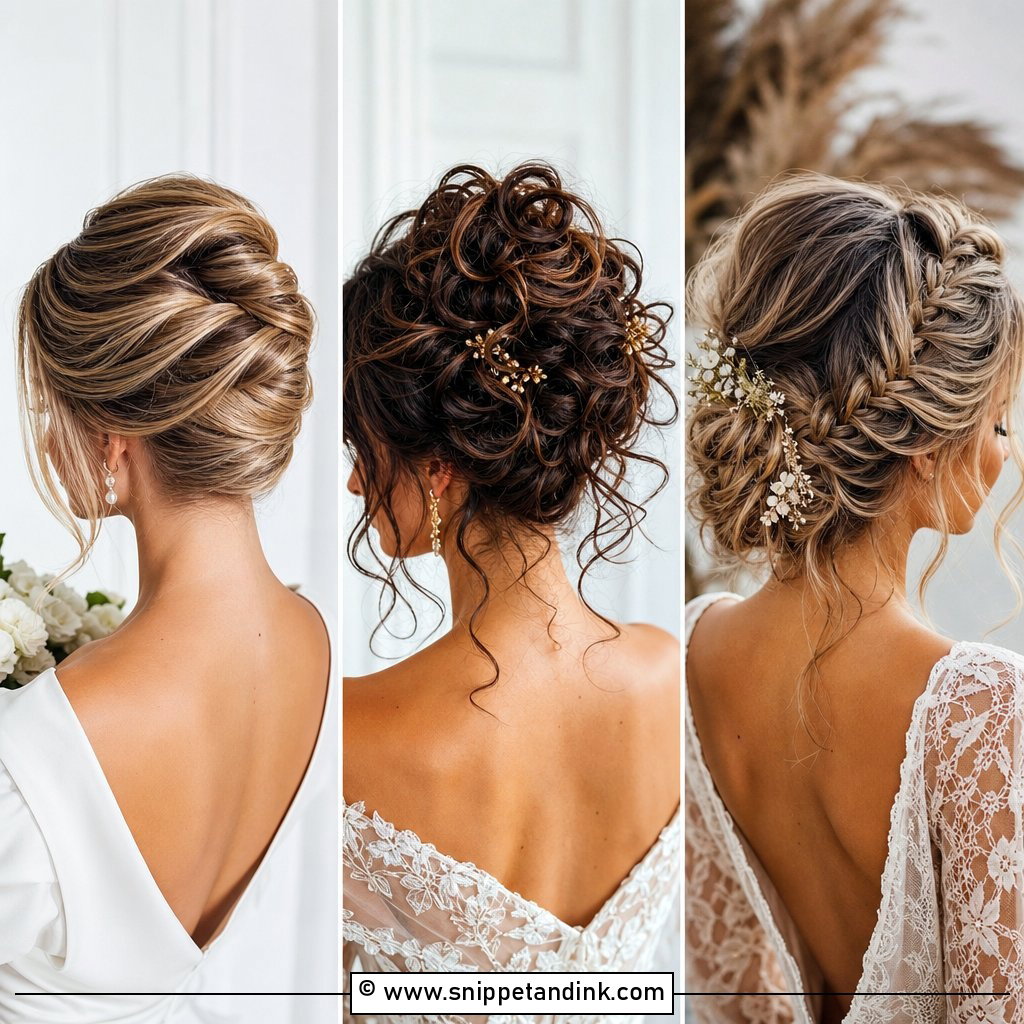
4. Messy Bun Bridal Updo
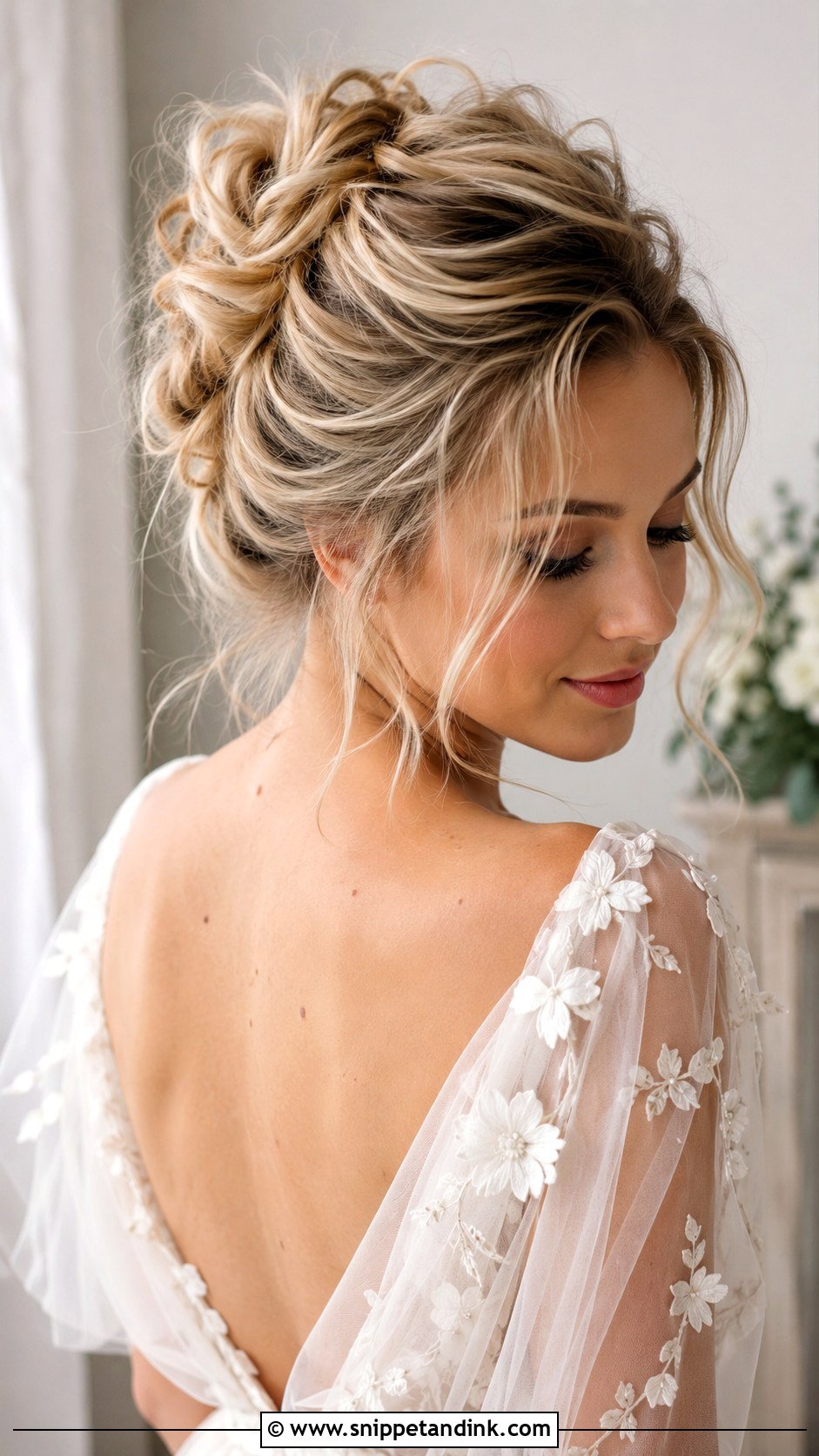
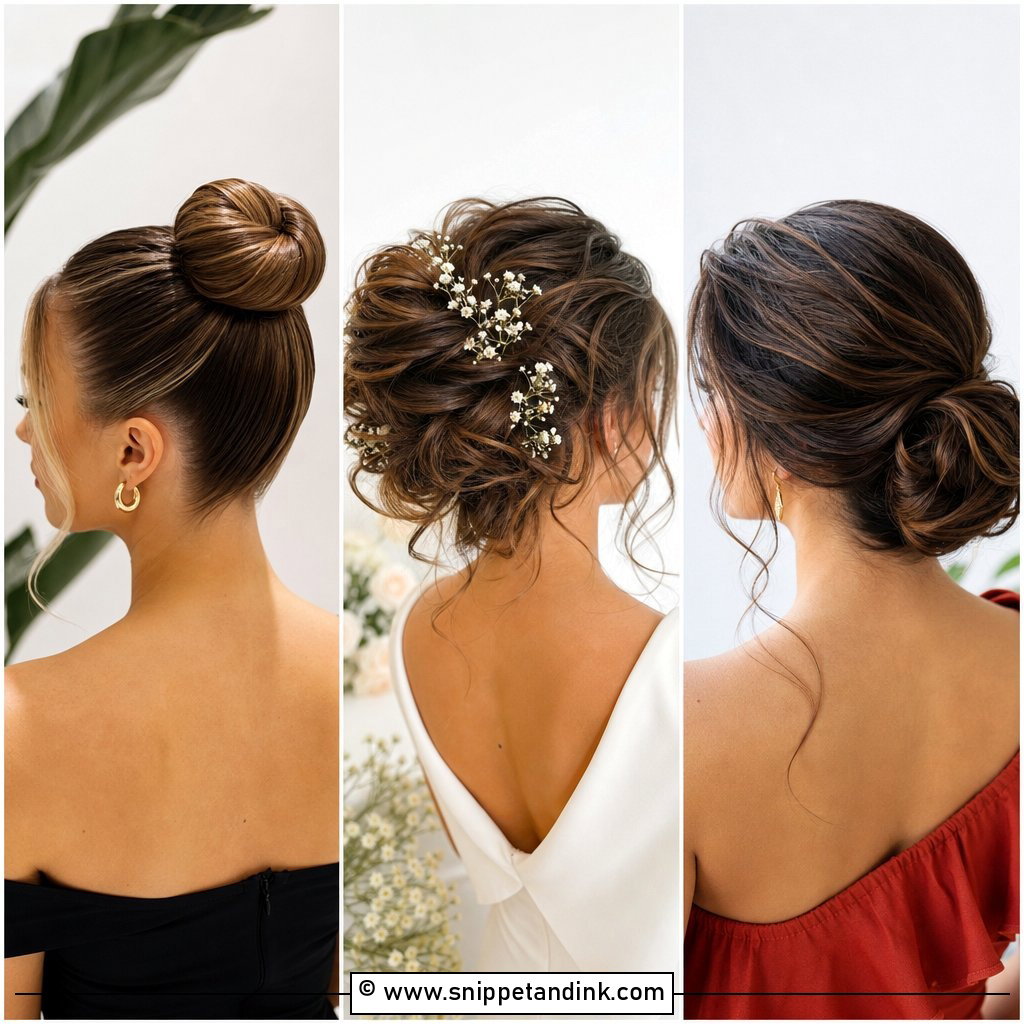
A messy bun takes longer to build than a neat one. I curl everything first, add a texture spray, then pin it in sections so the looseness is placed rather than accidental. Without that structure it collapses by the first dance. Garden venues and floaty gowns suit it. Face-framing tendrils soften it further, but leave them out of the curling iron’s reach until the last minute so they keep their shape. If your hair drops curl within a couple of hours, tell your stylist; a grip-adding mousse at the root and a cooled set curl make a real difference.
5. French Twist Bridal Updo
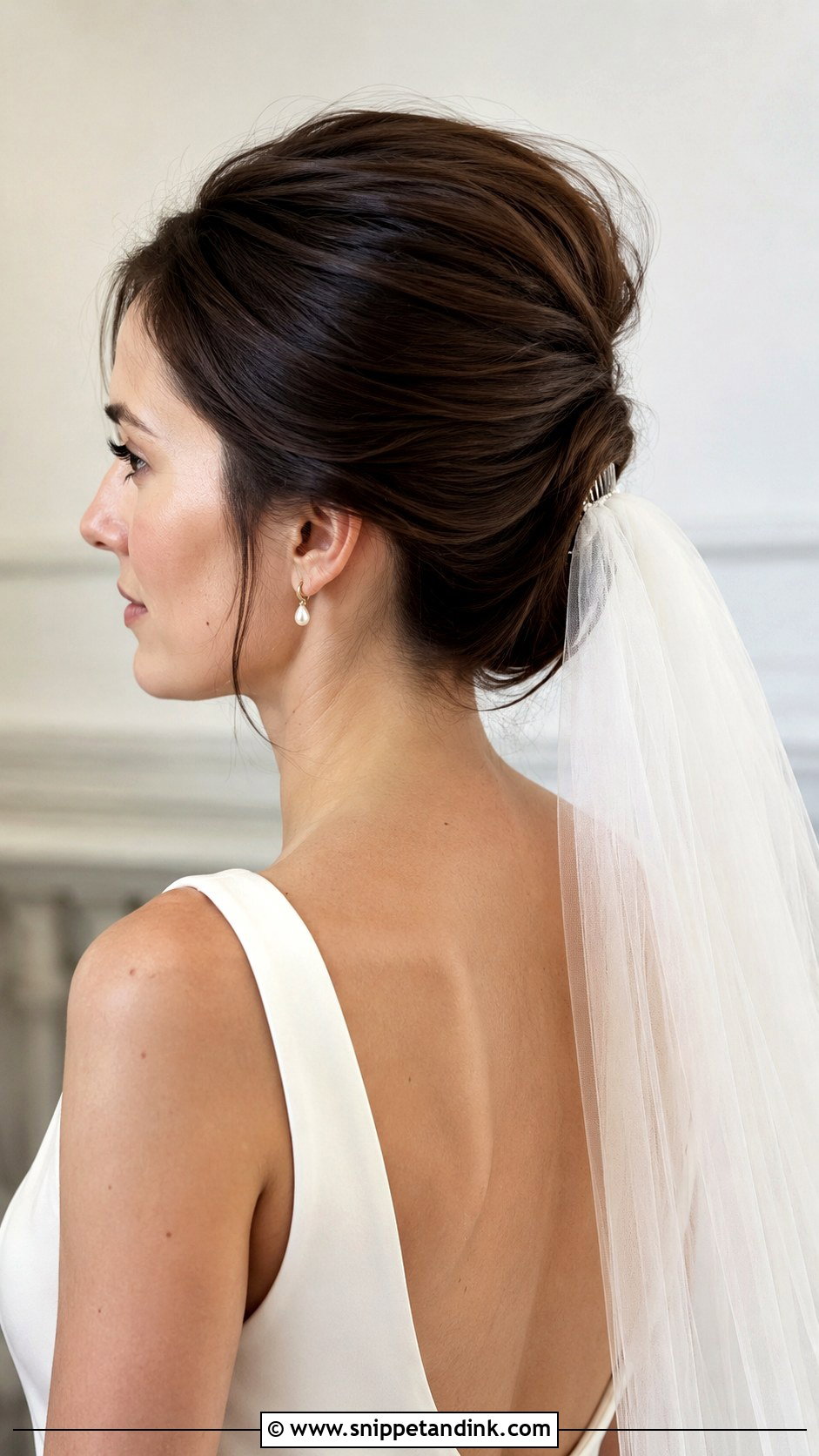
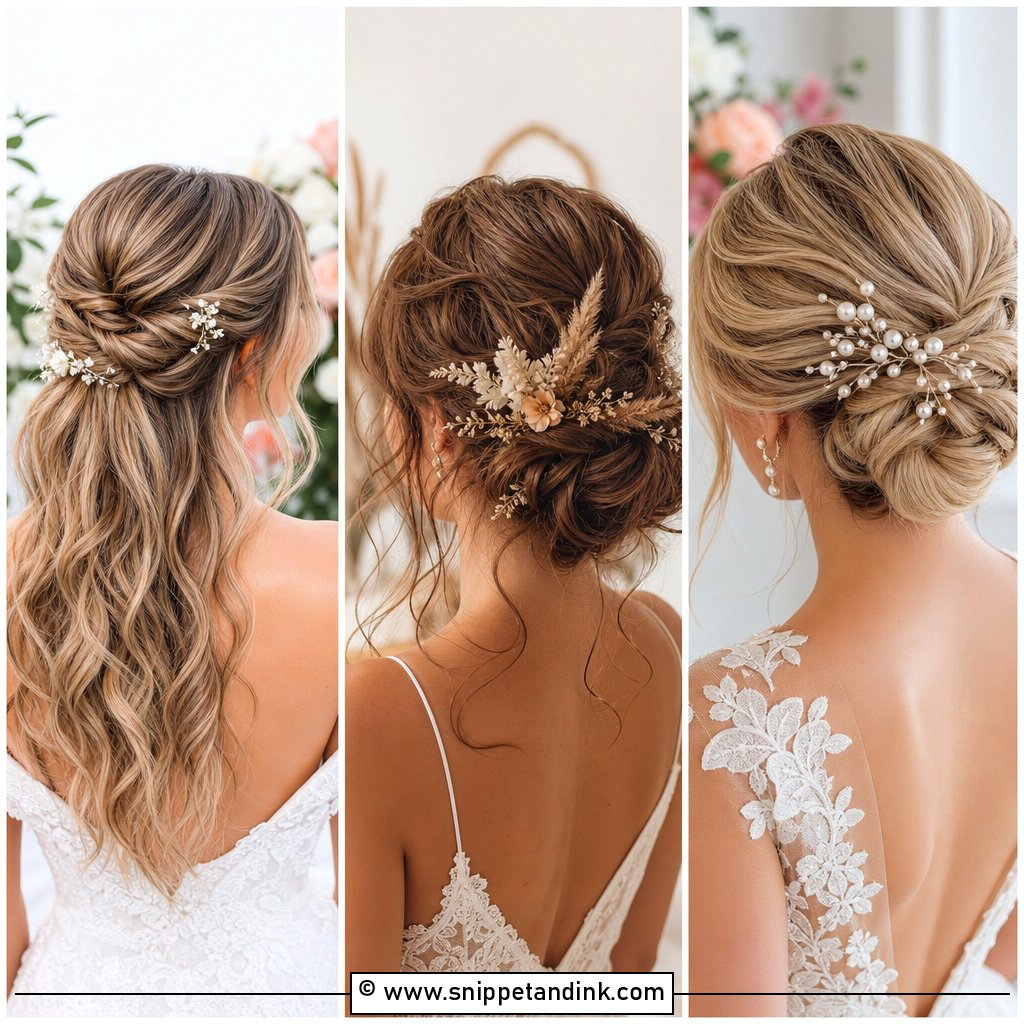
The French twist has loosened up. The hair is swept upward and tucked into a vertical roll, giving a long, clean shape down the back of the head, but I no longer spray it into a helmet. For a minimal gown it can stay smooth; for a softer dress I loosen the crown and sides. The roll needs mid-length hair at least, roughly to the shoulders, and very heavy hair sometimes needs a few hidden criss-crossed pins along the seam to stop the twist unrolling. A veil can go above or tucked beneath it.
6. Braided Wedding Updo
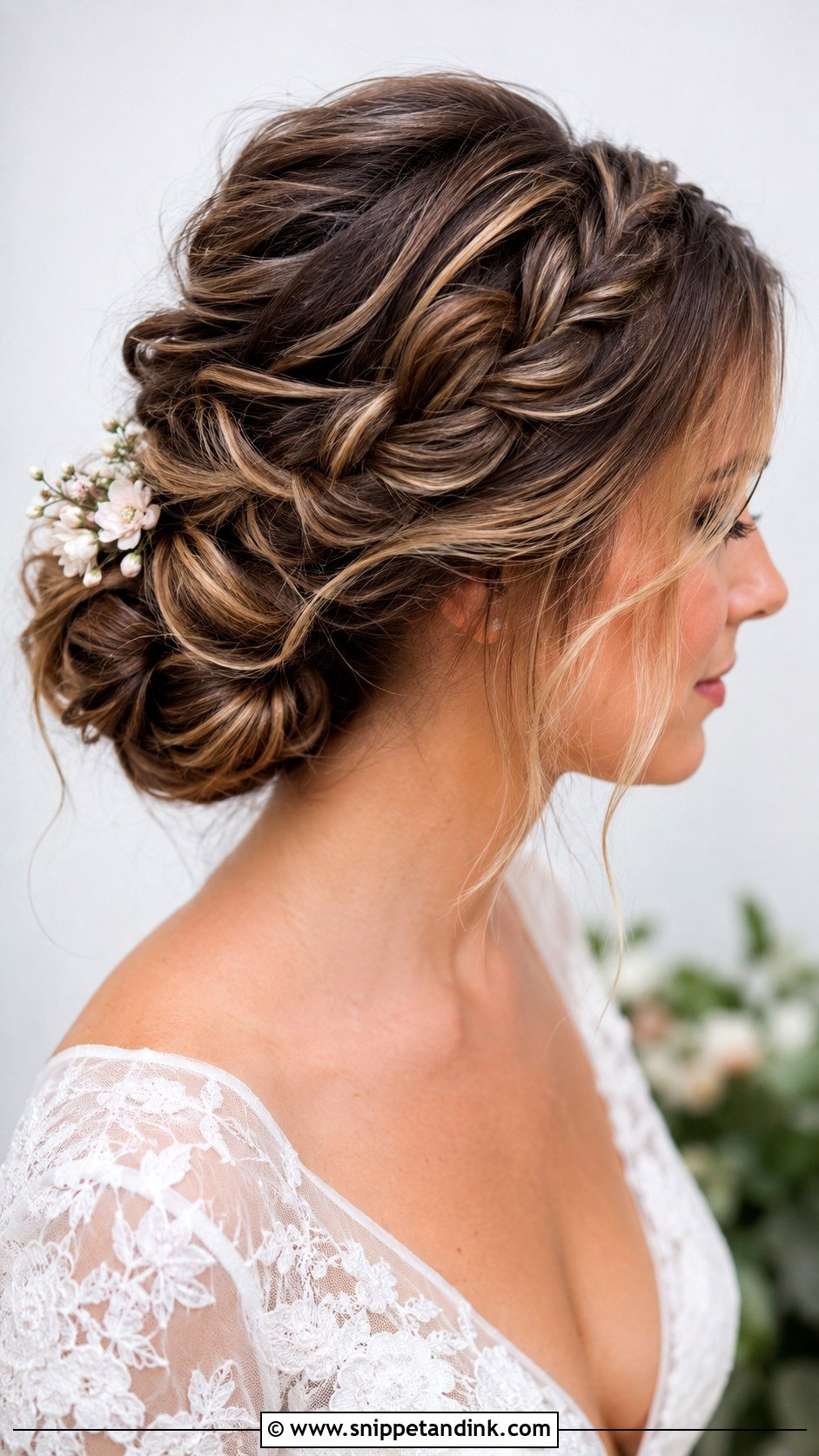
Braids add detail without any accessories at all. One can wrap around a bun, cross the crown or melt into a low pinned shape. Highlighted and balayaged hair looks especially good braided, because the weave pushes lighter and darker strands side by side. Thick hair benefits most, since braiding packs down volume that would otherwise make a bun huge. I gently pull out the edges of each loop, called pancaking, so the braid looks fuller on camera; done too hard, it frizzes, so it’s a light touch.
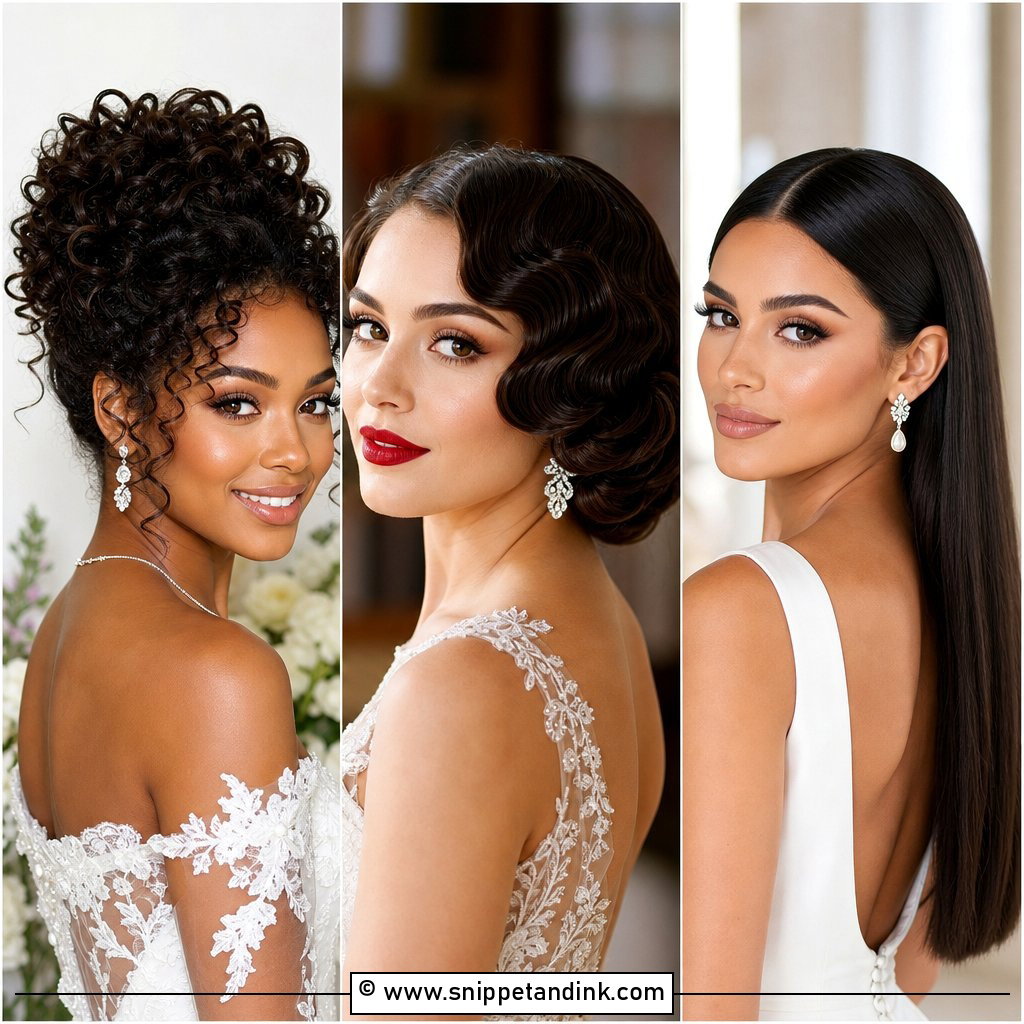
7. Curly Bridal Updo
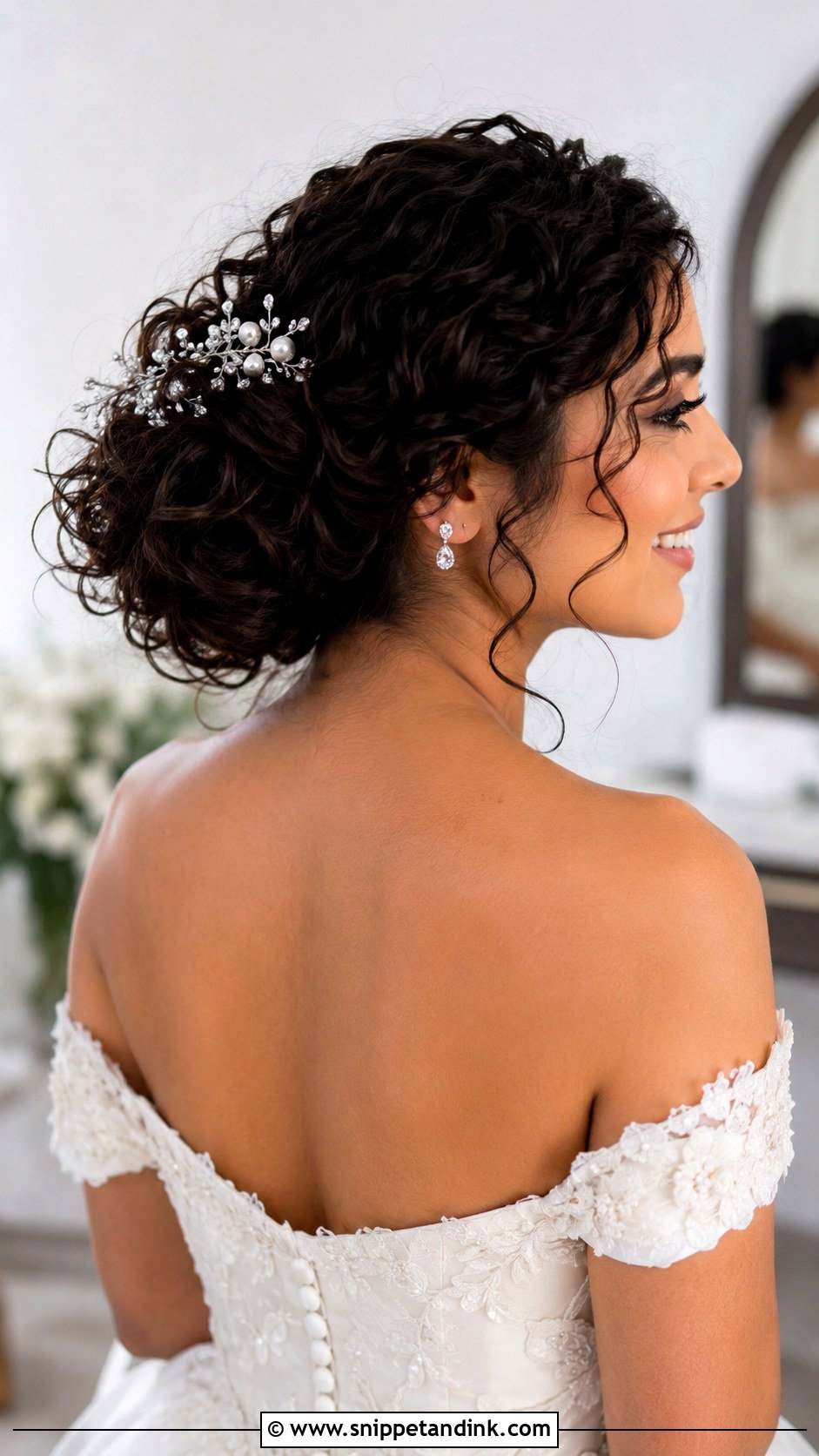
Curls don’t need to be straightened to go up. I gather them into a lifted or low pinned shape that keeps the pattern visible, with soft tendrils at the face or a defined crown. The prep starts at wash day: hydrate well, use the same products you’ll wear on the day for your trial, and let the curls dry fully before anyone touches them. I avoid brushing curly hair at all for this style; I pin with my fingers so the clumps stay together. It’s the right updo if you want to look like yourself on your best day, not a different person.
8. High Bun Bridal Updo
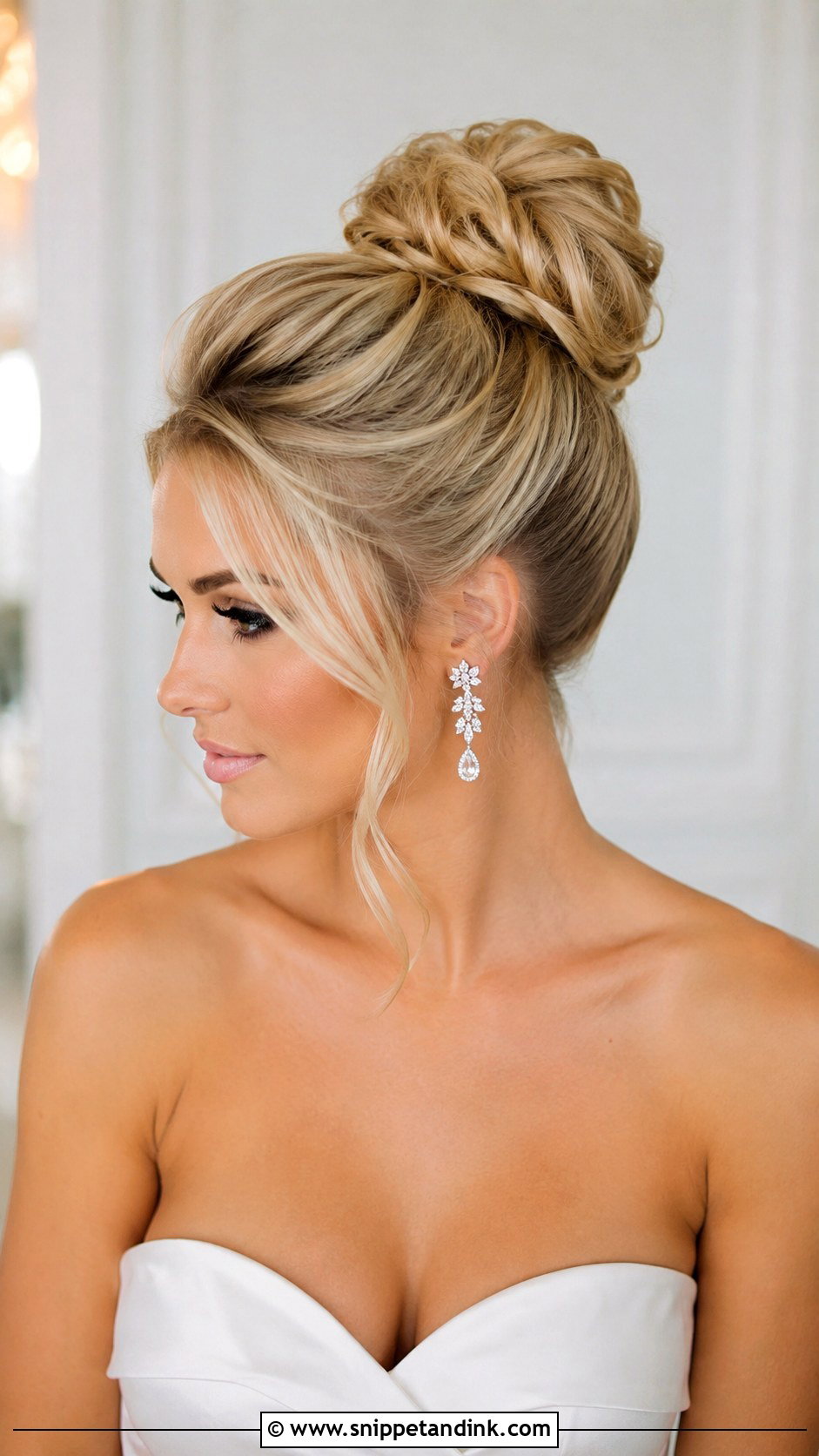
A high bun lengthens the neck and clears the shoulders, collarbone and earrings, which is why strapless and halter gowns pair so well with it. It can be smooth and ballerina-inspired or a little textured. I always check it from the front in a mirror, not only from behind, because a bun that looks balanced from the back can peek over the head like a topknot from the front. Fine hair usually needs a hairpiece or padding to reach a good size. If you’ll wear a long veil, I’d place the bun slightly lower than your photos show, so the comb has somewhere to sit.
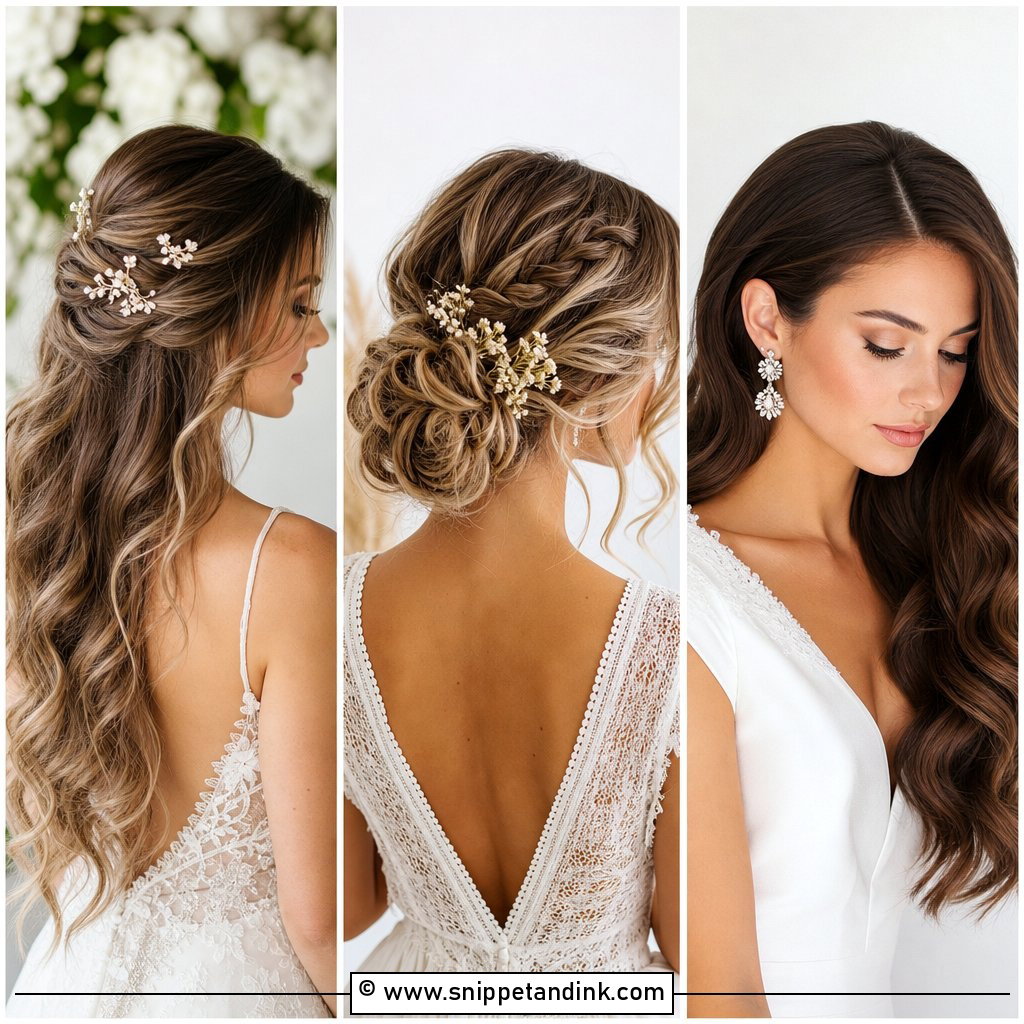
9. Textured Low Updo For Bride
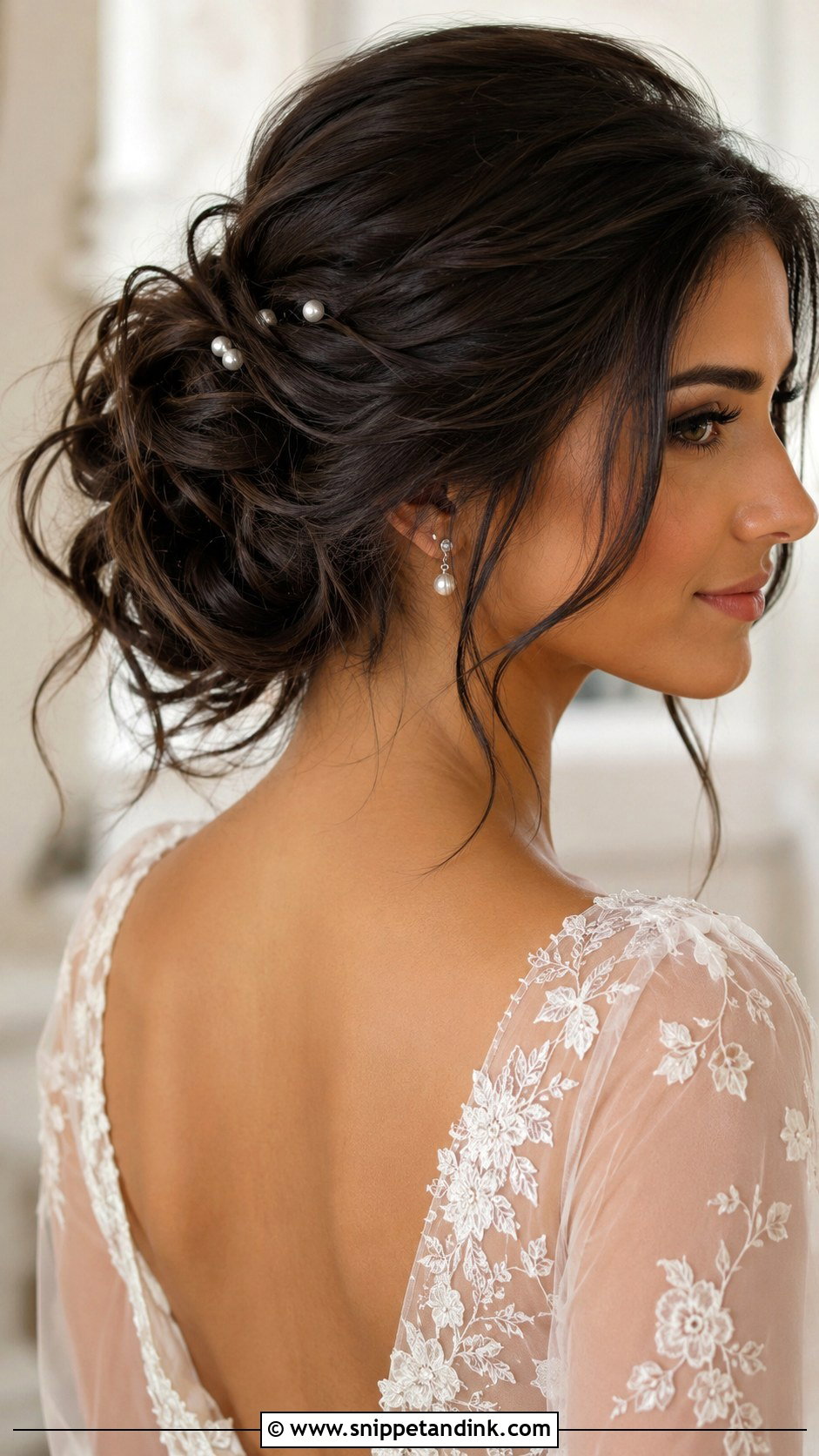
This is the middle ground between sleek and messy, and the one I build most often. The hair is curled, teased lightly at the crown and pinned low into a full, soft shape. Because I can adjust the crown height and the pieces around the face, it suits almost any face shape. Veils, combs and pearl pins all sit well in it. The usual mistake is pulling out too many pieces at the end; each one becomes a strand that can fall into your lipstick, so I leave out two or three on purpose and stop there.
10. Pearl Pin Bridal Updo
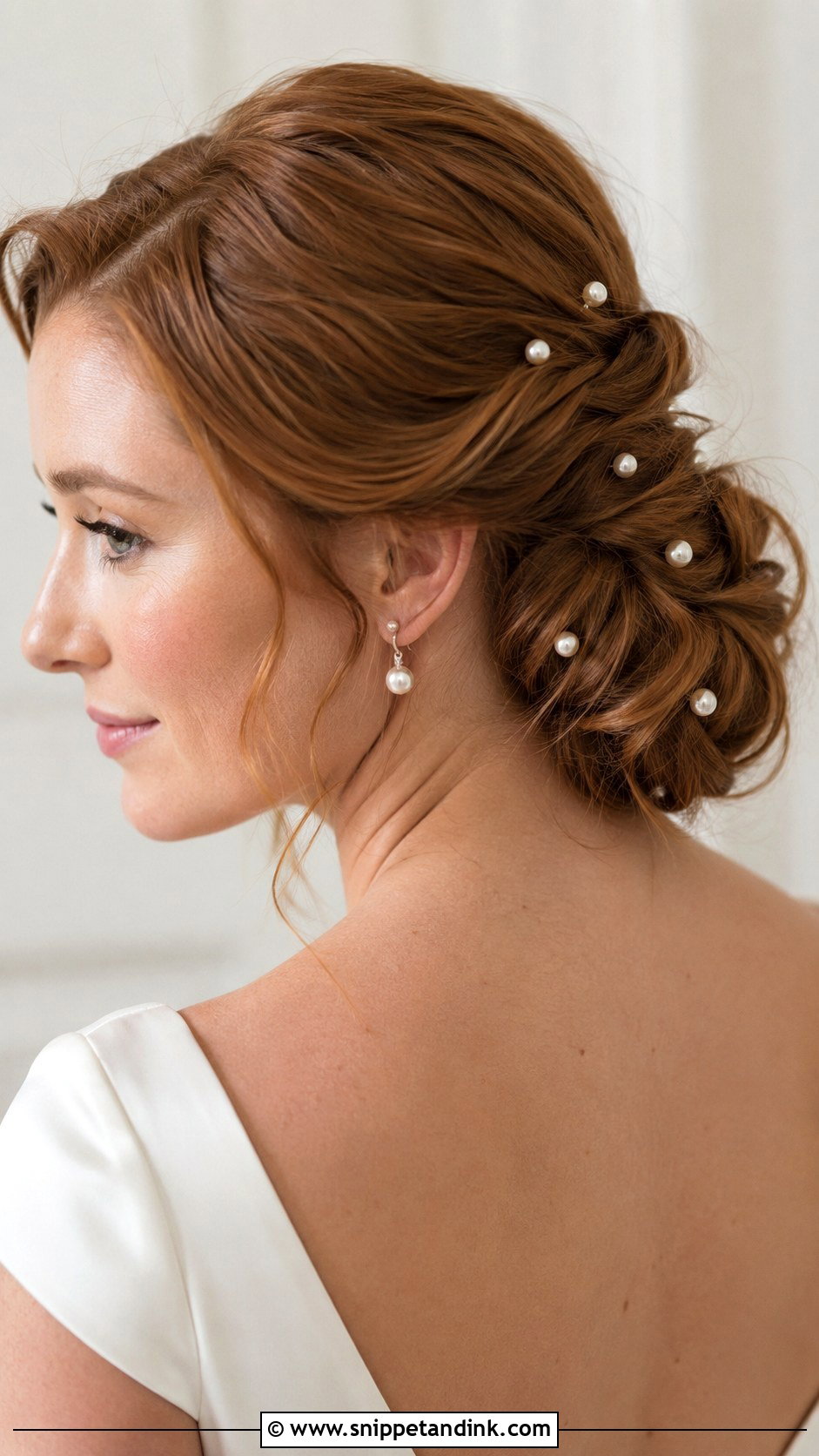
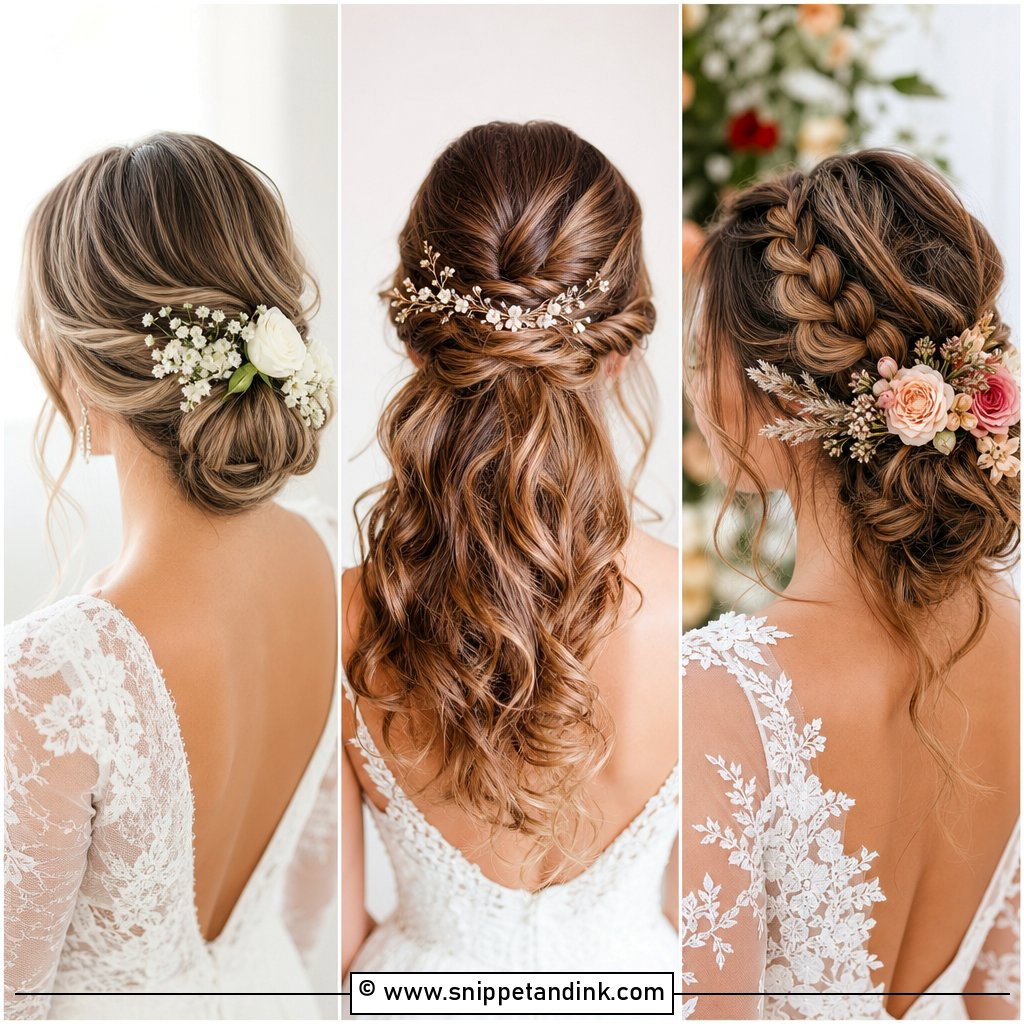
Pearl pins turn an ordinary bun, chignon, twist or textured updo into something clearly bridal. Placement is the whole skill. A loose scatter reads romantic, a neat line or crescent reads modern, and too many make the hair look like a pincushion. I usually stop at five to seven on a low bun. Pearls sit well against satin, lace, crepe and tulle. One practical note: cheap pearl pins have smooth shafts that slide out, so I anchor each one through a bobby pin hidden underneath.
11. Veil Friendly Bridal Updo
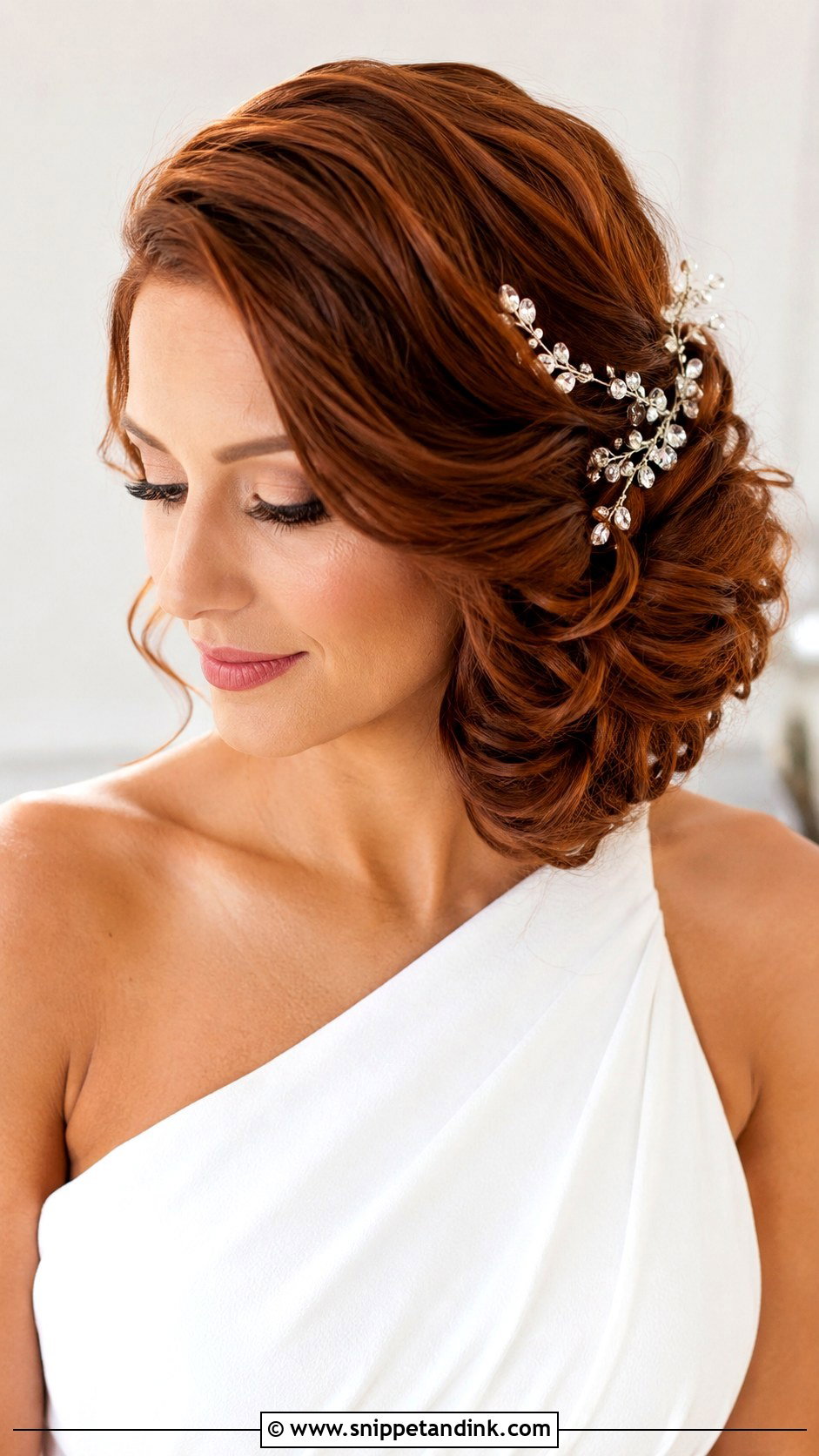
I plan a veil updo backwards: I find where the comb has to sit first, then build the hair around that spot. The hair needs enough structure for the comb’s teeth to bite, but not so much bulk that it looks odd once the veil comes off for the reception. Low buns, chignons and French twists handle it best, with the veil above or below the shape. Bring the actual veil to your trial, not a description of it. Long cathedral and heavily beaded veils pull backward all day, and we need to feel that weight before the wedding, not on it.
12. Side Swept Bridal Updo
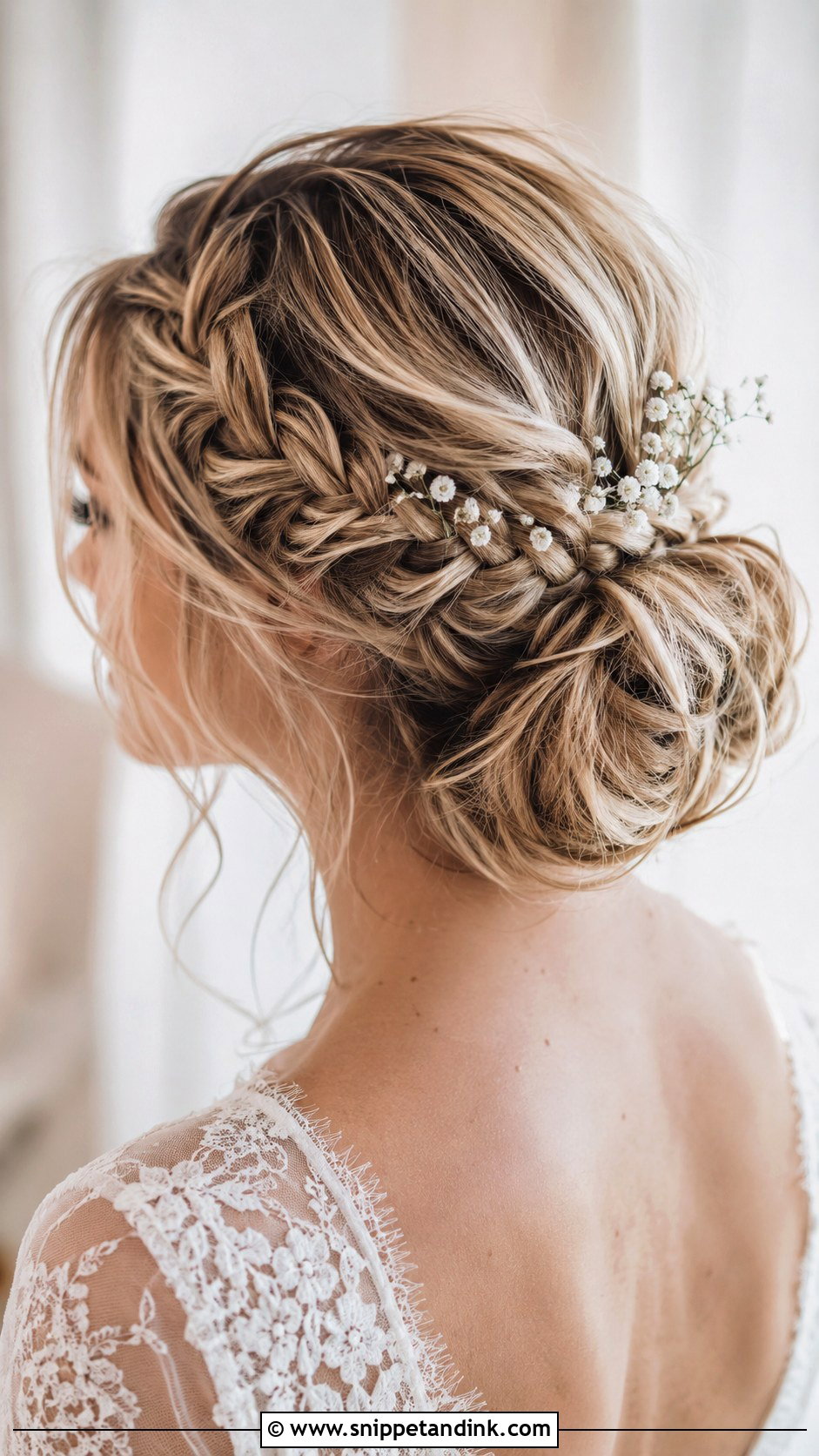
Asymmetry flatters more faces than people expect. The hair is directed to one side and pinned into a bun, twist or curled cluster, which suits one-shoulder dresses, floral appliqué on one side and open necklines. A deep side part looks glamorous; softer pieces at the temples look gentler. The heavy side does need to be anchored firmly. I pin a hidden base at the centre of the head first and attach the sideways weight to it, so the shape doesn’t slowly migrate toward your shoulder.
13. Boho Braided Bridal Updo
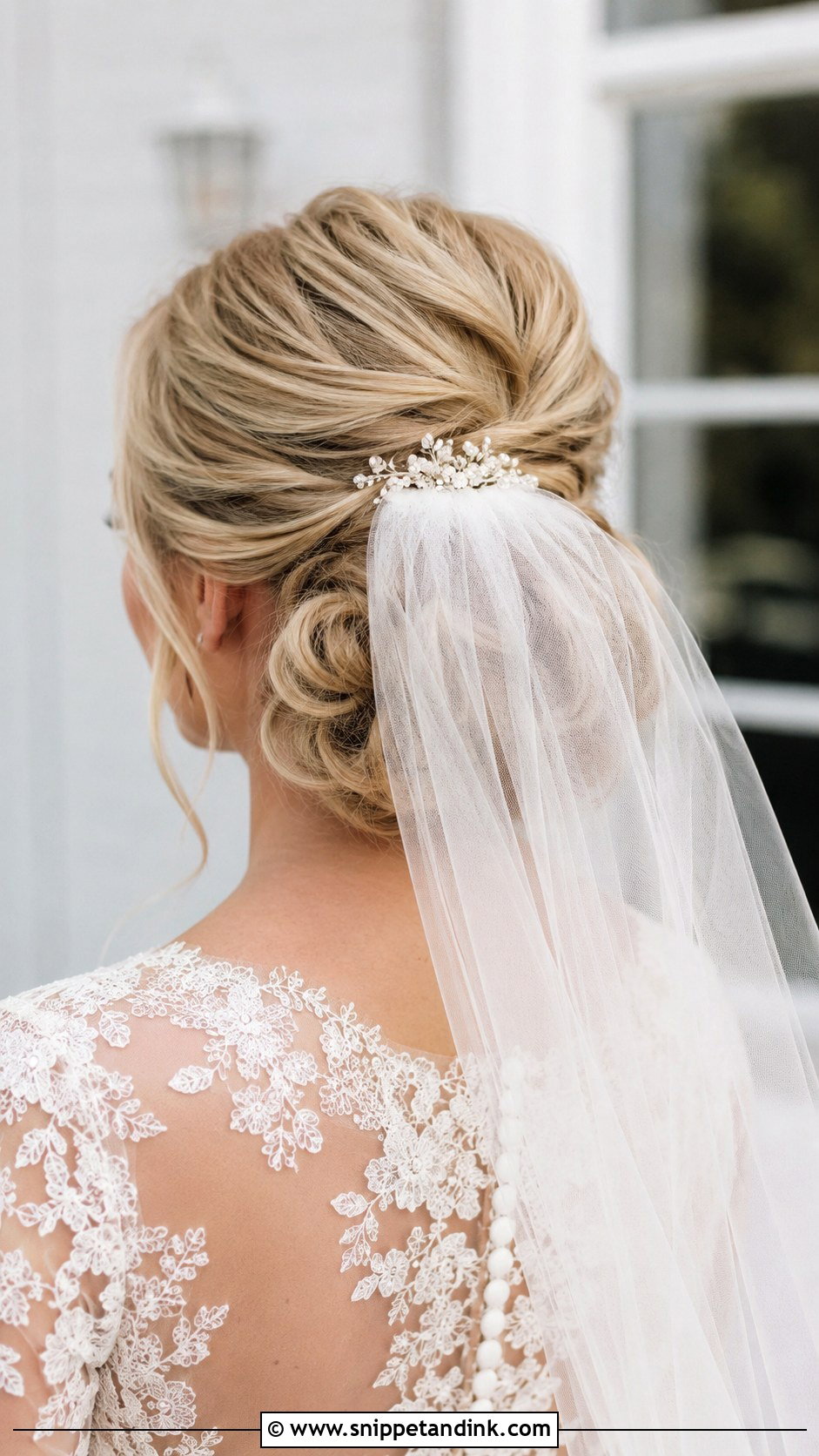
Boho braids look casual, but they still have to last as long as any other bridal style. This version uses loose braids, airy texture, a few framing strands and a low pinned shape, and it suits outdoor venues, flowing gowns and small floral pieces. The trap is braids sitting on top of the updo like add-ons. I weave them into the shape so they blend in. Highlighted and naturally dimensional hair shows off every woven section, and a little lift at the crown keeps the face from looking flat in photos.
14. Vintage Bridal Updo
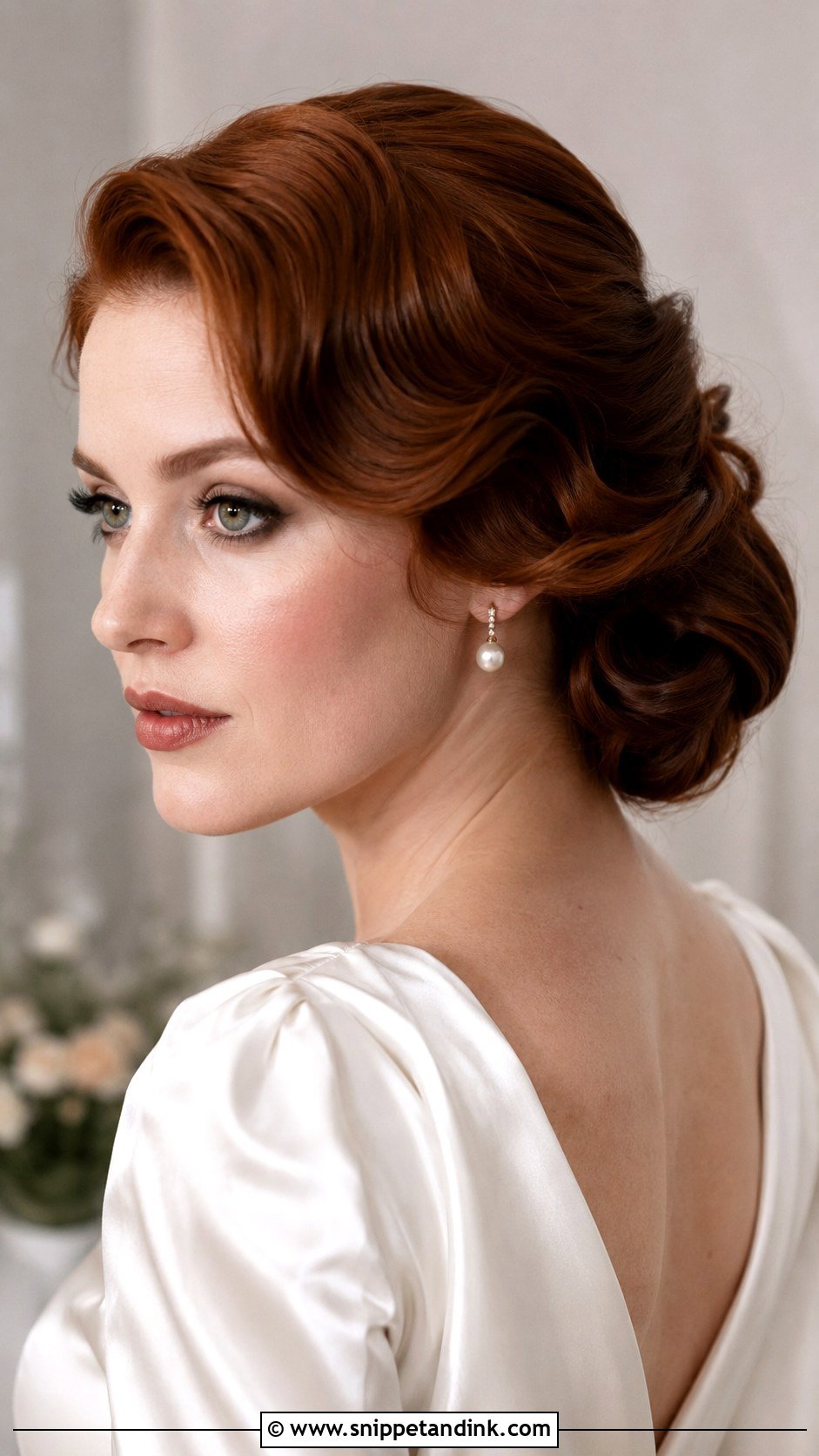
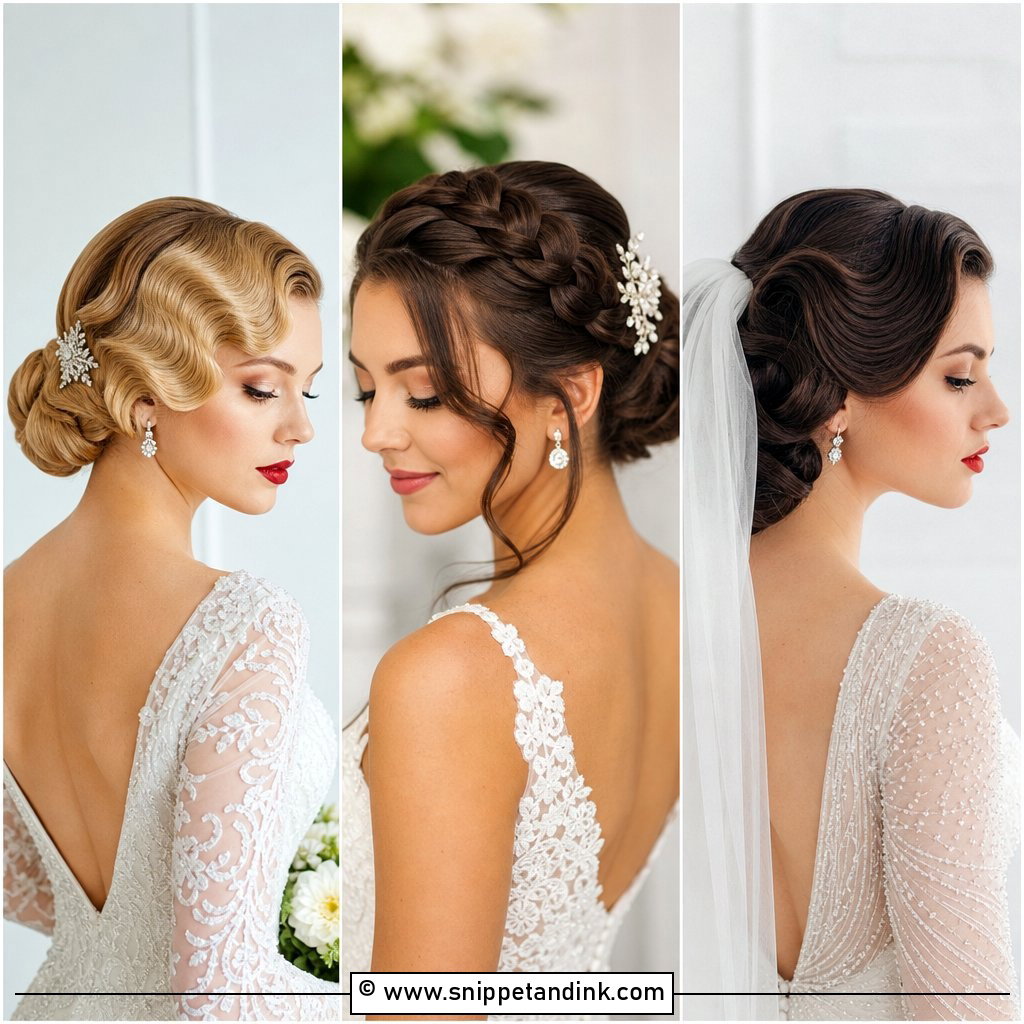
Vintage styling borrows old-Hollywood waves or classic retro structure: sculpted waves, tucked rolls, a smooth low bun or pinned curls. Satin gowns, birdcage veils, red lips and pearl earrings are its natural partners. The line between vintage and costume is thin, so I usually pick one era detail, like a finger wave at the front, and keep the rest modern. These shapes depend on a firm set, so I use setting lotion and let pin curls cool fully before brushing them out. Humidity is their enemy; a sculpted wave can soften noticeably by evening on a damp day.
15. Natural Hair Bridal Updo
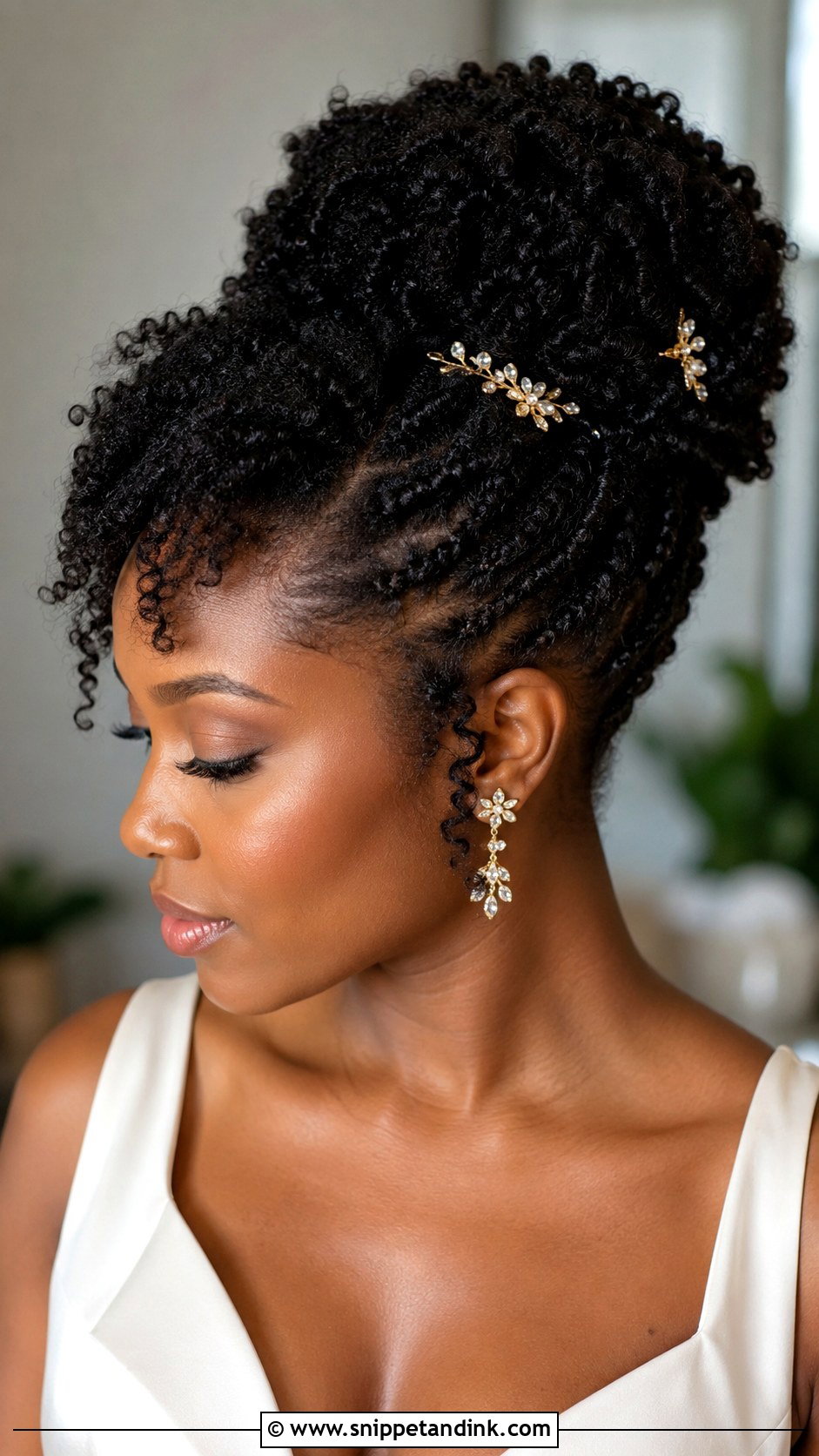
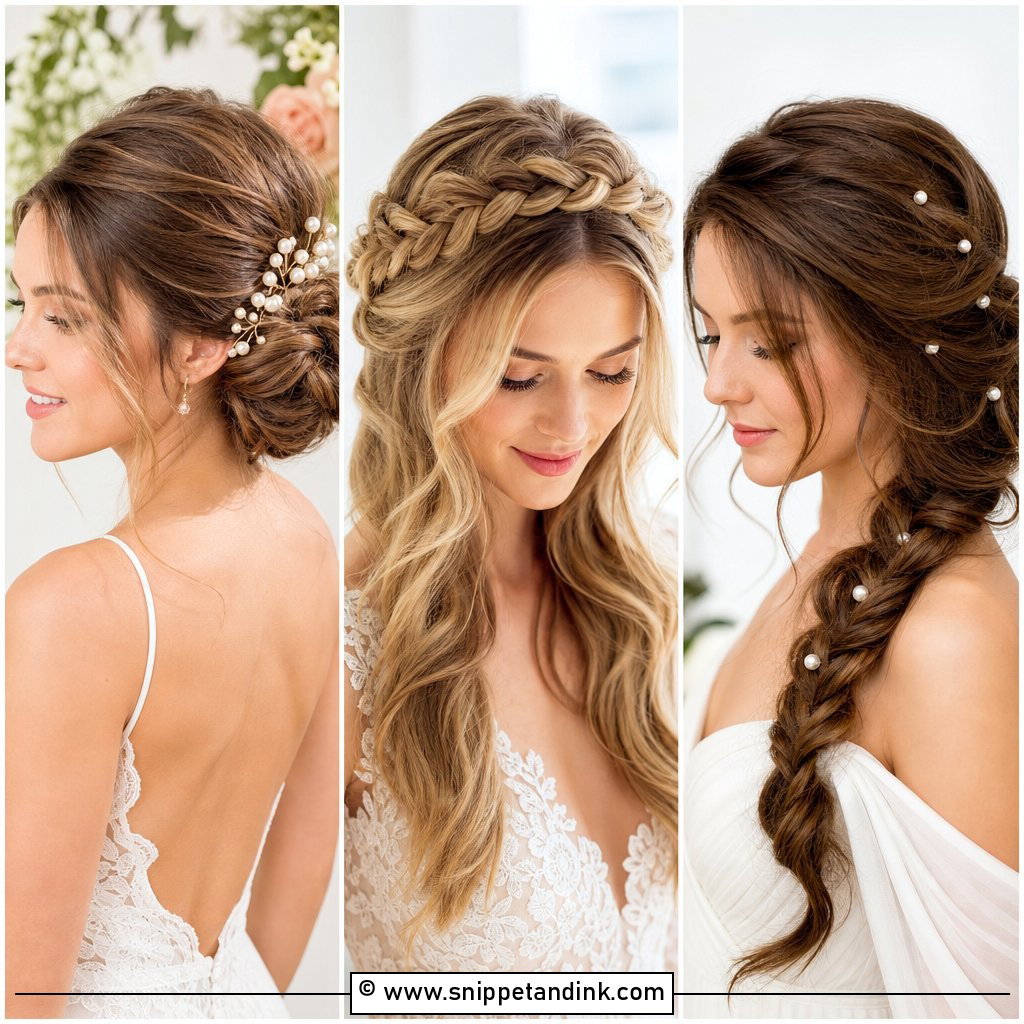
Coils, curls, twists and stretched natural hair can be shaped into a puff, a pinned crown, a low bun, a braided bun or a sculpted updo. Prep starts days before, with moisture, a defining product and a hold product you’ve already tested on your own hair. When you bring photos, bring ones with your texture and density, not just the shape you like, because a smooth bun built on straight hair won’t translate to 4C coils the same way. Gold pins, pearls or a veil all sit well without covering the texture, which is really the point of choosing this style.
Wash It the Night Before and Wear a Button-Down
The wedding morning decides how well any of these hold, and a few small habits make my job much easier.
- Wash and fully dry your hair the night before, unless your stylist asks otherwise. Squeaky-clean hair washed that morning is slippery and drops curls; very dirty hair goes flat.
- Skip conditioner on the roots and leave out any oil or heavy serum. Both make pins slide.
- Arrive with dry hair and no ponytail kink. Wear a loose clip if you must tie it up.
- Put on a shirt that buttons or zips at the front, so nothing gets pulled over your head after the updo is done.
- Allow about an hour for a bridal updo, longer for braiding or extensions, and ask to go in the middle of the hair schedule rather than first. Going too early means the style has more hours to loosen before you walk.
After it’s finished, keep your hands off it. Most updos that come apart before dinner have been touched, tucked and re-pinned all afternoon by the bride herself.
Which Updo Will Last Until the Last Song?
An updo should make you feel comfortable and like yourself, before it makes you look bridal. Low buns, chignons, French twists, braided updos, sleek buns and natural texture all carry a different mood, so let your dress, venue, veil and the weather narrow the list. Then book a trial and use it as a test, not a preview: wear the style for a few hours, sit in it, put the veil on and take it off. Be honest with your stylist about length and texture. Built for your actual hair, the updo you take home from that trial is the one you’ll still be wearing, intact, at the final dance.
You'll Like These Ideas:


Leave a Reply