
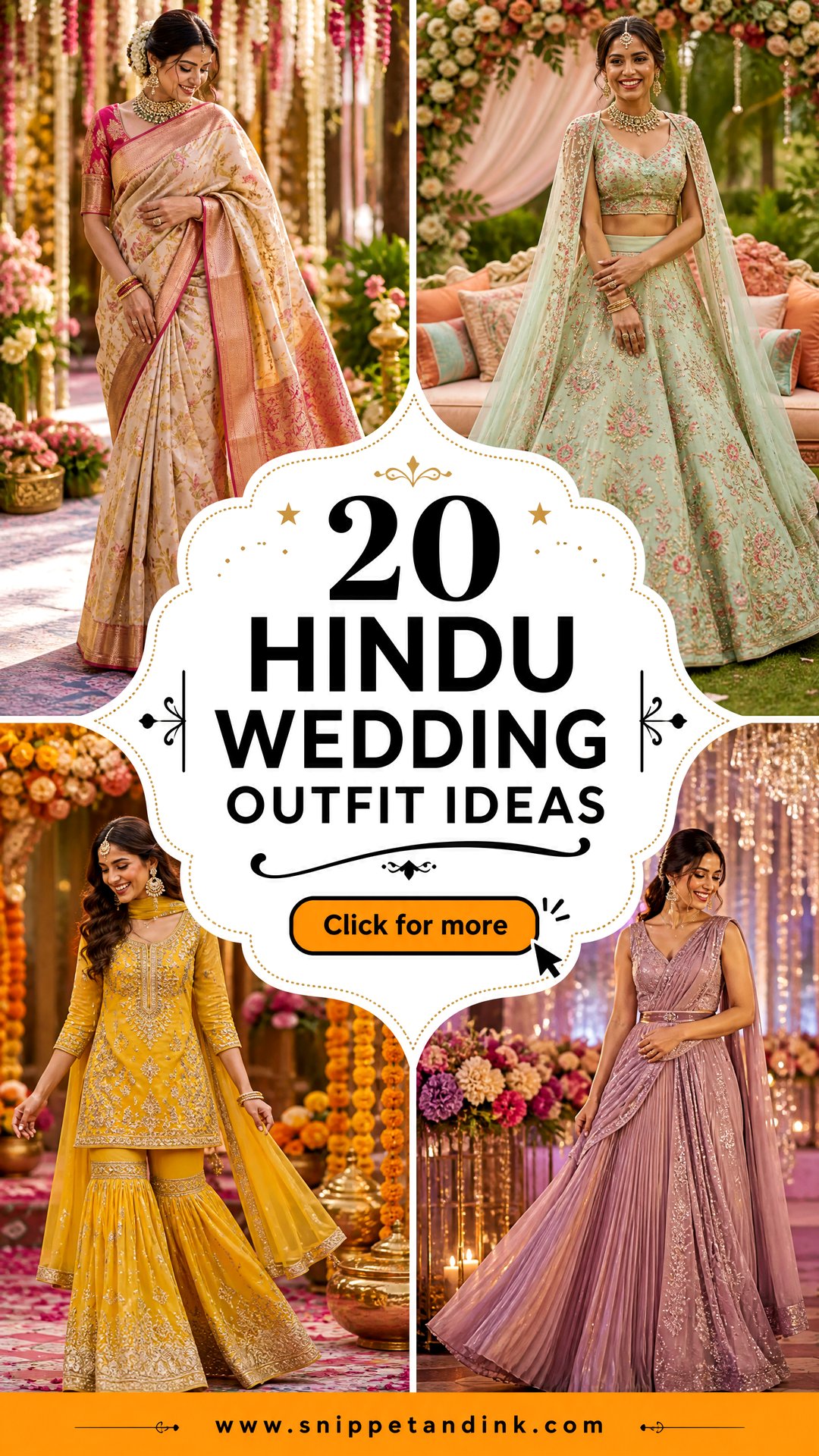
A Hindu wedding is rarely one event. There’s a haldi, a mehndi, a sangeet, the ceremony itself and often a reception, and each asks for something different, from a silk saree to a modern cape lehenga. The outfit that works is the one that still feels festive after you’ve sat cross-legged, walked across a lawn and danced for two hours. Time of day guides the fabric: florals and pastels in the morning, silk, velvet, sequins and jewel tones after dark. Every look below can be adjusted for coverage, body shape and taste. If you’re a guest and unsure about regional customs or formality, ask the couple or a family member. They’d much rather answer a question than see you uncomfortable.
How Many Pins a Silk Saree Really Needs
Most saree mishaps I’m asked to rescue at weddings come down to the foundation, not the fabric. A drape is only as steady as the petticoat under it and the few pins holding the key points.
- Tie a cotton petticoat firmly at the waist. Cotton grips the tucked pleats; satin lets them slide out by the afternoon.
- Put your heels on before you start, and set the hem so it just brushes the top of your foot.
- Tuck the front pleats and fix them together with one pin at the top, on the inside.
- Fold the pallu into pleats, then pin it to the blouse at the shoulder, with a second pin underneath where it crosses the body.
- Add one pin at the left hip so the drape can’t loosen when you sit.
That’s four or five pins for most styles. Heavy silks like Banarasi and Kanjeevaram hold pressed pleats well, so ironing the pallu pleats the night before saves time on the morning.
If You’ve Never Draped One Before
Practice once in full, then sit, climb a step and walk quickly. If anything shifts, add a pin there. If the whole process feels shaky, a pre-draped saree or a booked draping session is a perfectly respectable choice.
1. Banarasi Silk Saree For Hindu Wedding
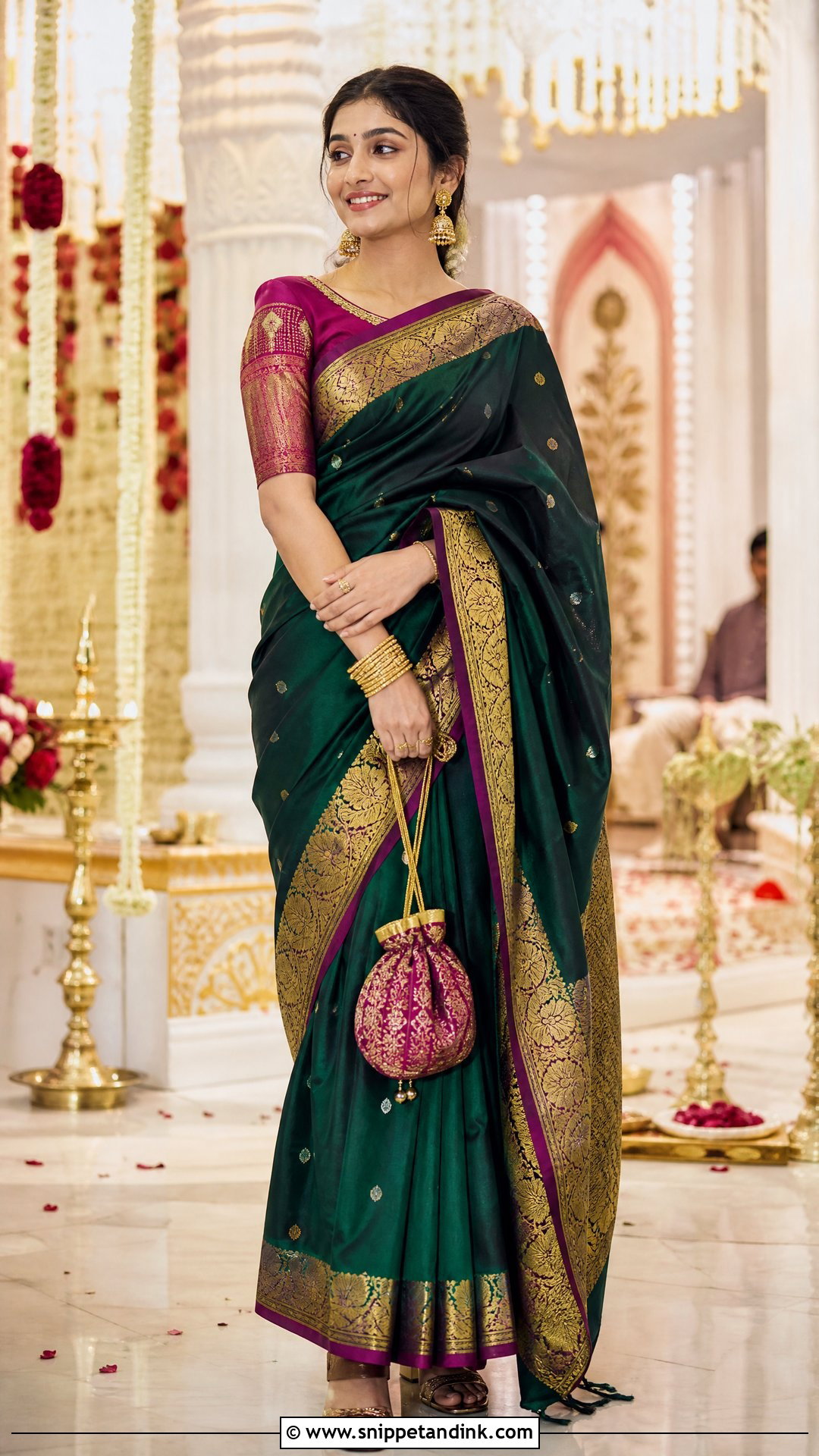
For the main ceremony, nothing reads as respectful and festive as quickly as a Banarasi silk. Emerald, royal blue, plum or deep pink with a contrasting short-sleeve blouse is a reliable start. Banarasi silk is stiff enough to hold crisp pleats, so press them the night before and the drape stays sharp for hours. Border width is where I adjust for height: a narrow border keeps a petite frame from being cut in half, while a tall guest can carry a wide, heavily woven one. With elaborate zari, keep the necklace simple. Gold jhumkas, stacked bangles and a potli bag finish it, with block heels or juttis underfoot.
2. Pastel Lehenga For Hindu Wedding
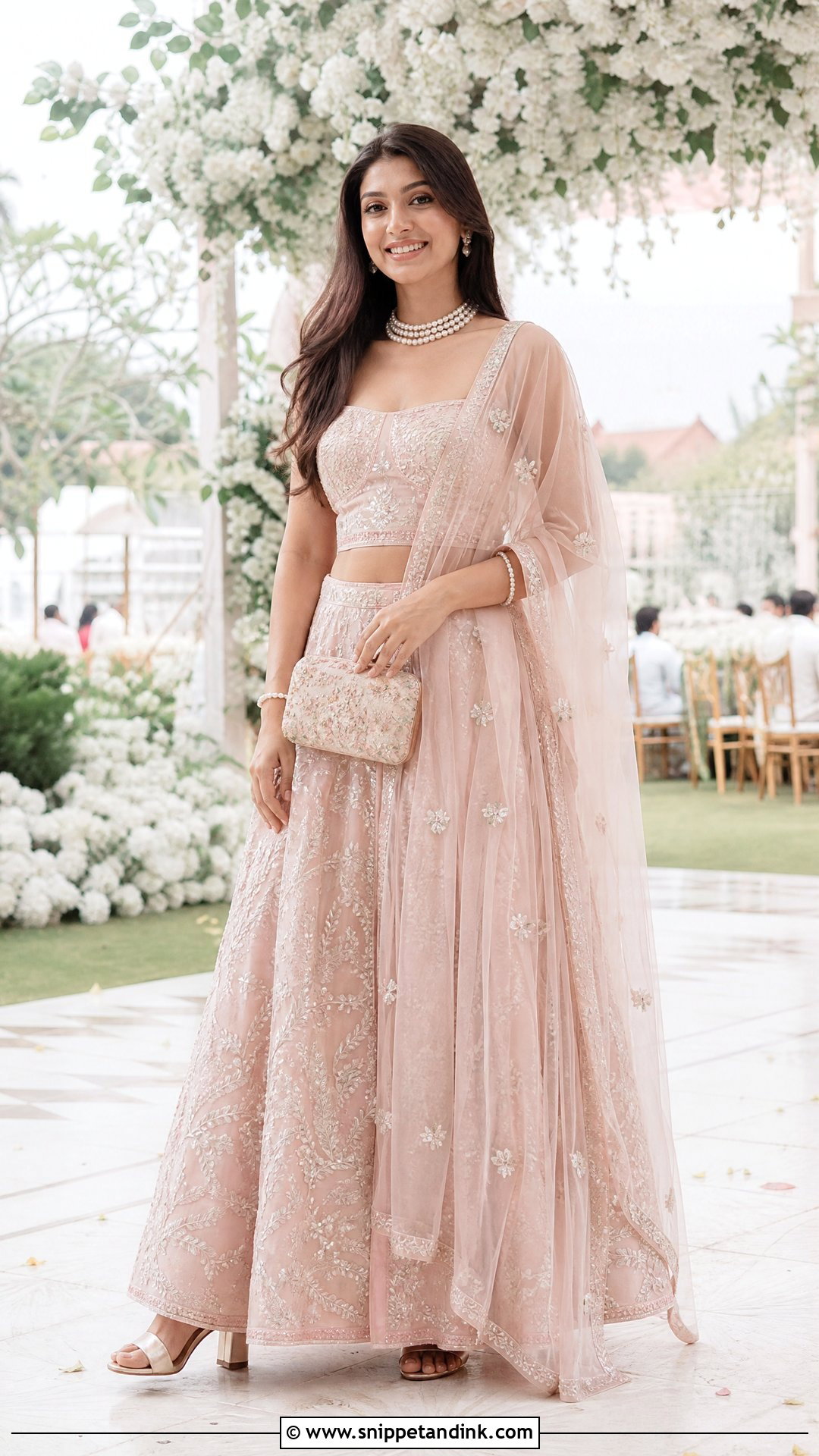
Pastels make sense at a daytime wedding in a garden or a bright banquet hall, because heavy jewel tones can look flat in strong sun. Try blush, mint, powder blue or lilac with tonal embroidery and a fitted blouse. As a guest, keep the embellishment moderate; a lehenga as worked as the bride’s draws the wrong kind of attention. An A-line skirt with a high waist is the easiest shape to move in. Pin a lightweight dupatta discreetly at one shoulder so your hands stay free for greetings and plates. Pearl drops, slim bangles and metallic block heels keep the color story soft, and a sleek bun suits it.
3. Floral Organza Saree For Hindu Wedding
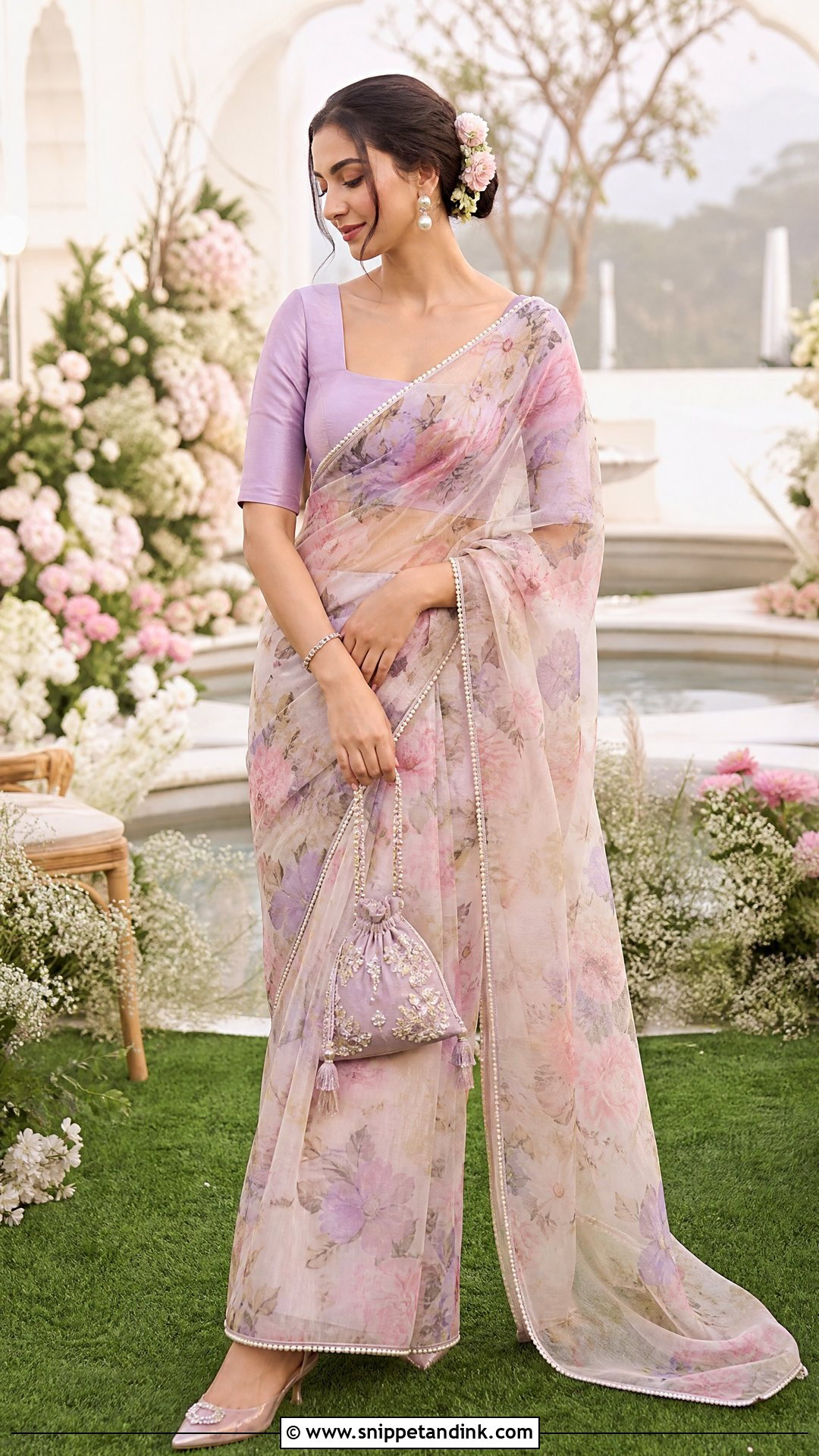
Imagine a sheer floral saree catching the breeze at a garden ceremony. Organza gives you color without the weight of dense embellishment, and it’s one of the coolest fabrics to wear outdoors. Pair it with a solid fitted blouse in one shade from the pattern. Organza is crisp and slightly springy, so the pallu won’t lie flat on its own; pin it firmly at the shoulder and again under the arm. Kitten heels or embroidered flats cope with lawns and long stretches of standing. A low bun with a few flowers suits the mood, and an elbow-sleeve blouse with a higher neckline adds coverage if you want it.
4. Mirror Work Lehenga For Hindu Wedding Sangeet
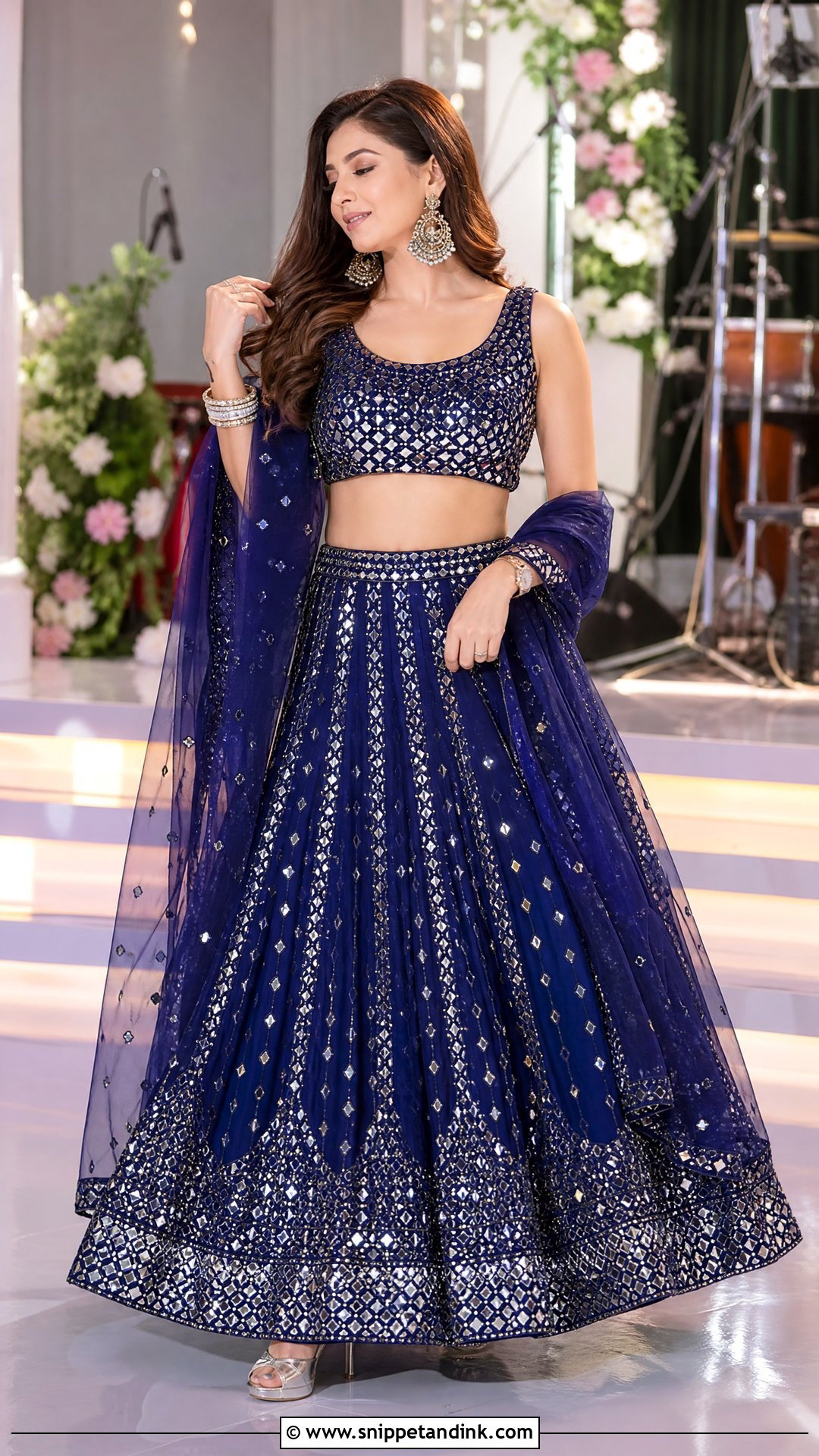
When the music starts, a mirror work lehenga catches the light with every turn. I’d choose a jewel-toned skirt and blouse with evenly spaced mirrors rather than dense, heavy embroidery, because heavy work makes a sangeet skirt tiring to spin in. Mirror edges can scratch the inner arm, so check the blouse sleeves from the inside. A soft net dupatta adds the traditional layer; pin it at the shoulder and the waist so it doesn’t come loose mid-dance. Hem the skirt to sit just clear of the floor in your cushioned heels. Statement earrings replace a necklace if the neckline is already worked.
5. Yellow Sharara For Hindu Wedding Haldi
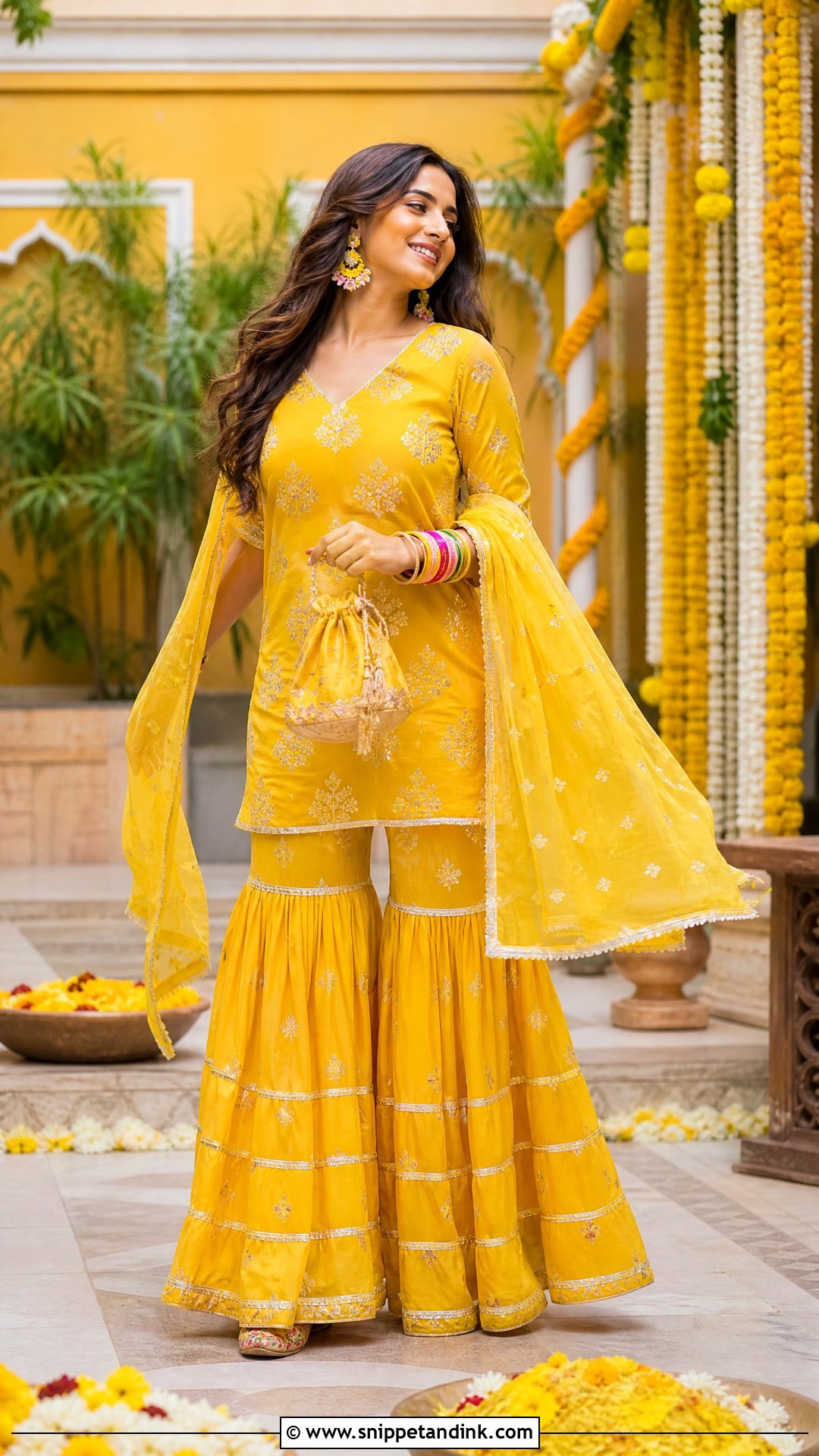
Haldi is the one function where your outfit will almost certainly get stained. Turmeric paste leaves a yellow mark that’s hard to shift from silk, which is why I steer people toward a yellow sharara set in cotton silk or georgette that can be washed, and away from anything heirloom. A short kurta with flared shararas moves easily. White thread, gota trim or small florals give it detail without making it too formal. Wear the dupatta around the elbows for relaxed photos, and choose comfortable juttis. Floral earrings, colorful bangles and a braid suit the mood.
6. Green Anarkali For Hindu Wedding Mehndi
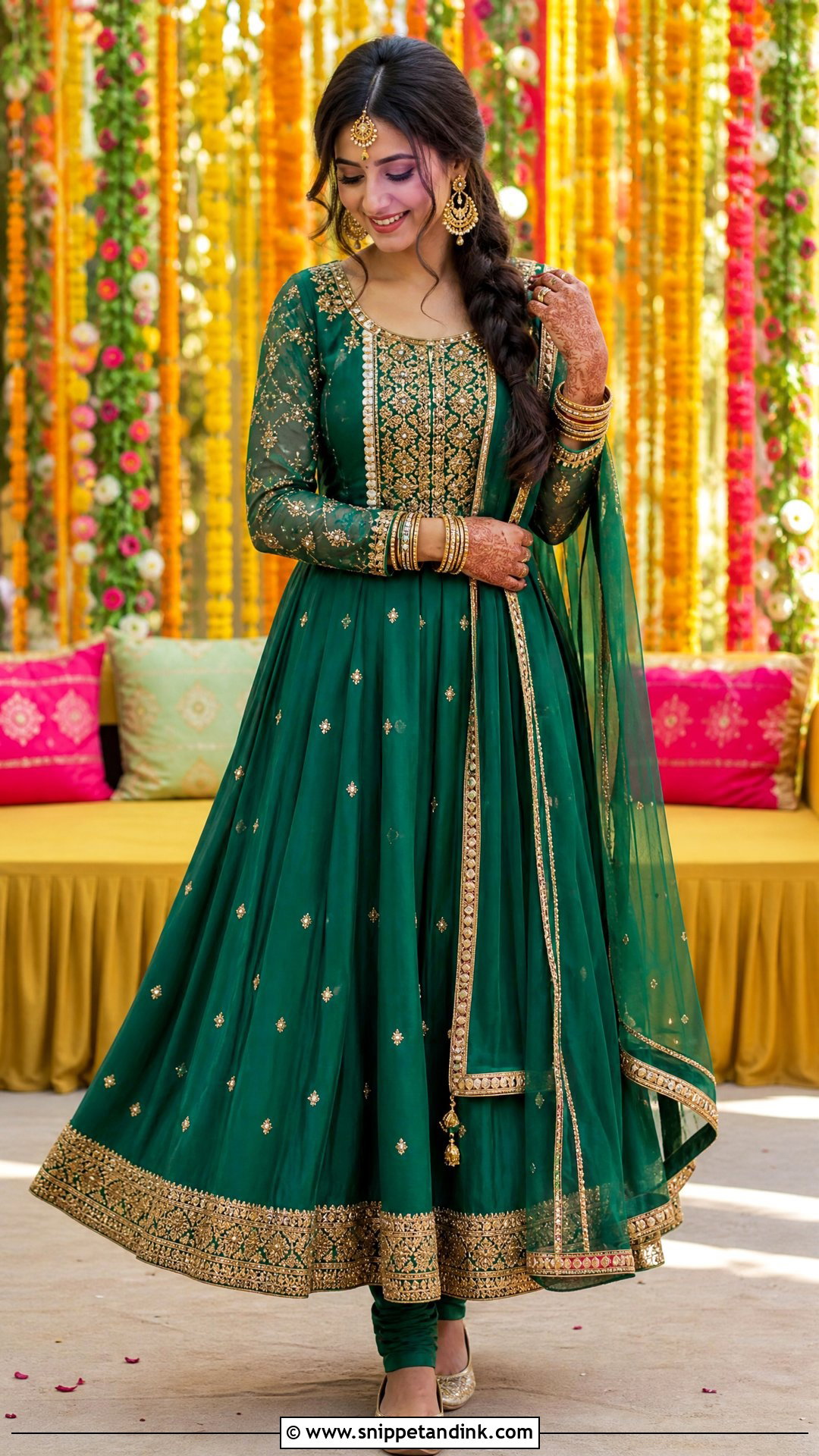
Green is a natural fit for the mehndi, which is traditionally full of it. Choose a calf- or floor-length Anarkali with gold accents, a fitted bodice and a soft flare, worn with churidar. Think about your hands: if you’re having henna applied, you’ll sit still for a while and then need to keep the paste from smudging, so short or three-quarter sleeves and a dupatta pinned well away from the wrists save a lot of trouble. Embroidered juttis slip off easily when you sit on cushions. Petite guests should go for a less voluminous flare. Chandbalis, a slim maang tikka and a side braid finish it.
7. Kanjeevaram Silk Saree For Hindu Wedding
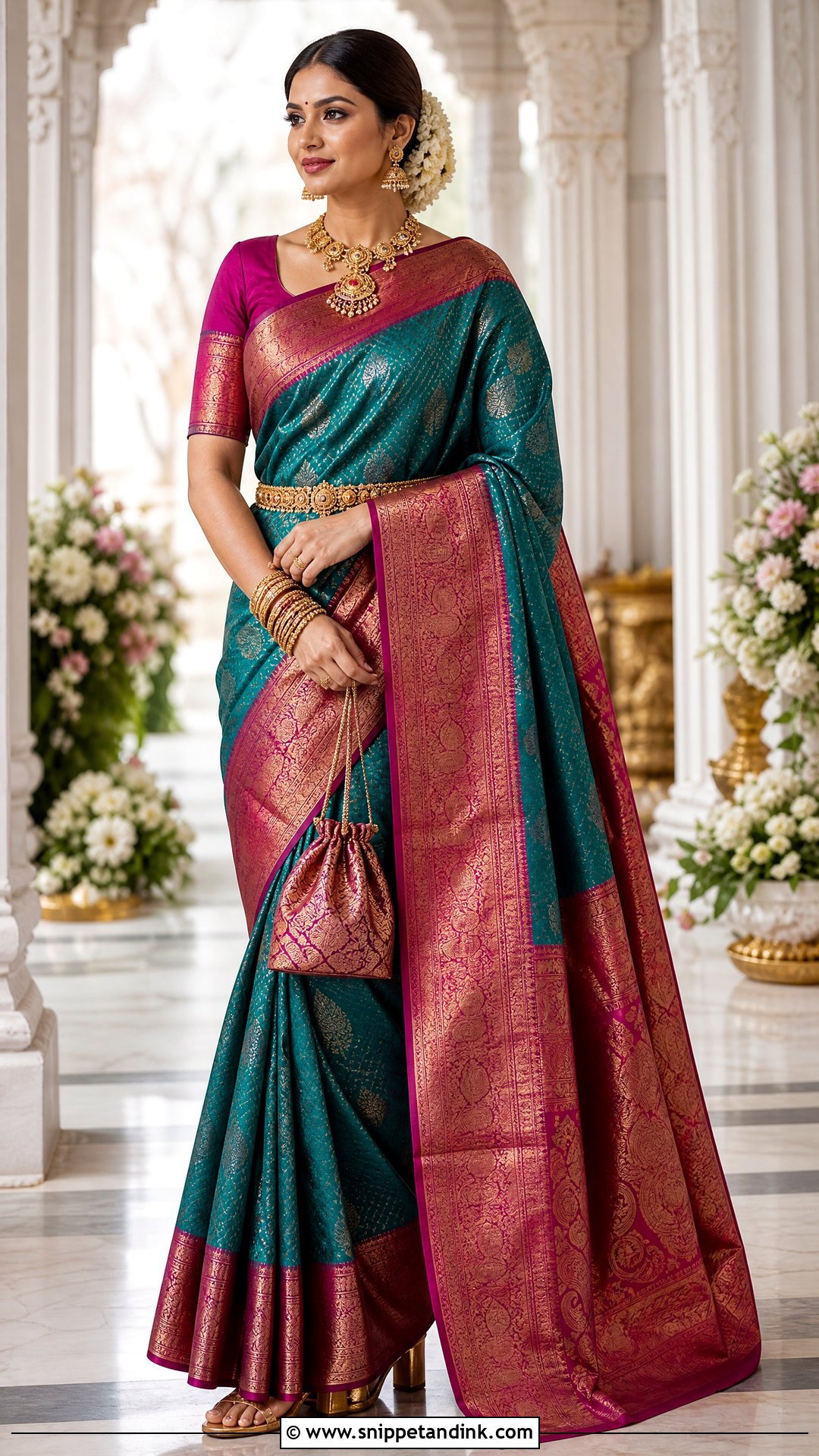
Kanjeevaram is the saree I’d recommend for a traditional ceremony, particularly a South Indian one. Choose a saturated teal, magenta, mustard or violet with a contrasting woven border. The silk is heavy, so the drape needs firm pinning at the waist and shoulder, and a cotton petticoat holds the pleats better than a slippery satin one. An elbow-sleeve blouse balances the weight of the fabric. Temple-style earrings, a medium necklace, bangles and a silk potli suit it, with low gold wedges for stability. Customs on color differ between regions and families, so ask your hosts if you’re unsure.
8. Chanderi Saree For Hindu Wedding
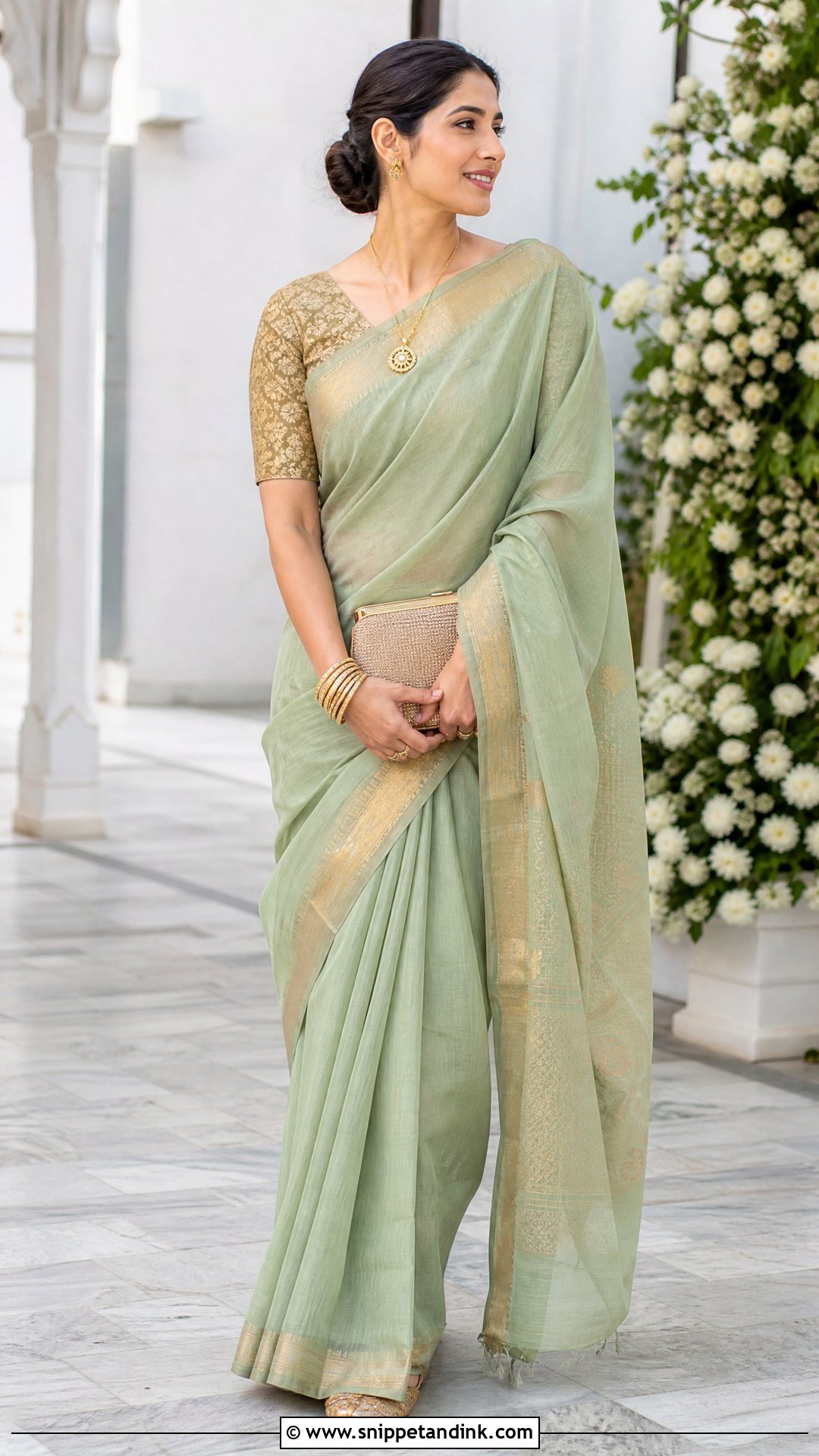
Looking for something traditional that won’t weigh you down? A Chanderi saree is the answer for a morning ceremony or a smaller function. The weave is sheer and light, which makes it far easier than heavy silk in warm weather. Soft peach, sage, lavender or sky blue with a delicate woven border looks fresh, and a contrasting brocade blouse supplies the festive detail. Chanderi is soft enough to drape cleanly, giving long vertical lines that suit most heights. Small gold earrings, layered bangles, a simple pendant, low sandals and a low bun complete it.
9. Velvet Lehenga For Winter Hindu Wedding
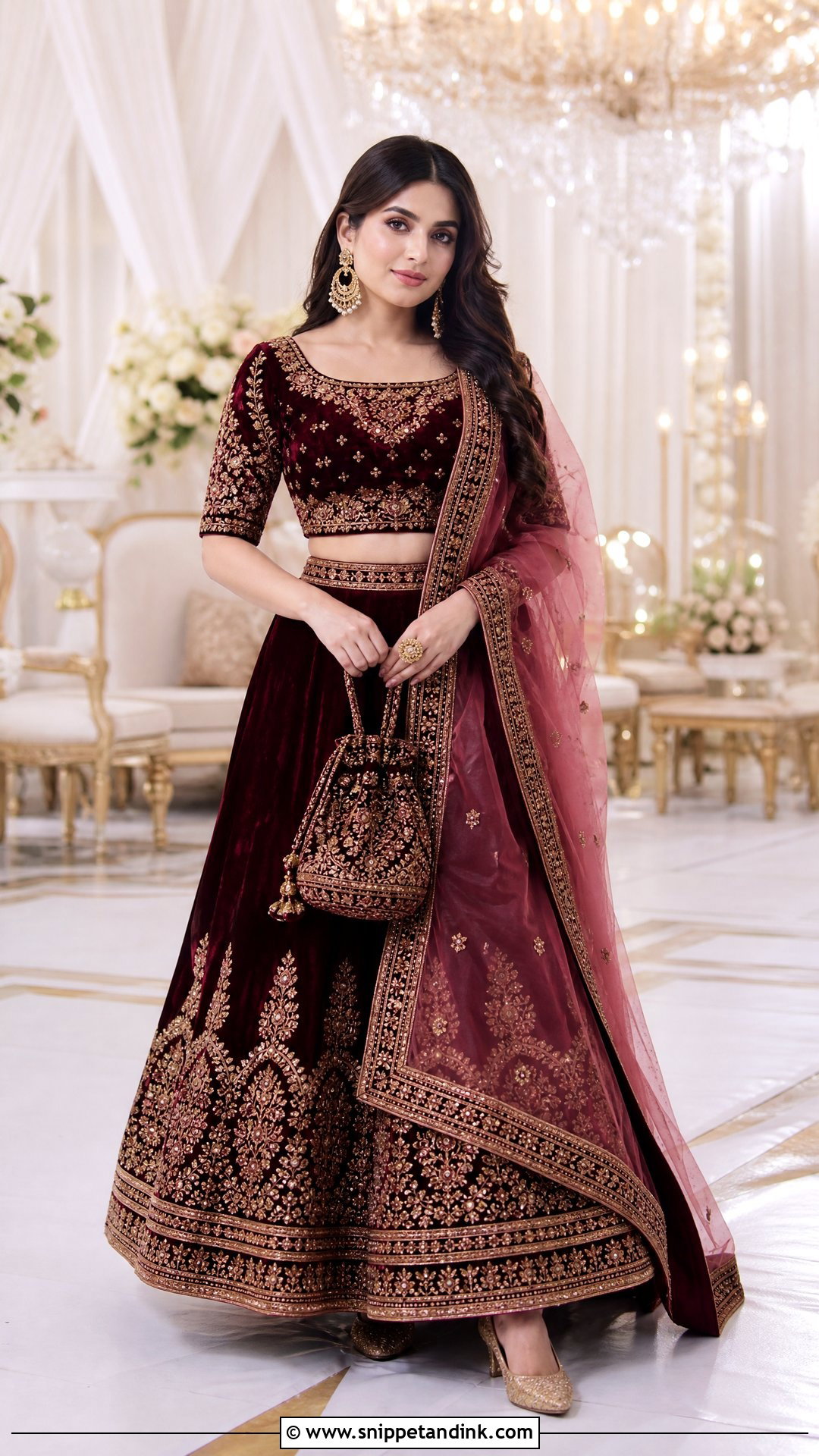
A winter evening wedding is where velvet comes into its own, in burgundy, navy, forest green or deep plum. I’d pair a moderately flared velvet skirt with a fitted embroidered blouse and a sheer dupatta with a coordinated border. The pile already reads rich, so keep extra embellishment to the neckline or hem. Velvet is warm under heavy lights, though, so a full or elbow-length sleeve is comfortable only if the venue is genuinely cold. Antique gold earrings, one statement ring, closed-toe block heels and a structured potli are enough. Velvet marks where it’s crushed, so hang it, don’t fold it, before the event.
10. Pre-Draped Saree For Hindu Wedding
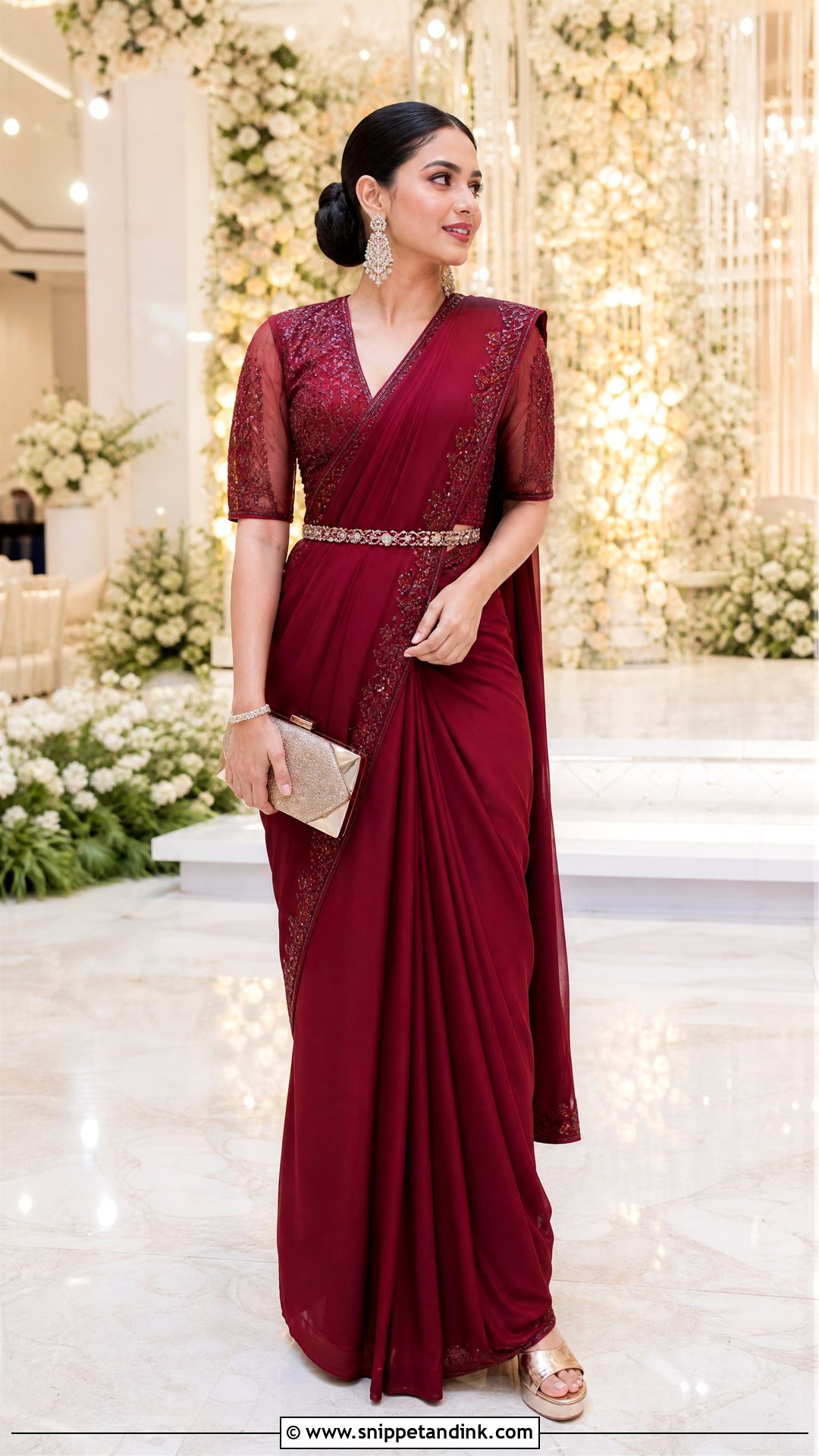
If you’ve never draped a saree, a pre-draped one is the honest shortcut. The pleats are stitched in, so you zip or hook it on and the shape holds all night. Georgette or satin in ruby, cobalt, olive or mauve with a structured embroidered blouse works especially well for a reception or sangeet. A belt can define the waist and keep the pallu in place; choose one that matches the blouse metal rather than contrasting with it. Chandelier earrings, a cuff and a compact metallic clutch are enough, and pointed flats keep the silhouette sleek.
11. Cape Lehenga For Hindu Wedding
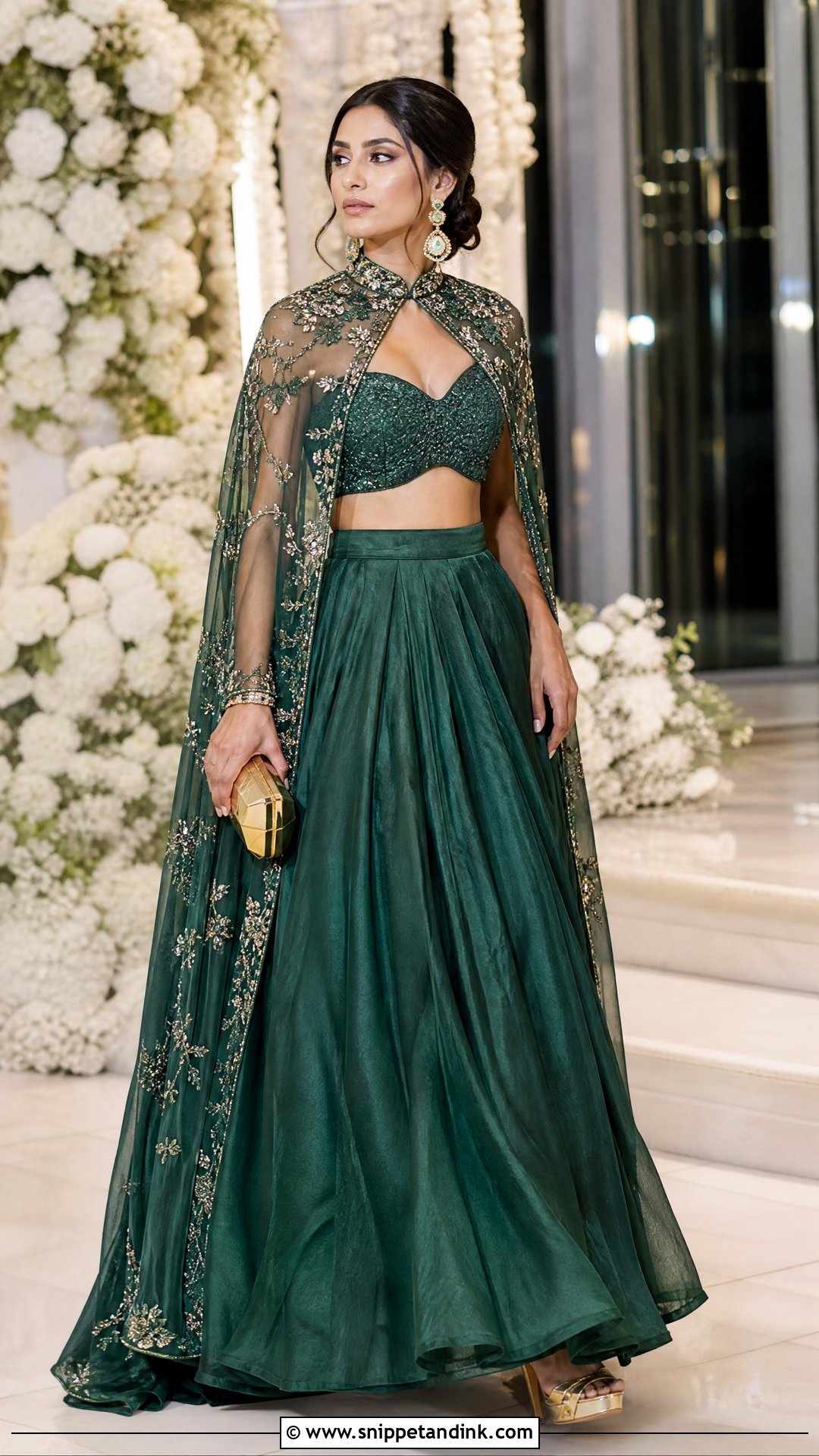
A cape lehenga gives you the effect of a dupatta without constant re-pinning, which is why I suggest it for guests who want to dance. Start with a flowing skirt and fitted blouse in one color, then layer a sheer embroidered cape on top. Pastels suit daytime; midnight blue, wine and emerald suit evening. A necklace disappears under the cape, so put the jewelry at the ears instead. A cape ending at the waist shows the blouse; one falling past the hips adds coverage. A hard-case clutch and cushioned heels finish it.
12. Gharara Set For Hindu Wedding
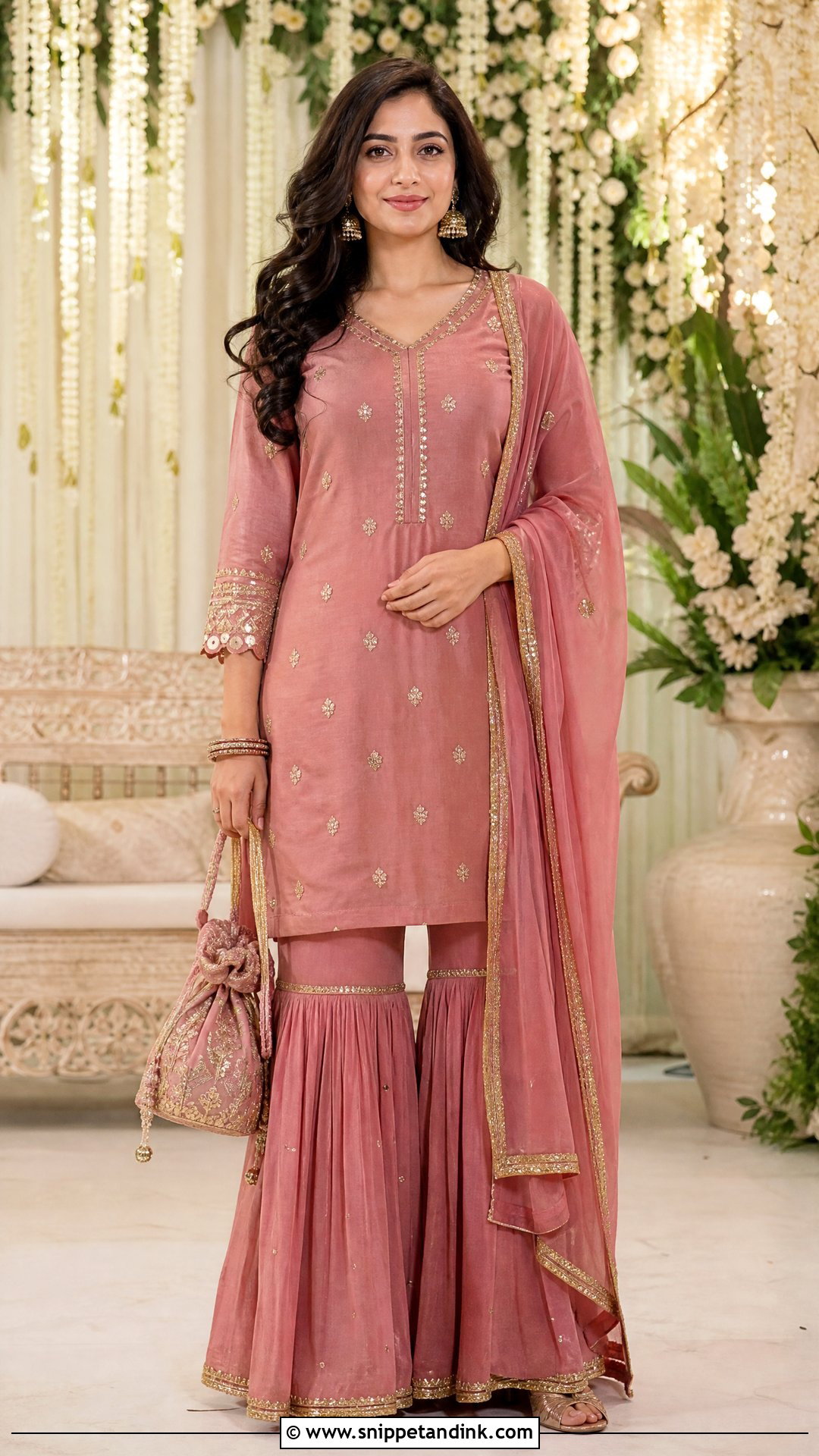
A traditional gharara set pairs a short kurta with pants fitted to the knee that then flare out dramatically. The knee seam is everything. If it sits too high or too low the flare looks dropped, so this is one outfit I’d always have tailored rather than worn off the rack. Rose, turquoise, marigold or deep green with fine zari or gota detailing looks festive. A soft dupatta over one shoulder keeps it formal without hiding the pants. Low heels help the flare fall correctly. Jhumkas, slim bangles and a center-parted bun suit ceremonies and family gatherings alike.
13. Palazzo Kurta Set For Hindu Wedding
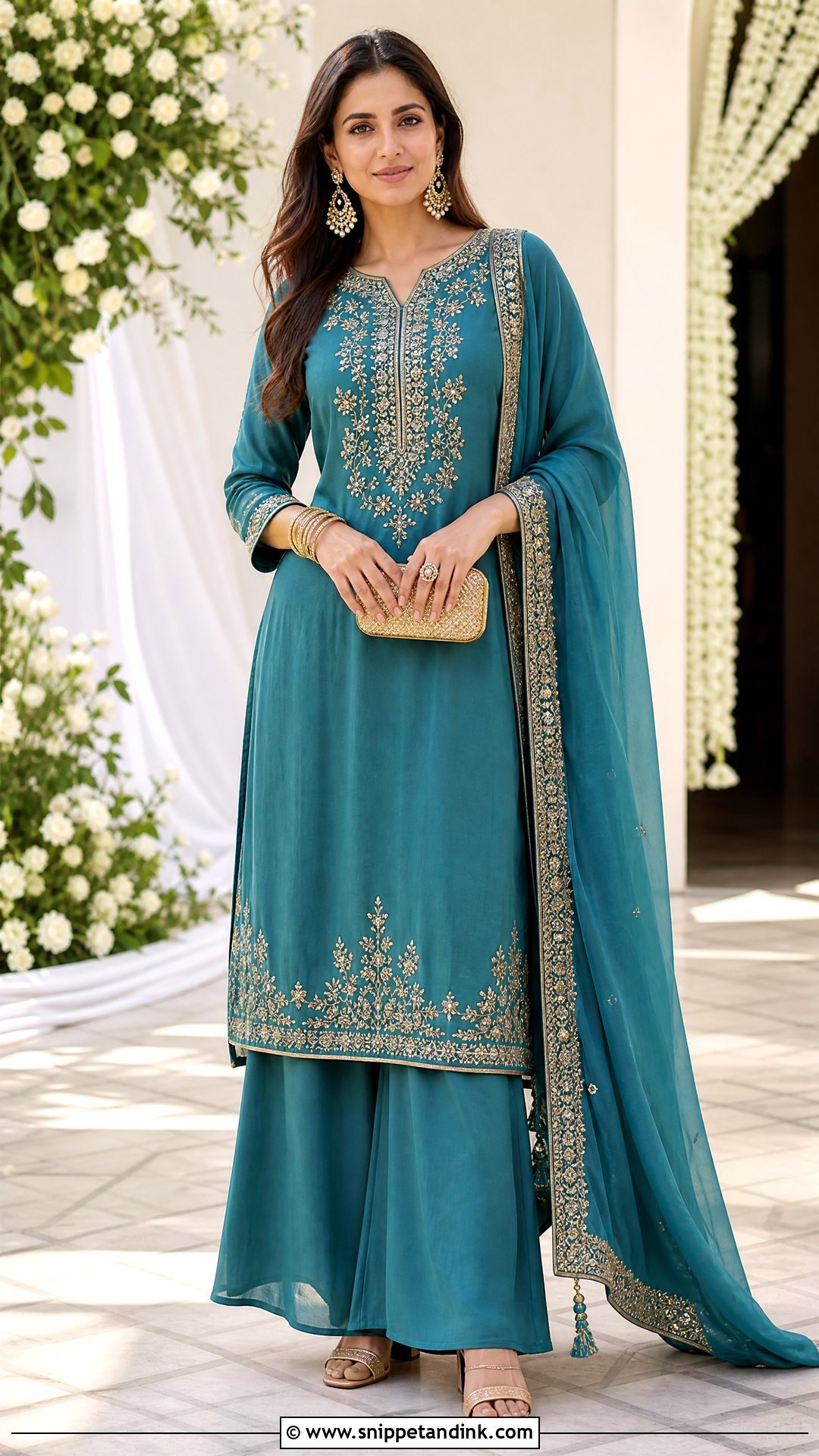
When the schedule runs to long hours of rituals and socializing, comfort wins. A long embroidered kurta with flowing palazzos in silk blend, crepe or georgette looks ready for a celebration while feeling like loungewear. Coral, teal, violet and soft gold all work. A side-slit kurta lets the palazzo shape show and stops the outfit looking like one long column. A dupatta with a decorative border adds structure to the loose silhouette. Statement earrings and a few bangles supply enough sparkle. It’s the outfit I’d suggest to older relatives who want ease without looking underdressed.
14. Jacket Lehenga For Hindu Wedding
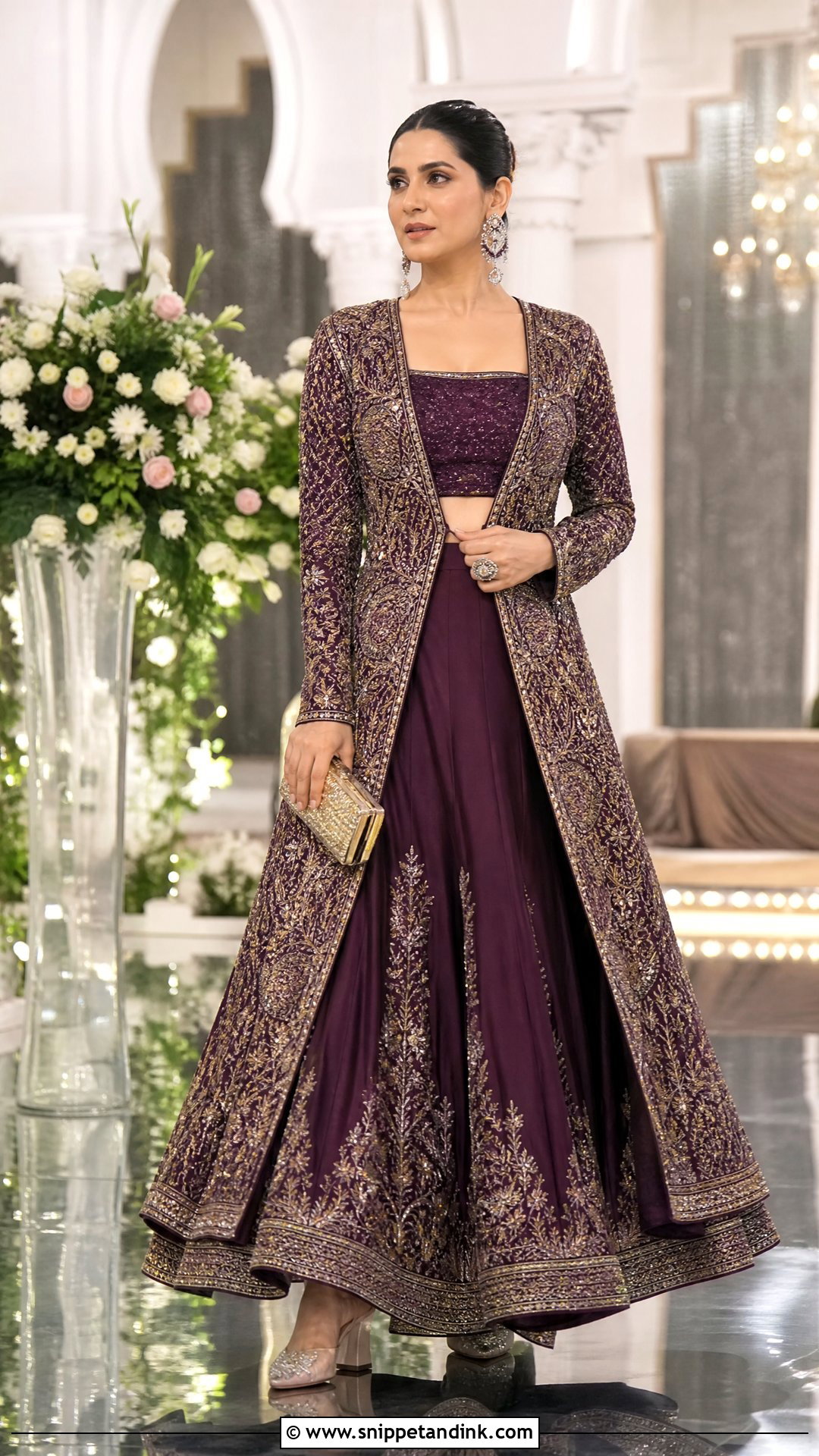
Layering a long embroidered jacket over a simple lehenga makes the familiar feel new. Wear it open over a flared skirt and fitted blouse. A matching jacket lengthens the body; a contrasting one adds drama. Jewel tones suit an evening reception, softer shades a daytime function. The shoulders are what I’d tailor: a jacket that’s even slightly wide there looks borrowed. You can skip the dupatta unless the dress code or your own coverage preference calls for one. Drop earrings, a cocktail ring and a box clutch are enough, with a smooth hairstyle so the embroidery at the neckline stays visible.
15. Dhoti Pant Kurta For Hindu Wedding
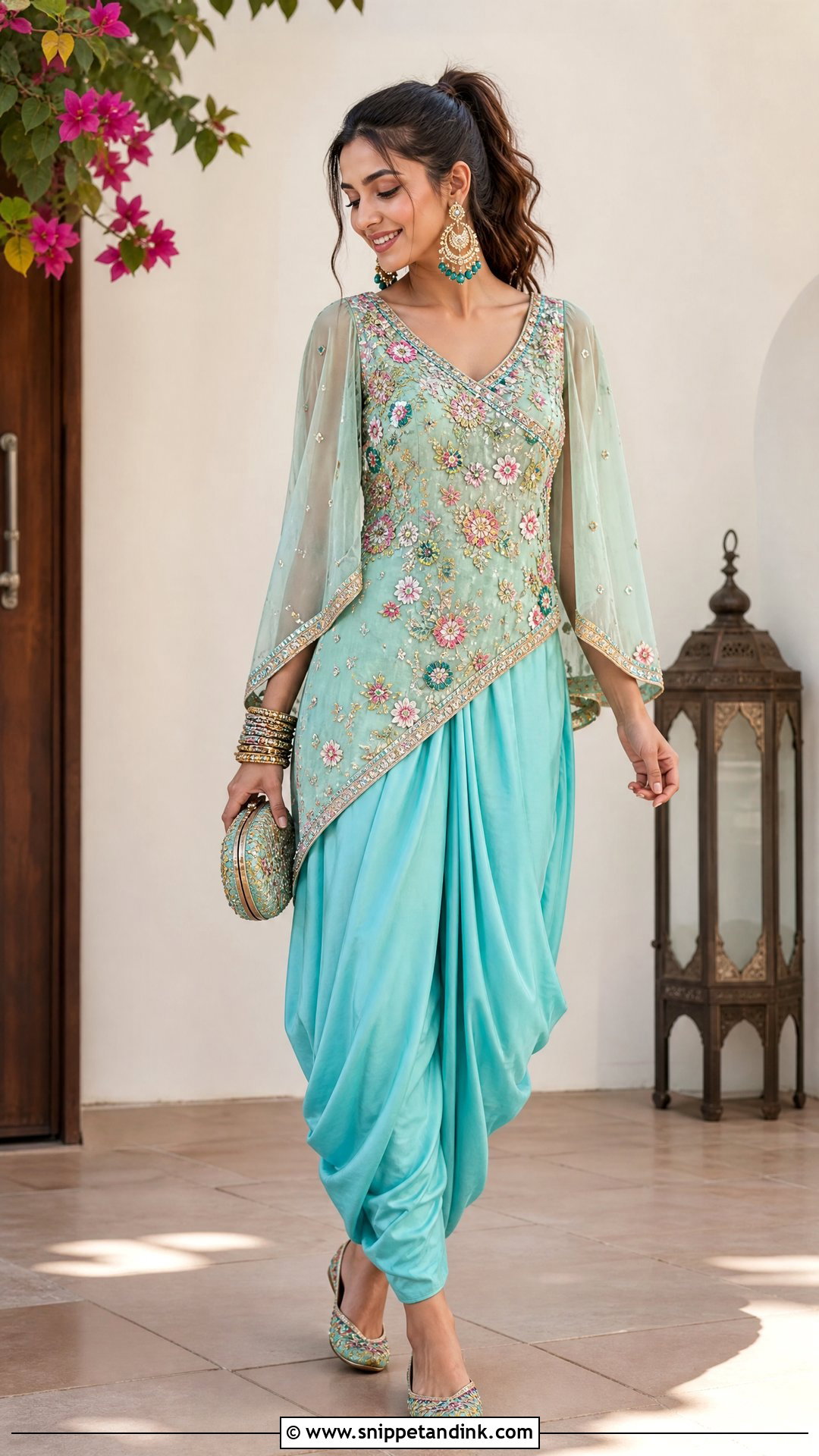
For a modern pre-wedding function, try draped dhoti pants with an asymmetrical kurta or a peplum top. It’s a lighter, more playful shape than a lehenga. A coordinated set in fuchsia, mustard, turquoise or ivory with colorful embroidery works for a mehndi, welcome event or casual sangeet. Dhoti pants gather low between the legs, so check the hem length standing and squatting; too long and the folds catch under your juttis. Add a short cape or slim dupatta if you’d like another layer. A high ponytail or braided updo suits the relaxed mood.
16. Saree Gown For Hindu Wedding Reception
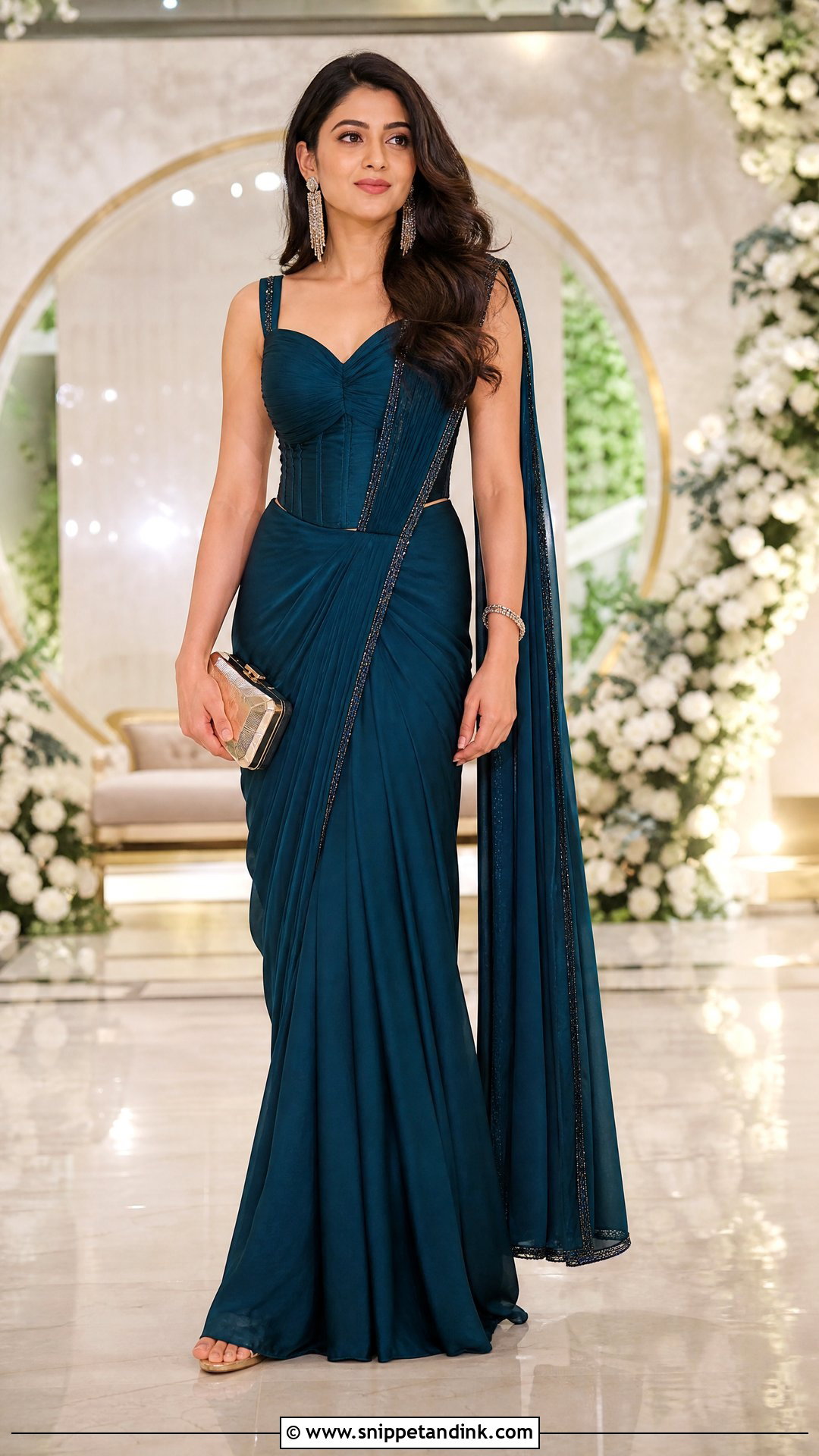
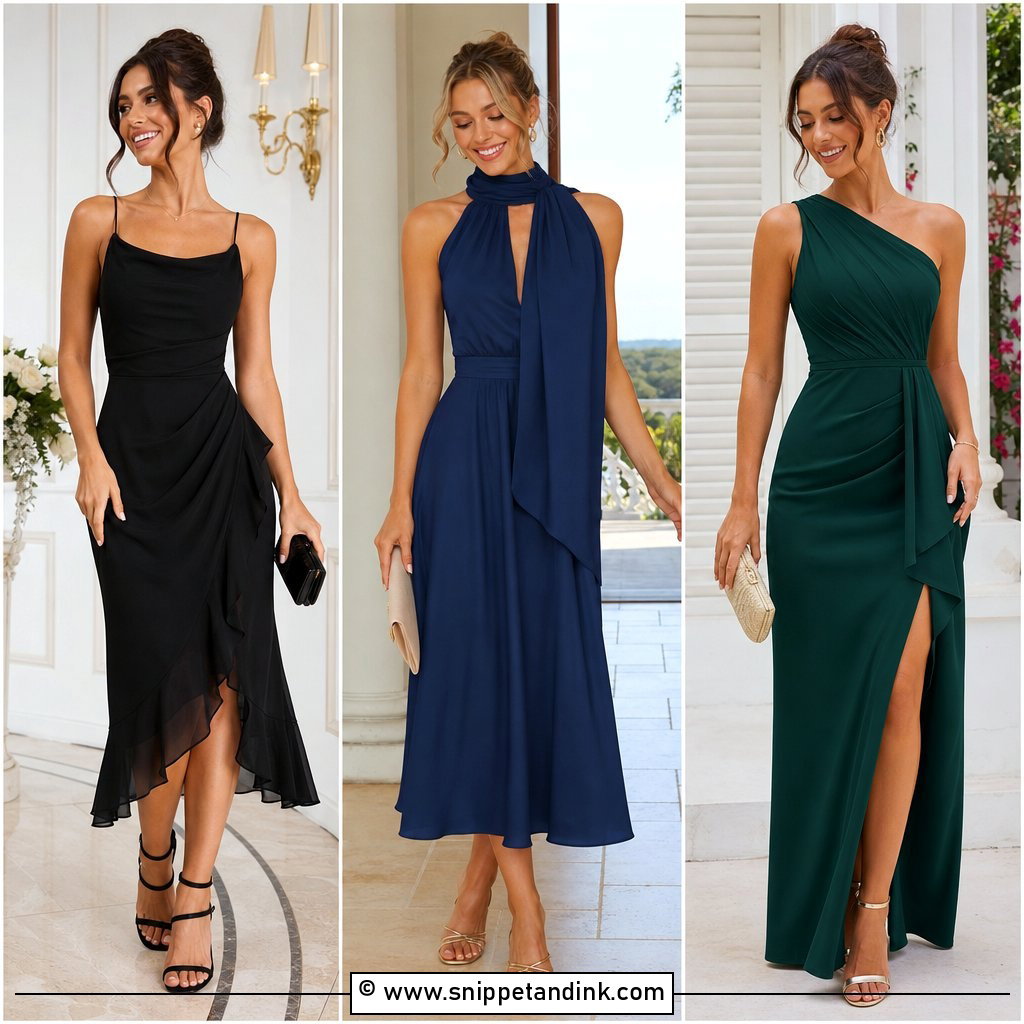
Saree gowns are the reception outfit for guests who love the drape but not the pinning. Look for a fitted bodice, a defined waist, a flowing skirt and a stitched pallu. Deep teal, aubergine, charcoal blue and berry look formal without much decoration. Medium heels improve the fall of the skirt, but hem it to that exact heel height, because a saree gown that’s even an inch long drags at the back. A one-shoulder or sleeved bodice depends on your comfort. Long earrings, a slim bracelet and a structured clutch finish it, with a sleek bun or side-swept waves.
17. Peplum Sharara For Hindu Wedding
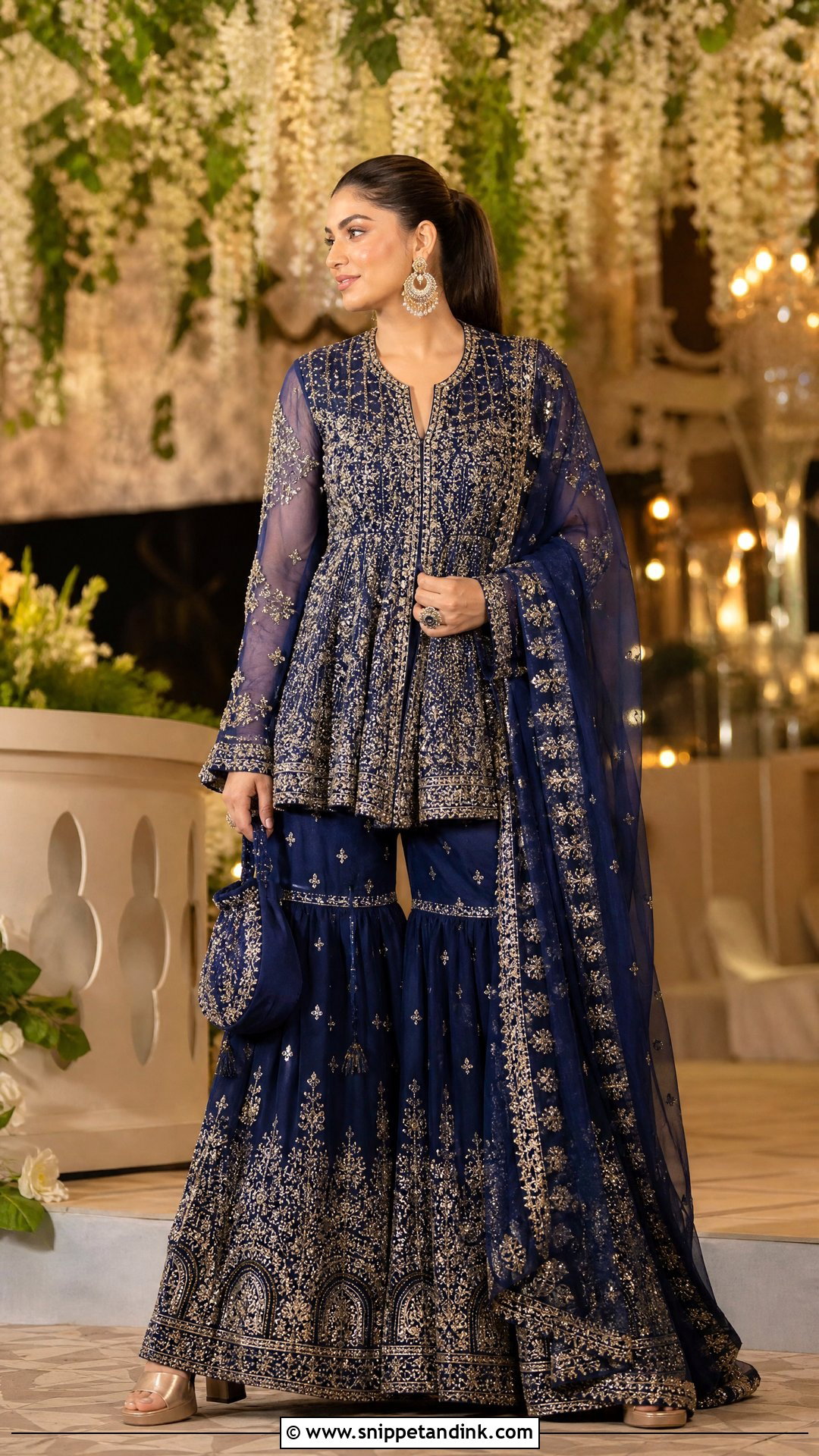
A peplum top over sharara pants defines the waist and leaves all the movement below. The top should end around the upper hip; any longer and it fights the flare. Make the pants from the same fabric so the two pieces read as one outfit. Sapphire, raspberry, emerald and muted gold suit the evening, while mint or peach suits daytime. On a shorter frame, keep the peplum compact rather than layered. The dupatta can go over one shoulder or be dropped for a cleaner fusion look. Chandbalis, a simple ring, block heels and a polished ponytail let the neckline do the talking.
18. Printed Lehenga For Daytime Hindu Wedding
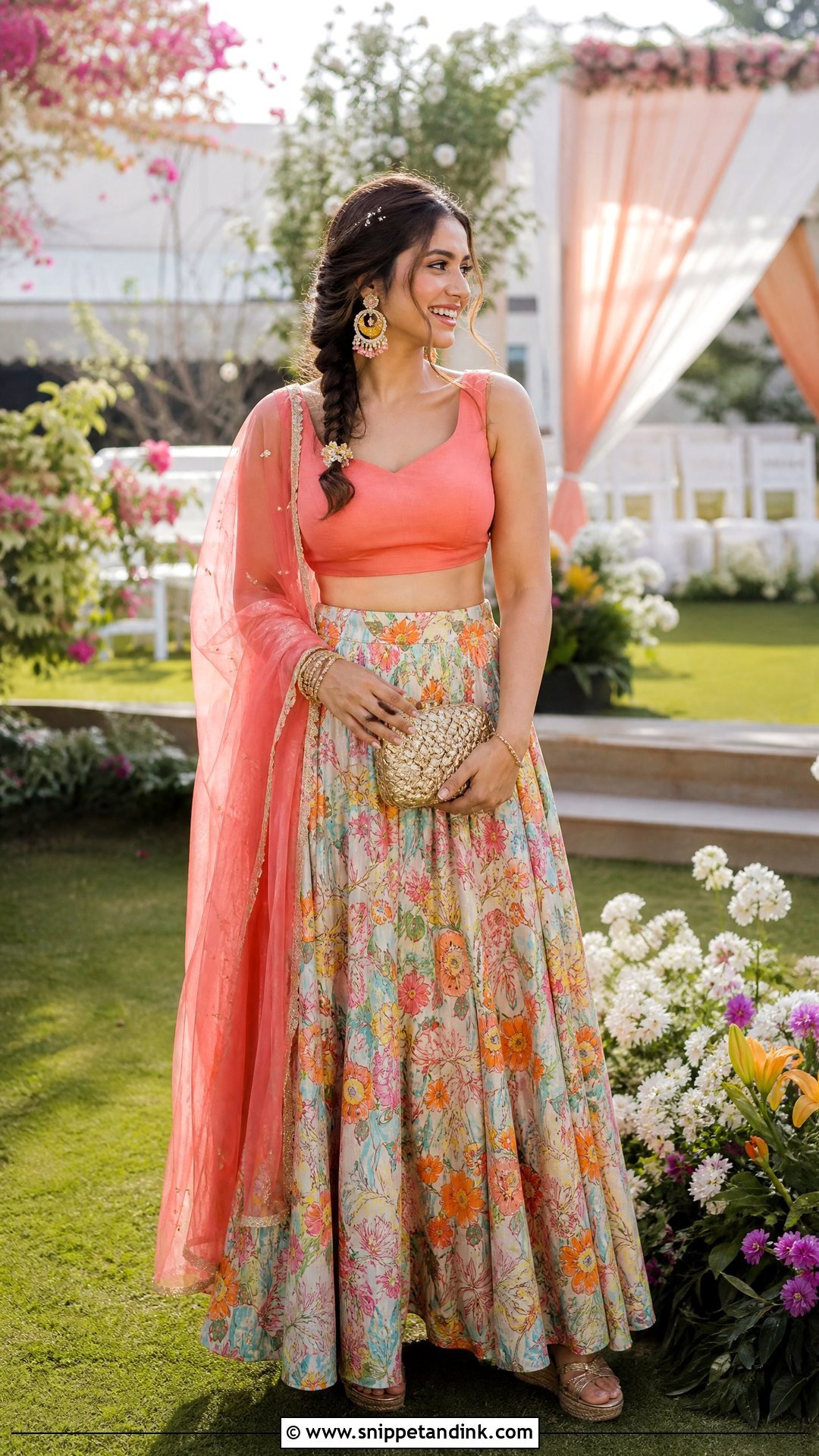
Prints let a daytime outfit feel celebratory without heavy beadwork, and they hide the odd food mark at an outdoor buffet. Choose a floral, block-printed or geometric lehenga skirt with a solid cropped blouse and a light dupatta. Repeat one color from the print in the blouse so the pieces connect. Hand block prints on cotton breathe well in heat but crease, so steam just before leaving. Juttis or block-heeled sandals handle grass. Colorful earrings, delicate bangles and a relaxed braid suit a garden ceremony or a welcome lunch.
19. Floor-Length Anarkali For Hindu Wedding
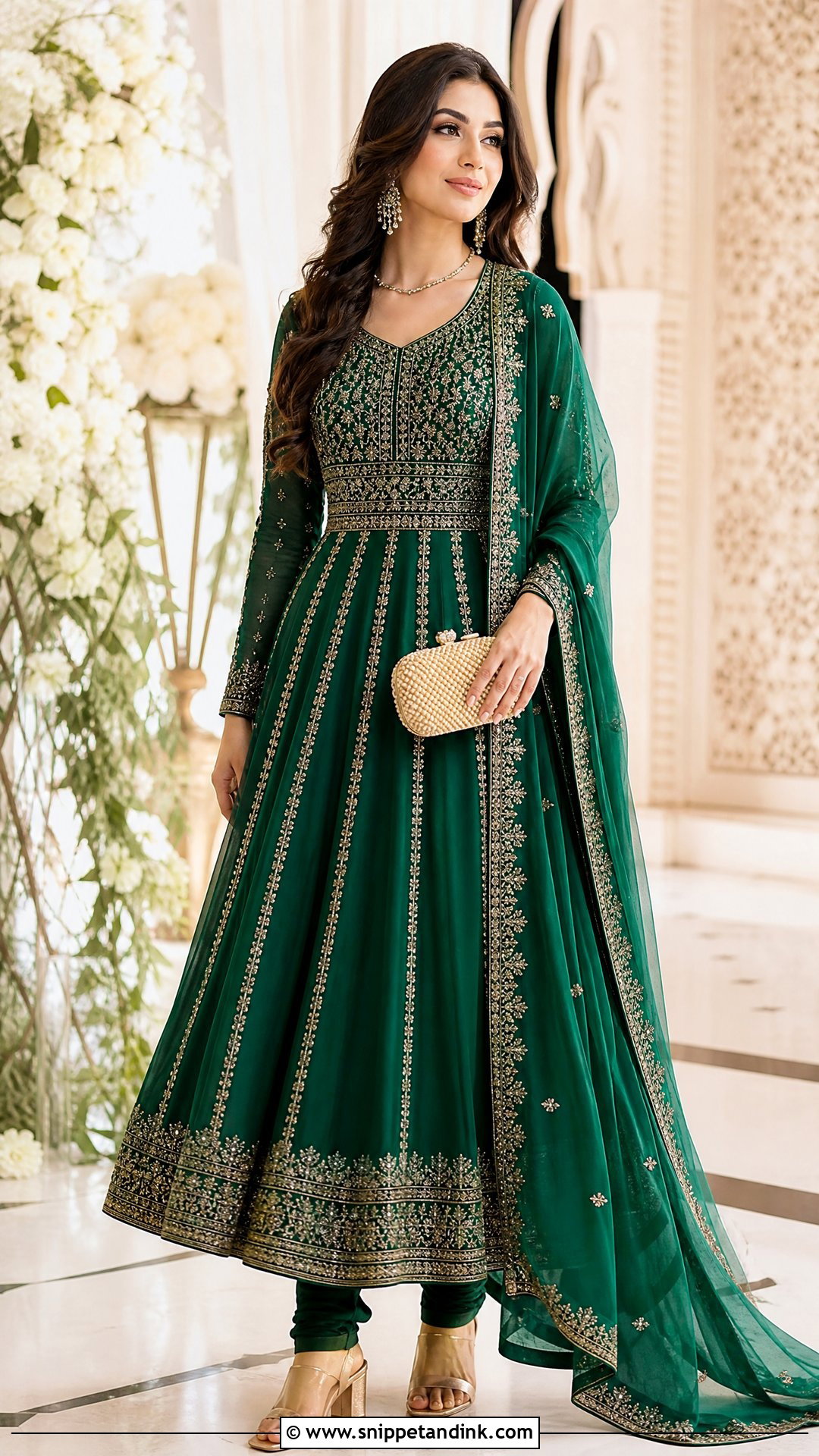
A floor-length Anarkali gives you the sweep of a gown with distinctly Indian detail. I’d look for a fitted upper body, a defined waist and a controlled flare, because a very full skirt gets trodden on in a crowded hall. Deep blue, wine, emerald and plum suit evening; dusty rose or pistachio, daytime. Fitted churidar underneath and a light dupatta over one shoulder complete the traditional set. Vertical embroidery or paneling lengthens the line. Block heels keep the hem off the floor. Soft curls or a neat bun keep the bodice detail visible.
20. Brocade Pants And Long Jacket For Hindu Wedding
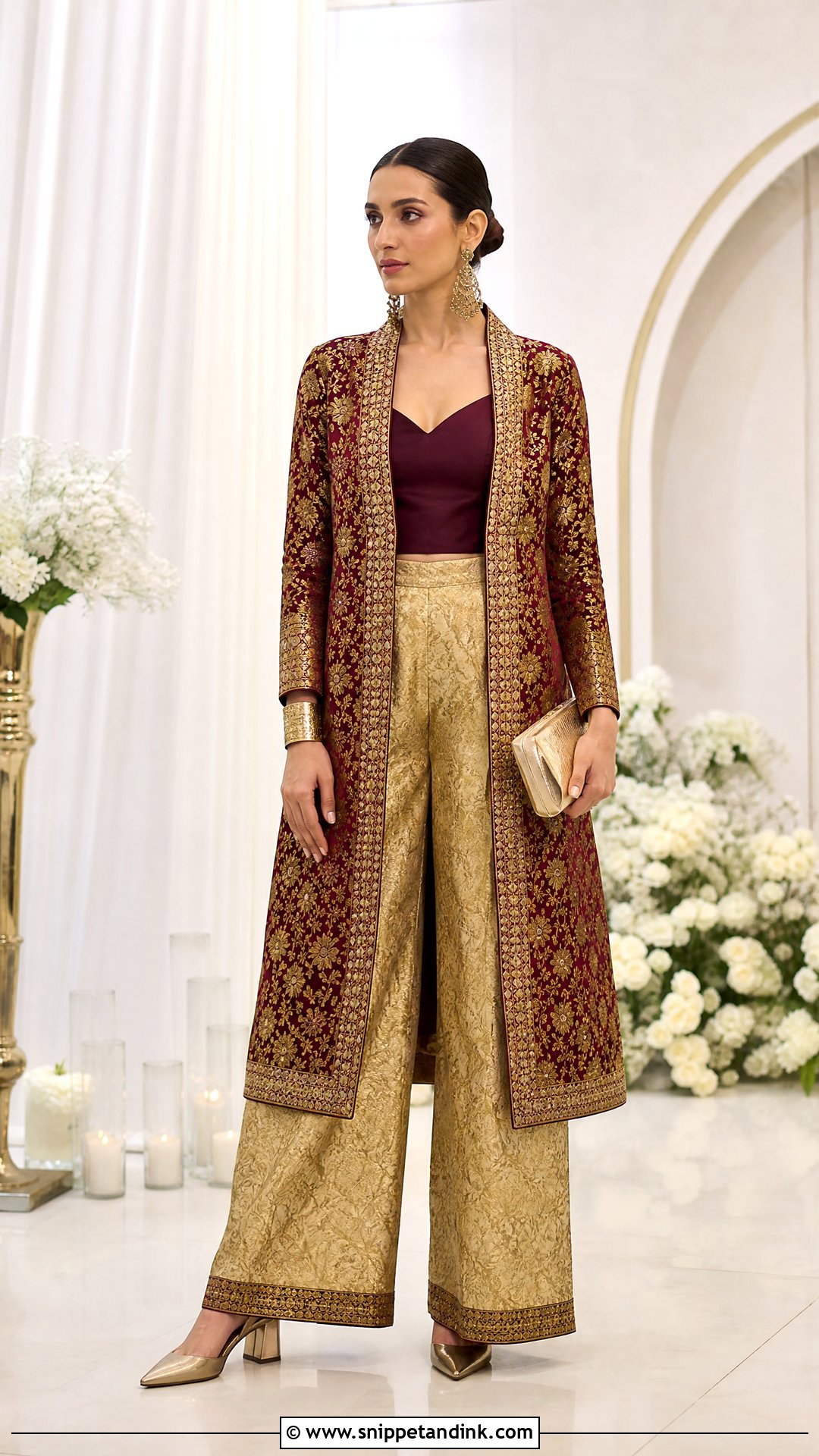
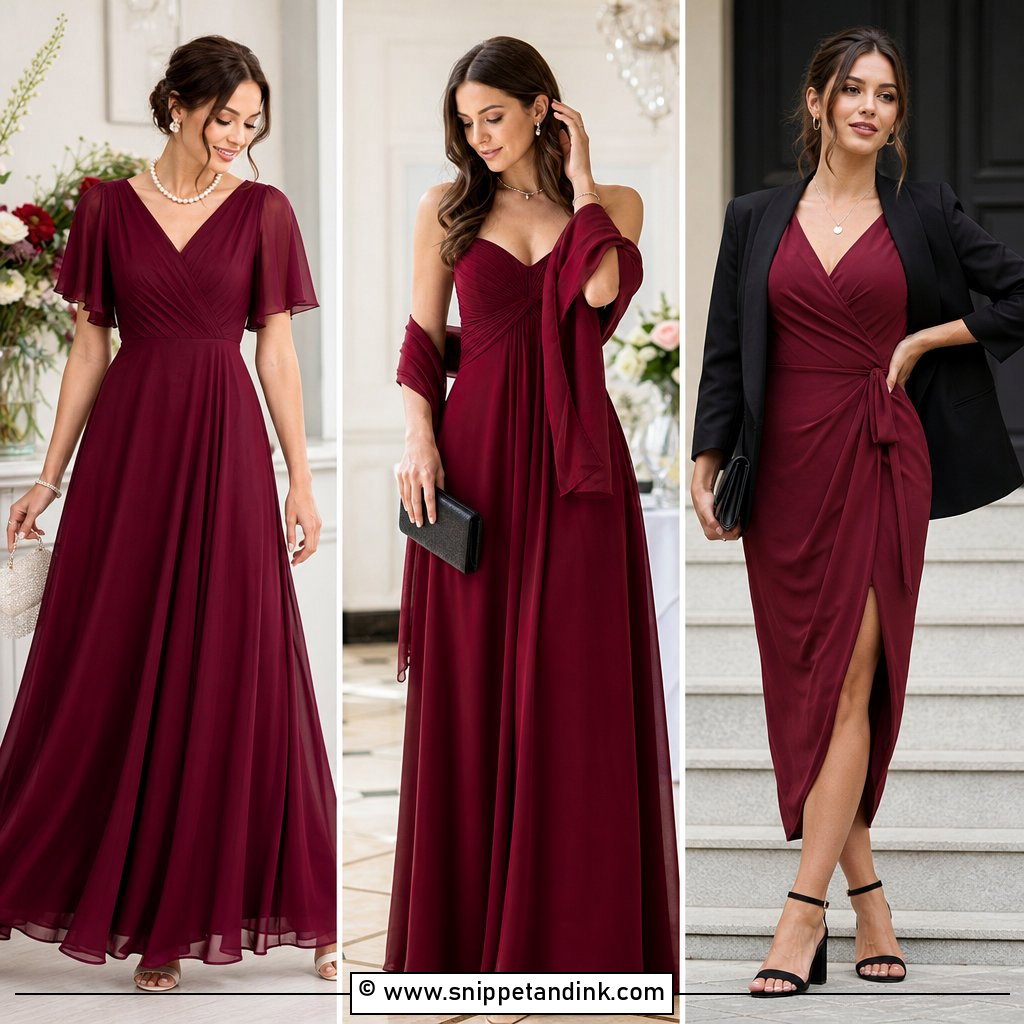
For guests who don’t wear skirts or sarees, brocade pants with a long jacket are a sharp fusion answer for a reception, sangeet or formal family event. Start with straight or wide-leg brocade pants, a simple fitted top and an ankle-length jacket. Brocade is stiff, so the pants should be cut with a little ease at the seat or they’ll pull when you sit. Matching colors stay sleek; contrasting jewel tones are bolder. Leave the jacket open to show the waist, or fasten it high for coverage. Statement earrings, one cuff and pointed block heels are all it needs.
Shoes Off, Floor Seating and the Sacred Fire
A few practical realities of the ceremony itself catch guests out more than any style choice. Many families ask guests to remove shoes near the mandap or at a temple, so slip-on juttis beat strappy heels with fiddly buckles. Some functions seat guests on cushions or low platforms, and a stiff can-can lehenga is hard to fold down onto the floor.
The ceremony is usually performed around a fire. Keep a loose net dupatta pinned well back from it, because synthetic net and georgette melt rather than smolder. On color, many families avoid black and all-white at auspicious events, and red is often kept for the bride, so it’s worth a quick question if you’re planning either.
Putting Silk Away After the Wedding
Air the saree overnight before storing it, and keep perfume off silk entirely. Wrap it in a soft cotton or muslin cloth rather than plastic, which traps moisture. Every few months, refold it along different lines so the zari doesn’t crack at the old creases. Turmeric or food stains on silk and zari belong with a specialist cleaner, not a home wash.
Respect the Ritual, Then Dress for the Dance Floor
The right outfit for a Hindu wedding honors the culture, suits the formality of each function and lets you stay comfortable through very long days. Sarees and silk lehengas carry the tradition; shararas, jacket sets and saree gowns bring a more modern line. Plan around the ceremony, the weather, the venue and the hour, and get the tailoring right, since secure drapes and correct hems decide how the day feels. Wear shoes you can stand in, jewelry scaled to the neckline, and a bag that holds your essentials. Above all, follow any guidance the couple or their families share.
You'll Like These Ideas:


Leave a Reply