
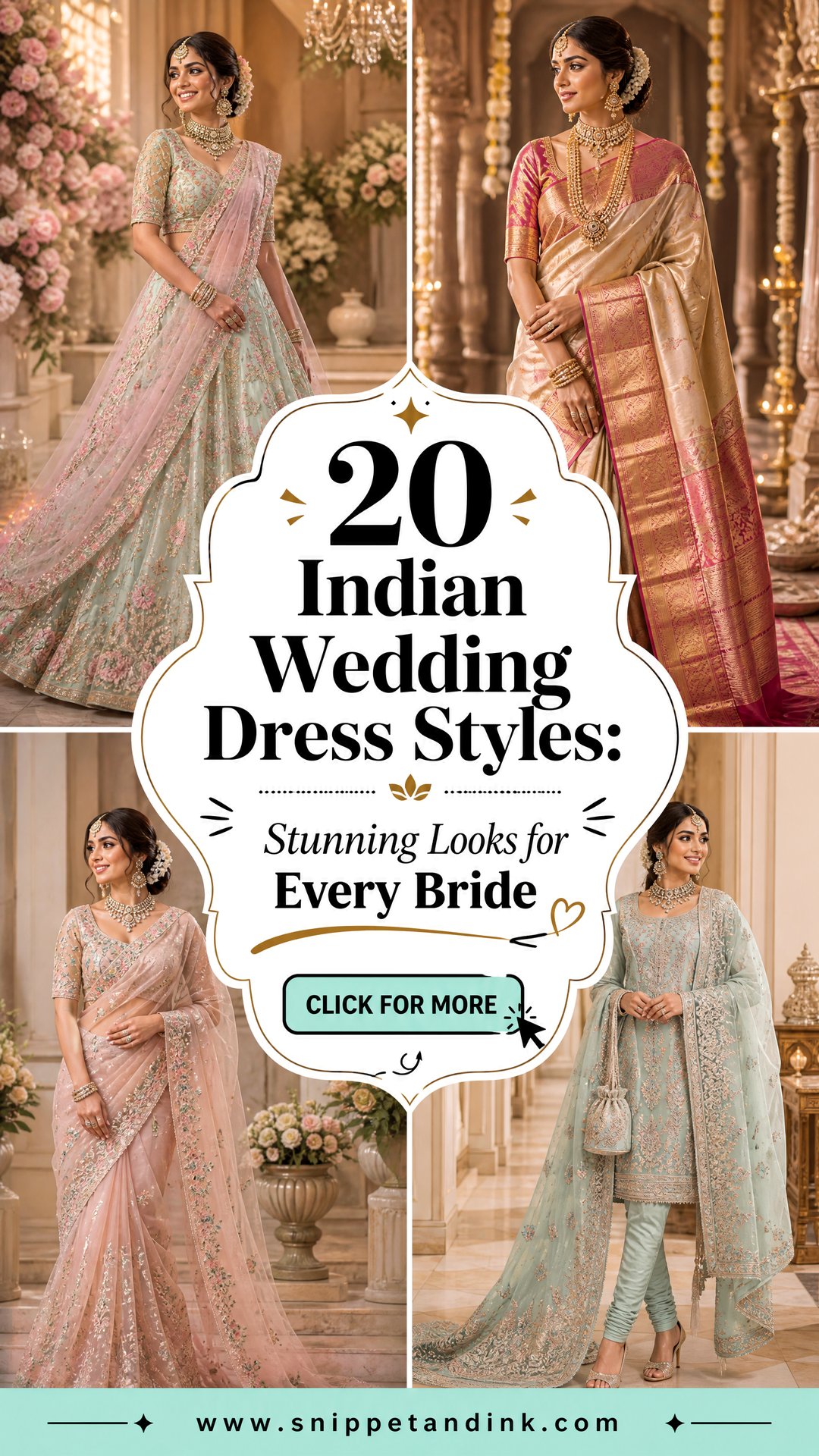
Indian wedding dress covers a huge range, from silk sarees and ornate lehengas to pre-draped sarees, cape sets, jackets and fusion separates that go on in minutes. The twenty styles below include bridal looks, comfortable guest outfits and a few pieces that move happily from mehndi to reception. I choose between them by the event, the venue, the weather and how much embellishment the wearer can actually carry for six hours. Rituals often mean sitting on the floor and sangeets mean dancing, so comfort is a real factor, not an afterthought. Steady shoes, secure draping and jewelry in proportion are what turn any of these into a finished outfit.
What Zari, Zardozi and Gota Feel Like by the Sixth Hour
Shoppers usually pick embroidery by how it looks on the rail. I pick it by how it wears, because the same lehenga shape can feel light or punishing depending on the work. These are the embroideries you’ll meet most in the styles below.
- Zari: metallic thread, woven in or stitched on. Most modern zari is a copper or synthetic core with a metallic coating rather than real silver or gold, which makes it lighter and less prone to tarnish.
- Zardozi: raised metal-thread work with coiled wire, sequins and beads. It’s the richest and the heaviest, and its back is scratchy, so insist on a full lining.
- Gota patti: metallic ribbon cut into shapes and appliquéd on. It catches light well for very little weight, which is why it suits daytime functions.
- Mirror work: small mirrors held by thread borders. Sparkly and fun, but it adds weight quickly across a full skirt.
- Resham: silk or rayon thread embroidery. Soft, light and comfortable against the skin, though it reads quieter in photos.
In the shop, lift the skirt by its waistband before you try it on. If it already feels heavy in your hands, it will feel twice that by the end of the evening. Then turn it inside out and look at the backing. Loose threads, sharp wire ends and missing lining are where the discomfort comes from.
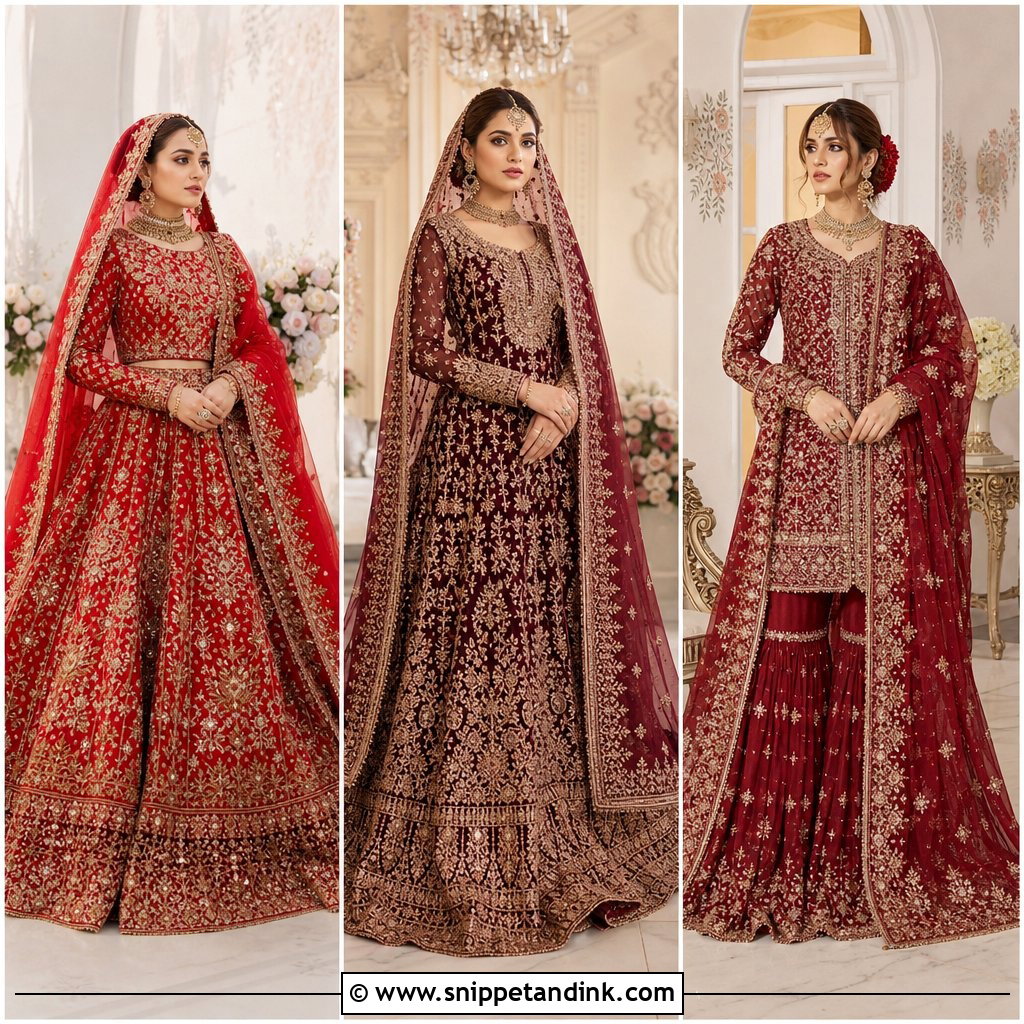
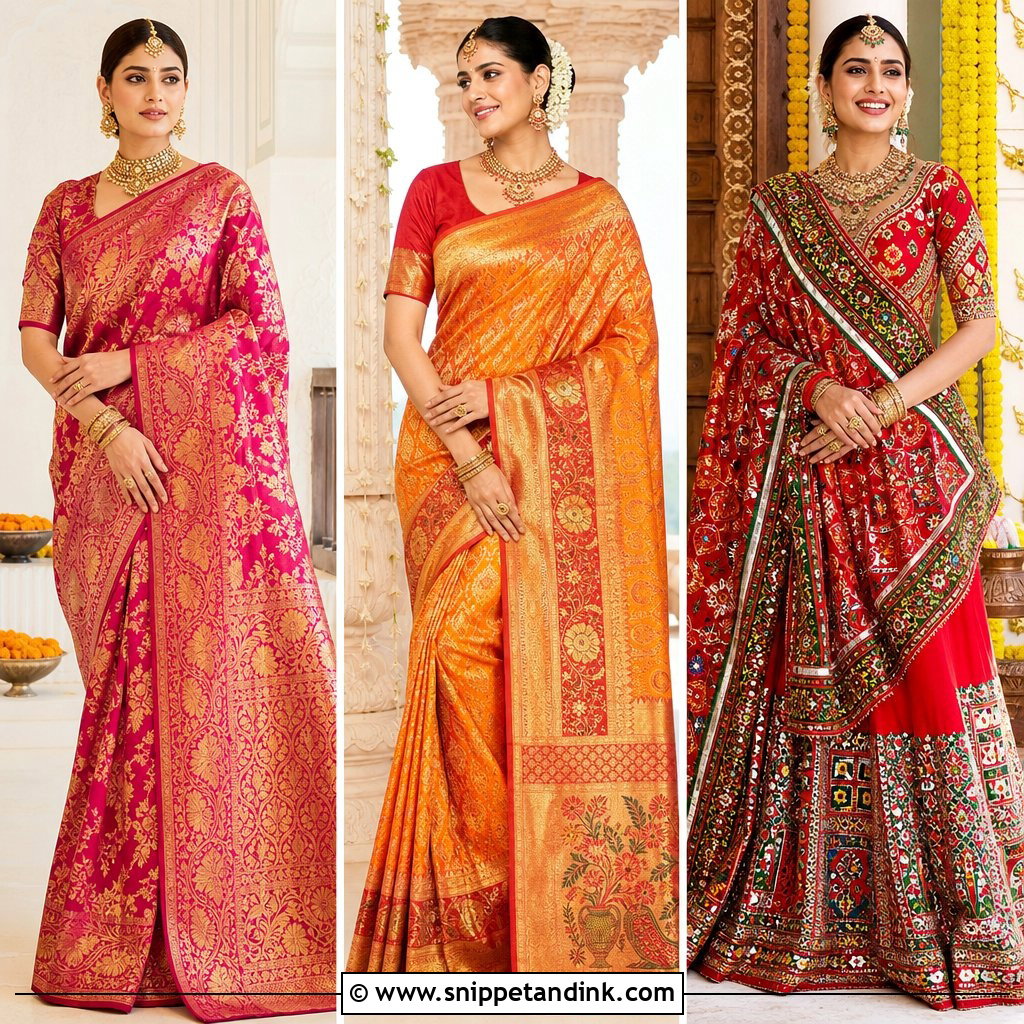
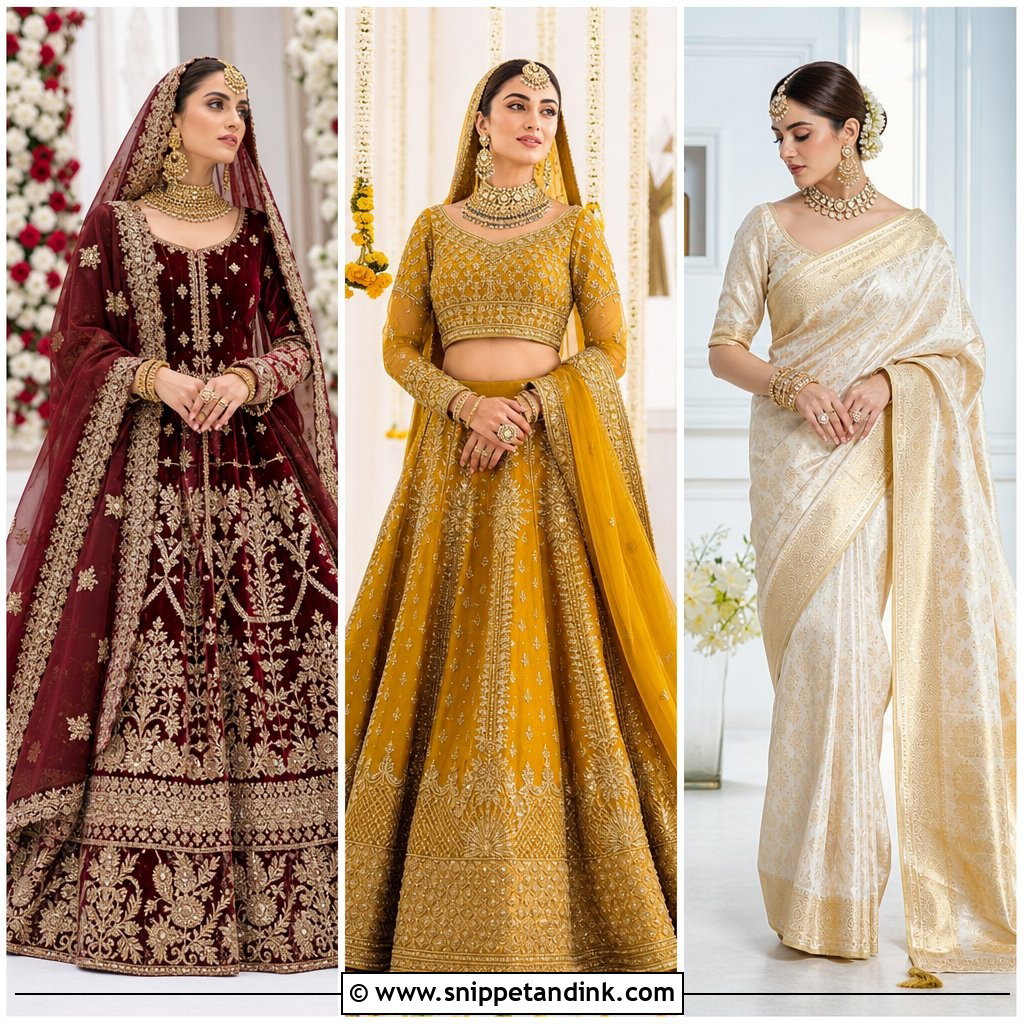
1. Red Bridal Lehenga
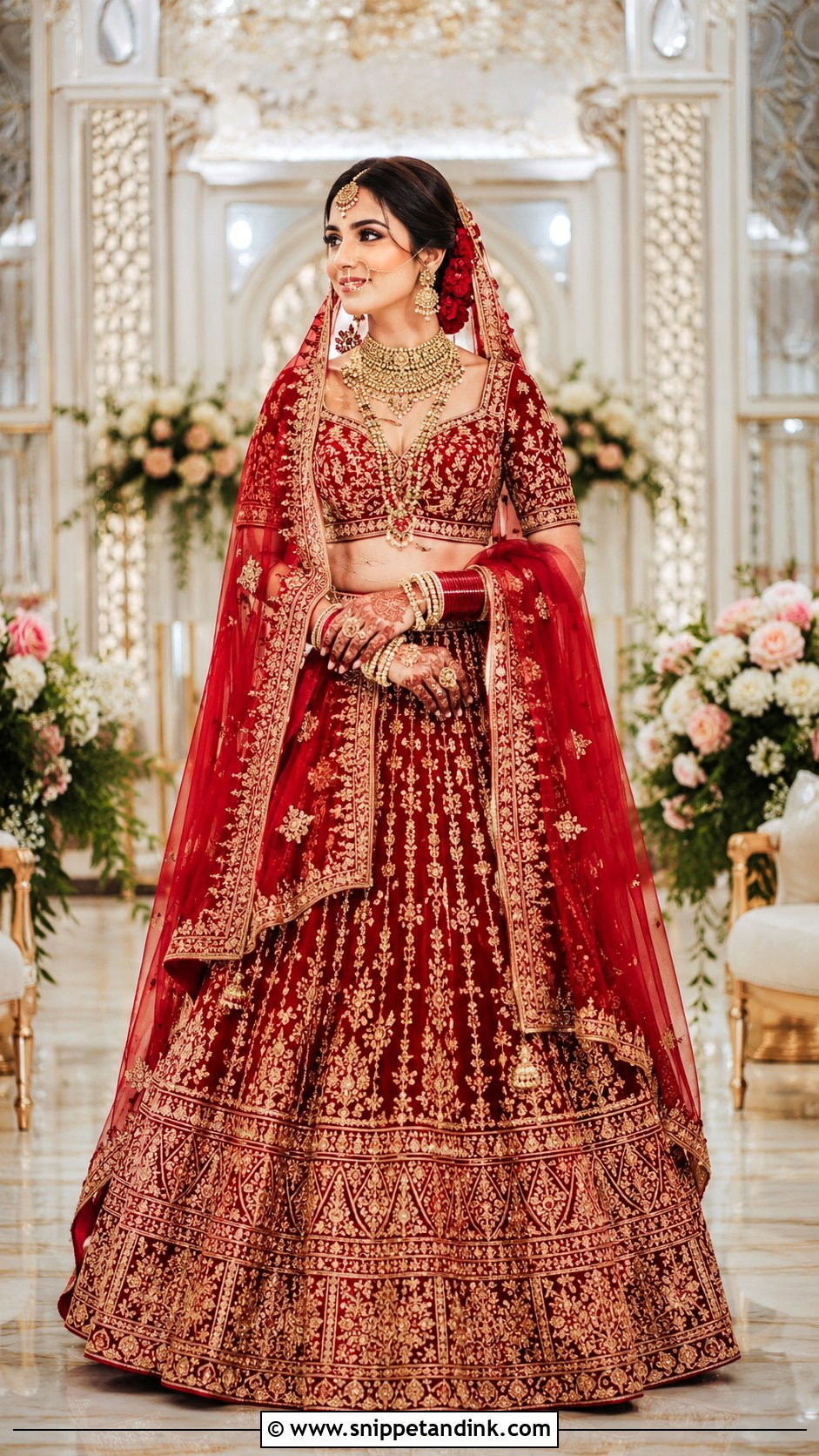
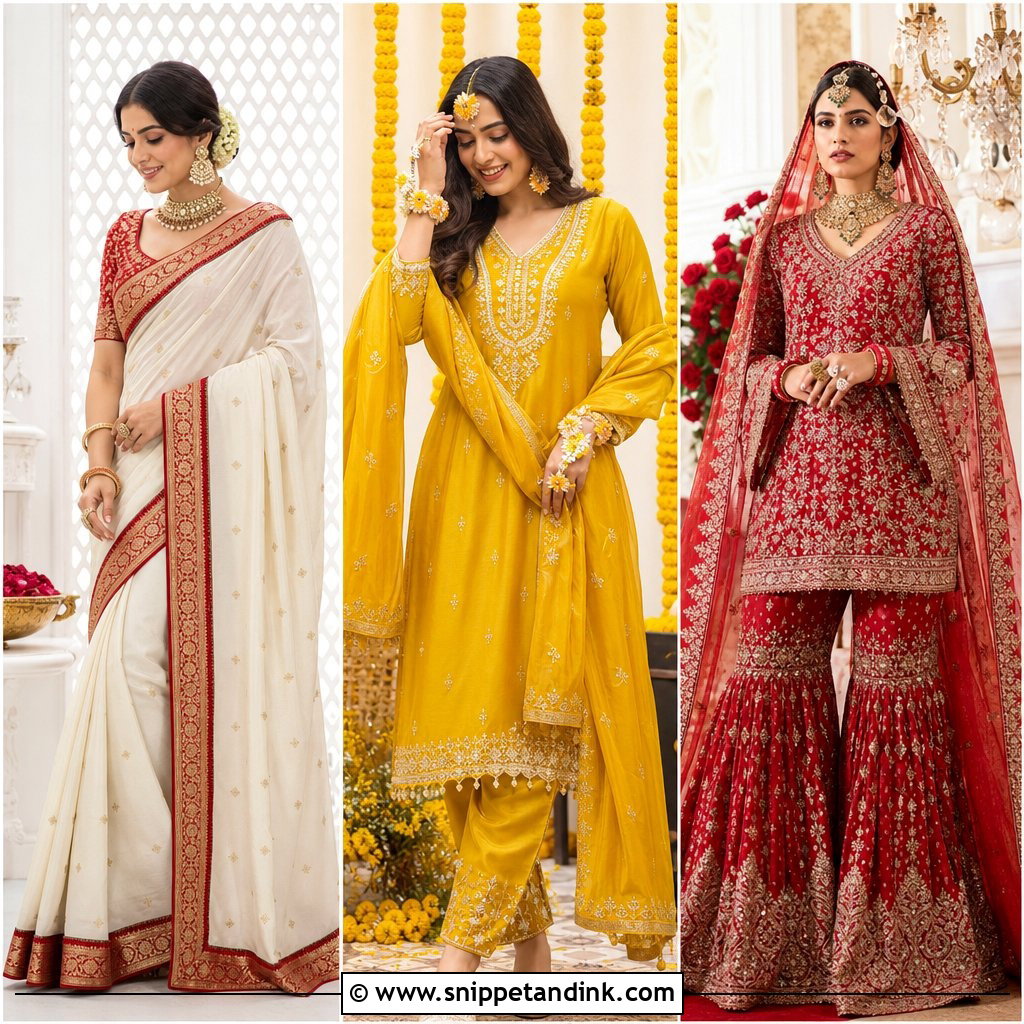
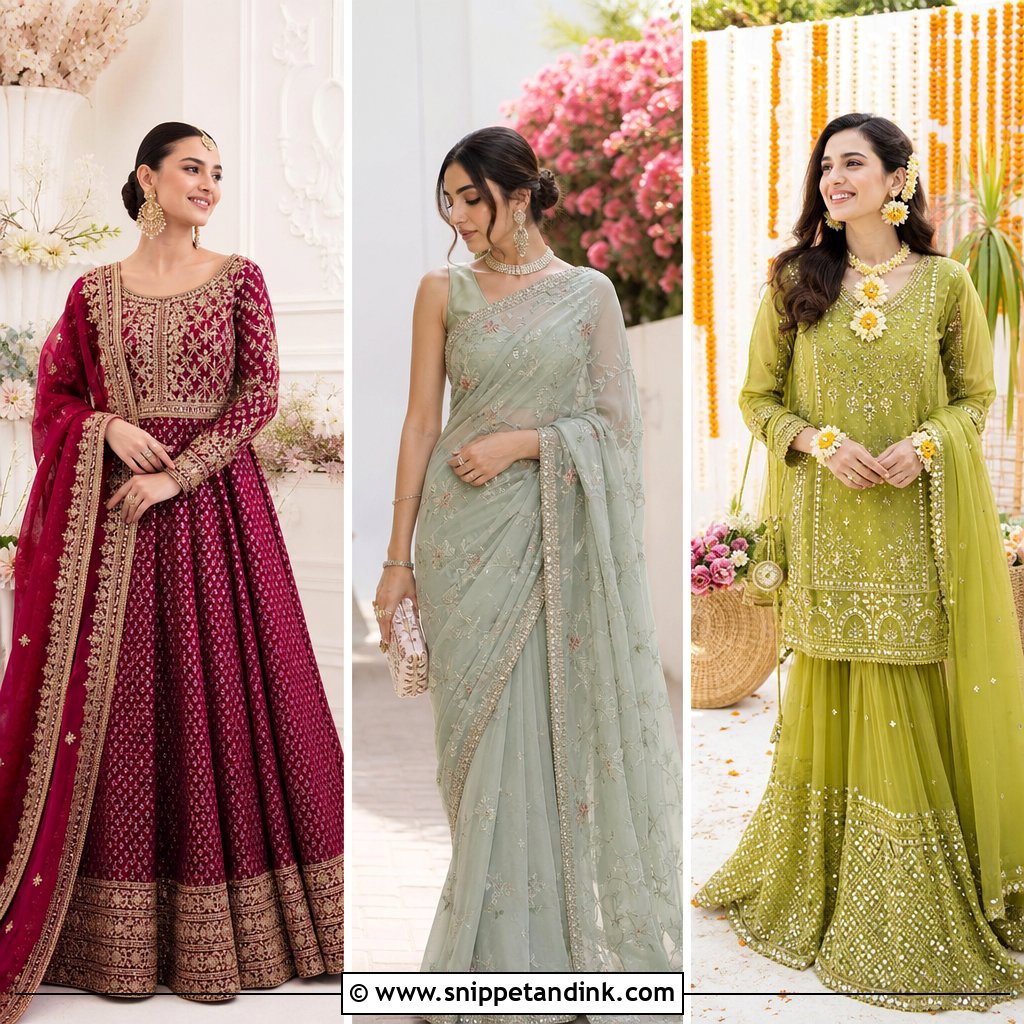
For a bride, the decision that matters more than the shade of red is how much weight she can carry through the whole ceremony. Zardozi is the heaviest work, tonal threadwork the lightest, with zari and sequins somewhere between. Pair the flared skirt with a supportive fitted blouse and a coordinated dupatta. I put the heavier dupatta over the head and a lighter one across the shoulder, so the arm doing the rituals isn’t weighed down. A choker worn with a longer necklace needs a clear gap between the two, or they merge into one block at the collarbone. Earrings, bangles and comfortable embroidered juttis complete it. Crimson and vermilion lean warmer in sunlight, while maroon and ruby hold their depth under evening lights. Customs differ between communities, so let your family’s traditions guide the motifs, jewelry and draping.
2. Pastel Embroidered Lehenga
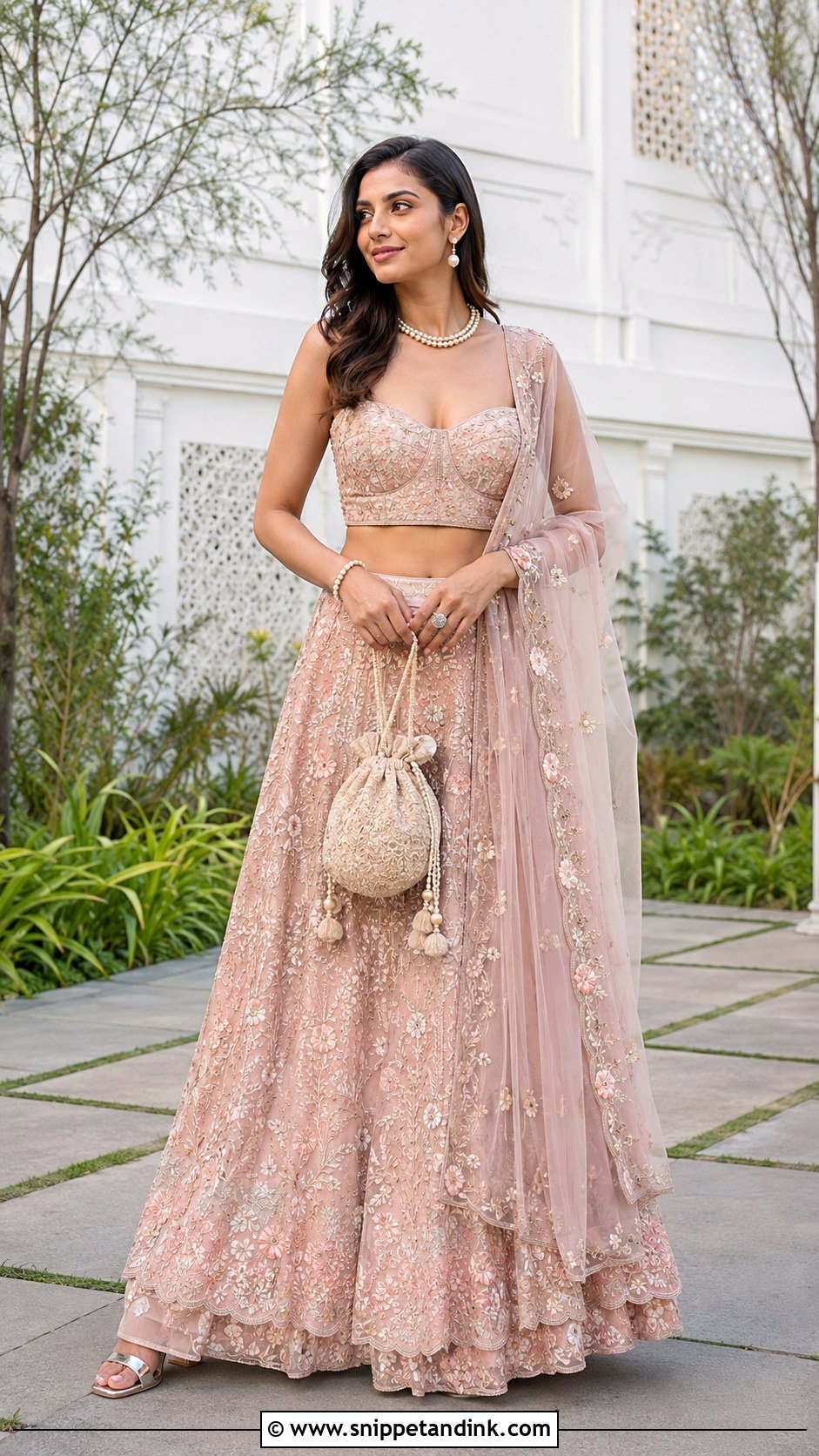
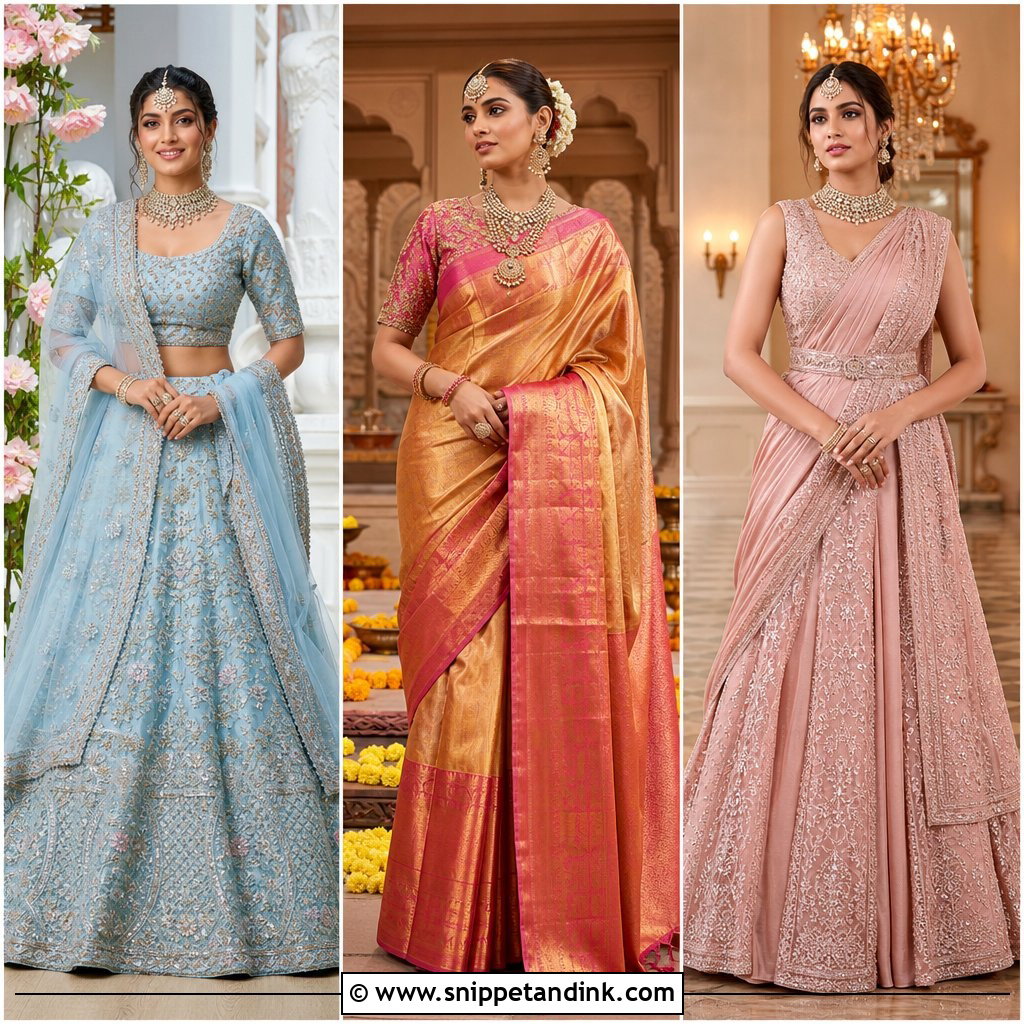
Pastels can take heavy embroidery without looking dark, which is why a richly worked blush, powder blue, pistachio, lilac, peach or ivory lehenga suits a daytime wedding. Check the couple’s dress code first, and as a guest, ask whether any pale shade is reserved for the wedding party. A structured blouse holds its own against a flowing skirt, and a net or organza dupatta keeps the volume down. Pearl jewelry, kundan earrings, a potli and metallic block heels tie it together. Smaller motifs and a slightly higher waist suit petite women; taller women can carry broad borders. Outdoors, I check the lining as carefully as the outer fabric, because a synthetic lining under heavy embroidery traps heat. Keep the hem clear of the grass.
3. Floral Lehenga For Mehndi
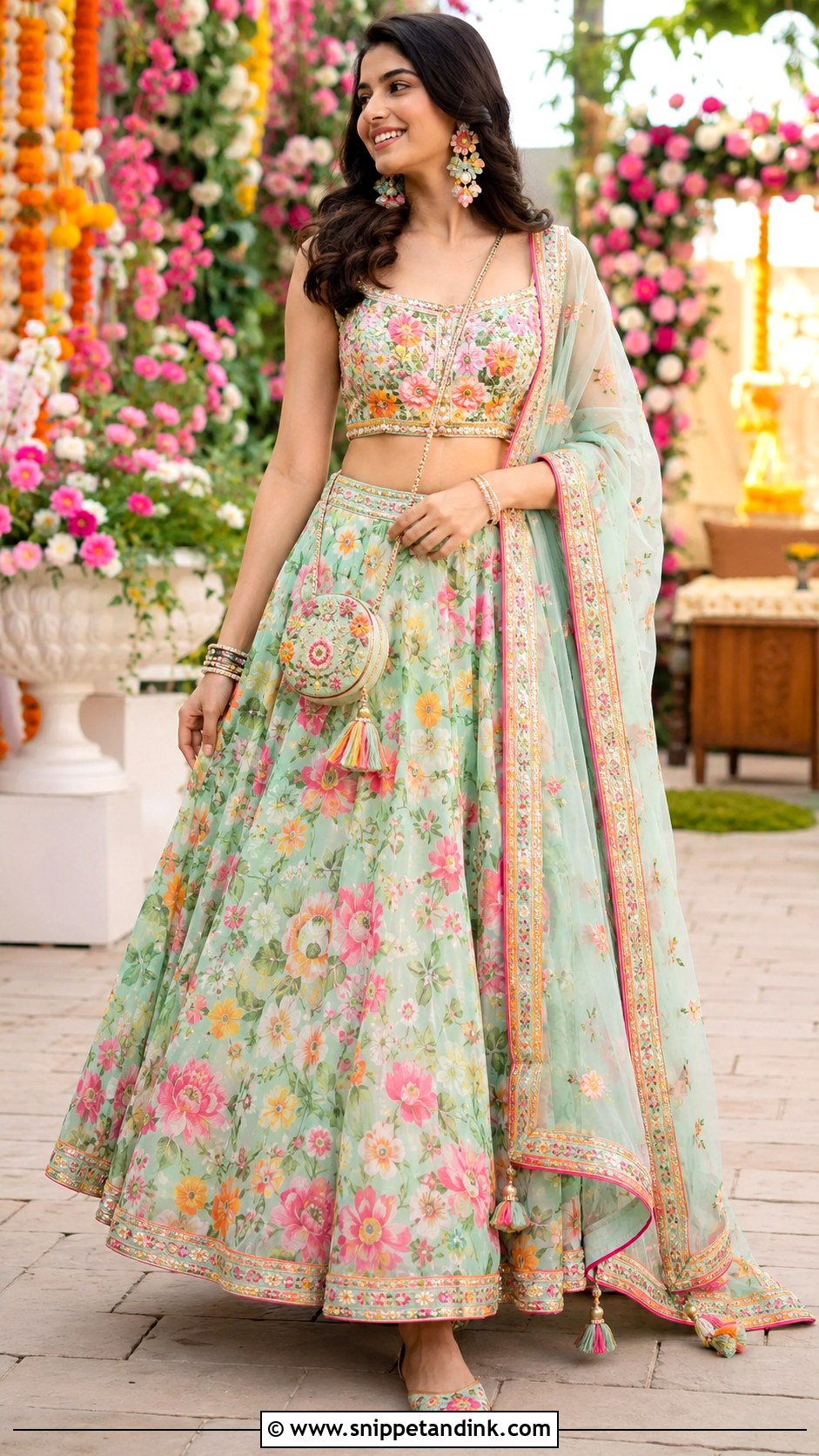
Mehndi is the relaxed function, and a floral lehenga, printed or embroidered, suits its mood. A crop blouse with secure straps or sleeves lets you hold your arms out for an hour without fiddling. Keep the dupatta short and light so your hands stay free while henna goes on. Green, yellow, coral, fuchsia and turquoise all suit the party, and softer botanical palettes work too. Floral earrings, slim bangles, a crossbody potli and flat juttis complete it. Leave off long tassels and loose bracelets, which drag through wet henna, and tie your hair back. My own habit is to decide where the henna will stop before choosing the blouse. If the design runs to the elbow, a cap-sleeve or sleeveless blouse saves you smudging it on a sleeve hem.
4. Mirror Work Lehenga For Sangeet
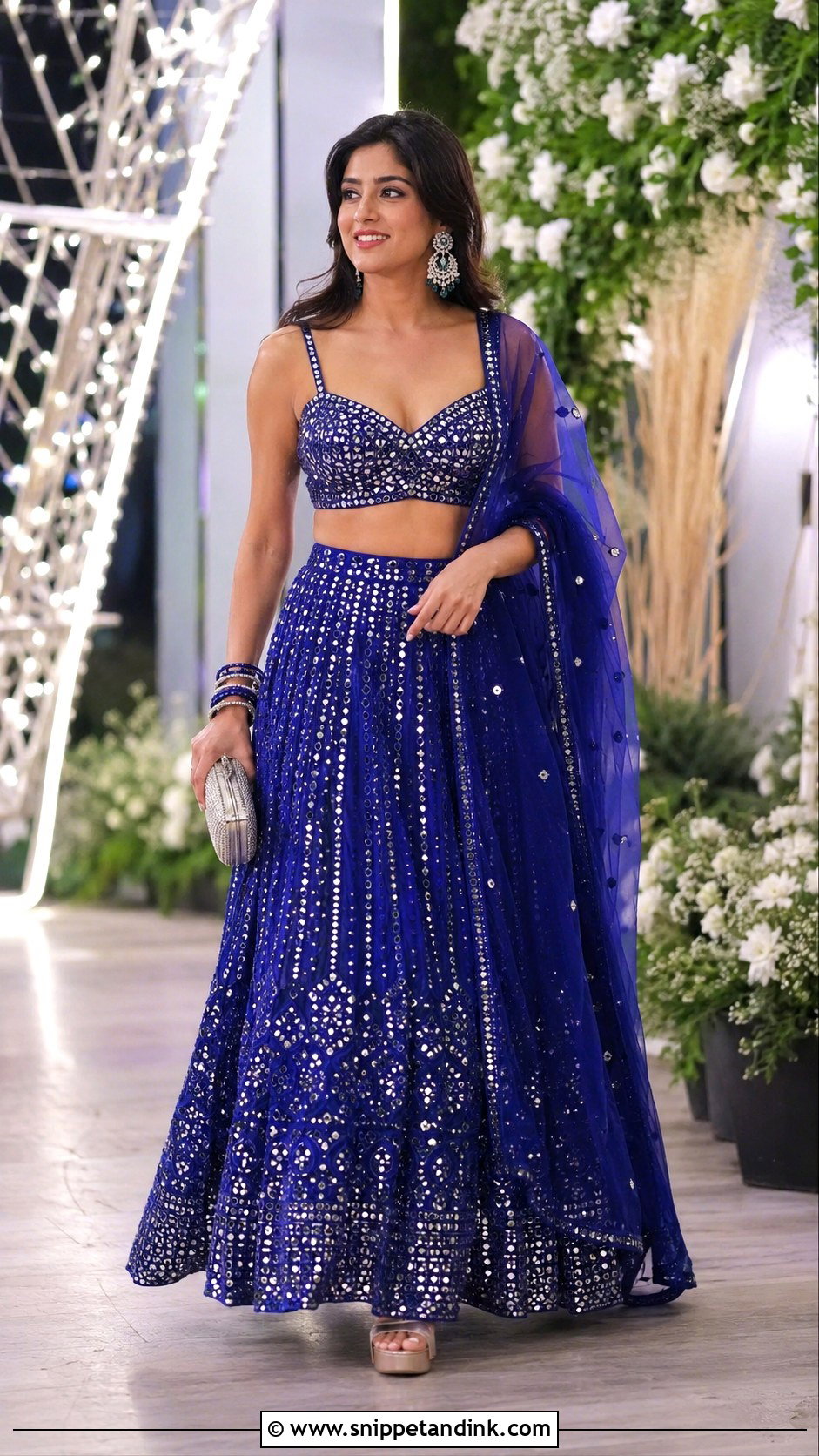
Mirrors bounce stage light back on every turn, so a mirror work lehenga reads well on a sangeet floor. Before buying, run your hand over the skirt. Good mirror work is held by tight, even thread borders, and a mirror that wobbles in the shop will fall off mid-dance. Choose a blouse with real support for hours of dancing. Pin a matching dupatta at shoulder and waist, or swap it for a light cape. Jewel tones, bright pink, cobalt, teal and silver-grey all suit the reflective detail. Keep jewelry streamlined: statement earrings, stacked bangles, a small clutch and cushioned block heels. Test the length in those heels, and look for a flexible waistband and breathable lining, which make the second hour of dancing far easier.
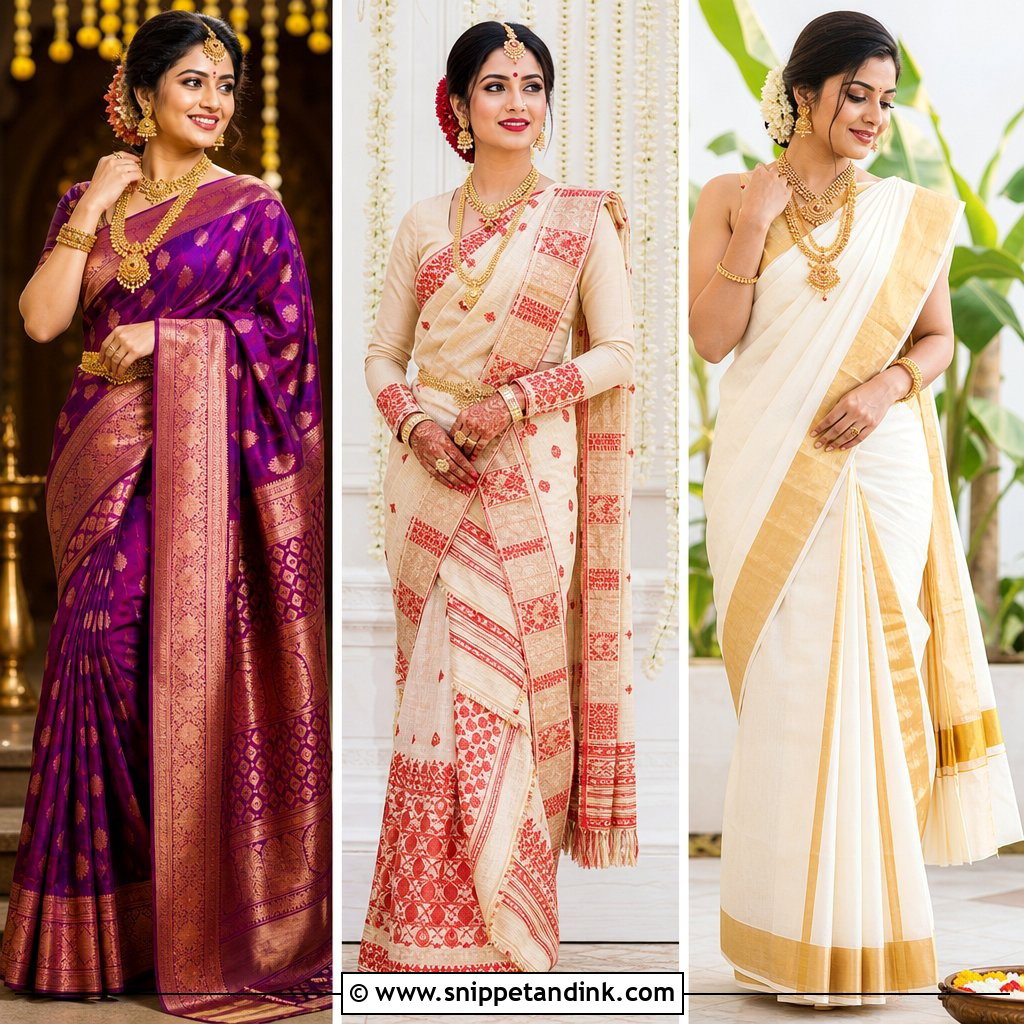
5. Banarasi Silk Saree
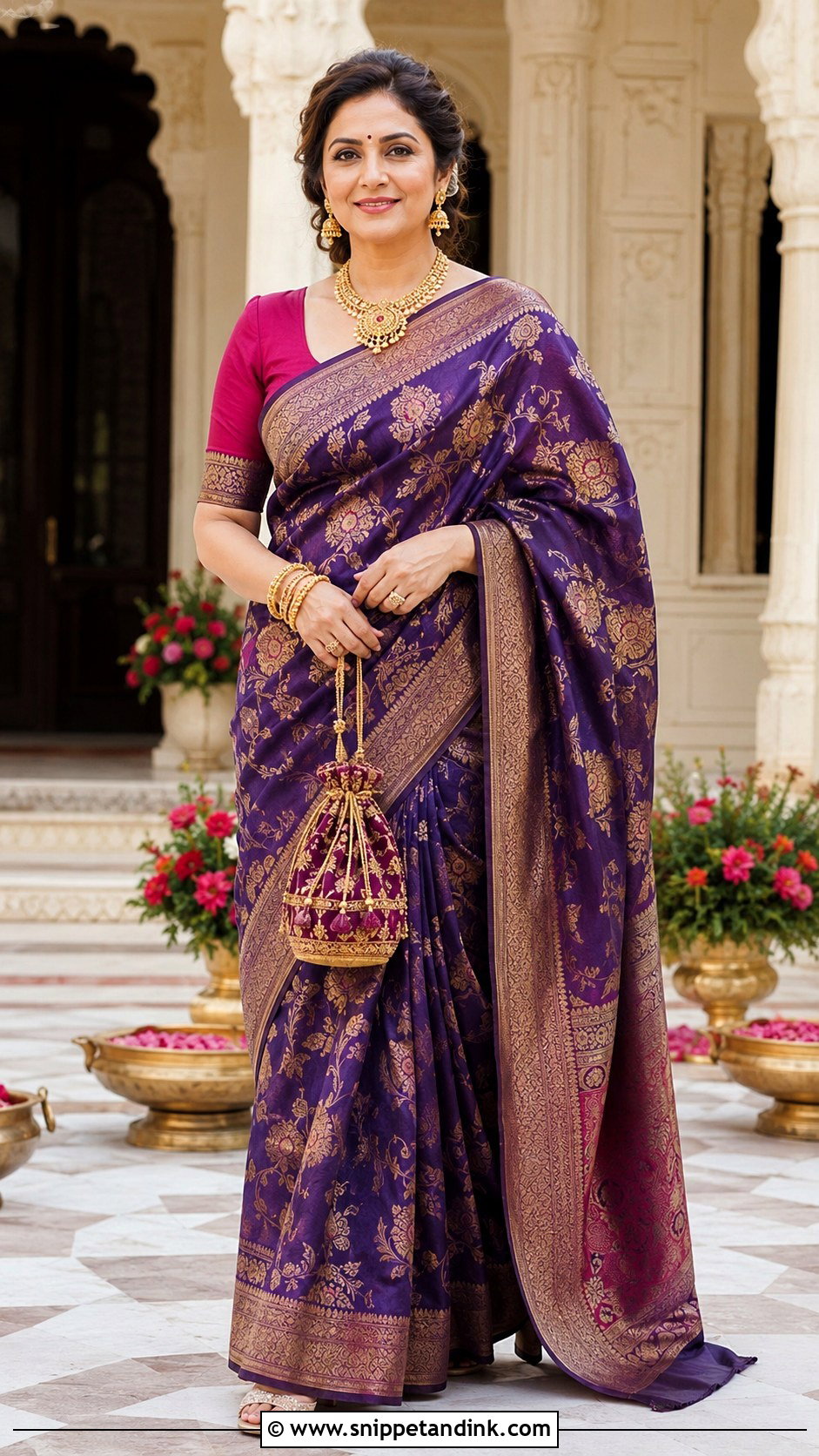
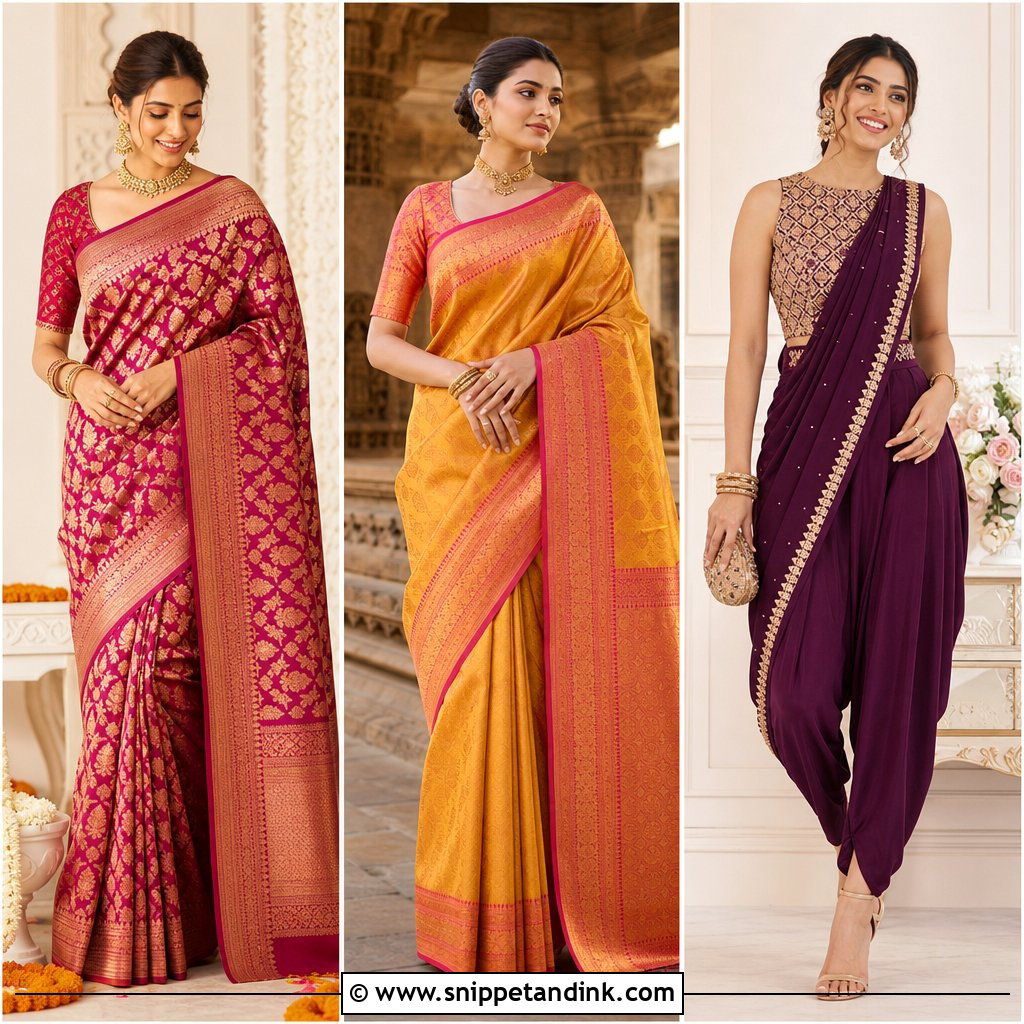
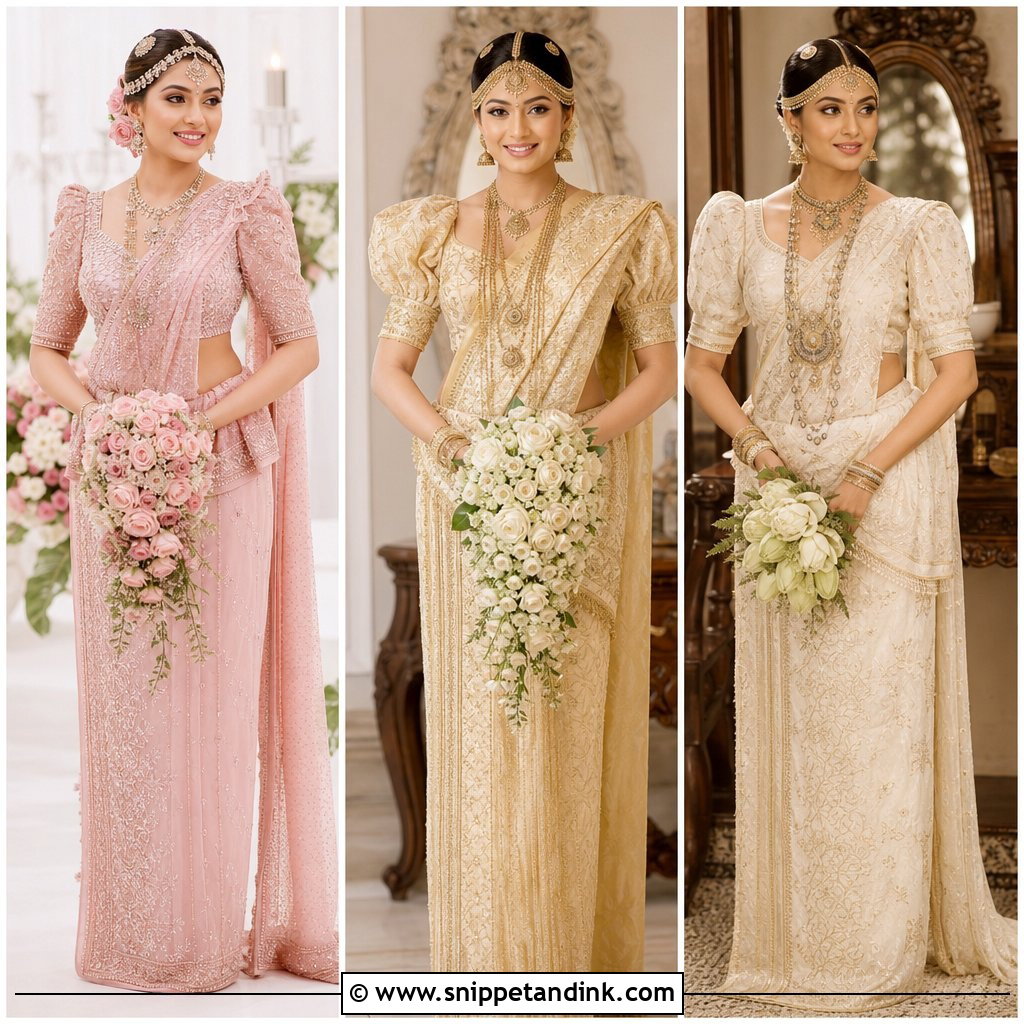
Banarasi weaving comes from Varanasi, and its motifs are woven into the silk, so the pattern lies flat and smooth instead of sitting raised like embroidery. That makes it comfortable for long ceremonies, family gatherings and formal evenings. Pair it with a fitted silk blouse, either matching or in a contrasting jewel tone. Traditional gold jewelry, a small bindi, bangles and an embroidered potli complete it without competing with the weave. Block heels or embellished sandals give stability under the hem. A neatly pleated pallu shows off the pattern; an open shoulder drape looks softer. If the saree feels heavy, a professional draper is worth booking. They pin the pleats discreetly, and the drape holds for hours instead of sagging by lunch.
6. Kanjivaram Silk Saree
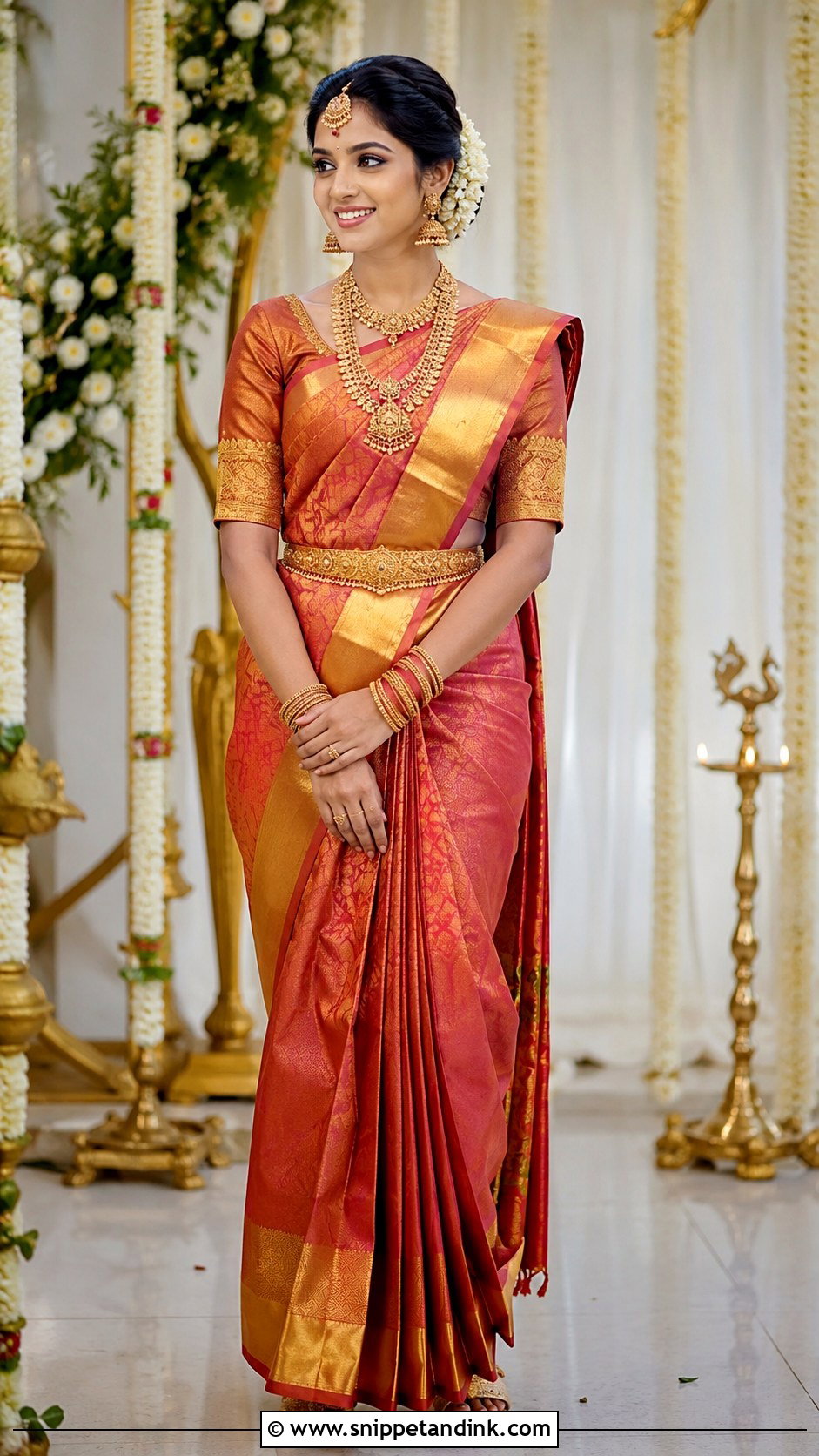
Lustrous silk and a contrasting border make a Kanjivaram saree a fitting choice for a traditional ceremony. I keep the blouse simple, with elbow sleeves, a modest back or a plain round neck, because the border is already doing the talking. Temple jewelry, gold bangles, jhumkas and fresh flowers around a bun suit its South Indian roots. A waist belt defines the drape and holds the pleats, but fasten it a notch looser than feels necessary, since you’ll sit through parts of the ritual. Choose supportive sandals with a low or medium heel if you’ll stand for long stretches. Age doesn’t limit this saree. Changing the blouse shape and jewelry scale is enough to suit a young cousin or a grandmother.
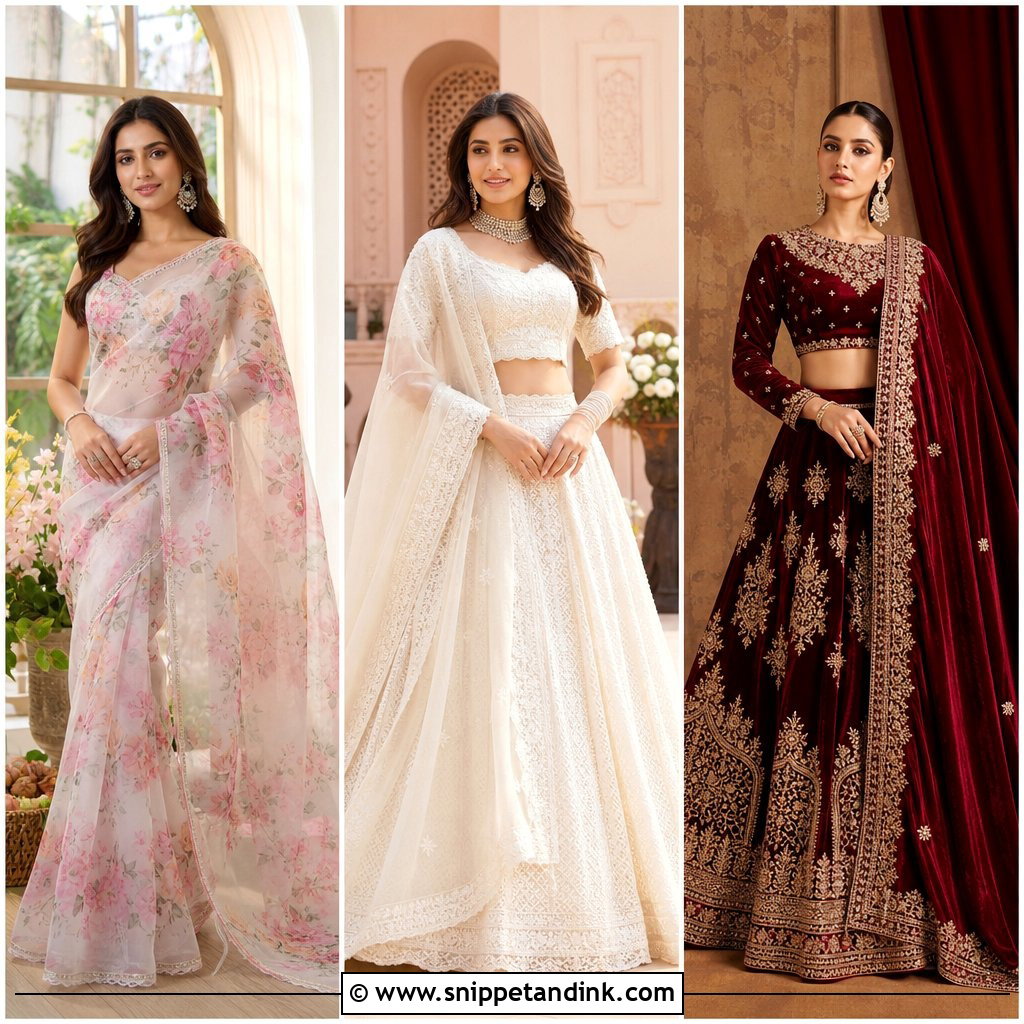
7. Organza Saree With Embroidered Blouse
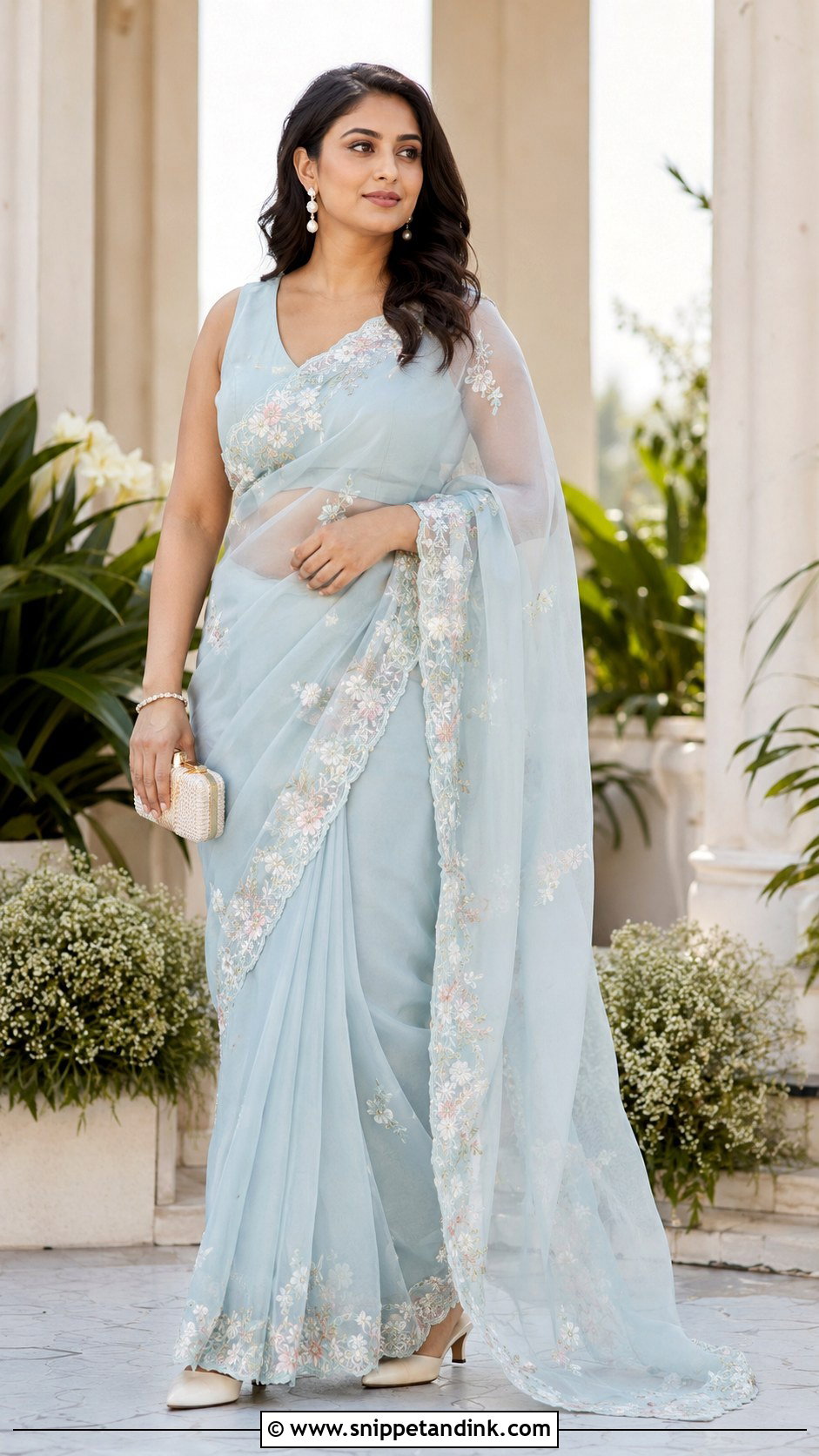
Light passes through organza, and that sheer crispness looks modern at a daytime or garden wedding. A solid, floral or lightly embroidered saree works best with a more detailed blouse, which gives the outfit its focus. A fitted raw-silk, brocade or beaded blouse adds structure under the sheer layer. Pearl drops, slim bracelets, a structured clutch and kitten heels keep it refined. Organza never softens, so careful pleating is what makes it lie flat, and the petticoat has to match. Curvy women often prefer a softer, wider pallu, and I ask for narrower pleats on petite women to keep volume down at the waist. Let the fabric be the attraction and keep everything else small.
8. Pre-Draped Saree For Reception
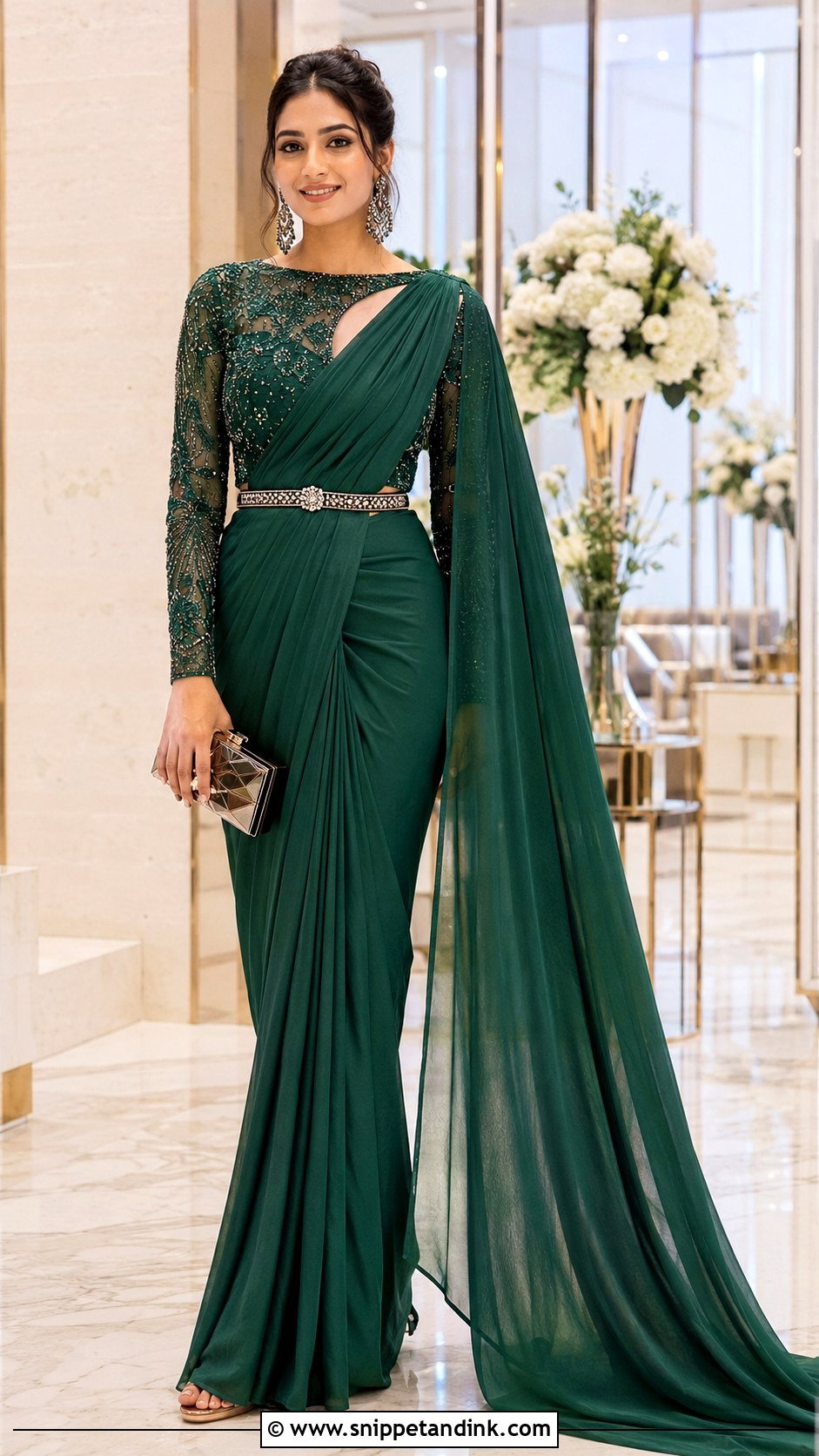
Pre-draped sarees are what I recommend to guests who’ve never worn a saree, or to anyone flying to a destination wedding without a draper. Stitched pleats, a defined waist and a flowing pallu give the full effect with almost no pinning. Satin, crepe, chiffon and light georgette suit an evening reception. Add a fitted blouse, sculptural earrings, a sleek clutch and metallic heels. Some come with a belt, which marks the waist and steadies the drape. At alterations, the two things that decide the fit are torso length and where the pleats fall. If the pleats start too far to one side, the pallu hangs crooked across your body all night.
9. Saree Gown For Cocktail
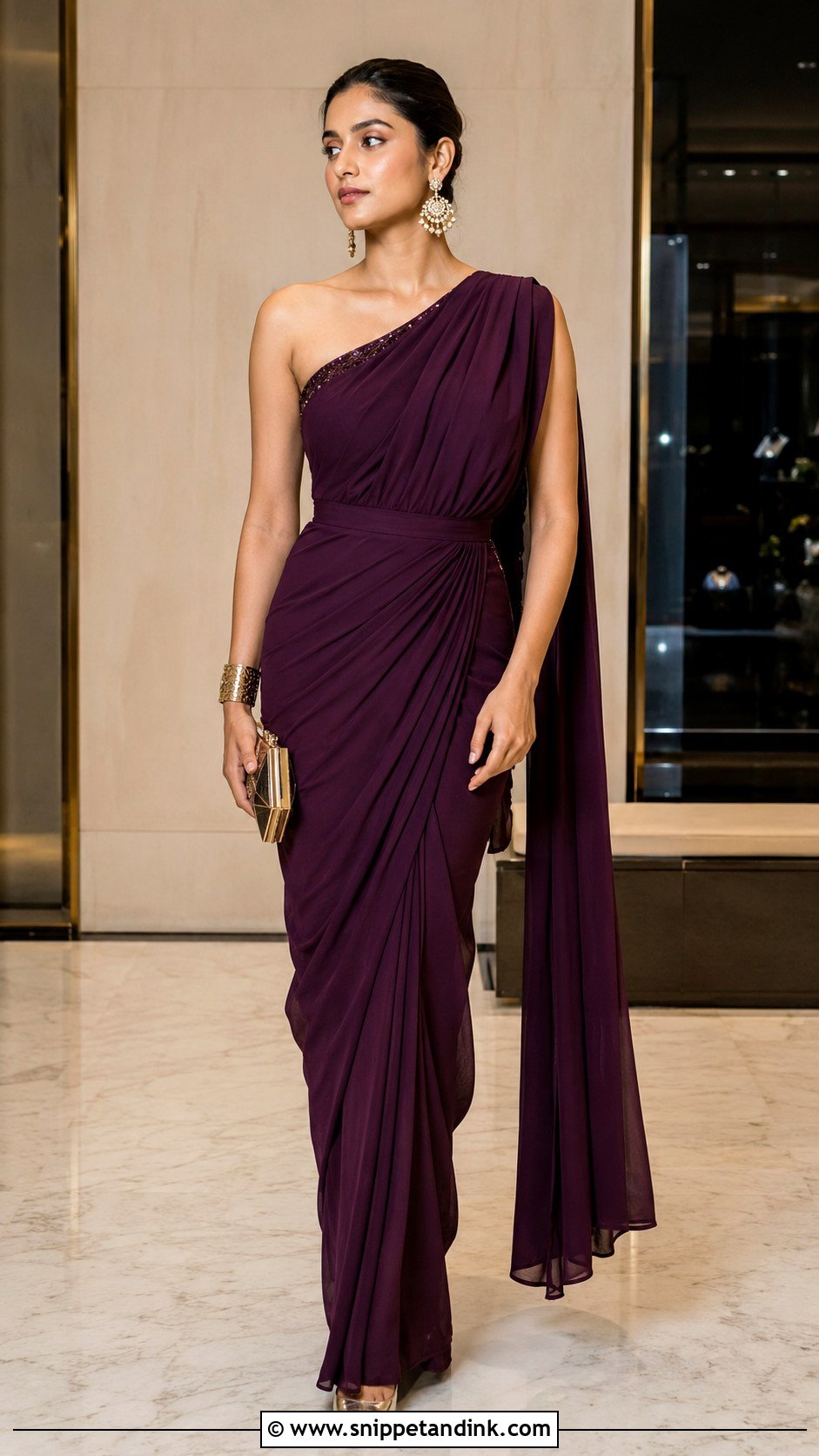
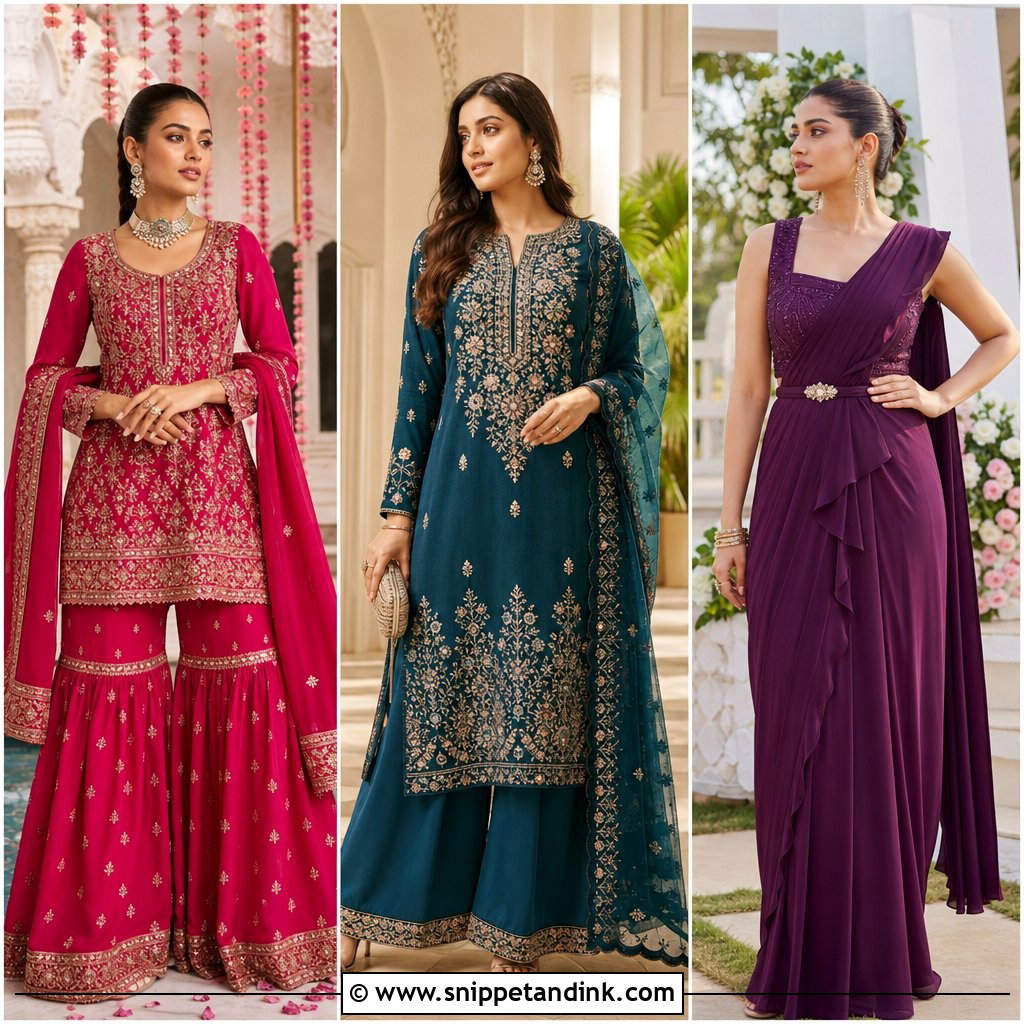
Of all the saree variations, this is the most practical for a cocktail evening: one piece, one zip and the pallu already attached. Choose a gown with a defined waist and enough room in the skirt to walk and dance. Emerald, navy, plum, rose gold and metallic neutrals all look polished. Statement earrings, a cuff, a box clutch and pointed heels or dressy sandals suit it. Skip a big necklace unless the neckline is very plain, because the drape already frames the shoulder. A narrow skirt needs exact hemming, and I’d add a walking slit if it doesn’t have one, since a slim draped skirt makes stairs awkward.
10. Floor-Length Anarkali Suit
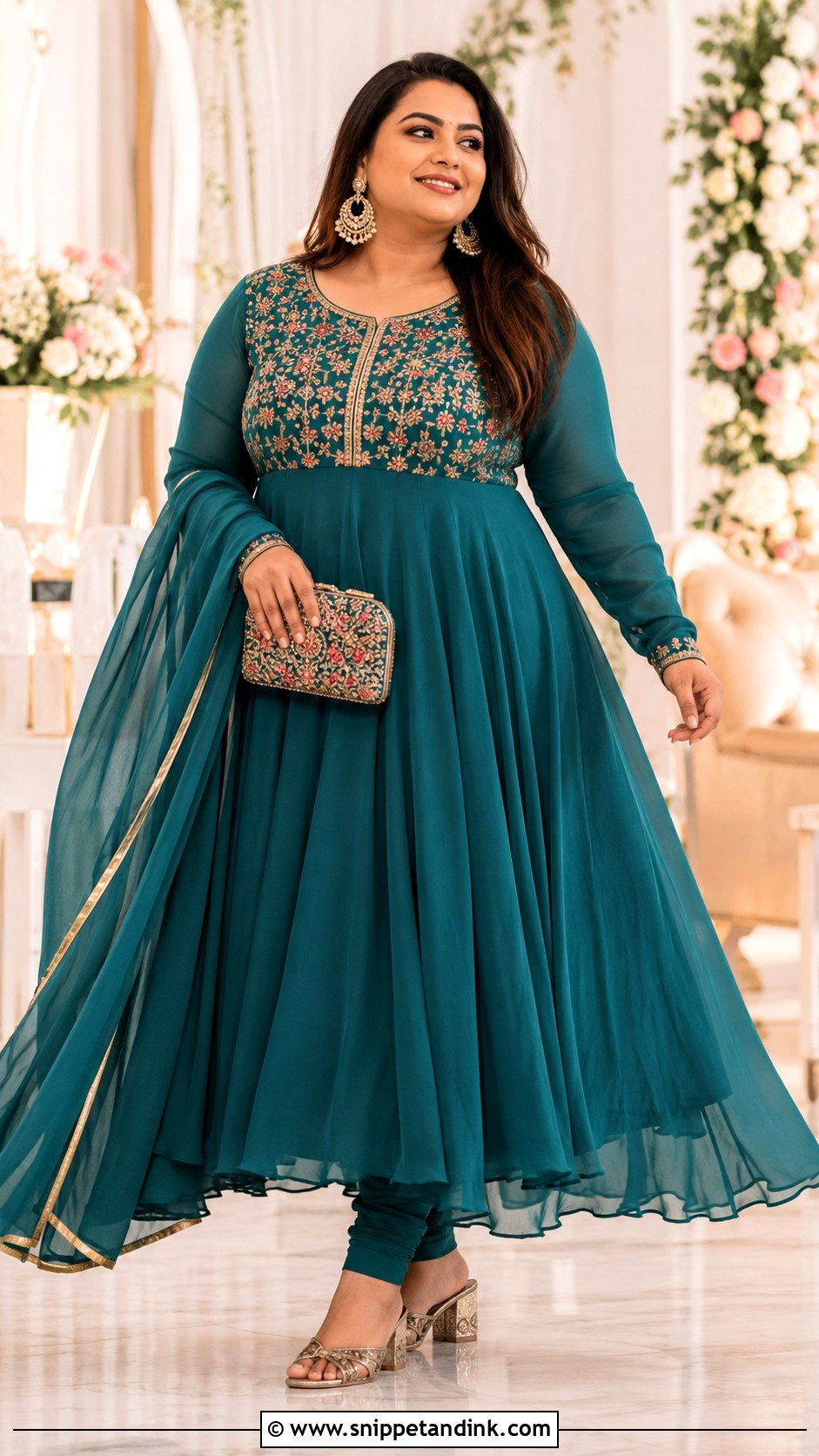
A floor-length Anarkali behaves like a gown but keeps the familiar shape of an Indian suit. A fitted bodice opening into a generous flare, with churidar and a soft dupatta, is formal enough for a ceremony or reception once the neckline, panels or border are embroidered. Chandbalis, a delicate ring, an embroidered clutch and comfortable heels finish it. Vertical panels and evenly spread embellishment lengthen the body, and I place the waist seam, empire or natural, wherever the wearer is narrowest. More panels mean a fuller, heavier flare, so a skirt with many kalis swings wonderfully but weighs more. Keep the hem just off the floor so it never catches under your shoes.
11. Jacket Anarkali Set
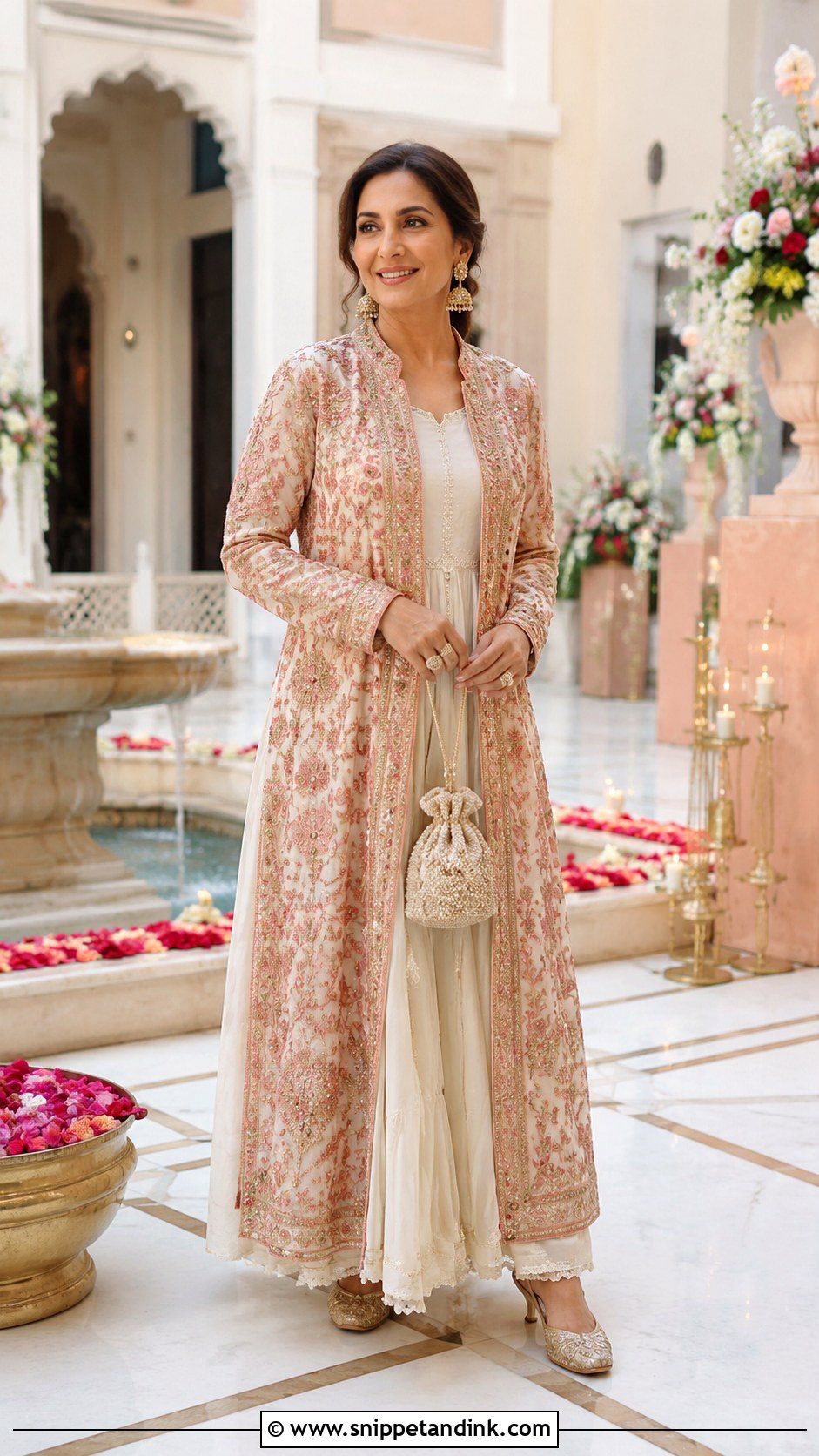
A long embroidered jacket turns a classic Anarkali outfit into something ceremony-ready. Start with a streamlined Anarkali or a kurta-and-pants set, then layer an open-front jacket over it. Zari, chikankari, mirror work or tonal thread each set a different level of formality. Keep the inner layer fitted, because two flared layers stacked together look bulky. Jhumkas, a compact potli and heeled juttis or block sandals complete it. If the jacket is heavily worked, I skip the necklace. Three-quarter sleeves give coverage without upsetting the balance. A jacket also adds warmth on cool evenings, and it can refresh a plain Anarkali you already own.
12. Sharara Suit With Short Kurta
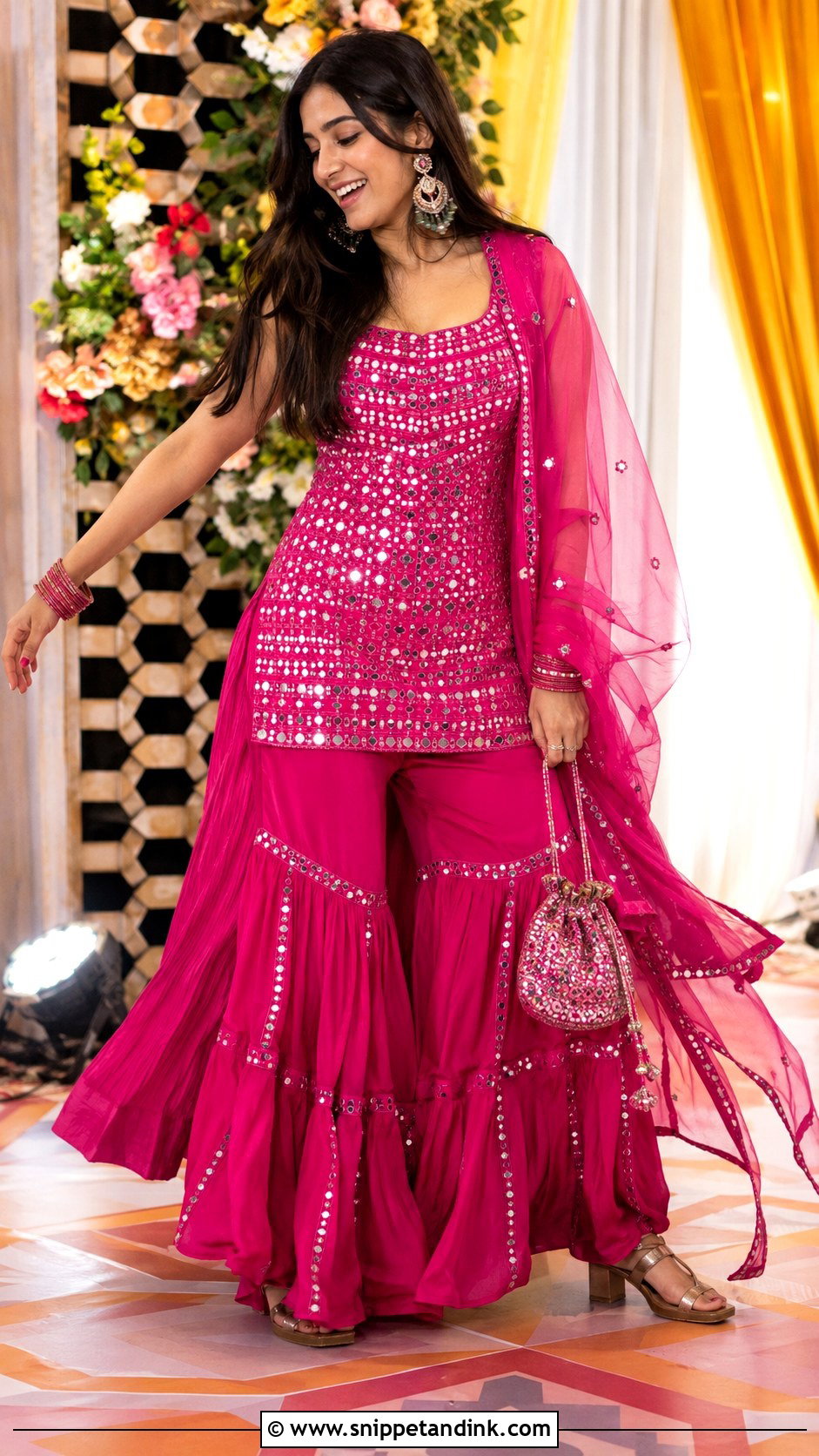
Sharara pants flare from the waist rather than the knee, so they move generously and are easy to sit in. A fitted short kurta keeps that flare visible, with a light dupatta over one shoulder. Mirror work, gota patti, thread embroidery and small sequins all suit the shape. Earrings with movement, stacked bangles, a drawstring potli and low block heels finish it. A high-waisted sharara lengthens the legs; a slightly longer kurta gives more coverage. Hem the pants for your exact shoes, because extra fabric catches on stairs. I suggest it most for mehndi, sangeet, and pre-wedding gatherings, where you’re sitting on cushions one moment and dancing the next.
13. Gharara Set With Dupatta
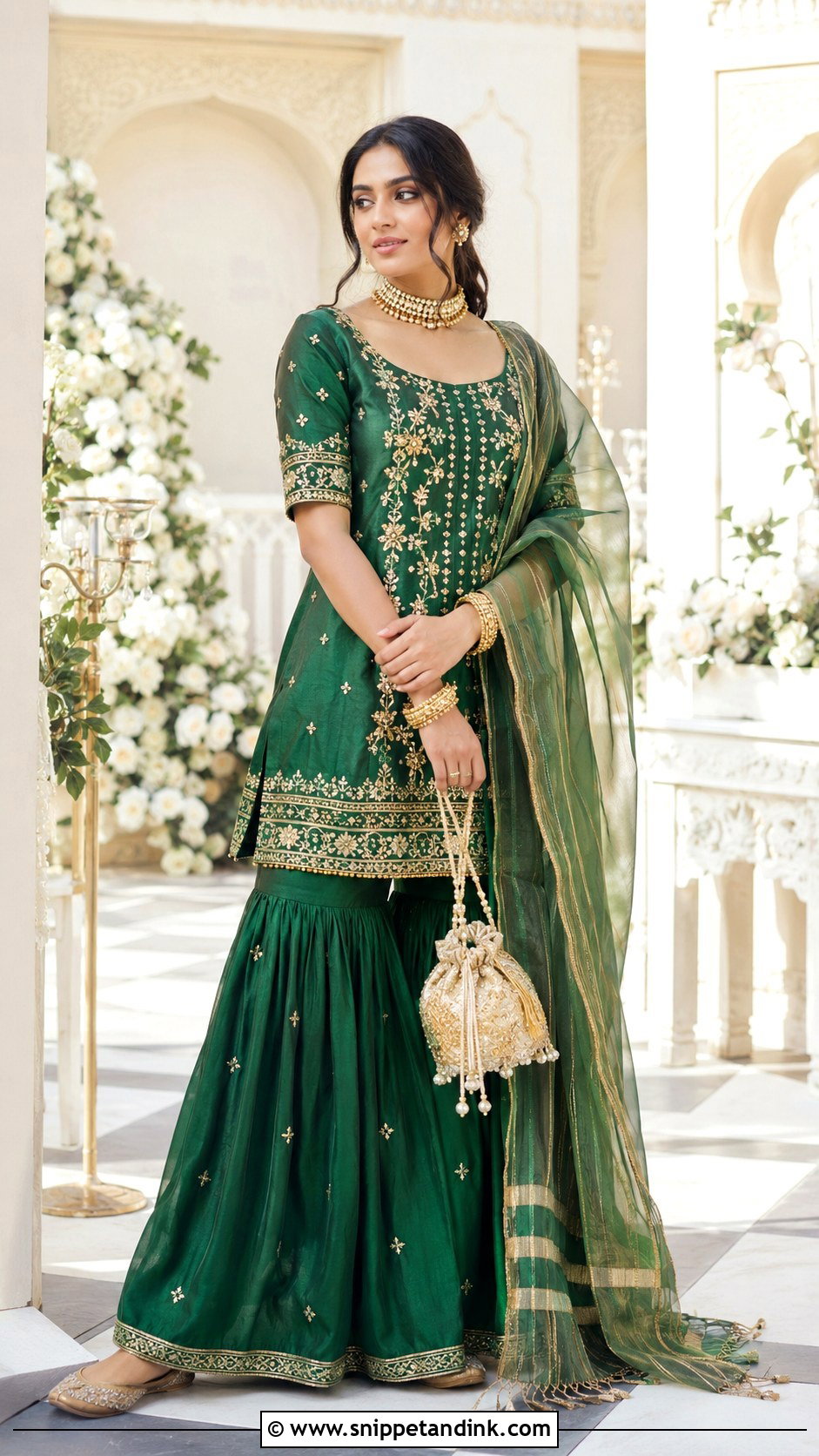
A gharara set is fitted through the upper leg and flares dramatically from around the knee, which makes it more structured than a sharara. Wear it with a short embroidered kurta and a coordinated dupatta. Brocade, silk, georgette or tissue can take it from an intimate ceremony to an evening event. A choker or jhumkas, bangles, a potli and embellished flats complete it. The knee seam is where tailoring makes or breaks it: too high and the flare looks like a skirt, too low and you’ll trip over it. Keep the kurta short, since a longer one hides the defining shape. Balance the work, with heavy pants under a cleaner kurta or the reverse.
14. Palazzo Suit With Long Kurta
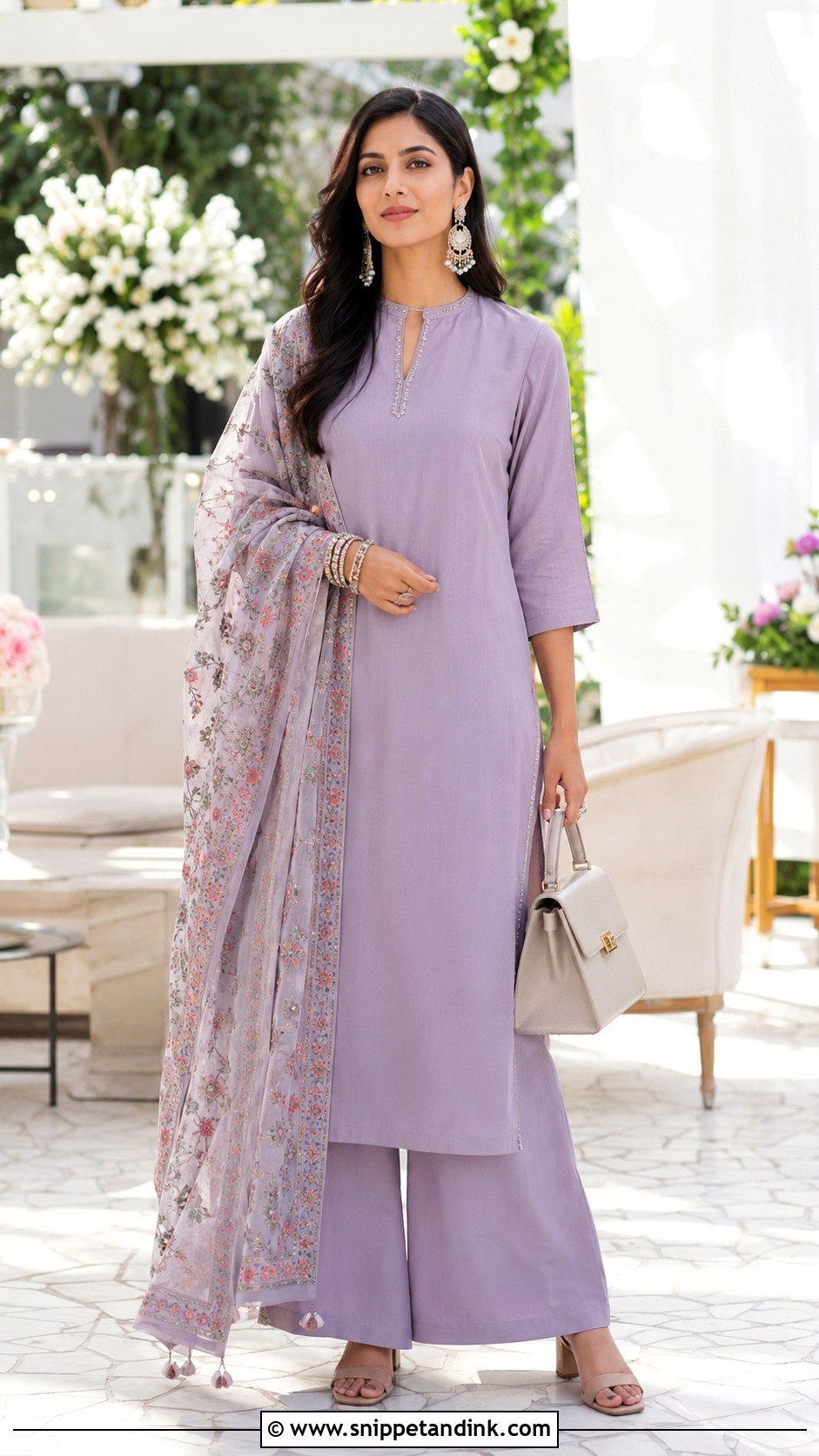
Palazzos with a long kurta are the most comfortable formal outfit I know for women who simply want to move. A straight or gently flared kurta with side slits shows the wide legs as you walk, and a sheer embroidered dupatta adds ceremony detail. One color from neck to hem gives a long line; a contrasting dupatta livens a plainer set. Drop earrings, stacked bracelets, a structured handbag and block-heel sandals complete it. Taller women can wear very broad palazzos, while petite women do better with a controlled flare. Silk, brocade, georgette or jacquard make it formal. Sit down in it before the tailor finishes: if the slits open well past the knee when seated, have them closed an inch or two.
15. Churidar Suit With Embroidered Dupatta
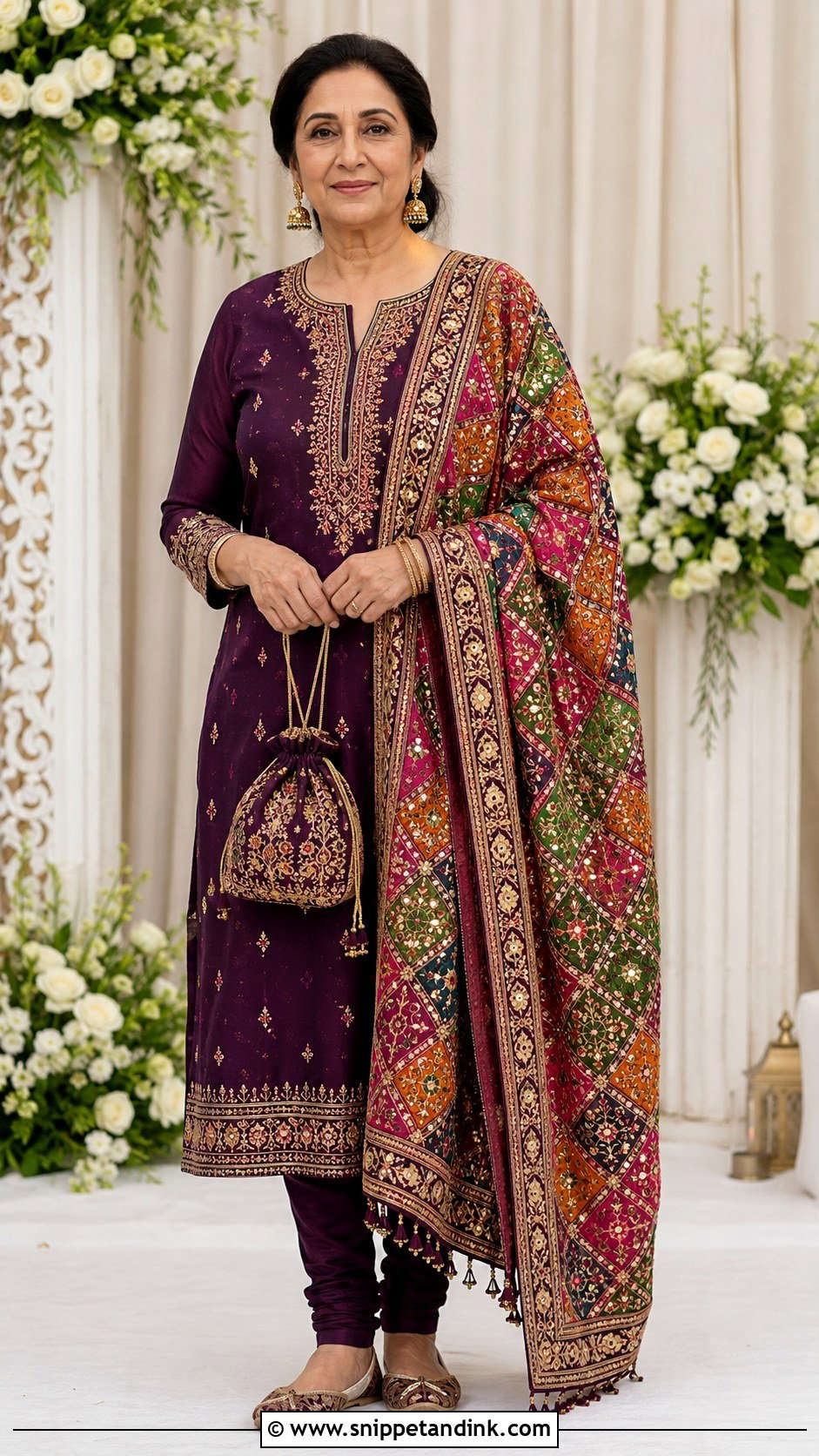
For a religious ceremony or a traditional family function, I’d reach for a churidar suit. The churidar is cut extra long so the surplus gathers in folds at the ankle, and those folds, like stacked bangles, give it its name. Pair it with a knee or calf-length kurta and let the embroidered dupatta be the statement, especially in phulkari, zari or gota. Drape it across both shoulders for formality or pin it to one side for ease. Jhumkas, slim bangles, a small potli and pointed juttis finish it. A side slit makes sitting easier, and a higher neckline balances an ornate dupatta. Choose a kurta fabric that breathes, since three layers add up quickly. It suits women of every age.
16. Cape Lehenga Outfit
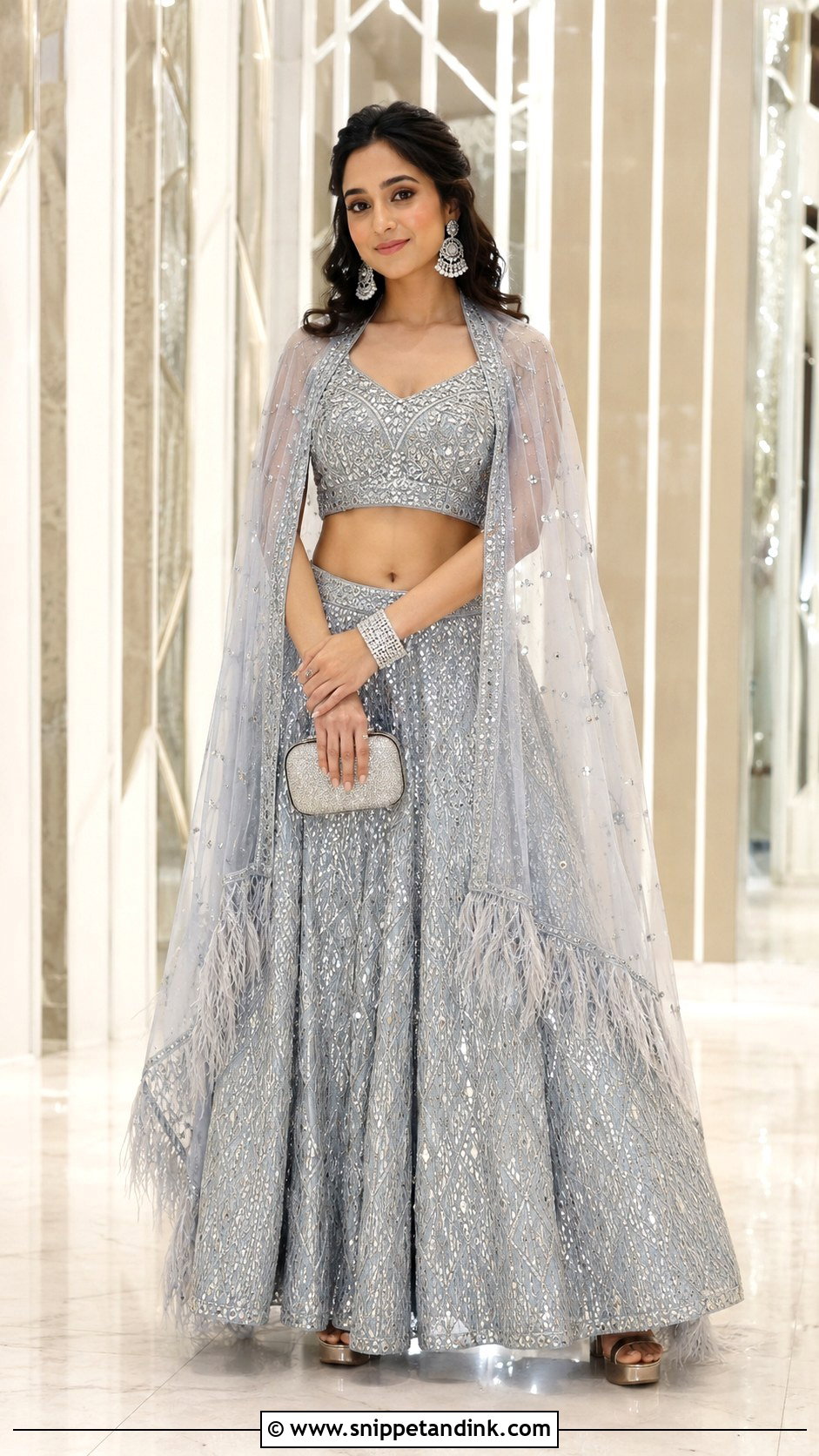
With a cape lehenga, the shoulder layer replaces or joins the dupatta. A coordinated skirt and fitted blouse sit under a sheer embroidered cape that can stop at the waist, knee or floor, and your hands stay free for greeting guests and dancing. The cape frames the neckline, so keep the necklace minimal; statement earrings, a cuff, a small clutch and platform sandals are enough. A short cape suits petite frames, while a longer, softer one draws a vertical line on taller women. Check the arm openings carefully. Some capes have slits or sleeves, and narrow ones stop you lifting your arms above shoulder height. It shows best at a sangeet or reception.
17. Peplum Lehenga Set
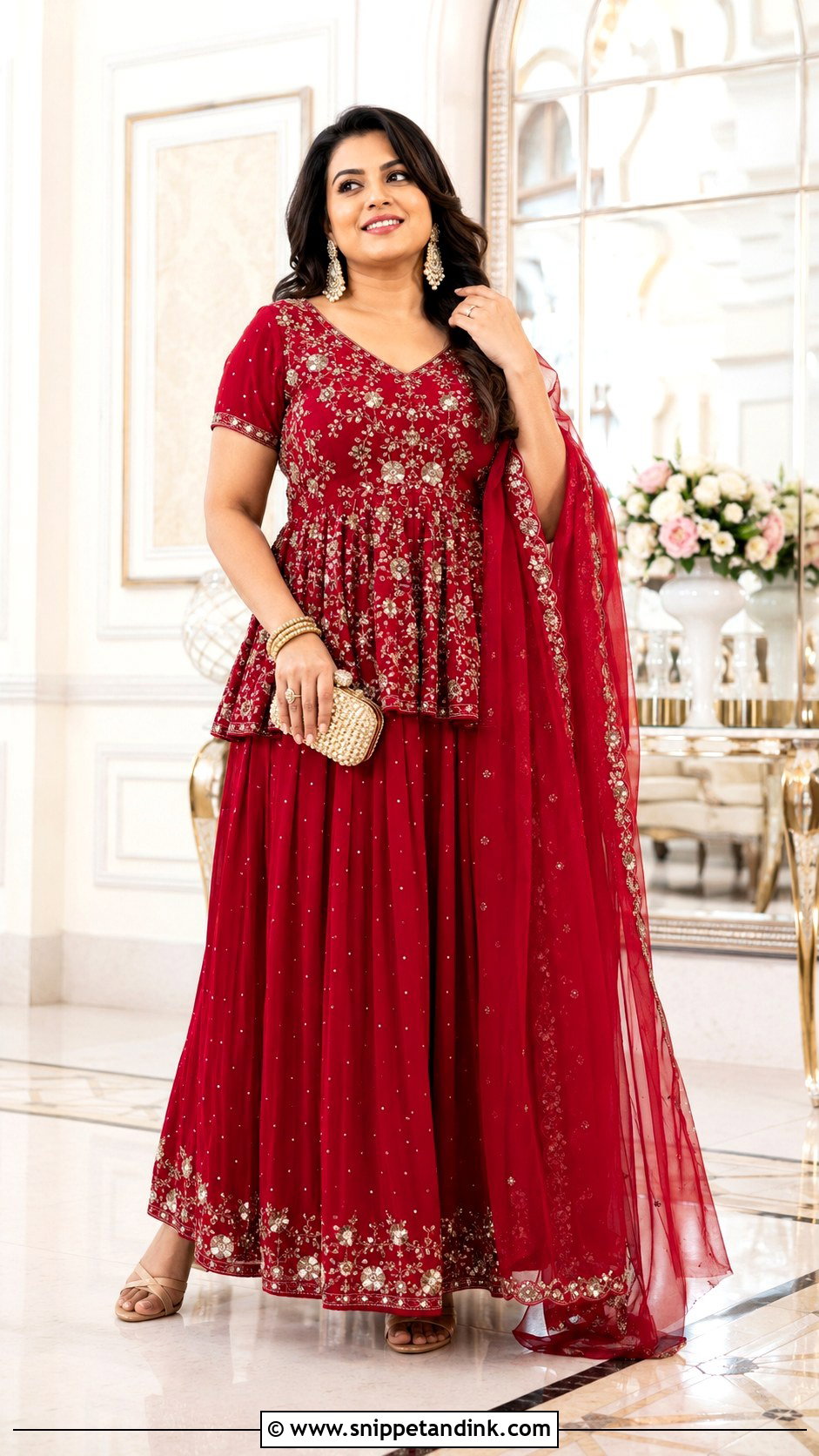
A peplum blouse defines the waist and covers the midriff, which is why I suggest it to women who like a lehenga but not a cropped top. Pair it with a skirt of moderate volume so the peplum’s flare still shows. Drape a light dupatta over one shoulder or around the arms, or leave it off if the top is detailed enough. Chandelier earrings, bangles, a beaded clutch and block heels complete it. Length is the critical measurement. The peplum should end near the upper hip, never at the widest point, where it adds width. Tonal embroidery looks sleek and contrasting colors look playful. Bridesmaids, close family and evening guests all wear it well.
18. Dhoti Pant Set With Jacket
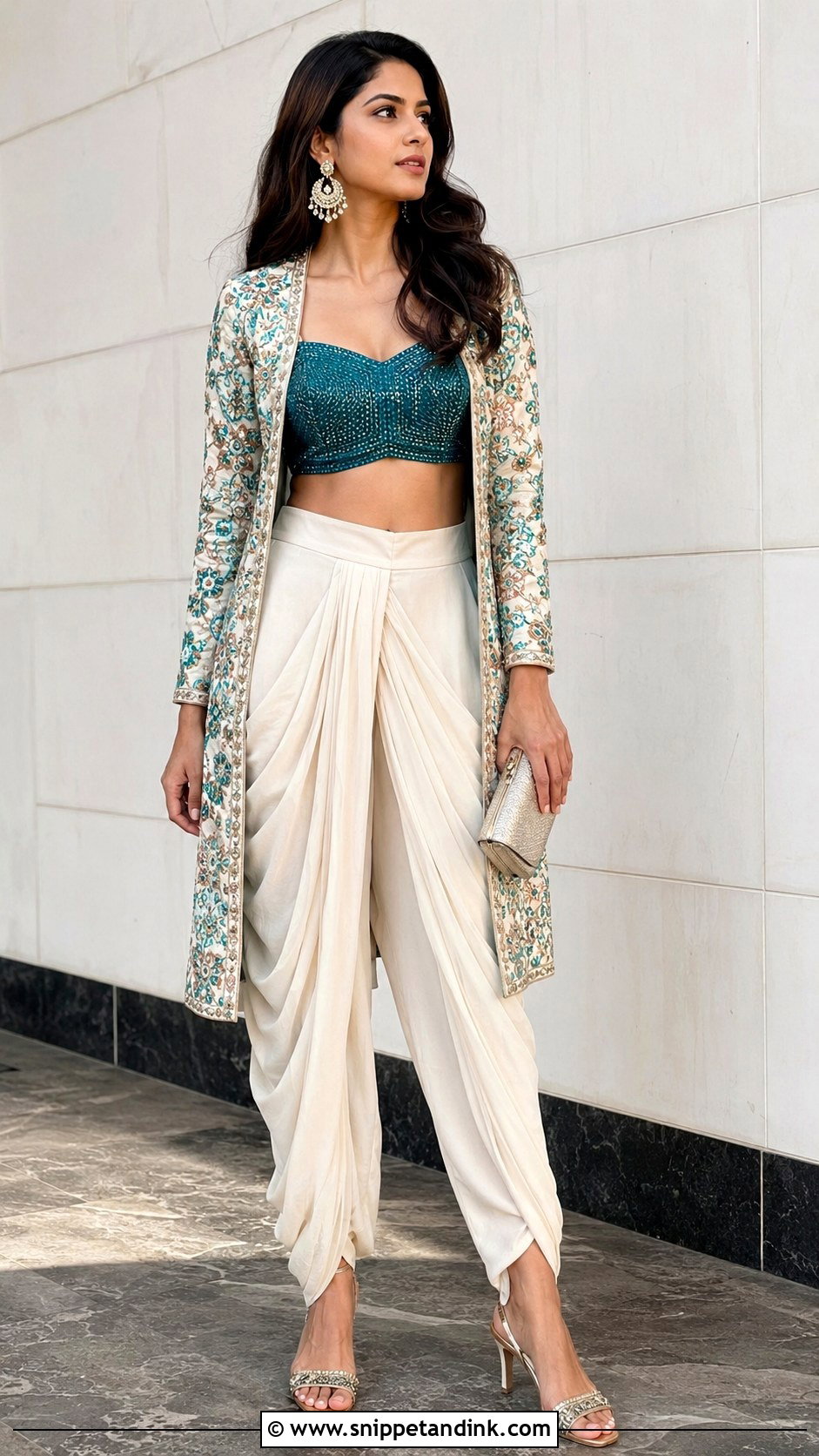
A dhoti pant set gives a confident Indo-Western look for sangeet, cocktail, or welcome parties. Draped dhoti pants, a fitted crop top or short kurta and an embroidered jacket make up the set, with the fitted top balancing the volume at the hips. Lightweight fabric lets the pleats fall cleanly; stiff silk makes the drape stick out sideways. Statement earrings and a sleek clutch go with high-heeled sandals, though I’d switch to embellished flats for a long dance night. A cropped jacket marks the waist, and a knee-length one gives coverage and a longer line. Keep the palette coordinated so the body isn’t broken into blocks.
19. Indo-Western Draped Skirt Set
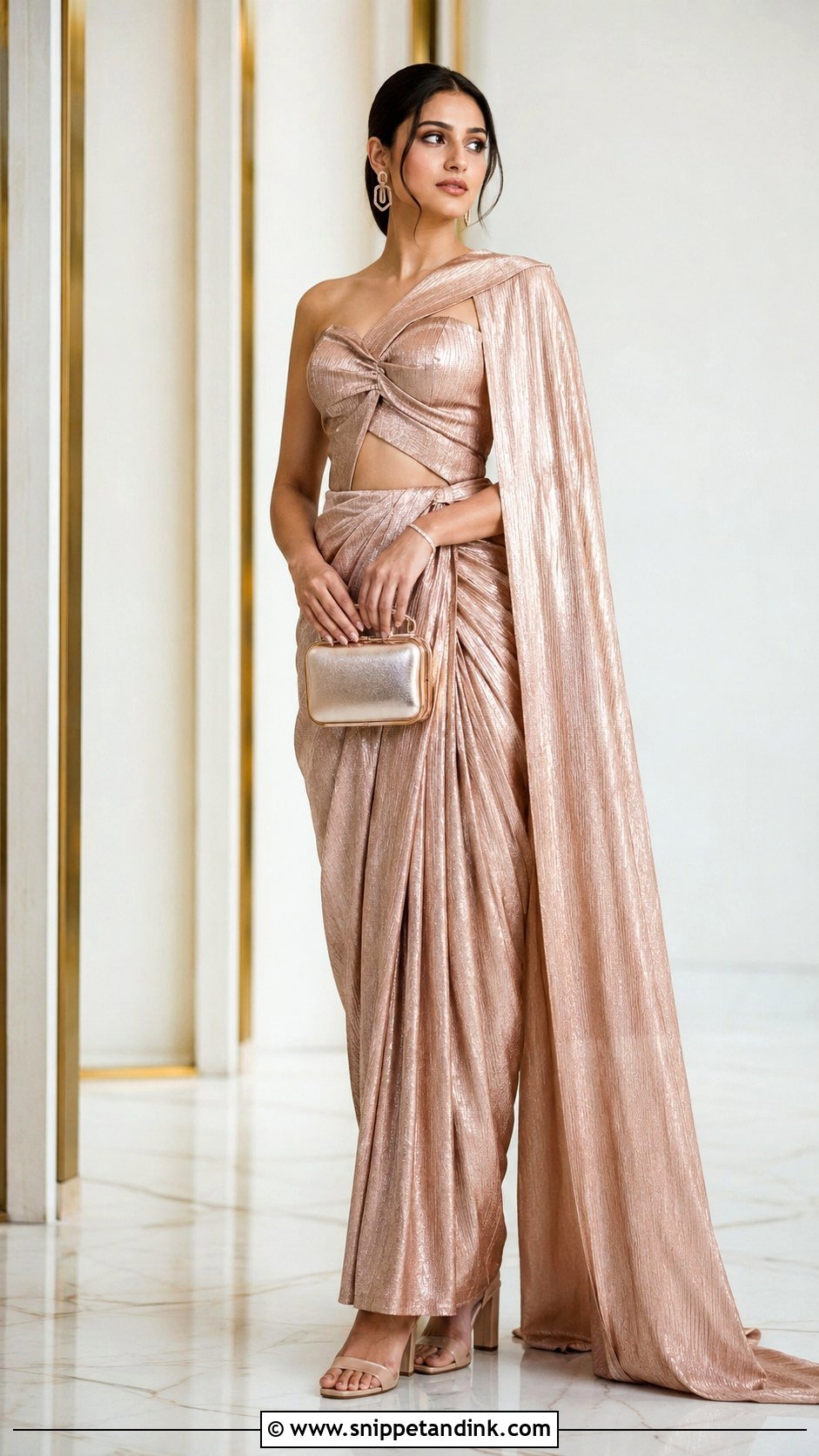
A draped skirt set gives you a saree’s softness in separates. Choose an asymmetric or pre-pleated skirt with a structured crop top and a jacket, cape or attached shoulder drape. Rich solids, metallic textures and subtle embroidery suit evening receptions. Geometric earrings, a clean bracelet, a structured mini bag and modern block heels complete it. If the skirt is heavily gathered, keep the top fitted and plain. A longer jacket covers and lengthens, while a cropped cape draws the eye to the waist. Ask whether the drape is stitched down. If it isn’t, one pin at the hip keeps it in place through a long evening.
20. Velvet Lehenga For Winter Wedding
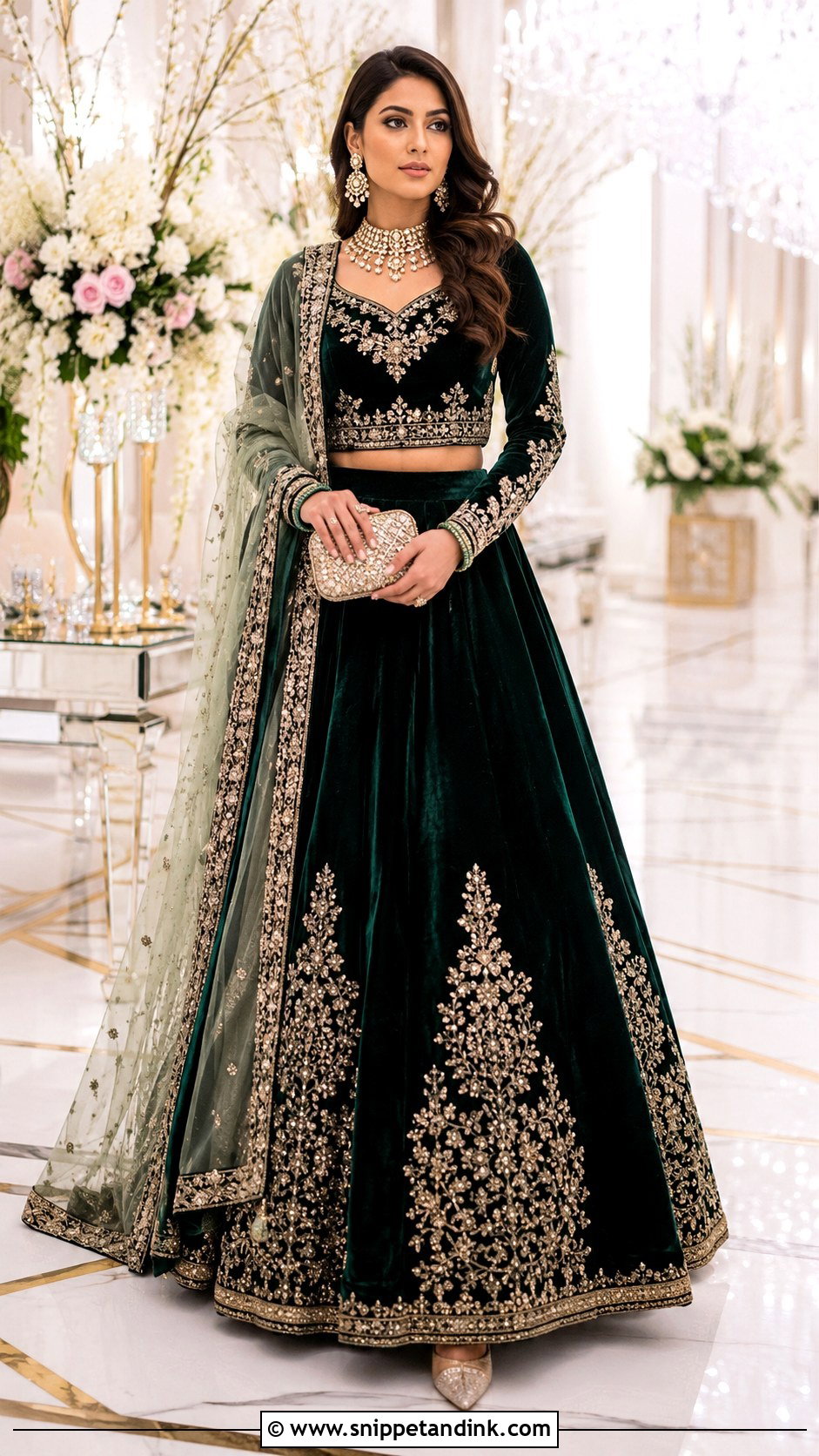
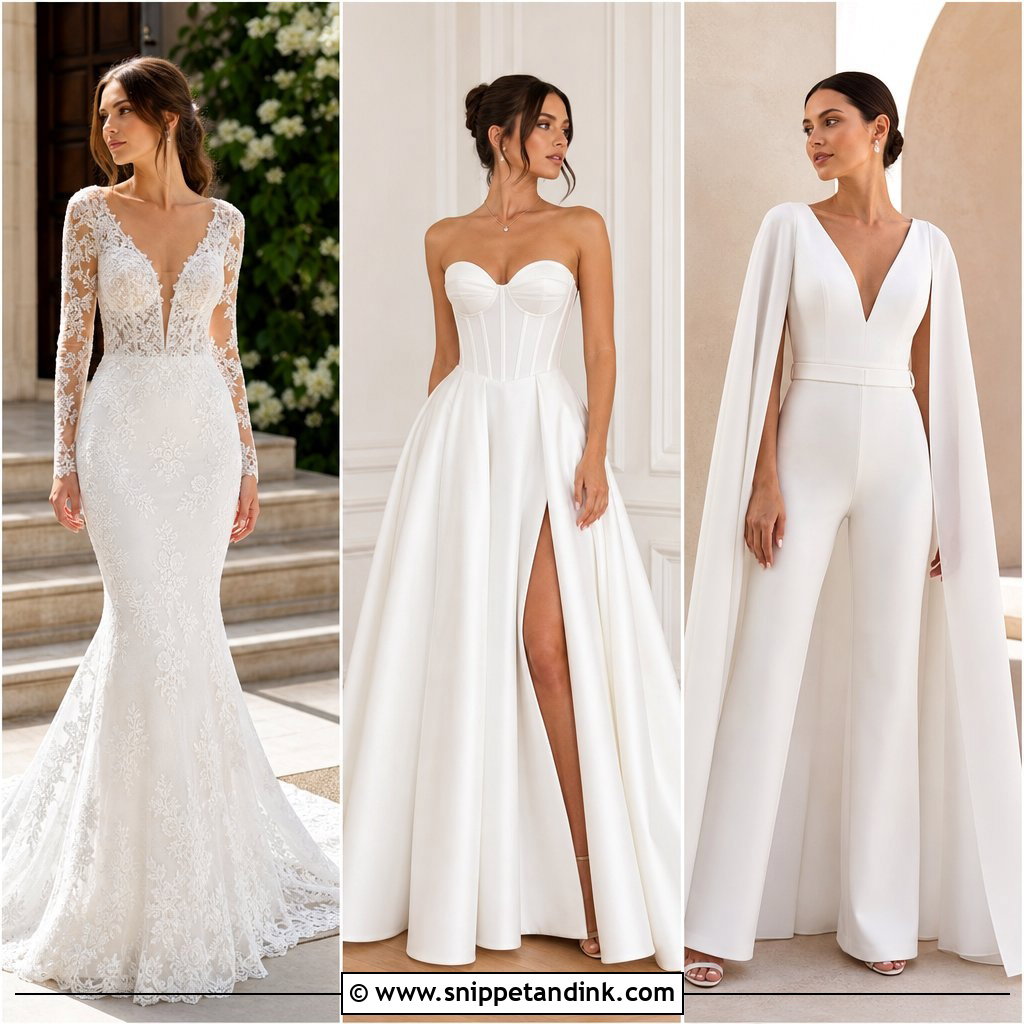
After sunset in winter, velvet finally makes sense. A burgundy, emerald, navy, plum or deep teal velvet lehenga has a regal weight. A velvet or raw-silk blouse with a net dupatta keeps it from feeling heavy, and long sleeves add warmth plus space for embroidery at the cuffs. Kundan jewelry, an embellished clutch and closed-toe heels or padded juttis complete it. Keep the densest work to the hem, neckline or waist. I always ask about the lining. Indoor venues are often heated, velvet traps body heat, and a cotton lining breathes far better than a synthetic one.
Flying to a Destination Wedding With a Lehenga
I never let a client check her ceremony outfit into the hold. Lost luggage is rare, but replacing an altered lehenga in a foreign city is close to impossible. Here’s how I pack one for the cabin.
- Turn the skirt inside out so the embroidery faces inward and can’t snag.
- Lay tissue paper between any embroidered surfaces that touch, then fold the skirt loosely in thirds rather than tight squares.
- Pack a can-can separately, flattened, or check whether the venue can lend a steamer before you bring one.
- Keep jewelry, blouse and dupatta pins in a hard case in your handbag.
- Hang everything the moment you arrive and steam from the inside, never pressing directly on zari or sequins.
Think about the climate, too. A beach or tropical destination punishes velvet, heavy zardozi and synthetic linings, so lean toward organza, chiffon, cotton silk or a pre-draped saree, and save the heavy pieces for a winter or air-conditioned venue.
Which Outfit Belongs to Which Moment?
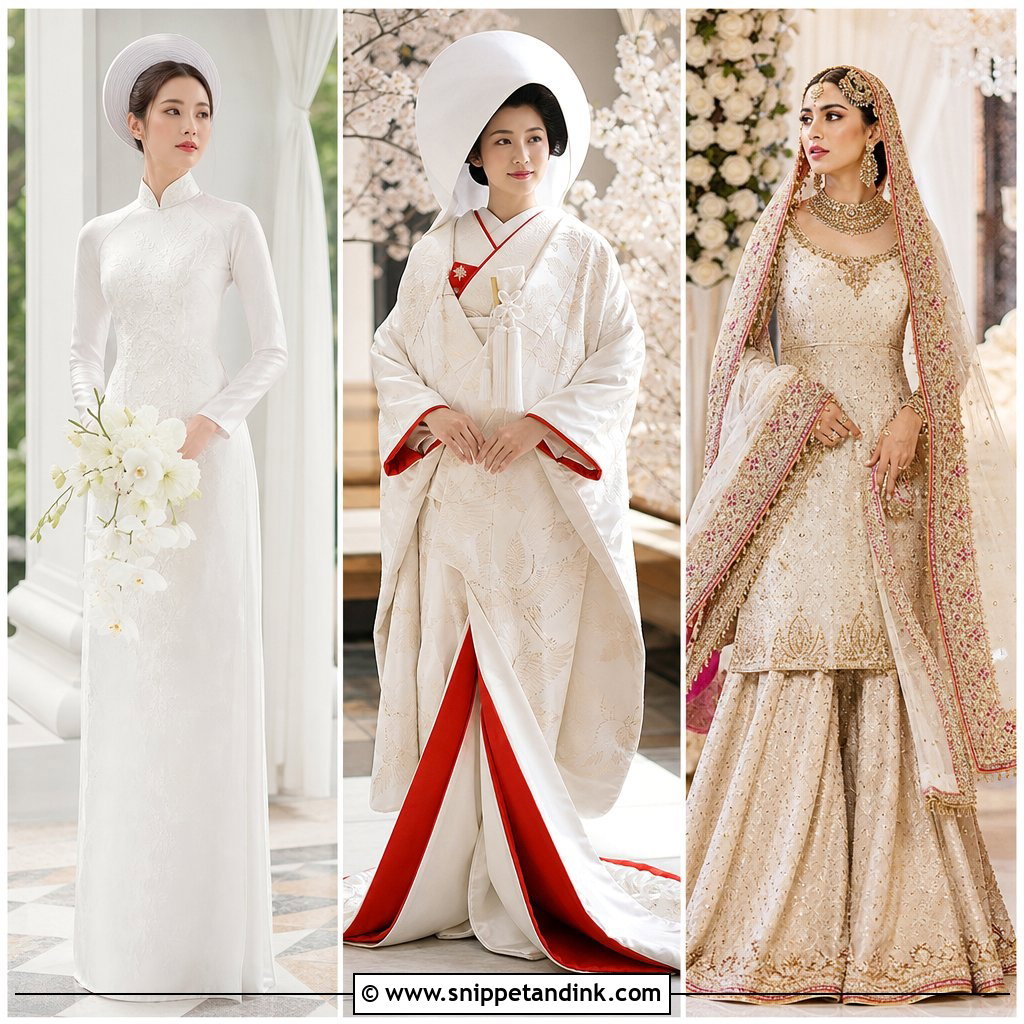
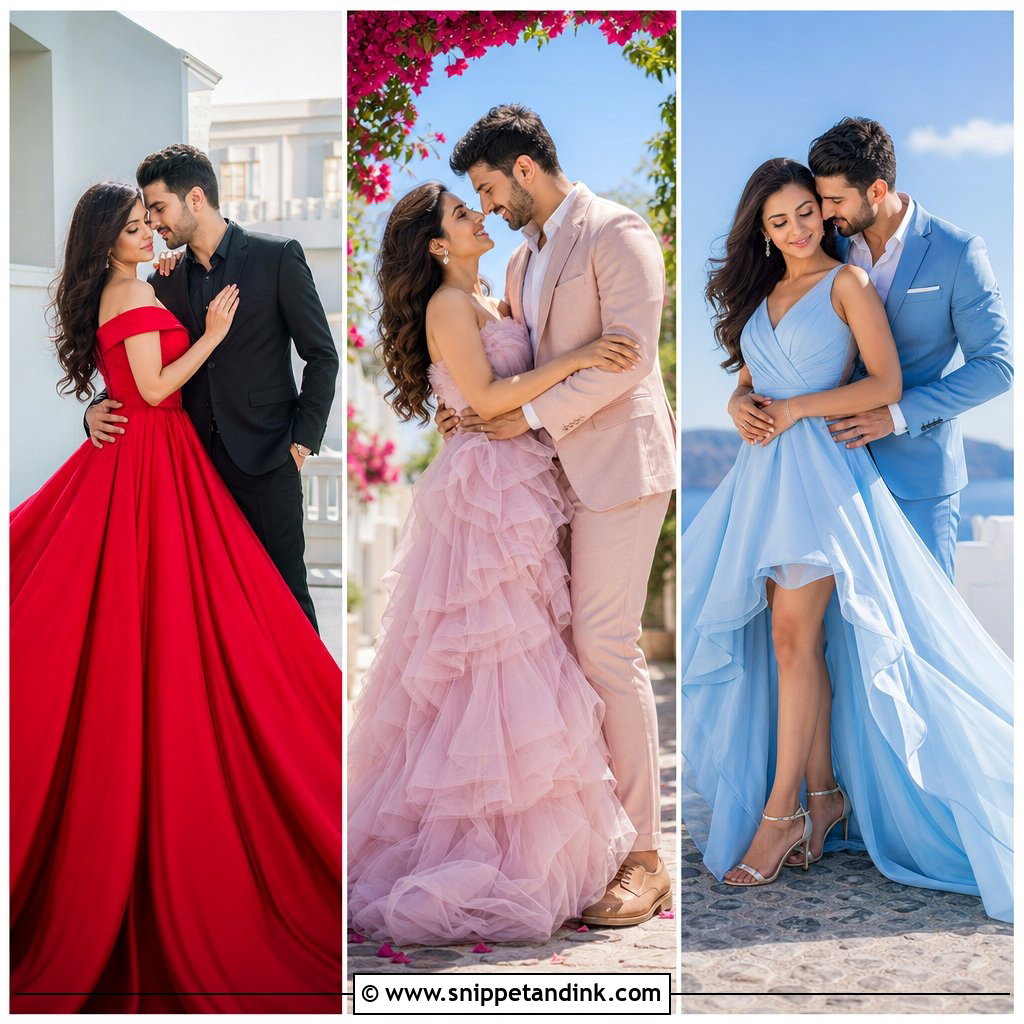
Each of these Indian Wedding Dress Styles earns its place at a different moment. A red lehenga or silk saree honors the formal ceremony, while a floral lehenga, sharara or palazzo suit keeps you moving at daytime functions. Pre-draped sarees, capes, jackets and dhoti sets bring a modern line without losing their Indian roots. Read the invitation, ask about regional customs and think about your role in the wedding. Confirm colors where needed, start alterations early and try each outfit with its shoes and jewelry before the day. Then wear what feels secure enough to forget about once the celebration starts.
You'll Like These Ideas:


Leave a Reply