
The first question I ask anyone dressing for an Indian wedding is not what she likes, but what she’ll be doing in it. A haldi means paste and mess, a sangeet means dancing, a ceremony can mean sitting on the floor for an hour, and a reception means standing and talking until late. These Indian wedding outfit ideas for women are arranged with that in mind. Day functions want light fabric and bright color; evening events can carry silk, velvet and metal thread. Walk, sit and dance in anything heavy before you commit to it, and leave the highest heels at home. Traditional sarees, suits and fusion pieces are all here.
Wearing a Saree When You’ve Never Draped One
Plenty of guests want a saree for the ceremony and have never tied one. That is fine, but don’t try to learn on the morning of the wedding. A saree needs three things besides the six yards: a fitted blouse, a petticoat that matches the saree’s color, and pins. The petticoat drawstring is what holds the whole drape, so it should be tied firmly at your natural waist.
Practise at least twice at home, and wear the shoes you’ll wear at the wedding, since the hem length is set with them on. If that sounds like too much, many cities have drapers who come to your hotel, or you can ask a relative who wears sarees often. A pre-draped saree is a sensible fallback.
- Safety pins: one at the shoulder for the pallu, one at the waist for the pleats.
- Petticoat: cotton for daytime, satin for evening, close to the saree color.
- Blouse: tried on with the bra you’ll wear.
- Fall: a strip stitched inside the hem so it hangs straight.
1. Floral Lehenga for Indian Wedding Mehndi
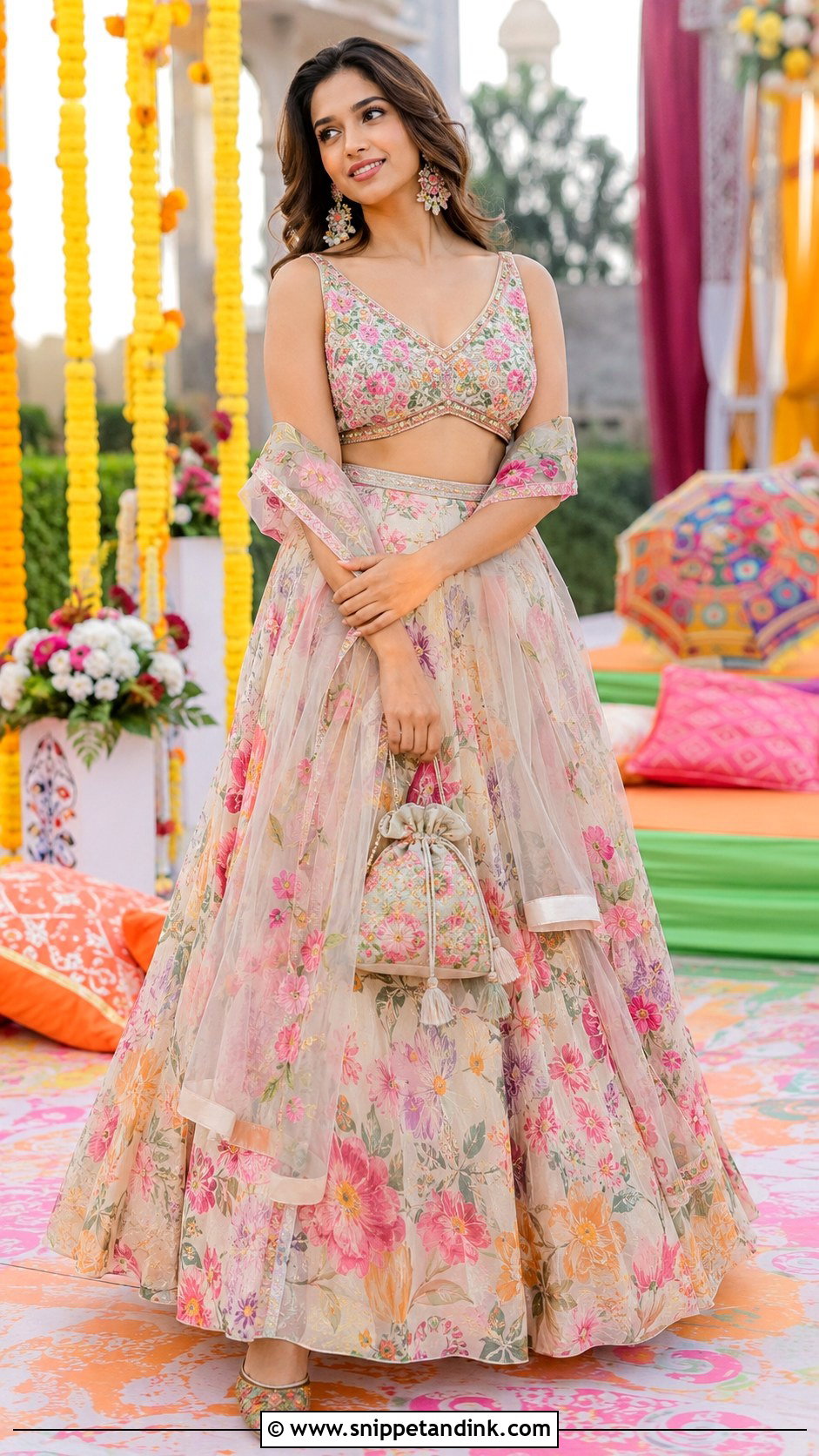
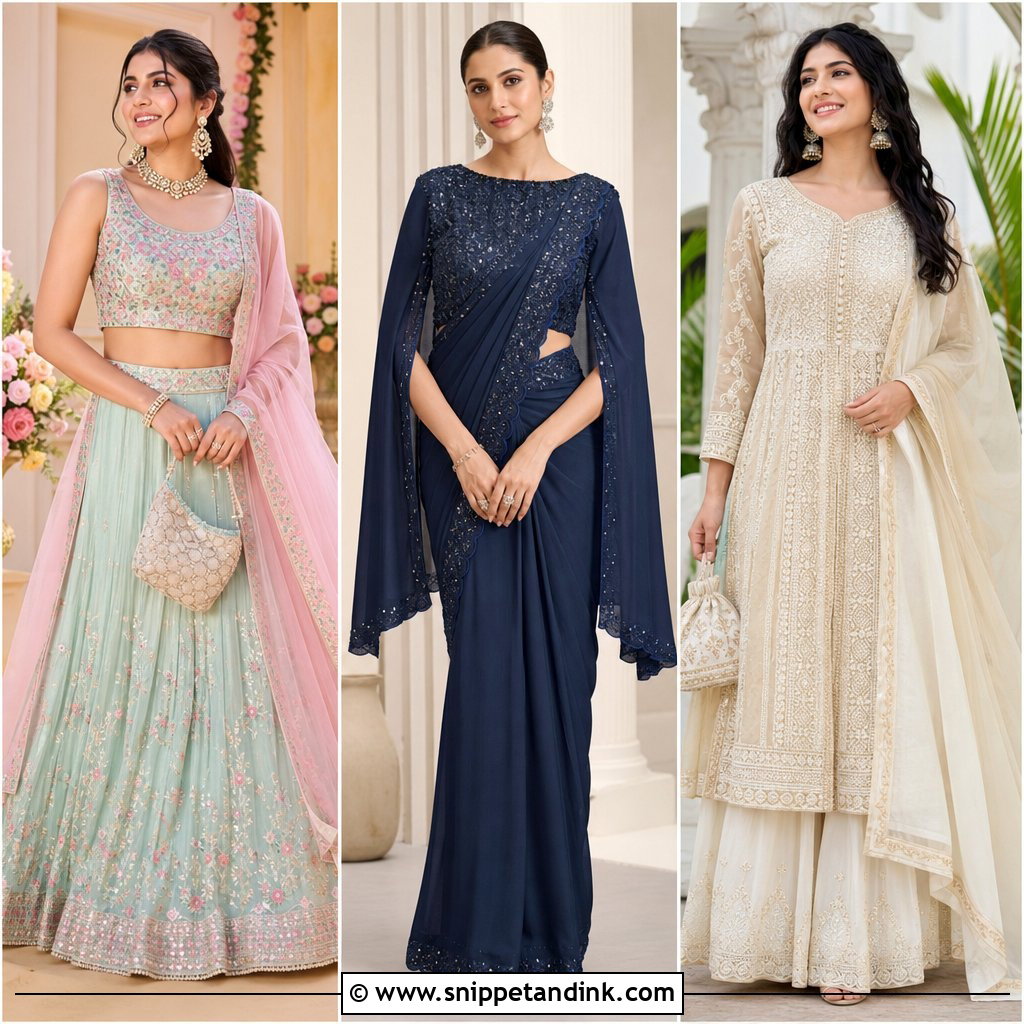
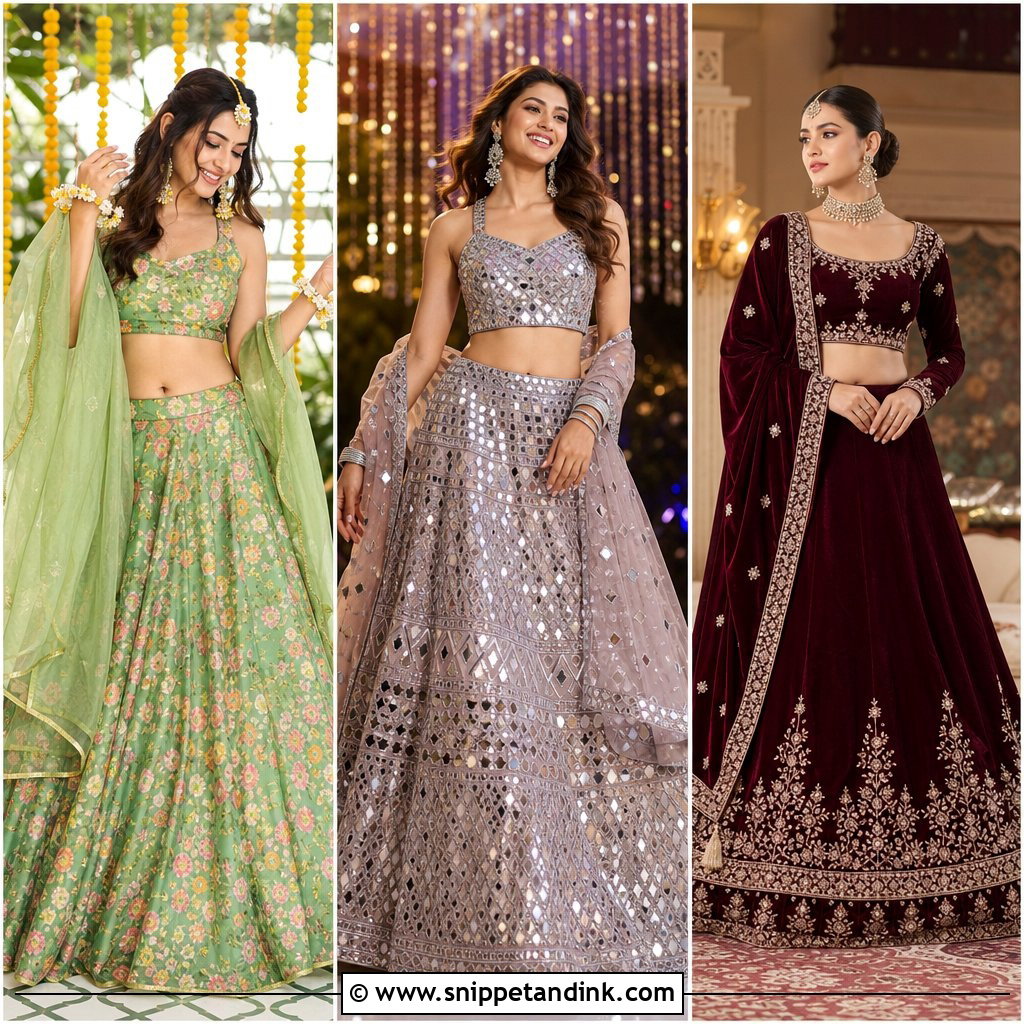
Prints forgive a lot at a daytime mehndi, where you’ll be near wet henna, food and children. I’d choose a floral lehenga in organza, georgette or printed silk with a light, single-layer skirt, since layered cancan gets hot outdoors. A coordinated cropped blouse and a dupatta over one shoulder keep your hands free. Pink, mint, peach and green sit well against marigolds. Block heels or juttis, floral earrings and a small potli are enough. A braid or low ponytail keeps your hair out of the way.
2. Yellow Sharara Set for Indian Wedding Haldi
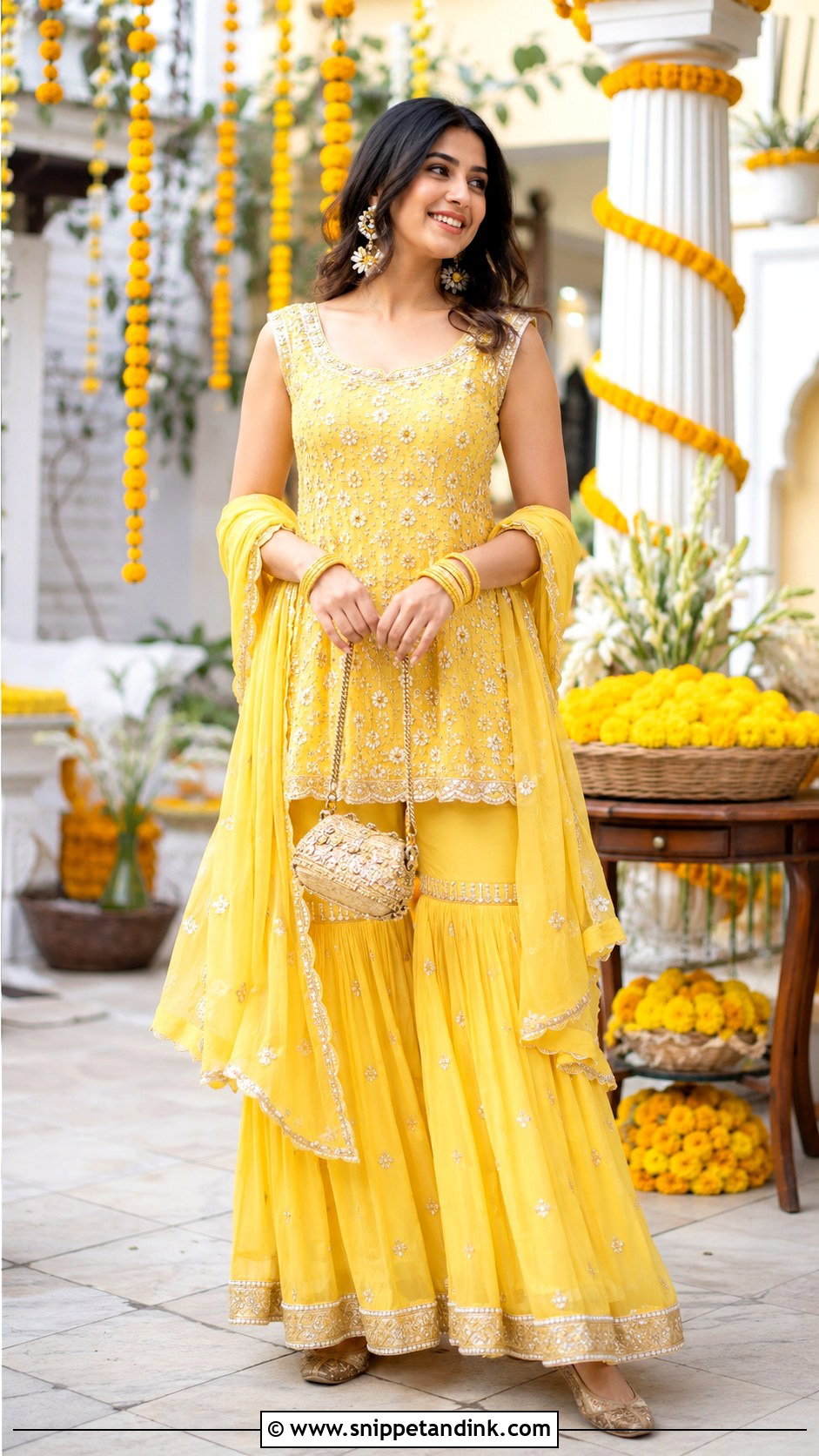
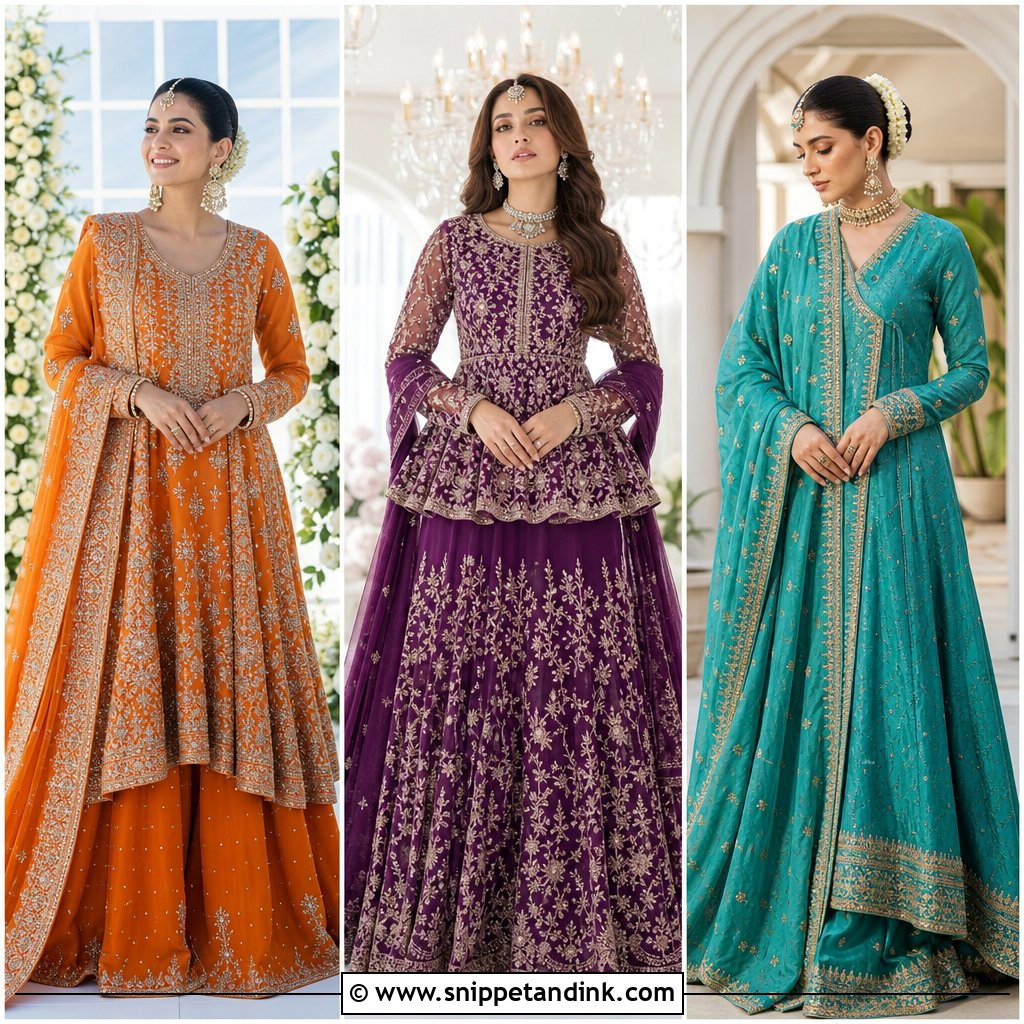
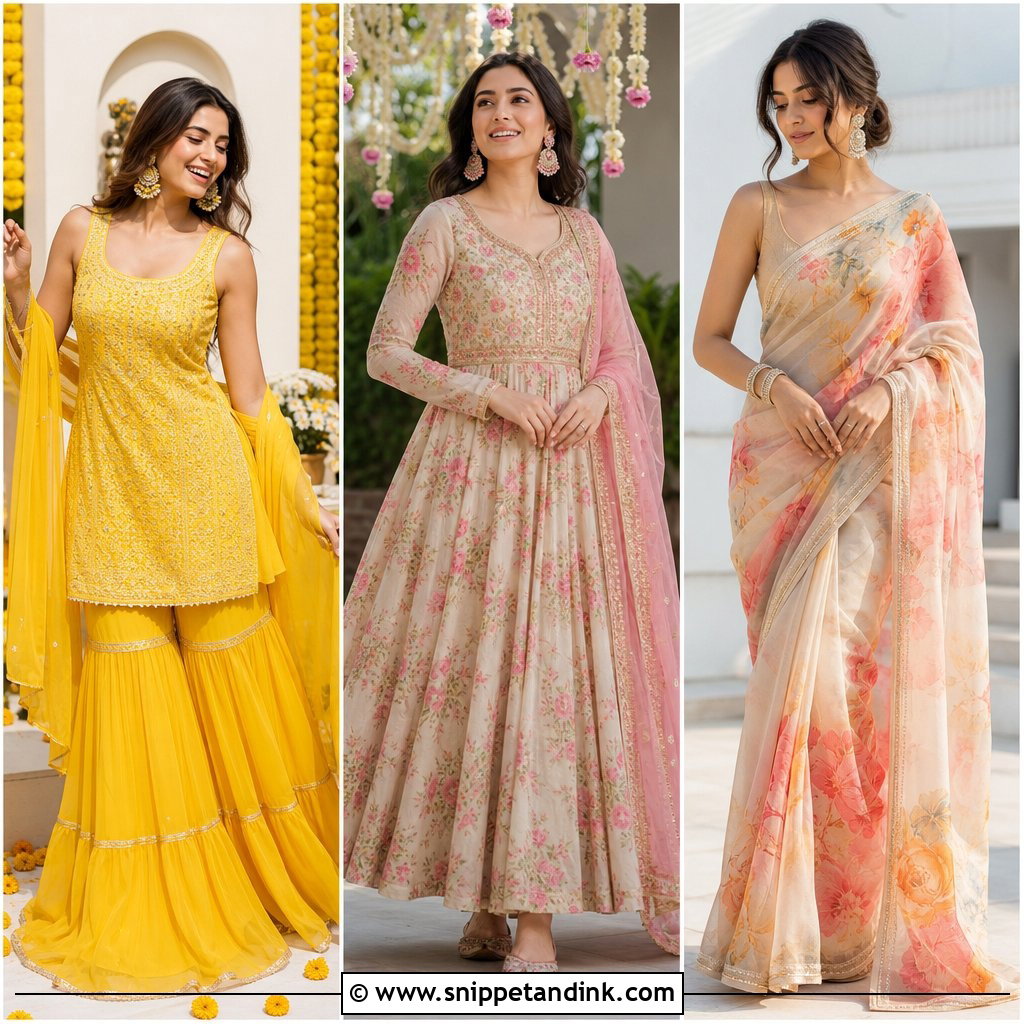
A lively haldi function will get turmeric on you, so buy for washability first. A short embroidered kurta over sharara pants in cotton silk, chiffon or light georgette gives room to move. A gota border on the dupatta survives far better than delicate hand embroidery. Flat juttis, small gold earrings and colorful bangles keep it informal. Leave the good handbag at home; a small embroidered wristlet is easier and cheaper to replace if it gets stained.
3. Mirror Work Lehenga for Indian Wedding Sangeet
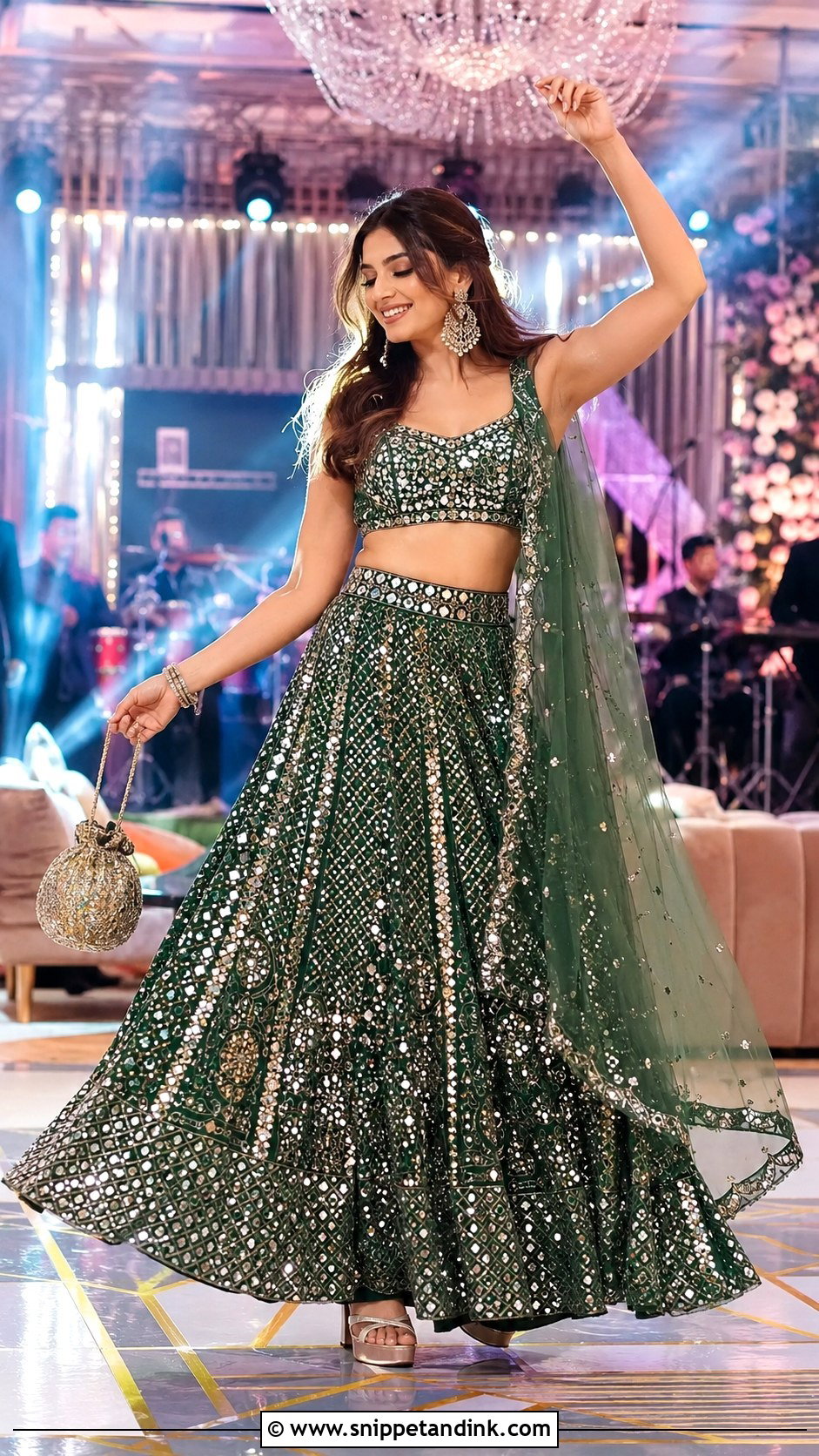
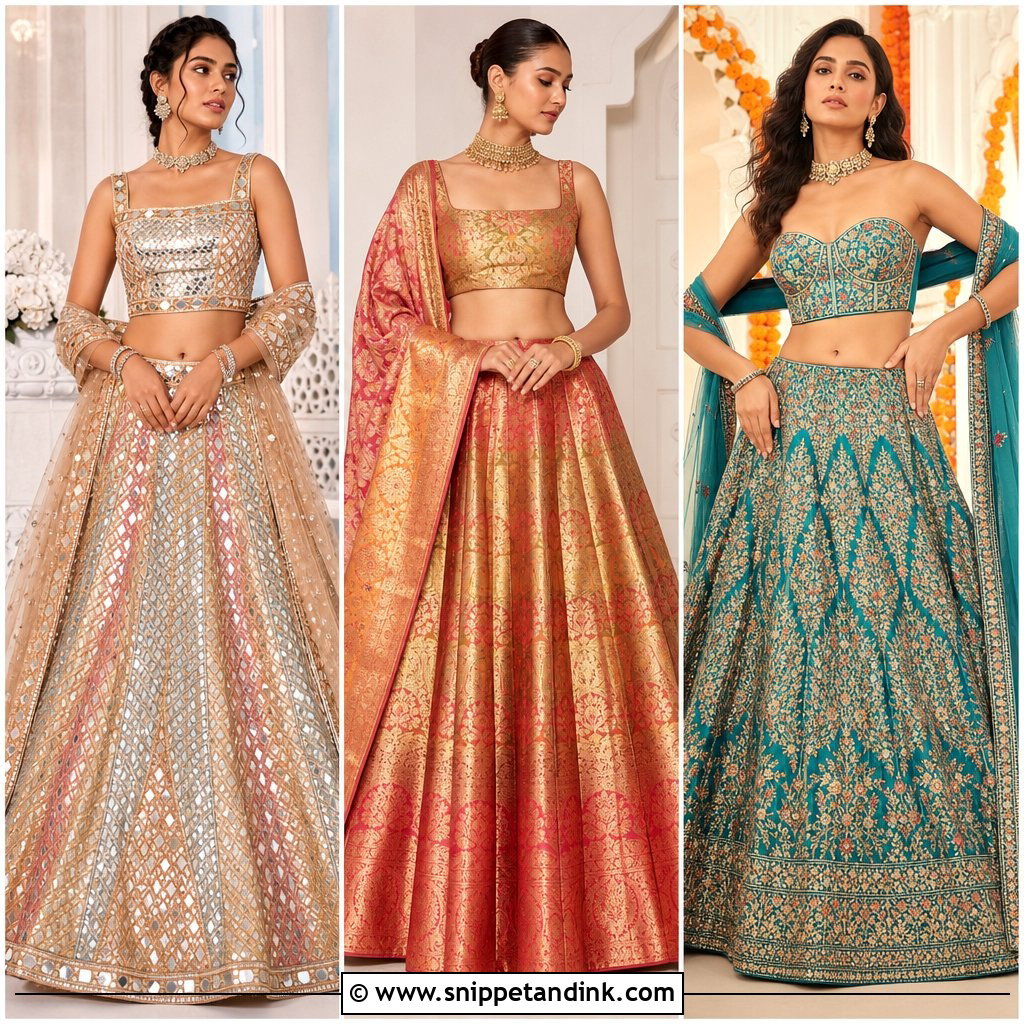
At a sangeet, a mirror work lehenga throws light all over the dance floor. What matters is how the mirrors are spread. Concentrated heavy panels pull the skirt out of shape and weigh on one hip, so I look for work distributed across the skirt and blouse. Emerald, navy, plum and deep teal hold color under stage lights. Pin the dupatta at the shoulder and waist, or it ends up on the floor by the third song. Statement earrings can replace a necklace, and a crossbody potli keeps your hands free.
4. Silk Saree for Indian Wedding Ceremony
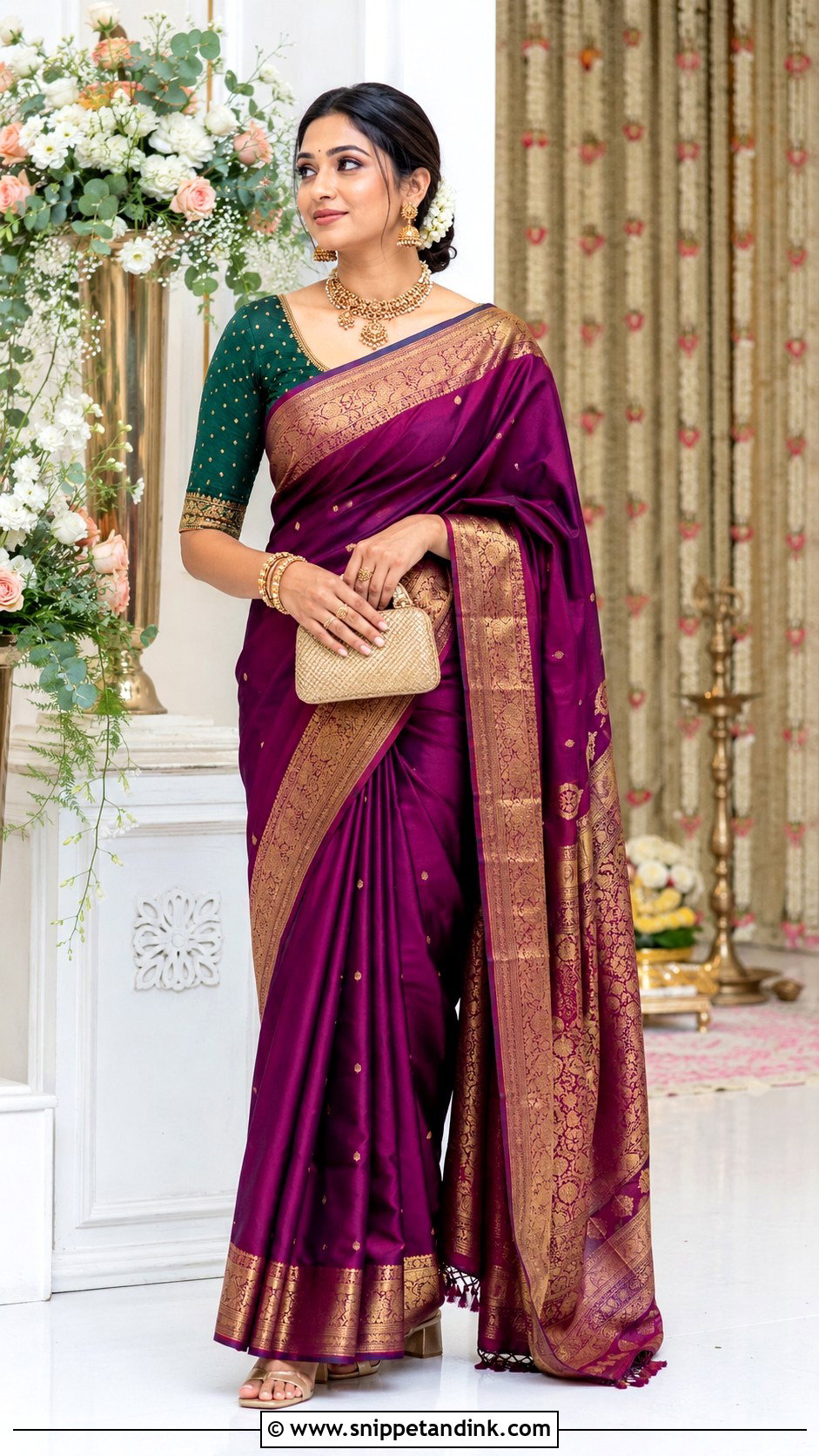
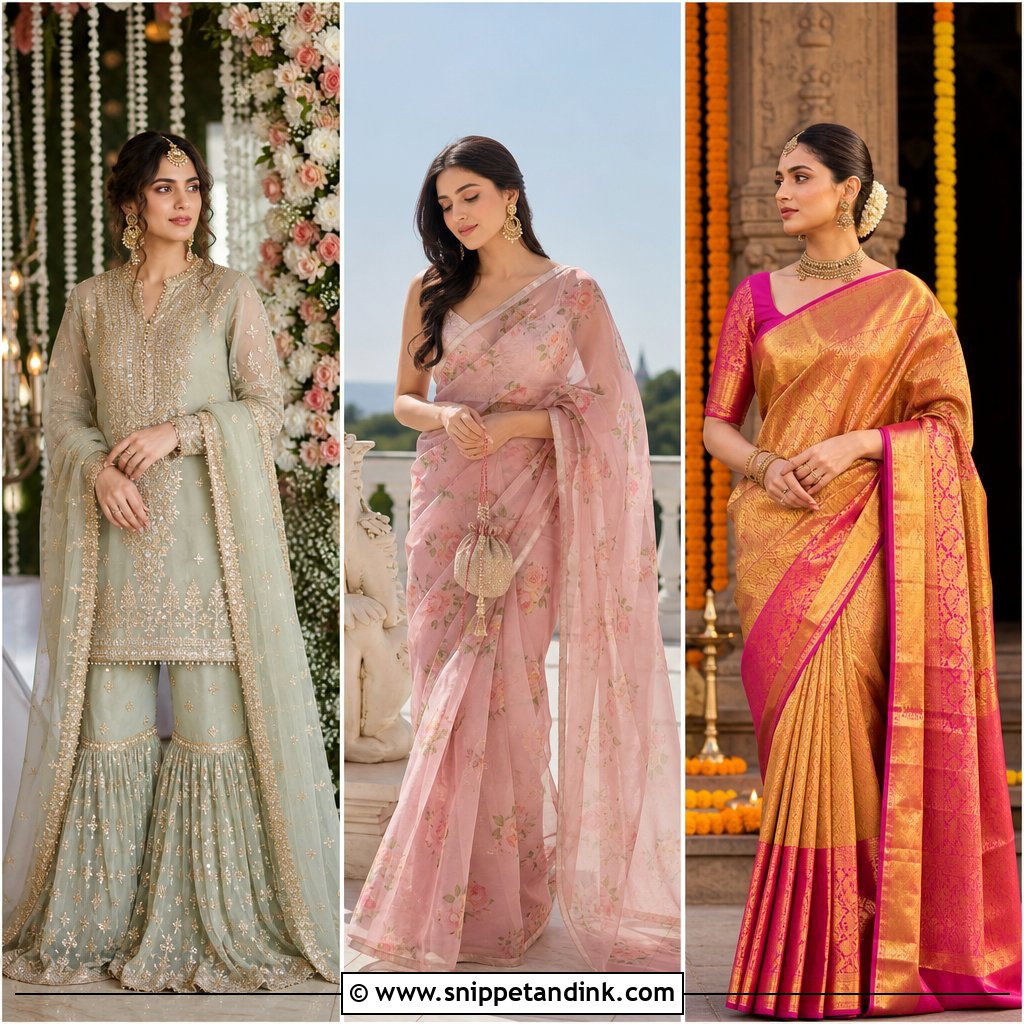
A silk saree is the safest formal choice for the main ceremony. Banarasi, Kanjeevaram and Paithani each have their own weave and border, and wearing your region’s silk to a family wedding is often appreciated. Pick a shade that sits near the wedding palette without echoing the bride. Elbow-length sleeves and a modest neckline suit religious rituals. Silk is heavy and slippery, so if you’ll be sitting through long rites, have it professionally pleated and pinned. Gold jewelry, low block heels and a low bun with flowers finish it.
5. Sequin Saree for Indian Wedding Reception
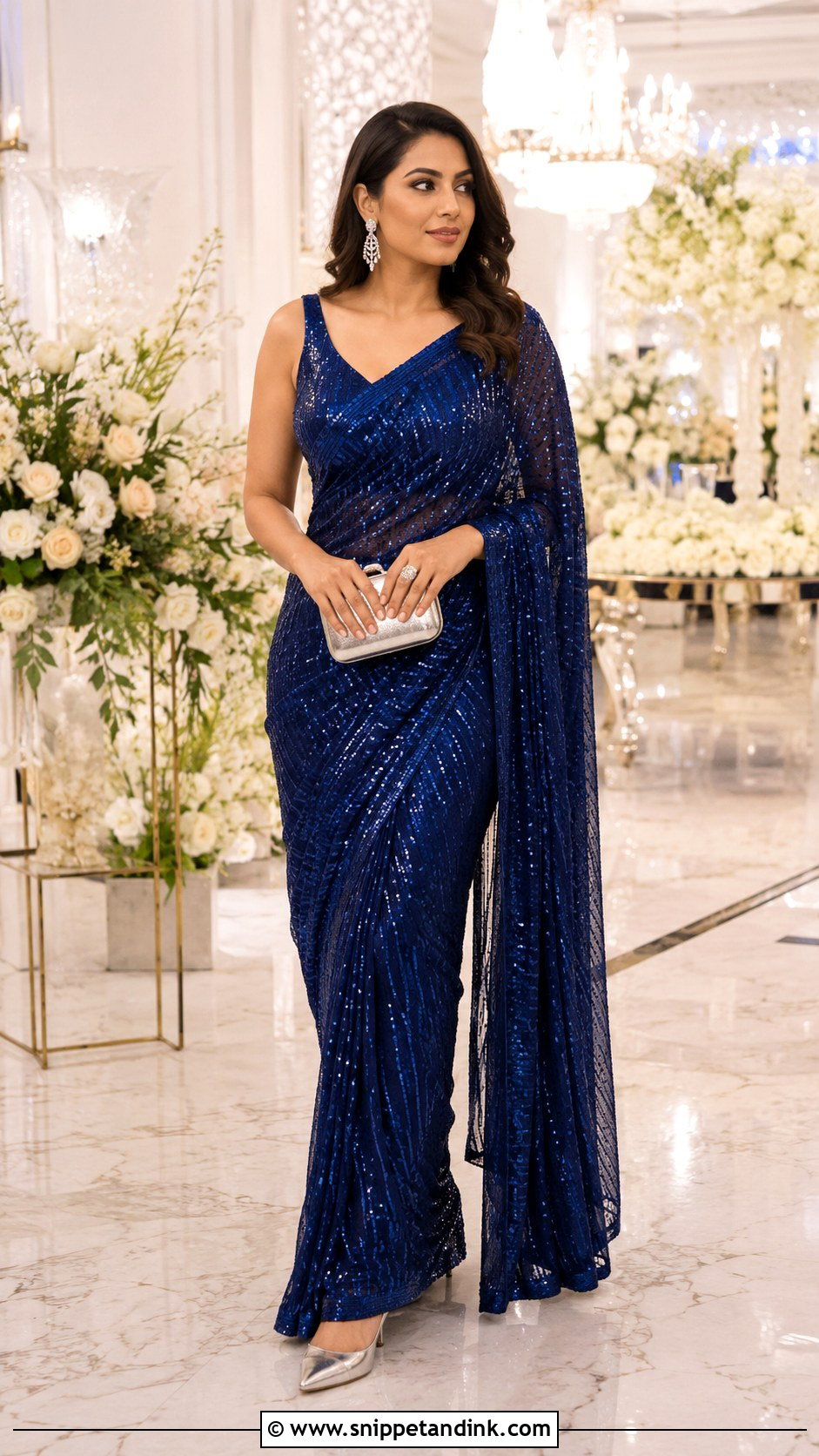
Sequins look best at night, and a sequin saree in a fluid georgette base drapes smoothly without turning stiff. Deep blue, silver, champagne and forest green all suit a formal reception. The fabric does the shining, so wear crystal earrings or a cocktail ring and stop there. Sequins scratch the inner arm and catch on a beaded blouse, so I pair them with a smooth satin or crepe blouse. A pre-stitched version stays neat through dinner and dancing. Pointed heels, a metallic clutch and soft waves complete it.
6. Anarkali Suit for Indian Wedding Guest
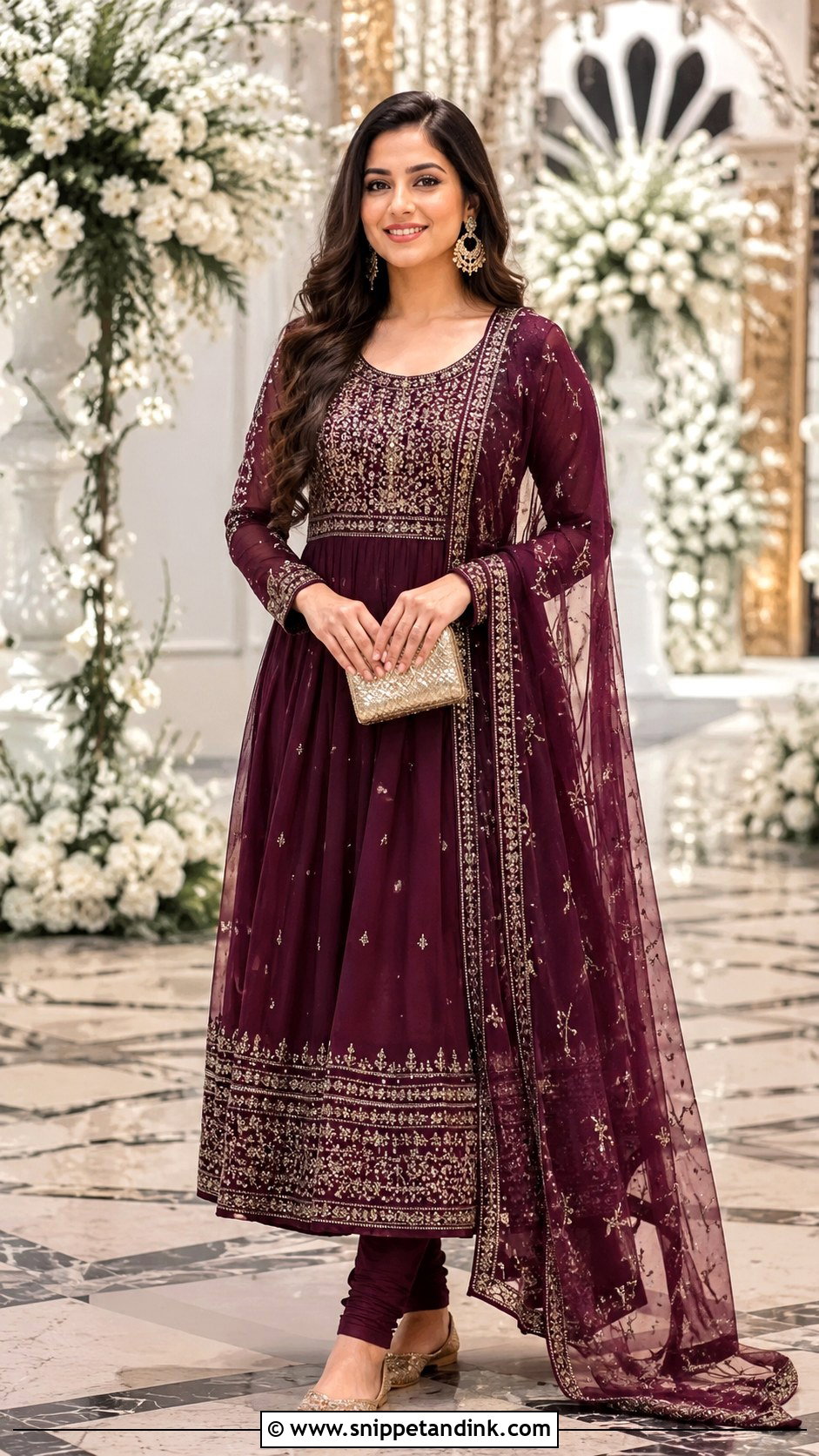
An Anarkali gives full coverage and a flowing skirt with nothing to drape, which is why I suggest it to guests who aren’t used to Indian wear. The flare starts below the fitted bodice. Georgette and chiffon are light; silk and brocade are more formal. Proportion matters here: on petite women a controlled flare and a slightly higher waist keep the skirt from swallowing them, while taller women can carry a full, floor-length kali. Churidar pants, a dupatta over one shoulder, long earrings and low heels take it from afternoon to dinner.
7. Palazzo Suit for Indian Wedding Celebration
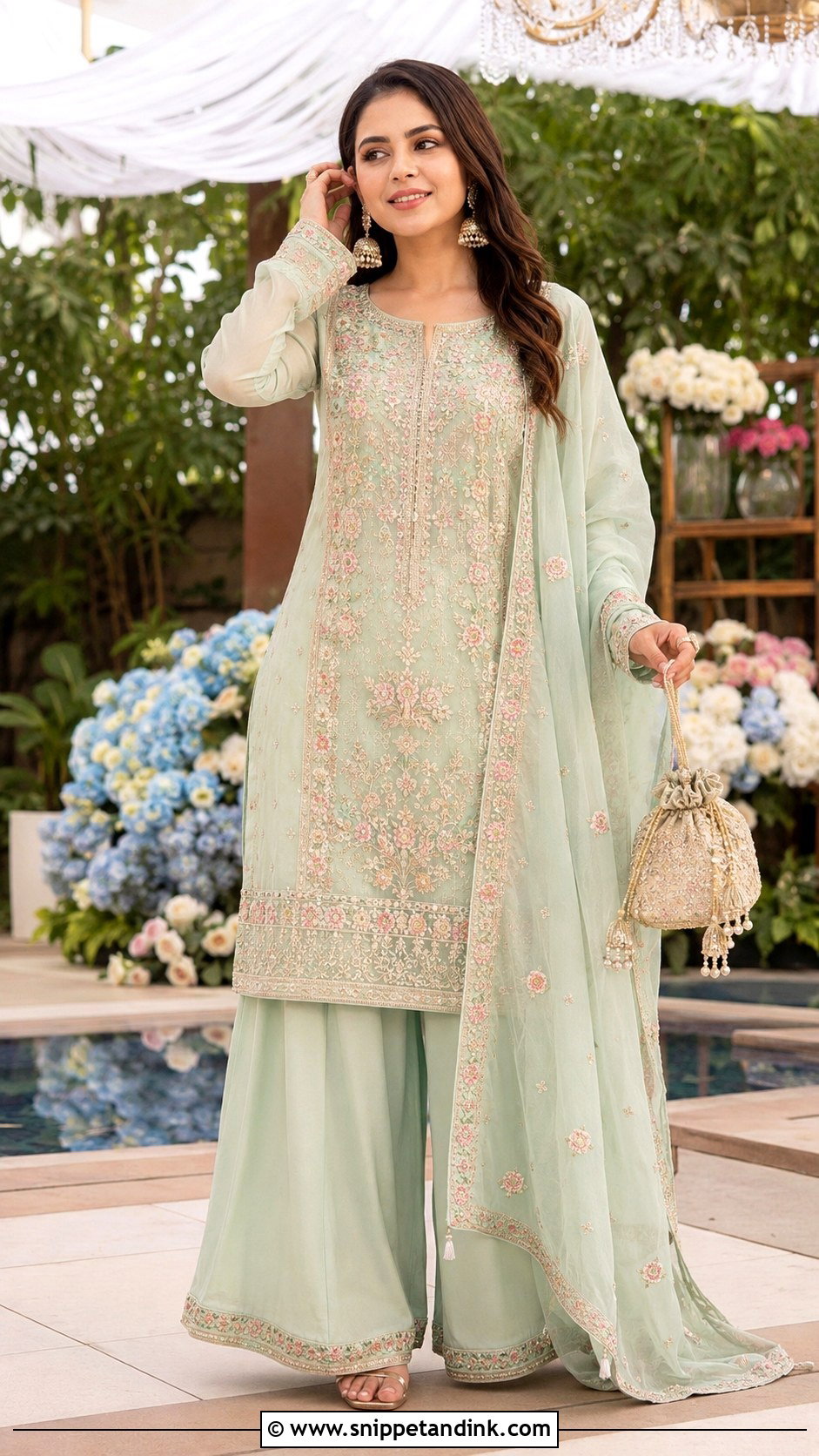
Wide-leg palazzos are comfortable, but they add width at the hem, so the kurta length decides the proportion. Knee length suits most heights. A shorter kurta looks more contemporary and works best on taller frames. Add a sheer dupatta with an embroidered border, jhumkas and a structured potli. Rich colors and metallic thread suit evening events; pastels and florals suit daytime. Hem the palazzos with your heels on so they just clear the floor. A center-parted bun or smooth ponytail keeps the long lines clean.
8. Gharara Set for Indian Wedding Function
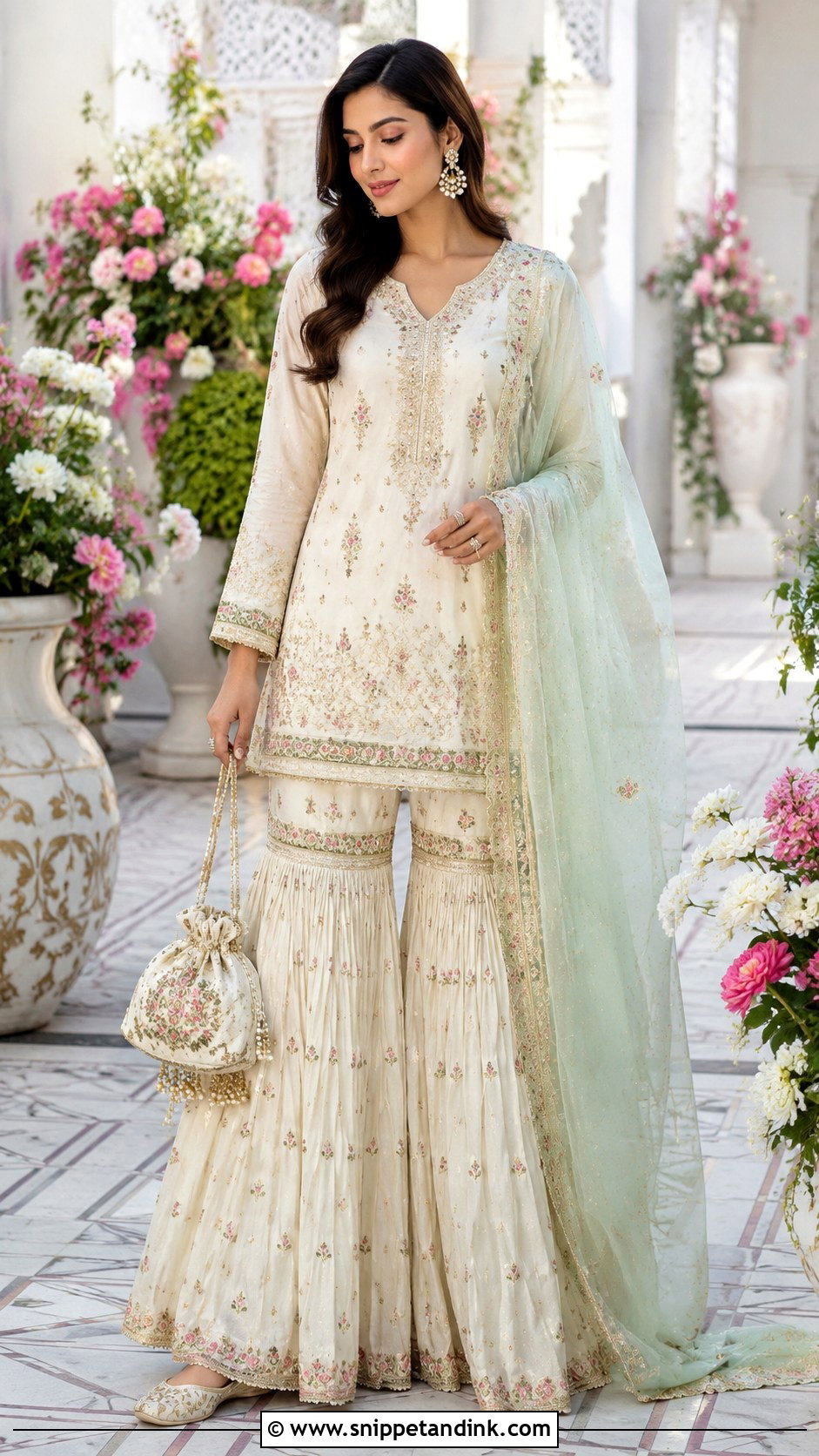
A gharara set is fitted to the knee and then flares into wide gathered panels, and that knee joint is where the fit succeeds or fails. It should sit right at your knee; too high and the pants look short, too low and you’ll trip on the flare. Pair it with a short kurti so the shape stays visible. Chiffon, tissue and brocade all make it formal. Ivory and pastels suit daytime; ruby, emerald and navy suit evening. Embellished juttis, pearl or kundan earrings and soft curls finish it.
9. Draped Saree for Indian Wedding Reception
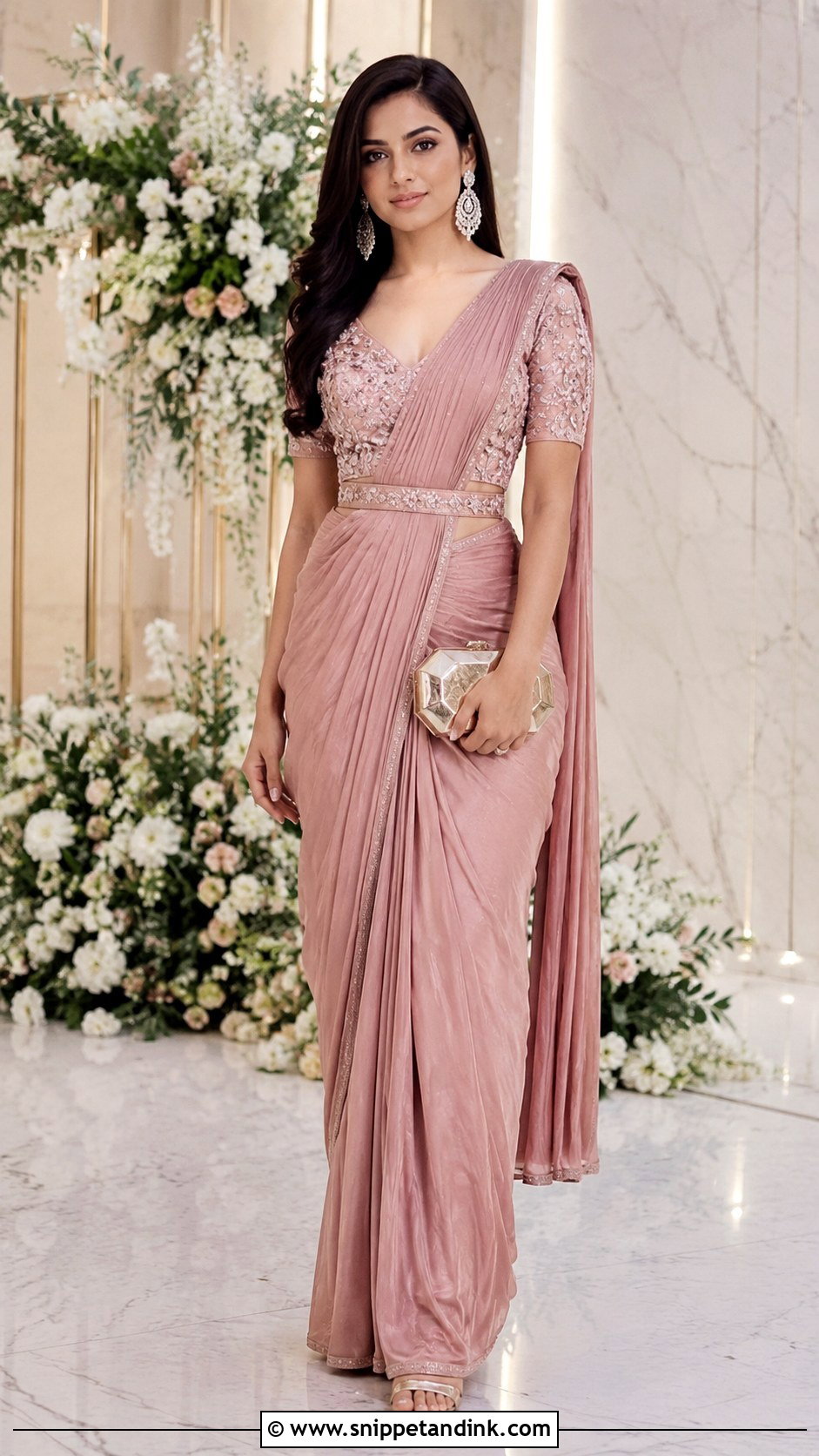
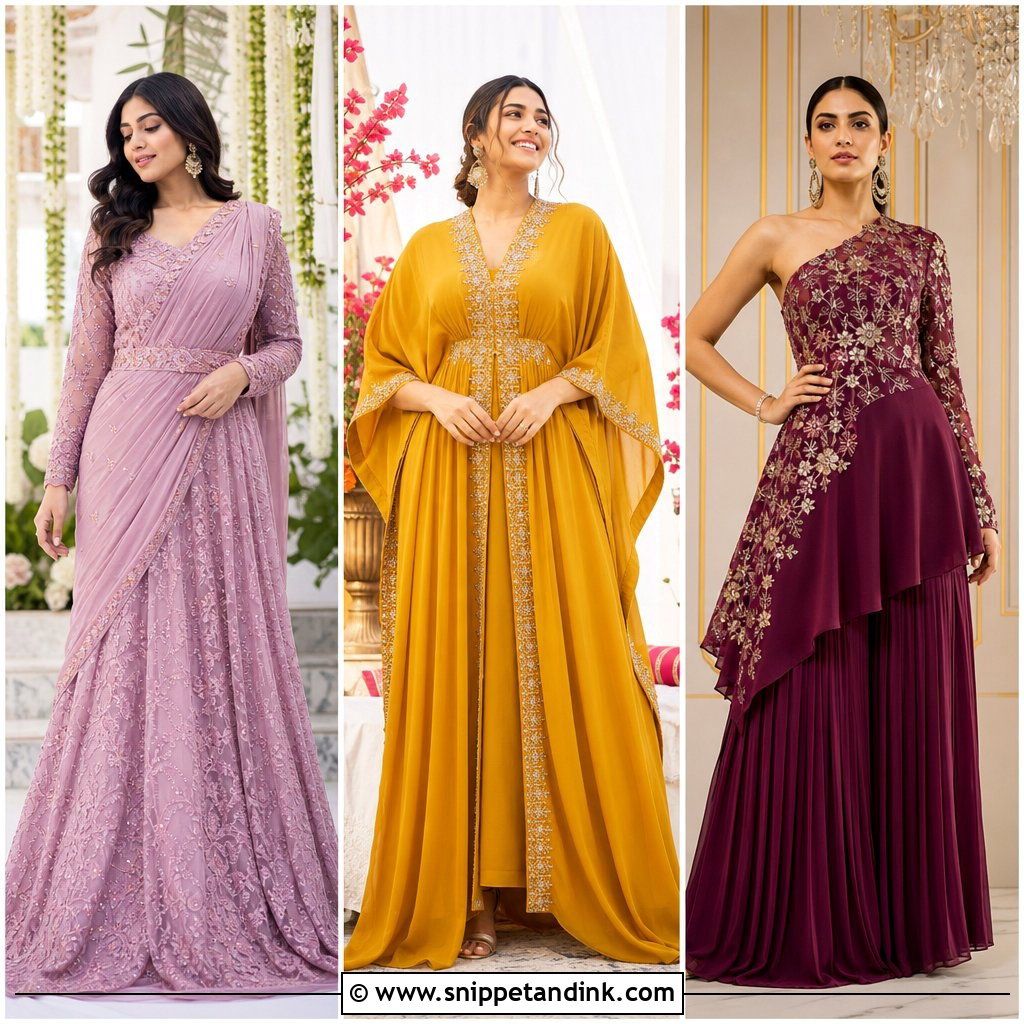
Ready-to-wear drapes have pre-stitched pleats, attached pallus or sculpted waists, so you get a clean modern line in minutes. Satin, crepe and georgette give a smooth finish. Pair it with an embroidered blouse or a structured crop top. If the blouse is beaded or crystal-heavy, keep the jewelry light. Before the event, sit, walk and climb a stair in it, because some stitched drapes pull at the hip when seated. Metallic heels, a hard-shell clutch and a sleek bun suit cocktail parties and receptions.
10. Cape Lehenga for Indian Wedding Guest
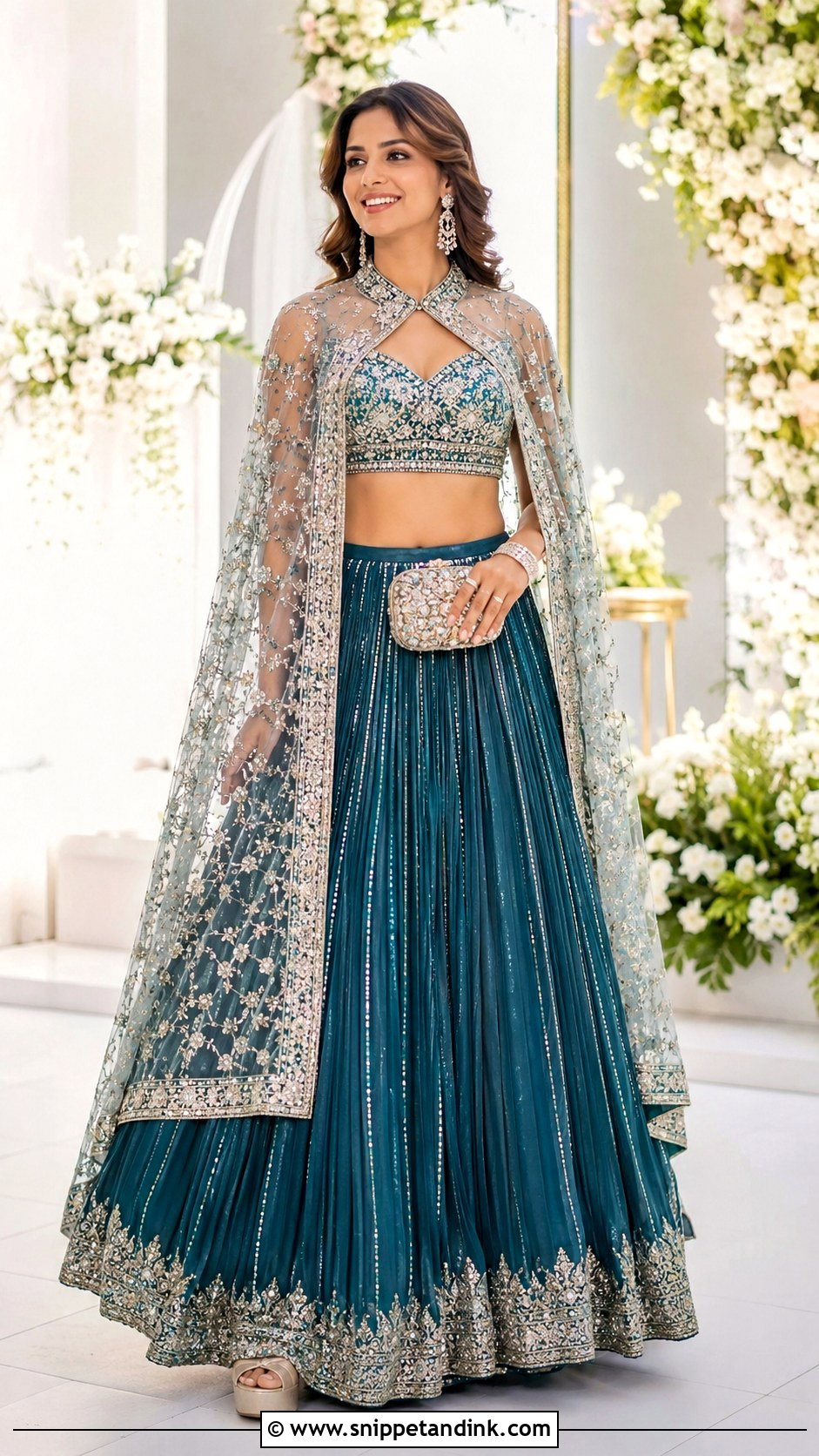
A cape lehenga removes the dupatta entirely, which is a relief if you’ve ever spent a night re-pinning one. A cape ending at the waist defines your shape; a longer one covers the arms and back. Sheer capes suit dancing, while heavily embroidered ones look grand but restrict how high you can lift your arms. Wear it over a fitted blouse and a flowing skirt in coordinating shades. Skip the necklace if the cape neckline is ornate. Drop earrings, a jeweled clutch, block heels and a high ponytail keep the shoulder details visible.
11. Jacket Lehenga for Indian Wedding Ceremony
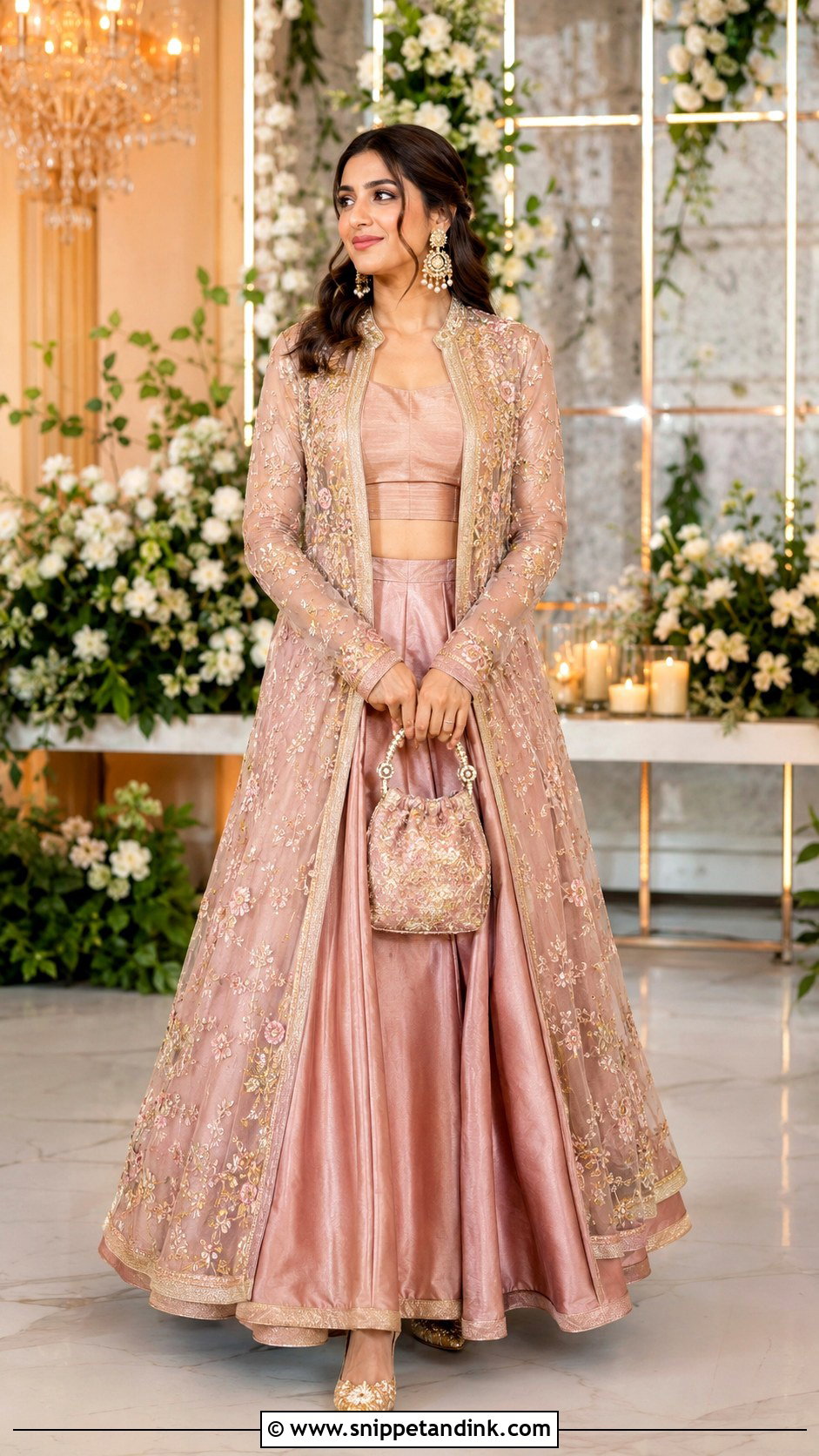
For a cool-weather wedding or a very air-conditioned hall, a long embroidered jacket over a simple blouse and lehenga adds warmth without a shawl. Sheer jackets show the outfit underneath; velvet, brocade and silk add structure. A contrasting jacket can lead, or keep everything in one color for a long unbroken line. Skip the dupatta unless the ceremony calls for a head covering, because four layers start to look bulky. Heeled juttis, medium earrings and a neat bun keep the jacket neckline visible.
12. Kurta and Skirt Set for Indian Wedding Mehndi
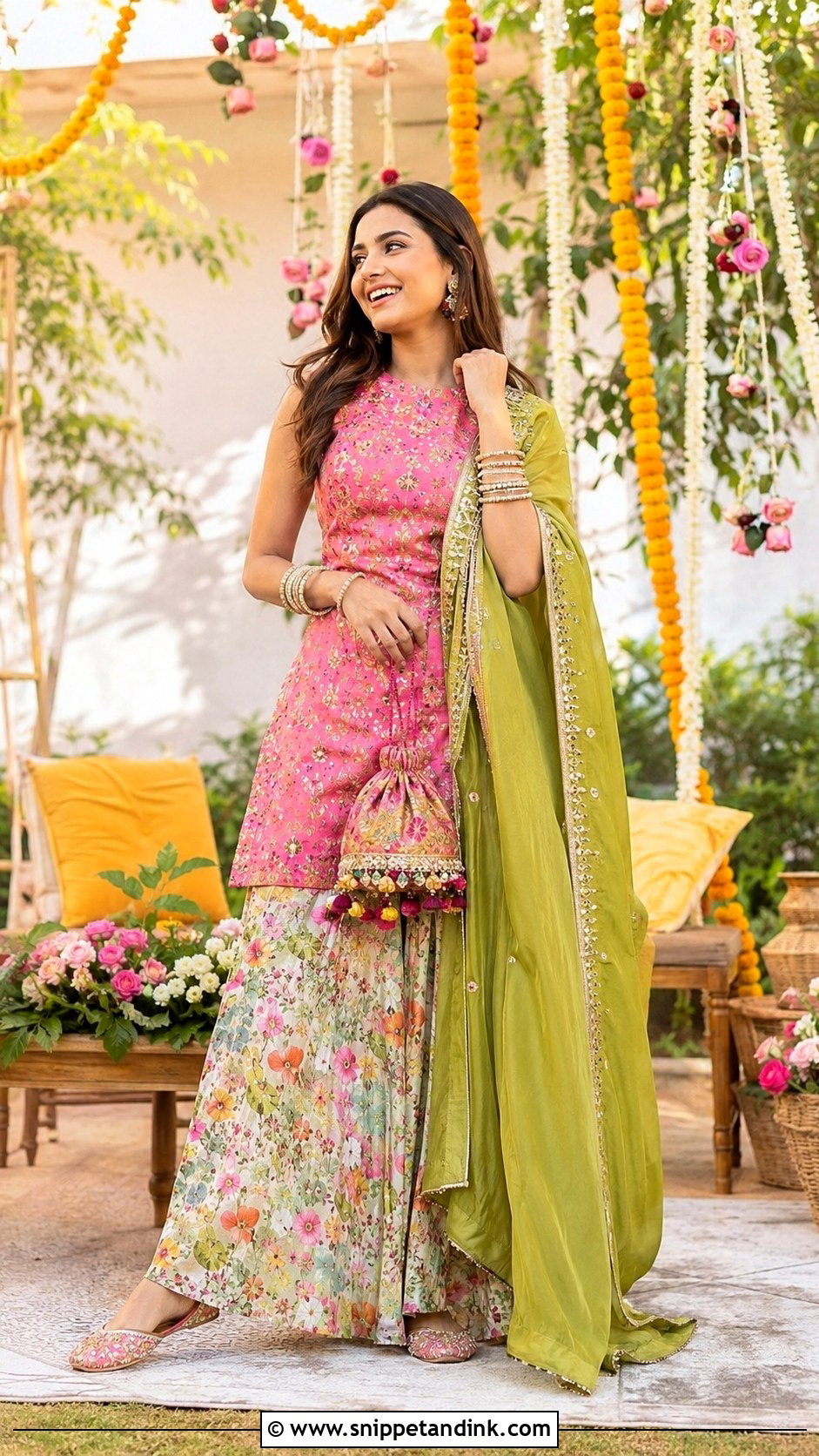
A kurta and skirt set is modest, comfortable and easy to rewear, since both pieces work separately afterwards. A fitted short kurta over a printed or embroidered full skirt keeps both shapes clear. A longer kurta needs side slits, or it bunches over the skirt when you sit. Floral prints, bandhani and light mirror details suit mehndi celebrations. Keep the skirt light enough for sitting cross-legged. A contrasting dupatta, stacked bangles, embroidered flats and a side braid complete it.
13. Pant Saree for Indian Wedding Cocktail Party
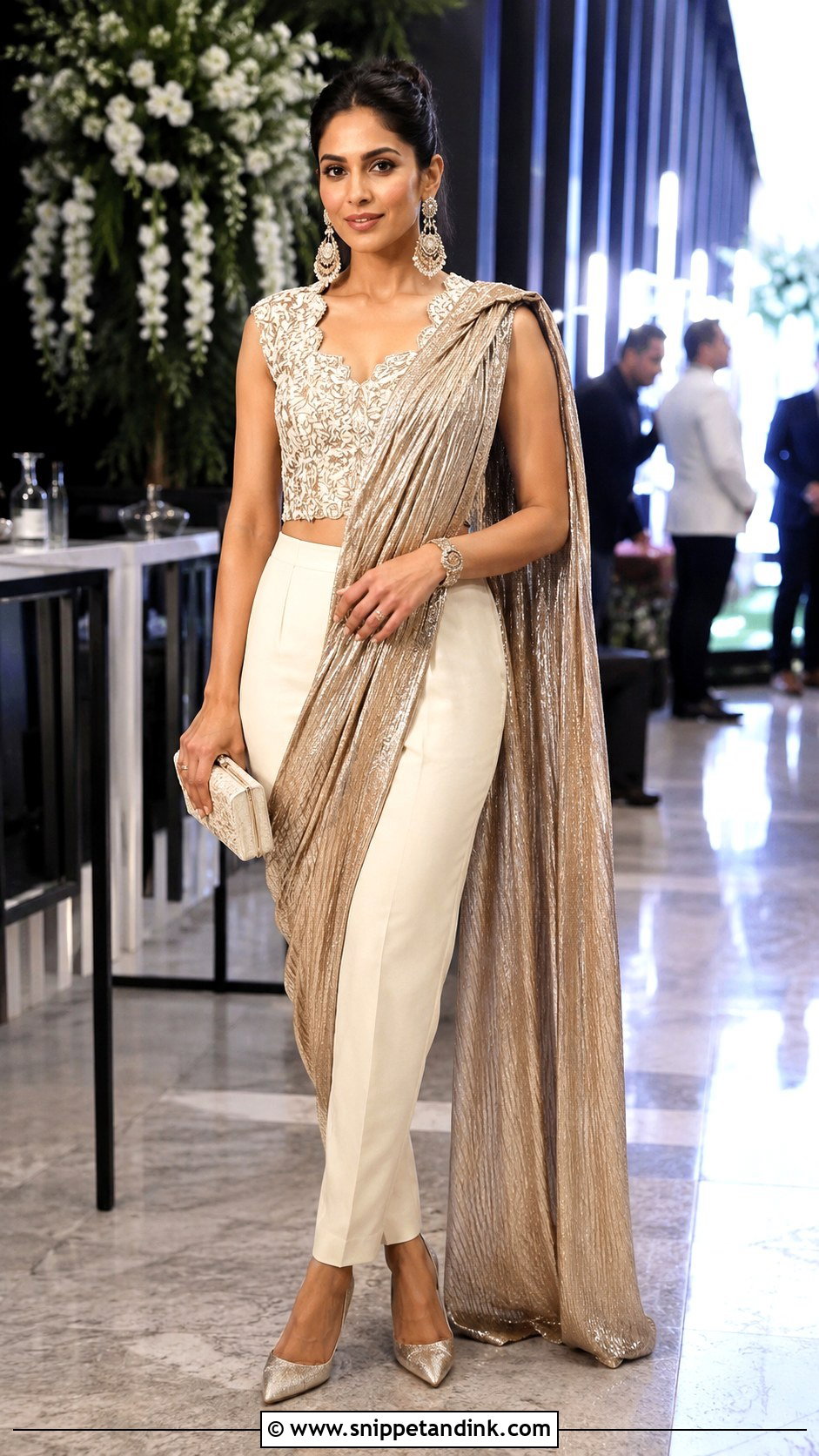
A pant saree pairs tailored trousers with a blouse and a saree-style drape, so you get the drape’s line without a skirt. It suits a cocktail party, welcome dinner or modern reception. Tapered pants look sleek; wide legs move more softly. Crepe, satin and light silk let the drape fall cleanly. The hem is the detail people miss: trousers that gather on the shoe make the whole outfit look short, so tailor them to your heels. Pointed heels, a structured clutch, bold earrings and a sculpted bun suit it.
14. Dhoti Pant Set for Indian Wedding Sangeet
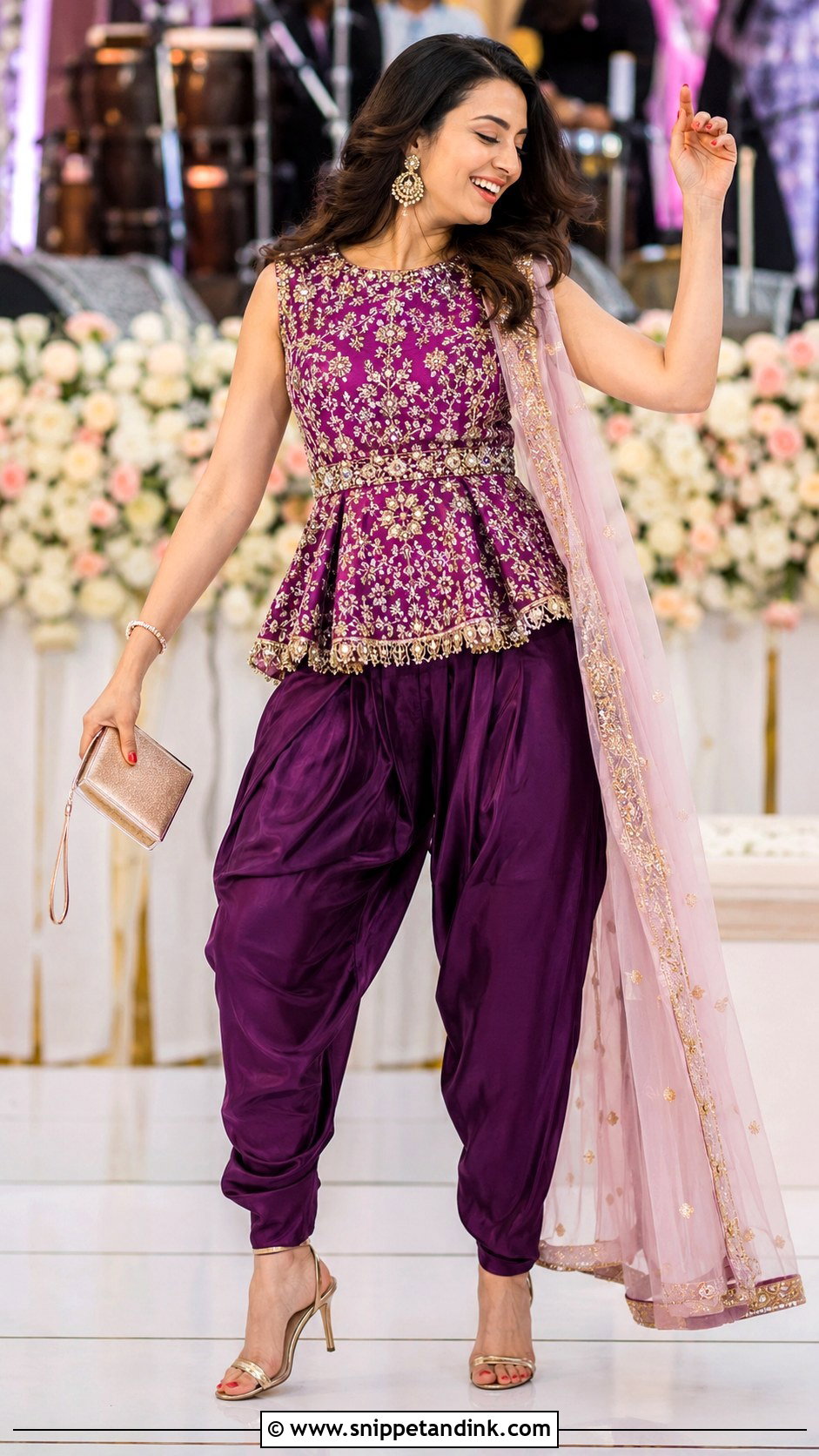
Dhoti pants are gathered and draped, so they need a fitted top to balance them; a peplum, a short embroidered jacket or an asymmetric kurta all work. For a sangeet, jewel tones and metallic embroidery make it evening-ready. A long dupatta tangles in dance moves, so either skip it or pin it at the shoulder and waist. A clutch with a wrist strap stays with you on the floor. Heeled sandals or juttis, statement earrings and a high ponytail or braided bun keep it sharp.
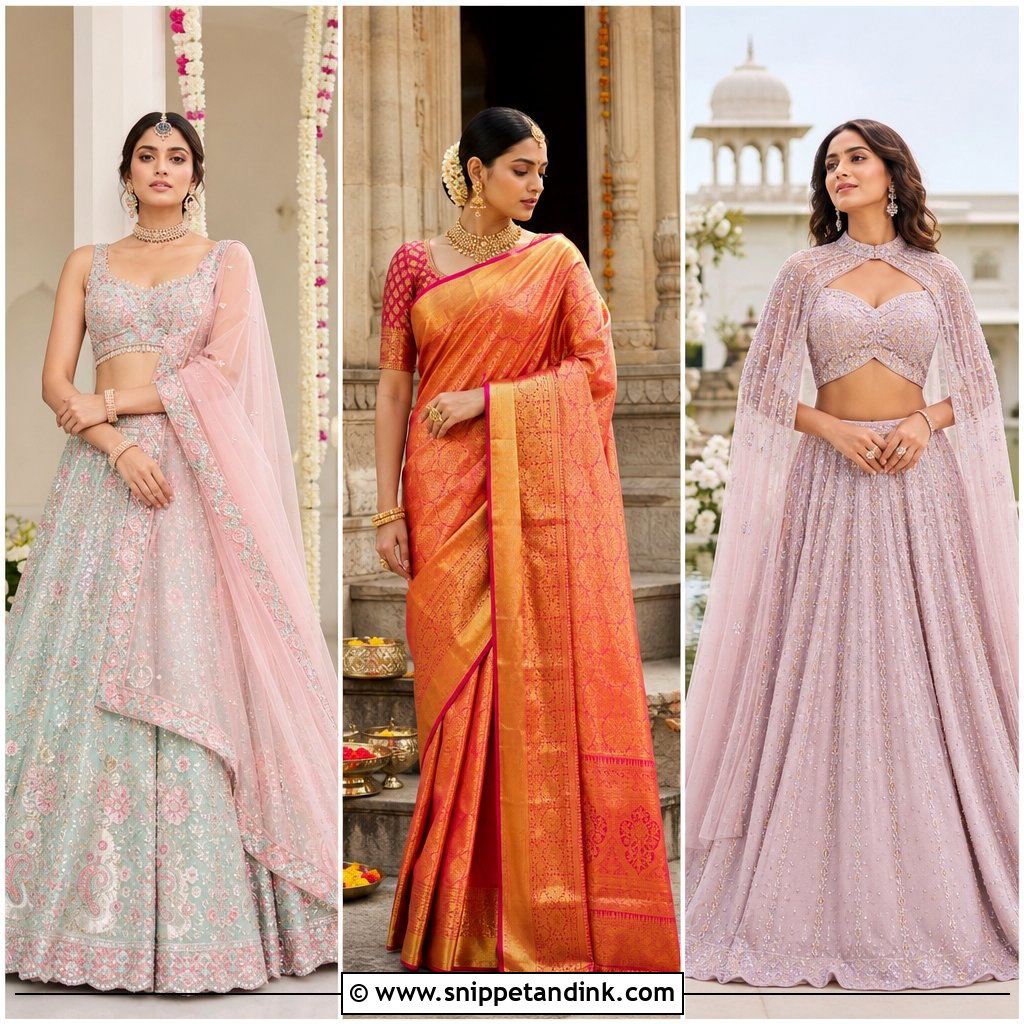

15. Velvet Lehenga for Indian Winter Wedding
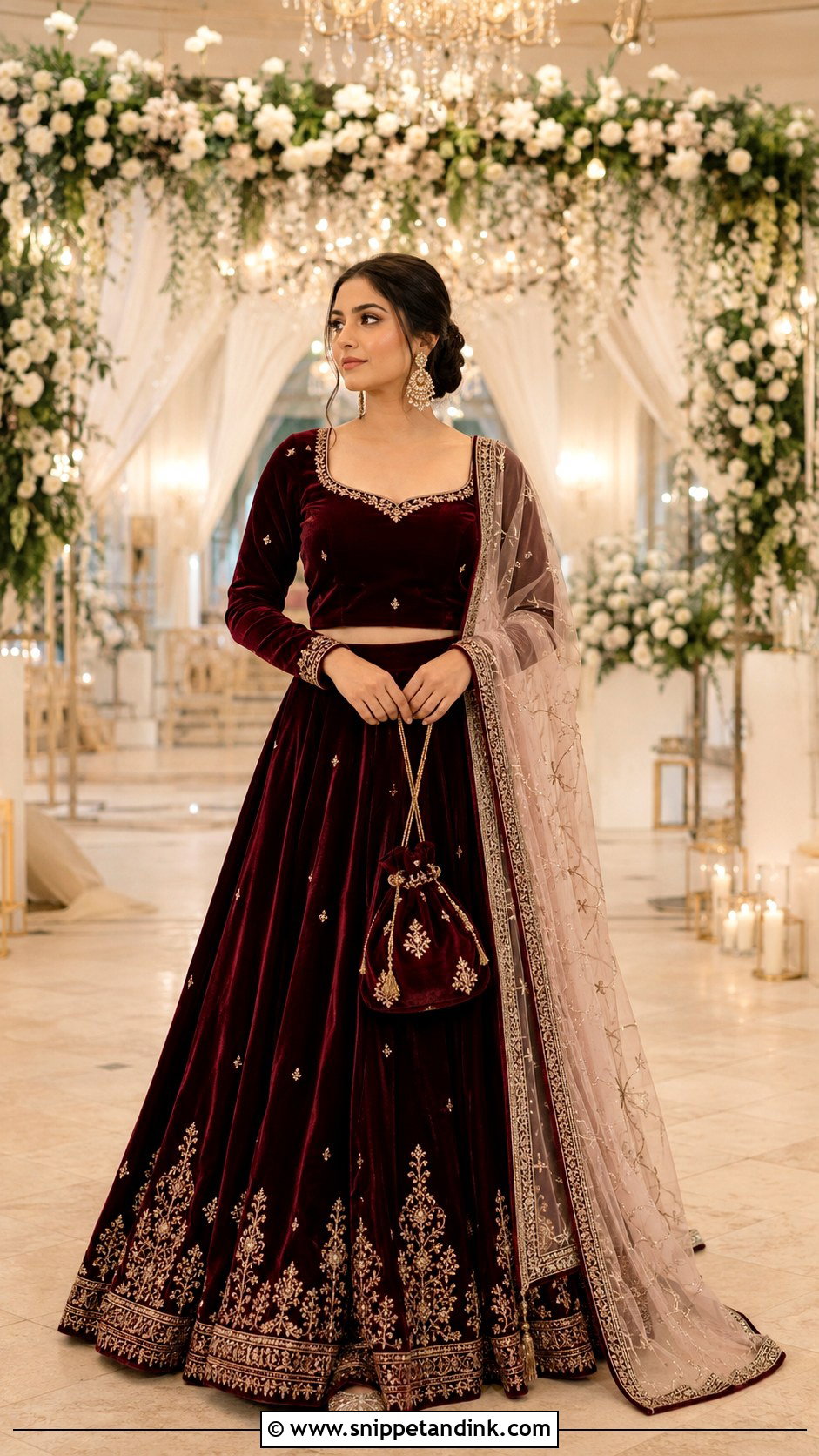
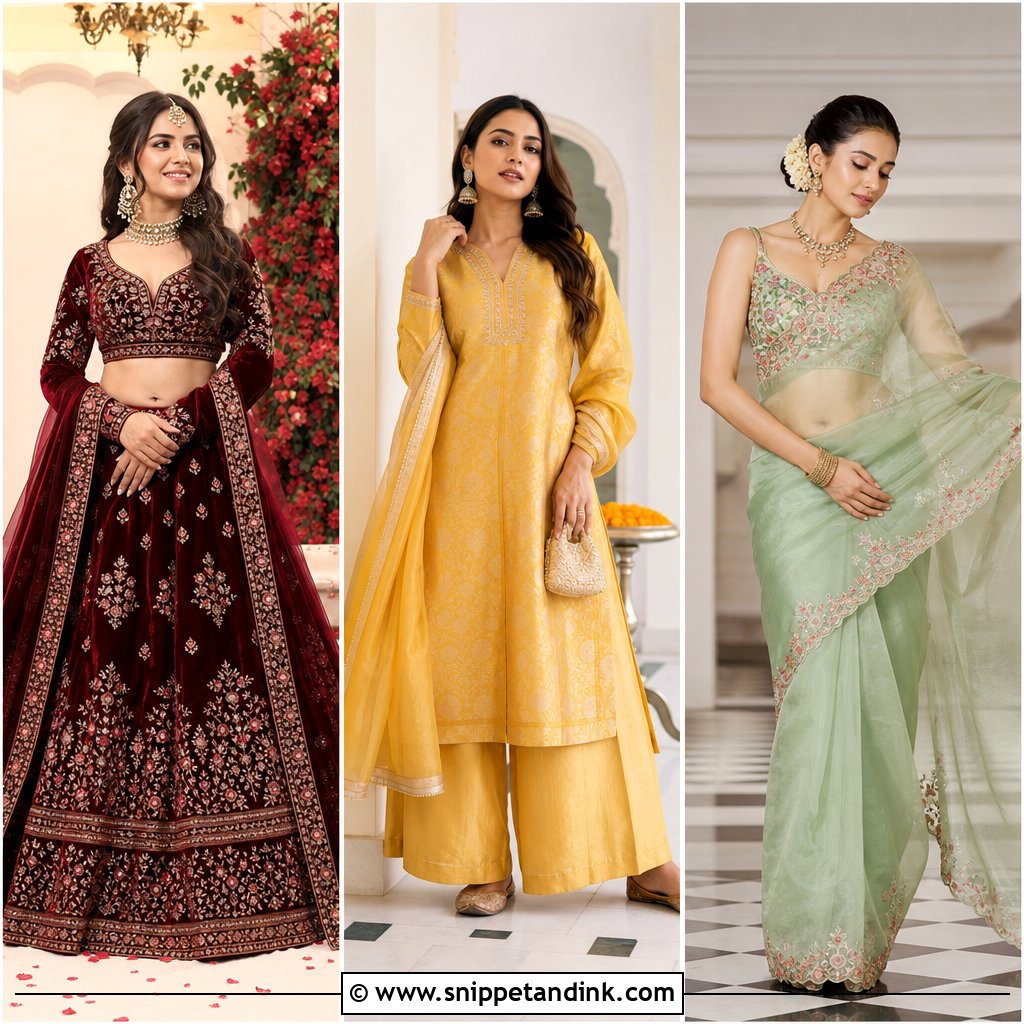
Velvet keeps you warm at a winter wedding and drinks in light, so burgundy, emerald, navy and plum look their deepest in it. A full velvet lehenga is heavy, though. Balance the skirt with a lighter net or organza dupatta, or reverse it: a velvet blouse with a silk skirt. Long sleeves add warmth without an unrelated coat. Embroidery on velvet should stay at the border, neckline or waist, because all-over work makes the pile stiff. Antique gold earrings, closed-toe shoes and a smooth bun suit evening ceremonies.
16. Organza Saree for Indian Day Wedding
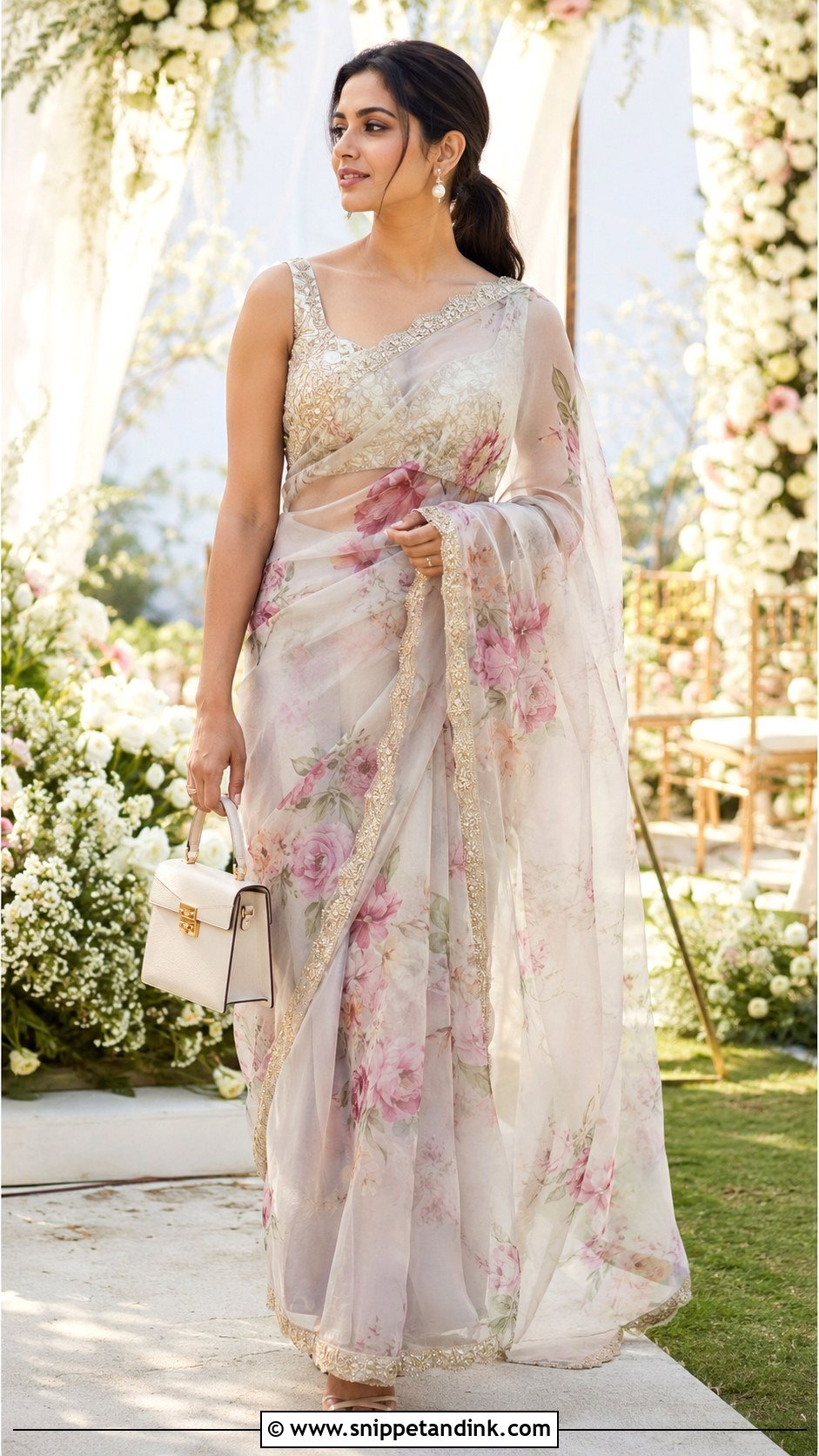
Organza is crisp and holds pleats well, which also means it adds volume at the hip if the pleats are wide. I keep them narrow and evenly pressed, and pin the shoulder drape firmly so it doesn’t lift in a breeze. Soft florals, woven borders and pastel colors suit a daytime ceremony. A fitted silk or brocade blouse adds definition against the sheer fabric. Pearl earrings, a small bag and low heels are enough. A neat bun or soft half-up style matches its airy feel.
17. Banarasi Saree for Indian Wedding Guest
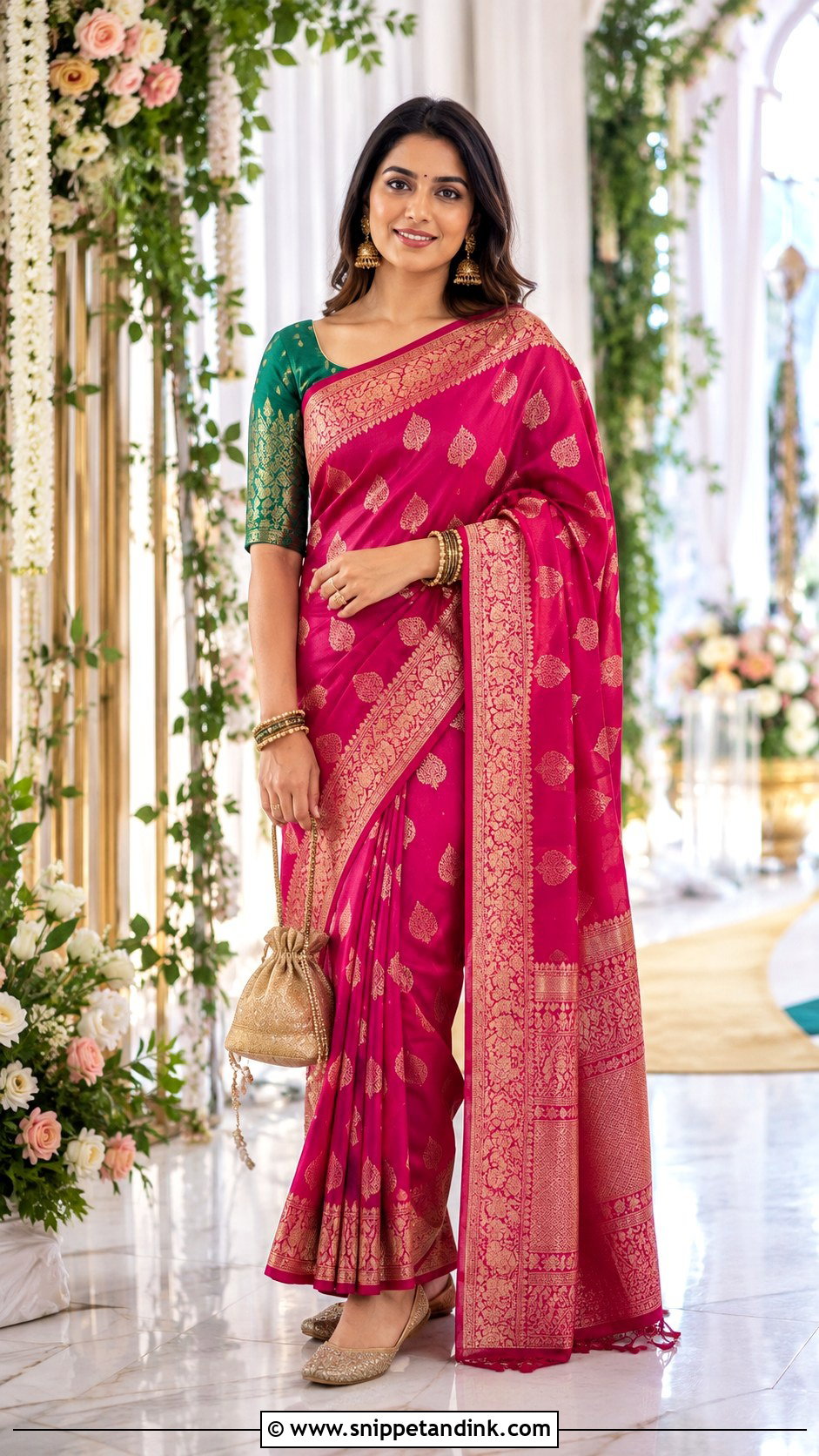
A Banarasi saree has its decoration woven in, metallic motifs and a wide border, so it needs no added embellishment. Pair it with a plain contrasting blouse or a matching one with elbow-length sleeves. The silk is substantial, so keep the pleats narrow and secure them at the waist, or they fan out by mid-ceremony. Gold earrings, bangles, a small bindi and a structured potli suit it. Low heels or dressy flats help through long standing and sitting. Choose a color outside the bride’s main palette.
18. Chanderi Suit for Indian Day Wedding
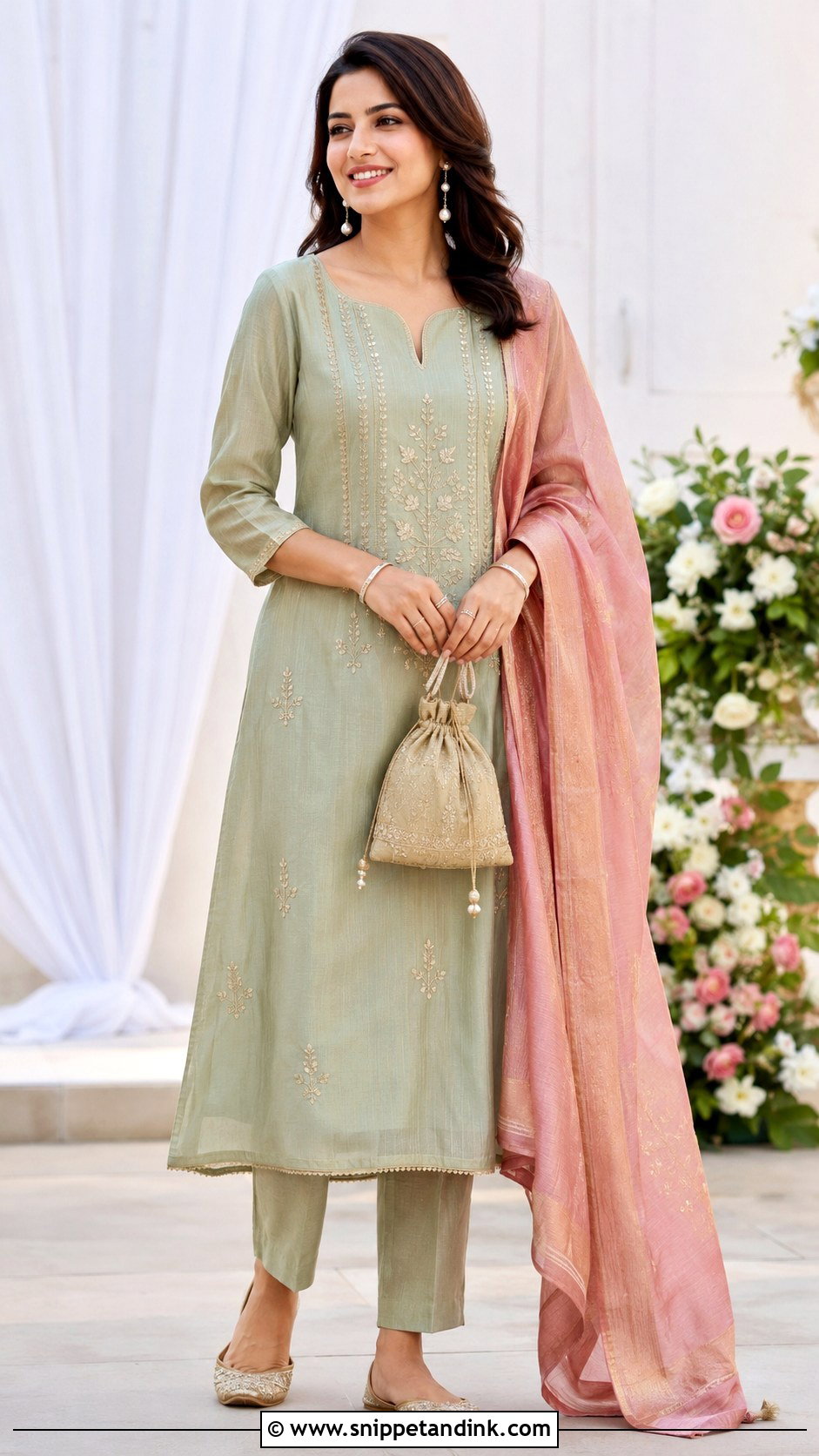
Chanderi is a light, slightly sheer weave with a soft sheen, and it is one of the most comfortable fabrics for a hot daytime ceremony. A straight or A-line kurta with slim pants and a woven-border dupatta looks polished. Peach, sage, powder blue and lilac suit daylight. Because chanderi is light, poor tailoring shows immediately at the shoulders and sleeves, so have it fitted well. Pearl earrings, metallic juttis and a few delicate bangles finish it. It suits women of every age and rewears easily at festive dinners.
19. Empire Waist Anarkali for Indian Wedding Guest
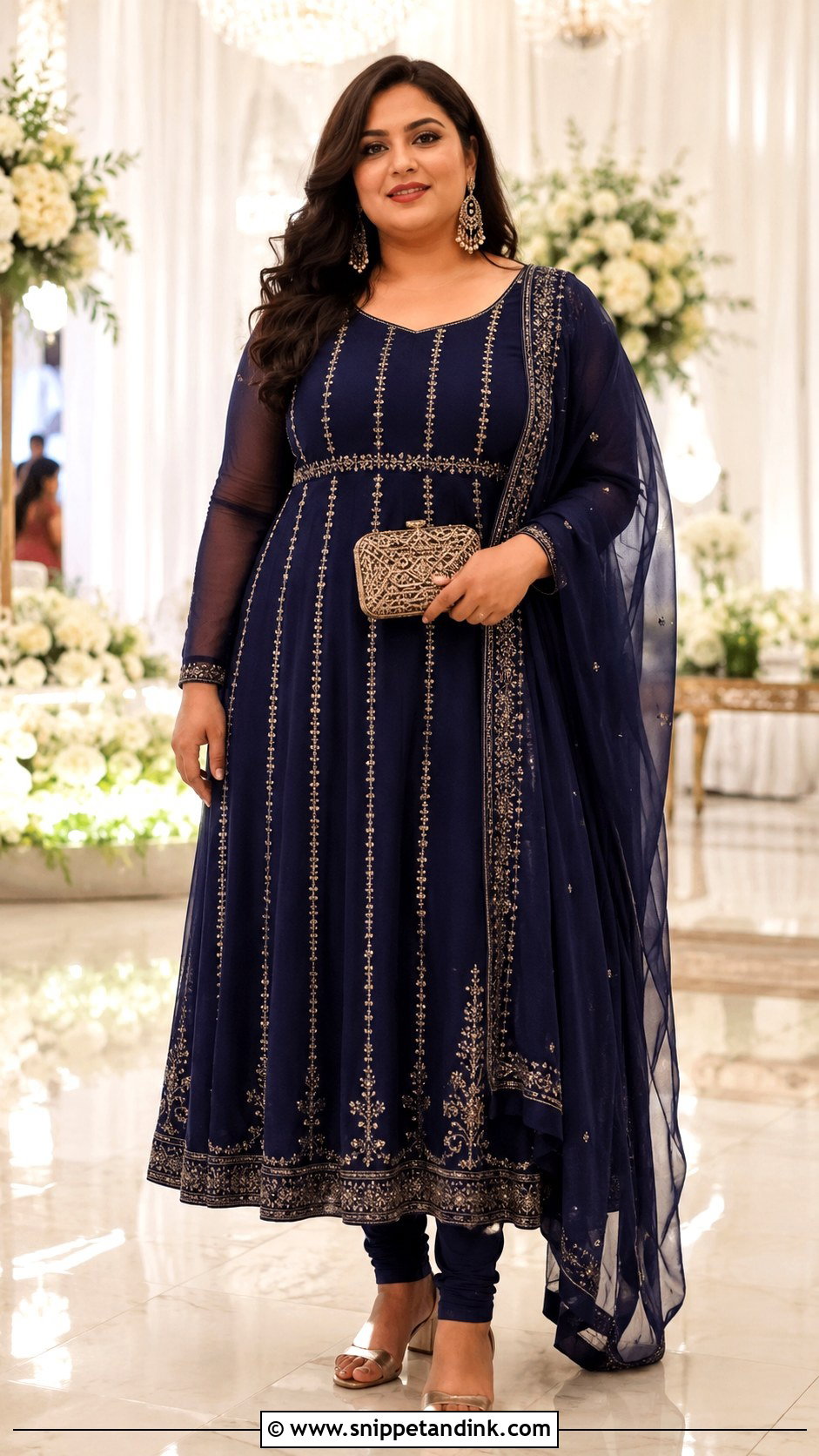
An empire waist sits just below the bust, and the skirt falls from there, which gives room through the waist and hips. Many of my midsize and plus-size clients prefer it for that reason. The shoulder fit has to be exact, since the whole dress hangs from it, and vertical embroidery draws the eye down. Pair it with churidar pants, a light dupatta, block heels and long earrings. One color top to toe looks long; a contrasting dupatta adds personality. Hem it to your shoes so it doesn’t pool.
20. Pastel Salwar Suit for Indian Wedding Ceremony
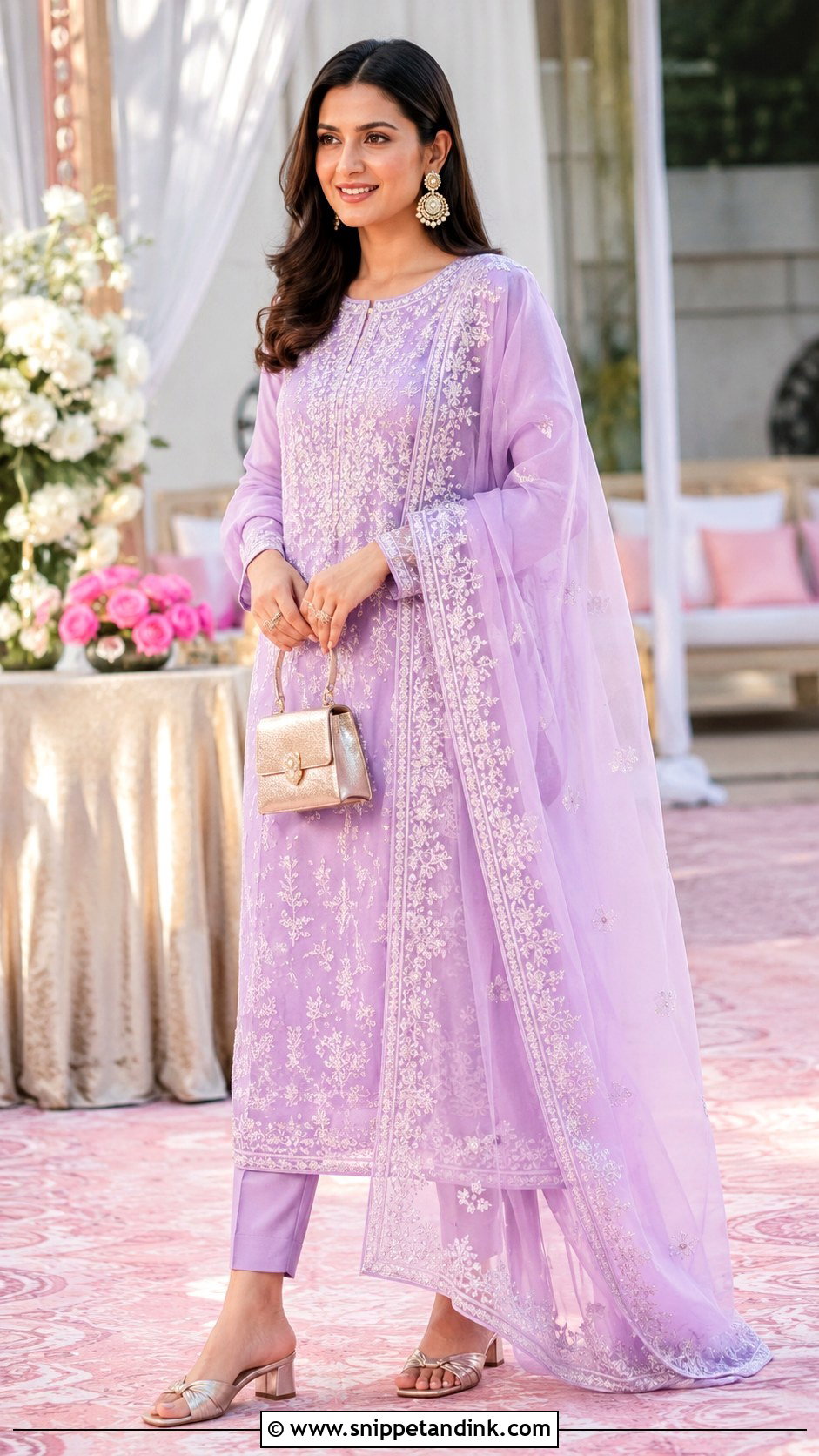
A pastel salwar suit suits a morning wedding, a small ceremony or a pre-wedding lunch. A softly embroidered kurta with tapered pants or a classic salwar and a sheer bordered dupatta keep it light. Blush, mint, lavender and powder blue let threadwork show in daylight. Three-quarter sleeves and a modest neckline work at almost any venue. Pearl or kundan earrings, low metallic heels and a structured mini bag finish it, and it stays comfortable through a long ceremony and lunch.
Regional Customs That Change the Guest Dress Code
India has many wedding traditions, and what’s right for one can look wrong at another. At a Sikh ceremony in a gurdwara, everyone covers their head and removes their shoes, so bring a dupatta or scarf and wear something you can sit on the floor in. South Indian ceremonies often start early in the morning and favor silk sarees; a sequined reception look would feel out of place there.
Colors carry meaning too. Red is often reserved for the bride, black is avoided by some families, and white can be associated with mourning in some communities while being traditional in others. When in doubt, ask the couple directly. It’s a common question and most are glad to be asked.
Height and proportion
Petite guests usually look best in controlled flares, short kurtas or sarees with narrow borders. Taller guests can carry floor-length Anarkalis, wide borders and long jackets. If you’re unsure, stand in front of a full-length mirror in heels and check that the outfit ends where your body does.
Dress for the Function, Then for Yourself
Start with the event, the venue, the weather and what the invitation asks for. Lighter lehengas, shararas and pastel suits belong at daytime functions, while silk sarees, velvet lehengas and sequined drapes belong to the evening. Comfort decides how much you enjoy the day, so pin drapes properly, hem to your shoes and keep accessories in support. Respect the couple’s color requests and any cultural guidance from the family.
You'll Like These Ideas:


Leave a Reply