
An Indian wedding can mean four or five separate functions, and each one asks something different of your clothes. A haldi outfit has to survive turmeric paste, a sangeet outfit has to survive two hours of dancing, and a ceremony saree has to stay pinned while you sit cross-legged near the mandap. When I style guests, I plan the whole weekend at once rather than buying one piece at a time. The twenty looks below run from cotton sharara sets to velvet lehengas, and each note covers fabric, accessories and the practical detail that tends to go wrong. One rule sits above all of them: leave the bride’s ceremonial red and heaviest embroidery to her.
Planning Five Outfits Across a Wedding Weekend
Most guests overspend on the reception and run out of ideas by the haldi. I’d rather you map the whole schedule first. Ask the family, or check the invitation inserts, for each function’s time, whether it is indoors or out, and any color theme. Many families pick a color for the haldi or mehndi, and turning up in the wrong one is the most common guest slip I see.
Then sort the events by weight. Daytime and outdoor functions want cotton, chanderi, georgette and printed fabrics that forgive a spill. Evening and ceremony events can carry silk, velvet and heavier zari. If you are on a budget, one good lehenga skirt can cover two events with a change of blouse and dupatta.
- Haldi: washable cotton or cotton silk in yellow, nothing precious.
- Mehndi: printed or lightly embroidered georgette, short sleeves, a light dupatta.
- Sangeet: something you can dance in, with secure embellishment.
- Ceremony: silk or a traditional saree, covered shoulders, quieter jewelry.
- Reception: your most glamorous look, still a step below the bride.
1. Floral Lehenga For Mehndi
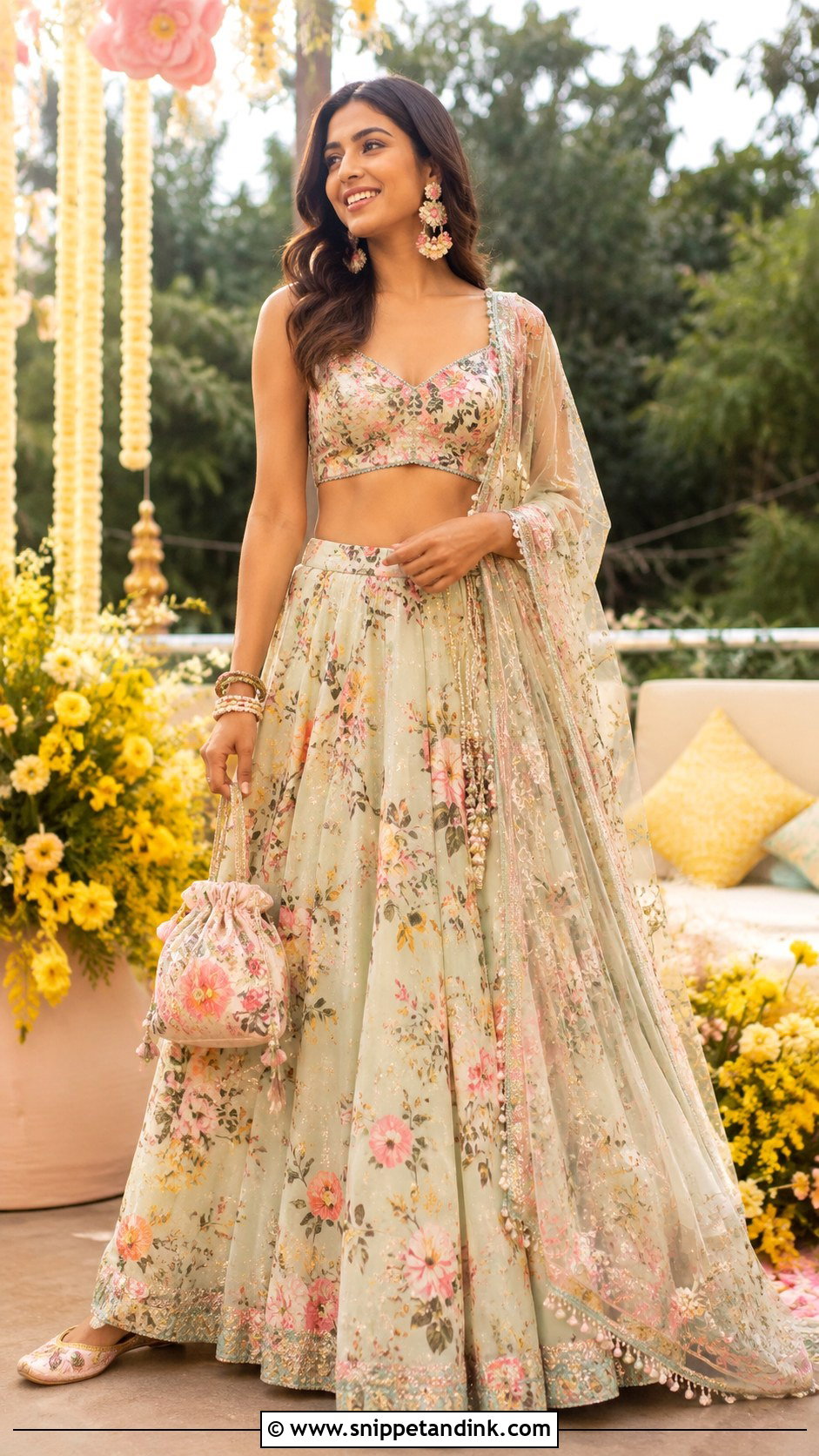
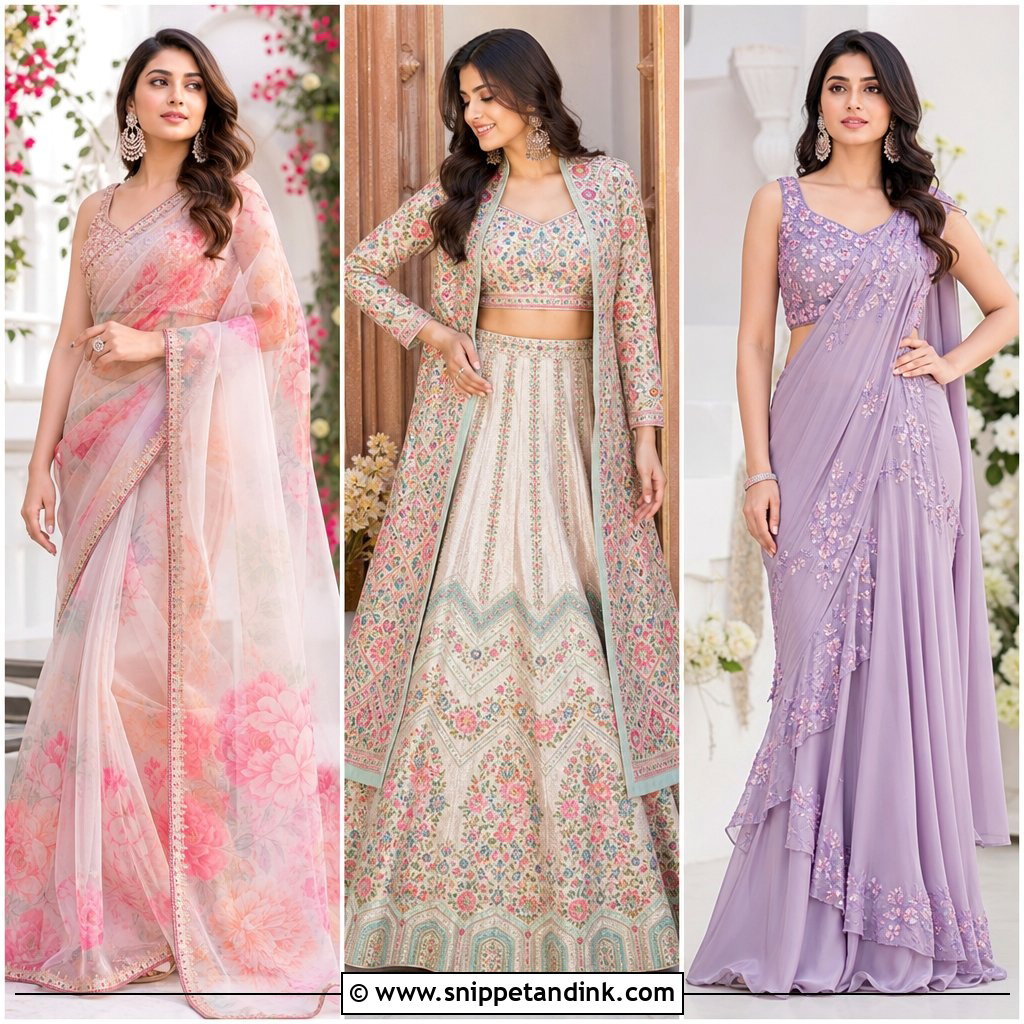
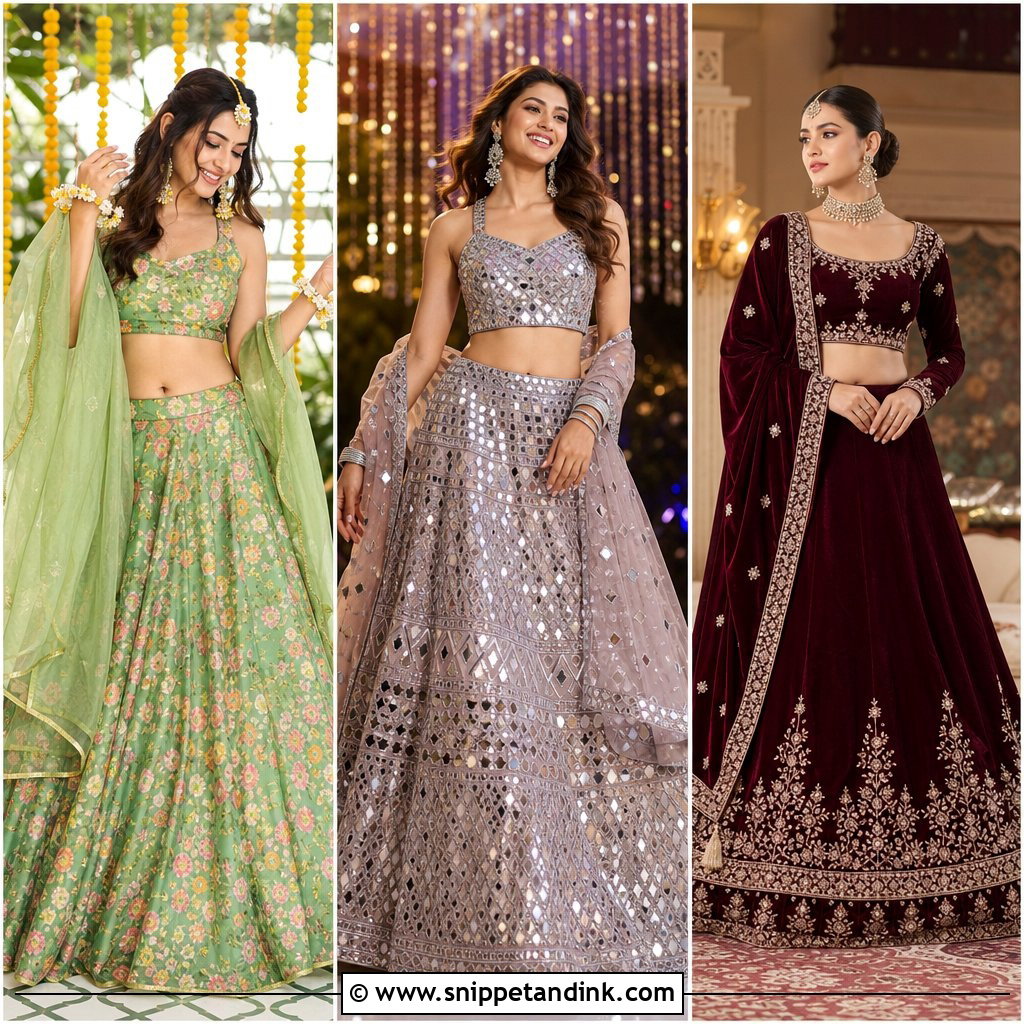
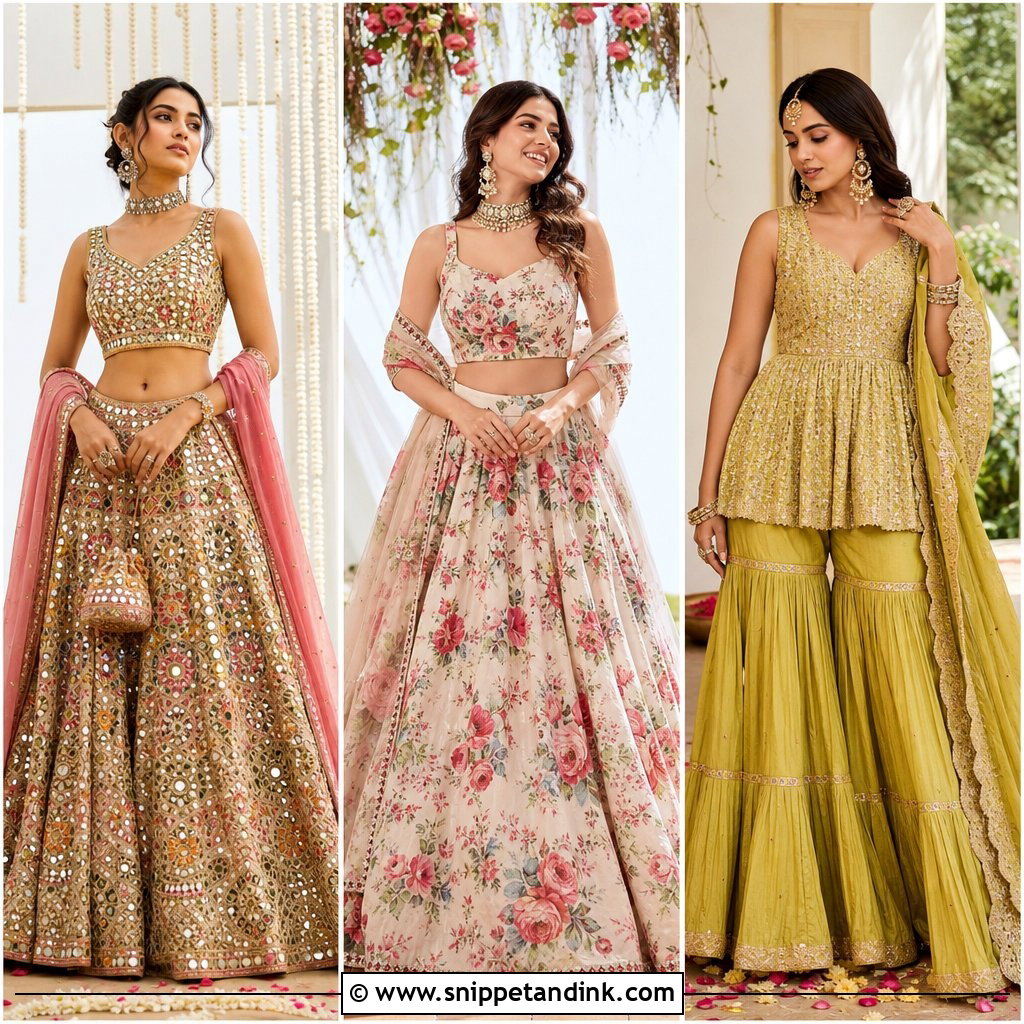
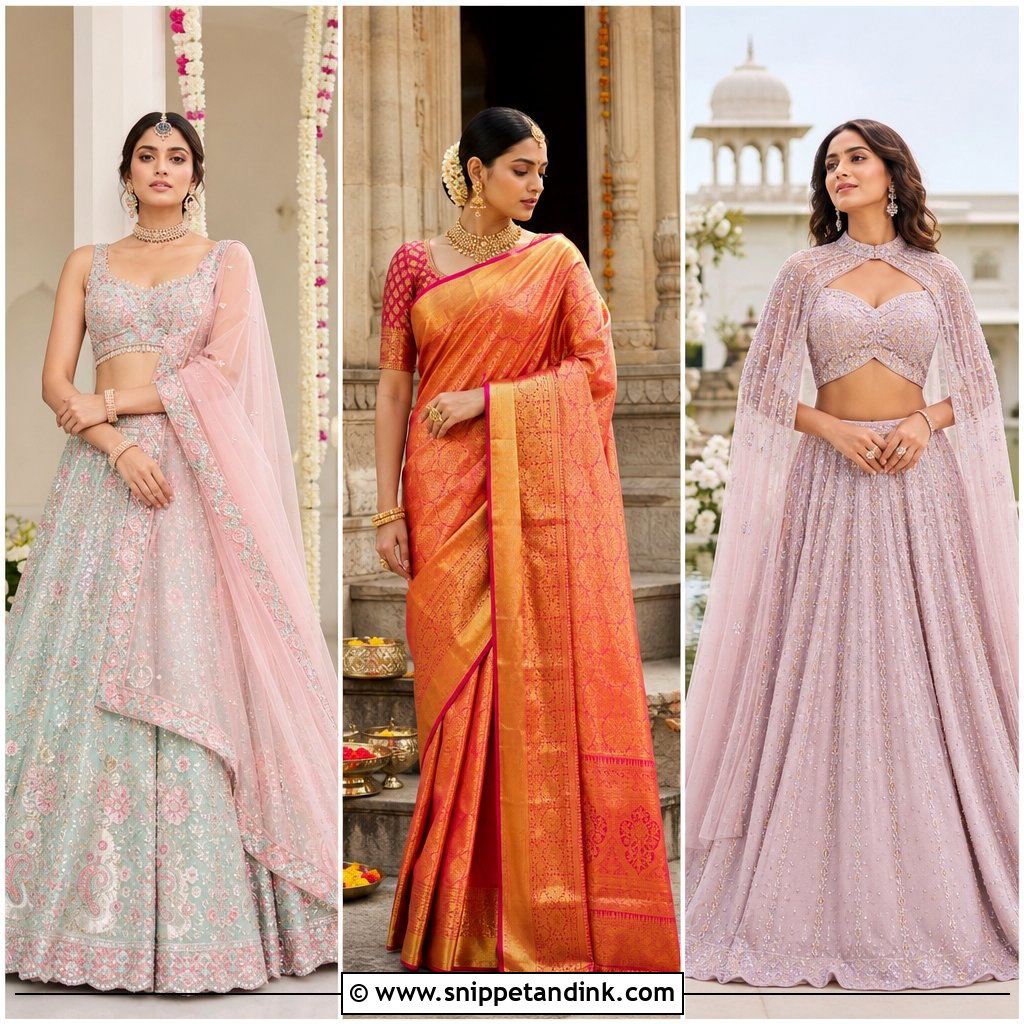
Mehndi functions are usually outdoors and in daylight, so I reach for georgette, organza or crepe in pink, mint, peach or lavender. A floral print hides the odd henna smudge far better than a solid pastel does, which is the real reason I like it here. Keep the blouse short-sleeved so your arms stay clear while the artist works, and drape the dupatta over one shoulder rather than both. Embroidered juttis, floral earrings, slim bangles and a small potli are enough. Guests should keep the skirt only moderately embellished; bridesmaids can add a coordinating waist belt. A neat braid or low ponytail keeps hair off wet henna.
2. Yellow Sharara Set For Haldi
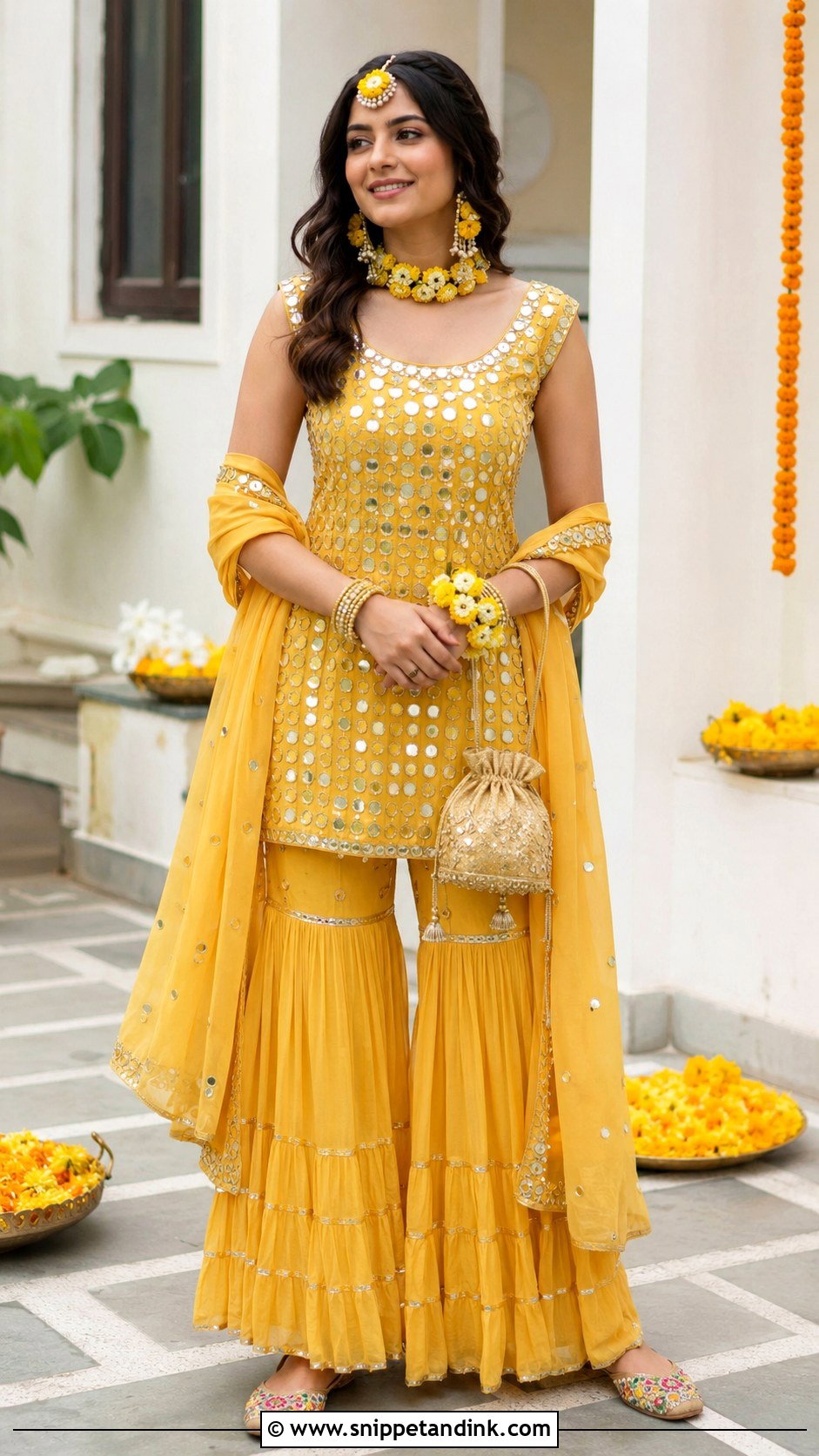
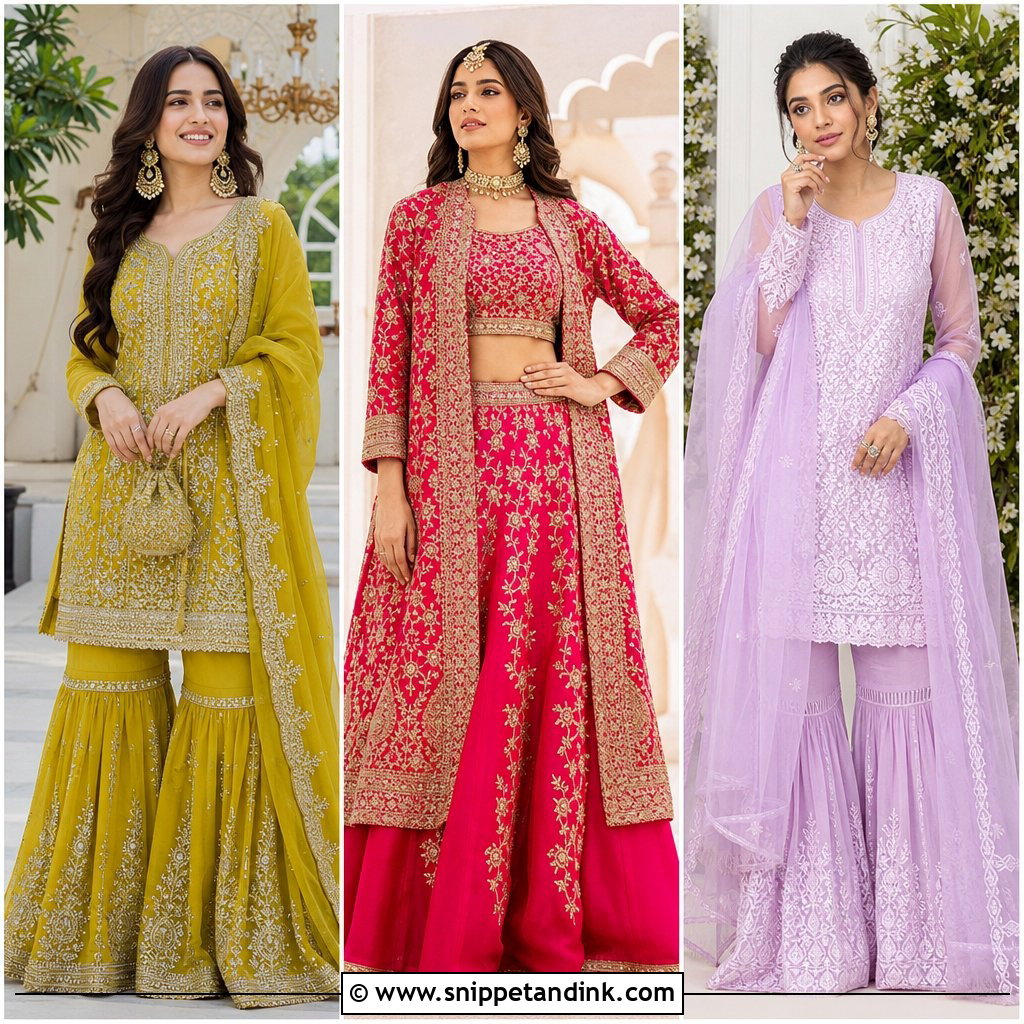
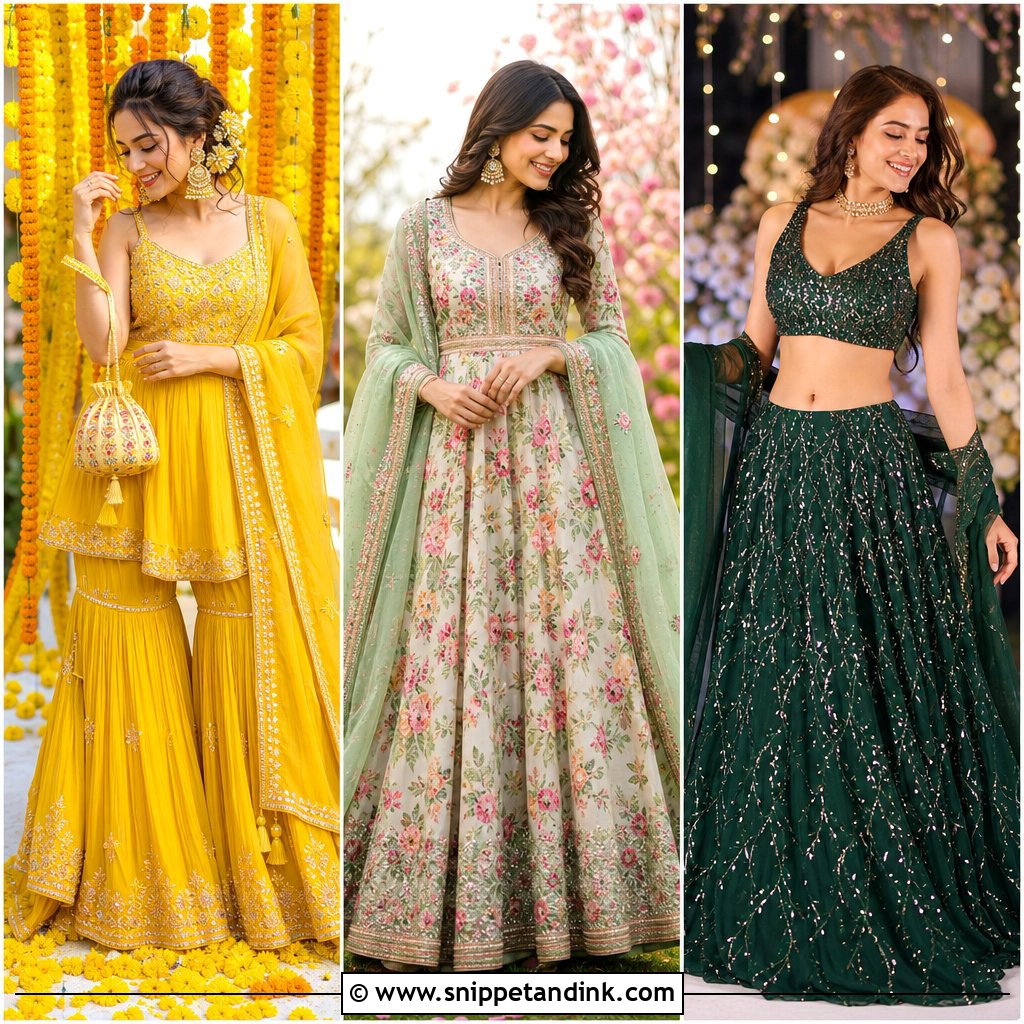
Yellow is the obvious color for a lively haldi ceremony, and a short embroidered kurti over wide sharara pants lets you move and sit on the floor without fuss. Cotton silk and chanderi breathe in daytime heat. White threadwork, mirror details or a little gota trim give it shine without weight. Here’s my honest warning: turmeric paste stains silk permanently, and it will find your hem even if you stay at the back. Wear something you won’t grieve over, never an heirloom. Flat juttis, pearl or floral jewelry and a sleek braid with small flowers finish it.
3. Mirror Work Lehenga For Sangeet
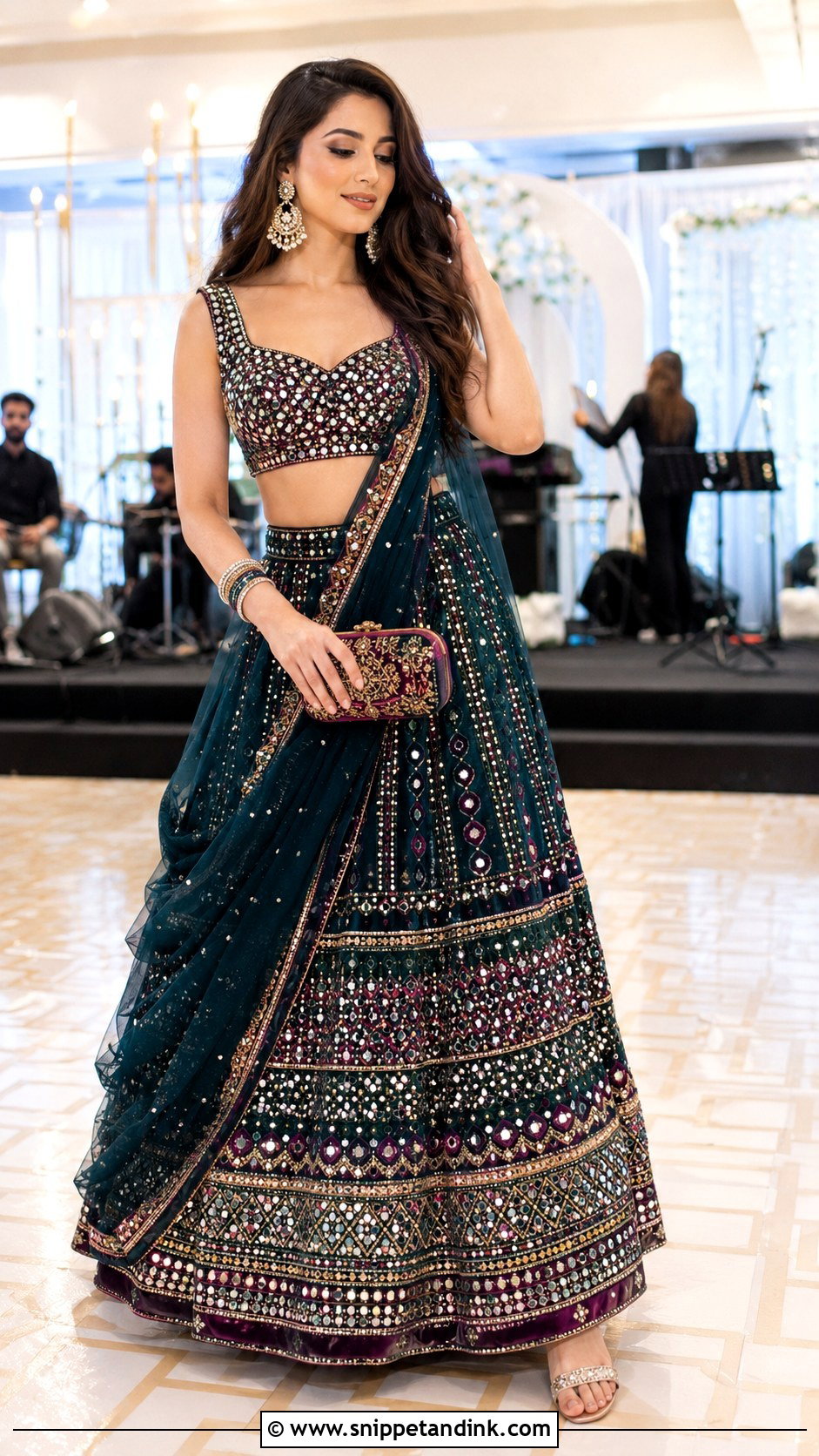
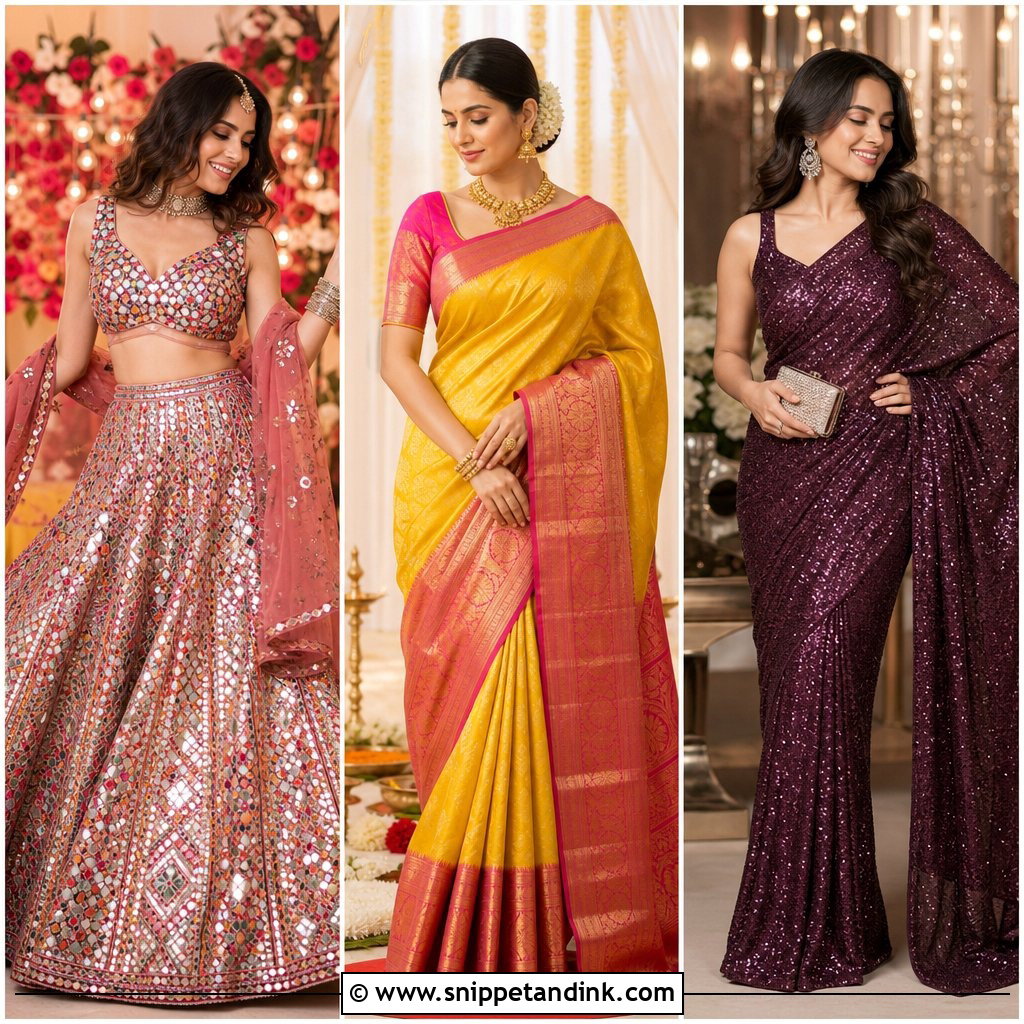
Under sangeet lighting, a mirror work lehenga throws light every time you turn. Before buying, I run a hand over the inside of the skirt: loosely stitched mirrors snag on themselves and drop off mid-dance, so the work needs to be tightly backed. Choose a flared but light skirt, and a blouse with real straps or sleeves so you aren’t hitching it up between songs. Emerald, navy, wine and deep purple hold their color under warm stage lights. If the skirt carries a lot of mirror, skip the necklace and let statement earrings and stacked bangles do the work. Block heels, a pinned dupatta and long-wear makeup round it out.
4. Banarasi Silk Saree For Wedding Ceremony
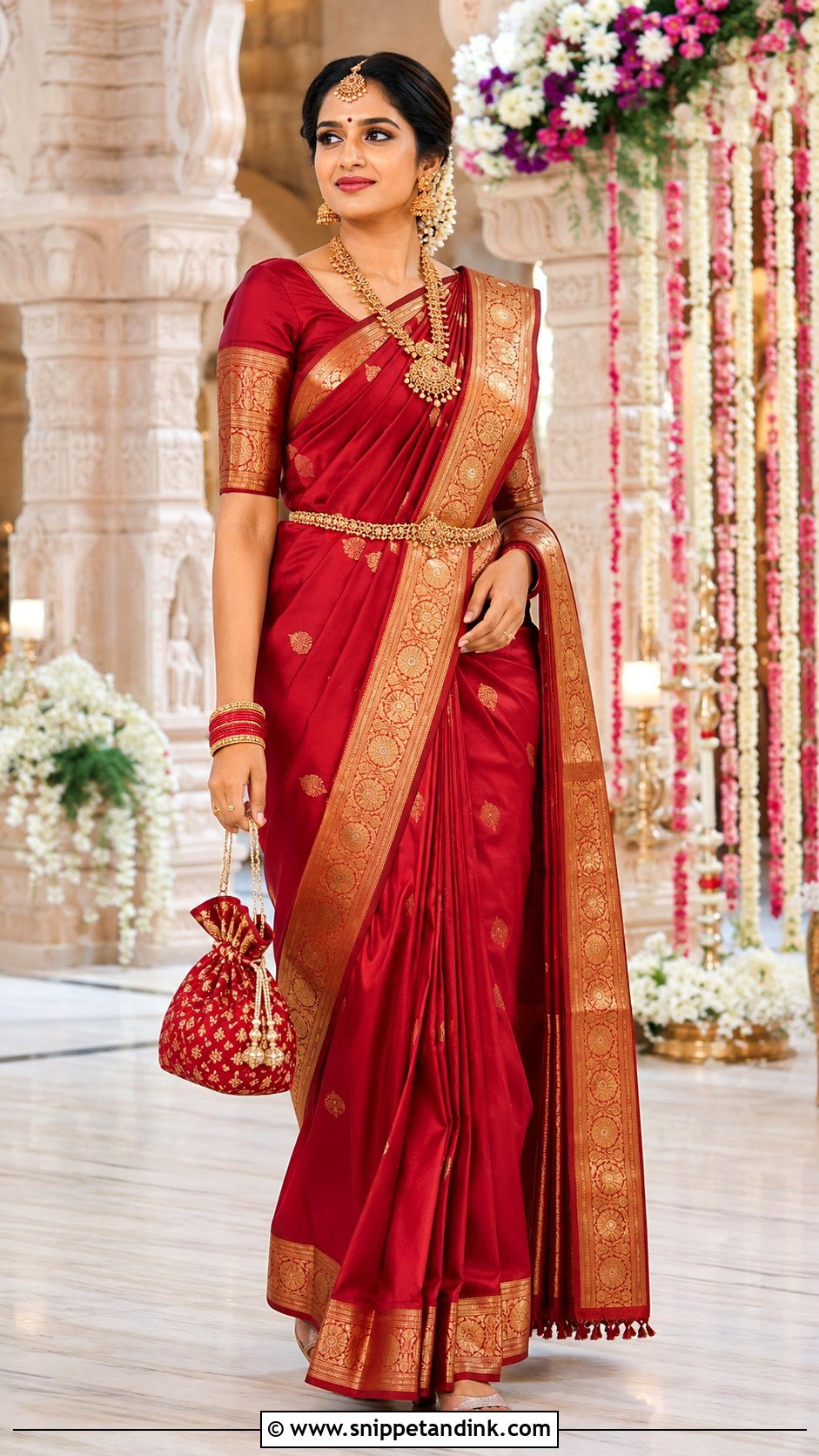
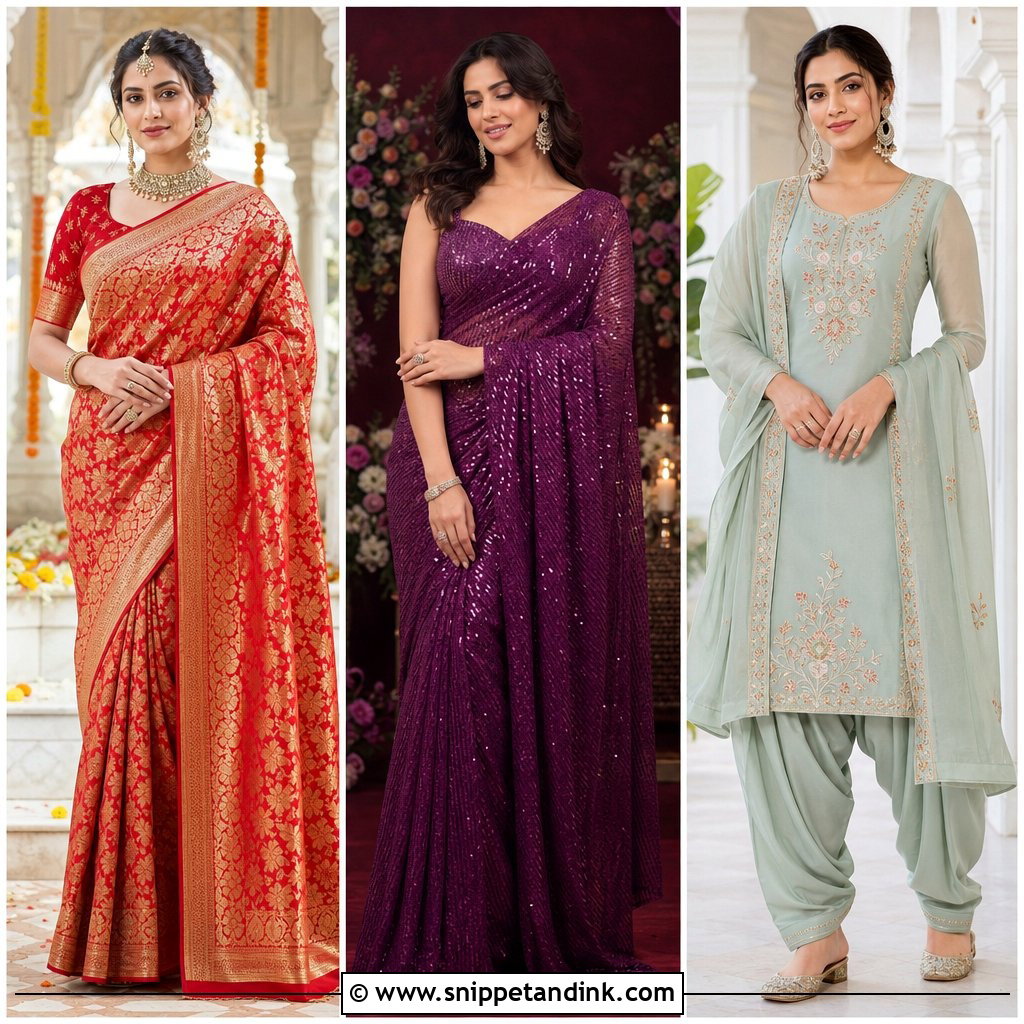
A Banarasi silk saree is heavy, and that weight is exactly why it suits a long ceremony: the pleats fall straight and stay put once pinned. Ruby, emerald, royal blue and plum feel traditional, while a softer pastel Banarasi reads well at a daytime wedding. I always ask for elbow-length sleeves on the blouse, because they look finished from the side when you’re seated in rows of guests. Temple jewelry, a small bindi and gold bangles match the woven zari. Put your shoes on before you set the hem length, then pin the pleats and pallu at home rather than at the venue. A smooth bun with fresh flowers keeps the neckline clear.
5. Embroidered Anarkali For Evening Wedding
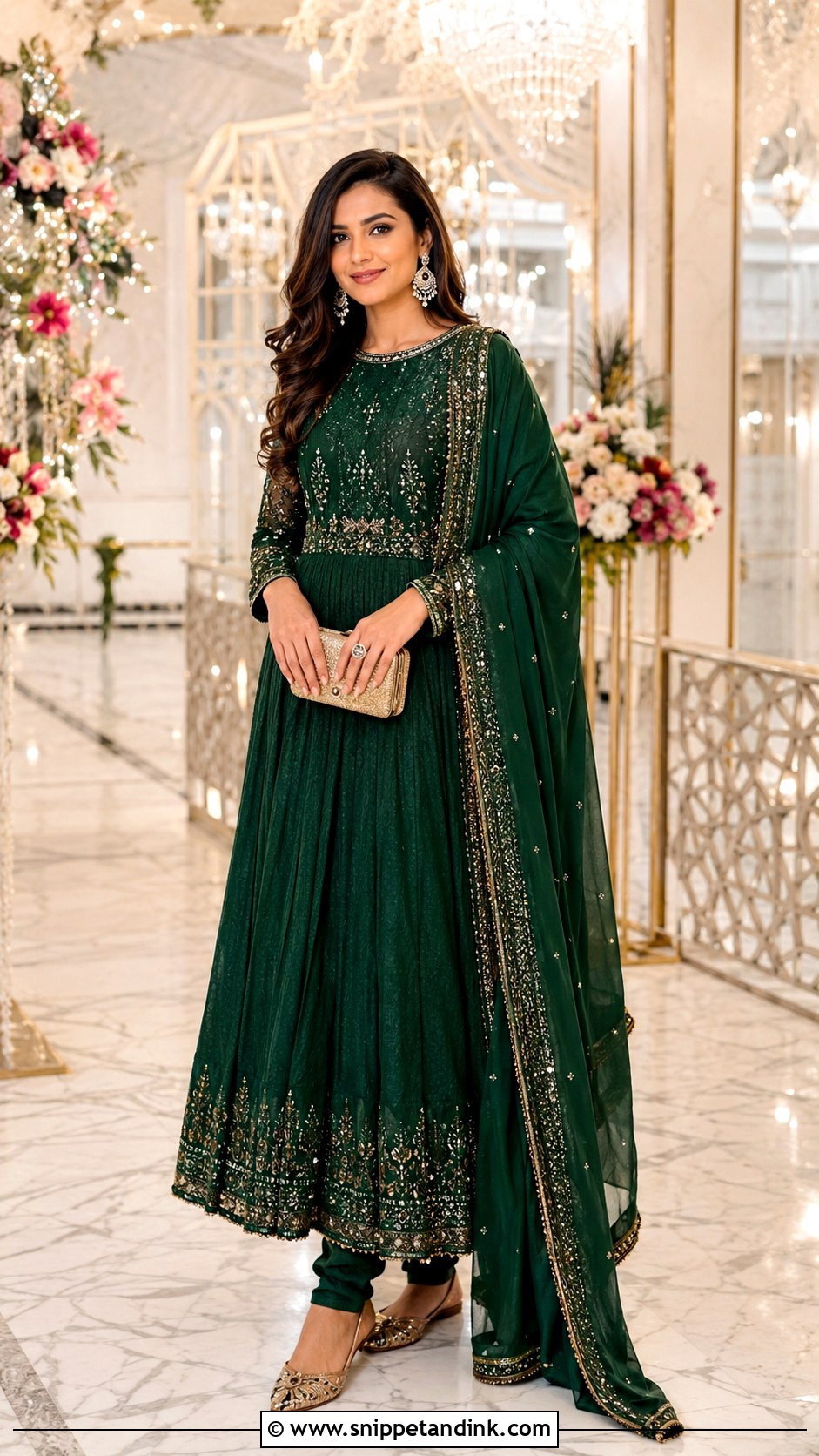
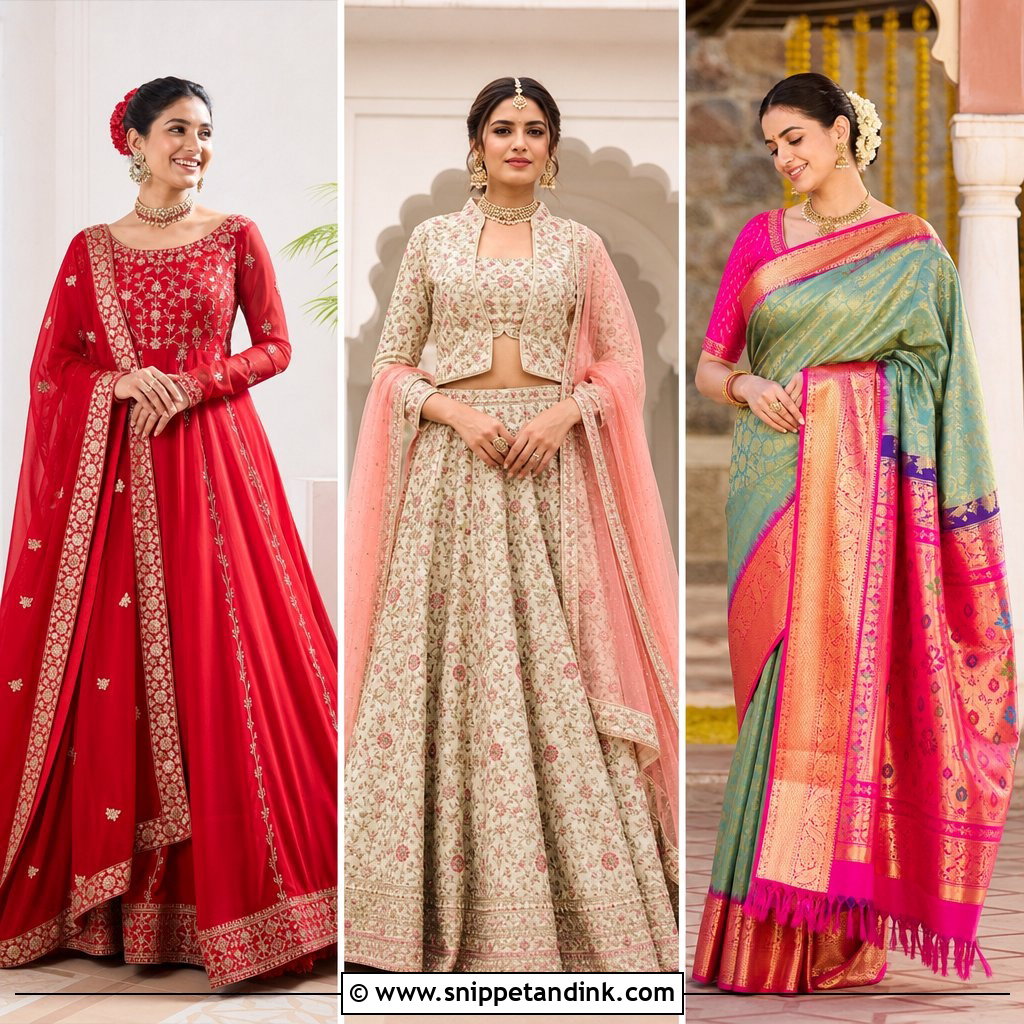
An Anarkali is the outfit I suggest to guests who have never worn a saree and don’t want to learn on the day. It’s one piece with churidar pants underneath, so there’s nothing to drape or redo. Look for a fitted bodice and a controlled flare; very wide kalis add bulk below the waist when you sit. Deep green, maroon and midnight blue suit an evening wedding, and blush or powder blue work earlier in the day. Zari or resham embroidery gives enough formality. Pin the dupatta at the shoulder, wear juttis or block heels, and add chandelier earrings with soft curls or a center-parted bun.
6. Pre-Draped Saree For Reception
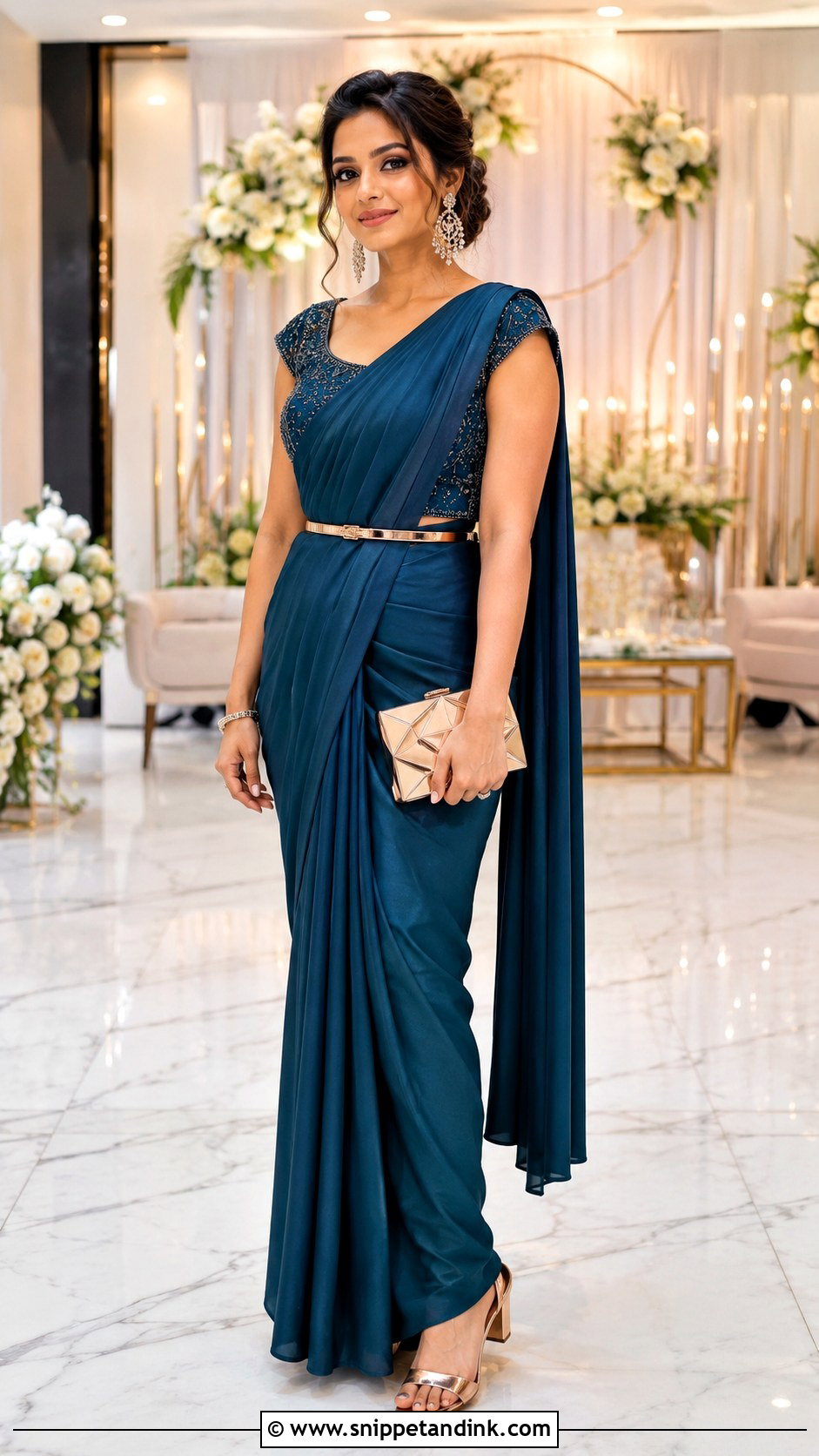
Pre-draped sarees are stitched so the pleats and pallu are fixed, and you step in and zip up. At a reception where you’ll stand, mingle and dance for hours, that security matters more than the purist drape. Satin and crepe hold their shape; chiffon and georgette move more but crush less visibly. Metallic gray, deep teal, berry and navy all photograph well under evening light. Pair it with a structured blouse, a corset top or a full-sleeve blouse depending on how much coverage you’re comfortable with. A slim belt defines the waist and holds the drape. Keep the rest quiet if the blouse is beaded, and finish with polished waves or a sleek ponytail.
7. Chikankari Palazzo Set For Summer Wedding
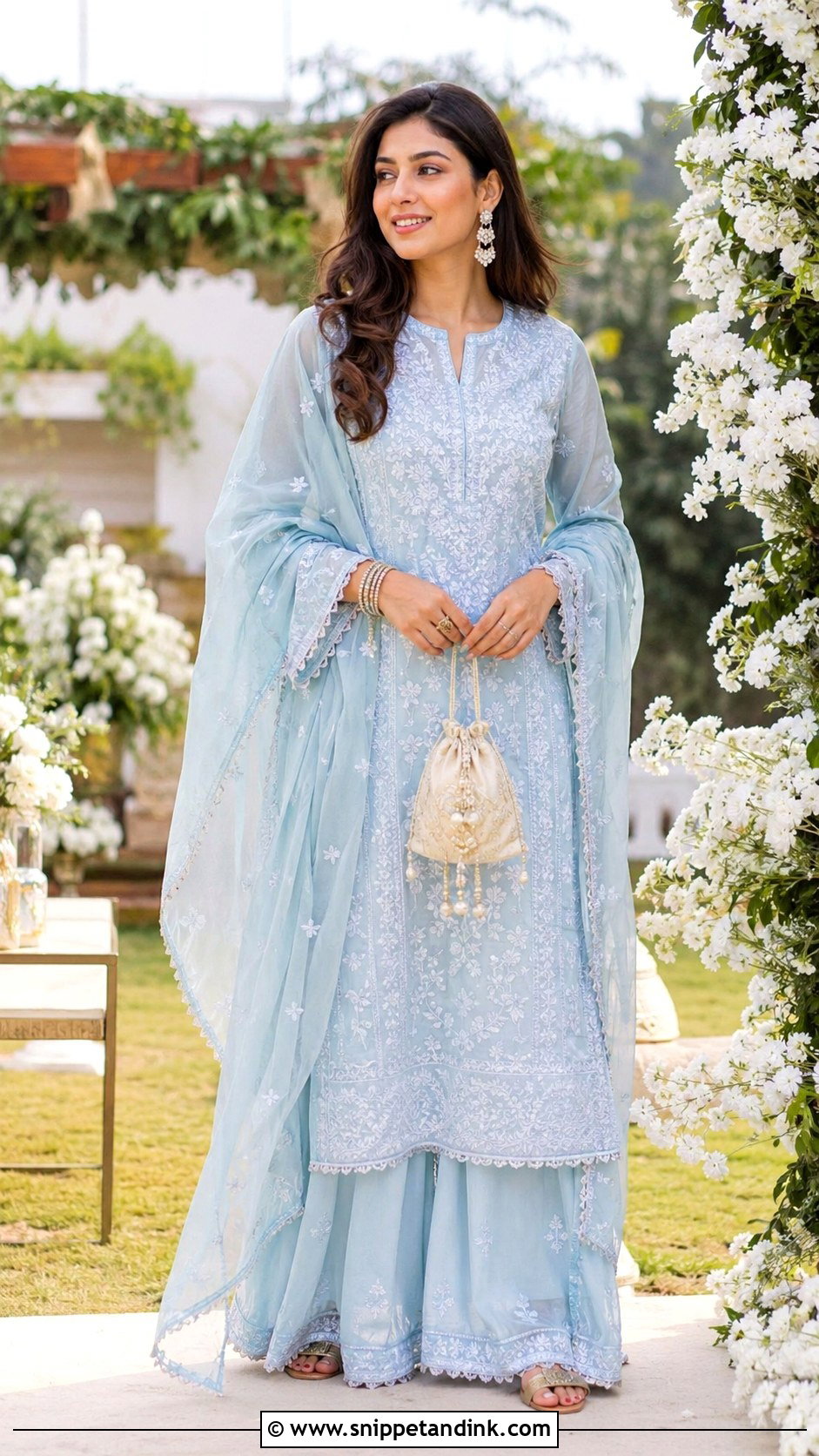
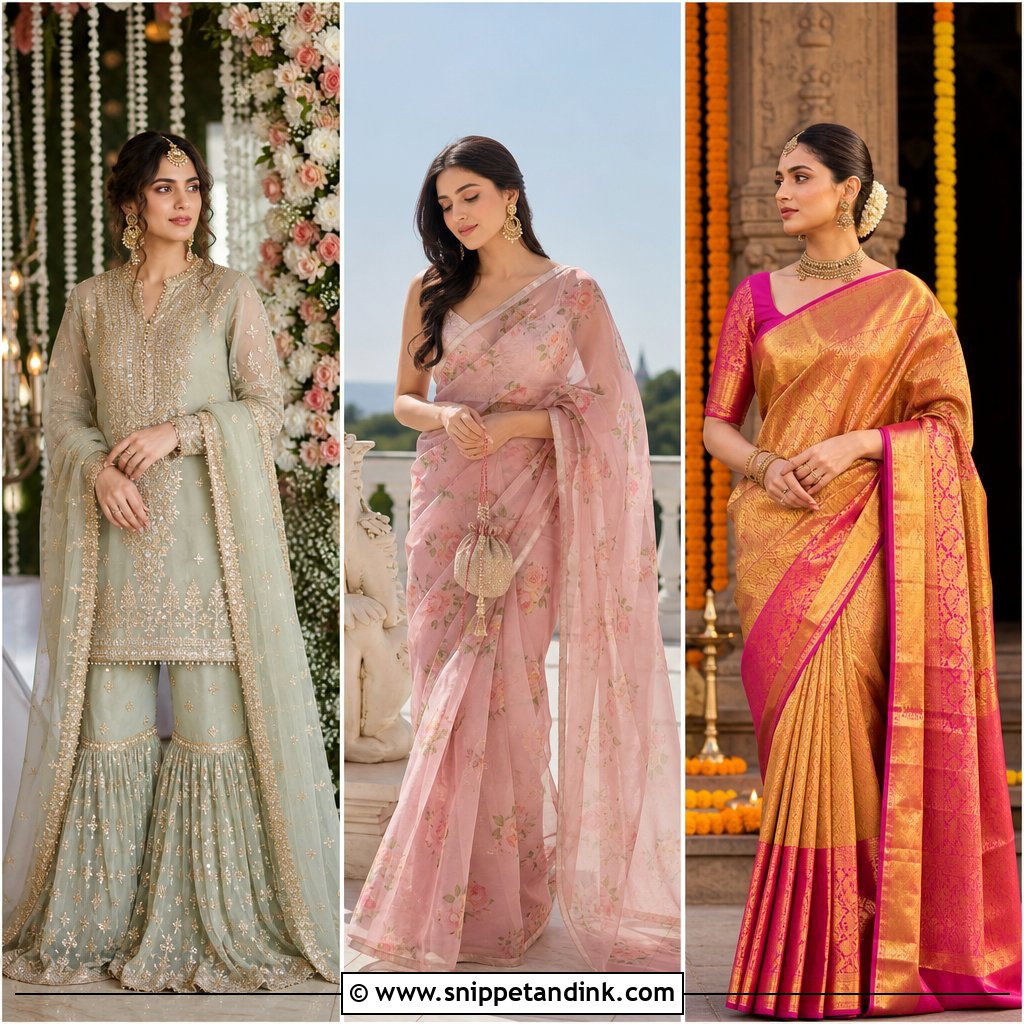
Hand-done chikankari embroidery on cotton or georgette is the coolest thing you can wear to a summer wedding, and wide palazzos let air move. The one thing I check is the lining: thin chikankari is close to transparent in sunlight, so the kurta needs a slip that matches your skin tone or the fabric, not a stiff second layer. Ivory, lemon, powder blue and mint look fresh outdoors. Pale colors can carry meaning at some ceremonies, so ask the family before you commit to ivory. Pearl earrings, slim bangles, a woven potli and metallic sandals keep it relaxed, and a low bun or braid suits the soft fabric.
8. Peplum Gharara For Mehndi
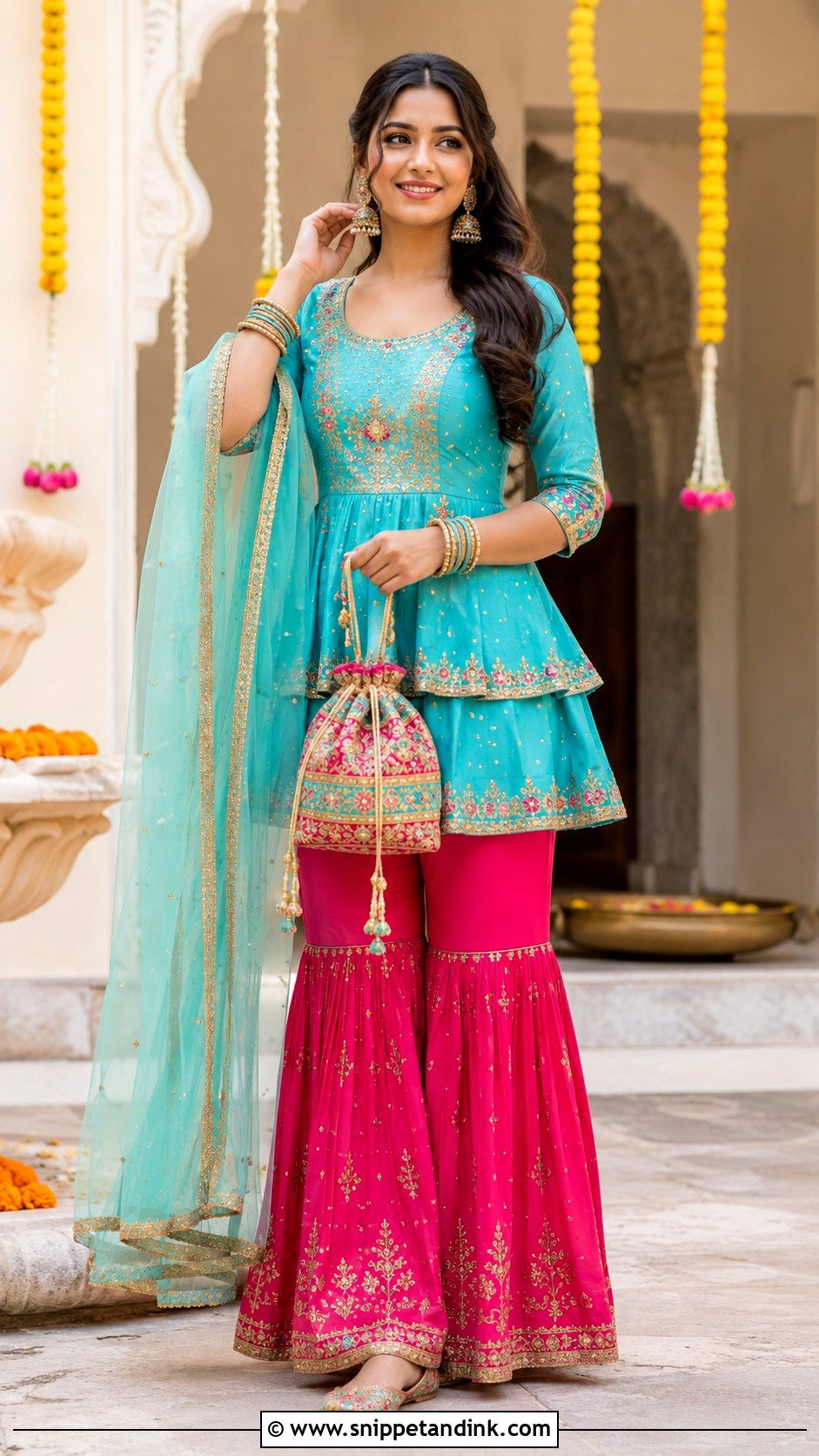
A peplum top over a gharara looks playful, and the shape does real work: the flare ending near the upper hip balances pants that widen dramatically from the knee. The gharara’s gathered joint at the knee should sit at your actual knee, so try it on with the shoes you’ll wear before you have it altered. Turquoise, fuchsia, orange and lime clash happily at a mehndi. Gota, mirror or thread embroidery adds texture. Drape a light dupatta around the arms so your hands stay free for henna, and finish with jhumkas, bangles, flat juttis and a braid with small floral pins.
9. Cape Lehenga For Cocktail Event
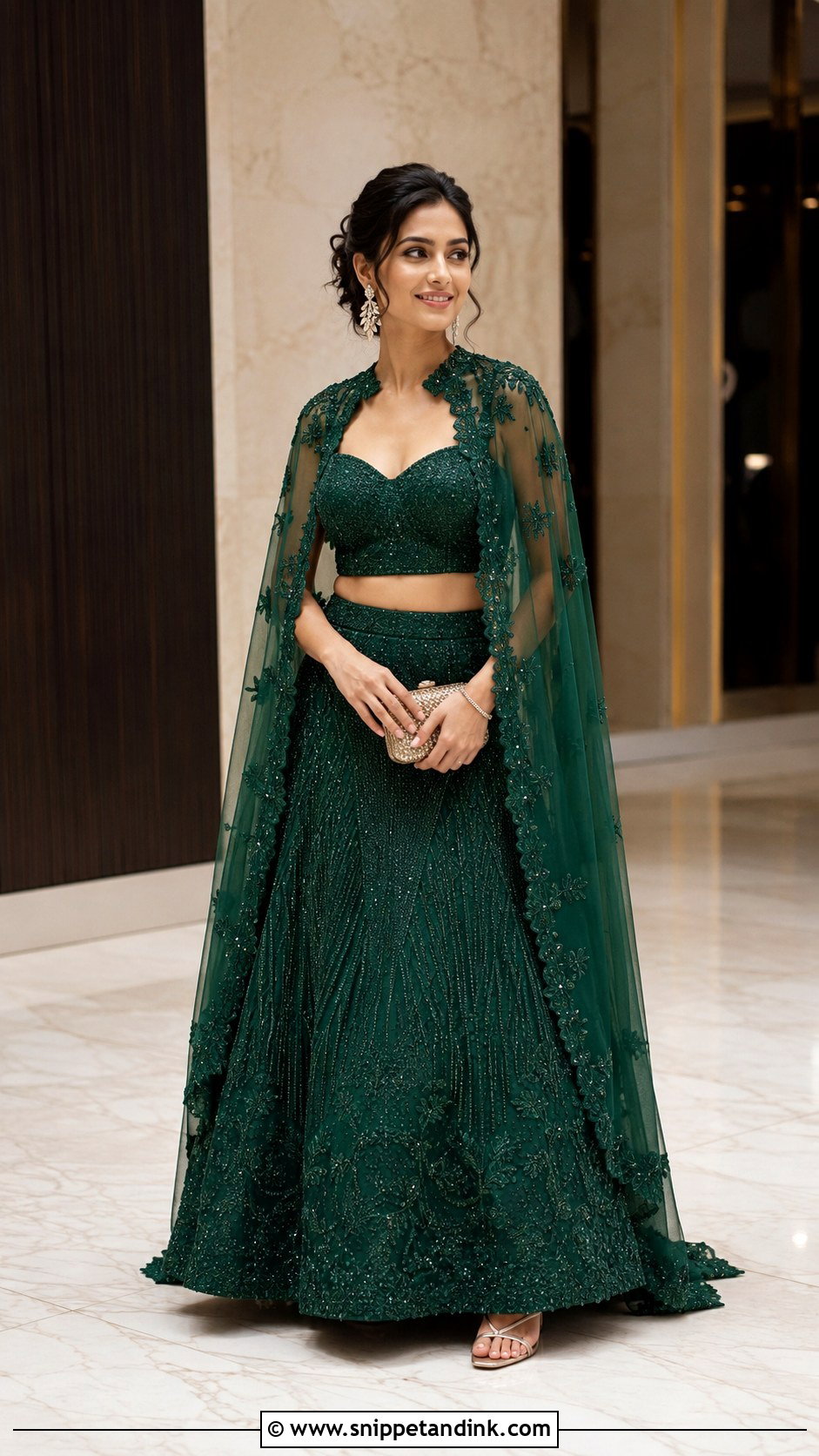
A cape lehenga solves the dupatta problem. Instead of a long scarf you keep adjusting all evening, a sheer embroidered cape sits over a fitted blouse and stays where it’s put. I like a solid or lightly worked skirt underneath so the cape carries the detail. Black is accepted at some modern cocktail events but not at every family’s, so navy, plum, emerald and charcoal are the safer choices. With embroidery at the neckline, a necklace only fights it; sculptural earrings and a box clutch are plenty. Keep the skirt volume manageable, and add a polished ponytail.
10. Velvet Lehenga For Winter Wedding
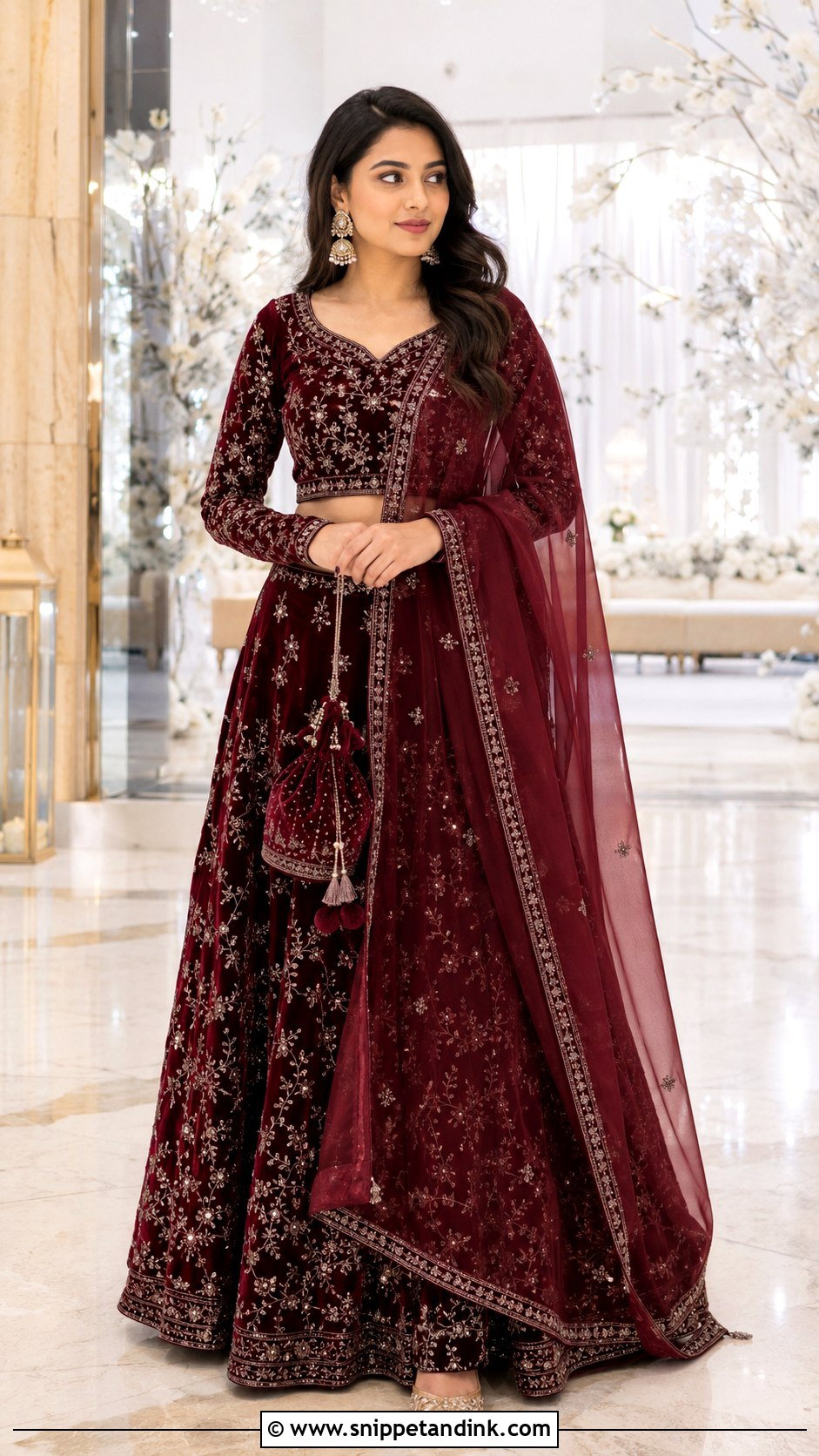
Velvet earns its place at a winter wedding because it is warm and drinks in light, so burgundy, forest green, navy and aubergine look richer than they would in silk. The catch is weight. A velvet skirt plus a velvet dupatta plus heavy embellishment gets bulky fast, so I pair the skirt with a lighter silk or organza dupatta. A full-sleeve blouse adds warmth without extra layers. Zari borders or antique gold embroidery suit the pile. Velvet crushes where you sit, so steam it the morning of and avoid folding it flat in a suitcase. Closed-toe juttis or stable platforms, a shawl for outdoors, and a smooth bun finish it.
11. Kanjeevaram Saree For South Indian Wedding
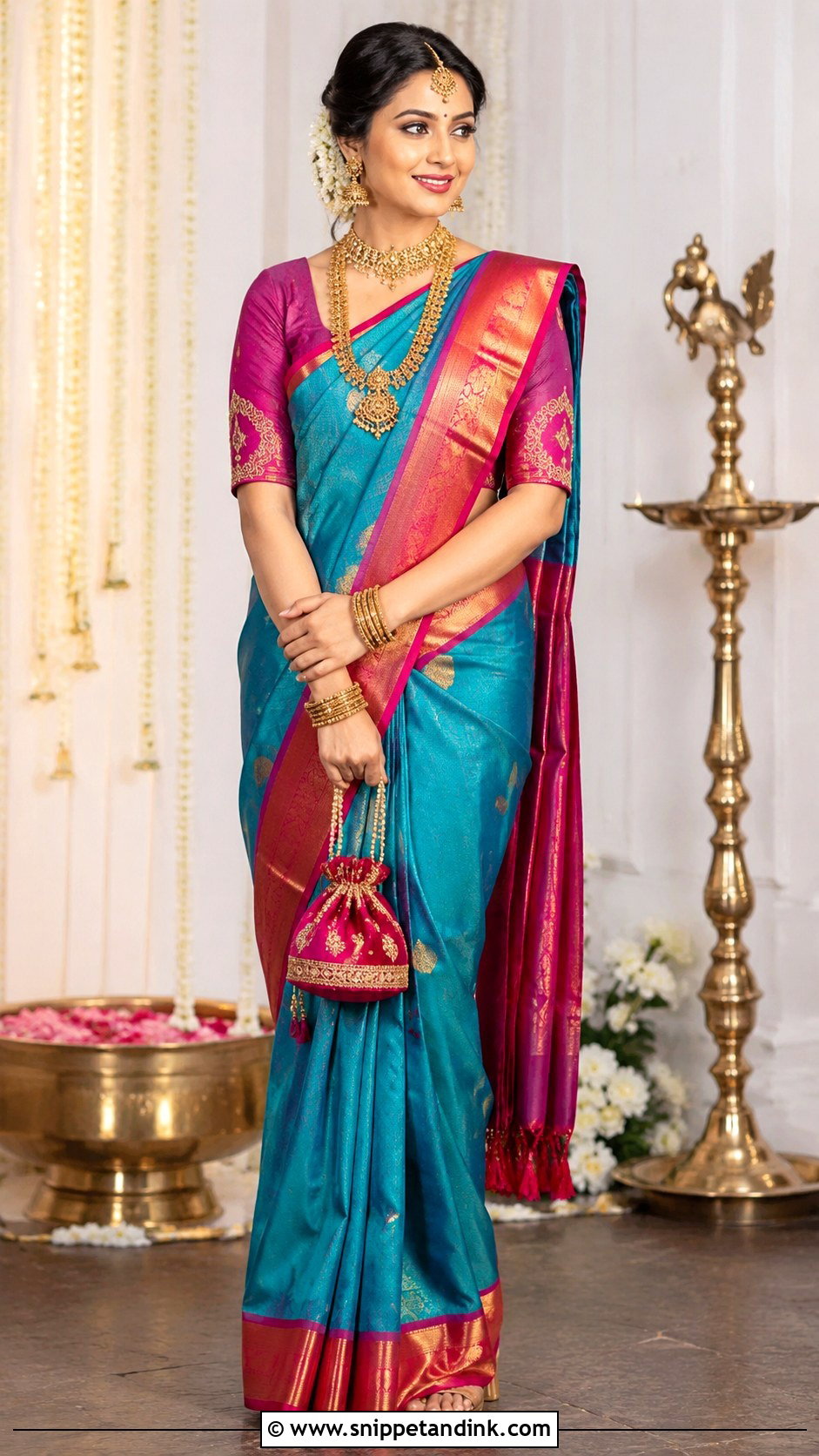
At a South Indian wedding a Kanjeevaram is the respectful choice, and its broad woven border is the main event. Magenta, turquoise, orange and green are traditional, often with a contrasting border and pallu, so I match the blouse to the border rather than the body of the saree. Elbow-length sleeves and a classic neckline suit the ceremony. Kanjeevaram silk is thick and springy, which means pleats need firm pinning at the waist or they fan out by midday. Gold-toned temple earrings, bangles and a bindi are enough for a guest. Set the hem after the sandals go on, and finish with a center-parted bun and jasmine.
12. Bandhani Saree For Day Wedding
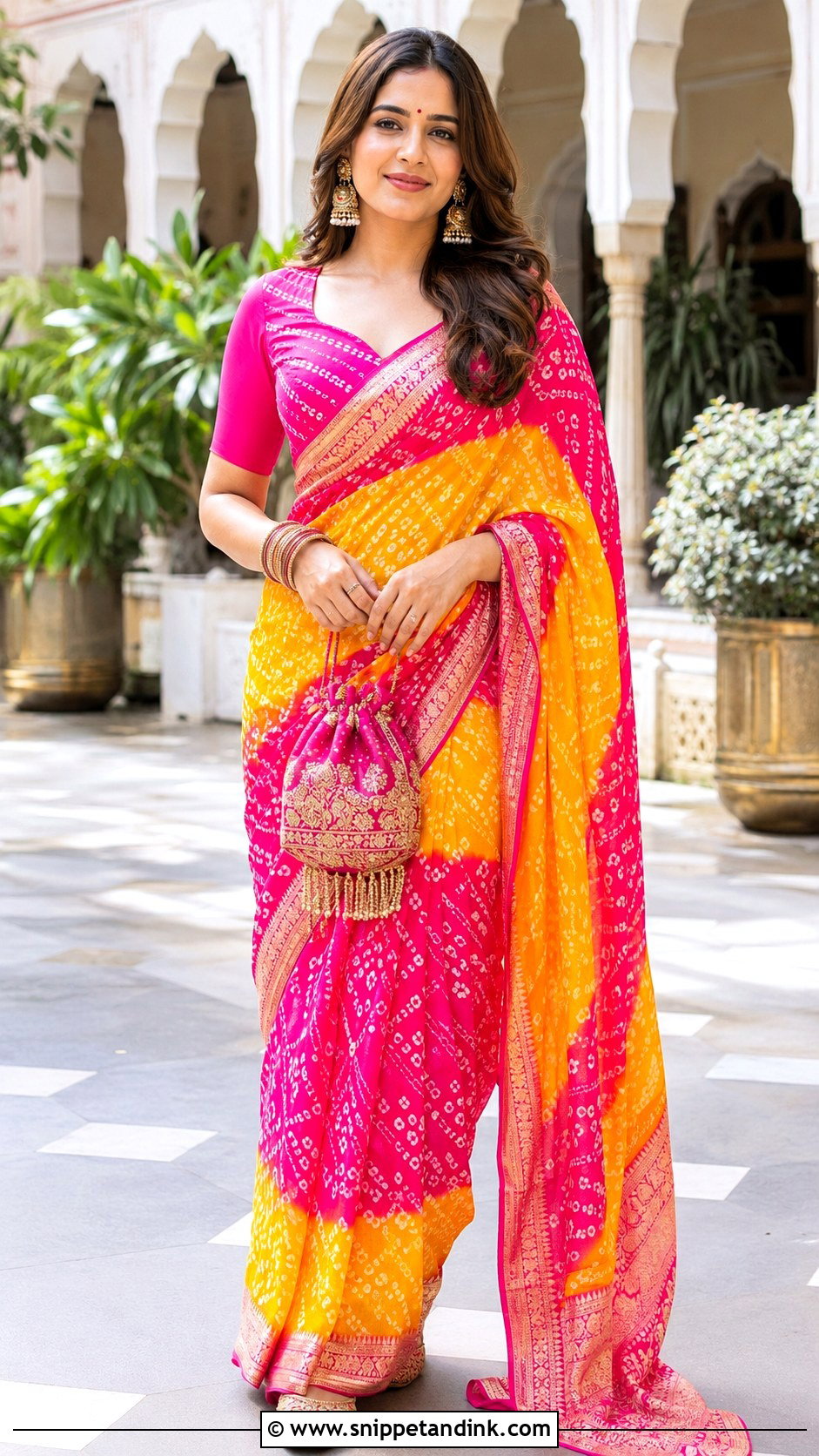
Bandhani is tie-dyed by hand, thousands of tiny pinched dots that give texture without any embellishment. That makes it light, cheap to wear in heat and ideal for a daytime ceremony in red, pink, yellow or a bright two-color combination. Pair it with a plain silk blouse or a quiet one that picks up the border. Oxidized silver jewelry leans regional and casual; gold makes it more formal. A busy print plus busy accessories turns muddy in photos, so I let the textile lead. Real bandhani can bleed on its first wash, so dry-clean it before the event and keep it away from a pale blouse. Finish with juttis and a braided bun.
13. Lehenga Saree For Wedding Reception
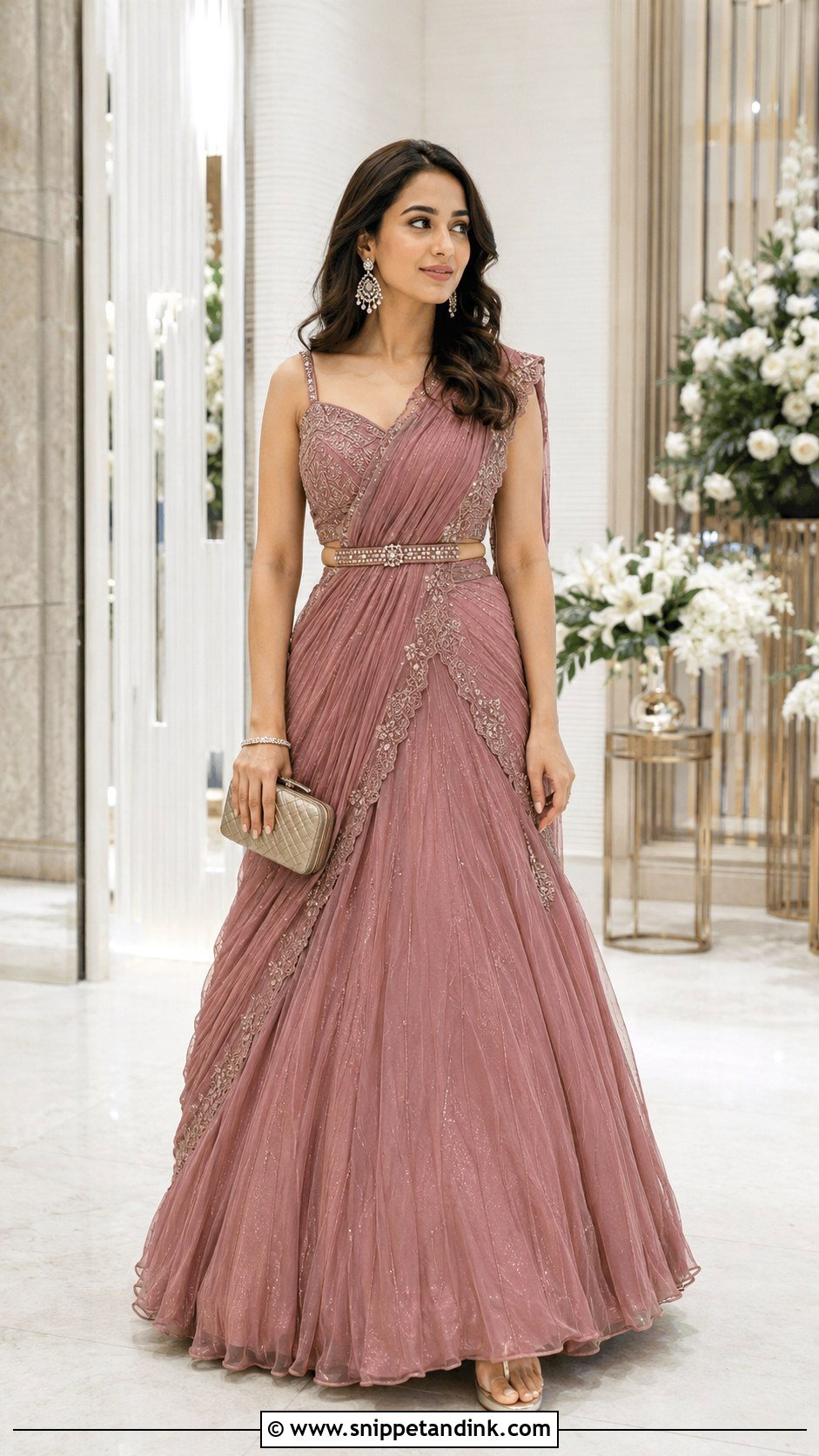
Can’t decide between a saree and a lehenga? A lehenga saree gives you a flared skirt with a stitched pallu, so you get the saree line without the draping. Georgette, satin and crepe fall smoothly. The pallu secures at the shoulder and the waist, which means it won’t slide off while you hold a plate or hug relatives. Dusty rose, sapphire, bronze and mauve suit a formal reception. Heeled sandals help the drape fall cleanly, but I still want the skirt to skim the floor rather than pool on it, because pooled hems get stepped on. Drop earrings, a slim belt and side-swept waves keep it polished.
14. Jacket Sharara For Sangeet
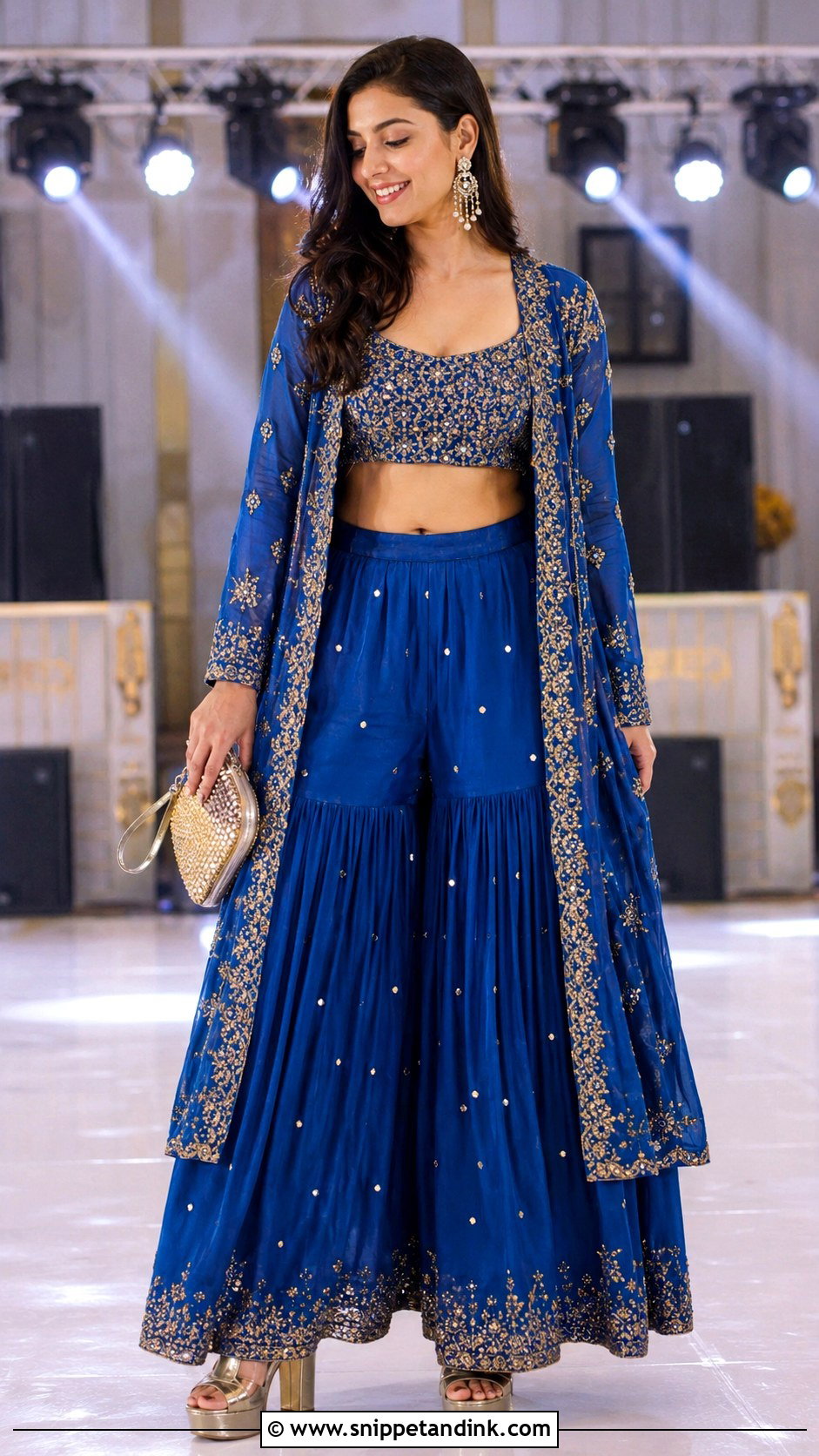
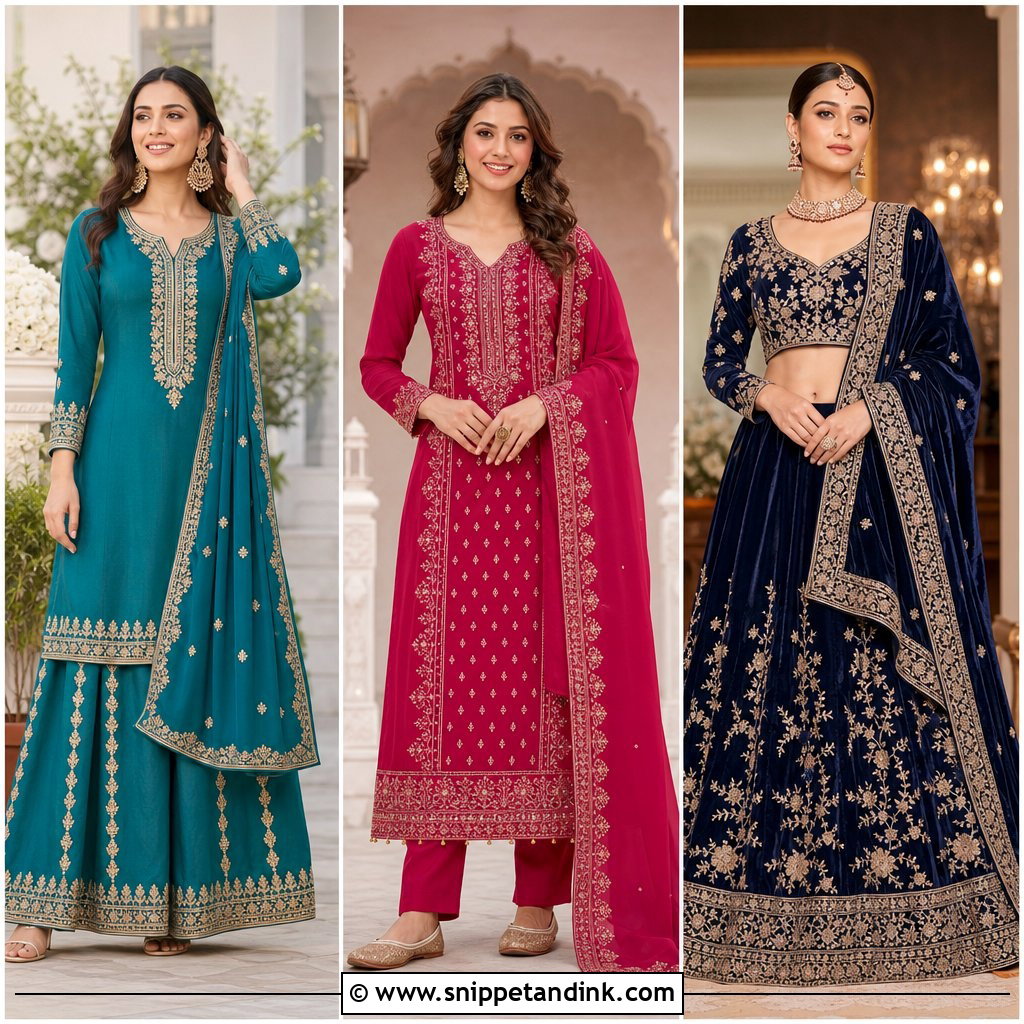
A jacket sharara is three layers, and the most common mistake is letting all three compete. I keep the cropped blouse or short kurti plain and put the embroidery on the jacket, then keep the sharara in the same color family. Cobalt, berry, emerald and muted rose all work with mirror or zari. Left open, a floor-length jacket draws a long vertical line; fastened at the waist it defines your shape. Since the jacket already acts as an outer layer, a dupatta is optional and usually one thing too many on a dance floor. Block heels, statement earrings, a wristlet and a high ponytail finish it.
15. Silk Kurta Palazzo Set For Wedding Guest
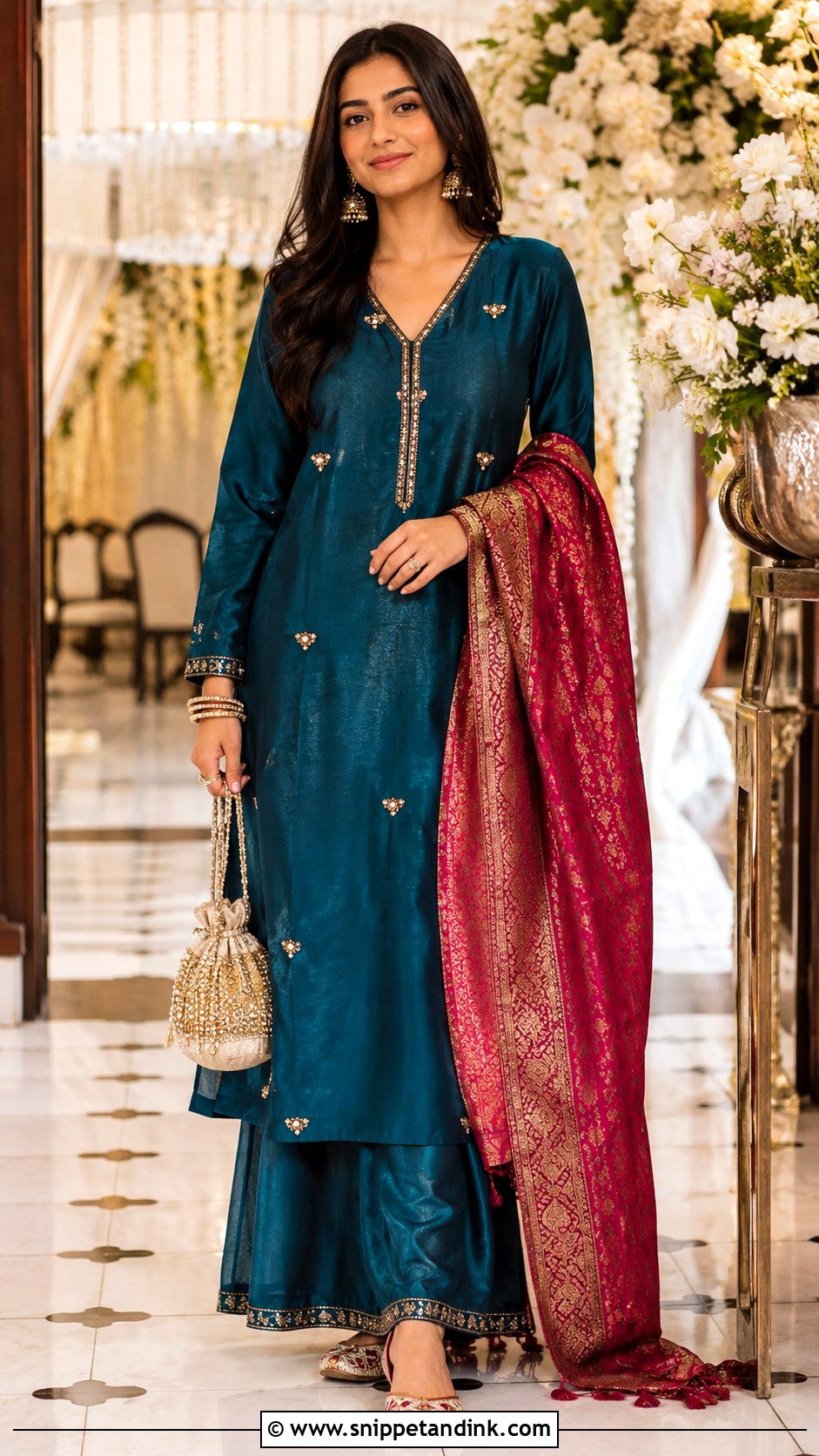
Not every guest wants embroidery from shoulder to ankle, and a silk kurta palazzo set is my answer for understated. A straight, calf-length kurta with a little zari or a brocade border is dressy enough when paired with a contrasting woven dupatta. Teal with magenta, mustard with plum and navy with antique gold are combinations that look deliberate. The palazzo hem should hover just above the floor, measured with your shoes on. Through a three-hour ceremony with sitting, standing and walking to the mandap, this is the most comfortable outfit on the list. Medium jhumkas, bangles and a low bun complete it.
16. Embroidered Ethnic Jumpsuit For Reception
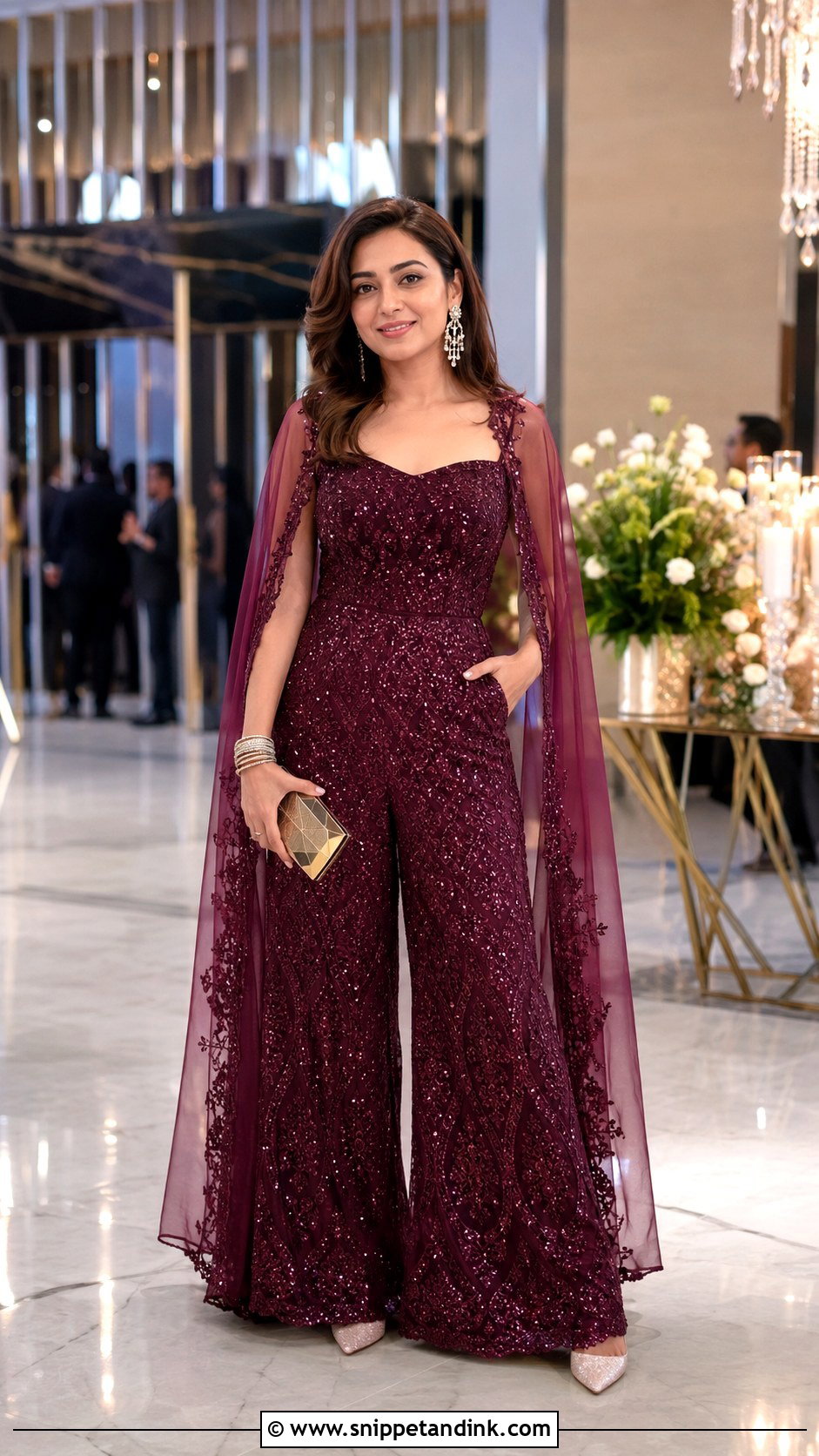
An embroidered jumpsuit is the confident pick for a modern reception, and the fit at the torso decides everything. A one-piece pulls when you sit if the rise is too short, so I have clients sit down in the fitting room before they buy. Look for a wide leg, a defined waist and a structured bodice. Embroidery at the neckline, shoulders or waist gives it an Indian occasion finish. A detachable cape or short dupatta adds coverage if you want it. Deep blue, wine and copper suit evening. Hem it to your chosen heels, then add statement earrings, metallic bangles and a hard-case clutch.
17. Dhoti Pants And Asymmetrical Kurta
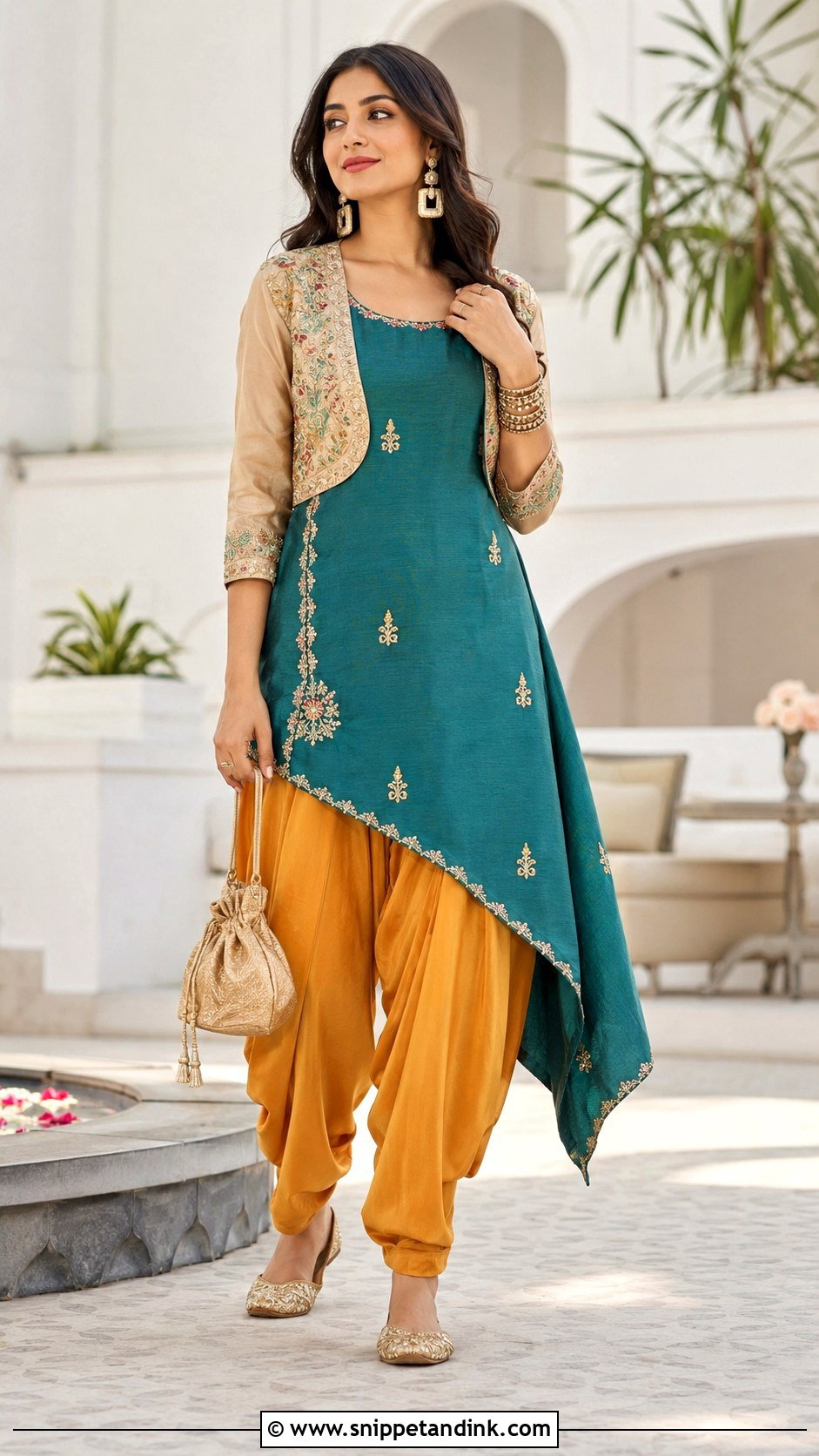
Dhoti pants with an asymmetrical kurta feel relaxed and current, and they suit a mehndi, a welcome dinner or a smaller function rather than the main ceremony. The drape at the hips is where these go wrong: too much fabric gathered at the front adds bulk, so check the folds lie flat before you buy. Silk blend or crepe hangs better than stiff cotton. A short embroidered jacket makes it more formal without limiting movement. Coral, teal, mustard and olive suit the silhouette. Skip a long dupatta, since it fights the drape, and add embellished flats, geometric earrings and a high ponytail or textured braid.
18. Embroidered Indo-Western Gown
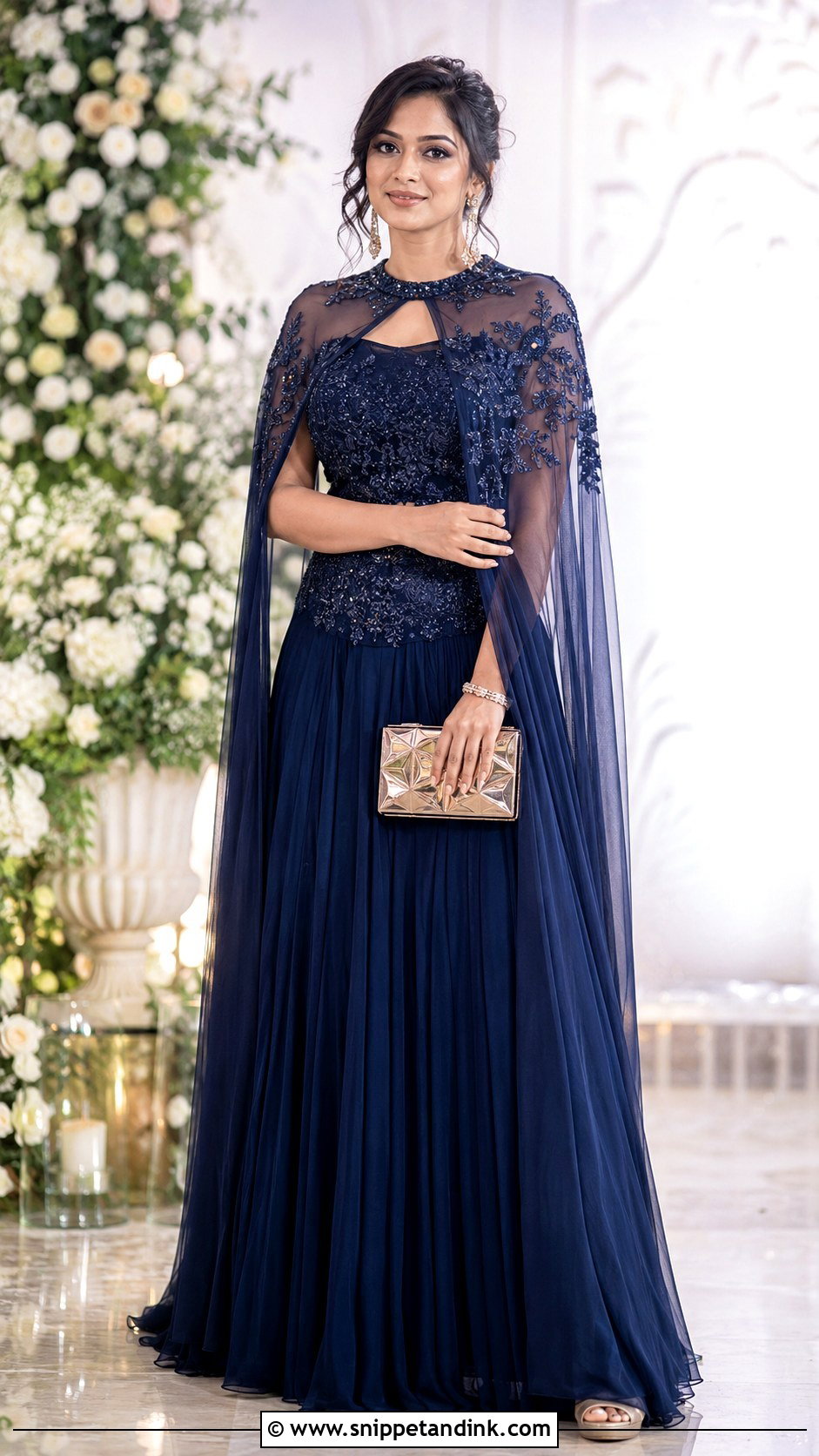
An Indo-Western gown is the outfit for guests who are more comfortable in a dress but want Indian craftsmanship on show. A fitted waist, a flowing skirt and embroidery around the bodice or sleeves carry it; zari, sequins and resham all work. Midnight blue, emerald, plum and rose suit an evening reception. I’d skip a long train at a crowded venue, because it will be stepped on by the second hour. Platform heels hidden under the skirt give height without wobble on long walks between rooms. A sheer cape adds coverage, and a low bun keeps the neckline visible.
19. Organza Saree With Embroidered Blouse
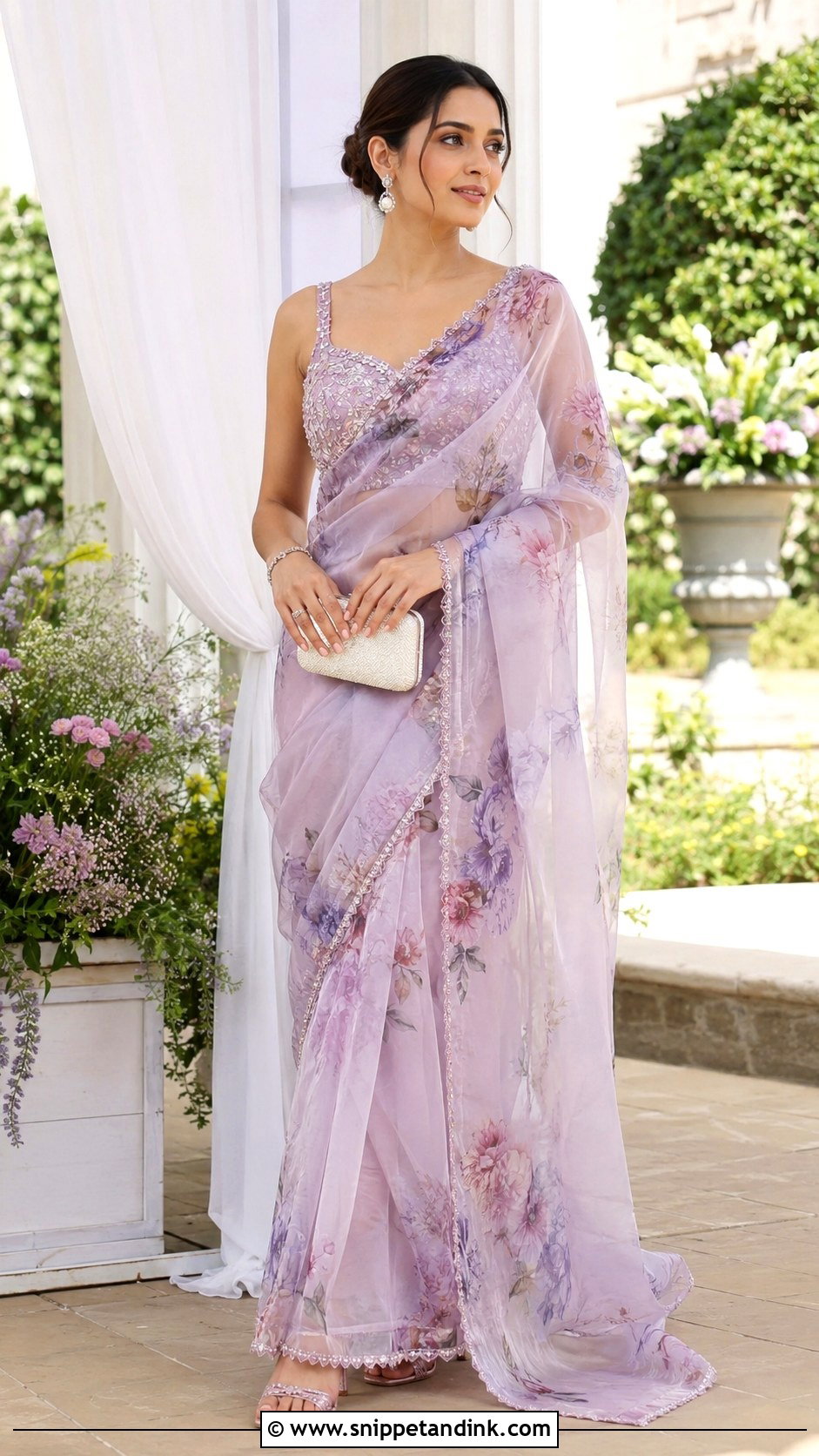
Organza is crisp and holds its own shape, which is its strength and its challenge. The pleats stand slightly away from the body, so they need to be narrow and evenly pressed, and the pallu needs a pin at the shoulder or it lifts in a breeze. A floral print, woven border or light sequin detail all suit it. Sage, lavender, peach and powder blue feel soft in daylight. Keep the underskirt close to the saree color, because organza is sheer and a mismatched petticoat shows through. Pearl or kundan earrings, a small clutch and a sleek bun with pearl pins are all it needs.
20. Handloom Lehenga With Silk Blouse
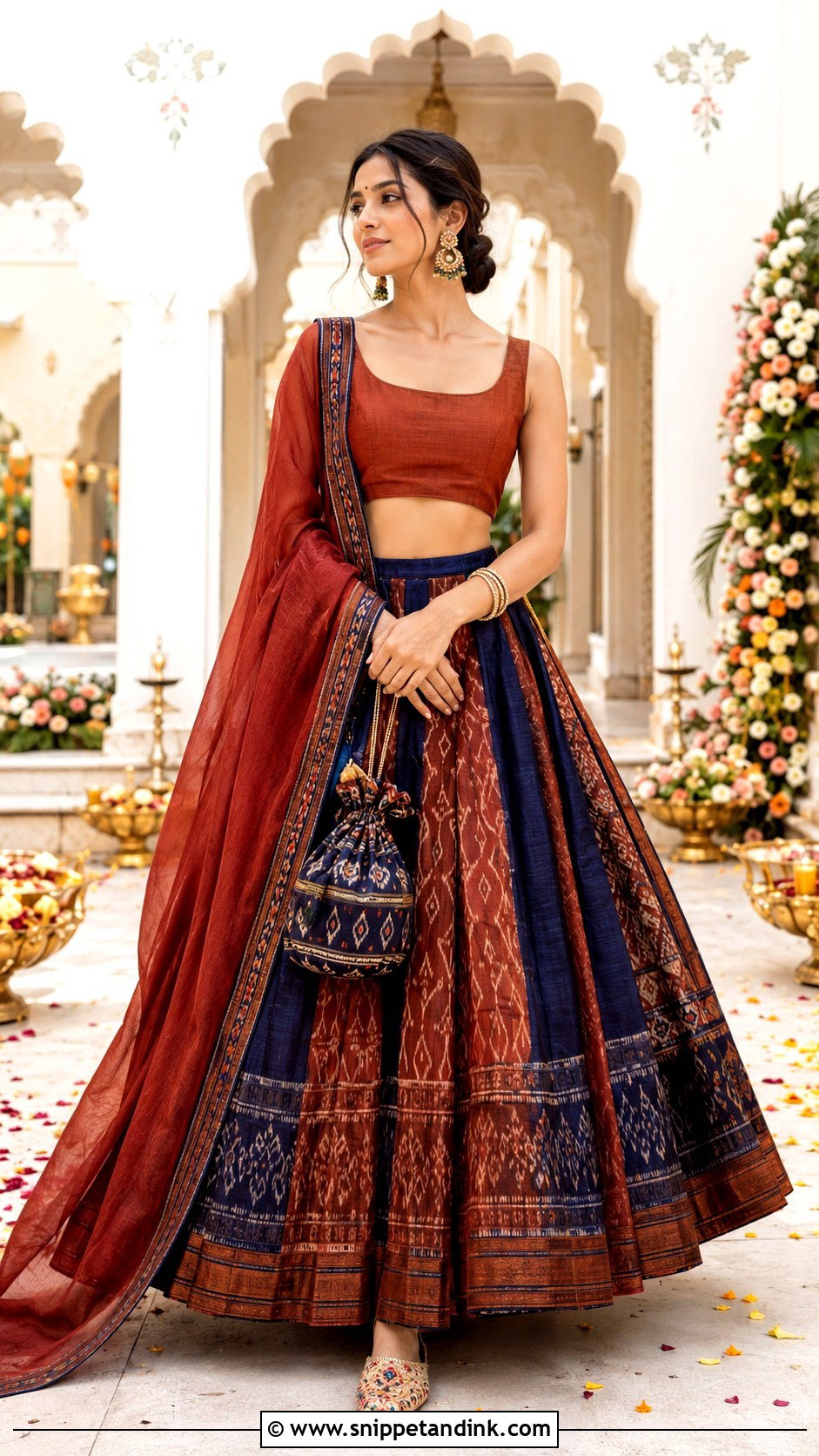
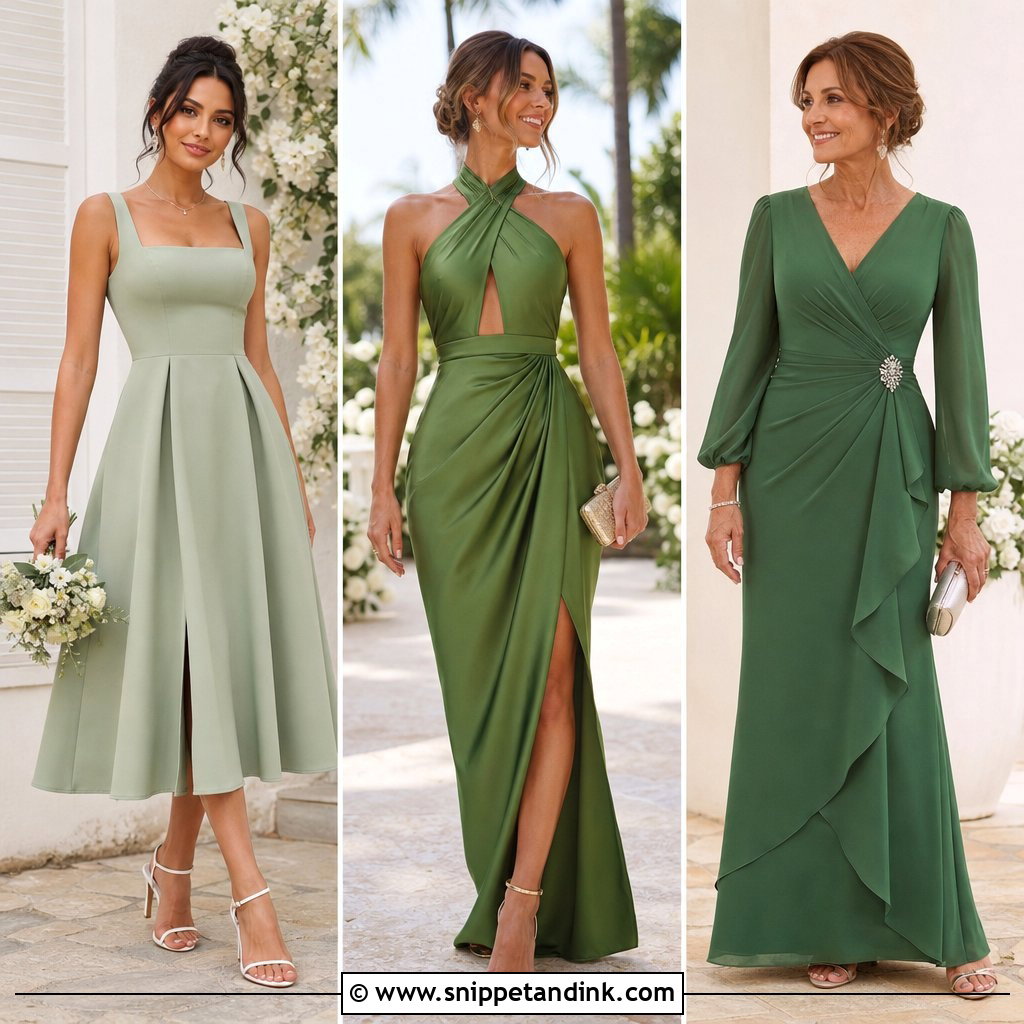
A handloom lehenga is the one I recommend to guests who want to wear their outfit again. Handwoven panels have a slight irregularity in the weave that machine fabric can’t copy, and the separates restyle well afterwards. Pair the skirt with a solid silk blouse and a light dupatta with a coordinated border. Rust, indigo, maroon, green and mustard give an artisanal palette for day or evening. A high-waisted skirt with a blouse ending at the waistband balances most figures. Choose moderate flare if comfort comes first. Handcrafted earrings, a woven potli and a braided bun finish it.
Tailoring Lead Times for Blouses and Lehengas
Readymade lehengas and sarees almost always need work. A saree blouse is usually stitched from the fabric piece that comes with it, and a good tailor near wedding season can need several weeks. I tell guests to buy at least six to eight weeks ahead and to book a second fitting, because blouses are often tight across the back on the first try.
Bring the shoes you’ll wear and the bra you’ll wear to every fitting. The skirt and saree hem should be set with those shoes on, and padded or cupped blouses depend completely on what is underneath. Ask for extra seam allowance at the blouse sides so it can be let out later.
Packing Silk and Embroidery for a Destination Wedding
Heavy outfits suffer most in a suitcase. Roll the lehenga skirt loosely around tissue rather than folding it flat; sharp creases in silk can become permanent if they sit for days. Wrap embroidered panels in muslin or an old cotton dupatta so mirrors and sequins don’t catch on each other.
Carry ceremony pieces in your hand luggage if you can. Pack a small kit too: safety pins in two sizes, a handful of saree pins, double-sided fashion tape, a travel steamer and a stain pen. Steam from the inside of the garment, never directly on zari or velvet pile, and hang everything the night you arrive.
Dressing for Every Function Without Upstaging the Bride
Start with the function, then the weather, then your own comfort. Light shararas and floral lehengas belong at daytime events, while silk sarees, Anarkalis and richer lehengas suit the ceremony and reception. Whatever you pick, a well-fitted blouse, firm pins and shoes you’ve already walked in will matter more over a long night than the embroidery will. Many of these pieces earn a second life with a new blouse or dupatta. Above all, dress like a guest who is there to celebrate the couple.
You'll Like These Ideas:


Leave a Reply