
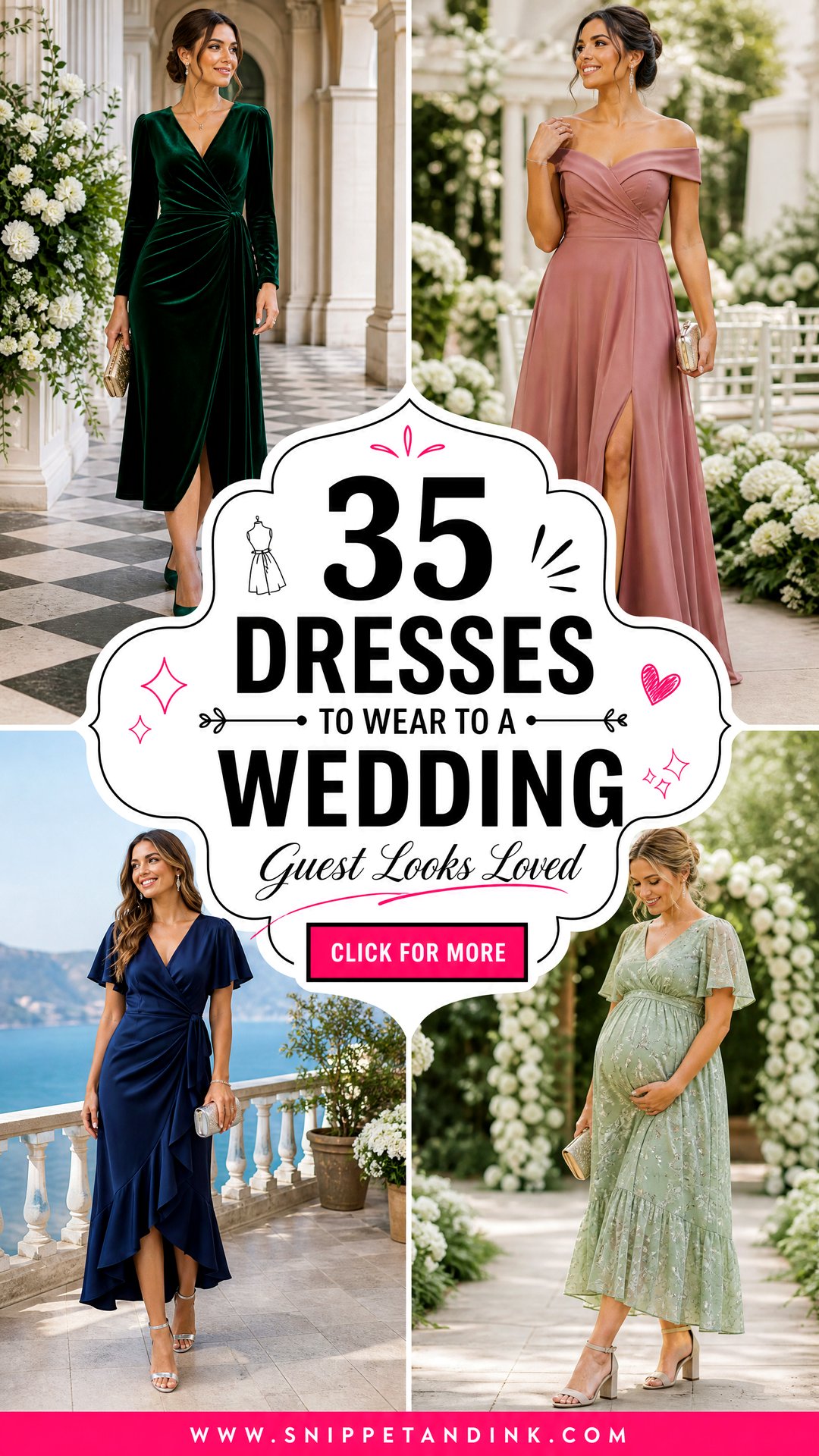
Most guests start with the dress and work backwards. I do it the other way round: invitation wording first, then the venue floor, then the season, and only then the dress. A guest outfit has one job, which is to look like you made an effort for the couple without pulling focus from the bride, and it has to survive a ceremony, a long dinner and a dance floor. This year I’m seeing a lot of saturated color, satin, soft draping, one-shoulder necklines and midi lengths you can actually walk in, and I’ve grouped the ideas below so you can match one to a cocktail, garden, beach, black tie or relaxed outdoor invitation and build the shoes, bag and hair around it.
Decoding the Dress Code Line Before You Shop
The wording on the invitation tells you more than most guests read into it. When a couple writes a dress code, they are telling you the length and the fabric weight they have in mind, and I use it as the first filter before any color or neckline.
- Black tie: floor length, formal fabric such as satin, crepe or velvet. A short dress is a mistake here, however expensive.
- Black tie optional or formal: a gown is safest, though a very polished midi in a rich fabric can pass.
- Cocktail: knee to midi length, dressy fabric, heels and a proper clutch rather than a day bag.
- Garden or semi-formal: midi length in lighter fabric, prints welcome, shoes that cope with grass.
- Beach or casual: breathable fabric and flat or low shoes, but still something you would not wear to the shops.
When the invitation says nothing at all, the venue and the time of day answer the question. A six o’clock ceremony in a hotel ballroom means evening wear even without a line printed on the card, and an early afternoon wedding on a farm means the opposite.
The fitting room test I give every guest
Sit down, cross your legs and lean forward as if you were reaching for a glass. Then lift both arms and walk a few steps quickly. A wedding asks you to do all of that for hours, and a dress that gapes, rides up or pinches at the underarm in a two-minute test will be miserable by the speeches.
1. Floral Midi Dress With Nude Heels
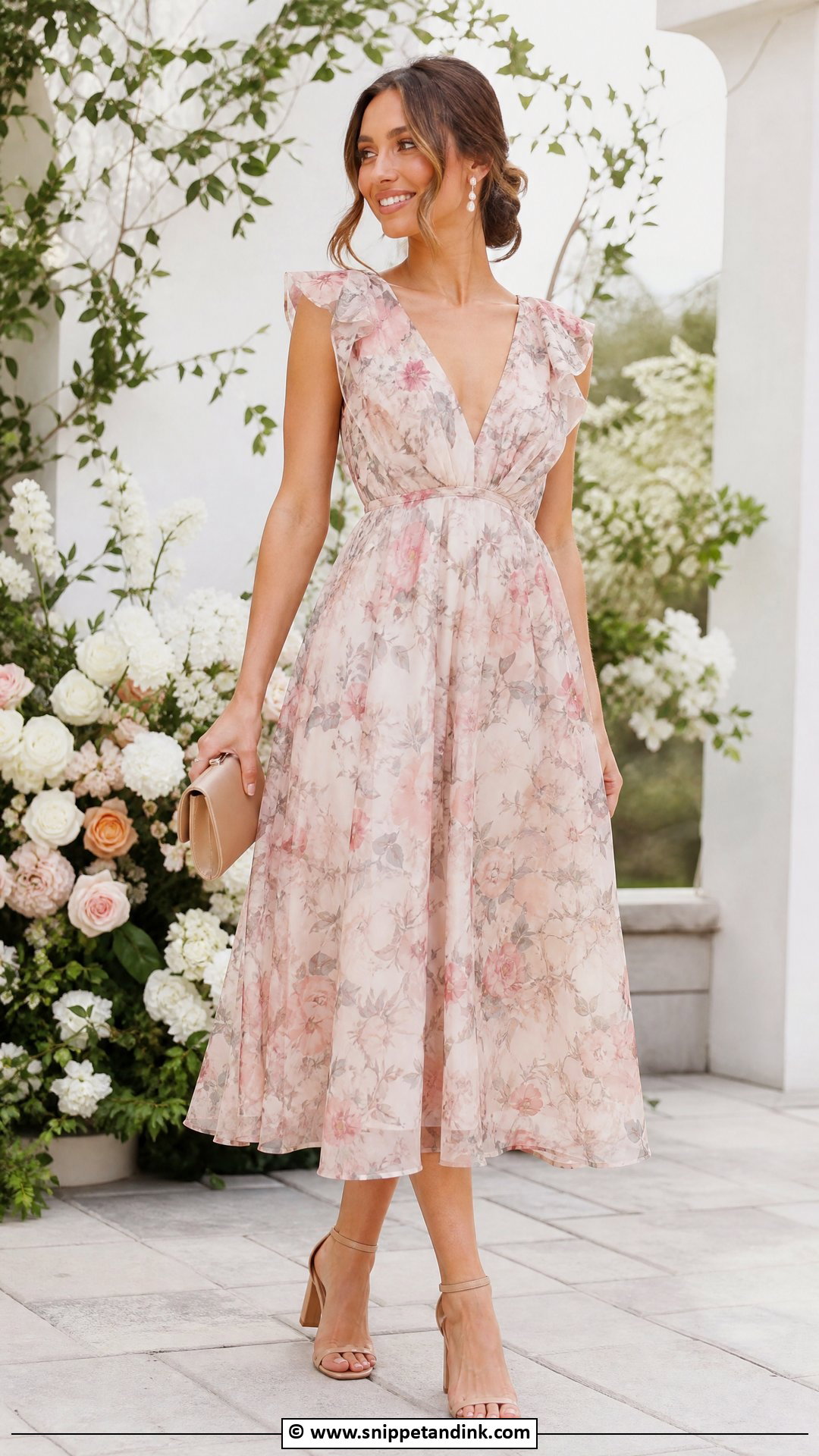
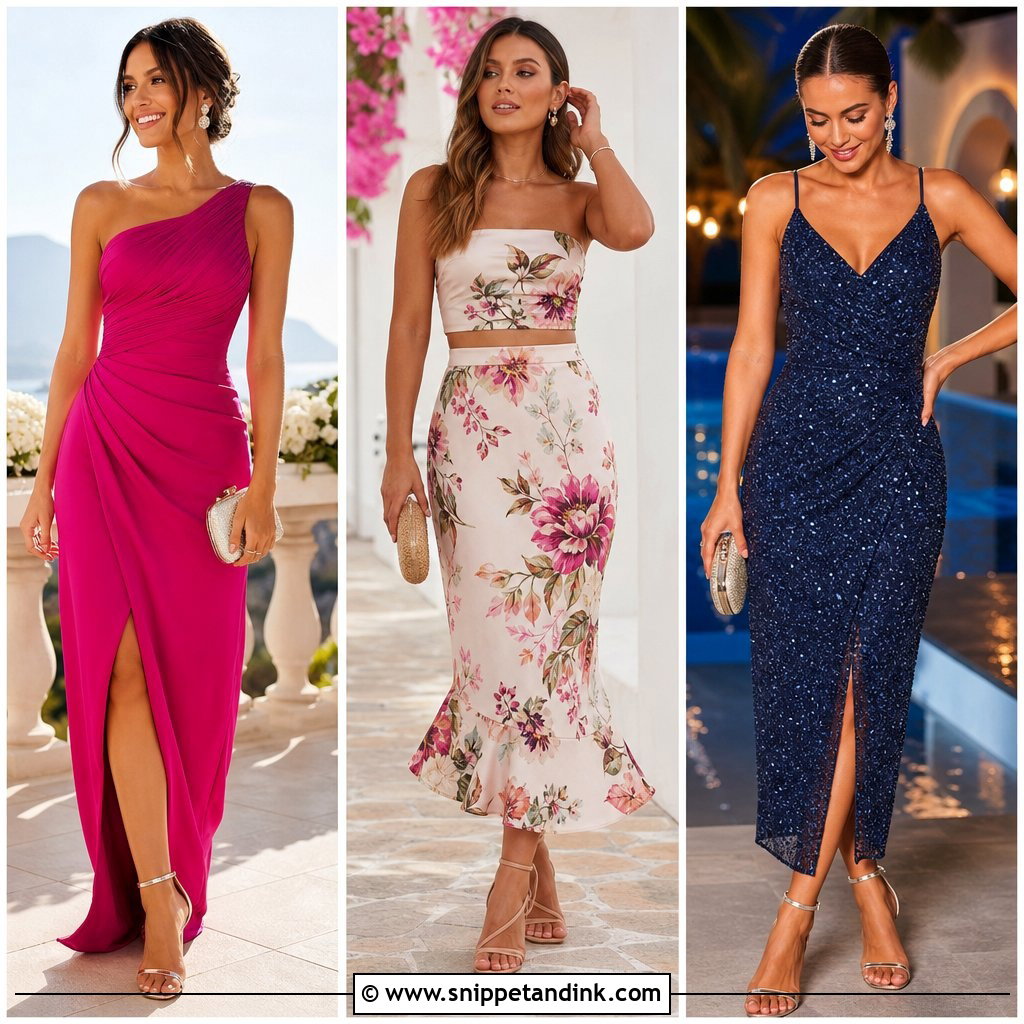
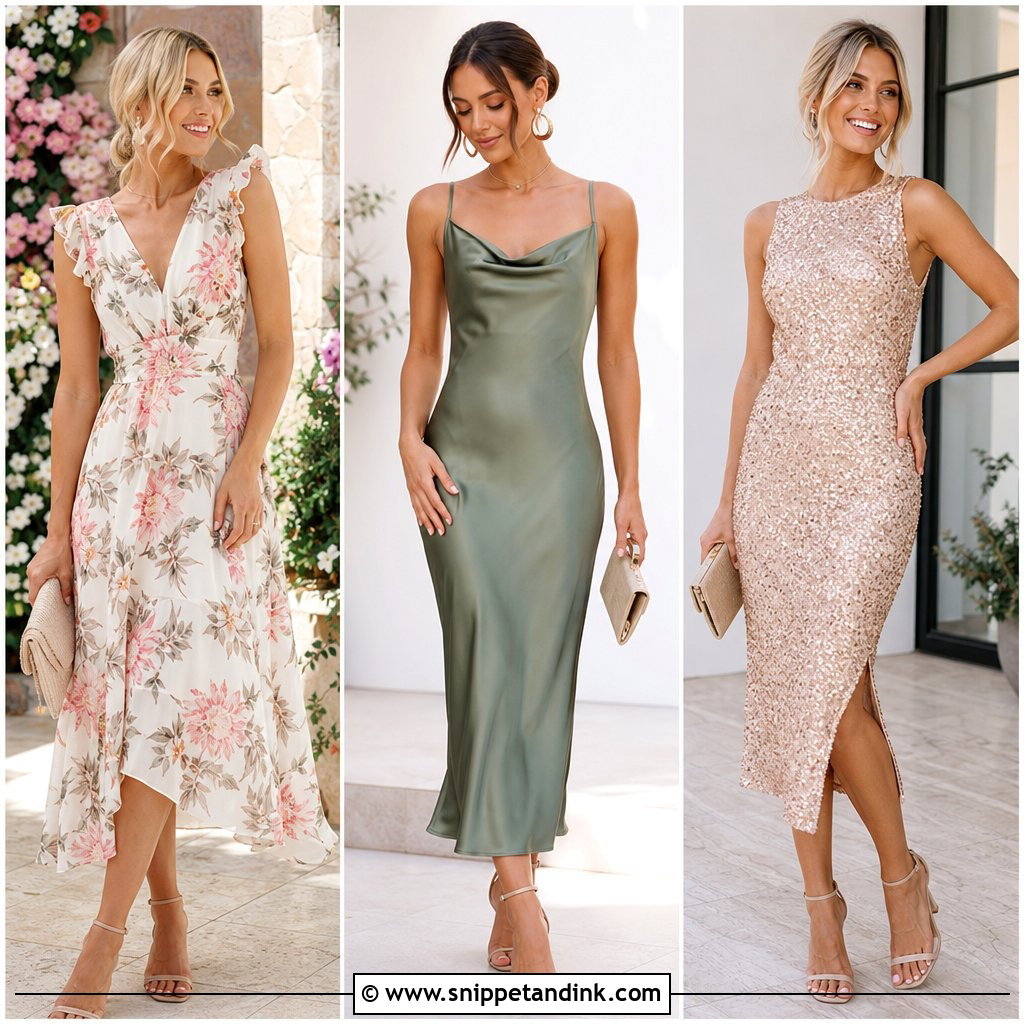
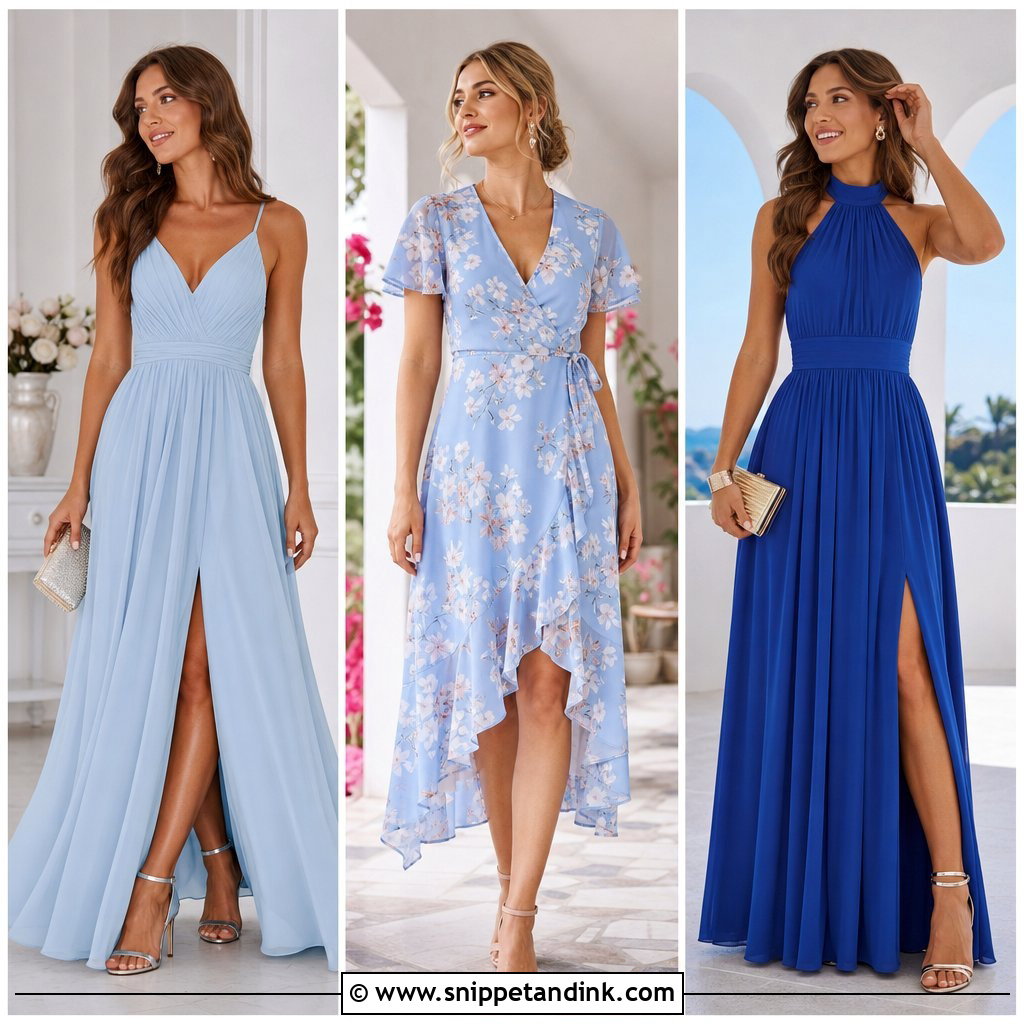
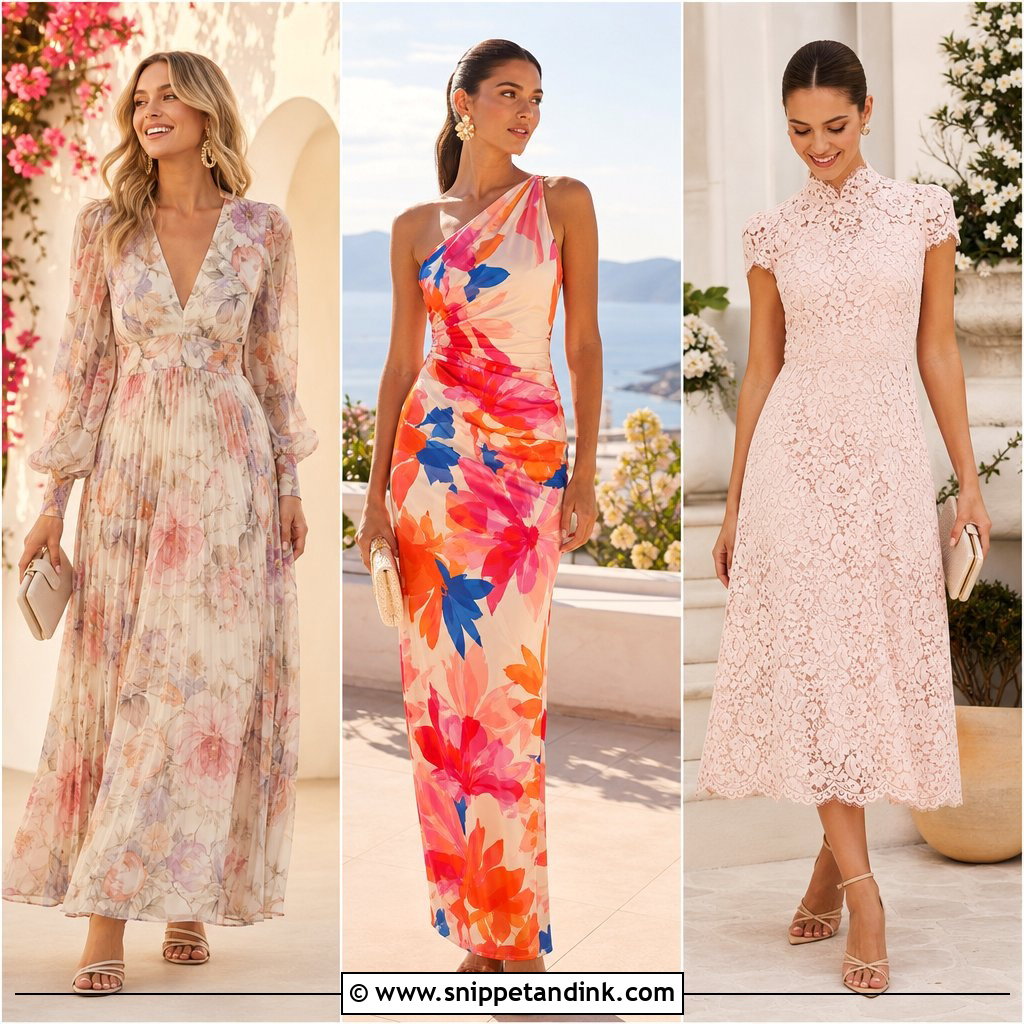
Florals are the easiest daytime answer, and the length is what keeps them from reading as brunch wear. Aim for a hem that sits below the knee or at mid-calf. Blush, sage, lavender and butter yellow suit a garden, but hold the fabric up to daylight before you buy: a pale print on a thin cotton can turn see-through in direct sun. Nude block heels or slim sandals keep the outfit light. When the print is busy, I keep jewelry to one pair of earrings and let the hair go soft or into a low bun.
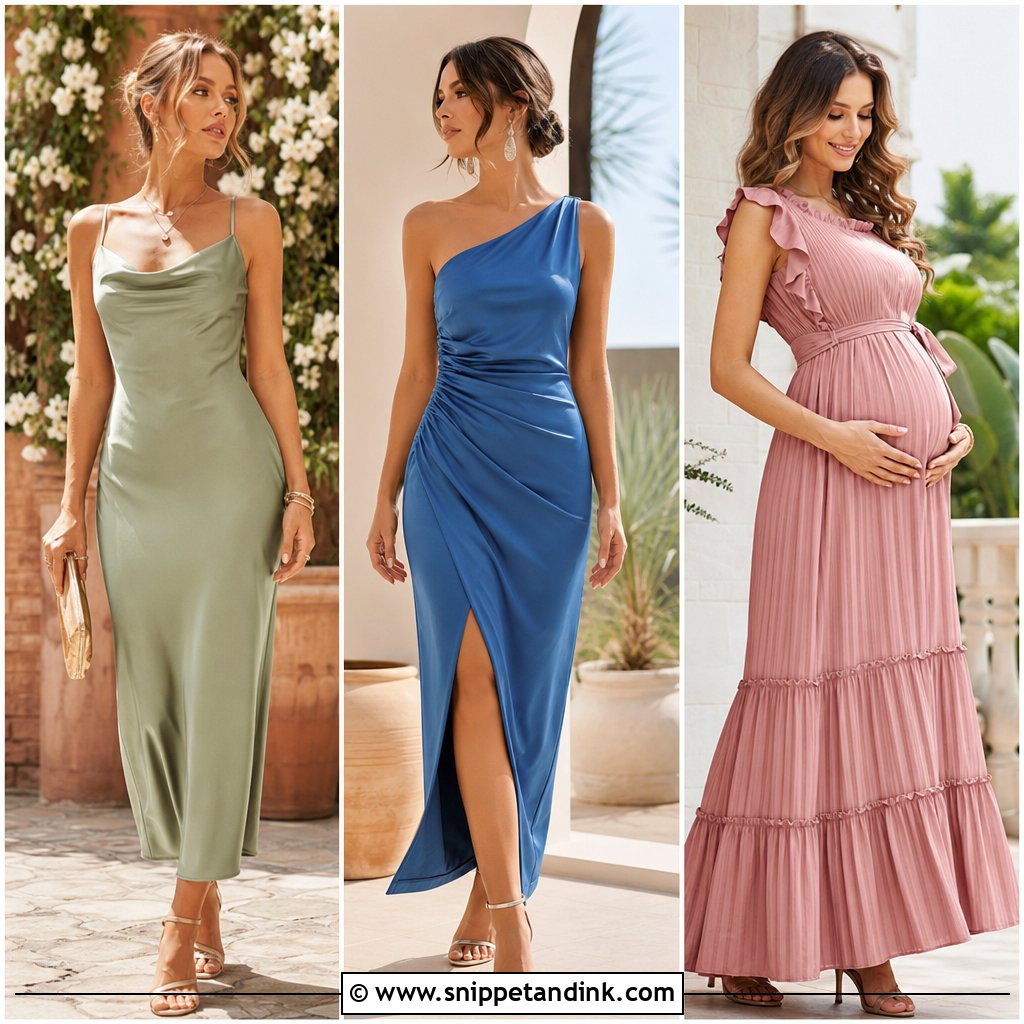
2. Satin Slip Dress With Strappy Sandals
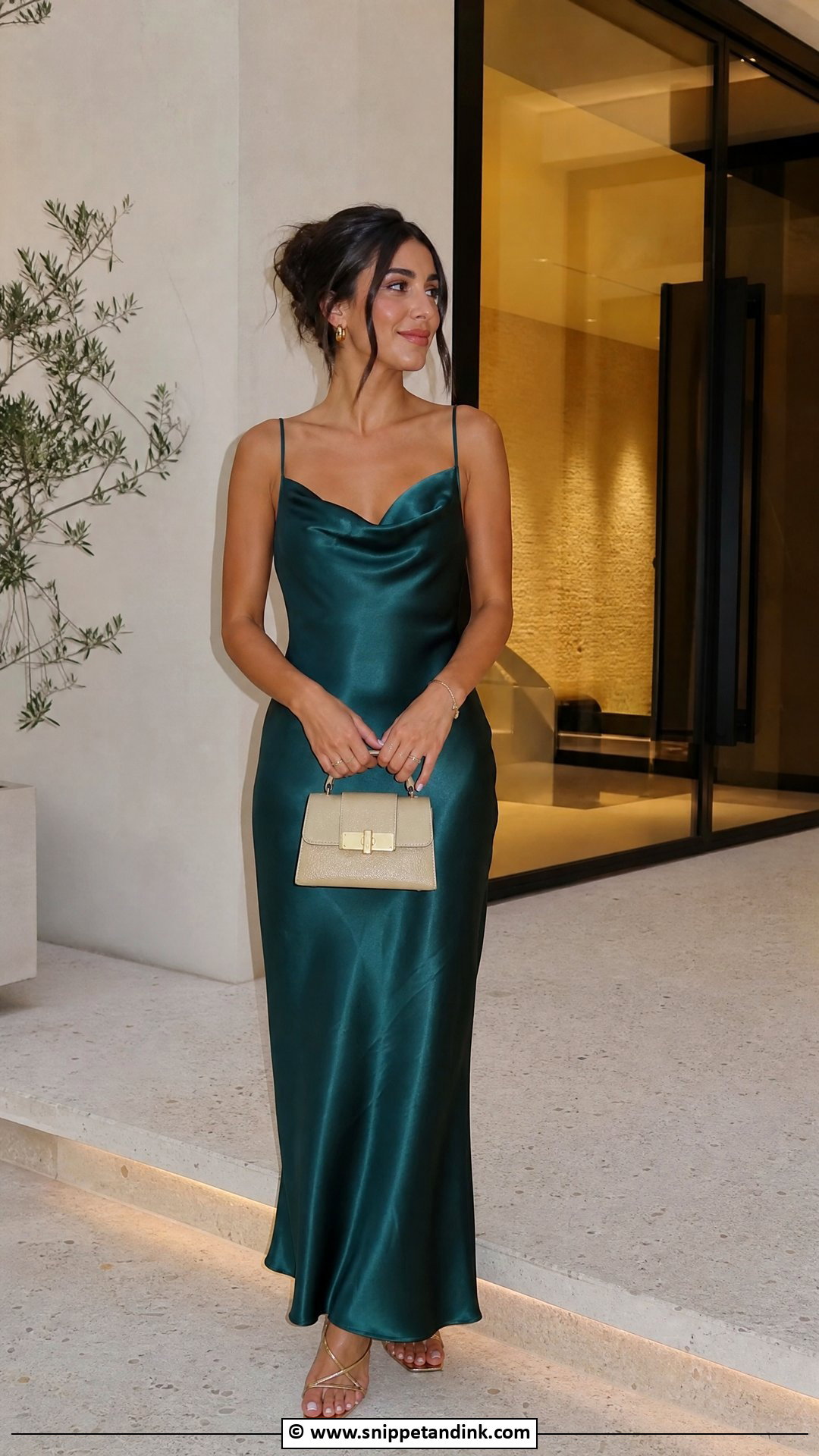
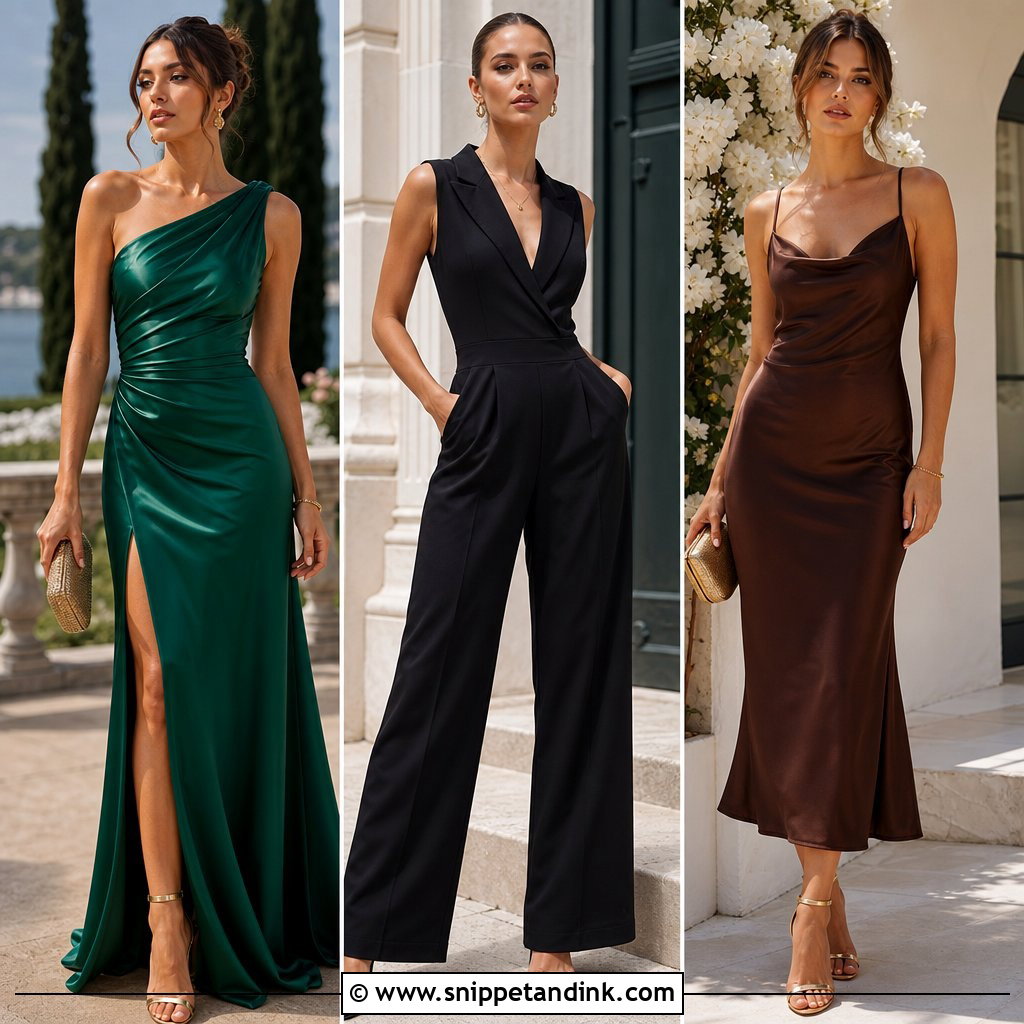
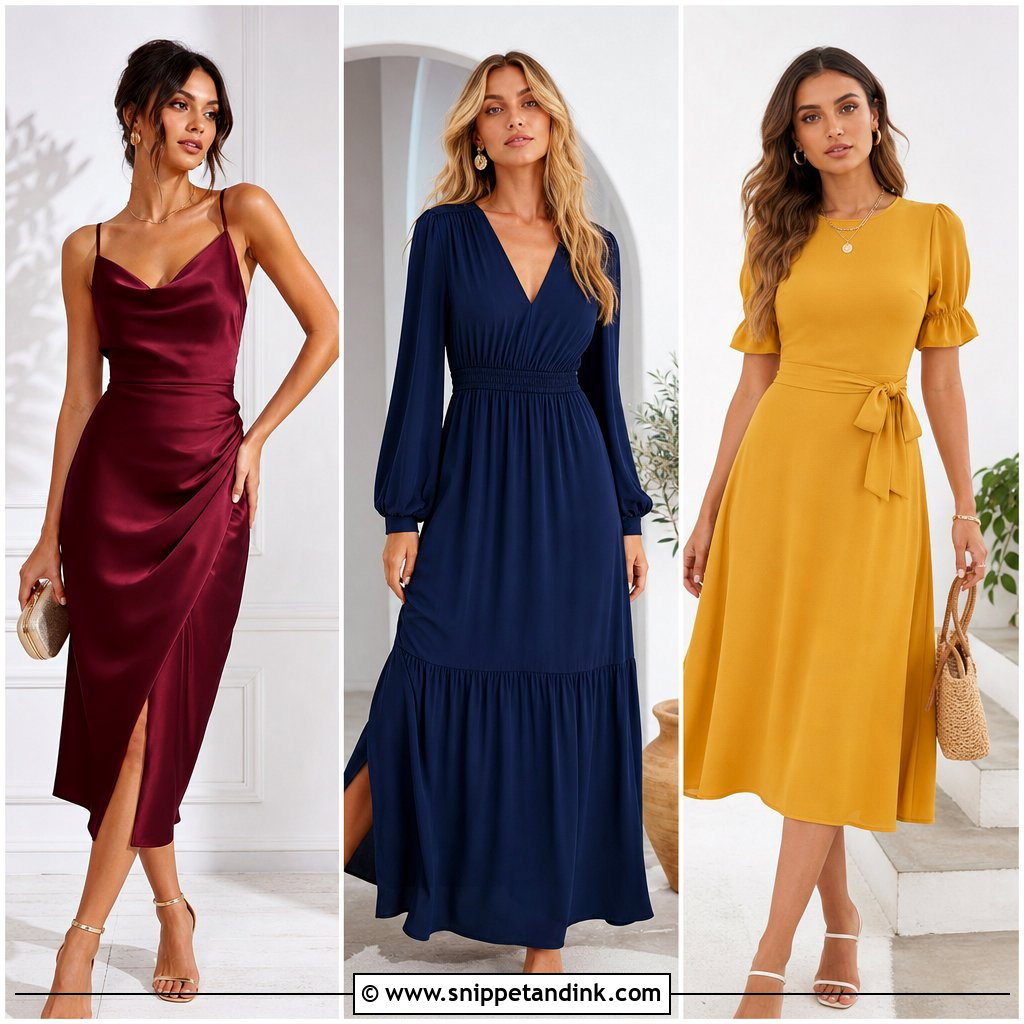
A slip dress looks easy on the hanger and is the hardest piece on this list to fit well. Satin shows every seam underneath, so I always ask a guest to try it with the exact underwear she plans to wear. Bias cut helps because it skims rather than grips. Pick a color like emerald, copper, plum or chocolate and keep well away from ivory. Thin-strap heels, a structured mini bag and a cropped blazer for the church make it feel deliberate rather than slept in. Expect it to crease across the lap once you sit through the vows; a heavier satin creases less than a lightweight one.
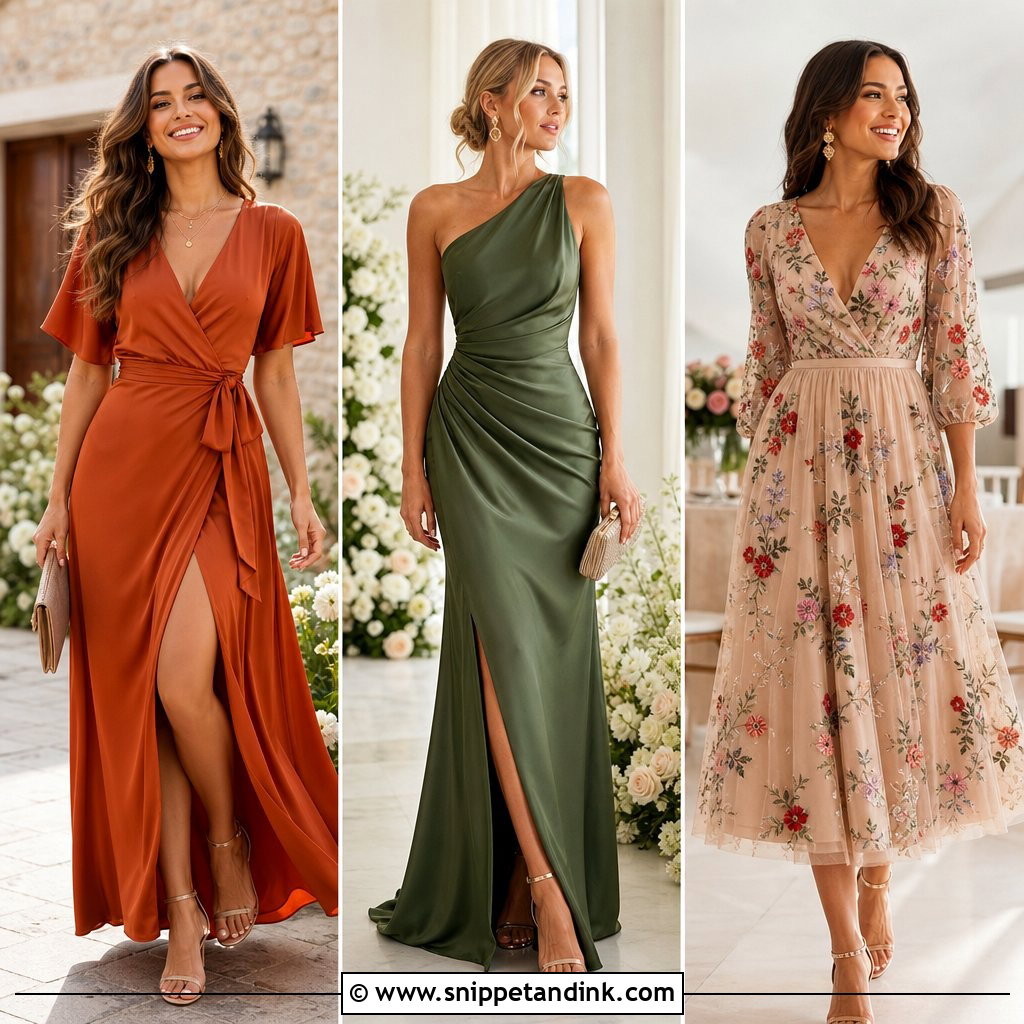
3. One Shoulder Maxi Dress With Metallic Heels
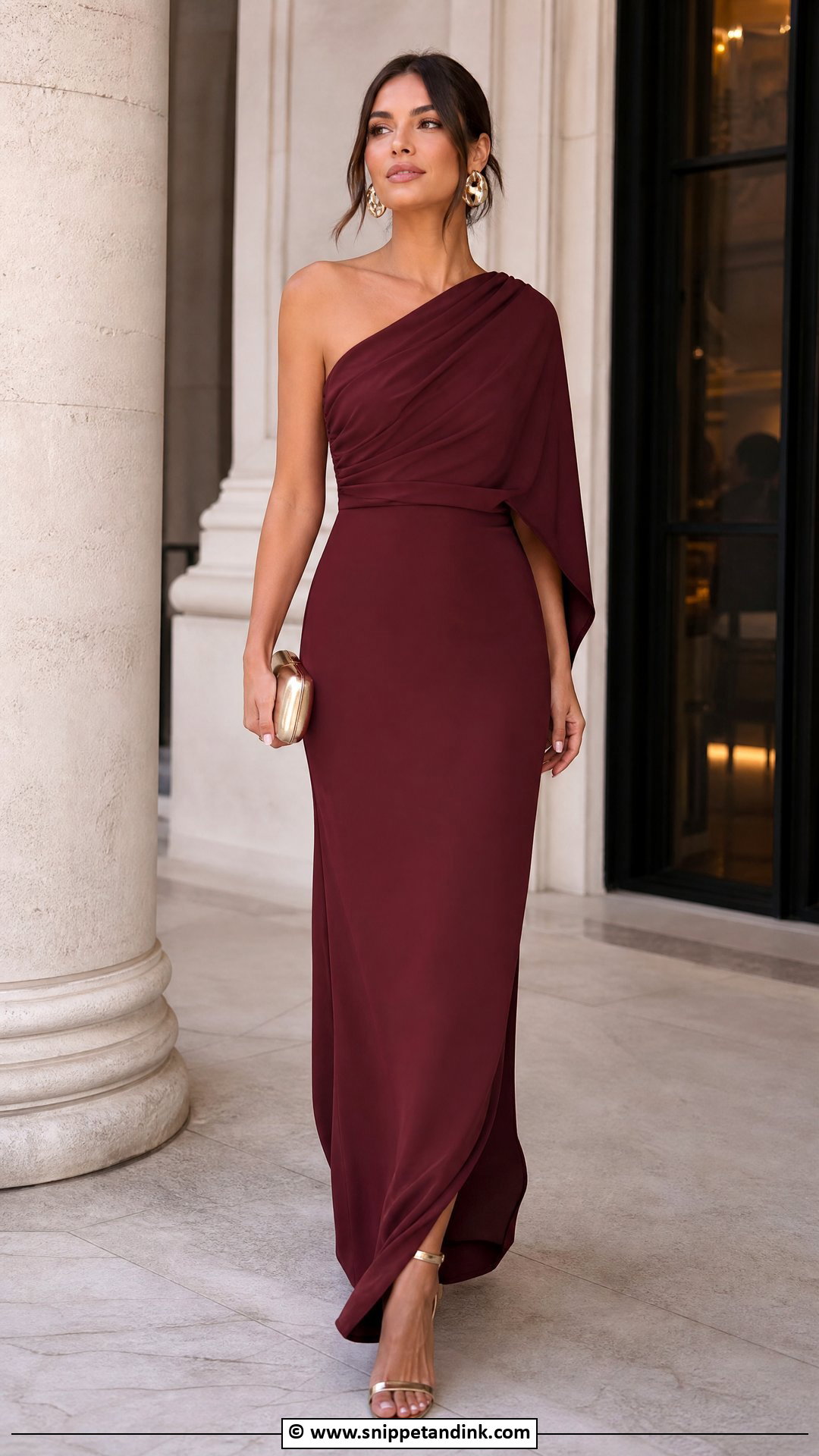
An asymmetric neckline does most of the work here, which is why I tell guests to skip the necklace entirely. Sculptural earrings and slicked-back hair let the shoulder line read clearly. Cobalt, magenta and deep teal carry well in a formal or evening room, and metallic heels in gold or champagne finish it. Check one thing in the fitting room: lift your arms as if you are hugging someone. If the bodice slides down on the bare side, it needs silicone grip tape or a tailor’s tack before the day.
4. Cowl Neck Dress With Pointed Heels
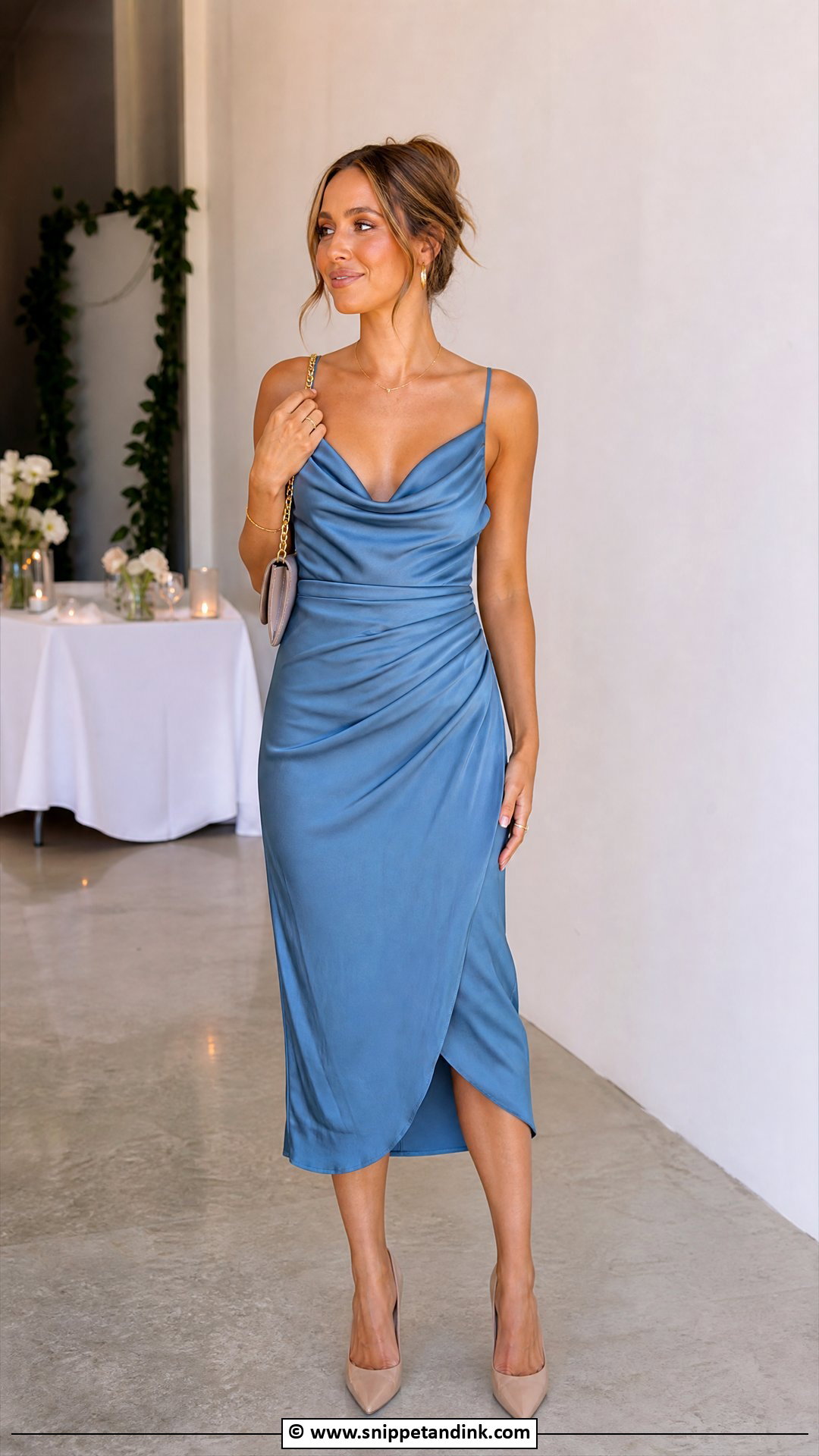
The draped neckline softens the face and adds movement, so a plain cowl dress never looks unfinished. Fit is everything with this cut. Too much fabric in the drape and it gapes when you lean over a dinner table, so I check it seated and leaning forward before I sign off on it. For cocktail dress codes, a midi with pointed heels; for formal, go long in satin or crepe. Dusty blue, mauve, olive and espresso all sit well under evening light. A compact shoulder bag and fine jewelry are plenty.
5. Wrap Midi Dress With Block Heels
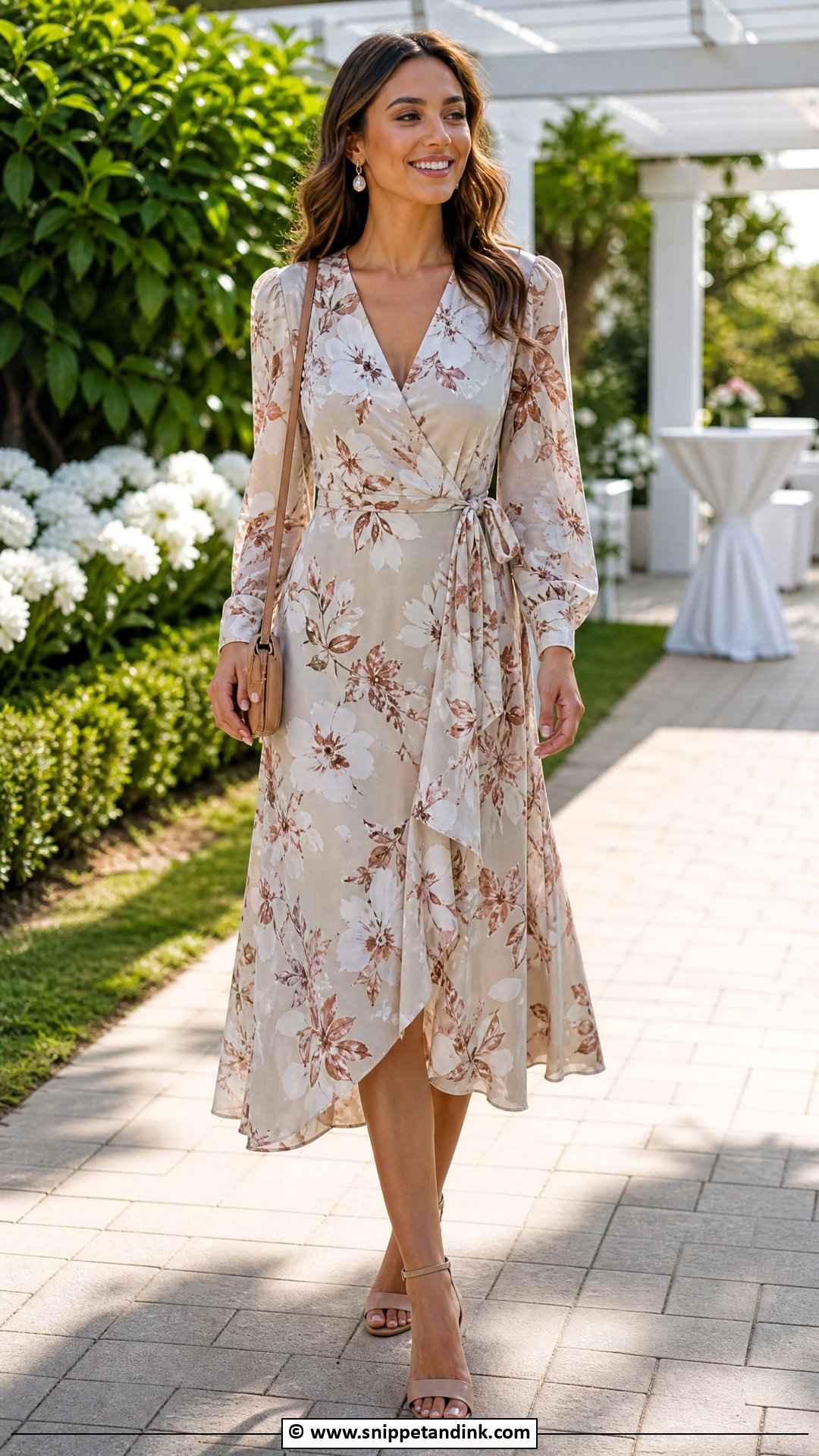
Wrap dresses are the piece I reach for when a guest tells me she has a ten-hour day ahead. You set the waist yourself, so the fit moves with you through a heavy dinner. The weak point is the neckline: a true wrap can open when you sit or bend, and a small snap or a stitch at the cross-over fixes it for good. Florals and polka dots suit daytime; satin or crepe in a deeper shade suits evening. Block heels keep you upright on grass and patio stone, and pearl earrings with a small crossbody bag round it off.
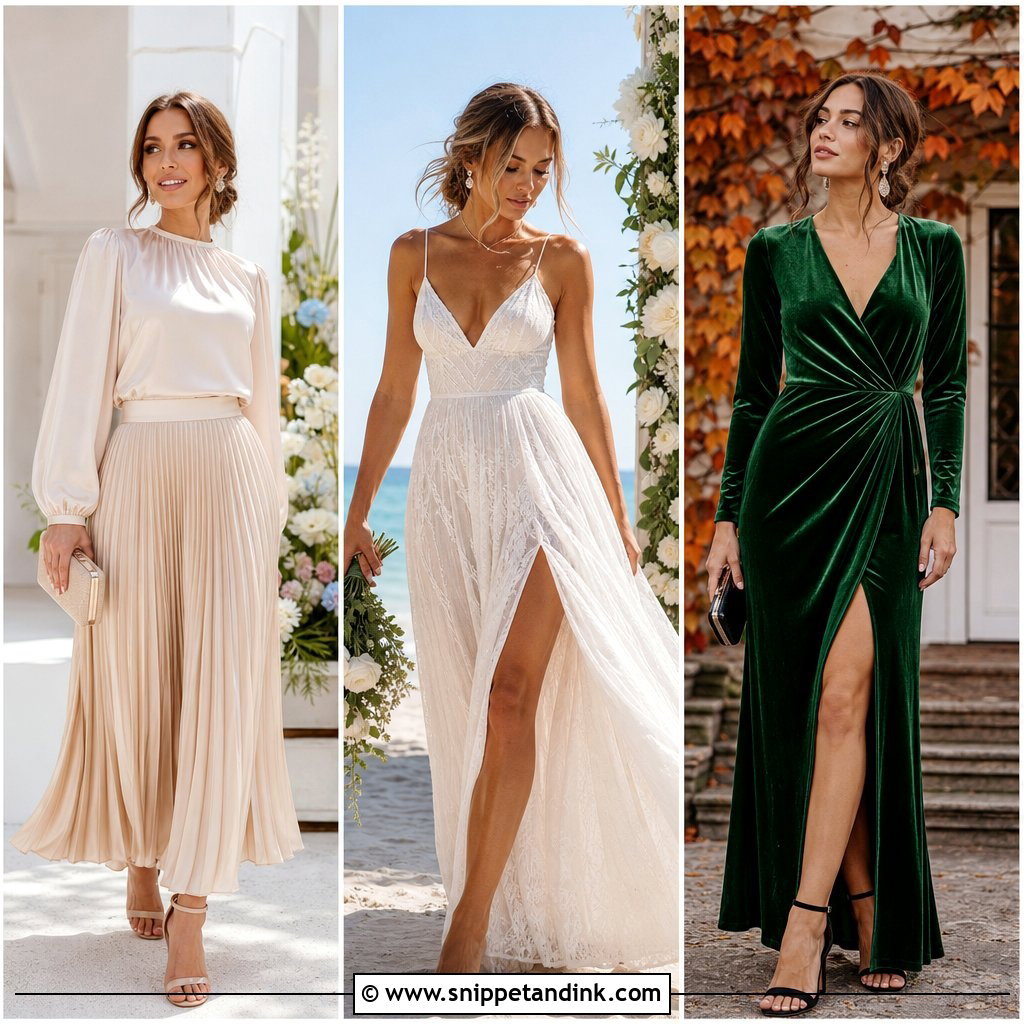
6. Pleated Maxi Dress With Pearl Accessories
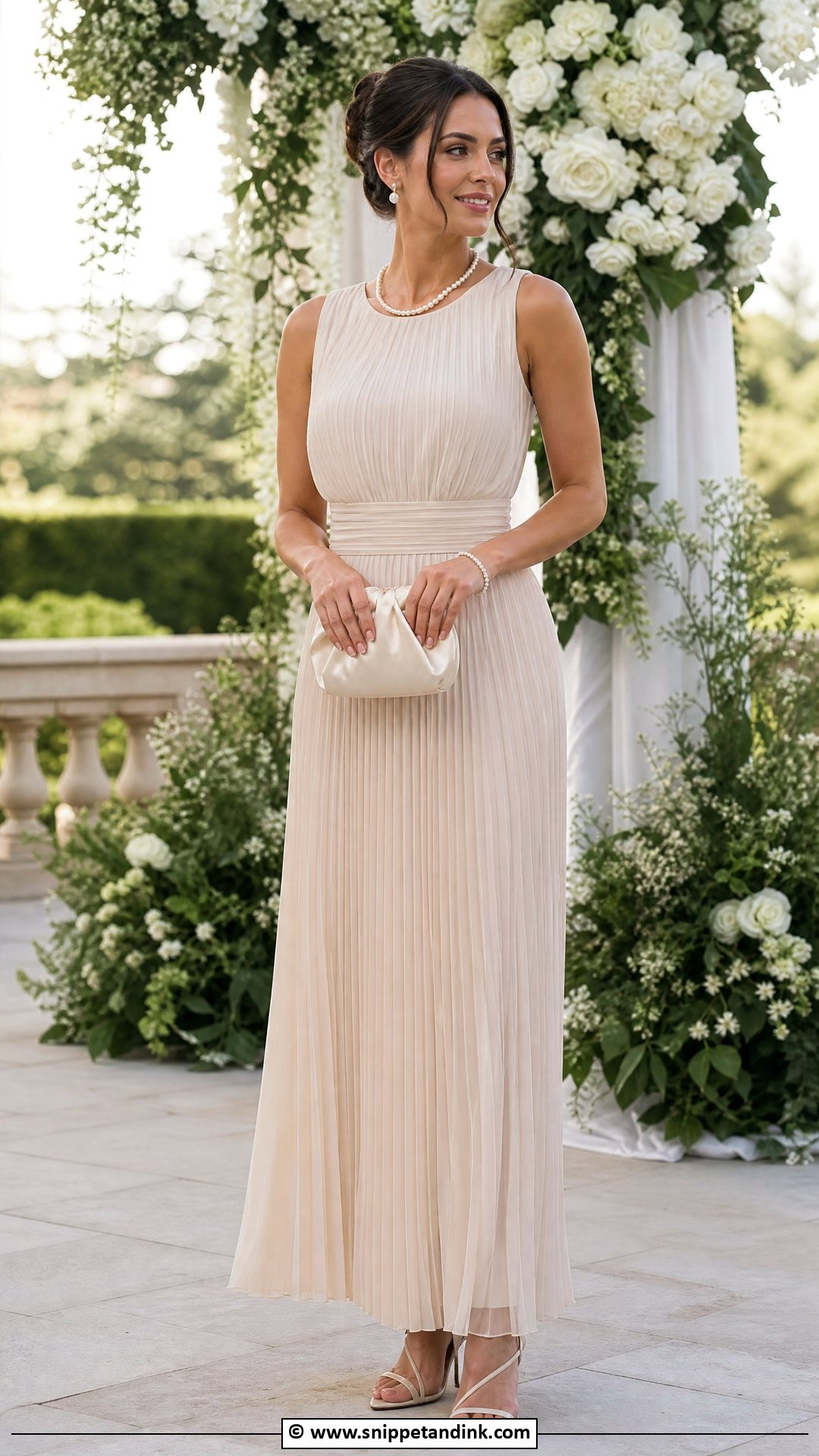
There is something graceful about a pleated maxi dress moving with every step. Pleats are kinder to the body than they look, but they hate being crushed in a suitcase. I hang a pleated dress inside out in the bathroom while the shower runs rather than ironing it, because a hot iron flattens knife pleats permanently. A defined waist stops all that fabric from swallowing you. Pastels, jewel tones and soft metallics all suit formal gardens and ballrooms, with slim heels, pearl drops and a satin clutch. Keep accessories quiet if the pleats run shoulder to hem.
7. A Line Cocktail Dress With Ankle Strap Heels
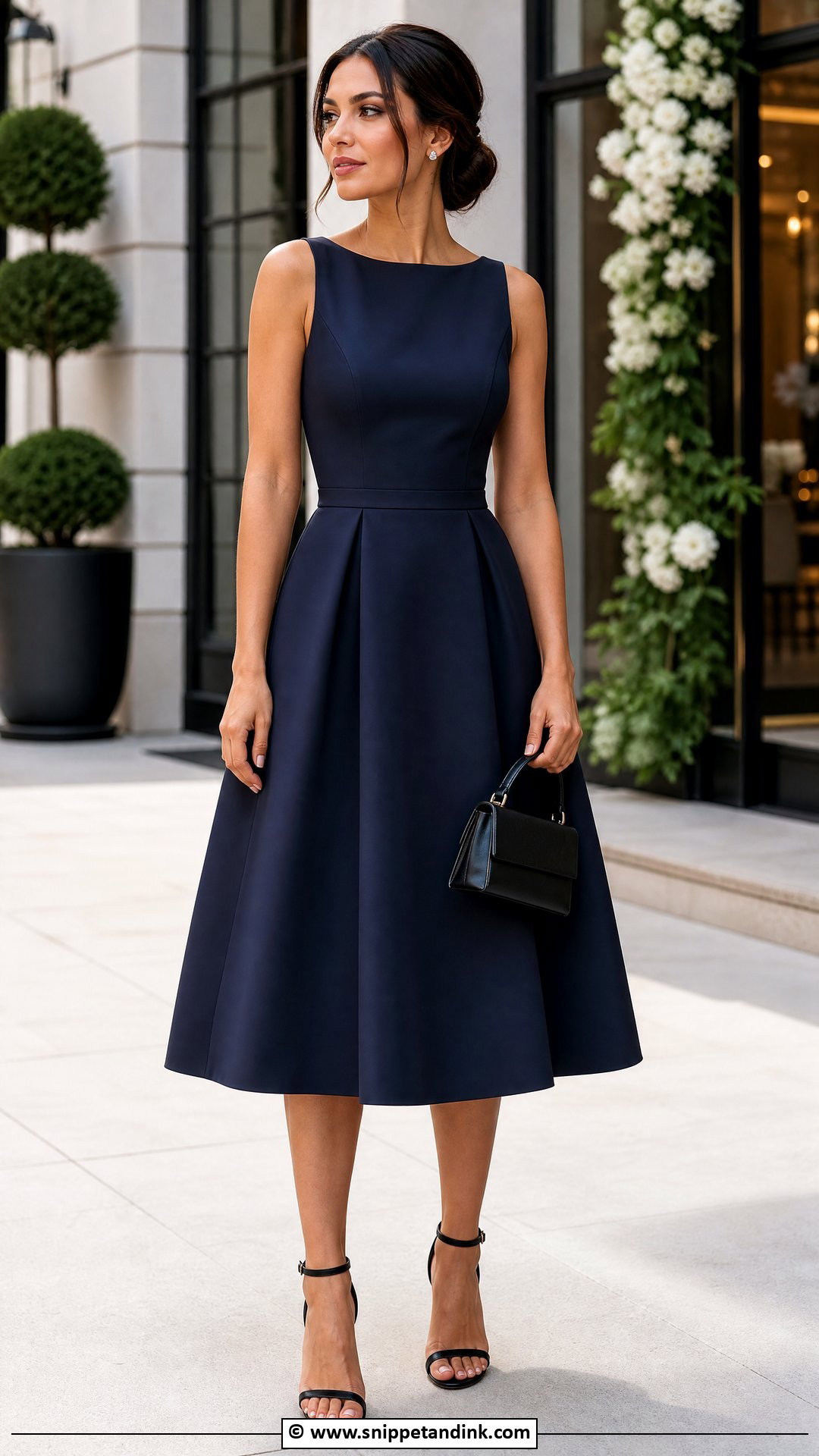
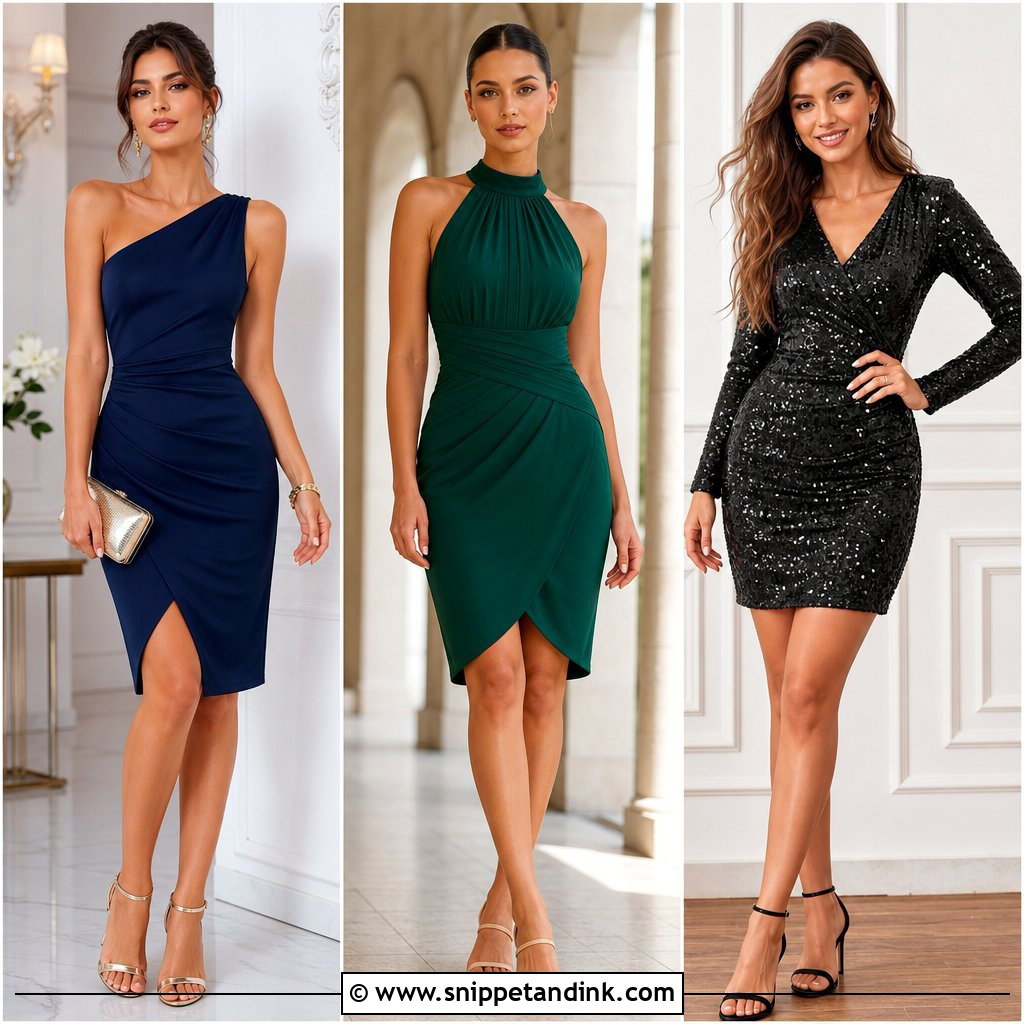
An A line cocktail dress is the shape I recommend most to guests who want to rewear the dress afterwards. The fitted waist and structured skirt suit nearly every figure, and the skirt has enough body that it doesn’t crumple after a car journey. Go for crepe, jacquard or a textured weave at knee or midi length. Navy, coral and fuchsia read celebratory without leaning bridal. Ankle strap heels lengthen the leg line, and a top-handle bag with studs keeps the whole thing tidy.
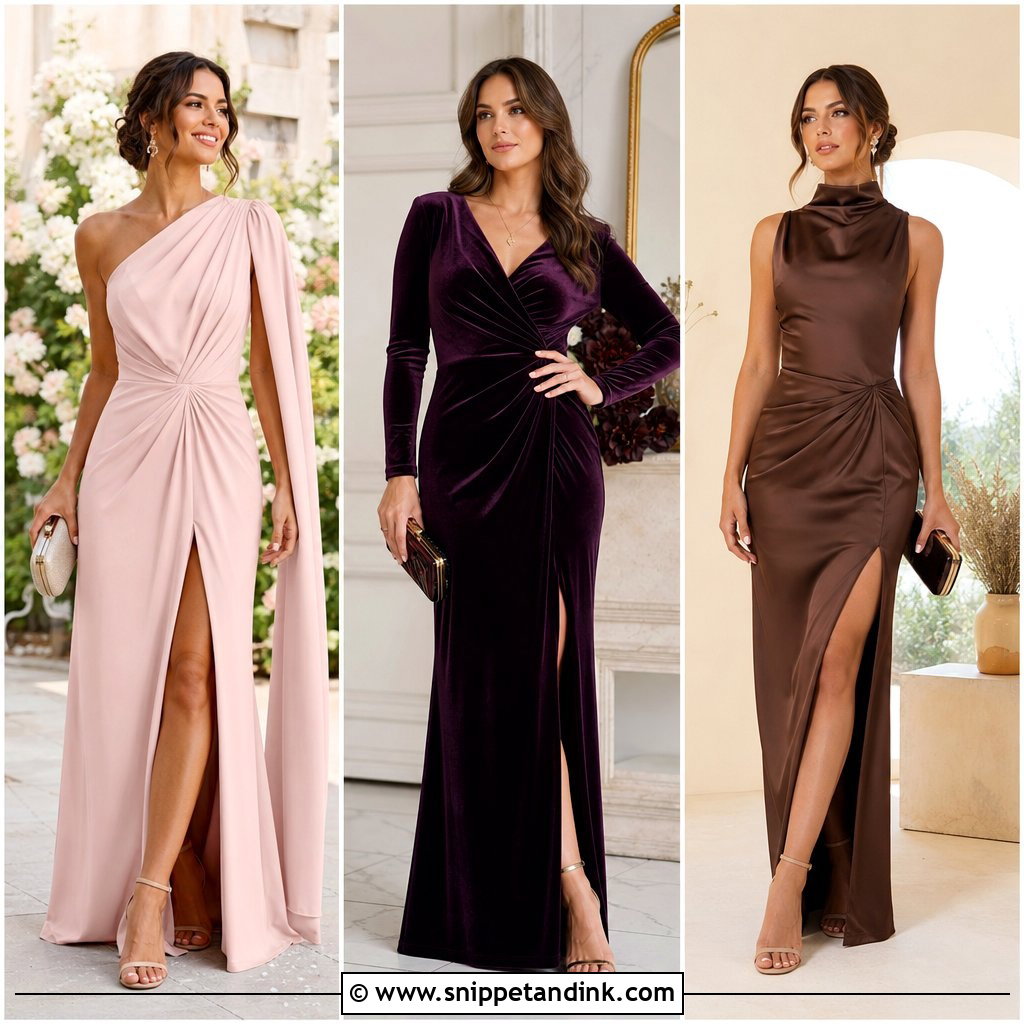
8. Velvet Midi Dress With Closed Toe Heels
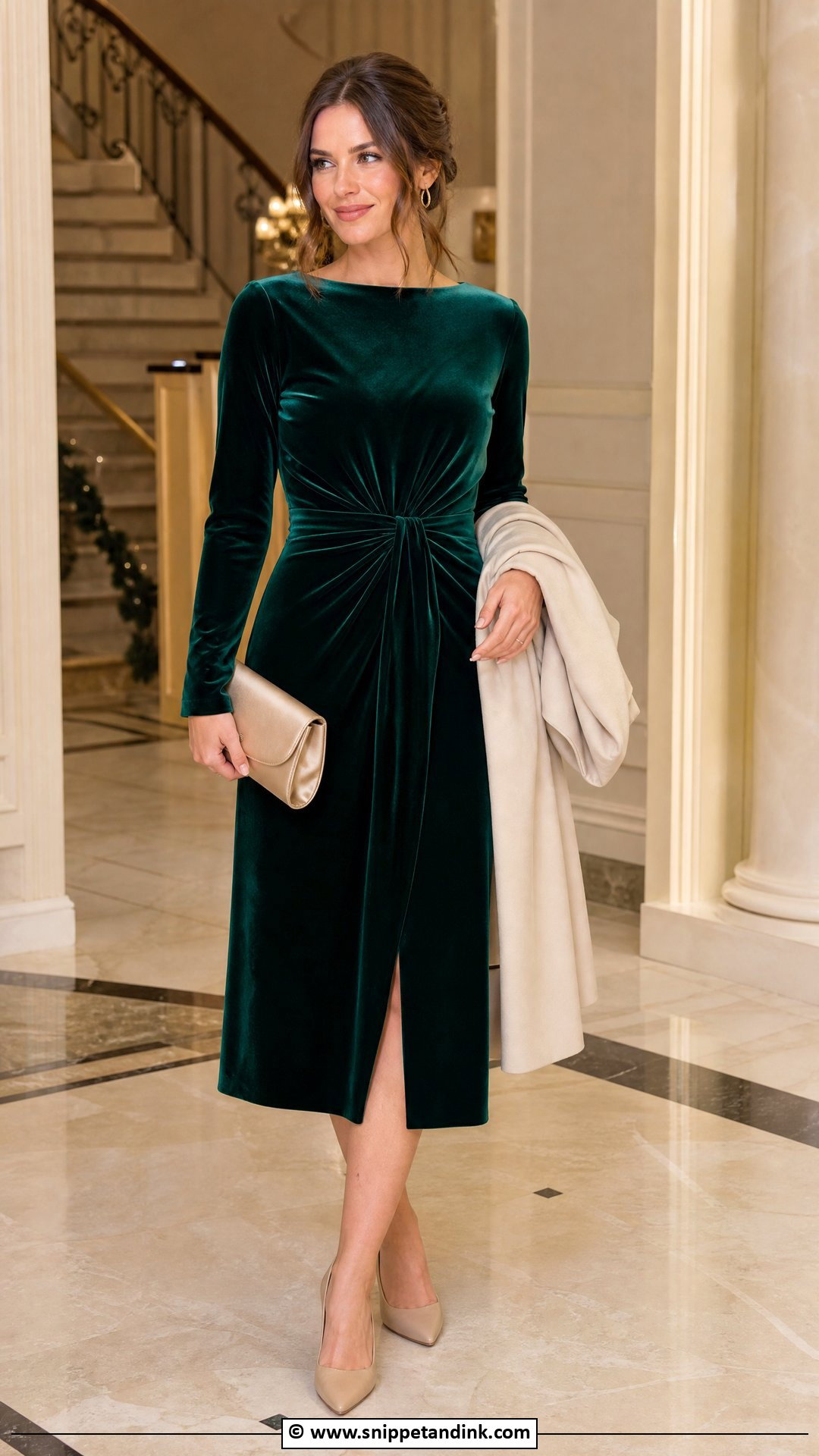
Velvet belongs to fall and winter, and it is warmer than most guests expect in a heated reception room. Choose a midi with a fitted waist or wrap front so the weight of the fabric doesn’t drag you down. Navy, burgundy and plum show off the pile best. One practical note from fittings: velvet marks if you press it flat, so steam it from the inside and never put an iron on the face. Closed toe heels, a satin clutch and small hoops suit it, with a tailored coat for the walk between ceremony and dinner.
9. Chiffon Maxi Dress With Delicate Jewelry
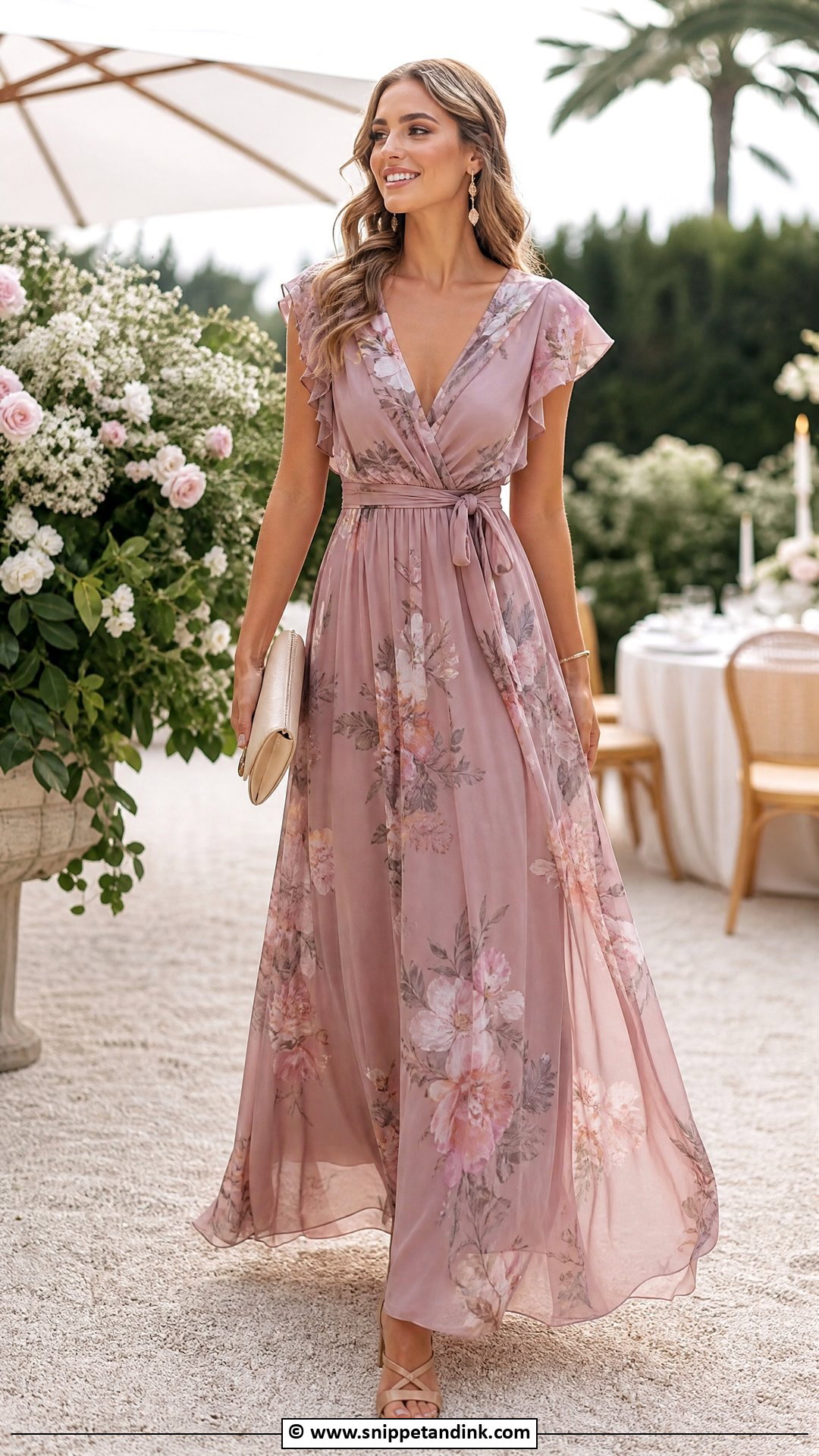
Chiffon moves with the breeze, which is exactly why outdoor guests love it and exactly why it needs a lining. Unlined chiffon goes sheer against a sunset, so I check every chiffon dress against a window before a guest commits. Pastels and watercolor prints suit spring; deeper shades carry it into fall. The fabric also snags on bracelet clasps and handbag chains, so I’d keep jewelry to delicate drops and a smooth metallic clutch. Flutter sleeves already give you all the movement you need.
10. Halter Neck Dress With Sleek Sandals
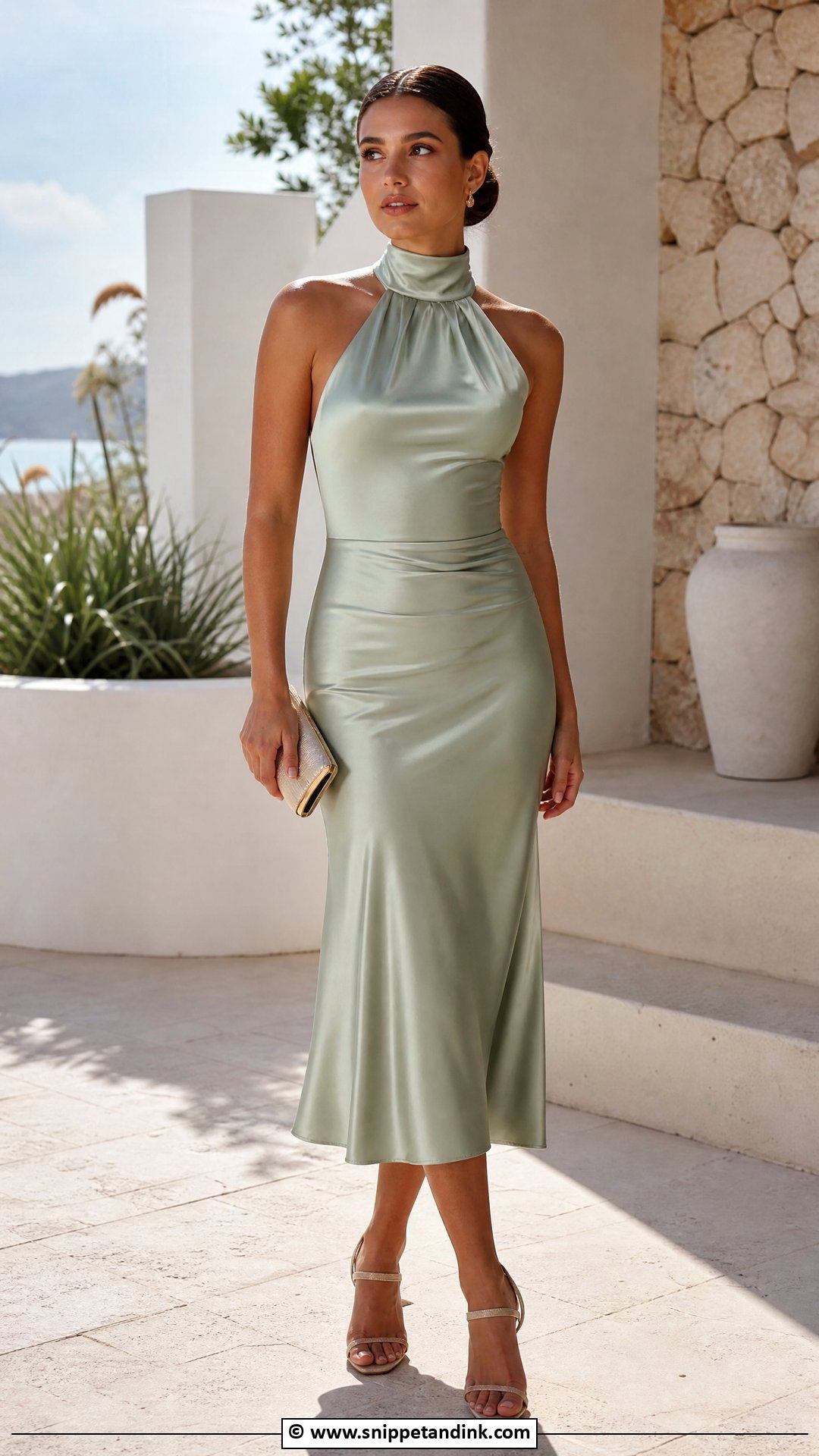
Halters are a warm-weather favorite because the shoulders are bare but the bodice stays put. The tie or clasp at the back of the neck is the part to test. A thick halter strap sitting on the neck for eight hours can rub, so I look for a soft, wide strap or a hook closure rather than a thin knot. Flowy printed maxis suit a beach; a satin or crepe midi in a bold color suits cocktail attire. Wear the hair up or tucked so the neckline shows, and leave the necklace at home.
11. Off The Shoulder Dress With Drop Earrings
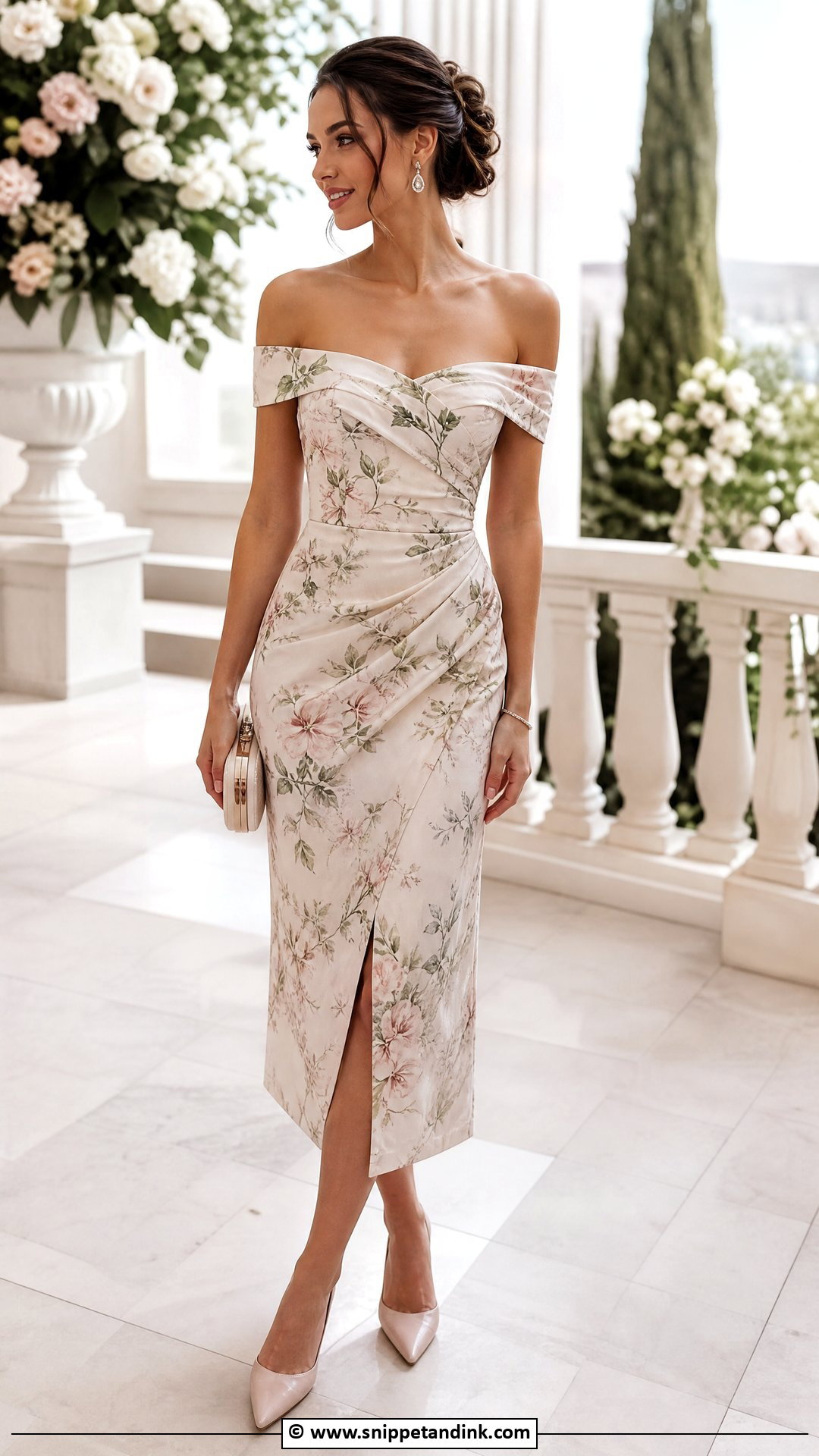
This neckline frames the collarbone, so drop earrings and hair kept off the shoulders are the natural pairing. Before you buy, raise both arms. Off the shoulder bodices ride up when you wave or dance unless the elastic or boning is firm, and a dress that needs hitching all night gets tiring fast. Crepe, satin and stretch jacquard hold the line better than chiffon here. Lavender, navy and terracotta all suit it. If the evening turns cool, bring a wrap that sits low on the arms so it doesn’t hide the neckline you chose the dress for.
12. Tiered Maxi Dress With Wedge Sandals
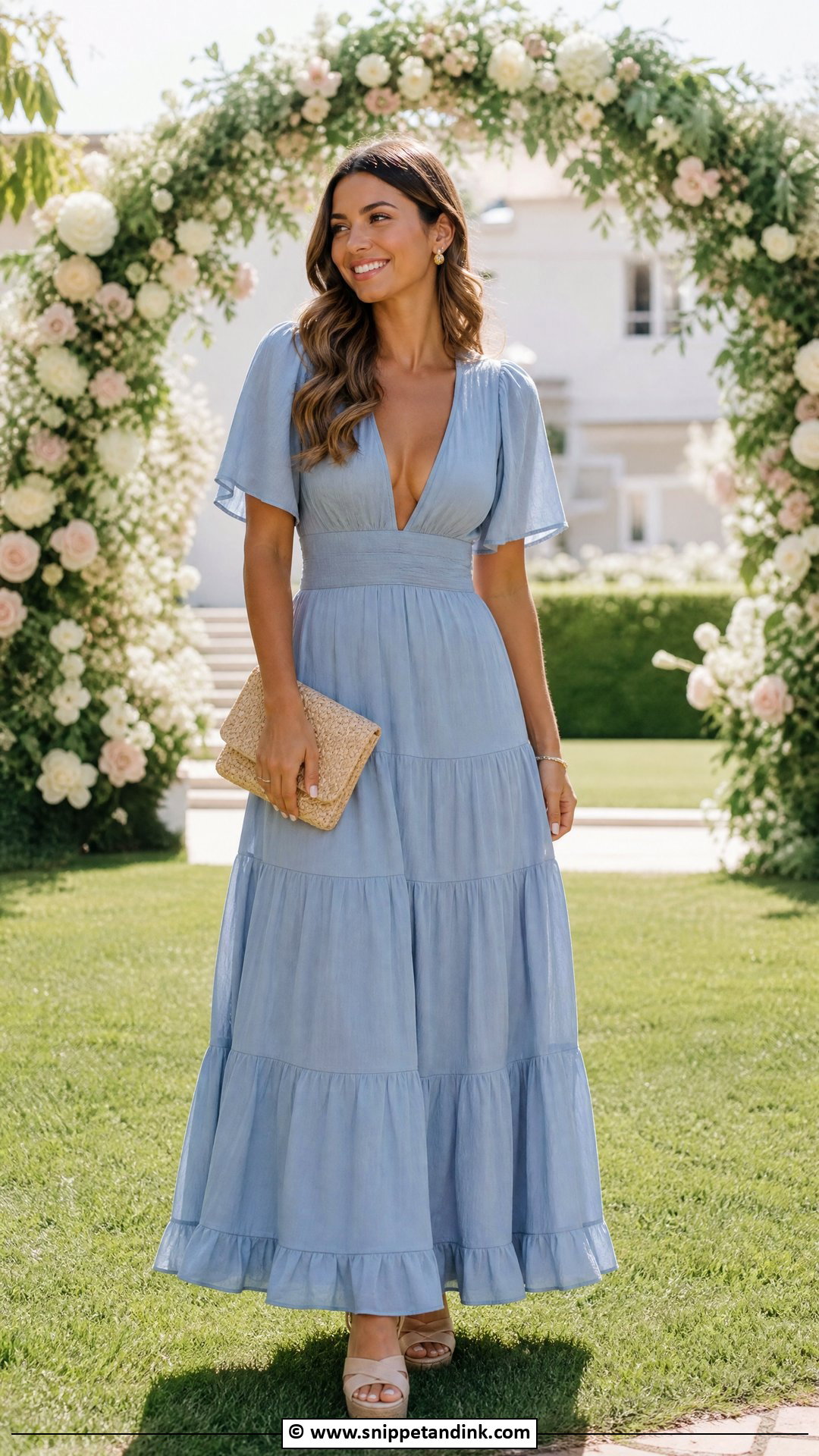
Tiered skirts are made for relaxed garden and coastal weddings because the layers catch air as you move. I like them in georgette, cotton blend or lightweight crepe, all of which breathe in summer heat. The risk is volume, so pick one with a fitted bodice or a defined waist to stop the tiers from widening you. Wedge sandals are the practical shoe on lawns and gravel paths because they don’t sink. Finish with a woven clutch, small earrings and light makeup.
13. Lace Midi Dress With Neutral Pumps
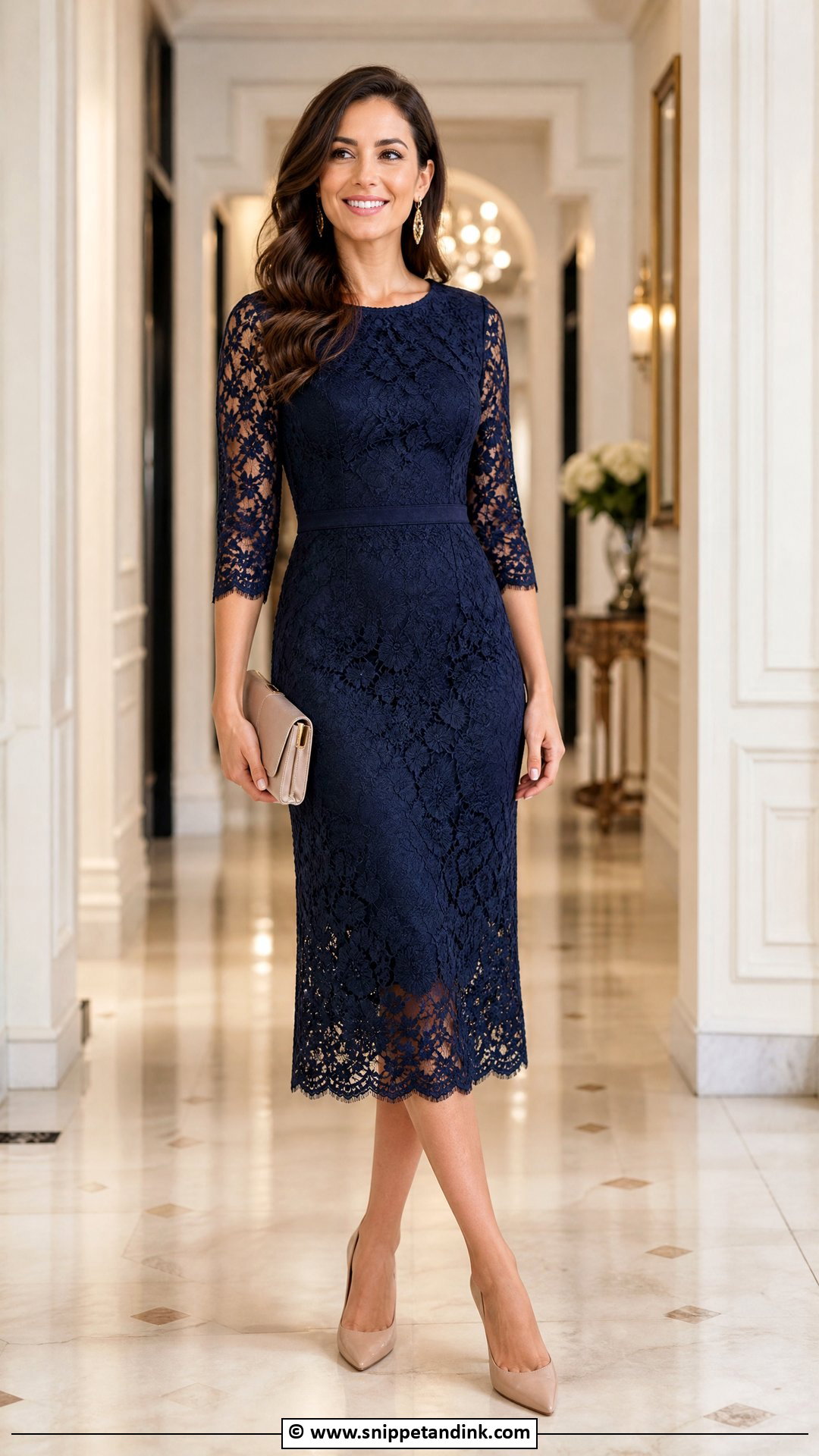
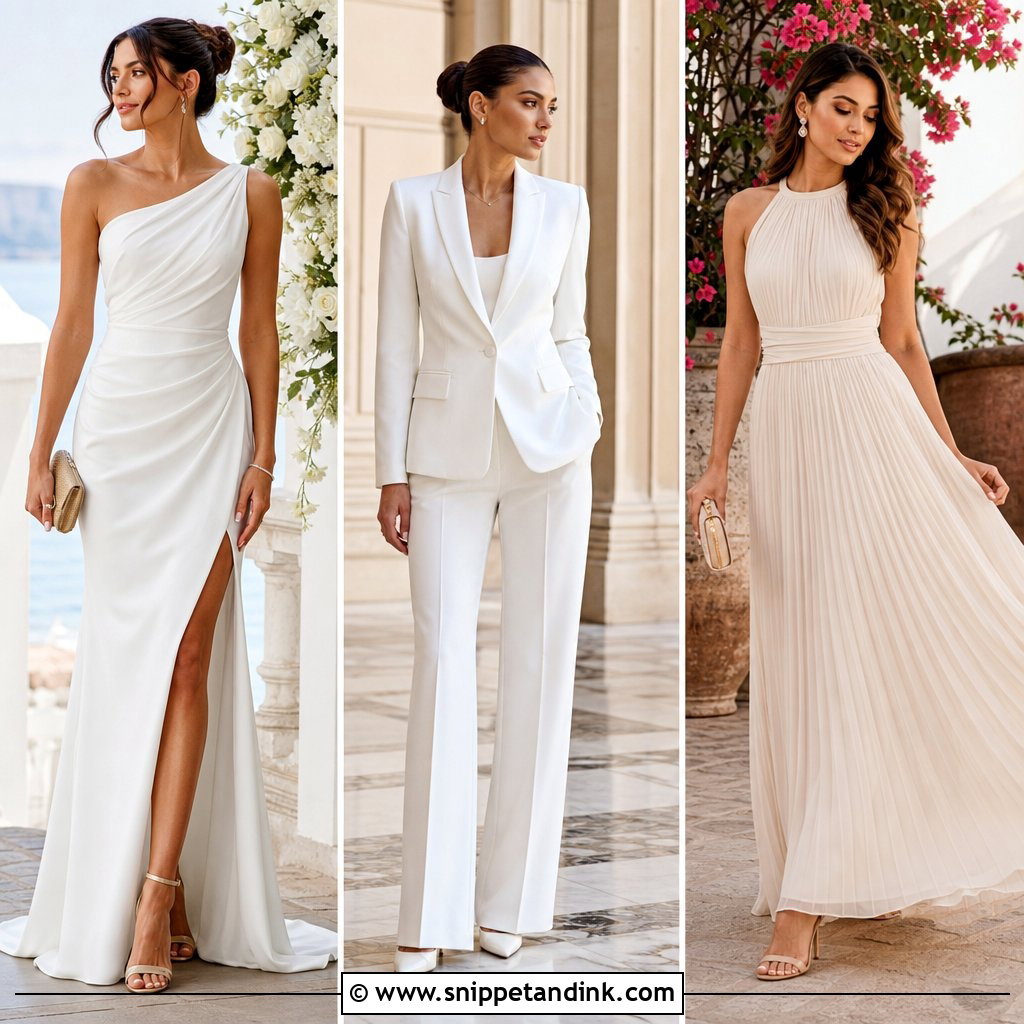
Lace is where guests most often end up looking bridal by accident. White, ivory and cream are out, and so is champagne lace over a nude lining, which reads as white in photos. Navy, dusty rose, sage and plum are safe, and black works for evening. Check the lining with the light behind you, since some lace dresses are cut with very short slips. Neutral pumps and a structured clutch keep it classic, and with detailed lace I’d limit jewelry to small earrings or one bracelet.
14. High Low Dress With Strappy Heels
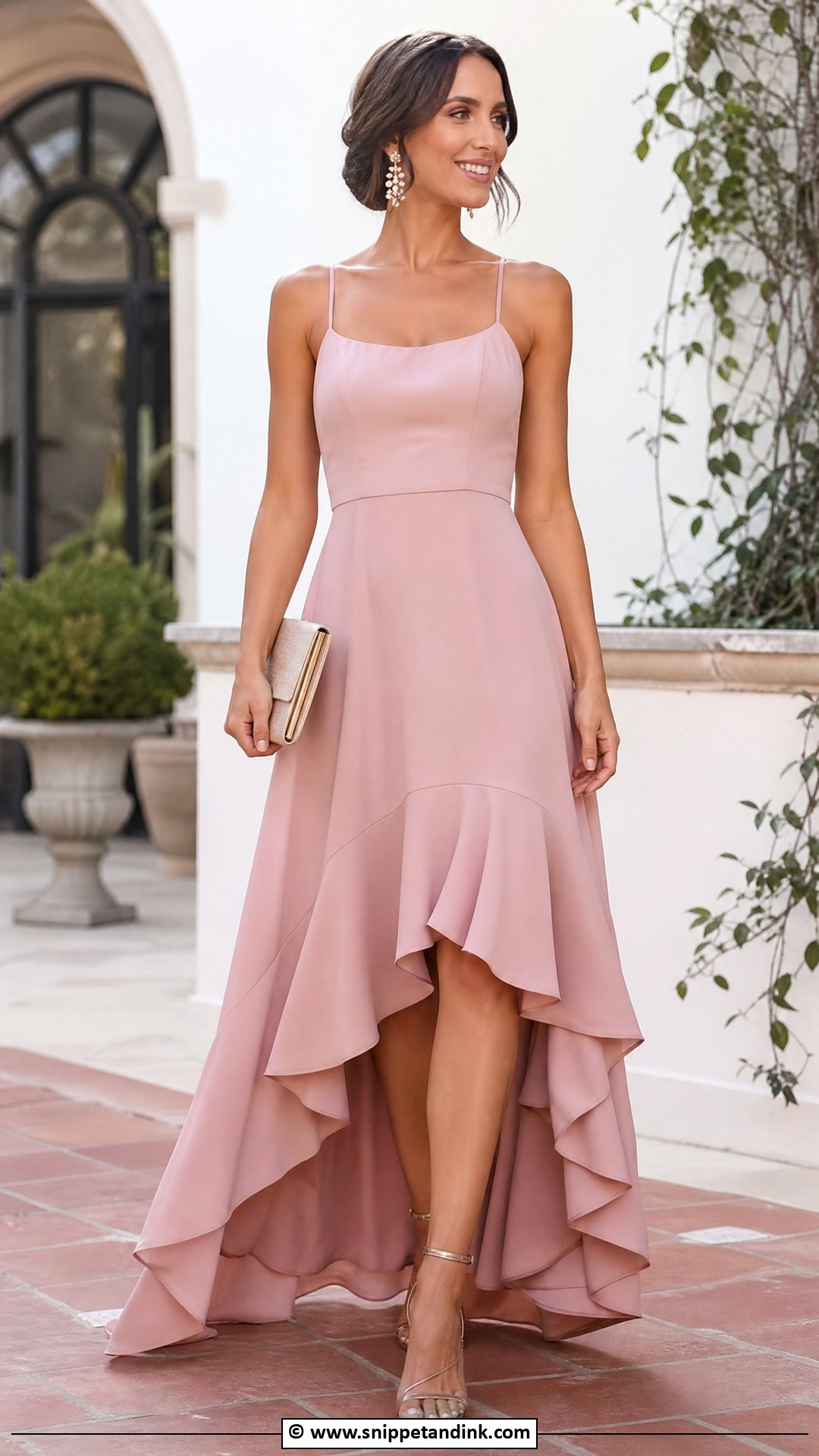
A high low hem gives you a longer back for drama and a shorter front so you can see your feet on the stairs. It only works in fabric that moves, so a stiff taffeta version tends to stick out at the back. Because the front shows off your shoes, this is the one dress on the list where I’d spend more on the heels than the bag. Choose strappy heels you can dance in, keep the clutch small, and let the hem carry the interest.
15. Square Neck Dress With Kitten Heels
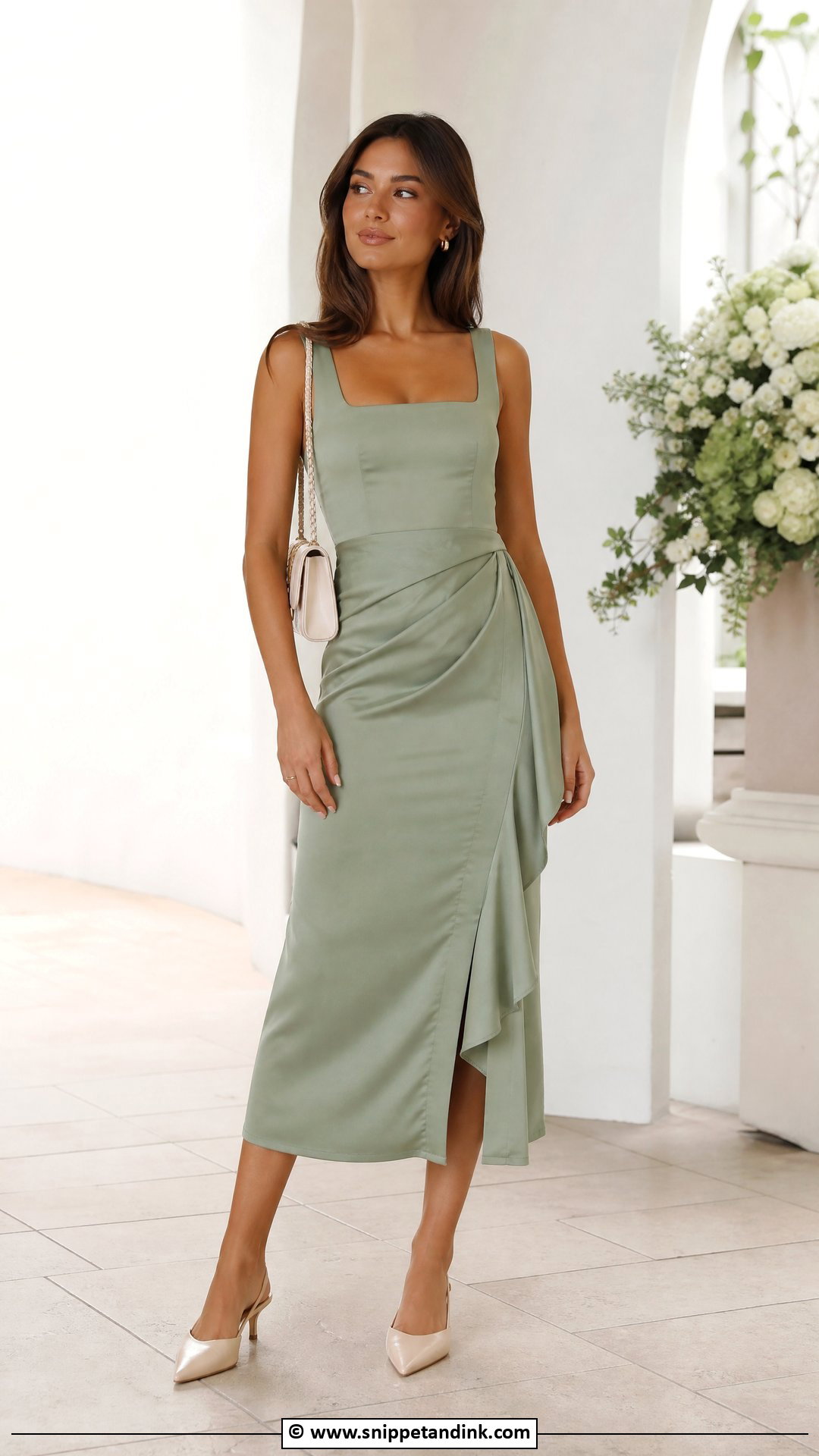
The square neckline is clean and frames the upper body, so it suits a short necklace or small hoops. Fabric with some structure holds the corners crisp; a soft jersey square neck tends to sag into a scoop by the speeches. A midi length covers the most dress codes. Soft pink, green, brown or a bold red all work depending on the season. Kitten heels give you a little lift without sore feet, and smooth hair keeps the line of the neck tidy.
16. Ruffle Midi Dress With Slim Heels
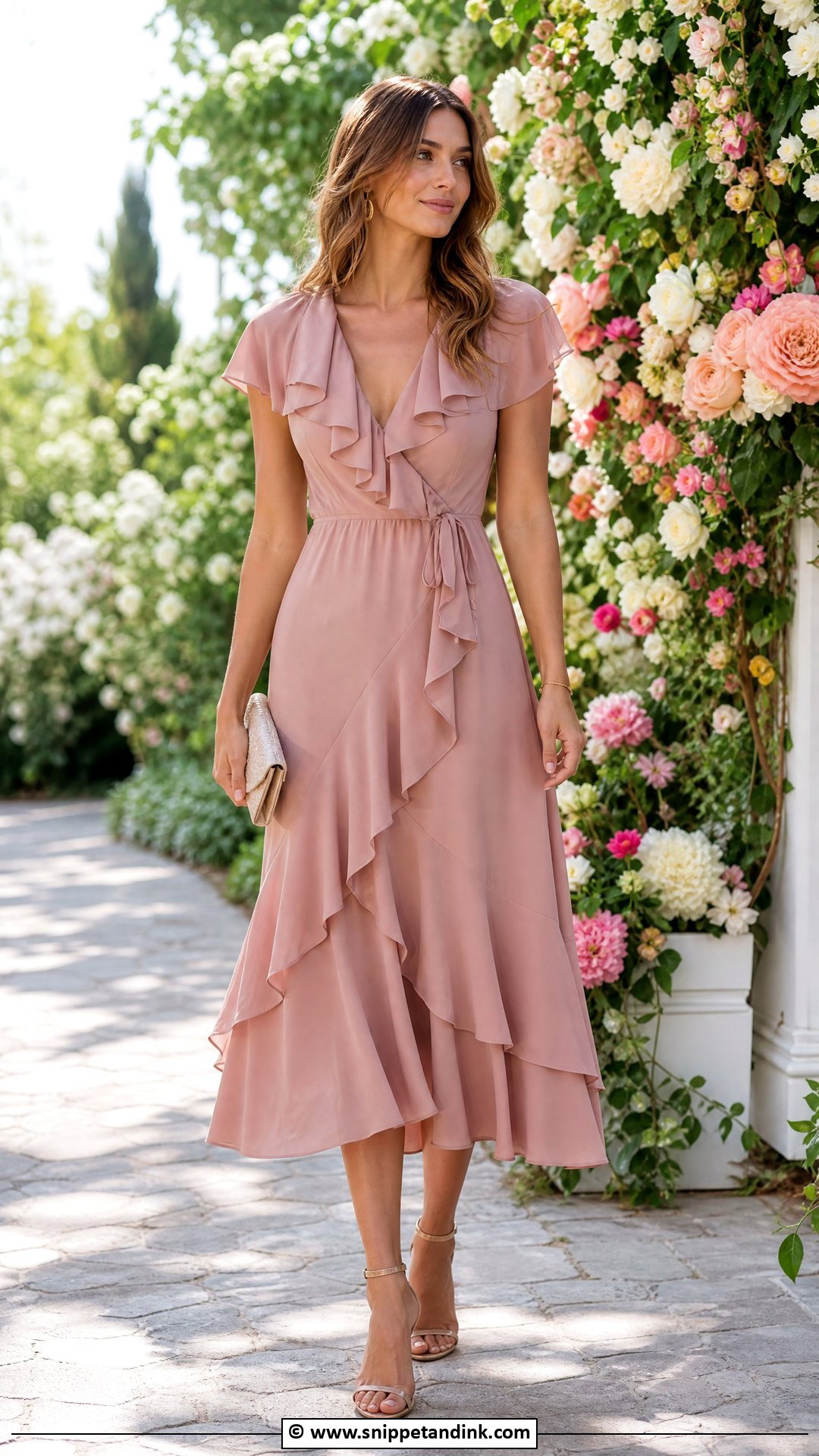
Ruffles need editing. A dress with controlled ruffles at the sleeve, hem or neckline looks charming; ruffles everywhere start to look costume. I usually suggest a guest pick the one area she wants movement in and keep the rest of the dress plain. Wrap ruffle dresses and soft tiered hems suit spring and summer gardens in coral, blue or berry. Slim heels balance the volume, with a small clutch and very little jewelry.
17. Long Sleeve Midi Dress With Heeled Mules
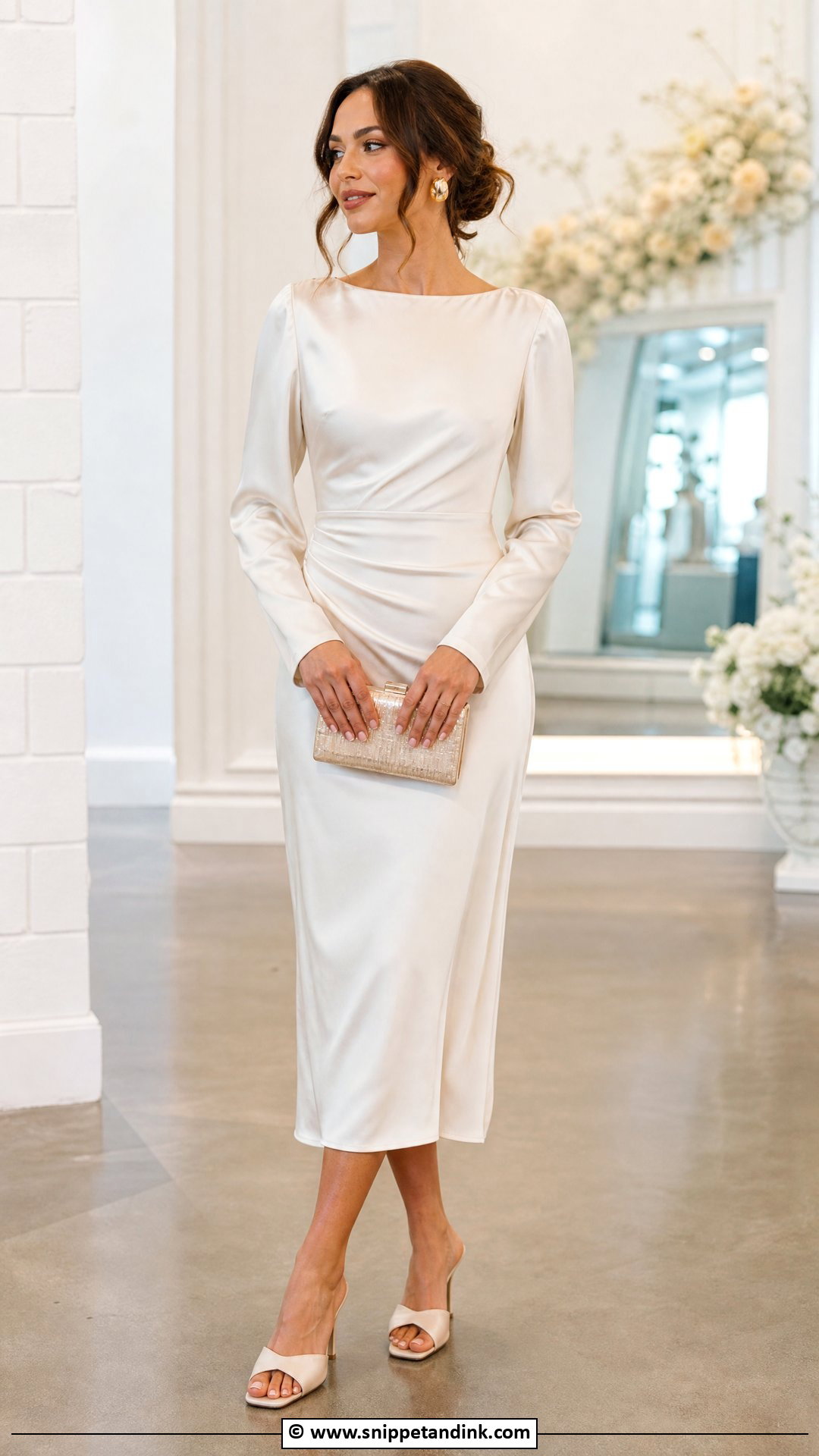
Sleeves are not a compromise. A long sleeve midi is often the smartest choice for a church ceremony, a cooler month or a family with more traditional expectations. Without some shape it can look plain, so I look for a defined waist, a soft drape or a small slit. Check sleeve length with your arms bent; cuffs that ride halfway up the forearm look like a size mistake. Satin, crepe and jersey all work. Heeled mules are easy indoors, and polished earrings with a slim clutch finish the look.
18. Sequin Midi Dress With Simple Sandals
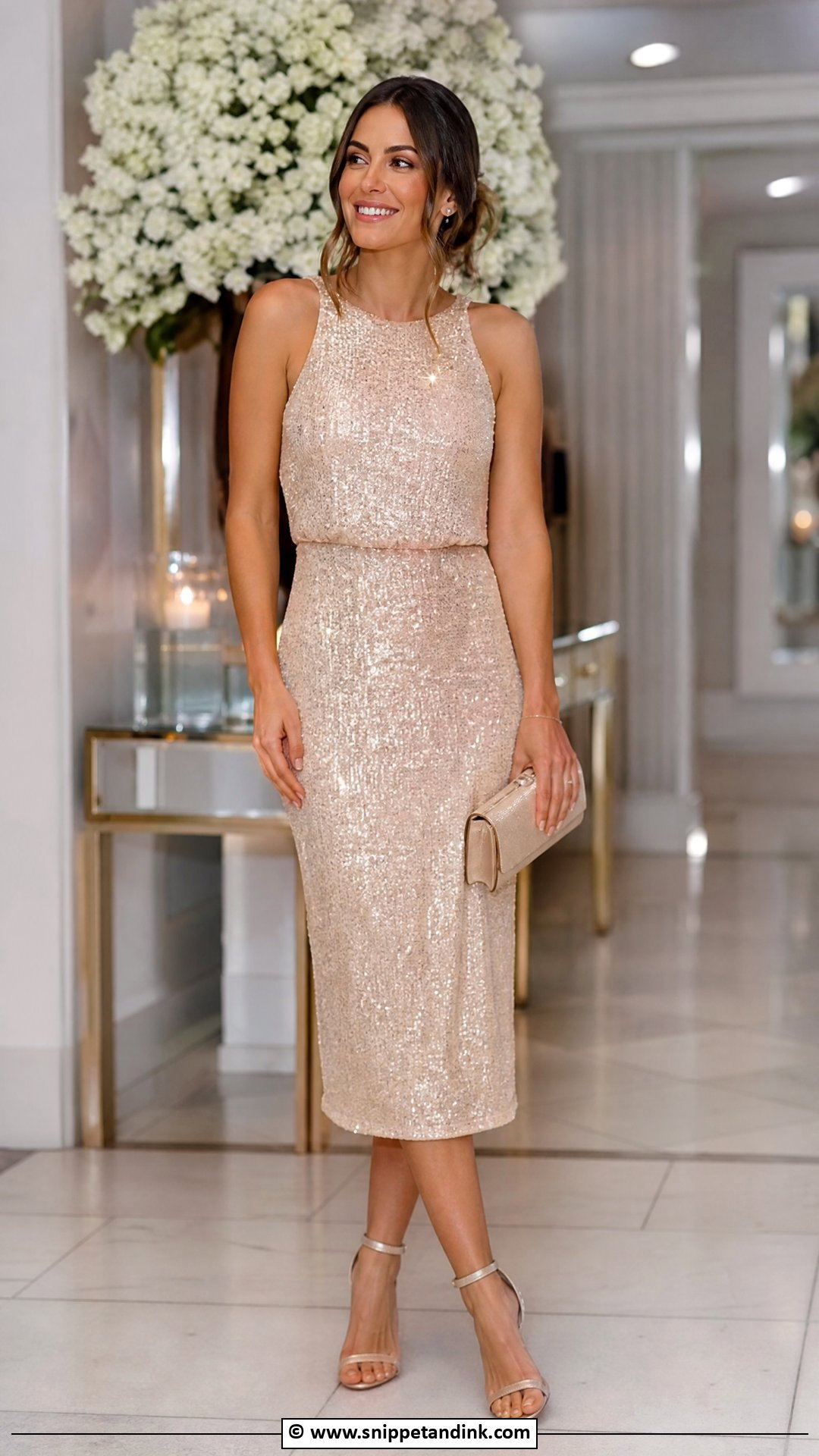
Sequins belong at evening weddings, and the smaller and flatter they are, the better they behave in a formal room. Large paillettes can scratch the inner arm through a long dinner, which is something guests only notice after three hours. Champagne, pewter, bronze and navy look refined under candlelight. The dress already supplies the sparkle, so simple sandals, minimal jewelry and a sleek clutch are all it needs. A midi length keeps it on the wedding side of a party dress.
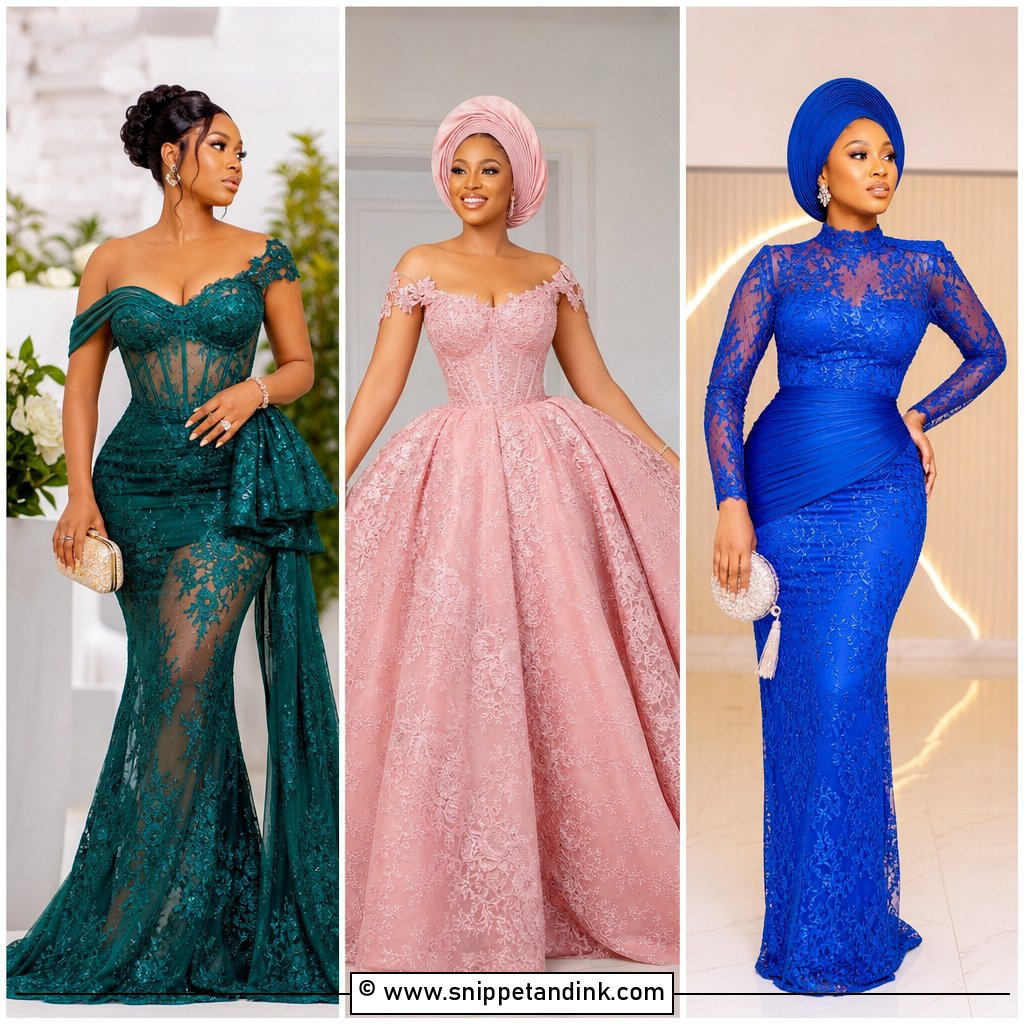
19. Emerald Green Dress With Gold Accessories
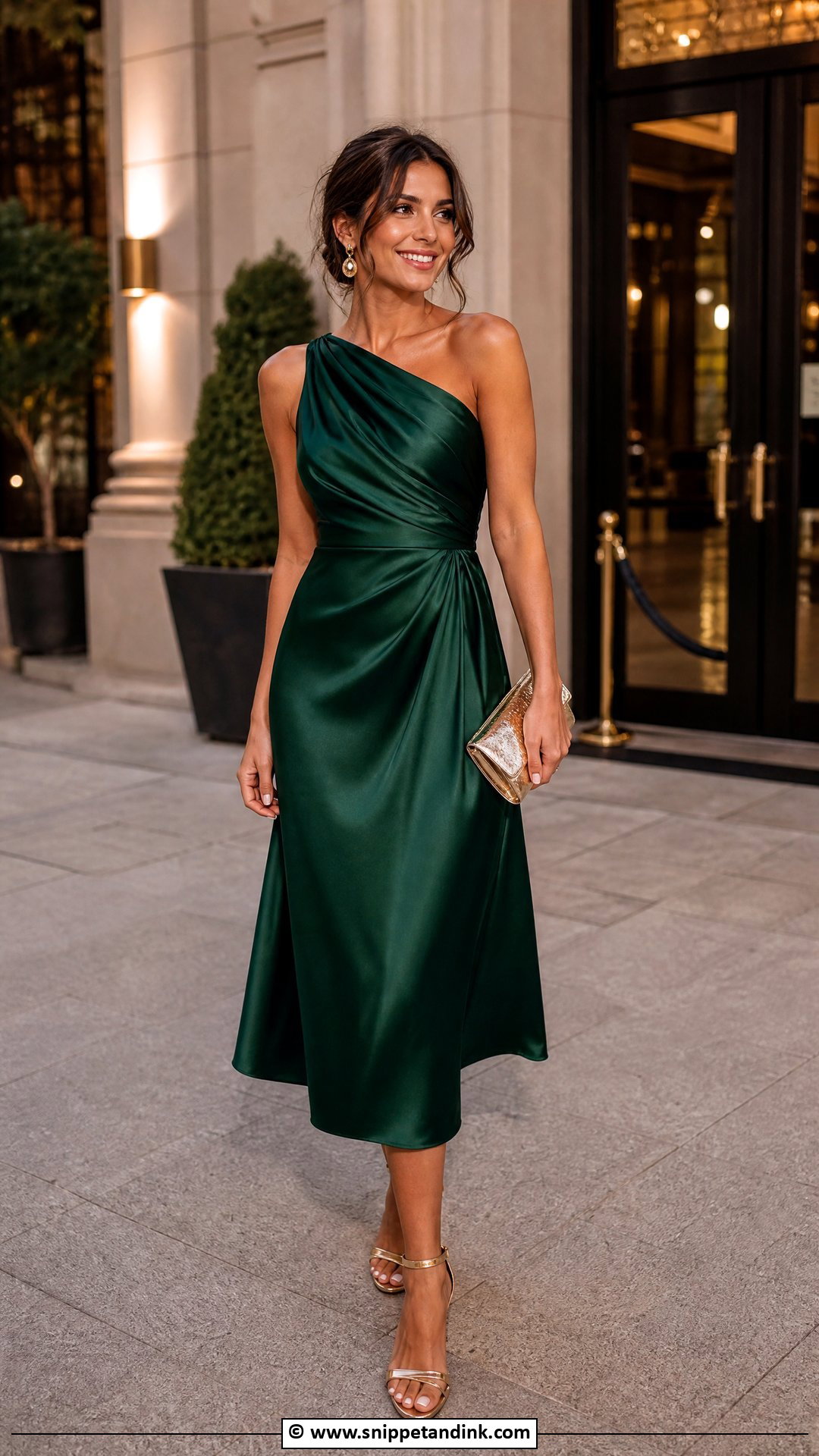
Emerald flatters warm and cool skin alike, which is rare for a strong color, and it reads festive without any print. For a formal invitation, choose an emerald satin maxi or a draped midi; for cocktail attire, a fitted A line or wrap. Gold is its natural metal, so I’d keep heels, clutch and earrings all gold rather than mixing in silver. A berry lip or defined eyes carry it through evening, fall and winter receptions.
20. Navy Blue Dress With Silver Heels
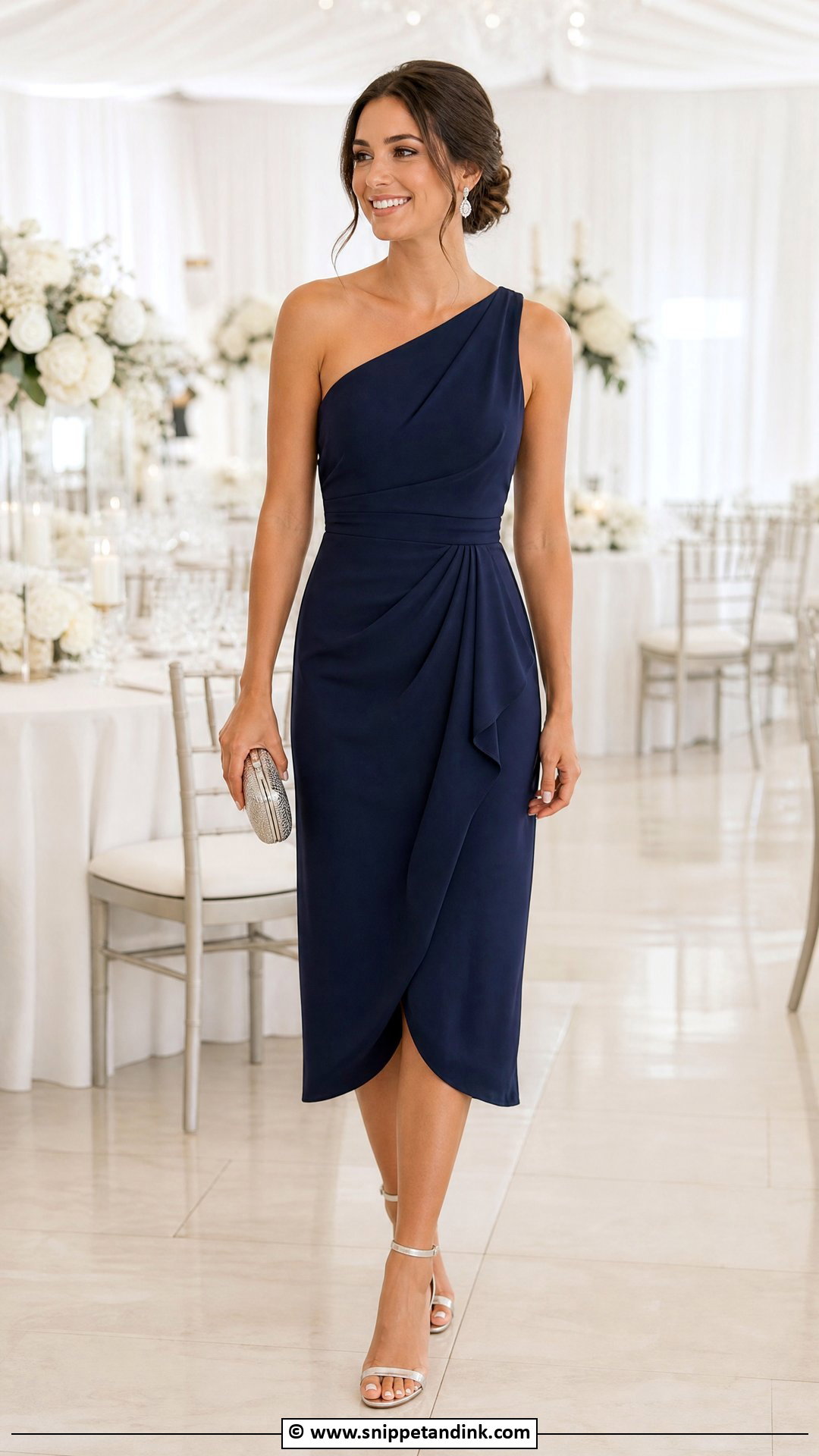
Navy is my quiet recommendation for guests who don’t want to think about what to wear twice. It reads formal under evening lights but softer than black, and it suits almost every complexion. A navy midi with silver heels feels crisp for cocktail attire, and a navy maxi covers formal. Silver jewelry lifts the dark color. Add a small clutch and a neat hairstyle, and you have something you’ll wear to the next three weddings.
21. Black Tie Gown With Statement Earrings
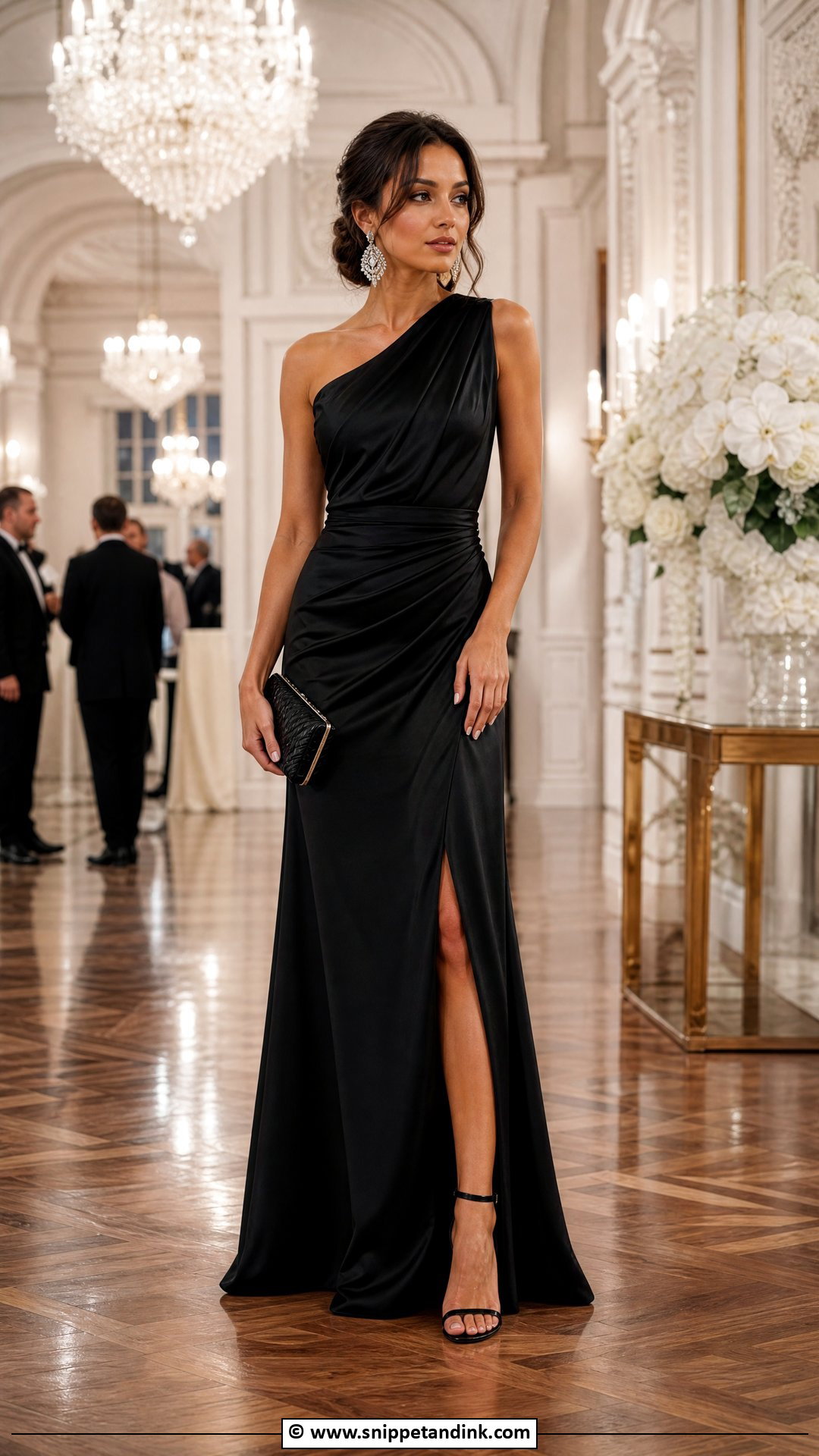
Black tie means a floor-length gown in almost every case, and the fabric has to look formal from across the room. Satin, crepe, velvet or subtle beading all qualify. Black, plum, burgundy and deep blue suit the dress code. Statement earrings add glamour, but if the gown has heavy beading, I’d scale them down so the two don’t fight. With a dramatic neckline, focus the jewelry on either the ears or the wrist, never both. Dressy heels and a sleek evening clutch complete it.
22. Beach Wedding Maxi Dress With Flat Sandals
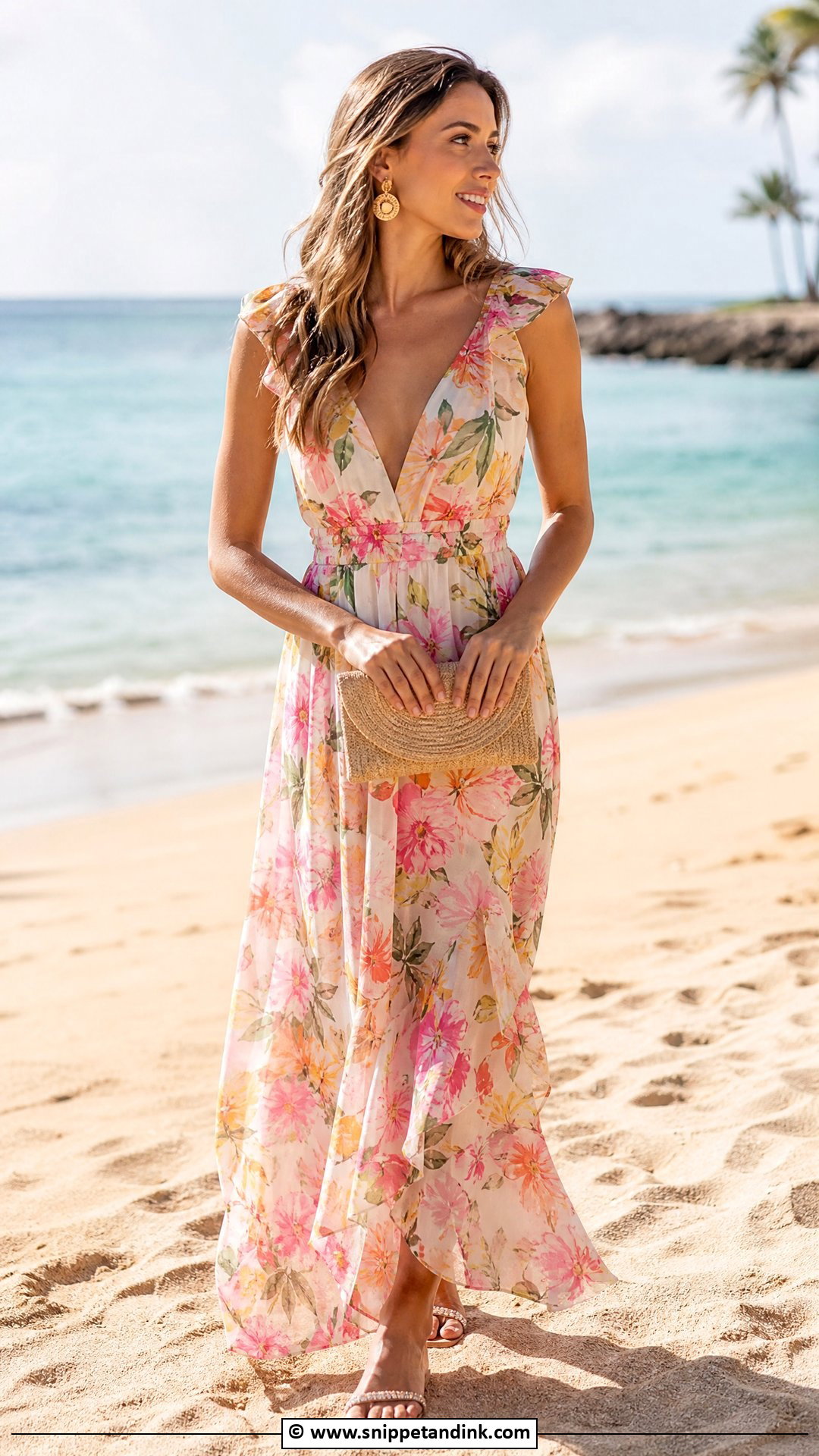
Sand and salt air change the rules. I steer beach guests away from beading and stiff layers, both of which get heavy and uncomfortable near water. A flowy printed maxi, a halter or a soft wrap all move with the wind. Turquoise, coral and sea blue suit the setting. Flat dressy sandals beat heels every time on sand. The hem should clear the ground by an inch or so in flats, because a dragging maxi collects wet sand within minutes. Bring sunglasses for the pre-ceremony wait and a woven clutch.
23. Garden Wedding Dress With Floral Heels
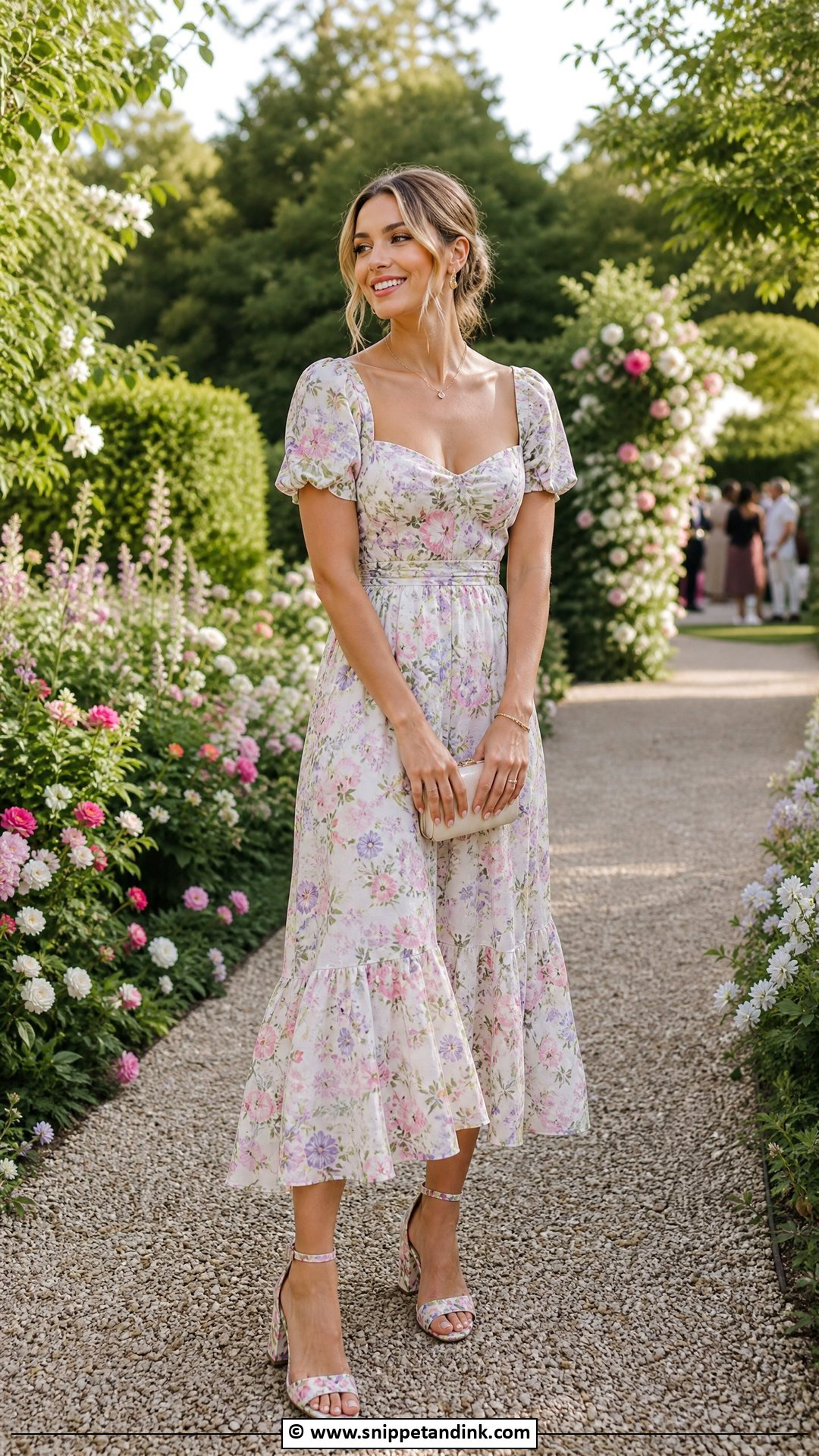
Garden weddings allow more color and print than most, as long as the outfit still looks pulled together in group photos. Floral midis, pastel maxis and chiffon layers all suit. I pair floral heels with a plain dress and neutral heels with a bold print, never floral with floral. On grass, stilettos sink, so block heels or wedges are worth the compromise. A light wrap covers the temperature drop once the sun goes down.
24. Cocktail Wedding Dress With Clutch Bag
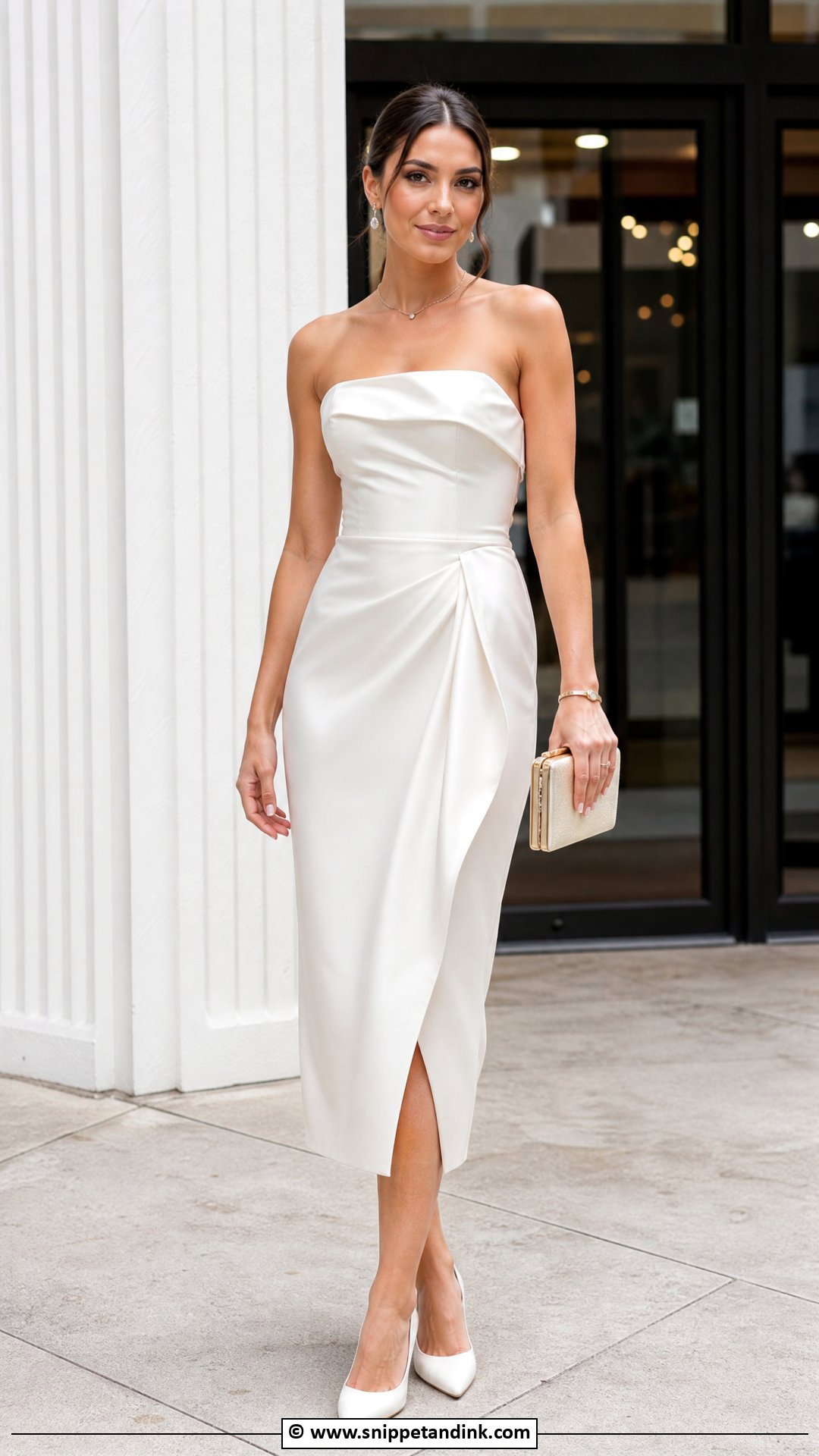
Cocktail attire sits between a day dress and a gown. A midi is the safest length, though a knee-length dress works when the cut is refined. Satin, crepe, jacquard and structured chiffon all qualify, in jewel tones or a confident print. This is the dress code where I let jewelry get a little louder, provided it supports the dress rather than competing with it. Heels and a proper clutch bag rather than a day bag make the difference between cocktail and casual.
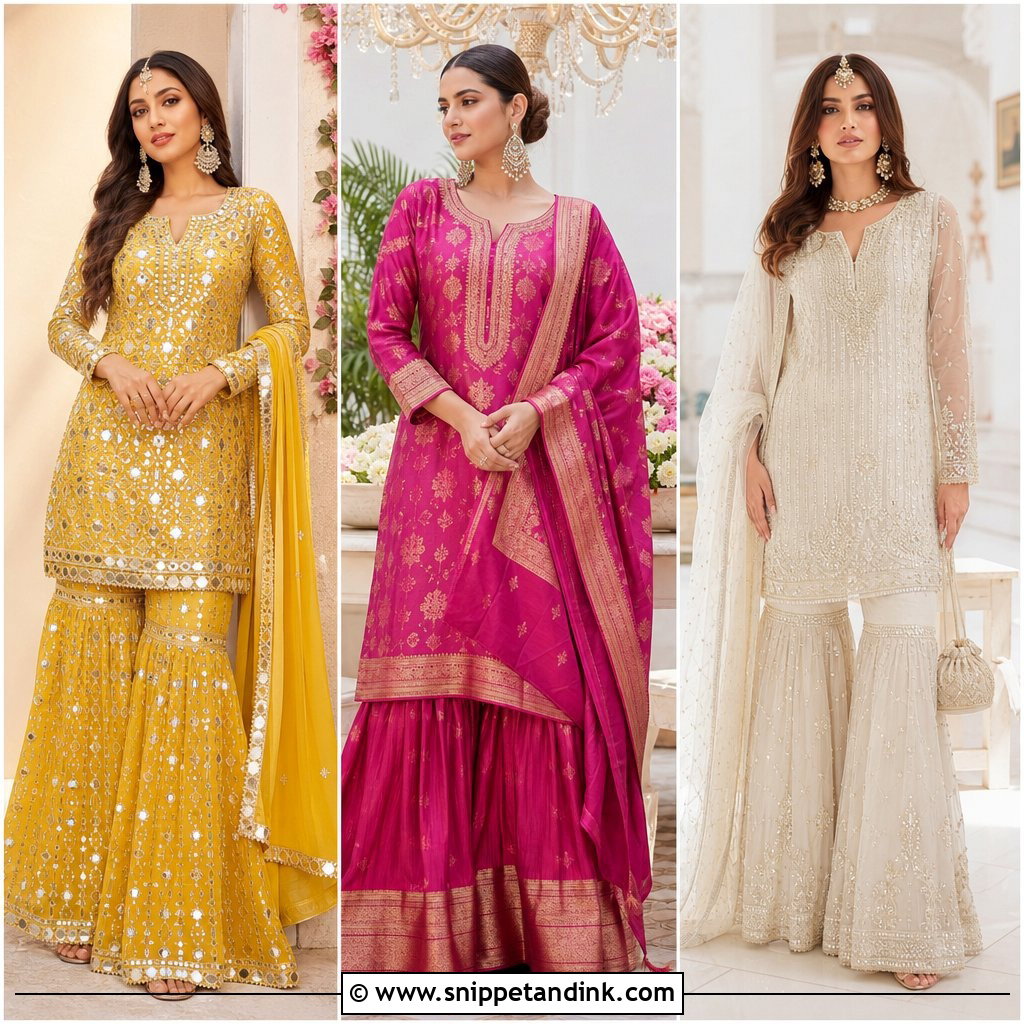
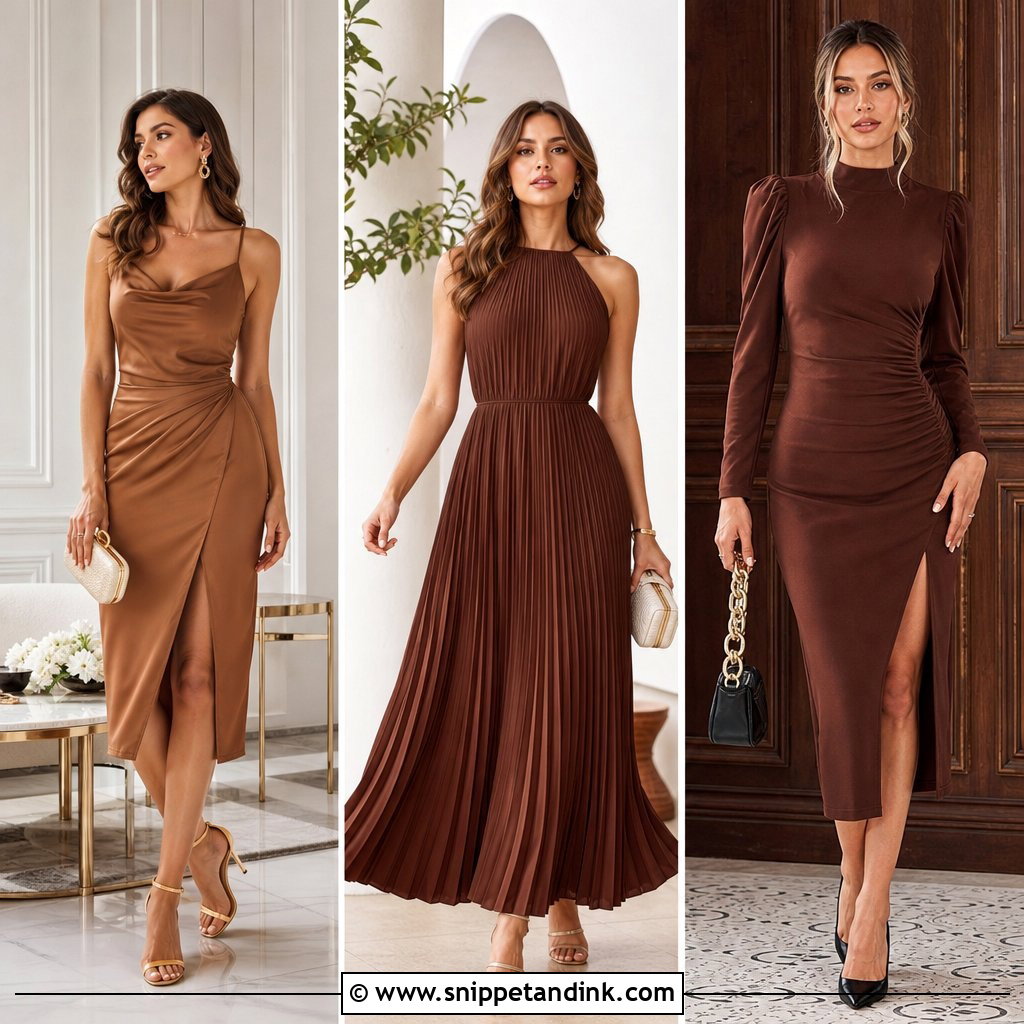
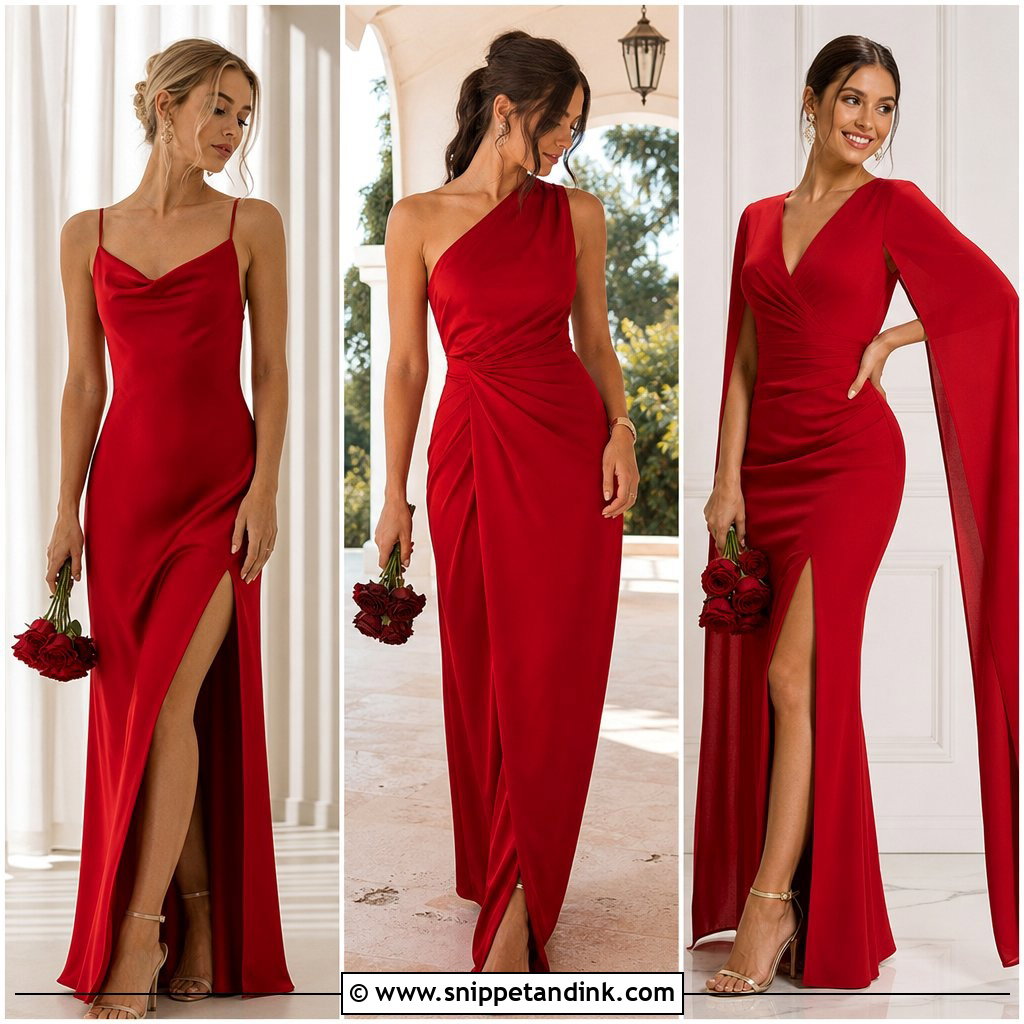
25. Casual Wedding Dress With Low Block Heels
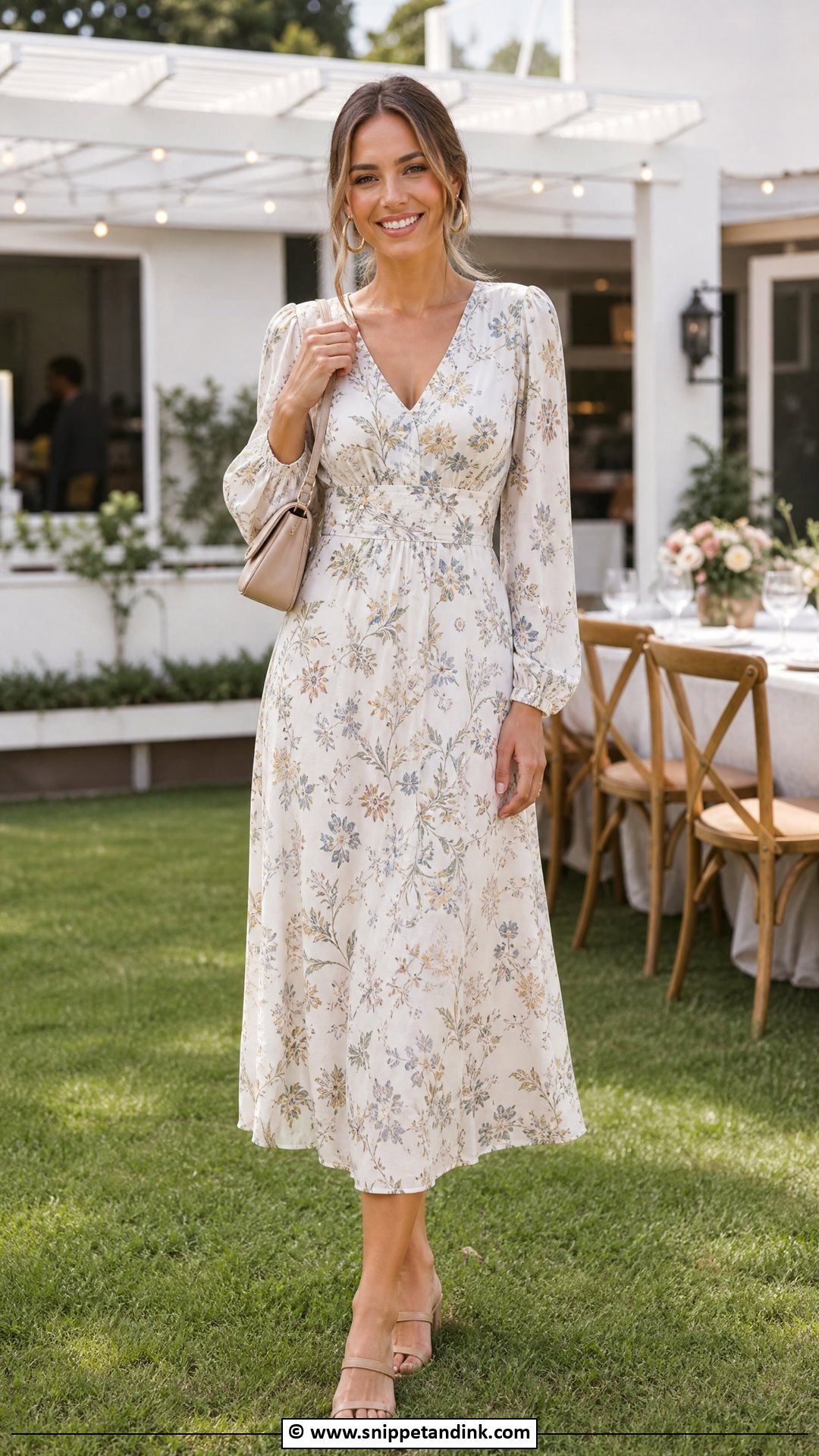
Casual on the invitation still means you will be in the family photos for decades. A printed midi, a relaxed wrap or a linen blend midi all work. What I’d avoid is anything that looks like a beach cover-up or an everyday sundress, and very short hems. Low block heels give polish without overdressing, and linen does crease, so accept a lived-in look or choose a blend with some synthetic fiber. A simple shoulder bag, small hoops and fresh makeup are enough for backyard and daytime receptions.
26. Formal Wedding Dress With Satin Clutch
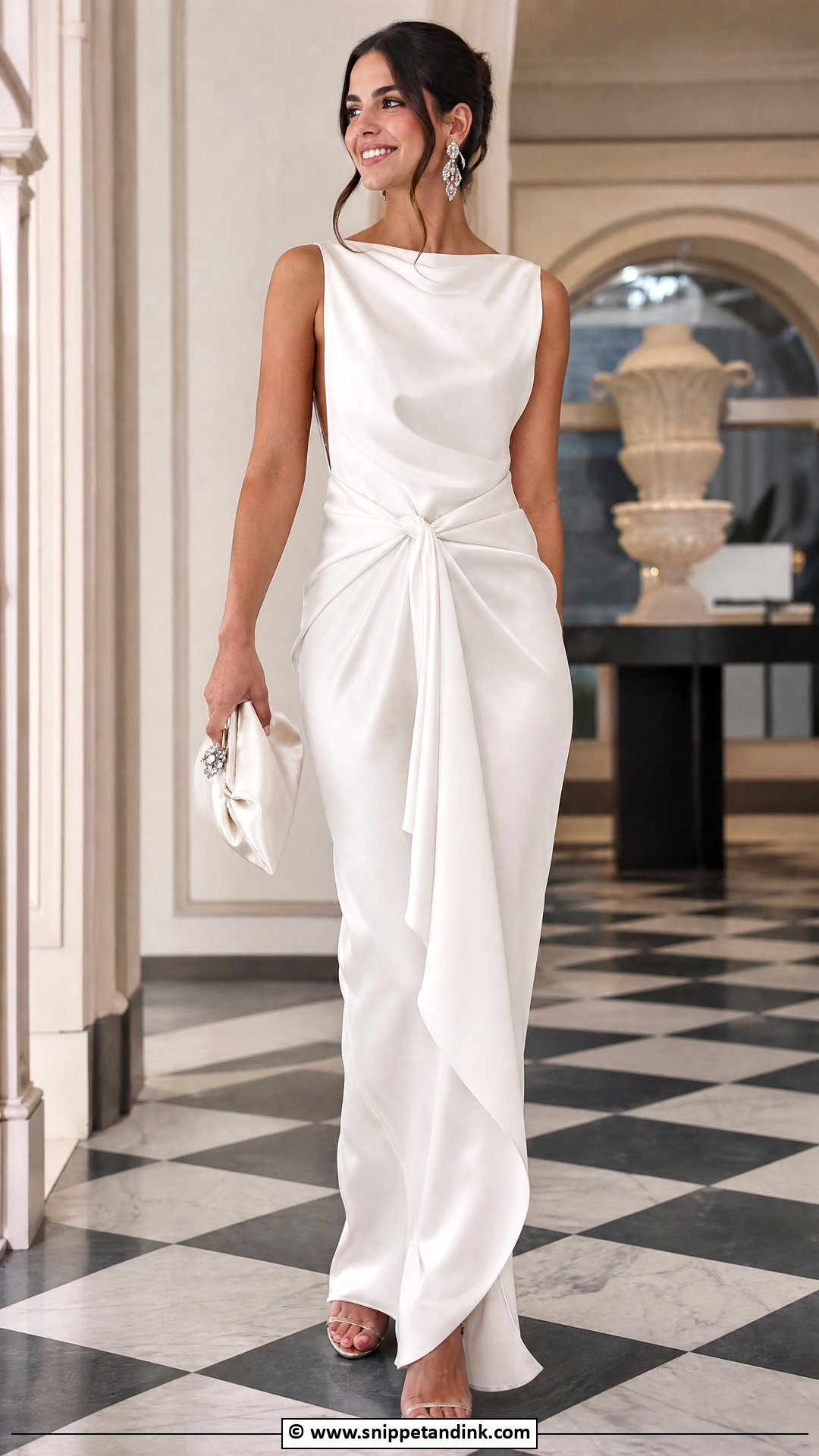
Formal attire is carried by fabric and length more than by decoration. A floor-length gown is the usual answer, though a very polished midi can pass at some formal weddings. Satin, crepe, chiffon and velvet all hold up in photos; casual prints don’t. A satin clutch is the quickest way to make an outfit look dressier. If the dress has a high slit, I balance it with a more covered neckline. Heels, refined earrings and smooth hair finish it for an upscale room.
27. Summer Wedding Dress With White Sandals
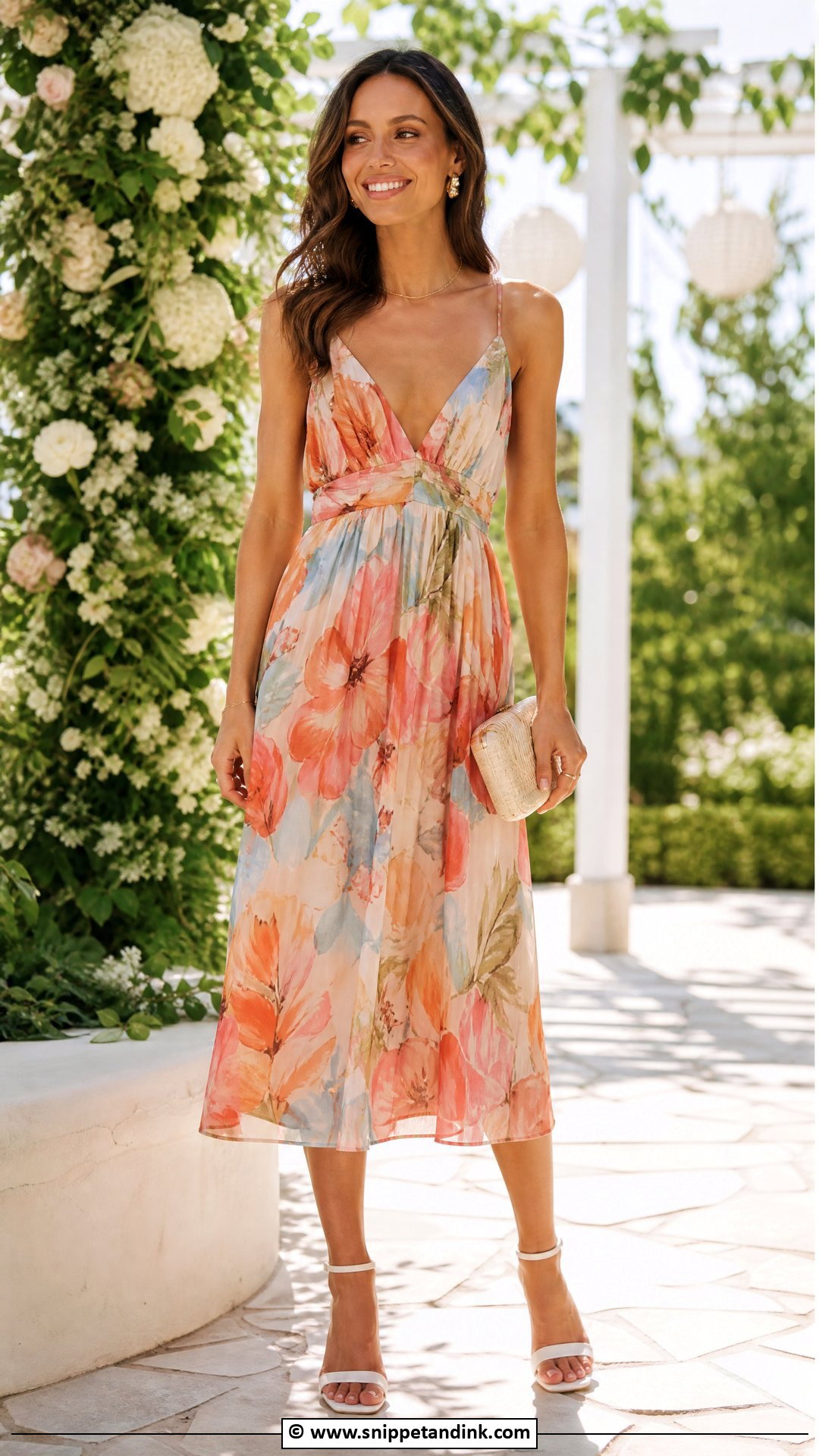
Summer heat is the main design constraint, so breathable fabric matters more than trend. Lightweight midis and maxis in chiffon, cotton blend or airy crepe stay comfortable through an outdoor ceremony. Keep white and ivory away from the dress itself; white sandals are fine when the dress is clearly colorful. Coral, yellow and blue suit warm months. Darker colors and satin show sweat marks quickly, which is worth remembering before a July ceremony in full sun. Pack a wrap for the evening drop in temperature.
28. Fall Wedding Dress With Suede Heels
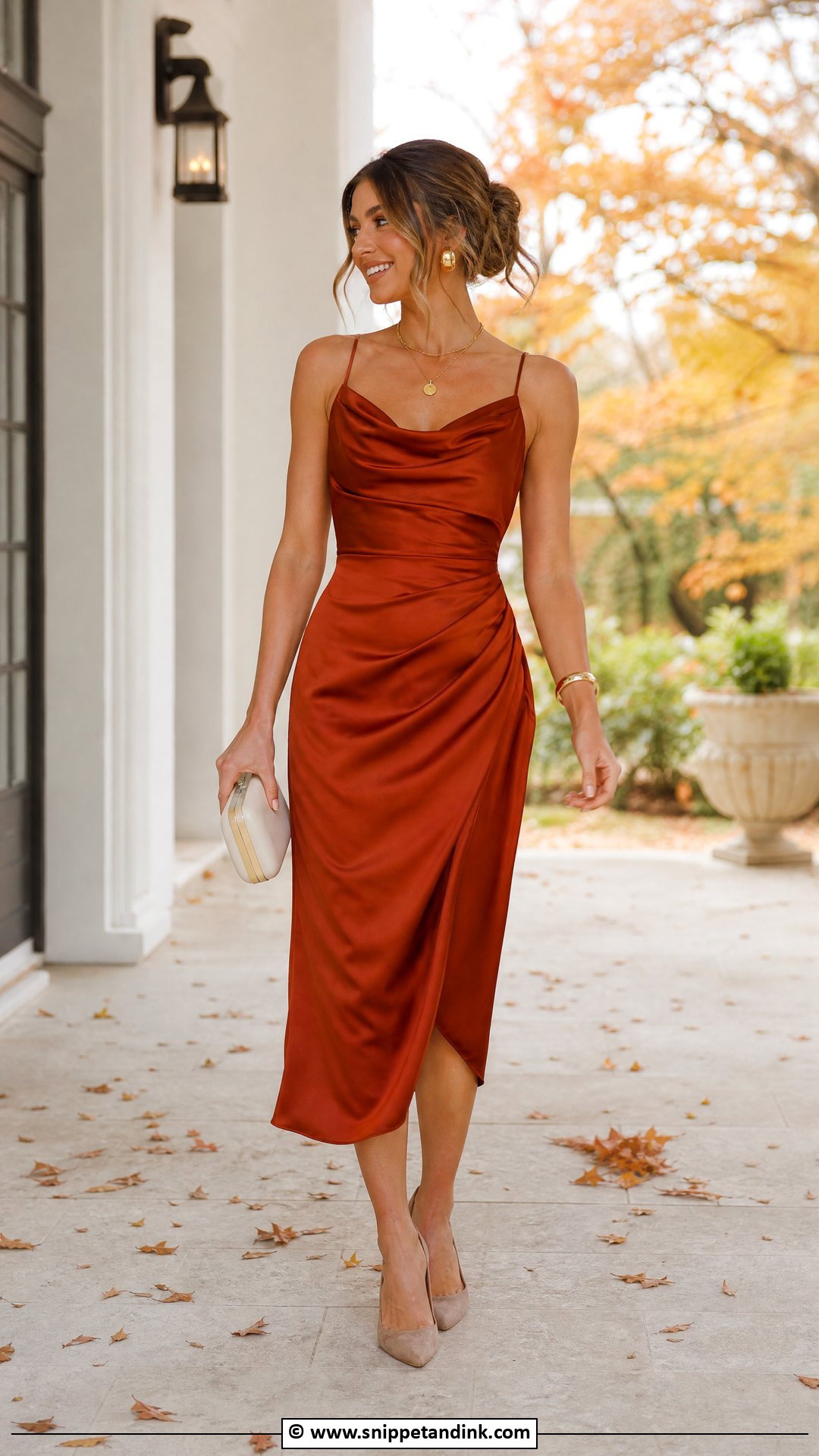
Fall is the season for depth: rust, olive, chocolate and burgundy. Midi dresses in satin, velvet, crepe or long-sleeve chiffon feel right without weighing you down. Suede heels in tan or brown add warmth, but suede and wet grass are a bad pairing, so check the forecast for an outdoor ceremony. A structured clutch and gold jewelry finish it. If you need a coat, pick one that ends above or well below the hem so the two lengths don’t fight.
29. Winter Wedding Dress With Faux Fur Wrap
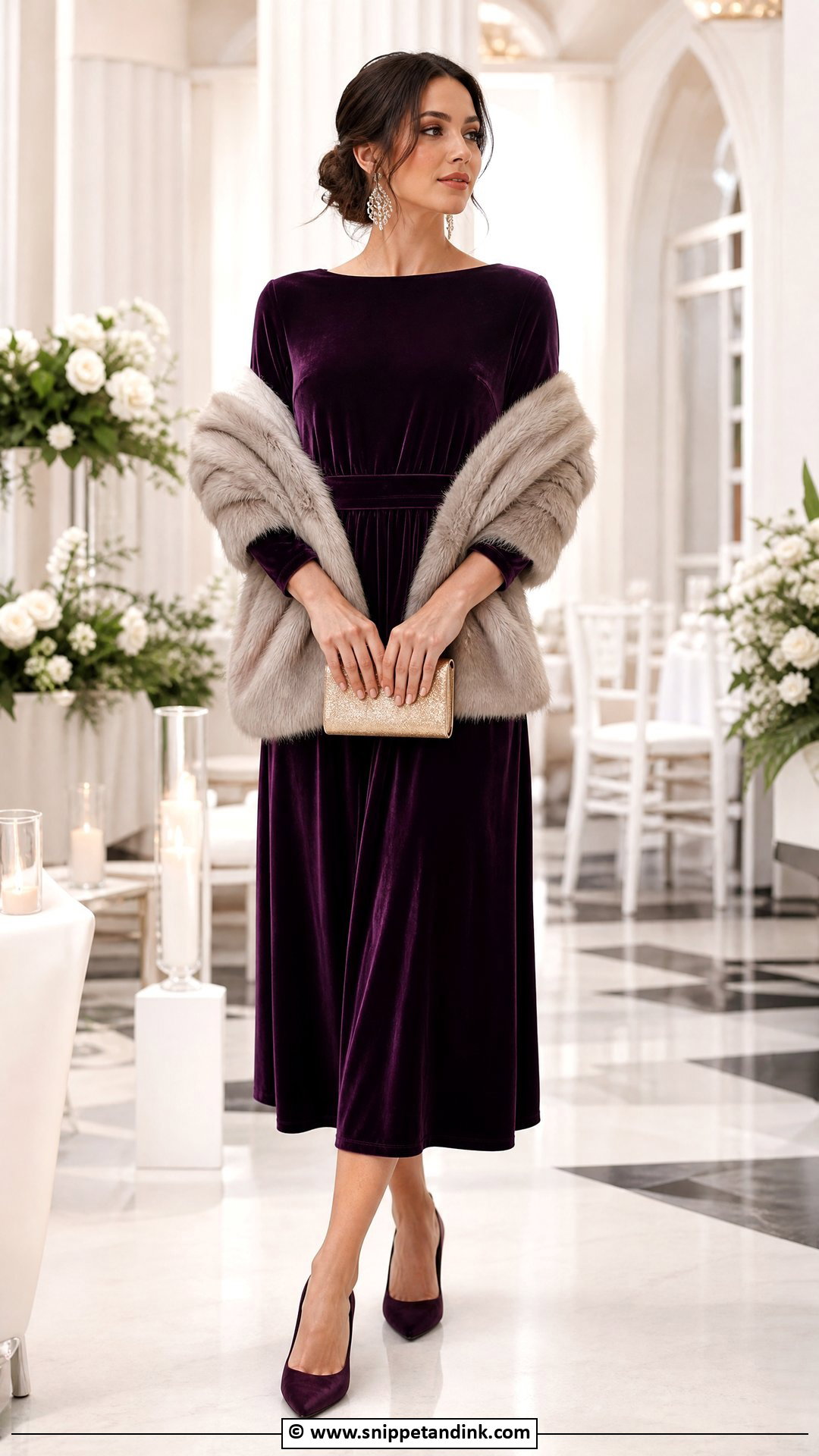
Winter weddings ask for warmth without bulk. Velvet, heavier satin and long-sleeve crepe all suit, in ruby, emerald, plum or dark teal. A faux fur wrap keeps your shoulders warm for outdoor portraits and the walk between venues. Closed toe heels or pumps and a small clutch complete it. Faux fur sheds onto dark fabric, so I give a wrap a shake and a lint roll before putting it over a navy or black dress, and I keep jewelry simple next to the texture.
30. Spring Wedding Dress With Pastel Heels
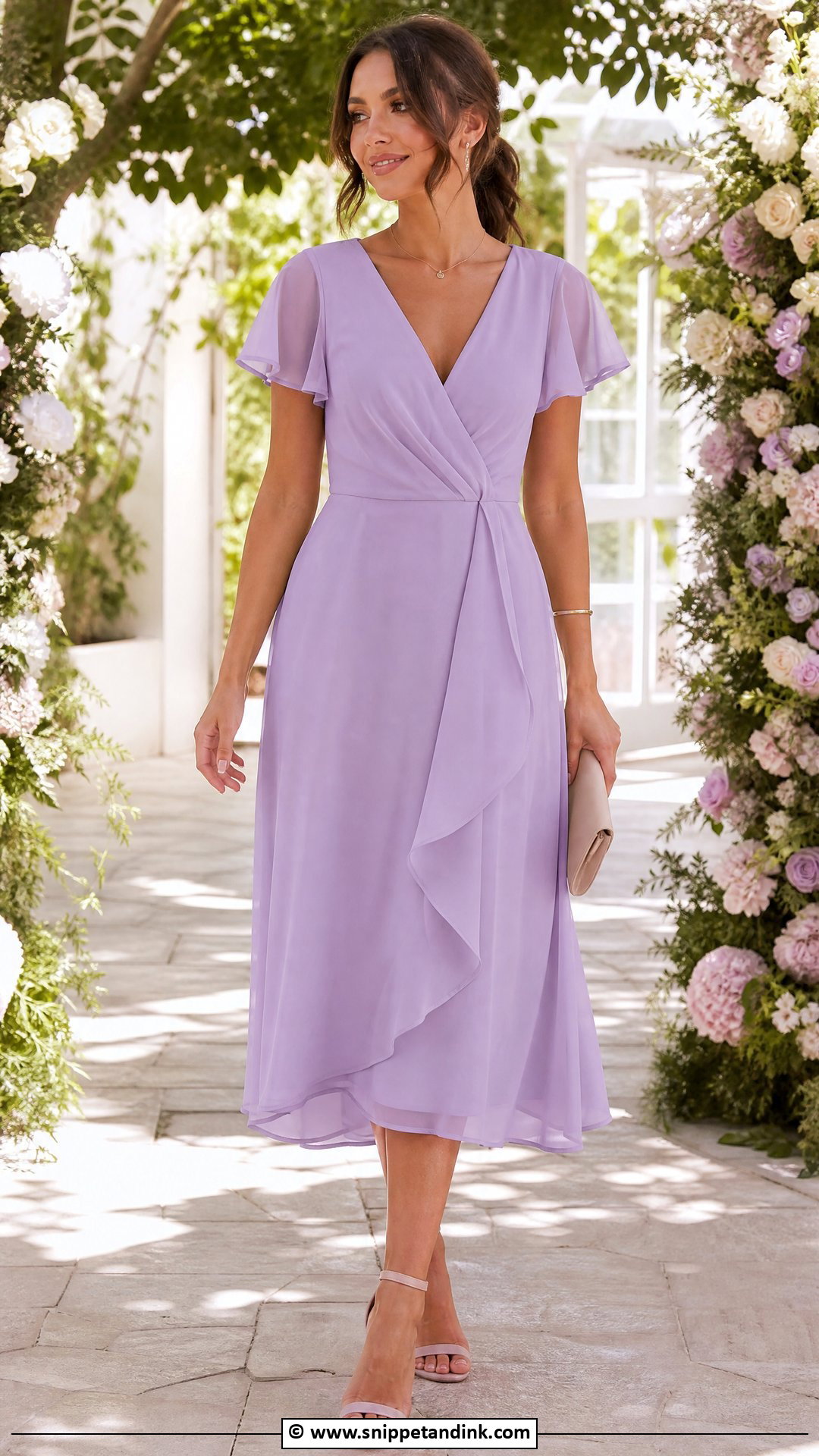
Pastels are the obvious spring answer, but the palest ones photograph close to white under bright sun. I hold a pastel next to a white sheet of paper; if they nearly merge, I go a shade deeper. Lavender, mint and powder blue are usually safe. A midi in chiffon, satin or crepe suits garden ceremonies. Pastel heels can coordinate with the dress, just avoid matching the exact shade, which looks uniform. A neutral clutch and a light wrap for unpredictable weather finish it.
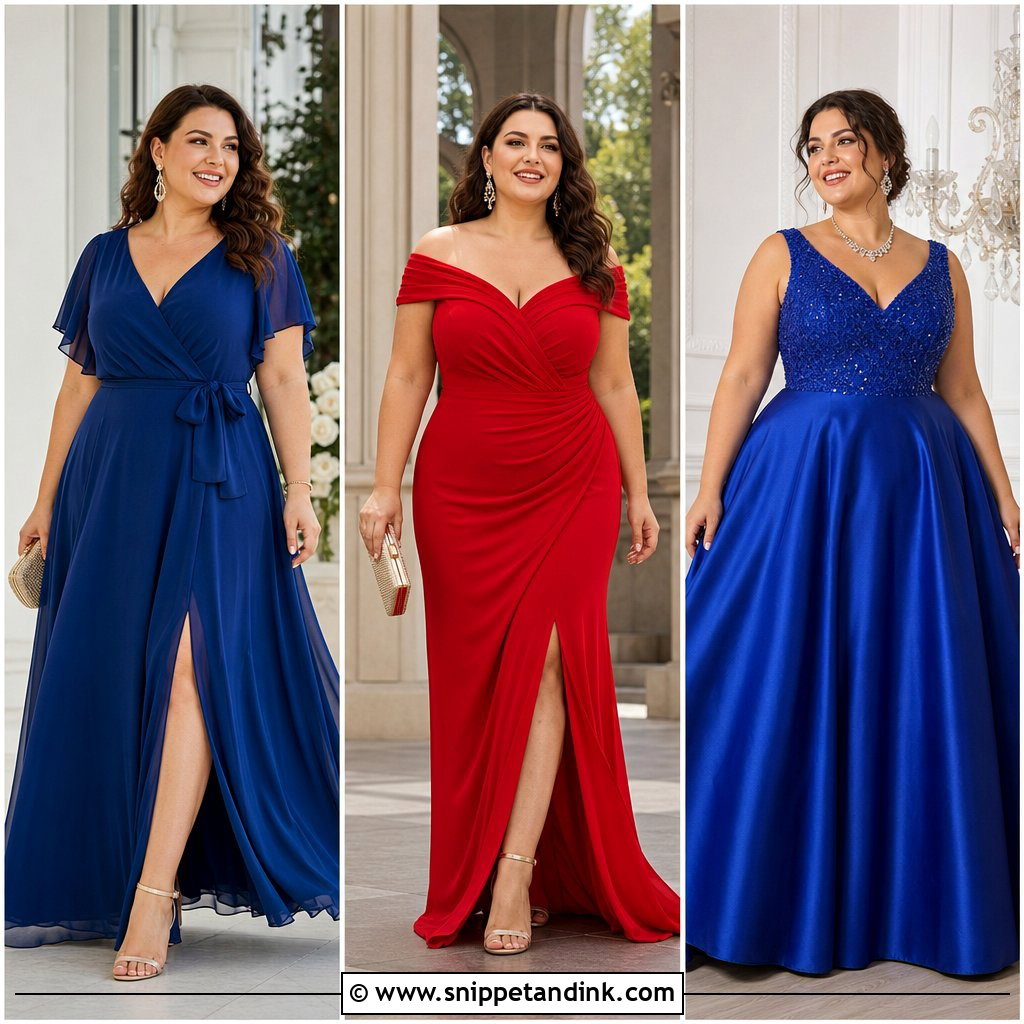
31. Plus Size Wedding Guest Dress With Wide Fit Heels
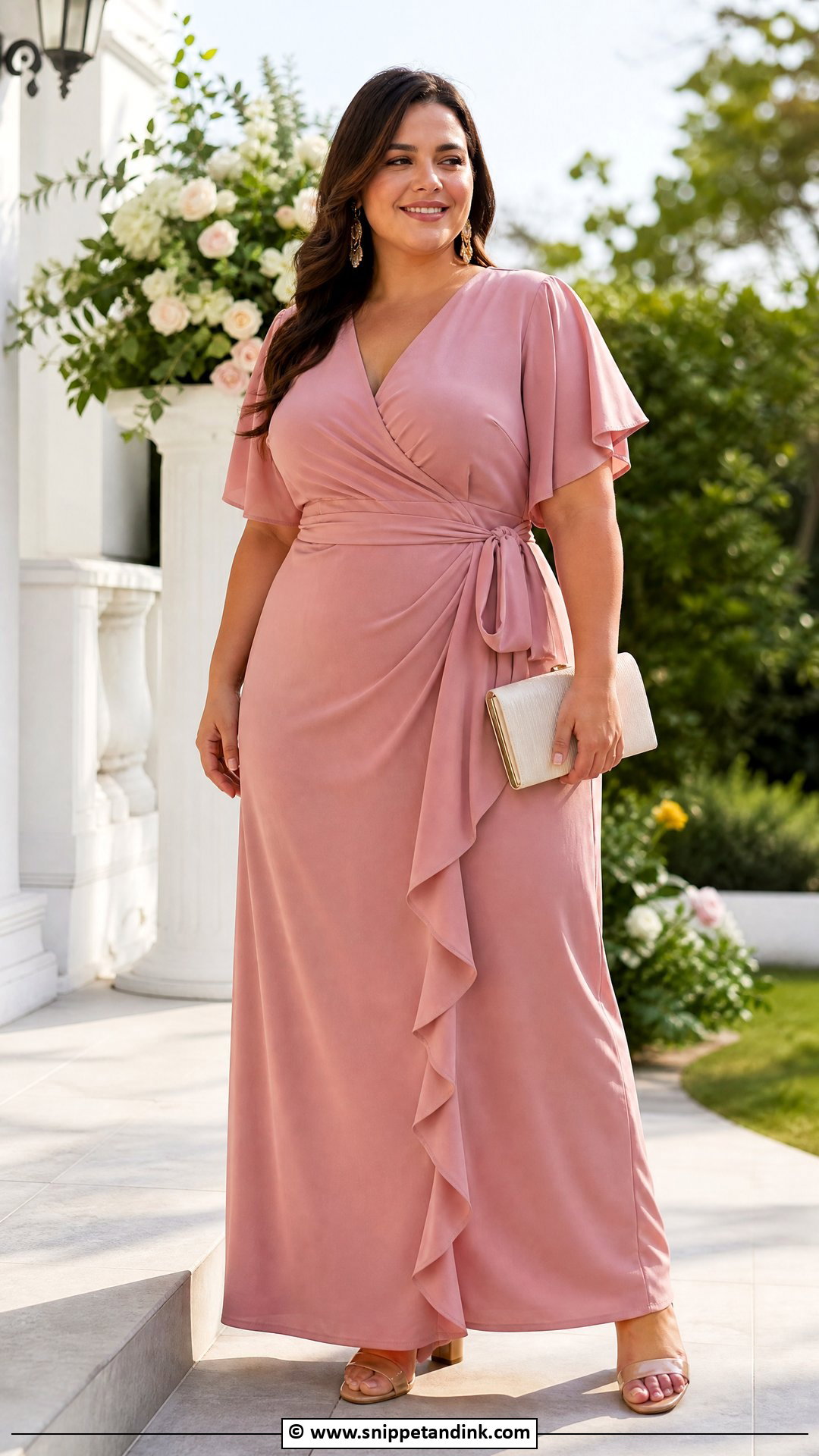
Fit comes before everything for plus size guests, and the right construction does a lot of quiet work. Wrap dresses, empire waist maxis, fit-and-flare midis and ruched styles all give shape. I check three things: a proper lining, adjustable straps and enough stretch to sit through dinner comfortably. Don’t default to black; saturated colors and bold prints look great. Wide fit or block heels make the standing and dancing hours far easier. Earrings and a clutch matched to the dress code finish it.
32. Petite Wedding Guest Dress With Nude Heels
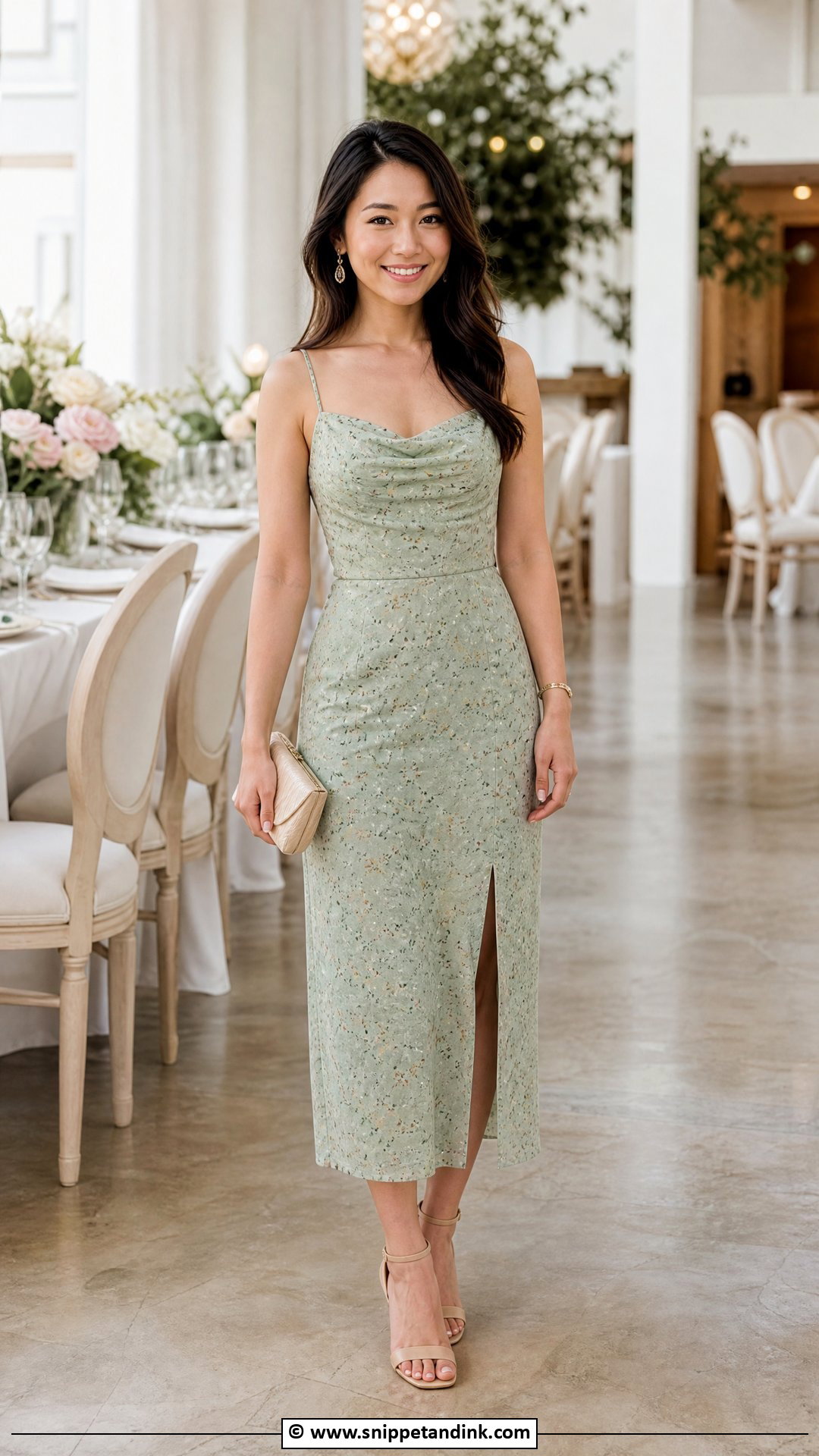
Proportion is the whole game for petite guests. A midi that ends just below the knee, a high-low hem or vertical details lengthen the frame, while a maxi cut for a taller woman needs constant lifting. Most maxis can be hemmed, so budget for it rather than tripping all night. A V-neck or wrap creates balance. Nude heels extend the leg line, a small bag keeps accessories in scale, and medium prints suit better than oversized ones.
33. Maternity Wedding Guest Dress With Comfortable Heels
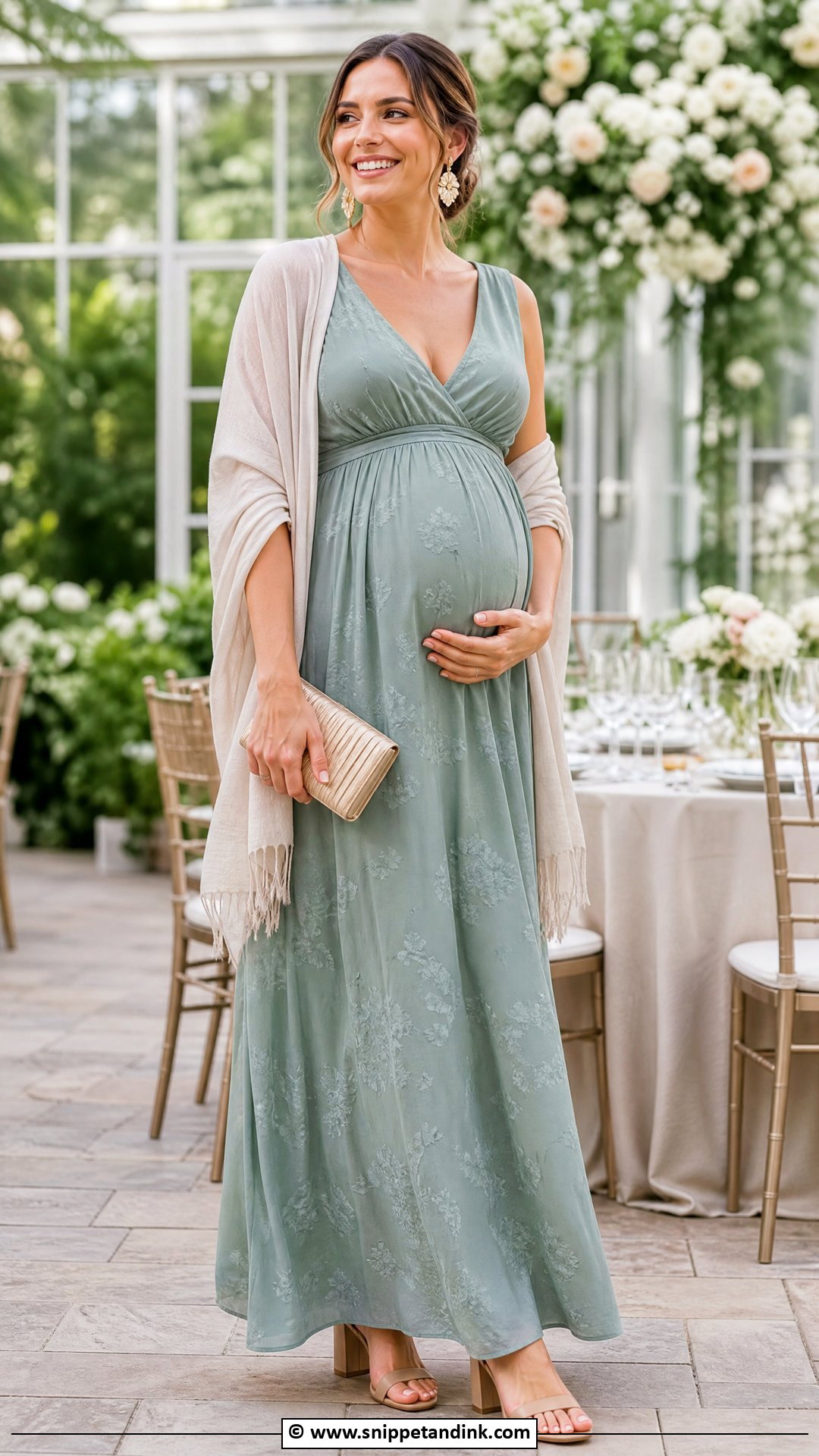
Pregnancy changes week to week, so I always suggest buying a maternity guest dress as late as you safely can, or choosing one with built-in give. Empire waist maxis, stretch wrap dresses, smocked bodices and soft jersey midis all allow room through the bust and waist. Breathable fabric matters at summer or outdoor weddings. Block heels, low wedges or dressy flats save your back over several hours. Add a lightweight wrap, a small clutch and earrings, and pick either a soft print or a rich solid.
34. Modest Wedding Guest Dress With Closed Toe Heels
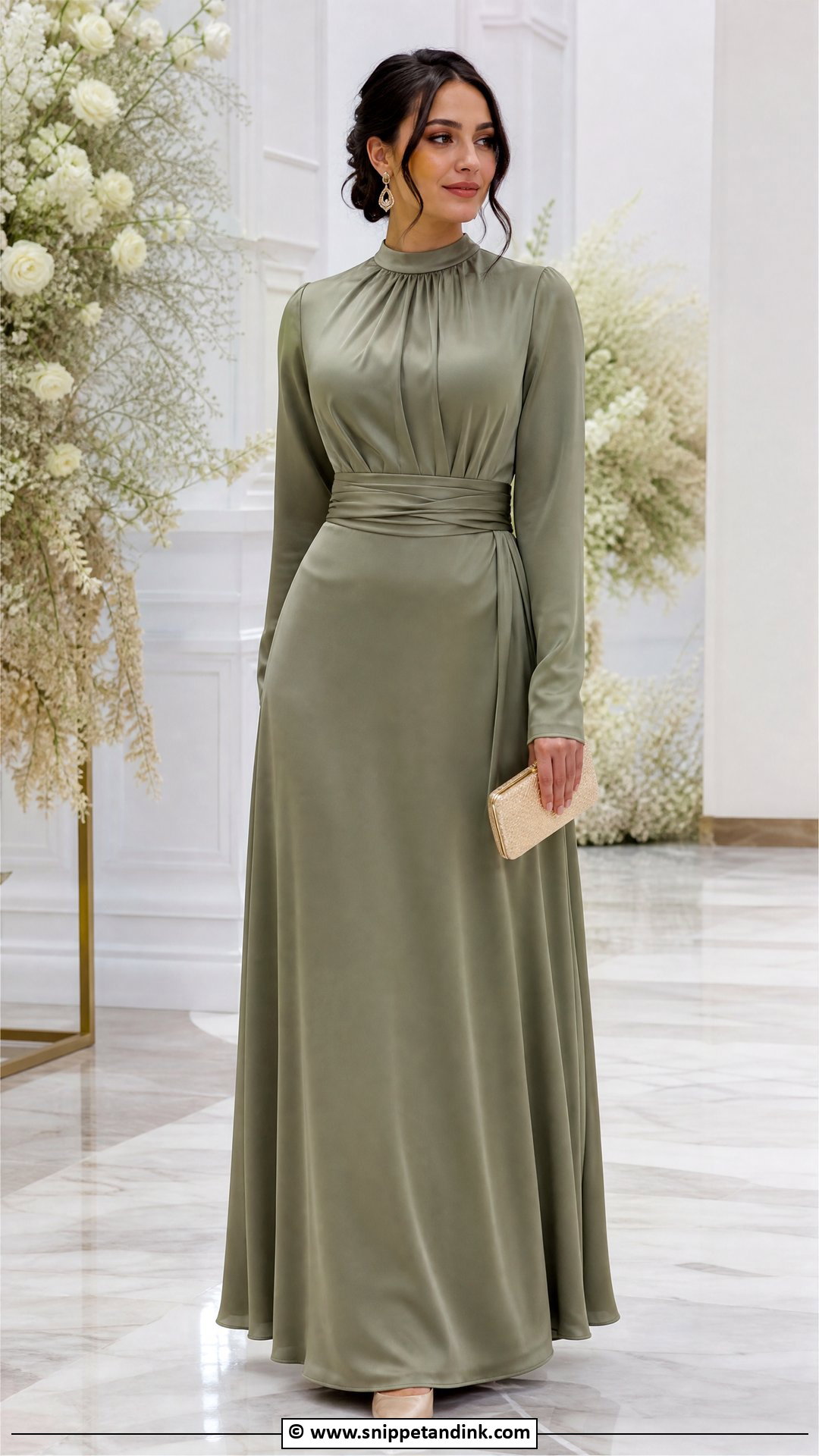
A modest wedding guest dress can look every bit as current as a strappy one. Long sleeves, higher necklines and midi or maxi lengths are the base, and the shape has to come from somewhere: a defined waist, pleats or a fluid drape. Without it, a covered dress can look shapeless. High-neck satin maxis, long-sleeve wraps and chiffon styles all work. Closed toe heels suit the silhouette. With a high neckline, I skip the necklace and put the attention into hair and earrings.
35. Metallic Wedding Guest Dress With Minimal Accessories
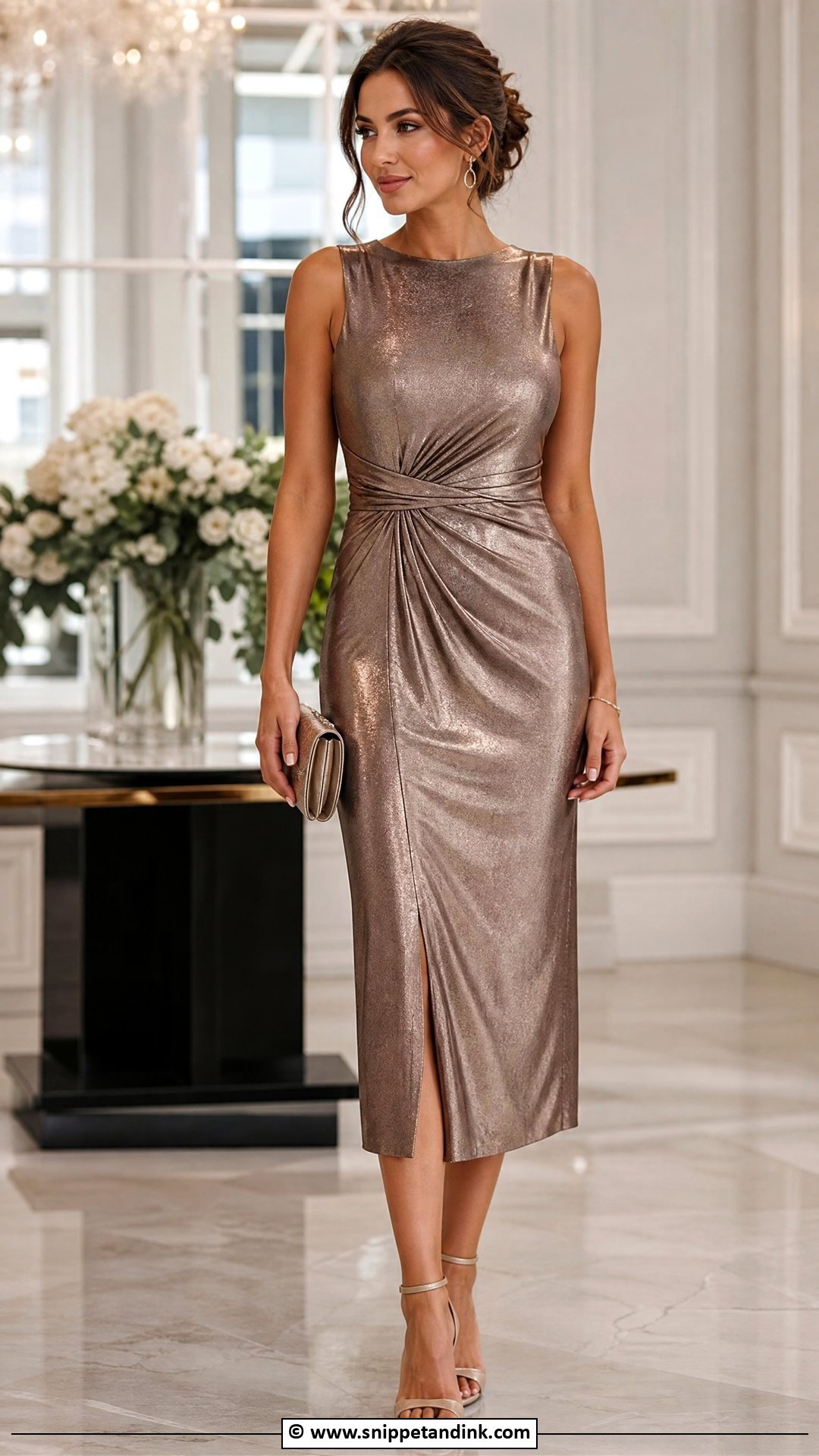
Metallics belong to formal, festive or evening weddings, and soft sheen beats mirror shine every time. Bronze, pewter, copper and soft gold in midi or maxi lengths look refined rather than party-ready. The fabric already reflects light, so accessories should step back: simple heels, a sleek clutch and small earrings are enough. Heavy makeup on top of a metallic dress tips it into too much. Hotel receptions and winter weddings suit it best.
Hemming, Steaming and Packing the Dress So It Arrives Ready
Most guest dresses need one small alteration, and the hem is the usual one. Take the exact shoes you’ll wear to the tailor, because a two-inch difference in heel height changes where a maxi should fall. I’d allow two to three weeks for alterations in the busy summer months; small shops get booked up around wedding season, and timings vary a lot from place to place.
Steam rather than iron almost everything on this list. Satin water-spots if a drop of steam condenses on the face, so I hold the steamer a hand’s width away and work from the inside of the dress. Chiffon and georgette relax under steam in seconds. Velvet should never meet an iron on its face.
If you’re traveling to the wedding
- Roll jersey and wrap dresses; fold satin over tissue paper so the creases stay soft.
- Pack the dress in carry-on luggage for a destination wedding, since a lost suitcase is the one problem nobody can fix on the day.
- Hang it in the bathroom with the shower running for fifteen minutes on arrival; most travel creases drop out.
- Keep a small kit in your clutch: double-sided fashion tape, a couple of safety pins and blister plasters.
One last check the night before: put the whole outfit on, shoes and bag included, and look at the back in a mirror. Visible underwear lines, a strap that slips or a hem that catches the heel are all easy to fix at home and impossible to fix in a church pew.
Dress for the Invitation, the Ground Underfoot and a Long Day
A good guest outfit respects the dress code, copes with the venue floor and stays comfortable from the first hymn to the last song. A dress is still the simplest way to get there, because a few accessories finish it. Floral midis, satin slips, velvet, black tie gowns, beach maxis and modest long-sleeve styles each have a season and a setting. Rule out anything that could read as bridal, too revealing or too casual for the room, then use the ideas above to build a complete look around the one you love most.
You'll Like These Ideas:


Leave a Reply