
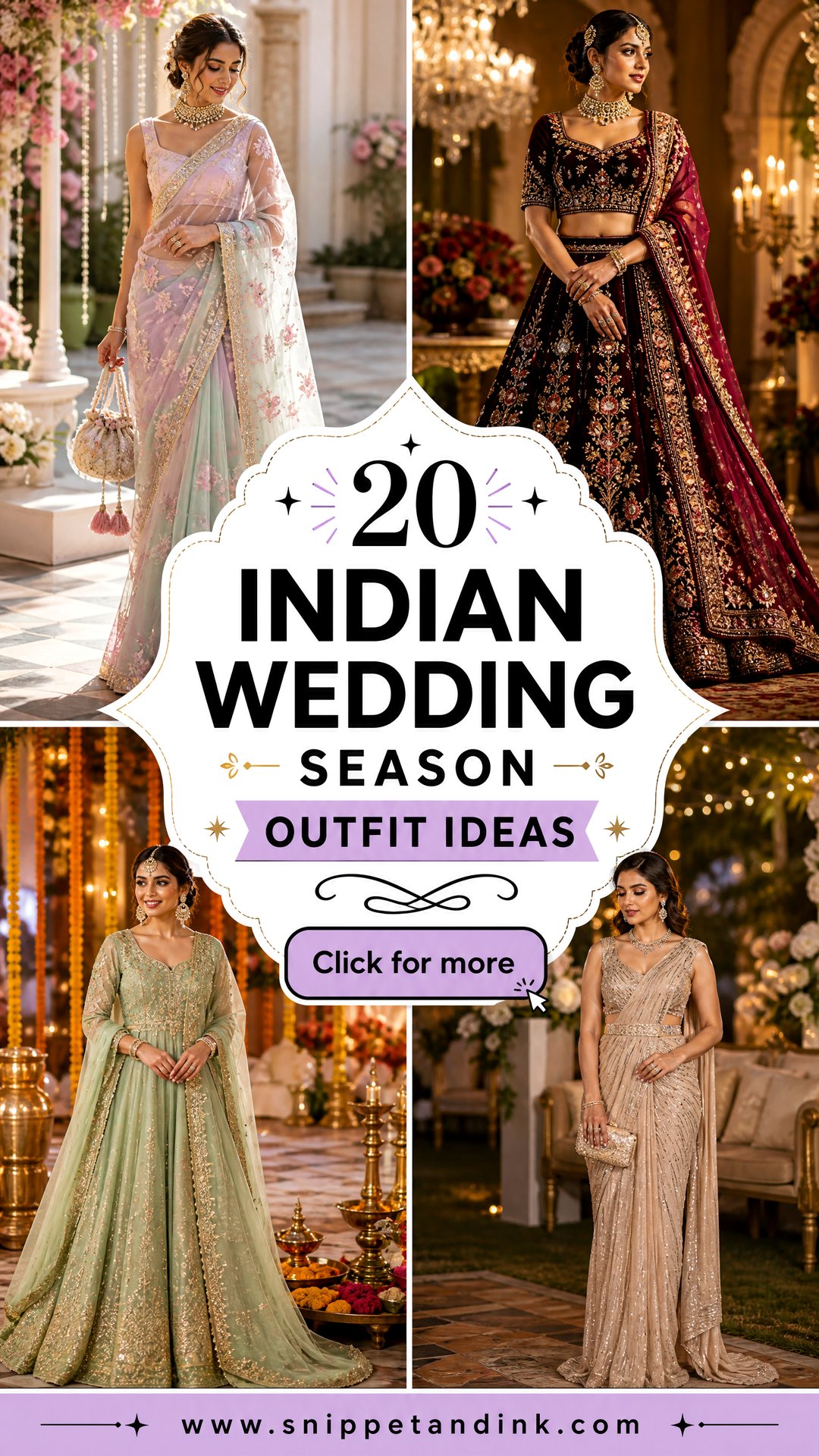
Wedding season in India can mean three invitations in a month, each with a haldi, a sangeet, a ceremony and a reception. That’s a lot of outfits, and the guests who enjoy it most are the ones who plan the whole run at once instead of panic-buying for each event. The looks below range from heirloom silk sarees to lehengas, suits and fusion pieces. I’ve noted which function each one suits, how it behaves once you’re wearing it, and what to ask your tailor. Day events want lighter fabric and floral work; silk, velvet and sequins come into their own after sunset. Fit matters more than any trend, so expect to alter almost everything.
Planning Outfits Across Several Weddings at Once
When a client tells me she has three weddings between November and February, the first thing we do is list every function in a single table. Most guests discover they need far fewer new pieces than they assumed, because the same garments can be restyled for different events.
Pieces that do double duty
- A plain silk saree can carry two very different blouses, one brocade for a ceremony and one sequinned for a reception.
- A lehenga skirt worn with a long jacket at one wedding and a crop blouse and dupatta at the next reads as two outfits in photos.
- Contrast dupattas change a suit completely, so buying two or three is cheaper than buying two suits.
- Neutral metallic juttis and one pair of block heels cover nearly every look on the list below.
Re-wearing is normal, but avoid repeating a whole outfit within the same family circle, as the same relatives will be at each event. Changing the dupatta, jewellery and hairstyle is usually enough to make it feel new.
Tailors are at their busiest in peak season. I’d book fittings for all your outfits together, well ahead of the first wedding, and ask for a final fitting a week before so there’s time to fix anything that went wrong.
1. Banarasi Silk Saree For Indian Wedding
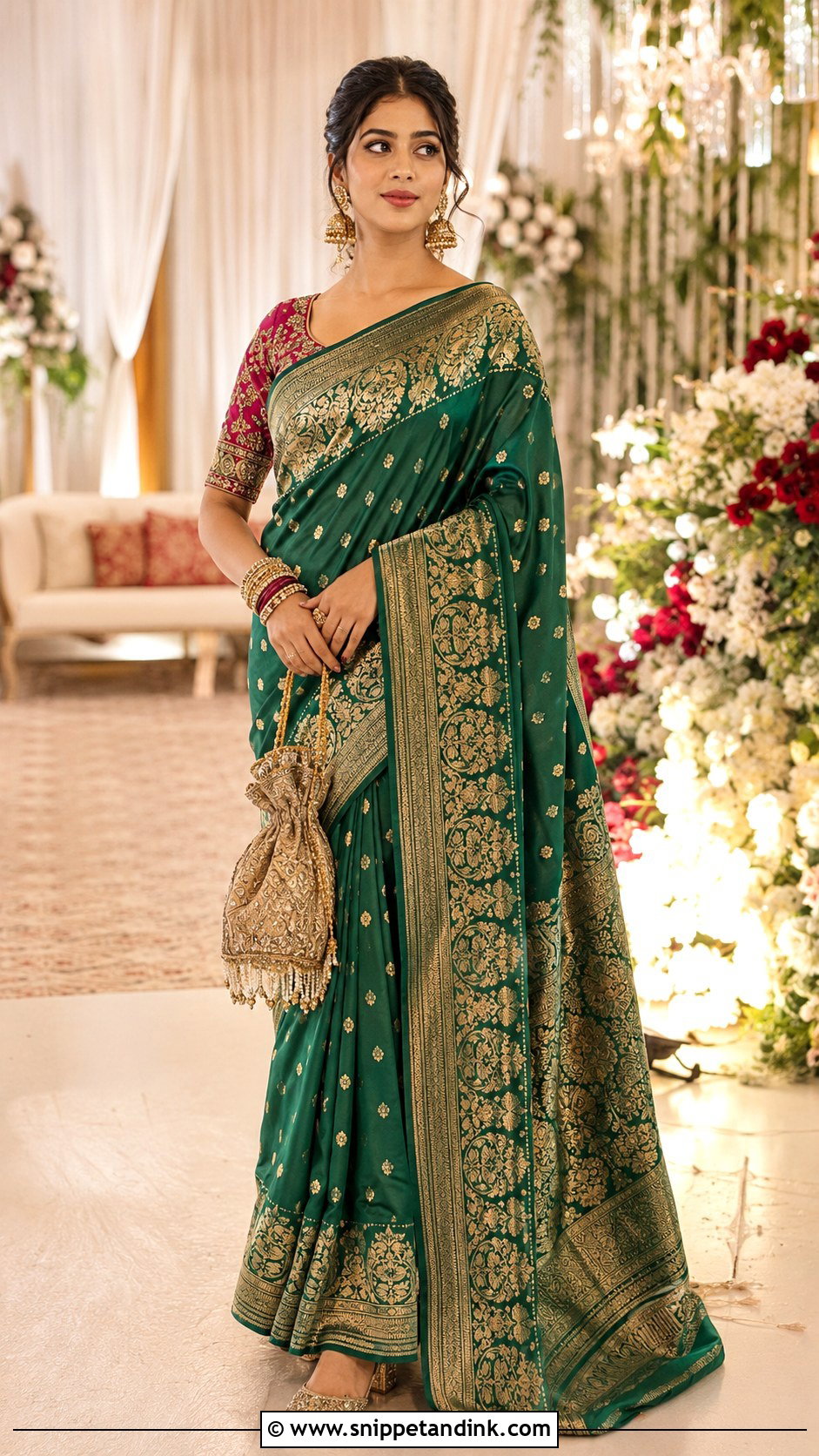
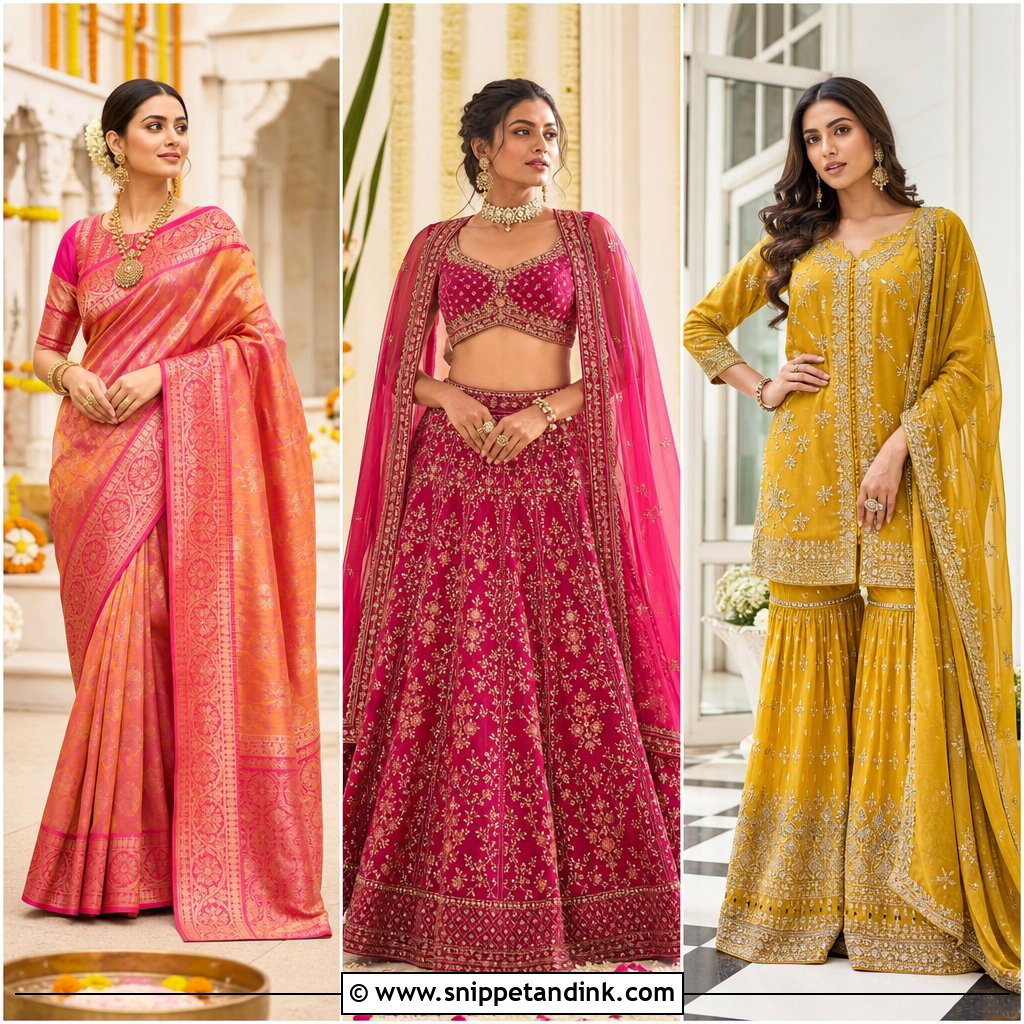
Banarasi silk is the classic choice for the main ceremony, and the woven zari does most of the decorating for you. Emerald, royal blue, plum and mustard read festive without being mistaken for bridal red. A brocade or raw silk blouse with elbow sleeves suits the weight of the fabric. When a client finds the drape heavy, I ask the person draping it for fewer, wider pleats and use a drawstring underskirt pulled firm; the saree then hangs from the waist instead of dragging on it. Gold jhumkas and a low floral bun finish it.
2. Pastel Organza Saree For Indian Wedding
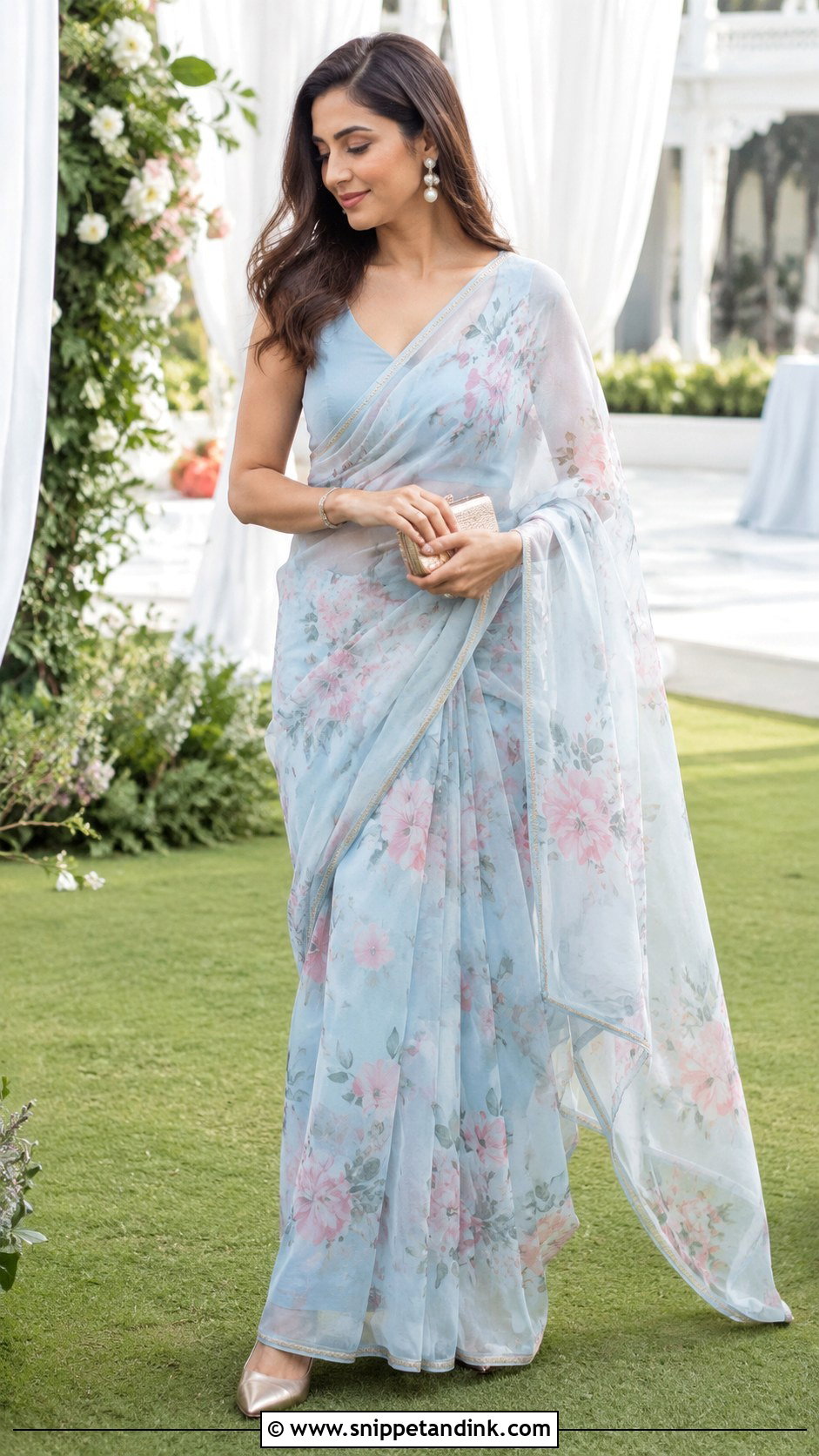
Organza looks best in daylight, where it glows rather than glitters. Powder blue, mint, peach and lilac with light floral embroidery suit an outdoor ceremony. The fabric is crisp, so it stands away from the body more than silk would; I pin it firmly at the shoulder and keep the pleats narrow to stop it looking bulky. Petite wearers do better with a narrow border, while a tall frame can carry a wide embroidered edge. Kitten heels or flats that cope with grass are a must at garden venues.
3. Pre-Draped Saree For Indian Wedding Sangeet
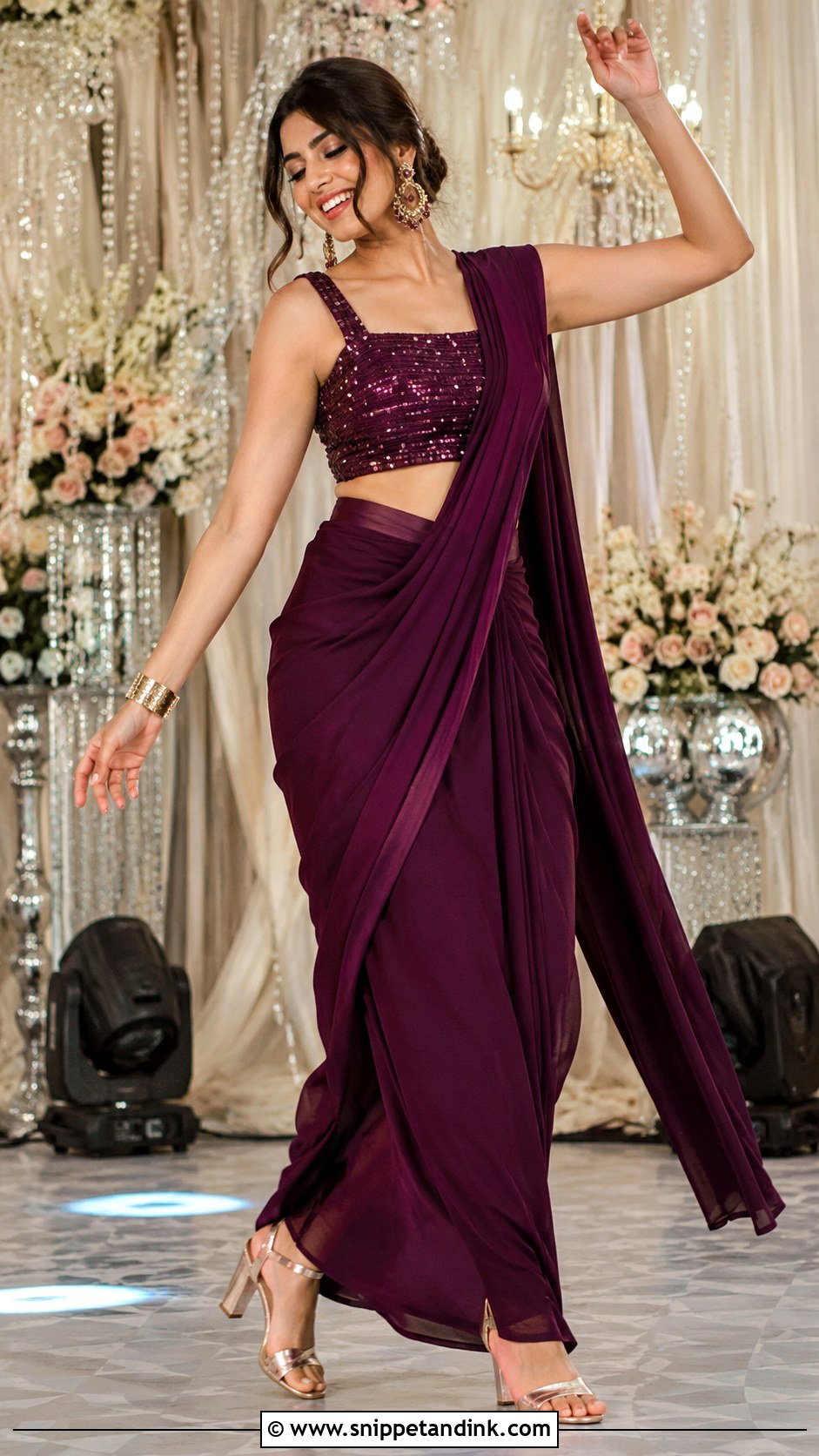
Pre-draped sarees exist for the sangeet. The pallu is attached and the pleats are stitched, so nothing loosens mid-dance. Georgette or crepe in a jewel tone with light sequin work holds its shape under stage lighting. At the fitting, sit down and lift both arms above your head; if the waist seam rides up or the blouse pulls, have it fixed then. A concealed side zip makes dressing quick. Embellished flats are my suggestion for anyone planning to dance all night.
4. Kanjivaram Silk Saree For Indian Wedding
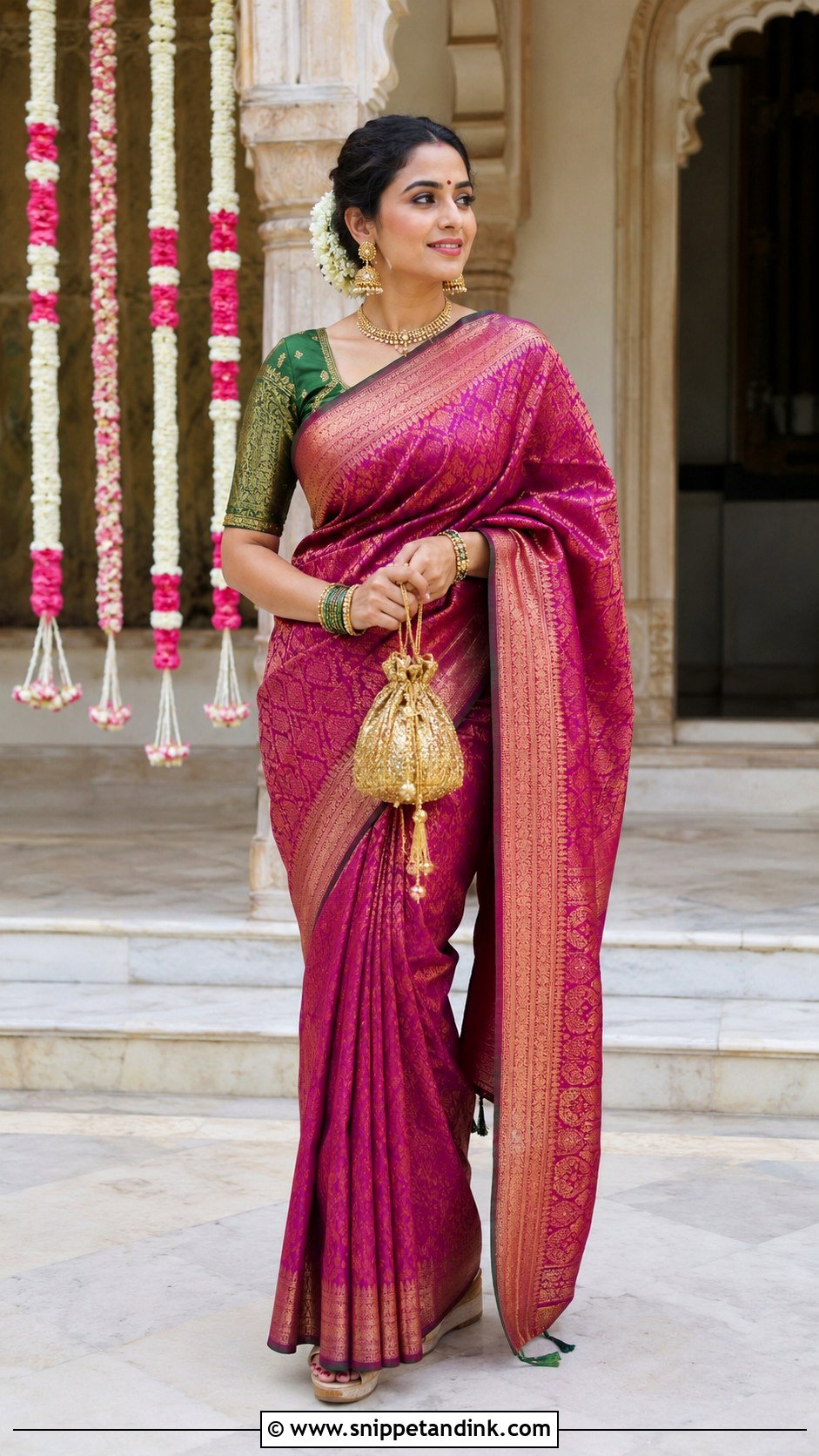
Kanjivaram is woven with a heavier silk than most sarees, which is why the pleats stay so crisp. Deep green, magenta, turquoise and maroon set off the contrasting border, and a blouse that repeats a colour from the pallu ties it together. If you find the full weight tiring, a silk blend has a softer fall. I tuck pleats firmly at the waist and add a pin at knee height so they don’t fan out when you walk. Temple jewellery and a centre-parted braid or floral bun keep it traditional.
5. Embroidered Lehenga For Indian Wedding Reception
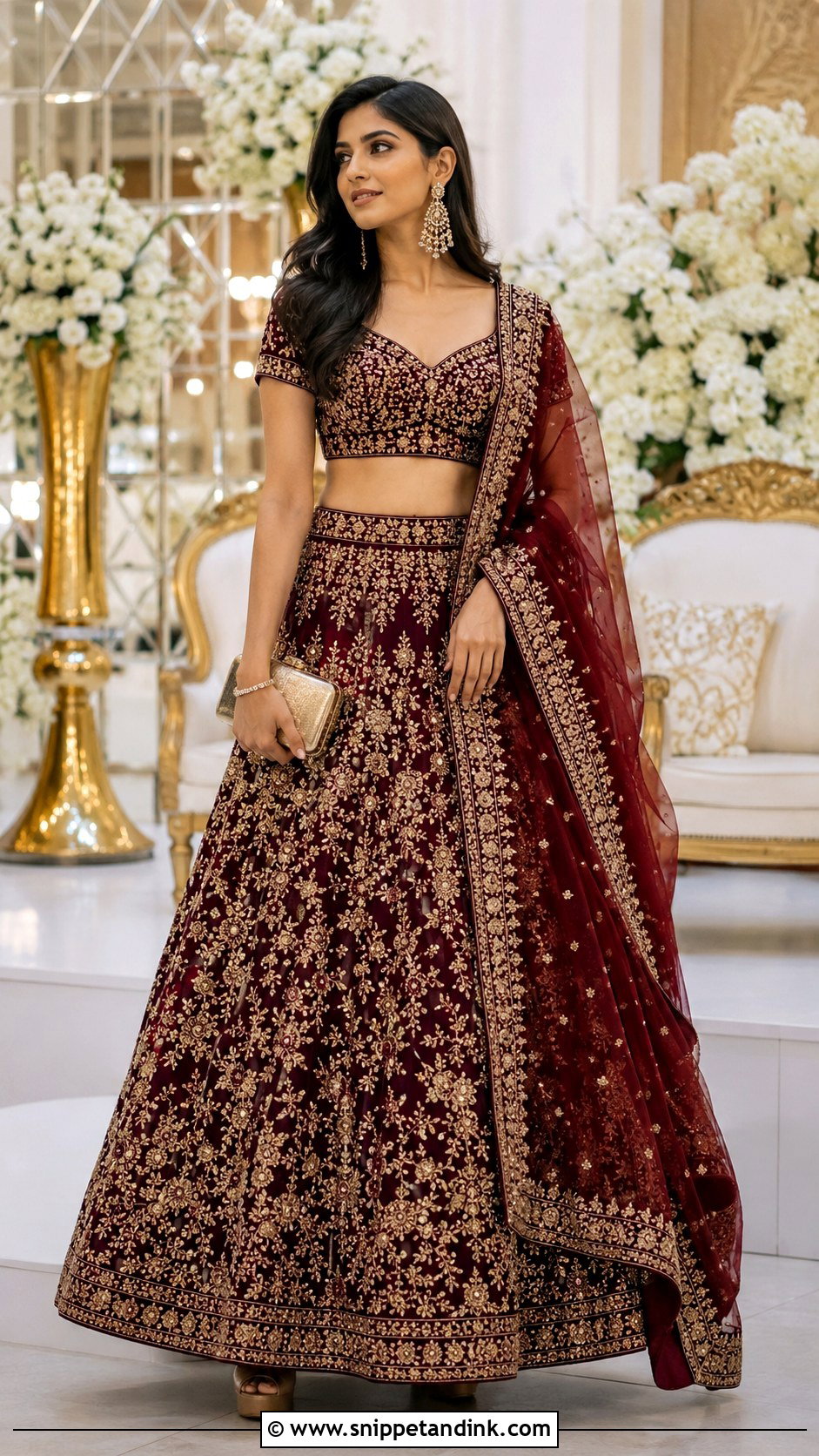
For an evening reception, an embroidered lehenga gives you formality without needing a gown. Navy, wine and smoky mauve suit evening light. Drape the dupatta over one shoulder to keep your hands free and create a long line. If the skirt is heavily worked, skip the necklace. My fitting priorities are a waistband that doesn’t dig in when you sit to eat and a hem that clears your shoes by a centimetre, because a lehenga that’s even slightly long looks sloppy and gets trodden on.
6. Floral Lehenga For Indian Wedding Mehendi
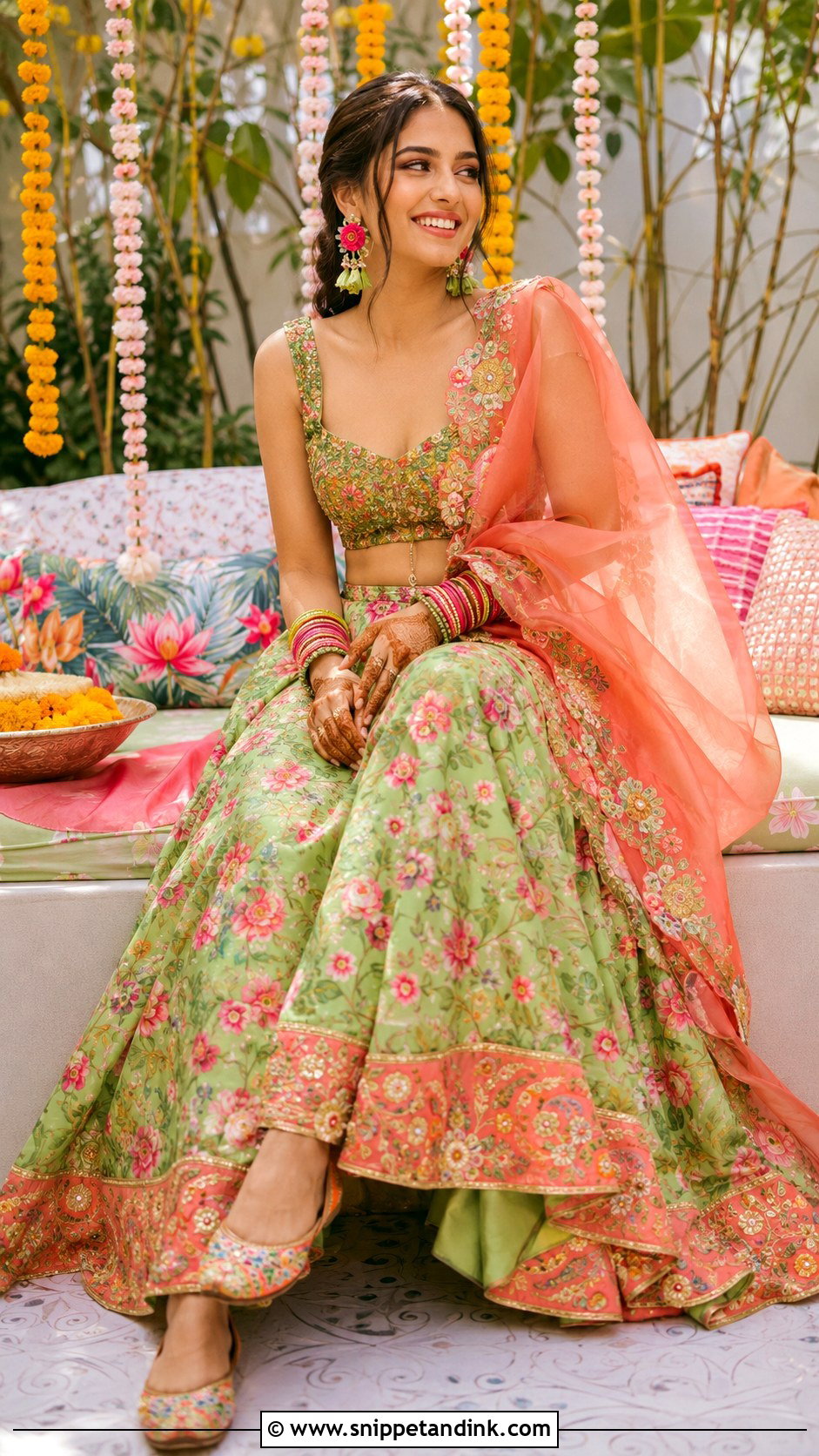
A floral lehenga brings colour to a mehendi function without feeling over-formal. Green, coral and turquoise with print or light embroidery are classic for the occasion. Keep the skirt’s volume moderate, since you may be sitting still for an hour while henna is applied. Pin the dupatta at one shoulder so both hands stay free, and pull your hair into a side braid so it stays clear of wet paste. If you’d rather not wear a crop blouse, choose a longer kurti that meets the waistband.
7. Velvet Lehenga For Winter Indian Wedding
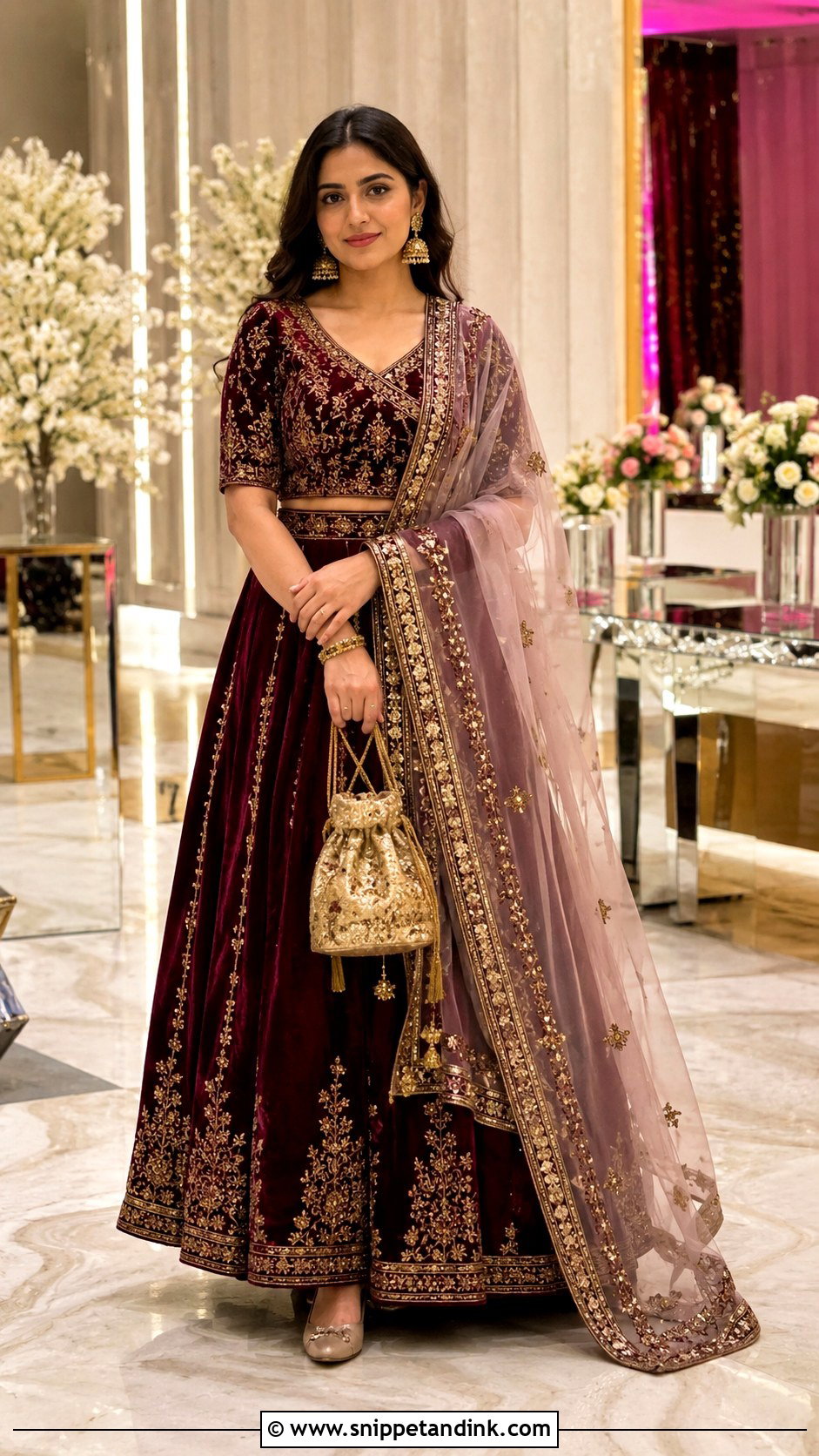
Velvet is a winter fabric, and in a cold outdoor mandap it’s a blessing. Burgundy, midnight blue and emerald look rich with antique-gold zari placed at the hem and border rather than covering the whole skirt. A matching velvet blouse with elbow sleeves adds warmth. Choose a light net dupatta so the whole outfit doesn’t feel solid. The one thing I check is the lining: a breathable cotton lining makes the difference between comfortable and overheated once the dancing starts indoors.
8. Mirror Work Lehenga For Indian Wedding Sangeet
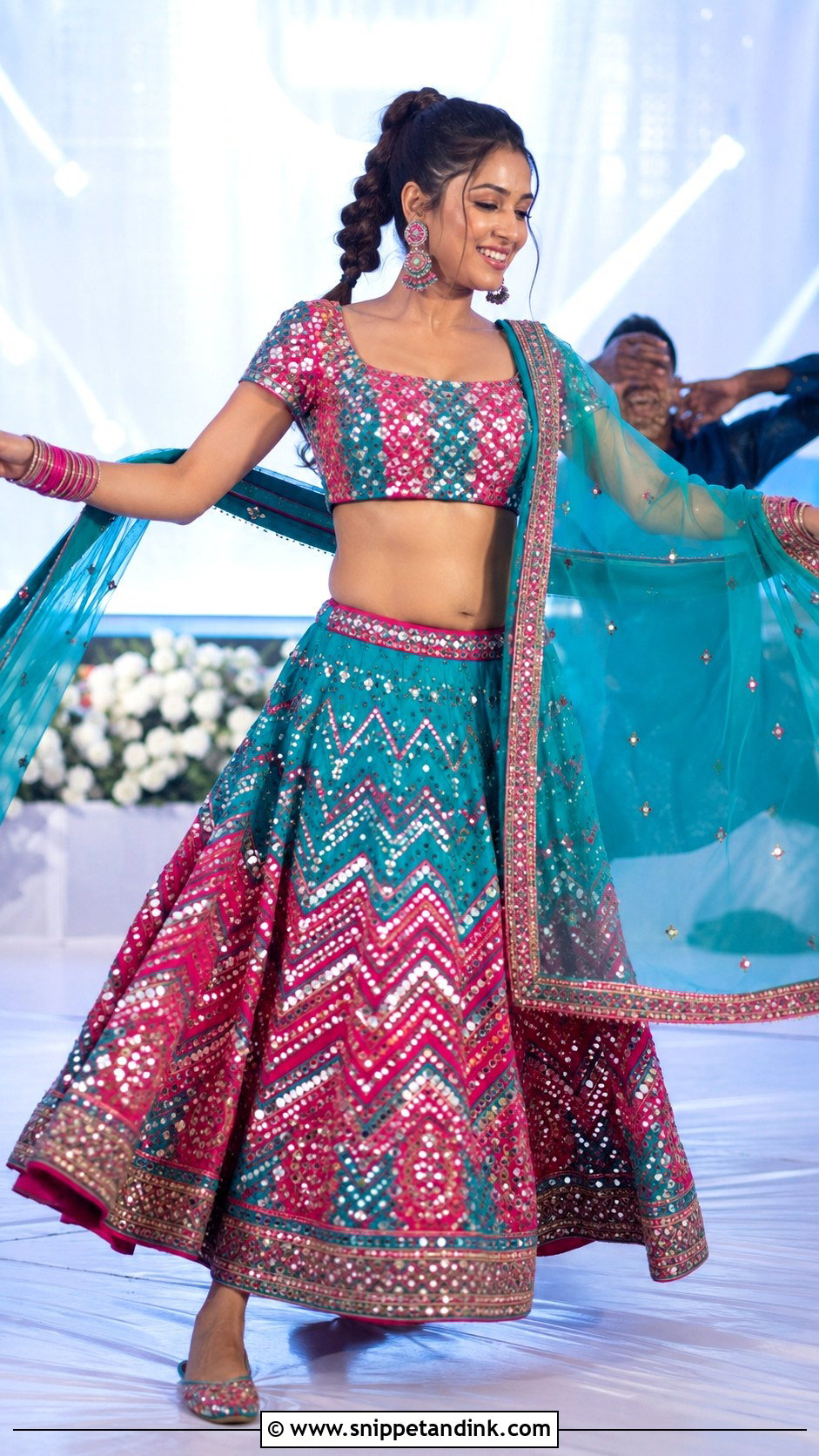
A mirror work lehenga catches every light on a sangeet stage. Teal, fuchsia and cobalt suit the energy. Keep the blouse simpler so the skirt’s reflections don’t compete, and choose a dupatta with only a narrow mirror border. Avoid chunky bracelets, which snag on the embroidery while dancing. Insist on soft lining under any mirror work; the backs of the stitches are rough and rub the skin raw over a long night.
9. Anarkali Suit For Indian Wedding Ceremony
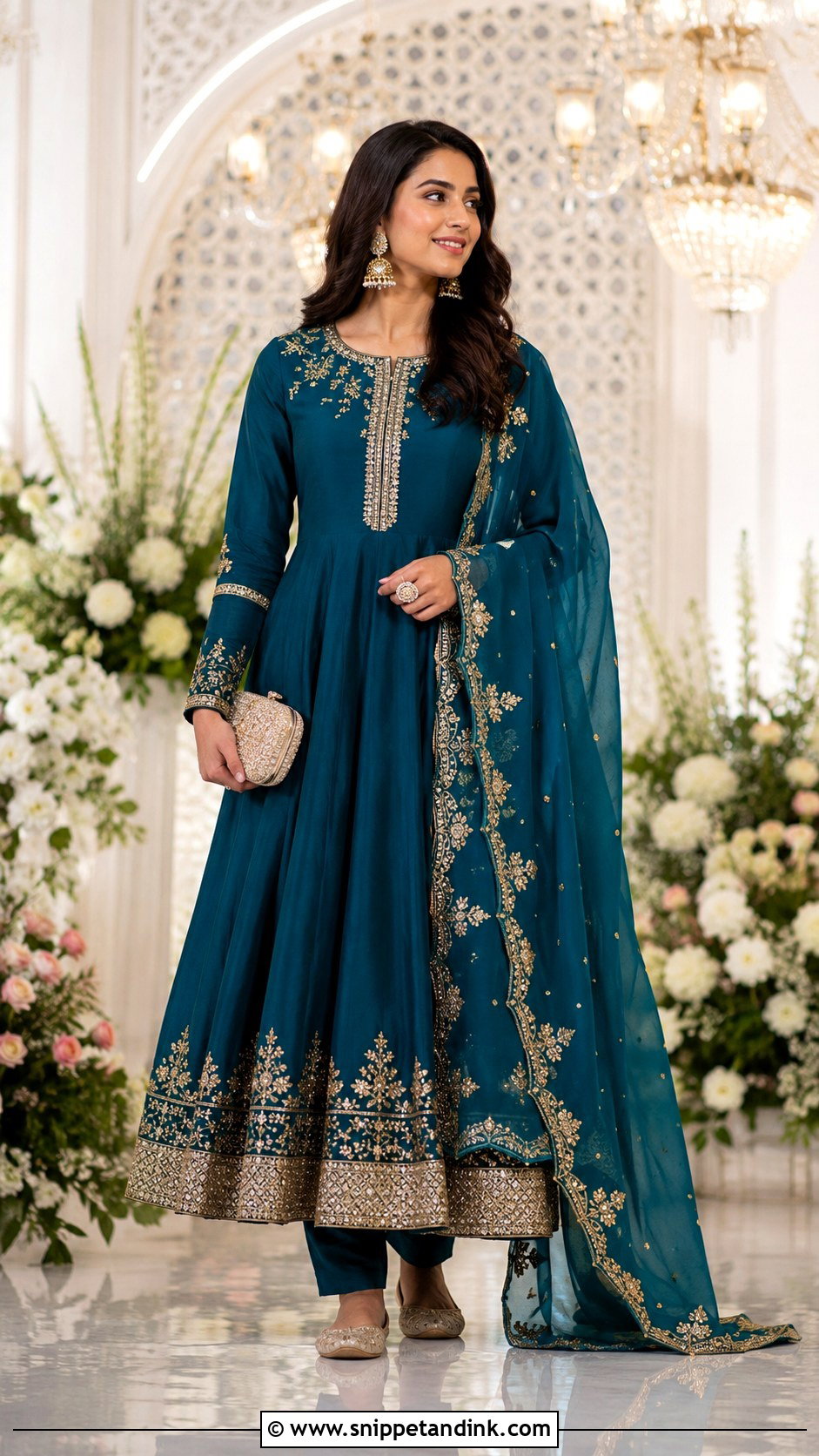
An Anarkali gives you the swing of a full skirt in one top piece, and it’s one of the easiest outfits to sit, stand and greet people in. Silk, georgette and chanderi all work, with slim pants and a light dupatta. Jewel tones suit evening ceremonies; pastels suit daytime. The flare should start at your natural waist, which flatters most figures. Have the tailor set the length while you’re wearing the shoes you’ll actually wear, so the hem doesn’t drag.
10. Sharara Suit For Indian Wedding Mehendi
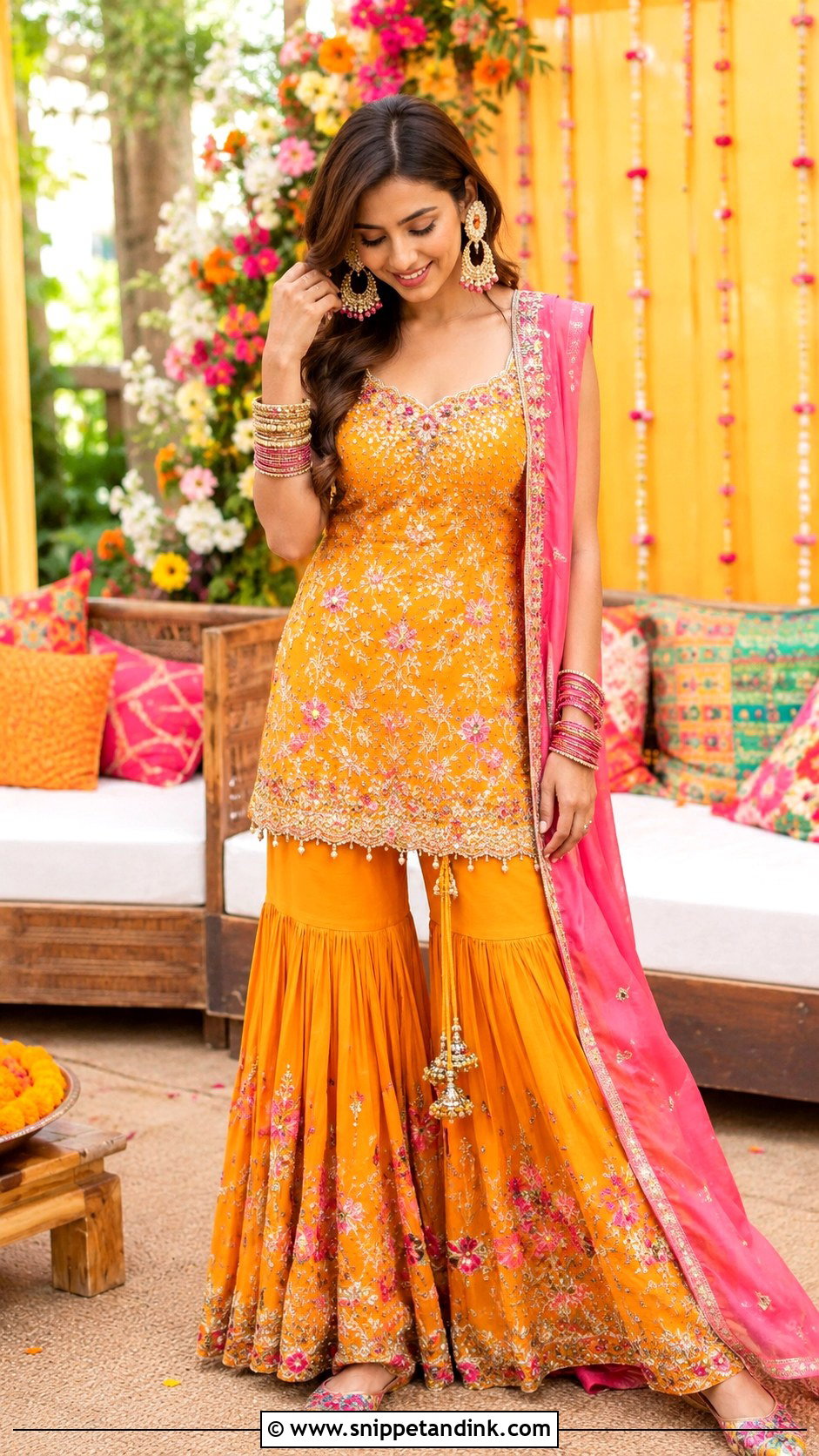
Sharara suits are made for a lively mehendi. Lime, marigold, hot pink and aqua with gota work feel celebratory without weight. Because the pants carry so much volume, the kurti must fit neatly through the shoulders and chest or the whole outfit looks shapeless. Pin the dupatta behind one shoulder. The hem should skim the ground but leave your shoe tips visible, which keeps you from tripping on the flare.
11. Gharara Suit For Indian Wedding Celebration
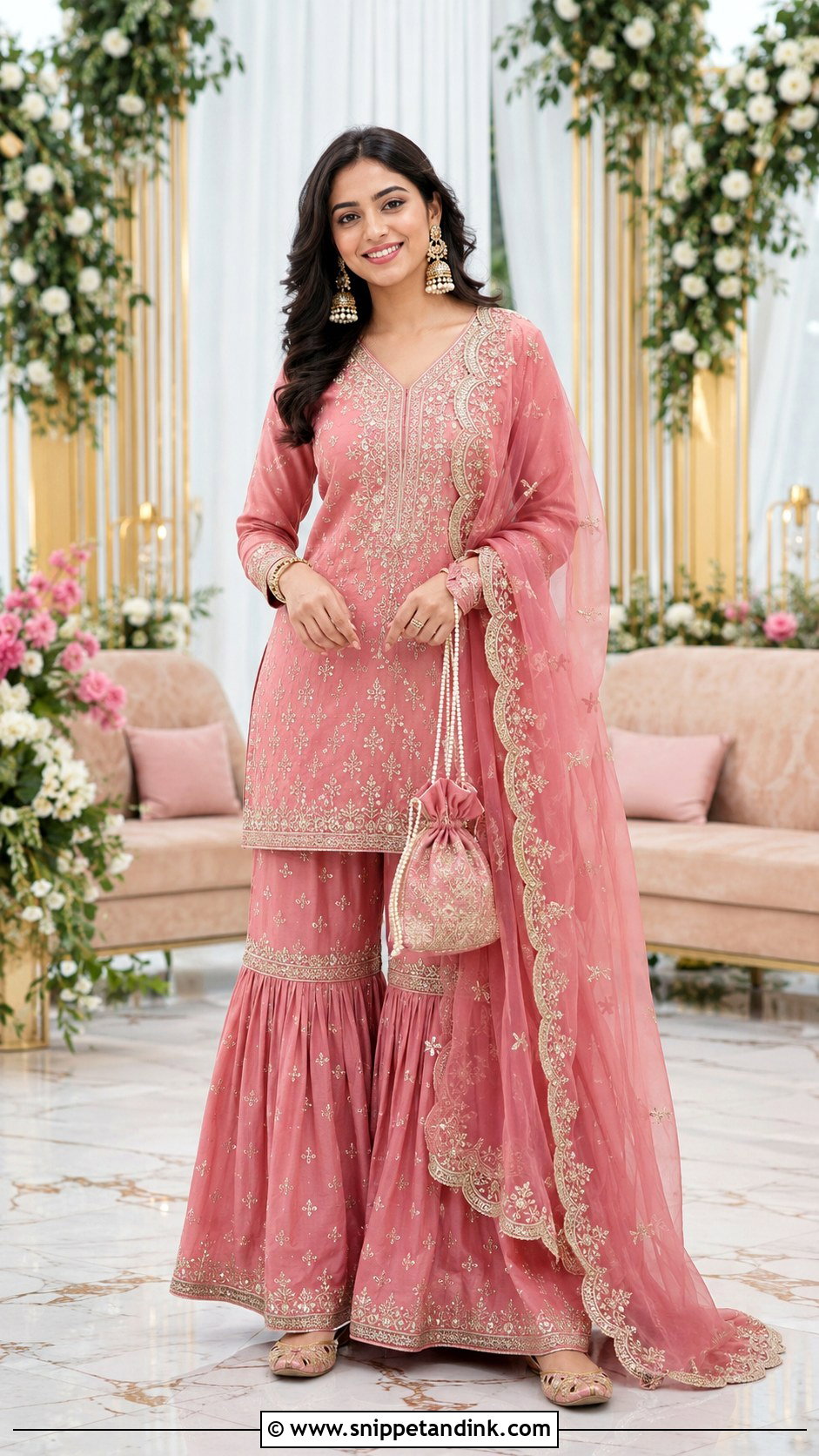
Ghararas are fitted down to the knee, where a joined band releases the flare. That knee seam is the signature, so pair them with a mid-thigh kurti that leaves it visible. Rose pink, sage and deep teal with a contrasting organza dupatta suit a ceremony or family dinner. At alterations, sit down: if the fitted upper part pulls tight across the thighs, ask for more ease, because the flare only opens properly when the top section isn’t straining.
12. Palazzo Suit For Indian Wedding Guest
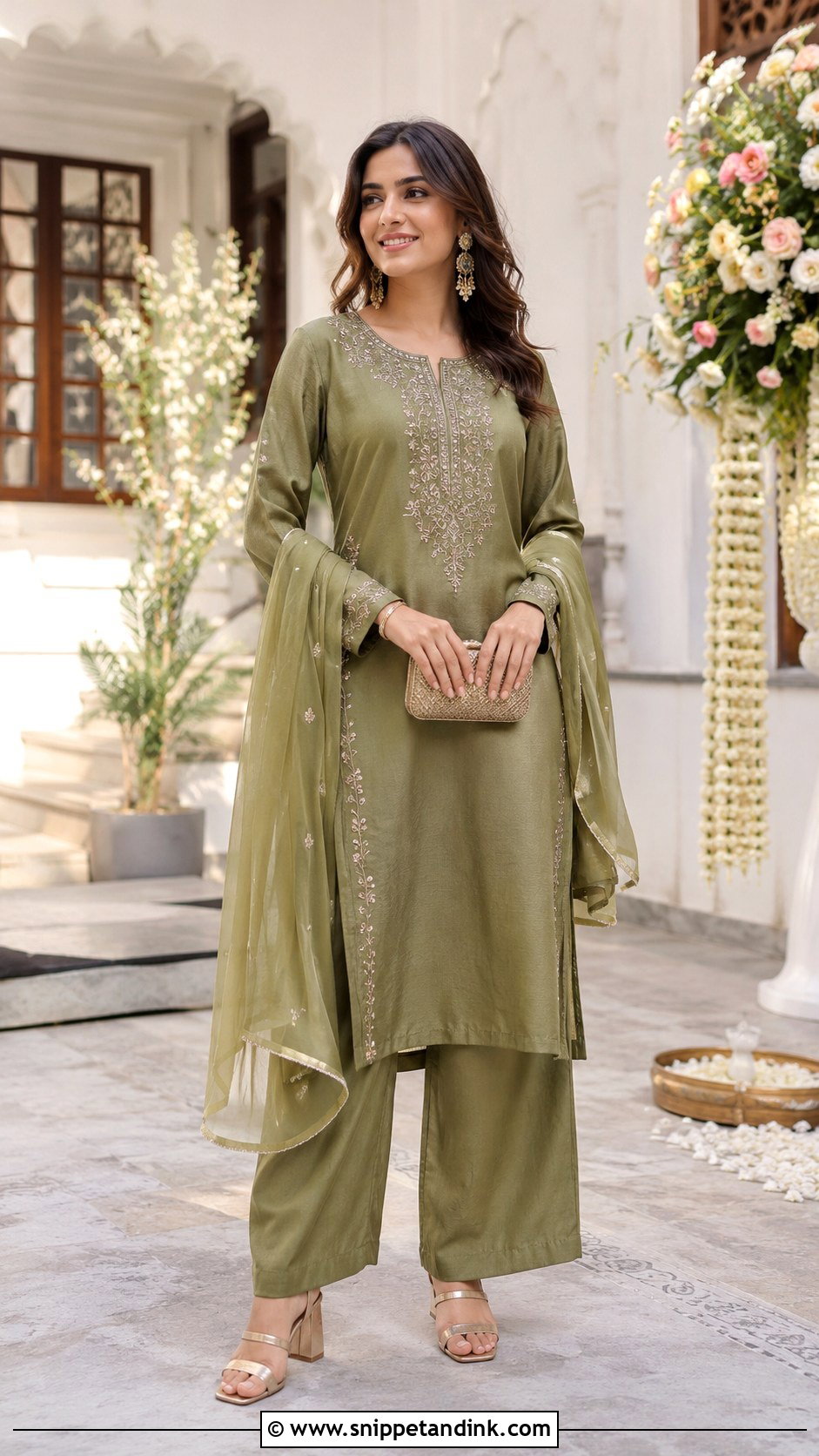
For a welcome lunch or smaller family function, a palazzo suit is a relaxed but polished wedding guest outfit. Chanderi, crepe and silk-blend all breathe well. Coral, lavender and olive keep it fresh. Side slits on the kurta let the trousers move and stop the outfit looking boxy. The palazzos should fall straight from the waist and stop just short of the floor. A long necklace adds shape if the neckline is plain.
13. Chikankari Kurta Set For Indian Wedding Haldi
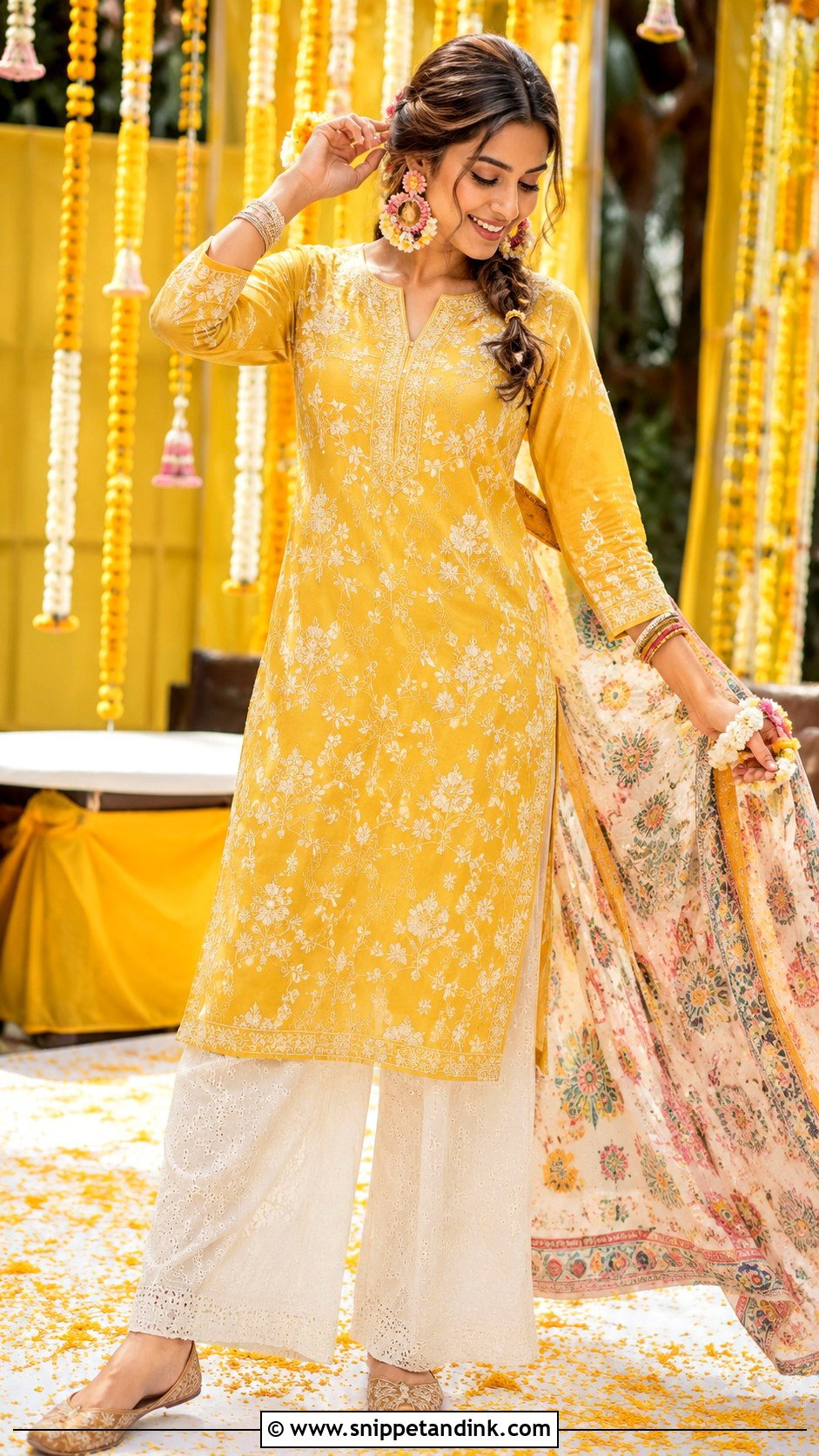
A haldi ceremony is the one function where I tell guests to dress for mess. Turmeric paste stains cotton and silk alike, and you will likely be asked to join in applying it. A chikankari kurta set in yellow, ivory or mint with a cotton lining is cool, traditional and inexpensive enough not to worry about. Straight pants or palazzos, a printed dupatta and flat juttis suit the seating, water and crowd. Leave your best jewellery at home.
14. Jacket Lehenga For Indian Wedding Reception
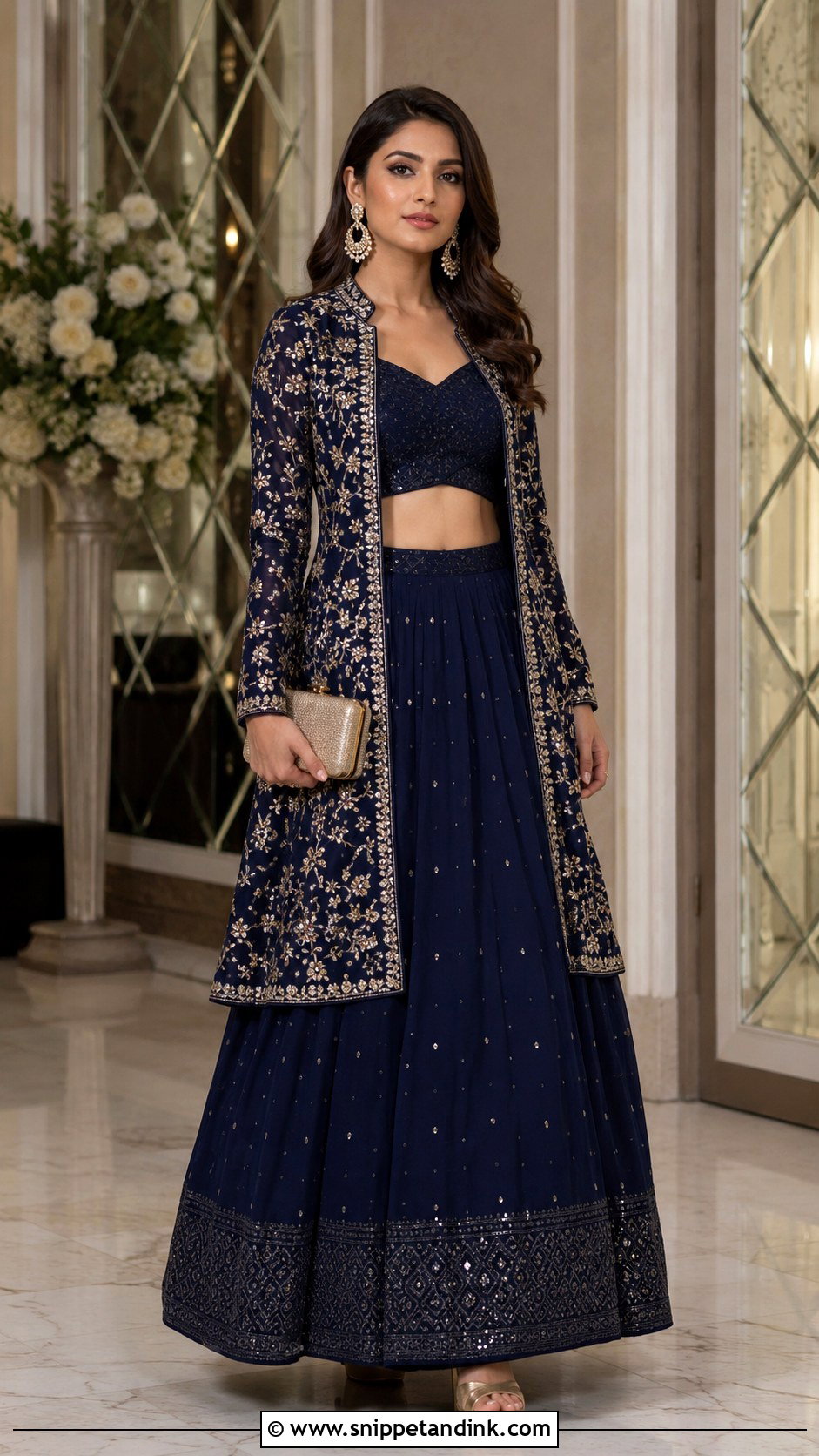
Jacket lehengas feel grown-up and are wonderfully practical for a reception: the jacket replaces the dupatta, so there’s nothing to keep catching or rearranging. An open front creates a long vertical line, while a closed jacket gives more structure and coverage. Deep blue, champagne and emerald pair well with metallic threadwork. Check the armholes; jackets with heavy embroidery at the sleeve can restrict lifting your arms more than you’d expect.
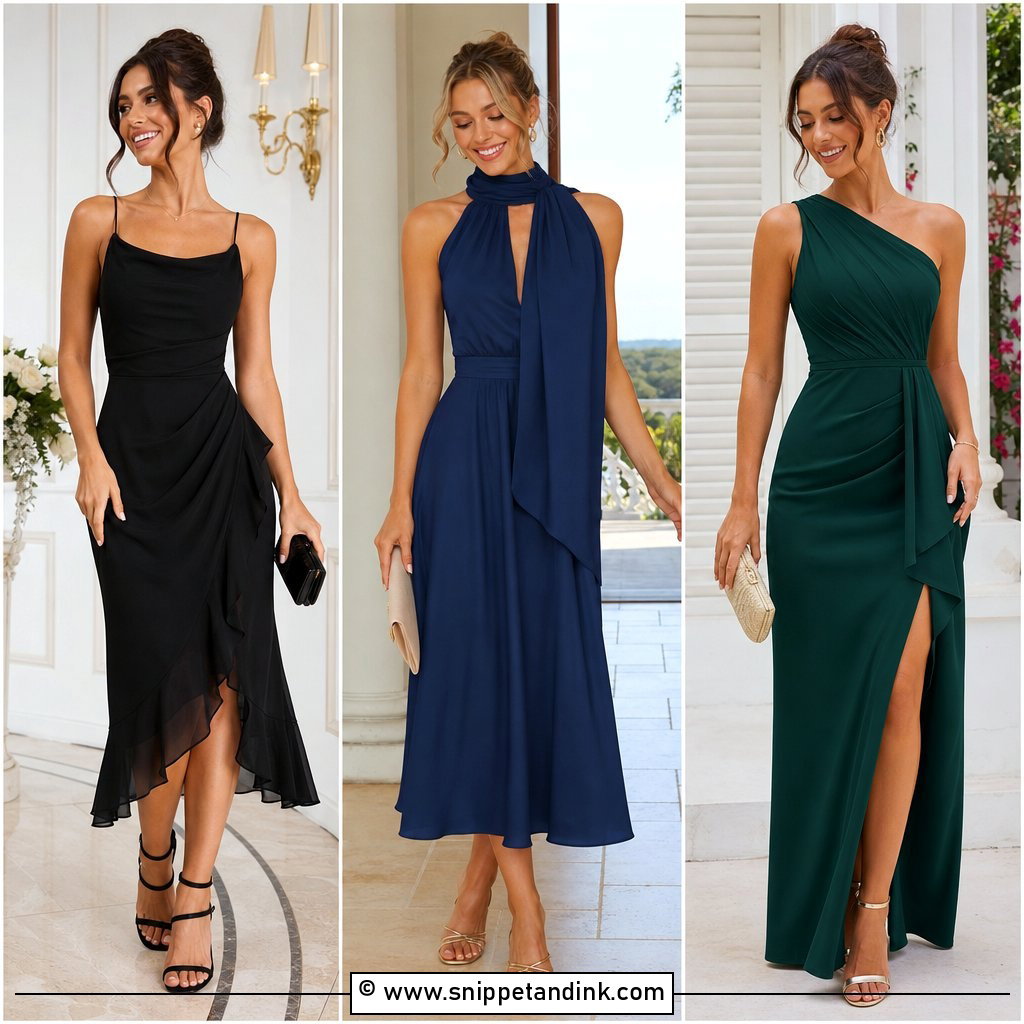
15. Cape Set For Indian Wedding Cocktail Event
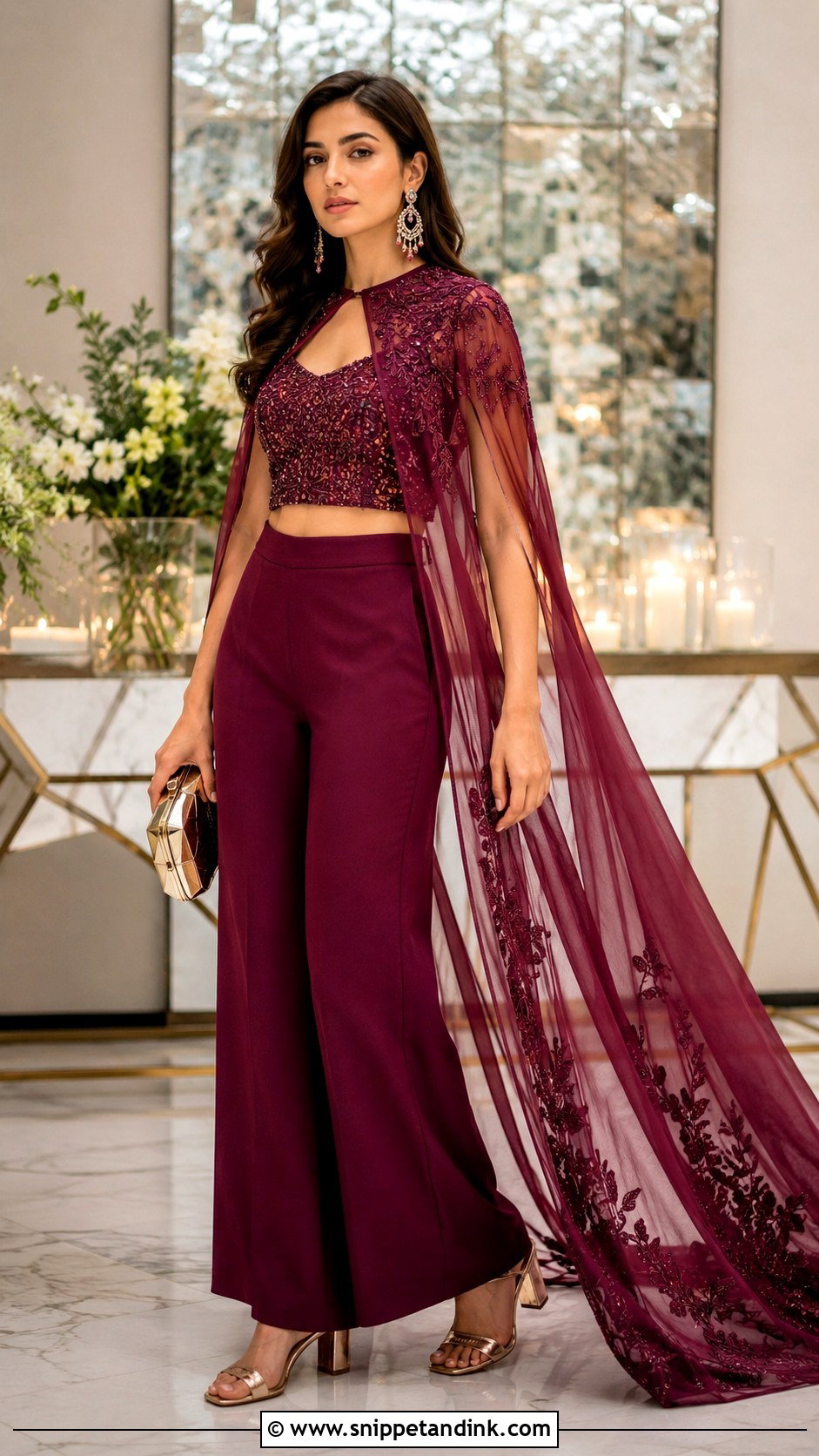
A cape set suits a cocktail evening or a modern sangeet better than a traditional ceremony. Pair an embellished blouse with tailored palazzos or a slim skirt, then let a sheer embroidered cape add the movement. Midnight blue, berry and silver-grey look sharp at night. Proportion matters most: on a petite frame I’d go for a waist-length cape, while longer ones suit taller wearers. Any cape should finish clear of the floor so you can’t step on it.
16. Dhoti Pant Set For Indian Wedding Mehendi
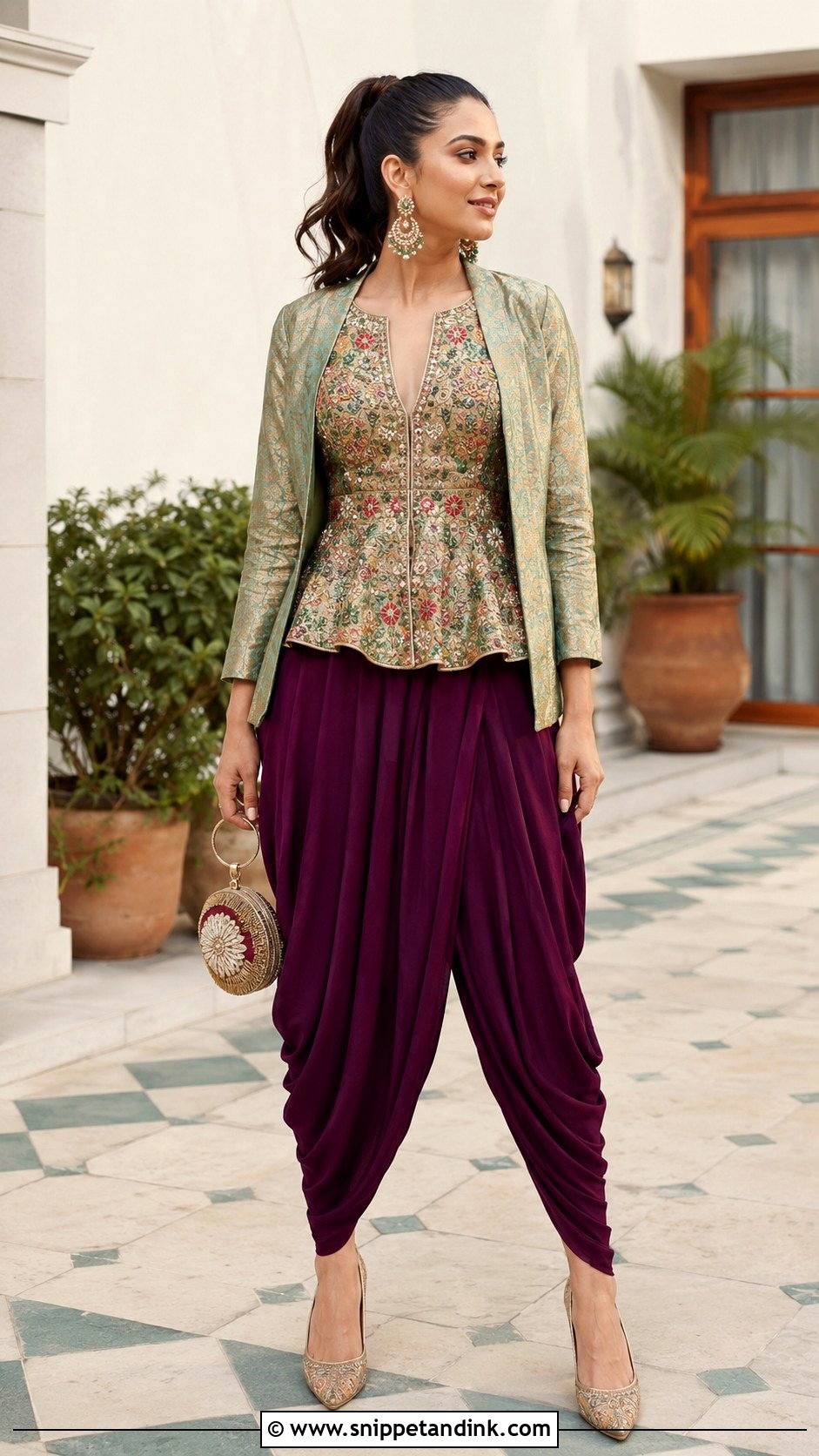
Dhoti pants are comfortable for a mehendi or welcome party, with an edge that suits guests who don’t like skirts. An embroidered peplum or fitted short kurti keeps the top structured against the draped folds. Crepe or satin works for evening; a bright print for daytime. The tailoring detail most people miss is the crotch drape: too much fabric and walking becomes awkward, so have it adjusted. A high ponytail suits the clean shape.
17. Indo-Western Jumpsuit For Indian Wedding Sangeet
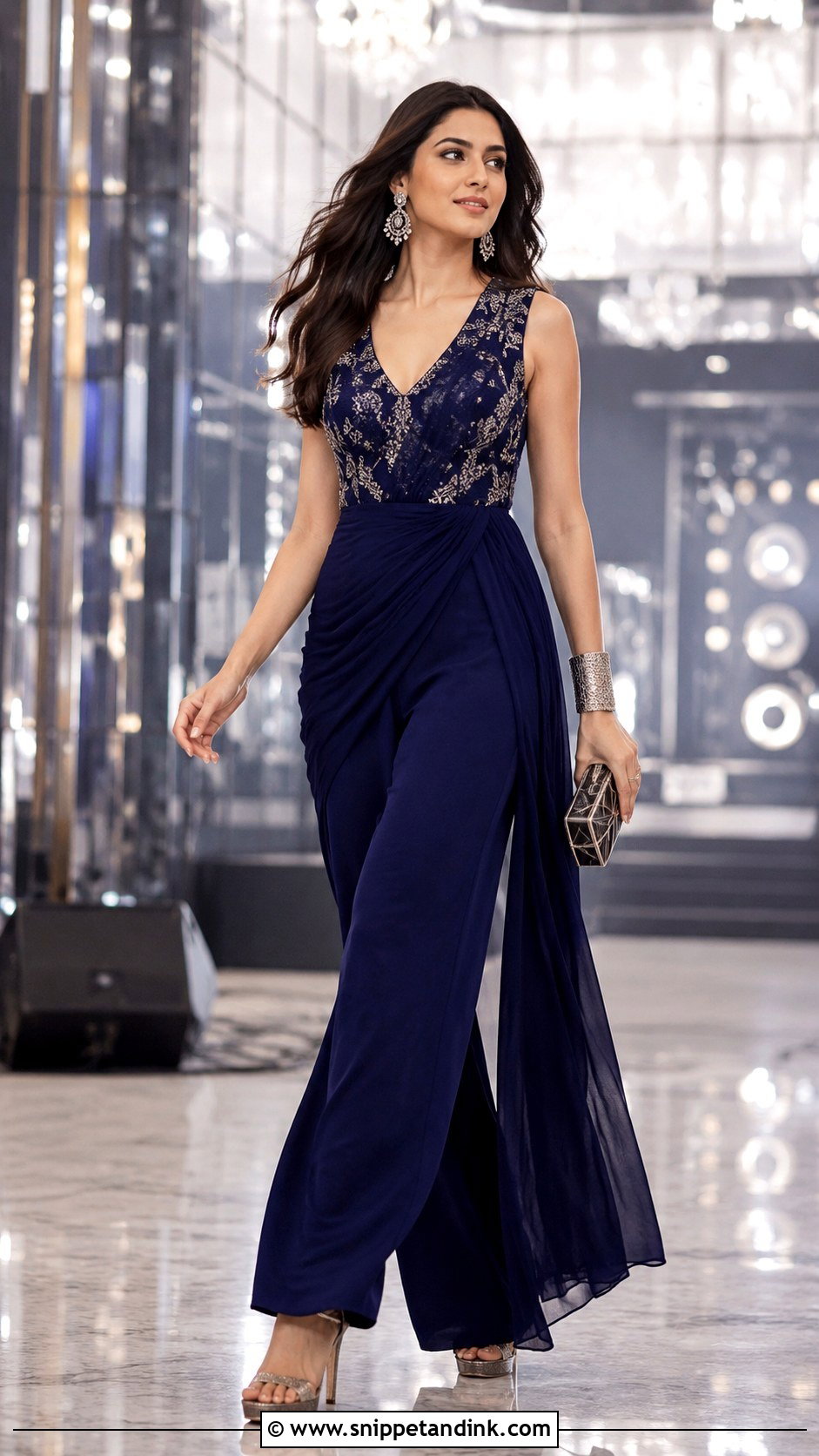
An Indo-Western jumpsuit is one piece, nothing to drape, and built for hours of dancing. A wide leg with an embroidered bodice or an attached sari-style panel keeps the Indian connection clear. Sapphire, magenta and bronze look strong at night. Before buying, be practical: try the zip by yourself and consider restroom visits, because a back fastening you can’t reach alone becomes a real problem. The bodice should stay put when you raise your arms.
18. Saree Gown For Indian Wedding Reception
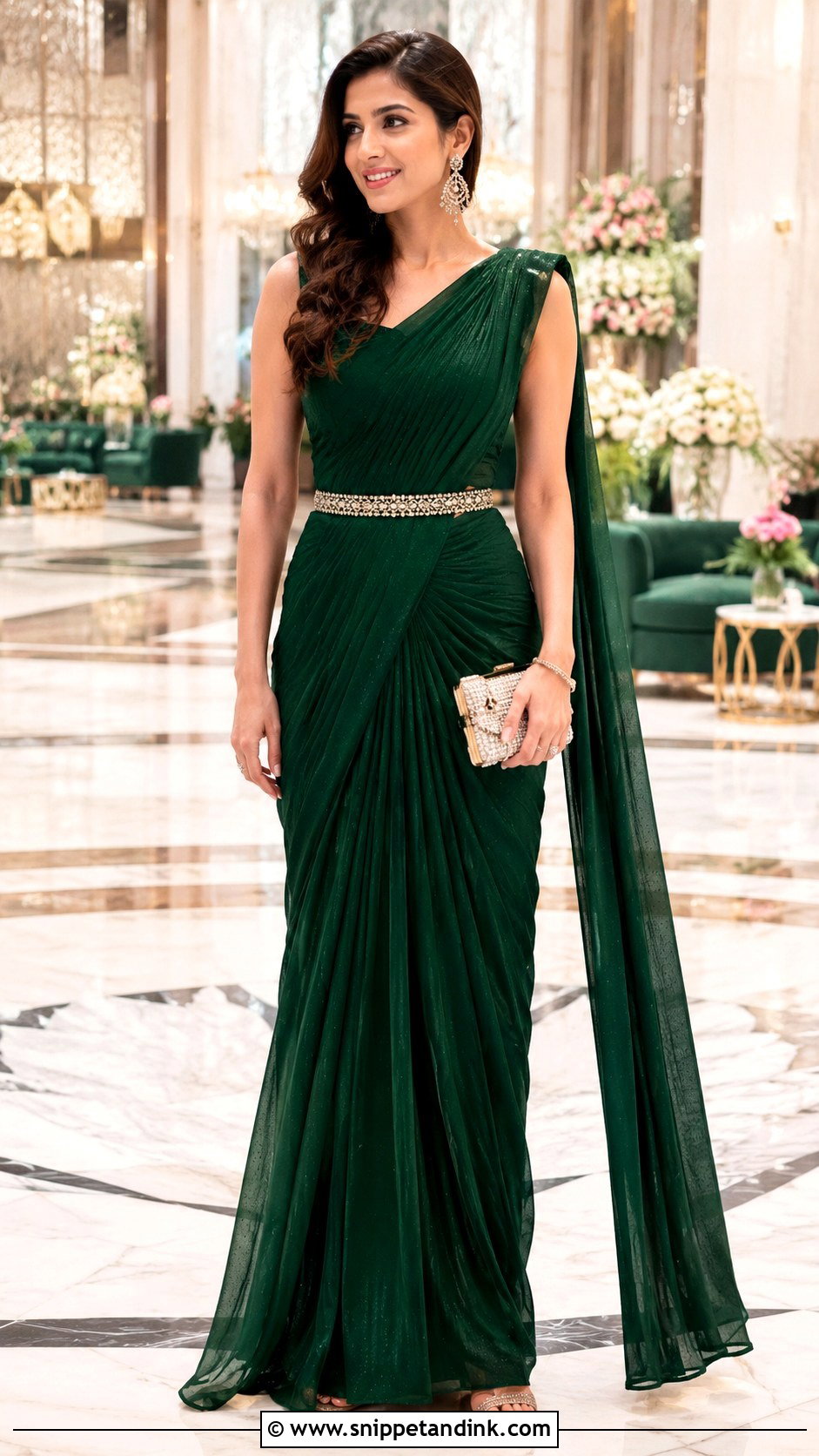
A saree gown has the look of a drape stitched into a structured dress, so nothing can come undone. A defined waist, pleated skirt and attached pallu panel keep it recognisably Indian. Plum, navy and muted gold suit a reception. Alterations matter more than usual here, because the draped panels must fall smoothly; if they twist after fitting, the effect is lost. Look for some stretch in the lining and a secure side closure.
19. Brocade Co-Ord Set For Indian Wedding Function
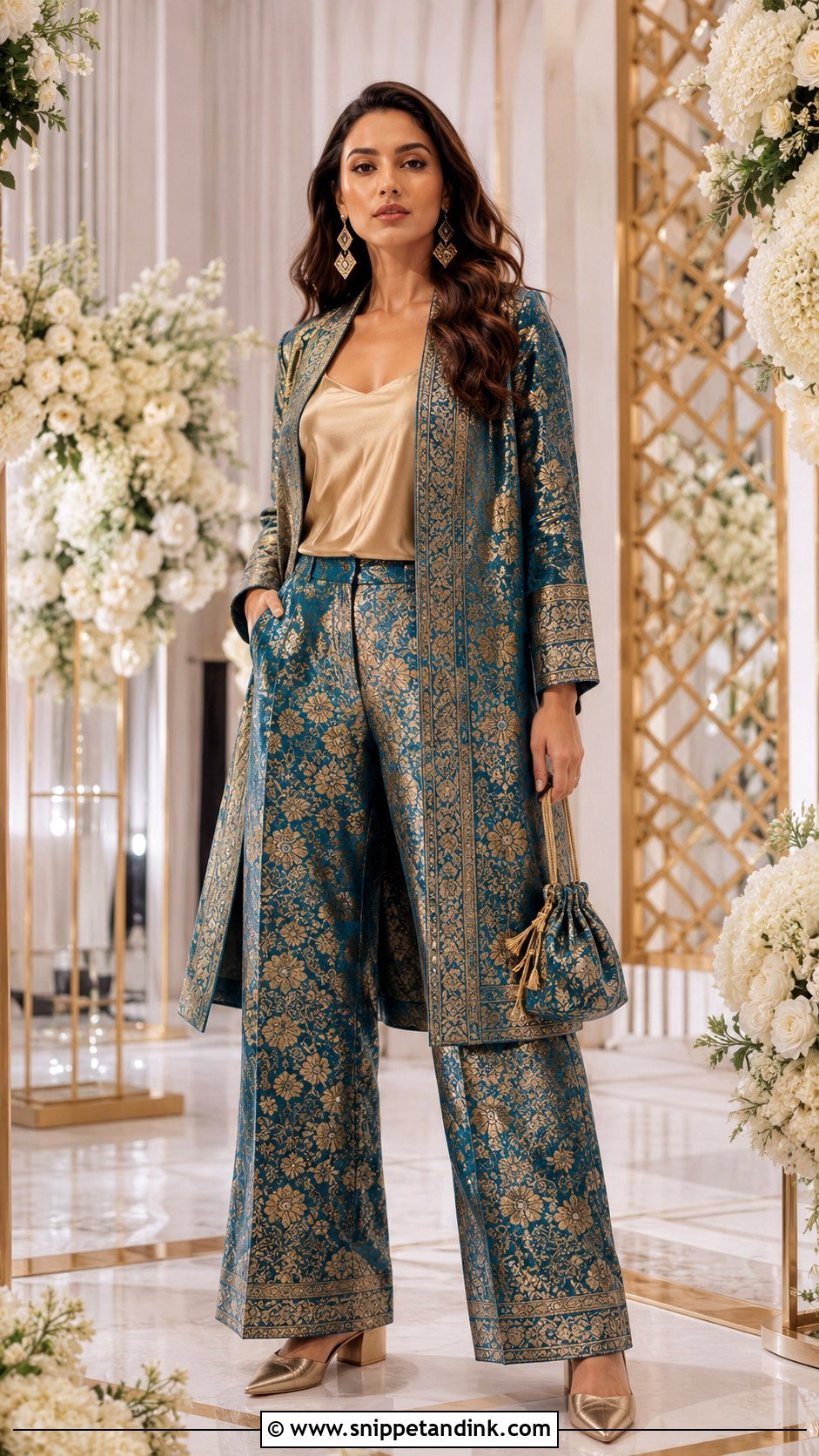
Brocade co-ords suit an engagement or family dinner where a lehenga would feel like too much. Wide-leg trousers with a matching peplum or cropped jacket in gold, teal or rust have built-in texture and sheen. A plain silk camisole under an open jacket keeps it comfortable. When I check a brocade set, I look at the seams: the woven motifs should line up at the closures. A crisp shoulder and exact trouser length make the difference between tailored and casual.
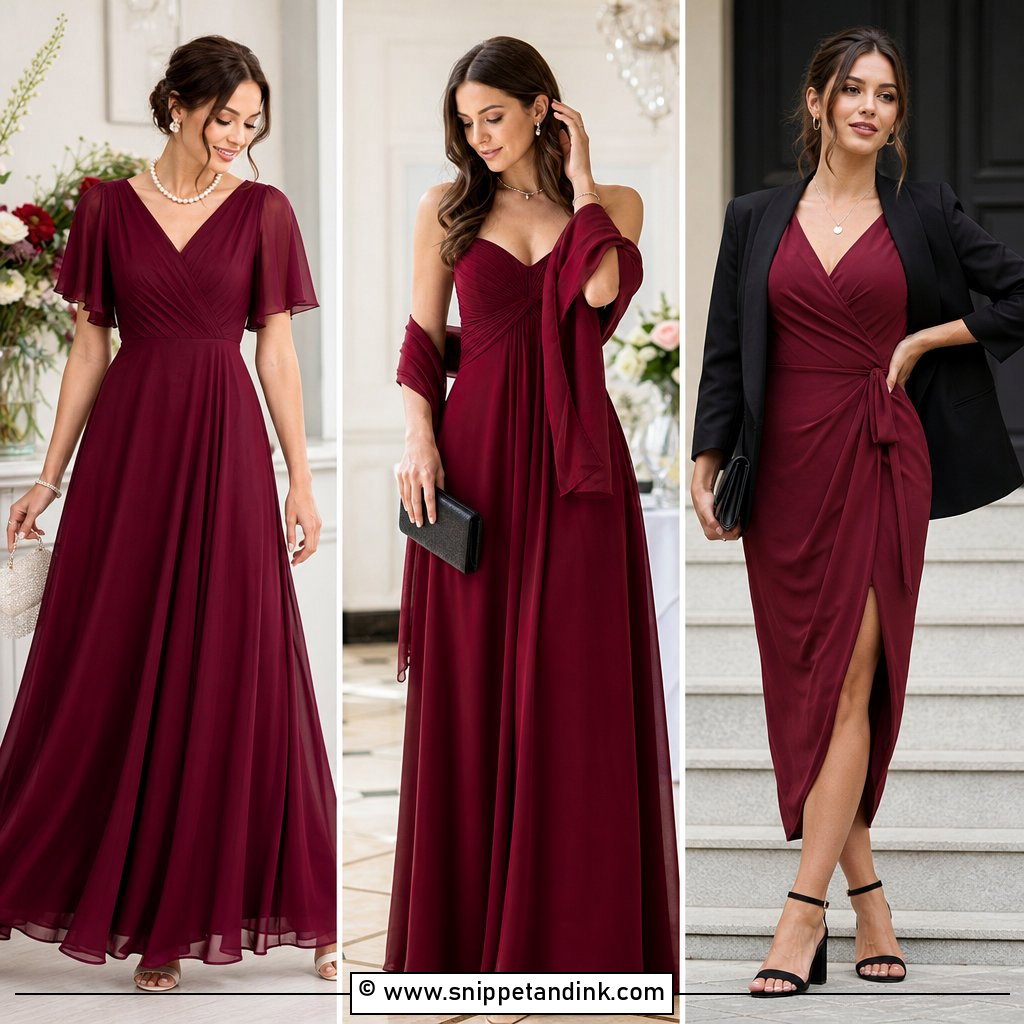
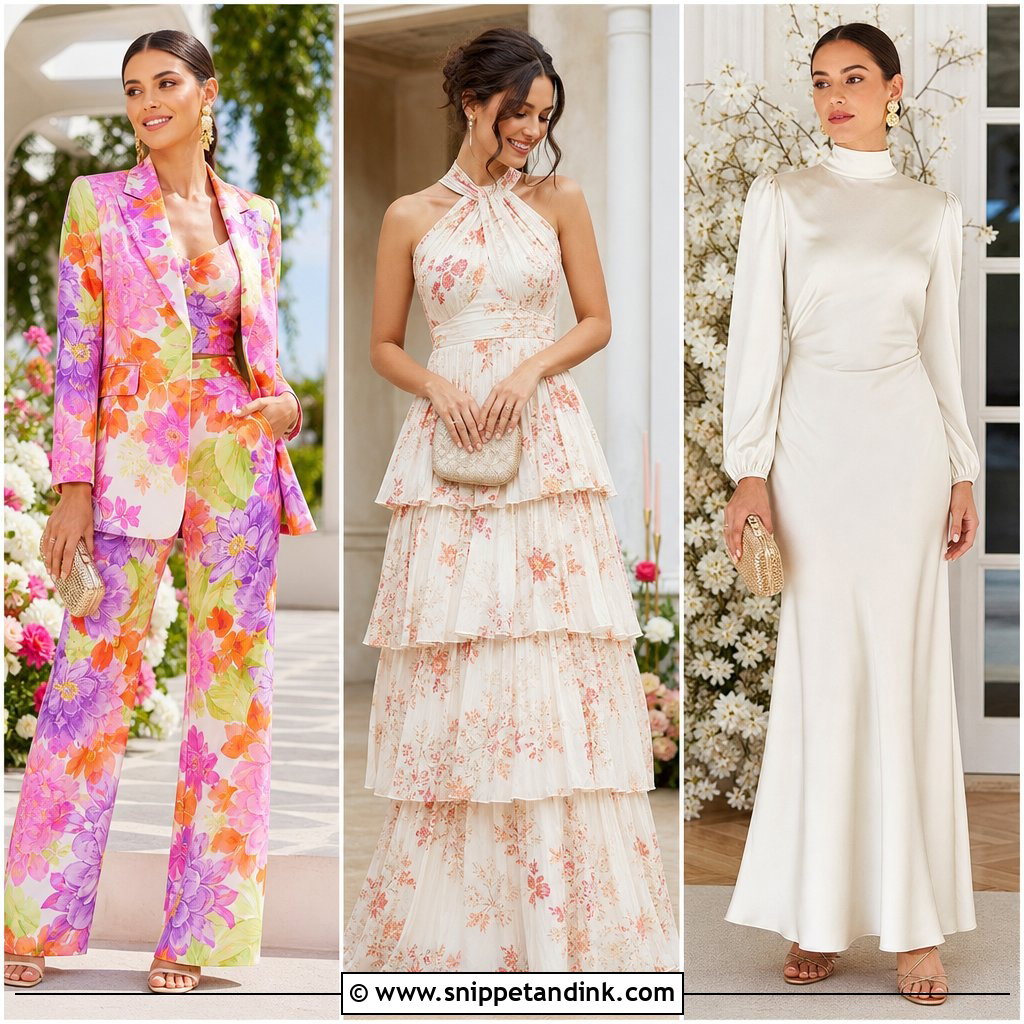
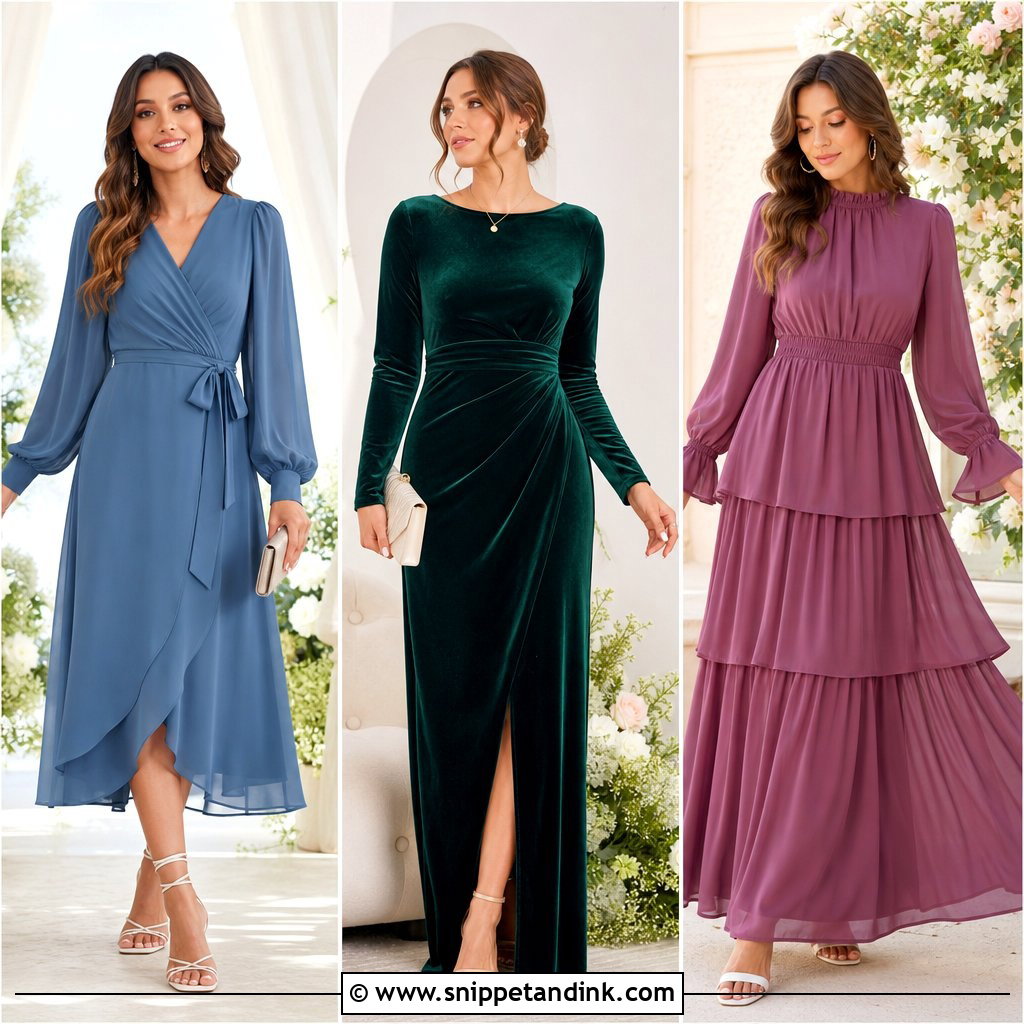
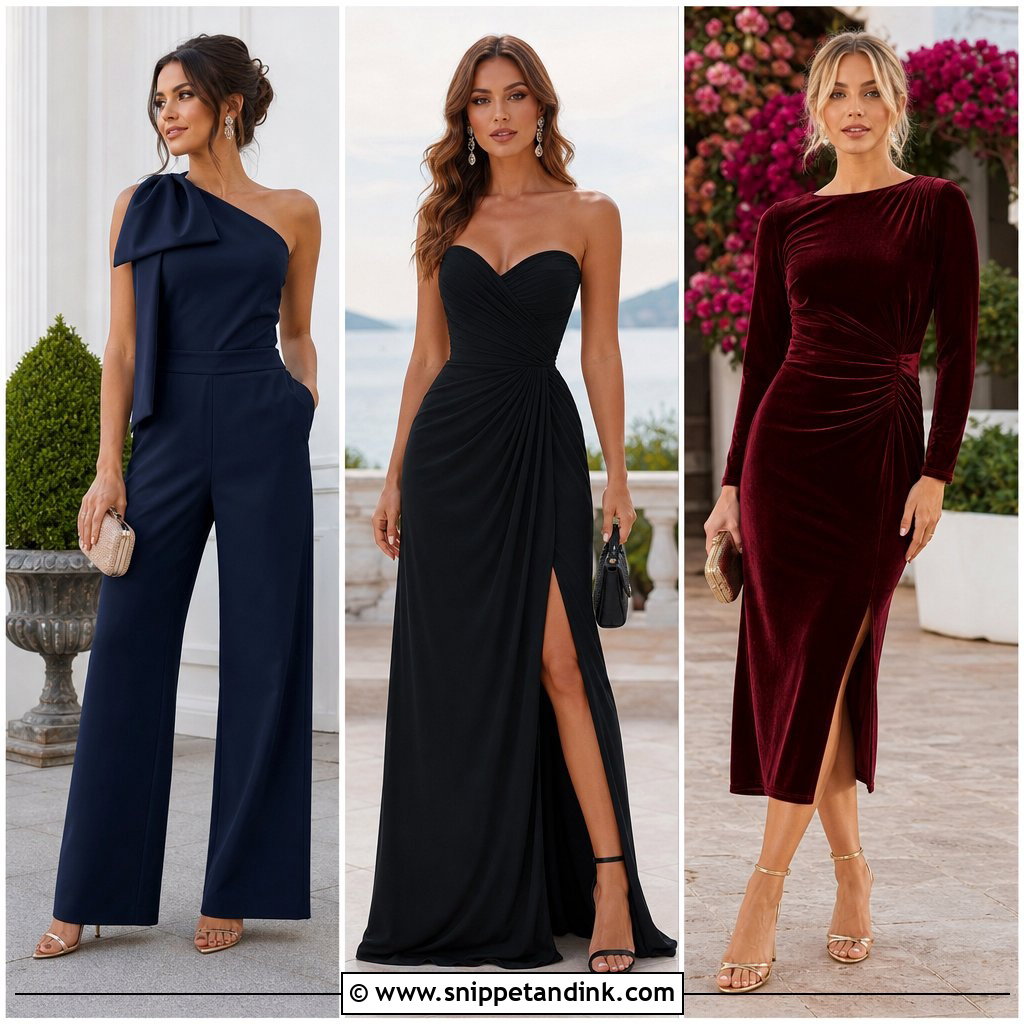
20. Embroidered Gown For Indian Wedding Reception
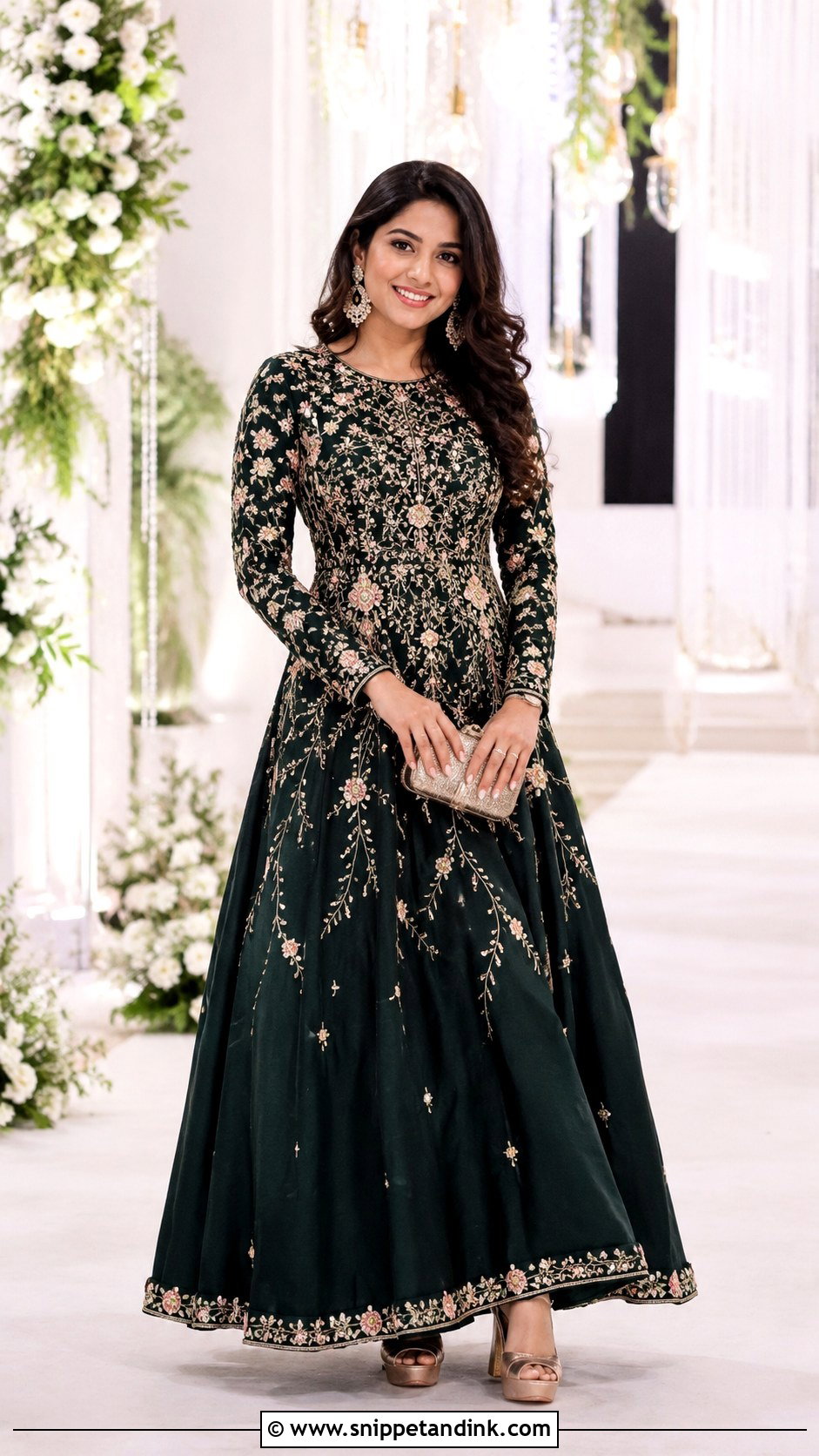
An embroidered gown works for a reception with a contemporary dress code. An A-line, fit-and-flare or empire-waist cut in navy, burgundy or forest green with Indian threadwork at the bodice and hem holds its colour well under evening lighting. If the neckline is heavily embellished, leave the necklace off. Choose a silhouette that works with the undergarments you’re comfortable in, and let the hem lightly skim the floor while showing your shoe tips for safety.
Caring for Silk, Velvet and Zari Between Functions
Heavy wedding clothes take a beating over a season: sweat, food, rain, being folded into suitcases. Looking after them between events keeps them wearable for years.
- Air every outfit inside out on a padded hanger the night after the event before putting it away; folding a damp garment invites mildew.
- Spot-clean food marks quickly and leave anything with zari or embroidery to a professional dry cleaner who handles ethnic wear.
- Wrap silks in soft cotton or muslin, never plastic, which traps moisture.
- Refold sarees along new lines every few months, because creases left in one place can wear through silk and break metallic thread.
- Keep perfume and deodorant off the fabric itself, as they can mark silk and tarnish zari.
Velvet needs its own care: hang it rather than folding, and never press it flat with an iron. A gentle steam from the inside lifts the pile back up. If you travel between weddings, roll velvet and silk in tissue inside your suitcase rather than laying heavier items on top.
One Season, Several Weddings, and a Wardrobe That Copes
A full wedding season calls for a plan rather than a pile of new outfits. Match each function to its fabric: chikankari for haldi, florals for mehendi, mirror work and pre-draped sarees for the sangeet, silk for the ceremony, velvet or a gown for a winter reception. Get every piece tailored, check the hosts’ preferences on colour and formality, and choose the outfit you can move, sit and dance in. You’ll wear it better than one you spend all evening adjusting.
You'll Like These Ideas:


Leave a Reply