
Braids are the oldest thing I do as a hairstylist and still the most satisfying, because they let a bride wear real history instead of a costume. The Norse look borrows from what we know of Viking-age hair: long lengths kept up and out of the way, knots and twists, beads of metal or bone, and the bridal circlet a woman wore before marriage. Some of the styles below suit a full Nordic ceremony in a forest; others are quiet enough for a registry office with one braid as the nod. I’ve added what each one asks of your hair, who it suits less well, and how I’d make it survive a long outdoor day.
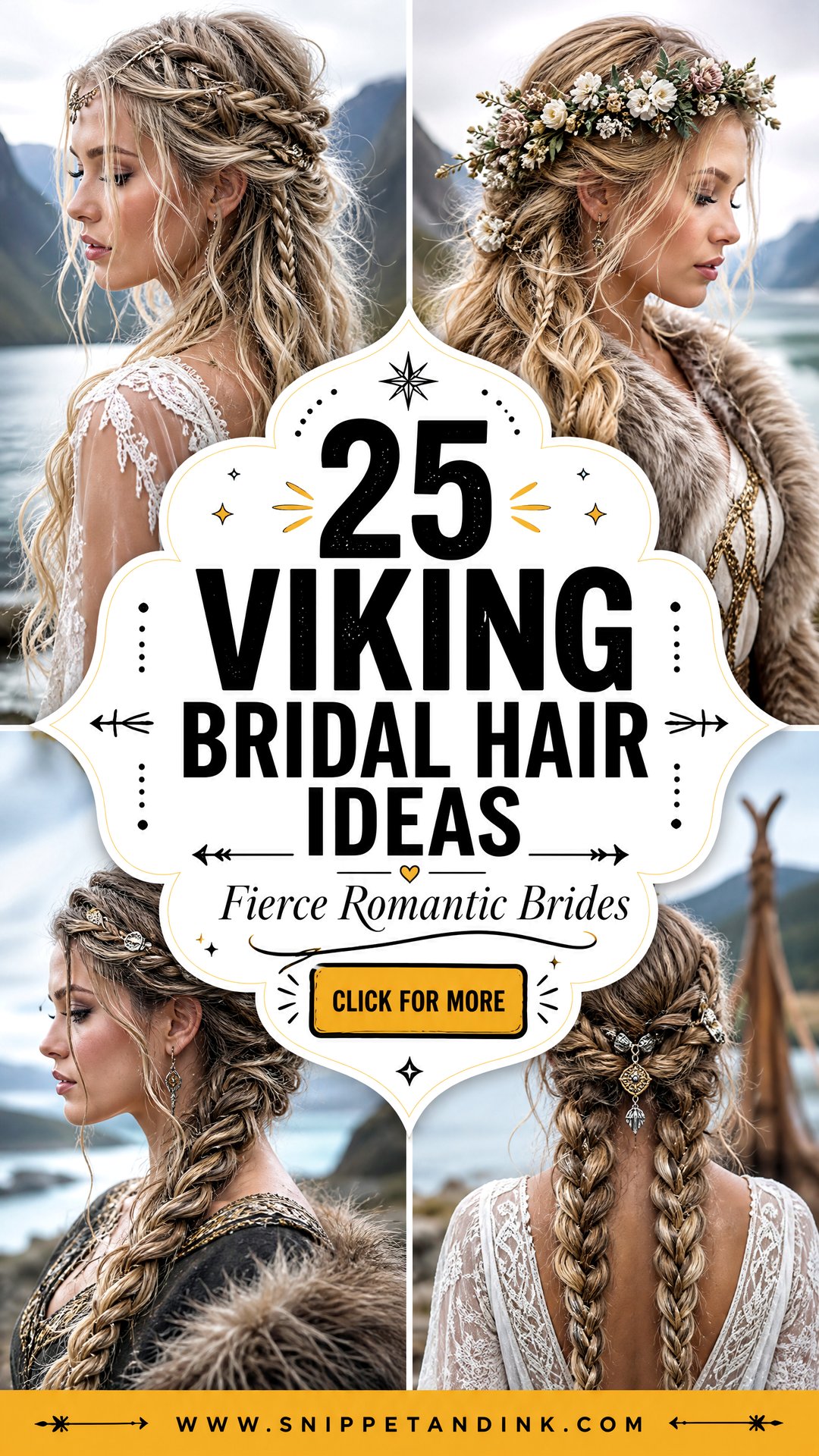
Braids Built on Freshly Washed, Silky Hair Slide by Noon
Almost every style here depends on grip. Clean, conditioned hair is slippery, so pins slide and braids loosen within hours. I ask brides to wash the evening before, skip heavy conditioner on the lengths, and come with dry hair. In the chair, I work a dry texture spray or a little texturising powder through each section before I braid.
Extensions are worth thinking about early. Many Viking styles look their best with length and thickness that most heads don’t naturally have. Clip-in wefts can be braided straight into crowns and side braids, and they’re easy to remove afterwards. Order them in your colour and texture weeks ahead, so you can bring them to the trial and have them trimmed to blend.
What I check at a braided trial
- Whether pins press on any spot after thirty minutes; a sore spot only gets worse.
- How the braid looks from behind and at the sides, not just in the mirror.
- Whether your veil comb, circlet or flower crown actually sits where I’ve planned.
- How the style reacts to a quick walk outside if your ceremony is outdoors.
Take photos at the end of the trial and again that evening. If it has drooped by dinner, we change the plan before the wedding, not on the morning.
1. Viking Braided Crown for Brides
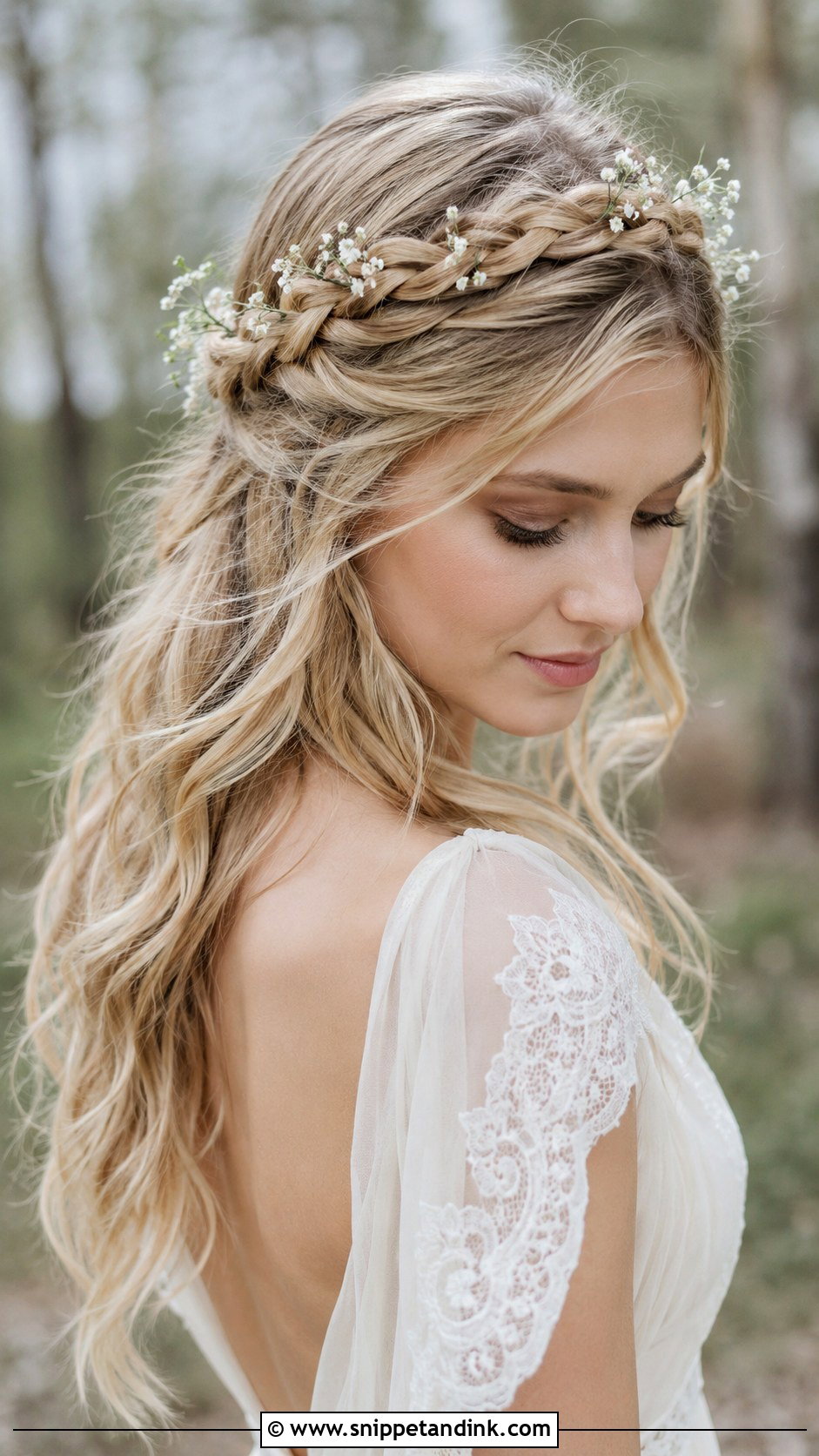
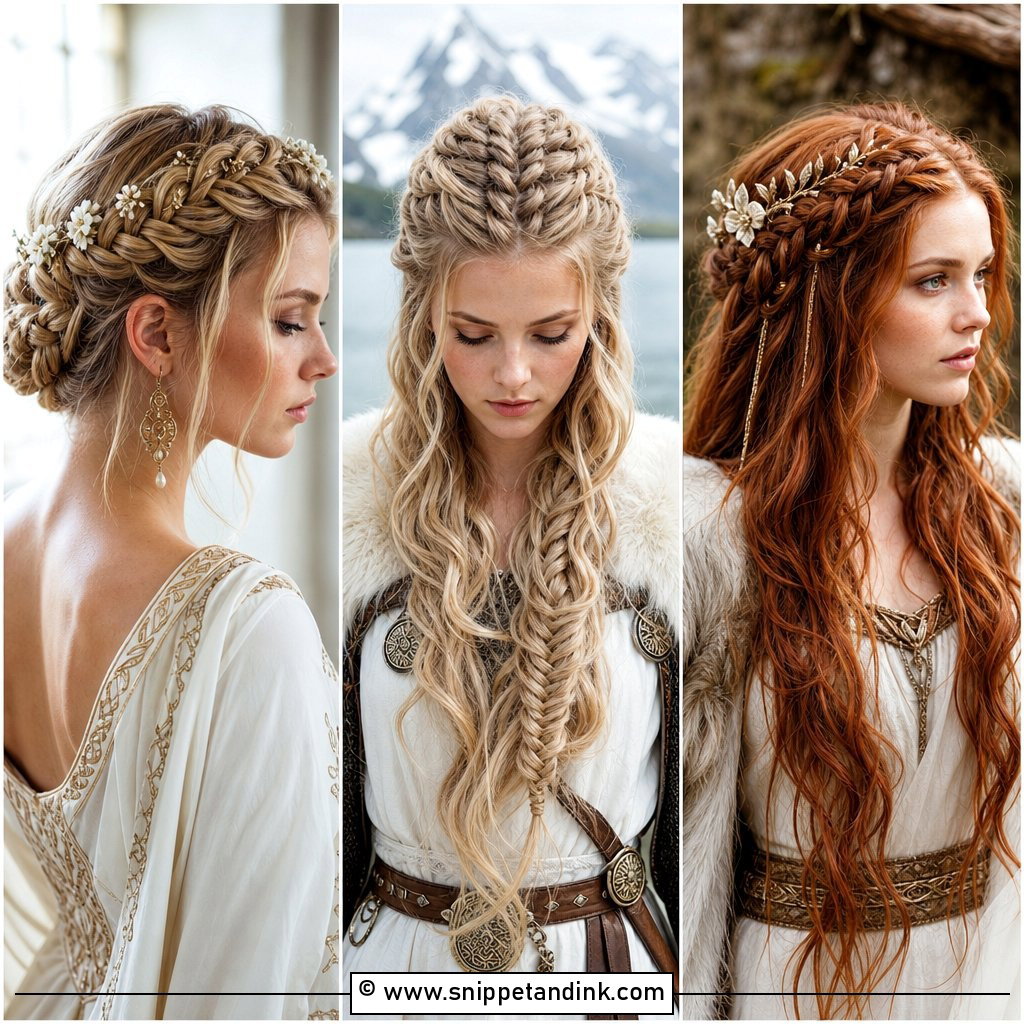
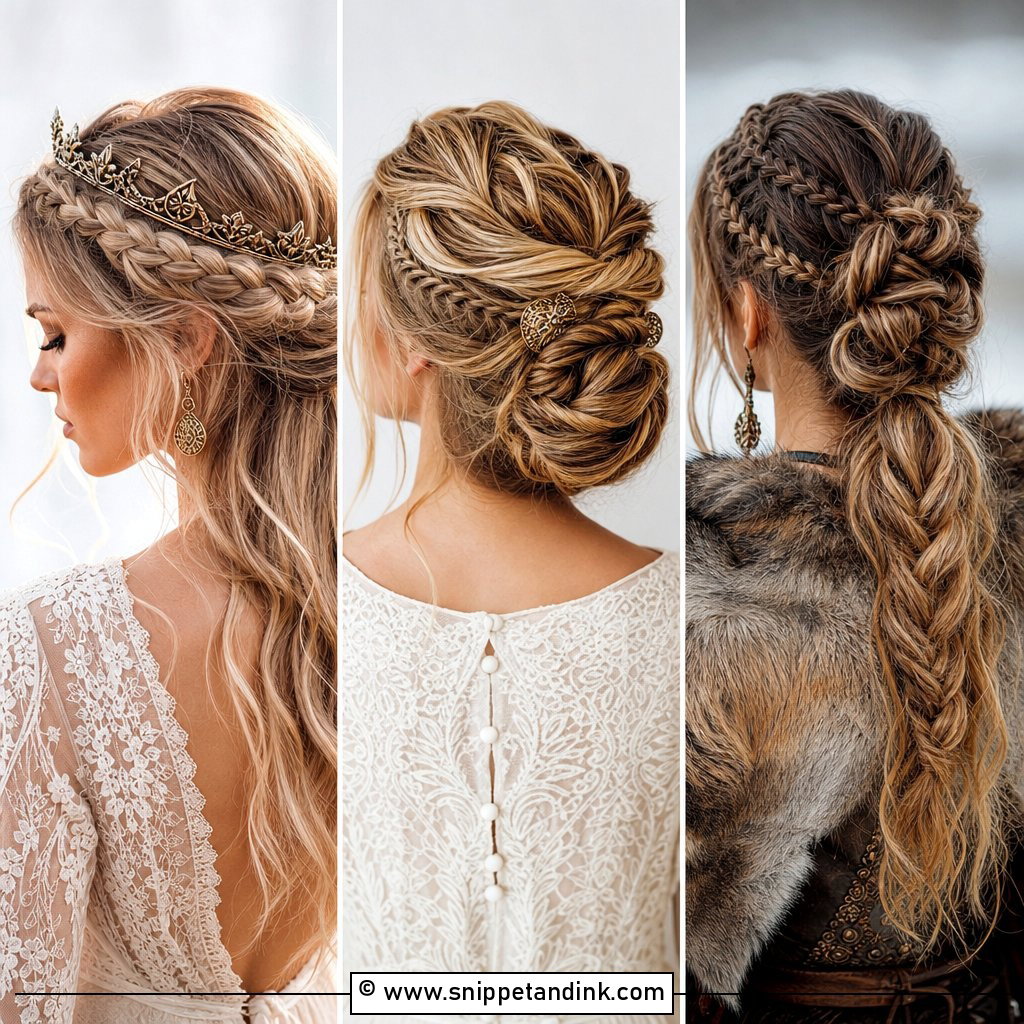
A braided crown is several thin braids laid across the top of the head and pinned flat, so it reads as one woven band. I build it from three-strand braids no thicker than a pencil, because thick ones sit high and make the head look wider in front-on photos. Long hair wraps fully; if yours ends at the shoulders, I braid in a clip-in weft so the band reaches all the way round. A thin silver cuff or a few small white flowers is enough decoration. Once it’s pinned with criss-crossed bobby pins it barely moves, which is why I trust it for windy woodland ceremonies.
2. Fishtail Braid Viking Wedding Hair
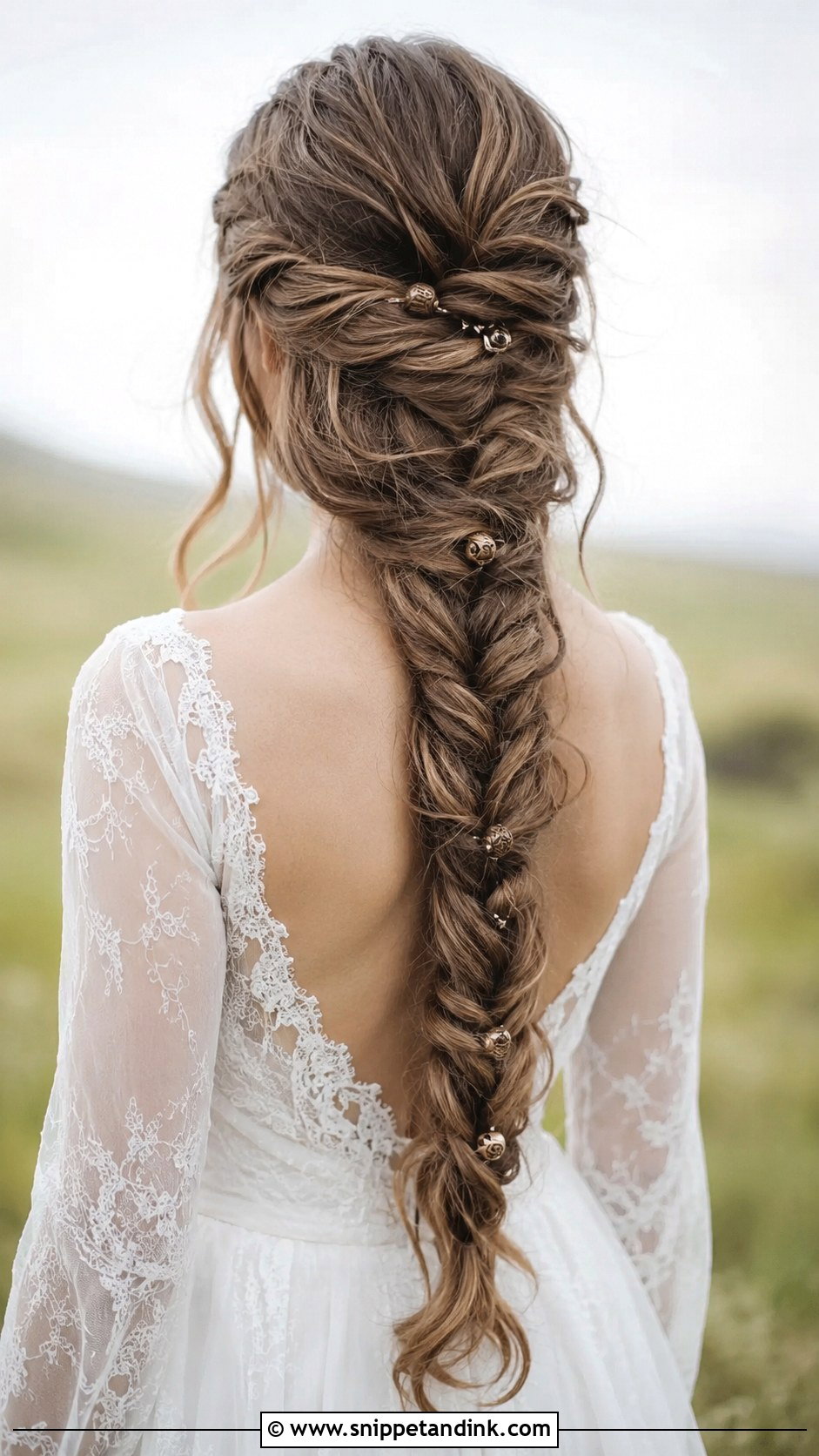
Fishtail is a two-section braid, so it takes much longer than a plain plait, and that slow weave is what gives the rope-like detail. I pancake the edges after it’s tied off, pulling each loop out a few millimetres, never more, or the pattern blurs. Fine hair benefits from a dry texture spray before I start; without grip, the tiny sections slip and the braid comes out narrow. Wear it as one long braid down the back or start it under a couple of twists at the crown, then tuck in a sprig of greenery or two small beads.
3. Half-Up Viking Braids
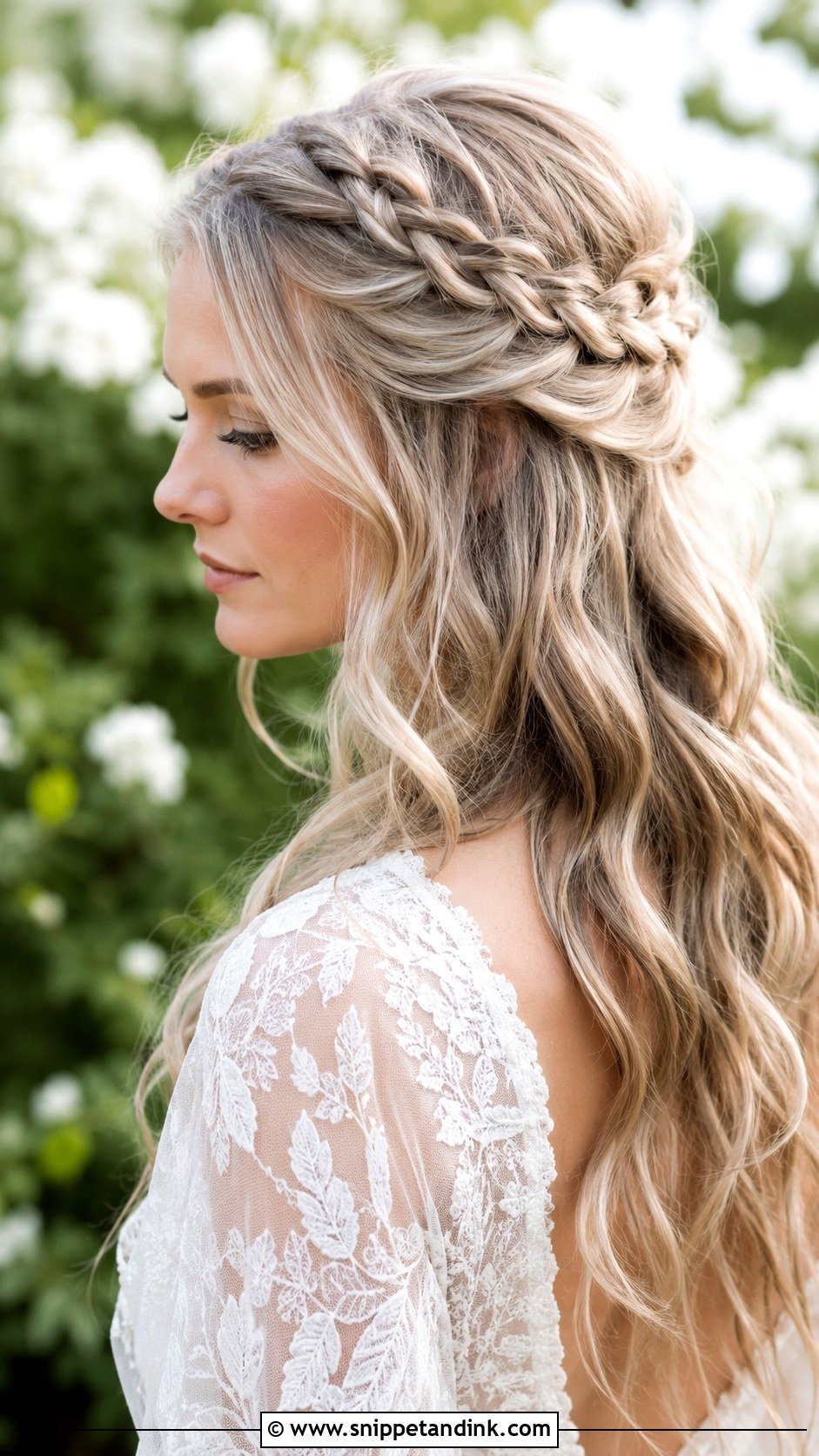
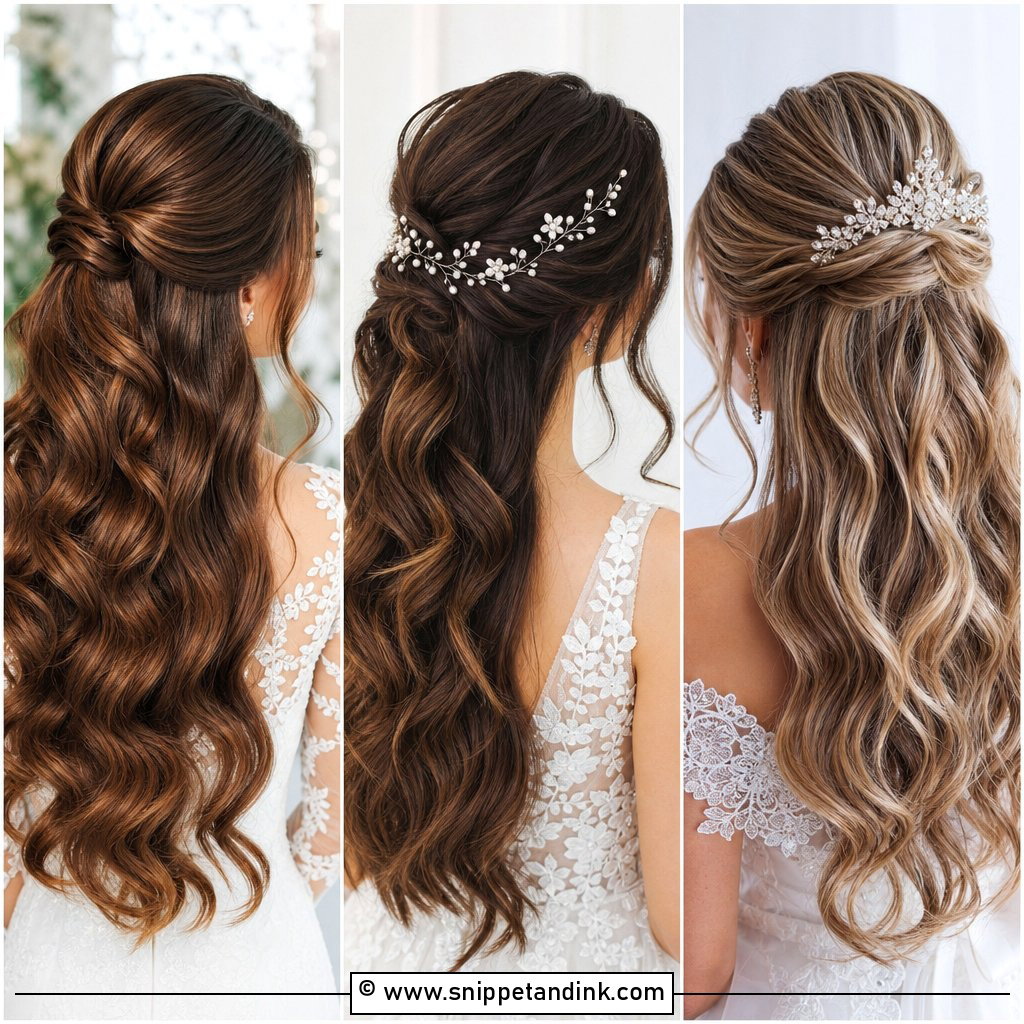
Half-up braids are what I suggest to brides who want braids but hate the pull of a full updo. Two or three braids leave the temples, meet at the crown and are held with a small cuff or a hidden elastic. The lengths below stay wavy and romantic, which means they will drop over the day, so I set the curls with a heated tong and let them cool fully before brushing them out. Humid beach air is the hardest test for this one. In that case I curl a little tighter than you’d like at the trial, knowing it will relax by the first dance.
4. Triple Braided Crown
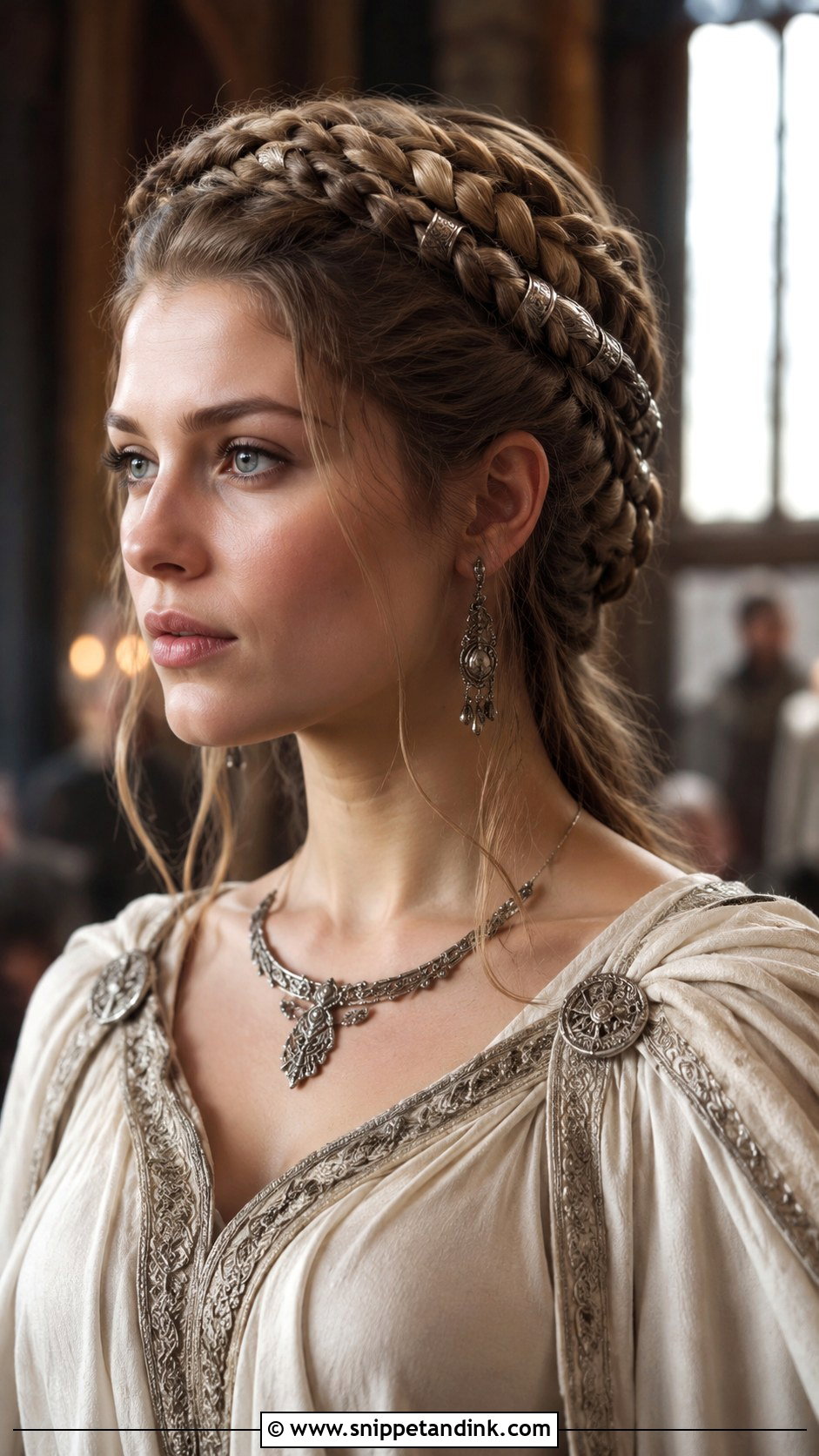
Three braids stacked around the head make the thickest, most dramatic band in this list. It’s slow work: I section all three before braiding any of them, otherwise the last braid runs out of hair at the back. Pins go in on alternating angles so the layers lock into each other, and once set it shrugs off wind and hours of hugging. It is heavy, though. If you get headaches from tight ponytails, ask for the braids to be slightly looser and anchored lower, behind the ears.
5. Messy Viking Bridal Waves
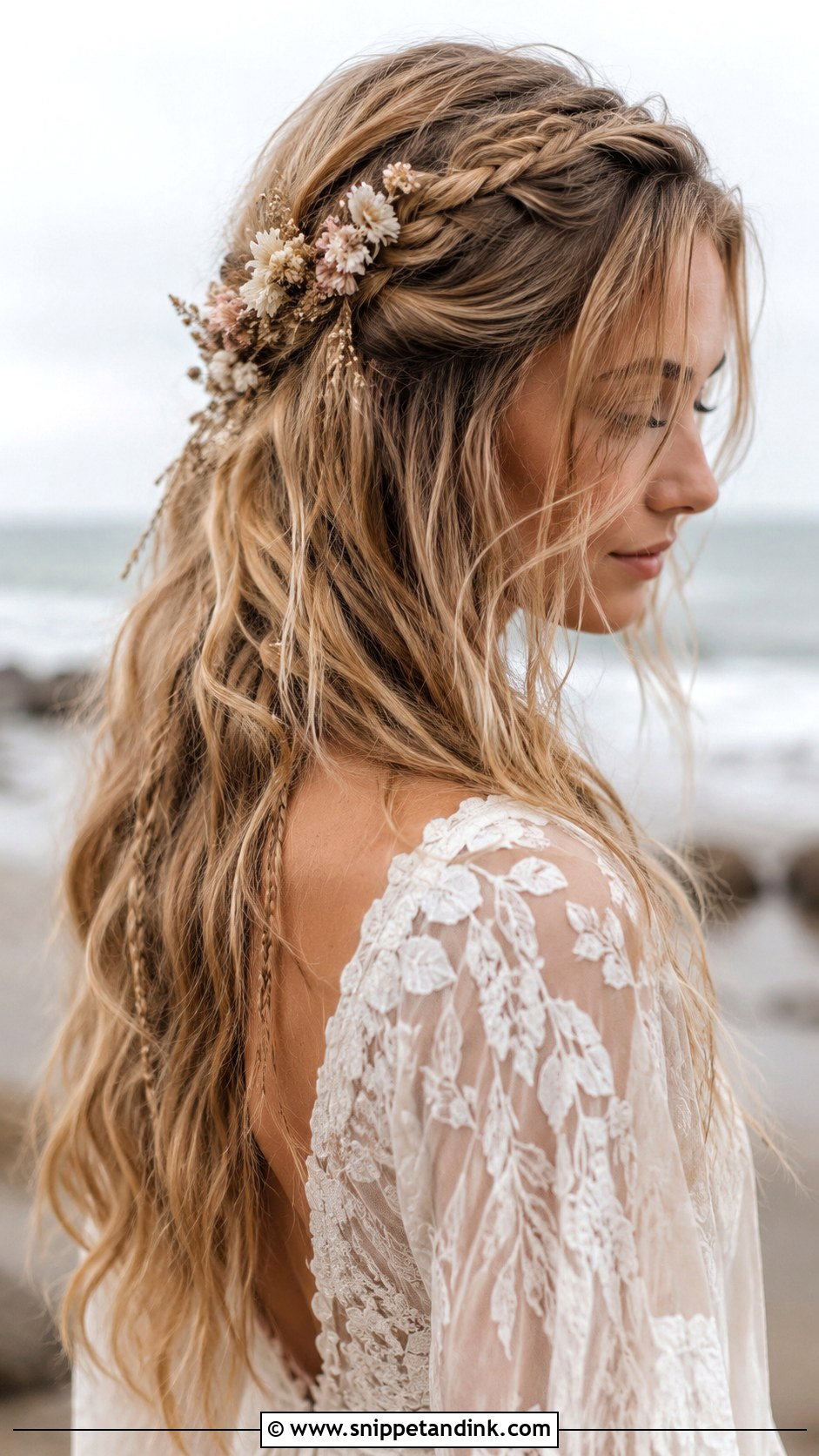
Barely styled is harder than it looks. These waves carry a couple of thin braids by the face, then the rest is left long and tousled with texture spray and a loose curl. The risk is that they flatten into nothing by the evening, especially on fine or very straight hair, so I prep with a volumising mousse at the roots and curl in alternating directions. Dried flowers or a narrow leather cord finish it. This is the one I’d pick for brides who feel trapped in pinned hair and want to run their hands through it.
6. Dutch Braid Viking Crown
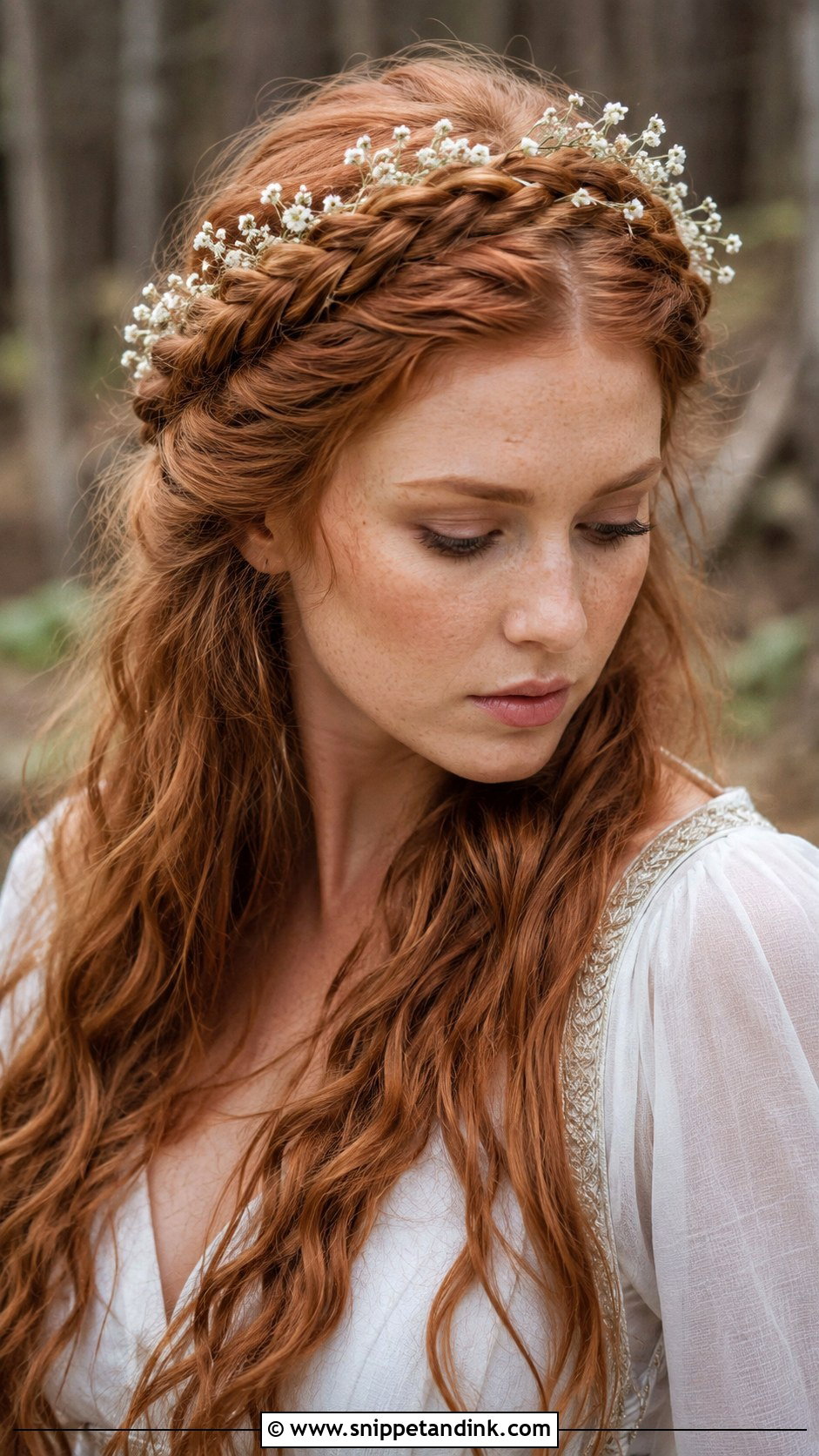
A Dutch braid is braided under rather than over, so it sits raised off the scalp and catches light along its ridge. Wrapped around the crown, that ridge gives the band real depth in photos. Two Dutch braids meeting at the nape make a neat, symmetrical version, and I join them with a small elastic hidden under a pinned loop. Loosen the outer edges lightly for softness. Baby’s breath or a few silver charms are plenty. It’s one of the most secure styles I can offer for an outdoor Nordic-themed day.
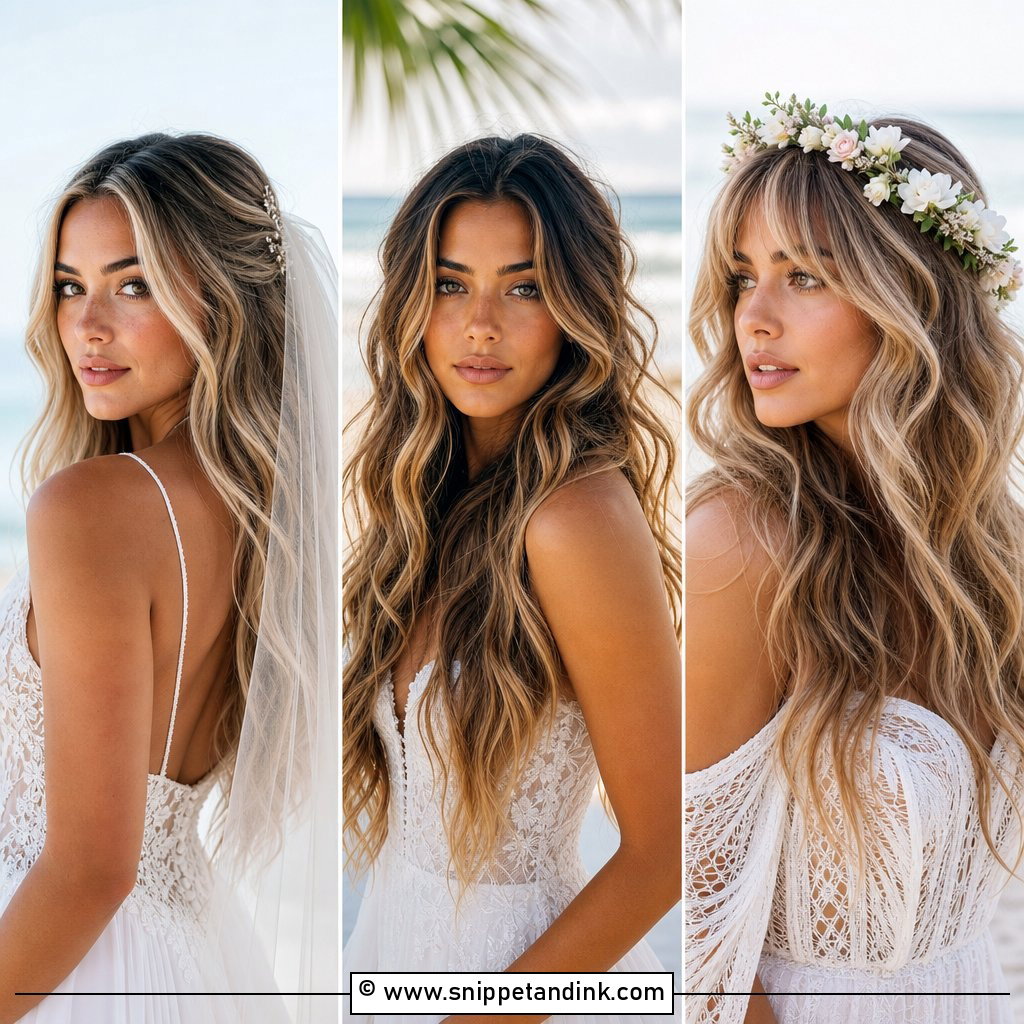
7. Braided Bun Viking Wedding Hair
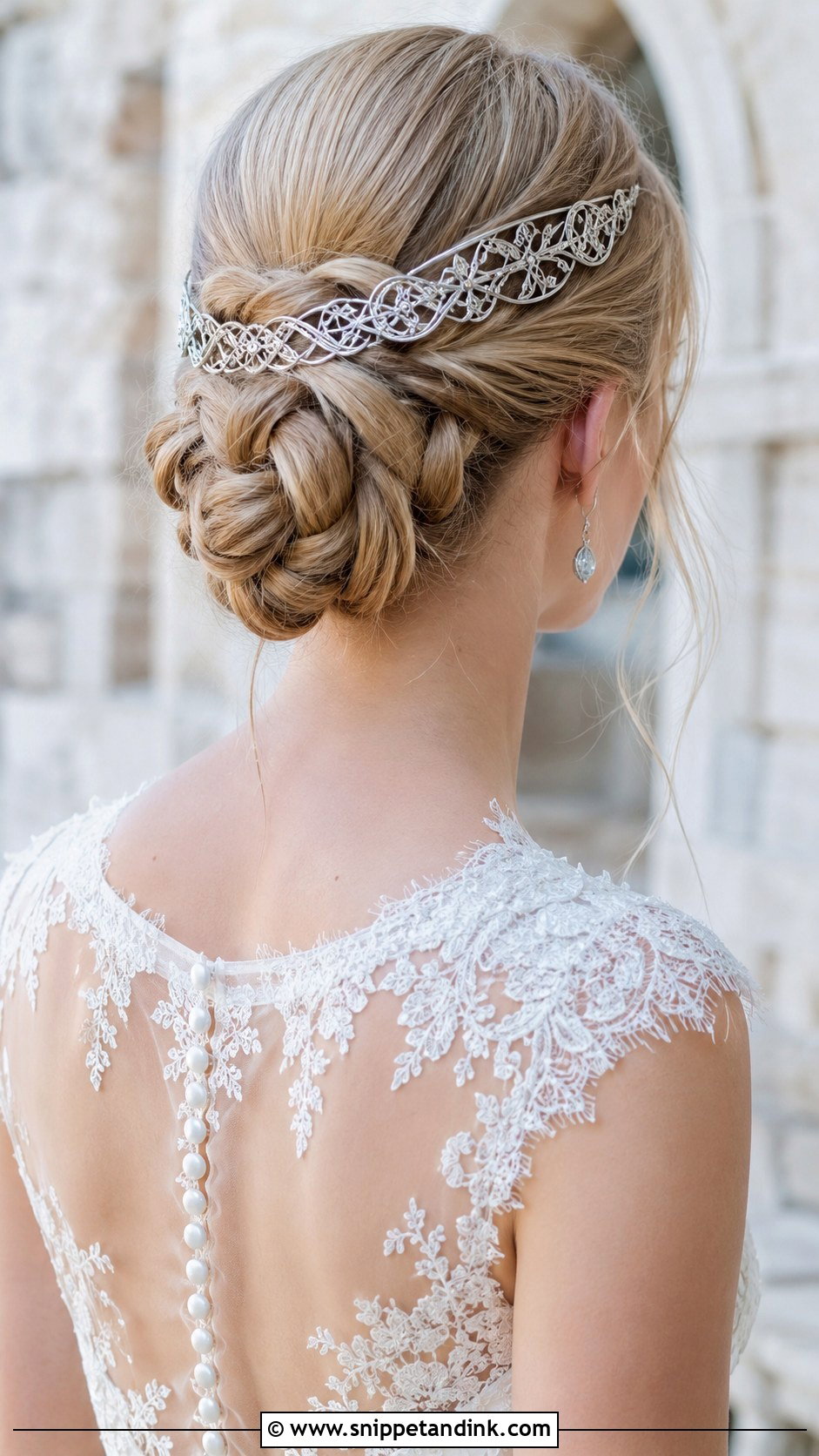
This bun gathers every strand into a braided knot at the back. It nods to the Elling twist, named after a woman preserved in a Danish bog whose long hair was braided and knotted at the back of her head. I braid the length first, then coil it and pin through the braid itself so the pins vanish into the weave. Leave out two face-framing pieces if your forehead is high; tuck them away if they tend to frizz. A thin circlet above the bun sits well here because the bun gives it something to rest against.
8. Viking Ponytail With Braids
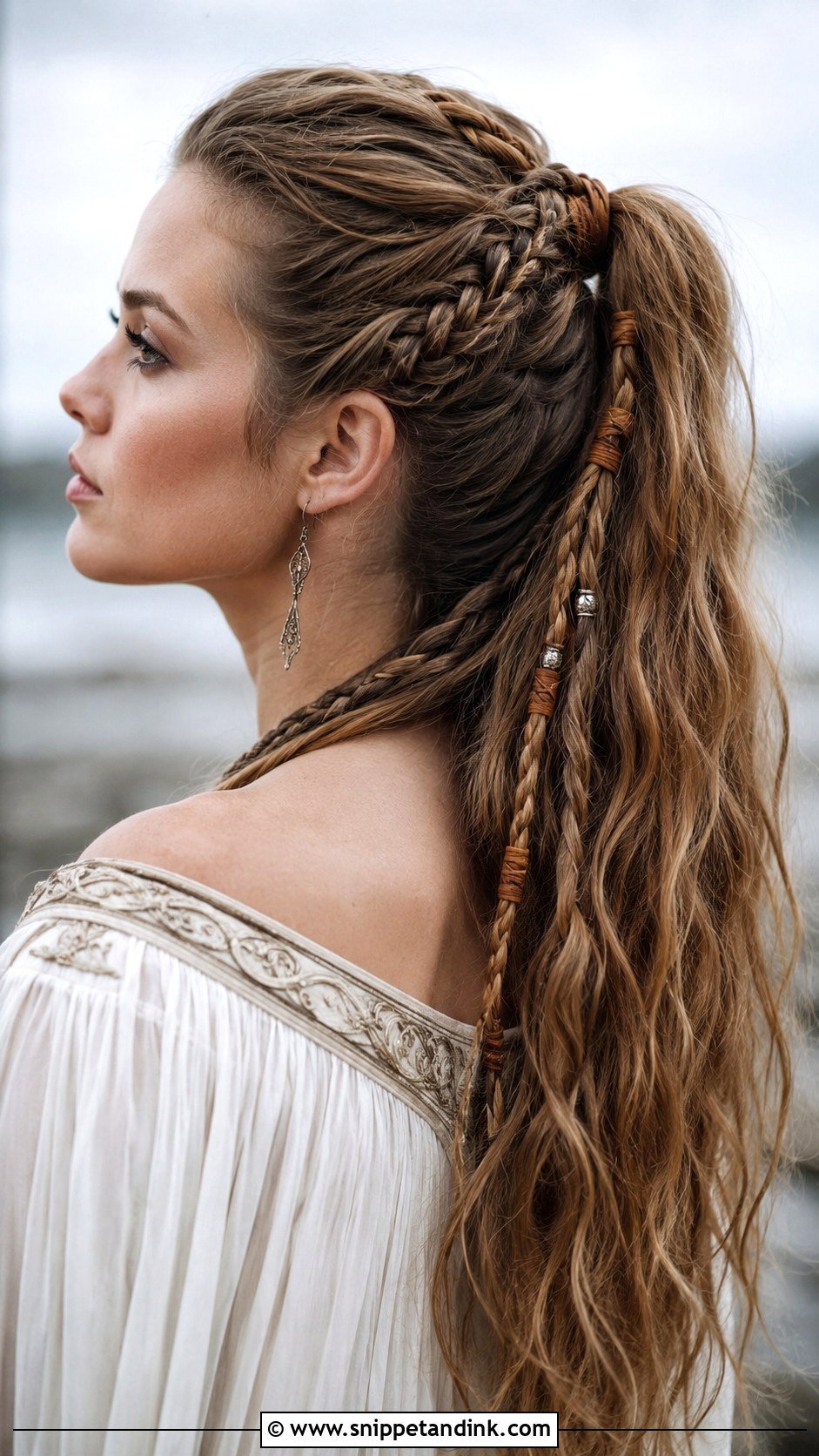
A braided ponytail blends warrior strength with something you can dance in all night. Height changes the mood: a high pony feels sporty and young, a low one sits under a veil and feels calmer. Either way, I secure the base with two elastics and wrap a small braid around them so no rubber shows. Heavy hair can drag a high ponytail down by evening, so I anchor it with crossed pins underneath. Beads or a leather cord along the length add the Norse detail.
9. Flower Crown Viking Bridal Hair
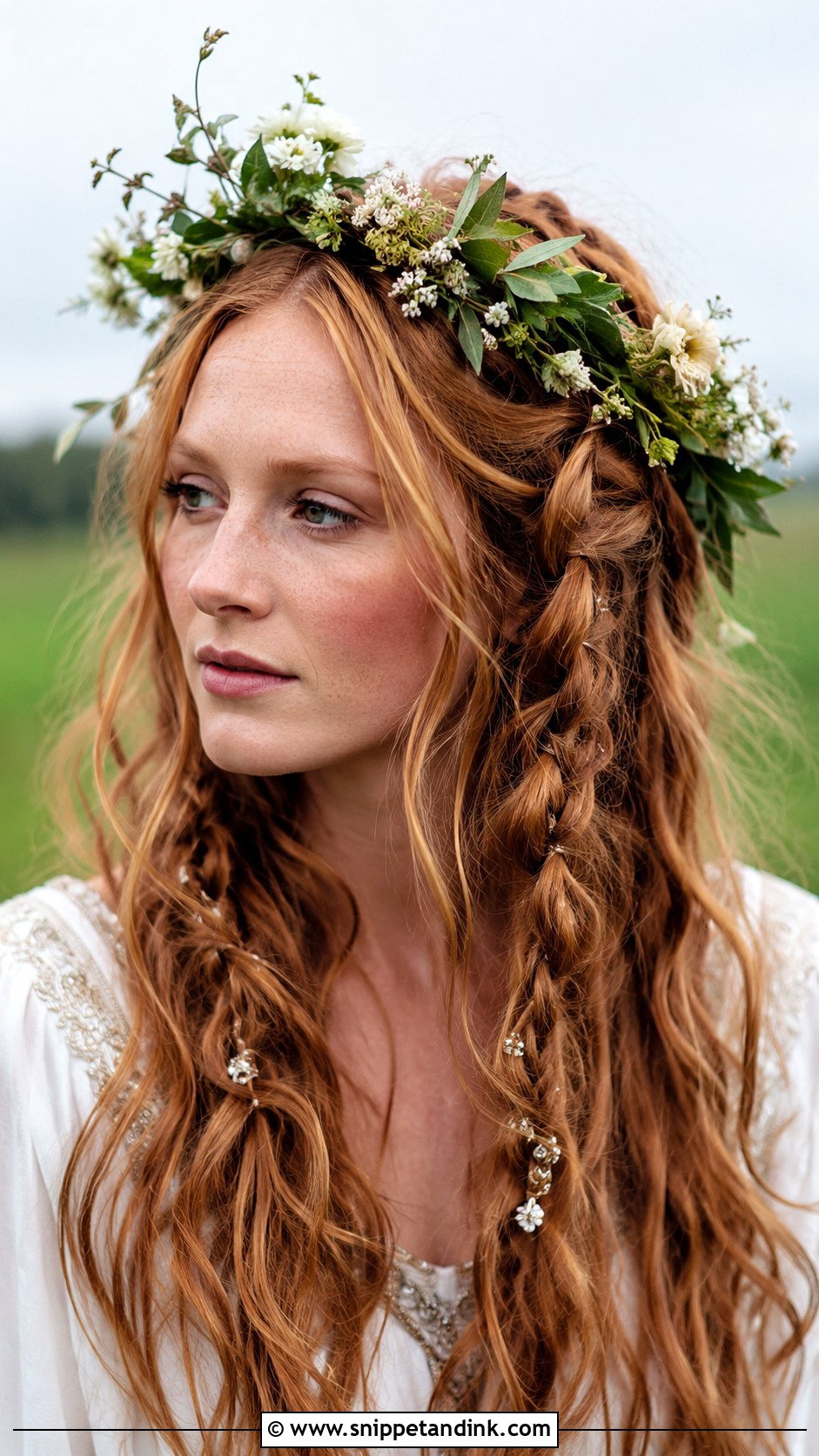
Fresh blooms worked into braids are an easy way into this theme. Historically, a bride gave up her maiden circlet for a bridal crown, and wheat and greenery carried the hope of fertility. Today I wire small wildflowers and greenery onto a thin band, or pin single stems straight into a braid. White flowers read clean against dark hair; warmer tones suit autumn weddings. Ask your florist for blooms that hold out of water. Soft petals like garden roses bruise and droop within hours, while waxflower and thistle stay put.
10. Viking Halo Braid
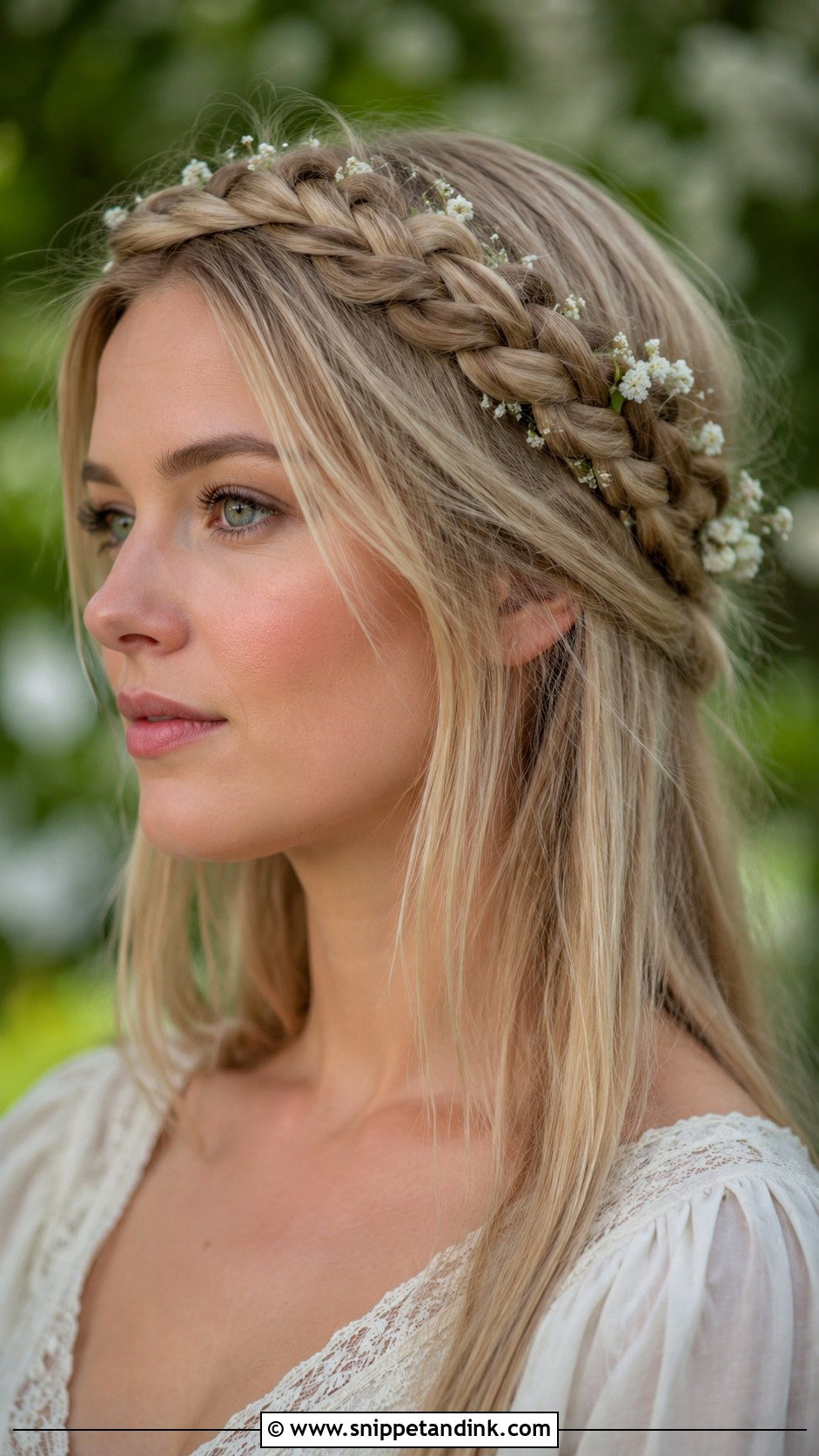
One continuous braid circles the head here, starting behind one ear and finishing near the front. I check that the starting point is hidden by the end of the braid; a visible join is the giveaway of a rushed halo. It keeps every strand off the neck, which matters at a summer wedding. You need hair past the shoulder blades for a full ring, or a matching weft braided in. Under a veil, the comb slides in just below the band and holds well.
11. Viking Side Braid for Brides
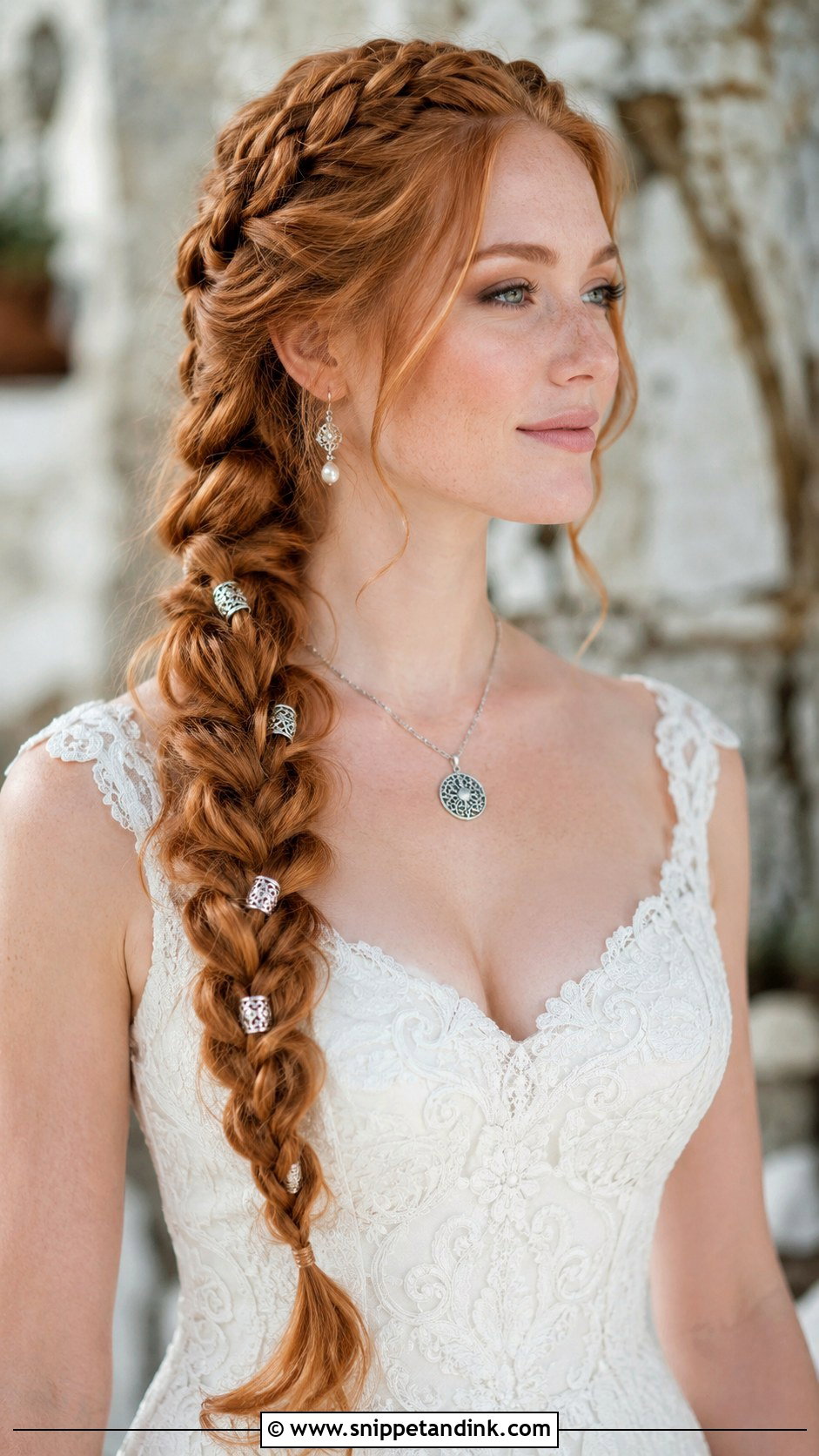
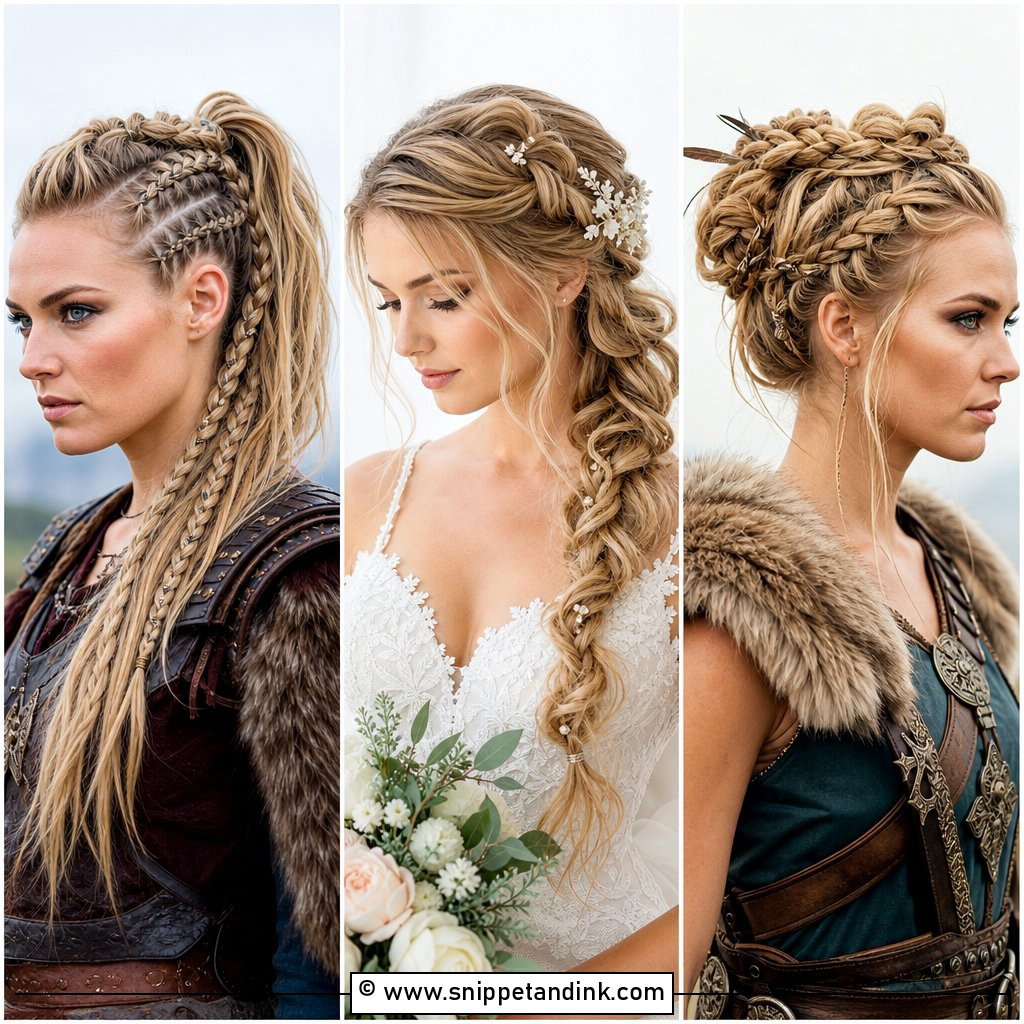
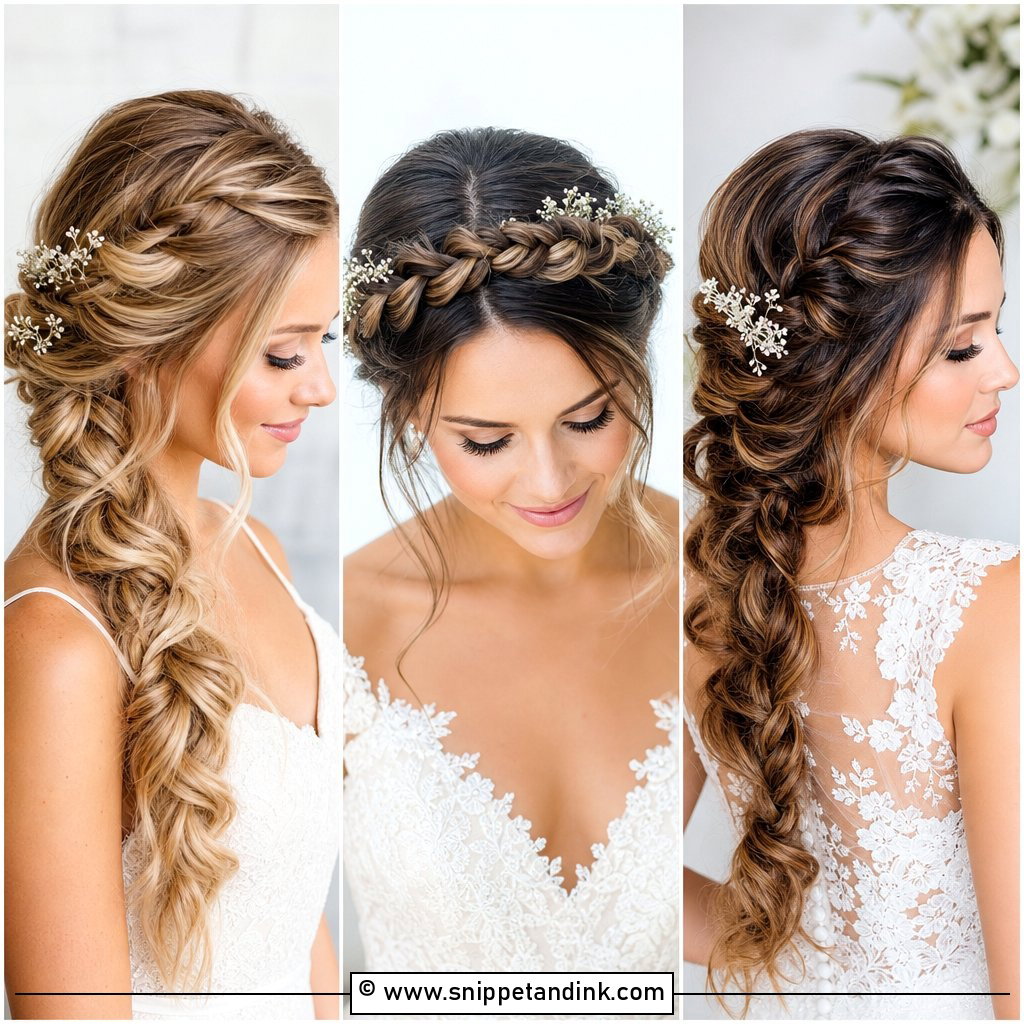
A chunky side braid draped over one shoulder needs all the hair swept one way, so I pin the back securely before I start or it gapes behind the ear. The braid rests on the collarbone and leaves the other side of the neck bare, which frames a statement earring or an open-back dress. Pull it loose for width. Small braids near the crown and a few dried flowers add Nordic detail. I’d skip it with a high-necked dress, since the braid fights the collar and gets pushed forward all day.
12. Braided Updo Viking Wedding Hair
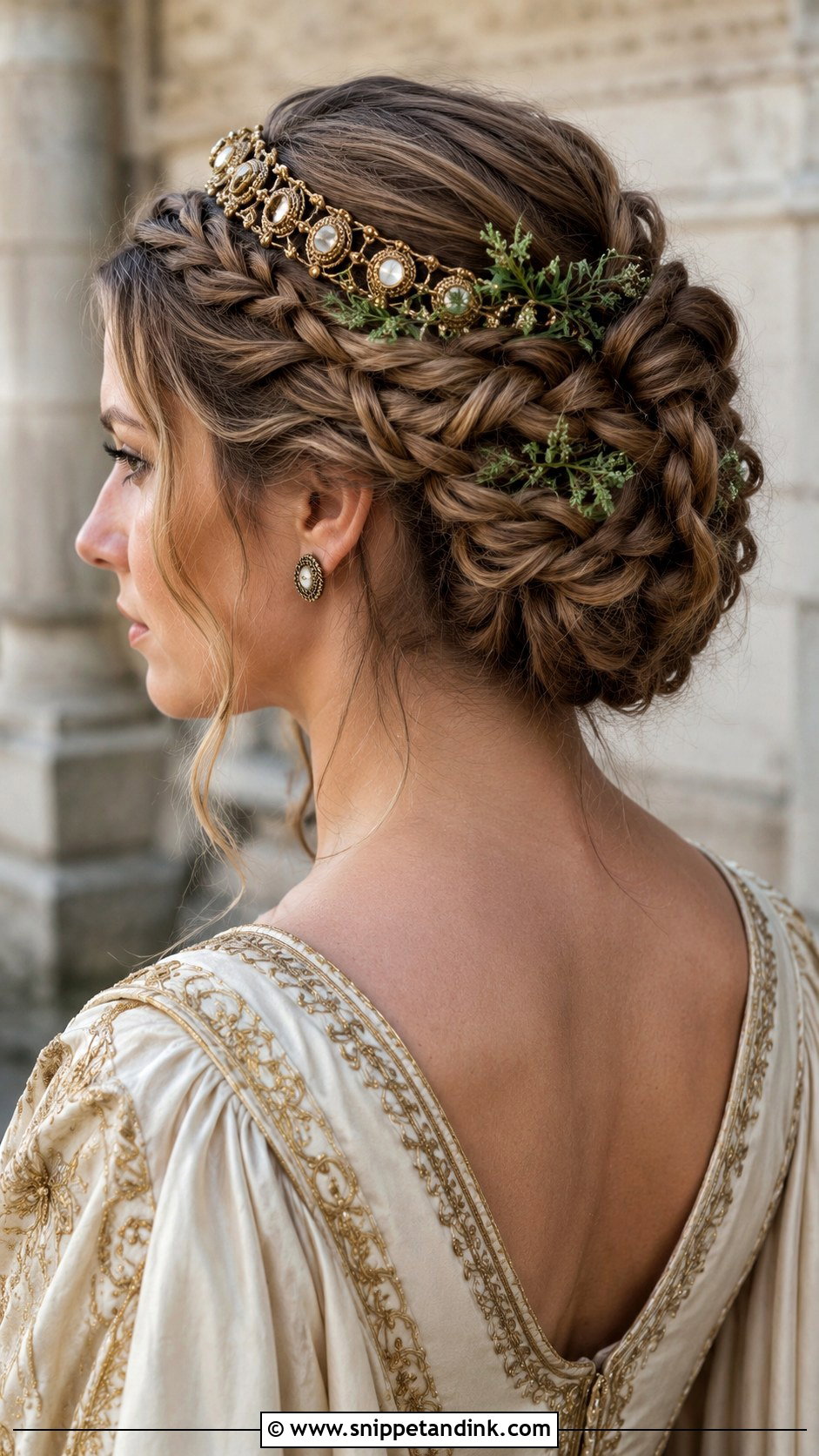
Several braids gathered into one sculpted shape at the back is the most formal option here. I plan where each braid lands before any pins go in, much like arranging flowers, because moving a braid later loosens the others. It holds for long ceremonies and loud receptions, and it carries a crown or circlet well. Pull out soft pieces around the face so the front isn’t severe. Greenery or small beads can be tucked between the braids at the end.
13. Viking Bridal Hair With Beads
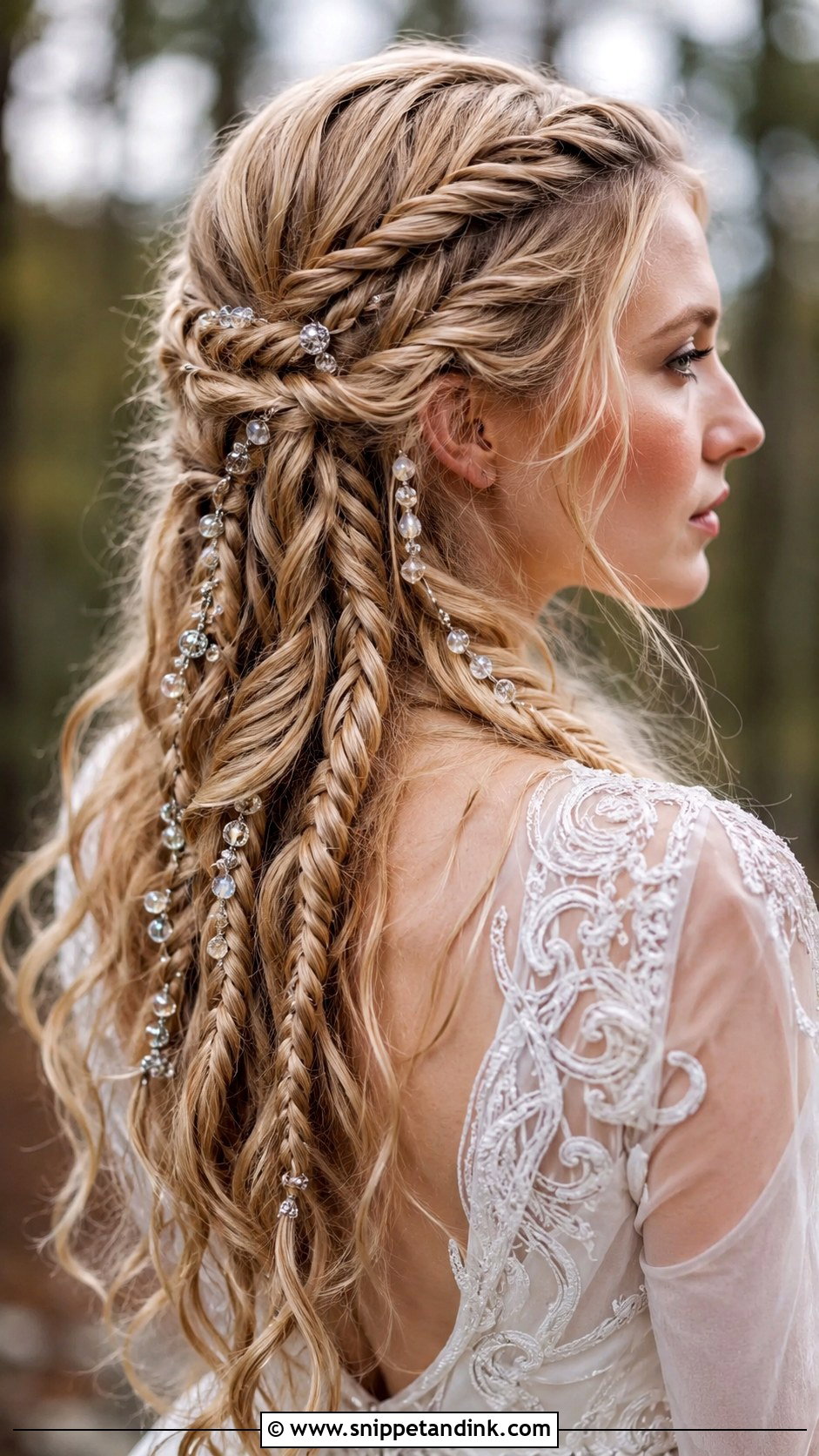
Beads were real Viking ornaments: metal, glass, amber, wood and bone, used to show wealth and pride. For brides, I thread silver or crystal hair beads onto braids with a small loop tool, then either tie the braid off just below the bead or crimp the bead shut. Hollow aluminium or plated beads weigh almost nothing; solid metal ones swing and pull, so I limit those to two or three. Match the bead tone to your jewellery. They work on fishtails, Dutch braids, twists and ponytails, and they catch the light every time you turn your head.
14. Low Braided Bun With Loose Strands
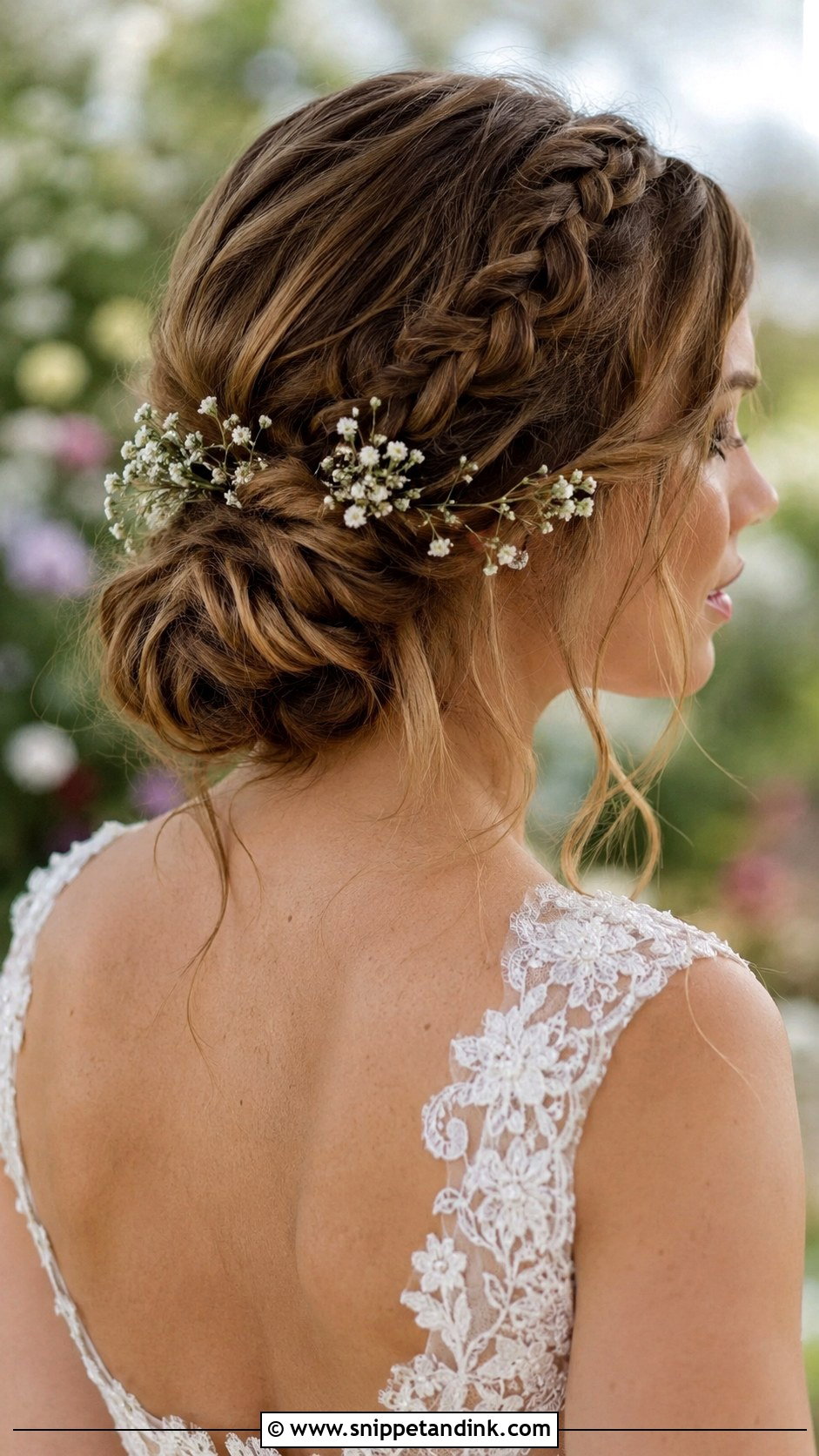
A low braided bun sits at the nape with tendrils left out around the face. It’s the style I reach for when a bride wears a long cathedral veil, because the comb anchors into the bun and the weight sits low instead of tugging at the crown. Small braids woven into the bun add texture. Finish with baby’s breath or thin silver charms. It fits a formal ballroom as easily as a rustic barn.
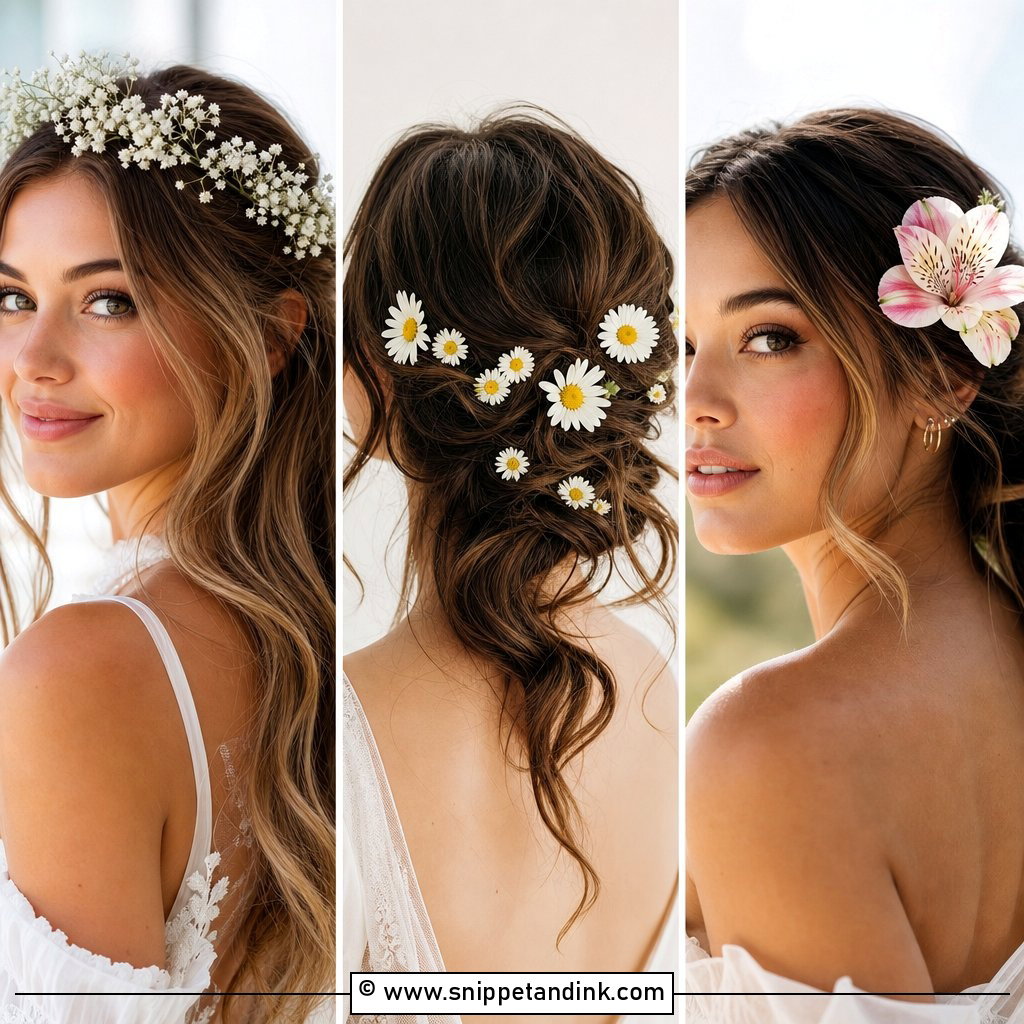
15. Viking Warrior Braids for Brides
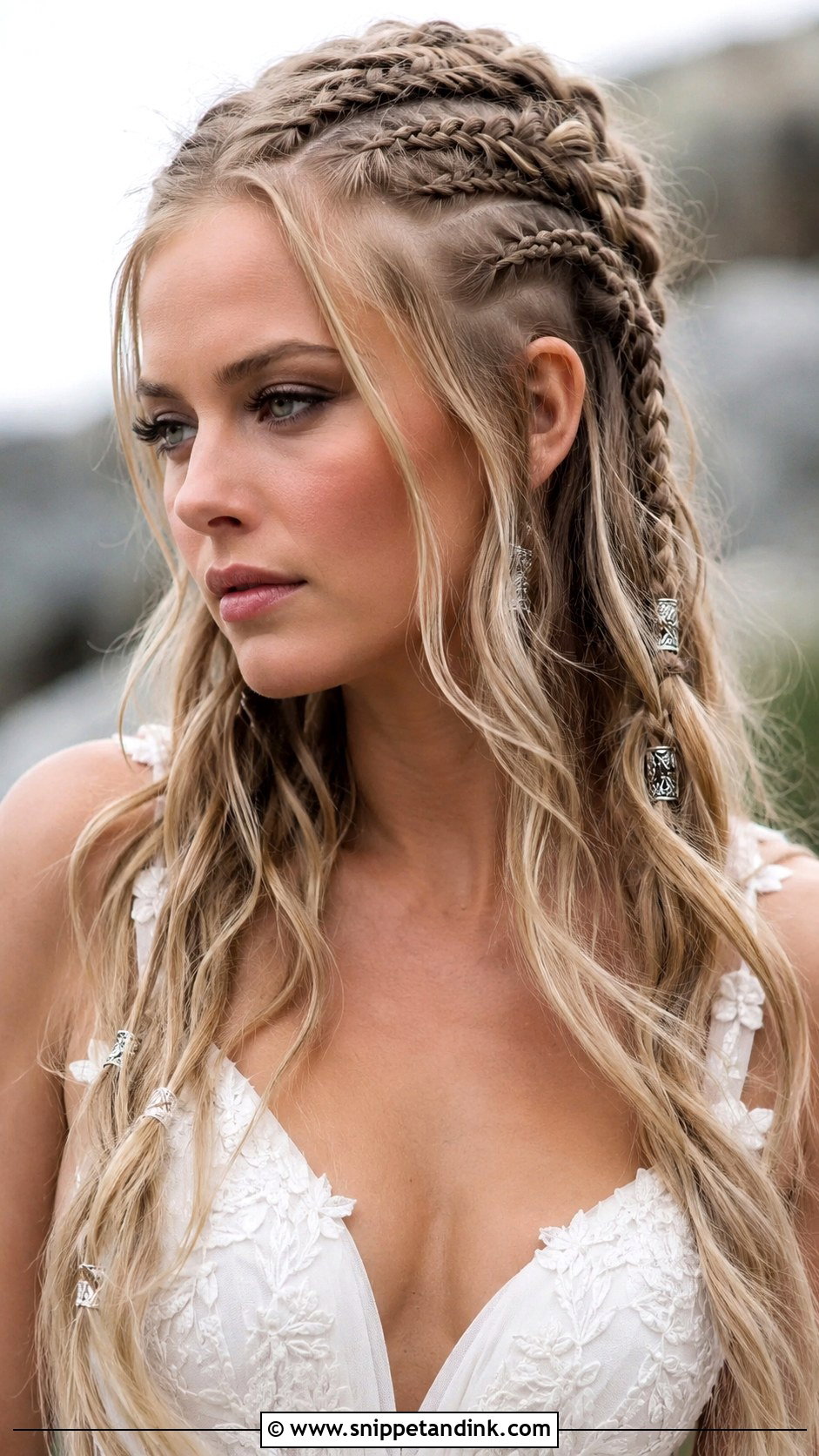
Warrior braids are tight rows along the sides of the head, close to the scalp, flowing into loose waves or a ponytail. They take time and tension, so I’d book an extra half hour for these alone. If your scalp is sensitive or your hairline is fragile, ask for fewer, slightly wider rows; constant tight braiding at the temples can stress the edges. Flowers or beads between the rows soften the look. Leave the back long and wavy if you want balance.
16. Viking Bridal Hair With Circlet
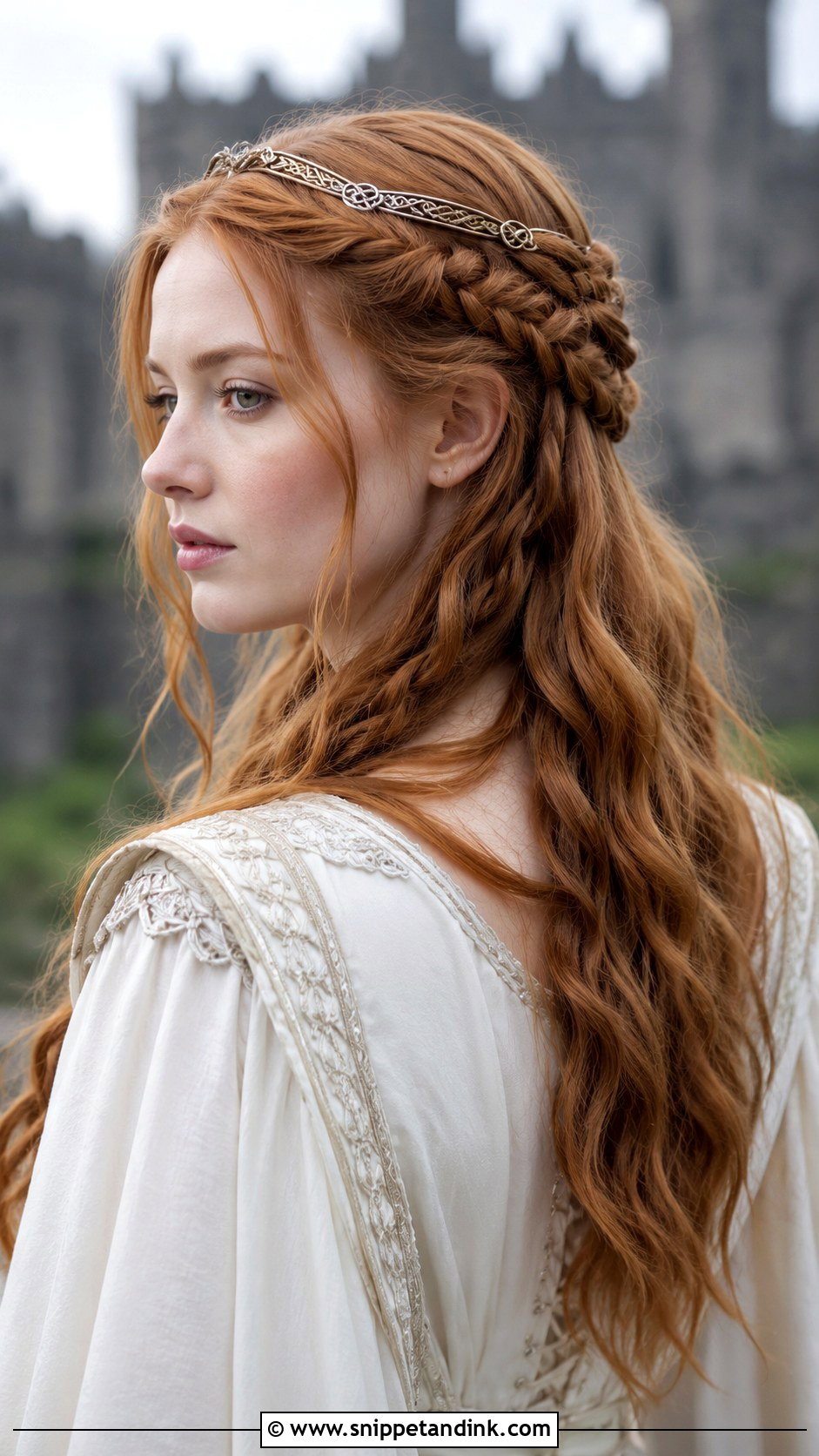
A circlet resting across the forehead turns a simple style into the most recognisably Norse look on this list. Historically, an unmarried woman’s circlet could be silver, decorated with crystal and silk cord, and was put aside at marriage. A modern version sits just above the brow and needs anchoring: I pin it through a small braid at each temple so it doesn’t slide down when you bow your head. It pairs well with half-up styles, loose waves or a braided crown. Choose silver or gold to match your rings and earrings.
17. Crown Braid With Flowing Waves
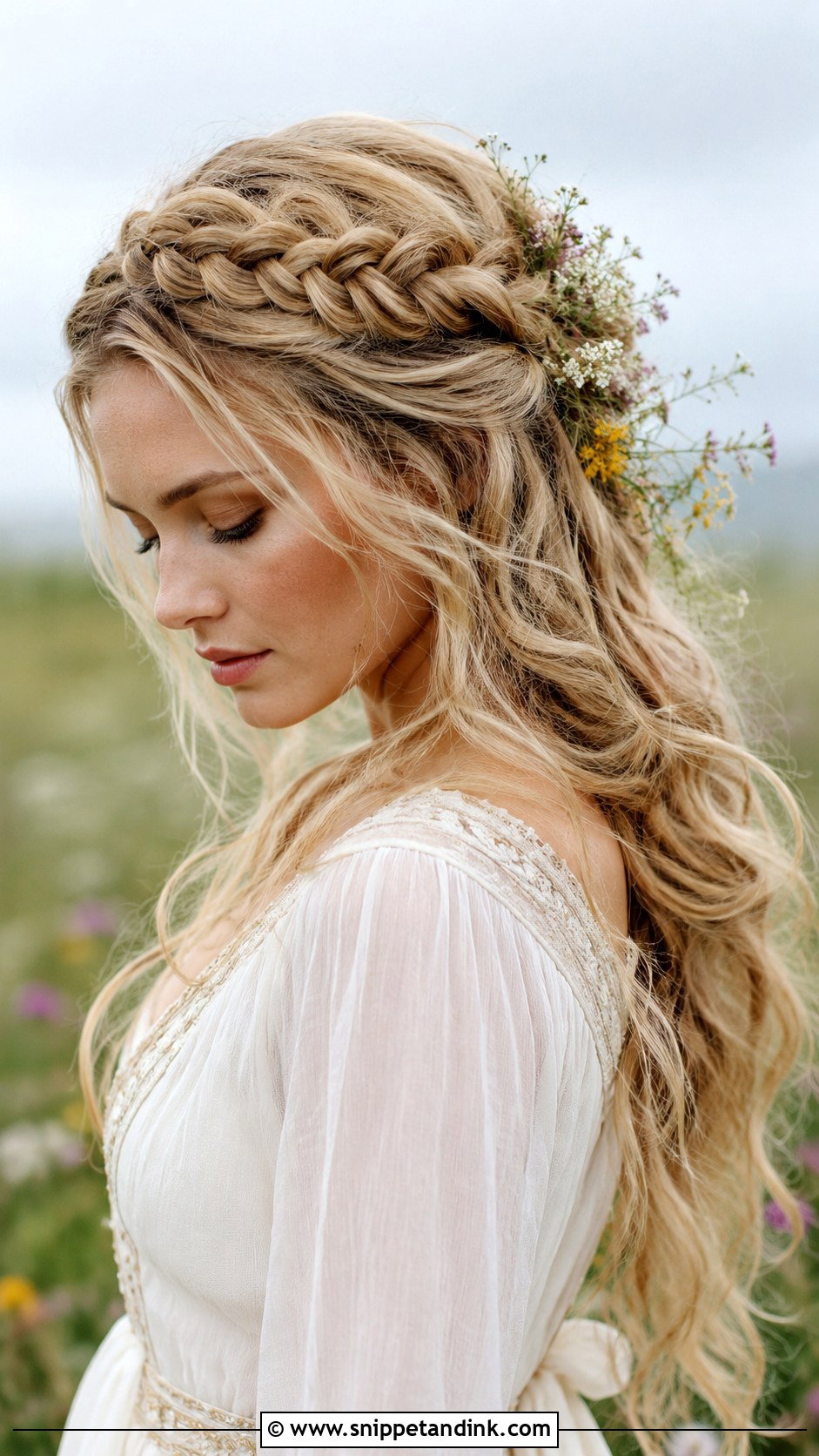
This one puts a braided crown on top and leaves soft waves loose underneath. The band keeps the front of the hair off your face, while the length gives movement as you walk. It suits long hair best; extensions add fullness if yours is thin at the ends. Wildflowers along the braid make it feel like a meadow wedding. The braid holds all day, but the waves won’t hold forever, so I set them firmly and expect them to relax a little by the evening.
18. Bubble Braid Viking Wedding Hair
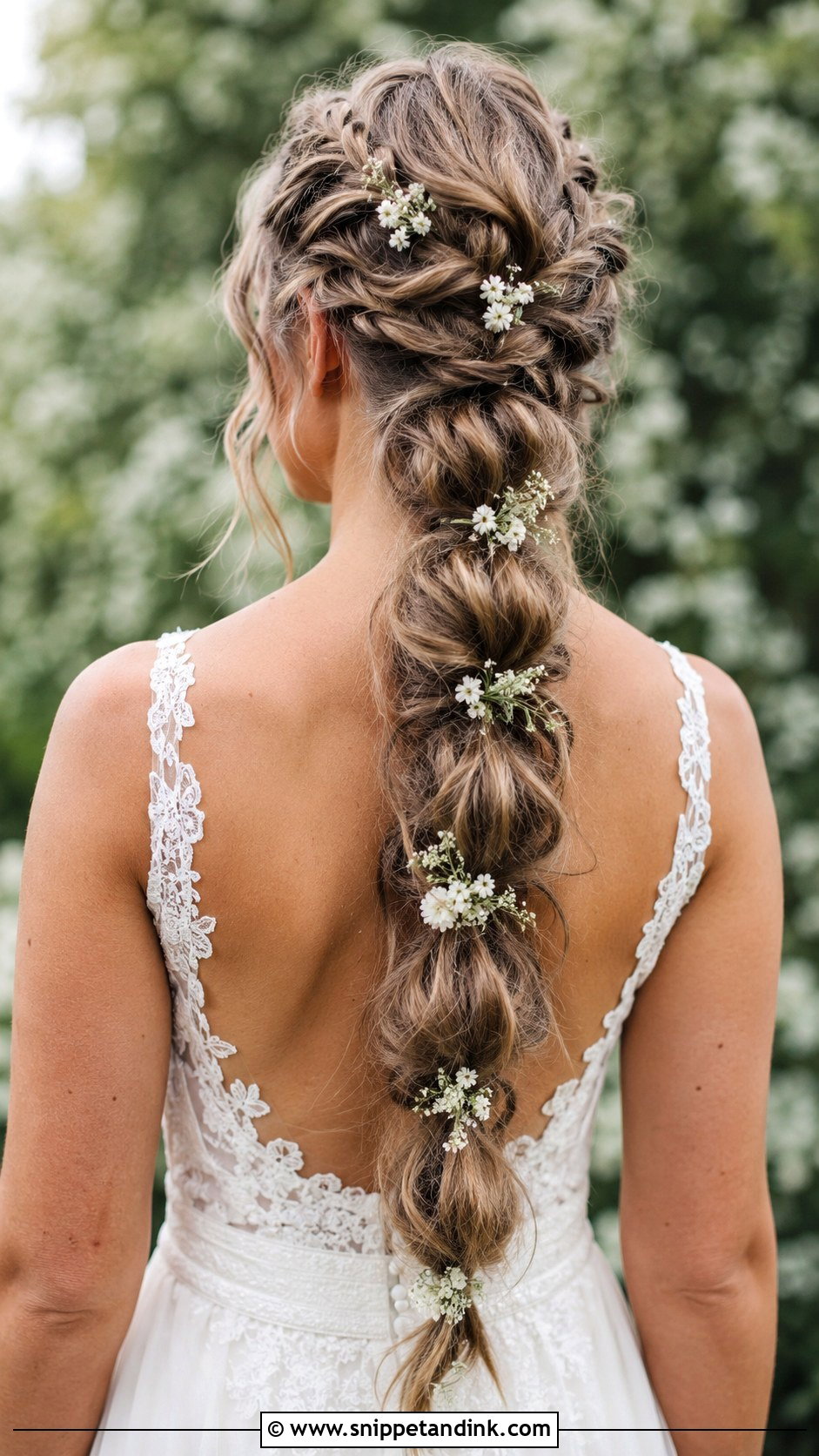
Bubble braids aren’t strictly Viking; they’re a modern trick. You tie small elastics down a ponytail at even spaces and gently tease each section out into a round puff. I use clear elastics and space them about two fingers apart, any closer and the bubbles look cramped. They’re fast and grip well on slippery hair that won’t hold a traditional plait. Tiny flowers or beads between the bubbles, plus a circlet, pull the look back toward the Norse theme.
19. Viking Bridal Hair With Greenery
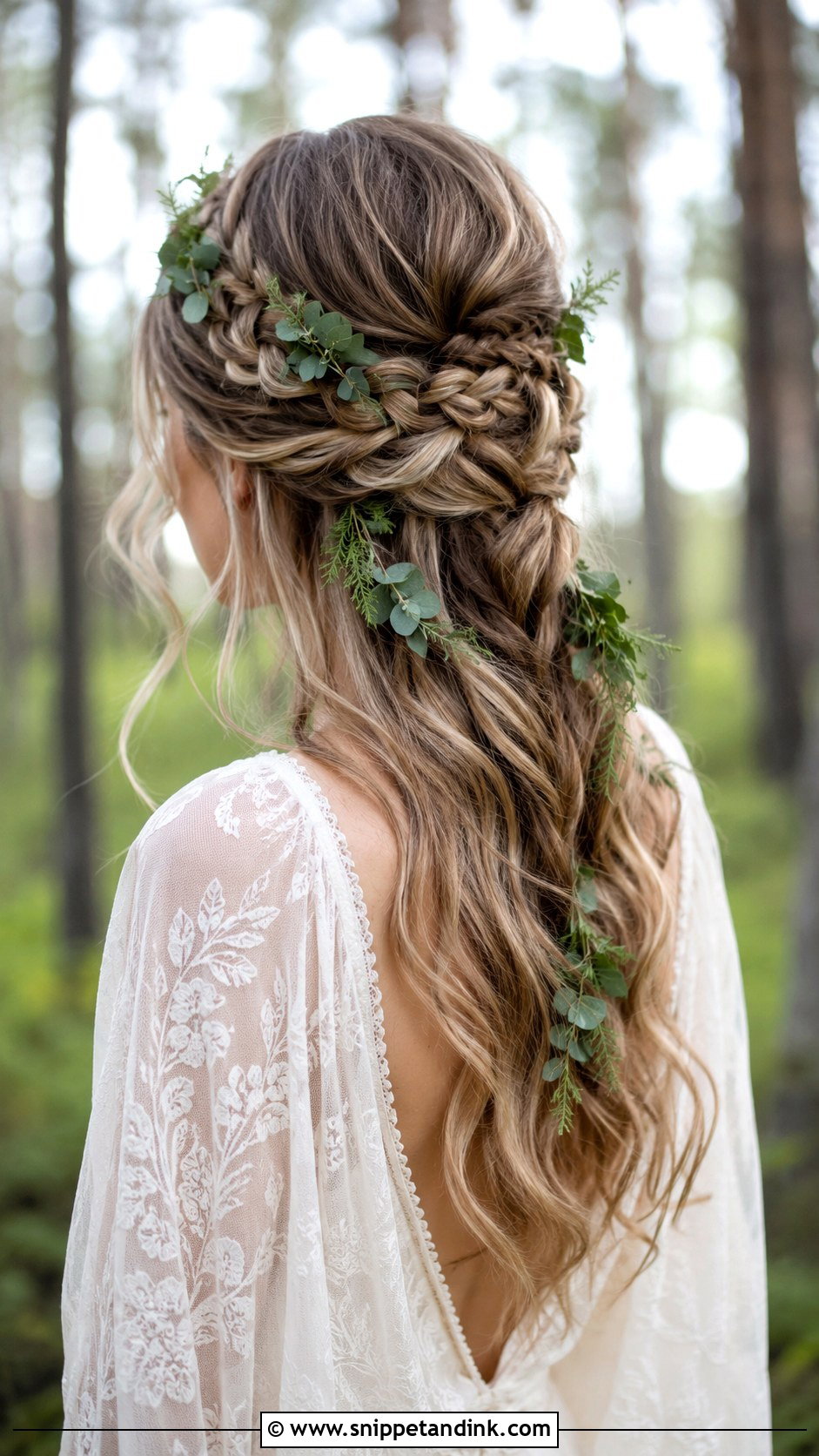
Woven greenery brings the forest straight into the hair. Eucalyptus, ferns and ivy work through braids with very little wiring. Eucalyptus holds up best out of water; ferns can curl at the edges in heat, so I add them as late as possible. Keep sprigs small, two or three leaves each, otherwise the greenery hides the braid work. It sits well with braided crowns, half-up styles and loose waves, and it feels at home in woodland ceremonies.
20. Double Braid Viking Bridal Look
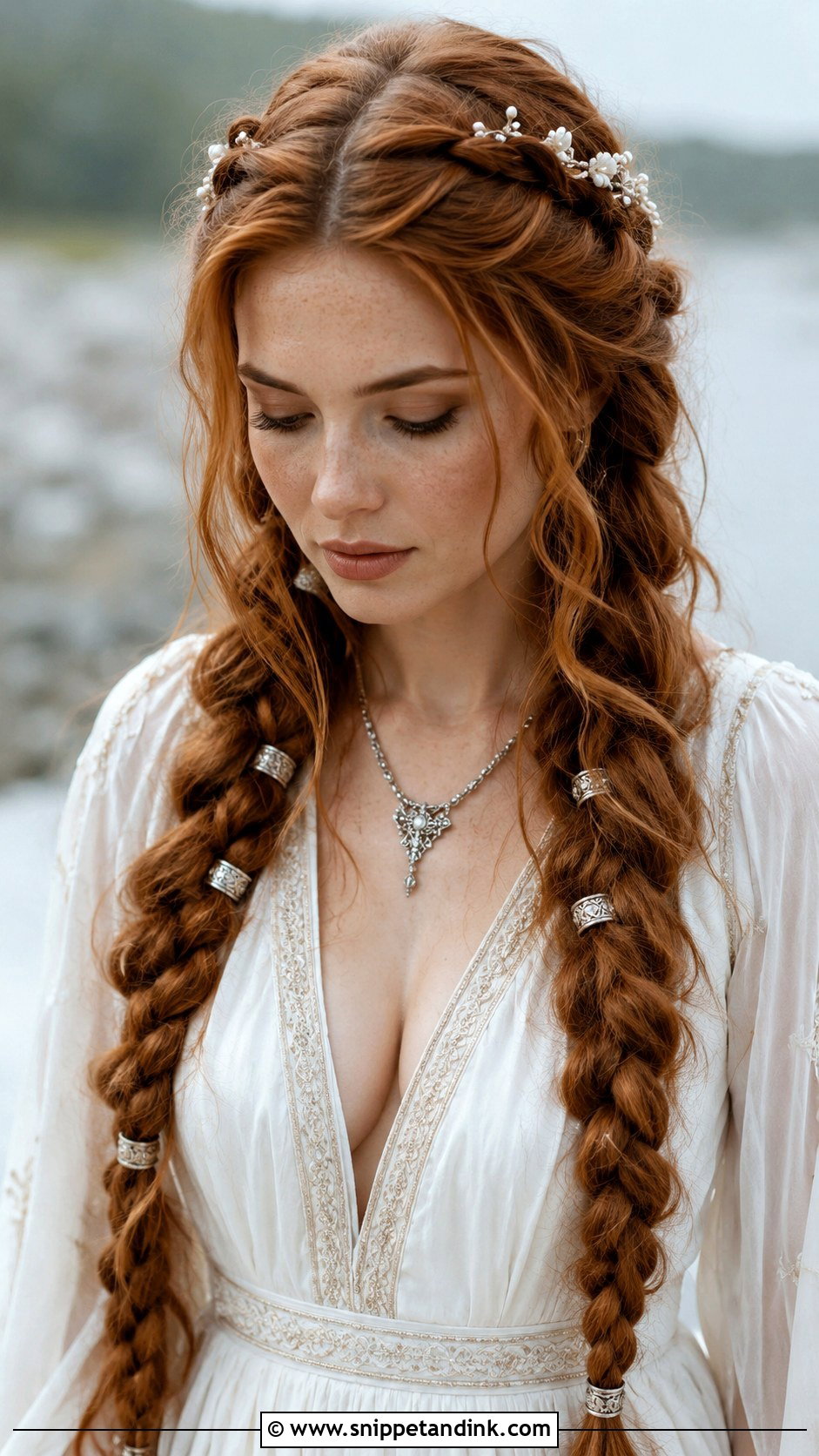
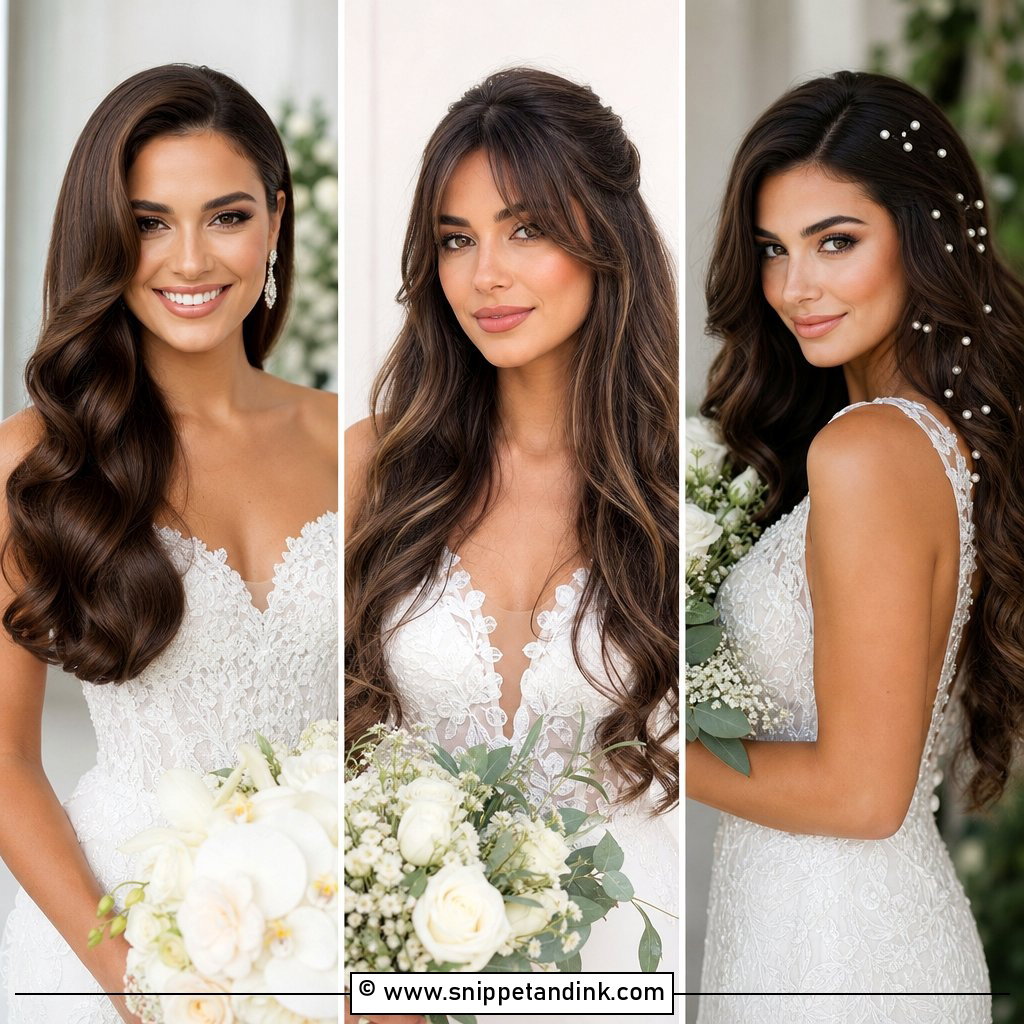
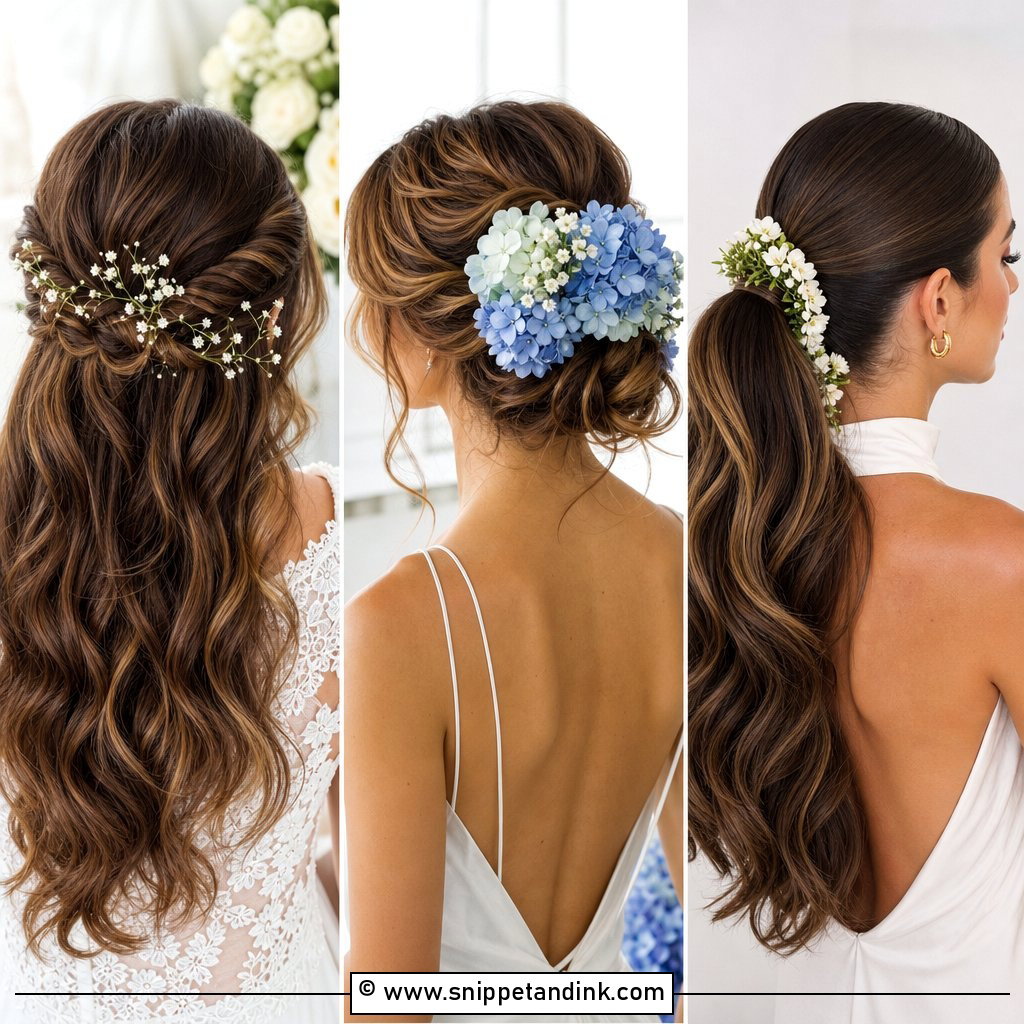
Two thick braids, one on each side, start near the temples and fall down the back or over the shoulders. Symmetry is the point, so I part with a tail comb and check the line in a mirror from behind before braiding. It’s practical and comfortable for a long day with no pins pressing anywhere. Loosen the braids for volume and add beads, cuffs or small flowers. Uneven density is the usual problem; if one side is thinner, I braid it slightly tighter so they match.
21. Viking Bridal Updo With Braided Crown
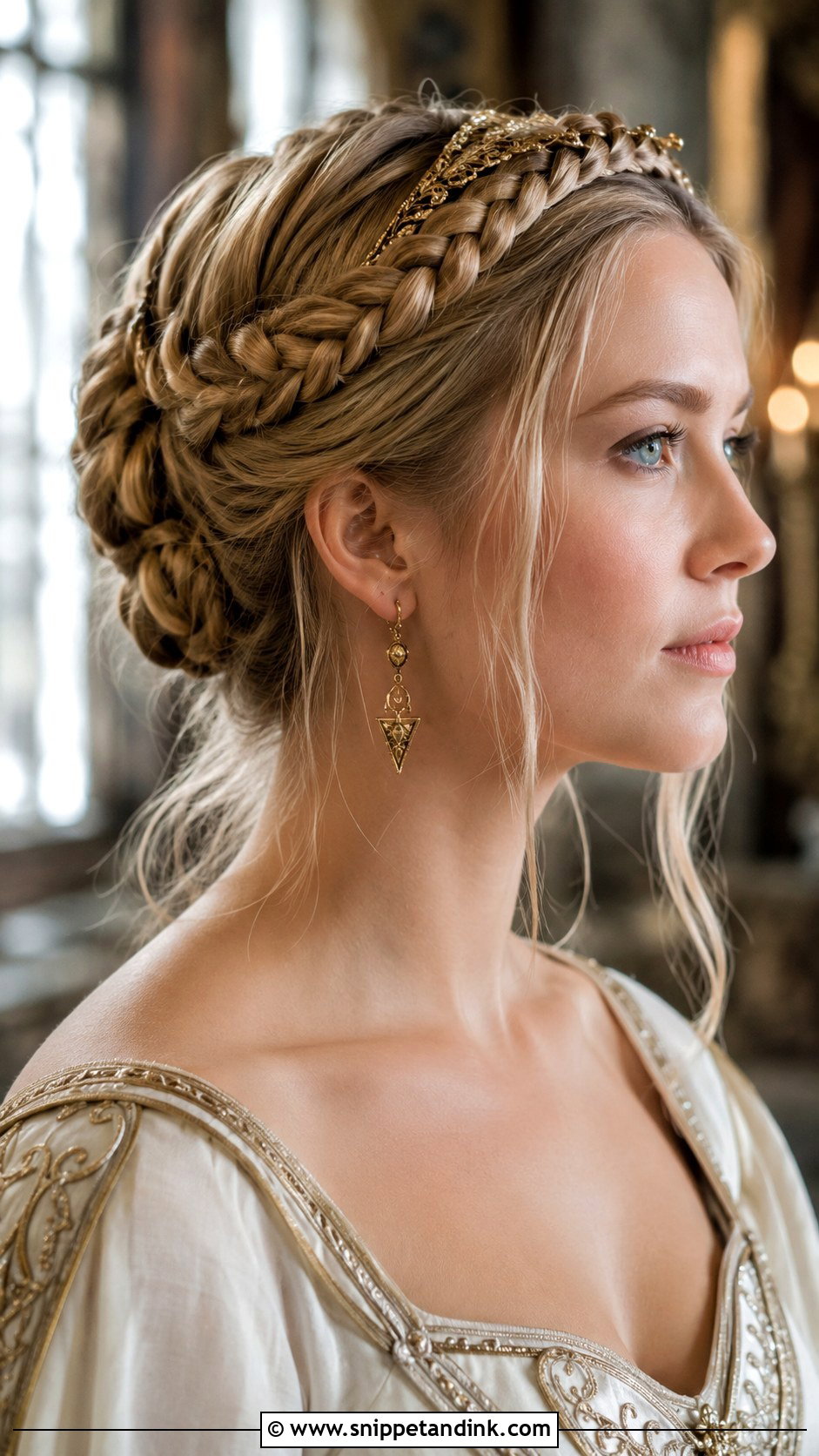
An updo crowned with a woven braid gives the most regal presence of all. The length goes into a polished bun at the back while a separate braid circles the head, and I always braid the crown first, then build the bun into the space below it. A circlet sits well on top. Soft tendrils around the face stop it looking stern. It suits grand venues and historic halls and holds steadily from the aisle to the last dance.
22. Loose Viking Braids With Curls
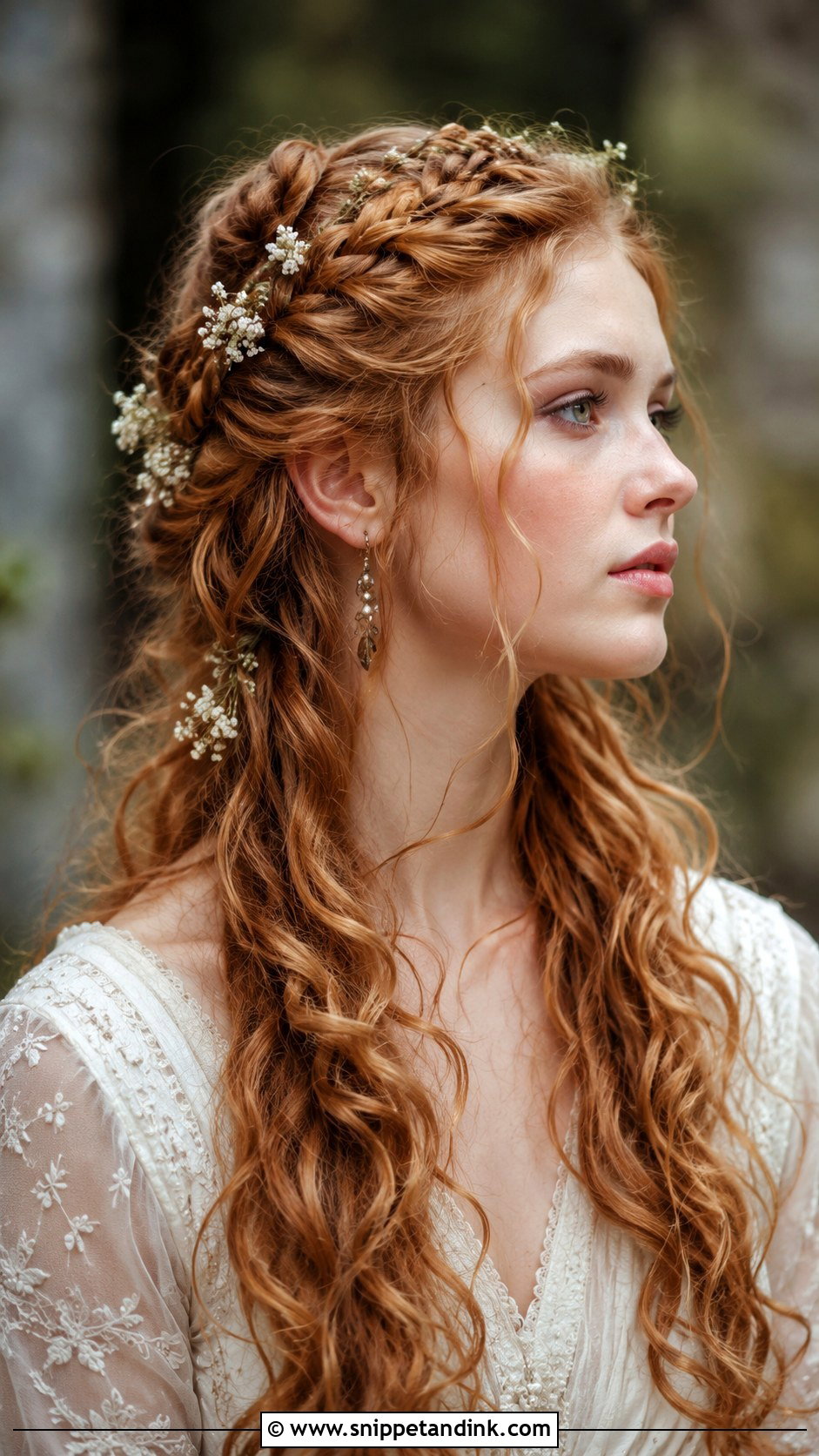
Soft curls with a few loose braids at the crown give structure on top and freedom below. The braids carry the look if the curls fall, which is why I like this on hair that doesn’t hold a wave. I curl in medium barrels and leave the curls slightly undone, then weave tiny flowers or beads into the braids. It sits easily at beach, forest and garden weddings. Expect to give it a quick finger-comb before photos in the afternoon.
23. Viking Bridal Hair With Wheat Crown
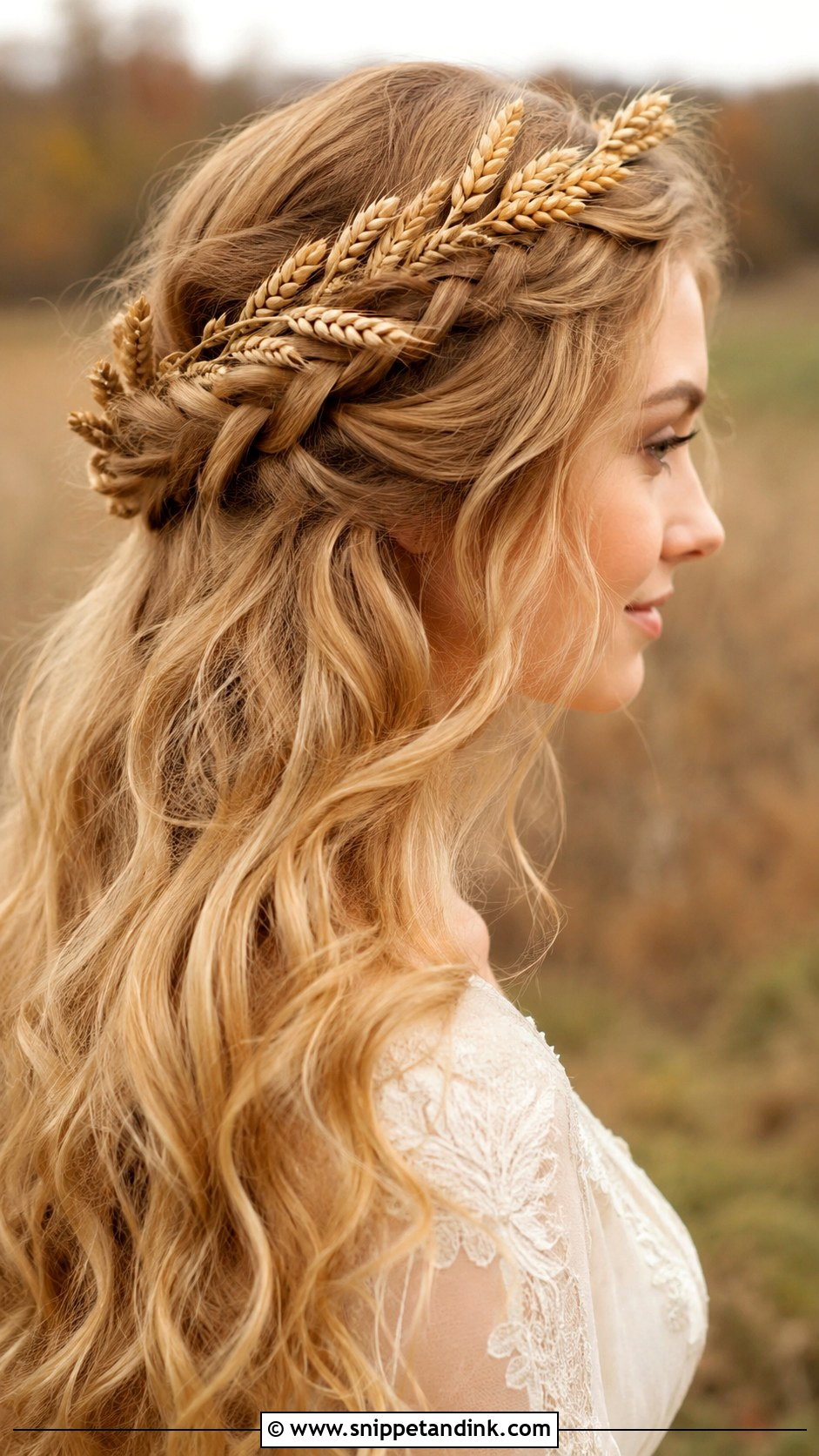
A wheat crown carries real Viking meaning, a wish for fertility and a good harvest for the new household. A modern version weaves dried wheat stalks into a halo above braids or waves. Dried wheat is brittle, so I ask the florist to wire it onto a soft band rather than threading stalks into the hair, where they snap. The golden colour warms skin in photos. Fall and harvest-themed weddings suit it best. If you have hay fever, test it at the trial; dried grains can shed.
24. Cornrow Style Viking Braids for Brides
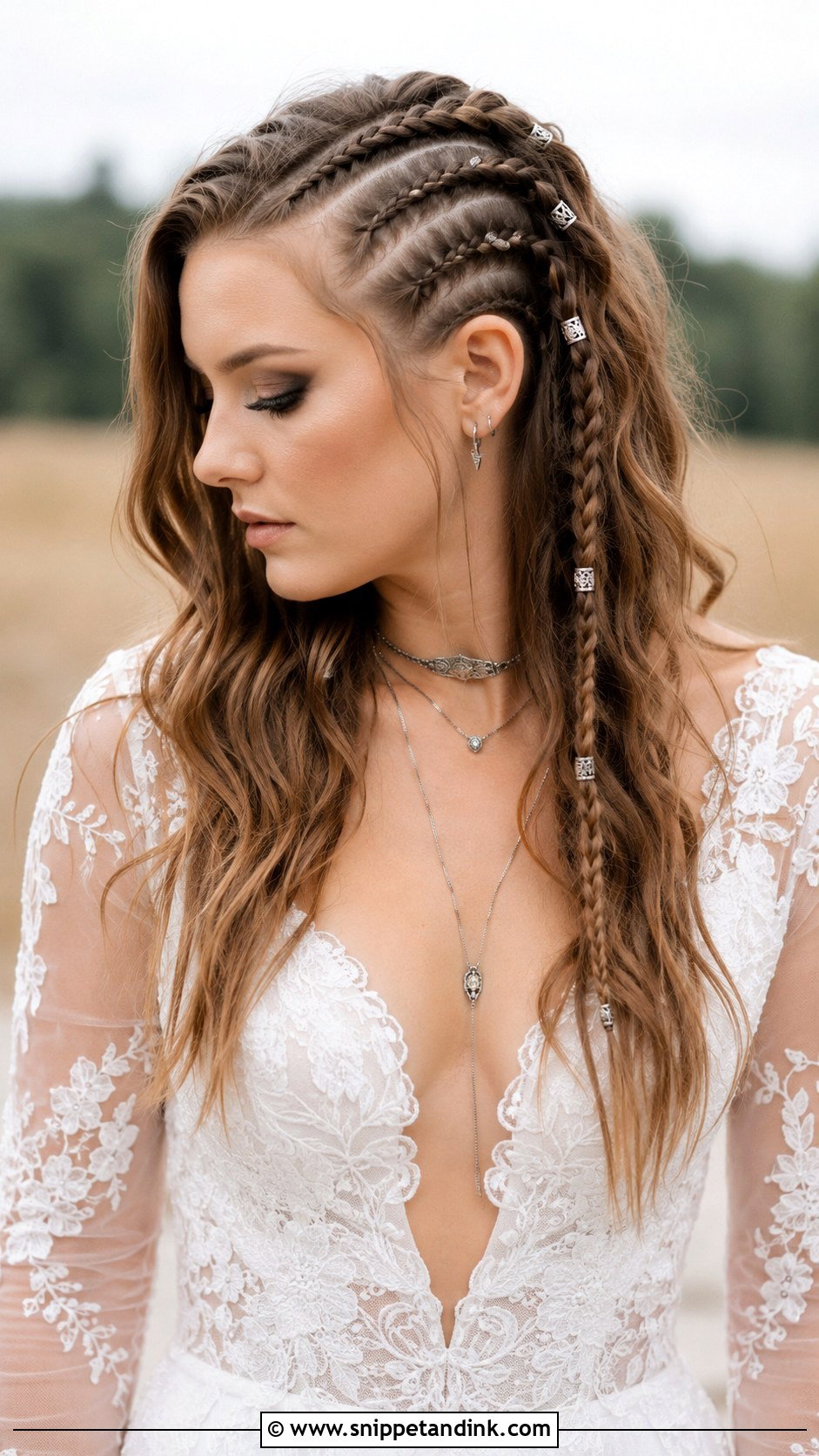
Tight, scalp-close braids in neat rows give a bold, structured look before flowing into loose lengths or a ponytail. Inspired by Viking warrior styles, they read as confident from across a room. These need a skilled braider and time, and coarse or tightly curled hair holds them best; very fine hair can show scalp between rows. Flowers, beads or cuffs soften them. The clean rows look sharp in photos and hold through any amount of dancing.
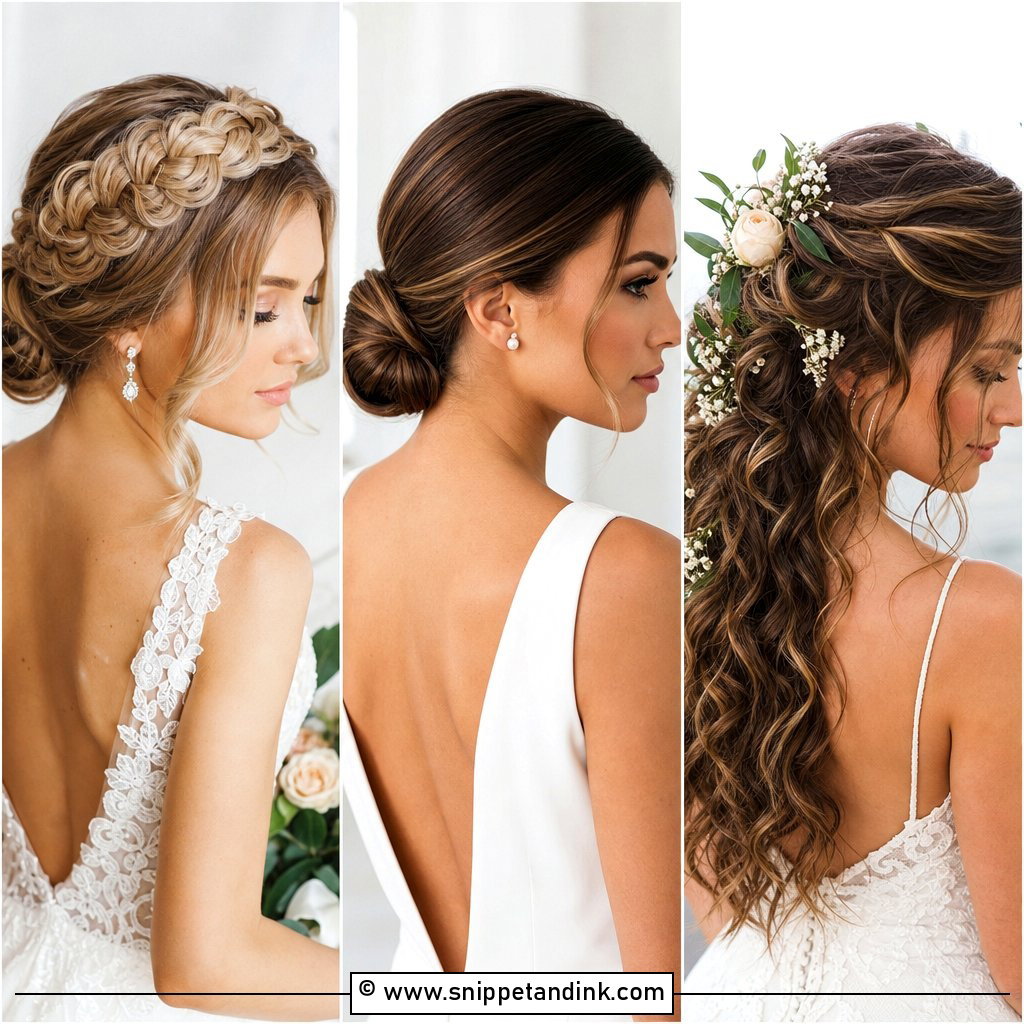
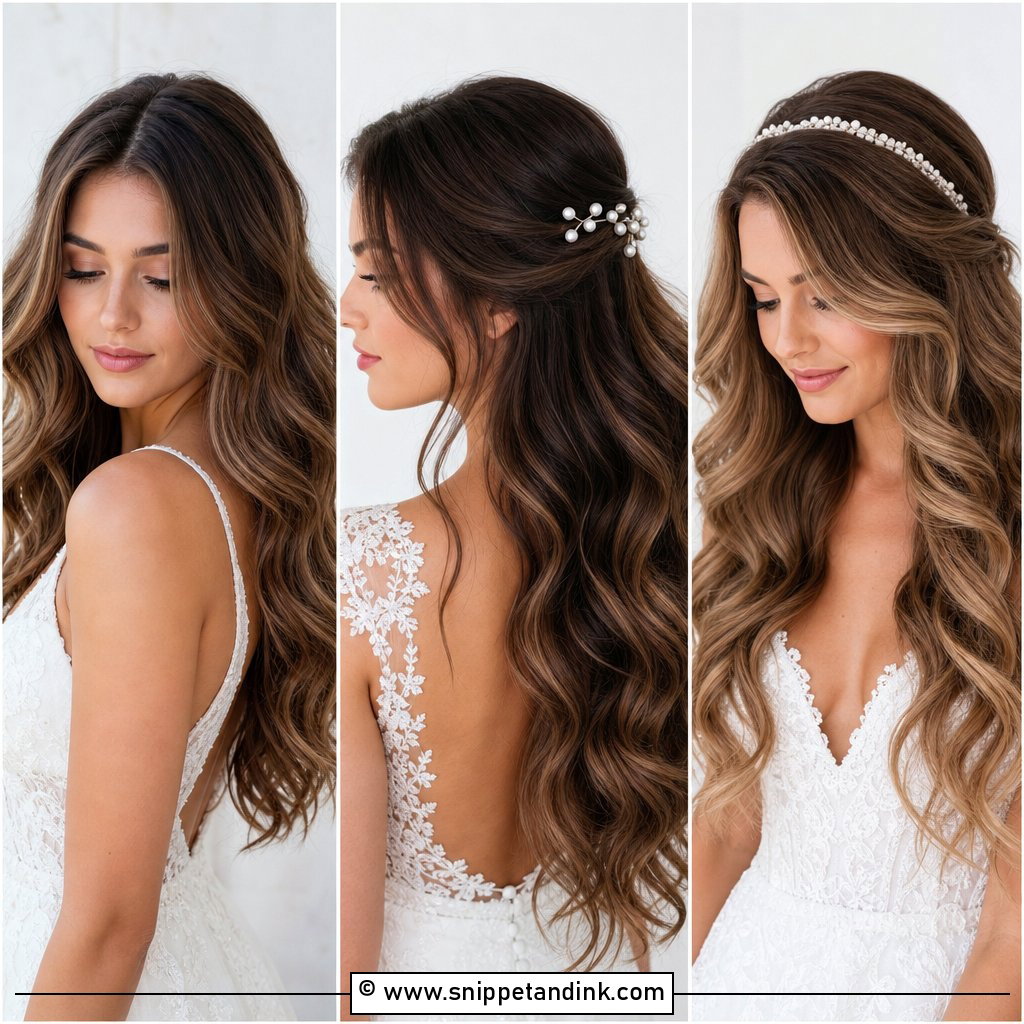
25. Romantic Viking Half-Up With Twists
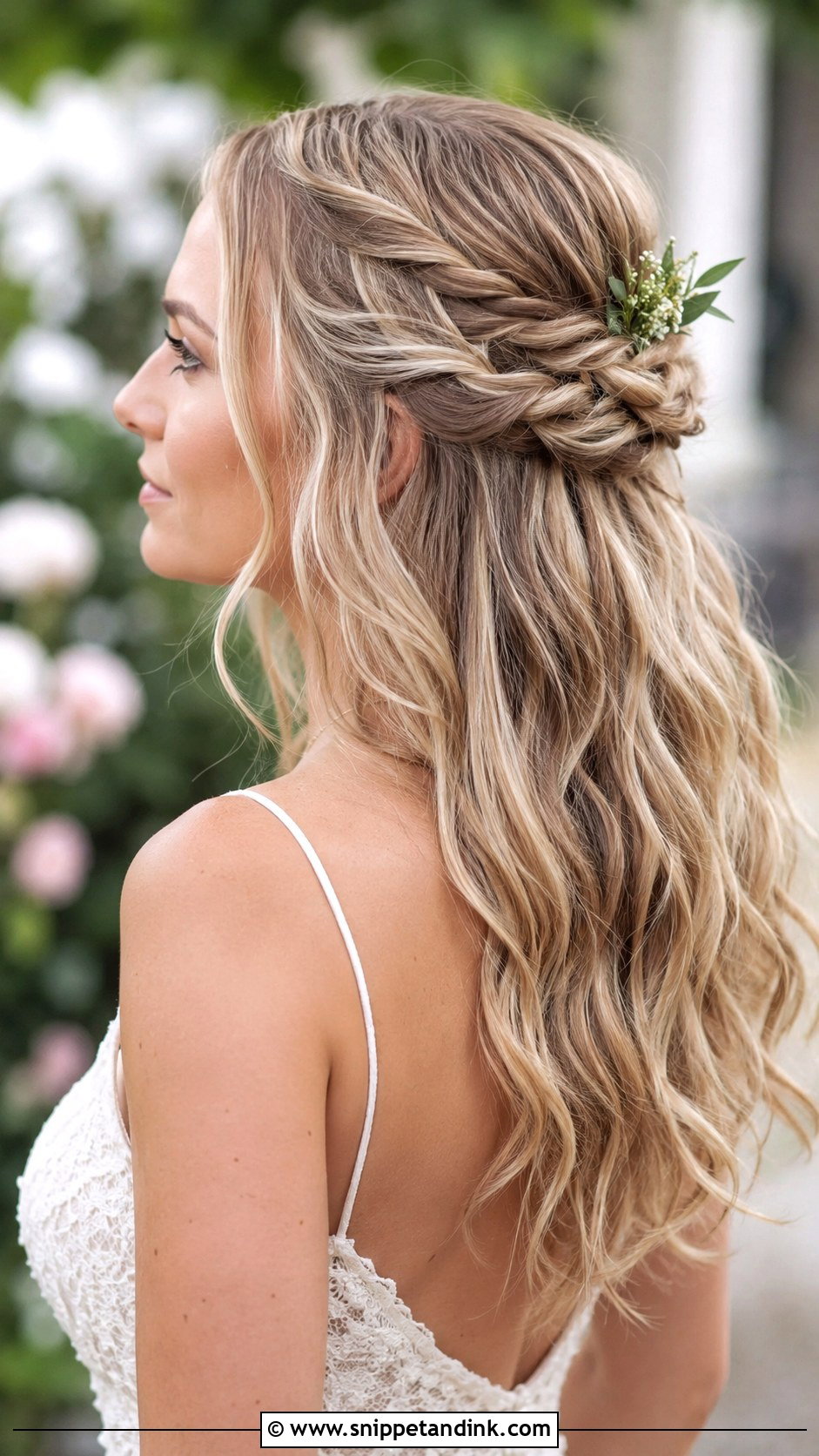
Twisting is gentler than braiding, and that’s the appeal here. Sections from each temple twist back and meet at the crown, held with a small cuff or pin, and the loose lengths below stay wavy. Twists unwind if they aren’t set, so I spray each one lightly and twist in the same direction on both sides. It frames the face, stays manageable and suits garden and forest ceremonies. Greenery or a few flowers finish it. This is my choice for a bride who wants just a hint of the Norse look.
How Heavy Is Too Heavy for Beads, Cuffs and a Wheat Crown?
Norse accessories look delicate in pictures but some are surprisingly heavy. A solid metal circlet, a ring of cuffs and a dozen beads all hang from the same braids, and by mid-afternoon that weight pulls at the scalp. My rule is that the total load should feel unremarkable after the trial hour. If you notice it, you’ll be aching by the speeches.
- Choose hollow or plated beads and cuffs over solid ones wherever possible.
- Spread ornaments across several braids rather than loading one.
- Anchor circlets and crowns into small braids at the temples, never into loose hair.
- Keep a pair of spare bobby pins in your bag for each accessory.
Fresh flowers and dried wheat add little weight but can shed, wilt or snag. Ask your florist for a separate small box of extras, and let your maid of honour carry it.
Undoing Twenty Braids at Midnight Without Losing Hair
Taking a braided style out takes patience. Remove every pin first, counting them if you can, then unpick beads and cuffs before touching the braids. Pulling braids apart with pins still inside is how hair snaps. Work from the ends upward, and use your fingers rather than a brush.
Once the braids are out, the hair will be crimped and full of product. Spray it with a little leave-in conditioner or detangler, then brush gently from the ends. Wash it the next day rather than going straight to bed with wet hair, which tangles badly. If you have tight scalp braids or cornrows, take them out within a day or two so your edges get a rest.
Your Neckline and Your Venue Should Pick the Braid
Start with your dress. A high neck wants hair up and away, an open back wants a side braid or a low bun that leaves the spine visible, and a long veil wants something low enough to anchor the comb. Then think about the venue: wind on a cliff, humidity at a lake, or heat in a barn. Pick the braid that copes with both and add the beads, wheat or circlet last. Bring photos of two styles to your trial, wear the real accessories, and walk around for an hour before deciding.
You'll Like These Ideas:


Leave a Reply