
A braid is one of the few bridal styles that gets more secure as the day goes on. Pinned curls drop and loose waves relax, but a braid that was built with the right tension mostly stays where I put it. It can soften a polished bun, give loose waves some structure, or hand a veil comb something solid to grip. The braids I’m asked for now are softer and more lived-in than the tight, glossy plaits of a few years back. Below are fifteen versions I’d happily do for a garden, ballroom, beach or courthouse wedding, with notes on what each one needs from your hair.
Length and Density Matter More Than the Photo Shows
Most braid disappointment at a trial comes down to length and density, not skill. An inspiration picture shows the finished shape, but it rarely shows how much hair went into it or whether wefts were hiding underneath. Before you fall for one look, here’s roughly what each style asks of you.
- Crown and halo braids need enough length to travel around the head, so past the shoulders is usually my minimum. Shorter hair can fake it with two braids pinned to meet at the back.
- Fishtail and long side braids show their pattern on hair that reaches mid-back. On shoulder-length hair the weave looks crowded.
- Dutch, French and rope braids leading into a bun are the most forgiving. Even chin-to-shoulder length works if the braid stays near the hairline.
- Waterfall braids rely on the loose hair under them, so they need enough length for waves to fall.
Texture changes the picture too. Freshly washed, silky hair slides out of a braid within hours, which is why I ask brides to wash the night before and skip heavy conditioner on the lengths. Curly and coily hair grips a braid all day, though it may need stretching first if you want a smoother pattern. If you’re not sure, ask at the trial how many extension pieces your chosen style would take. The honest answer tells you a lot.
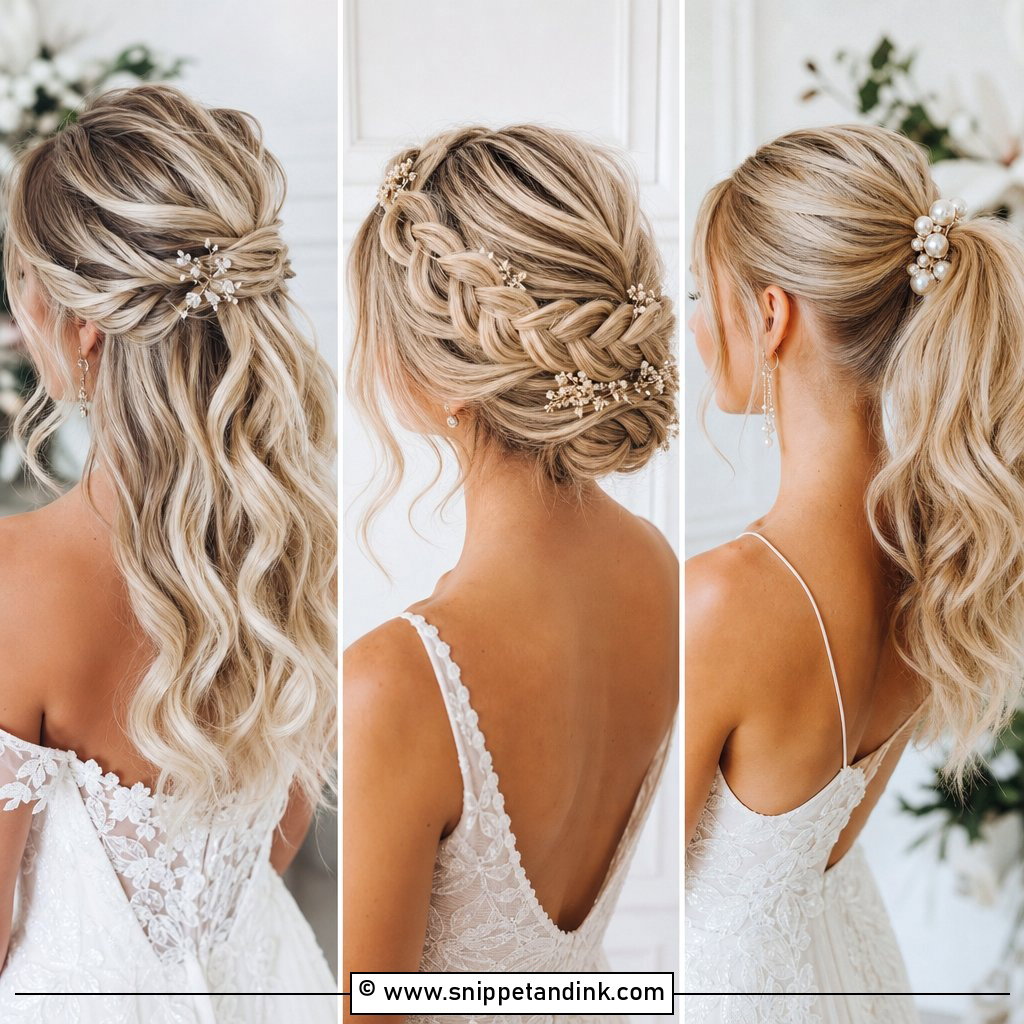
1. Braided Bridal Bun
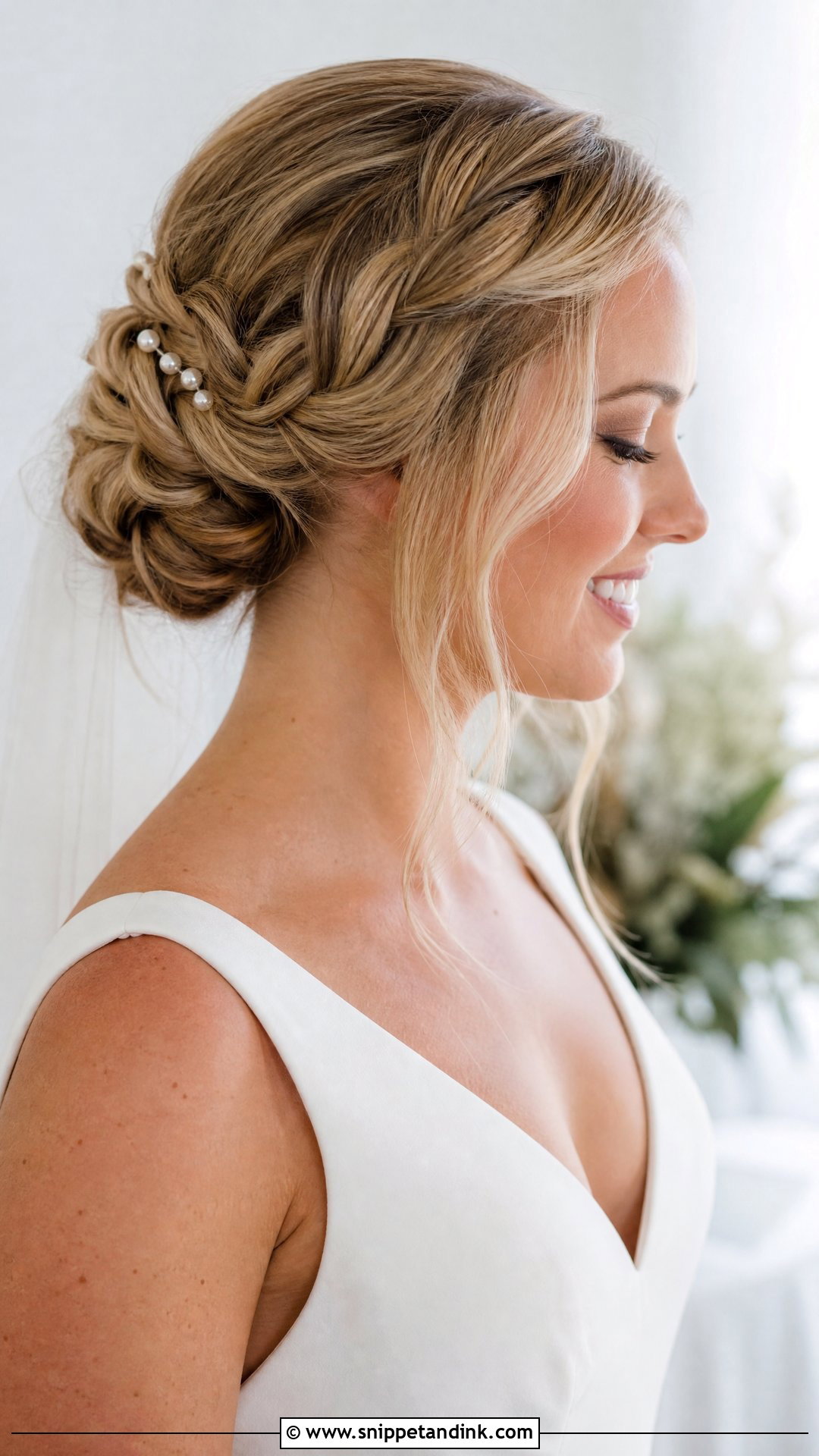
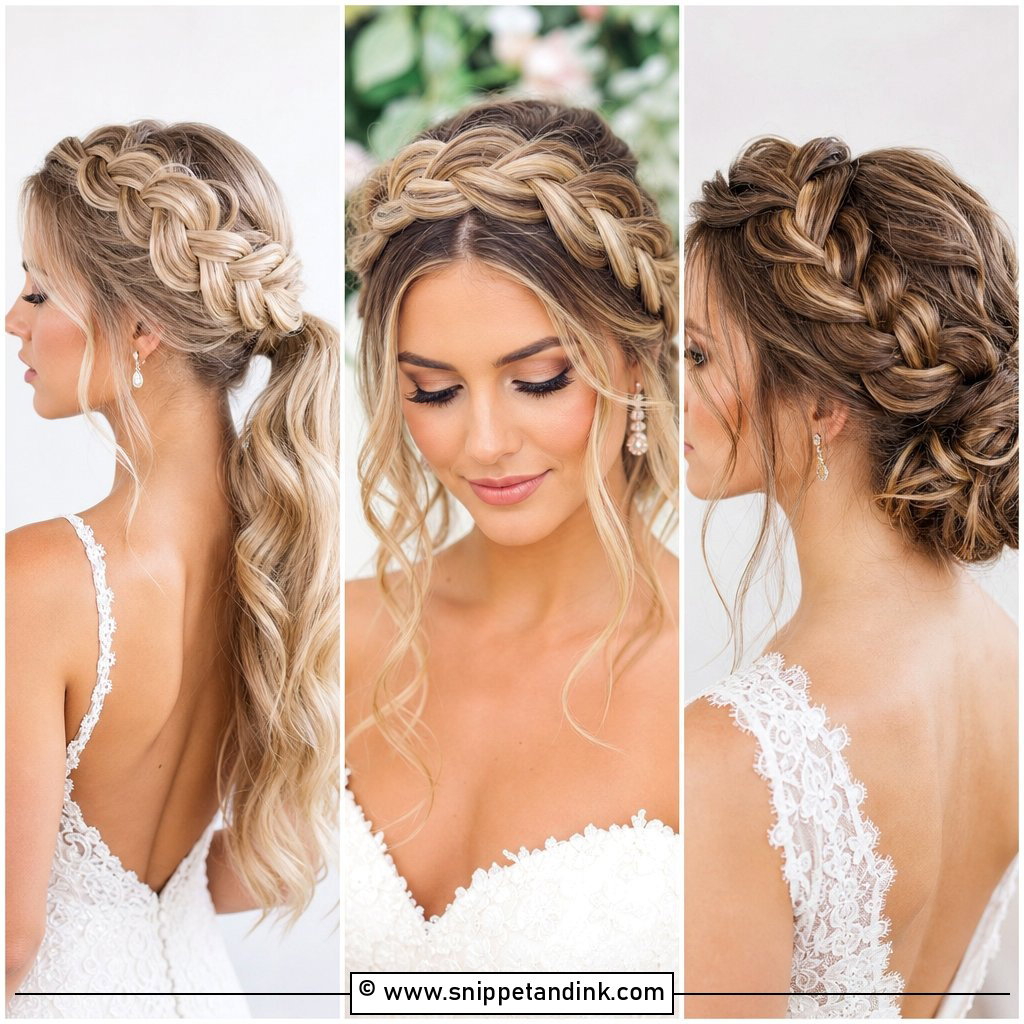
This is the braid I reach for when a bride wants an updo that won’t budge. The braid can wrap around the bun, feed into it, or sit across the crown, and each option changes how much hair the bun itself gets. Wrapping the braid around the base uses length, so on shoulder-length hair I’d feed it in instead. It sits well under a veil and keeps the neck clear on a hot day. On fine hair I usually add one or two clip-in wefts underneath, because a bun built from thin hair can look smaller in photos than it does in the mirror.
2. Half Up Braided Wedding Hair
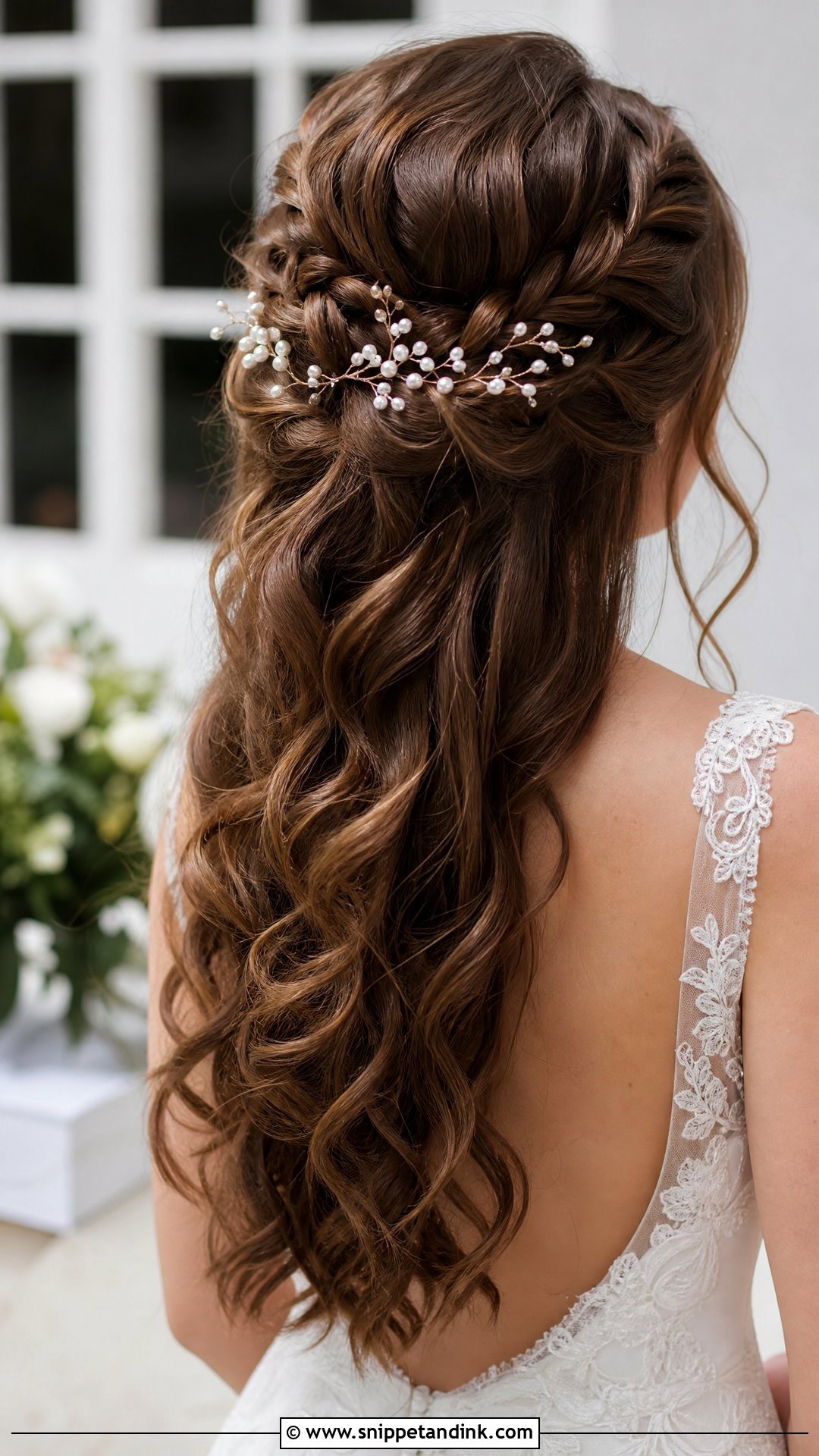
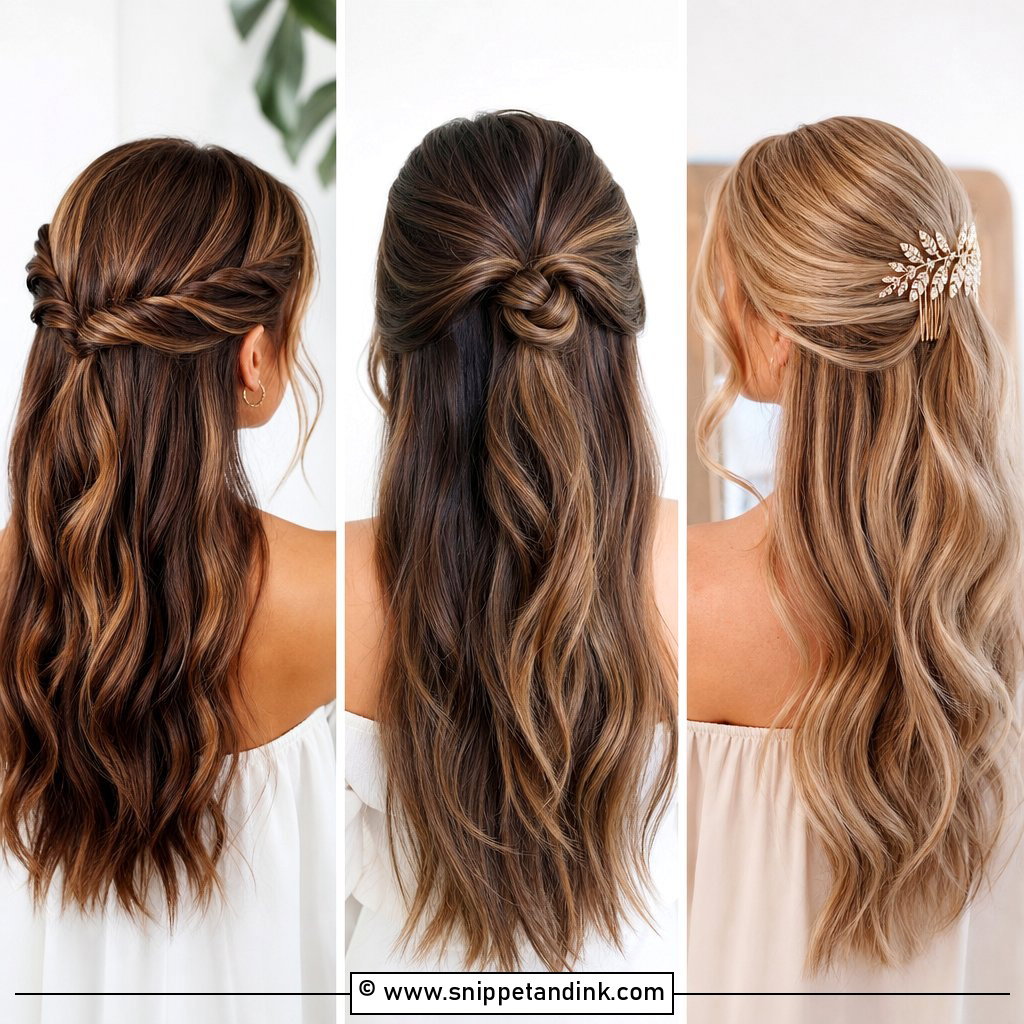
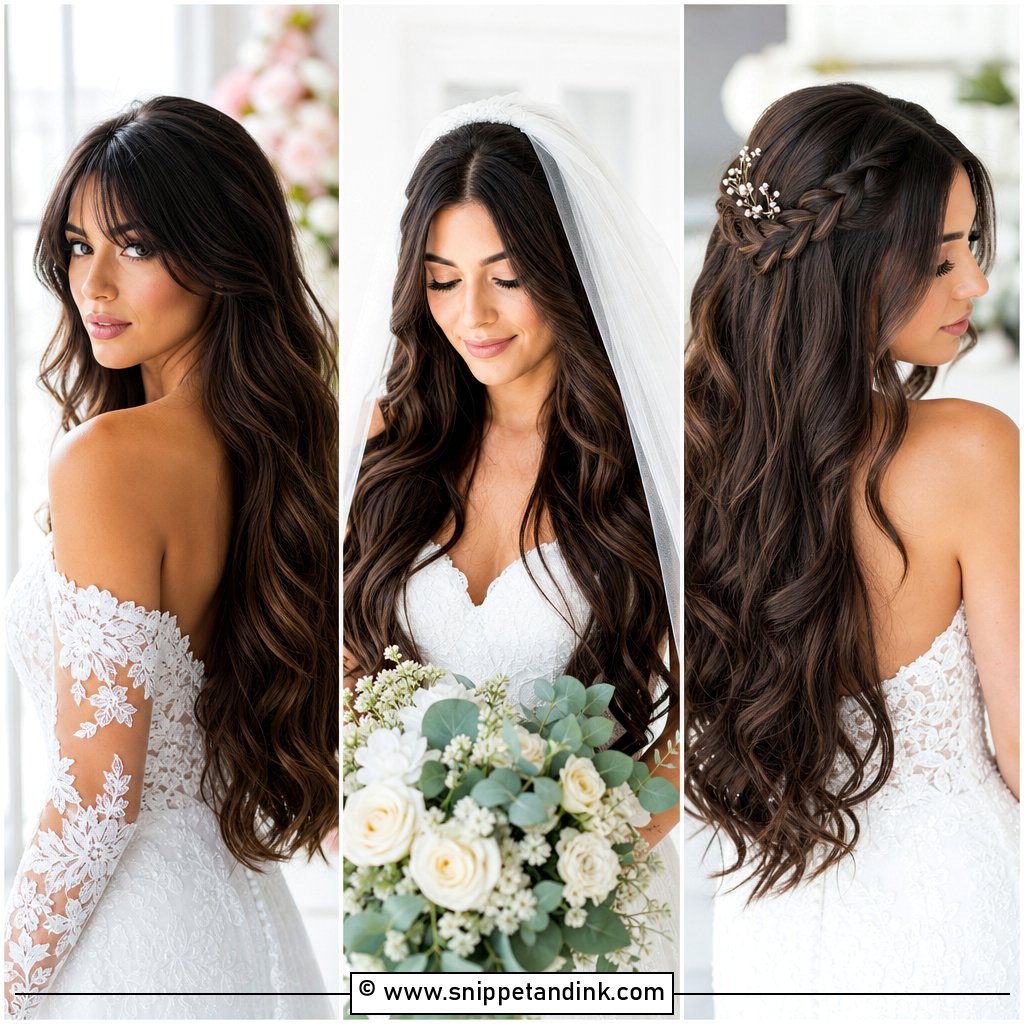
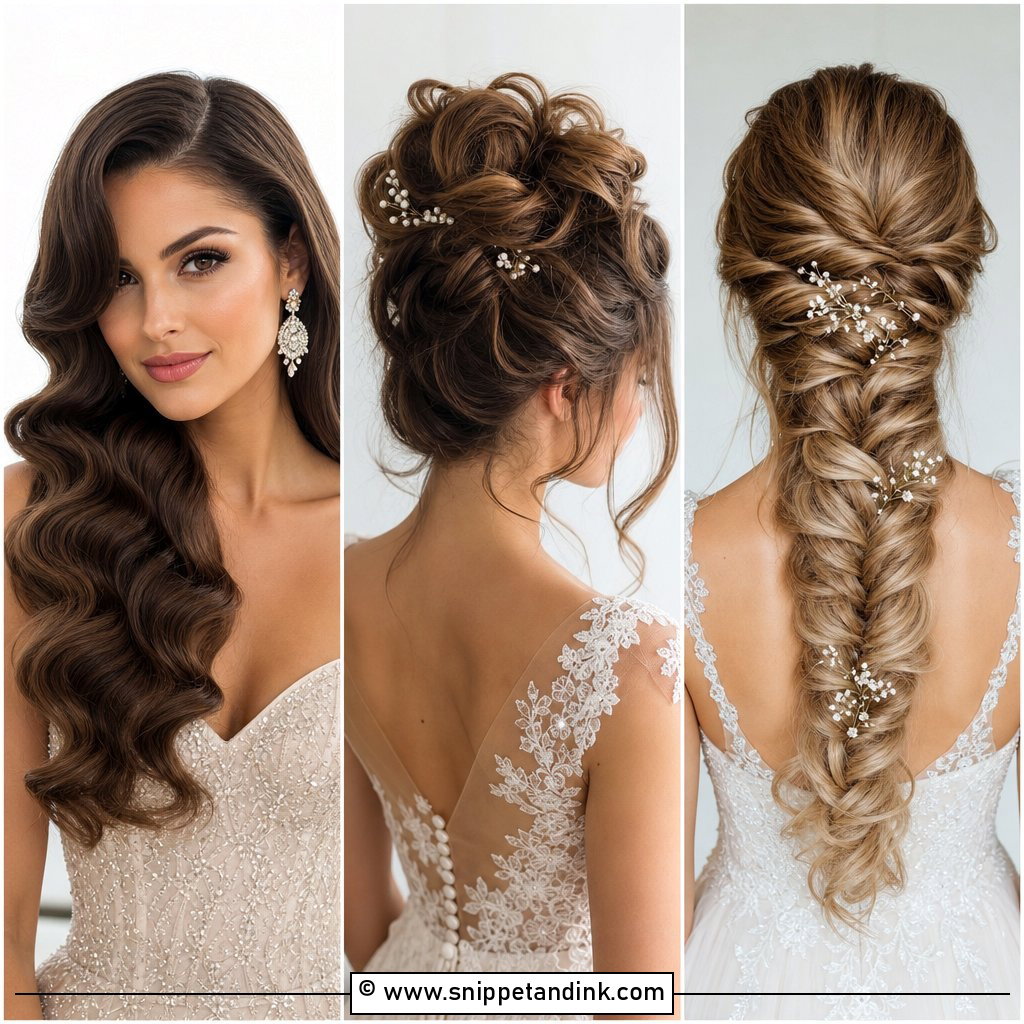
Half-up braiding gives you flowing hair with a bit of control around the face. I build the braid first, set it with pins hidden underneath, then curl the lengths, so the heat doesn’t loosen what I’ve already secured. Brushed-out waves or soft curls both sit nicely under it. The braid is also a good place to anchor a slim hair vine, since the pins can grip the woven sections instead of sliding on smooth hair. Keep the top lifted rather than flat; a tight half-up crown looks severe from the side.
3. Braided Crown Bride Hair
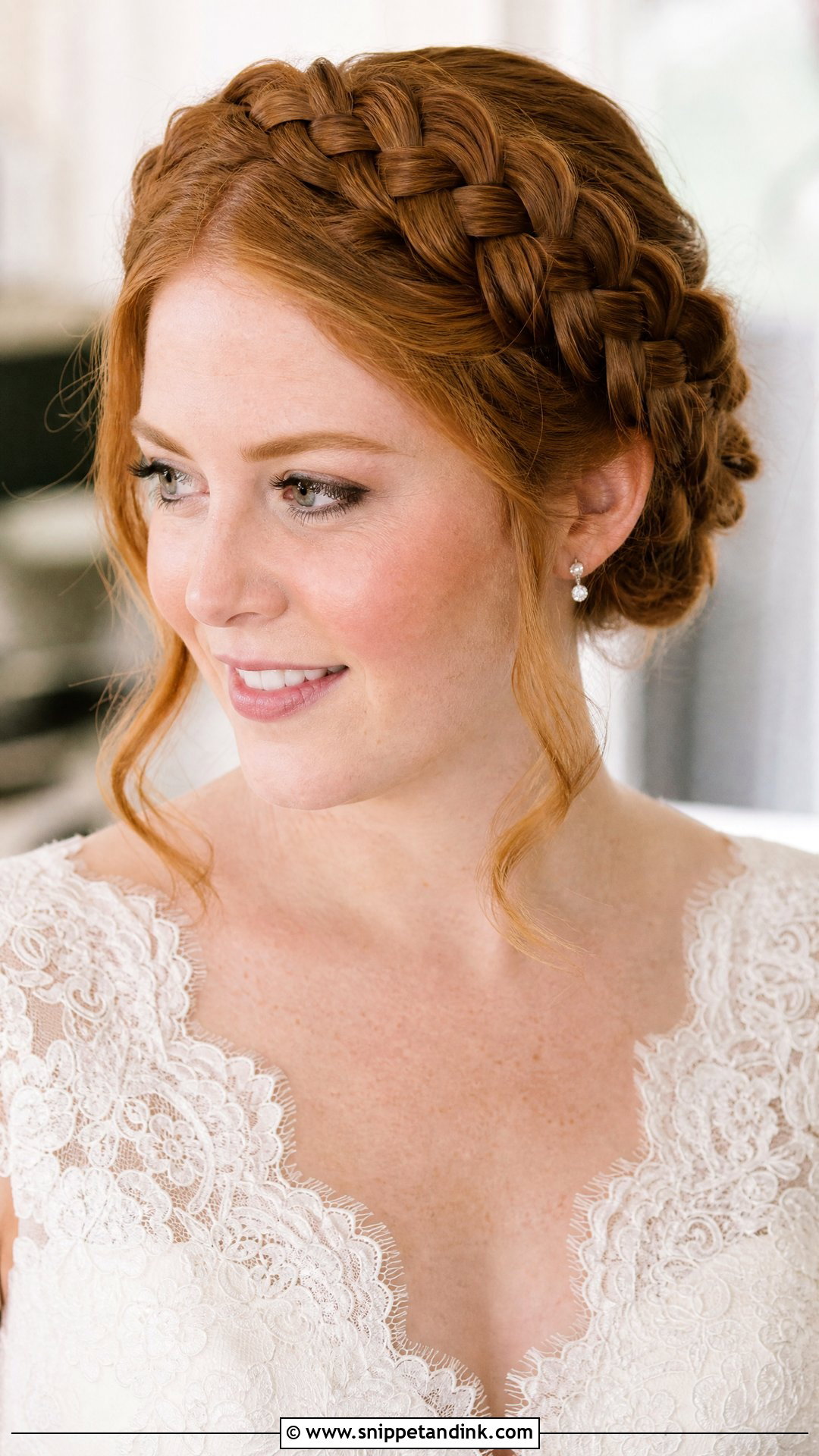
A crown braid wraps the head like a halo, and it’s the one I check most carefully for length before agreeing to it. To travel all the way around, the hair usually needs to sit past the shoulders, or I work two braids that meet and tuck at the back. It suits lace and delicate necklines because it keeps the eye at the face. Thick hair can carry it alone; finer hair often needs a few added pieces so the braid doesn’t look thin at the temples. I pull a couple of tendrils loose at the end so it reads soft rather than formal.
4. Side Braid Bridal Hair
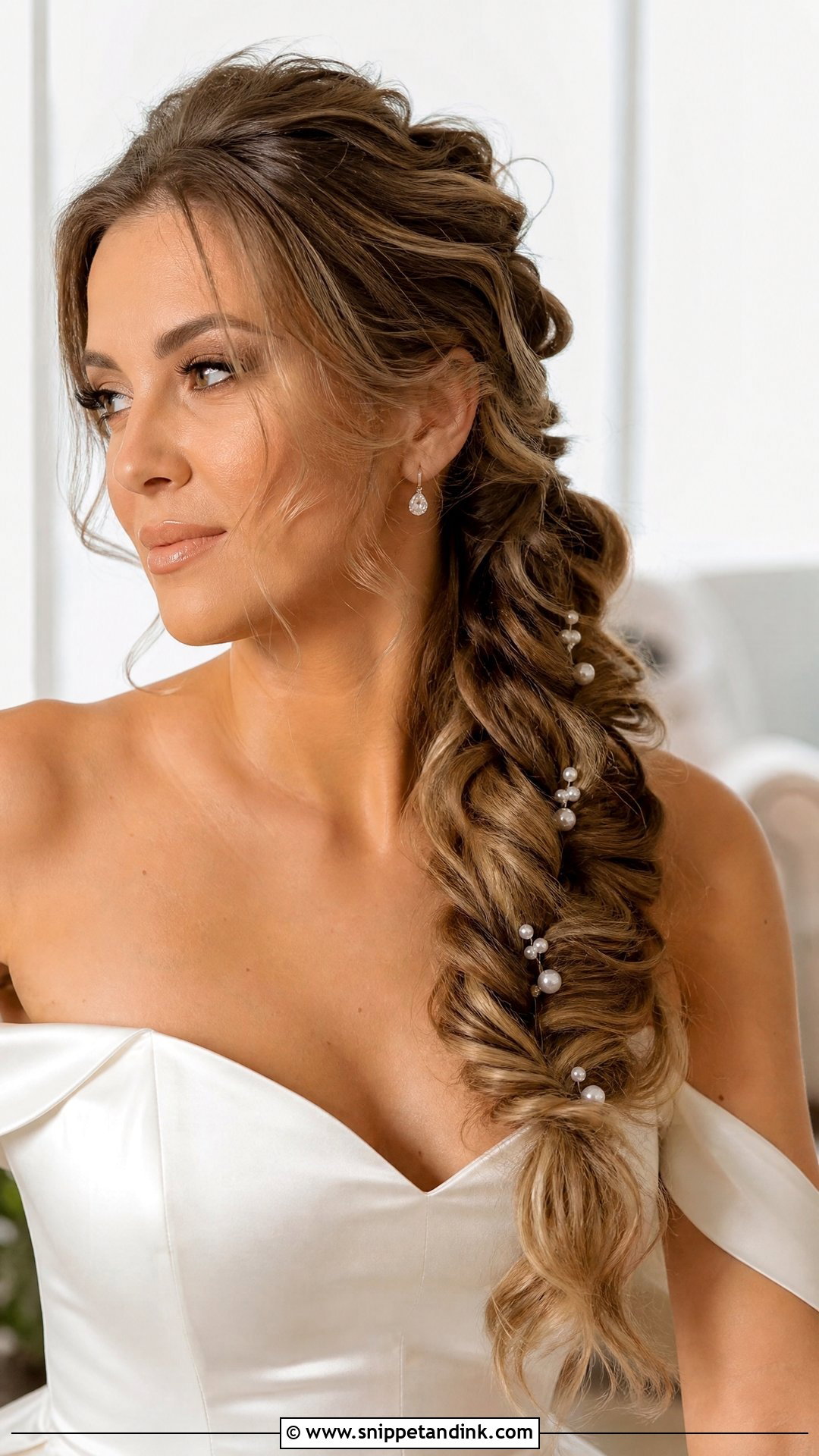
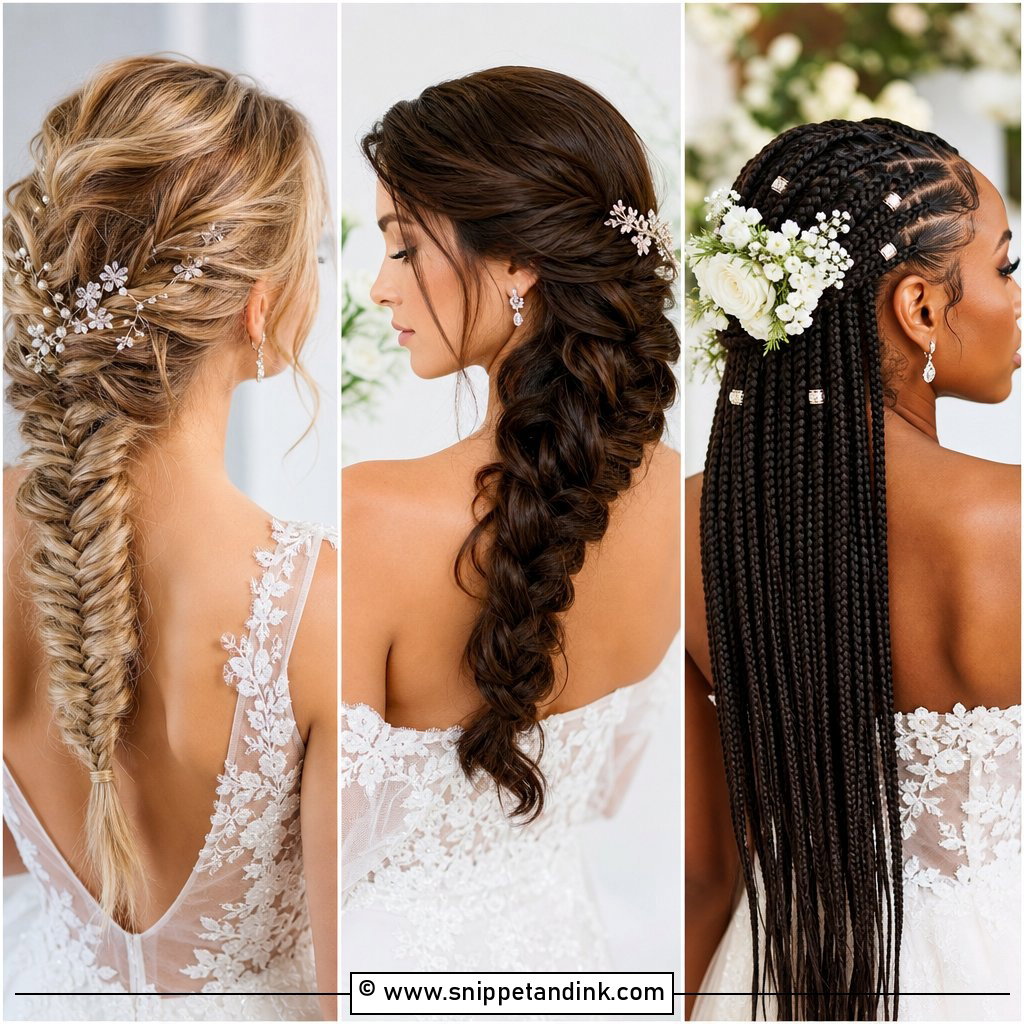
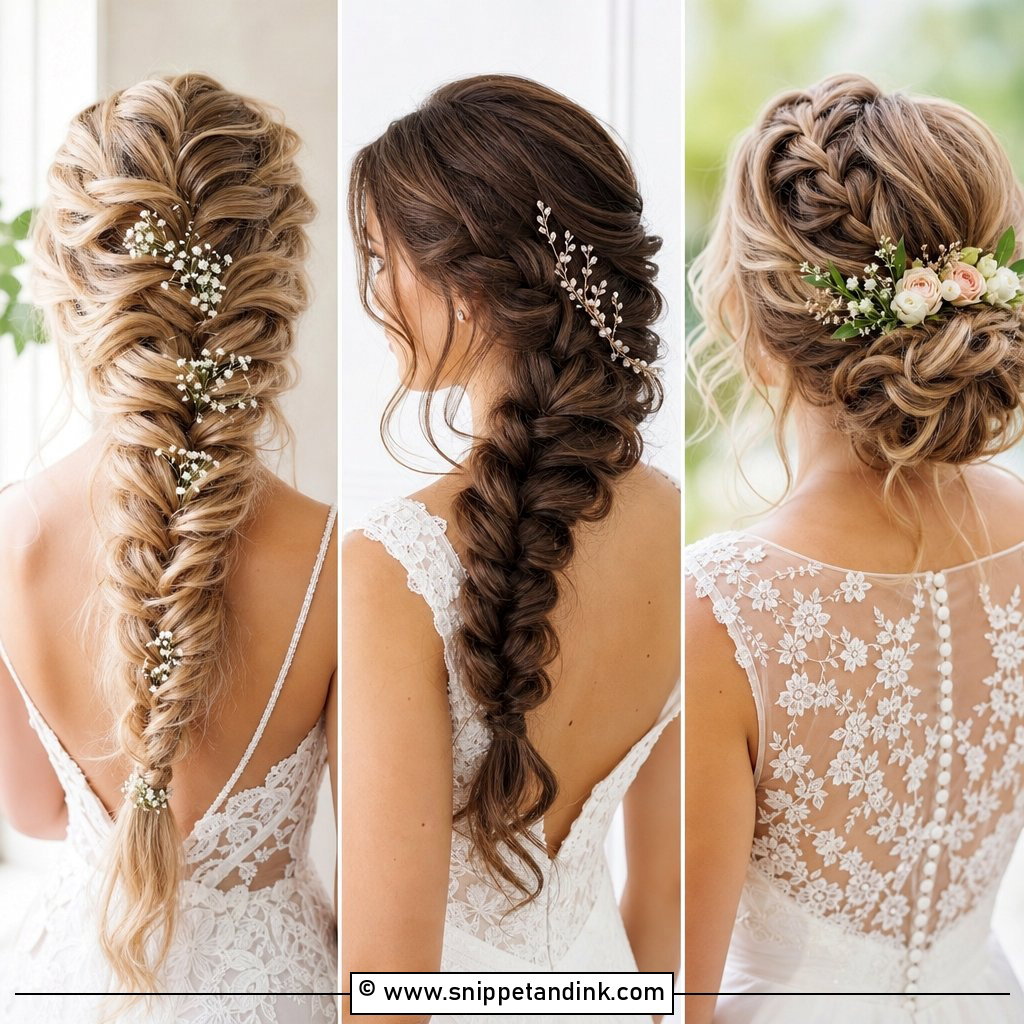
Most updos show their detail from the back, which is the side the guests see during the vows. A side braid puts it over the shoulder where you and the camera can see it. It can be a fishtail, Dutch, rope or plain three-strand, and the choice depends mostly on thickness: fishtail needs density to show its pattern. It sits nicely against strapless and off-the-shoulder necklines. My warning: a side braid moves when you hug and sit, so I secure the start of it behind the ear with crossed pins, not just at the elastic.
5. Fishtail Braid Wedding Hair
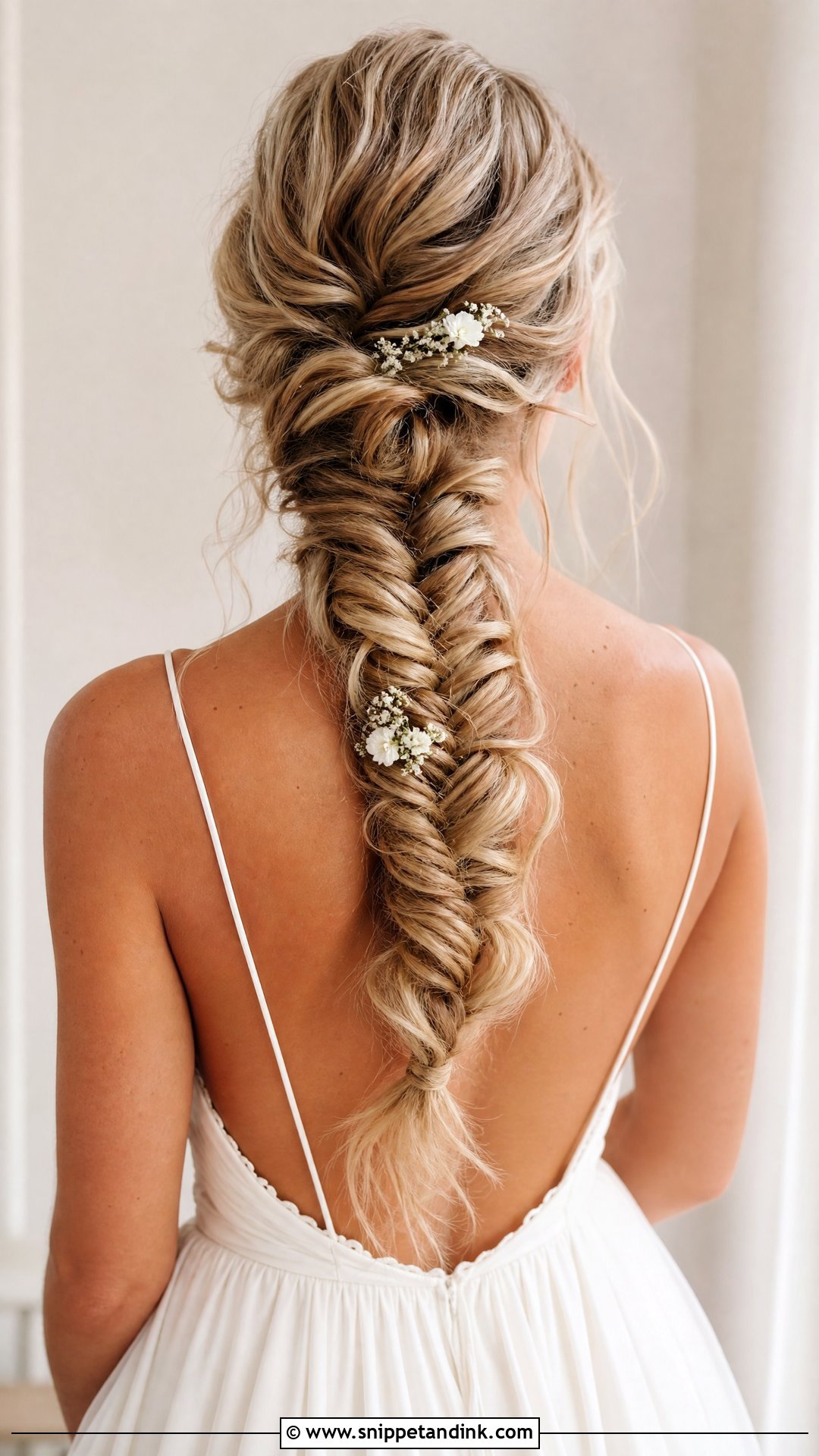
A fishtail is woven from two sections instead of three, so it builds that fine herringbone pattern without much bulk. It shows best on hair that reaches mid-back; on shorter hair the pattern gets cramped and reads like an ordinary plait. I gently pull the edges apart once it’s finished, which widens it and makes it look fuller in photos. On a humid beach day, though, a loosened fishtail can go fuzzy by evening, so I’d keep it a little tighter there and use a light finishing spray. Pearl accents work if the dress is plain.
6. Dutch Braid Bridal Updo
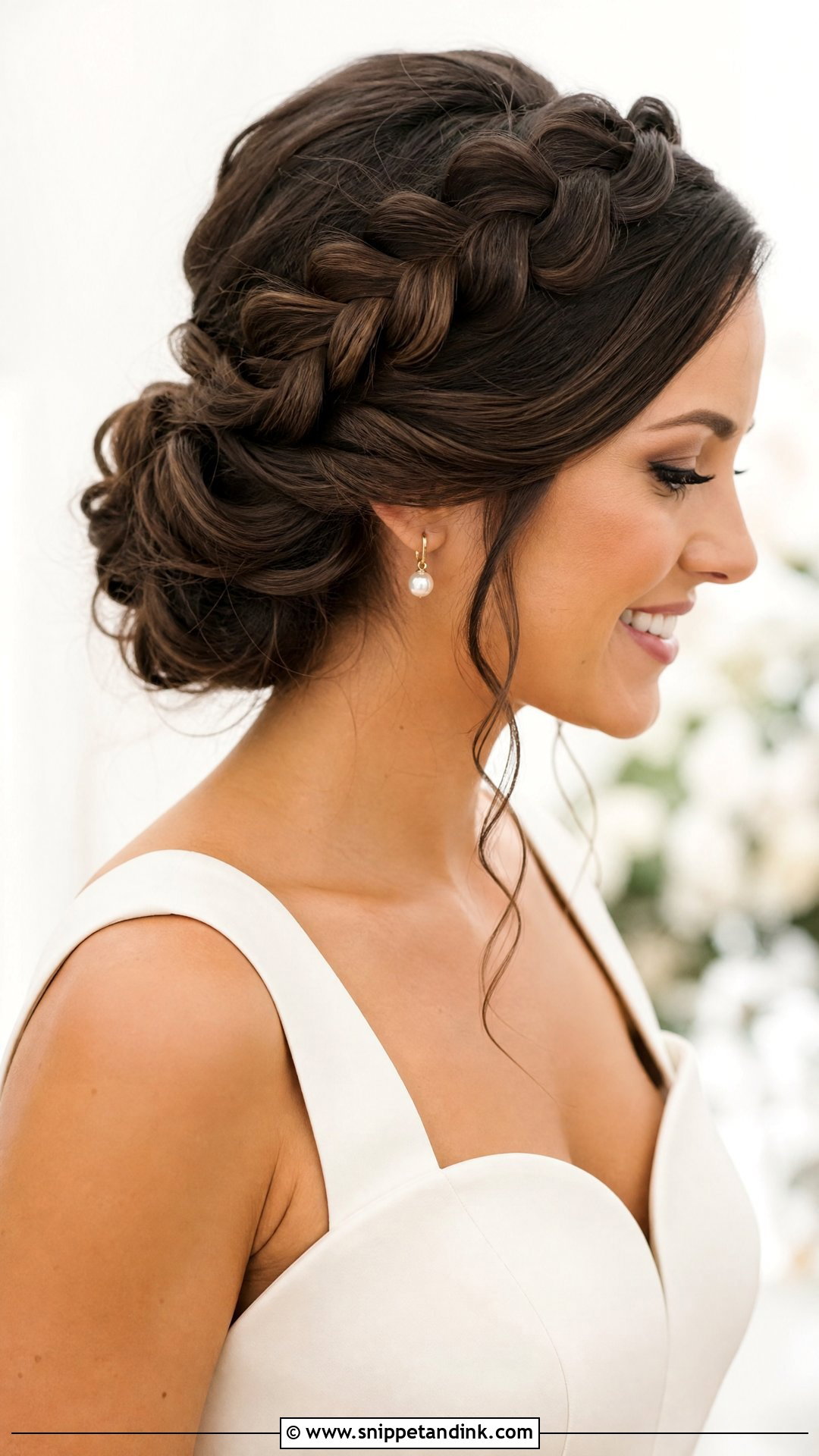
In a Dutch braid the strands cross under instead of over, so the braid sits raised on top of the hair instead of blending in. That raised ridge gives an updo strong structure, which is why I use it when a bride asks for detail without delicacy. I’ll usually start it near the hairline, sweep it across the crown and tuck it into a low chignon. It’s the most hug-proof braid on this list. I soften the edges near the face afterward, otherwise it can look like a sports braid.
7. Boho Braided Bride Hair
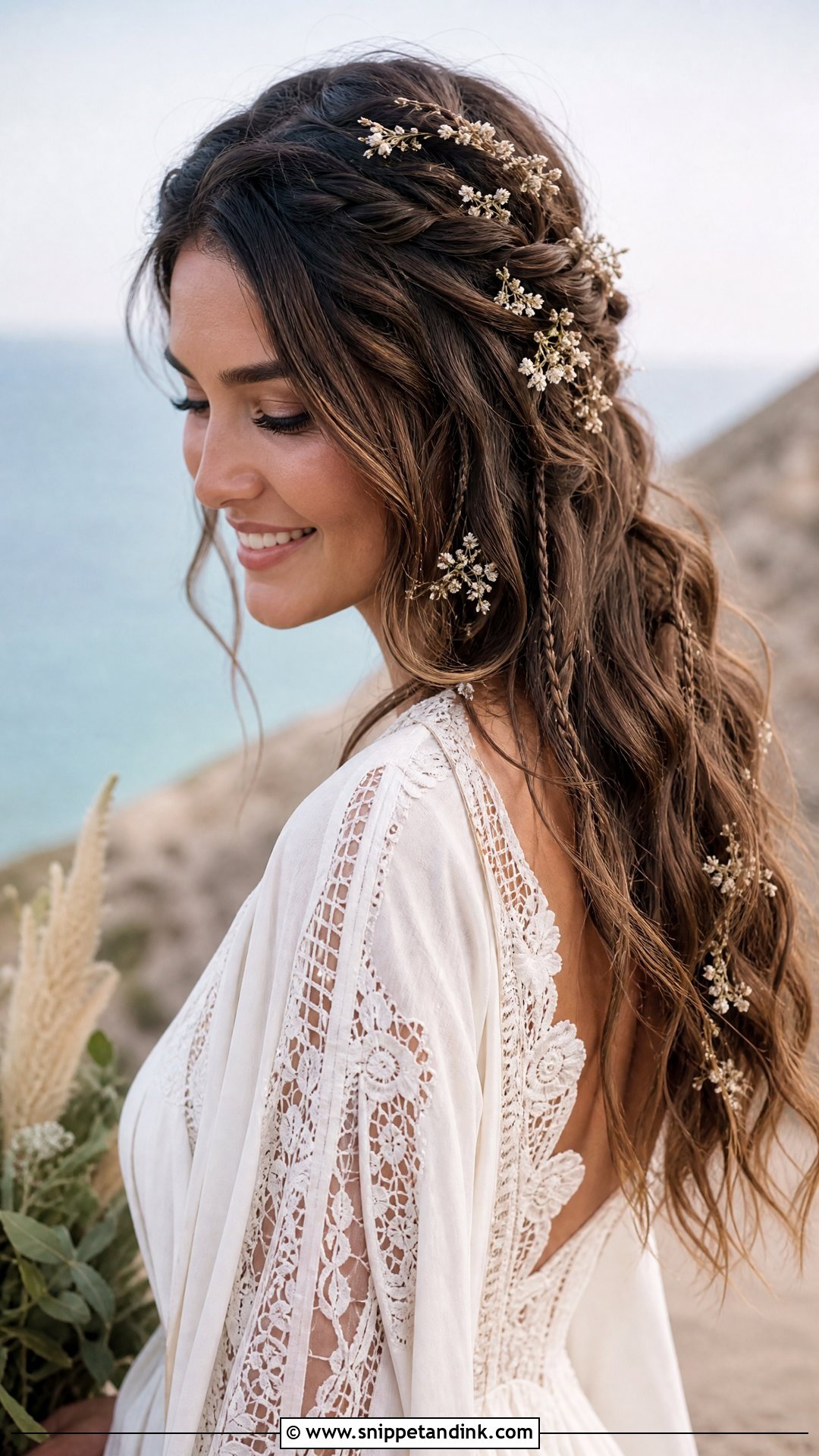
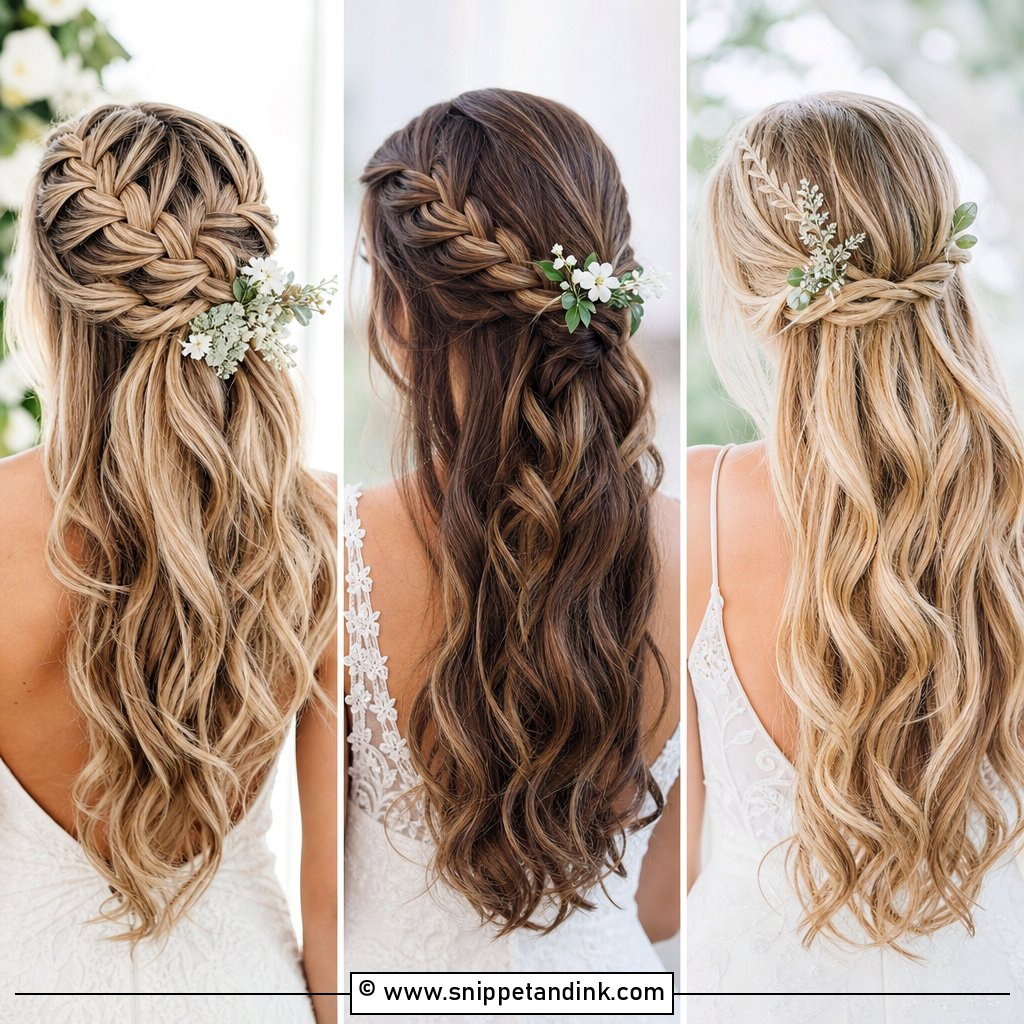
Boho braiding is loose waves, soft braids and face-framing pieces put together so they look slightly undone. The hard part is making it look relaxed while still holding for ten hours, so I braid on second-day hair with some grip, then loosen sections by hand. It suits outdoor and barn weddings and dresses with sleeves or flowing fabric. Fresh flowers, dried florals, pearl pins or a slim vine can all be worked in. If your hair is very silky and fine, tell your stylist at the trial, because this is the style that falls apart first on that hair type.
8. Braided Low Bun Wedding Hair
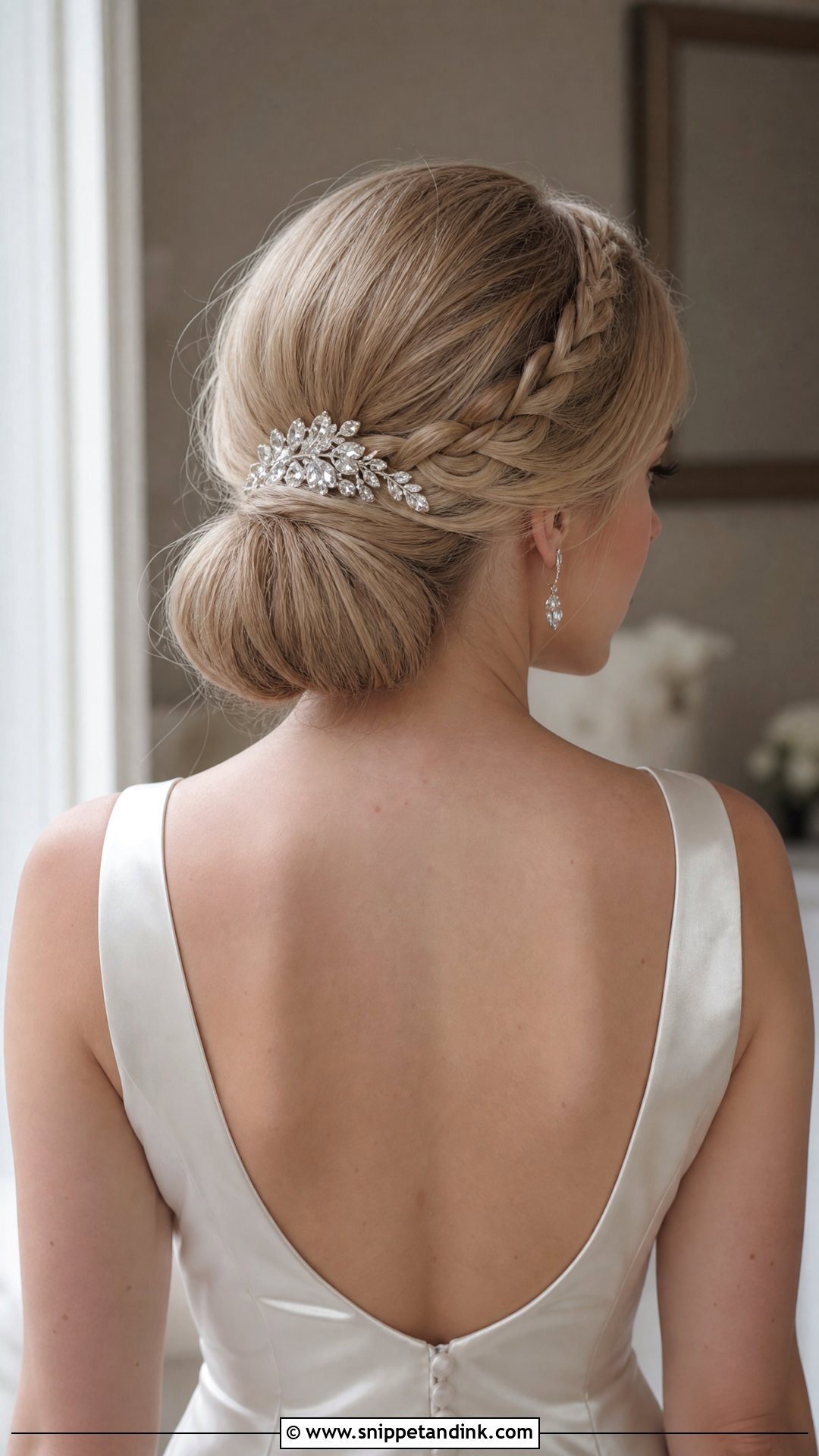
The low bun sits at the nape while the braid adds texture along the side or base. It doesn’t add height, which suits brides who feel overdone with a high style. It’s also my favorite base for a veil: the comb goes in just above the bun and the weight sits low and steady all day. I leave a few curled pieces near the cheeks and temples so the face isn’t fully exposed. Pearl pins, crystal combs or delicate floral clips placed above the bun finish it off.
9. Braided Ponytail Bride Hair
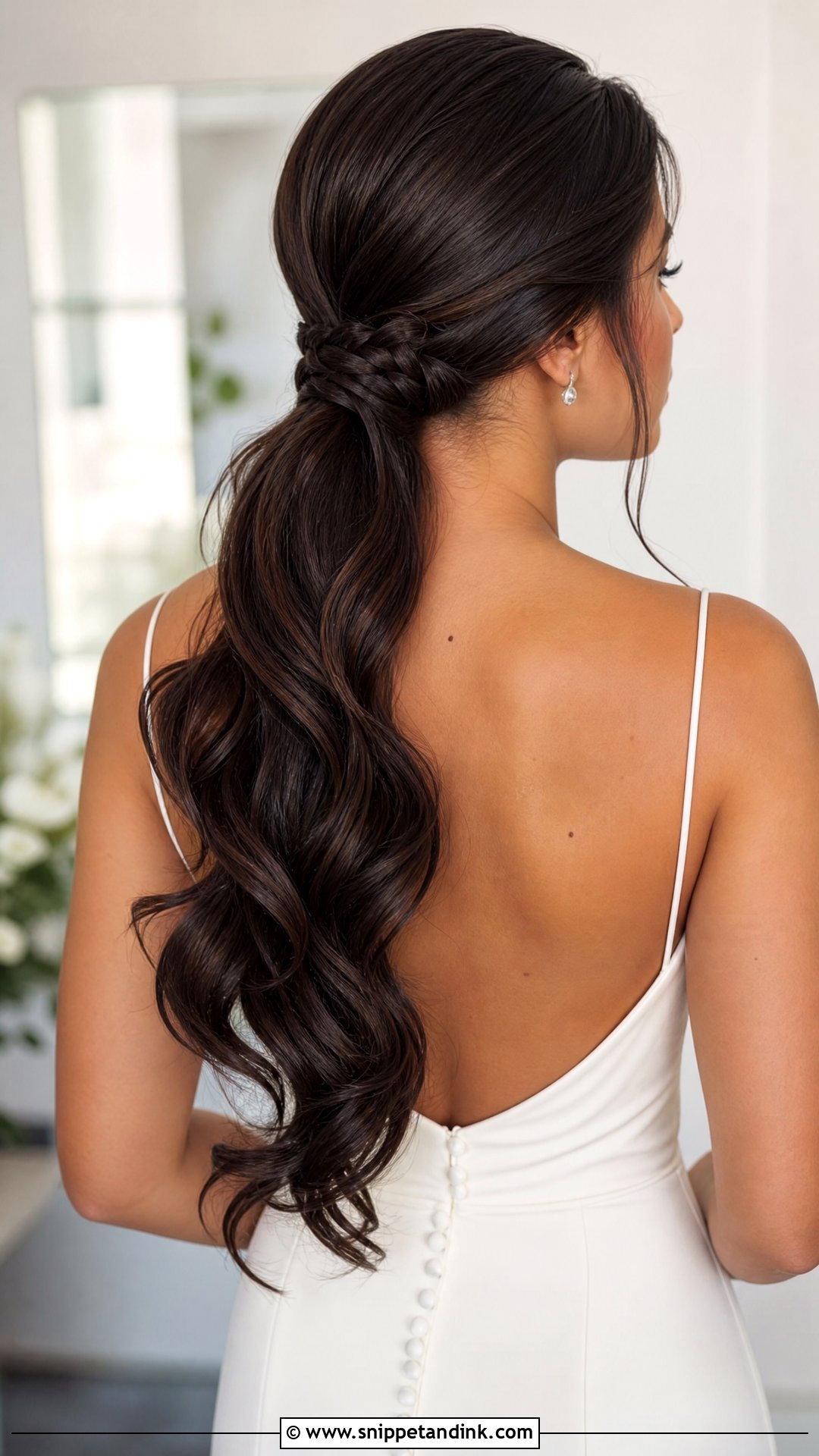
A braided ponytail is sleek but still detailed. The braid can run into the ponytail, wrap the base, or continue down the length. Height changes the mood a lot: a low one feels refined, a high one more glamorous, but a high pony also pulls on the scalp, and by hour eight some brides get a headache. I’d test the height at the trial and wear it for a couple of hours before committing. Soft waves through the tail add movement, and it’s very easy to dance in.
10. Waterfall Braid Wedding Hair
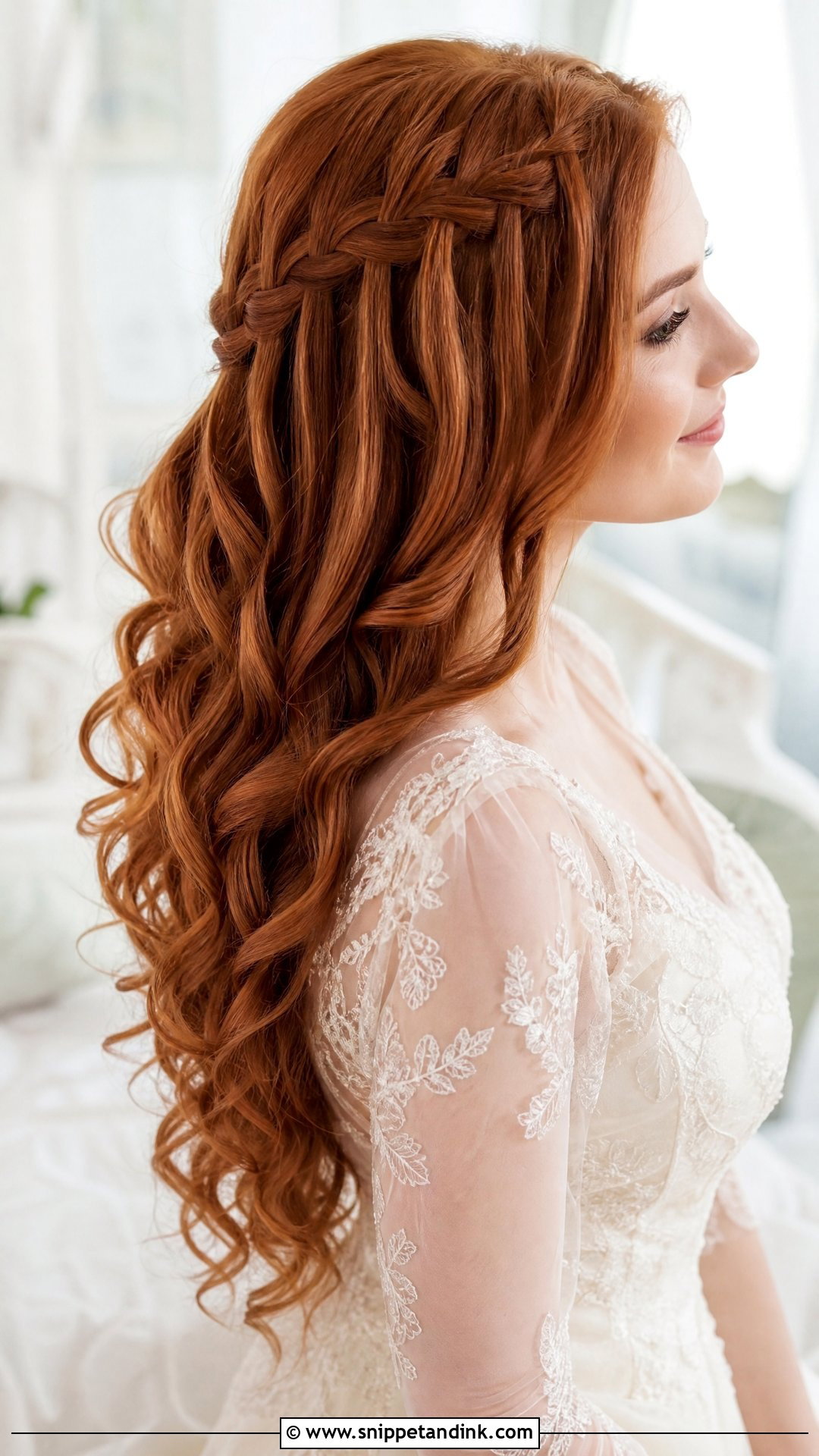
In a waterfall braid, sections drop through the braid as it travels across the head, so most of the hair stays down. It’s a good choice if you love your hair loose but need the front pieces held back. The catch is that it depends on the waves underneath it. If your curls drop in humid weather, the braid looks lost against limp hair, so I set the curls well and use a flexible spray. It shows up best on long hair with some dimension in the color.
11. French Braid Bridal Hair
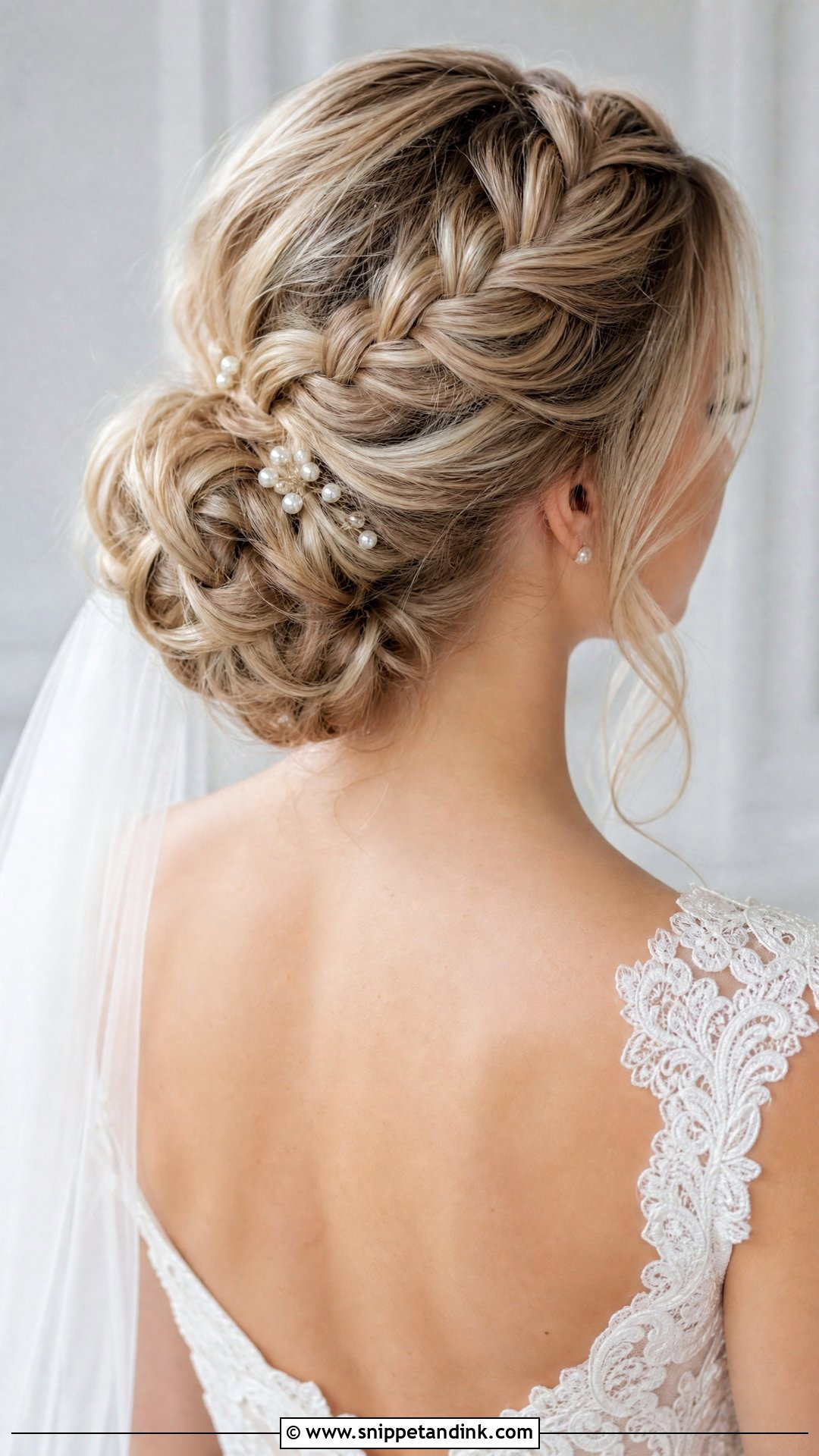
A French braid is the familiar one most of us learned as kids, which makes it very adaptable. It can lead into a bun, a half-up style or a ponytail. I loosen it slightly and add lift at the crown for a bridal finish, because a tight French braid can read as everyday. Shine matters more here than with textured braids; I use a little smoothing cream on the lengths before I start. Small pearl pins or a bridal comb dress it up without hiding the pattern.
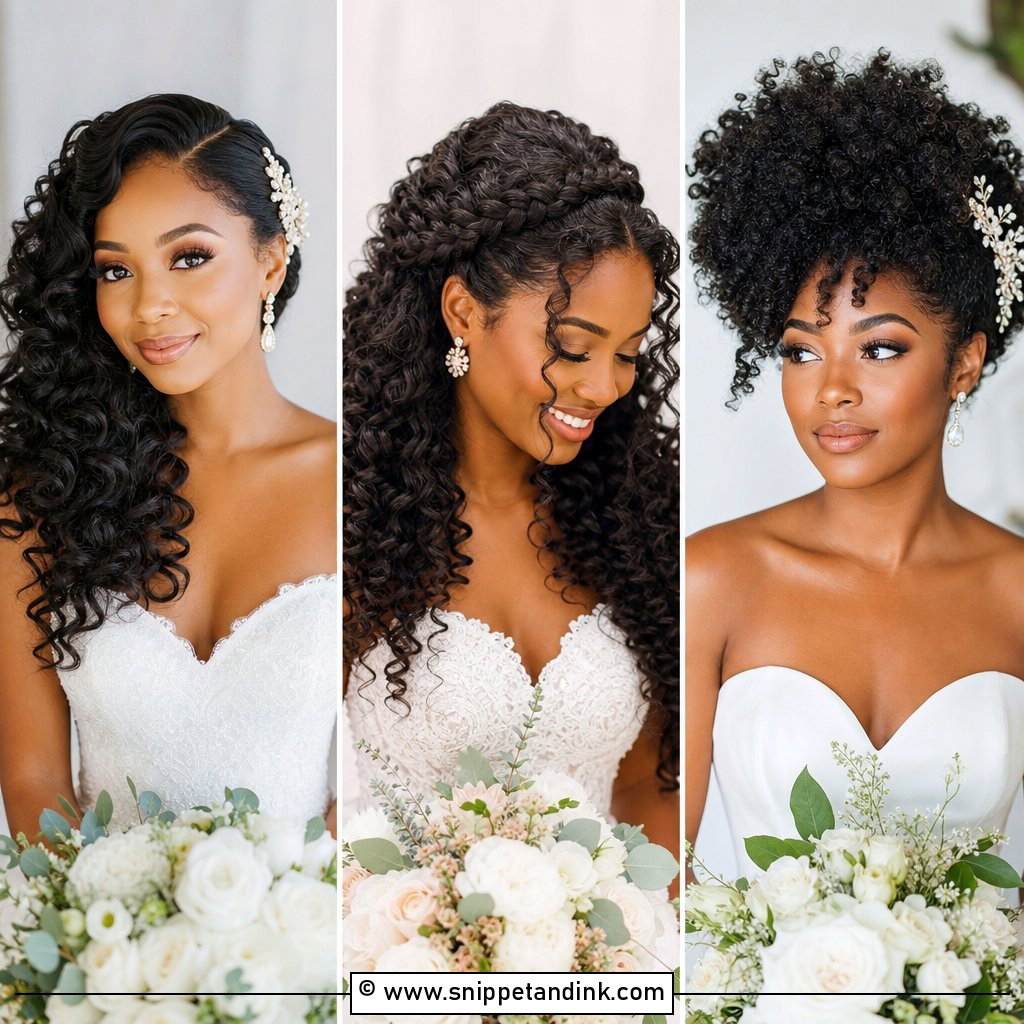
12. Box Braids Bride Hair
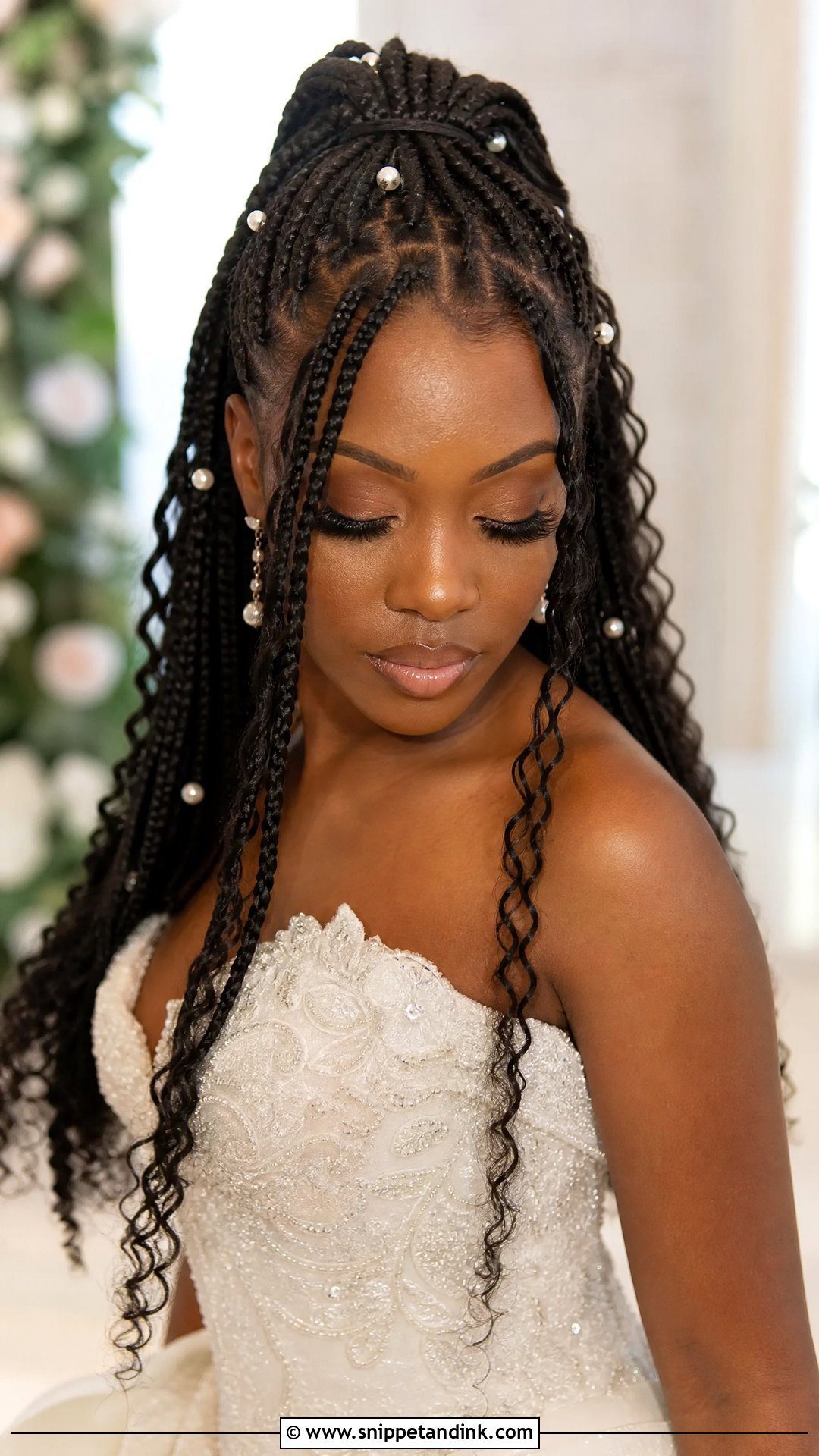
Box braids bride hair can be styled high, low, half-up or left long, and I love doing it for brides who already wear protective styles and want to feel like themselves on the day. Plan the braid size and length with your braider early, since it decides what shapes are possible later; very long, heavy braids pull on the scalp in a high bun. Curled ends, goddess pieces, pearl cuffs or gold accents make it bridal. Fresh edges and moisturized braids photograph best, so a light oil on the wedding morning goes a long way.
13. Cornrow Bridal Updo
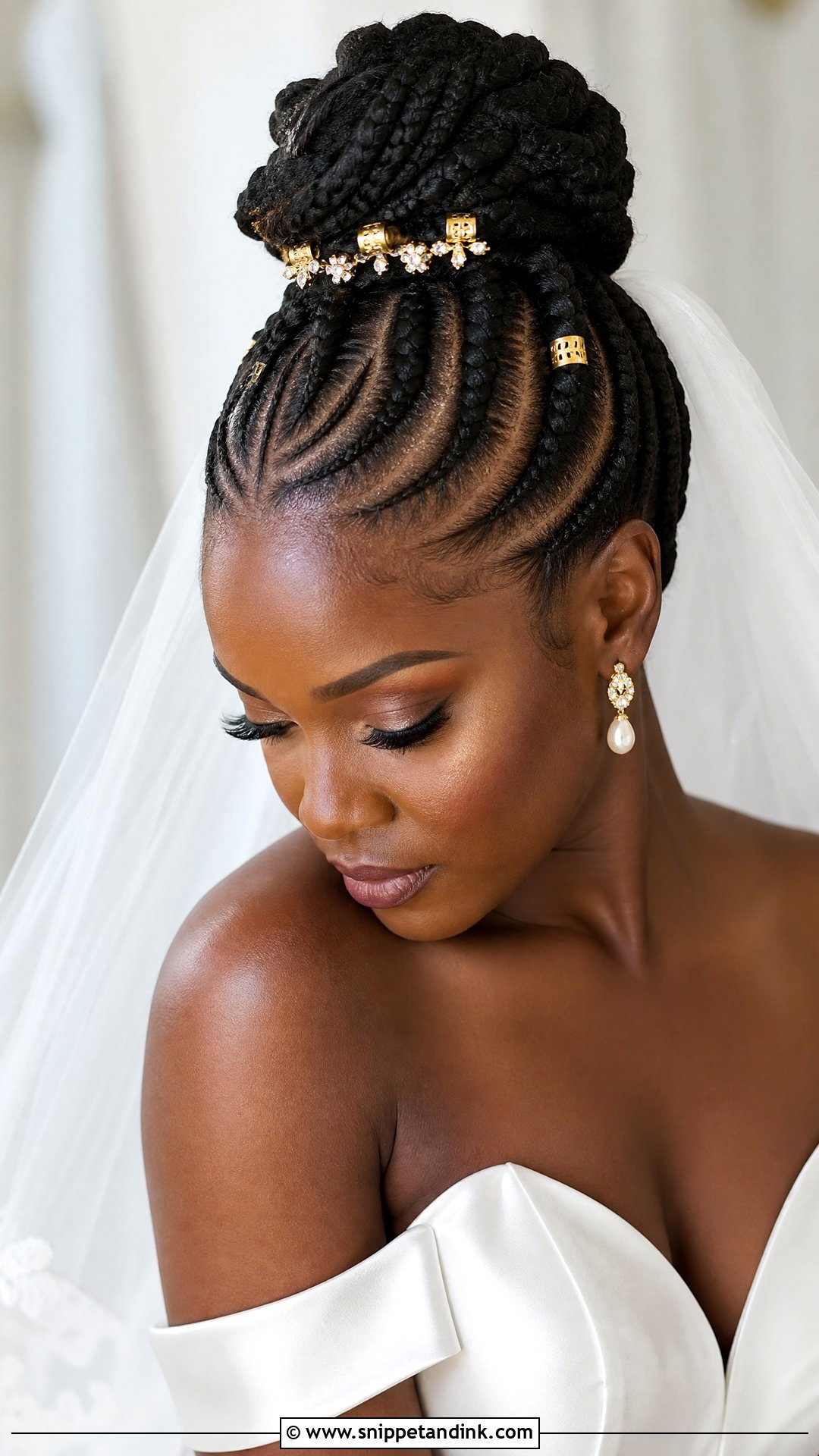
A cornrow updo is sculpted and holds through a long day better than almost anything else here. Cornrows can be designed in curves, side parts, crowns or a pattern leading into a bun. Because nothing covers the face, it shows off earrings and the neckline. A veil can tuck under or behind the bun, and I’d plan where the comb goes during the install so there’s a firm spot for it. Go to a stylist who does both protective styling and bridal finishing, and ask for light tension at the hairline; a tight install feels sore by evening.
14. Rope Braid Wedding Hair
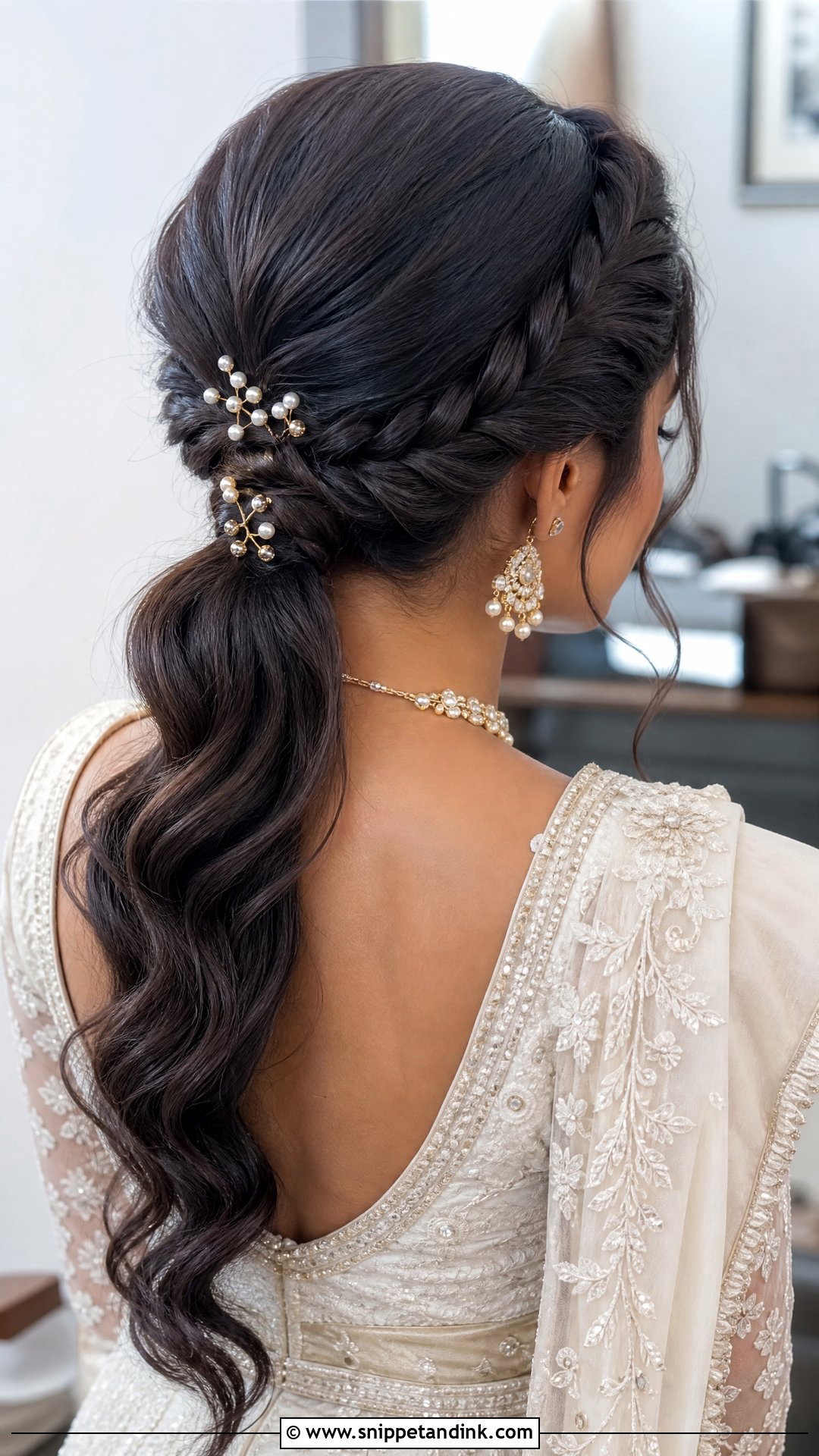
Rope braid wedding hair is made by twisting two sections around each other, which gives a smooth spiral instead of a woven pattern. I use it when someone likes braided detail but not a boho texture. It can go half-up, to the side, into a low bun or down a ponytail. Twists unwind if each section isn’t twisted in the opposite direction to the rope, so it needs a stylist who knows that trick plus a flexible-hold product. The smooth surface catches light well in photos.
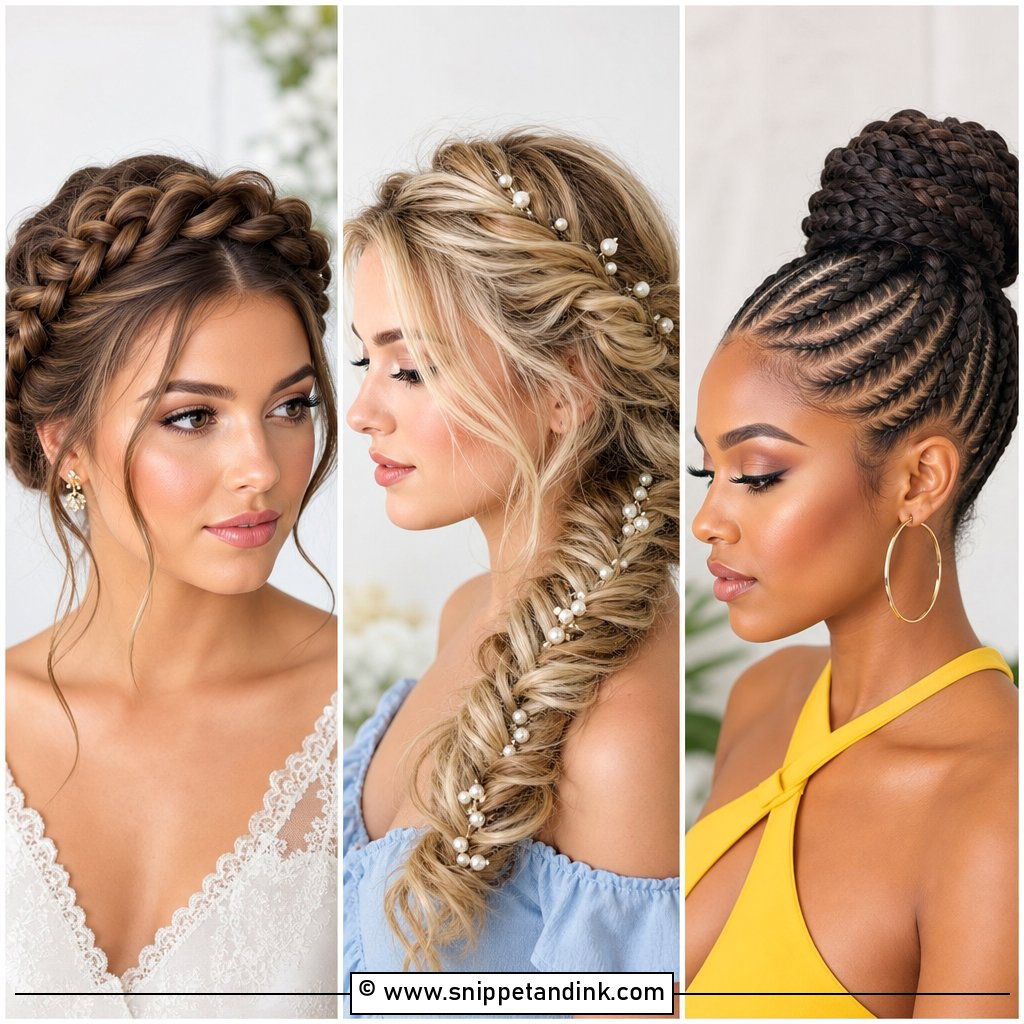
15. Braided Wedding Hair With Flowers
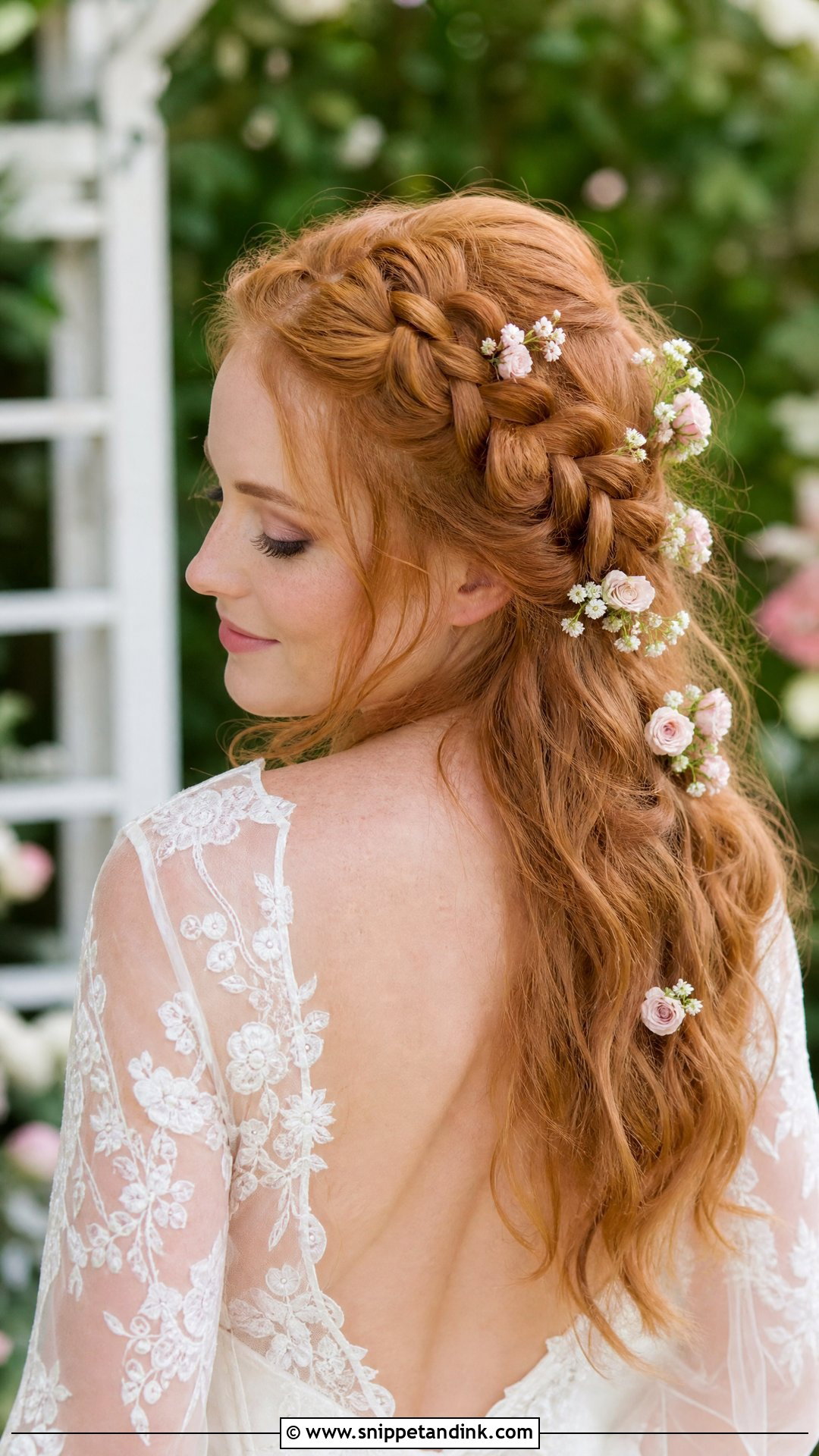
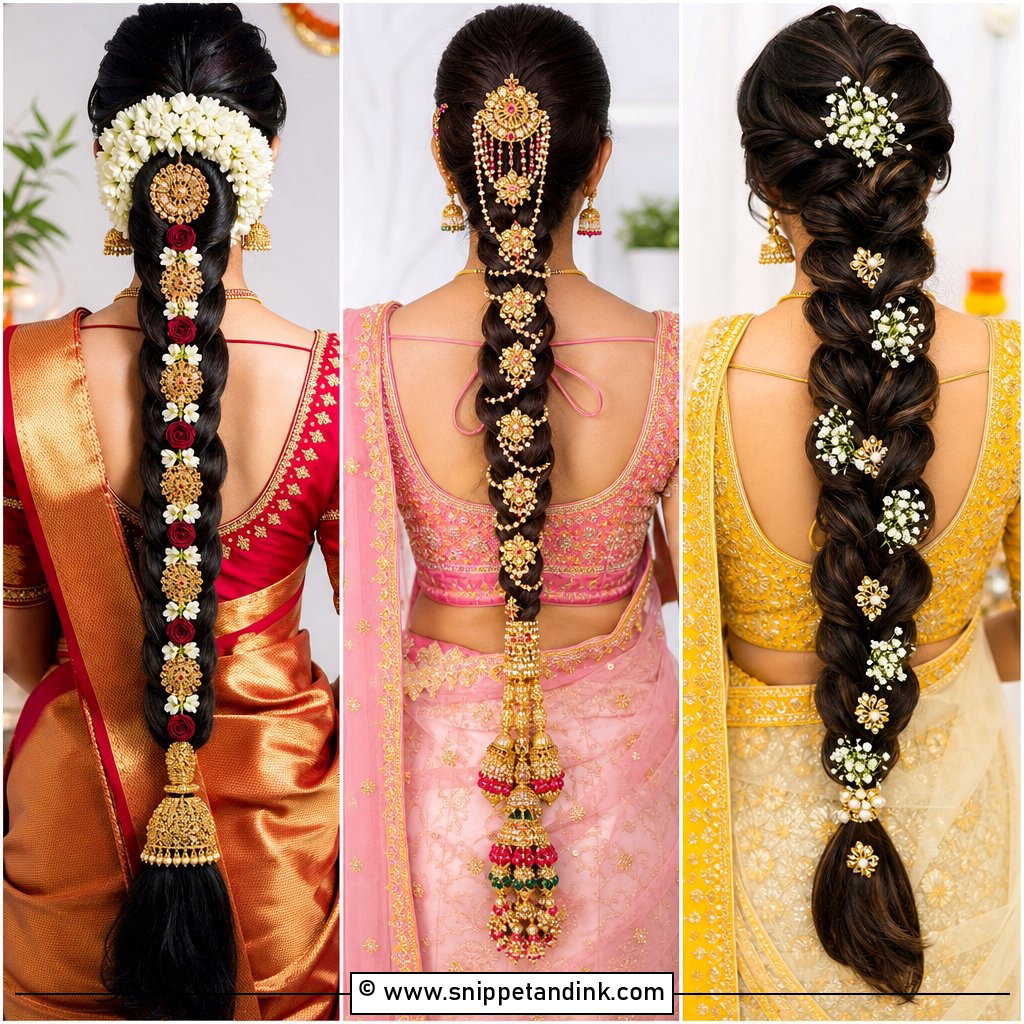
Flowers can sit in a crown braid, be scattered through a side braid, ring a braided bun or be woven into half-up waves. I keep the blooms small so the braid still shows, and match them to the bouquet. Baby’s breath, tiny roses, orchids and dried flowers all hold up well. Delicate fresh blooms like gardenias bruise and brown in heat, so I ask the florist for sturdy stems, wired and kept cool until I place them.
Protective Braids Run on Their Own Calendar
Box braids and cornrows aren’t done on the wedding morning, and the timing is easy to get wrong. Install too early and you get frizz at the roots and softened edges. Install the day before and the scalp can still be tender, with parts that look a little raw in close-ups.
I usually suggest an install roughly three days to a week out, which lets the tension settle while everything still looks crisp. A full head of small box braids can take most of a day, and good braiders book up in wedding season, so reserve the slot early. On the morning itself I just refresh edges and ends rather than restyling.
If a Section Slips During the Reception
Even a secure braid shifts over ten or twelve hours. The veil comes off, someone hugs you hard, and the warmth of a packed room lifts flyaways. Nothing here has to ruin the style if one person near you knows what to do.
- I leave a few spare bobby pins and U-pins in your hair color with a bridesmaid.
- I show that same person how the veil was anchored, so it comes out without dragging the braid.
- A travel hairspray and a little smoothing balm handle most frizz. Skip water, which makes loosened braids puff up.
- If a section comes undone, pin it slightly lower and looser. It will look intentional; rebraiding in a bathroom mirror rarely does.
Will Your Braid Still Feel Good at Midnight?
The braid matters less than how it suits your hair and your day. A loose fishtail that looks dreamy at 2pm can be fuzzy by the speeches in humid weather, while a Dutch braid tucked into a low bun will barely move. Fine hair often needs a few clip-ins; textured and protective-styled hair can carry the most sculpted looks here with ease. Bring photos of your dress to the trial, wear your veil, and notice how your scalp feels two hours later. That’s how it will feel on the dance floor.
You'll Like These Ideas:



Leave a Reply