
The bride’s sister works harder than almost anyone at a Pakistani wedding. She greets guests, carries the thaal at the mehndi, fixes the bride’s dupatta and still stands in every family photo. So her clothes have to do two jobs: look properly dressed up, and survive a week of running around. The 25 outfits below cover the mehndi, dholki, nikkah, barat, walima and reception, each styled from dupatta to shoes. Right now I’m seeing sisters lean toward ghararas, shararas, long shirts and pastel maxis, with jewel tones, mirror work, gota, pearls and lighter embroidery that still reads as formal.
Coordinating Sisters Without Putting Everyone in a Uniform
Families often want the sisters to match, and identical outfits rarely suit everyone. A colour that flatters one sister drains another, and a cut that suits a tall frame swamps a petite one. What I do instead is give the sisters a shared palette for each function and let each one pick her own shade and silhouette within it.
- Get the bride’s colours for every event first. Nothing else gets ordered until those are fixed.
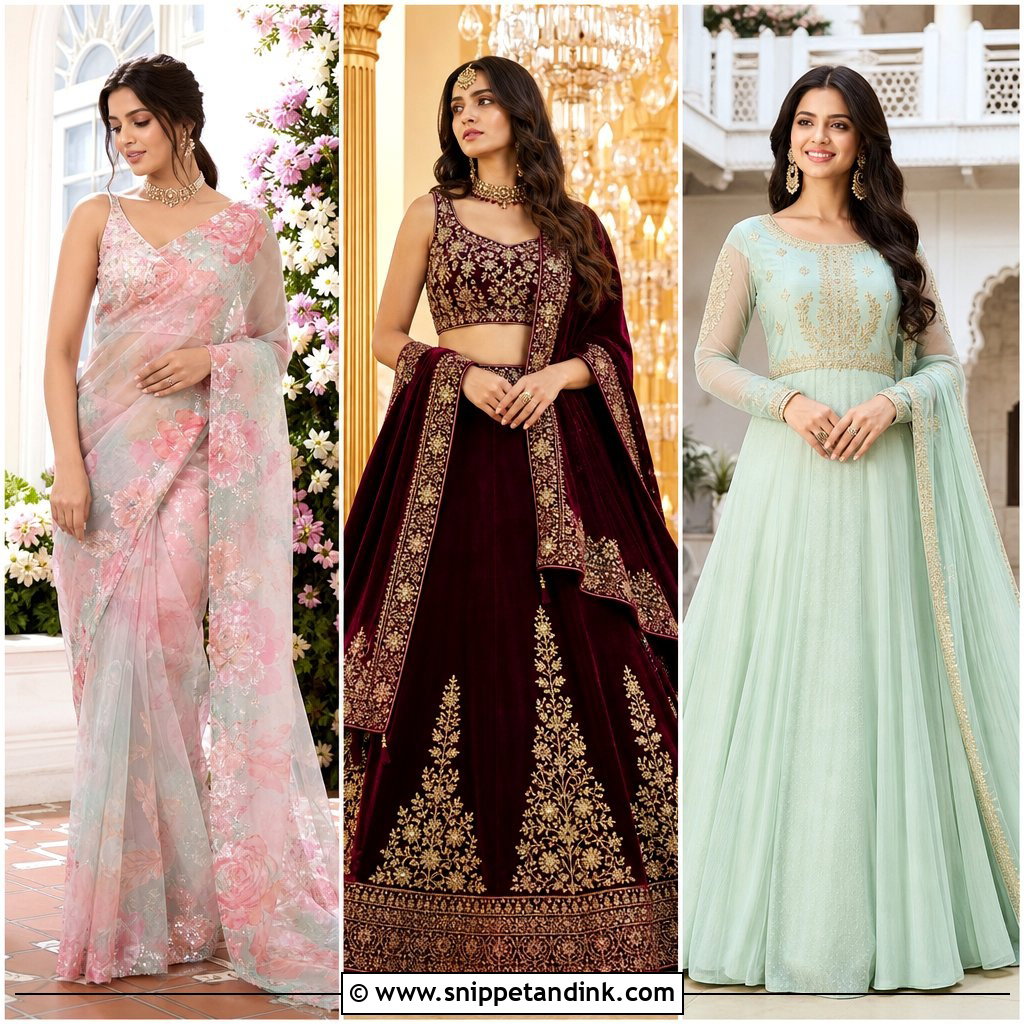
- Pick one family of colours per function, such as warm pinks for the mehndi or jewel tones for the barat, rather than one exact shade.
- Let each sister choose a different silhouette inside that palette, so the group photo has variety in shape as well as tone.
- Tie the group together with one shared element: the same dupatta border, matching parandas, or the same metal in the jewelry.
- Keep every sister’s embroidery noticeably lighter than the bride’s, especially at the barat.
This also takes pressure off the budget. One sister can wear a heavier piece she’ll keep for years while another goes lighter, and the photos still look planned.
1. Mehndi Gharara Dress For Sisters
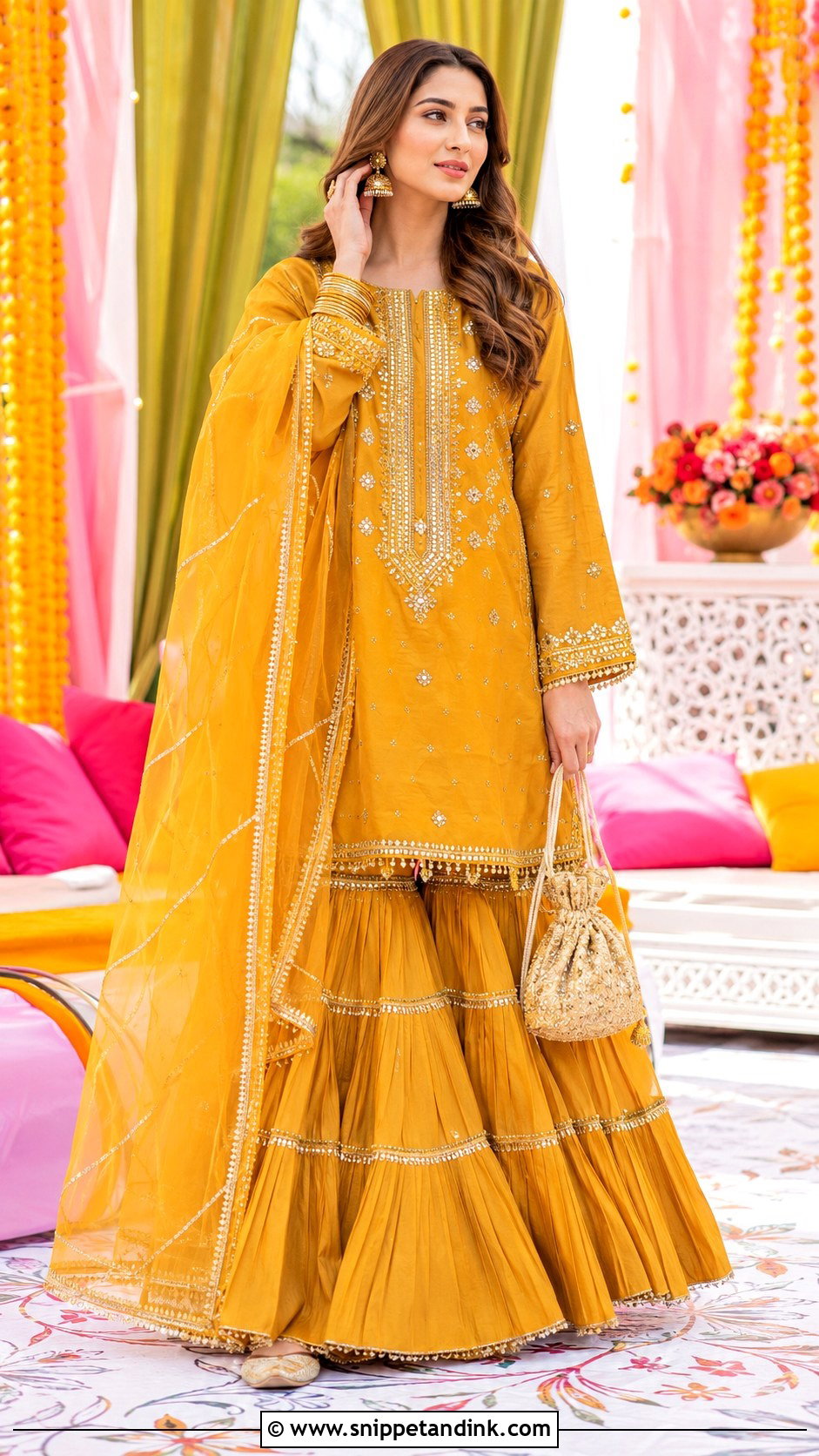
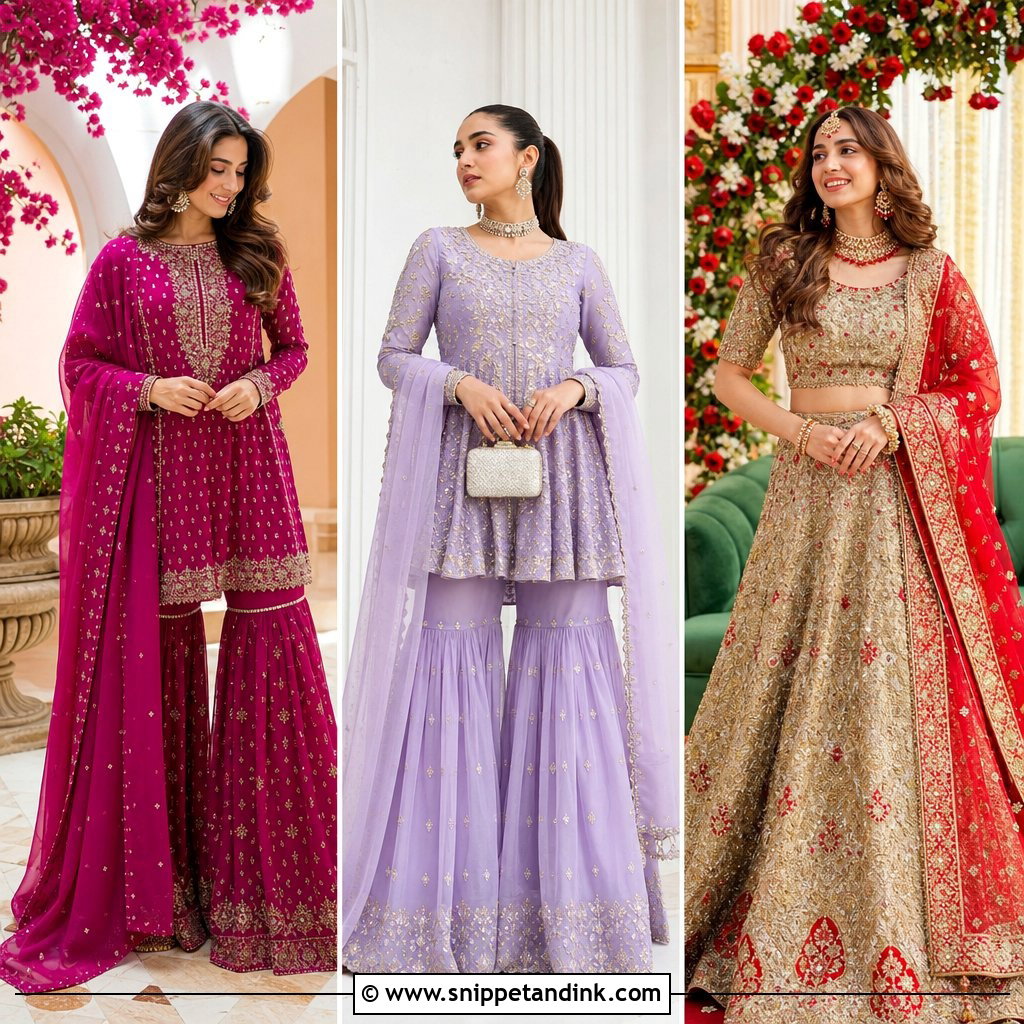
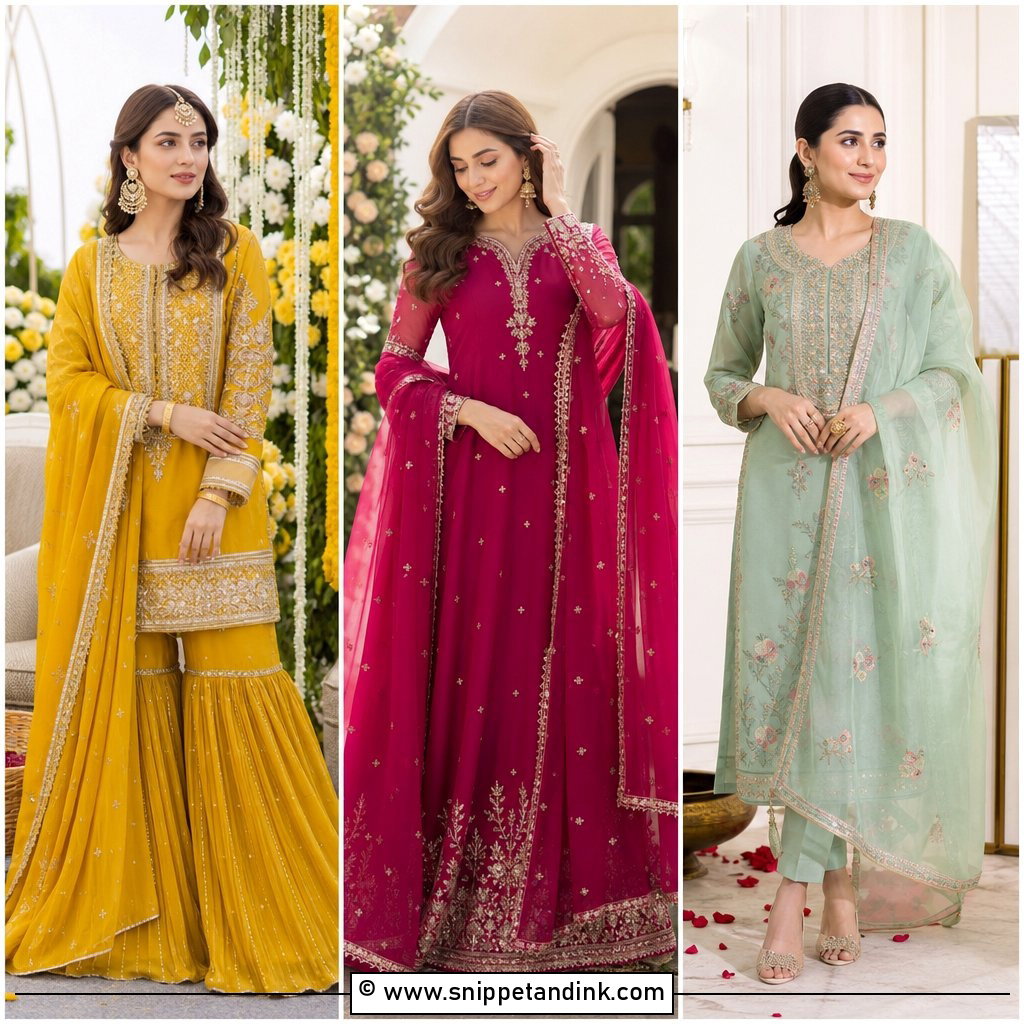
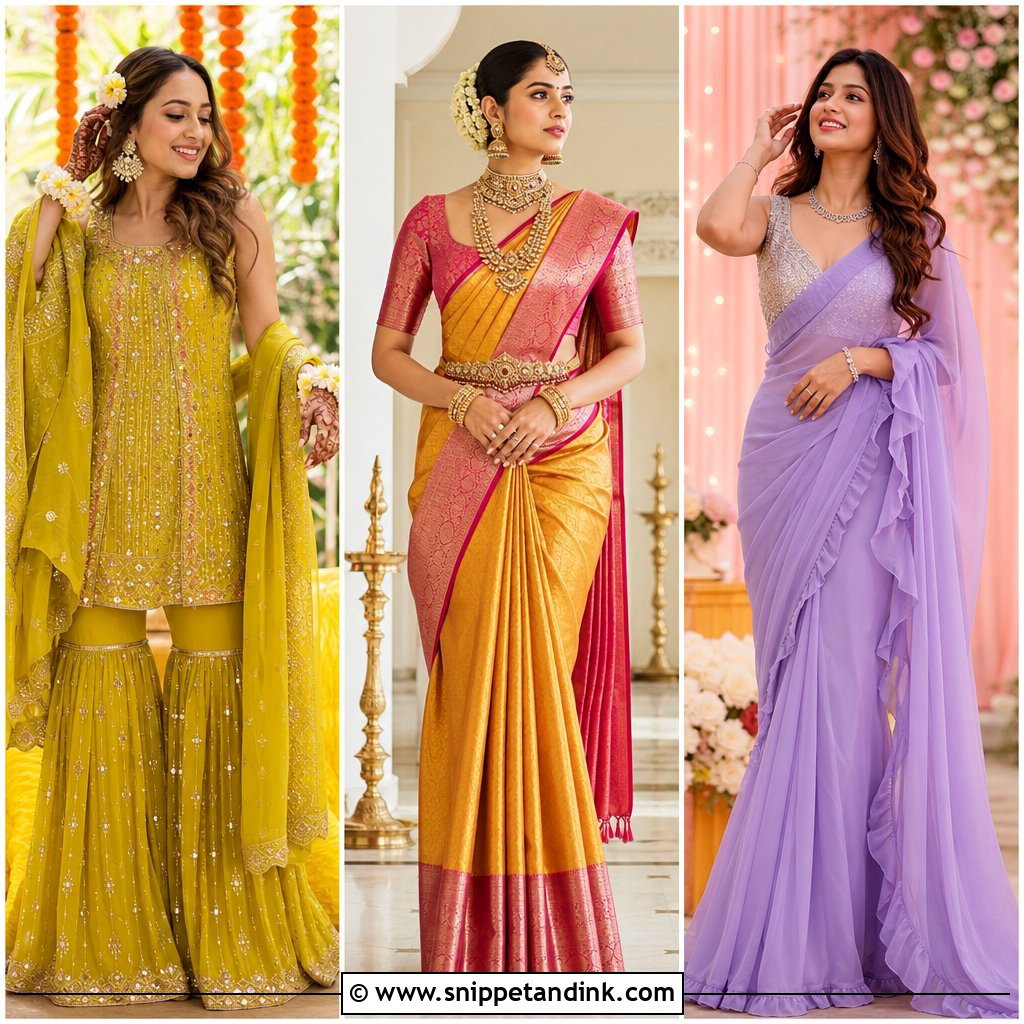
Of all the Pakistani wedding dresses for sisters, the mehndi gharara is the one I’m asked for most, and it earns its place: it looks festive without tipping into bridal. A mustard, mehndi green, orange or fuchsia short shirt with gota, mirror or thread work over a flared gharara handles dancing and family entrances well. Keep the dupatta to light organza with a border. A sister is constantly bending, carrying trays and hugging relatives, and a heavy dupatta ends up in someone’s lap within the hour. Khussas, jhumkas, bangles and soft curls or a braid with a paranda finish it.
2. Yellow Sharara Dress For Mehndi
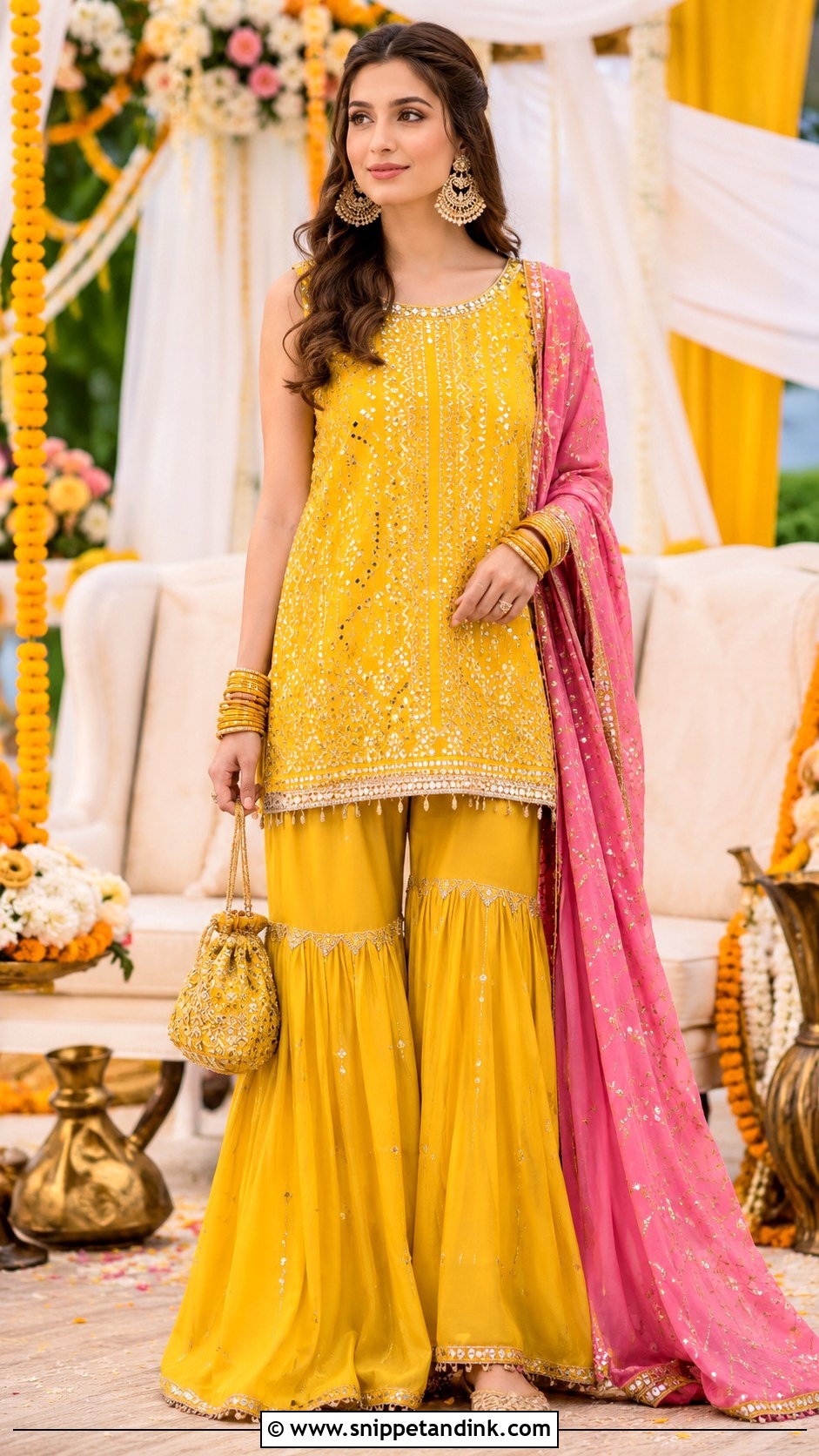
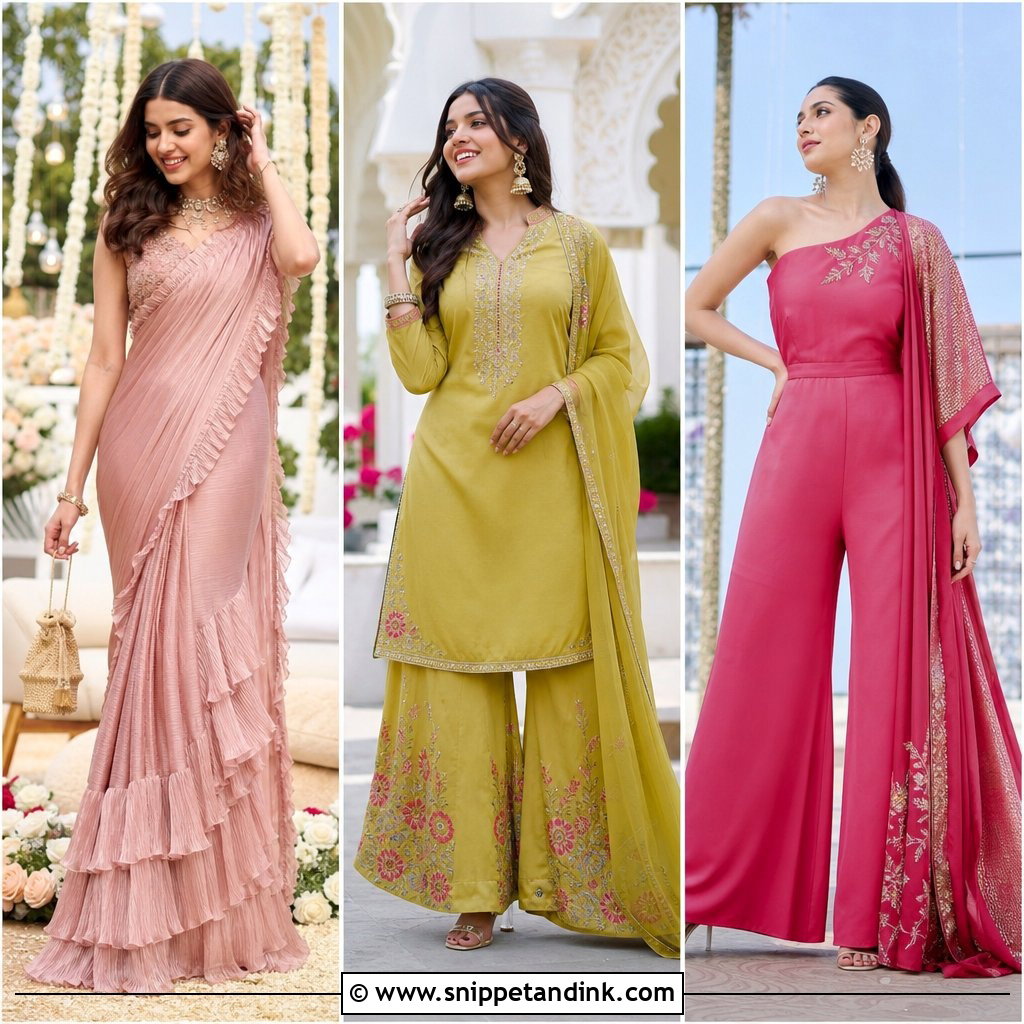
Yellow belongs to the mehndi, and a yellow sharara outfit is the easiest way for a sister of the bride or groom to wear it. Go for a short kurti with delicate mirror work, zari or gota, over a wide sharara in silk, chiffon or raw silk. A pink, green or orange dupatta keeps the yellow from looking flat. One thing I watch: pale lemon can wash out olive and deeper skin, so a marigold or haldi-toned yellow is usually the safer pick. Traditional khussas, stacked bangles, chaandbalis, a small potli bag and peachy, fresh makeup complete it.
3. Green Lehenga Choli For Sisters
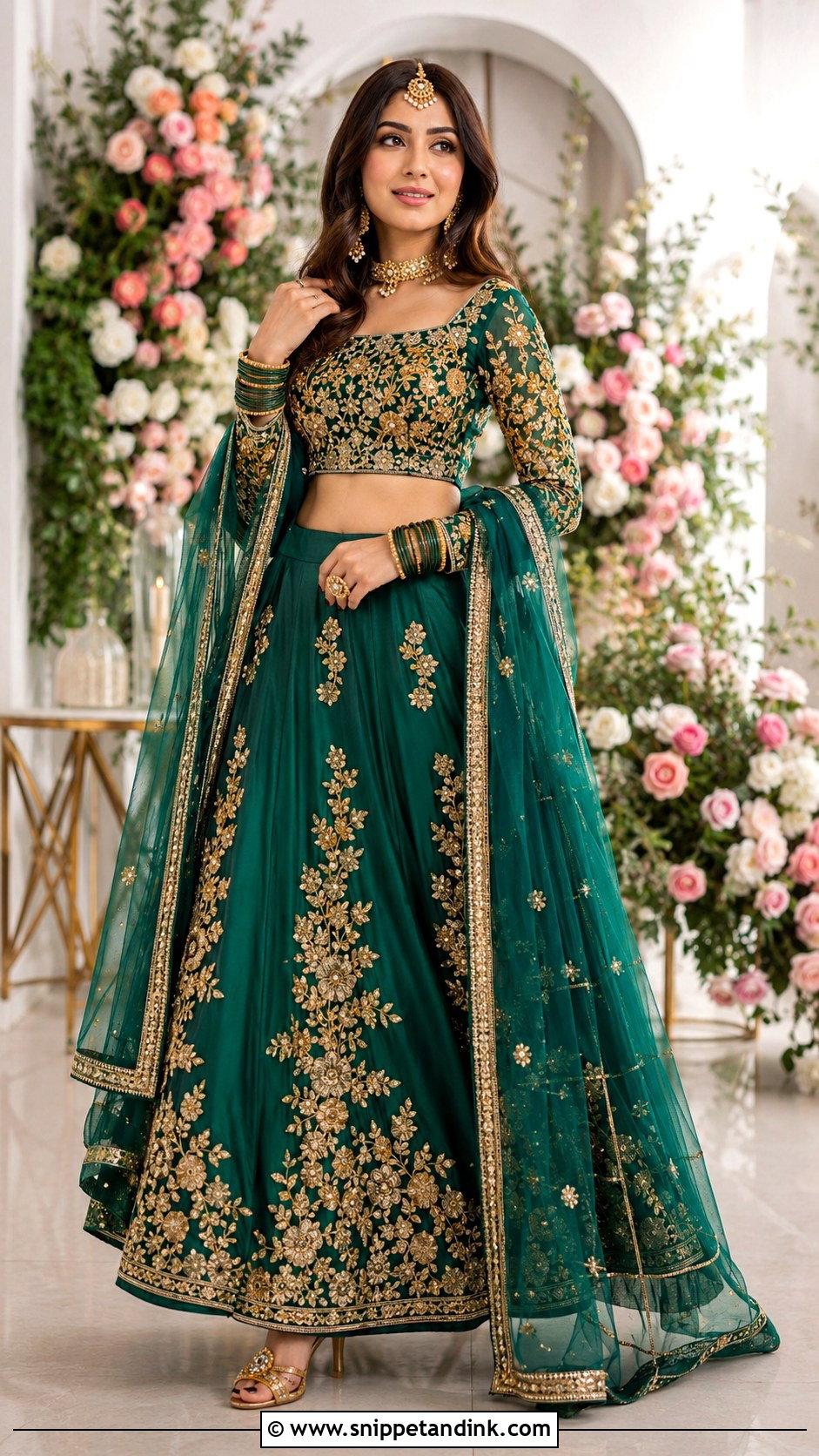
Green lets a sister look rich without borrowing the bride’s red. Emerald, bottle green, olive and mehndi green all hold up under evening lighting, and a fitted choli with a flowing lehenga in sequins, resham or gota work keeps the shape traditional. A sheer dupatta with scalloped edges softens all that colour. My only caution is to check with the bride first; a green mehndi is popular for brides too, and two emerald lehengas side by side on the stage is a common, avoidable clash. Gold jewelry, a maang tikka, bangles and embellished heels or khussas finish it.
4. Pastel Maxi Dress For Walima
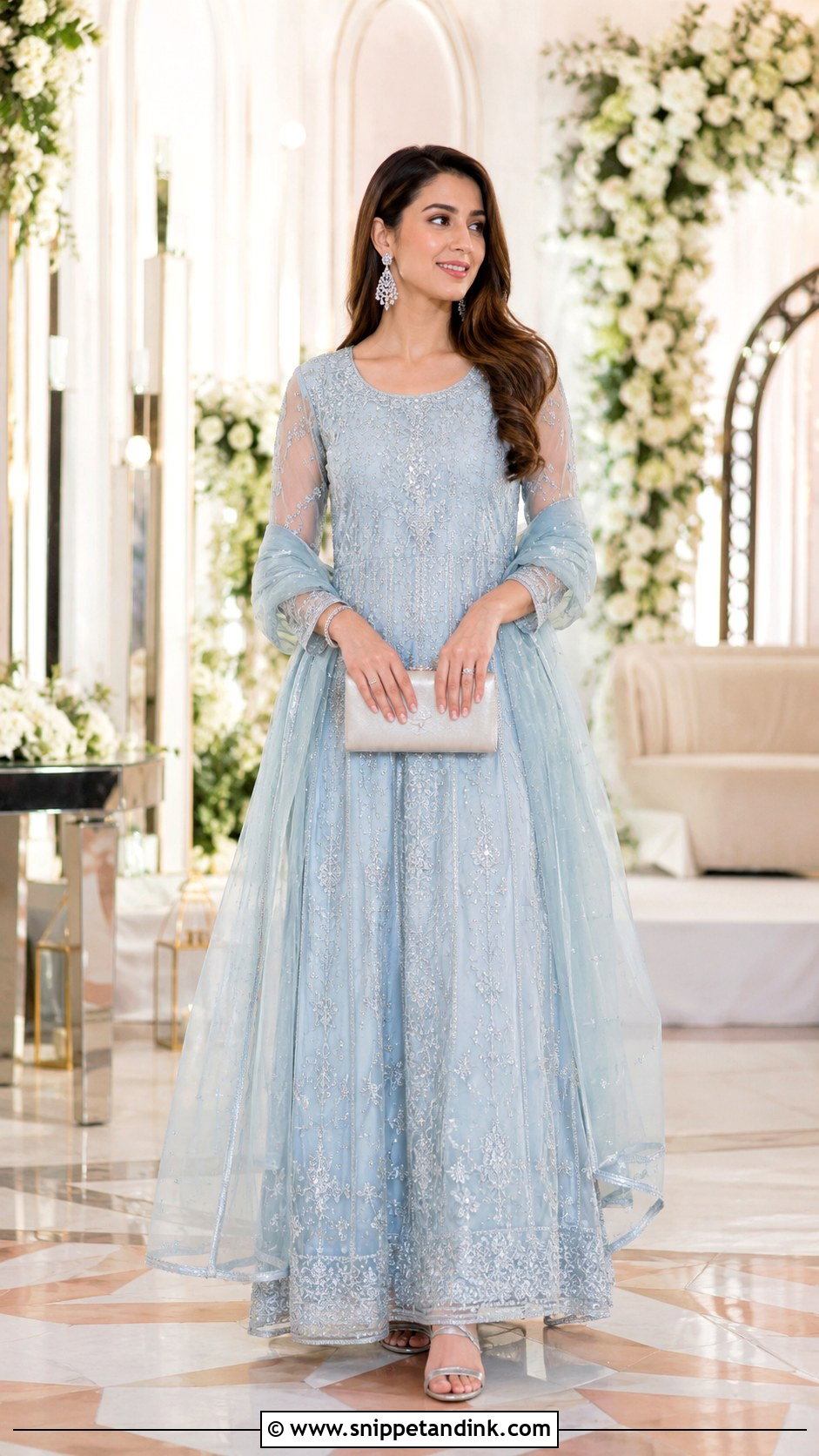
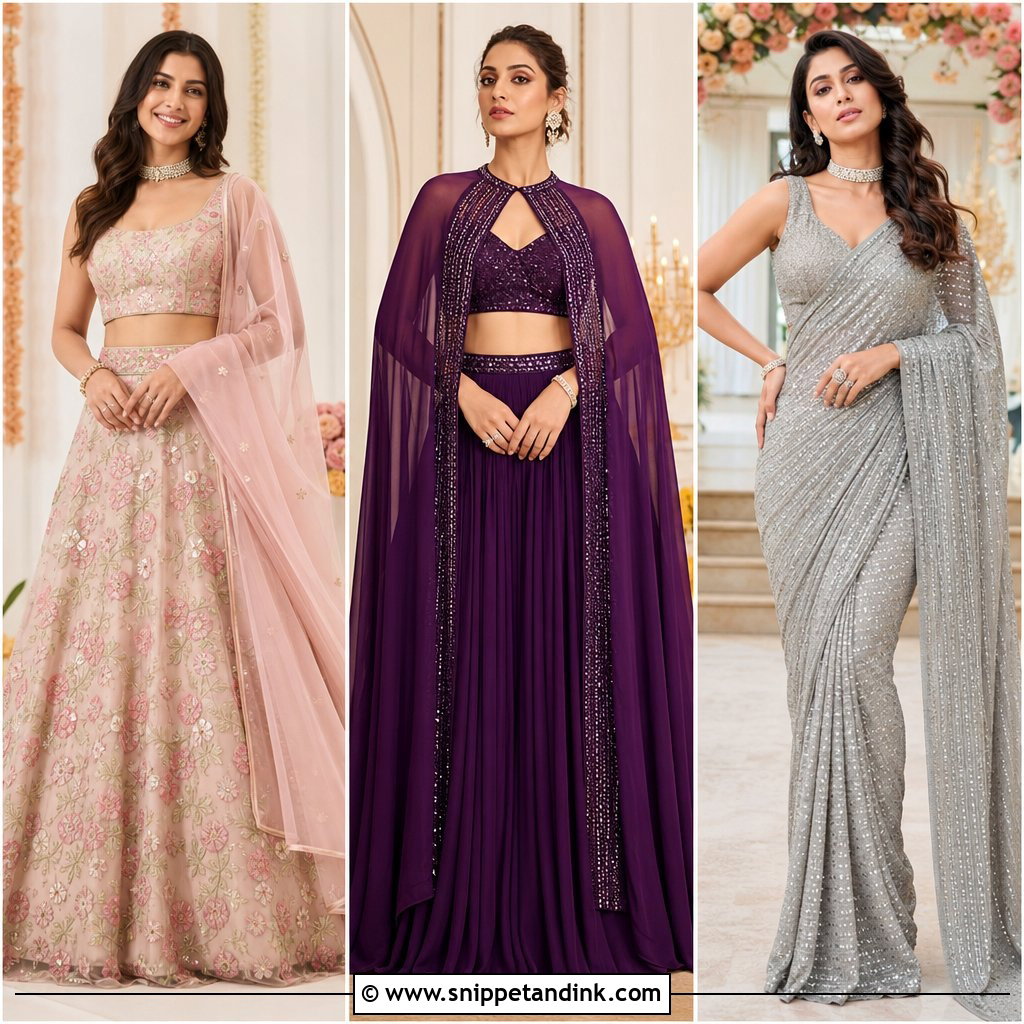
At the walima, a pastel maxi lets the sister step down from the heavier barat look. Powder blue, blush, mint, champagne and lavender all suit a reception, on a long maxi with a defined waist and light sequins, pearls or fine embroidery. I keep jewelry restrained here: drop earrings, a bracelet and a small clutch, so the eye stays on the cut. A low bun or soft waves and a sheer dupatta with sleek heels finish it. Make sure the waist seam sits where your waist actually is, because a pastel maxi shows every wrinkle of a poor fit in daylight photos.
5. Maroon Long Shirt With Lehenga
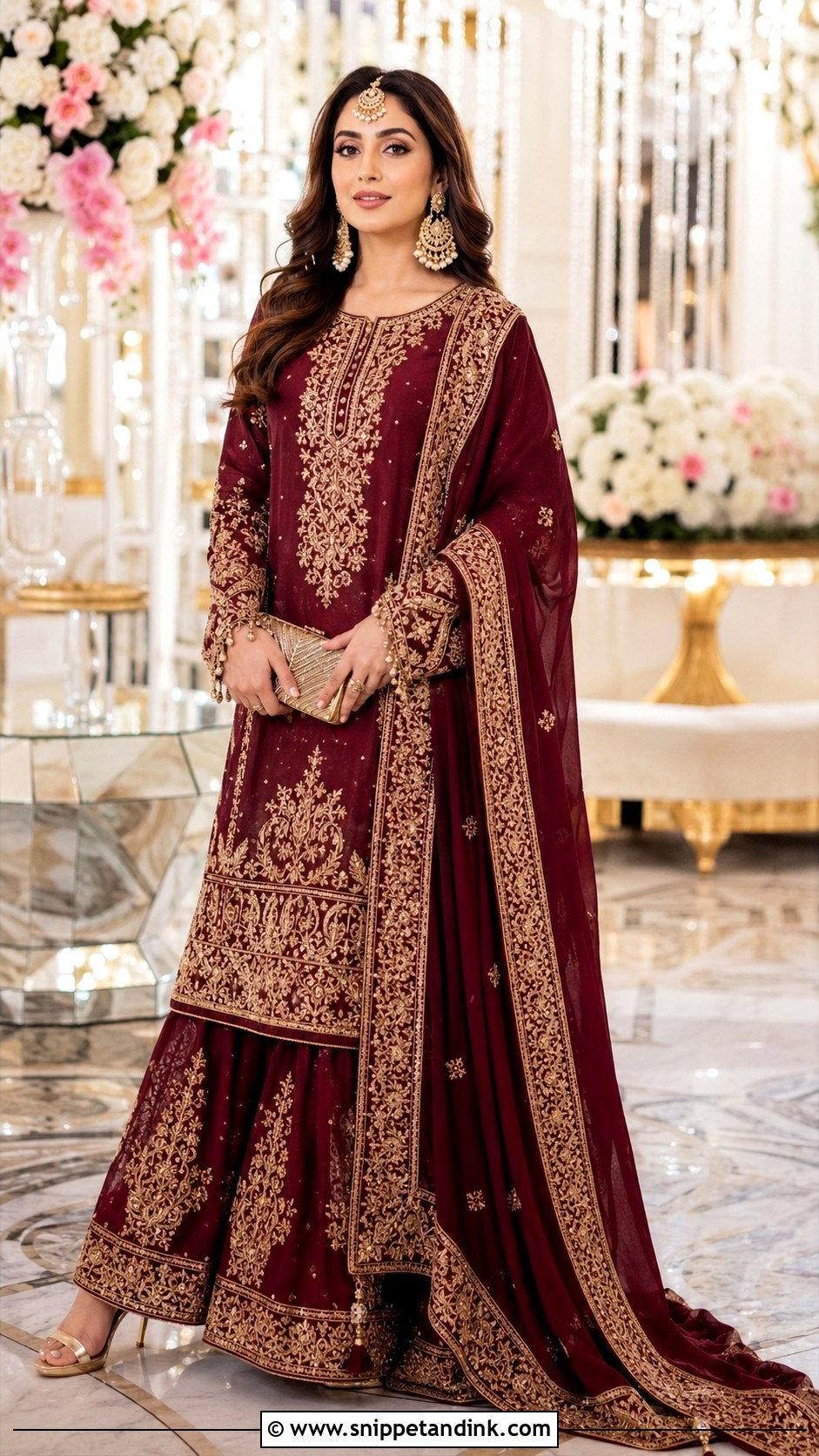
Maroon is my answer for a sister at the barat who wants a formal, classic look without echoing bridal red. A long shirt in zardozi, dabka or antique gold work over a matching or slightly darker lehenga gives depth, and a heavy-bordered dupatta frames it in the family portraits. The long shirt also gives coverage when you’re bending to greet elders all evening. Gold heels, a structured clutch, kundan earrings and a tikka for a very formal hall complete it.
6. Ivory Anarkali Dress For Nikkah
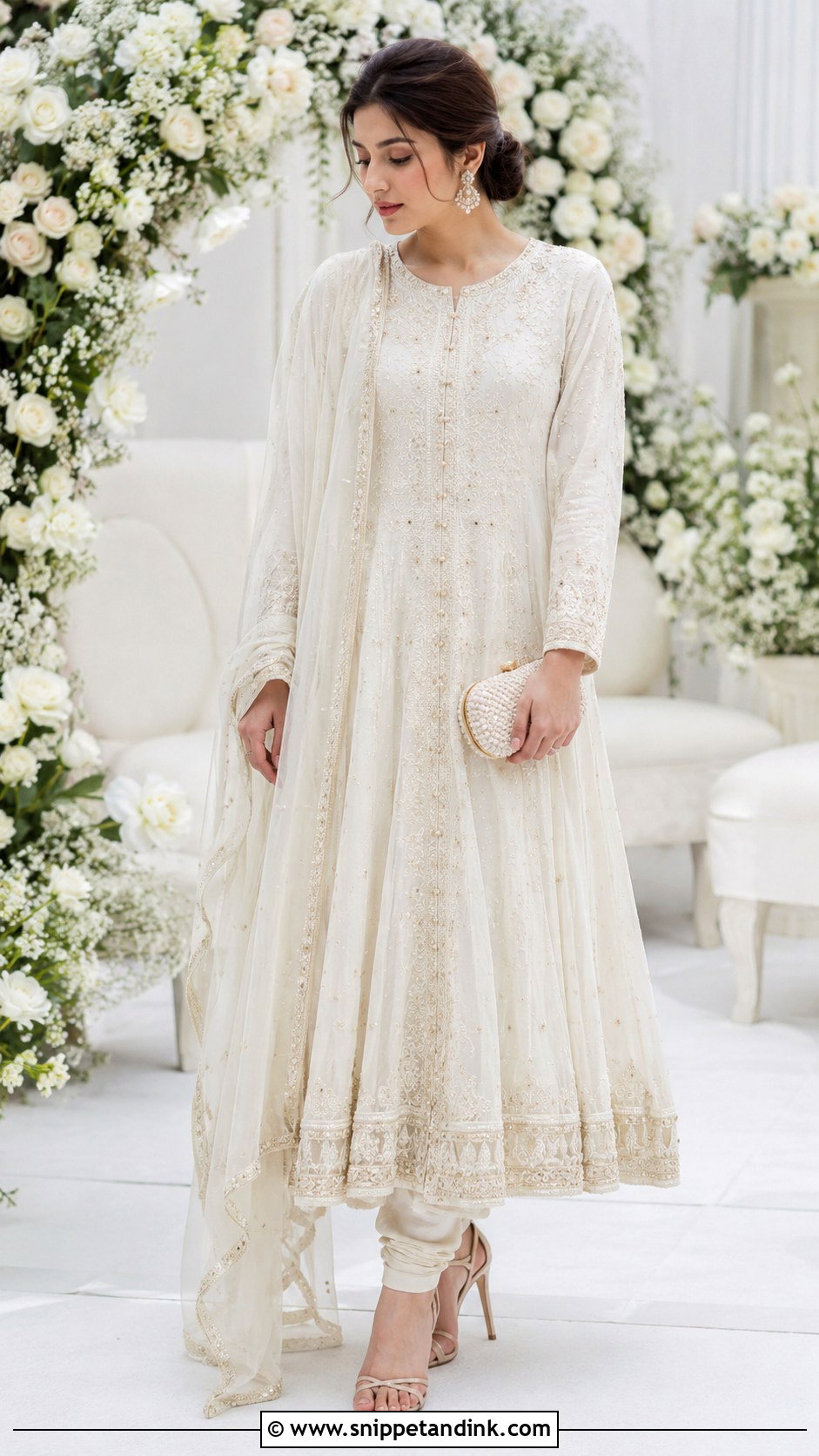
An ivory anarkali suits a nikkah well, but on a sister it needs a careful hand, since ivory is the colour many brides choose for that very ceremony. Ask first. If the bride is in ivory, I’d move you to a soft gold, mint or blush instead. If she isn’t, keep the embroidery delicate rather than heavy, in pearl, silver, champagne or light gold. Churidar or straight pants with a sheer dupatta keep it light, and nude heels, pearl earrings, a small clutch, soft makeup and a sleek bun keep the mood quiet for a daytime nikkah or intimate family portraits.
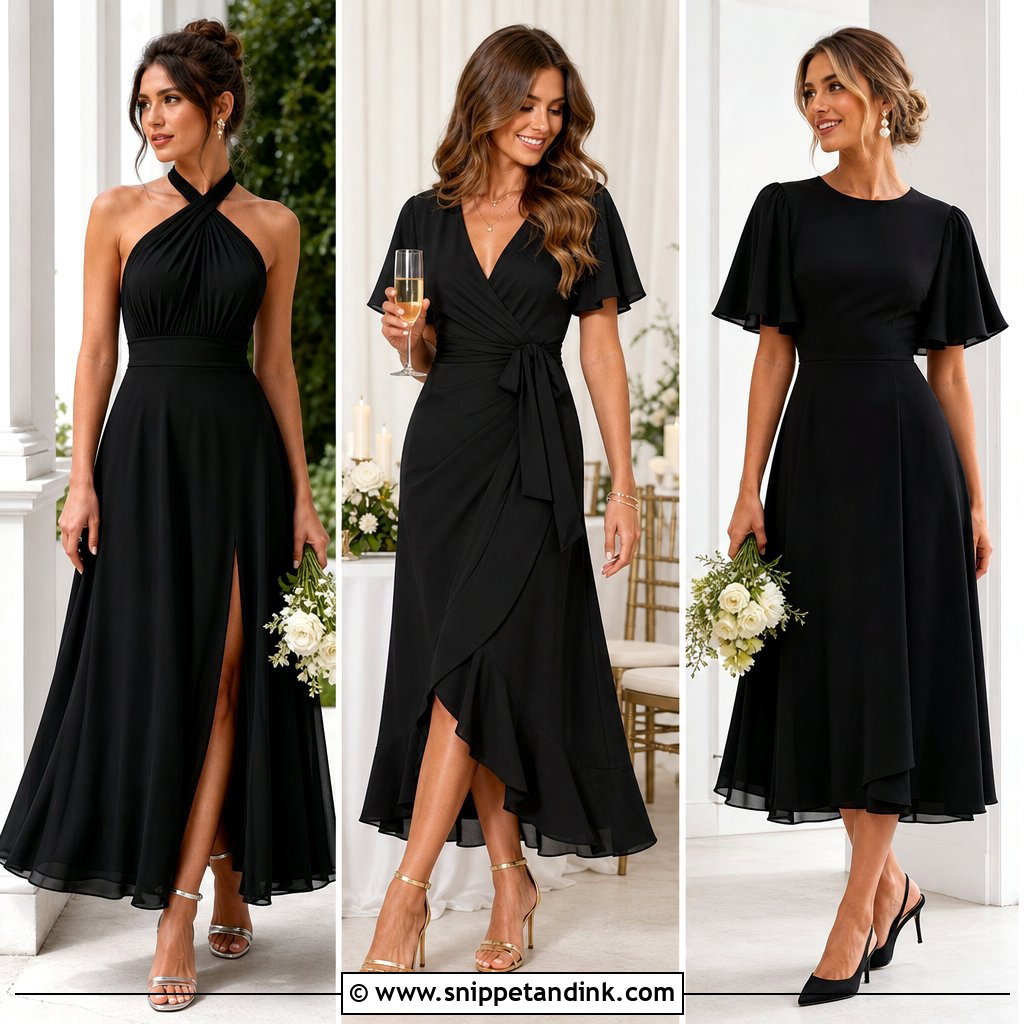
7. Black Formal Pakistani Dress For Reception
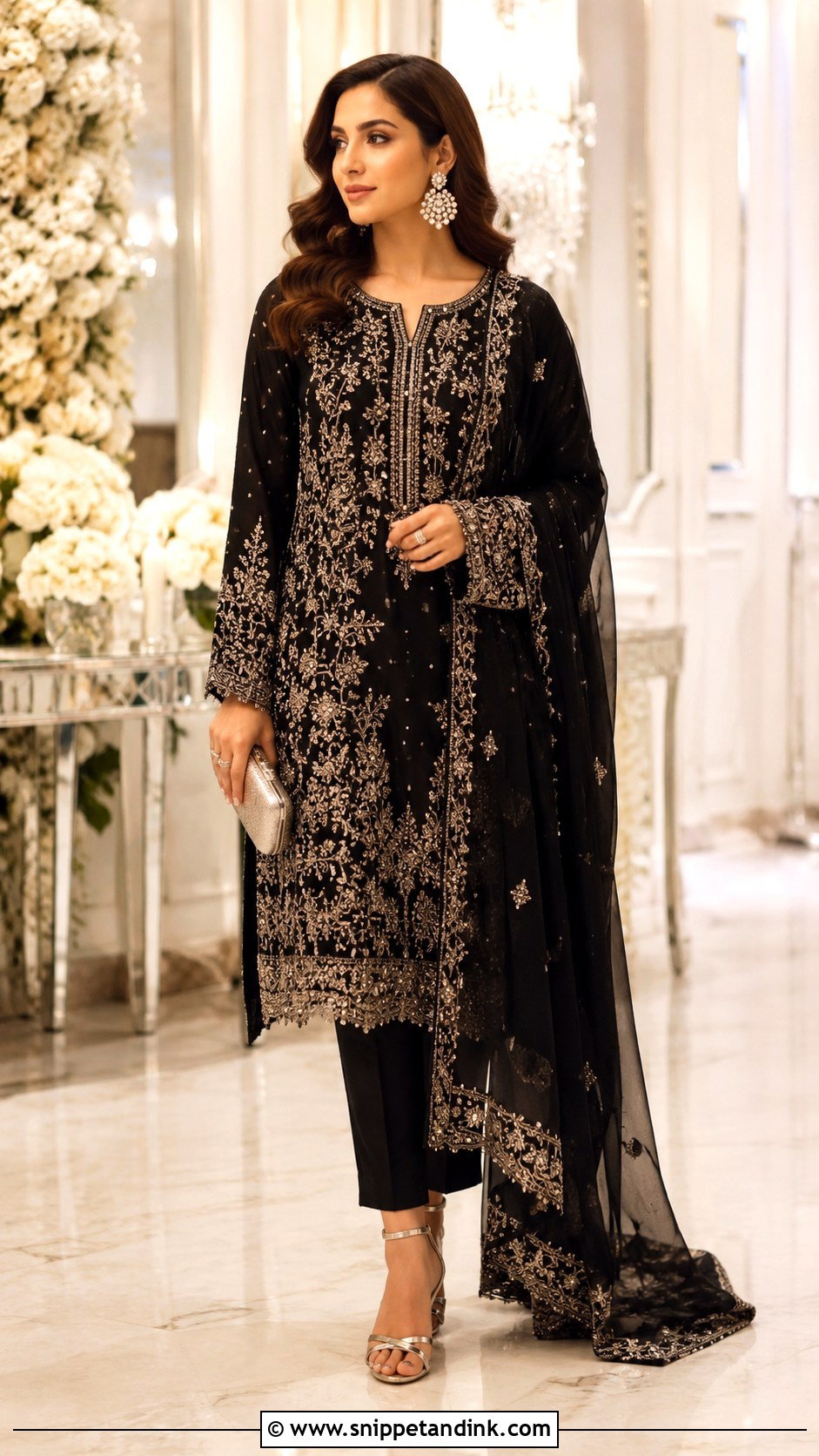
Black still divides families, and some elders consider it unlucky at a wedding, so I always suggest a sister checks before choosing it. Where it’s welcome, a long black shirt with silver, gold or antique embroidery over cigarette pants, a lehenga or a sharara looks sharp at an evening reception or wedding dinner. A bordered sheer dupatta keeps it traditional. Black already carries weight, so keep jewelry to statement earrings with metallic heels and a sleek clutch. It’s also the outfit you’ll get the most wear from afterward.
8. Peach Organza Dress For Sisters
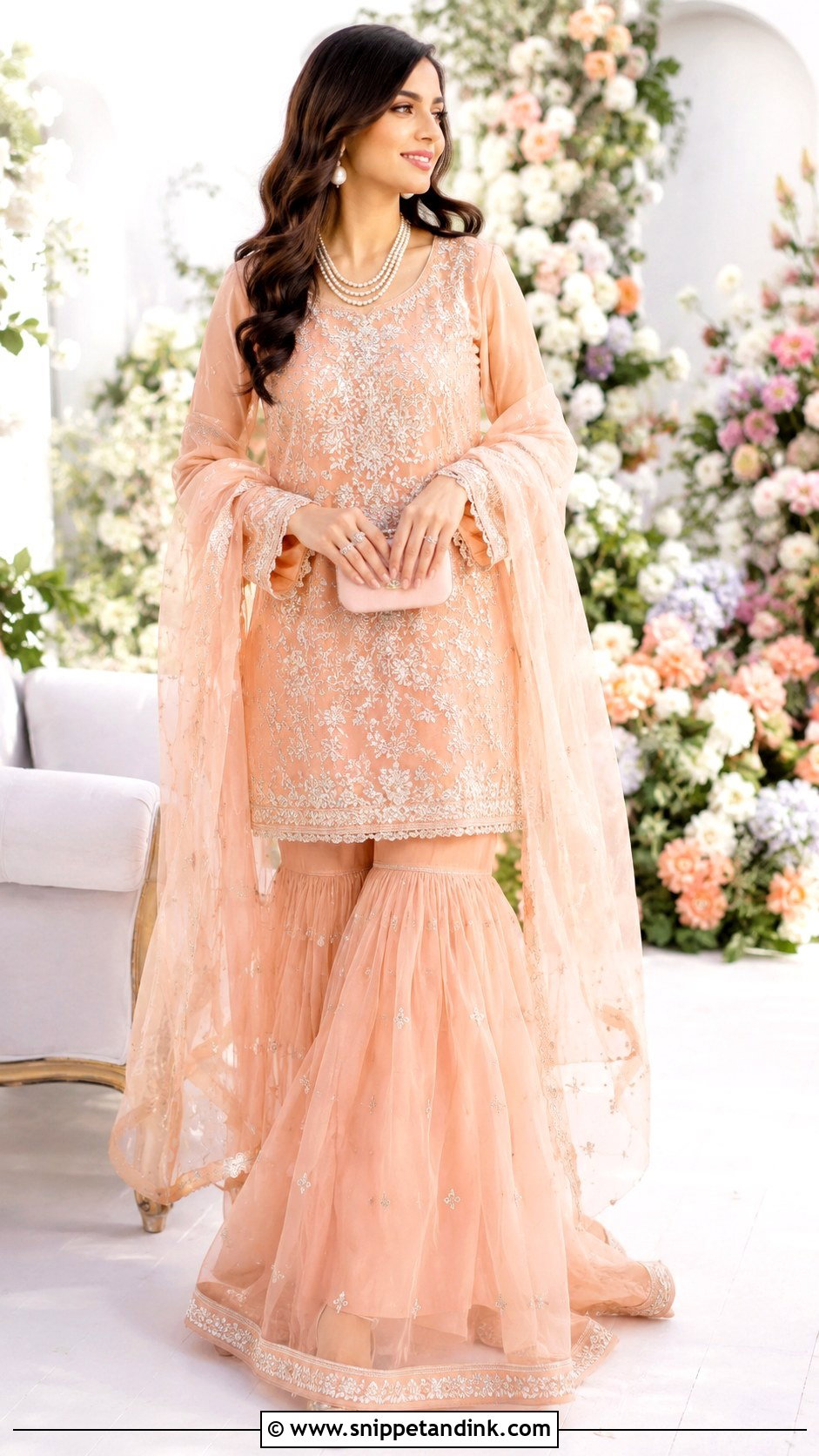
Peach organza is a daytime colour. It glows in natural light and can look a little muddy under yellow hall bulbs, so I keep it for the nikkah, dholki or walima. Organza gives volume and structure without weight. Choose a peach short shirt or long kurta with embroidery over a lehenga, gharara or straight pants, and a matching organza dupatta with lace or pearl edging. Nude heels, pearl jewelry and a pastel clutch finish it. Organza creases sharply when you sit, so pick a peach with a little tonal embroidery to break up the surface and hide those lines.
9. Red Gharara Dress For Barat
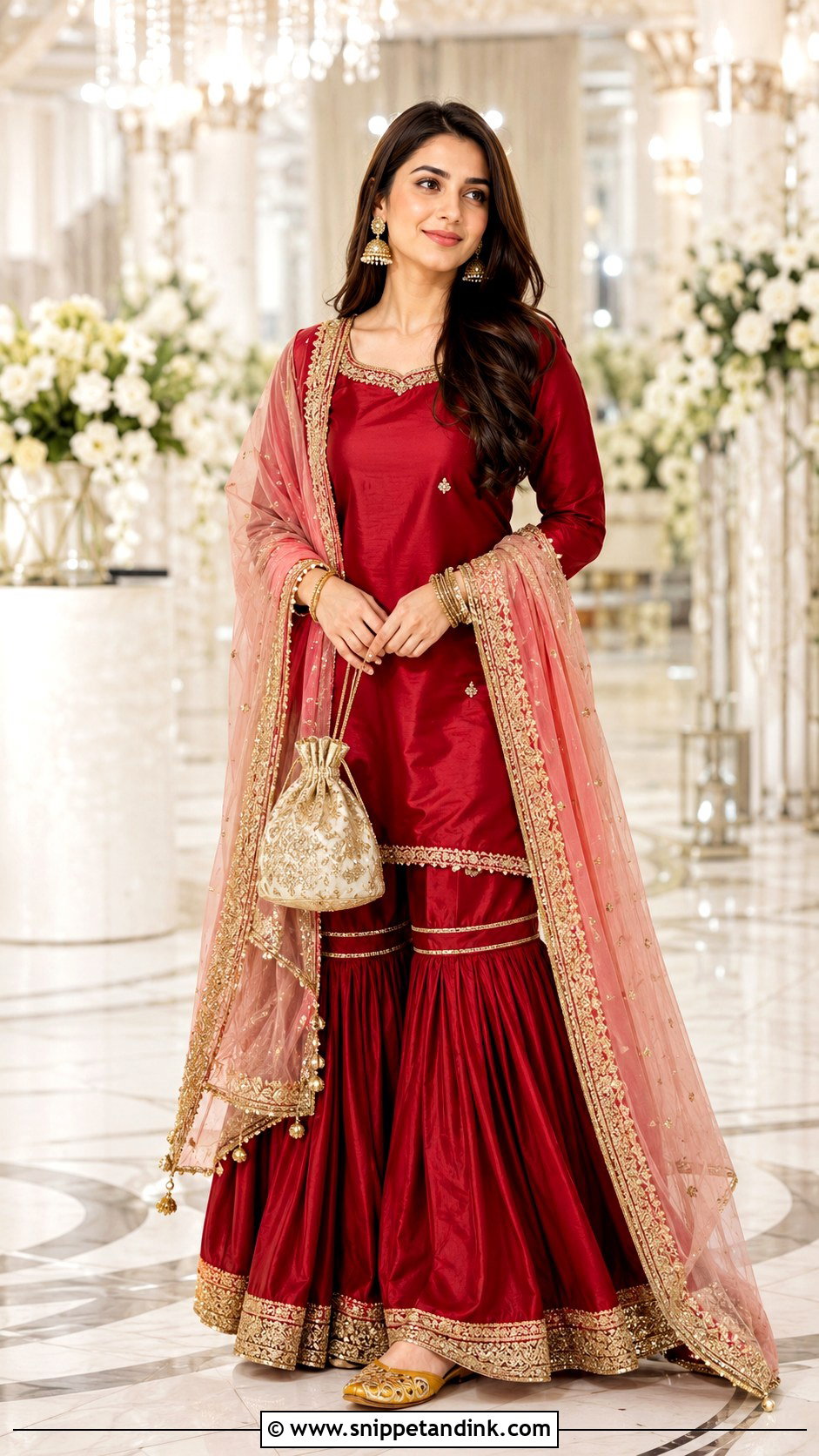
A red gharara can work for a sister at barat, but only if it’s clearly less bridal. I’d go deeper, rust red, muted crimson or berry, with lighter embroidery rather than a fully covered outfit. A short shirt over a traditional gharara reads well in close family photos. Keep the dupatta light, the hair simple and the jewelry controlled, then add gold khussas, jhumkas and a potli bag. If the bride is in red, skip it entirely and pick rust, maroon or berry, because guests will compare you in every photo.
10. Champagne Lehenga Dress For Walima
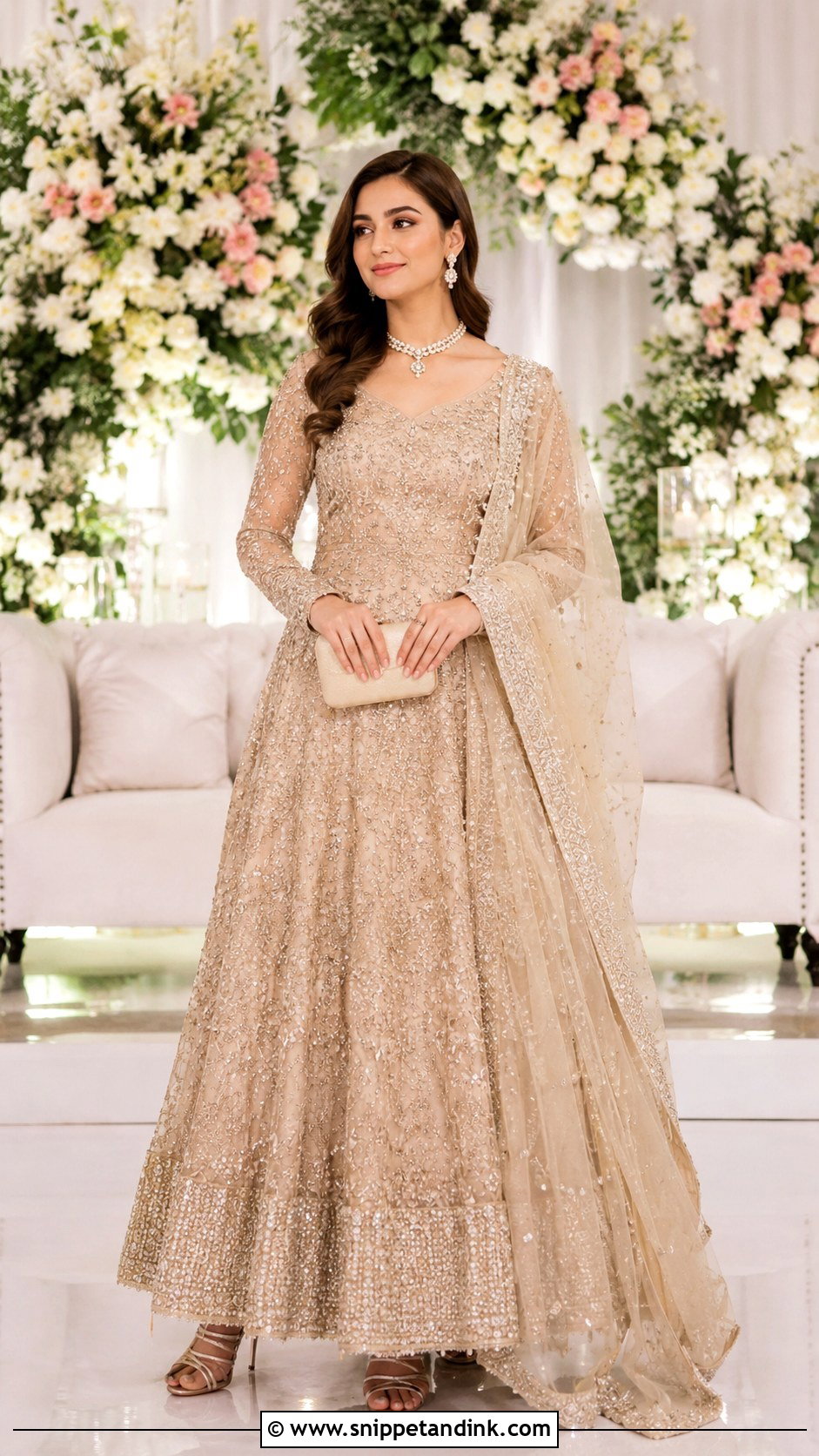
Champagne is luxurious but soft, and that makes it one of the safest walima colours for a sister: it sits nicely beside a bride in almost anything. A lehenga with sequins, pearls or tonal embroidery, a fitted blouse and a sheer dupatta is all it needs. Silver, crystal or pearl jewelry suits it better than heavy yellow gold, which can make champagne look dingy. Strappy heels, a satin clutch and soft waves finish it for a hotel reception.
11. Pink Pishwas Dress For Sisters
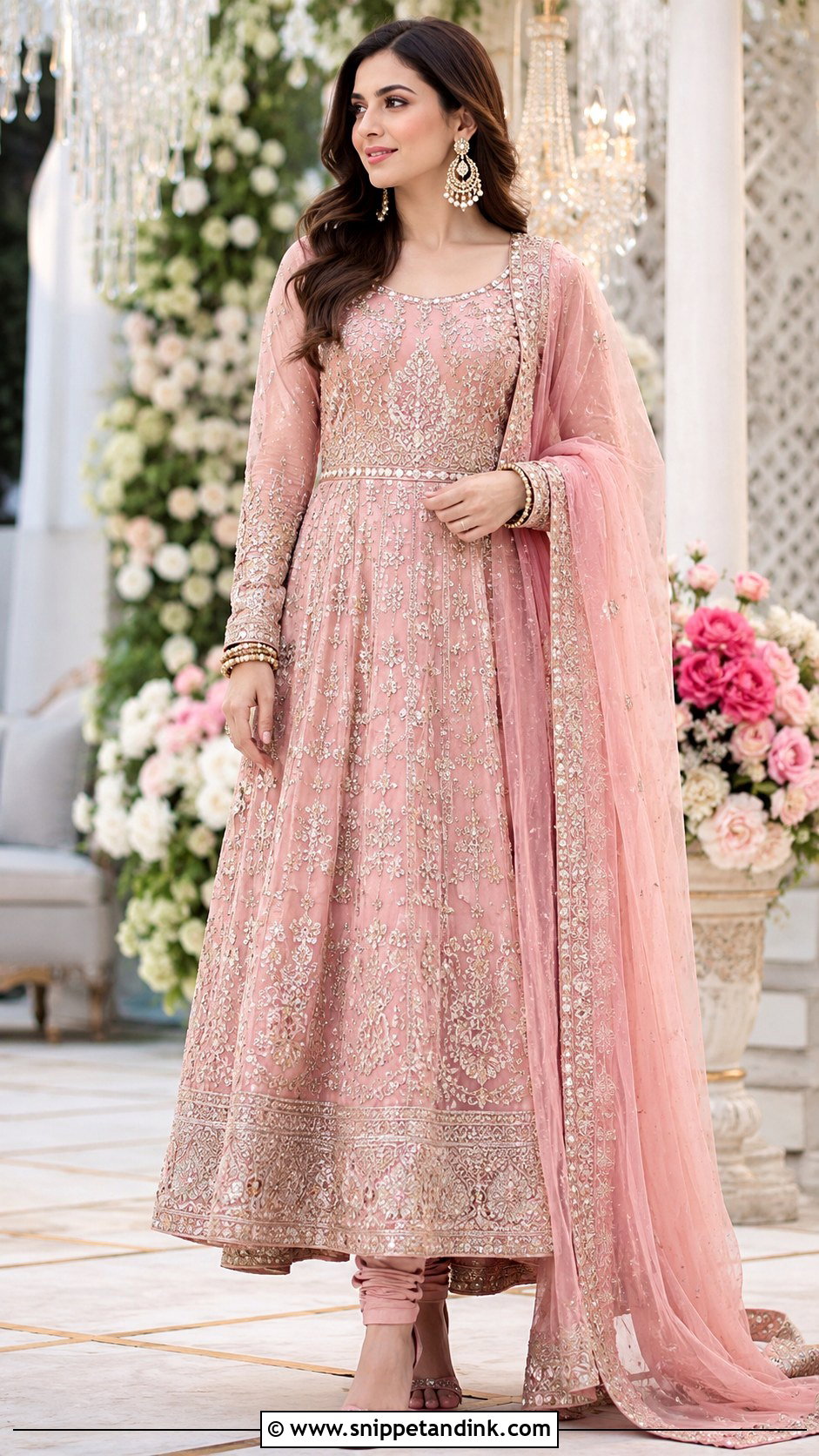
A pink pishwas changes character with the shade. Blush is soft enough for a nikkah or walima; hot pink belongs at a mehndi or sangeet. Look for a defined waist, flowing panels and embroidery around the neckline, sleeves and hem, worn with churidar and a light dupatta. The panels swing when you walk, which is why I like it for sisters doing a lot of entrances and errands. Match your heels to the embroidery tone, and add kundan earrings and bangles. One practical point: ask for a hidden pocket in a side panel for your phone, since you’ll be the one everyone calls.
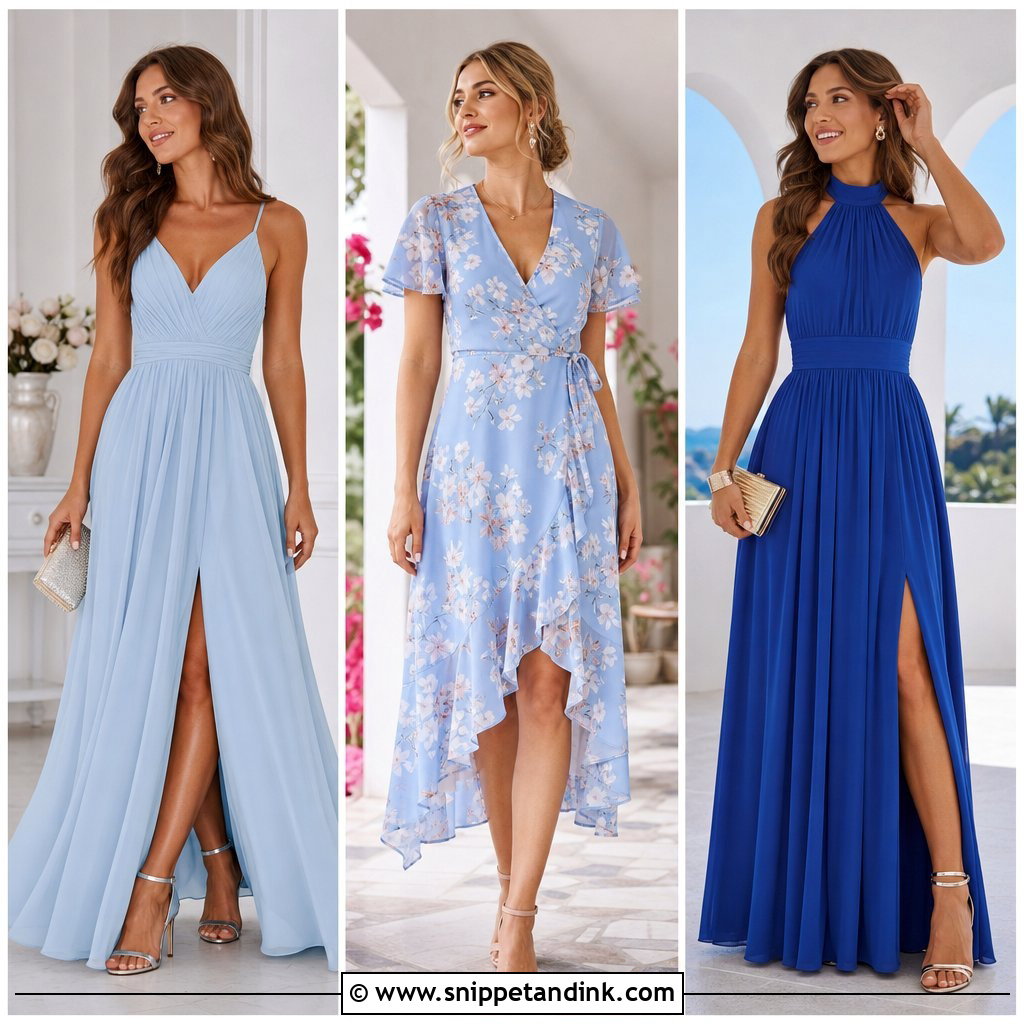
12. Blue Maxi Dress For Pakistani Wedding
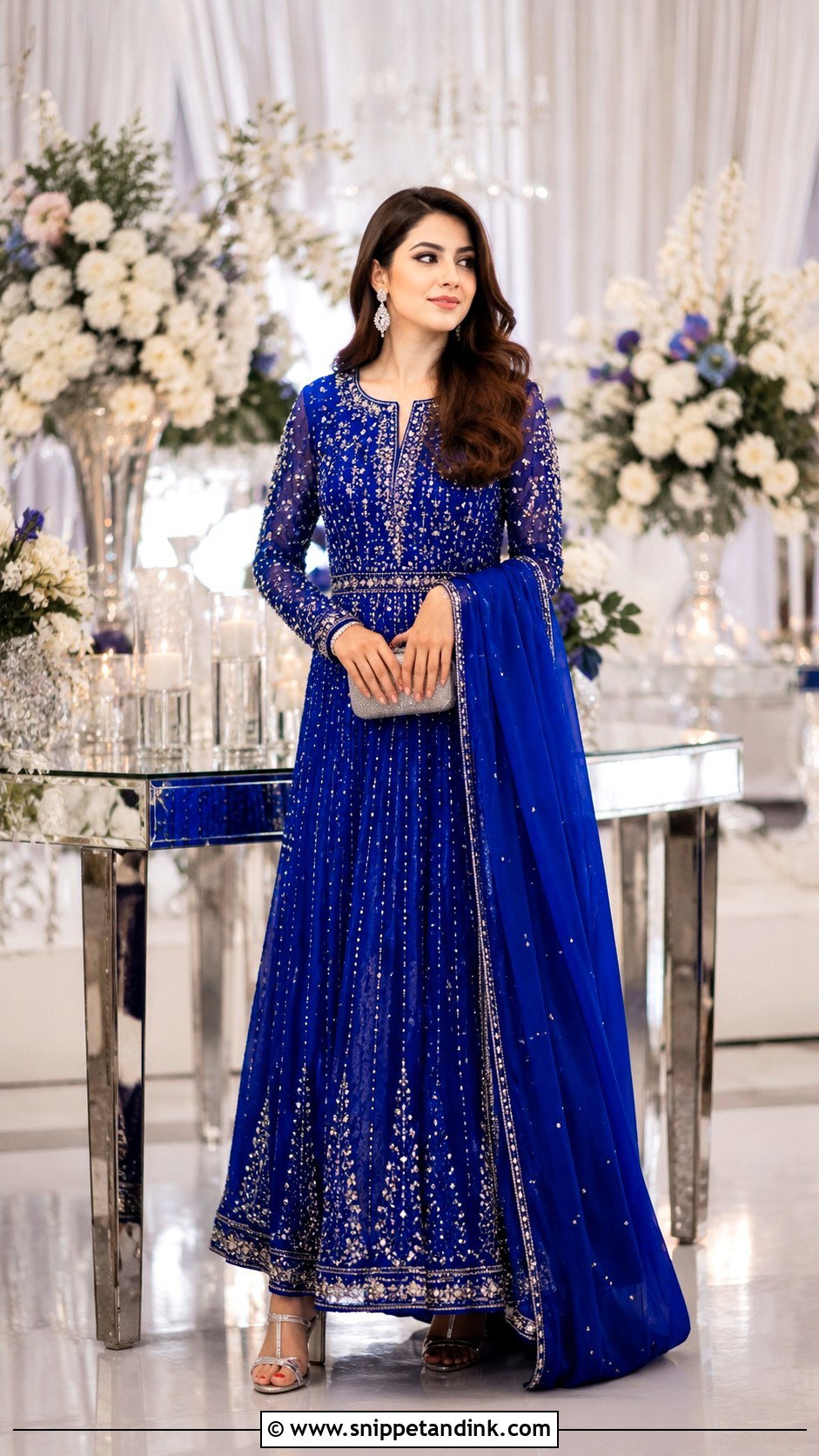
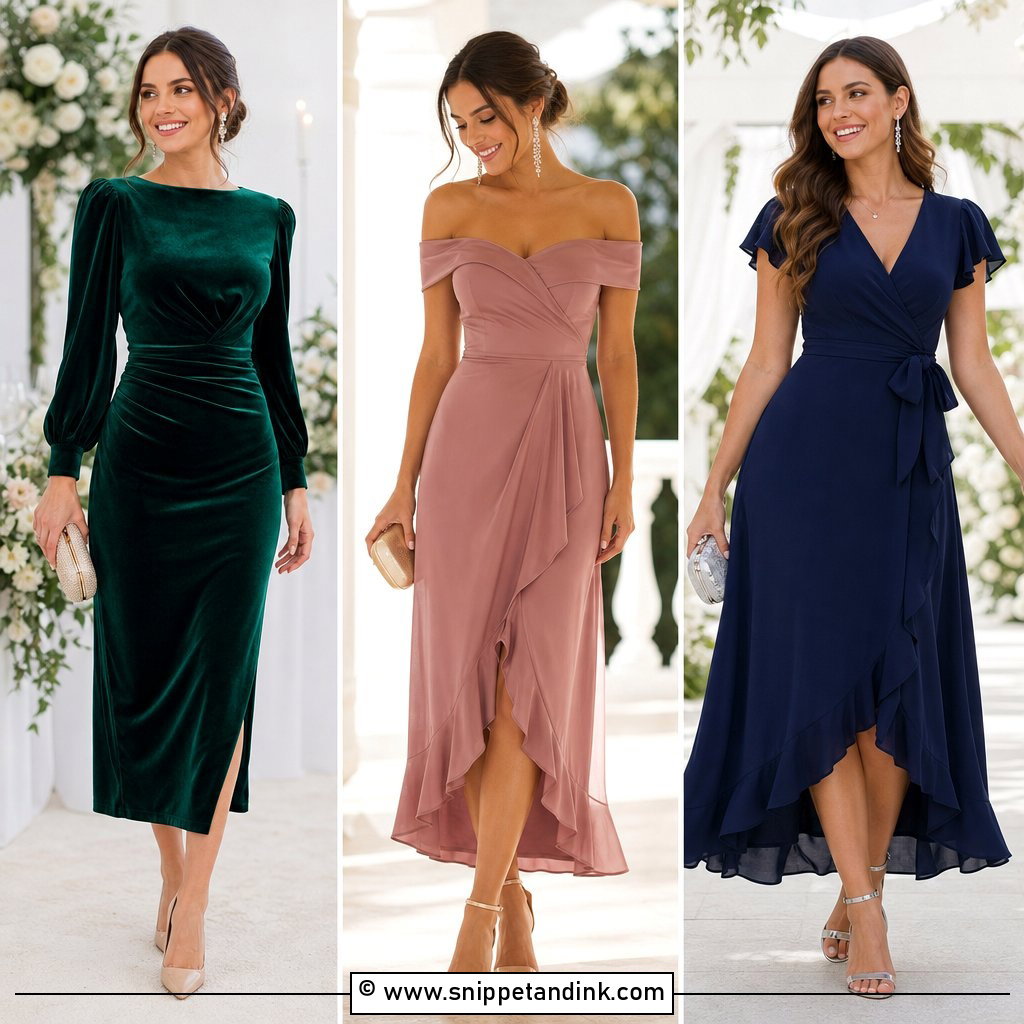
Blue sidesteps the bridal reds and the mehndi yellows completely. Powder blue suits a walima, royal blue holds its own at a reception, and navy works late in the evening. A long maxi with delicate embroidery, sequins or beadwork on the bodice and sleeves, a matching dupatta, silver heels and crystal earrings is the complete look. Royal blue can look almost purple under some LED lighting, so if photos matter to you, check the fabric under the kind of light the hall uses. A sleek clutch and soft waves keep it modern indoors or out.
13. White And Gold Nikkah Dress For Sisters
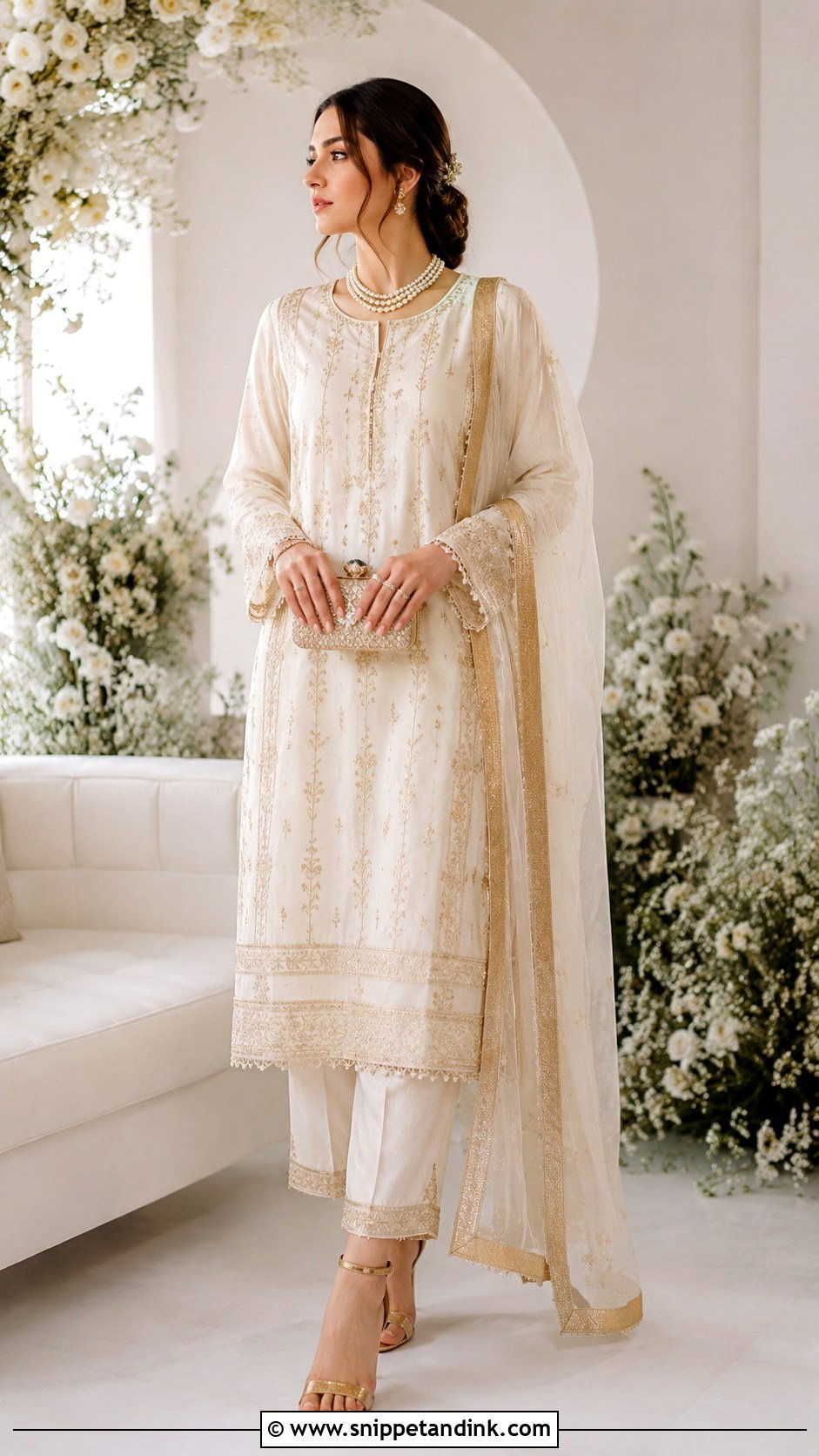
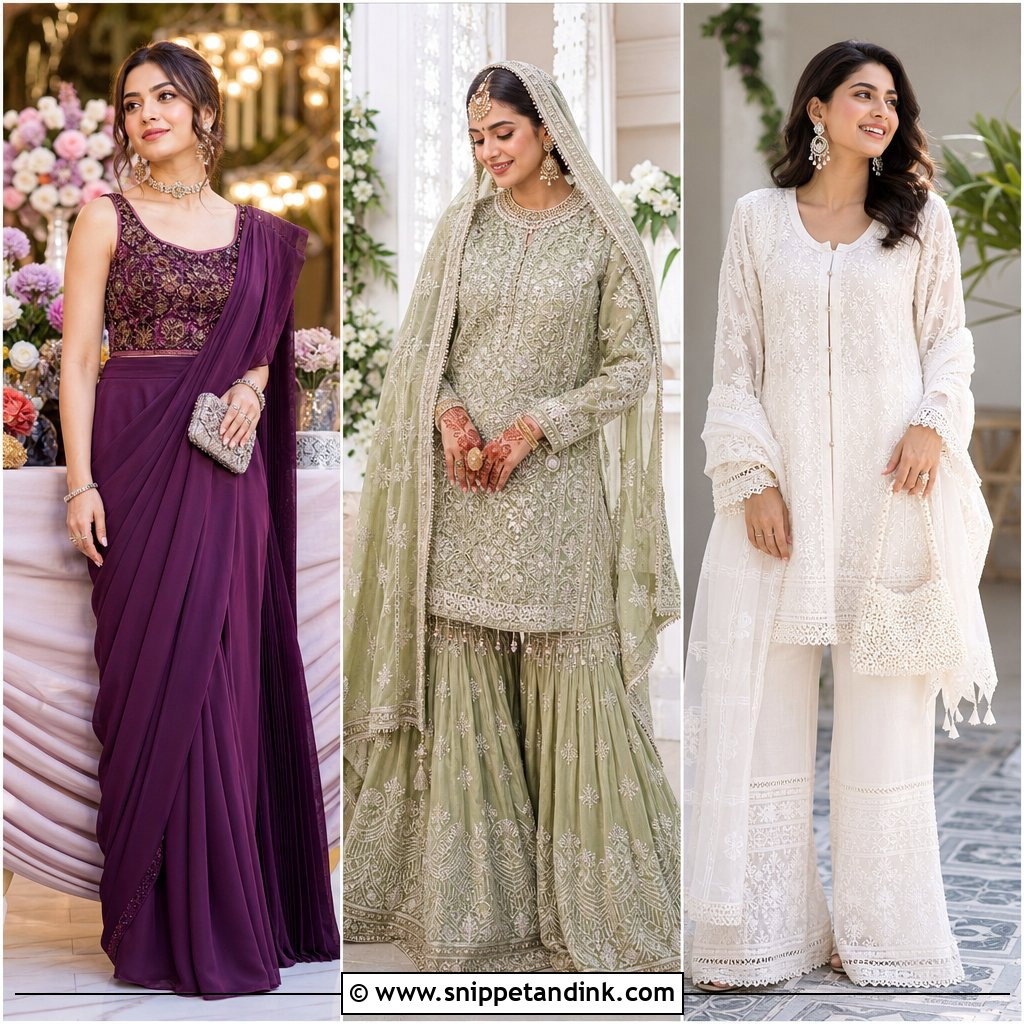
White and gold at a nikkah works for a sister if it’s styled with restraint. Pick off-white rather than bright white, a straight shirt with gold embroidery, and matching trousers or a gharara. A light dupatta with a gold border gives a ceremonial feel without looking like a second bride. Gold heels, pearl jewelry and a soft clutch with fresh, natural makeup, defined eyes and a nude lip finish it. Keep the embroidery lighter than the bride’s so you stand beside her, not alongside her, in the photographs.
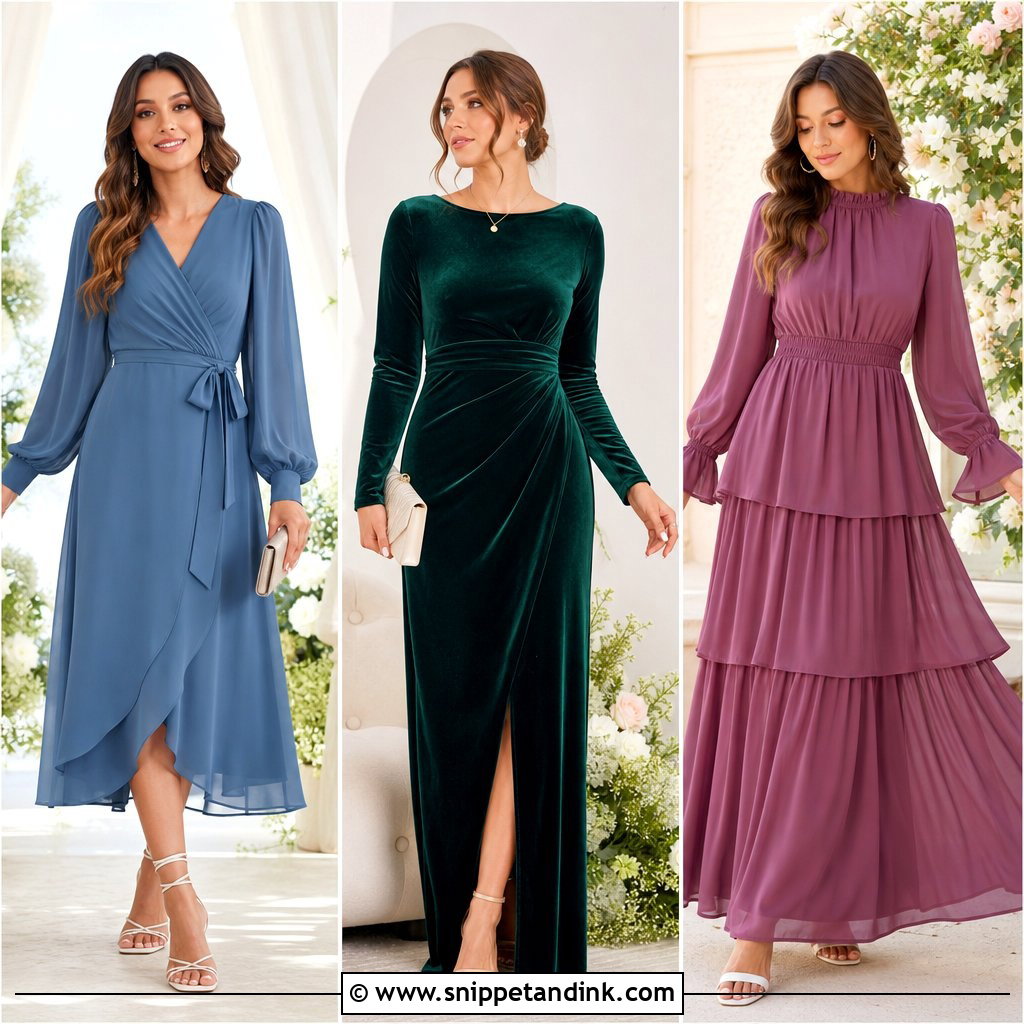
14. Purple Velvet Dress For Winter Wedding
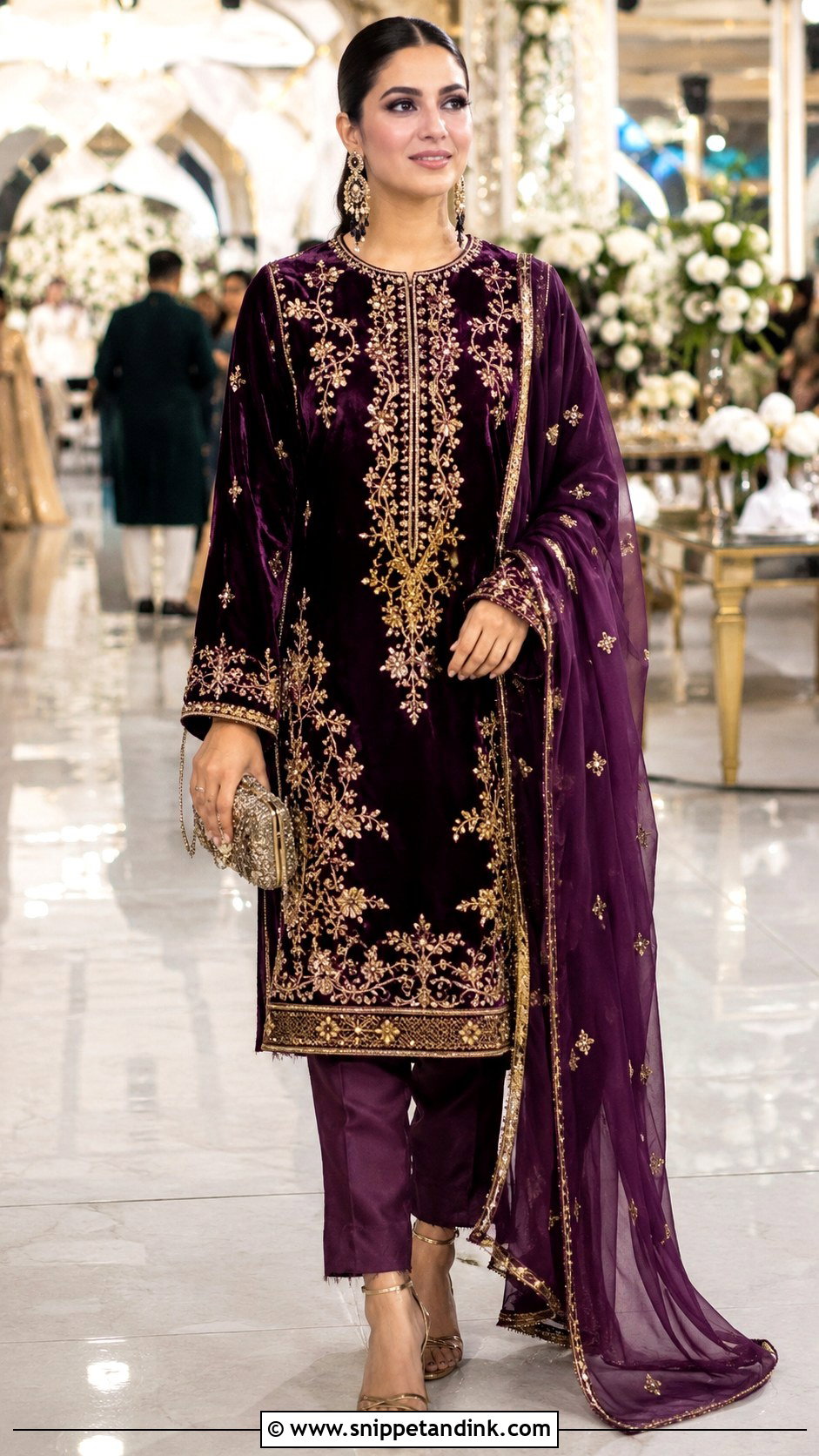
Purple velvet in deep plum, aubergine or royal purple is warm and rich at a winter barat or reception. A velvet long shirt with gold or antique embroidery over raw silk trousers or a lehenga, with a chiffon or organza dupatta to lighten it, is the balance I aim for. Velvet runs hot indoors, so if the hall has heaters going, you’ll feel it by the second hour; a lighter bottom helps. Gold heels, statement earrings, an embellished clutch and sleek hair to balance the texture complete it.
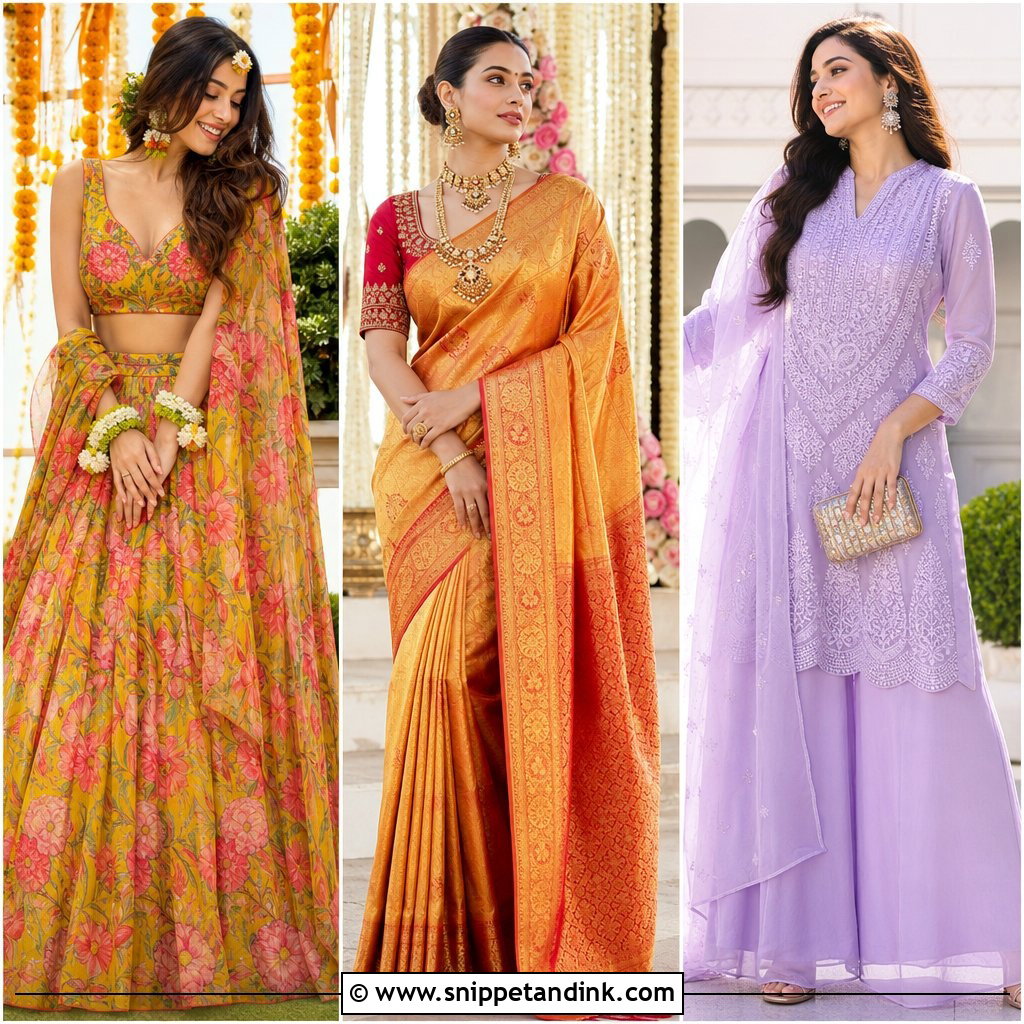
15. Mint Green Sharara Dress For Walima
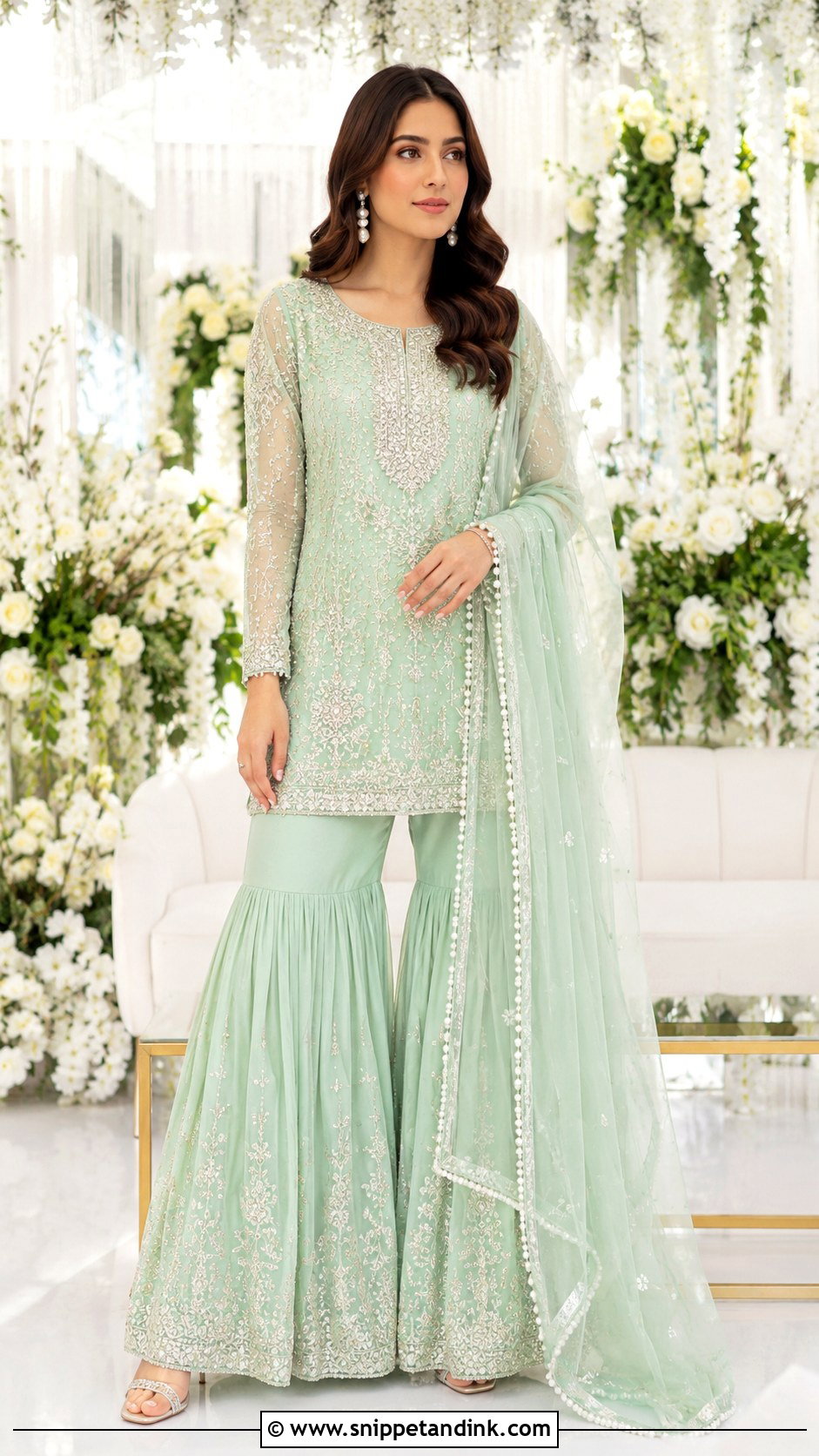
Mint is a fresh walima colour that keeps the palette light while still giving a sister a full traditional outfit. A short shirt with pearl, silver or sequin work over a wide, moving sharara, plus a bordered or lightly scattered dupatta, is enough. Mint is fussier than it looks: a cool mint flatters fair and olive skin, while warmer skin usually does better with a slightly greener sage. Silver heels, pearl earrings, a delicate bracelet and soft curls or a low bun suit it for day or evening.
16. Orange Lehenga Dress For Mehndi
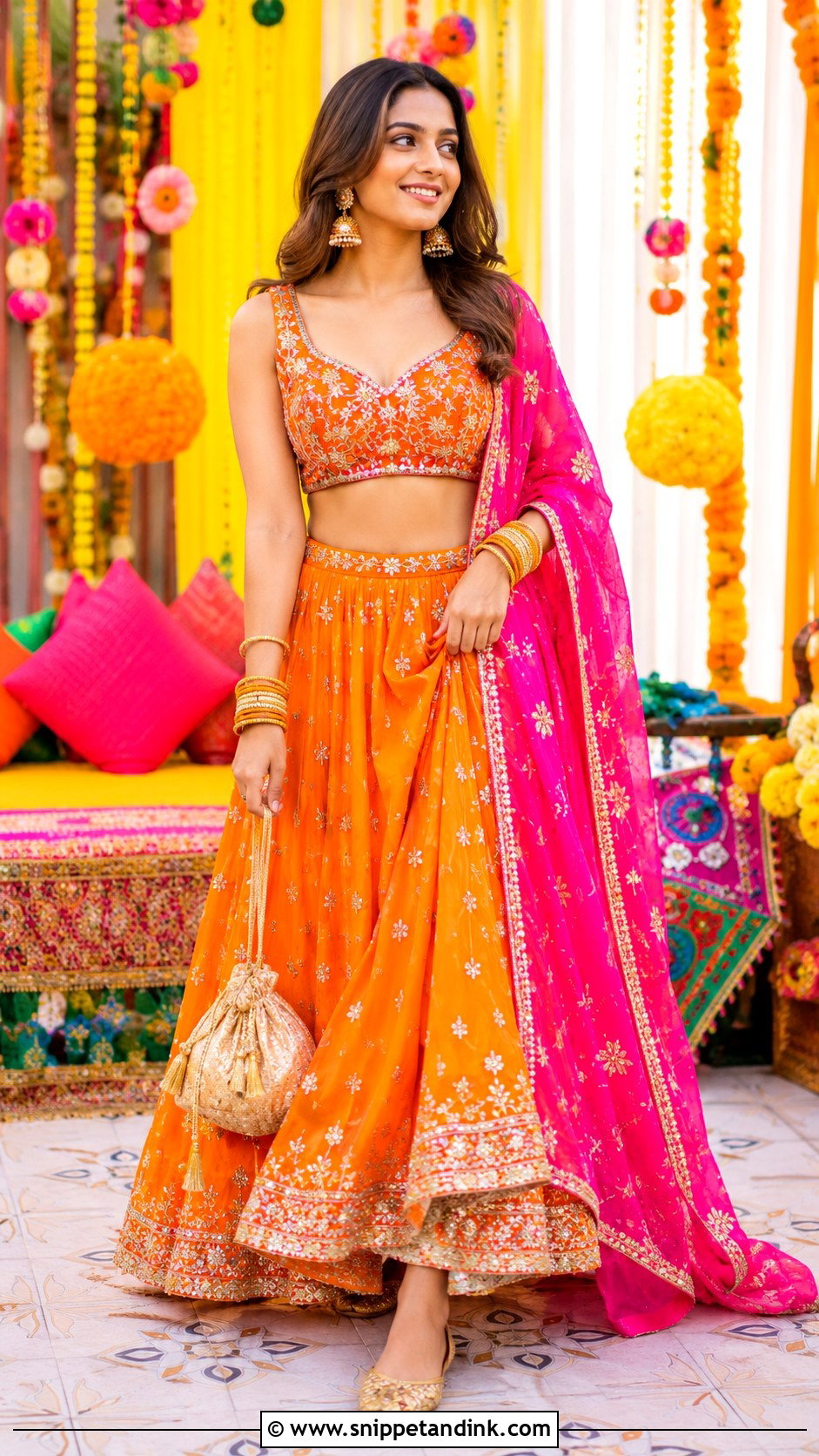
An orange lehenga is made for the mehndi. Burnt orange, tangerine and marigold all carry gota, mirror work or bright thread embroidery, under a short choli and a pink, yellow or green dupatta for the classic mehndi palette. Orange reflects onto the face in photos, so keep makeup warm and light rather than heavy and bronzed. Khussas, bangles, jhumkas and a braid make it easy to dance in, and if you’re on the dance list, have the lehenga hemmed to clear your shoes.
17. Silver Sequin Dress For Reception
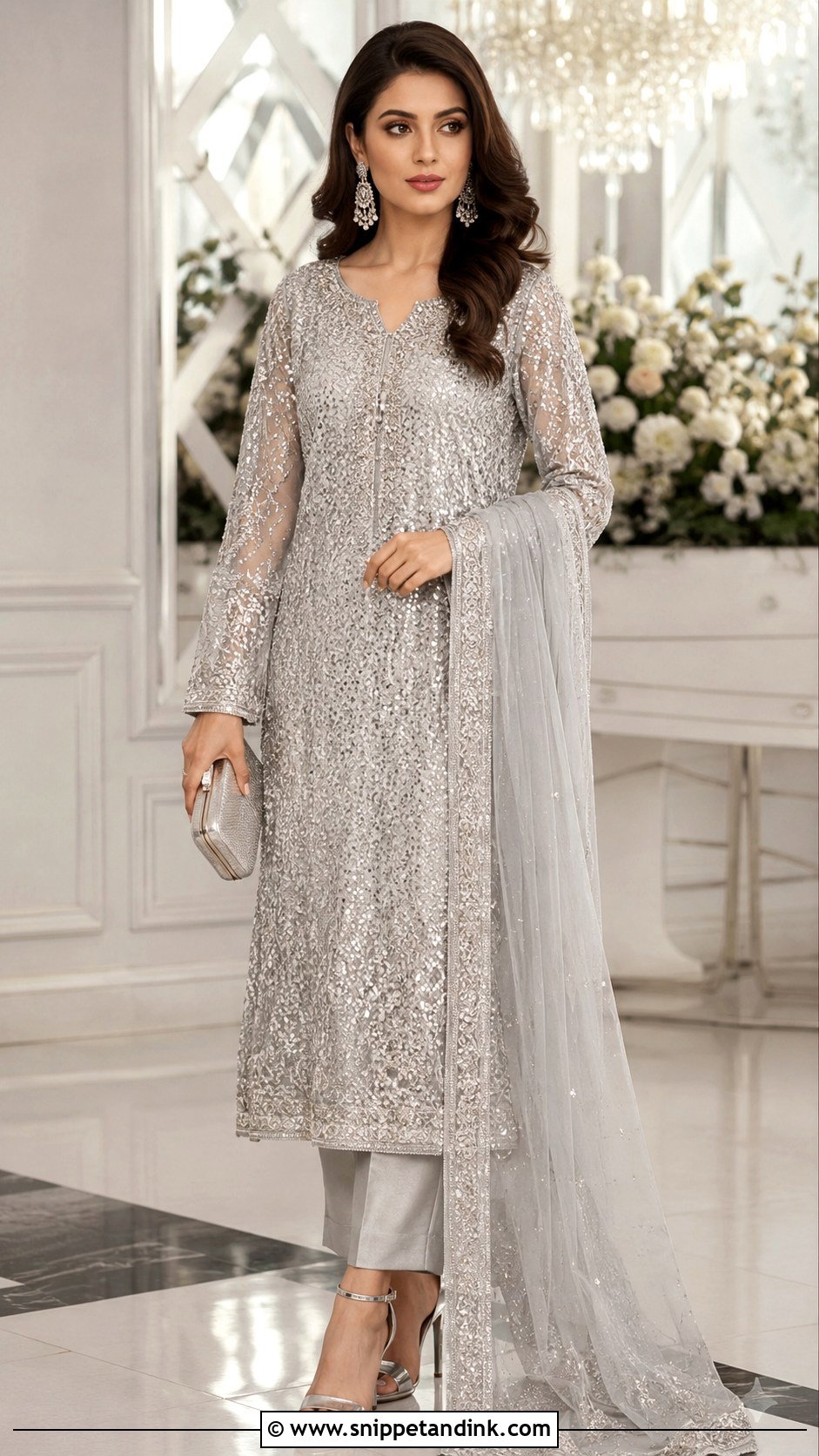
Silver sequins belong at an evening reception, and the trick is restraint. On a long shirt, maxi or lehenga set, choose sequins scattered or in borders rather than all-over, which can look like costume under spotlights and catch on dupatta net. A soft grey or ice-blue dupatta adds depth. Silver heels, crystal earrings, a sleek clutch, smooth hair, glowing skin and defined eyes complete it. Sequins also scratch whoever you hug, so expect a few complaints from the aunties.
18. Teal Angrakha Dress For Sisters
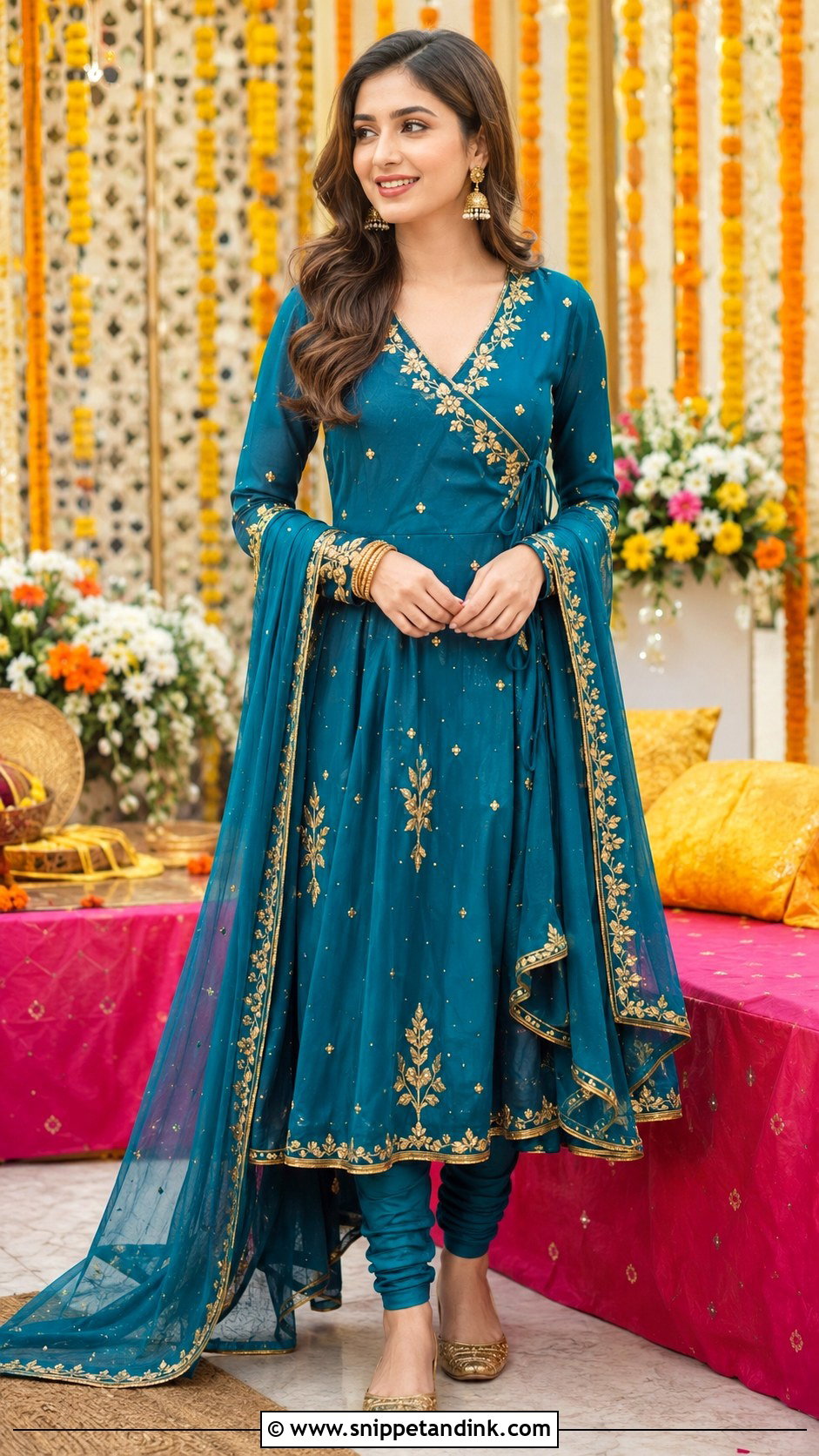
The angrakha’s wrap neckline gives detail at the chest, and the flowing cut is comfortable through a long event. Teal, peacock blue or deep aqua with gold, copper or mirror embroidery suits a mehndi, dholki or sangeet. Wear it with churidar for a lighter function or a lehenga for something more formal. The overlap is tied, not stitched shut, so I ask for a hidden hook or snap at the inner tie, otherwise it can slip open when you lean over to help someone. A matching dupatta, gold khussas and jhumkas finish it.
19. Rust Pakistani Dress For Barat
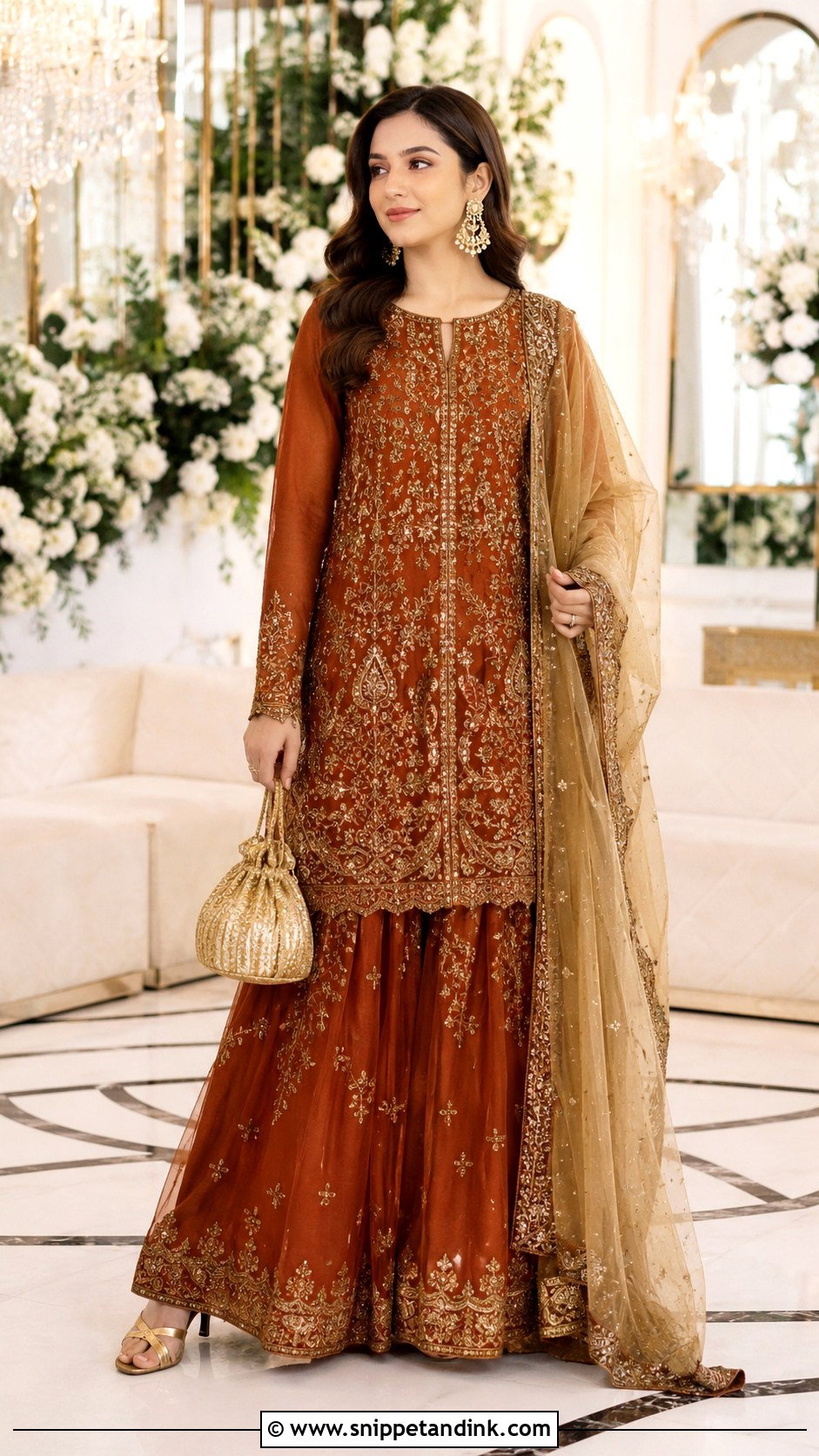
Rust gives a sister the warmth of red and orange without looking bridal. A rust long shirt with antique gold embroidery over a lehenga, sharara or straight pants, and a muted gold or rust dupatta, keeps everything cohesive. Gold heels, kundan earrings and a potli bag finish it. It’s most at home at an autumn or winter wedding but holds up at evening summer events too, and it looks mature in close family portraits next to a red or maroon bride.
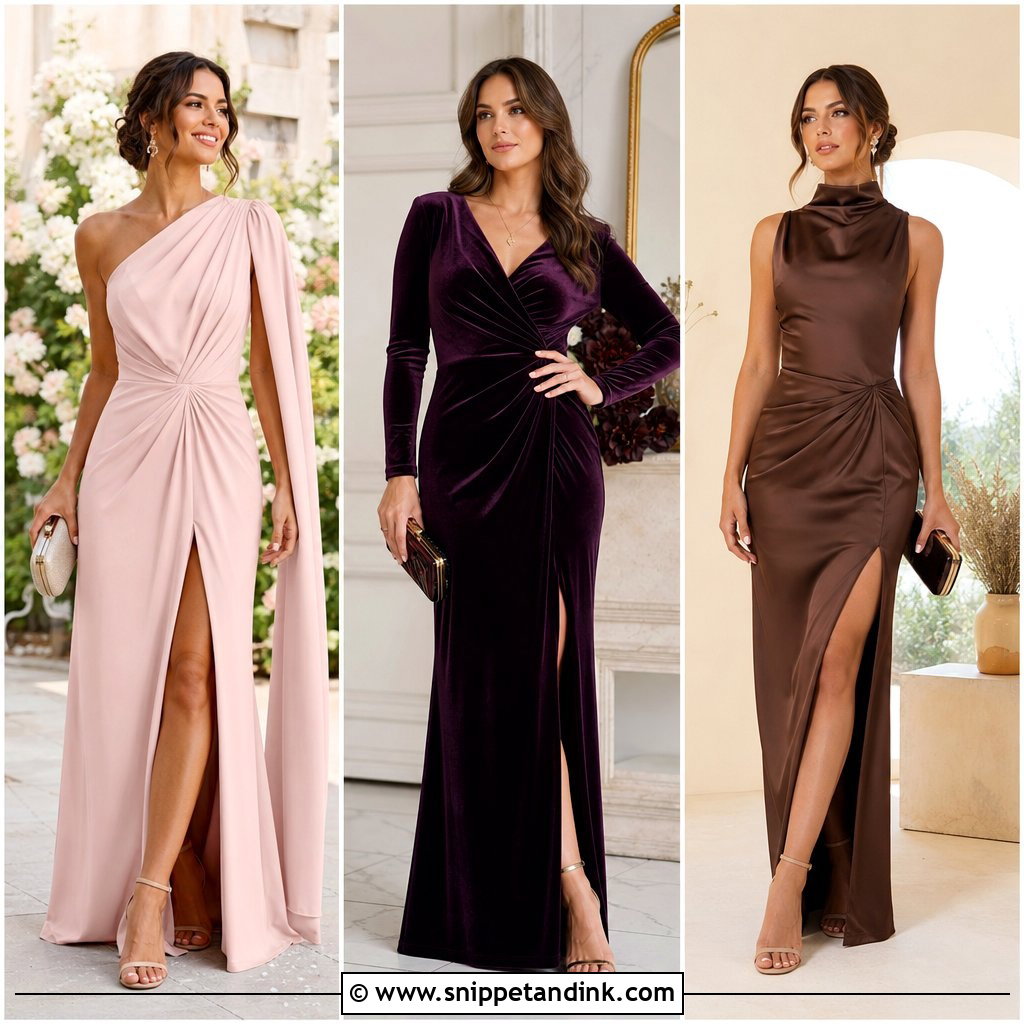
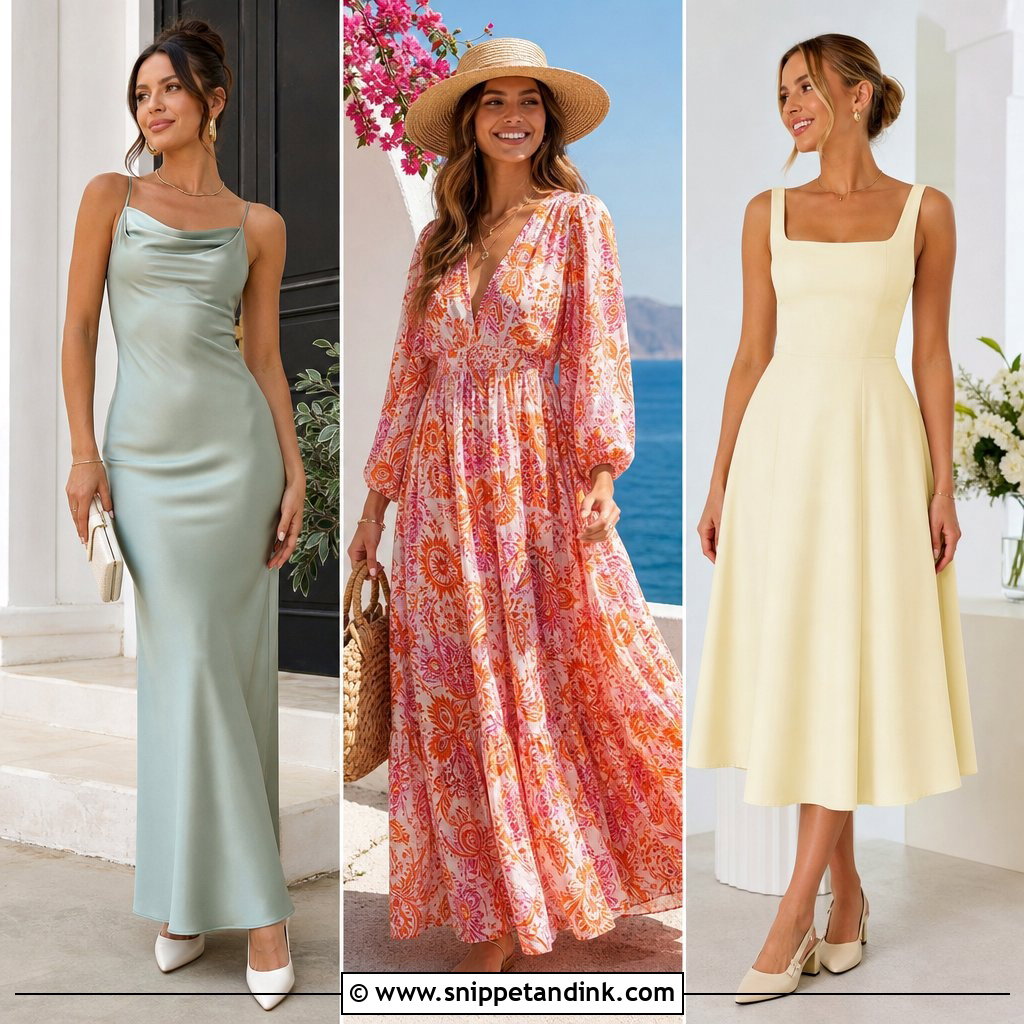
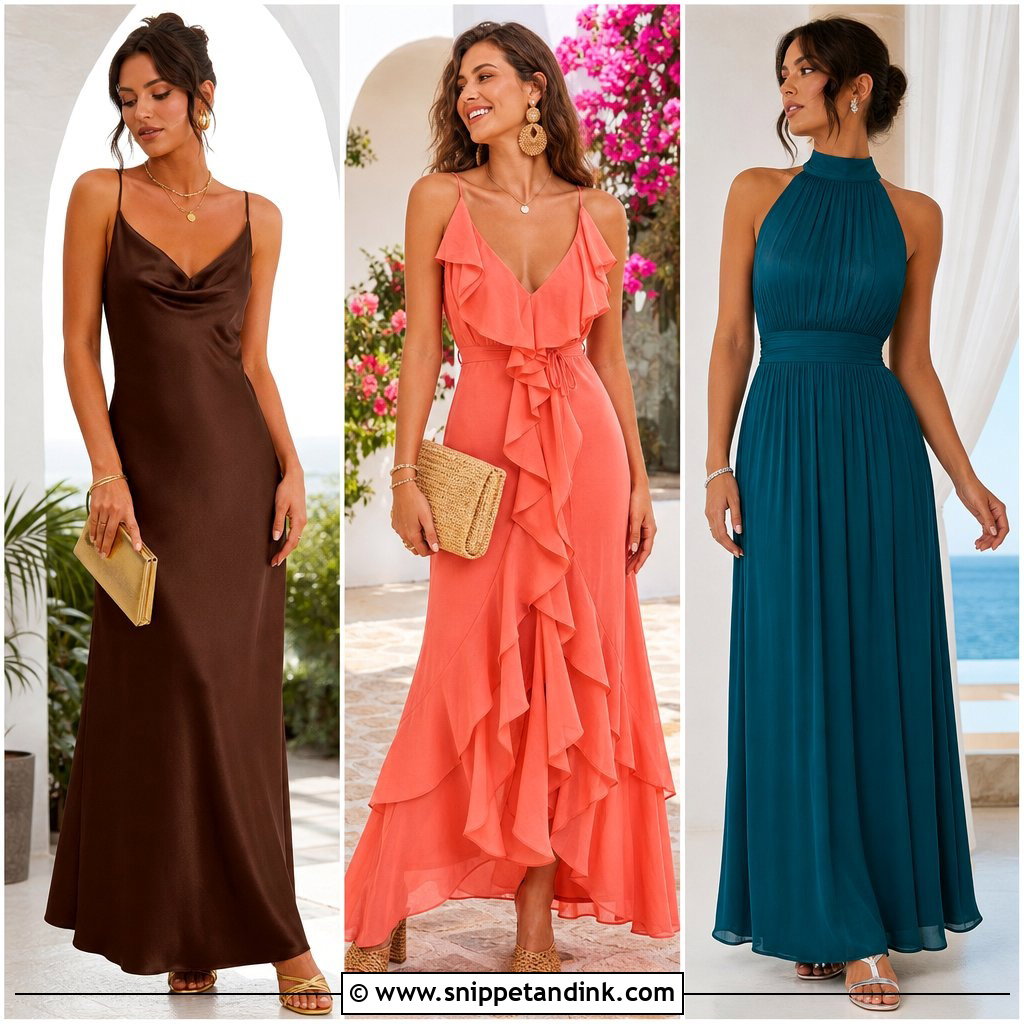
20. Lavender Maxi Dress For Walima
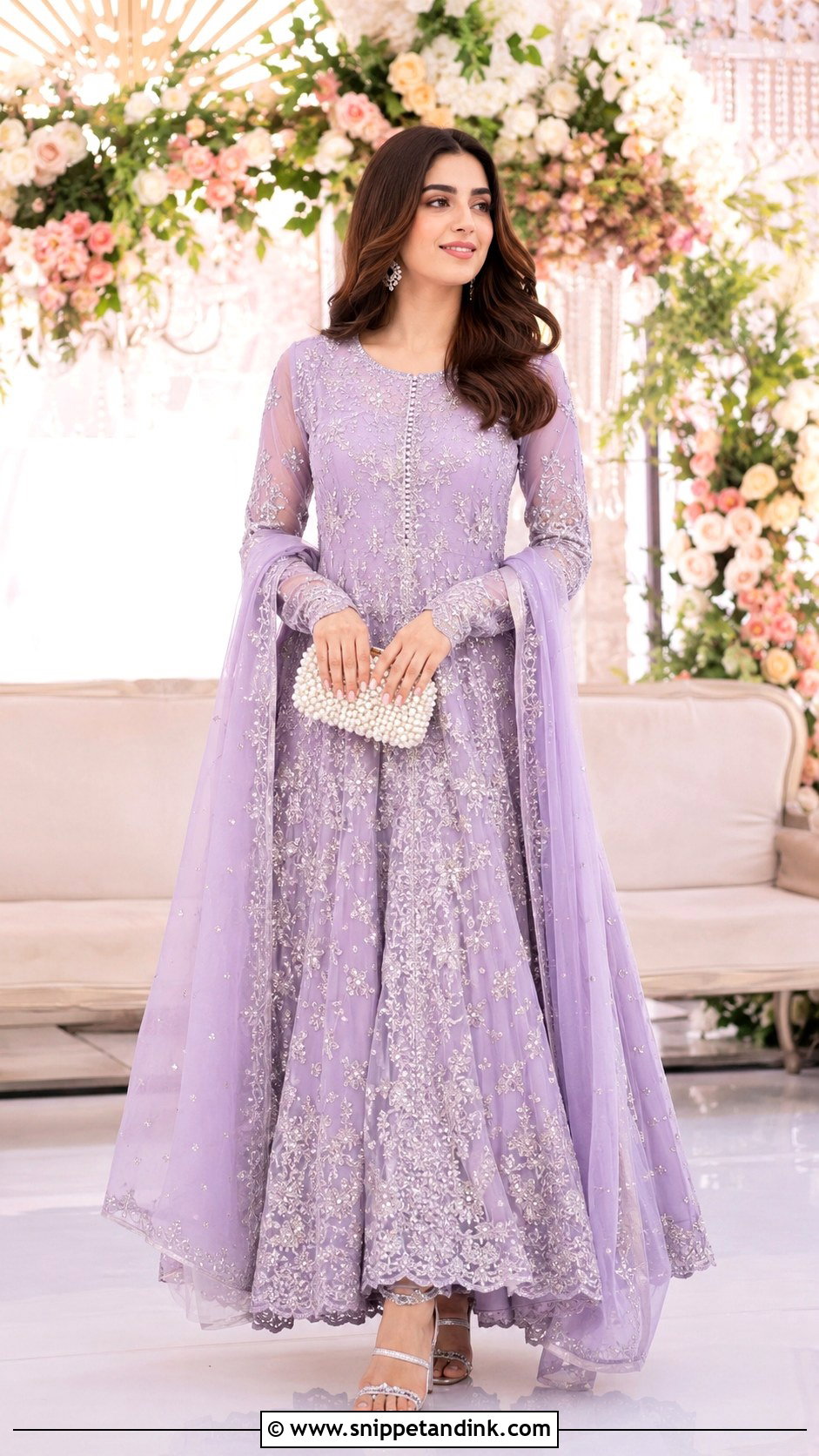
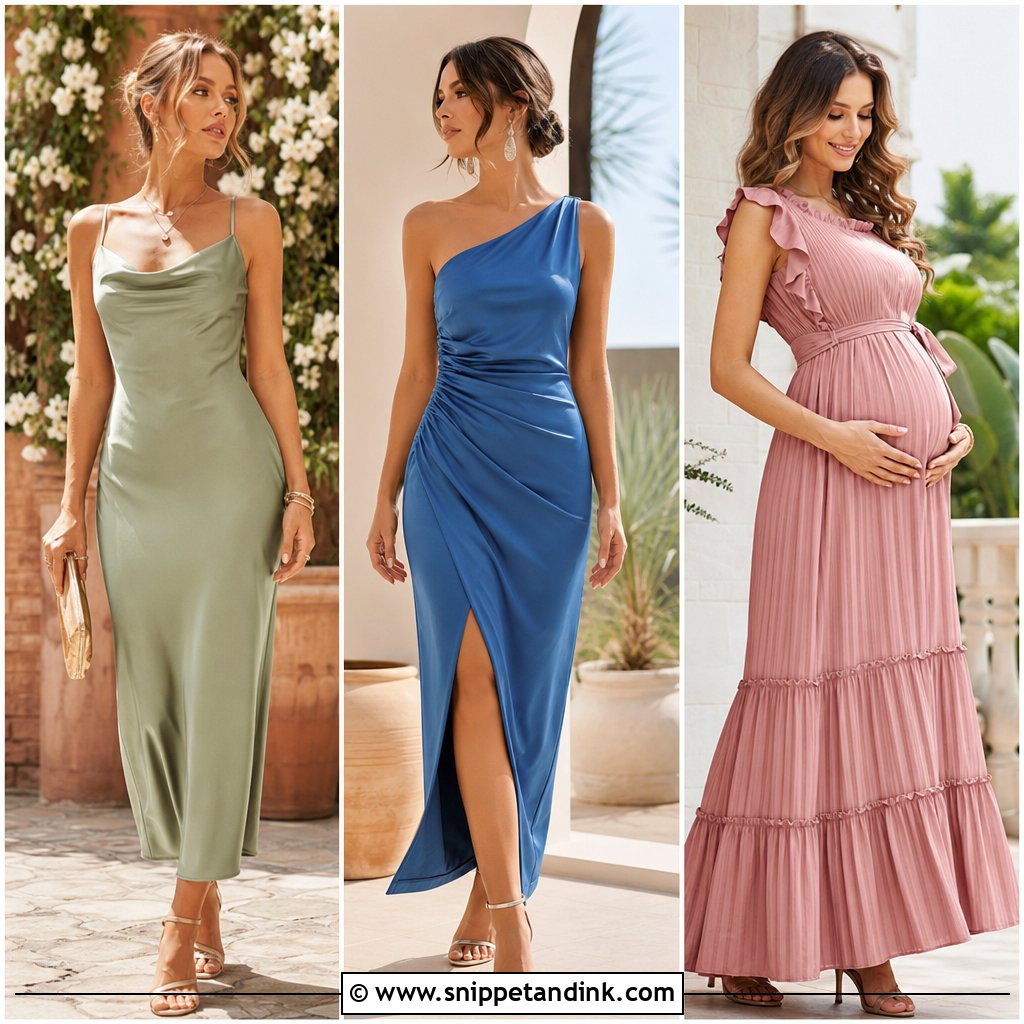
Lavender is the pastel for a sister who wants something less common than blush or mint. It pairs with silver, pearl or crystal detail, on a long flowing maxi with subtle work on the bodice and sleeves and a sheer dupatta in the same shade. Lavender leans grey in shade, so outdoor walimas under trees can dull it; a version with a touch more pink stays brighter. Silver heels, a pearl clutch, delicate earrings and soft rosy makeup keep it ready for the reception.
21. Fuchsia Lehenga Choli For Mehndi
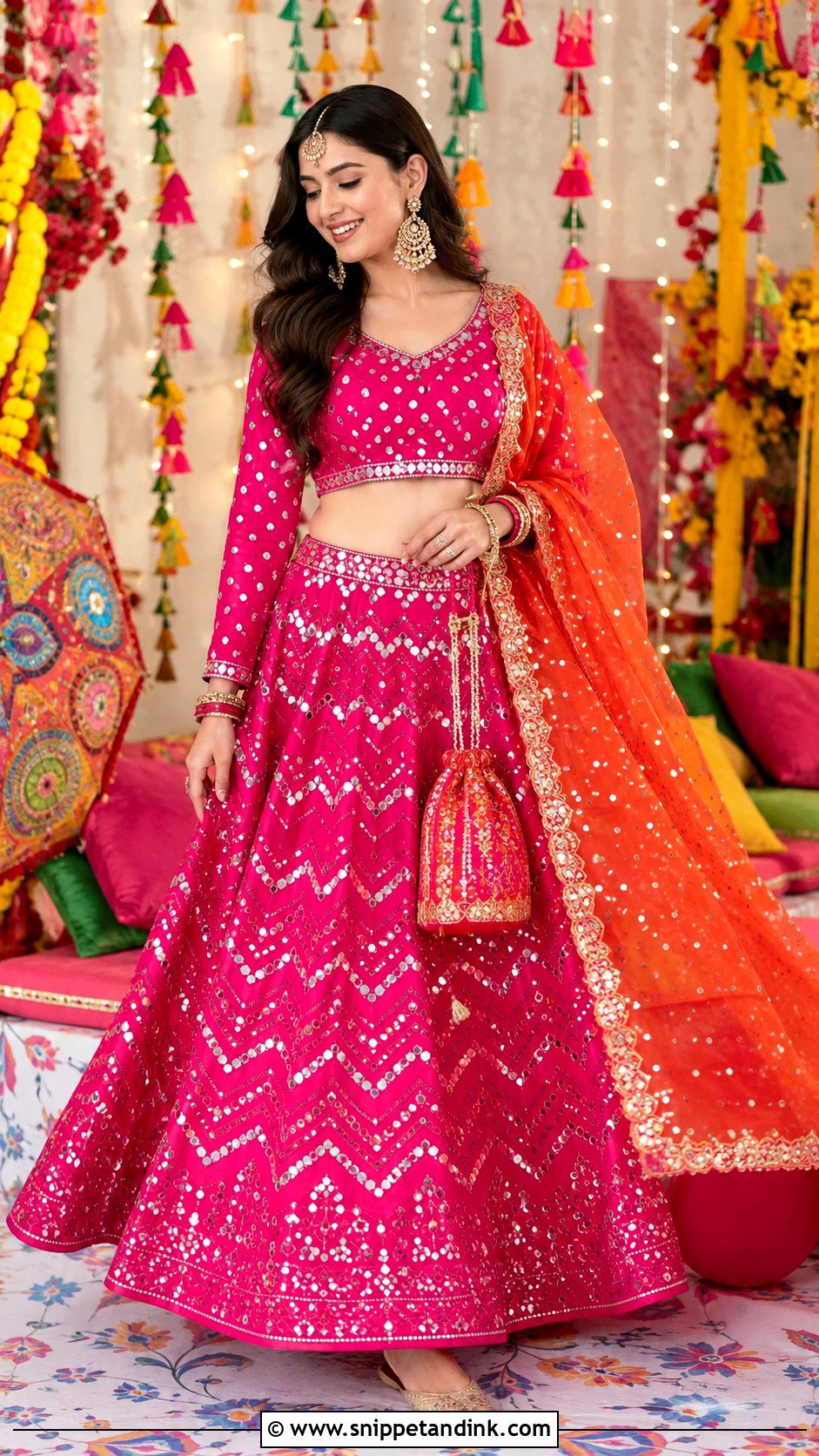
Fuchsia is confident and loud in the right way at a mehndi. A fuchsia lehenga choli with mirror work, gota or colourful embroidery stands out against the usual marigold decor, and an orange, yellow or green dupatta keeps the palette traditional. Gold khussas, bangles and statement earrings finish it, with waves, a braid or a half-up style. Strong pinks bleed onto light fabrics when damp, so keep a fuchsia dupatta away from a bride’s pale outfit in a crowded, humid room.
22. Navy Blue Formal Dress For Sisters
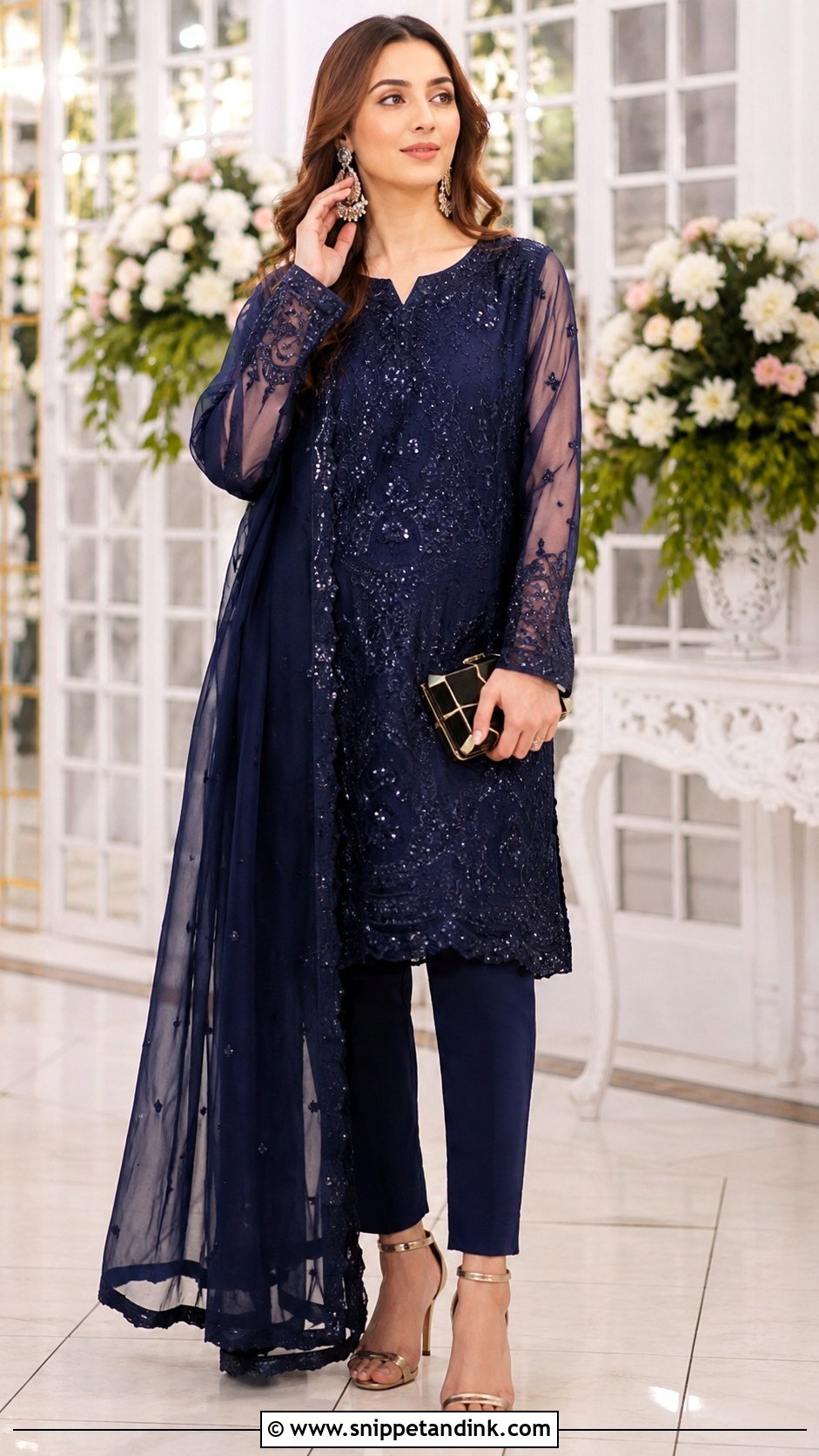
Navy is the formal colour for a sister who doesn’t want black. It looks polished at a reception, barat or evening dinner: a navy long shirt with silver, gold or champagne embroidery over cigarette pants, a lehenga or a sharara, plus a matching chiffon dupatta. Metallic heels, a structured clutch and statement earrings complete it. Navy flatters a wide range of ages and is easy to re-wear, which matters when you’re buying for five events. It reads close to black on camera at night, so add some shine in the embroidery to keep it from going flat.
23. Beige Net Dress For Nikkah
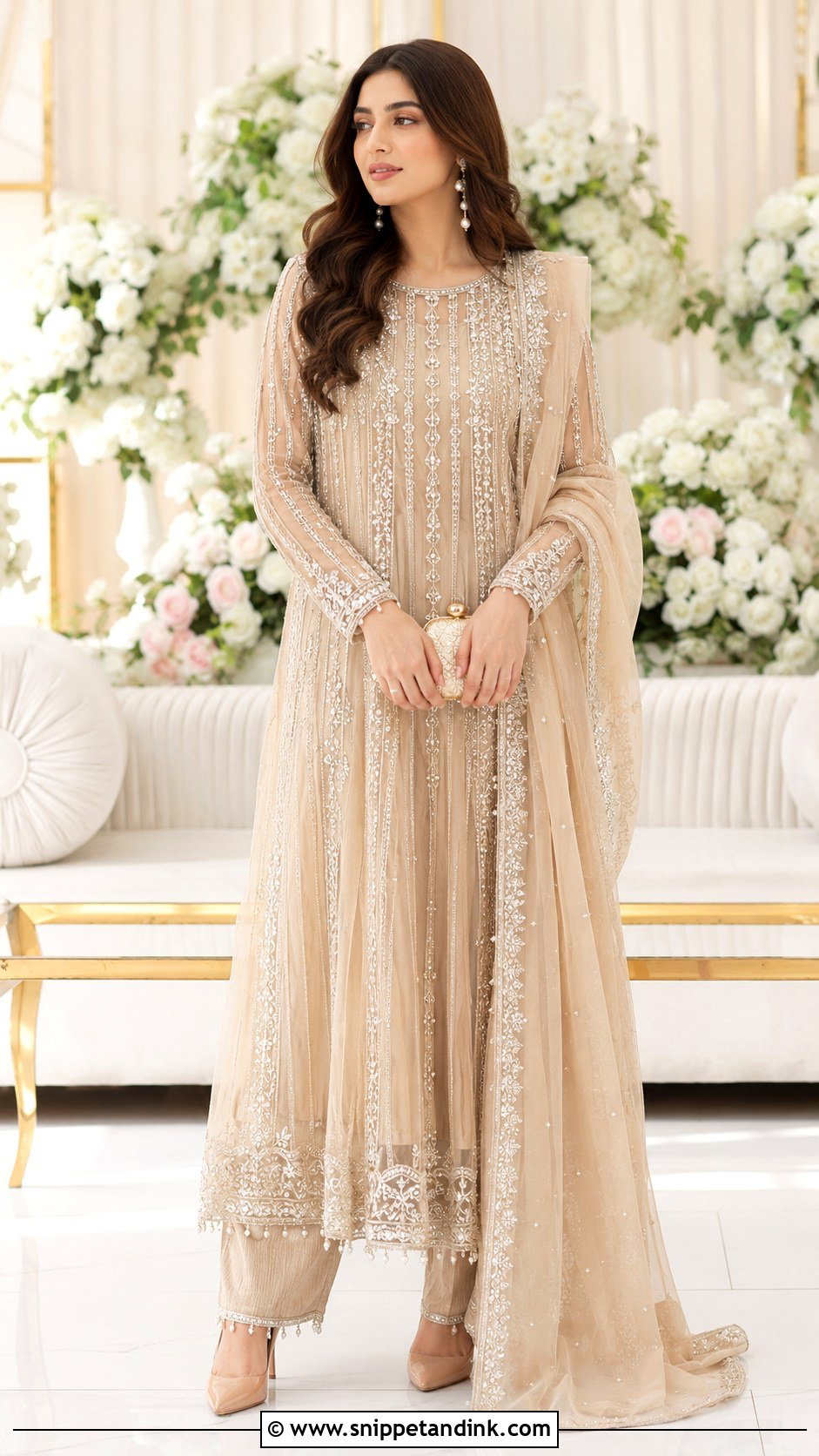
Beige can look flat, especially on camera, and that’s the main thing to plan around. A net pishwas, maxi or long shirt with tonal embroidery, pearls or soft gold accents needs texture: layered panels, detailed borders or a pattern in the net itself. Matching trousers, a light dupatta, nude heels, pearl earrings and a minimal clutch keep it refined. Warm blush and defined lashes stop the face from blending into the fabric. For a nikkah or daytime function, it’s a quiet, respectful choice.
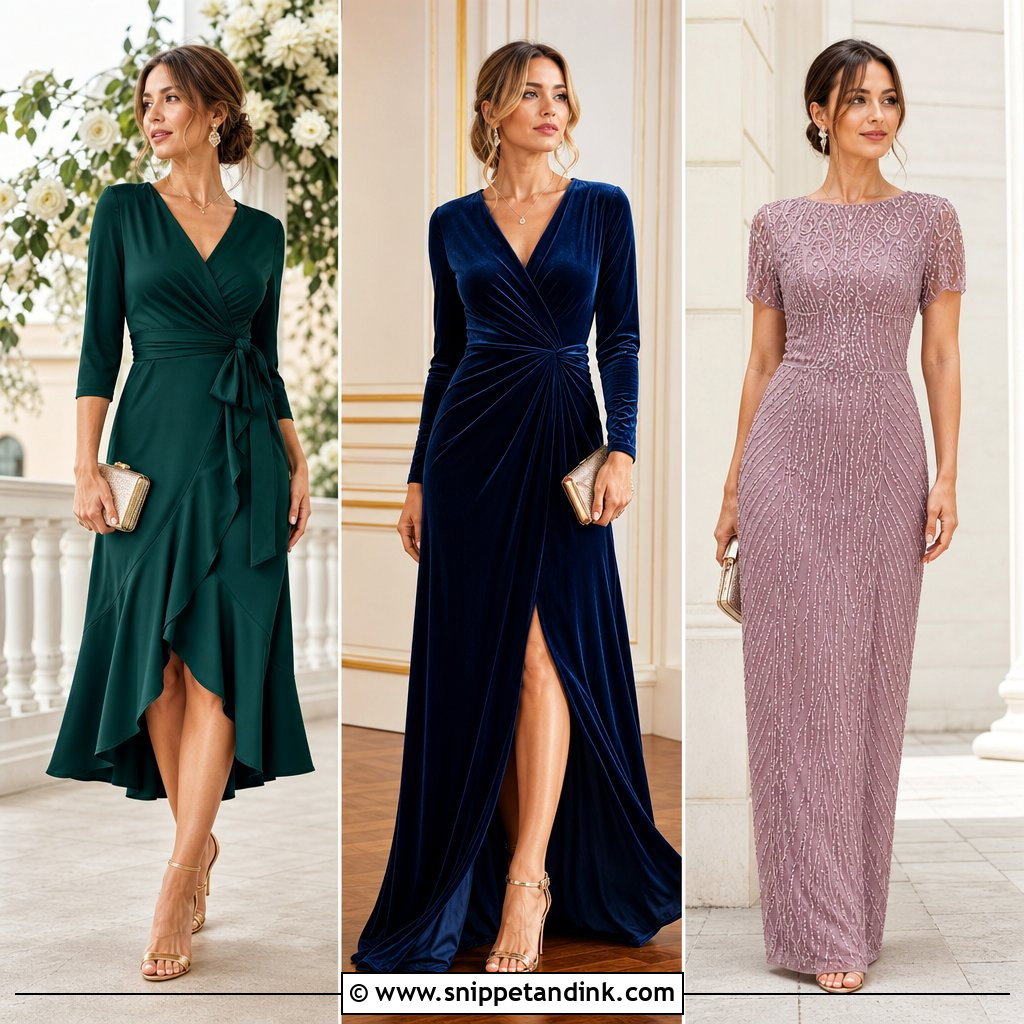
24. Emerald Green Velvet Lehenga Dress
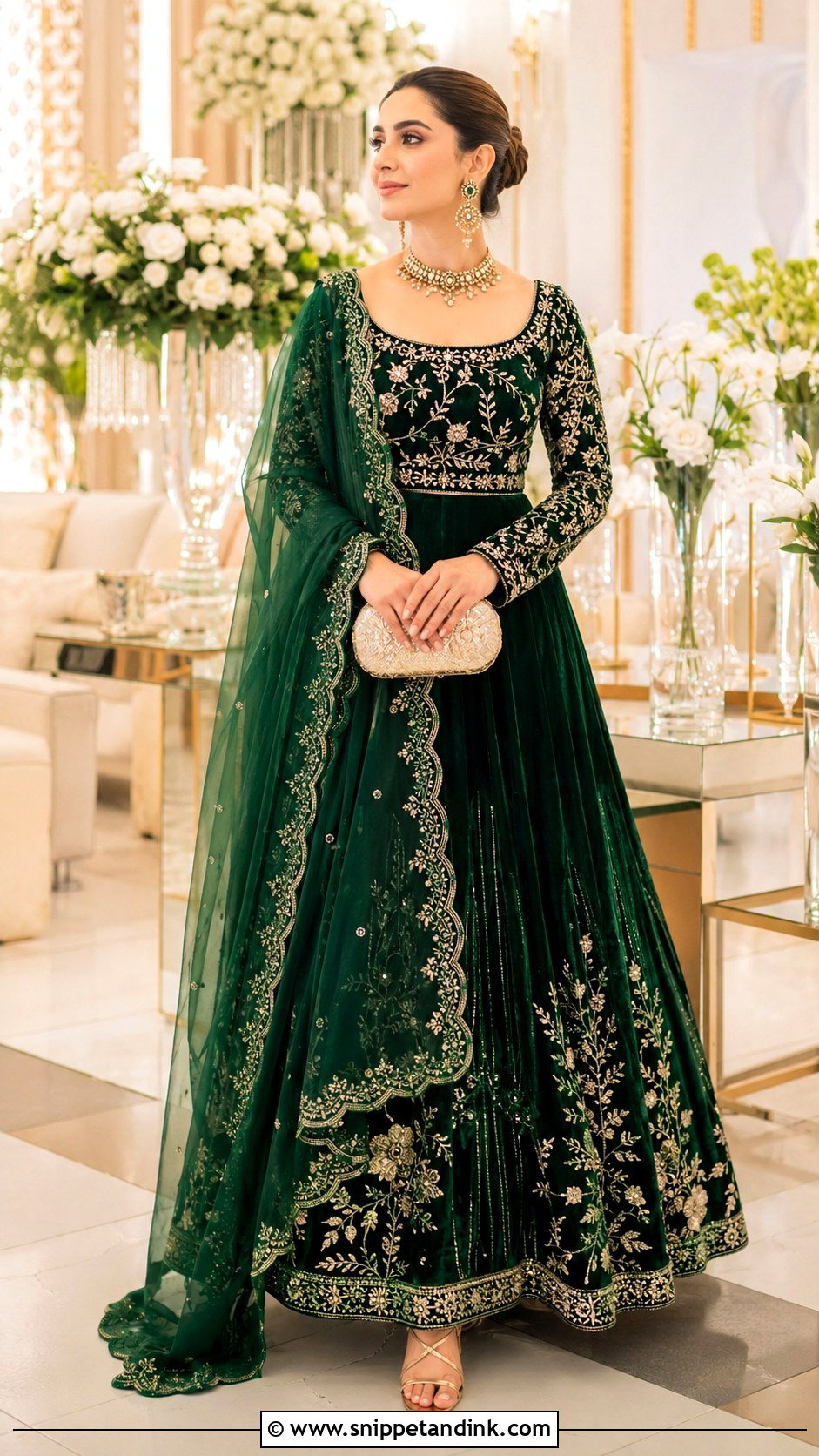
An emerald green velvet lehenga is about as regal as a sister’s outfit gets without bridal red. A velvet blouse or long shirt with antique gold embroidery over a matching lehenga reads grand in evening portraits. I always pair velvet with a lighter organza or chiffon dupatta, since two layers of velvet weight make sitting and standing all evening hard work. Gold heels, kundan jewelry and a small clutch finish it for a winter barat, reception or family dinner.
25. Multi Color Gota Dress For Mehndi
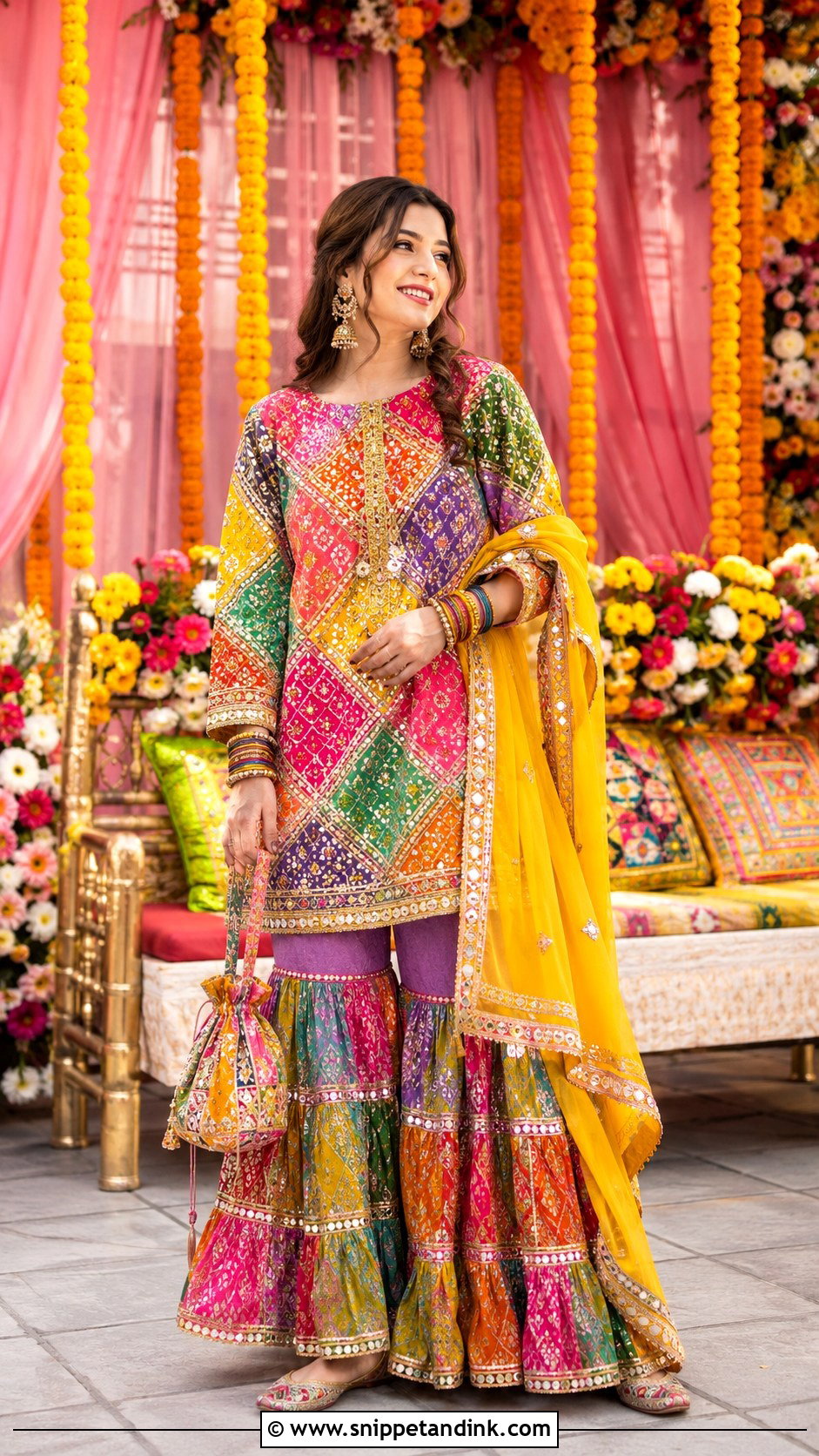
When the dress code says bright, a multi-colour gota outfit is the easiest answer. A short shirt with pink, yellow, green and orange accents over a sharara, gharara or lehenga, with gota borders, mirror details and tassels, looks celebratory without much effort. Add a contrasting dupatta for movement in dance photos, and khussas, bangles, jhumkas and a potli bag. Tassels catch on everything, so keep them on the dupatta edge rather than the sleeves if you’ll be serving food.
Getting More Than Five Looks Out of Three Outfits
Five functions don’t need five completely new outfits. Separates are what make re-wearing work, so when I plan a sister’s wardrobe I look for pieces that cross over: a gold-embroidered short shirt that sits on a gharara at the mehndi and on straight pants at a dholki, or a neutral lehenga that takes a different blouse and dupatta for the walima.
The dupatta does most of the disguising. Swap a bright gota dupatta for a sheer pastel one and the same base outfit moves from festive to formal. Change the jewelry metal at the same time, gold to silver or pearl, and guests rarely notice it’s the same shirt.
Inside the sister’s clutch on the day
- Safety pins and a few bobby pins, for her own dupatta and the bride’s
- Blotting papers and the lipstick she’s wearing
- A small needle with neutral thread for a popped hem or loose border
- Plasters for khussa rubs by the end of the night
- A spare hair tie and a fold-up pair of flats if she’s in heels
Dressing as the Sister Through a Week of Functions
A sister’s wardrobe has to respect the bride’s moment while still looking like you. Settle your colours after hers, not before, and plan one outfit per function rather than one standout and four afterthoughts. From mehndi ghararas and bright shararas to walima maxis and winter velvet, each outfit only works if it’s complete: dupatta, shoes and jewelry sorted, and something you can move in for hours. Wear each one around the house for twenty minutes before the week starts, and you’ll know which ones need a tailor’s fix.
You'll Like These Ideas:


Leave a Reply