
A sangeet outfit gets tested harder than anything else you’ll wear that week. It has to survive a rehearsed dance, an hour of photos and a crowded floor until well past midnight, and still fit your role in the family. Brides usually want the most embellishment and drama; bridesmaids and guests often do better with lighter lehengas, shararas, sarees or a fusion set. Before I suggest anything, I ask about the venue, the dress code, the weather and how much dancing is planned. Secure draping, comfortable shoes and lighter jewelry make even an elaborate outfit wearable. Here are twenty complete looks, from traditional sparkle to sleek Indo-Western, with what I’d check on each one.
Dancing a Full Rehearsal in the Outfit
If you’re performing, the outfit has to survive the choreography, not just the mirror. I ask everyone in a dance to run the routine at least once in the finished outfit, ideally a week or two out, while there’s still time to alter it.
- Wear the real shoes. Hems, dupatta length and balance all change with heel height, and a routine learned in trainers can feel completely different in juttis.
- Do every lift and turn. Watch for a blouse riding up when arms go overhead, a skirt hem catching on a spin, or a cape wrapping around your neck.
- Mark where the dupatta goes. A loose dupatta is the thing most likely to trip a dancer. Decide whether it’s pinned, tied at the waist or removed for the performance.
- Check from the audience’s side. Ask someone to film you from where guests will sit. Sheer fabrics and short blouses can show more under stage lights than they do in a fitting room.
Group dances raise one more question: should everyone match? I’d coordinate color or fabric rather than putting six people of different heights and builds in identical outfits. A shared palette looks unified on stage and lets each person wear a cut that actually suits them.
1. Sequin Lehenga With Cape Blouse For Indian Sangeet
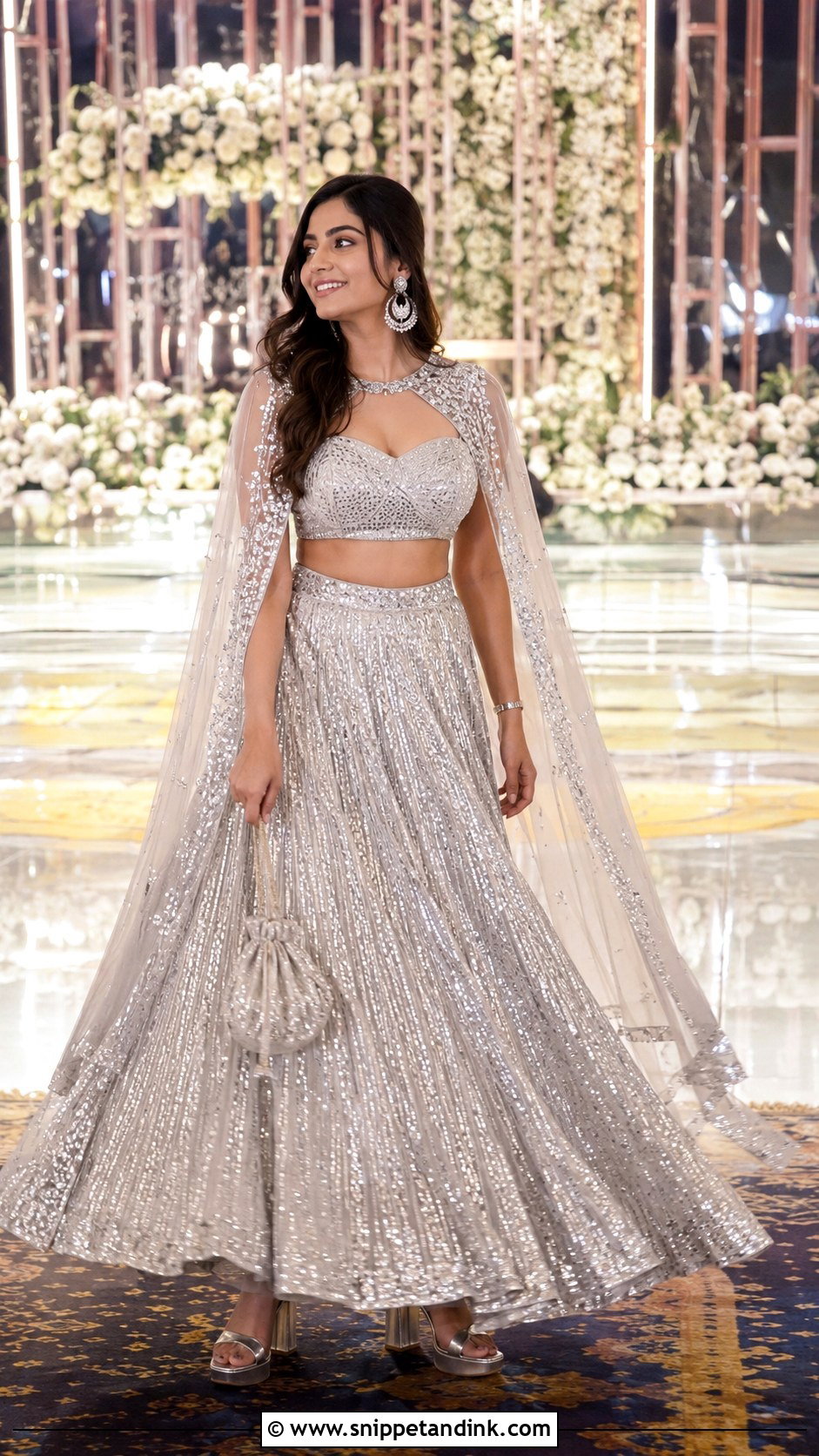
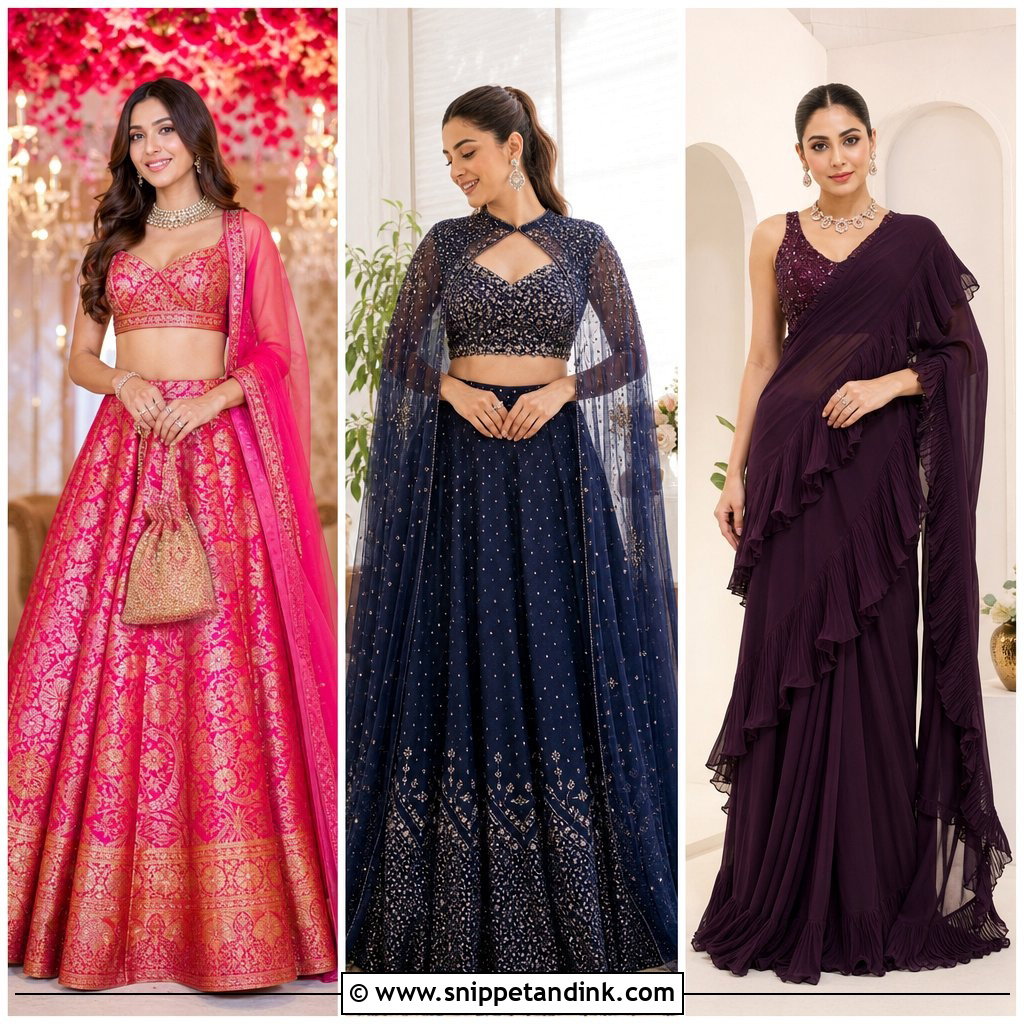
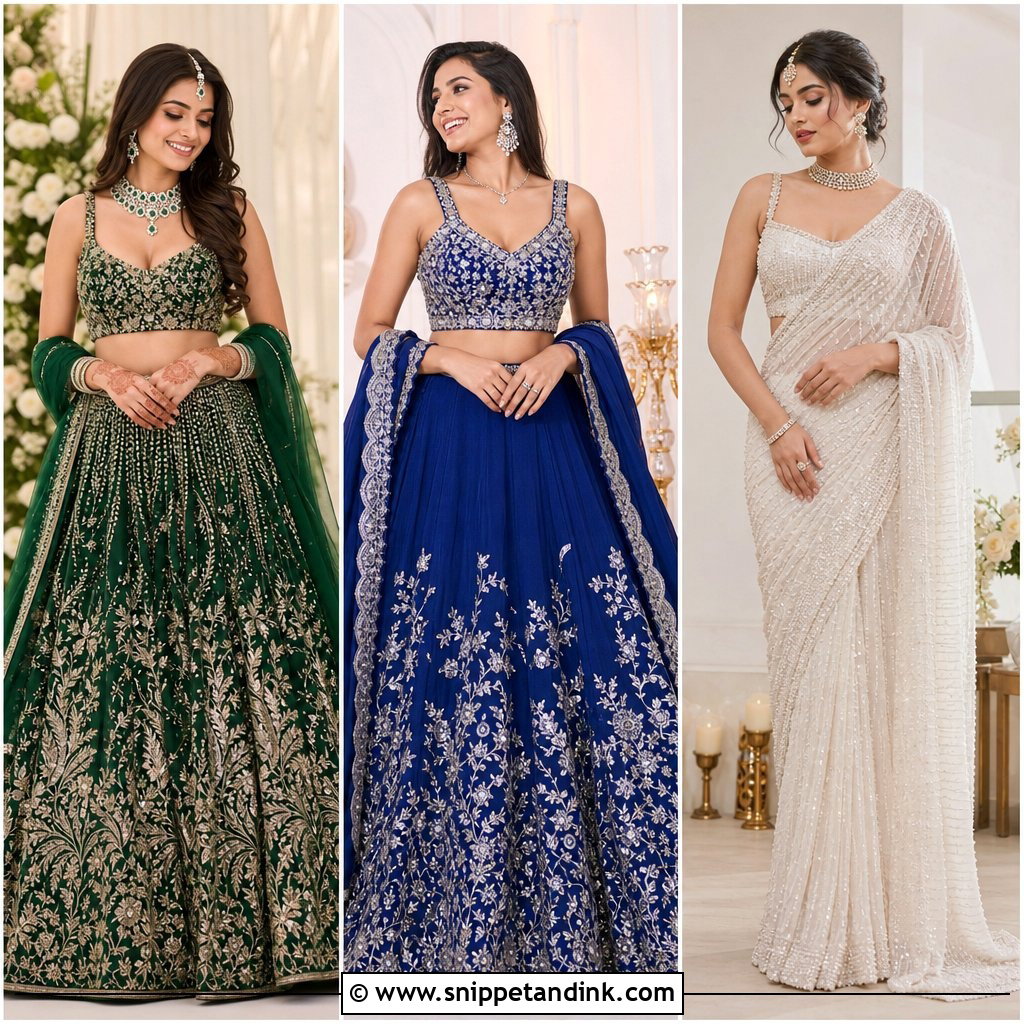
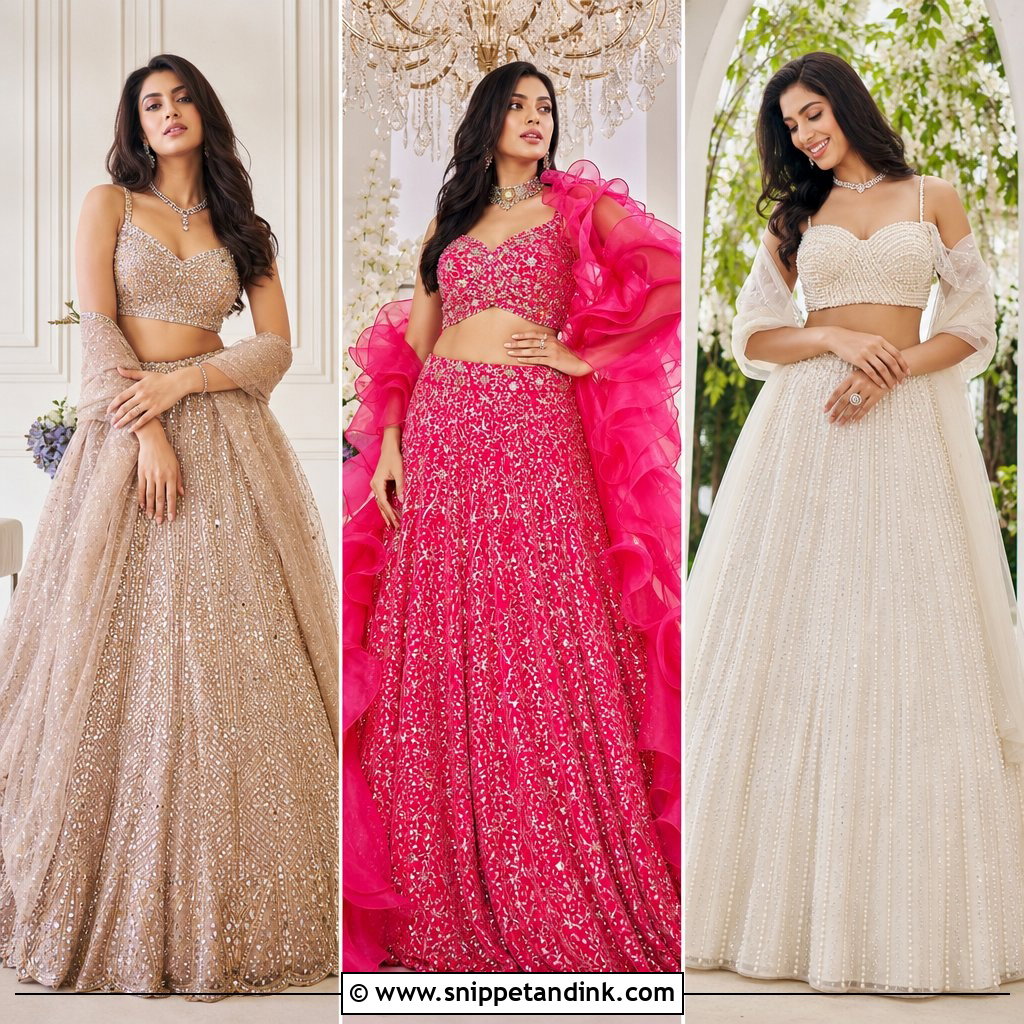
Under coloured stage lights, a sequin lehenga with a cape blouse catches every beam. Silver, champagne, midnight blue or deep plum all work, with a fitted blouse carrying an attached sheer cape. The cape is the clever part: there’s no loose dupatta to grab mid-step. If you’re performing, ask for a light skirt with a soft hem; a stiff, heavily stitched hem kicks out awkwardly on turns. Chandelier earrings, stacked bangles and a small potli are plenty. Metallic block heels or cushioned juttis keep you steady. Wear your hair in a sleek ponytail or soft waves that sit behind the shoulders, otherwise the cape vanishes under it.
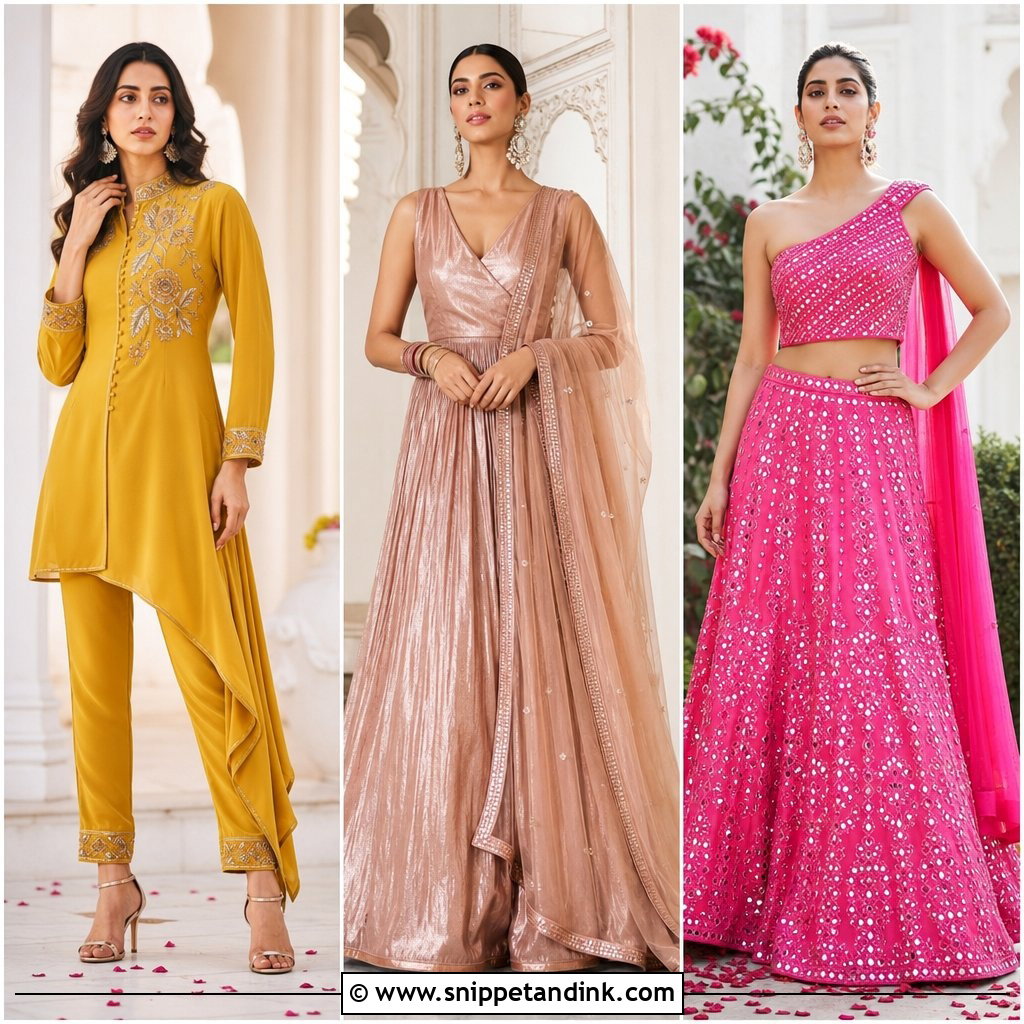
2. Mirror Work Lehenga For Indian Sangeet
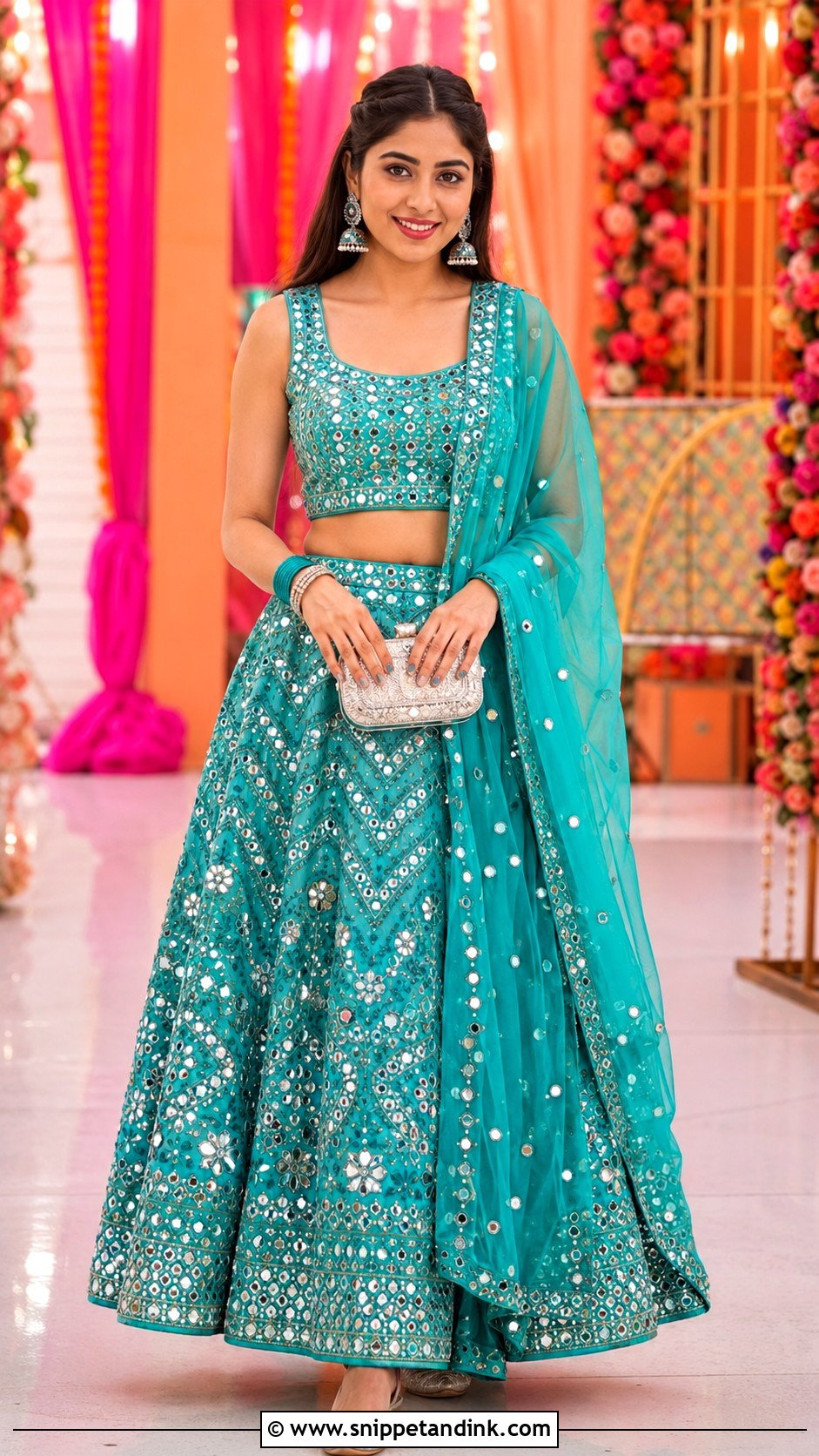
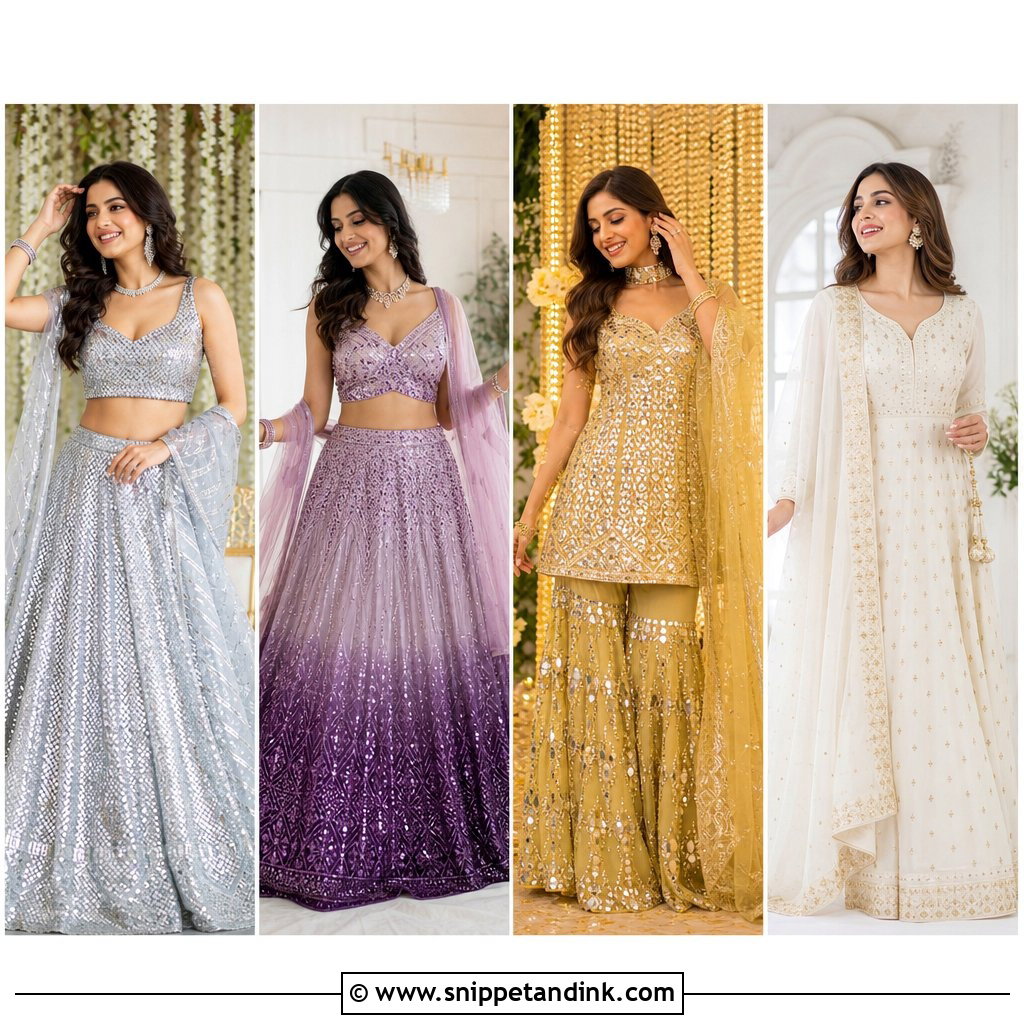
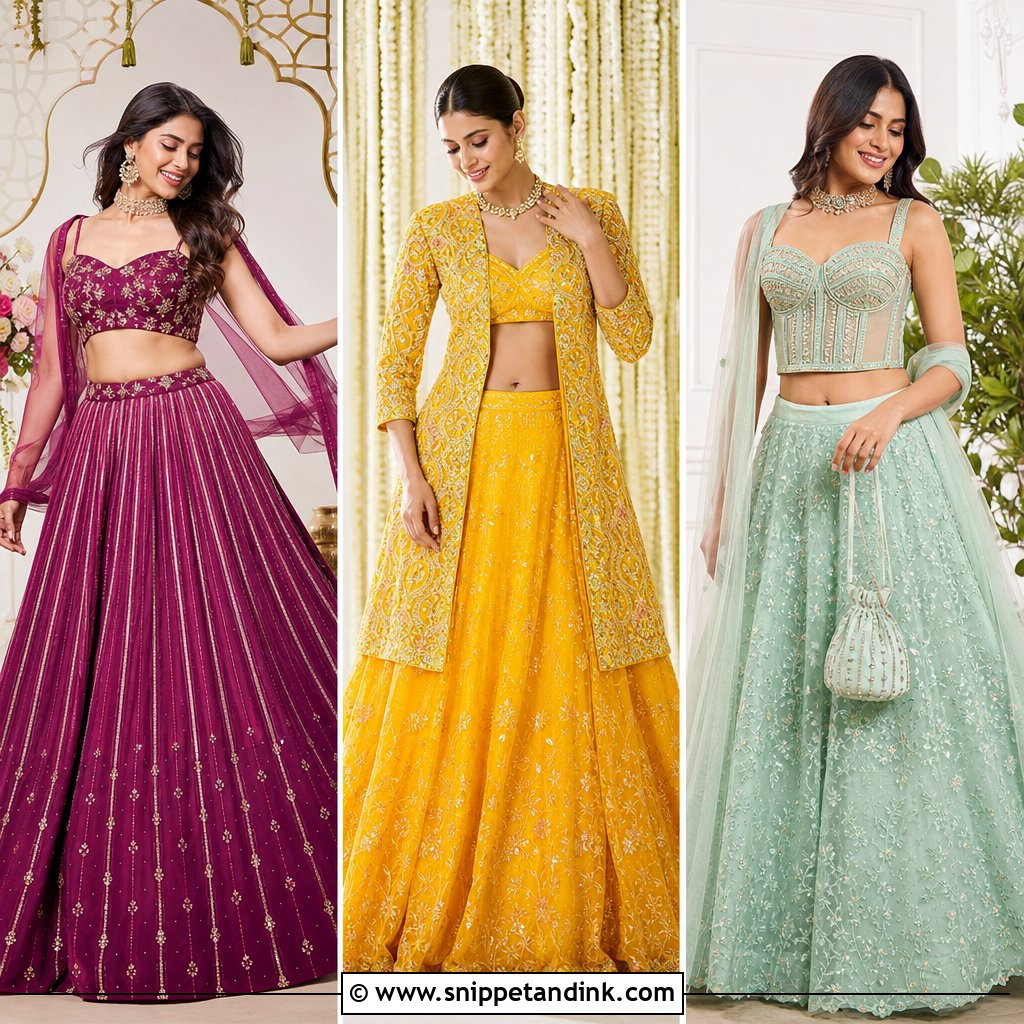
Mirror work was made for this night. Pick a strong color, such as fuchsia, teal, cobalt, emerald or orange, so the little mirrors have something to glint against. Pair the skirt with a supportive cropped blouse and a light net dupatta pinned firmly at one shoulder. When the lehenga is already dense with mirrors, I take the accessories down to silver jhumkas, slim bangles and an embellished clutch. Low block heels or juttis with padded soles carry you through the dancing. A braided ponytail with a few small hair accessories finishes it. Bridesmaids, sisters, cousins and guests who love traditional color will feel at home in it.
3. Velvet Lehenga With Full-Sleeve Blouse For Indian Sangeet
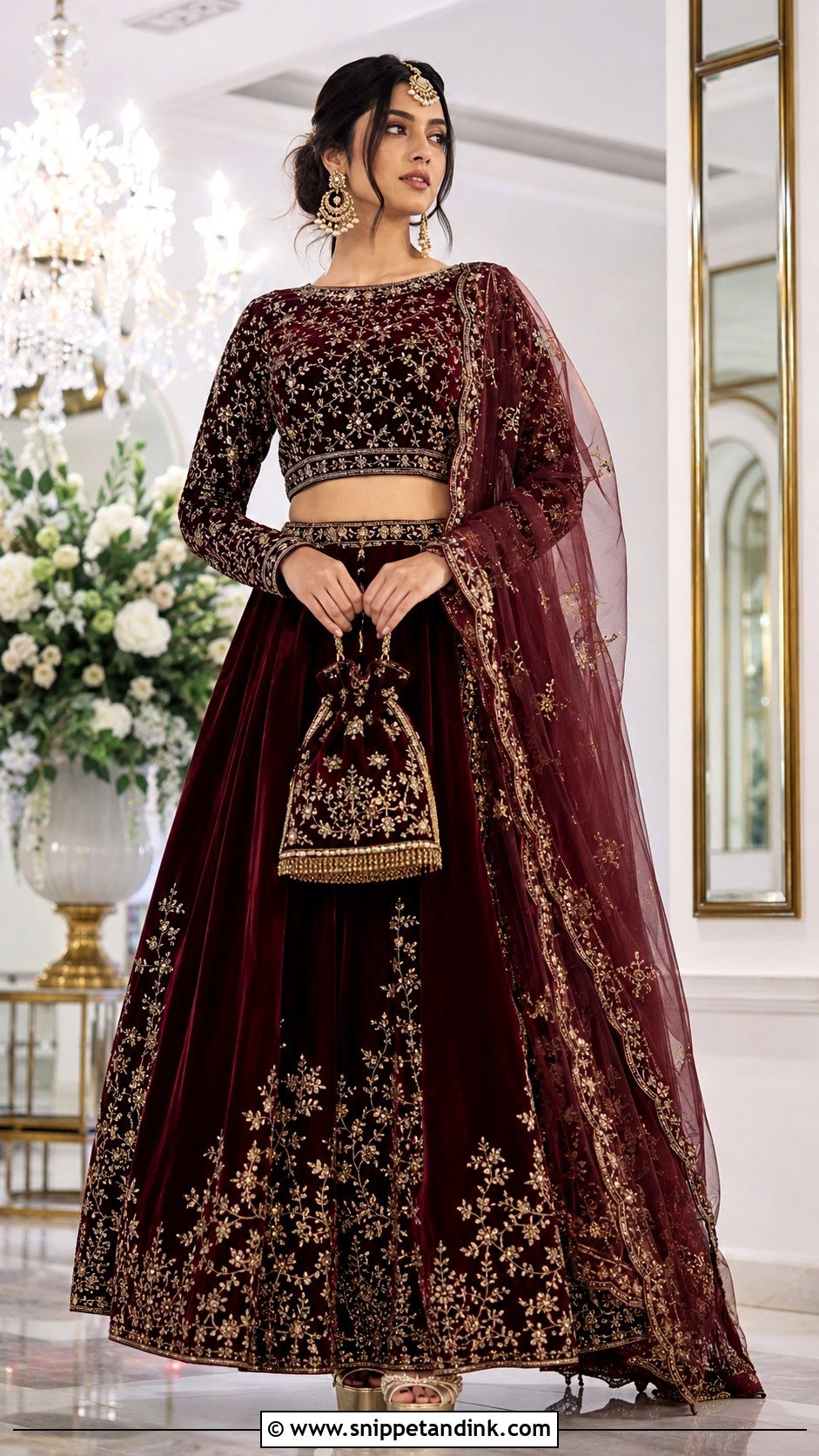
Velvet only makes sense if the sangeet is in winter or in a properly cool venue. In a heated hall full of dancers it becomes miserable within the hour, and I’ll talk anyone out of it in that setting. Wine, emerald, navy and deep purple show off its depth. A full-sleeve embroidered blouse gives a regal, balanced line. Keep the flare controlled and the embroidery lighter toward the hem, because velvet is already heavy before a single bead goes on. A sheer dupatta with a narrow border stops the outfit from becoming a wall of dense fabric. Kundan earrings, a delicate maang tikka, a structured potli and stable platform heels finish it, with a low bun or swept-back waves so the sleeves stay visible.
4. Floral Lehenga With Organza Dupatta For Indian Sangeet
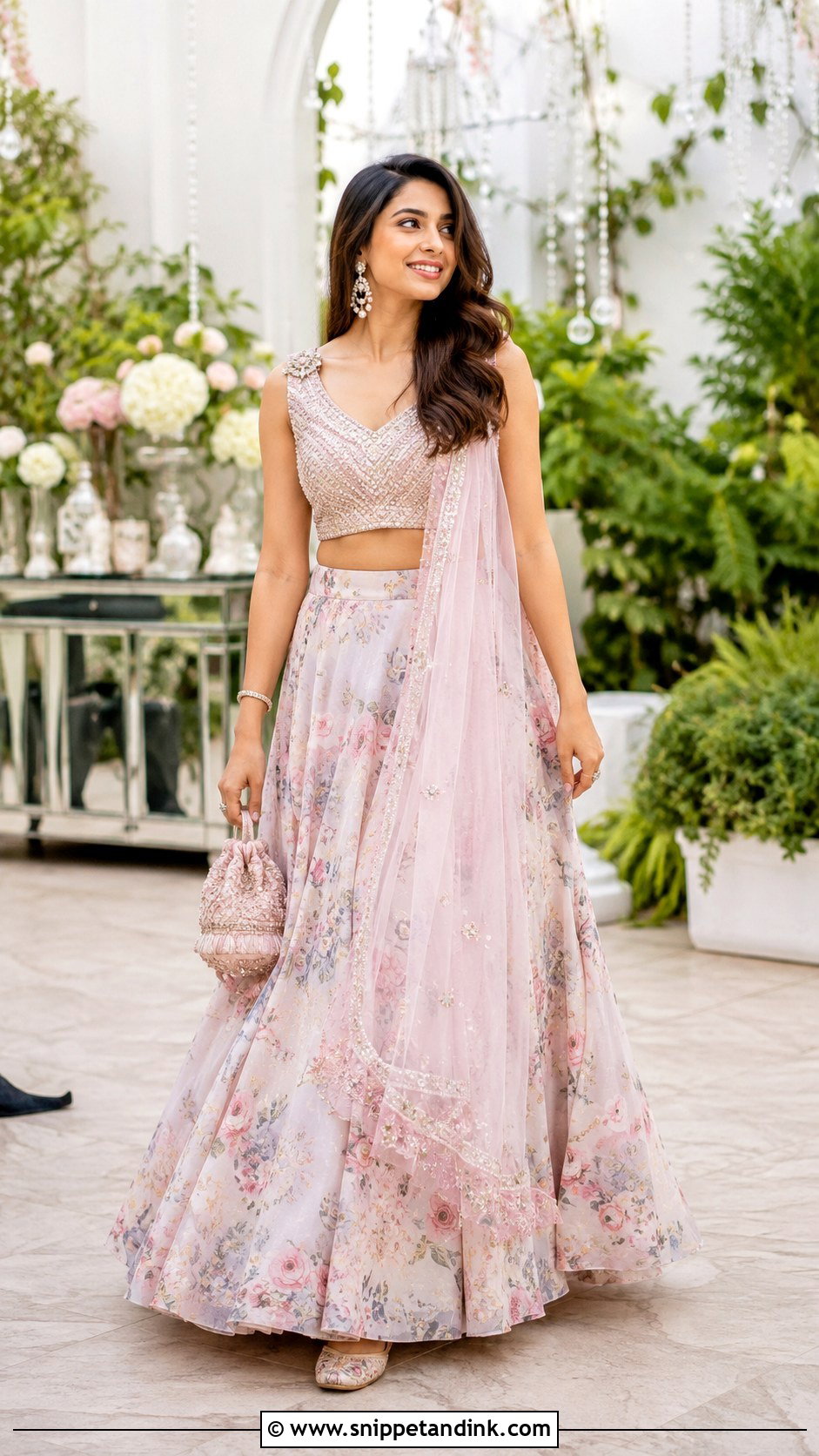
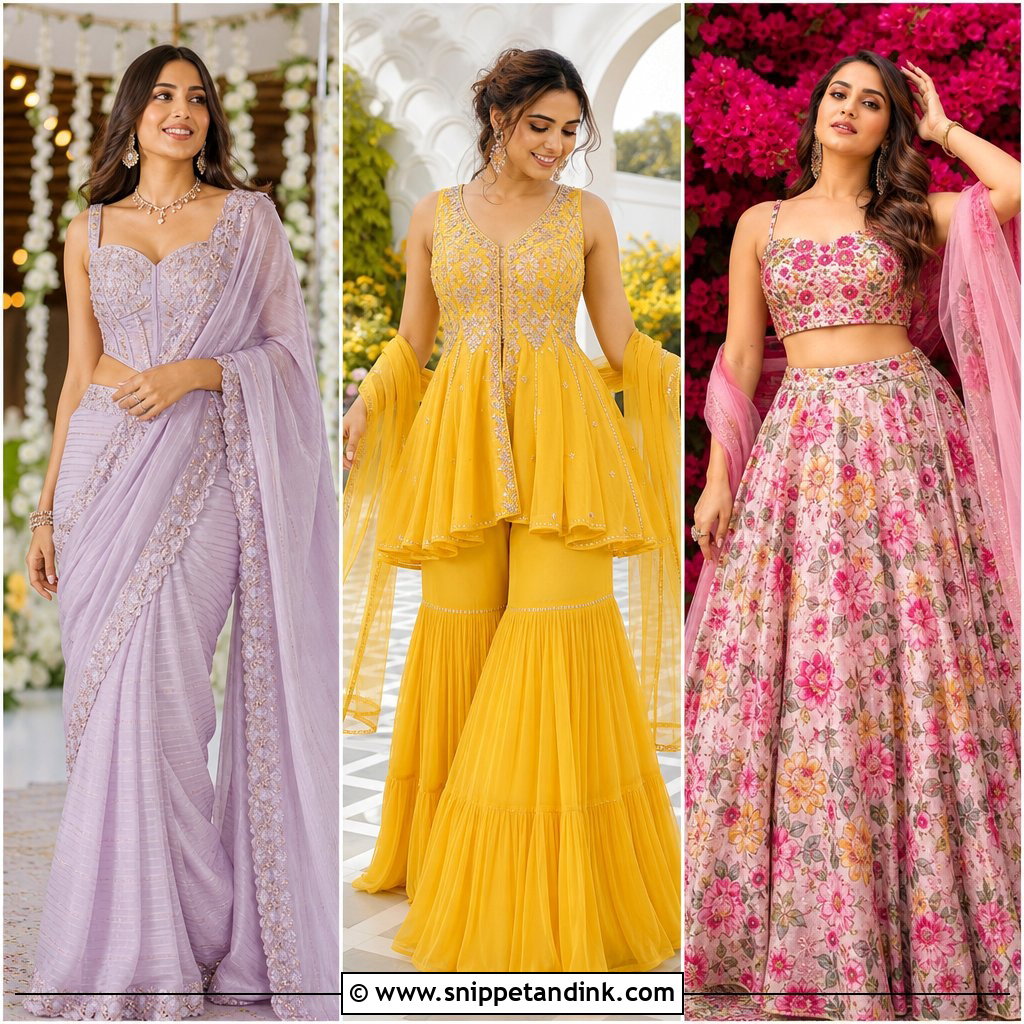
Florals belong to a daytime sangeet or a garden, where natural light shows off pale color properly. Start with a lightweight printed or embroidered lehenga in blush, lilac, mint, peach or powder blue, with a coordinated blouse in delicate beadwork and an airy organza dupatta. Organza is springy, so I pin it at the shoulder and again at the wrist; left loose, it floats into faces during group dances. Pearl earrings, floral bangles and a small pastel potli suit the palette. Juttis or low block heels depend on the ground. Loose curls or a half-up style keep it relaxed. Guests who want festive detail without heavy sequins will be comfortable all afternoon.
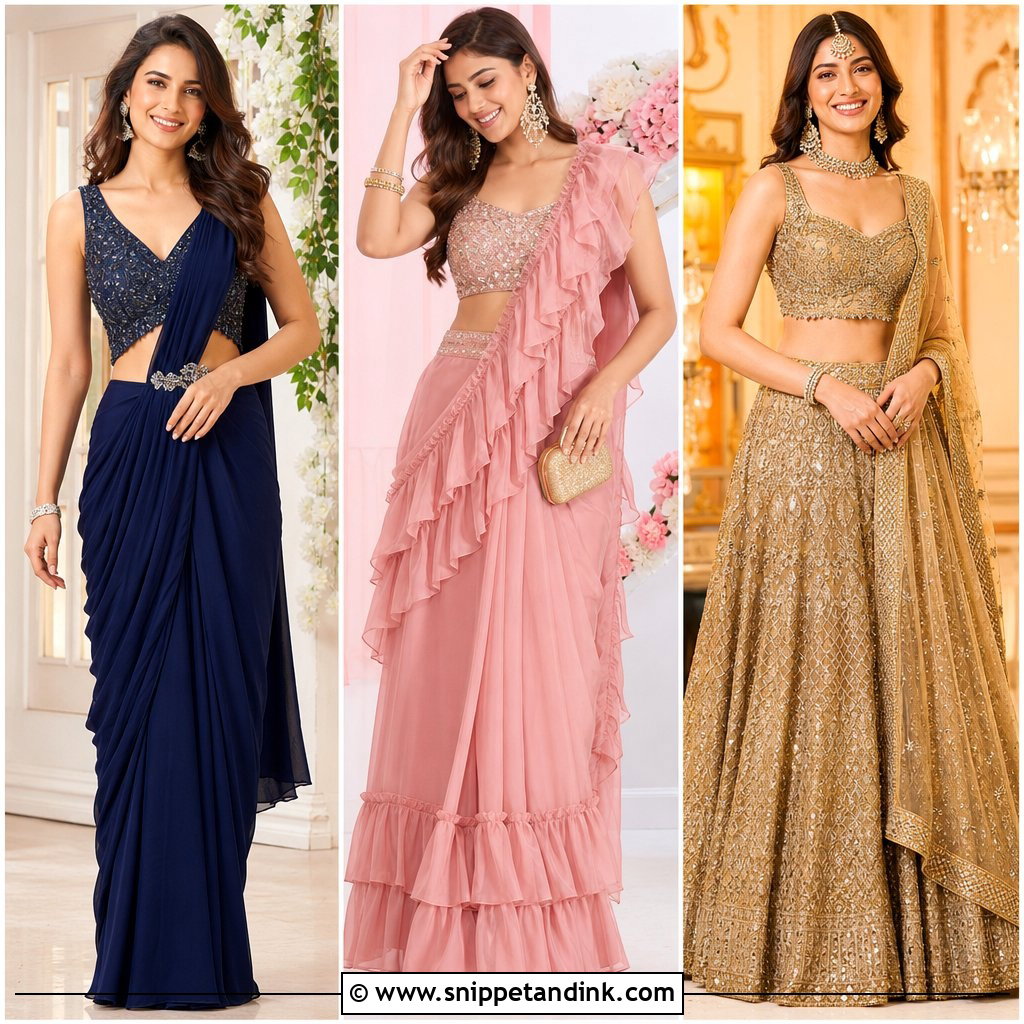
5. Metallic Saree With Belted Blouse For Indian Sangeet
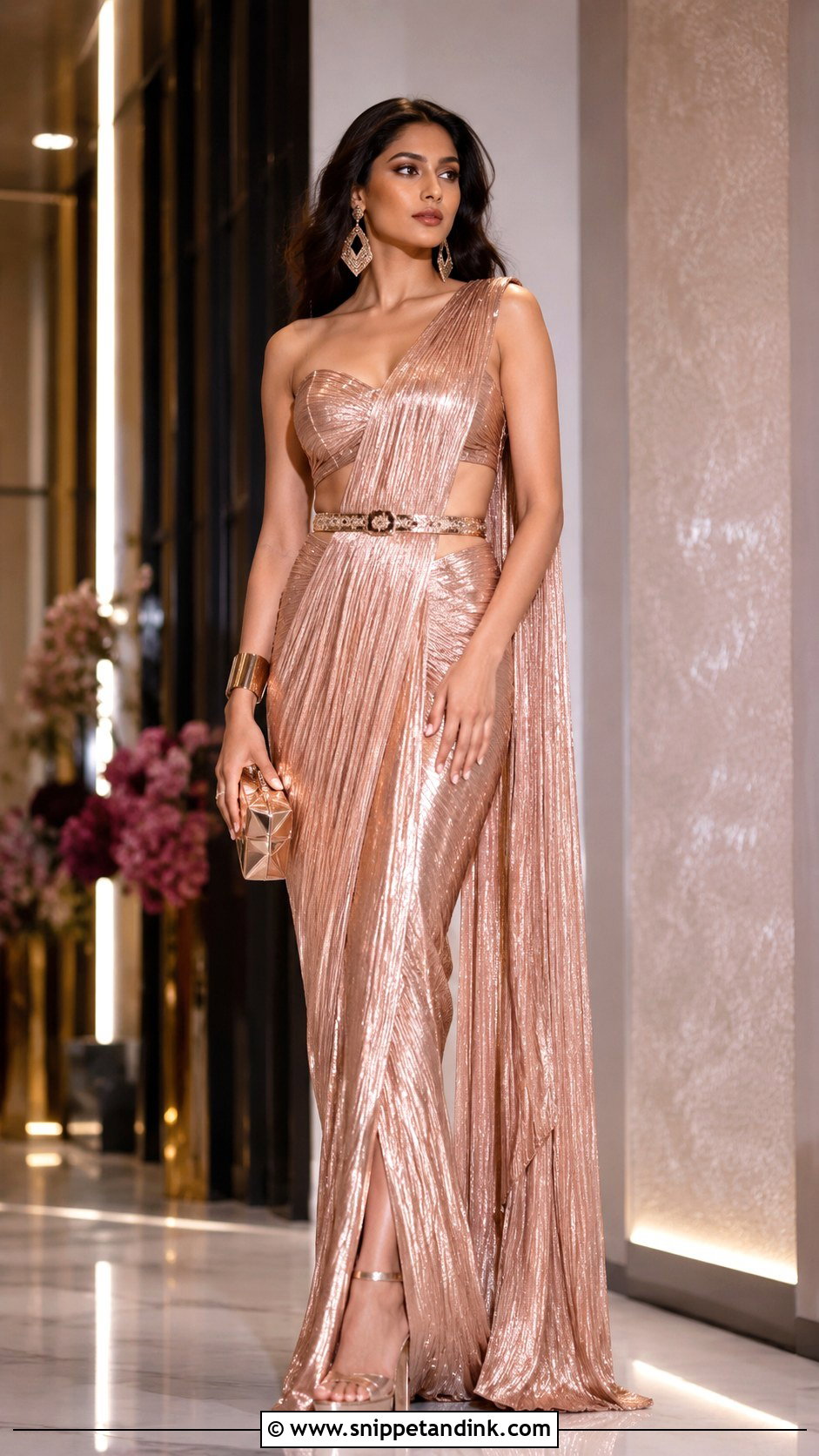
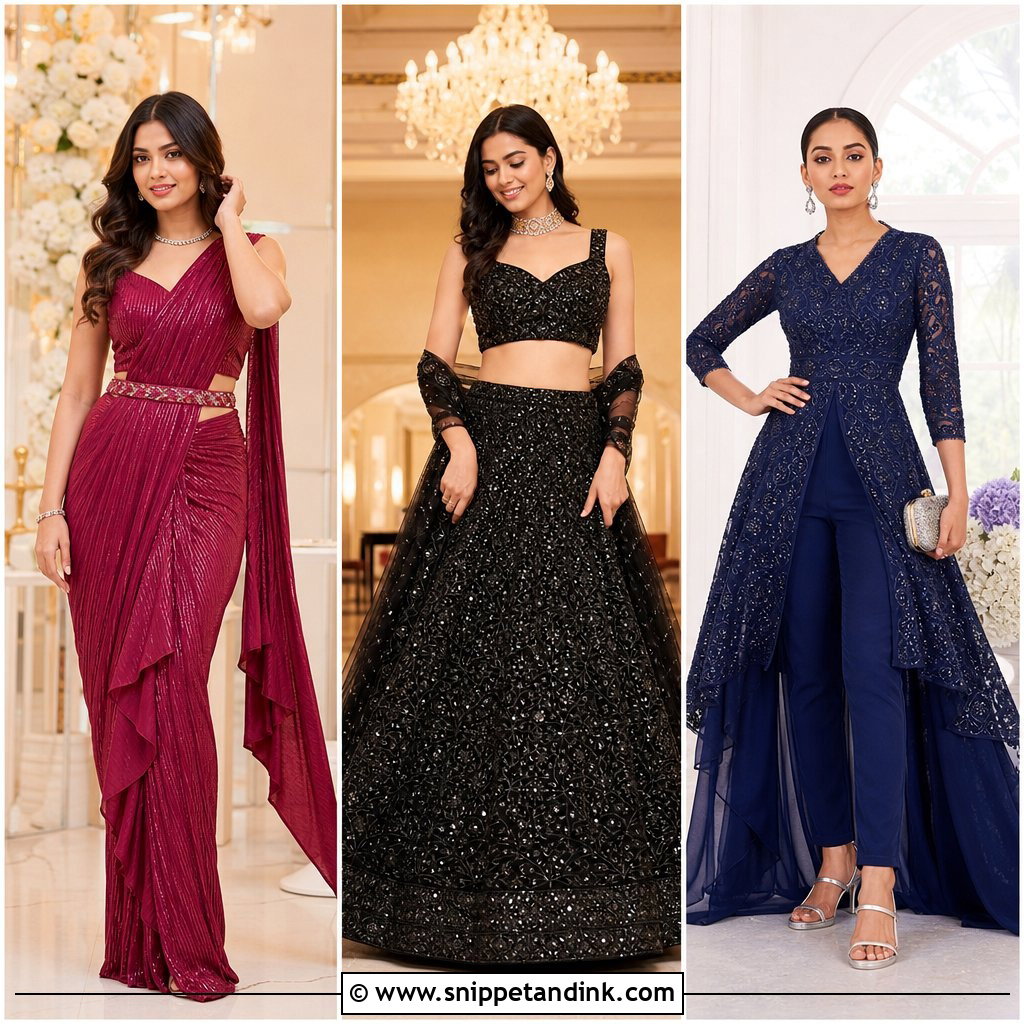
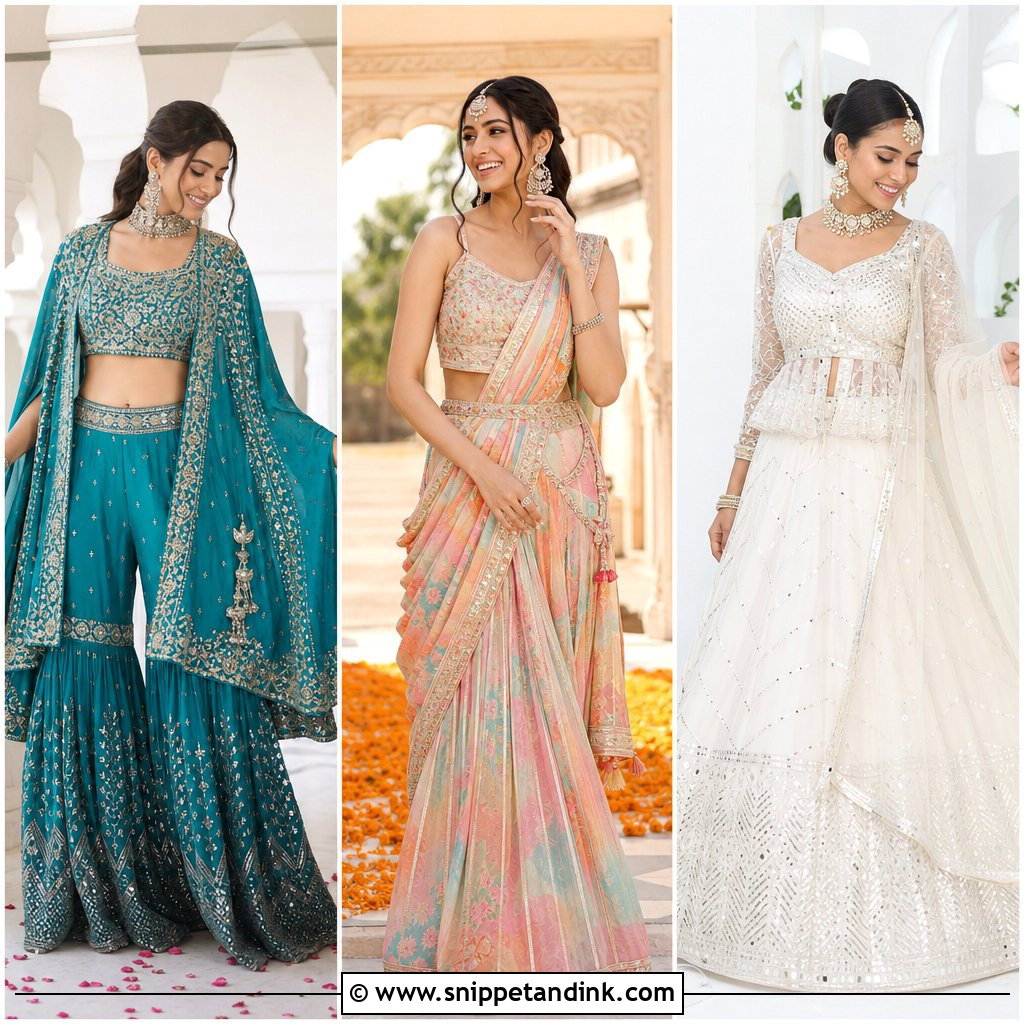
Metallic sarees look modern, but they show every crease and every slipped pleat, which is why I belt them. Choose a lightweight saree in silver, pewter, rose gold, bronze or muted gold, with a fitted blouse in the same tonal family. A slim embellished belt defines the waist and holds the pleats in place while you dance. Fix the pallu with hidden pins instead of leaving it loose. Sculptural earrings, a cuff and a compact metallic clutch are enough. Narrow stilettos sink into dance floors and wobble on stage risers; platforms or block heels don’t. A high ponytail, smooth bun or side-parted waves suits it, with restrained makeup so the saree stays the focus.
6. Pre-Draped Saree With Statement Blouse For Indian Sangeet
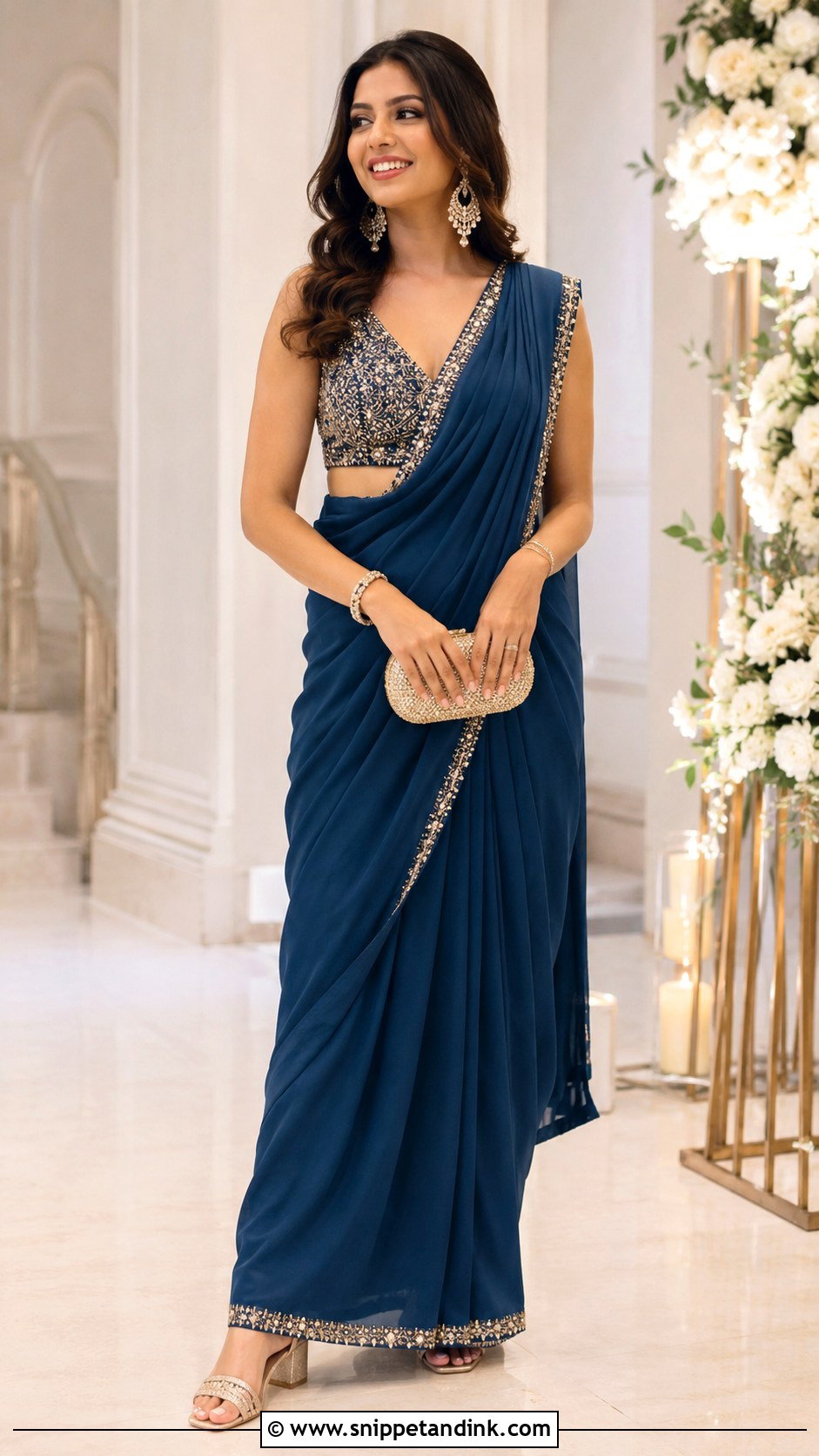
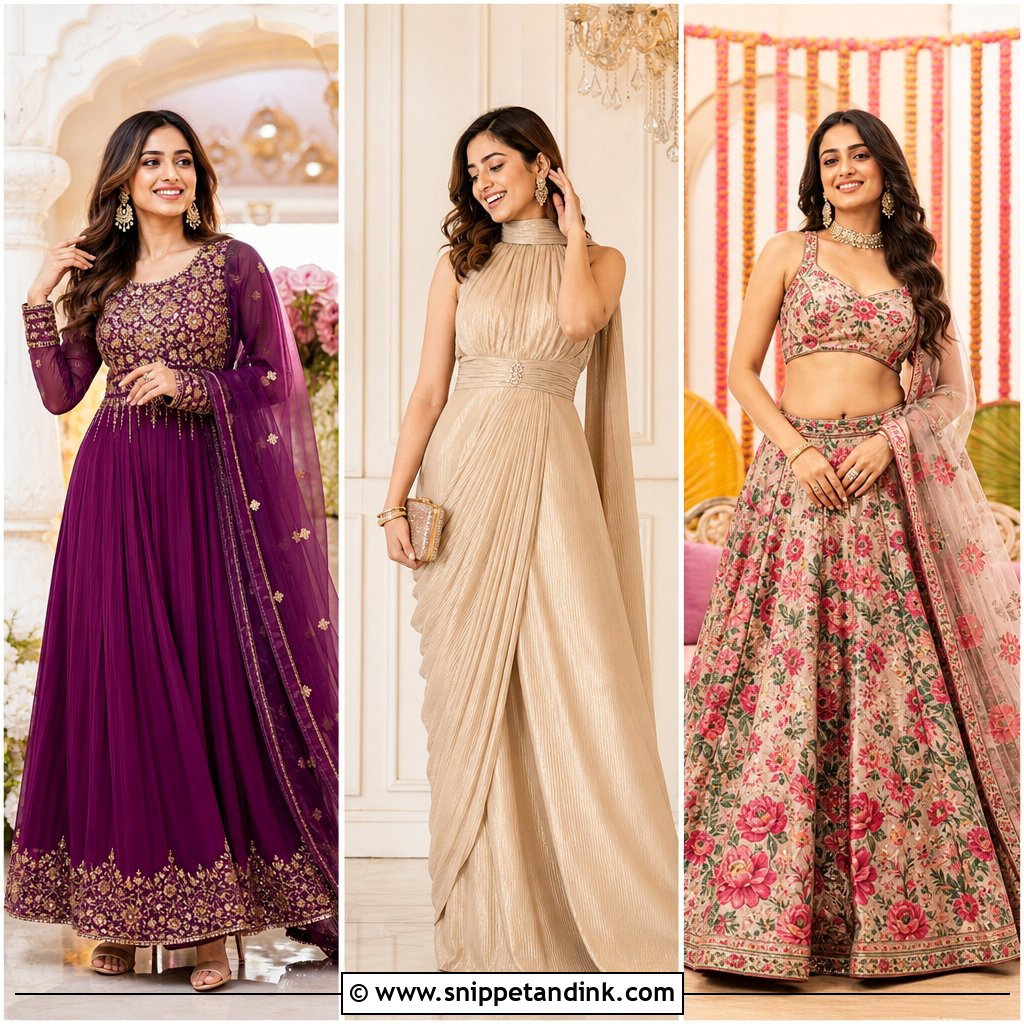
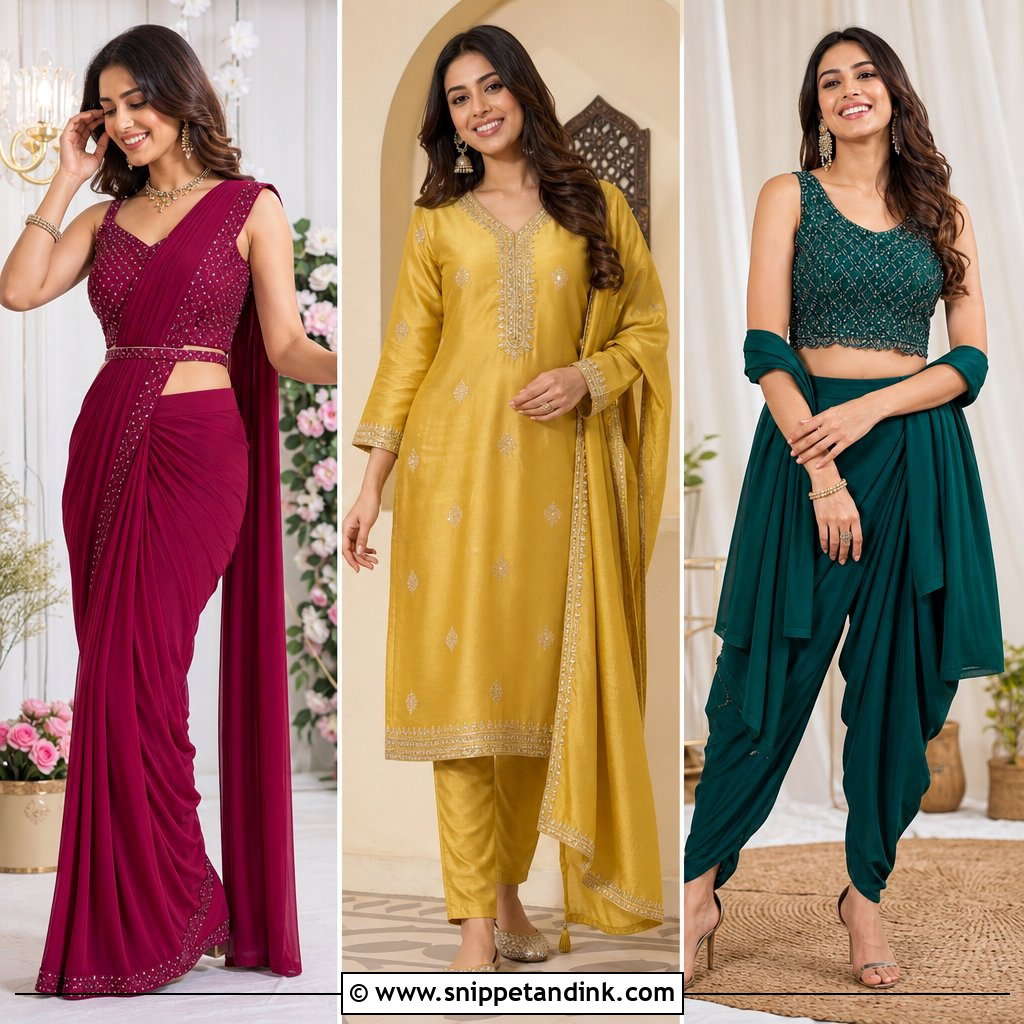
Love sarees but hate fixing pleats every twenty minutes? A pre-draped saree gives you the traditional look with the pleats already stitched. Choose georgette, crepe or a soft shimmer fabric and pair it with a statement blouse in embroidery, beading or dramatic sleeves. The blouse has to stay put when you raise your arms, so I test that before anything else at a fitting. Long earrings, two or three slim bracelets and a small box clutch are enough. Block-heel sandals give stability and still look dressed up. A low ponytail or smooth waves suits the clean drape. Guests, bridesmaids and family members who plan to dance most of the night will thank you for it.
7. Ruffle Saree With Sequin Blouse For Indian Sangeet
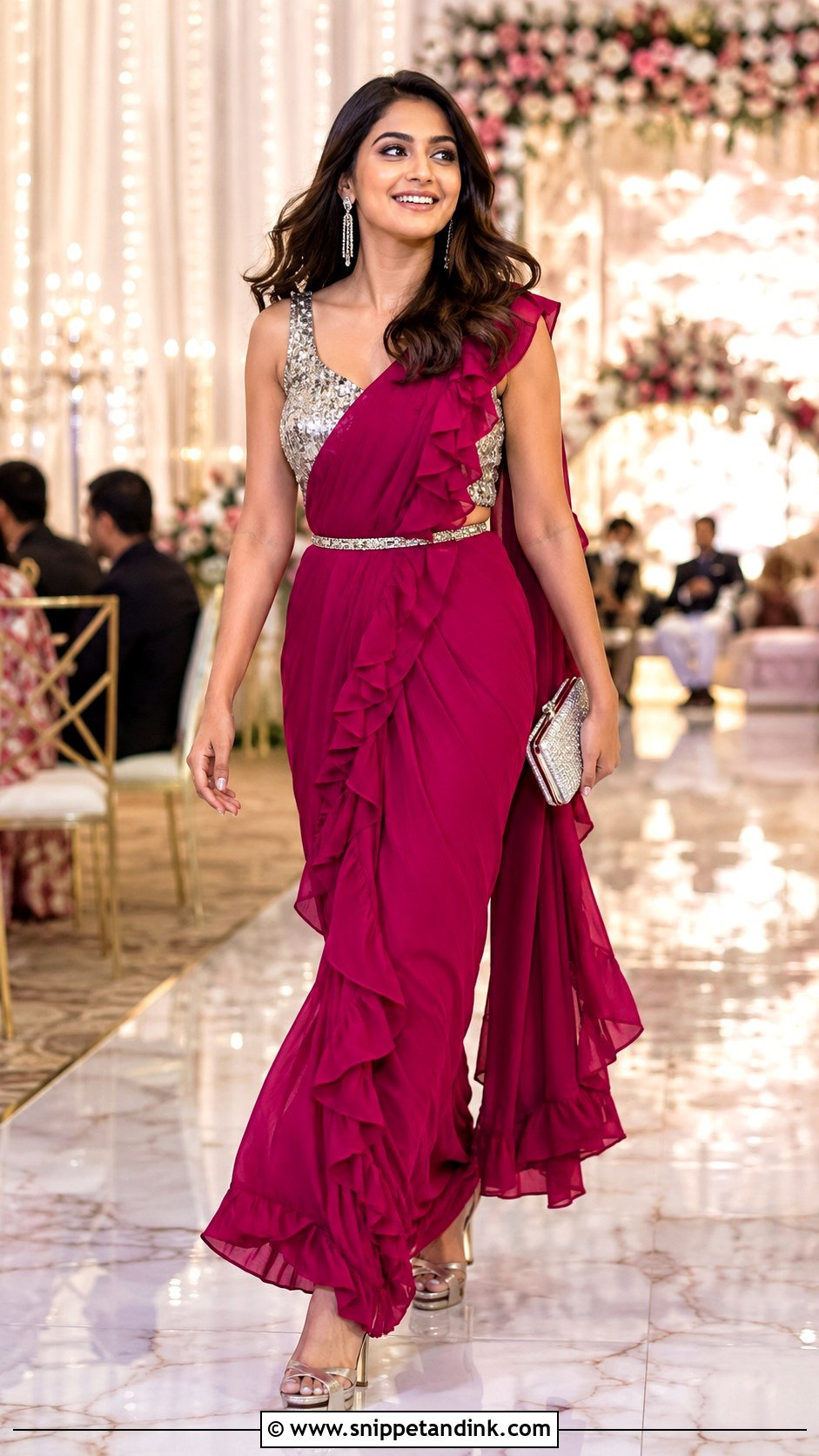
Ruffles give a saree movement without any heavy work. A ruffle saree in a rich solid, such as magenta, black, teal, royal blue or berry, paired with a fitted sequin blouse, is festive but light. Because the ruffled border adds volume, keep the jewelry to drop earrings and a single bracelet. Pin at the waist and shoulder before any performance; ruffles are heavier than they look and pull a loose drape down. A slim belt adds structure if you want it. Comfortable metallic heels, a compact clutch and a polished ponytail or soft side part complete it. It weighs a fraction of a heavily embroidered lehenga, and you’ll notice that by eleven o’clock.
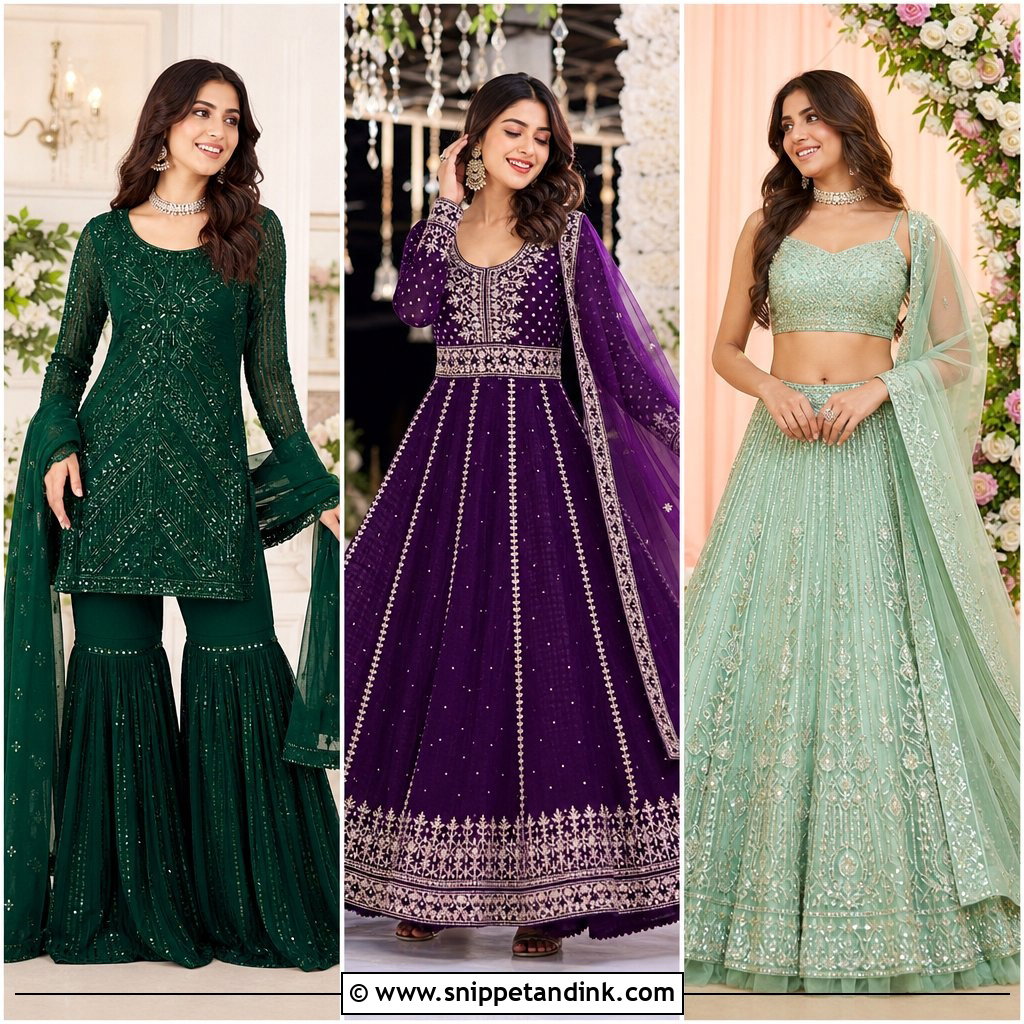
8. Sharara With Peplum Kurti For Indian Sangeet
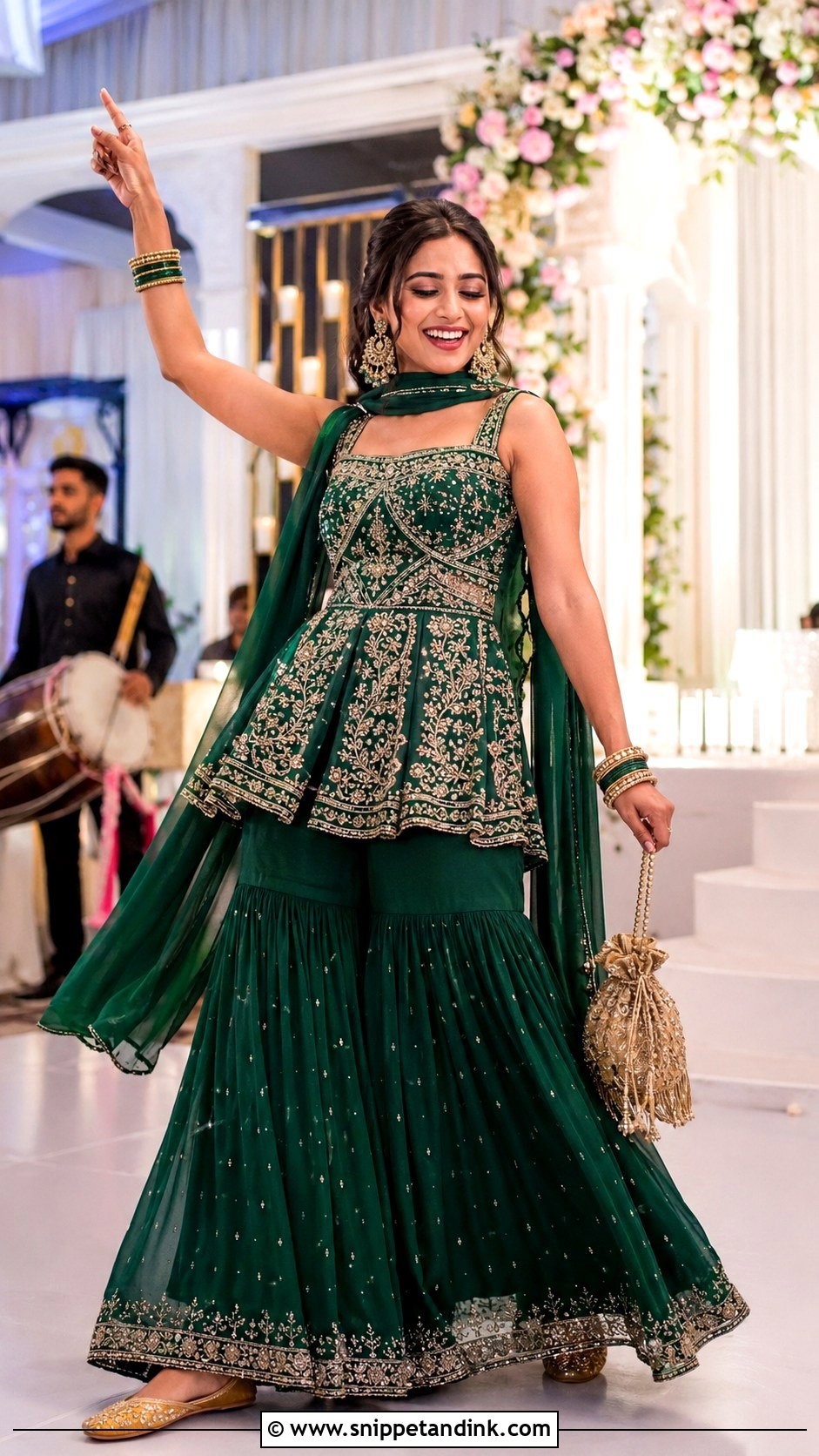
My first check with a sharara and peplum is where the peplum ends. It should finish near the upper hip; any lower and the flare of the top fights the flare of the pants. Choose jewel-toned or metallic sharara pants with a fitted peplum top, and keep embroidery to the neckline, cuffs or peplum hem rather than covering everything. A light dupatta over one shoulder, bold jhumkas and stacked bangles finish it. Embroidered juttis handle energetic dancing better; platform sandals give height. A center-parted ponytail or soft braid keeps it neat. It’s a strong choice for bridesmaids, cousins and close family who want legs free for choreography.
9. Gharara With Short Kurta For Indian Sangeet
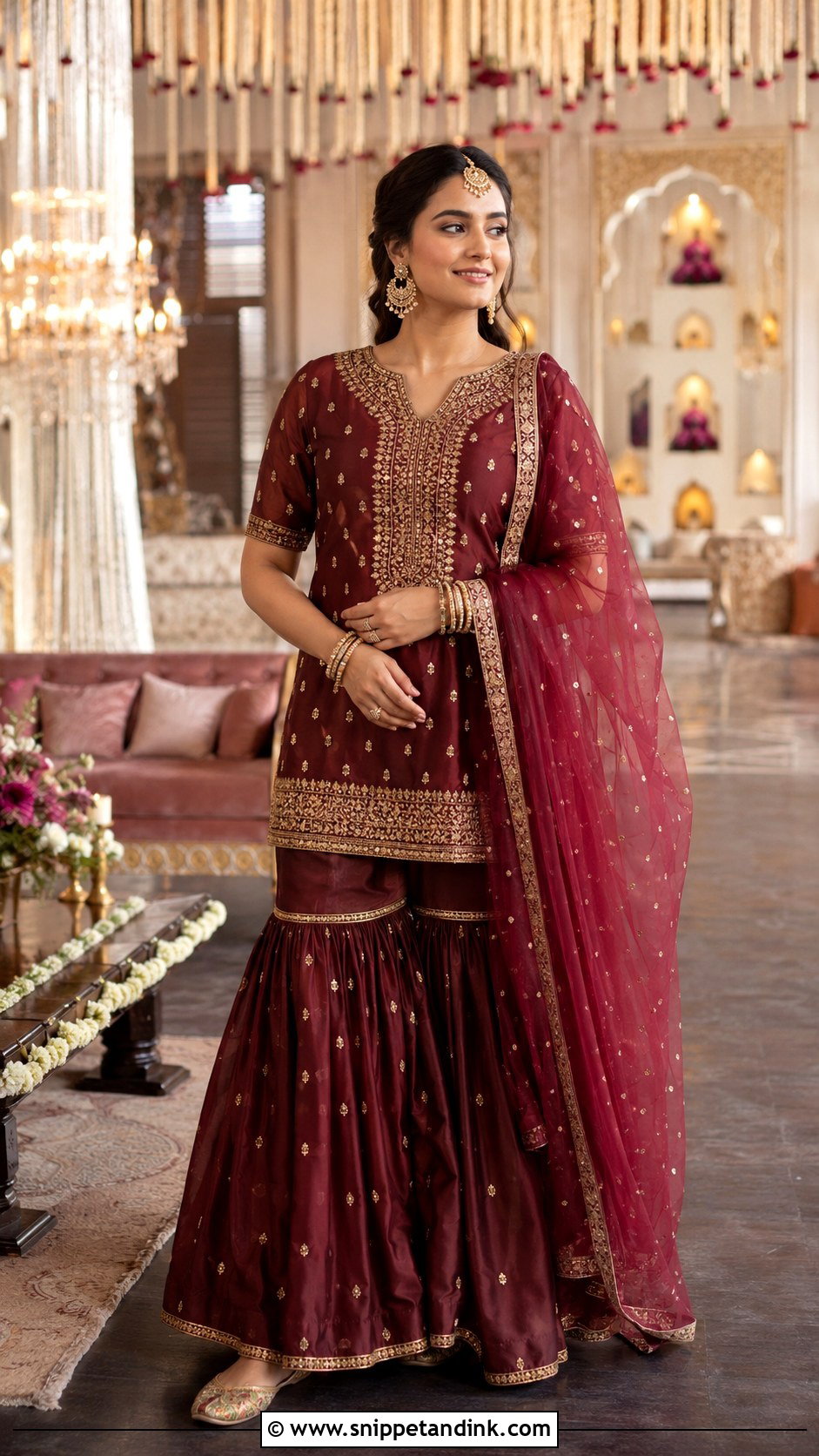
A traditional gharara with a short kurta moves with a swing all its own. Unlike a sharara, the gharara is gathered at a seam around the knee and flares from there, which gives it a distinctive shape. That knee joint, often finished with a band of gota, is where the tailoring shows, so I check it sits at your actual knee and not a few inches below. Silk, brocade, georgette or tissue in maroon, mustard, emerald, pink or ivory all suit it. Pair it with a detailed short kurta and a light dupatta across one shoulder. Chandbali earrings, a small maang tikka and embellished bangles give a classic finish. Flat juttis or low heels stay hidden under the wide hem, with a low bun with flowers or a neat braid.
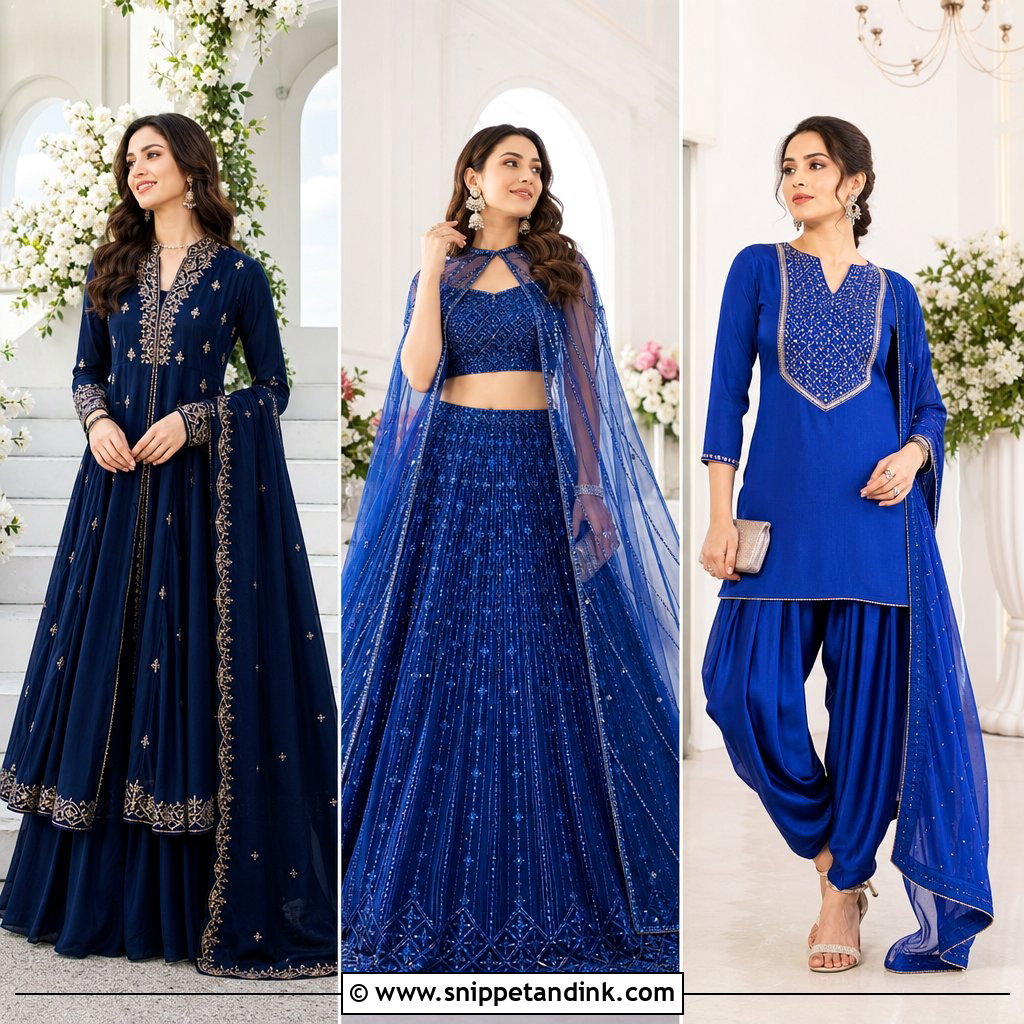
10. Floor-Length Anarkali For Indian Sangeet
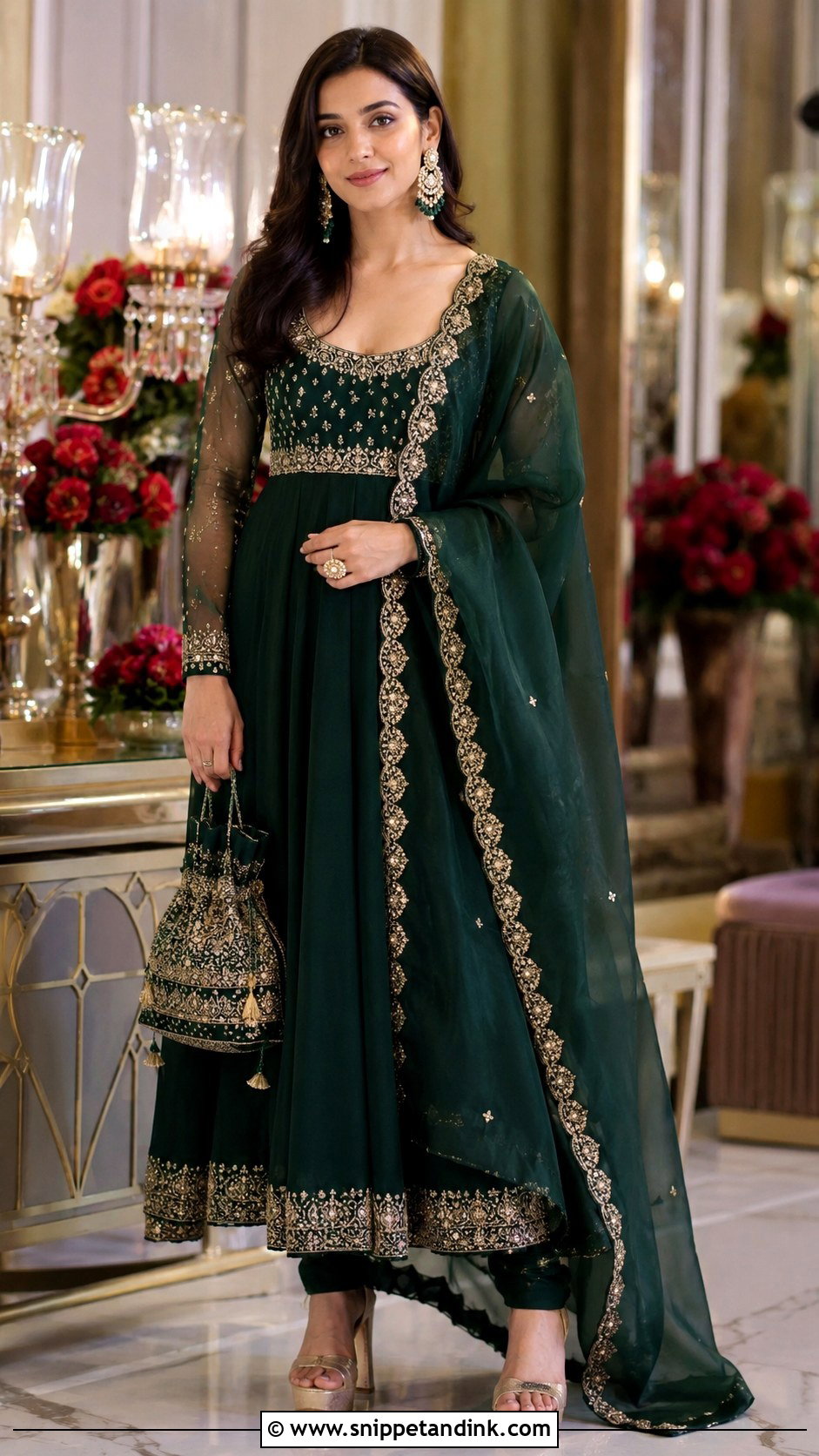
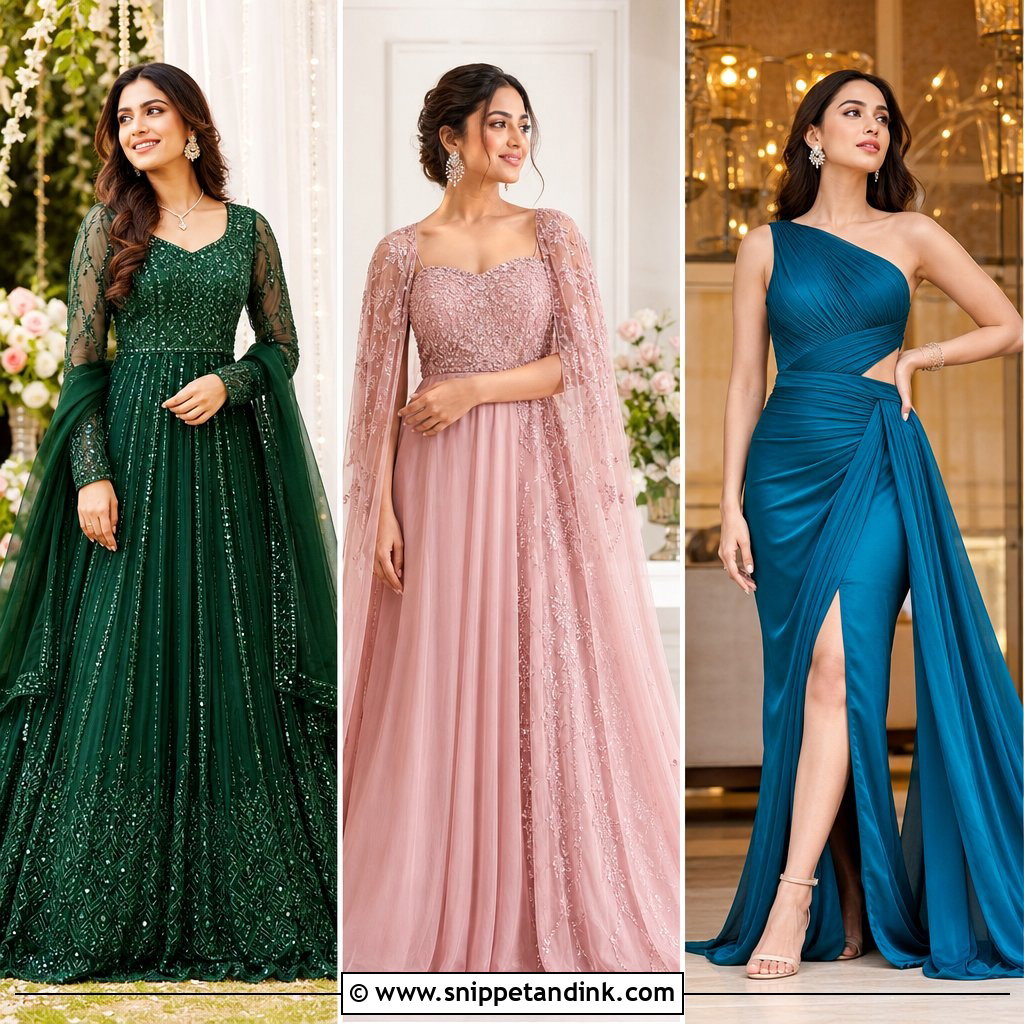
If you’d rather not bare your midriff, a floor-length Anarkali gives coverage, comfort and a lot of twirl. Choose a fitted bodice and a generously flared skirt in chiffon, georgette, silk blend or light net. Deep green, wine, navy, plum and ruby feel formal at night; pastels are softer. Wear it with fitted churidar and a sheer dupatta pinned neatly at one shoulder. Kundan earrings, a statement ring and a small potli are enough for such a long silhouette. Platform heels or cushioned juttis, and a half-up style or low bun, finish it. One honest warning: a full Anarkali skirt can carry several meters of fabric, so ask the tailor about weight before you commit to dancing in it.
11. Jacket Anarkali With Straight Pants For Indian Sangeet
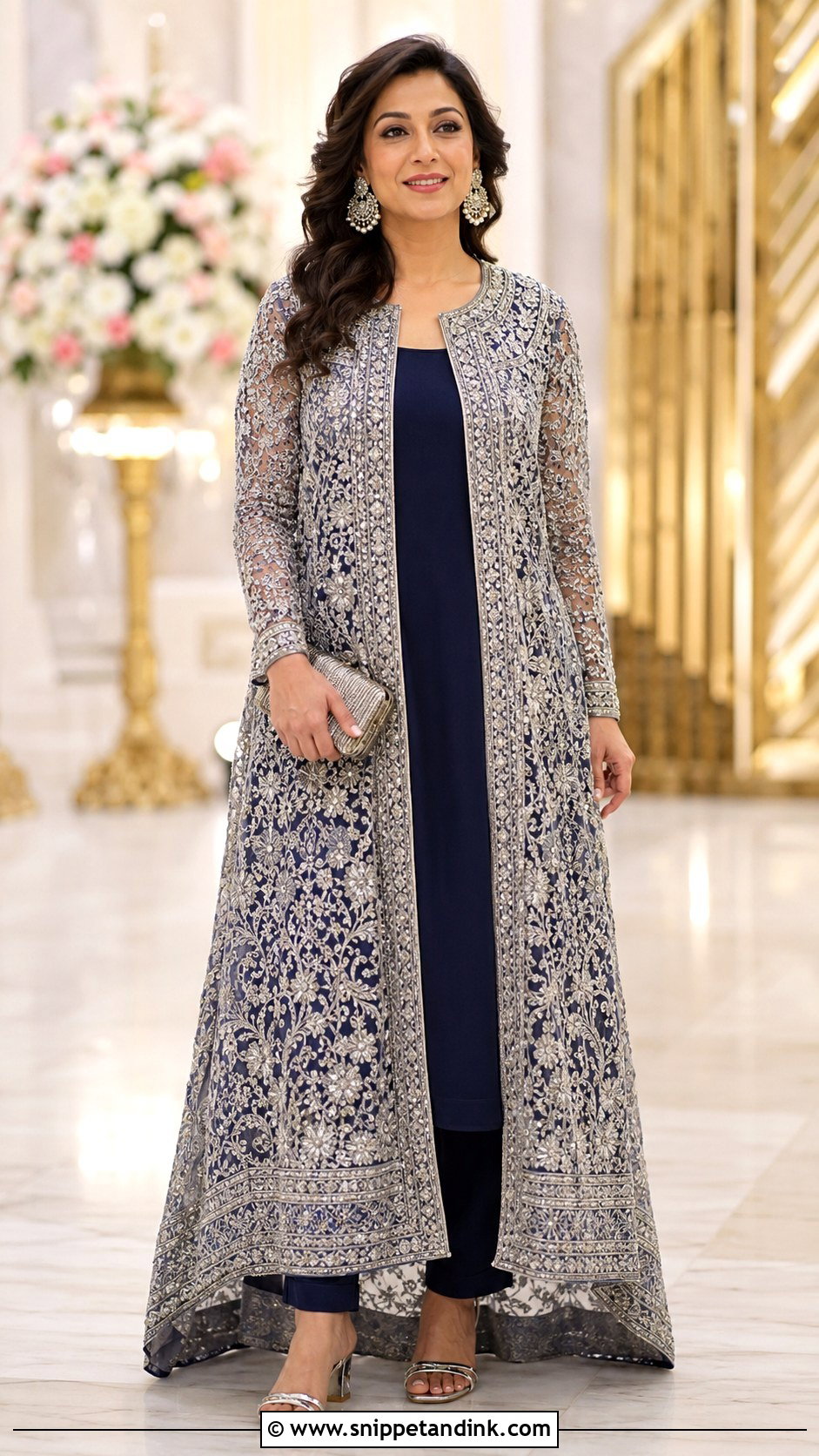
This layered look relies on proportion. A sleeveless or short-sleeve inner top in a solid color goes under a floor-length open jacket embroidered along the front and cuffs, and straight pants keep the lower half slim. Emerald with gold, navy with silver, or burgundy with champagne all look polished in the evening. Skip the dupatta unless the design needs it; the long jacket already gives you movement and coverage. Statement earrings, a slim clutch and block-heel sandals complete it, with a sleek bun or straight ponytail. I like it for guests of different ages and body types because the long vertical opening of the jacket lengthens almost everyone.
12. Embroidered Jumpsuit With Cape For Indian Sangeet
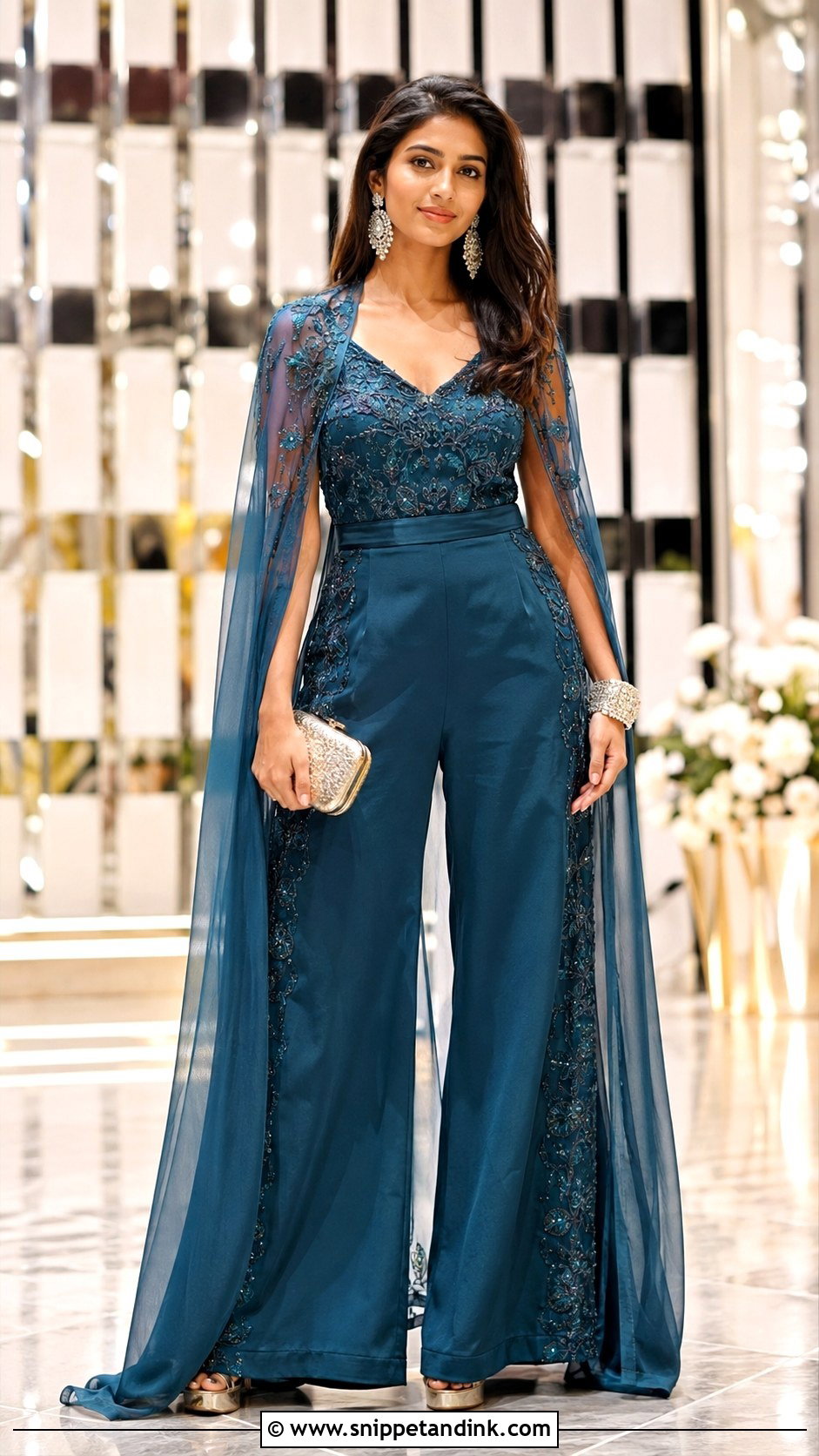
Jumpsuits are refreshingly practical, as long as the bodice stays secure while you dance. Look for a defined waist, wide legs and a comfortable bodice, and add an attached sheer cape or separate floor-length cape for a more ceremonial finish. Deep teal, black, burgundy, sapphire and antique gold all suit an evening event. Oversized earrings, a jeweled cuff and a compact clutch are enough. Hem the legs with the actual platform heels on, because wide legs that are even slightly long catch under the sole. A high ponytail or smooth bun keeps the hair from competing with the cape. One practical note: bathroom trips in a jumpsuit take longer, especially with a cape attached, so plan your timing around the performance.
13. Dhoti Pants With Crop Top And Jacket For Indian Sangeet
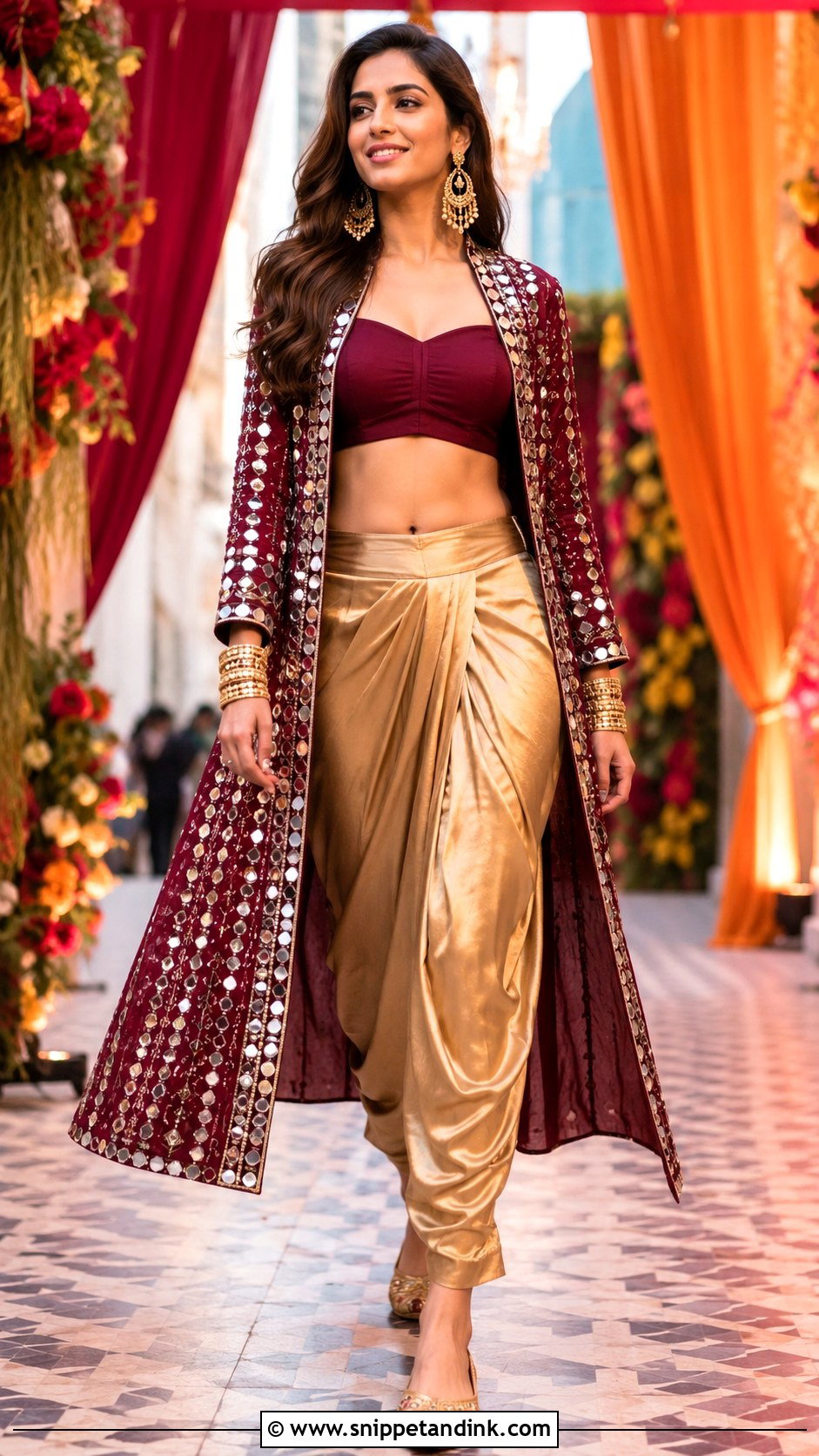
For choreographed dances, dhoti pants with a crop top and jacket are about the most practical thing you can wear, since there’s no long skirt or saree drape to manage. Start with draped pants in satin, silk blend or crepe and add a fitted top to balance their relaxed shape. Then layer a cropped jacket or long open front with mirror work, thread embroidery or metallic detail for a comfortable Indo-Western outfit with real presence. Statement earrings and stacked cuffs carry the festive mood without a necklace. Embellished flats, juttis or low block heels keep you agile. A braided ponytail or high bun keeps the jacket on view. Do a deep squat at the fitting; dhoti drapes cut too narrow at the crotch tear on the first big move.
14. Palazzo Suit With Cape For Indian Sangeet
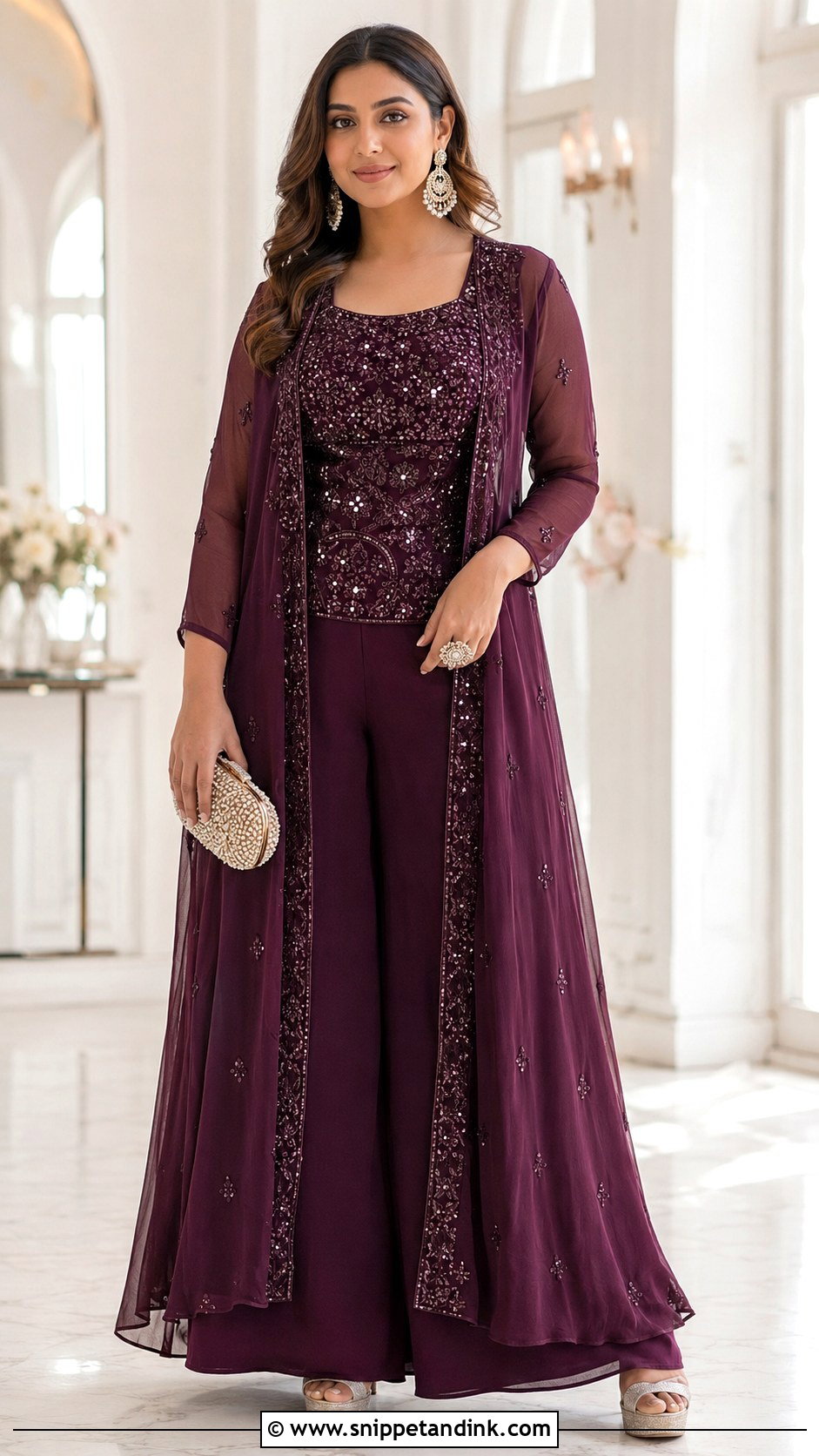
A palazzo suit with a cape suits anyone who’d rather wear flowing pants than a full skirt. Choose high-waisted palazzos with a fitted embroidered top in matching or complementary colors. The cape should finish around the knee or ankle; if it trails on the floor, someone will step on it during the dancing. Monochrome navy, emerald, plum or dusty rose lengthens the figure. Chandelier earrings, a statement ring and a beaded clutch complete it, with metallic wedges or block heels hidden under the wide legs. Soft waves or a side-swept ponytail add movement without covering the cape. You get coverage and freedom to walk, mingle and dance in equal measure.
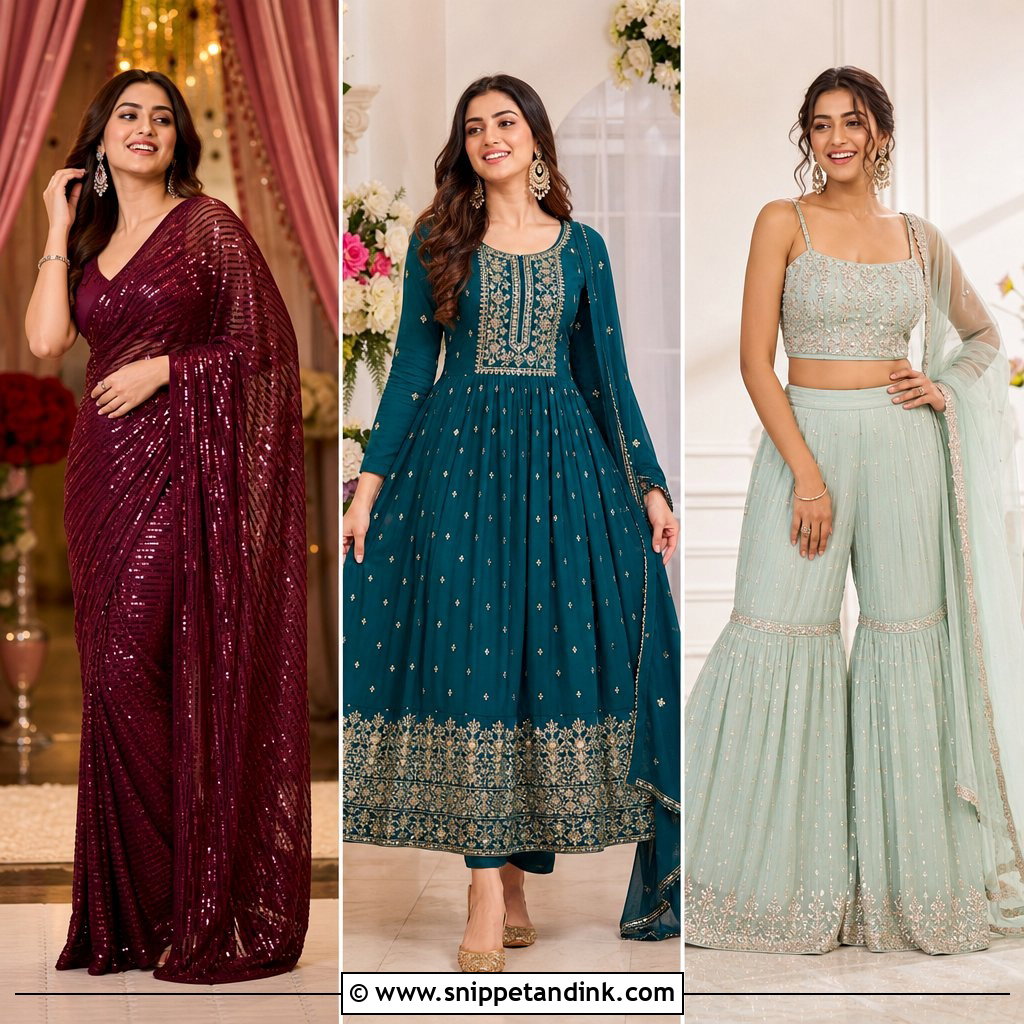
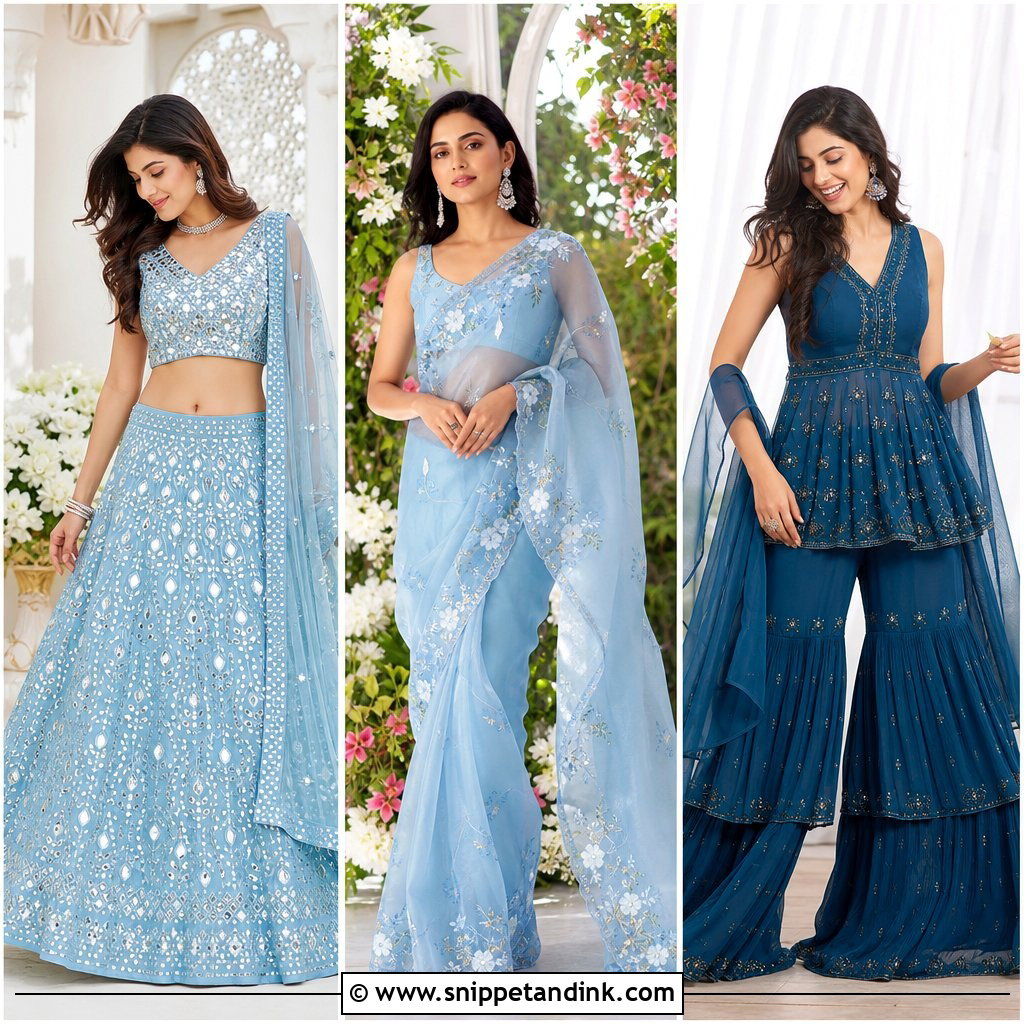
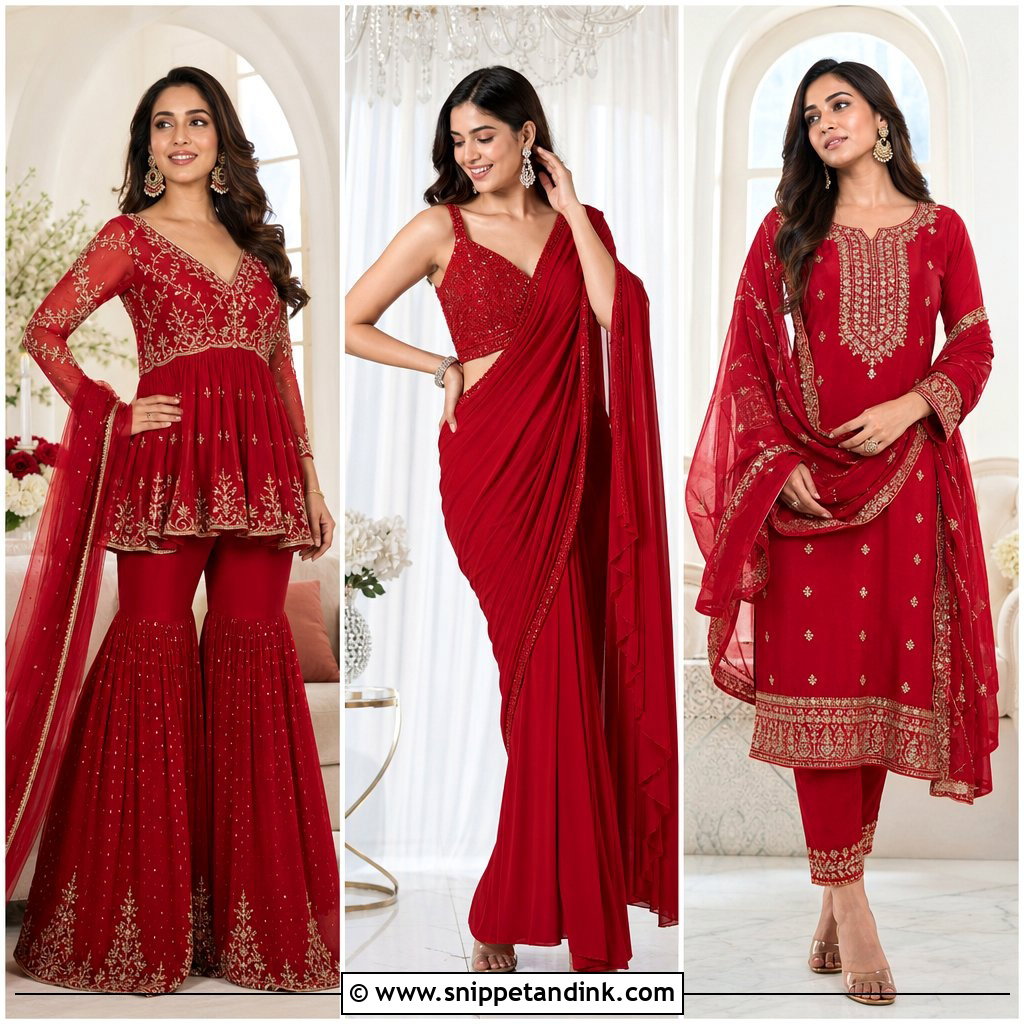
15. Embroidered Skirt Co-Ord Set For Indian Sangeet
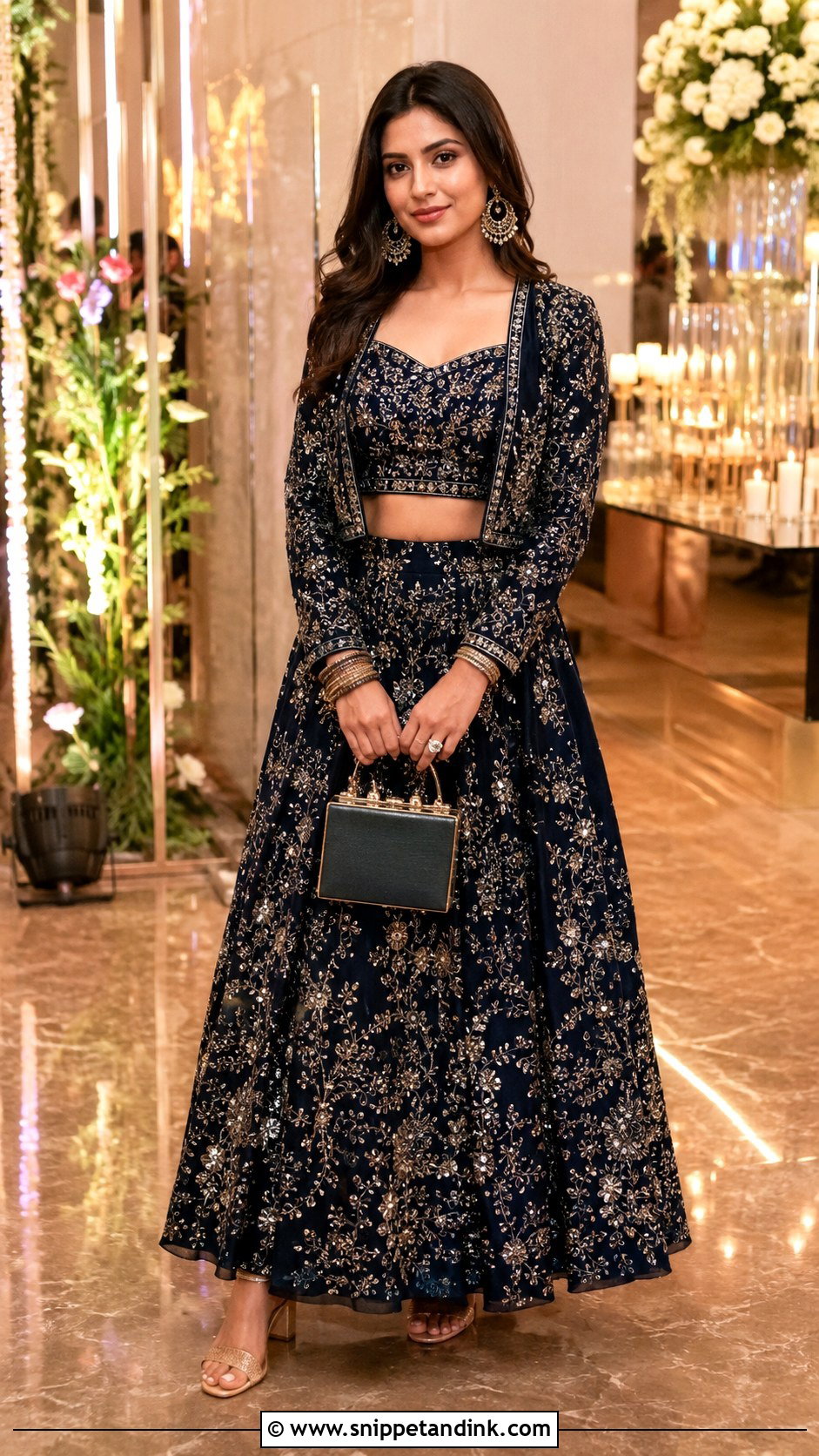
An embroidered skirt co-ord feels coordinated without the formality of a lehenga. Choose a flowing skirt and blouse cut from the same fabric, print or embroidery, and add a cropped jacket or light cape if you want more coverage. Printed silk suits a daytime sangeet; sequins, beads or metallic thread suit the evening. Hoop-style Indian earrings, slim bangles and a structured mini bag finish it. Block heels or jeweled flats depend on the skirt length. A smooth ponytail keeps the matching pieces looking intentional. I like recommending co-ords to anyone watching their budget, because the blouse, skirt and jacket each rewear separately at later functions.
16. Draped Skirt With Corset Blouse For Indian Sangeet
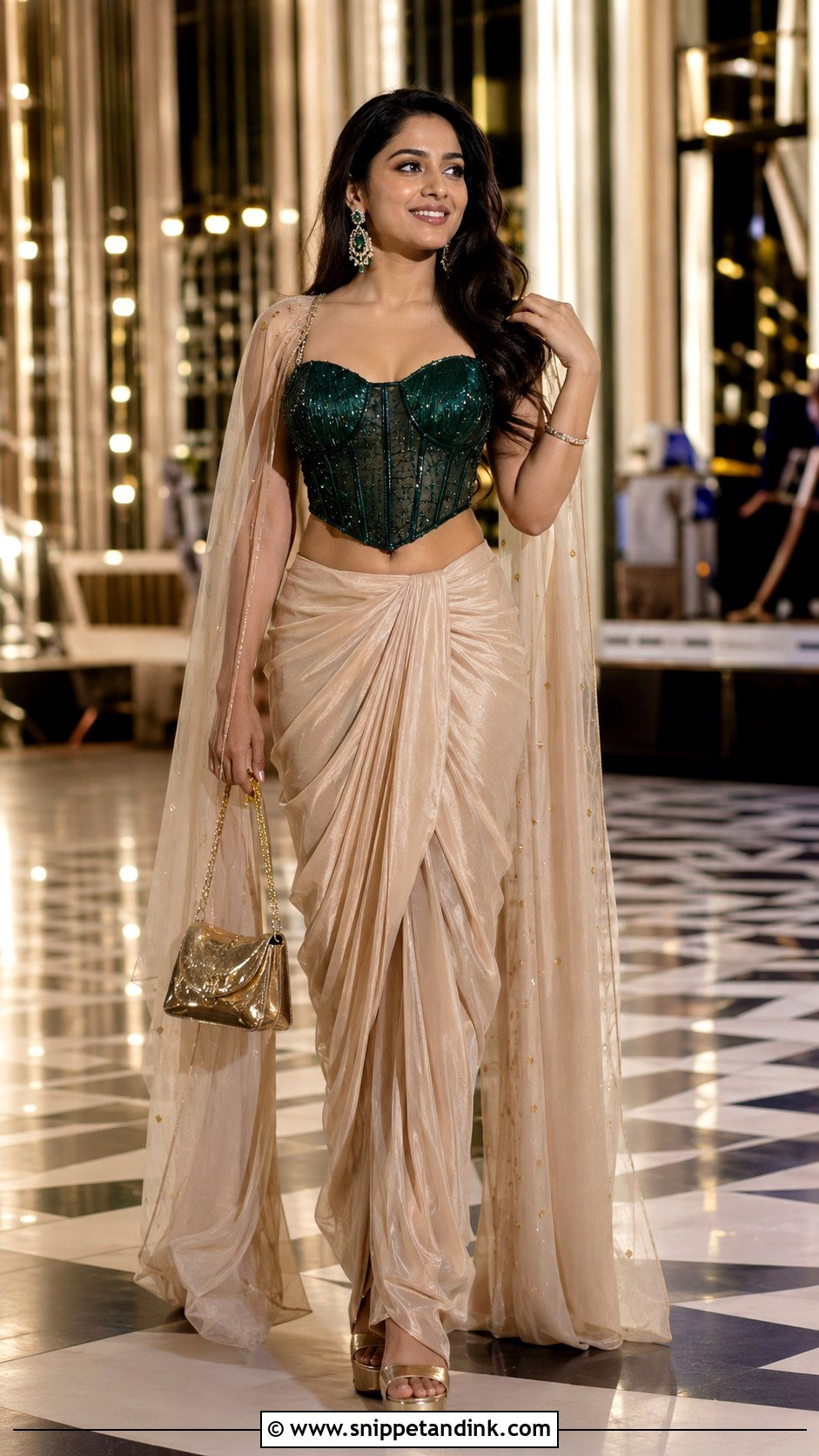
The corset blouse is the part to get right here. It has to give real support and still let you breathe, sit down to eat and lift your arms on the floor; I check all three before it leaves the fitting room. Pair it with a draped skirt in satin, crepe, georgette or metallic fabric that gathers gently at the waist without bulk. A sheer cape or shoulder drape replaces the dupatta for a cleaner fusion line. Bold earrings, a sleek bracelet and a small metallic bag are plenty. Platform sandals balance the flowing skirt and are easier to dance in than thin heels. Wear your hair in a high ponytail or soft waves. Bridesmaids and guests who want a contemporary look will find it easy to carry.
17. Silk Lehenga With Long Kurta For Indian Sangeet
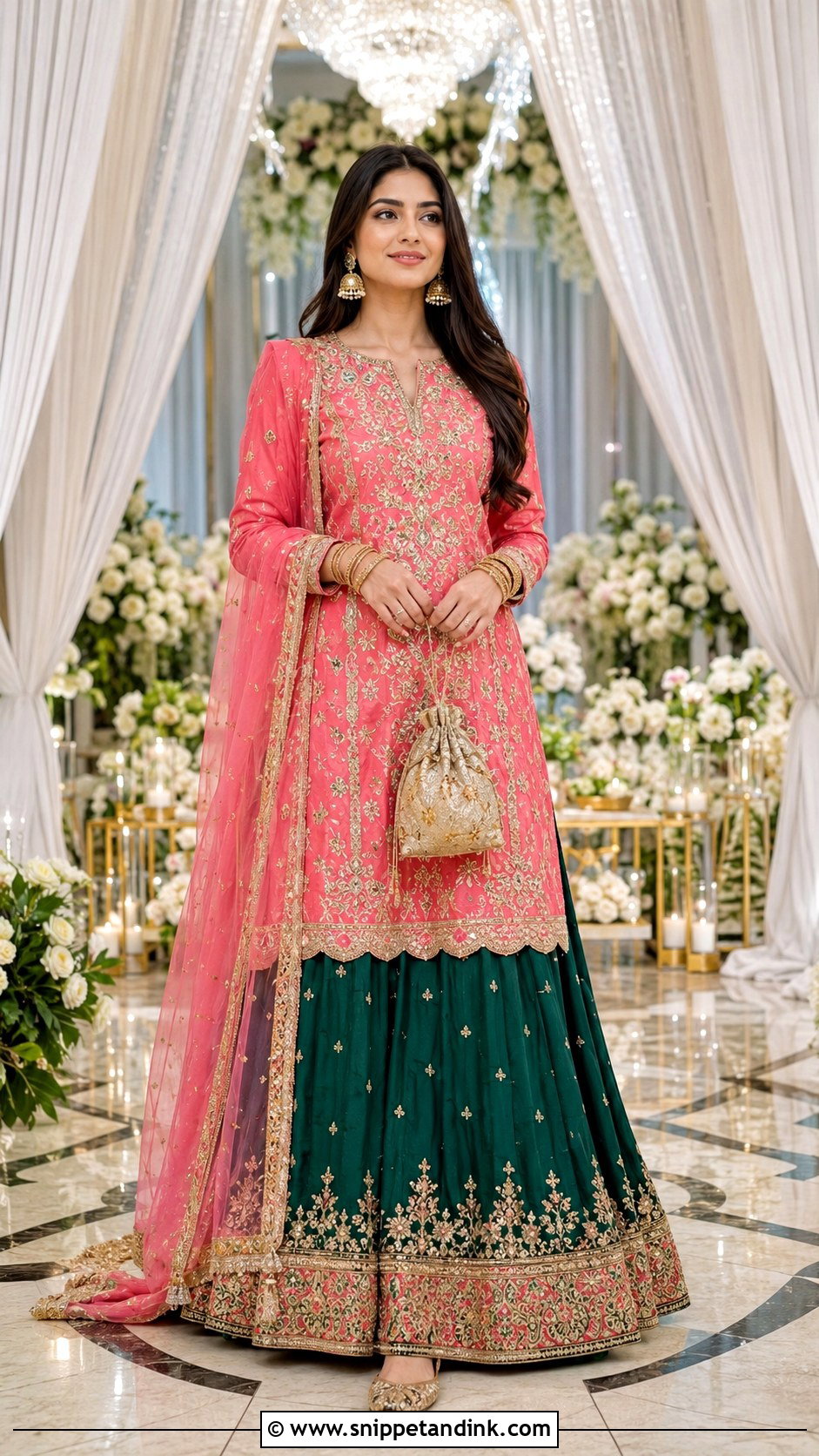
A long kurta over a silk lehenga skirt gives extra coverage while keeping the grandeur. The kurta can stop at the knee or just above it, so the layered effect still shows the full skirt. Contrasting pairs such as emerald with pink, navy with gold or maroon with peach look rich; one color throughout looks streamlined. When the kurta is heavily worked, I leave the dupatta off entirely. Otherwise drape a light one over one shoulder. Jhumkas, bangles and a traditional potli bag finish it, with embroidered juttis and a low bun or neat braid. Mothers, aunts, sisters and guests who prefer a longer upper layer tend to feel most comfortable in it.
18. Bandhani Lehenga With Mirror Work Blouse For Indian Sangeet
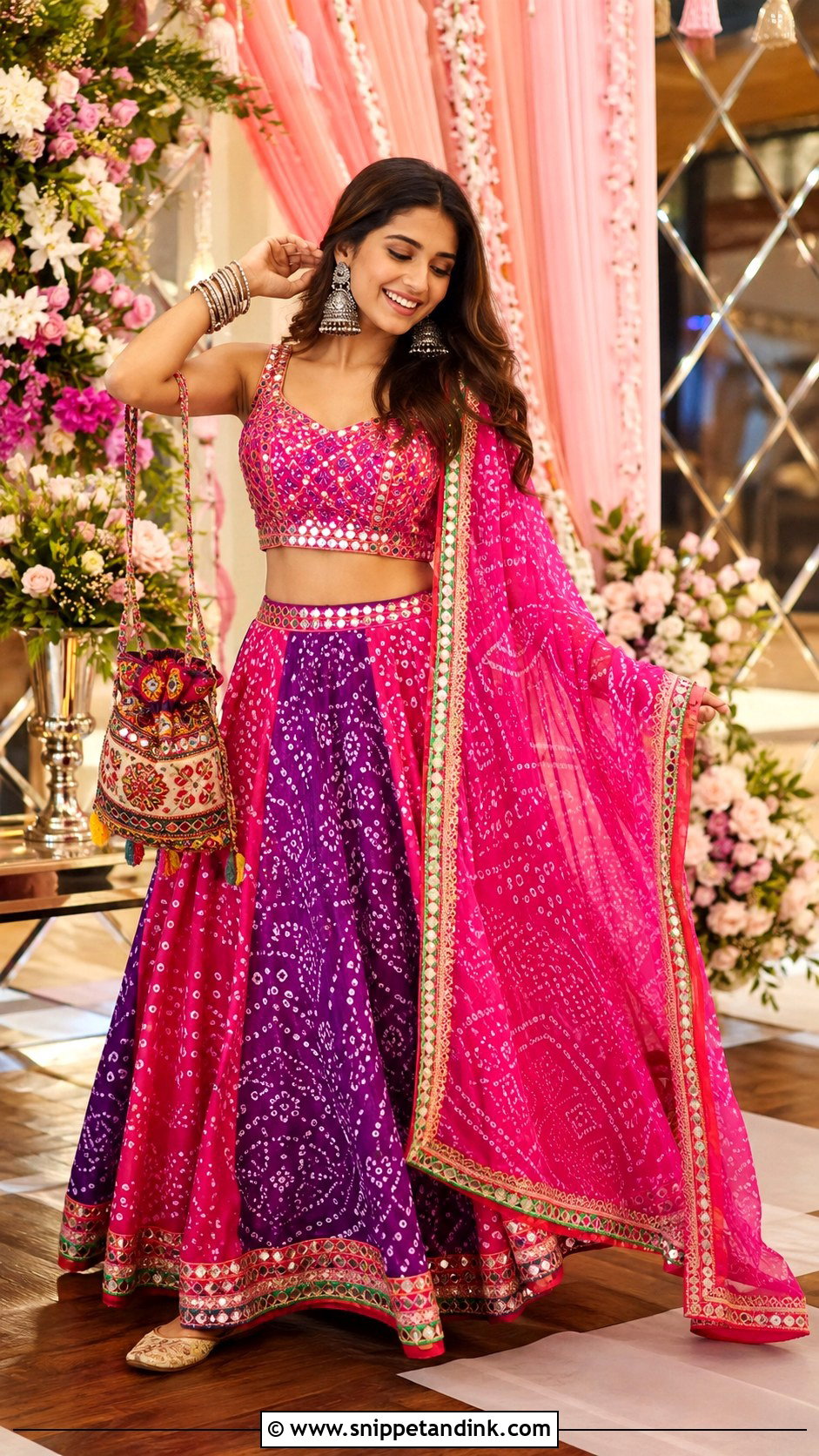
Bandhani’s tie-dyed dots and mirror work make a happy pairing. A Bandhani lehenga in red, pink, purple, green or a multicolor dye goes with a contrasting fitted blouse covered in small mirrors and neat embroidery. With two busy surfaces already in play, I keep the dupatta light with a simple border so the patterns don’t compete. Oxidized silver earrings, stacked bangles and a colorful potli suit the handmade feel. Cushioned juttis handle grass, tile and stage floors alike. A braid with small decorative pins or a half-up style completes it. Colorful themes, destination weddings and family celebrations with a bright dress code suit it best.
19. Chikankari Lehenga With Embellished Blouse For Indian Sangeet
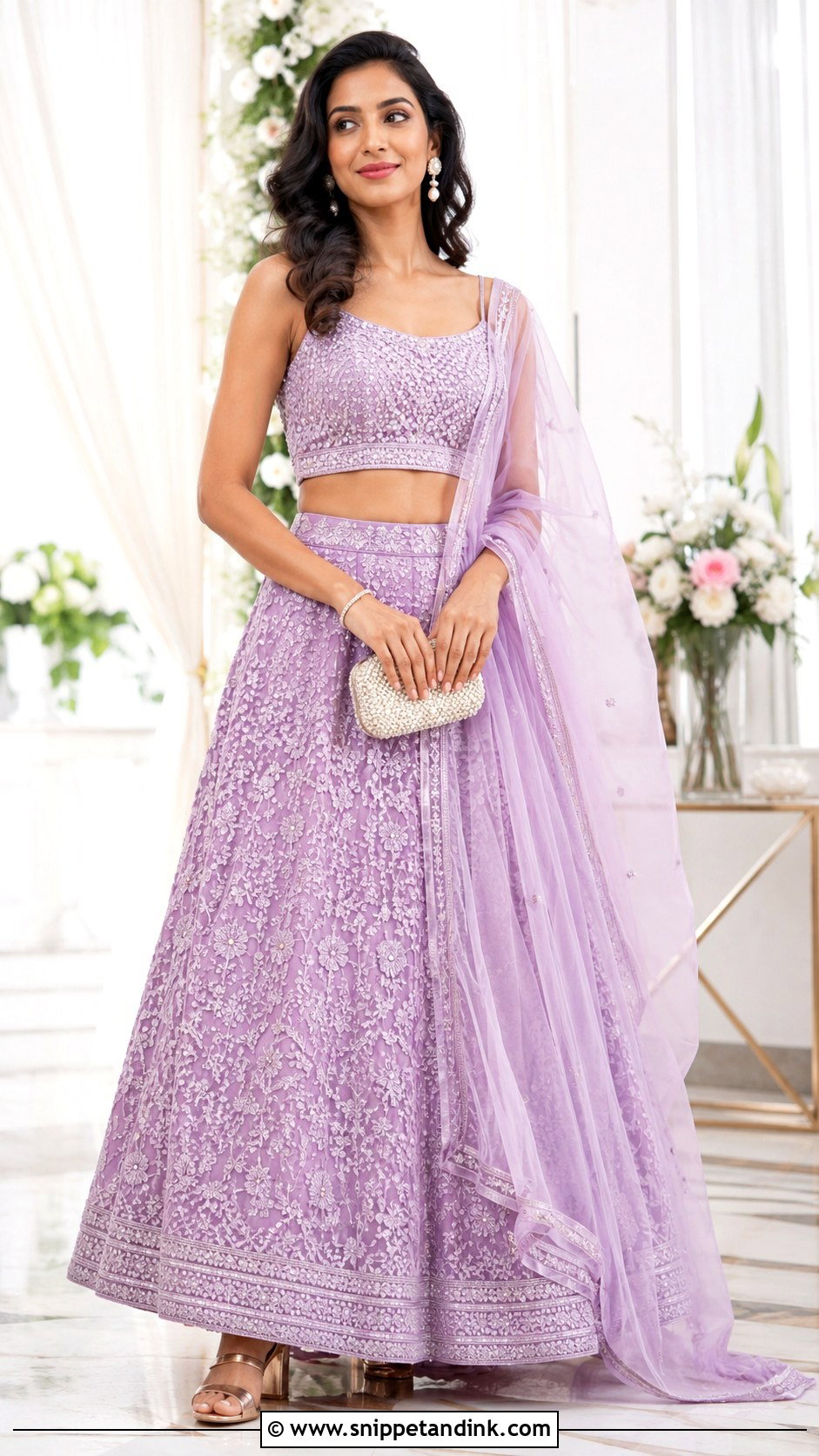
Chikankari is the quiet option on this list, and it rewards a guest who doesn’t want jewel tones. The white-thread shadow work sits best on light grounds: ivory, blush, lavender, powder blue, sage or pale yellow. Pair the lehenga with a blouse carrying pearls, sequins or fine beadwork for some evening shine, and choose a sheer, barely decorated dupatta so the embroidery stays visible. Pearl drops, a slim bracelet and a beaded clutch suit the palette. Metallic block heels look polished; jeweled flats are kinder over a long night. Finish with a low ponytail, loose curls or a softly textured bun. Watch for one thing: delicate chikan threads snag on rough bangles and clutch clasps, so keep those smooth.
20. Brocade Pants With Long Tunic For Indian Sangeet
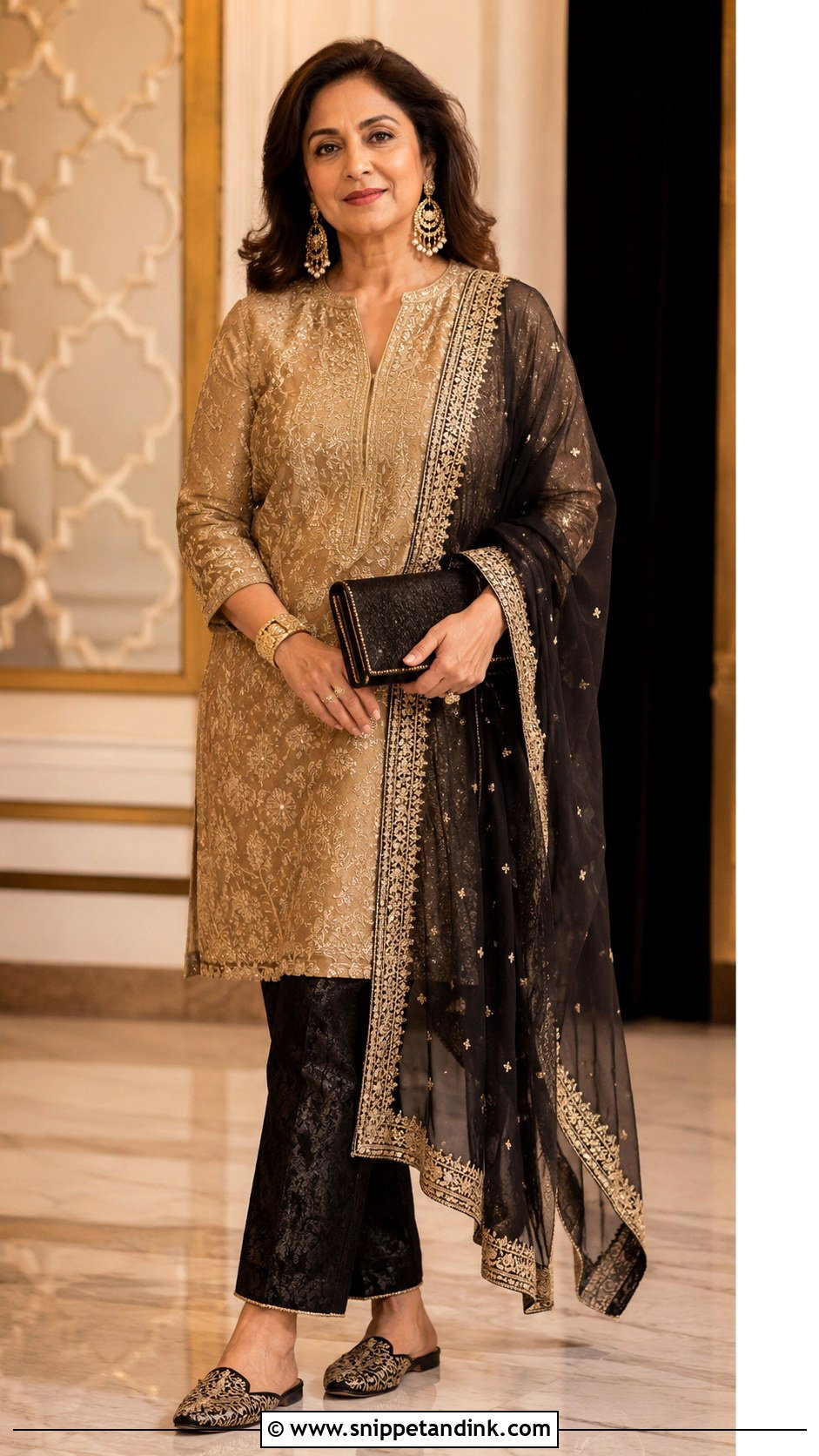
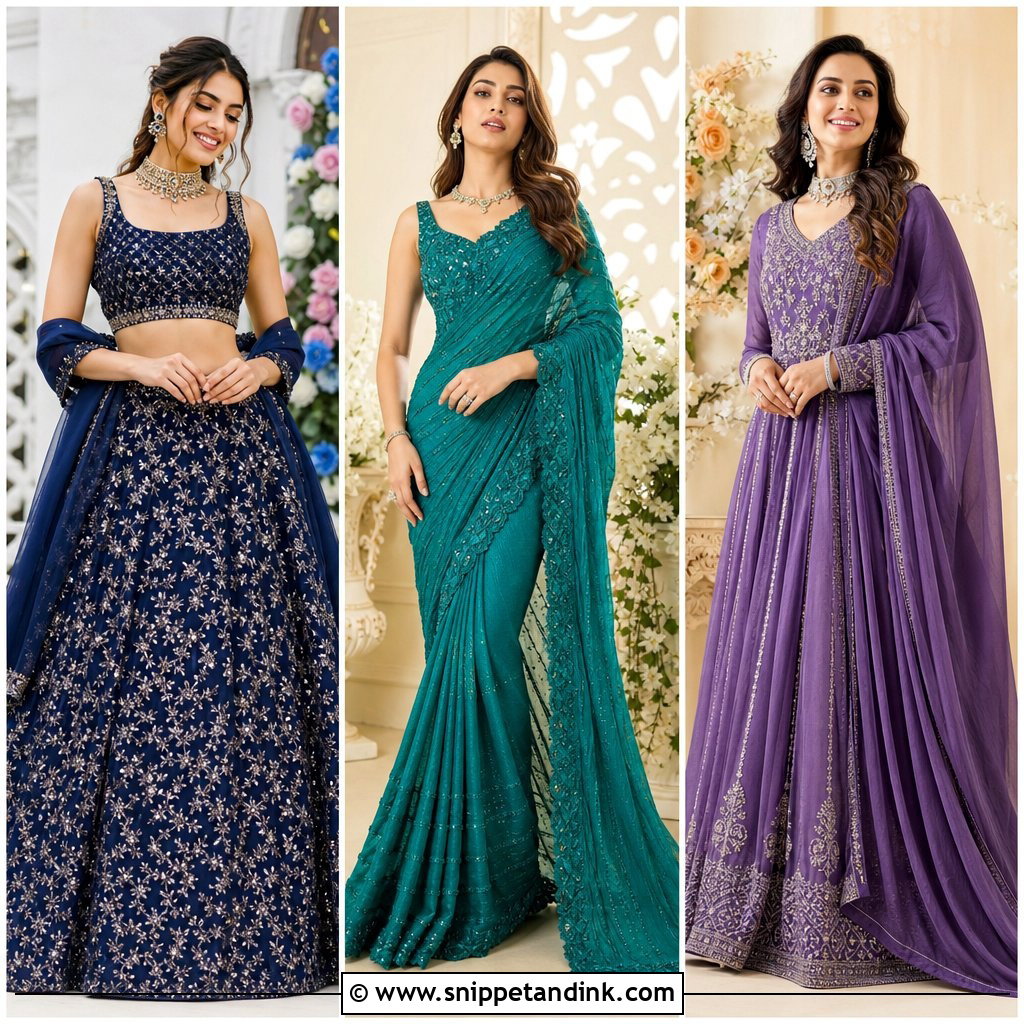
Brocade pants and a long tunic give a polished, modest sangeet outfit that’s comfortable to stand and sit in. Choose ankle-length straight or slightly flared pants and a knee-length tunic with side slits and embroidery at the neckline. The slits matter more than people expect; without them a straight tunic rides up and bunches when you sit. Black with gold, teal with bronze or burgundy with champagne all read evening-ready. A sheer dupatta over one shoulder adds a traditional note if you want it. Statement earrings, a cuff and a structured clutch finish it, with low block heels or embroidered mules. A smooth low bun or shoulder-length waves suit mothers, aunts and older guests in particular.
Under Uplighting and Flash, Fabric Changes Color
Most sangeets happen at night under colored LED uplighting, and fabric doesn’t look the same there as it did in a boutique. It helps to know how each surface behaves before you buy.
Sequins and mirrors
These bounce light straight back, which is why they sparkle on video. Under direct camera flash, though, large reflective areas can turn into white patches. Scattered or medium-density work tends to photograph better than an all-over sheet.
Pastels and ivory
Pale fabric takes on whatever color the uplights are. Blush can turn purple under violet light, and ivory can look grey in a dim corner. If the decor team has chosen a lighting color, ask what it is before you choose a pastel.
Velvet and matte silk
Matte fabrics absorb light and read darker at night than in daylight. I’d go one shade brighter than you think you want, or let metallic embroidery break up the surface so it doesn’t disappear against a dark background.
When in doubt, take a photo of the fabric with your phone’s flash on in a dim room. It’s a rough test, but it shows you the hotspots and color shifts before you’ve paid for stitching.
Will It Still Feel Good at Midnight?
That’s the question I’d ask of every outfit above, from the traditional lehengas and sarees to the shararas, Anarkalis and fusion sets. Before you decide, sit, walk, raise your arms and try a few steps of your dance in it. Secure dupattas and saree pleats with hidden pins, and choose shoes you can stand in for several hours. Then match the color, embellishment and formality to the invitation and the venue. An outfit that passes those tests will look right in photos and feel right on the floor long after the first song.
You'll Like These Ideas:


Leave a Reply