
Sisters have a strange job at a Pakistani wedding. You’re in the entrance, the stage photos and half the rasams, you’re carrying the bride’s clutch and fixing her dupatta, and you’re expected to look festive without ever looking bridal. When I style sisters, I plan around that: shararas for mehndi, ghararas for barat, pastels for walima and long shirts for nikkah, each complete from dupatta to shoes. These thirty outfits are built for being seen and for working hard, often on the same night.
How Close to the Bride’s Colours Can a Sister Go?
This is the question I’m asked most by sisters, and the honest answer is that it depends on the bride. Some brides love a matching family palette; others want to be the only one in pastels at the walima. Ask her before you shop, and ask again before you finalise the dupatta.
- At the barat, avoid full red or maroon unless the bride has clearly said she doesn’t mind. Red accents are fine.
- Never wear the bride’s exact shade for the same function. A tone lighter or deeper is enough to separate you in photos.
- Keep embroidery a level below hers. If she is in heavy zardozi, choose lighter tilla, gota or thread work.
- Skip a full bridal jewellery set. A tikka or matha patti on a sister at the barat often reads as bridal from a distance.
For the groom’s sisters the same rules apply, with one more: find out the bride’s colours early, since the two families’ photos end up side by side on the stage.
1. Yellow Mehndi Sharara Outfit
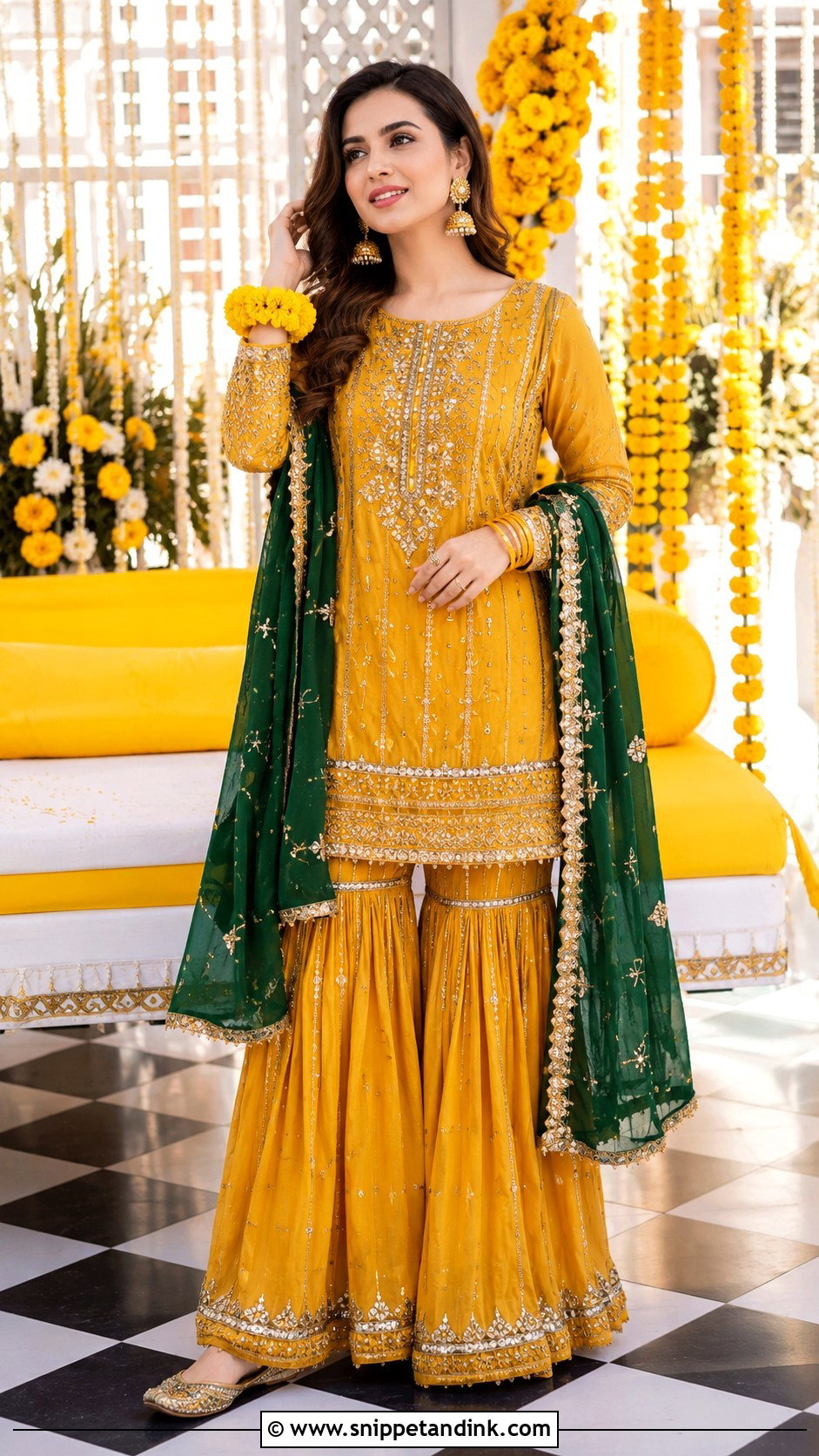
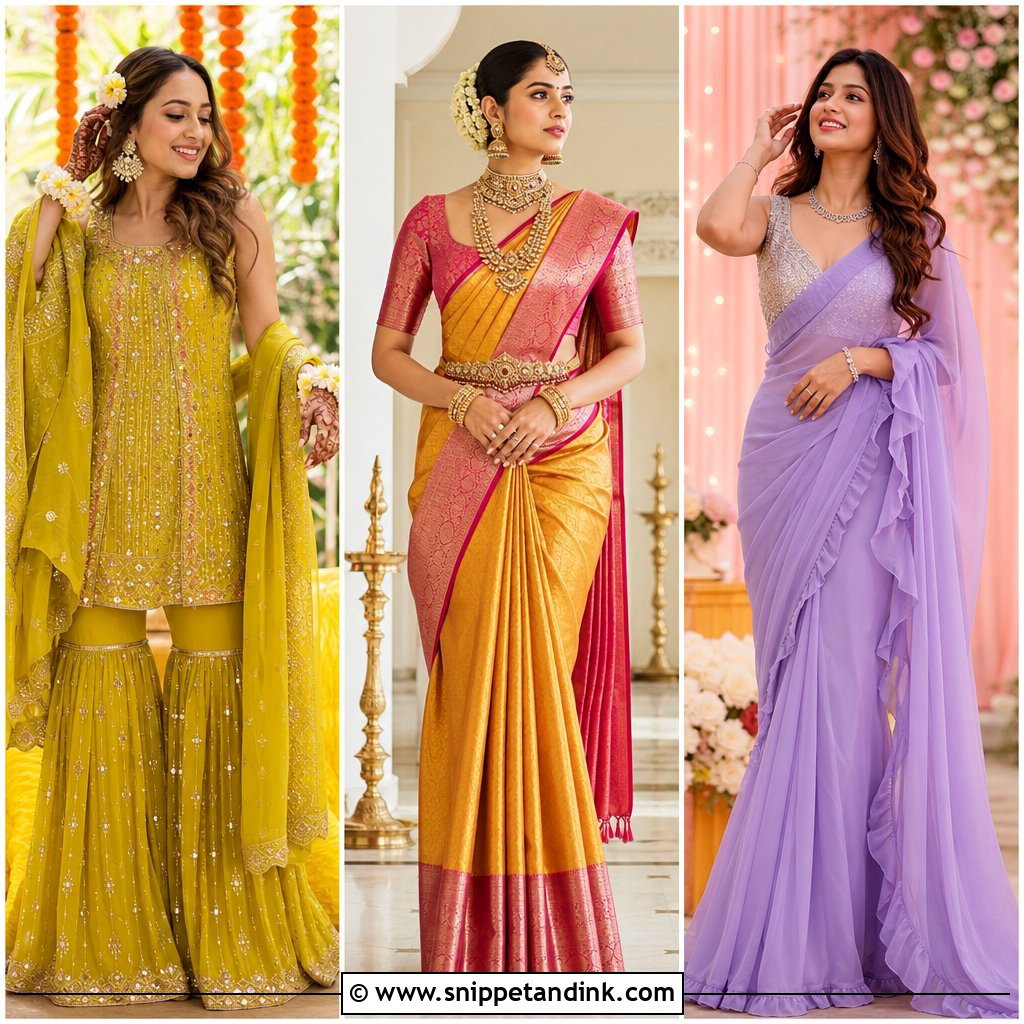
A yellow sharara outfit is the safest bet for a sister at the mehndi. A short kurti in gota, mirror or thread detailing over a flared sharara moves easily when you dance, and a green, pink or orange dupatta adds festivity without weight. Keep the kurti short enough that the sharara’s swing is visible, roughly hip length. Khussas, jhumkas, bangles and a braid with accessories will carry you through a long night.
2. Green Mehndi Gharara Outfit
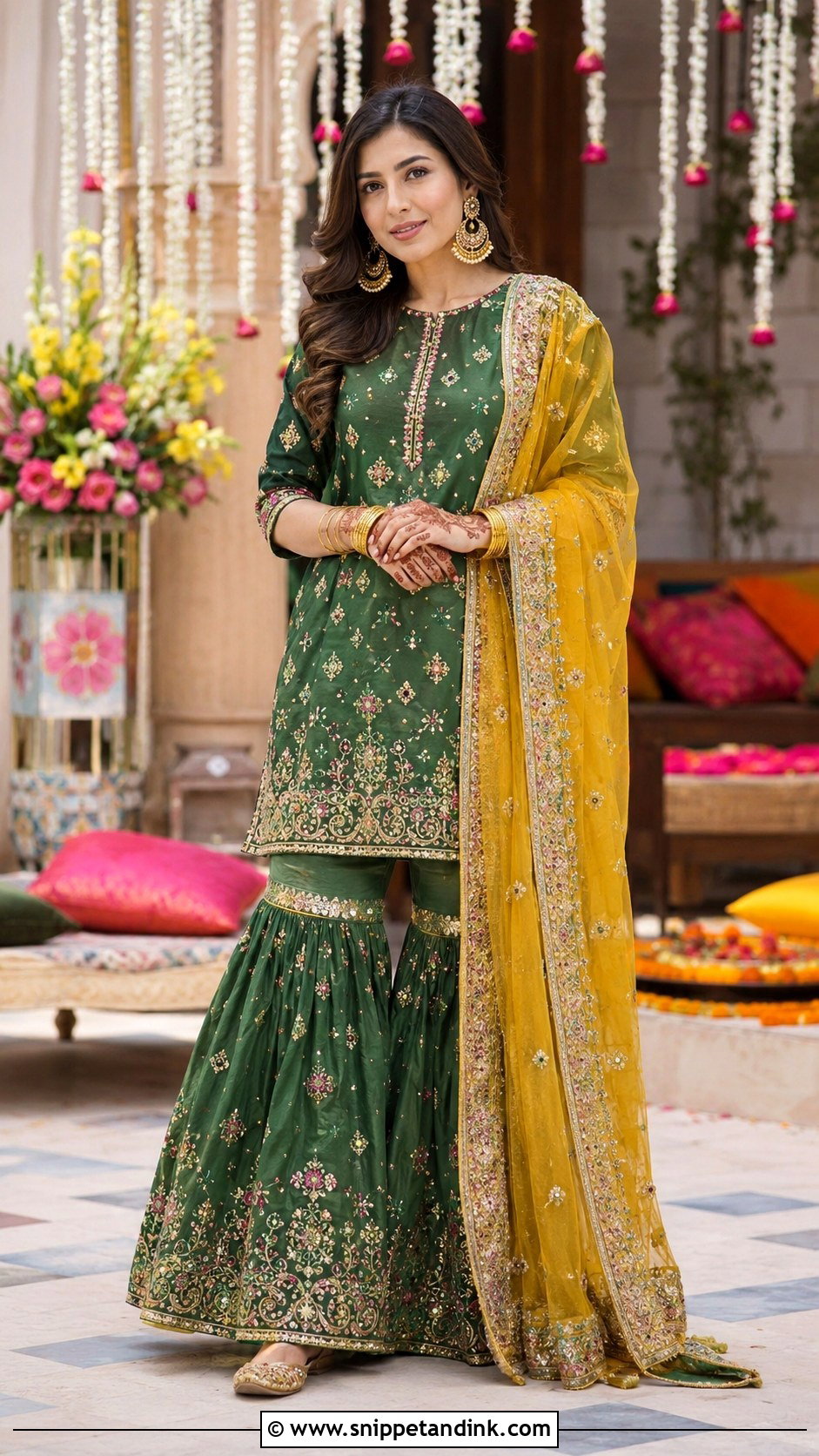
Gharara is more structured than sharara, so it photographs crisply on stage. A short shirt with a gharara in mehndi green, emerald or parrot green, accented with gota, zardozi or mirrors, feels festive without crossing into bridal. Add a yellow or pink dupatta for youth and contrast. One practical note: gharara knee bands sit tight, so if you’ll be sitting on the floor for dholak songs, ask the tailor for a little ease there. Gold khussas, chandbalis and a potli bag finish it.
3. Pink Lehenga Choli Outfit
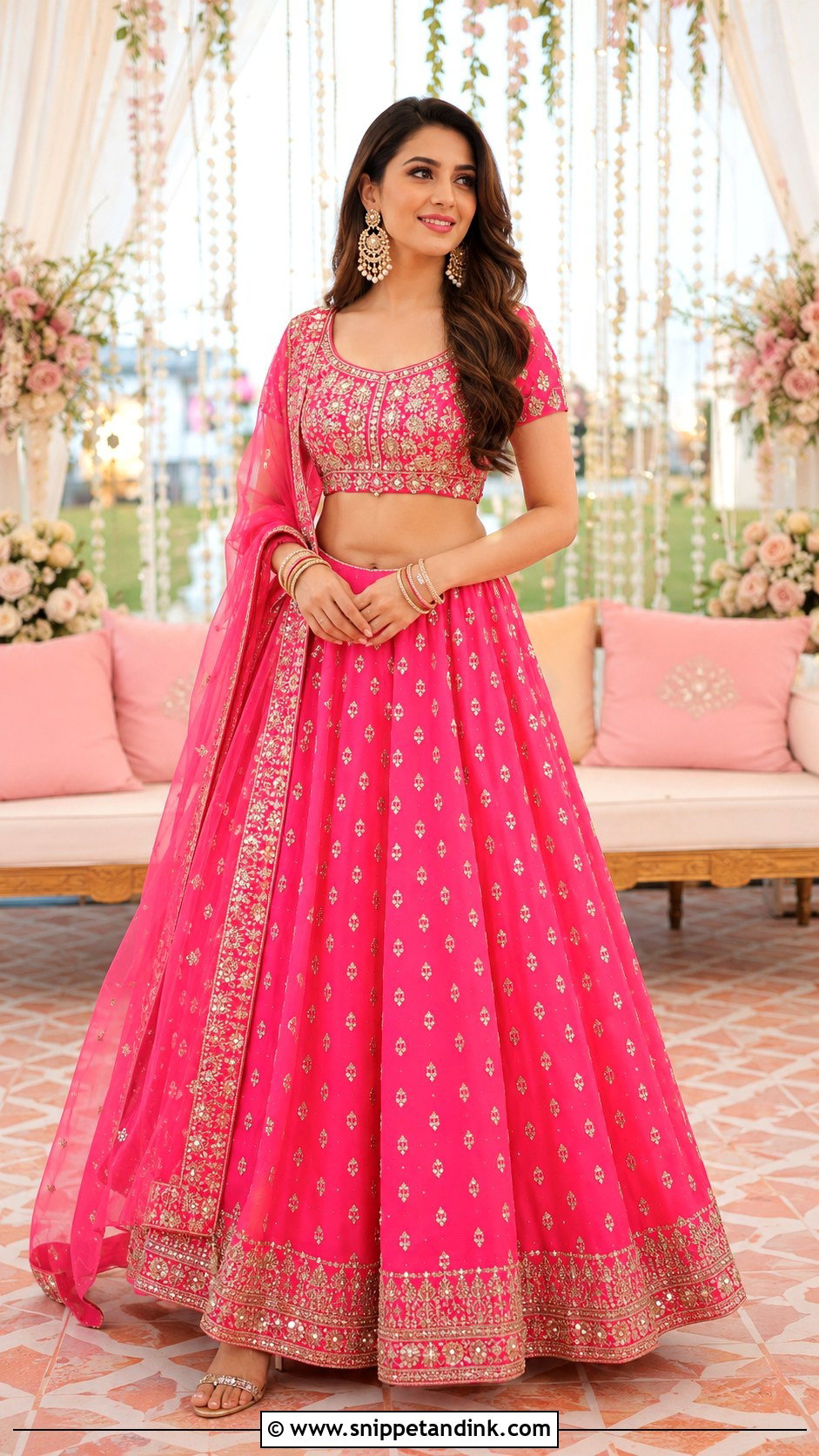
Pink lehenga cholis suit mehndi, dholki and sangeet-style nights, in soft or hot pink. A cropped choli with restrained embroidery and a flowy lehenga keeps you mobile. For a more traditional family, drape a longer dupatta over one shoulder for coverage. Metal tone follows the shade: gold with hot pink, pearls or kundan with pale pink. I’d keep sisters away from red-leaning pinks at a mehndi if the bride is wearing deep red the next day, so the photos stay distinct.
4. Orange Anarkali Outfit
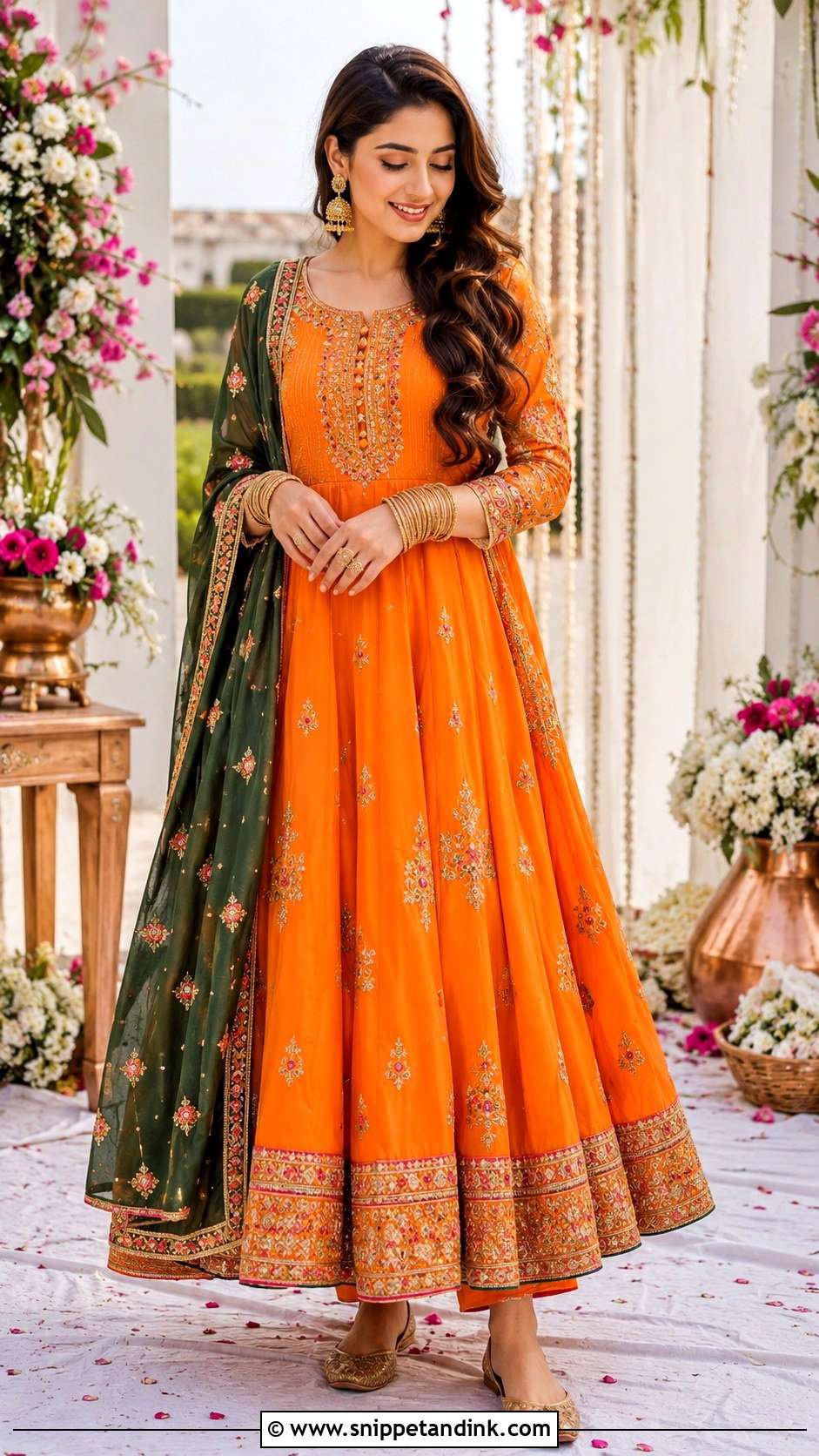
An orange anarkali is bright and graceful for mehndi or mayun. Light embroidery at the neckline, sleeves and hem keeps it festive without overwhelming. The long flared line defines the upper body and skims the waist and hips, which is why so many women find it flattering. A yellow, green or pink dupatta adds play. If you’ll be helping with ubtan at the mayun, keep the sleeves three-quarter length; full sleeves get stained first.
5. Mustard Kurta With Farshi Shalwar Outfit
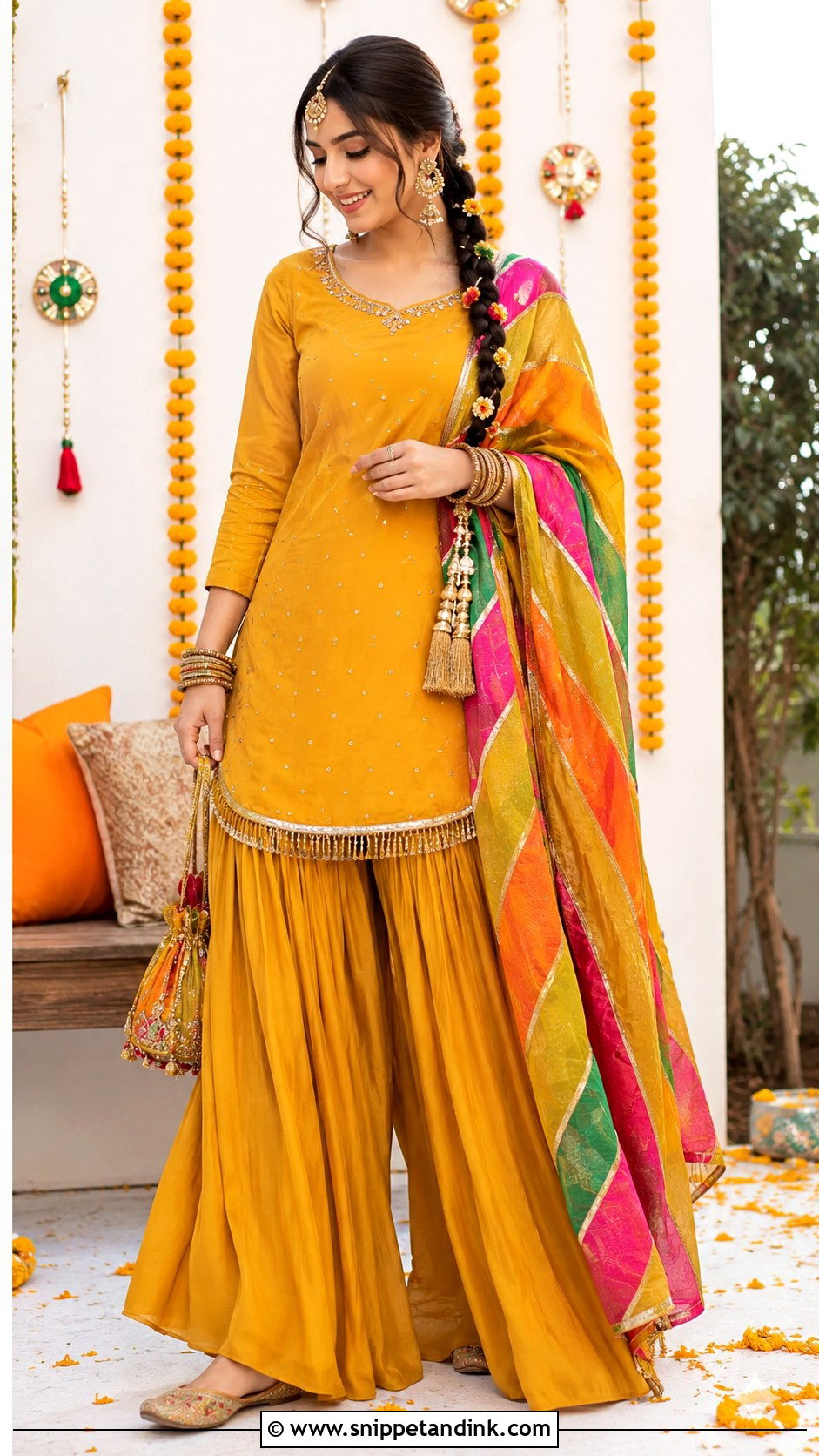
Mustard kurta with farshi shalwar has a Punjabi spirit that suits daytime mehndis and home dholkis. A short or mid-length kurta in gota patti, mirror work or block print, over a wide farshi shalwar, gives volume and drama. A dupatta with kiran edging lifts it immediately. Add a paranda braid, khussas, bangles and statement earrings. Farshi shalwar gathers a lot of fabric at the ankle, so keep the shoes flat and the hem just off the ground.
6. Ivory Nikkah Long Shirt Outfit
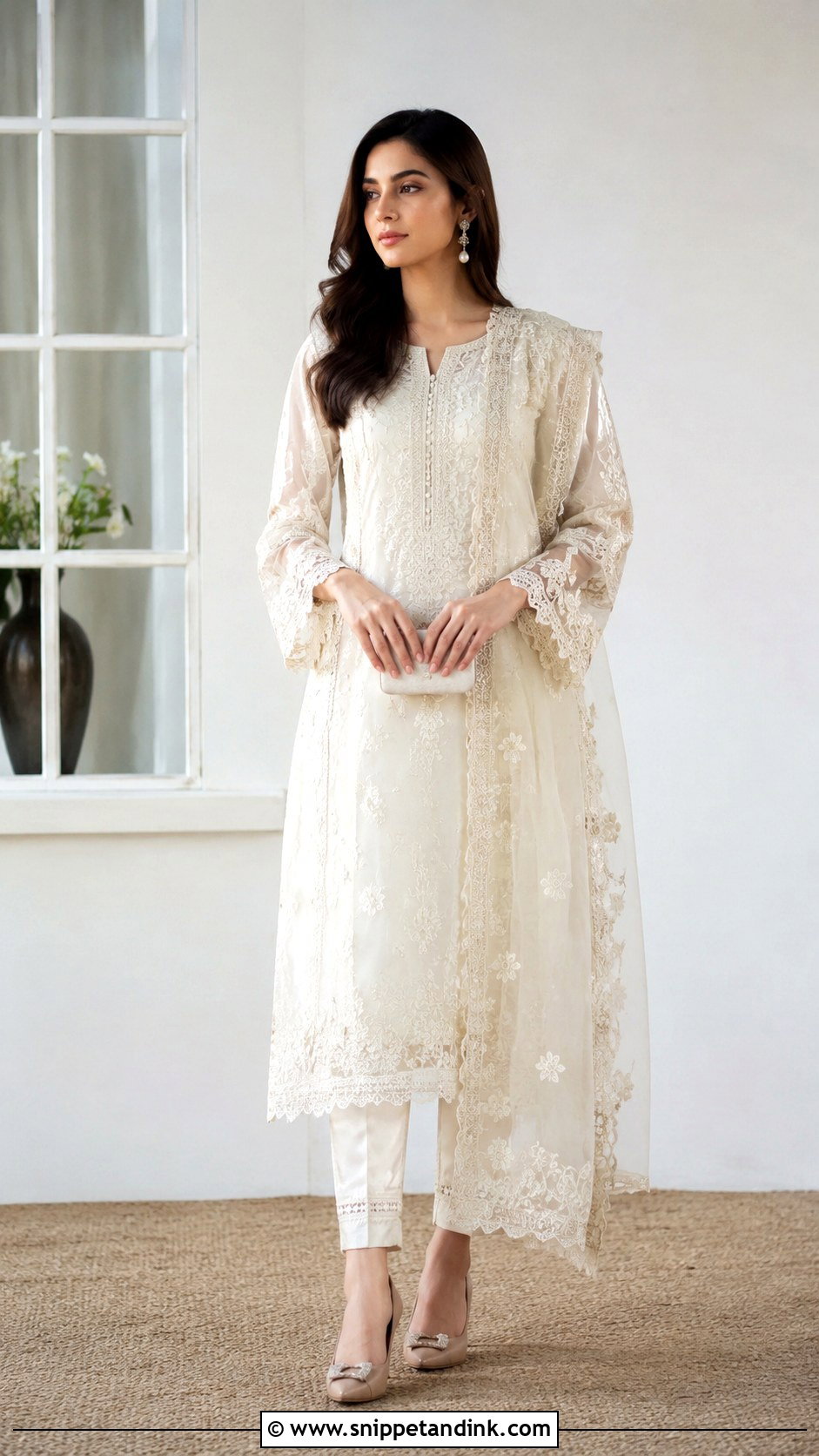
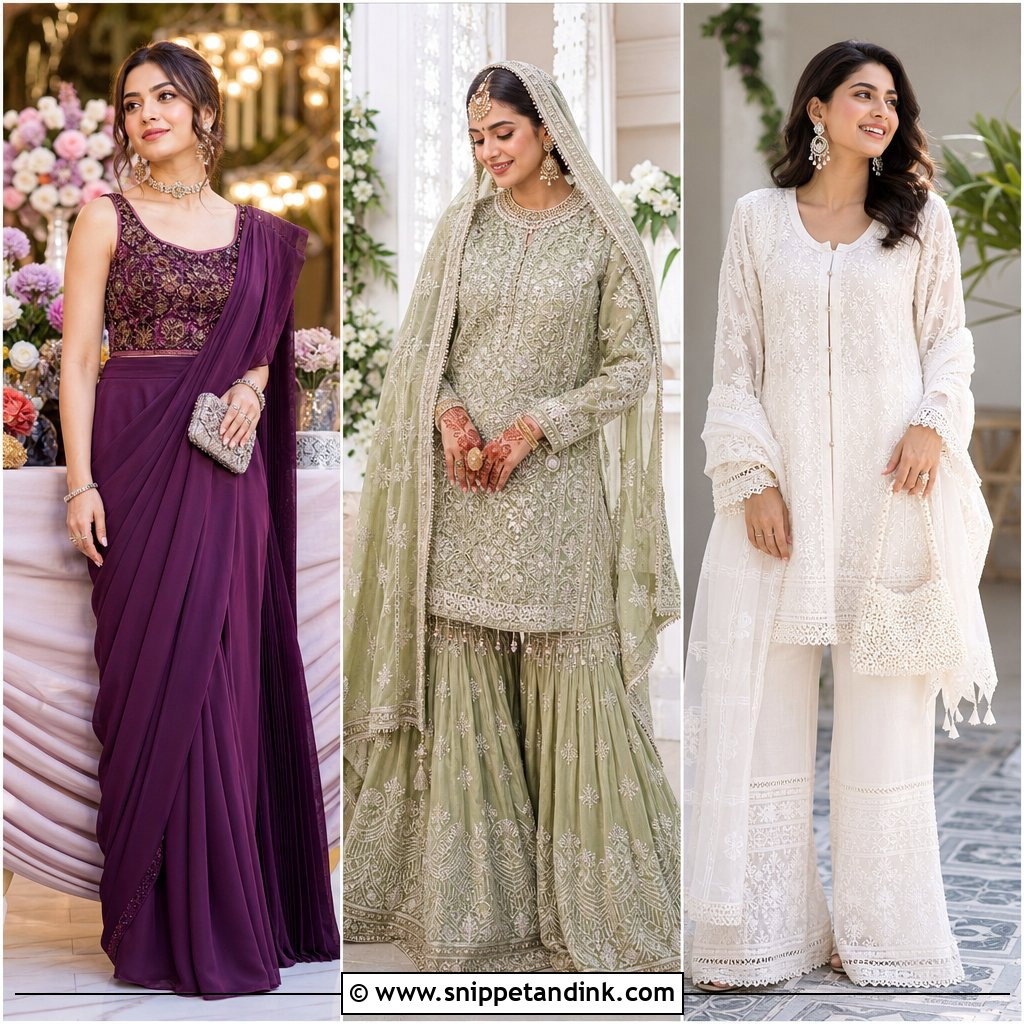
Ivory for a sister at the nikkah needs care. If the bride is in another colour and the family is relaxed about neutrals, a long embroidered shirt with straight or cigarette pants and a sheer organza dupatta is graceful. Keep the embroidery light, and skip anything that could be mistaken for the bride’s outfit at a glance. I always tell sisters to check with the bride first; it’s her call. Pearl earrings, nude heels and a soft clutch suit a daytime ceremony.
7. Pastel Pink Nikkah Sharara Outfit
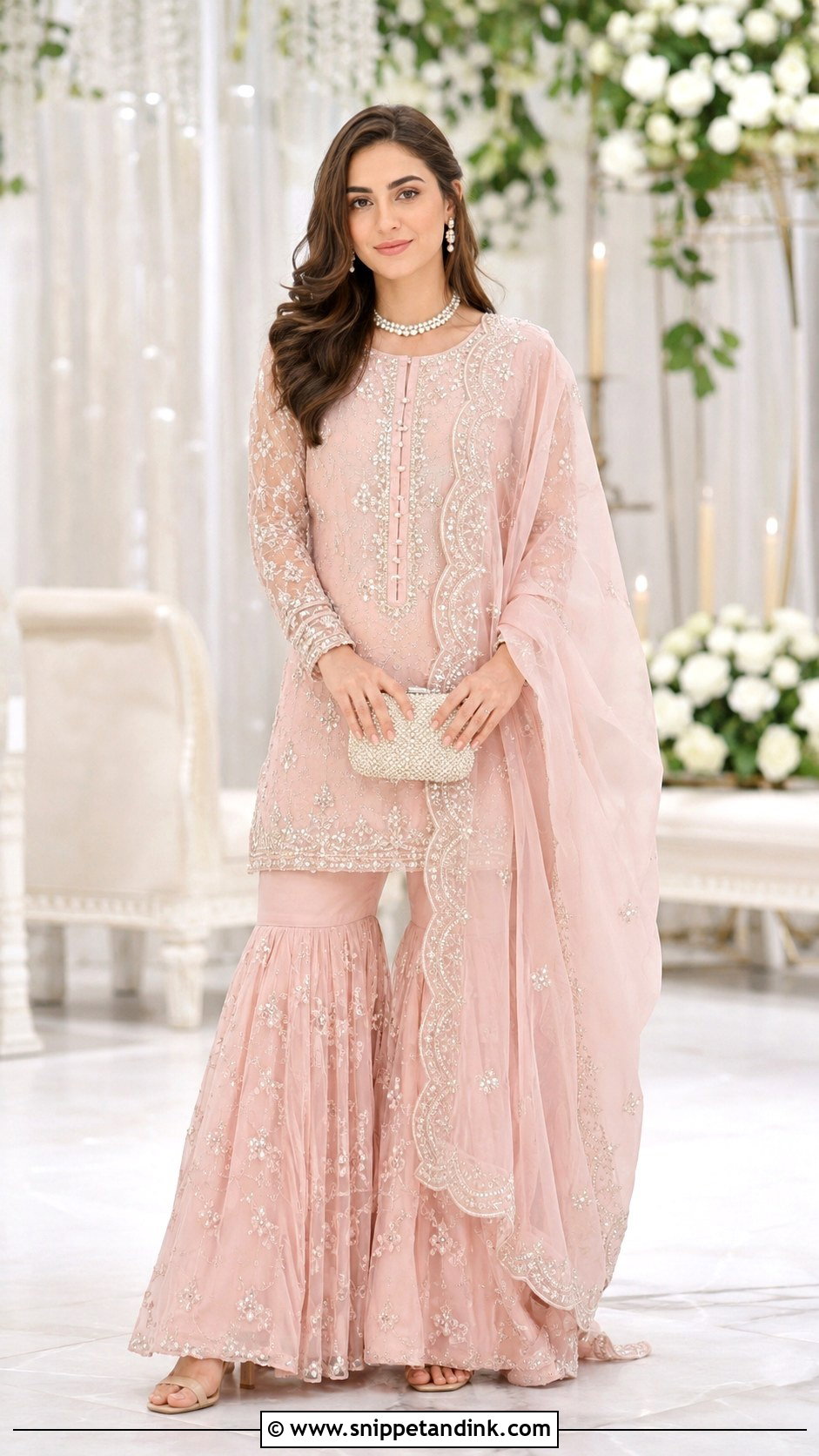
Pastel pink is gentle enough for a family nikkah. A short embroidered shirt with a soft sharara in chiffon, organza or silk, plus a matching or slightly deeper pink dupatta with lace or embroidered edging, looks romantic but restrained. Chiffon moves best but wrinkles quickly when you sit for the ceremony, so I’d steer you toward silk if photos are after the signing. Pearls, soft makeup and nude or silver heels complete it for a home or hall nikkah.
8. Mint Green Nikkah Outfit
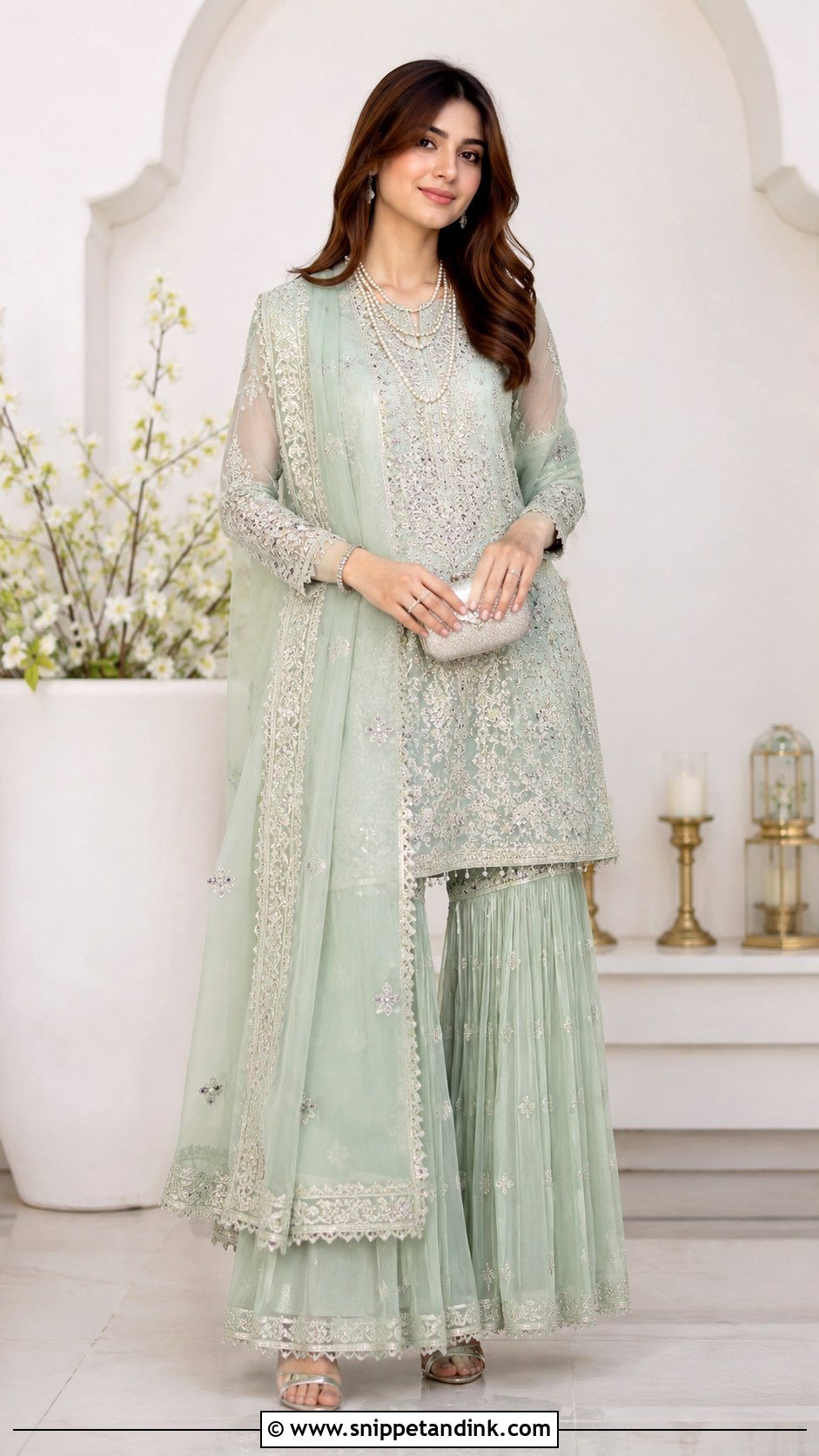
Mint is a fresh change from the usual nikkah pink or beige. A long kameez with delicate threadwork, sequins or pearls over straight pants or a slim gharara, and a matching organza dupatta, keeps it formal and modest. Silver jewellery and pearl accents suit mint better than yellow gold. It’s well suited to daytime ceremonies, intimate mosque nikkahs and family lunches after the signing.
9. Champagne Peplum Gharara Outfit
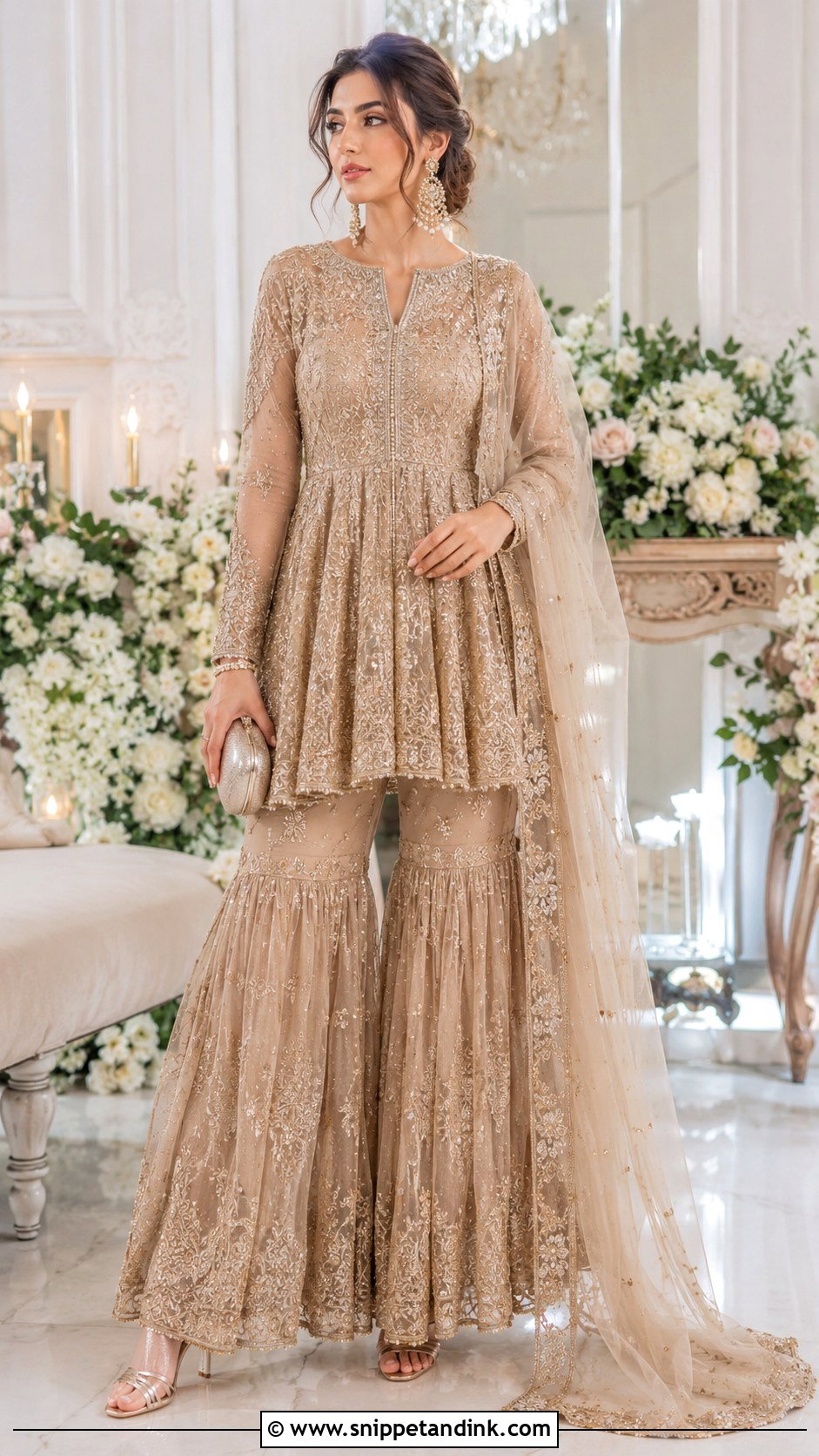
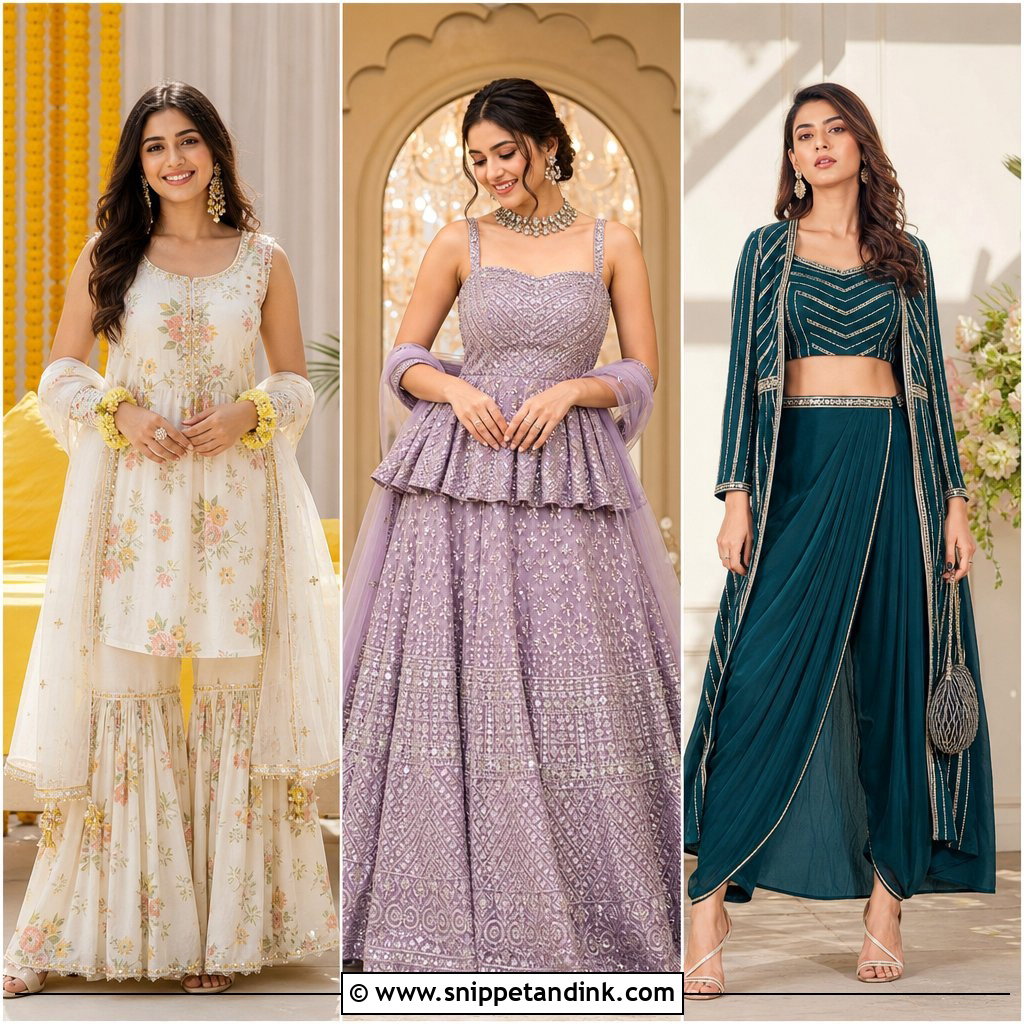
A champagne peplum gharara is dressy without being heavy. The peplum shapes the waist and the gharara adds tradition. Light gold, beige or champagne with fine embroidery, not bridal-weight work, keeps it at sister level. A sheer dupatta with a neat border, kundan earrings, a sleek bun and metallic heels finish it for nikkah, engagement or walima. If the bride is in champagne too, swap to a deeper gold so you don’t blend into her in photos.
10. Lilac Walima Maxi Outfit
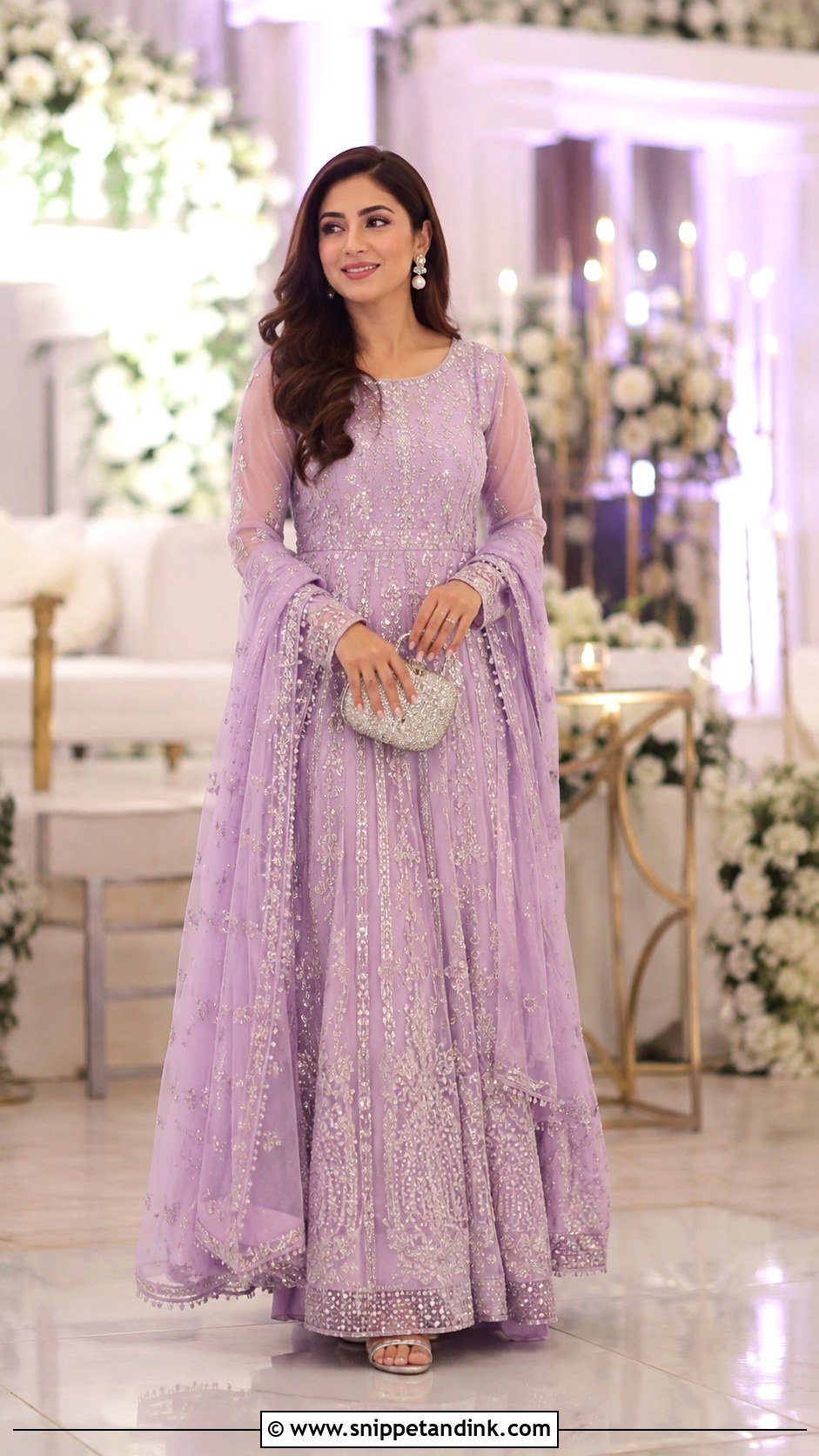
Lilac suits a walima: soft, formal and unlikely to compete with the bride. A floor-length maxi with delicate embroidery, beading or silver work and a lightly draped matching dupatta gives a clean, long line. Silver heels, pearl earrings and a crystal clutch keep the accessories cool-toned. Before you buy, ask what the bride is wearing; if she has chosen lilac, you’ll want sage or blue instead.
11. Powder Blue Walima Gown Outfit
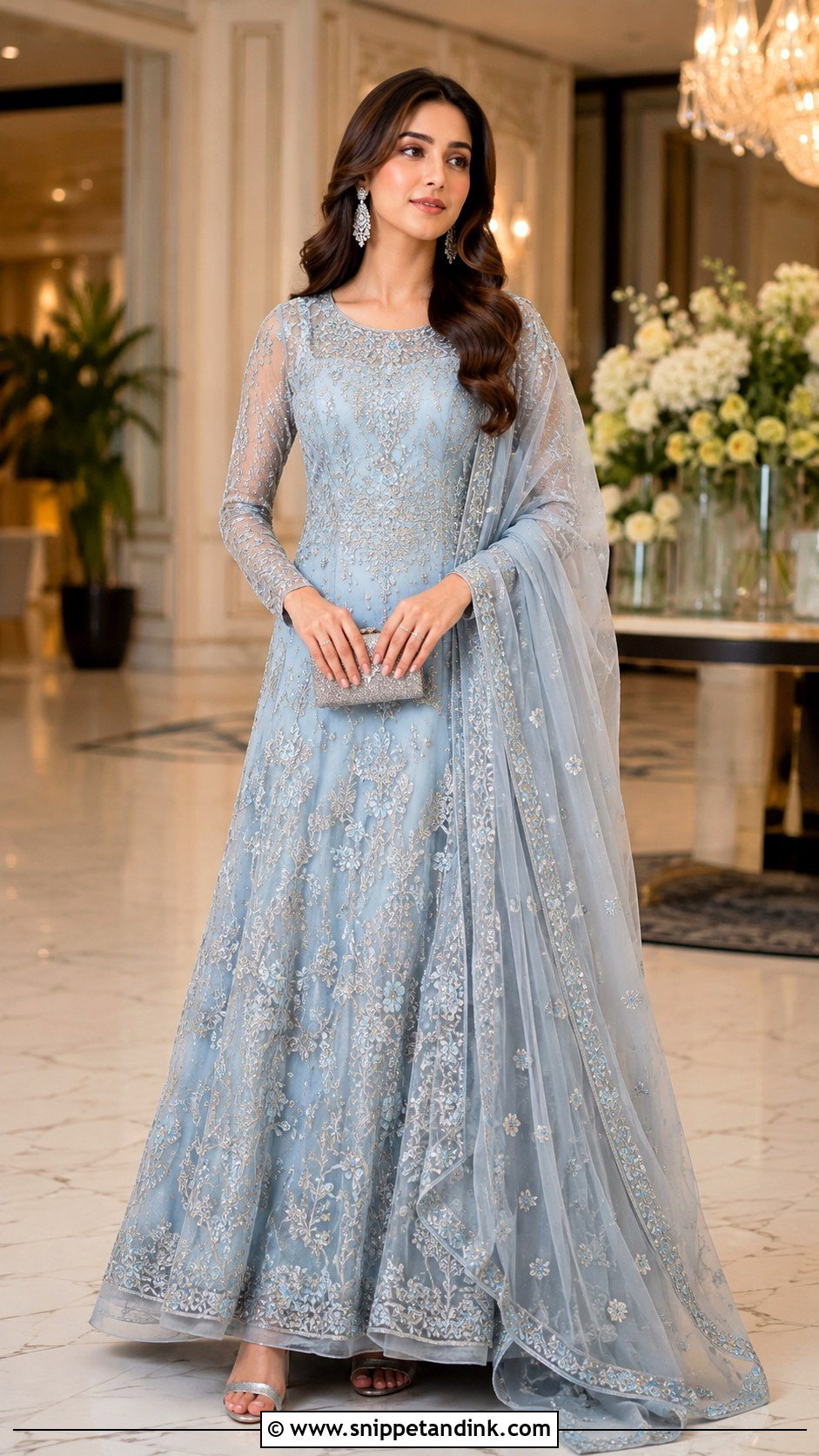
Powder blue gowns give sisters a contemporary walima look. Choose a Pakistani-style gown with embroidery on the bodice, sleeves or hem and add a lightweight dupatta so it stays occasion-appropriate. Silver, pearls or crystals pair naturally. Wear block heels or embellished sandals; sisters stand through most of the walima greeting guests, and stilettos rarely last. It suits reception halls and hotel walimas.
12. Sage Green Walima Sharara Outfit
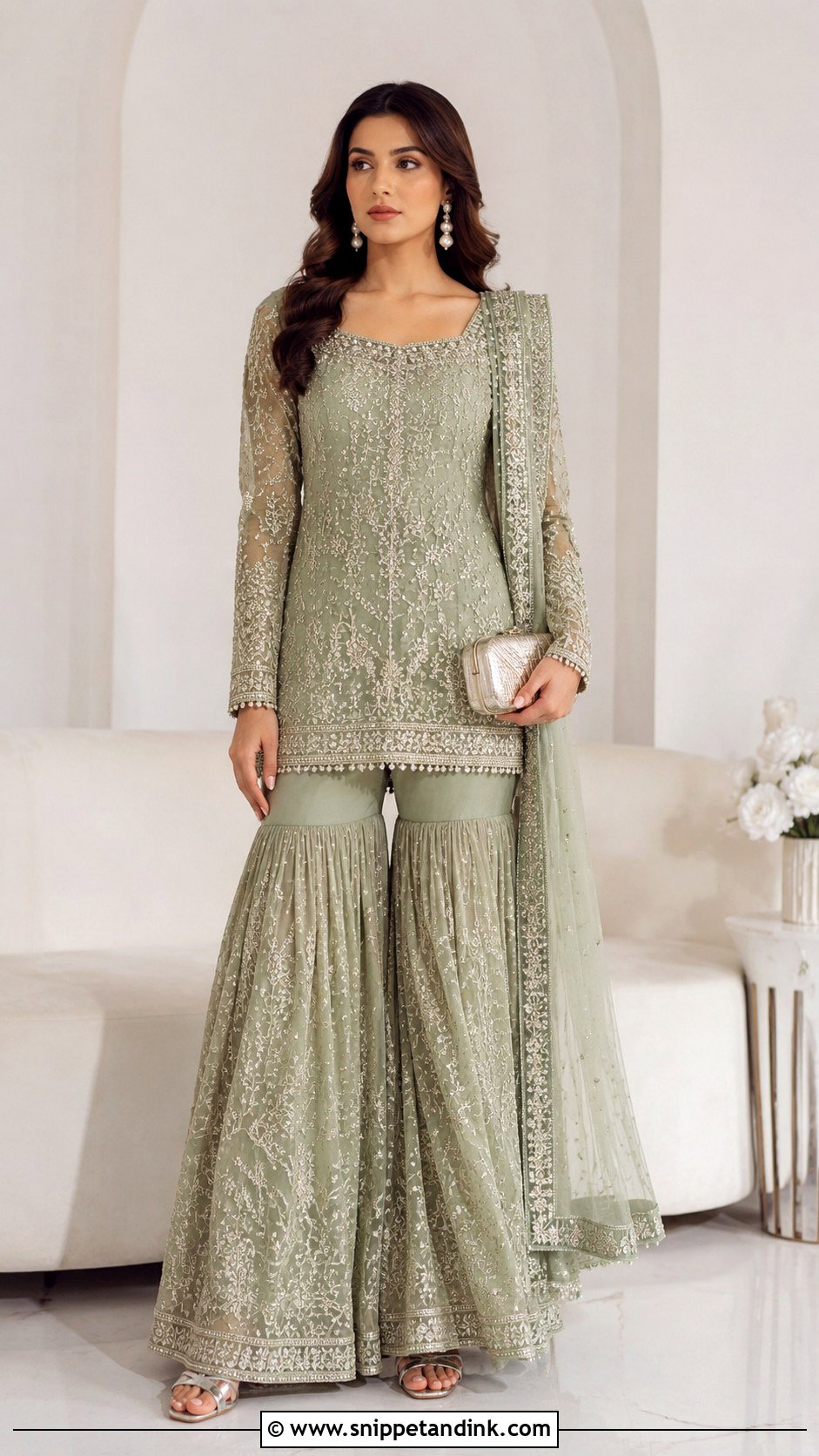
Sage is calm and flattering across ages, which makes it a good walima colour for a family where sisters range widely in age. A sage sharara with a short embroidered shirt and silver, pearl or light gold work, depending on your jewellery, plus a sheer dupatta with scattered embellishment, keeps it light. Metallic heels, soft waves and a small structured bag finish a pastel look that’s less common than pink or blue.
13. Emerald Barat Gharara Outfit
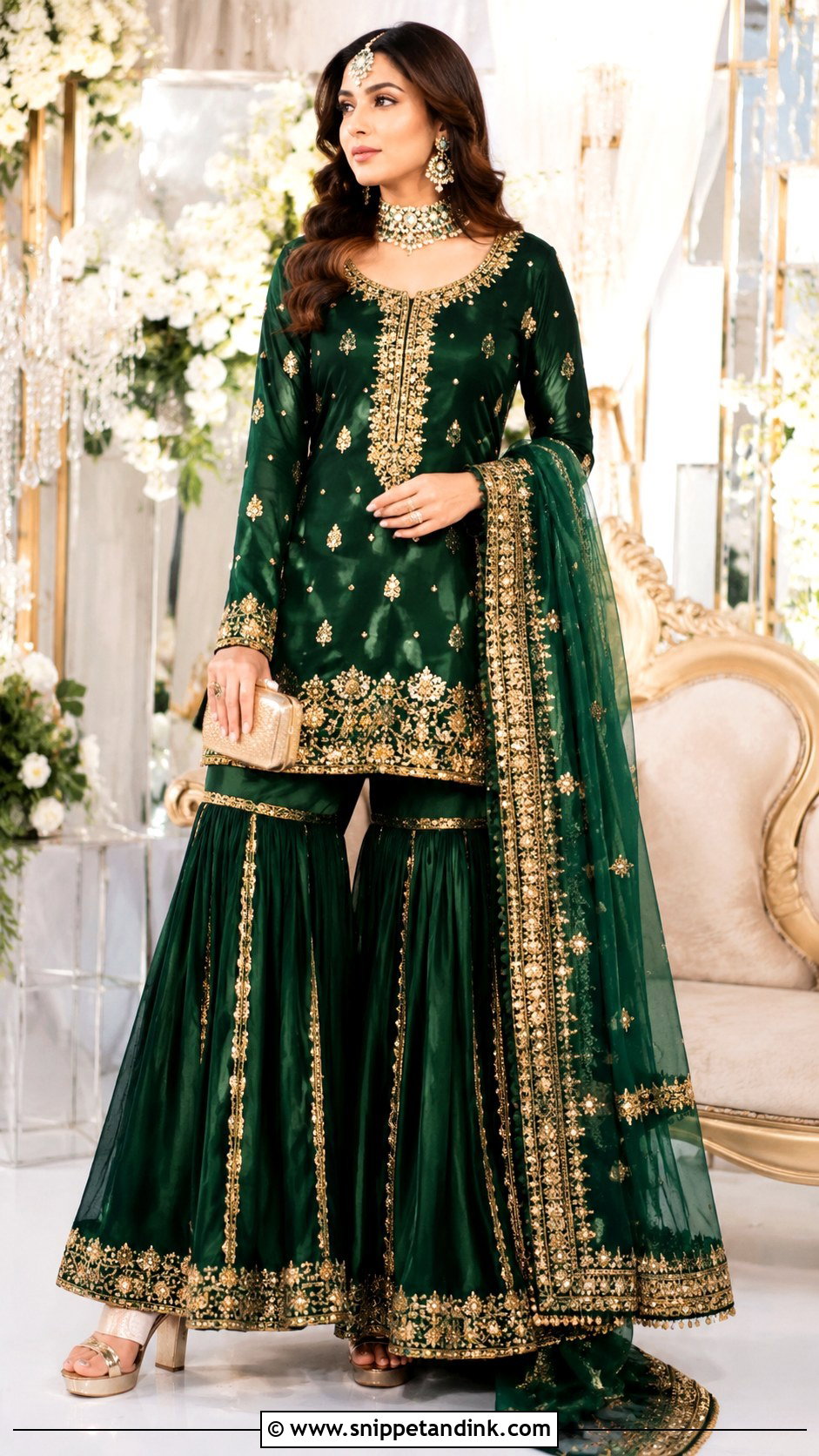
Emerald is the barat colour I recommend most to sisters, because it is rich and formal while staying well clear of bridal red. An emerald gharara outfit with a short shirt in zardozi, dabka or antique gold, a wide gharara and a detailed dupatta is barat-worthy. Gauge the embroidery: heavy enough for the main event, a step below the bride. Gold heels, kundan and a sleek bun keep it polished in a day full of photographs.
14. Royal Blue Barat Lehenga Outfit
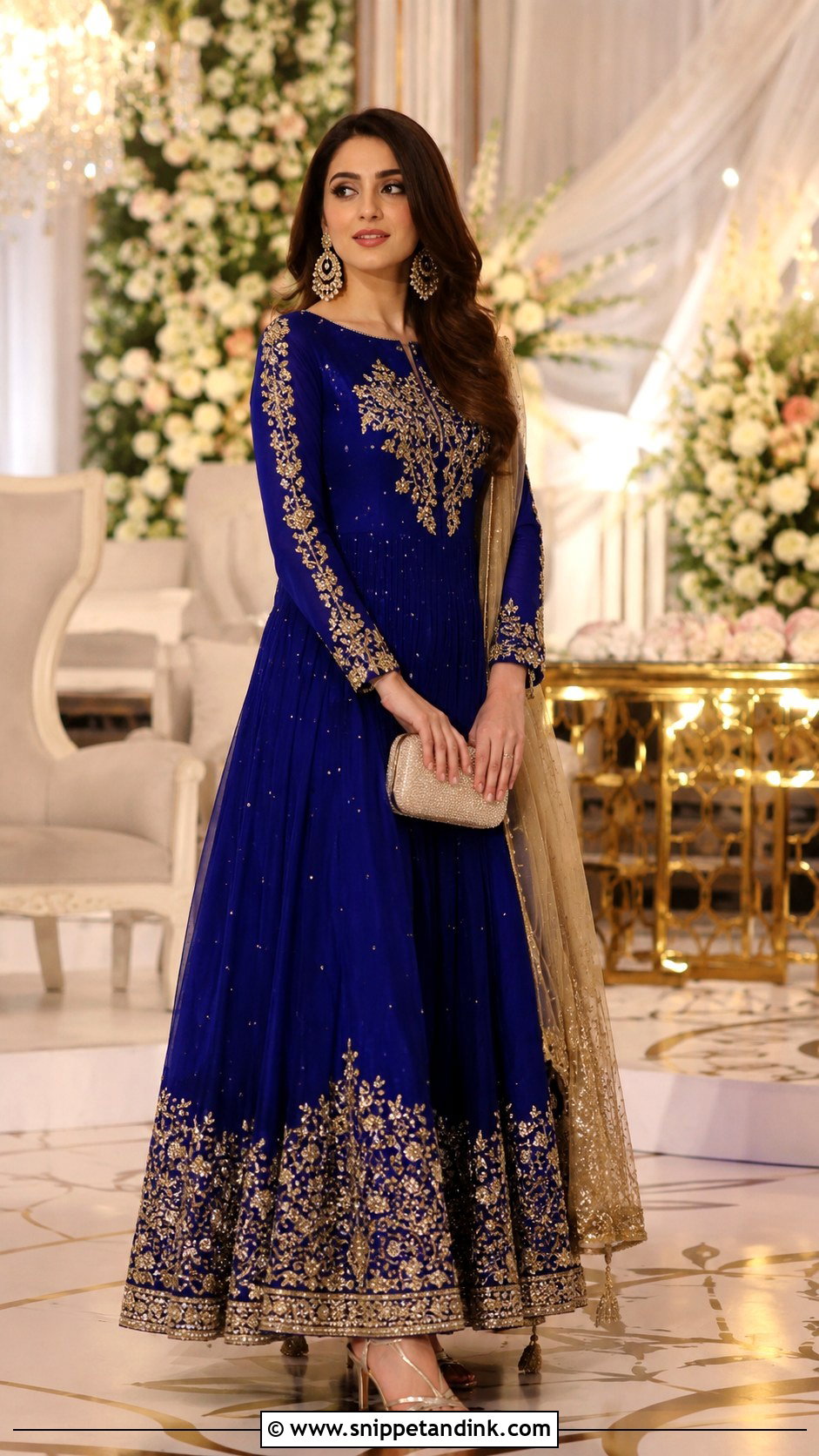
Royal blue is bold and elegant for barat, and it rarely clashes with a bride in red, maroon or other deep bridal shades. A long or short shirt with gold embroidery, a flared lehenga and a matching or gold dupatta over one shoulder give the classic shape. It holds up well under evening and stage lighting. Statement earrings, a bracelet and metallic heels are enough; skip the necklace if the neckline is heavily worked.
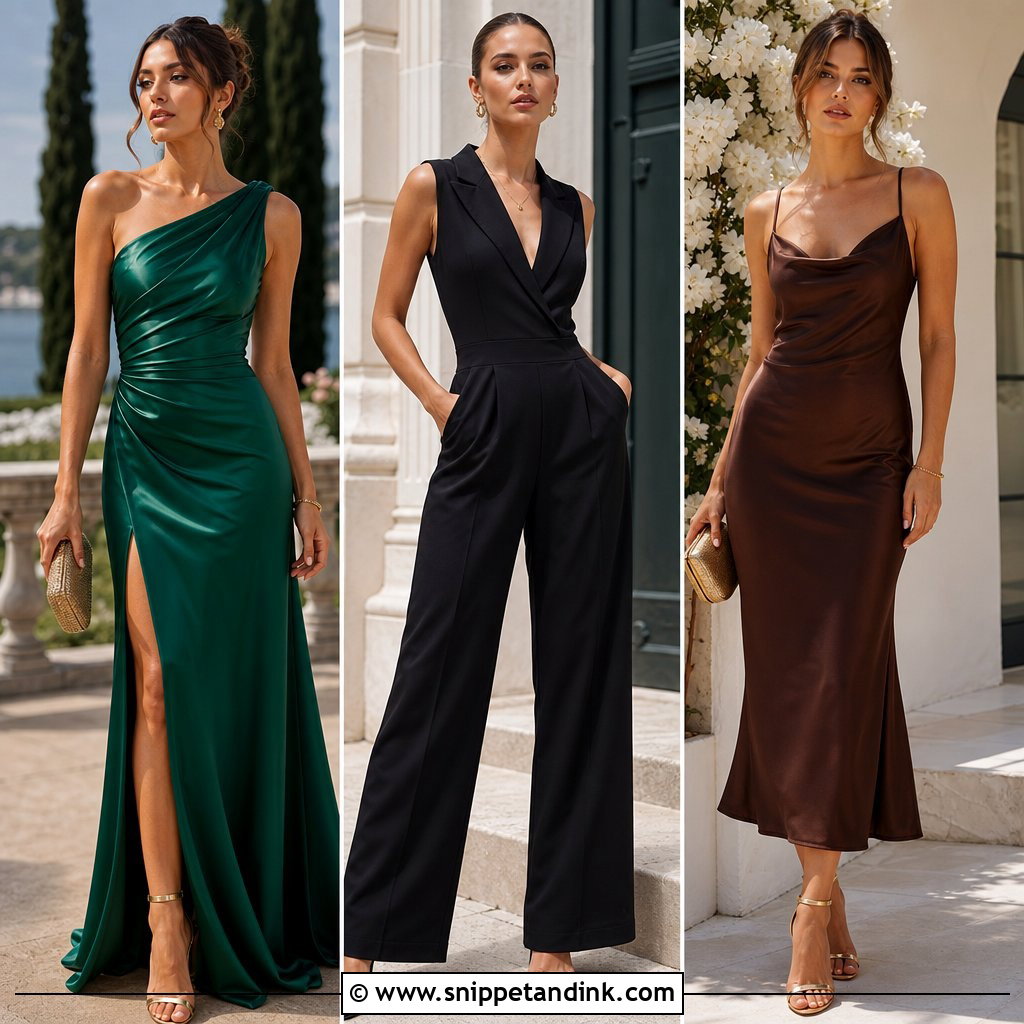
15. Deep Teal Formal Maxi Outfit
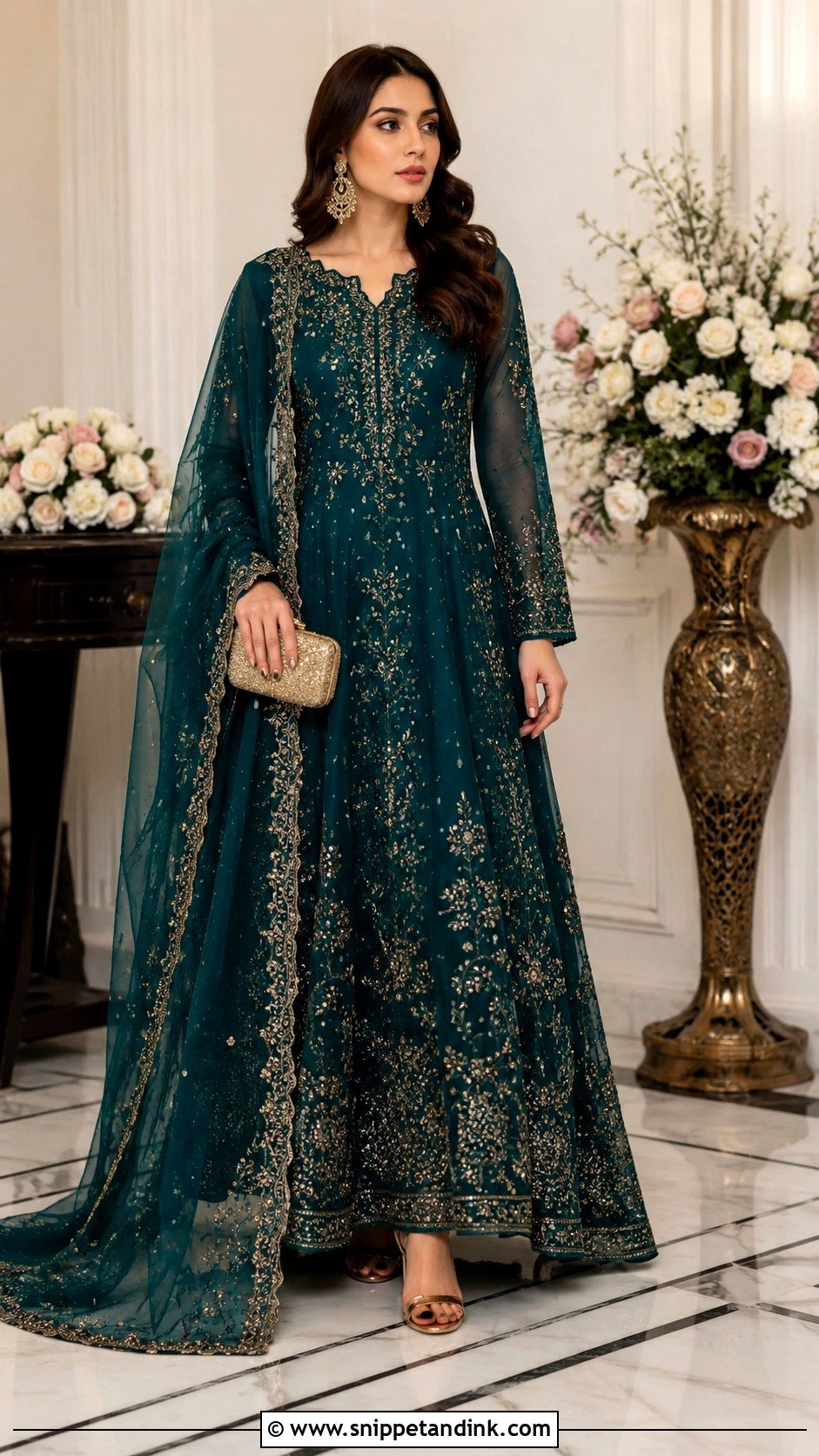
Deep teal sits between green and blue and works for barat or reception. A long embroidered maxi with a fitted bodice and soft flare, plus a sheer dupatta, can carry barat, walima or reception with just a jewellery change: antique gold for warmth, silver for a cooler evening. For a sister attending several functions, that versatility is worth a lot. Choose heels that support long wear and keep the makeup defined.
16. Maroon Velvet Shirt With Gharara Outfit
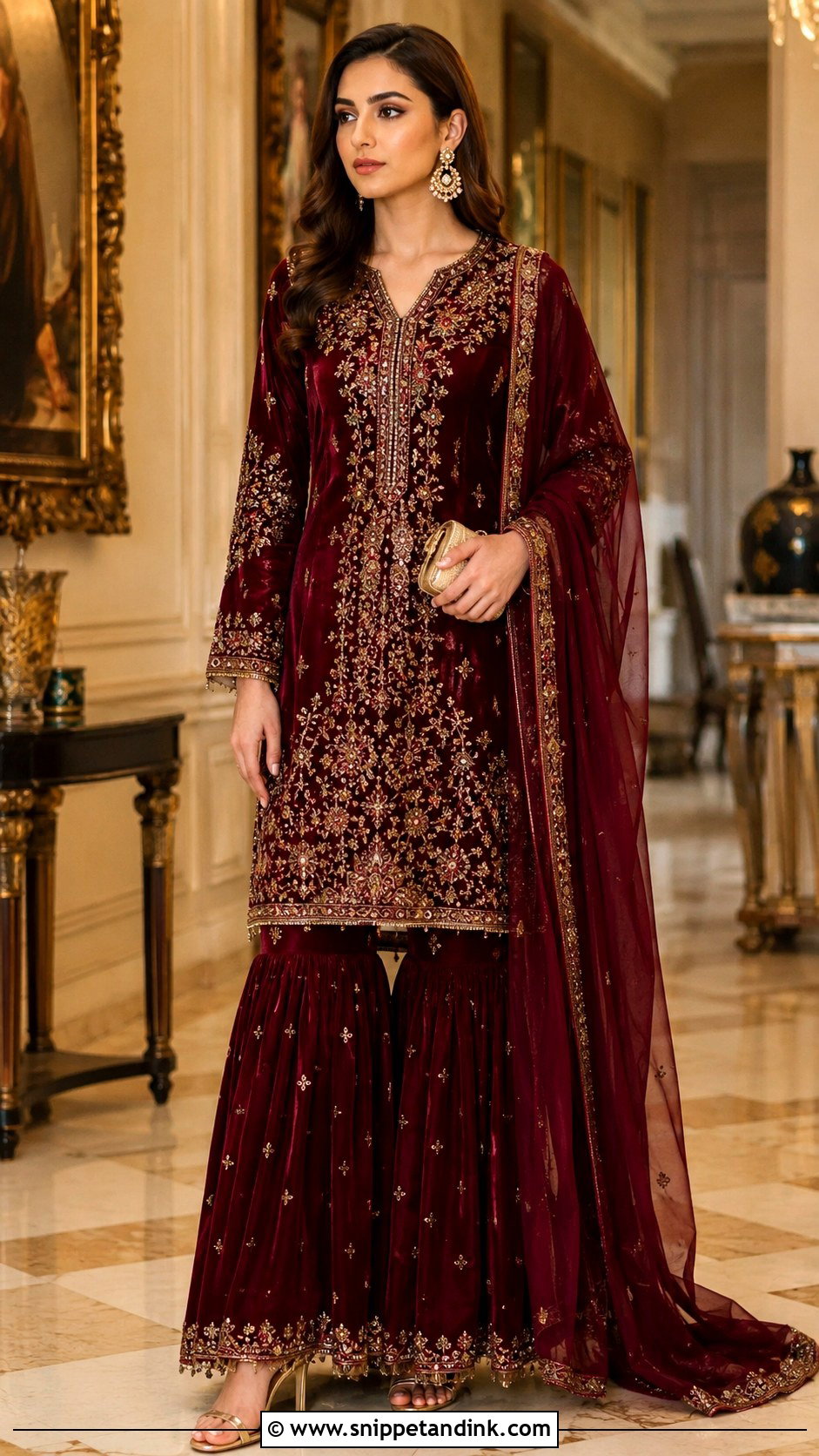
Velvet is warm, which makes a maroon velvet shirt over gharara a good choice for cold-weather barat events. Antique gold embroidery at the neckline, sleeves and borders gives a classic Pakistani formal look, and a chiffon or organza dupatta keeps the weight down. Maroon can read bridal, so I keep the cut simpler and the jewellery lighter for a sister. Gold heels, kundan earrings and a neat clutch finish it.
17. Black Formal Angrakha Outfit
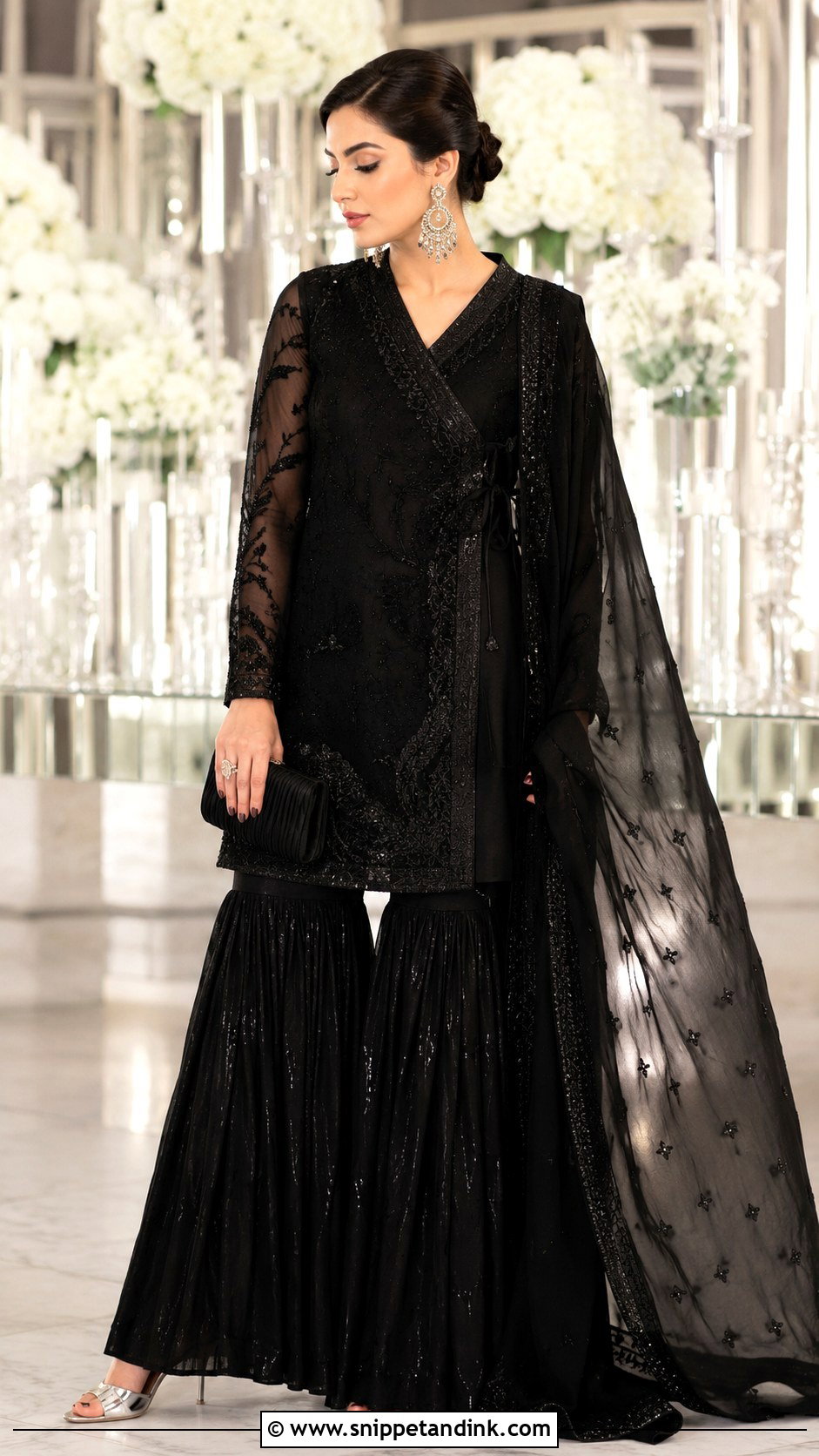
Black works when the dress code allows darker colours, usually for evening receptions, qawwali nights or formal family events. An angrakha with gold, silver or multicolour embroidery, over straight pants, gharara or sharara, plus a sheer dupatta, keeps it festive. Plain black looks like office wear in photos, so the embroidery has to do real work. Statement earrings, heels and a metallic clutch give it a mature, confident finish.
18. Gold Tissue Saree Outfit
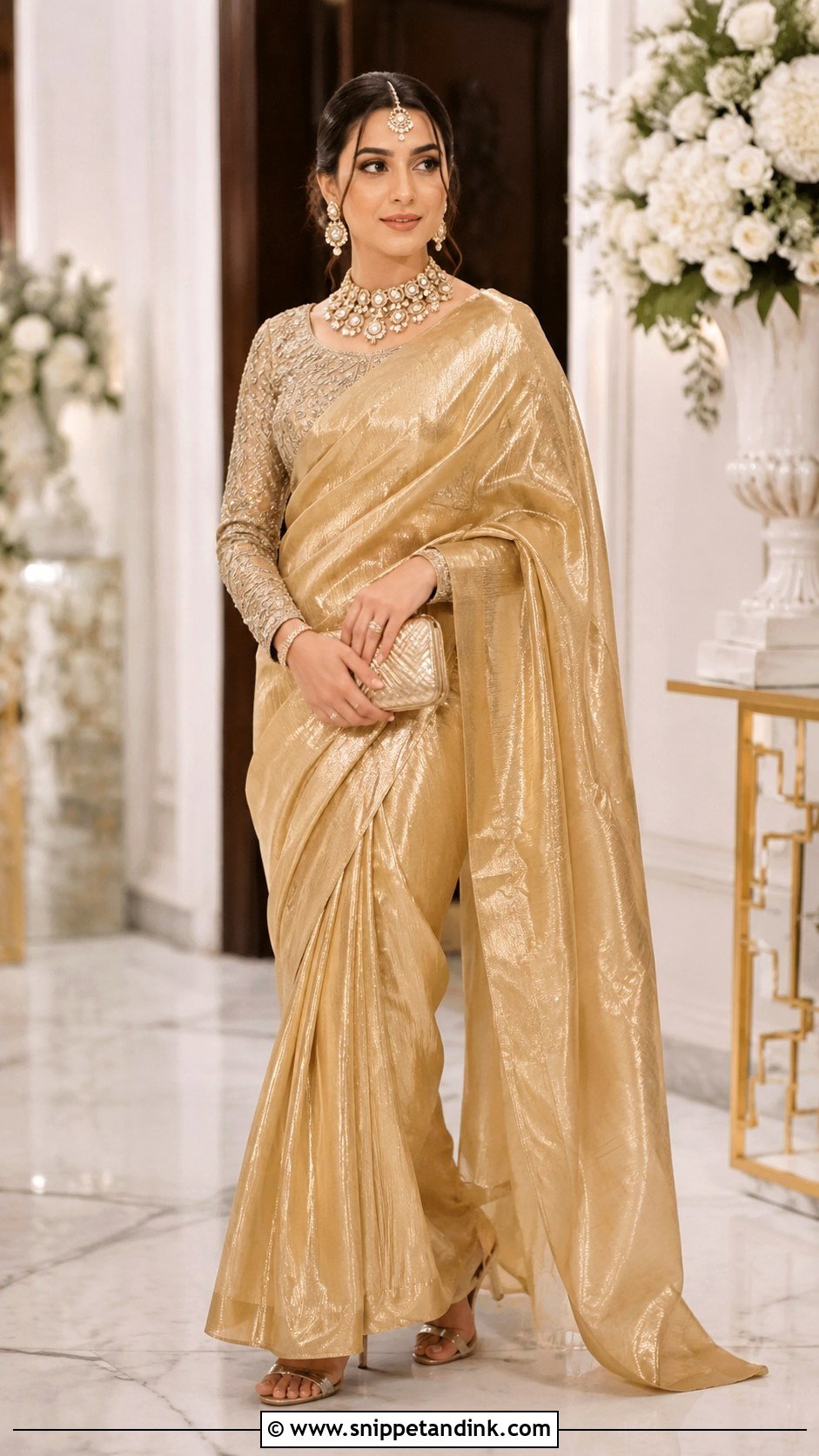
A gold tissue saree is a change from lehengas and ghararas. Lightweight tissue or silk with a tasteful border, an embroidered blouse with comfortable coverage, kundan jewellery and metallic heels make a complete formal look for barat, walima or engagement. Keep the styling balanced; full gold with heavy jewellery can tip toward bridal. If you’re not used to sarees, pin the pallu at the shoulder and the pleats at the waist so you can carry trays and hug relatives without the drape shifting.
19. Organza Saree With Embroidered Blouse Outfit
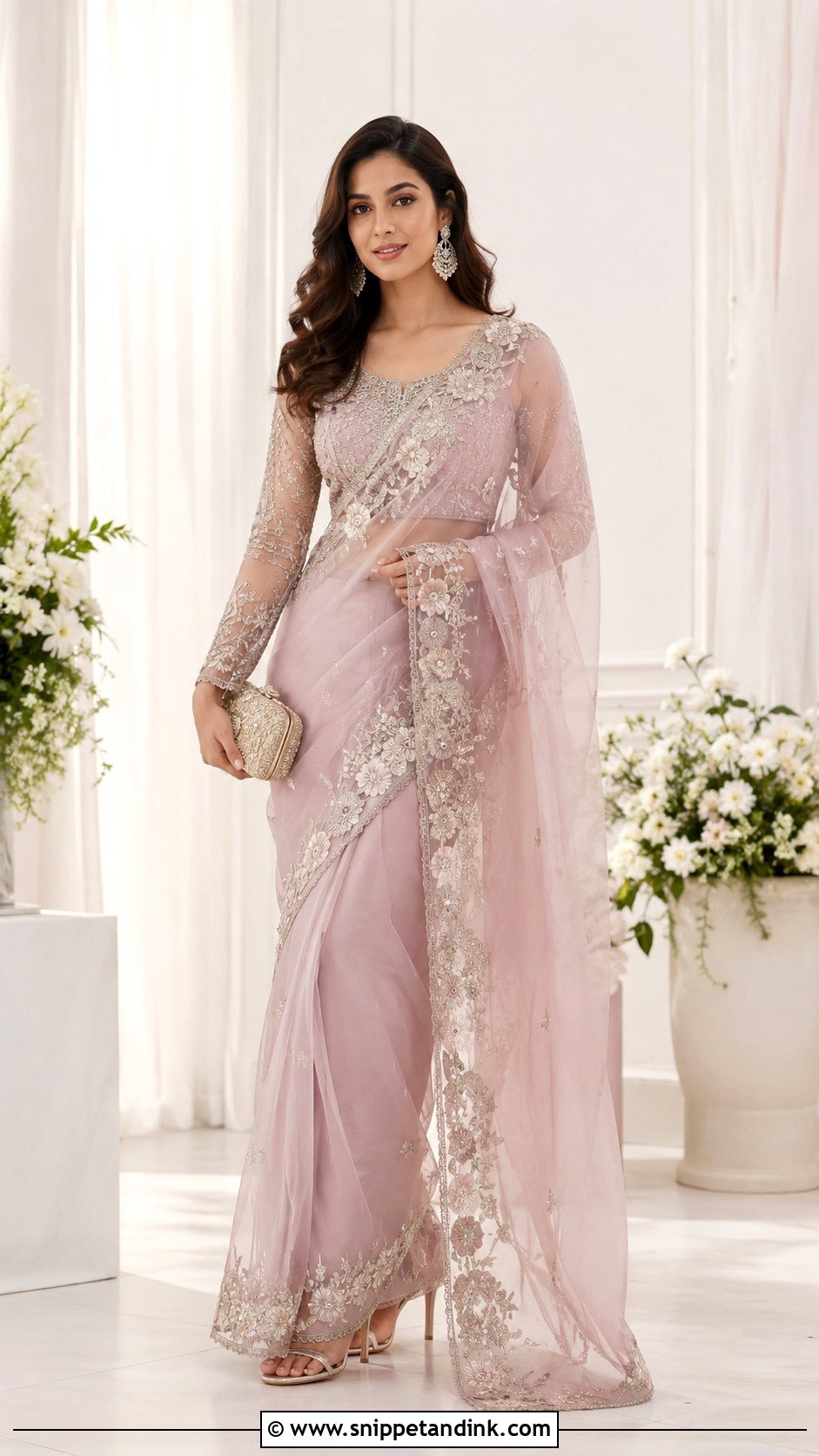
An organza saree with an embroidered blouse is light and modern for walima or reception. Blush, mint, lavender or silver organza looks formal without much weight. Pearl, thread or sequin details on the blouse add interest. Organza is sheer, so the petticoat has to match cleanly in colour; a slightly off shade shows through clearly in flash photos. Heels, delicate earrings and a clutch finish it.
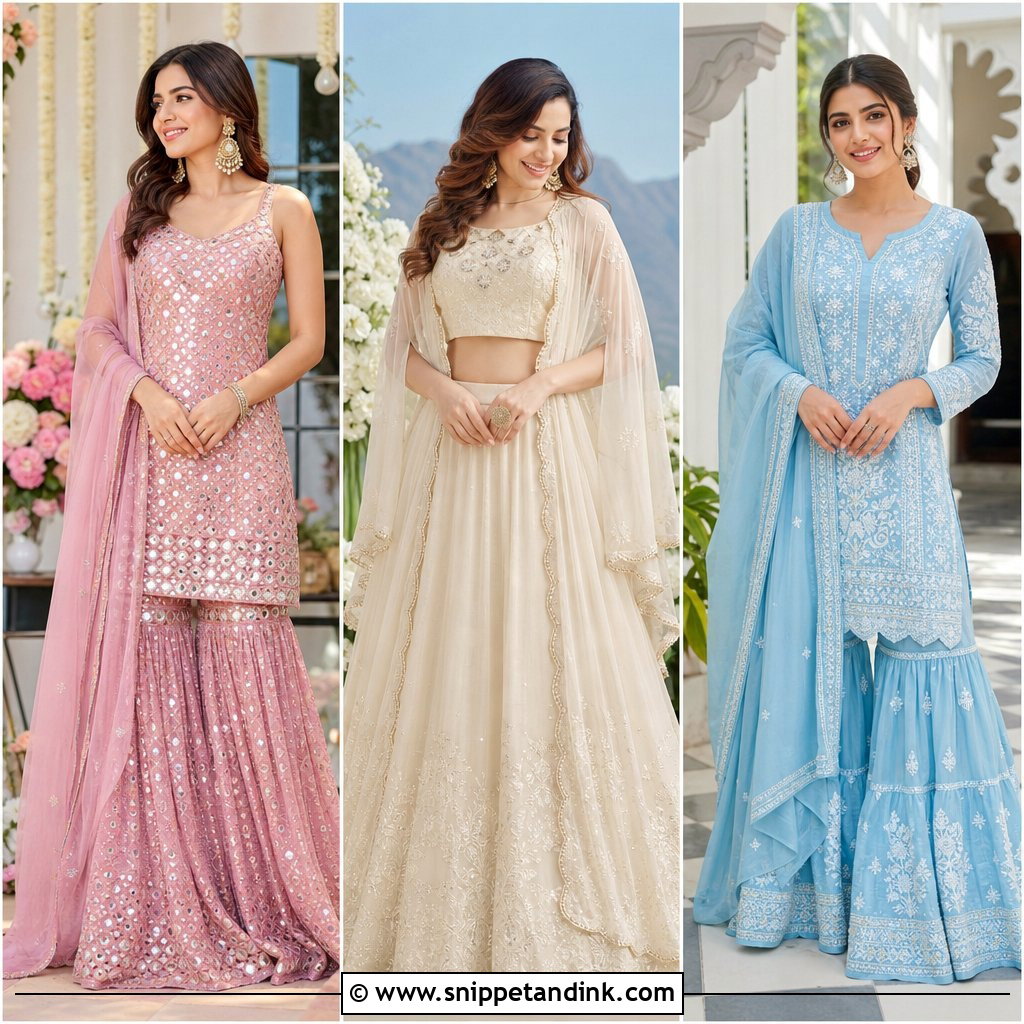
20. Banarsi Lehenga With Short Kurti Outfit
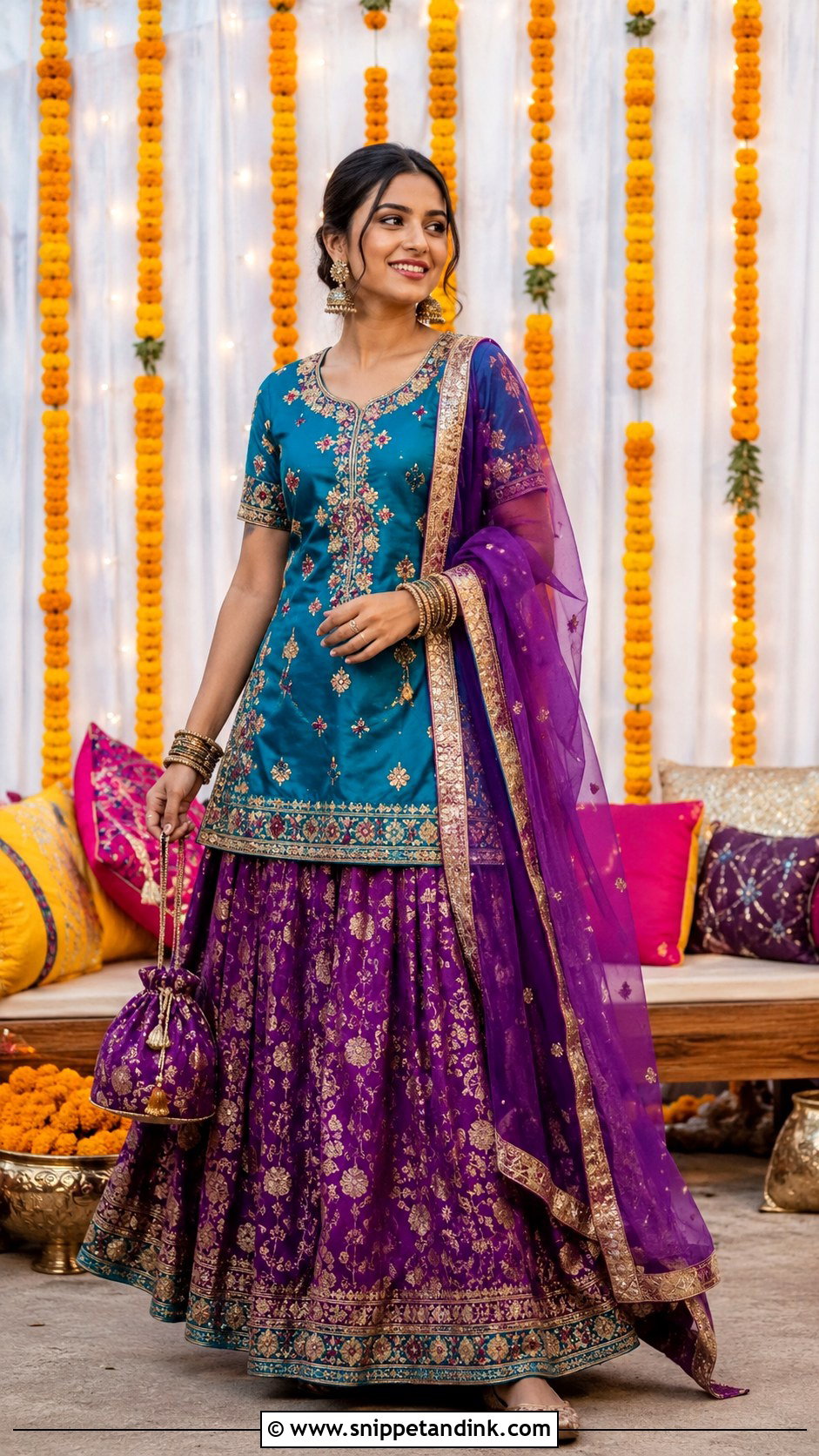
Banarsi brocade already looks formal, so a Banarsi lehenga needs very little embellishment. In emerald, magenta, teal or rust, with a short kurti that’s embroidered but not heavy and a plain or lightly bordered dupatta, it feels youthful and traditional. Jhumkas, bangles, khussas and a potli bag complete it for mehndi, dholki or smaller events. Banarsi weave is heavier than it looks, so a lighter kurti keeps the overall outfit comfortable.
21. Mirror Work Lehenga Outfit
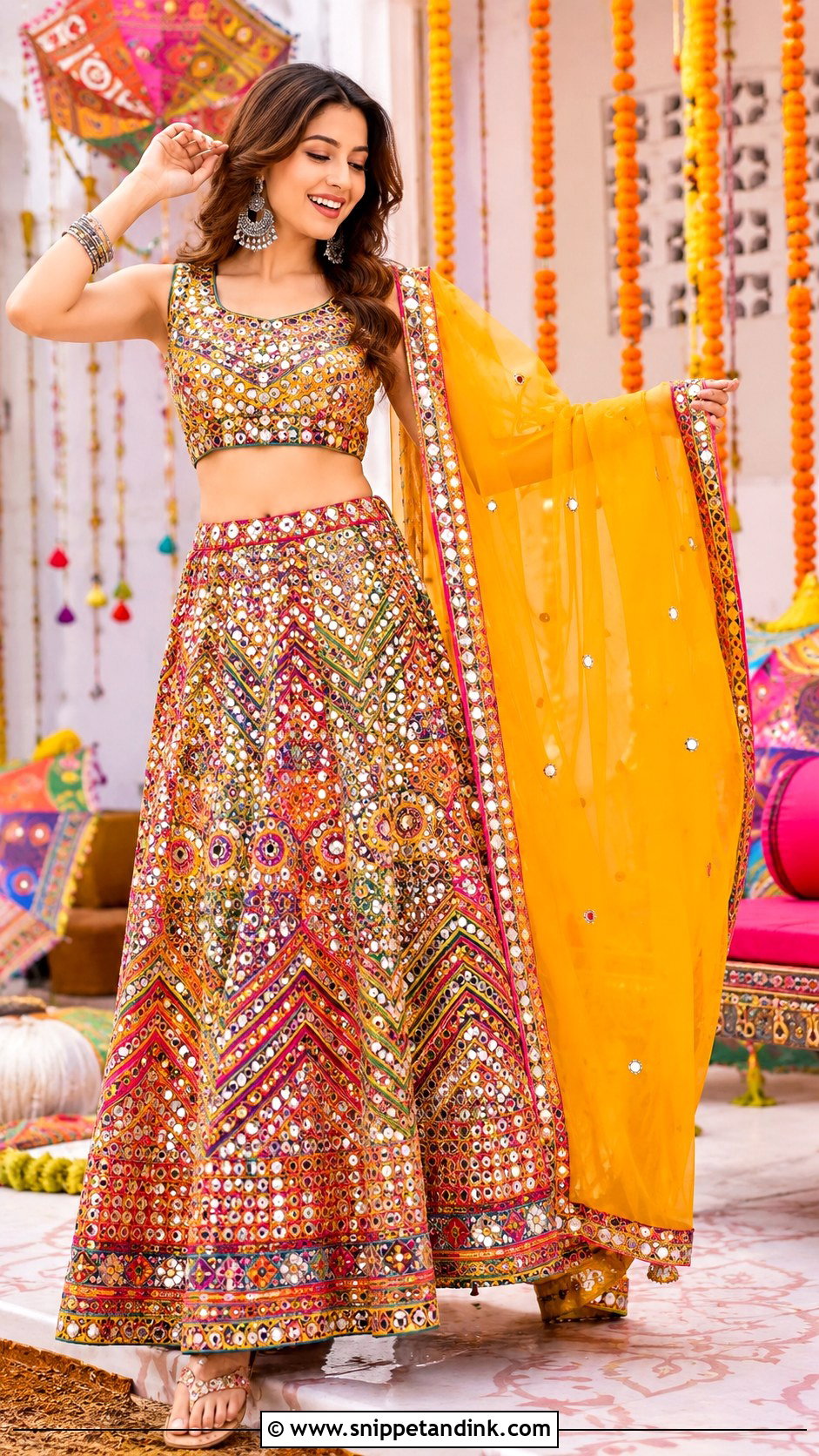
Mirror work is made for mehndi lights and dancing. A colourful lehenga in yellow, green, coral, turquoise or pink with a matching or contrast choli and a lightweight dupatta stays easy to manage. Oxidised jewellery suits mirror work better than shiny gold, and comfortable sandals or khussas keep you on your feet. Sisters who want playfulness without heavy zardozi will find it ideal; check the inside seams for scratchy mirror edges before the night.
22. White And Gold Nikkah Outfit
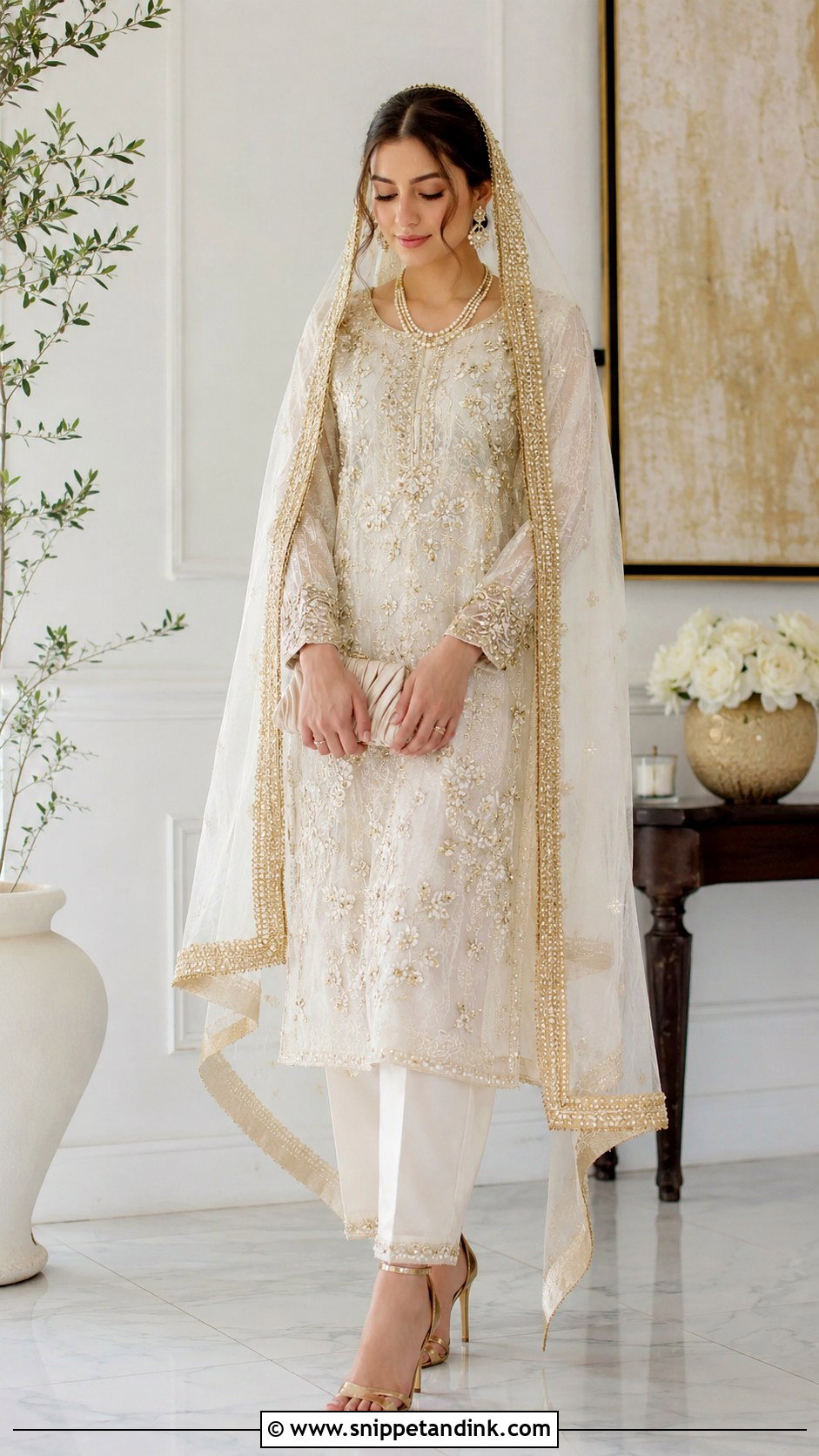
White and gold can work for a sister at the nikkah if it clearly doesn’t match the bride’s look. A modest long shirt with gold embroidery, straight pants or a soft gharara and a dupatta with a delicate border, instead of a heavily worked one, keeps it a step back. Pearls, small kundan earrings and gold heels suit a daytime ceremony. Skip head jewellery entirely; a tikka on white and gold is the fastest way to look like a second bride.
23. Peach Sharara Outfit
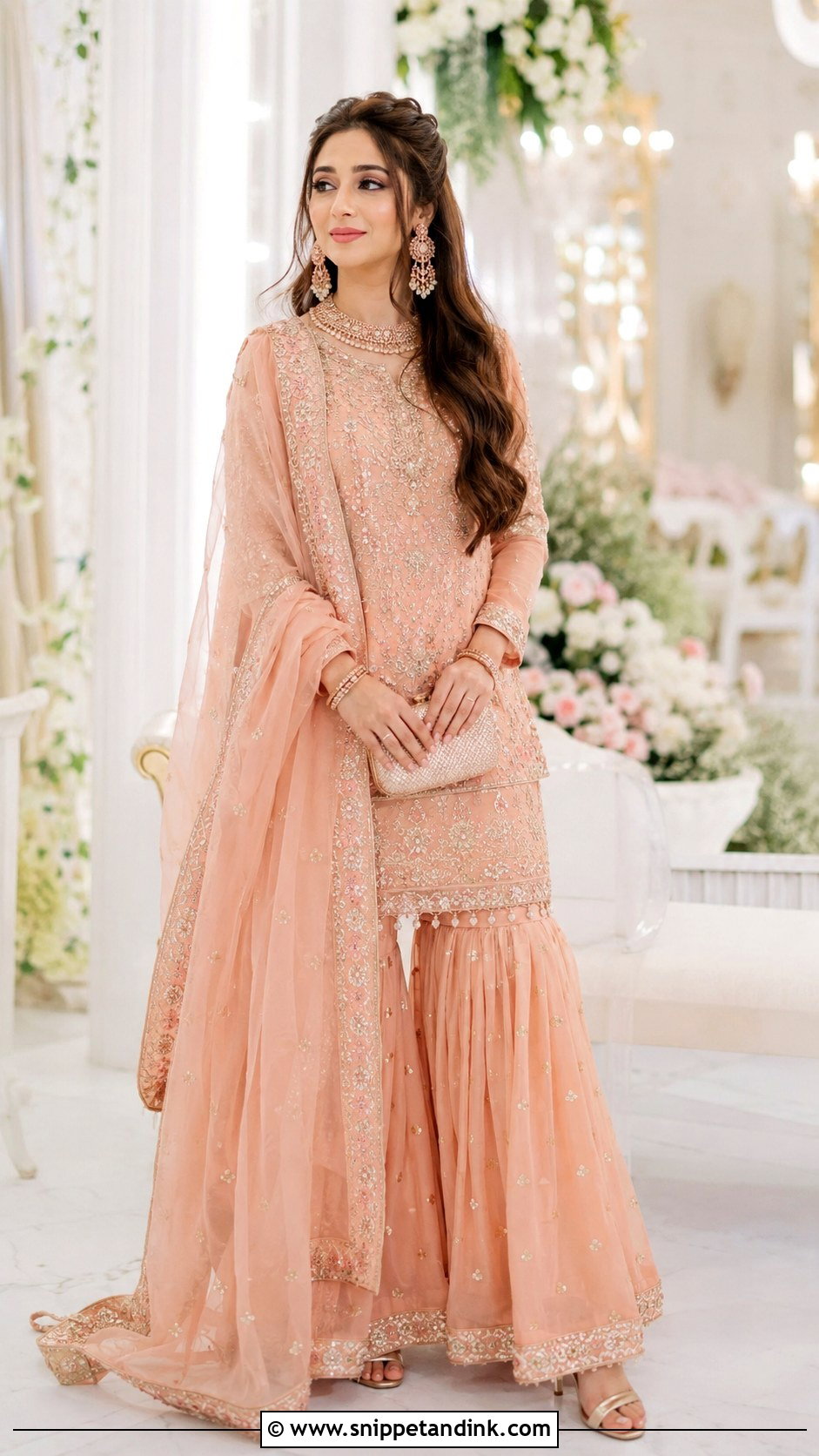
Peach flatters many skin tones and works in daylight and evening, which makes a peach sharara easy for nikkah, dholki or walima. A short or mid-length shirt with threadwork, pearls or light sequins, a flowing sharara and a peach organza dupatta with a thin border look cohesive. Gold or rose gold accessories suit it. It’s festive without being loud, and the separates rewear well after the wedding.
24. Rust Long Shirt With Trousers Outfit
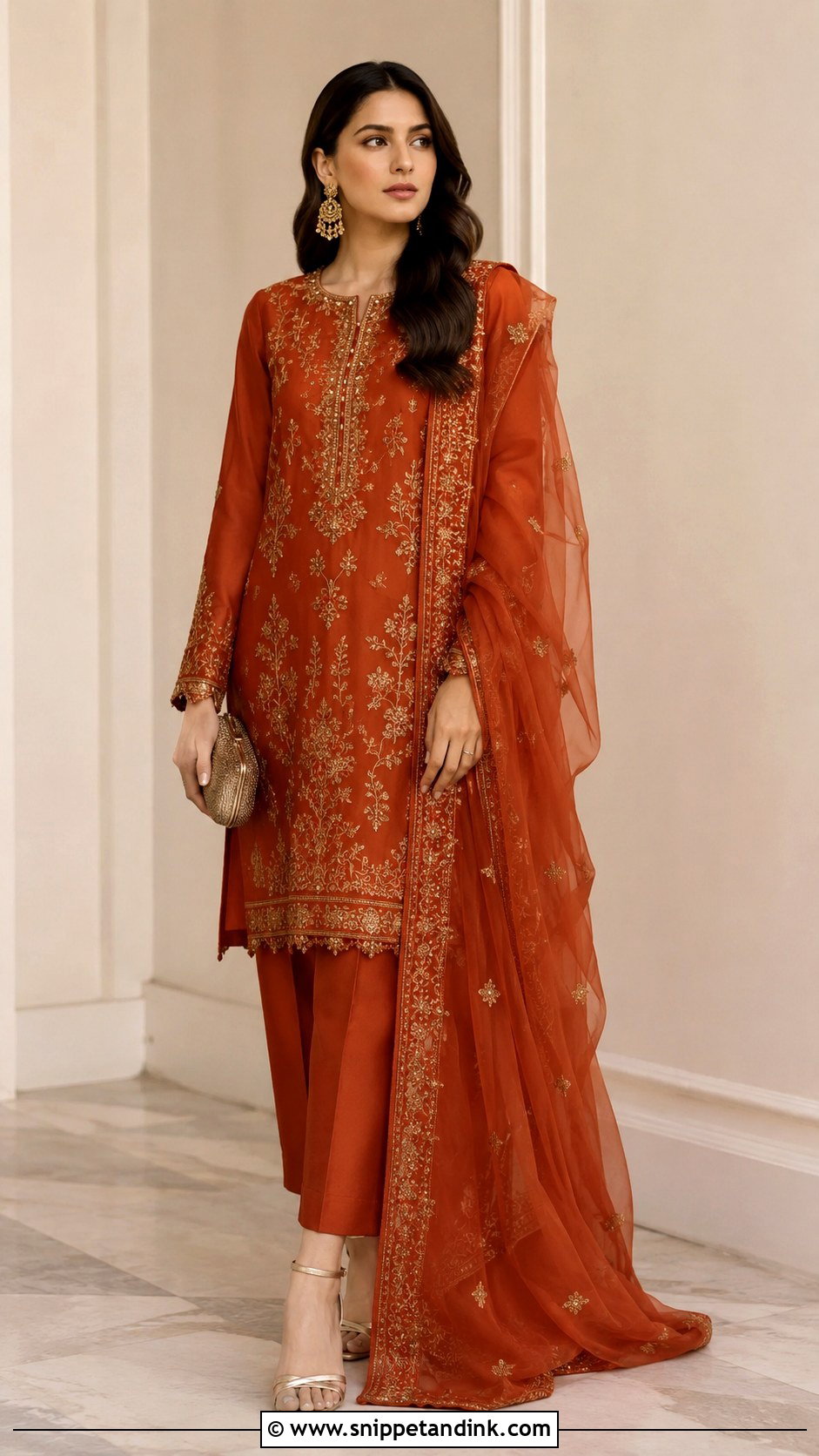
Not every sister wants volume. A rust long shirt with straight trousers, in silk, raw silk or chiffon, with embroidery at the neckline, sleeves and hem, and a matching dupatta, is clean and modest. Gold jewellery brings out the warmth of rust. It suits fall and winter weddings and evening mehndis, and it’s the outfit I suggest to sisters who’ll be running between the kitchen, the stage and the car all night.

25. Magenta Gharara Outfit
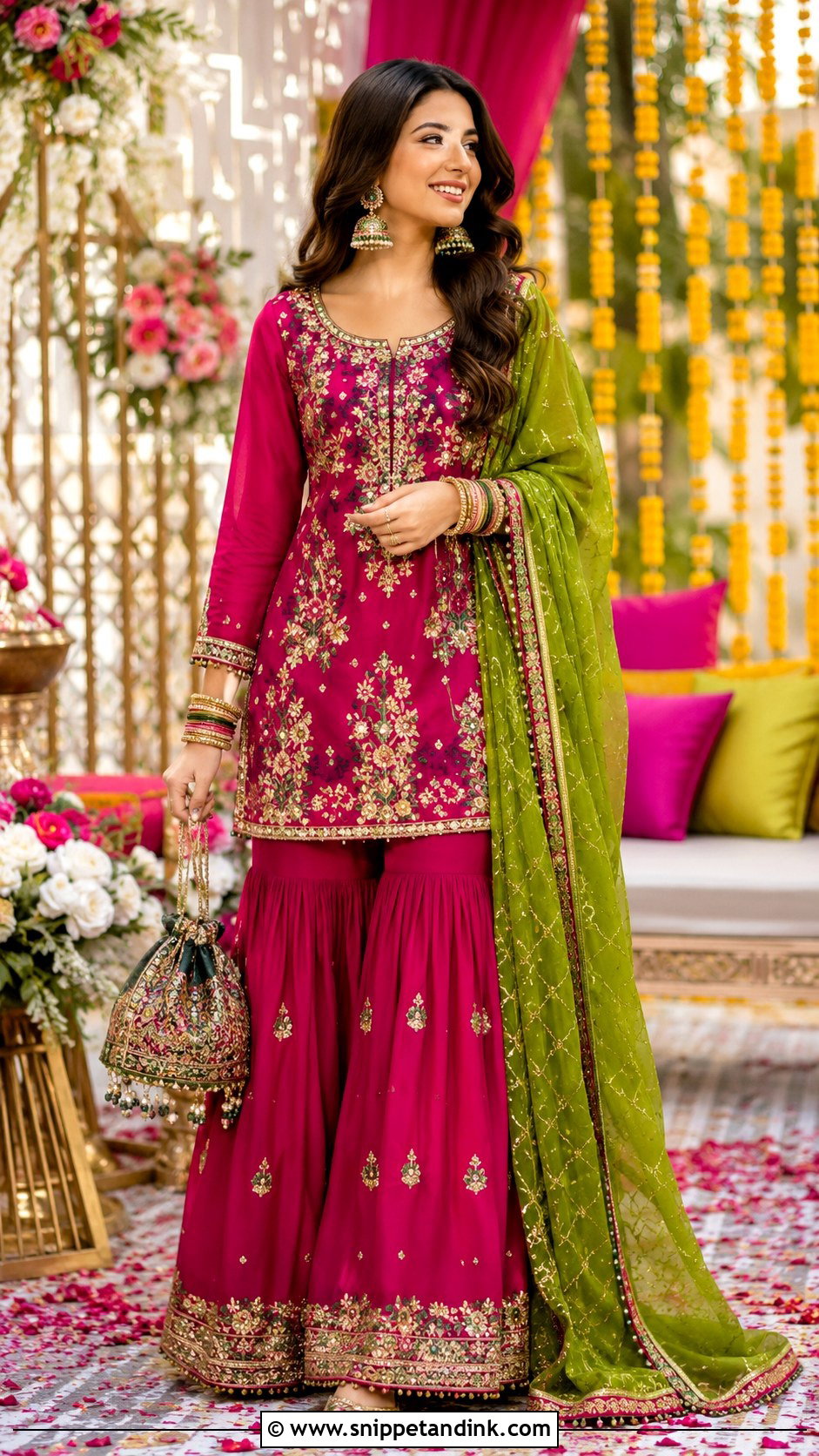
Magenta brings energy to mehndi, sangeet and close family events. A short shirt with gold or multicolour embroidery and a wide gharara gives the classic festive shape; a green, orange or yellow dupatta makes it playful, while a matching one keeps it formal. It stands out without leaning toward bridal red, though very blue-toned magenta can look harsh next to a bride in orange-red, so check her colour first. Jhumkas, bangles and khussas finish it.
26. Lavender Peplum Sharara Outfit
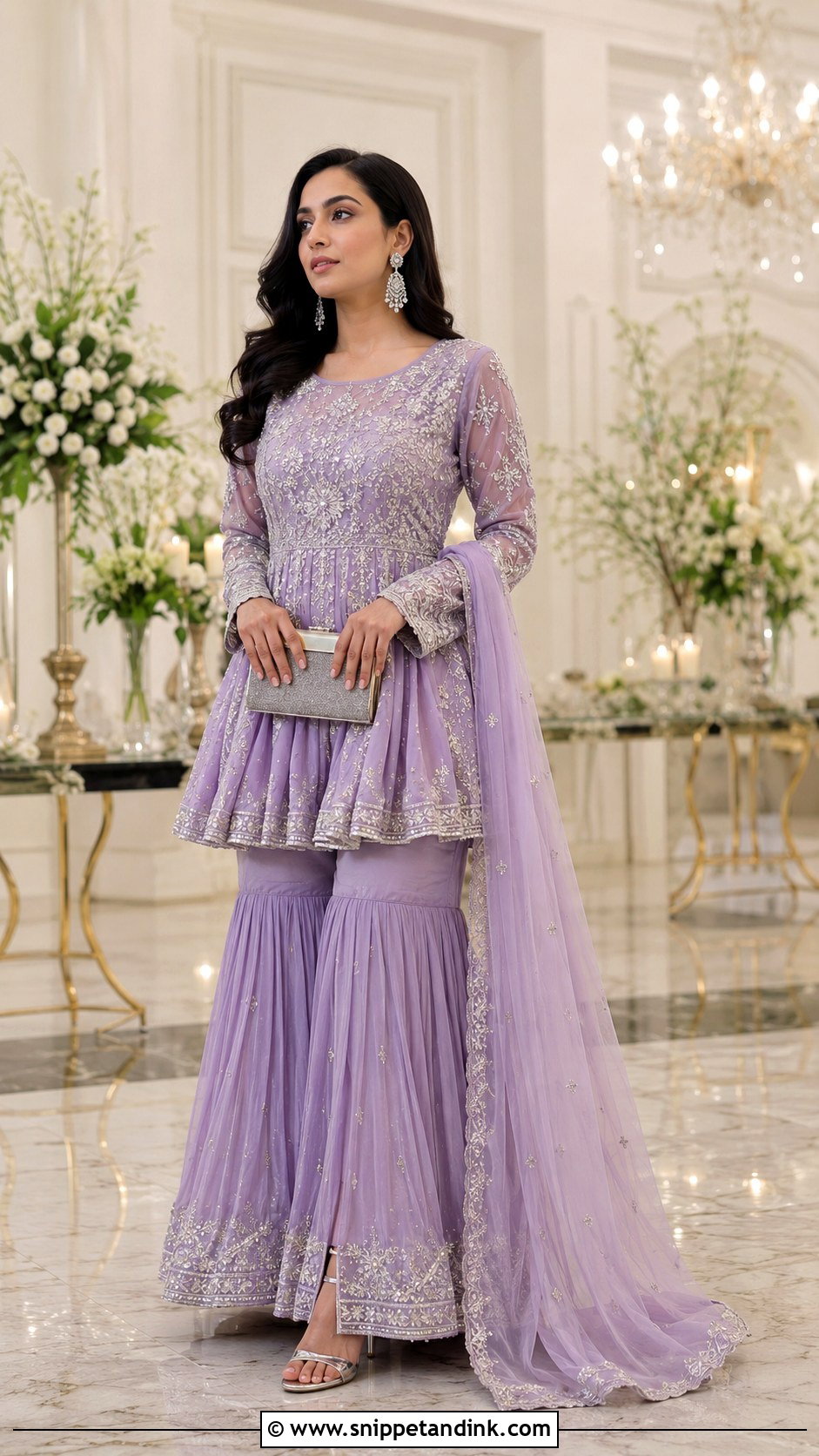
A lavender peplum sharara outfit is modern and flattering for engagement, nikkah or walima. The peplum defines the waist and the sharara adds graceful volume. Silver, pearl or tone-on-tone embroidery and a matching organza dupatta keep it light. Crystal earrings, silver heels and a sleek clutch finish a pastel look that holds up well under indoor lighting, a fresh alternative to pink and mint.
27. Red Accent Lehenga Outfit
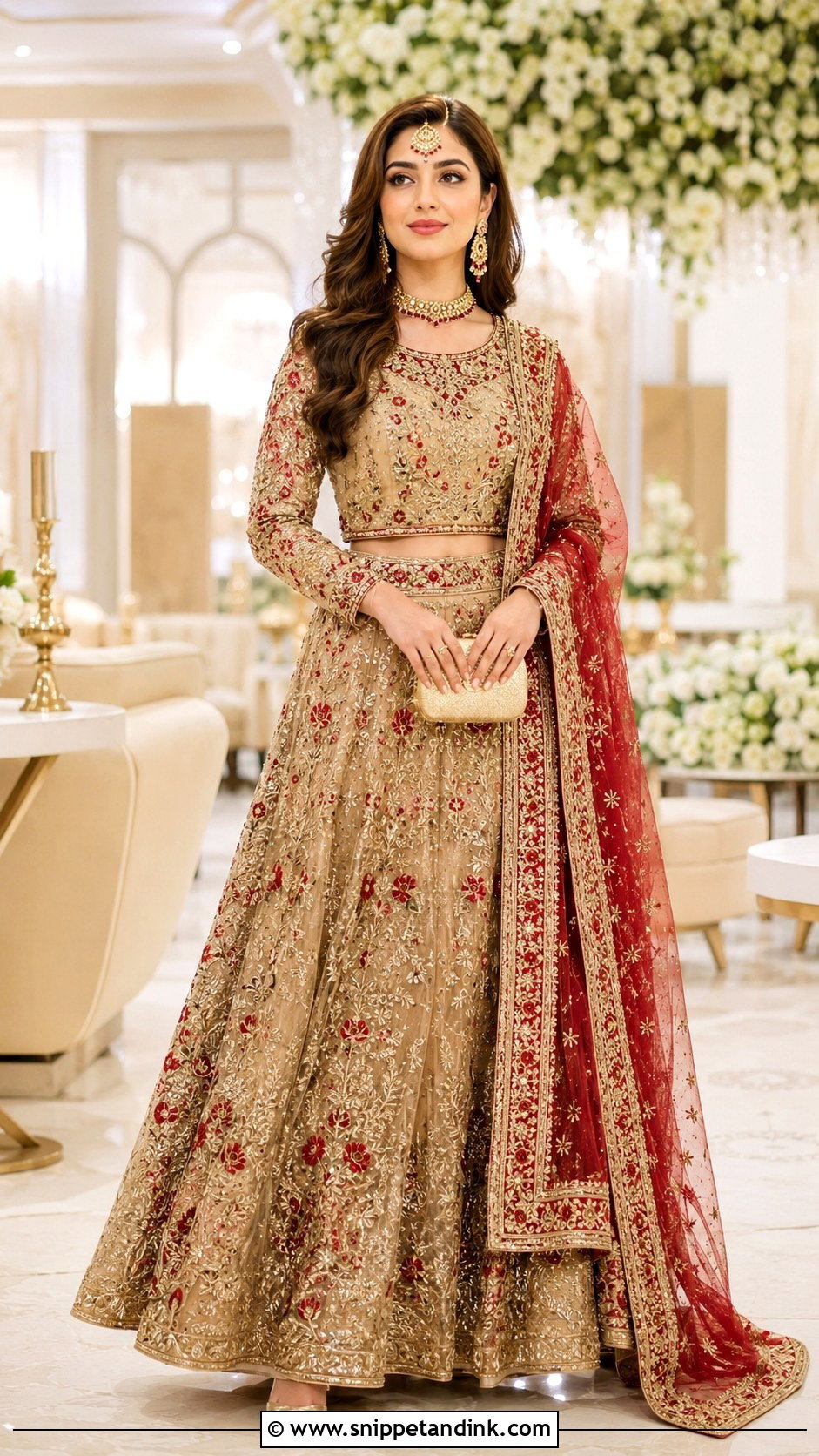
Sisters often want to wear red at the barat because it’s the family colour, and red accents are the respectful way to do it. Choose a lehenga in beige, gold, green or pink with red embroidery, borders or dupatta details. Keep the outfit lighter than bridal wear and avoid head-to-toe red. Gold jewellery, heels and a neat clutch finish a look that joins the colour story without competing with the bride’s main shade.
28. Cape Dupatta Lehenga Outfit
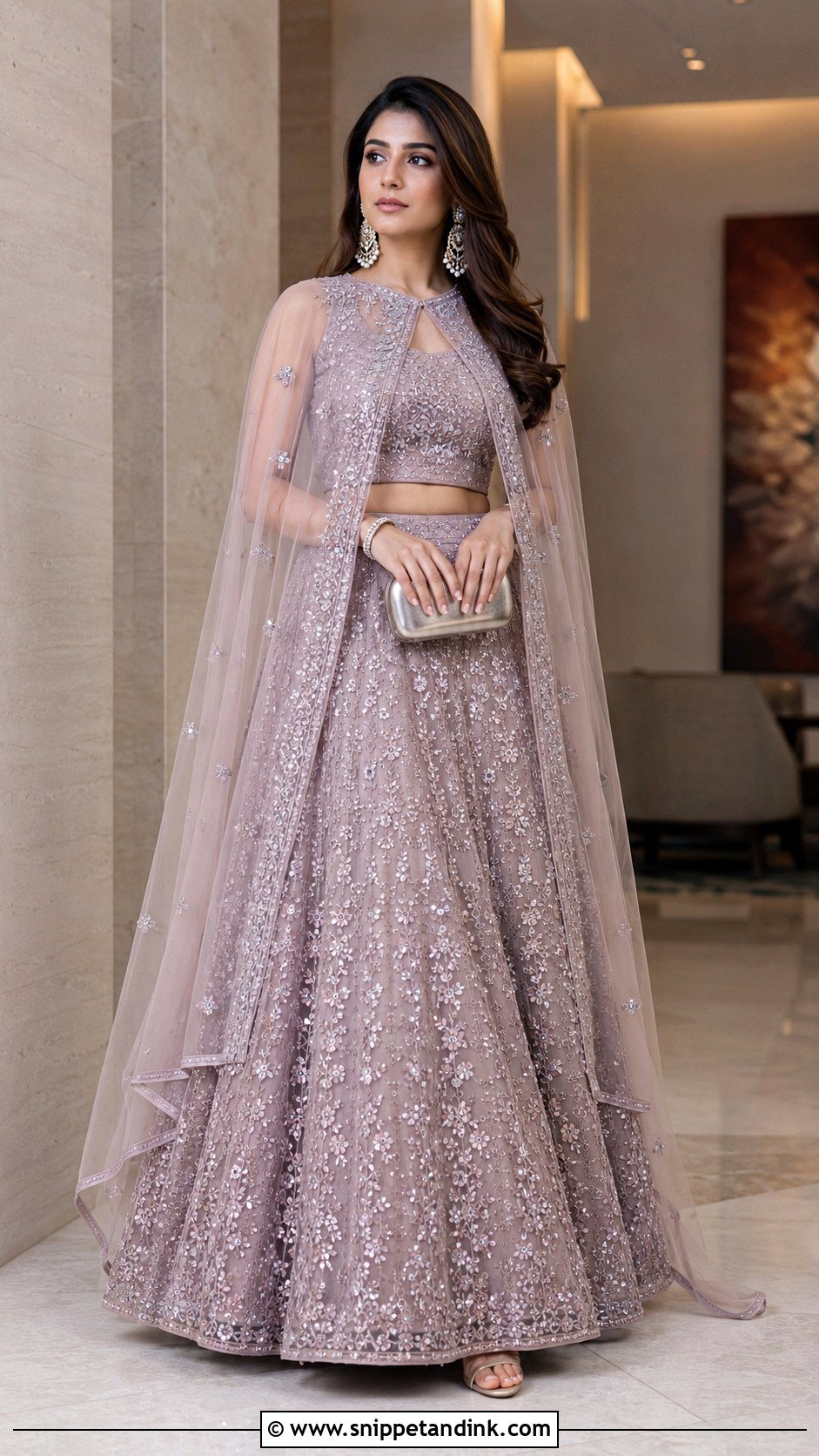
A cape dupatta is the most practical choice for a sister who’ll be helping the bride all evening. Attached at the shoulders or neckline over a lehenga with a fitted blouse or short shirt, it stays put while you carry things, fix her hem and run errands. Soft embroidery, sequins or pearls keep it formal. Heels, statement earrings and a sleek hairstyle complete a look that suits walima, engagement or reception.
29. Coordinated Sisters Mehndi Outfits
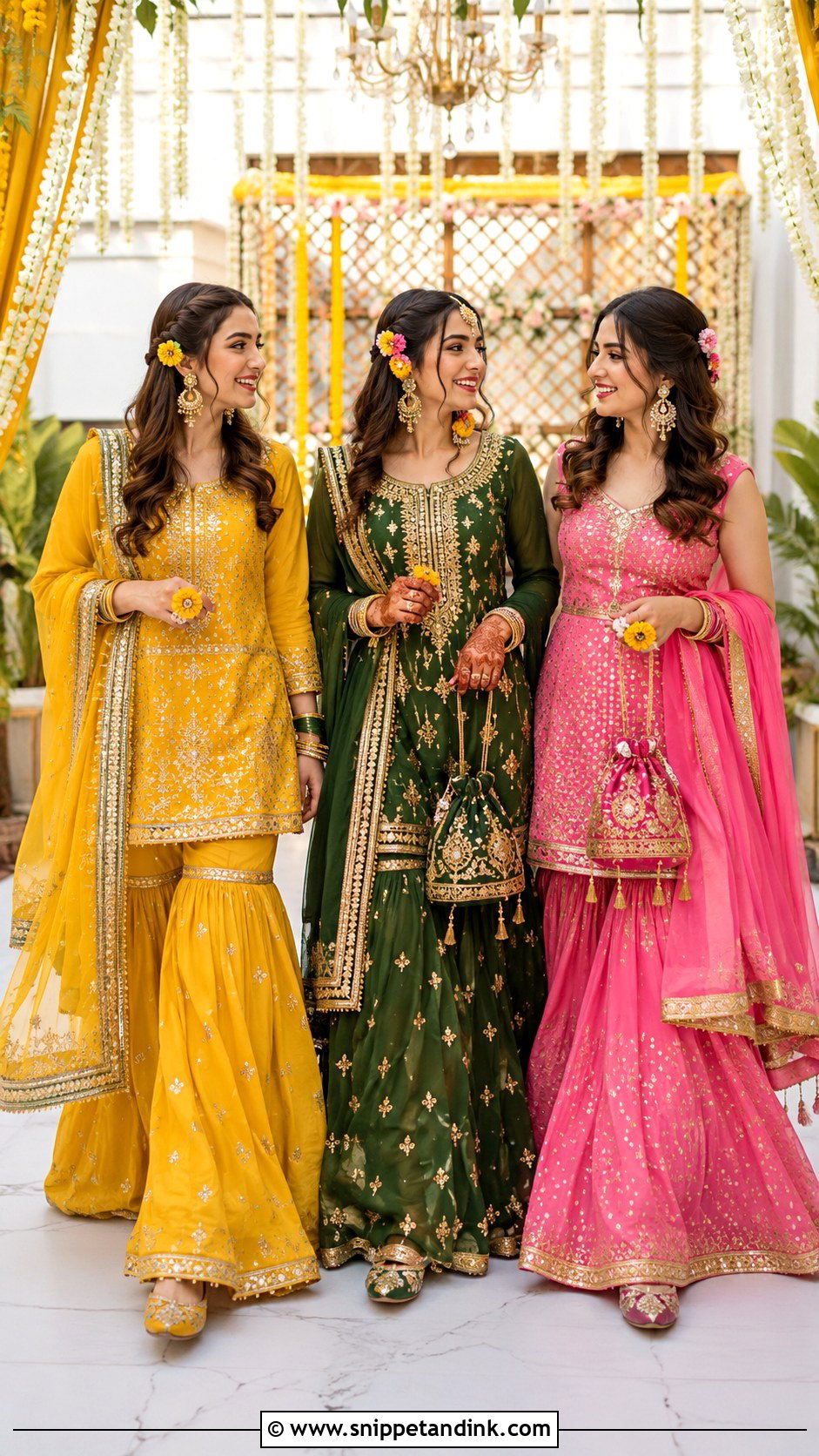
Coordinated sisters’ mehndi outfits make group photos and entrances look planned. Pick one shared palette, yellow and green, pink and orange or mustard and magenta, and let each sister choose her own silhouette: a sharara, a gharara, a lehenga. Tie the group together with matching dupatta borders, jewellery tones or embroidery. I prefer this to identical outfits, which can look like a uniform and rarely suit every body equally. Cousins can join in with the same palette.
30. Coordinated Sisters Walima Outfits
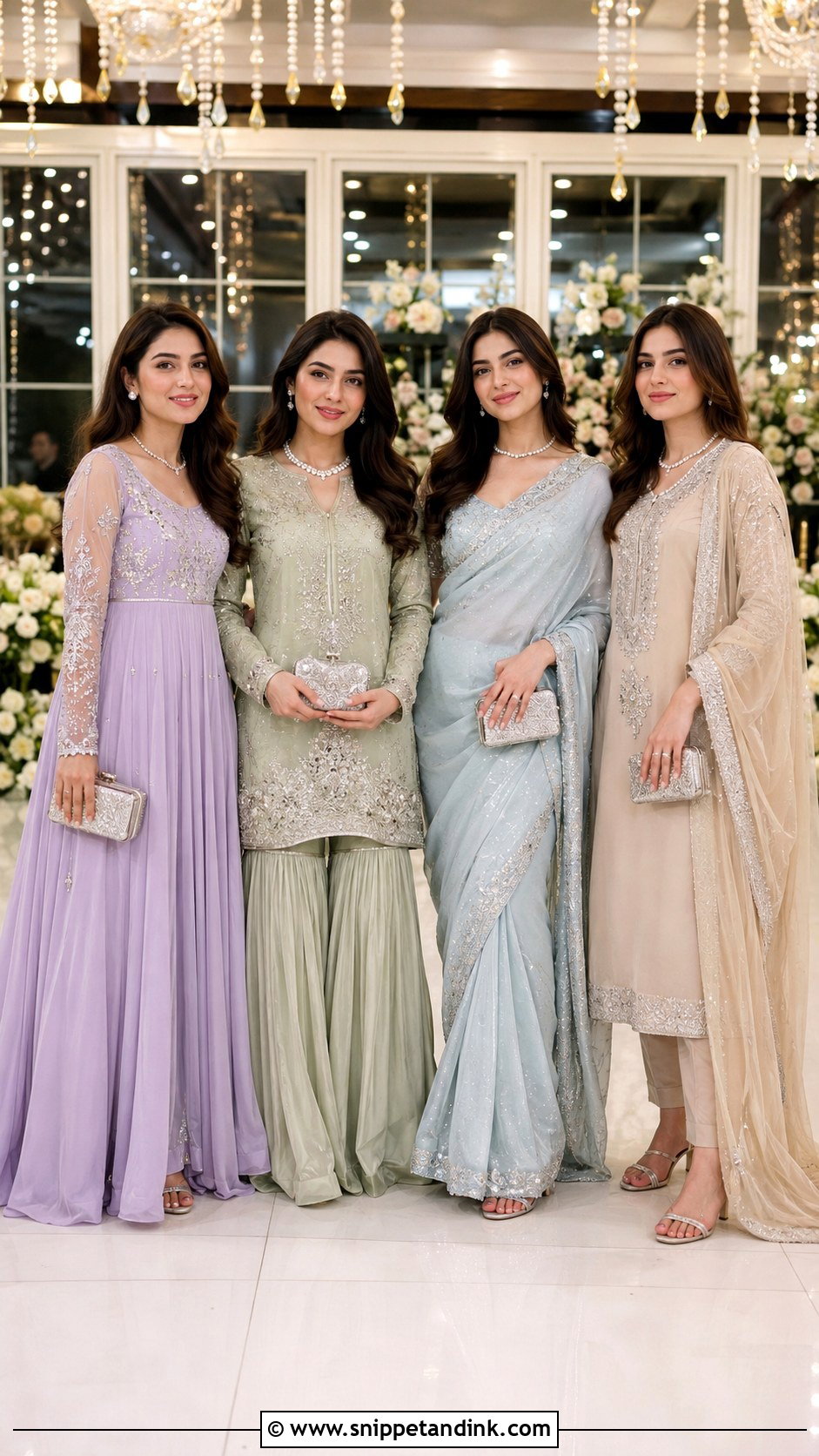
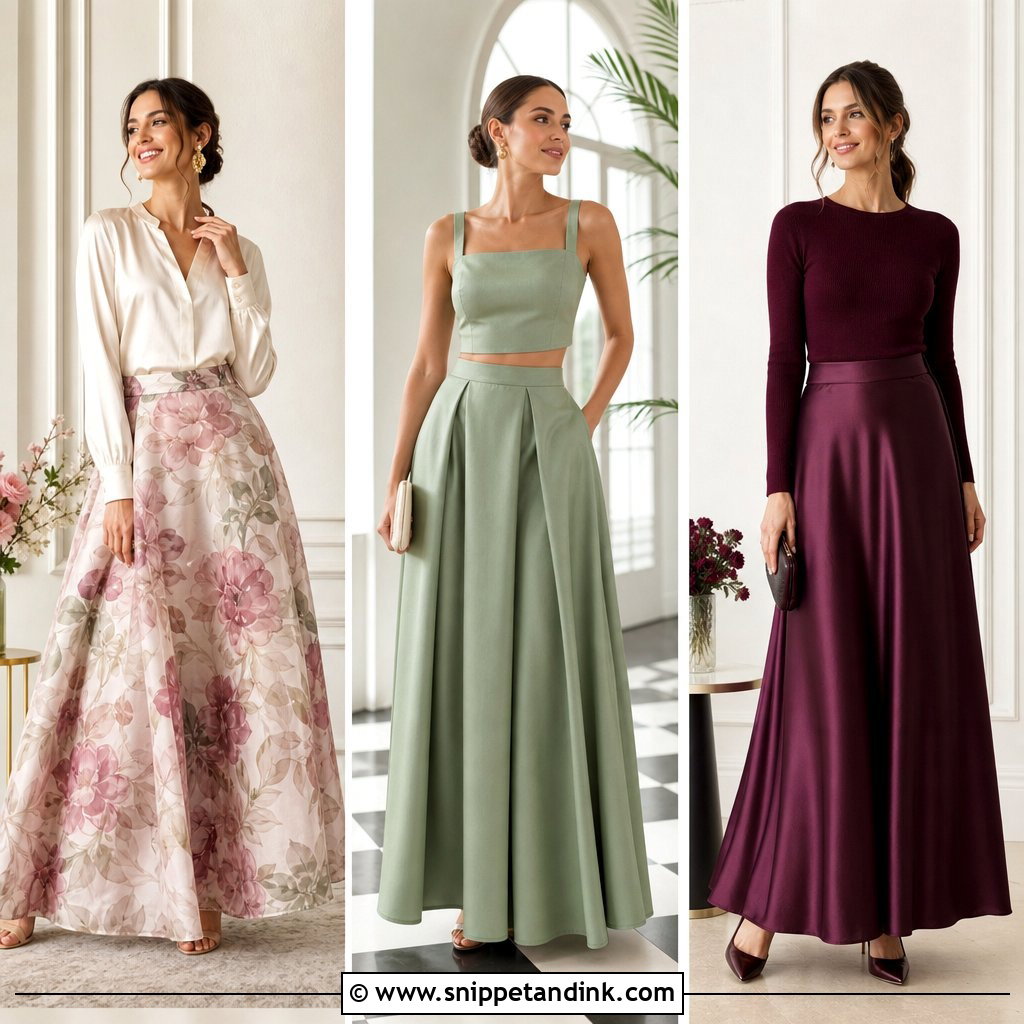
Walima coordination should be softer than mehndi. Choose pastels such as lilac, sage, powder blue, blush, champagne or mint, and let each sister wear a different formal silhouette: a maxi, a saree, a sharara, a long shirt with trousers. Keep the accessories in one family, pearls or silver, so the group reads as one. The effect in reception photos is polished without distracting from the couple.
Dressing for the Jobs a Sister Actually Does on the Day
A sister at a Pakistani wedding is half guest, half crew. You’ll lead the bride in under a dupatta or phoolon ki chadar, hold her clutch, run the joota chupai or doodh pilai, and sometimes hand out mithai. Your outfit has to allow all of that.
- Wear shoes you can walk quickly in. I’d keep heels for the stage photos and switch to khussas for the rest.
- Carry a potli with the bride’s kit: safety pins, U-pins, lipstick, blotting papers, tissues and a small mirror.
- Pin your own dupatta securely at one shoulder. You’ll be using both hands far more than you expect.
- Book your hair and makeup slot well before the bride’s, so you’re dressed and free when she needs you.
- Choose fabrics that don’t crease too easily if you’ll be getting in and out of cars between the house and the venue.
When the outfit works for the job, you stop thinking about it, and that is when sisters look their best in candid photos.
A Step Behind the Bride, From Mehndi to Walima
Every function asks something different of a sister: colour and play at the mehndi, richness at the barat, softness at the nikkah and walima. Through all of it, stay a step behind the bride’s look, and choose cuts you can move in, shoes you can stand in and a dupatta you won’t be fighting all night. Shararas, ghararas, lehengas, sarees or maxis can all work. The right one is the outfit that lets you enjoy the wedding while you help make it happen.
You'll Like These Ideas:


Leave a Reply