
Indonesian bridal makeup covers a huge range, from the black forehead paes of a Javanese bride to the gold-framed face under a Sundanese siger or a Minang suntiang, and the soft hijab looks many brides wear for the akad. What links them, from my side of the chair, is the job the makeup has to do: last through heat and long rituals, hold its own next to heavy gold headpieces, and still look like skin in close-up photos. Some brides want a natural akad nikah glow, others want deep eyes and a red lip for the resepsi. The 20 looks below are the ones I’d talk through with a bride, with notes on what each one asks of your skin and your outfit.
A Base Built for Tropical Heat and Hours Under Gold
Indonesian weddings are often warm and humid, and many involve heavy headpieces that sit on the forehead for hours. Before I choose shades, I plan for those two things.
- Skin prep: a light, water-based moisturiser rather than a rich cream, and a mattifying primer only on the T-zone. Too much prep under makeup slides in heat.
- Thin layers: two thin layers of foundation, each set, hold better than one thick layer.
- Under the headpiece: I keep products on the forehead minimal so the siger, suntiang or crown doesn’t press foundation into lines.
- Setting: a setting spray at the end, and blotting papers for touch-ups instead of extra powder, which builds up into a cakey layer.
If you sweat easily, tell your artist at the trial. It changes the products she’ll bring.
1. Javanese Paes Wedding Makeup
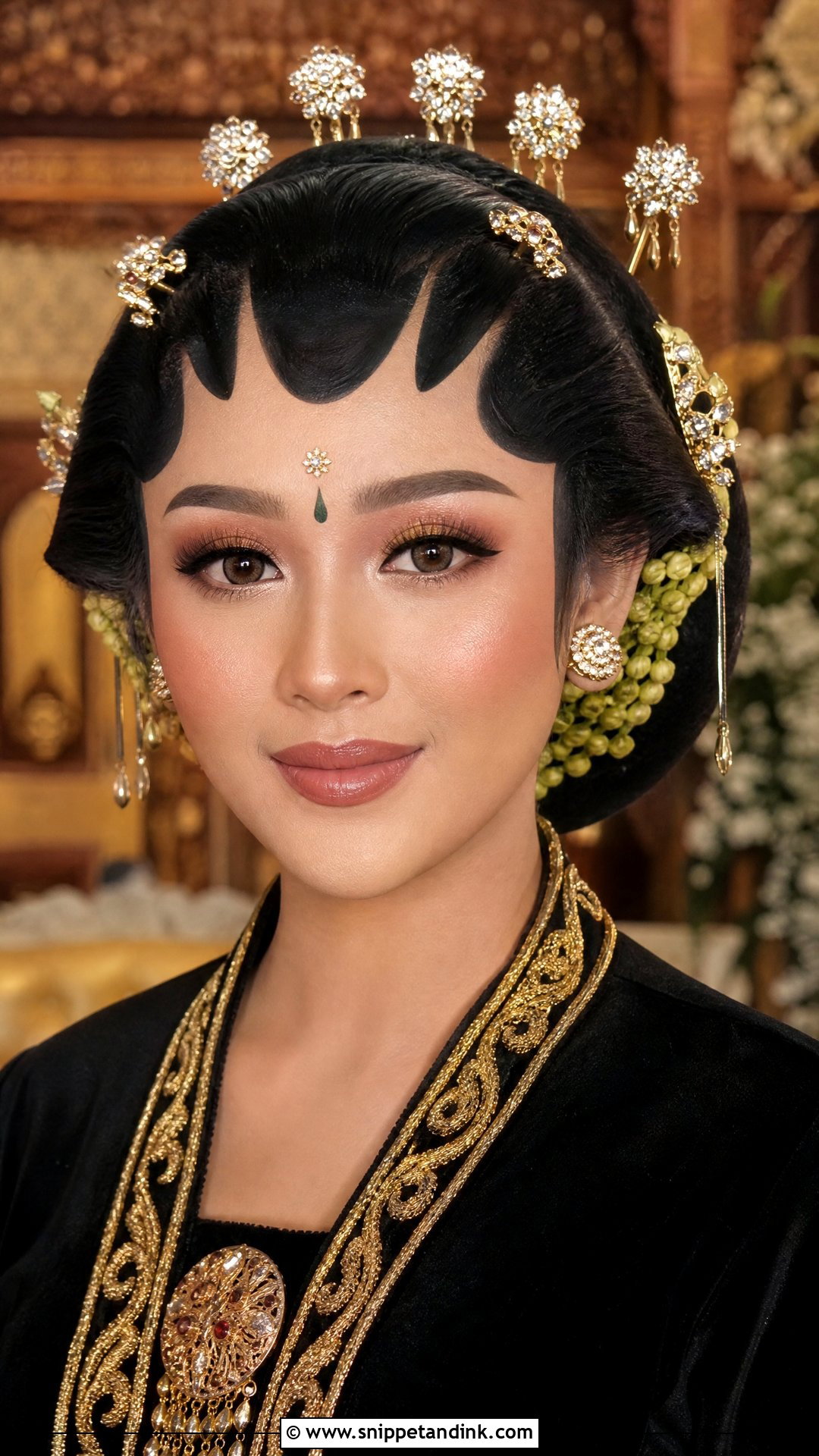
With paes, the black forehead design is the centrepiece, so everything else on the face has to support it rather than compete. The traditional shapes are drawn by a perias who knows the forms, and I’d always ask whether your artist has done paes before; the curves need to be symmetrical to the millimetre. For the rest of the face I keep a satin base, warm brown shadow, fine black liner and a muted red or rosewood lip. A modern version can soften the complexion, but I don’t lighten the brows too much, because a weak brow looks lost under the paes line.
2. Sundanese Siger Wedding Makeup
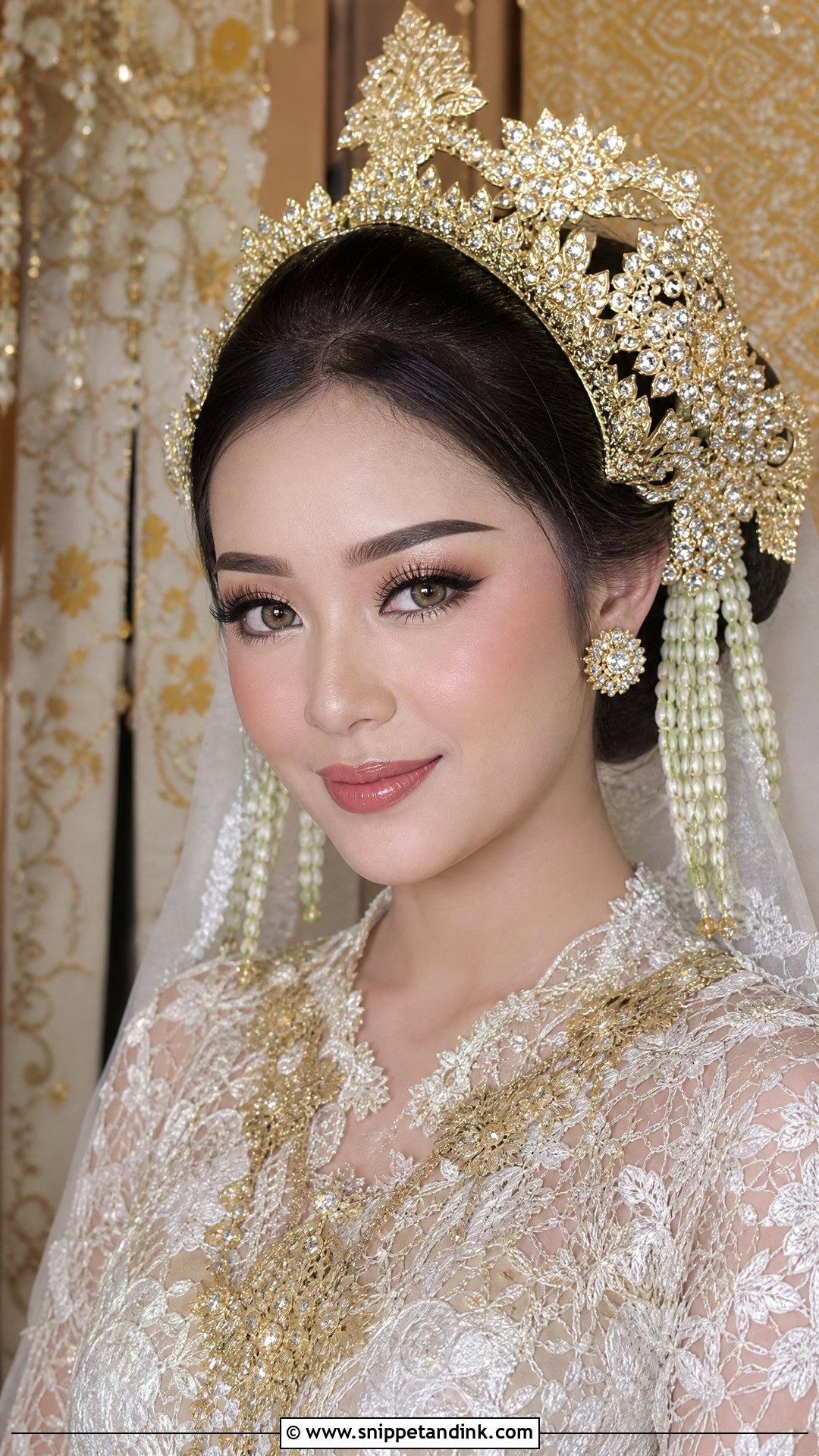
The siger sits low on the forehead and throws a lot of gold toward the face, so I focus the colour on the eyes and keep the cheeks gentle. Bronze or champagne shadow picks up the crown’s warmth. What I watch here is undertone: too much yellow-gold on the lids next to a gold siger can make the skin look sallow in daylight, so I add a touch of rose to the blush. A rosy nude or soft berry lip works with most kebaya colours.
3. Balinese Wedding Makeup
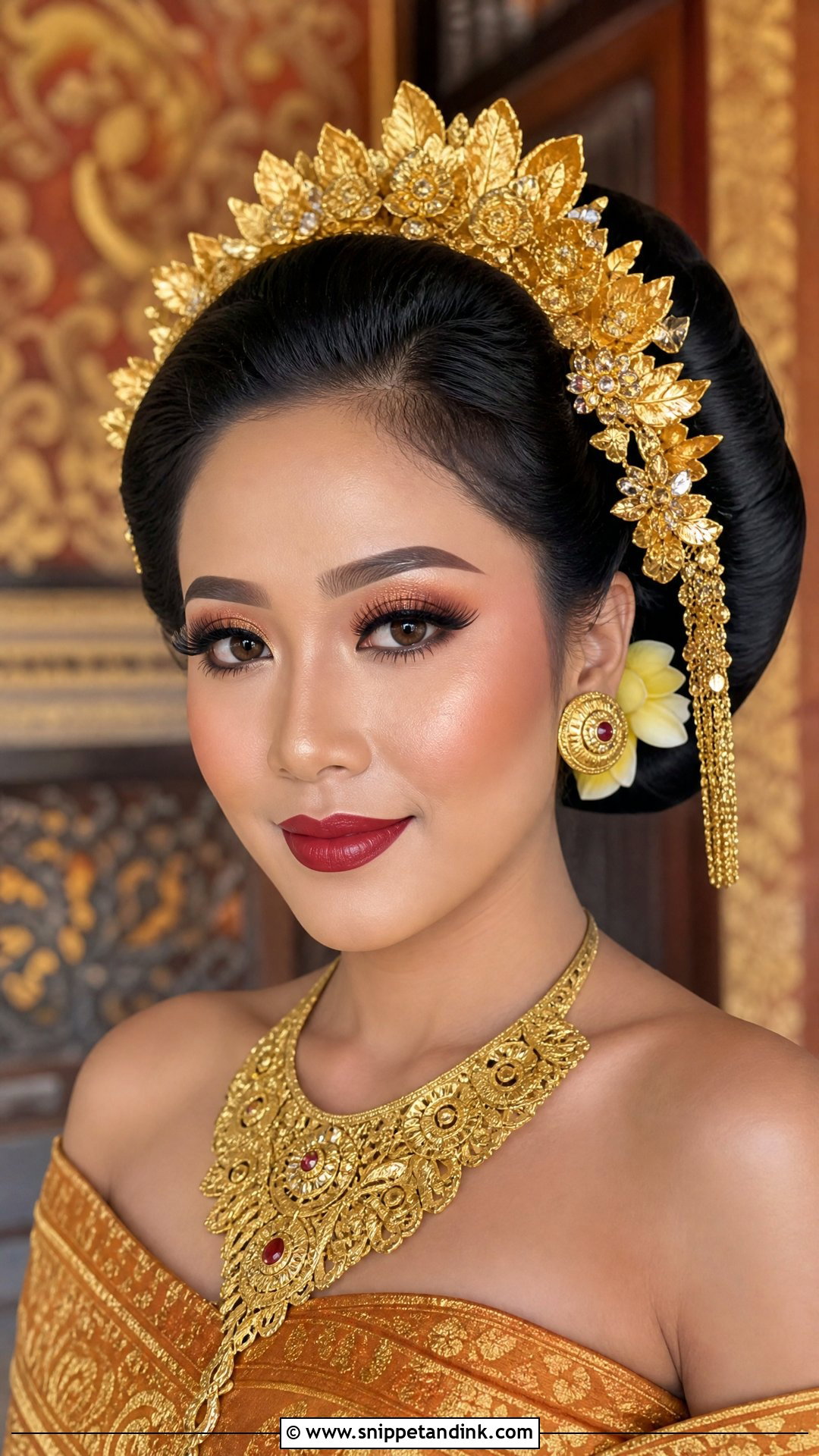
Balinese ceremonial looks come with a tall gold headdress and rich fabrics, and soft makeup simply disappears underneath. I build a full-coverage base, sculpt the cheekbones, and use copper or bronze on the eyes with a definite black liner so they stay visible under the headpiece’s shadow. The lip is classic red or terracotta. The risk is harsh edges, so I spend longer blending than on almost any other look. Outdoor temple ceremonies mean sun, so I avoid a heavy highlighter that turns into shine.
4. Minang Wedding Makeup
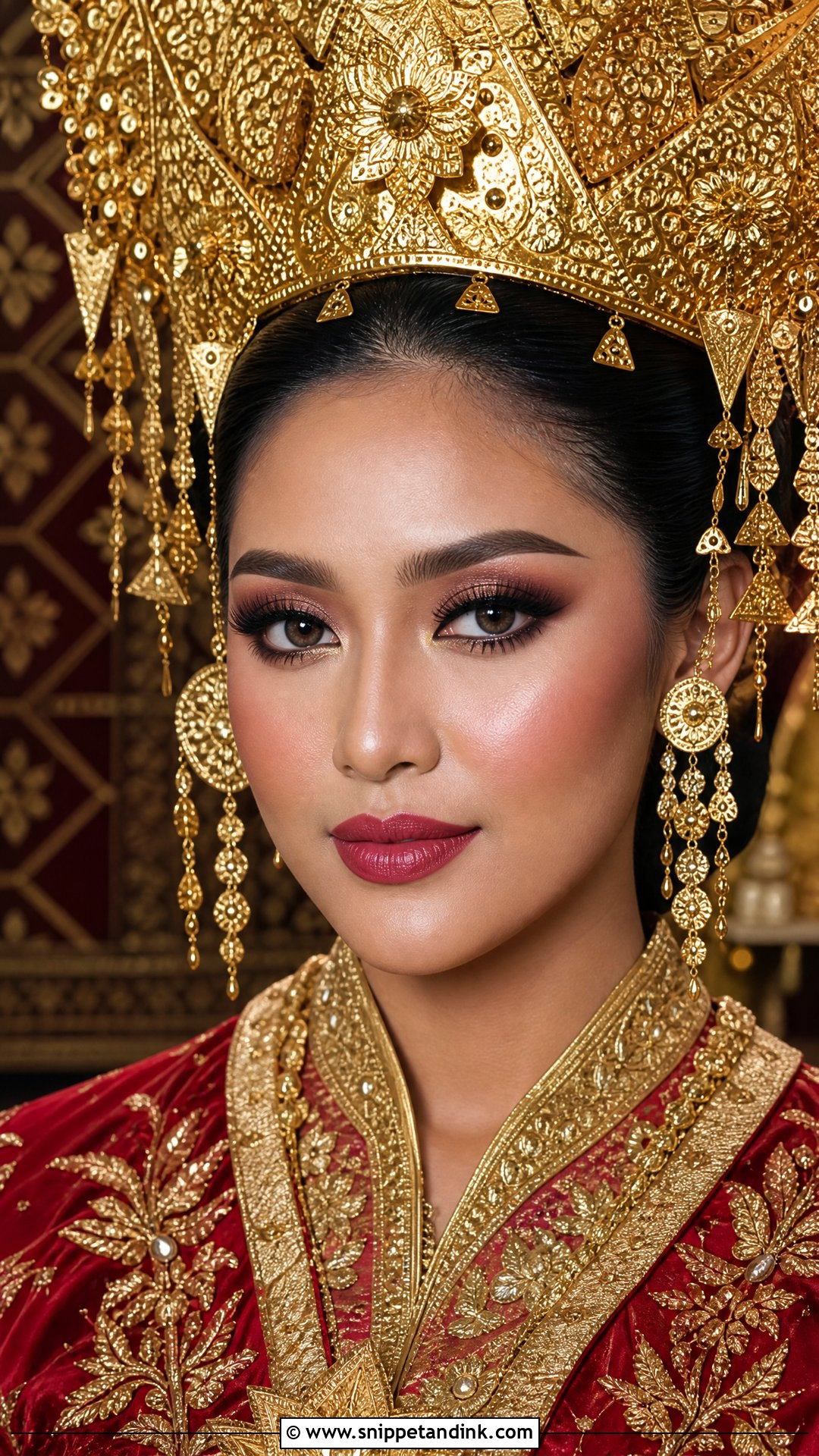
The suntiang is heavy and wide, and brides wear it for hours, so I plan this face for endurance. A semi-matte foundation, contour that is felt more than seen, and gold highlight only on the top of the cheekbones. Smoky eyes in antique gold or plum balance the scale of the headpiece; a light eye looks washed out next to it. Brick or deep red lips finish it. Because the headpiece presses near the temples, I keep products there thin so nothing creases under the weight.
5. Betawi Wedding Makeup
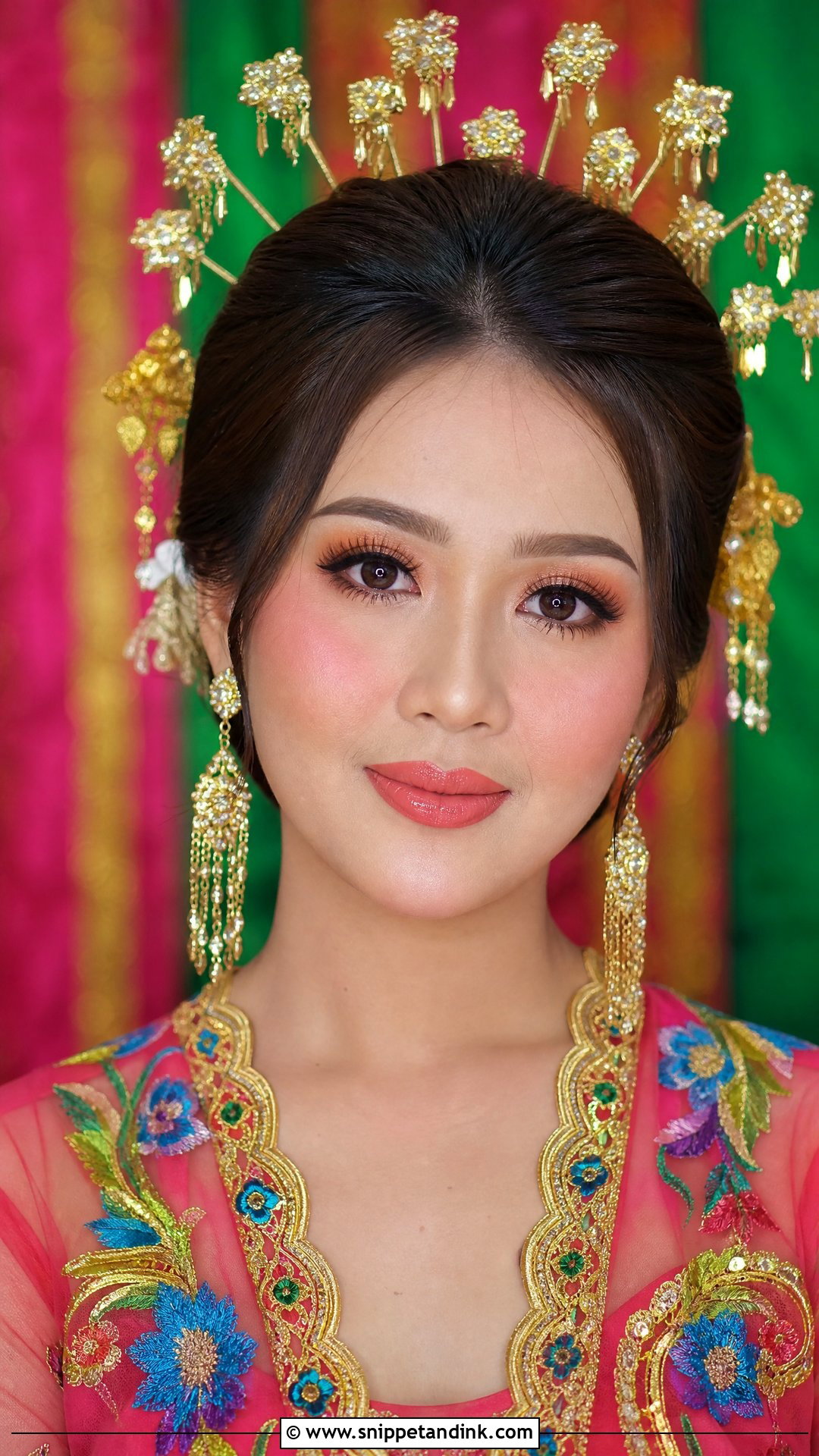
Betawi bridal outfits are bright, so the makeup can be a step livelier than a minimal bridal face. I use warm blush with more pigment, gold or peach shadow and fluttery lashes, and a fresh red or coral lip. The mistake I see is matching every colour to the outfit at once. Pick one element, usually the lip, to echo the clothing and keep the eye neutral.
6. Bugis Wedding Makeup
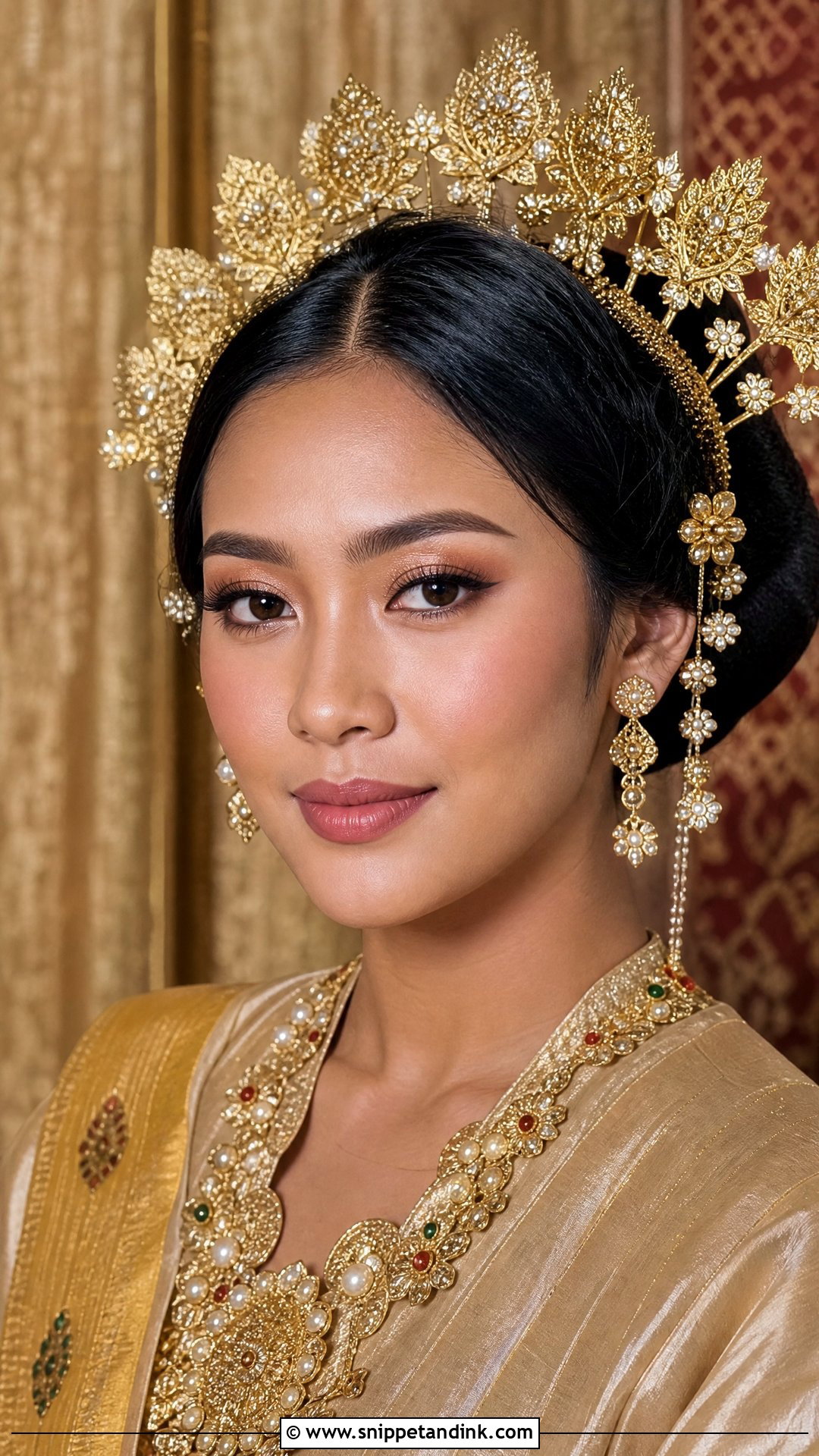
Bugis looks are structured and clean. I start with a soft matte base and add gentle contour along the jaw and cheekbones, which reads well against ornate gold. On the eyes, warm brown with a deeper outer corner and thin liner give depth without drama. A cinnamon or soft red lip suits the look. This is a good middle ground if you want something traditional but not as heavy as the Minang or Balinese styles.
7. Palembang Wedding Makeup
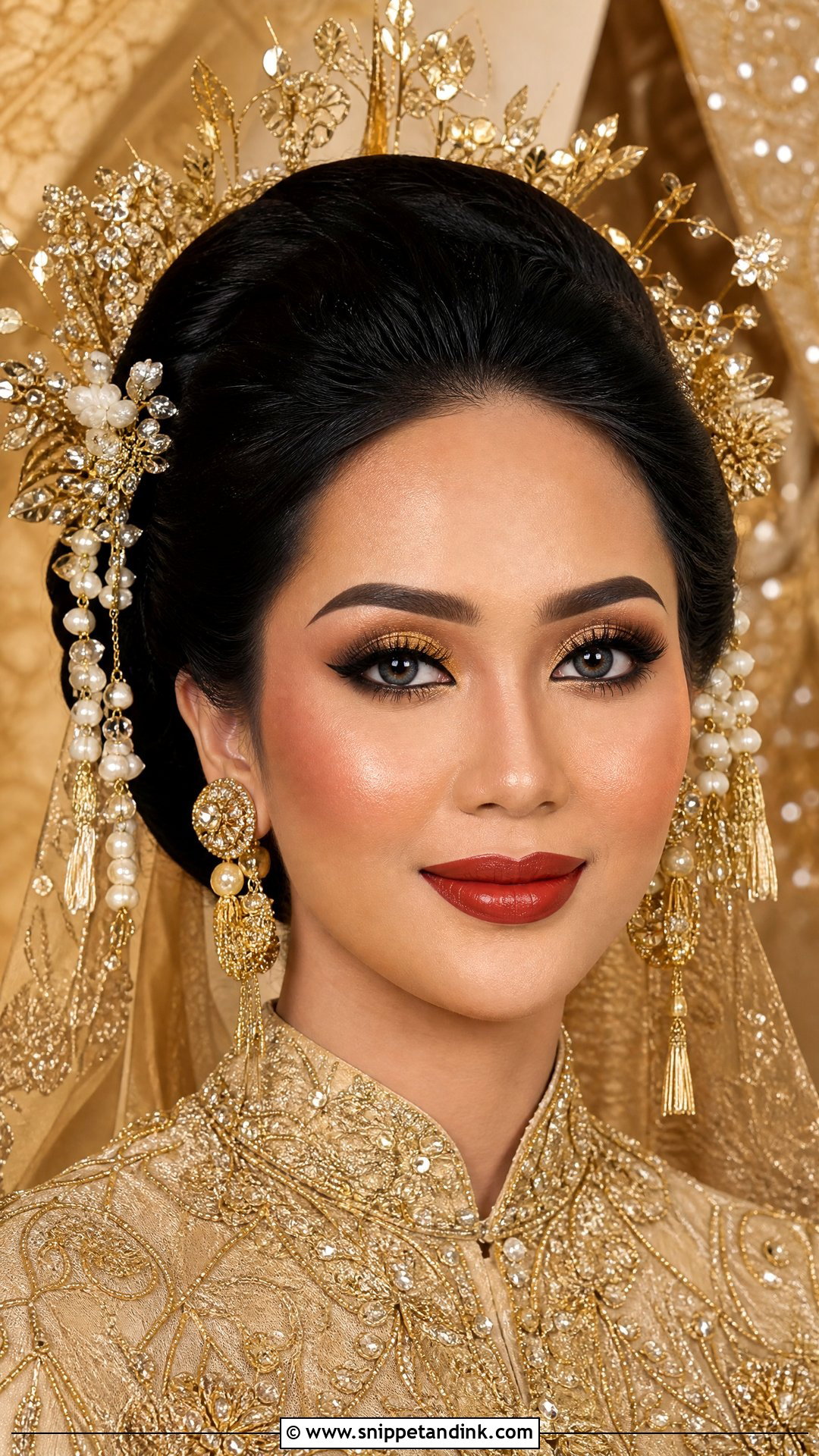
Palembang bridal styling brings a lot of gold and songket texture, so I keep the skin radiant but controlled in the T-zone, where shine reads as oil next to metallic fabric. Gold and bronze shadow, full lashes, and neat brows hold up against it. I tie the eyes and lips together with warm peach or terracotta blush. The lip needs some depth; a pale nude looks unfinished against this much ornament.
8. Aceh Wedding Makeup
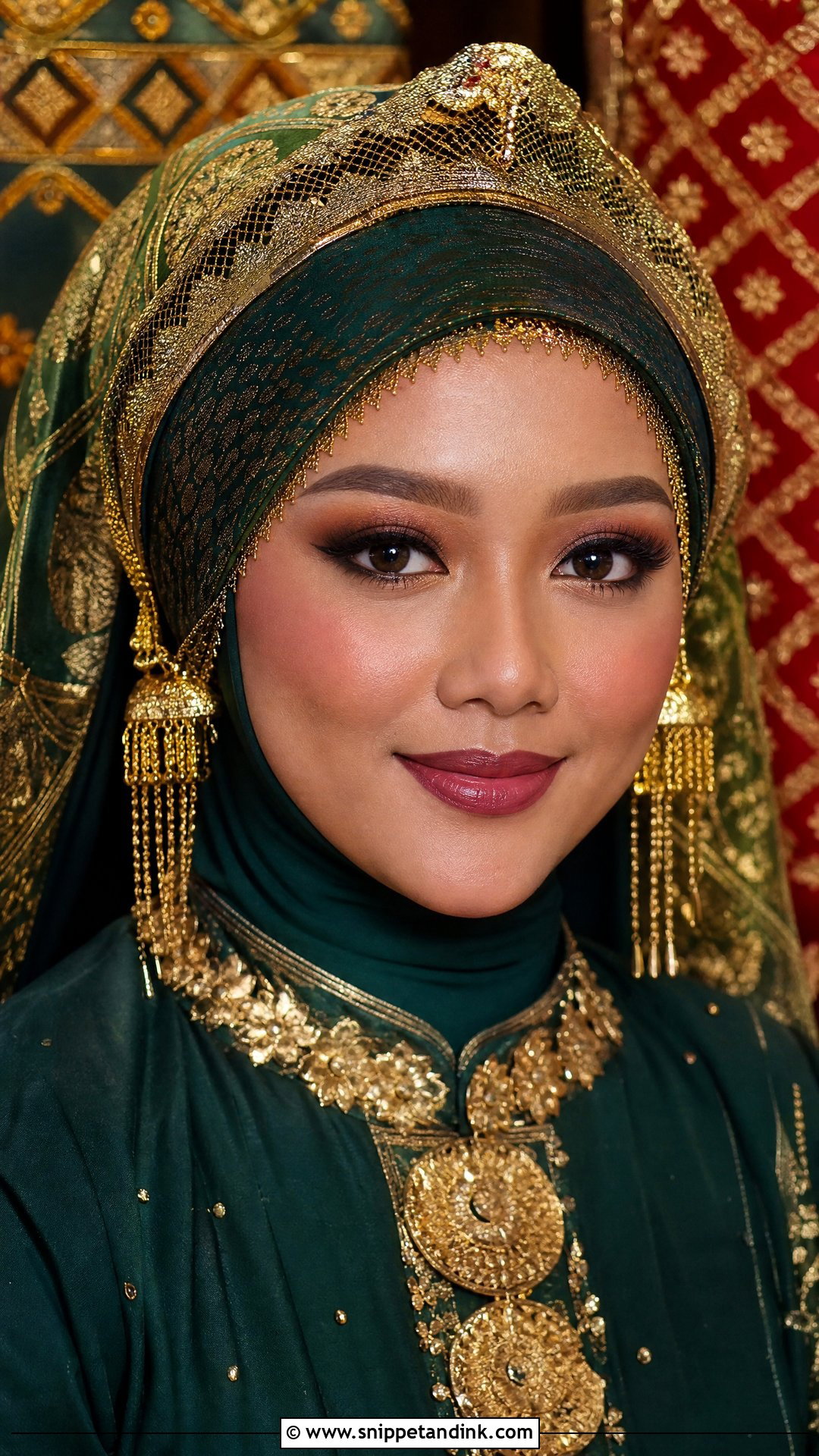
Aceh bridal looks feel modest and regal, often with a covered head and gold detail. I keep a smooth semi-matte base with only a slight glow on the cheekbones. Where the outfit already has metallic thread, I skip heavy shimmer on the lids and use matte bronze or taupe instead, otherwise the photos look busy. A rose or berry lip keeps the face composed. Comfort matters here, as ceremonies are long and the head covering sits close to the face.
9. Batak Wedding Makeup
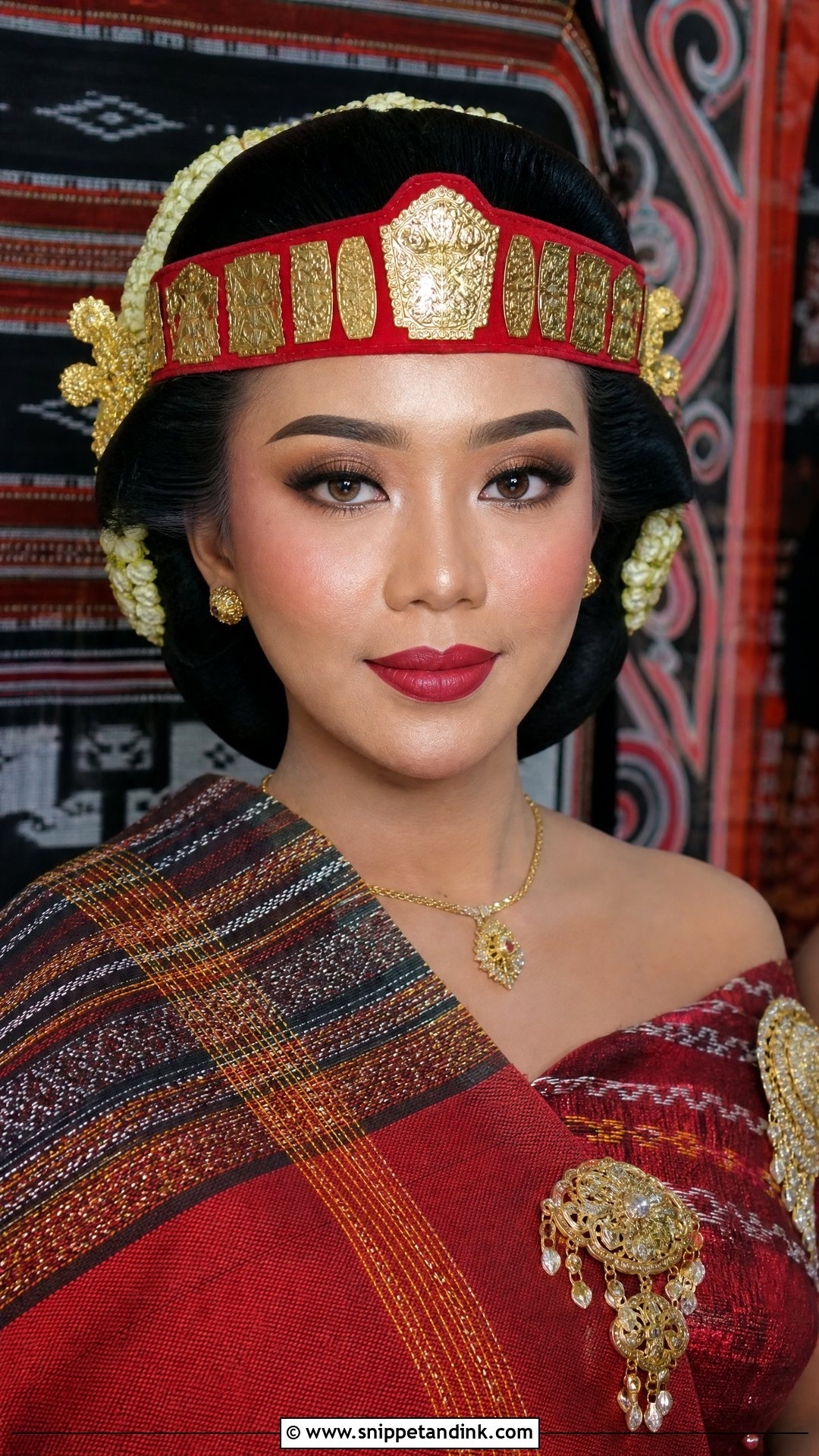
Batak ceremonies are strong and dignified, and the ulos fabric has a lot of visual weight. I give the eyes more depth with chocolate or charcoal-brown shadow and a clear liner close to the lashes, plus medium lashes for definition. A red or deep rose lip balances the textile. I keep the skin from looking too shiny, which matters in long outdoor parts of the ceremony.
10. Malay Indonesian Wedding Makeup
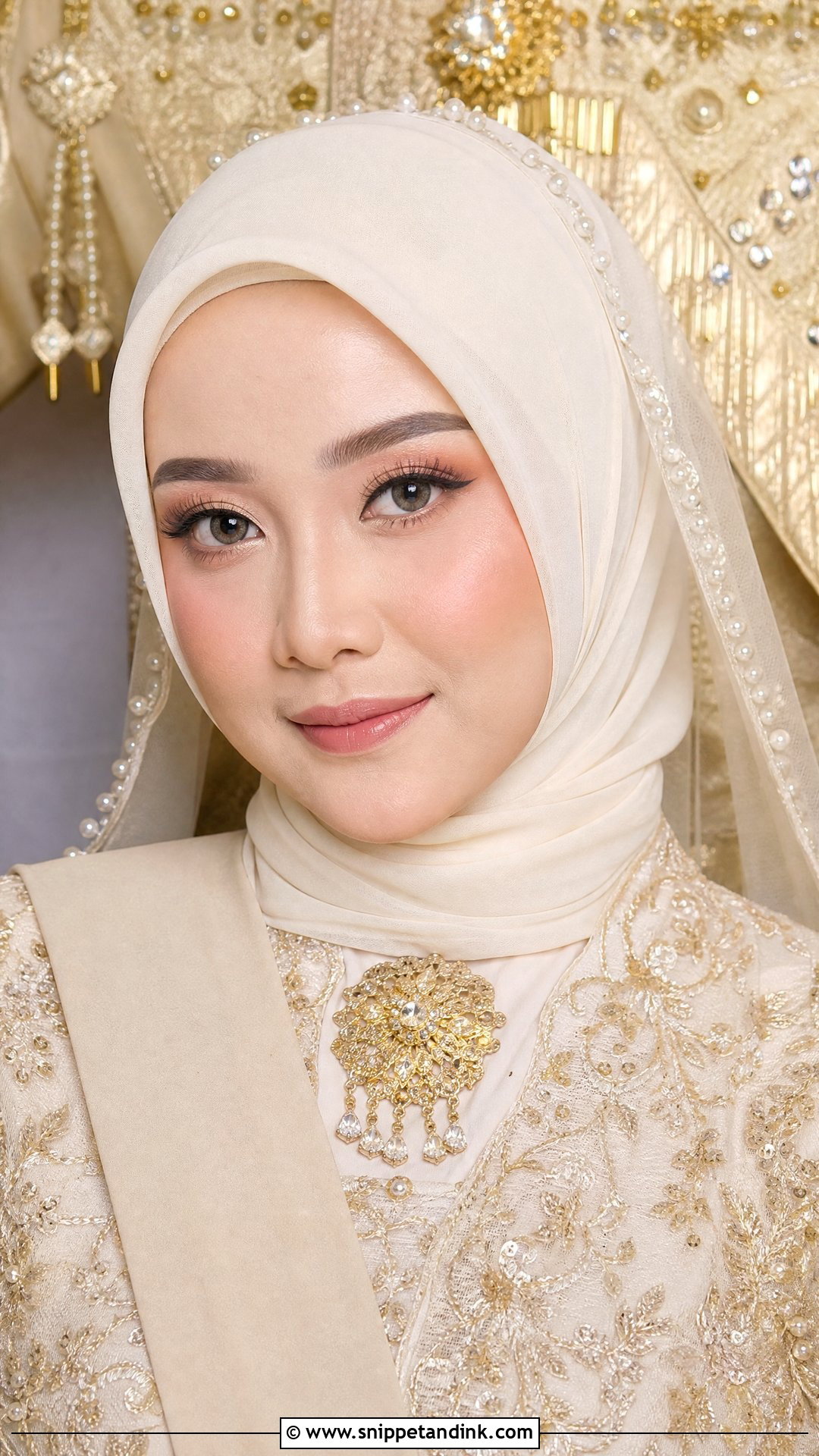
When the face is framed by hijab or traditional covered bridal styling, every detail sits closer to the fabric, and the makeup has to look finished right up to the hairline. I use neutral or champagne shadow with a liner that lifts slightly at the outer corner, and I keep brows soft rather than blocky. A satin nude or mauve lip finishes it. Before the hijab goes on, I set the edges of the face with powder so foundation doesn’t transfer onto the fabric.
11. Natural Akad Nikah Makeup
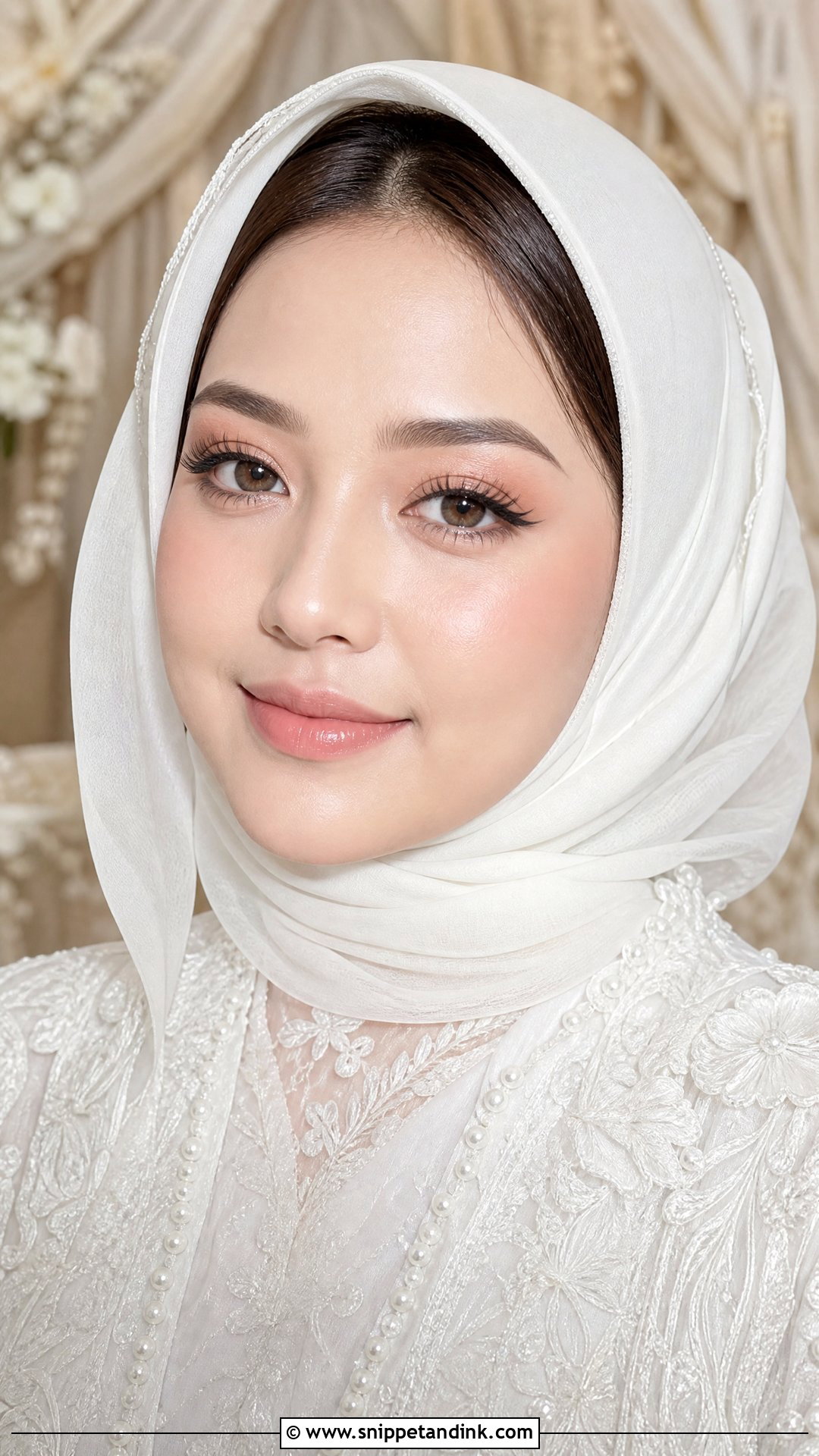
Natural akad makeup is not bare skin. It’s skin that looks rested and even, with a long-wear foundation used thinly and powder only where you shine. I use beige or peach shadow, thin liner, natural lashes, and a pink or peach lip tint. The hardest part is restraint: I apply less, then check in daylight, because a light look under warm indoor bulbs often looks heavier than you’d think in outdoor photos. It suits a white kebaya and an intimate ceremony.
12. Indonesian Hijab Wedding Makeup
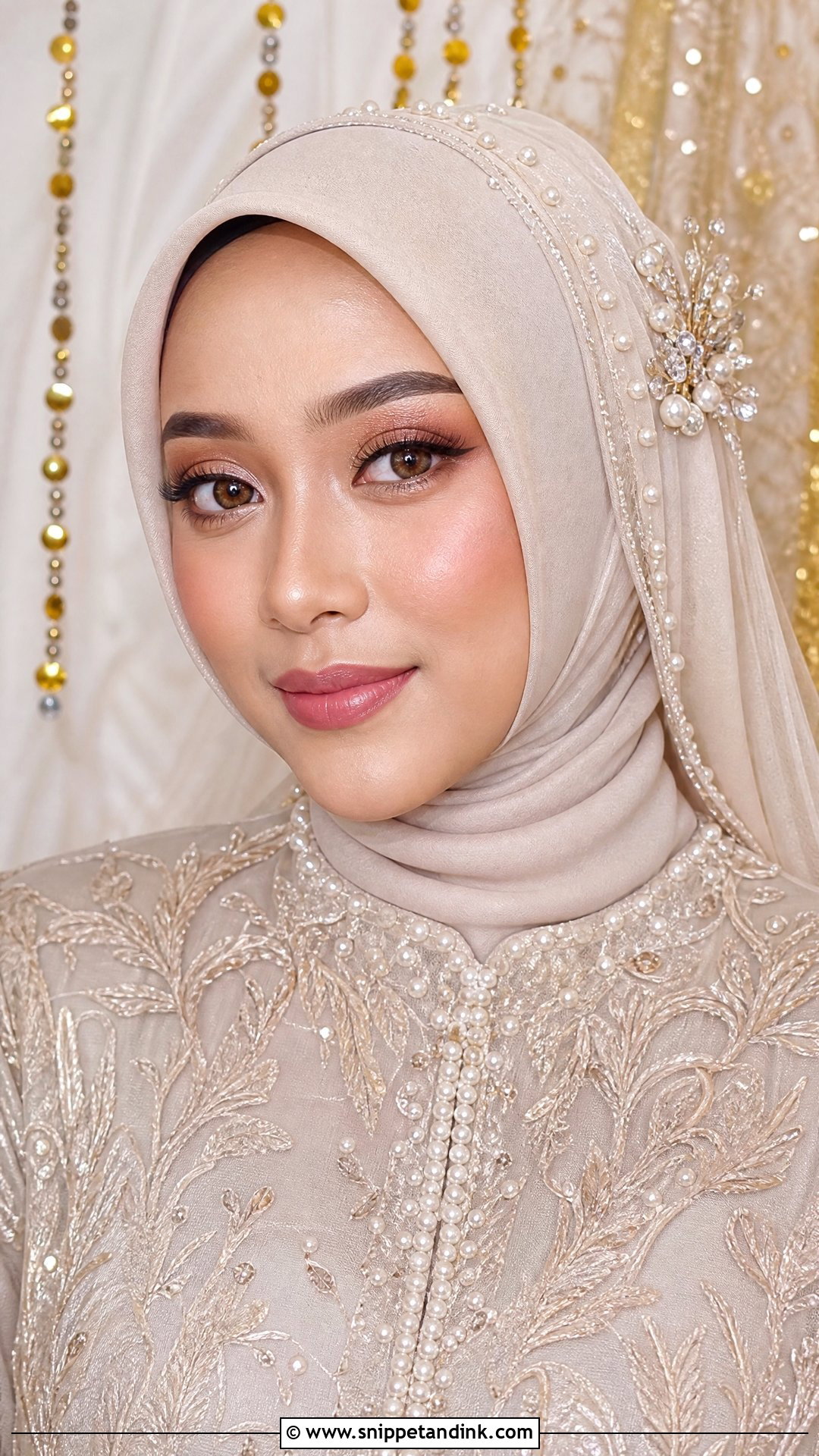
Indonesian hijab wedding makeup needs balance because the fabric frames the face closely and cuts off the hairline, which changes how the face’s proportions look. I place blush slightly higher on the cheeks to give lift, brighten under the eyes, and keep warm matte brown on the lids with a little champagne shimmer in the centre. A rosy nude or berry lip brings colour back. I always check the look once the hijab is pinned, because it can make a soft face look paler than it did without it.
13. Soft Glam Indonesian Wedding Makeup
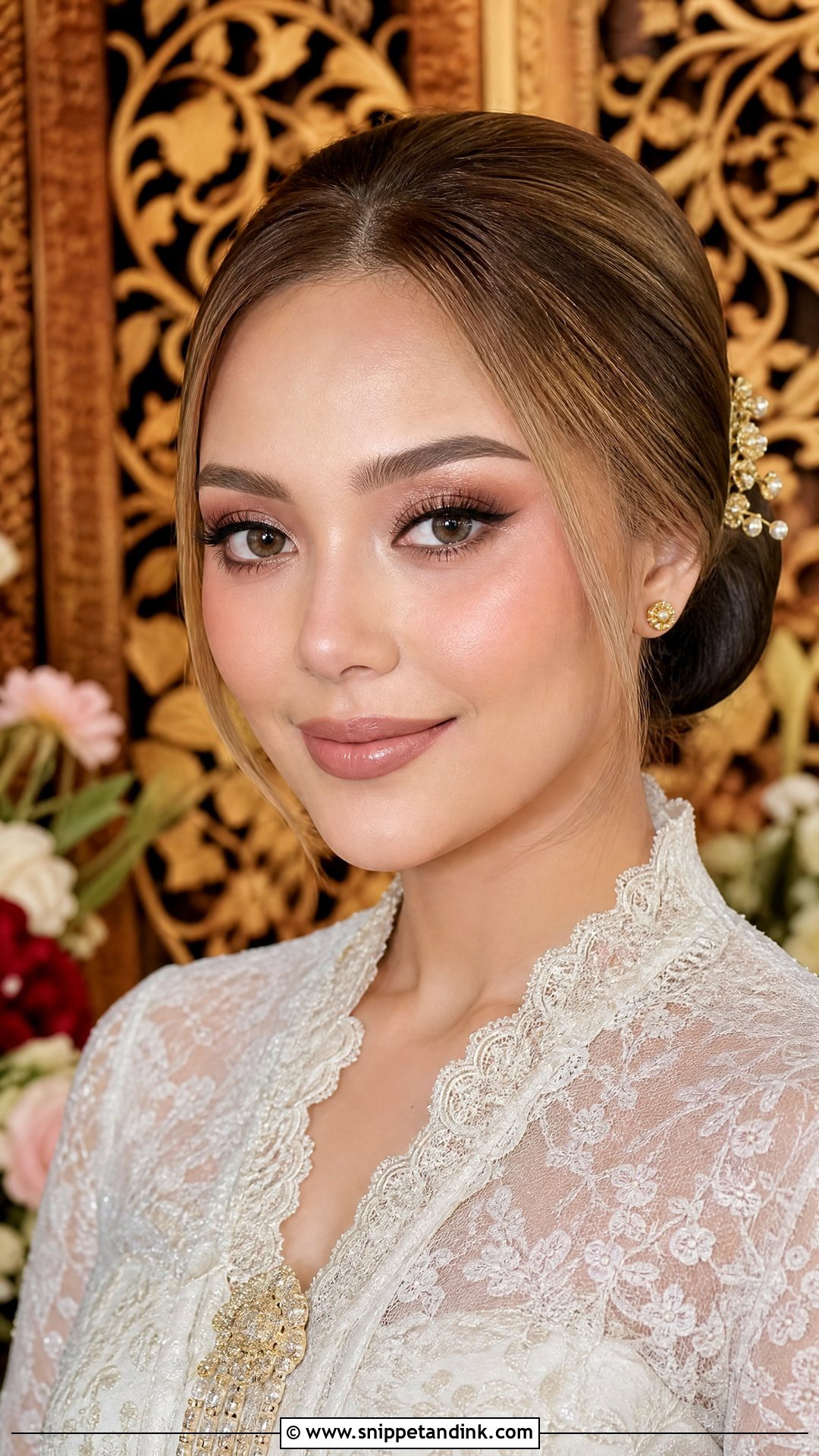
Soft glam works with almost every outfit, from gowns to kebaya, so it’s what I’d suggest if you’re unsure. Smooth, softly radiant skin, warm brown eyes with a slightly smoky outer corner, soft winged liner and wispy lashes. The lip stays in the nude rose or muted mauve range with a satin finish. It is comfortable for a full day and easy to touch up, which is half the reason I like it.
14. Bold Glam Indonesian Wedding Makeup
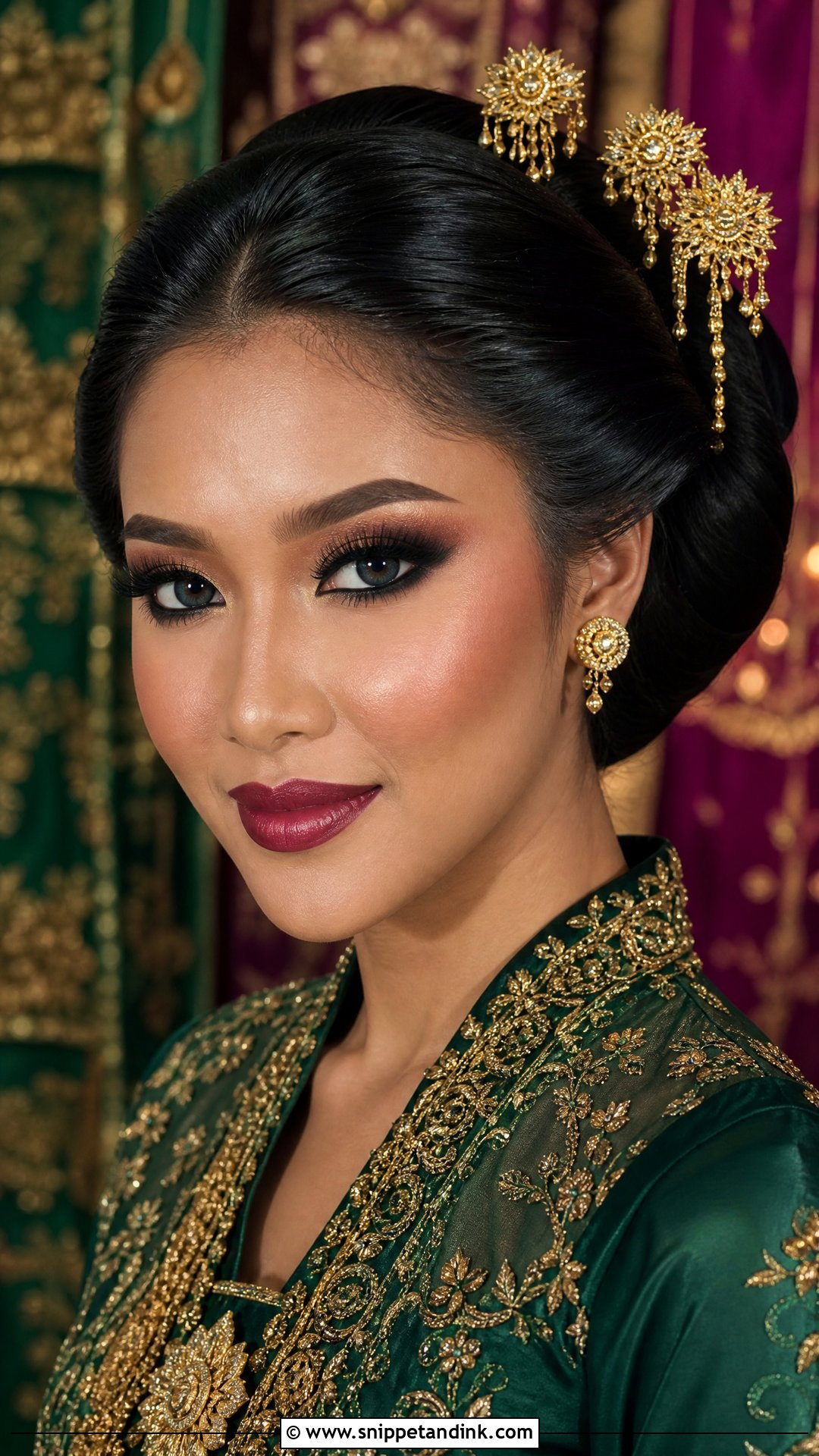
Bold glam is for receptions and evening events. I start with a full-coverage base and test it against the neck and chest, because the biggest giveaway in reception photos is a face a shade lighter than the body. Sculpted contour, a smoky eye in bronze, plum or near-black at the outer corner, and dramatic lashes. With this much going on, the blending is everything. Choose a deep rose, red or rich nude lip depending on the outfit, not all of them at once.
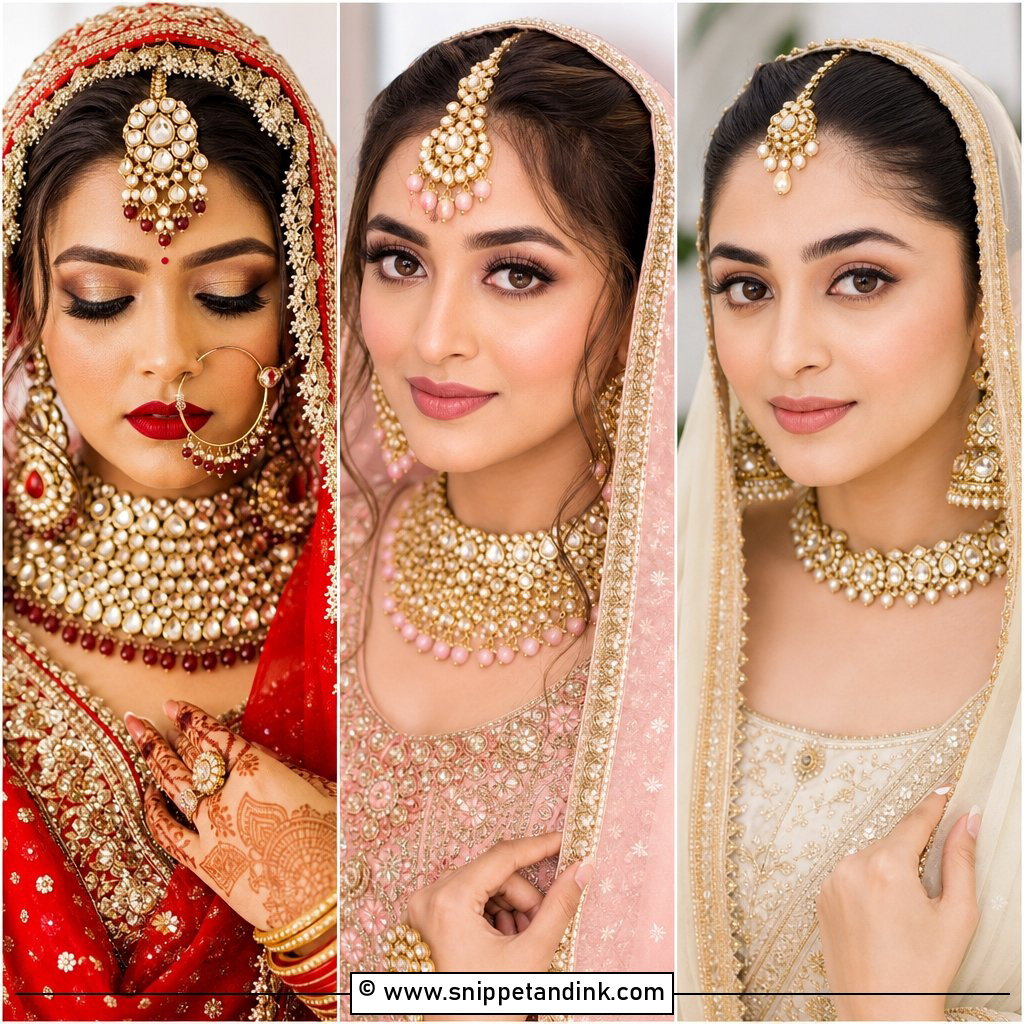
15. Dewy Indonesian Bridal Makeup
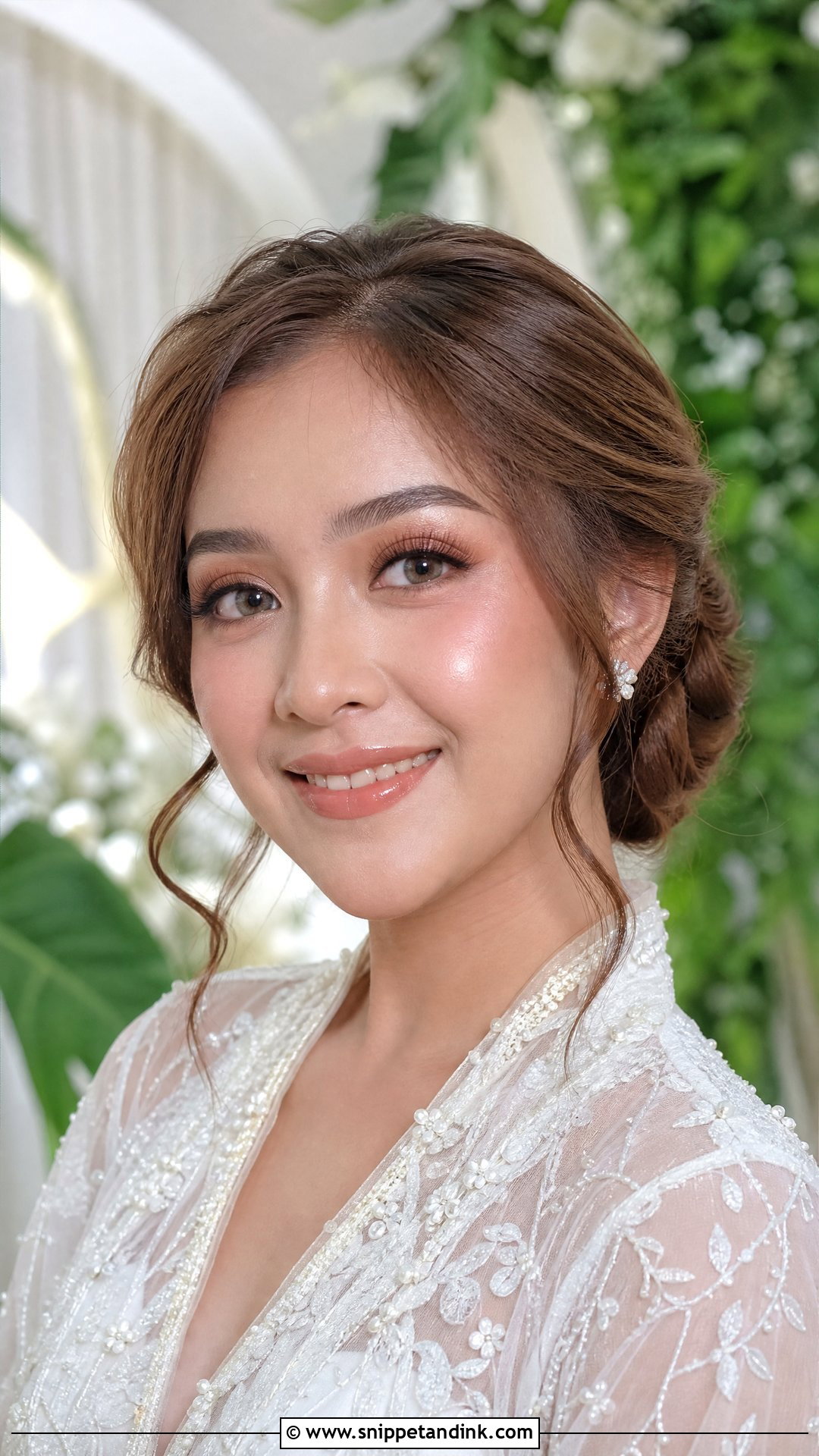
Dewy makeup in a tropical climate needs control. I prep with hydrating skin care, use a luminous foundation and cream blush, then set the nose, forehead and under-eyes with fine powder so the glow stays on the cheekbones. Champagne shadow and brown liner keep the eyes soft. For fresh, glowing skin that survives a garden or beach ceremony, I’d steer oily-skinned brides toward a satin finish instead; dewy on oily skin turns into shine within an hour.
16. Matte Indonesian Bridal Makeup
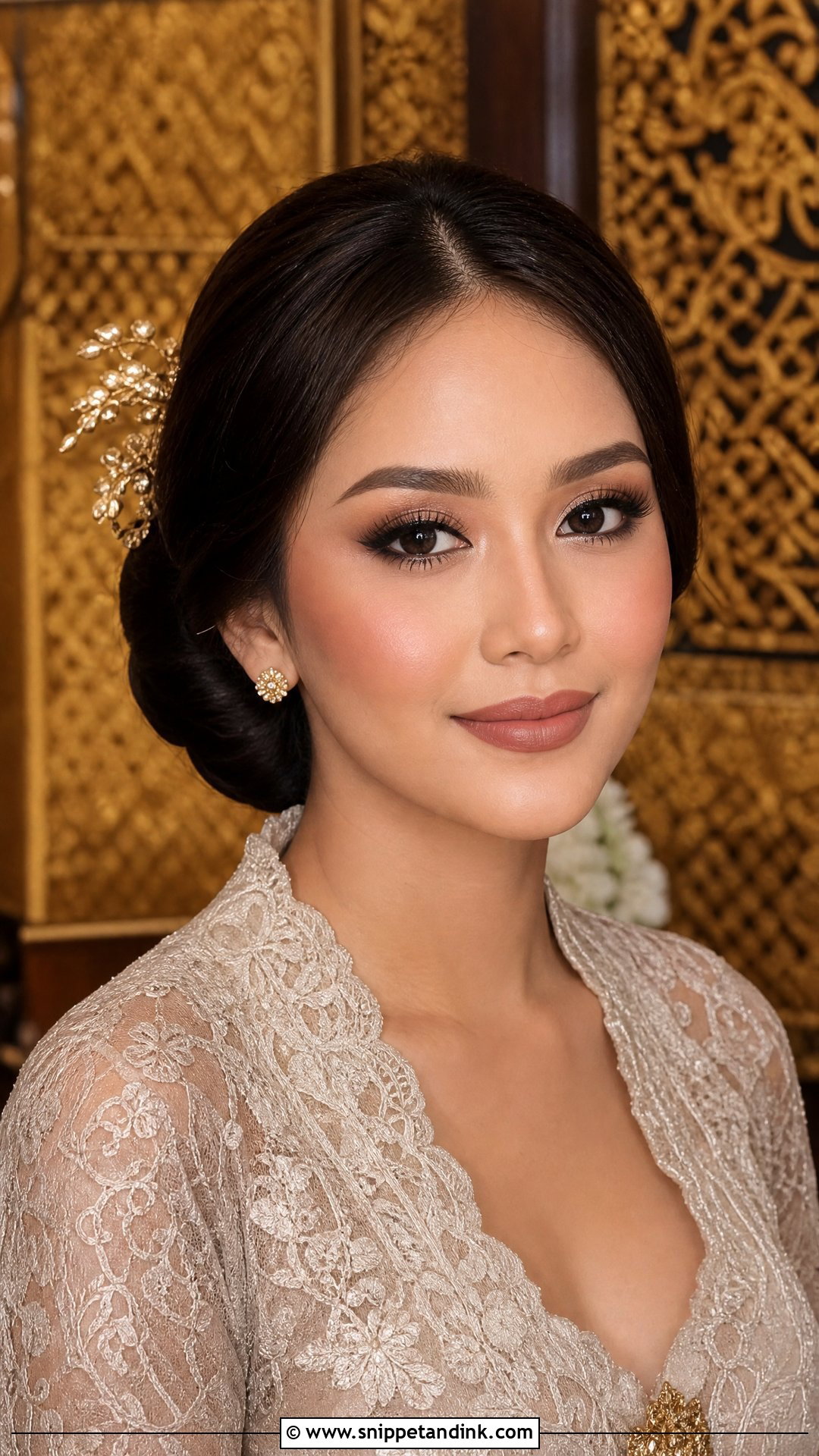
Matte makeup is the practical choice in humid weather and long ceremonies. The risk is flatness, so I bring dimension back with soft contour and warm blush after setting. Matte taupe and espresso on the eyes, with a small spot of shimmer in the inner corner to keep them bright. The lip should be satin-matte rather than fully matte, since fully matte formulas dry and crack over a long day.
17. Red Lip Indonesian Wedding Makeup
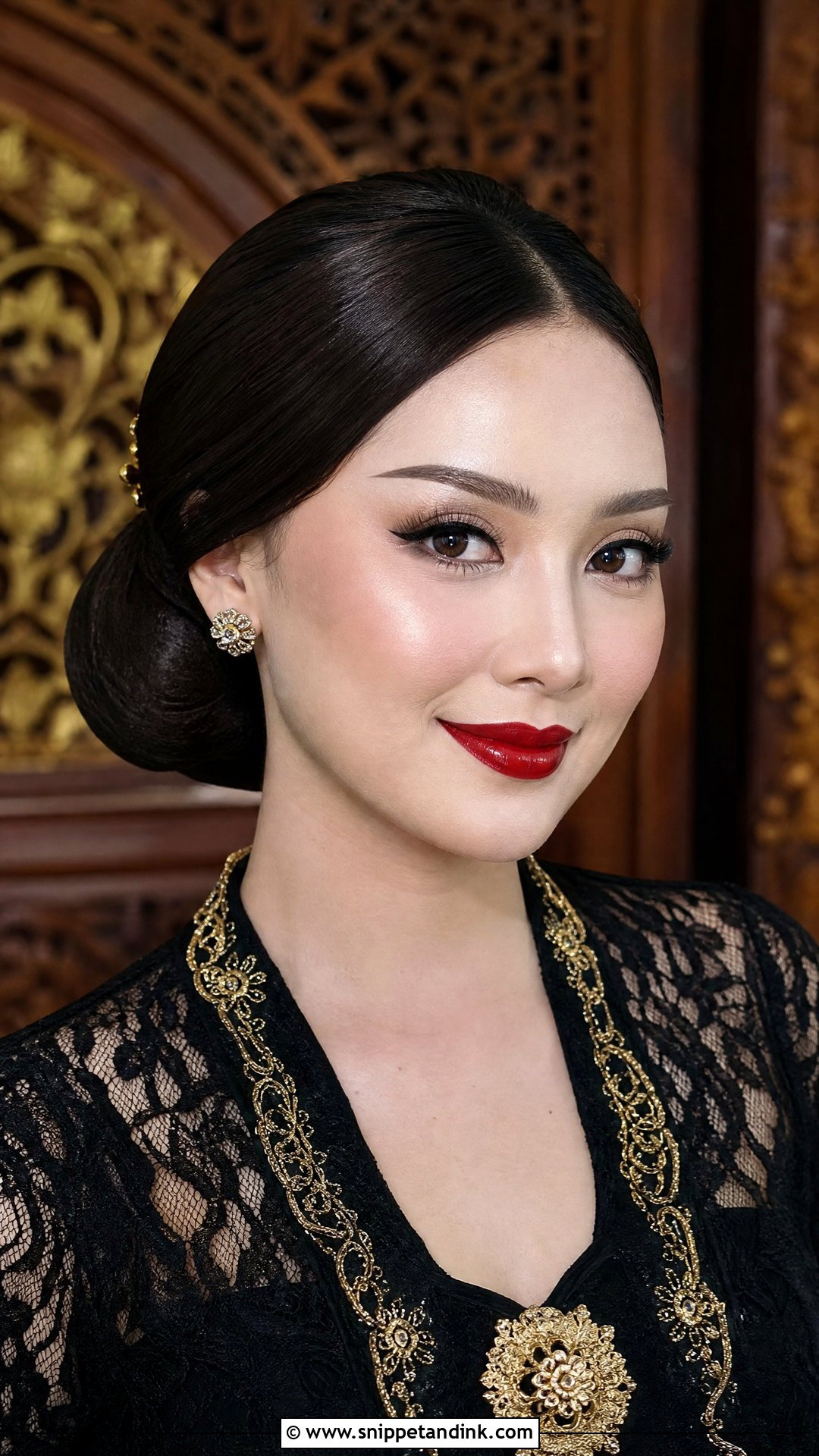
A red lip is the focal point, so I keep the eyes neutral in beige or brown, with black liner and lifted lashes. The shade depends on undertone: blue-based reds suit cool skin and make teeth look whiter, while brick reds sit better on warm, golden skin. I line and fill the whole lip with liner first, then layer the lipstick, so it fades evenly instead of leaving a ring. It suits black kebaya, a white akad outfit and gold accessories.
18. Nude Lip Indonesian Wedding Makeup
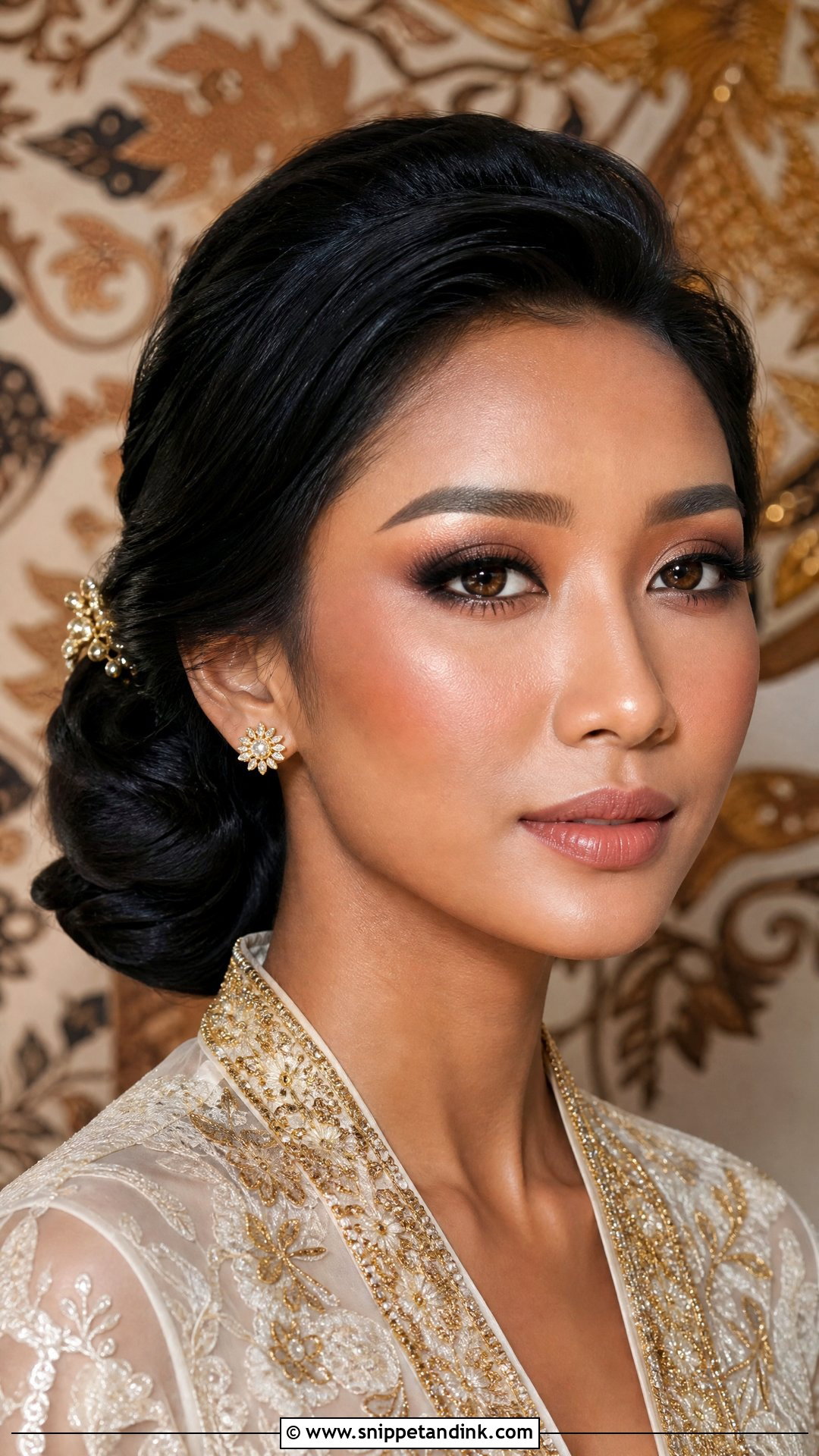
The nude has to have enough colour or the lips disappear in photos. On fair skin, I go pink-beige; on medium and tan skin, peach-brown or rose nude; on deeper skin, caramel or cocoa rose. Pair it with warm blush and soft smoky eyes. A nude a shade lighter than your lips almost never works; aim for one about the same depth as your natural lip or slightly deeper.
19. Korean Inspired Indonesian Bridal Makeup
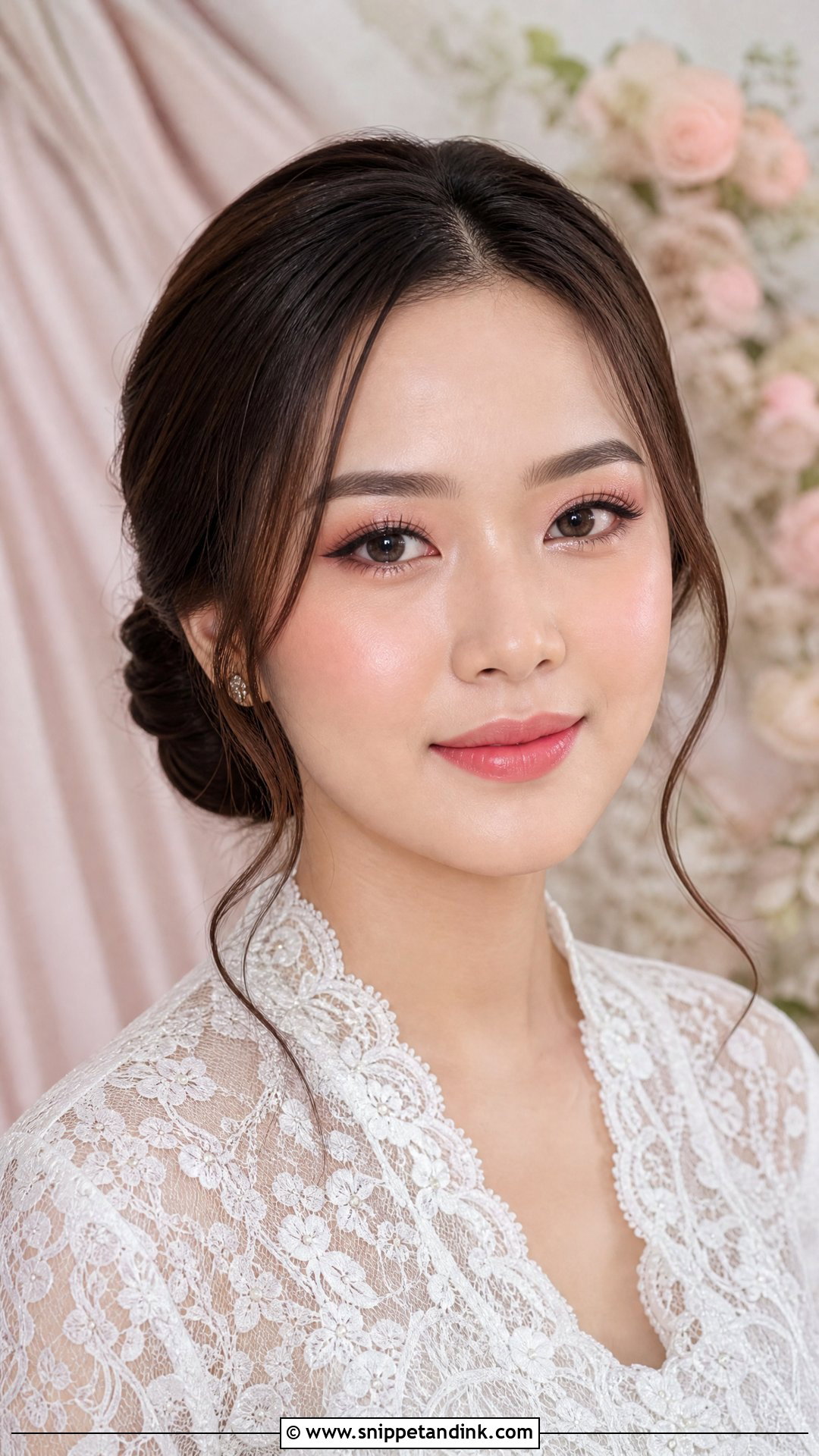
Korean inspired Indonesian bridal makeup focuses on fresh skin, straight or softly arched brows, and a blurred gradient lip. I use a cushion or lightweight foundation and place pink or peach blush high on the cheeks. Beige or rose shadow, thin liner and natural lashes keep it young. In heat, the light base needs a good setting spray, because it has less coverage to fall back on when you sweat. It suits akad ceremonies and engagement shoots.
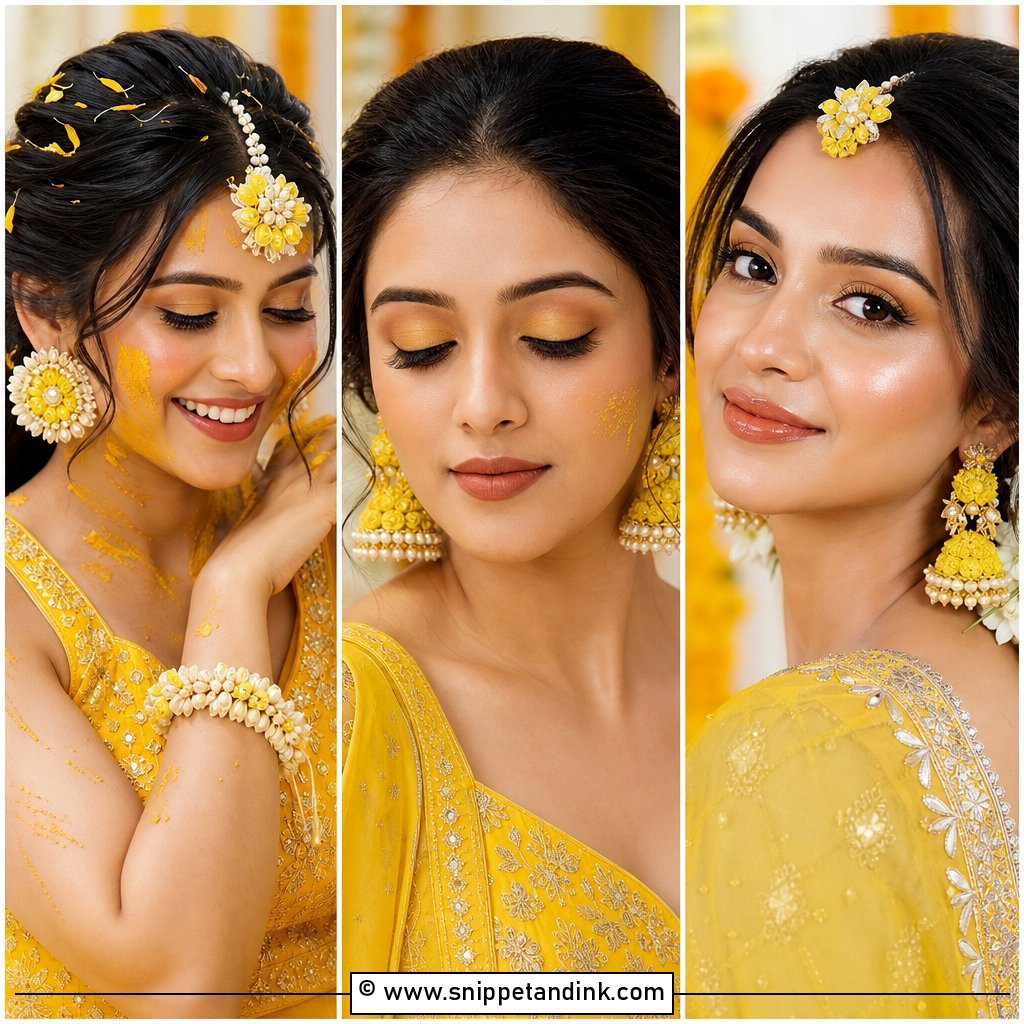
20. Modern Kebaya Wedding Makeup
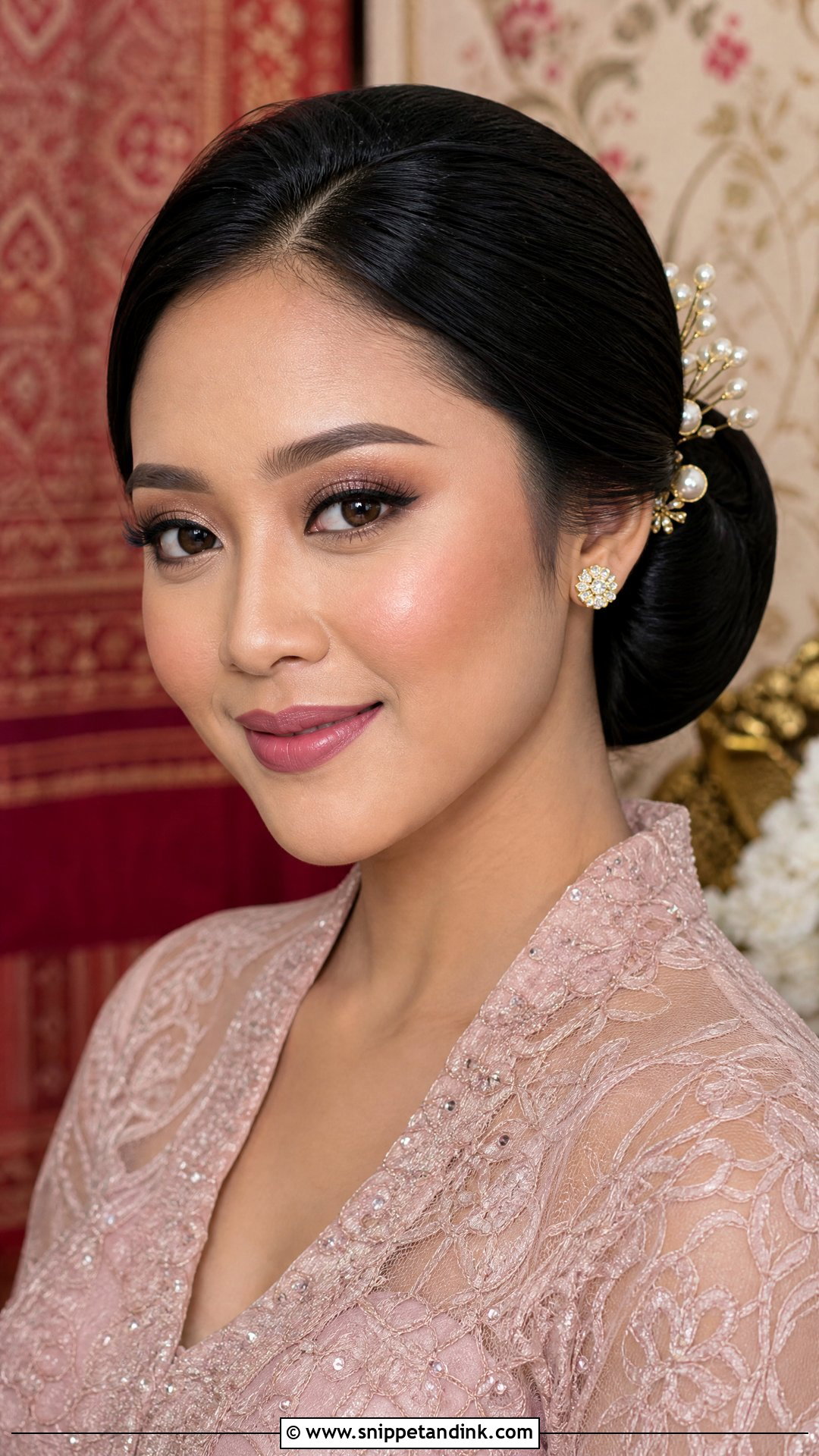
With a modern kebaya, the lace and beadwork are the detail, so the makeup should support them. I match blush to the kebaya’s undertone, use champagne or rose-brown shadow with a soft wing, and finish with a nude rose, mauve or classic red lip depending on the fabric colour. This look also works for mothers of the bride and guests wanting something polished but not bridal-heavy.
From Akad to Resepsi Without Starting Over
Many brides want a soft look for the akad and something deeper for the evening resepsi. Removing everything and starting again wastes time and irritates the skin. I prefer to build the second look on top of the first.
- Blot the face and refresh the base only where it has worn, usually around the nose and chin.
- Deepen the outer corner of the eye with a darker brown or plum and add a fuller lash.
- Switch to a stronger lip, removing the first one completely so the colours don’t mix.
- Re-set with a light mist.
Allow about 45 minutes for the change, more if the headpiece changes too, since hair and accessories often take longer than the makeup.
Questions for an Artist Before She Paints a Paes or Fits a Suntiang
Traditional looks need specific skills, and not every makeup artist offers them. I’d ask these questions before booking:
- Have you drawn paes or prepared a face for this headpiece before, and can I see photos of your own work?
- Do you work with a perias or hairstylist who fits the headpiece, and who arrives first?
- Will you stay for the ceremony to touch up, or leave after the first look?
- If I pray during the day, how will the makeup be refreshed afterwards?
The last question matters for many Muslim brides, since ablution removes makeup from the face and hands. A good artist plans the timing with you rather than leaving you to fix it alone.
Matching the Face to the Ceremony, the Headpiece and Your Skin
The look you choose depends less on the photo you saved and more on what you’ll wear on your head, how long you’ll be in it, and the weather. Traditional looks like paes, siger and suntiang need stronger structure to stand up to the gold. Akad and modern styles can stay lighter and more skin-focused. Whatever direction you go, I’d book a trial with the actual headpiece or a photo of it, test the base in daylight, and plan your touch-up kit around the climate on the day.
You'll Like These Ideas:


Leave a Reply