
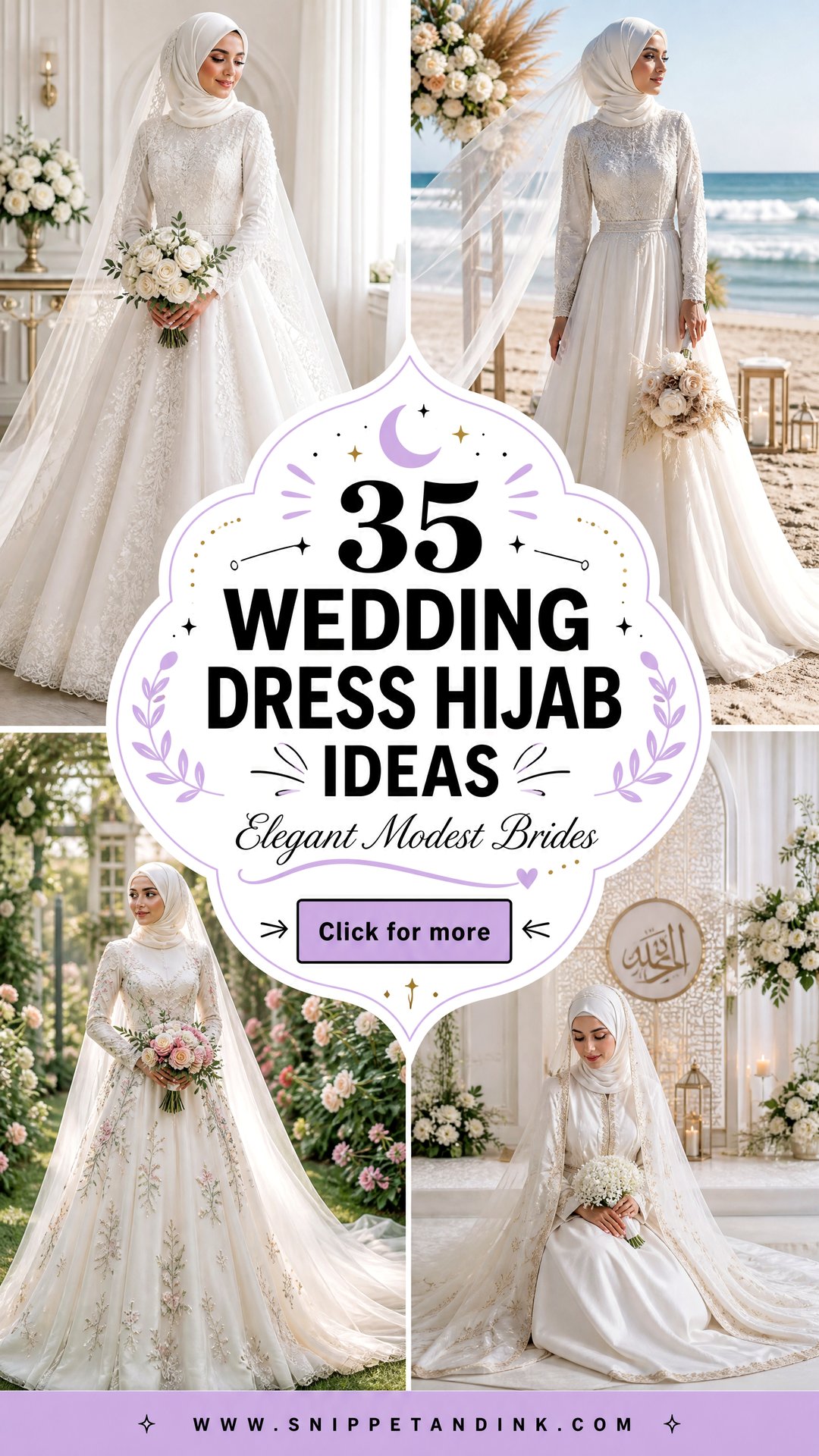
Many brides planning a hijab look choose the gown first and treat the scarf as an afterthought, and that is usually where the outfit stops feeling finished. The scarf sits closest to your face, so its fabric, colour and wrap decide how the whole look reads in a close-up. Today’s modest bridal fashion runs from clean satin gowns and lace to cape dresses, embroidered abayas, kaftans, lehengas and tailored suits. Below are 35 dress and hijab pairings, each with the thing I’d check at a fitting before you commit.
Matching Scarf Weight to the Gown Fabric
The mismatch I see most is a thin, shiny scarf over a heavy matte gown, or a stiff satin wrap above a floaty chiffon dress. The two fabrics should be from the same family of weight so they move the same way when you walk.
- Satin, mikado and heavy crepe gowns: silk satin, crepe or a heavier georgette scarf. Fine chiffon can look limp beside them.
- Chiffon, organza and tulle gowns: chiffon or georgette. A satin wrap looks stiff above an airy skirt.
- Lace and embroidered gowns: plain chiffon or crepe in a shade taken from the base fabric, not the thread.
- Jersey and modal scarves: comfortable and grippy, but they can look casual in close-ups unless the gown is very simple.
Whites are rarely identical, either. Hold the scarf against the gown by a window and see whether one looks blue and the other yellow. If you can’t match exactly, go a touch warmer on the scarf; a warmer tone near the face is usually kinder than a cold bright white.
Where the Pins Go When a Veil or Tiara Sits on Top
A wrapped hijab is a layer of cloth, not hair, so nothing grips it the way a comb grips hair. The structure has to come from underneath.
- Start with a fitted undercap, tie-back or cotton with a little grip, in a shade close to the scarf.
- Wrap the hijab and pin it to the undercap, hiding pins in the folds at the side of the head and under the chin.
- Anchor the veil or tiara through the undercap, never through the scarf alone. A small comb slid under the wrap and caught in the cap holds a veil; a tiara needs a band or grips threaded into the cap.
- At your trial, wear the veil and walk, turn and hug someone. If the wrap creeps backwards, the veil is too heavy for where it’s anchored.
Bring spare pins in your scarf colour to the venue. Magnetic pins are gentle on fine fabric but can slide on satin, so test them on your actual scarf first.
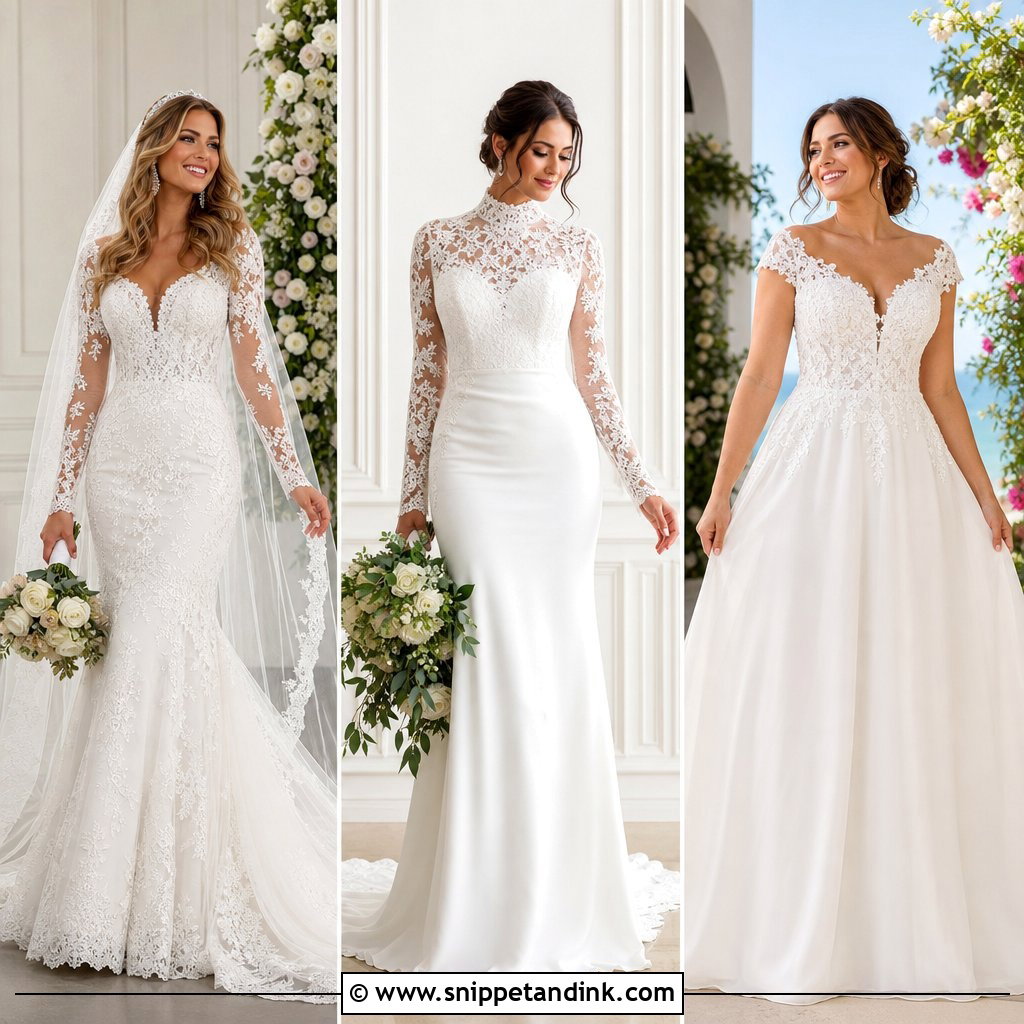
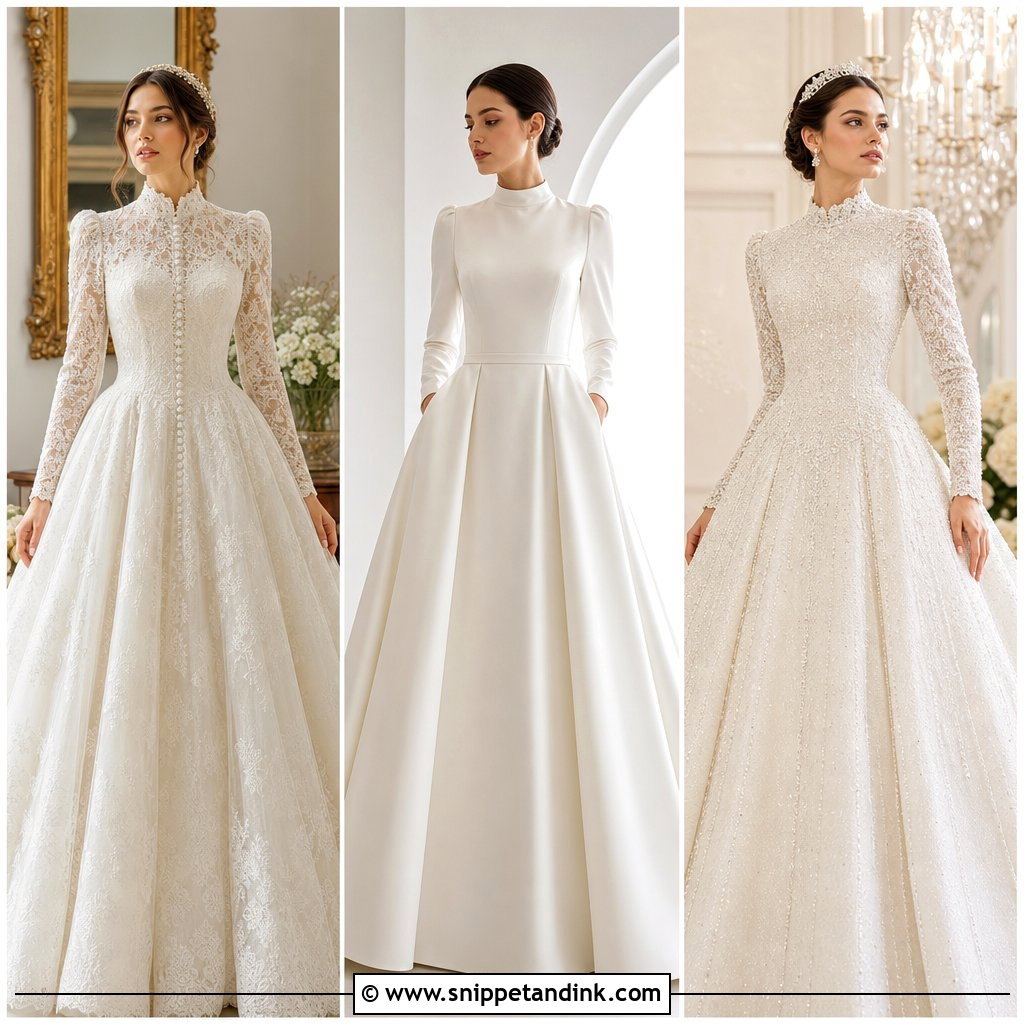
1. White Satin Wedding Dress Hijab
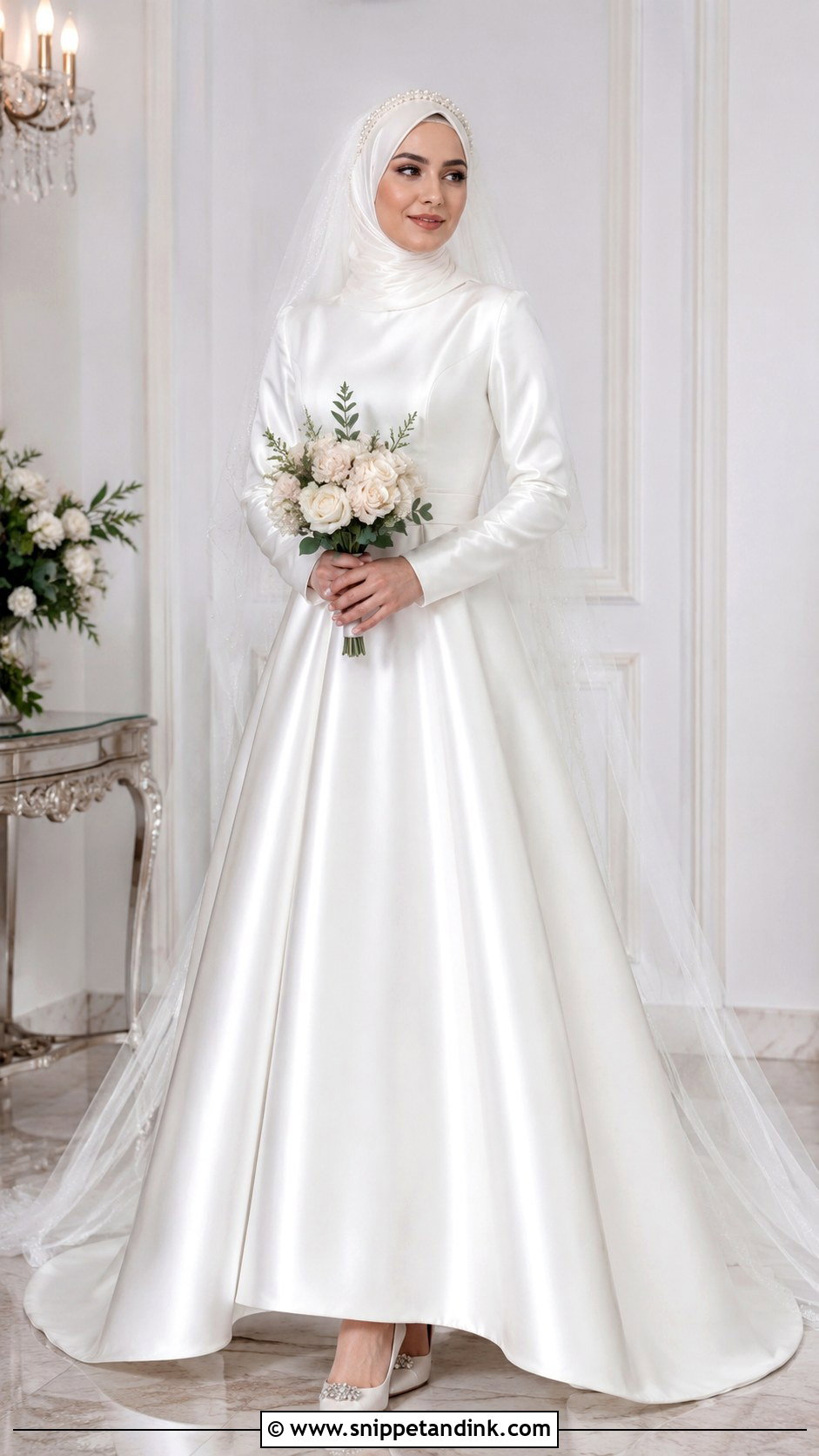
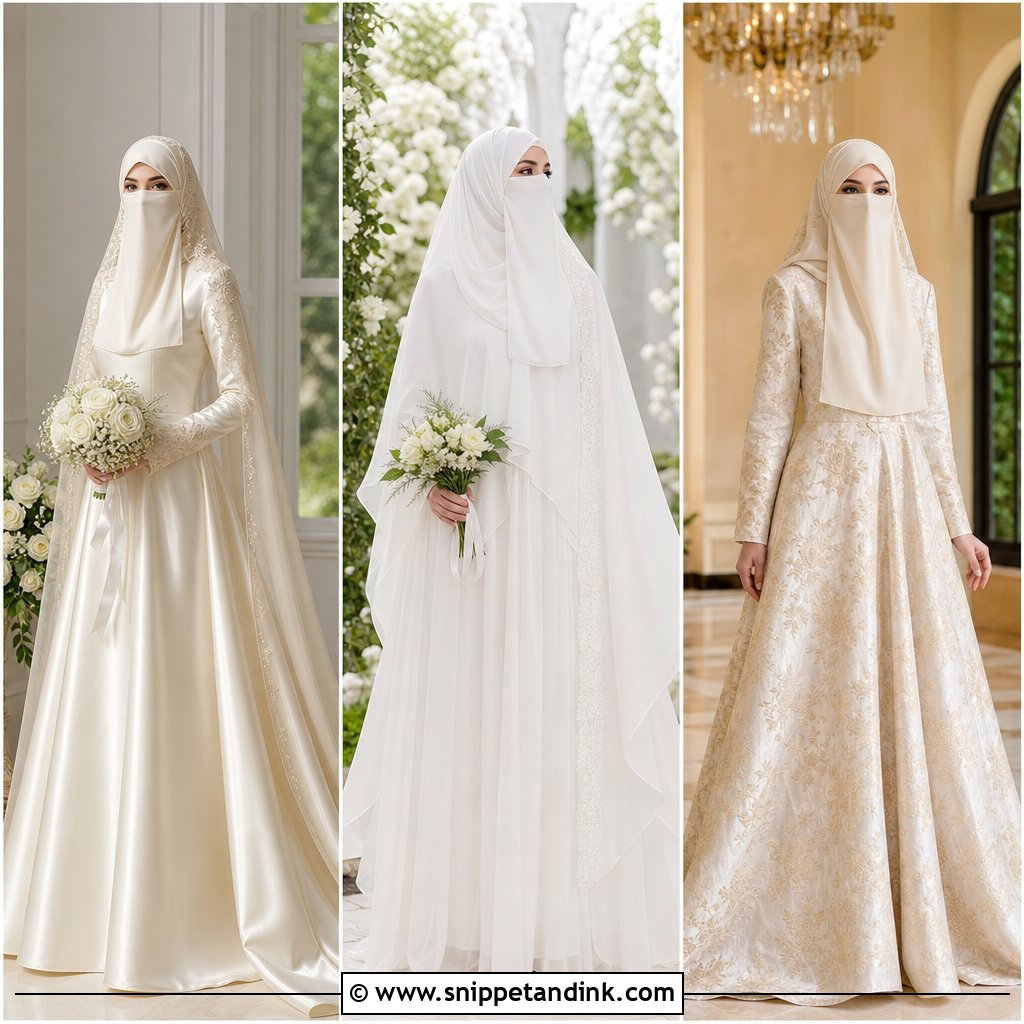
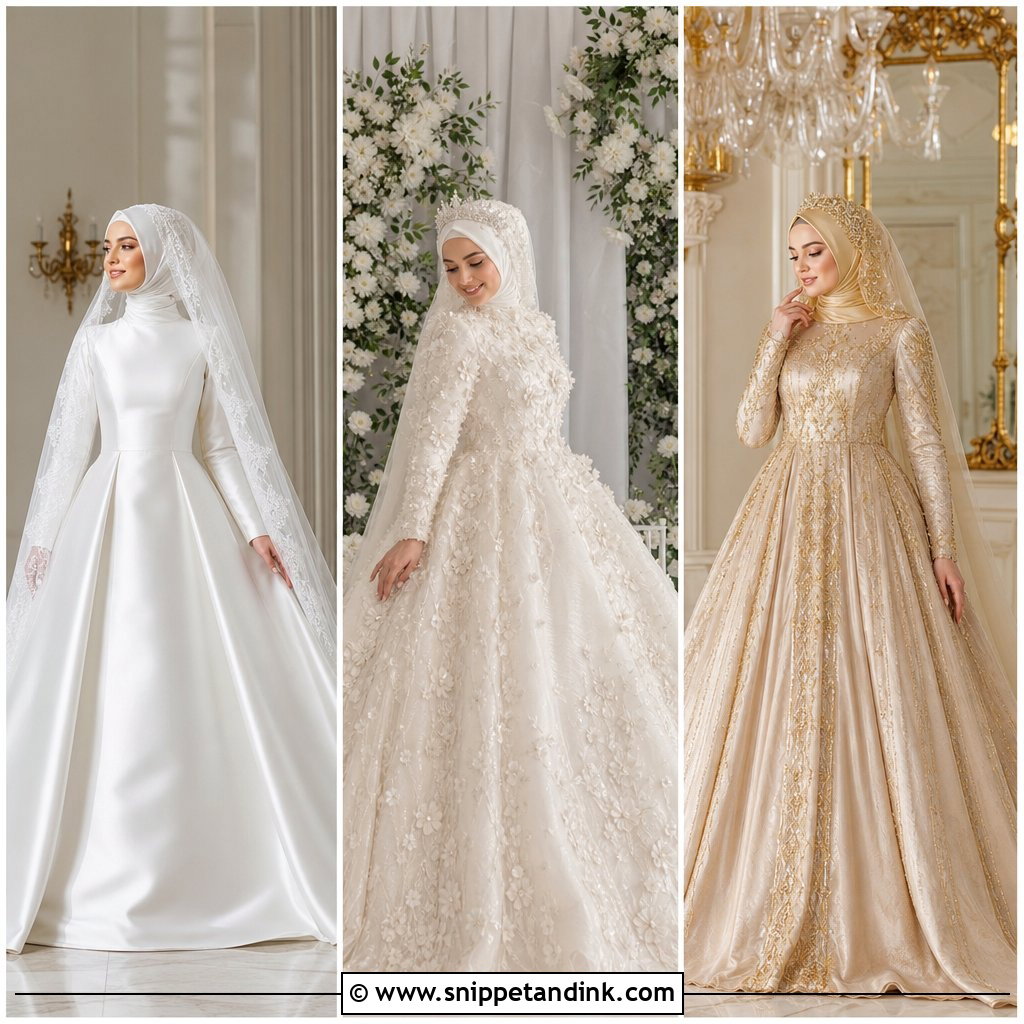
Satin is the fabric I’m most careful with under a hijab, because it shows every ripple. A long-sleeve satin gown with a high neck and an A-line skirt gives you a clean base, and a matching silk or satin scarf carries that sheen up to the face. The catch is pins: satin snags and keeps pin holes, so I anchor the wrap to a cotton undercap and keep pins out of the visible satin entirely. A pearl headband over the scarf and ivory pointed heels are enough. Skip heavy beading here, because the light moving on the fabric is the decoration.
2. Lace Wedding Dress Hijab
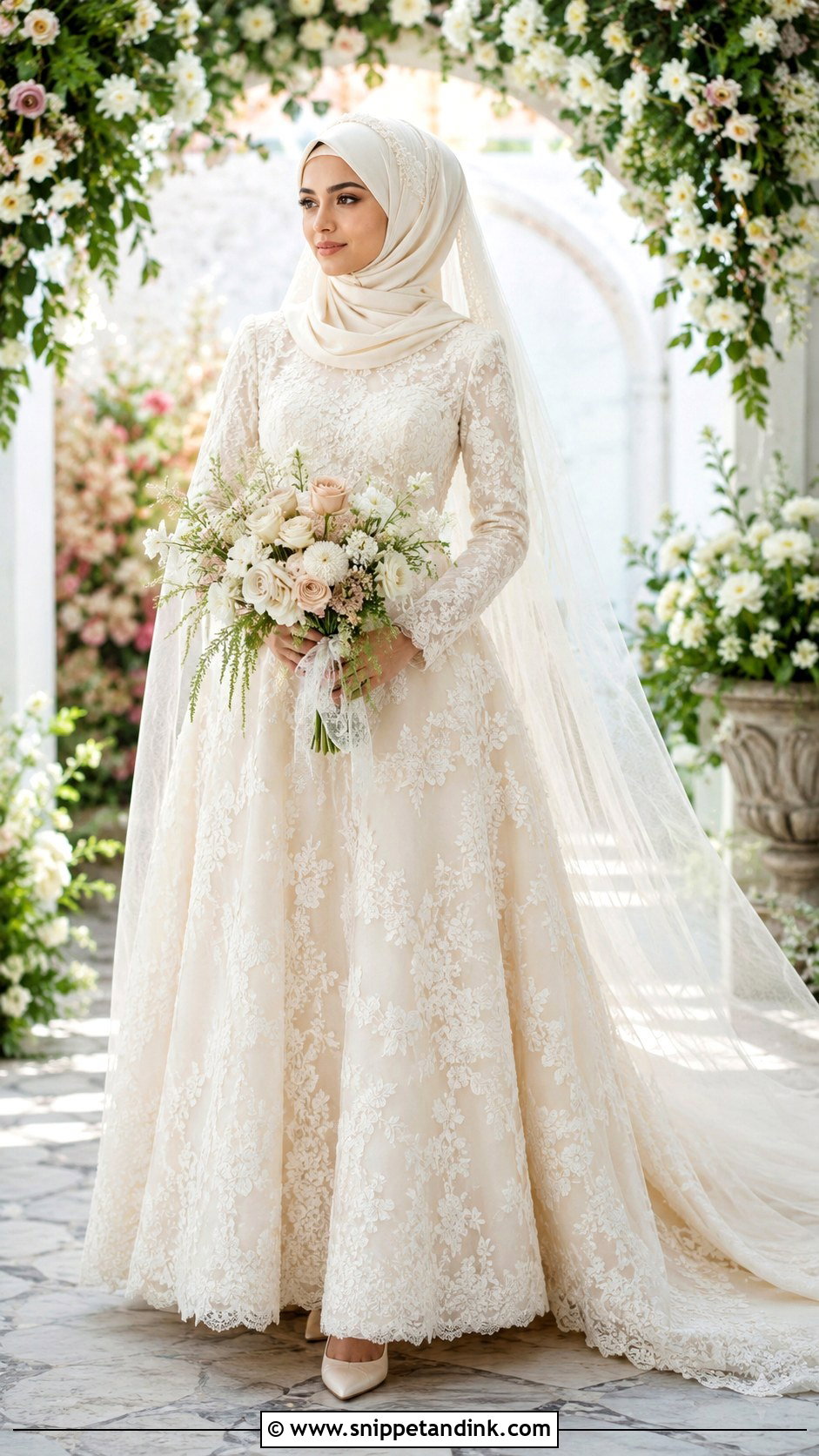
With a long-sleeve lace gown I keep the scarf plain almost every time. Two textures competing at the neckline look busy in photos, and the lace already gives you the detail. Ivory or cream chiffon drapes softly over a lined lace bodice, though corded lace will grab a fine scarf and pull threads, so tuck the ends in front rather than letting them rest on the shoulder. Check the shade in daylight too: lace often has a warmer cast than a bright white chiffon. With heavy lace sleeves, leave the wrists bare.
3. A-Line Wedding Dress Hijab
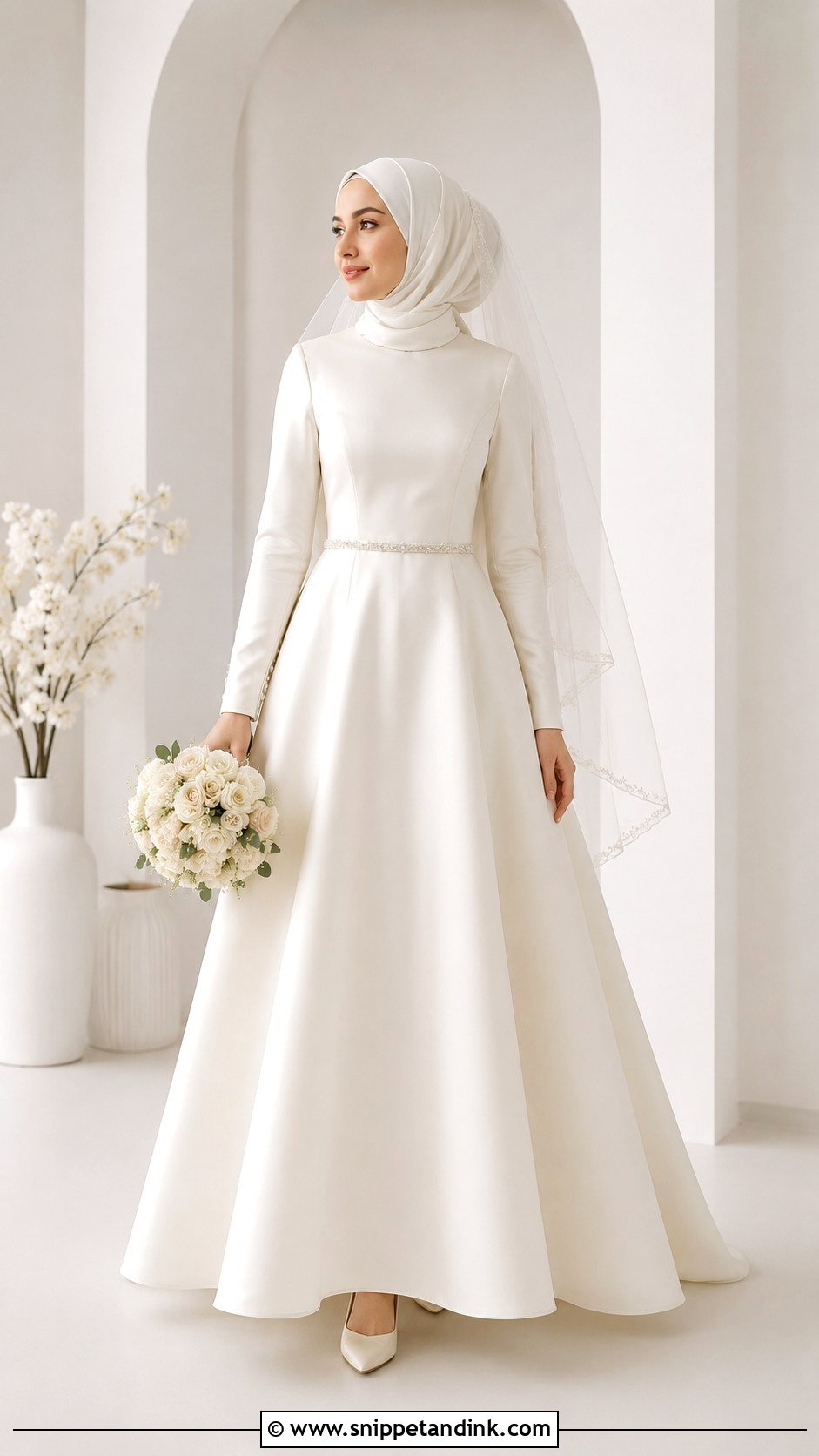
When a bride isn’t sure where to start, I usually pull an A-line first. It sits well on most figures and still lets you move when you sit on the floor for family photos. Look for long sleeves, a high neckline, full lining and a little structure in the bodice so the waist holds its line all day. A chiffon hijab tucked close around the face keeps the top half light against the skirt, and a thin belt adds definition if you want it. Ivory pumps, a mid-length veil and a rounded bouquet finish it without fuss.
4. Ball Gown Wedding Dress Hijab
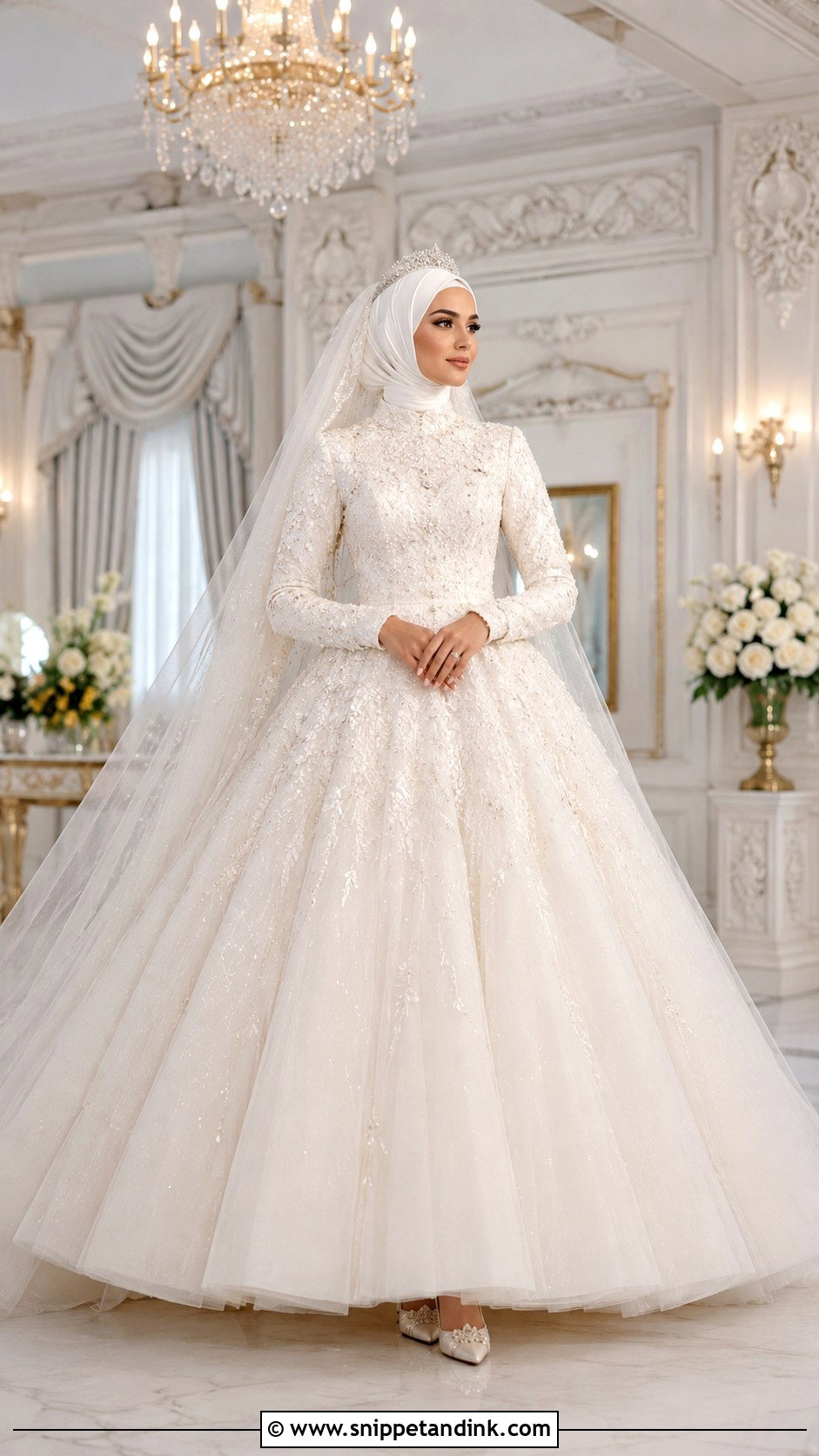
A full skirt in tulle, organza or mikado is heavy, and over a long day that weight drags the bodice down slightly. Anything pinned to the neckline gets pulled with it, which is why I never pin the hijab to a ball gown. The scarf gets its own undercap and stays independent of the dress. Since the volume does the talking, keep the wrap smooth and shaped around the face, and if you wear a tiara or crown, seat it on the fitted cap with a small grip each side. Save this one for a room big enough that the skirt doesn’t fight the tables.
5. Mermaid Wedding Dress Hijab
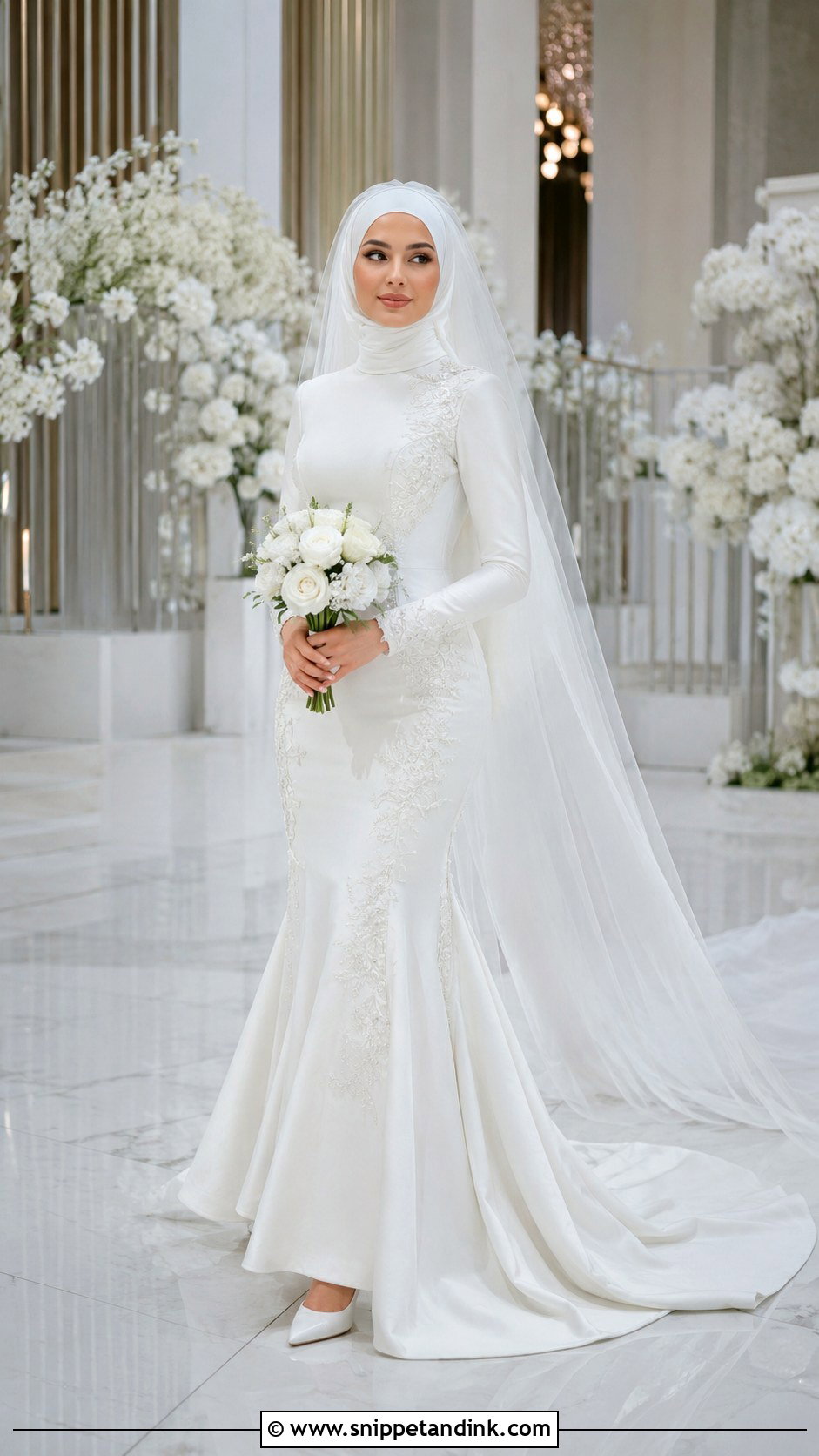
A mermaid wedding dress hijab outfit only works if the fit is honest about movement. Sit down and climb a step in it at the fitting; if the flare starts above the knee you won’t manage stairs or a floor-seated ceremony. Long sleeves, a high neck and full lining keep the shaped body modest, and a smooth chiffon or crepe hijab keeps the top quiet. Start the veil at the back of the crown so it falls in one line with the flare. I’d steer anyone who dislikes attention on the hips toward the A-line instead.
6. Long Sleeve Wedding Dress Hijab
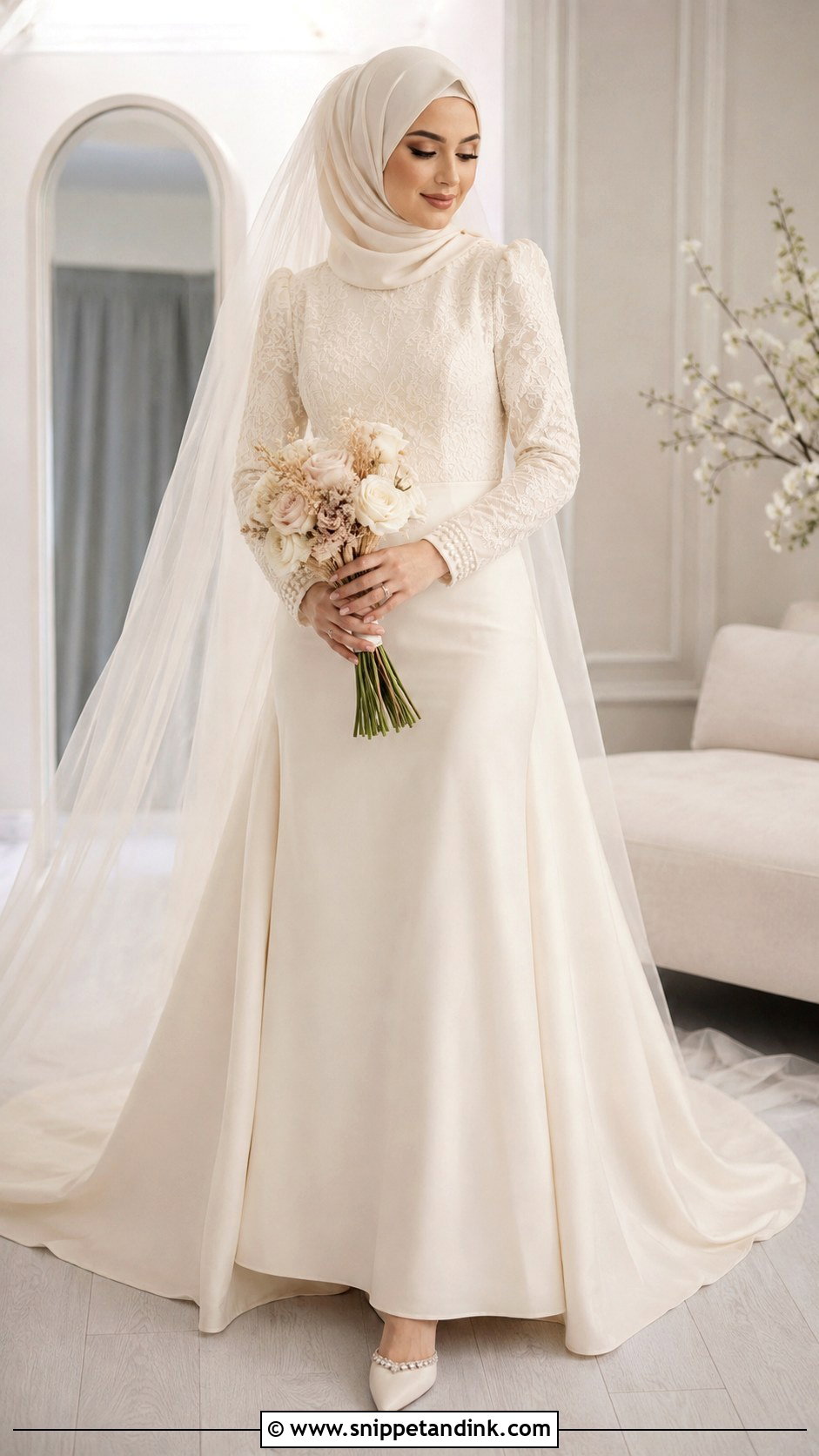
Every hijab-friendly gown has sleeves, so the sleeve has to carry some bridal detail or the dress starts to read like smart eveningwear. Lace, pearl cuffs, satin-covered buttons or a lined sheer sleeve all solve that. Watch the shoulder: if the sleeve head is decorated, a bulky wrap draped over it hides the work you paid for, so tuck the scarf ends in front. Have the sleeves hemmed with your arms relaxed at your sides. Brides who stand for alterations with their arms lifted often end up with bare wrists in every hug photo.
7. High Neck Wedding Dress Hijab
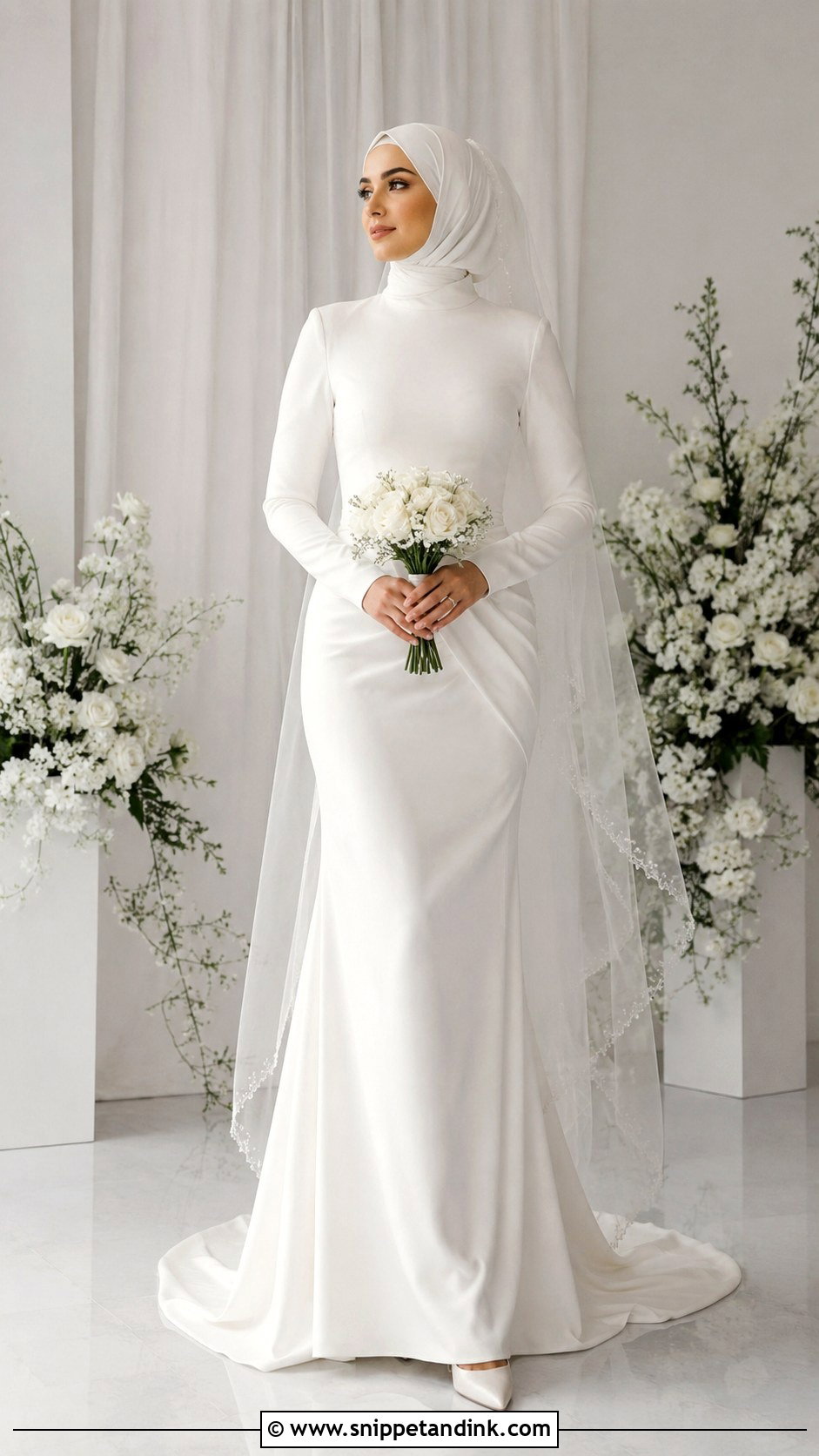
A high neck does half of the hijab’s job, which means the wrap can be simpler and lighter. Crepe, satin, lace and mikado all hold a tall collar well, and a tucked chiffon or smooth silk wrap that follows the collar line looks neat. If the neckline has buttons, embroidery or a lace edge, set the scarf hem just behind it so the detail shows. One thing to test: a stiff collar plus a wrapped scarf can feel hot and tight at the throat, so wear both together for an hour before the wedding.
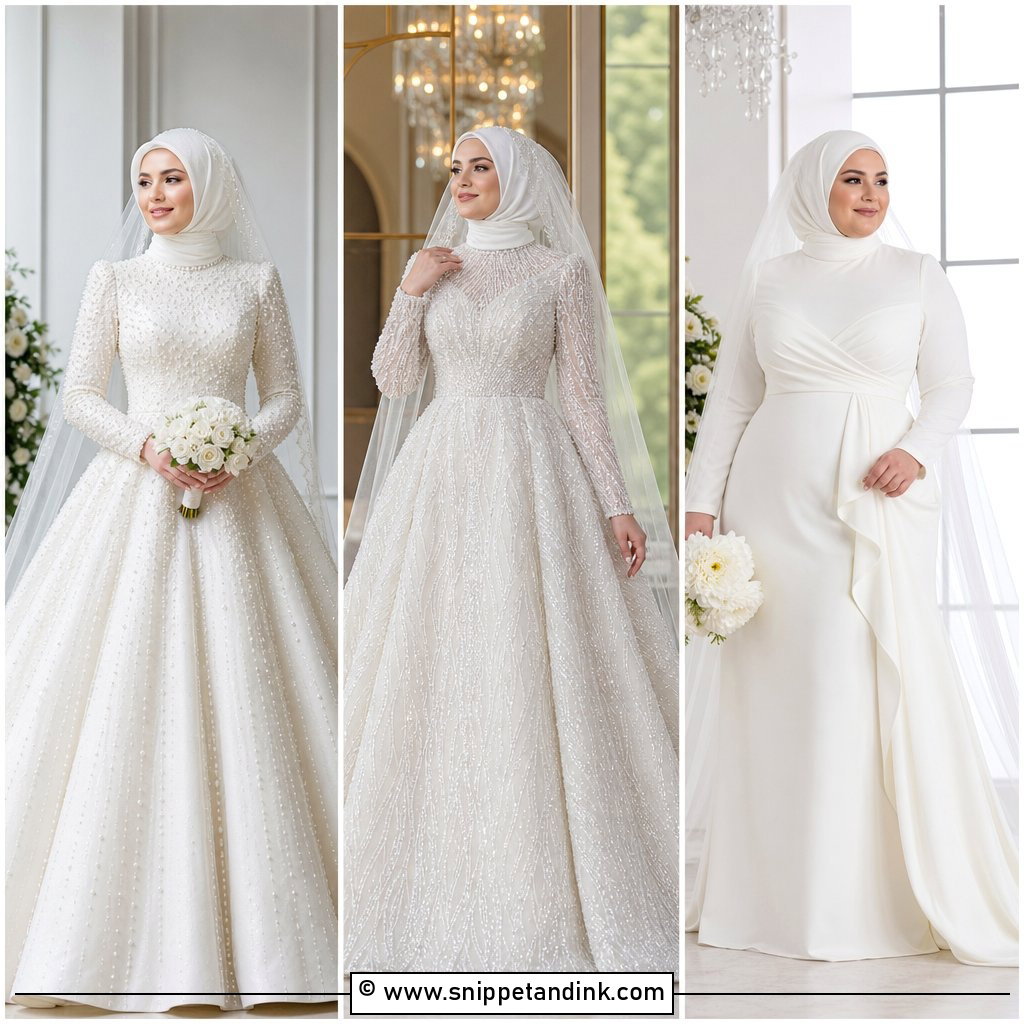
8. Pearl Wedding Dress Hijab
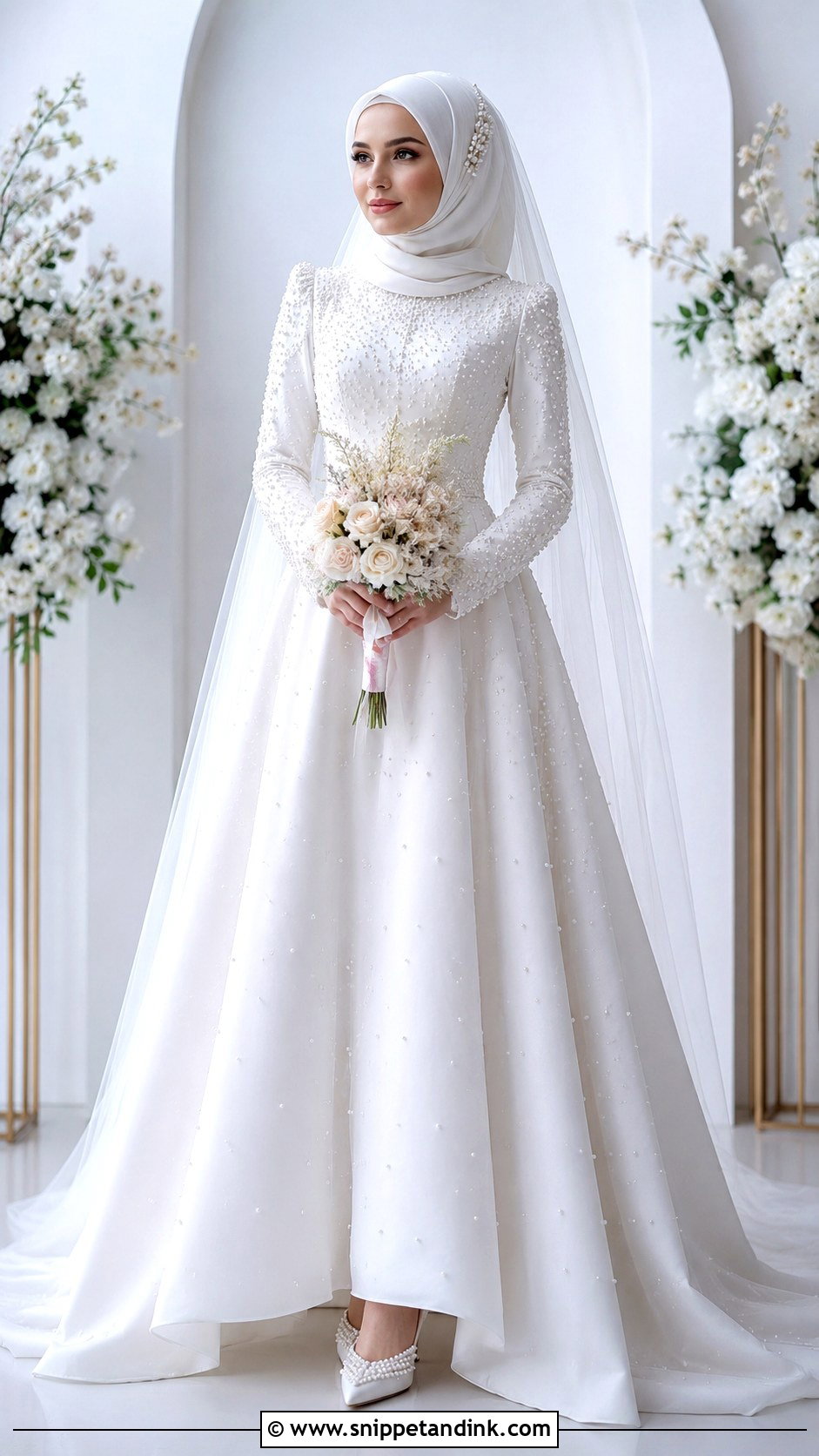
Pearls go wrong when they turn up on every piece at once. I repeat the detail in two places at most, say beaded cuffs on the gown and a few pearl pins on the scarf, and keep everything else plain. If the bodice is already heavily beaded, a plain chiffon hijab is the better call. Pearl pins also do a real job: a decorative pin with a proper clasp holds the drape at the temple where a safety pin would show. White or blush flowers suit the palette.
9. Embroidered Wedding Dress Hijab
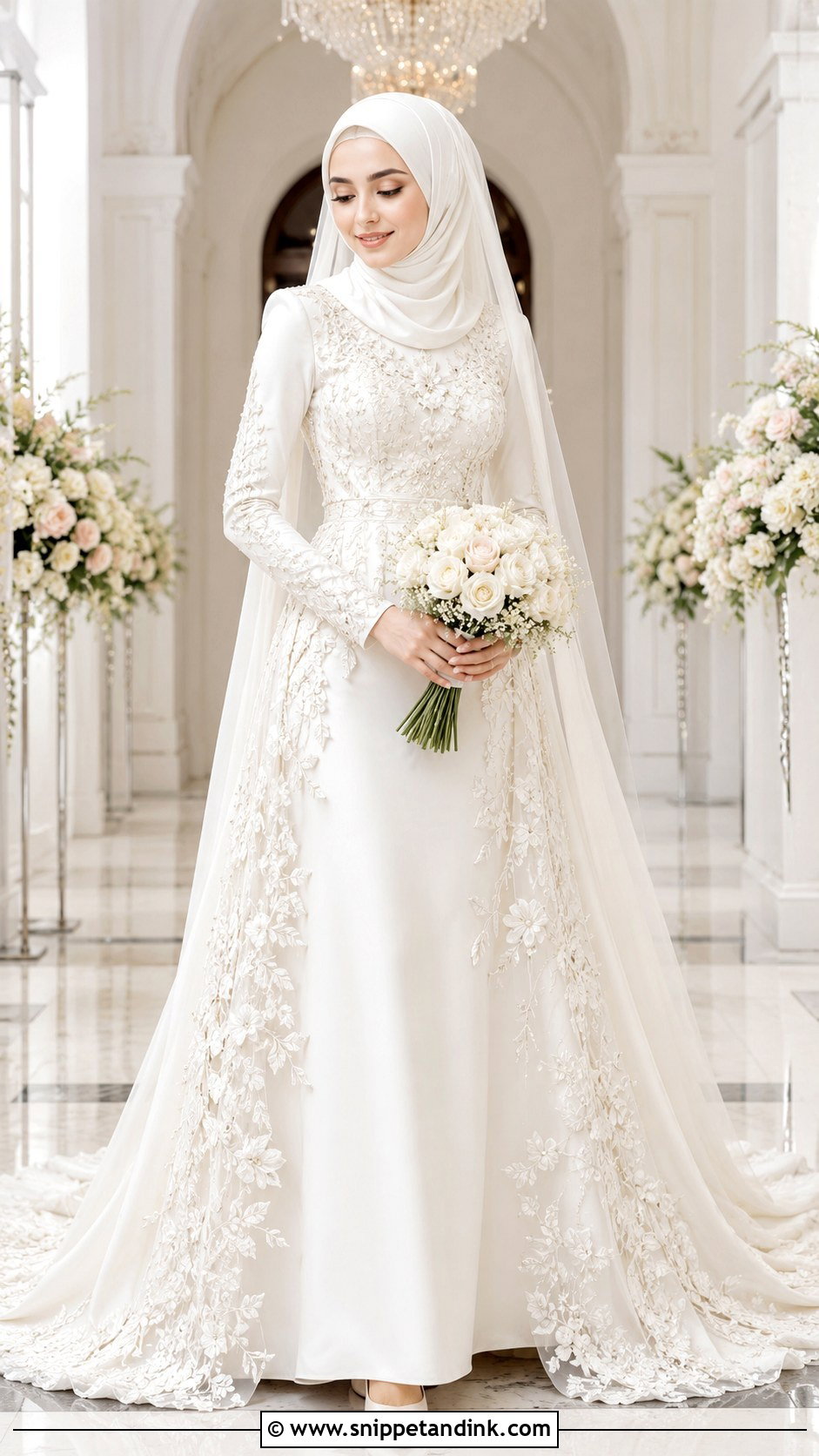
Embroidery is where I spend the most time looking at placement. Work on the bodice and sleeves sits right next to the scarf, so the hijab must be plain and in a shade taken from the background fabric, not the thread. Embroidery concentrated on the hem or train leaves you freer to add a pearl edge near the face. Floral, vine and geometric patterns all work. Keep the veil edging minimal so it doesn’t lie on top of the threadwork and catch, and match your jewellery metal to the thread colour.
10. Beaded Wedding Dress Hijab
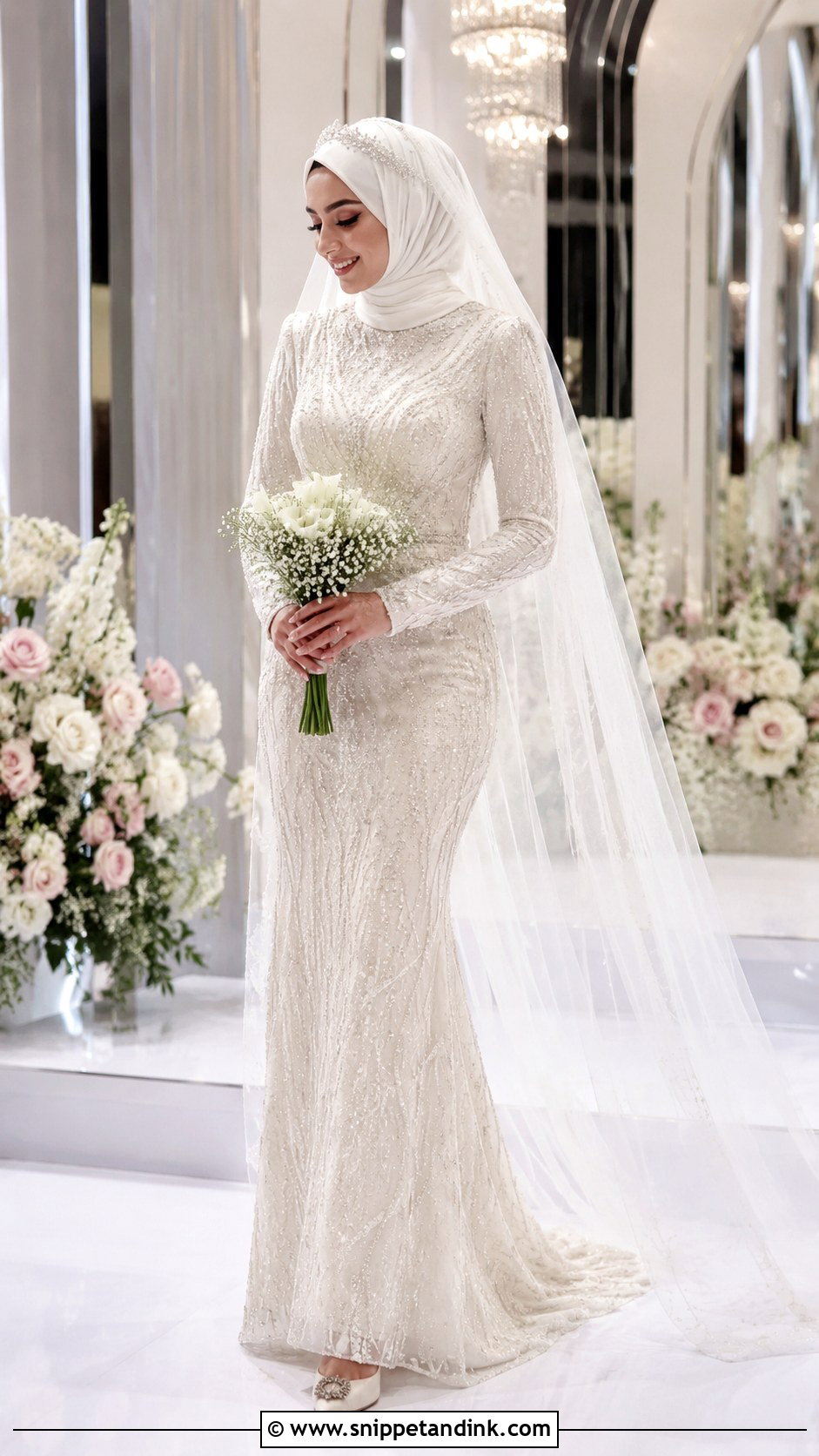
Beading sparkles at evening receptions, and it also snags fine fabric. A chiffon scarf resting on a beaded shoulder will pull and ladder by the end of the night, so I keep the wrap ends tucked in front or pinned up off the beadwork. A matte chiffon tones the shine down; a satin scarf pushes the outfit toward glamour. Choose a veil that doesn’t cover the best of the beads. Metallic or ivory heels and a few small crystal accents are plenty.
11. Chiffon Wedding Dress Hijab
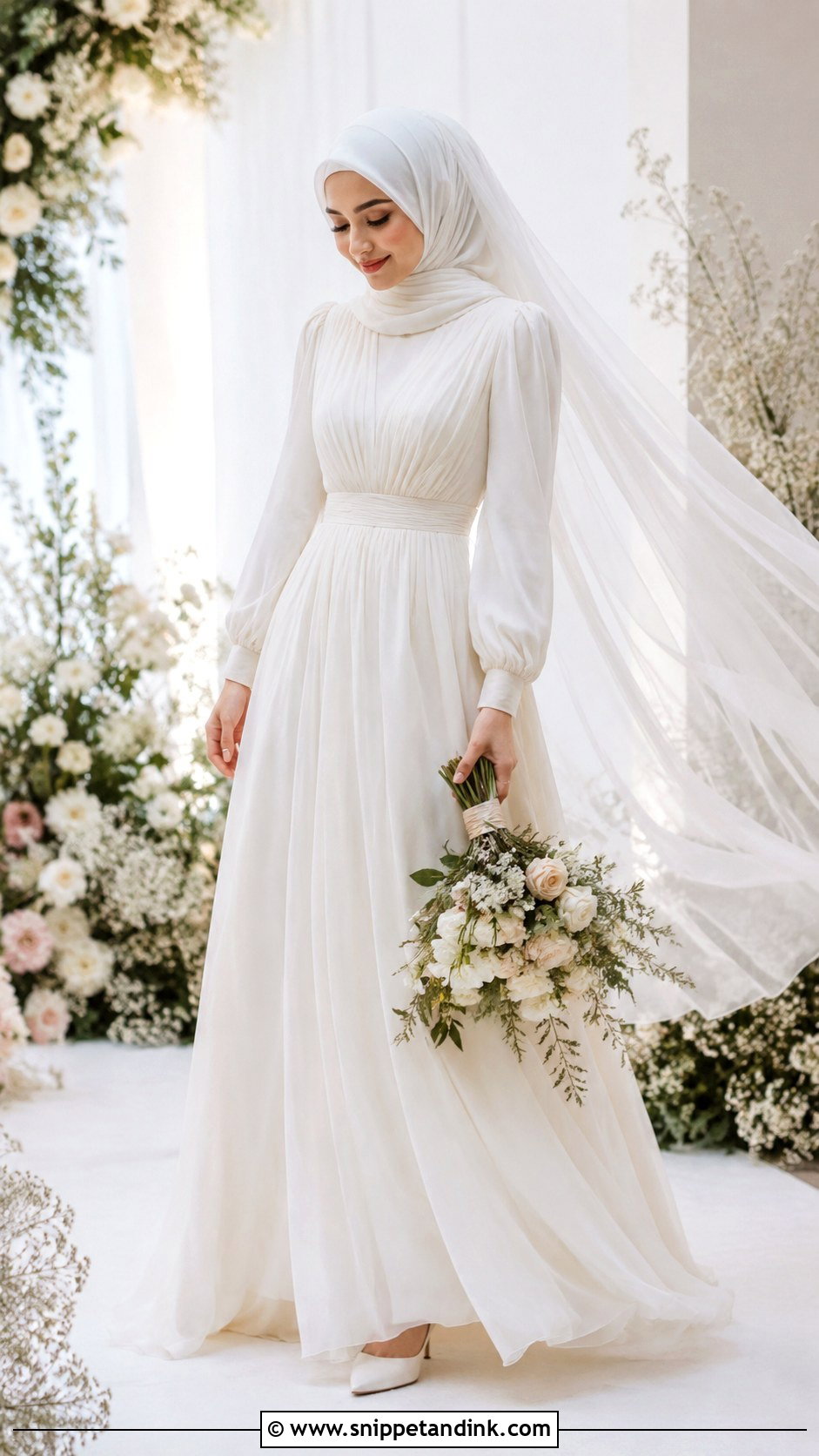
Chiffon moves with you, which is why it’s so popular outdoors, but most bridal chiffon is sheer. Check the gown’s lining in natural light, and wear an opaque undercap in a shade close to the scarf, because a dark cap shows through ivory chiffon as a shadow in flash photos. A matching chiffon hijab then blends straight into the gown. Block heels or soft pumps, a light veil and a loose bouquet keep it airy for spring and summer.
12. Tulle Wedding Dress Hijab
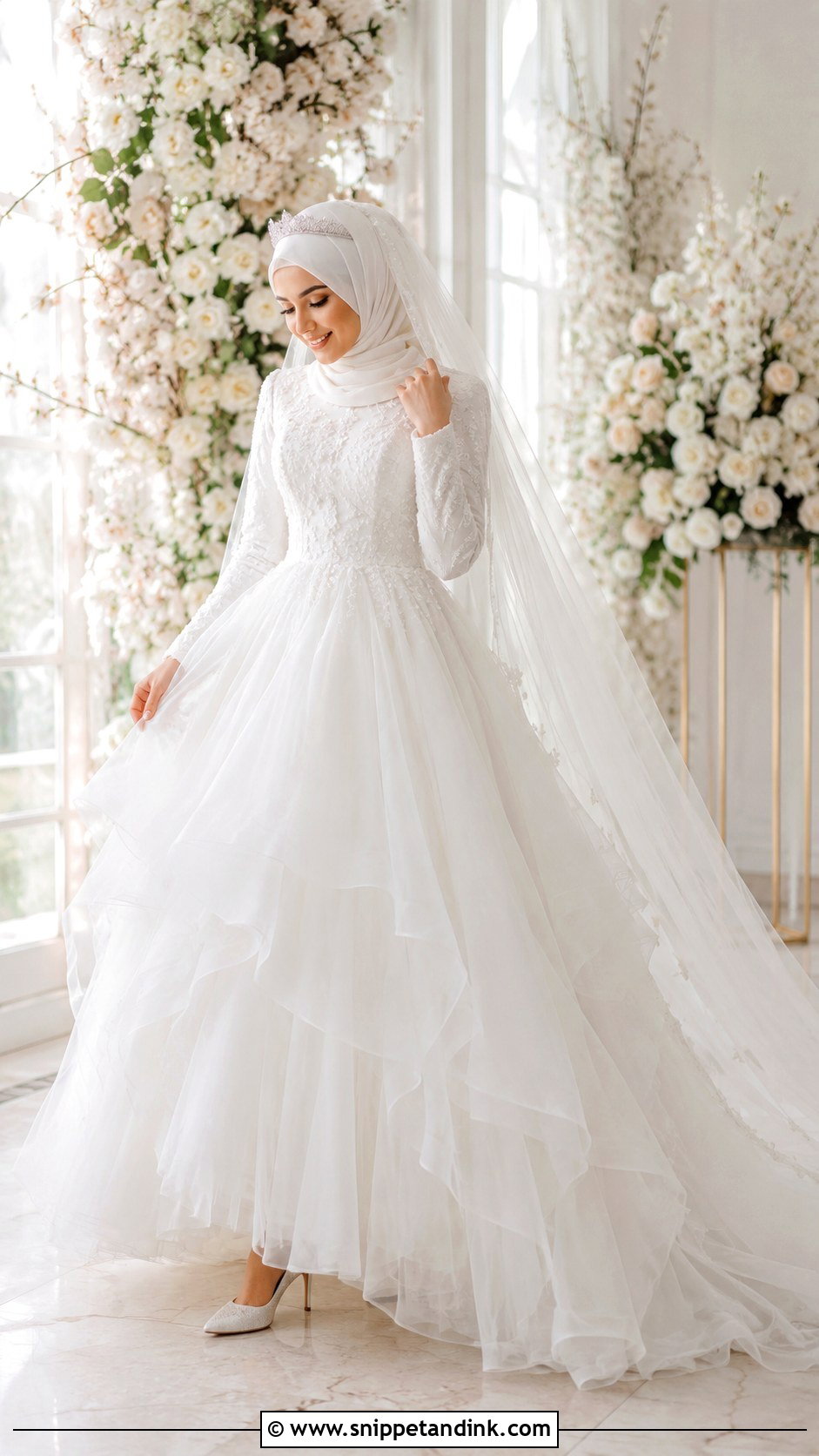
A tulle wedding dress hijab look gives that soft, hazy quality in pictures, through layered skirts, a detachable overskirt or sheer sleeve panels over lining. Tulle is also the fabric most likely to catch on pins and earring hooks, so I run every brooch and clasp across it at the fitting. Keep the face area clean with a simple chiffon scarf and let the skirt bring the volume. If you add a tulle veil, slide its comb into the undercap rather than pinning through the scarf, so it can’t drag the wrap backwards.
13. Cape Wedding Dress Hijab
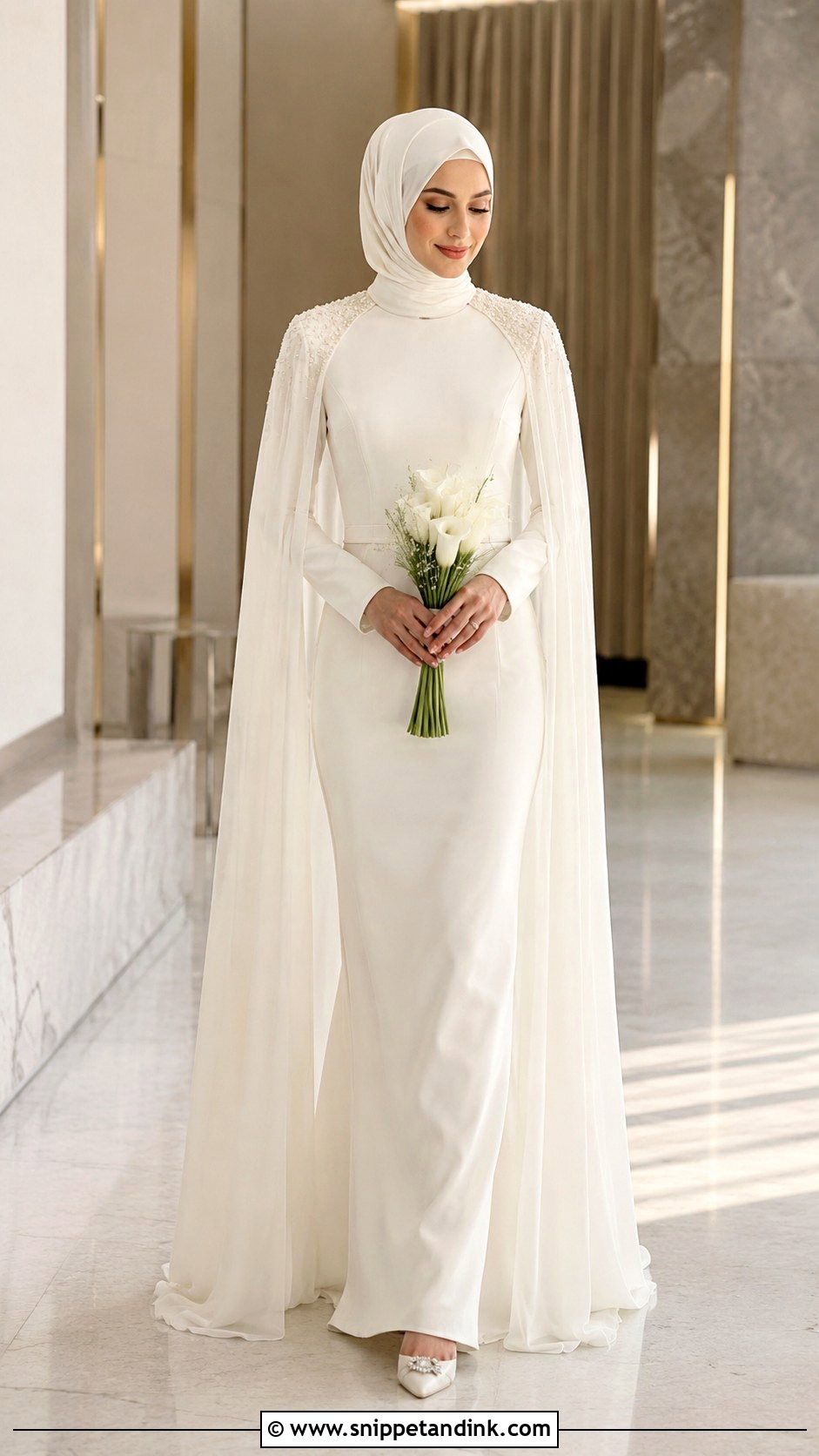
A bridal cape can stand in for a veil, which suits brides who find a veil plus a hijab too much fabric around the head. It attaches at the shoulders or the neckline over a long-sleeve column, A-line or crepe dress, and the scarf stays wrapped close so the cape remains the feature. Test it by hugging someone. A cape fixed at the neckline can pull the collar and the scarf along with it, while one attached at the shoulders moves more freely. Pointed heels and a slim bouquet balance the back.
14. Detachable Train Wedding Dress Hijab
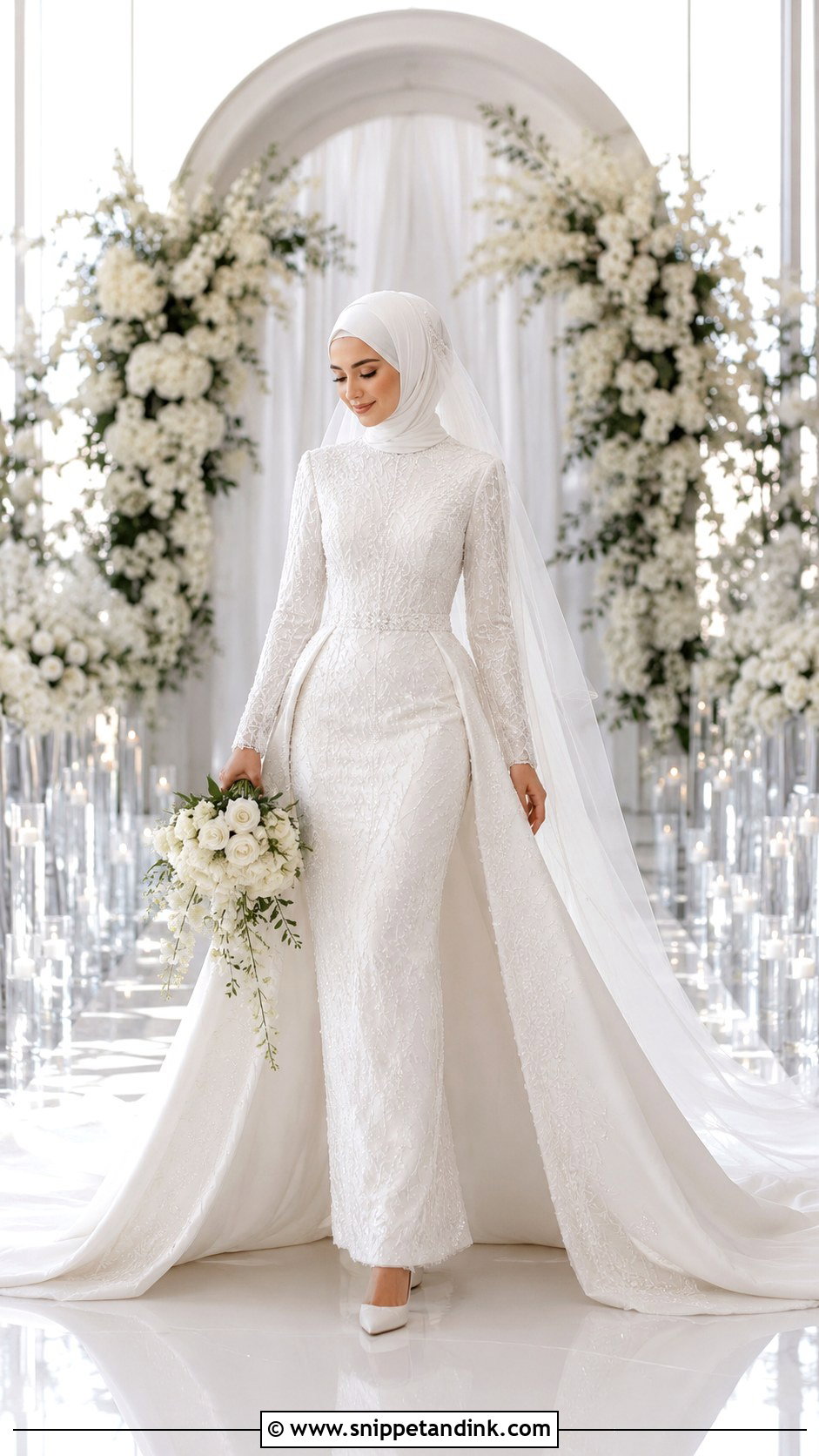
A detachable train gives you a formal walk down the aisle and then freedom to move once the greetings and dancing start. Sort out the fastening early: hooks, buttons or poppers at the waist need someone who can release them without tugging the bodice, so show your bridesmaid at the final fitting. A fitted long-sleeve gown or plain A-line sits underneath. Pick a veil that doesn’t land on the same spot as the train attachment, or the two will tangle.
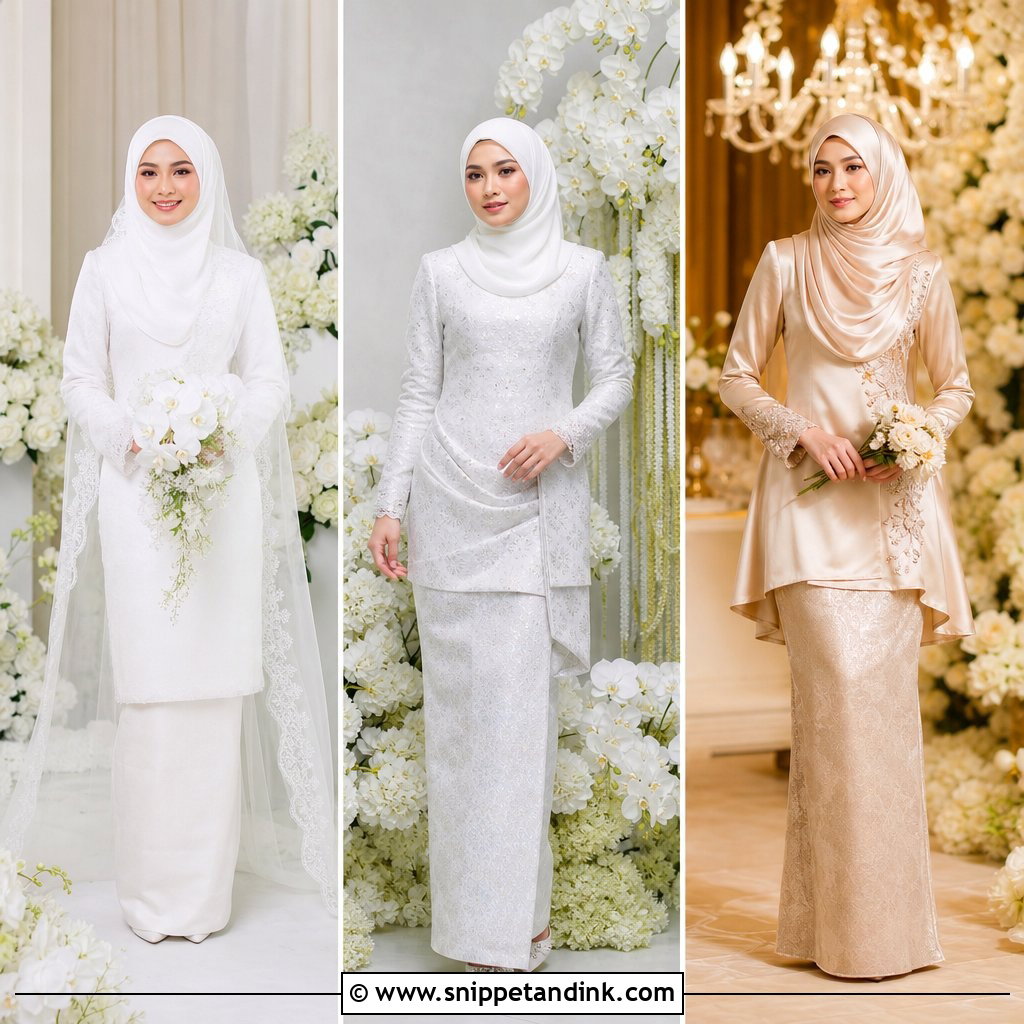
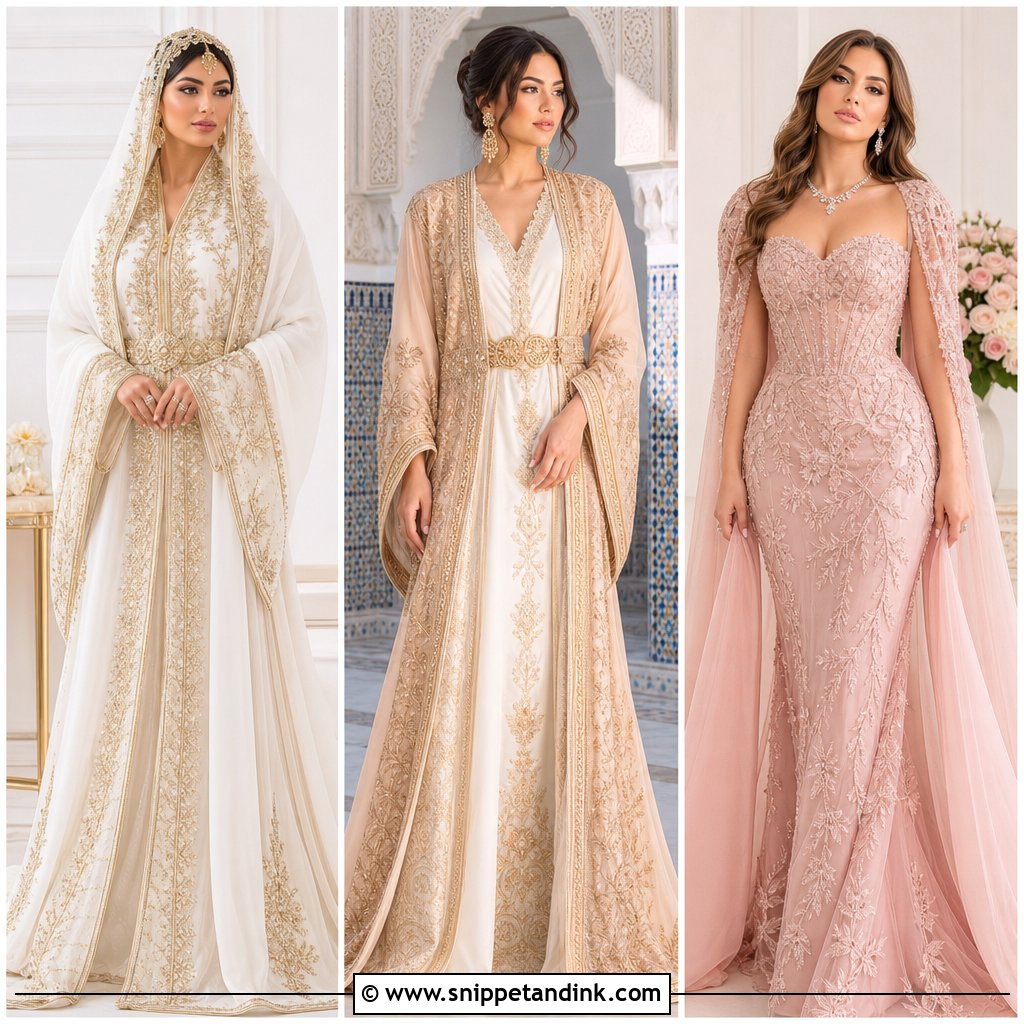
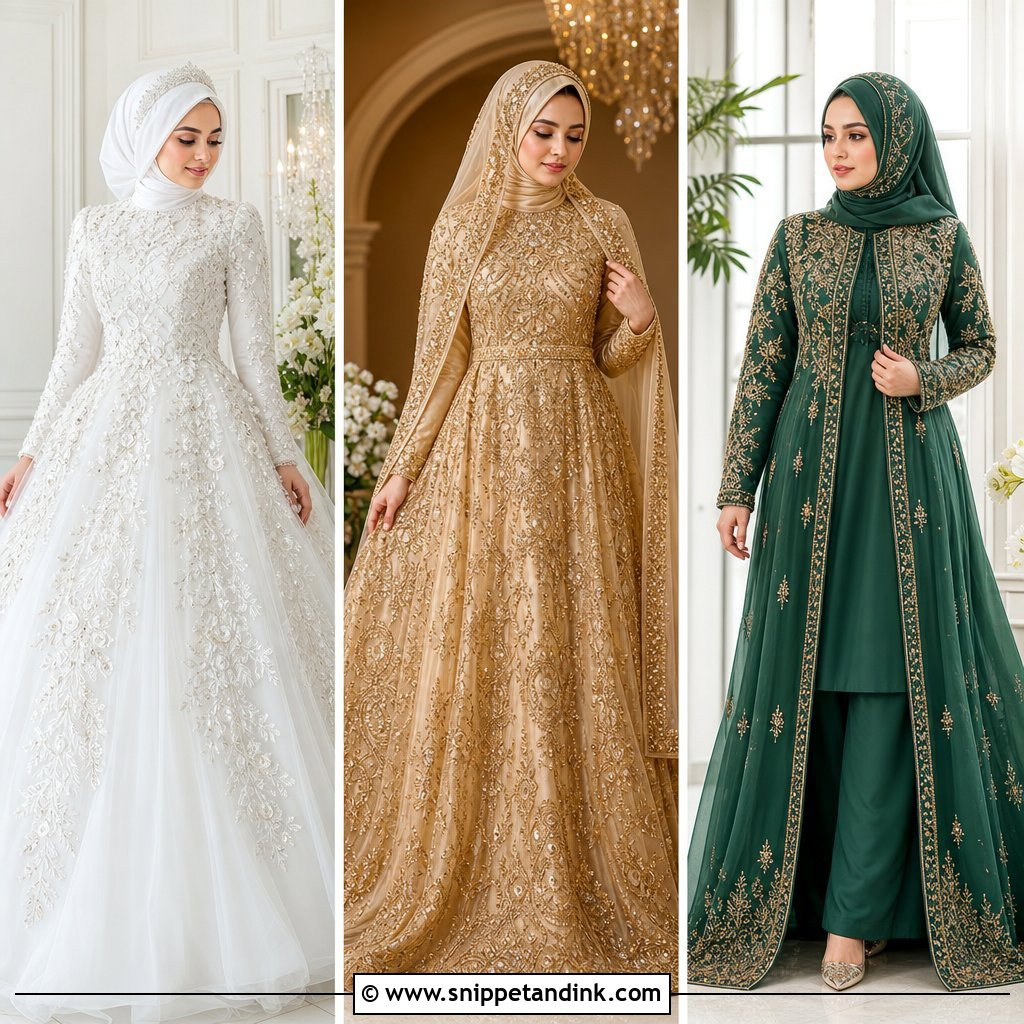
15. Bridal Abaya Wedding Dress Hijab
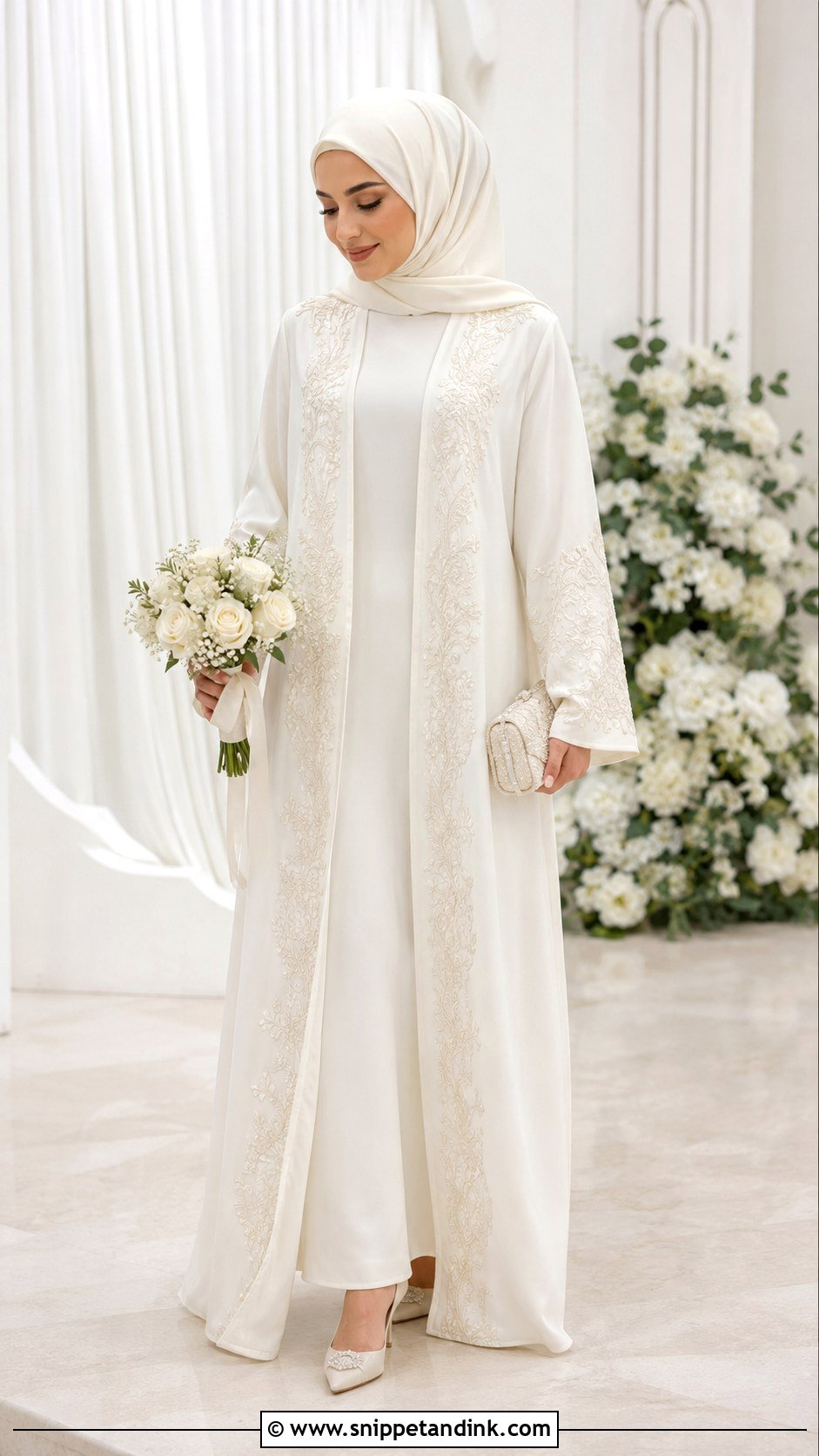
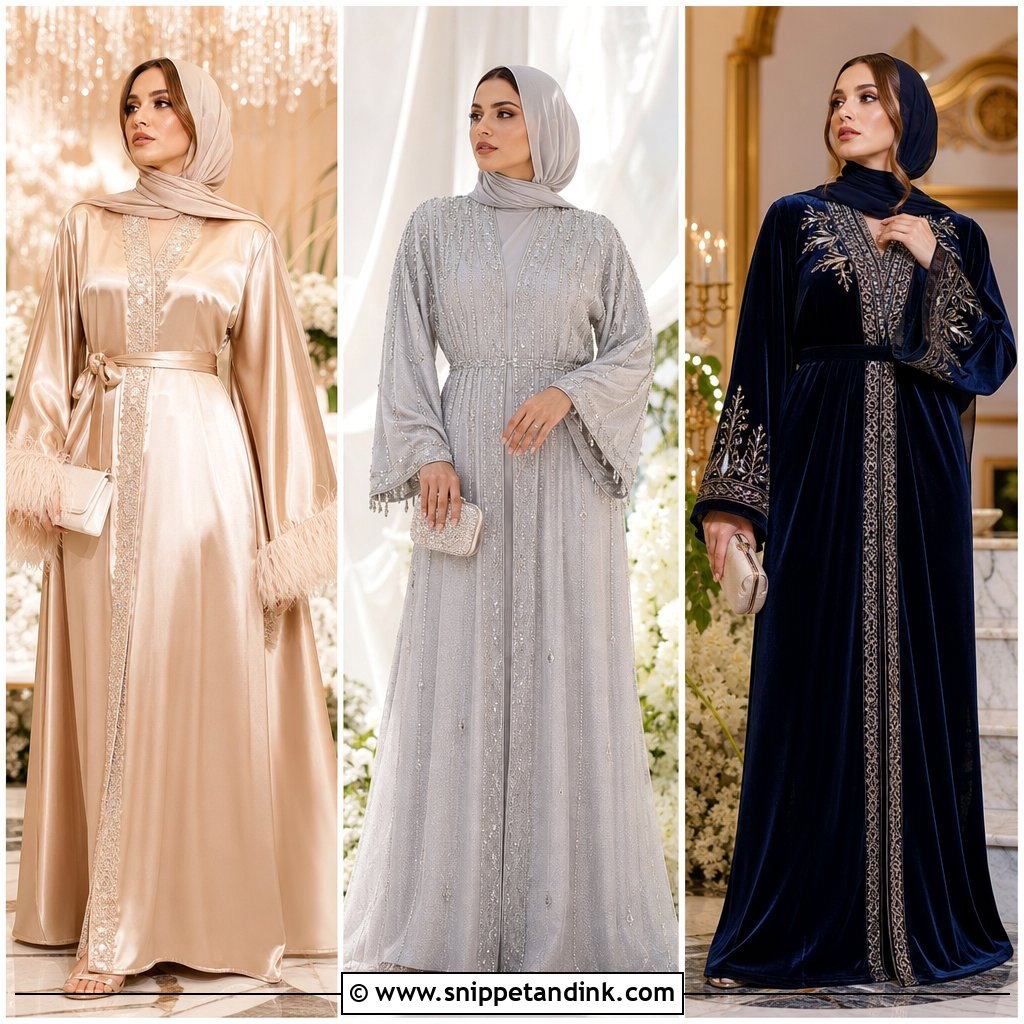
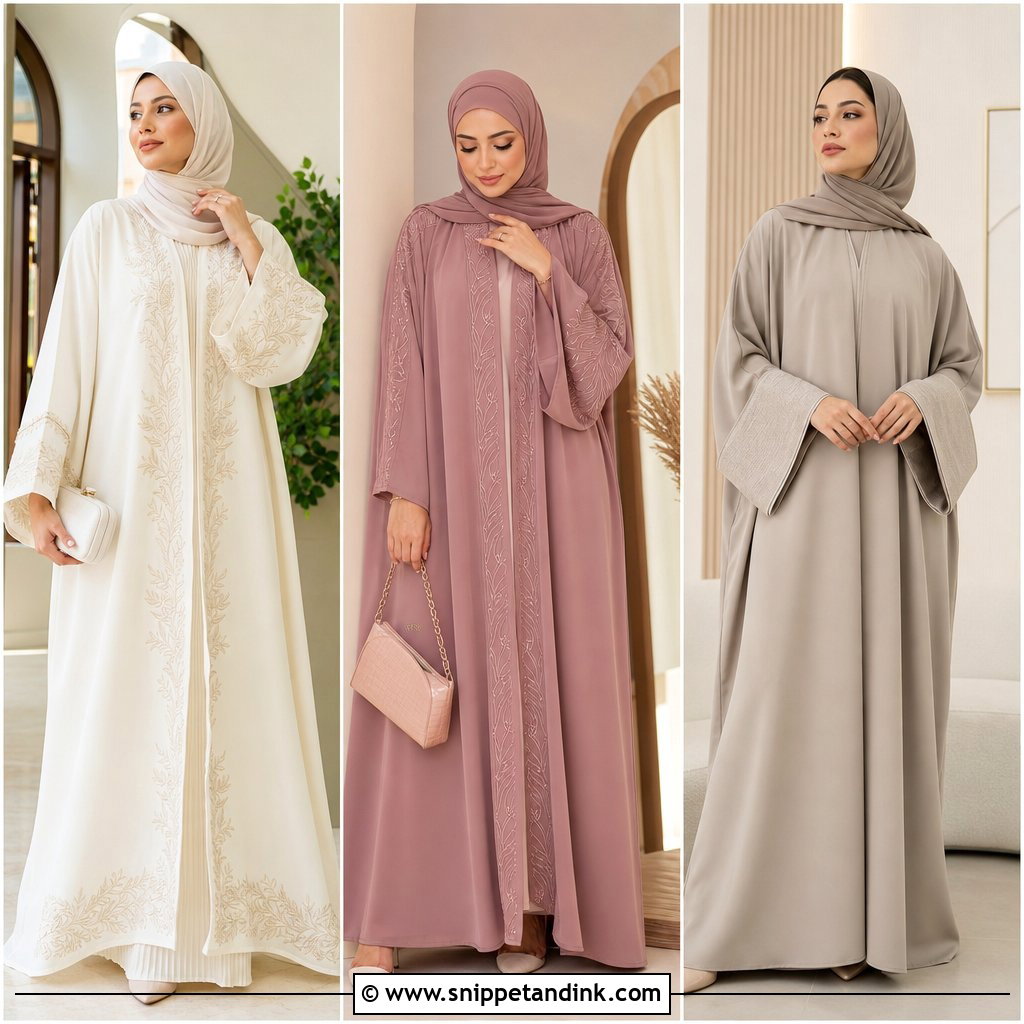
For a long nikah, an abaya is the most comfortable formal option here, since it sits loosely and you can sit cross-legged without strain. Look for white, ivory or champagne with embroidery, beading, lace panels or pearl trim, and wear a matching inner dress so nothing changes colour when the abaya opens. A chiffon or crepe hijab in the same shade keeps one continuous line from head to hem. Ready-made abayas are often too wide across the shoulders, and that is the first place I’d have a tailor take in.
16. Kaftan Wedding Dress Hijab
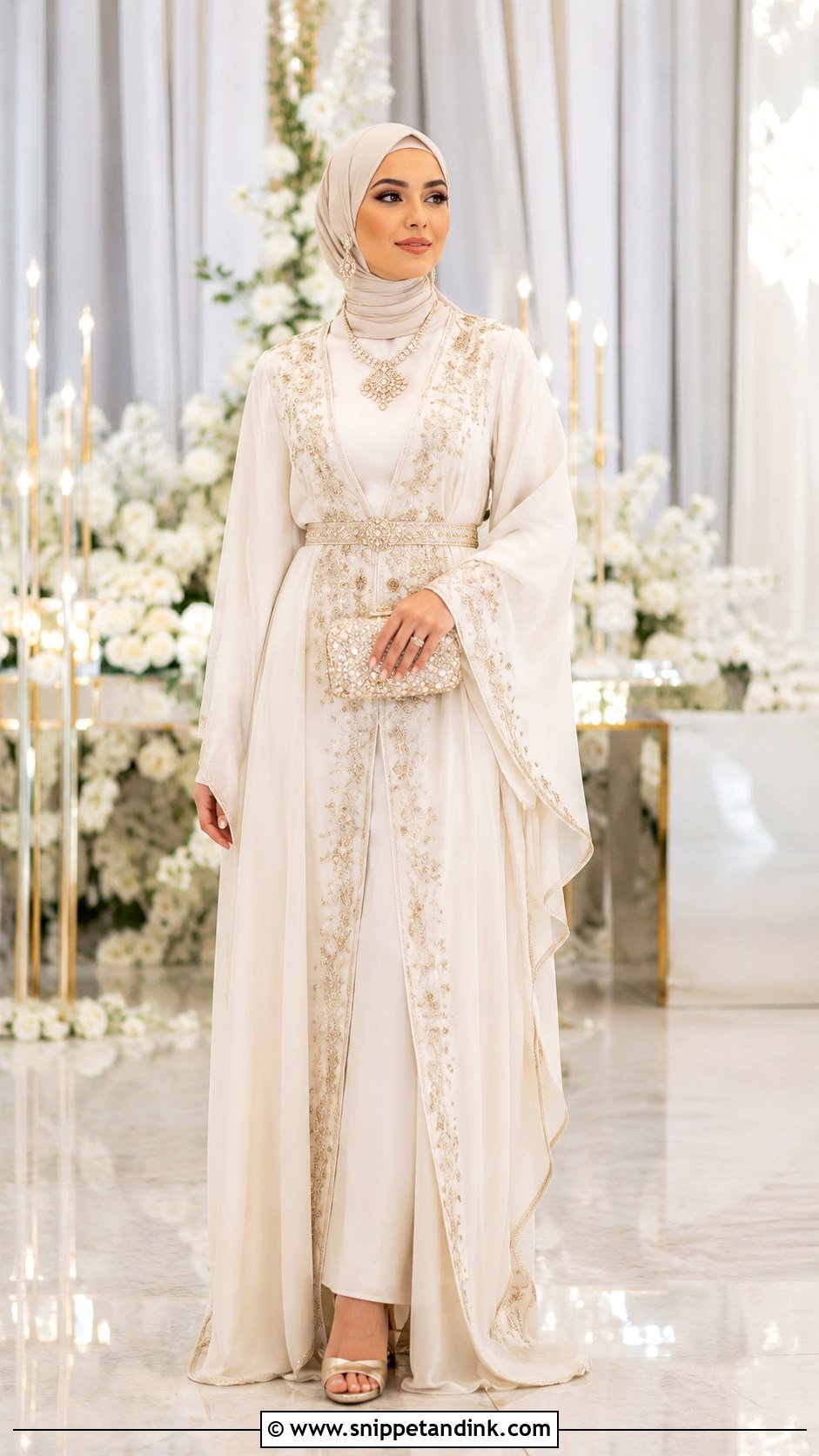
Kaftans carry their decoration at the neckline, sleeves and centre front, which is exactly where the scarf falls. Choose a bridal kaftan in ivory, white, blush or champagne, and check that the neck embroidery sits low enough to stay visible below the wrap; on some kaftans the hijab hides the best part. A belt adds shape without losing the flow. Keep the scarf plain in chiffon or silk, and let statement jewellery and a small embellished clutch bring the formality.
17. Modest Bridal Suit Hijab
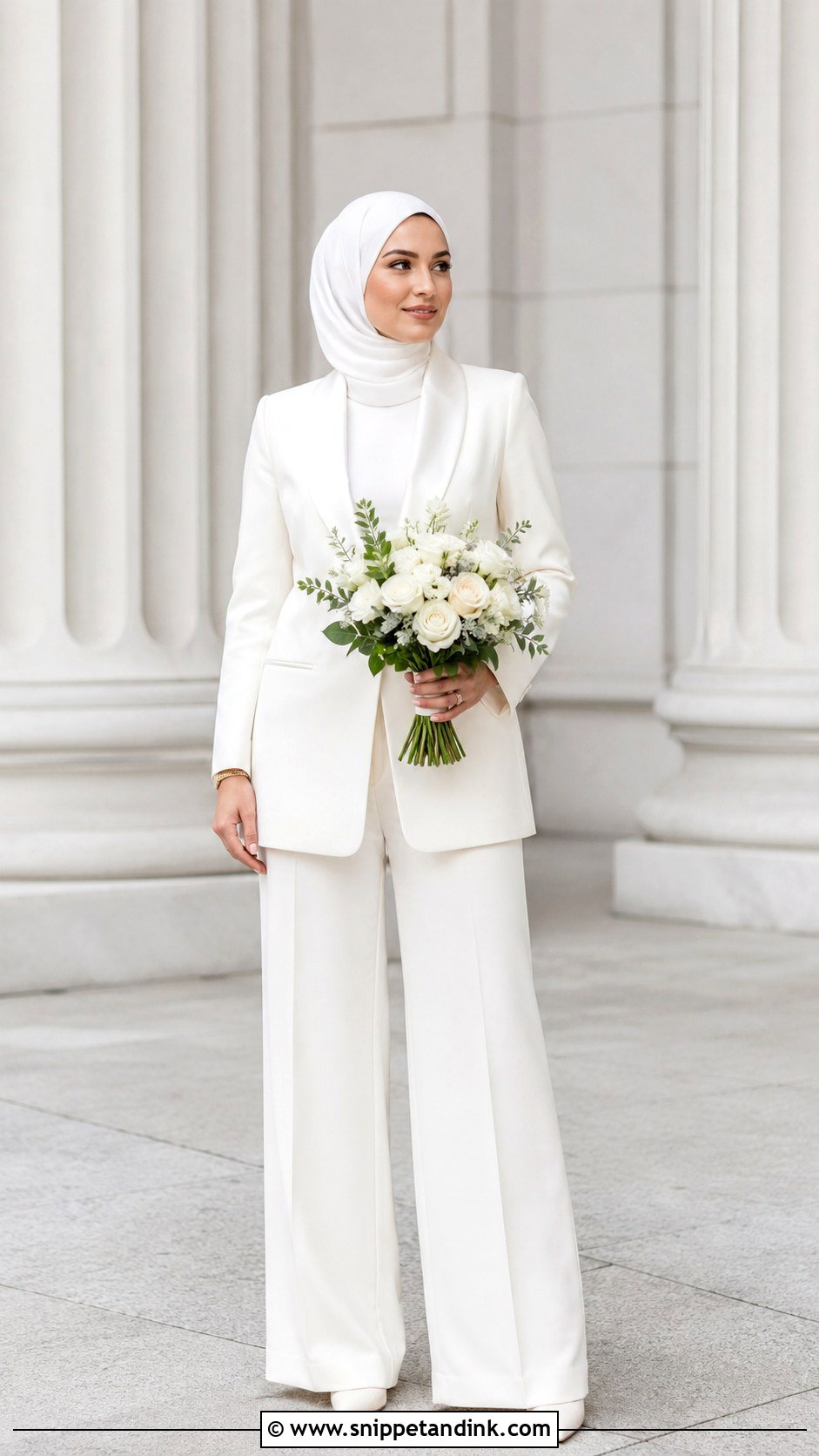
A tailored suit suits a civil ceremony, a nikah or a second outfit, and it’s the look where fit matters most. Wide-leg trousers with a long blazer, a structured tunic or a belted jacket in ivory, with satin lapels or pearl buttons, read as bridal rather than office. A silk or crepe hijab keeps the lines crisp. The scarf is what people get wrong here: long ends draped over the lapels break the jacket’s shape, so tuck them under the collar. Have the trousers hemmed to the exact heels you’ll wear.
18. Bridal Jumpsuit Hijab
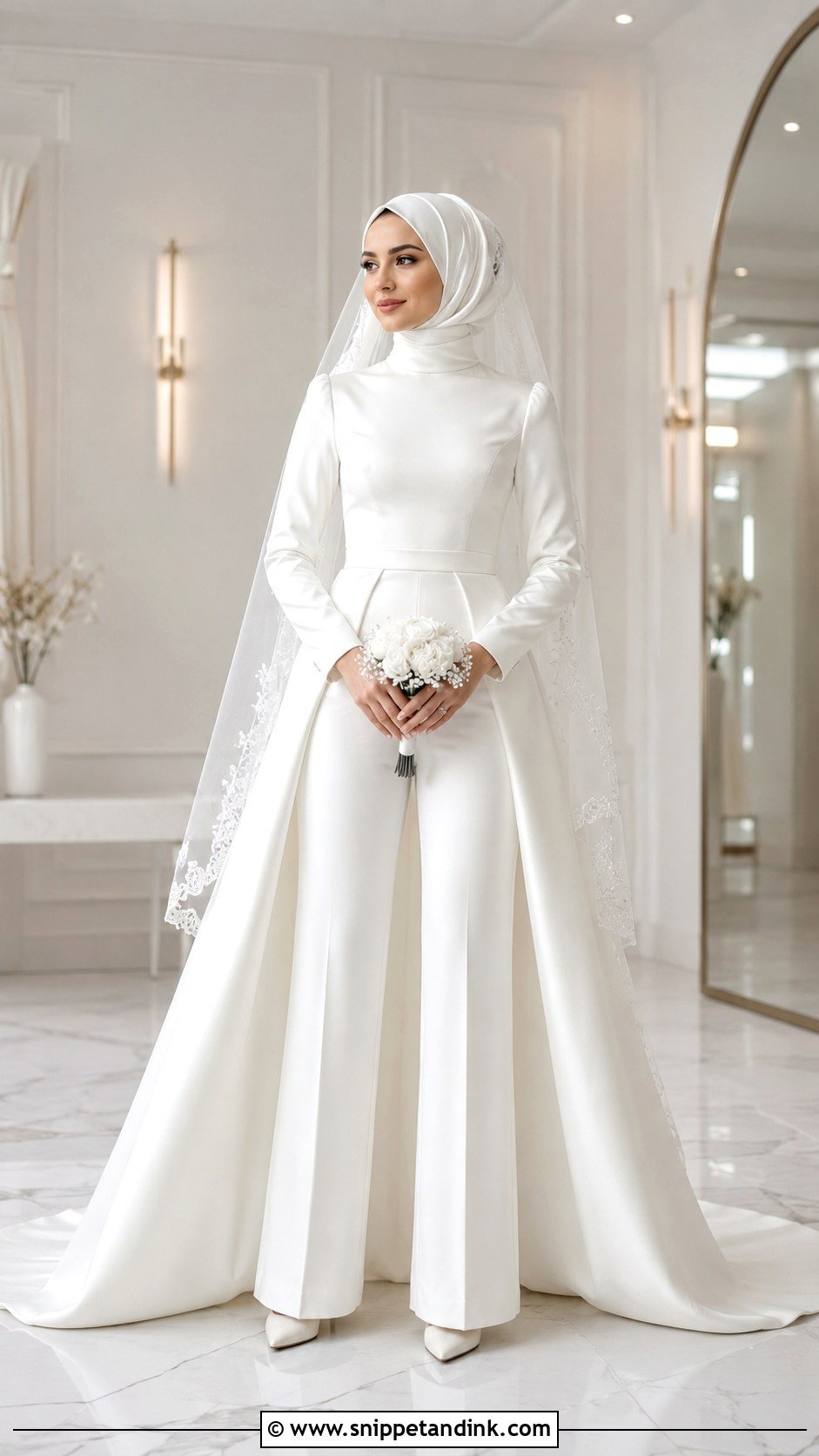
Jumpsuits win on comfort, but the body length decides everything. Long sleeves, a high neck, wide legs and a defined waist are the starting point, then sit down in it, because a short-bodied jumpsuit pulls at the shoulders and seat when you’re seated. A detachable overskirt or cape adds ceremony for the entrance. Pair it with a smooth satin, chiffon or crepe hijab wrapped securely. I’d suggest it for a reception or small wedding more than a long ceremony with lots of standing and sitting.
19. Two Piece Wedding Dress Hijab
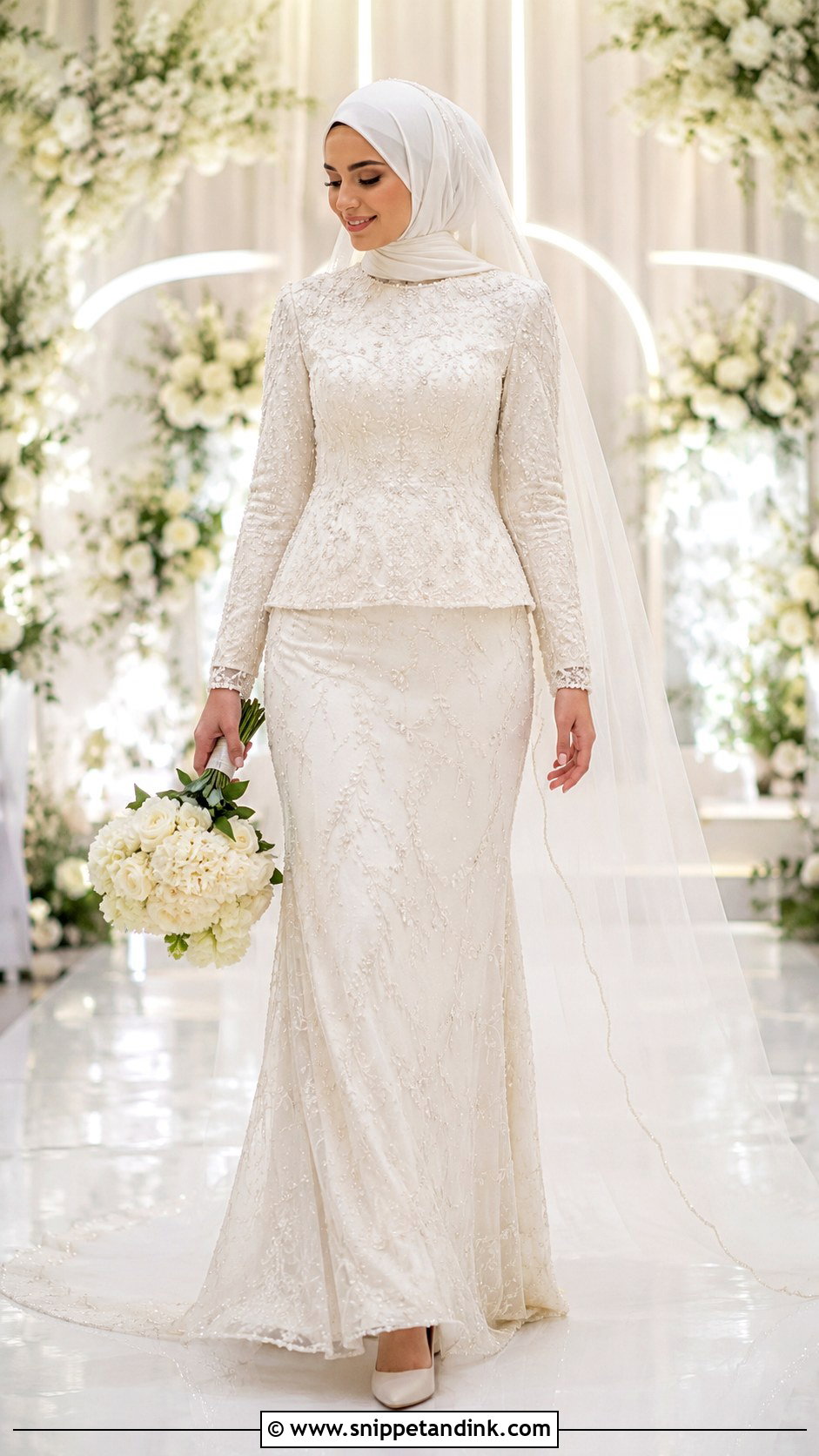
Separates are easier to alter than a one-piece gown, and that’s their real advantage: the top and skirt can be fitted to two different sizes. Try a long-sleeve embellished top with a full skirt, or a structured tunic over a floor-length skirt, then sit and lift your arms; the top should still cover the waistband. One rule keeps it coherent. If the top is decorated, the skirt stays plain, and the reverse. Match the hijab to the top rather than the skirt, since the upper half is what the camera sees most.


20. Simple Wedding Dress Hijab
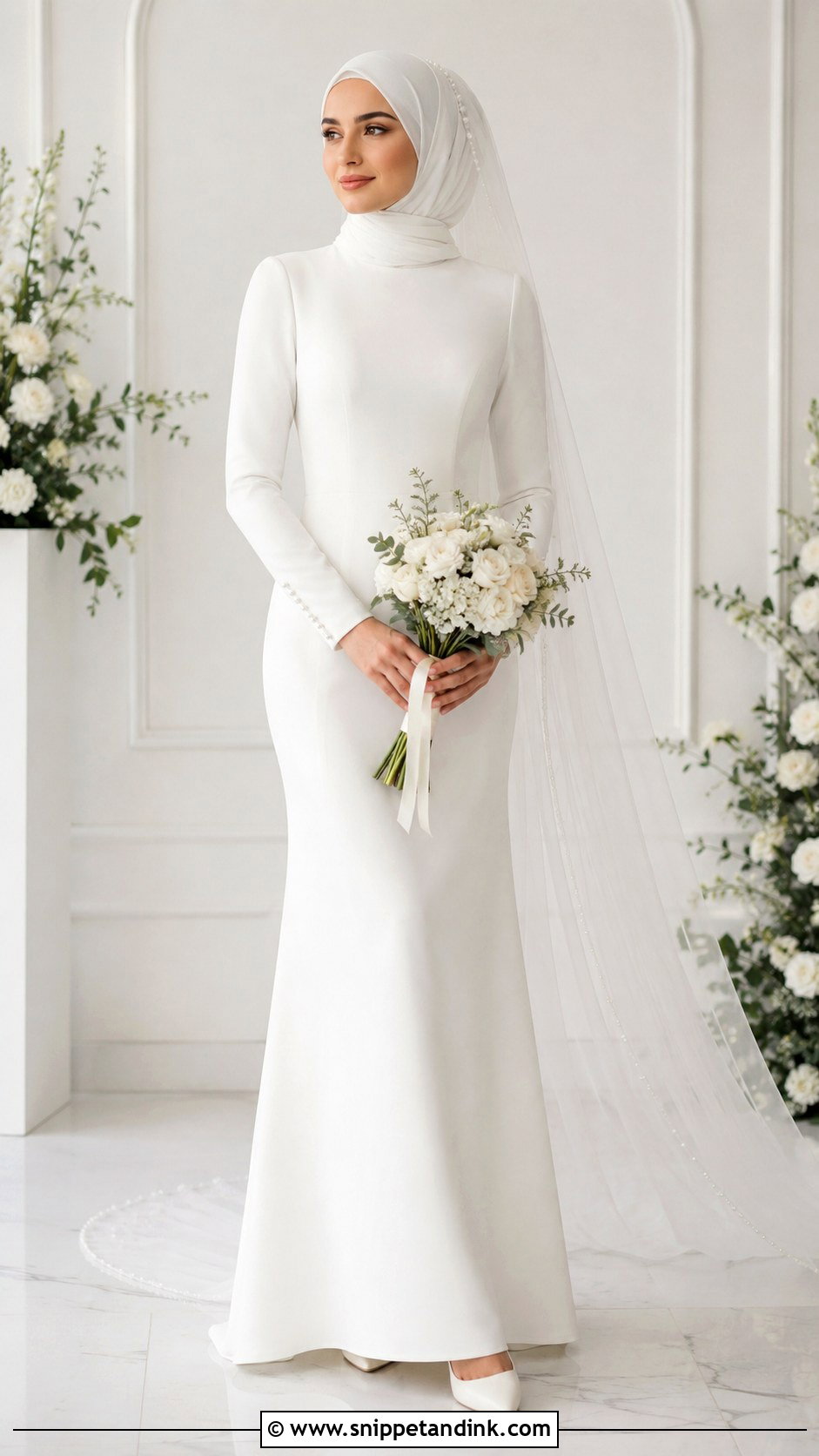
A plain gown hides nothing, so fit and fabric carry the whole look. I’d look for crepe, satin or mikado with long sleeves and a high neck, cut to sit smoothly at the shoulders and waist. A plain hijab in the identical shade keeps everything calm. Then allow one considered detail, such as pearl pins, a slim belt, a long veil or sculptural shoes, and a soft bouquet. Outfits like this date the least in photographs, because there’s no trend detail to place them in a particular year.
21. Minimalist Wedding Dress Hijab
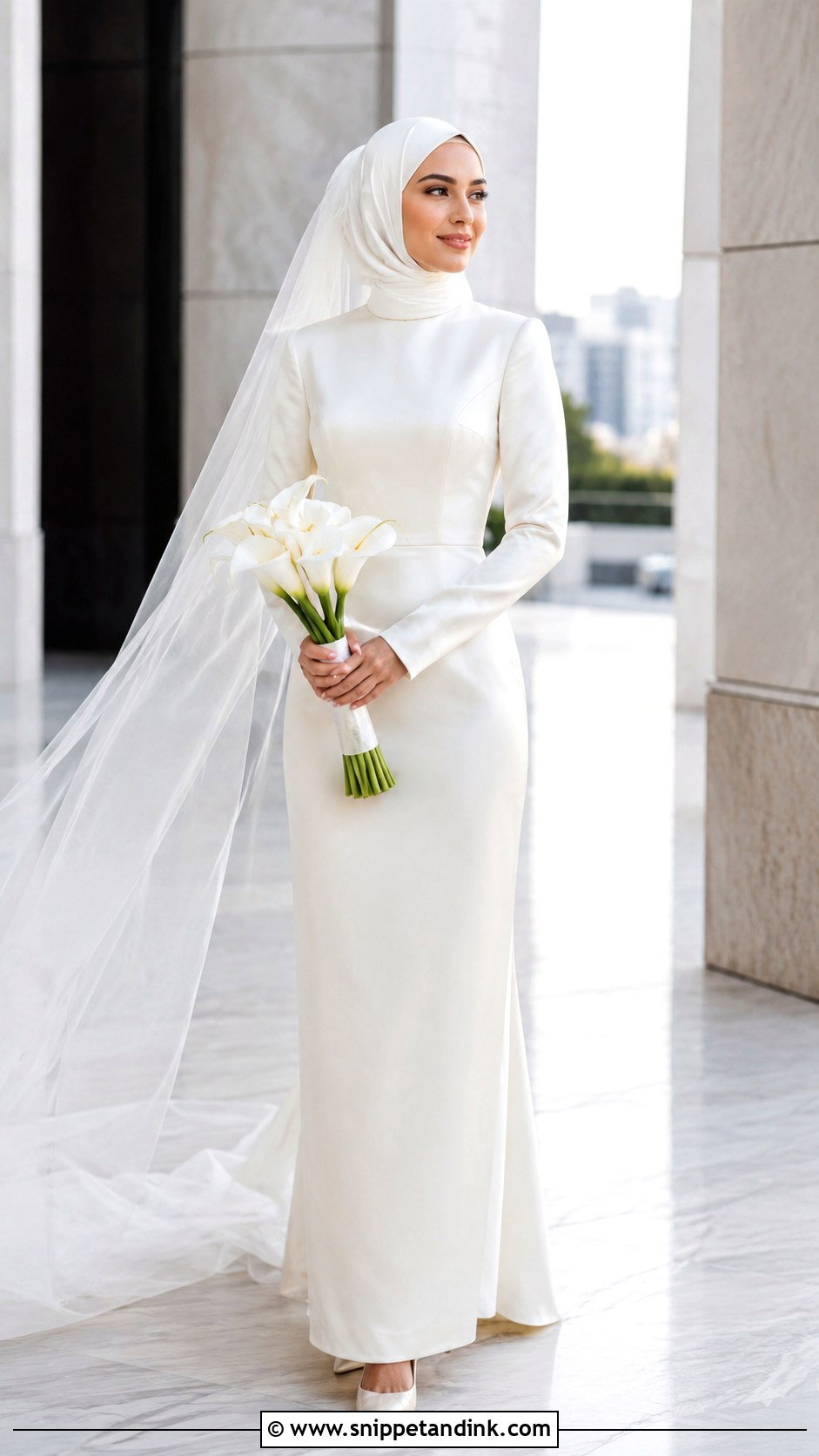
Minimal dressing depends on seams and finishing. A column, sheath or structured A-line without lace or sparkle shows every wrinkle, so ask for crepe with some weight rather than a thin polyester that clings. Covered buttons, crisp cuffs or a sharp waist seam give the eye somewhere to land. A smooth crepe or silk hijab suits these lines better than chiffon, which can look too soft against them. City venues and small ceremonies are where this approach feels most at home.
22. Vintage Wedding Dress Hijab
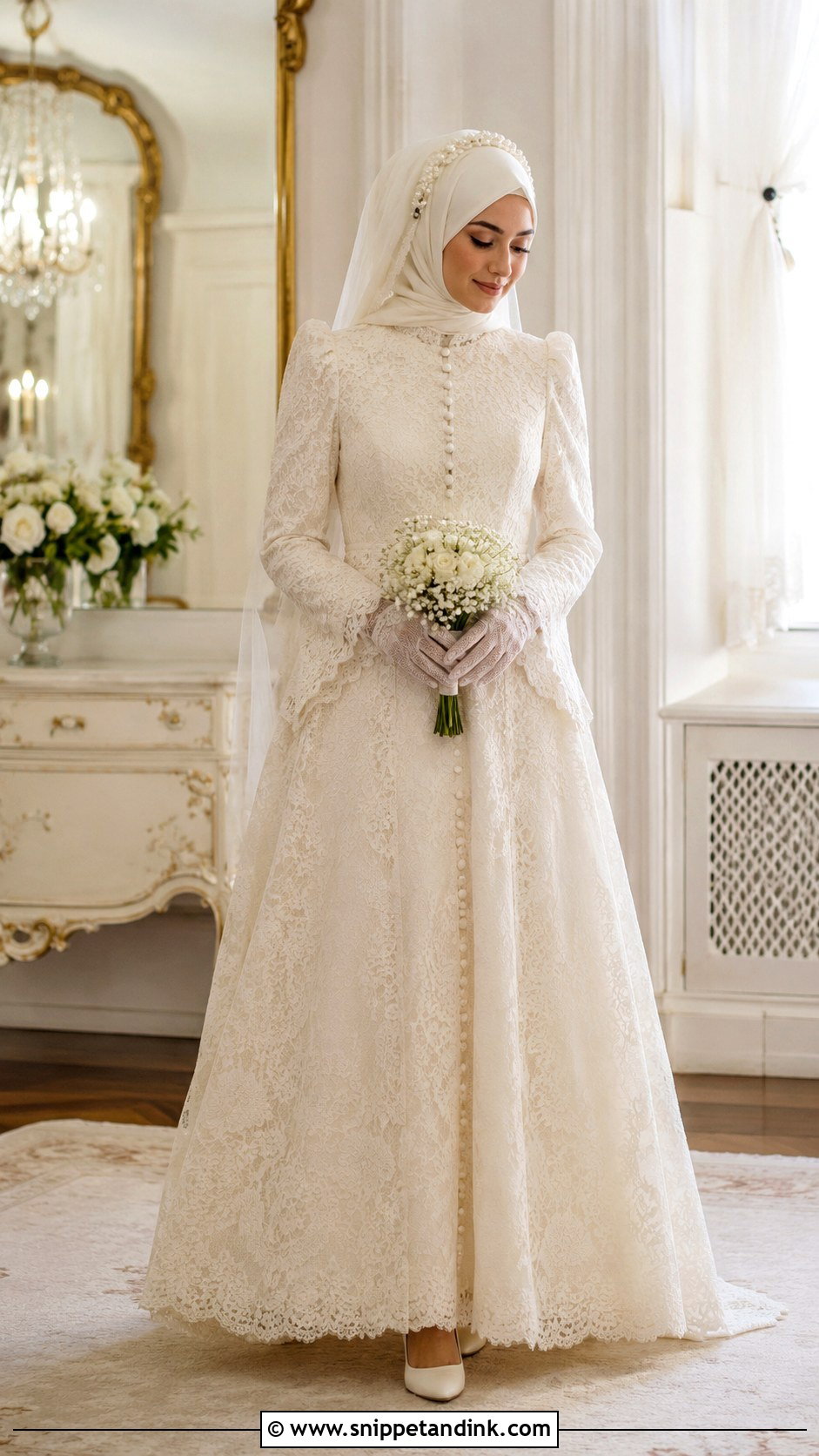
Vintage styling slides into costume quickly, so pick one or two period details and stop there. Lace sleeves, covered buttons, scalloped edges, a tea-length underlayer beneath a long overskirt or a softly shaped bodice in ivory or cream all read older than stark white. A chiffon hijab with a small pearl headpiece or a Juliet-cap shape over the wrap supports the mood. Short gloves are a nice touch, but hold your bouquet in them first; satin gloves make stems slippery.
23. Modern Wedding Dress Hijab
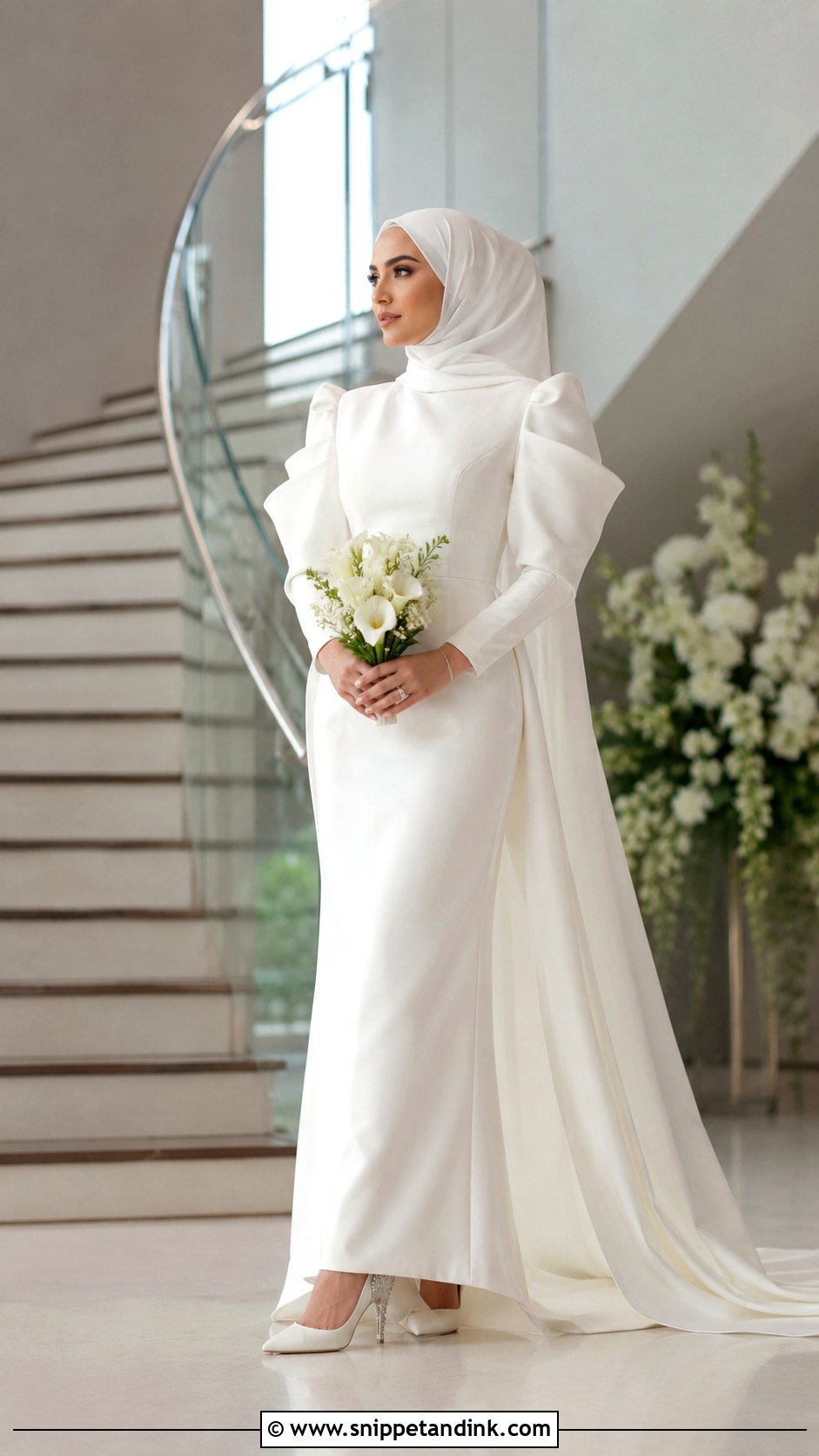
Modern bridal shapes rely on structure: sharp seams, sculptural sleeves, a square high neck, a smooth column skirt. A soft, gathered wrap undercuts all that, so I use a satin, silk or crepe hijab wrapped close and pinned flat, with crisp folds at the side of the face. Choose one bold feature, a cape, an oversized bow or a detachable overskirt, rather than three. Architectural heels, a compact bouquet and minimal jewellery keep it in line.
24. Princess Wedding Dress Hijab
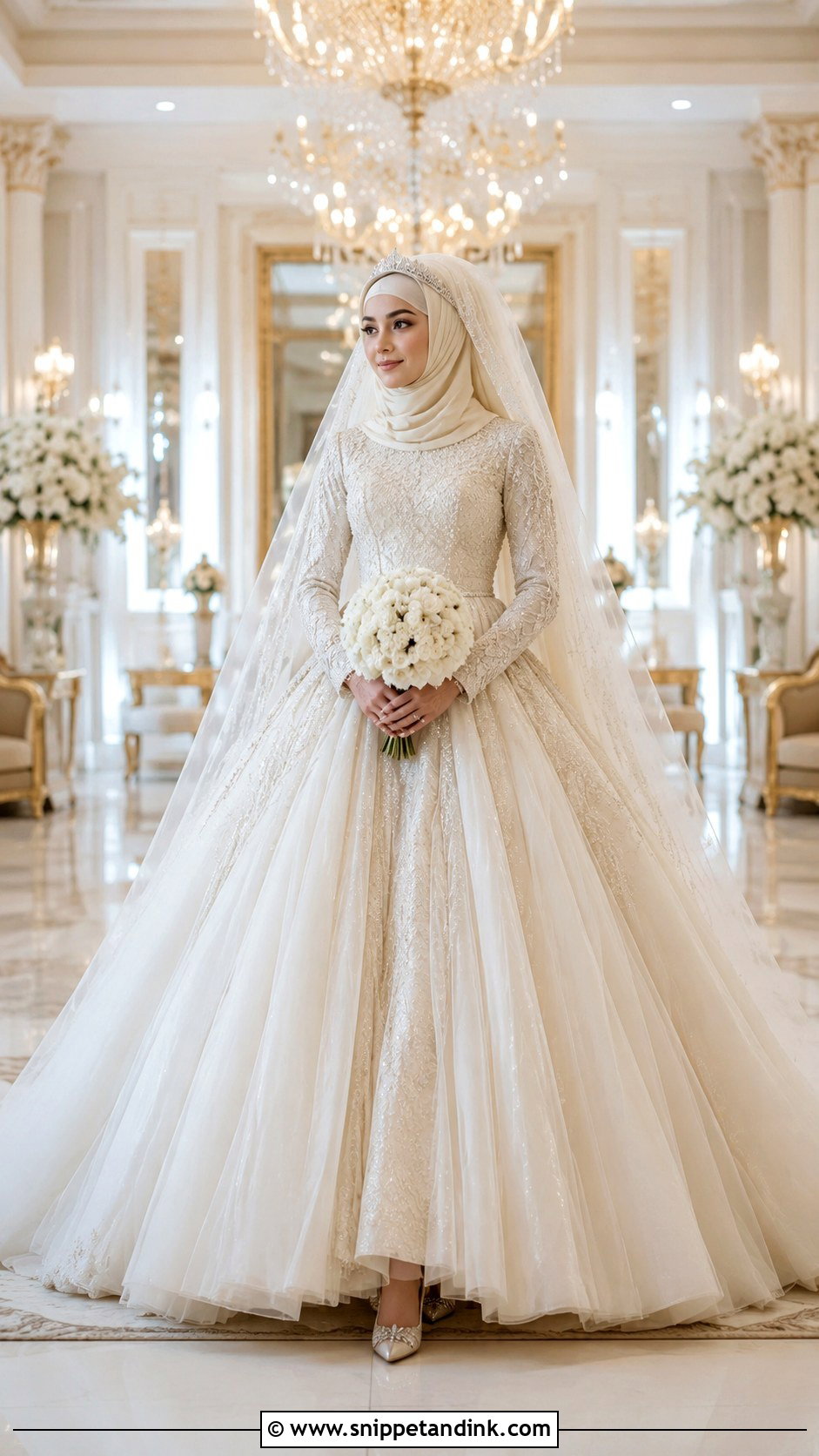
A tiara over a hijab is the piece I fit most carefully in a princess look. Tiara combs can’t grip a scarf, so it needs a fitted undercap underneath and either a band that ends behind the ears or a couple of grips threaded into the cap. Under it, go for a fitted bodice, full skirt, long sleeves and a modest neckline in tulle, organza or lace with a little sparkle. A long veil, embellished heels and a rounded bouquet complete it. The scale only makes sense in a ballroom or grand hall.
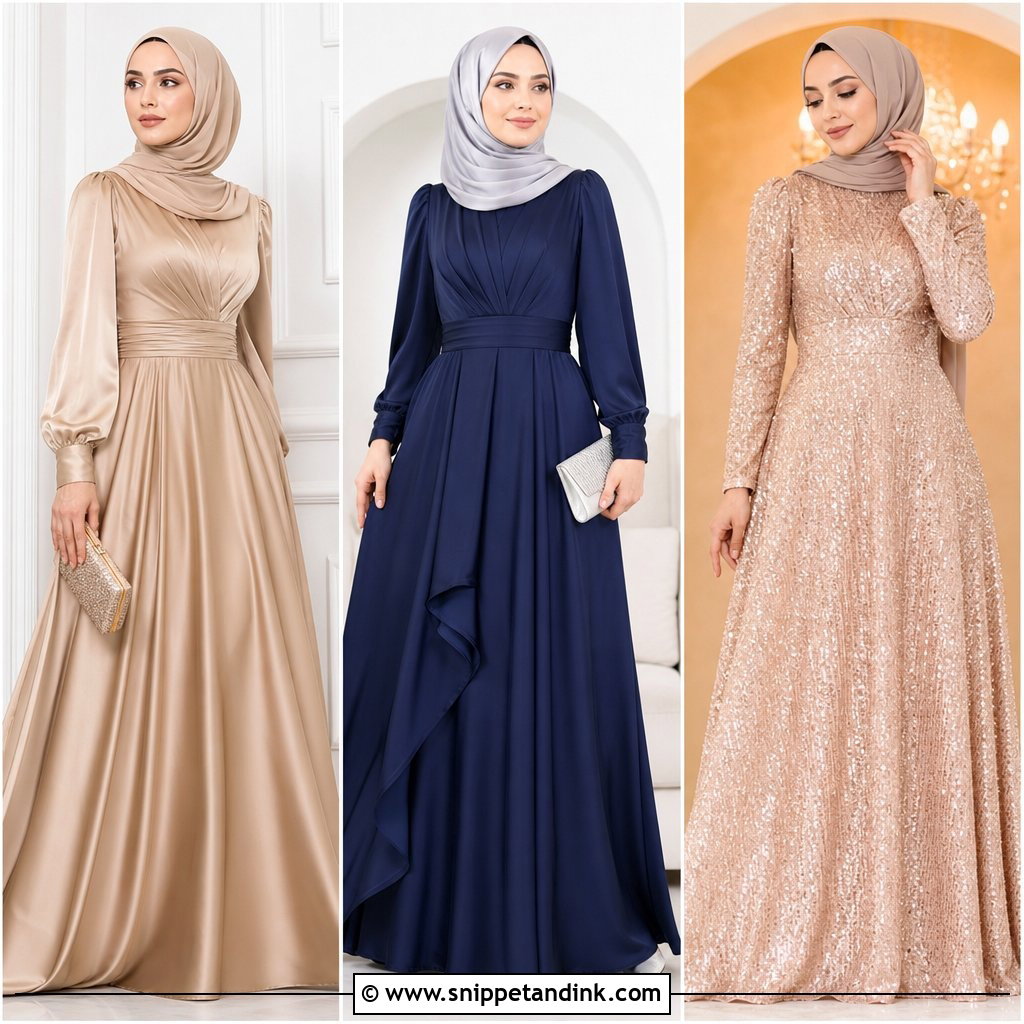


25. Boho Wedding Dress Hijab
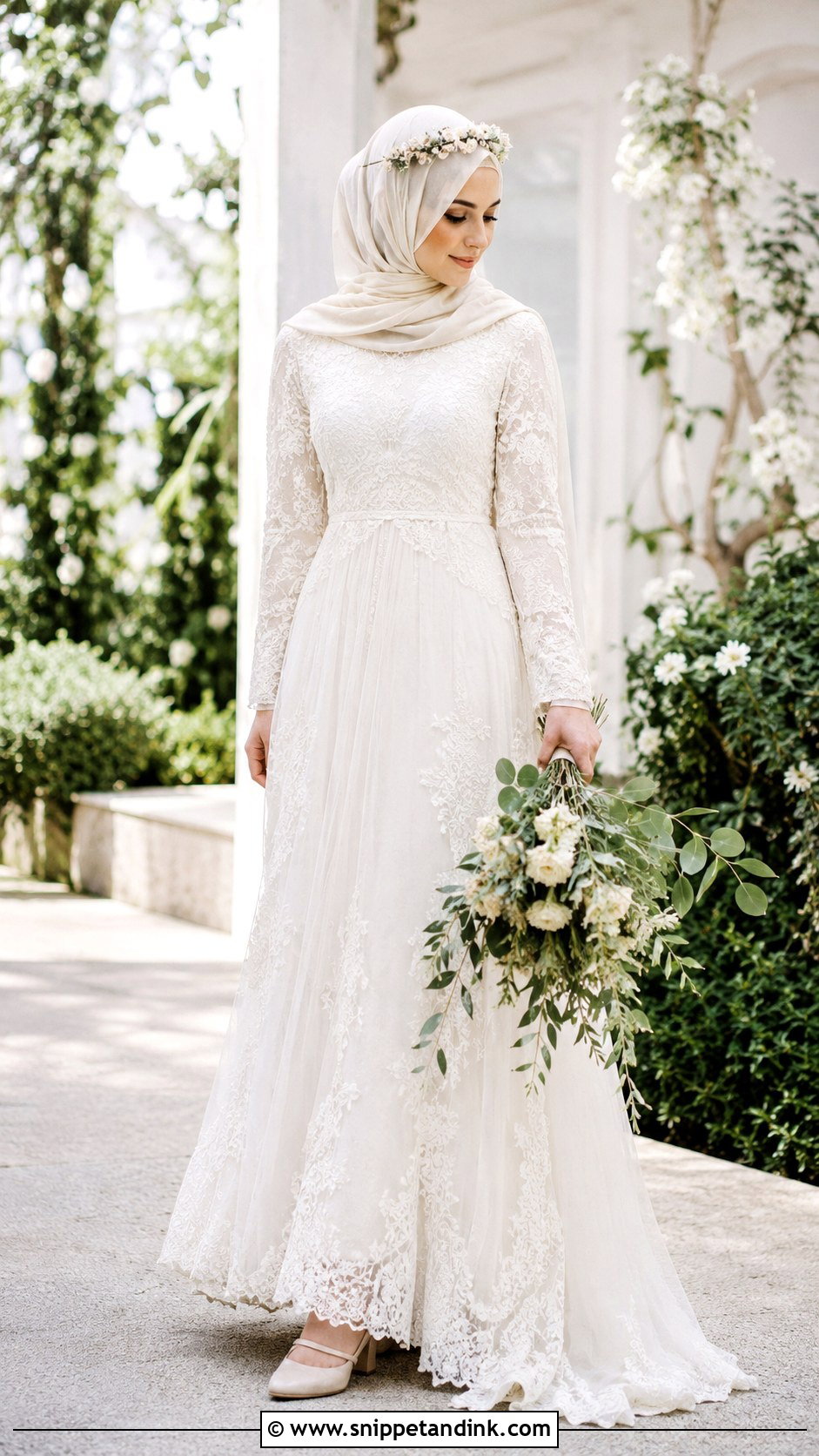
Boho styling means a relaxed modest gown with flowing sleeves, light lace, crochet-style texture or a soft A-line skirt, and the scarf can go warmer here, in ivory, cream or warm beige. A flower crown or fine hair vine sits over the wrap; pin it through the undercap, not the chiffon, or it drags the scarf every time you turn your head. Fresh flowers wilt quickly against warm fabric, so I’d use silk or preserved stems on the head. Low block heels or covered flats suit grass and gravel.
26. Beach Wedding Dress Hijab
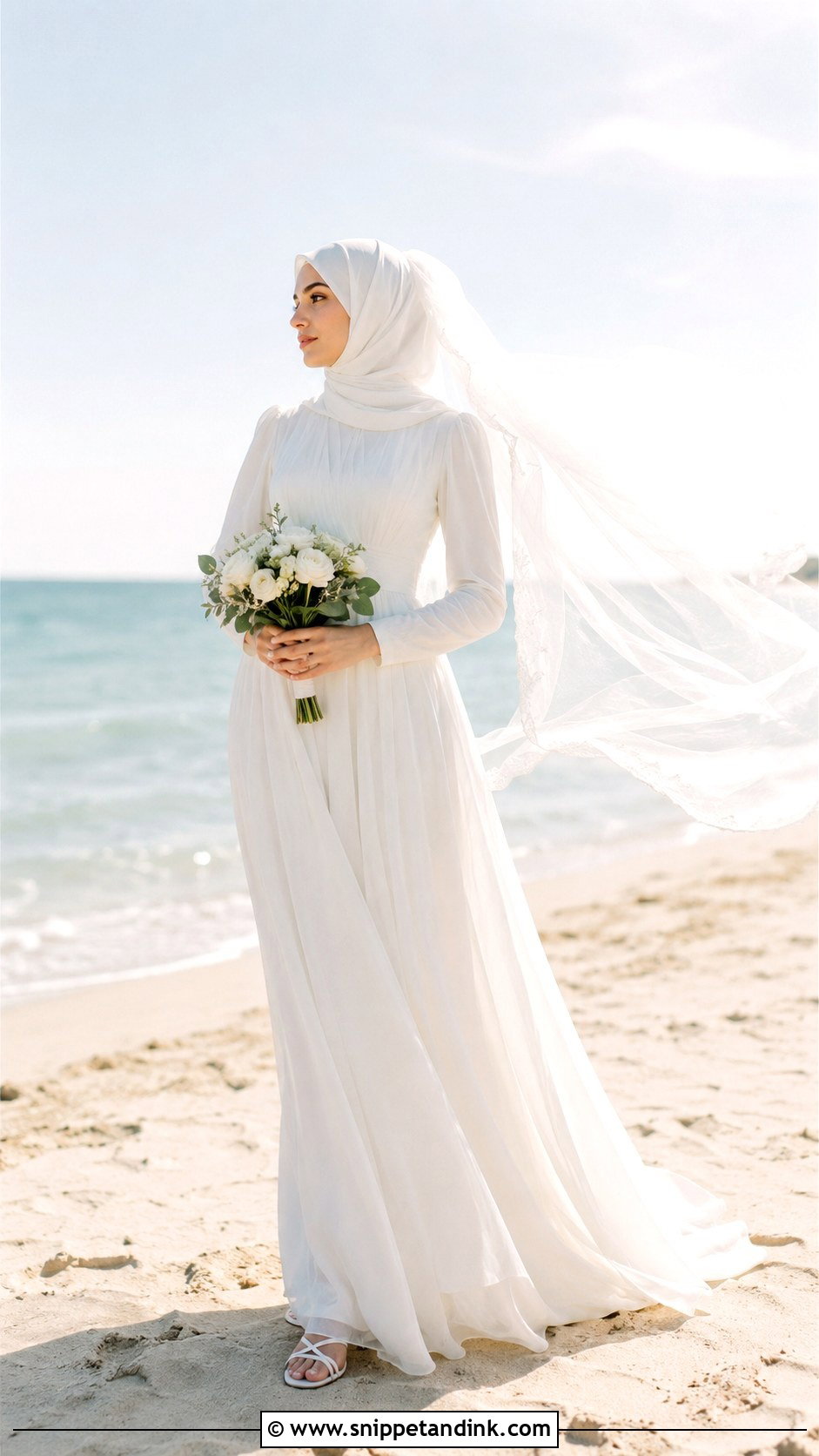
At a beach wedding the problem is wind, not heat. A chiffon or georgette scarf with loose ends will blow across your face in every portrait, so pin the ends down at the shoulder or tuck them in, and wear an undercap with some grip. Lightweight crepe or georgette with long sleeves breathes in warm air. Leave the long train at home, since sand collects in the hem. Flats or low block heels sink less than stilettos, and a short veil behaves far better in a sea breeze than a cathedral length.
27. Garden Wedding Dress Hijab
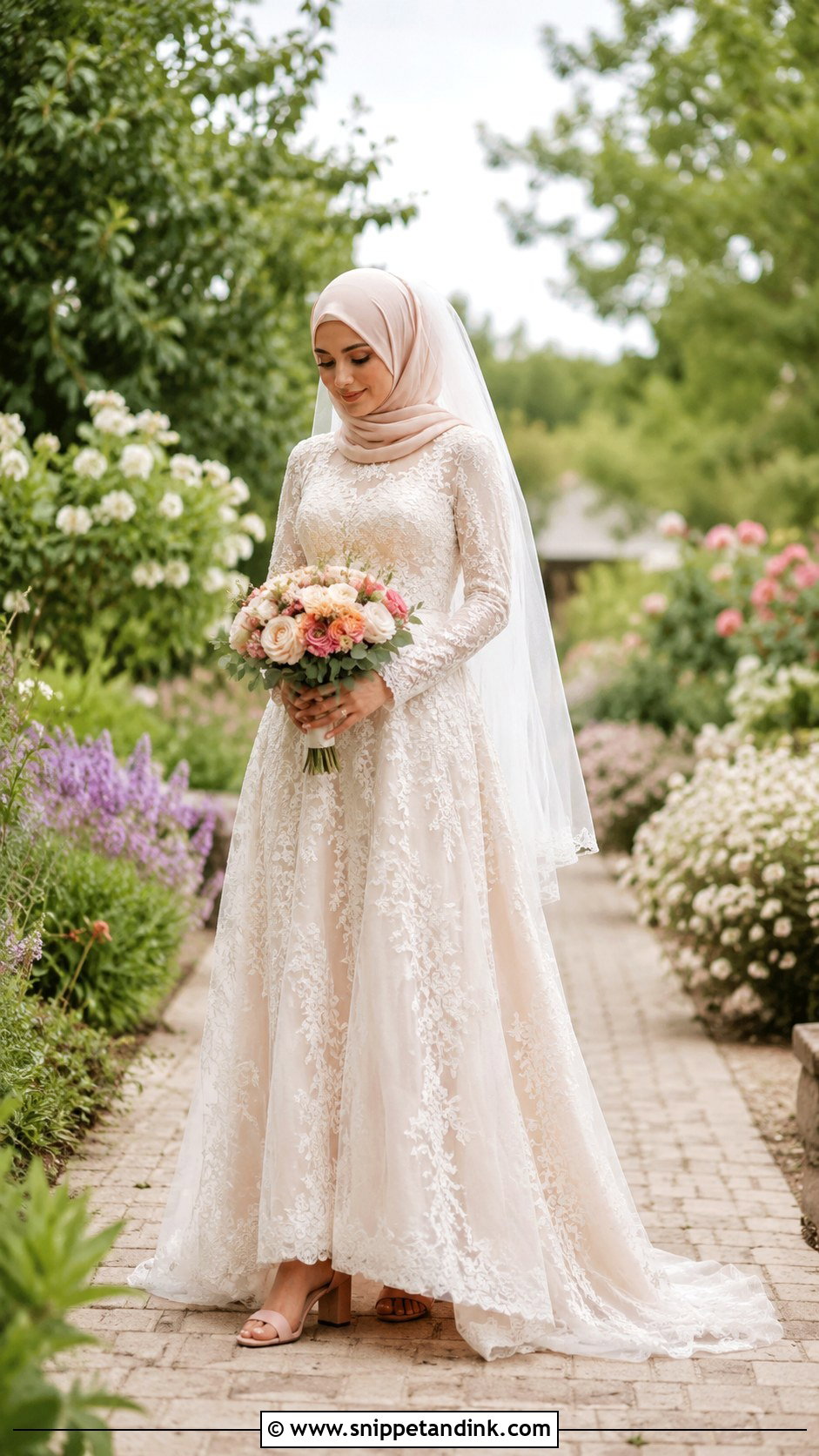
Grass, uneven paths and bright daylight are what a garden ceremony asks you to dress for. Block heels or wedges stop you sinking, and a hem lifted just off the ground stays clean. Floral lace or soft embroidery with long sleeves and a high neck suits the setting, with an ivory, blush or cream chiffon hijab that moves a little in the air. Daylight is honest about colour, so match the scarf to the gown outside rather than under shop lighting. A light veil and seasonal flowers finish it.
28. Winter Wedding Dress Hijab
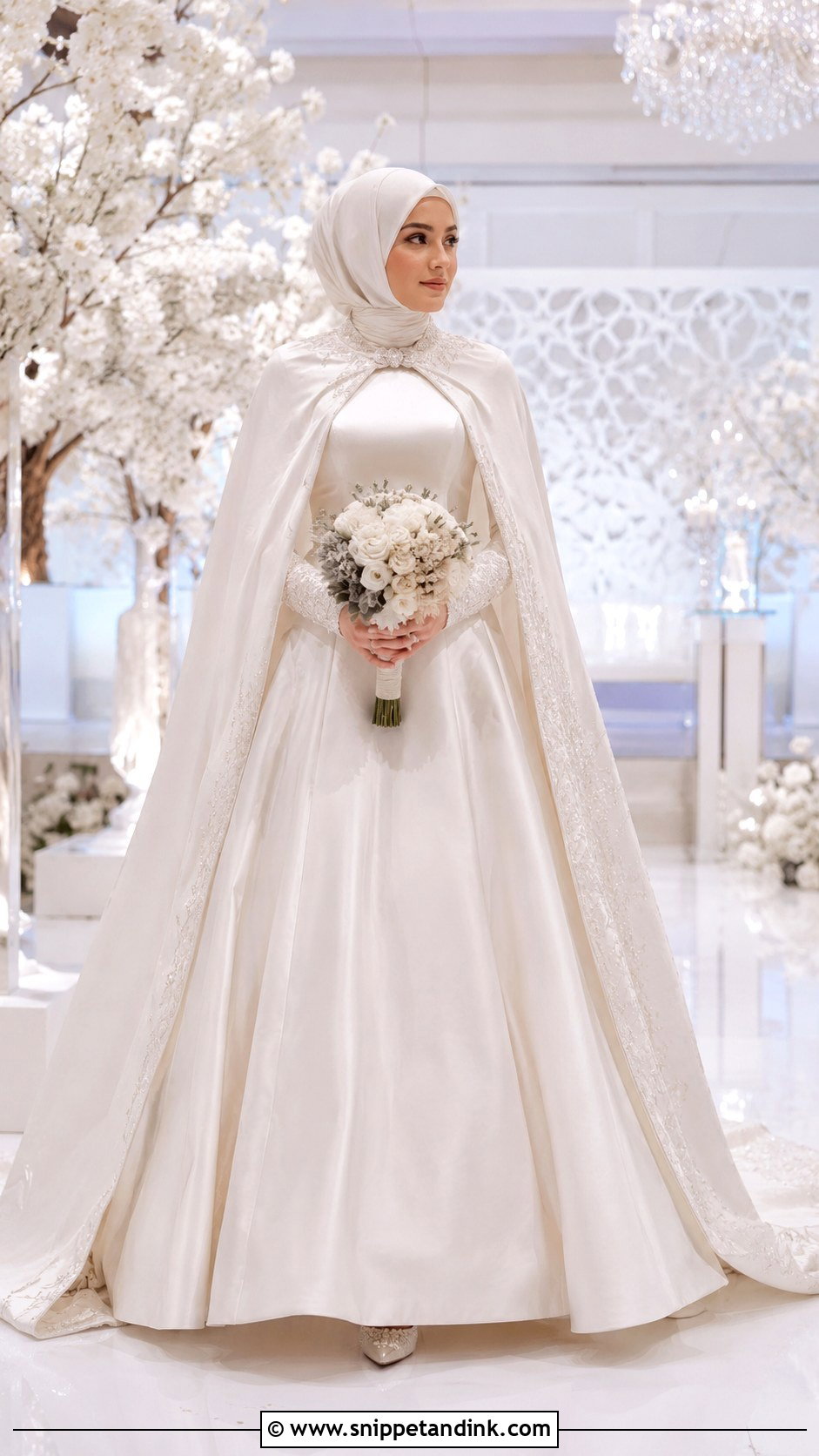
Cold weather opens up heavier fabrics: satin, mikado, crepe with velvet trim, or a dense lace. A lined cape, faux fur wrap or structured bridal coat adds warmth, but the scarf has to sit flat enough for the coat collar to close over it without crushing the wrap. Try the coat over the full hijab at a fitting, not just over the dress. Closed-toe heels or embellished boots handle wet paths, and white flowers with greenery or deep berry tones suit the season.
29. Summer Wedding Dress Hijab
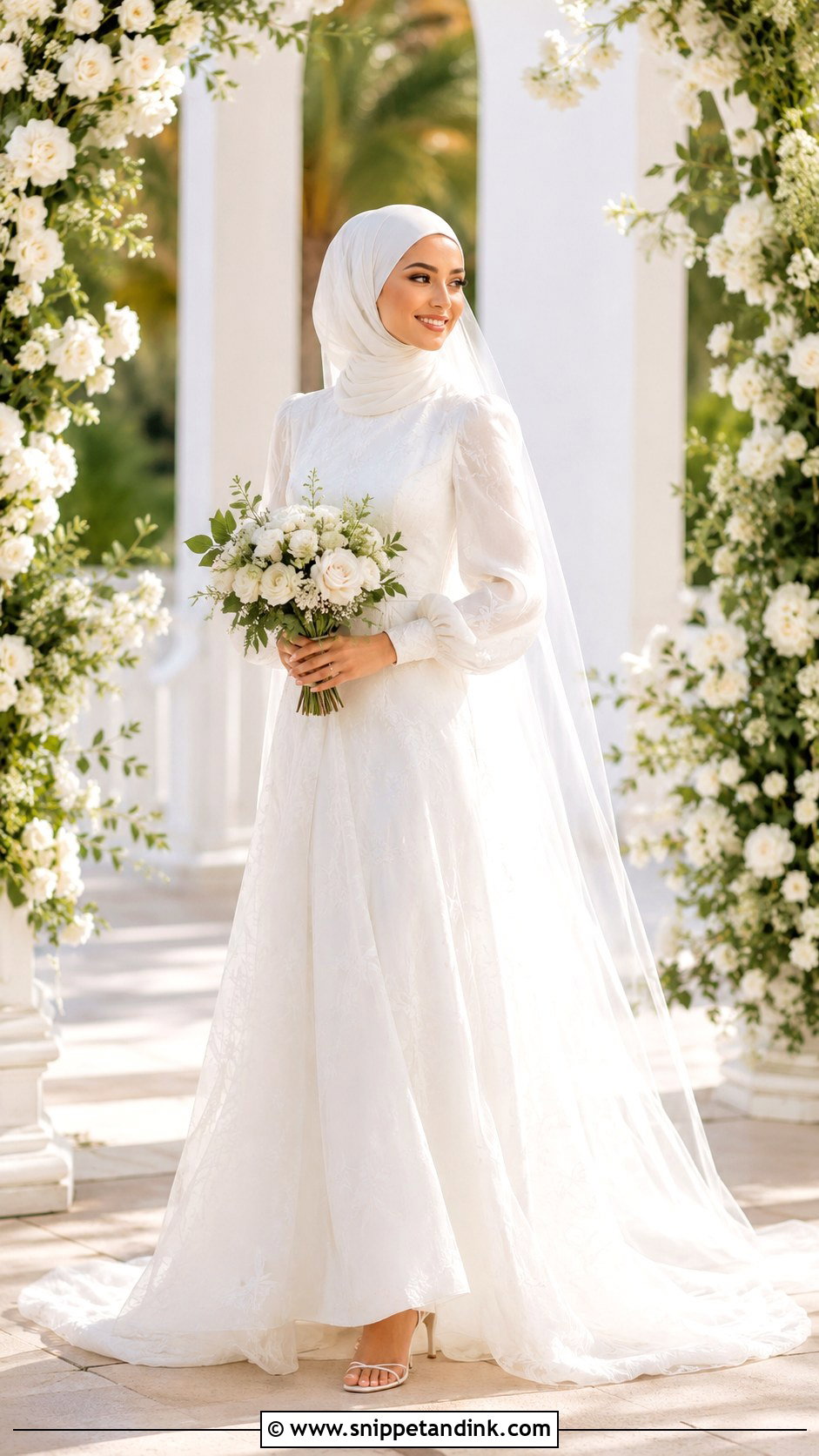
Long sleeves in summer are fine if the gown breathes. Chiffon, organza, lightweight satin or soft crepe with a cotton or viscose lining stays much cooler than a polyester lining, which traps heat under a wrapped scarf. Keep the wrap to one layer around the neck rather than two. A chiffon hijab drapes well and lets air through, and light jewellery with comfortable heels stops you feeling weighed down by the evening.
30. Blush Wedding Dress Hijab
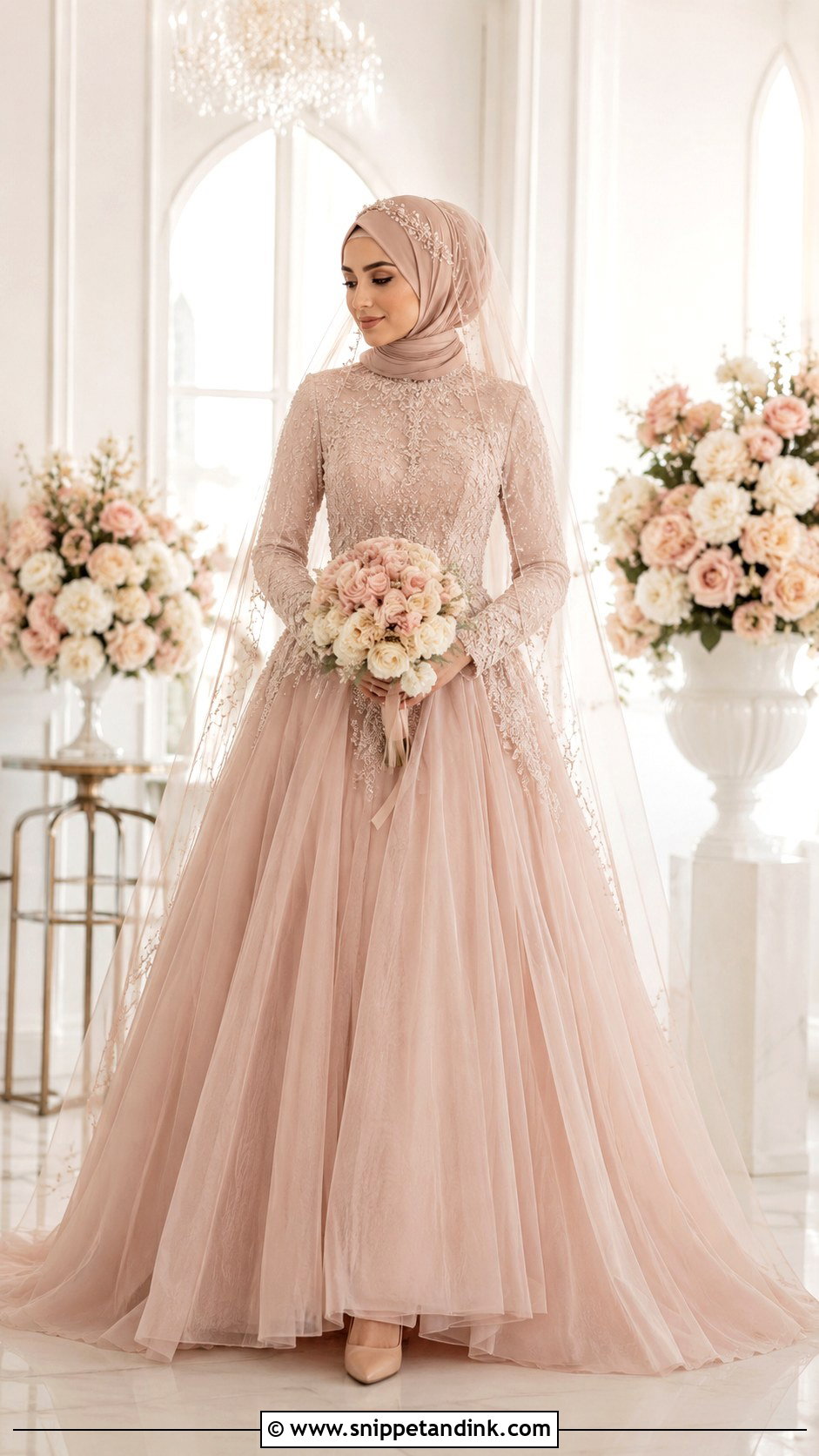
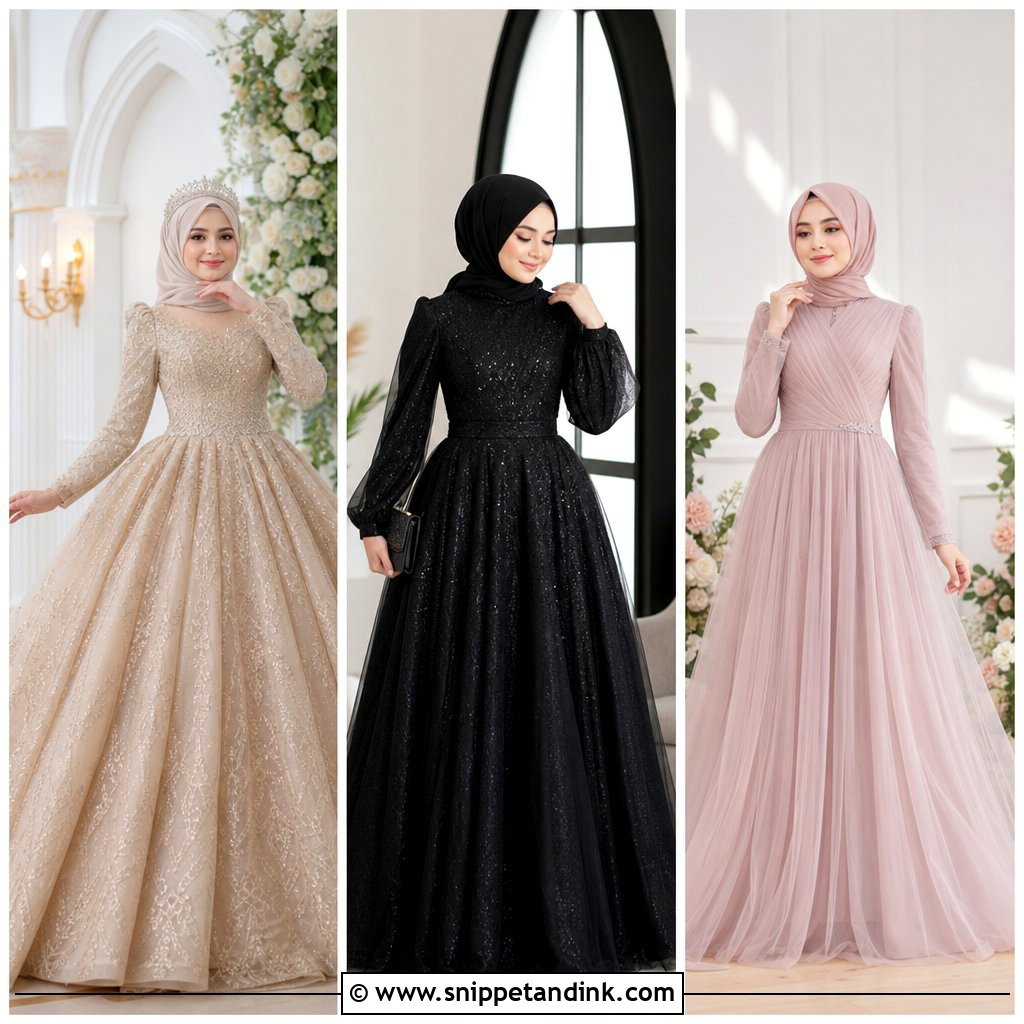
Blush flatters a lot of skin tones, but the exact shade matters: some blushes look nude in photographs and others look plainly pink. Hold the fabric against your face in daylight before you buy. Choose long sleeves and a modest neckline in lace, tulle, satin or embroidery. A matching blush hijab gives one smooth colour line, while an ivory scarf frames the face and makes the gown colour stand out more. Pearl details, nude or soft metallic shoes, and ivory and blush flowers with greenery tie it together.
31. Champagne Wedding Dress Hijab
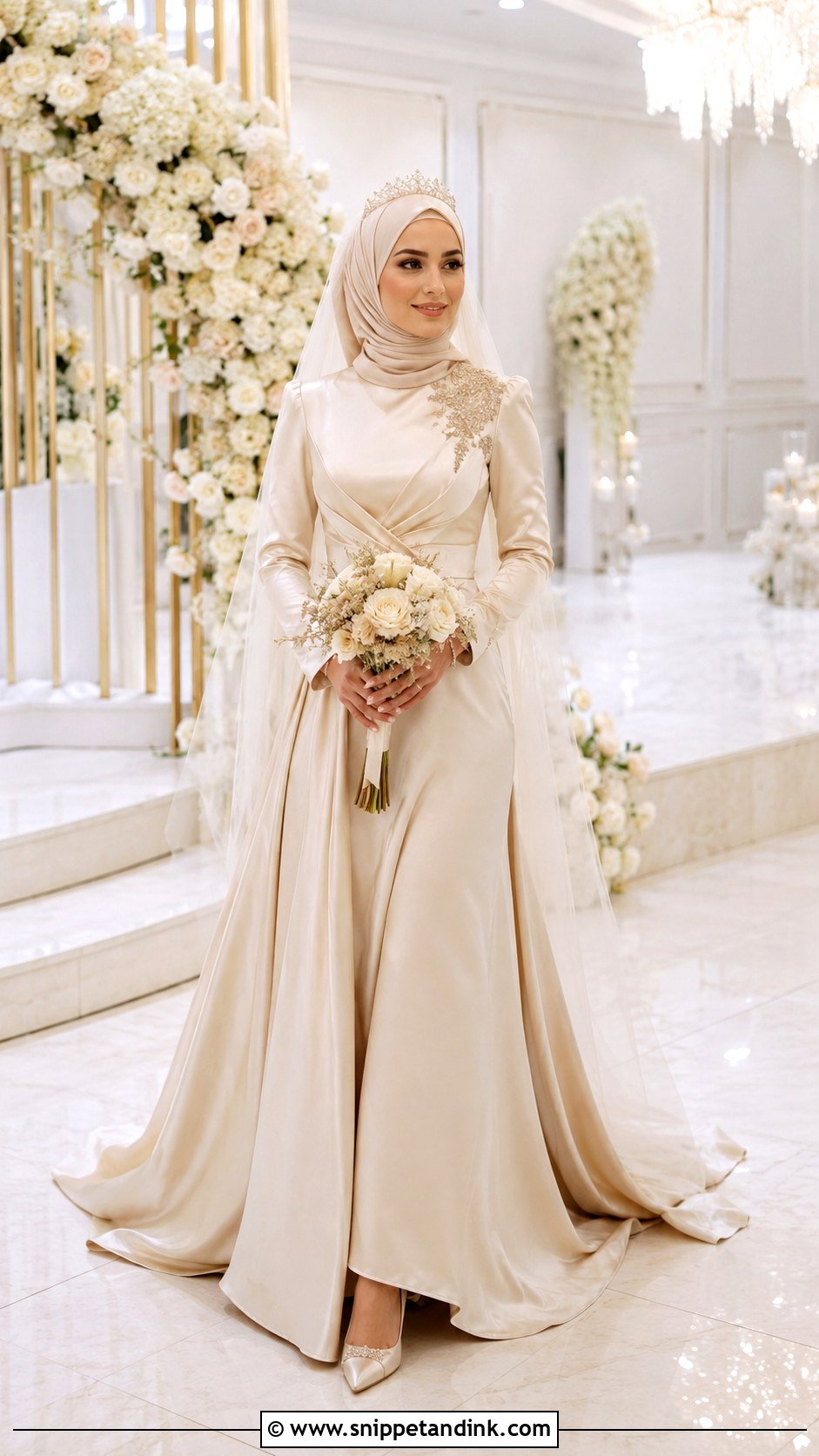
Champagne is warmer than ivory, and it takes satin, beading, sequins, lace and embroidery well. Under warm evening lighting it glows, which is why I like it for formal receptions. Choose a fully lined gown with long sleeves and a modest neckline, then decide on contrast: a champagne scarf blends in, an ivory one lifts the face. Gold accessories suit it, as long as they stay fine. Pointed heels, a soft veil and cream or neutral flowers complete the outfit.
32. Gold Wedding Dress Hijab
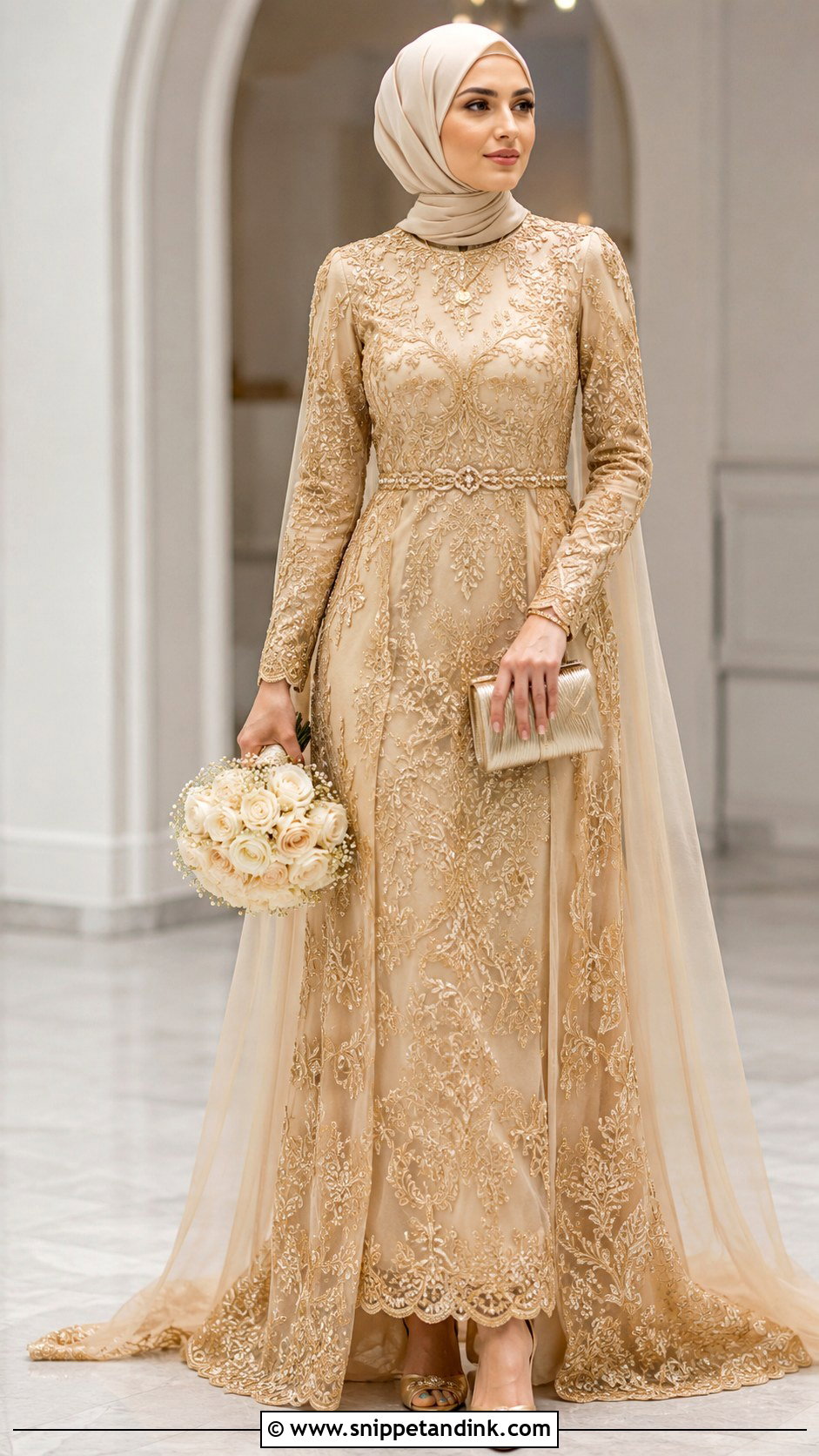
A gold gown, kaftan or lehenga with metallic thread or soft shimmer needs a calm scarf, or the whole outfit becomes shine. I’d choose a plain ivory, beige or gold hijab in a matte fabric, and a structured silhouette to keep it formal. Metallic thread is scratchy too, so if heavy embroidery sits at the neck, a soft undercap stops it rubbing over a long evening. Gold heels, a neat clutch and jewellery that doesn’t compete with the dress are all it needs.
33. Red Bridal Dress Hijab
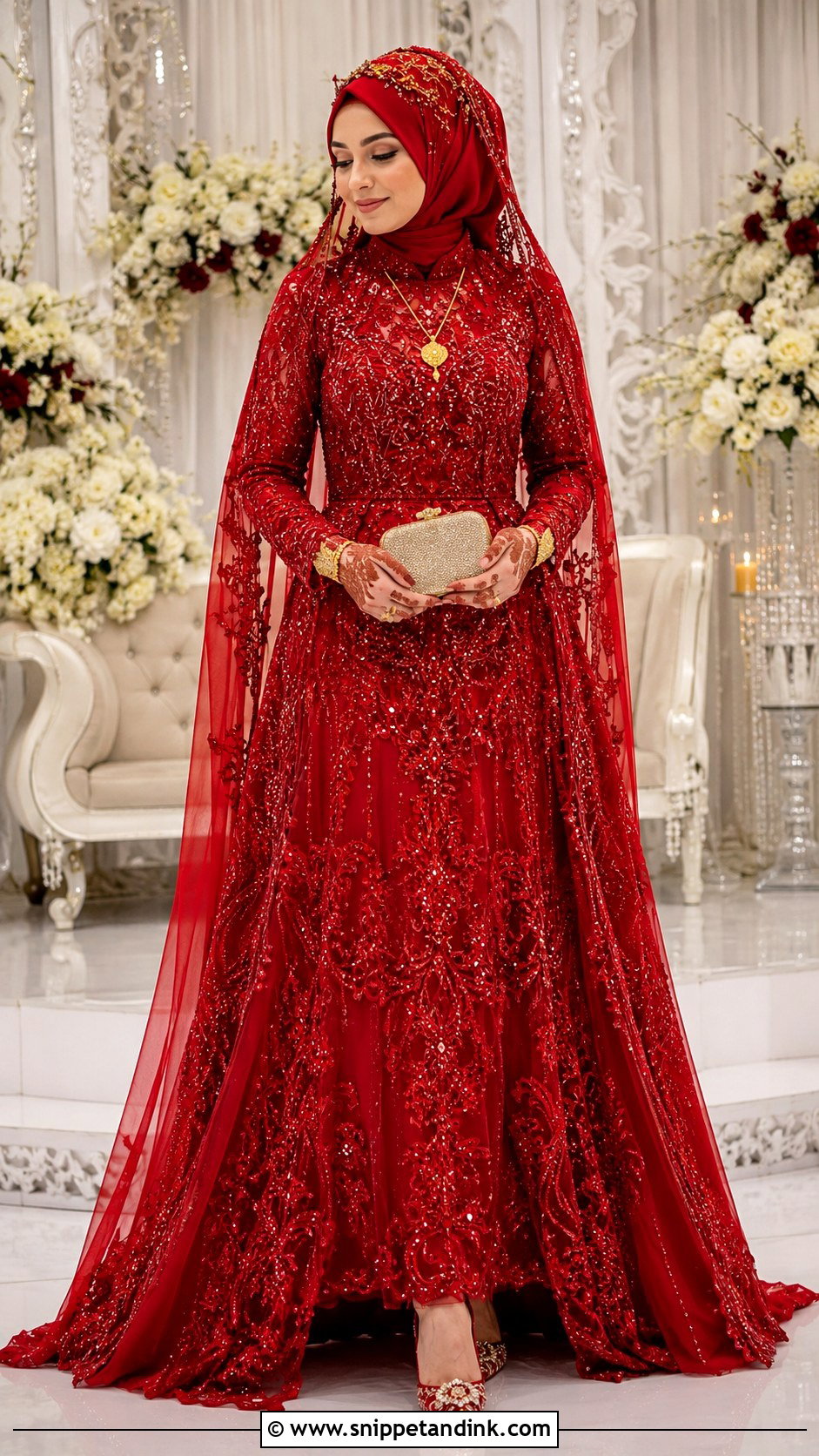
Red carries deep tradition for many brides, and the shade often follows family custom. A red lehenga, gown, sharara or kaftan with long sleeves and gold embroidery, tonal beadwork or lace makes a ceremonial outfit. A matching red hijab gives one strong colour; ivory or gold softens it. One practical check: deep red dye can transfer onto a pale scarf when fabrics rub in heat, so press a damp white cloth against the gown before pairing it with an ivory hijab. Traditional jewellery and embellished heels finish it.
34. Lehenga Wedding Dress Hijab
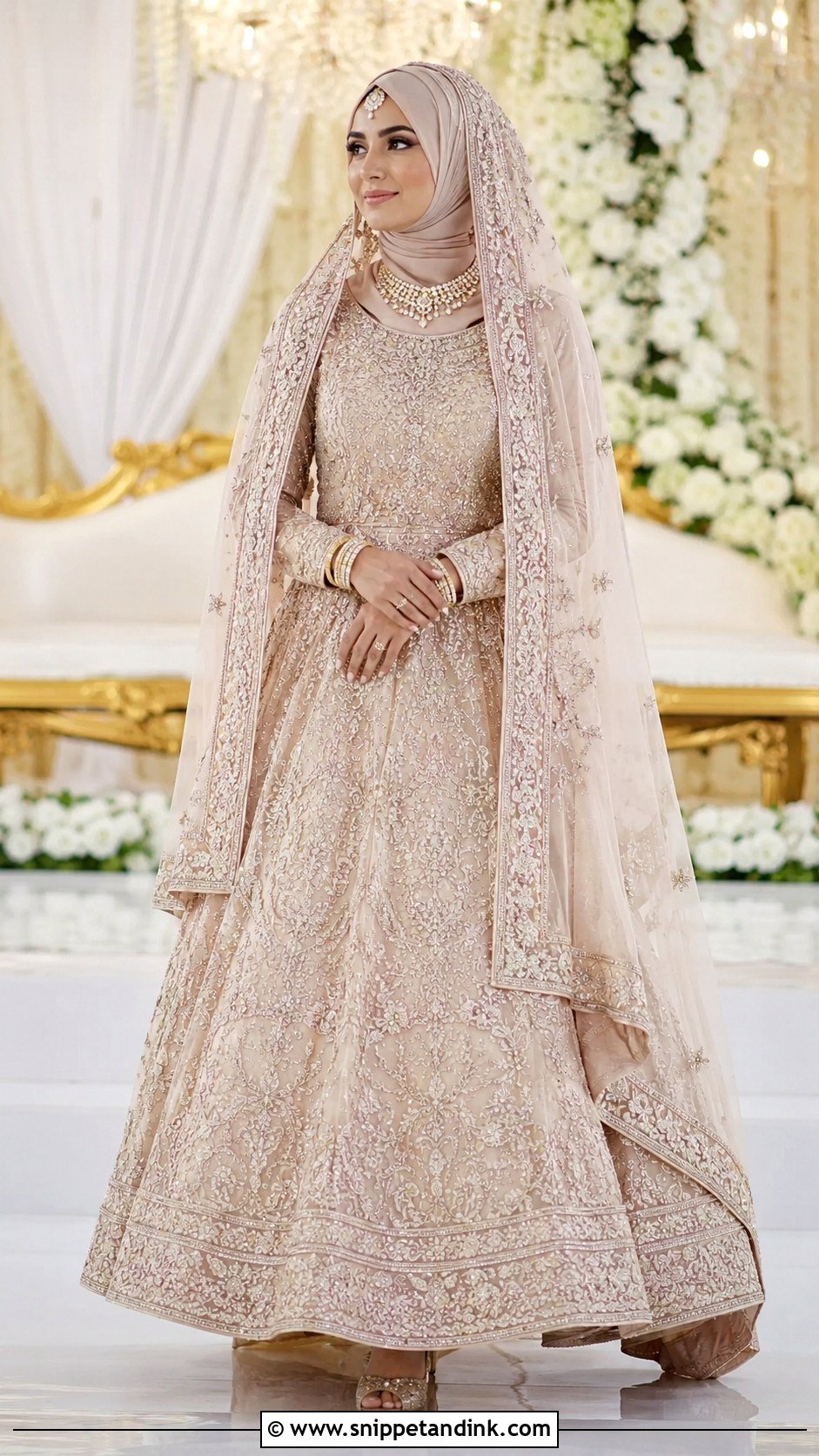
The lehenga look lives or dies on how the dupatta and hijab sit together. I wrap the hijab first, pinned to the undercap, then drape the dupatta over the head with pins going through the dupatta into the cap only, so it never pulls the scarf out of shape. A long blouse with sleeves and a high neck covers comfortably when you sit. A matching or coordinating hijab underneath gives a layered finish. Lehengas are heavy, so plan something lighter for the next event.
35. Nikah Wedding Dress Hijab
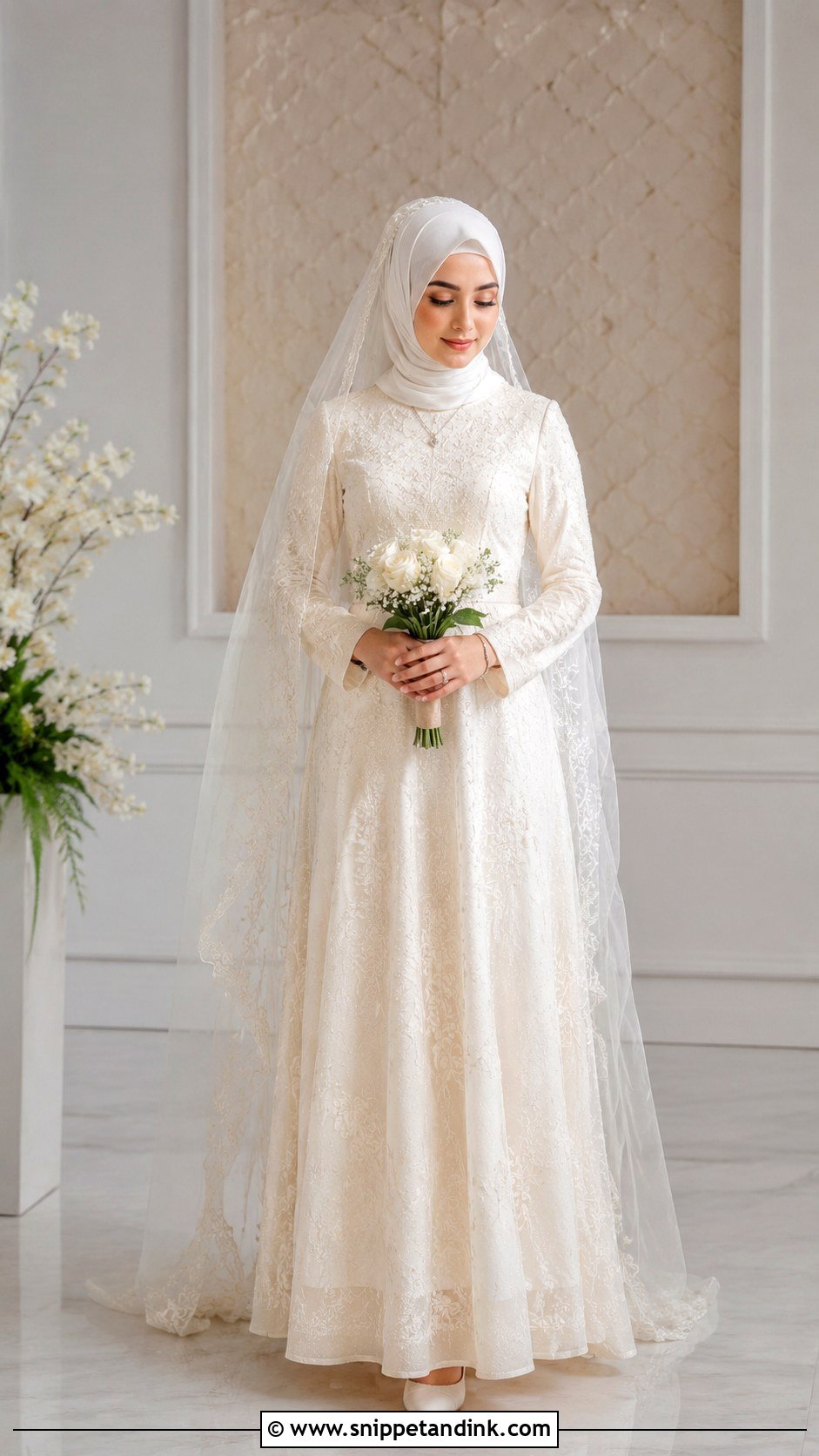
A nikah wedding dress hijab outfit is often quieter than the reception look, since the ceremony centres on the contract and the families. White, ivory, cream, blush or pastels in an abaya, kaftan, A-line gown or embroidered maxi dress all suit it. You’ll likely sit for some time, so choose a skirt that doesn’t twist and a wrap that stays put when you lower your head to sign. Keep the veil soft, the jewellery fine and the shoes easy to slip off if the venue asks.
Take the Real Hijab to Every Gown Fitting
A seamstress fits the dress to what she sees. Arrive bareheaded and the neckline, collar and shoulders may be set for a look that changes the moment the scarf goes on. Wear your actual hijab and undercap to every fitting, plus the wedding shoes so the hem is cut to the right length.
- Check the collar height with the wrap on. A tall neck under a full wrap can feel tight at the throat by the evening.
- Raise your arms and hug the seamstress. The sleeves should still reach your wrists.
- Sit on a low chair, and on the floor if your ceremony includes it. The skirt and any top layer should still cover.
- Ask where the bustle or train hooks are, and show whoever will help you dress on the day.
Buy two scarves in the same fabric, or two lengths of it. The spare rescues you if foundation or food marks the first. For the reception, a change into a simpler wrap in that same fabric also gives your neck and temples a rest after hours of pins.
A Hijab and Gown That Belong Together
Pick the gown and the scarf together, in the same daylight, with the undercap on. Match fabric weight first, then shade, then decide where the detail lives: at the face, on the sleeves or on the skirt, never everywhere at once. Before the wedding, wear the complete outfit for an hour, sit, hug and lift your arms. If it still feels like yours after that, you’ve found it.
You'll Like These Ideas:








Leave a Reply