
Your hands end up in more wedding photos than almost anything except your face: the ring exchange, the bouquet, a hand on a shoulder during the first dance. That’s why I plan a bridal set around close-ups and wear, not only around a mood board. This year most brides are asking for sheer milky finishes, slim modern French tips, a little pearl or chrome, and short to medium lengths that feel natural. Below are the sets I’d suggest, with what each one needs from your nails, your dress and your timing.
Which Nail System Lasts Through a Long Wedding Day
Before picking a design, pick the system. It decides how long the set lasts, how strong it is and when the appointment should be.
Gel polish
Thin, glossy color cured under a lamp. On healthy nails it usually lasts around two weeks before it starts to lift, which covers the wedding and the start of a honeymoon. I book bridal gel one to three days before the ceremony: close enough to look fresh, with room to fix anything.
Builder gel
A thicker gel that adds strength and lets me shape the nail, good for thin, bendy or bitten nails. It grows out rather than chipping and can be kept going with infills. If your nails break easily, starting builder gel a few weeks out gives them time to grow under protection.
Press-ons
Quick, removable and cheap to test. With glue they hold best for a day or two, so think of them as a wedding-day solution rather than a honeymoon one.
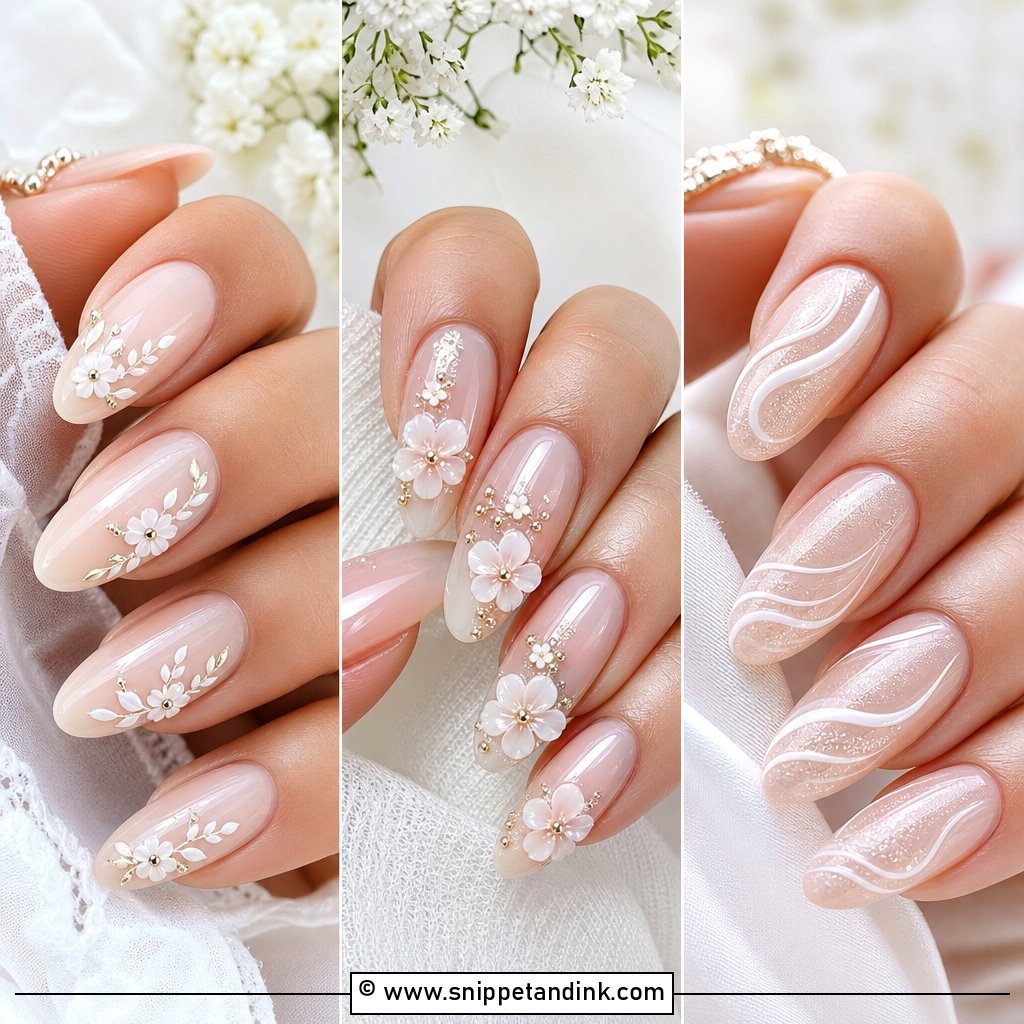
Whichever you choose, avoid a brand-new product or shape in the final week. Reactions to gel are uncommon but real, showing up as itching or redness around the nail, and that’s something to find out at a trial, not on the morning of the ceremony.
1. Classic French Wedding Nails
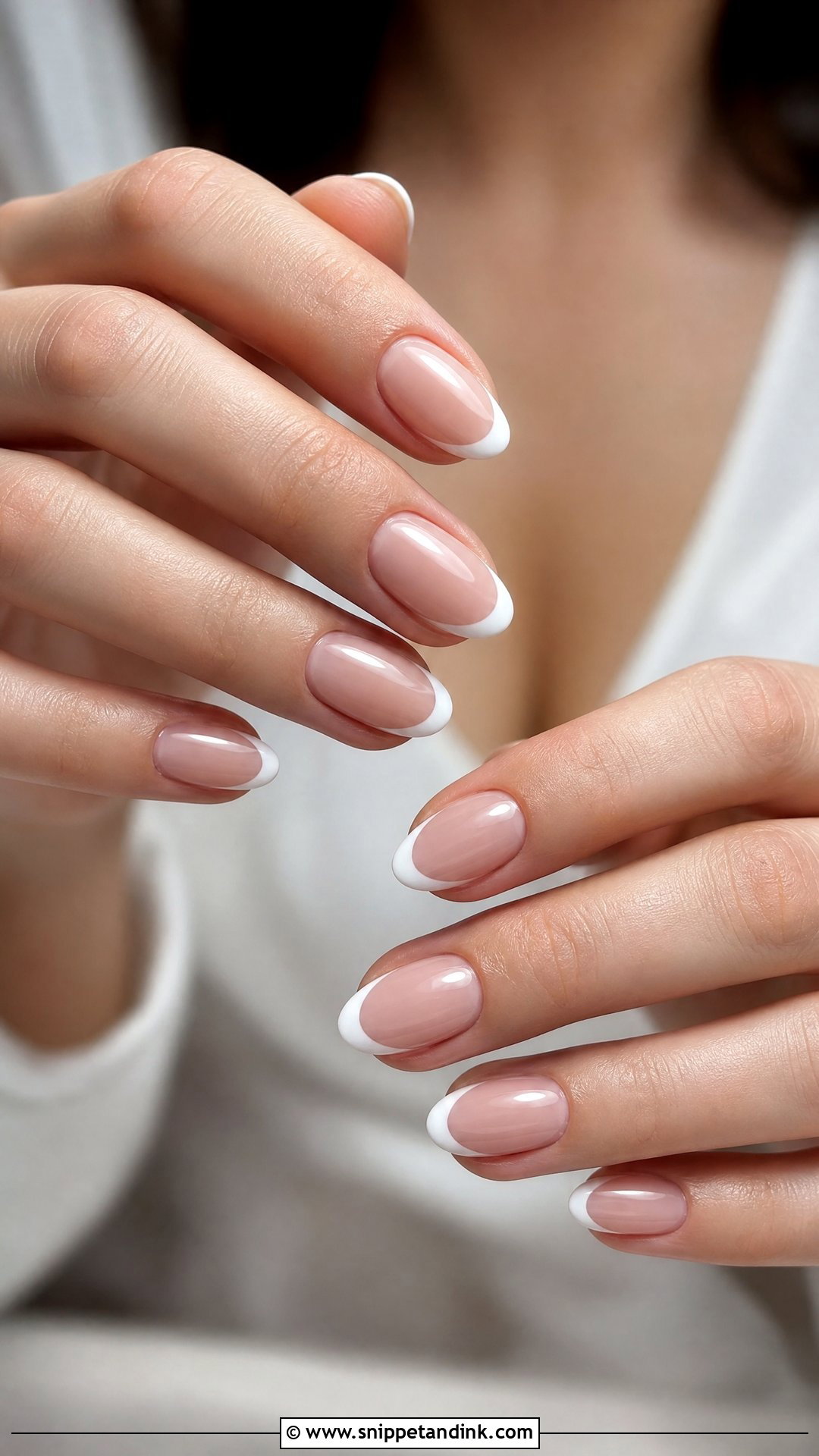
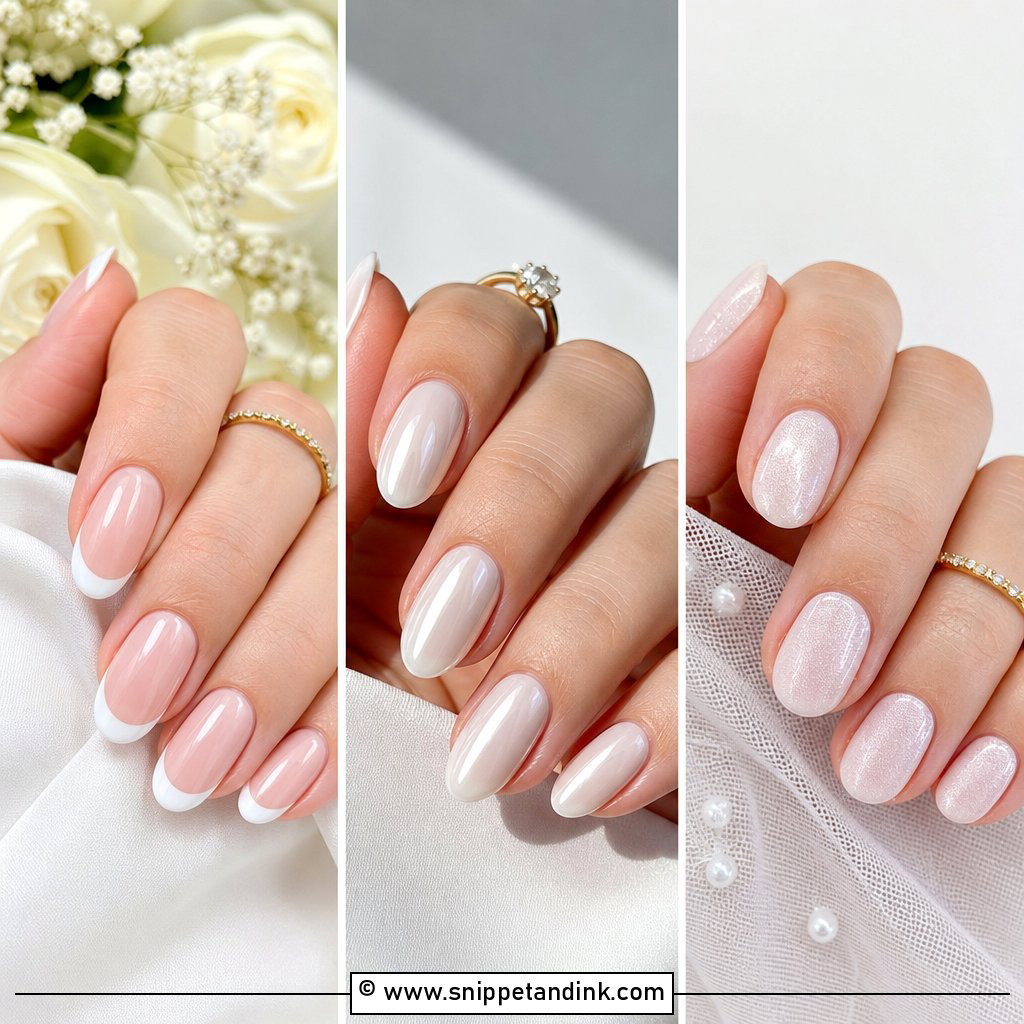
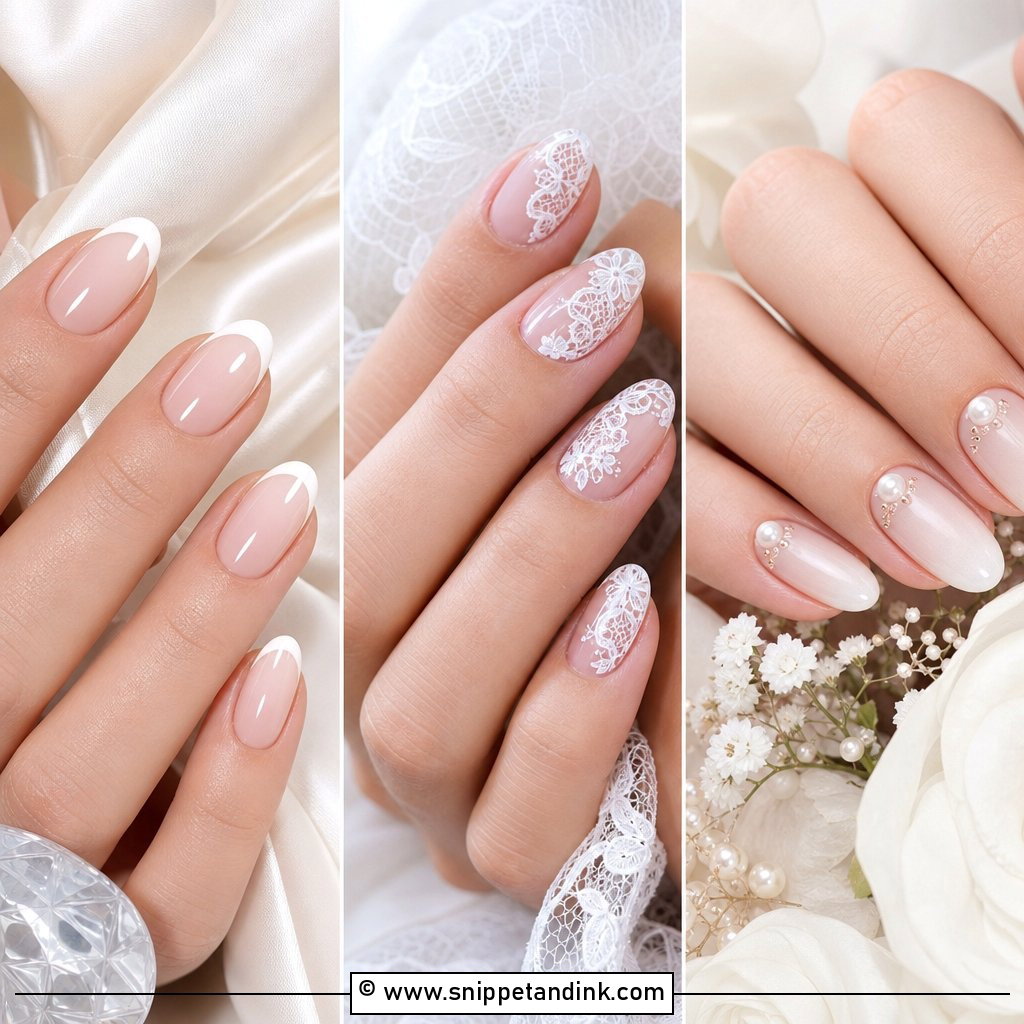
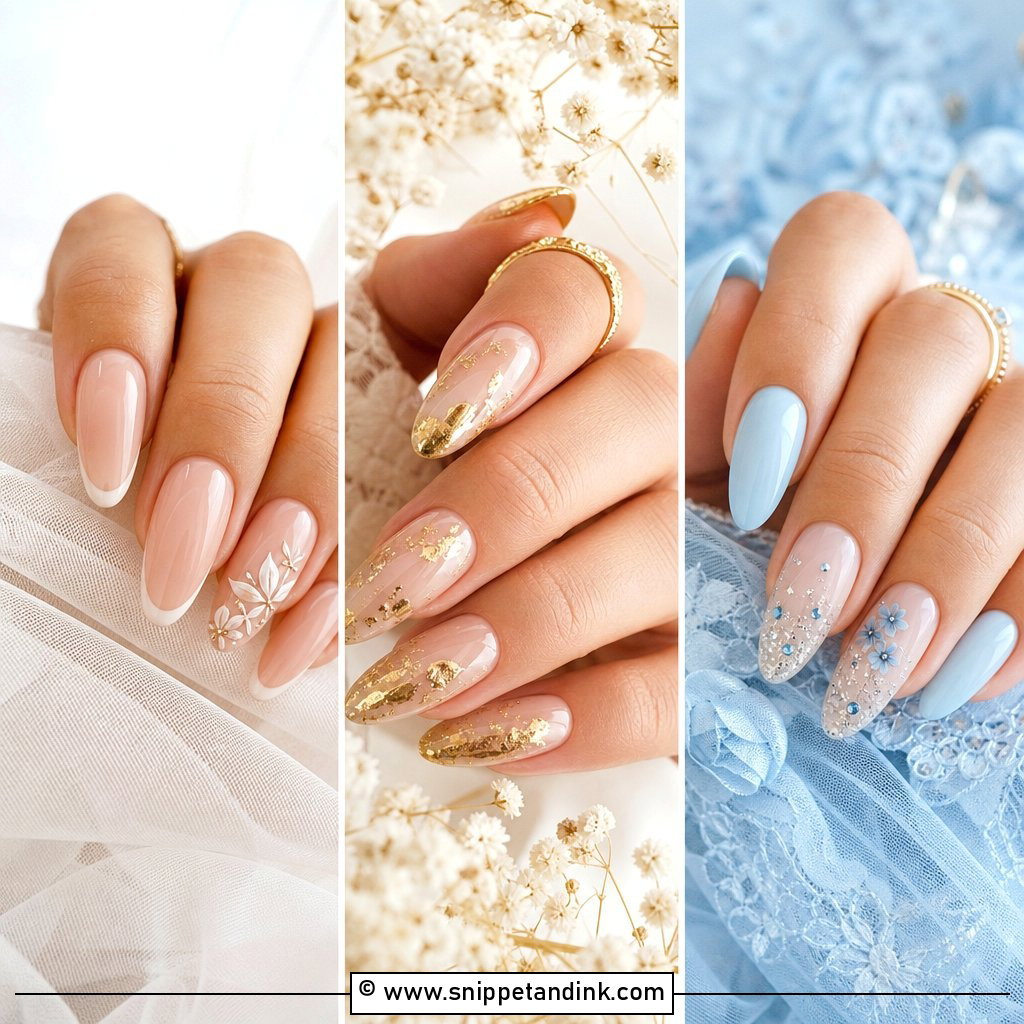
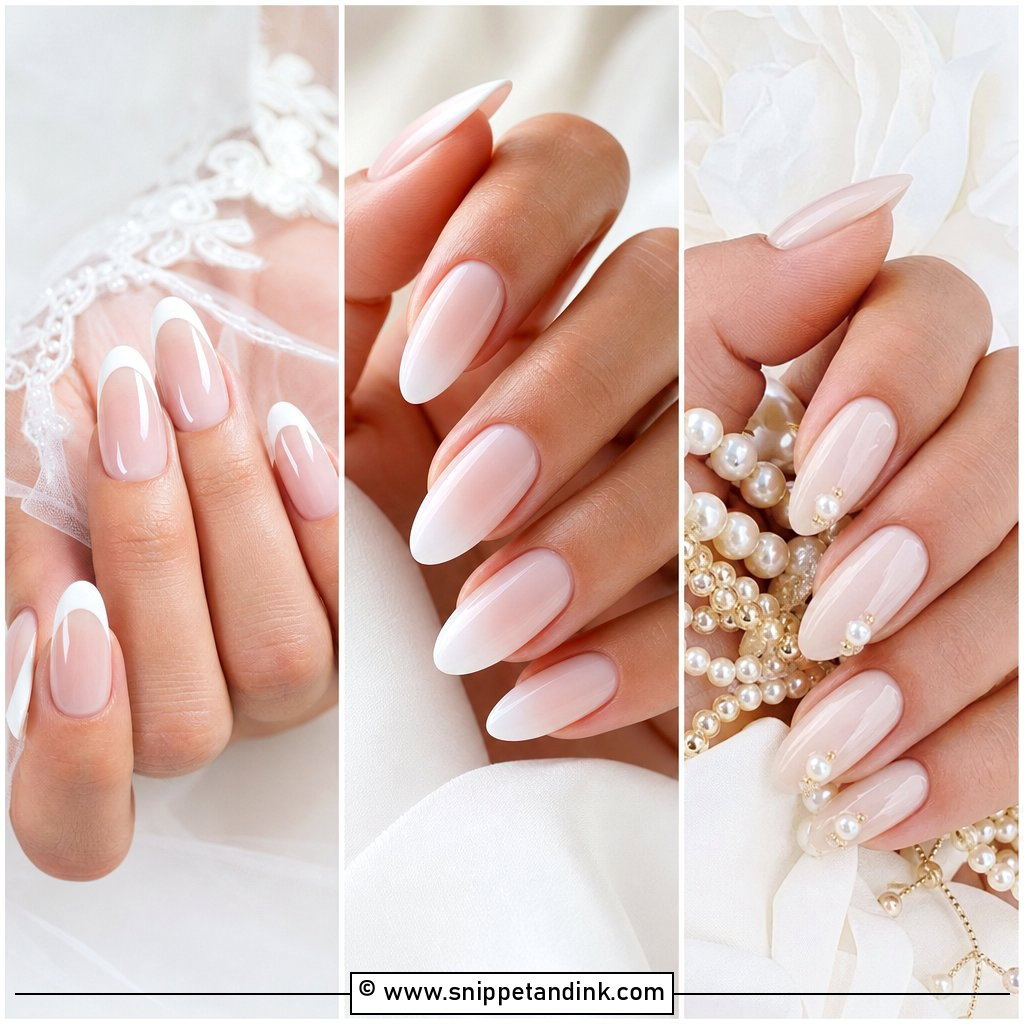
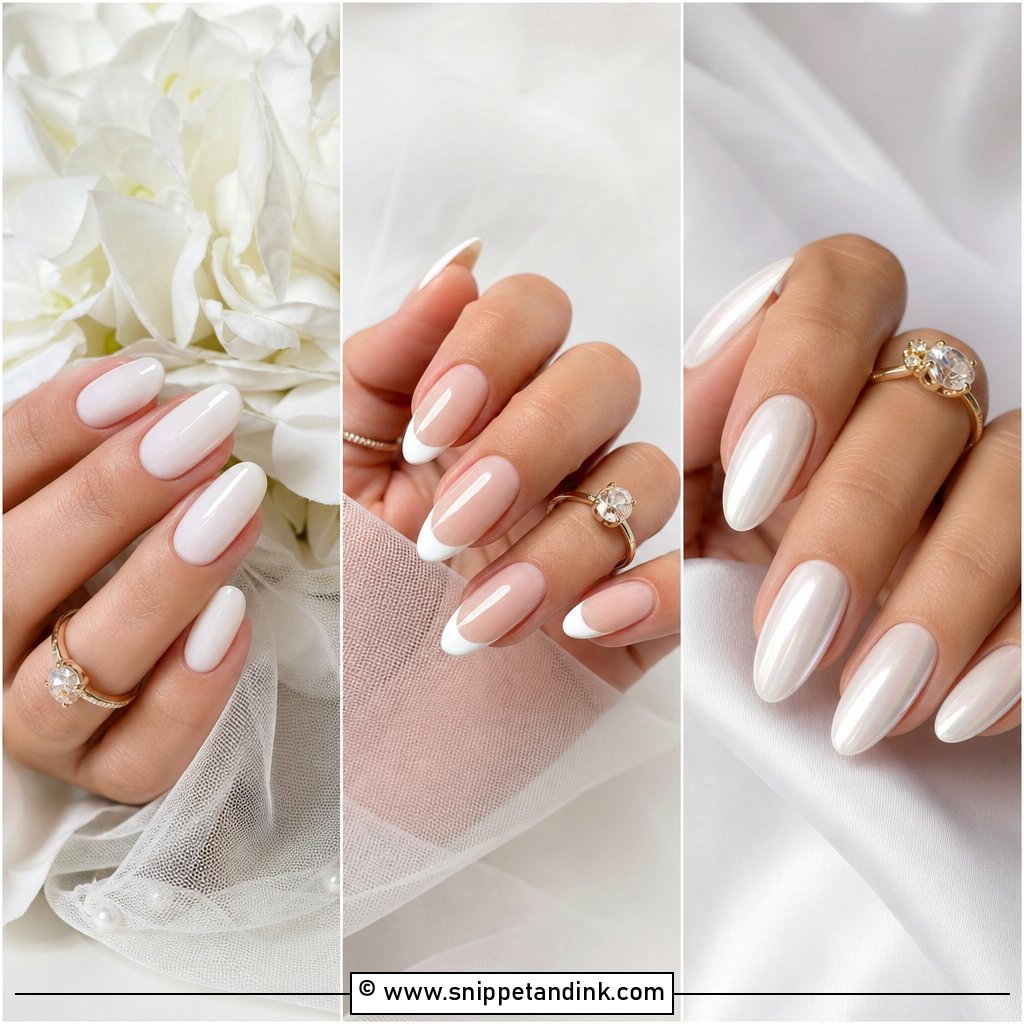
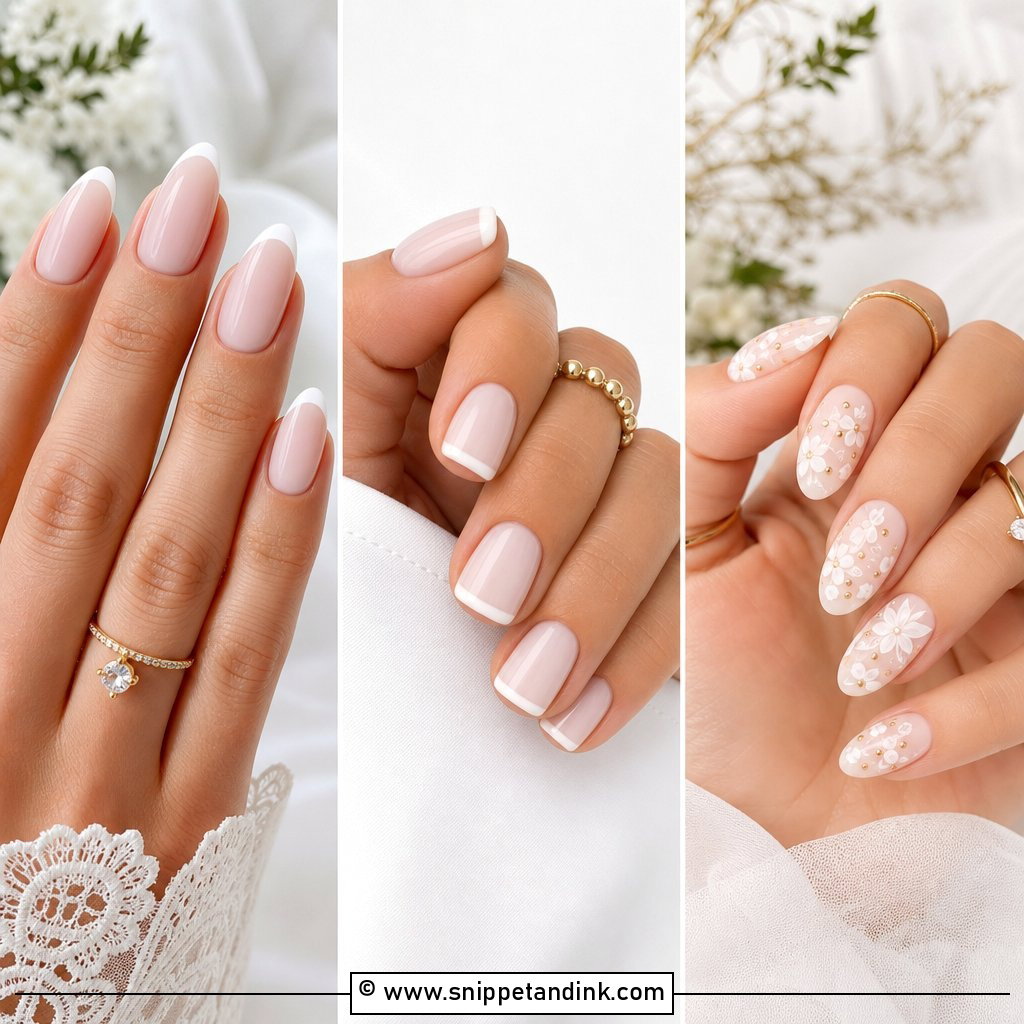
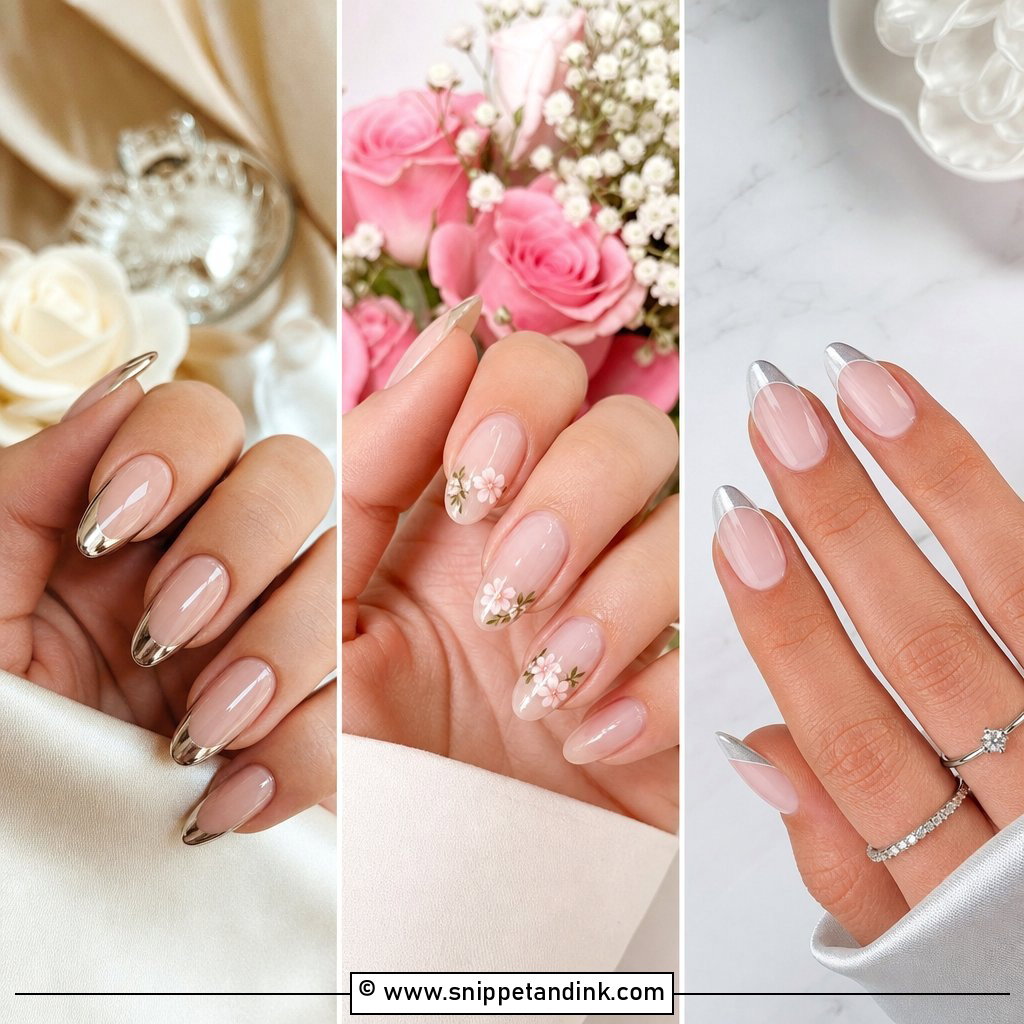
The French has lasted because it gets out of the way. A sheer pink or nude base with a clean white tip looks finished from across the room and doesn’t argue with your dress or bouquet. What dates a French is a thick, chalky tip with a hard edge, so I paint a slimmer smile line that follows the curve of your own free edge rather than a stencil. Almond, oval and soft square all suit it, and a short or medium length keeps it practical.
2. Milky White Wedding Nails
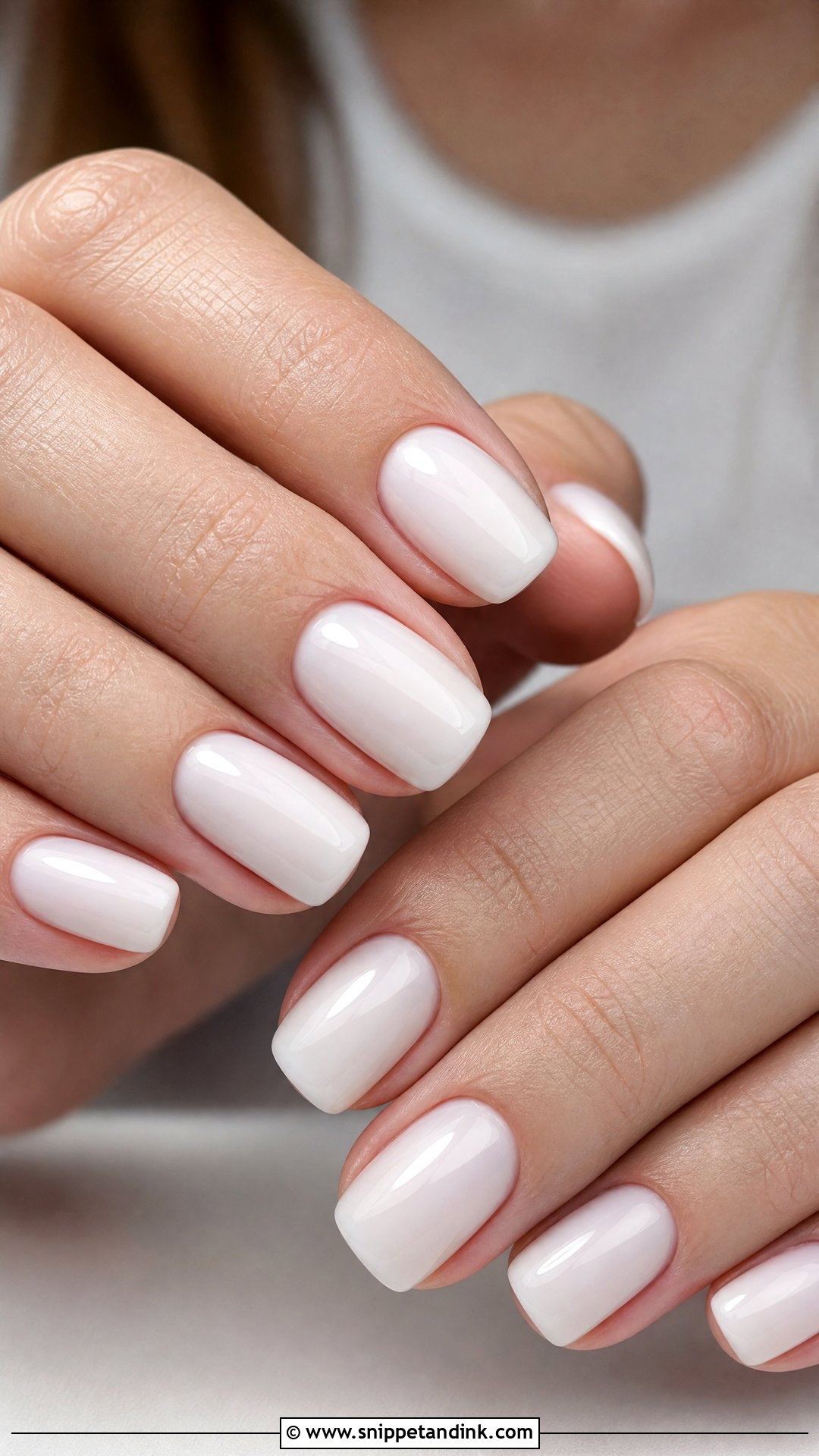
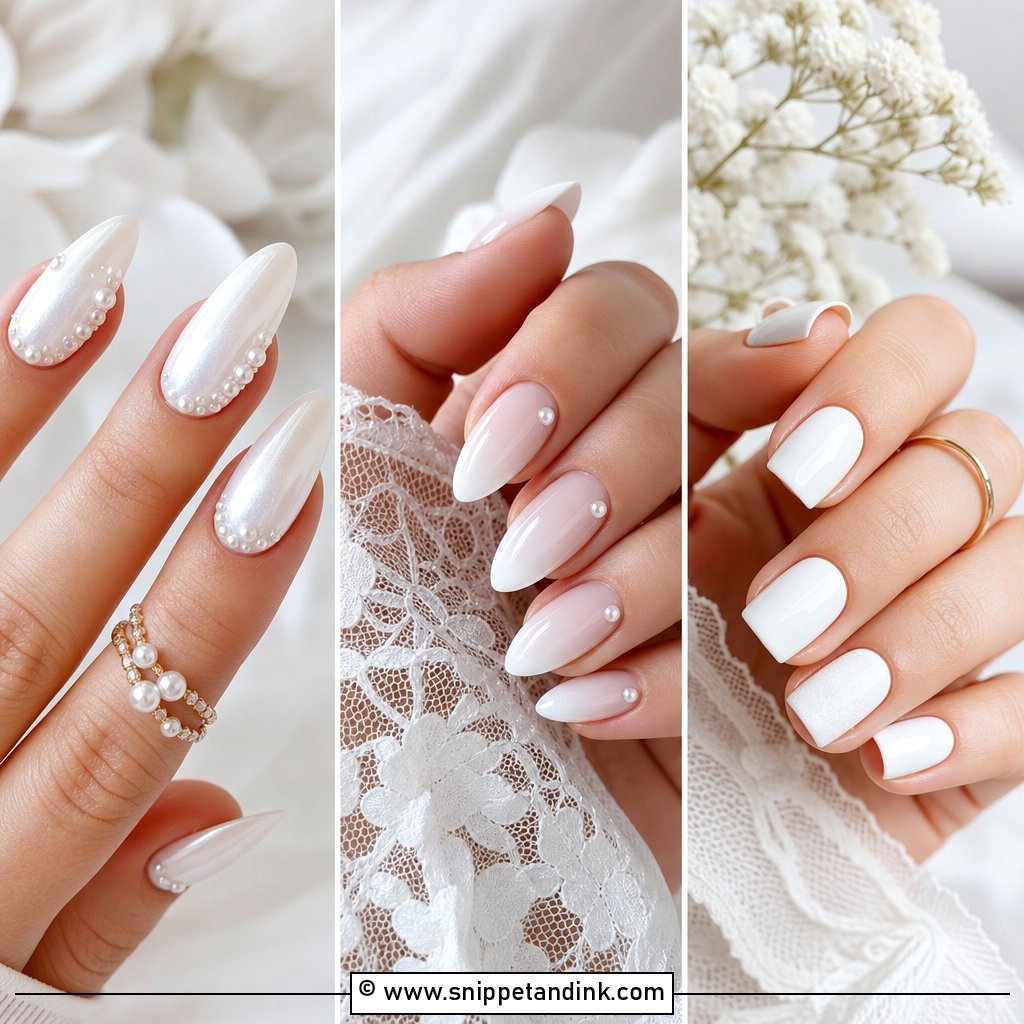
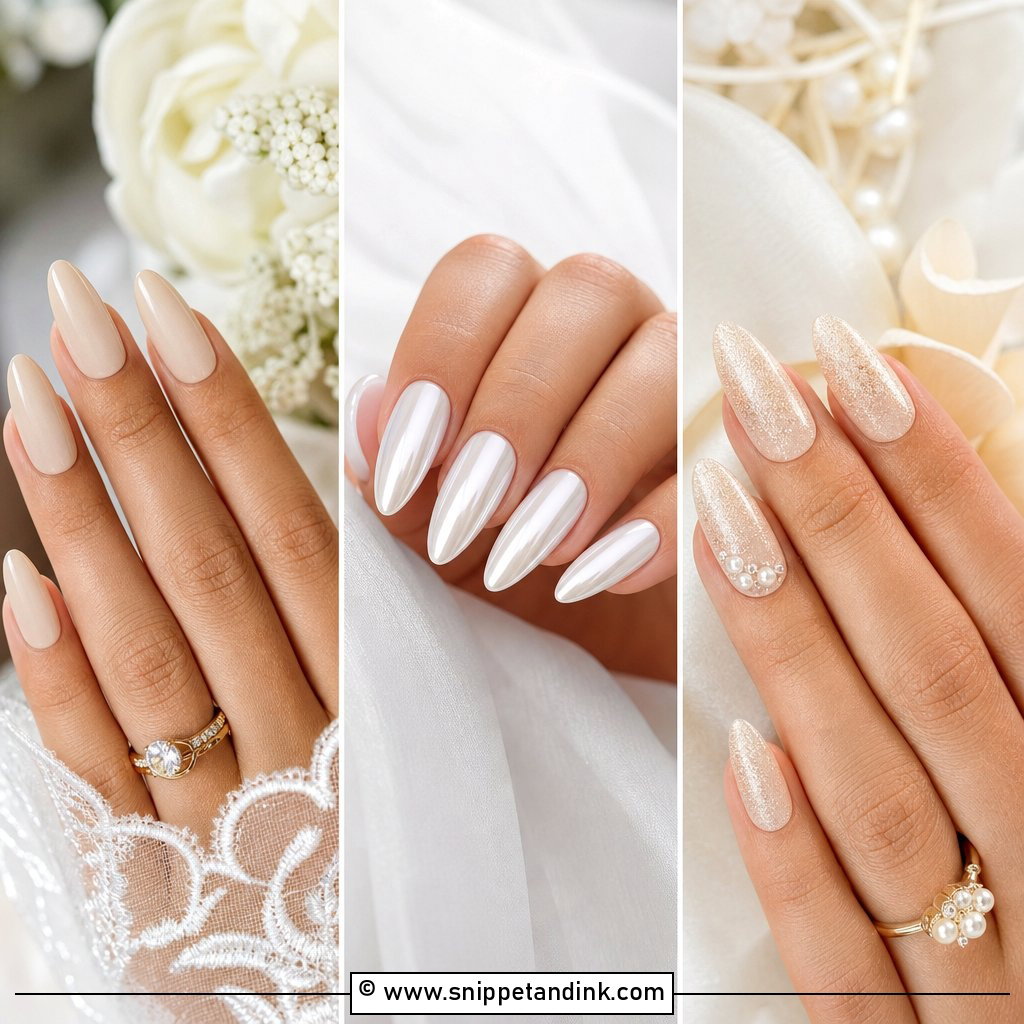
Milky white is a translucent white, closer to a veil than a wall of paint, which is why it flatters more skin tones than opaque white. I build it in thin layers, because a single thick coat of white gel tends to streak or cure unevenly. Satin and silk gowns suit it especially. A tiny pearl or a sheer chrome rub adds dimension if you want it. Short squoval keeps it practical; almond makes it more graceful.
3. Nude Almond Wedding Nails
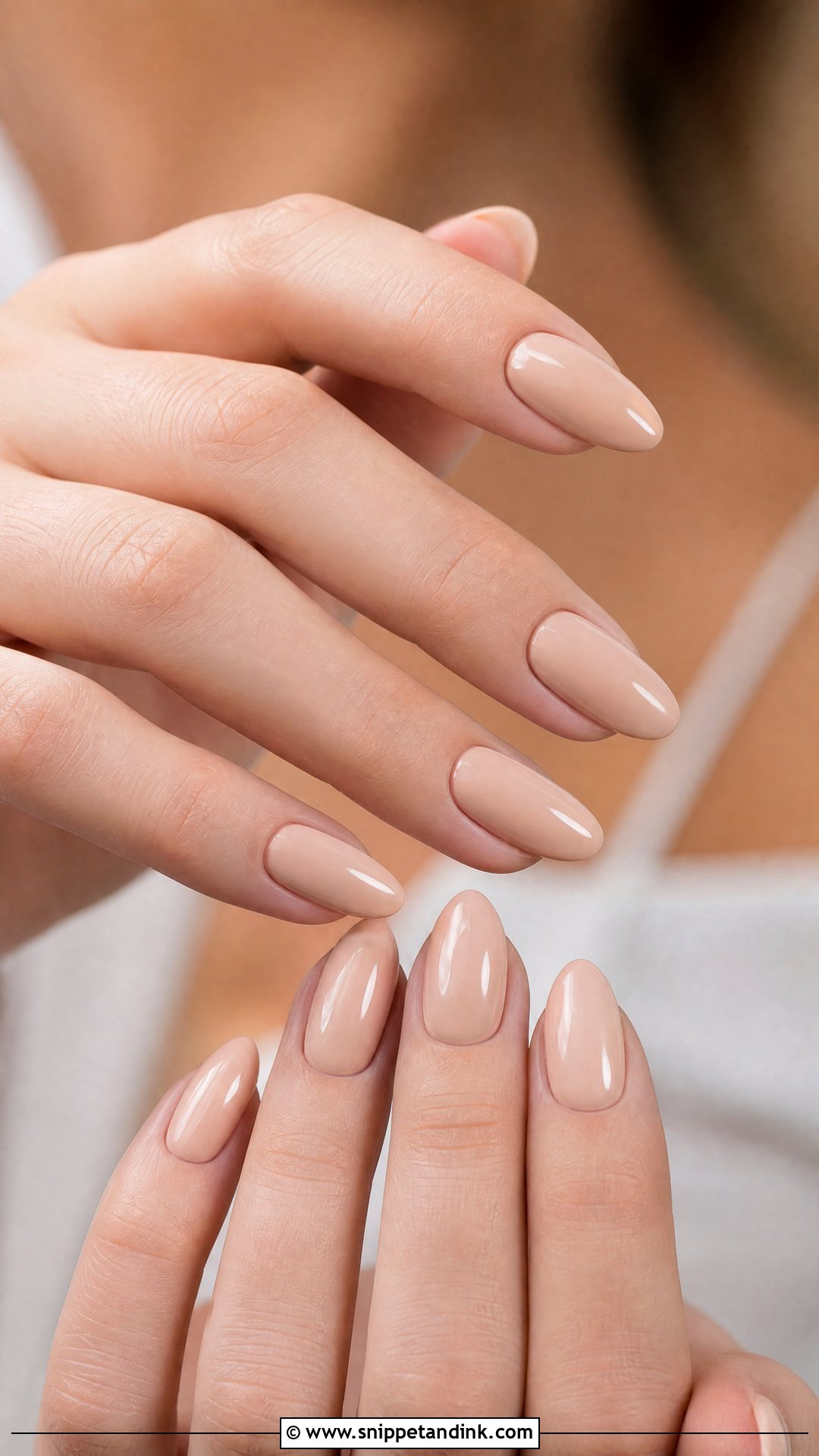
Almond tapers the fingers, and a nude that matches your undertone makes the hand look longer still. Getting the nude right is most of the work: I swatch two or three shades against the side of your finger in daylight, because a nude that’s too pink or too grey makes hands look washed out in photos. Beige, caramel, rosy taupe and mocha each suit different skin. It’s my usual suggestion when the dress has heavy beading or dramatic sleeves, since the nails balance it instead of competing. Clean cuticles matter more here than in any patterned set.
4. Pearl Wedding Nails
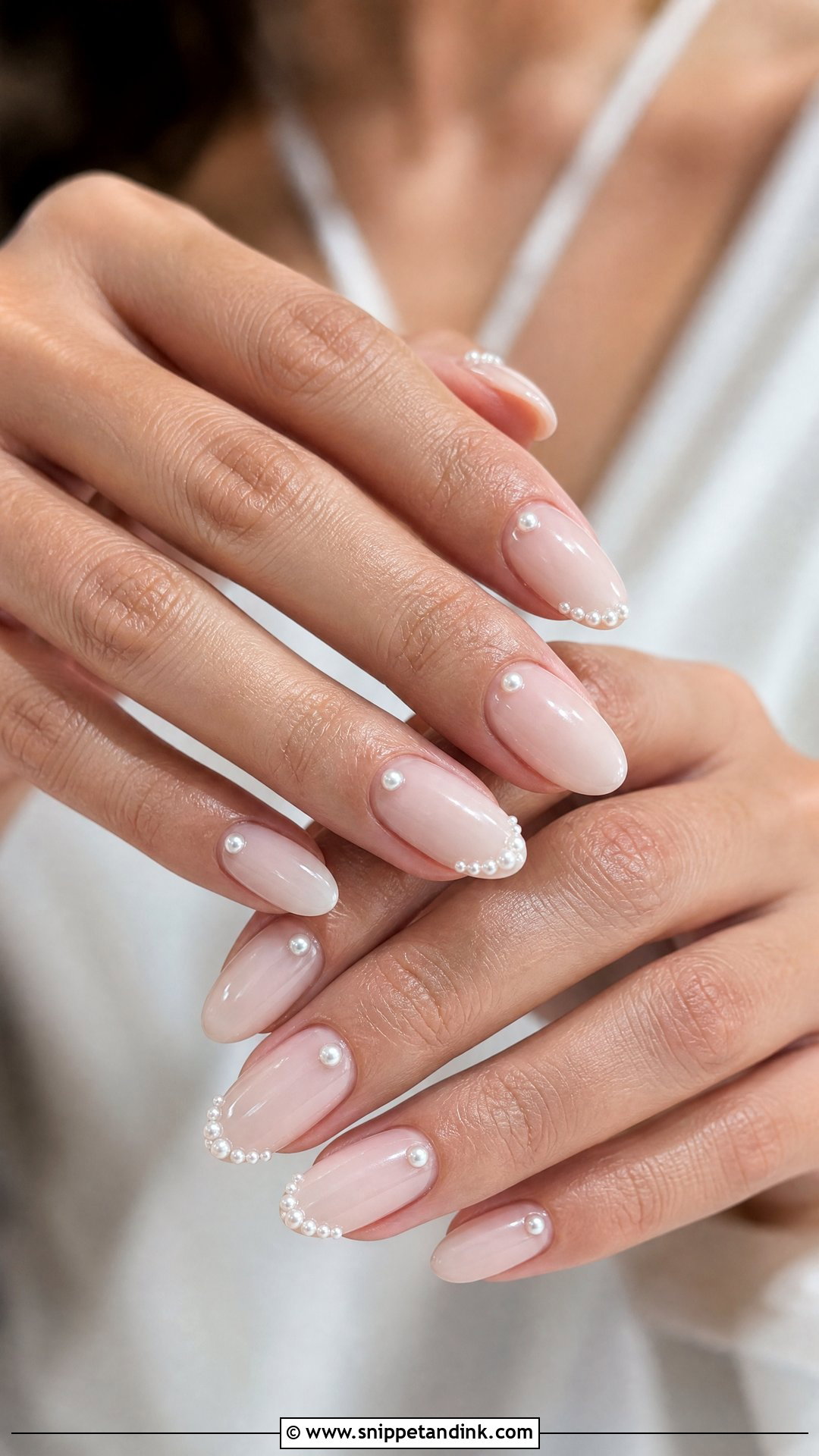
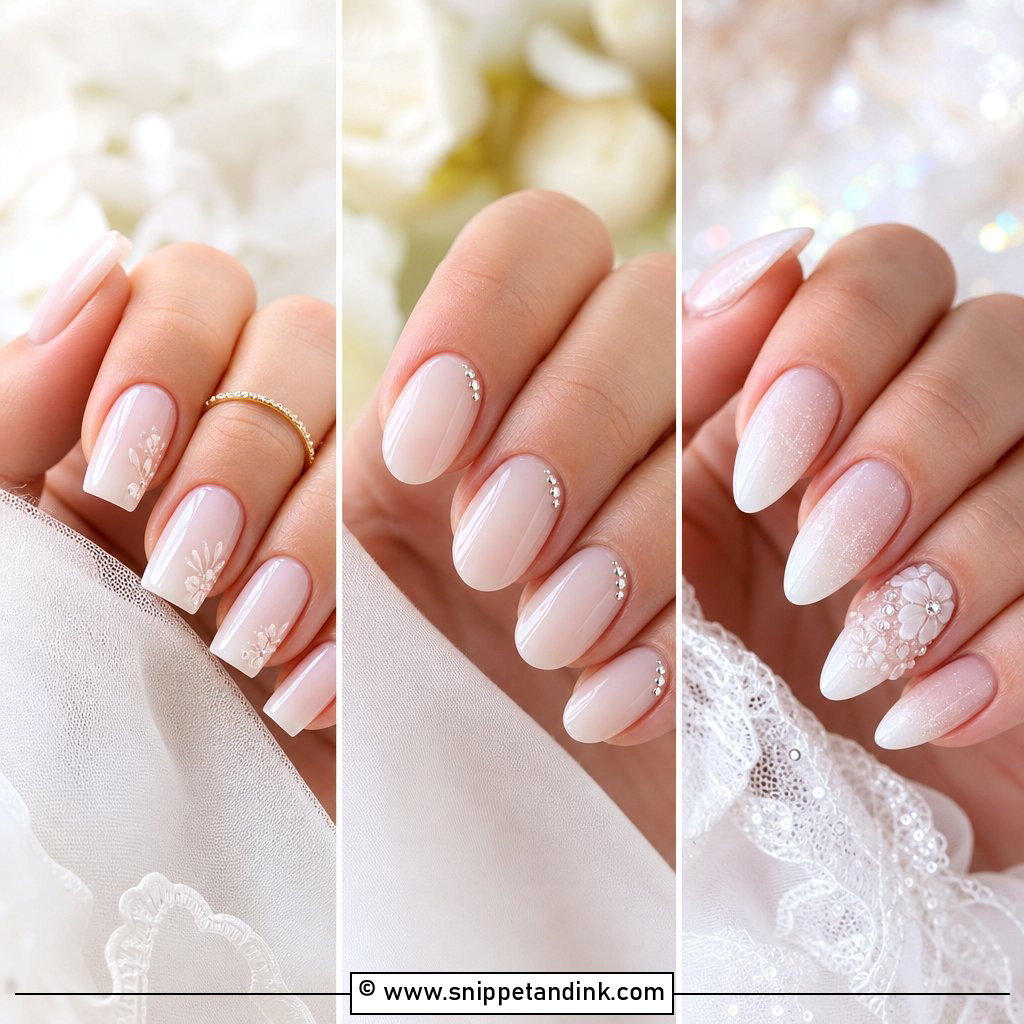
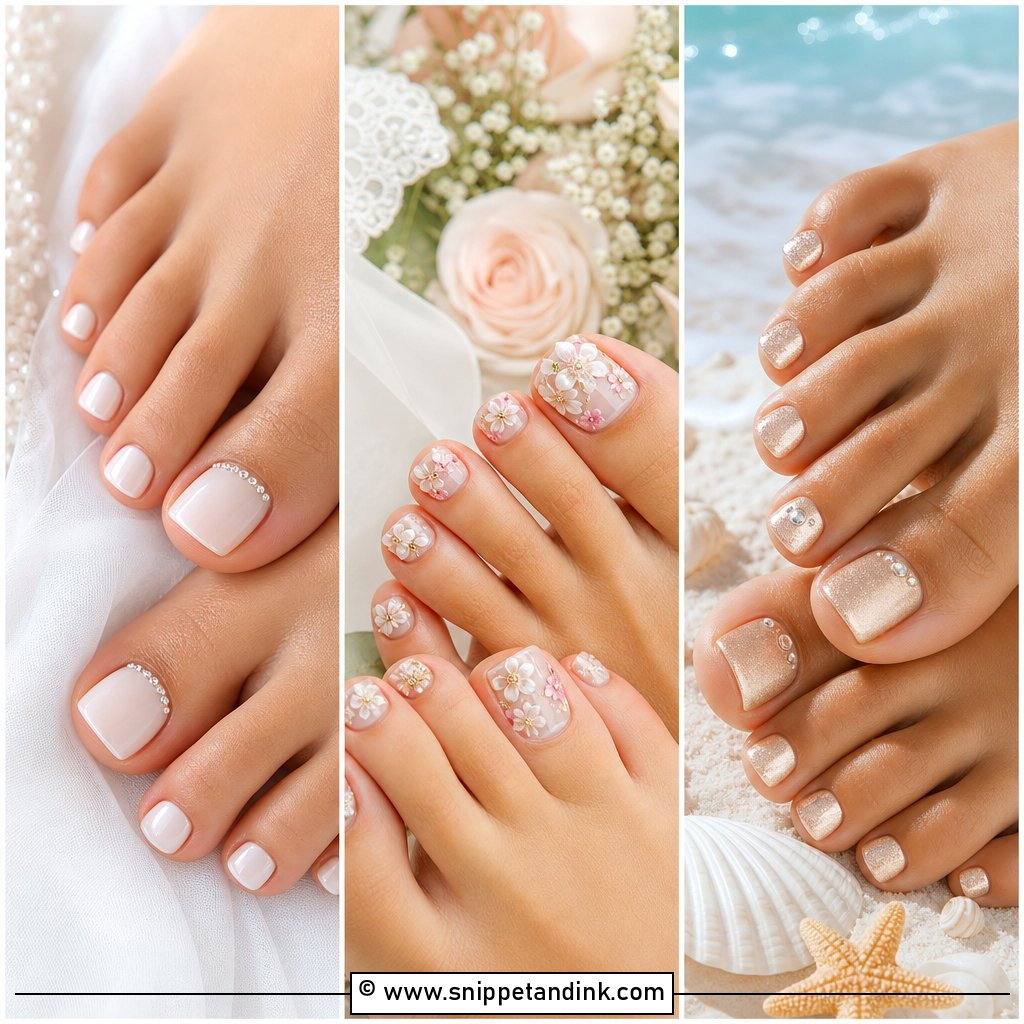
Tiny pearls near the cuticle, along a French line or scattered over a sheer base keep the set delicate. I set flat-backed pearls into a thick gel and seal around them rather than over them, so they keep their shine and stay put. They echo pearl buttons or beaded straps on a gown neatly. Keep the length short or medium; the higher the decoration sits, the more it catches on lace and hair.
5. Chrome Wedding Nails
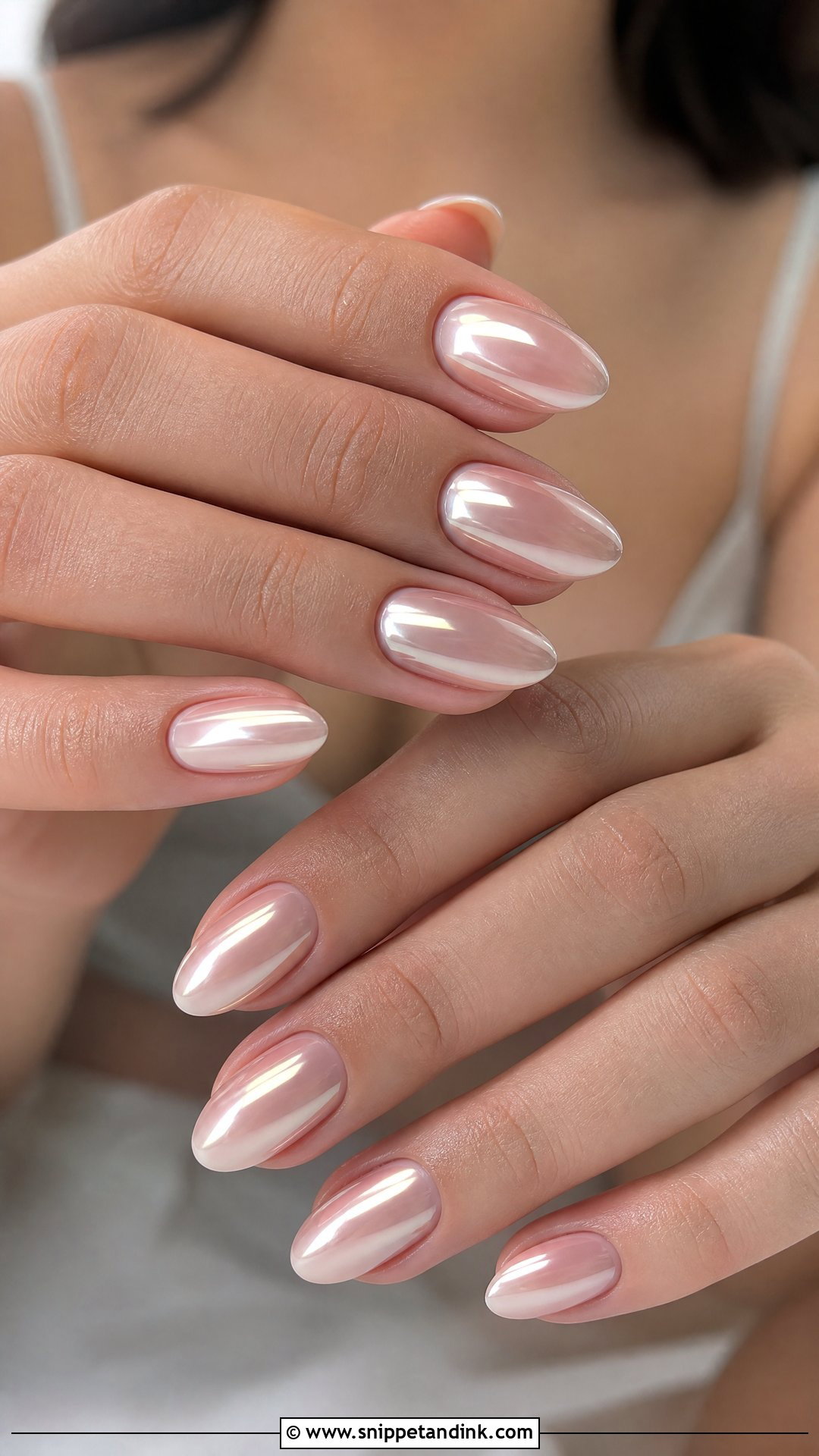
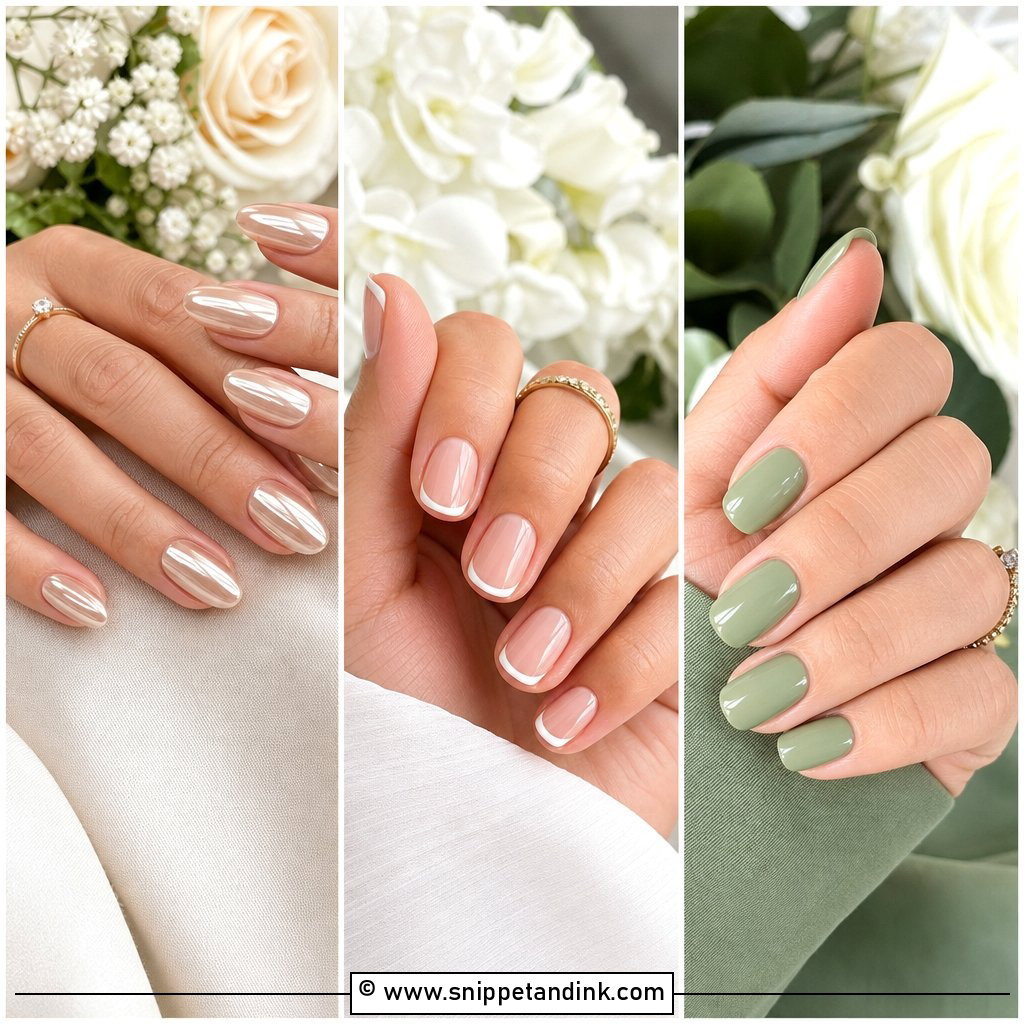
Chrome wedding nails start with a gel color, usually milky white, blush or nude, then a fine chrome powder rubbed onto a cured no-wipe top coat and sealed. For a bride I use a pearl or glazed powder and buff it on lightly, so it reads as a glow rather than a mirror. Chrome shows every ridge underneath, so the base has to be smoothed first. From across a room it looks like a clean manicure; in the ring close-up it shimmers.
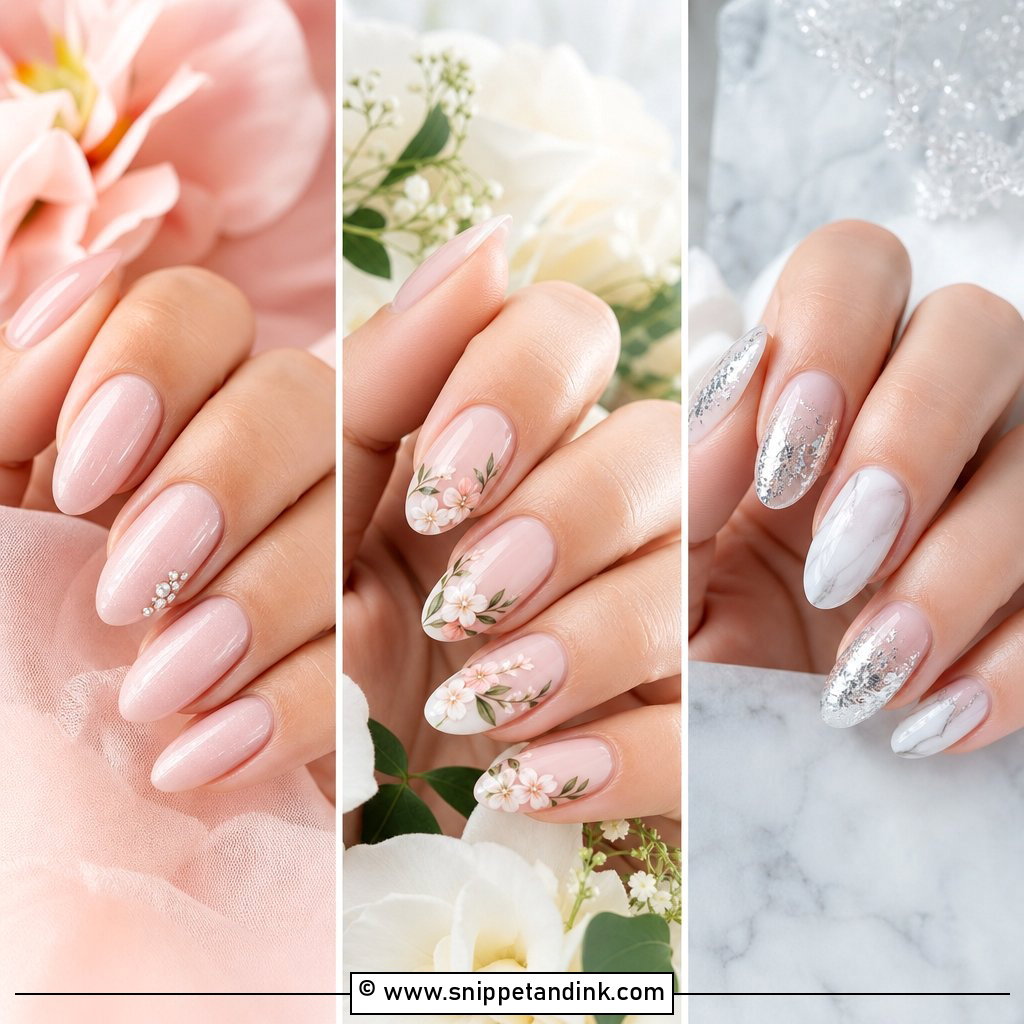
6. Blush Pink Wedding Nails
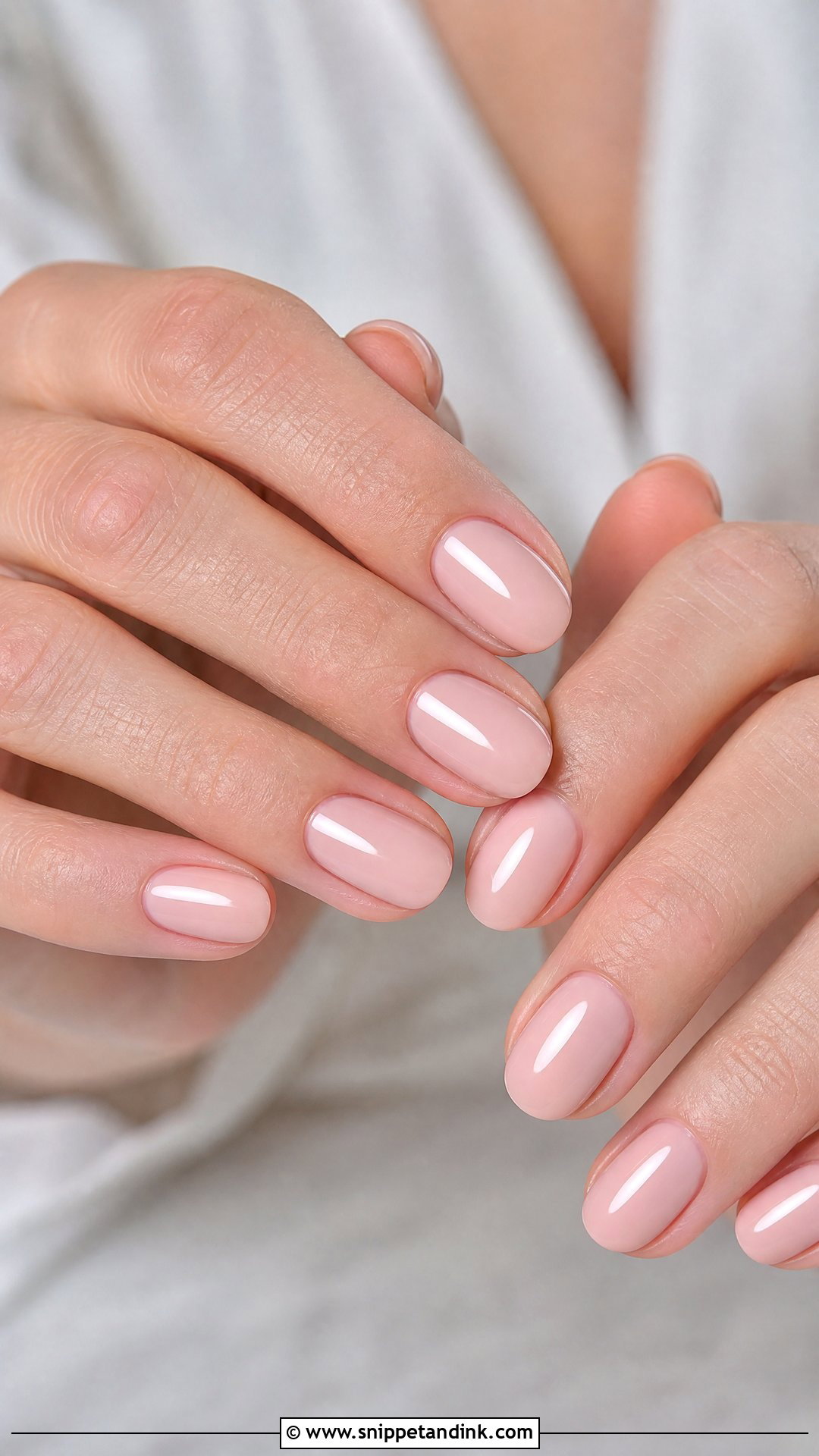
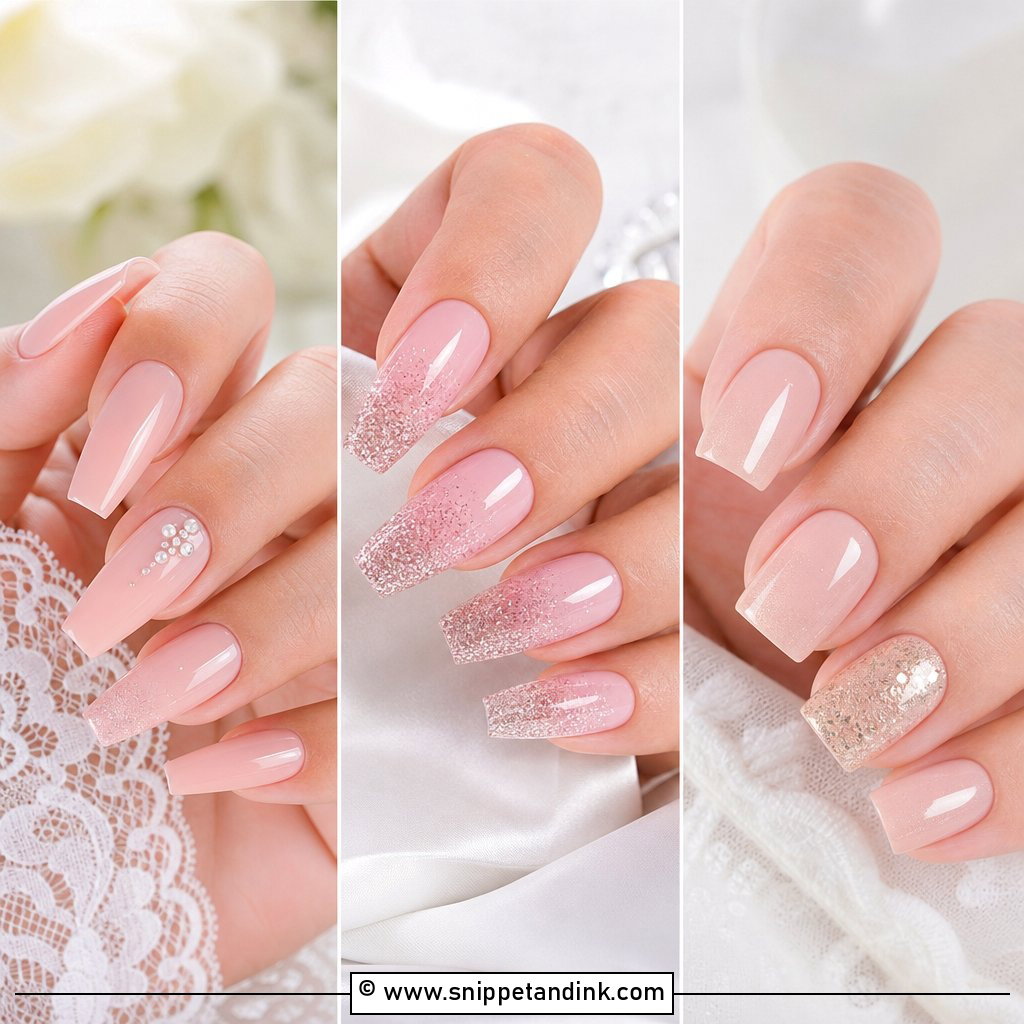
Blush is the shade I reach for when a bride wants some color but rarely wears polish. A sheer blush reads as healthy nails; a creamier pastel pink is more noticeable. Creamy pinks can look patchy in one coat, so expect two or three thin coats for an even finish. It suits spring weddings and soft glam makeup, and it looks good on short nails. Tiny white flowers or a micro French add detail if you want it.
7. Ombre Wedding Nails
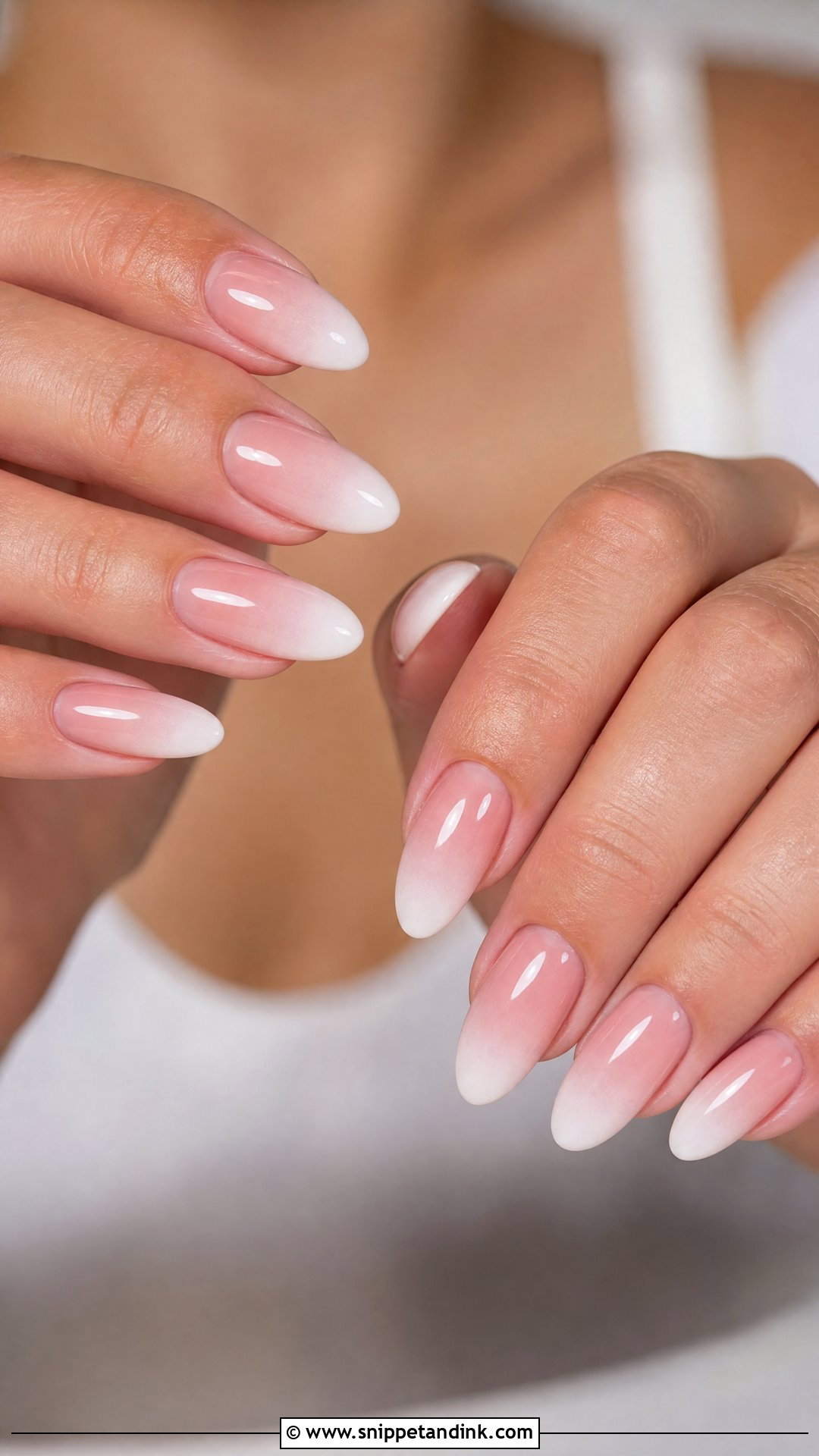
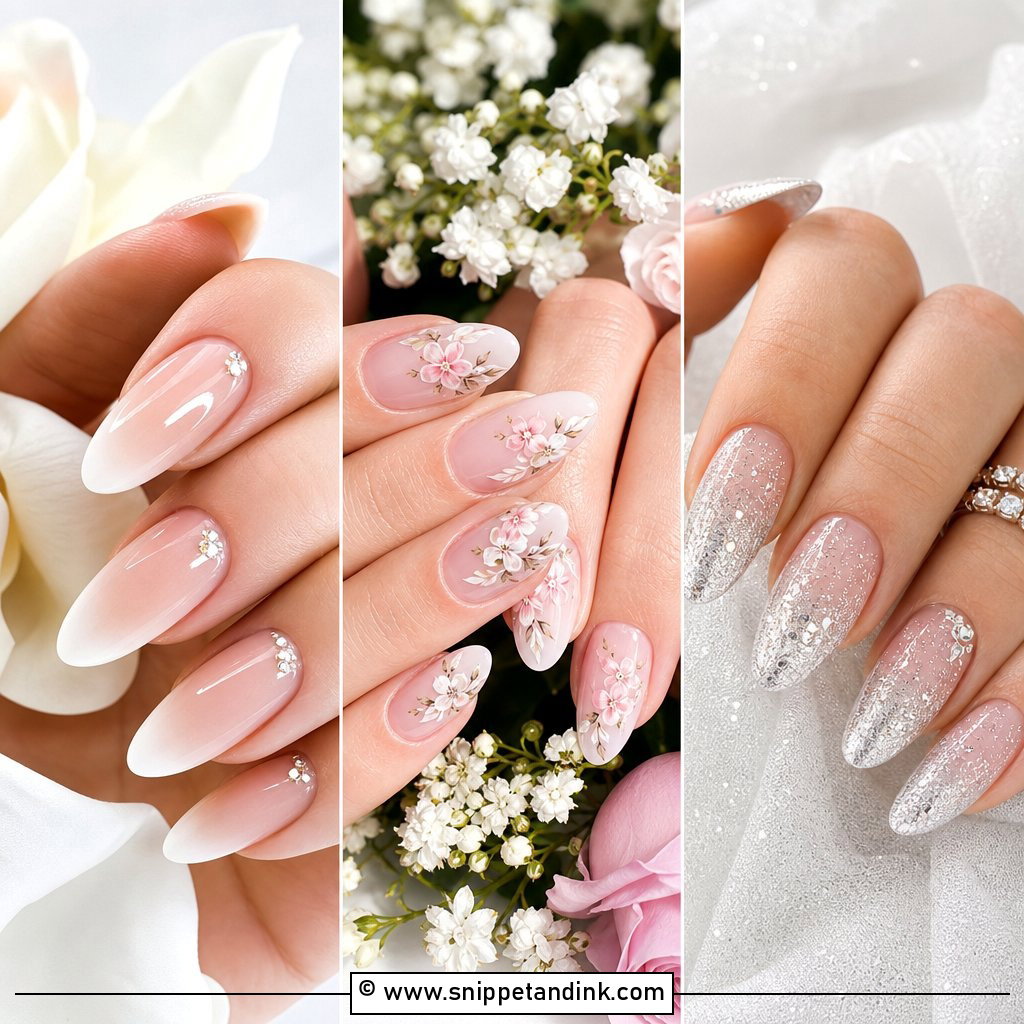
Ombre wedding nails in their bridal form, often called baby boomer, fade from a nude or pale pink base into white at the tip. The blend is done with a sponge or a gel brush, and the quality is all in the middle zone: a visible stripe where the colors meet is the mark of a rushed fade. It’s softer than a French, which helps if solid white feels too bold. Almond and coffin give the fade the most room; short square keeps it tidy.
8. White Lace Wedding Nails
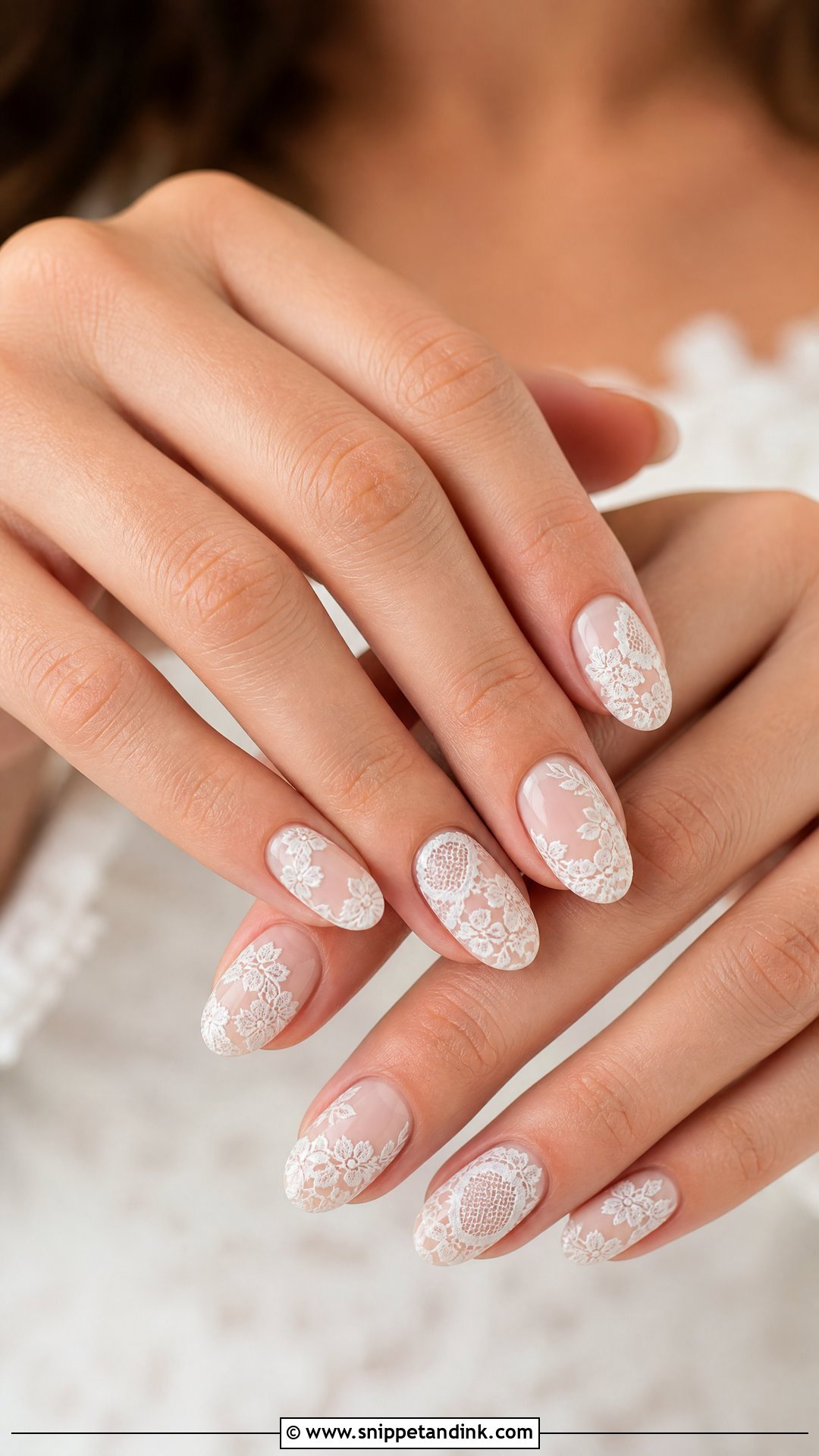
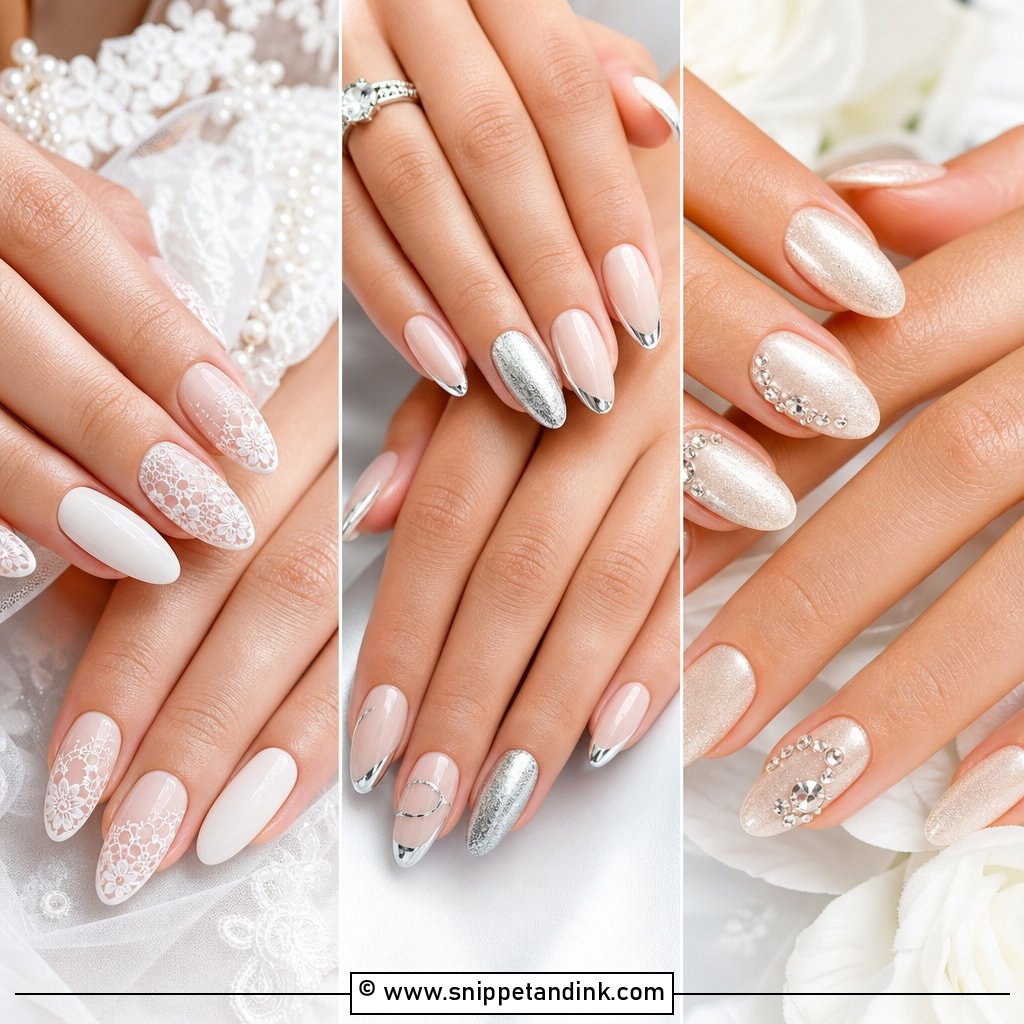
Lace art can echo your dress if you bring a close photo of the fabric. I paint it freehand with a thin liner brush in white gel, or stamp it from lace plates for very regular patterns. Freehand looks softer; stamping looks precise. Lace on all ten nails is a lot of detail, so I often suggest two accent nails against plain milky ones. Vintage gowns and detailed veils suit it best.
9. Floral Wedding Nails
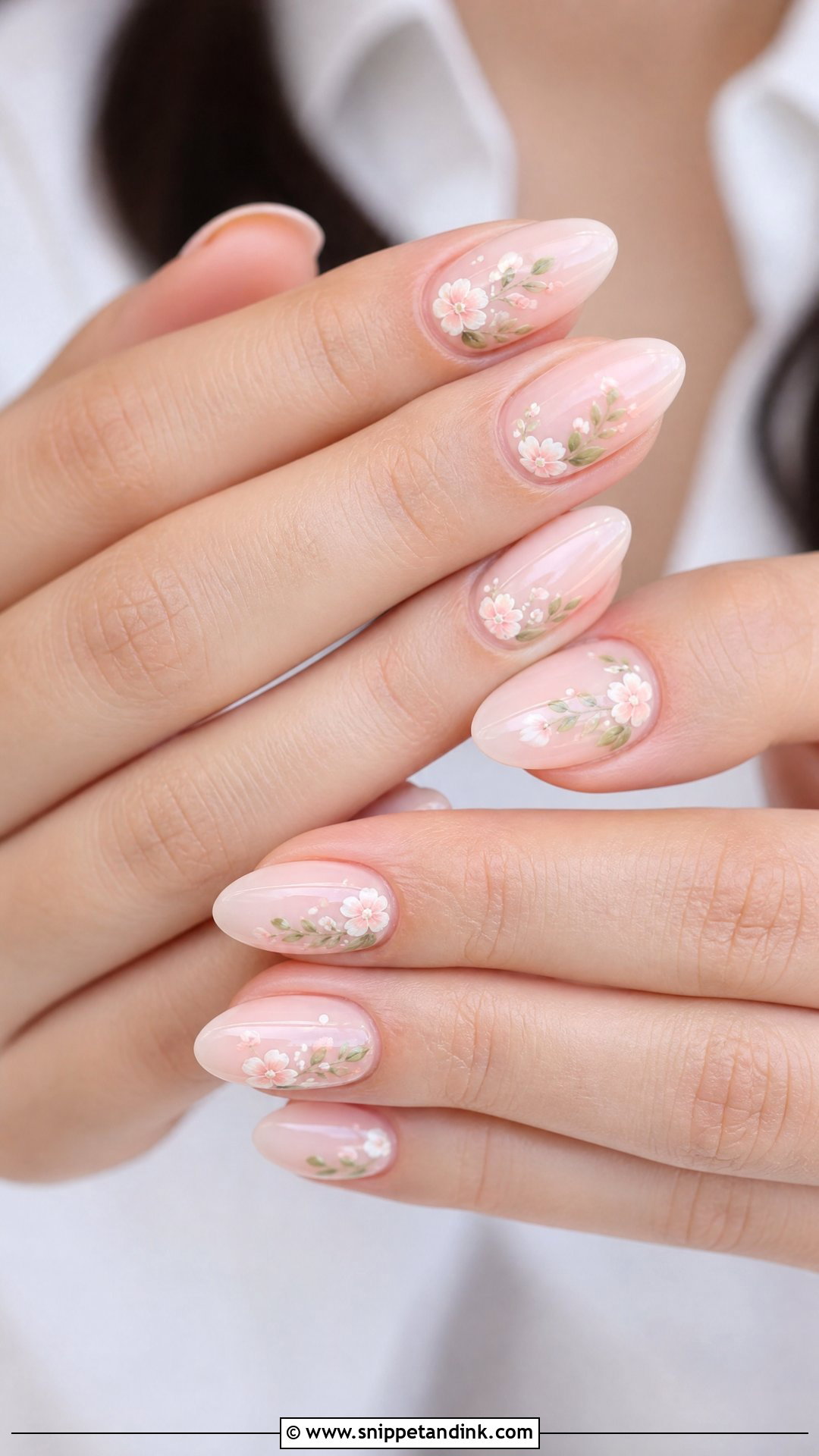
Small daisies, blossoms, pressed-flower effects and hand-painted petals can tie your nails to the bouquet. Real dried flowers can be encapsulated in gel, which looks lovely but adds thickness, so I keep those to a single nail. Keep the base sheer and the palette pale so the set still reads bridal. Almond and oval give the petals room to curve.
10. Short Wedding Nails
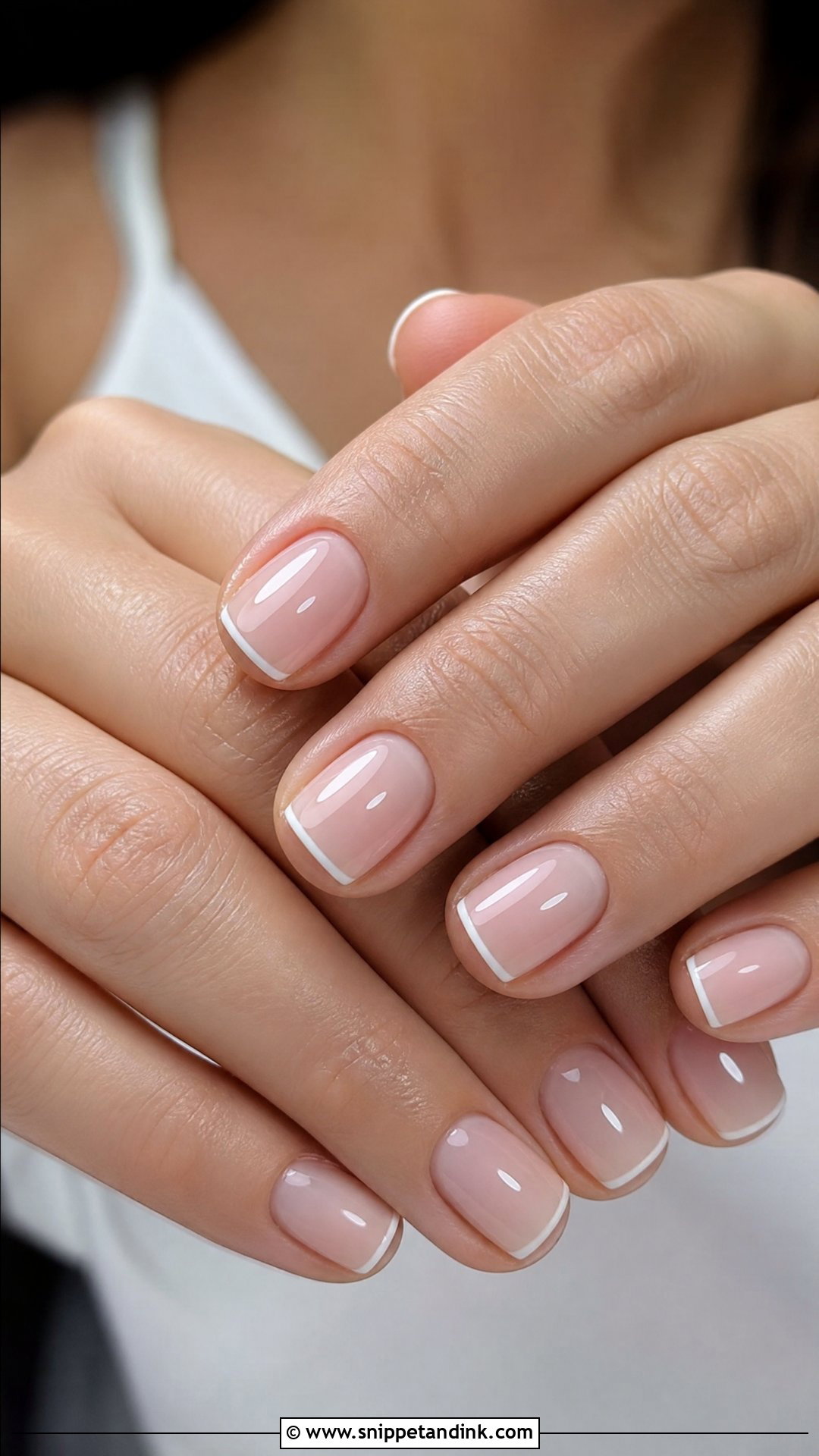
Short nails look elegant when the shape is neat and the cuticle work is clean; length was never the point. If you’ve never worn extensions, wedding week isn’t the time to learn to fasten buttons and handle a veil with them. Short squoval in sheer pink, milky white or pale peach holds up through the day without lifting or snagging. A micro French or a single pearl adds detail.
11. Almond Wedding Nails
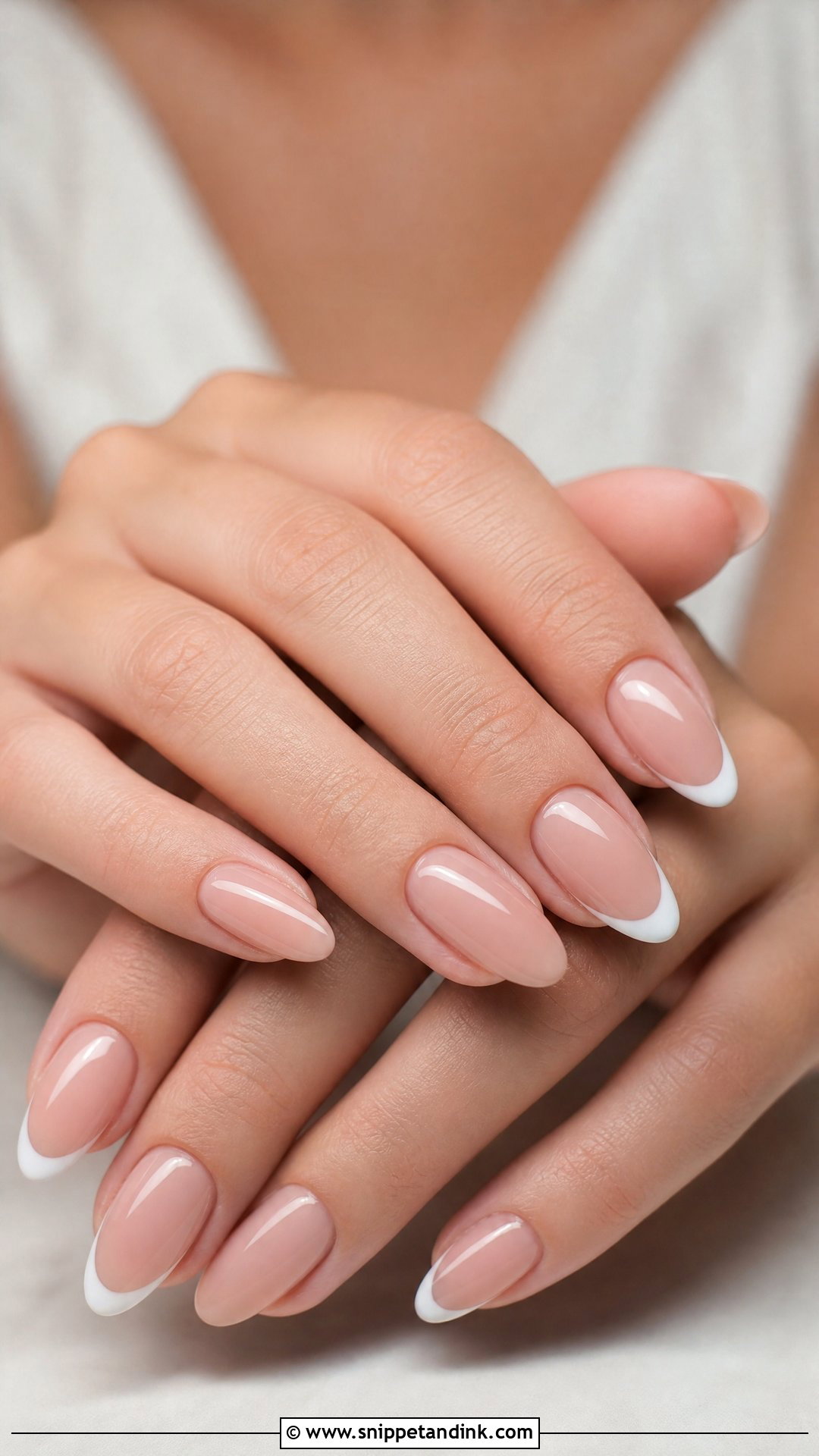
Almond is the bridal shape I file most often. It lengthens the finger without the point of a stiletto, and medium length is the comfortable spot. Structure matters, though: a slim almond on a thin natural nail can crack at the sides, so I usually add a layer of builder gel for strength. It works with nearly every design on this list, and the taper leads the eye toward the ring.
12. Square Wedding Nails
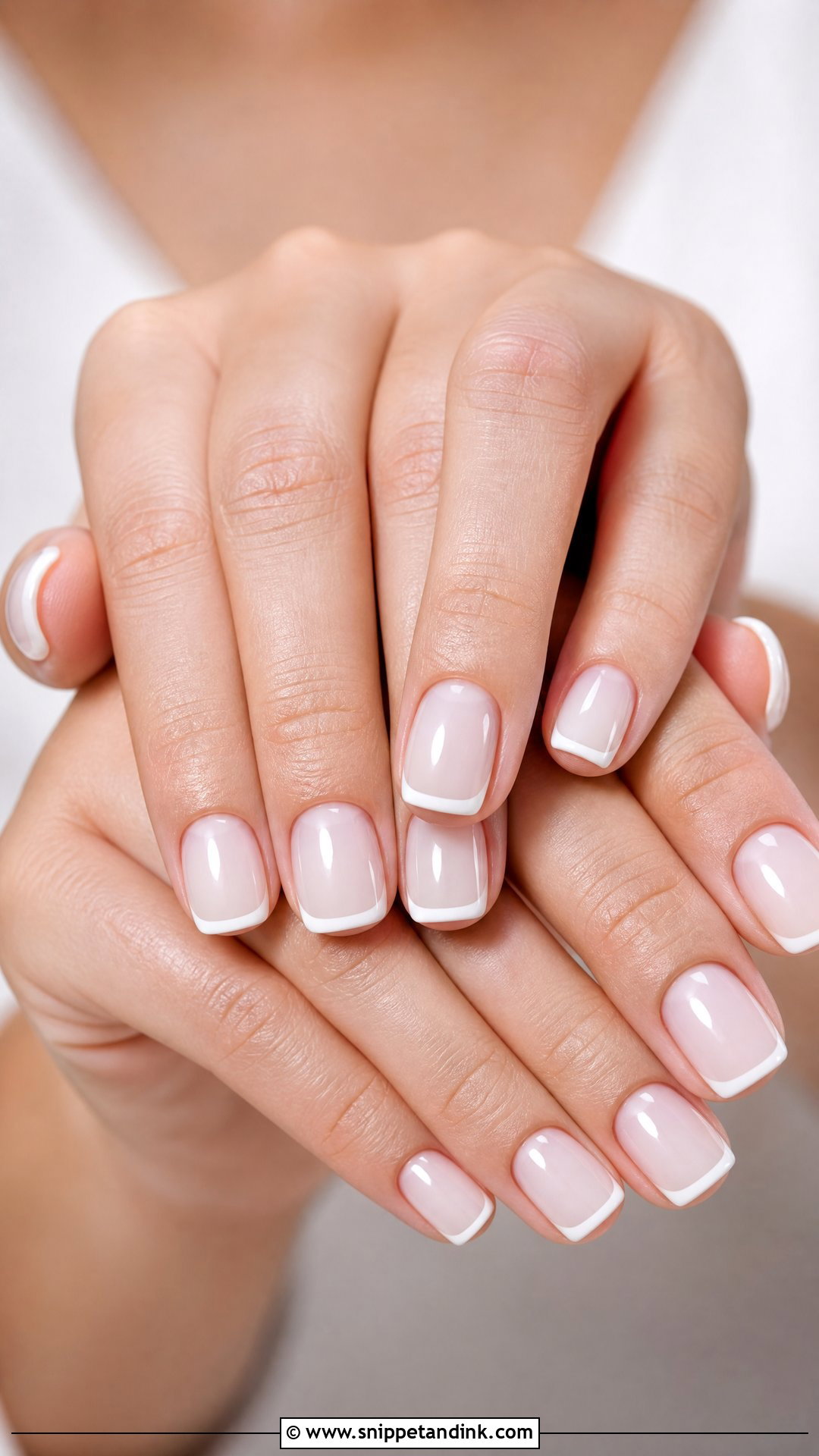
Square nails look neat and modern. For a bride I almost always soften the corners, because sharp corners catch on lace, tulle and hair, and they’re the first part of a square nail to chip. A short soft square with a micro French looks current without being busy. It’s a sensible shape for brides who type or work with their hands all week before the wedding.
13. Coffin Wedding Nails
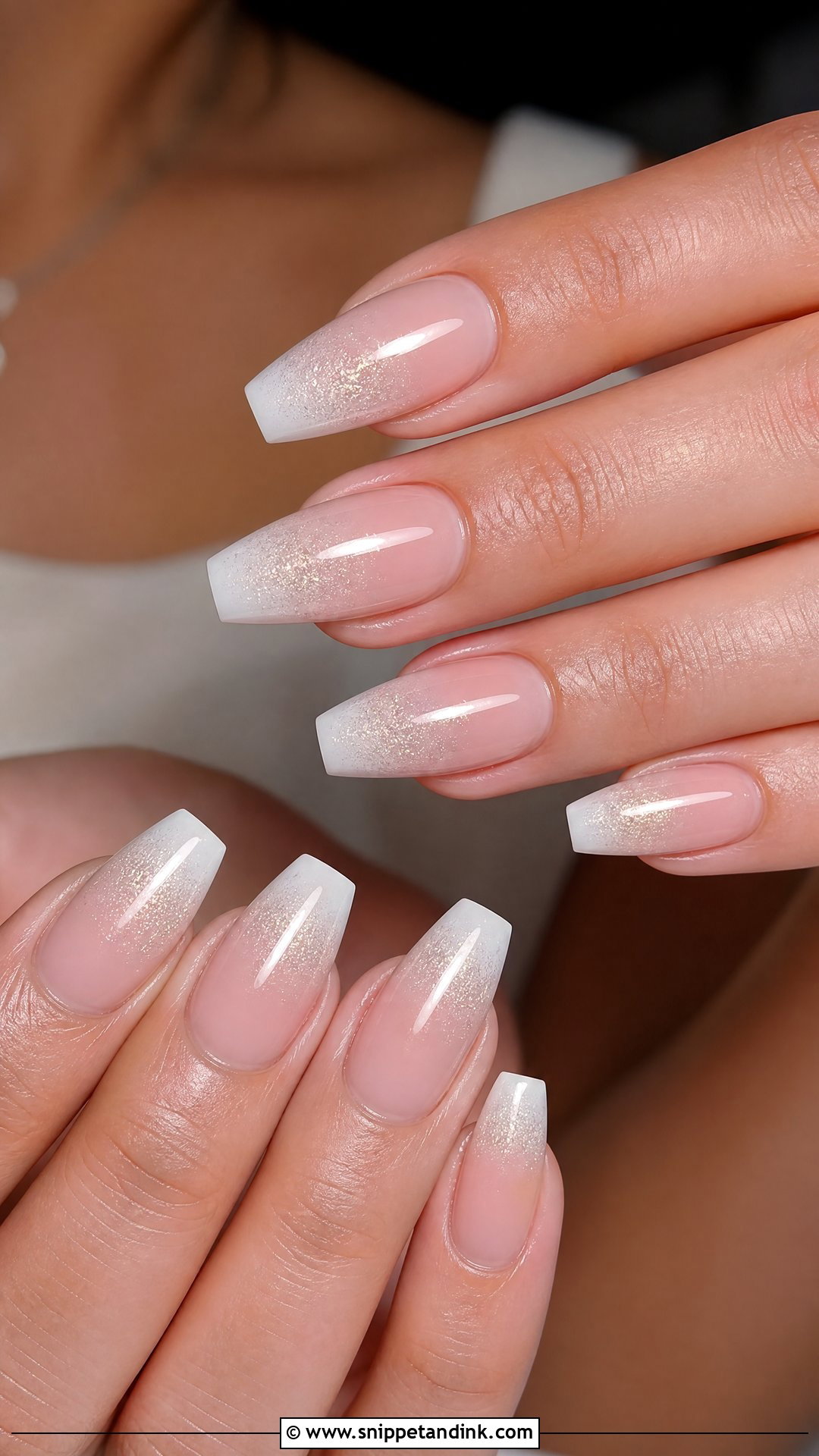
Coffin wedding nails have tapered sides and a flat tip, a more glamorous outline than almond. They need length to look right, usually from extensions, and long coffin nails put leverage on the natural nail underneath, so medium is easier to live with on the day. Soft colors keep them bridal: milky white, sheer pink, champagne. Fine glitter at the tips or a few small gems near the cuticle is plenty.
14. Oval Wedding Nails
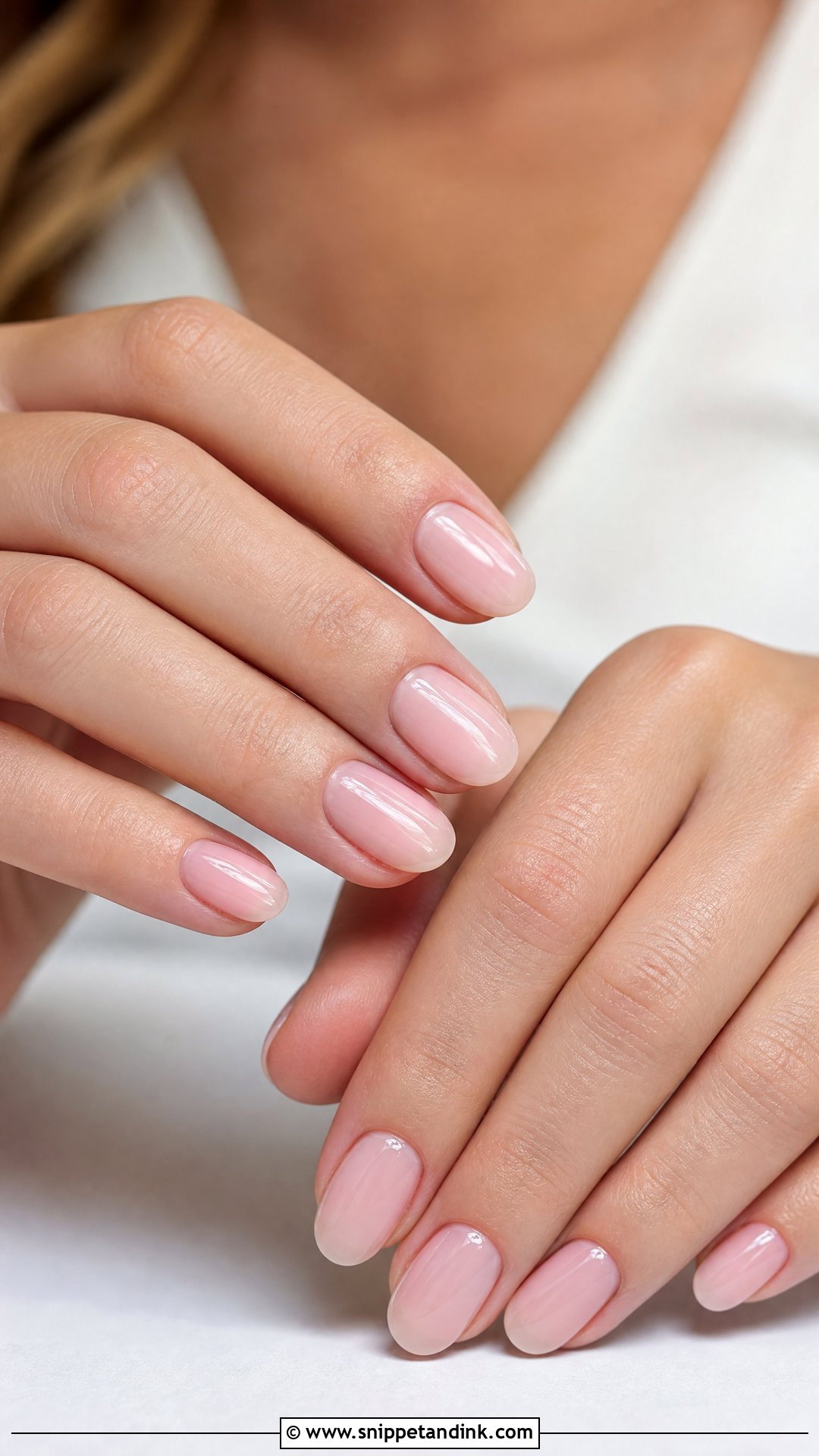
Oval follows the natural curve of most nail beds, so it’s the easiest shape to grow and keep on natural nails without extensions. It flatters short and long fingers alike. It’s less dramatic than almond but more forgiving, with no point or corner to break. Ask for a smooth, even edge on every finger, since mismatched ovals show in a hand-on-hand photo.
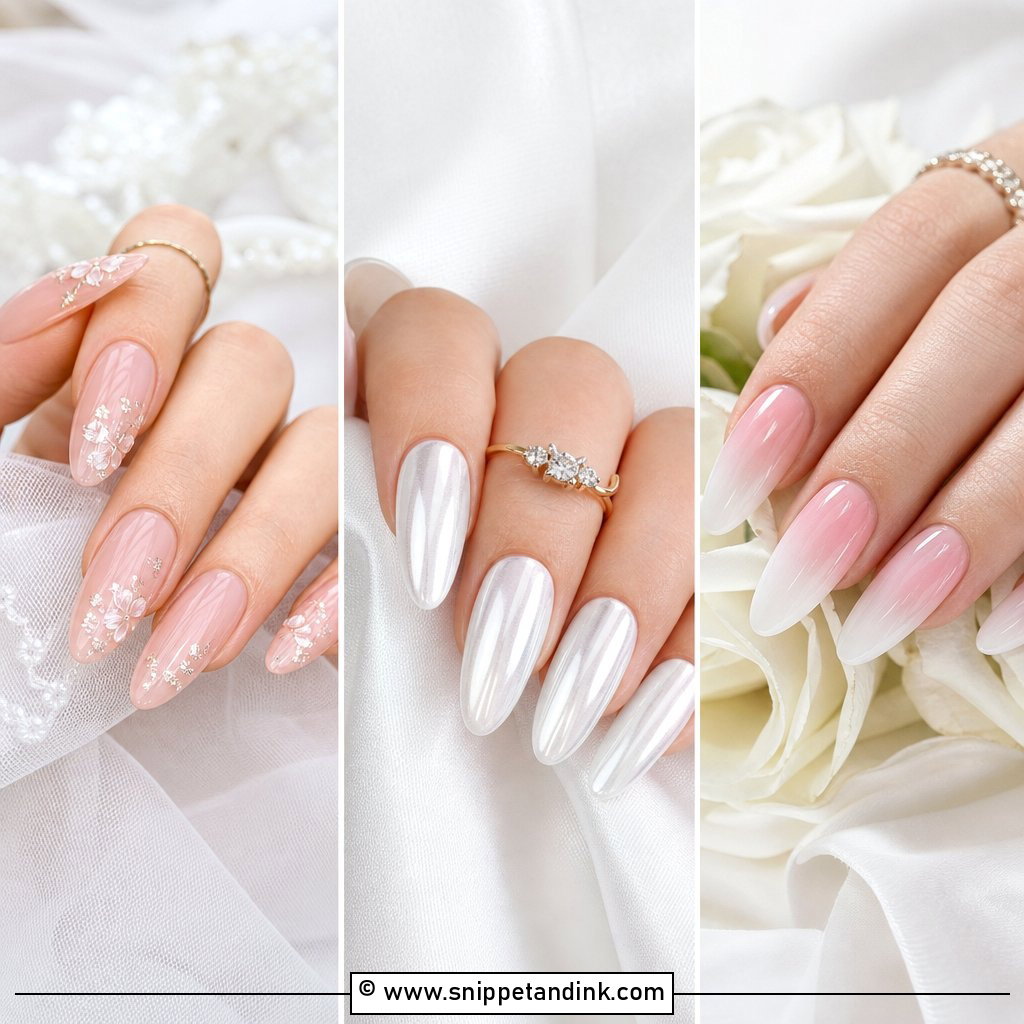
15. Glitter Ombre Wedding Nails
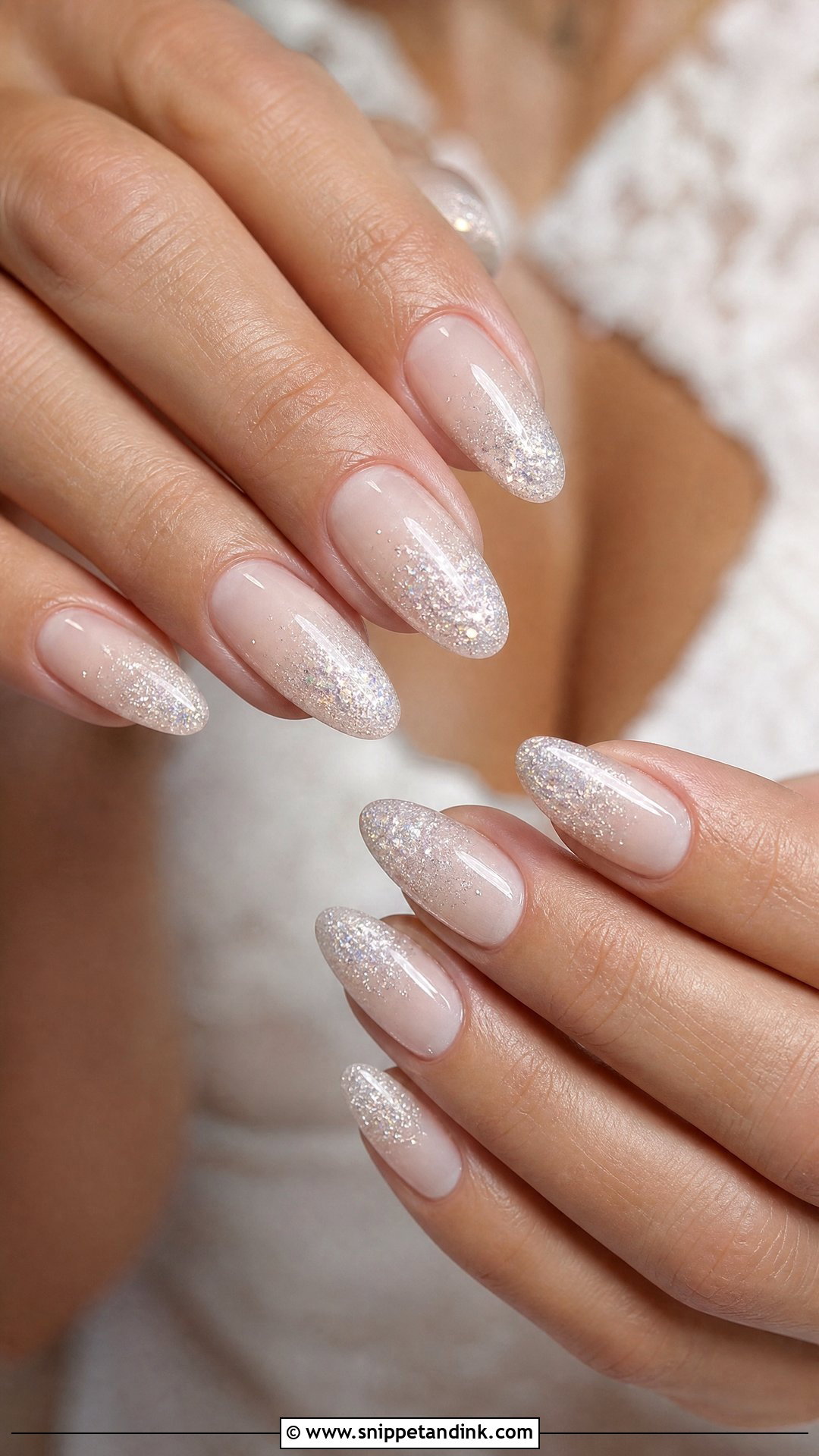
Glitter ombre puts the sparkle at the tip or the cuticle and fades it into a sheer base. Fine glitter matters here; chunky glitter sits proud of the surface and needs extra top coat to smooth, which thickens the nail. Silver, champagne, rose gold and soft pearl glitter are the bridal shades. Almond, oval and coffin give the fade space. With a heavily embellished dress, keep the glitter very fine; with a plain one, it can carry a little more.
16. Gold Accent Wedding Nails
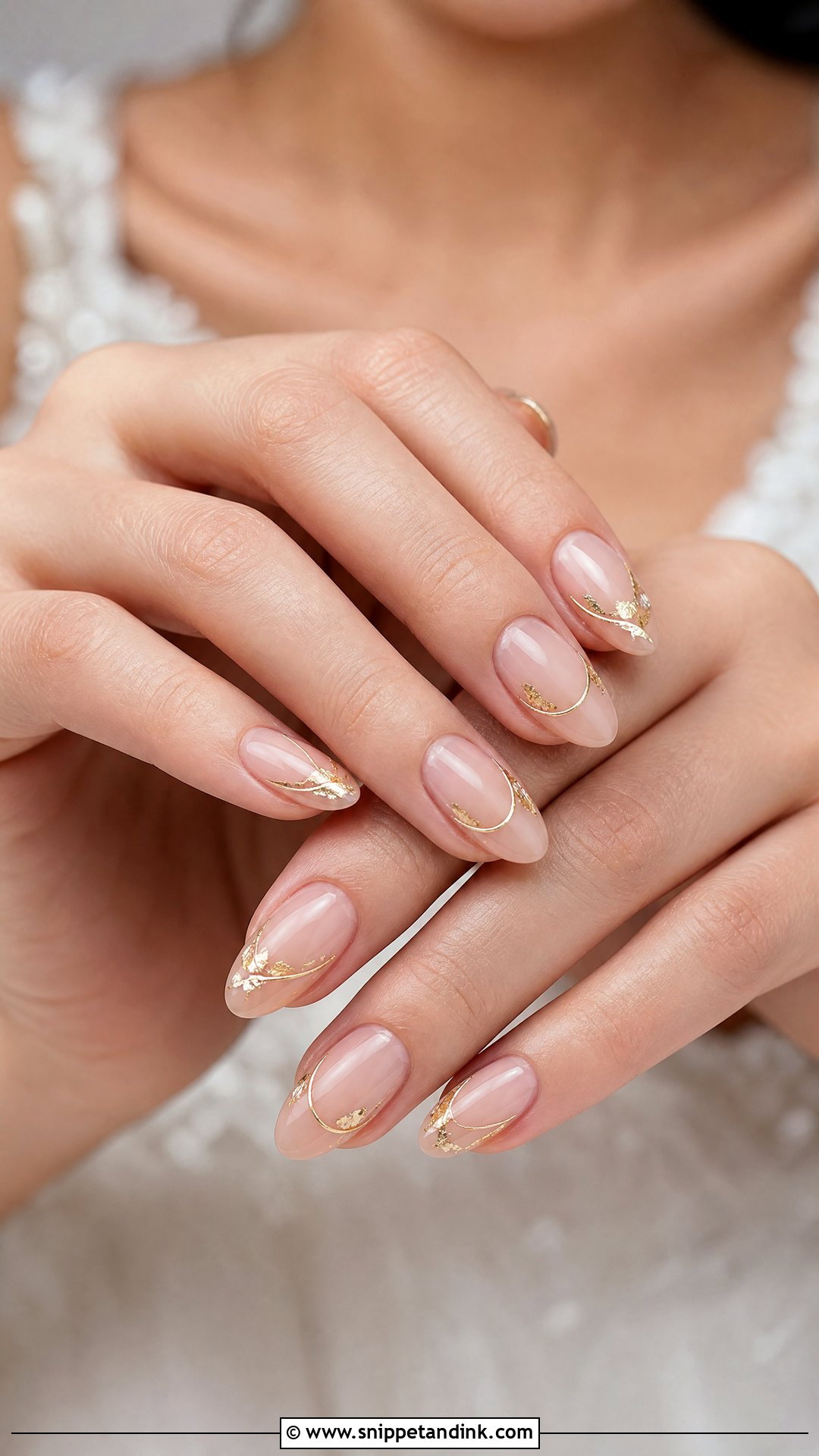
Gold works best as thin lines, small foil flakes or a fine French edge on a sheer nude, milky or blush base. I use foil or a gel liner for those lines, because metallic polishes show brush strokes and wear off the tips fastest. Match it to your jewelry. Gold sits well with warm skin tones and ivory gowns, and fine curves look more like jewelry than chunky glitter ever does.
17. Silver Accent Wedding Nails
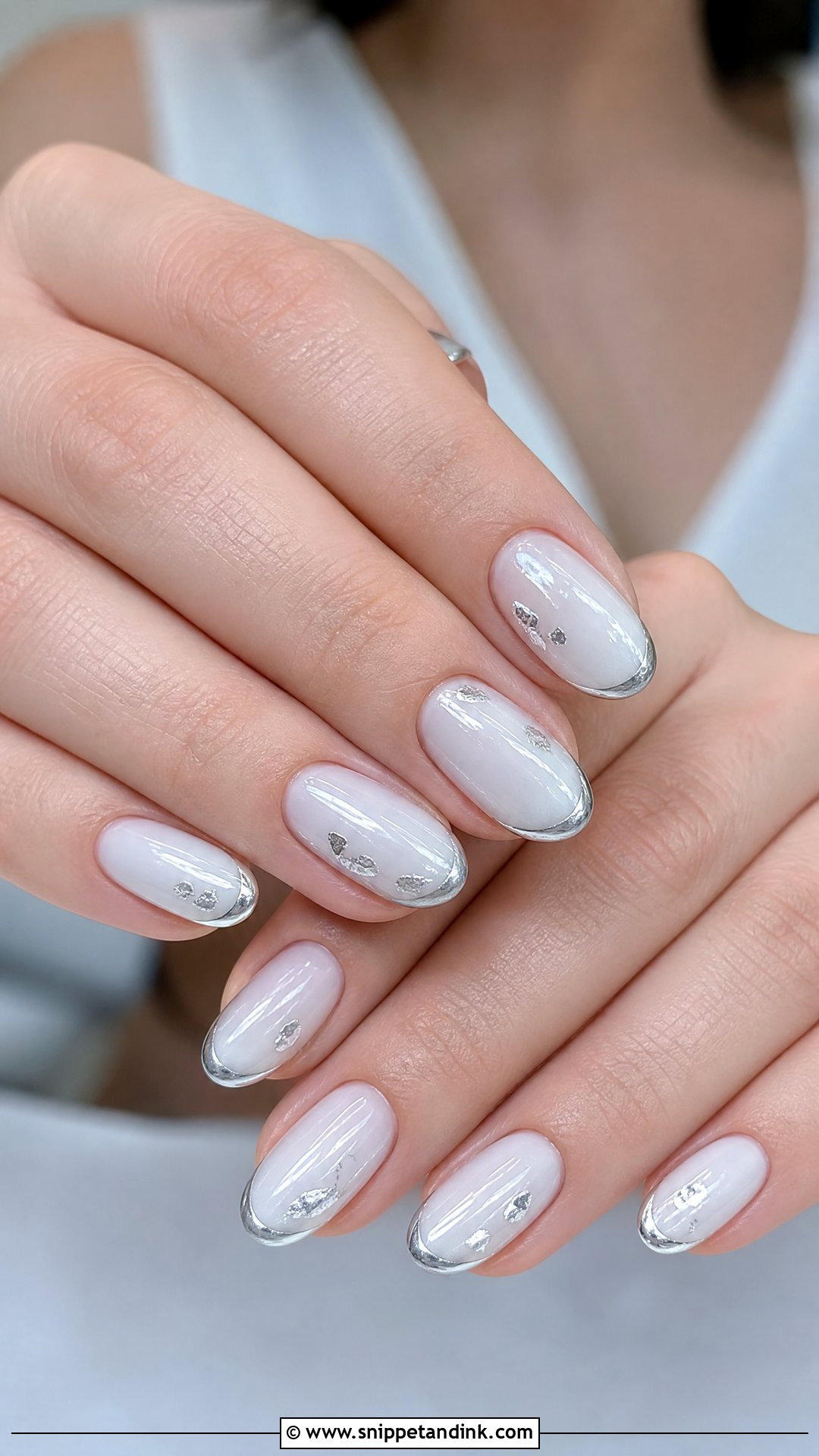
Silver belongs with cool tones: white gowns, crystal details, platinum or white gold. A thin silver French, fine foil over a sheer base, or a chrome edge on short almond nails are the cleanest versions. Silver chrome is very reflective, and under a flash a fully silver nail can bounce back as a white glare, so I keep it to edges and accents. Milky white, icy nude and pale grey bases suit it.
18. Rose Gold Wedding Nails
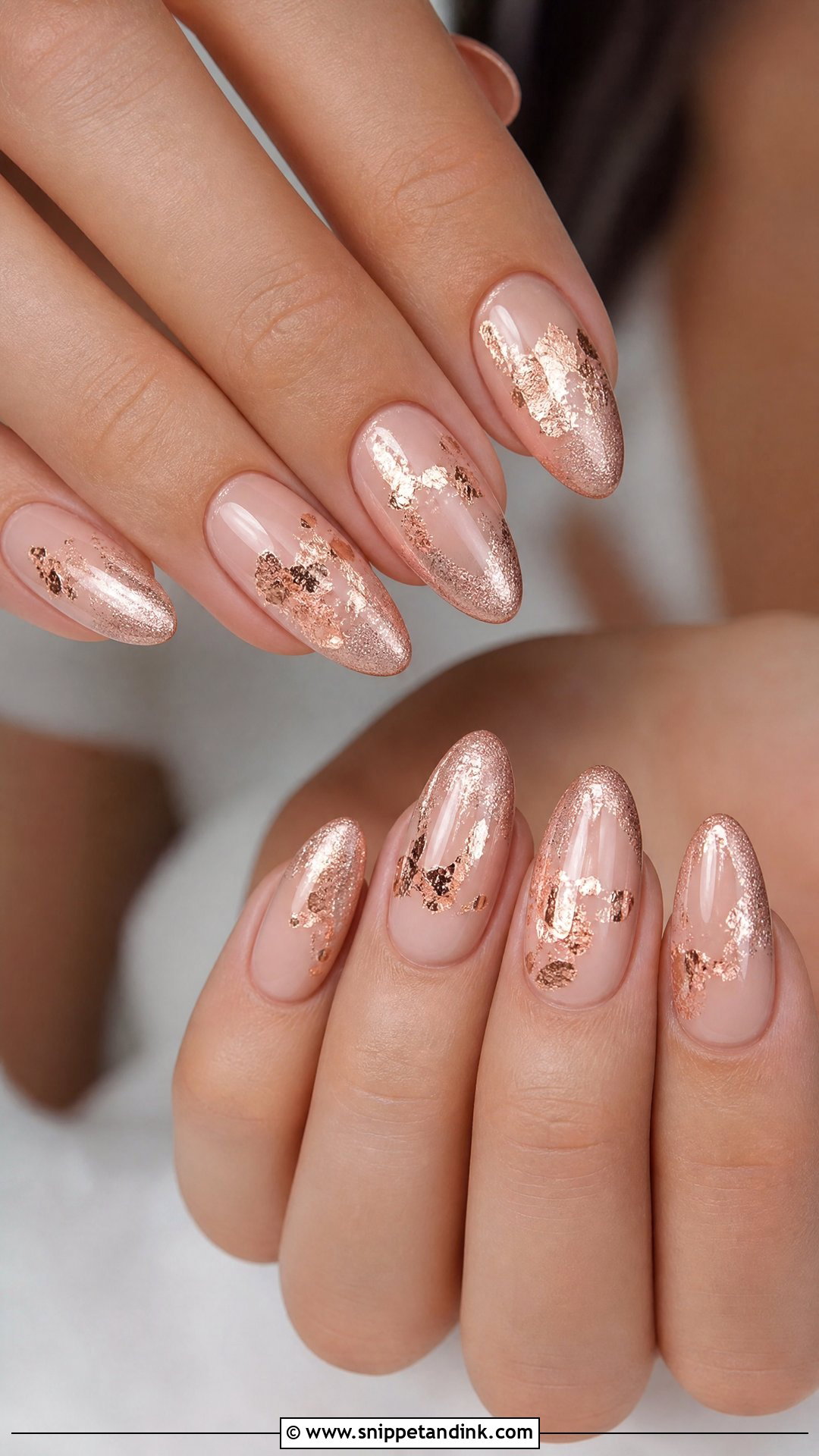
Rose gold sits between pink and gold, so it suits blush dresses, peach bouquets and mixed-metal jewelry. I use it as an accent, a foil detail, a fine French or a shimmer fade, rather than a full base, which can look coppery under warm lighting. Pairing it with sheer pink or nude keeps the set light. Medium almond and oval suit the warm finish.
19. Matte Wedding Nails
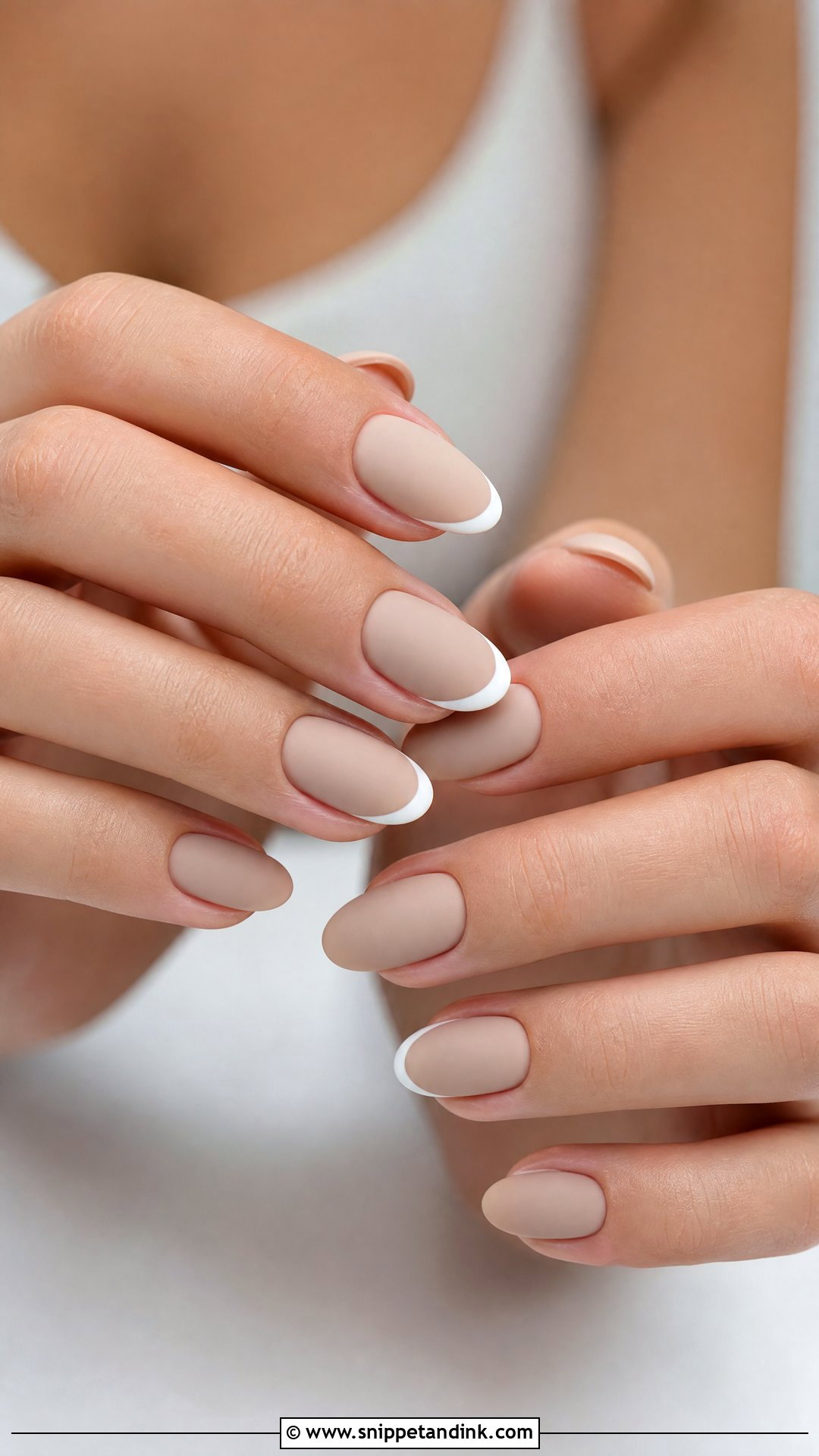
A matte top coat turns any shade velvety and quiet, especially nude, taupe or milky white. A matte nude base with glossy French tips is a contrast I love. The honest drawback: matte shows hand cream, oil and makeup smudges, and it can go shiny at the tips with wear. I’d schedule it within a day or two of the wedding, and put a lint-free wipe and a little alcohol in your kit to refresh it.
20. Glossy Nude Wedding Nails
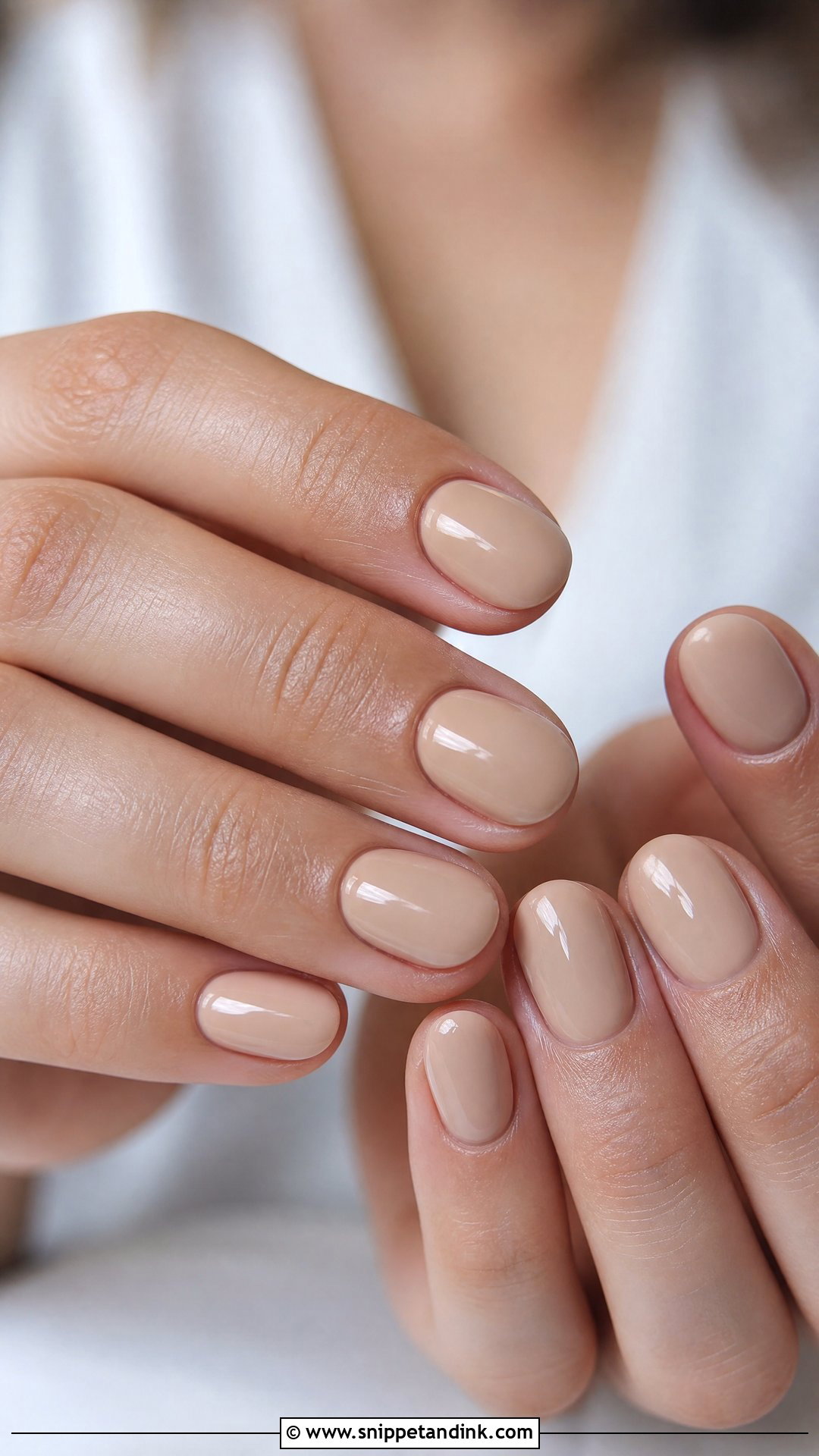
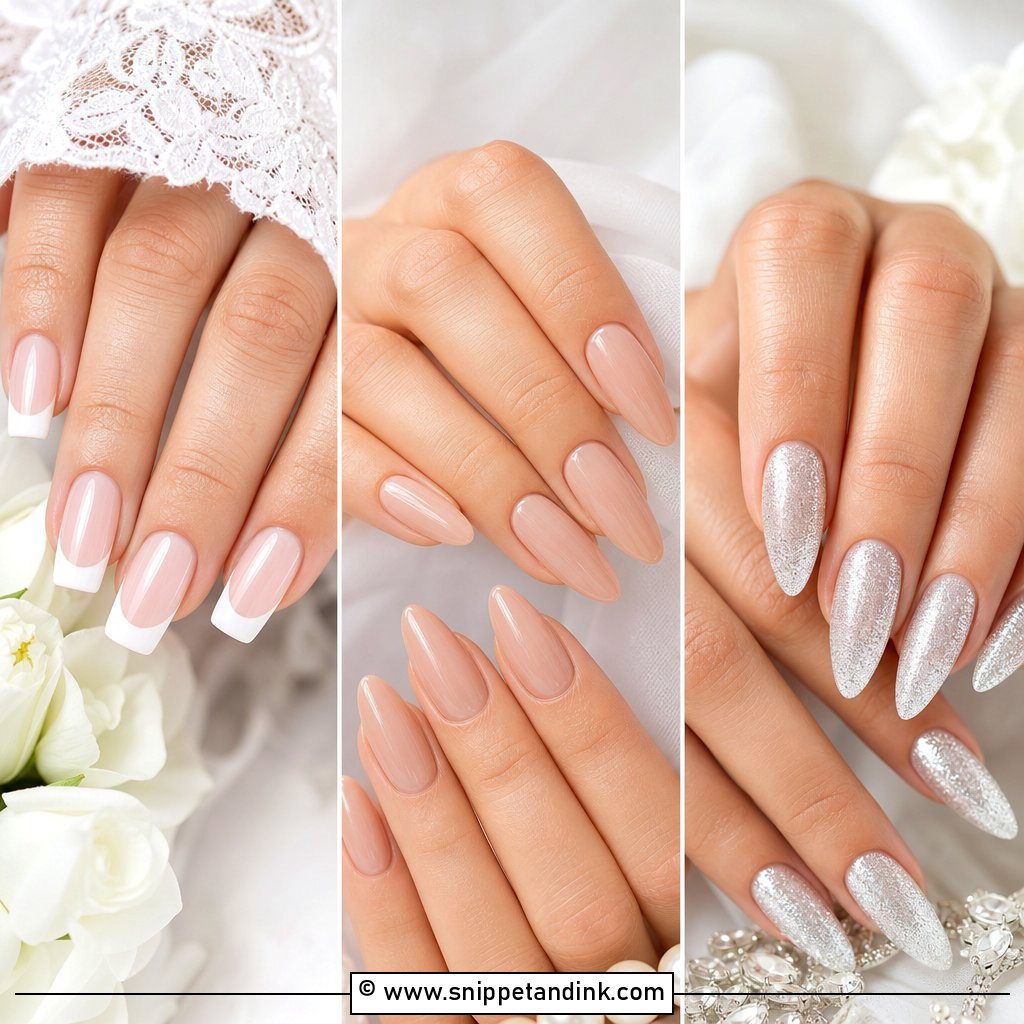
Glossy nude is the set I recommend when the nails shouldn’t be noticed, only finished. Shade choice is everything. Fair skin usually suits pink beige, medium skin a caramel nude, and deep skin a cocoa, mocha or warm taupe; a nude that’s too light on deep skin looks chalky. A glossy gel finish gives that smooth, expensive look on any shape and any length.
21. Sheer Pink Wedding Nails
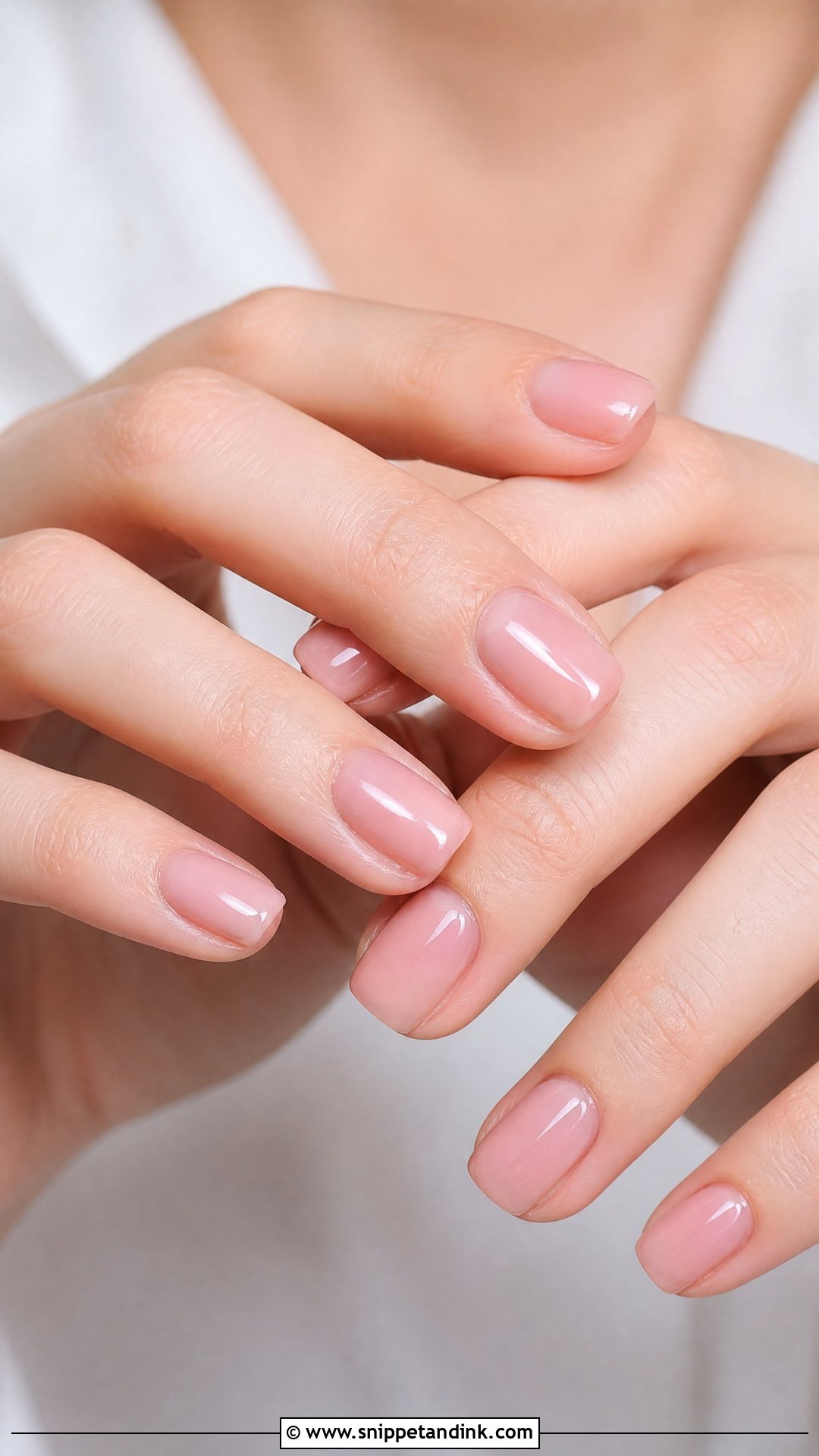
Sheer pink evens out the nail bed rather than covering it, so hands look fresh and healthy. It’s the easiest set to wear if you don’t usually paint your nails, and it keeps attention on the ring. I often do this in a sheer pink builder gel, which adds strength to thin nails and lets me even out the shape. A micro French adds a little definition.
22. Blue Wedding Nails
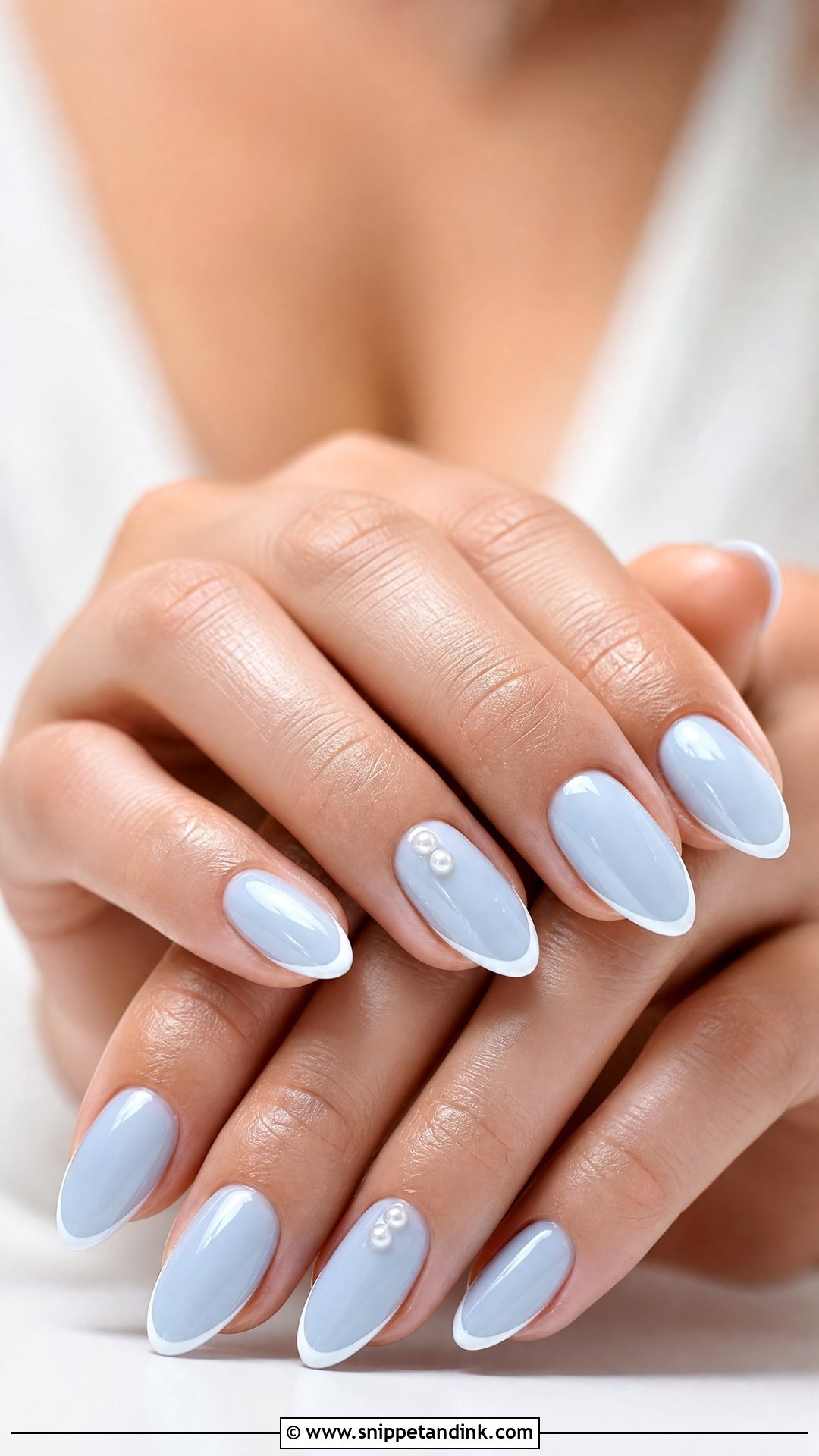
Blue makes a popular something blue, and you don’t have to wear it on all ten nails. A pale blue French, a small blue flower, or one hidden accent on the ring finger keeps it personal. Powder and icy blues suit a bridal palette, and a sheer blue tint is the subtlest. Pastel blue gels can streak, so I apply them in thin coats. White, silver or pearl details pair naturally.
23. Champagne Wedding Nails
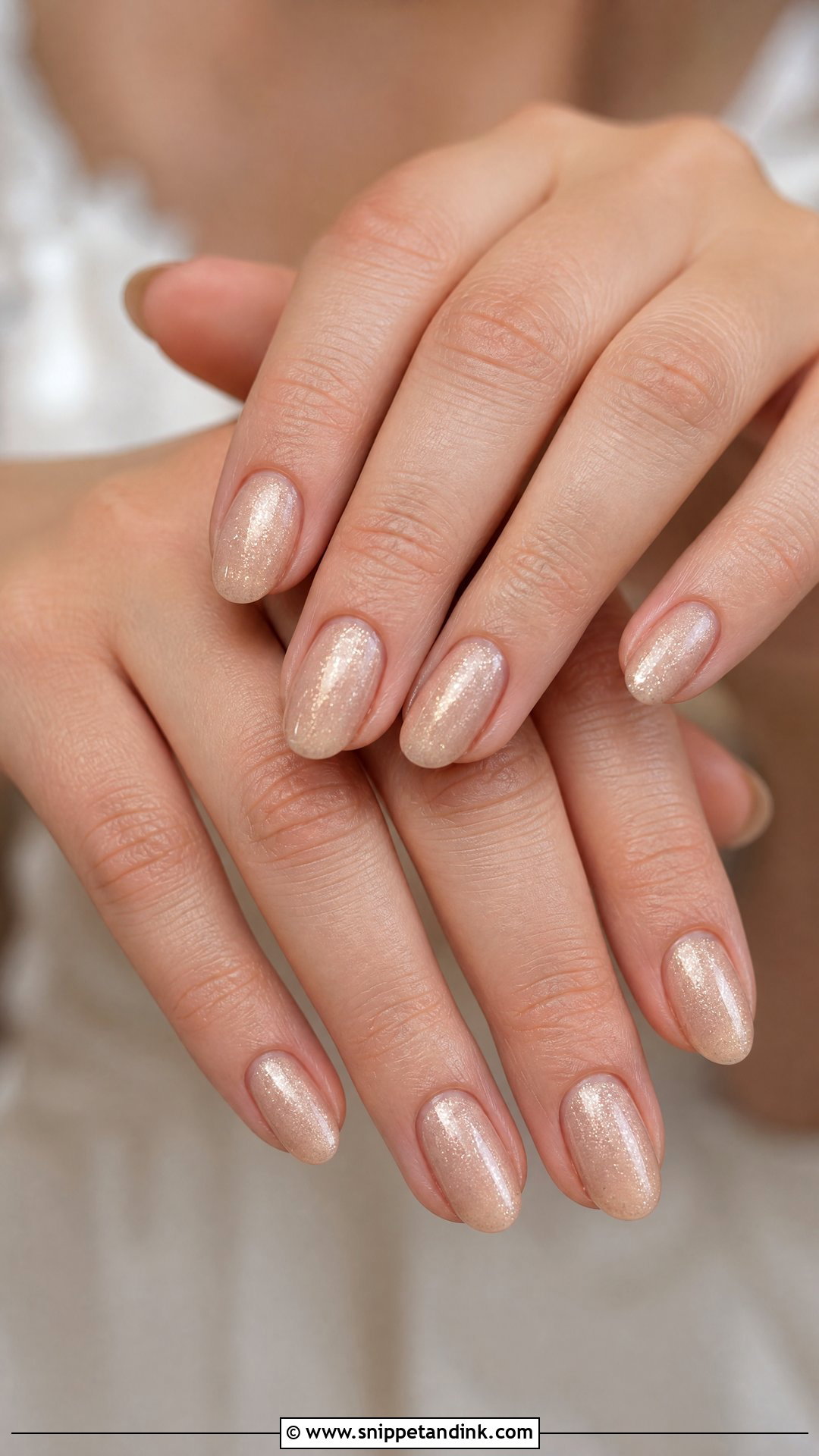
Champagne shimmer is softer than gold and more luminous than nude. It suits ivory gowns, beige florals and pearls. Shimmer polishes show brush strokes more than cremes, so I float the last coat on lightly to keep the sparkle even. Wear it as a full set or as a fade over nude. Fine shimmer looks refined, while coarse shimmer starts to look like a party set.
24. Ivory Wedding Nails
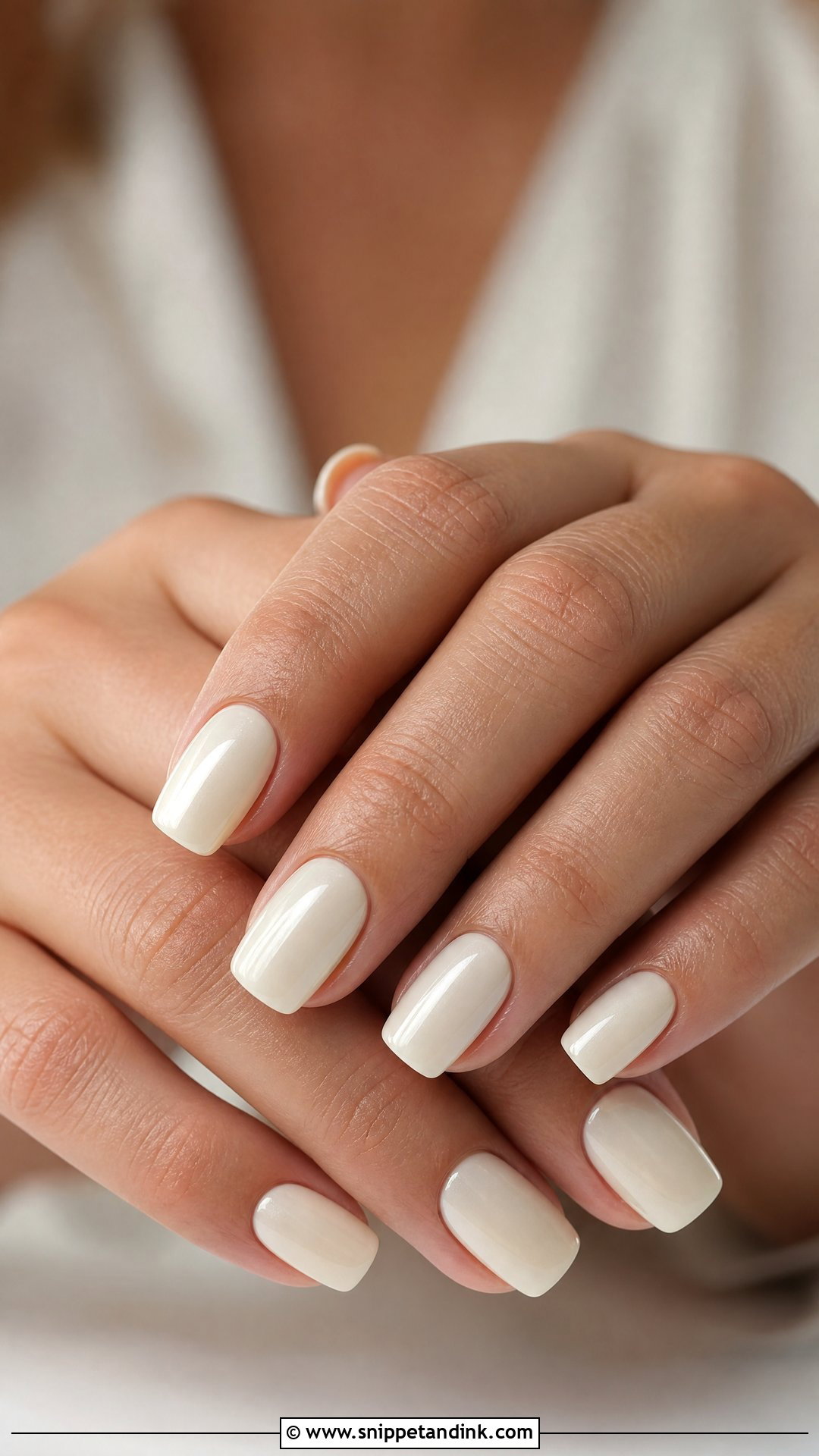
Ivory is the softer alternative to bright white, and it’s the right call when your dress is ivory or champagne: stark white nails beside an ivory gown can make the dress look yellowed in photos. Wear it as a solid color, a French or a milky wash. Pearls or lace art add detail, and rounded or softly squared shapes keep it graceful.
25. White Tip Wedding Nails
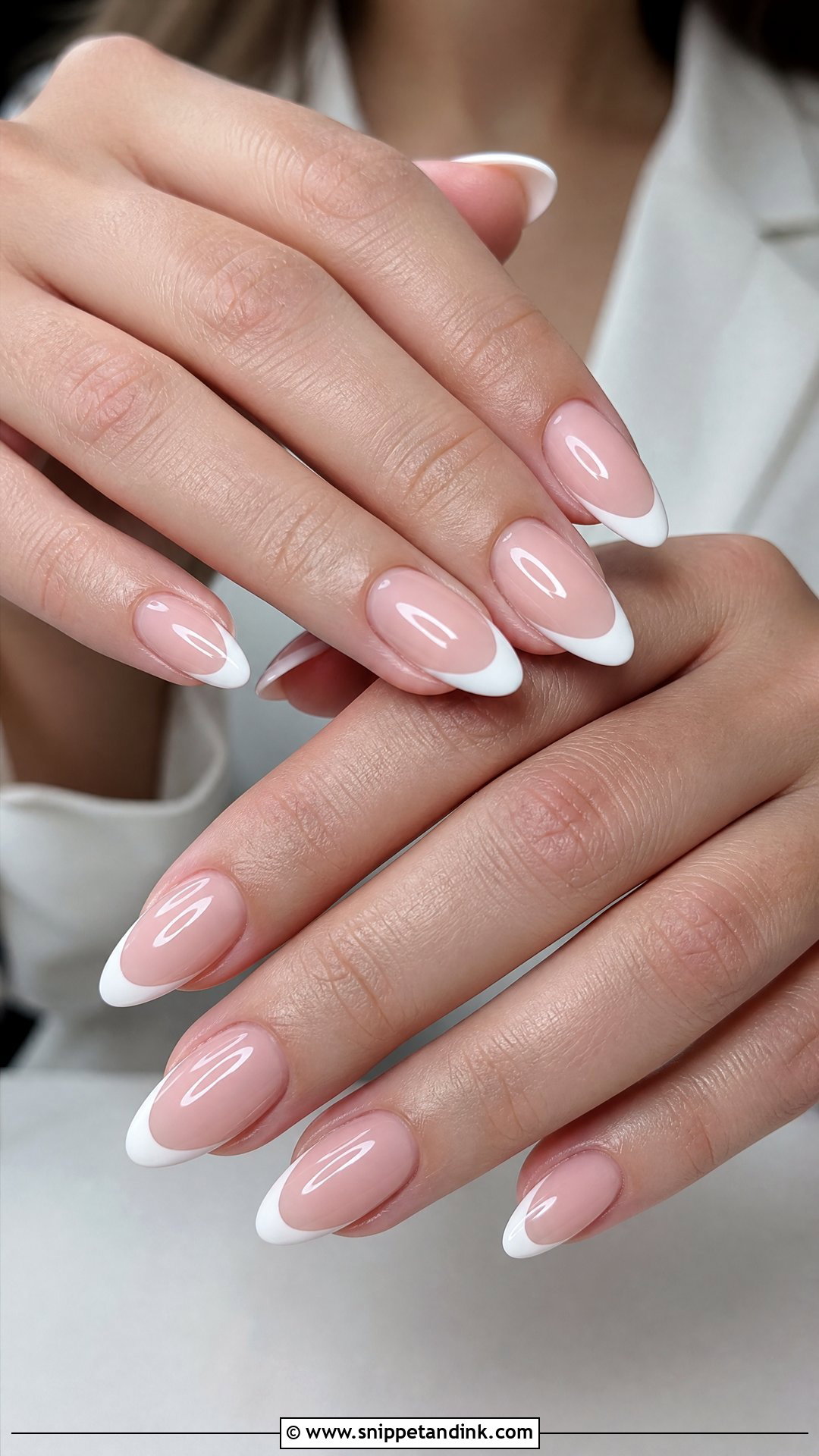
White tips can be thin, deep, angled or softly blended. I match the tip line to the shape: a deeper curve on almond and oval, a straighter line on square. A thinner line looks more current than the traditional thick French. This is also the set I suggest for bridesmaids when the bride wants everyone coordinated, since it suits any dress color.
26. Micro French Wedding Nails
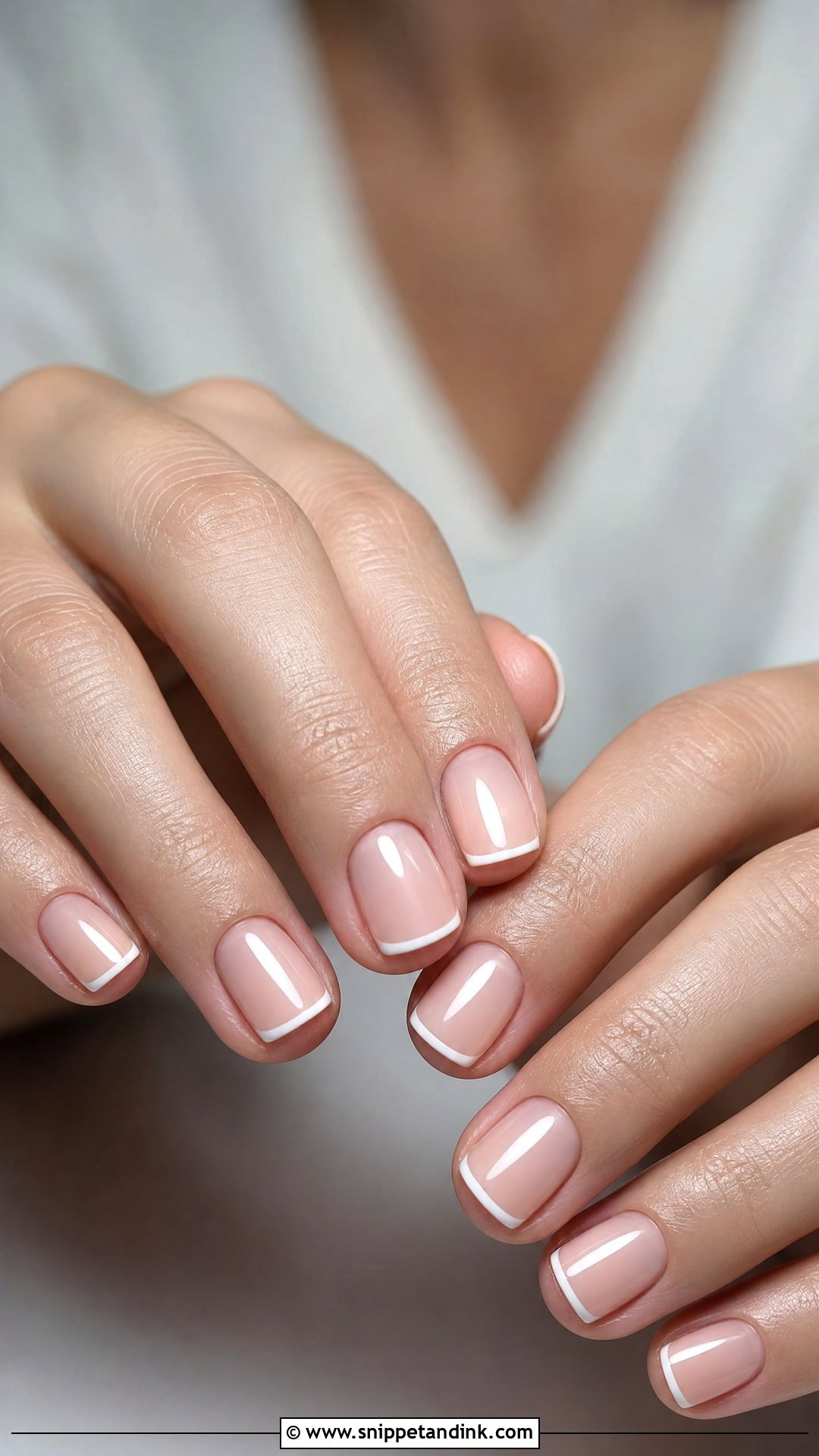
A micro French is just a fine line at the very edge of the nail, which is why it works on short nails where a full French would cover half the nail plate. It takes a long, thin liner brush and a steady hand, and keeping that line even across ten nails is harder than it looks. White is classic; pearl, pale blue or champagne make it yours. Soft square, oval and almond all suit it.
27. Pearl Chrome Wedding Nails
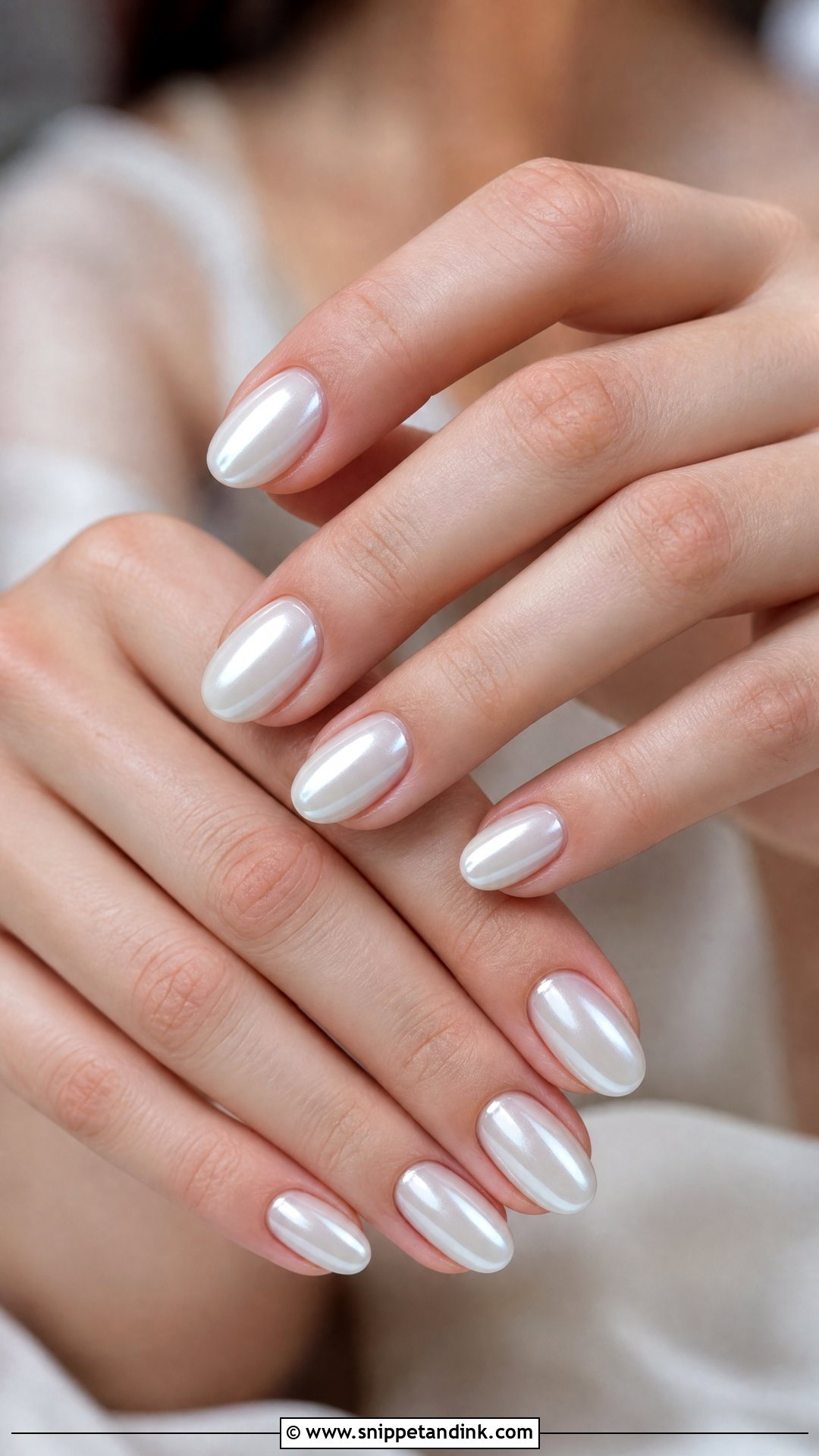
Pearl chrome is a fine iridescent powder rubbed over milky white, sheer pink or ivory, the finish many people call glazed. It gives a silky sheen with no nail art at all, which suits simple gowns. As with any chrome, the gel underneath has to be perfectly smooth, because the powder magnifies every bump. Oval or almond are the most graceful shapes for it. It’s the set I’d pick for a bride who wants a little glow and nothing else.
28. Marble Wedding Nails
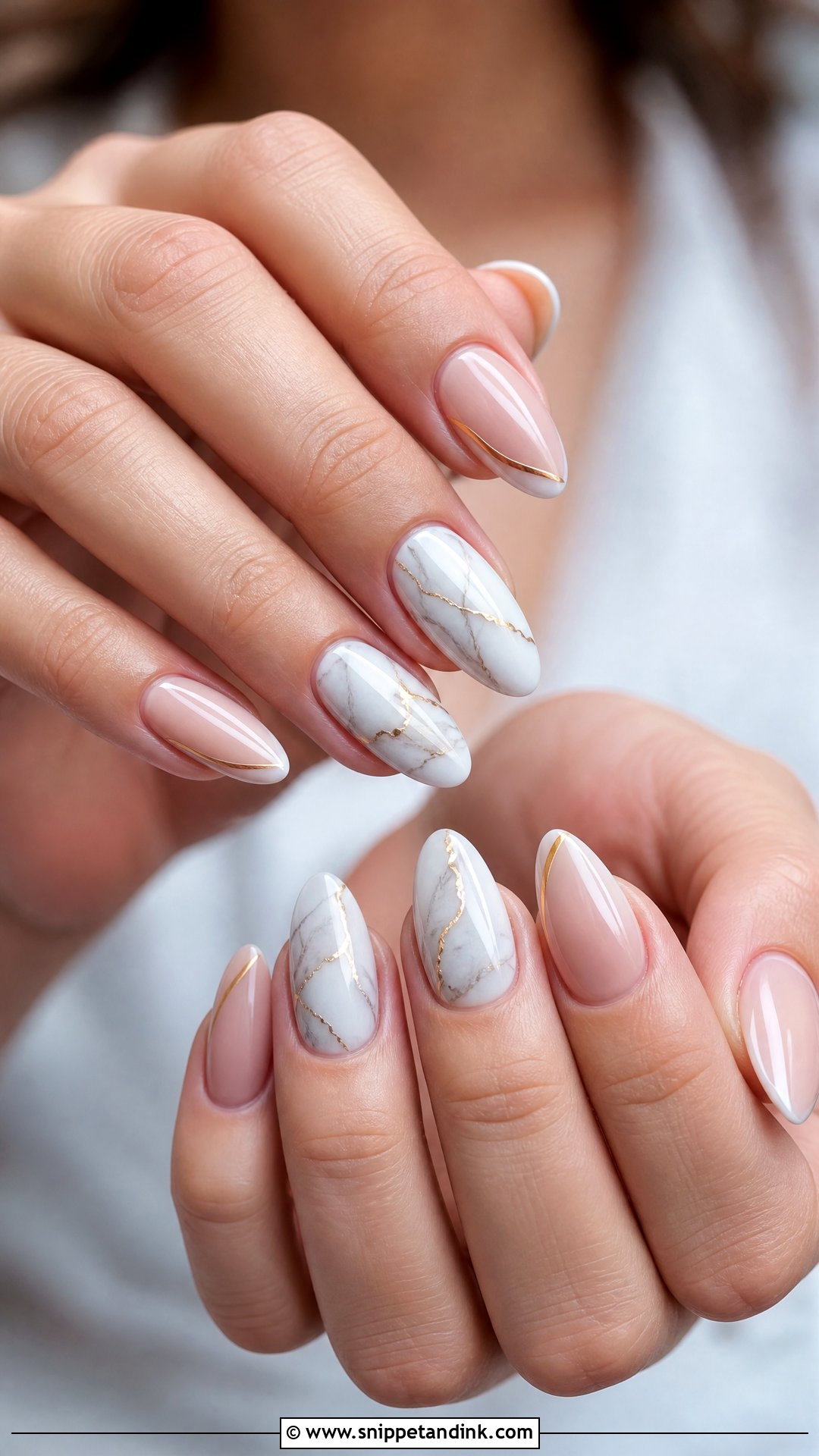
Soft marble in white, nude, blush or pale grey looks like polished stone when the veining is fine and airy; heavy dark veins look busy at bridal scale. I create it wet on wet in gel, dragging color through an uncured layer, so no two nails come out the same. Use it on one or two accent nails and keep the rest glossy nude or milky. Thin gold lines add a touch of luxury.
29. 3D Flower Wedding Nails
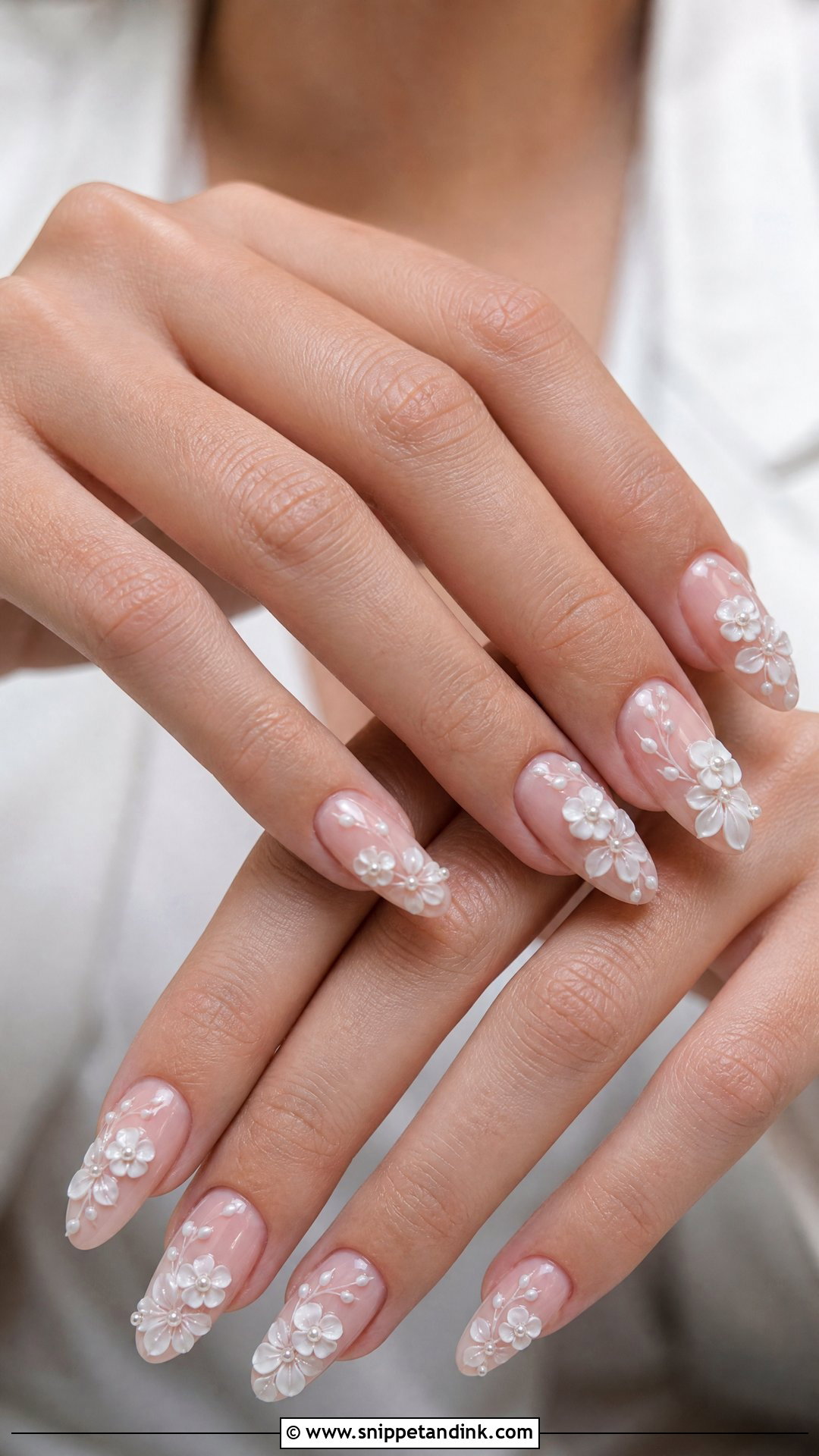
3D flowers are sculpted from acrylic or builder gel and set onto the nail. Small and low, in white, ivory or blush, they look delicate. Large and tall, they catch on everything from lace to your partner’s jacket. I keep them to one or two accent nails paired with sheer or milky nails, and I encapsulate the edges so nothing lifts. Ask your nail artist to keep the height low.
30. Rhinestone Wedding Nails
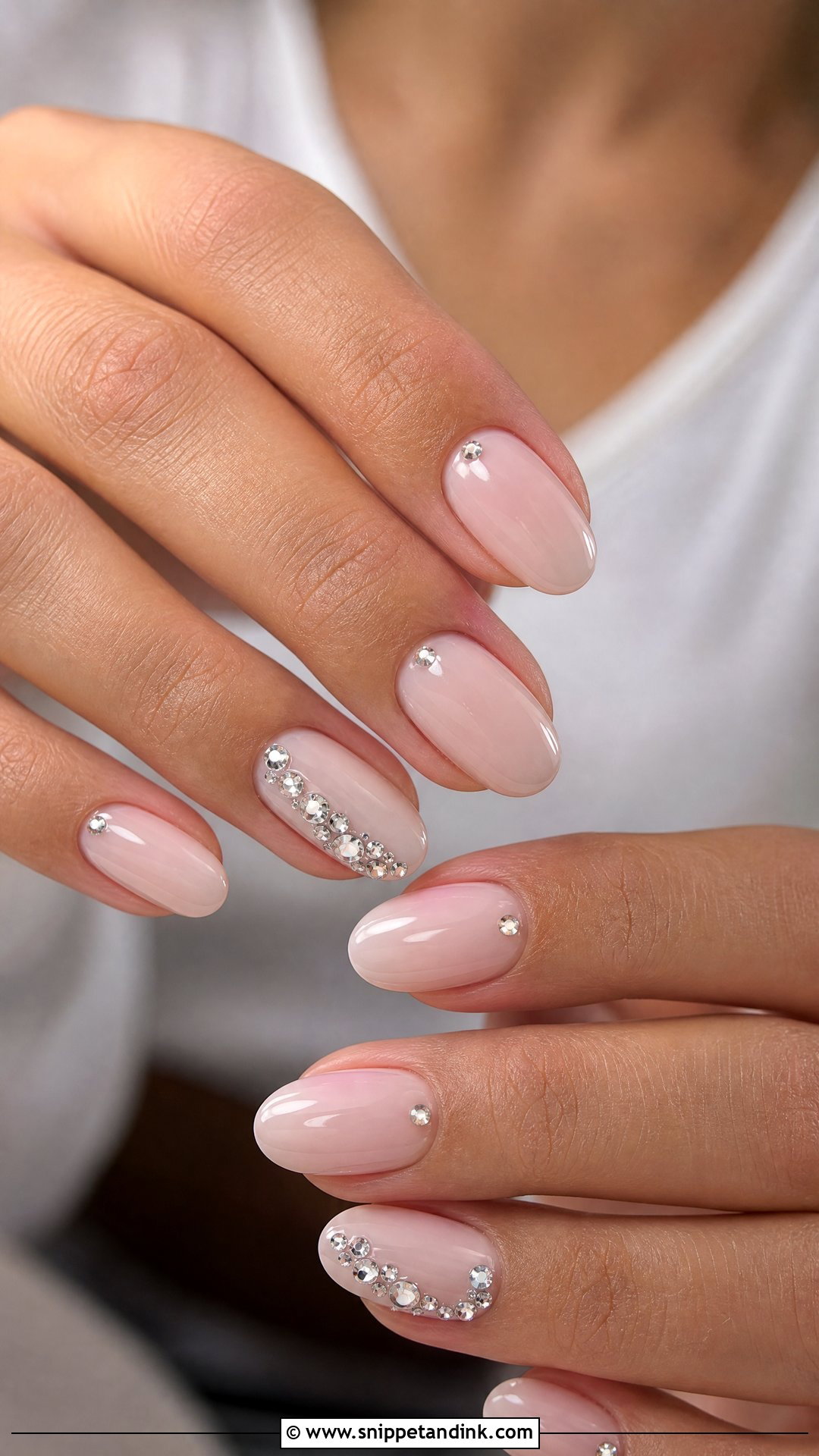
Rhinestones look elegant in small doses: a few crystals near the cuticle, along a French tip, or on one accent nail. I fix them with a thick gem gel, which holds far better than nail glue. Clear, pearl, silver and champagne stones are the bridal choices. Raised stones snag tights, hair and lace, so keep them small and close to the cuticle, where they’re least likely to catch. Fewer stones also read more cleanly in close-ups.
31. Minimal Line Wedding Nails
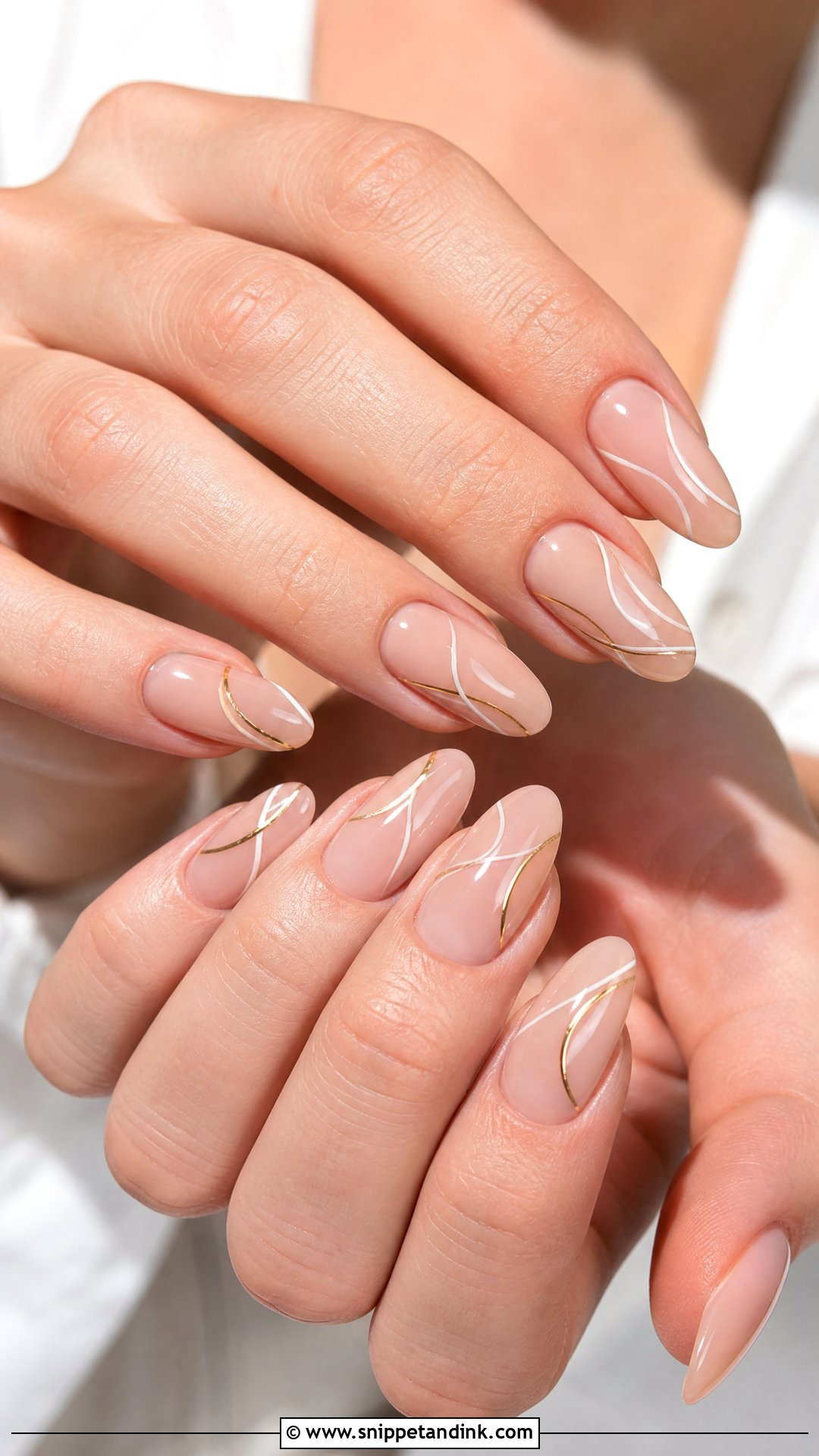
Fine white, gold, silver or nude lines can curve across the nail, frame the tip or form abstract shapes. The base stays sheer so the line art stays delicate. Thin lines need a long liner brush and steady hands, and a wobble shows instantly on a sheer base, so look at an artist’s line work before you book. Almond, oval and short square all suit it.
32. Beige Wedding Nails
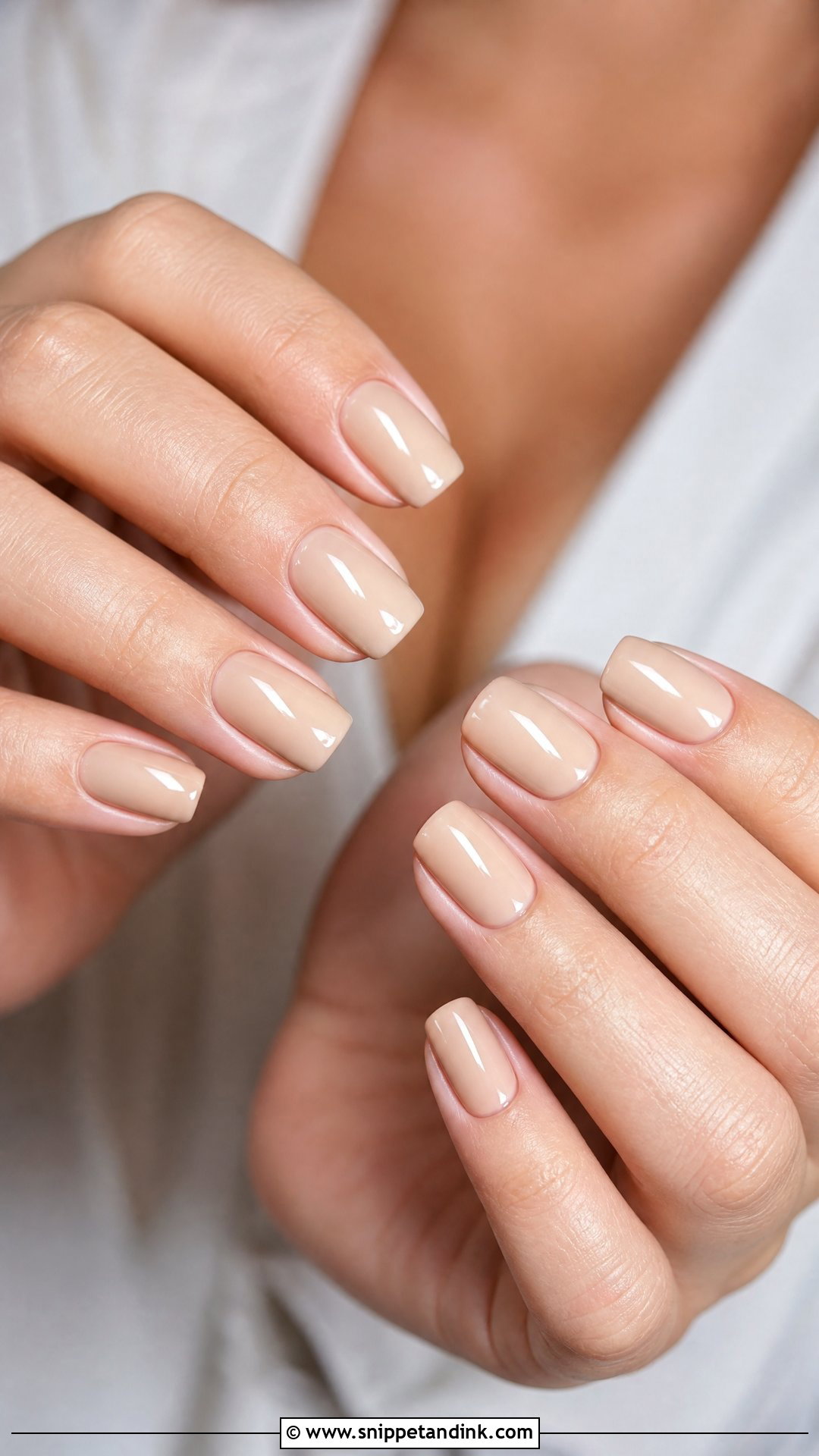
Beige sits between white and bare nails. Light beige, sandy nude, latte and soft taupe each suit different skin tones, so try a couple on your own hand before deciding. Glossy beige looks clean; matte beige looks modern but shows marks more. A thin French, a fleck of gold foil or a tiny pearl adds detail.
33. Soft Peach Wedding Nails
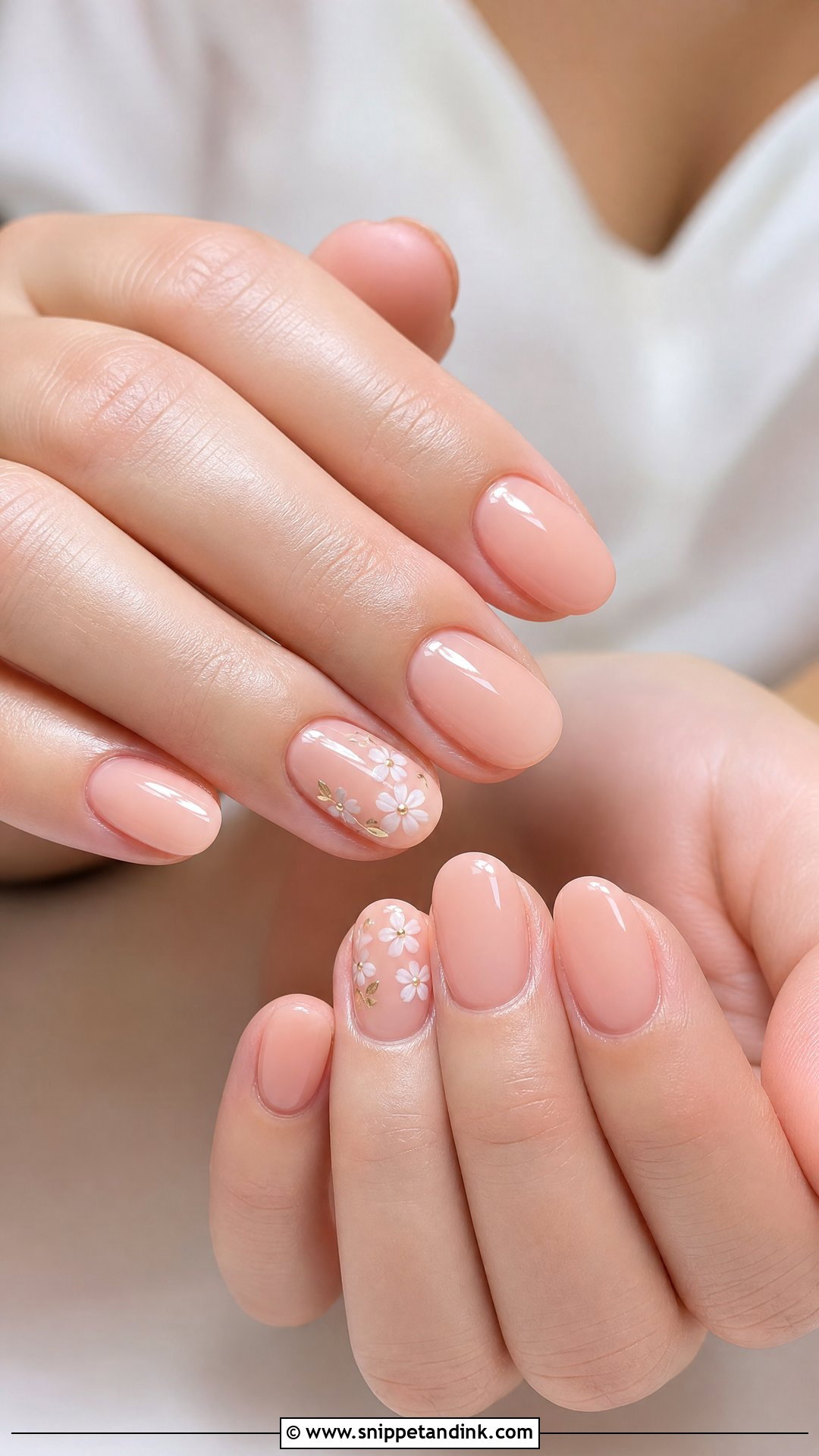
Peach is a warm alternative to pink, and it especially flatters warm and olive undertones. It suits outdoor and summer weddings. Bright peach can read orange in direct sunlight, so I keep it muted and creamy. White floral art or gold accents give it a bridal feel, on short oval, almond or square nails.
34. Press On Wedding Nails
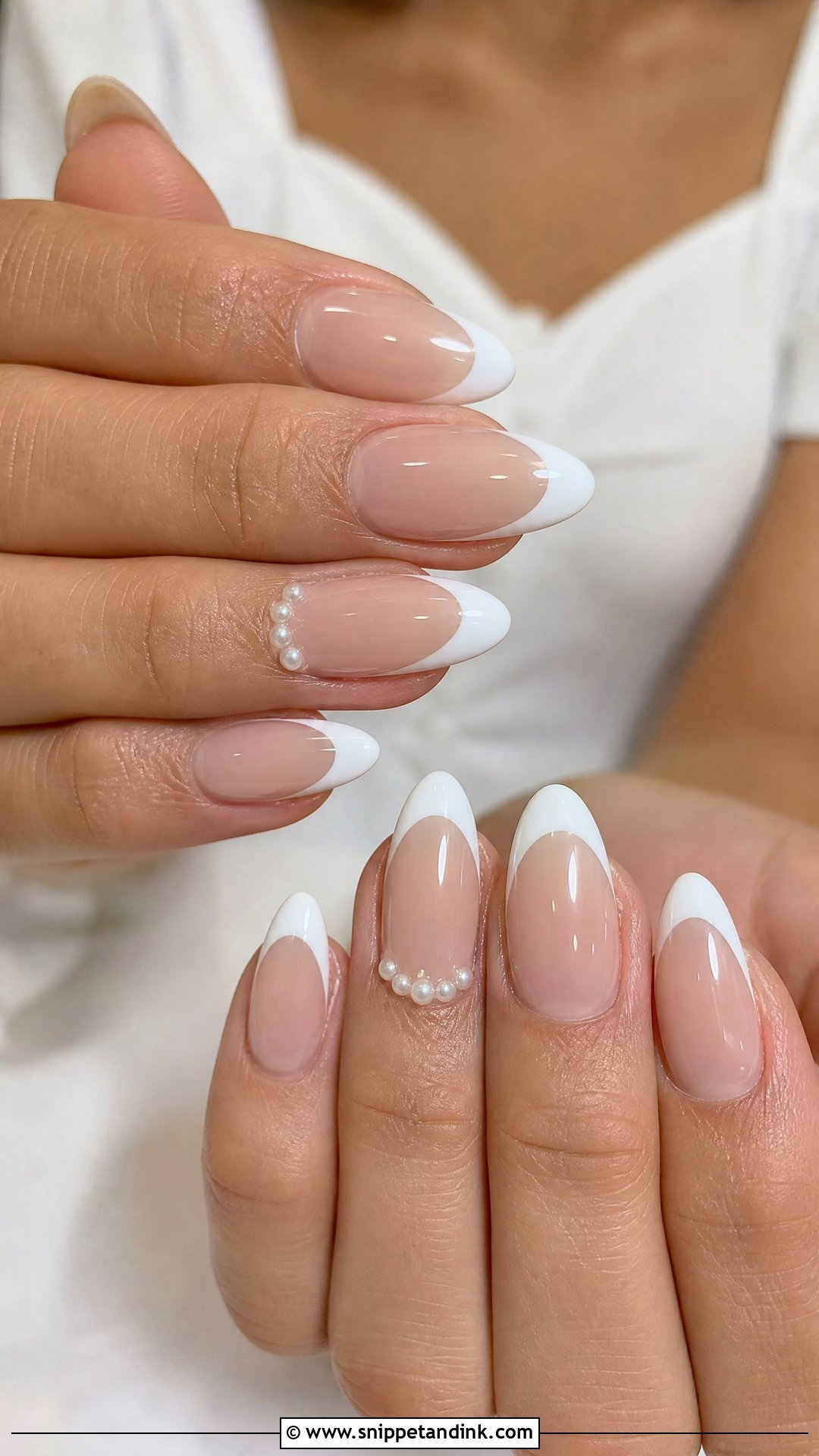
Press on wedding nails have improved enormously, and a good set looks realistic when the sizing is right. Sizing is where most go wrong: each press-on should cover the nail from side wall to side wall without touching the skin, or it lifts. Prep matters too. Push back the cuticles, buff off the shine, wipe with alcohol, and use glue rather than adhesive tabs for a long day. Apply them after skincare and before you get dressed. They’re handy for destination weddings and for testing several designs before you commit.
35. Custom Wedding Nails
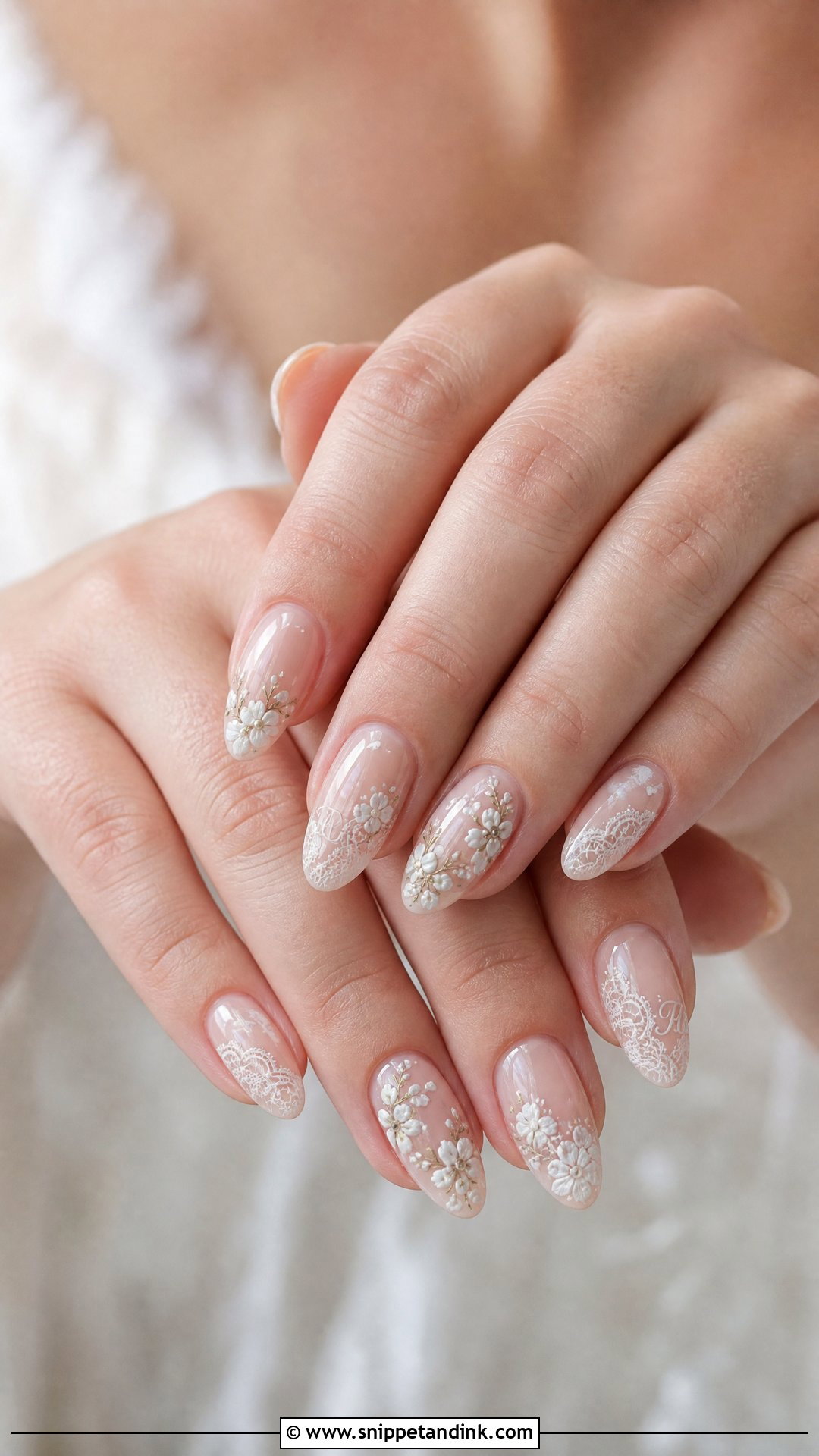
Custom sets can pull in details from your dress, bouquet, initials, veil or ring. One or two personal details are enough. I’ll often suggest milky nails with tiny florals from your bouquet, a fine lace pattern from your gown, or a hidden initial on one nail. Bring photos of everything you’d like referenced to your trial, since hand-painted details take time and the trial is where we work out scale on your actual nails.
Prepping Your Hands So the Ring Close-Up Looks Cared For
No nail art hides dry cuticles in a macro shot of the ring. Hands need a few weeks of attention, and most of it happens at home.
- Use cuticle oil every night for the month before. It softens the cuticle so I can push it back cleanly instead of cutting.
- Stop cutting or picking your own cuticles in the last two weeks. Fresh nicks look red in photos and can sting under gel.
- Keep hand cream by the bed and the sink; dry knuckles show in close-ups as much as nails do.
- If you use self-tanner, wipe your nails and cuticles straight after applying it, or have the manicure afterwards, because tanner stains cuticles orange.
- Having mehndi? Book the manicure before the henna goes on, so filing and soaking don’t disturb a fresh stain.
A Broken Nail Between the Ceremony and the First Dance
It happens: a car door, a bouquet ribbon, the stem of a champagne flute. Ask your nail artist for two or three spare tips pre-filed to your size, or a matching press-on, and put them in your maid of honor’s bag with nail glue, a small file and an alcohol wipe. A broken natural nail can be filed short and covered with a glued tip in a few minutes.
A chip in gel feels like a disaster and almost never is. A dab of matching polish or clear top coat carries it through the evening, and in the photos nobody will find it.
Let the Ring and the Dress Set the Tone
The right set feels like part of your outfit and is comfortable enough that you forget about it. Some brides will always choose a French; others want chrome, pearls, lace or one personal detail. Think about your dress color, your metal, the bouquet, your nail length and how you use your hands on a normal day. If you’re trying a new shape or extensions, have a trial manicure a few weeks ahead so you know how it feels and wears. Then your hands look finished in every close-up without stealing attention from the ring.
You'll Like These Ideas:


Leave a Reply