
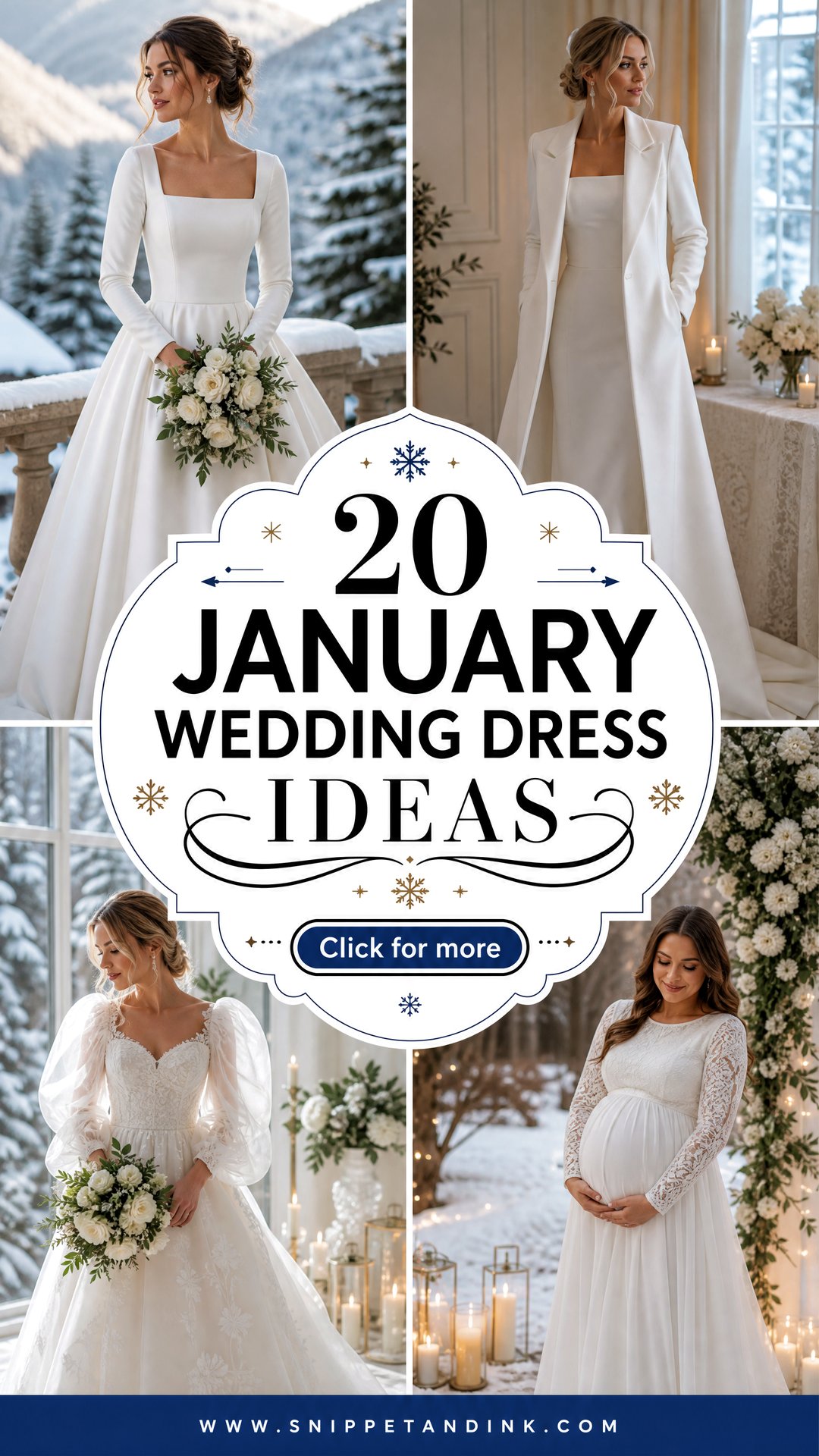
January brides tend to spend the whole day going in and out: from a heated house to a cold car, from a church to a windy steps photo, from a candlelit dinner out to the terrace. The dress has to handle all of that. Heavier fabrics such as satin, Mikado, velvet, thick crepe and properly lined lace hold their shape in soft winter light and keep you warmer than chiffon ever will. Then come the layers you can take off: capes, tailored coats, gloves and faux-fur wraps. The twenty looks below range from a formal ballroom gown to a courthouse midi with a wool coat, and include options for plus-size and pregnant brides. Each one comes with the shoes, veil and outer layer I’d put with it for a cold day.
Hidden Warmth: What Goes Under a Winter Gown
Most of the warmth in a winter bridal outfit is invisible. These are the layers I suggest at fittings, and they work under almost every dress in this list.
- Sheer or fleece-lined tights in a skin tone. Under any floor-length skirt nobody will know, and they cut the chill on your legs completely.
- A thin thermal vest or camisole in a nude shade, if the bodice isn’t too fitted. Try it at a fitting, since even a thin layer changes how a corset closes.
- A slip or petticoat in a warm fabric under tulle or chiffon. Air moves straight through net, and a satin or cotton layer underneath stops that.
- Hand warmers tucked in skirt pockets for outdoor photos. Ask your seamstress to add pockets if the gown doesn’t have them.
- Shoes with some grip, or a second pair for outside. Satin soles slide on frost and wet stone.
Bring every one of these layers to your fittings. A gown fitted without tights or a thermal camisole may feel tight once they’re on, and it’s much easier to adjust a seam in October than on the morning itself.
1. Long Sleeve Lace January Wedding Dress
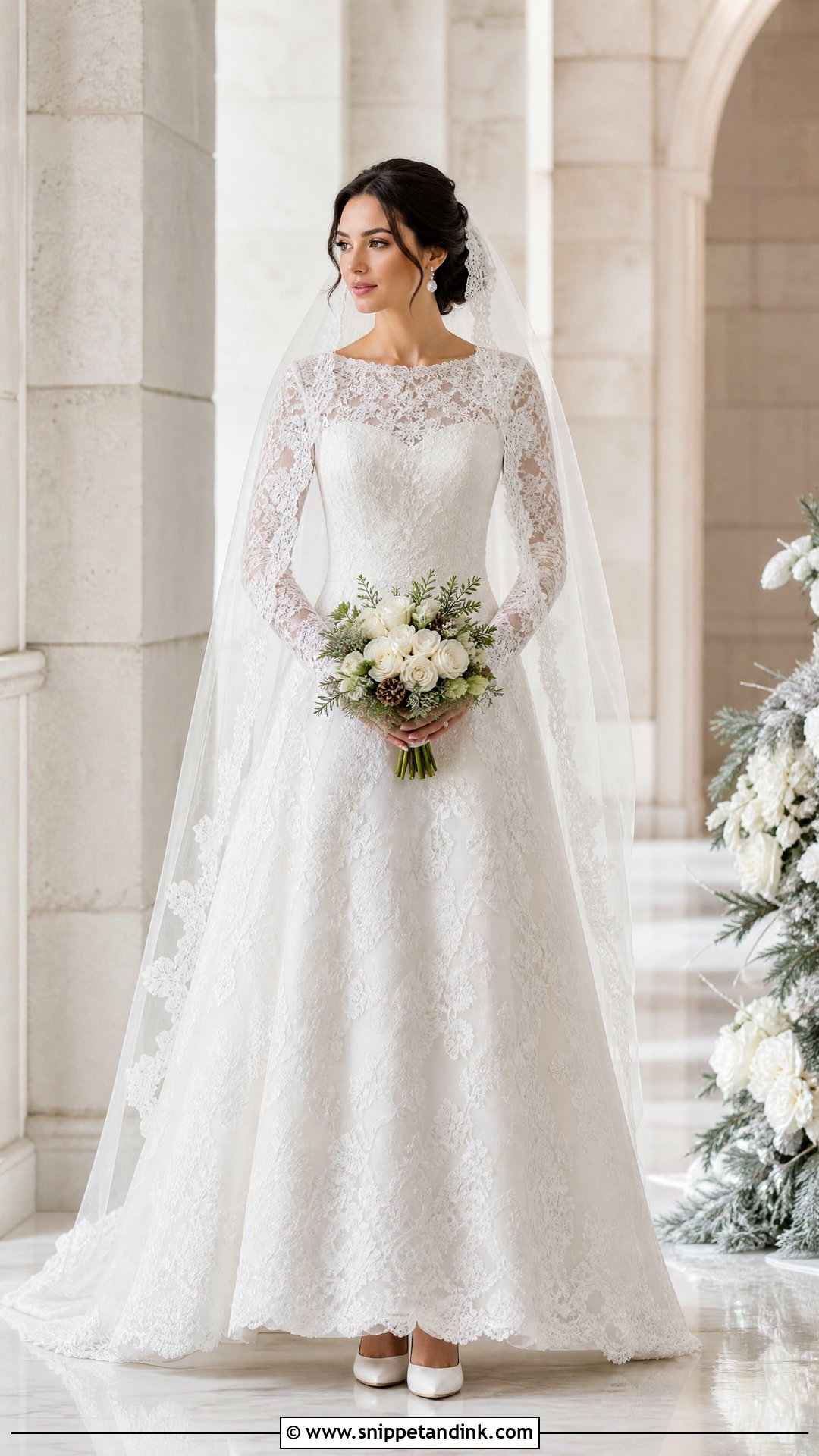
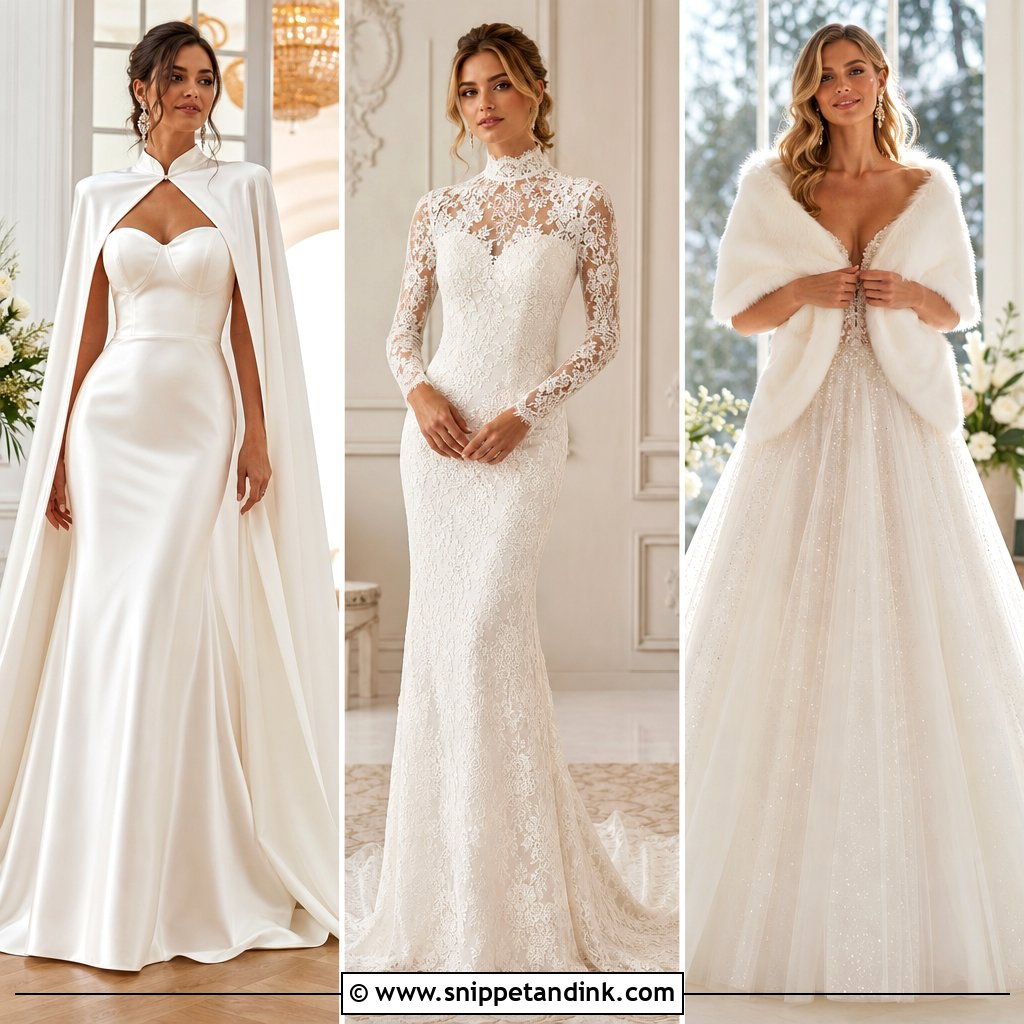
Lace sleeves feel delicate, but lined ones are surprisingly warm, and that lining is the first thing I check on a winter lace gown. An A-line with a defined waist and a softly layered skirt is easy to move in. Floral lace reads classic; geometric or botanical lace looks more current. Closed-toe satin pumps, pearl drops and a fingertip veil edged in matching lace suit it, with a low chignon so the sleeves and neckline show. Bring an ivory wool wrap for outdoor portraits and take it off before you walk in. Sheer thermal tights under a full skirt are invisible and make a real difference outside.
2. Satin Ball Gown With Bridal Cape
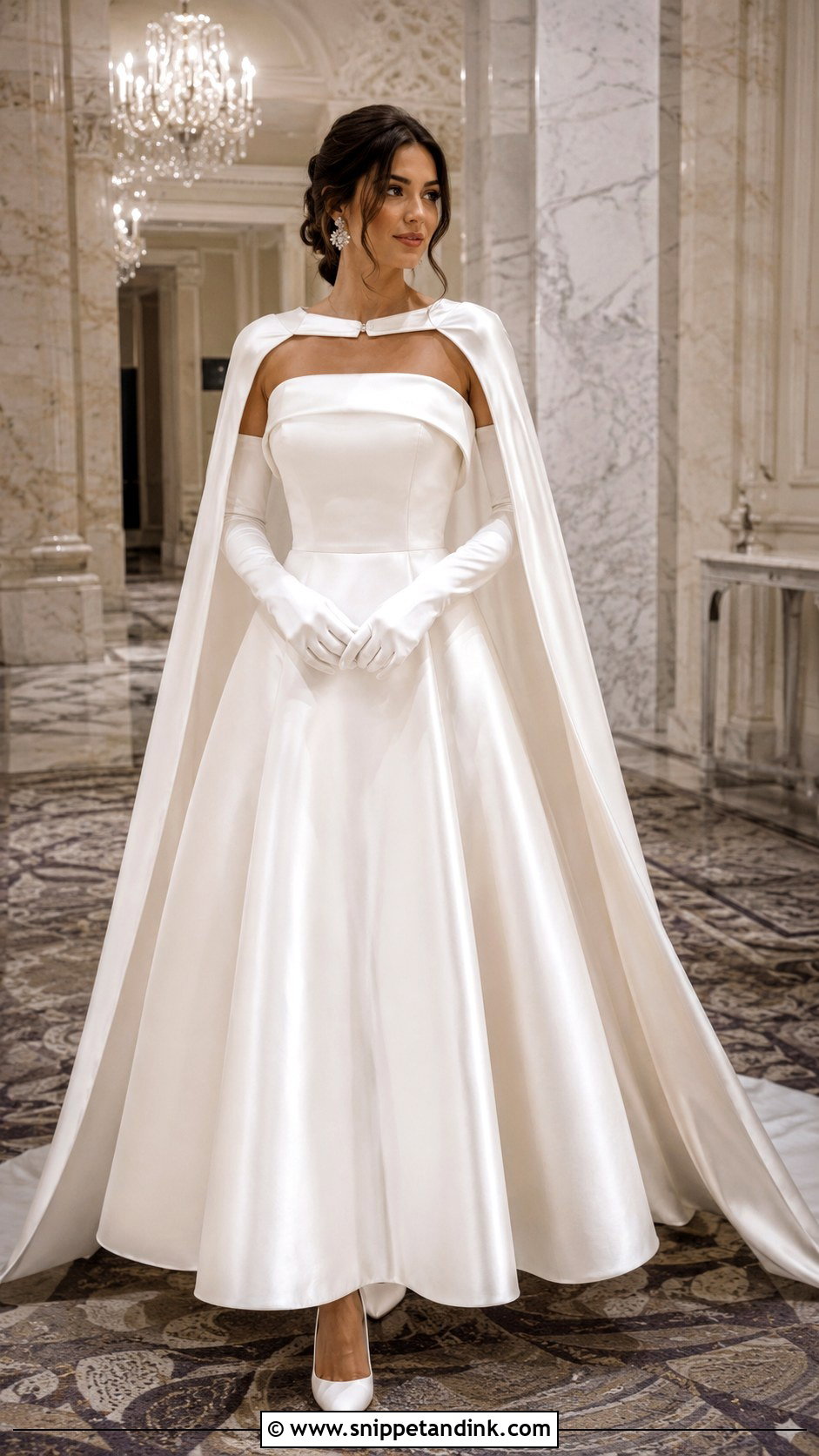
Duchess satin and Mikado are the fabrics I reach for at a formal winter wedding, because they’re thick, they hold a ball gown’s shape without layers of netting, and they don’t wilt under heaters. Look for a fitted bodice with proper internal structure and a full skirt. A floor-length cape gives ceremony coverage over a sleeveless gown, and it can come off for dancing. Crystal earrings, pointed satin heels and a smooth bun or polished waves are all you need, because the cape and skirt are already doing a lot. One thing to plan for: satin shows creases from the car, so sit on the back of the skirt rather than bunching it under you.
3. Crepe Fit And Flare Wedding Dress With Faux Fur Wrap
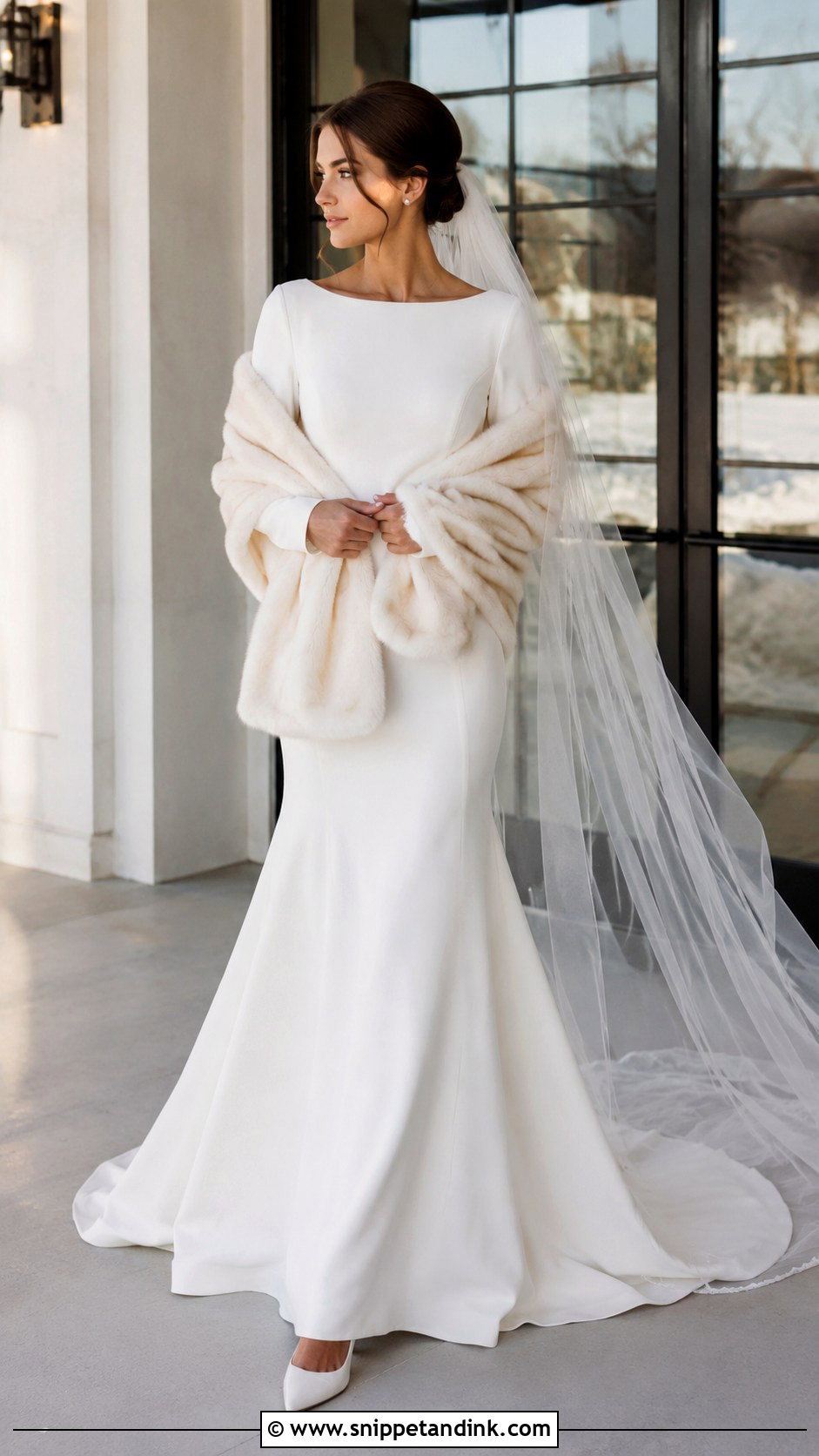
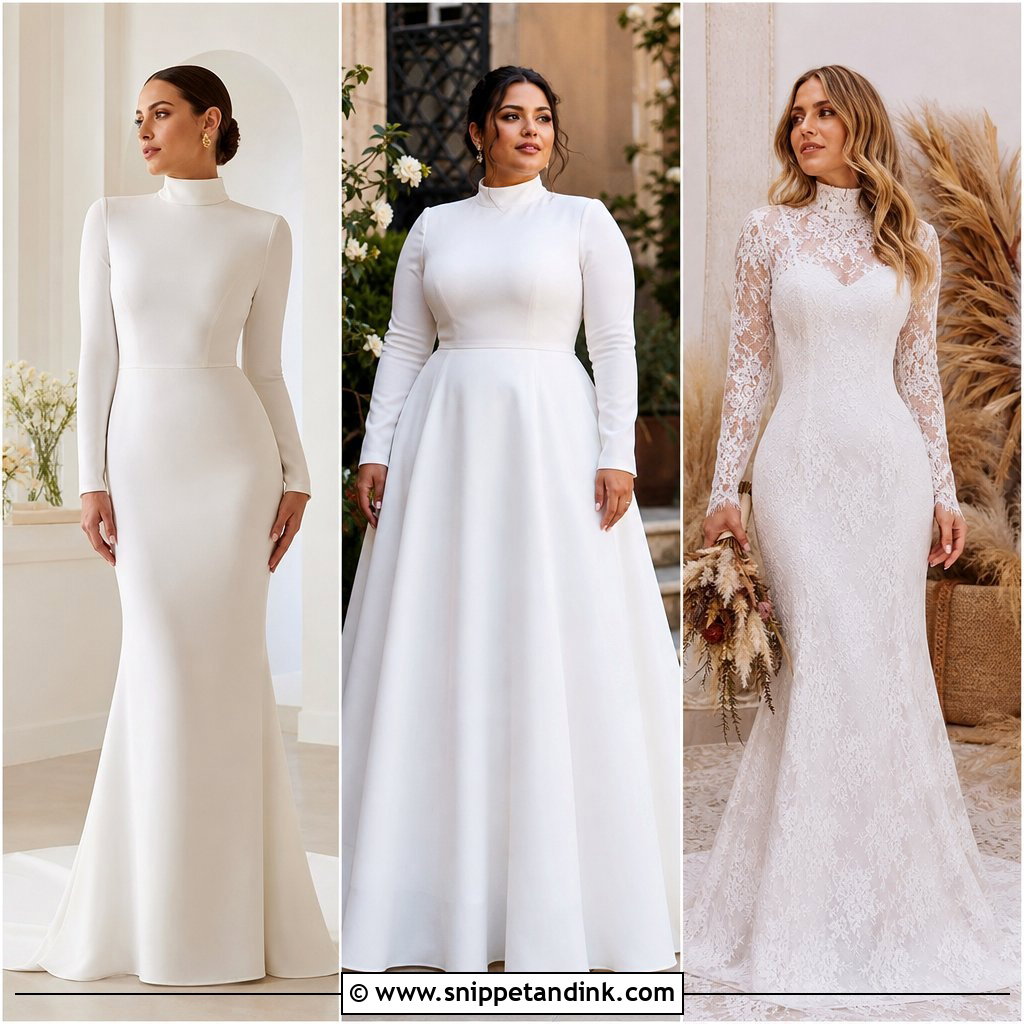
Clean lines suit winter, and a fitted crepe gown with long sleeves, a bateau neck and covered buttons down the back is about as clean as it gets. The fit-and-flare shape keeps the skirt modest. The difference between good and poor crepe is huge: thin crepe clings and shows every seam, whereas a fully lined, heavier crepe skims. Add an ivory faux-fur wrap for travel and photos. Pointed closed-toe pumps, pearl studs and a simple cathedral veil keep it understated. I’d steer petite brides towards a slightly shorter train so the long sleeves and bateau neck don’t overwhelm them.
4. High Neck Mikado January Wedding Dress
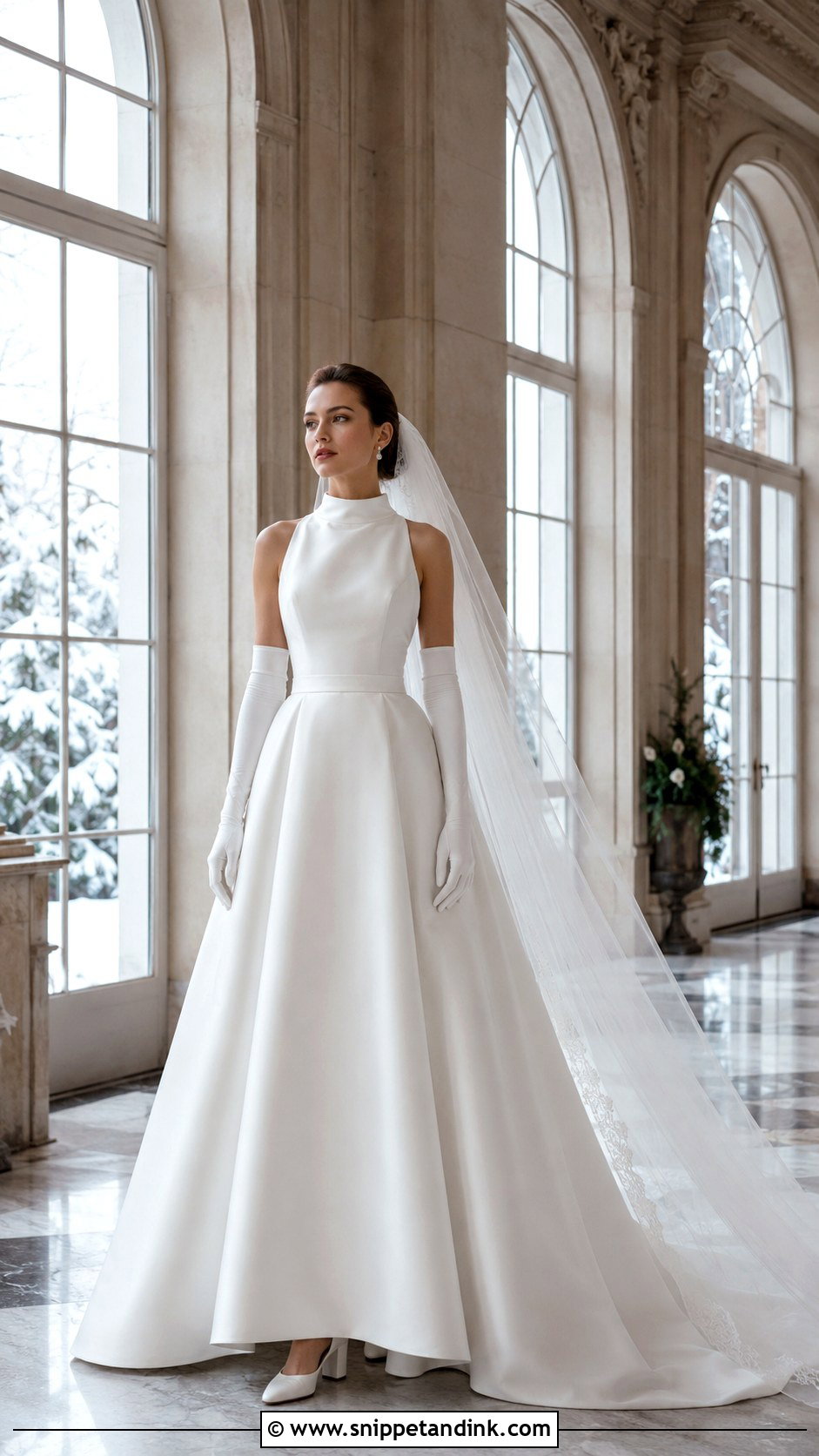
Mikado is a heavy silk or silk-blend with a slight sheen, and it holds sharp, architectural shapes, which is why a structured high-neck Mikado gown looks so crisp in low winter sun. A sleeveless bodice, natural waist and full A-line skirt need no embellishment. A low back or covered buttons add interest from behind. I love elbow-length gloves here, with pearl earrings and ivory block heels, plus a sleek bun and a cathedral veil for the ceremony. A fitted white wool coat works between locations. Mikado creases sharply rather than softly, so ask for it to be steamed on site.
5. Ivory Velvet January Wedding Dress
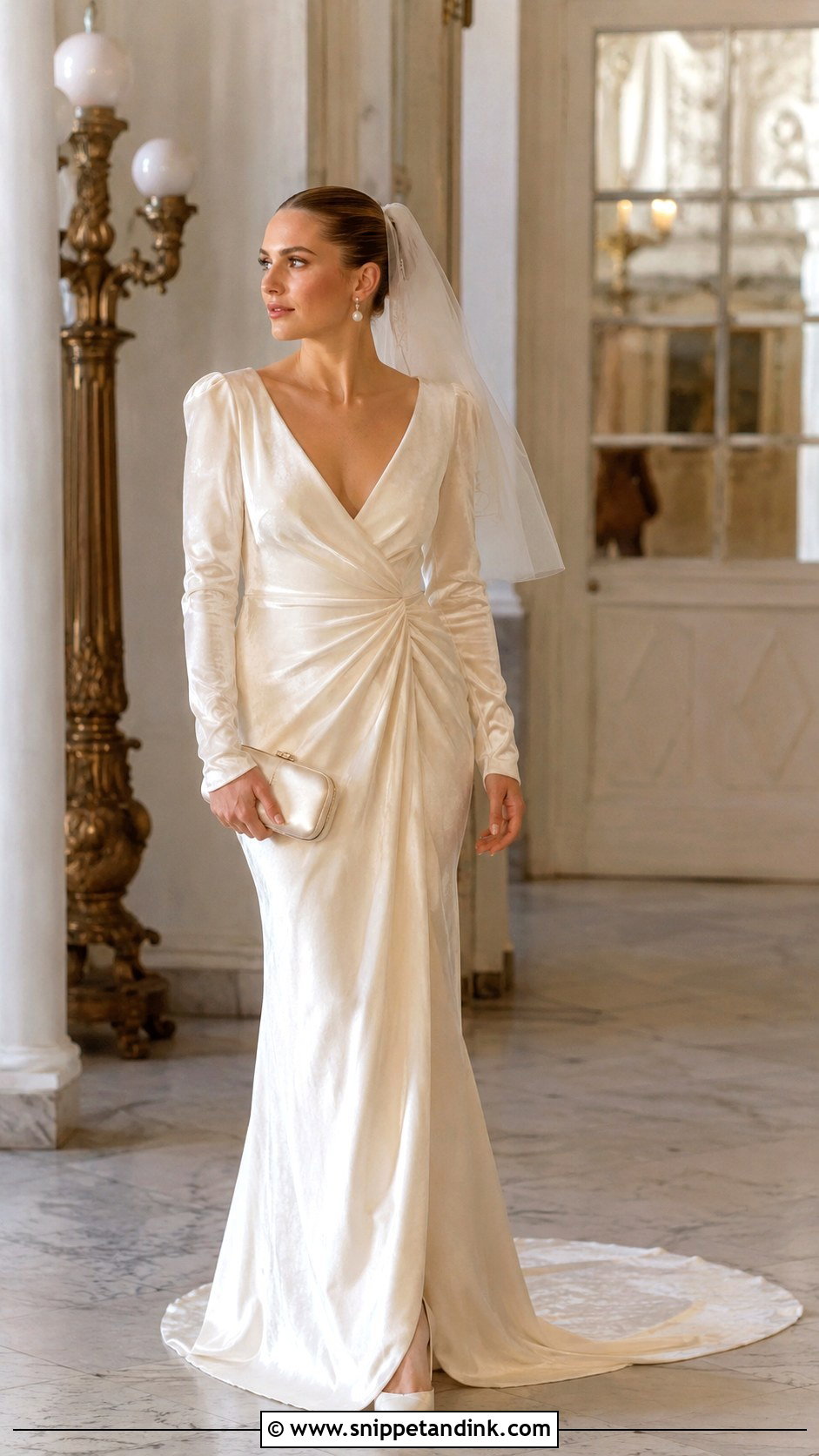
Velvet looks warm because it is warm, and ivory velvet with long fitted sleeves, a soft V neck and a gently flared skirt feels plush without being fussy. The pile reflects light differently depending on direction, so check the fabric in daylight before alterations, as panels cut the wrong way look like two shades. Stretch velvet moves better through the arms. Keep the rest simple: pearl earrings, a small satin clutch, closed-toe heels and a short tulle veil to stop it feeling heavy. Velvet also crushes where you sit, so steam the back of the skirt after the ceremony if you can. It’s at its best by candlelight in a historic room or a mountain lodge.
6. Off Shoulder Wedding Dress With Long Gloves
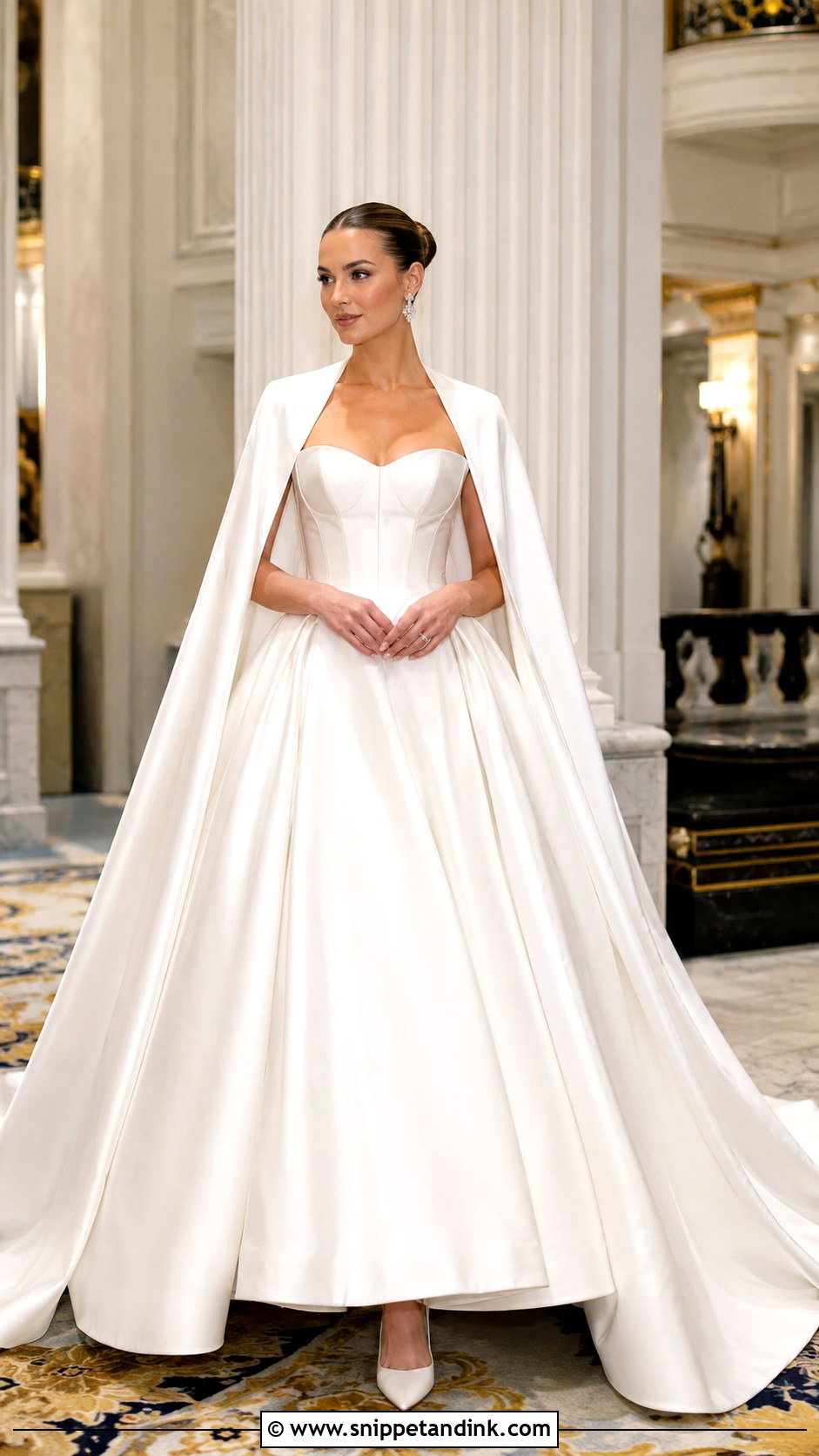
Bare shoulders in January sounds impractical, but opera gloves and a good cover-up make it workable. A structured satin A-line with a folded off-shoulder neckline is the base. Opera-length satin gloves for the ceremony, plus a tailored cape or ivory coat outdoors, cover a lot of skin. Crystal studs, a smooth updo and pointed pumps let the neckline stand out. Take the gloves off for dinner and you have a second look. The fit has to be precise, since an off-shoulder bodice that relies on the arms to hold it up will slip, so make sure the boning does the work. It belongs at a black-tie hotel wedding.
7. Square Neck Long Sleeve Wedding Dress
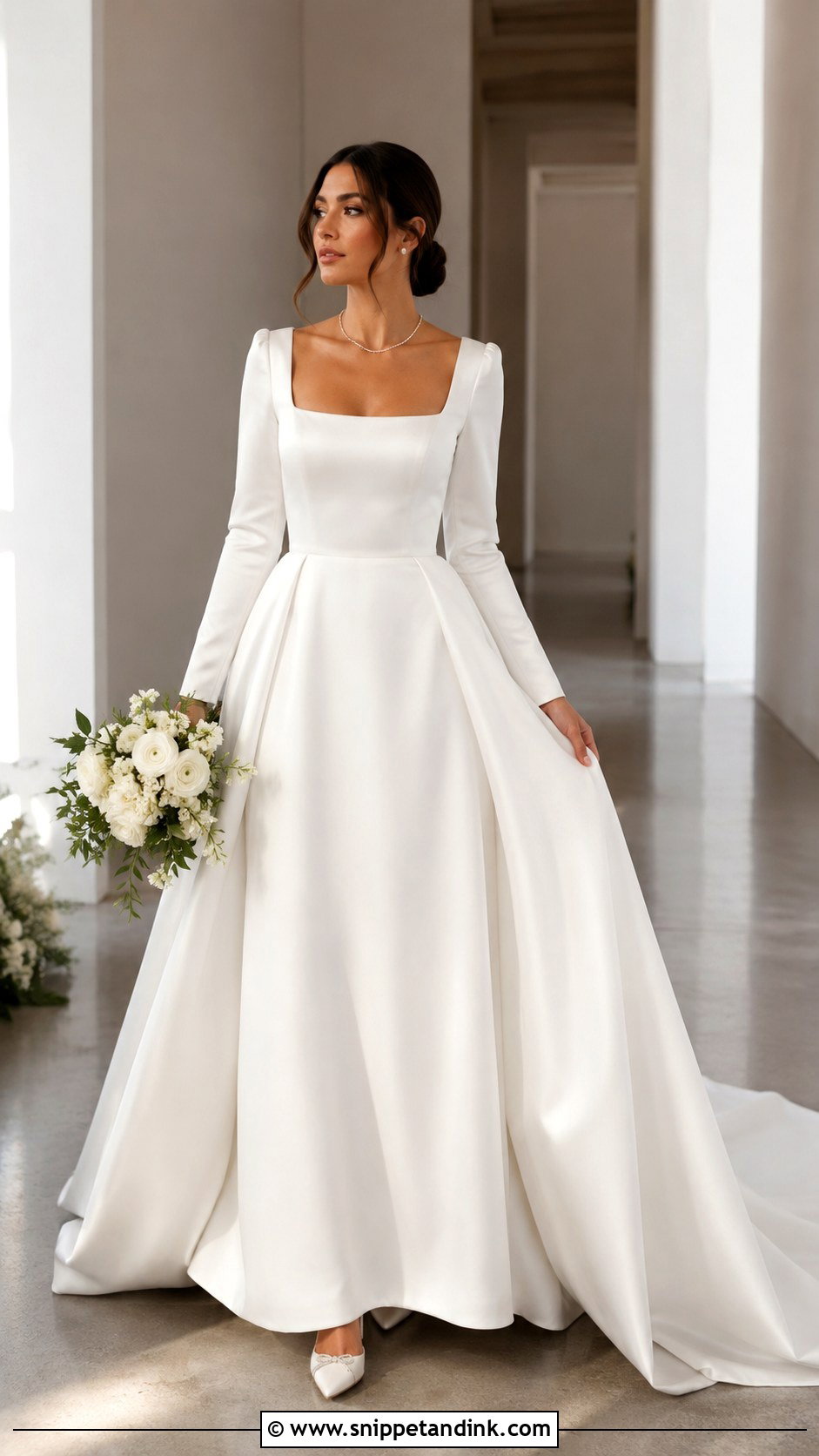
A square neck balances long sleeves nicely, since you show collarbone while your arms stay covered. Satin-backed crepe is a smart choice because the satin side faces in and slides over tights and lining. Choose a fitted bodice, natural waist and soft A-line, then a delicate pendant or short pearl strand in the open neckline. A centre-parted low bun, drop earrings and ivory slingbacks complete it, though I’d swap slingbacks for closed-toe pumps if you’ll be outside for long. A detachable overskirt adds ceremony volume. Layer a cropped wool jacket for travel. It flatters many body shapes because the neckline draws the eye up.
8. Beaded January Wedding Dress With Cathedral Veil
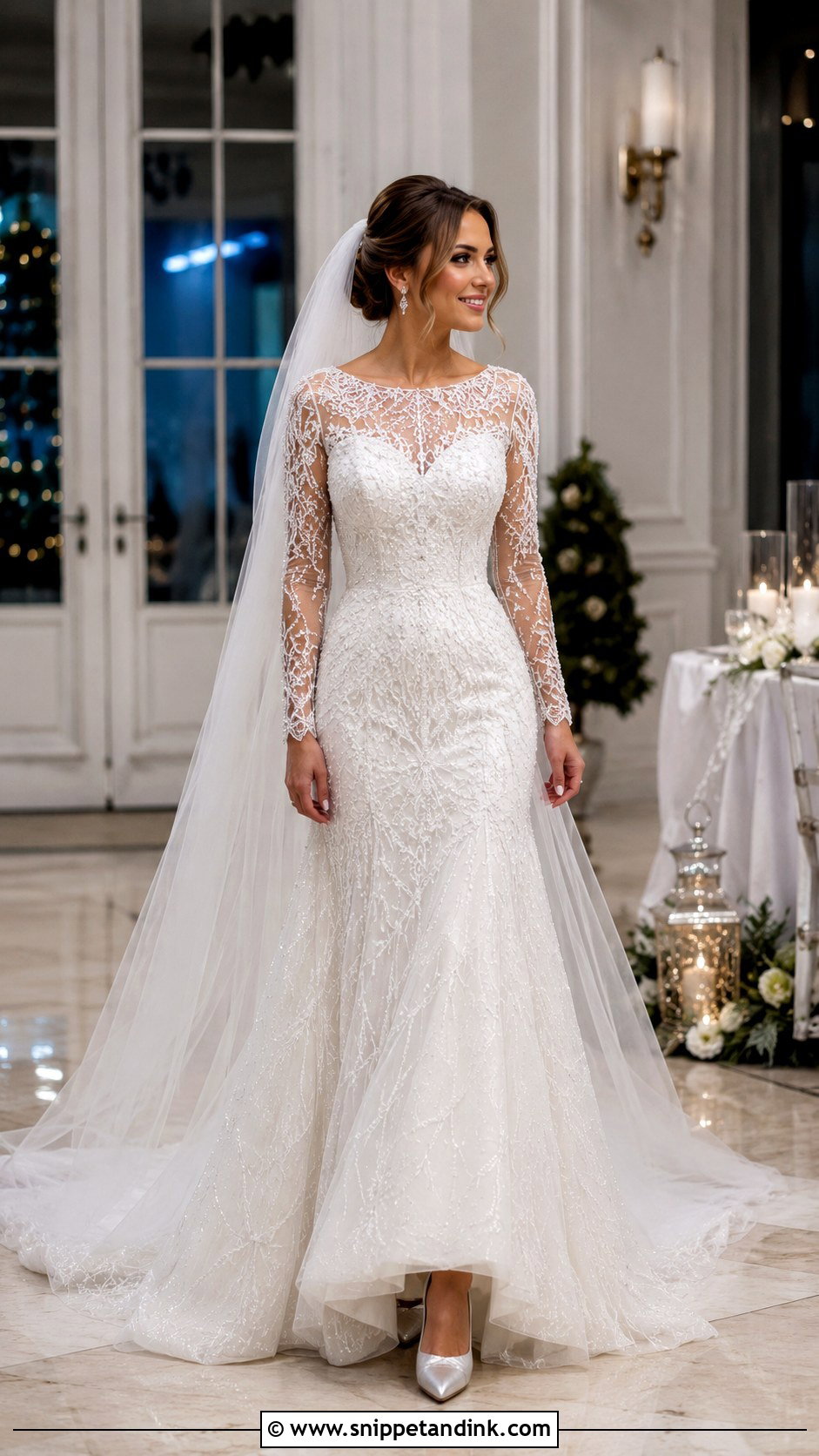
Beading glints in candlelight, and January evenings are dark early, so a beaded gown makes sense for an evening ceremony. Choose one fully lined with long illusion sleeves and a soft flare. Clear crystals, pearls and silver beads read frosty without needing any icy blue. Keep the veil plain so it doesn’t catch on the beads, and choose silver closed-toe heels, crystal earrings and a compact white bouquet. Skip a heavy necklace if the bodice is busy. Outdoors, a plain ivory cape keeps you warm and protects the beading from rubbing. Make sure the cape is lined in something smooth, as rough wool snags beads.
9. Minimalist Wedding Dress With Tailored White Coat
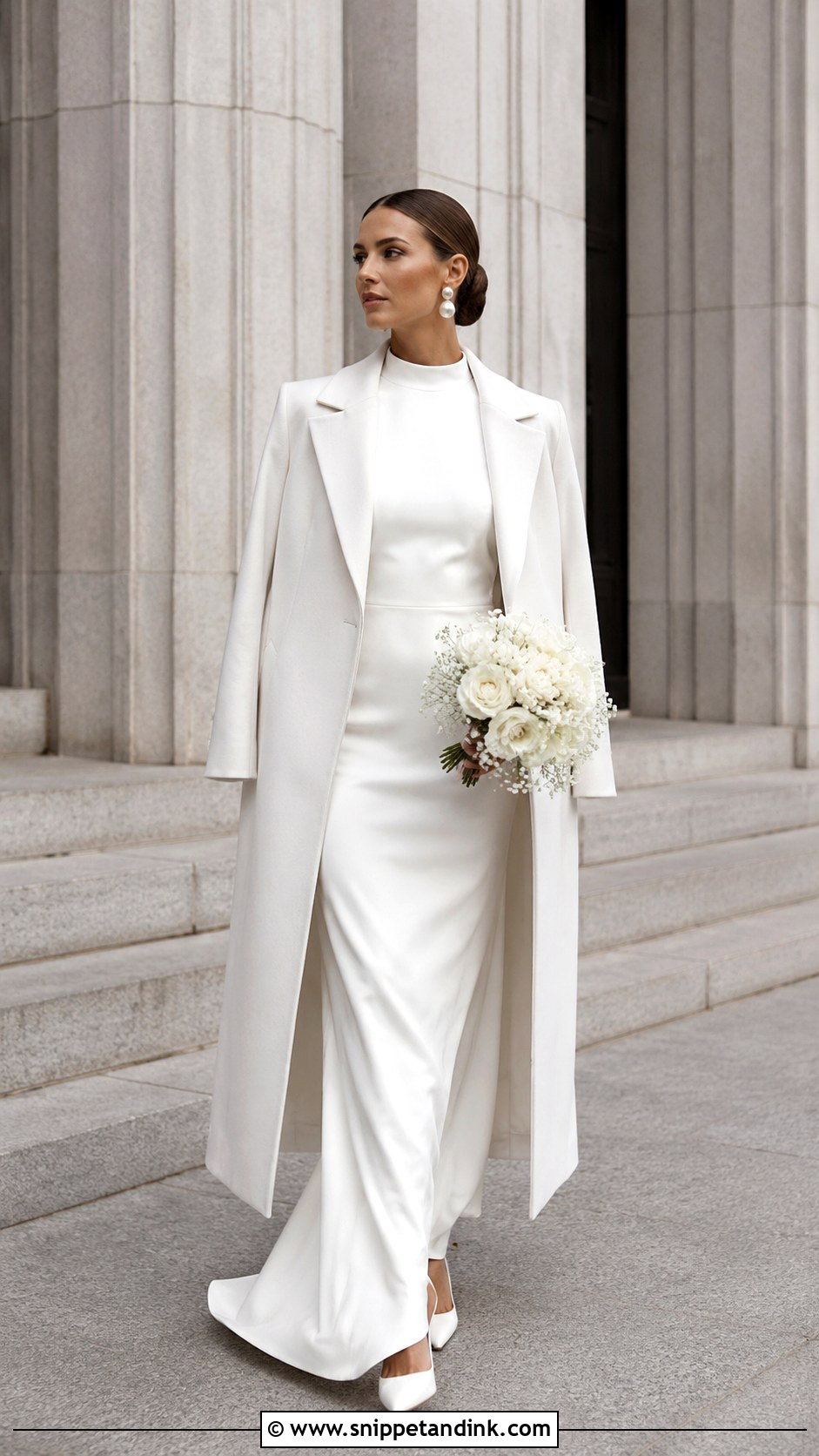
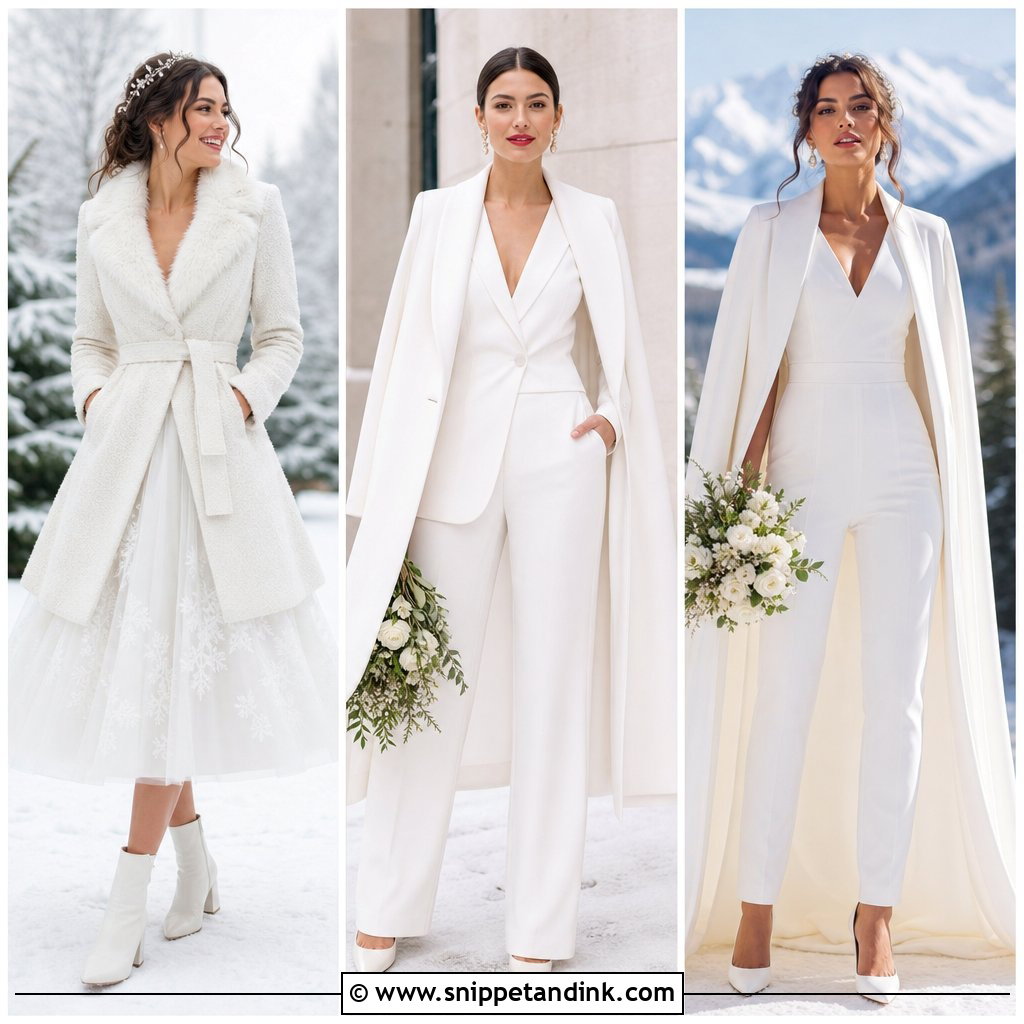
Minimal dressing works especially well in winter because the coat becomes part of the look. Start with a sleeveless heavy crepe or satin column with a high neck and a clean hem. Over it, a tailored white wool coat that follows the column’s line, not a bulky duvet coat, carries you through arrivals and outdoor photos. Get the coat’s sleeve and hem length right; a coat that ends just above the gown’s hem looks deliberate. Pointed leather pumps, sculptural pearl earrings and a small structured bag finish it. Hair goes in a polished bun or neat waves. Indoors, the coat comes off and the dress takes over. It suits a city wedding or a restaurant.
10. Tea Length January Wedding Dress With Bridal Boots
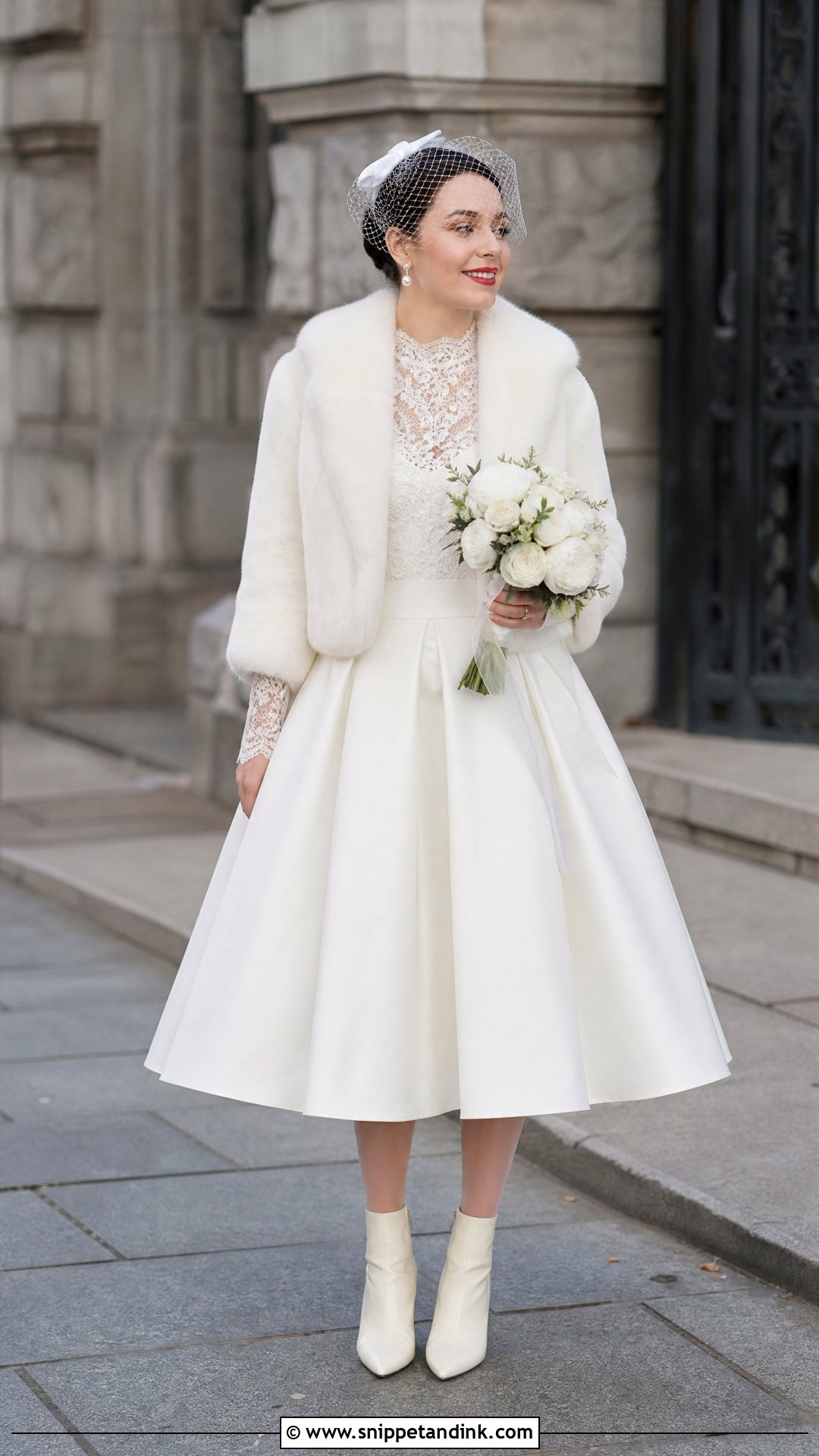
Tea length lets you wear boots, and in January that’s a real advantage. A long-sleeve dress with a fitted lace bodice and a structured satin skirt ending between knee and ankle works best. Ivory ankle boots with a slim heel and a pointed toe look bridal; chunky soles do not. Sheer fleece-lined tights add warmth you can’t see. Pearl earrings and a birdcage veil lean into the vintage shape. Carry a short faux-fur jacket outside. Because the boots are on show, keep their hardware minimal and check the boot top sits under the hem. It’s great for a courthouse or a small restaurant reception.
11. Bridal Jumpsuit With Floor Length Cape
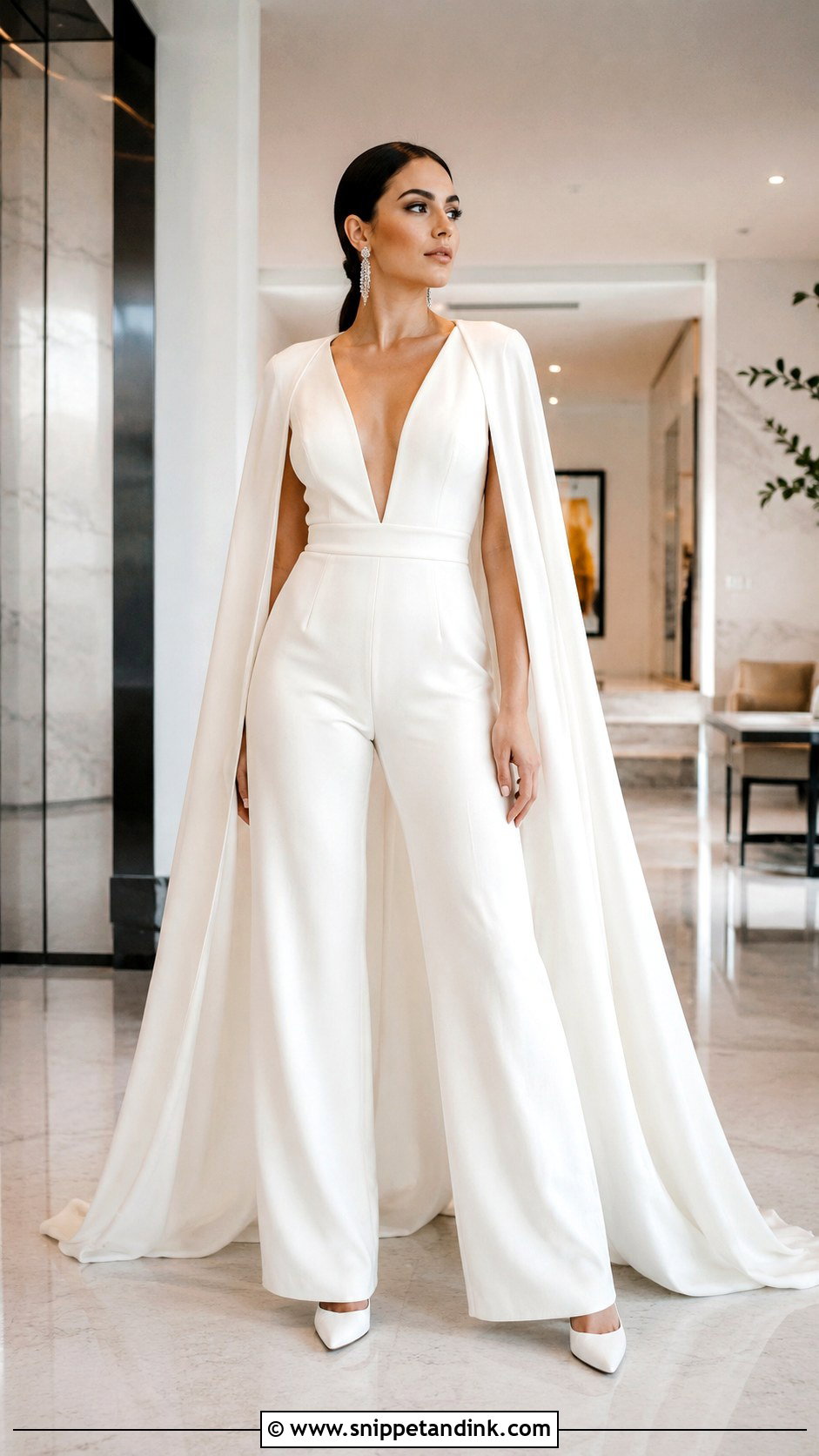
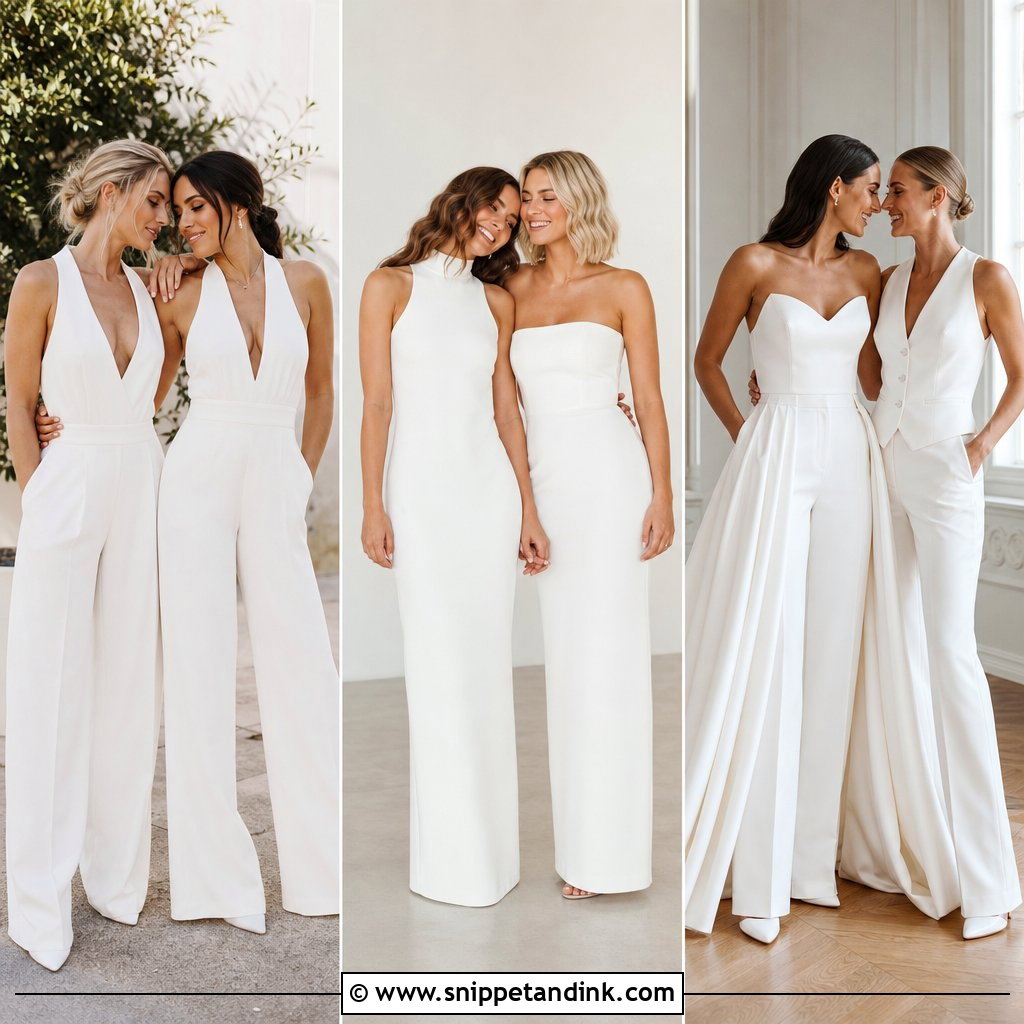
A jumpsuit keeps you warmer than a gown because the fabric covers each leg, and it’s my favourite option for a bride who never wears dresses. Look for a wide-leg ivory jumpsuit with long sleeves, a defined waist and a structured crepe bodice. A detachable floor-length cape adds drama and covers shoulders and back. Pointed pumps, statement earrings and a sleek low ponytail complete it. If the neckline plunges, a tailor can add a mesh panel or internal support so you aren’t adjusting it all day. Swap the cape for a white wool coat outdoors. It suits a courthouse, a rooftop or a second ceremony.
12. Layered Tulle January Wedding Dress
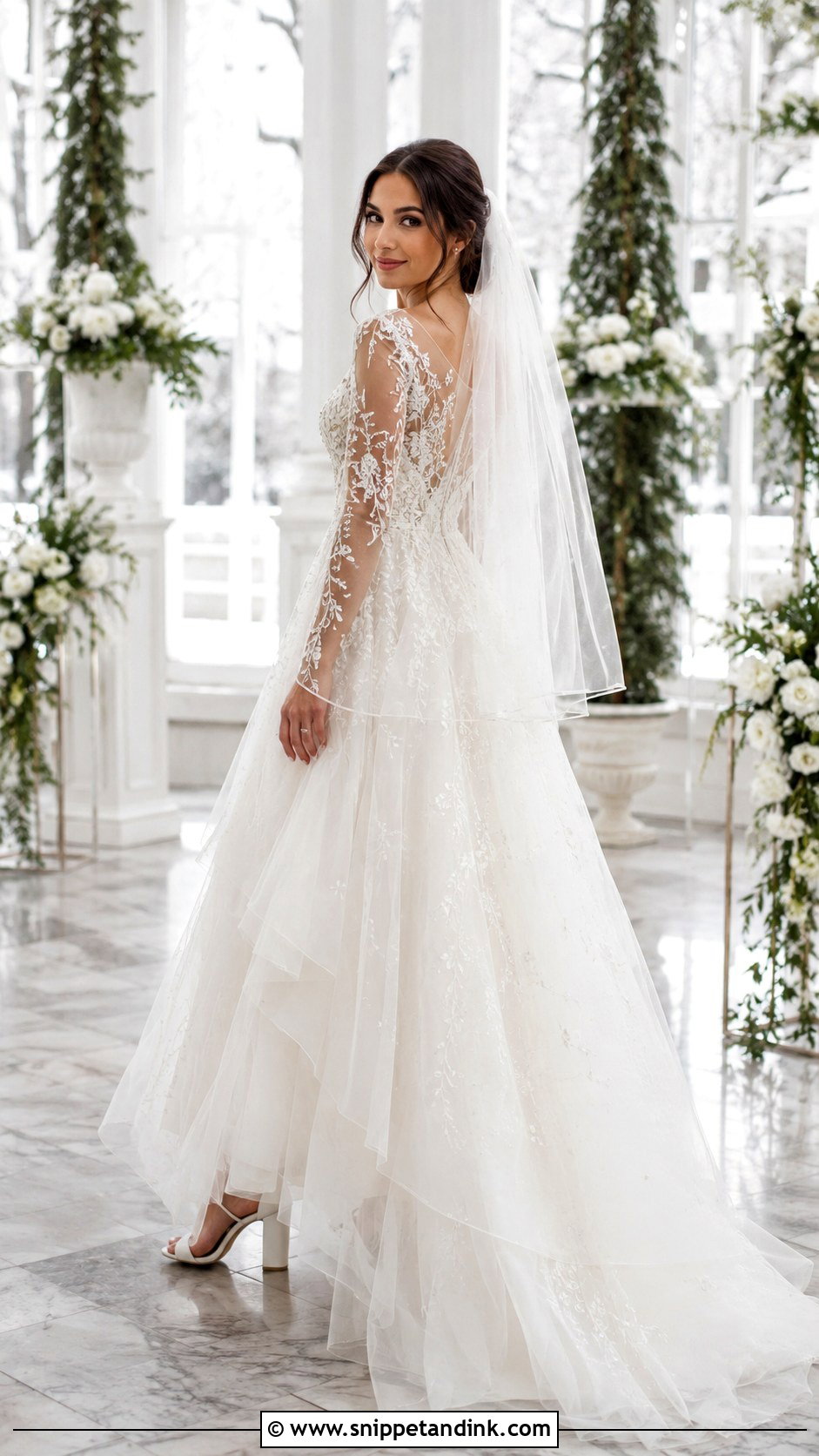
Tulle layered over a satin underskirt leaves room for warm hidden layers, which is why I like it for January. Choose an A-line with a lined bodice, long illusion sleeves and several tiers of fine tulle. A few embroidered details or scattered pearls are enough. Satin block heels, small crystal earrings and a fingertip veil complete it. A fitted cardigan or cropped bridal jacket keeps you warm before the ceremony without crushing the skirt. Tulle catches on everything outdoors, from bark to rough stone, and wet snow turns the hem grey quickly, so pick a cleared path for portraits and ask someone to lift the train between shots.
13. Champagne Satin January Wedding Dress
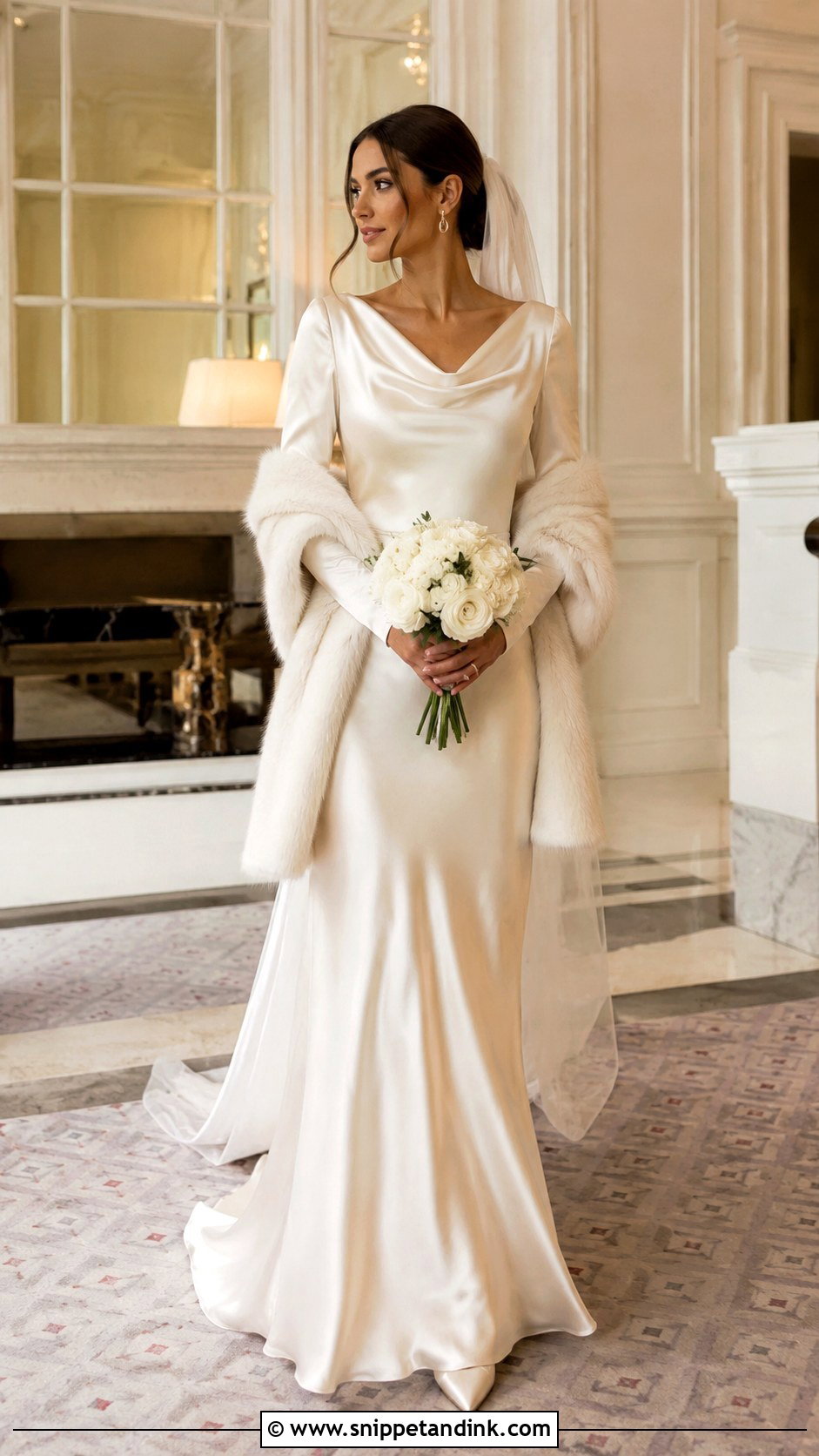
Champagne is warmer than white and sits well against grey skies and bare trees. A long-sleeve bias-cut gown with a cowl neck and a fluid skirt is a soft choice. Gold earrings, champagne pumps and a light ivory veil keep the palette warm. A cream faux-fur stole adds seasonal texture outdoors. Soft waves pinned behind one ear suit it. The liquid satin silhouette is very revealing, and in a cold room it shows goosebumps and every undergarment line, so a smooth lining and no-line underwear are essential. It’s lovely for an evening dinner wedding.
14. Corset Wedding Dress With Detachable Overskirt
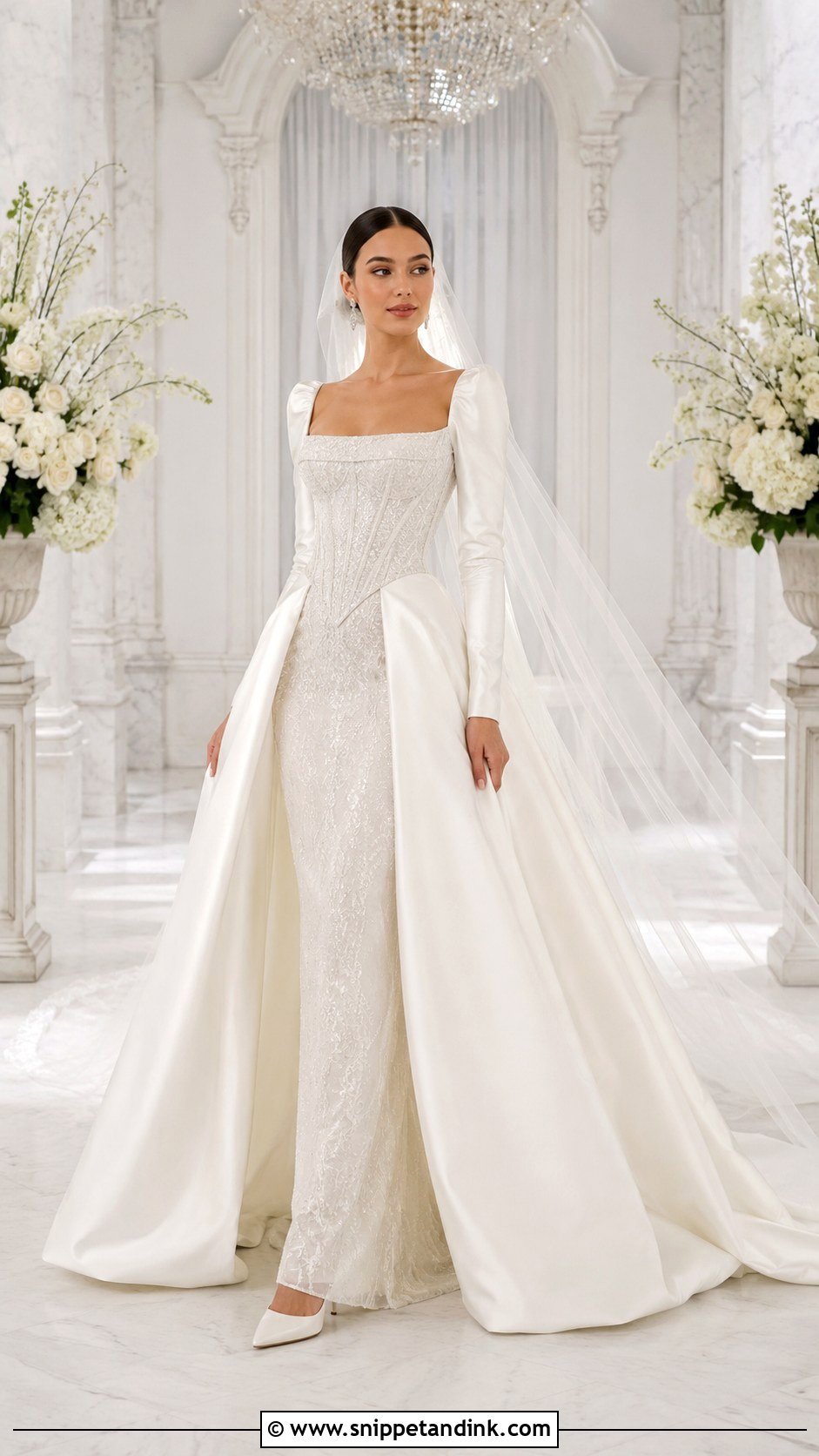
Two looks in one dress is the appeal of a detachable overskirt. Start with a fitted satin column with a supportive corset bodice and long detachable sleeves. Add a full overskirt with a chapel train for the ceremony, which gives you ball gown photos, and remove it for the reception. Pearl drops, ivory pumps and a simple cathedral veil finish it, plus a tailored cape that sits flat over the corset. I always have the bride and her helper practise taking the overskirt off at the last fitting. The fastenings are usually hooks or snaps around the waist, and fiddling with them in a cold venue bathroom isn’t fun.
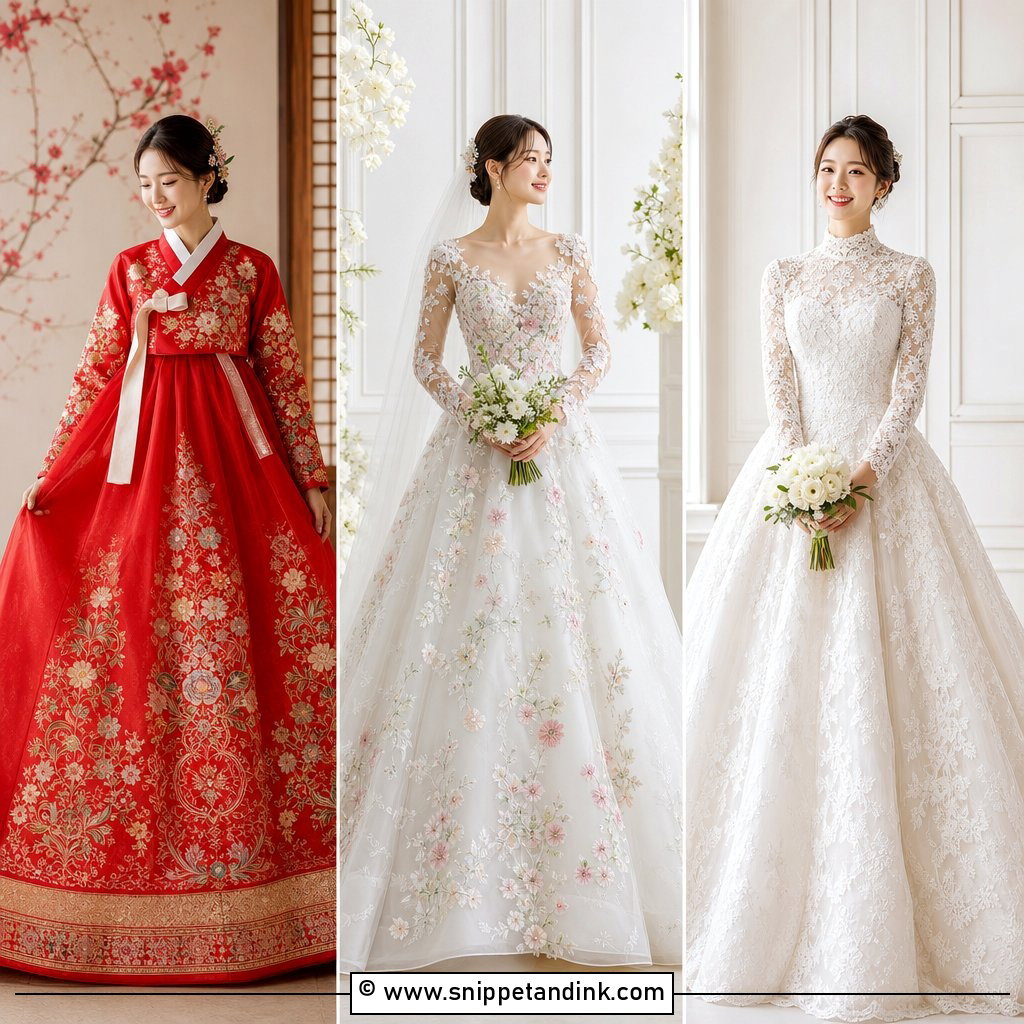
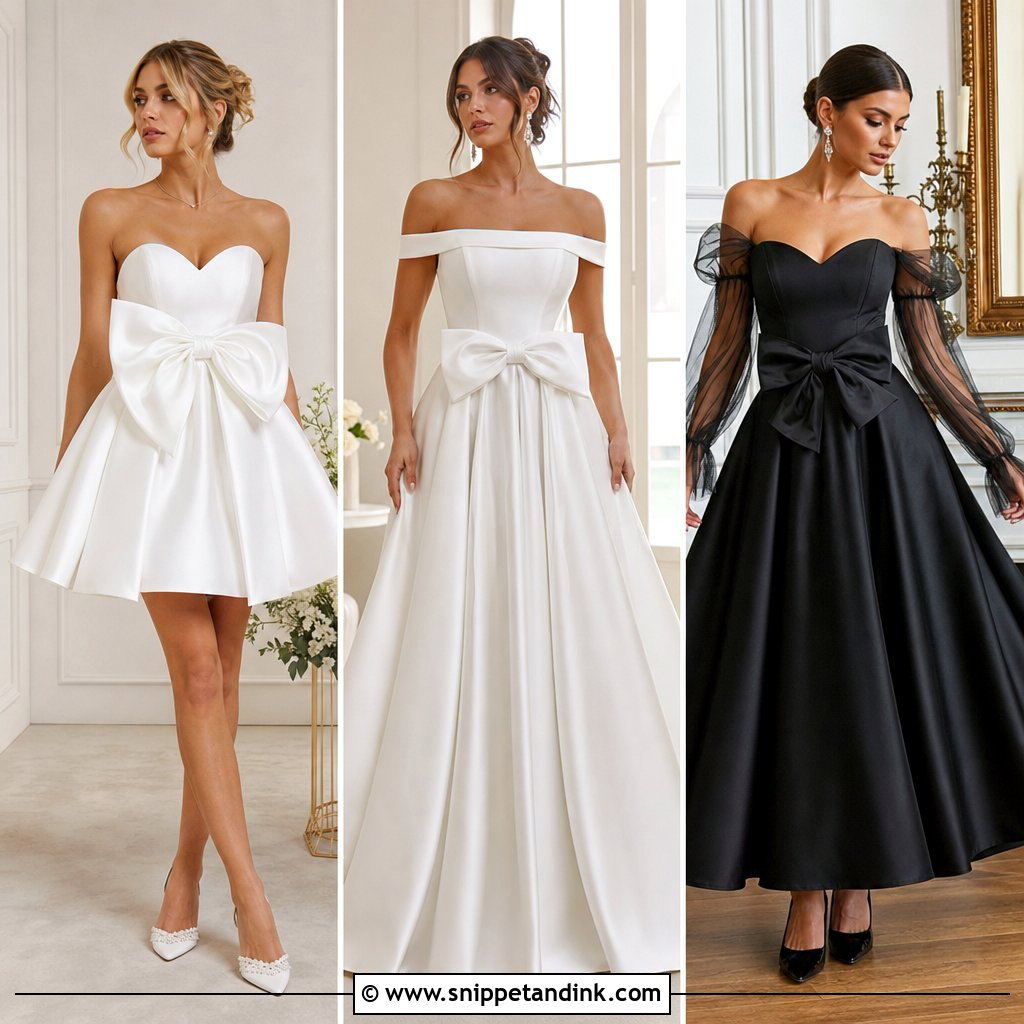
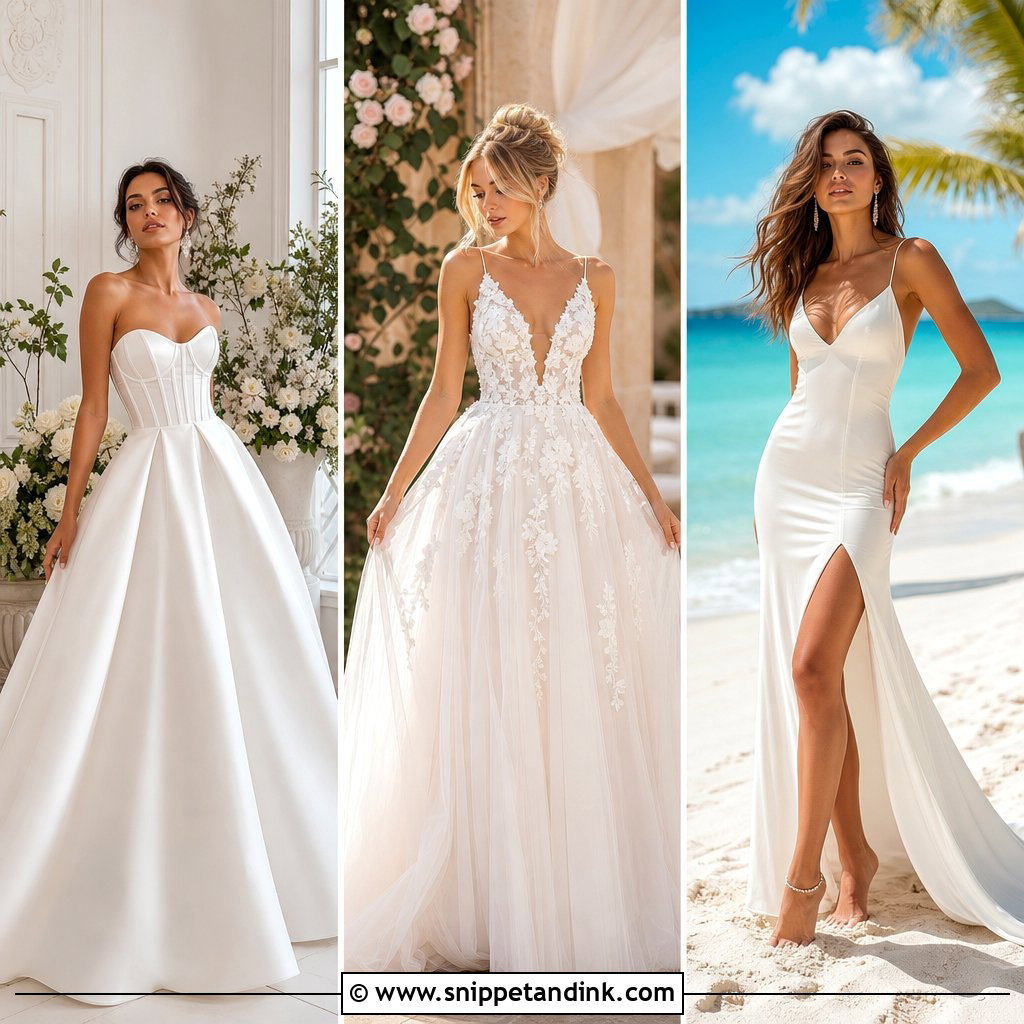
15. Puff Sleeve Organza January Wedding Dress
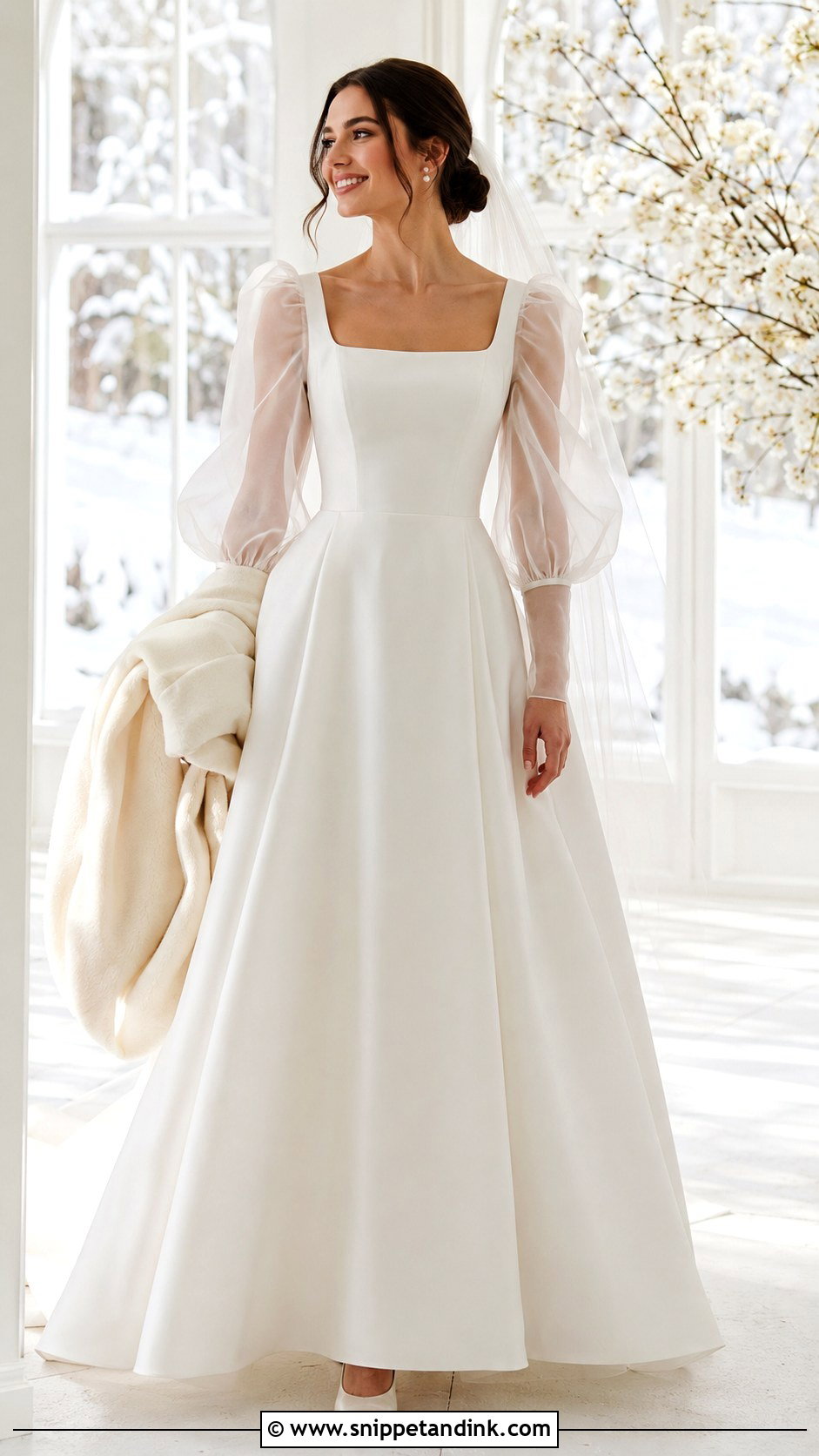
Puff sleeves in sheer organza look winter-appropriate but give almost no warmth, which brides don’t always realise. They’re about shape, not insulation. Choose a lined satin dress with a fitted waist, a square neck and removable organza sleeves gathered at shoulder and cuff, over a full A-line skirt. Pearl studs, satin heels and a veil that falls behind the sleeves suit it. Add an ivory wool cape for outdoor photos and keep time outside short. Organza holds its puff well but crushes if a coat goes over it, so a cape is kinder than sleeves on a jacket. Take the sleeves off later for a cleaner reception look.
16. Plus Size Empire Waist January Wedding Dress
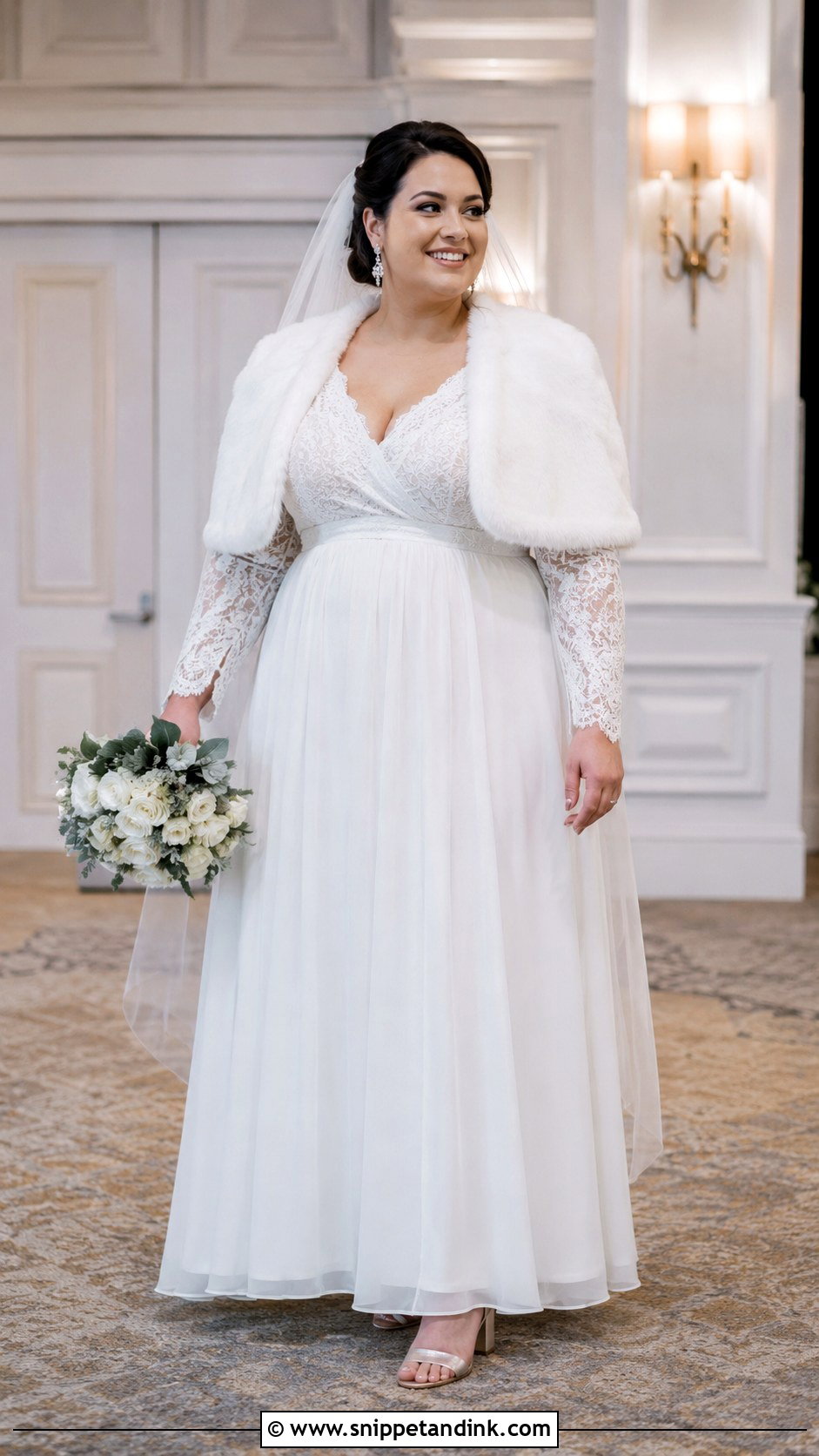
An empire waist gown moves the seam up under the bust, so the skirt falls freely and nothing digs in at the waist during a long dinner. For a plus-size winter bride, I’d look for a V-neck bodice with real built-in support, long lace sleeves and a flowing chiffon skirt over a substantial satin lining. The lining stops chiffon clinging and adds warmth. Stable block heels, drop earrings and a softly draped fingertip veil are comfortable all day. A structured faux-fur capelet covers the shoulders without adding width. Tailoring matters far more than the number on the label, so have the neckline, sleeves and hem fitted carefully.
17. Maternity January Wedding Dress With Long Sleeves
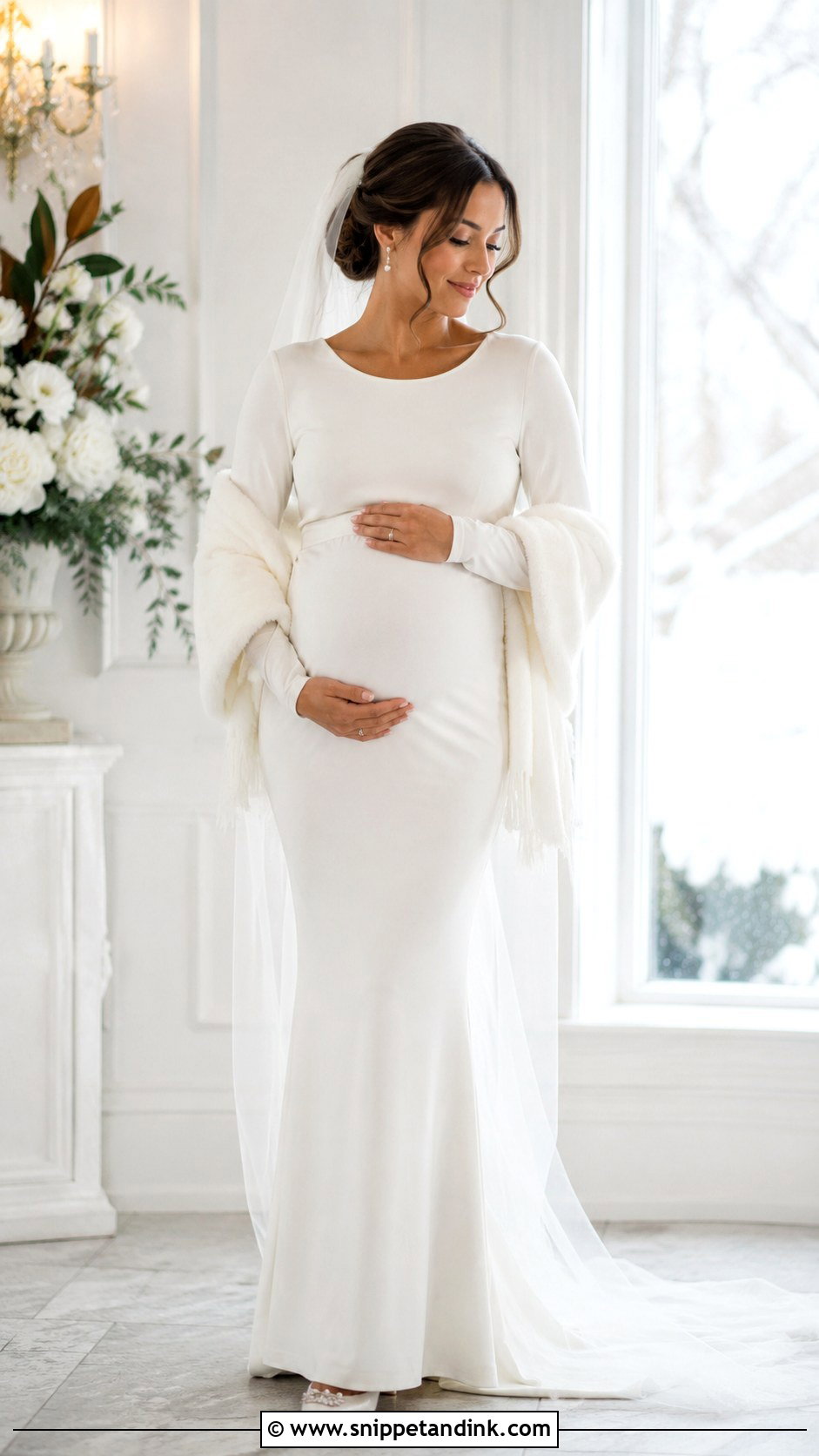
Maternity gowns need room to change, and the timing of the final fitting matters more than the dress itself. Choose a long-sleeve empire-waist dress in stretch crepe, lined lace or soft jersey, with a V neck and an A-line skirt that leaves space through the waist and hips. Low block heels or embellished flats keep you steady, with pearl earrings and a light veil. A soft wrap that rests on the shoulders rather than fastening across the bump is more comfortable. Book the last fitting as close to the date as your seamstress allows, ideally within a week or two, because measurements can shift quickly.
18. Courthouse Midi Wedding Dress With White Coat
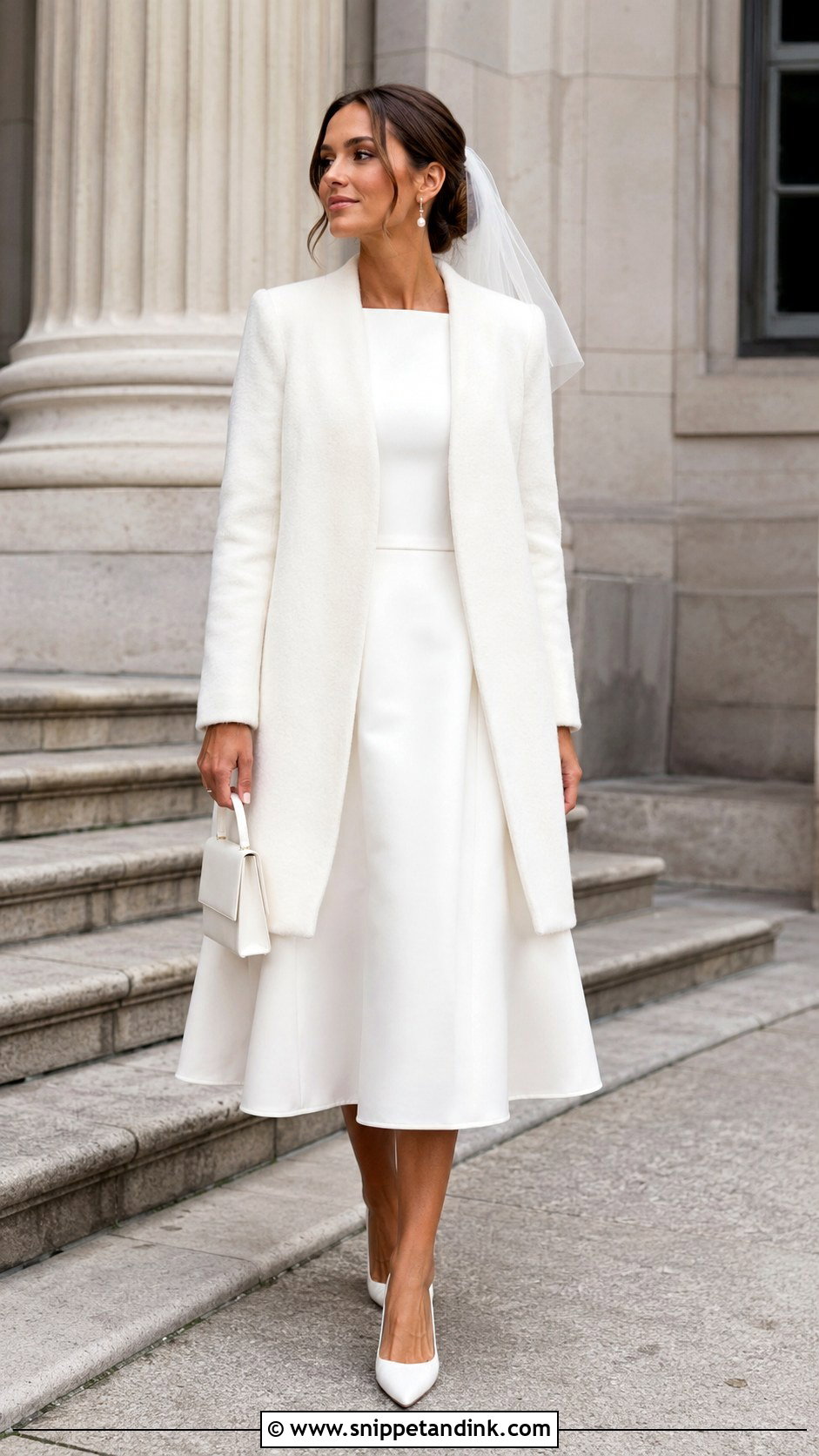
A courthouse wedding in January is mostly about the coat, because that’s what you’ll be wearing in half the photos. Go for a long-sleeve ivory midi with a bateau neck and a softly flared skirt, then a knee-length white wool coat cut neatly enough to look planned. Pointed slingbacks, pearl earrings and a small top-handle bag suit a city setting, with a short veil or padded headband. Ice and wet pavements are real hazards, so wear boots outside and change into heels indoors; a tote with a dry towel helps. It moves easily from the ceremony to lunch or dinner.
19. Boho Lace Wedding Dress With Shearling Jacket
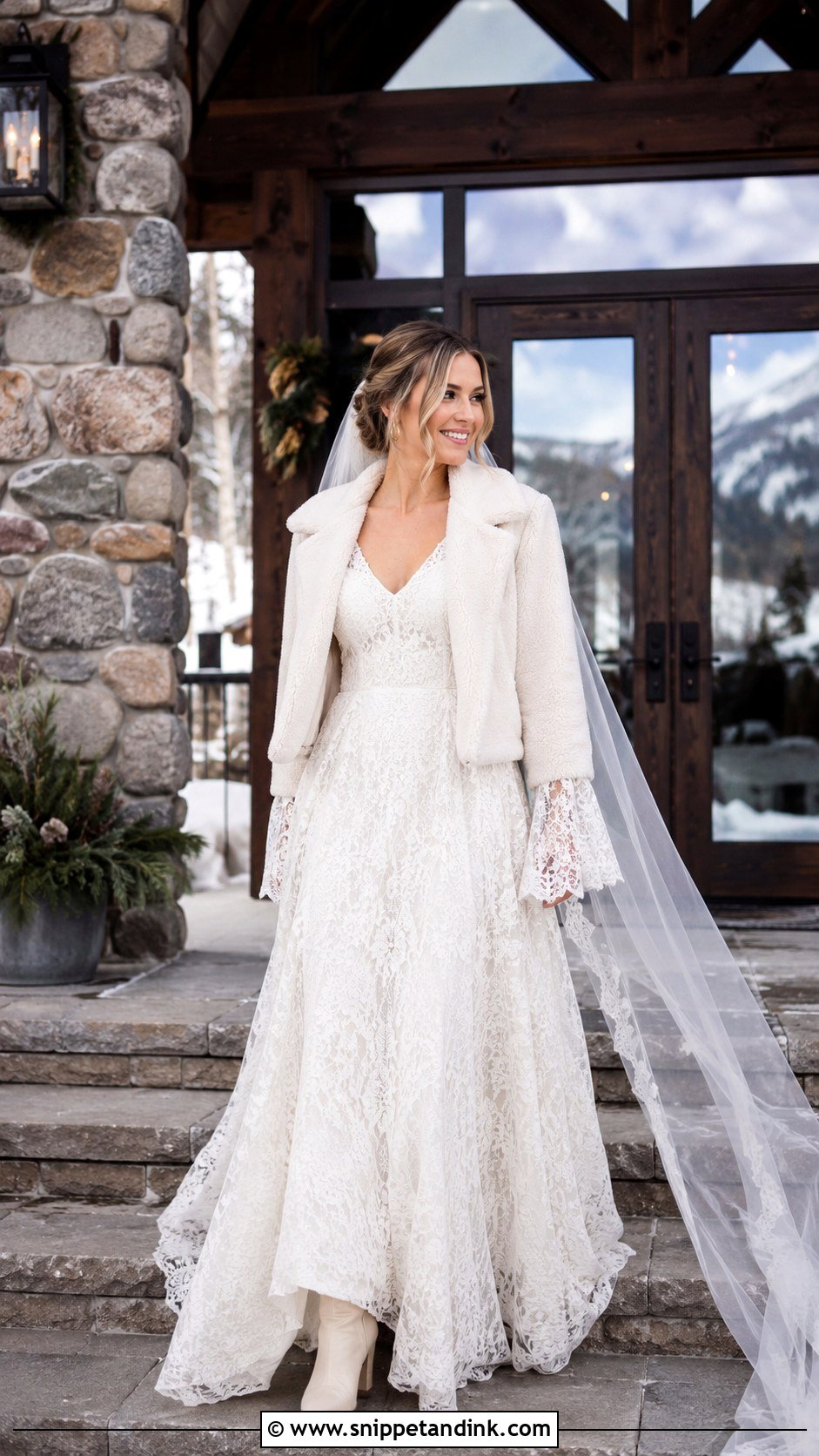
Boho in winter needs warmth without losing its ease. A lined lace gown with long bell sleeves, a fitted bodice and an easy A-line is the base, with a cropped ivory shearling jacket for outdoor photos and travel. The bell sleeves need to fit inside the jacket, so try them together, since wide sleeves bunch badly under a fitted jacket. Cream ankle boots, small gold earrings and a loose braided updo with delicate pins complete it. Skip fringe and oversized jewellery that fight the lace. A chapel veil adds formality and comes off before the jacket goes on. It’s at home in a lodge or rustic barn.
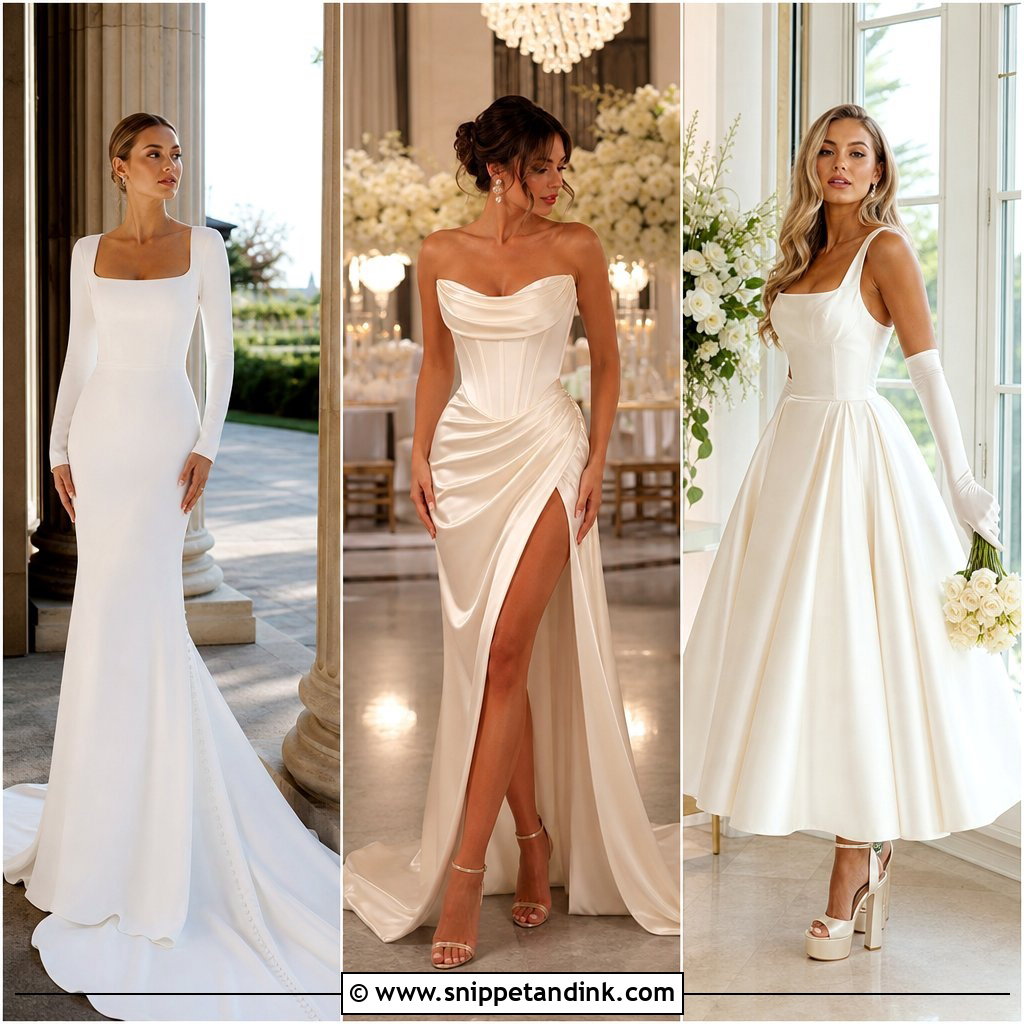
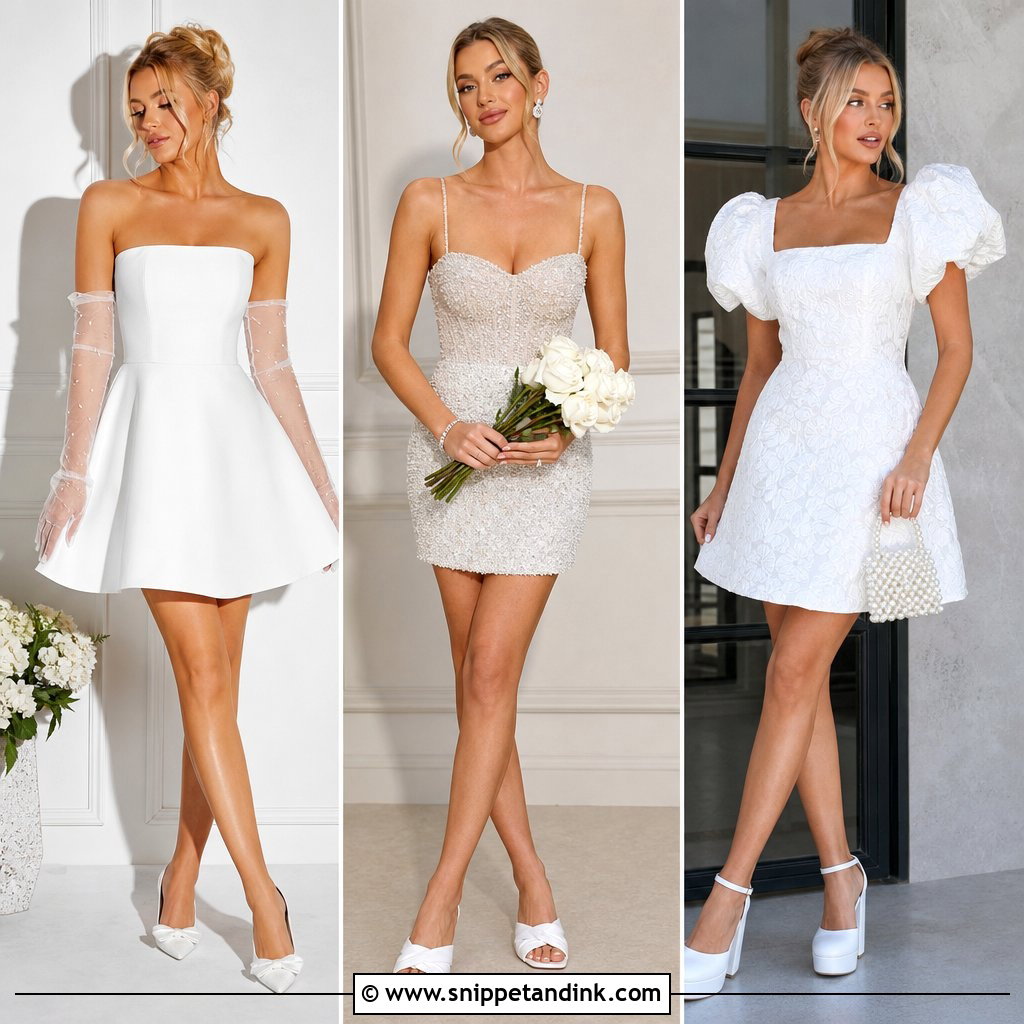
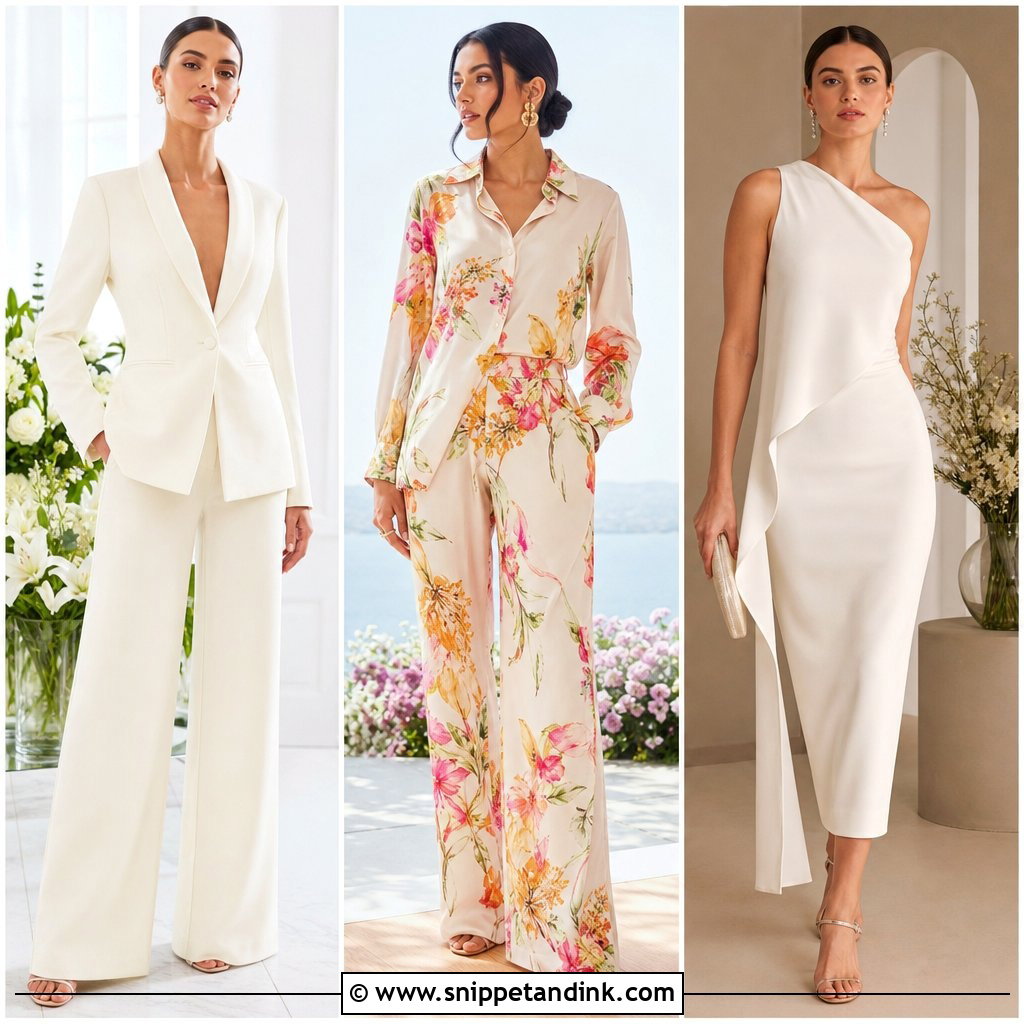
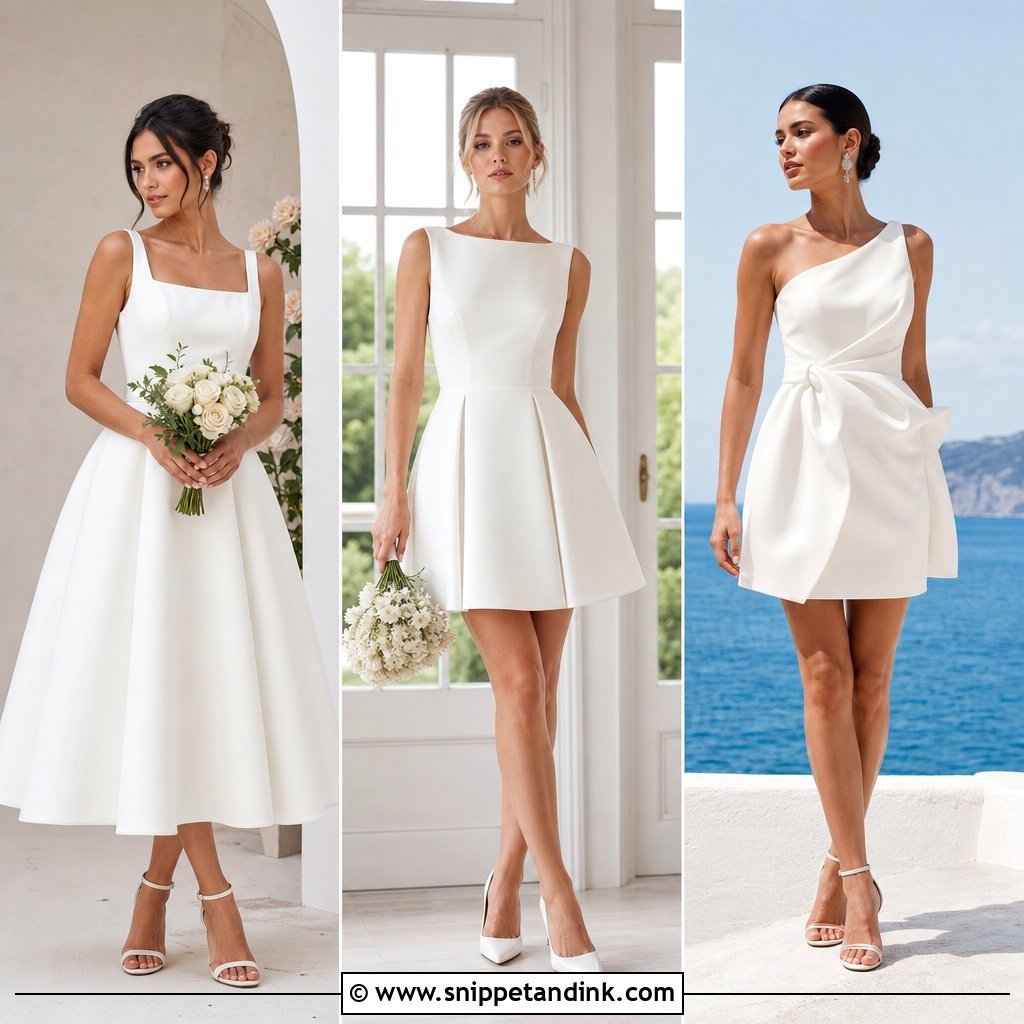
20. Mermaid January Wedding Dress With Detachable Sleeves
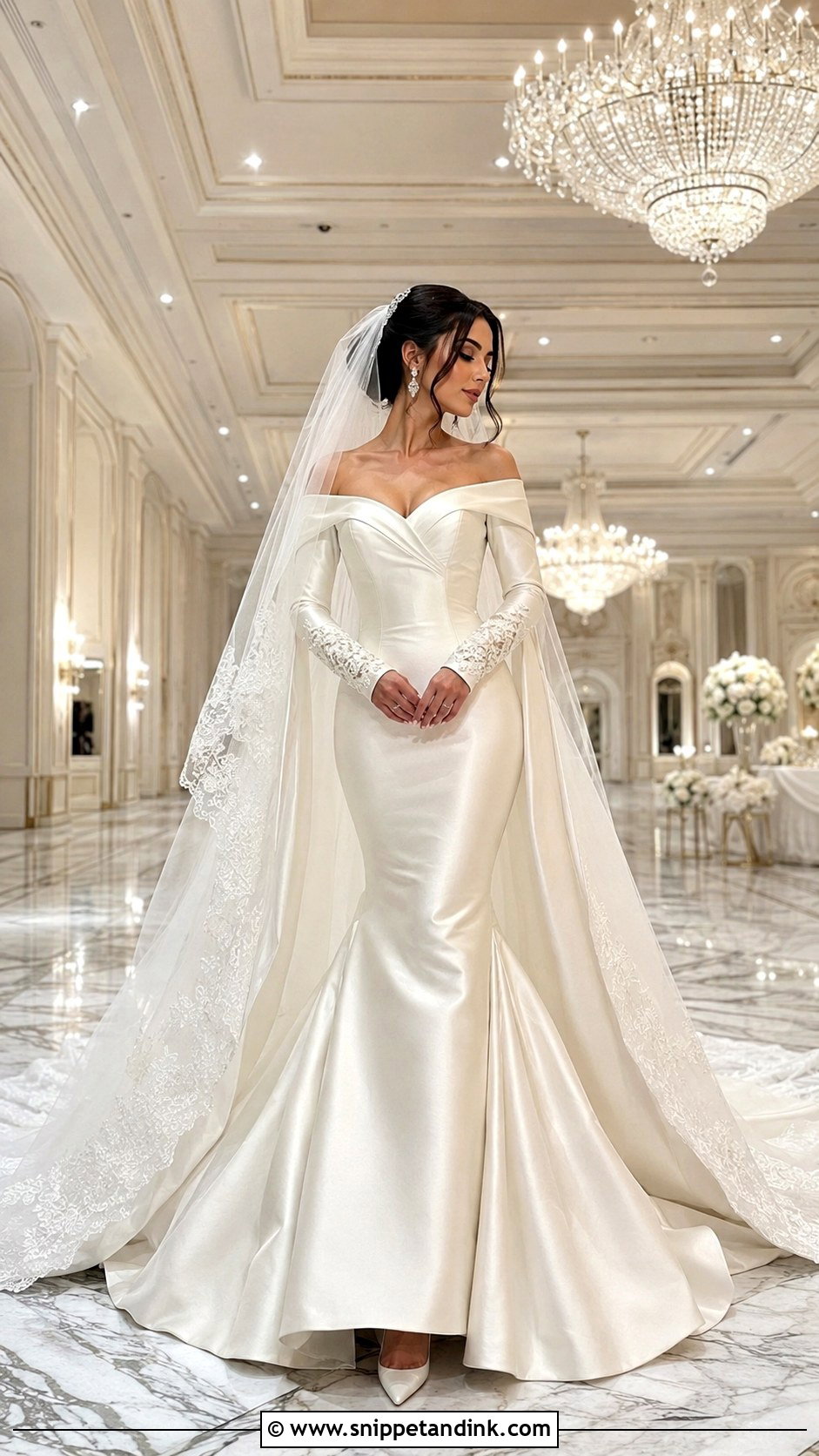
Mermaids are the most dramatic shape in this list and also the least forgiving to move in. Choose structured satin or lined crepe with a supportive bodice and a skirt that flares near the knee. Detachable long sleeves give ceremony coverage and leave a strapless or off-shoulder look for later. A cathedral veil, crystal drop earrings and pointed ivory pumps finish it, and a sweeping cape keeps you warm without bulking the fitted shape. At every fitting, sit, walk and climb stairs, because the knee is where mermaids grip. In a cold venue, a fitted gown also leaves no room for hidden thermal layers, so plan on a warmer outer layer. It shines in a ballroom or grand hotel.
Snow, Salt and Static: Small January Problems to Plan Around
Winter adds a few practical issues that summer brides never meet. None of them are serious if you know about them ahead of time.
Wet hems and salted paths
Road salt and slush leave a white or grey tidemark on a hem. Ask the venue to clear and sweep the path you’ll use, have someone carry your train outdoors, and keep a damp white cloth handy to dab marks before they dry. Point out any salt marks to your cleaner afterwards, as they need different treatment from ordinary dirt.
Static cling indoors
Heated rooms are dry, and dry air makes tulle, chiffon and lining cling to tights and to each other. A light mist of anti-static spray on the inside of the skirt, tested first on a hidden seam, usually sorts it out.
Short daylight and holiday closures
January days are short, so plan outdoor portraits for early afternoon rather than after the ceremony if you want natural light. And remember that many bridal shops and alteration studios close or slow down over the Christmas holidays. I ask winter brides to have the final fitting done before mid-December so nothing is left waiting while the shop is shut.
Dress for the Walk Between Doors
A January wedding dress has to do two jobs: look right indoors and keep you going through the cold bits in between. Satin, Mikado, velvet, crepe and lined lace give you structure, while long sleeves and full skirts add coverage. Capes, gloves, coats, faux fur and overskirts let you adjust as you move between rooms and outdoor photos. Think about the venue, the weather and how much walking you’ll do before committing. Then put your effort into alterations and shoes you can stand in all day. A well-fitted gown with the right outer layer will see you from the first photo to the last dance.
You'll Like These Ideas:


Leave a Reply