
A bow is one of the oldest tricks in dressmaking, and right now it is everywhere in bridal. I like it because one detail can change a gown completely depending on three things: size, fabric and placement. A small crepe bow on a strap reads modern. A huge mikado bow at the small of the back reads couture. A bow at the waist simply gives the eye somewhere to land. Below are 25 dresses that use bows in different ways, with notes from the fitting room on what each one asks of the fabric, your proportions and your day.
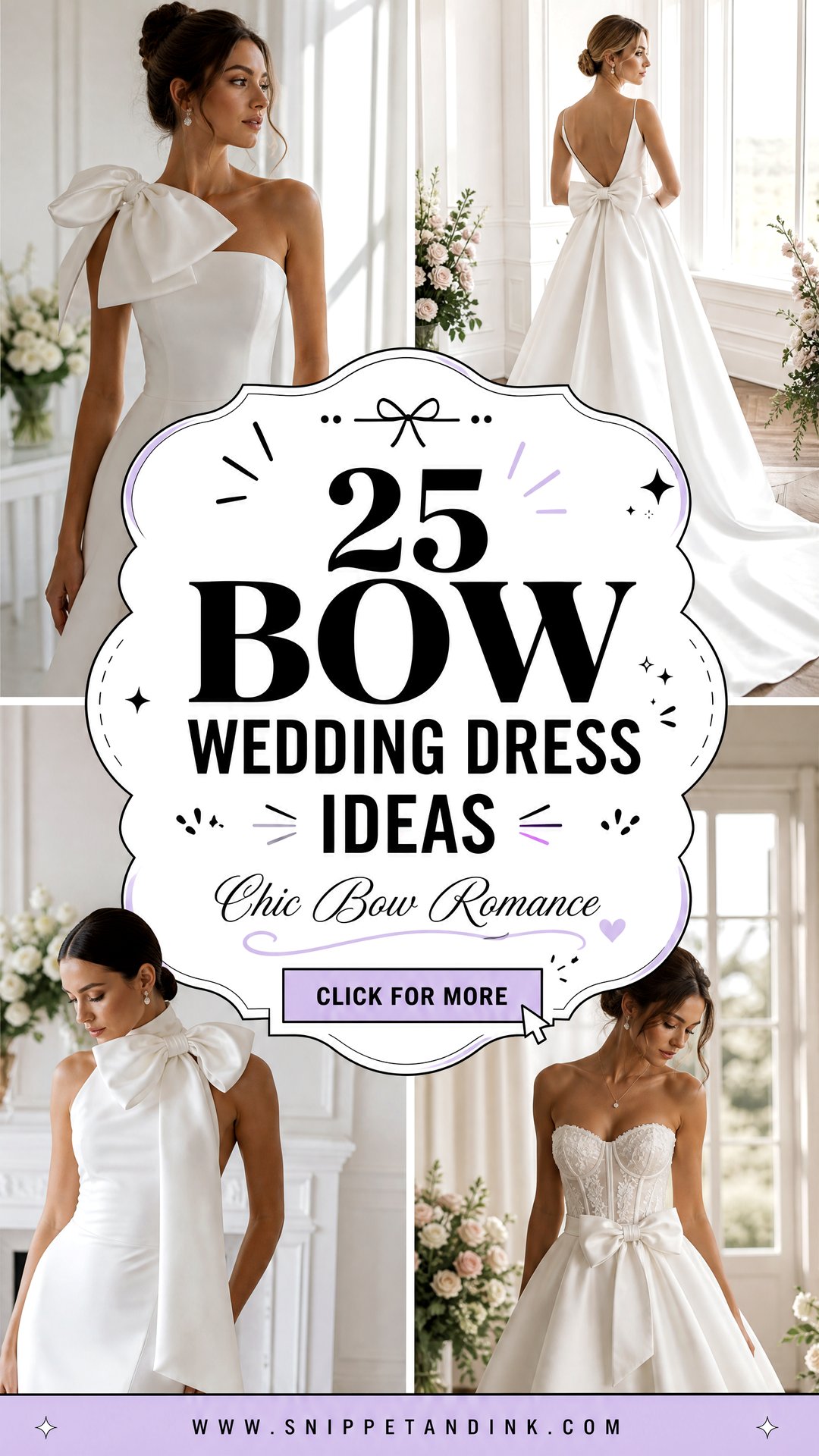
Where a Bow Sits Changes Your Proportions
A bow adds volume wherever it lands, and that changes how your body reads in photos. Before choosing a dress from the list below, think about where you want that extra width.
- At the shoulder: widens the shoulder line. Good for balancing fuller hips, less flattering if you already have broad shoulders.
- At the waist: narrows the middle by contrast. On a short torso, keep it small so it does not crowd the space between bust and hips.
- At the lower back: adds shape behind you and is the bow guests see during the vows. It also takes the brunt of every chair.
- At the hip: creates an asymmetric line that suits slim columns, but it can feel bulky under a bouquet held low.
Height matters too. On a petite bride, an oversized bow can overwhelm the whole dress. I usually pin a paper or muslin mock-up in two sizes at the first fitting so you can see the scale in a mirror before anything is cut.
1. Oversized Back Bow Wedding Dress
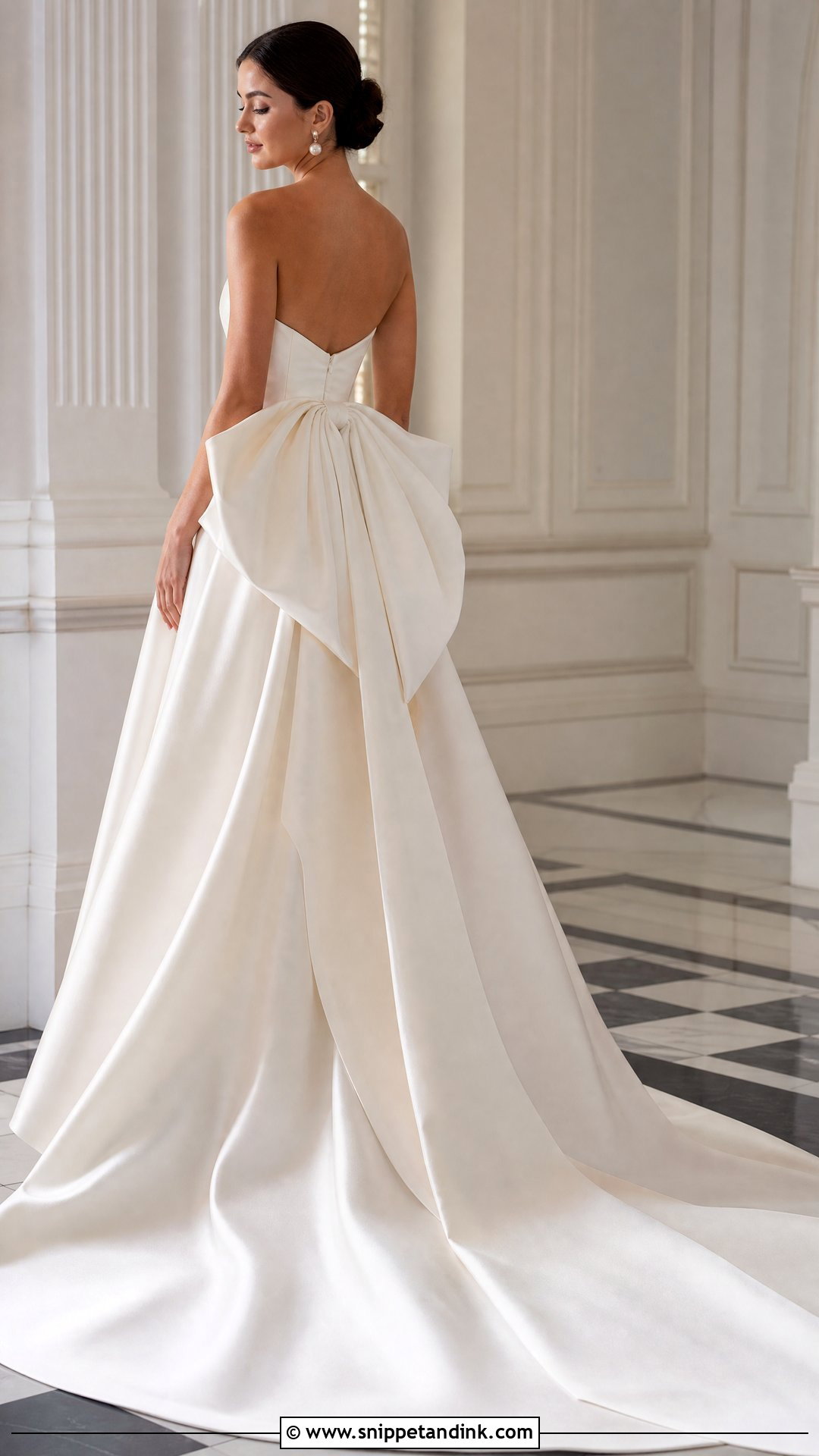
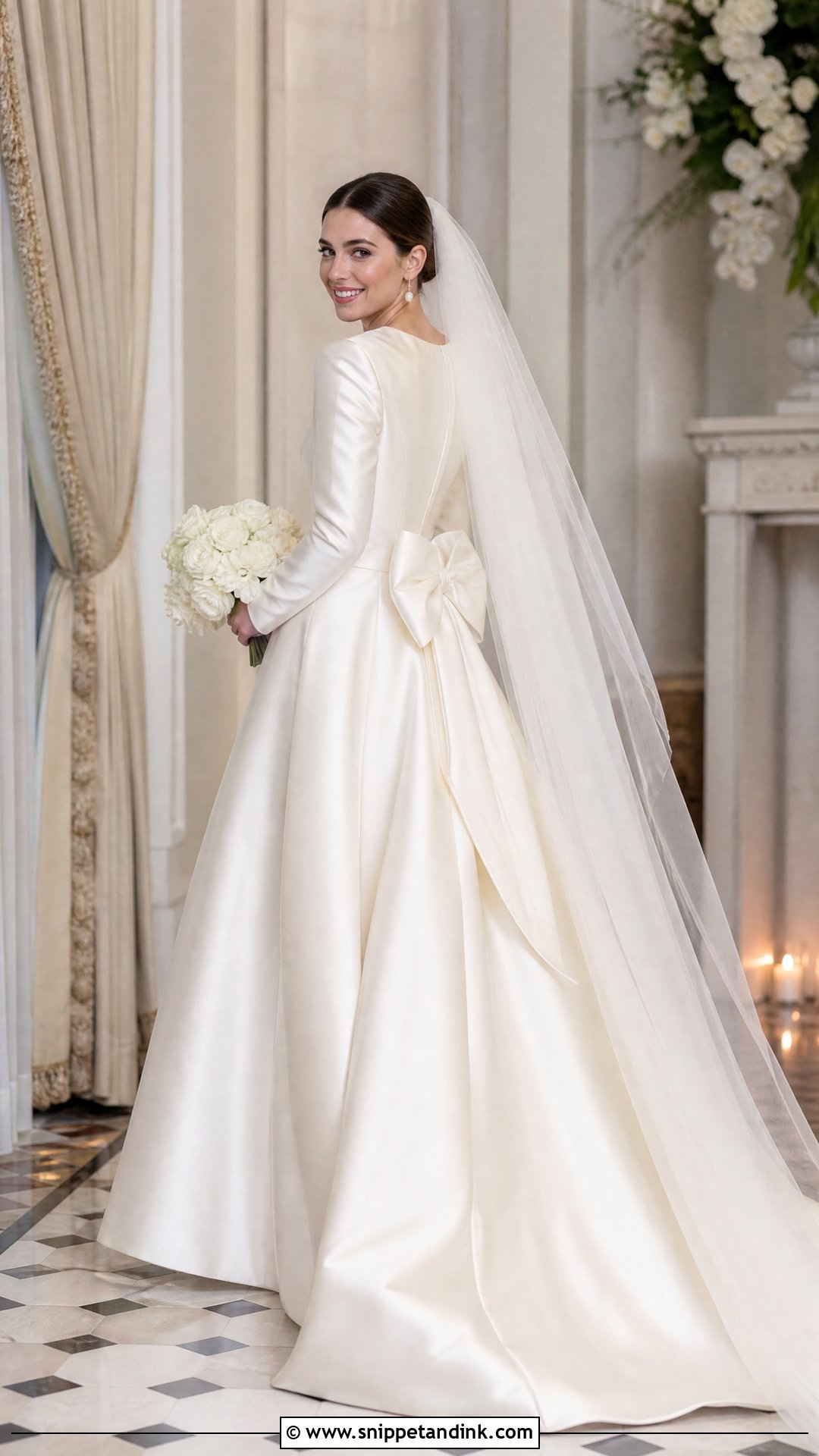
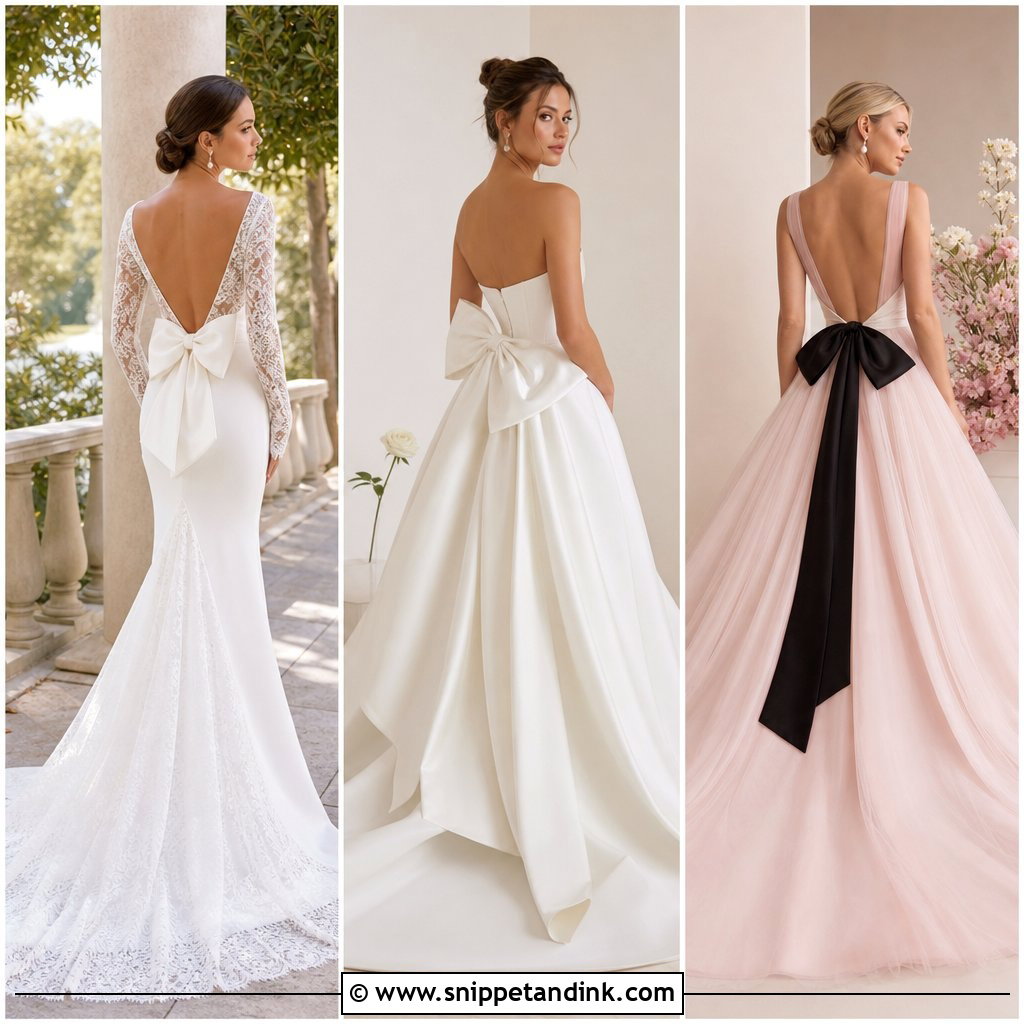
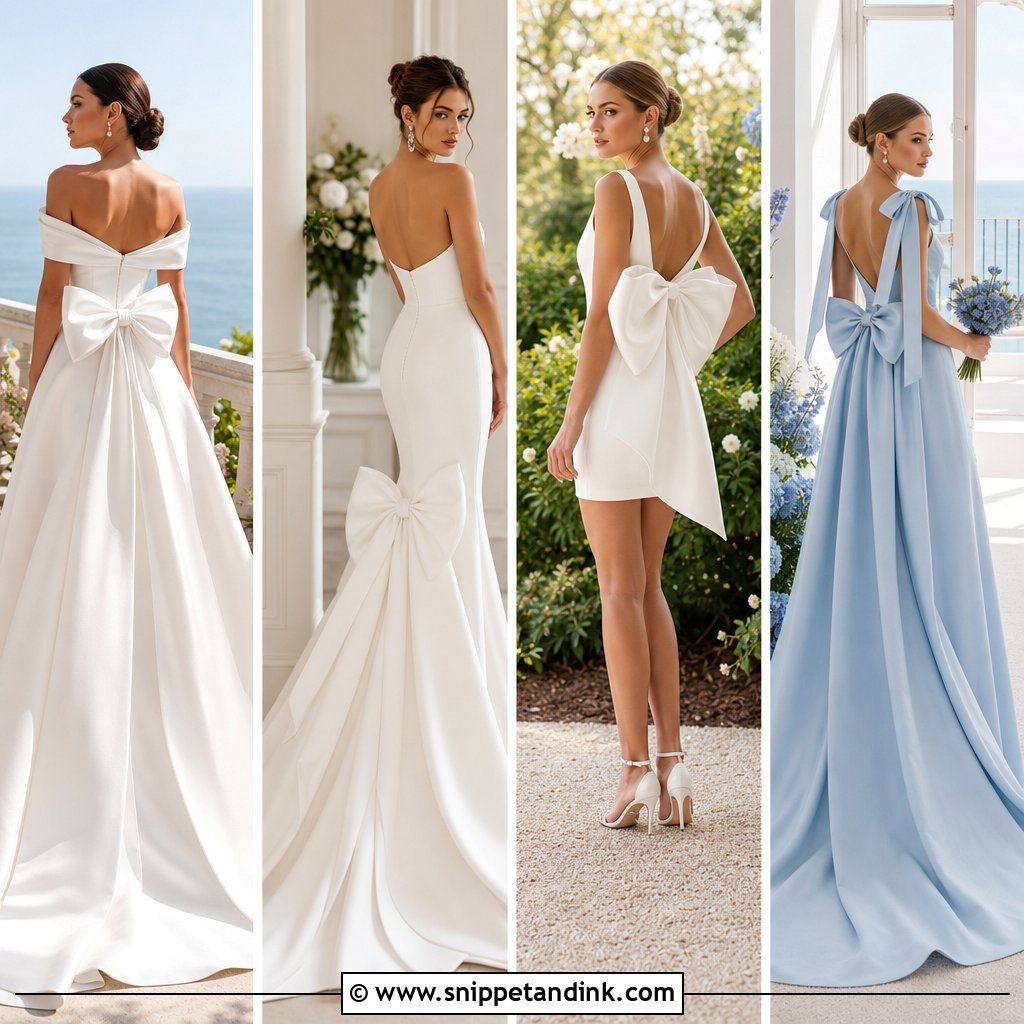
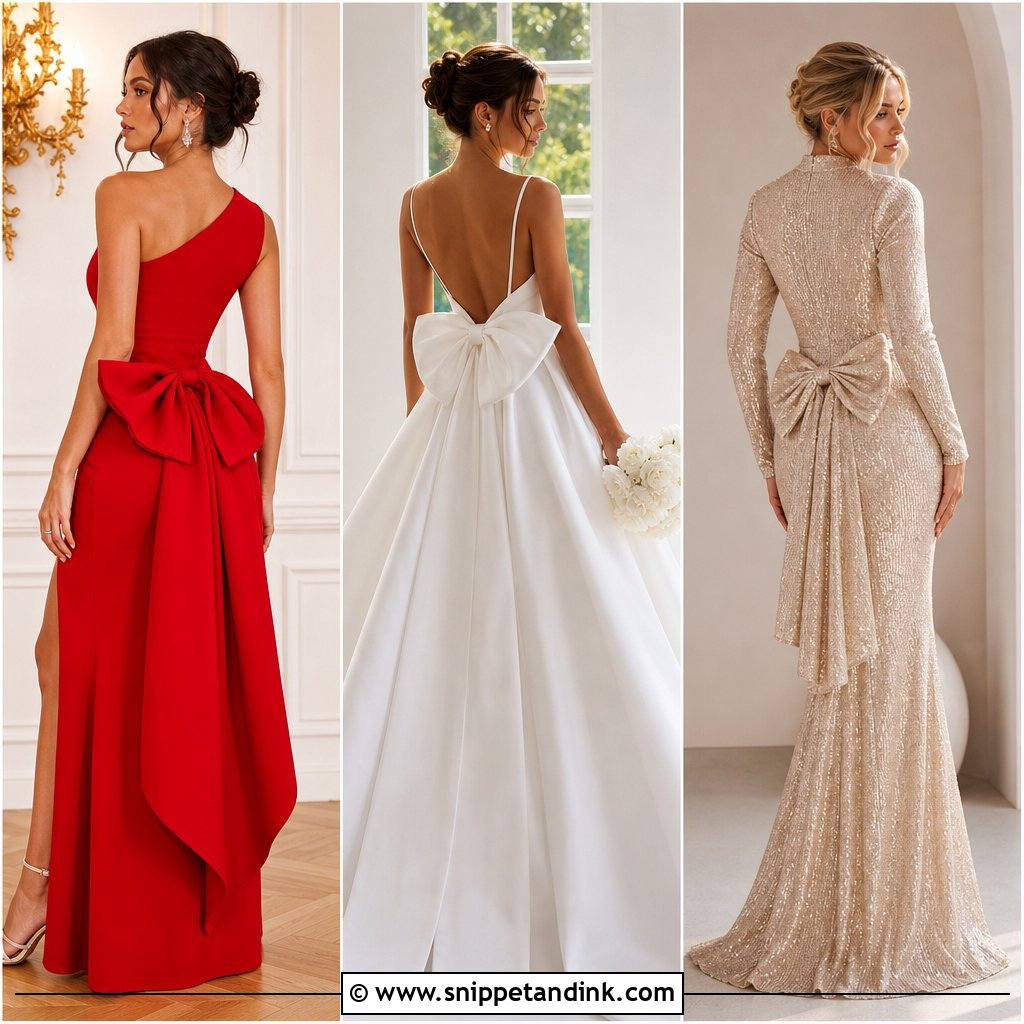
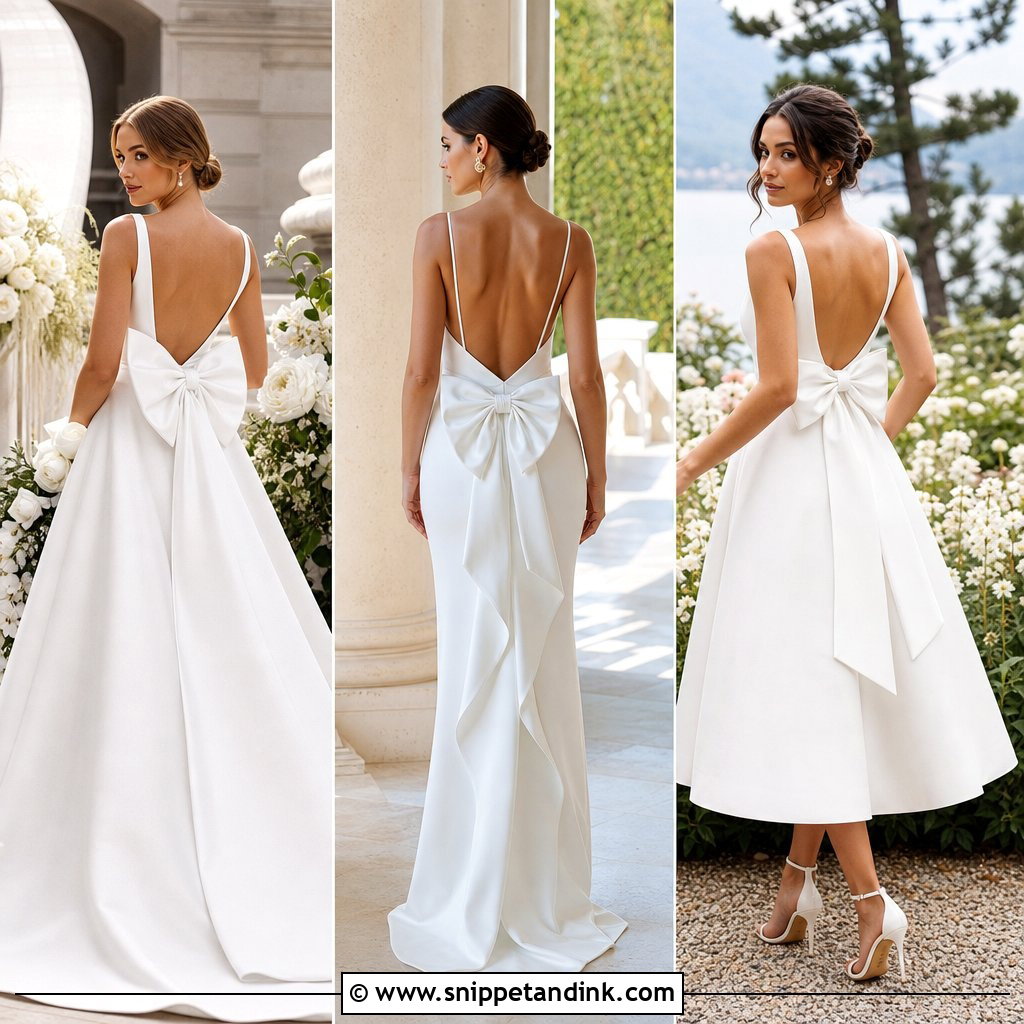
An oversized back bow wedding dress keeps the front plain and puts all the drama behind you, which is exactly where guests are looking during the ceremony. It needs a stiff fabric to hold up: mikado, duchess satin or a satin backed with interfacing. Soft bows of this size collapse within an hour. I keep the neckline clean and the jewelry to pearl studs so nothing competes. Expect to perch forward on chairs, because sitting back flattens the loops.
2. Satin Bow Wedding Dress
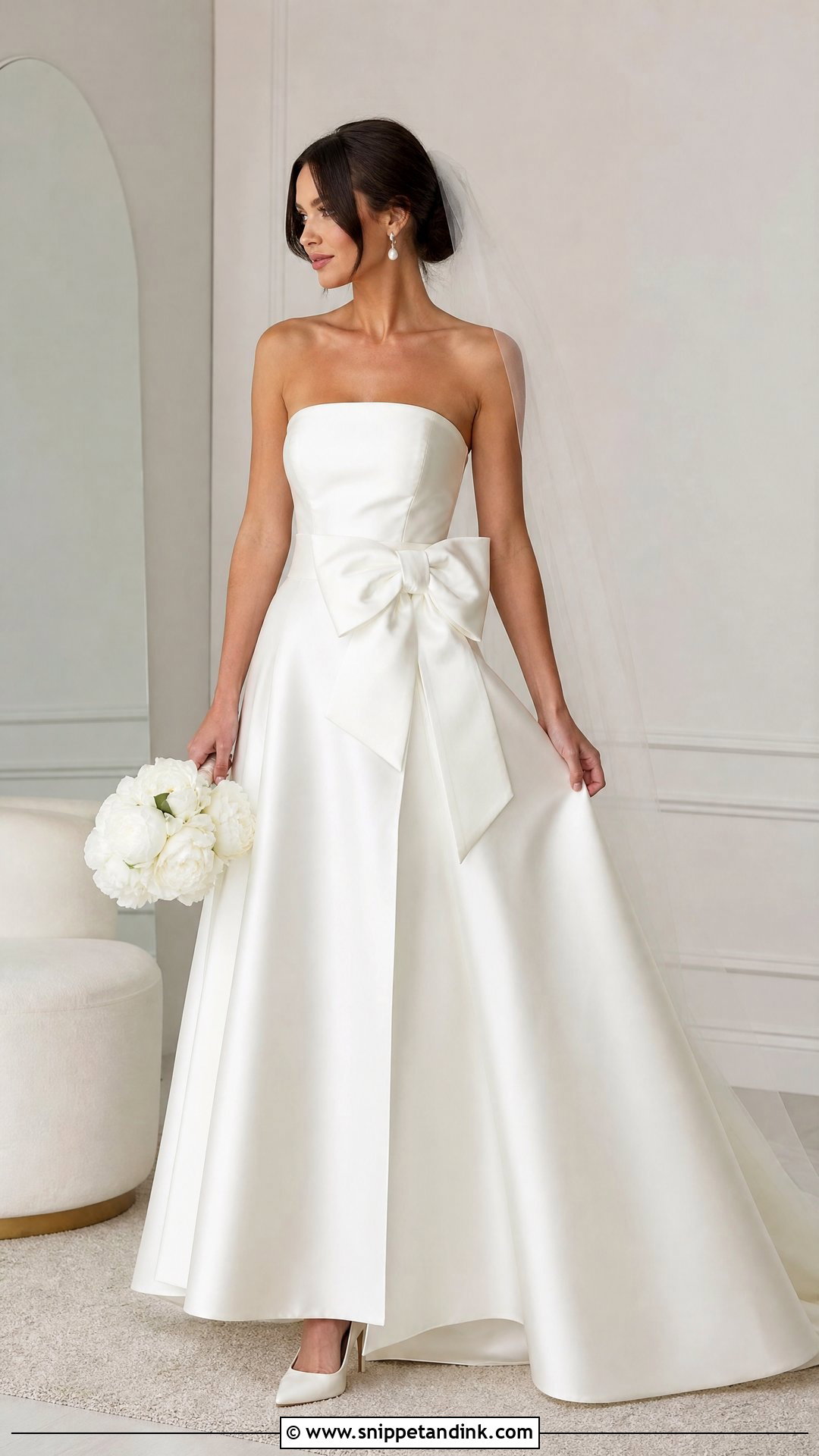
Satin has a natural sheen that makes even a modest bow look sculpted. Strapless, square and off-shoulder bodices all work, with the bow at the waist, hip or back. The downside is that satin shows every crease, and a bow is folded fabric by definition, so ask the shop whether the bow has an inner layer to keep its loops round. Ivory pumps, a low bun and a classic veil keep the look tidy for a hotel or formal garden wedding.
3. Minimalist Bow Wedding Dress
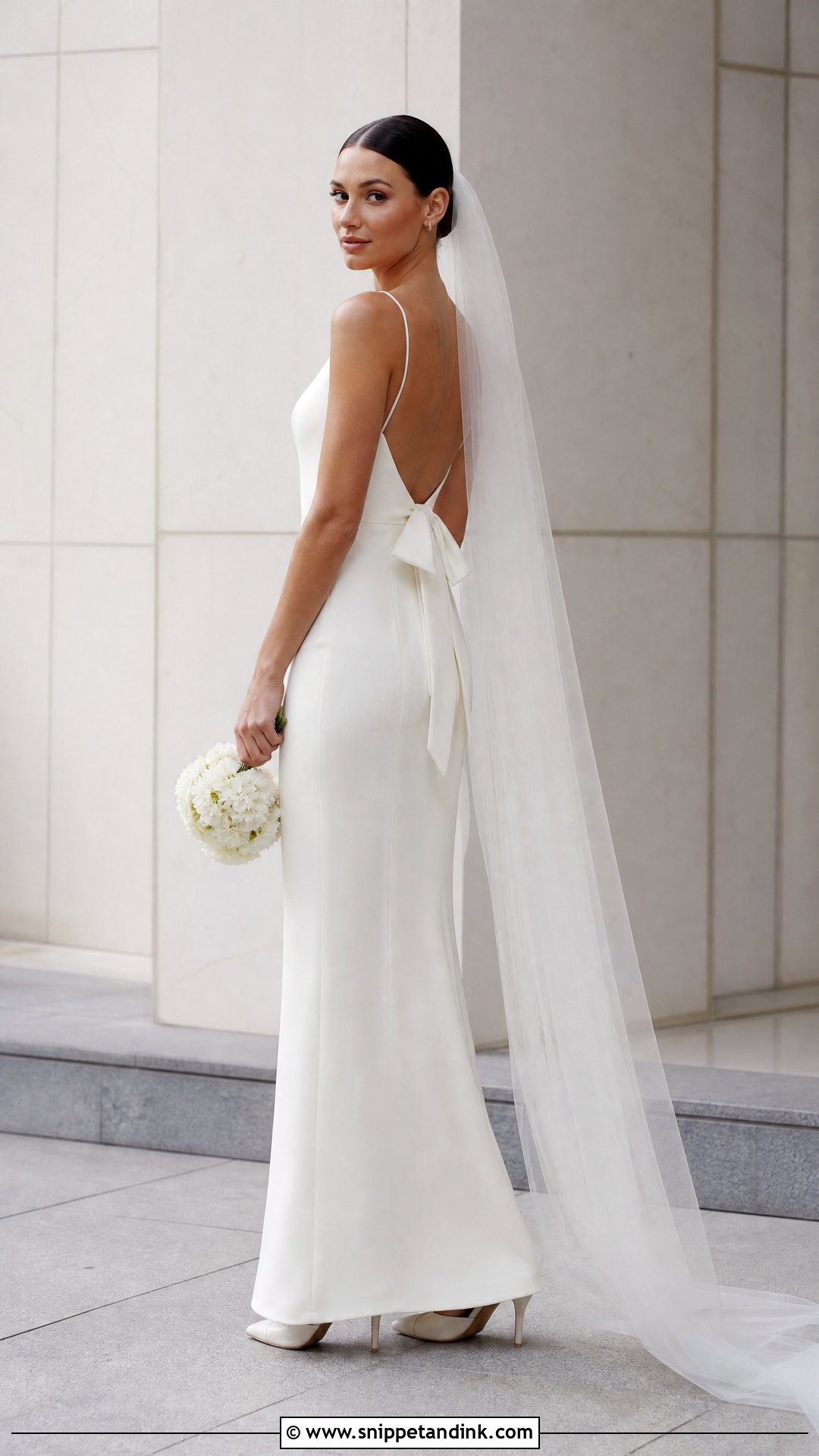
A minimalist gown lives or dies on its cut, and one bow is the only flourish. A crepe or silk column with a small shoulder, waist or back bow is about as clean as bridal gets. Because there is nowhere for poor tailoring to hide, I’d spend the budget on fit rather than fabric extras. Sleek heels, a plain veil and small studs suit city weddings and modern venues.
4. Tulle Bow Wedding Dress
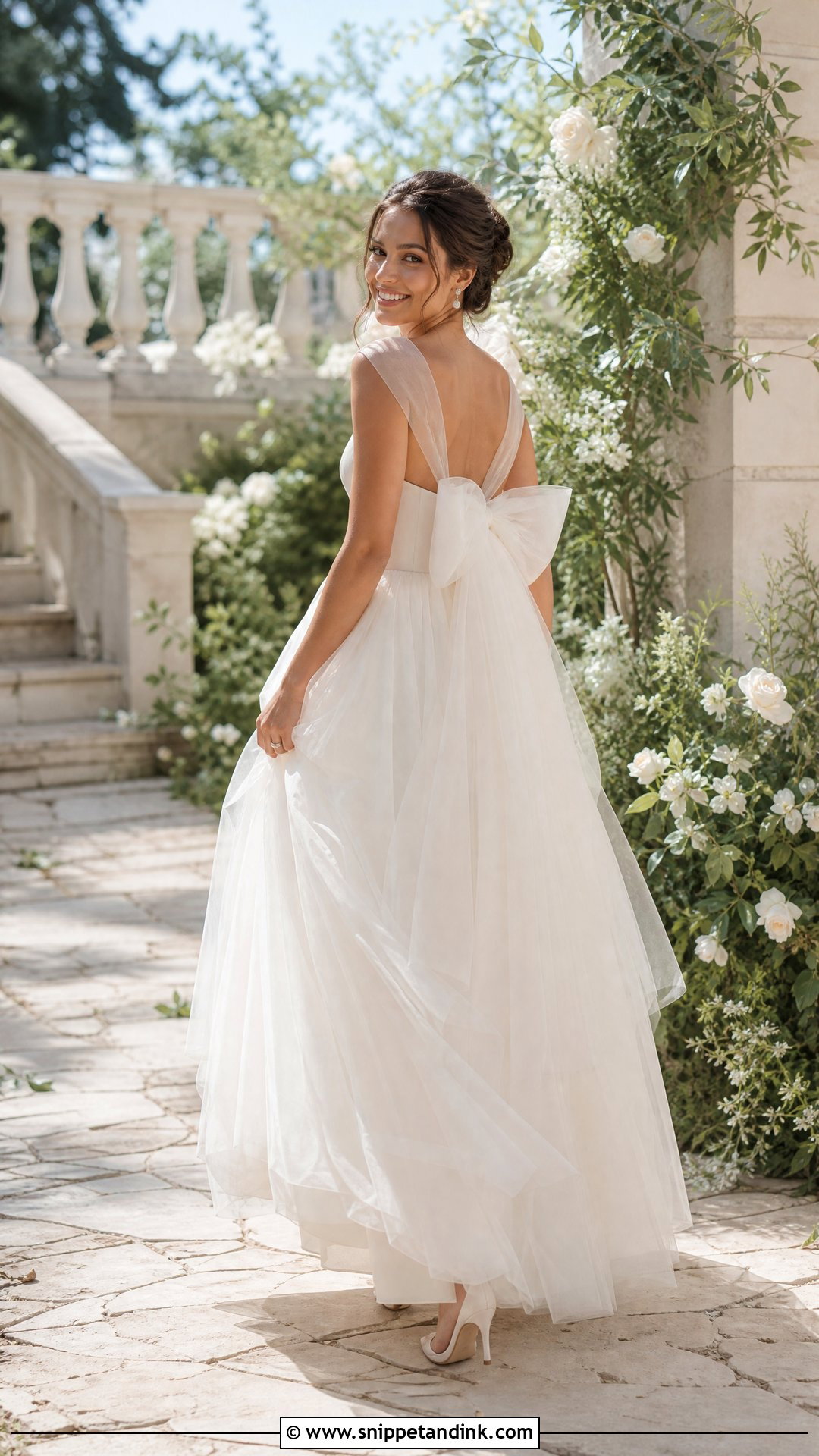
Tulle bows are light, so they give volume without bulk. A fitted bodice over a layered tulle skirt with a bow at the waist or back feels soft and romantic. Sheer tulle bows look subtle; structured ones are usually built from many layers stitched together. Tulle crushes in a car, so the bow should be fluffed by hand and lightly steamed after you arrive. Soft waves and a plain veil suit garden and outdoor ceremonies.
5. Strapless Bow Wedding Dress
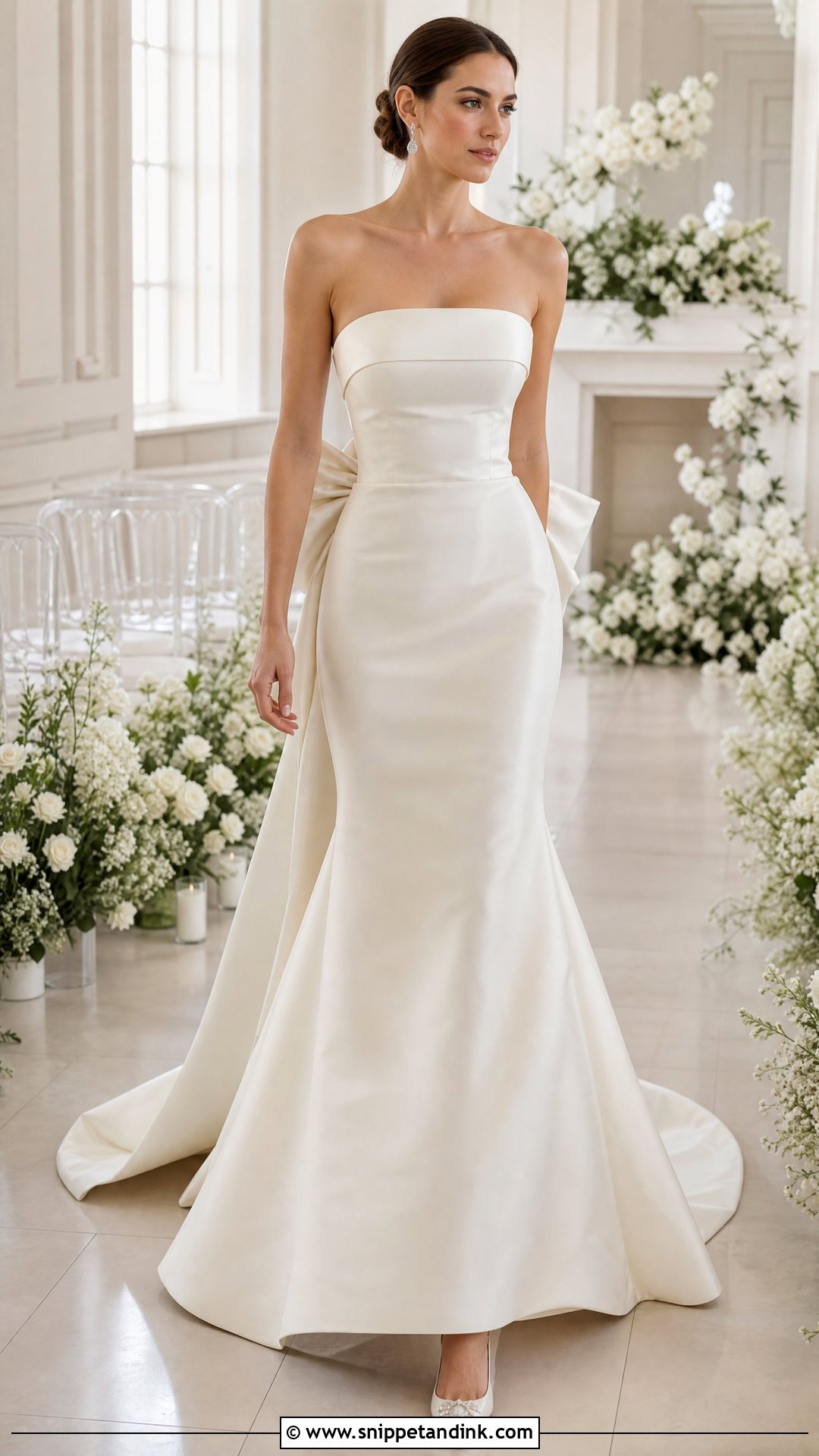
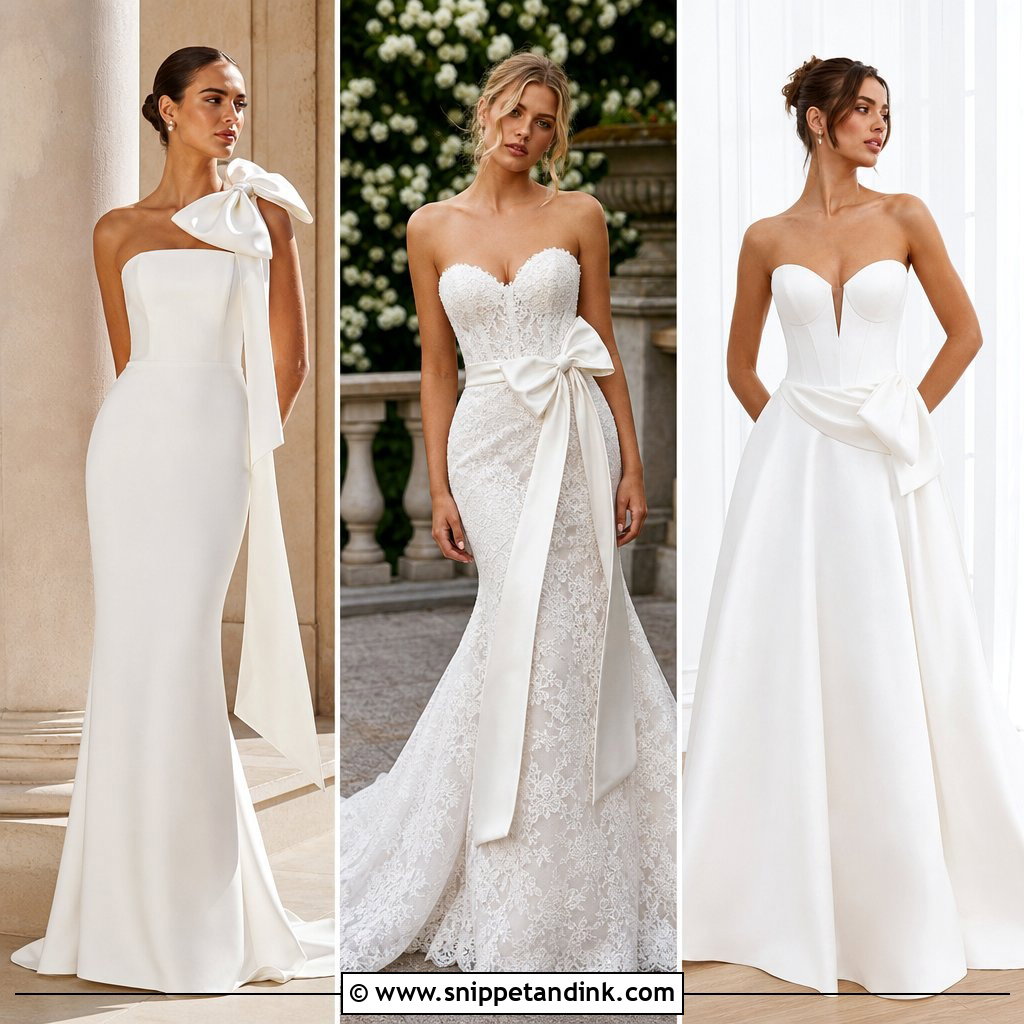
Strapless gowns with bows are a classic shape with one feminine twist. The bow might sit across the neckline, at the waist or at the back. A neckline bow is the trickiest, since anything pinned near the bust can shift when you breathe and move, so I check it with the bride lifting her arms. Keep jewelry very spare if the bow is up top. A full skirt, A-line or mermaid all pair well with it.
6. Off Shoulder Bow Wedding Dress
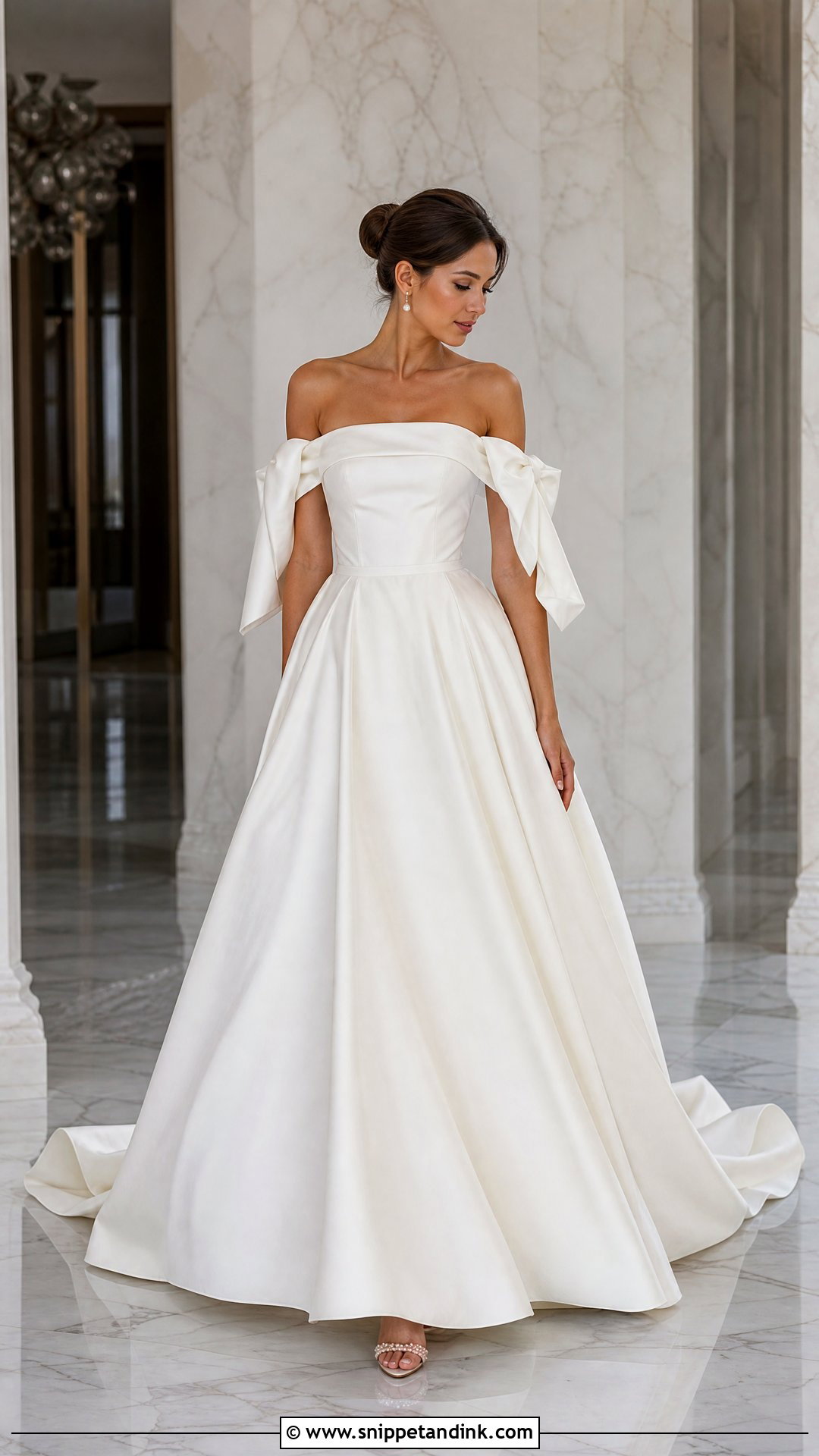
Off-shoulder necklines with bows feel romantic without being too sweet. Bows can sit at the sleeve, on the shoulder or at the back. Satin, crepe and organza hold the shape better than chiffon here. My practical note: a bow on an off-shoulder sleeve adds weight to the part that already wants to slip, so grip tape inside the neckline is almost always needed. Pair it with a low chignon and pearl earrings.
7. One Shoulder Bow Wedding Dress
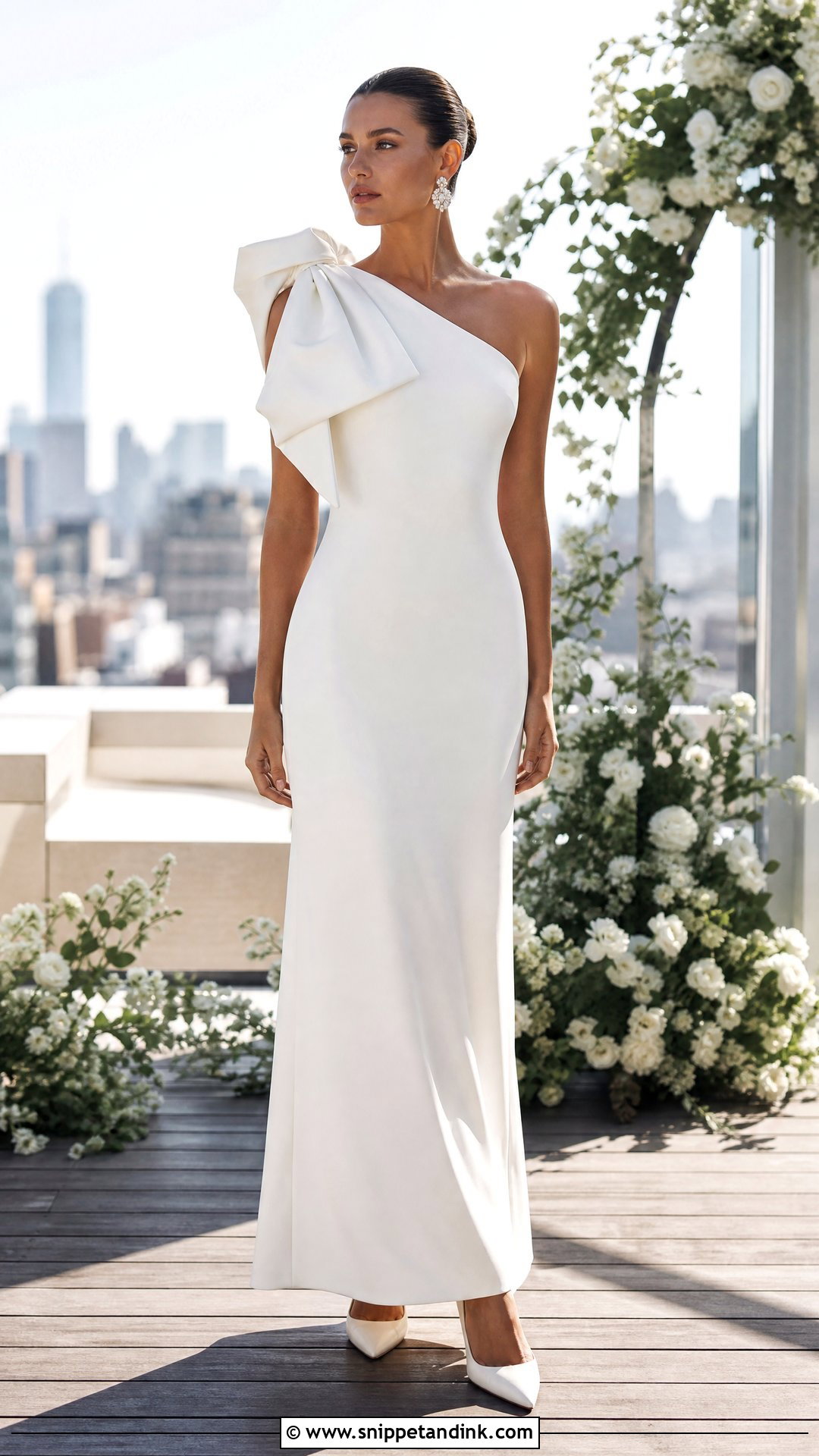
One-shoulder gowns put the bow right at the neckline, which pulls the eye up and creates a sharp, asymmetric line. The rest of the dress should be plain: a crepe column, a satin sheath or a gentle A-line. I skip the necklace and keep earrings on the bare side only, so the two details do not crowd each other. It suits rooftops and contemporary venues best.
8. Bow Shoulder Wedding Dress
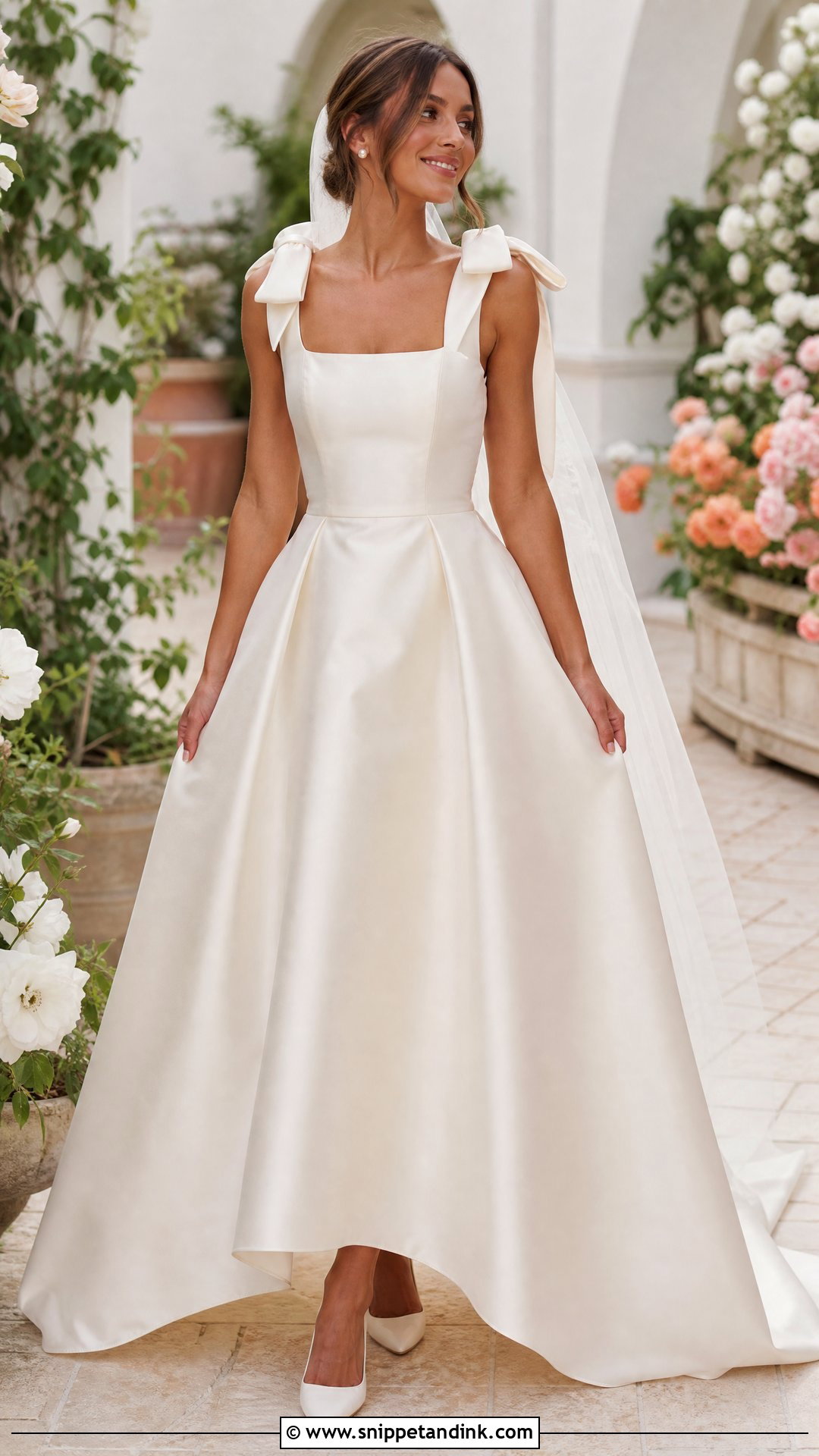
Bows on the straps can be small and delicate on thin straps or broad and sculptural on wider ones. Both lift the eye toward the face while leaving the waist and skirt clean. Organza and tulle make them soft; satin makes them crisp. A strap bow needs a few hidden stitches to stop it twisting forward when you hug people, which is worth asking your seamstress about. Dainty earrings and a soft veil are enough here.
9. Bow Waist Wedding Dress
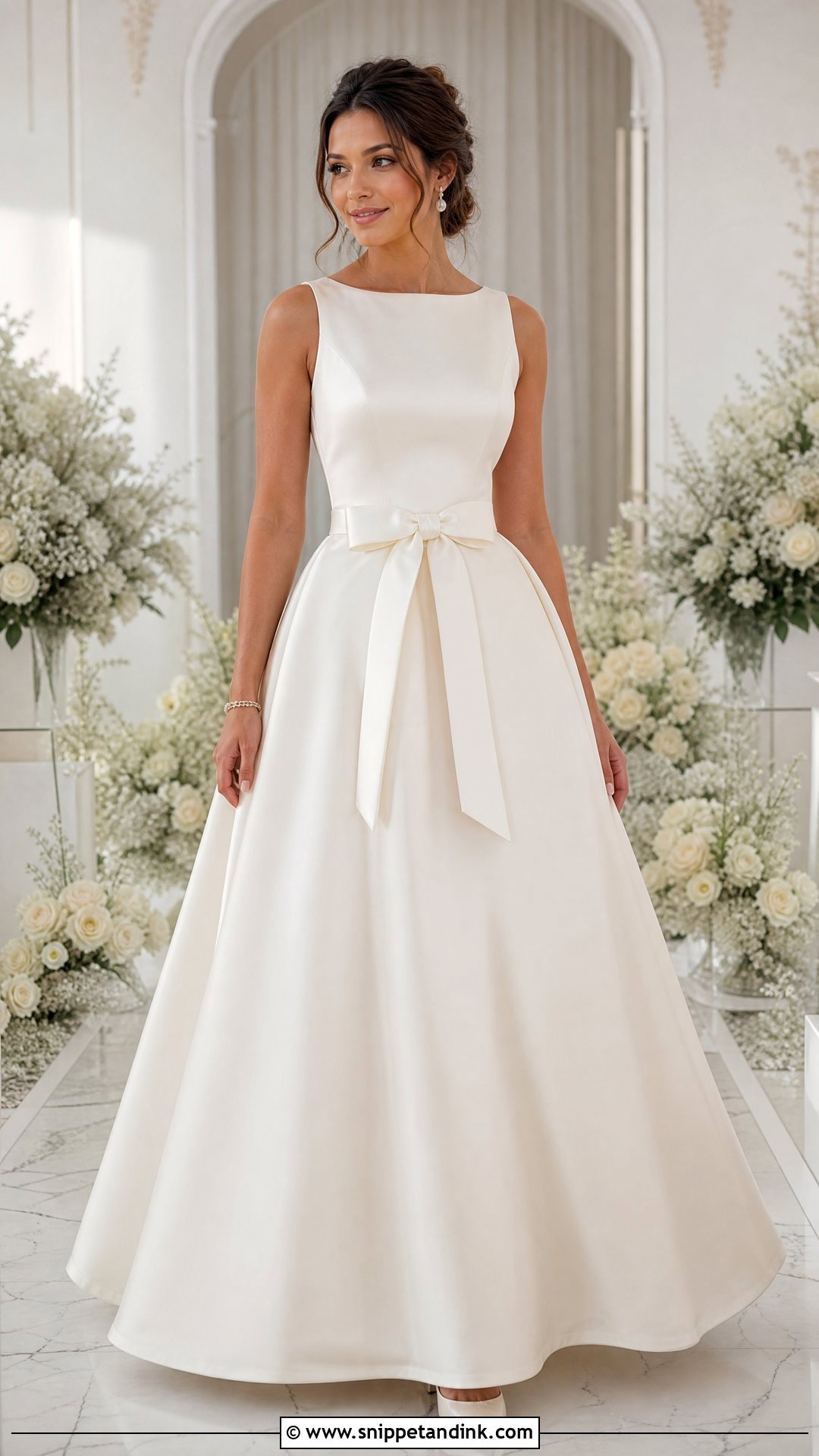
A bow waist wedding dress marks the narrowest point of the body, so it shapes almost any figure. Front bows look classic, side bows look modern and back bows give the ceremony view. On a short torso I keep the bow small, since a big one at the waist can swallow the space between bust and hip. Choose a veil that sits above or beside the bow rather than draped over it.
10. Bow Train Wedding Dress
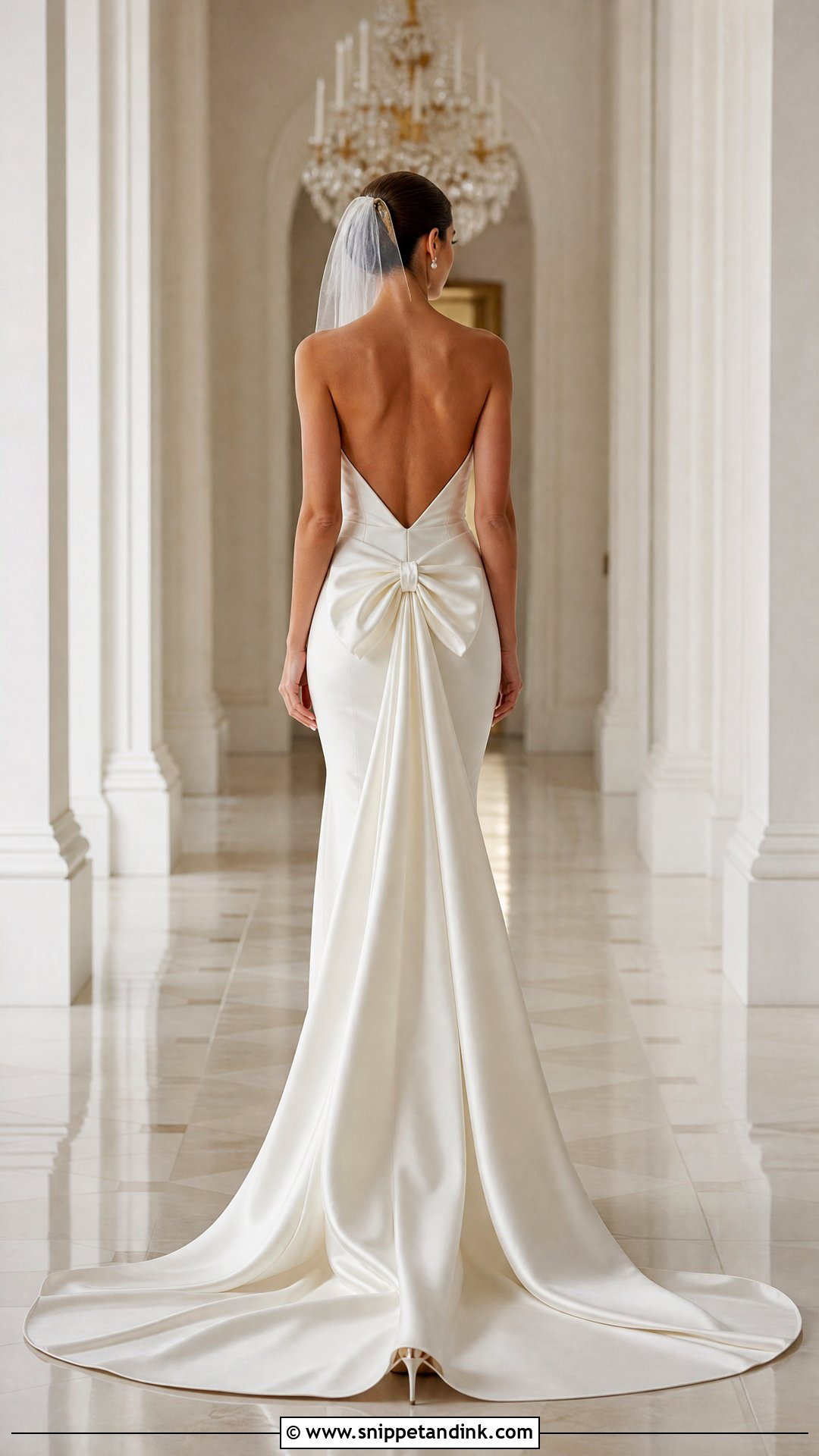
A bow at the lower back with long tails running into the train is all about movement. It makes the walk up the aisle and staircase photos look deliberate. Satin or mikado gives structure; organza gives a softer trail. The tails also become part of the train, so they need to be bustled with it. Make sure your bustle plan includes them or they will drag on the dance floor.
11. Detachable Bow Wedding Dress
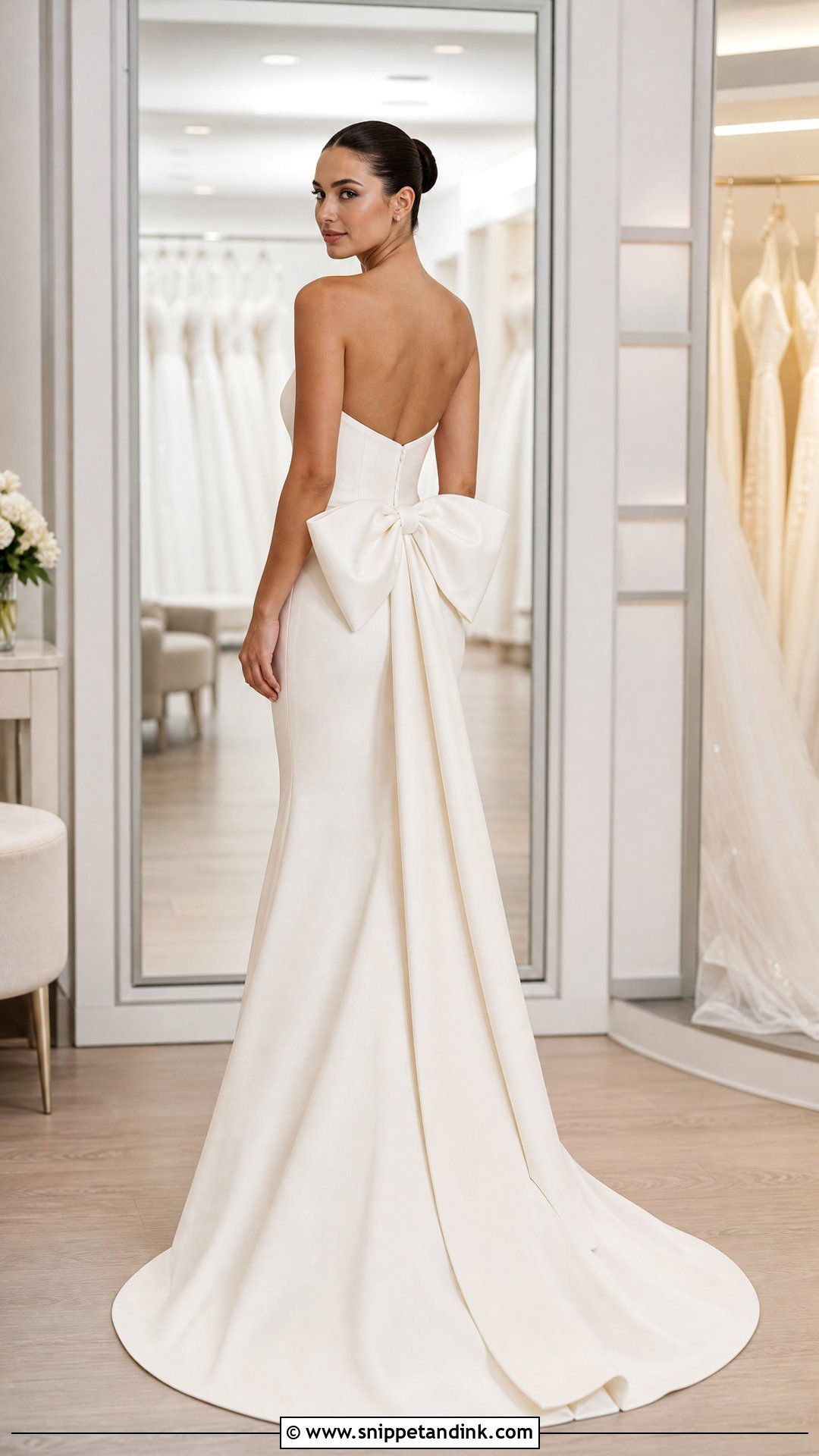
Detachable bows give you the ceremony moment and then let you sit and dance freely. They usually attach with hooks, snaps or a hidden loop system. At fittings I ask three things: how it fastens, whether it leaves visible marks when removed, and whether the dress still looks finished without it. Assign one person to remove and carry it, since a large bow is awkward to stash at a reception.
12. Lace Bow Wedding Dress
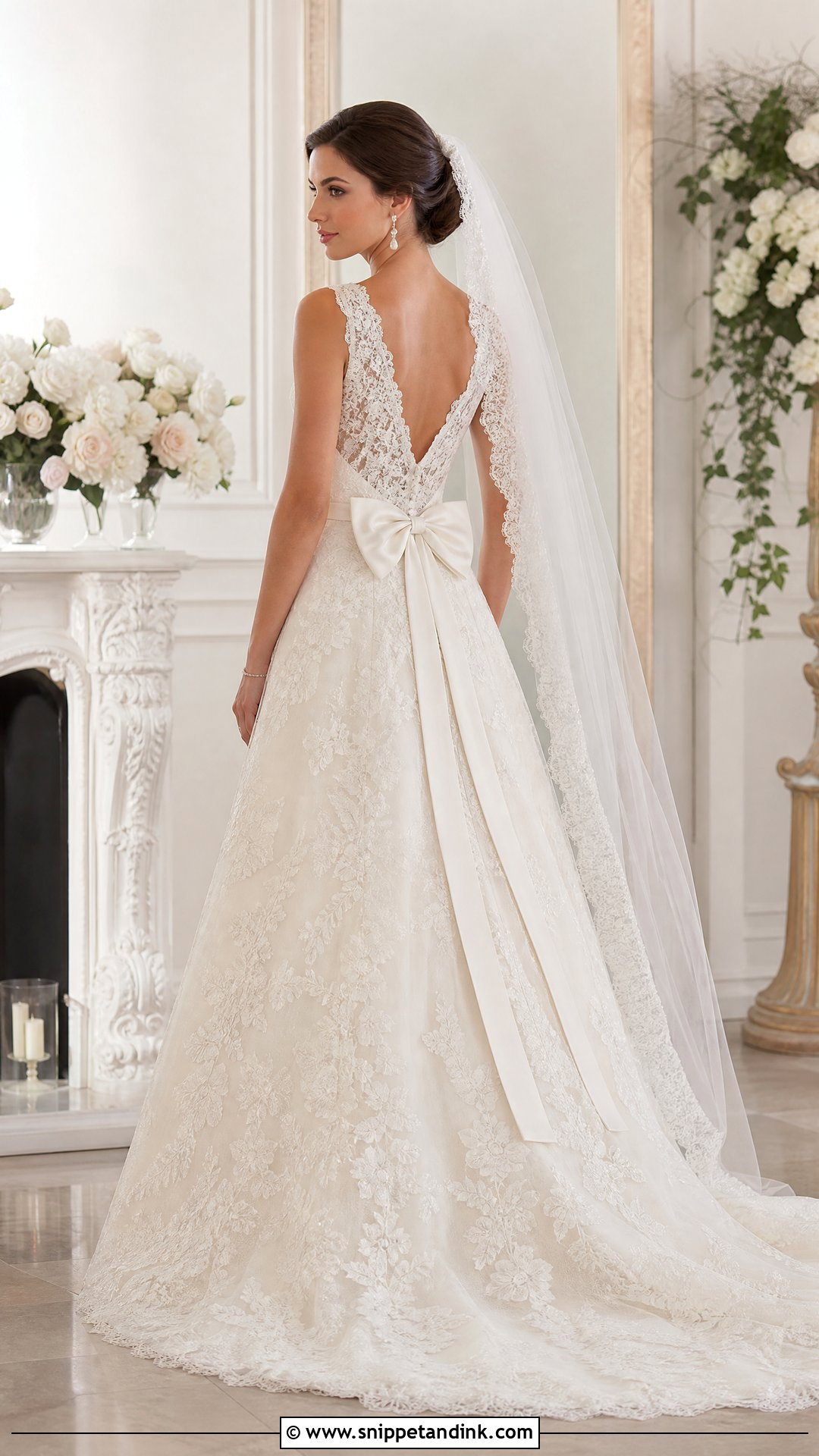
Lace and bows mix texture with shape. The bow can be cut from the lace itself or made in a plain fabric and laid on a lace bodice or back. A plain satin bow over busy lace tends to read more clearly than a lace bow, which can lose its outline against the pattern. If the lace is large and bold, keep everything else quiet. A lace-trimmed veil and pearl earrings suit it.
13. Short Bow Wedding Dress
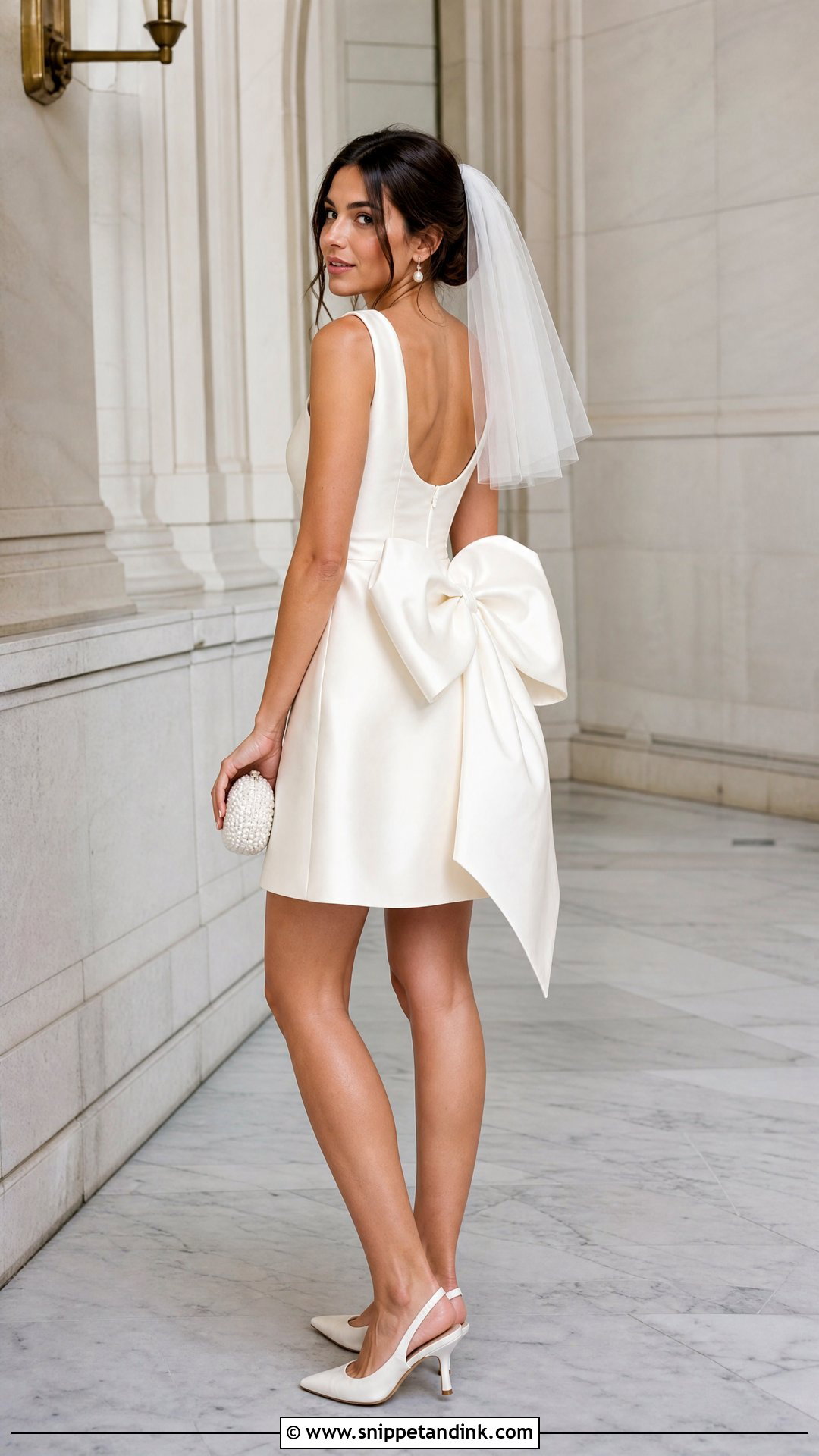
A short bow dress is fun for a civil ceremony, a reception change or a second look. A mini or tea-length dress with a bow at the back, waist or shoulder keeps it bridal. Structured satin looks sharp; tulle feels softer. With less skirt, the shoes and the bow carry the whole outfit, so they need to agree on formality. Slingbacks or block heels and a short veil or hair bow finish it.
14. Tea Length Bow Wedding Dress
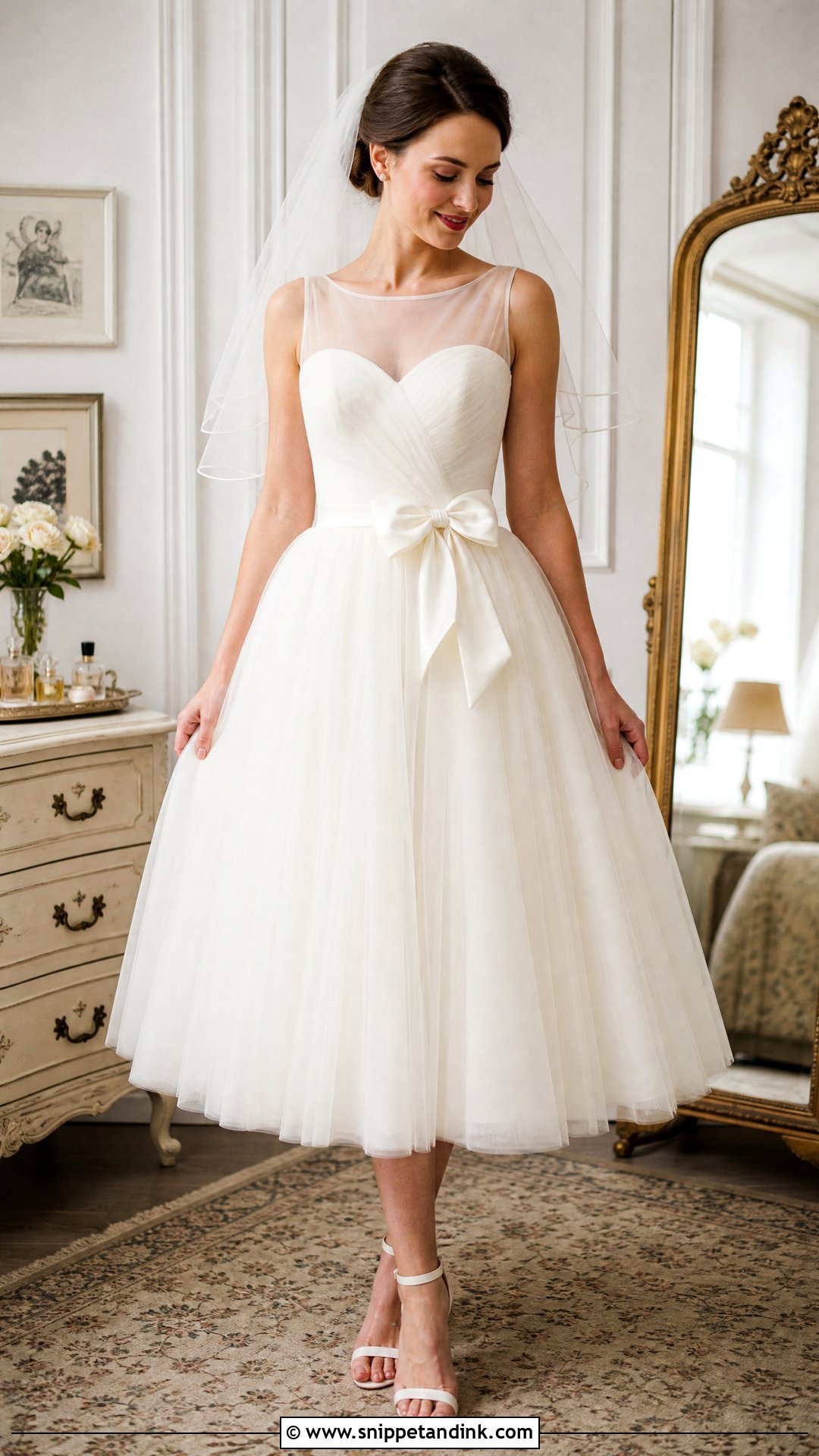
Tea length falls between knee and ankle and has that 1950s feel. A bow at the waist or back helps define the full skirt. The hem shows your shoes, so pick a pair you are happy to have photographed all day. Pointed pumps, ankle straps or embellished flats all work, and a short veil with soft curls keeps the proportions right. I like this length for courthouse and garden weddings.
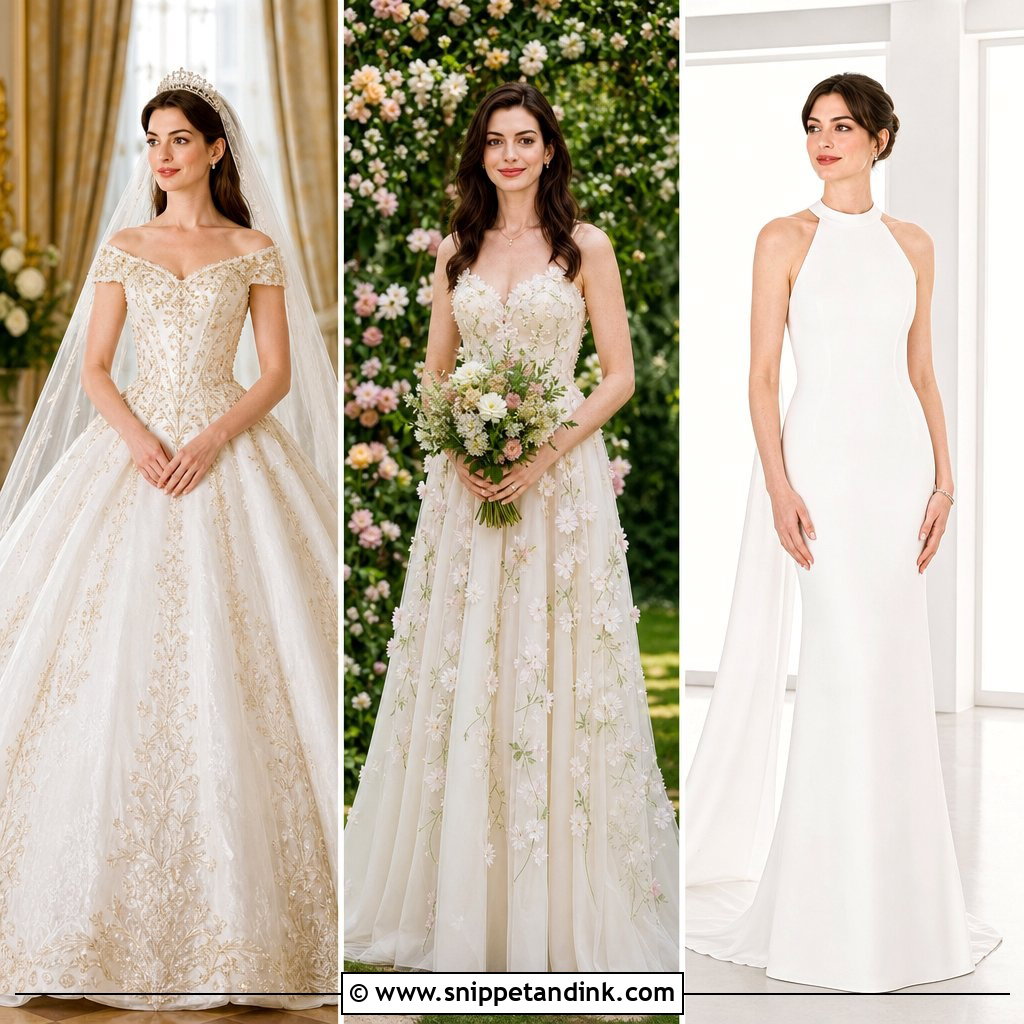
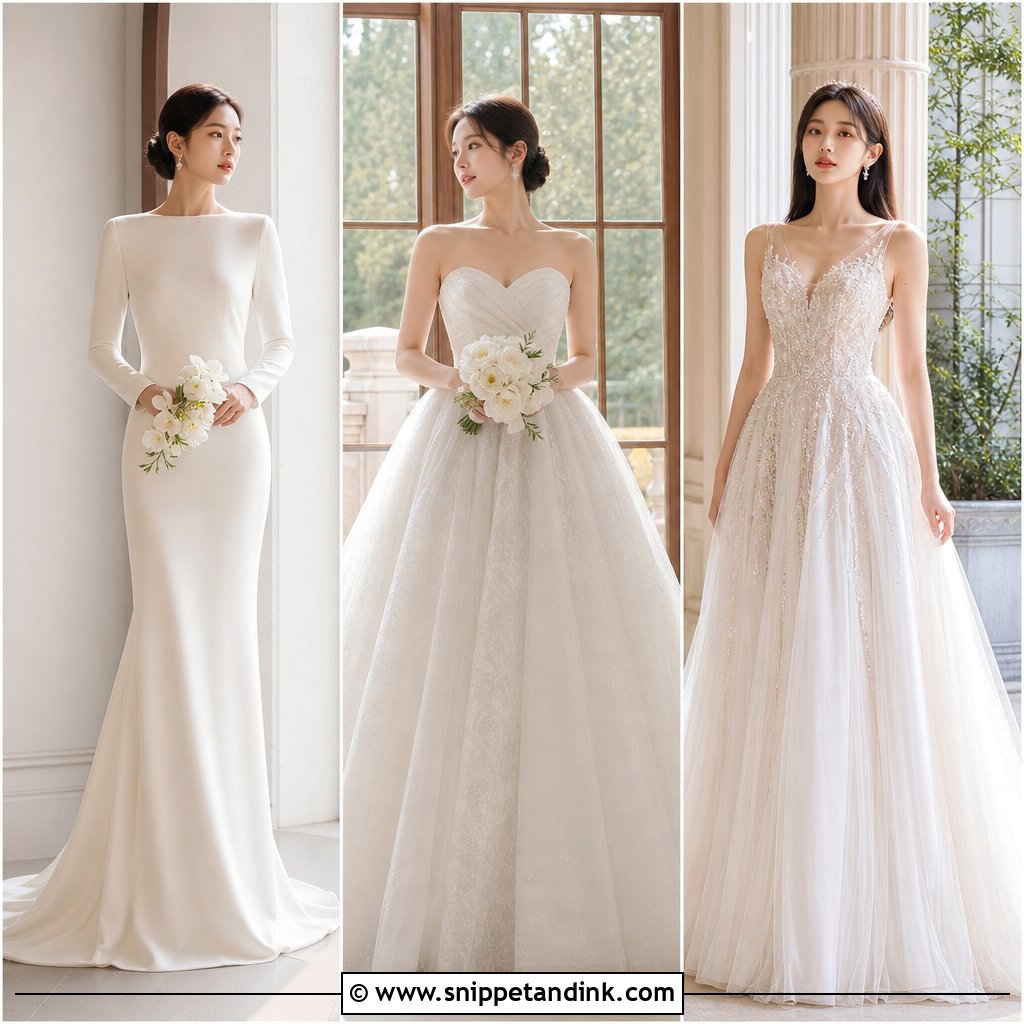
15. Ball Gown Bow Wedding Dress
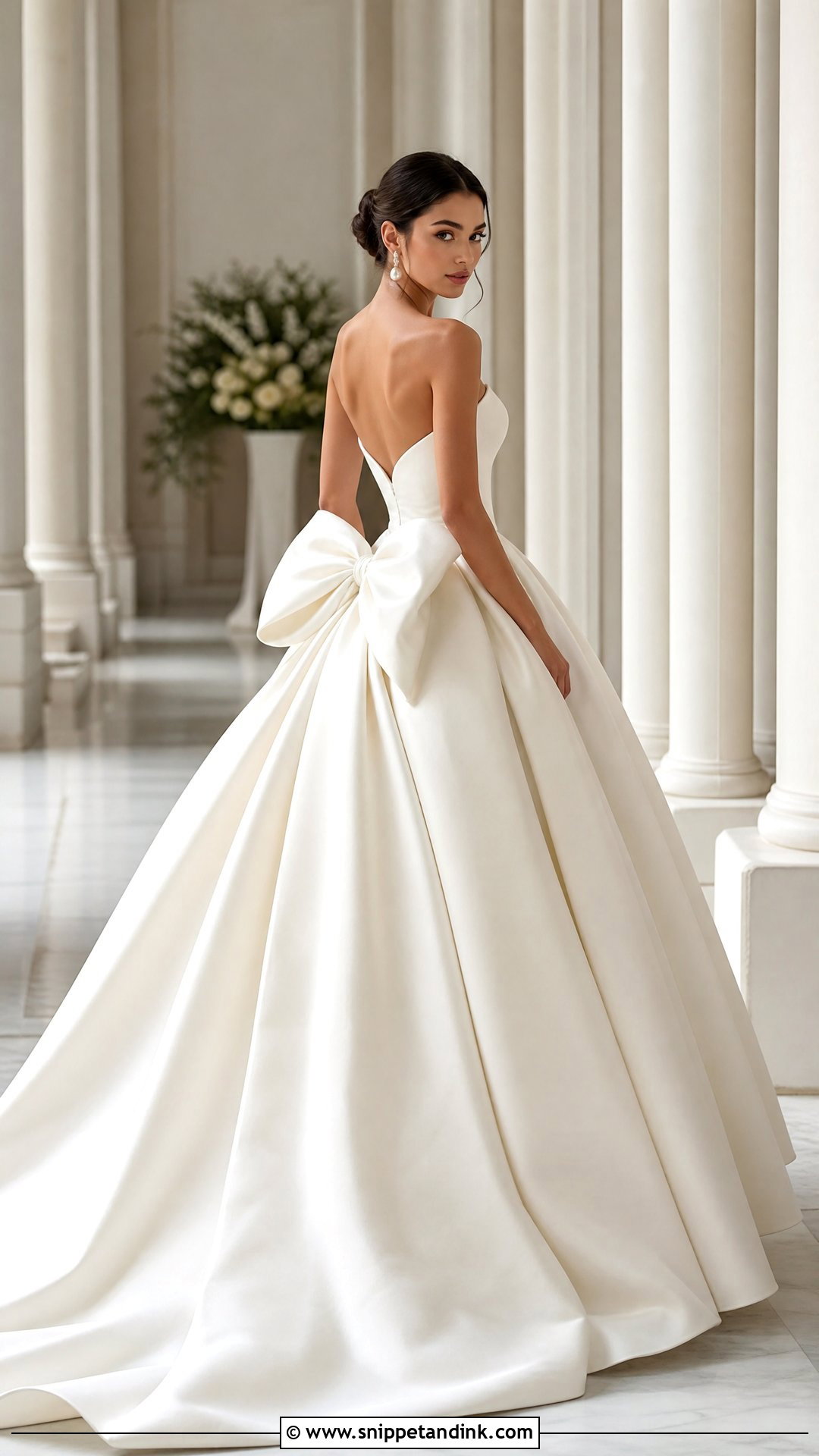
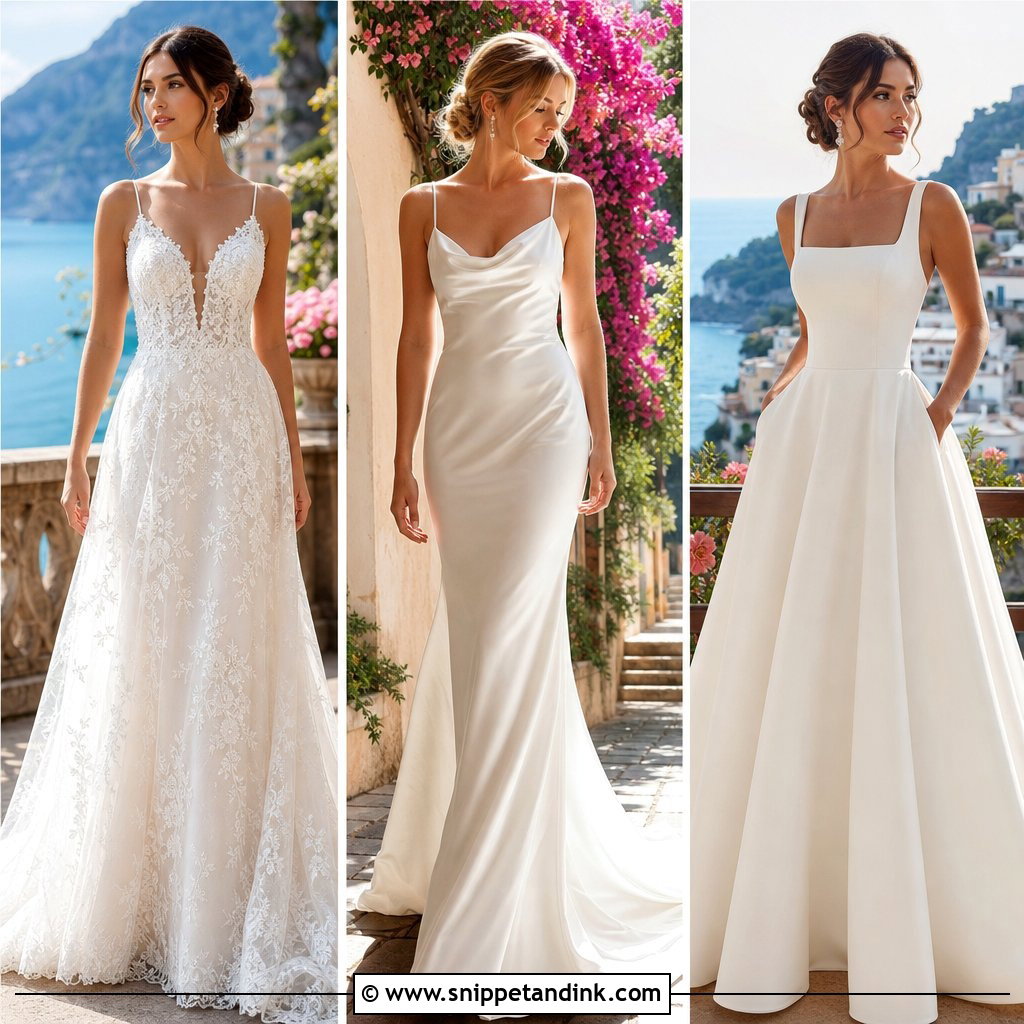
Ball gowns with bows are statement dresses from every angle. A big back bow over a long train, or a waist bow to cinch the full skirt, both work. Choose mikado or heavy satin if you want structure, layered tulle for softness. Veils need thought here: a cathedral veil draped over a large back bow hides it, so I often suggest a veil worn lower in the hair or one that can be removed after the ceremony.
16. A Line Bow Wedding Dress
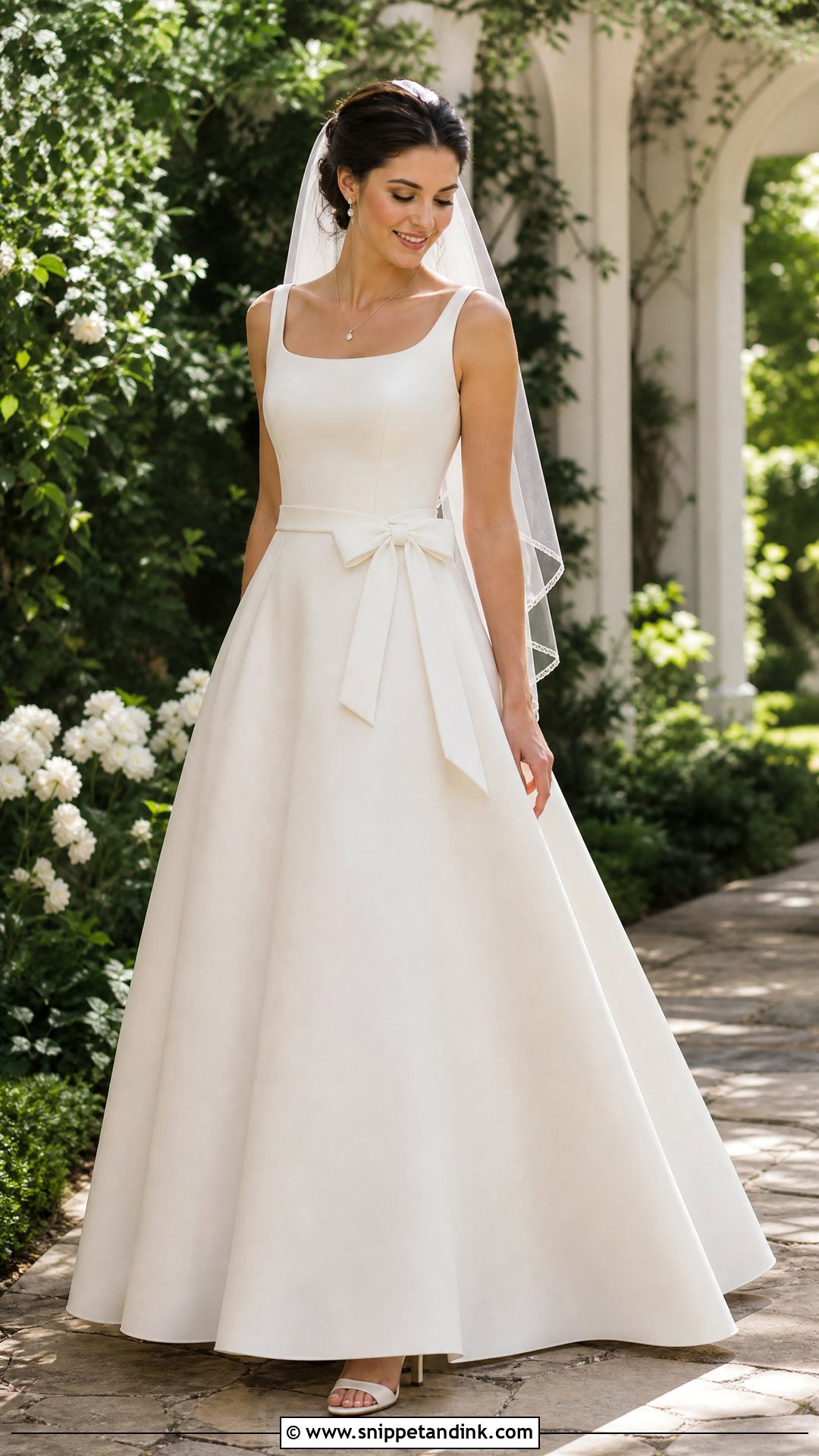
An A-line skims instead of clinging, so it suits many body shapes and feels easy to wear. Add a bow at the waist, shoulder or back. Almost any fabric works, from crisp satin to soft chiffon. If you are torn between bow placements, I pin a loose bow in each spot at the fitting and take photos from the guests’ side and the aisle side. The choice usually becomes obvious when you see the pictures.
17. Mermaid Bow Wedding Dress
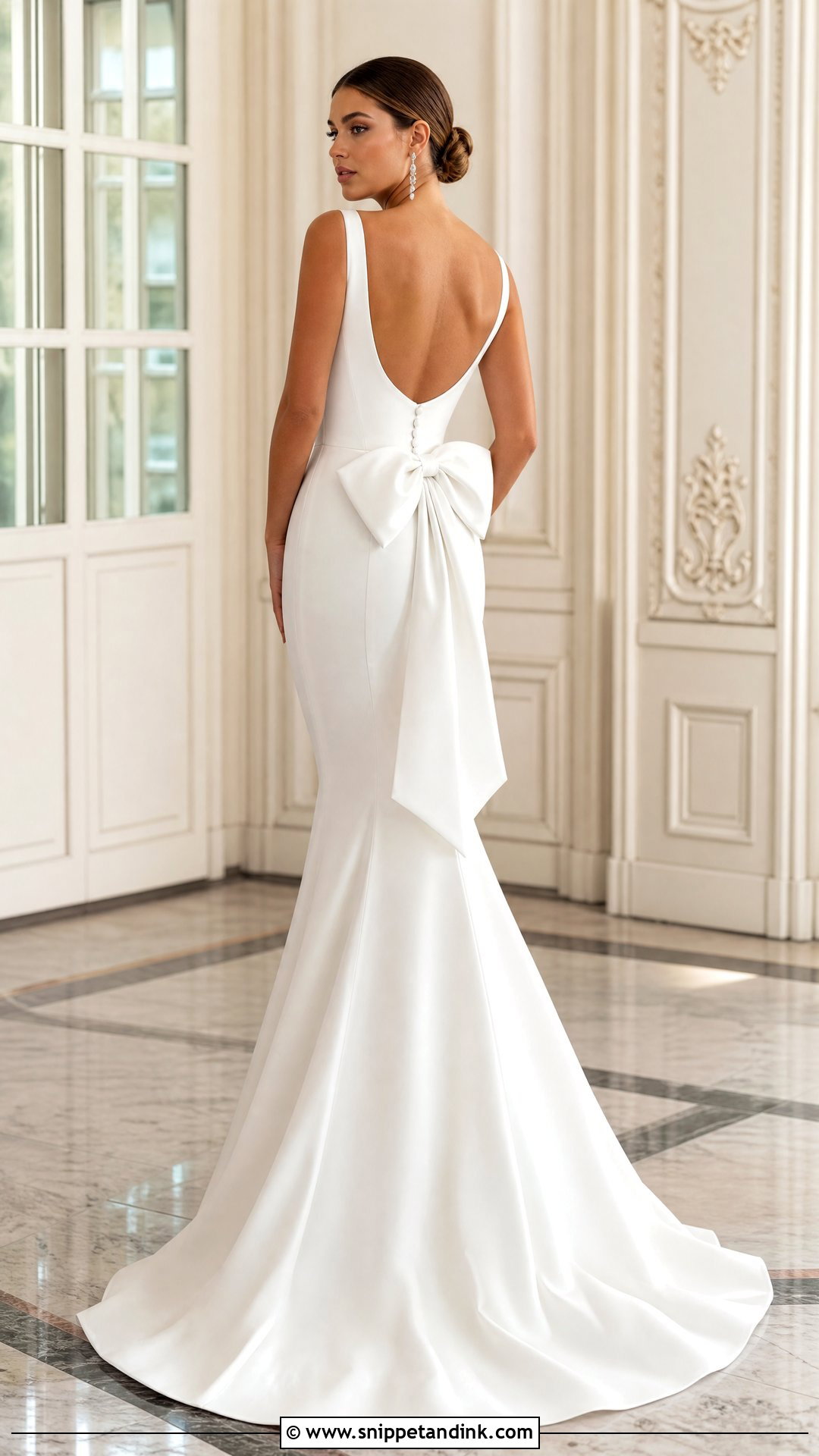
A mermaid bow wedding dress hugs through the hips and flares near the knee. A bow at the back waist, hip or train softens that sleek line. The fit is tight, so support matters: boning and a built-in corset make it secure for a long day. Walk, sit and climb a step in it. Mermaid gowns restrict stride, and a bow at the hip can rub against your arm. Smooth hair and drop earrings suit it.
18. Column Bow Wedding Dress
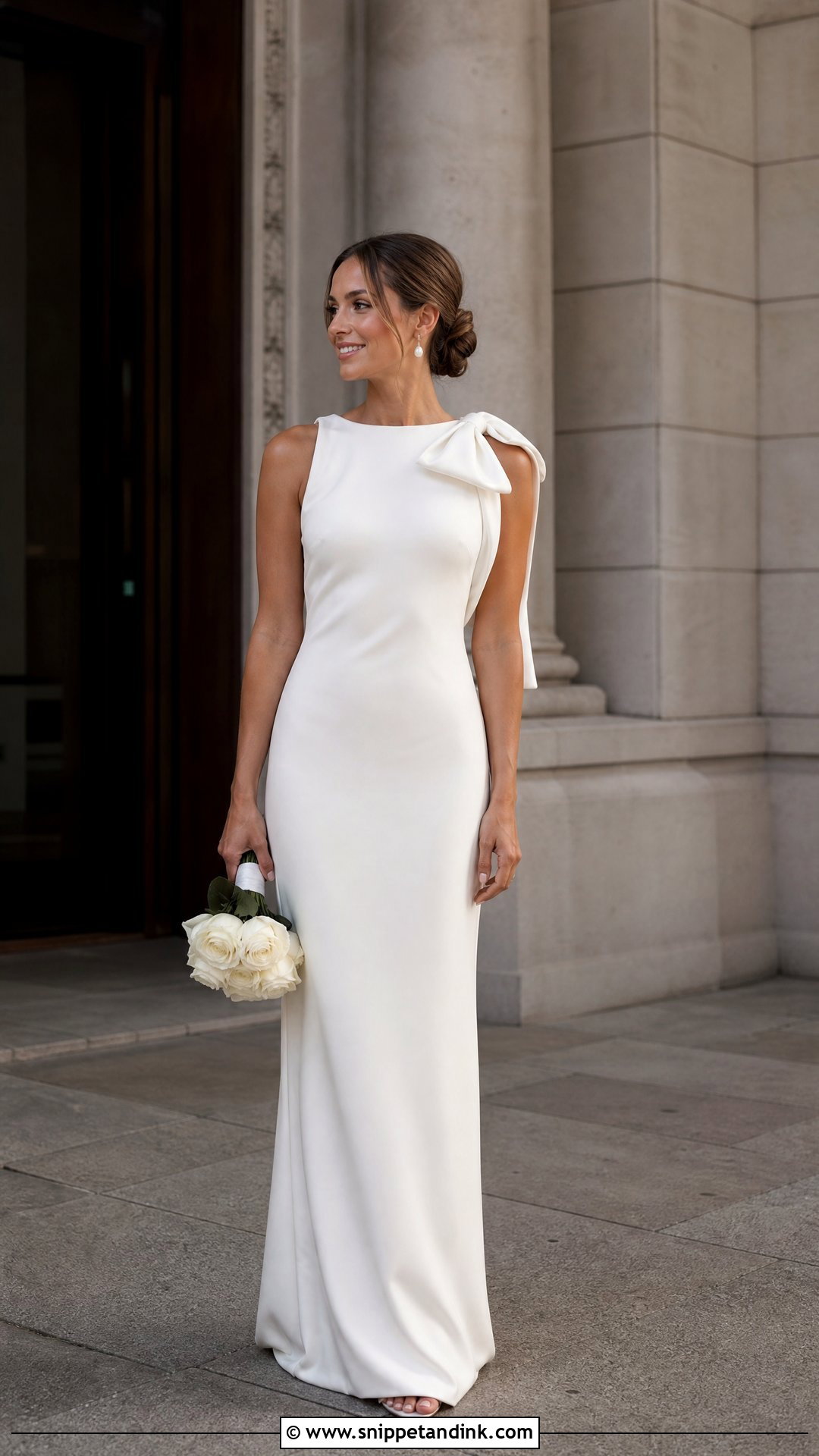
Columns are straight and modern, and a small bow is just enough interest. Fabric matters a lot here. Crepe is tailored and matte, satin catches light and silk moves fluidly. Column dresses also need a walking slit or kick pleat if they are narrow, so check you can climb stairs before committing. Minimal heels and a low bun keep it clean for city weddings.
19. High Neck Bow Wedding Dress
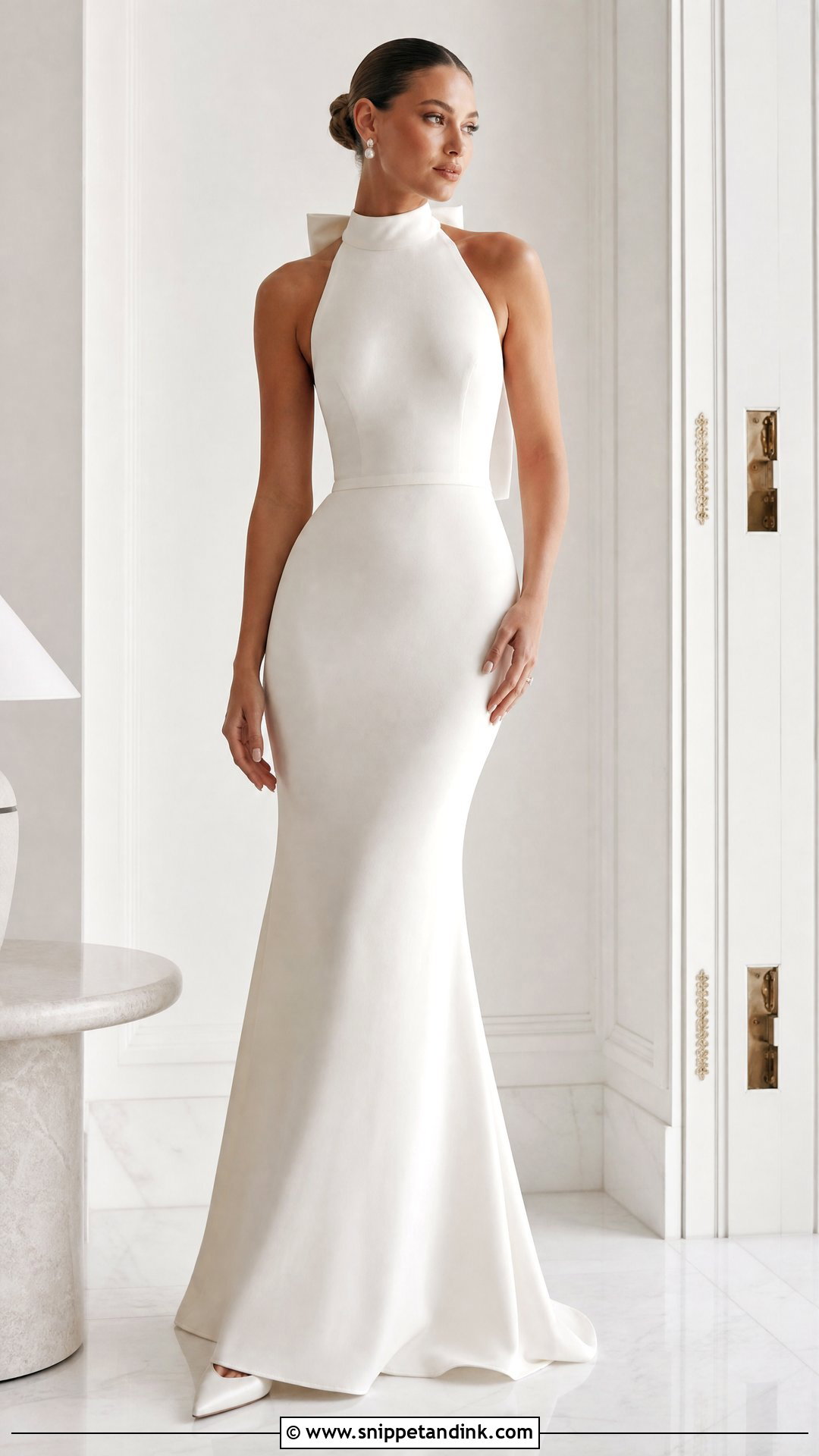
High necklines with a bow at the nape, waist or back feel sophisticated and covered. Crepe, lace, satin or sheer organza all work. Balance the coverage with a defined waist or some movement in the skirt. A bow at the back of the neck sits right where hair usually falls, so this is one dress where I ask the hairstylist to plan an updo around it. Earrings only, no necklace.
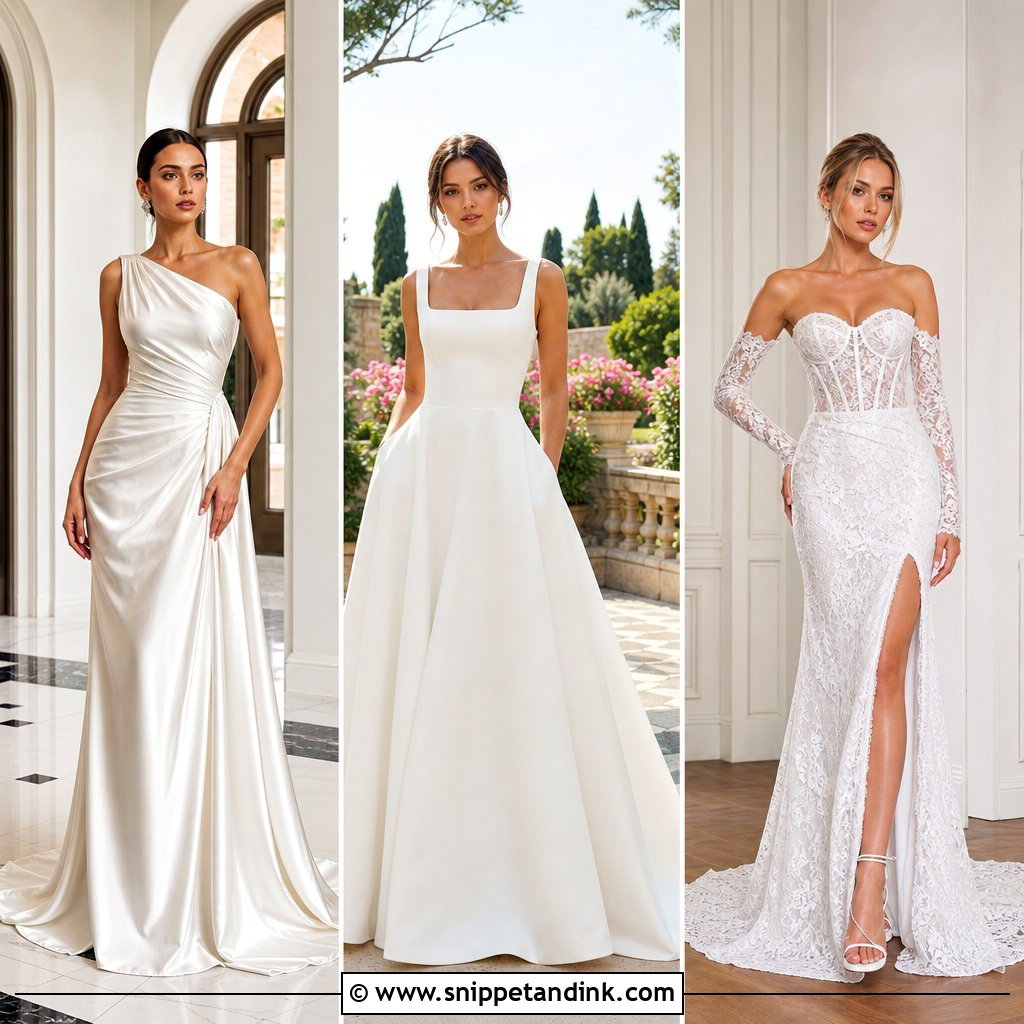
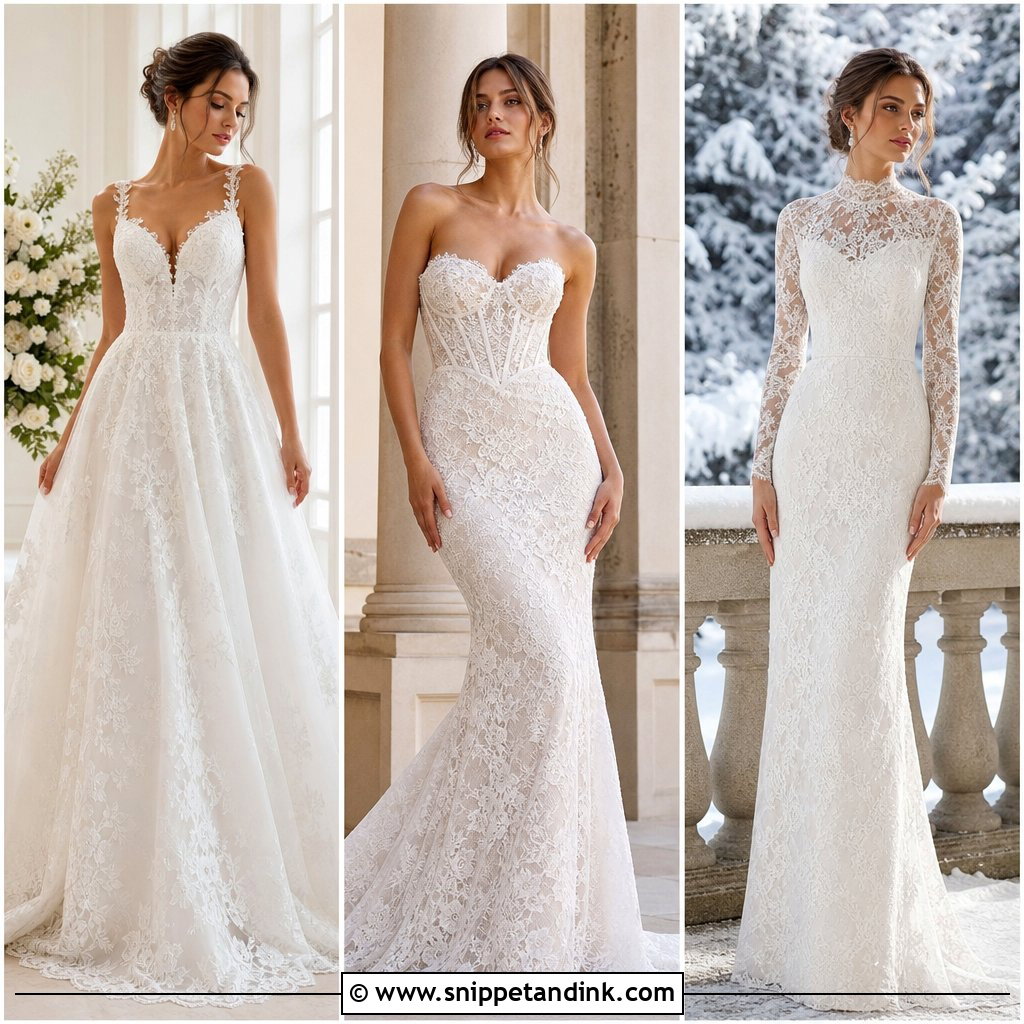
20. Long Sleeve Bow Wedding Dress
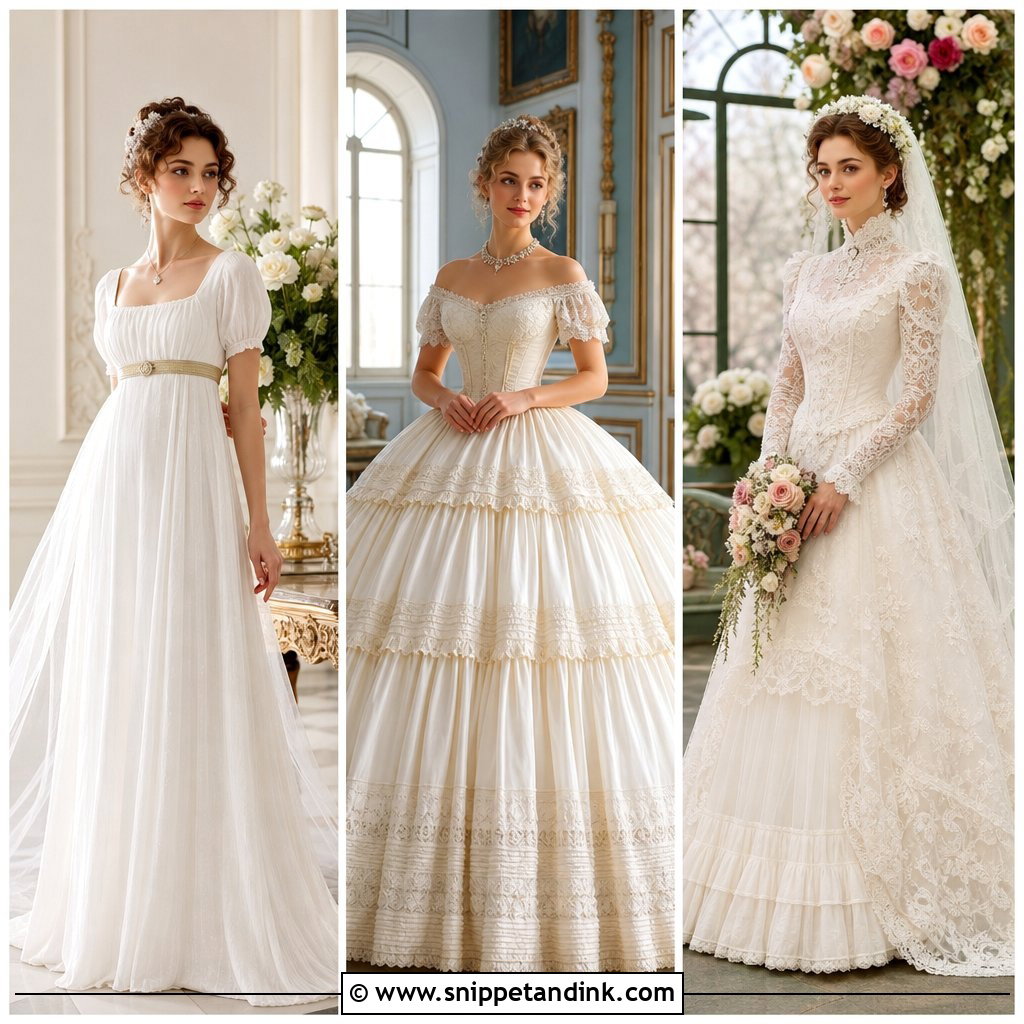
Long sleeves give coverage, which suits cooler months and formal venues. Lace, crepe, satin or puffed organza sleeves all set different moods. My rule of thumb: detailed sleeves call for a simple bow, plain sleeves can carry a bigger one. Make sure you can lift your arms fully at the fitting, since tight sleeves limit hugging and dancing. A neat bun and pearl earrings work with it.
21. Sheer Sleeve Bow Wedding Dress
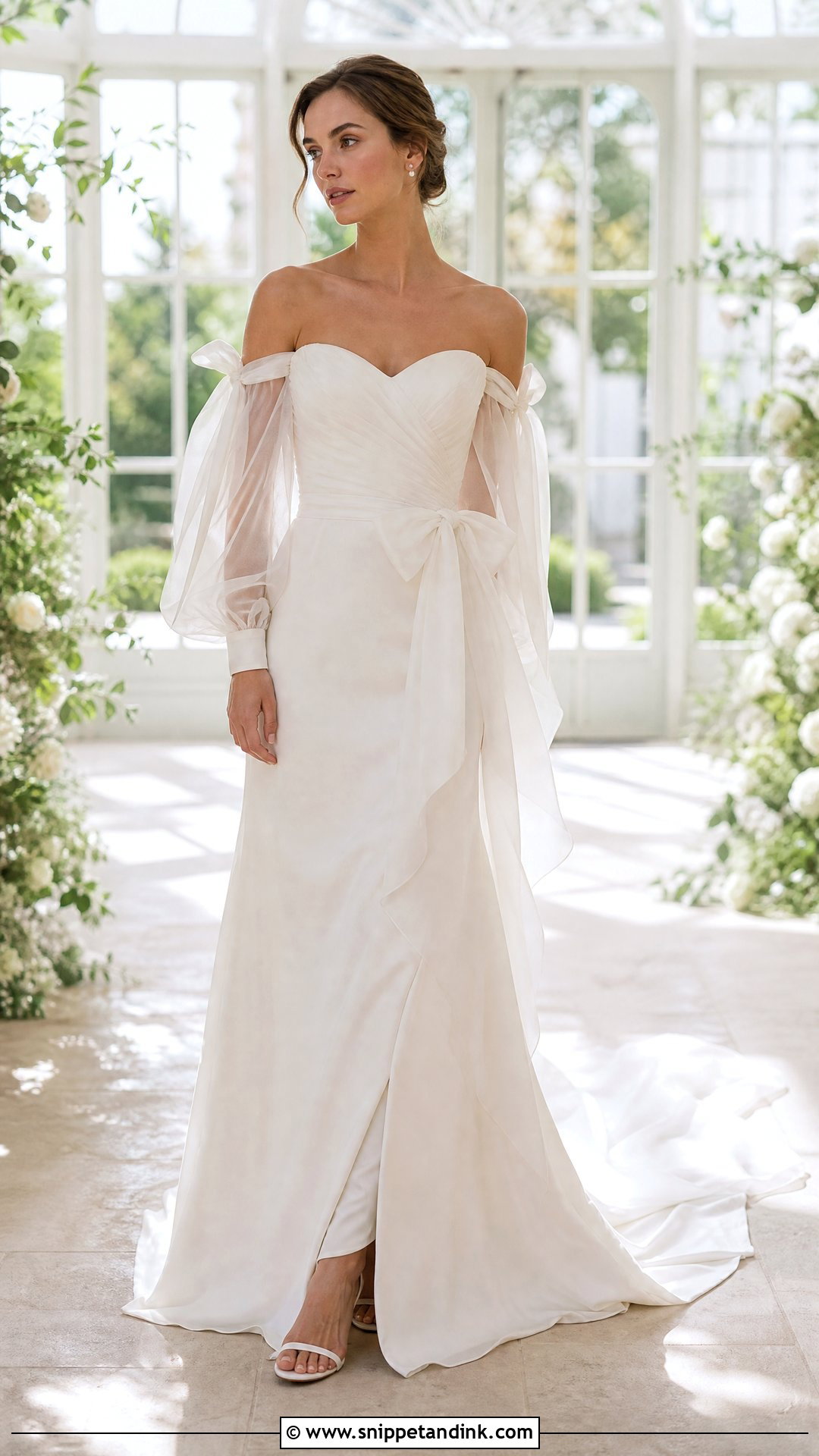
Sheer sleeves add softness without covering the arms completely. Lace appliqué, dotted tulle or plain organza each look different. A waist bow defines the body; a back bow finishes the rear view. Sheer sleeves need a lining colour close to your skin tone or they look grey in photos, so check them by daylight. Pearl studs and a sheer veil suit the airy feel.
22. Square Neck Bow Wedding Dress
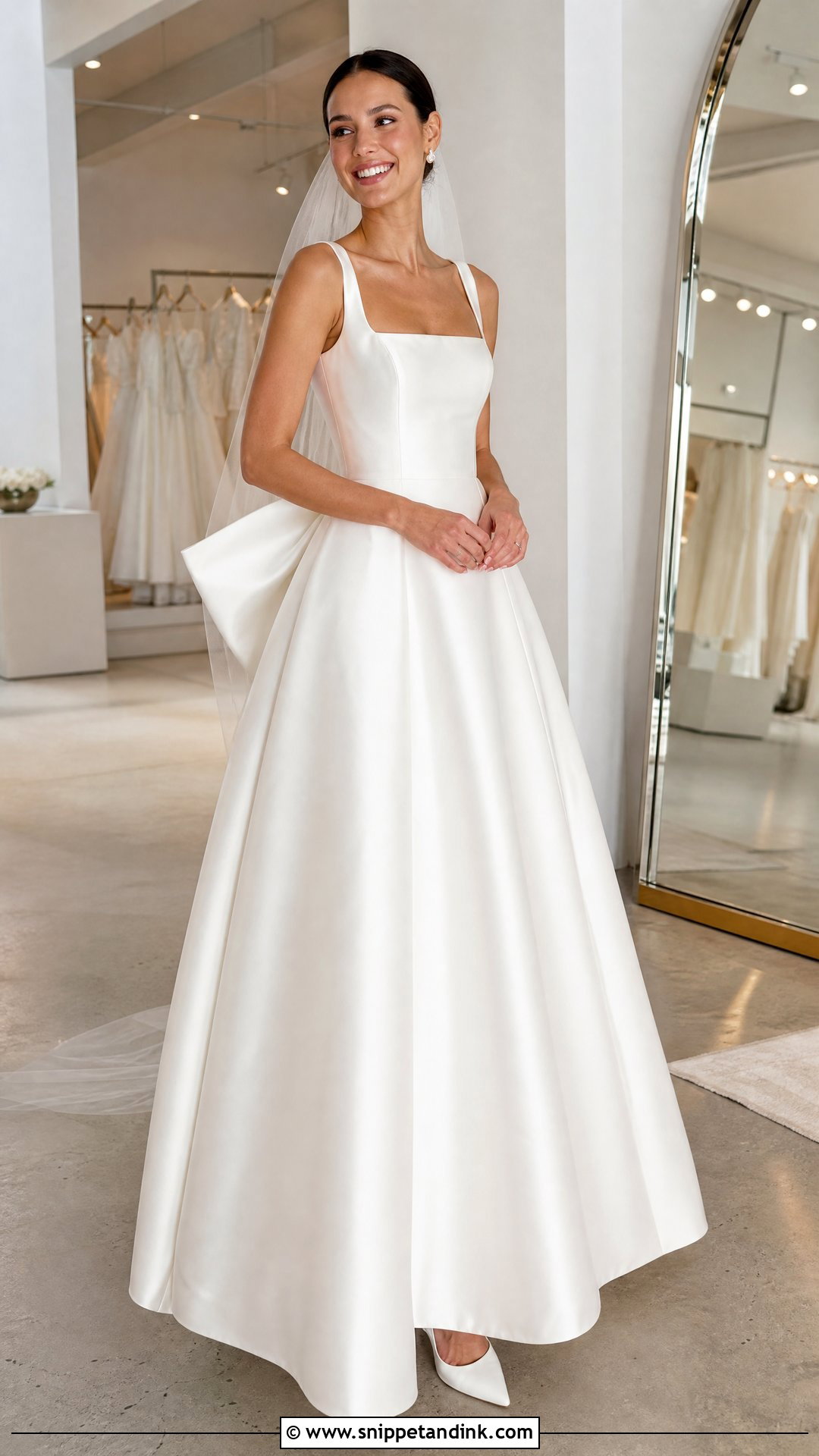
Square necklines frame the collarbone cleanly and suit structured bodices. A bow at the back or waist softens the tailoring. Satin, crepe or mikado hold the shape well. If the neckline is wide, wear earrings rather than a necklace so the chest stays open. I check that the square corners sit flat when you move, as a bodice that is slightly loose lets them gape forward.
23. Corset Bow Wedding Dress
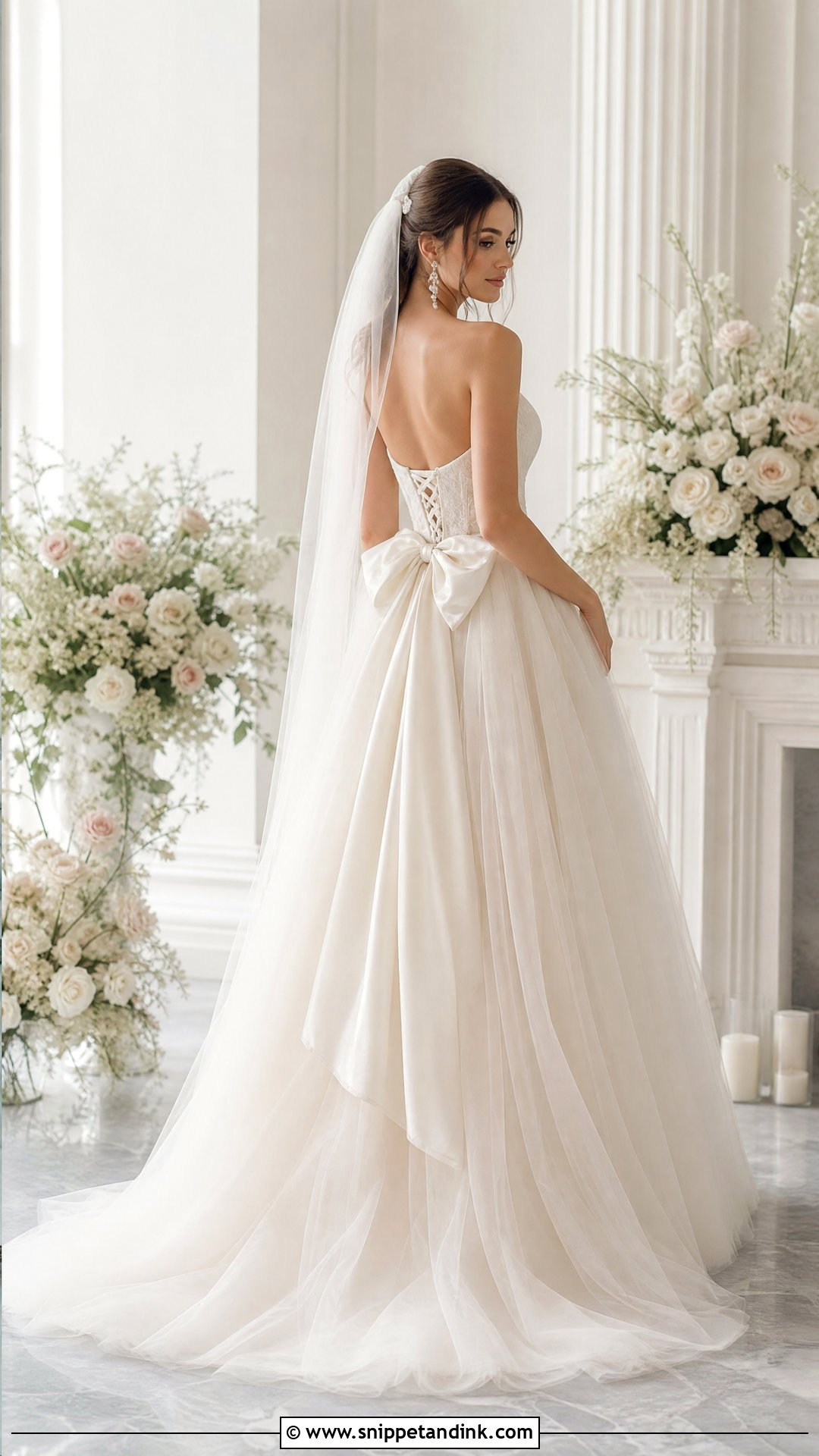
A corset bodice shapes the waist and supports the bust, and a back bow sits naturally above the lacing. Satin skirts feel modern; tulle, lace or organza layers feel romantic. Corsets loosen slightly through the day as the fabric warms, so I show someone how to tighten the lacing before the reception. Delicate earrings and a veil that leaves the bow visible complete it.
24. Organza Bow Wedding Dress
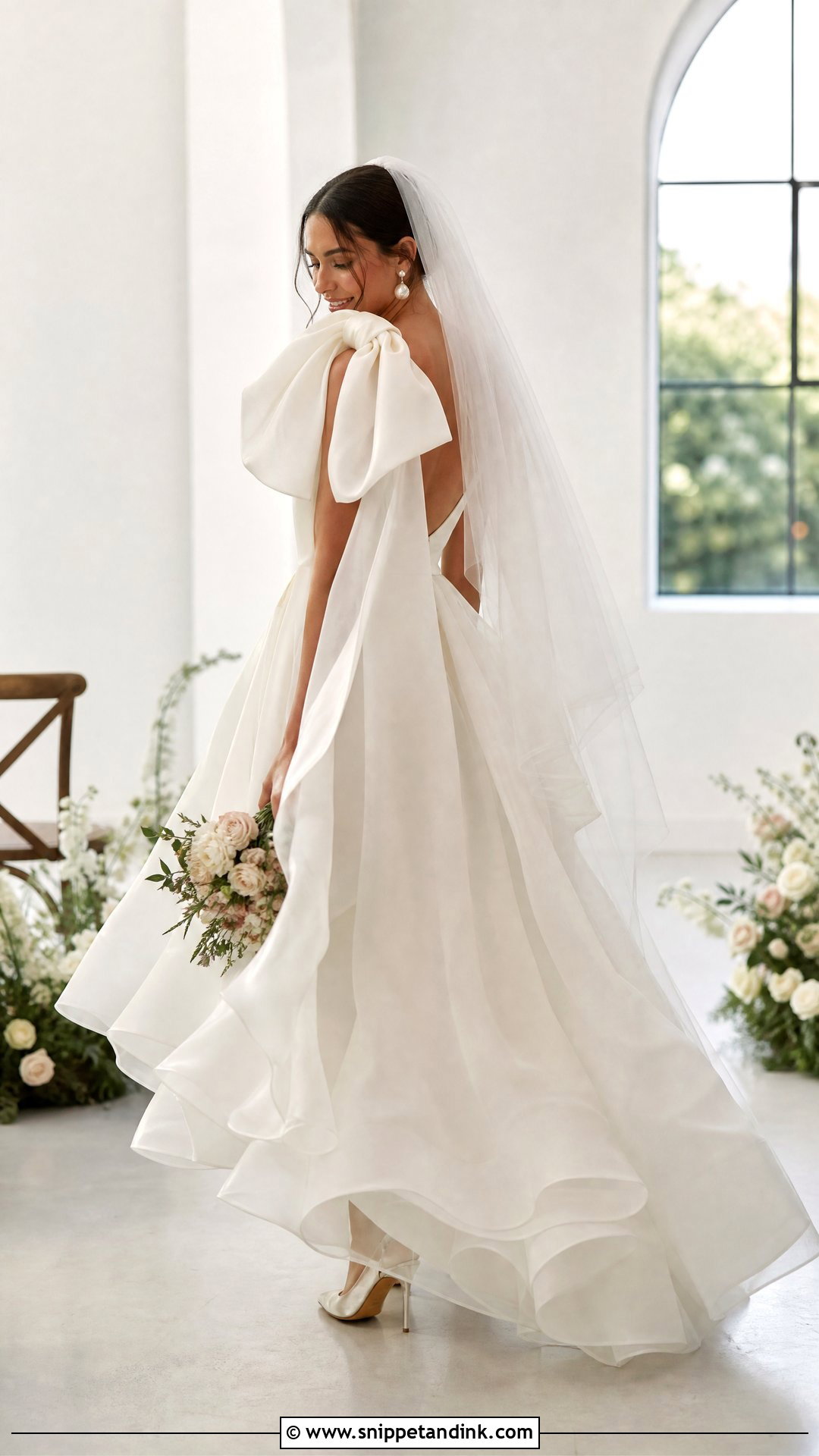
Organza holds a shape well while staying airy, so it is my first choice for big bows that should not look heavy. Put one at the shoulder, back or waist over a simple skirt. Organza is crisp and creases sharply if crushed, so it needs a garment bag with space and a cool steam on the day. It suits spring and summer weddings, indoors or out.

25. Black Bow Wedding Dress
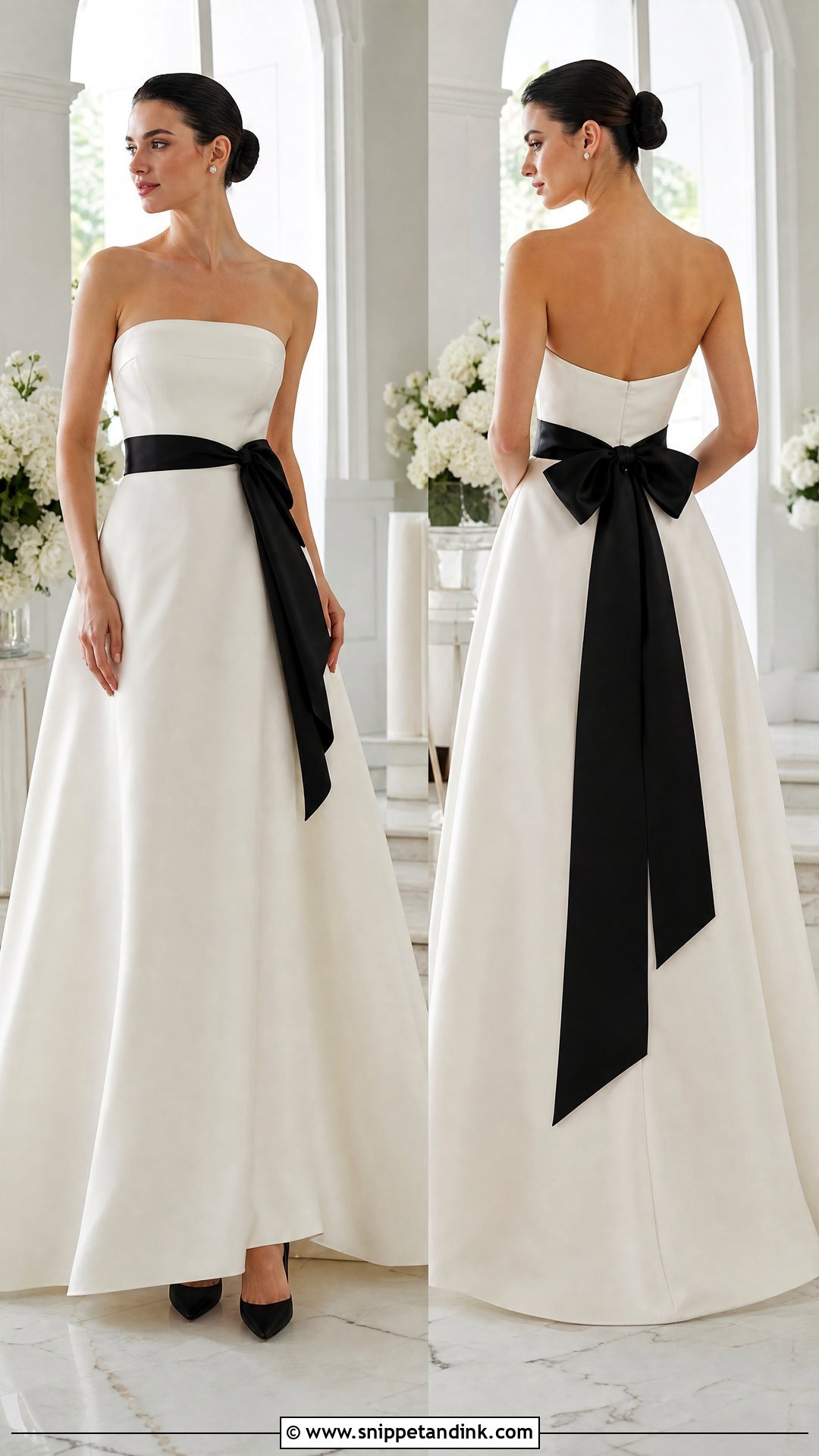
An ivory gown with a black satin bow at the waist, neckline or back gives sharp contrast. Keep the silhouette simple so the bow looks intentional: a column, satin A-line or strapless ball gown. Black dye can bleed if the bow gets wet or is steamed too hot, so test steam a hidden spot first. Black or ivory heels and sleek hair keep it graphic.
The Car, the Chair and the Veil Are a Bow’s Real Test
A bow that looks perfect on a mannequin meets three problems on the day. The first is travel. Large back bows get squashed against car seats, so sit forward, or travel with the bow loosely padded with tissue and fluff it on arrival. A handheld steamer on low fixes most crushing in a few minutes.
The second is sitting. Through dinner a back bow will be pressed flat for an hour or more. Stiff fabrics like mikado bounce back; soft satin and chiffon may need re-shaping. If your bow is soft, ask whether it can be stiffened with interfacing or a layer of organza inside the loops.
The third is the veil. A long veil drapes straight over a back bow and either hides it or catches on the loops. Placing the veil comb lower, choosing a shorter veil or removing it after the ceremony all solve the problem. Decide this before the final fitting, not on the morning.
Do Bows Look Too Young on a Wedding Dress?
This is a question I hear often, and the answer depends on fabric more than size. Small, shiny, ribbon-like bows on soft tulle can tip toward sweet. Bows in heavy matte fabrics, crepe or mikado, with clean folded edges look architectural and grown up. If you are worried, choose a bow cut from the same fabric as the dress rather than a contrasting ribbon, keep the loops flat rather than puffed, and pair it with sleek hair.
One Bow, Placed With Purpose, Is Usually Enough
Bows suit almost every bridal style, but they work best when you decide where the eye should go and put the bow there. A back bow is for the ceremony, a waist bow shapes your figure and a shoulder bow pulls attention to the face. If you want both drama and freedom, a detachable bow is the smart route. Keep accessories quiet when the bow is bold, and test how it behaves when you sit and move before your last fitting.
You'll Like These Ideas:




Leave a Reply