
Ocean-inspired gowns borrow from the sea in small ways: chiffon that moves like surf, silk with a wet-looking sheen, pearl beading, lace patterned like waves or coral, or a pale blue that echoes shallow water. The harder part is finding one that still feels good after an hour of salty air, shifting sand and a steady breeze. At the shore, fluid fabrics, relaxed shapes, open backs and breathable linings usually win. The looks below cover every kind of coastal plan, from a simple beach elopement to a resort ballroom or a clifftop ceremony, and each comes with the shoes, hair and flowers I’d put with it.

What Humidity and Sea Spray Do to Bridal Fabrics
Sea air is humid, and humidity changes how fabric behaves. Chiffon and georgette breathe and dry quickly. Silk feels cool but marks with water and sweat. Satin traps heat and shows every crease. Crepe can cling once it’s damp. Linen blends breathe best of all but wrinkle as soon as you sit. Tulle stays light, though it collects sand along the hem.
The lining matters as much as the outer fabric. A breathable chiffon over two layers of synthetic lining will still feel hot by the second hour, so ask how many layers sit under the skirt and what they’re made of. Sometimes a seamstress can remove one.
A seaside test you can do at a fitting
- Stand by an open window or step outside in the dress for ten minutes.
- Walk across a rug or uneven floor in the shoes you plan to wear.
- Raise your arms and check the underarm area on silk or satin.
- Sit for a minute, stand up, and look at how the skirt creased.
- Hold the veil in front of a fan or an open door and watch where it goes.
1. Flowing Chiffon Ocean Wedding Dress
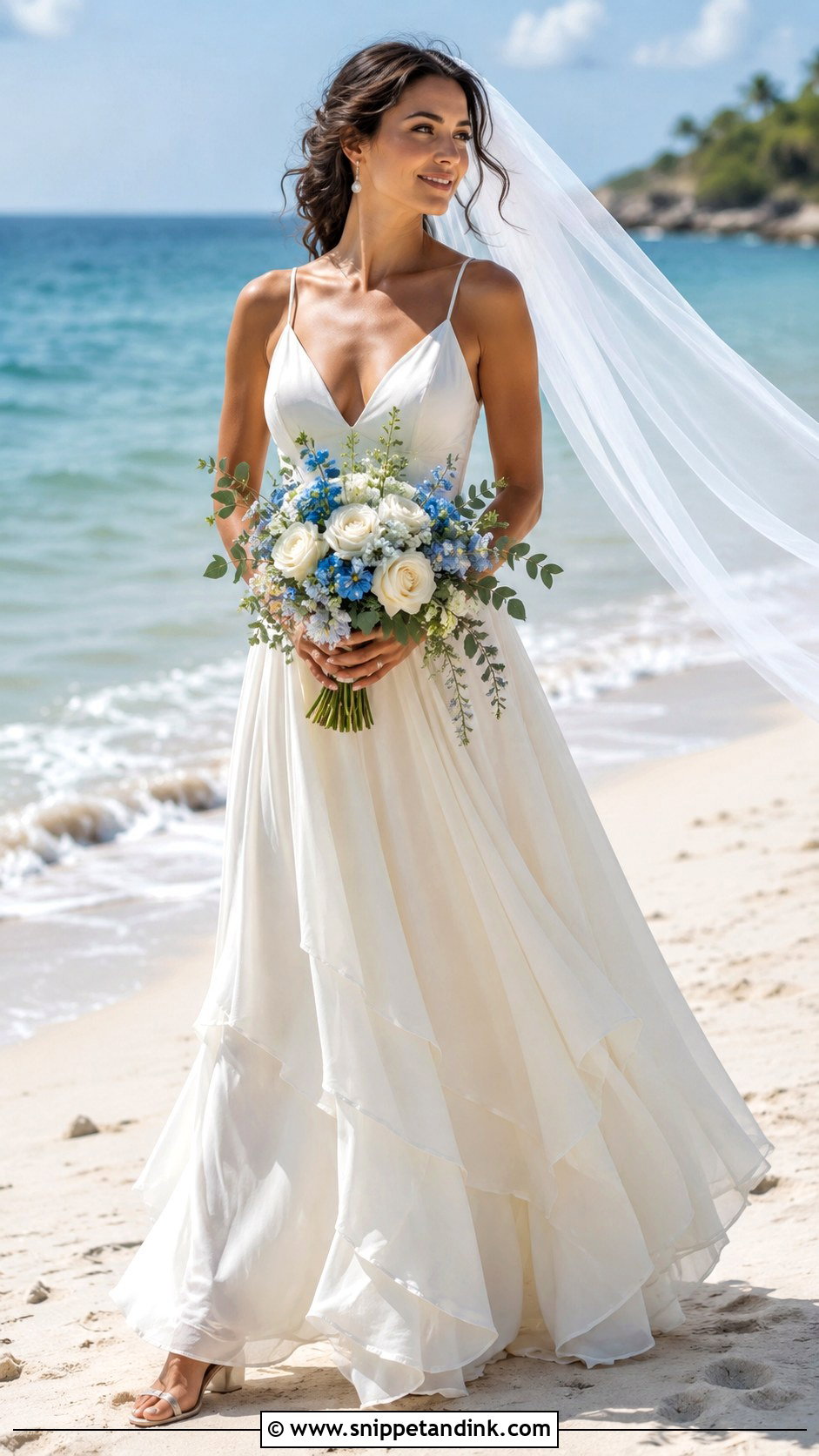
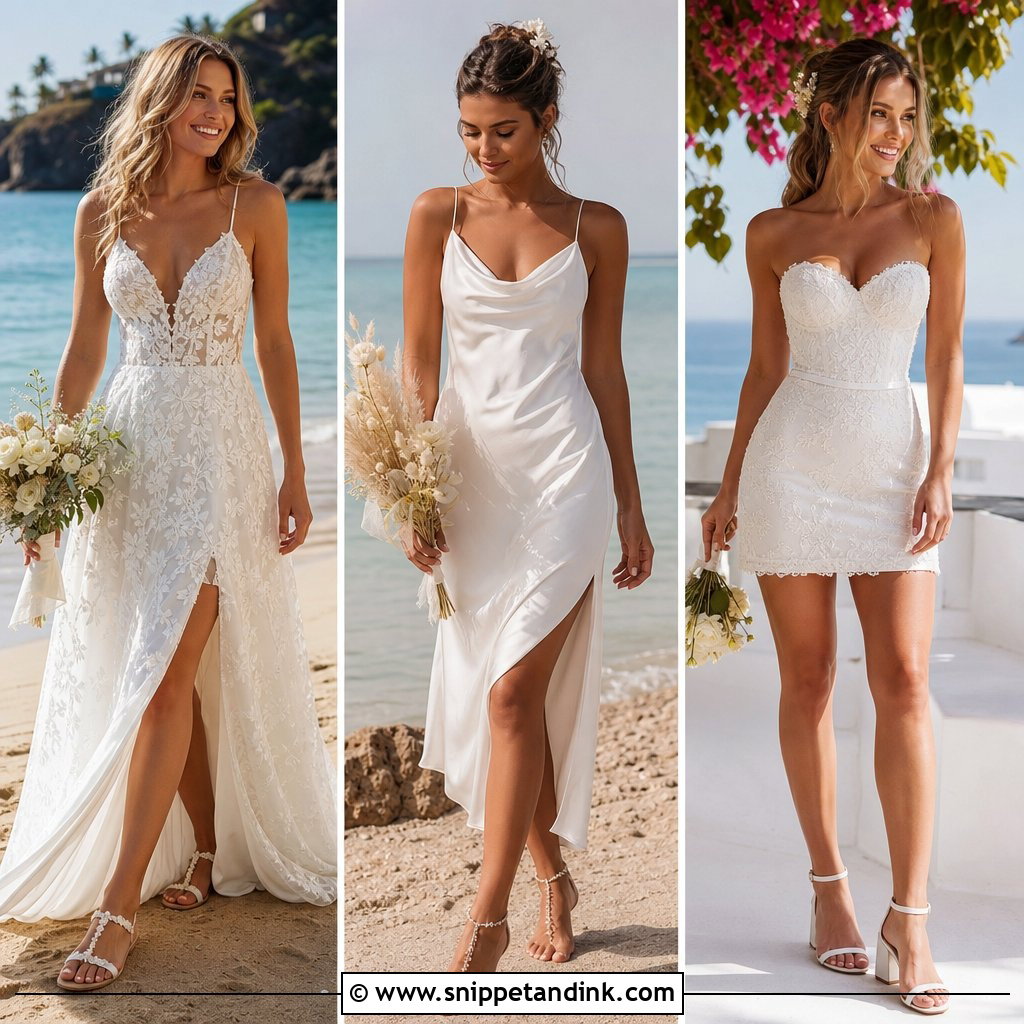
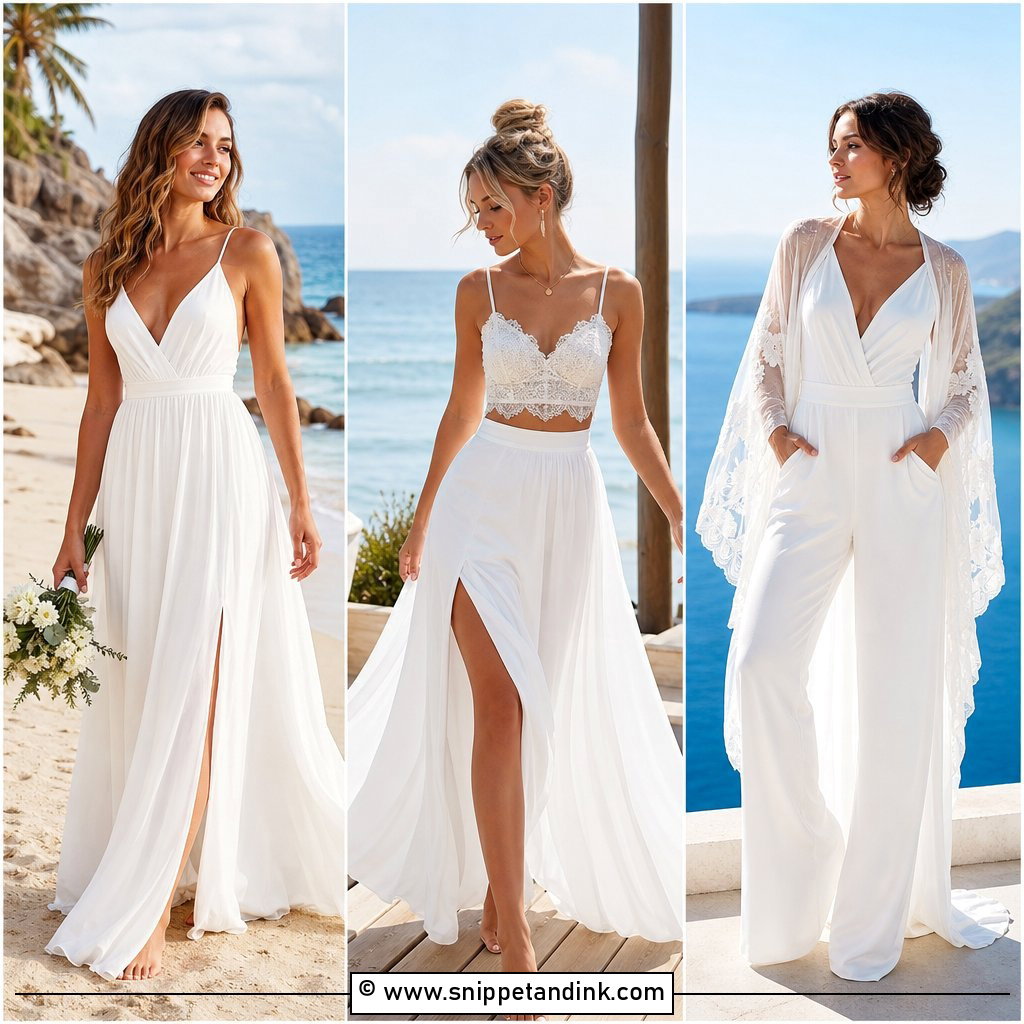
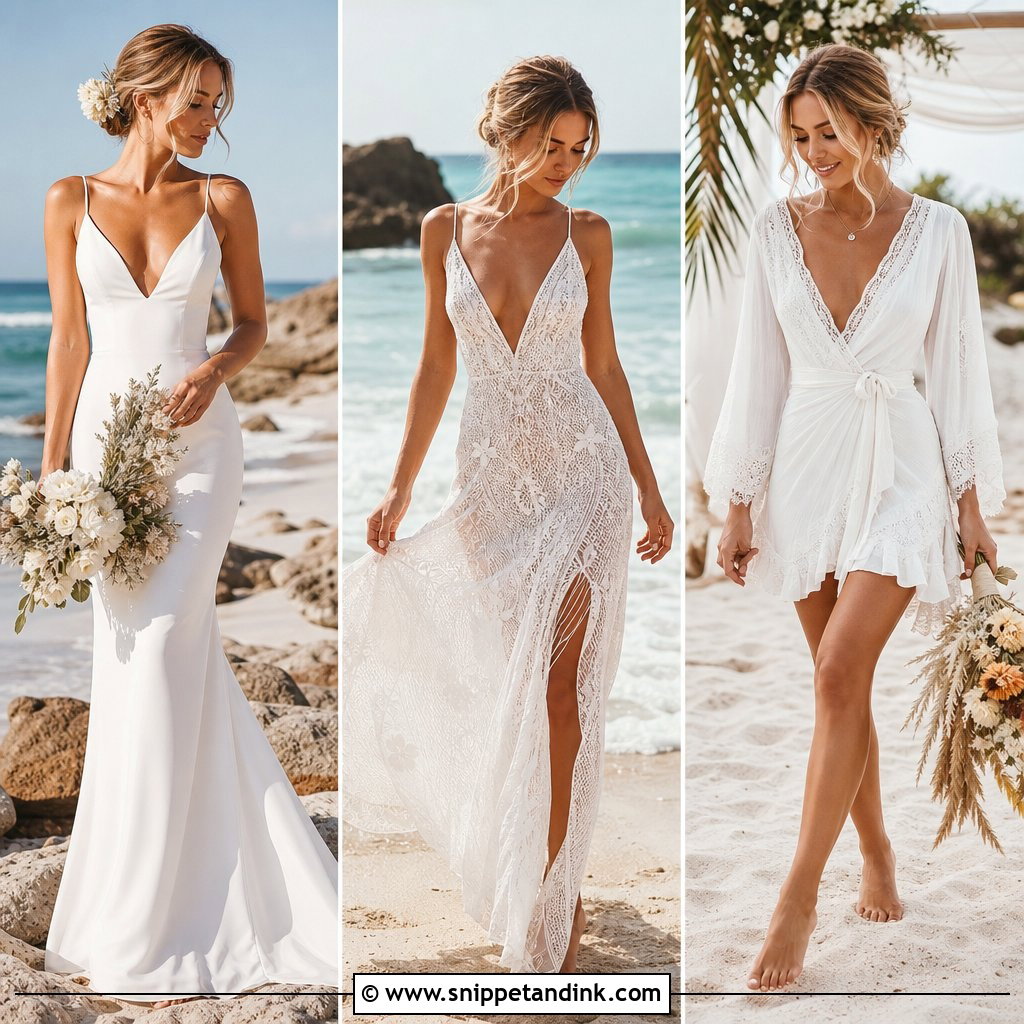
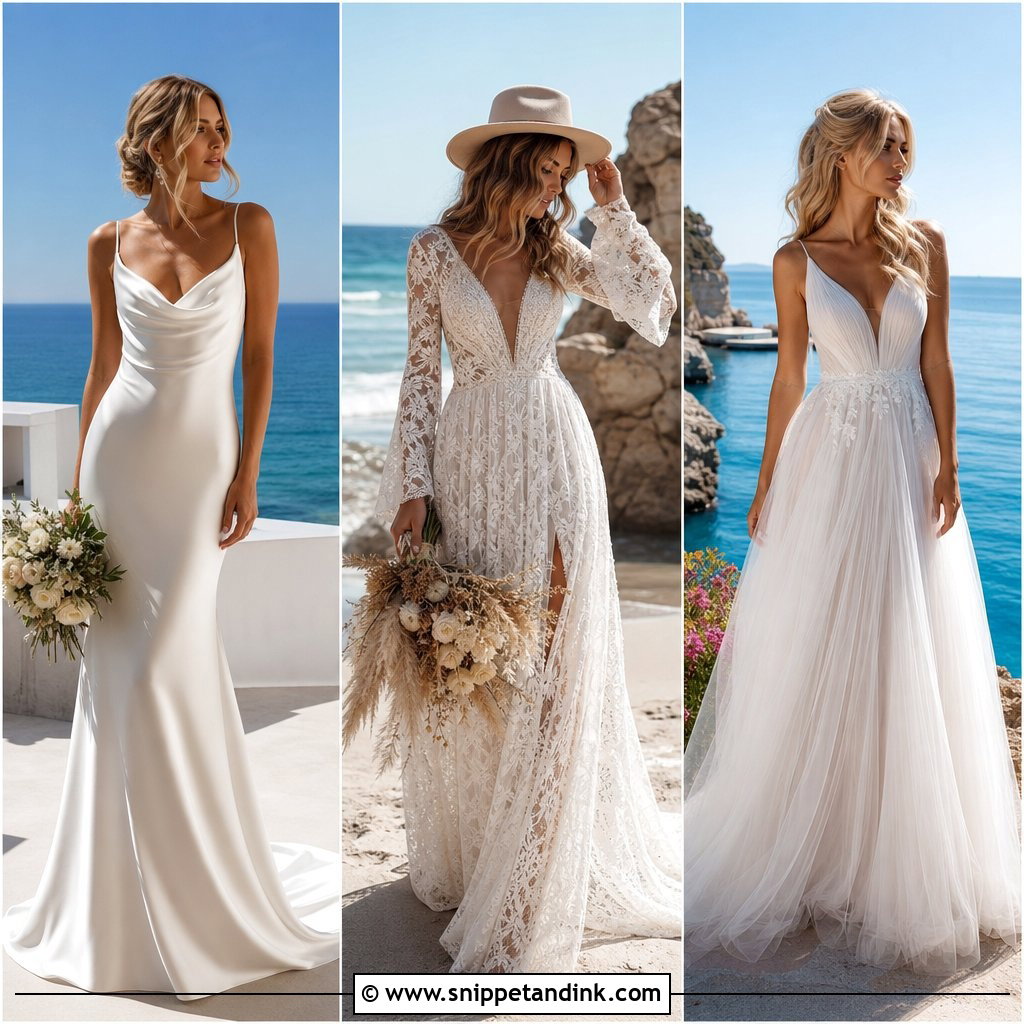
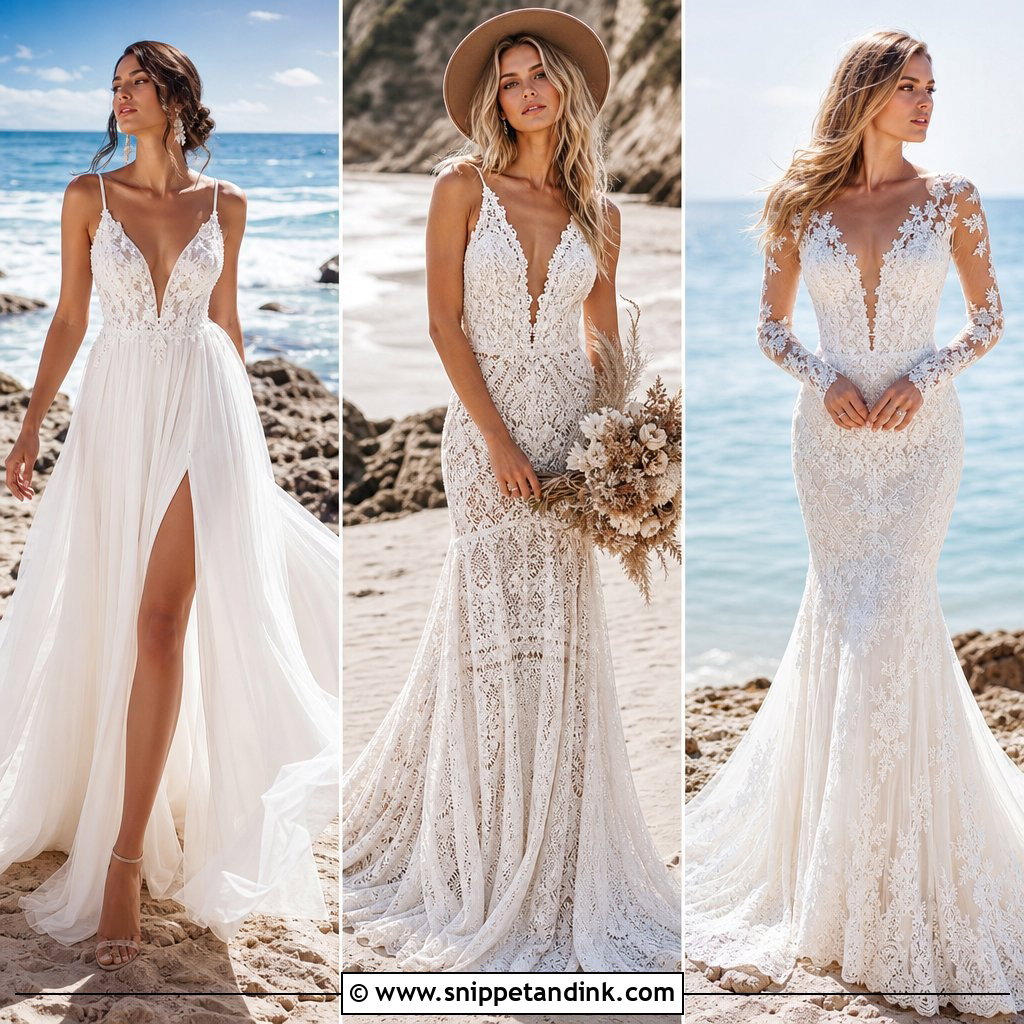
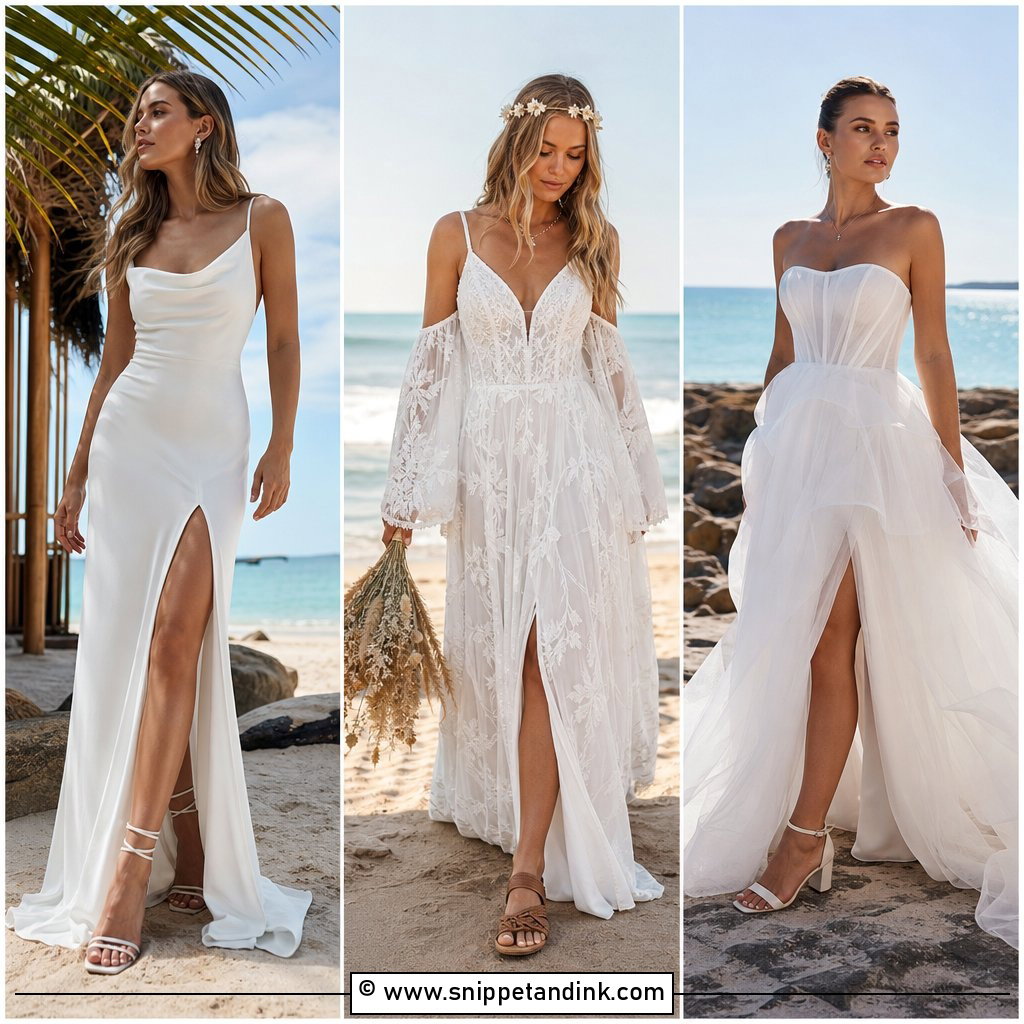
Chiffon A-lines are the beach default for good reason. Several thin layers move in the wind without bulk, and chiffon breathes far better in heat than satin. Keep the bodice fitted with narrow straps and the shade ivory or soft white against blue water. Pearl drops, a loose low bun and a barely-there fingertip veil suit it. On sand, wear flat metallic or barefoot sandals, because heels simply sink. Keep the train short or sweep length; a long chiffon train fills with sand within a few steps and starts to drag. White orchids, pale blue delphiniums and airy greenery finish the palette for a shoreline or resort lawn.
2. Silk Slip Ocean Wedding Dress
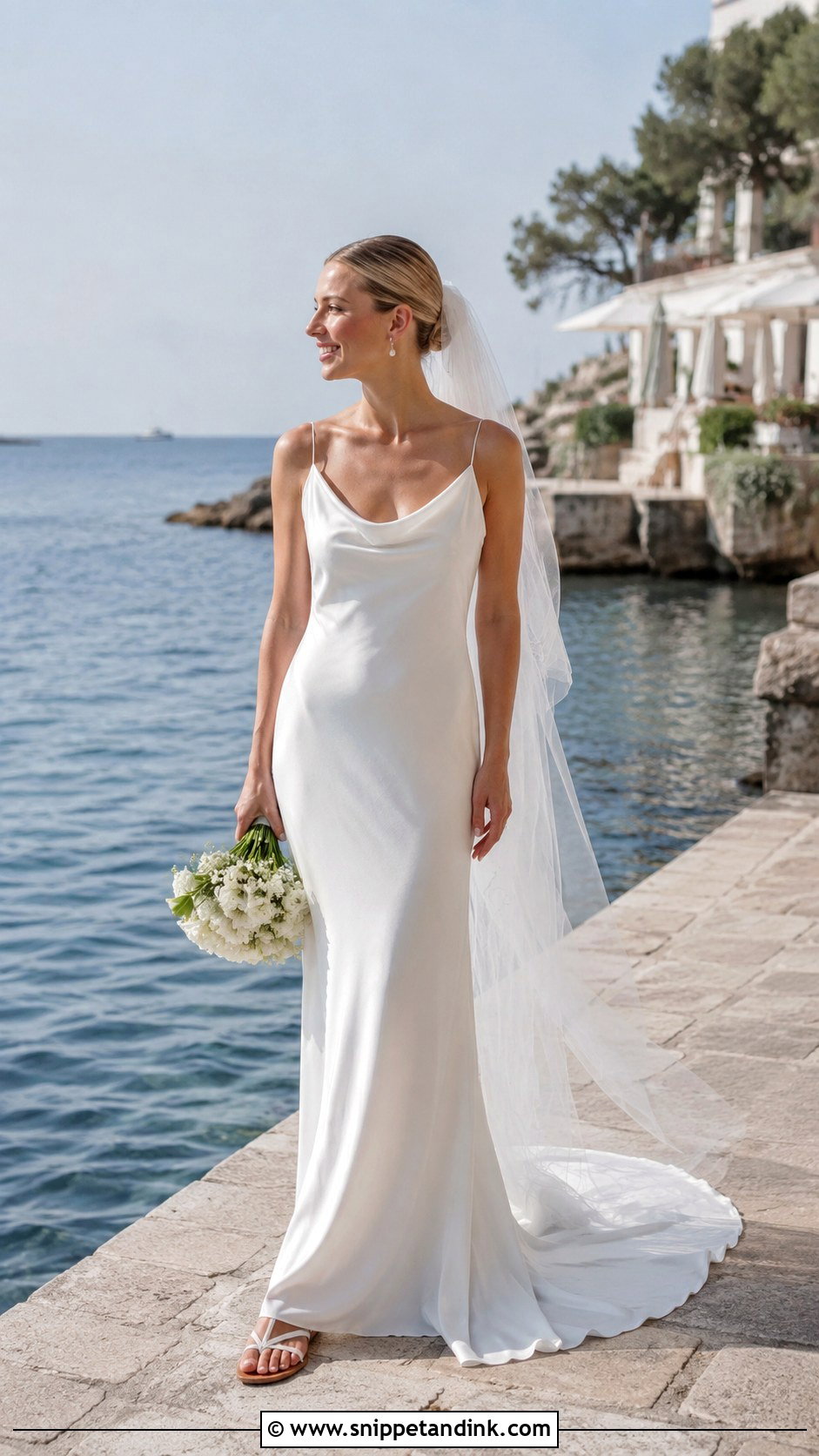
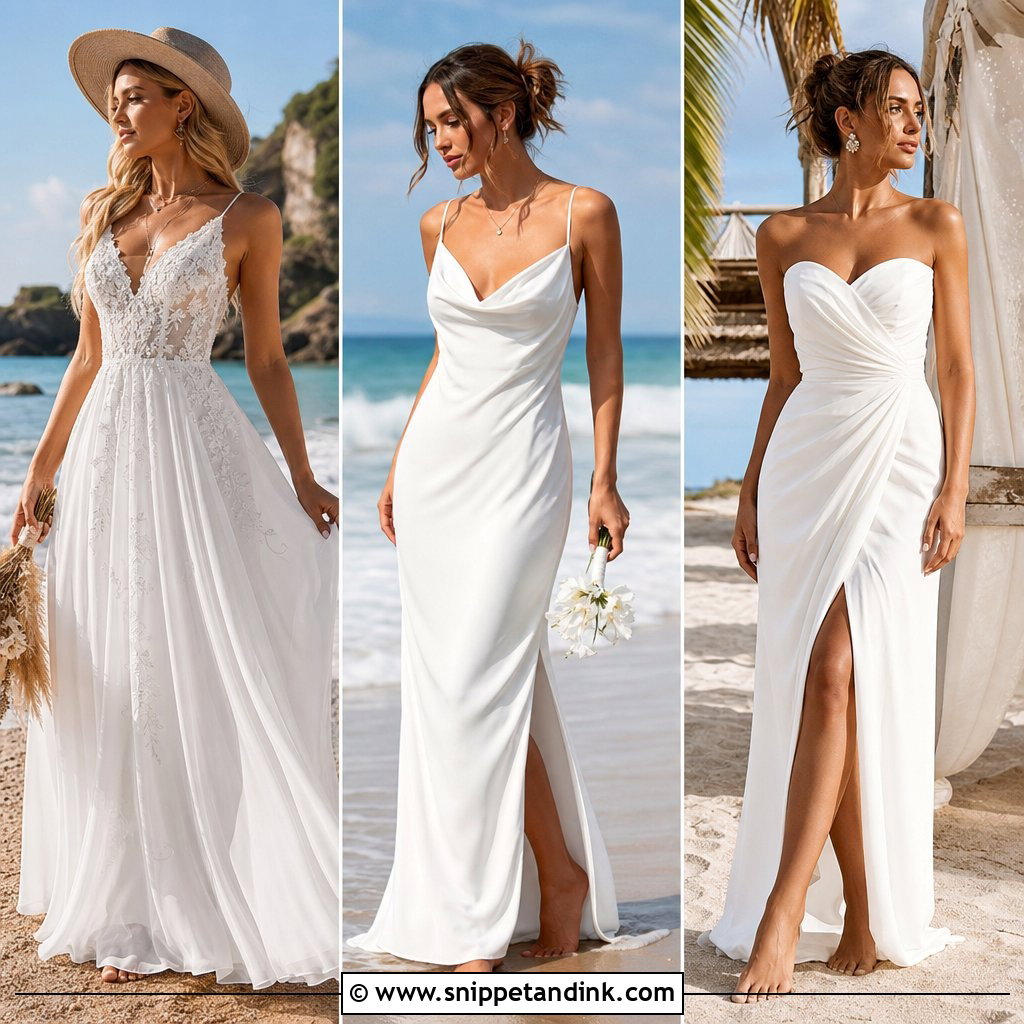
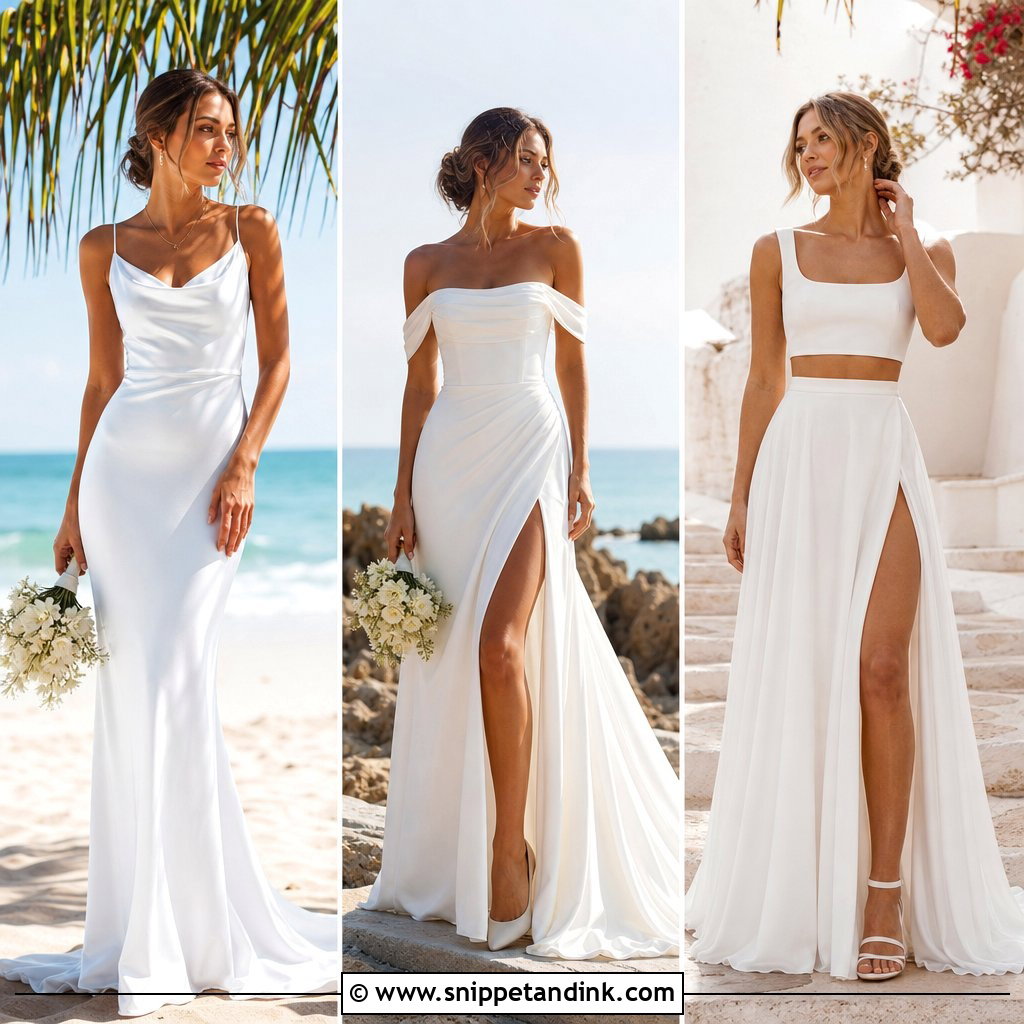
Silk catches low coastal light better than almost any fabric, which is why slip dresses look so right by the water. A bias cut drapes close to the body, so the fit has to be honest and the undergarments invisible. Adjustable spaghetti straps and a skirt that skims into a small train keep it simple. The catch is that silk water-spots, and sea spray or a damp hand can leave a mark, so stay back from the surf line. Sculptural pearl earrings, a cuff and a low knot finish it. A sheer cathedral veil works for photos and comes off when the wind rises. Flat leather sandals suit the ceremony, low block heels the deck.
3. Mermaid Lace Ocean Wedding Dress
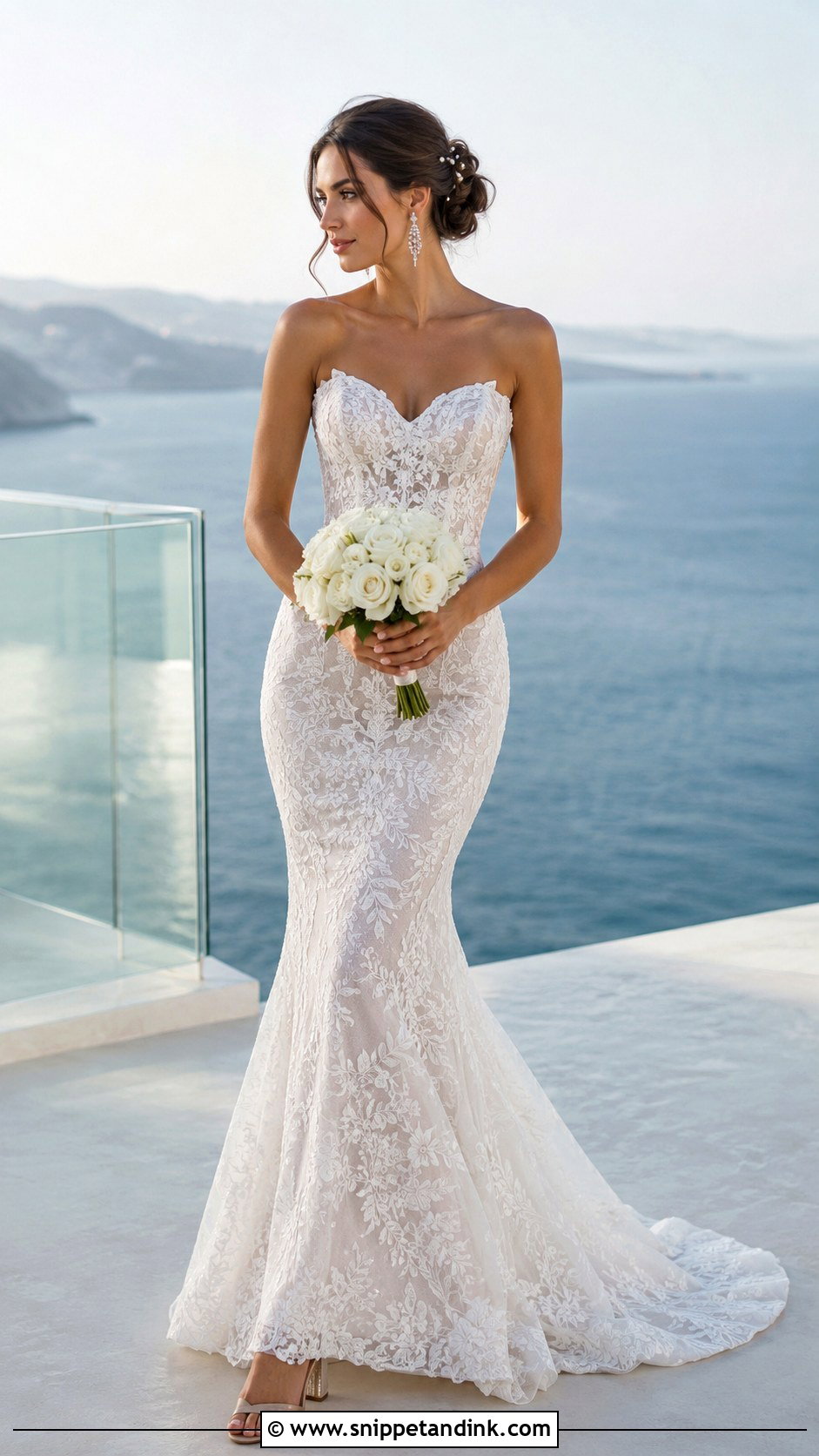
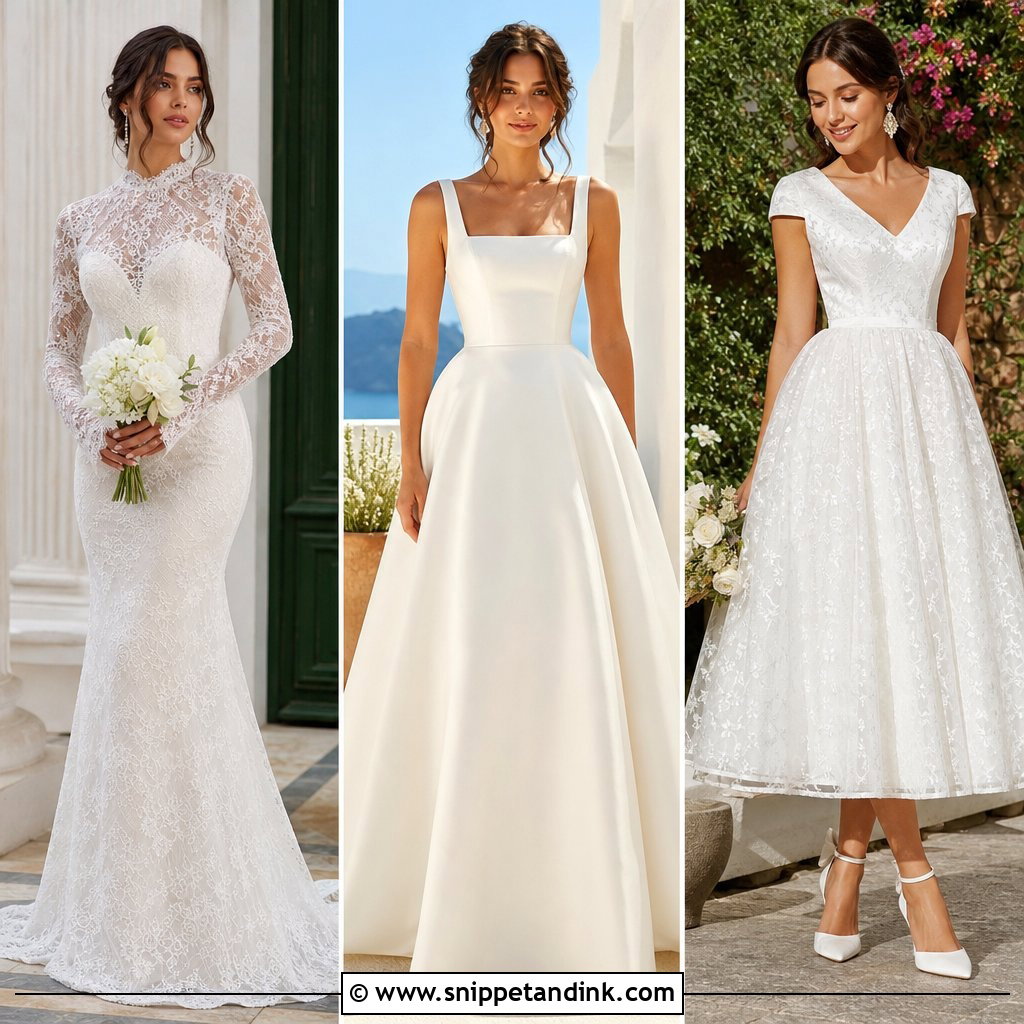
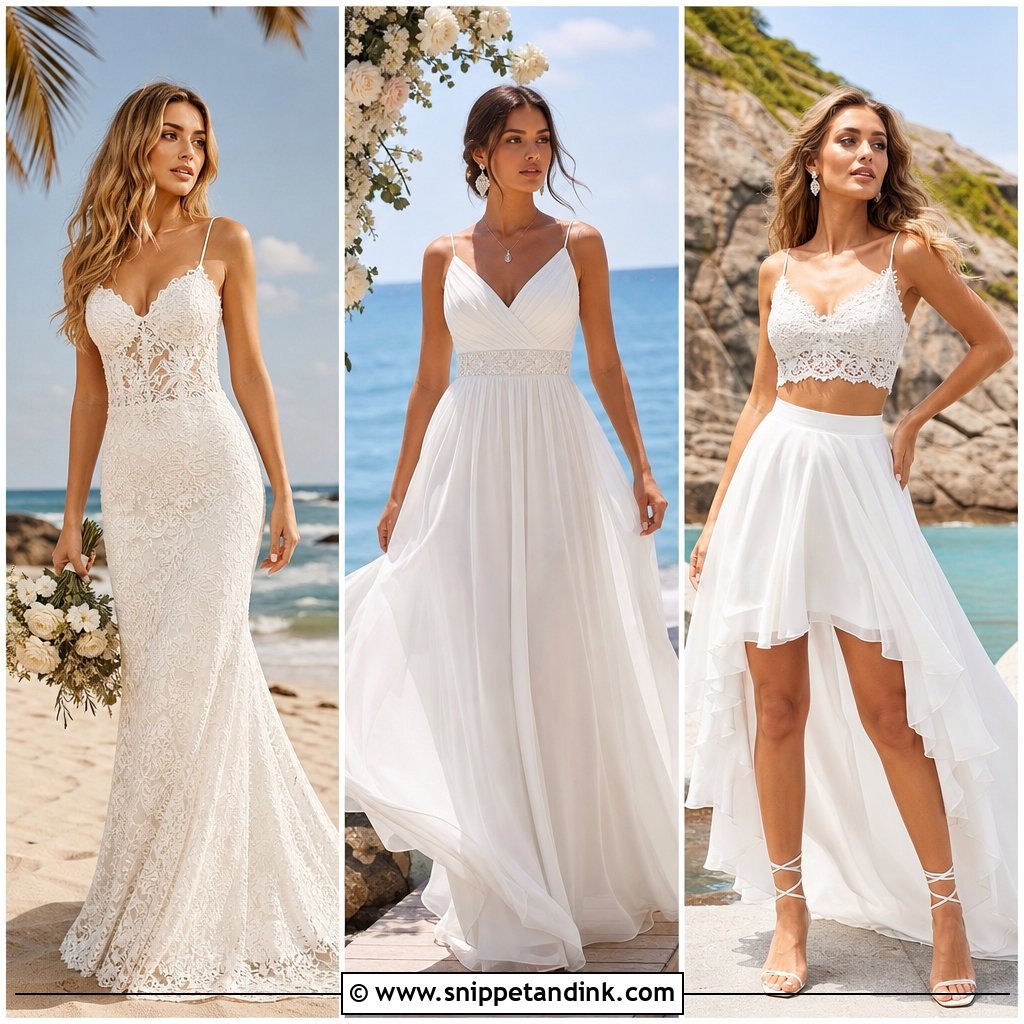
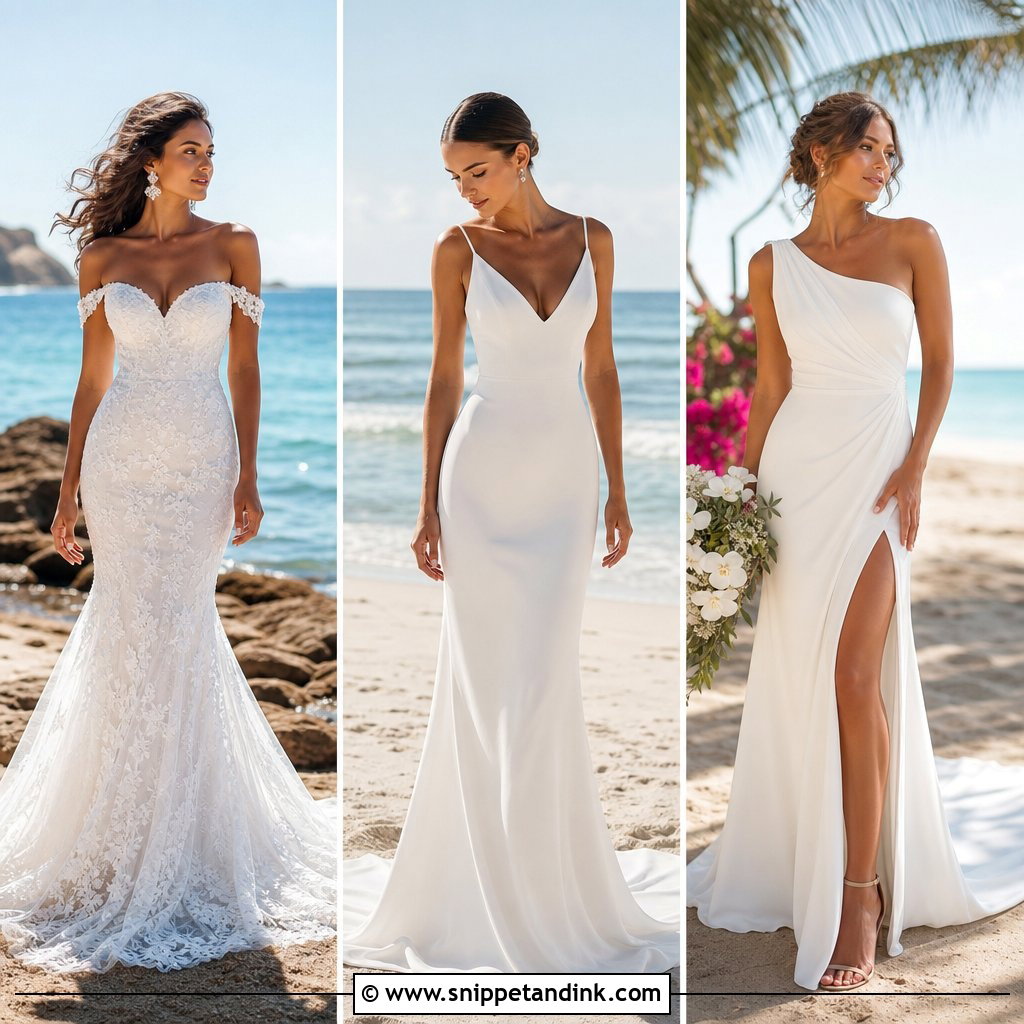
Mermaid is the obvious ocean shape, but on a beach it needs lighter materials than its ballroom cousin. Thin botanical or wave-patterned lace suits the coast; thick layered appliqué is heavy and hot. Because the skirt is fitted to below the knee, you’ll take shorter steps on sand, so practice walking on uneven ground in the dress before the day. A strapless or gently curved neckline balances the fit, and a removable overskirt adds movement for the ceremony. Crystal drops, a sleek side part and a short veil fixed with pearl pins suit it. Choose block-heel sandals on a platform, decorative flats on sand, and a compact bouquet of white roses.
4. Off-Shoulder Tulle Ocean Wedding Dress
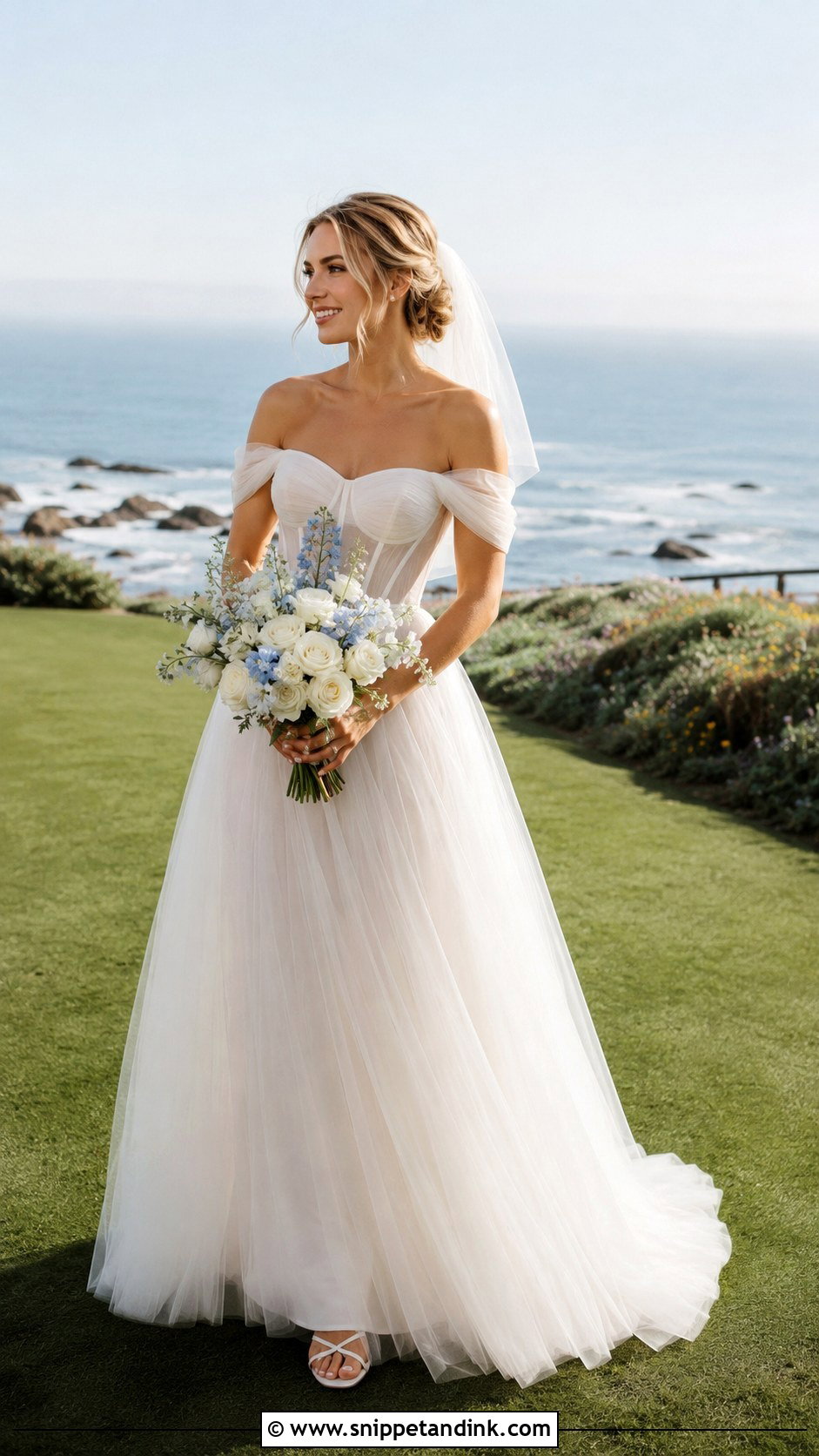
Tulle floats, and that’s both its appeal and its problem at the coast. Light layers look airy, but tulle also grabs sand and anything rough, so fewer soft layers serve you better than many stiff ones. An off-shoulder neckline with a supportive bodice and gathered sleeves frames the shoulders without restricting your arms. A loose updo, pearl studs and a comb with subtle crystal or shell-like detail suit it. A short veil is much easier to control in coastal wind than a long one. Ivory flat sandals and a bouquet of white garden roses, hydrangeas and pale blue flowers finish it for a beach, seaside garden or open-air resort.
5. Backless Satin Ocean Wedding Dress
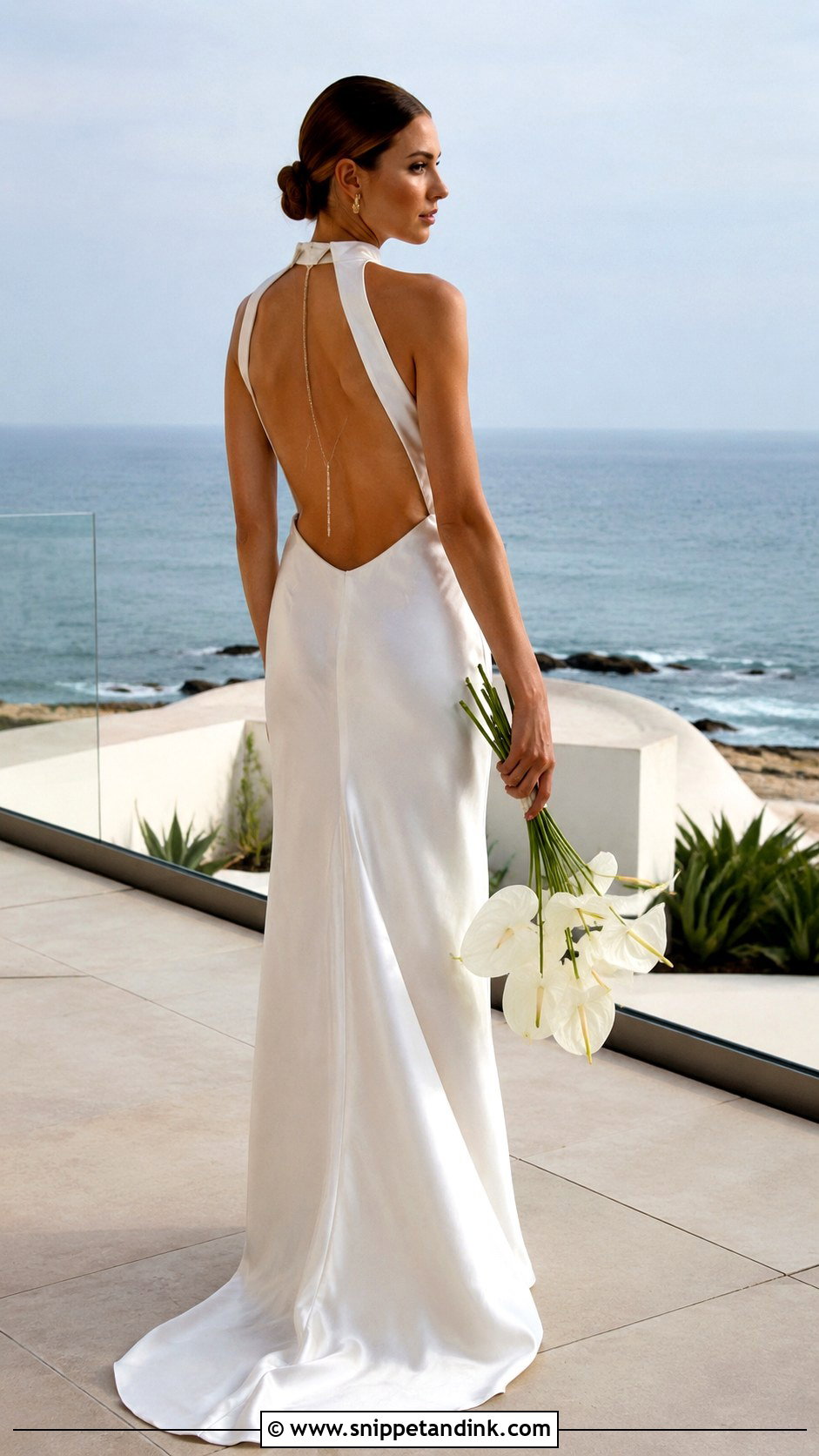
Most of your vows are seen from behind, which is a good argument for a backless satin gown at an oceanfront ceremony. A clean column or soft fit-and-flare with wide straps, a high front and a low back keeps the focus on shape. Matte satin forgives travel creases better than glossy silk satin. A back necklace or single pearl strand adds detail, and a neat bun keeps the back clear. Pointed flats, low slingbacks or sandals depend on the surface. Sort the bra question at the first fitting: built-in cups are far more reliable than adhesive ones in heat. White anthuriums in a structured bouquet suit a terrace at sunset.
6. Seafoam Blue Ocean Wedding Dress
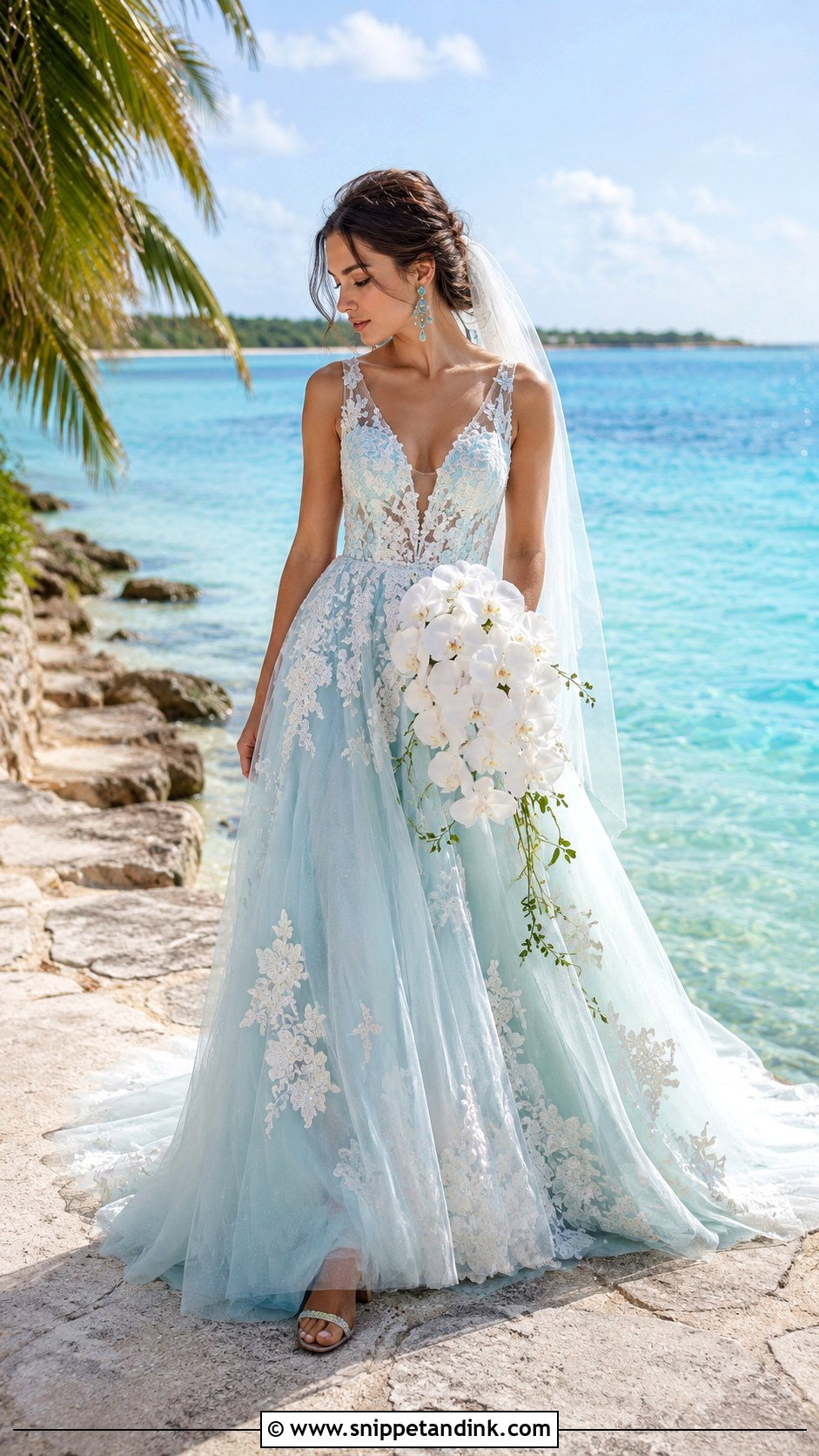
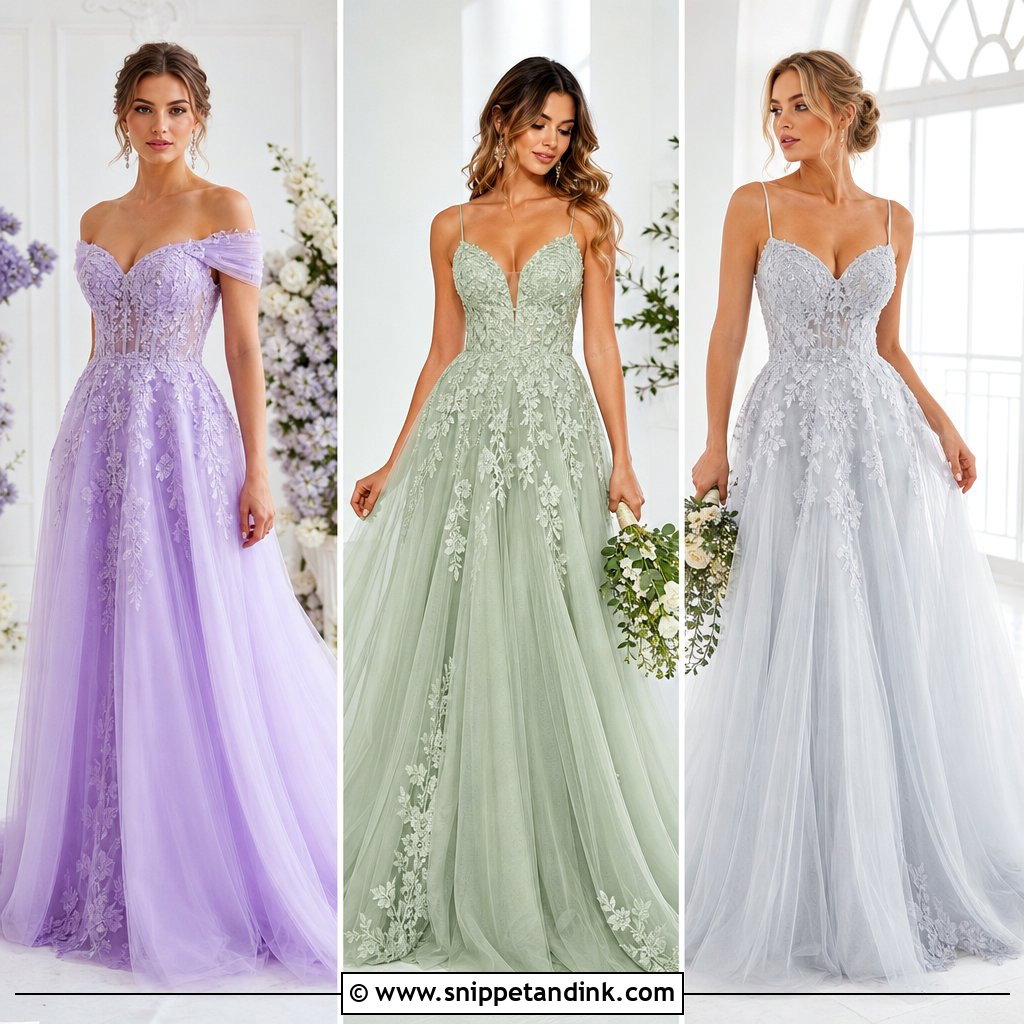
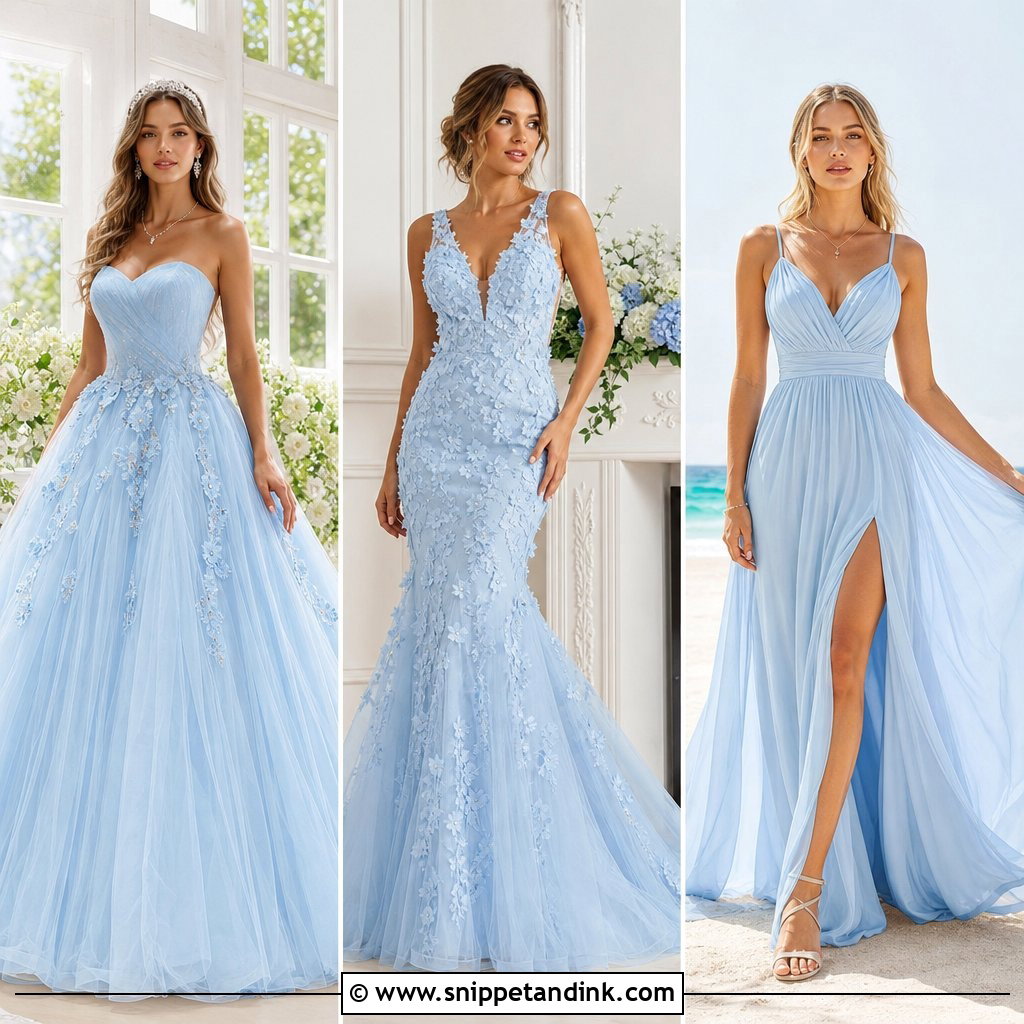
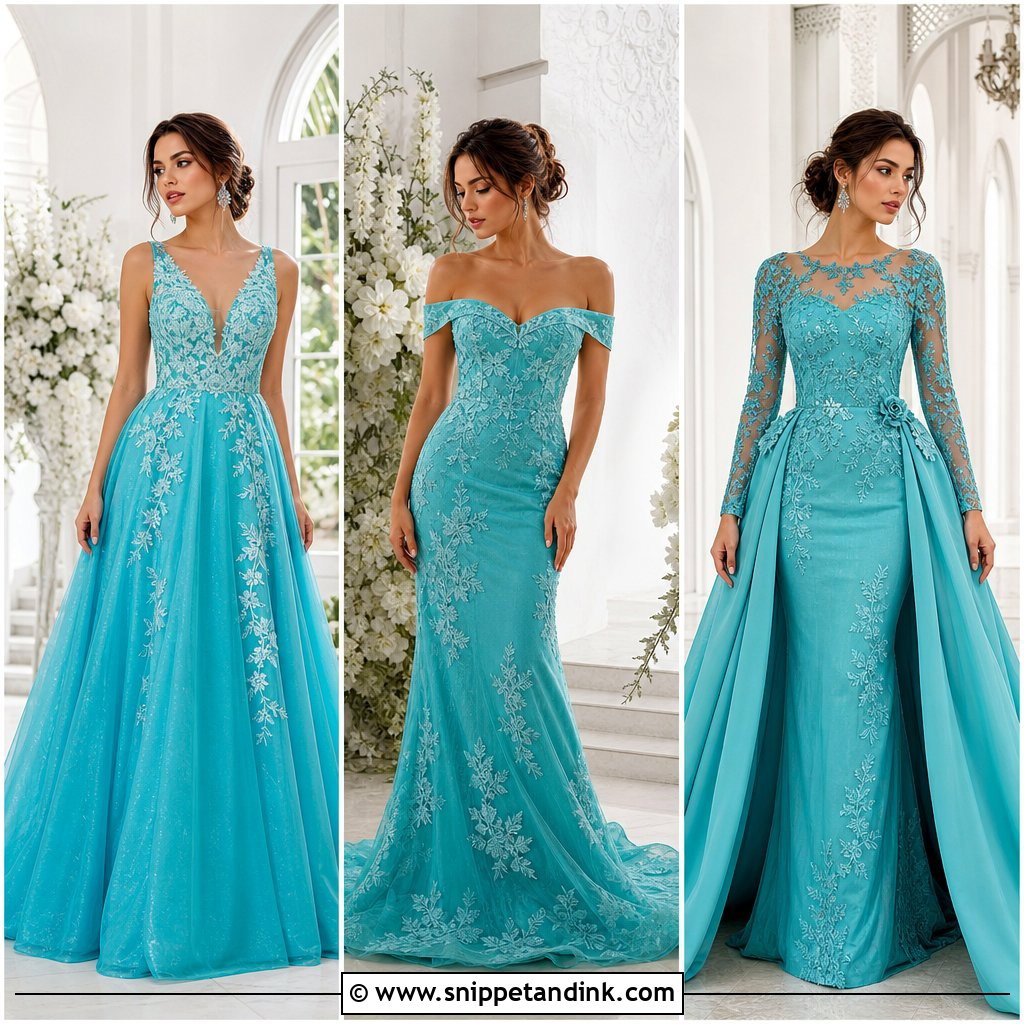
Seafoam is gentler than it sounds. A pale blue tulle or chiffon base with ivory lace appliqués over it keeps the dress bridal, and the lace gives the color depth. The bodice stays fitted and the A-line skirt flows. Pale colors shift with light, and in strong tropical sun seafoam can wash out almost to white, so look at it outdoors before ordering. Silver sandals, aquamarine earrings and a veil with a narrow satin edge suit it, along with a loose braided updo that holds in a breeze. Keep the bouquet mostly white, roses, orchids and eucalyptus, so it doesn’t fight the dress. Turquoise water makes it look intentional.
7. Pearl Beaded Ocean Wedding Dress
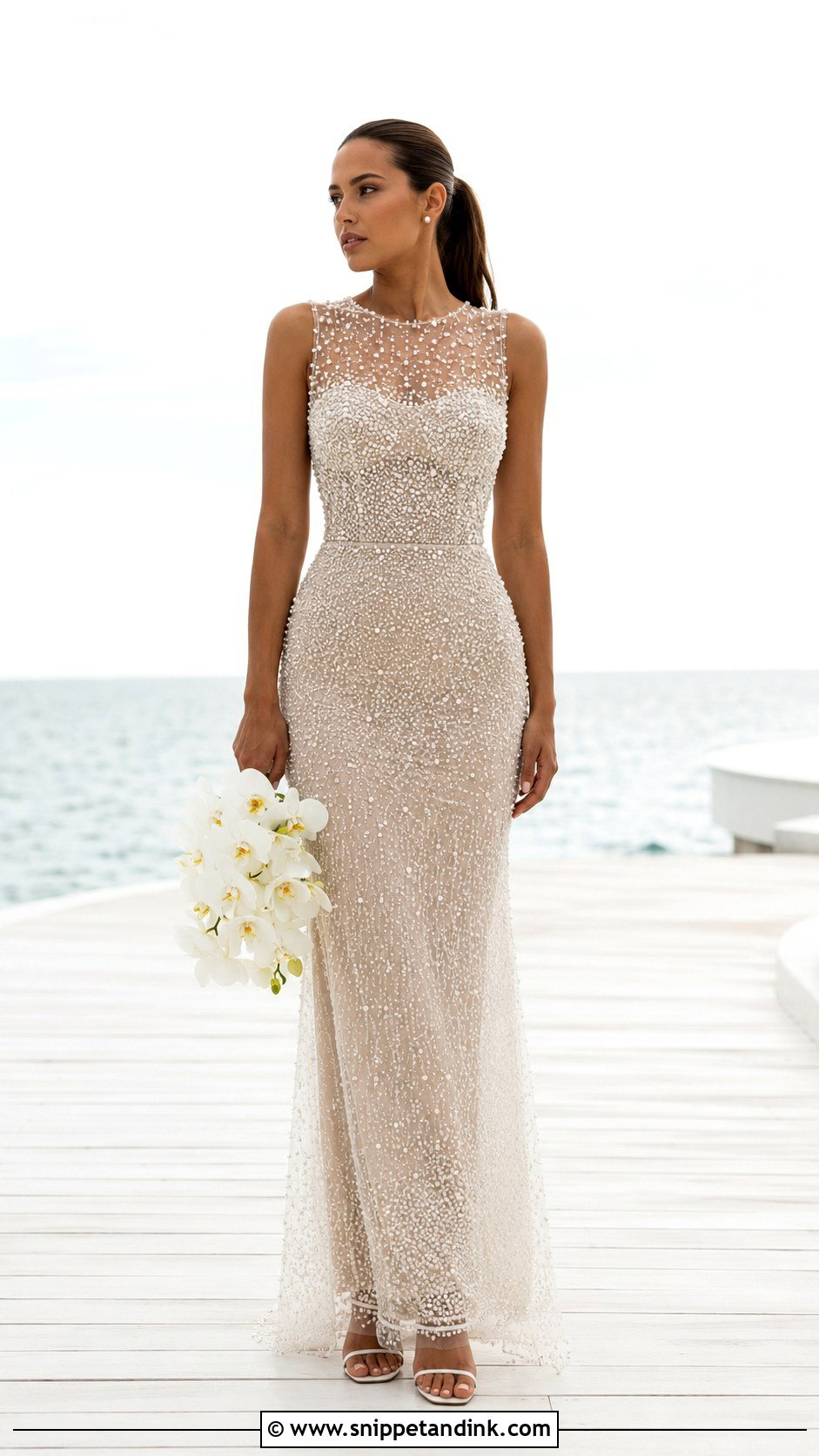
Scattered pearls across a sheer overlay on a sheath look like light on water; pearls from neckline to hem just look heavy. Beading adds real weight, which is why a lined bodice and lightweight skirt matter for comfort outdoors. I always ask how the pearls are attached. Beads stitched on individually stay put if one thread breaks, while beads strung in a line can run off like a snapped necklace. Pearl studs are all the jewelry you need. A sleek ponytail or smooth bun keeps it modern. Ivory strappy sandals, a small bouquet of white orchids and pale greenery, and a plain fingertip veil if you want one finish it.
8. Blue Ombre Ocean Wedding Dress
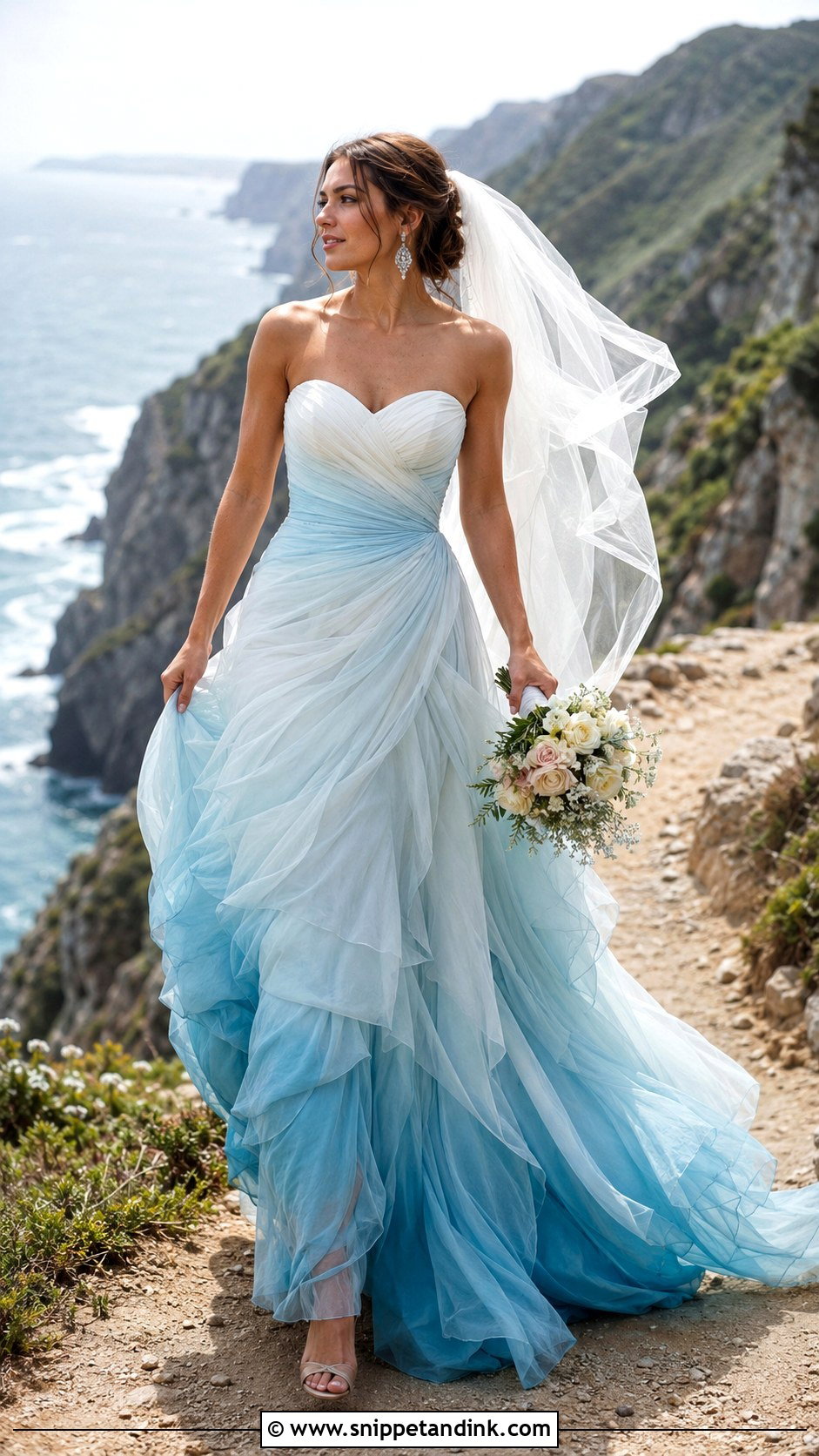
A blue ombre gown moves from an ivory or pale gray bodice into misty blue and deeper aqua at the hem, like water getting deeper. Layered transparent fabrics such as chiffon, tulle or organza make the fade soft. Keep the neckline simple, a strapless sweetheart or narrow V, so the gradient leads. Silver earrings, neutral sandals and a plain white veil finish it, with a white bouquet and a few pale blue accents. The darkest color sits at the hem, the part that meets the sand. Damp patches barely show on aqua, but dry pale sand on it does, so keep a soft brush in your bag for the boardwalk and cliff portraits.
9. Coral Lace Ocean Wedding Dress
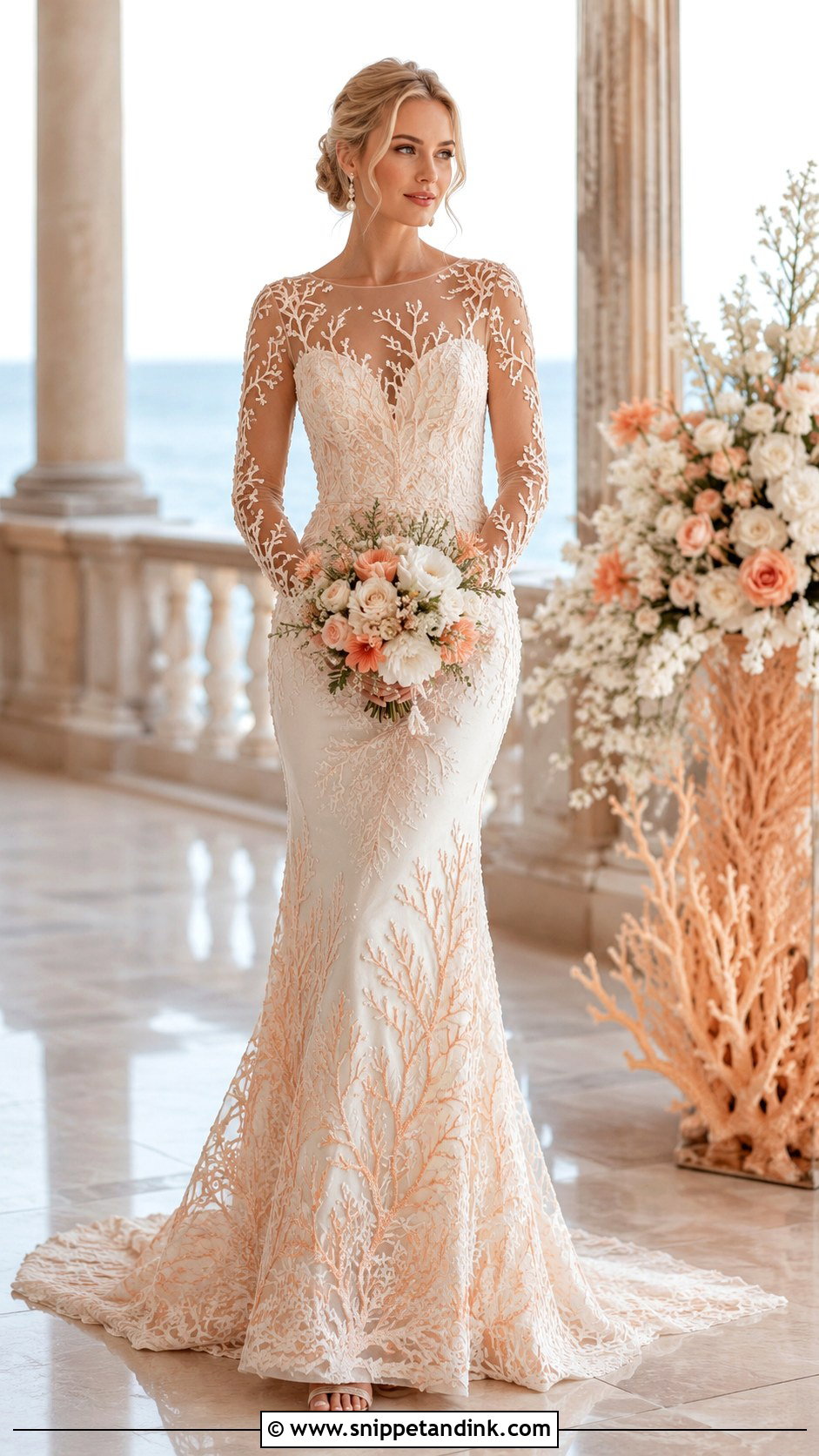
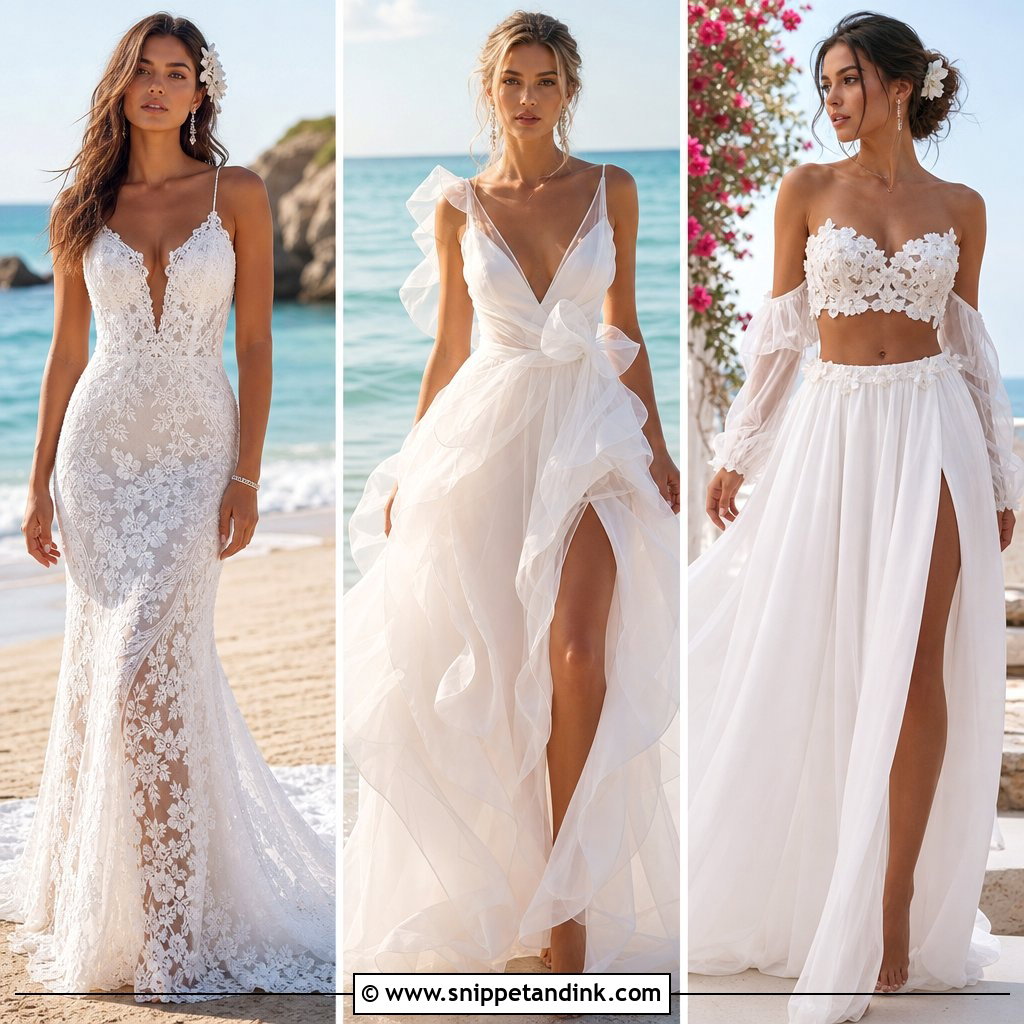
Branching lace that resembles coral gives texture without anything literal from under the sea. A fit-and-flare or A-line with the motifs across the bodice and down the skirt shows it best. Line it in ivory, champagne or pale blush, which pushes the dimensional lace forward. Pearl earrings, a textured low bun and neutral metallic block heels suit it, with white roses, peach ranunculus and light greenery adding a soft coral note, and a plain veil. Long lace sleeves are warm, so for a tropical wedding I’d keep the coverage in an illusion neckline and drop the sleeves. A formal seaside ceremony or coastal ballroom gives it the right setting.
10. Shell Embroidered Ocean Wedding Dress
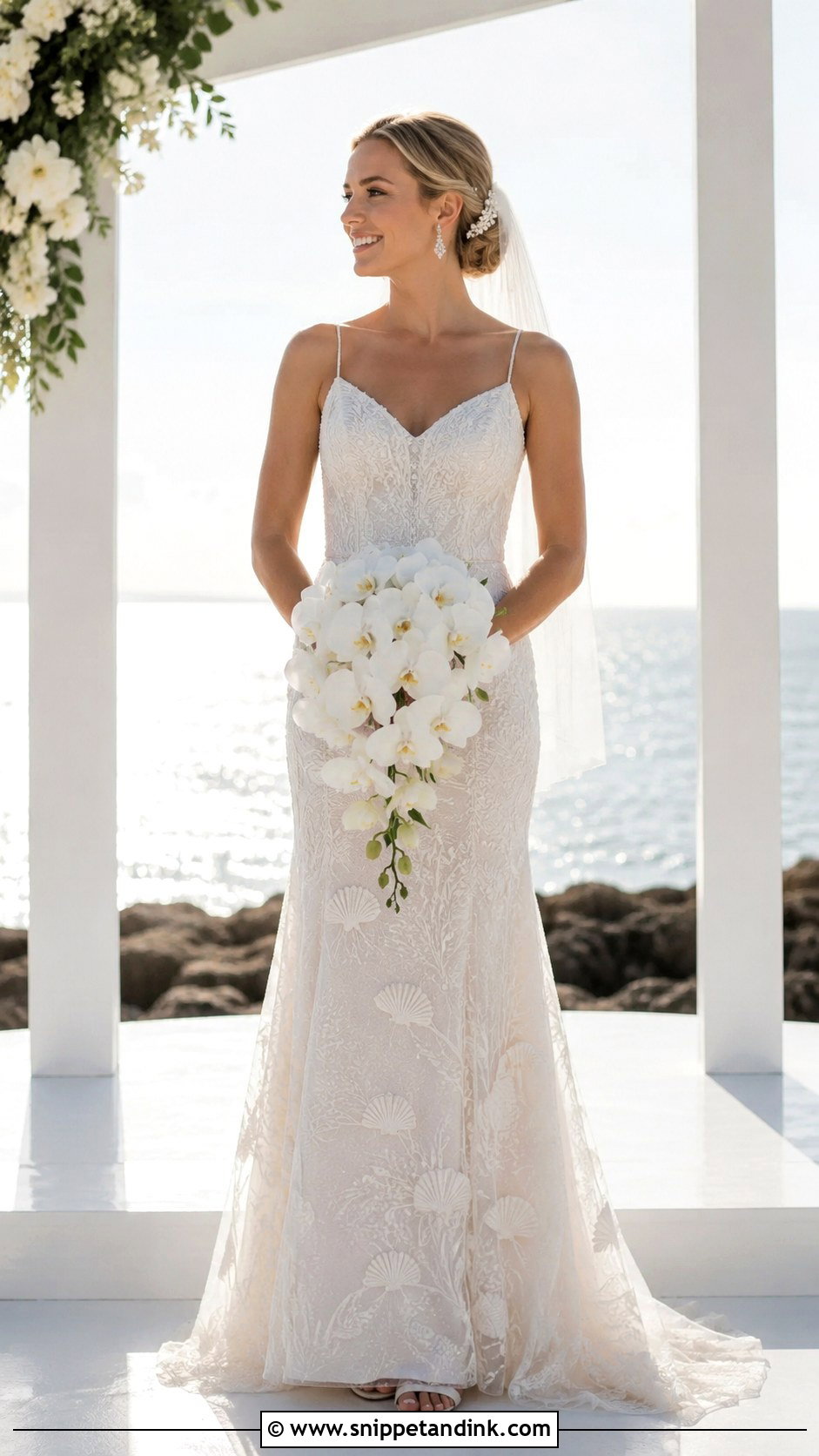
Shells are where coastal styling most often tips into theme party. I keep it to a single reference: subtle fan-shaped motifs, scalloped beading or embroidery that suggests shells, on a fitted bodice over a soft A-line. After that, no shell earrings and no starfish in the hair. Crystal earrings, a pearl comb and ivory sandals are enough, with a short plain veil so the embroidery leads. White orchids, roses and trailing greenery finish it. On a beach, at an oceanfront hotel or for a destination wedding, that restraint is exactly what makes it look like couture rather than decoration.
11. Boho Crochet Lace Ocean Wedding Dress
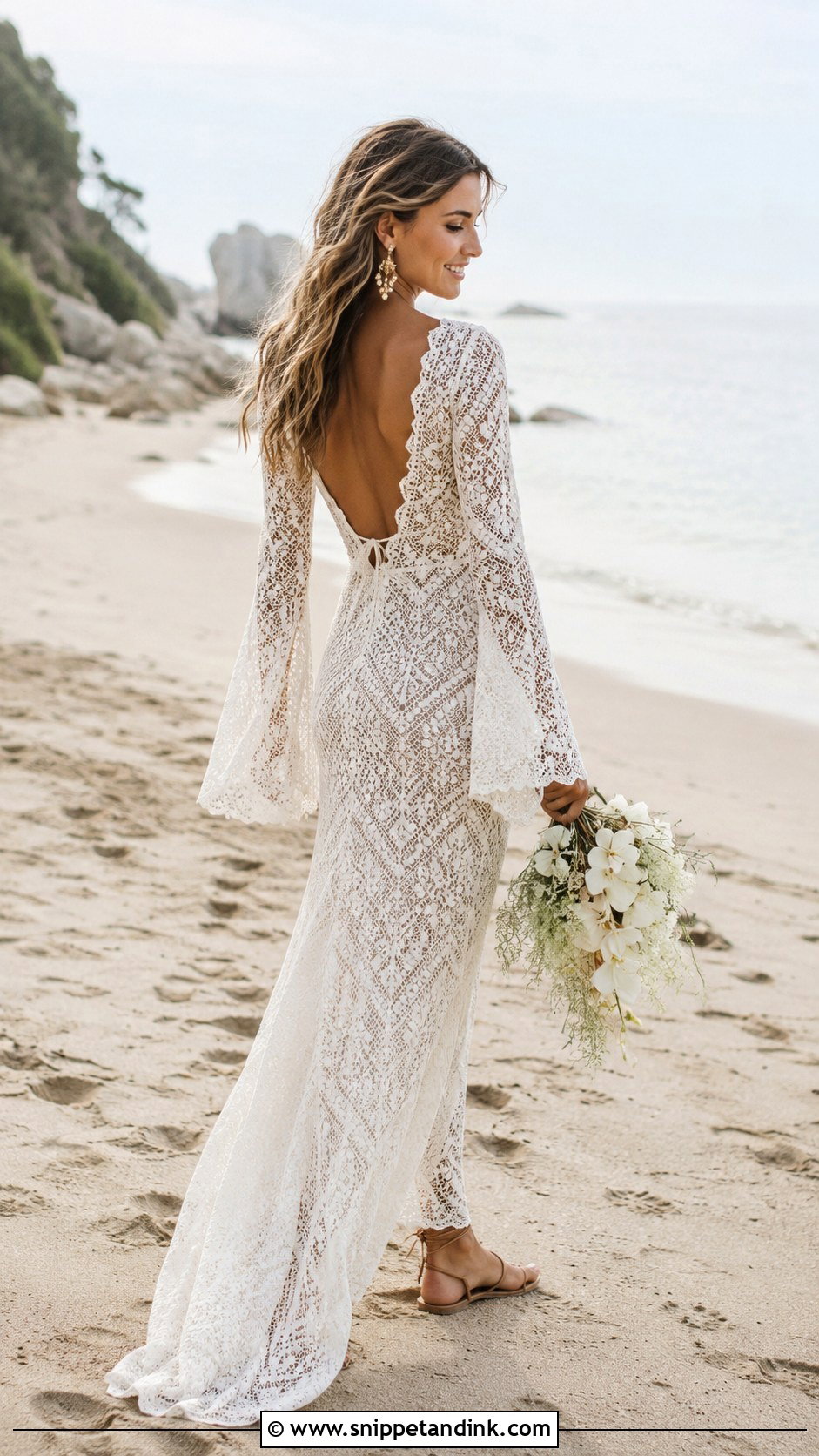
Crochet lace has a handmade look that suits a small beach ceremony. Choose a sheath or softly flared gown with geometric lace, a lined bodice and an open back. Crochet is heavier than it looks and can stretch if it hangs for weeks, so I store these folded with tissue until the morning. Bell or slim sleeves add a boho feel but need to stay light in heat. Loose waves, a simple floral pin and small gold earrings suit it. Tan leather sandals or woven flats are kind on sand. Add a loose bouquet of white flowers and pampas-style grasses, and a plain veil or none at all.
12. High-Low Ocean Wedding Dress
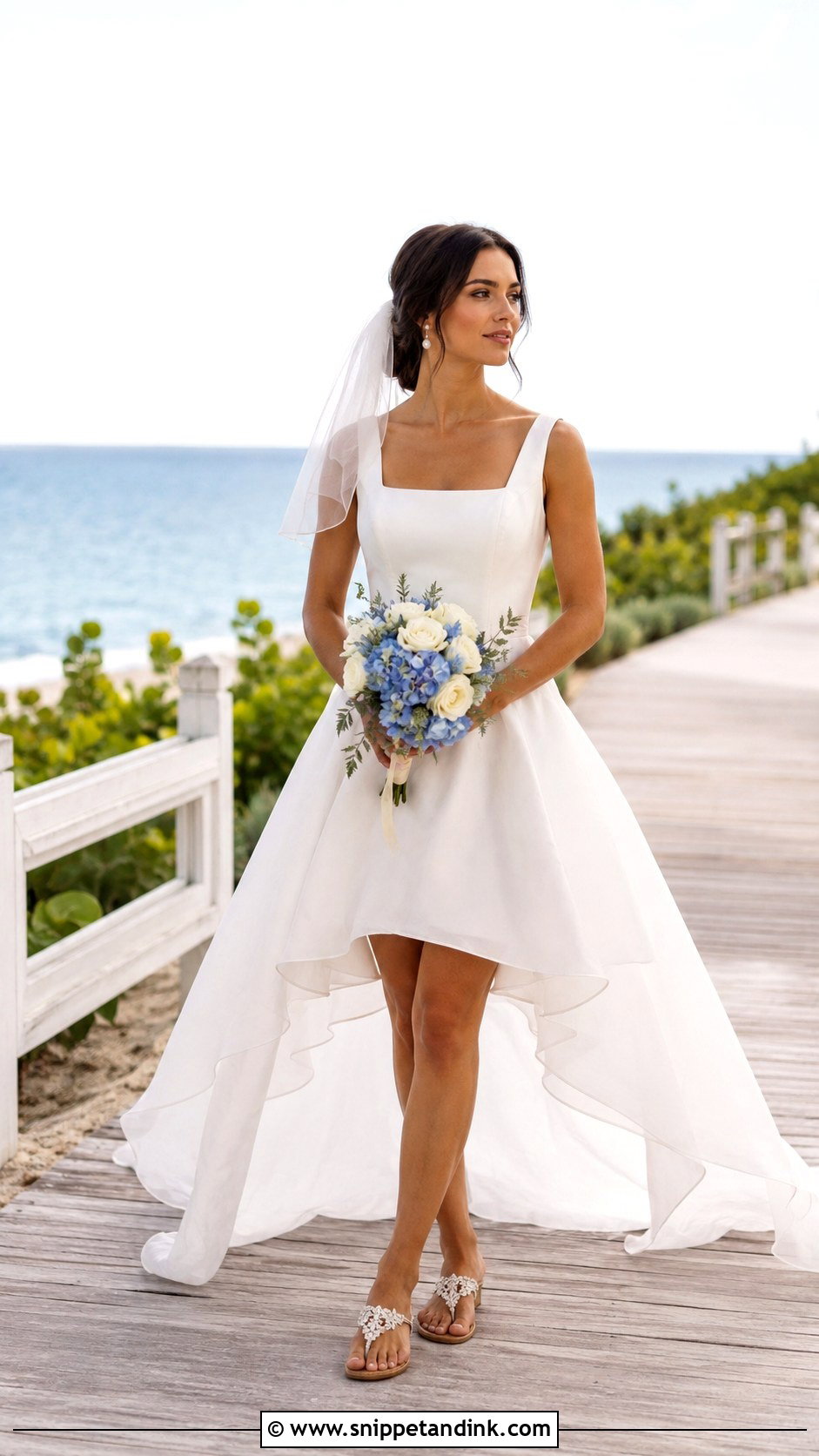
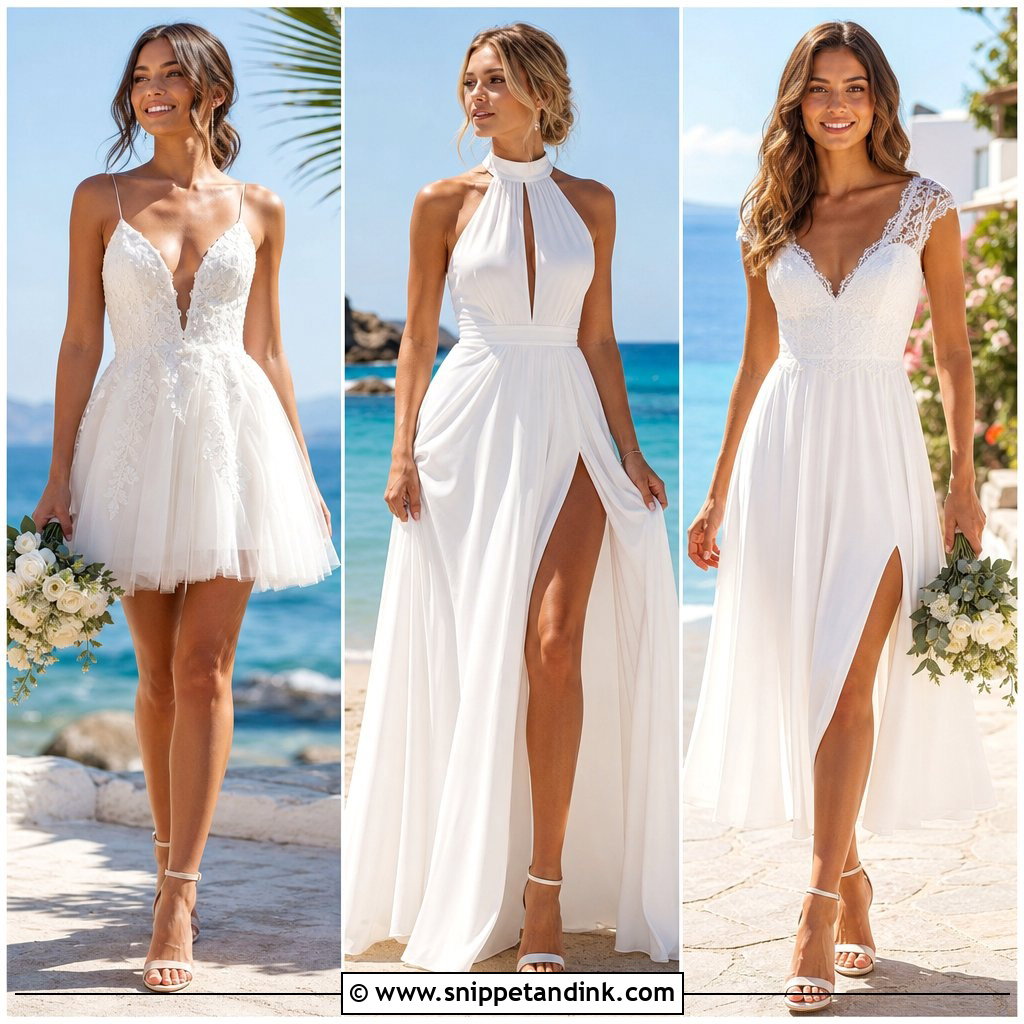
High-low is the practical answer to wet sand. The front sits at knee or midi length, and the back flows long in chiffon or soft organza. It puts your shoes on show, so embellished flat sandals earn their place. A fitted strapless bodice, square neck or halter balances the skirt. Pearl drops and a polished ponytail suit it, and a short veil or fine headband looks better than a cathedral veil with this length. The one thing I check is the curve of the hem from the side; a steep drop can look unfinished, so ask your seamstress to grade it gradually. White roses and blue hydrangeas tie it to the coast.
13. Tea-Length Ocean Wedding Dress
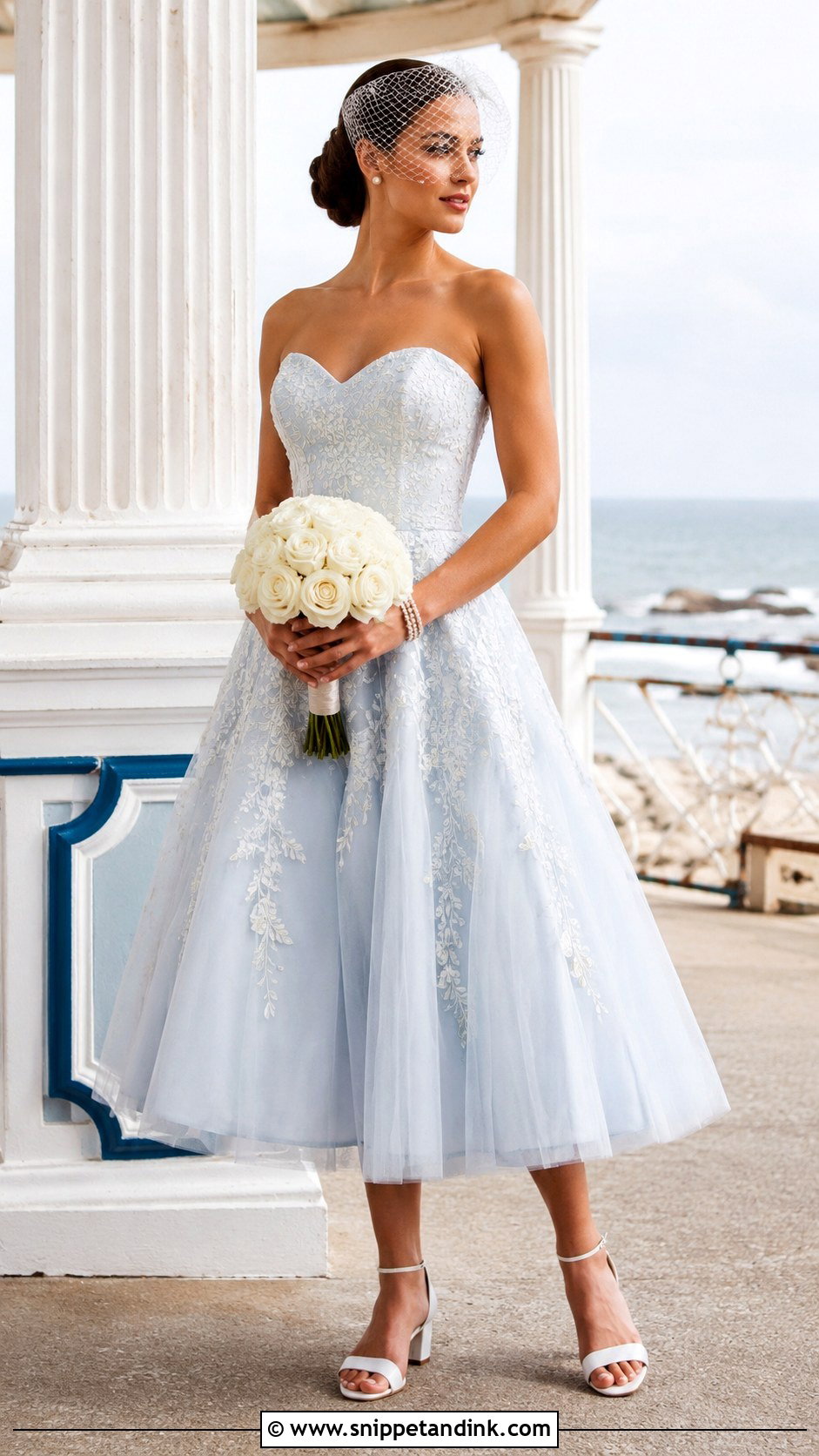
Tea length is comfortable on a beach and has a vintage feel to it. Look for a fitted bodice with a boat, sweetheart or square neck and a full skirt falling between knee and ankle, in lightweight satin, organza or embroidered tulle. Low block-heel sandals, pearl studs and a birdcage veil or short blusher suit the proportion. A neat bun or curled bob works with the shorter line, and white roses, pale blue delphiniums and greenery make a classic rounded bouquet. Because the hem clears the sand, you can walk the shoreline for portraits without anyone carrying your train, then go straight to a patio party.
14. Detachable Overskirt Ocean Wedding Dress
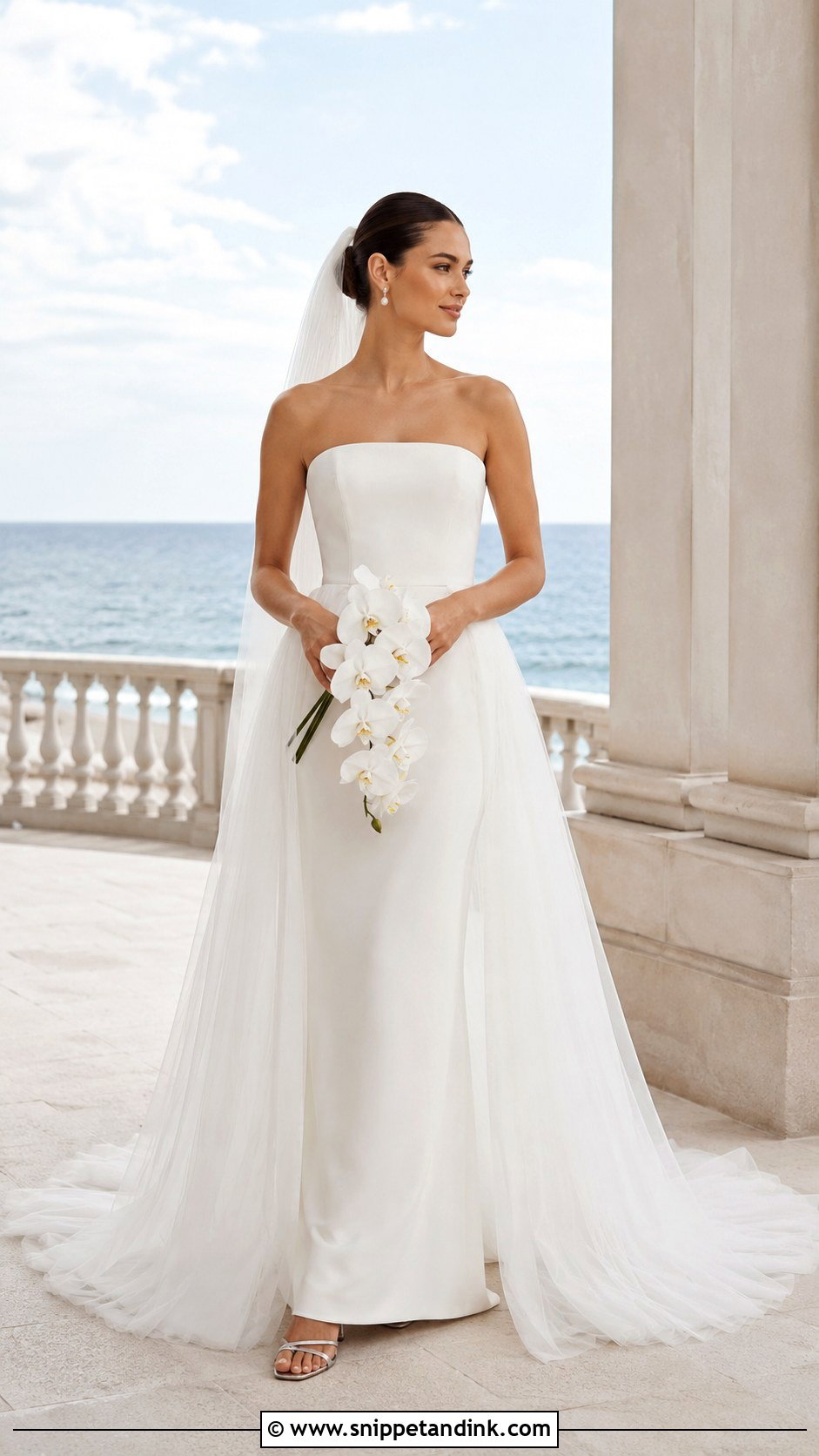
A detachable overskirt gives you two dresses. Underneath sits a fitted crepe, lace or satin column; over it goes a light tulle or organza skirt with a manageable train for the ceremony, and off it comes for dinner. The waistband is what I test. It should close with hooks or a hidden zip that doesn’t mark satin, and one of your party should practice removing it before the day, not in a sandy beach bathroom. Pearl earrings, a sleek updo and low metallic heels suit both versions. A fingertip veil and white orchids keep it clean, and you get the dramatic walk plus a practical silhouette for beach photos.
15. Cape Sleeve Ocean Wedding Dress
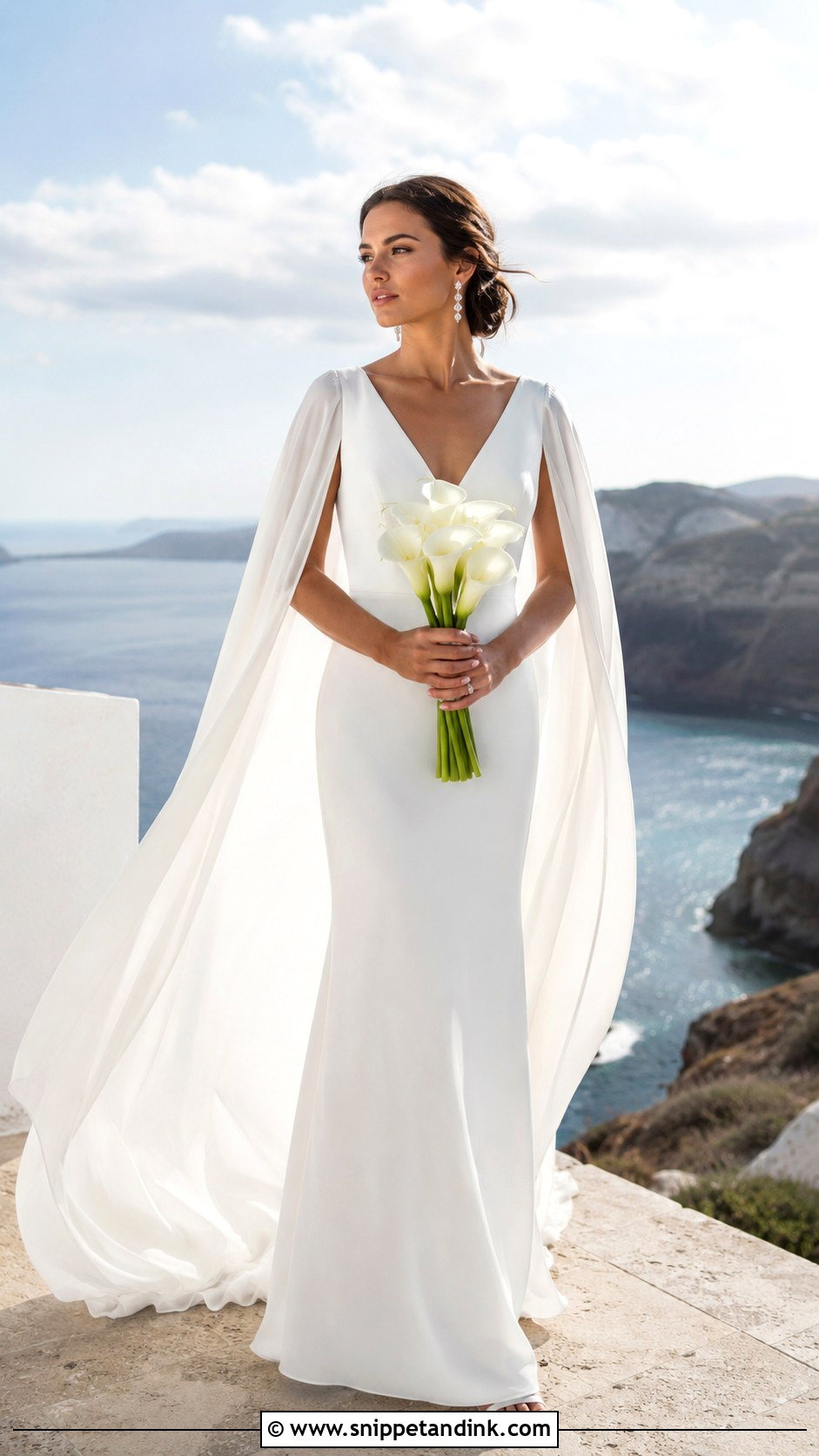
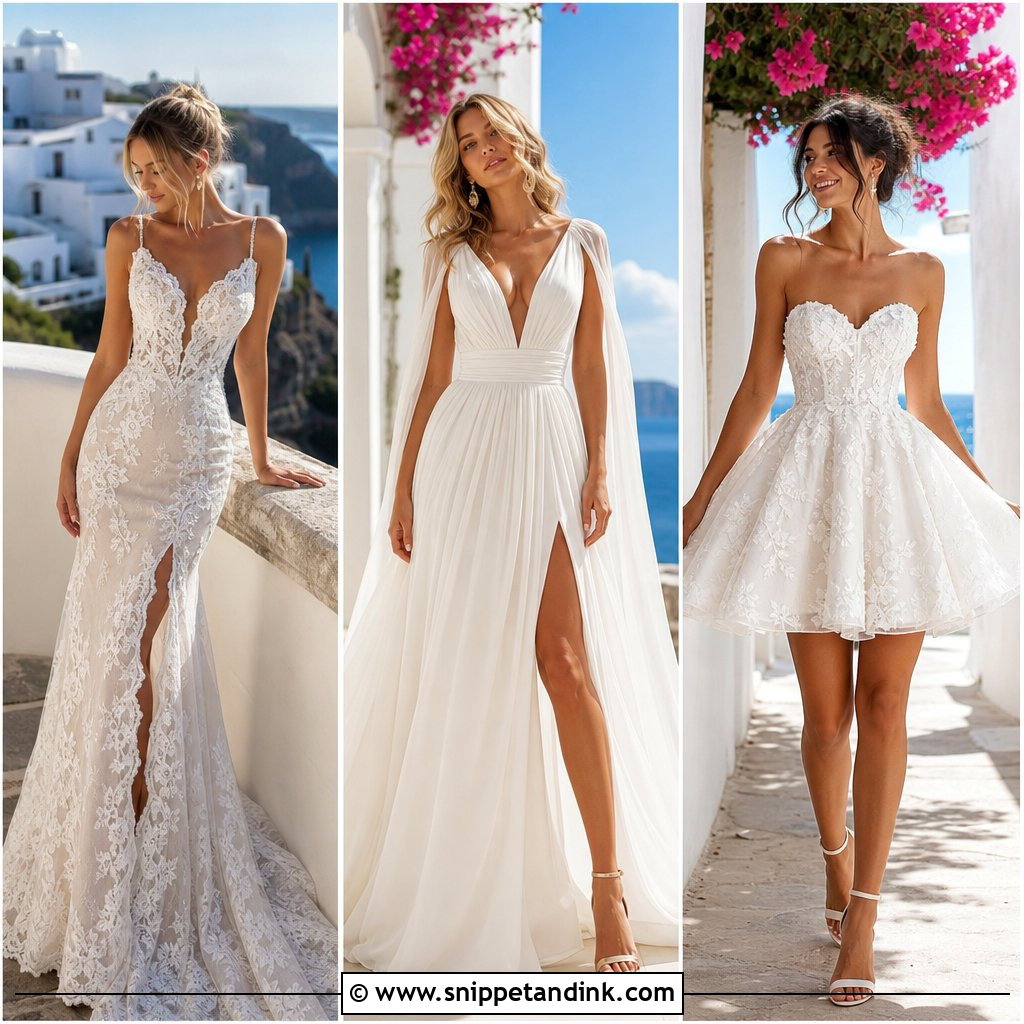
Cape sleeves are chiffon panels that fall from the shoulders behind the arms, often in place of a veil. On a cliff or terrace they move constantly, which looks dramatic in photographs and needs managing in person. I keep them ending just off the floor, never trailing. A simple sheath or A-line with a V-neck or draped neckline balances the volume. A low bun, small crystal earrings and silver or ivory sandals are enough; skip the veil and any statement necklace. White calla lilies or orchids suit the clean line. If the forecast is gusty, a small hidden wrist loop on each panel stops them wrapping around your bouquet.
16. One-Shoulder Draped Ocean Wedding Dress
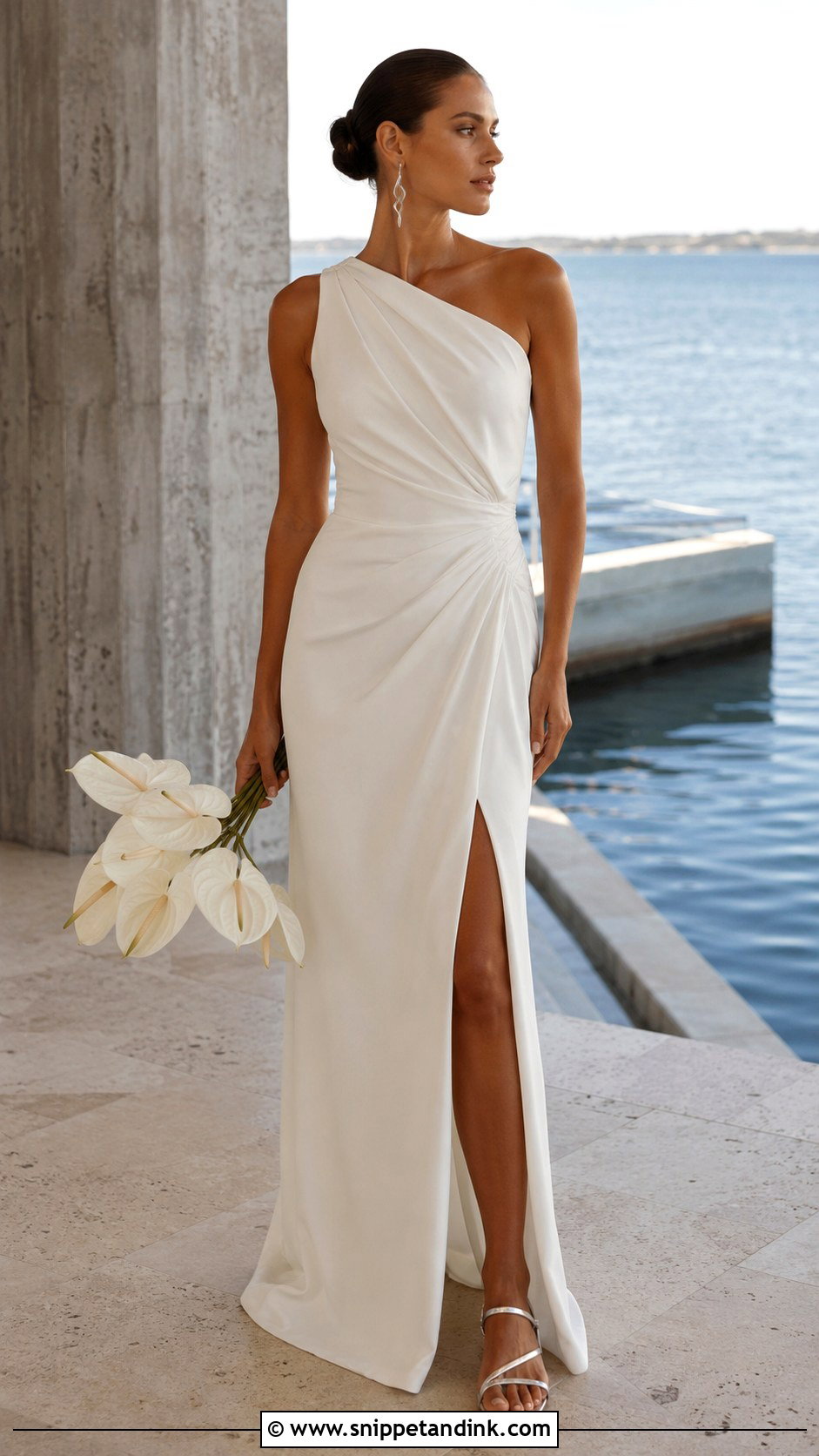
Asymmetric draping echoes a wave, and lightweight crepe, chiffon or silk with soft gathers across the bodice suits it best. Gathered fabric hides creases and damp patches better than flat panels do, which matters in heat. A subtle side slit makes walking easier. Wear one statement earring on the open side or small matching drops, and put your hair into a side-swept bun to show off the neckline. Metallic flat sandals and a compact bouquet of white anthuriums, roses and eucalyptus finish it. Skip any decorated veil, which only fights the asymmetry. Modern resorts, yachts and waterfront terraces suit it.
17. Square Neck Linen Silk Ocean Wedding Dress
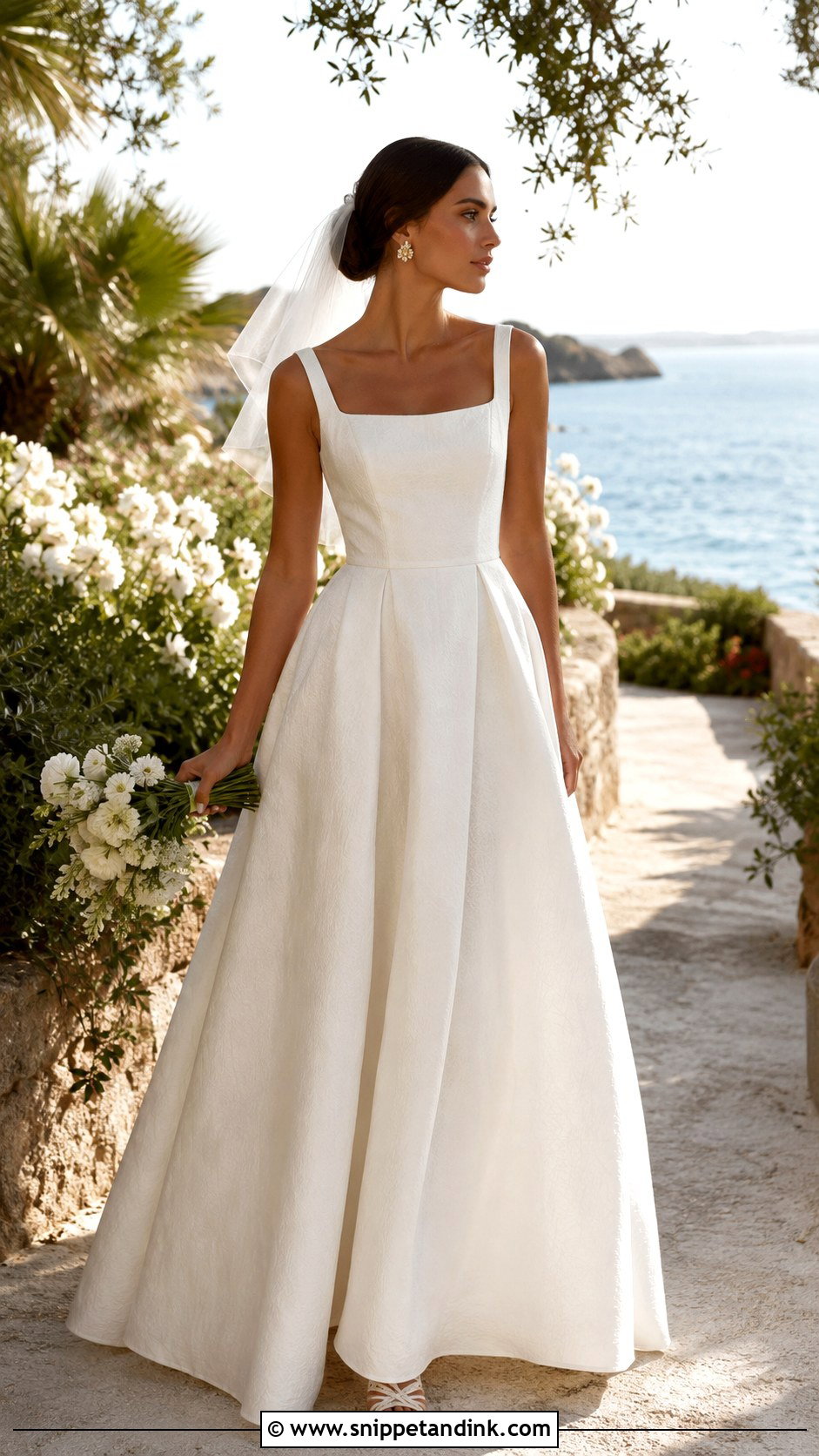
Linen-silk has a matte, slightly textured finish that suits the coast and breathes well in heat. It also creases, and I tell brides that plainly: you won’t look pressed after the ceremony, and that’s part of its character. A square-neck A-line with wide straps, a defined waist and a pleated skirt holds its shape well despite the creasing. Pearl buttons down the back add a bridal touch. A smooth low bun, small gold earrings and woven ivory sandals suit it, and a shoulder-length veil handles the breeze. White roses, chamomile-like flowers and fresh greenery finish it for a bride who’d rather have good tailoring than lace.
18. Flutter Sleeve Ocean Wedding Dress
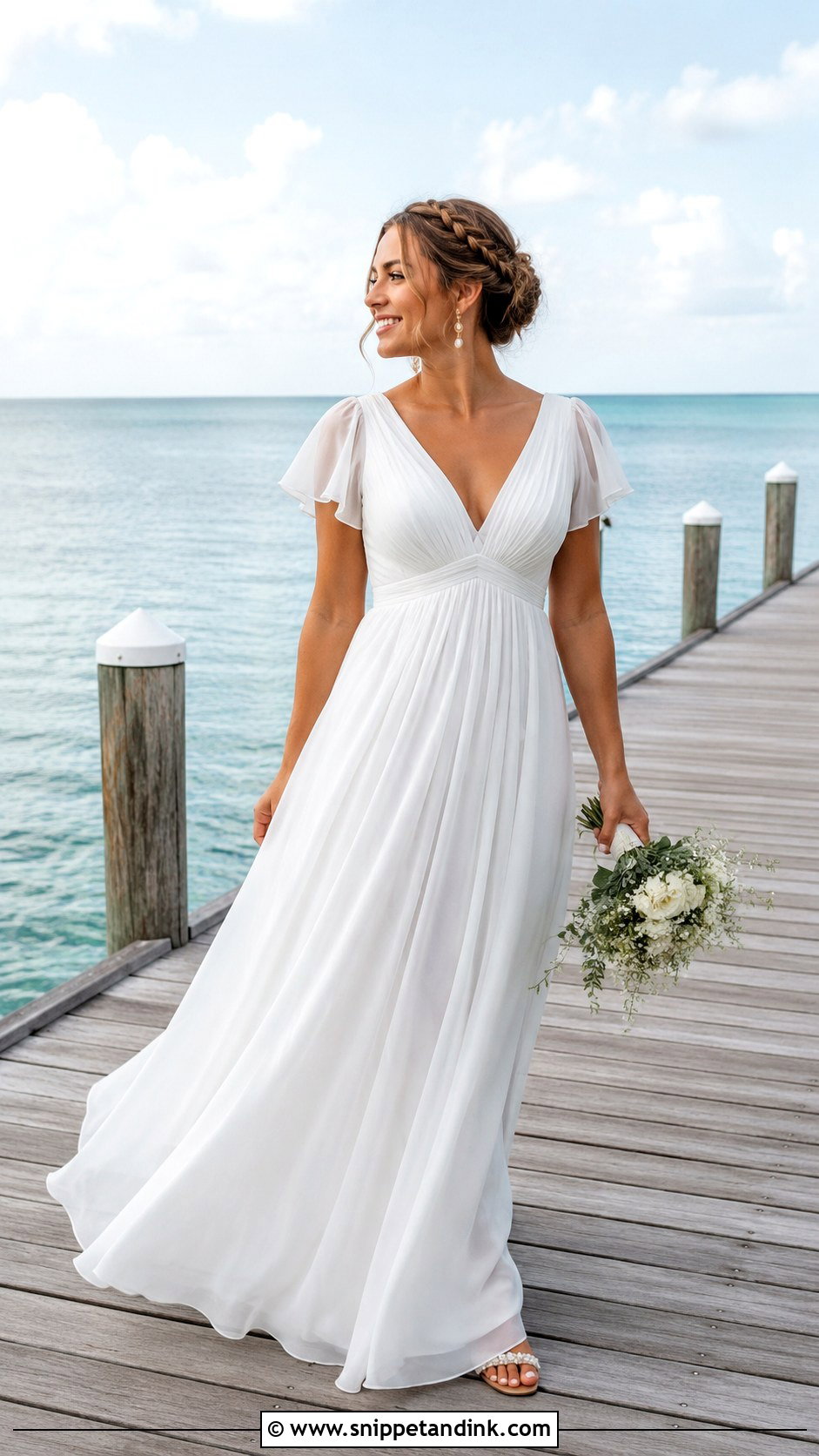
Flutter sleeves move in a sea breeze and give soft shoulder coverage without the heat of a full sleeve. An empire waist or A-line in chiffon, georgette or light crepe, with a V-neck and gathered bodice, defines the shape without a corset. The skirt falls loose into a sweep train. Georgette has a grainier surface than chiffon and hangs a touch heavier, so it’s less likely to blow straight up in a gust on a dock. Pearl-and-gold earrings, fine flat sandals and a loose braided updo suit it, and a narrow floral comb can replace the veil. White cosmos, roses and trailing greenery finish it.
19. Ruffled Organza Ocean Wedding Dress
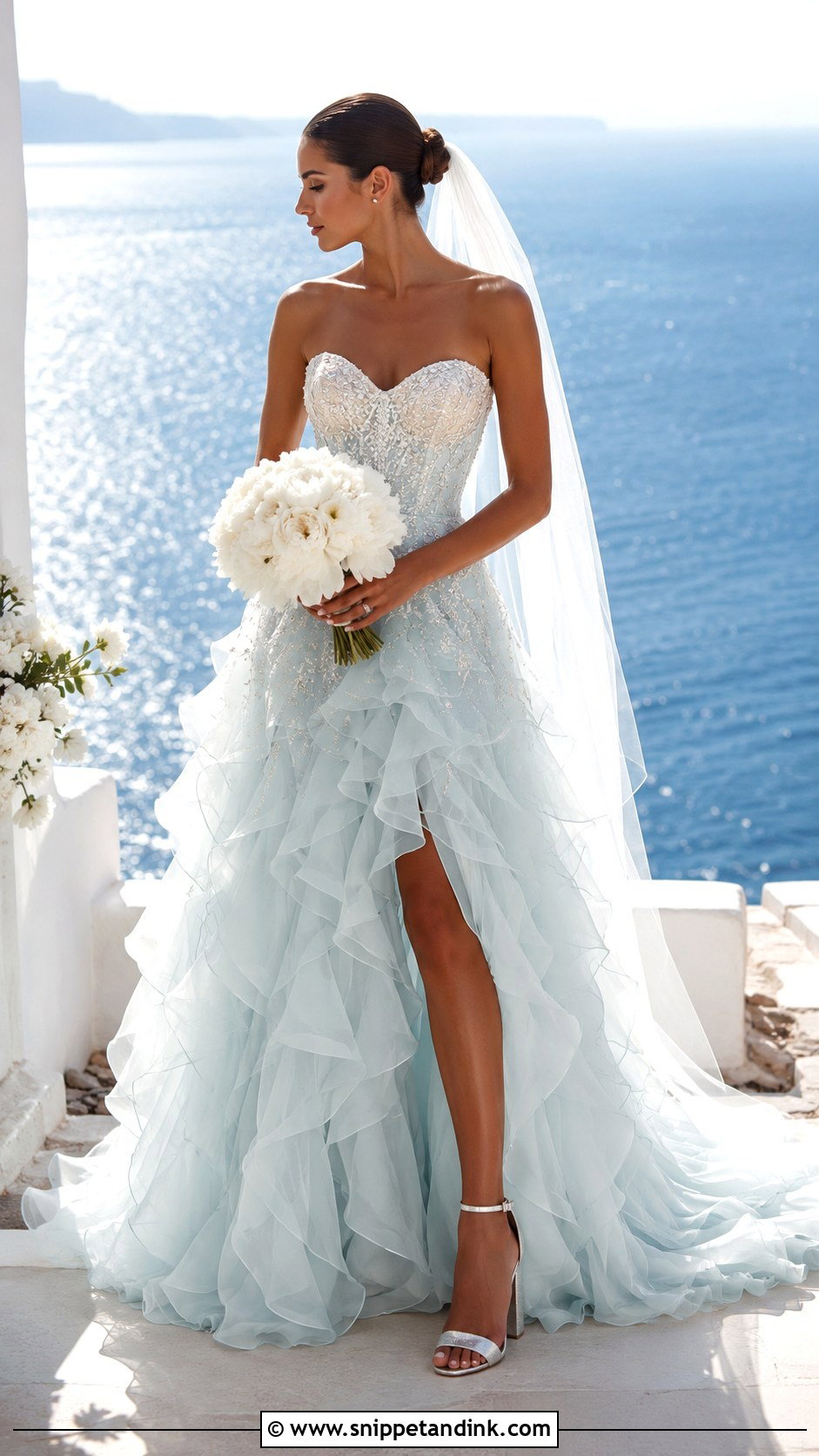
Organza ruffles look like sea foam only when they’re light and carefully placed. Tiers starting below the hips on an A-line or fit-and-flare, under a plain fitted strapless bodice, keep the volume low on the body. Organza is crisp and can feel scratchy on bare legs during a long reception, so ask for a soft lining beneath the ruffles. Crystal studs, a sleek bun and silver block-heel sandals suit it. Choose a plain veil that ends above the busiest part of the skirt. White peonies, roses or orchids keep the palette clean. It’s a confident choice for a formal resort or oceanfront venue.
20. Minimalist Crepe Ocean Wedding Dress
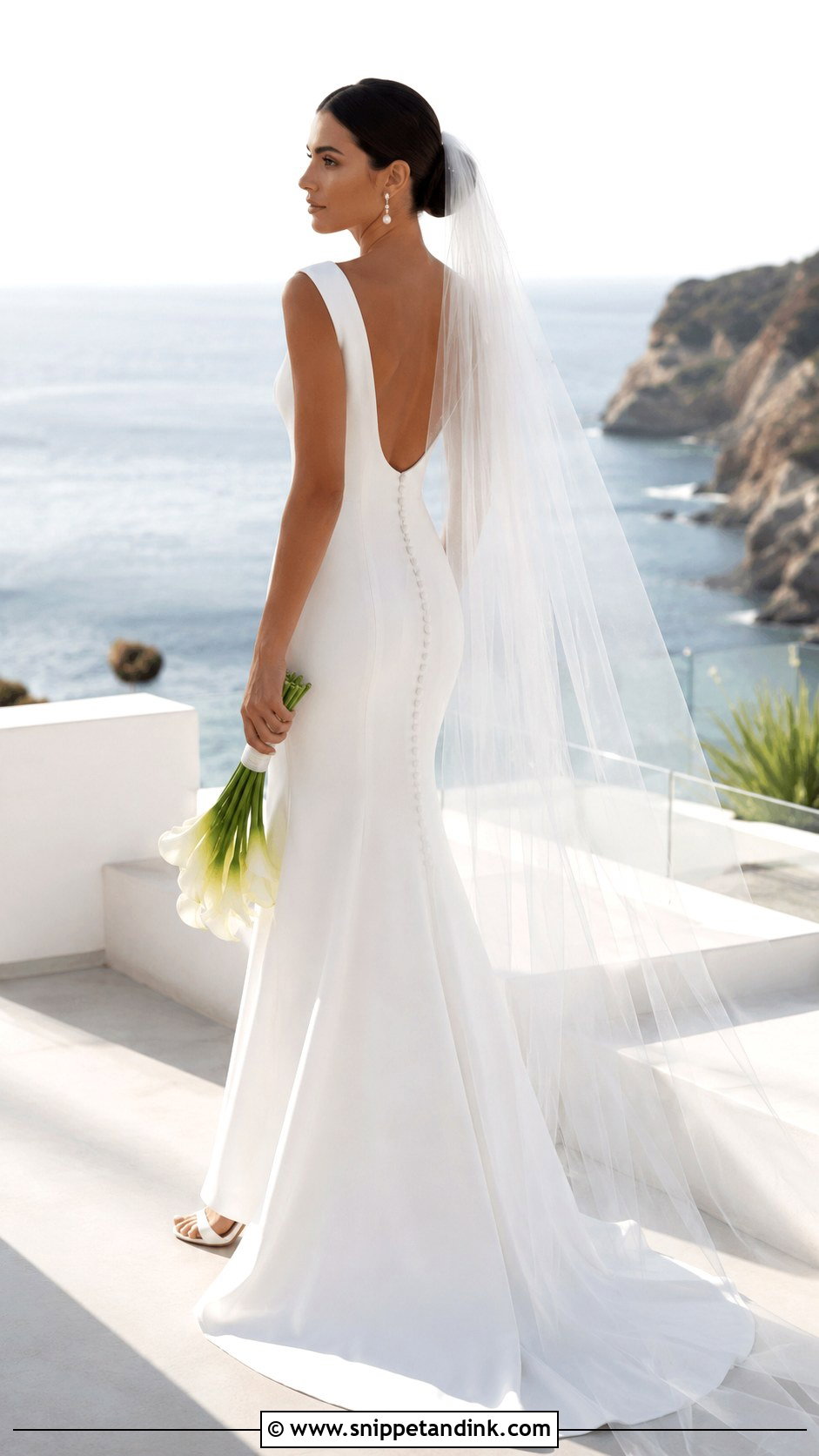
Clean lines hold their own beside the ocean. A crepe gown with a bateau neck, fitted waist and softly flared skirt needs only one point of interest: an open back, covered buttons or a narrow train. Crepe has enough weight that it doesn’t lift in wind the way chiffon does, though it can cling a little in humidity. Pearl drops, a structured low bun and simple ivory sandals suit it. Wear a sheer cathedral veil for the ceremony if the wind allows, then take it off for portraits along the shore. White calla lilies or anthuriums with minimal greenery finish it, and the tailoring does the rest.
Flying the Dress to a Beach Destination
Carry the gown on rather than checking it. Airlines differ on garment bags in the cabin, so ask yours well ahead and politely mention it to the crew at boarding in case there’s space in a closet. Fold the dress around acid-free tissue so the creases soften, keep it in a breathable cotton bag rather than plastic, and pack satin inside out to protect the face of the fabric.
Hang it as soon as you arrive. A handheld steamer clears most travel creases from chiffon and tulle; never put an iron on beading or silk. It’s also worth finding a local seamstress before the wedding week, just in case a strap or hook needs a quick fix.
On the sand itself
- Check tide times for your ceremony window so the aisle isn’t half under water.
- Bring a clear comb and spare pins for the veil, or plan to take it off after the kiss.
- Bustle the train before walking to the reception, not after it’s soaked.
- Keep a soft brush and a small towel with whoever is holding your bag.
Salt Air Decides More Than the Silhouette
Coastal gowns work when they respect where they’re worn. Chiffon, silk, lace, crepe and organza all bring movement without bulk, and the ocean references can stay small: pearls, fluid draping, coral-like lace, a pale seafoam. Pair the dress with sandals that grip, hair that can handle wind, light jewelry and a bouquet that supports the gown instead of competing with it. Then pick the shape you feel most like yourself in. On sand or on a terrace, comfort shows in every single photo.
You'll Like These Ideas:


Leave a Reply